EP2150552B1 - 1,3,8-trisubstituted-1,3,8-triaza-spiro[4.5]decan-4-one derivatives as ligands of the orl-i receptor for the treatment of anxiety and depression - Google Patents
1,3,8-trisubstituted-1,3,8-triaza-spiro[4.5]decan-4-one derivatives as ligands of the orl-i receptor for the treatment of anxiety and depression Download PDFInfo
- Publication number
- EP2150552B1 EP2150552B1 EP08729809A EP08729809A EP2150552B1 EP 2150552 B1 EP2150552 B1 EP 2150552B1 EP 08729809 A EP08729809 A EP 08729809A EP 08729809 A EP08729809 A EP 08729809A EP 2150552 B1 EP2150552 B1 EP 2150552B1
- Authority
- EP
- European Patent Office
- Prior art keywords
- alkyl
- compound
- group
- formula
- triazolyl
- Prior art date
- Legal status (The legal status is an assumption and is not a legal conclusion. Google has not performed a legal analysis and makes no representation as to the accuracy of the status listed.)
- Not-in-force
Links
- -1 1,3,8-trisubstituted-1,3,8-triaza-spiro[4.5]decan-4-one Chemical class 0.000 title claims description 42
- 208000019901 Anxiety disease Diseases 0.000 title claims description 15
- 230000036506 anxiety Effects 0.000 title claims description 15
- 239000003446 ligand Substances 0.000 title description 7
- 150000001875 compounds Chemical class 0.000 claims description 277
- 238000000034 method Methods 0.000 claims description 76
- 150000003839 salts Chemical class 0.000 claims description 37
- 125000001997 phenyl group Chemical group [H]C1=C([H])C([H])=C(*)C([H])=C1[H] 0.000 claims description 36
- 239000000203 mixture Substances 0.000 claims description 35
- 125000002883 imidazolyl group Chemical group 0.000 claims description 34
- 125000004076 pyridyl group Chemical group 0.000 claims description 30
- 125000001424 substituent group Chemical group 0.000 claims description 30
- 208000006096 Attention Deficit Disorder with Hyperactivity Diseases 0.000 claims description 28
- 208000002193 Pain Diseases 0.000 claims description 28
- 125000004178 (C1-C4) alkyl group Chemical group 0.000 claims description 26
- 238000002360 preparation method Methods 0.000 claims description 24
- 239000003960 organic solvent Substances 0.000 claims description 23
- 230000008569 process Effects 0.000 claims description 23
- 125000002887 hydroxy group Chemical group [H]O* 0.000 claims description 21
- 125000001255 4-fluorophenyl group Chemical group [H]C1=C([H])C(*)=C([H])C([H])=C1F 0.000 claims description 19
- 208000036864 Attention deficit/hyperactivity disease Diseases 0.000 claims description 19
- 208000015802 attention deficit-hyperactivity disease Diseases 0.000 claims description 19
- 208000037265 diseases, disorders, signs and symptoms Diseases 0.000 claims description 19
- 229910052736 halogen Inorganic materials 0.000 claims description 19
- UFHFLCQGNIYNRP-UHFFFAOYSA-N Hydrogen Chemical compound [H][H] UFHFLCQGNIYNRP-UHFFFAOYSA-N 0.000 claims description 18
- 125000001797 benzyl group Chemical group [H]C1=C([H])C([H])=C(C([H])=C1[H])C([H])([H])* 0.000 claims description 18
- 239000001257 hydrogen Substances 0.000 claims description 18
- 229910052739 hydrogen Inorganic materials 0.000 claims description 18
- 208000035231 inattentive type attention deficit hyperactivity disease Diseases 0.000 claims description 18
- 239000008194 pharmaceutical composition Substances 0.000 claims description 18
- 239000003937 drug carrier Substances 0.000 claims description 17
- 108010020615 nociceptin receptor Proteins 0.000 claims description 17
- 208000035475 disorder Diseases 0.000 claims description 16
- 125000002496 methyl group Chemical group [H]C([H])([H])* 0.000 claims description 14
- 206010027599 migraine Diseases 0.000 claims description 14
- 208000000094 Chronic Pain Diseases 0.000 claims description 13
- 208000005298 acute pain Diseases 0.000 claims description 13
- 208000004296 neuralgia Diseases 0.000 claims description 13
- 208000021722 neuropathic pain Diseases 0.000 claims description 13
- 206010011224 Cough Diseases 0.000 claims description 12
- 208000019695 Migraine disease Diseases 0.000 claims description 12
- 125000006239 protecting group Chemical group 0.000 claims description 12
- 208000011231 Crohn disease Diseases 0.000 claims description 11
- 206010020772 Hypertension Diseases 0.000 claims description 11
- 206010003119 arrhythmia Diseases 0.000 claims description 11
- 125000000753 cycloalkyl group Chemical group 0.000 claims description 11
- 208000002551 irritable bowel syndrome Diseases 0.000 claims description 11
- 201000009032 substance abuse Diseases 0.000 claims description 11
- 231100000736 substance abuse Toxicity 0.000 claims description 11
- 208000011117 substance-related disease Diseases 0.000 claims description 11
- 208000006673 asthma Diseases 0.000 claims description 10
- 230000019771 cognition Effects 0.000 claims description 10
- 208000020576 Adrenal disease Diseases 0.000 claims description 9
- 208000024827 Alzheimer disease Diseases 0.000 claims description 9
- 208000020925 Bipolar disease Diseases 0.000 claims description 9
- 206010012289 Dementia Diseases 0.000 claims description 9
- 208000030814 Eating disease Diseases 0.000 claims description 9
- 208000019454 Feeding and Eating disease Diseases 0.000 claims description 9
- 206010026749 Mania Diseases 0.000 claims description 9
- 208000008589 Obesity Diseases 0.000 claims description 9
- 208000028017 Psychotic disease Diseases 0.000 claims description 9
- 206010046543 Urinary incontinence Diseases 0.000 claims description 9
- 239000003153 chemical reaction reagent Substances 0.000 claims description 9
- 235000019788 craving Nutrition 0.000 claims description 9
- 206010012601 diabetes mellitus Diseases 0.000 claims description 9
- 235000014632 disordered eating Nutrition 0.000 claims description 9
- 206010015037 epilepsy Diseases 0.000 claims description 9
- 230000001404 mediated effect Effects 0.000 claims description 9
- 230000036651 mood Effects 0.000 claims description 9
- 235000020824 obesity Nutrition 0.000 claims description 9
- 201000000980 schizophrenia Diseases 0.000 claims description 9
- 230000006641 stabilisation Effects 0.000 claims description 9
- 238000011105 stabilization Methods 0.000 claims description 9
- 125000006552 (C3-C8) cycloalkyl group Chemical group 0.000 claims description 7
- 239000003814 drug Substances 0.000 claims description 7
- VMQMZMRVKUZKQL-UHFFFAOYSA-N Cu+ Chemical compound [Cu+] VMQMZMRVKUZKQL-UHFFFAOYSA-N 0.000 claims description 6
- 238000002156 mixing Methods 0.000 claims description 6
- 230000000269 nucleophilic effect Effects 0.000 claims description 6
- 150000001540 azides Chemical class 0.000 claims description 3
- 125000005843 halogen group Chemical group 0.000 claims 11
- YMWUJEATGCHHMB-UHFFFAOYSA-N Dichloromethane Chemical compound ClCCl YMWUJEATGCHHMB-UHFFFAOYSA-N 0.000 description 59
- OKKJLVBELUTLKV-UHFFFAOYSA-N Methanol Chemical compound OC OKKJLVBELUTLKV-UHFFFAOYSA-N 0.000 description 45
- XLYOFNOQVPJJNP-UHFFFAOYSA-N water Substances O XLYOFNOQVPJJNP-UHFFFAOYSA-N 0.000 description 32
- 238000000524 positive electrospray ionisation mass spectrometry Methods 0.000 description 31
- HEDRZPFGACZZDS-MICDWDOJSA-N Trichloro(2H)methane Chemical compound [2H]C(Cl)(Cl)Cl HEDRZPFGACZZDS-MICDWDOJSA-N 0.000 description 30
- 239000011541 reaction mixture Substances 0.000 description 25
- WYURNTSHIVDZCO-UHFFFAOYSA-N Tetrahydrofuran Chemical compound C1CCOC1 WYURNTSHIVDZCO-UHFFFAOYSA-N 0.000 description 24
- LFQSCWFLJHTTHZ-UHFFFAOYSA-N Ethanol Chemical compound CCO LFQSCWFLJHTTHZ-UHFFFAOYSA-N 0.000 description 23
- ZMXDDKWLCZADIW-UHFFFAOYSA-N N,N-Dimethylformamide Chemical compound CN(C)C=O ZMXDDKWLCZADIW-UHFFFAOYSA-N 0.000 description 23
- 235000002639 sodium chloride Nutrition 0.000 description 23
- ZMANZCXQSJIPKH-UHFFFAOYSA-N Triethylamine Chemical compound CCN(CC)CC ZMANZCXQSJIPKH-UHFFFAOYSA-N 0.000 description 20
- 0 **N(CN(*)C12CCN(*)CC1)C2=O Chemical compound **N(CN(*)C12CCN(*)CC1)C2=O 0.000 description 18
- 239000010779 crude oil Substances 0.000 description 18
- BWHMMNNQKKPAPP-UHFFFAOYSA-L potassium carbonate Chemical compound [K+].[K+].[O-]C([O-])=O BWHMMNNQKKPAPP-UHFFFAOYSA-L 0.000 description 18
- 239000002904 solvent Substances 0.000 description 18
- 238000005160 1H NMR spectroscopy Methods 0.000 description 15
- XEKOWRVHYACXOJ-UHFFFAOYSA-N Ethyl acetate Chemical compound CCOC(C)=O XEKOWRVHYACXOJ-UHFFFAOYSA-N 0.000 description 15
- 230000027455 binding Effects 0.000 description 15
- 239000003826 tablet Substances 0.000 description 15
- SECXISVLQFMRJM-UHFFFAOYSA-N N-Methylpyrrolidone Chemical compound CN1CCCC1=O SECXISVLQFMRJM-UHFFFAOYSA-N 0.000 description 14
- 239000002585 base Substances 0.000 description 14
- 239000000243 solution Substances 0.000 description 14
- 239000002253 acid Substances 0.000 description 13
- 230000005764 inhibitory process Effects 0.000 description 13
- 239000007832 Na2SO4 Substances 0.000 description 12
- PMZURENOXWZQFD-UHFFFAOYSA-L Sodium Sulfate Chemical compound [Na+].[Na+].[O-]S([O-])(=O)=O PMZURENOXWZQFD-UHFFFAOYSA-L 0.000 description 12
- HEMHJVSKTPXQMS-UHFFFAOYSA-M Sodium hydroxide Chemical compound [OH-].[Na+] HEMHJVSKTPXQMS-UHFFFAOYSA-M 0.000 description 12
- 239000012044 organic layer Substances 0.000 description 12
- 229910052938 sodium sulfate Inorganic materials 0.000 description 12
- 230000015572 biosynthetic process Effects 0.000 description 11
- 230000009870 specific binding Effects 0.000 description 11
- JGFZNNIVVJXRND-UHFFFAOYSA-N N,N-Diisopropylethylamine (DIPEA) Chemical compound CCN(C(C)C)C(C)C JGFZNNIVVJXRND-UHFFFAOYSA-N 0.000 description 10
- 239000012267 brine Substances 0.000 description 10
- 239000002775 capsule Substances 0.000 description 10
- HPALAKNZSZLMCH-UHFFFAOYSA-M sodium;chloride;hydrate Chemical compound O.[Na+].[Cl-] HPALAKNZSZLMCH-UHFFFAOYSA-M 0.000 description 10
- 238000003786 synthesis reaction Methods 0.000 description 10
- 238000012360 testing method Methods 0.000 description 10
- JOXIMZWYDAKGHI-UHFFFAOYSA-N toluene-4-sulfonic acid Chemical compound CC1=CC=C(S(O)(=O)=O)C=C1 JOXIMZWYDAKGHI-UHFFFAOYSA-N 0.000 description 10
- OISVCGZHLKNMSJ-UHFFFAOYSA-N 2,6-dimethylpyridine Chemical compound CC1=CC=CC(C)=N1 OISVCGZHLKNMSJ-UHFFFAOYSA-N 0.000 description 9
- QKNYBSVHEMOAJP-UHFFFAOYSA-N 2-amino-2-(hydroxymethyl)propane-1,3-diol;hydron;chloride Chemical compound Cl.OCC(N)(CO)CO QKNYBSVHEMOAJP-UHFFFAOYSA-N 0.000 description 9
- VEXZGXHMUGYJMC-UHFFFAOYSA-N Hydrochloric acid Chemical compound Cl VEXZGXHMUGYJMC-UHFFFAOYSA-N 0.000 description 9
- AFVFQIVMOAPDHO-UHFFFAOYSA-N Methanesulfonic acid Chemical compound CS(O)(=O)=O AFVFQIVMOAPDHO-UHFFFAOYSA-N 0.000 description 9
- 238000003818 flash chromatography Methods 0.000 description 9
- 239000007788 liquid Substances 0.000 description 9
- 229910000027 potassium carbonate Inorganic materials 0.000 description 9
- TWRXJAOTZQYOKJ-UHFFFAOYSA-L Magnesium chloride Chemical compound [Mg+2].[Cl-].[Cl-] TWRXJAOTZQYOKJ-UHFFFAOYSA-L 0.000 description 8
- 102000048266 Nociceptin Human genes 0.000 description 8
- 108090000622 Nociceptin Proteins 0.000 description 8
- 239000004480 active ingredient Substances 0.000 description 8
- 210000004556 brain Anatomy 0.000 description 8
- 150000002367 halogens Chemical group 0.000 description 8
- PULGYDLMFSFVBL-SMFNREODSA-N nociceptin Chemical compound C([C@@H](C(=O)N[C@H](C(=O)NCC(=O)N[C@@H](C)C(=O)N[C@@H](CCCNC(N)=N)C(=O)N[C@@H](CCCCN)C(=O)N[C@@H](CO)C(=O)N[C@@H](C)C(=O)N[C@@H](CCCNC(N)=N)C(=O)N[C@@H](CCCCN)C(=O)N[C@@H](CC(C)C)C(=O)N[C@@H](C)C(=O)N[C@@H](CC(N)=O)C(=O)N[C@@H](CCC(N)=O)C(O)=O)[C@@H](C)O)NC(=O)CNC(=O)CNC(=O)[C@@H](N)CC=1C=CC=CC=1)C1=CC=CC=C1 PULGYDLMFSFVBL-SMFNREODSA-N 0.000 description 8
- 239000000047 product Substances 0.000 description 8
- 229910000104 sodium hydride Inorganic materials 0.000 description 8
- 239000007787 solid Substances 0.000 description 8
- 239000000725 suspension Substances 0.000 description 8
- 229910052794 bromium Inorganic materials 0.000 description 7
- 239000000872 buffer Substances 0.000 description 7
- 239000000969 carrier Substances 0.000 description 7
- 239000000460 chlorine Substances 0.000 description 7
- 229910052801 chlorine Inorganic materials 0.000 description 7
- 239000002552 dosage form Substances 0.000 description 7
- 235000019441 ethanol Nutrition 0.000 description 7
- 239000006260 foam Substances 0.000 description 7
- 229910052740 iodine Inorganic materials 0.000 description 7
- YNESATAKKCNGOF-UHFFFAOYSA-N lithium bis(trimethylsilyl)amide Chemical compound [Li+].C[Si](C)(C)[N-][Si](C)(C)C YNESATAKKCNGOF-UHFFFAOYSA-N 0.000 description 7
- LPNYRYFBWFDTMA-UHFFFAOYSA-N potassium tert-butoxide Chemical compound [K+].CC(C)(C)[O-] LPNYRYFBWFDTMA-UHFFFAOYSA-N 0.000 description 7
- 239000002287 radioligand Substances 0.000 description 7
- WRIKHQLVHPKCJU-UHFFFAOYSA-N sodium bis(trimethylsilyl)amide Chemical compound C[Si](C)(C)N([Na])[Si](C)(C)C WRIKHQLVHPKCJU-UHFFFAOYSA-N 0.000 description 7
- QTBSBXVTEAMEQO-UHFFFAOYSA-N Acetic acid Chemical compound CC(O)=O QTBSBXVTEAMEQO-UHFFFAOYSA-N 0.000 description 6
- 102100028646 Nociceptin receptor Human genes 0.000 description 6
- PXIPVTKHYLBLMZ-UHFFFAOYSA-N Sodium azide Chemical compound [Na+].[N-]=[N+]=[N-] PXIPVTKHYLBLMZ-UHFFFAOYSA-N 0.000 description 6
- 238000006243 chemical reaction Methods 0.000 description 6
- KRKNYBCHXYNGOX-UHFFFAOYSA-N citric acid Chemical compound OC(=O)CC(O)(C(O)=O)CC(O)=O KRKNYBCHXYNGOX-UHFFFAOYSA-N 0.000 description 6
- VLKZOEOYAKHREP-UHFFFAOYSA-N n-Hexane Chemical class CCCCCC VLKZOEOYAKHREP-UHFFFAOYSA-N 0.000 description 6
- 239000012299 nitrogen atmosphere Substances 0.000 description 6
- 239000000843 powder Substances 0.000 description 6
- 210000004129 prosencephalon Anatomy 0.000 description 6
- VZCYOOQTPOCHFL-UHFFFAOYSA-N trans-butenedioic acid Natural products OC(=O)C=CC(O)=O VZCYOOQTPOCHFL-UHFFFAOYSA-N 0.000 description 6
- KCXVZYZYPLLWCC-UHFFFAOYSA-N EDTA Chemical compound OC(=O)CN(CC(O)=O)CCN(CC(O)=O)CC(O)=O KCXVZYZYPLLWCC-UHFFFAOYSA-N 0.000 description 5
- VZCYOOQTPOCHFL-OWOJBTEDSA-N Fumaric acid Chemical compound OC(=O)\C=C\C(O)=O VZCYOOQTPOCHFL-OWOJBTEDSA-N 0.000 description 5
- 102000003688 G-Protein-Coupled Receptors Human genes 0.000 description 5
- 108090000045 G-Protein-Coupled Receptors Proteins 0.000 description 5
- 102000003840 Opioid Receptors Human genes 0.000 description 5
- 108090000137 Opioid Receptors Proteins 0.000 description 5
- 239000000654 additive Substances 0.000 description 5
- WPYMKLBDIGXBTP-UHFFFAOYSA-N benzoic acid Chemical compound OC(=O)C1=CC=CC=C1 WPYMKLBDIGXBTP-UHFFFAOYSA-N 0.000 description 5
- 239000011230 binding agent Substances 0.000 description 5
- 239000004615 ingredient Substances 0.000 description 5
- 239000000543 intermediate Substances 0.000 description 5
- 239000003921 oil Substances 0.000 description 5
- 235000019198 oils Nutrition 0.000 description 5
- 239000006187 pill Substances 0.000 description 5
- 235000000346 sugar Nutrition 0.000 description 5
- JKMHFZQWWAIEOD-UHFFFAOYSA-N 2-[4-(2-hydroxyethyl)piperazin-1-yl]ethanesulfonic acid Chemical compound OCC[NH+]1CCN(CCS([O-])(=O)=O)CC1 JKMHFZQWWAIEOD-UHFFFAOYSA-N 0.000 description 4
- YYROPELSRYBVMQ-UHFFFAOYSA-N 4-toluenesulfonyl chloride Chemical compound CC1=CC=C(S(Cl)(=O)=O)C=C1 YYROPELSRYBVMQ-UHFFFAOYSA-N 0.000 description 4
- HBAQYPYDRFILMT-UHFFFAOYSA-N 8-[3-(1-cyclopropylpyrazol-4-yl)-1H-pyrazolo[4,3-d]pyrimidin-5-yl]-3-methyl-3,8-diazabicyclo[3.2.1]octan-2-one Chemical class C1(CC1)N1N=CC(=C1)C1=NNC2=C1N=C(N=C2)N1C2C(N(CC1CC2)C)=O HBAQYPYDRFILMT-UHFFFAOYSA-N 0.000 description 4
- WEVYAHXRMPXWCK-UHFFFAOYSA-N Acetonitrile Chemical compound CC#N WEVYAHXRMPXWCK-UHFFFAOYSA-N 0.000 description 4
- QGZKDVFQNNGYKY-UHFFFAOYSA-N Ammonia Chemical compound N QGZKDVFQNNGYKY-UHFFFAOYSA-N 0.000 description 4
- 239000007995 HEPES buffer Substances 0.000 description 4
- WMFOQBRAJBCJND-UHFFFAOYSA-M Lithium hydroxide Chemical compound [Li+].[OH-] WMFOQBRAJBCJND-UHFFFAOYSA-M 0.000 description 4
- CSNNHWWHGAXBCP-UHFFFAOYSA-L Magnesium sulfate Chemical compound [Mg+2].[O-][S+2]([O-])([O-])[O-] CSNNHWWHGAXBCP-UHFFFAOYSA-L 0.000 description 4
- NBIIXXVUZAFLBC-UHFFFAOYSA-N Phosphoric acid Chemical compound OP(O)(O)=O NBIIXXVUZAFLBC-UHFFFAOYSA-N 0.000 description 4
- OFOBLEOULBTSOW-UHFFFAOYSA-N Propanedioic acid Natural products OC(=O)CC(O)=O OFOBLEOULBTSOW-UHFFFAOYSA-N 0.000 description 4
- 229920002472 Starch Polymers 0.000 description 4
- QAOWNCQODCNURD-UHFFFAOYSA-N Sulfuric acid Chemical compound OS(O)(=O)=O QAOWNCQODCNURD-UHFFFAOYSA-N 0.000 description 4
- 229940079593 drug Drugs 0.000 description 4
- 238000011534 incubation Methods 0.000 description 4
- 238000002347 injection Methods 0.000 description 4
- 239000007924 injection Substances 0.000 description 4
- 239000000314 lubricant Substances 0.000 description 4
- 229910001629 magnesium chloride Inorganic materials 0.000 description 4
- HQKMJHAJHXVSDF-UHFFFAOYSA-L magnesium stearate Chemical compound [Mg+2].CCCCCCCCCCCCCCCCCC([O-])=O.CCCCCCCCCCCCCCCCCC([O-])=O HQKMJHAJHXVSDF-UHFFFAOYSA-L 0.000 description 4
- QARBMVPHQWIHKH-UHFFFAOYSA-N methanesulfonyl chloride Chemical compound CS(Cl)(=O)=O QARBMVPHQWIHKH-UHFFFAOYSA-N 0.000 description 4
- 150000007530 organic bases Chemical class 0.000 description 4
- 239000003755 preservative agent Substances 0.000 description 4
- 108090000765 processed proteins & peptides Proteins 0.000 description 4
- 102000005962 receptors Human genes 0.000 description 4
- 108020003175 receptors Proteins 0.000 description 4
- 235000019698 starch Nutrition 0.000 description 4
- 150000008163 sugars Chemical class 0.000 description 4
- 239000000375 suspending agent Substances 0.000 description 4
- 125000000026 trimethylsilyl group Chemical group [H]C([H])([H])[Si]([*])(C([H])([H])[H])C([H])([H])[H] 0.000 description 4
- HPZJMUBDEAMBFI-WTNAPCKOSA-N (D-Ala(2)-mephe(4)-gly-ol(5))enkephalin Chemical compound C([C@H](N)C(=O)N[C@H](C)C(=O)NCC(=O)N(C)[C@@H](CC=1C=CC=CC=1)C(=O)NCCO)C1=CC=C(O)C=C1 HPZJMUBDEAMBFI-WTNAPCKOSA-N 0.000 description 3
- 150000008631 1,3,8-triazaspiro[4.5]decan-4-ones Chemical class 0.000 description 3
- RAXXELZNTBOGNW-UHFFFAOYSA-N 1H-imidazole Chemical compound C1=CNC=N1 RAXXELZNTBOGNW-UHFFFAOYSA-N 0.000 description 3
- XWKFPIODWVPXLX-UHFFFAOYSA-N 2-methyl-5-methylpyridine Natural products CC1=CC=C(C)N=C1 XWKFPIODWVPXLX-UHFFFAOYSA-N 0.000 description 3
- MMGDPHCMLPGJAE-UHFFFAOYSA-N 3-azidopropyl 4-methylbenzenesulfonate Chemical compound CC1=CC=C(S(=O)(=O)OCCCN=[N+]=[N-])C=C1 MMGDPHCMLPGJAE-UHFFFAOYSA-N 0.000 description 3
- 241000416162 Astragalus gummifer Species 0.000 description 3
- FEWJPZIEWOKRBE-JCYAYHJZSA-N Dextrotartaric acid Chemical compound OC(=O)[C@H](O)[C@@H](O)C(O)=O FEWJPZIEWOKRBE-JCYAYHJZSA-N 0.000 description 3
- RTZKZFJDLAIYFH-UHFFFAOYSA-N Diethyl ether Chemical compound CCOCC RTZKZFJDLAIYFH-UHFFFAOYSA-N 0.000 description 3
- PEDCQBHIVMGVHV-UHFFFAOYSA-N Glycerine Chemical compound OCC(O)CO PEDCQBHIVMGVHV-UHFFFAOYSA-N 0.000 description 3
- WHUUTDBJXJRKMK-VKHMYHEASA-N L-glutamic acid Chemical compound OC(=O)[C@@H](N)CCC(O)=O WHUUTDBJXJRKMK-VKHMYHEASA-N 0.000 description 3
- 235000010643 Leucaena leucocephala Nutrition 0.000 description 3
- 240000007472 Leucaena leucocephala Species 0.000 description 3
- 241000699670 Mus sp. Species 0.000 description 3
- MUBZPKHOEPUJKR-UHFFFAOYSA-N Oxalic acid Chemical compound OC(=O)C(O)=O MUBZPKHOEPUJKR-UHFFFAOYSA-N 0.000 description 3
- 229920002873 Polyethylenimine Polymers 0.000 description 3
- KWYUFKZDYYNOTN-UHFFFAOYSA-M Potassium hydroxide Chemical compound [OH-].[K+] KWYUFKZDYYNOTN-UHFFFAOYSA-M 0.000 description 3
- KEAYESYHFKHZAL-UHFFFAOYSA-N Sodium Chemical compound [Na] KEAYESYHFKHZAL-UHFFFAOYSA-N 0.000 description 3
- 229920001615 Tragacanth Polymers 0.000 description 3
- 150000007513 acids Chemical class 0.000 description 3
- 125000000217 alkyl group Chemical group 0.000 description 3
- 150000001413 amino acids Chemical group 0.000 description 3
- 239000007864 aqueous solution Substances 0.000 description 3
- 238000003556 assay Methods 0.000 description 3
- 238000004166 bioassay Methods 0.000 description 3
- 230000037396 body weight Effects 0.000 description 3
- 210000001638 cerebellum Anatomy 0.000 description 3
- 239000003795 chemical substances by application Substances 0.000 description 3
- 239000003086 colorant Substances 0.000 description 3
- 238000013329 compounding Methods 0.000 description 3
- JZCCFEFSEZPSOG-UHFFFAOYSA-L copper(II) sulfate pentahydrate Chemical compound O.O.O.O.O.[Cu+2].[O-]S([O-])(=O)=O JZCCFEFSEZPSOG-UHFFFAOYSA-L 0.000 description 3
- GHVNFZFCNZKVNT-UHFFFAOYSA-N decanoic acid Chemical compound CCCCCCCCCC(O)=O GHVNFZFCNZKVNT-UHFFFAOYSA-N 0.000 description 3
- 201000010099 disease Diseases 0.000 description 3
- CCIVGXIOQKPBKL-UHFFFAOYSA-M ethanesulfonate Chemical compound CCS([O-])(=O)=O CCIVGXIOQKPBKL-UHFFFAOYSA-M 0.000 description 3
- 239000000796 flavoring agent Substances 0.000 description 3
- 239000008241 heterogeneous mixture Substances 0.000 description 3
- 150000007529 inorganic bases Chemical class 0.000 description 3
- VZCYOOQTPOCHFL-UPHRSURJSA-N maleic acid Chemical compound OC(=O)\C=C/C(O)=O VZCYOOQTPOCHFL-UPHRSURJSA-N 0.000 description 3
- 239000000463 material Substances 0.000 description 3
- 239000012528 membrane Substances 0.000 description 3
- 229920000609 methyl cellulose Polymers 0.000 description 3
- 239000001923 methylcellulose Substances 0.000 description 3
- 235000010981 methylcellulose Nutrition 0.000 description 3
- 239000002480 mineral oil Substances 0.000 description 3
- 235000010446 mineral oil Nutrition 0.000 description 3
- 229910052757 nitrogen Inorganic materials 0.000 description 3
- 125000004433 nitrogen atom Chemical group N* 0.000 description 3
- QJGQUHMNIGDVPM-UHFFFAOYSA-N nitrogen group Chemical group [N] QJGQUHMNIGDVPM-UHFFFAOYSA-N 0.000 description 3
- 230000009871 nonspecific binding Effects 0.000 description 3
- QIQXTHQIDYTFRH-UHFFFAOYSA-N octadecanoic acid Chemical compound CCCCCCCCCCCCCCCCCC(O)=O QIQXTHQIDYTFRH-UHFFFAOYSA-N 0.000 description 3
- 238000007911 parenteral administration Methods 0.000 description 3
- 230000004044 response Effects 0.000 description 3
- PPASLZSBLFJQEF-RKJRWTFHSA-M sodium ascorbate Substances [Na+].OC[C@@H](O)[C@H]1OC(=O)C(O)=C1[O-] PPASLZSBLFJQEF-RKJRWTFHSA-M 0.000 description 3
- 235000010378 sodium ascorbate Nutrition 0.000 description 3
- 229960005055 sodium ascorbate Drugs 0.000 description 3
- 239000012312 sodium hydride Substances 0.000 description 3
- PPASLZSBLFJQEF-RXSVEWSESA-M sodium-L-ascorbate Chemical compound [Na+].OC[C@H](O)[C@H]1OC(=O)C(O)=C1[O-] PPASLZSBLFJQEF-RXSVEWSESA-M 0.000 description 3
- 210000000278 spinal cord Anatomy 0.000 description 3
- 235000010487 tragacanth Nutrition 0.000 description 3
- 239000000196 tragacanth Substances 0.000 description 3
- 229940116362 tragacanth Drugs 0.000 description 3
- 125000002023 trifluoromethyl group Chemical group FC(F)(F)* 0.000 description 3
- 125000003088 (fluoren-9-ylmethoxy)carbonyl group Chemical group 0.000 description 2
- WXTMDXOMEHJXQO-UHFFFAOYSA-N 2,5-dihydroxybenzoic acid Chemical compound OC(=O)C1=CC(O)=CC=C1O WXTMDXOMEHJXQO-UHFFFAOYSA-N 0.000 description 2
- HZAXFHJVJLSVMW-UHFFFAOYSA-N 2-Aminoethan-1-ol Chemical compound NCCO HZAXFHJVJLSVMW-UHFFFAOYSA-N 0.000 description 2
- GSGWJDNULOPSEX-UHFFFAOYSA-N 2-[8-(1,2-dihydroacenaphthylen-1-yl)-1-(4-fluorophenyl)-4-oxo-1,3,8-triazaspiro[4.5]decan-3-yl]ethyl methanesulfonate Chemical compound C1CN(C2C=3C=CC=C4C=CC=C(C=34)C2)CCC21C(=O)N(CCOS(=O)(=O)C)CN2C1=CC=C(F)C=C1 GSGWJDNULOPSEX-UHFFFAOYSA-N 0.000 description 2
- KPGXRSRHYNQIFN-UHFFFAOYSA-N 2-oxoglutaric acid Chemical compound OC(=O)CCC(=O)C(O)=O KPGXRSRHYNQIFN-UHFFFAOYSA-N 0.000 description 2
- QZQSDQWCHHWGRA-UHFFFAOYSA-N 3-azidopropyl acetate Chemical compound CC(=O)OCCCN=[N+]=[N-] QZQSDQWCHHWGRA-UHFFFAOYSA-N 0.000 description 2
- OQCDPFUVJUOTNX-UHFFFAOYSA-N 3-bromopropyl acetate Chemical compound CC(=O)OCCCBr OQCDPFUVJUOTNX-UHFFFAOYSA-N 0.000 description 2
- QCXJEYYXVJIFCE-UHFFFAOYSA-N 4-acetamidobenzoic acid Chemical compound CC(=O)NC1=CC=C(C(O)=O)C=C1 QCXJEYYXVJIFCE-UHFFFAOYSA-N 0.000 description 2
- CIWBSHSKHKDKBQ-JLAZNSOCSA-N Ascorbic acid Chemical compound OC[C@H](O)[C@H]1OC(=O)C(O)=C1O CIWBSHSKHKDKBQ-JLAZNSOCSA-N 0.000 description 2
- 239000005711 Benzoic acid Substances 0.000 description 2
- FERIUCNNQQJTOY-UHFFFAOYSA-N Butyric acid Chemical compound CCCC(O)=O FERIUCNNQQJTOY-UHFFFAOYSA-N 0.000 description 2
- CURLTUGMZLYLDI-UHFFFAOYSA-N Carbon dioxide Chemical compound O=C=O CURLTUGMZLYLDI-UHFFFAOYSA-N 0.000 description 2
- 241000700199 Cavia porcellus Species 0.000 description 2
- 108010010803 Gelatin Proteins 0.000 description 2
- AEMRFAOFKBGASW-UHFFFAOYSA-N Glycolic acid Chemical compound OCC(O)=O AEMRFAOFKBGASW-UHFFFAOYSA-N 0.000 description 2
- 101001122499 Homo sapiens Nociceptin receptor Proteins 0.000 description 2
- 208000004454 Hyperalgesia Diseases 0.000 description 2
- 208000035154 Hyperesthesia Diseases 0.000 description 2
- GUBGYTABKSRVRQ-QKKXKWKRSA-N Lactose Natural products OC[C@H]1O[C@@H](O[C@H]2[C@H](O)[C@@H](O)C(O)O[C@@H]2CO)[C@H](O)[C@@H](O)[C@H]1O GUBGYTABKSRVRQ-QKKXKWKRSA-N 0.000 description 2
- 241001465754 Metazoa Species 0.000 description 2
- 238000005481 NMR spectroscopy Methods 0.000 description 2
- GLUUGHFHXGJENI-UHFFFAOYSA-N Piperazine Chemical compound C1CNCCN1 GLUUGHFHXGJENI-UHFFFAOYSA-N 0.000 description 2
- JUJWROOIHBZHMG-UHFFFAOYSA-N Pyridine Chemical compound C1=CC=NC=C1 JUJWROOIHBZHMG-UHFFFAOYSA-N 0.000 description 2
- 241000700159 Rattus Species 0.000 description 2
- CDBYLPFSWZWCQE-UHFFFAOYSA-L Sodium Carbonate Chemical compound [Na+].[Na+].[O-]C([O-])=O CDBYLPFSWZWCQE-UHFFFAOYSA-L 0.000 description 2
- FAPWRFPIFSIZLT-UHFFFAOYSA-M Sodium chloride Chemical compound [Na+].[Cl-] FAPWRFPIFSIZLT-UHFFFAOYSA-M 0.000 description 2
- 235000021355 Stearic acid Nutrition 0.000 description 2
- KDYFGRWQOYBRFD-UHFFFAOYSA-N Succinic acid Natural products OC(=O)CCC(O)=O KDYFGRWQOYBRFD-UHFFFAOYSA-N 0.000 description 2
- FEWJPZIEWOKRBE-UHFFFAOYSA-N Tartaric acid Natural products [H+].[H+].[O-]C(=O)C(O)C(O)C([O-])=O FEWJPZIEWOKRBE-UHFFFAOYSA-N 0.000 description 2
- 239000004809 Teflon Substances 0.000 description 2
- 229920006362 Teflon® Polymers 0.000 description 2
- DKGAVHZHDRPRBM-UHFFFAOYSA-N Tert-Butanol Chemical compound CC(C)(C)O DKGAVHZHDRPRBM-UHFFFAOYSA-N 0.000 description 2
- 235000011054 acetic acid Nutrition 0.000 description 2
- WNLRTRBMVRJNCN-UHFFFAOYSA-N adipic acid Chemical compound OC(=O)CCCCC(O)=O WNLRTRBMVRJNCN-UHFFFAOYSA-N 0.000 description 2
- 150000001298 alcohols Chemical class 0.000 description 2
- 235000010443 alginic acid Nutrition 0.000 description 2
- 229920000615 alginic acid Polymers 0.000 description 2
- HSFWRNGVRCDJHI-UHFFFAOYSA-N alpha-acetylene Natural products C#C HSFWRNGVRCDJHI-UHFFFAOYSA-N 0.000 description 2
- 229910000147 aluminium phosphate Inorganic materials 0.000 description 2
- 150000001408 amides Chemical class 0.000 description 2
- 235000001014 amino acid Nutrition 0.000 description 2
- 229940024606 amino acid Drugs 0.000 description 2
- 229910021529 ammonia Inorganic materials 0.000 description 2
- 238000004458 analytical method Methods 0.000 description 2
- 239000007900 aqueous suspension Substances 0.000 description 2
- 239000012131 assay buffer Substances 0.000 description 2
- 235000010233 benzoic acid Nutrition 0.000 description 2
- GZUXJHMPEANEGY-UHFFFAOYSA-N bromomethane Chemical compound BrC GZUXJHMPEANEGY-UHFFFAOYSA-N 0.000 description 2
- KDYFGRWQOYBRFD-NUQCWPJISA-N butanedioic acid Chemical compound O[14C](=O)CC[14C](O)=O KDYFGRWQOYBRFD-NUQCWPJISA-N 0.000 description 2
- 239000007894 caplet Substances 0.000 description 2
- 210000004027 cell Anatomy 0.000 description 2
- 210000000170 cell membrane Anatomy 0.000 description 2
- HVYWMOMLDIMFJA-DPAQBDIFSA-N cholesterol Chemical compound C1C=C2C[C@@H](O)CC[C@]2(C)[C@@H]2[C@@H]1[C@@H]1CC[C@H]([C@H](C)CCCC(C)C)[C@@]1(C)CC2 HVYWMOMLDIMFJA-DPAQBDIFSA-N 0.000 description 2
- 235000015165 citric acid Nutrition 0.000 description 2
- 238000000576 coating method Methods 0.000 description 2
- 239000003085 diluting agent Substances 0.000 description 2
- 239000002270 dispersing agent Substances 0.000 description 2
- 238000002224 dissection Methods 0.000 description 2
- 239000000839 emulsion Substances 0.000 description 2
- 239000012055 enteric layer Substances 0.000 description 2
- 125000001495 ethyl group Chemical group [H]C([H])([H])C([H])([H])* 0.000 description 2
- 125000002534 ethynyl group Chemical group [H]C#C* 0.000 description 2
- 238000002474 experimental method Methods 0.000 description 2
- 239000012530 fluid Substances 0.000 description 2
- 235000013355 food flavoring agent Nutrition 0.000 description 2
- 235000003599 food sweetener Nutrition 0.000 description 2
- 239000001530 fumaric acid Substances 0.000 description 2
- 239000008273 gelatin Substances 0.000 description 2
- 229920000159 gelatin Polymers 0.000 description 2
- 235000019322 gelatine Nutrition 0.000 description 2
- 235000011852 gelatine desserts Nutrition 0.000 description 2
- 239000011521 glass Substances 0.000 description 2
- 239000003365 glass fiber Substances 0.000 description 2
- 150000002334 glycols Chemical class 0.000 description 2
- 239000008187 granular material Substances 0.000 description 2
- 239000003979 granulating agent Substances 0.000 description 2
- BXWNKGSJHAJOGX-UHFFFAOYSA-N hexadecan-1-ol Chemical compound CCCCCCCCCCCCCCCCO BXWNKGSJHAJOGX-UHFFFAOYSA-N 0.000 description 2
- FUZZWVXGSFPDMH-UHFFFAOYSA-N hexanoic acid Chemical compound CCCCCC(O)=O FUZZWVXGSFPDMH-UHFFFAOYSA-N 0.000 description 2
- XGIHQYAWBCFNPY-AZOCGYLKSA-N hydrabamine Chemical compound C([C@@H]12)CC3=CC(C(C)C)=CC=C3[C@@]2(C)CCC[C@@]1(C)CNCCNC[C@@]1(C)[C@@H]2CCC3=CC(C(C)C)=CC=C3[C@@]2(C)CCC1 XGIHQYAWBCFNPY-AZOCGYLKSA-N 0.000 description 2
- 238000000338 in vitro Methods 0.000 description 2
- 238000001727 in vivo Methods 0.000 description 2
- 239000008101 lactose Substances 0.000 description 2
- 239000002502 liposome Substances 0.000 description 2
- 235000019359 magnesium stearate Nutrition 0.000 description 2
- 229910052943 magnesium sulfate Inorganic materials 0.000 description 2
- 239000011976 maleic acid Substances 0.000 description 2
- BDAGIHXWWSANSR-UHFFFAOYSA-N methanoic acid Natural products OC=O BDAGIHXWWSANSR-UHFFFAOYSA-N 0.000 description 2
- BQJCRHHNABKAKU-KBQPJGBKSA-N morphine Chemical compound O([C@H]1[C@H](C=C[C@H]23)O)C4=C5[C@@]12CCN(C)[C@@H]3CC5=CC=C4O BQJCRHHNABKAKU-KBQPJGBKSA-N 0.000 description 2
- XTEGVFVZDVNBPF-UHFFFAOYSA-N naphthalene-1,5-disulfonic acid Chemical compound C1=CC=C2C(S(=O)(=O)O)=CC=CC2=C1S(O)(=O)=O XTEGVFVZDVNBPF-UHFFFAOYSA-N 0.000 description 2
- 229920001206 natural gum Polymers 0.000 description 2
- 231100000252 nontoxic Toxicity 0.000 description 2
- 230000003000 nontoxic effect Effects 0.000 description 2
- OQCDKBAXFALNLD-UHFFFAOYSA-N octadecanoic acid Natural products CCCCCCCC(C)CCCCCCCCC(O)=O OQCDKBAXFALNLD-UHFFFAOYSA-N 0.000 description 2
- WWZKQHOCKIZLMA-UHFFFAOYSA-N octanoic acid Chemical compound CCCCCCCC(O)=O WWZKQHOCKIZLMA-UHFFFAOYSA-N 0.000 description 2
- ZQPPMHVWECSIRJ-KTKRTIGZSA-N oleic acid Chemical compound CCCCCCCC\C=C/CCCCCCCC(O)=O ZQPPMHVWECSIRJ-KTKRTIGZSA-N 0.000 description 2
- PXQPEWDEAKTCGB-UHFFFAOYSA-N orotic acid Chemical compound OC(=O)C1=CC(=O)NC(=O)N1 PXQPEWDEAKTCGB-UHFFFAOYSA-N 0.000 description 2
- 230000036407 pain Effects 0.000 description 2
- 239000008188 pellet Substances 0.000 description 2
- 239000000546 pharmaceutical excipient Substances 0.000 description 2
- 229940124531 pharmaceutical excipient Drugs 0.000 description 2
- 229920000642 polymer Polymers 0.000 description 2
- 239000001267 polyvinylpyrrolidone Substances 0.000 description 2
- 235000013855 polyvinylpyrrolidone Nutrition 0.000 description 2
- 238000004321 preservation Methods 0.000 description 2
- 238000000159 protein binding assay Methods 0.000 description 2
- 238000000746 purification Methods 0.000 description 2
- YGSDEFSMJLZEOE-UHFFFAOYSA-N salicylic acid Chemical compound OC(=O)C1=CC=CC=C1O YGSDEFSMJLZEOE-UHFFFAOYSA-N 0.000 description 2
- 239000008247 solid mixture Substances 0.000 description 2
- 239000012453 solvate Substances 0.000 description 2
- 238000012453 sprague-dawley rat model Methods 0.000 description 2
- 238000010561 standard procedure Methods 0.000 description 2
- 239000008107 starch Substances 0.000 description 2
- 239000008117 stearic acid Substances 0.000 description 2
- 239000008223 sterile water Substances 0.000 description 2
- 239000006228 supernatant Substances 0.000 description 2
- 239000000829 suppository Substances 0.000 description 2
- 239000003765 sweetening agent Substances 0.000 description 2
- 208000024891 symptom Diseases 0.000 description 2
- 239000006188 syrup Substances 0.000 description 2
- 235000020357 syrup Nutrition 0.000 description 2
- 125000000999 tert-butyl group Chemical group [H]C([H])([H])C(*)(C([H])([H])[H])C([H])([H])[H] 0.000 description 2
- ZMZDMBWJUHKJPS-UHFFFAOYSA-N thiocyanic acid Chemical compound SC#N ZMZDMBWJUHKJPS-UHFFFAOYSA-N 0.000 description 2
- DTQVDTLACAAQTR-UHFFFAOYSA-N trifluoroacetic acid Substances OC(=O)C(F)(F)F DTQVDTLACAAQTR-UHFFFAOYSA-N 0.000 description 2
- LENZDBCJOHFCAS-UHFFFAOYSA-N tris Chemical compound OCC(N)(CO)CO LENZDBCJOHFCAS-UHFFFAOYSA-N 0.000 description 2
- 239000002691 unilamellar liposome Substances 0.000 description 2
- CMIBUZBMZCBCAT-HZPDHXFCSA-N (2r,3r)-2,3-bis[(4-methylbenzoyl)oxy]butanedioic acid Chemical compound C1=CC(C)=CC=C1C(=O)O[C@@H](C(O)=O)[C@H](C(O)=O)OC(=O)C1=CC=C(C)C=C1 CMIBUZBMZCBCAT-HZPDHXFCSA-N 0.000 description 1
- LNAZSHAWQACDHT-XIYTZBAFSA-N (2r,3r,4s,5r,6s)-4,5-dimethoxy-2-(methoxymethyl)-3-[(2s,3r,4s,5r,6r)-3,4,5-trimethoxy-6-(methoxymethyl)oxan-2-yl]oxy-6-[(2r,3r,4s,5r,6r)-4,5,6-trimethoxy-2-(methoxymethyl)oxan-3-yl]oxyoxane Chemical compound CO[C@@H]1[C@@H](OC)[C@H](OC)[C@@H](COC)O[C@H]1O[C@H]1[C@H](OC)[C@@H](OC)[C@H](O[C@H]2[C@@H]([C@@H](OC)[C@H](OC)O[C@@H]2COC)OC)O[C@@H]1COC LNAZSHAWQACDHT-XIYTZBAFSA-N 0.000 description 1
- YQYGGOPUTPQHAY-KIQLFZLRSA-N (4S)-4-[[(2S)-2-[[(2S)-2-[2-[6-[[(2S)-1-[[(2S)-1-[[(2S)-1-[[(2S,3S)-1-[[(2S)-5-amino-1-[[(4S,7R)-7-[[(2S)-1-[(2S)-6-amino-2-[[(2R)-2-[[(2S)-5-amino-2-[[(2S,3R)-2-[[(2S)-6-amino-2-[[(2S)-4-carboxy-2-hydrazinylbutanoyl]amino]hexanoyl]amino]-3-methylpentanoyl]amino]-5-oxopentanoyl]amino]propanoyl]amino]hexanoyl]pyrrolidine-2-carbonyl]amino]-2-methyl-5,6-dioxooctan-4-yl]amino]-1,5-dioxopentan-2-yl]amino]-3-hydroxy-1-oxobutan-2-yl]amino]-3-methyl-1-oxobutan-2-yl]amino]-5-carbamimidamido-1-oxopentan-2-yl]amino]-1-oxo-3-phenylpropan-2-yl]amino]-5-[[(2S)-2-[[(2S)-2-[[(2S)-2-[[(2S)-2-[[(2S,3S)-2-[[(2S)-4-amino-2-[[(2S)-2-amino-3-hydroxypropanoyl]amino]-4-oxobutanoyl]amino]-3-hydroxybutanoyl]amino]-3-hydroxypropanoyl]amino]-4-carboxybutanoyl]amino]-3-hydroxypropanoyl]amino]-3-phenylpropanoyl]amino]-6-oxohexyl]hydrazinyl]-3-phenylpropanoyl]amino]-3-hydroxypropanoyl]amino]-5-[[(2S)-1-[[(2S,3S)-1-[[(2S)-4-amino-1-[[(2S)-1-hydroxy-3-oxopropan-2-yl]amino]-1,4-dioxobutan-2-yl]amino]-3-hydroxy-1-oxobutan-2-yl]amino]-3-hydroxy-1-oxopropan-2-yl]amino]-5-oxopentanoic acid Chemical compound CC[C@@H](C)[C@H](NC(=O)[C@H](CCCCN)NC(=O)[C@H](CCC(O)=O)NN)C(=O)N[C@@H](CCC(N)=O)C(=O)N[C@H](C)C(=O)N[C@@H](CCCCN)C(=O)N1CCC[C@H]1C(=O)N[C@H](C)C(=O)C(=O)[C@H](CC(C)C)NC(=O)[C@H](CCC(N)=O)NC(=O)[C@@H](NC(=O)[C@@H](NC(=O)[C@H](CCCNC(N)=N)NC(=O)[C@H](Cc1ccccc1)NC(=O)C(CCCCNN[C@@H](Cc1ccccc1)C(=O)N[C@@H](CO)C(=O)N[C@@H](CCC(O)=O)C(=O)N[C@@H](CO)C(=O)N[C@@H]([C@H](C)O)C(=O)N[C@@H](CC(N)=O)C(=O)N[C@@H](CO)C=O)NC(=O)[C@H](Cc1ccccc1)NC(=O)[C@H](CO)NC(=O)[C@H](CCC(O)=O)NC(=O)[C@H](CO)NC(=O)[C@@H](NC(=O)[C@H](CC(N)=O)NC(=O)[C@@H](N)CO)[C@H](C)O)C(C)C)[C@H](C)O YQYGGOPUTPQHAY-KIQLFZLRSA-N 0.000 description 1
- GHOKWGTUZJEAQD-ZETCQYMHSA-N (D)-(+)-Pantothenic acid Chemical compound OCC(C)(C)[C@@H](O)C(=O)NCCC(O)=O GHOKWGTUZJEAQD-ZETCQYMHSA-N 0.000 description 1
- WRIDQFICGBMAFQ-UHFFFAOYSA-N (E)-8-Octadecenoic acid Natural products CCCCCCCCCC=CCCCCCCC(O)=O WRIDQFICGBMAFQ-UHFFFAOYSA-N 0.000 description 1
- MIOPJNTWMNEORI-GMSGAONNSA-N (S)-camphorsulfonic acid Chemical compound C1C[C@@]2(CS(O)(=O)=O)C(=O)C[C@@H]1C2(C)C MIOPJNTWMNEORI-GMSGAONNSA-N 0.000 description 1
- BJEPYKJPYRNKOW-REOHCLBHSA-N (S)-malic acid Chemical compound OC(=O)[C@@H](O)CC(O)=O BJEPYKJPYRNKOW-REOHCLBHSA-N 0.000 description 1
- WBYWAXJHAXSJNI-VOTSOKGWSA-M .beta-Phenylacrylic acid Natural products [O-]C(=O)\C=C\C1=CC=CC=C1 WBYWAXJHAXSJNI-VOTSOKGWSA-M 0.000 description 1
- JRKPNHLSQGAUDY-UHFFFAOYSA-N 1,3,8-triazaspiro[4.5]decan-4-one Chemical group O=C1NCNC11CCNCC1 JRKPNHLSQGAUDY-UHFFFAOYSA-N 0.000 description 1
- TUSDEZXZIZRFGC-UHFFFAOYSA-N 1-O-galloyl-3,6-(R)-HHDP-beta-D-glucose Natural products OC1C(O2)COC(=O)C3=CC(O)=C(O)C(O)=C3C3=C(O)C(O)=C(O)C=C3C(=O)OC1C(O)C2OC(=O)C1=CC(O)=C(O)C(O)=C1 TUSDEZXZIZRFGC-UHFFFAOYSA-N 0.000 description 1
- PTRUTZFCVFUTMW-UHFFFAOYSA-N 1-ethynyl-3-fluorobenzene Chemical compound FC1=CC=CC(C#C)=C1 PTRUTZFCVFUTMW-UHFFFAOYSA-N 0.000 description 1
- SJJCQDRGABAVBB-UHFFFAOYSA-N 1-hydroxy-2-naphthoic acid Chemical compound C1=CC=CC2=C(O)C(C(=O)O)=CC=C21 SJJCQDRGABAVBB-UHFFFAOYSA-N 0.000 description 1
- AWONIZVBKXHWJP-UHFFFAOYSA-N 1-methoxy-2,3,5-trimethylbenzene Chemical compound COC1=CC(C)=CC(C)=C1C AWONIZVBKXHWJP-UHFFFAOYSA-N 0.000 description 1
- FRPZMMHWLSIFAZ-UHFFFAOYSA-N 10-undecenoic acid Chemical compound OC(=O)CCCCCCCCC=C FRPZMMHWLSIFAZ-UHFFFAOYSA-N 0.000 description 1
- QWENRTYMTSOGBR-UHFFFAOYSA-N 1H-1,2,3-Triazole Chemical compound C=1C=NNN=1 QWENRTYMTSOGBR-UHFFFAOYSA-N 0.000 description 1
- GCUOLJOTJRUDIZ-UHFFFAOYSA-N 2-(2-bromoethoxy)oxane Chemical compound BrCCOC1CCCCO1 GCUOLJOTJRUDIZ-UHFFFAOYSA-N 0.000 description 1
- KKFDCBRMNNSAAW-UHFFFAOYSA-N 2-(morpholin-4-yl)ethanol Chemical compound OCCN1CCOCC1 KKFDCBRMNNSAAW-UHFFFAOYSA-N 0.000 description 1
- WKAVKKUXZAWHDM-UHFFFAOYSA-N 2-acetamidopentanedioic acid;2-(dimethylamino)ethanol Chemical compound CN(C)CCO.CC(=O)NC(C(O)=O)CCC(O)=O WKAVKKUXZAWHDM-UHFFFAOYSA-N 0.000 description 1
- BFSVOASYOCHEOV-UHFFFAOYSA-N 2-diethylaminoethanol Chemical compound CCN(CC)CCO BFSVOASYOCHEOV-UHFFFAOYSA-N 0.000 description 1
- LQJBNNIYVWPHFW-UHFFFAOYSA-N 20:1omega9c fatty acid Natural products CCCCCCCCCCC=CCCCCCCCC(O)=O LQJBNNIYVWPHFW-UHFFFAOYSA-N 0.000 description 1
- RQFUZUMFPRMVDX-UHFFFAOYSA-N 3-Bromo-1-propanol Chemical compound OCCCBr RQFUZUMFPRMVDX-UHFFFAOYSA-N 0.000 description 1
- BMYNFMYTOJXKLE-UHFFFAOYSA-N 3-azaniumyl-2-hydroxypropanoate Chemical compound NCC(O)C(O)=O BMYNFMYTOJXKLE-UHFFFAOYSA-N 0.000 description 1
- UOQHWNPVNXSDDO-UHFFFAOYSA-N 3-bromoimidazo[1,2-a]pyridine-6-carbonitrile Chemical compound C1=CC(C#N)=CN2C(Br)=CN=C21 UOQHWNPVNXSDDO-UHFFFAOYSA-N 0.000 description 1
- FEWJPZIEWOKRBE-UHFFFAOYSA-M 3-carboxy-2,3-dihydroxypropanoate Chemical compound OC(=O)C(O)C(O)C([O-])=O FEWJPZIEWOKRBE-UHFFFAOYSA-M 0.000 description 1
- ALKYHXVLJMQRLQ-UHFFFAOYSA-M 3-carboxynaphthalen-2-olate Chemical compound C1=CC=C2C=C(C([O-])=O)C(O)=CC2=C1 ALKYHXVLJMQRLQ-UHFFFAOYSA-M 0.000 description 1
- OSWFIVFLDKOXQC-UHFFFAOYSA-N 4-(3-methoxyphenyl)aniline Chemical compound COC1=CC=CC(C=2C=CC(N)=CC=2)=C1 OSWFIVFLDKOXQC-UHFFFAOYSA-N 0.000 description 1
- WUBBRNOQWQTFEX-UHFFFAOYSA-N 4-aminosalicylic acid Chemical compound NC1=CC=C(C(O)=O)C(O)=C1 WUBBRNOQWQTFEX-UHFFFAOYSA-N 0.000 description 1
- JFOSWQQRTHDTGG-UHFFFAOYSA-N 5-ethynyl-1-methylimidazole Chemical compound CN1C=NC=C1C#C JFOSWQQRTHDTGG-UHFFFAOYSA-N 0.000 description 1
- ODHCTXKNWHHXJC-VKHMYHEASA-N 5-oxo-L-proline Chemical compound OC(=O)[C@@H]1CCC(=O)N1 ODHCTXKNWHHXJC-VKHMYHEASA-N 0.000 description 1
- FHVDTGUDJYJELY-UHFFFAOYSA-N 6-{[2-carboxy-4,5-dihydroxy-6-(phosphanyloxy)oxan-3-yl]oxy}-4,5-dihydroxy-3-phosphanyloxane-2-carboxylic acid Chemical compound O1C(C(O)=O)C(P)C(O)C(O)C1OC1C(C(O)=O)OC(OP)C(O)C1O FHVDTGUDJYJELY-UHFFFAOYSA-N 0.000 description 1
- ZCYVEMRRCGMTRW-UHFFFAOYSA-N 7553-56-2 Chemical compound [I] ZCYVEMRRCGMTRW-UHFFFAOYSA-N 0.000 description 1
- KJXGSCVSIAVYKU-UHFFFAOYSA-N 8-(1,2-dihydroacenaphthylen-1-yl)-1-(4-fluorophenyl)-1,3,8-triazaspiro[4.5]decan-4-one Chemical compound C1=CC(F)=CC=C1N1C2(CCN(CC2)C2C=3C=CC=C4C=CC=C(C=34)C2)C(=O)NC1 KJXGSCVSIAVYKU-UHFFFAOYSA-N 0.000 description 1
- JLFMYEAXZNPWBK-NZQKXSOJSA-N 8-[(1r,3as)-2,3,3a,4,5,6-hexahydro-1h-phenalen-1-yl]-1-phenyl-1,3,8-triazaspiro[4.5]decan-4-one Chemical compound C1CN([C@H]2C=3C=CC=C4CCC[C@H](C=34)CC2)CCC11C(=O)NCN1C1=CC=CC=C1 JLFMYEAXZNPWBK-NZQKXSOJSA-N 0.000 description 1
- QSBYPNXLFMSGKH-UHFFFAOYSA-N 9-Heptadecensaeure Natural products CCCCCCCC=CCCCCCCCC(O)=O QSBYPNXLFMSGKH-UHFFFAOYSA-N 0.000 description 1
- QTBSBXVTEAMEQO-UHFFFAOYSA-M Acetate Chemical compound CC([O-])=O QTBSBXVTEAMEQO-UHFFFAOYSA-M 0.000 description 1
- 229920001817 Agar Polymers 0.000 description 1
- 108700022183 Ala(2)-MePhe(4)-Gly(5)- Enkephalin Proteins 0.000 description 1
- 208000007848 Alcoholism Diseases 0.000 description 1
- GUBGYTABKSRVRQ-XLOQQCSPSA-N Alpha-Lactose Chemical compound O[C@@H]1[C@@H](O)[C@@H](O)[C@@H](CO)O[C@H]1O[C@@H]1[C@@H](CO)O[C@H](O)[C@H](O)[C@H]1O GUBGYTABKSRVRQ-XLOQQCSPSA-N 0.000 description 1
- GUBGYTABKSRVRQ-DCSYEGIMSA-N Beta-Lactose Chemical compound OC[C@H]1O[C@@H](O[C@H]2[C@H](O)[C@@H](O)[C@H](O)O[C@@H]2CO)[C@H](O)[C@@H](O)[C@H]1O GUBGYTABKSRVRQ-DCSYEGIMSA-N 0.000 description 1
- BVKZGUZCCUSVTD-UHFFFAOYSA-M Bicarbonate Chemical compound OC([O-])=O BVKZGUZCCUSVTD-UHFFFAOYSA-M 0.000 description 1
- BTBUEUYNUDRHOZ-UHFFFAOYSA-N Borate Chemical compound [O-]B([O-])[O-] BTBUEUYNUDRHOZ-UHFFFAOYSA-N 0.000 description 1
- CPELXLSAUQHCOX-UHFFFAOYSA-M Bromide Chemical compound [Br-] CPELXLSAUQHCOX-UHFFFAOYSA-M 0.000 description 1
- WKBOTKDWSSQWDR-UHFFFAOYSA-N Bromine atom Chemical compound [Br] WKBOTKDWSSQWDR-UHFFFAOYSA-N 0.000 description 1
- OZHQUNRWXYXUGT-LJAQVGFWSA-N CCOC(c1c[n](CCCN(CN(C2(CC3)CCN3[C@@H](C3)c4cccc5cccc3c45)c(cc3)ccc3F)C2=O)nn1)=O Chemical compound CCOC(c1c[n](CCCN(CN(C2(CC3)CCN3[C@@H](C3)c4cccc5cccc3c45)c(cc3)ccc3F)C2=O)nn1)=O OZHQUNRWXYXUGT-LJAQVGFWSA-N 0.000 description 1
- OYPRJOBELJOOCE-UHFFFAOYSA-N Calcium Chemical compound [Ca] OYPRJOBELJOOCE-UHFFFAOYSA-N 0.000 description 1
- 239000005632 Capric acid (CAS 334-48-5) Substances 0.000 description 1
- 239000005635 Caprylic acid (CAS 124-07-2) Substances 0.000 description 1
- OKTJSMMVPCPJKN-UHFFFAOYSA-N Carbon Chemical group [C] OKTJSMMVPCPJKN-UHFFFAOYSA-N 0.000 description 1
- BVKZGUZCCUSVTD-UHFFFAOYSA-L Carbonate Chemical compound [O-]C([O-])=O BVKZGUZCCUSVTD-UHFFFAOYSA-L 0.000 description 1
- VEXZGXHMUGYJMC-UHFFFAOYSA-M Chloride anion Chemical compound [Cl-] VEXZGXHMUGYJMC-UHFFFAOYSA-M 0.000 description 1
- ZAMOUSCENKQFHK-UHFFFAOYSA-N Chlorine atom Chemical compound [Cl] ZAMOUSCENKQFHK-UHFFFAOYSA-N 0.000 description 1
- WBYWAXJHAXSJNI-SREVYHEPSA-N Cinnamic acid Chemical compound OC(=O)\C=C/C1=CC=CC=C1 WBYWAXJHAXSJNI-SREVYHEPSA-N 0.000 description 1
- KRKNYBCHXYNGOX-UHFFFAOYSA-K Citrate Chemical compound [O-]C(=O)CC(O)(CC([O-])=O)C([O-])=O KRKNYBCHXYNGOX-UHFFFAOYSA-K 0.000 description 1
- HZZVJAQRINQKSD-UHFFFAOYSA-N Clavulanic acid Natural products OC(=O)C1C(=CCO)OC2CC(=O)N21 HZZVJAQRINQKSD-UHFFFAOYSA-N 0.000 description 1
- 229920002261 Corn starch Polymers 0.000 description 1
- FBPFZTCFMRRESA-FSIIMWSLSA-N D-Glucitol Natural products OC[C@H](O)[C@H](O)[C@@H](O)[C@H](O)CO FBPFZTCFMRRESA-FSIIMWSLSA-N 0.000 description 1
- CKLJMWTZIZZHCS-UHFFFAOYSA-N D-OH-Asp Natural products OC(=O)C(N)CC(O)=O CKLJMWTZIZZHCS-UHFFFAOYSA-N 0.000 description 1
- FBPFZTCFMRRESA-JGWLITMVSA-N D-glucitol Chemical compound OC[C@H](O)[C@@H](O)[C@H](O)[C@H](O)CO FBPFZTCFMRRESA-JGWLITMVSA-N 0.000 description 1
- RGHNJXZEOKUKBD-SQOUGZDYSA-M D-gluconate Chemical compound OC[C@@H](O)[C@@H](O)[C@H](O)[C@@H](O)C([O-])=O RGHNJXZEOKUKBD-SQOUGZDYSA-M 0.000 description 1
- RGHNJXZEOKUKBD-SQOUGZDYSA-N D-gluconic acid Chemical compound OC[C@@H](O)[C@@H](O)[C@H](O)[C@@H](O)C(O)=O RGHNJXZEOKUKBD-SQOUGZDYSA-N 0.000 description 1
- RGHNJXZEOKUKBD-UHFFFAOYSA-N D-gluconic acid Natural products OCC(O)C(O)C(O)C(O)C(O)=O RGHNJXZEOKUKBD-UHFFFAOYSA-N 0.000 description 1
- GSNUFIFRDBKVIE-UHFFFAOYSA-N DMF Natural products CC1=CC=C(C)O1 GSNUFIFRDBKVIE-UHFFFAOYSA-N 0.000 description 1
- 229920002307 Dextran Polymers 0.000 description 1
- 235000019739 Dicalciumphosphate Nutrition 0.000 description 1
- PIICEJLVQHRZGT-UHFFFAOYSA-N Ethylenediamine Chemical compound NCCN PIICEJLVQHRZGT-UHFFFAOYSA-N 0.000 description 1
- 239000001263 FEMA 3042 Substances 0.000 description 1
- PXGOKWXKJXAPGV-UHFFFAOYSA-N Fluorine Chemical compound FF PXGOKWXKJXAPGV-UHFFFAOYSA-N 0.000 description 1
- DSLZVSRJTYRBFB-UHFFFAOYSA-N Galactaric acid Natural products OC(=O)C(O)C(O)C(O)C(O)C(O)=O DSLZVSRJTYRBFB-UHFFFAOYSA-N 0.000 description 1
- WQZGKKKJIJFFOK-GASJEMHNSA-N Glucose Natural products OC[C@H]1OC(O)[C@H](O)[C@@H](O)[C@@H]1O WQZGKKKJIJFFOK-GASJEMHNSA-N 0.000 description 1
- CPELXLSAUQHCOX-UHFFFAOYSA-N Hydrogen bromide Chemical compound Br CPELXLSAUQHCOX-UHFFFAOYSA-N 0.000 description 1
- DGAQECJNVWCQMB-PUAWFVPOSA-M Ilexoside XXIX Chemical compound C[C@@H]1CC[C@@]2(CC[C@@]3(C(=CC[C@H]4[C@]3(CC[C@@H]5[C@@]4(CC[C@@H](C5(C)C)OS(=O)(=O)[O-])C)C)[C@@H]2[C@]1(C)O)C)C(=O)O[C@H]6[C@@H]([C@H]([C@@H]([C@H](O6)CO)O)O)O.[Na+] DGAQECJNVWCQMB-PUAWFVPOSA-M 0.000 description 1
- 206010021639 Incontinence Diseases 0.000 description 1
- 206010061218 Inflammation Diseases 0.000 description 1
- CKLJMWTZIZZHCS-UWTATZPHSA-N L-Aspartic acid Natural products OC(=O)[C@H](N)CC(O)=O CKLJMWTZIZZHCS-UWTATZPHSA-N 0.000 description 1
- ODKSFYDXXFIFQN-BYPYZUCNSA-N L-arginine Chemical compound OC(=O)[C@@H](N)CCCN=C(N)N ODKSFYDXXFIFQN-BYPYZUCNSA-N 0.000 description 1
- 229930064664 L-arginine Natural products 0.000 description 1
- 235000014852 L-arginine Nutrition 0.000 description 1
- CKLJMWTZIZZHCS-REOHCLBHSA-N L-aspartic acid Chemical compound OC(=O)[C@@H](N)CC(O)=O CKLJMWTZIZZHCS-REOHCLBHSA-N 0.000 description 1
- JVTAAEKCZFNVCJ-UHFFFAOYSA-M Lactate Chemical compound CC(O)C([O-])=O JVTAAEKCZFNVCJ-UHFFFAOYSA-M 0.000 description 1
- 241000124008 Mammalia Species 0.000 description 1
- 239000012359 Methanesulfonyl chloride Substances 0.000 description 1
- 241000699666 Mus <mouse, genus> Species 0.000 description 1
- MBBZMMPHUWSWHV-BDVNFPICSA-N N-methylglucamine Chemical compound CNC[C@H](O)[C@@H](O)[C@H](O)[C@H](O)CO MBBZMMPHUWSWHV-BDVNFPICSA-N 0.000 description 1
- 229910002651 NO3 Inorganic materials 0.000 description 1
- WIYUZYBFCWCCQJ-IFKAHUTRSA-N Naltrindole Chemical compound N1([C@@H]2CC3=CC=C(C=4O[C@@H]5[C@](C3=4)([C@]2(CC=2C3=CC=CC=C3NC=25)O)CC1)O)CC1CC1 WIYUZYBFCWCCQJ-IFKAHUTRSA-N 0.000 description 1
- NHNBFGGVMKEFGY-UHFFFAOYSA-N Nitrate Chemical compound [O-][N+]([O-])=O NHNBFGGVMKEFGY-UHFFFAOYSA-N 0.000 description 1
- GRYLNZFGIOXLOG-UHFFFAOYSA-N Nitric acid Chemical compound O[N+]([O-])=O GRYLNZFGIOXLOG-UHFFFAOYSA-N 0.000 description 1
- MJMRSQBQOBUIQX-XIFFEERXSA-N O=C(C1(CC2)CCN2[C@@H](C2)c3cccc4cccc2c34)N(CCC[n]2nnc(-c3cccc(F)c3)c2)CN1c(cc1)ccc1F Chemical compound O=C(C1(CC2)CCN2[C@@H](C2)c3cccc4cccc2c34)N(CCC[n]2nnc(-c3cccc(F)c3)c2)CN1c(cc1)ccc1F MJMRSQBQOBUIQX-XIFFEERXSA-N 0.000 description 1
- WOOMFWJXIKSEIW-XIFFEERXSA-N O=C(C1(CC2)CCN2[C@@H](Cc2ccc3)c4c2c3ccc4)N(CCc2c[n](Cc3ccccc3)nn2)CN1c(cc1)ccc1F Chemical compound O=C(C1(CC2)CCN2[C@@H](Cc2ccc3)c4c2c3ccc4)N(CCc2c[n](Cc3ccccc3)nn2)CN1c(cc1)ccc1F WOOMFWJXIKSEIW-XIFFEERXSA-N 0.000 description 1
- REYJJPSVUYRZGE-UHFFFAOYSA-N Octadecylamine Chemical compound CCCCCCCCCCCCCCCCCCN REYJJPSVUYRZGE-UHFFFAOYSA-N 0.000 description 1
- 239000005642 Oleic acid Substances 0.000 description 1
- ZQPPMHVWECSIRJ-UHFFFAOYSA-N Oleic acid Natural products CCCCCCCCC=CCCCCCCCC(O)=O ZQPPMHVWECSIRJ-UHFFFAOYSA-N 0.000 description 1
- 229910019142 PO4 Inorganic materials 0.000 description 1
- 235000019483 Peanut oil Nutrition 0.000 description 1
- LRBQNJMCXXYXIU-PPKXGCFTSA-N Penta-digallate-beta-D-glucose Natural products OC1=C(O)C(O)=CC(C(=O)OC=2C(=C(O)C=C(C=2)C(=O)OC[C@@H]2[C@H]([C@H](OC(=O)C=3C=C(OC(=O)C=4C=C(O)C(O)=C(O)C=4)C(O)=C(O)C=3)[C@@H](OC(=O)C=3C=C(OC(=O)C=4C=C(O)C(O)=C(O)C=4)C(O)=C(O)C=3)[C@H](OC(=O)C=3C=C(OC(=O)C=4C=C(O)C(O)=C(O)C=4)C(O)=C(O)C=3)O2)OC(=O)C=2C=C(OC(=O)C=3C=C(O)C(O)=C(O)C=3)C(O)=C(O)C=2)O)=C1 LRBQNJMCXXYXIU-PPKXGCFTSA-N 0.000 description 1
- 229920001710 Polyorthoester Polymers 0.000 description 1
- ZLMJMSJWJFRBEC-UHFFFAOYSA-N Potassium Chemical compound [K] ZLMJMSJWJFRBEC-UHFFFAOYSA-N 0.000 description 1
- 101100244562 Pseudomonas aeruginosa (strain ATCC 15692 / DSM 22644 / CIP 104116 / JCM 14847 / LMG 12228 / 1C / PRS 101 / PAO1) oprD gene Proteins 0.000 description 1
- 206010040047 Sepsis Diseases 0.000 description 1
- 229920001800 Shellac Polymers 0.000 description 1
- VMHLLURERBWHNL-UHFFFAOYSA-M Sodium acetate Chemical compound [Na+].CC([O-])=O VMHLLURERBWHNL-UHFFFAOYSA-M 0.000 description 1
- UIIMBOGNXHQVGW-UHFFFAOYSA-M Sodium bicarbonate Chemical class [Na+].OC([O-])=O UIIMBOGNXHQVGW-UHFFFAOYSA-M 0.000 description 1
- BCKXLBQYZLBQEK-KVVVOXFISA-M Sodium oleate Chemical compound [Na+].CCCCCCCC\C=C/CCCCCCCC([O-])=O BCKXLBQYZLBQEK-KVVVOXFISA-M 0.000 description 1
- CZMRCDWAGMRECN-UGDNZRGBSA-N Sucrose Chemical compound O[C@H]1[C@H](O)[C@@H](CO)O[C@@]1(CO)O[C@@H]1[C@H](O)[C@@H](O)[C@H](O)[C@@H](CO)O1 CZMRCDWAGMRECN-UGDNZRGBSA-N 0.000 description 1
- 229930006000 Sucrose Natural products 0.000 description 1
- QAOWNCQODCNURD-UHFFFAOYSA-L Sulfate Chemical compound [O-]S([O-])(=O)=O QAOWNCQODCNURD-UHFFFAOYSA-L 0.000 description 1
- 229920002253 Tannate Polymers 0.000 description 1
- GSEJCLTVZPLZKY-UHFFFAOYSA-N Triethanolamine Chemical compound OCCN(CCO)CCO GSEJCLTVZPLZKY-UHFFFAOYSA-N 0.000 description 1
- 239000007983 Tris buffer Substances 0.000 description 1
- 240000008042 Zea mays Species 0.000 description 1
- 235000005824 Zea mays ssp. parviglumis Nutrition 0.000 description 1
- 235000002017 Zea mays subsp mays Nutrition 0.000 description 1
- MIOPJNTWMNEORI-OMNKOJBGSA-N [(4s)-7,7-dimethyl-3-oxo-4-bicyclo[2.2.1]heptanyl]methanesulfonic acid Chemical compound C1C[C@@]2(CS(O)(=O)=O)C(=O)CC1C2(C)C MIOPJNTWMNEORI-OMNKOJBGSA-N 0.000 description 1
- 238000010521 absorption reaction Methods 0.000 description 1
- DPXJVFZANSGRMM-UHFFFAOYSA-N acetic acid;2,3,4,5,6-pentahydroxyhexanal;sodium Chemical compound [Na].CC(O)=O.OCC(O)C(O)C(O)C(O)C=O DPXJVFZANSGRMM-UHFFFAOYSA-N 0.000 description 1
- AUALQMFGWLZREY-UHFFFAOYSA-N acetonitrile;methanol Chemical compound OC.CC#N AUALQMFGWLZREY-UHFFFAOYSA-N 0.000 description 1
- WETWJCDKMRHUPV-UHFFFAOYSA-N acetyl chloride Chemical compound CC(Cl)=O WETWJCDKMRHUPV-UHFFFAOYSA-N 0.000 description 1
- 239000012346 acetyl chloride Substances 0.000 description 1
- 125000002777 acetyl group Chemical group [H]C([H])([H])C(*)=O 0.000 description 1
- 229940081735 acetylcellulose Drugs 0.000 description 1
- ODHCTXKNWHHXJC-UHFFFAOYSA-N acide pyroglutamique Natural products OC(=O)C1CCC(=O)N1 ODHCTXKNWHHXJC-UHFFFAOYSA-N 0.000 description 1
- 230000002378 acidificating effect Effects 0.000 description 1
- 230000009471 action Effects 0.000 description 1
- 230000004913 activation Effects 0.000 description 1
- 239000001361 adipic acid Substances 0.000 description 1
- 235000011037 adipic acid Nutrition 0.000 description 1
- 229960000250 adipic acid Drugs 0.000 description 1
- 239000000443 aerosol Substances 0.000 description 1
- 239000008272 agar Substances 0.000 description 1
- 235000010419 agar Nutrition 0.000 description 1
- 239000000556 agonist Substances 0.000 description 1
- 206010001584 alcohol abuse Diseases 0.000 description 1
- 208000025746 alcohol use disease Diseases 0.000 description 1
- 229940072056 alginate Drugs 0.000 description 1
- 239000000783 alginic acid Substances 0.000 description 1
- 229960001126 alginic acid Drugs 0.000 description 1
- 150000004781 alginic acids Chemical class 0.000 description 1
- 229910052783 alkali metal Inorganic materials 0.000 description 1
- 229910052784 alkaline earth metal Inorganic materials 0.000 description 1
- 229960004909 aminosalicylic acid Drugs 0.000 description 1
- 230000036592 analgesia Effects 0.000 description 1
- 229940035676 analgesics Drugs 0.000 description 1
- 238000010171 animal model Methods 0.000 description 1
- 239000000730 antalgic agent Substances 0.000 description 1
- 210000004960 anterior grey column Anatomy 0.000 description 1
- 239000008365 aqueous carrier Substances 0.000 description 1
- 125000003118 aryl group Chemical group 0.000 description 1
- 235000010323 ascorbic acid Nutrition 0.000 description 1
- 229960005070 ascorbic acid Drugs 0.000 description 1
- 239000011668 ascorbic acid Substances 0.000 description 1
- 229960005261 aspartic acid Drugs 0.000 description 1
- 125000004429 atom Chemical group 0.000 description 1
- 229940090047 auto-injector Drugs 0.000 description 1
- OISFUZRUIGGTSD-LJTMIZJLSA-N azane;(2r,3r,4r,5s)-6-(methylamino)hexane-1,2,3,4,5-pentol Chemical compound N.CNC[C@H](O)[C@@H](O)[C@H](O)[C@H](O)CO OISFUZRUIGGTSD-LJTMIZJLSA-N 0.000 description 1
- UDLLFLQFQMACJB-UHFFFAOYSA-N azidomethylbenzene Chemical compound [N-]=[N+]=NCC1=CC=CC=C1 UDLLFLQFQMACJB-UHFFFAOYSA-N 0.000 description 1
- 230000008901 benefit Effects 0.000 description 1
- UPABQMWFWCMOFV-UHFFFAOYSA-N benethamine Chemical compound C=1C=CC=CC=1CNCCC1=CC=CC=C1 UPABQMWFWCMOFV-UHFFFAOYSA-N 0.000 description 1
- 239000000440 bentonite Substances 0.000 description 1
- 229910000278 bentonite Inorganic materials 0.000 description 1
- 235000012216 bentonite Nutrition 0.000 description 1
- SVPXDRXYRYOSEX-UHFFFAOYSA-N bentoquatam Chemical compound O.O=[Si]=O.O=[Al]O[Al]=O SVPXDRXYRYOSEX-UHFFFAOYSA-N 0.000 description 1
- JUHORIMYRDESRB-UHFFFAOYSA-N benzathine Chemical compound C=1C=CC=CC=1CNCCNCC1=CC=CC=C1 JUHORIMYRDESRB-UHFFFAOYSA-N 0.000 description 1
- 229940077388 benzenesulfonate Drugs 0.000 description 1
- SRSXLGNVWSONIS-UHFFFAOYSA-M benzenesulfonate Chemical compound [O-]S(=O)(=O)C1=CC=CC=C1 SRSXLGNVWSONIS-UHFFFAOYSA-M 0.000 description 1
- SRSXLGNVWSONIS-UHFFFAOYSA-N benzenesulfonic acid Chemical compound OS(=O)(=O)C1=CC=CC=C1 SRSXLGNVWSONIS-UHFFFAOYSA-N 0.000 description 1
- 229940092714 benzenesulfonic acid Drugs 0.000 description 1
- 229960004365 benzoic acid Drugs 0.000 description 1
- 125000003236 benzoyl group Chemical group [H]C1=C([H])C([H])=C(C([H])=C1[H])C(*)=O 0.000 description 1
- 125000001584 benzyloxycarbonyl group Chemical group C(=O)(OCC1=CC=CC=C1)* 0.000 description 1
- WQZGKKKJIJFFOK-VFUOTHLCSA-N beta-D-glucose Chemical compound OC[C@H]1O[C@@H](O)[C@H](O)[C@@H](O)[C@@H]1O WQZGKKKJIJFFOK-VFUOTHLCSA-N 0.000 description 1
- 229920002988 biodegradable polymer Polymers 0.000 description 1
- 239000004621 biodegradable polymer Substances 0.000 description 1
- 230000005540 biological transmission Effects 0.000 description 1
- 229920001400 block copolymer Polymers 0.000 description 1
- GDTBXPJZTBHREO-UHFFFAOYSA-N bromine Substances BrBr GDTBXPJZTBHREO-UHFFFAOYSA-N 0.000 description 1
- STOASOOVVADOKH-UHFFFAOYSA-N but-3-ynyl 4-methylbenzenesulfonate Chemical compound CC1=CC=C(S(=O)(=O)OCCC#C)C=C1 STOASOOVVADOKH-UHFFFAOYSA-N 0.000 description 1
- 125000000484 butyl group Chemical group [H]C([*])([H])C([H])([H])C([H])([H])C([H])([H])[H] 0.000 description 1
- 239000011575 calcium Substances 0.000 description 1
- 229910052791 calcium Inorganic materials 0.000 description 1
- AXCZMVOFGPJBDE-UHFFFAOYSA-L calcium dihydroxide Chemical compound [OH-].[OH-].[Ca+2] AXCZMVOFGPJBDE-UHFFFAOYSA-L 0.000 description 1
- 239000000920 calcium hydroxide Substances 0.000 description 1
- 229940095643 calcium hydroxide Drugs 0.000 description 1
- 229910001861 calcium hydroxide Inorganic materials 0.000 description 1
- 239000001506 calcium phosphate Substances 0.000 description 1
- 238000004364 calculation method Methods 0.000 description 1
- LSPHULWDVZXLIL-QUBYGPBYSA-N camphoric acid Chemical compound CC1(C)[C@H](C(O)=O)CC[C@]1(C)C(O)=O LSPHULWDVZXLIL-QUBYGPBYSA-N 0.000 description 1
- MIOPJNTWMNEORI-UHFFFAOYSA-N camphorsulfonic acid Chemical compound C1CC2(CS(O)(=O)=O)C(=O)CC1C2(C)C MIOPJNTWMNEORI-UHFFFAOYSA-N 0.000 description 1
- KHAVLLBUVKBTBG-UHFFFAOYSA-N caproleic acid Natural products OC(=O)CCCCCCCC=C KHAVLLBUVKBTBG-UHFFFAOYSA-N 0.000 description 1
- 150000004657 carbamic acid derivatives Chemical class 0.000 description 1
- 125000004432 carbon atom Chemical group C* 0.000 description 1
- BVKZGUZCCUSVTD-UHFFFAOYSA-N carbonic acid Chemical compound OC(O)=O BVKZGUZCCUSVTD-UHFFFAOYSA-N 0.000 description 1
- 239000001768 carboxy methyl cellulose Substances 0.000 description 1
- 229920002301 cellulose acetate Polymers 0.000 description 1
- 229960000541 cetyl alcohol Drugs 0.000 description 1
- 238000004296 chiral HPLC Methods 0.000 description 1
- 235000012000 cholesterol Nutrition 0.000 description 1
- OEYIOHPDSNJKLS-UHFFFAOYSA-N choline Chemical compound C[N+](C)(C)CCO OEYIOHPDSNJKLS-UHFFFAOYSA-N 0.000 description 1
- 229960001231 choline Drugs 0.000 description 1
- 238000013375 chromatographic separation Methods 0.000 description 1
- 229930016911 cinnamic acid Natural products 0.000 description 1
- 235000013985 cinnamic acid Nutrition 0.000 description 1
- 229940090805 clavulanate Drugs 0.000 description 1
- HZZVJAQRINQKSD-PBFISZAISA-N clavulanic acid Chemical compound OC(=O)[C@H]1C(=C/CO)/O[C@@H]2CC(=O)N21 HZZVJAQRINQKSD-PBFISZAISA-N 0.000 description 1
- 239000003240 coconut oil Substances 0.000 description 1
- 235000019864 coconut oil Nutrition 0.000 description 1
- 238000013270 controlled release Methods 0.000 description 1
- 238000007796 conventional method Methods 0.000 description 1
- 229920001577 copolymer Polymers 0.000 description 1
- 235000005822 corn Nutrition 0.000 description 1
- 239000008120 corn starch Substances 0.000 description 1
- 235000012343 cottonseed oil Nutrition 0.000 description 1
- 239000002385 cottonseed oil Substances 0.000 description 1
- 239000000625 cyclamic acid and its Na and Ca salt Substances 0.000 description 1
- 125000004122 cyclic group Chemical group 0.000 description 1
- 125000001995 cyclobutyl group Chemical group [H]C1([H])C([H])([H])C([H])(*)C1([H])[H] 0.000 description 1
- 125000000582 cycloheptyl group Chemical group [H]C1([H])C([H])([H])C([H])([H])C([H])([H])C([H])(*)C([H])([H])C1([H])[H] 0.000 description 1
- 125000000113 cyclohexyl group Chemical group [H]C1([H])C([H])([H])C([H])([H])C([H])(*)C([H])([H])C1([H])[H] 0.000 description 1
- HCAJEUSONLESMK-UHFFFAOYSA-N cyclohexylsulfamic acid Chemical compound OS(=O)(=O)NC1CCCCC1 HCAJEUSONLESMK-UHFFFAOYSA-N 0.000 description 1
- 125000000640 cyclooctyl group Chemical group [H]C1([H])C([H])([H])C([H])([H])C([H])([H])C([H])(*)C([H])([H])C([H])([H])C1([H])[H] 0.000 description 1
- 125000001511 cyclopentyl group Chemical group [H]C1([H])C([H])([H])C([H])([H])C([H])(*)C1([H])[H] 0.000 description 1
- 125000001559 cyclopropyl group Chemical group [H]C1([H])C([H])([H])C1([H])* 0.000 description 1
- 229960002887 deanol Drugs 0.000 description 1
- 230000003247 decreasing effect Effects 0.000 description 1
- 239000003405 delayed action preparation Substances 0.000 description 1
- 230000003111 delayed effect Effects 0.000 description 1
- 108700023159 delta Opioid Receptors Proteins 0.000 description 1
- 102000048124 delta Opioid Receptors Human genes 0.000 description 1
- 239000007933 dermal patch Substances 0.000 description 1
- NEFBYIFKOOEVPA-UHFFFAOYSA-K dicalcium phosphate Chemical compound [Ca+2].[Ca+2].[O-]P([O-])([O-])=O NEFBYIFKOOEVPA-UHFFFAOYSA-K 0.000 description 1
- 229940038472 dicalcium phosphate Drugs 0.000 description 1
- 229910000390 dicalcium phosphate Inorganic materials 0.000 description 1
- ACYGYJFTZSAZKR-UHFFFAOYSA-J dicalcium;2-[2-[bis(carboxylatomethyl)amino]ethyl-(carboxylatomethyl)amino]acetate Chemical compound [Ca+2].[Ca+2].[O-]C(=O)CN(CC([O-])=O)CCN(CC([O-])=O)CC([O-])=O ACYGYJFTZSAZKR-UHFFFAOYSA-J 0.000 description 1
- 235000005911 diet Nutrition 0.000 description 1
- 230000037213 diet Effects 0.000 description 1
- ZBCBWPMODOFKDW-UHFFFAOYSA-N diethanolamine Chemical compound OCCNCCO ZBCBWPMODOFKDW-UHFFFAOYSA-N 0.000 description 1
- 229940043237 diethanolamine Drugs 0.000 description 1
- HPNMFZURTQLUMO-UHFFFAOYSA-N diethylamine Chemical compound CCNCC HPNMFZURTQLUMO-UHFFFAOYSA-N 0.000 description 1
- SPCNPOWOBZQWJK-UHFFFAOYSA-N dimethoxy-(2-propan-2-ylsulfanylethylsulfanyl)-sulfanylidene-$l^{5}-phosphane Chemical compound COP(=S)(OC)SCCSC(C)C SPCNPOWOBZQWJK-UHFFFAOYSA-N 0.000 description 1
- ZZVUWRFHKOJYTH-UHFFFAOYSA-N diphenhydramine Chemical group C=1C=CC=CC=1C(OCCN(C)C)C1=CC=CC=C1 ZZVUWRFHKOJYTH-UHFFFAOYSA-N 0.000 description 1
- 239000001177 diphosphate Substances 0.000 description 1
- XPPKVPWEQAFLFU-UHFFFAOYSA-J diphosphate(4-) Chemical compound [O-]P([O-])(=O)OP([O-])([O-])=O XPPKVPWEQAFLFU-UHFFFAOYSA-J 0.000 description 1
- 235000011180 diphosphates Nutrition 0.000 description 1
- 238000006073 displacement reaction Methods 0.000 description 1
- POULHZVOKOAJMA-UHFFFAOYSA-M dodecanoate Chemical compound CCCCCCCCCCCC([O-])=O POULHZVOKOAJMA-UHFFFAOYSA-M 0.000 description 1
- MOTZDAYCYVMXPC-UHFFFAOYSA-N dodecyl hydrogen sulfate Chemical compound CCCCCCCCCCCCOS(O)(=O)=O MOTZDAYCYVMXPC-UHFFFAOYSA-N 0.000 description 1
- 238000001035 drying Methods 0.000 description 1
- 210000001198 duodenum Anatomy 0.000 description 1
- 239000000975 dye Substances 0.000 description 1
- 229940009662 edetate Drugs 0.000 description 1
- 229960001484 edetic acid Drugs 0.000 description 1
- 239000008157 edible vegetable oil Substances 0.000 description 1
- 229950005627 embonate Drugs 0.000 description 1
- 239000006274 endogenous ligand Substances 0.000 description 1
- 239000003623 enhancer Substances 0.000 description 1
- 239000002702 enteric coating Substances 0.000 description 1
- XBRDBODLCHKXHI-UHFFFAOYSA-N epolamine Chemical compound OCCN1CCCC1 XBRDBODLCHKXHI-UHFFFAOYSA-N 0.000 description 1
- 150000002148 esters Chemical class 0.000 description 1
- 229950000206 estolate Drugs 0.000 description 1
- AFAXGSQYZLGZPG-UHFFFAOYSA-N ethanedisulfonic acid Chemical compound OS(=O)(=O)CCS(O)(=O)=O AFAXGSQYZLGZPG-UHFFFAOYSA-N 0.000 description 1
- 239000000284 extract Substances 0.000 description 1
- 239000000835 fiber Substances 0.000 description 1
- 239000000706 filtrate Substances 0.000 description 1
- 239000012054 flavored emulsion Substances 0.000 description 1
- 235000019634 flavors Nutrition 0.000 description 1
- 235000020375 flavoured syrup Nutrition 0.000 description 1
- 239000011737 fluorine Substances 0.000 description 1
- 229910052731 fluorine Inorganic materials 0.000 description 1
- 235000019253 formic acid Nutrition 0.000 description 1
- 238000009472 formulation Methods 0.000 description 1
- 238000001640 fractional crystallisation Methods 0.000 description 1
- 239000012458 free base Substances 0.000 description 1
- 229940050411 fumarate Drugs 0.000 description 1
- DSLZVSRJTYRBFB-DUHBMQHGSA-N galactaric acid Chemical compound OC(=O)[C@H](O)[C@@H](O)[C@@H](O)[C@H](O)C(O)=O DSLZVSRJTYRBFB-DUHBMQHGSA-N 0.000 description 1
- LRBQNJMCXXYXIU-QWKBTXIPSA-N gallotannic acid Chemical compound OC1=C(O)C(O)=CC(C(=O)OC=2C(=C(O)C=C(C=2)C(=O)OC[C@H]2[C@@H]([C@@H](OC(=O)C=3C=C(OC(=O)C=4C=C(O)C(O)=C(O)C=4)C(O)=C(O)C=3)[C@H](OC(=O)C=3C=C(OC(=O)C=4C=C(O)C(O)=C(O)C=4)C(O)=C(O)C=3)[C@@H](OC(=O)C=3C=C(OC(=O)C=4C=C(O)C(O)=C(O)C=4)C(O)=C(O)C=3)O2)OC(=O)C=2C=C(OC(=O)C=3C=C(O)C(O)=C(O)C=3)C(O)=C(O)C=2)O)=C1 LRBQNJMCXXYXIU-QWKBTXIPSA-N 0.000 description 1
- 239000000499 gel Substances 0.000 description 1
- 239000007897 gelcap Substances 0.000 description 1
- 230000014509 gene expression Effects 0.000 description 1
- 229960005219 gentisic acid Drugs 0.000 description 1
- 229960001731 gluceptate Drugs 0.000 description 1
- KWMLJOLKUYYJFJ-VFUOTHLCSA-N glucoheptonic acid Chemical compound OC[C@@H](O)[C@@H](O)[C@H](O)[C@@H](O)[C@@H](O)C(O)=O KWMLJOLKUYYJFJ-VFUOTHLCSA-N 0.000 description 1
- 229940050410 gluconate Drugs 0.000 description 1
- 235000012208 gluconic acid Nutrition 0.000 description 1
- 229950006191 gluconic acid Drugs 0.000 description 1
- 239000008103 glucose Substances 0.000 description 1
- 229930195712 glutamate Natural products 0.000 description 1
- 229940049906 glutamate Drugs 0.000 description 1
- 229960002989 glutamic acid Drugs 0.000 description 1
- ZDXPYRJPNDTMRX-UHFFFAOYSA-N glutamine Natural products OC(=O)C(N)CCC(N)=O ZDXPYRJPNDTMRX-UHFFFAOYSA-N 0.000 description 1
- 125000001072 heteroaryl group Chemical group 0.000 description 1
- 125000000592 heterocycloalkyl group Chemical group 0.000 description 1
- IPCSVZSSVZVIGE-UHFFFAOYSA-M hexadecanoate Chemical compound CCCCCCCCCCCCCCCC([O-])=O IPCSVZSSVZVIGE-UHFFFAOYSA-M 0.000 description 1
- 239000008240 homogeneous mixture Substances 0.000 description 1
- 150000004677 hydrates Chemical class 0.000 description 1
- 239000000017 hydrogel Substances 0.000 description 1
- XMBWDFGMSWQBCA-UHFFFAOYSA-N hydrogen iodide Chemical compound I XMBWDFGMSWQBCA-UHFFFAOYSA-N 0.000 description 1
- QAOWNCQODCNURD-UHFFFAOYSA-M hydrogensulfate Chemical compound OS([O-])(=O)=O QAOWNCQODCNURD-UHFFFAOYSA-M 0.000 description 1
- 125000004029 hydroxymethyl group Chemical group [H]OC([H])([H])* 0.000 description 1
- 239000012729 immediate-release (IR) formulation Substances 0.000 description 1
- 230000004054 inflammatory process Effects 0.000 description 1
- 239000003112 inhibitor Substances 0.000 description 1
- 238000007918 intramuscular administration Methods 0.000 description 1
- 238000010255 intramuscular injection Methods 0.000 description 1
- 239000007927 intramuscular injection Substances 0.000 description 1
- 238000001990 intravenous administration Methods 0.000 description 1
- 239000011630 iodine Substances 0.000 description 1
- 125000000959 isobutyl group Chemical group [H]C([H])([H])C([H])(C([H])([H])[H])C([H])([H])* 0.000 description 1
- FZWBNHMXJMCXLU-BLAUPYHCSA-N isomaltotriose Chemical compound O[C@@H]1[C@@H](O)[C@H](O)[C@@H](CO)O[C@@H]1OC[C@@H]1[C@@H](O)[C@H](O)[C@@H](O)[C@@H](OC[C@@H](O)[C@@H](O)[C@H](O)[C@@H](O)C=O)O1 FZWBNHMXJMCXLU-BLAUPYHCSA-N 0.000 description 1
- QXJSBBXBKPUZAA-UHFFFAOYSA-N isooleic acid Natural products CCCCCCCC=CCCCCCCCCC(O)=O QXJSBBXBKPUZAA-UHFFFAOYSA-N 0.000 description 1
- 125000001449 isopropyl group Chemical group [H]C([H])([H])C([H])(*)C([H])([H])[H] 0.000 description 1
- 102000048260 kappa Opioid Receptors Human genes 0.000 description 1
- 229940001447 lactate Drugs 0.000 description 1
- JVTAAEKCZFNVCJ-UHFFFAOYSA-N lactic acid Chemical compound CC(O)C(O)=O JVTAAEKCZFNVCJ-UHFFFAOYSA-N 0.000 description 1
- 229940099584 lactobionate Drugs 0.000 description 1
- JYTUSYBCFIZPBE-AMTLMPIISA-N lactobionic acid Chemical compound OC(=O)[C@H](O)[C@@H](O)[C@@H]([C@H](O)CO)O[C@@H]1O[C@H](CO)[C@H](O)[C@H](O)[C@H]1O JYTUSYBCFIZPBE-AMTLMPIISA-N 0.000 description 1
- 229940099563 lactobionic acid Drugs 0.000 description 1
- 229940070765 laurate Drugs 0.000 description 1
- 239000010410 layer Substances 0.000 description 1
- 230000006742 locomotor activity Effects 0.000 description 1
- VTHJTEIRLNZDEV-UHFFFAOYSA-L magnesium dihydroxide Chemical compound [OH-].[OH-].[Mg+2] VTHJTEIRLNZDEV-UHFFFAOYSA-L 0.000 description 1
- 239000000347 magnesium hydroxide Substances 0.000 description 1
- 229910001862 magnesium hydroxide Inorganic materials 0.000 description 1
- 159000000003 magnesium salts Chemical class 0.000 description 1
- 235000019341 magnesium sulphate Nutrition 0.000 description 1
- 229940049920 malate Drugs 0.000 description 1
- 229940098895 maleic acid Drugs 0.000 description 1
- BJEPYKJPYRNKOW-UHFFFAOYSA-N malic acid Chemical compound OC(=O)C(O)CC(O)=O BJEPYKJPYRNKOW-UHFFFAOYSA-N 0.000 description 1
- IWYDHOAUDWTVEP-UHFFFAOYSA-M mandelate Chemical compound [O-]C(=O)C(O)C1=CC=CC=C1 IWYDHOAUDWTVEP-UHFFFAOYSA-M 0.000 description 1
- IWYDHOAUDWTVEP-UHFFFAOYSA-N mandelic acid Chemical compound OC(=O)C(O)C1=CC=CC=C1 IWYDHOAUDWTVEP-UHFFFAOYSA-N 0.000 description 1
- 238000005259 measurement Methods 0.000 description 1
- 238000002483 medication Methods 0.000 description 1
- 108020004999 messenger RNA Proteins 0.000 description 1
- 229940098779 methanesulfonic acid Drugs 0.000 description 1
- 229940102396 methyl bromide Drugs 0.000 description 1
- LRMHVVPPGGOAJQ-UHFFFAOYSA-N methyl nitrate Chemical compound CO[N+]([O-])=O LRMHVVPPGGOAJQ-UHFFFAOYSA-N 0.000 description 1
- WBYWAXJHAXSJNI-UHFFFAOYSA-N methyl p-hydroxycinnamate Natural products OC(=O)C=CC1=CC=CC=C1 WBYWAXJHAXSJNI-UHFFFAOYSA-N 0.000 description 1
- JZMJDSHXVKJFKW-UHFFFAOYSA-M methyl sulfate(1-) Chemical compound COS([O-])(=O)=O JZMJDSHXVKJFKW-UHFFFAOYSA-M 0.000 description 1
- 125000000325 methylidene group Chemical group [H]C([H])=* 0.000 description 1
- 125000002950 monocyclic group Chemical group 0.000 description 1
- 229960005181 morphine Drugs 0.000 description 1
- UZHSEJADLWPNLE-GRGSLBFTSA-N naloxone Chemical compound O=C([C@@H]1O2)CC[C@@]3(O)[C@H]4CC5=CC=C(O)C2=C5[C@@]13CCN4CC=C UZHSEJADLWPNLE-GRGSLBFTSA-N 0.000 description 1
- 229960004127 naloxone Drugs 0.000 description 1
- KVBGVZZKJNLNJU-UHFFFAOYSA-N naphthalene-2-sulfonic acid Chemical compound C1=CC=CC2=CC(S(=O)(=O)O)=CC=C21 KVBGVZZKJNLNJU-UHFFFAOYSA-N 0.000 description 1
- 229910017604 nitric acid Inorganic materials 0.000 description 1
- IJGRMHOSHXDMSA-UHFFFAOYSA-N nitrogen Substances N#N IJGRMHOSHXDMSA-UHFFFAOYSA-N 0.000 description 1
- 210000000929 nociceptor Anatomy 0.000 description 1
- 108091008700 nociceptors Proteins 0.000 description 1
- 229960002446 octanoic acid Drugs 0.000 description 1
- 239000012053 oil suspension Substances 0.000 description 1
- 229940049964 oleate Drugs 0.000 description 1
- 229940005483 opioid analgesics Drugs 0.000 description 1
- 230000003287 optical effect Effects 0.000 description 1
- 239000006186 oral dosage form Substances 0.000 description 1
- 239000013110 organic ligand Substances 0.000 description 1
- 229960005010 orotic acid Drugs 0.000 description 1
- 235000006408 oxalic acid Nutrition 0.000 description 1
- LVSJDHGRKAEGLX-UHFFFAOYSA-N oxolane;2,2,2-trifluoroacetic acid Chemical compound C1CCOC1.OC(=O)C(F)(F)F LVSJDHGRKAEGLX-UHFFFAOYSA-N 0.000 description 1
- 125000001037 p-tolyl group Chemical group [H]C1=C([H])C(=C([H])C([H])=C1*)C([H])([H])[H] 0.000 description 1
- 125000001312 palmitoyl group Chemical group O=C([*])C([H])([H])C([H])([H])C([H])([H])C([H])([H])C([H])([H])C([H])([H])C([H])([H])C([H])([H])C([H])([H])C([H])([H])C([H])([H])C([H])([H])C([H])([H])C([H])([H])C([H])([H])[H] 0.000 description 1
- WLJNZVDCPSBLRP-UHFFFAOYSA-N pamoic acid Chemical compound C1=CC=C2C(CC=3C4=CC=CC=C4C=C(C=3O)C(=O)O)=C(O)C(C(O)=O)=CC2=C1 WLJNZVDCPSBLRP-UHFFFAOYSA-N 0.000 description 1
- 229940014662 pantothenate Drugs 0.000 description 1
- 235000019161 pantothenic acid Nutrition 0.000 description 1
- 239000011713 pantothenic acid Substances 0.000 description 1
- FJKROLUGYXJWQN-UHFFFAOYSA-N papa-hydroxy-benzoic acid Natural products OC(=O)C1=CC=C(O)C=C1 FJKROLUGYXJWQN-UHFFFAOYSA-N 0.000 description 1
- 239000003182 parenteral nutrition solution Substances 0.000 description 1
- 239000000312 peanut oil Substances 0.000 description 1
- 235000019371 penicillin G benzathine Nutrition 0.000 description 1
- 125000001147 pentyl group Chemical group C(CCCC)* 0.000 description 1
- 239000008177 pharmaceutical agent Substances 0.000 description 1
- 239000008024 pharmaceutical diluent Substances 0.000 description 1
- 230000000144 pharmacologic effect Effects 0.000 description 1
- COLNVLDHVKWLRT-UHFFFAOYSA-N phenylalanine Natural products OC(=O)C(N)CC1=CC=CC=C1 COLNVLDHVKWLRT-UHFFFAOYSA-N 0.000 description 1
- COLNVLDHVKWLRT-QMMMGPOBSA-N phenylalanine group Chemical group N[C@@H](CC1=CC=CC=C1)C(=O)O COLNVLDHVKWLRT-QMMMGPOBSA-N 0.000 description 1
- 125000000286 phenylethyl group Chemical group [H]C1=C([H])C([H])=C(C([H])=C1[H])C([H])([H])C([H])([H])* 0.000 description 1
- UYWQUFXKFGHYNT-UHFFFAOYSA-N phenylmethyl ester of formic acid Natural products O=COCC1=CC=CC=C1 UYWQUFXKFGHYNT-UHFFFAOYSA-N 0.000 description 1
- 239000010452 phosphate Substances 0.000 description 1
- NBIIXXVUZAFLBC-UHFFFAOYSA-K phosphate Chemical compound [O-]P([O-])([O-])=O NBIIXXVUZAFLBC-UHFFFAOYSA-K 0.000 description 1
- 150000003904 phospholipids Chemical class 0.000 description 1
- IPNPIHIZVLFAFP-UHFFFAOYSA-N phosphorus tribromide Chemical compound BrP(Br)Br IPNPIHIZVLFAFP-UHFFFAOYSA-N 0.000 description 1
- 229920000747 poly(lactic acid) Polymers 0.000 description 1
- 229920001610 polycaprolactone Polymers 0.000 description 1
- 229920002721 polycyanoacrylate Polymers 0.000 description 1
- 239000004626 polylactic acid Substances 0.000 description 1
- 229920006324 polyoxymethylene Polymers 0.000 description 1
- 229920000036 polyvinylpyrrolidone Polymers 0.000 description 1
- 229910052700 potassium Inorganic materials 0.000 description 1
- 239000011591 potassium Substances 0.000 description 1
- 159000000001 potassium salts Chemical class 0.000 description 1
- WSHYKIAQCMIPTB-UHFFFAOYSA-M potassium;2-oxo-3-(3-oxo-1-phenylbutyl)chromen-4-olate Chemical compound [K+].[O-]C=1C2=CC=CC=C2OC(=O)C=1C(CC(=O)C)C1=CC=CC=C1 WSHYKIAQCMIPTB-UHFFFAOYSA-M 0.000 description 1
- 239000002243 precursor Substances 0.000 description 1
- 238000004237 preparative chromatography Methods 0.000 description 1
- 230000002035 prolonged effect Effects 0.000 description 1
- 125000001436 propyl group Chemical group [H]C([*])([H])C([H])([H])C([H])([H])[H] 0.000 description 1
- 235000018102 proteins Nutrition 0.000 description 1
- 102000004169 proteins and genes Human genes 0.000 description 1
- 108090000623 proteins and genes Proteins 0.000 description 1
- UMJSCPRVCHMLSP-UHFFFAOYSA-N pyridine Natural products COC1=CC=CN=C1 UMJSCPRVCHMLSP-UHFFFAOYSA-N 0.000 description 1
- 150000003242 quaternary ammonium salts Chemical class 0.000 description 1
- 238000003653 radioligand binding assay Methods 0.000 description 1
- 239000000018 receptor agonist Substances 0.000 description 1
- 229940044601 receptor agonist Drugs 0.000 description 1
- 238000001525 receptor binding assay Methods 0.000 description 1
- 238000010992 reflux Methods 0.000 description 1
- 230000008929 regeneration Effects 0.000 description 1
- 238000011069 regeneration method Methods 0.000 description 1
- 238000000611 regression analysis Methods 0.000 description 1
- 229960001860 salicylate Drugs 0.000 description 1
- YGSDEFSMJLZEOE-UHFFFAOYSA-M salicylate Chemical compound OC1=CC=CC=C1C([O-])=O YGSDEFSMJLZEOE-UHFFFAOYSA-M 0.000 description 1
- 229960004889 salicylic acid Drugs 0.000 description 1
- 229920006395 saturated elastomer Polymers 0.000 description 1
- 239000012047 saturated solution Substances 0.000 description 1
- 125000002914 sec-butyl group Chemical group [H]C([H])([H])C([H])([H])C([H])(*)C([H])([H])[H] 0.000 description 1
- 150000003335 secondary amines Chemical class 0.000 description 1
- 230000035945 sensitivity Effects 0.000 description 1
- 230000020341 sensory perception of pain Effects 0.000 description 1
- 239000008159 sesame oil Substances 0.000 description 1
- 235000011803 sesame oil Nutrition 0.000 description 1
- 239000004208 shellac Substances 0.000 description 1
- ZLGIYFNHBLSMPS-ATJNOEHPSA-N shellac Chemical compound OCCCCCC(O)C(O)CCCCCCCC(O)=O.C1C23[C@H](C(O)=O)CCC2[C@](C)(CO)[C@@H]1C(C(O)=O)=C[C@@H]3O ZLGIYFNHBLSMPS-ATJNOEHPSA-N 0.000 description 1
- 229940113147 shellac Drugs 0.000 description 1
- 235000013874 shellac Nutrition 0.000 description 1
- 150000003384 small molecules Chemical class 0.000 description 1
- 235000015424 sodium Nutrition 0.000 description 1
- 239000011734 sodium Substances 0.000 description 1
- 229910052708 sodium Inorganic materials 0.000 description 1
- 239000001632 sodium acetate Substances 0.000 description 1
- 235000017281 sodium acetate Nutrition 0.000 description 1
- WXMKPNITSTVMEF-UHFFFAOYSA-M sodium benzoate Chemical compound [Na+].[O-]C(=O)C1=CC=CC=C1 WXMKPNITSTVMEF-UHFFFAOYSA-M 0.000 description 1
- 239000004299 sodium benzoate Substances 0.000 description 1
- 235000010234 sodium benzoate Nutrition 0.000 description 1
- 229910000029 sodium carbonate Inorganic materials 0.000 description 1
- 235000019812 sodium carboxymethyl cellulose Nutrition 0.000 description 1
- 229920001027 sodium carboxymethylcellulose Polymers 0.000 description 1
- 239000011780 sodium chloride Substances 0.000 description 1
- 229940083608 sodium hydroxide Drugs 0.000 description 1
- RYYKJJJTJZKILX-UHFFFAOYSA-M sodium octadecanoate Chemical compound [Na+].CCCCCCCCCCCCCCCCCC([O-])=O RYYKJJJTJZKILX-UHFFFAOYSA-M 0.000 description 1
- 239000000600 sorbitol Substances 0.000 description 1
- 235000010356 sorbitol Nutrition 0.000 description 1
- 239000007921 spray Substances 0.000 description 1
- 239000003381 stabilizer Substances 0.000 description 1
- 239000008174 sterile solution Substances 0.000 description 1
- 210000002784 stomach Anatomy 0.000 description 1
- 239000000126 substance Substances 0.000 description 1
- 238000006467 substitution reaction Methods 0.000 description 1
- WPLOVIFNBMNBPD-ATHMIXSHSA-N subtilin Chemical compound CC1SCC(NC2=O)C(=O)NC(CC(N)=O)C(=O)NC(C(=O)NC(CCCCN)C(=O)NC(C(C)CC)C(=O)NC(=C)C(=O)NC(CCCCN)C(O)=O)CSC(C)C2NC(=O)C(CC(C)C)NC(=O)C1NC(=O)C(CCC(N)=O)NC(=O)C(CC(C)C)NC(=O)C(NC(=O)C1NC(=O)C(=C/C)/NC(=O)C(CCC(N)=O)NC(=O)C(CC(C)C)NC(=O)C(C)NC(=O)CNC(=O)C(NC(=O)C(NC(=O)C2NC(=O)CNC(=O)C3CCCN3C(=O)C(NC(=O)C3NC(=O)C(CC(C)C)NC(=O)C(=C)NC(=O)C(CCC(O)=O)NC(=O)C(NC(=O)C(CCCCN)NC(=O)C(N)CC=4C5=CC=CC=C5NC=4)CSC3)C(C)SC2)C(C)C)C(C)SC1)CC1=CC=CC=C1 WPLOVIFNBMNBPD-ATHMIXSHSA-N 0.000 description 1
- KDYFGRWQOYBRFD-UHFFFAOYSA-L succinate(2-) Chemical compound [O-]C(=O)CCC([O-])=O KDYFGRWQOYBRFD-UHFFFAOYSA-L 0.000 description 1
- 239000005720 sucrose Substances 0.000 description 1
- 238000013268 sustained release Methods 0.000 description 1
- 239000012730 sustained-release form Substances 0.000 description 1
- 239000000454 talc Substances 0.000 description 1
- 229910052623 talc Inorganic materials 0.000 description 1
- 235000012222 talc Nutrition 0.000 description 1
- 229920002258 tannic acid Polymers 0.000 description 1
- 229940033123 tannic acid Drugs 0.000 description 1
- 235000015523 tannic acid Nutrition 0.000 description 1
- 239000011975 tartaric acid Substances 0.000 description 1
- 229960001367 tartaric acid Drugs 0.000 description 1
- 235000002906 tartaric acid Nutrition 0.000 description 1
- 229940095064 tartrate Drugs 0.000 description 1
- 229950002757 teoclate Drugs 0.000 description 1
- 125000005931 tert-butyloxycarbonyl group Chemical group [H]C([H])([H])C(OC(*)=O)(C([H])([H])[H])C([H])([H])[H] 0.000 description 1
- DPKBAXPHAYBPRL-UHFFFAOYSA-M tetrabutylazanium;iodide Chemical compound [I-].CCCC[N+](CCCC)(CCCC)CCCC DPKBAXPHAYBPRL-UHFFFAOYSA-M 0.000 description 1
- YLQBMQCUIZJEEH-UHFFFAOYSA-N tetrahydrofuran Natural products C=1C=COC=1 YLQBMQCUIZJEEH-UHFFFAOYSA-N 0.000 description 1
- 125000003944 tolyl group Chemical group 0.000 description 1
- 230000000699 topical effect Effects 0.000 description 1
- 230000037317 transdermal delivery Effects 0.000 description 1
- NQPHMXWPDCSHTE-UHFFFAOYSA-N trifluoromethanesulfonyl azide Chemical compound FC(F)(F)S(=O)(=O)N=[N+]=[N-] NQPHMXWPDCSHTE-UHFFFAOYSA-N 0.000 description 1
- 125000001889 triflyl group Chemical group FC(F)(F)S(*)(=O)=O 0.000 description 1
- 229960004418 trolamine Drugs 0.000 description 1
- 229960000281 trometamol Drugs 0.000 description 1
- 208000001072 type 2 diabetes mellitus Diseases 0.000 description 1
- 229960002703 undecylenic acid Drugs 0.000 description 1
- 229940070710 valerate Drugs 0.000 description 1
- NQPDZGIKBAWPEJ-UHFFFAOYSA-N valeric acid Chemical compound CCCCC(O)=O NQPDZGIKBAWPEJ-UHFFFAOYSA-N 0.000 description 1
- 230000001457 vasomotor Effects 0.000 description 1
- 239000003981 vehicle Substances 0.000 description 1
- 102000038650 voltage-gated calcium channel activity Human genes 0.000 description 1
- 108091023044 voltage-gated calcium channel activity Proteins 0.000 description 1
- 239000000230 xanthan gum Substances 0.000 description 1
- 229920001285 xanthan gum Polymers 0.000 description 1
- 235000010493 xanthan gum Nutrition 0.000 description 1
- 229940082509 xanthan gum Drugs 0.000 description 1
- UGZADUVQMDAIAO-UHFFFAOYSA-L zinc hydroxide Chemical compound [OH-].[OH-].[Zn+2] UGZADUVQMDAIAO-UHFFFAOYSA-L 0.000 description 1
- 229940007718 zinc hydroxide Drugs 0.000 description 1
- 229910021511 zinc hydroxide Inorganic materials 0.000 description 1
- 229930195724 β-lactose Natural products 0.000 description 1
- 108020001588 κ-opioid receptors Proteins 0.000 description 1
Classifications
-
- C—CHEMISTRY; METALLURGY
- C07—ORGANIC CHEMISTRY
- C07D—HETEROCYCLIC COMPOUNDS
- C07D471/00—Heterocyclic compounds containing nitrogen atoms as the only ring hetero atoms in the condensed system, at least one ring being a six-membered ring with one nitrogen atom, not provided for by groups C07D451/00 - C07D463/00
- C07D471/02—Heterocyclic compounds containing nitrogen atoms as the only ring hetero atoms in the condensed system, at least one ring being a six-membered ring with one nitrogen atom, not provided for by groups C07D451/00 - C07D463/00 in which the condensed system contains two hetero rings
- C07D471/10—Spiro-condensed systems
-
- A—HUMAN NECESSITIES
- A61—MEDICAL OR VETERINARY SCIENCE; HYGIENE
- A61P—SPECIFIC THERAPEUTIC ACTIVITY OF CHEMICAL COMPOUNDS OR MEDICINAL PREPARATIONS
- A61P1/00—Drugs for disorders of the alimentary tract or the digestive system
- A61P1/04—Drugs for disorders of the alimentary tract or the digestive system for ulcers, gastritis or reflux esophagitis, e.g. antacids, inhibitors of acid secretion, mucosal protectants
-
- A—HUMAN NECESSITIES
- A61—MEDICAL OR VETERINARY SCIENCE; HYGIENE
- A61P—SPECIFIC THERAPEUTIC ACTIVITY OF CHEMICAL COMPOUNDS OR MEDICINAL PREPARATIONS
- A61P11/00—Drugs for disorders of the respiratory system
- A61P11/06—Antiasthmatics
-
- A—HUMAN NECESSITIES
- A61—MEDICAL OR VETERINARY SCIENCE; HYGIENE
- A61P—SPECIFIC THERAPEUTIC ACTIVITY OF CHEMICAL COMPOUNDS OR MEDICINAL PREPARATIONS
- A61P11/00—Drugs for disorders of the respiratory system
- A61P11/14—Antitussive agents
-
- A—HUMAN NECESSITIES
- A61—MEDICAL OR VETERINARY SCIENCE; HYGIENE
- A61P—SPECIFIC THERAPEUTIC ACTIVITY OF CHEMICAL COMPOUNDS OR MEDICINAL PREPARATIONS
- A61P13/00—Drugs for disorders of the urinary system
- A61P13/02—Drugs for disorders of the urinary system of urine or of the urinary tract, e.g. urine acidifiers
-
- A—HUMAN NECESSITIES
- A61—MEDICAL OR VETERINARY SCIENCE; HYGIENE
- A61P—SPECIFIC THERAPEUTIC ACTIVITY OF CHEMICAL COMPOUNDS OR MEDICINAL PREPARATIONS
- A61P25/00—Drugs for disorders of the nervous system
- A61P25/04—Centrally acting analgesics, e.g. opioids
-
- A—HUMAN NECESSITIES
- A61—MEDICAL OR VETERINARY SCIENCE; HYGIENE
- A61P—SPECIFIC THERAPEUTIC ACTIVITY OF CHEMICAL COMPOUNDS OR MEDICINAL PREPARATIONS
- A61P25/00—Drugs for disorders of the nervous system
- A61P25/06—Antimigraine agents
-
- A—HUMAN NECESSITIES
- A61—MEDICAL OR VETERINARY SCIENCE; HYGIENE
- A61P—SPECIFIC THERAPEUTIC ACTIVITY OF CHEMICAL COMPOUNDS OR MEDICINAL PREPARATIONS
- A61P25/00—Drugs for disorders of the nervous system
- A61P25/08—Antiepileptics; Anticonvulsants
-
- A—HUMAN NECESSITIES
- A61—MEDICAL OR VETERINARY SCIENCE; HYGIENE
- A61P—SPECIFIC THERAPEUTIC ACTIVITY OF CHEMICAL COMPOUNDS OR MEDICINAL PREPARATIONS
- A61P25/00—Drugs for disorders of the nervous system
- A61P25/18—Antipsychotics, i.e. neuroleptics; Drugs for mania or schizophrenia
-
- A—HUMAN NECESSITIES
- A61—MEDICAL OR VETERINARY SCIENCE; HYGIENE
- A61P—SPECIFIC THERAPEUTIC ACTIVITY OF CHEMICAL COMPOUNDS OR MEDICINAL PREPARATIONS
- A61P25/00—Drugs for disorders of the nervous system
- A61P25/22—Anxiolytics
-
- A—HUMAN NECESSITIES
- A61—MEDICAL OR VETERINARY SCIENCE; HYGIENE
- A61P—SPECIFIC THERAPEUTIC ACTIVITY OF CHEMICAL COMPOUNDS OR MEDICINAL PREPARATIONS
- A61P25/00—Drugs for disorders of the nervous system
- A61P25/24—Antidepressants
-
- A—HUMAN NECESSITIES
- A61—MEDICAL OR VETERINARY SCIENCE; HYGIENE
- A61P—SPECIFIC THERAPEUTIC ACTIVITY OF CHEMICAL COMPOUNDS OR MEDICINAL PREPARATIONS
- A61P25/00—Drugs for disorders of the nervous system
- A61P25/28—Drugs for disorders of the nervous system for treating neurodegenerative disorders of the central nervous system, e.g. nootropic agents, cognition enhancers, drugs for treating Alzheimer's disease or other forms of dementia
-
- A—HUMAN NECESSITIES
- A61—MEDICAL OR VETERINARY SCIENCE; HYGIENE
- A61P—SPECIFIC THERAPEUTIC ACTIVITY OF CHEMICAL COMPOUNDS OR MEDICINAL PREPARATIONS
- A61P25/00—Drugs for disorders of the nervous system
- A61P25/30—Drugs for disorders of the nervous system for treating abuse or dependence
-
- A—HUMAN NECESSITIES
- A61—MEDICAL OR VETERINARY SCIENCE; HYGIENE
- A61P—SPECIFIC THERAPEUTIC ACTIVITY OF CHEMICAL COMPOUNDS OR MEDICINAL PREPARATIONS
- A61P3/00—Drugs for disorders of the metabolism
- A61P3/04—Anorexiants; Antiobesity agents
-
- A—HUMAN NECESSITIES
- A61—MEDICAL OR VETERINARY SCIENCE; HYGIENE
- A61P—SPECIFIC THERAPEUTIC ACTIVITY OF CHEMICAL COMPOUNDS OR MEDICINAL PREPARATIONS
- A61P3/00—Drugs for disorders of the metabolism
- A61P3/08—Drugs for disorders of the metabolism for glucose homeostasis
- A61P3/10—Drugs for disorders of the metabolism for glucose homeostasis for hyperglycaemia, e.g. antidiabetics
-
- A—HUMAN NECESSITIES
- A61—MEDICAL OR VETERINARY SCIENCE; HYGIENE
- A61P—SPECIFIC THERAPEUTIC ACTIVITY OF CHEMICAL COMPOUNDS OR MEDICINAL PREPARATIONS
- A61P5/00—Drugs for disorders of the endocrine system
- A61P5/38—Drugs for disorders of the endocrine system of the suprarenal hormones
-
- A—HUMAN NECESSITIES
- A61—MEDICAL OR VETERINARY SCIENCE; HYGIENE
- A61P—SPECIFIC THERAPEUTIC ACTIVITY OF CHEMICAL COMPOUNDS OR MEDICINAL PREPARATIONS
- A61P9/00—Drugs for disorders of the cardiovascular system
- A61P9/06—Antiarrhythmics
-
- A—HUMAN NECESSITIES
- A61—MEDICAL OR VETERINARY SCIENCE; HYGIENE
- A61P—SPECIFIC THERAPEUTIC ACTIVITY OF CHEMICAL COMPOUNDS OR MEDICINAL PREPARATIONS
- A61P9/00—Drugs for disorders of the cardiovascular system
- A61P9/12—Antihypertensives
Definitions
- the present invention is directed to novel 1,3,8-trisubstituted-1,3,8-triaza-spiro[4.5]decan-4-one derivatives, pharmaceutical compositions containing them and their use in the treatment of disorders and conditions mediated by the ORL-1 G-protein coupled receptor.
- the compounds of the present invention are useful in the treatment of disorders and conditions such as anxiety, depression, panic, mania, dementia, bipolar disorder, substance abuse, neuropathic pain, acute pain, chronic pain, migraine, asthma, cough, psychosis, schizophrenia, epilepsy, hypertension, obesity, eating disorders, cravings, diabetes, cardiac arrhythmia, irritable bowel syndrome, Crohn's disease, urinary incontinence, adrenal disorders, attention deficit disorder (ADD), attention deficit hyperactivity disorder (ADHD), Alzheimer's disease, for improved cognition or memory and for mood stabilization.
- disorders and conditions such as anxiety, depression, panic, mania, dementia, bipolar disorder, substance abuse, neuropathic pain, acute pain, chronic pain, migraine, asthma, cough, psychosis, schizophrenia, epilepsy, hypertension, obesity, eating disorders, cravings, diabetes, cardiac arrhythmia, irritable bowel syndrome, Crohn's disease, urinary incontinence, adrenal disorders, attention deficit disorder (ADD), attention deficit hyperactivity disorder (ADHD), Alzheimer's disease, for
- ORL-1 (orphan opioid receptor) G-protein coupled receptor also known as the nociceptin receptor
- the ORL-1 G-protein coupled receptor does not bind opioid ligands with high affinity.
- the amino acid sequence of ORL-1 is 47% identical to the opioid receptors overall, and 64% identical in the transmembrane domains. ( Nature, 1995, 377, 532 .)
- the endogenous ligand of ORL-1 known as nociceptin, a highly basic 17 amino acid peptide, was isolated from tissue extracts in 1995.
- nociceptin because it increased sensitivity to pain when injected into mouse brain, and orphanin FQ (OFQ) because of the terminal phenylalanine (F) and glutamine (Q) residues that flank the peptide on the N- and C-termini respectively.
- Nociceptin binding to ORL-1 receptors causes inhibition of cAMP synthesis, inhibition of voltage-gated calcium channels, and activation of potassium conductance.
- nociceptin produces a variety of pharmacological effects that at times oppose those of the opioids, including hyperalgesia and inhibition of morphine-induced analgesia. Mutant mice lacking nociceptin receptors show better performance in learning and memory tasks.
- the ORL-1 receptor is widely distributed / expressed throughout the human body, including in the brain and spinal cord.
- the ORL-1 receptor exists in both the dorsal and ventral horns, and precursor mRNA has been found in the superficial lamina of the dorsal horn, where primary afferent fibers of nociceptors terminate. Therefore, the ORL-1 has an important role in nociception transmission in the spinal cord. This was confirmed in recent studies wherein nociceptin, when given to mice by i.c.v. injection, induced hyperalgesia and decreased locomotor activity. ( Brit. J. Pharmacol. 2000, 129,1261 .)
- ORL-1 receptor useful for the treatment of disorders and conditions mediated by the ORL-1 receptor, such as anxiety, depression, panic, dementia, mania, bipolar disorder, substance abuse, neuropathic pain, acute pain, chronic pain, migraine, asthma, cough, psychosis, schizophrenia, epilepsy, hypertension, obesity, eating disorders, cravings, diabetes, cardiac arrhythmia, irritable bowel syndrome, Crohn's disease, urinary incontinence, adrenal disorders, attention deficit disorder (ADD), attention deficit hyperactivity disorders (ADHD), Alzheimer's disease, for improved cognition or memory and for mood stabilization.
- ADD attention deficit disorder
- ADHD attention deficit hyperactivity disorders
- the present invention is directed to compounds of formula (I) wherein R 1 is 1-acenaphthenyl; R 2 is 4-fluorophenyl; A 1 is selected from the group consisting of -CH 2 -, -CH 2 CH 2 -, - CH 2 CH 2 CH 2 - and -CH 2 CH 2 CH 2 CH 2 -; R 3 is selected from the group consisting of and wherein R 4 is selected from the group consisting of hydroxy, cycloalkyl, phenyl, benzyl, imidazolyl, pyridyl, -C 14 alkyl-NR A R B , -C 1-4 alkyl-OH, -C 1-4 alkyl-O-C 1-4 alkyl, -C(O)OH and -C(O)O-C 1-4 alkyl; wherein the phenyl, imidazolyl or pyridyl, is optionally substituted with one or more (preferably one to two more preferably one) substituents
- the present invention is further directed to compounds of formula (II) wherein R 1 is 1-acenaphthenyl; R 2 is 4-fluorophenyl; A 1 is selected from the group consisting of -CH 2 -, -CH 2 CH 2 -, - CH 2 CH 2 CH 2 - and -CH 2 CH 2 CH 2 CH 2 -; R 0 is selected from the group consisting of -CCH, hydroxy, -N 3 , -O-C(O)-C 1-4 alkyl, -O-SO 2 -C 1-4 alkyl, -O-(2-tetrahydropyranyl); and pharmaceutically acceptable salts thereof.
- the compounds of formula (II) are intermediates in the synthesis of the compounds of formula (I).
- Present invention is further directed to processes for the preparation of the compounds of formula (I) or compound of formula (II) and pharmaceutically acceptable salts thereof.
- the present invention is further directed to a product prepared according to any of the processes described herein.
- Illustrative of the invention is a pharmaceutical composition comprising a pharmaceutically acceptable carrier and any of the compounds described above.
- An illustration of the invention is a pharmaceutical composition made by mixing any of the compounds described above and a pharmaceutically acceptable carrier.
- Illustrating the invention is a process for making a pharmaceutical composition comprising mixing any of the compounds described above and a pharmaceutically acceptable carrier.
- Exemplifying the invention are compounds for use in methods of treating disorders and conditions mediated by the ORL-1 receptor in a subject in need thereof comprising administering to the subject a therapeutically effective amount of any of the compounds or pharmaceutical compositions described above.
- An example of the invention is a compound for use in a method of treating a condition selected from the group consisting of anxiety, depression, panic, mania, dementia, bipolar disorder, substance abuse, neuropathic pain, acute pain, chronic pain migraine, asthma, cough, psychosis, schizophrenia, epilepsy, hypertension, obesity, eating disorders, cravings, diabetes, cardiac arrhythmia, irritable bowel syndrome, Crohn's disease, urinary incontinence, adrenal disorders, attention deficit disorder (ADD), attention deficit hyperactivity disorder (ADHD), Alzheimer's disease, for improved cognition or memory and for mood stabilization, in a subject in need thereof comprising administering to the subject a therapeutically effective amount of any of the compounds or pharmaceutical compositions described above.
- ADD attention deficit disorder
- ADHD attention deficit hyperactivity disorder
- Another example of the invention is the use of any of the compounds described herein in the preparation of a medicament for treating: (a) anxiety, (b) depression, (c) panic, (d) mania, (e) dementia, (f) bipolar disorder, (g) substance abuse (h) neuropathic pain, (i) acute pain, (j) chronic pain, (k) migraine, (I) asthma, (m) cough, (n) psychosis, (o) schizophrenia, (p) epilepsy, (q) hypertension, (r) obesity, (s) eating disorders, (t) cravings, (u) diabetes, (v) cardiac arrhythmia, (w) irritable bowel syndrome, (x) Crohn's disease, (uy) urinary incontinence, (z) adrenal disorders, (aa) attention deficit disorder (ADD), (bb) attention deficit hyperactivity disorder (ADHD), (cc) Alzheimer's disease, for (dd)improved cognition, (ee) improved memory and (ff) mood stabilization, in a subject
- the present invention is directed to compounds of formula (I) wherein R 1 , R 2 , A 1 and R 3 are as herein defined, and pharmaceutically acceptable salts thereof.
- the compounds of formula (I) are useful in the treatment of disorders mediated by the ORL-1 receptor.
- the compound of formula (I) are useful in the treatment of anxiety, depression, panic, mania, dementia, bipolar disorder, substance abuse, neuropathic pain, acute pain, chronic pain migraine, asthma, cough, psychosis, schizophrenia, epilepsy, hypertension, obesity, eating disorders, cravings, diabetes, cardiac arrhythmia, irritable bowel syndrome, Crohn's disease, urinary incontinence, adrenal disorders, attention deficit disorder (ADD), attention deficit hyperactivity disorder (ADHD), Alzheimer's disease, for improved cognition or memory and for mood stabilization.
- ADD attention deficit disorder
- ADHD attention deficit hyperactivity disorder
- Alzheimer's disease for improved cognition or memory and for mood stabilization.
- the compounds of formula (I) are useful in the treatment of anxiety, depression, substance abuse, neuropathic pain, acute pain, chronic pain, migraine, cough, hypertension, cardiac arrhythmia, irritable bowel syndrome and Crohn's disease. More preferably, the compounds of formula (I) are useful the treatment of anxiety, depression, neuropathic pain, acute pain, chronic pain and migraine.
- the present invention is further directed to compounds of formula (II), wherein R 1 , R 2 , A 1 and R 0 are as herein defined, and pharmaceutically acceptable salts thereof.
- the compounds of formula (II) are useful as intermediates in the synthesis of the compounds of formula (I).
- the compounds of formula (II) are further useful in the treatment of disorders mediated by the ORL-1 receptor.
- the compound of formula (II) are useful in the treatment of anxiety, depression, panic, mania, dementia, bipolar disorder, substance abuse, neuropathic pain, acute pain, chronic pain migraine, asthma, cough, psychosis, schizophrenia, epilepsy, hypertension, obesity, eating disorders, cravings, diabetes, cardiac arrhythmia, irritable bowel syndrome, Crohn's disease, urinary incontinence, adrenal disorders, attention deficit disorder (ADD), attention deficit hyperactivity disorder (ADHD), Alzheimer's disease, for improved cognition or memory and for mood stabilization.
- ADD attention deficit disorder
- ADHD attention deficit hyperactivity disorder
- Alzheimer's disease for improved cognition or memory and for mood stabilization.
- the compounds of formula (II) are useful in the treatment of anxiety, depression, substance abuse, neuropathic pain, acute pain, chronic pain, migraine, cough, hypertension, cardiac arrhythmia, irritable bowel syndrome and Crohn's disease. More preferably, the compounds of formula (II) are useful the treatment of anxiety, depression, neuropathic pain, acute pain, chronic pain and migraine.
- the stereocenter as denoted by the "*" symbol in the compound of formula (I) below is present in the S-stereo-configuration.
- the stereocenter as denoted by the "*" symbol in the compound of formula (I) is present in the R-stereo-configuration.
- the compound of formula (I) is present as a racemate.
- the compound of formula (I) is present in an enantiomeric excess of about 80%, more preferably, in an enantiomeric excess of to about 90%, more preferably still, in an enantiomeric excess of about 95%, more preferably still, in an enantiomeric excess of about 98%, most preferably, at an enantiomeric excess about 99%.
- the present invention is directed to compounds of formula (Ia) wherein R 1 , R 2 , A 1 and R 4 are as herein defined, and pharmaceutically acceptable salts thereof.
- the present invention is directed to compounds of formula (Ib) wherein R 1 , R 2 , A 1 and R 5 are as herein defined, and a pharmaceutically acceptable salts thereof.
- a 1 is selected from the group consisting of -CH 2 CH 2 -, -CH 2 CH 2 CH 2 - and -CH 2 CH 2 CH 2 CH 2 -.
- a 1 is selected from the group consisting of -CH 2 CH 2 - and -CH 2 CH 2 CH 2 -.
- a 1 is -CH 2 CH 2 -.
- a 1 is -CH 2 CH 2 CH 2 -.
- R 3 is selected from the group consisting of and wherein R 4 is selected from the group consisting of hydroxy, C 3-8 cycloalkyl, phenyl, benzyl, imidazolyl, pyridyl, -C 1-4 alkyl-NR A R B , -C 1-4 alkyl-OH, -C 1-4 alkyl-O-C 1-4 alkyl, and -C(O)O-C 1-4 alkyl; wherein the phenyl, imidazolyl or pyridyl, is optionally substituted with one to two substituents independently selected from the group consisting of halogen and C 1-4 alkyl; and wherein R A and R B are each independently selected from the group consisting of hydrogen and C 1-4 alkyl; and wherein R 5 is selected from the group consisting of hydroxy, C 3-8 cycloalkyl, phenyl, benzyl, imidazolyl, pyridyl,
- R 3 is selected from the group consisting of and wherein R 4 is selected from the group consisting of hydroxy, C 3-8 cycloalkyl, phenyl, benzyl, imidazolyl, pyridyl, -C 1-2 alkyl-NR A R B , -C 1-2 alkyl-OH, -C 1-2 alkyl-O-C 1-2 alkyl and - C(O)O-C 1-2 alkyl; wherein the phenyl or imidazolyl is optionally substituted with substituent selected from the group consisting of halogen and C 1-2 alkyl; and wherein R A and R B are each independently selected from the group consisting of hydrogen and C 1-2 alkyl and wherein R 5 is selected from the group consisting of hydroxy, C 3-8 cycloalkyl, phenyl, benzyl, imidazolyl, pyridyl, -C 1-2 alkyl-NR A R B ,
- R 3 is selected from the group consisting of 4-(1-benzyl-1,2,3-triazolyl), 1-(4-(methylaminomethyl-1,2,3-triazolyl), 1-(4-hydroxy-1,2,3-triazolyl), 1-(4-cyclopropyl-1,2,3-triazolyl), 1-(4-(methoxymethyl)-1,2,3-triazolyl), 1-(4-(dimethylaminomethyl)-1,2,3-triazolyl), 1-(4-(3-fluorophenyl)-1,2,3-triazolyl), 1-(4-(hydroxymethyl)-1,2,3-triazolyl), 1-(4-(ethoxycarbonyl)-1,2,3-triazolyl), 1-(4-(2-(1-methyl-imidazolyl))-1,2,3-triazolyl) and 1-(4-(3-pyridyl)-1,2,3-triazolyl).
- R 3 is 4-(1-benzyl-1,2,3-triazolyl).
- R 3 is selected from the group consisting of 1-(4-(methylaminomethyl-1,2,3-triazolyl), 1-(4-hydroxy-1,2,3-triazolyl), 1-(4-cyclopropyl-1,2,3-triazolyl), 1-(4-(methoxymethyl)-1,2,3-triazolyl), 1-(4-(dimethylaminomethyl)-1,2,3-triazolyl), 1-(4-(3-fluorophenyl)-1,2,3-triazolyl), 1-(4-(hydroxymethyl)-1,2,3-triazolyl), 1-(4-(ethoxycarbonyl)-1,2,3-triazolyl), 1-(4-(2-(1-methyl-imidazolyl))-1,2,3-triazolyl) and 1-(4-(3-pyridyl)-1,2,3-triazolyl) and 1-(4-(3-pyr
- R 3 is selected from the group consisting of 1-(4-(methylaminomethyl-1,2,3-triazolyl), 1-(4-hydroxy-1,2,3-triazolyl), 1-(4-cyclopropyl-1,2,3-triazolyl), 1-(4-(methoxymethyl)-1,2,3-triazolyl), 1-(4-(dimethylaminomethyl)-1,2,3-triazolyl), 1-(4-(3-fluorophenyl)-1,2,3-triazolyl), 1-(4-(hydroxymethyl)-1,2,3-triazolyl), 1-(4-(2-(1-methyl-imidazolyl))-1,2,3-triazolyl) and 1-(4-(3-pyridyl)-1,2,3-triazolyl).
- R 3 is selected from the group consisting of 1-(4-(methylaminomethyl-1,2,3-triazolyl), 1-(4-hydroxy-1,2,3-triazolyl), 1-(4-(methoxymethyl)-1,2,3-triazolyl), 1-(4-(dimethylaminomethyl)-1,2,3-triazolyl) and 1-(4-(3-fluorophenyl)-1,2,3-triazolyl).
- R 3 is selected from the group consisting of 1-(4-(methylaminomethyl-1,2,3-triazolyl) and 1-(4-(methoxymethyl)-1,2,3-triazolyl).
- R 0 is selected from the group consisting of -CCH, hydroxy, -N 3 , -O-C(O)-C 1-2 alkyl, -O-SO 2 -C 1-2 alkyl and -O-(2-tetrahydropyranyl).
- R 0 is selected from the group consisting of -CCH, -OH, -N 3 , -O-C(O)-CH 3 , -O-SO 2 -CH 3 and -O-(2-tetrahydrodpyranyl).
- R 0 is selected from the group consisting of -OH, -N 3 , -O-C(O)-CH 3 and -O-(2-tetrahydrodpyranyl). In another embodiment of the present invention, R 0 is -OH.
- R 1 , R 2 , A 1 , R 3 , R 4 and R 5 are independently selected to be any individual substituent or any subset of substituents selected from the complete list as defined herein.
- R 1 , R 2 , A 1 , R 3 , R 4 and R 5 are independently selected to be any individual substituent or any subset of substituents selected from the complete list as defined herein.
- R 1 , R 2 , A 1 , R 3 , R 4 and R 5 are independently selected to be any individual substituent or any subset of substituents selected from the complete list as defined herein.
- R 1 , R 2 , A 1 , R 3 , R 4 and R 5 are independently selected to be any individual substituent or any subset of substituents selected from the complete list as defined herein.
- R 1 , R 2 , A 1 , R 3 , R 4 and R 5 are independently selected to be any individual substituent or any subset of substituents selected from the complete list as defined herein.
- halogen shall mean chlorine, bromine, fluorine and iodine.
- alkyl whether used alone or as part of a substituent group, include straight and branched chains.
- alkyl radicals include methyl, ethyl, propyl, isopropyl, butyl, isobutyl, sec-butyl, t-butyl, pentyl and the like.
- C 1-4 when used with alkyl means a carbon chain composition of 1-4 carbon atoms.
- cycloalkyl shall mean any stable 3-8 membered monocyclic, saturated ring system, for example cyclopropyl, cyclobutyl, cyclopentyl, cyclohexyl, cycloheptyl and cyclooctyl.
- a particular group is "subs t ituted” (e.g., alkyl, cycloalkyl, aryl, heteroaryl, heterocycloalkyl, etc.), that group may have one or more substituents, preferably from one to five substituents, more preferably from one to three substituents, most preferably from one to two substituents, independently selected from the list of substituents.
- the term “ independently” means that when more than one of such substituents is possible, such substituents may be the same or different from each other.
- the notation "*" shall denote the presence of a stereogenic center.
- the term “ isolated form” shall mean that the compound is present in a form which is separate from any solid mixture with another compound(s), solvent system or biological environment. Where the compounds according to this invention have at least one chiral center , they may accordingly exist as enantiomers . Where the compounds possess two or more chiral centers, they may additionally exist as diastereomers . It is to be understood that all such isomers and mixtures thereof are encompassed within the scope of the present invention.
- the enantiomer is present at an enantiomeric excess of greater than or equal to about 80%, more preferably, at an enantiomeric excess of greater than or equal to about 90%, more preferably still, at an enantiomeric excess of greater than or equal to about 95%, more preferably still, at an enantiomeric excess of greater than or equal to about 98%, most preferably, at an enantiomeric excess of greater than or equal to about 99%.
- the diastereomer is present at an diastereomeric excess of greater than or equal to about 80%, more preferably, at an diastereomeric excess of greater than or equal to about 90%, more preferably still, at an diastereomeric excess of greater than or equal to about 95%, more preferably still, at an diastereomeric excess of greater than or equal to about 98%, most preferably, at an diastereomeric excess of greater than or equal to about 99%.
- subject refers to an animal, preferably a mammal, most preferably a human, who has been the object of treatment, observation or experiment. Preferably, the subject has experienced and / or exhibited at least one symptom of the disease or disorder to be treated and / or prevented.
- therapeutically effective amount means that amount of active compound or pharmaceutical agent that elicits the biological or medicinal response in a tissue system, animal or human that is being sought by a researcher, veterinarian, medical doctor or other clinician, which includes alleviation of the symptoms of the disease or disorder being treated.
- composition is intended to encompass a product comprising the specified ingredients in the specified amounts, as well as any product which results, directly or indirectly, from combinations of the specified ingredients in the specified amounts.
- reaction step(s) is performed under suitable conditions, according to known methods, to provide the desired product.
- a reaction step of the present invention may be carried out in a variety of solvents or solvent systems, said reaction step may also be carried out in a mixture of the suitable solvents or solvent systems.
- a reagent or reagent class/type e.g. base, solvent, etc.
- the individual reagents are independently selected for each reaction step and may be the same of different from each other.
- the organic or inorganic base selected for the first step may be the same or different than the organic or inorganic base of the second step.
- some of the quantitative expressions given herein are not qualified with the term " about ". It is understood that whether the term "about” is used explicitly or not, every quantity given herein is meant to refer to the actual given value, and it is also meant to refer to the approximation to such given value that would reasonably be inferred based on the ordinary skill in the art, including approximations due to the experimental and/or measurement conditions for such given value.
- the term “ leaving group” shall mean a charged or uncharged atom or group which departs during a substitution or displacement reaction. Suitable examples include, Br, Cl, I, mesylate, tosylate, and the like.
- the term “ nitrogen protecting group” shall mean a group which may be attached to a nitrogen atom to protect said nitrogen atom from participating in a reaction and which may be readily removed following the reaction.
- the compounds may, for example, be resolved into their component enantiomers by standard techniques, such as the formation of diastereomeric pairs by salt formation with an optically active acid, such as (-)-di-p-toluoyl-D-tartaric acid and/or (+)-di-p-toluoyl-L-tartaric acid followed by fractional crystallization and regeneration of the free base.
- an optically active acid such as (-)-di-p-toluoyl-D-tartaric acid and/or (+)-di-p-toluoyl-L-tartaric acid followed by fractional crystallization and regeneration of the free base.
- the compounds may also be resolved by formation of diastereomeric esters or amides, followed by chromatographic separation and removal of the chiral auxiliary. Alternatively, the compounds may be resolved using a chiral HPLC column.
- any of the processes for preparation of the compounds of the present invention it may be necessary and/or desirable to protect sensitive or reactive groups on any of the molecules concerned. This may be achieved by means of conventional protecting groups, such as those described in Protective Groups in Organic Chemistry, ed. J.F.W. McOmie, Plenum Press, 1973 ; and T.W. Greene & P.G.M. Wuts, Protective Groups in Organic Synthesis, John Wiley & Sons, 1991 .
- the protecting groups may be removed at a convenient subsequent stage using methods known from the art.
- the salts of the compounds of this invention refer to non-toxic " pharmaceutically acceptable salts .”
- Other salts may, however, be useful in the preparation of compounds according to this invention or of their pharmaceutically acceptable salts.
- Suitable pharmaceutically acceptable salts of the compounds include acid addition salts which may, for example, be formed by mixing a solution of the compound with a solution of a pharmaceutically acceptable acid such as hydrochloric acid, sulfuric acid, fumaric acid, maleic acid, succinic acid, acetic acid, benzoic acid, citric acid, tartaric acid, carbonic acid or phosphoric acid.
- suitable pharmaceutically acceptable salts thereof may include alkali metal salts, e.g., sodium or potassium salts; alkaline earth metal salts, e.g., calcium or magnesium salts; and salts formed with suitable organic ligands, e.g., quaternary ammonium salts.
- alkali metal salts e.g., sodium or potassium salts
- alkaline earth metal salts e.g., calcium or magnesium salts
- suitable organic ligands e.g., quaternary ammonium salts.
- representative pharmaceutically acceptable salts include the following:
- compositions and bases which may be used in the preparation of pharmaceutically acceptable salts include the following:
- a suitably substituted compound of formula (V), a known compound or compound prepared according to known methods is reacted with a suitably substituted compound of formula (VI), wherein X 1 is a suitably selected leaving group such as Cl, Br, I, tosylate, mesylate, and the like, preferably tosylate, and wherein PG 1 is a suitably selected protecting group such as trimethylsilyl, triethylsilyl, and the like, preferably trimethylsilyl, in the presence of a base such as NaH, KO-t-Bu, K 2 CO 3 , NaHMDS, LiHMDS, and the like, in an organic solvent such as NMP, DMF, THF, and the like, to yield the corresponding compound of formula (VII).
- X 1 is a suitably selected leaving group such as Cl, Br, I, tosylate, mesylate, and the like, preferably tosylate
- PG 1 is a suitably selected protecting group such as trimethylsilyl
- the compound of formula (VII) is de-protected according to known methods, to yield the corresponding compound of formula (VIII).
- PG 1 is trimethylsilyl or triethylsilyl
- the compound of formula (VII) is de-protected by reacting with a base such as K 2 CO 3 , NaOH, LiOH, KF, and the like, in an organic solvent such as MeOH, THF, H 2 O, and the like, to yield the corresponding compound of formula (VIII).
- a base such as K 2 CO 3 , NaOH, LiOH, KF, and the like
- organic solvent such as MeOH, THF, H 2 O, and the like
- the compound of formula (V) may alternatively be reacted with a compound of formula (VI) wherein PG 1 is hydrogen to yield the corresponding compound of formula (VIII) without having to go through the de-protection step.
- the compound of formula (VIII) is reacted with a suitably substituted azide, a compound of formula (IX), a known compound or compound prepared by known methods, in the presence of a copper (I) source such as Cul, CuOTf, and the like, in the presence of a base, preferably an organic base, such as 2,6-lutidine, triethylamine, diisopropylethylamine, and the like, in an organic solvent such as water, MeOH, EtOH, MeCN, and the like, at a temperature in the range of from about 30°C to about 120°C, preferably at a temperature in the range of from about room temperature to about 40°C, to yield the corresponding compound of formula (Ia).
- a copper (I) source such as Cul, CuOTf, and the like
- a base preferably an organic base, such as 2,6-lutidine, triethylamine, diisopropylethylamine, and the like
- organic solvent such as water, Me
- the compound of formula (XIII) is reacted with a suitably substituted acetylene, a compound of formula (XIV), in the presence of a copper (I) source such as Cul, CuOTf, and the like, in the presence of a base such as 2,6-lutidine, TEA, DIPEA, and the like, in an organic solvent such as water, MeOH, EtOH, MeCN, and the like, at a temperature in the range of from about 30°C to about 120°C, to yield the corresponding compound of formula (Ib).
- a copper (I) source such as Cul, CuOTf, and the like
- a base such as 2,6-lutidine, TEA, DIPEA, and the like
- organic solvent such as water, MeOH, EtOH, MeCN, and the like
- the compound of formula (XVI) is de-protected according to known methods to yield the corresponding compound of formula (XVII).
- the compound of formula (XVI) may be de-protected by reacting with a base such as K 2 CO 3 , NaOH, LiOH, KF, and the like, or an acid such as HCl, TFA, and the like, in an organic solvent such as MeOH, THF, H 2 O, and the like, to yield the corresponding compound of formula (XVII).
- the compound of formula (XVII) is reacted with a suitably selected reagent which can introduce a nucleophilic leaving group such as methylsulfonyl chloride, para-toluenesulfonyl chloride, phosphorous tribromide, and the like, preferably, methylsulfonyl chloride, optionally in the presence of a base such as K 2 CO 3 , triethylamine, pyridine, and the like, in an organic solvent such as dichloromethane, THF, diethyl ether, and the like, to yield the corresponding compound of formula (XVIII), wherein Q is the corresponding nucleophilic leaving group.
- a nucleophilic leaving group such as methylsulfonyl chloride, para-toluenesulfonyl chloride, phosphorous tribromide, and the like, preferably, methylsulfonyl chloride, optionally in the presence of a base such as K 2 CO 3
- the reagent, which can introduce a nucleophilic leaving group is methylsulfonyl chloride
- Q in the compound of formula (XVIII) is -O-SO 2 -CH 3
- Q in the compound of formula (XVIII) is -O-SO 2 - (p-tolyl).
- the compound of formula (XVIII) is reacted with a source of azide (N 3 ) such as sodium azide, triflyl azide, and the like, in an organic solvent such as dichloromethane, methanol, DMF, and the like, at a temperature in the range of from about 30°C to about 120°C, to yield the corresponding compound of formula (XIII).
- a source of azide (N 3 ) such as sodium azide, triflyl azide, and the like
- organic solvent such as dichloromethane, methanol, DMF, and the like
- the compound of formula (XIII) is reacted with a suitably substituted acetylene, a compound of formula (XIV), in the presence of a copper (I) source such as Cul, CuOTf, and the like, in the presence of a base such as 2,6-lutidine, triethylamine, diisopropylethylamine, and the like, in an organic solvent such as water, MeOH, EtOH, MeCN, and the like, at a temperature in the range of from about 30°C to about 120°C, to yield the corresponding compound of formula (Ib).
- a copper (I) source such as Cul, CuOTf, and the like
- a base such as 2,6-lutidine, triethylamine, diisopropylethylamine, and the like
- organic solvent such as water, MeOH, EtOH, MeCN, and the like
- R 0 is selected from the group consisting of -CCH, -O-C(O)-C 1-4 alkyl, - O-SO 2 -C 1-4 alkyl and -O-(2-tetrahydropyranyl) are intermediates in the preparation of compounds of formula (I) wherein R 3 is selected from the group consisting of and and may be prepared according to any of the processes described above, by selecting suitably substituted reagents and protecting groups PG 1 and / or PG 2 .
- N atom at the 8 position of the 1,3,8-triazaspiro[4.5]decan-4-one core may be optionally protected, according to known methods, with a suitably selected nitrogen protecting group as BOC, Fmoc, CBz, benzoyl, benzhydryl, and the like.
- a suitably selected nitrogen protecting group as BOC, Fmoc, CBz, benzoyl, benzhydryl, and the like.
- said protecting group is removed, according to known methods, at the appropriate point in the synthesis of the corresponding compound of formula (Ia) or compound of formula (Ib).
- the processes as described herein are regioselective (i.e.
- the present invention further comprises pharmaceutical compositions containing one or more compounds of formula (I) with a pharmaceutically acceptable carrier.
- Pharmaceutical compositions containing one or more of the compounds of the invention described herein as the active ingredient can be prepared by intimately mixing the compound or compounds with a pharmaceutical carrier according to conventional pharmaceutical compounding techniques.
- the carrier may take a wide variety of forms depending upon the desired route of administration (e.g., oral, parenteral).
- suitable carriers and additives include water, glycols, oils, alcohols, flavoring agents, preservatives, stabilizers, coloring agents and the like;
- suitable carriers and additives include starches, sugars, diluents, granulating agents, lubricants, binders, disintegrating agents and the like.
- Solid oral preparations may also be coated with substances such as sugars or be enteric-coated so as to modulate major site of absorption.
- the carrier will usually consist of sterile water and other ingredients may be added to increase solubility or preservation.
- Injectable suspensions or solutions may also be prepared utilizing aqueous carriers along with appropriate additives.
- a pharmaceutical carrier may take a wide variety of forms depending of the form of preparation desired for administration, e.g., oral or parenteral such as intramuscular.
- any of the usual pharmaceutical media may be employed.
- suitable carriers and additives include water, glycols, oils, alcohols, flavoring agents, preservatives, coloring agents and the like;
- suitable carriers and additives include starches, sugars, diluents, granulating agents, lubricants, binders, disintegrating agents and the like. Because of their ease in administration, tablets and capsules represent the most advantageous oral dosage unit form, in which case solid pharmaceutical carriers are obviously employed. If desired, tablets may be sugar coated or enteric coated by standard techniques.
- the carrier will usually comprise sterile water, through other ingredients, for example, for purposes such as aiding solubility or for preservation, may be included.
- injectable suspensions may also be prepared, in which case appropriate liquid carriers, suspending agents and the like may be employed.
- the pharmaceutical compositions herein will contain, per dosage unit, e.g., tablet, capsule, powder, injection, teaspoonful and the like, an amount of the active ingredient necessary to deliver an effective dose as described above.
- compositions herein will contain, per unit dosage unit, e.g., tablet, capsule, powder, injection, suppository, teaspoonful and the like, of from about 0.1-1000 mg or any range therein, and may be given at a dosage of from about 0.01-300 mg/kg/day, or any range therein, preferably from about 0.5-50 mg/kg/day, or any range therein.
- the dosages may be varied depending upon the requirement of the patients, the severity of the condition being treated and the compound being employed. The use of either daily administration or post-periodic dosing may be employed.
- compositions are in unit dosage forms from such as tablets, pills, capsules, powders, granules, sterile parenteral solutions or suspensions, metered aerosol or liquid sprays, drops, ampoules, autoinjector devices or suppositories; for oral parenteral, intranasal, sublingual or rectal administration, or for administration by inhalation or insufflation.
- the composition may be presented in a form suitable for once-weekly or once-monthly administration; for example, an insoluble salt of the active compound, such as the decanoate salt, may be adapted to provide a depot preparation for intramuscular injection.
- a pharmaceutical carrier e.g.
- a solid preformulation composition containing a homogeneous mixture of a compound of the present invention, or a pharmaceutically acceptable salt thereof.
- preformulation compositions as homogeneous, it is meant that the active ingredient is dispersed evenly throughout the composition so that the composition may be readily subdivided into equally effective dosage forms such as tablets, pills and capsules.
- This solid preformulation composition is then subdivided into unit dosage forms of the type described above containing from 0.1 to about 500 mg of the active ingredient of the present invention.
- the tablets or pills of the novel composition can be coated or otherwise compounded to provide a dosage form affording the advantage of prolonged action.
- the tablet or pill can comprise an inner dosage and an outer dosage component, the latter being in the form of an envelope over the former.
- the two components can be separated by an enteric layer, which serves to resist disintegration in the stomach and permits the inner component to pass intact into the duodenum or to be delayed in release.
- enteric layers or coatings such materials including a number of polymeric acids with such materials as shellac, cetyl alcohol and cellulose acetate.
- liquid forms in which the novel compositions of the present invention may be incorporated for administration orally or by injection include, aqueous solutions, suitably flavored syrups, aqueous or oil suspensions, and flavored emulsions with edible oils such as cottonseed oil, sesame oil, coconut oil or peanut oil, as well as elixirs and similar pharmaceutical vehicles.
- Suitable dispersing or suspending agents for aqueous suspensions include synthetic and natural gums such as tragacanth, acacia, alginate, dextran, sodium carboxymethylcellulose, methylcellulose, polyvinyl-pyrrolidone or gelatin.
- the method of treating disorders in which compounds of the present invention are used may also be carried out using a pharmaceutical composition
- a pharmaceutical composition comprising any of the compounds as defined herein and a pharmaceutically acceptable carrier.
- the pharmaceutical composition may contain between about 0.01 mg and 1000 mg of the compound, or any range therein; preferably about 10 to 500 mg of the compound, and may be constituted into any form suitable for the mode of administration selected.
- Carriers include necessary and inert pharmaceutical excipients, including, binders, suspending agents, lubricants, flavorants, sweeteners, preservatives, dyes, and coatings.
- compositions suitable for oral administration include solid forms, such as pills, tablets, caplets, capsules (each including immediate release, timed release and sustained release formulations), granules, and powders, and liquid forms, such as solutions, syrups, elixirs, emulsions, and suspensions.
- forms useful for parenteral administration include sterile solutions, emulsions and suspensions.
- compounds of the present invention may be administered in a single daily dose, or the total daily dosage may be administered in divided doses of two, three or four times daily.
- compounds for the present invention can be administered in intranasal form via topical use of suitable intranasal vehicles, or via transdermal skin patches well known to those of ordinary skill in that art.
- the dosage administration will, of course, be continuous rather than intermittent throughout the dosage regimen.
- the active drug component can be combined with an oral, non-toxic pharmaceutically acceptable inert carrier such as ethanol, glycerol, water and the like.
- suitable binders include, starch, gelatin, natural sugars such as glucose or beta-lactose, corn sweeteners, natural and synthetic gums such as acacia, tragacanth or sodium oleate, sodium stearate, magnesium stearate, sodium benzoate, sodium acetate, sodium chloride and the like.
- Disintegrators include, starch, methylcellulose, agar, bentonite, xanthan gum and the like.
- the liquid forms in suitably flavored suspending or dispersing agents such as the synthetic and natural gums, for example, tragacanth, acacia, methylcellulose and the like.
- suspending or dispersing agents such as the synthetic and natural gums, for example, tragacanth, acacia, methylcellulose and the like.
- sterile suspensions and solutions are desired.
- Isotonic preparations which generally contain suitable preservatives, are employed when intravenous administration is desired.
- the compound of the present invention can also be administered in the form of liposome delivery systems, such as small unilamellar vesicles, large unilamellar vesicles, and multilamellar vesicles.
- Liposomes can be formed from a variety of phospholipids, such as cholesterol, stearylamine or phophatidylcholines.
- Compounds of the present invention may also be delivered by the use of monoclonal antibodies as individual carriers to which the compound molecules are coupled.
- the compounds of the present invention may also be coupled with soluble polymers as targetable drug carriers.
- Such polymers can include polyvinylpyrrolidone, pyran copolymer, polyhydroxypropylmethacrylamidephenol, polyhydroxy-ethylaspartamidephenol, or polyethyleneoxidepolylysine substituted with palmitoyl residue.
- the compounds of the present invention may be coupled to a class of biodegradable polymers useful in achieving controlled release of a drug, for example, polylactic acid, polyepsilon caprolactone, polyhydroxy butyric acid, polyorthoesters, polyacetals, polydihydropyrans, polycyanoacrylates and cross-linked or amphipathic block copolymers of hydrogels.
- a drug for example, polylactic acid, polyepsilon caprolactone, polyhydroxy butyric acid, polyorthoesters, polyacetals, polydihydropyrans, polycyanoacrylates and cross-linked or amphipathic block copolymers of hydrogels.
- a compound of formula (I) as the active ingredient is intimately admixed with a pharmaceutical carrier according to conventional pharmaceutical compounding techniques, which carrier may take a wide variety of forms depending of the form of preparation desired for administration (e.g. oral or parenteral).
- a pharmaceutical carrier may take a wide variety of forms depending of the form of preparation desired for administration (e.g. oral or parenteral).
- Suitable pharmaceutically acceptable carriers are well known in the art. Descriptions of some of these pharmaceutically acceptable carriers may be found in The Handbook of Pharmaceutical Excipients, published by the American Pharmaceutical Association and the Pharmaceutical Society of Great Brita in.
- compositions of this invention may be administered in any of the foregoing compositions and according to dosage regimens established in the art whenever treatment of disorders as described in the methods herein is required.
- the daily dosage of the products may be varied over a wide range from 0.01 to 1,000 mg per adult human per day, or any range therein.
- the compositions are preferably provided in the form of tablets containing, 0.01, 0.05, 0.1, 0.5, 1.0, 2.5, 5.0, 10.0, 15.0, 25.0, 50.0, 100, 150, 200, 250 and 500 milligrams of the active ingredient for the symptomatic adjustment of the dosage to the patient to be treated.
- An effective amount of the drug is ordinarily supplied at a dosage level of from about 0.01 mg/kg to about 300 mg/kg of body weight per day, or any range therein.
- the range is from about 0.5 to about 50.0 mg/kg of body weight per day, or any range therein. More preferably, from about 1.0 to about 5.0 mg/kg of body weight per day, or any range therein.
- the compounds may be administered on a regimen of 1 to 4 times per day. Optimal dosages to be administered may be readily determined by those skilled in the art, and will vary with the particular compound used, the mode of administration, the strength of the preparation, the mode of administration, and the advancement of the disease condition.
- the reaction mixture was stirred at 0°C and then warmed up to room temperature under nitrogen atmosphere for 10 hours, cooled down to at 0°C and then partitioned with water and ethyl acetate. The organic layer was washed with brine, dried with Na 2 SO 4 , filtered and the solvent evaporated in vacuo to yield a crude oil.
- the crude oil was purified via flash chromatography (1.0% methanol/dichloromethane) to yield the 8-(S)-acenaphthen-1-yl-3-but-3-ynyl-1-(4-fluoro-phenyl)-1,3,8-triaza-spiro[4.5]decan-4-one as a foam.
- Toluene-4-sulfonic acid 3-azido-propyl ester was prepared as described in Organic Letters 2001, 3 (25), 4091-4094 .
- 3-Bromo-propan-1-ol (5.56 g, 40 mmol) and triethylamine (5.56 g, 55 mmol) were dissolved in dichloromethane.
- To the reaction mixture was then added, at 0°C, acetyl chloride (3.6 g, 44 mmol) under nitrogen atmosphere and the reaction mixture was then stirred for one hour at 0°C and for 3 hours at room temperature.
- the crude oil was purified via flash chromatography (10% ethyl acetate/hexanes) to yield the toluene-4-sulfonic acid 3-azido-propyl ester (2.03 g) as an oil.
- 8-( S )-Acenaphthen-1-yl-1-(4-fluoro-phenyl)-1,3,8-triaza-spiro[4.5]decan-4-one (1.0g, 2.5 mmol) was dissolved in THF (12 mL). To the reaction mixture was then added at 0°C sodium hydride (60% in mineral oil, 110 mg, 2.74 mmol) under nitrogen atmosphere and the reaction mixture was stirred at room temperature for 0.5 hour.
- the crude oil was purified via flash chromatography (1% methanol/dichloromethane) to yield the 8-( S )-acenaphthen-1-yl-3-(3-azido-propyl)-1-(4-fluoro-phenyl)-1,3,8-triaza-spiro[4.5]decan-4-one (0.94 g) as a foam.
- the reaction mixture was stirred at 0°C for 1 hour, at room temperature for 16 hours and then partitioned with water and dichloromethane. The organic layer was washed with brine, dried with Na 2 SO 4 , filtered and the solvent evaporated in vacuo to yield a crude oil.
- the crude oil was purified via flash chromatography (1% methanol/dichloromethane) to yield the 8-(R)-Acenaphthen-1-yl-1-(4-fluoro-phenyl)-3-[2-(tetrahydro-pyran-2-yloxy)-ethyl]-1,3,8-triaza-spiro[4.5]decan-4-one (0.735 g) as a foam.
- Methanesulfonic acid 2-[8-acenaphthen-1-yl-1-(4-fluoro-phenyl)-4-oxo-1,3,8-triaza-spiro[4.5]dec-3-yl] -ethyl ester (0.75 g, 1.43 mmol) was dissolved in DMF (16 mL). The reaction mixture was then added to a solution sodium azide (0.28 g, 4.29 mmol) and the resulting mixture was heated in a pressure vessel at 100°C for 2 hours, cooled down to room temperature and then partitioned with icy water / brine and dichloromethane.
- the crude oil was purified via flash chromatography (70% ethyl acetate/hexanes) to yield the 8-(S)-acenaphthen-1-yl-1-(4-fluoro-phenyl)-3- ⁇ 3-[4-(3-fluoro-phenyl)[1,2,3]triazol-1-yl]-propyl ⁇ -1,3,8-triaza-spiro[4.5]decan-4-one (0.019 g) as a gum.
- the crude oil was purified via flash chromatography (2.5% MeOH in ammonia 2.0M/CH 2 Cl 2 ) to yield the 8-(R)-Acenaphthen-1-yl-1-(4-fluoro-phenyl)-3- ⁇ 2-[4-(3-methyl-3H-imidazol-4-yl)-[1,2,3]triazol-1-yl]-ethyl ⁇ -1,3,8-triaza-spiro[4.5]decan-4-one (0.026 g) as a gum.
- the nociceptin receptor binding assay measures the binding of [Leucyl-3,4,5- 3 H]-nociceptin (90.Ci/mmol, Perkin Elmer) to the recombinant human nociceptin receptor (ORL-1, GeneBank Accession number X77130) on HEK293 cell membranes (Perkin-Elmer).
- the cell membranes were thawed, reconstituted and homogenized 1:20 (v/v) in an assay buffer containing 50 mM HEPES, 1 mM EDTA and 10 mM MgCl 2 (pH 7.4).
- 50 ⁇ L/well of compound 50 ⁇ L/well of membranes were added.
- the radioligand was added at a 0.4 nM concentration in a volume of 100 ⁇ L/well. The mixture was incubated for 2 hours at 25°C. Following the incubation period, the samples were collected onto PEI-presoaked, glass-fiber 96-well filter plates using the Filtermate harvester (Perkin-Elmer). Each plate was washed nine times with ice-cold assay buffer to remove free radioligand. After drying, 30 ⁇ L/well of Microscint-20 (Perkin-Elmer) were added. The plates were sealed and counted on a Packard Top Count scintillation counter to determine membrane-bound radioactivity.
- Ki IC 50 / + radioligand / Kd
- the Kd was 0.2nM. The [radioligand] was the same as the Kd.
- mice Male, Sprague Dawley rats (150-250 g, VAF, Charles River, Springfield, NY) were euthanized using CO 2 , and their brains were removed and were placed immediately in ice-cold Tris HCl buffer (50 mM, pH 7.4).
- Tris HCl buffer 50 mM, pH 7.4
- the forebrains were separated from the remainder of the brain by a coronal transsection, beginning dorsally at the colliculi and passing ventrally through the midbrain-pontine junction. After dissection, the forebrains were homogenized in approximately 30mls of Tris HCl buffer in a Teflon ® -glass homogenizer. The homogenate was centrifuged at 40,000 x g for 15 min and the supernatant was discarded.
- the pellet was re-suspended at a concentration of 1 g of forebrain tissue per 80 mL Tris HCl buffer containing 5 mM MgCl 2 .
- This particulate preparation was used for the delta opioid binding assays.
- the plate contents were filtered through Wallac filtermat B sheets on a Tomtec 96-well harvester.
- the filters were rinsed three times with 2 mL of 10 mM HEPES (pH 7.4), and dried in a 650 W microwave oven for 1.75 min twice.
- 2 X 50 ⁇ L of Betaplate Scint scintillation fluid (LKB) was added and the radioactivity quantified on a LKB (Wallac) 1205 BetaPlate liquid scintillation counter.
- LKB LKB (Wallac) 1205 BetaPlate liquid scintillation counter.
- the data from the scintillation counter were used to calculate either the % inhibition compared to control binding (when only a single concentration of test compound was evaluated) or a K i value (when a range of concentrations was tested).
- % Inhibition [(total dpm-test compound dpm) / (total dpm-nonspecific dpm)] X 100.
- Kd and Ki values were calculated using GraphPad PRISM data analysis program.
- mice Male, Sprague Dawley rats (150-250 g, VAF, Charles River, Springfield, NY) were euthanized using CO 2 , and their brains were removed and were placed immediately in ice-cold Tris HCl buffer (50 mM, pH 7.4).
- Tris HCl buffer 50 mM, pH 7.4
- the forebrains were separated from the remainder of the brain by a coronal transection, beginning dorsally at the colliculi and passing ventrally through the midbrain-pontine junction. After dissection, the forebrains were homogenized in approximately 30mls of Tris HCl buffer in a Teflon ® -glass homogenizer. The homogenate was centrifuged at 40,000 x g for 15 min and the supernatant was discarded.
- the pellet was resuspended at a concentration of 1 g of forebrain tissue per 80 mL Tris HCl buffer containing 5 mM MgCl 2 . This particulate preparation was used for the delta opioid binding assays.
- the mu selective peptide ligand, -0.8 nM [ 3 H]DAMGO at 25°C for 2.5 h in a 96-well plate with total assay volume of 1 mL, the plate contents were filtered through Wallac filtermat B sheets on a Tomtec 96-well harvester.
- the filters were rinsed three times with 2 mL of 10 mM HEPES (pH 7.4), and dried in a 650 W microwave oven for 1.75 min twice.
- 2 X 40 ⁇ L of Betaplate Scint scintillation fluid (LKB) was added and the radioactivity quantified on a LKB (Wallac) 1205 BetaPlate liquid scintillation counter.
- LKB LKB (Wallac) 1205 BetaPlate liquid scintillation counter.
- the data from the scintillation counter were used to calculate either the % inhibition compared to control binding (when only a single concentration of test compound was evaluated) or a K i value (when a range of concentrations tested).
- % Inhibition [(total dpm-test compound dpm) / (total dpm-nonspecific dpm)] X 100.
- Kd and Ki values were calculated using GraphPad PRISM data analysis program.
- Table 4 Delta and Mu Binding ID No. Delta % Inh @ 1 ⁇ M Delta Ki (nM) Mu % Inh @ 1 ⁇ M Mu Ki (nM) 1 39 94 8 20 95 46.02 9 5.42 19 15.60 20 2979.00 168.60 21 862.80 59.68 22 5.05 24 4.63 26 3.91 27 17.92 28 9.25 29 34.99 31 173.05 38.55 32 8.88 34 1510.50 82.28 35 18.02 36 41.36 38 66.72 39 120.30 40 13.67
- the assay evaluated the affinity of a test compound for the agonist site of the kappa opioid receptor in the guinea pig cerebellum, as determined in a radioligand binding assay.
- the specific ligand binding to the receptors was defined as the difference between the total binding and the non-specific binding determined in the presence of an excess of unlabelled ligand.
- the results below are expressed as a percent of control specific binding ((measured specific binding/control specific binding) x 100) and as a percent inhibition of control specific binding (100-((measured specific binding/control specific binding) x 100)) obtained in the presence of the test compounds.
- IC 50 values concentration causing a half-maximal inhibition of control specific binding
- This analysis was performed using a software developed at Cerep (Hill software) and validated by comparison with data generated by the commercial software SigmaPlot ® 4.0 for Windows ® ( ⁇ 1997 by SPSS Inc.).
- Ki inhibition constants
- 100 mg of the compound prepared as in Example 19 is formulated with sufficient finely divided lactose to provide a total amount of 580 to 590 mg to fill a size O hard gel capsule.
Landscapes
- Health & Medical Sciences (AREA)
- Chemical & Material Sciences (AREA)
- Organic Chemistry (AREA)
- Engineering & Computer Science (AREA)
- Bioinformatics & Cheminformatics (AREA)
- Veterinary Medicine (AREA)
- Life Sciences & Earth Sciences (AREA)
- General Chemical & Material Sciences (AREA)
- Medicinal Chemistry (AREA)
- Nuclear Medicine, Radiotherapy & Molecular Imaging (AREA)
- Chemical Kinetics & Catalysis (AREA)
- Pharmacology & Pharmacy (AREA)
- Public Health (AREA)
- Animal Behavior & Ethology (AREA)
- General Health & Medical Sciences (AREA)
- Biomedical Technology (AREA)
- Neurosurgery (AREA)
- Neurology (AREA)
- Diabetes (AREA)
- Pain & Pain Management (AREA)
- Psychiatry (AREA)
- Pulmonology (AREA)
- Cardiology (AREA)
- Endocrinology (AREA)
- Hematology (AREA)
- Heart & Thoracic Surgery (AREA)
- Obesity (AREA)
- Addiction (AREA)
- Child & Adolescent Psychology (AREA)
- Emergency Medicine (AREA)
- Hospice & Palliative Care (AREA)
- Urology & Nephrology (AREA)
- Pharmaceuticals Containing Other Organic And Inorganic Compounds (AREA)
- Nitrogen Condensed Heterocyclic Rings (AREA)
Description
- The present invention is directed to novel 1,3,8-trisubstituted-1,3,8-triaza-spiro[4.5]decan-4-one derivatives, pharmaceutical compositions containing them and their use in the treatment of disorders and conditions mediated by the ORL-1 G-protein coupled receptor. More particularly, the compounds of the present invention are useful in the treatment of disorders and conditions such as anxiety, depression, panic, mania, dementia, bipolar disorder, substance abuse, neuropathic pain, acute pain, chronic pain, migraine, asthma, cough, psychosis, schizophrenia, epilepsy, hypertension, obesity, eating disorders, cravings, diabetes, cardiac arrhythmia, irritable bowel syndrome, Crohn's disease, urinary incontinence, adrenal disorders, attention deficit disorder (ADD), attention deficit hyperactivity disorder (ADHD), Alzheimer's disease, for improved cognition or memory and for mood stabilization.
- The ORL-1 (orphan opioid receptor) G-protein coupled receptor, also known as the nociceptin receptor, was first reported in 1994, and was discovered based on its homology with the classic delta- (OP-1), mu- (OP-3), and kappa- (OP-2) opioid receptors. The ORL-1 G-protein coupled receptor does not bind opioid ligands with high affinity. The amino acid sequence of ORL-1 is 47% identical to the opioid receptors overall, and 64% identical in the transmembrane domains. (Nature, 1995, 377, 532.)
The endogenous ligand of ORL-1, known as nociceptin, a highly basic 17 amino acid peptide, was isolated from tissue extracts in 1995. It was named both nociceptin, because it increased sensitivity to pain when injected into mouse brain, and orphanin FQ (OFQ) because of the terminal phenylalanine (F) and glutamine (Q) residues that flank the peptide on the N- and C-termini respectively. (WO97/07212
Nociceptin binding to ORL-1 receptors causes inhibition of cAMP synthesis, inhibition of voltage-gated calcium channels, and activation of potassium conductance. In vivo, nociceptin produces a variety of pharmacological effects that at times oppose those of the opioids, including hyperalgesia and inhibition of morphine-induced analgesia. Mutant mice lacking nociceptin receptors show better performance in learning and memory tasks. These mutant mice also have normal responses to painful stimuli.
The ORL-1 receptor is widely distributed / expressed throughout the human body, including in the brain and spinal cord. In the spinal cord, the ORL-1 receptor exists in both the dorsal and ventral horns, and precursor mRNA has been found in the superficial lamina of the dorsal horn, where primary afferent fibers of nociceptors terminate. Therefore, the ORL-1 has an important role in nociception transmission in the spinal cord. This was confirmed in recent studies wherein nociceptin, when given to mice by i.c.v. injection, induced hyperalgesia and decreased locomotor activity. (Brit. J. Pharmacol. 2000, 129,1261.) -
Ito, et al., in EP 0997464 disclose 1,3,8-triazaspiro[4.5]decan-4-one compounds as ORL-1 receptor agonists, useful as analgesics or the like in mammalian subjects.
Hohlweg et al., in PCT publication WO 01/36418
Tulshian et al. in PCT publication WO00/06545 - Higgins, et.al., in European Forum of Neuroscience 2000, Brighton, U.K., June 24-28, 2000, Poster 077.22 disclosed, 8-[(1 R,3aS)-2,3,3a,4,5,6-hexahydro-1H-phenalen-1-yl]-1-phenyl-1,3,8-triazaspiro[4.5]decan-4-one useful as cognition enhancers.
- Jordan et al., in United States Patent Publication
US-2003-0109538-A1, published June 12, 2003 disclose 1,3,8-triazaspiro[4.5]decan-4-one derivatives useful in the treatment of disorders and conditions mediated by the ORL-1 G-protein coupled receptor.
Battista et al., in United States Patent PublicationUS-2004-0142955-A1, published July 22, 2004 disclose 1,3,8-triazaspiro[4.5]decan-4-one derivatives useful in the treatment of disorders and conditions mediated by the ORL-1 G-protein coupled receptor. - We now describe novel small molecule modulators of the ORL-1 receptor, useful for the treatment of disorders and conditions mediated by the ORL-1 receptor, such as anxiety, depression, panic, dementia, mania, bipolar disorder, substance abuse, neuropathic pain, acute pain, chronic pain, migraine, asthma, cough, psychosis, schizophrenia, epilepsy, hypertension, obesity, eating disorders, cravings, diabetes, cardiac arrhythmia, irritable bowel syndrome, Crohn's disease, urinary incontinence, adrenal disorders, attention deficit disorder (ADD), attention deficit hyperactivity disorders (ADHD), Alzheimer's disease, for improved cognition or memory and for mood stabilization.
- The present invention is directed to compounds of formula (I)

R1 is 1-acenaphthenyl;
R2 is 4-fluorophenyl;
A1 is selected from the group consisting of -CH2-, -CH2CH2-, - CH2CH2CH2- and -CH2CH2CH2CH2-;
R3 is selected from the group consisting of

wherein the phenyl, imidazolyl or pyridyl, is optionally substituted with one or more (preferably one to two more preferably one) substituents independently selected from the group consisting of halogen and C1-4alkyl;
wherein RA and RB are each independently selected from the group consisting of hydrogen and C1-4alkyl;
and wherein R5 is selected from the group consisting of hydroxy, cycloalkyl, phenyl, benzyl, imidazolyl, pyridyl, -C1-4alkyl-NRCRD, -C1-4alkyl-OH, - C1-4alkyl-O-C1-4alkyl, -C(O)OH and -C(O)O-C1-4alkyl;
wherein the phenyl, imidazolyl or pyridyl, is optionally substituted with one or more (preferably one to two more preferably one) substituents independently selected from the group consisting of halogen and C1-4alkyl;
and wherein RC and RD are each independently selected from the group consisting of hydrogen and C1-4alkyl;
and pharmaceutically acceptable salts thereof. - The present invention is further directed to compounds of formula (II)

R1 is 1-acenaphthenyl;
R2 is 4-fluorophenyl;
A1 is selected from the group consisting of -CH2-, -CH2CH2-, - CH2CH2CH2- and -CH2CH2CH2CH2-;
R0 is selected from the group consisting of -CCH, hydroxy, -N3, -O-C(O)-C1-4alkyl, -O-SO2-C1-4alkyl, -O-(2-tetrahydropyranyl);
and pharmaceutically acceptable salts thereof. The compounds of formula (II) are intermediates in the synthesis of the compounds of formula (I). - Present invention is further directed to processes for the preparation of the compounds of formula (I) or compound of formula (II) and pharmaceutically acceptable salts thereof. The present invention is further directed to a product prepared according to any of the processes described herein.
Illustrative of the invention is a pharmaceutical composition comprising a pharmaceutically acceptable carrier and any of the compounds described above. An illustration of the invention is a pharmaceutical composition made by mixing any of the compounds described above and a pharmaceutically acceptable carrier. Illustrating the invention is a process for making a pharmaceutical composition comprising mixing any of the compounds described above and a pharmaceutically acceptable carrier.
Exemplifying the invention are compounds for use in methods of treating disorders and conditions mediated by the ORL-1 receptor in a subject in need thereof comprising administering to the subject a therapeutically effective amount of any of the compounds or pharmaceutical compositions described above.
An example of the invention is a compound for use in a method of treating a condition selected from the group consisting of anxiety, depression, panic, mania, dementia, bipolar disorder, substance abuse, neuropathic pain, acute pain, chronic pain migraine, asthma, cough, psychosis, schizophrenia, epilepsy, hypertension, obesity, eating disorders, cravings, diabetes, cardiac arrhythmia, irritable bowel syndrome, Crohn's disease, urinary incontinence, adrenal disorders, attention deficit disorder (ADD), attention deficit hyperactivity disorder (ADHD), Alzheimer's disease, for improved cognition or memory and for mood stabilization, in a subject in need thereof comprising administering to the subject a therapeutically effective amount of any of the compounds or pharmaceutical compositions described above.
Another example of the invention is the use of any of the compounds described herein in the preparation of a medicament for treating: (a) anxiety, (b) depression, (c) panic, (d) mania, (e) dementia, (f) bipolar disorder, (g) substance abuse (h) neuropathic pain, (i) acute pain, (j) chronic pain, (k) migraine, (I) asthma, (m) cough, (n) psychosis, (o) schizophrenia, (p) epilepsy, (q) hypertension, (r) obesity, (s) eating disorders, (t) cravings, (u) diabetes, (v) cardiac arrhythmia, (w) irritable bowel syndrome, (x) Crohn's disease, (uy) urinary incontinence, (z) adrenal disorders, (aa) attention deficit disorder (ADD), (bb) attention deficit hyperactivity disorder (ADHD), (cc) Alzheimer's disease, for (dd)improved cognition, (ee) improved memory and (ff) mood stabilization, in a subject in need thereof. - The present invention is directed to compounds of formula (I)

The present invention is further directed to compounds of formula (II),
- In an embodiment of the present invention, the stereocenter as denoted by the "*" symbol in the compound of formula (I) below

- In an embodiment, the present invention is directed to compounds of formula (Ia)


In an embodiment of the present invention, A1 is selected from the group consisting of -CH2CH2-, -CH2CH2CH2- and -CH2CH2CH2CH2-. In another embodiment of the present invention, A1 is selected from the group consisting of -CH2CH2- and -CH2CH2CH2-. In another embodiment of the present invention, A1 is -CH2CH2-. In another embodiment of the present invention, A1 is -CH2CH2CH2-. - In an embodiment of the present invention, R3 is selected from the group consisting of
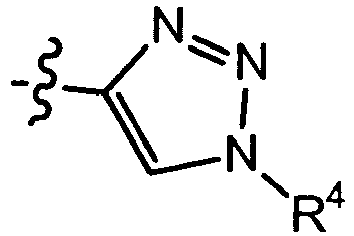


In another embodiment of the present invention, R3 is selected from the group consisting of 4-(1-benzyl-1,2,3-triazolyl), 1-(4-(methylaminomethyl-1,2,3-triazolyl), 1-(4-hydroxy-1,2,3-triazolyl), 1-(4-cyclopropyl-1,2,3-triazolyl), 1-(4-(methoxymethyl)-1,2,3-triazolyl), 1-(4-(dimethylaminomethyl)-1,2,3-triazolyl), 1-(4-(3-fluorophenyl)-1,2,3-triazolyl), 1-(4-(hydroxymethyl)-1,2,3-triazolyl), 1-(4-(ethoxycarbonyl)-1,2,3-triazolyl), 1-(4-(2-(1-methyl-imidazolyl))-1,2,3-triazolyl) and 1-(4-(3-pyridyl)-1,2,3-triazolyl).
In an embodiment of the present invention, R3 is 4-(1-benzyl-1,2,3-triazolyl). In another embodiment of the present invention, R3 is selected from the group consisting of 1-(4-(methylaminomethyl-1,2,3-triazolyl), 1-(4-hydroxy-1,2,3-triazolyl), 1-(4-cyclopropyl-1,2,3-triazolyl), 1-(4-(methoxymethyl)-1,2,3-triazolyl), 1-(4-(dimethylaminomethyl)-1,2,3-triazolyl), 1-(4-(3-fluorophenyl)-1,2,3-triazolyl), 1-(4-(hydroxymethyl)-1,2,3-triazolyl), 1-(4-(ethoxycarbonyl)-1,2,3-triazolyl), 1-(4-(2-(1-methyl-imidazolyl))-1,2,3-triazolyl) and 1-(4-(3-pyridyl)-1,2,3-triazolyl).
In another embodiment of the present invention, R3 is selected from the group consisting of 1-(4-(methylaminomethyl-1,2,3-triazolyl), 1-(4-hydroxy-1,2,3-triazolyl), 1-(4-cyclopropyl-1,2,3-triazolyl), 1-(4-(methoxymethyl)-1,2,3-triazolyl), 1-(4-(dimethylaminomethyl)-1,2,3-triazolyl), 1-(4-(3-fluorophenyl)-1,2,3-triazolyl), 1-(4-(hydroxymethyl)-1,2,3-triazolyl), 1-(4-(2-(1-methyl-imidazolyl))-1,2,3-triazolyl) and 1-(4-(3-pyridyl)-1,2,3-triazolyl). In another embodiment of the present invention, R3 is selected from the group consisting of 1-(4-(methylaminomethyl-1,2,3-triazolyl), 1-(4-hydroxy-1,2,3-triazolyl), 1-(4-(methoxymethyl)-1,2,3-triazolyl), 1-(4-(dimethylaminomethyl)-1,2,3-triazolyl) and 1-(4-(3-fluorophenyl)-1,2,3-triazolyl). In another embodiment of the present invention, R3 is selected from the group consisting of 1-(4-(methylaminomethyl-1,2,3-triazolyl) and 1-(4-(methoxymethyl)-1,2,3-triazolyl).
In an embodiment of the present invention, R0 is selected from the group consisting of -CCH, hydroxy, -N3, -O-C(O)-C1-2alkyl, -O-SO2-C1-2alkyl and -O-(2-tetrahydropyranyl). In another embodiment of the present invention, R0 is selected from the group consisting of -CCH, -OH, -N3, -O-C(O)-CH3, -O-SO2-CH3 and -O-(2-tetrahydrodpyranyl). In another embodiment of the present invention, R0 is selected from the group consisting of -OH, -N3, -O-C(O)-CH3 and -O-(2-tetrahydrodpyranyl). In another embodiment of the present invention, R0 is -OH. - Additional embodiments of the present invention, include those wherein the substituents selected for one or more of the variables defined herein (i.e. R1, R2, A1, R3, R4 and R5 are independently selected to be any individual substituent or any subset of substituents selected from the complete list as defined herein.
In another embodiment of the present invention is any single compound or subset of compounds selected from the representative compounds listed in Table 1, below.
Representative compounds of the present invention are as listed in Table 1 below. Unless otherwise noted, wherein a stereogenic center is present in the listed compound, as denoted by the (*) in the structure at the top of the table, the compound was prepared as a mixture of stereo-configurations. Wherein the compound was prepared with one stereoisomer in excess, the S and R designations are intended to indicate which stereoisomer was prepared in enantiomeric excess. Unless otherwise indicated, the exact stereo-configuration (e.g. the optical rotation) of the center has not been determined.Table 1: Representative Compounds of Formula (I) 
ID No. Stereo (*) A1 R3 8 S -CH2CH2- 4-(1-benzyl-1,2,3-triazolyl) 20 R -CH2CH2- 1-(4-(methyl-amino-methyl)-1,2,3-triazolyl) 21 S -CH2CH2- 1-(4-(methyl-amino-methyl)-1,2,3-triazolyl) 22 R -CH2CH2- 1-(4-hydroxy-1,2,3-triazolyl) 23 S -CH2CH2- 1-(4-hydroxy-1,2,3-triazolyl) 24 R -CH2CH2- 1-(4-cyclopropyl-1,2,3-triazolyl) 25 S -CH2CH2- 1-(4-cyclopropyl-1,2,3-triazolyl) 26 R -CH2CH2- 1-(4-(methoxy-methyl)-1,2,3-triazolyl) 27 S -CH2CH2- 1-(4-(methoxy-methyl)-1,2,3-triazolyl) 28 R -CH2CH2- 1-(4-(dimethyl-amino-methyl)-1,2,3-triazolyl) 29 S -CH2CH2- 1-(4-(dimethyl-amino-methyl)-1,2,3-triazolyl) 30 S -CH2CH2CH2- 1-(4-(3-fluoro-phenyl)-1,2,3-triazolyl) 31 R -CH2CH2CH2- 1-(4-(3-fluoro-phenyl)-1,2,3-triazolyl) 32 S -CH2CH2CH2- 1-(4-(hydroxy-methyl)-1,2,3-triazolyl) 33 R -CH2CH2CH2- 1-(4-(hydroxy-methyl)-1,2,3-triazolyl) 34 S -CH2CH2CH2- 1-(4-(methyl-amino-methyl)-1,2,3-triazolyl) 35 R -CH2CH2CH2- 1-(4-(methyl-amino-methyl)-1,2,3-triazolyl) 36 S -CH2CH2CH2- 1-(4-(ethoxy-carbonyl)-1,2,3-triazolyl) 37 R -CH2CH2CH2- 1-(4-(ethoxy-carbonyl)-1,2,3-triazolyl) 38 R -CH2CH2- 1-(4-(5-(1-methyl-imidazolyl))-1,2,3-triazolyl) 39 S -CH2CH2- 1-(4-(5-(1-methyl-imidazolyl))-1,2,3-triazolyl) 40 R -CH2CH2- 1-(4-(3-pyridyl)-1,2,3-triazolyl) 41 S -CH2CH2- 1-(4-(3-pyridyl)-1,2,3-triazolyl) - Representative compounds of formula (II), intermediates in the synthesis of the compounds of formula (I) are as listed in Table 2 below.
Table 2: Representative Compounds of Formula (II) 
ID No. Stereo (*) A1 R0 1 S -CH2CH2- -CCH 9 R -CH2CH2- -OH 10 S -CH2CH2- -O-SO2-CH3 11 R -CH2CH2- -O-SO2-CH3 12 S -CH2CH2- -O-C(O)-CH3 13 S -CH2CH2- -OH 14 S -CH2CH2CH2- -N3 15 S -CH2CH2CH2- -O-(2-tetrahydropyranyl) 16 R -CH2CH2CH2- -N3 17 R -CH2CH2- -O-(2-tetrahydropyranyl) 18 S -CH2CH2- -N3 19 R -CH2CH2- -N3 - As used herein, "halogen" shall mean chlorine, bromine, fluorine and iodine.
As used herein, the term "alkyl" whether used alone or as part of a substituent group, include straight and branched chains. For example, alkyl radicals include methyl, ethyl, propyl, isopropyl, butyl, isobutyl, sec-butyl, t-butyl, pentyl and the like. Unless otherwise noted, "C1-4 " when used with alkyl means a carbon chain composition of 1-4 carbon atoms. - As used herein, unless otherwise noted, the term "cycloalkyl" shall mean any stable 3-8 membered monocyclic, saturated ring system, for example cyclopropyl, cyclobutyl, cyclopentyl, cyclohexyl, cycloheptyl and cyclooctyl.
When a particular group is "substituted" (e.g., alkyl, cycloalkyl, aryl, heteroaryl, heterocycloalkyl, etc.), that group may have one or more substituents, preferably from one to five substituents, more preferably from one to three substituents, most preferably from one to two substituents, independently selected from the list of substituents.
With reference to substituents, the term "independently" means that when more than one of such substituents is possible, such substituents may be the same or different from each other.
As used herein, the notation "*" shall denote the presence of a stereogenic center.
As used herein, unless otherwise noted, the term "isolated form" shall mean that the compound is present in a form which is separate from any solid mixture with another compound(s), solvent system or biological environment.
Where the compounds according to this invention have at least one chiral center, they may accordingly exist as enantiomers. Where the compounds possess two or more chiral centers, they may additionally exist as diastereomers. It is to be understood that all such isomers and mixtures thereof are encompassed within the scope of the present invention. Preferably, wherein the compound is present as an enantiomer, the enantiomer is present at an enantiomeric excess of greater than or equal to about 80%, more preferably, at an enantiomeric excess of greater than or equal to about 90%, more preferably still, at an enantiomeric excess of greater than or equal to about 95%, more preferably still, at an enantiomeric excess of greater than or equal to about 98%, most preferably, at an enantiomeric excess of greater than or equal to about 99%. Similarly, wherein the compound is present as a diastereomer, the diastereomer is present at an diastereomeric excess of greater than or equal to about 80%, more preferably, at an diastereomeric excess of greater than or equal to about 90%, more preferably still, at an diastereomeric excess of greater than or equal to about 95%, more preferably still, at an diastereomeric excess of greater than or equal to about 98%, most preferably, at an diastereomeric excess of greater than or equal to about 99%.
One skilled in the art will further recognize that in the compounds of formula (I), wherein the compound is present in a mixture of about equal amounts of both enantiomers at the "*" position, then the compound is said to be present as a racemate or a racemic mixture.
Furthermore, some of the crystalline forms for the compounds of the present invention may exist as polymorphs and as such are intended to be included in the present invention. In addition, some of the compounds of the present invention may form solvates with water (i.e., hydrates) or common organic solvents, and such solvates are also intended to be encompassed within the scope of this invention.
Under standard nomenclature used throughout this disclosure, the terminal portion of the designated side chain is described first, followed by the adjacent functionality toward the point of attachment. Thus, for example, a "phenylC1-C6alkylaminocarbonylC1-C6alkyl" substituent refers to a group of the formula
CBz = Benzyloxycarbonyl DAMGO = Tyr-D-Ala-Gly-N-methyl-Phe-Gly-ol DIPEA = Diisopropylethylamine DMF = N,N-Dimethylformamide EDTA = Ethylenediaminetetraacetic acid EtOH = Ethanol Fmoc = 9-Fluorenylmethoxycarbonyl HEPES = 4-(2-Hydroxyethyl)-1-piperizine ethane sulfonic acid KO-t-Bu = Potassium t-butoxide LiHMDS = Lithium bis(trimethylsilyl)amide MeCN = Acetonitrile MeOH = Methanol NaHMDS = Sodium bis(trimethylsilyl)amide NMP = N-methyl-2-pyrrolidinone PEI = Polyethyleneimine t-BOC or Boc = Tert-Butoxycarbonyl Tf = Triflyl (-SO2-CF3) Tea = Triethylamine TFA = Trifluoroacetic Acid THF = Tetrahydrofuran TMS = Trimethylsilyl Tris HCl = Tris[hydroxymethyl]aminomethyl hydrochloride - The term "subject" as used herein, refers to an animal, preferably a mammal, most preferably a human, who has been the object of treatment, observation or experiment. Preferably, the subject has experienced and / or exhibited at least one symptom of the disease or disorder to be treated and / or prevented.
The term "therapeutically effective amount" as used herein, means that amount of active compound or pharmaceutical agent that elicits the biological or medicinal response in a tissue system, animal or human that is being sought by a researcher, veterinarian, medical doctor or other clinician, which includes alleviation of the symptoms of the disease or disorder being treated.
As used herein, the term "composition" is intended to encompass a product comprising the specified ingredients in the specified amounts, as well as any product which results, directly or indirectly, from combinations of the specified ingredients in the specified amounts. - One skilled in the art will recognize that, where not otherwise specified, the reaction step(s) is performed under suitable conditions, according to known methods, to provide the desired product.
One skilled in the art will recognize that wherein a reaction step of the present invention may be carried out in a variety of solvents or solvent systems, said reaction step may also be carried out in a mixture of the suitable solvents or solvent systems.
One skilled in the art will recognize that, in the specification and claims as presented herein, wherein a reagent or reagent class/type (e.g. base, solvent, etc.) is recited in more than one step of a process, the individual reagents are independently selected for each reaction step and may be the same of different from each other. For example wherein two steps of a process recite an organic or inorganic base as a reagent, the organic or inorganic base selected for the first step may be the same or different than the organic or inorganic base of the second step.
To provide a more concise description, some of the quantitative expressions given herein are not qualified with the term "about". It is understood that whether the term "about" is used explicitly or not, every quantity given herein is meant to refer to the actual given value, and it is also meant to refer to the approximation to such given value that would reasonably be inferred based on the ordinary skill in the art, including approximations due to the experimental and/or measurement conditions for such given value.
As used herein, unless otherwise noted, the term "leaving group" shall mean a charged or uncharged atom or group which departs during a substitution or displacement reaction. Suitable examples include, Br, Cl, I, mesylate, tosylate, and the like.
As used herein, unless otherwise noted, the term "nitrogen protecting group" shall mean a group which may be attached to a nitrogen atom to protect said nitrogen atom from participating in a reaction and which may be readily removed following the reaction. Suitable nitrogen protecting groups include, carbamates - groups of the formula -C(O)O-R wherein R is for example methyl, ethyl, t-butyl, benzyl, phenylethyl, CH2=CH-CH2-, and the like; amides - groups of the formula -C(O)-R' wherein R' is for example methyl, phenyl, trifluoromethyl, and the like; N-sulfonyl derivatives - groups of the formula -SO2-R" wherein R" is for example tolyl, phenyl, trifluoromethyl, 2,2,5,7,8-pentamethylchroman-6-yl-, 2,3,6-trimethyl-4-methoxybenzene, and the like. Other suitable nitrogen protecting groups may be found in texts such as T.W. Greene & P.G.M. Wuts, Protective Groups in Organic Synthesis, John Wiley & Sons, 1991.
Where the processes for the preparation of the compounds according to the invention give rise to mixture of stereoisomers, these isomers may be separated by conventional techniques such as preparative chromatography. The compounds may be prepared in racemic form, or individual enantiomers may be prepared either by enantiospecific synthesis or by resolution. The compounds may, for example, be resolved into their component enantiomers by standard techniques, such as the formation of diastereomeric pairs by salt formation with an optically active acid, such as (-)-di-p-toluoyl-D-tartaric acid and/or (+)-di-p-toluoyl-L-tartaric acid followed by fractional crystallization and regeneration of the free base. The compounds may also be resolved by formation of diastereomeric esters or amides, followed by chromatographic separation and removal of the chiral auxiliary. Alternatively, the compounds may be resolved using a chiral HPLC column.
During any of the processes for preparation of the compounds of the present invention, it may be necessary and/or desirable to protect sensitive or reactive groups on any of the molecules concerned. This may be achieved by means of conventional protecting groups, such as those described in Protective Groups in Organic Chemistry, ed. J.F.W. McOmie, Plenum Press, 1973; and T.W. Greene & P.G.M. Wuts, Protective Groups in Organic Synthesis, John Wiley & Sons, 1991. The protecting groups may be removed at a convenient subsequent stage using methods known from the art.
For use in medicine, the salts of the compounds of this invention refer to non-toxic "pharmaceutically acceptable salts." Other salts may, however, be useful in the preparation of compounds according to this invention or of their pharmaceutically acceptable salts. Suitable pharmaceutically acceptable salts of the compounds include acid addition salts which may, for example, be formed by mixing a solution of the compound with a solution of a pharmaceutically acceptable acid such as hydrochloric acid, sulfuric acid, fumaric acid, maleic acid, succinic acid, acetic acid, benzoic acid, citric acid, tartaric acid, carbonic acid or phosphoric acid. Furthermore, where the compounds of the invention carry an acidic moiety, suitable pharmaceutically acceptable salts thereof may include alkali metal salts, e.g., sodium or potassium salts; alkaline earth metal salts, e.g., calcium or magnesium salts; and salts formed with suitable organic ligands, e.g., quaternary ammonium salts. Thus, representative pharmaceutically acceptable salts include the following: - acetate, benzenesulfonate, benzoate, bicarbonate, bisulfate, bitartrate, borate, bromide, calcium edetate, camsylate, carbonate, chloride, clavulanate, citrate, dihydrochloride, edetate, edisylate, estolate, esylate, fumarate, gluceptate, gluconate, glutamate, glycollylarsanilate, hexylresorcinate, hydrabamine, hydrobromide, hydrochloride, hydroxynaphthoate, iodide, isothionate, lactate, lactobionate, laurate, malate, maleate, mandelate, mesylate, methylbromide, methylnitrate, methylsulfate, mucate, napsylate, nitrate, N-methylglucamine ammonium salt, oleate, pamoate (embonate), palmitate, pantothenate, phosphate/diphosphate, polygalacturonate, salicylate, stearate, sulfate, subacetate, succinate, tannate, tartrate, teoclate, tosylate, triethiodide and valerate.
- Representative acids and bases which may be used in the preparation of pharmaceutically acceptable salts include the following:
- acids including acetic acid, 2,2-dichloroactic acid, acylated amino acids, adipic acid, alginic acid, ascorbic acid, L-aspartic acid, benzenesulfonic acid, benzoic acid, 4-acetamidobenzoic acid, (+)-camphoric acid, camphorsulfonic acid, (+)-(1S)-camphor-10-sulfonic acid, capric acid, caproic acid, caprylic acid, cinnamic acid, citric acid, cyclamic acid, dodecylsulfuric acid, ethane-1,2-disulfonic acid, ethanesulfonic acid, 2-hydrocy-ethanesulfonic acid, formic acid, fumaric acid, galactaric acid, gentisic acid, glucoheptonic acid, D-gluconic acid, D-glucoronic acid, L-glutamic acid, α-oxo-glutaric acid, glycolic acid, hipuric acid, hydrobromic acid, hydrochloric acid, (+)-L-lactic acid, (±)-DL-lactic acid, lactobionic acid, maleic acid, (-)-L-malic acid, malonic acid, (±)-DL-mandelic acid, methanesulfonic acid, naphthalene-2-sulfonic acid, naphthalene-1,5-disulfonic acid, 1-hydroxy-2-naphthoic acid, nicotinc acid, nitric acid, oleic acid, orotic acid, oxalic acid, palmitric acid, pamoic acid, phosphoric acid, L-pyroglutamic acid, salicylic acid, 4-amino-salicylic acid, sebaic acid, stearic acid, succinic acid, sulfuric acid, tannic acid, (+)-L-tartaric acid, thiocyanic acid, p-toluenesulfonic acid and undecylenic acid; and
- bases including ammonia, L-arginine, benethamine, benzathine, calcium hydroxide, choline, deanol, diethanolamine, diethylamine, 2-(diethylamino)-ethanol, ethanolamine, ethylenediamine, N-methyl-glucamine, hydrabamine, 1H-imidazole, L-lysine, magnesium hydroxide, 4-(2-hydroxyethyl)-morpholine, piperazine, potassium hydroxide, 1-(2-hydroxyethyl)-pyrrolidine, secondary amine, sodium hydroxide, triethanolamine, tromethamine and zinc hydroxide.
- Compounds of formula (II) wherein R0 is selected from the group consisting of -CCH, halogen, hydroxy, -N3, -OC(O)-C1-4alkyl -OSO2-C1-4alkyl and -O-(2-tetrahydropyranyl) are intermediates in the synthesis of compounds of formula (I) wherein R3 is selected from the group consisting of

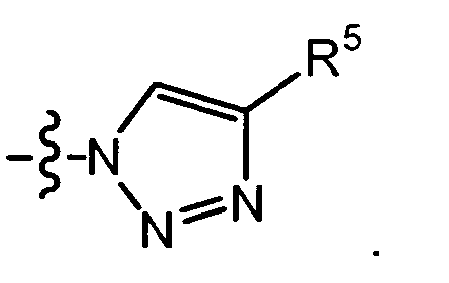
- Compounds of formula (I) wherein R3 is


- Accordingly, a suitably substituted compound of formula (V), a known compound or compound prepared according to known methods, is reacted with a suitably substituted compound of formula (VI), wherein X1 is a suitably selected leaving group such as Cl, Br, I, tosylate, mesylate, and the like, preferably tosylate, and wherein PG1 is a suitably selected protecting group such as trimethylsilyl, triethylsilyl, and the like, preferably trimethylsilyl, in the presence of a base such as NaH, KO-t-Bu, K2CO3, NaHMDS, LiHMDS, and the like, in an organic solvent such as NMP, DMF, THF, and the like, to yield the corresponding compound of formula (VII).
The compound of formula (VII) is de-protected according to known methods, to yield the corresponding compound of formula (VIII). For example wherein PG1 is trimethylsilyl or triethylsilyl, the compound of formula (VII) is de-protected by reacting with a base such as K2CO3, NaOH, LiOH, KF, and the like, in an organic solvent such as MeOH, THF, H2O, and the like, to yield the corresponding compound of formula (VIII).
One skilled in the art will recognize that the compound of formula (V) may alternatively be reacted with a compound of formula (VI) wherein PG1 is hydrogen to yield the corresponding compound of formula (VIII) without having to go through the de-protection step.
The compound of formula (VIII) is reacted with a suitably substituted azide, a compound of formula (IX), a known compound or compound prepared by known methods, in the presence of a copper (I) source such as Cul, CuOTf, and the like, in the presence of a base, preferably an organic base, such as 2,6-lutidine, triethylamine, diisopropylethylamine, and the like, in an organic solvent such as water, MeOH, EtOH, MeCN, and the like, at a temperature in the range of from about 30°C to about 120°C, preferably at a temperature in the range of from about room temperature to about 40°C, to yield the corresponding compound of formula (Ia). - Compounds of formula (I) wherein R3 is


- Compounds of formula (I) wherein R3 is


- Compounds of formula (I) wherein R3 is


The compound of formula (XIII) is reacted with a suitably substituted acetylene, a compound of formula (XIV), in the presence of a copper (I) source such as Cul, CuOTf, and the like, in the presence of a base such as 2,6-lutidine, TEA, DIPEA, and the like, in an organic solvent such as water, MeOH, EtOH, MeCN, and the like, at a temperature in the range of from about 30°C to about 120°C, to yield the corresponding compound of formula (Ib). - Compounds of formula (I) wherein R3 is


The compound of formula (XVI) is de-protected according to known methods to yield the corresponding compound of formula (XVII). For example, the compound of formula (XVI) may be de-protected by reacting with a base such as K2CO3, NaOH, LiOH, KF, and the like, or an acid such as HCl, TFA, and the like, in an organic solvent such as MeOH, THF, H2O, and the like, to yield the corresponding compound of formula (XVII).
The compound of formula (XVII) is reacted with a suitably selected reagent which can introduce a nucleophilic leaving group such as methylsulfonyl chloride, para-toluenesulfonyl chloride, phosphorous tribromide, and the like, preferably, methylsulfonyl chloride, optionally in the presence of a base such as K2CO3, triethylamine, pyridine, and the like, in an organic solvent such as dichloromethane, THF, diethyl ether, and the like, to yield the corresponding compound of formula (XVIII), wherein Q is the corresponding nucleophilic leaving group. For example when the reagent, which can introduce a nucleophilic leaving group, is methylsulfonyl chloride, then Q in the compound of formula (XVIII) is -O-SO2-CH3. Similarly, when the reagent, which can introduce a nucleophilic leaving group, is para-toluenesulfonyl chloride, then Q in the compound of formula (XVIII) is -O-SO2- (p-tolyl).
The compound of formula (XVIII) is reacted with a source of azide (N3) such as sodium azide, triflyl azide, and the like, in an organic solvent such as dichloromethane, methanol, DMF, and the like, at a temperature in the range of from about 30°C to about 120°C, to yield the corresponding compound of formula (XIII).
The compound of formula (XIII) is reacted with a suitably substituted acetylene, a compound of formula (XIV), in the presence of a copper (I) source such as Cul, CuOTf, and the like, in the presence of a base such as 2,6-lutidine, triethylamine, diisopropylethylamine, and the like, in an organic solvent such as water, MeOH, EtOH, MeCN, and the like, at a temperature in the range of from about 30°C to about 120°C, to yield the corresponding compound of formula (Ib). - One skilled in the art will recognize that compounds of formula (II) wherein R0 is selected from the group consisting of -CCH, -O-C(O)-C1-4alkyl, - O-SO2-C1-4alkyl and -O-(2-tetrahydropyranyl) are intermediates in the preparation of compounds of formula (I) wherein R3 is selected from the group consisting of


- One skilled in the art will recognize that in any of the processes outlined above, the N atom at the 8 position of the 1,3,8-triazaspiro[4.5]decan-4-one core may be optionally protected, according to known methods, with a suitably selected nitrogen protecting group as BOC, Fmoc, CBz, benzoyl, benzhydryl, and the like. One skilled in the art will further recognize that when such a protecting group is utilized, said protecting group is removed, according to known methods, at the appropriate point in the synthesis of the corresponding compound of formula (Ia) or compound of formula (Ib).
One skilled in the art will further recognize that the processes as described herein are regioselective (i.e. the processes as described herein yields the desired regioisomer of the 1,2,3-triazole in excess over the undesired regioisomer).
One skilled in the art will further recognize that wherein the processes as described in Schemes 1-5 above, compound of formula (V) is present in an enantiomeric excess (at the "*" position), then the product of formula (I) is therefore prepared as the correspond enantiomer. - The present invention further comprises pharmaceutical compositions containing one or more compounds of formula (I) with a pharmaceutically acceptable carrier. Pharmaceutical compositions containing one or more of the compounds of the invention described herein as the active ingredient can be prepared by intimately mixing the compound or compounds with a pharmaceutical carrier according to conventional pharmaceutical compounding techniques. The carrier may take a wide variety of forms depending upon the desired route of administration (e.g., oral, parenteral). Thus for liquid oral preparations such as suspensions, elixirs and solutions, suitable carriers and additives include water, glycols, oils, alcohols, flavoring agents, preservatives, stabilizers, coloring agents and the like; for solid oral preparations, such as powders, capsules and tablets, suitable carriers and additives include starches, sugars, diluents, granulating agents, lubricants, binders, disintegrating agents and the like. Solid oral preparations may also be coated with substances such as sugars or be enteric-coated so as to modulate major site of absorption. For parenteral administration, the carrier will usually consist of sterile water and other ingredients may be added to increase solubility or preservation. Injectable suspensions or solutions may also be prepared utilizing aqueous carriers along with appropriate additives.
To prepare the pharmaceutical compositions of this invention, one or more compounds of the present invention as the active ingredient is intimately admixed with a pharmaceutical carrier according to conventional pharmaceutical compounding techniques, which carrier may take a wide variety of forms depending of the form of preparation desired for administration, e.g., oral or parenteral such as intramuscular. In preparing the compositions in oral dosage form, any of the usual pharmaceutical media may be employed. Thus, for liquid oral preparations, such as for example, suspensions, elixirs and solutions, suitable carriers and additives include water, glycols, oils, alcohols, flavoring agents, preservatives, coloring agents and the like; for solid oral preparations such as, for example, powders, capsules, caplets, gelcaps and tablets, suitable carriers and additives include starches, sugars, diluents, granulating agents, lubricants, binders, disintegrating agents and the like. Because of their ease in administration, tablets and capsules represent the most advantageous oral dosage unit form, in which case solid pharmaceutical carriers are obviously employed. If desired, tablets may be sugar coated or enteric coated by standard techniques. For parenterals, the carrier will usually comprise sterile water, through other ingredients, for example, for purposes such as aiding solubility or for preservation, may be included. Injectable suspensions may also be prepared, in which case appropriate liquid carriers, suspending agents and the like may be employed. The pharmaceutical compositions herein will contain, per dosage unit, e.g., tablet, capsule, powder, injection, teaspoonful and the like, an amount of the active ingredient necessary to deliver an effective dose as described above. The pharmaceutical compositions herein will contain, per unit dosage unit, e.g., tablet, capsule, powder, injection, suppository, teaspoonful and the like, of from about 0.1-1000 mg or any range therein, and may be given at a dosage of from about 0.01-300 mg/kg/day, or any range therein, preferably from about 0.5-50 mg/kg/day, or any range therein. The dosages, however, may be varied depending upon the requirement of the patients, the severity of the condition being treated and the compound being employed. The use of either daily administration or post-periodic dosing may be employed.
Preferably these compositions are in unit dosage forms from such as tablets, pills, capsules, powders, granules, sterile parenteral solutions or suspensions, metered aerosol or liquid sprays, drops, ampoules, autoinjector devices or suppositories; for oral parenteral, intranasal, sublingual or rectal administration, or for administration by inhalation or insufflation. Alternatively, the composition may be presented in a form suitable for once-weekly or once-monthly administration; for example, an insoluble salt of the active compound, such as the decanoate salt, may be adapted to provide a depot preparation for intramuscular injection. For preparing solid compositions such as tablets, the principal active ingredient is mixed with a pharmaceutical carrier, e.g. conventional tableting ingredients such as corn starch, lactose, sucrose, sorbitol, talc, stearic acid, magnesium stearate, dicalcium phosphate or gums, and other pharmaceutical diluents, e.g. water, to form a solid preformulation composition containing a homogeneous mixture of a compound of the present invention, or a pharmaceutically acceptable salt thereof. When referring to these preformulation compositions as homogeneous, it is meant that the active ingredient is dispersed evenly throughout the composition so that the composition may be readily subdivided into equally effective dosage forms such as tablets, pills and capsules. This solid preformulation composition is then subdivided into unit dosage forms of the type described above containing from 0.1 to about 500 mg of the active ingredient of the present invention. The tablets or pills of the novel composition can be coated or otherwise compounded to provide a dosage form affording the advantage of prolonged action. For example, the tablet or pill can comprise an inner dosage and an outer dosage component, the latter being in the form of an envelope over the former. The two components can be separated by an enteric layer, which serves to resist disintegration in the stomach and permits the inner component to pass intact into the duodenum or to be delayed in release. A variety of material can be used for such enteric layers or coatings, such materials including a number of polymeric acids with such materials as shellac, cetyl alcohol and cellulose acetate.
The liquid forms in which the novel compositions of the present invention may be incorporated for administration orally or by injection include, aqueous solutions, suitably flavored syrups, aqueous or oil suspensions, and flavored emulsions with edible oils such as cottonseed oil, sesame oil, coconut oil or peanut oil, as well as elixirs and similar pharmaceutical vehicles. Suitable dispersing or suspending agents for aqueous suspensions, include synthetic and natural gums such as tragacanth, acacia, alginate, dextran, sodium carboxymethylcellulose, methylcellulose, polyvinyl-pyrrolidone or gelatin.
The method of treating disorders in which compounds of the present invention are used may also be carried out using a pharmaceutical composition comprising any of the compounds as defined herein and a pharmaceutically acceptable carrier. The pharmaceutical composition may contain between about 0.01 mg and 1000 mg of the compound, or any range therein; preferably about 10 to 500 mg of the compound, and may be constituted into any form suitable for the mode of administration selected. Carriers include necessary and inert pharmaceutical excipients, including, binders, suspending agents, lubricants, flavorants, sweeteners, preservatives, dyes, and coatings. Compositions suitable for oral administration include solid forms, such as pills, tablets, caplets, capsules (each including immediate release, timed release and sustained release formulations), granules, and powders, and liquid forms, such as solutions, syrups, elixirs, emulsions, and suspensions. Forms useful for parenteral administration include sterile solutions, emulsions and suspensions. - Advantageously, compounds of the present invention may be administered in a single daily dose, or the total daily dosage may be administered in divided doses of two, three or four times daily. Furthermore, compounds for the present invention can be administered in intranasal form via topical use of suitable intranasal vehicles, or via transdermal skin patches well known to those of ordinary skill in that art. To be administered in the form of a transdermal delivery system, the dosage administration will, of course, be continuous rather than intermittent throughout the dosage regimen.
For instance, for oral administration in the form of a tablet or capsule, the active drug component can be combined with an oral, non-toxic pharmaceutically acceptable inert carrier such as ethanol, glycerol, water and the like. Moreover, when desired or necessary, suitable binders; lubricants, disintegrating agents and coloring agents can also be incorporated into the mixture. Suitable binders include, starch, gelatin, natural sugars such as glucose or beta-lactose, corn sweeteners, natural and synthetic gums such as acacia, tragacanth or sodium oleate, sodium stearate, magnesium stearate, sodium benzoate, sodium acetate, sodium chloride and the like. Disintegrators include, starch, methylcellulose, agar, bentonite, xanthan gum and the like.
The liquid forms in suitably flavored suspending or dispersing agents such as the synthetic and natural gums, for example, tragacanth, acacia, methylcellulose and the like. For parenteral administration, sterile suspensions and solutions are desired. Isotonic preparations, which generally contain suitable preservatives, are employed when intravenous administration is desired.
The compound of the present invention can also be administered in the form of liposome delivery systems, such as small unilamellar vesicles, large unilamellar vesicles, and multilamellar vesicles. Liposomes can be formed from a variety of phospholipids, such as cholesterol, stearylamine or phophatidylcholines.
Compounds of the present invention may also be delivered by the use of monoclonal antibodies as individual carriers to which the compound molecules are coupled. The compounds of the present invention may also be coupled with soluble polymers as targetable drug carriers. Such polymers can include polyvinylpyrrolidone, pyran copolymer, polyhydroxypropylmethacrylamidephenol, polyhydroxy-ethylaspartamidephenol, or polyethyleneoxidepolylysine substituted with palmitoyl residue. Furthermore, the compounds of the present invention may be coupled to a class of biodegradable polymers useful in achieving controlled release of a drug, for example, polylactic acid, polyepsilon caprolactone, polyhydroxy butyric acid, polyorthoesters, polyacetals, polydihydropyrans, polycyanoacrylates and cross-linked or amphipathic block copolymers of hydrogels. - To prepare a pharmaceutical composition of the present invention, a compound of formula (I) as the active ingredient is intimately admixed with a pharmaceutical carrier according to conventional pharmaceutical compounding techniques, which carrier may take a wide variety of forms depending of the form of preparation desired for administration (e.g. oral or parenteral). Suitable pharmaceutically acceptable carriers are well known in the art. Descriptions of some of these pharmaceutically acceptable carriers may be found in The Handbook of Pharmaceutical Excipients, published by the American Pharmaceutical Association and the Pharmaceutical Society of Great Britain.
Methods of formulating pharmaceutical compositions have been described in numerous publications such as Pharmaceutical Dosage Forms: Tablets, Second Edition, Revised and Expanded, Volumes 1-3, edited by Lieberman et al; Pharmaceutical Dosage Forms: Parenteral Medications, Volumes 1-2, edited by Avis et al; and Pharmaceutical Dosage Forms: Disperse Systems, Volumes 1-2, edited by Lieberman et al; published by Marcel Dekker, Inc. - Compounds of this invention may be administered in any of the foregoing compositions and according to dosage regimens established in the art whenever treatment of disorders as described in the methods herein is required.
The daily dosage of the products may be varied over a wide range from 0.01 to 1,000 mg per adult human per day, or any range therein. For oral administration, the compositions are preferably provided in the form of tablets containing, 0.01, 0.05, 0.1, 0.5, 1.0, 2.5, 5.0, 10.0, 15.0, 25.0, 50.0, 100, 150, 200, 250 and 500 milligrams of the active ingredient for the symptomatic adjustment of the dosage to the patient to be treated. An effective amount of the drug is ordinarily supplied at a dosage level of from about 0.01 mg/kg to about 300 mg/kg of body weight per day, or any range therein. Preferably, the range is from about 0.5 to about 50.0 mg/kg of body weight per day, or any range therein. More preferably, from about 1.0 to about 5.0 mg/kg of body weight per day, or any range therein. The compounds may be administered on a regimen of 1 to 4 times per day.
Optimal dosages to be administered may be readily determined by those skilled in the art, and will vary with the particular compound used, the mode of administration, the strength of the preparation, the mode of administration, and the advancement of the disease condition. In addition, factors associated with the particular patient being treated, including patient age, weight, diet and time of administration, will result in the need to adjust dosages.
One skilled in the art will recognize that, both in vivo and in vitro trials using suitable, known and generally accepted cell and / or animal models are predictive of the ability of a test compound to treat or prevent a given disorder.
One skilled in the art will further recognize that human clinical trails including first-in-human, dose ranging and efficacy trials, in healthy patients and / or those suffering from a given disorder, may be completed according to methods well known in the clinical and medical arts. - In the Examples, which follow, some synthesis products are listed as having been isolated as a residue. It will be understood by one of ordinary skill in the art that the term "residue" does not limit the physical state in which the product was isolated and may include, for example, a solid, an oil, a foam, a gum, a syrup, and the like.
-

1H NMR (400 MHz, CDCl3) δ 7.68-7.66 (1H, m), 7.61-7.59 (1H, m), 7.54-7.50 (2H, m), 7.46-7.42 (1H, m), 7.27-7.25 (1H, m), 7.05-7.00 (2H, m), 6.98-6.94 (2H, m), 4.97-4.94 (1H, m), 4.75-4.73 (2H, m), 3.58-3.49 (3H, m), 3.39-3.32 (1H, m), 3.15-3.03 (2H, m), 2.82-2.79 (1H, m), 2.54-2.50 (2H, m), 2.44-2.36 (2H, m), 2.29-2.21 (1H, m), 1.99-1.97 (1H, m), 1.78-1.74 (1H, m), 1.68-1.63 (1H, m)
MS (ES+) m/z 454.2 (M + H)+. - 8-(S)-Acenaphthen-1-yl-3-but-3-ynyl-1-(4-fluoro-phenyl)-1,3,8-triaza-spiro[4.5]decan-4-one (20 mg, 0.044 mmol) and benzyl azide (5.85 mg, 0.044 mmol) were suspended in a 1:1 mixture of ethanol and water (0.3 mL). Sodium ascorbate (0.0044 mmol, 5 µL of a freshly prepared 1.0M solution in water) was added, followed by copper (II) sulfate pentahydrate (0.1 mg, 0.4 µmol in 10 µL of water). The resulting heterogeneous mixture was stirred vigorously for 15 hours at room temperature and then partitioned with water and dichloromethane. The organic layer was washed with brine, dried with Na2SO4, filtered and the solvent evaporated in vacuo to yield a crude oil. The crude oil was purified via flash chromatography (60% ethyl acetate/hexanes) to yield the 8-(S)-acenaphthen-1-yl-3-but-3-ynyl-1-(4-fluoro-phenyl)-1,3,8-triaza-spiro[4.5]decan-4-one as a gum.
1H NMR (400 MHz, CDCl3) δ 7.70-7.68 (1H, m), 7.62-7.60 (1H, m), 7.55-7.43 (3H, m), 7.31 (1H, s), 7.28-7.27 (1H, m), 7.13-7.12 (5H, m), 7.01-6.97 (2H, m), 6.87-6.84 (2H, m), 5.38-5.36 (m, 2H), 4.94-4.91 (1H, m), 4.52-4.51 (2H, m), 3.75-3.67 (2H, m), 3.52-3.47 (1H, m), 3.38-3.31 (1H, m), 3.43-3.02 (2H, t, J = Hz), 3.0-2.89 (2H, m), 2.73-2.70 (1H, m), 2.34-2.25 (2H, m), 2.16-2.09 (1H, m), 1.53-1.35 (2H, m)
MS (ES+) m/z 587.1 (M + H)+. -

- Toluene-4-sulfonic acid 3-azido-propyl ester was prepared as described in Organic Letters 2001, 3 (25), 4091-4094.
3-Bromo-propan-1-ol (5.56 g, 40 mmol) and triethylamine (5.56 g, 55 mmol) were dissolved in dichloromethane. To the reaction mixture was then added, at 0°C, acetyl chloride (3.6 g, 44 mmol) under nitrogen atmosphere and the reaction mixture was then stirred for one hour at 0°C and for 3 hours at room temperature. The reaction mixture was then washed with aqueous 1 N HCl, aqueous 1 N NaOH, dried with Na2SO4, filtered and the solvent evaporated in vacuo to yield acetic acid 3-bromo-propyl ester (7.2 g) which was used in the next step without further purification.
Acetic acid 3-bromo-propyl ester (6.7 g, 37 mmol) was suspended in water (50 mL) and tert-butanol (20 mL). To the resulting mixture was then added sodium azide (2.76 g, 42.6 mmol) and the reaction mixture was heated to reflux for 18 hours, then concentrated to half of its volume. The reaction mixture was partitioned with water and ethyl acetate. The organic layer was washed with water, dried with Na2SO4, filtered and the solvent evaporated in vacuo to yield the acetic acid 3-azido-propyl ester (3.16 g) as an oil which used in the next step without further purification.
Acetic acid 3-azido-propyl ester (3.16 g, 22.1 mmol) was dissolved in water (25 mL) and methanol (25 mL). To the resulting mixture was then added potassium carbonate (3.81 g, 27.6 mmol) and the resulting solution was stirred for 2 hours at room temperature, reduced to a third of its volume, saturated with MgSO4, filtered and partitioned with water and dichloromethane. The organic layer was dried with magnesium sulfate, filtered and transferred into to dry round bottom flask. To the filtrate was then added (3.35 g, 33.1 mmol) and tosyl chloride (4.6 g, 24.3 mmol) and the reaction mixture was stirred at room temperature for 24 hours. The reaction mixture was partitioned with aqueous 1N HCl and dichloromethane. The organic layer was dried with Na2SO4, filtered and the solvent evaporated in vacuo to yield a crude oil. The crude oil was purified via flash chromatography (10% ethyl acetate/hexanes) to yield the toluene-4-sulfonic acid 3-azido-propyl ester (2.03 g) as an oil.
8-(S)-Acenaphthen-1-yl-1-(4-fluoro-phenyl)-1,3,8-triaza-spiro[4.5]decan-4-one (1.0g, 2.5 mmol) was dissolved in THF (12 mL). To the reaction mixture was then added at 0°C sodium hydride (60% in mineral oil, 110 mg, 2.74 mmol) under nitrogen atmosphere and the reaction mixture was stirred at room temperature for 0.5 hour. To the reaction mixture was then added toluene-4-sulfonic acid 3-azido-propyl ester (0.66 g, 2.61 mmol) in THF (2 mL) followed by tetrabutylammonium iodide (0.18 g, 0.5 mmol) and DMF (2 mL). The reaction mixture was then heated at 60°C for 4 hours, for 15 hours at 40°C and then partitioned with water and dichloromethane. The organic layer was washed with brine, dried with Na2SO4, filtered and the solvent evaporated in vacuo to yield a crude oil. The crude oil was purified via flash chromatography (1% methanol/dichloromethane) to yield the 8-(S)-acenaphthen-1-yl-3-(3-azido-propyl)-1-(4-fluoro-phenyl)-1,3,8-triaza-spiro[4.5]decan-4-one (0.94 g) as a foam.
1H NMR (400 MHz, CDCl3) δ 7.69-7.67 (1H, m), 7.61-7.59 (1H, m), 7.53-7.50 (2H, m), 7.46-7.42 (1H, m), 7.28-7.27 (1H, m), 7.06-7.01 (2H, m), 6.97-6.94 (2H, m), 4.97-4.95 (1H, m), 4.62 (2H, s), 3.57-3.50 (2H, m), 3.47 (2H, t, J = 8.0 Hz), 3.37 (2H, t, J = 6.3 Hz), 3.17-3.05 (2H, m), 2.86-2.82 (1H, m), 2.46-2.39 (2H, m), 2.29-2.26 (1H, m), 1.91-1.84 (2H, m), 1.75-1.62 (2H, m)
MS (ES+) m/z 485.1 (M+H)+. -

MS (ES+) m/z 485.1 (M+H)+.
NMR and Mass was the same for the compounds prepared in Example 2 and 3, as they are enantiomer of each other. -

1H NMR (400 MHz, CDCl3) δ 57.68-7.66 (1H, m), 7.61-7.59 (1H, m), 7.52-7.50 (2H, m), 7.46-7.42 (1H, m), 7.27-7.25 (1H, m), 7.04-6.99 (2H, m), 6.97-6.92 (2H, m), 4.97-4.94 (1H, m), 4.73 (2H, s), 4.58 (1H, br s), 3.94-3.90 (1H, m), 3.81-3.76 (1H, m), 3.67-3.47 (5H, m), 3.39-3.29 (1H, m), 3.15-3.04 (2H, m), 2.82-2.79 (1H, m), 2.43-2.36 (2H, m), 2.28-2.21 (1H, m), 1.75-1.71 (2H, m), 1.70-1.62 (2H, m), 1.56-1.46 (4H, m)
MS (ES+) m/z 530.1 (M + H)+. - 8-(R)-Acenaphthen-1-yl-1-(4-fluoro-phenyl)-3-[2-(tetrahydro-pyran-2-yloxy)-ethyl]-1,3,8-triaza-spiro[4.5]decan-4-one (0.735 g, 1.37 mmol) was dissolved in methanol (35 mL). To the reaction mixture was then added aqueous 1N HCl (14mL) and the reaction mixture was stirred at room temperature for 2 hours. The reaction mixture was then concentrated in vacuo and the aqueous layer neutralized with an aqueous saturated solution of sodium carbonate. The resulting solution was partitioned with water and dichloromethane. The organic layer was washed with brine, dried with Na2SO4, filtered and the solvent evaporated in vacuo to yield the 8-(R)-acenaphthen-1-yl-1-(4-fluoro-phenyl)-3-(2-hydroxy-ethyl)-1,3,8-triaza-spiro[4.5]decan-4-one (0.636 g) as a foam.
1H NMR (400 MHz, CDCl3) δ 7.68-7.66 (1H, m), 7.61-7.59 (1H, m), 7.54-7.50 (2H, m), 7.46-7.42 (1H, m), 7.26-7.25 (1H, m), 7.04-6.99 (2H, m), 6.97-6.95 (2H, m), 4.96-4.93 (1H, m), 4.72-4.70 (2H, m), 3.86-3.83 (2H, m), 3.56-3.49 (3H, m), 3.39-3.33 (1H, m), 3.14-3.02 (2H, m), 2.82-2.79 (1H, m), 2.51 (1H, br s), 2.44-2.35 (2H, m), 2.27-2.20 (1H, m), 1.78-1.75 (1H, m), 1.68-1.65 (1H, m)
MS (ES+) m/z 446.1 (M + H)+. - 8-(R)-acenaphthen-1-yl-1-(4-fluoro-phenyl)-3-(2-hydroxy-ethyl)-1,3,8-triaza-spiro[4.5]decan-4-one (0.7 g, 1.57 mmol) and triethylamine (0.25 g, 2.51 mmol) were dissolved in dichloromethane (15 mL). To the reaction mixture was then added, at 0°C, methanesulfonyl chloride (0.225 g, 1.96 mmol) under nitrogen atmosphere and the reaction mixture was stirred 0.5 hour at 0°C then for 1 hour at room temperature. The resulting solution was partitioned with aqueous saturated NaHCO3 and dichloromethane. The organic layer was washed with brine, dried with Na2SO4, filtered and the solvent evaporated in vacuo to yield a crude oil. The crude oil was purified via flash chromatography (3% methanol/dichloromethane) to yield methanesulfonic acid 2-[8-acenaphthen-1-yl-1-(4-fluoro-phenyl)-4-oxo-1,3,8-triaza-spiro[4.5]dec-3-yl]-ethyl ester (0.75 g) as a foam.
1H NMR (400 MHz, CDCl3) δ 7.68-7.66 (1H, m), 7.61-7.59 (1H, m), 7.53-7.50 (2H, m), 7.46-7.42 (1H, m), 7.27-7.25 (1H, m), 7.05-6.96 (4H, m), 4.95-4.94 (1H, m), 4.72 (2H, s), 4.42-4.40 (2H, m), 3.74-3.71 (2H, m), 3.53-3.47 (1H, m), 3.39-3.33 (1H, m), 3.10-3.02 (2H, m), 3.01 (3H, s), 2.85-2.79 (1H, m), 2.45-2.42 (1H, m), 2.35-2.30 (1H, m), 2.21-2.16 (1H, m), 1.78-1.75 (1H, m), 1.69-1.66 (1H, m)
MS (ES+) m/z 524.1 (M + H)+. - Methanesulfonic acid 2-[8-acenaphthen-1-yl-1-(4-fluoro-phenyl)-4-oxo-1,3,8-triaza-spiro[4.5]dec-3-yl] -ethyl ester (0.75 g, 1.43 mmol) was dissolved in DMF (16 mL). The reaction mixture was then added to a solution sodium azide (0.28 g, 4.29 mmol) and the resulting mixture was heated in a pressure vessel at 100°C for 2 hours, cooled down to room temperature and then partitioned with icy water / brine and dichloromethane. The organic layer was washed with brine, dried with Na2SO4, filtered and the solvent evaporated in vacuo to yield a crude oil. The crude oil was purified via flash chromatography (2% methanol/dichloromethane) to yield the 8-(R)-acenaphthen-1-yl-3-(2-azidoethyl)-1-(4-fluoro-phenyl)-1,3,8-triaza-spiro[4.5]decan-4-one (0.65 g) as a foam.
1H NMR (400 MHz, CDCl3) δ 7.68-7.66 (1H, m), 7.61-7.59 (1H, m), 7.54-7.50 (2H, m), 7.46-7.42 (1H, m), 7.27-7.26 (1H, m), 7.05-6.95 (4H, m), 4.96-4.94 (1H, m), 4.71-4.69 (2H, m), 3.57-3.50 (5H, m), 3.39-3.33 (1H, m), 3.14-3.03 (2H, m), 2.83-2.80 (1H, m), 2.45-2.34 (2H, m), 2.26-2.20 (1H, m), 1.79-1.64 (2H, m)
MS (ES+) m/z 471.1 (M + H)+. -
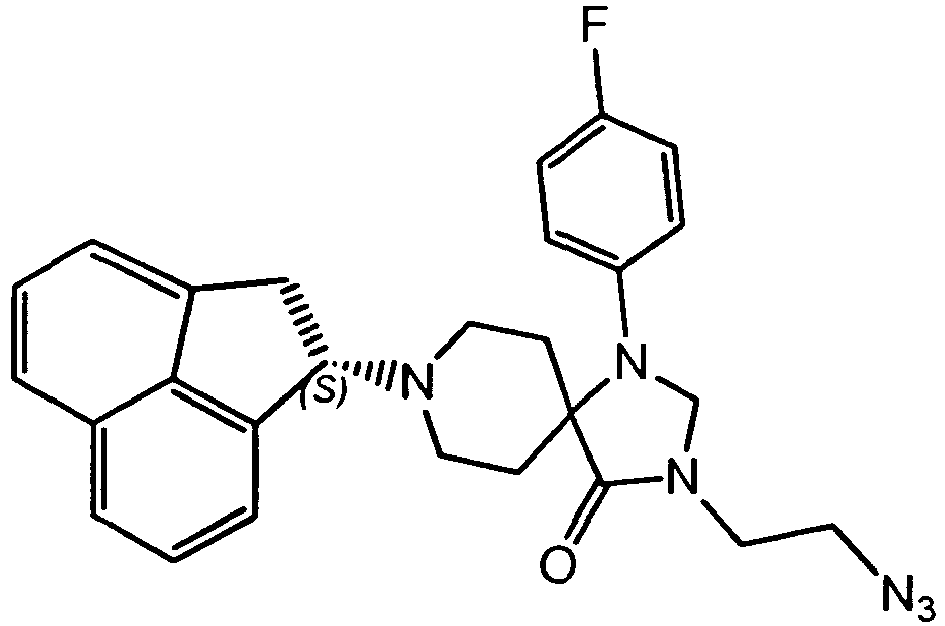
- 8-(S)-Acenaphthen-1-yl-3-(2-azido-ethyl)-1-(4-fluoro-phenyl)-1,3,8-triaza-spiro[4.5]decan-4-one was prepared according to the procedure as described in Example 4 above.
MS (ES+) m/z 471.1 (M + H)+.
NMR and Mass was the same for the compounds prepared in Example 4 and 5, as they are enantiomer of each other. -
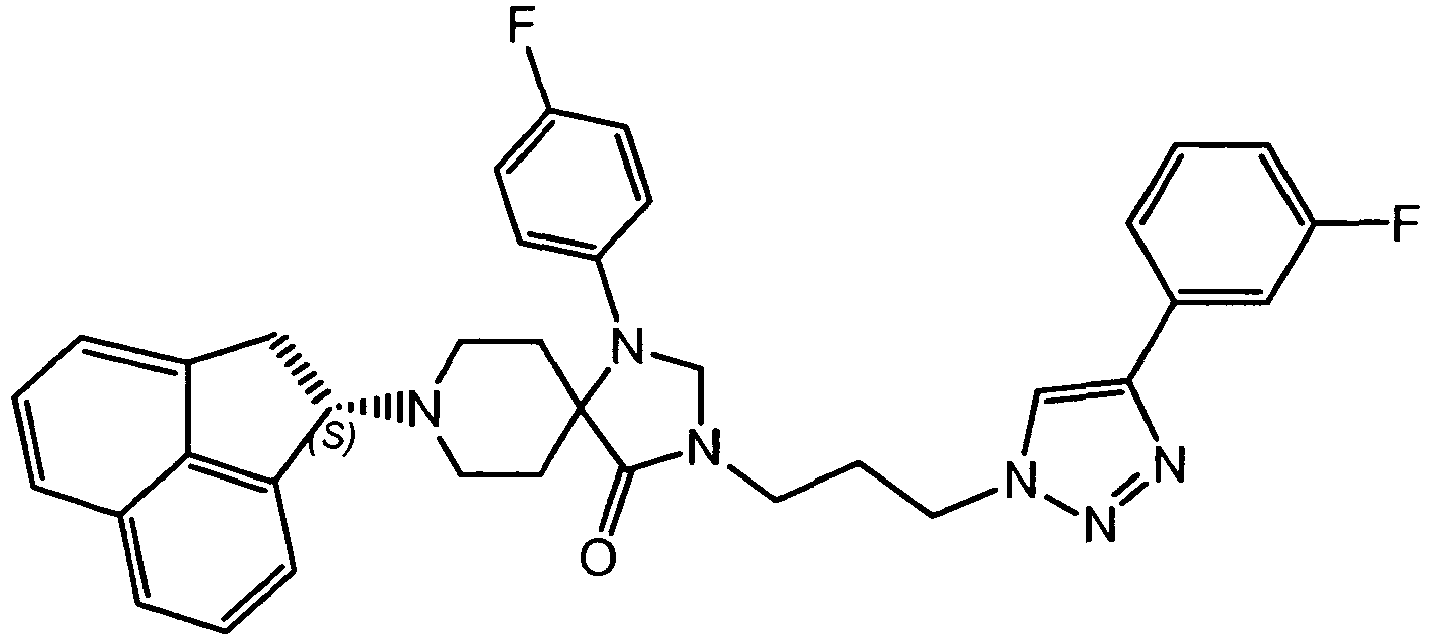
- 8-(S)-acenaphthen-1-yl-3-(3-azido-propyl)-1-(4-fluoro-phenyl)-1,3,8-triaza-spiro[4.5]decan-4-one (25 mg, 0.051 mmol) and 1-ethynyl-3-fluorobenzene (6.18 mg, 0.051 mmol) were suspended in a mixture of ethanol (0.3 mL) and an aqueous solution of copper (II) sulfate pentahydrate (0.1 mg, 0.5 µmol in 150 µL of water). The resulting mixture was then was added to sodium ascorbate (0.005 mmol, 5 µL of a freshly prepared 1.0M solution in water). The resulting heterogeneous mixture was stirred vigorously for 15 hours at about 25-30°C and then partitioned with water and dichloromethane. The organic layer was washed with brine, dried with Na2SO4, filtered and the solvent evaporated in vacuo to yield a crude oil. The crude oil was purified via flash chromatography (70% ethyl acetate/hexanes) to yield the 8-(S)-acenaphthen-1-yl-1-(4-fluoro-phenyl)-3-{3-[4-(3-fluoro-phenyl)[1,2,3]triazol-1-yl]-propyl}-1,3,8-triaza-spiro[4.5]decan-4-one (0.019 g) as a gum.
1H NMR (400 MHz, CDCl3) δ 7.97 (1H, s), 7.69-7.67 (1H, m), 7.62-7.56 (3H, m), 7.55-7.50 (2H, m), 7.46-7.43 (1H, m), 7.37-7.32 (1H, m), 7.28-7.26 (1H, m), 7.05-7.00 (3H, m), 6.97-6.93 (2H, m), 4.97-4.94 (1H, m), 4.64-4.62 (2H, m), 4.44 (2H, t, J= 6.6 Hz), 3.54-3.46 (3H, m), 3.41-3.35 (1H, m), 3.11-3.06 (2H, m), 2.80-2.77 (1H, m), 2.44-2.22 (5H, m), 1.74-1.60 (2H, m)
MS (ES+) m/z 605.2 (M + H)+. -
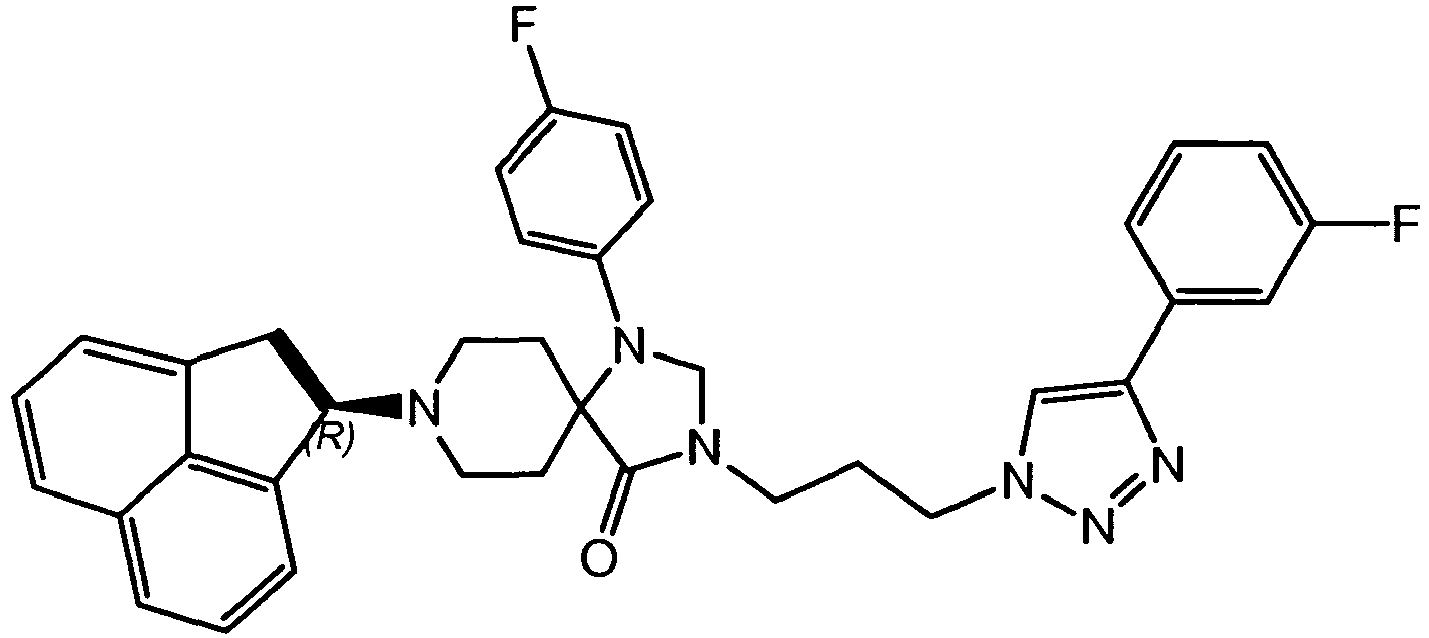
- 8-(R)-Acenaphthen-1-yl-1-(4-fluoro-phenyl)-3-{3-[4-(3-fluorophenyl)[1,2,3]triazol-1-yl]-propyl}-1,3,8-triaza-spiro[4.5]decan-4-one was prepared according to the procedure as described in Example 6 above.
MS (ES+) m/z 471.1 (M + H)+. -

- 8-(R)-Acenaphthen-1-yl-1-(4-fluoro-phenyl)-3-[3-(4-hydroxymethyl-[1,2,3]triazol-1-yl)-propyl]-1,3,8-triaza-spiro[4.5]decan-4-one was prepared according to the procedure as described in Example 6 above.
1H NMR (400 MHz, CDCl3) δ 7.70 (1H, s), 7.69-7.67 (1H, m), 7.62-7.60 (1H, m), 7.54-7.51 (2H, m), 7.46-7.42 (1H, m), 7.28-7.26 (1H, m), 7.05-7.01 (2H, m), 6.97-6.94 (2H, m), 4.96-4.94 (1H, m), 4.79 (2H, s), 4.63-4.61 (2H, m), 4.40-4.37 (2H, m), 3.55-3.49 (1H, m), 3.42-3.33 (3H, m), 3.12-3.02 (2H, m), 2.83-2.780 (1H, m), 2.45-2.35 (2H, m), 2.27-2.20 (3H, m), 1.73-1.61 (2H, m)
MS (ES+) m/z 541.2 (M + H)+. -
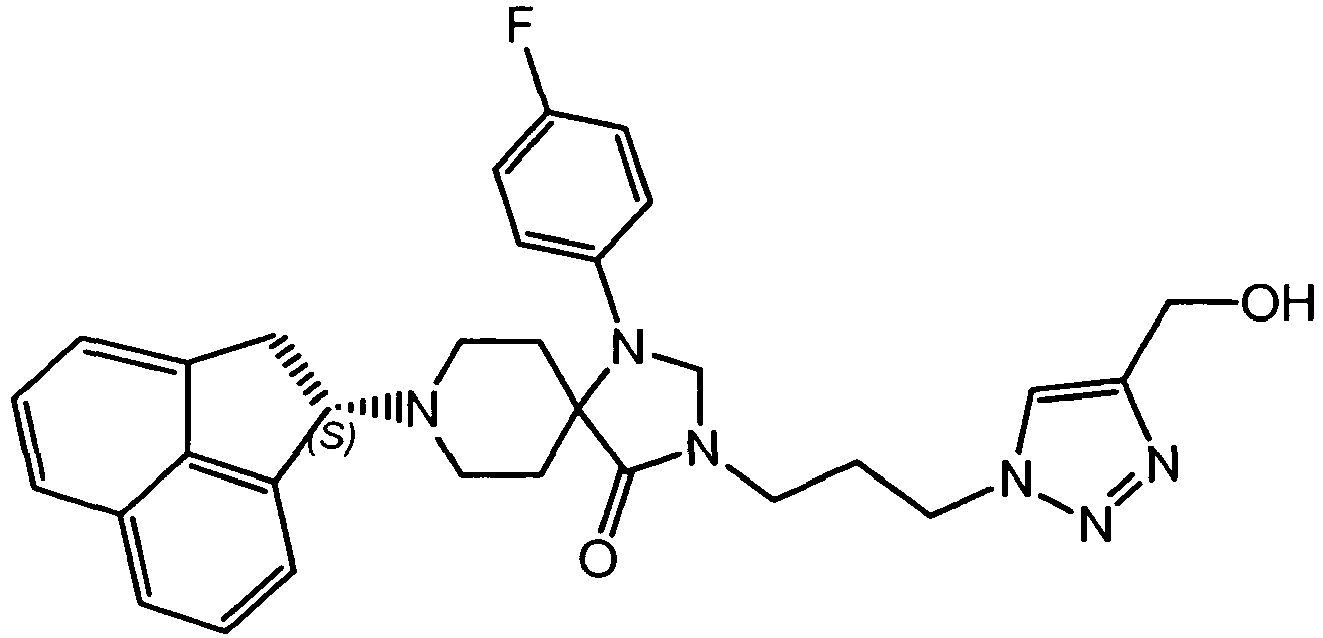
- 8-(S)-Acenaphthen-1-yl-1-(4-fluoro-phenyl)-3-[3-(4-hydroxymethyl-[1,2,3]triazol-1-yl)-propyl]-1,3,8-triaza-spiro[4.5]decan-4-one was prepared according to the procedure as described in Example 6 above.
MS (ES+) m/z 541.2 (M + H)+. -

- 8-(S)-Acenaphthen-1-yl-1-(4-fluoro-phenyl)-3-[3-(4-methylaminomethyl-[1,2,3]triazol-1-yl)-propyl]-1,3,8-triaza-spiro[4.5]decan-4-one was prepared according to the procedure as described in Example 6 above.
1H NMR (400 MHz, CDCl3) δ 7.69-7.67 (1H, m), 7.61-7.59 (2H, m), 7.52-7.51 (2H, m), 7.46-7.42 (1H, m), 7.28-7.26 (1H, m), 7.05-7.01 (2H, m), 6.97-6.94 (2H, m), 4.97-4.94 (1H, m), 4.63-4.61 (2H, m), 4.40-4.37 (2H, m), 3.86 (2H, br s), 3.55-3.50 (1H, m), 3.48-3.34 (3H, m), 3.11-3.03 (2H, m), 2.83-2.81 (1H, m), 2.47-2.37 (5H, m), 2.29-2.22 (2H, m), 1.74-1.61 (2H, m)
MS (ES+) m/z 554.2 (M + H)+. -

- 8-(R)-Acenaphthen-1-yl-1-(4-fluoro-phenyl)-3-[3-(4-methylaminomethyl-[1,2,3]triazol-1-yl)-propyl]-1,3,8-triaza-spiro[4.5]decan-4-one was prepared according to the procedure as described in Example 6 above.
MS (ES+) m/z 554.2 (M + H)+. -

- 1-{3-[8-(S)-Acenaphthen-1-yl-1-(4-fluoro-phenyl)-4-oxo-1,3,8-triaza-spiro[4.5]dec-3-yl]-propyl}-1H-[1,2,3]triazole-4-carboxylic acid ethyl ester was according to the procedure as described in Example 6 above.
MS (ES+) m/z 583.2 (M + H)+. -

- 1-{3-[8-(R)-Acenaphthen-1-yl-1-(4-fluoro-phenyl)-4-oxo-1,3,8-triaza-spiro[4.5]dec-3-yl]-propyl}-1H-[1,2,3]triazole-4-carboxylic acid ethyl ester was prepared according to the procedure as described in Example 6 above.
MS (ES+) m/z 583.2 (M + H)+. -

- 8-(R)-acenaphthen-1-yl-3-(2-azido-ethyl)-1-(4-fluoro-phenyl)-1,3,8-triaza-spiro[4.5]decan-4-one (40 mg, 0.085 mmol) and 5-ethynyl-1-methyl-1H-imidazole (9 mg, 0.085 mmol) were suspended in a mixture of ethanol (0.6 mL) and an aqueous solution of copper (II) sulfate pentahydrate (0.5 mg, 2 µmol in 0.4 mL of water). The resulting mixture was then added to sodium ascorbate (1.7 mg, 10 µmol, 10 µL of a freshly prepared 1.0M solution in water). The resulting heterogeneous mixture was stirred vigorously for 15 hours at about 25-30°C and then partitioned with water and dichloromethane. The organic layer was washed with brine, dried with Na2SO4, filtered and the solvent evaporated in vacuo to yield a crude oil. The crude oil was purified via flash chromatography (2.5% MeOH in ammonia 2.0M/CH2Cl2) to yield the 8-(R)-Acenaphthen-1-yl-1-(4-fluoro-phenyl)-3-{2-[4-(3-methyl-3H-imidazol-4-yl)-[1,2,3]triazol-1-yl]-ethyl}-1,3,8-triaza-spiro[4.5]decan-4-one (0.026 g) as a gum.
1H NMR (400 MHz, CDCl3) δ 7.73 (1H, s), 7.68-7.66 (1H, m), 7.62-7.60 (1H, m), 7.52-7.48 (1H, m), 7.47-7.42 (3H, m), 7.27-7.25 (1H, m), 7.19 (1H, br s), 7.02-6.97 (2H, m), 6.91-6.88 (2H, m), 4.92-4.89 (1H, m), 4.70-4.66 (2H, m), 4.46 (2H, s), 3.95-3.91 (2H, m), 3.70 (3H, s), 3.49-3.30 (2H, m), 2.99-2.90 (2H, m), 2.74-2.71 (1H, m), 2.39-2.36 (1H, m), 2.26-2.19 (1H, m), 2.12-2.05 (1H, m), 1.64-1.54 (1H, m)
MS (ES+) m/z 577.2 (M + H)+. -

- 8-(S)-Acenaphthen-1-yl-1-(4-fluoro-phenyl)-3-{2-[4-(3-methyl-3H-imidazol-4-yl)-[1,2,3]triazol-1-yl]-ethyl}-1,3,8-triaza-spiro[4.5]decan-4-one was prepared according to the procedure as described in Example 14 above.
MS (ES+) m/z 577.2 (M + H)+. -

- 8-(R)-Acenaphthen-1-yl-1-(4-fluoro-phenyl)-3-[2-(4-pyridin-3-yl-[1,2,3]triazol-1-yl)-ethyl]-1,3,8-triaza-spiro[4.5]decan-4-one was prepared according to the procedure as described in Example 14 above.
MS (ES+) m/z 574.2 (M + H)+. -

- 8-(S)-Acenaphthen-1-yl-1-(4-fluoro-phenyl)-3-[2-(4-pyridin-3-yl-[1,2,3]triazol-1-yl)-ethyl]-1,3,8-triaza-spiro[4.5]decan-4-one prepared according to the procedure as described in Example 14 above.
MS (ES+) m/z 574.2 (M + H)+. -

- 8-(S)-Acenaphthen-1-yl-1-(4-fluoro-phenyl)-3-[2-(4-methylaminomethyl-[1,2,3]triazol-1-yl)-ethyl]-1,3,8-triaza-spiro[4.5]decan-4-one was prepared according to the procedure as described in Example 14 above.
1H NMR (400 MHz, CDCl3) δ 7.68-7.66 (1H, m), 7.61-7.59 (1H, m), 7.53-7.47 (3H, m), 7.46-7.42 (1H, m), 7.27-7.25 (1H, m), 7.01-6.97 (2H, m), 6.90-6.86 (2H, m), 4.93-4.91 (1H, m), 4.61-4.58 (2H, m), 4.38-4.35 (2H, m), 3.89-3.86 (2H, m), 3.76 (3H, s), 3.46 (2H, s), 3.38-3.32 (1H, m), 3.02-2.94 (2H, m), 2.78-2.75 (1H, m), 2.41-2.35 (3H, m), 2.28-2.21 (1H, m), 2.15-2.07 (1H, m), 1.66-1.62 (1H, m), 1.56-1.53 (1H, m)
MS (ES+) m/z 540.4 (M + H)+. -

- 8-(R)-Acenaphthen-1-yl-1-(4-fluoro-phenyl)-3-[2-(4-methylaminomethyl-[1,2,3]triazol-1-yl)-ethyl]-1,3,8-triaza-spiro[4.5]decan-4-one was prepared according to the procedure as described in Example 14 above.
MS (ES+) m/z 540.4 (M + H)+. -

- 8-(R)-Acenaphthen-1-yl-1-(4-fluoro-phenyl)-3-[2-(4-hydroxymethyl-[1,2,3]triazol-1-yl)-ethyl]-1,3,8-triaza-spiro[4.5]decan-4-one was prepared according to the procedure as described in Example 14 above.
1H NMR (400 MHz, CDCl3) δ 7.68-7.66 (1H, m), 7.61-7.59 (1H, m), 7.56 (1H, s), 7.52-7.42 (3H, m), 7.26-7.25 (1H, m), 7.00-6.96 (2H, m), 6.90-6.86 (2H, m), 4.92-4.89 (1H, m), 4.66 (2H, s), 4.60-4.57 (2H, m), 4.40-4.37 (2H, m), 3.89-3.81 (2H, m), 3.49-3.43 (1H, m), 3.38-3.32 (1H, m), 2.98-2.90 (2H, m), 2.75-2.72 (1H, m), 2.24-2.16 (1H, m), 2.11-2.03 (1H, m), 1.63-1.60 (1H, m), 1.56-1.52 (1H, m)
MS (ES+) m/z 527.2 (M + H)+. -

- 8-(S)-Acenaphthen-1-yl-1-(4-fluoro-phenyl)-3-[2-(4-hydroxymethyl-[1,2,3]triazol-1-yl)-ethyl]-1,3,8-triaza-spiro[4.5]decan-4-one was prepared according to the procedure as described in Example 14 above.
MS (ES+) m/z 527.2 (M + H)+. -

- 8-(S)-Acenaphthen-1-yl-3-[2-(4-cyclopropyl-[1,2,3]triazol-1-yl)-ethyl]-1-(4-fluoro-phenyl)-1,3,8-triaza-spiro[4.5]decan-4-one was prepared according to the procedure as described in Example 14 above.
1H NMR (400 MHz, CDCl3) δ 7.68-7.66 (1H, m), 7.61-7.59 (1H, m), 7.53-7.47 (3H, m), 7.45-7.42 (1H, m), 7.26-7.25 (1H, m), 7.01-6.97 (2H, m), 6.89-6.86 (2H, m), 4.93-4.91 (1H, m), 4.56-4.53 (2H, m), 4.35-4.33 (2H, m), 3.90-3.82 (2H, m), 3.51-3.46 (1H, m), 3.38-3.32 (1H, m), 3.02-2.93 (2H, m), 2.77-2.74 (1H, m), 2.40-2.37 (1H,m), 2.23-2.16 (1H, m), 2.10-2.02 (1H, m), 1.85-1.78 (1H, m), 1.62-1.58 (1H, m), 1.53-1.49 (1H, m), 0.84-0.77 (2H, m), 0.75-0.69 (2H, m)
MS (ES+) m/z 537.2 (M + H)+. -

- 8-(R)-Acenaphthen-1-yl-3-[2-(4-cyclopropyl-[1,2,3]triazol-1-yl)-ethyl]-1-(4-fluoro-phenyl)-1,3,8-triaza-spiro[4.5]decan-4-one was prepared according to the procedure as described in Example 14 above.
MS (ES+) m/z 537.2 (M + H)+. -

- 8-(R)-Acenaphthen-1-yl-1-(4-fluoro-phenyl)-3-[2-(4-methoxymethyl-[1,2,3]triazol-1-yl)-ethyl]-1,3,8-triaza-spiro[4.5]decan-4-one was prepared according to the procedure as described in Example 14 above.
1H NMR (400 MHz, CDCl3) δ 7.68-7.66 (1H, m), 7.61-7.59 (1H, m), 7.56 (1H, s), 7.53-7.42 (3H, m), 7.27-7.25 (1H, m), 7.01-6.97 (2H, m), 6.90-6.86 (2H, m), 4.93-4.91 (1H, m), 4.63-4.61 (2H, m), 4.47 (2H, s), 4.38-4.35 (2H, m), 3.90-3.87 (2H, m), 3.50-3.45 (1H, m), 3.38-3.32 (1H, m), 3.29 (3H, s), 3.02-2.94 (2H, m), 2.77-2.74 (1H, m), 2.40-2.37 (1H, m), 2.26-2.19 (1H, m), 2.12-2.05 (1H, m), 1.66-1.62 (1H, m), 1.56-1.52 (1H, m)
MS (ES+) m/z 541.2 (M + H)+. -

- 8-(S)-Acenaphthen-1-yl-1-(4-fluoro-phenyl)-3-[2-(4-methoxymethyl-[1,2,3]triazol-1-yl)-ethyl]-1,3,8-triaza-spiro[4.5]decan-4-one was prepared according to the procedure as described in Example 14 above.
MS (ES+) m/z 541.2 (M + H)+. -

- 8-(R)-Acenaphthen-1-yl-3-[2-(4-dimethylaminomethyl-[1,2,3]triazol-1-yl)-ethyl]-1-(4-fluoro-phenyl)-1,3,8-triaza-spiro[4.5]decan-4-one was prepared according to the procedure as described in Example 14 above.
MS (ES+) m/z 554.2 (M + H)+. -

- 8-(S)-Acenaphthen-1-yl-3-[2-(4-dimethylaminomethyl-[1,2,3]triazol-1-yl)-ethyl]-1-(4-fluoro-phenyl)-1,3,8-triaza-spiro[4.5]decan-4-one was prepared according to the procedure as described in Example 14 above.
MS (ES+) m/z 554.2 (M + H)+. - The nociceptin receptor binding assay measures the binding of [Leucyl-3,4,5-3H]-nociceptin (90.Ci/mmol, Perkin Elmer) to the recombinant human nociceptin receptor (ORL-1, GeneBank Accession number X77130) on HEK293 cell membranes (Perkin-Elmer).
The cell membranes were thawed, reconstituted and homogenized 1:20 (v/v) in an assay buffer containing 50 mM HEPES, 1 mM EDTA and 10 mM MgCl2 (pH 7.4). To a 96-well plate containing 50 µL/well of compound, 50 µL/well of membranes were added. Some wells contained 5 µM nociceptin to account for nonspecific binding. The radioligand was added at a 0.4 nM concentration in a volume of 100 µL/well. The mixture was incubated for 2 hours at 25°C. Following the incubation period, the samples were collected onto PEI-presoaked, glass-fiber 96-well filter plates using the Filtermate harvester (Perkin-Elmer). Each plate was washed nine times with ice-cold assay buffer to remove free radioligand. After drying, 30 µL/well of Microscint-20 (Perkin-Elmer) were added. The plates were sealed and counted on a Packard Top Count scintillation counter to determine membrane-bound radioactivity.
For each test compound, the total binding was measured at several concentrations and the IC50 (the concentration at which 50% of the binding is inhibited) was determined from the graphical display of X = logarithm of concentration versus Y = response, using the following calculation:
For some of the test compounds, the Ki was determined by nonlinear curve fitting using the Cheng-Prussoff equation:
For the ORL-1 binding, the Kd was 0.2nM. The [radioligand] was the same as the Kd. - Representative compounds of the present invention were tested according to the procedure as described in Example 28 above, with results as listed in Table 3. (Note that for the compounds that were tested more than once, the value listed in Table 3 is the calculated mean.)
Table 3: ORL-1 Binding ID No. ORL1 Ki (nM) 1 1.54 8 4.00 9 0.08 12 0.30 13 0.76 14 1.20 15 1.01 16 0.23 17 0.28 18 0.98 19 0.33 20 0.20 21 0.07 22 0.33 23 0.93 24 0.50 25 0.89 26 0.05 27 0.37 28 0.30 29 0.81 30 1.37 31 0.38 32 0.59 33 >1 34 0.08 35 0.21 36 1.24 37 4.96 38 0.99 39 2.20 40 0.80 41 3.36 - Male, Sprague Dawley rats (150-250 g, VAF, Charles River, Kingston, NY) were euthanized using CO2, and their brains were removed and were placed immediately in ice-cold Tris HCl buffer (50 mM, pH 7.4). The forebrains were separated from the remainder of the brain by a coronal transsection, beginning dorsally at the colliculi and passing ventrally through the midbrain-pontine junction. After dissection, the forebrains were homogenized in approximately 30mls of Tris HCl buffer in a Teflon®-glass homogenizer. The homogenate was centrifuged at 40,000 x g for 15 min and the supernatant was discarded. With several brief pulses from a Polytron homogenizer, the pellet was re-suspended at a concentration of 1 g of forebrain tissue per 80 mL Tris HCl buffer containing 5 mM MgCl2. This particulate preparation was used for the delta opioid binding assays. Following incubation with the delta selective peptide ligand ~.1 nM [3H]Naltrindole at 25°C for 2.5 h in a 96-well plate with total volume of 1 mL, the plate contents were filtered through Wallac filtermat B sheets on a Tomtec 96-well harvester. The filters were rinsed three times with 2 mL of 10 mM HEPES (pH 7.4), and dried in a 650 W microwave oven for 1.75 min twice. To each sample area 2 X 50 µL of Betaplate Scint scintillation fluid (LKB) was added and the radioactivity quantified on a LKB (Wallac) 1205 BetaPlate liquid scintillation counter.
The data from the scintillation counter were used to calculate either the % inhibition compared to control binding (when only a single concentration of test compound was evaluated) or a Ki value (when a range of concentrations was tested).
Percent inhibition was calculated as follow: % Inhibition = [(total dpm-test compound dpm) / (total dpm-nonspecific dpm)] X 100. Kd and Ki values were calculated using GraphPad PRISM data analysis program. - Male, Sprague Dawley rats (150-250 g, VAF, Charles River, Kingston, NY) were euthanized using CO2, and their brains were removed and were placed immediately in ice-cold Tris HCl buffer (50 mM, pH 7.4). The forebrains were separated from the remainder of the brain by a coronal transection, beginning dorsally at the colliculi and passing ventrally through the midbrain-pontine junction. After dissection, the forebrains were homogenized in approximately 30mls of Tris HCl buffer in a Teflon®-glass homogenizer. The homogenate was centrifuged at 40,000 x g for 15 min and the supernatant was discarded. With several brief pulses from a Polytron homogenizer, the pellet was resuspended at a concentration of 1 g of forebrain tissue per 80 mL Tris HCl buffer containing 5 mM MgCl2. This particulate preparation was used for the delta opioid binding assays. Following incubation with the mu selective peptide ligand, -0.8 nM [3H]DAMGO, at 25°C for 2.5 h in a 96-well plate with total assay volume of 1 mL, the plate contents were filtered through Wallac filtermat B sheets on a Tomtec 96-well harvester. The filters were rinsed three times with 2 mL of 10 mM HEPES (pH 7.4), and dried in a 650 W microwave oven for 1.75 min twice. To each sample area 2 X 40 µL of Betaplate Scint scintillation fluid (LKB) was added and the radioactivity quantified on a LKB (Wallac) 1205 BetaPlate liquid scintillation counter.
The data from the scintillation counter were used to calculate either the % inhibition compared to control binding (when only a single concentration of test compound was evaluated) or a Ki value (when a range of concentrations tested).
Percent inhibition was calculated as follow: % Inhibition = [(total dpm-test compound dpm) / (total dpm-nonspecific dpm)] X 100. Kd and Ki values were calculated using GraphPad PRISM data analysis program. - Representative compounds of the present invention were tested according to the procedure as described in Examples 29 and 30 above, with results as listed in Table 4. (Note that for the compounds which were tested more than once, the value listed in Table 4 is the calculated mean.)
Table 4: Delta and Mu Binding ID No. Delta % Inh @ 1µM Delta Ki (nM) Mu % Inh @ 1µM Mu Ki (nM) 1 39 94 8 20 95 46.02 9 5.42 19 15.60 20 2979.00 168.60 21 862.80 59.68 22 5.05 24 4.63 26 3.91 27 17.92 28 9.25 29 34.99 31 173.05 38.55 32 8.88 34 1510.50 82.28 35 18.02 36 41.36 38 66.72 39 120.30 40 13.67 - The assay evaluated the affinity of a test compound for the agonist site of the kappa opioid receptor in the guinea pig cerebellum, as determined in a radioligand binding assay.
- The membranes homogenates of cerebellum (250 µg of protein) were incubated for 80 min at 22°C with 0.7 nM [3H]U-69593 in the absence or presence of the test compound in a buffer containing 50 mM Tris-HCl (pH=7.4), 10 mM MgCl2 and 1 mM EDTA. Non-specific binding was determined in the presence of 10 µM naloxone.
Following incubation, the sample(s) were filtered rapidly under vacuum through glass fiber filters (GF/B, Packard) presoaked with 0.3% PEI and rinsed several times with ice-cold 50 mM Tris-HCl using a 96-sample cell harvester (Unifilter, Packard). The filters were dried, and then counted for radioactivity in a scintillation counter (Topcount, Packard) using a scintillation cocktail (Microscint 0, Packard). The results (below) are expressed as a percent inhibition of the control radioligand specific binding.
The standard reference compound used was U-50488, which was tested in each experiment at several concentrations to obtain a competition curve from which its IC50 is calculated. (Kinouchi, K. and Pasternak, G.W. (1991) Evidence for K1 opioid receptor multiplicity in the guinea pig cerebellum, Eur. J. Pharmacol., 207:135.) - The specific ligand binding to the receptors was defined as the difference between the total binding and the non-specific binding determined in the presence of an excess of unlabelled ligand.
The results below are expressed as a percent of control specific binding ((measured specific binding/control specific binding) x 100) and as a percent inhibition of control specific binding (100-((measured specific binding/control specific binding) x 100)) obtained in the presence of the test compounds.
The IC50 values (concentration causing a half-maximal inhibition of control specific binding) and Hill coefficients (nH) were determined by nonlinear regression analysis of the competition curves generated with mean replicate values using Hill equation curve fitting (Y = D + [(A - D)/(1 + (C/C50)nH)], where Y = specific binding, D = minimum specific binding, A = maximum specific binding, C = compound concentration, C50 = IC50, and nH = slope factor). This analysis was performed using a software developed at Cerep (Hill software) and validated by comparison with data generated by the commercial software SigmaPlot ® 4.0 for Windows ® (© 1997 by SPSS Inc.).
The inhibition constants (Ki) were calculated using the Cheng Prusoff equation (Ki = IC50/(1+(L/KD)), where L = concentration of radioligand in the assay, and KD = affinity of the radioligand for the receptor). - Representative compounds of the present invention were tested according to the procedure outlined above with results as listed in Table 5 below.
Table 5: Kappa Binding ID No. Kappa Ki (nM) 31 94 20 68 21 45 - As a specific embodiment of an oral composition, 100 mg of the compound prepared as in Example 19 is formulated with sufficient finely divided lactose to provide a total amount of 580 to 590 mg to fill a size O hard gel capsule.
Claims (26)
- A compound of formula (I)

R1 is 1-acenaphthenyl;
R2 is 4-fluorophenyl;
A1 is selected from the group consisting of -CH2-, -CH2CH2-, - CH2CH2CH2- and -CH2CH2CH2CH2-;
R3 is selected from the group consisting of

wherein the phenyl, imidazolyl or pyridyl, is optionally substituted with one or more (preferably one to two more preferably one) substituents independently selected from the group consisting of halogen and C1-4alkyl;
wherein RA and RB are each independently selected from the group consisting of hydrogen and C1-4alkyl;
and wherein R5 is selected from the group consisting of hydroxy, cycloalkyl, phenyl, benzyl, imidazolyl, pyridyl, -C1-4alkyl-NRCRD, -C1-4alkyl-OH, - C1-4alkyl-O-C1-4alkyl, -C(O)OH and -C(O)O-C1-4alkyl;
wherein the phenyl, imidazolyl or pyridyl, is optionally substituted with one or more (preferably one to two more preferably one) substituents independently selected from the group consisting of halogen and C1-4alkyl;
and wherein RC and RD are each independently selected from the group consisting of hydrogen and C1-4alkyl;
or a pharmaceutically acceptable salt thereof. - A compound as in Claim 1, wherein
R1 is 1-acenaphthenyl;
R2 is 4-fluorophenyl;
A1 is selected from the group consisting of -CH2CH2-, -CH2CH2CH2- and -CH2CH2CH2CH2-;
R3 is selected from the group consisting of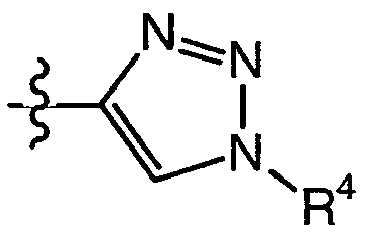

wherein the phenyl, imidazolyl or pyridyl, is optionally substituted with one to two substituents independently selected from the group consisting of halogen and C1-4alkyl;
and wherein RA and RB are each independently selected from the group consisting of hydrogen and C1-4alkyl;
wherein R5 is selected from the group consisting of hydroxy, C3-8cyclalkyl, phenyl, benzyl, imidazolyl, pyridyl, -C1-4alkyl-NRCRD, -C1-4alkyl-OH, -C1-4alkyl-O-C1-4alkyl, and -C(O)O-C1-4alkyl;
wherein the phenyl, imidazolyl or pyridyl, is optionally substituted with one to two substituents independently selected from the group consisting of halogen and C1-4alkyl;
and wherein RC and RD are each independently selected from the group consisting of hydrogen and C1-4alkyl;
or a pharmaceutically acceptable salt thereof. - A compound as in Claim 2, wherein
R1 is 1-acenaphthenyl;
R2 is 4-fluorophenyl;
A1 is selected from the group consisting of -CH2CH2- and -CH2CH2CH2-;
R3 is selected from the group consisting of
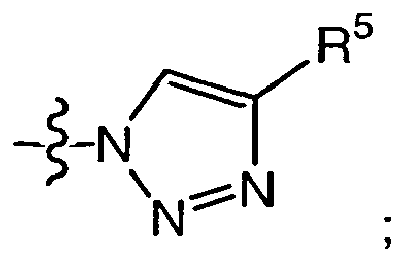
wherein the phenyl or imidazolyl is optionally substituted with substituent selected from the group consisting of halogen and C1-2alkyl; and wherein RA and RB are each independently selected from the group consisting of hydrogen and C1-2alkyl;
and wherein R5 is selected from the group consisting of hydroxy, C3-8cycloalkyl, phenyl, benzyl, imidazolyl, pyridyl, -C1-2alkyl-NRCRD, -C1-2alkyl-OH, -C1-2alkyl-O-C1-2alkyl and -C(O)O-C1-2alkyl;
wherein the phenyl or imidazolyl is optionally substituted with substituent selected from the group consisting of halogen and C1-2alkyl; and wherein RC and RD are each independently selected from the group consisting of hydrogen and C1-2alkyl;
or a pharmaceutically acceptable salt thereof. - A compound as in Claim 3, wherein
R1 is 1-acenaphthenyl;
R2 is 4-fluorophenyl;
A1 is selected from the group consisting of -CH2CH2- and -CH2CH2CH2-;
R3 is selected from the group consisting of 4-(1-benzyl-1,2,3-triazolyl), 1-(4-(methylaminomethyl-1,2,3-triazolyl), 1-(4-hydroxy-1,2,3-triazolyl), 1-(4-cyclopropyl-1,2,3-triazolyl), 1-(4-(methoxymethyl)-1,2,3-triazolyl), 1-(4-(dimethylaminomethyl)-1,2,3-triazolyl), 1-(4-(3-fluorophenyl)-1,2,3-triazolyl), 1-(4-(hydroxymethyl)-1,2,3-triazolyl), 1-(4-(ethoxycarbonyl)-1,2,3-triazolyl), 1-(4-(2-(1-methyl-imidazolyl))-1,2,3-triazolyl) and 1-(4-(3-pyridyl)-1,2,3-triazolyl);
or a pharmaceutically acceptable salt thereof. - A compound as in Claim 4, wherein
R1 is 1-acenaphthenyl;
R2 is 4-fluorophenyl;
A1 is selected from the group consisting of -CH2CH2- and -CH2CH2CH2-;
R3 is selected from the group consisting of 1-(4-(methylaminomethyl-1,2,3-triazolyl), 1-(4-hydroxy-1,2,3-triazolyl), 1-(4-cyclopropyl-1,2,3-triazolyl), 1-(4-(methoxymethyl)-1 ,2,3-triazolyl), 1-(4-(dimethyfaminomethyl)-1,2,3-triazolyl), 1-(4-(3-fluorophenyl)-1,2,3-triazolyl), 1-(4-(hydroxymethyl)-1,2,3-triazolyl), 1-(4-(2-(1-methyl-imidazolyl))-1,2,3-triazolyl) and 1-(4-(3-pyridyl)-1,2,3-triazolyl);
or a pharmaceutically acceptable salt thereof. - A compound as in Claim 4, wherein
R1 is 1-acenaphthenyl;
R2 is 4-fluorophenyl;
A1 is selected from the group consisting of -CH2CH2- and -CH2CH2CH2-;
R3 is selected from the group consisting of 1-(4-(methylaminomethyl-1,2,3-triazolyl), 1-(4-hydroxy-1,2,3-triazolyl), 1-(4-(methoxymethyl)-1,2,3-triazolyl), 1-(4-(dimethylaminomethyl)-1,2,3-triazolyl) and 1-(4-(3-fluorophenyl)-1,2,3-triazolyl);
or a pharmaceutically acceptable salt thereof. - A compound as in Claim 4, wherein
R1 is 1-acenaphthenyl;
R2 is 4-fluorophenyl;
A1 is selected from the group consisting of -CH2CH2- and -CH2CH2CH2-;
R3 is selected from the group consisting of 1-(4-(methylaminomethyl-1,2,3-triazolyl) and 1-(4-(methoxymethyl)-1,2,3-triazolyl);
or a pharmaceutically acceptable salt thereof. - A compound as in Claim 4, wherein R1 is 1-acenaphthenyl; R2 is 4-fluorophenyl; A1 is selected from the group consisting of -CH2CH2- and - CH2CH2CH2-; and R3 is 4-(1-benzyl-1,2,3-triazolyl) or a pharmaceutically acceptable salt thereof.
- A compound as in Claim 4, wherein the compound of formula (I) is present in an enantiomer excess of greater than or equal to about 95% of the S-enantiomer.
- A compound as in Claim 4, wherein the compound of formula (I) is present in an enantiomer excess of greater than or equal to about 95% of the R-enantiomer.
- A compound of formula (II)

R1 is 1-acenaphthenyl;
R2 is 4-fluorophenyl;
A1 is selected from the group consisting of -CH2-, -CH2CH2-, - CH2CH2CH2- and -CH2CH2CH2CH2-;
R0 is selected from the group consisting of -CCH, hydroxy, -N3, -O-C(O)-C1-4alkyl, -O-SO2-C1-4alkyl, -O-(2-tetrahydropyranyl);
or a pharmaceutically acceptable salt thereof. - A compound as in Claim 11, wherein
R1 is 1-acenaphthenyl;
R2 is 4-fluorophenyl;
A1 is selected from the group consisting of -CH2CH2- and -CH2CH2CH2-;
R0 is selected from the group consisting of -CCH, -OH, -N3, -O-C(O)-CH3, -O-SO2-CH3 and -O-(2-tetrahydrodpyranyl);
or a pharmaceutically acceptable salt thereof. - A compound as in Claim 12, wherein
R1 is 1-acenaphthenyl;
R2 is 4-fluorophenyl;
A1 is selected from the group consisting of -CH2CH2- and -CH2CH2CH2-;
R0 is selected from the group consisting of -OH, -N3, -O-C(O)-CH3 and - O-(2-tetrahydrodpyranyl);
or a pharmaceutically acceptable salt thereof. - A compound as in Claim 12, wherein
R1 is 1-acenaphthenyl;
R2 is 4-fluorophenyl;
A1 is -CH2CH2-;
R0 is -OH;
or a pharmaceutically acceptable salt thereof. - A pharmaceutical composition comprising a pharmaceutically acceptable carrier and a compound of Claim 1 or a compound of Claim 11.
- A pharmaceutical composition made by mixing a compound of Claim 1 or a compound of Claim 11 and a pharmaceutically acceptable carrier.
- A process for making a pharmaceutical composition comprising mixing a compound of Claim 1 or a compound of Claim 11 and a pharmaceutically acceptable carrier.
- The compound of Claim 1 or the compound of Claim 11 or the composition of Claim 15 for use in a method of treating a disorder mediated by the ORL-1 receptor.
- A compound of Claim 18, wherein the disorder mediated by the ORL-1 receptor is selected from the group consisting of anxiety, depression, panic, mania, dementia, bipolar disorder, substance abuse, neuropathic pain, acute pain, chronic pain, migraine, asthma, cough, psychosis, schizophrenia, epilepsy, hypertension, obesity, eating disorders, cravings, diabetes, cardiac arrhythmia, irritable bowel syndrome, Crohn's disease, urinary incontinence, adrenal disorders, attention deficit disorder (ADD), attention deficit hyperactivity disorder (ADHD), Alzheimer's disease, improved cognition, improved memory and mood stabilization.
- The compound of Claim 1 or the compound of Claim 11 or the composition of Claim 15 for use in a method of treating a condition selected from the group consisting of anxiety, depression, panic, mania, dementia, bipolar disorder, substance abuse, neuropathic pain, acute pain, chronic pain, migraine, asthma, cough, psychosis, schizophrenia, epilepsy, hypertension, obesity, eating disorders, cravings, diabetes, cardiac arrhythmia, irritable bowel syndrome, Crohn's disease, urinary incontinence, adrenal disorders, attention deficit disorder (ADD), attention deficit hyperactivity disorder (ADHD), Alzheimer's disease, improved cognition, improved memory and mood stabilization.
- The use of a compound as in Claim 1 or a compound as in Claim 11 for the preparation of a medicament for the treatment of (a) anxiety, (b) depression, (c) panic, (d) mania, (e) dementia, (f) bipolar disorder, (g) substance abuse, (h) neuropathic pain, (i) acute pain, (j) chronic pain, (k) migraine, (I) asthma, (m) cough, (n) psychosis, (o) schizophrenia, (p) epilepsy, (q) hypertension, (r) obesity, (s) eating disorders, (t) cravings, (u) diabetes, (v) cardiac arrhythmia, (w) irritable bowel syndrome, (x) Crohn's disease, (y) urinary incontinence, (z) adrenal disorders, (aa) attention deficit disorder (ADD), (bb) attention deficit hyperactivity disorder (ADHD), (cc) Alzheimer's disease, for (dd) improved cognition, (ee) improved memory or (ff) mood stabilization.
- A process for the preparation of a compound of formula (Ia)

R1 is 1-acenaphthenyl;
R2 is 4-fluorophenyl;
A1 is selected from the group consisting of -CH2-, -CH2CH2-, - CH2CH2CH2- and -CH2CH2CH2CH2-;
R3 is
wherein the phenyl, imidazolyl or pyridyl, is optionally substituted with one or more (preferably one to two more preferably one) substituents independently selected from the group consisting of halogen and C1-4alkyl;
and wherein RA and RB are each independently selected from the group consisting of hydrogen and C1-4alkyl;
or a pharmaceutically acceptable salt thereof;
comprising


- A process for the preparation of a compound of formula (Ia)
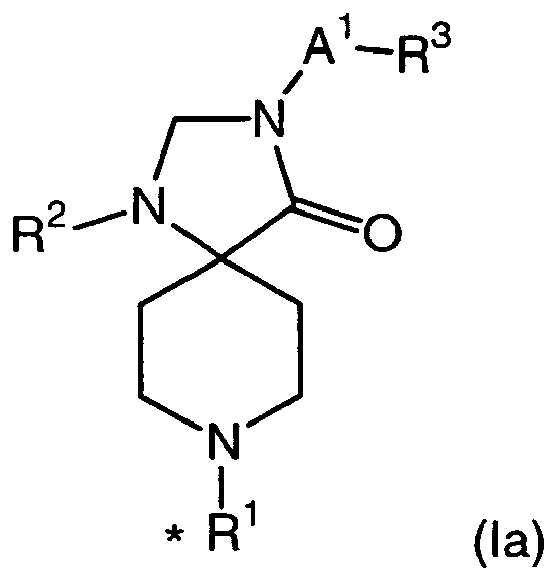
R1 is 1-acenaphthenyl;
R2 is 4-fluorophenyl;
A1 is selected from the group consisting of -CH2-, -CH2CH2-, - CH2CH2CH2- and -CH2CH2CH2CH2-;
R3 is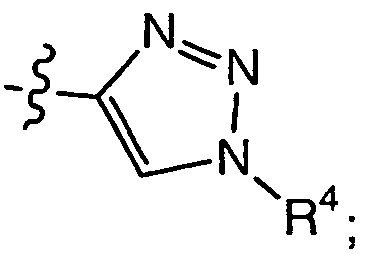
wherein the phenyl, imidazolyl or pyridyl, is optionally substituted with one or more (preferably one to two more preferably one) substituents independently selected from the group consisting of halogen and C1-4alkyl;
and wherein RA and RB are each independently selected from the group consisting of hydrogen and C1-4alkyl;
or a pharmaceutically acceptable salt thereof;
comprising
- A process for the preparation of a compound of formula (Ib)

R1 is 1-acenaphthenyl;
R2 is 4-fluorophenyl;
A1 is selected from the group consisting of -CH2-, -CH2CH2-, - CH2CH2CH2- and -CH2CH2CH2CH2-;
R3 is
wherein the phenyl, imidazolyl or pyridyl, is optionally substituted with one or more (preferably one to two more preferably one) substituents independently selected from the group consisting of halogen and C1-4alkyl;
and wherein RC and RD are each independently selected from the group consisting of hydrogen and C1-4alkyl;
or a pharmaceutically acceptable salt thereof;
comprising
- A process for the preparation of a compound of formula (Ib)

R1 is 1-acenaphthenyl;
R2 is 4-fluorophenyl;
A1 is selected from the group consisting of -CH2-, -CH2CH2-, - CH2CH2CH2- and -CH2CH2CH2CH2-;
R3 is
wherein the phenyl, imidazolyl or pyridyl, is optionally substituted with one or more (preferably one to two more preferably one) substituents independently selected from the group consisting of halogen and C1-4alkyl;
and wherein RC and RD are each independently selected from the group consisting of hydrogen and C1-4alkyl;
or a pharmaceutically acceptable salt thereof;
comprising
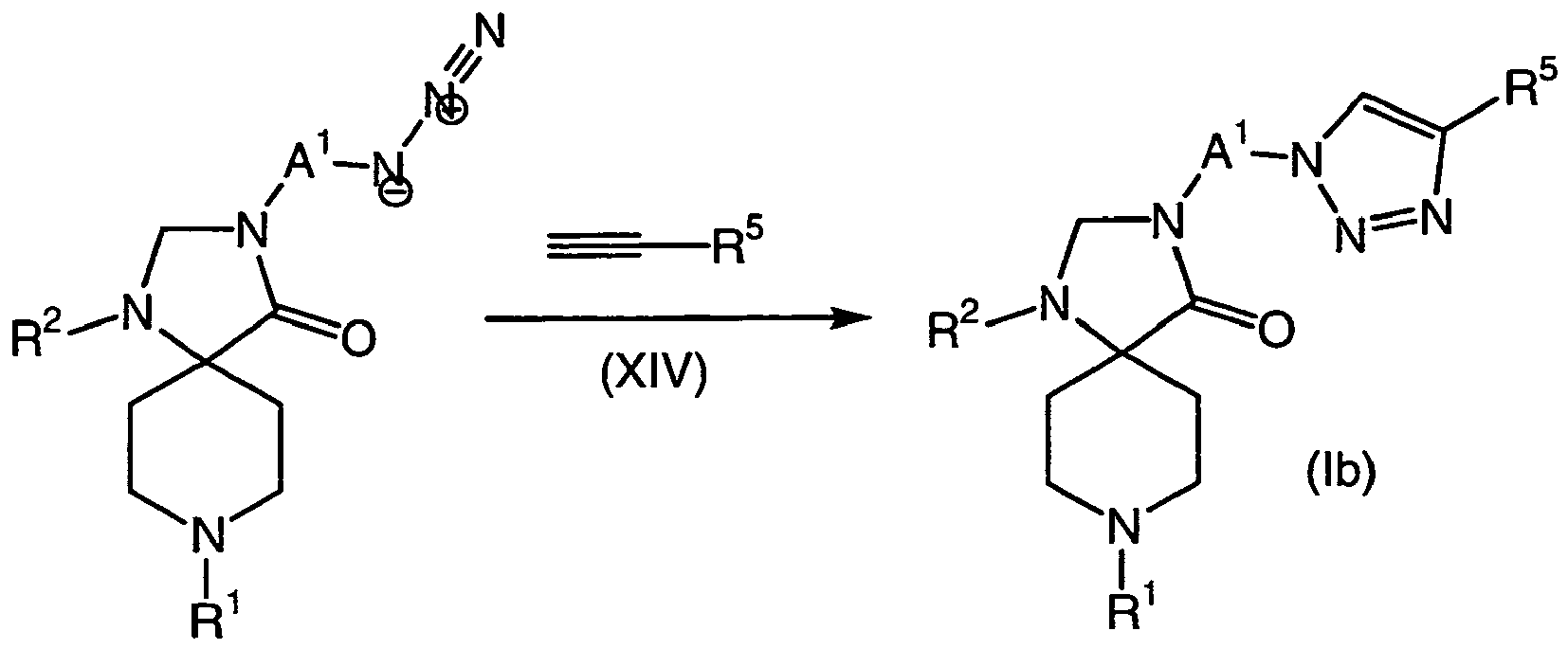
- A process for the preparation of a compound of formula (Ib)

R1 is 1-acenaphthenyl;
R2 is 4-fluorophenyl;
A1 is selected from the group consisting of -CH2-, -CH2CH2-, - CH2CH2CH2- and -CH2CH2CH2CH2-;
R3 is
wherein the phenyl, imidazolyl or pyridyl, is optionally substituted with one or more (preferably one to two more preferably one) substituents independently selected from the group consisting of halogen and C1-4alkyl;
and wherein RC and RD are each independently selected from the group consisting of hydrogen and C1-4alkyl;
or a pharmaceutically acceptable salt thereof;
comprising
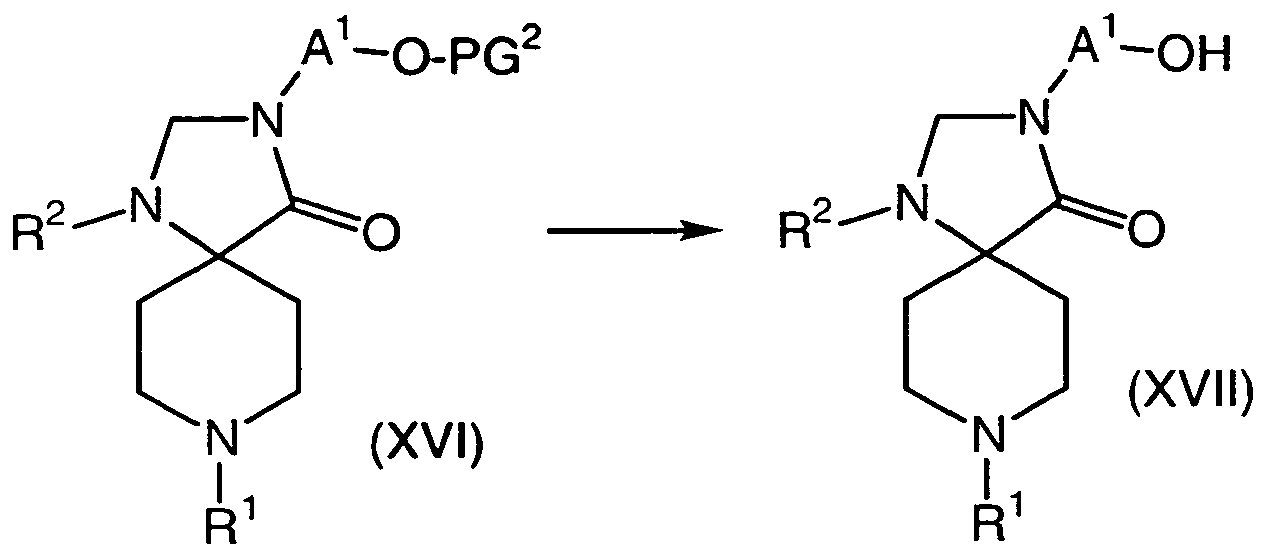


Applications Claiming Priority (2)
| Application Number | Priority Date | Filing Date | Title |
|---|---|---|---|
| US91067807P | 2007-04-09 | 2007-04-09 | |
| PCT/US2008/053901 WO2008124209A1 (en) | 2007-04-09 | 2008-02-14 | 1,3,8-trisubstituted-1,3,8-triaza-spiro[4.5]decan-4-one derivatives as ligands of the orl-i receptor for the treatment of anxiety and depression |
Publications (2)
| Publication Number | Publication Date |
|---|---|
| EP2150552A1 EP2150552A1 (en) | 2010-02-10 |
| EP2150552B1 true EP2150552B1 (en) | 2013-01-02 |
Family
ID=39580070
Family Applications (1)
| Application Number | Title | Priority Date | Filing Date |
|---|---|---|---|
| EP08729809A Not-in-force EP2150552B1 (en) | 2007-04-09 | 2008-02-14 | 1,3,8-trisubstituted-1,3,8-triaza-spiro[4.5]decan-4-one derivatives as ligands of the orl-i receptor for the treatment of anxiety and depression |
Country Status (7)
| Country | Link |
|---|---|
| US (1) | US8741916B2 (en) |
| EP (1) | EP2150552B1 (en) |
| JP (1) | JP5490677B2 (en) |
| CN (1) | CN101679430B (en) |
| CA (1) | CA2683598C (en) |
| MX (1) | MX2009011006A (en) |
| WO (1) | WO2008124209A1 (en) |
Families Citing this family (13)
| Publication number | Priority date | Publication date | Assignee | Title |
|---|---|---|---|---|
| AU2003268512A1 (en) | 2002-09-09 | 2004-03-29 | Janssen Pharmaceutica N.V. | Hydroxy alkyl substituted 1,3,8-triazaspiro[4.5]decan-4-one derivatives useful for the treatment of ORL-1 receptor mediated disorders |
| CN103202840B (en) | 2006-11-28 | 2015-02-11 | 詹森药业有限公司 | Salts of 3-(3-amino-2-(r)-hydroxy-propyl)-1-(4-fluoro-phenyl)-8-(8-methyl-naphthalen-1-ylmethyl)-1,3,8-triaza-spiro[4.5]decan-4-one |
| EP2150552B1 (en) | 2007-04-09 | 2013-01-02 | Janssen Pharmaceutica NV | 1,3,8-trisubstituted-1,3,8-triaza-spiro[4.5]decan-4-one derivatives as ligands of the orl-i receptor for the treatment of anxiety and depression |
| WO2009097995A1 (en) * | 2008-02-07 | 2009-08-13 | Sanofi-Aventis | Novel phenyl-substituted imidazolidines, method for the production thereof, medicaments containing said compounds and use thereof |
| WO2010037081A1 (en) * | 2008-09-29 | 2010-04-01 | Palatin Technologies, Inc. | Melanocortin receptor-specific spiro-piperidine compounds |
| EP2567959B1 (en) | 2011-09-12 | 2014-04-16 | Sanofi | 6-(4-hydroxy-phenyl)-3-styryl-1h-pyrazolo[3,4-b]pyridine-4-carboxylic acid amide derivatives as kinase inhibitors |
| CN122562777A (en) * | 2015-12-02 | 2026-08-14 | 阿斯特来亚治疗有限责任公司 | Piperidinyl pain-sensitive peptide receptor compounds |
| US10112924B2 (en) | 2015-12-02 | 2018-10-30 | Astraea Therapeutics, Inc. | Piperdinyl nociceptin receptor compounds |
| DK3402783T3 (en) | 2016-01-13 | 2020-05-04 | Gruenenthal Gmbh | 3- (carboxyethyl) -8-amino-2-oxo-1,3-diaza-spiro [4.5] decane-DERIVATIVES |
| MX378995B (en) | 2016-01-13 | 2025-03-11 | Gruenenthal Gmbh | 3-(carboxymethyl)-8-amino-2-oxo-1,3-diaza-spiro-[4.5]-decane derivatives |
| JP6893517B2 (en) | 2016-01-13 | 2021-06-23 | グリュネンタール・ゲゼルシャフト・ミト・ベシュレンクテル・ハフツング | 3-((Hetero-) aryl) -alkyl-8-amino-2-oxo-1,3-diaza-spiro- [4.5] -decane derivative |
| RS60855B1 (en) | 2016-01-13 | 2020-10-30 | Gruenenthal Gmbh | 8-amino-2-oxo-1,3-diaza-spiro-[4.5]-decane derivatives |
| TWI635082B (en) | 2016-01-13 | 2018-09-11 | 歌林達有限公司 | 3-((hetero)-aryl-8-amino-2-oxo-1,3-diaza-spiro-[4.5]-nonane derivative |
Family Cites Families (60)
| Publication number | Priority date | Publication date | Assignee | Title |
|---|---|---|---|---|
| US3155699A (en) | 1960-03-30 | 1964-11-03 | Mobay Chemical Corp | Purification of isocyanates by reduction of the hydrolyzable chlorine and acid content |
| US3155670A (en) | 1962-06-22 | 1964-11-03 | Res Lab Dr C Janssen N V | 1-oxo-2, 4, 8, triaza-spiro (4, 5) decanes |
| US3161644A (en) | 1962-06-22 | 1964-12-15 | Res Lab Dr C Janssen N V | 1-benzyl-4-substituted piperidines |
| US3238216A (en) | 1963-06-20 | 1966-03-01 | Res Lab Dr C Janssen N V | Substituted 1, 3, 8-triaza-spiro (4, 5) decanes |
| US3839340A (en) | 1968-09-27 | 1974-10-01 | Fmc Corp | Substituted 1,3,8-triazaspiro{8 4.5{9 decanes |
| US3629267A (en) | 1968-10-28 | 1971-12-21 | Smith Kline French Lab | Benzoheterocyclicalkyl derivatives of 4-(2-keto -1-benzimidazolinyl)-piperidine 4-(2-keto - 1 - benzimidazolinyl) -1 2 3 6 tetrahydropyridine 1 - phenyl - 1 3 8-triazaspiro(4 5)decan - 4 - one and 2 4 9-triazaspiro(5 5)undecan-1 3 5-trione |
| US3859340A (en) | 1970-09-09 | 1975-01-07 | Squibb & Sons Inc | ' -methylfluorene-2-acetic acid |
| US4020072A (en) | 1976-05-04 | 1977-04-26 | E. R. Squibb & Sons, Inc. | 5-Aminomethyl-1H-pyrazolo[3,4-b]pyridines |
| JPS54109983A (en) | 1978-02-13 | 1979-08-29 | Sumitomo Chem Co Ltd | Novel spiroamine derivative and its preparation |
| US4526896A (en) | 1978-12-26 | 1985-07-02 | Riker Laboratories, Inc. | Tetrazol-5-yl 2-nitro-3-phenylbenzofurans and antimicrobial use thereof |
| US4329353A (en) | 1980-10-22 | 1982-05-11 | Janssen Pharmaceutica, N.V. | 1-(4-Aryl-cyclohexyl)piperidine derivatives, method of use thereof and pharmaceutical compositions thereof |
| JPS57212180A (en) | 1981-06-19 | 1982-12-27 | Yoshitomi Pharmaceut Ind Ltd | Tetrahydrofuran(thiophene) compound |
| WO1988000190A1 (en) | 1986-06-25 | 1988-01-14 | Massachusetts Institute Of Technology | Optically active derivatives of glycidol |
| IL96507A0 (en) | 1989-12-08 | 1991-08-16 | Merck & Co Inc | Nitrogen-containing spirocycles and pharmaceutical compositions containing them |
| US5486362A (en) | 1991-05-07 | 1996-01-23 | Dynagen, Inc. | Controlled, sustained release delivery system for treating drug dependency |
| DE4135473A1 (en) | 1991-10-28 | 1993-04-29 | Bayer Ag | TRIAZASPIRODECANON-METHYLCHROMANE |
| WO1993012789A1 (en) | 1991-12-27 | 1993-07-08 | Beth Israel Hospital | Use of spiperone or spiperone derivatives as immunosuppressant agents |
| FR2708606B1 (en) | 1993-07-30 | 1995-10-27 | Sanofi Sa | N-phenylalkylindol-2-one derivatives, their preparation, pharmaceutical compositions containing them. |
| IL106692A (en) * | 1993-08-13 | 1997-04-15 | Israel Atomic Energy Comm | AZIDOALKYL DERIVATIVES AND THEIR USE FOR THE PREPARATION OF 99mTc COMPLEXES FOR IMAGING |
| JPH11500100A (en) | 1993-09-09 | 1999-01-06 | サイオス ノバ インコーポレイテッド | Pseudopeptide and non-peptide bradykinin receptor antagonists |
| US5739336A (en) | 1995-06-23 | 1998-04-14 | Syntex (U.S.A.) Inc. | 1,3,8-triaza- and 3,8-diaza-1-oxaspiro 4,5! decane derivatives |
| US5821219A (en) | 1995-08-11 | 1998-10-13 | Oregon Health Sciences University | Opioid antagonists and methods of their use |
| NZ326874A (en) | 1996-03-29 | 2000-01-28 | Pfizer | 6-phenylpyridyl-2-amine derivatives |
| CA2226058C (en) * | 1997-01-30 | 2008-01-29 | F. Hoffmann-La Roche Ag | 8-substituted-1,3,8-triaza-spiro[4.5]decan-4-one derivatives |
| US6013652A (en) | 1997-12-04 | 2000-01-11 | Merck & Co., Inc. | Spiro-substituted azacycles as neurokinin antagonists |
| DE69803653T2 (en) * | 1997-12-05 | 2002-08-29 | F. Hoffmann-La Roche Ag, Basel | 1,3,8-triazaspiro [4,5] decan-4-one derivatives |
| SI0921125T1 (en) | 1997-12-05 | 2002-04-30 | F. Hoffmann-La Roche Ag | 1,3,8-Triazaspiro(4,5)decan-4-on derivatives |
| US6277991B1 (en) | 1998-05-18 | 2001-08-21 | Novo Nordisk A/S | 1,3,8-triazaspiro[4.5]decanones with high affinity for opioid receptor subtypes |
| JP2002515503A (en) | 1998-05-18 | 2002-05-28 | ノボ ノルディスク アクティーゼルスカブ | Novel 1,3,8-triazaspiro [4,5] decanone with high affinity for opioid receptor subtypes |
| ES2162503T3 (en) | 1998-06-12 | 2001-12-16 | Hoffmann La Roche | DIAZA-ESPIRO DERIVATIVES (3,5) NONANS. |
| WO1999065494A1 (en) | 1998-06-15 | 1999-12-23 | Merck & Co., Inc. | Inhibitors of prenyl-protein transferase |
| ID29137A (en) * | 1998-07-27 | 2001-08-02 | Schering Corp | HIGH AFINITY LIGANS FOR ORL-1 NOSISEPTIN RECEPTORS |
| US6262066B1 (en) | 1998-07-27 | 2001-07-17 | Schering Corporation | High affinity ligands for nociceptin receptor ORL-1 |
| US6326379B1 (en) | 1998-09-16 | 2001-12-04 | Bristol-Myers Squibb Co. | Fused pyridine inhibitors of cGMP phosphodiesterase |
| EP0997464B1 (en) | 1998-10-23 | 2005-02-16 | Pfizer Inc. | 1,3,8-Triazaspiro[4,5] decanone compounds as orl1-receptor agonists |
| JP2002530377A (en) | 1998-11-20 | 2002-09-17 | スミスクライン・ビーチャム・ソシエタ・ペル・アチオニ | Quinoline-4-carboxamide derivatives as NK-3 and NK-2 receptor antagonists |
| JP2000169476A (en) | 1998-12-09 | 2000-06-20 | Banyu Pharmaceut Co Ltd | 4-oxoimidazolidin-5-spiro-nitrogen-containing heterocyclic compound |
| AU1382901A (en) | 1999-11-17 | 2001-05-30 | Novo Nordisk A/S | Novel triazaspirodecanones with high affinity for opioid receptor subtypes |
| DE19956598A1 (en) | 1999-11-25 | 2001-06-13 | Bosch Gmbh Robert | Valve for controlling liquids |
| JP3989247B2 (en) | 1999-12-06 | 2007-10-10 | ユーロ−セルティーク エス.エイ. | Triazospiro compounds having affinity for nociceptin receptor |
| JP2005231995A (en) | 1999-12-22 | 2005-09-02 | Meiji Seika Kaisha Ltd | SPIRO COMPOUND USEFUL AS OPIOID delta RECEPTOR AGONIST/ANTAGONIST |
| GB0003224D0 (en) | 2000-02-11 | 2000-04-05 | Glaxo Group Ltd | Chemical compounds |
| US6482829B2 (en) | 2000-06-08 | 2002-11-19 | Hoffmann-La Roche Inc. | Substituted heterocyclic siprodecane compound active as an antagonist of neurokinin 1 receptor |
| WO2001096337A1 (en) | 2000-06-14 | 2001-12-20 | Banyu Pharmaceutical Co.,Ltd | 4-oxoimidazolidine-2-spiro-nitrogenous heterocycle compounds |
| MXPA03009239A (en) | 2001-04-10 | 2004-11-12 | Johnson & Johnson | 1,3,8-triazaspiro[4.5]decan-4-one derivatives useful for the treatment of orl-1 receptor mediated disorders. |
| CN1516584A (en) | 2001-04-18 | 2004-07-28 | ŷ�����ǹɷ�����˾ | spiropyrazole compound |
| US20030078278A1 (en) | 2001-06-26 | 2003-04-24 | Pfizer Inc. | Spiropiperidine compounds as ligands for ORL-1 receptor |
| CA2454785C (en) | 2001-07-23 | 2010-09-07 | Banyu Pharmaceutical Co., Ltd. | 4-oxoimidazolidine-2-spiropiperidine derivatives |
| US20040014955A1 (en) | 2001-12-17 | 2004-01-22 | Carlos Zamudio | Identification of essential genes of cryptococcus neoformans and methods of use |
| EP1470126A1 (en) | 2002-01-28 | 2004-10-27 | Pfizer Inc. | N-substituted spiropiperidine compounds as ligands for orl-1 receptor |
| JP2005517007A (en) | 2002-02-07 | 2005-06-09 | アクシス・ファーマスーティカルズ | Novel bicyclic hydroxamates as histone deacetylase inhibitors |
| AU2003268512A1 (en) * | 2002-09-09 | 2004-03-29 | Janssen Pharmaceutica N.V. | Hydroxy alkyl substituted 1,3,8-triazaspiro[4.5]decan-4-one derivatives useful for the treatment of ORL-1 receptor mediated disorders |
| WO2005016913A1 (en) | 2003-08-19 | 2005-02-24 | Pfizer Japan, Inc. | Tetrahydroisoquinoline or isochroman compounds as orl-1 receptor ligands for the treatment of pain and cns disorders |
| AU2004309419A1 (en) | 2003-12-23 | 2005-07-14 | Arena Pharmaceuticals, Inc. | Novel spiroindoline or spiroisoquinoline compounds, methods of use and compositions thereof |
| US7879834B2 (en) | 2004-08-19 | 2011-02-01 | Vertex Pharmaceuticals Incorporated | Spiroindoline modulators of muscarinic receptors |
| CA2581150A1 (en) | 2004-09-17 | 2006-03-30 | Osi Pharmaceuticals, Inc. | (spirocyclylamido) aminothiophene compounds as c-kit proto- oncogene inhibitors |
| EP2522669B1 (en) | 2005-06-02 | 2016-12-28 | Janssen Pharmaceutica NV | 3-Spirocyclic indolyl derivatives useful as ORL-1 receptor modulators |
| CN101616669B (en) | 2006-11-28 | 2013-05-29 | 詹森药业有限公司 | Preparation of medicine for the treatment of alcohol abuse, addiction and dependency |
| EP2150552B1 (en) | 2007-04-09 | 2013-01-02 | Janssen Pharmaceutica NV | 1,3,8-trisubstituted-1,3,8-triaza-spiro[4.5]decan-4-one derivatives as ligands of the orl-i receptor for the treatment of anxiety and depression |
| US20100076003A1 (en) | 2008-09-19 | 2010-03-25 | Kathleen Battista | 5-oxazolidin-2-one substituted 1,3,8-triazaspiro[4.5]decan-4-one derivatives useful as orl-1 receptor modulators |
-
2008
- 2008-02-14 EP EP08729809A patent/EP2150552B1/en not_active Not-in-force
- 2008-02-14 CA CA2683598A patent/CA2683598C/en not_active Expired - Fee Related
- 2008-02-14 WO PCT/US2008/053901 patent/WO2008124209A1/en not_active Ceased
- 2008-02-14 JP JP2010503099A patent/JP5490677B2/en not_active Expired - Fee Related
- 2008-02-14 US US12/030,911 patent/US8741916B2/en not_active Expired - Fee Related
- 2008-02-14 MX MX2009011006A patent/MX2009011006A/en active IP Right Grant
- 2008-02-14 CN CN2008800194372A patent/CN101679430B/en not_active Expired - Fee Related
Also Published As
| Publication number | Publication date |
|---|---|
| CA2683598C (en) | 2015-11-17 |
| CN101679430B (en) | 2013-12-25 |
| CN101679430A (en) | 2010-03-24 |
| JP5490677B2 (en) | 2014-05-14 |
| WO2008124209A1 (en) | 2008-10-16 |
| JP2010523687A (en) | 2010-07-15 |
| MX2009011006A (en) | 2009-11-02 |
| EP2150552A1 (en) | 2010-02-10 |
| CA2683598A1 (en) | 2008-10-16 |
| US20080249122A1 (en) | 2008-10-09 |
| US8741916B2 (en) | 2014-06-03 |
Similar Documents
| Publication | Publication Date | Title |
|---|---|---|
| US8741916B2 (en) | 1,3,8-trisubstituted-1,3,8-triaza-spiro[4.5]decan-4-one derivatives as ligands of the ORL-1 receptor | |
| EP2245014B1 (en) | Urea derivatives of benzomorphanes and related scaffolds, medicaments containing such compounds and their use | |
| EP1601674B1 (en) | Hydroxyalkyl substituted 1,3,8-triazaspiro[4.5]decan-4-one derivatives useful for the treatment of ORL-1 receptor mediated disorders | |
| CA2745721C (en) | Substituted piperidine spiro pyrrolidinone and piperidinones used as h3 modulators | |
| US12473304B2 (en) | Heterocyclic PAD4 inhibitors | |
| BR112012008828A2 (en) | cgrp receptor antagonists, pharmaceutical composition and use of said antagonists | |
| US20140057895A1 (en) | Indazole- and pyrrolopyridine-derivative and pharmaceutical use thereof | |
| EP2522669B1 (en) | 3-Spirocyclic indolyl derivatives useful as ORL-1 receptor modulators | |
| EP4562014A2 (en) | Cdk2 inhibitors and methods of using the same | |
| TW202417458A (en) | Compounds and methods for modulating her2 | |
| EP1392687A1 (en) | 1,3,8-triazaspiro[4,5]decan-4-one derivatives useful for the treatment of orl-1 receptor mediated disorders | |
| US7470680B2 (en) | Constrained compounds as CGRP-receptor antagonists | |
| CA3200524A1 (en) | Ppar.gamma. modulators and methods of use | |
| US20100076003A1 (en) | 5-oxazolidin-2-one substituted 1,3,8-triazaspiro[4.5]decan-4-one derivatives useful as orl-1 receptor modulators | |
| CN101495480A (en) | Constrained compounds as cgrp-receptor antagonists | |
| TW202417435A (en) | Targeted protein degradation of parp14 for use in therapy | |
| AU2007325355A1 (en) | Salts of 3-(3-amino-2-(R)-hydroxy-propyl)-1-(4-fluoro-phenyl)-8-(8-methyl-naphthalen-1-ylmethyl) -1,3,8-triaza-spiro[4.5]decan-4-one | |
| AU2002252596A1 (en) | 1,3,8-triazaspiro[4.5]decan-4-one derivatives useful for the treatment of orl-1 receptor mediated disorders |
Legal Events
| Date | Code | Title | Description |
|---|---|---|---|
| PUAI | Public reference made under article 153(3) epc to a published international application that has entered the european phase |
Free format text: ORIGINAL CODE: 0009012 |
|
| 17P | Request for examination filed |
Effective date: 20091105 |
|
| AK | Designated contracting states |
Kind code of ref document: A1 Designated state(s): AT BE BG CH CY CZ DE DK EE ES FI FR GB GR HR HU IE IS IT LI LT LU LV MC MT NL NO PL PT RO SE SI SK TR |
|
| AX | Request for extension of the european patent |
Extension state: AL BA MK RS |
|
| DAX | Request for extension of the european patent (deleted) | ||
| 17Q | First examination report despatched |
Effective date: 20111222 |
|
| GRAP | Despatch of communication of intention to grant a patent |
Free format text: ORIGINAL CODE: EPIDOSNIGR1 |
|
| GRAS | Grant fee paid |
Free format text: ORIGINAL CODE: EPIDOSNIGR3 |
|
| GRAA | (expected) grant |
Free format text: ORIGINAL CODE: 0009210 |
|
| AK | Designated contracting states |
Kind code of ref document: B1 Designated state(s): AT BE BG CH CY CZ DE DK EE ES FI FR GB GR HR HU IE IS IT LI LT LU LV MC MT NL NO PL PT RO SE SI SK TR |
|
| REG | Reference to a national code |
Ref country code: GB Ref legal event code: FG4D |
|
| REG | Reference to a national code |
Ref country code: AT Ref legal event code: REF Ref document number: 591560 Country of ref document: AT Kind code of ref document: T Effective date: 20130115 Ref country code: CH Ref legal event code: EP |
|
| REG | Reference to a national code |
Ref country code: IE Ref legal event code: FG4D |
|
| REG | Reference to a national code |
Ref country code: DE Ref legal event code: R096 Ref document number: 602008021353 Country of ref document: DE Effective date: 20130307 |
|
| REG | Reference to a national code |
Ref country code: AT Ref legal event code: MK05 Ref document number: 591560 Country of ref document: AT Kind code of ref document: T Effective date: 20130102 |
|
| REG | Reference to a national code |
Ref country code: NL Ref legal event code: VDEP Effective date: 20130102 |
|
| PG25 | Lapsed in a contracting state [announced via postgrant information from national office to epo] |
Ref country code: SI Free format text: LAPSE BECAUSE OF FAILURE TO SUBMIT A TRANSLATION OF THE DESCRIPTION OR TO PAY THE FEE WITHIN THE PRESCRIBED TIME-LIMIT Effective date: 20130102 |
|
| REG | Reference to a national code |
Ref country code: LT Ref legal event code: MG4D |
|
| PG25 | Lapsed in a contracting state [announced via postgrant information from national office to epo] |
Ref country code: IS Free format text: LAPSE BECAUSE OF FAILURE TO SUBMIT A TRANSLATION OF THE DESCRIPTION OR TO PAY THE FEE WITHIN THE PRESCRIBED TIME-LIMIT Effective date: 20130502 Ref country code: BG Free format text: LAPSE BECAUSE OF FAILURE TO SUBMIT A TRANSLATION OF THE DESCRIPTION OR TO PAY THE FEE WITHIN THE PRESCRIBED TIME-LIMIT Effective date: 20130402 Ref country code: ES Free format text: LAPSE BECAUSE OF FAILURE TO SUBMIT A TRANSLATION OF THE DESCRIPTION OR TO PAY THE FEE WITHIN THE PRESCRIBED TIME-LIMIT Effective date: 20130413 Ref country code: LT Free format text: LAPSE BECAUSE OF FAILURE TO SUBMIT A TRANSLATION OF THE DESCRIPTION OR TO PAY THE FEE WITHIN THE PRESCRIBED TIME-LIMIT Effective date: 20130102 Ref country code: BE Free format text: LAPSE BECAUSE OF FAILURE TO SUBMIT A TRANSLATION OF THE DESCRIPTION OR TO PAY THE FEE WITHIN THE PRESCRIBED TIME-LIMIT Effective date: 20130102 Ref country code: AT Free format text: LAPSE BECAUSE OF FAILURE TO SUBMIT A TRANSLATION OF THE DESCRIPTION OR TO PAY THE FEE WITHIN THE PRESCRIBED TIME-LIMIT Effective date: 20130102 Ref country code: NO Free format text: LAPSE BECAUSE OF FAILURE TO SUBMIT A TRANSLATION OF THE DESCRIPTION OR TO PAY THE FEE WITHIN THE PRESCRIBED TIME-LIMIT Effective date: 20130402 Ref country code: CZ Free format text: LAPSE BECAUSE OF FAILURE TO SUBMIT A TRANSLATION OF THE DESCRIPTION OR TO PAY THE FEE WITHIN THE PRESCRIBED TIME-LIMIT Effective date: 20130102 Ref country code: SE Free format text: LAPSE BECAUSE OF FAILURE TO SUBMIT A TRANSLATION OF THE DESCRIPTION OR TO PAY THE FEE WITHIN THE PRESCRIBED TIME-LIMIT Effective date: 20130102 |
|
| PG25 | Lapsed in a contracting state [announced via postgrant information from national office to epo] |
Ref country code: GR Free format text: LAPSE BECAUSE OF FAILURE TO SUBMIT A TRANSLATION OF THE DESCRIPTION OR TO PAY THE FEE WITHIN THE PRESCRIBED TIME-LIMIT Effective date: 20130403 Ref country code: NL Free format text: LAPSE BECAUSE OF FAILURE TO SUBMIT A TRANSLATION OF THE DESCRIPTION OR TO PAY THE FEE WITHIN THE PRESCRIBED TIME-LIMIT Effective date: 20130102 Ref country code: PT Free format text: LAPSE BECAUSE OF FAILURE TO SUBMIT A TRANSLATION OF THE DESCRIPTION OR TO PAY THE FEE WITHIN THE PRESCRIBED TIME-LIMIT Effective date: 20130502 Ref country code: PL Free format text: LAPSE BECAUSE OF FAILURE TO SUBMIT A TRANSLATION OF THE DESCRIPTION OR TO PAY THE FEE WITHIN THE PRESCRIBED TIME-LIMIT Effective date: 20130102 Ref country code: FI Free format text: LAPSE BECAUSE OF FAILURE TO SUBMIT A TRANSLATION OF THE DESCRIPTION OR TO PAY THE FEE WITHIN THE PRESCRIBED TIME-LIMIT Effective date: 20130102 Ref country code: LV Free format text: LAPSE BECAUSE OF FAILURE TO SUBMIT A TRANSLATION OF THE DESCRIPTION OR TO PAY THE FEE WITHIN THE PRESCRIBED TIME-LIMIT Effective date: 20130102 |
|
| PG25 | Lapsed in a contracting state [announced via postgrant information from national office to epo] |
Ref country code: HR Free format text: LAPSE BECAUSE OF FAILURE TO SUBMIT A TRANSLATION OF THE DESCRIPTION OR TO PAY THE FEE WITHIN THE PRESCRIBED TIME-LIMIT Effective date: 20130102 Ref country code: MC Free format text: LAPSE BECAUSE OF NON-PAYMENT OF DUE FEES Effective date: 20130228 |
|
| REG | Reference to a national code |
Ref country code: CH Ref legal event code: PL |
|
| PG25 | Lapsed in a contracting state [announced via postgrant information from national office to epo] |
Ref country code: LI Free format text: LAPSE BECAUSE OF NON-PAYMENT OF DUE FEES Effective date: 20130228 Ref country code: CH Free format text: LAPSE BECAUSE OF NON-PAYMENT OF DUE FEES Effective date: 20130228 Ref country code: SK Free format text: LAPSE BECAUSE OF FAILURE TO SUBMIT A TRANSLATION OF THE DESCRIPTION OR TO PAY THE FEE WITHIN THE PRESCRIBED TIME-LIMIT Effective date: 20130102 Ref country code: EE Free format text: LAPSE BECAUSE OF FAILURE TO SUBMIT A TRANSLATION OF THE DESCRIPTION OR TO PAY THE FEE WITHIN THE PRESCRIBED TIME-LIMIT Effective date: 20130102 Ref country code: DK Free format text: LAPSE BECAUSE OF FAILURE TO SUBMIT A TRANSLATION OF THE DESCRIPTION OR TO PAY THE FEE WITHIN THE PRESCRIBED TIME-LIMIT Effective date: 20130102 Ref country code: RO Free format text: LAPSE BECAUSE OF FAILURE TO SUBMIT A TRANSLATION OF THE DESCRIPTION OR TO PAY THE FEE WITHIN THE PRESCRIBED TIME-LIMIT Effective date: 20130102 |
|
| PLBE | No opposition filed within time limit |
Free format text: ORIGINAL CODE: 0009261 |
|
| STAA | Information on the status of an ep patent application or granted ep patent |
Free format text: STATUS: NO OPPOSITION FILED WITHIN TIME LIMIT |
|
| PG25 | Lapsed in a contracting state [announced via postgrant information from national office to epo] |
Ref country code: CY Free format text: LAPSE BECAUSE OF FAILURE TO SUBMIT A TRANSLATION OF THE DESCRIPTION OR TO PAY THE FEE WITHIN THE PRESCRIBED TIME-LIMIT Effective date: 20130102 |
|
| 26N | No opposition filed |
Effective date: 20131003 |
|
| REG | Reference to a national code |
Ref country code: DE Ref legal event code: R097 Ref document number: 602008021353 Country of ref document: DE Effective date: 20131003 |
|
| PG25 | Lapsed in a contracting state [announced via postgrant information from national office to epo] |
Ref country code: IE Free format text: LAPSE BECAUSE OF NON-PAYMENT OF DUE FEES Effective date: 20130214 |
|
| PG25 | Lapsed in a contracting state [announced via postgrant information from national office to epo] |
Ref country code: MT Free format text: LAPSE BECAUSE OF FAILURE TO SUBMIT A TRANSLATION OF THE DESCRIPTION OR TO PAY THE FEE WITHIN THE PRESCRIBED TIME-LIMIT Effective date: 20130102 |
|
| PG25 | Lapsed in a contracting state [announced via postgrant information from national office to epo] |
Ref country code: TR Free format text: LAPSE BECAUSE OF FAILURE TO SUBMIT A TRANSLATION OF THE DESCRIPTION OR TO PAY THE FEE WITHIN THE PRESCRIBED TIME-LIMIT Effective date: 20130102 |
|
| PG25 | Lapsed in a contracting state [announced via postgrant information from national office to epo] |
Ref country code: LU Free format text: LAPSE BECAUSE OF NON-PAYMENT OF DUE FEES Effective date: 20130214 Ref country code: HU Free format text: LAPSE BECAUSE OF FAILURE TO SUBMIT A TRANSLATION OF THE DESCRIPTION OR TO PAY THE FEE WITHIN THE PRESCRIBED TIME-LIMIT; INVALID AB INITIO Effective date: 20080214 |
|
| REG | Reference to a national code |
Ref country code: FR Ref legal event code: PLFP Year of fee payment: 9 |
|
| REG | Reference to a national code |
Ref country code: FR Ref legal event code: PLFP Year of fee payment: 10 |
|
| PGFP | Annual fee paid to national office [announced via postgrant information from national office to epo] |
Ref country code: ES Payment date: 20170705 Year of fee payment: 14 |
|
| PGFP | Annual fee paid to national office [announced via postgrant information from national office to epo] |
Ref country code: GB Payment date: 20170208 Year of fee payment: 10 |
|
| PGFP | Annual fee paid to national office [announced via postgrant information from national office to epo] |
Ref country code: IT Payment date: 20170221 Year of fee payment: 10 |
|
| GBPC | Gb: european patent ceased through non-payment of renewal fee |
Effective date: 20180214 |
|
| PGFP | Annual fee paid to national office [announced via postgrant information from national office to epo] |
Ref country code: DE Payment date: 20180831 Year of fee payment: 11 |
|
| REG | Reference to a national code |
Ref country code: FR Ref legal event code: ST Effective date: 20181031 |
|
| PG25 | Lapsed in a contracting state [announced via postgrant information from national office to epo] |
Ref country code: IT Free format text: LAPSE BECAUSE OF NON-PAYMENT OF DUE FEES Effective date: 20180214 Ref country code: FR Free format text: LAPSE BECAUSE OF NON-PAYMENT OF DUE FEES Effective date: 20180228 Ref country code: GB Free format text: LAPSE BECAUSE OF NON-PAYMENT OF DUE FEES Effective date: 20180214 |
|
| REG | Reference to a national code |
Ref country code: DE Ref legal event code: R119 Ref document number: 602008021353 Country of ref document: DE |
|
| PG25 | Lapsed in a contracting state [announced via postgrant information from national office to epo] |
Ref country code: DE Free format text: LAPSE BECAUSE OF NON-PAYMENT OF DUE FEES Effective date: 20190903 |