EP2145264B1 - Berechnung der wichtigkeit von dokumenten unter faktorisierung der geschichtlichen wichtigkeit - Google Patents
Berechnung der wichtigkeit von dokumenten unter faktorisierung der geschichtlichen wichtigkeit Download PDFInfo
- Publication number
- EP2145264B1 EP2145264B1 EP08745701.6A EP08745701A EP2145264B1 EP 2145264 B1 EP2145264 B1 EP 2145264B1 EP 08745701 A EP08745701 A EP 08745701A EP 2145264 B1 EP2145264 B1 EP 2145264B1
- Authority
- EP
- European Patent Office
- Prior art keywords
- importance
- snapshot
- web
- temporal
- web pages
- Prior art date
- Legal status (The legal status is an assumption and is not a legal conclusion. Google has not performed a legal analysis and makes no representation as to the accuracy of the status listed.)
- Not-in-force
Links
Images


Classifications
-
- G—PHYSICS
- G06—COMPUTING OR CALCULATING; COUNTING
- G06F—ELECTRIC DIGITAL DATA PROCESSING
- G06F16/00—Information retrieval; Database structures therefor; File system structures therefor
- G06F16/90—Details of database functions independent of the retrieved data types
- G06F16/95—Retrieval from the web
- G06F16/951—Indexing; Web crawling techniques
-
- G—PHYSICS
- G06—COMPUTING OR CALCULATING; COUNTING
- G06F—ELECTRIC DIGITAL DATA PROCESSING
- G06F16/00—Information retrieval; Database structures therefor; File system structures therefor
- G06F16/90—Details of database functions independent of the retrieved data types
- G06F16/95—Retrieval from the web
- G06F16/955—Retrieval from the web using information identifiers, e.g. uniform resource locators [URL]
- G06F16/9558—Details of hyperlinks; Management of linked annotations
Definitions
- search engine services such as Google and Overture, provide for searching for information that is accessible via the Internet. These search engine services allow users to search for display pages, such as web pages, that may be of interest to users. After a user submits a search request (i.e., a query) that includes search terms, the search engine service identifies web pages that may be related to those search terms. To quickly identify related web pages, the search engine services may maintain a mapping of keywords to web pages. This mapping may be generated by "crawling" the web (i.e., the World Wide Web) to identify the keywords of each web page. To crawl the web, a search engine service may use a list of root web pages to identify all web pages that are accessible through those root web pages.
- the keywords of any particular web page can be identified using various well-known information retrieval techniques, such as identifying the words of a headline, the words supplied in the metadata of the web page, the words that are highlighted, and so on.
- the search engine service identifies web pages that may be related to the search request based on how well the keywords of a web page match the words of the query.
- the search engine service displays to the user links to the identified web pages in an order that is based on a ranking that may be determined by their relevance to the query, popularity, importance, and/or some other measure.
- PageRank is based on the principle that web pages will have links to (i.e., "out links") important web pages. Thus, the importance of a web page is based on the number and importance of other web pages that link to that web page (i.e., "in links”).
- the links between web pages can be represented by adjacency matrix A, where A ij represents the number of out links from web page i to web page j.
- HITS The HITS technique is additionally based on the principle that a web page that has many links to other important web pages may itself be important.
- HITS divides "importance" of web pages into two related attributes: “hub” and "authority.”
- “Hub” is measured by the "authority” score of the web pages that a web page links to, and "authority” is measured by the "hub” score of the web pages that link to the web page.
- PageRank which calculates the importance of web pages independently from the query
- HITS calculates importance based on the web pages of the result and web pages that are related to the web pages of the result by following in links and out links. HITS submits a query to a search engine service and uses the web pages of the result as the initial set of web pages.
- HITS adds to the set those web pages that are the destinations of in links and those web pages that are the sources of out links of the web pages of the result. HITS then calculates the authority and hub score of each web page using an iterative algorithm.
- HITS uses an adjacency matrix A to represent the links.
- a and h are eigenvectors of matrices A T A and AA T .
- HITS may also be modified to factor in the popularity of a web page as measured by the number of visits.
- b ij of the adjacency matrix can be increased whenever a user travels from web page i to web page j .
- link spamming in general refers to a deliberate action taken to unjustifiably increase the popularity or importance of a web page or web site.
- a spammer can manipulate links to unjustifiably increase the importance of a web page. For example, a spammer may increase a web page's hub score by adding out links to the spammer's web page.
- a common technique for adding out links is to create a copy of an existing link directory to quickly create a very large out link structure.
- a spammer may provide a web page of useful information with hidden links to spam web pages.
- spam web pages When many web pages may point to the useful information, the importance of the spam web pages is indirectly increased.
- many web sites such as blogs and web directories, allow visitors to post links. Spammers can post links to their spam web pages to directly or indirectly increase the importance of the spam web pages.
- a group of spammers may set up a link exchange mechanism in which their web sites point to each other to increase the importance of the web pages of the spammers' web sites.
- Web spam and in particular link spamming, presents problems for various techniques that rely on web data.
- a search engine service that orders search results in part based on popularity or importance of web pages may rank spam web pages unjustifiably high because of the spamming.
- the correct ranking of web pages of a search result is very important to search engine services. If users of a search engine service perceive that the ranking of web pages of search results does not conform to their idea of importance or relevance for whatever reason (e.g., link spam), the users may turn to a different search engine service. Since the revenue of a search engine service is closely correlated to the number of users, poor performance in ranking web pages of search results can result in loss of revenue for the search engine service.
- US 2006/0294124 A1 relates to system and methods for ranking pages in a network of linked pages based on the quality of the pages.
- Page quality is obtained by determining the change over time of the link structure of the page, which is obtained by determining the link structure of the page at different periods of time by taking multiple snapshots of the link structure of the network.
- the link structures are approximated by their PageRanks, page quality being determined by a formula that depends on the quality of the page, the current PageRank of the page, the change over time in the PageRank of the page, and a constant that determines the relative weight of the change over time in the PageRank of the page and the current PageRank of the page.
- the object of the present invention is to provide a system and a method for determining the importance of documents overtime.
- a method and system for determining temporal importance of documents having links between documents based on a temporal analysis of the links is provided.
- a temporal ranking system collects link information or snapshots indicating the links between documents at various snapshot times.
- the temporal ranking system calculates a current temporal importance of a document by factoring in the current importance of the document derived from the current snapshot (i.e., with the latest snapshot time) and the historical importance of the document derived from past snapshots.
- the temporal ranking system aggregates the importance of the web page for each snapshot.
- the temporal ranking system may provide the temporal importance of the documents to a search engine service so that it can rank documents based at least in part on their temporal importance.
- a temporal ranking system collects link information or snapshots indicating the links between documents (or more generally objects) at various snapshot times. For example, when the documents are web pages, a web crawler may crawl the web to identify web pages and the links between the web pages. The web crawler may represent the web pages and links as a web graph with vertices and edges. A web graph corresponds to a snapshot of the web at the time it was crawled, referred to as its snapshot time.
- the temporal ranking system calculates a current temporal importance of a document by factoring in the current importance of the document derived from the current snapshot (i.e., with the latest snapshot time) and the historical importance of the document derived from the past snapshots. For example, the temporal ranking system may use a page rank algorithm to calculate the importance of the web pages for each snapshot.
- the term "temporal importance” refers to an importance score that is based on multiple snapshots, and the term "importance" refers to an importance score that is based on a single snapshot.
- the temporal ranking system aggregates the importance of the web page for each snapshot.
- the temporal ranking system calculates a current temporal importance of a document based on the current snapshot and one or more past snapshots, a document whose current importance is increased by link spam that is introduced in the current snapshot will have a current temporal importance that is lower because of its historically lower overall importance (based on the past snapshots).
- the temporal ranking system provides a weighting factor that can be used to designate the relative contribution to the current temporal importance of the current importance derived from the current snapshot and the historical importance derived from past snapshots.
- the weighting factor may be set to a value between zero and one. A value of zero indicates that the current importance contributes nothing to the current temporal importance and that the current temporal importance is the historical importance. A value of one-half indicates that the current importance and the historical importance contribute equally to the current temporal importance. A value of one indicates that the historical importance contributes nothing to the current temporal importance and that the current temporal importance degenerates to the current importance.
- the weighting factor can be set based on how accurately the current importance derived from the current snapshot reflects the actual importance of the web pages.
- the temporal ranking system provides a decay factor that is used to reduce the relative contribution of a snapshot to the current temporal importance of web pages over time.
- a decay factor may indicate that the contribution of a snapshot decreases by 50% from one snapshot time to the next.
- the contribution of the second newest snapshot may be 50% of its importance
- the contribution of the third newest snapshot may be 25% of its importance
- the contribution of the fourth newest snapshot may be 12.5% of its importance, and so on.
- the temporal ranking system applies a mechanic model when determining an appropriate decay factor for each snapshot.
- the temporal ranking system considers the current importance of the current snapshot to have a driving force and the historical importance of the past snapshots to have a resisting force.
- the total force derived from all the snapshots is the driving force adjusted by an enhancement factor minus the resisting force adjusted by a damping factor.
- the mechanic model is analogous to the mechanics of physical motion in which an object to which a driving force is applied may also have a resisting force.
- the total force on the object is the driving force minus the resisting force.
- Newton's second law relating to physical motion the force of an object is its mass times its acceleration (e.g., the derivative of velocity).
- the total force derived from all past snapshots is "mass" of a web page times the "acceleration" of the historical importance of the web page.
- the historical importance can thus be considered to be a "velocity.”
- the "mass" of a web page may represent an intrinsic quality of a web page. In some embodiments, all web pages are assumed to have the same mass.
- the "acceleration" of a web page is the rate of change in historical importance.
- a solution for velocity or temporal importance of a web page can be obtained.
- the solution provides an equation from which the weighting factor and the decay factor can be derived from the enhancement factor and the damping factor.
- the damping factor represents how much historical importance will contribute to the current temporal importance
- the enhancement factor is a constant that does not affect the relative temporal importance of the web pages.
- the damping factor which may be the same for all snapshots, may provide a more intuitive model for understanding the parameters controlling the temporal ranking system.
- the temporal ranking system calculates temporal importance scores for web pages based on both the current web graph (i.e., a snapshot) and historical information contained in previous web graphs.
- the weighting factor ⁇ may be set based on the perceived reliability of the current snapshot. If ⁇ equals 1, then the current snapshot is considered to be completely reliable and past snapshots are ignored.
- the temporal ranking system may use a "mechanic model" to derive parameters for controlling the decay and weighting factors.
- the temporal ranking system assumes that importance corresponds to the velocity of an object. If a page i gets an importance score PR t ( i ) for the current snapshot G t , the temporal ranking system will add a corresponding driving force to a virtual force F t ( i ) for this page.
- the temporal ranking system assumes that the decay for a temporal importance score TR t ( i ) is a resisting force that has a negative effect on the virtual force.
- the virtual force is represented as mass times acceleration.
- the weighting factor ⁇ ( ⁇ ⁇ 0) represents the weight that the historical importance scores contribute to the current temporal importance score.
- the factor m ( i ) is an intrinsic quality for each web page.
- the temporal ranking system may set m ( i ) to the same for all web pages.
- the enhancement constant ⁇ does not affect the ranking of the pages if ⁇ and m ( i ) are fixed. To ensure that the weighting factor is between zero and one, the temporal ranking system sets ⁇ to a value of greater than zero and less than m.
- Figure 1 is a diagram that illustrates a portion of a web graph.
- a web graph is generated by crawling the web and identifying the out links on web pages of web sites that are encountered.
- a portion of web graph 100 contains vertices 101-105 representing five web sites and edges between the vertices representing out links.
- the edge between vertices 101 and 103 represents an out link of the web site represented by vertex 101 to the web site represented by vertex 103.
- the web site represented by vertex 103 is the target of the out link represented by the edge. That same edge is also an in link to the web site represented by vertex 103.
- the web site represented by vertex 101 is the source of the in link represented by the edge.
- the temporal ranking system may represent the web graph using an adjacency matrix with each web site represented as a row and a column of the matrix. A nonzero entry for a row and a column may indicate that the web site represented by the row has an out link to the web site represented by that column.
- the temporal ranking system may use various techniques to represent web graphs including sparse matrix storage techniques.
- the temporal ranking system may also store differences between the web graph from one snapshot time to the next snapshot rather than storing the entire web graph multiple times.
- each snapshot will likely have different numbers of web pages.
- the temporal ranking system may account for different numbers of web pages in different snapshots by maintaining an aggregate list of all web pages in all snapshots. When the importance scores for the web pages of a snapshot are calculated, the temporal ranking system adds importance scores of zero for those web pages of the aggregate list that are not in the snapshot. In this way, vectors representing the importance scores for each snapshot will have the same length.
- FIG. 2 is a block diagram that illustrates components of a temporal ranking system that ranks web pages based on snapshots of web graphs taken over time in one embodiment.
- a temporal ranking system 210 is connected to web site servers 220 and user computing devices 230 via a communications link 240.
- the temporal ranking system may include a web crawler 211, a create web graph component 212, a web graph store 213, and a search index store 214.
- the web crawler crawls the web pages of the web site servers to identify web pages and the links between the web pages.
- the web crawler may generate a mapping of keywords to web pages and store the mapping in the search index store.
- the web crawler may also provide an indication of the web pages and links to a create web graph component that generates a representation of the web graph corresponding to a snapshot of the web.
- the create web graph component may represent a web graph by an adjacency matrix that is stored in the web graph store.
- the web crawler may be scheduled to crawl the web pages periodically or on an ad hoc basis. In either case, the web crawler associates a snapshot time with each snapshot.
- the temporal ranking system in some embodiments assumes that the snapshot times are equally spaced, one skilled in the art will appreciate that the snapshot times need not be equally spaced. In such a case, the calculation of the damping factor or the decay factor for a snapshot may take into consideration its actual snapshot time relative to the current snapshot time.
- the temporal ranking system includes a calculate temporal importance component 215, a calculate importance component 216, a temporal importance store 250, and an importance store 251.
- the calculate temporal importance component calculates a current temporal importance score for each web page based on the importance scores derived from the current snapshot and the historical importance derived from past snapshots.
- the calculate temporal importance component invokes the calculate importance component to calculate the importance scores of the web pages based on a single snapshot.
- the calculate importance component may implement a conventional algorithm such as a page rank algorithm or a hub and authority algorithm and store the importance scores for each snapshot in the importance store.
- the calculate temporal importance component may store the temporal importance scores in the temporal importance store for use in ranking web pages.
- the temporal ranking system may also include a search engine component 217, a find matching web pages component 218, and a rank results component 219.
- Users of the user computing devices may submit search requests to the search engine component.
- the search engine component invokes the find matching web pages component to find web pages that match the search requests.
- the find matching web pages component may use a search index to identify the matching web pages.
- the search engine component then invokes the rank results component to rank the web pages of the results based on the temporal importance scores of the temporal importance store for the web pages of the search result.
- the rank results component may combine a relevance score based on the relevance of a web page to the search request with the current temporal importance score generated by the temporal ranking system to provide an overall ranking score.
- the search engine component may then rank the web pages of the search result based on the ranking scores.
- the computing device on which the temporal ranking system is implemented may include a central processing unit, memory, input devices (e.g., keyboard and pointing devices), output devices (e.g., display devices), and storage devices (e.g., disk drives).
- the memory and storage devices are computer-readable media that may be encoded with computer-executable instructions that implement the system, which means a computer-readable medium that contains the instructions.
- the instructions, data structures, and message structures may be stored or transmitted via a data transmission medium, such as a signal on a communications link.
- Various communications links may be used, such as the Internet, a local area network, a wide area network, a point-to-point dial-up connection, a cell phone network, and so on.
- Embodiments of the temporal ranking system may be implemented in or used in conjunction with various operating environments that include personal computers, server computers, hand-held or laptop devices, multiprocessor systems, microprocessor-based systems, programmable consumer electronics, digital cameras, network PCs, minicomputers, mainframe computers, cell phones, personal digital assistants, smart phones, personal computers, programmable consumer electronics, distributed computing environments that include any of the above systems or devices, and so on.
- the temporal ranking system may be described in the general context of computer-executable instructions, such as program modules, executed by one or more computers or other devices.
- program modules include routines, programs, objects, components, data structures, and so on that perform particular tasks or implement particular abstract data types.
- the functionality of the program modules may be combined or distributed as desired in various embodiments. For example, a separate computing system may crawl the web and generate the web graphs. Another computing system may provide a search engine that uses the temporal importance scores to rank search results.
- Figure 3 is a flow diagram that illustrates high-level processing of a calculate temporal importance component of the temporal ranking system in some embodiments.
- the component is invoked to calculate the temporal importance scores based on analysis of multiple snapshots of the web.
- the component calculates the importance scores for the web pages for each snapshot.
- the component may use a page rank algorithm or a hub and authority algorithm.
- the component may save the importance scores for each snapshot in the importance store to avoid recalculating of the importance scores each time a new snapshot is collected.
- the component loops aggregating the contribution of the past importance scores into a historical importance score for each web page.
- the component initializes a variable to track the snapshots.
- the component increments the variable to select the next snapshot.
- decision block 304 if all the snapshots have already been selected, then the component continues at block 306, else the component continues at block 305.
- the component accumulates the importance scores for the web pages for the selected snapshot into the historical importance score based on a weighting factor. The component then loops to block 303 to select the next snapshot.
- the component generates a current temporal importance score for each web page as a weighted combination of the historical importance score of the web page and the current importance score of the web page. The component then completes.
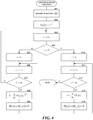
- Figure 4 is a flow diagram that illustrates low-level processing of a calculate temporal importance component of the temporal ranking system in some embodiments.
- the component calculates the importance score for the web pages of the current snapshot.
- the component initializes a temporal importance score for each web page according to the first term of Equation 10.
- the component loops calculating the historical importance scores based on the past snapshots according to the second term of Equation 10.
- the component selects the next snapshot starting with the oldest snapshot.
- decision block 404 if all the past snapshots have already been selected, then the component continues at block 410, else the component continues at block 405.
- the component loops calculating the historical importance scores for each web page.
- the component initializes an index for the web pages.
- the component selects the next web page of the selected snapshot.
- decision block 407 if all the web pages have already been selected, then the component loops to block 403 to select the next snapshot, else the component continues at block 408.
- the component calculates a weighted importance score for the selected web page from the importance score of the web page within the selected snapshot.
- the component combines the weighted importance score with the historical importance score for the last snapshot to provide a historical importance score for the selected web page of the selected snapshot. The component then loops to block 406 to select the next web page of the selected snapshot.
- the component loops calculating a weighted importance score for each web page of the current snapshot and adding it to the historical importance score for the web pages according to the third term of Equation 10.
- the component initializes an index for the web pages.
- the component increments the index to select the next web page.
- decision block 412 if all the web pages of the current snapshot have already been selected, then the component completes, else the component continues at block 413.
- the component calculates the weighted importance score for the selected web page based on the importance score for the selected web page as calculated in block 401.
- the component combines the historical importance score for the selected web page as calculated in block 409 and weighted importance score into a current temporal importance score for the selected web page. The component then loops to block 411 to select the next web page of the current snapshot.
- the subject matter defined in the appended claims is not necessarily limited to the specific features or acts described above. Rather, the specific features and acts described above are disclosed as example forms of implementing the claims.
- the temporal importance scores may be used in any application which uses importance of documents.
- the documents may be patents and the links may be citations to other patents or the documents may be scholarly articles and the links may be citations to other scholarly articles.
- the temporal importance scores may also be used to rate authors based on the importance of their writings. Accordingly, the invention is not limited except as by the appended claims.
Landscapes
- Engineering & Computer Science (AREA)
- Databases & Information Systems (AREA)
- Theoretical Computer Science (AREA)
- Data Mining & Analysis (AREA)
- Physics & Mathematics (AREA)
- General Engineering & Computer Science (AREA)
- General Physics & Mathematics (AREA)
- Information Retrieval, Db Structures And Fs Structures Therefor (AREA)
Claims (14)
- Verfahren in einer Computervorrichtung zum Bestimmen einer zeitlichen Wichtigkeit von Dokumenten mit Verknüpfungen zu und von anderen Dokumenten, wobei die zeitliche Wichtigkeit eine Wichtigkeitsbewertung für ein Dokument ist, das auf mehreren Momentaufnahmen basiert, wobei jede Momentaufnahme einer Webgrafik zu einer Momentaufnahmezeit entspricht, wobei die Momentaufnahmezeit die Zeit ist, zu der die Momentaufnahme durchsucht wird, wobei das Verfahren umfasst:Bereitstellen (213) von Verknüpfungsinformationen für verschiedene Momentaufnahmen, wobei die Verknüpfungsinformationen für jede Momentaufnahme Verknüpfungen von und zu den Dokumenten zur Momentaufnahmezeit anzeigen;für jede Momentaufnahme Berechnen (216, 301, 401) von Wichtigkeitsbewertungen für die Dokumente auf der Basis der Verknüpfungsinformationen der Momentaufnahme undZusammenfassen (215, 306, 414) der berechneten Wichtigkeitsbewertungen für die Momentaufnahmen für ein Dokument, um eine zeitliche Wichtigkeitsbewertung für das Dokument bereitzustellen, wobei die zeitliche Wichtigkeit als eine gewichtete Summe der Wichtigkeitsbewertung des Dokuments berechnet wird, das von der Momentaufnahme mit der letzten Momentaufnahmezeit und den zusammengefassten Wichtigkeitsbewertungen des Dokuments von verschiedenen vergangenen Momentaufnahmen abgeleitet wird, wobei in dem Prozess zum Zusammenfassen der berechneten Wichtigkeitsbewertungen Wichtigkeitsbewertungen für neuere Momentaufnahmen schwerer gewichtet werden als für weniger neue Momentaufnahmen.
- Verfahren nach Anspruch 1, wobei das Zusammenfassen entsprechend dem Folgenden durchgeführt wird:

- Verfahren nach Anspruch 1, wobei das Zusammenfassen entsprechend dem Folgenden durchgeführt wird:

- Verfahren nach Anspruch 1, wobei die Dokumente Webseiten sind, wobei die Verknüpfungen Hyperlinks zwischen Dokumenten sind und die Verknüpfungsinformationen eine Darstellung einer Webgrafik sind.
- Verfahren nach Anspruch 5, wobei die Webgrafik durch eine Adjazenzmatrix dargestellt wird.
- Verfahren nach Anspruch 1, wobei das Berechnen von Wichtigkeitsbewertungen einen Seitenrangfolgealgorithmus anwendet.
- Verfahren nach Anspruch 1, wobei das Berechnen von Wichtigkeitsbewertungen einen Hub-and-Authority-Algorithmus anwendet.
- Verfahren nach Anspruch 1, das das Empfangen einer Anzeige von Dokumenten eines Suchergebnisses und die Rangfolge der Dokumente des Suchergebnisses auf der Basis der zeitlichen Wichtigkeitsbewertungen der Dokumente aufweist.
- Computerlesbares Medium, das mit Anweisungen zum Bestimmen einer zeitlichen Wichtigkeit von Webseiten mit Verknüpfungen zu und von anderen Webseiten codiert ist, wobei die zeitliche Wichtigkeit eine Wichtigkeitsbewertung für eine Webseite ist, die auf mehreren Momentaufnahmen basiert, wobei jede Momentaufnahme einer Webgrafik (100) zu einer Momentaufnahmezeit entspricht, wobei die Momentaufnahmezeit die Zeit ist, zu der die Momentaufnahme durch ein Verfahren durchsucht wird, das umfasst:Sammeln (211) von Momentaufnahmen des Webs, die Webseiten und Verknüpfungen zwischen den Webseiten anzeigen;Berechnen (216, 301, 401) von Wichtigkeitsbewertungen für die Webseiten der Momentaufnahmen auf der Basis der Verknüpfungsinformationen;Zusammenfassen (215, 306, 414) der Wichtigkeitsbewertungen für die Momentaufnahmen für die Webseiten, um zeitliche Wichtigkeitsbewertungen für die Webseiten bereitzustellen, wobei die zeitliche Wichtigkeit als eine gewichtete Summe der Wichtigkeitsbewertung des Dokuments berechnet wird, das von der Momentaufnahme mit der letzten Momentaufnahmezeit und den zusammengefassten Wichtigkeitsbewertungen des Dokuments von verschiedenen vergangenen Momentaufnahmen abgeleitet wird; undErzeugen (219) einer Rangfolge von Webseiten eines Suchergebnisses einer Suchanfrage durch Einbeziehen in den zeitlichen Wichtigkeitsbewertungen der Webseiten.
- Computerlesbares Medium nach Anspruch 9, wobei das Erzeugen der Rangfolge der Webseiten in Relevanz der Webseite die Suchanfrage einbezieht.
- Computerlesbares Medium nach Anspruch 9, wobei das Zusammenfassen der Wichtigkeitsbewertungen einen Abklingfaktor anwendet.
- Computerlesbares Medium nach Anspruch 9, wobei eine Momentaufnahme eine Webgrafik der Webseiten und Verknüpfungen darstellt.
- Computersystem zum Bestimmen der zeitlichen Wichtigkeit von Webseiten mit Verknüpfungen zu und von anderen Webseiten, wobei die zeitliche Wichtigkeit eine Wichtigkeitsbewertung für eine Webseite ist, die auf mehreren Momentaufnahmen basiert, wobei jede Momentaufnahme einer Webgrafik (100) zu einer Momentaufnahmezeit entspricht, wobei die Momentaufnahmezeit die Zeit ist, zu der die Momentaufnahme durchsucht wird, das umfasst:einen Momentaufnahmenspeicher (213), der eine Momentaufnahme von Verknüpfungsinformationen aufweist, die Webseiten und deren Hyperlinks darstellen, die zu verschiedenen Momentaufnahmezeiten gesammelt wurden;eine Komponente (216), die Wichtigkeitsbewertungen für Webseiten auf der Basis von Verknüpfungsinformationen einer Momentaufnahme berechnet undeine Komponente (215, 306, 414), die für eine Webseite die Wichtigkeitsbewertungen der Webseite für verschiedene Momentaufnahmen zusammenfasst, um eine zeitliche Wichtigkeitsbewertung für die Webseite bereitzustellen, wobei die zeitliche Wichtigkeit als eine gewichtete Summe der Wichtigkeitsbewertung des Dokuments berechnet wird, das von der Momentaufnahme mit der letzten Momentaufnahmezeit und den zusammengefassten Wichtigkeitsbewertungen des Dokuments von verschiedenen vergangenen Momentaufnahmen abgeleitet wird.
- Computersystem nach Anspruch 13, das eine Komponente aufweist, die Webseiten eines Suchergebnisses wenigstens auf der Basis der zeitlichen Wichtigkeitsbewertungen der Webseiten bewertet.
Applications Claiming Priority (2)
| Application Number | Priority Date | Filing Date | Title |
|---|---|---|---|
| US11/734,336 US7676520B2 (en) | 2007-04-12 | 2007-04-12 | Calculating importance of documents factoring historical importance |
| PCT/US2008/060144 WO2008128124A1 (en) | 2007-04-12 | 2008-04-11 | Calculating importance of documents factoring historical importance |
Publications (3)
| Publication Number | Publication Date |
|---|---|
| EP2145264A1 EP2145264A1 (de) | 2010-01-20 |
| EP2145264A4 EP2145264A4 (de) | 2011-10-26 |
| EP2145264B1 true EP2145264B1 (de) | 2018-07-25 |
Family
ID=39854673
Family Applications (1)
| Application Number | Title | Priority Date | Filing Date |
|---|---|---|---|
| EP08745701.6A Not-in-force EP2145264B1 (de) | 2007-04-12 | 2008-04-11 | Berechnung der wichtigkeit von dokumenten unter faktorisierung der geschichtlichen wichtigkeit |
Country Status (5)
| Country | Link |
|---|---|
| US (1) | US7676520B2 (de) |
| EP (1) | EP2145264B1 (de) |
| JP (1) | JP4746712B2 (de) |
| CN (1) | CN101652771B (de) |
| WO (1) | WO2008128124A1 (de) |
Families Citing this family (24)
| Publication number | Priority date | Publication date | Assignee | Title |
|---|---|---|---|---|
| US8244722B1 (en) * | 2005-06-30 | 2012-08-14 | Google Inc. | Ranking documents |
| WO2008126184A1 (ja) * | 2007-03-16 | 2008-10-23 | Fujitsu Limited | 文書重要度算出プログラム |
| US8667117B2 (en) * | 2007-05-31 | 2014-03-04 | Microsoft Corporation | Search ranger system and double-funnel model for search spam analyses and browser protection |
| US9430577B2 (en) * | 2007-05-31 | 2016-08-30 | Microsoft Technology Licensing, Llc | Search ranger system and double-funnel model for search spam analyses and browser protection |
| US7873635B2 (en) * | 2007-05-31 | 2011-01-18 | Microsoft Corporation | Search ranger system and double-funnel model for search spam analyses and browser protection |
| US9405792B2 (en) * | 2007-08-14 | 2016-08-02 | John Nicholas and Kristin Gross Trust | News aggregator and search engine using temporal decoding |
| US7949643B2 (en) * | 2008-04-29 | 2011-05-24 | Yahoo! Inc. | Method and apparatus for rating user generated content in search results |
| CN101499098B (zh) * | 2009-03-04 | 2012-07-11 | 阿里巴巴集团控股有限公司 | 一种网页评估值的确定及运用的方法、系统 |
| US10353967B2 (en) * | 2009-06-22 | 2019-07-16 | Microsoft Technology Licensing, Llc | Assigning relevance weights based on temporal dynamics |
| US8150841B2 (en) * | 2010-01-20 | 2012-04-03 | Microsoft Corporation | Detecting spiking queries |
| JP5357804B2 (ja) * | 2010-02-24 | 2013-12-04 | 日本電信電話株式会社 | 関心度処理装置、関心度処理方法、および、関心度処理プログラム |
| US8700642B2 (en) * | 2010-03-22 | 2014-04-15 | Microsoft Corporation | Software agent for monitoring content relevance |
| US9324112B2 (en) * | 2010-11-09 | 2016-04-26 | Microsoft Technology Licensing, Llc | Ranking authors in social media systems |
| US9286619B2 (en) | 2010-12-27 | 2016-03-15 | Microsoft Technology Licensing, Llc | System and method for generating social summaries |
| US9218419B2 (en) * | 2012-04-23 | 2015-12-22 | Yahoo! Inc. | Snapshot generation for search results page preview |
| US9529926B2 (en) * | 2012-04-23 | 2016-12-27 | Excalibur Ip, Llc | Snapshot refreshment for search results page preview |
| US9569413B2 (en) * | 2012-05-07 | 2017-02-14 | Sap Se | Document text processing using edge detection |
| US9348846B2 (en) | 2012-07-02 | 2016-05-24 | Google Inc. | User-navigable resource representations |
| US9294576B2 (en) | 2013-01-02 | 2016-03-22 | Microsoft Technology Licensing, Llc | Social media impact assessment |
| US9646247B2 (en) | 2014-04-09 | 2017-05-09 | International Business Machines Corporation | Utilizing temporal indicators to weight semantic values |
| US9519686B2 (en) | 2014-04-09 | 2016-12-13 | International Business Machines Corporation | Confidence ranking of answers based on temporal semantics |
| CN104063504B (zh) * | 2014-07-08 | 2018-07-13 | 百度在线网络技术(北京)有限公司 | 网页的综合访问权值的确定方法及访问记录的排序方法 |
| US10331673B2 (en) | 2014-11-24 | 2019-06-25 | International Business Machines Corporation | Applying level of permanence to statements to influence confidence ranking |
| US10824659B2 (en) | 2018-08-28 | 2020-11-03 | International Business Machines Corporation | Predicting the temporal stability of answers in a deep question answering system |
Family Cites Families (18)
| Publication number | Priority date | Publication date | Assignee | Title |
|---|---|---|---|---|
| US6285999B1 (en) * | 1997-01-10 | 2001-09-04 | The Board Of Trustees Of The Leland Stanford Junior University | Method for node ranking in a linked database |
| EP1116152A1 (de) * | 1998-09-03 | 2001-07-18 | OWNX Inc. | System zur automatischen berechnung des durch den konsumenten verdienten unternehmensgewinn |
| JP3698242B2 (ja) * | 1999-08-20 | 2005-09-21 | 日本電気株式会社 | 情報セット重要度判定システム及びその判定方法、及び情報セット重要度判定プログラムを記録した記録媒体 |
| JP2001290843A (ja) * | 2000-02-04 | 2001-10-19 | Fujitsu Ltd | 文書検索装置及びその方法並びに文書検索プログラム及びそのプログラムを記録した記録媒体 |
| US7225181B2 (en) * | 2000-02-04 | 2007-05-29 | Fujitsu Limited | Document searching apparatus, method thereof, and record medium thereof |
| US7080073B1 (en) * | 2000-08-18 | 2006-07-18 | Firstrain, Inc. | Method and apparatus for focused crawling |
| US6560600B1 (en) * | 2000-10-25 | 2003-05-06 | Alta Vista Company | Method and apparatus for ranking Web page search results |
| US7076483B2 (en) * | 2001-08-27 | 2006-07-11 | Xyleme Sa | Ranking nodes in a graph |
| US7089252B2 (en) * | 2002-04-25 | 2006-08-08 | International Business Machines Corporation | System and method for rapid computation of PageRank |
| US7346839B2 (en) * | 2003-09-30 | 2008-03-18 | Google Inc. | Information retrieval based on historical data |
| US20060294124A1 (en) * | 2004-01-12 | 2006-12-28 | Junghoo Cho | Unbiased page ranking |
| US9104689B2 (en) * | 2004-03-17 | 2015-08-11 | International Business Machines Corporation | Method for synchronizing documents for disconnected operation |
| US7293007B2 (en) * | 2004-04-29 | 2007-11-06 | Microsoft Corporation | Method and system for identifying image relatedness using link and page layout analysis |
| US20060036598A1 (en) * | 2004-08-09 | 2006-02-16 | Jie Wu | Computerized method for ranking linked information items in distributed sources |
| CA2577841A1 (en) * | 2004-08-19 | 2006-03-02 | Claria Corporation | Method and apparatus for responding to end-user request for information |
| US7779001B2 (en) * | 2004-10-29 | 2010-08-17 | Microsoft Corporation | Web page ranking with hierarchical considerations |
| US7516123B2 (en) * | 2005-04-14 | 2009-04-07 | International Business Machines Corporation | Page rank for the semantic web query |
| US8140559B2 (en) * | 2005-06-27 | 2012-03-20 | Make Sence, Inc. | Knowledge correlation search engine |
-
2007
- 2007-04-12 US US11/734,336 patent/US7676520B2/en not_active Expired - Fee Related
-
2008
- 2008-04-11 EP EP08745701.6A patent/EP2145264B1/de not_active Not-in-force
- 2008-04-11 JP JP2010503259A patent/JP4746712B2/ja not_active Expired - Fee Related
- 2008-04-11 CN CN2008800114132A patent/CN101652771B/zh not_active Expired - Fee Related
- 2008-04-11 WO PCT/US2008/060144 patent/WO2008128124A1/en not_active Ceased
Non-Patent Citations (1)
| Title |
|---|
| None * |
Also Published As
| Publication number | Publication date |
|---|---|
| CN101652771A (zh) | 2010-02-17 |
| JP2010524141A (ja) | 2010-07-15 |
| CN101652771B (zh) | 2013-11-20 |
| WO2008128124A1 (en) | 2008-10-23 |
| US7676520B2 (en) | 2010-03-09 |
| EP2145264A4 (de) | 2011-10-26 |
| EP2145264A1 (de) | 2010-01-20 |
| US20080256051A1 (en) | 2008-10-16 |
| JP4746712B2 (ja) | 2011-08-10 |
Similar Documents
| Publication | Publication Date | Title |
|---|---|---|
| EP2145264B1 (de) | Berechnung der wichtigkeit von dokumenten unter faktorisierung der geschichtlichen wichtigkeit | |
| US8244737B2 (en) | Ranking documents based on a series of document graphs | |
| US7644075B2 (en) | Keyword usage score based on frequency impulse and frequency weight | |
| US7502789B2 (en) | Identifying important news reports from news home pages | |
| US7664735B2 (en) | Method and system for ranking documents of a search result to improve diversity and information richness | |
| US7849089B2 (en) | Method and system for adapting search results to personal information needs | |
| Aggarwal et al. | Intelligent crawling on the World Wide Web with arbitrary predicates | |
| CN101390096B (zh) | 使用传播的文档相关性来训练排名功能 | |
| US7689622B2 (en) | Identification of events of search queries | |
| US8346759B2 (en) | Searching documents for ranges of numeric values | |
| US8612453B2 (en) | Topic distillation via subsite retrieval | |
| US20070005588A1 (en) | Determining relevance using queries as surrogate content | |
| US20080313142A1 (en) | Categorization of queries | |
| US20090182734A1 (en) | Determining relevance of a document to a query based on spans of query terms | |
| US20090276729A1 (en) | Adaptive user feedback window | |
| US20090282031A1 (en) | Look-ahead document ranking system | |
| US7890502B2 (en) | Hierarchy-based propagation of contribution of documents | |
| US20080313170A1 (en) | Method and apparatus for keyword mass generation |
Legal Events
| Date | Code | Title | Description |
|---|---|---|---|
| PUAI | Public reference made under article 153(3) epc to a published international application that has entered the european phase |
Free format text: ORIGINAL CODE: 0009012 |
|
| 17P | Request for examination filed |
Effective date: 20091111 |
|
| AK | Designated contracting states |
Kind code of ref document: A1 Designated state(s): AT BE BG CH CY CZ DE DK EE ES FI FR GB GR HR HU IE IS IT LI LT LU LV MC MT NL NO PL PT RO SE SI SK TR |
|
| AX | Request for extension of the european patent |
Extension state: AL BA MK RS |
|
| DAX | Request for extension of the european patent (deleted) | ||
| A4 | Supplementary search report drawn up and despatched |
Effective date: 20110922 |
|
| RIC1 | Information provided on ipc code assigned before grant |
Ipc: G06F 17/30 20060101ALI20110916BHEP Ipc: G06F 17/18 20060101AFI20110916BHEP |
|
| RAP1 | Party data changed (applicant data changed or rights of an application transferred) |
Owner name: MICROSOFT TECHNOLOGY LICENSING, LLC |
|
| STAA | Information on the status of an ep patent application or granted ep patent |
Free format text: STATUS: EXAMINATION IS IN PROGRESS |
|
| 17Q | First examination report despatched |
Effective date: 20170612 |
|
| GRAP | Despatch of communication of intention to grant a patent |
Free format text: ORIGINAL CODE: EPIDOSNIGR1 |
|
| STAA | Information on the status of an ep patent application or granted ep patent |
Free format text: STATUS: GRANT OF PATENT IS INTENDED |
|
| INTG | Intention to grant announced |
Effective date: 20180308 |
|
| GRAS | Grant fee paid |
Free format text: ORIGINAL CODE: EPIDOSNIGR3 |
|
| GRAA | (expected) grant |
Free format text: ORIGINAL CODE: 0009210 |
|
| STAA | Information on the status of an ep patent application or granted ep patent |
Free format text: STATUS: THE PATENT HAS BEEN GRANTED |
|
| AK | Designated contracting states |
Kind code of ref document: B1 Designated state(s): AT BE BG CH CY CZ DE DK EE ES FI FR GB GR HR HU IE IS IT LI LT LU LV MC MT NL NO PL PT RO SE SI SK TR |
|
| REG | Reference to a national code |
Ref country code: GB Ref legal event code: FG4D |
|
| REG | Reference to a national code |
Ref country code: CH Ref legal event code: EP |
|
| REG | Reference to a national code |
Ref country code: AT Ref legal event code: REF Ref document number: 1022508 Country of ref document: AT Kind code of ref document: T Effective date: 20180815 |
|
| REG | Reference to a national code |
Ref country code: IE Ref legal event code: FG4D |
|
| REG | Reference to a national code |
Ref country code: DE Ref legal event code: R096 Ref document number: 602008056145 Country of ref document: DE |
|
| REG | Reference to a national code |
Ref country code: NL Ref legal event code: FP |
|
| REG | Reference to a national code |
Ref country code: LT Ref legal event code: MG4D |
|
| REG | Reference to a national code |
Ref country code: AT Ref legal event code: MK05 Ref document number: 1022508 Country of ref document: AT Kind code of ref document: T Effective date: 20180725 |
|
| PG25 | Lapsed in a contracting state [announced via postgrant information from national office to epo] |
Ref country code: FI Free format text: LAPSE BECAUSE OF FAILURE TO SUBMIT A TRANSLATION OF THE DESCRIPTION OR TO PAY THE FEE WITHIN THE PRESCRIBED TIME-LIMIT Effective date: 20180725 Ref country code: IS Free format text: LAPSE BECAUSE OF FAILURE TO SUBMIT A TRANSLATION OF THE DESCRIPTION OR TO PAY THE FEE WITHIN THE PRESCRIBED TIME-LIMIT Effective date: 20181125 Ref country code: NO Free format text: LAPSE BECAUSE OF FAILURE TO SUBMIT A TRANSLATION OF THE DESCRIPTION OR TO PAY THE FEE WITHIN THE PRESCRIBED TIME-LIMIT Effective date: 20181025 Ref country code: AT Free format text: LAPSE BECAUSE OF FAILURE TO SUBMIT A TRANSLATION OF THE DESCRIPTION OR TO PAY THE FEE WITHIN THE PRESCRIBED TIME-LIMIT Effective date: 20180725 Ref country code: SE Free format text: LAPSE BECAUSE OF FAILURE TO SUBMIT A TRANSLATION OF THE DESCRIPTION OR TO PAY THE FEE WITHIN THE PRESCRIBED TIME-LIMIT Effective date: 20180725 Ref country code: BG Free format text: LAPSE BECAUSE OF FAILURE TO SUBMIT A TRANSLATION OF THE DESCRIPTION OR TO PAY THE FEE WITHIN THE PRESCRIBED TIME-LIMIT Effective date: 20181025 Ref country code: GR Free format text: LAPSE BECAUSE OF FAILURE TO SUBMIT A TRANSLATION OF THE DESCRIPTION OR TO PAY THE FEE WITHIN THE PRESCRIBED TIME-LIMIT Effective date: 20181026 Ref country code: LT Free format text: LAPSE BECAUSE OF FAILURE TO SUBMIT A TRANSLATION OF THE DESCRIPTION OR TO PAY THE FEE WITHIN THE PRESCRIBED TIME-LIMIT Effective date: 20180725 Ref country code: PL Free format text: LAPSE BECAUSE OF FAILURE TO SUBMIT A TRANSLATION OF THE DESCRIPTION OR TO PAY THE FEE WITHIN THE PRESCRIBED TIME-LIMIT Effective date: 20180725 |
|
| PG25 | Lapsed in a contracting state [announced via postgrant information from national office to epo] |
Ref country code: LV Free format text: LAPSE BECAUSE OF FAILURE TO SUBMIT A TRANSLATION OF THE DESCRIPTION OR TO PAY THE FEE WITHIN THE PRESCRIBED TIME-LIMIT Effective date: 20180725 Ref country code: HR Free format text: LAPSE BECAUSE OF FAILURE TO SUBMIT A TRANSLATION OF THE DESCRIPTION OR TO PAY THE FEE WITHIN THE PRESCRIBED TIME-LIMIT Effective date: 20180725 Ref country code: ES Free format text: LAPSE BECAUSE OF FAILURE TO SUBMIT A TRANSLATION OF THE DESCRIPTION OR TO PAY THE FEE WITHIN THE PRESCRIBED TIME-LIMIT Effective date: 20180725 |
|
| REG | Reference to a national code |
Ref country code: DE Ref legal event code: R097 Ref document number: 602008056145 Country of ref document: DE |
|
| PG25 | Lapsed in a contracting state [announced via postgrant information from national office to epo] |
Ref country code: RO Free format text: LAPSE BECAUSE OF FAILURE TO SUBMIT A TRANSLATION OF THE DESCRIPTION OR TO PAY THE FEE WITHIN THE PRESCRIBED TIME-LIMIT Effective date: 20180725 Ref country code: IT Free format text: LAPSE BECAUSE OF FAILURE TO SUBMIT A TRANSLATION OF THE DESCRIPTION OR TO PAY THE FEE WITHIN THE PRESCRIBED TIME-LIMIT Effective date: 20180725 Ref country code: EE Free format text: LAPSE BECAUSE OF FAILURE TO SUBMIT A TRANSLATION OF THE DESCRIPTION OR TO PAY THE FEE WITHIN THE PRESCRIBED TIME-LIMIT Effective date: 20180725 Ref country code: CZ Free format text: LAPSE BECAUSE OF FAILURE TO SUBMIT A TRANSLATION OF THE DESCRIPTION OR TO PAY THE FEE WITHIN THE PRESCRIBED TIME-LIMIT Effective date: 20180725 |
|
| PG25 | Lapsed in a contracting state [announced via postgrant information from national office to epo] |
Ref country code: DK Free format text: LAPSE BECAUSE OF FAILURE TO SUBMIT A TRANSLATION OF THE DESCRIPTION OR TO PAY THE FEE WITHIN THE PRESCRIBED TIME-LIMIT Effective date: 20180725 Ref country code: SK Free format text: LAPSE BECAUSE OF FAILURE TO SUBMIT A TRANSLATION OF THE DESCRIPTION OR TO PAY THE FEE WITHIN THE PRESCRIBED TIME-LIMIT Effective date: 20180725 |
|
| PLBE | No opposition filed within time limit |
Free format text: ORIGINAL CODE: 0009261 |
|
| STAA | Information on the status of an ep patent application or granted ep patent |
Free format text: STATUS: NO OPPOSITION FILED WITHIN TIME LIMIT |
|
| 26N | No opposition filed |
Effective date: 20190426 |
|
| PG25 | Lapsed in a contracting state [announced via postgrant information from national office to epo] |
Ref country code: SI Free format text: LAPSE BECAUSE OF FAILURE TO SUBMIT A TRANSLATION OF THE DESCRIPTION OR TO PAY THE FEE WITHIN THE PRESCRIBED TIME-LIMIT Effective date: 20180725 |
|
| REG | Reference to a national code |
Ref country code: CH Ref legal event code: PL |
|
| REG | Reference to a national code |
Ref country code: BE Ref legal event code: MM Effective date: 20190430 |
|
| PG25 | Lapsed in a contracting state [announced via postgrant information from national office to epo] |
Ref country code: LU Free format text: LAPSE BECAUSE OF NON-PAYMENT OF DUE FEES Effective date: 20190411 Ref country code: MC Free format text: LAPSE BECAUSE OF FAILURE TO SUBMIT A TRANSLATION OF THE DESCRIPTION OR TO PAY THE FEE WITHIN THE PRESCRIBED TIME-LIMIT Effective date: 20180725 |
|
| PG25 | Lapsed in a contracting state [announced via postgrant information from national office to epo] |
Ref country code: CH Free format text: LAPSE BECAUSE OF NON-PAYMENT OF DUE FEES Effective date: 20190430 Ref country code: LI Free format text: LAPSE BECAUSE OF NON-PAYMENT OF DUE FEES Effective date: 20190430 |
|
| PG25 | Lapsed in a contracting state [announced via postgrant information from national office to epo] |
Ref country code: BE Free format text: LAPSE BECAUSE OF NON-PAYMENT OF DUE FEES Effective date: 20190430 |
|
| PG25 | Lapsed in a contracting state [announced via postgrant information from national office to epo] |
Ref country code: TR Free format text: LAPSE BECAUSE OF FAILURE TO SUBMIT A TRANSLATION OF THE DESCRIPTION OR TO PAY THE FEE WITHIN THE PRESCRIBED TIME-LIMIT Effective date: 20180725 |
|
| PG25 | Lapsed in a contracting state [announced via postgrant information from national office to epo] |
Ref country code: IE Free format text: LAPSE BECAUSE OF NON-PAYMENT OF DUE FEES Effective date: 20190411 |
|
| PG25 | Lapsed in a contracting state [announced via postgrant information from national office to epo] |
Ref country code: PT Free format text: LAPSE BECAUSE OF FAILURE TO SUBMIT A TRANSLATION OF THE DESCRIPTION OR TO PAY THE FEE WITHIN THE PRESCRIBED TIME-LIMIT Effective date: 20181125 |
|
| PG25 | Lapsed in a contracting state [announced via postgrant information from national office to epo] |
Ref country code: CY Free format text: LAPSE BECAUSE OF FAILURE TO SUBMIT A TRANSLATION OF THE DESCRIPTION OR TO PAY THE FEE WITHIN THE PRESCRIBED TIME-LIMIT Effective date: 20180725 |
|
| PG25 | Lapsed in a contracting state [announced via postgrant information from national office to epo] |
Ref country code: MT Free format text: LAPSE BECAUSE OF FAILURE TO SUBMIT A TRANSLATION OF THE DESCRIPTION OR TO PAY THE FEE WITHIN THE PRESCRIBED TIME-LIMIT Effective date: 20180725 Ref country code: HU Free format text: LAPSE BECAUSE OF FAILURE TO SUBMIT A TRANSLATION OF THE DESCRIPTION OR TO PAY THE FEE WITHIN THE PRESCRIBED TIME-LIMIT; INVALID AB INITIO Effective date: 20080411 |
|
| PGFP | Annual fee paid to national office [announced via postgrant information from national office to epo] |
Ref country code: FR Payment date: 20230309 Year of fee payment: 16 |
|
| PGFP | Annual fee paid to national office [announced via postgrant information from national office to epo] |
Ref country code: GB Payment date: 20230302 Year of fee payment: 16 |
|
| P01 | Opt-out of the competence of the unified patent court (upc) registered |
Effective date: 20230505 |
|
| PGFP | Annual fee paid to national office [announced via postgrant information from national office to epo] |
Ref country code: NL Payment date: 20230314 Year of fee payment: 16 |
|
| PGFP | Annual fee paid to national office [announced via postgrant information from national office to epo] |
Ref country code: DE Payment date: 20230307 Year of fee payment: 16 |
|
| REG | Reference to a national code |
Ref country code: DE Ref legal event code: R119 Ref document number: 602008056145 Country of ref document: DE |
|
| REG | Reference to a national code |
Ref country code: NL Ref legal event code: MM Effective date: 20240501 |
|
| GBPC | Gb: european patent ceased through non-payment of renewal fee |
Effective date: 20240411 |
|
| PG25 | Lapsed in a contracting state [announced via postgrant information from national office to epo] |
Ref country code: DE Free format text: LAPSE BECAUSE OF NON-PAYMENT OF DUE FEES Effective date: 20241105 |
|
| PG25 | Lapsed in a contracting state [announced via postgrant information from national office to epo] |
Ref country code: NL Free format text: LAPSE BECAUSE OF NON-PAYMENT OF DUE FEES Effective date: 20240501 |
|
| PG25 | Lapsed in a contracting state [announced via postgrant information from national office to epo] |
Ref country code: GB Free format text: LAPSE BECAUSE OF NON-PAYMENT OF DUE FEES Effective date: 20240411 |
|
| PG25 | Lapsed in a contracting state [announced via postgrant information from national office to epo] |
Ref country code: FR Free format text: LAPSE BECAUSE OF NON-PAYMENT OF DUE FEES Effective date: 20240430 |
|
| PG25 | Lapsed in a contracting state [announced via postgrant information from national office to epo] |
Ref country code: NL Free format text: LAPSE BECAUSE OF NON-PAYMENT OF DUE FEES Effective date: 20240501 Ref country code: GB Free format text: LAPSE BECAUSE OF NON-PAYMENT OF DUE FEES Effective date: 20240411 Ref country code: FR Free format text: LAPSE BECAUSE OF NON-PAYMENT OF DUE FEES Effective date: 20240430 Ref country code: DE Free format text: LAPSE BECAUSE OF NON-PAYMENT OF DUE FEES Effective date: 20241105 |