EP2144459B1 - Verfahren und Netzwerkvorrichtung zur Umsetzung eines Kommunikationsdienstes - Google Patents
Verfahren und Netzwerkvorrichtung zur Umsetzung eines Kommunikationsdienstes Download PDFInfo
- Publication number
- EP2144459B1 EP2144459B1 EP20090164100 EP09164100A EP2144459B1 EP 2144459 B1 EP2144459 B1 EP 2144459B1 EP 20090164100 EP20090164100 EP 20090164100 EP 09164100 A EP09164100 A EP 09164100A EP 2144459 B1 EP2144459 B1 EP 2144459B1
- Authority
- EP
- European Patent Office
- Prior art keywords
- terminals
- multiple terminals
- hlr
- service
- terminal
- Prior art date
- Legal status (The legal status is an assumption and is not a legal conclusion. Google has not performed a legal analysis and makes no representation as to the accuracy of the status listed.)
- Not-in-force
Links
- 238000000034 method Methods 0.000 title claims description 86
- 238000004891 communication Methods 0.000 title claims description 18
- 238000012545 processing Methods 0.000 claims description 25
- 230000000977 initiatory effect Effects 0.000 claims description 9
- 238000012544 monitoring process Methods 0.000 claims 1
- 230000008569 process Effects 0.000 description 38
- 230000004044 response Effects 0.000 description 12
- 238000007796 conventional method Methods 0.000 description 4
- 238000010586 diagram Methods 0.000 description 4
- 230000006872 improvement Effects 0.000 description 4
- 238000012986 modification Methods 0.000 description 2
- 230000004048 modification Effects 0.000 description 2
- 206010048669 Terminal state Diseases 0.000 description 1
- 230000008859 change Effects 0.000 description 1
- 238000011161 development Methods 0.000 description 1
- 238000010295 mobile communication Methods 0.000 description 1
- 238000011160 research Methods 0.000 description 1
- 239000002699 waste material Substances 0.000 description 1
Images


Classifications
-
- H—ELECTRICITY
- H04—ELECTRIC COMMUNICATION TECHNIQUE
- H04W—WIRELESS COMMUNICATION NETWORKS
- H04W8/00—Network data management
- H04W8/02—Processing of mobility data, e.g. registration information at HLR [Home Location Register] or VLR [Visitor Location Register]; Transfer of mobility data, e.g. between HLR, VLR or external networks
- H04W8/04—Registration at HLR or HSS [Home Subscriber Server]
-
- H—ELECTRICITY
- H04—ELECTRIC COMMUNICATION TECHNIQUE
- H04M—TELEPHONIC COMMUNICATION
- H04M3/00—Automatic or semi-automatic exchanges
- H04M3/42—Systems providing special services or facilities to subscribers
- H04M3/42365—Presence services providing information on the willingness to communicate or the ability to communicate in terms of media capability or network connectivity
- H04M3/42374—Presence services providing information on the willingness to communicate or the ability to communicate in terms of media capability or network connectivity where the information is provided to a monitoring entity such as a potential calling party or a call processing server
-
- H—ELECTRICITY
- H04—ELECTRIC COMMUNICATION TECHNIQUE
- H04M—TELEPHONIC COMMUNICATION
- H04M3/00—Automatic or semi-automatic exchanges
- H04M3/42—Systems providing special services or facilities to subscribers
- H04M3/46—Arrangements for calling a number of substations in a predetermined sequence until an answer is obtained
-
- H—ELECTRICITY
- H04—ELECTRIC COMMUNICATION TECHNIQUE
- H04M—TELEPHONIC COMMUNICATION
- H04M2207/00—Type of exchange or network, i.e. telephonic medium, in which the telephonic communication takes place
- H04M2207/18—Type of exchange or network, i.e. telephonic medium, in which the telephonic communication takes place wireless networks
-
- H—ELECTRICITY
- H04—ELECTRIC COMMUNICATION TECHNIQUE
- H04W—WIRELESS COMMUNICATION NETWORKS
- H04W4/00—Services specially adapted for wireless communication networks; Facilities therefor
- H04W4/12—Messaging; Mailboxes; Announcements
- H04W4/14—Short messaging services, e.g. short message services [SMS] or unstructured supplementary service data [USSD]
-
- H—ELECTRICITY
- H04—ELECTRIC COMMUNICATION TECHNIQUE
- H04W—WIRELESS COMMUNICATION NETWORKS
- H04W68/00—User notification, e.g. alerting and paging, for incoming communication, change of service or the like
Definitions
- the present invention relates to a communication filed, in particular, to a method and a network device for implementing communication service.
- the service of one number corresponding to multiple terminals is one of them.
- the service of one number corresponding to multiple terminals means that the multiple terminals have a same Mobile Station international ISDN number (MSISDN), but have different International Mobile Subscriber Identities (IMSIs).
- MSISDN Mobile Station international ISDN number
- IMSIs International Mobile Subscriber Identities
- MAH Mobile Access Hunting
- FA Flexible Alerting
- the method according to the MAH includes: when the user calls the MSISDN, the network will access the multiple terminals according to the predefined order; if a terminal accessed is unavailable, the network will access a next terminal until one of the multiple terminals answers the call.
- the method according to the FA includes: when the user calls the MSISDN, the network will access all the multiple terminals at the same time, and if one of the multiple terminals answers the calls, the other terminals will
- the service of one number corresponding to multiple terminals includes call service and short message service.
- the conventional method for implementing the call service based on the service of one number corresponding to multiple terminals is on the basis of the cooperation between Home Location Register (HLR) and Mobile Services switching Center (MSC). According to this method, each terminal is assigned with one call sequence number.
- HLR Home Location Register
- MSC Mobile Services switching Center
- the MSC When a calling party calls a called party, the MSC requests roaming number of the called party from the HLR according to the MSISDN of the called party, the HLR judges that the called party has subscribed the service of one number corresponding to multiple terminals according to the subscribed information of the called party, and the HLR returns to the MSC all the call sequence numbers of the multiple terminals, the MSISDN, and roaming numbers, and the MSC connects the multiple terminals at the same time according to the roaming numbers, or the MSC connects the multiple terminals in proper sequence based on the call sequence numbers and the roaming numbers.
- the conventional method for implementing the short message service based on the service of one number corresponding to multiple terminals includes: predefining one of the multiple terminals as the short message receiver, after the HLR receives the request for the short message routing information, the HLR sends the predefined terminal routing information to the Short Message Center (SMC), and the SMC forwards the short message to the predefined terminal based on the routing information.
- SMC Short Message Center
- the embodiments of the present invention are directed to a method and a network device for implementing the service of one number corresponding to multiple terminals, which solves the problem of network resource and connection time wasting in the conventional call service, and solves the problem of short message failure in the short message service in the prior art.
- the present invention adopts a technical solution as follows.
- the method for implementing communication service is provided in an embodiment of the present invention, and the method includes:
- the network device for implementing communication service is provided in an embodiment of the present invention, and the network device includes:
- the embodiments of the present invention provide an optimized processing for the service of one number corresponding to multiple terminals, and thus: for the call service, the optimized processing can improve the put-through rate of the call, and avoid network resource wasting and connection duration delay; for the short message service, the optimized processing enables the short messages to be sent successfully, and avoid the result that the short message cannot be sent successfully.
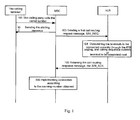
- Figure 1 is a flow chart of a method for implementing the communication service according to a first embodiment of the present invention
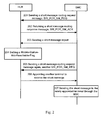
- Figure 2 is a flow chart of the method for implementing the communication service according to a second embodiment of the present invention.
- Figure 3 is a flow chart of the method for implementing the communication service according to a third embodiment of the present invention.
- Figure 4 is a flow chart of the method for implementing the communication service according to a forth embodiment of the present invention.
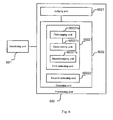
- Figure 5 is a schematic diagram of the architecture of a network device according to an embodiment of the present invention.
- Figure 6 is a schematic diagram of the architecture of a network device according to another embodiment of the present invention.
- the embodiments of the present invention provide a method and network device for implementing the communication service, so as to optimize the processing flow.
- the target number is carried in the service request, and refers to the number of a service receiver, for example, the target number carried in the call routing request is a called party number.
- the numbers of the certain number of terminals selected from the multiple terminals may be one, and may also be greater than one but smaller than the total number of the multiple subscribed terminals.
- a first embodiment of the present invention takes the call service as example, where the call service is implemented through the MAH.
- the service of one number corresponding to multiple terminals requires two or more terminals with same virtual number, in general, adopts the MSISDN, and the following embodiments take the MSISDN as the virtual number.
- Each terminal of the service of one number corresponding to multiple terminals has a different IMSI, and each IMSI has different authentication data.
- each one of the multiple subscribed terminals has been assigned with a call sequence number, and the call sequence numbers possessed by every subscribed terminal have been stored as subscription information in the HLR.
- the call sequence numbers may be used to identify the different subscribed terminals, where different subscribed terminals have different call sequence numbers, and the call sequence numbers can be further used to represent the priority of the subscribed terminals, for example, in MAH mode, the subscribed terminals with higher priorities would be connected by preference, the subscribed terminals with lower priorities are connected only in the situation that the subscribed terminals with higher priorities are not reached or answered over a period of time.
- the call sequence numbers also can be used in other service.
- Figure 1 is a flow chart of a method for implementing the communication service according to a first embodiment of the present invention, and the method includes:
- Step101 A calling terminal initials a call request carried a number of a called party, where the called party have subscribed to the service of one number corresponding to multiple terminals.
- the number of the called party is the MSISDN subscribed by the user.
- Step102 An MSC having received the call request sends alerting message to the calling terminal.
- the MSC sends an alerting message to the calling terminal when judging that the number of the called party belongs to the service of one number corresponding to multiple terminals, where the alerting message is used to avoid the release of the calling terminal after the timeout.
- Step103 The MSC sends a first call routing request, a first SRI_REQ, to an HLR.
- the call routing request is used to apply for roaming number of the called party, and carries the MSISDN.
- Step104 When judging that the MSISDN of the called party belongs to the service of one number corresponding to multiple terminals according to the subscription information, the HLR may determine which subscribed terminals would be connected in the first process through a provide subscriber information (PSI) paging process, and determine a call sequence number of a terminal to be connected in a second process.
- PSI subscriber information
- the MSC if the MSC sends the call routing request to the HLR, the HLR should return a response carrying at least one terminal roaming number, then the MSC continues the next connection according to the roaming number; if the connection fails, the MSC may resend another call routing request to the HLR and the process will be repeated.
- this process is referred to as the first process, the second process, and so on.
- the HLR receives the first call routing request from the MSC, and judges the MSISDN of the called party belongs to the service of one number corresponding to multiple terminals according to the subscription information; the HLR may initiate the PSI paging to one or more terminals for obtaining the state of one or more terminals, the HLR would judge that the terminal corresponding to the successful paging is in the Idle state, i.e., the Reachable state. For example, the HLR may initiate one PSI paging at a time, the HLR may determine a terminal to be connected first according to the call sequence number, and then initiate a PSI paging to this terminal for obtaining the state of this terminal.
- the HLR determines that the terminal corresponding to this successful PSI paging is to be connected in the current process, i.e., the first process; furthermore, the HLR may determine still another terminal to be connected in a next process, i.e., the second process, where the call sequence number of said still another terminal is next to the call sequence number of the terminal to be connected in the first process.
- the terminal to be connected in the first process is referred to as a first terminal
- the terminal to be connected in the second process is referred to as a second terminal.
- the HLR may determine, according to a paging switch, whether the PSI paging should be initiated. When the paging switch is On, the HLR initiates the PSI paging. The paging switch may switch on or switch off based on the information of the user or the network traffic or speed, if the network traffic is low or speed is slow, the paging switch may switch off.
- the PSI paging can be initiated by the HLR, or the HLR may notify another network element to initiate the PSI paging, and in general, the HLR may notify the MSC to initiate the PSI paging to the terminals.
- the MSC may start a waiting timer, so the HLR may further control the number of times of the PSI paging for avoiding the release of the MSC after the waiting timer times out.
- Step105 The HLR returns a first call routing response message, a first SRI_ACK, to the MSC.
- the first call routing response message, the first SRI_ACK carries the roaming number of the first terminals to be connected in the first process and the call sequence number of the second terminal to be connected in the second process.
- Step106 The MSC implements connection to the first terminals to be connected in the first process according to the roaming number.
- the MSC receives the first call routing response message from the HLR, and connects to the first terminals corresponding to the roaming number.
- the MSC If the MSC cannot connect the terminals to be connected in the first process corresponding to the roaming number, the MSC sends a second call routing request for the roaming number of the second terminal to be connected in the second process, in other words, the MSC sends the second SRI_REQ to the HLR again, where the second SRI_REQ carries the MSISDN and the call sequence number of the second terminal to be connected in the second process, and then the HLR returns the roaming number of the second terminal to be connected in the second process and a call sequence number of a third terminal which is different from the first two terminals, where the call sequence number of the third terminal is next to the call sequence number of the second terminal, and the MAH flow will be repeated in a similarly way successively.
- the PSI paging in the foregoing step104 may also be performed toward all or a part of the terminals.
- the HLR After obtaining the states of these terminals, the HLR returns roaming numbers and the call sequence number after the HLR makes some selection according to the idle states of these terminals, and the MSC may connect these terminals in turn in the MAH mode, or the MSC may connect these terminals at the same time in the FA mode.
- the HLR may record this call sequence number of the first terminals to be connected in the first process locally; when the HLR receives the call routing request carrying the MSISDN again, the HLR may select another call sequence number except for the call sequence number of the first terminals to be connected in the first process and determine the second terminal to be connected in the second process.
- the HLR when the HLR judges that the MSISDN of the called party belongs to the service of one number corresponding to multiple terminals, the HLR does not return the MSISDN or the call sequence numbers of all the subscribed terminals, but initiates the PSI paging and returns related information of one or more terminals corresponding to successful PSI paging to the MSC, where the terminals have successfully replied to the PSI paging.
- the HLR When the HLR obtains the idle state of one terminal through the PSI paging, the HLR returns the roaming number of this terminal or the call sequence number of the terminal to be connected in the next process; when the HLR obtains the state of multiple terminals through the PSI paging, the HLR returns the roaming number and the call sequence number of the certain number of terminals.
- the method according to the embodiments of the present invention may improve the put-through rate of the call, and avoid network resource wasting and connection duration delay in connecting some unreachable or switch-off terminals in the prior art.
- the foregoing method for obtaining the terminal state through the PSI paging is not only applicable to the call service, but also to other services, like the short message service, location service, and Unstructured Supplementary Service Data service direct dialing service.
- the other services will be introduced as follows.
- the following embodiment takes the short message service as an example.
- Figure 2 is a flow chart of a method for implementing the short message service according to a second embodiment of the present invention, and the method includes the following steps.
- Step 201 An HLR receives a first short message routing request, i.e., an first SRI_FOR_SM_REQ, from a Short Message Center (SMC);
- a first short message routing request i.e., an first SRI_FOR_SM_REQ
- SMC Short Message Center
- the SMC After the SMC receives a short message carrying an MSISDN of a short message receiver from a short message sender, the SMC sends the first SRI_FOR_SM_REQ to the HLR for obtaining routing information, where the first SRI_FOR_SM_REQ carries the MSISDN.
- Step202 When the HLR judges that the MSISDN of the short message receiver belongs to the service of one number corresponding to multiple terminals according to the subscription information, the HLR returns a first short message routing response to the SMC;
- the HLR After the HLR receives the first short message routing request, the HLR judges that the MSISDN of the short message receiver belongs to the service of one number corresponding to multiple terminals, the HLR sends routing information of a predefined terminal to the SMC through the first short message routing response, i.e., the first SRI_FOR_SM_ACK, where the predefined terminal has been predefined as a short message receiving terminal.
- the first SRI_FOR_SM_ACK also carries IMSI and a call sequence number of the predefined terminal.
- the HLR may send the call sequence number of the multiple terminals to the MSC during the location update process.
- Step203 The HLR receives short message report from the SMC; and if the short message is forwarded unsuccessfully, the process proceeds to step204; otherwise, the flow ends.
- the SMC receives the first SRI_FOR_SM_ACK from the HLR, forwards the short message to the predefined terminal corresponding to the IMSI or the call sequence number of the predefined terminal through an MSC.
- the MSC forwards the short message, if the forwarding fails because the terminal is unreachable or being turn off, the MSC stores the short message, and retransmits the short message to the predefined terminal within a predefined period, such as two days; if the predefined terminal change its state to Startup during the predefined period, the predefined terminal can receive the short message; if the terminal keeps turning off in a long time beyond the predefined period, the predefined terminal cannot receive the short message, and the MSC may return a short message failing report, where the short message failing report is for notifying the SMC that the short message is not forwarded successfully.
- the SMC forwards the short message report to the HLR.
- Step204 After the HLR receives the short message failing report from the SMC, the HLR sets a Mobile-Station-Not-Reachable-Flag on the predefined terminal.
- the HLR monitors the state of the predefined terminal, and if the predefined terminal is turned on, the HLR modifies the Flag to be invalid.
- Step205 The HLR receives a first short message routing request, namely the second SRI_FOR_SM_REQ, from the SMC again.
- Step206 The HLR appoints a second terminal to receive the short message, returns the second short message routing response carrying routing information of the newly appointed terminal to the SMC.
- the HLR receives the second short message routing request from the SMC again, if the predefined terminal is still switch off. In other words, the HLR judges whether the state of the Mobile-Station-Not-Reachable-Flag is unchanged, and if the Mobile-Station-Not-Reachable-Flag is still valid, the HLR appoints the second terminal receiving the short message, and returns the second short message routing response to the SMC, which carries the routing information, the IMSI and/or the call sequence number of the newly appointed terminal.
- the HLR Before the HLR appoints the newly appointed terminal receiving the short message, the HLR may obtain states of the related terminals through one or more PSI paging, the HLR selects one or more reachable terminals as newly appointed terminals receiving the short message.
- Step207 After receiving the second short message routing response, the SMC sends the short message to the newly appointed terminal through the MSC.
- the HLR may notify the SMC to send a short message to the predefined terminal in the subsequent process.
- the HLR may define another terminal to receive the short message directly and notify the SMC.
- the short message when the predefined terminal is not available for receiving the short message, the short message can be sent to another terminal that is reachable, and the problems, for example, the short message cannot be sent successfully when the only predefined terminal is unreachable, can be addressed.
- the following embodiment takes the location service as an example.
- Figure 3 is a flow chart of a method for implementing the location service according to a third embodiment of the present invention, and the method includes the following steps:
- Step301 An HLR receives a location routing request, i.e., a SRI_FOR_LCS_REQ from a Gateway Mobile Location Centre (GMLC);
- GMLC Gateway Mobile Location Centre
- the GMLC sends the SRI_FOR_LCS_REQ to the HLR, where the SRI_FOR_LCS_REQ carries the MSISDN, and the SRI_FOR_LCS_REQ requests for the location information of the terminal corresponding to the MSISDN.
- Step302 The HLR returns a location routing response message, i.e., a SRI_FOR_LCS_ACK, to the GMLC.
- a location routing response message i.e., a SRI_FOR_LCS_ACK
- Step303 When the HLR judges that the MSISDN of the location service belongs to the service of one number corresponding to multiple terminals according to the subscription information, the HLR selects terminal, and sends a subscriber location request to an MSC/VLR (Visited Location Register) to which the selected terminal belongs.
- MSC/VLR Sited Location Register
- the HLR may select a terminal having higher priority as the objective of the location service according to the call sequence number. Before the HLR selects the terminal to be located, the HLR may obtain states of the related terminals through one or more PSI paging.
- the subscriber location request may carry the MSISDN and IMSI, or the MSISDN and the call sequence number, or the IMSI, or the MSISDN.
- the HLR selects the terminal corresponding to the IMSI; if the subscriber location request carries the MSISDN and the call sequence number, the HLR selects the terminal corresponding to the call sequence number, the HLR needs to send the call sequence number of all the terminals to the MSC/VLR in the location update process; if the subscriber location request carries the MSISDN only, in the case that the HLR holds the relationship between all the terminal and the MSC/VLR, when only one terminal belongs to the MSC/VLR for the multiple subscribed terminals, the HLR has only one choice, and sends the subscriber location request carrying the MSISDN only.
- Step304 The MSC/VLR implements the location service to the selected terminal.
- the MSC/VLR obtains which terminal would be located according to the subscriber location request, and implements the location service based on the conventional location method.
- the embodiment of the present invention provides a collaboration method which combines the service of one number corresponding to multiple terminals and the location service, and thus this method enriches content of the service of one number corresponding to multiple terminals, and promotes improvement of the service of one number corresponding to multiple terminals.
- the following embodiment takes the USSD service as an example.
- Figure 4 is a flow chart of a method for implementing the USSD service according to a fourth embodiment of the present invention, and the method includes the following steps:
- Step401 The HLR receives a USSD request (USSD_REQ) or a USSD notify message (USSD-NOTIFY) from the USSD center.
- USSD_REQ USSD request
- USSD-NOTIFY USSD notify message
- the USSD center sends the USSD_REQ or the USSD-NOTIFY to the HLR, where the USSD_REQ or the USSD-NOTIFY carries the MSISDN.
- Step402 When the HLR judges that the MSISDN of the USSD service belongs to the service of one number corresponding to multiple terminals according to the subscription information, the HLR selects a terminal, and forwards the USSD request to an MSC/VLR (Visited Location Register) to which the selected terminal belongs.
- MSC/VLR Sited Location Register
- the HLR may select a terminal having high priority as the objective of the USSD service according to the call sequence number. Before selecting the terminal, the HLR may obtain states of the related terminals through one or more PSI paging.
- the USSD request may carry the MSISDN and IMSI, or the MSISDN and the call sequence number, or the IMSI, or the MSISDN.
- the HLR selects the terminal corresponding to the IMSI; if the USSD request carries the MSISDN and the call sequence number, the HLR selects the terminal corresponding to the call sequence number, the HLR needs to send the call sequence number of all the terminals to the MSC/VLR in the location update process; if the USSD request carries the MSISDN only, in the case that the HLR holds the relationship between all the terminals and the MSC/VLR, when only one terminal belongs to the MSC/VLR for the multiple subscribed terminals, the HLR has only one choice, and sends the USSD request carrying the MSISDN only.
- Step403 The MSC/VLR forwards the USSD request to the selected terminal.
- the MSC/VLR obtains the receiving terminal of the USSD request according to the USSD request, and forwards the USSD request to the selected terminal.
- the HLR may also initiate the USSD request.
- the embodiment of the present invention provides a collaboration method which combines the service of one number corresponding to multiple terminals and the USSD service, thus this method enriches content of the service of one number corresponding to multiple terminals, and promotes improvement of the service of one number corresponding to multiple terminals.
- the following embodiment takes the direct dialing service as an example.
- the respective terminal of the user A and the user B have different IMSIs, but have a same MSISDN.
- a method for implementing the direct dialing service is provided to users having subscribed the service of one number corresponding to multiple terminals according to another embodiment of the present invention, and the method includes: if the terminal of user A calls the terminal of user B, user A may dial the MSISDN and the call sequence number of the terminal of user B.
- the terminals of user A and user B have a same MSISDN 13928429666, the call sequence number of the terminal of the user A is 1, and the call sequence number of the terminal of the user B is 2.
- the calling terminal dials the called party number which having subscribed the service of one number corresponding to multiple terminals, i.e., the terminal of user A calls the terminal of user B, the terminal of user A direct dials the number 139284296662, the last figure 2 represents the call sequence number of the terminal of the user B.
- An MSC/VLR sends a call routing request (SRI_REQ) to an HLR for requesting roaming number of the called party, the call routing request carries the MSISD (139284296662) and the call sequence number of the terminal of user B (2).
- the HLR After the HLR judges that the MSISDN of the direct dialing service belongs to the service of one number corresponding to multiple terminals according to the subscription information, the HLR determines which terminal would be connected in current process based on the call sequence number, and returns the roaming number of this terminal to the MSC/VLR through a call routing response message; the MSC/VLR receives the call routing response message, and connects this terminal according to the roaming number of this terminal.
- the HLR Before determining which terminal would be connected in the current process, the HLR may obtain states of the related terminals through one or more PSI paging, and selects the terminal that have idle state to connect in the current process.
- the above embodiment takes one subscribed terminal calling another subscribed terminal as an example, while in other cases one non-subscribed terminal may also call another subscribed terminal, and the latter has same method with the former.
- the embodiment of the present invention provides a collaboration method which combines the service of one number corresponding to multiple terminals and the direct dialing service, thus this method enriches content of the service of one number corresponding to multiple terminals, and promotes improvement of the service of one number corresponding to multiple terminals.
- the embodiment of the present invention also provides a network device.
- Figure 5 is a schematic architecture diagram of a network device according to an embodiment of the present invention.
- the network device includes: a receiving unit 501 and a processing unit 502.
- the receiving unit 501 is configured to receive a service request.
- the service request may include: a call routing request, a short message routing request, a location request, or a USSD request and so on.
- the processing unit 502 is configured to select a certain number of terminals from multiple subscribed terminals to implement continued service connection when a target number corresponding to the service request belongs to the service of one number corresponding to multiple terminals.
- the target number is carried in the service request, and refers to a number of service receiver, for example, the target number carried in the call routing request is a called party number.
- the numbers of the certain number of terminals selected from the multiple terminals may be one, and may also be greater than one while being smaller than the whole number of the multiple subscribed terminals.
- the network device may be an HLR, and the processing unit 502 may include a judging unit 5021 and a selecting unit 5022.
- the judging unit 5021 is configured to judge that the target number corresponding to the service request belongs to the service of one number corresponding to multiple terminals according to the subscription information.
- the selecting unit 5022 is configured to determine the terminals corresponding to successful PSI paging through initiating the PSI paging to one or more terminals, i.e., determining the terminals that have successfully replied to the PSI paging, and select the certain number of terminals from the terminals which can get successful PSI paging to implement continued service connection.
- the network device may implement continued service connection differently based on the different service request, and the implementing process specifically includes the following steps:
- the processing unit 502 selects a terminal, obtains roaming number of this terminal for the call connection, and determines call sequence number of the terminal to be connected in a next process according to the selected terminal; or, the processing unit 502 selects the certain number of terminals, where the numbers of the certain number of terminals selected may be one and may also be greater than one while being smaller than the whole number of the multiple subscribed terminals, and the processing unit 502 implements the call connection according to roaming numbers of the certain number of terminals.
- the processing unit 502 selects another terminal to receive the short message after determining a predefined terminal being unavailable.
- the processing unit 502 selects a terminal to be located.
- the processing unit 502 selects a terminal as the objective of the USSD service.
- the processing unit 502 selects a terminal corresponding to the call sequence number, and obtains roaming number of this terminal for the call connection.
- the network device includes a receiving unit 601 and a processing unit 602, where the processing unit 602 includes a judging unit 6021 and a selecting unit 6022.
- the processing unit 602 includes a judging unit 6021 and a selecting unit 6022.
- the selecting unit 6022 may include the following units based on the method embodiments stated above in Figure 6 : a first selecting unit 60221 or a second selecting unit 60222;
- the receiving unit 601 is configured to receive a service request message
- the processing unit 602 is configured to select a certain number of terminals from multiple terminals to implement continued service connection when a target number corresponding to the service request message belongs to service of one number corresponding to the multiple terminals, wherein numbers of the certain number of terminals is equal to or greater than one but smaller than the total number of the multiple terminals;
- the processing unit 602 includes the judging unit 6021 and the selecting unit 6022;
- the judging unit 6021 is configured to judge the target number corresponding to the service request message belonging to the service of one number corresponding to multiple terminals based on subscription information;
- the selecting unit 6022 includes a first selecting unit 60221 or a second selecting unit 60222;
- the first selecting unit 60221 is configured to select the certain number of terminals that have successfully replied to provide subscriber information paging, PSI paging, by initiating the PSI paging toward all the multiple terminals or a part of the multiple terminals to implement continued service connection;
- the second selecting unit 60222 is configured to select the certain number of terminals to implement continued service connection according to call sequence number carried in the service request message or recorded locally;
- the first selecting unit 60221 includes a first paging unit 60221a, a second paging unit 60221b, or a determining unit 60221c;
- the first paging unit 60221a is configured to initiate the PSI paging toward one terminal at a time until the PSI paging is successful, and select a first terminal that has successfully replied to the PSI paging;
- the second paging unit 60221b is configured to initiate the PSI paging toward all the multiple terminals or a part of the multiple terminals at a time, determine terminals that have successfully replied to the PSI paging, and select the certain number of terminals from the terminals that have successfully replied to the PSI paging;
- the determining unit 60221c is configured to determine a second terminal to be connected in next process, wherein a call sequence number of the second terminal is next to a call sequence number of the first terminal selected by the first paging unit 60221a.
- the network device selects the certain number of terminals to be connected, and thus: the embodiments of the present invention provide an optimized processing for the service of one number corresponding to multiple terminals, for the call service; the optimized processing can improve the put-through rate of the call, and avoid network resource wasting and connection duration delay, for the short message service; the optimized processing can avoid the situation that the short message cannot be sent successfully when the only predefined terminal is unreachable.
- the embodiments of the present invention provide a collaboration method which combines the service of one number corresponding to multiple terminals and the US SD service or the direct dialing service, thus this method enriches content of the service of one number corresponding to multiple terminals, and promotes improvement of the service of one number corresponding to multiple terminals.
Landscapes
- Engineering & Computer Science (AREA)
- Signal Processing (AREA)
- Databases & Information Systems (AREA)
- Computer Networks & Wireless Communication (AREA)
- Mobile Radio Communication Systems (AREA)
- Telephonic Communication Services (AREA)
Claims (10)
- Verfahren zum Implementieren eines Kommunikationsdiensts, das Folgendes umfasst:Empfangen durch ein Heimatortsregister, HLR, einer Dienstanforderung von einer Mobildienst-Vermittlungszentrale, MSC; undBeurteilen durch das HLR, dass eine Sollanzahl, die in der Dienstanforderung transportiert wird, zu der Bedienung einer Anzahl gehört, die mehreren Endgeräten entspricht, Initialisieren eines Teilnehmerinformationsbereitstellungs-Pagings, PSI-Pagings, zu allen der mehreren Endgeräte oder zu einem Teil der mehreren Endgeräte, Auswählen einer bestimmten Anzahl von Endgeräten, die erfolgreich auf das PSI-Paging geantwortet haben, und Zurückleiten von Roaming-Anzahlen der ausgewählten bestimmten Anzahl von Endgeräten zu der MSC, wobei Anzahlen der bestimmten Anzahl von Endgeräten größer als eins, jedoch kleiner als die Gesamtanzahl der mehreren Endgeräte sind;Verbinden durch die MSC der bestimmten Anzahl von Endgeräten ihrerseits in der Mobilzugriffsjagd-Betriebsart, MAH-Betriebsart, oder gleichzeitig in der Betriebsart mit flexibler Warnung, FA-Betriebsart.
- Verfahren nach Anspruch 1, wobei das Initialisieren des PSI-Pagings zu allen der mehreren Endgeräte oder zu einem Teil der mehreren Endgeräte Folgendes umfasst:Initialisieren durch das HLR des PSI-Pagings zu allen der mehreren Endgeräte oder zu einem Teil der mehreren Endgeräte in Übereinstimmung mit einer Paging-Vermittlung.
- Verfahren nach Anspruch 1, wobei, nachdem die MSC die Dienstanforderung gesendet hat, die MSC einen Wartezeitgeber startet, wobei das Initialisieren des PSI-Pagings zu allen der mehreren Endgeräte oder zu einem Teil der mehreren Endgeräte Folgendes umfasst:Steuern durch das HLR der Anzahl des PSI-Pagings zu allen der mehreren Endgeräte oder zu einem Teil der mehreren Endgeräte, um die Freigabe der MSC nach dem Ablauf des Wartezeitgebers zu vermeiden.
- Verfahren nach Anspruch 1, wobei das Initialisieren des PSI-Pagings zu allen der mehreren Endgeräte oder zu einem Teil der mehreren Endgeräte Folgendes umfasst:gleichzeitiges Initialisieren durch das HLR des PSI-Pagings zu allen der mehreren Endgeräte oder zu einem Teil der mehreren Endgeräte.
- Verfahren nach einem der Ansprüche 1 bis 4, wobei
die Dienstanforderung eine Kurznachrichten-Lenkungsanforderung ist, die von dem HLR empfangen wird;
wobei das Verfahren vor dem Auswählen der bestimmten Anzahl von Endgeräten Folgendes umfasst:Bestimmen durch das HLR, dass ein im Voraus definiertes Endgerät nicht erreichbar ist, um eine Kurznachricht zu empfangen. - Verfahren nach Anspruch 5, wobei das Bestimmen, dass ein im Voraus definiertes Endgerät nicht erreichbar ist, um eine Kurznachricht zu empfangen, Folgendes umfasst:Beurteilen durch das HLR, ob ein Mobilstation-nicht-erreichbar-Flag des im Voraus definierten Endgeräts gültig ist und wenn ja, Bestimmen, dass ein im Voraus definiertes Endgerät nicht erreichbar ist, um die Kurznachricht zu empfangen.
- Verfahren nach Anspruch 6, wobei das Verfahren ferner Folgendes umfasst:Empfangen durch das HLR eines Kurznachrichten-Fehlerberichts von einer Kurznachrichtenzentrale, SMC, Setzen des Mobilstation-nicht-erreichbar-Flags in dem im Voraus definierten Endgerät, Überwachen des Zustands des im Voraus definierten Endgeräts und Modifizieren des Flags, damit es ungültig ist, falls das im Voraus definierte Endgerät eingeschaltet wird.
- Netzvorrichtung zum Implementieren eines Kommunikationsdiensts, die Folgendes umfasst:eine Empfangseinheit (501), die konfiguriert ist, eine Dienstanforderung von einer Mobildienst-Vermittlungszentrale, MSC, zu empfangen; undeine Verarbeitungseinheit (502), die konfiguriert ist, zu beurteilen, dass eine in der Dienstanforderung transportierte Sollanzahl zu der Bedienung einer Anzahl gehört, die mehreren Endgeräten entspricht, ein Teilnehmerinformationsbereitstellungs-Paging, PSI-Paging, zu allen der mehreren Endgeräte oder zu einem Teil der mehreren Endgeräte zu initialisieren, eine bestimmte Anzahl von Endgeräten auszuwählen, die erfolgreich auf das PSI-Paging geantwortet haben, und Roaming-Anzahlen der ausgewählten bestimmten Anzahl von Endgeräten zu der MSC zurückzuleiten, wobei Anzahlen der bestimmten Anzahl von Endgeräten größer als eins, jedoch kleiner als die Gesamtanzahl der mehreren Endgeräte ist.
- Netzvorrichtung nach Anspruch 8, wobei die Verarbeitungseinheit eine zweite Paging-Einheit umfasst und wobei:die zweite Paging-Einheit konfiguriert ist, das PSI-Paging zu allen der mehreren Endgeräte oder zu einem Teil der mehreren Endgeräte gleichzeitig zu initialisieren, Endgeräte zu bestimmen, die erfolgreich auf das PSI-Paging geantwortet haben, und die bestimmte Anzahl von Endgeräten aus den Endgeräten auszuwählen, die erfolgreich auf das PSI-Paging geantwortet haben.
- Netzvorrichtung nach Anspruch 8, wobei die Dienstanforderung eine Kurznachrichten-Lenkungsanforderung ist und wobei die Verarbeitungseinheit ferner Folgendes umfasst:Mittel, um zu bestimmen, dass ein im Voraus definiertes Endgerät nicht erreichbar ist, um eine Kurznachricht zu empfangen.
Applications Claiming Priority (1)
| Application Number | Priority Date | Filing Date | Title |
|---|---|---|---|
| CN 200810133535 CN101330760B (zh) | 2008-07-11 | 2008-07-11 | 通信业务实现方法和网络侧设备 |
Publications (2)
| Publication Number | Publication Date |
|---|---|
| EP2144459A1 EP2144459A1 (de) | 2010-01-13 |
| EP2144459B1 true EP2144459B1 (de) | 2012-07-11 |
Family
ID=40206292
Family Applications (1)
| Application Number | Title | Priority Date | Filing Date |
|---|---|---|---|
| EP20090164100 Not-in-force EP2144459B1 (de) | 2008-07-11 | 2009-06-30 | Verfahren und Netzwerkvorrichtung zur Umsetzung eines Kommunikationsdienstes |
Country Status (3)
| Country | Link |
|---|---|
| EP (1) | EP2144459B1 (de) |
| CN (1) | CN101330760B (de) |
| WO (1) | WO2010003345A1 (de) |
Families Citing this family (7)
| Publication number | Priority date | Publication date | Assignee | Title |
|---|---|---|---|---|
| CN101330760B (zh) * | 2008-07-11 | 2013-02-27 | 华为技术有限公司 | 通信业务实现方法和网络侧设备 |
| CN102238571B (zh) * | 2010-04-27 | 2014-01-01 | 中兴通讯股份有限公司 | 物联网m2m业务处理的装置、系统以及方法 |
| US8645618B2 (en) | 2011-07-14 | 2014-02-04 | Lsi Corporation | Flexible flash commands |
| CN103096279B (zh) * | 2011-10-28 | 2015-10-07 | 中国移动通信集团北京有限公司 | 实现一号通业务的呼叫方法、装置、系统、及平台设备 |
| CN103476012B (zh) * | 2013-09-04 | 2016-11-23 | 华为技术有限公司 | 一种信息处理方法和设备 |
| CN105307155B (zh) * | 2015-09-16 | 2018-10-02 | 青岛海信移动通信技术股份有限公司 | 一种确定手机卡的挂失信息的方法和设备 |
| CN111787496B (zh) * | 2016-02-25 | 2021-07-30 | 创新先进技术有限公司 | 一种手机间转接电话的方法及设备 |
Family Cites Families (11)
| Publication number | Priority date | Publication date | Assignee | Title |
|---|---|---|---|---|
| EP0764384B1 (de) * | 1994-06-10 | 1999-02-03 | Siemens Aktiengesellschaft | Verfahren zum verbindungsaufbau zwischen einem anrufenden teilnehmer eines telekommunikationsnetzes und einem angerufenen mobilen zielteilnehmer eines mobilfunknetzes |
| DE19718445A1 (de) * | 1997-04-30 | 1998-11-05 | Siemens Ag | Verfahren und Kommunikationsnetz zur Administrierung von Teilnehmerdaten, insbesondere Dienstedaten |
| SE9704764L (sv) | 1997-12-19 | 1999-06-20 | Ericsson Telefon Ab L M | Metod och anordning i ett kommunikationsnätverk |
| GB9828827D0 (en) * | 1998-12-30 | 1999-02-17 | Nokia Telecommunications Oy | Telecommunication system and method |
| CN1607799A (zh) * | 2003-10-15 | 2005-04-20 | 华为技术有限公司 | 统一号码业务的实现方法 |
| KR100603178B1 (ko) * | 2004-04-13 | 2006-07-24 | (주)엠비즈테크 | 이동통신 단말기의 원 넘버 멀티 폰 서비스 시스템 |
| CN100442930C (zh) * | 2005-11-29 | 2008-12-10 | 华为技术有限公司 | 移动交换中心及其被叫处理方法 |
| US20080014933A1 (en) * | 2006-07-17 | 2008-01-17 | Montz Mark A | Call routing |
| CN1917533B (zh) * | 2006-09-06 | 2010-04-21 | 华为技术有限公司 | 电话一号多机业务的实现方法和系统 |
| CN101060720A (zh) * | 2007-05-18 | 2007-10-24 | 华为技术有限公司 | 一种实现统一通信的方法及装置 |
| CN101330760B (zh) * | 2008-07-11 | 2013-02-27 | 华为技术有限公司 | 通信业务实现方法和网络侧设备 |
-
2008
- 2008-07-11 CN CN 200810133535 patent/CN101330760B/zh not_active Expired - Fee Related
-
2009
- 2009-06-30 EP EP20090164100 patent/EP2144459B1/de not_active Not-in-force
- 2009-06-30 WO PCT/CN2009/072542 patent/WO2010003345A1/zh not_active Ceased
Also Published As
| Publication number | Publication date |
|---|---|
| EP2144459A1 (de) | 2010-01-13 |
| CN101330760A (zh) | 2008-12-24 |
| CN101330760B (zh) | 2013-02-27 |
| WO2010003345A1 (zh) | 2010-01-14 |
Similar Documents
| Publication | Publication Date | Title |
|---|---|---|
| CN1123247C (zh) | 为蜂窝电话网络中的短消息业务的消息传送保持无线电资源连接 | |
| KR101654532B1 (ko) | 프리페이징 동안의 회선 교환 폴백(csfb) | |
| EP2144459B1 (de) | Verfahren und Netzwerkvorrichtung zur Umsetzung eines Kommunikationsdienstes | |
| US20100302937A1 (en) | Control Method, System, and Device for Circuit Domain Fallback | |
| JP4080471B2 (ja) | ヘテロジーニアスネットワークを通じたデータプッシュサービスシステム及び方法 | |
| EP1881723A2 (de) | Anrufleitweglenkung | |
| JP6351728B2 (ja) | 呼制御デバイス及びユーザサービス処理方法 | |
| CN105682058B (zh) | 一种路由短消息的方法及装置 | |
| EP1540969A4 (de) | Verfahren zur verarbeitung der adresse einer kurznachrichtendienstzentrale in einem asynchronen netzwerk des typs imt-2000 | |
| CN102714882A (zh) | 用于朝向移动台的移动通信的网络实体 | |
| EP1887824B1 (de) | Verfahren zur realisierung einer karte mit mehreren nummerndiensten | |
| US6597910B1 (en) | Method for making network direct system selection in a cellular communication system | |
| CN107431659B (zh) | 连接管理实体、通信系统以及处理连接请求的方法 | |
| US8868114B2 (en) | Network entity for mobile communications | |
| WO2009146595A1 (zh) | 一种灵活振铃业务的实现方法及系统 | |
| WO2002093966A1 (en) | Method for synchronization of a plurality of networks | |
| CN100551102C (zh) | 一种处理呼叫失败的方法和系统 | |
| US20070232280A1 (en) | Method for Setting up a Link with Prepaging While Optimizing Use of Resources | |
| WO2007117825A2 (en) | Method for routing calls in a mobile communication network | |
| CN105207882A (zh) | 消息处理方法及装置 | |
| EP1763262B1 (de) | Kurznachrichtenzustellung an Teilnehmerendgeräte zur Durchführung von Roaming zwischen einem GSM und einem VoIP System unterstützen | |
| CN101730068B (zh) | 移动通信过程的建立方法及系统、归属位置寄存器 | |
| EP1807986B1 (de) | Aktivierung eines paketbasierten kommunikationsclients als mobiles endgerät | |
| CN102123469A (zh) | 演进分组网络中电路域业务的处理方法及用户设备 | |
| KR20040008839A (ko) | 사설 교환망을 통해 통화중인 단말에 대한 공중망 착신 호처리 방법 |
Legal Events
| Date | Code | Title | Description |
|---|---|---|---|
| PUAI | Public reference made under article 153(3) epc to a published international application that has entered the european phase |
Free format text: ORIGINAL CODE: 0009012 |
|
| 17P | Request for examination filed |
Effective date: 20090630 |
|
| AK | Designated contracting states |
Kind code of ref document: A1 Designated state(s): AT BE BG CH CY CZ DE DK EE ES FI FR GB GR HR HU IE IS IT LI LT LU LV MC MK MT NL NO PL PT RO SE SI SK TR |
|
| REG | Reference to a national code |
Ref country code: DE Ref legal event code: R079 Ref document number: 602009008164 Country of ref document: DE Free format text: PREVIOUS MAIN CLASS: H04W0008020000 Ipc: H04W0008040000 |
|
| GRAP | Despatch of communication of intention to grant a patent |
Free format text: ORIGINAL CODE: EPIDOSNIGR1 |
|
| RIC1 | Information provided on ipc code assigned before grant |
Ipc: H04W 8/04 20090101AFI20120201BHEP Ipc: H04M 3/42 20060101ALI20120201BHEP Ipc: H04M 3/46 20060101ALI20120201BHEP Ipc: H04W 4/16 20090101ALI20120201BHEP |
|
| GRAS | Grant fee paid |
Free format text: ORIGINAL CODE: EPIDOSNIGR3 |
|
| GRAA | (expected) grant |
Free format text: ORIGINAL CODE: 0009210 |
|
| AK | Designated contracting states |
Kind code of ref document: B1 Designated state(s): AT BE BG CH CY CZ DE DK EE ES FI FR GB GR HR HU IE IS IT LI LT LU LV MC MK MT NL NO PL PT RO SE SI SK TR |
|
| REG | Reference to a national code |
Ref country code: GB Ref legal event code: FG4D |
|
| REG | Reference to a national code |
Ref country code: CH Ref legal event code: EP |
|
| REG | Reference to a national code |
Ref country code: AT Ref legal event code: REF Ref document number: 566653 Country of ref document: AT Kind code of ref document: T Effective date: 20120715 |
|
| REG | Reference to a national code |
Ref country code: IE Ref legal event code: FG4D |
|
| REG | Reference to a national code |
Ref country code: DE Ref legal event code: R096 Ref document number: 602009008164 Country of ref document: DE Effective date: 20120906 |
|
| REG | Reference to a national code |
Ref country code: NL Ref legal event code: VDEP Effective date: 20120711 |
|
| REG | Reference to a national code |
Ref country code: AT Ref legal event code: MK05 Ref document number: 566653 Country of ref document: AT Kind code of ref document: T Effective date: 20120711 |
|
| REG | Reference to a national code |
Ref country code: LT Ref legal event code: MG4D Effective date: 20120711 |
|
| PG25 | Lapsed in a contracting state [announced via postgrant information from national office to epo] |
Ref country code: LT Free format text: LAPSE BECAUSE OF FAILURE TO SUBMIT A TRANSLATION OF THE DESCRIPTION OR TO PAY THE FEE WITHIN THE PRESCRIBED TIME-LIMIT Effective date: 20120711 Ref country code: BE Free format text: LAPSE BECAUSE OF FAILURE TO SUBMIT A TRANSLATION OF THE DESCRIPTION OR TO PAY THE FEE WITHIN THE PRESCRIBED TIME-LIMIT Effective date: 20120711 Ref country code: IS Free format text: LAPSE BECAUSE OF FAILURE TO SUBMIT A TRANSLATION OF THE DESCRIPTION OR TO PAY THE FEE WITHIN THE PRESCRIBED TIME-LIMIT Effective date: 20121111 Ref country code: AT Free format text: LAPSE BECAUSE OF FAILURE TO SUBMIT A TRANSLATION OF THE DESCRIPTION OR TO PAY THE FEE WITHIN THE PRESCRIBED TIME-LIMIT Effective date: 20120711 Ref country code: NO Free format text: LAPSE BECAUSE OF FAILURE TO SUBMIT A TRANSLATION OF THE DESCRIPTION OR TO PAY THE FEE WITHIN THE PRESCRIBED TIME-LIMIT Effective date: 20121011 Ref country code: FI Free format text: LAPSE BECAUSE OF FAILURE TO SUBMIT A TRANSLATION OF THE DESCRIPTION OR TO PAY THE FEE WITHIN THE PRESCRIBED TIME-LIMIT Effective date: 20120711 Ref country code: CY Free format text: LAPSE BECAUSE OF FAILURE TO SUBMIT A TRANSLATION OF THE DESCRIPTION OR TO PAY THE FEE WITHIN THE PRESCRIBED TIME-LIMIT Effective date: 20120711 Ref country code: HR Free format text: LAPSE BECAUSE OF FAILURE TO SUBMIT A TRANSLATION OF THE DESCRIPTION OR TO PAY THE FEE WITHIN THE PRESCRIBED TIME-LIMIT Effective date: 20120711 |
|
| PG25 | Lapsed in a contracting state [announced via postgrant information from national office to epo] |
Ref country code: PL Free format text: LAPSE BECAUSE OF FAILURE TO SUBMIT A TRANSLATION OF THE DESCRIPTION OR TO PAY THE FEE WITHIN THE PRESCRIBED TIME-LIMIT Effective date: 20120711 Ref country code: LV Free format text: LAPSE BECAUSE OF FAILURE TO SUBMIT A TRANSLATION OF THE DESCRIPTION OR TO PAY THE FEE WITHIN THE PRESCRIBED TIME-LIMIT Effective date: 20120711 Ref country code: GR Free format text: LAPSE BECAUSE OF FAILURE TO SUBMIT A TRANSLATION OF THE DESCRIPTION OR TO PAY THE FEE WITHIN THE PRESCRIBED TIME-LIMIT Effective date: 20121012 Ref country code: SE Free format text: LAPSE BECAUSE OF FAILURE TO SUBMIT A TRANSLATION OF THE DESCRIPTION OR TO PAY THE FEE WITHIN THE PRESCRIBED TIME-LIMIT Effective date: 20120711 Ref country code: PT Free format text: LAPSE BECAUSE OF FAILURE TO SUBMIT A TRANSLATION OF THE DESCRIPTION OR TO PAY THE FEE WITHIN THE PRESCRIBED TIME-LIMIT Effective date: 20121112 Ref country code: SI Free format text: LAPSE BECAUSE OF FAILURE TO SUBMIT A TRANSLATION OF THE DESCRIPTION OR TO PAY THE FEE WITHIN THE PRESCRIBED TIME-LIMIT Effective date: 20120711 |
|
| PG25 | Lapsed in a contracting state [announced via postgrant information from national office to epo] |
Ref country code: NL Free format text: LAPSE BECAUSE OF FAILURE TO SUBMIT A TRANSLATION OF THE DESCRIPTION OR TO PAY THE FEE WITHIN THE PRESCRIBED TIME-LIMIT Effective date: 20120711 |
|
| PG25 | Lapsed in a contracting state [announced via postgrant information from national office to epo] |
Ref country code: ES Free format text: LAPSE BECAUSE OF FAILURE TO SUBMIT A TRANSLATION OF THE DESCRIPTION OR TO PAY THE FEE WITHIN THE PRESCRIBED TIME-LIMIT Effective date: 20121022 Ref country code: DK Free format text: LAPSE BECAUSE OF FAILURE TO SUBMIT A TRANSLATION OF THE DESCRIPTION OR TO PAY THE FEE WITHIN THE PRESCRIBED TIME-LIMIT Effective date: 20120711 Ref country code: CZ Free format text: LAPSE BECAUSE OF FAILURE TO SUBMIT A TRANSLATION OF THE DESCRIPTION OR TO PAY THE FEE WITHIN THE PRESCRIBED TIME-LIMIT Effective date: 20120711 Ref country code: EE Free format text: LAPSE BECAUSE OF FAILURE TO SUBMIT A TRANSLATION OF THE DESCRIPTION OR TO PAY THE FEE WITHIN THE PRESCRIBED TIME-LIMIT Effective date: 20120711 Ref country code: RO Free format text: LAPSE BECAUSE OF FAILURE TO SUBMIT A TRANSLATION OF THE DESCRIPTION OR TO PAY THE FEE WITHIN THE PRESCRIBED TIME-LIMIT Effective date: 20120711 |
|
| PLBE | No opposition filed within time limit |
Free format text: ORIGINAL CODE: 0009261 |
|
| STAA | Information on the status of an ep patent application or granted ep patent |
Free format text: STATUS: NO OPPOSITION FILED WITHIN TIME LIMIT |
|
| PG25 | Lapsed in a contracting state [announced via postgrant information from national office to epo] |
Ref country code: IT Free format text: LAPSE BECAUSE OF FAILURE TO SUBMIT A TRANSLATION OF THE DESCRIPTION OR TO PAY THE FEE WITHIN THE PRESCRIBED TIME-LIMIT Effective date: 20120711 Ref country code: SK Free format text: LAPSE BECAUSE OF FAILURE TO SUBMIT A TRANSLATION OF THE DESCRIPTION OR TO PAY THE FEE WITHIN THE PRESCRIBED TIME-LIMIT Effective date: 20120711 |
|
| 26N | No opposition filed |
Effective date: 20130412 |
|
| PG25 | Lapsed in a contracting state [announced via postgrant information from national office to epo] |
Ref country code: BG Free format text: LAPSE BECAUSE OF FAILURE TO SUBMIT A TRANSLATION OF THE DESCRIPTION OR TO PAY THE FEE WITHIN THE PRESCRIBED TIME-LIMIT Effective date: 20121011 |
|
| REG | Reference to a national code |
Ref country code: DE Ref legal event code: R097 Ref document number: 602009008164 Country of ref document: DE Effective date: 20130412 |
|
| PG25 | Lapsed in a contracting state [announced via postgrant information from national office to epo] |
Ref country code: MC Free format text: LAPSE BECAUSE OF FAILURE TO SUBMIT A TRANSLATION OF THE DESCRIPTION OR TO PAY THE FEE WITHIN THE PRESCRIBED TIME-LIMIT Effective date: 20120711 |
|
| REG | Reference to a national code |
Ref country code: CH Ref legal event code: PL |
|
| GBPC | Gb: european patent ceased through non-payment of renewal fee |
Effective date: 20130630 |
|
| REG | Reference to a national code |
Ref country code: IE Ref legal event code: MM4A |
|
| PG25 | Lapsed in a contracting state [announced via postgrant information from national office to epo] |
Ref country code: LI Free format text: LAPSE BECAUSE OF NON-PAYMENT OF DUE FEES Effective date: 20130630 Ref country code: GB Free format text: LAPSE BECAUSE OF NON-PAYMENT OF DUE FEES Effective date: 20130630 Ref country code: CH Free format text: LAPSE BECAUSE OF NON-PAYMENT OF DUE FEES Effective date: 20130630 Ref country code: IE Free format text: LAPSE BECAUSE OF NON-PAYMENT OF DUE FEES Effective date: 20130630 |
|
| PG25 | Lapsed in a contracting state [announced via postgrant information from national office to epo] |
Ref country code: MT Free format text: LAPSE BECAUSE OF FAILURE TO SUBMIT A TRANSLATION OF THE DESCRIPTION OR TO PAY THE FEE WITHIN THE PRESCRIBED TIME-LIMIT Effective date: 20120711 |
|
| PG25 | Lapsed in a contracting state [announced via postgrant information from national office to epo] |
Ref country code: TR Free format text: LAPSE BECAUSE OF FAILURE TO SUBMIT A TRANSLATION OF THE DESCRIPTION OR TO PAY THE FEE WITHIN THE PRESCRIBED TIME-LIMIT Effective date: 20120711 |
|
| PG25 | Lapsed in a contracting state [announced via postgrant information from national office to epo] |
Ref country code: MK Free format text: LAPSE BECAUSE OF FAILURE TO SUBMIT A TRANSLATION OF THE DESCRIPTION OR TO PAY THE FEE WITHIN THE PRESCRIBED TIME-LIMIT Effective date: 20120711 Ref country code: HU Free format text: LAPSE BECAUSE OF FAILURE TO SUBMIT A TRANSLATION OF THE DESCRIPTION OR TO PAY THE FEE WITHIN THE PRESCRIBED TIME-LIMIT; INVALID AB INITIO Effective date: 20090630 Ref country code: LU Free format text: LAPSE BECAUSE OF NON-PAYMENT OF DUE FEES Effective date: 20130630 |
|
| REG | Reference to a national code |
Ref country code: FR Ref legal event code: PLFP Year of fee payment: 8 |
|
| REG | Reference to a national code |
Ref country code: FR Ref legal event code: PLFP Year of fee payment: 9 |
|
| REG | Reference to a national code |
Ref country code: FR Ref legal event code: PLFP Year of fee payment: 10 |
|
| PGFP | Annual fee paid to national office [announced via postgrant information from national office to epo] |
Ref country code: FR Payment date: 20230510 Year of fee payment: 15 Ref country code: DE Payment date: 20230502 Year of fee payment: 15 |
|
| REG | Reference to a national code |
Ref country code: DE Ref legal event code: R119 Ref document number: 602009008164 Country of ref document: DE |
|
| PG25 | Lapsed in a contracting state [announced via postgrant information from national office to epo] |
Ref country code: DE Free format text: LAPSE BECAUSE OF NON-PAYMENT OF DUE FEES Effective date: 20250101 |
|
| PG25 | Lapsed in a contracting state [announced via postgrant information from national office to epo] |
Ref country code: FR Free format text: LAPSE BECAUSE OF NON-PAYMENT OF DUE FEES Effective date: 20240630 |