EP2142001B1 - System und verfahren für die betäubung von geflügel mit gas - Google Patents
System und verfahren für die betäubung von geflügel mit gas Download PDFInfo
- Publication number
- EP2142001B1 EP2142001B1 EP08742803.3A EP08742803A EP2142001B1 EP 2142001 B1 EP2142001 B1 EP 2142001B1 EP 08742803 A EP08742803 A EP 08742803A EP 2142001 B1 EP2142001 B1 EP 2142001B1
- Authority
- EP
- European Patent Office
- Prior art keywords
- stunning
- poultry
- carbon dioxide
- chamber
- stunning chamber
- Prior art date
- Legal status (The legal status is an assumption and is not a legal conclusion. Google has not performed a legal analysis and makes no representation as to the accuracy of the status listed.)
- Revoked
Links
Images




Classifications
-
- A—HUMAN NECESSITIES
- A22—BUTCHERING; MEAT TREATMENT; PROCESSING POULTRY OR FISH
- A22B—SLAUGHTERING
- A22B3/00—Slaughtering or stunning
- A22B3/08—Slaughtering or stunning for poultry or fish, e.g. slaughtering pliers, slaughtering shears
- A22B3/086—Stunning devices specially adapted for poultry
-
- A—HUMAN NECESSITIES
- A22—BUTCHERING; MEAT TREATMENT; PROCESSING POULTRY OR FISH
- A22B—SLAUGHTERING
- A22B3/00—Slaughtering or stunning
- A22B3/005—Slaughtering or stunning by means of gas
Definitions
- the present invention relates to methods and systems useful for controlled atmosphere stunning of poultry prior to their slaughter.
- poultry is typically brought in by truck in cages from which the poultry are off-loaded from the truck in the cages and subsequently dumped for further processing.
- the live poultry are then hung upside-down on a conveyorized shackle line and their heads are dragged through a brine or water bath. They are then stunned using high voltage electricity just prior to being slaughtered.
- WO 2007/008536 A discloses a method for stunning poultry, by the steps of: (i) loading one or more batches of poultry in a stunning chamber; (ii) sealably enclosing the one or more batches of poultry in the stunning chamber to isolate the atmosphere proximate the poultry; (iii) introducing a gaseous mixture to the isolated atmosphere to stun the one or more batches of poultry; (iv) forcibly exhausting the gaseous mixture from the isolated atmosphere; and (v) advancing the stunned poultry from the stunning chamber to a processing area.
- Stunning the poultry with gas as part of the processing regimen presents the advantage that the birds are less likely to engage in extensive movement, thereby reducing the burden to the worker and reducing the risk of damage to the bird.
- the invention may be characterized as a method for controlled atmosphere stunning and killing of poultry according to claim 1.
- the invention may be characterized as a system for controlled atmosphere stunning and killing of poultry according to claim 8.
- the poultry that are to be treated by the system and method of the present invention are transported to a treatment location from another location, preferably from a location at which the poultry have been placed into cages or otherwise confined. Then, the cages are transported to the treatment location, such as on a truck or other vehicle.
- the cages or other structure that confines the poultry are of the conventional design that contains the poultry and prevents it from escaping, and that permits gaseous atmosphere to pass from outside the cage into and through the cage.
- the tops, bottoms and sides of the cages are planar, to facilitate stacking them onto a vehicle during transportation and loading the rank of cages via a forklift or other machinery into a stunning chamber.
- a "rank" of cages means a plurality of aligned or stacked cages and includes without limitation one cage, or two or more cages stacked vertically, or two or more vertical stacks of cages placed side by side (whether touching each other or not).
- the caged poultry arrive at the treatment location alive typically via truck. As the poultry arrive at the treatment or processing location they are in, and breathing, an ambient atmosphere, typically ambient air. The poultry are then unloaded from the truck while still in cages and the ranks are placed on a platform or in a housing. Next, steps are taken so that the atmosphere surrounding the poultry on the platform or in the housing is isolated and the composition of the isolated atmosphere that the poultry are breathing changes to a composition that, when breathed, brings the poultry to a state of lethargy, unconsciousness, unrecoverable, or death. It will of course be recognized that poultry may pass through one of these states to the next.
- the terms "stunning” and “stun” are used herein to mean bringing the poultry into a desired state of lethargy, unconsciousness, unrecoverable, and dead.
- composition of the isolated atmosphere being breathed by the poultry is changed so that the oxygen content of that atmosphere is decreased.
- Changing the composition can be carried out in many different ways.
- a feature common to the disclosed embodiments is that the gas composition changes and the poultry are subjected to breathing the composition, while the poultry remain confined on the platform or in the housing.
- a gaseous component or a mixture of gaseous components is fed into the isolated atmosphere to which the poultry are exposed.
- the component or mixture changes the composition of the atmosphere being breathed by the poultry to a composition with decreased oxygen content, so that breathing it brings the poultry breathing it to the desired state of lethargy, unconsciousness, unrecoverable, or dead.
- the gaseous component or mixture of components fed into the circulating atmosphere should not themselves be toxic to the animal but inert, bringing about the desired state by gradually asphyxiating or poisoning the bird with the non-breathable gas.
- Suitable gases include carbon dioxide, nitrogen, argon, and mixtures thereof. It should be noted that the gas or mixture of gases being added can be oxygen-free or can contain oxygen, so long as the overall oxygen content of the atmosphere being breathed decreases.
- the poultry stunning chamber (11) includes an enclosure (12) having a base (14) and a door (16) through which the cages or rank of cages are loaded into and removed from the stunning chamber (11).
- the disclosed stunning chamber includes a fresh air intake duct (22), and exhaust duct (24), a source of stunning gas, an injector or other means for introducing the stunning gas into the stunning chamber (11) and a fan for re-circulating the stunning gas within a recirculating circuit (26) and back into the main stunning chamber (11).
- the chicken stunning system (10) activates various flow dampers such that fresh make-up air is introduced into the main stunning chamber (11) while the stunning gas is forcibly exhausted.
- the illustrated system (10) also includes a control system (20) and panel including appropriate shut-off and flow control valves to facilitate the automatic control of the stunning system (10).
- Fig. 2 depicts a top view of the stunning system of Fig. 1 depicting partial cut-away views of the stunning system housing/enclosure (12) and door (16) as well as partial views of the intake duct (22) and exhaust duct (24). Arrows represent the re-circulating gas flow thru the main stunning chamber (11) and recirculating circuit (26).
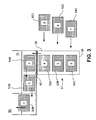
- Fig. 3 is a schematic top view of a multi-unit poultry stunning system according to another embodiment of the invention. As illustrated therein, three modules or ranks of cages are depicted in the multi-unit stunning chamber (51). These three modules (52A,53A,54A) were loaded into the multi-unit stunning chamber (51) via the front loading door (56) on the front of the housing (58). After loading, the front loading door (56) is closed and the multi-phase stunning operation begins. Upon completion of the multi-phase stunning operation, the side door (60) to the stunning chamber (51) opens and the three modules (52A,53A,54A) are advanced to a staging area (70) and subsequently to the tipper (80) where the chickens or other poultry are dumped from their cages.
- each of the three modules (52A,53A,54A) containing stunned birds are successively advanced out from the stunning chamber (51) to the staging area (70) where the modules (52B,53B,54B) are moved laterally along the staging area (70) and ultimately to the tipper (80) or dumping station.
- new modules (52C,53C,54C) containing live, unstunned birds are loaded into the stunning chamber (51) via the front loading door (56). In this manner, three modules (i.e. batches) of birds are being stunned simultaneously and concurrently with post stunning processing of the birds in the preceding three modules.
- Fig. 4 is an illustration generally depicting the re-circulating gas flow thru the multi-unit stunning chamber in the controlled atmosphere stunning system of Fig. 3 .
- three modules or ranks of cages are positioned on a platform (62) or base of the stunning chamber housing (58). Although not shown, the three modules (52A,53A,54A) are loaded into the stunning chamber (51) via a front loading door.
- Fig. 4 also shows another arrangement of the gas recirculation circuit (90), the stunning gas introduction subsystem (92) and recirculation fan (94) with the arrows represent the re-circulating gas flow thru the main stunning chamber (51) with three modules (52A,53A,54A) disposed therein and the recirculating circuit (90). Also shown are the fresh air make-up duct (95) and the exhaust duct (97) and the controlled dampers (98A,98B,98C) that govern the forced exhausting of the carbon dioxide from the stunning system. During module loading operations, the carbon dioxide introduction subsystem and the recirculation fan (94) are off or deactivated.
- the front loading door (56) is closed and sealed prior to the activation of the carbon dioxide introduction subsystem (92) and the recirculation fan (94).
- the damper (98A) to the fresh air make-up duct remains closed while the recirculating damper (98B) is open.
- An exhaust flap (98C) is positioned between the exhaust duct (97) and the stunning chamber (51) in order to allow pressure within the stunning chamber (51) to be maintained within a desired range.
- the carbon dioxide concentration generally increases during each successive phase of the multi-phase stunning operation.
- the damper (98A) to the fresh air make-up duct (95) is opened and the recirculation damper (98B) is closed so as to divert the carbon dioxide gas to the exhaust duct (97) via the exhaust flap (98C).
- the side door (60) is opened and the modules (52A,53A,54A) arc conveyed or otherwise advanced out of the stunning chamber (51) to a staging area (70) and subsequently to the tipper (80) for further processing of the stunned birds.
- Fig. 5 is yet another schematic view of a multi-unit poultry stunning system employing multiple stunning chambers.
- the illustrated system includes two stunning chambers (151, 152) each of which allow loading of modules (160, 161) or ranks of cages via a front loading door (153, 154) and unloading of the modules (162, 163) or ranks of cages via a side door (155,156) onto a first conveyor (158).
- the modules (162, 163) with the stunned birds exit the respective stunning chamber (151, 152) and move along the conveyor (158) to a staging area (170) and eventually to the tipper (180) or dumper where the birds are ejected or dumped for further processing.
- the empty modules (181, 182, 183) return for possible re-use via a return conveyor system (159).
- the stunning chambers (151, 152) are operating in a concurrent yet staggered mode.
- the staggered mode facilitates loading of a first stunning chamber (151) while the stunning operation is ongoing to the birds in the second stunning chamber (152).
- the modules (164, 165) containing the stunned birds exit the second stunning chamber via a side door (156) to the first conveyor system (158) while additional modules (161) containing live birds are loaded via the front loading door (154) into the second stunning chamber (152).
- the first stunning chamber (151) is actively conducting stunning operations on the birds within the modules (166, 167) in the first stunning chamber (151).
- the stunned birds from the second stunning chamber (152) move along the first conveyor (158) to a staging area (170) and eventually to the tipper (180) where the birds are dumped. After dumping the birds, the empty module (181) is returned via a second conveyor (159) for later use. Concurrently, the stunning operation to the birds in the first stunning chamber (151) is likely completed and the stunning chamber (151) is evacuated of any carbon dioxide.
- the modules (166, 167) containing the stunned birds exit the first stunning chamber (151) via a side door (155) to the first conveyor system (158) while additional modules (160) containing live birds are loaded via the front loading door (153) into the first stunning chamber (151).
- the second stunning chamber (152) is actively conducting stunning operation on the birds. This parallel yet staggered process involving the two stunning chambers repeats continuously thereby allowing the batch stunning operation to appear similar to a continuous poultry stunning operation thereby improving productivity.
- the poultry stunning process generally comprises the following seven steps: (a) loading ranks of poultry cages or modules with live birds into a stunning chamber; (b) closing or otherwise sealing the stunning chamber to enclose the poultry therein, preferably in the dark; (c) recirculating the atmosphere within the stunning chamber using a fan or other air recirculating means, (d) introducing the stunning gas into the re-circulating atmosphere of the stunning chamber; (e) exhausting the isolated atmosphere and stunning gas; (f) opening the stunning chamber; and (g) unloading or advancing the modules from the stunning chamber to other post-stunning processes. More specifically, the introduction of the stunning gas (e.g.
- carbon dioxide is preferably done in three, four or five stages, with each successive stage having a greater concentration of stunning gas.
- the above described stunning process is then repeated for live incoming birds.
- the post-stunning processes typically would include tipping or dumping the birds; shackling the birds; slitting, bleed-out, de-feathering, etc.
- the length of time that is necessary for a stunning operation to render the poultry lethargic and the length of time necessary to reach unconsciousness or unrecoverable or dead will depend on the gas being used, the gas concentration, the gas re-circulation rate, the type of poultry and its size.
- the actual gas concentrations and durations are preferably selected so as to minimize any adverse reactions of the poultry in the stunning chamber and promote the humane treatment of the birds.
- large chickens having a weight of approximately 7 to 8 pounds are exposed to multiple levels or stages of carbon dioxide concentration including: (a) a first stage where carbon dioxide level is increased to slightly less than about 20 percent volume in air for a duration of about 40 seconds to anesthetize the poultry; (b) a second stage where carbon dioxide level is increased to about 40 percent volume in air for a duration of about 40 seconds to immobilize the poultry; and (c) a third stage where carbon dioxide level is increased to between about 50 and 55 percent volume in air for a duration of about 65 seconds such that the poultry reach an unrecoverable or dead state.
- the stunning operation requires approximately 245 seconds to effectively stun multiple modules, with each module containing approximately 210 chickens.
- the size and capacity of the stunning chamber(s) can be selected to best match the downstream line speed or processing speed desired.
- a three module stunning chamber would effectively stun 630 chickens in approximately 245 seconds which translates to an average of 150 chickens per minute.
- the use of multiple stunning chambers operating in parallel allows the staggering of the stunning process to further increase the system capacity in excess of an average 200 chickens or more per minute while simulating a continuous process.
- chickens are exposed to a four stages of progressively increasing concentration of carbon dioxide gas including: (a) a first stage where carbon dioxide level is increased to slightly less than about 20 percent volume in air or less for a duration of about 60 seconds; (b) a second stage where carbon dioxide level is increased to about 30 percent volume in air for a duration of about 45 seconds; (c) a third stage where carbon dioxide level is increased to between about 40 percent volume in air for a duration of about 30 seconds; and (d) a carbon dioxide level of about 60 percent volume in air for a duration of about 100 seconds such that the poultry reach an unrecoverable or dead state.
- the re-circulation flow rate of the carbon dioxide containing atmosphere was also increased between stage (a) and stage (d) by adjusting the fan speed.
- the overall carbon dioxide stunning operation requires approximately 335 seconds to effectively stun multiple modules, with each module containing approximately 210 or more chickens.
- the size and capacity of the stunning chamber(s) can be selected to best match the downstream line speed or processing speed desired.
- a three module stunning chamber would effectively stun 630 or more chickens in approximately 335 seconds which translates to an average of about 120 chickens per minute.
- the use of multiple stunning chambers operating in a staggered mode can further increase the total system capacity while simulating a continuous chicken stunning process.
- a typical five step process would include: (a) a first stage where carbon dioxide level in the isolated atmosphere is increased to about 20 percent volume in air or less for a duration of about 60 seconds; (b) a second stage where carbon dioxide level is increased to between about 25 to 30 percent volume in air for a duration of about 60 seconds; (c) a third stage where carbon dioxide level is increased to between about 30 to 36 percent volume in air for a duration of about 60 seconds; (d) a carbon dioxide level between about 36 to 40 percent volume in air for a duration of about 60 seconds; and (e) a carbon dioxide level between about 50 to 60 percent volume in air for a duration of about 120 seconds such that the poultry to be killed or reach an unrecoverable or dead state. Approximately 30 seconds is allocated for exhausting the stunning chamber, replacing the oxygen-depleted atmosphere with fresh air and removing the modules from the stunning chamber to the staging area.
- the poultry stunning control system (20) depicted therein is adapted to provide safe and efficient operation of the stunning system (10).
- Components of the poultry stunning control system (20) includes a control unit incorporating PLC, an operator interface and display, a plurality of operator buttons and switches.
- Operatively coupled to the poultry stunning control system is a carbon dioxide gas analyzer and associated sensors; and a plurality of gas valves, dampers, and fans that forcibly circulate selected gases through the isolated atmosphere and exhaust the isolated atmosphere from the stunning chamber upon completion of the stunning operation.
- a control unit incorporating PLC, an operator interface and display, a plurality of operator buttons and switches.
- Operatively coupled to the poultry stunning control system is a carbon dioxide gas analyzer and associated sensors; and a plurality of gas valves, dampers, and fans that forcibly circulate selected gases through the isolated atmosphere and exhaust the isolated atmosphere from the stunning chamber upon completion of the stunning operation.
- Of particular importance to the control of the poultry stunning system (10) are the control of the carbon dioxide injection subsystem, the
- the carbon dioxide injection subsystem in conjunction with the control unit (20), delivers a controlled amount of carbon dioxide vapor to stun the poultry.
- the control unit (20) automatically adjusts the quantity of carbon dioxide and flow rate based on user inputs to match the changes experienced with size and quantity of poultry, and environmental conditions such as temperature and pressure.
- the poultry are exposed to multiple levels of carbon dioxide concentration to effectively stun them and minimize adverse reactions.
- the carbon dioxide is administered in three, four, or five stages. The actual times and carbon dioxide concentrations required for each stage may vary according to the poultry conditions and can be modified by the operator during set up or start up of the poultry stunning system (10).
- the preferred carbon dioxide injection subsystem includes a source of carbon dioxide, a carbon dioxide circuit, and one or more injection devices.
- the preferred carbon dioxide circuit further includes one or more control valves, a flow meter, a pressure gauge, temperature sensors, a pressure regulator, pressure-relief devices, gas analyzer, and appropriate flow conduits and manifolds.
- the stunning system produces gaseous carbon dioxide by vaporizing liquid carbon dioxide from a bulk storage tank or other source of liquid carbon dioxide.
- the carbon dioxide vapor is passed to the carbon dioxide circuit via a main control valve.
- the main control valve is operatively coupled to the control unit and adapted to isolate the stunning system from the carbon dioxide supply and shut the flow of carbon dioxide under specific conditions, such as abnormal system pressures, adverse safety conditions, hazardous atmosphere conditions, and a user initiated emergency stop.
- the flow rate, vapor temperature, supply pressure, and regulated pressure within the carbon dioxide circuit as well as the carbon dioxide concentration within the stunning chamber are monitored on a continuous basis for abnormal conditions that would cause the system to alert the operator and, in some instances shut the flow of carbon dioxide and otherwise halt the stunning process.
- the volumetric flow of carbon dioxide is also measured to estimate carbon dioxide use per stunning cycle. Such information on the carbon dioxide injection system are collected are sent to the control unit for subsequent analysis and display.
- the exhaust subsystem includes an exhaust blower and hazardous atmosphere monitors to remove carbon dioxide vapors from the stunning system and immediate surrounding area and safely directs the carbon dioxide vapors away from the process area.
- the exhaust system and the hazardous atmosphere monitor must be activated for the stunning operation to proceed.
- the present system and method provides noticeable benefits when compared to many current electric stunning operations.
- the present controlled atmosphere stunning with carbon dioxide provides a 1% to 3% reduction in broken wings of the chickens and no visible signs of bruising which translates to greater yield from the chicken processing.
- the above-described carbon-dioxide stunning system and process also appears to induce less stress to the chickens which translates to a 0.7% greater water pick-up during subsequent chilling processes and a higher pH level in the meat compared to electrically stunned chickens.
- Visual observation of the chickens during the three, four or five step stunning operations shows the chickens generally remain very calm.
- Alternate embodiments of the poultry stunning system that include a plurality of stunning chambers or stunning areas, each having a different concentration of carbon dioxide is contemplated.
- a cage of confined poultry are moved from one stunning chamber or area having an carbon dioxide containing atmosphere at a concentration corresponding to one stage of the multi-stage process to a second stunning chamber or area having an carbon dioxide containing atmosphere at a concentration corresponding to different stage of the multi-stage process.
- the actual stunning process is still conducted in a batch mode where each cage or module is stationary in the stunning chamber for a prescribed duration prior to moving to a subsequent stunning chamber. For example, Fig.
- each stunning chamber 181, 182, 183, 184, 185, and 186 having a different concentration of carbon dioxide corresponding to different stages of the stunning operation and an exhaust chamber 190.
- An air lock, sealed doors, flexible curtain or other barrier means is used to maintain the carbon dioxide concentrations in each of the stunning chambers at or near their prescribed levels during operation of the system and movement of the cages (see arrow 195) from one chamber to the next.
- a plurality of cages 171, 172, 173, 174, 175, and 176 are moved sequentially through each of the stunning chambers.
- the carbon dioxide concentration in chamber 181 is about 19% for Stage 1 of the stunning process; the carbon dioxide concentration in chamber 182 is preferably about 28% for Stage 2 of the stunning process; the carbon dioxide concentration in chamber 183 is preferably about 33% for Stage 3 of the stunning process; the carbon dioxide concentration in chamber 184 is about 38% for Stage 4 of the stunning process; and the carbon dioxide concentrations in chambers 185 and chamber 186 are preferably about 52% for Stages 5 and 6 of the multi-stage stunning process.
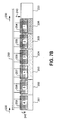
- Figs. 7A and 7B depicts a schematic representation of a multi-chamber and multi-stage poultry stunning system.
- batches of poultry confined in cages 254, 255, 256, 257, 258, 259 are positioned above and aligned with carbon dioxide containing pits 206, 205, 204, 203, 202, 201, respectively.
- Each of the designated pits contains a prescribed concentration of carbon dioxide gas. Since carbon dioxide gas is heavier than air, the carbon dioxide gas generally settles and remains in the stationary pits.
- cage 259 is lowered (see arrow 240) into carbon dioxide pit 201 and remains immersed in the carbon dioxide pit 201 for a prescribed duration for Stage 1 of the multi-stage stunning process.
- Cage 259 is then raised out of pit 201 and laterally moved (see arrow 230) via a conveyor 250 so as to be positioned above pit 202.
- Cage 259 is then lowered again into carbon dioxide pit 202 and remains immersed in the carbon dioxide pit 202 for a prescribed duration for Stage 2 of the multi-stage stunning process.
- Cage 259 is then raised out of pit 202 and laterally moved again so as to be positioned above pit 203.
- the process of lowering a cage and batch of poultry into the carbon dioxide pits is repeated until the desired number of stages is completed.
- the final pit is an exhaust pit 220 where fresh make-up air is passed through the cage to aid in the exhaust of carbon dioxide prior to moving the poultry to the next processing step.
- the means for lowering and laterally moving the cages vis-à-vis the carbon dioxide pits can be any well known conveyor system that allows both lateral and vertical motion of the cages, as required.
- the illustrated system allows a plurality of cages (e.g. six distinct cages) to be undergoing the stunning process concurrently with each of the individual cages positioned over a different carbon dioxide pit for the different stages of the stunning operation and remaining immersed in the carbon dioxide pit for a prescribed duration.
- each of the six carbon dioxide pits has a concentration of carbon dioxide gas needed for that stage of the stunning process.
- the carbon dioxide concentrations in the pits generally increase as the stages progress.
- the carbon dioxide concentration in pit 201 is about 19% for Stage 1 of the stunning process; the carbon dioxide concentration in pit 202 is preferably about 28% for Stage 2 of the stunning process; the carbon dioxide concentration in pit 203 is preferably about 33% for Stage 3 of the stunning process; the carbon dioxide concentration in pit 204 is about 38% for Stage 4 of the stunning process; and the carbon dioxide concentrations in pit 205 and pit 206 are preferably about 52% for Stages 5 and 6 of the multi-stage stunning process. Additional carbon dioxide is periodically added to each of the carbon dioxide pits to maintain the carbon dioxide concentrations at the prescribed levels. The time that each cage remains immersed in the carbon dioxide pits is approximately 60 seconds.
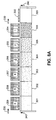
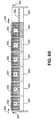
- Figs. 8A and 8B show a schematic representation of another multi-stage poultry stunning system.
- the carbon dioxide pits 301, 302, 303, 304, 305, and 306 are raised or elevated (see arrow 340) to encompass the cages 359, 358, 357, 356, 355, and 354 respectively and immerse the confined poultry in the cages in a carbon dioxide containing atmosphere.
- each of the designated pits 301, 302, 303, 304, 305, and 306 contains a prescribed concentration of carbon dioxide gas that generally increases.
- pit 301 is raised (see arrow 340) to encompass cage 359 where the poultry remain immersed in the carbon dioxide atmosphere for a prescribed duration for Stage 1 of the multi-stage stunning process.
- Pit 301 is then lowered and cage 359 is laterally moved (see arrow 330) along a conveyor or roller platform 350 so as to be positioned above and aligned with pit 302.
- Pit 302 is raised to fully encompass cage 359 such that the confined poultry remain immersed in the carbon dioxide atmosphere of pit 301 for a prescribed duration for Stage 2 of the multi-stage stunning process.
- Pit 302 is subsequently lowered and cage 359 is laterally moved again so as to be positioned above and aligned with pit 303.
- the process of raising a carbon dioxide pit to immerse the poultry in the carbon dioxide containing atmosphere is repeated until the desired number of stages is completed.
- the final pit is an exhaust pit 320 where fresh make-up air is passed through the cage to aid in the exhaust of carbon dioxide prior to moving the poultry to the next processing step.
- Figs. 8A and 8B also permit a plurality of cages to be undergoing the stunning process concurrently with each of the individual cages positioned over a different carbon dioxide pit for the different stages of the stunning operation.
- the poultry remain immersed in the carbon dioxide pit for a prescribed duration, preferably about 60 seconds or more.
- each of the carbon dioxide pits has a concentration of carbon dioxide gas needed for that stage of the stunning process.
- the carbon dioxide concentrations in the pits generally increase as the stages progress. Additional carbon dioxide is periodically added to each of the carbon dioxide pits to maintain the carbon dioxide concentrations at the prescribed levels.
- the present invention thus provides a system and method for stunning poultry, such as chickens, with gas. While the invention herein disclosed has been described by means of specific embodiments and processes associated therewith, numerous modifications and variations can be made thereto by those skilled in the art without departing from the scope of the invention as set forth in the claims or sacrificing all its material advantages.
- the present stunning system can be adapted to process varying sized cages or modules from as small as 20 chickens per module to 300 or more chickens per module.
- the number of modules processed and the number of separate stunning chambers or carbon dioxide vats can also vary depending on the plant layout and downstream line processing speeds.
Landscapes
- Life Sciences & Earth Sciences (AREA)
- Engineering & Computer Science (AREA)
- Food Science & Technology (AREA)
- Housing For Livestock And Birds (AREA)
- Processing Of Meat And Fish (AREA)
- Treating Waste Gases (AREA)
- Accommodation For Nursing Or Treatment Tables (AREA)
Claims (8)
- Verfahren zum Betäuben und Töten von Geflügel in einer kontrollierten Atmosphäre, wobei das Verfahren die folgenden Schritte aufweist:(i) Laden von einer oder mehreren Chargen von Geflügel in eine Betäubungskammer;(ii) dichtendes Umschließen der einen oder mehreren Chargen von Geflügel in der Betäubungskammer, um die Atmosphäre nahe dem Geflügel zu isolieren;(iii) Einführen eines Gasgemischs in die isolierte Atmosphäre bei einem ersten Konzentrationsniveau oder einer ersten Konzentrationsbandbreite und ein zwangsweises Umwälzen der isolierten Atmosphäre innerhalb der Betäubungskammer für einen ersten festgelegten Zeitraum;(iv) Einführen von zusätzlichem Gasgemisch in die isolierte Atmosphäre auf ein zweites Konzentrationsniveau oder eine zweite Konzentrationsbandbreite und zwangsweises Umwälzen der isolierten Atmosphäre innerhalb der Betäubungskammer für einen zweiten festgelegten Zeitraum;(v) Einführen von zusätzlichem Gasgemisch in die isolierte Atmosphäre auf ein drittes Konzentrationsniveau oder einen dritten Konzentrationsbereich und zwangsweises Umwälzen der isolierten Atmosphäre innerhalb der Betäubungskammer für eine dritte festgelegte Zeitdauer, die ausreichend ist, das Geflügel zu töten;(vi) zwangsweises Ausstoßen des Gasgemisches aus der isolierten Atmosphäre; und(vii) Befördern des getöteten Geflügels aus der Betäubungskammer.
- Verfahren gemäß Anspruch 1, wobei das Gasgemisch, welches in die isolierte Atmosphäre eingeführt wird, Kohlendioxid, Argon, Stickstoff oder Mischungen davon beinhaltet.
- Verfahren gemäß Anspruch 1, wobei es sich bei dem Geflügel um Hühner oder Truthähne handelt, und jede der Chargen von Hühnern oder Truthähnen mindestens 20 Geflügel beinhaltet.
- Verfahren gemäß Anspruch 1, wobei das Verfahren weiterhin den Schritt des Ladens zusätzlicher Chargen von Geflügel in die Betäubungskammer aufweist, während das betäubte Geflügel von der Betäubungskammer zu einem weiteren Prozessbereich bewegt wird.
- Verfahren gemäß Anspruch 1, wobei der Schritt des dichtenden Umschließen der einen oder mehreren Chargen von Geflügel in der Betäubungskammer weiterhin das Einschließen des Geflügels im Dunklen beinhaltet.
- Verfahren gemäß Anspruch 1, wobei das Verfahren mindestens zwei Betäubungskammern aufweist, und wobei die Chargen von Geflügel in der ersten Betäubungskammer während des Ladens von Chargen von Geflügel in die zweite Betäubungskammer betäubt werden.
- Verfahren gemäß Anspruch 1, wobei das Verfahren mindestens zwei Betäubungskammern aufweist, und wobei die Chargen von Geflügel der ersten Betäubungskammer von der ersten Betäubungskammer zum Prozessbereich gleichzeitig bewegt werden, während das Betäuben der Chargen von Geflügel in der zweiten Betäubungskammer stattfindet.
- Vorrichtung zum Betäuben und Töten von Geflügel in einer kontrollierten Atmosphäre, wobei die Vorrichtung Folgendes aufweist:eine Betäubungskammer mit einem Eingang und einem Ausgang, wobei die Betäubungskammer eine isolierte Atmosphäre abgrenzt;ein Untersystem zum Einführen von Gas, welches dazu ausgebildet ist, festgelegte Niveaus von Kohlendioxid in die isolierte Atmosphäre der Betäubungskammer einzuführen;ein Untersystem zum Umwälzen einer Atmosphäre, weiches dazu ausgebildet ist, die isolierte Atmosphäre innerhalb der Betäubungskammer umzuwälzen;ein Untersystem zur Entlüftung, welches dazu ausgebildet ist, das Kohlendioxid aus der Betäubungskammer abzuziehen;ein Steuerungssystem, welches dazu ausgebildet ist, den Betrieb des Untersystems zur Umwälzung eine Atmosphäre, des Untersystems zur Gaseinführung, und des Untersystems zur Entlüftung zu steuern;dadurch gekennzeichnet, dassdas Steuerungssystem die Untersysteme so steuert, dass Kohlendioxid in die isolierte Atmosphäre bei einem ersten Konzentrationsniveau oder einem ersten Konzentrationsbereich eingeführt wird, und das Kohlendioxid innerhalb der Betäubungskammer für eine erste festgelegte Zeitdauer zwangsweise umgewälzt wird, dann zusätzliches Kohlendioxid in die isolierte Atmosphäre eingeführt wird, um ein zweites Konzentrationsniveau oder einen zweiten Konzentrationsbereich zu erreichen, und das Kohlendioxid innerhalb der Betäubungskammer für eine zweite Zeitdauer zwangsweise umgewälzt wird, und zusätzliches Kohlendioxid in die isolierte Atmosphäre eingeführt wird, um ein drittes Konzentrationsniveau oder eine dritte Konzentrationsbandbreite zu erreichen, und das Kohlendioxid innerhalb der Betäubungskammer für einen dritten Zeitraum zwangsweise umgewälzt wird, der ausreichend ist, um das Geflügel zu töten.
Priority Applications (4)
| Application Number | Priority Date | Filing Date | Title |
|---|---|---|---|
| PL08742803T PL2142001T3 (pl) | 2007-04-11 | 2008-04-11 | Układ i sposób do ogłuszania drobiu gazem |
| DK14188051.8T DK2880980T3 (da) | 2007-04-11 | 2008-04-11 | System og fremgangsmåde til bedøvelse af fjerkræ med gas |
| EP14188051.8A EP2880980B1 (de) | 2007-04-11 | 2008-04-11 | System und Verfahren zur Betäubung von Geflügel mit Gas |
| PL14188051T PL2880980T3 (pl) | 2007-04-11 | 2008-04-11 | Układ i sposób ogłuszania drobiu gazem |
Applications Claiming Priority (3)
| Application Number | Priority Date | Filing Date | Title |
|---|---|---|---|
| US92285907P | 2007-04-11 | 2007-04-11 | |
| US11/893,331 US8272926B2 (en) | 2006-08-23 | 2007-08-15 | System and method for stunning poultry with gas |
| PCT/US2008/004734 WO2008127667A1 (en) | 2007-04-11 | 2008-04-11 | System and method for stunning poultry with gas |
Related Child Applications (2)
| Application Number | Title | Priority Date | Filing Date |
|---|---|---|---|
| EP14188051.8A Division EP2880980B1 (de) | 2007-04-11 | 2008-04-11 | System und Verfahren zur Betäubung von Geflügel mit Gas |
| EP14188051.8A Division-Into EP2880980B1 (de) | 2007-04-11 | 2008-04-11 | System und Verfahren zur Betäubung von Geflügel mit Gas |
Publications (2)
| Publication Number | Publication Date |
|---|---|
| EP2142001A1 EP2142001A1 (de) | 2010-01-13 |
| EP2142001B1 true EP2142001B1 (de) | 2014-11-19 |
Family
ID=39864260
Family Applications (2)
| Application Number | Title | Priority Date | Filing Date |
|---|---|---|---|
| EP08742803.3A Revoked EP2142001B1 (de) | 2007-04-11 | 2008-04-11 | System und verfahren für die betäubung von geflügel mit gas |
| EP14188051.8A Active EP2880980B1 (de) | 2007-04-11 | 2008-04-11 | System und Verfahren zur Betäubung von Geflügel mit Gas |
Family Applications After (1)
| Application Number | Title | Priority Date | Filing Date |
|---|---|---|---|
| EP14188051.8A Active EP2880980B1 (de) | 2007-04-11 | 2008-04-11 | System und Verfahren zur Betäubung von Geflügel mit Gas |
Country Status (11)
| Country | Link |
|---|---|
| US (1) | US8272926B2 (de) |
| EP (2) | EP2142001B1 (de) |
| BR (1) | BRPI0807591B1 (de) |
| CA (1) | CA2683747C (de) |
| DK (2) | DK2880980T3 (de) |
| ES (2) | ES2812534T3 (de) |
| HU (1) | HUE050446T2 (de) |
| MX (1) | MX2009010497A (de) |
| PL (2) | PL2142001T3 (de) |
| PT (2) | PT2142001E (de) |
| WO (1) | WO2008127667A1 (de) |
Families Citing this family (10)
| Publication number | Priority date | Publication date | Assignee | Title |
|---|---|---|---|---|
| ES2816648T3 (es) | 2012-09-10 | 2021-04-05 | Linco Food Systems As | Procedimiento y sistema de monitorización para monitorizar el aturdimiento por gas de las aves |
| WO2016022959A2 (en) * | 2014-08-07 | 2016-02-11 | Hollis Cheek | Method for humanely stunning and slaughtering animals using low atmospheric pressure and inert gas |
| US9402403B2 (en) * | 2014-12-10 | 2016-08-02 | Massimo Zanotti | Method and apparatus for stunning animals intended to be slaughtered |
| AU2016269720A1 (en) * | 2015-06-02 | 2017-12-21 | Teknologisk Institut | Pre-stunning or stunning of animals with a combination of air (O2), CO2 and N2O |
| US10136654B2 (en) * | 2015-07-31 | 2018-11-27 | Linco Food Systems A/S | Device, assembly, and method for stunning poultry |
| ES3040860T3 (en) * | 2017-04-10 | 2025-11-05 | Baader Food Systems Denmark As | Controlled atmospheric stunning |
| US10757949B1 (en) | 2017-10-17 | 2020-09-01 | Midway Machine Technologies, Inc. | Poultry stunning system and method |
| US11937610B2 (en) | 2019-07-15 | 2024-03-26 | Midway Machine Technologies, Inc. | System and method for operating a poultry stunning facility |
| US12396464B2 (en) * | 2021-05-04 | 2025-08-26 | Messer Industries Usa, Inc. | Onsite CO2 generation for poultry stunning |
| WO2023110107A1 (de) * | 2021-12-16 | 2023-06-22 | Baader Food Systems Denmark A/S | Vorrichtung und verfahren zum betäuben von geflügeltieren in einer oberirdischen betäubungskammer |
Family Cites Families (29)
| Publication number | Priority date | Publication date | Assignee | Title |
|---|---|---|---|---|
| US2526037A (en) | 1948-12-17 | 1950-10-17 | Hormel & Co Geo A | Process for immobilizing livestock prior to slaughtering |
| US2737683A (en) | 1954-05-20 | 1956-03-13 | Swift & Co | Animal immobilizing apparatus |
| DK110107C (da) * | 1966-07-12 | 1968-12-02 | Slagteriernes Forskningsinst | Inddrivningsanlæg for slagtedyr, navnlig svin. |
| US3548447A (en) * | 1967-08-25 | 1970-12-22 | Thomas F Price Jr | Apparatus for humanely killing minks and the like |
| DK126549B (da) * | 1971-05-04 | 1973-07-30 | N Wernberg | Bedøvningsanlæg til slagtedyr. |
| GB1521700A (en) * | 1975-12-11 | 1978-08-16 | Universities Federation For An | Euthanasia of animals |
| JPS62282535A (ja) | 1986-05-31 | 1987-12-08 | 山内 清悦 | 食鳥の麻酔処理装置 |
| DK156690C (da) | 1987-02-10 | 1992-08-10 | Butina I S | Gondol til transport af slagtedyr, fortrinsvis grise i et bedoevningsanlaeg |
| CH675521A5 (de) | 1989-10-07 | 1990-10-15 | Von Roll Ag | |
| GB8928935D0 (en) | 1989-12-21 | 1990-02-28 | Boc Group Plc | Treatment of poultry |
| GB8928934D0 (en) | 1989-12-21 | 1990-02-28 | Boc Group Plc | Treatment of birds |
| DK33490D0 (da) | 1990-02-08 | 1990-02-08 | Slagteriernes Forskningsinst | Fremgangsmaade og anlaeg til bedoevning af slagtedyr paa slagterier |
| NL9300254A (nl) | 1992-12-30 | 1994-07-18 | Stork Pmt | Werkwijze en inrichting voor het bedwelmen van slachtdieren. |
| GB9401520D0 (en) | 1994-01-27 | 1994-03-23 | Anglia Autoflow Ltd | Treatment of poultry |
| US5435776A (en) | 1994-07-21 | 1995-07-25 | Liquid Carbonic Corporation | Poultry stunning with carbon dioxide |
| CA2187995C (en) | 1996-10-16 | 2000-01-18 | George Chamberlain | Tunnel carbon dioxide immobilizer |
| NL1006466C1 (nl) | 1996-12-20 | 1998-06-23 | Stork P M T B V | Verbeterde werkwijze en inrichting voor het met gas verdoven van slachtvee. |
| NL1004927C2 (nl) * | 1997-01-03 | 1998-07-06 | Stork Pmt | Werkwijze en inrichting voor het verzamelen van gevogelte en het transporteren van het gevogelte naar een slachterij. |
| NO970229D0 (no) | 1997-01-17 | 1997-01-17 | Norsk Hydro As | Fremgangsmåte og utstyr for behandling av fjærkre för slakting |
| US6056637A (en) | 1997-01-27 | 2000-05-02 | Hormel Foods Corporation | Method and apparatus for unloading poultry |
| US6135872A (en) | 1997-01-27 | 2000-10-24 | Hormel Foods Corporation | Method and apparatus for unloading poultry |
| NO308402B1 (no) | 1998-05-27 | 2000-09-11 | Norsk Hydro As | Fremgangsmate og utstyr for tildannelse og opprettholdelse av en gassblanding |
| NL1015338C2 (nl) | 2000-05-30 | 2001-12-03 | Stork Mps Bv | Werkwijze en inrichting voor het ten minste verdoven van een slachtdier. |
| US6694918B2 (en) | 2002-03-07 | 2004-02-24 | Roger Draft | Cage for transporting and stunning livestock |
| DK176049B1 (da) * | 2002-03-27 | 2006-02-27 | Slagteriernes Forskningsinst | Udstyr, system og fremgangsmåde til opdeling af dyr i grupper og overföring af grupper af dyr til et bedövelsesanlæg |
| DK1405564T3 (en) | 2002-10-01 | 2015-07-20 | Maxitech S R L | Process and plant for gas stunning of poultry for slaughter |
| US6848987B2 (en) | 2002-11-22 | 2005-02-01 | Roger Draft | Apparatus and method of transporting and stunning livestock |
| ITBS20040075A1 (it) * | 2004-06-25 | 2004-09-25 | Cattaruzzi Internat S R L | Impianto e metodo per lo stordimento e/o l'abbattimento di animali da macellazione mediante asfissia |
| US7794310B2 (en) | 2005-07-08 | 2010-09-14 | Praxair Technology, Inc. | Stunning animals such as poultry with gas |
-
2007
- 2007-08-15 US US11/893,331 patent/US8272926B2/en active Active
-
2008
- 2008-04-11 CA CA2683747A patent/CA2683747C/en active Active
- 2008-04-11 EP EP08742803.3A patent/EP2142001B1/de not_active Revoked
- 2008-04-11 EP EP14188051.8A patent/EP2880980B1/de active Active
- 2008-04-11 MX MX2009010497A patent/MX2009010497A/es active IP Right Grant
- 2008-04-11 DK DK14188051.8T patent/DK2880980T3/da active
- 2008-04-11 PL PL08742803T patent/PL2142001T3/pl unknown
- 2008-04-11 ES ES14188051T patent/ES2812534T3/es active Active
- 2008-04-11 BR BRPI0807591-3A patent/BRPI0807591B1/pt active IP Right Grant
- 2008-04-11 PL PL14188051T patent/PL2880980T3/pl unknown
- 2008-04-11 HU HUE14188051A patent/HUE050446T2/hu unknown
- 2008-04-11 WO PCT/US2008/004734 patent/WO2008127667A1/en not_active Ceased
- 2008-04-11 ES ES08742803.3T patent/ES2528210T3/es active Active
- 2008-04-11 PT PT87428033T patent/PT2142001E/pt unknown
- 2008-04-11 PT PT141880518T patent/PT2880980T/pt unknown
- 2008-04-11 DK DK08742803.3T patent/DK2142001T3/en active
Also Published As
| Publication number | Publication date |
|---|---|
| WO2008127667A1 (en) | 2008-10-23 |
| HUE050446T2 (hu) | 2020-12-28 |
| EP2142001A1 (de) | 2010-01-13 |
| PL2880980T3 (pl) | 2020-11-16 |
| CA2683747C (en) | 2012-10-30 |
| BRPI0807591A2 (pt) | 2014-07-22 |
| DK2142001T3 (en) | 2015-01-19 |
| PT2880980T (pt) | 2020-08-27 |
| EP2880980B1 (de) | 2020-06-03 |
| ES2528210T3 (es) | 2015-02-05 |
| CA2683747A1 (en) | 2008-10-23 |
| ES2812534T3 (es) | 2021-03-17 |
| EP2880980A1 (de) | 2015-06-10 |
| DK2880980T3 (da) | 2020-08-24 |
| PT2142001E (pt) | 2014-12-26 |
| MX2009010497A (es) | 2009-12-14 |
| PL2142001T3 (pl) | 2015-04-30 |
| BRPI0807591B1 (pt) | 2020-12-22 |
| US8272926B2 (en) | 2012-09-25 |
| US20080051019A1 (en) | 2008-02-28 |
Similar Documents
| Publication | Publication Date | Title |
|---|---|---|
| US8323080B2 (en) | System and method for stunning poultry with gas | |
| EP2142001B1 (de) | System und verfahren für die betäubung von geflügel mit gas | |
| US7448943B1 (en) | Poultry stunning system | |
| CA2662504C (en) | System and method for treating live cargo such as poultry with gas | |
| EP0664957B2 (de) | Behandlung von Geflügel | |
| EP0701396A1 (de) | Die behandlung von kleinen tieren | |
| WO2008128027A1 (en) | System and method for stunning hogs with gas | |
| AU2015404926A1 (en) | Device, assembly, and method for stunning poultry | |
| US20210015111A1 (en) | System and method for operating a poultry stunning facility | |
| CA2614197C (en) | Stunning animals such as poultry with gas | |
| US20220184840A1 (en) | Slicing and packaging assembly with modified atmosphere | |
| US20070026779A1 (en) | Poultry stunning | |
| Grandin | Stunning poultry with controlled atmosphere systems. | |
| CA3060072A1 (en) | System and method for operating a poultry stunning facility | |
| JP2024542690A (ja) | 地上気絶処理室内で食鳥を気絶処理する装置及び方法 |
Legal Events
| Date | Code | Title | Description |
|---|---|---|---|
| PUAI | Public reference made under article 153(3) epc to a published international application that has entered the european phase |
Free format text: ORIGINAL CODE: 0009012 |
|
| 17P | Request for examination filed |
Effective date: 20091027 |
|
| AK | Designated contracting states |
Kind code of ref document: A1 Designated state(s): AT BE BG CH CY CZ DE DK EE ES FI FR GB GR HR HU IE IS IT LI LT LU LV MC MT NL NO PL PT RO SE SI SK TR |
|
| DAX | Request for extension of the european patent (deleted) | ||
| 17Q | First examination report despatched |
Effective date: 20131219 |
|
| GRAP | Despatch of communication of intention to grant a patent |
Free format text: ORIGINAL CODE: EPIDOSNIGR1 |
|
| INTG | Intention to grant announced |
Effective date: 20140620 |
|
| GRAS | Grant fee paid |
Free format text: ORIGINAL CODE: EPIDOSNIGR3 |
|
| GRAA | (expected) grant |
Free format text: ORIGINAL CODE: 0009210 |
|
| AK | Designated contracting states |
Kind code of ref document: B1 Designated state(s): AT BE BG CH CY CZ DE DK EE ES FI FR GB GR HR HU IE IS IT LI LT LU LV MC MT NL NO PL PT RO SE SI SK TR |
|
| REG | Reference to a national code |
Ref country code: GB Ref legal event code: FG4D |
|
| REG | Reference to a national code |
Ref country code: CH Ref legal event code: EP |
|
| REG | Reference to a national code |
Ref country code: AT Ref legal event code: REF Ref document number: 696451 Country of ref document: AT Kind code of ref document: T Effective date: 20141215 |
|
| REG | Reference to a national code |
Ref country code: IE Ref legal event code: FG4D |
|
| REG | Reference to a national code |
Ref country code: PT Ref legal event code: SC4A Free format text: AVAILABILITY OF NATIONAL TRANSLATION Effective date: 20141212 |
|
| REG | Reference to a national code |
Ref country code: DE Ref legal event code: R096 Ref document number: 602008035460 Country of ref document: DE Effective date: 20141231 |
|
| REG | Reference to a national code |
Ref country code: RO Ref legal event code: EPE |
|
| REG | Reference to a national code |
Ref country code: DK Ref legal event code: T3 Effective date: 20150116 |
|
| REG | Reference to a national code |
Ref country code: SE Ref legal event code: TRGR |
|
| REG | Reference to a national code |
Ref country code: ES Ref legal event code: FG2A Ref document number: 2528210 Country of ref document: ES Kind code of ref document: T3 Effective date: 20150205 |
|
| REG | Reference to a national code |
Ref country code: NL Ref legal event code: T3 |
|
| REG | Reference to a national code |
Ref country code: NO Ref legal event code: T2 Effective date: 20141119 |
|
| REG | Reference to a national code |
Ref country code: LT Ref legal event code: MG4D |
|
| PG25 | Lapsed in a contracting state [announced via postgrant information from national office to epo] |
Ref country code: FI Free format text: LAPSE BECAUSE OF FAILURE TO SUBMIT A TRANSLATION OF THE DESCRIPTION OR TO PAY THE FEE WITHIN THE PRESCRIBED TIME-LIMIT Effective date: 20141119 Ref country code: IS Free format text: LAPSE BECAUSE OF FAILURE TO SUBMIT A TRANSLATION OF THE DESCRIPTION OR TO PAY THE FEE WITHIN THE PRESCRIBED TIME-LIMIT Effective date: 20150319 Ref country code: LT Free format text: LAPSE BECAUSE OF FAILURE TO SUBMIT A TRANSLATION OF THE DESCRIPTION OR TO PAY THE FEE WITHIN THE PRESCRIBED TIME-LIMIT Effective date: 20141119 |
|
| REG | Reference to a national code |
Ref country code: PL Ref legal event code: T3 |
|
| PG25 | Lapsed in a contracting state [announced via postgrant information from national office to epo] |
Ref country code: HR Free format text: LAPSE BECAUSE OF FAILURE TO SUBMIT A TRANSLATION OF THE DESCRIPTION OR TO PAY THE FEE WITHIN THE PRESCRIBED TIME-LIMIT Effective date: 20141119 Ref country code: GR Free format text: LAPSE BECAUSE OF FAILURE TO SUBMIT A TRANSLATION OF THE DESCRIPTION OR TO PAY THE FEE WITHIN THE PRESCRIBED TIME-LIMIT Effective date: 20150220 Ref country code: CY Free format text: LAPSE BECAUSE OF FAILURE TO SUBMIT A TRANSLATION OF THE DESCRIPTION OR TO PAY THE FEE WITHIN THE PRESCRIBED TIME-LIMIT Effective date: 20141119 Ref country code: LV Free format text: LAPSE BECAUSE OF FAILURE TO SUBMIT A TRANSLATION OF THE DESCRIPTION OR TO PAY THE FEE WITHIN THE PRESCRIBED TIME-LIMIT Effective date: 20141119 |
|
| REG | Reference to a national code |
Ref country code: DE Ref legal event code: R026 Ref document number: 602008035460 Country of ref document: DE |
|
| PLBI | Opposition filed |
Free format text: ORIGINAL CODE: 0009260 |
|
| PG25 | Lapsed in a contracting state [announced via postgrant information from national office to epo] |
Ref country code: EE Free format text: LAPSE BECAUSE OF FAILURE TO SUBMIT A TRANSLATION OF THE DESCRIPTION OR TO PAY THE FEE WITHIN THE PRESCRIBED TIME-LIMIT Effective date: 20141119 Ref country code: SK Free format text: LAPSE BECAUSE OF FAILURE TO SUBMIT A TRANSLATION OF THE DESCRIPTION OR TO PAY THE FEE WITHIN THE PRESCRIBED TIME-LIMIT Effective date: 20141119 |
|
| PLBI | Opposition filed |
Free format text: ORIGINAL CODE: 0009260 |
|
| 26 | Opposition filed |
Opponent name: NORDISCHER MASCHINENBAU RUD. BAADER GMBH + CO. KG Effective date: 20150722 |
|
| REG | Reference to a national code |
Ref country code: HU Ref legal event code: AG4A Ref document number: E023439 Country of ref document: HU |
|
| 26 | Opposition filed |
Opponent name: MAREL STORK POULTRY PROCESSING B.V. Effective date: 20150805 |
|
| PLAX | Notice of opposition and request to file observation + time limit sent |
Free format text: ORIGINAL CODE: EPIDOSNOBS2 |
|
| PG25 | Lapsed in a contracting state [announced via postgrant information from national office to epo] |
Ref country code: MC Free format text: LAPSE BECAUSE OF FAILURE TO SUBMIT A TRANSLATION OF THE DESCRIPTION OR TO PAY THE FEE WITHIN THE PRESCRIBED TIME-LIMIT Effective date: 20141119 Ref country code: LU Free format text: LAPSE BECAUSE OF FAILURE TO SUBMIT A TRANSLATION OF THE DESCRIPTION OR TO PAY THE FEE WITHIN THE PRESCRIBED TIME-LIMIT Effective date: 20150411 |
|
| REG | Reference to a national code |
Ref country code: CH Ref legal event code: PL |
|
| GBPC | Gb: european patent ceased through non-payment of renewal fee |
Effective date: 20150411 |
|
| REG | Reference to a national code |
Ref country code: IE Ref legal event code: MM4A |
|
| PG25 | Lapsed in a contracting state [announced via postgrant information from national office to epo] |
Ref country code: GB Free format text: LAPSE BECAUSE OF NON-PAYMENT OF DUE FEES Effective date: 20150411 Ref country code: CH Free format text: LAPSE BECAUSE OF NON-PAYMENT OF DUE FEES Effective date: 20150430 Ref country code: LI Free format text: LAPSE BECAUSE OF NON-PAYMENT OF DUE FEES Effective date: 20150430 |
|
| PLBB | Reply of patent proprietor to notice(s) of opposition received |
Free format text: ORIGINAL CODE: EPIDOSNOBS3 |
|
| PG25 | Lapsed in a contracting state [announced via postgrant information from national office to epo] |
Ref country code: SI Free format text: LAPSE BECAUSE OF FAILURE TO SUBMIT A TRANSLATION OF THE DESCRIPTION OR TO PAY THE FEE WITHIN THE PRESCRIBED TIME-LIMIT Effective date: 20141119 |
|
| REG | Reference to a national code |
Ref country code: FR Ref legal event code: PLFP Year of fee payment: 9 |
|
| PG25 | Lapsed in a contracting state [announced via postgrant information from national office to epo] |
Ref country code: IE Free format text: LAPSE BECAUSE OF NON-PAYMENT OF DUE FEES Effective date: 20150411 |
|
| REG | Reference to a national code |
Ref country code: AT Ref legal event code: UEP Ref document number: 696451 Country of ref document: AT Kind code of ref document: T Effective date: 20141119 |
|
| PG25 | Lapsed in a contracting state [announced via postgrant information from national office to epo] |
Ref country code: MT Free format text: LAPSE BECAUSE OF FAILURE TO SUBMIT A TRANSLATION OF THE DESCRIPTION OR TO PAY THE FEE WITHIN THE PRESCRIBED TIME-LIMIT Effective date: 20141119 |
|
| RDAF | Communication despatched that patent is revoked |
Free format text: ORIGINAL CODE: EPIDOSNREV1 |
|
| STAA | Information on the status of an ep patent application or granted ep patent |
Free format text: STATUS: THE PATENT HAS BEEN GRANTED |
|
| REG | Reference to a national code |
Ref country code: FR Ref legal event code: PLFP Year of fee payment: 10 |
|
| APBM | Appeal reference recorded |
Free format text: ORIGINAL CODE: EPIDOSNREFNO |
|
| APBP | Date of receipt of notice of appeal recorded |
Free format text: ORIGINAL CODE: EPIDOSNNOA2O |
|
| PG25 | Lapsed in a contracting state [announced via postgrant information from national office to epo] |
Ref country code: BG Free format text: LAPSE BECAUSE OF FAILURE TO SUBMIT A TRANSLATION OF THE DESCRIPTION OR TO PAY THE FEE WITHIN THE PRESCRIBED TIME-LIMIT Effective date: 20141119 |
|
| APAH | Appeal reference modified |
Free format text: ORIGINAL CODE: EPIDOSCREFNO |
|
| APBQ | Date of receipt of statement of grounds of appeal recorded |
Free format text: ORIGINAL CODE: EPIDOSNNOA3O |
|
| PG25 | Lapsed in a contracting state [announced via postgrant information from national office to epo] |
Ref country code: TR Free format text: LAPSE BECAUSE OF FAILURE TO SUBMIT A TRANSLATION OF THE DESCRIPTION OR TO PAY THE FEE WITHIN THE PRESCRIBED TIME-LIMIT Effective date: 20141119 |
|
| REG | Reference to a national code |
Ref country code: FR Ref legal event code: PLFP Year of fee payment: 11 |
|
| RAP2 | Party data changed (patent owner data changed or rights of a patent transferred) |
Owner name: PRAXAIR TECHNOLOGY, INC. |
|
| APBU | Appeal procedure closed |
Free format text: ORIGINAL CODE: EPIDOSNNOA9O |
|
| PGFP | Annual fee paid to national office [announced via postgrant information from national office to epo] |
Ref country code: IT Payment date: 20210323 Year of fee payment: 14 Ref country code: CZ Payment date: 20210326 Year of fee payment: 14 Ref country code: PT Payment date: 20210325 Year of fee payment: 14 Ref country code: NO Payment date: 20210325 Year of fee payment: 14 Ref country code: NL Payment date: 20210329 Year of fee payment: 14 Ref country code: FR Payment date: 20210323 Year of fee payment: 14 |
|
| PGFP | Annual fee paid to national office [announced via postgrant information from national office to epo] |
Ref country code: SE Payment date: 20210329 Year of fee payment: 14 Ref country code: PL Payment date: 20210324 Year of fee payment: 14 Ref country code: DK Payment date: 20210325 Year of fee payment: 14 Ref country code: BE Payment date: 20210326 Year of fee payment: 14 |
|
| PGFP | Annual fee paid to national office [announced via postgrant information from national office to epo] |
Ref country code: DE Payment date: 20210323 Year of fee payment: 14 Ref country code: RO Payment date: 20210412 Year of fee payment: 14 |
|
| PGFP | Annual fee paid to national office [announced via postgrant information from national office to epo] |
Ref country code: ES Payment date: 20210503 Year of fee payment: 14 Ref country code: HU Payment date: 20210405 Year of fee payment: 14 Ref country code: AT Payment date: 20210325 Year of fee payment: 14 |
|
| RDAE | Information deleted related to despatch of communication that patent is revoked |
Free format text: ORIGINAL CODE: EPIDOSDREV1 |
|
| RDAF | Communication despatched that patent is revoked |
Free format text: ORIGINAL CODE: EPIDOSNREV1 |
|
| REG | Reference to a national code |
Ref country code: DE Ref legal event code: R103 Ref document number: 602008035460 Country of ref document: DE Ref country code: DE Ref legal event code: R064 Ref document number: 602008035460 Country of ref document: DE |
|
| RDAG | Patent revoked |
Free format text: ORIGINAL CODE: 0009271 |
|
| STAA | Information on the status of an ep patent application or granted ep patent |
Free format text: STATUS: PATENT REVOKED |
|
| REG | Reference to a national code |
Ref country code: FI Ref legal event code: MGE |
|
| 27W | Patent revoked |
Effective date: 20210916 |
|
| REG | Reference to a national code |
Ref country code: AT Ref legal event code: MA03 Ref document number: 696451 Country of ref document: AT Kind code of ref document: T Effective date: 20210916 |
|
| REG | Reference to a national code |
Ref country code: SE Ref legal event code: ECNC |