EP2139104B1 - High efficient photovoltaic inverter comprising a buck converter - Google Patents
High efficient photovoltaic inverter comprising a buck converter Download PDFInfo
- Publication number
- EP2139104B1 EP2139104B1 EP09163101.0A EP09163101A EP2139104B1 EP 2139104 B1 EP2139104 B1 EP 2139104B1 EP 09163101 A EP09163101 A EP 09163101A EP 2139104 B1 EP2139104 B1 EP 2139104B1
- Authority
- EP
- European Patent Office
- Prior art keywords
- inverter
- voltage
- current
- array
- converter
- Prior art date
- Legal status (The legal status is an assumption and is not a legal conclusion. Google has not performed a legal analysis and makes no representation as to the accuracy of the status listed.)
- Active
Links
Images


Classifications
-
- H—ELECTRICITY
- H02—GENERATION; CONVERSION OR DISTRIBUTION OF ELECTRIC POWER
- H02M—APPARATUS FOR CONVERSION BETWEEN AC AND AC, BETWEEN AC AND DC, OR BETWEEN DC AND DC, AND FOR USE WITH MAINS OR SIMILAR POWER SUPPLY SYSTEMS; CONVERSION OF DC OR AC INPUT POWER INTO SURGE OUTPUT POWER; CONTROL OR REGULATION THEREOF
- H02M7/00—Conversion of AC power input into DC power output; Conversion of DC power input into AC power output
- H02M7/42—Conversion of DC power input into AC power output without possibility of reversal
- H02M7/44—Conversion of DC power input into AC power output without possibility of reversal by static converters
- H02M7/48—Conversion of DC power input into AC power output without possibility of reversal by static converters using discharge tubes with control electrode or semiconductor devices with control electrode
- H02M7/53—Conversion of DC power input into AC power output without possibility of reversal by static converters using discharge tubes with control electrode or semiconductor devices with control electrode using devices of a triode or transistor type requiring continuous application of a control signal
- H02M7/537—Conversion of DC power input into AC power output without possibility of reversal by static converters using discharge tubes with control electrode or semiconductor devices with control electrode using devices of a triode or transistor type requiring continuous application of a control signal using semiconductor devices only, e.g. single switched pulse inverters
- H02M7/5387—Conversion of DC power input into AC power output without possibility of reversal by static converters using discharge tubes with control electrode or semiconductor devices with control electrode using devices of a triode or transistor type requiring continuous application of a control signal using semiconductor devices only, e.g. single switched pulse inverters in a bridge configuration
- H02M7/53871—Conversion of DC power input into AC power output without possibility of reversal by static converters using discharge tubes with control electrode or semiconductor devices with control electrode using devices of a triode or transistor type requiring continuous application of a control signal using semiconductor devices only, e.g. single switched pulse inverters in a bridge configuration with automatic control of output voltage or current
- H02M7/53873—Conversion of DC power input into AC power output without possibility of reversal by static converters using discharge tubes with control electrode or semiconductor devices with control electrode using devices of a triode or transistor type requiring continuous application of a control signal using semiconductor devices only, e.g. single switched pulse inverters in a bridge configuration with automatic control of output voltage or current with digital control
-
- H—ELECTRICITY
- H02—GENERATION; CONVERSION OR DISTRIBUTION OF ELECTRIC POWER
- H02J—ELECTRIC POWER NETWORKS; CIRCUIT ARRANGEMENTS OR SYSTEMS FOR SUPPLYING OR DISTRIBUTING ELECTRIC POWER; SYSTEMS FOR STORING ELECTRIC ENERGY
- H02J3/00—Circuit arrangements for AC mains or AC distribution networks
- H02J3/38—Arrangements for feeding a single network from two or more generators or sources in parallel; Arrangements for feeding already energised networks from additional generators or sources in parallel
-
- H—ELECTRICITY
- H02—GENERATION; CONVERSION OR DISTRIBUTION OF ELECTRIC POWER
- H02M—APPARATUS FOR CONVERSION BETWEEN AC AND AC, BETWEEN AC AND DC, OR BETWEEN DC AND DC, AND FOR USE WITH MAINS OR SIMILAR POWER SUPPLY SYSTEMS; CONVERSION OF DC OR AC INPUT POWER INTO SURGE OUTPUT POWER; CONTROL OR REGULATION THEREOF
- H02M1/00—Details of apparatus for conversion
- H02M1/0048—Circuits or arrangements for reducing losses
-
- H—ELECTRICITY
- H02—GENERATION; CONVERSION OR DISTRIBUTION OF ELECTRIC POWER
- H02M—APPARATUS FOR CONVERSION BETWEEN AC AND AC, BETWEEN AC AND DC, OR BETWEEN DC AND DC, AND FOR USE WITH MAINS OR SIMILAR POWER SUPPLY SYSTEMS; CONVERSION OF DC OR AC INPUT POWER INTO SURGE OUTPUT POWER; CONTROL OR REGULATION THEREOF
- H02M1/00—Details of apparatus for conversion
- H02M1/0067—Converter structures employing plural converter units, other than for parallel operation of the units on a single load
- H02M1/007—Plural converter units in cascade
-
- H—ELECTRICITY
- H02—GENERATION; CONVERSION OR DISTRIBUTION OF ELECTRIC POWER
- H02M—APPARATUS FOR CONVERSION BETWEEN AC AND AC, BETWEEN AC AND DC, OR BETWEEN DC AND DC, AND FOR USE WITH MAINS OR SIMILAR POWER SUPPLY SYSTEMS; CONVERSION OF DC OR AC INPUT POWER INTO SURGE OUTPUT POWER; CONTROL OR REGULATION THEREOF
- H02M1/00—Details of apparatus for conversion
- H02M1/44—Circuits or arrangements for compensating for electromagnetic interference in converters or inverters
-
- Y—GENERAL TAGGING OF NEW TECHNOLOGICAL DEVELOPMENTS; GENERAL TAGGING OF CROSS-SECTIONAL TECHNOLOGIES SPANNING OVER SEVERAL SECTIONS OF THE IPC; TECHNICAL SUBJECTS COVERED BY FORMER USPC CROSS-REFERENCE ART COLLECTIONS [XRACs] AND DIGESTS
- Y02—TECHNOLOGIES OR APPLICATIONS FOR MITIGATION OR ADAPTATION AGAINST CLIMATE CHANGE
- Y02B—CLIMATE CHANGE MITIGATION TECHNOLOGIES RELATED TO BUILDINGS, e.g. HOUSING, HOUSE APPLIANCES OR RELATED END-USER APPLICATIONS
- Y02B70/00—Technologies for an efficient end-user side electric power management and consumption
- Y02B70/10—Technologies improving the efficiency by using switched-mode power supplies [SMPS], i.e. efficient power electronics conversion e.g. power factor correction or reduction of losses in power supplies or efficient standby modes
-
- Y—GENERAL TAGGING OF NEW TECHNOLOGICAL DEVELOPMENTS; GENERAL TAGGING OF CROSS-SECTIONAL TECHNOLOGIES SPANNING OVER SEVERAL SECTIONS OF THE IPC; TECHNICAL SUBJECTS COVERED BY FORMER USPC CROSS-REFERENCE ART COLLECTIONS [XRACs] AND DIGESTS
- Y02—TECHNOLOGIES OR APPLICATIONS FOR MITIGATION OR ADAPTATION AGAINST CLIMATE CHANGE
- Y02E—REDUCTION OF GREENHOUSE GAS [GHG] EMISSIONS, RELATED TO ENERGY GENERATION, TRANSMISSION OR DISTRIBUTION
- Y02E10/00—Energy generation through renewable energy sources
- Y02E10/50—Photovoltaic [PV] energy
- Y02E10/56—Power conversion systems, e.g. maximum power point trackers
Definitions
- the invention relates generally to electronic power conversion and more particularly to a very high conversion efficiency, grid connected, single phase photovoltaic (PV) inverter.
- PV photovoltaic
- PV cells generate direct current (DC) power with the level of DC current being dependent on solar irradiation and the level of DC voltage dependent on temperature.
- AC alternating current
- an inverter is used to convert the DC energy into AC energy.
- Typical PV inverters employ two stages for power processing with the first stage configured for providing a constant DC voltage and the second stage configured for converting the constant DC voltage to AC current.
- the first stage includes a boost converter
- the second stage includes a single-phase or three-phase inverter system.
- the efficiency of the two-stage inverter is an important parameter affecting PV system performance and is a multiple of the individual stage efficiencies with each stage typically causing one-half of the system losses.
- Single phase photovoltaic inverters generally require a two-stage conversion power circuit to convert the varying DC voltage of a PV array to the fixed frequency AC voltage of the grid.
- Traditional PV inverters use a DC link as the intermediate energy storage step, which means that the converter first converts the stable DC voltage to a current that can be injected into the grid.
- Switching losses are typically kept as low as possible when using traditional PV inverters by keeping the switching frequency low.
- PRASAD B S ET AL "Universal Single-Stage Grid-Connected Inverter” IEEE TRANSACTIONS ON ENERGY CONVERSION, IEEE SERVICE CENTER, PISCATAWAY, NJ, US, vol. 23, no. 1, 1 Mach 2008 (2008-03-01), pages 128-137, XP011202232 ISSN: 0885-8969 discusses a single stage inverter that can be switched between buck, boost and buck-boost configurations using PWM control.
- KHAJEHODDIN S A ET AL "A robust power decoupler and maximum power point tracker topology for a grid-connected photovoltaic system” POWER ELECTRONICS SPECIALISTS CONFERENCE, 2008, PESC 2008.
- PV photovoltaic
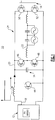
- FIG. 1 is illustrates a photovoltaic inverter 10 topology that is known in the art.
- Photovoltaic inverter 10 employs a two-stage power circuit to convert a varying DC voltage of a PV array 12 to a fixed frequency AC voltage for a power grid 14.
- Photovoltaic inverter 10 uses a DC link 16 to implement the intermediate energy storage step. This means the PV inverter 10 first converts the unstable PV DC voltage 18 to a stable DC voltage 20 that is greater than the grid voltage via a boost converter, and subsequently converts the stable DC voltage 20 to a current 22 via a PWM circuit 24 that can then be injected into the grid 14.
- Photovoltaic inverter 10 topology employs five switching devices 44, 46, 48, 50, 52 that are switching at a high frequency and that undesirably contribute to the overall switching losses of the two-stage converter.
- FIG. 2 illustrates a photovoltaic inverter 30 hard-switching topology according to one embodiment of the invention.
- Photovoltaic inverter 30 topology overcomes the necessity to employ a DC link to implement an intermediate energy storage step such as described above with reference to Figure 1 , because PV inverter 30 topology converts the PV array 12 voltage immediately into a current 32 that is the equivalent of a rectified grid current. This feature is implemented by stiffening the PV array 12 with a large capacitance 34, effectively shifting the DC link to the PV array 12. The subsequent inverter stage 36 merely needs to unfold the current 32 into the grid 14, and does so without switching losses.
- the first stage 40 is thus the only stage that has switching losses from a single device 42 verses the traditional converter that has five switching devices 44, 46, 48, 50, 52 such as depicted in Figure 1 that have switching losses.
- Photovoltaic inverter 30 is configured to operate in a boost mode at low input voltages by switching devices 54, 56 and maintaining device 40 on, thereby eliminating it's switching losses, so that devices 54 and 56 will be the only devices contributing to the switching losses during this boost mode only.
- photovoltaic inverter 30 utilizes a single high speed switch 42 when it operates in a buck mode described in further detail below. Photovoltaic inverter 30 also utilizes a pair of high speed switches 54, 56 when it operates in a boost mode described in detail below.
- a photovoltaic inverter 30 topology advantageously functions with a significant reduction in the number of power electronic devices that will be switching at a high frequency at any point in time. This feature provides an additional benefit that results due to lower conduction losses associated with slower devices that can be selected to complete the inverter system.
- Photovoltaic inverter 10 shown in Figure 1 employs three switches and two inductors in series verses the photovoltaic inverter 30 shown in Figure 2 that has three switches, one of which is optimized for very low conduction losses, and only one inductor 58.
- the photovoltaic array source 12 is stiffened via a large capacitance 34 such as described above.
- This large capacitance 34 advantageously does not compromise the safety aspects of the system as the PV source 12 is current limited.
- Attached to the capacitor 34 is the first stage buck converter 40 that creates a full wave rectified sine current in the main inductor 58. This current is then unfolded into the grid 14 by the full bridge inverter 36 connected to the output of the PV inverter 30.
- the PV inverter 30 topology was found to provide suitable working results so long as the PV source voltage remains higher than the grid voltage.
- the operation of the PV inverter 30 is configured to ensure that the current in the main inductor 58 always flows from the PV source 12 to the grid 14. This is achieved by turning on the bucking switch 42 continuously and high frequency switching the two low side devices 54, 56 of the full bridge inverter 36 using conventional Pulse Width Modulation (PWM) techniques.
- PWM Pulse Width Modulation
- the PV inverter 30 thus operates in a boost mode when the PV source 12 voltage is less than the grid 14 voltage. This boost mode advantageously is active only during the portion of the sine wave output voltage that is higher than the PV source 12 voltage.
- the bottom left switch 62 is permanently turned on, the bottom right switch 64 is permanently turned off, and the upper two switches 54, 56 are modulated to generate a boosting current that is injected into the grid 14.
- the bottom right switch 64 is permanently turned on, the bottom left switch 62 is permanently turned off, and the upper two switches 54, 56 are modulated to shape the boosting current and inject the boosting current into the grid 14.
- Inverter 36 can just as easily function to generate the requisite boosting current by turning the upper right switch 56 on during the negative portion of the rectification cycle while the upper left switch 54 is turned off, and then modulating the lower two switches 62, 64 to shape the boosting current and inject the boosting current into the grid 14.
- the lower two switches 62, 64 are modulated to generate the boosting current, the upper left switch 54 is then turned on during the positive portion of the rectification cycle.
- Figure 3 is a graph illustrating simulated inverter performance for a photovoltaic inverter hard-switching topology according to one embodiment of the invention.
- the inverter efficiency can be seen to range between 90% and close to 98% when generating output power levels between about 150 Watts and about 3000 Watts using the buck-boost duty cycle depicted in Figure 4 .
- Photovoltaic inverter 30 can just as easily be implemented using soft-switching techniques to further improve conversion efficiency according to another embodiment of the invention that also employs the same low number of devices switching at a high frequency.
- the use of soft switching topology allows slower devices having lower conduction losses to be selected for use in the current 32 unfolding portion of the respective PV inverter.
- PV inverter 30 utilizes a topology well suited to use of adaptive digital control methods for seeking the most efficient operating point for the system based on operating conditions such as, without limitation, temperature, input voltage and load power level.
- a PV inverter 70 topology includes a ripple current cancellation circuit 72 that provides a means for reducing the main inductor 58 size without compromising the output ripple current requirements of the system.
- Ripple current cancellation circuit 72 allows use of a smaller inductor 58 having lower losses than that achievable with a larger inductor, and also allows use of quasi resonant switching, significantly reducing switching losses of the main device 42.
- PV inverter 30, 70 topologies include without limitation, buck and boost capabilities incorporated into a single DC to AC converter without employment of a conventional buck/boost topology.
- Other advantages include, without limitation, the use of multiple technologies within a single PV inverter to enhance the high efficiency topology, such as the ripple current cancelation capabilities described above with reference to Figure 5 , the use of quasi-resonant switching, a topology that is well suited to use of adaptive digital control methods for seeking the most efficient operating point for the system based on operating conditions such as, without limitation, temperature, input voltage and load power level, and optional step activation of the AC contactor.
Landscapes
- Engineering & Computer Science (AREA)
- Power Engineering (AREA)
- Inverter Devices (AREA)
- Dc-Dc Converters (AREA)
Description
- The invention relates generally to electronic power conversion and more particularly to a very high conversion efficiency, grid connected, single phase photovoltaic (PV) inverter.
- Photovoltaic (PV) cells generate direct current (DC) power with the level of DC current being dependent on solar irradiation and the level of DC voltage dependent on temperature. When alternating current (AC) power is desired, an inverter is used to convert the DC energy into AC energy. Typical PV inverters employ two stages for power processing with the first stage configured for providing a constant DC voltage and the second stage configured for converting the constant DC voltage to AC current. Often, the first stage includes a boost converter, and the second stage includes a single-phase or three-phase inverter system. The efficiency of the two-stage inverter is an important parameter affecting PV system performance and is a multiple of the individual stage efficiencies with each stage typically causing one-half of the system losses.
- Single phase photovoltaic inverters generally require a two-stage conversion power circuit to convert the varying DC voltage of a PV array to the fixed frequency AC voltage of the grid. Traditional PV inverters use a DC link as the intermediate energy storage step, which means that the converter first converts the stable DC voltage to a current that can be injected into the grid.
- Traditional single phase PV inverters also undesirably control the power circuits with a fixed switching frequency using a plurality i.e. five, of switching devices that contribute to the overall switching losses. Switching losses are typically kept as low as possible when using traditional PV inverters by keeping the switching frequency low.
- PRASAD B S ET AL: "Universal Single-Stage Grid-Connected Inverter" IEEE TRANSACTIONS ON ENERGY CONVERSION, IEEE SERVICE CENTER, PISCATAWAY, NJ, US, vol. 23, no. 1, 1 Mach 2008 (2008-03-01), pages 128-137, XP011202232 ISSN: 0885-8969 discusses a single stage inverter that can be switched between buck, boost and buck-boost configurations using PWM control. KHAJEHODDIN S A ET AL: "A robust power decoupler and maximum power point tracker topology for a grid-connected photovoltaic system" POWER ELECTRONICS SPECIALISTS CONFERENCE, 2008, PESC 2008. IEEE, IEEE, PISCATAWAY, NJ, USA, 15 June 2008 (2008-06-15), pages 66-69, XP031299953 ISBN: 978-1-4244-1667-7 discloses a photovoltaic inverter comprising a buck converter and a current unfolding circuit configured to control the current injected into a utility grid whenever the PV array voltage plus converter operating margin is greater than the utility grid voltage, the PV inverter further comprising a stiffening capacitor between the PV array and the buck converter in the absence of a DC link, wherein the buck converter comprises no more than one high frequency switching device and the current unfolding circuit comprises no more than two high frequency switching devices, and further wherein the no more than two high frequency switching devices are configured to high frequency switch only when the PV array voltage plus converter operating margin is less than the instantaneous utility grid voltage.
EP-A-1 227 599 (ASCOM ENERGY SYSEMS AG [CH]) 31 July 2002 (2002-07-31) relates to a method for data transmission over an AC powerline network. - CHOI HANG-SEOK ET AL:"Grid-Connected Photovoltaic Inverter with Zero-Current-Switching"[online] 5 May 2005 (2005-05-05), XP002550261 Retrived from the Internet: URL: http://web.archive.org/web/20050505213628/http://pearlx.snu.ac. kr/Publication/IC PE0101.pdf> discusses an inverter circuit in which a zero current switching condition is provided for all of the switches therein.
- It would be both advantageous and beneficial to provide a residential photovoltaic inverter that employs fewer high frequency switching devices than that employed by a traditional PV inverter. It would be further advantageous if the PV inverter could employ adaptive digital control techniques to ensure the PV inverter is always operating at peak efficiency.
- Briefly, in accordance with one embodiment, a photovoltaic (PV) inverter in accordance with appended claim 1 is provided.
- Various features, aspects, and advantages of the present invention will become better understood when the following detailed description is read with reference to the accompanying drawings in which like characters represent like parts throughout the drawings, wherein:
-
Figure 1 is illustrates a photovoltaic inverter topology that is known in the art; -
Figure 2 illustrates a photovoltaic inverter topology according to one embodiment of the invention; -
Figure 3 is a graph illustrating simulated inverter performance for a photovoltaic inverter hard-switching topology according to one embodiment of the invention; -
Figure 4 is a graph illustrating a buck-boost duty cycle employed to achieve the simulated inverter performance depicted inFigure 3 ; -
Figure 5 illustrates a photovoltaic inverter topology including a ripple current cancellation circuit according to still another embodiment of the invention. - While the above-identified drawing figures set forth alternative embodiments, other embodiments of the present invention are also contemplated, as noted in the discussion.
-
Figure 1 is illustrates aphotovoltaic inverter 10 topology that is known in the art.Photovoltaic inverter 10 employs a two-stage power circuit to convert a varying DC voltage of aPV array 12 to a fixed frequency AC voltage for apower grid 14.Photovoltaic inverter 10 uses aDC link 16 to implement the intermediate energy storage step. This means thePV inverter 10 first converts the unstablePV DC voltage 18 to astable DC voltage 20 that is greater than the grid voltage via a boost converter, and subsequently converts thestable DC voltage 20 to a current 22 via aPWM circuit 24 that can then be injected into thegrid 14.Photovoltaic inverter 10 topology employs fiveswitching devices -
Figure 2 illustrates aphotovoltaic inverter 30 hard-switching topology according to one embodiment of the invention.Photovoltaic inverter 30 topology overcomes the necessity to employ a DC link to implement an intermediate energy storage step such as described above with reference toFigure 1 , becausePV inverter 30 topology converts thePV array 12 voltage immediately into a current 32 that is the equivalent of a rectified grid current. This feature is implemented by stiffening thePV array 12 with alarge capacitance 34, effectively shifting the DC link to thePV array 12. Thesubsequent inverter stage 36 merely needs to unfold the current 32 into thegrid 14, and does so without switching losses. Thefirst stage 40 is thus the only stage that has switching losses from asingle device 42 verses the traditional converter that has fiveswitching devices Figure 1 that have switching losses.Photovoltaic inverter 30 is configured to operate in a boost mode at low input voltages by switchingdevices device 40 on, thereby eliminating it's switching losses, so thatdevices - In further explanation,
photovoltaic inverter 30 utilizes a singlehigh speed switch 42 when it operates in a buck mode described in further detail below.Photovoltaic inverter 30 also utilizes a pair ofhigh speed switches - Traditional inverters such as described above with reference to
Figure 1 , control the power circuits with a fixed switching frequency. The present inventors recognized that when the conversion efficiencies are very high, improvements can be gained by use of adaptive digital control techniques. An adaptive digital controller can thus be employed that adjusts the switching frequency to compensate for changes in thesemiconductor devices inductor 58 performance for various operating conditions and temperatures so that the highest possible conversion efficiency is obtained. - In summary explanation, a
photovoltaic inverter 30 topology advantageously functions with a significant reduction in the number of power electronic devices that will be switching at a high frequency at any point in time. This feature provides an additional benefit that results due to lower conduction losses associated with slower devices that can be selected to complete the inverter system. - The series path from the source to the utility depicted in
Figure 2 also has the least possible number of components to keep conduction losses low.Photovoltaic inverter 10 shown inFigure 1 employs three switches and two inductors in series verses thephotovoltaic inverter 30 shown inFigure 2 that has three switches, one of which is optimized for very low conduction losses, and only oneinductor 58. - The
photovoltaic array source 12 is stiffened via alarge capacitance 34 such as described above. Thislarge capacitance 34 advantageously does not compromise the safety aspects of the system as thePV source 12 is current limited. - Attached to the
capacitor 34 is the firststage buck converter 40 that creates a full wave rectified sine current in themain inductor 58. This current is then unfolded into thegrid 14 by thefull bridge inverter 36 connected to the output of thePV inverter 30. - The
PV inverter 30 topology was found to provide suitable working results so long as the PV source voltage remains higher than the grid voltage. In cases where thePV source 12 voltage is less than thegrid 14 voltage, the operation of thePV inverter 30 is configured to ensure that the current in themain inductor 58 always flows from thePV source 12 to thegrid 14. This is achieved by turning on thebucking switch 42 continuously and high frequency switching the twolow side devices full bridge inverter 36 using conventional Pulse Width Modulation (PWM) techniques. ThePV inverter 30 thus operates in a boost mode when thePV source 12 voltage is less than thegrid 14 voltage. This boost mode advantageously is active only during the portion of the sine wave output voltage that is higher than thePV source 12 voltage. - According to one embodiment, during the positive half of the rectification cycle, the bottom
left switch 62 is permanently turned on, the bottomright switch 64 is permanently turned off, and the upper twoswitches grid 14. - During the negative portion of the rectification cycle, the bottom
right switch 64 is permanently turned on, the bottomleft switch 62 is permanently turned off, and the upper twoswitches grid 14. -
Inverter 36 can just as easily function to generate the requisite boosting current by turning the upperright switch 56 on during the negative portion of the rectification cycle while the upperleft switch 54 is turned off, and then modulating the lower twoswitches grid 14. When the lower twoswitches left switch 54 is then turned on during the positive portion of the rectification cycle. - Because current boosting is employed only when necessary, i.e. when the
PV array 12 voltage is lower than thegrid 14 voltage, inverter switching efficiency is increased above that achievable when compared to a conventional PV converter topology such as described above with reference toFigure 1 . -
Figure 3 is a graph illustrating simulated inverter performance for a photovoltaic inverter hard-switching topology according to one embodiment of the invention. The inverter efficiency can be seen to range between 90% and close to 98% when generating output power levels between about 150 Watts and about 3000 Watts using the buck-boost duty cycle depicted inFigure 4 . -
Photovoltaic inverter 30 can just as easily be implemented using soft-switching techniques to further improve conversion efficiency according to another embodiment of the invention that also employs the same low number of devices switching at a high frequency. The use of soft switching topology allows slower devices having lower conduction losses to be selected for use in the current 32 unfolding portion of the respective PV inverter.PV inverter 30 utilizes a topology well suited to use of adaptive digital control methods for seeking the most efficient operating point for the system based on operating conditions such as, without limitation, temperature, input voltage and load power level. - Looking now at
Figure 5 , aPV inverter 70 topology includes a ripplecurrent cancellation circuit 72 that provides a means for reducing themain inductor 58 size without compromising the output ripple current requirements of the system. Ripplecurrent cancellation circuit 72 allows use of asmaller inductor 58 having lower losses than that achievable with a larger inductor, and also allows use of quasi resonant switching, significantly reducing switching losses of themain device 42. - Advantages provided by the
PV inverter Figure 5 , the use of quasi-resonant switching, a topology that is well suited to use of adaptive digital control methods for seeking the most efficient operating point for the system based on operating conditions such as, without limitation, temperature, input voltage and load power level, and optional step activation of the AC contactor. - Maximizing efficiency by minimizing the number of series power semiconductors switched between the source and the load, and the selection of power semiconductors to achieve maximum efficiency provide further advantages over known PV inverters. The invention provides a photovoltaic inverter according to claim 1. Preferred embodiments are defined in the dependent claims.
Claims (5)
- A photovoltaic (PV) inverter (30) comprising:a buck converter (40) configured to generate a rectified sine wave current (32) in response to an available PV array (12) power and utility grid (14) voltage; anda current unfolding circuit (36) configured to control the current injected into a utility grid (14) in response to the rectified sine wave current (32) whenever the PV array (12) voltage plus converter (40) operating margin is greater than the utility grid (14) voltage;said PV inverter (30) further comprising a stiffening capacitor (34) between the PV array (12) and the buck converter (40), the stiffening capacitor (34) configured together with the buck converter (40) to generate the rectified sine wave current (32) in the absence of a DC link between the buck converter (40) and the current unfolding circuit (36);wherein the buck converter (40) comprises no more than one high frequency switching device (42) and the current unfolding circuit (36) comprises no more than two high frequency switching devices (54,56), and further wherein the no more than two high frequency switching devices (54,56) are configured to high frequency switch only when the PV array (12) voltage plus converter (40) operating margin is less than the instantaneous utility grid (14) voltage.
- The PV inverter (30) according to claim 1, wherein the buck converter (40) is held on to stop switching, and the current unfolding circuit (36) is configured to function in a boosting mode at PV array (12) voltages plus converter (40) operating margin lower than the utility grid (14) voltage and in a buck mode with output unfolder (36) at PV array (12) voltages plus converter (40) operating margin higher than the utility grid (14) voltage.
- The PV inverter (30) according to any preceding claim, wherein the no more than one high frequency switching device (42) is the sole PV inverter switching device operating in a high frequency switching mode when the PV inverter (30) is operating in a buck mode.
- The PV inverter (30) according to any preceding claim, further comprising an adaptive digital controller configured to adjust a buck-boost switching frequency associated with the buck converter (40) and current unfolding circuit (36) in response to desired operational characteristics to achieve a PV inverter (30) efficiency greater than that achievable using fixed switching frequency PV inverter (30) techniques.
- The PV inverter (30) according to claim 4, wherein the desired operational characteristics are selected from PV array voltage levels, PV inverter ambient operating temperatures, PV inverter switching device temperatures, and grid power levels.
Applications Claiming Priority (1)
| Application Number | Priority Date | Filing Date | Title |
|---|---|---|---|
| US12/215,505 US8023297B2 (en) | 2008-06-27 | 2008-06-27 | High efficiency photovoltaic inverter |
Publications (2)
| Publication Number | Publication Date |
|---|---|
| EP2139104A1 EP2139104A1 (en) | 2009-12-30 |
| EP2139104B1 true EP2139104B1 (en) | 2017-10-04 |
Family
ID=41138621
Family Applications (1)
| Application Number | Title | Priority Date | Filing Date |
|---|---|---|---|
| EP09163101.0A Active EP2139104B1 (en) | 2008-06-27 | 2009-06-18 | High efficient photovoltaic inverter comprising a buck converter |
Country Status (4)
| Country | Link |
|---|---|
| US (1) | US8023297B2 (en) |
| EP (1) | EP2139104B1 (en) |
| CN (1) | CN101615859B (en) |
| AU (1) | AU2009202490B2 (en) |
Cited By (39)
| Publication number | Priority date | Publication date | Assignee | Title |
|---|---|---|---|---|
| US10637393B2 (en) | 2006-12-06 | 2020-04-28 | Solaredge Technologies Ltd. | Distributed power harvesting systems using DC power sources |
| US10644589B2 (en) | 2007-12-05 | 2020-05-05 | Solaredge Technologies Ltd. | Parallel connected inverters |
| US10666125B2 (en) | 2011-01-12 | 2020-05-26 | Solaredge Technologies Ltd. | Serially connected inverters |
| US10673222B2 (en) | 2010-11-09 | 2020-06-02 | Solaredge Technologies Ltd. | Arc detection and prevention in a power generation system |
| US10673229B2 (en) | 2010-11-09 | 2020-06-02 | Solaredge Technologies Ltd. | Arc detection and prevention in a power generation system |
| US10673253B2 (en) | 2006-12-06 | 2020-06-02 | Solaredge Technologies Ltd. | Battery power delivery module |
| US10693415B2 (en) | 2007-12-05 | 2020-06-23 | Solaredge Technologies Ltd. | Testing of a photovoltaic panel |
| US10931119B2 (en) | 2012-01-11 | 2021-02-23 | Solaredge Technologies Ltd. | Photovoltaic module |
| US10931228B2 (en) | 2010-11-09 | 2021-02-23 | Solaredge Technologies Ftd. | Arc detection and prevention in a power generation system |
| US10969412B2 (en) | 2009-05-26 | 2021-04-06 | Solaredge Technologies Ltd. | Theft detection and prevention in a power generation system |
| US10992238B2 (en) | 2012-01-30 | 2021-04-27 | Solaredge Technologies Ltd. | Maximizing power in a photovoltaic distributed power system |
| US11002774B2 (en) | 2006-12-06 | 2021-05-11 | Solaredge Technologies Ltd. | Monitoring of distributed power harvesting systems using DC power sources |
| US11018623B2 (en) | 2016-04-05 | 2021-05-25 | Solaredge Technologies Ltd. | Safety switch for photovoltaic systems |
| US11031861B2 (en) | 2006-12-06 | 2021-06-08 | Solaredge Technologies Ltd. | System and method for protection during inverter shutdown in distributed power installations |
| US11063440B2 (en) | 2006-12-06 | 2021-07-13 | Solaredge Technologies Ltd. | Method for distributed power harvesting using DC power sources |
| US11177663B2 (en) | 2016-04-05 | 2021-11-16 | Solaredge Technologies Ltd. | Chain of power devices |
| US11183922B2 (en) | 2006-12-06 | 2021-11-23 | Solaredge Technologies Ltd. | Distributed power harvesting systems using DC power sources |
| US11183968B2 (en) | 2012-01-30 | 2021-11-23 | Solaredge Technologies Ltd. | Photovoltaic panel circuitry |
| US11264947B2 (en) | 2007-12-05 | 2022-03-01 | Solaredge Technologies Ltd. | Testing of a photovoltaic panel |
| US11296650B2 (en) | 2006-12-06 | 2022-04-05 | Solaredge Technologies Ltd. | System and method for protection during inverter shutdown in distributed power installations |
| US11309832B2 (en) | 2006-12-06 | 2022-04-19 | Solaredge Technologies Ltd. | Distributed power harvesting systems using DC power sources |
| US11424616B2 (en) | 2008-05-05 | 2022-08-23 | Solaredge Technologies Ltd. | Direct current power combiner |
| US11569660B2 (en) | 2006-12-06 | 2023-01-31 | Solaredge Technologies Ltd. | Distributed power harvesting systems using DC power sources |
| US11569659B2 (en) | 2006-12-06 | 2023-01-31 | Solaredge Technologies Ltd. | Distributed power harvesting systems using DC power sources |
| US11579235B2 (en) | 2006-12-06 | 2023-02-14 | Solaredge Technologies Ltd. | Safety mechanisms, wake up and shutdown methods in distributed power installations |
| US11594968B2 (en) | 2007-08-06 | 2023-02-28 | Solaredge Technologies Ltd. | Digital average input current control in power converter |
| US11687112B2 (en) | 2006-12-06 | 2023-06-27 | Solaredge Technologies Ltd. | Distributed power harvesting systems using DC power sources |
| US11728768B2 (en) | 2006-12-06 | 2023-08-15 | Solaredge Technologies Ltd. | Pairing of components in a direct current distributed power generation system |
| US11735910B2 (en) | 2006-12-06 | 2023-08-22 | Solaredge Technologies Ltd. | Distributed power system using direct current power sources |
| US11855231B2 (en) | 2006-12-06 | 2023-12-26 | Solaredge Technologies Ltd. | Distributed power harvesting systems using DC power sources |
| US11881814B2 (en) | 2005-12-05 | 2024-01-23 | Solaredge Technologies Ltd. | Testing of a photovoltaic panel |
| US12003107B2 (en) | 2013-03-14 | 2024-06-04 | Solaredge Technologies Ltd. | Method and apparatus for storing and depleting energy |
| US12027970B2 (en) | 2006-12-06 | 2024-07-02 | Solaredge Technologies Ltd. | Safety mechanisms, wake up and shutdown methods in distributed power installations |
| US12027849B2 (en) | 2006-12-06 | 2024-07-02 | Solaredge Technologies Ltd. | Distributed power system using direct current power sources |
| US12057807B2 (en) | 2016-04-05 | 2024-08-06 | Solaredge Technologies Ltd. | Chain of power devices |
| US12418177B2 (en) | 2009-10-24 | 2025-09-16 | Solaredge Technologies Ltd. | Distributed power system using direct current power sources |
| US12633754B2 (en) | 2012-01-30 | 2026-05-19 | Solaredge Technologies Ltd. | Maximizing power in a photovoltaic distributed power system |
| US12665546B2 (en) | 2011-01-28 | 2026-06-23 | Solaredge Technologies Ltd. | Pairing of components in a direct current distributed power generation system |
| US12676488B2 (en) | 2006-12-06 | 2026-07-07 | Solaredge Technologies Ltd. | System and method for protection during inverter shutdown in distributed power installations |
Families Citing this family (23)
| Publication number | Priority date | Publication date | Assignee | Title |
|---|---|---|---|---|
| DE102009047936A1 (en) * | 2009-10-01 | 2011-04-07 | Dr. Johannes Heidenhain Gmbh | Method of operating an inverter and inverter |
| AU2010310944A1 (en) * | 2009-10-29 | 2012-06-14 | Watts & More Ltd. | Energy collection system and method |
| WO2011140366A2 (en) * | 2010-05-06 | 2011-11-10 | Xandex, Inc. | Output voltage ripple control for a dc-dc power converter |
| CN101976965B (en) * | 2010-10-08 | 2013-04-03 | 江苏博纬新能源科技有限公司 | Direct-current tracing control high-power photovoltaic grid-connected inverter |
| CN102088192B (en) * | 2011-03-02 | 2013-01-02 | 中南大学 | Single-phase single-stage current type photovoltaic grid inverter and control method thereof |
| CN102684522A (en) * | 2011-03-09 | 2012-09-19 | 上海康威特吉能源技术有限公司 | Non-isolated photovoltaic grid-connected inverter and control method thereof |
| EP2549635B1 (en) | 2011-07-20 | 2018-12-05 | Solaredge Technologies Ltd. | Distributed power harvesting systems using DC power sources |
| CN102291028A (en) * | 2011-08-17 | 2011-12-21 | 福州大学 | Micropower grid-connected inverter based on active power factor correction (APFC) chip control |
| CN102624030A (en) * | 2012-03-29 | 2012-08-01 | 东南大学 | Photovoltaic/storage battery mixed type current inverter-based distributed generation system |
| US8896182B2 (en) | 2012-04-05 | 2014-11-25 | General Electric Corporation | System for driving a piezoelectric load and method of making same |
| AT512983B1 (en) * | 2012-06-13 | 2014-06-15 | Fronius Int Gmbh | Method for testing a separation point of a photovoltaic inverter and photovoltaic inverter |
| US8958217B2 (en) | 2012-06-15 | 2015-02-17 | General Electric Company | System for driving a piezoelectric load and method of making same |
| CN102751742B (en) * | 2012-07-25 | 2014-03-26 | 漳州科华技术有限责任公司 | Method for improving grid-connected performance by variable switching frequency |
| CN103009989B (en) * | 2012-12-14 | 2015-09-16 | 东南大学 | A kind of hybrid current source type Energy Transfer and driving arrangement |
| CN103746561B (en) * | 2013-12-17 | 2016-04-13 | 中国船舶重工集团公司第七一九研究所 | A kind of high-frequency isolation frequency conversion device of to split point based on pulsewidth and control method thereof |
| US10447040B2 (en) | 2014-10-15 | 2019-10-15 | Cummins Power Generation Ip, Inc. | Programmable inverter for controllable grid response |
| KR102308628B1 (en) * | 2015-01-21 | 2021-10-05 | 삼성에스디아이 주식회사 | Hybrid Power Conversion System and Method for Determining Maximum Efficiency Using the Same |
| CN105305858B (en) * | 2015-11-18 | 2018-01-09 | 保定嘉盛光电科技股份有限公司 | Adaptive photovoltaic DC-to-AC converter |
| CN106208786A (en) * | 2016-08-25 | 2016-12-07 | 苏州苏宝新能源科技有限公司 | There is self discharge, H bridge inversion and the solar air-conditioner system of power lightning protection function |
| CN108169596B (en) * | 2017-12-22 | 2020-08-28 | 湖南科比特电气技术有限公司 | Calibration system of input current channel of photovoltaic inverter and method for calibrating by using calibration system |
| CN108418416A (en) * | 2018-03-19 | 2018-08-17 | 盐城工学院 | A Cooperative Control Method of Partial Power Processing Boost Unit and Grid-connected Inverter |
| CN108695928B (en) * | 2018-05-28 | 2020-08-04 | 武汉天富海科技发展有限公司 | Isolated photovoltaic charging device and method |
| CN114498746A (en) * | 2022-01-28 | 2022-05-13 | 浙江腾圣储能技术有限公司 | Inverter circuit, inverter control method and photovoltaic system |
Family Cites Families (7)
| Publication number | Priority date | Publication date | Assignee | Title |
|---|---|---|---|---|
| DE10063538C1 (en) * | 2000-12-20 | 2003-03-13 | Ascom Energy Systems Ag Bern | Procedure for data transmission in AC networks |
| US6556462B1 (en) | 2002-06-28 | 2003-04-29 | General Electric Company | High power factor converter with a boost circuit having continuous/discontinuous modes |
| US6693805B1 (en) | 2002-07-31 | 2004-02-17 | Lockheed Martin Corporation | Ripple cancellation circuit for ultra-low-noise power supplies |
| US7099169B2 (en) * | 2003-02-21 | 2006-08-29 | Distributed Power, Inc. | DC to AC inverter with single-switch bipolar boost circuit |
| US7016205B2 (en) | 2003-10-01 | 2006-03-21 | General Electric Company | Ripple-current reduction schemes for AC converters |
| US20050139259A1 (en) | 2003-12-30 | 2005-06-30 | Robert Steigerwald | Transformerless power conversion in an inverter for a photovoltaic system |
| TW200709544A (en) * | 2005-08-29 | 2007-03-01 | Ind Tech Res Inst | Transformer-free power conversion circuit for parallel connection with commercial electricity system |
-
2008
- 2008-06-27 US US12/215,505 patent/US8023297B2/en active Active
-
2009
- 2009-06-18 EP EP09163101.0A patent/EP2139104B1/en active Active
- 2009-06-22 AU AU2009202490A patent/AU2009202490B2/en active Active
- 2009-06-26 CN CN200910146279.3A patent/CN101615859B/en not_active Expired - Fee Related
Non-Patent Citations (1)
| Title |
|---|
| None * |
Cited By (85)
| Publication number | Priority date | Publication date | Assignee | Title |
|---|---|---|---|---|
| US11881814B2 (en) | 2005-12-05 | 2024-01-23 | Solaredge Technologies Ltd. | Testing of a photovoltaic panel |
| US11962243B2 (en) | 2006-12-06 | 2024-04-16 | Solaredge Technologies Ltd. | Method for distributed power harvesting using DC power sources |
| US11961922B2 (en) | 2006-12-06 | 2024-04-16 | Solaredge Technologies Ltd. | Distributed power harvesting systems using DC power sources |
| US12316274B2 (en) | 2006-12-06 | 2025-05-27 | Solaredge Technologies Ltd. | Pairing of components in a direct current distributed power generation system |
| US12281919B2 (en) | 2006-12-06 | 2025-04-22 | Solaredge Technologies Ltd. | Monitoring of distributed power harvesting systems using DC power sources |
| US10673253B2 (en) | 2006-12-06 | 2020-06-02 | Solaredge Technologies Ltd. | Battery power delivery module |
| US12276997B2 (en) | 2006-12-06 | 2025-04-15 | Solaredge Technologies Ltd. | Distributed power harvesting systems using DC power sources |
| US12224706B2 (en) | 2006-12-06 | 2025-02-11 | Solaredge Technologies Ltd. | Pairing of components in a direct current distributed power generation system |
| US12107417B2 (en) | 2006-12-06 | 2024-10-01 | Solaredge Technologies Ltd. | Distributed power harvesting systems using DC power sources |
| US12068599B2 (en) | 2006-12-06 | 2024-08-20 | Solaredge Technologies Ltd. | System and method for protection during inverter shutdown in distributed power installations |
| US12046940B2 (en) | 2006-12-06 | 2024-07-23 | Solaredge Technologies Ltd. | Battery power control |
| US11002774B2 (en) | 2006-12-06 | 2021-05-11 | Solaredge Technologies Ltd. | Monitoring of distributed power harvesting systems using DC power sources |
| US12032080B2 (en) | 2006-12-06 | 2024-07-09 | Solaredge Technologies Ltd. | Safety mechanisms, wake up and shutdown methods in distributed power installations |
| US11031861B2 (en) | 2006-12-06 | 2021-06-08 | Solaredge Technologies Ltd. | System and method for protection during inverter shutdown in distributed power installations |
| US11043820B2 (en) | 2006-12-06 | 2021-06-22 | Solaredge Technologies Ltd. | Battery power delivery module |
| US11063440B2 (en) | 2006-12-06 | 2021-07-13 | Solaredge Technologies Ltd. | Method for distributed power harvesting using DC power sources |
| US12027849B2 (en) | 2006-12-06 | 2024-07-02 | Solaredge Technologies Ltd. | Distributed power system using direct current power sources |
| US11073543B2 (en) | 2006-12-06 | 2021-07-27 | Solaredge Technologies Ltd. | Monitoring of distributed power harvesting systems using DC power sources |
| US12027970B2 (en) | 2006-12-06 | 2024-07-02 | Solaredge Technologies Ltd. | Safety mechanisms, wake up and shutdown methods in distributed power installations |
| US11183922B2 (en) | 2006-12-06 | 2021-11-23 | Solaredge Technologies Ltd. | Distributed power harvesting systems using DC power sources |
| US11658482B2 (en) | 2006-12-06 | 2023-05-23 | Solaredge Technologies Ltd. | Distributed power harvesting systems using DC power sources |
| US12388492B2 (en) | 2006-12-06 | 2025-08-12 | Solaredge Technologies Ltd. | Safety mechanisms, wake up and shutdown methods in distributed power installations |
| US12676488B2 (en) | 2006-12-06 | 2026-07-07 | Solaredge Technologies Ltd. | System and method for protection during inverter shutdown in distributed power installations |
| US10637393B2 (en) | 2006-12-06 | 2020-04-28 | Solaredge Technologies Ltd. | Distributed power harvesting systems using DC power sources |
| US11855231B2 (en) | 2006-12-06 | 2023-12-26 | Solaredge Technologies Ltd. | Distributed power harvesting systems using DC power sources |
| US11735910B2 (en) | 2006-12-06 | 2023-08-22 | Solaredge Technologies Ltd. | Distributed power system using direct current power sources |
| US11296650B2 (en) | 2006-12-06 | 2022-04-05 | Solaredge Technologies Ltd. | System and method for protection during inverter shutdown in distributed power installations |
| US11309832B2 (en) | 2006-12-06 | 2022-04-19 | Solaredge Technologies Ltd. | Distributed power harvesting systems using DC power sources |
| US11728768B2 (en) | 2006-12-06 | 2023-08-15 | Solaredge Technologies Ltd. | Pairing of components in a direct current distributed power generation system |
| US11687112B2 (en) | 2006-12-06 | 2023-06-27 | Solaredge Technologies Ltd. | Distributed power harvesting systems using DC power sources |
| US11476799B2 (en) | 2006-12-06 | 2022-10-18 | Solaredge Technologies Ltd. | Distributed power harvesting systems using DC power sources |
| US11682918B2 (en) | 2006-12-06 | 2023-06-20 | Solaredge Technologies Ltd. | Battery power delivery module |
| US11569660B2 (en) | 2006-12-06 | 2023-01-31 | Solaredge Technologies Ltd. | Distributed power harvesting systems using DC power sources |
| US11569659B2 (en) | 2006-12-06 | 2023-01-31 | Solaredge Technologies Ltd. | Distributed power harvesting systems using DC power sources |
| US11575260B2 (en) | 2006-12-06 | 2023-02-07 | Solaredge Technologies Ltd. | Distributed power harvesting systems using DC power sources |
| US11575261B2 (en) | 2006-12-06 | 2023-02-07 | Solaredge Technologies Ltd. | Distributed power harvesting systems using DC power sources |
| US11579235B2 (en) | 2006-12-06 | 2023-02-14 | Solaredge Technologies Ltd. | Safety mechanisms, wake up and shutdown methods in distributed power installations |
| US11594881B2 (en) | 2006-12-06 | 2023-02-28 | Solaredge Technologies Ltd. | Distributed power harvesting systems using DC power sources |
| US11598652B2 (en) | 2006-12-06 | 2023-03-07 | Solaredge Technologies Ltd. | Monitoring of distributed power harvesting systems using DC power sources |
| US11594882B2 (en) | 2006-12-06 | 2023-02-28 | Solaredge Technologies Ltd. | Distributed power harvesting systems using DC power sources |
| US11594880B2 (en) | 2006-12-06 | 2023-02-28 | Solaredge Technologies Ltd. | Distributed power harvesting systems using DC power sources |
| US11594968B2 (en) | 2007-08-06 | 2023-02-28 | Solaredge Technologies Ltd. | Digital average input current control in power converter |
| US11183923B2 (en) | 2007-12-05 | 2021-11-23 | Solaredge Technologies Ltd. | Parallel connected inverters |
| US10693415B2 (en) | 2007-12-05 | 2020-06-23 | Solaredge Technologies Ltd. | Testing of a photovoltaic panel |
| US10644589B2 (en) | 2007-12-05 | 2020-05-05 | Solaredge Technologies Ltd. | Parallel connected inverters |
| US12055647B2 (en) | 2007-12-05 | 2024-08-06 | Solaredge Technologies Ltd. | Parallel connected inverters |
| US11693080B2 (en) | 2007-12-05 | 2023-07-04 | Solaredge Technologies Ltd. | Parallel connected inverters |
| US11183969B2 (en) | 2007-12-05 | 2021-11-23 | Solaredge Technologies Ltd. | Testing of a photovoltaic panel |
| US11264947B2 (en) | 2007-12-05 | 2022-03-01 | Solaredge Technologies Ltd. | Testing of a photovoltaic panel |
| US11894806B2 (en) | 2007-12-05 | 2024-02-06 | Solaredge Technologies Ltd. | Testing of a photovoltaic panel |
| US11424616B2 (en) | 2008-05-05 | 2022-08-23 | Solaredge Technologies Ltd. | Direct current power combiner |
| US12218498B2 (en) | 2008-05-05 | 2025-02-04 | Solaredge Technologies Ltd. | Direct current power combiner |
| US11867729B2 (en) | 2009-05-26 | 2024-01-09 | Solaredge Technologies Ltd. | Theft detection and prevention in a power generation system |
| US12306215B2 (en) | 2009-05-26 | 2025-05-20 | Solaredge Technologies Ltd. | Theft detection and prevention in a power generation system |
| US10969412B2 (en) | 2009-05-26 | 2021-04-06 | Solaredge Technologies Ltd. | Theft detection and prevention in a power generation system |
| US12418177B2 (en) | 2009-10-24 | 2025-09-16 | Solaredge Technologies Ltd. | Distributed power system using direct current power sources |
| US10673229B2 (en) | 2010-11-09 | 2020-06-02 | Solaredge Technologies Ltd. | Arc detection and prevention in a power generation system |
| US12003215B2 (en) | 2010-11-09 | 2024-06-04 | Solaredge Technologies Ltd. | Arc detection and prevention in a power generation system |
| US11489330B2 (en) | 2010-11-09 | 2022-11-01 | Solaredge Technologies Ltd. | Arc detection and prevention in a power generation system |
| US11070051B2 (en) | 2010-11-09 | 2021-07-20 | Solaredge Technologies Ltd. | Arc detection and prevention in a power generation system |
| US12407158B2 (en) | 2010-11-09 | 2025-09-02 | Solaredge Technologies Ltd. | Arc detection and prevention in a power generation system |
| US10673222B2 (en) | 2010-11-09 | 2020-06-02 | Solaredge Technologies Ltd. | Arc detection and prevention in a power generation system |
| US11349432B2 (en) | 2010-11-09 | 2022-05-31 | Solaredge Technologies Ltd. | Arc detection and prevention in a power generation system |
| US10931228B2 (en) | 2010-11-09 | 2021-02-23 | Solaredge Technologies Ftd. | Arc detection and prevention in a power generation system |
| US12218505B2 (en) | 2011-01-12 | 2025-02-04 | Solaredge Technologies Ltd. | Serially connected inverters |
| US10666125B2 (en) | 2011-01-12 | 2020-05-26 | Solaredge Technologies Ltd. | Serially connected inverters |
| US11205946B2 (en) | 2011-01-12 | 2021-12-21 | Solaredge Technologies Ltd. | Serially connected inverters |
| US12665546B2 (en) | 2011-01-28 | 2026-06-23 | Solaredge Technologies Ltd. | Pairing of components in a direct current distributed power generation system |
| US11979037B2 (en) | 2012-01-11 | 2024-05-07 | Solaredge Technologies Ltd. | Photovoltaic module |
| US10931119B2 (en) | 2012-01-11 | 2021-02-23 | Solaredge Technologies Ltd. | Photovoltaic module |
| US10992238B2 (en) | 2012-01-30 | 2021-04-27 | Solaredge Technologies Ltd. | Maximizing power in a photovoltaic distributed power system |
| US11183968B2 (en) | 2012-01-30 | 2021-11-23 | Solaredge Technologies Ltd. | Photovoltaic panel circuitry |
| US11620885B2 (en) | 2012-01-30 | 2023-04-04 | Solaredge Technologies Ltd. | Photovoltaic panel circuitry |
| US12633754B2 (en) | 2012-01-30 | 2026-05-19 | Solaredge Technologies Ltd. | Maximizing power in a photovoltaic distributed power system |
| US12094306B2 (en) | 2012-01-30 | 2024-09-17 | Solaredge Technologies Ltd. | Photovoltaic panel circuitry |
| US12191668B2 (en) | 2012-01-30 | 2025-01-07 | Solaredge Technologies Ltd. | Maximizing power in a photovoltaic distributed power system |
| US12255457B2 (en) | 2013-03-14 | 2025-03-18 | Solaredge Technologies Ltd. | Method and apparatus for storing and depleting energy |
| US12003107B2 (en) | 2013-03-14 | 2024-06-04 | Solaredge Technologies Ltd. | Method and apparatus for storing and depleting energy |
| US12348182B2 (en) | 2016-04-05 | 2025-07-01 | Solaredge Technologies Ltd. | Safety switch for photovoltaic systems |
| US12057807B2 (en) | 2016-04-05 | 2024-08-06 | Solaredge Technologies Ltd. | Chain of power devices |
| US11201476B2 (en) | 2016-04-05 | 2021-12-14 | Solaredge Technologies Ltd. | Photovoltaic power device and wiring |
| US12627140B2 (en) | 2016-04-05 | 2026-05-12 | Solaredge Technologies Ltd. | Chain of power devices |
| US11870250B2 (en) | 2016-04-05 | 2024-01-09 | Solaredge Technologies Ltd. | Chain of power devices |
| US11018623B2 (en) | 2016-04-05 | 2021-05-25 | Solaredge Technologies Ltd. | Safety switch for photovoltaic systems |
| US11177663B2 (en) | 2016-04-05 | 2021-11-16 | Solaredge Technologies Ltd. | Chain of power devices |
Also Published As
| Publication number | Publication date |
|---|---|
| US20090323379A1 (en) | 2009-12-31 |
| CN101615859A (en) | 2009-12-30 |
| AU2009202490B2 (en) | 2013-12-05 |
| AU2009202490A1 (en) | 2010-01-14 |
| CN101615859B (en) | 2014-08-13 |
| EP2139104A1 (en) | 2009-12-30 |
| US8023297B2 (en) | 2011-09-20 |
Similar Documents
| Publication | Publication Date | Title |
|---|---|---|
| US8023297B2 (en) | High efficiency photovoltaic inverter | |
| EP2128972B1 (en) | High efficiency multi-source photovoltaic inverter | |
| US20200412239A1 (en) | Power converter | |
| EP3735739B1 (en) | Power converter | |
| Oluwafemi et al. | A modified high output-gain cuk converter circuit configuration for renewable applications—A comprehensive investigation | |
| Xia et al. | Minimising peak current in boundary conduction mode for the four‐switch buck–boost DC/DC converter with soft switching | |
| EP3050202A2 (en) | An intra-module dc-dc converter and a pv-module comprising same | |
| Kalaiarasi et al. | Comparison of Z-source Inverter with DC-DC Boost converter fed VSI for PV applications | |
| Matiushkin et al. | Novel single-stage buck-boost inverter with unfolding circuit | |
| Salari et al. | Analysis of switched inductor three-level DC/DC converter | |
| Arunkumari et al. | A Novel single switch high step up DC–DC converter for PV based application | |
| Das | Development and Experimental Validation of a Proportional Resonant Controller for Single-Phase PFC Rectifier with Active Power Decoupling | |
| Yu et al. | Design considerations of a multiple-input isolated single ended primary inductor converter (SEPIC) for distributed generation sources | |
| Darwish et al. | Operation and control design of new Three-Phase inverters with reduced number of switches | |
| Mohammadi et al. | Performance optimisation of the grid‐connected flyback inverter under improved hybrid conduction mode | |
| Lam et al. | An asymmetrical PWM (APWM) controlled multi-input isolated resonant converter with zero voltage switching (ZVS) for hybrid renewable energy systems | |
| Mohan et al. | Switched inductor based transformerless boost inverter | |
| Makovenko et al. | Novel quasi-Z-source derived inverter with unfolding circuit and battery storage | |
| Lavanya | Modeling And Simulaton Of Three Stage Interleaved Boost Converter Based Wind Energy CONVERSION SYSTEM | |
| Rahman | A Zero-Voltage-Transition High-G Switched-Coupled-Inductor Boost Converter | |
| Baig et al. | A Soft-Switched CUK Converter Design and Analysis | |
| Jagan et al. | Voltage Amplification Redefined: Innovative Optimized High Voltage Gain Z-Network | |
| Sharma et al. | Dual-Switch High Step-Up Converter for Renewable Energy Sources | |
| Venkatesh et al. | A Streamlined Boost Converter Design and Modelling Process for Photovoltaic Systems | |
| Lotfi et al. | A Novel High Gain Transformerless DC-DC Converter with Continuous Input and Output Currents |
Legal Events
| Date | Code | Title | Description |
|---|---|---|---|
| PUAI | Public reference made under article 153(3) epc to a published international application that has entered the european phase |
Free format text: ORIGINAL CODE: 0009012 |
|
| AK | Designated contracting states |
Kind code of ref document: A1 Designated state(s): AT BE BG CH CY CZ DE DK EE ES FI FR GB GR HR HU IE IS IT LI LT LU LV MC MK MT NL NO PL PT RO SE SI SK TR |
|
| 17P | Request for examination filed |
Effective date: 20100630 |
|
| 17Q | First examination report despatched |
Effective date: 20100722 |
|
| REG | Reference to a national code |
Ref country code: DE Ref legal event code: R079 Ref document number: 602009048650 Country of ref document: DE Free format text: PREVIOUS MAIN CLASS: H02M0007538700 Ipc: H02M0001000000 |
|
| GRAP | Despatch of communication of intention to grant a patent |
Free format text: ORIGINAL CODE: EPIDOSNIGR1 |
|
| RIC1 | Information provided on ipc code assigned before grant |
Ipc: H02M 1/00 20070101AFI20170407BHEP Ipc: H02J 3/38 20060101ALI20170407BHEP Ipc: H02M 7/5387 20070101ALI20170407BHEP |
|
| INTG | Intention to grant announced |
Effective date: 20170517 |
|
| GRAS | Grant fee paid |
Free format text: ORIGINAL CODE: EPIDOSNIGR3 |
|
| GRAA | (expected) grant |
Free format text: ORIGINAL CODE: 0009210 |
|
| STAA | Information on the status of an ep patent application or granted ep patent |
Free format text: STATUS: THE PATENT HAS BEEN GRANTED |
|
| AK | Designated contracting states |
Kind code of ref document: B1 Designated state(s): AT BE BG CH CY CZ DE DK EE ES FI FR GB GR HR HU IE IS IT LI LT LU LV MC MK MT NL NO PL PT RO SE SI SK TR |
|
| REG | Reference to a national code |
Ref country code: GB Ref legal event code: FG4D |
|
| REG | Reference to a national code |
Ref country code: CH Ref legal event code: EP |
|
| REG | Reference to a national code |
Ref country code: AT Ref legal event code: REF Ref document number: 934888 Country of ref document: AT Kind code of ref document: T Effective date: 20171015 |
|
| REG | Reference to a national code |
Ref country code: IE Ref legal event code: FG4D |
|
| REG | Reference to a national code |
Ref country code: DE Ref legal event code: R096 Ref document number: 602009048650 Country of ref document: DE |
|
| REG | Reference to a national code |
Ref country code: NL Ref legal event code: MP Effective date: 20171004 |
|
| REG | Reference to a national code |
Ref country code: LT Ref legal event code: MG4D |
|
| REG | Reference to a national code |
Ref country code: AT Ref legal event code: MK05 Ref document number: 934888 Country of ref document: AT Kind code of ref document: T Effective date: 20171004 |
|
| PG25 | Lapsed in a contracting state [announced via postgrant information from national office to epo] |
Ref country code: NL Free format text: LAPSE BECAUSE OF FAILURE TO SUBMIT A TRANSLATION OF THE DESCRIPTION OR TO PAY THE FEE WITHIN THE PRESCRIBED TIME-LIMIT Effective date: 20171004 |
|
| PG25 | Lapsed in a contracting state [announced via postgrant information from national office to epo] |
Ref country code: LT Free format text: LAPSE BECAUSE OF FAILURE TO SUBMIT A TRANSLATION OF THE DESCRIPTION OR TO PAY THE FEE WITHIN THE PRESCRIBED TIME-LIMIT Effective date: 20171004 Ref country code: ES Free format text: LAPSE BECAUSE OF FAILURE TO SUBMIT A TRANSLATION OF THE DESCRIPTION OR TO PAY THE FEE WITHIN THE PRESCRIBED TIME-LIMIT Effective date: 20171004 Ref country code: SE Free format text: LAPSE BECAUSE OF FAILURE TO SUBMIT A TRANSLATION OF THE DESCRIPTION OR TO PAY THE FEE WITHIN THE PRESCRIBED TIME-LIMIT Effective date: 20171004 Ref country code: NO Free format text: LAPSE BECAUSE OF FAILURE TO SUBMIT A TRANSLATION OF THE DESCRIPTION OR TO PAY THE FEE WITHIN THE PRESCRIBED TIME-LIMIT Effective date: 20180104 Ref country code: FI Free format text: LAPSE BECAUSE OF FAILURE TO SUBMIT A TRANSLATION OF THE DESCRIPTION OR TO PAY THE FEE WITHIN THE PRESCRIBED TIME-LIMIT Effective date: 20171004 |
|
| PG25 | Lapsed in a contracting state [announced via postgrant information from national office to epo] |
Ref country code: LV Free format text: LAPSE BECAUSE OF FAILURE TO SUBMIT A TRANSLATION OF THE DESCRIPTION OR TO PAY THE FEE WITHIN THE PRESCRIBED TIME-LIMIT Effective date: 20171004 Ref country code: GR Free format text: LAPSE BECAUSE OF FAILURE TO SUBMIT A TRANSLATION OF THE DESCRIPTION OR TO PAY THE FEE WITHIN THE PRESCRIBED TIME-LIMIT Effective date: 20180105 Ref country code: BG Free format text: LAPSE BECAUSE OF FAILURE TO SUBMIT A TRANSLATION OF THE DESCRIPTION OR TO PAY THE FEE WITHIN THE PRESCRIBED TIME-LIMIT Effective date: 20180104 Ref country code: IS Free format text: LAPSE BECAUSE OF FAILURE TO SUBMIT A TRANSLATION OF THE DESCRIPTION OR TO PAY THE FEE WITHIN THE PRESCRIBED TIME-LIMIT Effective date: 20180204 Ref country code: AT Free format text: LAPSE BECAUSE OF FAILURE TO SUBMIT A TRANSLATION OF THE DESCRIPTION OR TO PAY THE FEE WITHIN THE PRESCRIBED TIME-LIMIT Effective date: 20171004 Ref country code: HR Free format text: LAPSE BECAUSE OF FAILURE TO SUBMIT A TRANSLATION OF THE DESCRIPTION OR TO PAY THE FEE WITHIN THE PRESCRIBED TIME-LIMIT Effective date: 20171004 |
|
| REG | Reference to a national code |
Ref country code: DE Ref legal event code: R097 Ref document number: 602009048650 Country of ref document: DE |
|
| PG25 | Lapsed in a contracting state [announced via postgrant information from national office to epo] |
Ref country code: DK Free format text: LAPSE BECAUSE OF FAILURE TO SUBMIT A TRANSLATION OF THE DESCRIPTION OR TO PAY THE FEE WITHIN THE PRESCRIBED TIME-LIMIT Effective date: 20171004 Ref country code: CZ Free format text: LAPSE BECAUSE OF FAILURE TO SUBMIT A TRANSLATION OF THE DESCRIPTION OR TO PAY THE FEE WITHIN THE PRESCRIBED TIME-LIMIT Effective date: 20171004 Ref country code: SK Free format text: LAPSE BECAUSE OF FAILURE TO SUBMIT A TRANSLATION OF THE DESCRIPTION OR TO PAY THE FEE WITHIN THE PRESCRIBED TIME-LIMIT Effective date: 20171004 Ref country code: EE Free format text: LAPSE BECAUSE OF FAILURE TO SUBMIT A TRANSLATION OF THE DESCRIPTION OR TO PAY THE FEE WITHIN THE PRESCRIBED TIME-LIMIT Effective date: 20171004 |
|
| PLBE | No opposition filed within time limit |
Free format text: ORIGINAL CODE: 0009261 |
|
| STAA | Information on the status of an ep patent application or granted ep patent |
Free format text: STATUS: NO OPPOSITION FILED WITHIN TIME LIMIT |
|
| PG25 | Lapsed in a contracting state [announced via postgrant information from national office to epo] |
Ref country code: PL Free format text: LAPSE BECAUSE OF FAILURE TO SUBMIT A TRANSLATION OF THE DESCRIPTION OR TO PAY THE FEE WITHIN THE PRESCRIBED TIME-LIMIT Effective date: 20171004 Ref country code: RO Free format text: LAPSE BECAUSE OF FAILURE TO SUBMIT A TRANSLATION OF THE DESCRIPTION OR TO PAY THE FEE WITHIN THE PRESCRIBED TIME-LIMIT Effective date: 20171004 Ref country code: IT Free format text: LAPSE BECAUSE OF FAILURE TO SUBMIT A TRANSLATION OF THE DESCRIPTION OR TO PAY THE FEE WITHIN THE PRESCRIBED TIME-LIMIT Effective date: 20171004 |
|
| 26N | No opposition filed |
Effective date: 20180705 |
|
| PG25 | Lapsed in a contracting state [announced via postgrant information from national office to epo] |
Ref country code: SI Free format text: LAPSE BECAUSE OF FAILURE TO SUBMIT A TRANSLATION OF THE DESCRIPTION OR TO PAY THE FEE WITHIN THE PRESCRIBED TIME-LIMIT Effective date: 20171004 |
|
| REG | Reference to a national code |
Ref country code: CH Ref legal event code: PL |
|
| GBPC | Gb: european patent ceased through non-payment of renewal fee |
Effective date: 20180618 |
|
| REG | Reference to a national code |
Ref country code: BE Ref legal event code: MM Effective date: 20180630 |
|
| REG | Reference to a national code |
Ref country code: IE Ref legal event code: MM4A |
|
| PG25 | Lapsed in a contracting state [announced via postgrant information from national office to epo] |
Ref country code: MC Free format text: LAPSE BECAUSE OF FAILURE TO SUBMIT A TRANSLATION OF THE DESCRIPTION OR TO PAY THE FEE WITHIN THE PRESCRIBED TIME-LIMIT Effective date: 20171004 Ref country code: LU Free format text: LAPSE BECAUSE OF NON-PAYMENT OF DUE FEES Effective date: 20180618 |
|
| PG25 | Lapsed in a contracting state [announced via postgrant information from national office to epo] |
Ref country code: LI Free format text: LAPSE BECAUSE OF NON-PAYMENT OF DUE FEES Effective date: 20180630 Ref country code: CH Free format text: LAPSE BECAUSE OF NON-PAYMENT OF DUE FEES Effective date: 20180630 Ref country code: GB Free format text: LAPSE BECAUSE OF NON-PAYMENT OF DUE FEES Effective date: 20180618 Ref country code: FR Free format text: LAPSE BECAUSE OF NON-PAYMENT OF DUE FEES Effective date: 20180630 Ref country code: IE Free format text: LAPSE BECAUSE OF NON-PAYMENT OF DUE FEES Effective date: 20180618 |
|
| PG25 | Lapsed in a contracting state [announced via postgrant information from national office to epo] |
Ref country code: BE Free format text: LAPSE BECAUSE OF NON-PAYMENT OF DUE FEES Effective date: 20180630 |
|
| PG25 | Lapsed in a contracting state [announced via postgrant information from national office to epo] |
Ref country code: MT Free format text: LAPSE BECAUSE OF NON-PAYMENT OF DUE FEES Effective date: 20180618 |
|
| PG25 | Lapsed in a contracting state [announced via postgrant information from national office to epo] |
Ref country code: TR Free format text: LAPSE BECAUSE OF FAILURE TO SUBMIT A TRANSLATION OF THE DESCRIPTION OR TO PAY THE FEE WITHIN THE PRESCRIBED TIME-LIMIT Effective date: 20171004 |
|
| PG25 | Lapsed in a contracting state [announced via postgrant information from national office to epo] |
Ref country code: HU Free format text: LAPSE BECAUSE OF FAILURE TO SUBMIT A TRANSLATION OF THE DESCRIPTION OR TO PAY THE FEE WITHIN THE PRESCRIBED TIME-LIMIT; INVALID AB INITIO Effective date: 20090618 Ref country code: PT Free format text: LAPSE BECAUSE OF FAILURE TO SUBMIT A TRANSLATION OF THE DESCRIPTION OR TO PAY THE FEE WITHIN THE PRESCRIBED TIME-LIMIT Effective date: 20171004 |
|
| PG25 | Lapsed in a contracting state [announced via postgrant information from national office to epo] |
Ref country code: MK Free format text: LAPSE BECAUSE OF NON-PAYMENT OF DUE FEES Effective date: 20171004 Ref country code: CY Free format text: LAPSE BECAUSE OF FAILURE TO SUBMIT A TRANSLATION OF THE DESCRIPTION OR TO PAY THE FEE WITHIN THE PRESCRIBED TIME-LIMIT Effective date: 20171004 |
|
| P01 | Opt-out of the competence of the unified patent court (upc) registered |
Effective date: 20230522 |
|
| REG | Reference to a national code |
Ref country code: DE Ref legal event code: R081 Ref document number: 602009048650 Country of ref document: DE Owner name: GE GRID SOLUTIONS LLC, ATLANTA, US Free format text: FORMER OWNER: GENERAL ELECTRIC CO., SCHENECTADY, N.Y., US |
|
| PGFP | Annual fee paid to national office [announced via postgrant information from national office to epo] |
Ref country code: DE Payment date: 20260520 Year of fee payment: 18 |