EP2138486B2 - Organic electroluminescent device - Google Patents
Organic electroluminescent device Download PDFInfo
- Publication number
- EP2138486B2 EP2138486B2 EP08738758.5A EP08738758A EP2138486B2 EP 2138486 B2 EP2138486 B2 EP 2138486B2 EP 08738758 A EP08738758 A EP 08738758A EP 2138486 B2 EP2138486 B2 EP 2138486B2
- Authority
- EP
- European Patent Office
- Prior art keywords
- group
- groups
- compound
- nitrogen
- organic
- Prior art date
- Legal status (The legal status is an assumption and is not a legal conclusion. Google has not performed a legal analysis and makes no representation as to the accuracy of the status listed.)
- Not-in-force
Links
Images

Classifications
-
- H—ELECTRICITY
- H10—SEMICONDUCTOR DEVICES; ELECTRIC SOLID-STATE DEVICES NOT OTHERWISE PROVIDED FOR
- H10K—ORGANIC ELECTRIC SOLID-STATE DEVICES
- H10K85/00—Organic materials used in the body or electrodes of devices covered by this subclass
- H10K85/60—Organic compounds having low molecular weight
- H10K85/649—Aromatic compounds comprising a hetero atom
- H10K85/654—Aromatic compounds comprising a hetero atom comprising only nitrogen as heteroatom
-
- C—CHEMISTRY; METALLURGY
- C07—ORGANIC CHEMISTRY
- C07D—HETEROCYCLIC COMPOUNDS
- C07D251/00—Heterocyclic compounds containing 1,3,5-triazine rings
- C07D251/02—Heterocyclic compounds containing 1,3,5-triazine rings not condensed with other rings
- C07D251/12—Heterocyclic compounds containing 1,3,5-triazine rings not condensed with other rings having three double bonds between ring members or between ring members and non-ring members
- C07D251/14—Heterocyclic compounds containing 1,3,5-triazine rings not condensed with other rings having three double bonds between ring members or between ring members and non-ring members with hydrogen or carbon atoms directly attached to at least one ring carbon atom
- C07D251/16—Heterocyclic compounds containing 1,3,5-triazine rings not condensed with other rings having three double bonds between ring members or between ring members and non-ring members with hydrogen or carbon atoms directly attached to at least one ring carbon atom to only one ring carbon atom
- C07D251/18—Heterocyclic compounds containing 1,3,5-triazine rings not condensed with other rings having three double bonds between ring members or between ring members and non-ring members with hydrogen or carbon atoms directly attached to at least one ring carbon atom to only one ring carbon atom with nitrogen atoms directly attached to the two other ring carbon atoms, e.g. guanamines
-
- C—CHEMISTRY; METALLURGY
- C07—ORGANIC CHEMISTRY
- C07D—HETEROCYCLIC COMPOUNDS
- C07D251/00—Heterocyclic compounds containing 1,3,5-triazine rings
- C07D251/02—Heterocyclic compounds containing 1,3,5-triazine rings not condensed with other rings
- C07D251/12—Heterocyclic compounds containing 1,3,5-triazine rings not condensed with other rings having three double bonds between ring members or between ring members and non-ring members
- C07D251/14—Heterocyclic compounds containing 1,3,5-triazine rings not condensed with other rings having three double bonds between ring members or between ring members and non-ring members with hydrogen or carbon atoms directly attached to at least one ring carbon atom
- C07D251/22—Heterocyclic compounds containing 1,3,5-triazine rings not condensed with other rings having three double bonds between ring members or between ring members and non-ring members with hydrogen or carbon atoms directly attached to at least one ring carbon atom to two ring carbon atoms
-
- C—CHEMISTRY; METALLURGY
- C07—ORGANIC CHEMISTRY
- C07D—HETEROCYCLIC COMPOUNDS
- C07D251/00—Heterocyclic compounds containing 1,3,5-triazine rings
- C07D251/02—Heterocyclic compounds containing 1,3,5-triazine rings not condensed with other rings
- C07D251/12—Heterocyclic compounds containing 1,3,5-triazine rings not condensed with other rings having three double bonds between ring members or between ring members and non-ring members
- C07D251/26—Heterocyclic compounds containing 1,3,5-triazine rings not condensed with other rings having three double bonds between ring members or between ring members and non-ring members with only hetero atoms directly attached to ring carbon atoms
- C07D251/30—Only oxygen atoms
- C07D251/34—Cyanuric or isocyanuric esters
-
- C—CHEMISTRY; METALLURGY
- C07—ORGANIC CHEMISTRY
- C07D—HETEROCYCLIC COMPOUNDS
- C07D403/00—Heterocyclic compounds containing two or more hetero rings, having nitrogen atoms as the only ring hetero atoms, not provided for by group C07D401/00
- C07D403/02—Heterocyclic compounds containing two or more hetero rings, having nitrogen atoms as the only ring hetero atoms, not provided for by group C07D401/00 containing two hetero rings
- C07D403/04—Heterocyclic compounds containing two or more hetero rings, having nitrogen atoms as the only ring hetero atoms, not provided for by group C07D401/00 containing two hetero rings directly linked by a ring-member-to-ring-member bond
-
- C—CHEMISTRY; METALLURGY
- C07—ORGANIC CHEMISTRY
- C07D—HETEROCYCLIC COMPOUNDS
- C07D403/00—Heterocyclic compounds containing two or more hetero rings, having nitrogen atoms as the only ring hetero atoms, not provided for by group C07D401/00
- C07D403/02—Heterocyclic compounds containing two or more hetero rings, having nitrogen atoms as the only ring hetero atoms, not provided for by group C07D401/00 containing two hetero rings
- C07D403/10—Heterocyclic compounds containing two or more hetero rings, having nitrogen atoms as the only ring hetero atoms, not provided for by group C07D401/00 containing two hetero rings linked by a carbon chain containing aromatic rings
-
- C—CHEMISTRY; METALLURGY
- C07—ORGANIC CHEMISTRY
- C07D—HETEROCYCLIC COMPOUNDS
- C07D413/00—Heterocyclic compounds containing two or more hetero rings, at least one ring having nitrogen and oxygen atoms as the only ring hetero atoms
- C07D413/02—Heterocyclic compounds containing two or more hetero rings, at least one ring having nitrogen and oxygen atoms as the only ring hetero atoms containing two hetero rings
- C07D413/04—Heterocyclic compounds containing two or more hetero rings, at least one ring having nitrogen and oxygen atoms as the only ring hetero atoms containing two hetero rings directly linked by a ring-member-to-ring-member bond
-
- C—CHEMISTRY; METALLURGY
- C09—DYES; PAINTS; POLISHES; NATURAL RESINS; ADHESIVES; COMPOSITIONS NOT OTHERWISE PROVIDED FOR; APPLICATIONS OF MATERIALS NOT OTHERWISE PROVIDED FOR
- C09K—MATERIALS FOR MISCELLANEOUS APPLICATIONS, NOT PROVIDED FOR ELSEWHERE
- C09K11/00—Luminescent materials, e.g. electroluminescent or chemiluminescent
- C09K11/06—Luminescent materials, e.g. electroluminescent or chemiluminescent containing organic luminescent materials
-
- H—ELECTRICITY
- H10—SEMICONDUCTOR DEVICES; ELECTRIC SOLID-STATE DEVICES NOT OTHERWISE PROVIDED FOR
- H10K—ORGANIC ELECTRIC SOLID-STATE DEVICES
- H10K50/00—Organic light-emitting devices
- H10K50/10—OLEDs or polymer light-emitting diodes [PLED]
- H10K50/11—OLEDs or polymer light-emitting diodes [PLED] characterised by the electroluminescent [EL] layers
-
- H—ELECTRICITY
- H10—SEMICONDUCTOR DEVICES; ELECTRIC SOLID-STATE DEVICES NOT OTHERWISE PROVIDED FOR
- H10K—ORGANIC ELECTRIC SOLID-STATE DEVICES
- H10K50/00—Organic light-emitting devices
- H10K50/10—OLEDs or polymer light-emitting diodes [PLED]
- H10K50/11—OLEDs or polymer light-emitting diodes [PLED] characterised by the electroluminescent [EL] layers
- H10K50/12—OLEDs or polymer light-emitting diodes [PLED] characterised by the electroluminescent [EL] layers comprising dopants
-
- H—ELECTRICITY
- H10—SEMICONDUCTOR DEVICES; ELECTRIC SOLID-STATE DEVICES NOT OTHERWISE PROVIDED FOR
- H10K—ORGANIC ELECTRIC SOLID-STATE DEVICES
- H10K85/00—Organic materials used in the body or electrodes of devices covered by this subclass
- H10K85/30—Coordination compounds
- H10K85/341—Transition metal complexes, e.g. Ru(II)polypyridine complexes
- H10K85/342—Transition metal complexes, e.g. Ru(II)polypyridine complexes comprising iridium
-
- H—ELECTRICITY
- H10—SEMICONDUCTOR DEVICES; ELECTRIC SOLID-STATE DEVICES NOT OTHERWISE PROVIDED FOR
- H10K—ORGANIC ELECTRIC SOLID-STATE DEVICES
- H10K85/00—Organic materials used in the body or electrodes of devices covered by this subclass
- H10K85/60—Organic compounds having low molecular weight
- H10K85/631—Amine compounds having at least two aryl rest on at least one amine-nitrogen atom, e.g. triphenylamine
- H10K85/633—Amine compounds having at least two aryl rest on at least one amine-nitrogen atom, e.g. triphenylamine comprising polycyclic condensed aromatic hydrocarbons as substituents on the nitrogen atom
-
- H—ELECTRICITY
- H10—SEMICONDUCTOR DEVICES; ELECTRIC SOLID-STATE DEVICES NOT OTHERWISE PROVIDED FOR
- H10K—ORGANIC ELECTRIC SOLID-STATE DEVICES
- H10K85/00—Organic materials used in the body or electrodes of devices covered by this subclass
- H10K85/60—Organic compounds having low molecular weight
- H10K85/631—Amine compounds having at least two aryl rest on at least one amine-nitrogen atom, e.g. triphenylamine
- H10K85/636—Amine compounds having at least two aryl rest on at least one amine-nitrogen atom, e.g. triphenylamine comprising heteroaromatic hydrocarbons as substituents on the nitrogen atom
-
- H—ELECTRICITY
- H10—SEMICONDUCTOR DEVICES; ELECTRIC SOLID-STATE DEVICES NOT OTHERWISE PROVIDED FOR
- H10K—ORGANIC ELECTRIC SOLID-STATE DEVICES
- H10K85/00—Organic materials used in the body or electrodes of devices covered by this subclass
- H10K85/60—Organic compounds having low molecular weight
- H10K85/649—Aromatic compounds comprising a hetero atom
- H10K85/657—Polycyclic condensed heteroaromatic hydrocarbons
-
- H—ELECTRICITY
- H10—SEMICONDUCTOR DEVICES; ELECTRIC SOLID-STATE DEVICES NOT OTHERWISE PROVIDED FOR
- H10K—ORGANIC ELECTRIC SOLID-STATE DEVICES
- H10K85/00—Organic materials used in the body or electrodes of devices covered by this subclass
- H10K85/60—Organic compounds having low molecular weight
- H10K85/649—Aromatic compounds comprising a hetero atom
- H10K85/657—Polycyclic condensed heteroaromatic hydrocarbons
- H10K85/6572—Polycyclic condensed heteroaromatic hydrocarbons comprising only nitrogen in the heteroaromatic polycondensed ring system, e.g. phenanthroline or carbazole
-
- C—CHEMISTRY; METALLURGY
- C09—DYES; PAINTS; POLISHES; NATURAL RESINS; ADHESIVES; COMPOSITIONS NOT OTHERWISE PROVIDED FOR; APPLICATIONS OF MATERIALS NOT OTHERWISE PROVIDED FOR
- C09K—MATERIALS FOR MISCELLANEOUS APPLICATIONS, NOT PROVIDED FOR ELSEWHERE
- C09K2211/00—Chemical nature of organic luminescent or tenebrescent compounds
- C09K2211/10—Non-macromolecular compounds
- C09K2211/1003—Carbocyclic compounds
- C09K2211/1007—Non-condensed systems
-
- C—CHEMISTRY; METALLURGY
- C09—DYES; PAINTS; POLISHES; NATURAL RESINS; ADHESIVES; COMPOSITIONS NOT OTHERWISE PROVIDED FOR; APPLICATIONS OF MATERIALS NOT OTHERWISE PROVIDED FOR
- C09K—MATERIALS FOR MISCELLANEOUS APPLICATIONS, NOT PROVIDED FOR ELSEWHERE
- C09K2211/00—Chemical nature of organic luminescent or tenebrescent compounds
- C09K2211/10—Non-macromolecular compounds
- C09K2211/1003—Carbocyclic compounds
- C09K2211/1011—Condensed systems
-
- C—CHEMISTRY; METALLURGY
- C09—DYES; PAINTS; POLISHES; NATURAL RESINS; ADHESIVES; COMPOSITIONS NOT OTHERWISE PROVIDED FOR; APPLICATIONS OF MATERIALS NOT OTHERWISE PROVIDED FOR
- C09K—MATERIALS FOR MISCELLANEOUS APPLICATIONS, NOT PROVIDED FOR ELSEWHERE
- C09K2211/00—Chemical nature of organic luminescent or tenebrescent compounds
- C09K2211/10—Non-macromolecular compounds
- C09K2211/1003—Carbocyclic compounds
- C09K2211/1014—Carbocyclic compounds bridged by heteroatoms, e.g. N, P, Si or B
-
- C—CHEMISTRY; METALLURGY
- C09—DYES; PAINTS; POLISHES; NATURAL RESINS; ADHESIVES; COMPOSITIONS NOT OTHERWISE PROVIDED FOR; APPLICATIONS OF MATERIALS NOT OTHERWISE PROVIDED FOR
- C09K—MATERIALS FOR MISCELLANEOUS APPLICATIONS, NOT PROVIDED FOR ELSEWHERE
- C09K2211/00—Chemical nature of organic luminescent or tenebrescent compounds
- C09K2211/10—Non-macromolecular compounds
- C09K2211/1018—Heterocyclic compounds
- C09K2211/1025—Heterocyclic compounds characterised by ligands
- C09K2211/1029—Heterocyclic compounds characterised by ligands containing one nitrogen atom as the heteroatom
-
- C—CHEMISTRY; METALLURGY
- C09—DYES; PAINTS; POLISHES; NATURAL RESINS; ADHESIVES; COMPOSITIONS NOT OTHERWISE PROVIDED FOR; APPLICATIONS OF MATERIALS NOT OTHERWISE PROVIDED FOR
- C09K—MATERIALS FOR MISCELLANEOUS APPLICATIONS, NOT PROVIDED FOR ELSEWHERE
- C09K2211/00—Chemical nature of organic luminescent or tenebrescent compounds
- C09K2211/10—Non-macromolecular compounds
- C09K2211/1018—Heterocyclic compounds
- C09K2211/1025—Heterocyclic compounds characterised by ligands
- C09K2211/1029—Heterocyclic compounds characterised by ligands containing one nitrogen atom as the heteroatom
- C09K2211/1033—Heterocyclic compounds characterised by ligands containing one nitrogen atom as the heteroatom with oxygen
-
- C—CHEMISTRY; METALLURGY
- C09—DYES; PAINTS; POLISHES; NATURAL RESINS; ADHESIVES; COMPOSITIONS NOT OTHERWISE PROVIDED FOR; APPLICATIONS OF MATERIALS NOT OTHERWISE PROVIDED FOR
- C09K—MATERIALS FOR MISCELLANEOUS APPLICATIONS, NOT PROVIDED FOR ELSEWHERE
- C09K2211/00—Chemical nature of organic luminescent or tenebrescent compounds
- C09K2211/10—Non-macromolecular compounds
- C09K2211/1018—Heterocyclic compounds
- C09K2211/1025—Heterocyclic compounds characterised by ligands
- C09K2211/1029—Heterocyclic compounds characterised by ligands containing one nitrogen atom as the heteroatom
- C09K2211/1037—Heterocyclic compounds characterised by ligands containing one nitrogen atom as the heteroatom with sulfur
-
- C—CHEMISTRY; METALLURGY
- C09—DYES; PAINTS; POLISHES; NATURAL RESINS; ADHESIVES; COMPOSITIONS NOT OTHERWISE PROVIDED FOR; APPLICATIONS OF MATERIALS NOT OTHERWISE PROVIDED FOR
- C09K—MATERIALS FOR MISCELLANEOUS APPLICATIONS, NOT PROVIDED FOR ELSEWHERE
- C09K2211/00—Chemical nature of organic luminescent or tenebrescent compounds
- C09K2211/10—Non-macromolecular compounds
- C09K2211/1018—Heterocyclic compounds
- C09K2211/1025—Heterocyclic compounds characterised by ligands
- C09K2211/1044—Heterocyclic compounds characterised by ligands containing two nitrogen atoms as heteroatoms
-
- C—CHEMISTRY; METALLURGY
- C09—DYES; PAINTS; POLISHES; NATURAL RESINS; ADHESIVES; COMPOSITIONS NOT OTHERWISE PROVIDED FOR; APPLICATIONS OF MATERIALS NOT OTHERWISE PROVIDED FOR
- C09K—MATERIALS FOR MISCELLANEOUS APPLICATIONS, NOT PROVIDED FOR ELSEWHERE
- C09K2211/00—Chemical nature of organic luminescent or tenebrescent compounds
- C09K2211/10—Non-macromolecular compounds
- C09K2211/1018—Heterocyclic compounds
- C09K2211/1025—Heterocyclic compounds characterised by ligands
- C09K2211/1059—Heterocyclic compounds characterised by ligands containing three nitrogen atoms as heteroatoms
-
- C—CHEMISTRY; METALLURGY
- C09—DYES; PAINTS; POLISHES; NATURAL RESINS; ADHESIVES; COMPOSITIONS NOT OTHERWISE PROVIDED FOR; APPLICATIONS OF MATERIALS NOT OTHERWISE PROVIDED FOR
- C09K—MATERIALS FOR MISCELLANEOUS APPLICATIONS, NOT PROVIDED FOR ELSEWHERE
- C09K2211/00—Chemical nature of organic luminescent or tenebrescent compounds
- C09K2211/10—Non-macromolecular compounds
- C09K2211/1018—Heterocyclic compounds
- C09K2211/1025—Heterocyclic compounds characterised by ligands
- C09K2211/1092—Heterocyclic compounds characterised by ligands containing sulfur as the only heteroatom
-
- C—CHEMISTRY; METALLURGY
- C09—DYES; PAINTS; POLISHES; NATURAL RESINS; ADHESIVES; COMPOSITIONS NOT OTHERWISE PROVIDED FOR; APPLICATIONS OF MATERIALS NOT OTHERWISE PROVIDED FOR
- C09K—MATERIALS FOR MISCELLANEOUS APPLICATIONS, NOT PROVIDED FOR ELSEWHERE
- C09K2211/00—Chemical nature of organic luminescent or tenebrescent compounds
- C09K2211/18—Metal complexes
- C09K2211/185—Metal complexes of the platinum group, i.e. Os, Ir, Pt, Ru, Rh or Pd
-
- H—ELECTRICITY
- H10—SEMICONDUCTOR DEVICES; ELECTRIC SOLID-STATE DEVICES NOT OTHERWISE PROVIDED FOR
- H10K—ORGANIC ELECTRIC SOLID-STATE DEVICES
- H10K2101/00—Properties of the organic materials covered by group H10K85/00
- H10K2101/10—Triplet emission
Definitions
- This invention relates to a novel compound for an organic electroluminescent device and to an organic electroluminescent device (hereinafter referred to as organic EL device) using said compound.
- organic electroluminescent device in the simplest structure is generally constituted of a light-emitting layer sandwiched between a pair of counter electrodes and functions by utilizing the following phenomenon.
- organic EL device Upon application of an electrical field between the electrodes, electrons are injected from the cathode and holes are injected from the anode and they recombine in the light-emitting layer with emission of light.
- organic thin films have been used in the development of organic EL devices.
- the kind of electrodes has been optimized for the purpose of improving the efficiency of injecting carriers from the electrodes and a device has been developed in which a hole-transporting layer of an aromatic diamine and a light-emitting layer of 8-hydroxyquinoline aluminum complex (hereinafter referred to as Alq3) are disposed in thin film between the electrodes.
- Alq3 8-hydroxyquinoline aluminum complex
- the aforementioned device comprising a hole-transporting layer of an aromatic diamine and a light-emitting layer of Alq3 and many other devices utilize fluorescence.
- the use of phosphorescence that is, emission of light from the excited triplet state is expected to enhance the luminous efficiency approximately three to four times that of the conventional devices utilizing fluorescence (emission of light from the excited singlet state).
- the use of coumarin derivatives and benzophenone derivatives in the light-emitting layer has been investigated, but these compounds merely produced luminance at an extremely low level.
- a host material to be used with the aforementioned dopant material becomes important in order to enhance the luminous efficiency.
- a typical example is 4,4'-bis(9-carbazolyl)biphenyl (hereinafter referred to as CBP) presented in the patent document 2.
- CBP exhibits relatively good luminous characteristics when used as a host material for green phosphorescent emitters, typically tris(2-phenylpyridine)iridium (hereinafter referred to as Ir(ppy)3).
- Ir(ppy)3 tris(2-phenylpyridine)iridium
- the energy level of the lowest triplet excited state of CBP is lower than that of common blue phosphorescent emitters and the triplet excitation energy of a blue phosphorescent emitter in use is transferred to CBP. That is to say, if a phosphorescent host material were designed to have triplet excitation energy higher than that of a phosphorescent emitter, the triplet excitation energy of said phosphorescent emitter would be confined effectively and, as a result, the luminous efficiency would be enhanced.
- the triplet excitation energy is increased by modifying the structure of CBP in the non-patent document 1 and the luminous efficiency of bis[2-(4,6-difluorophenyl)pyridinato-N,C2'] iridium picolinate (hereinafter referred to as Flrpic) is improved by this means.
- the luminous efficiency is enhanced by using 1,3-dicarbazolylbenzene (hereinafter referred to as mCP) as a host material in the non-patent document 2.
- mCP 1,3-dicarbazolylbenzene
- the host material needs to have the balanced electrical charge (hole and electron) injection/transport characteristics in order to enhance the luminous efficiency.
- the electron transport property is inferior to the hole transport property in the case of CBP and this disturbs the balance of electrical charges in the light-emitting layer and causes excess holes to flow out to the side of the cathode thereby reducing the probability of recombination of holes and electrons in the light-emitting layer and decreasing the luminous efficiency.
- occurrence of the recombination is limited to a narrow region in the vicinity of the interface on the cathode side in this case.
- One of the means to prevent holes from flowing out to the electron-transporting layer is to provide a hole-blocking layer between the light-emitting layer and the electron-transporting layer.
- This hole-blocking layer accumulates holes efficiently in the light-emitting layer and contributes to improve the probability of recombination of holes and electrons in the light-emitting layer and enhance the luminous efficiency (the patent document 2).
- Hole-blocking materials in general use include 2,9-dimethyl-4,7-diphenyl-1,10-phenanthroline (hereinafter referred to as BCP) and p-phenylphenolato-bis(2-methyl-8-quinolinolato)aluminum (hereinafter referred to as BAlq).
- These materials can prevent holes from flowing out of the light-emitting layer to the electron-transporting layer; however, the lowest energy level of the excited triplet state of both of them is lower than that of a phosphorescent dopant such as Ir(ppy)3 and sufficient luminous efficiency cannot be obtained.
- BCP tends to crystallize even at room temperature and lacks reliability as a hole-blocking material and the life of the device is extremely short.
- BAlq is reported to have a Tg of approximately 100°C and provide the device with relatively good life, its hole-blocking ability is not enough.
- the lowest unoccupied molecular orbital (LUMO) extends over the triazine ring or the pyrimidine ring at the center of the molecule and the periphery of the LUMO is enveloped in the carbazole skeletons wherein the highest occupied molecular orbital (HOMO) extends.
- the LUMO is thus centralized and confined inside the molecule and this arrangement acts against the movement of electrons between molecules and, further, it necessitates improvement in stability when the molecule is subjected to one electron reduction.
- the LUMO extends over the two rings consisting of the benzene ring and the pyrimidine ring at the center of the molecule and the periphery of the LUMO is enveloped in the carbazole skeletons wherein the HOMO extends. That is, the LUMO is confined inside the molecule and this arrangement acts against the movement of electrons between molecules. Furthermore, in these compounds, bonding of the carbazolyl group to the benzene ring lowers the triplet excitation energy. Therefore, depending upon the triplet energy level of the dopant in use, the triplet excitation energy of the dopant is transferred to the host molecule and this makes it impossible to obtain high luminous efficiency.
- the LUMO is centralized on the two rings, either on the benzene ring and the pyrimidine ring or on the benzene ring and the triazine ring, at the center of the molecule and the periphery of the LUMO is enveloped in the carbazole skeletons wherein the HOMO extends. That is, confinement of the LUMO inside the molecule acts against the movement of electrons between molecules.
- bonding of the carbazolyl group to the benzene ring lowers the triplet excitation energy. In consequence, depending upon the triplet energy level of the dopant in use, the triplet excitation energy is transferred to the host molecule and this makes it impossible to obtain high luminous efficiency.
- the molecule may undergo large changes in the balance of electrical charges and in the stability depending upon the method used for the introduction. This indicates that the use of a molecule of this kind particularly as a host material is bound to affect vitally the luminous characteristics and life of the device and necessitates further improvements when practical use is intended.
- a theme of this invention is to provide an organic EL device that performs at high efficiency with good driving stability and is practically useful and to provide a compound suitable therefor.
- this invention relates to an organic electroluminescent device which comprises a compound represented by general formula (2).
- X is independently a substituted or unsubstituted methine group or a nitrogen
- Ar 2 and Ar 3 each is independently a substituted or unsubstituted aromatic hydrocarbon group or a substituted or unsubstituted aromatic heterocyclic group
- Ar 2 , Ar 3 , and the nitrogen to which Ar 2 and Ar 3 are joined may together form a nitrogen containing heterocyclic ring
- X and Y constituting ring C each is substituted or unsubstituted methine group in general formula (2) and where X and Y are substituted methine groups, the substituents are six-membered aromatic groups
- Ar 2 and Ar 3 each is independently a phenyl group, a naphthyl group, a phenanthryl group, a pyridyl group, a pyrimidyl group, or a triazyl group or when -NAr 2 Ar 3 is an N-carbazolyl group, an N-phenoxazinyl group, an N-phenothiazinyl group, or an N- ⁇ -carbolinyl group in general formula (1) or (2).
- a preferable compound for an organic electroluminescent device is provided when the following condition is satisfied in general formula (2): constituting ring A is a nitrogen.
- this invention relates to an organic electroluminescent device comprising the aforementioned compound in a light-emitting layer containing a phosphorescent dopant.
- Fig. 1 schematically shows the cross section of an example of an organic EL device.
- a compound for an organic EL device according to this invention (hereinafter referred to as compound of this invention) has excellent electron transport properties and hole transport properties and shows extremely high durability against one-electron oxidation and one-electron reduction. These characteristics are due to the structural feature of the compound and will be described in detail bellow.
- the LUMO extends over the region formed by ring A and two ring Cs. Further, when X and Y on ring C are substituted methine groups, the substituents are selected preferably in such a manner as to extend the LUMO. It follows as a consequence that the LUMO extends over the region centering around ring A and two ring Cs and this helps to improve the electron transport property and increase the stability when the molecule is subjected to one electron reduction.
- the HOMO is distributed over NAr 2 Ar 3 and the extension of the HOMO in a manner of projecting out of the molecule acts advantageously for the movement of holes between molecules.
- Ar 2 , Ar 3 , and the nitrogen to which Ar 2 and Ar 3 are joined form together a nitrogen-containing heterocyclic ring, the planarity of the HOMO increases.
- a molecule such as this maintains its stability by the delocalization effect when subjected to one-electron oxidation.
- Ar 2 , and Ar 3 each is independently a substituted or unsubstituted aromatic hydrocarbon group or a substituted or unsubstituted aromatic heterocyclic group. Moreover, it is preferable that Ar 2 and Ar 3 that are joined to the same nitrogen may form a nitrogen-containing heterocyclic ring with said nitrogen.
- the unsubstituted aromatic hydrocarbon groups are groups that are formed by taking one H away respectively from benzene, naphthalene, phenanthrene, and pyrene.
- the unsubstituted aromatic heterocyclic groups are groups that are formed by taking one H away respectively from pyridine, pyrimidine, triazine, pyrazine, pyridazine, quinoline, isoquinoline, quinoxaline, and naphthyridine.
- the substituents are a phenyl group, a naphthyl group, a biphenylyl group, a pyridyl group, a pyrimidinyl group, a triazinyl group, a pyrazinyl group, a pyridazinyl group, a quinolyl group, an isoquinolyl group, a quinoxalinyl group, and a naphthyridinyl group.
- heterocyclic rings are carbazole, phenoxazine, phenothiazine, and ⁇ -carboline.
- X is a substituted or unsubstituted methine group or a nitrogen.
- the unsubstituted methine group is expressed by -CH- and the substituted methine group by -CR-.
- the substituent R in the substituted methine group are six-membered aromatic groups such as a phenyl group, a biphenylyl group, a pyridyl group, a pyrimidinyl group, a triazinyl group, a pyrazinyl group, and a pyridazinyl group.
- the synthesis of the compounds of this invention can be performed, for example, by the following synthetic routes.
- the compound of this invention is obtained by the hetero-coupling reaction of a halogenated triazine derivative or a halogenated pyrimidine derivative with an aniline derivative or a boronic acid derivative in the presence of a palladium catalyst or a copper catalyst.
- the halogen atoms include chlorine, bromine, and iodine.
- a solvent capable of dissolving the raw materials may be used for the reaction; for example, toluene, xylene, dioxane, tetralin, quinoline, nitrobenzene, dimethyl sulfoxide, and N, N- dimethylformamide.
- the aforementioned hetero-coupling reaction can be carried out in the presence of a metal catalyst and a base at a temperature in the range of 100-200°C for a period in the range of 1-100 hours.
- a metal catalyst include a palladium complex that is formed from a palladium source such as palladium acetate and bis(benzylideneacetone)palladium and a ligand such as tri-tert-butylphophine, copper powder, copper oxide, copper halide, and copper sulfate.
- the base examples include inorganic bases such as potassium carbonate, sodium carbonate, lithium hydroxide, sodium hydroxide, sodium tert-butoxide, and potassium tert-butoxide and organic bases such as pyridine, picoline, and triethylamine.
- inorganic bases such as potassium carbonate, sodium carbonate, lithium hydroxide, sodium hydroxide, sodium tert-butoxide, and potassium tert-butoxide
- organic bases such as pyridine, picoline, and triethylamine.
- a com pound for an organic electroluminescent device prepared according to this invention provides an excellent organic electroluminescent device when incorporated as a host material of the light-emitting layer containing a phosphorescent dopant.
- Phosphorescent dopants to be used in the light-emitting layer are preferably organic metal complexes containing at least one metal selected from ruthenium, rhodium, palladium, silver, rhenium, osmium, iridium, platinum, and gold.
- organic metal complexes are known in the aforementioned patent documents and elsewhere and a suitable complex can be selected from them and used in this invention.
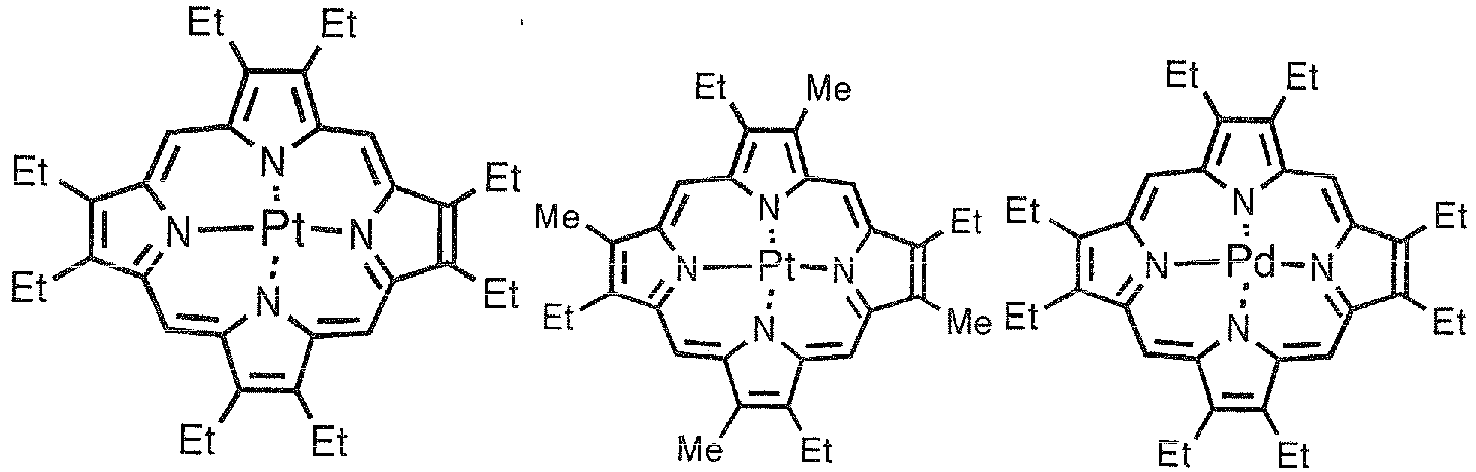
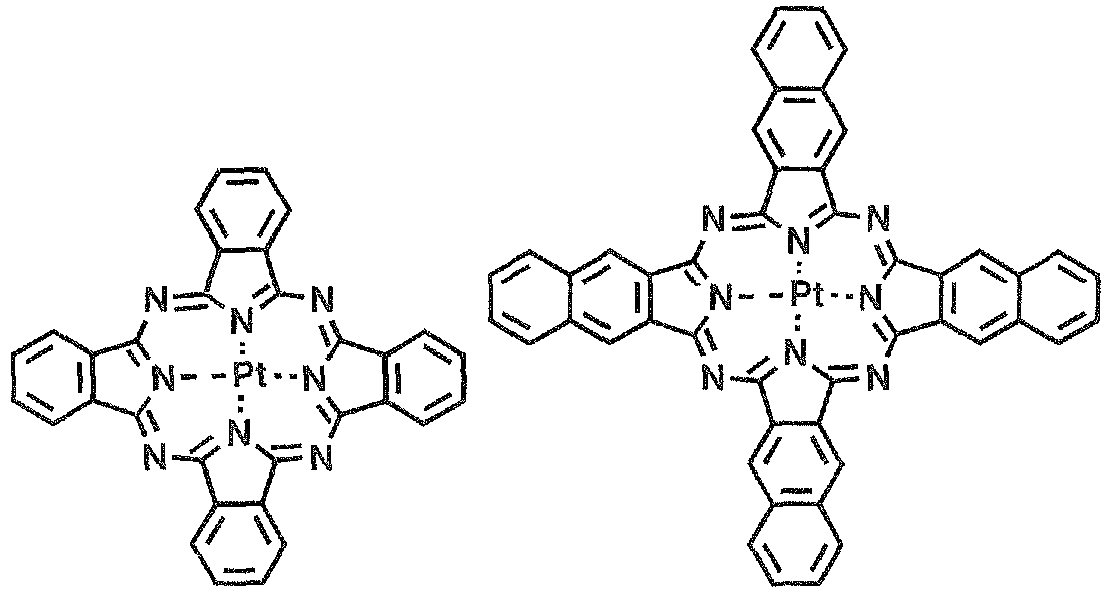
- Preferable phosphorescent dopants include complexes having a noble metal element such as Ir in the center, typically Ir(ppy)3, complexes such as Ir(bt)2 ⁇ acac3, and complexes such as PtOEt3. Examples of these complexes are shown below, but are not limited thereto.
- the content of the aforementioned phosphorescent dopant in the light-emitting layer is preferably in the range of 5-10 wt%.
- the organic EL device of this invention comprises at least one light-emitting layer disposed between an anode and a cathode piled one upon another on a substrate.
- Fig. 1 schematically shows the structure of an example of an organic EL device generally used in this invention and the numbers in Fig. 1 respectively designate the following 1 substrate, 2 anode, 3 hole-injecting layer, 4 hole-transporting layer, 5 light-emitting layer, 6 electron-transporting layer, and 7 cathode.
- the organic EL device of this invention comprises a substrate, an anode, a light-emitting layer, and a cathode as essential layers; in addition to the essential layers, the device preferably has a hole-injecting/transporting layer and an electron-injecting/transporting layer and, further, has a hole-blocking layer disposed between the light-emitting layer and the electron-injecting/transporting layer.
- the term hole-injecting/transporting layer means a hole-injecting layer and/or a hole-transporting layer and the term electron-injecting/transporting layer means an electron-injecting layer and/or an electron-transporting layer.
- the organic EL device of this invention is applicable to a single device, a device with its structure arranged in array, or a device in which the anode and the cathode are arranged in X-Y matrix.
- the organic EL device of this invention produces remarkable improvements in luminous efficiency and driving stability over the conventional devices utilizing emission of light from the excited singlet state by incorporating a compound of specific skeleton and a phosphorescent dopant in its light-emitting layer and the device can perform excellently when applied to full-color or multicolor panels.
- the precipitate was a black solid weighing 8.9 g.
- To the black solid were added 120 ml of THF and 120 ml of toluene and the solid was reslurried with application of heat to give 6.5 g of a gray solid.
- To the gray solid were added 650 g of THF and 0.7 g of activated carbon and the mixture was stirred at room temperature for 1 hour. The mixture was then filtered through Celite and the filtrate was concentrated under reduced pressure to give 6.0 g of a white solid. The white solid was further purified by crystallization from THF and methanol to give 2.5 g of Compound 5.
- An organic EL device having the structure shown in Fig. 1 plus an electron-injecting layer was fabricated as follows. Applying the vacuum deposition process at a degree of vacuum of 4.0 X 10 -4 Pa, the constituent layers in thin films were piled one upon another on a glass substrate having a 150 nm-thick indium tin oxide (ITO) anode formed thereon. First, copper phthalocyanine (CuPC) was deposited on the ITO anode to a thickness of 25 nm as a hole-injecting layer. Then, NPB was deposited to a thickness of 40 nm as a hole-transporting layer.
- ITO indium tin oxide
- CuPC copper phthalocyanine
- a light-emitting layer was formed on the hole-transporting layer to a thickness of 40 nm by co-depositing Compound 2 as the main component of the light-emitting layer and Ir(ppy)3 as a guest material (phosphorescent dopant) from different evaporation sources.
- the concentration of Ir(ppy)3 was 7.0%.
- Alq3 was deposited to a thickness of 20 nm as an electron-transporting layer.
- lithium fluoride (LiF) was deposited on the electron-transporting layer to a thickness of 0.5 nm as an electron-injecting layer.
- aluminum (Al) as an electrode was deposited on the electron-injecting layer to a thickness of 170 nm to complete the fabrication of an organic EL device.
- the organic EL device thus fabricated was connected to an outside power source and, upon application of direct current voltage, emission of light from the device with the characteristics shown in Table 8 was confirmed.
- the luminance, voltage, luminous efficiency, and luminance half life in Table 8 are measured at 10 mA/cm 2 .
- the maximum wavelength of the spectrum of light emitted from the device is 517 nm and this proves that light is emitted from Ir(ppy)3.
- An organic EL device was fabricated as in Example 10 with the exception of using Compound 3 as the main component of the light-emitting layer.
- An organic EL device was fabricated as in Example 10 with the exception of using Compound 5 as the main component of the light-emitting layer.
- An organic EL device was fabricated as in Example 10 with the exception of using the following compound (Compound H-1) as the main component of the light-emitting layer.
- An organic EL device having the structure shown in Fig. 1 plus an electron-injecting layer disposed between a cathode and an electron-transporting layer was fabricated as follows. Applying the vacuum deposition process at a degree of vacuum of 4.0 X 10 -4 Pa, the constituent layers in thin films were piled one upon another on a glass substrate having a 110 nm-thick indium tin oxide (ITO) anode formed thereon. First, copper phthalocyanine (CuPC) was deposited on the ITO anode to a thickness of 30 nm as a hole-injecting layer. Then, NPB was deposited to a thickness of 80 nm as a hole-transporting layer.
- ITO indium tin oxide
- a light-emitting layer was formed on the hole-transporting layer to a thickness of 35 nm by co-depositing Compound 2 as the main component of the light-emitting layer and iridium(III)bis(4,6-difluorophenyl)pyridinato-N,C2') picolinate (Flrpic), a blue phosphorescent emitter, as a guest material of the light-emitting layer from different evaporation sources.
- the concentration of Flrpic was 8.0%.
- Alq3 was deposited to a thickness of 25 nm as an electron-transporting layer.
- lithium fluoride (LiF) was deposited on the electron-transporting layer to a thickness of 0.5 nm as an electron-injecting layer.
- aluminum (Al) as an electrode was deposited on the electron-injecting layer to a thickness of 170 nm to complete the fabrication of an organic EL device.
- the organic EL device thus fabricated was connected to an outside power source and, upon application of direct current voltage, emission of light with the characteristics shown in Table 9 was confirmed.
- the luminance, voltage, and luminous efficiency in Table 9 are measured at 10 mA/cm 2 .
- the maximum wavelength of the spectrum of light emitted from the device is 470 nm and this proves that light is emitted from Flrpic.
- Organic EL devices were fabricated as in Example 13 with the exception of using respectively Compounds 3, 5, 33, 34, 36, 37, and 38 as the main component of the light-emitting layer.
- the compounds used as the main component of the light-emitting layer and the luminous characteristics are shown in Table 9.
- Example 13 An organic EL device was fabricated as in Example 13 with the exception of using Compound H-1 as the main component (host material) of the light-emitting layer.
- the luminous characteristics are shown in Table 9. [Table 9] Compound Luminance (cd/m 2 ) Voltage Luminous efficiency (V) (lm/W) Example 13 2 1320 9.9 4.2
- Example 14 3 1200 9.1 4.1
- Example 15 5 1150 8.8 4.1
- Example 16 33 1120 9.3 3.8
- Example 17 34 1020 10.2 3.1
- Example 19 36 1270 9.2 4.3
- Example 20 37 1080 9.8 3.5
- Example 21 38 1210 9.4 4.0 Comparative example 2 H-1 925 12.8 2. 3
- the compound for an organic electroluminescent device of this invention exhibits well-balanced electrical charges injection/transport characteristics and has the lowest triplet excitation energy which is sufficiently high to confine the lowest triplet excitation energy of phosphorescent molecules; hence, the compound is capable of providing an organic EL device which performs at low driving voltage and emits light of high luminance.
- the compound shows excellent electrochemical stability and thermal stability and good characteristics in the amorphous state and an organic EL device comprising the compound has excellent driving stability and durability.
- the organic EL device of this invention is at a level satisfactory for practical use in respect to luminous characteristics, driving life, and durability and is highly valuable technically in applications to flat panel displays (mobile phone display devices, vehicle display devices, office computer display devices, television sets, and the like), light sources utilizing the characteristics of planar light emitters (light sources for illumination and copying machines and backlight sources for liquid crystal displays and instruments), signboards, and beacon lights.
Landscapes
- Chemical & Material Sciences (AREA)
- Organic Chemistry (AREA)
- Engineering & Computer Science (AREA)
- Materials Engineering (AREA)
- Physics & Mathematics (AREA)
- Spectroscopy & Molecular Physics (AREA)
- Optics & Photonics (AREA)
- Crystallography & Structural Chemistry (AREA)
- Inorganic Chemistry (AREA)
- Electroluminescent Light Sources (AREA)
- Plural Heterocyclic Compounds (AREA)
- Pyridine Compounds (AREA)
- Luminescent Compositions (AREA)
Description
- This invention relates to a novel compound for an organic electroluminescent device and to an organic electroluminescent device (hereinafter referred to as organic EL device) using said compound.
- An organic electroluminescent device (hereinafter referred to as organic EL device) in the simplest structure is generally constituted of a light-emitting layer sandwiched between a pair of counter electrodes and functions by utilizing the following phenomenon. Upon application of an electrical field between the electrodes, electrons are injected from the cathode and holes are injected from the anode and they recombine in the light-emitting layer with emission of light.
- In recent years, organic thin films have been used in the development of organic EL devices. In particular, in order to enhance the luminous efficiency, the kind of electrodes has been optimized for the purpose of improving the efficiency of injecting carriers from the electrodes and a device has been developed in which a hole-transporting layer of an aromatic diamine and a light-emitting layer of 8-hydroxyquinoline aluminum complex (hereinafter referred to as Alq3) are disposed in thin film between the electrodes. This device has brought about a marked improvement in the luminous efficiency over the conventional devices utilizing single crystals of anthracene and the like and thereafter the developmental works of organic EL devices have been focused on commercial applications to high-performance flat panels featuring self-luminescence and high-speed response.
- In another effort to enhance the luminous efficiency of the device, the use of phosphorescence in place of fluorescence is investigated. The aforementioned device comprising a hole-transporting layer of an aromatic diamine and a light-emitting layer of Alq3 and many other devices utilize fluorescence. The use of phosphorescence, that is, emission of light from the excited triplet state is expected to enhance the luminous efficiency approximately three to four times that of the conventional devices utilizing fluorescence (emission of light from the excited singlet state). To achieve this objective, the use of coumarin derivatives and benzophenone derivatives in the light-emitting layer has been investigated, but these compounds merely produced luminance at an extremely low level. Thereafter, europium complexes were tried to utilize the excited triplet state, but failed to emit light at high efficiency. In recent years, as is mentioned in the
patent document 1, a large number of researches are conducted with the objective of enhancing the luminous efficiency and extending the service life while mainly utilizing organic metal complexes such as iridium complexes. -
- Patent document 1:
JP2003-515897 A - Patent document 2:
JP2001-313178 A - Patent document 3:
JP2006-76901 A - Patent document 4:
WO2005-76668 A - Patent document 5:
WO2003-78541 A - Patent Document 6:
EP 1 486 550 A1 - Non-patent document 1: Applied Physics Letters, 2003, 83, 569-571
- Non-patent document 2: Applied Physics Letters, 2003, 82, 2422-2424
- A host material to be used with the aforementioned dopant material becomes important in order to enhance the luminous efficiency. Of host materials proposed thus far, a typical example is 4,4'-bis(9-carbazolyl)biphenyl (hereinafter referred to as CBP) presented in the
patent document 2. CBP exhibits relatively good luminous characteristics when used as a host material for green phosphorescent emitters, typically tris(2-phenylpyridine)iridium (hereinafter referred to as Ir(ppy)3). On the other hand, CBP fails to perform with sufficient luminous efficiency when used as a host material for blue phosphorescent emitters. This is because the energy level of the lowest triplet excited state of CBP is lower than that of common blue phosphorescent emitters and the triplet excitation energy of a blue phosphorescent emitter in use is transferred to CBP. That is to say, if a phosphorescent host material were designed to have triplet excitation energy higher than that of a phosphorescent emitter, the triplet excitation energy of said phosphorescent emitter would be confined effectively and, as a result, the luminous efficiency would be enhanced. With the objective of improving this energy-confining effect, the triplet excitation energy is increased by modifying the structure of CBP in thenon-patent document 1 and the luminous efficiency of bis[2-(4,6-difluorophenyl)pyridinato-N,C2'] iridium picolinate (hereinafter referred to as Flrpic) is improved by this means. Similarly, the luminous efficiency is enhanced by using 1,3-dicarbazolylbenzene (hereinafter referred to as mCP) as a host material in thenon-patent document 2. However, these host materials are not satisfactory in practical use, particularly from the viewpoint of durability. - Moreover, the host material needs to have the balanced electrical charge (hole and electron) injection/transport characteristics in order to enhance the luminous efficiency. The electron transport property is inferior to the hole transport property in the case of CBP and this disturbs the balance of electrical charges in the light-emitting layer and causes excess holes to flow out to the side of the cathode thereby reducing the probability of recombination of holes and electrons in the light-emitting layer and decreasing the luminous efficiency. Furthermore, occurrence of the recombination is limited to a narrow region in the vicinity of the interface on the cathode side in this case. Therefore, in the case where an electron-transporting material like Alq3 whose energy level of the lowest triplet excited state is lower than that of Ir(ppy)3 is used, there may also arise the possibility that the luminous efficiency may decrease due to transfer of the triplet excitation energy from the dopant to the electron-transporting material.
- One of the means to prevent holes from flowing out to the electron-transporting layer is to provide a hole-blocking layer between the light-emitting layer and the electron-transporting layer. This hole-blocking layer accumulates holes efficiently in the light-emitting layer and contributes to improve the probability of recombination of holes and electrons in the light-emitting layer and enhance the luminous efficiency (the patent document 2). Hole-blocking materials in general use include 2,9-dimethyl-4,7-diphenyl-1,10-phenanthroline (hereinafter referred to as BCP) and p-phenylphenolato-bis(2-methyl-8-quinolinolato)aluminum (hereinafter referred to as BAlq). These materials can prevent holes from flowing out of the light-emitting layer to the electron-transporting layer; however, the lowest energy level of the excited triplet state of both of them is lower than that of a phosphorescent dopant such as Ir(ppy)3 and sufficient luminous efficiency cannot be obtained.
- Moreover, BCP tends to crystallize even at room temperature and lacks reliability as a hole-blocking material and the life of the device is extremely short. Although BAlq is reported to have a Tg of approximately 100°C and provide the device with relatively good life, its hole-blocking ability is not enough.
- The aforementioned examples indicate that, in order for organic EL devices to perform at high luminous efficiency, a host material is required to have high triplet excitation energy and to be balanced in the electrical charge (hole and electron) injection/transport characteristics. Furthermore, the host material is hopefully a compound endowed with electrochemical stability, high heat resistance, and excellent stability in the amorphous state. However, no compound capable of satisfying these properties on a practical level has been known at the present time.
- Attempts have been made to introduce a skeleton that has an excellent hole transport property as represented by a triarylamine or carbazole and another skeleton that has an excellent electron transport property as represented by pyrimidine or triazine into one and the same molecule.
- The following compounds are disclosed in the
patent document 3.
- In these compounds, the lowest unoccupied molecular orbital (LUMO) extends over the triazine ring or the pyrimidine ring at the center of the molecule and the periphery of the LUMO is enveloped in the carbazole skeletons wherein the highest occupied molecular orbital (HOMO) extends. The LUMO is thus centralized and confined inside the molecule and this arrangement acts against the movement of electrons between molecules and, further, it necessitates improvement in stability when the molecule is subjected to one electron reduction.
- Moreover, the following compounds are disclosed in the
patent documents 4 and 5.
- In these compounds too, the LUMO extends over the two rings consisting of the benzene ring and the pyrimidine ring at the center of the molecule and the periphery of the LUMO is enveloped in the carbazole skeletons wherein the HOMO extends. That is, the LUMO is confined inside the molecule and this arrangement acts against the movement of electrons between molecules. Furthermore, in these compounds, bonding of the carbazolyl group to the benzene ring lowers the triplet excitation energy. Therefore, depending upon the triplet energy level of the dopant in use, the triplet excitation energy of the dopant is transferred to the host molecule and this makes it impossible to obtain high luminous efficiency.
- Further, the following compounds are given as examples in the
patent document 5.
- In these compounds too, the LUMO is centralized on the two rings, either on the benzene ring and the pyrimidine ring or on the benzene ring and the triazine ring, at the center of the molecule and the periphery of the LUMO is enveloped in the carbazole skeletons wherein the HOMO extends. That is, confinement of the LUMO inside the molecule acts against the movement of electrons between molecules. In these compounds too, bonding of the carbazolyl group to the benzene ring lowers the triplet excitation energy. In consequence, depending upon the triplet energy level of the dopant in use, the triplet excitation energy is transferred to the host molecule and this makes it impossible to obtain high luminous efficiency.
- When a plurality of skeletons differing from one another in the electrical charge transport properties are introduced into one and the same molecule, the molecule may undergo large changes in the balance of electrical charges and in the stability depending upon the method used for the introduction. This indicates that the use of a molecule of this kind particularly as a host material is bound to affect vitally the luminous characteristics and life of the device and necessitates further improvements when practical use is intended.
- Further host compounds for phosphorescent dopants are disclosed in
Patent Document 6. - In applications of organic EL devices to display devices such as flat panel displays, it is necessary to improve the luminous efficiency of the device and, at the same time, to fully secure the driving stability of the device. Under the aforementioned circumstances, a theme of this invention is to provide an organic EL device that performs at high efficiency with good driving stability and is practically useful and to provide a compound suitable therefor.
- The inventors of this invention have found that the aforementioned problems can be solved by using a compound of specified structure for an organic EL device and completed this invention as described in claims 1-4.
- Accordingly, this invention relates to an organic electroluminescent device which comprises a compound represented by general formula (2).

- In general formula (2), X is independently a substituted or unsubstituted methine group or a nitrogen, Ar2 and Ar3 each is independently a substituted or unsubstituted aromatic hydrocarbon group or a substituted or unsubstituted aromatic heterocyclic group, and Ar2, Ar3, and the nitrogen to which Ar2 and Ar3 are joined may together form a nitrogen containing heterocyclic ring, wherein X and Y constituting ring C each is substituted or unsubstituted methine group in general formula (2) and where X and Y are substituted methine groups, the substituents are six-membered aromatic groups,
- wherein the unsubstituted aromatic hydrocarbon groups are selected from groups that are formed by taking one H away respectively from benzene, naphthalene, phenanthrene, and pyrene,
- the unsubstituted aromatic heterocyclic groups are selected from groups that are formed by taking one H away respectively from pyridine, pyrimidine, triazine, pyrazine, pyridazine, quinoline, isoquinoline, quinoxaline, and naphthyridine,
- the nitrogen-containing heterocyclic ring which Ar2, Ar3, and the nitrogen to which they are joined form are selected from carbazole, phenoxazine, phenothiazine, and β-carboline, and
- the substituents of the substituted aromatic hydrocarbon group or the substituted aromatic heterocyclic group are selected from a phenyl group, a naphthyl group, a biphenylyl group, a pyridyl group, a pyrimidinyl group, a triazinyl group, a pyrazinyl group, a pyridazinyl group, a quinolyl group, an isoquinolyl group, a quinoxalinyl group, and a naphthyridinyl group.
- A compound preferable for an organic electroluminescent device is provided when Ar2 and Ar3 each is independently a phenyl group, a naphthyl group, a phenanthryl group, a pyridyl group, a pyrimidyl group, or a triazyl group or when -NAr2Ar3 is an N-carbazolyl group, an N-phenoxazinyl group, an N-phenothiazinyl group, or an N-β-carbolinyl group in general formula (1) or (2).
- Furthermore, a preferable compound for an organic electroluminescent device is provided when the following condition is satisfied in general formula (2): constituting ring A is a nitrogen.
- Still further, this invention relates to an organic electroluminescent device comprising the aforementioned compound in a light-emitting layer containing a phosphorescent dopant.
-
Fig. 1 schematically shows the cross section of an example of an organic EL device. - Explanation of symbols: 1 substrate; 2 anode; 3 hole-injecting layer; 4 hole-transporting layer; 5 light-emitting layer, 6 electron-transporting layer; 7 cathode.
- The mode of reduction to practice of this invention will be described in detail below.
- A compound for an organic EL device according to this invention (hereinafter referred to as compound of this invention) has excellent electron transport properties and hole transport properties and shows extremely high durability against one-electron oxidation and one-electron reduction. These characteristics are due to the structural feature of the compound and will be described in detail bellow.
- In general formula (2), the LUMO extends over the region formed by ring A and two ring Cs. Further, when X and Y on ring C are substituted methine groups, the substituents are selected preferably in such a manner as to extend the LUMO. It follows as a consequence that the LUMO extends over the region centering around ring A and two ring Cs and this helps to improve the electron transport property and increase the stability when the molecule is subjected to one electron reduction.
- On the other hand, the HOMO is distributed over NAr2Ar3 and the extension of the HOMO in a manner of projecting out of the molecule acts advantageously for the movement of holes between molecules. In particular, when Ar2, Ar3, and the nitrogen to which Ar2 and Ar3 are joined form together a nitrogen-containing heterocyclic ring, the planarity of the HOMO increases. A molecule such as this maintains its stability by the delocalization effect when subjected to one-electron oxidation.
- In general formula (2), as defined above, Ar2, and Ar3 each is independently a substituted or unsubstituted aromatic hydrocarbon group or a substituted or unsubstituted aromatic heterocyclic group. Moreover, it is preferable that Ar2 and Ar3 that are joined to the same nitrogen may form a nitrogen-containing heterocyclic ring with said nitrogen.
- The unsubstituted aromatic hydrocarbon groups are groups that are formed by taking one H away respectively from benzene, naphthalene, phenanthrene, and pyrene. The unsubstituted aromatic heterocyclic groups are groups that are formed by taking one H away respectively from pyridine, pyrimidine, triazine, pyrazine, pyridazine, quinoline, isoquinoline, quinoxaline, and naphthyridine.
- In the case where the aforementioned aromatic hydrocarbon groups or aromatic heterocyclic groups are substituted, the substituents are a phenyl group, a naphthyl group, a biphenylyl group, a pyridyl group, a pyrimidinyl group, a triazinyl group, a pyrazinyl group, a pyridazinyl group, a quinolyl group, an isoquinolyl group, a quinoxalinyl group, and a naphthyridinyl group. Preferred are six-membered aromatic groups such as a phenyl group, a biphenylyl group, a pyridyl group, a pyrimidinyl group, a triazinyl group, a pyrazinyl group, and a pyridazinyl group.
- In the case where Ar2, Ar3, and the nitrogen to which they are joined form a nitrogen-containing heterocyclic ring, the heterocyclic rings are carbazole, phenoxazine, phenothiazine, and β -carboline.
- In general formula (2), X is a substituted or unsubstituted methine group or a nitrogen. The unsubstituted methine group is expressed by -CH- and the substituted methine group by -CR-. Here, the substituent R in the substituted methine group are six-membered aromatic groups such as a phenyl group, a biphenylyl group, a pyridyl group, a pyrimidinyl group, a triazinyl group, a pyrazinyl group, and a pyridazinyl group.
- The synthesis of the compounds of this invention can be performed, for example, by the following synthetic routes.


- The compound of this invention is obtained by the hetero-coupling reaction of a halogenated triazine derivative or a halogenated pyrimidine derivative with an aniline derivative or a boronic acid derivative in the presence of a palladium catalyst or a copper catalyst. The halogen atoms include chlorine, bromine, and iodine. A solvent capable of dissolving the raw materials may be used for the reaction; for example, toluene, xylene, dioxane, tetralin, quinoline, nitrobenzene, dimethyl sulfoxide, and N, N- dimethylformamide.
- The aforementioned hetero-coupling reaction can be carried out in the presence of a metal catalyst and a base at a temperature in the range of 100-200°C for a period in the range of 1-100 hours. Examples of the metal catalyst include a palladium complex that is formed from a palladium source such as palladium acetate and bis(benzylideneacetone)palladium and a ligand such as tri-tert-butylphophine, copper powder, copper oxide, copper halide, and copper sulfate. Examples of the base include inorganic bases such as potassium carbonate, sodium carbonate, lithium hydroxide, sodium hydroxide, sodium tert-butoxide, and potassium tert-butoxide and organic bases such as pyridine, picoline, and triethylamine.
- Upon completion of any of the aforementioned reactions, water is added to the reaction mixture to separate an organic layer, and the organic layer is concentrated, washed with a low-boiling solvent such as ethyl acetate, and dried under reduced pressure to give the compound of this invention. The compound is preferably purified further by sublimation when it is used as an organic EL material.
- Concrete examples of the compounds of this invention represented by the aforementioned general formula (2) are shown below, but this invention is not limited to these compounds. The following compounds 1-10, 14-26, 30-32, 36-39, 41-45, 47, 48, 50, 51, 52 and 54-56 do not form part of the invention.
[Table 1] 1 
2 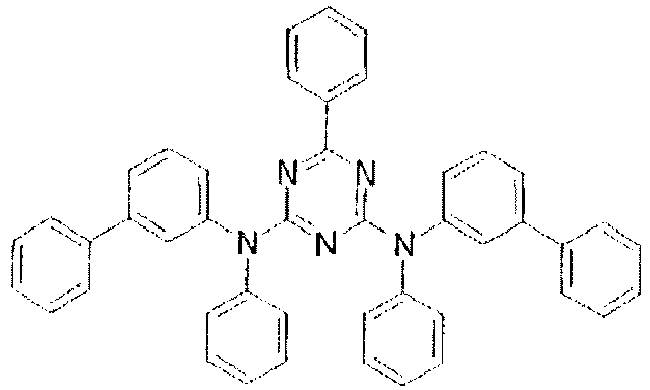
3 
4 
5 
6 
7 
8 
[Table 2] 9 
10 
11 
12 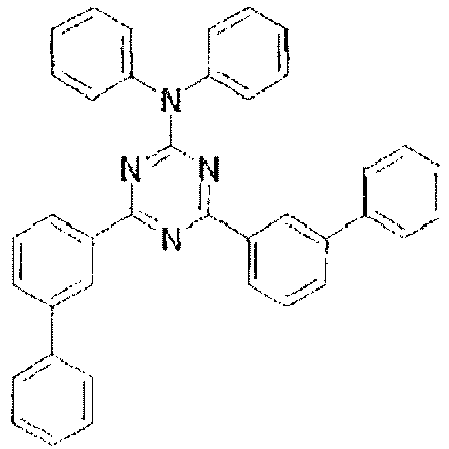
13 
14 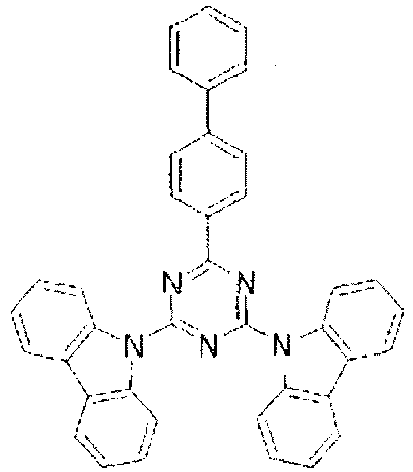
15 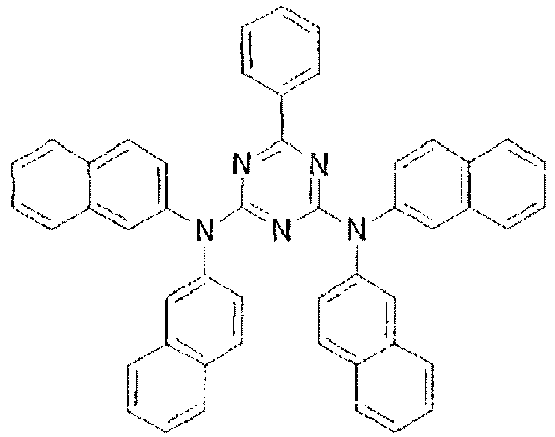
16 
[Table 3] 17 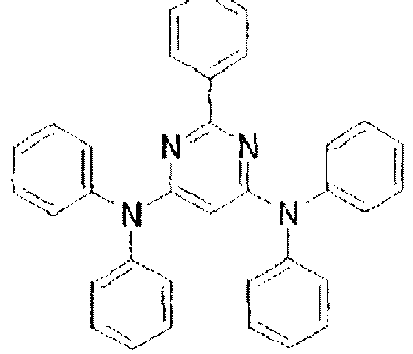
18 
19 
20 
21 
22 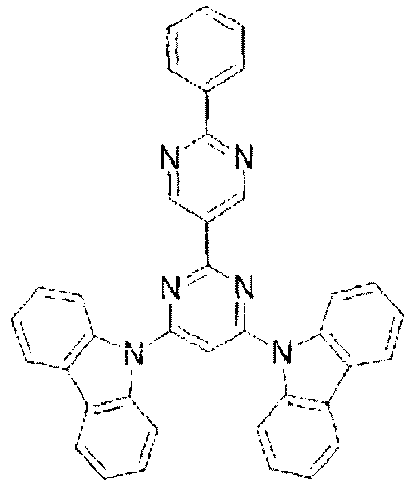
23 
24 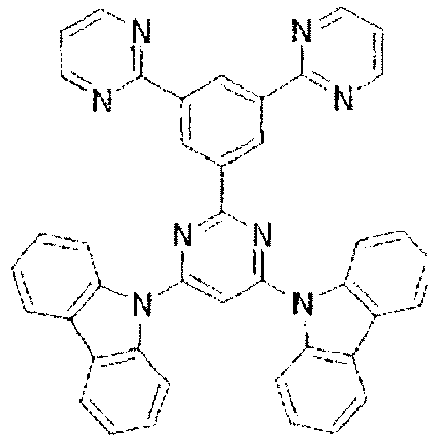
[Table 4] 25 
26 
27 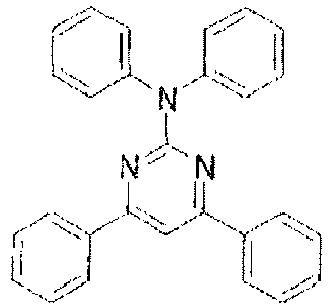
28 
29 
30 
31 
32 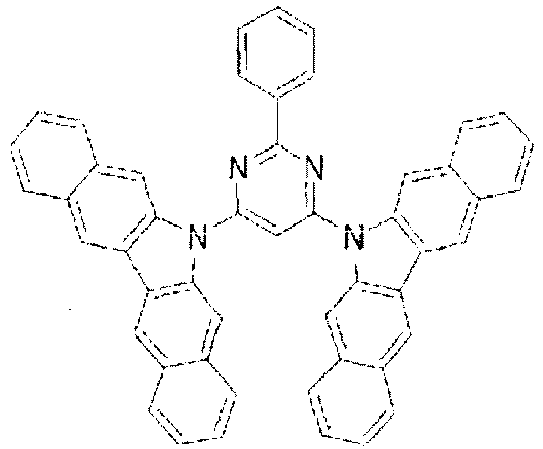
[Table 5] 33 
34 
35 
36 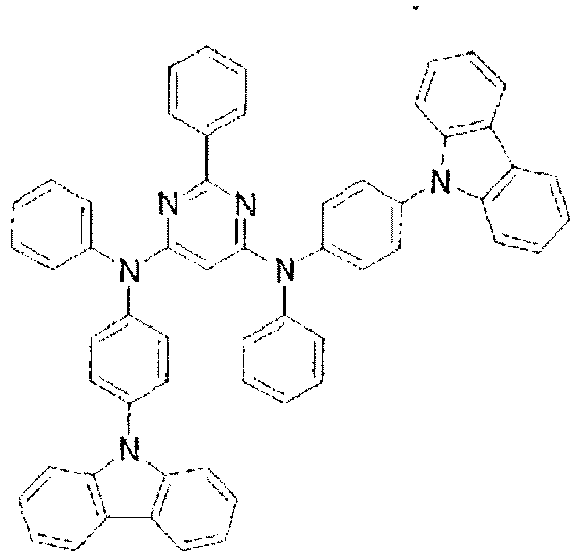
37 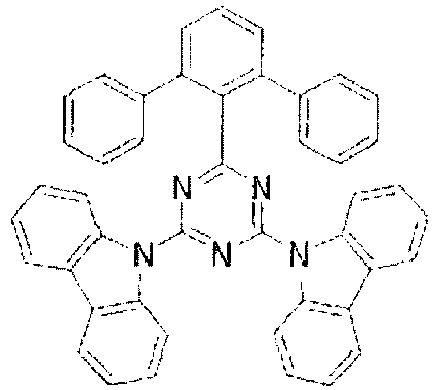
38 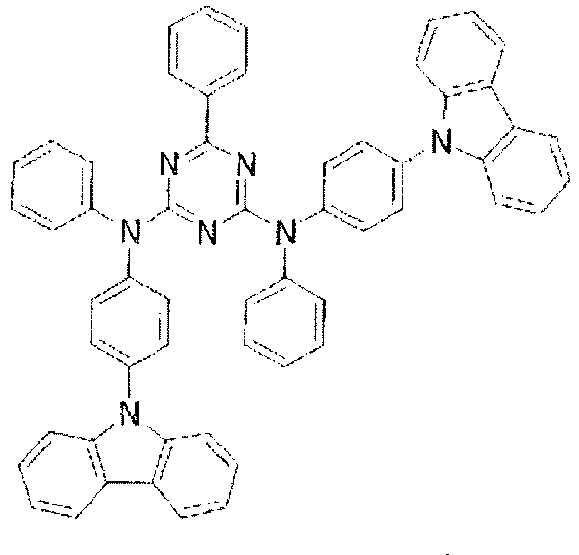
39 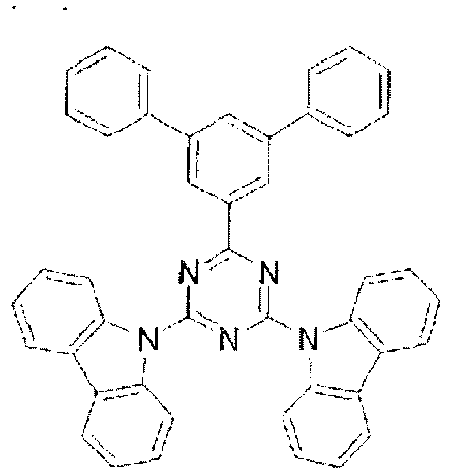
40 
[Table 6] 41 
42 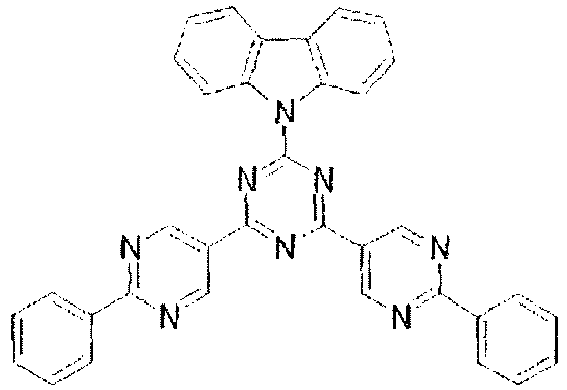
43 
44 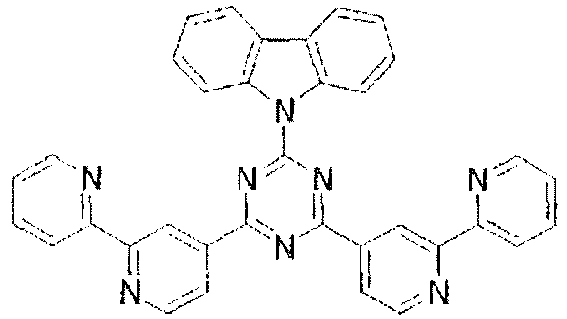
45 
46 
47 
48 
[Table 7] 49 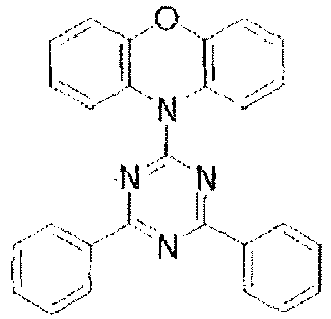
50 
51 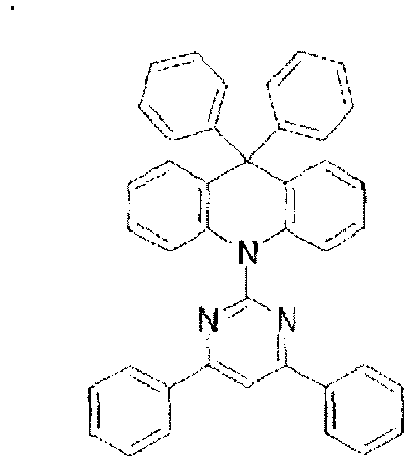
52 
53 
54 
55 
56 
- A com pound for an organic electroluminescent device prepared according to this invention provides an excellent organic electroluminescent device when incorporated as a host material of the light-emitting layer containing a phosphorescent dopant.
- Phosphorescent dopants to be used in the light-emitting layer are preferably organic metal complexes containing at least one metal selected from ruthenium, rhodium, palladium, silver, rhenium, osmium, iridium, platinum, and gold. Such organic metal complexes are known in the aforementioned patent documents and elsewhere and a suitable complex can be selected from them and used in this invention.
- Preferable phosphorescent dopants include complexes having a noble metal element such as Ir in the center, typically Ir(ppy)3, complexes such as Ir(bt)2 · acac3, and complexes such as PtOEt3. Examples of these complexes are shown below, but are not limited thereto.



- The content of the aforementioned phosphorescent dopant in the light-emitting layer is preferably in the range of 5-10 wt%.
- An organic EL device using a compound of this invention will be explained next.
- The organic EL device of this invention comprises at least one light-emitting layer disposed between an anode and a cathode piled one upon another on a substrate.
- The structure of the organic EL device of this invention will be explained with reference to the drawing, but it will not be limited to the one shown in the drawing.
-
Fig. 1 schematically shows the structure of an example of an organic EL device generally used in this invention and the numbers inFig. 1 respectively designate the following 1 substrate, 2 anode, 3 hole-injecting layer, 4 hole-transporting layer, 5 light-emitting layer, 6 electron-transporting layer, and 7 cathode. The organic EL device of this invention comprises a substrate, an anode, a light-emitting layer, and a cathode as essential layers; in addition to the essential layers, the device preferably has a hole-injecting/transporting layer and an electron-injecting/transporting layer and, further, has a hole-blocking layer disposed between the light-emitting layer and the electron-injecting/transporting layer. The term hole-injecting/transporting layer means a hole-injecting layer and/or a hole-transporting layer and the term electron-injecting/transporting layer means an electron-injecting layer and/or an electron-transporting layer. - It is possible to fabricate a device with a structure that is the reverse of the one shown in
Fig. 1 by piling thecathode 7, the electron-transportinglayer 6, the light-emittinglayer 5, the hole-transporting layer 4, and theanode 2 one upon another in this order on thesubstrate 1 and, as described earlier, it is possible to dispose the organic EL device of this invention between two substrates at least one of which is highly transparent. In this case of the reverse structure, a layer or layers may be added or omitted as needed. - The organic EL device of this invention is applicable to a single device, a device with its structure arranged in array, or a device in which the anode and the cathode are arranged in X-Y matrix. The organic EL device of this invention produces remarkable improvements in luminous efficiency and driving stability over the conventional devices utilizing emission of light from the excited singlet state by incorporating a compound of specific skeleton and a phosphorescent dopant in its light-emitting layer and the device can perform excellently when applied to full-color or multicolor panels.
- This invention will be described in more detail below with reference to the examples; however, it will not be limited to these examples and it can be reduced to practice in various modes unless such practice exceeds the substance of this invention.
-
Compounds Compounds 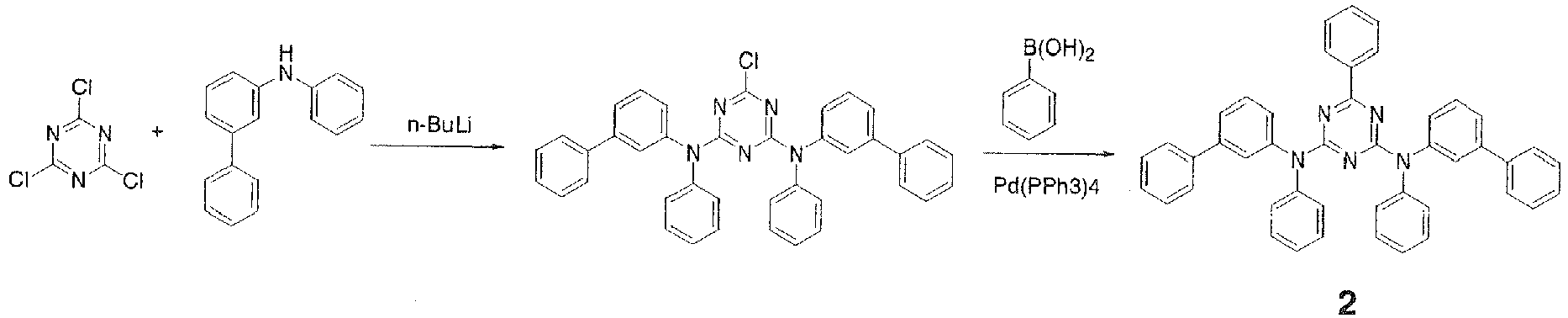



- In a 500-ml three-necked flask was placed 25.0 g (0.102 mole) of N-(3-biphenylyl)phenylamine, 200 ml of THF was added, and the mixture was stirred under flow of nitrogen. The resulting solution was cooled to 0°C in an ice bath and a solution of 0.122 mole of n-butyllithium in 77 ml of n-hexane was added dropwise over 15 minutes. The mixture was then stirred at room temperature for 30 minutes to prepare a lithium reagent. Then, 8.9 g (0.048 mole) of cyanuric chloride and 200 ml of THF were placed in a 1,000-ml three-necked flask and the mixture was stirred under flow of nitrogen. To this was added dropwise the lithium reagent prepared earlier over 20 minutes. After the dropwise addition, the mixture was stirred at 55°C for 1.5 hours. The mixture was cooled to room temperature, 300 ml of water and 100 ml of toluene were added, and the mixture was stirred and separated into an organic layer and an aqueous layer. The organic layer was washed three times with 100 ml of water and then dehydrated over magnesium sulfate, the magnesium sulfate was filtered out, and the solvent was distilled off under reduced pressure. The residue was then purified by column chromatography to give 21.5 g (0.036 mole, 74,4% yield) of a white solid.
- Then, 19.0 g (0.032 mole) of the aforementioned white solid, 3.5 g (0.028 mole) of phenylboronic acid, 0.44 g (0.0004 mole) of tetrakis(triphenylphosphine)palladium(0), 60 ml of ethanol, and 180 ml of toluene were placed in a 500-ml three-necked flask and stirred. To this was added 60 ml of an aqueous solution containing 15.8 g of sodium carbonate and the mixture was stirred at 75°C for 1.5 hours. The mixture was cooled to room temperature, 150 ml of toluene was added, and the mixture was stirred and separated into an organic layer and an aqueous layer. The organic layer was washed three times with 100 ml of water and then dehydrated over magnesium sulfate, the magnesium sulfate was filtered out, and the solvent was distilled off under reduced pressure. The residue was then purified by column chromatography to give 9.5 g of a white solid. The white solid was further purified by crystallization from dichloromethane and ethanol to give 7.7 g of
Compound 2.
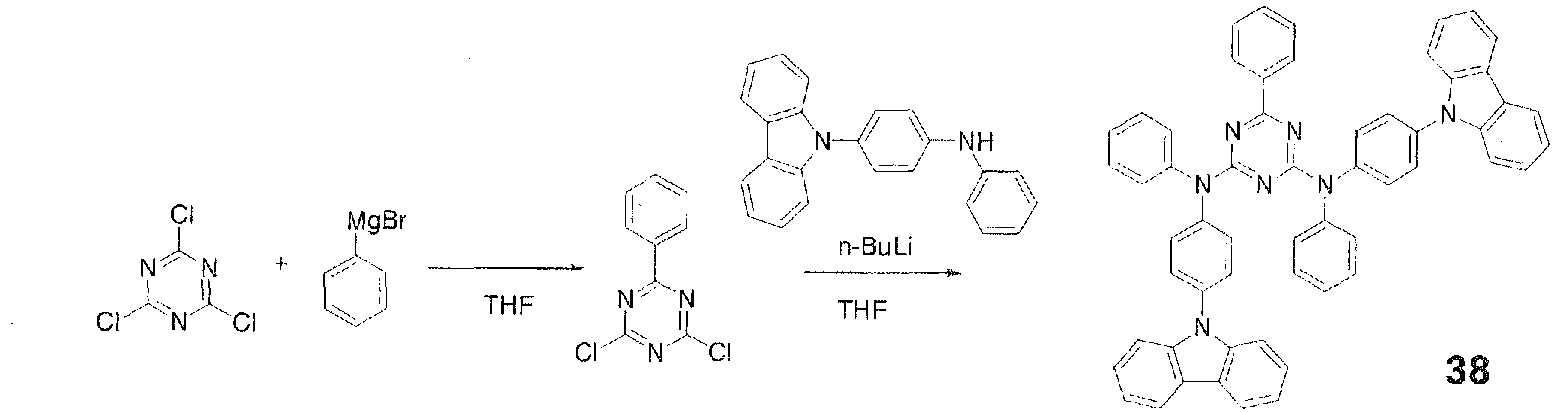
FD-MS, m/z 643 [M]+ ; melting point, 198°C. - In a 1,000-ml three-necked flask were placed 20.9 g (0.113 mole) of cyanuric chloride and 200 ml of THF and stirred under flow of nitrogen. To this was added dropwise a solution of 0.108 mole of phenylmagnesium bromide in 100 ml of THF over 20 minutes and the mixture was stirred at room temperature for 2.5 hours. To the mixture were added 200 ml of water and 100 ml of toluene and the mixture was stirred and separated into an organic layer and an aqueous layer. The organic layer was washed three times with 100 ml of water and then dehydrated over magnesium sulfate, the magnesium sulfate was filtered out, and the solvent was distilled off under reduced pressure. The residue was then reslurried in methanol to give 13.9 g (0.061 mole, 54.4% yield) of a light yellow solid.
- Then, 15.5 g (0.048 mole) of N-(3,5-diphenylphenyl)phenylamine and 150 ml of THF were placed in a 500-ml three-necked flask and stirred under flow of nitrogen. The resulting solution was cooled to 0°C in an ice bath and a solution of 0.053 mole of n-butyllithium in 34 ml of n-hexane was added dropwise over 15 minutes. The mixture was then returned to room temperature and stirred for 30 minutes to prepare a lithium reagent. Then, 5.0 g (0.022 mole) of the aforementioned light yellow solid and 150 ml of THF were placed in a 1,000-ml three-necked flask and stirred under flow of nitrogen. To this was added dropwise the lithium reagent prepared earlier over 20 minutes. After the dropwise addition, the mixture was heated to 55°C and stirred for 3.5 hours. The mixture was cooled to room temperature, 200 ml of water and 150 ml of toluene were added, and the mixture was stirred and separated into an organic layer and an aqueous layer. The organic layer was washed three times with 100 ml of water and then dehydrated over magnesium sulfate, the magnesium sulfate was filtered out, the solvent was distilled under reduced pressure, and a yellow solid weighing 20.7 g was obtained. The solid was crystallized from THF and methanol to give 8.8 g (0.011 mole, 50.0% yield) of
Compound 3.
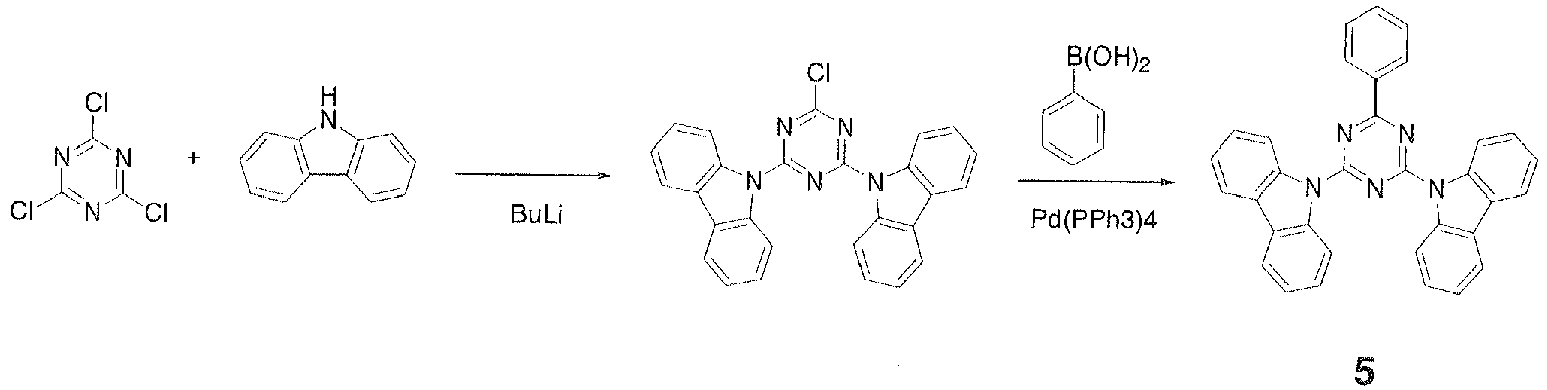
FD-MS, m/z 795 [M]+; melting point, 252°C. - In a 500-ml three-necked flask were placed 20.0 g (0.120 mole) of carbazole and 120 ml of THF and stirred under flow of nitrogen. The resulting solution was cooled to 0°C in an ice bath and a solution of 0.127 mole of n-butyllithium in 80 ml of n-hexane was added dropwise over 15 minutes. The mixture was then stirred at room temperature for 20 minutes to prepare a lithium reagent. Then, 11.0 g (0.060 mole) of cyanuric chloride and 120 ml of THF were placed in a 500-ml three-necked flask and stirred under flow of nitrogen. To this was added dropwise the lithium reagent prepared earlier over 15 minutes. After the dropwise addition, the mixture was heated to 55°C and stirred for 1 hour. The mixture was cooled to room temperature, 100 ml of water was added to precipitate a solid, and the solid was collected by filtration, rinsed with a mixture of 100 ml of water and 100 ml of THF, rinsed further with 50 ml of methanol, and dried under reduced pressure to give 20.2 g (0.045 mole, 75.5% yield) of a yellow powder.
- In a 500-ml three-necked flask were placed 10.0 g (0.022 mole) of the aforementioned white powder, 3.5 g (0.028 mole) of phenylboronic acid, 0.44 g (0.0004 mole) of tetrakis(triphenylphosphine)palladium(0), 60 ml of ethanol, and 180 ml of toluene and stirred. To this was added 60 ml of an aqueous solution containing 11.4 g of sodium carbonate and the mixture was stirred at 75°C for 1.5 hours. The mixture was cooled to room temperature, 100 ml of water was added, the mixture was stirred, and a precipitate was collected by filtration. The precipitate was a black solid weighing 8.9 g. To the black solid were added 120 ml of THF and 120 ml of toluene and the solid was reslurried with application of heat to give 6.5 g of a gray solid. To the gray solid were added 650 g of THF and 0.7 g of activated carbon and the mixture was stirred at room temperature for 1 hour. The mixture was then filtered through Celite and the filtrate was concentrated under reduced pressure to give 6.0 g of a white solid. The white solid was further purified by crystallization from THF and methanol to give 2.5 g of
Compound 5.
FD-MS, m/z 487 [M]+; melting point, 274°C. - In a 1,000-ml three-necked flask were placed 25.0 g (0.135 mole) of cyanuric chloride and 110 ml of THF and stirred under flow of nitrogen. To this was added dropwise a solution of 0.371 mole of phenylmagnesiium bromide in 344 ml of THF over 20 minutes and then the mixture was stirred at room temperature for 2.5 hours. To the mixture were added 200 ml of water and 150 ml of toluene and the mixture was stirred and separated into an organic layer and an aqueous layer. The organic layer was washed three times with 100 ml of water and then dehydrated over magnesium sulfate, the magnesium sulfate was filtered out, the solvent was distilled off under reduced pressure, and a yellow solid weighing 30.5 g was obtained. To the yellow solid was added 145 g of methanol and the solid was reslurried with application of heat to give 21.0 g (0.078 mole, 58.1% yield) of a light yellow solid.
- Then, 18.8 g (0.112 mole) of carbazole and 125 ml of THF were placed in a 1,000-ml three-necked flask and stirred under flow of nitrogen. The resulting solution was cooled to 0°C in an ice bath and a solution of 0.135 mole of n-butyllithium in 85 ml of n-hexane was added dropwise over 15 minutes. The mixture was then returned to room temperature and stirred for 20 minutes to prepare a lithium reagent. Then, 20.0 g (0.075 mole) of the aforementioned light yellow solid and 120 ml of THF were placed in a 500-ml three-necked flask and stirred under flow of nitrogen. To this was added dropwise the lithium reagent prepared earlier. After the dropwise addition, the mixture was heated under reflux with stirring for 23 hours. The mixture was cooled to room temperature, 200 ml of water and 65 ml of methanol were added, the mixture was stirred, a precipitate was collected by filtration, and a yellow solid weighing 18.3 g was obtained. The yellow solid was purified by crystallization from chloroform and methanol to give 6.6 g (0.017 mole, 22.1% yield) of Compound 33.
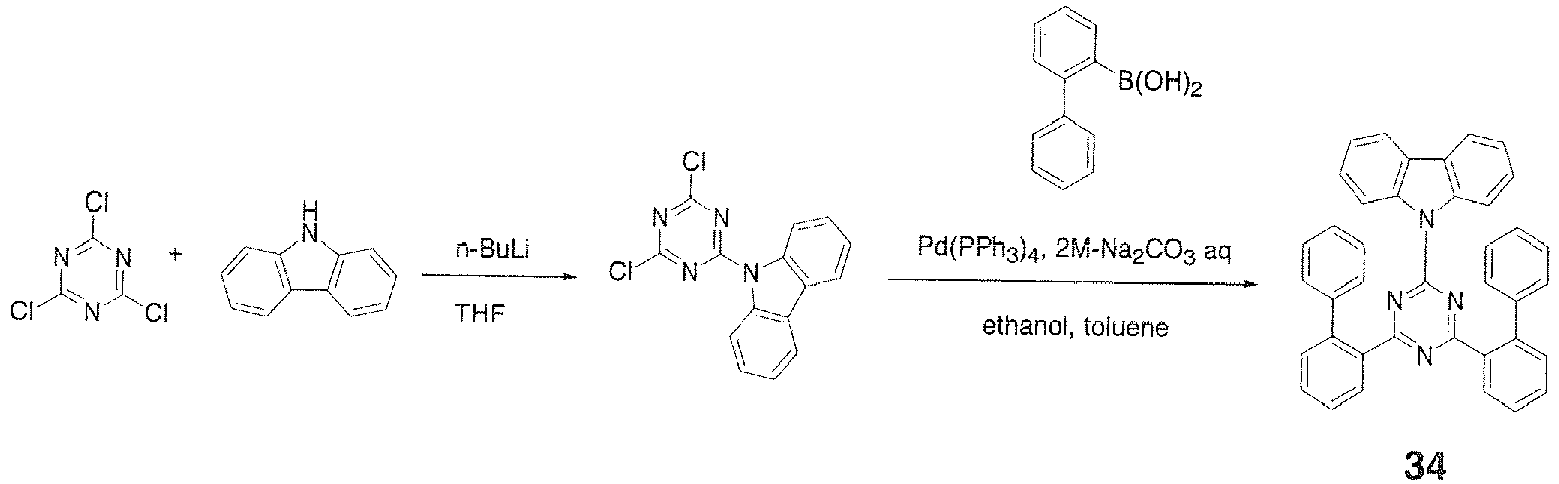
APCI-MS, m/z 399 [M+H]+; melting point, 286°C. - In a 500-ml three-necked flask were placed 19.0 g (0.114 mole) of carbazole and 120 ml of THF and stirred under flow of nitrogen. The resulting solution was cooled to 0°C in an ice bath and a solution of 0.114 mole of n-butyllithium in 72 ml of n-hexane was added dropwise over 30 minutes. The mixture was then stirred at room temperature for 30 minutes to prepare a lithium reagent. Then, 20.0 g (0.108 mole) of cyanuric chloride and 120 ml of THF were placed in a 1,000-ml three-necked flask and stirred under flow of nitrogen. To this was added dropwise the lithium reagent prepared earlier over 30 minutes. After the dropwise addition, the mixture was stirred at room temperature for 1.0 hour. Then, 240 ml of water was added to the mixture to precipitate a white solid. The white solid was collected by filtration and purified by recrystallization from methanol and toluene to give 19.0 g (0.0603 mole, 95.4% yield) of a white solid.
- Then, 14.0 g (0.0444 mole) of the aforementioned white powder, 21.1 g (0.107 mole) of 2-biphenylboronic acid, 2.8 g (0.0018 mole) of tetrakis(triphenylphosphime)palladium(0), 140 ml of ethanol, and 420 ml of toluene were placed in a 2,000-ml three-necked flask and stirred. To this was added 168 ml of an aqueous solution containing 35.0 g of sodium carbonate and the mixture was stirred at 90°C overnight. The mixture was cooled to room temperature, 200 ml of water and 200 ml of toluene were added, and the mixture was stirred and separated into an organic layer and an aqueous layer. The organic layer was washed three times with 200 ml of water and then dehydrated over magnesium sulfate, the magnesium sulfate was filtered out, and the solvent was distilled off under reduced pressure. The residue was then recrystallized from chloroform and toluene to give 7.40 g (0.0134 mole, 30.0% yield) of Compound 34 as a white powder.
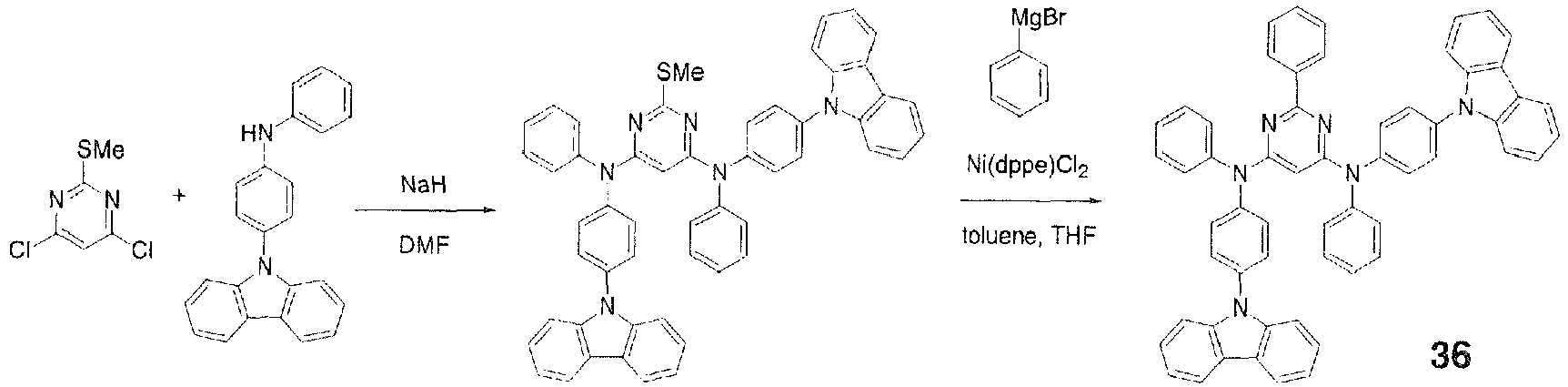
FD-MS, m/z 551 [M+H]+; melting point, 227°C. - In a 500-ml three-necked flask were placed 2.69 g (0.066 mole) of sodium hydride and 50 ml of DMF and stirred under flow of nitrogen. To this was added dropwise a solution of 20.0 g (0.060 mole) of N-(4-carbazolylphenyl)phenylamine in 100 ml of DMF and the mixture was stirred at room temperature for 30 minutes. Then, a solution of 4.86 g (0.025 mole) of 4,6-dichloro-2-methylthiopyrimidine in 50 ml of DMF was added dropwise. After the dropwise addition, the mixture was stirred at 50°C for 2.5 hours. The mixture was cooled to room temperature, 200 ml of water was added, the mixture was stirred, a precipitate was collected by filtration, and a red solid weighing 18.8 g was obtained. To the red solid was added 200 g of toluene and the solid was purified by reslurrying with application of heat to give 13.2 g (0.017 mole, 66.8% yield) of a white solid.
- Then, 12.0 g (0.015 mole) of the aforementioned white solid, 0.16 g (0.0003 mole) of [1,2-bis(diphenylphosphino)ethane]dichloronickel(II), and 100 ml of toluene were placed in a 500-ml three-necked flask and stirred for 10 minutes under flow of nitrogen. To this was added a solution of 0.023 mole of phenylmagnesium bromide in 21.1 ml of THF and the mixture was stirred at 60°C for 1 hour. Then, the mixture was returned to room temperature, 100 ml of 1 M hydrochloric acid was added, the mixture was stirred, a precipitate was collected by filtration, and a red solid weighing 9.6 g was obtained. The red solid was recrystallized from THF to give 3.7 g (0.0045 mole, 29.7% yield) of Compound 36. APCI-MS, m/z 821 [M+H]+; melting point, 293°C.
- In a 500-ml three-necked flask were placed 20.0 g (0.120 mole) of carbazole and 120 ml of THF and stirred under flow of nitrogen. The resulting solution was cooled to 0°C in an ice bath and a solution of 0.127 mole of n-butyllithium in 80 ml of n-hexane was added dropwise over 30 minutes. The mixture was then returned to room temperature and stirred for 20 minutes to prepare a lithium reagent. Then, 11.0 g (0.0599 mole) of cyanuric chloride and 120 ml of THF were placed in a 1,000-ml three-necked flask and stirred under flow of nitrogen. To this was added dropwise the lithium reagent prepared earlier over 30 minutes. After the dropwise addition, the mixture was stirred at 60°C for 1.5 hours. The mixture was cooled to room temperature and 200 ml of water was added to precipitate a white solid. The white precipitate was collected by filtration and purified by reslurrying in methanol with application of heat to give 16.0 g (0.0359 mole, 59.9% yield) of a white solid.
- Then, 10.0 g (0.0224 mole) of the aforementioned white solid, 7.38 g (0.0269 mole) of m-terphenyl-2'-boronic acid, 1.7 g (0.0011 mole) of tetrakis(triphenylphosphine)palladium(0), 100 ml of ethanol, and 400 ml of toluene were placed in a 2,000-ml three-necked flask and stirred. To this was added 40 ml of an aqueous solution containing 8.55 g of sodium carbonate and the mixture was stirred at 90°C overnight. The mixture was cooled to room temperature, 200 ml of water and 500 ml of toluene were added, and the mixture was stirred and separated into an organic layer and an aqueous layer. The organic layer was washed three times with 200 ml of water and then dehydrated over magnesium sulfate, the magnesium sulfate was filtered out, and the solvent was distilled off under reduced pressure. The residue was then purified by reslurrying in THF and toluene with application of heat to give 3.10 g (0.00485 mole, 21.7% yield) of Compound 37 as a white powder.
FD-MS, m/z 640 [M+H]+; melting point, 307°C. - In a 1,000-ml three-necked flask were placed 20.9 g (0.113 mole) of cyanuric chloride and 200 ml of THF and stirred under flow of nitrogen. To this was added dropwise a solution of 0.108 mole of phenylmagnesium bromide in 100 ml of THF over 20 minutes and then the mixture was stirred at room temperature for 2.5 hours. To the mixture were added 200 ml of water and 100 ml of toluene and the mixture was then stirred and separated into an organic layer and an aqueous layer. The organic layer was washed three times with 100 ml of water and then dehydrated over magnesium sulfate, the magnesium sulfate was filtered out, and the solvent was distilled off under reduced pressure. The residue was then purified by reslurrying in methanol to give 13.9 g (0.061 mole, 54.4% yield) of a light yellow solid.
- Then, 15.0 g (0.041 mole) of N-(4-carbozolylphenyl)phenylamine and 150 ml of THF were placed in a 300-ml three-necked flask and stirred under flow of nitrogen. The resulting solution was cooled to 0°C in an ice bath and a solution of 0.049 mole of n-butyllithium in 30 ml of n-hexane was added dropwise over 15 minutes. The mixture was then returned to room temperature and stirred for 30 minutes to prepare a lithium reagent. Then, 4.2 g (0.018 mole) of the aforementioned light yellow solid and 250 ml of THF were placed in a 1,000-ml three-necked flask and stirred under flow of nitrogen. To this was added dropwise the lithium reagent prepared earlier. After the dropwise addition, the mixture was heated under reflux with stirring for 4.5 hours. The mixture was cooled to room temperature, 200 ml of water was added, a precipitate was collected by filtration, and a light yellow solid weighing 14.4 g was obtained. The light yellow solid was purified by reslurrying in ethyl acetate to give 13.1 g of a white solid. The white solid was further purified by crystallization from dichloromethane and ethanol to give 10.0 g (0.012 mole, 66.7% yield) of Compound 38.
APCI-MS, m/z 822 [M+H]+; melting point, 258°C. - An organic EL device having the structure shown in
Fig. 1 plus an electron-injecting layer was fabricated as follows. Applying the vacuum deposition process at a degree of vacuum of 4.0 X 10⁻⁴ Pa, the constituent layers in thin films were piled one upon another on a glass substrate having a 150 nm-thick indium tin oxide (ITO) anode formed thereon. First, copper phthalocyanine (CuPC) was deposited on the ITO anode to a thickness of 25 nm as a hole-injecting layer. Then, NPB was deposited to a thickness of 40 nm as a hole-transporting layer. Next, a light-emitting layer was formed on the hole-transporting layer to a thickness of 40 nm byco-depositing Compound 2 as the main component of the light-emitting layer and Ir(ppy)3 as a guest material (phosphorescent dopant) from different evaporation sources. The concentration of Ir(ppy)3 was 7.0%. Then, Alq3 was deposited to a thickness of 20 nm as an electron-transporting layer. Further, lithium fluoride (LiF) was deposited on the electron-transporting layer to a thickness of 0.5 nm as an electron-injecting layer. Finally, aluminum (Al) as an electrode was deposited on the electron-injecting layer to a thickness of 170 nm to complete the fabrication of an organic EL device. - The organic EL device thus fabricated was connected to an outside power source and, upon application of direct current voltage, emission of light from the device with the characteristics shown in Table 8 was confirmed. The luminance, voltage, luminous efficiency, and luminance half life in Table 8 are measured at 10 mA/cm2. The maximum wavelength of the spectrum of light emitted from the device is 517 nm and this proves that light is emitted from Ir(ppy)3.
- An organic EL device was fabricated as in Example 10 with the exception of using
Compound 3 as the main component of the light-emitting layer. - An organic EL device was fabricated as in Example 10 with the exception of using
Compound 5 as the main component of the light-emitting layer. - An organic EL device was fabricated as in Example 10 with the exception of using the following compound (Compound H-1) as the main component of the light-emitting layer.
- The luminous characteristics of the organic EL devices are shown in Table 8.

[Table 8] Compound Luminance (cd/m2) Voltage (V) Luminous efficiency (lm/W) Luminance half life (h) Example 10 2 4250 8.1 16.5 550 Example 11 3 3900 7.9 15.5 1050 Example 12 5 3300 7.5 13.8 1200 Comparative example 1 H-1 3200 8.2 12.3 55 - An organic EL device having the structure shown in
Fig. 1 plus an electron-injecting layer disposed between a cathode and an electron-transporting layer was fabricated as follows. Applying the vacuum deposition process at a degree of vacuum of 4.0 X 10⁻⁴ Pa, the constituent layers in thin films were piled one upon another on a glass substrate having a 110 nm-thick indium tin oxide (ITO) anode formed thereon. First, copper phthalocyanine (CuPC) was deposited on the ITO anode to a thickness of 30 nm as a hole-injecting layer. Then, NPB was deposited to a thickness of 80 nm as a hole-transporting layer. Next, a light-emitting layer was formed on the hole-transporting layer to a thickness of 35 nm byco-depositing Compound 2 as the main component of the light-emitting layer and iridium(III)bis(4,6-difluorophenyl)pyridinato-N,C2') picolinate (Flrpic), a blue phosphorescent emitter, as a guest material of the light-emitting layer from different evaporation sources. The concentration of Flrpic was 8.0%. Then, Alq3 was deposited to a thickness of 25 nm as an electron-transporting layer. Further, lithium fluoride (LiF) was deposited on the electron-transporting layer to a thickness of 0.5 nm as an electron-injecting layer. Finally, aluminum (Al) as an electrode was deposited on the electron-injecting layer to a thickness of 170 nm to complete the fabrication of an organic EL device. - The organic EL device thus fabricated was connected to an outside power source and, upon application of direct current voltage, emission of light with the characteristics shown in Table 9 was confirmed. The luminance, voltage, and luminous efficiency in Table 9 are measured at 10 mA/cm2. The maximum wavelength of the spectrum of light emitted from the device is 470 nm and this proves that light is emitted from Flrpic.
- Organic EL devices were fabricated as in Example 13 with the exception of using respectively Compounds 3, 5, 33, 34, 36, 37, and 38 as the main component of the light-emitting layer. The compounds used as the main component of the light-emitting layer and the luminous characteristics are shown in Table 9.
- An organic EL device was fabricated as in Example 13 with the exception of using Compound H-1 as the main component (host material) of the light-emitting layer. The luminous characteristics are shown in Table 9.
[Table 9] Compound Luminance (cd/m2) Voltage Luminous efficiency (V) (lm/W) Example 13 2 1320 9.9 4.2 Example 14 3 1200 9.1 4.1 Example 15 5 1150 8.8 4.1 Example 16 33 1120 9.3 3.8 Example 17 34 1020 10.2 3.1 Example 19 36 1270 9.2 4.3 Example 20 37 1080 9.8 3.5 Example 21 38 1210 9.4 4.0 Comparative example 2 H-1 925 12.8 2. 3 - The compound for an organic electroluminescent device of this invention exhibits well-balanced electrical charges injection/transport characteristics and has the lowest triplet excitation energy which is sufficiently high to confine the lowest triplet excitation energy of phosphorescent molecules; hence, the compound is capable of providing an organic EL device which performs at low driving voltage and emits light of high luminance. In addition, the compound shows excellent electrochemical stability and thermal stability and good characteristics in the amorphous state and an organic EL device comprising the compound has excellent driving stability and durability. The organic EL device of this invention is at a level satisfactory for practical use in respect to luminous characteristics, driving life, and durability and is highly valuable technically in applications to flat panel displays (mobile phone display devices, vehicle display devices, office computer display devices, television sets, and the like), light sources utilizing the characteristics of planar light emitters (light sources for illumination and copying machines and backlight sources for liquid crystal displays and instruments), signboards, and beacon lights.
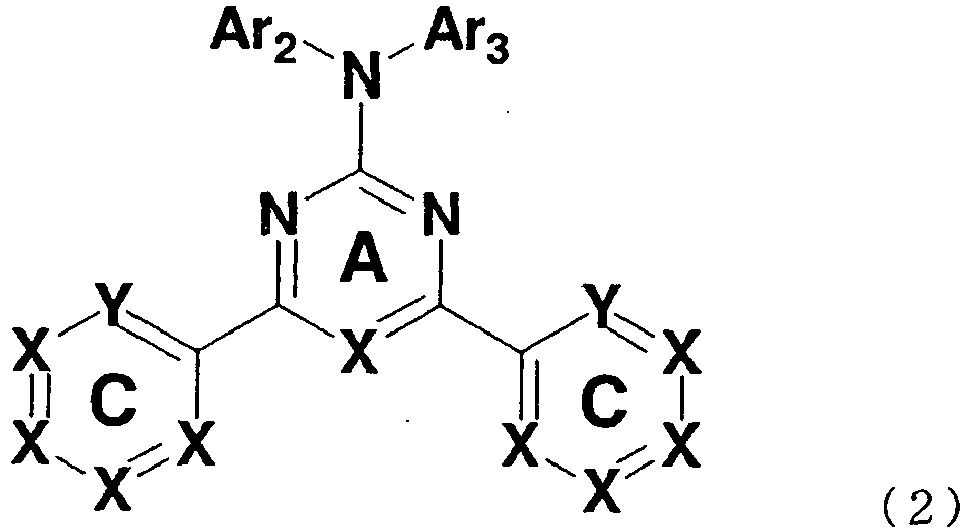

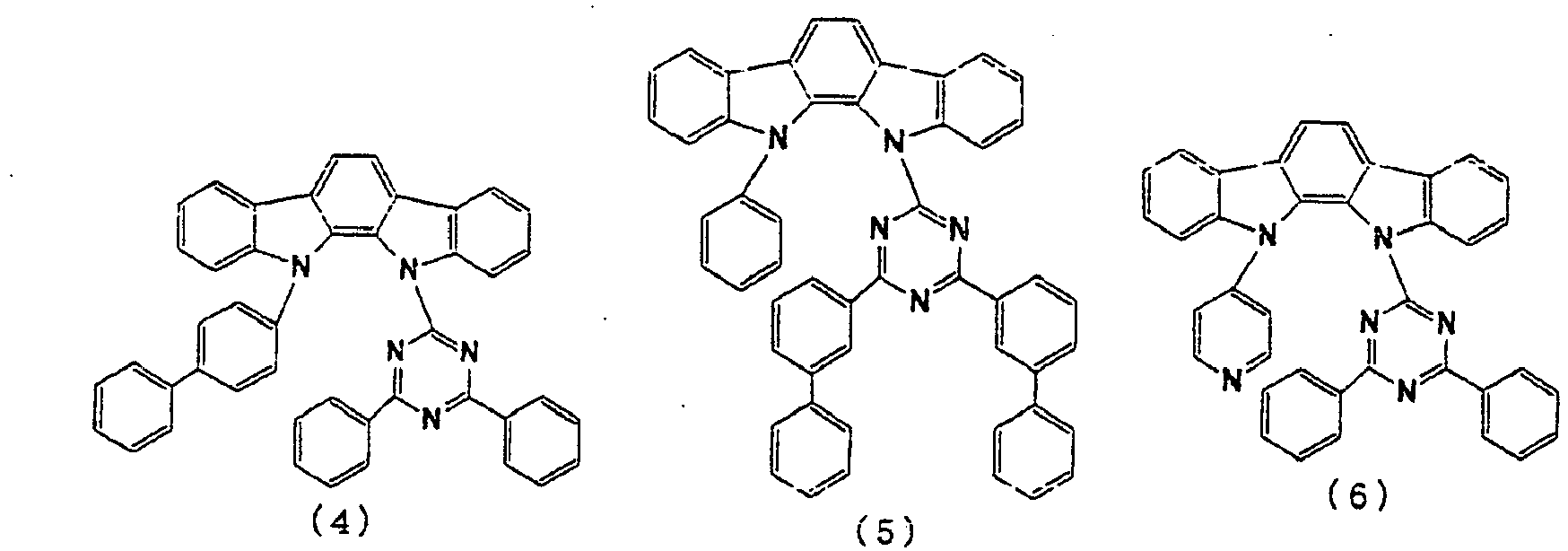
Claims (3)
- An organic electroluminescent device comprising an organic layer containing a compound for an organic electroluminescent device wherein the aforementioned organic layer is the light-emitting layer containing a phosphorescent dopant and characterized in that the compound for an organic electroluminescent device comprises a compound represented by the following general formula (2):
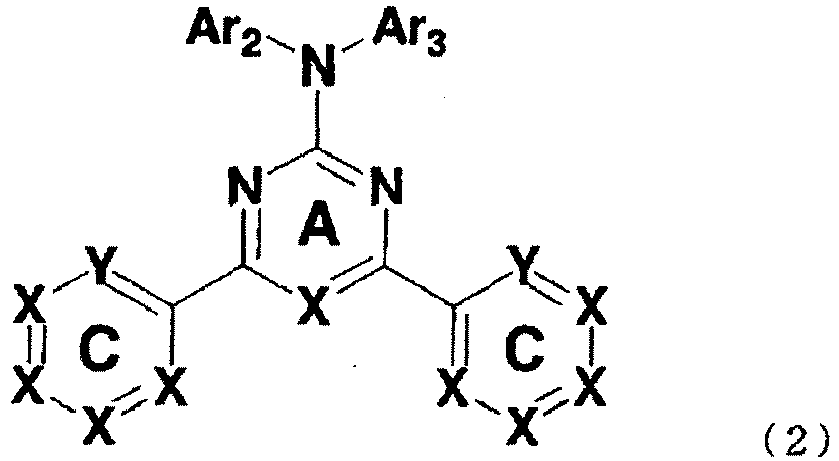 wherein X is independently a substituted or unsubstituted methine group or a nitrogen, Ar2 and Ar3 each is independently a substituted or unsubstituted aromatic hydrocarbon group or a substituted or unsubstituted aromatic heterocyclic group, and Ar2, Ar3, and the nitrogen to which Ar2 and Ar3 are joined may together form a nitrogen-containing heterocyclic ring wherein X and Y constituting ring C each is a substituted or unsubstituted methine group in general formula (2) and where X and Y are substituted methine groups, the substituents are six-membered aromatic groups,wherein the unsubstituted aromatic hydrocarbon groups are selected from groups that are formed by taking one H away respectively from benzene, naphthalene, phenanthrene, and pyrene,the unsubstituted aromatic heterocyclic groups are selected from groups that are formed by taking one H away respectively from pyridine, pyrimidine, triazine, pyrazine, pyridazine, quinoline, isoquinoline, quinoxaline, and naphthyridine,the nitrogen-containing heterocyclic ring which Ar2, Ar3, and the nitrogen to which they are joined form are selected from carbazole, phenoxazine, phenothiazine, and β-carboline, andthe substituents of the substituted aromatic hydrocarbon group or the substituted aromatic heterocyclic group are selected from a phenyl group, a naphthyl group, a biphenylyl group, a pyridyl group, a pyrimidinyl group, a triazinyl group, a pyrazinyl group, a pyridazinyl group, a quinolyl group, an isoquinolyl group, a quinoxalinyl group, and a naphthyridinyl group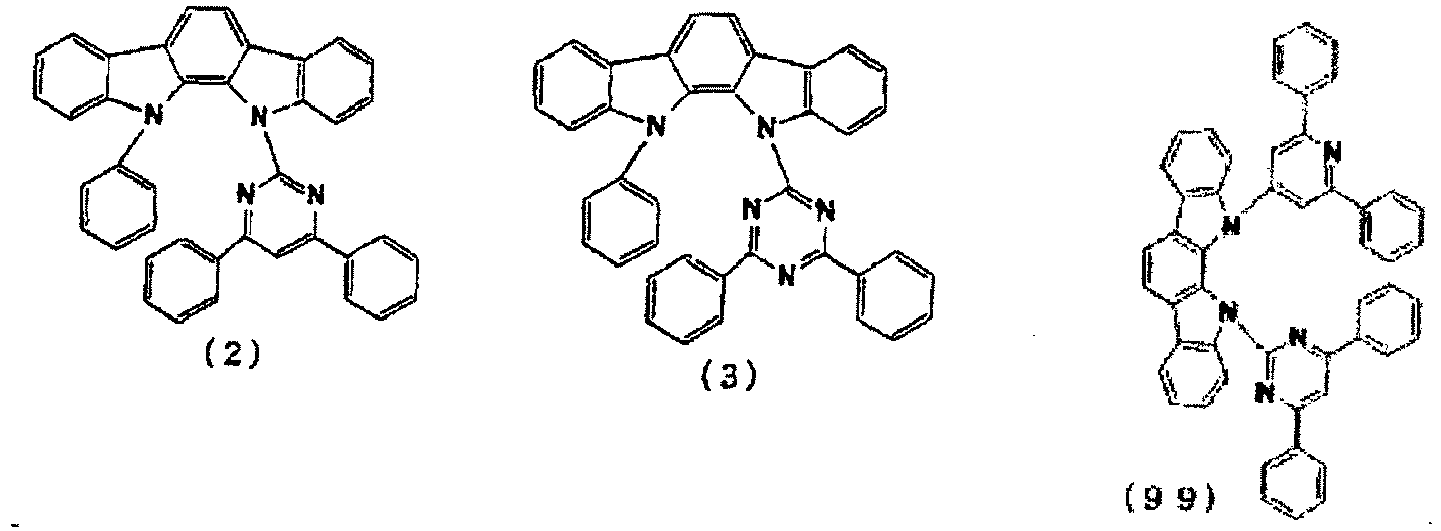


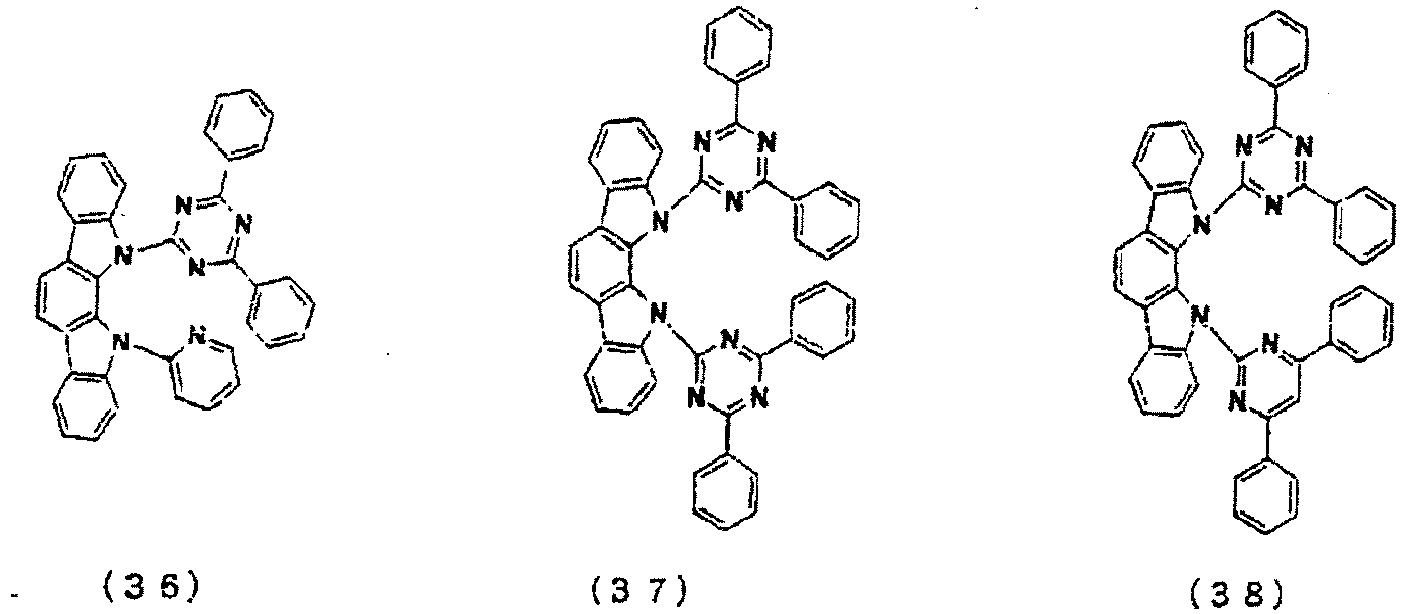

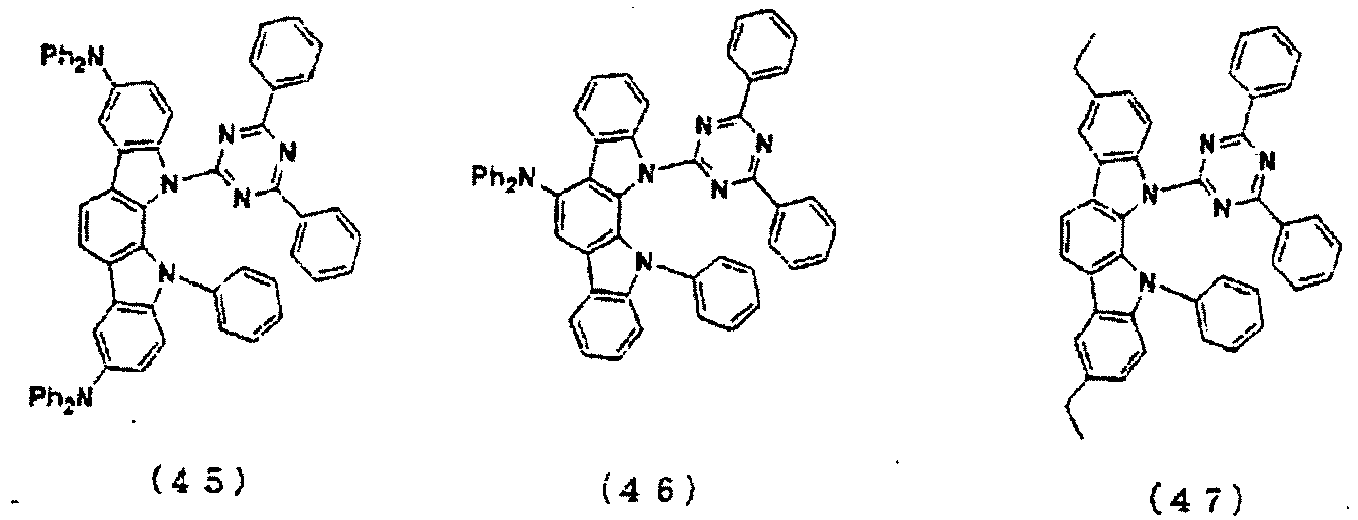


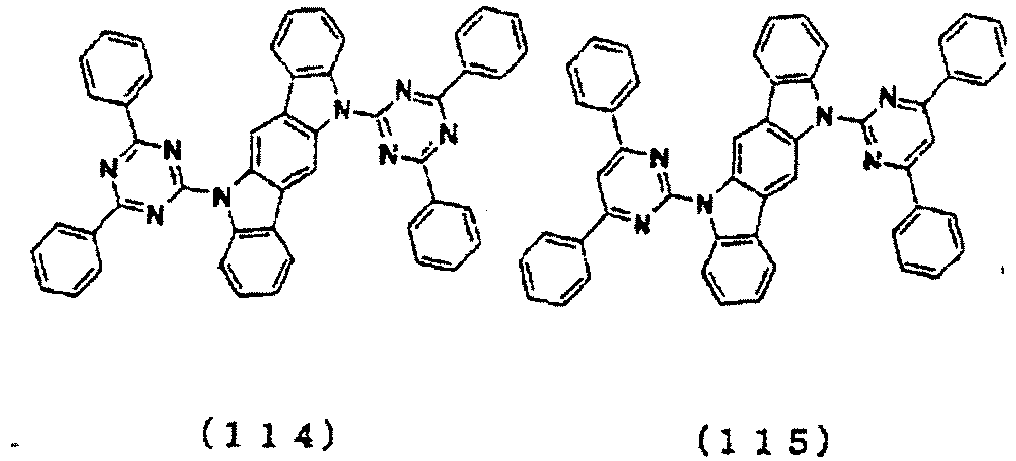
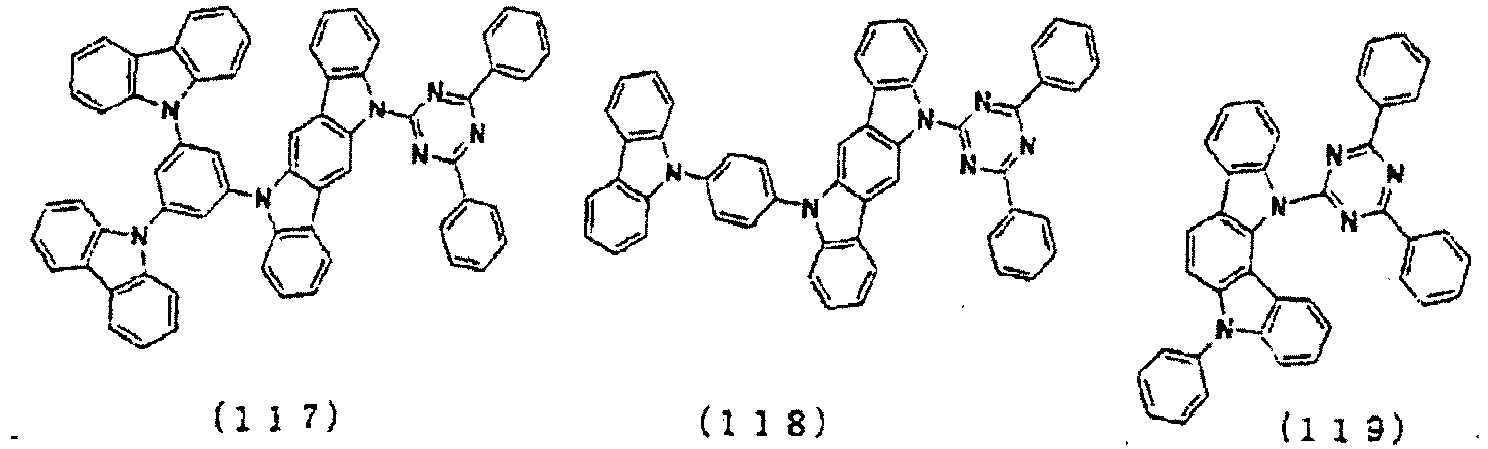

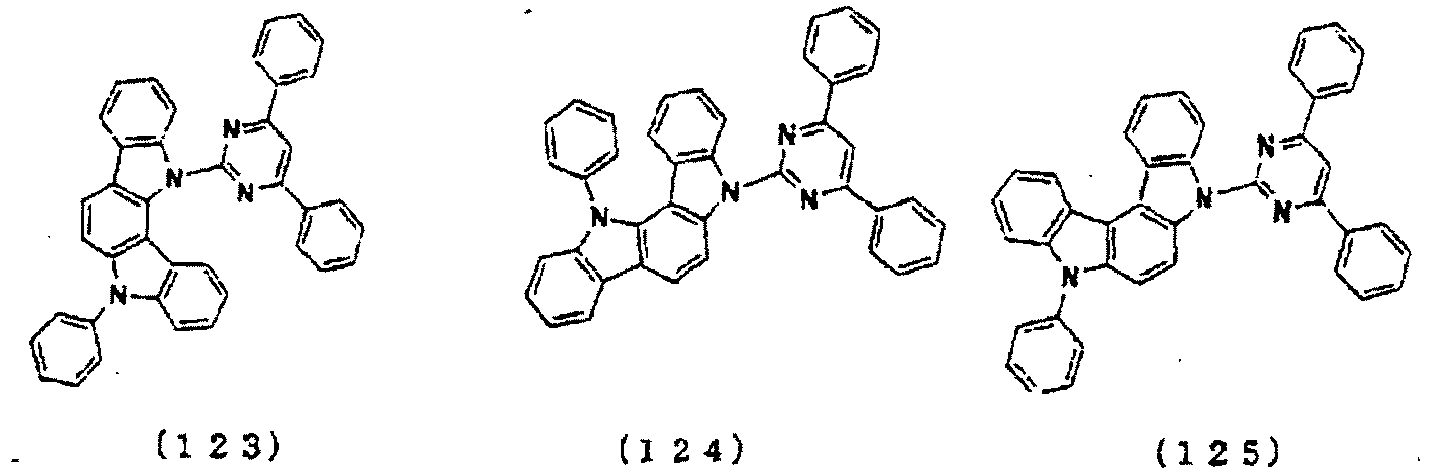

- The organic electroluminescent device according to claim 1 wherein the unsubstituted aromatic hydrocarbon groups in the compound for an organic electroluminescent device are selected from groups that are formed by taking one H away respectively from benzene, naphthalene, phenanthrene and the unsubstituted aromatic heterocyclic groups are selected from groups that are formed by taking one H away respectively from pyridine, pyrimidine and triazine.
- The organic electroluminescent device according to claim 1 wherein X constituting ring A in the compound for an organic electroluminescent device is a nitrogen or an unsubstituted methine group in general formula (2).
Applications Claiming Priority (2)
| Application Number | Priority Date | Filing Date | Title |
|---|---|---|---|
| JP2007079414 | 2007-03-26 | ||
| PCT/JP2008/055419 WO2008123189A1 (en) | 2007-03-26 | 2008-03-24 | Compound for organic electroluminescent device and organic electroluminescent device |
Publications (4)
| Publication Number | Publication Date |
|---|---|
| EP2138486A1 EP2138486A1 (en) | 2009-12-30 |
| EP2138486A4 EP2138486A4 (en) | 2012-02-29 |
| EP2138486B1 EP2138486B1 (en) | 2017-11-22 |
| EP2138486B2 true EP2138486B2 (en) | 2022-10-19 |
Family
ID=39830686
Family Applications (1)
| Application Number | Title | Priority Date | Filing Date |
|---|---|---|---|
| EP08738758.5A Not-in-force EP2138486B2 (en) | 2007-03-26 | 2008-03-24 | Organic electroluminescent device |
Country Status (7)
| Country | Link |
|---|---|
| US (1) | US8227798B2 (en) |
| EP (1) | EP2138486B2 (en) |
| JP (1) | JP5399236B2 (en) |
| KR (1) | KR101474232B1 (en) |
| CN (1) | CN101641340B (en) |
| TW (1) | TWI412522B (en) |
| WO (1) | WO2008123189A1 (en) |
Families Citing this family (45)
| Publication number | Priority date | Publication date | Assignee | Title |
|---|---|---|---|---|
| JP5209604B2 (en) * | 2007-03-27 | 2013-06-12 | 新日鉄住金化学株式会社 | Compound for organic electroluminescence device and organic electroluminescence device |
| KR101431644B1 (en) * | 2009-08-10 | 2014-08-21 | 롬엔드하스전자재료코리아유한회사 | Novel organic electroluminescent compounds and organic electroluminescent devices containing them |
| EP2468731B1 (en) * | 2009-08-21 | 2014-11-05 | Tosoh Corporation | Cyclic azine derivatives, processes for producing these, and organic electroluminescent element containing these as component |
| DE102009053382A1 (en) | 2009-11-14 | 2011-05-19 | Merck Patent Gmbh | Materials for electronic devices |
| KR20110066494A (en) * | 2009-12-11 | 2011-06-17 | 다우어드밴스드디스플레이머티리얼 유한회사 | Novel organic light emitting compound and organic electroluminescent device employing the same |
| KR101387738B1 (en) | 2009-12-29 | 2014-04-22 | 제일모직주식회사 | Compound for organic photoelectric device and organic photoelectric device including the same |
| DE102010004803A1 (en) | 2010-01-16 | 2011-07-21 | Merck Patent GmbH, 64293 | Materials for organic electroluminescent devices |
| KR20110122051A (en) * | 2010-05-03 | 2011-11-09 | 제일모직주식회사 | Compound for organic photoelectric device and organic photoelectric device comprising same |
| KR101420318B1 (en) * | 2010-06-17 | 2014-07-16 | 이-레이 옵토일렉트로닉스 테크놀로지 컴퍼니 리미티드 | Compound for organic electroluminescent device and organic electroluminescent device having the same |
| US20140054564A1 (en) * | 2010-07-30 | 2014-02-27 | Rohm And Haas Electronic Materials Korea Ltd. | Electroluminescent device using electroluminescent compound as luminescent material |
| JP5770289B2 (en) | 2010-08-20 | 2015-08-26 | ユニバーサル ディスプレイ コーポレイション | Bicarbazole compounds for OLED |
| US9705091B2 (en) | 2010-12-20 | 2017-07-11 | Idemitsu Kosan Co., Ltd. | Aromatic heterocycle derivative and organic electroluminescent element using same |
| US9287512B2 (en) | 2011-03-08 | 2016-03-15 | Rohm And Haas Electronic Materials Korea Ltd. | Organic electroluminescent compounds, layers and organic electroluminescent device using the same |
| EP2705550B1 (en) | 2011-05-05 | 2017-07-05 | Merck Patent GmbH | Compounds for electronic devices |
| CN102738413B (en) * | 2012-06-15 | 2016-08-03 | 固安翌光科技有限公司 | A kind of organic electroluminescence device and preparation method thereof |
| WO2013191177A1 (en) | 2012-06-18 | 2013-12-27 | 東ソー株式会社 | Cyclic azine compound, method for producing same, and organic electroluminescent element containing same |
| KR102026824B1 (en) | 2012-06-27 | 2019-10-01 | 삼성디스플레이 주식회사 | Novel fused ring compound and organic light-emitting device including the same |
| KR102025834B1 (en) * | 2012-06-29 | 2019-09-27 | 삼성디스플레이 주식회사 | Novel organic emitting compound, and organic light emitting diode comprising the same |
| WO2014058123A1 (en) | 2012-10-08 | 2014-04-17 | 제일모직 주식회사 | Compound for organic optoelectric device, organic light emitting diode comprising same, and display device comprising organic light emitting diode |
| KR101728498B1 (en) * | 2013-02-13 | 2017-04-19 | 삼성전자주식회사 | Compound for organic optoelectronic device, organic light emitting diode including the same and display including the organic light emitting diode |
| US9673401B2 (en) * | 2013-06-28 | 2017-06-06 | Universal Display Corporation | Organic electroluminescent materials and devices |
| CN103985818B (en) * | 2014-04-01 | 2016-04-13 | 上海道亦化工科技有限公司 | A kind of organic electroluminescence device |
| WO2015178731A1 (en) | 2014-05-23 | 2015-11-26 | Rohm And Haas Electronic Materials Korea Ltd. | An organic electroluminescent compound and an organic electroluminescent device comprising the same |
| KR101884173B1 (en) | 2014-05-23 | 2018-08-02 | 롬엔드하스전자재료코리아유한회사 | An organic electroluminescent compound and an organic electroluminescent device comprising the same |
| EP3207045A4 (en) * | 2014-10-17 | 2018-07-04 | Rohm And Haas Electronic Materials Korea Ltd. | A plurality of host materials and an organic electroluminescence device comprising the same |
| KR102432080B1 (en) * | 2014-12-08 | 2022-08-16 | 엘지디스플레이 주식회사 | Organic Light Emitting Display Device |
| KR102606391B1 (en) | 2015-02-12 | 2023-11-27 | 롬엔드하스전자재료코리아유한회사 | Organic Electroluminescent Compounds and Organic Electroluminescent Device Comprising the Same |
| WO2016129819A1 (en) | 2015-02-12 | 2016-08-18 | Rohm And Haas Electronic Materials Korea Ltd. | Organic electroluminescent compounds and organic electroluminescent device comprising the same |
| WO2016148390A1 (en) | 2015-03-13 | 2016-09-22 | Rohm And Haas Electronic Materials Korea Ltd. | A plurality of host materials and organic electroluminescent device comprising the same |
| KR102613166B1 (en) | 2015-03-13 | 2023-12-14 | 롬엔드하스전자재료코리아유한회사 | A plurality of host materials and organic electroluminescent device comprising the same |
| CN106243091B (en) * | 2016-08-01 | 2019-01-29 | 大连理工大学 | Preparation method and application of a class of six-membered diazide heterocyclic derivatives containing four identical substituents |
| CN106243086A (en) * | 2016-08-01 | 2016-12-21 | 大连理工大学 | Preparation method and application of a class of pyrimidine derivatives connected with four identical electron-donating groups |
| CN107799658B (en) * | 2016-08-29 | 2021-05-28 | 株式会社半导体能源研究所 | Light-emitting element, light-emitting device, electronic equipment, lighting device and organometallic complex |
| KR102487503B1 (en) * | 2017-07-04 | 2023-01-12 | 솔루스첨단소재 주식회사 | Organic compound and organic electroluminescent device using the same |
| WO2019083248A1 (en) * | 2017-10-27 | 2019-05-02 | Rohm And Haas Electronic Materials Korea Ltd. | Organic electroluminescent compound and organic electroluminescent device comprising the same |
| KR102871270B1 (en) | 2017-10-27 | 2025-10-16 | 듀폰스페셜티머터리얼스코리아 유한회사 | Organic electroluminescent compound and organic electroluminescent device comprising the same |
| KR102400585B1 (en) * | 2017-10-27 | 2022-05-23 | 삼성디스플레이 주식회사 | Compound including nitrogen and organic electroluminescence device including the same |
| CN107805242A (en) * | 2017-10-31 | 2018-03-16 | 长春海谱润斯科技有限公司 | A kind of pyrazine connection pyrimidine derivatives and its organic luminescent device |
| US20200144512A1 (en) * | 2018-07-13 | 2020-05-07 | Universal Display Corporation | Organic electroluminescent materials and devices |
| US20200020867A1 (en) * | 2018-07-13 | 2020-01-16 | Universal Display Corporation | Organic electroluminescent materials and devices |
| KR102471152B1 (en) * | 2019-01-10 | 2022-11-24 | 삼성에스디아이 주식회사 | Compound for organic optoelectronic device, composition for organic optoelectronic device and organic optoelectronic device and display device |
| KR20210082888A (en) * | 2019-12-26 | 2021-07-06 | 롬엔드하스전자재료코리아유한회사 | A plurality of host materials and organic electroluminescent device comprising the same |
| KR102853501B1 (en) | 2020-07-27 | 2025-09-05 | 삼성디스플레이 주식회사 | Organic electroluminescence device and polycyclic compound for organic electroluminescence device |
| KR20230003731A (en) * | 2021-06-29 | 2023-01-06 | 삼성디스플레이 주식회사 | Light emitting device and display apparatus including the same |
| KR20240048081A (en) * | 2022-10-05 | 2024-04-15 | 삼성디스플레이 주식회사 | Light emitting element and nitrogen containing compound for the same |
Citations (6)
| Publication number | Priority date | Publication date | Assignee | Title |
|---|---|---|---|---|
| WO2001049769A1 (en) † | 2000-01-05 | 2001-07-12 | Cambridge Display Technology Limited | Polymers, their preparation and uses |
| JP2004171808A (en) † | 2002-11-18 | 2004-06-17 | Konica Minolta Holdings Inc | Organic electroluminescence element and display device |
| JP2006080271A (en) † | 2004-09-09 | 2006-03-23 | Konica Minolta Holdings Inc | Organic electroluminescence element, lighting system and display device |
| JP2006303733A (en) † | 2005-04-18 | 2006-11-02 | Nec Corp | Base station search system for dual mode portable terminal |
| JP2006306783A (en) † | 2005-04-28 | 2006-11-09 | Jsr Corp | Triazine compound, composition for organic electroluminescence device, and organic electroluminescence device |
| EP2080762A1 (en) † | 2006-11-09 | 2009-07-22 | Nippon Steel Chemical Co., Ltd. | Compound for organic electroluminescent device and organic electroluminescent device |
Family Cites Families (15)
| Publication number | Priority date | Publication date | Assignee | Title |
|---|---|---|---|---|
| US3843649A (en) * | 1972-05-01 | 1974-10-22 | Ciba Geigy Corp | S-triazine tetracarboxylic acids and dianhydrides |
| EP2270895A3 (en) | 1999-12-01 | 2011-03-30 | The Trustees of Princeton University | Complexes for OLEDs |
| US6512082B2 (en) * | 2000-01-05 | 2003-01-28 | Cambridge Display Technology Ltd. | Polymers, their preparation and uses |
| US6858324B2 (en) * | 2000-03-10 | 2005-02-22 | Cambridge Display Technology Limited | Copolymer |
| JP2001313178A (en) | 2000-04-28 | 2001-11-09 | Pioneer Electronic Corp | Organic electroluminescence device |
| WO2003078541A1 (en) * | 2002-03-15 | 2003-09-25 | Idemitsu Kosan Co., Ltd. | Material for organic electroluminescent devices and organic electroluminescent devices made by using the same |
| JP4217194B2 (en) * | 2003-06-20 | 2009-01-28 | 三井化学株式会社 | Optical recording medium and triazine compound |
| US7445535B2 (en) * | 2003-12-11 | 2008-11-04 | Canon Kabushiki Kaisha | Electron source producing apparatus and method |
| CN1914956A (en) * | 2004-02-06 | 2007-02-14 | 出光兴产株式会社 | organic electroluminescent element |
| TWI428053B (en) * | 2004-02-09 | 2014-02-21 | Idemitsu Kosan Co | Organic electroluminescent element |
| KR100573137B1 (en) * | 2004-04-02 | 2006-04-24 | 삼성에스디아이 주식회사 | Fluorene compound and organic electroluminescent device using same |
| JP4541809B2 (en) | 2004-09-08 | 2010-09-08 | キヤノン株式会社 | Organic compound and organic light emitting device |
| JP4867244B2 (en) * | 2005-09-12 | 2012-02-01 | Jsr株式会社 | Charge transporting compound and method for producing the same, composition for organic electroluminescence device, and organic electroluminescence device |
| WO2007063754A1 (en) | 2005-12-01 | 2007-06-07 | Nippon Steel Chemical Co., Ltd. | Compound for organic electroluminescent element and organic electroluminescent element |
| JP5017858B2 (en) * | 2005-12-27 | 2012-09-05 | コニカミノルタホールディングス株式会社 | Organic electroluminescence device |
-
2008
- 2008-03-24 CN CN2008800097122A patent/CN101641340B/en active Active
- 2008-03-24 WO PCT/JP2008/055419 patent/WO2008123189A1/en not_active Ceased
- 2008-03-24 US US12/593,126 patent/US8227798B2/en active Active
- 2008-03-24 JP JP2009509093A patent/JP5399236B2/en active Active
- 2008-03-24 EP EP08738758.5A patent/EP2138486B2/en not_active Not-in-force
- 2008-03-24 KR KR1020097021468A patent/KR101474232B1/en active Active
- 2008-03-25 TW TW097110616A patent/TWI412522B/en not_active IP Right Cessation
Patent Citations (6)
| Publication number | Priority date | Publication date | Assignee | Title |
|---|---|---|---|---|
| WO2001049769A1 (en) † | 2000-01-05 | 2001-07-12 | Cambridge Display Technology Limited | Polymers, their preparation and uses |
| JP2004171808A (en) † | 2002-11-18 | 2004-06-17 | Konica Minolta Holdings Inc | Organic electroluminescence element and display device |
| JP2006080271A (en) † | 2004-09-09 | 2006-03-23 | Konica Minolta Holdings Inc | Organic electroluminescence element, lighting system and display device |
| JP2006303733A (en) † | 2005-04-18 | 2006-11-02 | Nec Corp | Base station search system for dual mode portable terminal |
| JP2006306783A (en) † | 2005-04-28 | 2006-11-09 | Jsr Corp | Triazine compound, composition for organic electroluminescence device, and organic electroluminescence device |
| EP2080762A1 (en) † | 2006-11-09 | 2009-07-22 | Nippon Steel Chemical Co., Ltd. | Compound for organic electroluminescent device and organic electroluminescent device |
Non-Patent Citations (4)
| Title |
|---|
| "Quantum calculations", Dr. Nils Koenen, Merck KGaA † |
| "Quantumchemical calculations", Dr. Charlotte Walter, Merck KGaA † |
| BALDO ET AL.: "Phosphorescent materials for application to organic light emitting devices", PURE APPL. CHEM., vol. 71, no. 11, 1999, pages 2095 - 2106 † |
| experimental report 'Synthesis of H-2' † |
Also Published As
| Publication number | Publication date |
|---|---|
| EP2138486A4 (en) | 2012-02-29 |
| EP2138486A1 (en) | 2009-12-30 |
| JP5399236B2 (en) | 2014-01-29 |
| KR101474232B1 (en) | 2014-12-18 |
| US8227798B2 (en) | 2012-07-24 |
| CN101641340B (en) | 2012-10-17 |
| TWI412522B (en) | 2013-10-21 |
| US20100044695A1 (en) | 2010-02-25 |
| KR20100015581A (en) | 2010-02-12 |
| CN101641340A (en) | 2010-02-03 |
| JPWO2008123189A1 (en) | 2010-07-15 |
| WO2008123189A1 (en) | 2008-10-16 |
| EP2138486B1 (en) | 2017-11-22 |
| TW200906808A (en) | 2009-02-16 |
Similar Documents
| Publication | Publication Date | Title |
|---|---|---|
| EP2138486B1 (en) | Organic electroluminescent device | |
| EP2141152B1 (en) | Compound for organic electroluminescent device and organic electroluminescent device | |
| EP2388842B1 (en) | Organic electroluminescent element | |
| US8859109B2 (en) | Compound for organic electroluminescent device and organic electroluminescent device using the same | |
| EP2080762B1 (en) | Compound for organic electroluminescent device and organic electroluminescent device | |
| EP2284920B1 (en) | Compound for organic electric field light-emitting element and organic electric field light-emitting element | |
| EP2521197B1 (en) | Organic electroluminescent element | |
| EP2293357B1 (en) | Compound for organic electroluminescent device and organic electroluminescent device | |
| EP2535957B1 (en) | Organic electroluminescent element | |
| EP2521196B1 (en) | Organic electroluminescent element | |
| EP2403029B1 (en) | Organic electroluminescent element | |
| KR102266981B1 (en) | Novel compound and organic light emitting device comprising the same |
Legal Events
| Date | Code | Title | Description |
|---|---|---|---|
| PUAI | Public reference made under article 153(3) epc to a published international application that has entered the european phase |
Free format text: ORIGINAL CODE: 0009012 |
|
| 17P | Request for examination filed |
Effective date: 20091013 |
|
| AK | Designated contracting states |
Kind code of ref document: A1 Designated state(s): AT BE BG CH CY CZ DE DK EE ES FI FR GB GR HR HU IE IS IT LI LT LU LV MC MT NL NO PL PT RO SE SI SK TR |
|
| DAX | Request for extension of the european patent (deleted) | ||
| A4 | Supplementary search report drawn up and despatched |
Effective date: 20120130 |
|
| RIC1 | Information provided on ipc code assigned before grant |
Ipc: H01L 51/50 20060101ALI20120124BHEP Ipc: C07D 413/04 20060101ALI20120124BHEP Ipc: H01L 51/00 20060101ALI20120124BHEP Ipc: C07D 403/04 20060101ALI20120124BHEP Ipc: C07D 251/18 20060101AFI20120124BHEP Ipc: C09K 11/06 20060101ALI20120124BHEP Ipc: C07D 251/34 20060101ALI20120124BHEP Ipc: C07D 251/22 20060101ALI20120124BHEP Ipc: C07D 403/10 20060101ALI20120124BHEP |
|
| 17Q | First examination report despatched |
Effective date: 20121122 |
|
| RAP1 | Party data changed (applicant data changed or rights of an application transferred) |
Owner name: NIPPON STEEL & SUMIKIN CHEMICAL CO., LTD. |
|
| REG | Reference to a national code |
Ref country code: DE Ref legal event code: R079 Ref document number: 602008053057 Country of ref document: DE Free format text: PREVIOUS MAIN CLASS: C07D0251180000 Ipc: H01L0051540000 |
|
| RIC1 | Information provided on ipc code assigned before grant |
Ipc: H01L 51/54 20060101AFI20160928BHEP Ipc: C09K 11/06 20060101ALI20160928BHEP Ipc: C07D 251/34 20060101ALI20160928BHEP Ipc: C07D 403/04 20060101ALI20160928BHEP Ipc: C07D 403/10 20060101ALI20160928BHEP Ipc: C07D 413/04 20060101ALI20160928BHEP Ipc: C07D 251/22 20060101ALI20160928BHEP Ipc: C07D 251/18 20060101ALI20160928BHEP |
|
| GRAP | Despatch of communication of intention to grant a patent |
Free format text: ORIGINAL CODE: EPIDOSNIGR1 |
|
| STAA | Information on the status of an ep patent application or granted ep patent |
Free format text: STATUS: GRANT OF PATENT IS INTENDED |
|
| RIN1 | Information on inventor provided before grant (corrected) |
Inventor name: YAMAMOTO, TOSHIHIRO Inventor name: HOTTA, MASANORI Inventor name: OGAWA, JUNYA Inventor name: KAI, TAKAHIRO |
|
| INTG | Intention to grant announced |
Effective date: 20161111 |
|
| GRAS | Grant fee paid |
Free format text: ORIGINAL CODE: EPIDOSNIGR3 |
|
| GRAJ | Information related to disapproval of communication of intention to grant by the applicant or resumption of examination proceedings by the epo deleted |
Free format text: ORIGINAL CODE: EPIDOSDIGR1 |
|
| GRAL | Information related to payment of fee for publishing/printing deleted |
Free format text: ORIGINAL CODE: EPIDOSDIGR3 |
|
| STAA | Information on the status of an ep patent application or granted ep patent |
Free format text: STATUS: EXAMINATION IS IN PROGRESS |
|
| TPAC | Observations filed by third parties |
Free format text: ORIGINAL CODE: EPIDOSNTIPA |
|
| INTC | Intention to grant announced (deleted) | ||
| GRAP | Despatch of communication of intention to grant a patent |
Free format text: ORIGINAL CODE: EPIDOSNIGR1 |
|
| STAA | Information on the status of an ep patent application or granted ep patent |
Free format text: STATUS: GRANT OF PATENT IS INTENDED |
|
| INTG | Intention to grant announced |
Effective date: 20170707 |
|
| GRAA | (expected) grant |
Free format text: ORIGINAL CODE: 0009210 |
|
| STAA | Information on the status of an ep patent application or granted ep patent |
Free format text: STATUS: THE PATENT HAS BEEN GRANTED |
|
| AK | Designated contracting states |
Kind code of ref document: B1 Designated state(s): AT BE BG CH CY CZ DE DK EE ES FI FR GB GR HR HU IE IS IT LI LT LU LV MC MT NL NO PL PT RO SE SI SK TR |
|
| REG | Reference to a national code |
Ref country code: GB Ref legal event code: FG4D |
|
| REG | Reference to a national code |
Ref country code: CH Ref legal event code: EP |
|
| REG | Reference to a national code |
Ref country code: IE Ref legal event code: FG4D |
|
| REG | Reference to a national code |
Ref country code: AT Ref legal event code: REF Ref document number: 949165 Country of ref document: AT Kind code of ref document: T Effective date: 20171215 |
|
| REG | Reference to a national code |
Ref country code: DE Ref legal event code: R096 Ref document number: 602008053057 Country of ref document: DE |
|
| REG | Reference to a national code |
Ref country code: NL Ref legal event code: MP Effective date: 20171122 |
|
| REG | Reference to a national code |
Ref country code: LT Ref legal event code: MG4D |
|
| REG | Reference to a national code |
Ref country code: AT Ref legal event code: MK05 Ref document number: 949165 Country of ref document: AT Kind code of ref document: T Effective date: 20171122 |
|
| PG25 | Lapsed in a contracting state [announced via postgrant information from national office to epo] |
Ref country code: FI Free format text: LAPSE BECAUSE OF FAILURE TO SUBMIT A TRANSLATION OF THE DESCRIPTION OR TO PAY THE FEE WITHIN THE PRESCRIBED TIME-LIMIT Effective date: 20171122 Ref country code: NO Free format text: LAPSE BECAUSE OF FAILURE TO SUBMIT A TRANSLATION OF THE DESCRIPTION OR TO PAY THE FEE WITHIN THE PRESCRIBED TIME-LIMIT Effective date: 20180222 Ref country code: LT Free format text: LAPSE BECAUSE OF FAILURE TO SUBMIT A TRANSLATION OF THE DESCRIPTION OR TO PAY THE FEE WITHIN THE PRESCRIBED TIME-LIMIT Effective date: 20171122 Ref country code: ES Free format text: LAPSE BECAUSE OF FAILURE TO SUBMIT A TRANSLATION OF THE DESCRIPTION OR TO PAY THE FEE WITHIN THE PRESCRIBED TIME-LIMIT Effective date: 20171122 Ref country code: SE Free format text: LAPSE BECAUSE OF FAILURE TO SUBMIT A TRANSLATION OF THE DESCRIPTION OR TO PAY THE FEE WITHIN THE PRESCRIBED TIME-LIMIT Effective date: 20171122 Ref country code: NL Free format text: LAPSE BECAUSE OF FAILURE TO SUBMIT A TRANSLATION OF THE DESCRIPTION OR TO PAY THE FEE WITHIN THE PRESCRIBED TIME-LIMIT Effective date: 20171122 |
|
| PG25 | Lapsed in a contracting state [announced via postgrant information from national office to epo] |
Ref country code: AT Free format text: LAPSE BECAUSE OF FAILURE TO SUBMIT A TRANSLATION OF THE DESCRIPTION OR TO PAY THE FEE WITHIN THE PRESCRIBED TIME-LIMIT Effective date: 20171122 Ref country code: HR Free format text: LAPSE BECAUSE OF FAILURE TO SUBMIT A TRANSLATION OF THE DESCRIPTION OR TO PAY THE FEE WITHIN THE PRESCRIBED TIME-LIMIT Effective date: 20171122 Ref country code: BG Free format text: LAPSE BECAUSE OF FAILURE TO SUBMIT A TRANSLATION OF THE DESCRIPTION OR TO PAY THE FEE WITHIN THE PRESCRIBED TIME-LIMIT Effective date: 20180222 Ref country code: LV Free format text: LAPSE BECAUSE OF FAILURE TO SUBMIT A TRANSLATION OF THE DESCRIPTION OR TO PAY THE FEE WITHIN THE PRESCRIBED TIME-LIMIT Effective date: 20171122 Ref country code: GR Free format text: LAPSE BECAUSE OF FAILURE TO SUBMIT A TRANSLATION OF THE DESCRIPTION OR TO PAY THE FEE WITHIN THE PRESCRIBED TIME-LIMIT Effective date: 20180223 |
|
| REG | Reference to a national code |
Ref country code: DE Ref legal event code: R026 Ref document number: 602008053057 Country of ref document: DE |
|
| PG25 | Lapsed in a contracting state [announced via postgrant information from national office to epo] |
Ref country code: DK Free format text: LAPSE BECAUSE OF FAILURE TO SUBMIT A TRANSLATION OF THE DESCRIPTION OR TO PAY THE FEE WITHIN THE PRESCRIBED TIME-LIMIT Effective date: 20171122 Ref country code: CY Free format text: LAPSE BECAUSE OF FAILURE TO SUBMIT A TRANSLATION OF THE DESCRIPTION OR TO PAY THE FEE WITHIN THE PRESCRIBED TIME-LIMIT Effective date: 20171122 Ref country code: EE Free format text: LAPSE BECAUSE OF FAILURE TO SUBMIT A TRANSLATION OF THE DESCRIPTION OR TO PAY THE FEE WITHIN THE PRESCRIBED TIME-LIMIT Effective date: 20171122 Ref country code: SK Free format text: LAPSE BECAUSE OF FAILURE TO SUBMIT A TRANSLATION OF THE DESCRIPTION OR TO PAY THE FEE WITHIN THE PRESCRIBED TIME-LIMIT Effective date: 20171122 Ref country code: CZ Free format text: LAPSE BECAUSE OF FAILURE TO SUBMIT A TRANSLATION OF THE DESCRIPTION OR TO PAY THE FEE WITHIN THE PRESCRIBED TIME-LIMIT Effective date: 20171122 |
|
| PLBI | Opposition filed |
Free format text: ORIGINAL CODE: 0009260 |
|
| PG25 | Lapsed in a contracting state [announced via postgrant information from national office to epo] |
Ref country code: IT Free format text: LAPSE BECAUSE OF FAILURE TO SUBMIT A TRANSLATION OF THE DESCRIPTION OR TO PAY THE FEE WITHIN THE PRESCRIBED TIME-LIMIT Effective date: 20171122 Ref country code: PL Free format text: LAPSE BECAUSE OF FAILURE TO SUBMIT A TRANSLATION OF THE DESCRIPTION OR TO PAY THE FEE WITHIN THE PRESCRIBED TIME-LIMIT Effective date: 20171122 Ref country code: RO Free format text: LAPSE BECAUSE OF FAILURE TO SUBMIT A TRANSLATION OF THE DESCRIPTION OR TO PAY THE FEE WITHIN THE PRESCRIBED TIME-LIMIT Effective date: 20171122 |
|
| PLAX | Notice of opposition and request to file observation + time limit sent |
Free format text: ORIGINAL CODE: EPIDOSNOBS2 |
|
| 26 | Opposition filed |
Opponent name: MERCK PATENT GMBH Effective date: 20180730 |
|
| REG | Reference to a national code |
Ref country code: CH Ref legal event code: PL |
|
| PG25 | Lapsed in a contracting state [announced via postgrant information from national office to epo] |
Ref country code: MC Free format text: LAPSE BECAUSE OF FAILURE TO SUBMIT A TRANSLATION OF THE DESCRIPTION OR TO PAY THE FEE WITHIN THE PRESCRIBED TIME-LIMIT Effective date: 20171122 Ref country code: SI Free format text: LAPSE BECAUSE OF FAILURE TO SUBMIT A TRANSLATION OF THE DESCRIPTION OR TO PAY THE FEE WITHIN THE PRESCRIBED TIME-LIMIT Effective date: 20171122 |
|
| REG | Reference to a national code |
Ref country code: BE Ref legal event code: MM Effective date: 20180331 |
|
| REG | Reference to a national code |
Ref country code: IE Ref legal event code: MM4A |
|
| PG25 | Lapsed in a contracting state [announced via postgrant information from national office to epo] |
Ref country code: LU Free format text: LAPSE BECAUSE OF NON-PAYMENT OF DUE FEES Effective date: 20180324 |
|
| PLBB | Reply of patent proprietor to notice(s) of opposition received |
Free format text: ORIGINAL CODE: EPIDOSNOBS3 |
|
| PG25 | Lapsed in a contracting state [announced via postgrant information from national office to epo] |
Ref country code: IE Free format text: LAPSE BECAUSE OF NON-PAYMENT OF DUE FEES Effective date: 20180324 |
|
| PG25 | Lapsed in a contracting state [announced via postgrant information from national office to epo] |
Ref country code: BE Free format text: LAPSE BECAUSE OF NON-PAYMENT OF DUE FEES Effective date: 20180331 Ref country code: LI Free format text: LAPSE BECAUSE OF NON-PAYMENT OF DUE FEES Effective date: 20180331 Ref country code: CH Free format text: LAPSE BECAUSE OF NON-PAYMENT OF DUE FEES Effective date: 20180331 |
|
| RAP2 | Party data changed (patent owner data changed or rights of a patent transferred) |
Owner name: NIPPON STEEL CHEMICAL & MATERIAL CO., LTD. |
|
| RAP2 | Party data changed (patent owner data changed or rights of a patent transferred) |
Owner name: NIPPON STEEL CHEMICAL & MATERIAL CO., LTD. |
|
| PG25 | Lapsed in a contracting state [announced via postgrant information from national office to epo] |
Ref country code: FR Free format text: LAPSE BECAUSE OF NON-PAYMENT OF DUE FEES Effective date: 20180331 |
|
| RAP2 | Party data changed (patent owner data changed or rights of a patent transferred) |
Owner name: NIPPON STEEL CHEMICAL & MATERIAL CO., LTD. |
|
| RAP2 | Party data changed (patent owner data changed or rights of a patent transferred) |
Owner name: NIPPON STEEL CHEMICAL & MATERIAL CO., LTD. |
|
| PG25 | Lapsed in a contracting state [announced via postgrant information from national office to epo] |
Ref country code: MT Free format text: LAPSE BECAUSE OF NON-PAYMENT OF DUE FEES Effective date: 20180324 |
|
| PG25 | Lapsed in a contracting state [announced via postgrant information from national office to epo] |
Ref country code: TR Free format text: LAPSE BECAUSE OF FAILURE TO SUBMIT A TRANSLATION OF THE DESCRIPTION OR TO PAY THE FEE WITHIN THE PRESCRIBED TIME-LIMIT Effective date: 20171122 |
|
| PGFP | Annual fee paid to national office [announced via postgrant information from national office to epo] |
Ref country code: GB Payment date: 20200311 Year of fee payment: 13 |
|
| PG25 | Lapsed in a contracting state [announced via postgrant information from national office to epo] |
Ref country code: HU Free format text: LAPSE BECAUSE OF FAILURE TO SUBMIT A TRANSLATION OF THE DESCRIPTION OR TO PAY THE FEE WITHIN THE PRESCRIBED TIME-LIMIT; INVALID AB INITIO Effective date: 20080324 Ref country code: PT Free format text: LAPSE BECAUSE OF FAILURE TO SUBMIT A TRANSLATION OF THE DESCRIPTION OR TO PAY THE FEE WITHIN THE PRESCRIBED TIME-LIMIT Effective date: 20171122 |
|
| PG25 | Lapsed in a contracting state [announced via postgrant information from national office to epo] |
Ref country code: IS Free format text: LAPSE BECAUSE OF FAILURE TO SUBMIT A TRANSLATION OF THE DESCRIPTION OR TO PAY THE FEE WITHIN THE PRESCRIBED TIME-LIMIT Effective date: 20180322 |
|
| REG | Reference to a national code |
Ref country code: DE Ref legal event code: R081 Ref document number: 602008053057 Country of ref document: DE Owner name: NIPPON STEEL CHEMICAL & MATERIAL CO., LTD., JP Free format text: FORMER OWNER: NIPPON STEEL & SUMIKIN CHEMICAL CO., LTD., TOKYO, JP |
|
| GBPC | Gb: european patent ceased through non-payment of renewal fee |
Effective date: 20210324 |
|
| REG | Reference to a national code |
Ref country code: CH Ref legal event code: PK Free format text: BERICHTIGUNGEN |
|
| RIC2 | Information provided on ipc code assigned after grant |
Ipc: H01L 51/50 20060101ALI20211209BHEP Ipc: H01L 51/00 20060101ALI20211209BHEP Ipc: C07D 403/10 20060101ALI20211209BHEP Ipc: C07D 251/22 20060101ALI20211209BHEP Ipc: C07D 413/04 20060101ALI20211209BHEP Ipc: C07D 251/34 20060101ALI20211209BHEP Ipc: C09K 11/06 20060101ALI20211209BHEP Ipc: C07D 403/04 20060101ALI20211209BHEP Ipc: C07D 251/18 20060101ALI20211209BHEP Ipc: H01L 51/54 20060101AFI20211209BHEP |
|
| PG25 | Lapsed in a contracting state [announced via postgrant information from national office to epo] |
Ref country code: GB Free format text: LAPSE BECAUSE OF NON-PAYMENT OF DUE FEES Effective date: 20210324 |
|
| PUAH | Patent maintained in amended form |
Free format text: ORIGINAL CODE: 0009272 |
|
| STAA | Information on the status of an ep patent application or granted ep patent |
Free format text: STATUS: PATENT MAINTAINED AS AMENDED |
|
| 27A | Patent maintained in amended form |
Effective date: 20221019 |
|
| AK | Designated contracting states |
Kind code of ref document: B2 Designated state(s): AT BE BG CH CY CZ DE DK EE ES FI FR GB GR HR HU IE IS IT LI LT LU LV MC MT NL NO PL PT RO SE SI SK TR |
|
| REG | Reference to a national code |
Ref country code: DE Ref legal event code: R102 Ref document number: 602008053057 Country of ref document: DE |
|
| REG | Reference to a national code |
Ref country code: DE Ref legal event code: R079 Ref document number: 602008053057 Country of ref document: DE Free format text: PREVIOUS MAIN CLASS: H01L0051540000 Ipc: H10K0085000000 |
|
| P01 | Opt-out of the competence of the unified patent court (upc) registered |
Effective date: 20230509 |
|
| PGFP | Annual fee paid to national office [announced via postgrant information from national office to epo] |
Ref country code: DE Payment date: 20240130 Year of fee payment: 17 |
|
| REG | Reference to a national code |
Ref country code: DE Ref legal event code: R119 Ref document number: 602008053057 Country of ref document: DE |
|
| PG25 | Lapsed in a contracting state [announced via postgrant information from national office to epo] |
Ref country code: DE Free format text: LAPSE BECAUSE OF NON-PAYMENT OF DUE FEES Effective date: 20251001 |