EP2136359B1 - Verfahren und Gerät zur Messung der Verständlichkeit einer Vorrichtung zur Schallausstrahlung - Google Patents
Verfahren und Gerät zur Messung der Verständlichkeit einer Vorrichtung zur Schallausstrahlung Download PDFInfo
- Publication number
- EP2136359B1 EP2136359B1 EP09162126A EP09162126A EP2136359B1 EP 2136359 B1 EP2136359 B1 EP 2136359B1 EP 09162126 A EP09162126 A EP 09162126A EP 09162126 A EP09162126 A EP 09162126A EP 2136359 B1 EP2136359 B1 EP 2136359B1
- Authority
- EP
- European Patent Office
- Prior art keywords
- audio message
- message
- sound
- original
- verbal content
- Prior art date
- Legal status (The legal status is an assumption and is not a legal conclusion. Google has not performed a legal analysis and makes no representation as to the accuracy of the status listed.)
- Active
Links
Images
Classifications
-
- G—PHYSICS
- G10—MUSICAL INSTRUMENTS; ACOUSTICS
- G10L—SPEECH ANALYSIS TECHNIQUES OR SPEECH SYNTHESIS; SPEECH RECOGNITION; SPEECH OR VOICE PROCESSING TECHNIQUES; SPEECH OR AUDIO CODING OR DECODING
- G10L25/00—Speech or voice analysis techniques not restricted to a single one of groups G10L15/00 - G10L21/00
- G10L25/48—Speech or voice analysis techniques not restricted to a single one of groups G10L15/00 - G10L21/00 specially adapted for particular use
- G10L25/69—Speech or voice analysis techniques not restricted to a single one of groups G10L15/00 - G10L21/00 specially adapted for particular use for evaluating synthetic or decoded voice signals
-
- G—PHYSICS
- G10—MUSICAL INSTRUMENTS; ACOUSTICS
- G10L—SPEECH ANALYSIS TECHNIQUES OR SPEECH SYNTHESIS; SPEECH RECOGNITION; SPEECH OR VOICE PROCESSING TECHNIQUES; SPEECH OR AUDIO CODING OR DECODING
- G10L15/00—Speech recognition
- G10L15/26—Speech to text systems
-
- H—ELECTRICITY
- H04—ELECTRIC COMMUNICATION TECHNIQUE
- H04R—LOUDSPEAKERS, MICROPHONES, GRAMOPHONE PICK-UPS OR LIKE ACOUSTIC ELECTROMECHANICAL TRANSDUCERS; ELECTRIC HEARING AIDS; PUBLIC ADDRESS SYSTEMS
- H04R25/00—Electric hearing aids
- H04R25/30—Monitoring or testing of hearing aids, e.g. functioning, settings, battery power
Definitions
- the invention relates to a method for measuring the level of intelligibility of a sound diffusion device, a device for measuring this level of intelligibility, and a recording medium for carrying out the method by means of a computing device such as a personal computer.
- sound broadcasting devices it is common to use sound broadcasting devices to broadcast an information or alert voice message to one or more people in a variety of forms or environments.
- Other devices that use electroacoustic transducers to transmit a voice message such as telephones or similar devices, hearing aid devices or voice guidance devices, are also heard by sound diffusion device.
- Documents are also known DE 37 08 002 , US6,275,797 and US 2004/0158431 test methods respectively of voice encoders, communication lines or auditory apparatus in which a voice signal is transmitted by a first channel disturbed and then processed by a voice recognition device to be compared, in text form, to the same undisturbed signal processed by an analog voice recognition device or the same.
- the present invention therefore aims to provide a method and an apparatus for measuring the level of intelligibility of a sound diffusion device that do not have the drawbacks of the prior art and make it possible to obtain a rapid, reproducible and representative measurement the ability to be understood from a broadcast verbal message.
- synchronization markers are inserted in the original sound message, at predefined locations of the original verbal content and the voice recognition is slaved according to the position of said synchronization markers in the broadcast sound message.
- the verbal content of the broadcast message can thus be synchronized with the original verbal content and the comparison of the two can be done "word-by-word", thus making the comparison step faster and more accurate.
- the original message is a predetermined message and the recognition module voice is adapted by adding learning data relating to said original message.
- the original message is transmitted to a second voice recognition module and the analysis of the verbal content of the broadcast message rendered by the first voice recognition module is performed by comparison with the verbal content of the original message output by the second voice recognition module.
- the measurement of the intelligibility level is obtained by a combination of indicators taken from a recognition rate, a substitution rate, a suppression rate and an insertion rate. each indicator being calculated for a predetermined duration of the original message. More precisely, the predetermined duration corresponds to a message duration of between 30 and 50 seconds.
- the use of this auditory prosthesis in series with a filter having a frequency response curve is used as a sound diffusion device.
- a filter having a frequency response curve is measured. It is indeed common that a patient whose ear is to be paired complains of a lack of intelligibility even though the prosthesis has been set to compensate for the failures of the frequency response curve of his ear.
- the level of intelligibility as perceived by the patient, one can develop the prosthesis to maximize this level without needing to call the patient.
- the invention also proposes a device for measuring the intelligibility level of a sound diffusion device according to claim 7.
- the apparatus further comprises a recording medium reader and / or internal memory means adapted to read and record files representative of the original sound message, the verbal content of said message and Speech recognition module learning data.
- the apparatus may also include a module for generating the original sound message cooperating with the analog output to transmit an original sound message to the sound diffusion device, including one at less than one microphone, a recording media player or a speech synthesis module.
- a module for generating the original sound message cooperating with the analog output to transmit an original sound message to the sound diffusion device including one at less than one microphone, a recording media player or a speech synthesis module.
- the measuring apparatus comprises a second capture and digitization module as well as a second voice recognition module, adapted to cooperate with the analog output and to restore a verbal content returned from the original sound message.
- the calculation module is adapted to compare said verbal content returned from the original sound message and a verbal content of the broadcast sound message and calculate a measure of the intelligibility level of the sound delivery device from said comparison.
- the invention also extends to a recording medium - in particular of the removable type (CD-ROM, DVD, USB key, memory card, etc.) - for implementing the measuring method with the aid of a computer device of the type personal computer for example.
- the medium contains at least one sound file representing the original sound message, an associated text file representing the verbal content of the original sound message, and a voice recognition module training data file associated with the message. sound of origin.
- a personal computer containing an appropriate speech recognition program can simply be programmed to execute the measurement process.
- the recording medium may also contain suitable program instructions for programming a speech recognition module and performing the calculation of the intelligibility measurement.
- the invention also relates to a method and an apparatus for measuring the intelligibility of a sound diffusion device and a recording medium characterized in combination by all or some of the characteristics mentioned above or below.
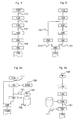
- the figure 1 represents at 110 a step of definition of a verbal content of a message to be broadcast, said original verbal content 111.
- This definition can be made using the different existing standards for the choice of words (for example according to the method of the counting of phonetically-balanced words) or of sentences (for example according to the modified rhyming test method), or else be based on standard messages that are or will be broadcast by a sound-broadcasting device 40 ( figure 4 ) whose intelligibility is to be evaluated.
- This definition step is not necessarily performed each time the method is implemented. Indeed, it may be sufficient to define once and for all a series of contents covering the essential needs and to standardize them.
- the original verbal content 111 is then transmitted to a step 120 of producing a sound message which will serve as an original sound message 121 for testing the sound diffusion device 40.
- This step 120 can, like the previous one, only not be completely performed at each execution of the process.
- standard verbal content 111 may be read aloud by a speaker and recorded on a recording medium 122 ( figure 2a ) as an analog or digital sound file. In this case, only the replay of the sound file will be necessary for each execution.
- step 120 may be performed each time by transmission of a text file representing the original verbal content 111 to a voice synthesis module that will develop the sound message from this file.
- the original sound message 121 is then transmitted to the step 130 in which it is sent to the sound distribution device 40 to be broadcast for example in a conference room in which it is desired to measure the sound diffusion device.
- sound diffusion should be understood as covering both the device which will generate the sound waves by means of electromechanical transducers such as loudspeakers for example, but also the environment of the device which may include a room with its possibly changing echo, reverberation and / or attenuation conditions, or outdoor conditions subject to wind changes, etc.
- the broadcast sound message 131 can thus be deformed with respect to the original sound message 121 both because of the intrinsic characteristics of the sound diffusion device 40 and the environmental conditions that prevail during this broadcast.
- the broadcast sound message 131 is then captured in step 140, for example by means of a microphone 411 ( figure 4 ) associated with a capture and digitization module such as an analog-digital converter equipping a sound acquisition card and converted into a digitized sound file representing as closely as possible the broadcast sound message.
- a capture and digitization module such as an analog-digital converter equipping a sound acquisition card and converted into a digitized sound file representing as closely as possible the broadcast sound message.
- step 150 the broadcast sound message is then transmitted (in this form) to a voice recognition module.
- voice recognition module are well known to those skilled in the art, such as that proposed by the Italian company LOQUENDO.
- the main function of a speech recognition module is to reproduce verbal content corresponding to a sound message, generally in the form of a text file comprising a list of words recognized by the voice recognition module, and for each word, a series of complementary information such as a dating of the instant at which the word was recognized and an estimate of the probability that the recognized word actually matches the portion of the corresponding sound message.
- step 150 the broadcast sound message 131 is analyzed by the verbal recognition module which delivers a spoken word content 151 of the broadcast sound message. This translated verbal content 151 is then transmitted to the step 160 in which it is analyzed to derive a measure of the intelligibility level 170 of the sound diffusion device 40.
- the analysis performed in step 160 can be of two types, intrinsic or comparative.
- a relevance indicator is obtained which is all the closer to the value 1, since the words constituting the broadcast sound message 131 have been well understood by the voice recognition module. It is then sufficient to compare this relevance indicator with a reference table to derive a measure of the level of intelligibility of the sound diffusion device 40.
- this relevance indicator is performed for significant fractions of the verbal content returned 151 of the broadcast sound message to take into account a minimum number of words. It is thus preferable to take into account a number of words corresponding to a message duration of between 30 seconds and a minute, and more particularly to record the values of the relevance indicator for the durations of 30 and 50 seconds.
- the original verbal content corresponds to a list of words established according to the norm applicable to the method of counting words phonetically balanced
- step 110 a predetermined original verbal content 111 is selected and in step 120, the corresponding original sound message 121 is recorded on a medium 122 and then transmitted directly to voice recognition step 150 without being "Deformed" by the diffusion step.
- the verbal content returned from the original sound message is then transmitted to an analysis step 165 which may be an intrinsic analysis of the same type as the step 160 seen previously or else, as will be seen in more detail later. , an analysis by comparison with the original verbal content 111 from step 110.
- These operations are repeated until the voice recognition of the original sound message 121 is complete, which is symbolized by a result of 100 %.
- the voice recognition module of step 150 has generated training data 152 which is adapted to ensure that if the broadcast sound message 131 was not deformed by the sound delivery device 40, the measurement of level of intelligibility would give an optimum result.
- the original sound message 121 issued for example from the recording medium 122 is broadcast in step 130, the broadcast sound message 131 is captured in step 140 and transmitted to voice recognition step 150.
- the module voice recognition receives the training data 152 from the previous section.
- the step 150 is improved and the verbal content returned 151 of the broadcast sound message 131 can be analyzed more finely in step 160.
- the contents of this step 160 are introduced for reference purposes.
- verbal origin 111 defined in step 110 as indicated by the arrow on the figure 2b .
- the analysis made is not only intrinsic as previously seen but can also be conducted in a comparative manner between the reference (original verbal content 111) and the verbal content rendered 151 from the broadcasted audio message 131.
- these indicators for a predetermined message duration, for example between 30 seconds and a minute and more particularly for durations of 30 and 50 seconds.
- the intelligibility measurement 170 of the sound diffusion device 40 is then calculated by making a selection or a combination of the preceding indicators, for example by means of a linear combination, a root mean square or any other type of composition applicable.
- This analysis mode by comparison between the verbal content 151 of the broadcast message rendered by the voice recognition module and the original verbal content 111 used in step 160 may apply regardless of the original verbal content, whether it consists of a list of words or sentences.
- This second embodiment of the method can be further improved by synchronizing the verbal content 151 of the broadcast message returned by the speech recognition module and the original verbal content 111.
- synchronization markers 125 are inserted in the original sound message 121 at predefined locations of the original verbal content 111.
- the synchronization marker 125 may be a signal sound such as a simple "beep" between each word in a word list or between each sentence in the modified rhyming method.
- the synchronization marker can also be more complex, for example by modulating the frequency or amplitude of a tone to form a long "beep" carrying a richer information, such as a rank number of the sentence or word next.
- the synchronization marker 125 will be adapted so as not to be deformed to the point of not being recognizable during the broadcast of the original message, at step 130, for example by choosing a frequency tone that is easily detectable and generally well retransmitted by the diffusion devices, for example a tone of 2500 Hz.
- step 150 and / or the analysis of step 160 is slaved according to the position of the synchronization markers 125 in the broadcast sound message 131.
- the verbal content of the broadcast message 151 can thus be synchronized with the original verbal content 111 and the comparison of the two can be done "word-by-word", thus making the comparison step faster and more accurate.
- the n th rank word, as defined by the synchronization marker, from the voice recognition module of step 150 is compared with the word of the same rank in the original verbal content 111. If the two words are identical, a counter is incremented. The ratio of the value of this counter to the number of words of the original verbal content, for a predetermined duration, is a possible measure of the intelligibility level of the broadcasting device.
- the voice recognition module does not have to analyze and compare the received sound fragment with all of its dictionary, but only with the candidate word identified by the synchronization marker, can perform its task more accurately and quickly.
- Steps 110 to 150 are identical to the steps of the same reference described above. However, at the end of step 120 of preparing the original sound message 121, it is transmitted to a new voice recognition step 155, identical in its operation in step 150.
- the recognition module voice of the step 155 then restores a spoken word content 112 of the original sound message 121. This content is then compared to the step 160 with the spoken word content 151 of the broadcast sound message 131 to draw the indicators described above .
- a measure of the intelligibility level of the sound diffusion device 40 is then calculated by making a selection or a combination of these indicators.
- Steps 150 and 155 can advantageously take place synchronously and the comparison of step 160 can be carried out in real time. Therefore, in the presence of an original sound message 121 in continuous flow, broadcast by the sound diffusion device 40, the level of intelligibility can be measured continuously, for example by calculating the combination of indicators over a rolling period of the last 30 or 50 seconds.
- This preferred mode is particularly advantageous because it makes it possible to measure the level of intelligibility of a sound diffusion device 40 in the presence of the public, without this being hampered by this operation.
- the stridence and amplitude of the sound signals used makes it inconvenient, if not impossible, the measurement in the presence of the public.
- the public itself is a variable to take into account because it has a great influence on the background noise generated, the attenuation of certain frequencies, the modification of the reverberations, for example.
- a station or an empty metro station does not have the same acoustic properties as the same crowded place when a train arrives ...
- the measuring method according to the invention can also be used for the development of a hearing aid.
- a prosthesis is generally adjusted by the acoustician so that the sound amplification it provides to the patient makes it possible to compensate for abnormalities in the frequency response curve of the ear of the latter, as measured by the practitioner. .
- this correction does not always satisfy the patient who often complains of comprehension problems. It follows then a development cycle of the prosthesis, calling on the patient and the practitioner, a cycle that can be long, expensive, and unpleasant for the patient.
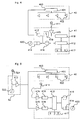
- the figure 4 represents a device 41 for measuring the level of intelligibility according to the invention in the presence of a sound diffusion device 40.
- the sound diffusion device 40 comprises for example an amplifier 401 and a plurality of loudspeakers 402.
- the amplifier 401 has an analog input 403 capable of receiving a signal representing an original sound message.
- the measuring apparatus 41 comprises a microphone 411 adapted to be placed in the vicinity of one or more of the loudspeakers 402, in a position likely to be occupied by a listener.
- the microphone 411 is connected to a capture and digitization module 415, for example an analog-digital converter fitted to a sound acquisition card. This module delivers a signal representative of the broadcast sound message 131 to a voice recognition module 418.
- a reader 414 of recording media 420 and / or internal memories 416 such as hard disk or RAM, ROM, etc., as well as a computer 412 are provided to manage the operation of the apparatus and perform the necessary calculations. to the measurement to be made.
- the apparatus also includes a display 417 capable of displaying the results of the measurement.
- a single recording medium 420 for example an optical disk or CD-ROM or a memory card, all the instruction and data files enabling the device to be implemented.
- a single recording medium 420 for example an optical disk or CD-ROM or a memory card
- all the instruction and data files enabling the device to be implemented.
- the original sound message 121 in the form of a sound file such as an MP3 file
- the original verbal content 111 of this message in the form of a file.
- text the training data 152 relating to the message 121 for the voice recognition module 418, as well as the program instructions in the form of executable files by the computer 412 to allow the execution of the intelligibility measurement method.
- the memory means 414, 416 are also adapted to provide an analog output module 413, for example a digital-analog converter, with digital information capable of producing a signal representative of the original sound message 121.
- an analog output module 413 for example a digital-analog converter
- the measuring apparatus 41 also comprises a synchronization signal generator 419 adapted to cooperate with the analog output module 413 and inserting synchronization markers 125 in the original sound message 121 at predefined locations of the original verbal content. 111.
- the voice recognition module 418 is adapted to detect said markers and synchronize the verbal content returned from the broadcast sound message with the original verbal content.
- the analog output module 413 is in turn connected to the analog input 403 of the amplifier 401 to transmit the signal representative of the original sound message 121.
- the operation of the apparatus 41 is in accordance with the measurement method described above. From the data read on the CD-ROM 420 by the reader 414 or data contained in the internal memory means 416, the analog output module prepares the original sound message 121, matched if necessary with synchronization markers 125 , which is transmitted to the input 403 of the amplifier 401. This message is then broadcast by the loudspeakers 402 in the environment of the sound diffusion device 40, for example a conference room.
- the microphone 411 is placed in the vicinity of one or more of the loudspeakers 402, in a position likely to be occupied by a listener, where the level of intelligibility of the assembly is to be measured.
- the broadcast audio message 131 captured by the microphone 411 and processed by the capture and digitization module 415 is transmitted to the voice recognition module 418 which restores the verbal content 151, supplemented if necessary by the indication of the rank of the elements of the its content from the interpretation of synchronization markers 125 in the broadcast sound message.
- This verbal content 151 of the broadcast message is used by the computer 412, where appropriate with the original verbal content 111 of the original sound message read on the CD-ROM, to calculate the measurement of the level of intelligibility and the display on the display 417.
- the figure 5 where identical references refer to elements identical to those of the figure 4 , also represents a measuring apparatus more particularly adapted for implementing the measuring method according to the preferred embodiment thereof.
- the measuring apparatus comprises an elaboration module 52 of the original sound message, possibly detachable from the body of the apparatus, which comprises a plurality of sound sources such as a microphone 521 or a CD-ROM reader 522 or a voice synthesis module (not shown) capable of alternately supplying the analog output module 413 an original sound message 121 continuously.
- This original sound message 121 is transmitted on the one hand to the sound distribution device 40 and on the other hand to a second capture and digitization module 515 and then to a second voice recognition module 518.
- This second voice recognition module 518 provides the calculator 412 verbal content restored 112 of the original sound message 121 which makes it possible to process in a comparative manner the verbal content returned 151 of the broadcast sound message 131. The result of the comparison thus makes it possible to calculate as we have seen previously a measure of the intelligibility level of the sound broadcasting device 40 and display it by means of the display 417.
- the measuring apparatus 41 can be realized by means of a suitably programmed personal computer provided that it comprises elements such as a sound card adapted to capture or send sound messages with sufficient quality.
Landscapes
- Engineering & Computer Science (AREA)
- Physics & Mathematics (AREA)
- Health & Medical Sciences (AREA)
- Audiology, Speech & Language Pathology (AREA)
- Human Computer Interaction (AREA)
- Computational Linguistics (AREA)
- Acoustics & Sound (AREA)
- Multimedia (AREA)
- Signal Processing (AREA)
- Measurement Of Mechanical Vibrations Or Ultrasonic Waves (AREA)
- Electrically Operated Instructional Devices (AREA)
- Testing, Inspecting, Measuring Of Stereoscopic Televisions And Televisions (AREA)
- Measurement Of The Respiration, Hearing Ability, Form, And Blood Characteristics Of Living Organisms (AREA)
Claims (11)
- Verfahren zur Messung der Verständlichkeitsebene (170) einer Vorrichtung zur Schallausstrahlung (40), das folgende Schritte umfasst:- Definition (110) eines verbalen Inhalts einer Sprachmeldung, des sogenannten ursprünglichen verbalen Inhalts (111),- Erarbeitung (120) einer Schallmeldung, der sogenannten ursprünglichen Schallmeldung (121) ausgehend vom besagten ursprünglichen verbalen Inhalt,- Ausstrahlung (130) der besagten ursprünglichen Schallmeldung (121) durch die Vorrichtung zur Schallausstrahlung (40),- Erfassung (140) am Ausgang der Vorrichtung zur Ausstrahlung einer ausgestrahlten Schallmeldung (131),- Übermittlung (150) der besagten ausgestrahlten Schallmeldung (131) an ein Spracherkennungsmodul (418), das geeignet ist, einen verbalen Inhalt (151) der ausgestrahlten Schallmeldung (131) wiederzugeben,- Auswertung (160) des verbalen Inhalts (151) der vom Spracherkennungsmodul wiedergegebenen ausgestrahlten Schallmeldung durch deren Vergleich mit dem ursprünglichen verbalen Inhalt (111),- Berechnung einer Messung der Verständlichkeitsebene (170) der Vorrichtung zur Schallausstrahlung (40) ausgehend von dieser Auswertung,
dadurch gekennzeichnet, dass Marker zur Synchronisation (125) in die ursprüngliche Schallmeldung (121) an vordefinierten Stellen des ursprünglichen verbalen Inhalts eingefügt werden, und dadurch, dass die Spracherkennung je nach der Position der besagten Marker zur Synchronisation in der ausgestrahlten Schallmeldung (131) geregelt wird. - Verfahren zur Messung nach Anspruch 1, dadurch gekennzeichnet, dass die ursprüngliche Schallmeldung (121) eine vorbestimmte Meldung ist, und dadurch, dass das Spracherkennungsmodul durch Hinzufügung von Lerndaten (152) bezüglich der besagten ursprünglichen Schallmeldung angepasst wird.
- Verfahren zur Messung nach einem beliebigen der vorstehenden Ansprüche 1 oder 2, dadurch gekennzeichnet, dass nach dem Erarbeitungsschritt (120) die ursprüngliche Schallmeldung (121) an ein zweites Spracherkennungsmodul (518) übermittelt wird, und dadurch, dass die Auswertung des verbalen Inhalts (151) der ausgestrahlten und vom ersten Spracherkennungsmodul (418) wiedergegebenen Schallmeldung (131) durch Vergleich mit dem verbalen Inhalt (112) der ursprünglichen Schallmeldung (121) erfolgt, die vom zweiten Spracherkennungsmodul (518) wiedergegeben wird.
- Verfahren zur Messung nach einem beliebigen der vorstehenden Ansprüche 1 bis 3, dadurch gekennzeichnet, dass die Messung der Verständlichkeitsebene durch eine Kombination von Indikatoren erzielt wird, die unter einer Erkennungsrate, einer Substitutionsrate, einer Unterdrückungsrate und einer Einfügungsrate genommen werden, wobei jeder Indikator für eine vorbestimmte Dauer der ursprünglichen Meldung berechnet ist.
- Verfahren zur Messung nach Anspruch 4, dadurch gekennzeichnet, dass die vorbestimmte Dauer einer Meldungsdauer von zwischen 30 und 50 Sekunden entspricht.
- Verfahren zur Messung nach einem beliebigen der vorstehenden Ansprüche 1 bis 5, das für die Erstellung einer Hörhilfe geeignet ist, dadurch gekennzeichnet, dass als Vorrichtung zur Schallausstrahlung (40) die besagte Hörhilfe in Reihe mit einem Filter benutzt wird, das eine Frequenzgangkurve aufweist, die identisch mit derjenigen eines auszurüstenden Ohres ist, und dadurch, dass die Verständlichkeitsebene der besagten Vorrichtung gemessen wird.
- Gerät zur Messung (41) der Verständlichkeitsebene einer Vorrichtung zur Schallausstrahlung (40), dadurch gekennzeichnet, dass es folgende Teile umfasst:- einen Synchronisationssignalgenerator (419), der geeignet ist, Marker zur Synchronisation (125) in eine ursprüngliche Schallmeldung (121) an vordefinierten Stellen eines ursprünglichen verbalen Inhalts (111) zu setzen,- zumindest einen analogen Ausgang (413), der geeignet ist, eine ursprüngliche Schallmeldung (121) an die Vorrichtung zur Schallausstrahlung (40) zu übermitteln,- zumindest ein Mikrophon (411) in Verbindung mit einem Modul zur Erfassung und Digitalisierung (415), das geeignet ist, eine Schallmeldung zu erfassen (131), die von der besagten Vorrichtung zur Schallausstrahlung ausgestrahlt wird,- zumindest ein Spracherkennungsmodul (418), das geeignet ist, die besagten Marker (125) zur Synchronisation zu entdecken, einen verbalen Inhalt (151) der ausgestrahlten Schallmeldung ausgehend von der ausgestrahlten Schallmeldung (131) wiederzugeben, die vom Erfassungsmodul (415) erfasst wird, und den wiedergegebenen verbalen Inhalt (151) der ausgestrahlten Schallmeldung (131) mit dem verbalen Inhalt des ursprünglichen verbalen Inhalts (111) zu synchronisieren,- ein Berechnungsmodul (412), das geeignet ist, den besagten verbalen Inhalt (151) auszuwerten und eine Messung der Verständlichkeitsebene der Vorrichtung zur Schallausstrahlung zu berechnen,- eine Anzeige (417), die geeignet ist, die besagte Messung anzuzeigen.
- Gerät zur Messung (41) nach Anspruch 7, dadurch gekennzeichnet, dass es ferner ein Laufwerk (414) für Aufzeichnungsträger (420) und/oder Mittel eines internen Speichers (416) umfasst, die geeignet sind, repräsentative Dateien der ursprünglichen Schallmeldung, des verbalen Inhalts der besagten Meldung und der Lerndaten des Spracherkennungsmoduls zu lesen und aufzuzeichnen.
- Gerät zur Messung nach einem beliebigen der vorstehenden Ansprüche 7 oder 8, dadurch gekennzeichnet, dass es ferner ein Modul zur Erarbeitung (52) der ursprünglichen Schallmeldung umfasst, das mit dem analogen Ausgangsmodul (413) zusammenarbeitet, um eine ursprüngliche Schallmeldung an die Vorrichtung zur Schallausstrahlung zu übermitteln.
- Gerät zur Messung nach Anspruch 9, dadurch gekennzeichnet, dass das Modul zur Erarbeitung (52) der ursprünglichen Schallmeldung entweder ein Mikrophon (521) oder ein Laufwerk für Aufzeichnungsträger (522) oder ein Modul für Sprachsynthese umfasst.
- Gerät zur Messung nach einem beliebigen der vorstehenden Ansprüche 7 bis 10, dadurch gekennzeichnet, dass es ein zweites Modul zur Erfassung und Digitalisierung (515) sowie ein zweites Spracherkennungsmodul (518) umfasst, die geeignet sind, mit dem analogen Ausgang (413) zusammenzuarbeiten und einen verbalen Inhalt wiederzugeben (112), der aus der ursprünglichen Schallmeldung (121) wiedergegeben wurde, und dadurch, dass das Berechnungsmodul (412) geeignet ist, den besagten wiedergegebenen verbalen Inhalt (112) der ursprünglichen Schallmeldung und einen verbalen Inhalt (151) der ausgestrahlten Schallmeldung zu vergleichen und ausgehend von besagtem Vergleich einen Messwert der Verständlichkeitsebene der Vorrichtung zur Schallausstrahlung zu berechnen.
Priority Applications (1)
| Application Number | Priority Date | Filing Date | Title |
|---|---|---|---|
| PL09162126T PL2136359T3 (pl) | 2008-06-19 | 2009-06-05 | Sposób i urządzenie do pomiaru wyrazistości urządzenia do dyfuzji dźwięku |
Applications Claiming Priority (1)
| Application Number | Priority Date | Filing Date | Title |
|---|---|---|---|
| FR0803435A FR2932920A1 (fr) | 2008-06-19 | 2008-06-19 | Procede et appareil de mesure de l'intelligibilite d'un dispositif de diffusion sonore |
Publications (2)
| Publication Number | Publication Date |
|---|---|
| EP2136359A1 EP2136359A1 (de) | 2009-12-23 |
| EP2136359B1 true EP2136359B1 (de) | 2011-08-17 |
Family
ID=40266054
Family Applications (1)
| Application Number | Title | Priority Date | Filing Date |
|---|---|---|---|
| EP09162126A Active EP2136359B1 (de) | 2008-06-19 | 2009-06-05 | Verfahren und Gerät zur Messung der Verständlichkeit einer Vorrichtung zur Schallausstrahlung |
Country Status (8)
| Country | Link |
|---|---|
| US (1) | US20090319268A1 (de) |
| EP (1) | EP2136359B1 (de) |
| AT (1) | ATE521062T1 (de) |
| DK (1) | DK2136359T3 (de) |
| ES (1) | ES2371722T3 (de) |
| FR (1) | FR2932920A1 (de) |
| PL (1) | PL2136359T3 (de) |
| PT (1) | PT2136359E (de) |
Families Citing this family (13)
| Publication number | Priority date | Publication date | Assignee | Title |
|---|---|---|---|---|
| DE102010012622B4 (de) * | 2010-03-24 | 2015-04-30 | Siemens Medical Instruments Pte. Ltd. | Binaurales Verfahren und binaurale Anordnung zur Sprachsteuerung von Hörgeräten |
| EP2708040B1 (de) * | 2011-05-11 | 2019-03-27 | Robert Bosch GmbH | System und verfahren zur emission und insbesondere steuerung eines tonsignals in einer umgebung mittels objektiver verständlichkeitsmessung |
| US8631073B2 (en) | 2012-03-01 | 2014-01-14 | Trisynergy Media Corp. | Doctor to patient multimedia synthesis communication |
| US9026439B2 (en) * | 2012-03-28 | 2015-05-05 | Tyco Fire & Security Gmbh | Verbal intelligibility analyzer for audio announcement systems |
| US9135928B2 (en) * | 2013-03-14 | 2015-09-15 | Bose Corporation | Audio transmission channel quality assessment |
| DE102014222907B4 (de) * | 2014-11-10 | 2016-06-02 | Airbus Defence and Space GmbH | Vorrichtung und Verfahren zur zuverlässigen Bewertung und Rückmeldung über die Qualität von Audio-Durchsagen |
| US9558747B2 (en) * | 2014-12-10 | 2017-01-31 | Honeywell International Inc. | High intelligibility voice announcement system |
| EP3598777B1 (de) * | 2018-07-18 | 2023-10-11 | Oticon A/s | Hörgerät mit einem schätzer der wahrscheinlichkeit der sprachanwesenheit |
| US20240185881A1 (en) * | 2021-05-18 | 2024-06-06 | Cochlear Limited | System and method for smart broadcast management |
| US11893978B2 (en) | 2021-08-12 | 2024-02-06 | Ford Global Technologies, Llc | Speech recognition in a vehicle |
| US11974063B2 (en) | 2022-01-31 | 2024-04-30 | Koa Health Digital Solutions S.L.U. | Reliably conveying transcribed text and physiological data of a remote videoconference party separately from video data |
| EP4221169B1 (de) * | 2022-01-31 | 2026-03-04 | Koa Health Digital Solutions S.L.U. | Systeme und verfahren zur überwachung der kommunikationsqualität |
| CN117198320A (zh) * | 2022-05-31 | 2023-12-08 | 科大讯飞(苏州)科技有限公司 | 声音信号的幅度测量方法、相关设备及可读存储介质 |
Family Cites Families (20)
| Publication number | Priority date | Publication date | Assignee | Title |
|---|---|---|---|---|
| US3083050A (en) * | 1960-05-16 | 1963-03-26 | Frank F Taylor Company | Rollable baby jump seat |
| US3730587A (en) * | 1970-05-22 | 1973-05-01 | S Bloxham | Exercising apparatus for small children |
| DE3708002A1 (de) * | 1987-03-12 | 1988-09-22 | Telefonbau & Normalzeit Gmbh | Messverfahren zum beurteilen der guete von sprachcodierern und/oder uebertragungsstrecken |
| US5211607A (en) * | 1990-05-24 | 1993-05-18 | Fermaglish Daniel R | Baby activity center |
| SE9301886L (sv) * | 1993-06-02 | 1994-12-03 | Televerket | Förfarande för utvärdering av talkvalitet vid talsyntes |
| US5729658A (en) * | 1994-06-17 | 1998-03-17 | Massachusetts Eye And Ear Infirmary | Evaluating intelligibility of speech reproduction and transmission across multiple listening conditions |
| JPH10505718A (ja) * | 1994-08-18 | 1998-06-02 | ブリティッシュ・テレコミュニケーションズ・パブリック・リミテッド・カンパニー | オーディオ品質の解析 |
| US6275797B1 (en) * | 1998-04-17 | 2001-08-14 | Cisco Technology, Inc. | Method and apparatus for measuring voice path quality by means of speech recognition |
| US6026361A (en) * | 1998-12-03 | 2000-02-15 | Lucent Technologies, Inc. | Speech intelligibility testing system |
| US6260011B1 (en) * | 2000-03-20 | 2001-07-10 | Microsoft Corporation | Methods and apparatus for automatically synchronizing electronic audio files with electronic text files |
| US6700953B1 (en) * | 2000-09-02 | 2004-03-02 | Metatron Technologies, Inc. | System, apparatus, method and article of manufacture for evaluating the quality of a transmission channel using voice recognition technology |
| US20020147587A1 (en) * | 2001-03-01 | 2002-10-10 | Ordinate Corporation | System for measuring intelligibility of spoken language |
| US7092880B2 (en) * | 2002-09-25 | 2006-08-15 | Siemens Communications, Inc. | Apparatus and method for quantitative measurement of voice quality in packet network environments |
| US7020581B2 (en) * | 2002-10-18 | 2006-03-28 | Medacoustics Research & Technology | Medical hearing aid analysis system |
| US7483831B2 (en) * | 2003-11-21 | 2009-01-27 | Articulation Incorporated | Methods and apparatus for maximizing speech intelligibility in quiet or noisy backgrounds |
| US7702112B2 (en) * | 2003-12-18 | 2010-04-20 | Honeywell International Inc. | Intelligibility measurement of audio announcement systems |
| US8103007B2 (en) * | 2005-12-28 | 2012-01-24 | Honeywell International Inc. | System and method of detecting speech intelligibility of audio announcement systems in noisy and reverberant spaces |
| KR101414233B1 (ko) * | 2007-01-05 | 2014-07-02 | 삼성전자 주식회사 | 음성 신호의 명료도를 향상시키는 장치 및 방법 |
| JP5313466B2 (ja) * | 2007-06-28 | 2013-10-09 | ニュアンス コミュニケーションズ,インコーポレイテッド | 音声の再生に同期して音声の内容を表示させる技術 |
| US7909703B1 (en) * | 2007-08-17 | 2011-03-22 | Charlotte Semrau | Child's bounce toy with safety net |
-
2008
- 2008-06-19 FR FR0803435A patent/FR2932920A1/fr active Pending
-
2009
- 2009-06-05 EP EP09162126A patent/EP2136359B1/de active Active
- 2009-06-05 PT PT09162126T patent/PT2136359E/pt unknown
- 2009-06-05 ES ES09162126T patent/ES2371722T3/es active Active
- 2009-06-05 AT AT09162126T patent/ATE521062T1/de active
- 2009-06-05 DK DK09162126.8T patent/DK2136359T3/da active
- 2009-06-05 PL PL09162126T patent/PL2136359T3/pl unknown
- 2009-06-19 US US12/488,244 patent/US20090319268A1/en not_active Abandoned
Also Published As
| Publication number | Publication date |
|---|---|
| US20090319268A1 (en) | 2009-12-24 |
| PL2136359T3 (pl) | 2012-03-30 |
| PT2136359E (pt) | 2011-11-25 |
| DK2136359T3 (da) | 2011-12-05 |
| ATE521062T1 (de) | 2011-09-15 |
| FR2932920A1 (fr) | 2009-12-25 |
| ES2371722T3 (es) | 2012-01-09 |
| EP2136359A1 (de) | 2009-12-23 |
Similar Documents
| Publication | Publication Date | Title |
|---|---|---|
| EP2136359A1 (de) | Verfahren und Gerät zur Messung der Verständlichkeit einer Vorrichtung zur Schallausstrahlung | |
| US10475467B2 (en) | Systems, methods and devices for intelligent speech recognition and processing | |
| EP1362343B1 (de) | Verfahren, modul, vorrichtung und server zur spracherkennung | |
| EP2419900B1 (de) | Verfahren und einrichtung zur objektiven evaluierung der sprachqualität eines sprachsignals unter berücksichtigung der klassifikation der in dem signal enthaltenen hintergrundgeräusche | |
| FR2522179A1 (fr) | Procede et appareil de reconnaissance de paroles permettant de reconnaitre des phonemes particuliers du signal vocal quelle que soit la personne qui parle | |
| CN114845160B (zh) | 一种语音驱动视频处理方法、相关装置及存储介质 | |
| US20130246058A1 (en) | Automatic realtime speech impairment correction | |
| EP1388832A1 (de) | Verfahren zur Kalibrierung von Audio-Intonation | |
| WO2020128088A1 (fr) | Mesure temporelle a haute precision d'evenements vibro-acoustiques en synchronisation avec un signal sonore sur dispositif a ecran tactile | |
| US7308407B2 (en) | Method and system for generating natural sounding concatenative synthetic speech | |
| Miller et al. | An anechoic, high-fidelity, multidirectional speech corpus | |
| EP1849157B1 (de) | Verfahren zur messung von durch geräusche in einem audiosignal verursachten beeinträchtigungen | |
| Bruns et al. | Automated speech audiometry for integrated voice over internet protocol communication services | |
| EP3711307B1 (de) | Verfahren für öffentlichen live-sound in einem kopfhörer unter berücksichtigung der auditiven wahrnehmungsmerkmale des zuhörers | |
| US20240169999A1 (en) | Speech signal processing apparatus, speech signal reproduction system and method for outputting a de-emotionalized speech signal | |
| CN116825123B (zh) | 一种基于音频推送的音质优化方法及系统 | |
| WO2020049263A1 (fr) | Dispositif de rehaussement de la parole par implementation d'un reseau de neurones dans le domaine temporel | |
| JP2022181759A (ja) | 音声品質評価装置、音声品質評価方法、および音声品質評価プログラム | |
| WO2018077987A1 (fr) | Procédé de traitement de données audio issues d'un échange vocal, système et programme d'ordinateur correspondant | |
| WO2006032751A1 (fr) | Procede et dispositif d'evaluation de l'efficacite d'une fonction de reduction de bruit destinee a etre appliquee a des signaux audio | |
| JP7110057B2 (ja) | 音声認識システム | |
| FR2984581A1 (fr) | Methode pour mesurer une distorsion causee par un appareil audionumerique | |
| FR3039026A1 (fr) | Methode pour transmettre une information a enregistrer | |
| EP0907934A1 (de) | Vorrichtung und verfahren zum übermitteln von animierten und lautbildern | |
| FR3101725A1 (fr) | Procédé de détection de la position de participants à une réunion à l’aide des terminaux personnels des participants, programme d’ordinateur correspondant. |
Legal Events
| Date | Code | Title | Description |
|---|---|---|---|
| PUAI | Public reference made under article 153(3) epc to a published international application that has entered the european phase |
Free format text: ORIGINAL CODE: 0009012 |
|
| AK | Designated contracting states |
Kind code of ref document: A1 Designated state(s): AT BE BG CH CY CZ DE DK EE ES FI FR GB GR HR HU IE IS IT LI LT LU LV MC MK MT NL NO PL PT RO SE SI SK TR |
|
| 17P | Request for examination filed |
Effective date: 20100618 |
|
| GRAP | Despatch of communication of intention to grant a patent |
Free format text: ORIGINAL CODE: EPIDOSNIGR1 |
|
| RIC1 | Information provided on ipc code assigned before grant |
Ipc: G10L 15/00 20060101AFI20110207BHEP |
|
| GRAS | Grant fee paid |
Free format text: ORIGINAL CODE: EPIDOSNIGR3 |
|
| GRAA | (expected) grant |
Free format text: ORIGINAL CODE: 0009210 |
|
| AK | Designated contracting states |
Kind code of ref document: B1 Designated state(s): AT BE BG CH CY CZ DE DK EE ES FI FR GB GR HR HU IE IS IT LI LT LU LV MC MK MT NL NO PL PT RO SE SI SK TR |
|
| REG | Reference to a national code |
Ref country code: GB Ref legal event code: FG4D Free format text: NOT ENGLISH |
|
| REG | Reference to a national code |
Ref country code: CH Ref legal event code: EP |
|
| REG | Reference to a national code |
Ref country code: IE Ref legal event code: FG4D Free format text: LANGUAGE OF EP DOCUMENT: FRENCH |
|
| REG | Reference to a national code |
Ref country code: DE Ref legal event code: R096 Ref document number: 602009002158 Country of ref document: DE Effective date: 20111027 |
|
| REG | Reference to a national code |
Ref country code: CH Ref legal event code: PFA Owner name: WILHELM-JAUREGUIBERRY, ANTOINE Free format text: WILHELM-JAUREGUIBERRY, ANTOINE#MONDOU LES PYROUTETS ROUTE DE SAINT-LYS#31490 LEGUEVIN (FR) $ ARCHEAN TECHNOLOGIES (SOCIETE PAR ACTIONS SIMPLIFIEE)#721 AVENUE DE BEAUSOLEIL#82000 MONTAUBAN (FR) -TRANSFER TO- WILHELM-JAUREGUIBERRY, ANTOINE#MONDOU LES PYROUTETS ROUTE DE SAINT-LYS#31490 LEGUEVIN (FR) $ ARCHEAN TECHNOLOGIES (SOCIETE PAR ACTIONS SIMPLIFIEE)#34 RUE MARCEAU HAMECHER#82000 MONTAUBAN (FR) Ref country code: CH Ref legal event code: NV Representative=s name: LEMAN CONSULTING S.A. |
|
| REG | Reference to a national code |
Ref country code: PT Ref legal event code: SC4A Free format text: AVAILABILITY OF NATIONAL TRANSLATION Effective date: 20111108 |
|
| REG | Reference to a national code |
Ref country code: NL Ref legal event code: T3 |
|
| REG | Reference to a national code |
Ref country code: DK Ref legal event code: T3 |
|
| REG | Reference to a national code |
Ref country code: SE Ref legal event code: TRGR |
|
| REG | Reference to a national code |
Ref country code: ES Ref legal event code: FG2A Ref document number: 2371722 Country of ref document: ES Kind code of ref document: T3 Effective date: 20120109 |
|
| LTIE | Lt: invalidation of european patent or patent extension |
Effective date: 20110817 |
|
| PG25 | Lapsed in a contracting state [announced via postgrant information from national office to epo] |
Ref country code: LT Free format text: LAPSE BECAUSE OF FAILURE TO SUBMIT A TRANSLATION OF THE DESCRIPTION OR TO PAY THE FEE WITHIN THE PRESCRIBED TIME-LIMIT Effective date: 20110817 Ref country code: NO Free format text: LAPSE BECAUSE OF FAILURE TO SUBMIT A TRANSLATION OF THE DESCRIPTION OR TO PAY THE FEE WITHIN THE PRESCRIBED TIME-LIMIT Effective date: 20111117 Ref country code: FI Free format text: LAPSE BECAUSE OF FAILURE TO SUBMIT A TRANSLATION OF THE DESCRIPTION OR TO PAY THE FEE WITHIN THE PRESCRIBED TIME-LIMIT Effective date: 20110817 Ref country code: IS Free format text: LAPSE BECAUSE OF FAILURE TO SUBMIT A TRANSLATION OF THE DESCRIPTION OR TO PAY THE FEE WITHIN THE PRESCRIBED TIME-LIMIT Effective date: 20111217 |
|
| PG25 | Lapsed in a contracting state [announced via postgrant information from national office to epo] |
Ref country code: GR Free format text: LAPSE BECAUSE OF FAILURE TO SUBMIT A TRANSLATION OF THE DESCRIPTION OR TO PAY THE FEE WITHIN THE PRESCRIBED TIME-LIMIT Effective date: 20111118 Ref country code: CY Free format text: LAPSE BECAUSE OF FAILURE TO SUBMIT A TRANSLATION OF THE DESCRIPTION OR TO PAY THE FEE WITHIN THE PRESCRIBED TIME-LIMIT Effective date: 20110817 Ref country code: SI Free format text: LAPSE BECAUSE OF FAILURE TO SUBMIT A TRANSLATION OF THE DESCRIPTION OR TO PAY THE FEE WITHIN THE PRESCRIBED TIME-LIMIT Effective date: 20110817 Ref country code: LV Free format text: LAPSE BECAUSE OF FAILURE TO SUBMIT A TRANSLATION OF THE DESCRIPTION OR TO PAY THE FEE WITHIN THE PRESCRIBED TIME-LIMIT Effective date: 20110817 |
|
| REG | Reference to a national code |
Ref country code: PL Ref legal event code: T3 |
|
| PG25 | Lapsed in a contracting state [announced via postgrant information from national office to epo] |
Ref country code: SK Free format text: LAPSE BECAUSE OF FAILURE TO SUBMIT A TRANSLATION OF THE DESCRIPTION OR TO PAY THE FEE WITHIN THE PRESCRIBED TIME-LIMIT Effective date: 20110817 Ref country code: CZ Free format text: LAPSE BECAUSE OF FAILURE TO SUBMIT A TRANSLATION OF THE DESCRIPTION OR TO PAY THE FEE WITHIN THE PRESCRIBED TIME-LIMIT Effective date: 20110817 |
|
| PG25 | Lapsed in a contracting state [announced via postgrant information from national office to epo] |
Ref country code: EE Free format text: LAPSE BECAUSE OF FAILURE TO SUBMIT A TRANSLATION OF THE DESCRIPTION OR TO PAY THE FEE WITHIN THE PRESCRIBED TIME-LIMIT Effective date: 20110817 Ref country code: RO Free format text: LAPSE BECAUSE OF FAILURE TO SUBMIT A TRANSLATION OF THE DESCRIPTION OR TO PAY THE FEE WITHIN THE PRESCRIBED TIME-LIMIT Effective date: 20110817 |
|
| PLBE | No opposition filed within time limit |
Free format text: ORIGINAL CODE: 0009261 |
|
| STAA | Information on the status of an ep patent application or granted ep patent |
Free format text: STATUS: NO OPPOSITION FILED WITHIN TIME LIMIT |
|
| 26N | No opposition filed |
Effective date: 20120521 |
|
| REG | Reference to a national code |
Ref country code: DE Ref legal event code: R097 Ref document number: 602009002158 Country of ref document: DE Effective date: 20120521 |
|
| PG25 | Lapsed in a contracting state [announced via postgrant information from national office to epo] |
Ref country code: HR Free format text: LAPSE BECAUSE OF FAILURE TO SUBMIT A TRANSLATION OF THE DESCRIPTION OR TO PAY THE FEE WITHIN THE PRESCRIBED TIME-LIMIT Effective date: 20120404 |
|
| PG25 | Lapsed in a contracting state [announced via postgrant information from national office to epo] |
Ref country code: MC Free format text: LAPSE BECAUSE OF NON-PAYMENT OF DUE FEES Effective date: 20120630 |
|
| PG25 | Lapsed in a contracting state [announced via postgrant information from national office to epo] |
Ref country code: MK Free format text: LAPSE BECAUSE OF FAILURE TO SUBMIT A TRANSLATION OF THE DESCRIPTION OR TO PAY THE FEE WITHIN THE PRESCRIBED TIME-LIMIT Effective date: 20110817 |
|
| PG25 | Lapsed in a contracting state [announced via postgrant information from national office to epo] |
Ref country code: BG Free format text: LAPSE BECAUSE OF FAILURE TO SUBMIT A TRANSLATION OF THE DESCRIPTION OR TO PAY THE FEE WITHIN THE PRESCRIBED TIME-LIMIT Effective date: 20111117 |
|
| PG25 | Lapsed in a contracting state [announced via postgrant information from national office to epo] |
Ref country code: MT Free format text: LAPSE BECAUSE OF FAILURE TO SUBMIT A TRANSLATION OF THE DESCRIPTION OR TO PAY THE FEE WITHIN THE PRESCRIBED TIME-LIMIT Effective date: 20110817 |
|
| PG25 | Lapsed in a contracting state [announced via postgrant information from national office to epo] |
Ref country code: HR Free format text: LAPSE BECAUSE OF FAILURE TO SUBMIT A TRANSLATION OF THE DESCRIPTION OR TO PAY THE FEE WITHIN THE PRESCRIBED TIME-LIMIT Effective date: 20110817 |
|
| PG25 | Lapsed in a contracting state [announced via postgrant information from national office to epo] |
Ref country code: HU Free format text: LAPSE BECAUSE OF FAILURE TO SUBMIT A TRANSLATION OF THE DESCRIPTION OR TO PAY THE FEE WITHIN THE PRESCRIBED TIME-LIMIT Effective date: 20090605 |
|
| REG | Reference to a national code |
Ref country code: DE Ref legal event code: R082 Ref document number: 602009002158 Country of ref document: DE |
|
| REG | Reference to a national code |
Ref country code: FR Ref legal event code: PLFP Year of fee payment: 8 |
|
| PG25 | Lapsed in a contracting state [announced via postgrant information from national office to epo] |
Ref country code: IT Free format text: LAPSE BECAUSE OF NON-PAYMENT OF DUE FEES Effective date: 20160605 |
|
| REG | Reference to a national code |
Ref country code: FR Ref legal event code: PLFP Year of fee payment: 9 |
|
| REG | Reference to a national code |
Ref country code: FR Ref legal event code: PLFP Year of fee payment: 10 |
|
| PG25 | Lapsed in a contracting state [announced via postgrant information from national office to epo] |
Ref country code: IT Free format text: LAPSE BECAUSE OF NON-PAYMENT OF DUE FEES Effective date: 20160605 |
|
| PGRI | Patent reinstated in contracting state [announced from national office to epo] |
Ref country code: IT Effective date: 20190710 |
|
| PGFP | Annual fee paid to national office [announced via postgrant information from national office to epo] |
Ref country code: PL Payment date: 20250529 Year of fee payment: 17 Ref country code: DE Payment date: 20250627 Year of fee payment: 17 |
|
| PGFP | Annual fee paid to national office [announced via postgrant information from national office to epo] |
Ref country code: GB Payment date: 20250630 Year of fee payment: 17 Ref country code: DK Payment date: 20250627 Year of fee payment: 17 |
|
| PGFP | Annual fee paid to national office [announced via postgrant information from national office to epo] |
Ref country code: LU Payment date: 20250626 Year of fee payment: 17 |
|
| PGFP | Annual fee paid to national office [announced via postgrant information from national office to epo] |
Ref country code: PT Payment date: 20250528 Year of fee payment: 17 |
|
| PGFP | Annual fee paid to national office [announced via postgrant information from national office to epo] |
Ref country code: FR Payment date: 20250619 Year of fee payment: 17 |
|
| PGFP | Annual fee paid to national office [announced via postgrant information from national office to epo] |
Ref country code: AT Payment date: 20250627 Year of fee payment: 17 |
|
| PGFP | Annual fee paid to national office [announced via postgrant information from national office to epo] |
Ref country code: TR Payment date: 20250602 Year of fee payment: 17 |
|
| PGFP | Annual fee paid to national office [announced via postgrant information from national office to epo] |
Ref country code: IE Payment date: 20250627 Year of fee payment: 17 |
|
| PGFP | Annual fee paid to national office [announced via postgrant information from national office to epo] |
Ref country code: NL Payment date: 20250627 Year of fee payment: 17 |
|
| PGFP | Annual fee paid to national office [announced via postgrant information from national office to epo] |
Ref country code: ES Payment date: 20250707 Year of fee payment: 17 |
|
| PGFP | Annual fee paid to national office [announced via postgrant information from national office to epo] |
Ref country code: IT Payment date: 20250627 Year of fee payment: 17 |
|
| PGFP | Annual fee paid to national office [announced via postgrant information from national office to epo] |
Ref country code: BE Payment date: 20250626 Year of fee payment: 17 |
|
| PGFP | Annual fee paid to national office [announced via postgrant information from national office to epo] |
Ref country code: CH Payment date: 20250711 Year of fee payment: 17 Ref country code: SE Payment date: 20250630 Year of fee payment: 17 |