EP2134479B1 - An apparatus to process used materials - Google Patents
An apparatus to process used materials Download PDFInfo
- Publication number
- EP2134479B1 EP2134479B1 EP08714444.0A EP08714444A EP2134479B1 EP 2134479 B1 EP2134479 B1 EP 2134479B1 EP 08714444 A EP08714444 A EP 08714444A EP 2134479 B1 EP2134479 B1 EP 2134479B1
- Authority
- EP
- European Patent Office
- Prior art keywords
- operable
- chamber
- used material
- washing
- drying
- Prior art date
- Legal status (The legal status is an assumption and is not a legal conclusion. Google has not performed a legal analysis and makes no representation as to the accuracy of the status listed.)
- Active
Links
Images



Classifications
-
- B—PERFORMING OPERATIONS; TRANSPORTING
- B65—CONVEYING; PACKING; STORING; HANDLING THIN OR FILAMENTARY MATERIAL
- B65F—GATHERING OR REMOVAL OF DOMESTIC OR LIKE REFUSE
- B65F1/00—Refuse receptacles; Accessories therefor
- B65F1/0033—Refuse receptacles; Accessories therefor specially adapted for segregated refuse collecting, e.g. receptacles with several compartments; Combination of receptacles
-
- B—PERFORMING OPERATIONS; TRANSPORTING
- B08—CLEANING
- B08B—CLEANING IN GENERAL; PREVENTION OF FOULING IN GENERAL
- B08B3/00—Cleaning by methods involving the use or presence of liquid or steam
- B08B3/02—Cleaning by the force of jets or sprays
-
- B—PERFORMING OPERATIONS; TRANSPORTING
- B08—CLEANING
- B08B—CLEANING IN GENERAL; PREVENTION OF FOULING IN GENERAL
- B08B9/00—Cleaning hollow articles by methods or apparatus specially adapted thereto
- B08B9/08—Cleaning containers, e.g. tanks
- B08B9/20—Cleaning containers, e.g. tanks by using apparatus into or on to which containers, e.g. bottles, jars, cans are brought
- B08B9/28—Cleaning containers, e.g. tanks by using apparatus into or on to which containers, e.g. bottles, jars, cans are brought the apparatus cleaning by splash, spray, or jet application, with or without soaking
- B08B9/30—Cleaning containers, e.g. tanks by using apparatus into or on to which containers, e.g. bottles, jars, cans are brought the apparatus cleaning by splash, spray, or jet application, with or without soaking and having conveyors
-
- B—PERFORMING OPERATIONS; TRANSPORTING
- B65—CONVEYING; PACKING; STORING; HANDLING THIN OR FILAMENTARY MATERIAL
- B65F—GATHERING OR REMOVAL OF DOMESTIC OR LIKE REFUSE
- B65F1/00—Refuse receptacles; Accessories therefor
- B65F1/14—Other constructional features; Accessories
- B65F1/16—Lids or covers
-
- B—PERFORMING OPERATIONS; TRANSPORTING
- B65—CONVEYING; PACKING; STORING; HANDLING THIN OR FILAMENTARY MATERIAL
- B65F—GATHERING OR REMOVAL OF DOMESTIC OR LIKE REFUSE
- B65F5/00—Gathering or removal of refuse otherwise than by receptacles or vehicles
-
- F—MECHANICAL ENGINEERING; LIGHTING; HEATING; WEAPONS; BLASTING
- F26—DRYING
- F26B—DRYING SOLID MATERIALS OR OBJECTS BY REMOVING LIQUID THEREFROM
- F26B3/00—Drying solid materials or objects by processes involving the application of heat
- F26B3/02—Drying solid materials or objects by processes involving the application of heat by convection, i.e. heat being conveyed from a heat source to the materials or objects to be dried by a gas or vapour, e.g. air
-
- B—PERFORMING OPERATIONS; TRANSPORTING
- B65—CONVEYING; PACKING; STORING; HANDLING THIN OR FILAMENTARY MATERIAL
- B65F—GATHERING OR REMOVAL OF DOMESTIC OR LIKE REFUSE
- B65F2210/00—Equipment of refuse receptacles
- B65F2210/12—Crushing means
-
- B—PERFORMING OPERATIONS; TRANSPORTING
- B65—CONVEYING; PACKING; STORING; HANDLING THIN OR FILAMENTARY MATERIAL
- B65F—GATHERING OR REMOVAL OF DOMESTIC OR LIKE REFUSE
- B65F2210/00—Equipment of refuse receptacles
- B65F2210/165—Remote controls
-
- B—PERFORMING OPERATIONS; TRANSPORTING
- B65—CONVEYING; PACKING; STORING; HANDLING THIN OR FILAMENTARY MATERIAL
- B65F—GATHERING OR REMOVAL OF DOMESTIC OR LIKE REFUSE
- B65F2210/00—Equipment of refuse receptacles
- B65F2210/168—Sensing means
-
- B—PERFORMING OPERATIONS; TRANSPORTING
- B65—CONVEYING; PACKING; STORING; HANDLING THIN OR FILAMENTARY MATERIAL
- B65F—GATHERING OR REMOVAL OF DOMESTIC OR LIKE REFUSE
- B65F2240/00—Types of refuse collected
- B65F2240/112—Bottles
- B65F2240/1123—Glass
-
- B—PERFORMING OPERATIONS; TRANSPORTING
- B65—CONVEYING; PACKING; STORING; HANDLING THIN OR FILAMENTARY MATERIAL
- B65F—GATHERING OR REMOVAL OF DOMESTIC OR LIKE REFUSE
- B65F2240/00—Types of refuse collected
- B65F2240/112—Bottles
- B65F2240/1126—Plastics
-
- B—PERFORMING OPERATIONS; TRANSPORTING
- B65—CONVEYING; PACKING; STORING; HANDLING THIN OR FILAMENTARY MATERIAL
- B65F—GATHERING OR REMOVAL OF DOMESTIC OR LIKE REFUSE
- B65F2240/00—Types of refuse collected
- B65F2240/12—Cans
-
- Y—GENERAL TAGGING OF NEW TECHNOLOGICAL DEVELOPMENTS; GENERAL TAGGING OF CROSS-SECTIONAL TECHNOLOGIES SPANNING OVER SEVERAL SECTIONS OF THE IPC; TECHNICAL SUBJECTS COVERED BY FORMER USPC CROSS-REFERENCE ART COLLECTIONS [XRACs] AND DIGESTS
- Y02—TECHNOLOGIES OR APPLICATIONS FOR MITIGATION OR ADAPTATION AGAINST CLIMATE CHANGE
- Y02W—CLIMATE CHANGE MITIGATION TECHNOLOGIES RELATED TO WASTEWATER TREATMENT OR WASTE MANAGEMENT
- Y02W30/00—Technologies for solid waste management
- Y02W30/10—Waste collection, transportation, transfer or storage, e.g. segregated refuse collecting, electric or hybrid propulsion
-
- Y—GENERAL TAGGING OF NEW TECHNOLOGICAL DEVELOPMENTS; GENERAL TAGGING OF CROSS-SECTIONAL TECHNOLOGIES SPANNING OVER SEVERAL SECTIONS OF THE IPC; TECHNICAL SUBJECTS COVERED BY FORMER USPC CROSS-REFERENCE ART COLLECTIONS [XRACs] AND DIGESTS
- Y02—TECHNOLOGIES OR APPLICATIONS FOR MITIGATION OR ADAPTATION AGAINST CLIMATE CHANGE
- Y02W—CLIMATE CHANGE MITIGATION TECHNOLOGIES RELATED TO WASTEWATER TREATMENT OR WASTE MANAGEMENT
- Y02W30/00—Technologies for solid waste management
- Y02W30/20—Waste processing or separation
-
- Y—GENERAL TAGGING OF NEW TECHNOLOGICAL DEVELOPMENTS; GENERAL TAGGING OF CROSS-SECTIONAL TECHNOLOGIES SPANNING OVER SEVERAL SECTIONS OF THE IPC; TECHNICAL SUBJECTS COVERED BY FORMER USPC CROSS-REFERENCE ART COLLECTIONS [XRACs] AND DIGESTS
- Y02—TECHNOLOGIES OR APPLICATIONS FOR MITIGATION OR ADAPTATION AGAINST CLIMATE CHANGE
- Y02W—CLIMATE CHANGE MITIGATION TECHNOLOGIES RELATED TO WASTEWATER TREATMENT OR WASTE MANAGEMENT
- Y02W30/00—Technologies for solid waste management
- Y02W30/50—Reuse, recycling or recovery technologies
- Y02W30/52—Mechanical processing of waste for the recovery of materials, e.g. crushing, shredding, separation or disassembly
-
- Y—GENERAL TAGGING OF NEW TECHNOLOGICAL DEVELOPMENTS; GENERAL TAGGING OF CROSS-SECTIONAL TECHNOLOGIES SPANNING OVER SEVERAL SECTIONS OF THE IPC; TECHNICAL SUBJECTS COVERED BY FORMER USPC CROSS-REFERENCE ART COLLECTIONS [XRACs] AND DIGESTS
- Y02—TECHNOLOGIES OR APPLICATIONS FOR MITIGATION OR ADAPTATION AGAINST CLIMATE CHANGE
- Y02W—CLIMATE CHANGE MITIGATION TECHNOLOGIES RELATED TO WASTEWATER TREATMENT OR WASTE MANAGEMENT
- Y02W30/00—Technologies for solid waste management
- Y02W30/50—Reuse, recycling or recovery technologies
- Y02W30/60—Glass recycling
-
- Y—GENERAL TAGGING OF NEW TECHNOLOGICAL DEVELOPMENTS; GENERAL TAGGING OF CROSS-SECTIONAL TECHNOLOGIES SPANNING OVER SEVERAL SECTIONS OF THE IPC; TECHNICAL SUBJECTS COVERED BY FORMER USPC CROSS-REFERENCE ART COLLECTIONS [XRACs] AND DIGESTS
- Y02—TECHNOLOGIES OR APPLICATIONS FOR MITIGATION OR ADAPTATION AGAINST CLIMATE CHANGE
- Y02W—CLIMATE CHANGE MITIGATION TECHNOLOGIES RELATED TO WASTEWATER TREATMENT OR WASTE MANAGEMENT
- Y02W30/00—Technologies for solid waste management
- Y02W30/50—Reuse, recycling or recovery technologies
- Y02W30/62—Plastics recycling; Rubber recycling
Definitions
- the present invention relates to recycling and in particular to an apparatus according to the preamble of claim 1 to process used materials into separate recycled materials for input into a manufacturing process.
- the used materials are collected from the transfer station and sent to either a material recovery facility (MRF) or direct to a manufacturing plant.
- MRF material recovery facility
- normally glass containers are ground into cullet at a MRF before transfer to glass botde manufacturers.
- Plastic containers are ground into flakes at either a MRF or at the plastic container or botde manufacturing plant.
- Aluminium and steel cans are compacted at an MRF and are then transported to a smelting plant for processing into ingots. The ingots are then delivered to the can manufacturing plant.
- US 2006/0042197 A1 discloses an apparatus according to the preamble of claim 1 for condensing, separating and storing recyclable material.
- the apparatus includes an enclosure with one or more openings to receive an item made from a recyclable material, a selection module, a plurality of form altering modules, a plurality of receptacles, and a director module for automatically directing a recyclable material, responsive to a selection made with the selection module, to one of a plurality of receptacles according to the type of material selected.
- said gripping means include an opposing pair of arms located on adjacent sides of the sensing chamber, the arms in an extended position operable to hold used material in said chamber and in a retracted position operable to release used material along said descending path.
- said apparatus includes hydraulic rams operable to move said arms between said extended and retracted positions.
- said apparatus includes a lid mounted to said housing and movable between an open and closed position to expose or cover said locations.
- said apparatus includes a device operable to remove a lid of a container.
- said apparatus includes a device operable to remove a tamper evident portion of a container.
- said washing and drying means includes a plurality of nozzles operable to deliver a liquid to wash used material located within said washing and drying chamber.
- said washing and drying means includes a plurality of nozzles operable to deliver air to dry used material located within said washing and drying chamber.
- said washing and drying means includes a heating element.
- said processing device includes at least one scraping, shredding, cutting, granulating, grinding, flaking, crushing or compacting device.
- said apparatus includes means to displace one or more chambers from said path.
- said displacement means is operable to displace said washing and drying chamber from said path.
- said displacement means includes a sliding mechanism.
- said displacement means includes a guide tray.
- said apparatus is computer controlled.
- said apparatus includes a series of chutes operable to direct used material to a predetermined processing device adapted to process that material.
- said processing chamber includes a series of chutes operable to direct material processed by a processing device to a predetermined storage unit adapted to receive that predetermined material.
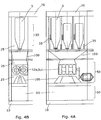
- the apparatus 1 includes a housing 10 having a top surface 15 providing a plurality of chambers in descending order.
- a series of locations 20 are positioned under the top surface 15 through which used material such as containers 5 can pass.
- Each of the locations 20 are provided for receipt of a predetermined material.
- a descending channel path 25 extends from each location 20 and provides for the transfer of used material 5 from the respective location 20 successively through the chambers.
- a sensing chamber 30 is located downstream of the locations 20 and has sensing means 35 operable to sense the composition of the used material 5 located within the sensing chamber 30.
- the sensing means 35 is operable to activate an alarm or visual indicator (not shown) if the used material 5 has been placed by a user in a location 20 for receipt of a different material.
- a washing and drying chamber 40 is also located downstream of the location 20 and has means 45 operable to wash and/or dry used material 5 located within the washing and drying chamber 40. In one form, the washing and drying chamber 40 is located in the same chamber as the sensing chamber 30. In another form, the washing and drying chamber 40 is separate to the sensing chamber 30.
- a processing chamber 50 is located downstream of the washing and drying chamber 40 and has a processing device 55 operable to reduce the size of used material 5 located within the processing chamber 50.
- a storage chamber 60 is located downstream of the processing chamber 50 and has a series of storage units 65 for receipt of different purer material once processed by the apparatus 1. The storage container 60 could include wheels 67 or the like.
- the apparatus 1 includes a lid 70 mounted to the housing 10 and movable between an open and closed position.
- the lid 70 when in the open position allows access to the locations 20 and the closed position covers the locations 20.
- the apparatus 1 includes gripping means 75 operable to hold used material 5 within the sensing chamber 30 or release the used material 5 along the path 25.
- the gripping means 75 includes an opposing pair of arms 80 located on adjacent sides of the sensing chamber 30.
- the arms 80 in an extended position are operable to hold used material 5 in the chamber 30 and in a retracted position are operable to release used material 5 along the path 25.
- Hydraulic rams, activators or the like 85 s move the arms 80 between extended and retracted positions.
- the arms 80 can be of differing shapes to suit particular used material 5 and be spring loaded or the like.
- the apparatus 1 also includes a device 90 operable to remove a lid or lid retainer of a container 5 and a device 95 operable to remove a lid or top retainer or tamper evident portion of a container 5.
- the processing chamber 50 includes a processing device 52 having at least one scraping, shredding, cutting, granulating, grinding, flaking, crushing or compacting mechanism.
- the processing device 52 that is utilised by the apparatus 1 will depend upon the particular material to be processed.
- the apparatus 1 includes a series of chutes is 100 operable to direct used material 5 to a predetermined processing device 52 which is adapted to process the material.
- a further series of chutes 105 direct the processed material to the respective storage units 65.
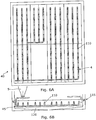
- the washing and drying chamber 40 includes a plurality of nozzles 110 operable to deliver either liquid or air to the washing and drying chamber 40 to wash and/or dry used material 5 located within the chamber 40.
- the chamber 40 could also include a heating element (not shown).
- the apparatus 1 can also include means to displace one or more chambers from the path.
- a displacement means is operable to displace or slide the washing and drying chamber 40 away from the housing 10.
- the sliding mechanism being a tongue and groove flange 115. However, any typical sliding assembly could be utilised.
- the lid 70 is lifted by a user to the open position and will remain up while the apparatus 1 is loaded.
- the washing and drying chamber 40 must be inserted into the apparatus 1.
- the user places used material 5 in the correct location 20.
- used material 5 for example, green glass into the green glass location 20, HDPE in the HDPE location 20, etc.
- Used material such as containers 5 will be positioned over one of the high pressure spray nozzles 110 to ensure that the insides of the containers 5 are properly cleaned.
- Each location has a material sensing device 35 which checks the material type. For glass, near infrared systems will detect glass and the glass color. For plastics, the detection is achieved by a laser-induced plasma spectroscopy device. Other detection technologies may also be appropriate depending upon what material composition needs to be sensed.
- an indicator (not shown) will light up and an alarm (not shown) will sound.
- the apparatus 1 will not be able to start. Additionally, the neck of glass bottles will be checked for metal based materials. Plastic containers will be checked for lids or caps not made of the same material. Laser-induced plasma spectroscopy devices or the like can be utilised to determine if foreign materials are present in the sensing chamber 30. Indicators and alarms will also inform a user of such problems.
- two devices 90, 95 are located on the outside of the apparatus 1 to allow the easy removal of metal or other anti-tamper devices around the necks of glass bottles and plastic caps or lids not made of the same material as the glass or plastic bottle, hi both cases, the neck of a glass bottle or the lid of a plastic bottle will be inserted into the appropriate device 90, 95.
- the glass bottle device 95 is a claw and scraper device.
- the lid or top of the plastic contour device 90 will be a scissors action device.
- Each of these two devices 90, 95 would also store the scraped off metal or cut plastic.
- the glass bottle device 95 has a place to insert the neck of a glass bottle.
- the device 95 recognizes that the neck of the bottle has been inserted into it and a multi-pronged claw will close in on the neck and then move along the neck of the bottle until it reaches the opening of the bottle. Any metal including the screw top metal lids will be scrapped off the neck and fall into a receptacle.
- the plastic container device 90 has a place to insert the neck of the container 5.
- the device 90 recognizes that the neck of the container 5 has been inserted. A four bladed open scissor will protrude into the opening of the plastic container. If a lid is on, then the scissors will piece the lid or closure. Once in position, the scissors will close making four equidistant cuts of the bottle opening. Tamper proof seals, handles and caps and closures will fall from the container into a receptacle (not shown).
- the washing and then drying cycle will commence.
- the washing and drying cycle is very similar to that of an everyday washing machine. Any container labels, label glue and food and drink residue will be washed off and solid material will be captured in a removable filter 120.
- Under each location 20 are multiple lines of spray nozzles 110 positioned to ensure that the hot washing and rinsing water will spray up through the opening of each container 5.
- the water pressure ensures that the spray reaches the top of the tallest container (-320 mm) at a velocity to ensure that it sprays and splashes around the inner surface areas of the container. Similar to a normal household dishwasher the water will be heated by the apparatus 1 to approximately 60[deg.]C.
- the washing and drying chamber 40 includes a motor (not shown), pump (not shown) and drain or filter unit 120. Filters capture any solids that have not been broken down and dissolved into the wash water.
- the pump motor and drain unit are approximately 40 cm high. The unit is incorporated into a sliding tray which slides into position by sliding mechanism 115.
- the washing and drying chamber 40 slides out of the housing 10 and a tray including chutes 100 slides in.
- the chutes 100 ensure that the clean and dried used material 5 drop down into the appropriate processing device 52.
- the apparatus 1 is now ready to process the cleaned and dried used material 5.
- seven processes performed In a preferred form there will be seven processes performed and they are best seen in Figure 3 .
- the treatment for the three glass colors will be a grinding process.
- the crusher and grinder unit includes two cylinders side by side enclosed in a steel housing rotating in opposite directions with offset meshed teeth. A bottle is dropped onto the rotating toothed cylinders and is crushed and ground.
- the crusher and grinder produce pieces of glass or glass cullet with an average size of 6 - 7 mm or as specified by the manufacturing process.
- Each of the three grinders, one for each glass color has a capacity to crush and grind three glass containers of any one colored glass in one minute (180 glass bottles per hour).
- the rotating crushing and grinding cylinders are driven by an e-motor rated at approximately 0.1 KWs depending on the size of the apparatus.
- the approximate dimensions of the glass crushers and grinders are 155 mm wide by 310 mm long by 155 mm high depending on the size of the apparatus.
- the cullet drops out from under the crushing and grinding unit and is dispersed by chutes 115 into one of the seven storage units 65.
- the crushed glass takes up approximately 20% of the original volume of the glass container 5.
- PET and HDPE flakes are produced and stored separately to ensure zero contamination.
- PET and HDPE plastic containers 5 drop down from the openings 20 directed by chutes 100 under gravity into separate metal feeder bins (not shown).
- the bins have an axial screw conveyors 102 or the like which feed the plastic containers 5 into the middle of the processing chamber 50 where rotor and stator blades (not shown) shred the plastic containers 5 to flakes.
- a vacuum system or the like ensures that the flakes leave the chamber 50 and are dispersed into the appropriate storage units 65.
- the approximate dimensions of the two plastic granulators are similar in size to the glass crushers, i.e. 155 mm wide by 310 mm long by 155 mm high depending on the size of the apparatus.
- the motor size is approximately 0.4KW depending on the size of the apparatus.
- the metal (aluminum or steel) cans drop down one at a time directed by chutes under gravity into the processing chamber 50.
- a cylinder head slides down the processing chamber and crushes the can.
- the can drops out and selector chutes 105 disperse the cans into the storage units 65.
- the cans are crushed to one quarter of their original size.
- the unit compacts up to 10 cans per hour depending on the size of the apparatus.
- the compactor is driven by a 0.3KW electric motor depending on the size of the apparatus.
- each unit 65 is in the order of 350 mm long by 150 mm high by 175 mm wide depending on the size of the apparatus.
- Each storage unit 65 is enclosed to ensure zero contamination while the storage chamber 60 is outside on the street and could include a locking device or the like (not shown).
- the seven raw materials in the storage units 65 are then transferred to a vehicle.
- the emptying method from the units 65 to vehicle is very similar to that used by the existing plastic mobile garbage bins.
- a number of tasks could be performed. For example, retrieving barcodes, weighing the units 65, positioning the units 65 over separate compartments, unloading each separate material, weighing the units 65 after each unloading.
- the apparatus 1 receives used materials 5 from where they have been used by a human and prepares them into a suitable form for input directly into a recyclable manufacturing process.
- the apparatus 1 could be found in residential kitchens, laundries or garages in homes, flats or apartments, in commercial and business premises like offices, factories, shops, conference centres, hotels, farms, other places where people work, where humans consume food and drink beverages like restaurants, cafes, coffee shops, and bars, at cultural venues like museums, galleries and theatres, at entertainment venues, at sporting venues and in public places like parks, parking lots, streets, roads and so on.
- the used material 5 can be received, checked, treated, stored, transferred and transported for re-use in the manufacturing process in the most efficient manner.
- the processing of the used material 5 should be in accordance with what is required for the manufacturing process. For example, amber glass needs to be ground into cullets, HDPE (high density polyethylene) plastic should be processed into flakes.
- HDPE high density polyethylene
- the storage chamber 60 can be moved from the apparatus 1 and placed on a street corner or the like as with existing recycling bins for transfer direcdy to a manufacturing process.
- An apparatus 1 can process many different materials at the same time, for example, clear, green and amber glass, Polyethylene Terephthalate (PET) and High Density Polyethylene (HDPE) plastic, aluminium and steel cans.
- PET Polyethylene Terephthalate
- HDPE High Density Polyethylene
- the apparatus could also process paper, cardboard, PVC (Polyvinyl Chloride), Low Density Polyethylene (LDPE), Polypropylene (PP), Polystyrene (PS), and most other materials that may want to be recycled. It is envisaged that the apparatus 1 should be about the size of a standard dishwasher.
- PVC Polyvinyl Chloride
- LDPE Low Density Polyethylene
- PP Polypropylene
- PS Polystyrene
- the apparatus 1 should be about the size of a standard dishwasher.
- the key to the success of the operation of the apparatus 1 and the realization of its value is the production of high purity materials.
- the higher the purity of material, the higher is the consistency of products from multiple sources, and consequentially the higher is the value of the product to the manufacturer.
- the higher the value to the manufacturer the higher is the value of the material to the apparatus 1 owner. It is estimated that 99% of the various containers made out of glass, PET & HDPE plastics, aluminum & steel cans found in a supermarket could be accommodated by the apparatus 1.
- PET botdes that have stored citronella oils, mineral turpentine, kerosene, methylated spirits and any mineral/chemical solvents are unacceptable for recycling back into the direct-food-contact containers.
- the apparatus 1 could also include the use of FTIR spectroscopic detection techniques which detect chemicals with a single pulse, allowing real-time analysis.
Landscapes
- Engineering & Computer Science (AREA)
- Mechanical Engineering (AREA)
- Life Sciences & Earth Sciences (AREA)
- Microbiology (AREA)
- General Engineering & Computer Science (AREA)
- Processing Of Solid Wastes (AREA)
- Separation, Recovery Or Treatment Of Waste Materials Containing Plastics (AREA)
Applications Claiming Priority (2)
| Application Number | Priority Date | Filing Date | Title |
|---|---|---|---|
| AU2007901545A AU2007901545A0 (en) | 2007-03-23 | An apparatus to process used materials | |
| PCT/AU2008/000399 WO2008116252A1 (en) | 2007-03-23 | 2008-03-20 | An apparatus to process used materials |
Publications (3)
| Publication Number | Publication Date |
|---|---|
| EP2134479A1 EP2134479A1 (en) | 2009-12-23 |
| EP2134479A4 EP2134479A4 (en) | 2012-11-21 |
| EP2134479B1 true EP2134479B1 (en) | 2020-09-09 |
Family
ID=39787957
Family Applications (1)
| Application Number | Title | Priority Date | Filing Date |
|---|---|---|---|
| EP08714444.0A Active EP2134479B1 (en) | 2007-03-23 | 2008-03-20 | An apparatus to process used materials |
Country Status (7)
| Country | Link |
|---|---|
| US (1) | US8240319B2 (https=) |
| EP (1) | EP2134479B1 (https=) |
| JP (1) | JP5656045B2 (https=) |
| KR (1) | KR101492658B1 (https=) |
| CN (1) | CN101657274B (https=) |
| CA (1) | CA2683530C (https=) |
| WO (1) | WO2008116252A1 (https=) |
Families Citing this family (10)
| Publication number | Priority date | Publication date | Assignee | Title |
|---|---|---|---|---|
| ES2358830B1 (es) * | 2009-10-28 | 2012-07-02 | Ecoinnova Investigacion Y Medio Ambiente, S.L. | Máquina recicladora de vidrio para la obtención de calcín. |
| ES2455916B1 (es) * | 2013-09-16 | 2014-11-04 | Crs Environment & Innovation S.L | Equipo de almacenamiento selectivo de residuos |
| CN107639091B (zh) * | 2017-09-13 | 2020-09-29 | 吴超 | 瓶子清洗和烘干设备 |
| CN107520211B (zh) * | 2017-09-13 | 2020-09-29 | 吴超 | 对玻璃瓶进行清洗和烘干的装置 |
| CN107597768B (zh) * | 2017-09-13 | 2020-09-15 | 吴超 | 食品用瓶子清洗装置 |
| CN110000192A (zh) * | 2019-04-12 | 2019-07-12 | 付玉玲 | 一种新式的多功能环保用垃圾处理装置 |
| CN112141557B (zh) * | 2019-06-28 | 2022-04-15 | 深圳精匠云创科技有限公司 | 回收装置 |
| CN112046960A (zh) * | 2020-07-20 | 2020-12-08 | 孙琦 | 一种针对塑料瓶回收的垃圾分类装置 |
| EP4282536A1 (en) * | 2022-05-24 | 2023-11-29 | B/E Aerospace, Inc. | Sorting and compacting system for an aircraft |
| CN116373167A (zh) * | 2023-04-14 | 2023-07-04 | 陈玉照 | 一种pet饮料瓶自动脱标机 |
Family Cites Families (14)
| Publication number | Priority date | Publication date | Assignee | Title |
|---|---|---|---|---|
| US4573641A (en) * | 1983-11-17 | 1986-03-04 | Environmental Products Corporation | Glass bottle collection and crushing apparatus |
| US4919274A (en) * | 1988-03-31 | 1990-04-24 | Hammond Nathan J | Apparatus and method for handling returnable beverage container |
| DE4007958A1 (de) * | 1990-03-13 | 1991-09-19 | Eti Tec Maschinenbau | Vorrichtung zum entfernen von auf behaeltern, insbesondere flaschen haftenden etiketten und folienzuschnitten |
| EP0585243A1 (en) * | 1991-04-29 | 1994-03-09 | Environmental Products Corporation | Multiple-use commodity collection and storage system |
| JPH04354577A (ja) * | 1991-06-03 | 1992-12-08 | Dowa Kogyo Kk | 飲料容器の分別回収装置 |
| US5423492A (en) * | 1991-08-08 | 1995-06-13 | Willis; W. Coy | Apparatus for recycling glass containers |
| WO1995016520A1 (en) * | 1993-12-08 | 1995-06-22 | Lukas Donald E | Glass bottle pulverizing method and apparatus |
| JP3165622B2 (ja) | 1995-06-27 | 2001-05-14 | 三菱重工業株式会社 | ガラス瓶分類装置 |
| JPH10119048A (ja) * | 1996-10-23 | 1998-05-12 | Setsuo Hase | 熱可塑性樹脂製の中空容器を減容する方法および装置 |
| JP2000076533A (ja) * | 1998-08-28 | 2000-03-14 | Nakai Meihan Kk | 自動販売機用の容器回収装置 |
| DE29912568U1 (de) * | 1999-07-19 | 2000-12-14 | C.M.S. S.P.A. Uffici Commerciali, Marano | Rücknahmevorrichtung |
| JP3682401B2 (ja) * | 2000-07-17 | 2005-08-10 | タキタ技研株式会社 | 空容器の減容装置 |
| GB2407282A (en) * | 2003-10-21 | 2005-04-27 | Uk Surplus Stock Plc | Compartmental/zoned recycling system |
| US7562836B2 (en) * | 2004-05-03 | 2009-07-21 | Jody Langston | Apparatus, system, and method for condensing, separating and storing recyclable material |
-
2008
- 2008-03-20 KR KR20097021488A patent/KR101492658B1/ko active Active
- 2008-03-20 EP EP08714444.0A patent/EP2134479B1/en active Active
- 2008-03-20 US US12/532,558 patent/US8240319B2/en active Active
- 2008-03-20 JP JP2009553867A patent/JP5656045B2/ja active Active
- 2008-03-20 WO PCT/AU2008/000399 patent/WO2008116252A1/en not_active Ceased
- 2008-03-20 CN CN2008800123714A patent/CN101657274B/zh active Active
- 2008-03-20 CA CA2683530A patent/CA2683530C/en active Active
Non-Patent Citations (1)
| Title |
|---|
| None * |
Also Published As
| Publication number | Publication date |
|---|---|
| CN101657274B (zh) | 2012-05-30 |
| JP5656045B2 (ja) | 2015-01-21 |
| HK1141486A1 (en) | 2010-11-12 |
| EP2134479A4 (en) | 2012-11-21 |
| US8240319B2 (en) | 2012-08-14 |
| CA2683530A1 (en) | 2008-10-02 |
| KR20100015587A (ko) | 2010-02-12 |
| CN101657274A (zh) | 2010-02-24 |
| CA2683530C (en) | 2014-08-05 |
| WO2008116252A1 (en) | 2008-10-02 |
| EP2134479A1 (en) | 2009-12-23 |
| KR101492658B1 (ko) | 2015-02-16 |
| JP2010521292A (ja) | 2010-06-24 |
| US20100116299A1 (en) | 2010-05-13 |
Similar Documents
| Publication | Publication Date | Title |
|---|---|---|
| EP2134479B1 (en) | An apparatus to process used materials | |
| JP2010521292A5 (https=) | ||
| US8763941B1 (en) | Bottle shredder having a bottle shaped housing | |
| US20100236428A1 (en) | Multi-purpose discarded material treatment system | |
| DK2006034T3 (en) | Device for selection of organic waste material suitable for recycling | |
| US20060042197A1 (en) | Apparatus, system, and method for condensing, separating and storing recyclable material | |
| CN102950670A (zh) | 一种自动化废旧塑料瓶清洁回收工艺 | |
| US6903142B1 (en) | System for sorting and processing a plurality of types of solid waste products for recycling | |
| KR102199225B1 (ko) | 순환자원 선별 회수장치 | |
| GB2407282A (en) | Compartmental/zoned recycling system | |
| CN102716891A (zh) | 一种城市餐厨泔水快速处理方法及处理设备 | |
| WO2018203266A1 (en) | Device for treatment and separate waste collection | |
| HK1141486B (en) | An apparatus to process used materials | |
| CN102825061A (zh) | 一种餐厨泔水源头处理方法及处理设备 | |
| CN202943774U (zh) | 一种输液袋回收处理系统 | |
| CN213536394U (zh) | 一种不合格瓶盖的回收装置 | |
| CN110539426A (zh) | 一种餐饮包装废弃物处置方法 | |
| CN111356533B (zh) | 用于处理和分离无机固体废物的设备 | |
| WO2022203629A1 (en) | Waste bottle collection and separation device and method | |
| RU2003115134A (ru) | Система для сбора и удаления бытовых отходов | |
| CN202411081U (zh) | 一种城市餐厨泔水快速处理设备 | |
| KR200278842Y1 (ko) | 재활용 용기의 선별 분쇄장치 | |
| TR201705759U5 (tr) | Plastik(pet) şişe atık kumbarası. | |
| CN106955856A (zh) | 有机垃圾微生物处理机的分拣台 | |
| KR200294506Y1 (ko) | 쓰레기 수거기 |
Legal Events
| Date | Code | Title | Description |
|---|---|---|---|
| PUAI | Public reference made under article 153(3) epc to a published international application that has entered the european phase |
Free format text: ORIGINAL CODE: 0009012 |
|
| 17P | Request for examination filed |
Effective date: 20091007 |
|
| AK | Designated contracting states |
Kind code of ref document: A1 Designated state(s): AT BE BG CH CY CZ DE DK EE ES FI FR GB GR HR HU IE IS IT LI LT LU LV MC MT NL NO PL PT RO SE SI SK TR |
|
| DAX | Request for extension of the european patent (deleted) | ||
| A4 | Supplementary search report drawn up and despatched |
Effective date: 20121019 |
|
| RIC1 | Information provided on ipc code assigned before grant |
Ipc: B08B 9/30 20060101ALI20121015BHEP Ipc: B65F 1/00 20060101AFI20121015BHEP |
|
| STAA | Information on the status of an ep patent application or granted ep patent |
Free format text: STATUS: EXAMINATION IS IN PROGRESS |
|
| 17Q | First examination report despatched |
Effective date: 20180309 |
|
| GRAP | Despatch of communication of intention to grant a patent |
Free format text: ORIGINAL CODE: EPIDOSNIGR1 |
|
| STAA | Information on the status of an ep patent application or granted ep patent |
Free format text: STATUS: GRANT OF PATENT IS INTENDED |
|
| INTG | Intention to grant announced |
Effective date: 20200326 |
|
| GRAS | Grant fee paid |
Free format text: ORIGINAL CODE: EPIDOSNIGR3 |
|
| GRAA | (expected) grant |
Free format text: ORIGINAL CODE: 0009210 |
|
| STAA | Information on the status of an ep patent application or granted ep patent |
Free format text: STATUS: THE PATENT HAS BEEN GRANTED |
|
| AK | Designated contracting states |
Kind code of ref document: B1 Designated state(s): AT BE BG CH CY CZ DE DK EE ES FI FR GB GR HR HU IE IS IT LI LT LU LV MC MT NL NO PL PT RO SE SI SK TR |
|
| REG | Reference to a national code |
Ref country code: GB Ref legal event code: FG4D |
|
| REG | Reference to a national code |
Ref country code: AT Ref legal event code: REF Ref document number: 1311306 Country of ref document: AT Kind code of ref document: T Effective date: 20200915 Ref country code: CH Ref legal event code: EP |
|
| REG | Reference to a national code |
Ref country code: DE Ref legal event code: R096 Ref document number: 602008063231 Country of ref document: DE |
|
| REG | Reference to a national code |
Ref country code: IE Ref legal event code: FG4D |
|
| REG | Reference to a national code |
Ref country code: NL Ref legal event code: FP |
|
| REG | Reference to a national code |
Ref country code: LT Ref legal event code: MG4D |
|
| PG25 | Lapsed in a contracting state [announced via postgrant information from national office to epo] |
Ref country code: SE Free format text: LAPSE BECAUSE OF FAILURE TO SUBMIT A TRANSLATION OF THE DESCRIPTION OR TO PAY THE FEE WITHIN THE PRESCRIBED TIME-LIMIT Effective date: 20200909 Ref country code: BG Free format text: LAPSE BECAUSE OF FAILURE TO SUBMIT A TRANSLATION OF THE DESCRIPTION OR TO PAY THE FEE WITHIN THE PRESCRIBED TIME-LIMIT Effective date: 20201209 Ref country code: HR Free format text: LAPSE BECAUSE OF FAILURE TO SUBMIT A TRANSLATION OF THE DESCRIPTION OR TO PAY THE FEE WITHIN THE PRESCRIBED TIME-LIMIT Effective date: 20200909 Ref country code: LT Free format text: LAPSE BECAUSE OF FAILURE TO SUBMIT A TRANSLATION OF THE DESCRIPTION OR TO PAY THE FEE WITHIN THE PRESCRIBED TIME-LIMIT Effective date: 20200909 Ref country code: FI Free format text: LAPSE BECAUSE OF FAILURE TO SUBMIT A TRANSLATION OF THE DESCRIPTION OR TO PAY THE FEE WITHIN THE PRESCRIBED TIME-LIMIT Effective date: 20200909 Ref country code: GR Free format text: LAPSE BECAUSE OF FAILURE TO SUBMIT A TRANSLATION OF THE DESCRIPTION OR TO PAY THE FEE WITHIN THE PRESCRIBED TIME-LIMIT Effective date: 20201210 Ref country code: NO Free format text: LAPSE BECAUSE OF FAILURE TO SUBMIT A TRANSLATION OF THE DESCRIPTION OR TO PAY THE FEE WITHIN THE PRESCRIBED TIME-LIMIT Effective date: 20201209 |
|
| REG | Reference to a national code |
Ref country code: AT Ref legal event code: MK05 Ref document number: 1311306 Country of ref document: AT Kind code of ref document: T Effective date: 20200909 |
|
| PG25 | Lapsed in a contracting state [announced via postgrant information from national office to epo] |
Ref country code: PL Free format text: LAPSE BECAUSE OF FAILURE TO SUBMIT A TRANSLATION OF THE DESCRIPTION OR TO PAY THE FEE WITHIN THE PRESCRIBED TIME-LIMIT Effective date: 20200909 Ref country code: LV Free format text: LAPSE BECAUSE OF FAILURE TO SUBMIT A TRANSLATION OF THE DESCRIPTION OR TO PAY THE FEE WITHIN THE PRESCRIBED TIME-LIMIT Effective date: 20200909 |
|
| PG25 | Lapsed in a contracting state [announced via postgrant information from national office to epo] |
Ref country code: CZ Free format text: LAPSE BECAUSE OF FAILURE TO SUBMIT A TRANSLATION OF THE DESCRIPTION OR TO PAY THE FEE WITHIN THE PRESCRIBED TIME-LIMIT Effective date: 20200909 Ref country code: EE Free format text: LAPSE BECAUSE OF FAILURE TO SUBMIT A TRANSLATION OF THE DESCRIPTION OR TO PAY THE FEE WITHIN THE PRESCRIBED TIME-LIMIT Effective date: 20200909 Ref country code: PT Free format text: LAPSE BECAUSE OF FAILURE TO SUBMIT A TRANSLATION OF THE DESCRIPTION OR TO PAY THE FEE WITHIN THE PRESCRIBED TIME-LIMIT Effective date: 20210111 Ref country code: RO Free format text: LAPSE BECAUSE OF FAILURE TO SUBMIT A TRANSLATION OF THE DESCRIPTION OR TO PAY THE FEE WITHIN THE PRESCRIBED TIME-LIMIT Effective date: 20200909 |
|
| PG25 | Lapsed in a contracting state [announced via postgrant information from national office to epo] |
Ref country code: ES Free format text: LAPSE BECAUSE OF FAILURE TO SUBMIT A TRANSLATION OF THE DESCRIPTION OR TO PAY THE FEE WITHIN THE PRESCRIBED TIME-LIMIT Effective date: 20200909 Ref country code: IS Free format text: LAPSE BECAUSE OF FAILURE TO SUBMIT A TRANSLATION OF THE DESCRIPTION OR TO PAY THE FEE WITHIN THE PRESCRIBED TIME-LIMIT Effective date: 20210109 Ref country code: AT Free format text: LAPSE BECAUSE OF FAILURE TO SUBMIT A TRANSLATION OF THE DESCRIPTION OR TO PAY THE FEE WITHIN THE PRESCRIBED TIME-LIMIT Effective date: 20200909 |
|
| REG | Reference to a national code |
Ref country code: DE Ref legal event code: R097 Ref document number: 602008063231 Country of ref document: DE |
|
| PG25 | Lapsed in a contracting state [announced via postgrant information from national office to epo] |
Ref country code: SK Free format text: LAPSE BECAUSE OF FAILURE TO SUBMIT A TRANSLATION OF THE DESCRIPTION OR TO PAY THE FEE WITHIN THE PRESCRIBED TIME-LIMIT Effective date: 20200909 |
|
| PLBE | No opposition filed within time limit |
Free format text: ORIGINAL CODE: 0009261 |
|
| STAA | Information on the status of an ep patent application or granted ep patent |
Free format text: STATUS: NO OPPOSITION FILED WITHIN TIME LIMIT |
|
| 26N | No opposition filed |
Effective date: 20210610 |
|
| PG25 | Lapsed in a contracting state [announced via postgrant information from national office to epo] |
Ref country code: SI Free format text: LAPSE BECAUSE OF FAILURE TO SUBMIT A TRANSLATION OF THE DESCRIPTION OR TO PAY THE FEE WITHIN THE PRESCRIBED TIME-LIMIT Effective date: 20200909 Ref country code: DK Free format text: LAPSE BECAUSE OF FAILURE TO SUBMIT A TRANSLATION OF THE DESCRIPTION OR TO PAY THE FEE WITHIN THE PRESCRIBED TIME-LIMIT Effective date: 20200909 |
|
| PG25 | Lapsed in a contracting state [announced via postgrant information from national office to epo] |
Ref country code: MC Free format text: LAPSE BECAUSE OF FAILURE TO SUBMIT A TRANSLATION OF THE DESCRIPTION OR TO PAY THE FEE WITHIN THE PRESCRIBED TIME-LIMIT Effective date: 20200909 |
|
| REG | Reference to a national code |
Ref country code: CH Ref legal event code: PL |
|
| REG | Reference to a national code |
Ref country code: BE Ref legal event code: MM Effective date: 20210331 |
|
| PG25 | Lapsed in a contracting state [announced via postgrant information from national office to epo] |
Ref country code: CH Free format text: LAPSE BECAUSE OF NON-PAYMENT OF DUE FEES Effective date: 20210331 Ref country code: LI Free format text: LAPSE BECAUSE OF NON-PAYMENT OF DUE FEES Effective date: 20210331 Ref country code: LU Free format text: LAPSE BECAUSE OF NON-PAYMENT OF DUE FEES Effective date: 20210320 Ref country code: IE Free format text: LAPSE BECAUSE OF NON-PAYMENT OF DUE FEES Effective date: 20210320 |
|
| PG25 | Lapsed in a contracting state [announced via postgrant information from national office to epo] |
Ref country code: BE Free format text: LAPSE BECAUSE OF NON-PAYMENT OF DUE FEES Effective date: 20210331 |
|
| PG25 | Lapsed in a contracting state [announced via postgrant information from national office to epo] |
Ref country code: HU Free format text: LAPSE BECAUSE OF FAILURE TO SUBMIT A TRANSLATION OF THE DESCRIPTION OR TO PAY THE FEE WITHIN THE PRESCRIBED TIME-LIMIT; INVALID AB INITIO Effective date: 20080320 Ref country code: CY Free format text: LAPSE BECAUSE OF FAILURE TO SUBMIT A TRANSLATION OF THE DESCRIPTION OR TO PAY THE FEE WITHIN THE PRESCRIBED TIME-LIMIT Effective date: 20200909 |
|
| PG25 | Lapsed in a contracting state [announced via postgrant information from national office to epo] |
Ref country code: TR Free format text: LAPSE BECAUSE OF FAILURE TO SUBMIT A TRANSLATION OF THE DESCRIPTION OR TO PAY THE FEE WITHIN THE PRESCRIBED TIME-LIMIT Effective date: 20200909 |
|
| PG25 | Lapsed in a contracting state [announced via postgrant information from national office to epo] |
Ref country code: MT Free format text: LAPSE BECAUSE OF FAILURE TO SUBMIT A TRANSLATION OF THE DESCRIPTION OR TO PAY THE FEE WITHIN THE PRESCRIBED TIME-LIMIT Effective date: 20200909 |
|
| PGFP | Annual fee paid to national office [announced via postgrant information from national office to epo] |
Ref country code: NL Payment date: 20260227 Year of fee payment: 19 |
|
| PGFP | Annual fee paid to national office [announced via postgrant information from national office to epo] |
Ref country code: GB Payment date: 20260224 Year of fee payment: 19 |
|
| PGFP | Annual fee paid to national office [announced via postgrant information from national office to epo] |
Ref country code: DE Payment date: 20260225 Year of fee payment: 19 |
|
| PGFP | Annual fee paid to national office [announced via postgrant information from national office to epo] |
Ref country code: IT Payment date: 20260227 Year of fee payment: 19 |
|
| PGFP | Annual fee paid to national office [announced via postgrant information from national office to epo] |
Ref country code: FR Payment date: 20260225 Year of fee payment: 19 |