EP2129654B1 - Antagonists of the glucagon receptor - Google Patents
Antagonists of the glucagon receptor Download PDFInfo
- Publication number
- EP2129654B1 EP2129654B1 EP08729528.3A EP08729528A EP2129654B1 EP 2129654 B1 EP2129654 B1 EP 2129654B1 EP 08729528 A EP08729528 A EP 08729528A EP 2129654 B1 EP2129654 B1 EP 2129654B1
- Authority
- EP
- European Patent Office
- Prior art keywords
- phenyl
- optionally substituted
- mmol
- aryl
- acid
- Prior art date
- Legal status (The legal status is an assumption and is not a legal conclusion. Google has not performed a legal analysis and makes no representation as to the accuracy of the status listed.)
- Active
Links
- 239000005557 antagonist Substances 0.000 title description 7
- 108010063919 Glucagon Receptors Proteins 0.000 title description 4
- 102100040890 Glucagon receptor Human genes 0.000 title description 4
- 150000001875 compounds Chemical class 0.000 claims description 180
- -1 benzoxazol-2-yl Chemical group 0.000 claims description 100
- 125000003118 aryl group Chemical group 0.000 claims description 79
- 238000000034 method Methods 0.000 claims description 65
- 239000008103 glucose Substances 0.000 claims description 38
- WQZGKKKJIJFFOK-GASJEMHNSA-N Glucose Natural products OC[C@H]1OC(O)[C@H](O)[C@@H](O)[C@@H]1O WQZGKKKJIJFFOK-GASJEMHNSA-N 0.000 claims description 37
- 239000003814 drug Substances 0.000 claims description 34
- 125000003710 aryl alkyl group Chemical group 0.000 claims description 25
- 125000000623 heterocyclic group Chemical group 0.000 claims description 23
- 229910052739 hydrogen Inorganic materials 0.000 claims description 22
- 125000001424 substituent group Chemical group 0.000 claims description 21
- 208000001072 type 2 diabetes mellitus Diseases 0.000 claims description 21
- 125000004432 carbon atom Chemical group C* 0.000 claims description 20
- 208000037265 diseases, disorders, signs and symptoms Diseases 0.000 claims description 20
- 150000003839 salts Chemical class 0.000 claims description 20
- 241001465754 Metazoa Species 0.000 claims description 19
- IJGRMHOSHXDMSA-UHFFFAOYSA-N nitrogen Substances N#N IJGRMHOSHXDMSA-UHFFFAOYSA-N 0.000 claims description 17
- 201000010099 disease Diseases 0.000 claims description 15
- 229910052736 halogen Inorganic materials 0.000 claims description 15
- 150000002367 halogens Chemical class 0.000 claims description 15
- 239000001257 hydrogen Substances 0.000 claims description 15
- 125000001997 phenyl group Chemical group [H]C1=C([H])C([H])=C(*)C([H])=C1[H] 0.000 claims description 15
- 125000004169 (C1-C6) alkyl group Chemical group 0.000 claims description 14
- 125000003545 alkoxy group Chemical group 0.000 claims description 14
- 125000005842 heteroatom Chemical group 0.000 claims description 14
- 201000001421 hyperglycemia Diseases 0.000 claims description 14
- 229910052757 nitrogen Inorganic materials 0.000 claims description 13
- 239000008194 pharmaceutical composition Substances 0.000 claims description 13
- 229910052760 oxygen Inorganic materials 0.000 claims description 12
- 125000006413 ring segment Chemical group 0.000 claims description 12
- 229910052717 sulfur Chemical group 0.000 claims description 12
- 208000002705 Glucose Intolerance Diseases 0.000 claims description 11
- NINIDFKCEFEMDL-UHFFFAOYSA-N Sulfur Chemical group [S] NINIDFKCEFEMDL-UHFFFAOYSA-N 0.000 claims description 10
- QVGXLLKOCUKJST-UHFFFAOYSA-N atomic oxygen Chemical group [O] QVGXLLKOCUKJST-UHFFFAOYSA-N 0.000 claims description 10
- 125000004435 hydrogen atom Chemical class [H]* 0.000 claims description 10
- 230000001965 increasing effect Effects 0.000 claims description 10
- 239000001301 oxygen Chemical group 0.000 claims description 10
- 201000009104 prediabetes syndrome Diseases 0.000 claims description 10
- 239000011593 sulfur Chemical group 0.000 claims description 10
- 125000002023 trifluoromethyl group Chemical group FC(F)(F)* 0.000 claims description 10
- 206010022489 Insulin Resistance Diseases 0.000 claims description 9
- 125000004093 cyano group Chemical group *C#N 0.000 claims description 9
- 238000011161 development Methods 0.000 claims description 9
- 125000003107 substituted aryl group Chemical group 0.000 claims description 9
- 206010067584 Type 1 diabetes mellitus Diseases 0.000 claims description 8
- 125000003342 alkenyl group Chemical group 0.000 claims description 8
- 229910052801 chlorine Inorganic materials 0.000 claims description 8
- 125000001495 ethyl group Chemical group [H]C([H])([H])C([H])([H])* 0.000 claims description 8
- 229910052731 fluorine Inorganic materials 0.000 claims description 8
- 239000013078 crystal Substances 0.000 claims description 7
- 238000004519 manufacturing process Methods 0.000 claims description 7
- 230000002440 hepatic effect Effects 0.000 claims description 6
- 125000000449 nitro group Chemical group [O-][N+](*)=O 0.000 claims description 6
- 125000000876 trifluoromethoxy group Chemical group FC(F)(F)O* 0.000 claims description 6
- 201000001320 Atherosclerosis Diseases 0.000 claims description 5
- 208000001145 Metabolic Syndrome Diseases 0.000 claims description 5
- 208000008589 Obesity Diseases 0.000 claims description 5
- 125000000392 cycloalkenyl group Chemical group 0.000 claims description 5
- QJGQUHMNIGDVPM-UHFFFAOYSA-N nitrogen group Chemical group [N] QJGQUHMNIGDVPM-UHFFFAOYSA-N 0.000 claims description 5
- 235000020824 obesity Nutrition 0.000 claims description 5
- 239000012453 solvate Substances 0.000 claims description 5
- 125000006625 (C3-C8) cycloalkyloxy group Chemical group 0.000 claims description 4
- 208000035150 Hypercholesterolemia Diseases 0.000 claims description 4
- 208000031226 Hyperlipidaemia Diseases 0.000 claims description 4
- 125000006645 (C3-C4) cycloalkyl group Chemical group 0.000 claims description 3
- 125000005913 (C3-C6) cycloalkyl group Chemical group 0.000 claims description 3
- YBYIRNPNPLQARY-UHFFFAOYSA-N 1H-indene Natural products C1=CC=C2CC=CC2=C1 YBYIRNPNPLQARY-UHFFFAOYSA-N 0.000 claims description 3
- 125000000882 C2-C6 alkenyl group Chemical group 0.000 claims description 3
- 125000003601 C2-C6 alkynyl group Chemical group 0.000 claims description 3
- 208000032928 Dyslipidaemia Diseases 0.000 claims description 3
- 206010060378 Hyperinsulinaemia Diseases 0.000 claims description 3
- 208000017170 Lipid metabolism disease Diseases 0.000 claims description 3
- 201000010390 abdominal obesity-metabolic syndrome 1 Diseases 0.000 claims description 3
- 125000004244 benzofuran-2-yl group Chemical group [H]C1=C(*)OC2=C([H])C([H])=C([H])C([H])=C12 0.000 claims description 3
- 125000005841 biaryl group Chemical group 0.000 claims description 3
- 230000003451 hyperinsulinaemic effect Effects 0.000 claims description 3
- 201000008980 hyperinsulinism Diseases 0.000 claims description 3
- 125000003454 indenyl group Chemical group C1(C=CC2=CC=CC=C12)* 0.000 claims description 3
- 208000011661 metabolic syndrome X Diseases 0.000 claims description 3
- 125000004178 (C1-C4) alkyl group Chemical group 0.000 claims description 2
- 125000000596 cyclohexenyl group Chemical group C1(=CCCCC1)* 0.000 claims description 2
- 230000004110 gluconeogenesis Effects 0.000 claims 2
- 229910001868 water Inorganic materials 0.000 description 391
- XLYOFNOQVPJJNP-UHFFFAOYSA-N water Substances O XLYOFNOQVPJJNP-UHFFFAOYSA-N 0.000 description 378
- XEKOWRVHYACXOJ-UHFFFAOYSA-N Ethyl acetate Chemical compound CCOC(C)=O XEKOWRVHYACXOJ-UHFFFAOYSA-N 0.000 description 224
- DTQVDTLACAAQTR-UHFFFAOYSA-N trifluoroacetic acid Substances OC(=O)C(F)(F)F DTQVDTLACAAQTR-UHFFFAOYSA-N 0.000 description 115
- 239000000203 mixture Substances 0.000 description 113
- YMWUJEATGCHHMB-UHFFFAOYSA-N Dichloromethane Chemical compound ClCCl YMWUJEATGCHHMB-UHFFFAOYSA-N 0.000 description 103
- VLKZOEOYAKHREP-UHFFFAOYSA-N n-Hexane Chemical class CCCCCC VLKZOEOYAKHREP-UHFFFAOYSA-N 0.000 description 100
- OKKJLVBELUTLKV-UHFFFAOYSA-N Methanol Chemical compound OC OKKJLVBELUTLKV-UHFFFAOYSA-N 0.000 description 88
- 239000000243 solution Substances 0.000 description 81
- 235000019439 ethyl acetate Nutrition 0.000 description 79
- 238000006243 chemical reaction Methods 0.000 description 72
- WYURNTSHIVDZCO-UHFFFAOYSA-N Tetrahydrofuran Chemical compound C1CCOC1 WYURNTSHIVDZCO-UHFFFAOYSA-N 0.000 description 70
- VYPSYNLAJGMNEJ-UHFFFAOYSA-N Silicium dioxide Chemical compound O=[Si]=O VYPSYNLAJGMNEJ-UHFFFAOYSA-N 0.000 description 65
- 230000002829 reductive effect Effects 0.000 description 64
- 239000000651 prodrug Substances 0.000 description 61
- 229940002612 prodrug Drugs 0.000 description 61
- 238000005160 1H NMR spectroscopy Methods 0.000 description 60
- 238000004895 liquid chromatography mass spectrometry Methods 0.000 description 60
- WEVYAHXRMPXWCK-UHFFFAOYSA-N Acetonitrile Chemical compound CC#N WEVYAHXRMPXWCK-UHFFFAOYSA-N 0.000 description 56
- HEDRZPFGACZZDS-MICDWDOJSA-N Trichloro(2H)methane Chemical compound [2H]C(Cl)(Cl)Cl HEDRZPFGACZZDS-MICDWDOJSA-N 0.000 description 56
- 239000011541 reaction mixture Substances 0.000 description 56
- XLYOFNOQVPJJNP-ZSJDYOACSA-N heavy water Substances [2H]O[2H] XLYOFNOQVPJJNP-ZSJDYOACSA-N 0.000 description 55
- LFQSCWFLJHTTHZ-UHFFFAOYSA-N Ethanol Chemical compound CCO LFQSCWFLJHTTHZ-UHFFFAOYSA-N 0.000 description 51
- IAZDPXIOMUYVGZ-WFGJKAKNSA-N Dimethyl sulfoxide Chemical compound [2H]C([2H])([2H])S(=O)C([2H])([2H])[2H] IAZDPXIOMUYVGZ-WFGJKAKNSA-N 0.000 description 49
- 125000000217 alkyl group Chemical group 0.000 description 49
- 239000007787 solid Substances 0.000 description 49
- YXFVVABEGXRONW-UHFFFAOYSA-N Toluene Chemical compound CC1=CC=CC=C1 YXFVVABEGXRONW-UHFFFAOYSA-N 0.000 description 48
- 230000015572 biosynthetic process Effects 0.000 description 47
- ZMXDDKWLCZADIW-UHFFFAOYSA-N N,N-Dimethylformamide Chemical compound CN(C)C=O ZMXDDKWLCZADIW-UHFFFAOYSA-N 0.000 description 45
- 239000000047 product Substances 0.000 description 44
- 239000000741 silica gel Substances 0.000 description 44
- 229910002027 silica gel Inorganic materials 0.000 description 44
- 239000002904 solvent Substances 0.000 description 44
- CSNNHWWHGAXBCP-UHFFFAOYSA-L Magnesium sulfate Chemical compound [Mg+2].[O-][S+2]([O-])([O-])[O-] CSNNHWWHGAXBCP-UHFFFAOYSA-L 0.000 description 40
- 229960001031 glucose Drugs 0.000 description 38
- 239000012071 phase Substances 0.000 description 37
- 238000003786 synthesis reaction Methods 0.000 description 37
- WQZGKKKJIJFFOK-VFUOTHLCSA-N beta-D-glucose Chemical compound OC[C@H]1O[C@@H](O)[C@H](O)[C@@H](O)[C@@H]1O WQZGKKKJIJFFOK-VFUOTHLCSA-N 0.000 description 36
- UIIMBOGNXHQVGW-UHFFFAOYSA-M Sodium bicarbonate Chemical compound [Na+].OC([O-])=O UIIMBOGNXHQVGW-UHFFFAOYSA-M 0.000 description 35
- NOESYZHRGYRDHS-UHFFFAOYSA-N insulin Chemical compound N1C(=O)C(NC(=O)C(CCC(N)=O)NC(=O)C(CCC(O)=O)NC(=O)C(C(C)C)NC(=O)C(NC(=O)CN)C(C)CC)CSSCC(C(NC(CO)C(=O)NC(CC(C)C)C(=O)NC(CC=2C=CC(O)=CC=2)C(=O)NC(CCC(N)=O)C(=O)NC(CC(C)C)C(=O)NC(CCC(O)=O)C(=O)NC(CC(N)=O)C(=O)NC(CC=2C=CC(O)=CC=2)C(=O)NC(CSSCC(NC(=O)C(C(C)C)NC(=O)C(CC(C)C)NC(=O)C(CC=2C=CC(O)=CC=2)NC(=O)C(CC(C)C)NC(=O)C(C)NC(=O)C(CCC(O)=O)NC(=O)C(C(C)C)NC(=O)C(CC(C)C)NC(=O)C(CC=2NC=NC=2)NC(=O)C(CO)NC(=O)CNC2=O)C(=O)NCC(=O)NC(CCC(O)=O)C(=O)NC(CCCNC(N)=N)C(=O)NCC(=O)NC(CC=3C=CC=CC=3)C(=O)NC(CC=3C=CC=CC=3)C(=O)NC(CC=3C=CC(O)=CC=3)C(=O)NC(C(C)O)C(=O)N3C(CCC3)C(=O)NC(CCCCN)C(=O)NC(C)C(O)=O)C(=O)NC(CC(N)=O)C(O)=O)=O)NC(=O)C(C(C)CC)NC(=O)C(CO)NC(=O)C(C(C)O)NC(=O)C1CSSCC2NC(=O)C(CC(C)C)NC(=O)C(NC(=O)C(CCC(N)=O)NC(=O)C(CC(N)=O)NC(=O)C(NC(=O)C(N)CC=1C=CC=CC=1)C(C)C)CC1=CN=CN1 NOESYZHRGYRDHS-UHFFFAOYSA-N 0.000 description 35
- 210000004369 blood Anatomy 0.000 description 33
- 239000008280 blood Substances 0.000 description 33
- 238000007792 addition Methods 0.000 description 31
- 230000004048 modification Effects 0.000 description 31
- 238000012986 modification Methods 0.000 description 31
- CDBYLPFSWZWCQE-UHFFFAOYSA-L Sodium Carbonate Chemical compound [Na+].[Na+].[O-]C([O-])=O CDBYLPFSWZWCQE-UHFFFAOYSA-L 0.000 description 30
- 150000002148 esters Chemical class 0.000 description 30
- 125000002496 methyl group Chemical group [H]C([H])([H])* 0.000 description 30
- 229940079593 drug Drugs 0.000 description 29
- 239000002243 precursor Substances 0.000 description 29
- 238000004809 thin layer chromatography Methods 0.000 description 28
- PMZURENOXWZQFD-UHFFFAOYSA-L Sodium Sulfate Chemical compound [Na+].[Na+].[O-]S([O-])(=O)=O PMZURENOXWZQFD-UHFFFAOYSA-L 0.000 description 27
- 229910052938 sodium sulfate Inorganic materials 0.000 description 27
- VEXZGXHMUGYJMC-UHFFFAOYSA-N Hydrochloric acid Chemical compound Cl VEXZGXHMUGYJMC-UHFFFAOYSA-N 0.000 description 26
- 125000000592 heterocycloalkyl group Chemical group 0.000 description 26
- 239000012043 crude product Substances 0.000 description 25
- 125000004122 cyclic group Chemical group 0.000 description 25
- 239000012044 organic layer Substances 0.000 description 25
- QTBSBXVTEAMEQO-UHFFFAOYSA-N Acetic acid Chemical compound CC(O)=O QTBSBXVTEAMEQO-UHFFFAOYSA-N 0.000 description 24
- OKKJLVBELUTLKV-MZCSYVLQSA-N Deuterated methanol Chemical compound [2H]OC([2H])([2H])[2H] OKKJLVBELUTLKV-MZCSYVLQSA-N 0.000 description 23
- RTZKZFJDLAIYFH-UHFFFAOYSA-N ether Substances CCOCC RTZKZFJDLAIYFH-UHFFFAOYSA-N 0.000 description 23
- 0 C*C(C)(*)NP(*C)(NC(*)(*)*C)=O Chemical compound C*C(C)(*)NP(*C)(NC(*)(*)*C)=O 0.000 description 22
- JGFZNNIVVJXRND-UHFFFAOYSA-N N,N-Diisopropylethylamine (DIPEA) Chemical compound CCN(C(C)C)C(C)C JGFZNNIVVJXRND-UHFFFAOYSA-N 0.000 description 22
- 125000002947 alkylene group Chemical group 0.000 description 21
- 238000009472 formulation Methods 0.000 description 21
- 239000000543 intermediate Substances 0.000 description 21
- XOAAWQZATWQOTB-UHFFFAOYSA-N taurine Chemical compound NCCS(O)(=O)=O XOAAWQZATWQOTB-UHFFFAOYSA-N 0.000 description 21
- 239000012267 brine Substances 0.000 description 20
- 150000001732 carboxylic acid derivatives Chemical class 0.000 description 20
- 206010012601 diabetes mellitus Diseases 0.000 description 20
- 229910052943 magnesium sulfate Inorganic materials 0.000 description 20
- 239000003921 oil Substances 0.000 description 20
- HPALAKNZSZLMCH-UHFFFAOYSA-M sodium;chloride;hydrate Chemical compound O.[Na+].[Cl-] HPALAKNZSZLMCH-UHFFFAOYSA-M 0.000 description 20
- 239000007832 Na2SO4 Substances 0.000 description 19
- ZMANZCXQSJIPKH-UHFFFAOYSA-N Triethylamine Chemical compound CCN(CC)CC ZMANZCXQSJIPKH-UHFFFAOYSA-N 0.000 description 19
- MASNOZXLGMXCHN-ZLPAWPGGSA-N glucagon Chemical compound C([C@@H](C(=O)N[C@H](C(=O)N[C@@H](CCC(N)=O)C(=O)N[C@@H](CC=1C2=CC=CC=C2NC=1)C(=O)N[C@@H](CC(C)C)C(=O)N[C@@H](CCSC)C(=O)N[C@@H](CC(N)=O)C(=O)N[C@@H]([C@@H](C)O)C(O)=O)C(C)C)NC(=O)[C@H](CC(O)=O)NC(=O)[C@H](CCC(N)=O)NC(=O)[C@H](C)NC(=O)[C@H](CCCNC(N)=N)NC(=O)[C@H](CCCNC(N)=N)NC(=O)[C@H](CO)NC(=O)[C@H](CC(O)=O)NC(=O)[C@H](CC(C)C)NC(=O)[C@H](CC=1C=CC(O)=CC=1)NC(=O)[C@H](CCCCN)NC(=O)[C@H](CO)NC(=O)[C@H](CC=1C=CC(O)=CC=1)NC(=O)[C@H](CC(O)=O)NC(=O)[C@H](CO)NC(=O)[C@@H](NC(=O)[C@H](CC=1C=CC=CC=1)NC(=O)[C@@H](NC(=O)CNC(=O)[C@H](CCC(N)=O)NC(=O)[C@H](CO)NC(=O)[C@@H](N)CC=1NC=NC=1)[C@@H](C)O)[C@@H](C)O)C1=CC=CC=C1 MASNOZXLGMXCHN-ZLPAWPGGSA-N 0.000 description 19
- 235000019198 oils Nutrition 0.000 description 19
- 102000051325 Glucagon Human genes 0.000 description 18
- 108060003199 Glucagon Proteins 0.000 description 18
- HEMHJVSKTPXQMS-UHFFFAOYSA-M Sodium hydroxide Chemical compound [OH-].[Na+] HEMHJVSKTPXQMS-UHFFFAOYSA-M 0.000 description 18
- 229910052799 carbon Inorganic materials 0.000 description 18
- 238000000921 elemental analysis Methods 0.000 description 18
- 229960004666 glucagon Drugs 0.000 description 18
- 229940125396 insulin Drugs 0.000 description 18
- 239000010410 layer Substances 0.000 description 18
- YPFDHNVEDLHUCE-UHFFFAOYSA-N 1,3-propanediol Substances OCCCO YPFDHNVEDLHUCE-UHFFFAOYSA-N 0.000 description 17
- 102000004877 Insulin Human genes 0.000 description 17
- 108090001061 Insulin Proteins 0.000 description 17
- OAYLNYINCPYISS-UHFFFAOYSA-N ethyl acetate;hexane Chemical class CCCCCC.CCOC(C)=O OAYLNYINCPYISS-UHFFFAOYSA-N 0.000 description 17
- 235000017557 sodium bicarbonate Nutrition 0.000 description 17
- 229910000030 sodium bicarbonate Inorganic materials 0.000 description 17
- UEZVMMHDMIWARA-UHFFFAOYSA-M phosphonate Chemical compound [O-]P(=O)=O UEZVMMHDMIWARA-UHFFFAOYSA-M 0.000 description 16
- NLXLAEXVIDQMFP-UHFFFAOYSA-N Ammonia chloride Chemical compound [NH4+].[Cl-] NLXLAEXVIDQMFP-UHFFFAOYSA-N 0.000 description 15
- FAPWRFPIFSIZLT-UHFFFAOYSA-M Sodium chloride Chemical compound [Na+].[Cl-] FAPWRFPIFSIZLT-UHFFFAOYSA-M 0.000 description 15
- 239000004480 active ingredient Substances 0.000 description 15
- 125000004429 atom Chemical group 0.000 description 15
- 238000004587 chromatography analysis Methods 0.000 description 15
- 235000019341 magnesium sulphate Nutrition 0.000 description 15
- 229910000029 sodium carbonate Inorganic materials 0.000 description 15
- 238000011282 treatment Methods 0.000 description 15
- QOSSAOTZNIDXMA-UHFFFAOYSA-N Dicylcohexylcarbodiimide Chemical compound C1CCCCC1N=C=NC1CCCCC1 QOSSAOTZNIDXMA-UHFFFAOYSA-N 0.000 description 14
- KFZMGEQAYNKOFK-UHFFFAOYSA-N Isopropanol Chemical compound CC(C)O KFZMGEQAYNKOFK-UHFFFAOYSA-N 0.000 description 14
- ABLZXFCXXLZCGV-UHFFFAOYSA-N Phosphorous acid Chemical compound OP(O)=O ABLZXFCXXLZCGV-UHFFFAOYSA-N 0.000 description 14
- 239000002253 acid Substances 0.000 description 14
- 125000001072 heteroaryl group Chemical group 0.000 description 14
- 239000012074 organic phase Substances 0.000 description 14
- 235000017550 sodium carbonate Nutrition 0.000 description 14
- FYSNRJHAOHDILO-UHFFFAOYSA-N thionyl chloride Chemical compound ClS(Cl)=O FYSNRJHAOHDILO-UHFFFAOYSA-N 0.000 description 14
- LMDZBCPBFSXMTL-UHFFFAOYSA-N 1-Ethyl-3-(3-dimethylaminopropyl)carbodiimide Substances CCN=C=NCCCN(C)C LMDZBCPBFSXMTL-UHFFFAOYSA-N 0.000 description 13
- 150000001299 aldehydes Chemical class 0.000 description 13
- 229920000166 polytrimethylene carbonate Polymers 0.000 description 13
- 238000002360 preparation method Methods 0.000 description 13
- 238000003756 stirring Methods 0.000 description 13
- OJOFMLDBXPDXLQ-SECBINFHSA-N (4r)-4-benzyl-1,3-oxazolidin-2-one Chemical compound C1OC(=O)N[C@@H]1CC1=CC=CC=C1 OJOFMLDBXPDXLQ-SECBINFHSA-N 0.000 description 12
- FPQQSJJWHUJYPU-UHFFFAOYSA-N 3-(dimethylamino)propyliminomethylidene-ethylazanium;chloride Chemical compound Cl.CCN=C=NCCCN(C)C FPQQSJJWHUJYPU-UHFFFAOYSA-N 0.000 description 12
- OKTJSMMVPCPJKN-UHFFFAOYSA-N Carbon Chemical compound [C] OKTJSMMVPCPJKN-UHFFFAOYSA-N 0.000 description 12
- KDLHZDBZIXYQEI-UHFFFAOYSA-N Palladium Chemical compound [Pd] KDLHZDBZIXYQEI-UHFFFAOYSA-N 0.000 description 12
- 238000004440 column chromatography Methods 0.000 description 12
- 238000005755 formation reaction Methods 0.000 description 12
- 125000002887 hydroxy group Chemical group [H]O* 0.000 description 12
- CTSLXHKWHWQRSH-UHFFFAOYSA-N oxalyl chloride Chemical compound ClC(=O)C(Cl)=O CTSLXHKWHWQRSH-UHFFFAOYSA-N 0.000 description 12
- 150000003009 phosphonic acids Chemical class 0.000 description 12
- 150000001412 amines Chemical class 0.000 description 11
- 239000002552 dosage form Substances 0.000 description 11
- 239000003826 tablet Substances 0.000 description 11
- NGNBDVOYPDDBFK-UHFFFAOYSA-N 2-[2,4-di(pentan-2-yl)phenoxy]acetyl chloride Chemical compound CCCC(C)C1=CC=C(OCC(Cl)=O)C(C(C)CCC)=C1 NGNBDVOYPDDBFK-UHFFFAOYSA-N 0.000 description 10
- JUJWROOIHBZHMG-UHFFFAOYSA-N Pyridine Chemical compound C1=CC=NC=C1 JUJWROOIHBZHMG-UHFFFAOYSA-N 0.000 description 10
- 241000700159 Rattus Species 0.000 description 10
- 238000005859 coupling reaction Methods 0.000 description 10
- 238000001514 detection method Methods 0.000 description 10
- 239000007788 liquid Substances 0.000 description 10
- 229910052698 phosphorus Inorganic materials 0.000 description 10
- 239000002244 precipitate Substances 0.000 description 10
- 239000011734 sodium Substances 0.000 description 10
- 239000000725 suspension Substances 0.000 description 10
- 229960003080 taurine Drugs 0.000 description 10
- 239000003981 vehicle Substances 0.000 description 10
- 241000282472 Canis lupus familiaris Species 0.000 description 9
- 230000009471 action Effects 0.000 description 9
- 125000002877 alkyl aryl group Chemical group 0.000 description 9
- 230000000694 effects Effects 0.000 description 9
- 238000004128 high performance liquid chromatography Methods 0.000 description 9
- 230000014759 maintenance of location Effects 0.000 description 9
- 239000000843 powder Substances 0.000 description 9
- VHYFNPMBLIVWCW-UHFFFAOYSA-N 4-Dimethylaminopyridine Chemical compound CN(C)C1=CC=NC=C1 VHYFNPMBLIVWCW-UHFFFAOYSA-N 0.000 description 8
- WTDHULULXKLSOZ-UHFFFAOYSA-N Hydroxylamine hydrochloride Chemical compound Cl.ON WTDHULULXKLSOZ-UHFFFAOYSA-N 0.000 description 8
- 241000699666 Mus <mouse, genus> Species 0.000 description 8
- OAICVXFJPJFONN-UHFFFAOYSA-N Phosphorus Chemical group [P] OAICVXFJPJFONN-UHFFFAOYSA-N 0.000 description 8
- 150000001408 amides Chemical class 0.000 description 8
- 239000003153 chemical reaction reagent Substances 0.000 description 8
- 239000003795 chemical substances by application Substances 0.000 description 8
- 230000007062 hydrolysis Effects 0.000 description 8
- 238000006460 hydrolysis reaction Methods 0.000 description 8
- 239000011574 phosphorus Chemical group 0.000 description 8
- 230000009467 reduction Effects 0.000 description 8
- 238000006722 reduction reaction Methods 0.000 description 8
- 230000002441 reversible effect Effects 0.000 description 8
- 235000011152 sodium sulphate Nutrition 0.000 description 8
- 210000001519 tissue Anatomy 0.000 description 8
- 239000003643 water by type Substances 0.000 description 8
- WMFOQBRAJBCJND-UHFFFAOYSA-M Lithium hydroxide Chemical compound [Li+].[OH-] WMFOQBRAJBCJND-UHFFFAOYSA-M 0.000 description 7
- 241000699670 Mus sp. Species 0.000 description 7
- 229910019142 PO4 Inorganic materials 0.000 description 7
- 125000004423 acyloxy group Chemical group 0.000 description 7
- 125000001797 benzyl group Chemical group [H]C1=C([H])C([H])=C(C([H])=C1[H])C([H])([H])* 0.000 description 7
- 125000002837 carbocyclic group Chemical group 0.000 description 7
- 238000013270 controlled release Methods 0.000 description 7
- 230000010030 glucose lowering effect Effects 0.000 description 7
- 125000005843 halogen group Chemical group 0.000 description 7
- 150000002576 ketones Chemical class 0.000 description 7
- 210000004185 liver Anatomy 0.000 description 7
- 229910052751 metal Inorganic materials 0.000 description 7
- 239000002184 metal Substances 0.000 description 7
- 230000003647 oxidation Effects 0.000 description 7
- 238000007254 oxidation reaction Methods 0.000 description 7
- NBIIXXVUZAFLBC-UHFFFAOYSA-K phosphate Chemical compound [O-]P([O-])([O-])=O NBIIXXVUZAFLBC-UHFFFAOYSA-K 0.000 description 7
- 239000010452 phosphate Substances 0.000 description 7
- 238000000746 purification Methods 0.000 description 7
- RIOQSEWOXXDEQQ-UHFFFAOYSA-N triphenylphosphine Chemical compound C1=CC=CC=C1P(C=1C=CC=CC=1)C1=CC=CC=C1 RIOQSEWOXXDEQQ-UHFFFAOYSA-N 0.000 description 7
- QNEGDGPAXKYZHZ-UHFFFAOYSA-N (2,4-dichlorophenyl)boronic acid Chemical compound OB(O)C1=CC=C(Cl)C=C1Cl QNEGDGPAXKYZHZ-UHFFFAOYSA-N 0.000 description 6
- 229940035437 1,3-propanediol Drugs 0.000 description 6
- WFDIJRYMOXRFFG-UHFFFAOYSA-N Acetic anhydride Chemical compound CC(=O)OC(C)=O WFDIJRYMOXRFFG-UHFFFAOYSA-N 0.000 description 6
- CSCPPACGZOOCGX-UHFFFAOYSA-N Acetone Chemical compound CC(C)=O CSCPPACGZOOCGX-UHFFFAOYSA-N 0.000 description 6
- UFHFLCQGNIYNRP-UHFFFAOYSA-N Hydrogen Chemical compound [H][H] UFHFLCQGNIYNRP-UHFFFAOYSA-N 0.000 description 6
- PCLIMKBDDGJMGD-UHFFFAOYSA-N N-bromosuccinimide Chemical compound BrN1C(=O)CCC1=O PCLIMKBDDGJMGD-UHFFFAOYSA-N 0.000 description 6
- 125000004414 alkyl thio group Chemical group 0.000 description 6
- 125000004104 aryloxy group Chemical group 0.000 description 6
- 239000000872 buffer Substances 0.000 description 6
- 150000001735 carboxylic acids Chemical class 0.000 description 6
- 210000004027 cell Anatomy 0.000 description 6
- 238000004296 chiral HPLC Methods 0.000 description 6
- 210000000349 chromosome Anatomy 0.000 description 6
- 230000008878 coupling Effects 0.000 description 6
- 238000010168 coupling process Methods 0.000 description 6
- 125000000753 cycloalkyl group Chemical group 0.000 description 6
- 230000007812 deficiency Effects 0.000 description 6
- 239000012634 fragment Substances 0.000 description 6
- 210000003494 hepatocyte Anatomy 0.000 description 6
- NPZTUJOABDZTLV-UHFFFAOYSA-N hydroxybenzotriazole Substances O=C1C=CC=C2NNN=C12 NPZTUJOABDZTLV-UHFFFAOYSA-N 0.000 description 6
- YNESATAKKCNGOF-UHFFFAOYSA-N lithium bis(trimethylsilyl)amide Chemical compound [Li+].C[Si](C)(C)[N-][Si](C)(C)C YNESATAKKCNGOF-UHFFFAOYSA-N 0.000 description 6
- ZCSHNCUQKCANBX-UHFFFAOYSA-N lithium diisopropylamide Chemical compound [Li+].CC(C)[N-]C(C)C ZCSHNCUQKCANBX-UHFFFAOYSA-N 0.000 description 6
- 230000001404 mediated effect Effects 0.000 description 6
- 239000000546 pharmaceutical excipient Substances 0.000 description 6
- 238000010992 reflux Methods 0.000 description 6
- 239000000377 silicon dioxide Substances 0.000 description 6
- 239000012279 sodium borohydride Substances 0.000 description 6
- 229910000033 sodium borohydride Inorganic materials 0.000 description 6
- 239000007858 starting material Substances 0.000 description 6
- 239000003765 sweetening agent Substances 0.000 description 6
- 208000024891 symptom Diseases 0.000 description 6
- DNIAPMSPPWPWGF-VKHMYHEASA-N (+)-propylene glycol Chemical compound C[C@H](O)CO DNIAPMSPPWPWGF-VKHMYHEASA-N 0.000 description 5
- YEXOEVPMKTUEFB-UHFFFAOYSA-N 4-[3-[4-(1-benzofuran-2-yl)anilino]-2-(4-tert-butylphenyl)-3-oxopropyl]benzoic acid Chemical compound C1=CC(C(C)(C)C)=CC=C1C(C(=O)NC=1C=CC(=CC=1)C=1OC2=CC=CC=C2C=1)CC1=CC=C(C(O)=O)C=C1 YEXOEVPMKTUEFB-UHFFFAOYSA-N 0.000 description 5
- VLVCDUSVTXIWGW-UHFFFAOYSA-N 4-iodoaniline Chemical compound NC1=CC=C(I)C=C1 VLVCDUSVTXIWGW-UHFFFAOYSA-N 0.000 description 5
- XTHFKEDIFFGKHM-UHFFFAOYSA-N Dimethoxyethane Chemical compound COCCOC XTHFKEDIFFGKHM-UHFFFAOYSA-N 0.000 description 5
- PEDCQBHIVMGVHV-UHFFFAOYSA-N Glycerine Chemical compound OCC(O)CO PEDCQBHIVMGVHV-UHFFFAOYSA-N 0.000 description 5
- 241000282414 Homo sapiens Species 0.000 description 5
- 101001040075 Homo sapiens Glucagon receptor Proteins 0.000 description 5
- 125000002252 acyl group Chemical group 0.000 description 5
- 125000005041 acyloxyalkyl group Chemical group 0.000 description 5
- 125000004453 alkoxycarbonyl group Chemical group 0.000 description 5
- 125000000304 alkynyl group Chemical group 0.000 description 5
- 229940024606 amino acid Drugs 0.000 description 5
- 235000001014 amino acid Nutrition 0.000 description 5
- 239000007900 aqueous suspension Substances 0.000 description 5
- 125000001769 aryl amino group Chemical group 0.000 description 5
- 150000001721 carbon Chemical group 0.000 description 5
- 239000003054 catalyst Substances 0.000 description 5
- IAZDPXIOMUYVGZ-UHFFFAOYSA-N dimethyl sulfoxide Natural products CS(C)=O IAZDPXIOMUYVGZ-UHFFFAOYSA-N 0.000 description 5
- 208000035475 disorder Diseases 0.000 description 5
- 239000002270 dispersing agent Substances 0.000 description 5
- 238000012377 drug delivery Methods 0.000 description 5
- 239000000839 emulsion Substances 0.000 description 5
- 238000001704 evaporation Methods 0.000 description 5
- 230000008020 evaporation Effects 0.000 description 5
- 238000001914 filtration Methods 0.000 description 5
- 239000000796 flavoring agent Substances 0.000 description 5
- 235000003599 food sweetener Nutrition 0.000 description 5
- 239000008187 granular material Substances 0.000 description 5
- 238000001802 infusion Methods 0.000 description 5
- 230000003914 insulin secretion Effects 0.000 description 5
- 150000002632 lipids Chemical class 0.000 description 5
- 150000004702 methyl esters Chemical class 0.000 description 5
- 239000003755 preservative agent Substances 0.000 description 5
- 125000002924 primary amino group Chemical group [H]N([H])* 0.000 description 5
- UMJSCPRVCHMLSP-UHFFFAOYSA-N pyridine Natural products COC1=CC=CN=C1 UMJSCPRVCHMLSP-UHFFFAOYSA-N 0.000 description 5
- 238000006467 substitution reaction Methods 0.000 description 5
- BDHFUVZGWQCTTF-UHFFFAOYSA-N sulfonic acid Chemical compound OS(=O)=O BDHFUVZGWQCTTF-UHFFFAOYSA-N 0.000 description 5
- 239000000375 suspending agent Substances 0.000 description 5
- 238000002560 therapeutic procedure Methods 0.000 description 5
- 229940086542 triethylamine Drugs 0.000 description 5
- 229910052721 tungsten Inorganic materials 0.000 description 5
- PKRRNTJIHGOMRC-UHFFFAOYSA-N 1-benzofuran-2-ylboronic acid Chemical compound C1=CC=C2OC(B(O)O)=CC2=C1 PKRRNTJIHGOMRC-UHFFFAOYSA-N 0.000 description 4
- LUWYEPOJVFMFMF-UHFFFAOYSA-N 2-[[4-[1-(4-tert-butylphenyl)-2-[4-(cyclohexylmethoxy)anilino]-2-oxoethyl]sulfanylbenzoyl]amino]ethanesulfonic acid Chemical compound C1=CC(C(C)(C)C)=CC=C1C(C(=O)NC=1C=CC(OCC2CCCCC2)=CC=1)SC1=CC=C(C(=O)NCCS(O)(=O)=O)C=C1 LUWYEPOJVFMFMF-UHFFFAOYSA-N 0.000 description 4
- FMPHTTUJSOPKTK-UHFFFAOYSA-N 4-[3-[4-(1-benzofuran-2-yl)anilino]-2-(4-cyclohexylphenyl)-3-oxopropyl]benzoic acid Chemical compound C1=CC(C(=O)O)=CC=C1CC(C=1C=CC(=CC=1)C1CCCCC1)C(=O)NC1=CC=C(C=2OC3=CC=CC=C3C=2)C=C1 FMPHTTUJSOPKTK-UHFFFAOYSA-N 0.000 description 4
- HBAQYPYDRFILMT-UHFFFAOYSA-N 8-[3-(1-cyclopropylpyrazol-4-yl)-1H-pyrazolo[4,3-d]pyrimidin-5-yl]-3-methyl-3,8-diazabicyclo[3.2.1]octan-2-one Chemical class C1(CC1)N1N=CC(=C1)C1=NNC2=C1N=C(N=C2)N1C2C(N(CC1CC2)C)=O HBAQYPYDRFILMT-UHFFFAOYSA-N 0.000 description 4
- 239000005711 Benzoic acid Substances 0.000 description 4
- CPELXLSAUQHCOX-UHFFFAOYSA-N Hydrogen bromide Chemical compound Br CPELXLSAUQHCOX-UHFFFAOYSA-N 0.000 description 4
- AFVFQIVMOAPDHO-UHFFFAOYSA-N Methanesulfonic acid Chemical compound CS(O)(=O)=O AFVFQIVMOAPDHO-UHFFFAOYSA-N 0.000 description 4
- HSHXDCVZWHOWCS-UHFFFAOYSA-N N'-hexadecylthiophene-2-carbohydrazide Chemical compound CCCCCCCCCCCCCCCCNNC(=O)c1cccs1 HSHXDCVZWHOWCS-UHFFFAOYSA-N 0.000 description 4
- IMNFDUFMRHMDMM-UHFFFAOYSA-N N-Heptane Chemical compound CCCCCCC IMNFDUFMRHMDMM-UHFFFAOYSA-N 0.000 description 4
- JRNVZBWKYDBUCA-UHFFFAOYSA-N N-chlorosuccinimide Chemical compound ClN1C(=O)CCC1=O JRNVZBWKYDBUCA-UHFFFAOYSA-N 0.000 description 4
- PAYRUJLWNCNPSJ-UHFFFAOYSA-N N-phenyl amine Natural products NC1=CC=CC=C1 PAYRUJLWNCNPSJ-UHFFFAOYSA-N 0.000 description 4
- 238000005481 NMR spectroscopy Methods 0.000 description 4
- NBIIXXVUZAFLBC-UHFFFAOYSA-N Phosphoric acid Chemical compound OP(O)(O)=O NBIIXXVUZAFLBC-UHFFFAOYSA-N 0.000 description 4
- CZMRCDWAGMRECN-UGDNZRGBSA-N Sucrose Chemical compound O[C@H]1[C@H](O)[C@@H](CO)O[C@@]1(CO)O[C@@H]1[C@H](O)[C@@H](O)[C@H](O)[C@@H](CO)O1 CZMRCDWAGMRECN-UGDNZRGBSA-N 0.000 description 4
- 229930006000 Sucrose Natural products 0.000 description 4
- RAHZWNYVWXNFOC-UHFFFAOYSA-N Sulphur dioxide Chemical compound O=S=O RAHZWNYVWXNFOC-UHFFFAOYSA-N 0.000 description 4
- 150000007513 acids Chemical class 0.000 description 4
- 150000001298 alcohols Chemical class 0.000 description 4
- 125000001931 aliphatic group Chemical group 0.000 description 4
- 125000003282 alkyl amino group Chemical group 0.000 description 4
- 230000029936 alkylation Effects 0.000 description 4
- 238000005804 alkylation reaction Methods 0.000 description 4
- 150000001414 amino alcohols Chemical class 0.000 description 4
- 150000001448 anilines Chemical class 0.000 description 4
- 238000010171 animal model Methods 0.000 description 4
- 210000000227 basophil cell of anterior lobe of hypophysis Anatomy 0.000 description 4
- 125000002619 bicyclic group Chemical group 0.000 description 4
- UORVGPXVDQYIDP-UHFFFAOYSA-N borane Chemical compound B UORVGPXVDQYIDP-UHFFFAOYSA-N 0.000 description 4
- GZUXJHMPEANEGY-UHFFFAOYSA-N bromomethane Chemical compound BrC GZUXJHMPEANEGY-UHFFFAOYSA-N 0.000 description 4
- 244000309464 bull Species 0.000 description 4
- FJDQFPXHSGXQBY-UHFFFAOYSA-L caesium carbonate Chemical compound [Cs+].[Cs+].[O-]C([O-])=O FJDQFPXHSGXQBY-UHFFFAOYSA-L 0.000 description 4
- 239000011203 carbon fibre reinforced carbon Substances 0.000 description 4
- 125000003178 carboxy group Chemical group [H]OC(*)=O 0.000 description 4
- 150000007942 carboxylates Chemical class 0.000 description 4
- HVYWMOMLDIMFJA-DPAQBDIFSA-N cholesterol Chemical compound C1C=C2C[C@@H](O)CC[C@]2(C)[C@@H]2[C@@H]1[C@@H]1CC[C@H]([C@H](C)CCCC(C)C)[C@@]1(C)CC2 HVYWMOMLDIMFJA-DPAQBDIFSA-N 0.000 description 4
- 239000003086 colorant Substances 0.000 description 4
- 239000007859 condensation product Substances 0.000 description 4
- 208000029078 coronary artery disease Diseases 0.000 description 4
- NKLCNNUWBJBICK-UHFFFAOYSA-N dess–martin periodinane Chemical compound C1=CC=C2I(OC(=O)C)(OC(C)=O)(OC(C)=O)OC(=O)C2=C1 NKLCNNUWBJBICK-UHFFFAOYSA-N 0.000 description 4
- 235000014113 dietary fatty acids Nutrition 0.000 description 4
- 239000003085 diluting agent Substances 0.000 description 4
- 150000002009 diols Chemical class 0.000 description 4
- ZUOUZKKEUPVFJK-UHFFFAOYSA-N diphenyl Chemical compound C1=CC=CC=C1C1=CC=CC=C1 ZUOUZKKEUPVFJK-UHFFFAOYSA-N 0.000 description 4
- 239000000194 fatty acid Substances 0.000 description 4
- 229930195729 fatty acid Natural products 0.000 description 4
- 150000004665 fatty acids Chemical class 0.000 description 4
- 235000013355 food flavoring agent Nutrition 0.000 description 4
- 238000001640 fractional crystallisation Methods 0.000 description 4
- 239000007789 gas Substances 0.000 description 4
- HHLFWLYXYJOTON-UHFFFAOYSA-N glyoxylic acid Chemical compound OC(=O)C=O HHLFWLYXYJOTON-UHFFFAOYSA-N 0.000 description 4
- 235000010979 hydroxypropyl methyl cellulose Nutrition 0.000 description 4
- 239000001866 hydroxypropyl methyl cellulose Substances 0.000 description 4
- 229920003088 hydroxypropyl methyl cellulose Polymers 0.000 description 4
- 238000001727 in vivo Methods 0.000 description 4
- 238000001990 intravenous administration Methods 0.000 description 4
- JVTAAEKCZFNVCJ-UHFFFAOYSA-N lactic acid Chemical compound CC(O)C(O)=O JVTAAEKCZFNVCJ-UHFFFAOYSA-N 0.000 description 4
- 235000012054 meals Nutrition 0.000 description 4
- 238000005259 measurement Methods 0.000 description 4
- VNWKTOKETHGBQD-UHFFFAOYSA-N methane Natural products C VNWKTOKETHGBQD-UHFFFAOYSA-N 0.000 description 4
- BDAGIHXWWSANSR-UHFFFAOYSA-N methanoic acid Natural products OC=O BDAGIHXWWSANSR-UHFFFAOYSA-N 0.000 description 4
- IXZOUWPYWNKWCX-UHFFFAOYSA-N methyl 4-(1-bromoethyl)benzoate Chemical compound COC(=O)C1=CC=C(C(C)Br)C=C1 IXZOUWPYWNKWCX-UHFFFAOYSA-N 0.000 description 4
- 125000003729 nucleotide group Chemical group 0.000 description 4
- QIQXTHQIDYTFRH-UHFFFAOYSA-N octadecanoic acid Chemical compound CCCCCCCCCCCCCCCCCC(O)=O QIQXTHQIDYTFRH-UHFFFAOYSA-N 0.000 description 4
- 238000003305 oral gavage Methods 0.000 description 4
- 230000003204 osmotic effect Effects 0.000 description 4
- 150000002923 oximes Chemical class 0.000 description 4
- 230000036961 partial effect Effects 0.000 description 4
- BWHMMNNQKKPAPP-UHFFFAOYSA-L potassium carbonate Chemical compound [K+].[K+].[O-]C([O-])=O BWHMMNNQKKPAPP-UHFFFAOYSA-L 0.000 description 4
- 125000004076 pyridyl group Chemical group 0.000 description 4
- 150000003254 radicals Chemical class 0.000 description 4
- 239000005720 sucrose Substances 0.000 description 4
- IIACRCGMVDHOTQ-UHFFFAOYSA-N sulfamic acid Chemical class NS(O)(=O)=O IIACRCGMVDHOTQ-UHFFFAOYSA-N 0.000 description 4
- BDHFUVZGWQCTTF-UHFFFAOYSA-M sulfonate Chemical compound [O-]S(=O)=O BDHFUVZGWQCTTF-UHFFFAOYSA-M 0.000 description 4
- VZCYOOQTPOCHFL-UHFFFAOYSA-N trans-butenedioic acid Natural products OC(=O)C=CC(O)=O VZCYOOQTPOCHFL-UHFFFAOYSA-N 0.000 description 4
- CSRZQMIRAZTJOY-UHFFFAOYSA-N trimethylsilyl iodide Chemical compound C[Si](C)(C)I CSRZQMIRAZTJOY-UHFFFAOYSA-N 0.000 description 4
- 239000000080 wetting agent Substances 0.000 description 4
- OISVCGZHLKNMSJ-UHFFFAOYSA-N 2,6-dimethylpyridine Chemical compound CC1=CC=CC(C)=N1 OISVCGZHLKNMSJ-UHFFFAOYSA-N 0.000 description 3
- ZAWPYIVZCDDPLE-UHFFFAOYSA-N 2-(4-tert-butylphenyl)-3-(5-methoxycarbonylthiophen-2-yl)propanoic acid Chemical compound S1C(C(=O)OC)=CC=C1CC(C(O)=O)C1=CC=C(C(C)(C)C)C=C1 ZAWPYIVZCDDPLE-UHFFFAOYSA-N 0.000 description 3
- RUAYXHSDAMWEDR-UHFFFAOYSA-N 2-(4-tert-butylphenyl)acetic acid Chemical compound CC(C)(C)C1=CC=C(CC(O)=O)C=C1 RUAYXHSDAMWEDR-UHFFFAOYSA-N 0.000 description 3
- JVKRDTZYJCCEKZ-YTTGMZPUSA-N 2-[[4-[(2s)-2-(4-tert-butylphenyl)-2-[5-[3-(4-chlorophenyl)phenyl]-1,2-oxazol-3-yl]ethyl]benzoyl]amino]ethanesulfonic acid Chemical compound C1=CC(C(C)(C)C)=CC=C1[C@@H](C1=NOC(=C1)C=1C=C(C=CC=1)C=1C=CC(Cl)=CC=1)CC1=CC=C(C(=O)NCCS(O)(=O)=O)C=C1 JVKRDTZYJCCEKZ-YTTGMZPUSA-N 0.000 description 3
- QBDNWAOWSZOOLI-UHFFFAOYSA-N 3-(4-methoxycarbonylphenyl)-2-[4-(2-methylpropyl)phenyl]propanoic acid Chemical compound C1=CC(C(=O)OC)=CC=C1CC(C(O)=O)C1=CC=C(CC(C)C)C=C1 QBDNWAOWSZOOLI-UHFFFAOYSA-N 0.000 description 3
- QTBSBXVTEAMEQO-UHFFFAOYSA-M Acetate Chemical compound CC([O-])=O QTBSBXVTEAMEQO-UHFFFAOYSA-M 0.000 description 3
- 241000416162 Astragalus gummifer Species 0.000 description 3
- UHOVQNZJYSORNB-UHFFFAOYSA-N Benzene Chemical compound C1=CC=CC=C1 UHOVQNZJYSORNB-UHFFFAOYSA-N 0.000 description 3
- CPELXLSAUQHCOX-UHFFFAOYSA-M Bromide Chemical compound [Br-] CPELXLSAUQHCOX-UHFFFAOYSA-M 0.000 description 3
- OYPRJOBELJOOCE-UHFFFAOYSA-N Calcium Chemical compound [Ca] OYPRJOBELJOOCE-UHFFFAOYSA-N 0.000 description 3
- BVKZGUZCCUSVTD-UHFFFAOYSA-L Carbonate Chemical compound [O-]C([O-])=O BVKZGUZCCUSVTD-UHFFFAOYSA-L 0.000 description 3
- BWGNESOTFCXPMA-UHFFFAOYSA-N Dihydrogen disulfide Chemical compound SS BWGNESOTFCXPMA-UHFFFAOYSA-N 0.000 description 3
- IAYPIBMASNFSPL-UHFFFAOYSA-N Ethylene oxide Chemical compound C1CO1 IAYPIBMASNFSPL-UHFFFAOYSA-N 0.000 description 3
- VZCYOOQTPOCHFL-OWOJBTEDSA-N Fumaric acid Chemical compound OC(=O)\C=C\C(O)=O VZCYOOQTPOCHFL-OWOJBTEDSA-N 0.000 description 3
- 108010010803 Gelatin Proteins 0.000 description 3
- DGAQECJNVWCQMB-PUAWFVPOSA-M Ilexoside XXIX Chemical compound C[C@@H]1CC[C@@]2(CC[C@@]3(C(=CC[C@H]4[C@]3(CC[C@@H]5[C@@]4(CC[C@@H](C5(C)C)OS(=O)(=O)[O-])C)C)[C@@H]2[C@]1(C)O)C)C(=O)O[C@H]6[C@@H]([C@H]([C@@H]([C@H](O6)CO)O)O)O.[Na+] DGAQECJNVWCQMB-PUAWFVPOSA-M 0.000 description 3
- 235000010643 Leucaena leucocephala Nutrition 0.000 description 3
- 240000007472 Leucaena leucocephala Species 0.000 description 3
- QIAFMBKCNZACKA-UHFFFAOYSA-N N-benzoylglycine Chemical compound OC(=O)CNC(=O)C1=CC=CC=C1 QIAFMBKCNZACKA-UHFFFAOYSA-N 0.000 description 3
- 229910002651 NO3 Inorganic materials 0.000 description 3
- BVMWIXWOIGJRGE-UHFFFAOYSA-N NP(O)=O Chemical class NP(O)=O BVMWIXWOIGJRGE-UHFFFAOYSA-N 0.000 description 3
- 102100041030 Pancreas/duodenum homeobox protein 1 Human genes 0.000 description 3
- 235000021355 Stearic acid Nutrition 0.000 description 3
- QAOWNCQODCNURD-UHFFFAOYSA-L Sulfate Chemical compound [O-]S([O-])(=O)=O QAOWNCQODCNURD-UHFFFAOYSA-L 0.000 description 3
- QAOWNCQODCNURD-UHFFFAOYSA-N Sulfuric acid Chemical compound OS(O)(=O)=O QAOWNCQODCNURD-UHFFFAOYSA-N 0.000 description 3
- 229920001615 Tragacanth Polymers 0.000 description 3
- XSTXAVWGXDQKEL-UHFFFAOYSA-N Trichloroethylene Chemical compound ClC=C(Cl)Cl XSTXAVWGXDQKEL-UHFFFAOYSA-N 0.000 description 3
- 230000005856 abnormality Effects 0.000 description 3
- PBCJIPOGFJYBJE-UHFFFAOYSA-N acetonitrile;hydrate Chemical compound O.CC#N PBCJIPOGFJYBJE-UHFFFAOYSA-N 0.000 description 3
- 239000013543 active substance Substances 0.000 description 3
- 125000005194 alkoxycarbonyloxy group Chemical group 0.000 description 3
- 238000010976 amide bond formation reaction Methods 0.000 description 3
- 125000003368 amide group Chemical group 0.000 description 3
- 125000004103 aminoalkyl group Chemical group 0.000 description 3
- 235000019270 ammonium chloride Nutrition 0.000 description 3
- 239000007864 aqueous solution Substances 0.000 description 3
- 150000003934 aromatic aldehydes Chemical class 0.000 description 3
- 150000007860 aryl ester derivatives Chemical class 0.000 description 3
- 125000005110 aryl thio group Chemical group 0.000 description 3
- 239000012298 atmosphere Substances 0.000 description 3
- 230000001363 autoimmune Effects 0.000 description 3
- IYYIVELXUANFED-UHFFFAOYSA-N bromo(trimethyl)silane Chemical compound C[Si](C)(C)Br IYYIVELXUANFED-UHFFFAOYSA-N 0.000 description 3
- 150000001733 carboxylic acid esters Chemical class 0.000 description 3
- KRKNYBCHXYNGOX-UHFFFAOYSA-N citric acid Chemical compound OC(=O)CC(O)(C(O)=O)CC(O)=O KRKNYBCHXYNGOX-UHFFFAOYSA-N 0.000 description 3
- 238000000576 coating method Methods 0.000 description 3
- 238000004891 communication Methods 0.000 description 3
- 238000009833 condensation Methods 0.000 description 3
- 230000005494 condensation Effects 0.000 description 3
- 238000001816 cooling Methods 0.000 description 3
- 230000006378 damage Effects 0.000 description 3
- 230000003247 decreasing effect Effects 0.000 description 3
- 238000007257 deesterification reaction Methods 0.000 description 3
- 230000003111 delayed effect Effects 0.000 description 3
- 238000013461 design Methods 0.000 description 3
- WGLUMOCWFMKWIL-UHFFFAOYSA-N dichloromethane;methanol Chemical compound OC.ClCCl WGLUMOCWFMKWIL-UHFFFAOYSA-N 0.000 description 3
- 239000002359 drug metabolite Substances 0.000 description 3
- 239000012039 electrophile Substances 0.000 description 3
- 125000004185 ester group Chemical group 0.000 description 3
- 239000000706 filtrate Substances 0.000 description 3
- 238000003818 flash chromatography Methods 0.000 description 3
- 239000006260 foam Substances 0.000 description 3
- 239000008273 gelatin Substances 0.000 description 3
- 229920000159 gelatin Polymers 0.000 description 3
- 235000019322 gelatine Nutrition 0.000 description 3
- 235000011852 gelatine desserts Nutrition 0.000 description 3
- 230000002068 genetic effect Effects 0.000 description 3
- 230000009229 glucose formation Effects 0.000 description 3
- 230000004190 glucose uptake Effects 0.000 description 3
- 150000004820 halides Chemical class 0.000 description 3
- 150000004677 hydrates Chemical class 0.000 description 3
- 238000002347 injection Methods 0.000 description 3
- 239000007924 injection Substances 0.000 description 3
- 229910052740 iodine Inorganic materials 0.000 description 3
- SUMDYPCJJOFFON-UHFFFAOYSA-N isethionic acid Chemical compound OCCS(O)(=O)=O SUMDYPCJJOFFON-UHFFFAOYSA-N 0.000 description 3
- 150000002545 isoxazoles Chemical class 0.000 description 3
- 229940057995 liquid paraffin Drugs 0.000 description 3
- 229910052744 lithium Inorganic materials 0.000 description 3
- 238000001819 mass spectrum Methods 0.000 description 3
- 239000012528 membrane Substances 0.000 description 3
- KAXLTAULVFFCNL-UHFFFAOYSA-N methyl 4-(1-hydroxyethyl)benzoate Chemical compound COC(=O)C1=CC=C(C(C)O)C=C1 KAXLTAULVFFCNL-UHFFFAOYSA-N 0.000 description 3
- NLWBJPPMPLPZIE-UHFFFAOYSA-N methyl 4-(bromomethyl)benzoate Chemical compound COC(=O)C1=CC=C(CBr)C=C1 NLWBJPPMPLPZIE-UHFFFAOYSA-N 0.000 description 3
- VXYQUCVPRGEYBI-UHFFFAOYSA-N methyl 4-[3-oxo-3-phenylmethoxy-2-(4-phenylmethoxyphenyl)propyl]benzoate Chemical compound C1=CC(C(=O)OC)=CC=C1CC(C=1C=CC(OCC=2C=CC=CC=2)=CC=1)C(=O)OCC1=CC=CC=C1 VXYQUCVPRGEYBI-UHFFFAOYSA-N 0.000 description 3
- 125000001624 naphthyl group Chemical group 0.000 description 3
- 239000002773 nucleotide Substances 0.000 description 3
- OQCDKBAXFALNLD-UHFFFAOYSA-N octadecanoic acid Natural products CCCCCCCC(C)CCCCCCCCC(O)=O OQCDKBAXFALNLD-UHFFFAOYSA-N 0.000 description 3
- ZQPPMHVWECSIRJ-KTKRTIGZSA-N oleic acid Chemical compound CCCCCCCC\C=C/CCCCCCCC(O)=O ZQPPMHVWECSIRJ-KTKRTIGZSA-N 0.000 description 3
- 239000004006 olive oil Substances 0.000 description 3
- 235000008390 olive oil Nutrition 0.000 description 3
- 125000002524 organometallic group Chemical group 0.000 description 3
- PIBWKRNGBLPSSY-UHFFFAOYSA-L palladium(II) chloride Chemical compound Cl[Pd]Cl PIBWKRNGBLPSSY-UHFFFAOYSA-L 0.000 description 3
- 210000000496 pancreas Anatomy 0.000 description 3
- ACVYVLVWPXVTIT-UHFFFAOYSA-M phosphinate Chemical compound [O-][PH2]=O ACVYVLVWPXVTIT-UHFFFAOYSA-M 0.000 description 3
- PTMHPRAIXMAOOB-UHFFFAOYSA-L phosphoramidate Chemical compound NP([O-])([O-])=O PTMHPRAIXMAOOB-UHFFFAOYSA-L 0.000 description 3
- UHZYTMXLRWXGPK-UHFFFAOYSA-N phosphorus pentachloride Chemical compound ClP(Cl)(Cl)(Cl)Cl UHZYTMXLRWXGPK-UHFFFAOYSA-N 0.000 description 3
- 229920000036 polyvinylpyrrolidone Polymers 0.000 description 3
- 235000013855 polyvinylpyrrolidone Nutrition 0.000 description 3
- 125000001436 propyl group Chemical group [H]C([*])([H])C([H])([H])C([H])([H])[H] 0.000 description 3
- 238000001953 recrystallisation Methods 0.000 description 3
- 229920006395 saturated elastomer Polymers 0.000 description 3
- 229910052708 sodium Inorganic materials 0.000 description 3
- IKEDVHFTOOLHGH-UHFFFAOYSA-M sodium 2-amino-1-[4-[3-[4-(1-benzofuran-2-yl)anilino]-2-(4-cyclohexylphenyl)-3-oxopropyl]phenyl]-1-oxopropane-2-sulfonate Chemical compound [Na+].O1C(=CC2=C1C=CC=C2)C1=CC=C(C=C1)NC(=O)C(CC1=CC=C(C(=O)C(C)(S(=O)(=O)[O-])N)C=C1)C1=CC=C(C=C1)C1CCCCC1 IKEDVHFTOOLHGH-UHFFFAOYSA-M 0.000 description 3
- 239000011780 sodium chloride Substances 0.000 description 3
- 239000008117 stearic acid Substances 0.000 description 3
- 125000000472 sulfonyl group Chemical group *S(*)(=O)=O 0.000 description 3
- KAJQPUJDPOLVIZ-UHFFFAOYSA-N tert-butyl 4-[[1-(4-tert-butylphenyl)-2-(4-iodoanilino)-2-oxoethyl]amino]benzoate Chemical compound C1=CC(C(=O)OC(C)(C)C)=CC=C1NC(C=1C=CC(=CC=1)C(C)(C)C)C(=O)NC1=CC=C(I)C=C1 KAJQPUJDPOLVIZ-UHFFFAOYSA-N 0.000 description 3
- RMVRSNDYEFQCLF-UHFFFAOYSA-N thiophenol Chemical compound SC1=CC=CC=C1 RMVRSNDYEFQCLF-UHFFFAOYSA-N 0.000 description 3
- JOXIMZWYDAKGHI-UHFFFAOYSA-N toluene-4-sulfonic acid Chemical compound CC1=CC=C(S(O)(=O)=O)C=C1 JOXIMZWYDAKGHI-UHFFFAOYSA-N 0.000 description 3
- PUPZLCDOIYMWBV-UHFFFAOYSA-N (+/-)-1,3-Butanediol Chemical compound CC(O)CCO PUPZLCDOIYMWBV-UHFFFAOYSA-N 0.000 description 2
- MRBFDMDDYOROBZ-GOSISDBHSA-N (2r)-2-(4-tert-butylphenyl)-3-(4-methoxycarbonylphenyl)propanoic acid Chemical compound C1=CC(C(=O)OC)=CC=C1C[C@@H](C(O)=O)C1=CC=C(C(C)(C)C)C=C1 MRBFDMDDYOROBZ-GOSISDBHSA-N 0.000 description 2
- MRBFDMDDYOROBZ-SFHVURJKSA-N (2s)-2-(4-tert-butylphenyl)-3-(4-methoxycarbonylphenyl)propanoic acid Chemical compound C1=CC(C(=O)OC)=CC=C1C[C@H](C(O)=O)C1=CC=C(C(C)(C)C)C=C1 MRBFDMDDYOROBZ-SFHVURJKSA-N 0.000 description 2
- 125000006552 (C3-C8) cycloalkyl group Chemical group 0.000 description 2
- WRIDQFICGBMAFQ-UHFFFAOYSA-N (E)-8-Octadecenoic acid Natural products CCCCCCCCCC=CCCCCCCC(O)=O WRIDQFICGBMAFQ-UHFFFAOYSA-N 0.000 description 2
- LFTBNUCSBLWUNF-RVDMUPIBSA-N (e)-2-(4-tert-butylphenyl)-3-(5-methoxycarbonylthiophen-2-yl)prop-2-enoic acid Chemical compound S1C(C(=O)OC)=CC=C1\C=C(\C(O)=O)C1=CC=C(C(C)(C)C)C=C1 LFTBNUCSBLWUNF-RVDMUPIBSA-N 0.000 description 2
- YJMAXXVYGYRTBB-UHFFFAOYSA-N 2-(4-hydroxyphenyl)-3-(4-methoxycarbonylphenyl)propanoic acid Chemical compound C1=CC(C(=O)OC)=CC=C1CC(C(O)=O)C1=CC=C(O)C=C1 YJMAXXVYGYRTBB-UHFFFAOYSA-N 0.000 description 2
- BSWAHLNKHKFBFC-UHFFFAOYSA-N 2-(4-tert-butylphenyl)-2-[4-[(2-methylpropan-2-yl)oxycarbonyl]anilino]acetic acid Chemical compound C1=CC(C(=O)OC(C)(C)C)=CC=C1NC(C(O)=O)C1=CC=C(C(C)(C)C)C=C1 BSWAHLNKHKFBFC-UHFFFAOYSA-N 0.000 description 2
- KYDZQYMEVLNTFF-UHFFFAOYSA-N 2-(4-tert-butylphenyl)-3-(4-nitrophenyl)propanoic acid Chemical compound C1=CC(C(C)(C)C)=CC=C1C(C(O)=O)CC1=CC=C([N+]([O-])=O)C=C1 KYDZQYMEVLNTFF-UHFFFAOYSA-N 0.000 description 2
- HZAXFHJVJLSVMW-UHFFFAOYSA-N 2-Aminoethan-1-ol Chemical compound NCCO HZAXFHJVJLSVMW-UHFFFAOYSA-N 0.000 description 2
- JVKRDTZYJCCEKZ-JGCGQSQUSA-N 2-[[4-[(2r)-2-(4-tert-butylphenyl)-2-[5-[3-(4-chlorophenyl)phenyl]-1,2-oxazol-3-yl]ethyl]benzoyl]amino]ethanesulfonic acid Chemical compound C1=CC(C(C)(C)C)=CC=C1[C@H](C1=NOC(=C1)C=1C=C(C=CC=1)C=1C=CC(Cl)=CC=1)CC1=CC=C(C(=O)NCCS(O)(=O)=O)C=C1 JVKRDTZYJCCEKZ-JGCGQSQUSA-N 0.000 description 2
- KLKFMFBEKVNIGV-UHFFFAOYSA-N 2-[[4-[1-(4-tert-butylphenyl)-2-[4-(cyclohexylmethoxy)anilino]-2-oxoethyl]sulfonylbenzoyl]amino]ethanesulfonic acid Chemical compound C1=CC(C(C)(C)C)=CC=C1C(S(=O)(=O)C=1C=CC(=CC=1)C(=O)NCCS(O)(=O)=O)C(=O)NC(C=C1)=CC=C1OCC1CCCCC1 KLKFMFBEKVNIGV-UHFFFAOYSA-N 0.000 description 2
- KDNAIDQTGRNPDE-UHFFFAOYSA-N 2-[[4-[2-[4-(1-benzofuran-2-yl)anilino]-1-(4-tert-butylphenyl)-2-oxoethoxy]benzoyl]amino]ethanesulfonic acid Chemical compound C1=CC(C(C)(C)C)=CC=C1C(C(=O)NC=1C=CC(=CC=1)C=1OC2=CC=CC=C2C=1)OC1=CC=C(C(=O)NCCS(O)(=O)=O)C=C1 KDNAIDQTGRNPDE-UHFFFAOYSA-N 0.000 description 2
- SHUYEDDIOHRLRU-UHFFFAOYSA-N 2-[[4-[2-[4-(1-benzofuran-2-yl)anilino]-1-(4-tert-butylphenyl)-2-oxoethyl]sulfanylbenzoyl]amino]ethanesulfonic acid Chemical compound C1=CC(C(C)(C)C)=CC=C1C(C(=O)NC=1C=CC(=CC=1)C=1OC2=CC=CC=C2C=1)SC1=CC=C(C(=O)NCCS(O)(=O)=O)C=C1 SHUYEDDIOHRLRU-UHFFFAOYSA-N 0.000 description 2
- DXMDNGXDICXOQX-UHFFFAOYSA-N 2-bromo-2-(4-tert-butylphenyl)-n-[4-(cyclohexylmethoxy)phenyl]acetamide Chemical compound C1=CC(C(C)(C)C)=CC=C1C(Br)C(=O)NC(C=C1)=CC=C1OCC1CCCCC1 DXMDNGXDICXOQX-UHFFFAOYSA-N 0.000 description 2
- PWOALOVPLOCXLZ-UHFFFAOYSA-N 2-bromo-2-(4-tert-butylphenyl)acetic acid Chemical compound CC(C)(C)C1=CC=C(C(Br)C(O)=O)C=C1 PWOALOVPLOCXLZ-UHFFFAOYSA-N 0.000 description 2
- CZMRCDWAGMRECN-UHFFFAOYSA-N 2-{[3,4-dihydroxy-2,5-bis(hydroxymethyl)oxolan-2-yl]oxy}-6-(hydroxymethyl)oxane-3,4,5-triol Chemical compound OCC1OC(CO)(OC2OC(CO)C(O)C(O)C2O)C(O)C1O CZMRCDWAGMRECN-UHFFFAOYSA-N 0.000 description 2
- LQJBNNIYVWPHFW-UHFFFAOYSA-N 20:1omega9c fatty acid Natural products CCCCCCCCCCC=CCCCCCCCC(O)=O LQJBNNIYVWPHFW-UHFFFAOYSA-N 0.000 description 2
- NHQDETIJWKXCTC-UHFFFAOYSA-N 3-chloroperbenzoic acid Chemical compound OOC(=O)C1=CC=CC(Cl)=C1 NHQDETIJWKXCTC-UHFFFAOYSA-N 0.000 description 2
- OSWFIVFLDKOXQC-UHFFFAOYSA-N 4-(3-methoxyphenyl)aniline Chemical compound COC1=CC=CC(C=2C=CC(N)=CC=2)=C1 OSWFIVFLDKOXQC-UHFFFAOYSA-N 0.000 description 2
- DRHKVTPDSILGSR-UHFFFAOYSA-N 4-(cyclohexylmethoxy)aniline Chemical compound C1=CC(N)=CC=C1OCC1CCCCC1 DRHKVTPDSILGSR-UHFFFAOYSA-N 0.000 description 2
- JYFJQNWCEOOGGO-PMERELPUSA-N 4-[(2s)-2-(4-tert-butylphenyl)-2-[5-[3-(4-chlorophenyl)phenyl]-1,2-oxazol-3-yl]ethyl]benzoic acid Chemical compound C1=CC(C(C)(C)C)=CC=C1[C@@H](C1=NOC(=C1)C=1C=C(C=CC=1)C=1C=CC(Cl)=CC=1)CC1=CC=C(C(O)=O)C=C1 JYFJQNWCEOOGGO-PMERELPUSA-N 0.000 description 2
- QEADCOFZXVNRSM-UHFFFAOYSA-N 4-[1-(4-tert-butylphenyl)-2-[4-(cyclohexylmethoxy)anilino]-2-oxoethyl]sulfanylbenzoic acid Chemical compound C1=CC(C(C)(C)C)=CC=C1C(C(=O)NC=1C=CC(OCC2CCCCC2)=CC=1)SC1=CC=C(C(O)=O)C=C1 QEADCOFZXVNRSM-UHFFFAOYSA-N 0.000 description 2
- 229960000549 4-dimethylaminophenol Drugs 0.000 description 2
- REIDAMBAPLIATC-UHFFFAOYSA-N 4-methoxycarbonylbenzoic acid Chemical compound COC(=O)C1=CC=C(C(O)=O)C=C1 REIDAMBAPLIATC-UHFFFAOYSA-N 0.000 description 2
- QSBYPNXLFMSGKH-UHFFFAOYSA-N 9-Heptadecensaeure Natural products CCCCCCCC=CCCCCCCCC(O)=O QSBYPNXLFMSGKH-UHFFFAOYSA-N 0.000 description 2
- 244000215068 Acacia senegal Species 0.000 description 2
- 235000006491 Acacia senegal Nutrition 0.000 description 2
- QGZKDVFQNNGYKY-UHFFFAOYSA-N Ammonia Chemical compound N QGZKDVFQNNGYKY-UHFFFAOYSA-N 0.000 description 2
- CIWBSHSKHKDKBQ-JLAZNSOCSA-N Ascorbic acid Chemical compound OC[C@H](O)[C@H]1OC(=O)C(O)=C1O CIWBSHSKHKDKBQ-JLAZNSOCSA-N 0.000 description 2
- CURLTUGMZLYLDI-UHFFFAOYSA-N Carbon dioxide Chemical compound O=C=O CURLTUGMZLYLDI-UHFFFAOYSA-N 0.000 description 2
- 208000024172 Cardiovascular disease Diseases 0.000 description 2
- RGHNJXZEOKUKBD-SQOUGZDYSA-N D-gluconic acid Chemical compound OC[C@@H](O)[C@@H](O)[C@H](O)[C@@H](O)C(O)=O RGHNJXZEOKUKBD-SQOUGZDYSA-N 0.000 description 2
- FEWJPZIEWOKRBE-JCYAYHJZSA-N Dextrotartaric acid Chemical compound OC(=O)[C@H](O)[C@@H](O)C(O)=O FEWJPZIEWOKRBE-JCYAYHJZSA-N 0.000 description 2
- 201000005948 Donohue syndrome Diseases 0.000 description 2
- 108090000790 Enzymes Proteins 0.000 description 2
- 102000004190 Enzymes Human genes 0.000 description 2
- 239000004593 Epoxy Substances 0.000 description 2
- 108090000371 Esterases Proteins 0.000 description 2
- 206010018473 Glycosuria Diseases 0.000 description 2
- 229920000084 Gum arabic Polymers 0.000 description 2
- 102100029237 Hexokinase-4 Human genes 0.000 description 2
- 238000006736 Huisgen cycloaddition reaction Methods 0.000 description 2
- MHAJPDPJQMAIIY-UHFFFAOYSA-N Hydrogen peroxide Chemical compound OO MHAJPDPJQMAIIY-UHFFFAOYSA-N 0.000 description 2
- 206010023379 Ketoacidosis Diseases 0.000 description 2
- 208000007976 Ketosis Diseases 0.000 description 2
- WHXSMMKQMYFTQS-UHFFFAOYSA-N Lithium Chemical compound [Li] WHXSMMKQMYFTQS-UHFFFAOYSA-N 0.000 description 2
- TWRXJAOTZQYOKJ-UHFFFAOYSA-L Magnesium chloride Chemical compound [Mg+2].[Cl-].[Cl-] TWRXJAOTZQYOKJ-UHFFFAOYSA-L 0.000 description 2
- 241000124008 Mammalia Species 0.000 description 2
- FEIOASZZURHTHB-UHFFFAOYSA-N Methyl-p-formylbenzoate Natural products COC(=O)C1=CC=C(C=O)C=C1 FEIOASZZURHTHB-UHFFFAOYSA-N 0.000 description 2
- 238000005654 Michaelis-Arbuzov synthesis reaction Methods 0.000 description 2
- SECXISVLQFMRJM-UHFFFAOYSA-N N-Methylpyrrolidone Chemical compound CN1CCCC1=O SECXISVLQFMRJM-UHFFFAOYSA-N 0.000 description 2
- WHNWPMSKXPGLAX-UHFFFAOYSA-N N-Vinyl-2-pyrrolidone Chemical compound C=CN1CCCC1=O WHNWPMSKXPGLAX-UHFFFAOYSA-N 0.000 description 2
- WISFFURXZUXJPO-UHFFFAOYSA-N NP(=O)OC1=CC=CC=C1 Chemical class NP(=O)OC1=CC=CC=C1 WISFFURXZUXJPO-UHFFFAOYSA-N 0.000 description 2
- 102100032063 Neurogenic differentiation factor 1 Human genes 0.000 description 2
- PVNIIMVLHYAWGP-UHFFFAOYSA-N Niacin Chemical compound OC(=O)C1=CC=CN=C1 PVNIIMVLHYAWGP-UHFFFAOYSA-N 0.000 description 2
- GRYLNZFGIOXLOG-UHFFFAOYSA-N Nitric acid Chemical compound O[N+]([O-])=O GRYLNZFGIOXLOG-UHFFFAOYSA-N 0.000 description 2
- 239000005642 Oleic acid Substances 0.000 description 2
- ZQPPMHVWECSIRJ-UHFFFAOYSA-N Oleic acid Natural products CCCCCCCCC=CCCCCCCCC(O)=O ZQPPMHVWECSIRJ-UHFFFAOYSA-N 0.000 description 2
- 108090000854 Oxidoreductases Proteins 0.000 description 2
- 102000004316 Oxidoreductases Human genes 0.000 description 2
- 101710144033 Pancreas/duodenum homeobox protein 1 Proteins 0.000 description 2
- 208000037273 Pathologic Processes Diseases 0.000 description 2
- KFSLWBXXFJQRDL-UHFFFAOYSA-N Peracetic acid Chemical compound CC(=O)OO KFSLWBXXFJQRDL-UHFFFAOYSA-N 0.000 description 2
- ISWSIDIOOBJBQZ-UHFFFAOYSA-N Phenol Chemical compound OC1=CC=CC=C1 ISWSIDIOOBJBQZ-UHFFFAOYSA-N 0.000 description 2
- NQRYJNQNLNOLGT-UHFFFAOYSA-N Piperidine Chemical compound C1CCNCC1 NQRYJNQNLNOLGT-UHFFFAOYSA-N 0.000 description 2
- 229920002565 Polyethylene Glycol 400 Polymers 0.000 description 2
- 208000004880 Polyuria Diseases 0.000 description 2
- WUGQZFFCHPXWKQ-UHFFFAOYSA-N Propanolamine Chemical compound NCCCO WUGQZFFCHPXWKQ-UHFFFAOYSA-N 0.000 description 2
- SMWDFEZZVXVKRB-UHFFFAOYSA-N Quinoline Chemical compound N1=CC=CC2=CC=CC=C21 SMWDFEZZVXVKRB-UHFFFAOYSA-N 0.000 description 2
- VMHLLURERBWHNL-UHFFFAOYSA-M Sodium acetate Chemical compound [Na+].CC([O-])=O VMHLLURERBWHNL-UHFFFAOYSA-M 0.000 description 2
- 229920002125 Sokalan® Polymers 0.000 description 2
- ZSJLQEPLLKMAKR-UHFFFAOYSA-N Streptozotocin Natural products O=NN(C)C(=O)NC1C(O)OC(CO)C(O)C1O ZSJLQEPLLKMAKR-UHFFFAOYSA-N 0.000 description 2
- 201000000690 abdominal obesity-metabolic syndrome Diseases 0.000 description 2
- 230000002159 abnormal effect Effects 0.000 description 2
- 238000010521 absorption reaction Methods 0.000 description 2
- 235000010489 acacia gum Nutrition 0.000 description 2
- 150000000475 acetylene derivatives Chemical group 0.000 description 2
- 125000005354 acylalkyl group Chemical group 0.000 description 2
- 230000006978 adaptation Effects 0.000 description 2
- WNLRTRBMVRJNCN-UHFFFAOYSA-N adipic acid Chemical compound OC(=O)CCCCC(O)=O WNLRTRBMVRJNCN-UHFFFAOYSA-N 0.000 description 2
- 125000002723 alicyclic group Chemical group 0.000 description 2
- 150000001345 alkine derivatives Chemical class 0.000 description 2
- 229910000147 aluminium phosphate Inorganic materials 0.000 description 2
- 150000001450 anions Chemical class 0.000 description 2
- 230000008485 antagonism Effects 0.000 description 2
- 230000000840 anti-viral effect Effects 0.000 description 2
- 239000003963 antioxidant agent Substances 0.000 description 2
- 235000006708 antioxidants Nutrition 0.000 description 2
- 238000013459 approach Methods 0.000 description 2
- 125000001691 aryl alkyl amino group Chemical group 0.000 description 2
- 150000001502 aryl halides Chemical class 0.000 description 2
- 125000005161 aryl oxy carbonyl group Chemical group 0.000 description 2
- 125000005200 aryloxy carbonyloxy group Chemical group 0.000 description 2
- 230000008901 benefit Effects 0.000 description 2
- 125000000499 benzofuranyl group Chemical group O1C(=CC2=C1C=CC=C2)* 0.000 description 2
- WPYMKLBDIGXBTP-UHFFFAOYSA-N benzoic acid group Chemical group C(C1=CC=CC=C1)(=O)O WPYMKLBDIGXBTP-UHFFFAOYSA-N 0.000 description 2
- DKHDQUXQDKOUIY-UHFFFAOYSA-N benzyl 2-(4-bromophenyl)acetate Chemical compound C1=CC(Br)=CC=C1CC(=O)OCC1=CC=CC=C1 DKHDQUXQDKOUIY-UHFFFAOYSA-N 0.000 description 2
- POPRKYSLLNJJPS-UHFFFAOYSA-N benzyl 2-(4-phenylmethoxyphenyl)acetate Chemical compound C=1C=CC=CC=1COC(=O)CC(C=C1)=CC=C1OCC1=CC=CC=C1 POPRKYSLLNJJPS-UHFFFAOYSA-N 0.000 description 2
- BVOSFWMHXHPKET-UHFFFAOYSA-N benzyl 2-(4-tert-butylphenyl)-3-(4-nitrophenyl)propanoate Chemical compound C1=CC(C(C)(C)C)=CC=C1C(C(=O)OCC=1C=CC=CC=1)CC1=CC=C([N+]([O-])=O)C=C1 BVOSFWMHXHPKET-UHFFFAOYSA-N 0.000 description 2
- CSIOESDZRAFBSB-UHFFFAOYSA-N benzyl 2-(4-tert-butylphenyl)acetate Chemical compound C1=CC(C(C)(C)C)=CC=C1CC(=O)OCC1=CC=CC=C1 CSIOESDZRAFBSB-UHFFFAOYSA-N 0.000 description 2
- LJODFYUWNDLJMN-UHFFFAOYSA-N benzyl 2-bromo-2-dimethoxyphosphorylacetate Chemical compound COP(=O)(OC)C(Br)C(=O)OCC1=CC=CC=C1 LJODFYUWNDLJMN-UHFFFAOYSA-N 0.000 description 2
- 125000000051 benzyloxy group Chemical group [H]C1=C([H])C([H])=C(C([H])=C1[H])C([H])([H])O* 0.000 description 2
- 239000011230 binding agent Substances 0.000 description 2
- 239000004305 biphenyl Substances 0.000 description 2
- 235000010290 biphenyl Nutrition 0.000 description 2
- 229910000085 borane Inorganic materials 0.000 description 2
- ILAHWRKJUDSMFH-UHFFFAOYSA-N boron tribromide Chemical compound BrB(Br)Br ILAHWRKJUDSMFH-UHFFFAOYSA-N 0.000 description 2
- 229910052794 bromium Inorganic materials 0.000 description 2
- 125000001246 bromo group Chemical group Br* 0.000 description 2
- 229910000024 caesium carbonate Inorganic materials 0.000 description 2
- 239000001506 calcium phosphate Substances 0.000 description 2
- 229910000389 calcium phosphate Inorganic materials 0.000 description 2
- 235000011010 calcium phosphates Nutrition 0.000 description 2
- MIOPJNTWMNEORI-UHFFFAOYSA-N camphorsulfonic acid Chemical compound C1CC2(CS(O)(=O)=O)C(=O)CC1C2(C)C MIOPJNTWMNEORI-UHFFFAOYSA-N 0.000 description 2
- 150000001720 carbohydrates Chemical class 0.000 description 2
- 235000014633 carbohydrates Nutrition 0.000 description 2
- 230000003197 catalytic effect Effects 0.000 description 2
- 238000012512 characterization method Methods 0.000 description 2
- 239000012320 chlorinating reagent Substances 0.000 description 2
- WWDMDHUOYPEXQH-UHFFFAOYSA-N chloro(phenoxy)phosphinic acid Chemical compound OP(Cl)(=O)OC1=CC=CC=C1 WWDMDHUOYPEXQH-UHFFFAOYSA-N 0.000 description 2
- IJOOHPMOJXWVHK-UHFFFAOYSA-N chlorotrimethylsilane Chemical compound C[Si](C)(C)Cl IJOOHPMOJXWVHK-UHFFFAOYSA-N 0.000 description 2
- 235000012000 cholesterol Nutrition 0.000 description 2
- 239000011248 coating agent Substances 0.000 description 2
- 239000012230 colorless oil Substances 0.000 description 2
- 238000010276 construction Methods 0.000 description 2
- 210000004351 coronary vessel Anatomy 0.000 description 2
- 239000013058 crude material Substances 0.000 description 2
- YKFKEYKJGVSEIX-UHFFFAOYSA-N cyclohexanone, 4-(1,1-dimethylethyl)- Chemical compound CC(C)(C)C1CCC(=O)CC1 YKFKEYKJGVSEIX-UHFFFAOYSA-N 0.000 description 2
- 125000000113 cyclohexyl group Chemical group [H]C1([H])C([H])([H])C([H])([H])C([H])(*)C([H])([H])C1([H])[H] 0.000 description 2
- 125000001559 cyclopropyl group Chemical group [H]C1([H])C([H])([H])C1([H])* 0.000 description 2
- NNBZCPXTIHJBJL-UHFFFAOYSA-N decalin Chemical compound C1CCCC2CCCCC21 NNBZCPXTIHJBJL-UHFFFAOYSA-N 0.000 description 2
- 230000007547 defect Effects 0.000 description 2
- 230000002950 deficient Effects 0.000 description 2
- 230000001419 dependent effect Effects 0.000 description 2
- 230000005595 deprotonation Effects 0.000 description 2
- 238000010537 deprotonation reaction Methods 0.000 description 2
- 238000003745 diagnosis Methods 0.000 description 2
- 238000001035 drying Methods 0.000 description 2
- 238000003379 elimination reaction Methods 0.000 description 2
- 238000005516 engineering process Methods 0.000 description 2
- 229940088598 enzyme Drugs 0.000 description 2
- ROBXZHNBBCHEIQ-BYPYZUCNSA-N ethyl (2s)-2-aminopropanoate Chemical compound CCOC(=O)[C@H](C)N ROBXZHNBBCHEIQ-BYPYZUCNSA-N 0.000 description 2
- UXOLDCOJRAMLTQ-UTCJRWHESA-N ethyl (2z)-2-chloro-2-hydroxyiminoacetate Chemical compound CCOC(=O)C(\Cl)=N\O UXOLDCOJRAMLTQ-UTCJRWHESA-N 0.000 description 2
- 239000012530 fluid Substances 0.000 description 2
- 150000002222 fluorine compounds Chemical class 0.000 description 2
- 235000019253 formic acid Nutrition 0.000 description 2
- 210000001035 gastrointestinal tract Anatomy 0.000 description 2
- 239000000499 gel Substances 0.000 description 2
- 239000007903 gelatin capsule Substances 0.000 description 2
- 230000009395 genetic defect Effects 0.000 description 2
- 208000004104 gestational diabetes Diseases 0.000 description 2
- 235000011187 glycerol Nutrition 0.000 description 2
- 125000001188 haloalkyl group Chemical group 0.000 description 2
- 125000004446 heteroarylalkyl group Chemical group 0.000 description 2
- 125000005549 heteroarylene group Chemical group 0.000 description 2
- 125000005343 heterocyclic alkyl group Chemical group 0.000 description 2
- 239000008241 heterogeneous mixture Substances 0.000 description 2
- BXWNKGSJHAJOGX-UHFFFAOYSA-N hexadecan-1-ol Chemical compound CCCCCCCCCCCCCCCCO BXWNKGSJHAJOGX-UHFFFAOYSA-N 0.000 description 2
- FFUAGWLWBBFQJT-UHFFFAOYSA-N hexamethyldisilazane Chemical compound C[Si](C)(C)N[Si](C)(C)C FFUAGWLWBBFQJT-UHFFFAOYSA-N 0.000 description 2
- XMBWDFGMSWQBCA-UHFFFAOYSA-N hydrogen iodide Chemical compound I XMBWDFGMSWQBCA-UHFFFAOYSA-N 0.000 description 2
- 125000002768 hydroxyalkyl group Chemical group 0.000 description 2
- 239000003701 inert diluent Substances 0.000 description 2
- 238000001361 intraarterial administration Methods 0.000 description 2
- 238000010253 intravenous injection Methods 0.000 description 2
- 210000004153 islets of langerhan Anatomy 0.000 description 2
- QXJSBBXBKPUZAA-UHFFFAOYSA-N isooleic acid Natural products CCCCCCCC=CCCCCCCCCC(O)=O QXJSBBXBKPUZAA-UHFFFAOYSA-N 0.000 description 2
- 125000000842 isoxazolyl group Chemical group 0.000 description 2
- 208000017169 kidney disease Diseases 0.000 description 2
- 239000004310 lactic acid Substances 0.000 description 2
- 235000014655 lactic acid Nutrition 0.000 description 2
- 150000002596 lactones Chemical class 0.000 description 2
- 230000000670 limiting effect Effects 0.000 description 2
- DLEDOFVPSDKWEF-UHFFFAOYSA-N lithium butane Chemical compound [Li+].CCC[CH2-] DLEDOFVPSDKWEF-UHFFFAOYSA-N 0.000 description 2
- KWGKDLIKAYFUFQ-UHFFFAOYSA-M lithium chloride Chemical compound [Li+].[Cl-] KWGKDLIKAYFUFQ-UHFFFAOYSA-M 0.000 description 2
- 239000007937 lozenge Substances 0.000 description 2
- 239000000314 lubricant Substances 0.000 description 2
- HQKMJHAJHXVSDF-UHFFFAOYSA-L magnesium stearate Chemical compound [Mg+2].CCCCCCCCCCCCCCCCCC([O-])=O.CCCCCCCCCCCCCCCCCC([O-])=O HQKMJHAJHXVSDF-UHFFFAOYSA-L 0.000 description 2
- VZCYOOQTPOCHFL-UPHRSURJSA-N maleic acid Chemical compound OC(=O)\C=C/C(O)=O VZCYOOQTPOCHFL-UPHRSURJSA-N 0.000 description 2
- GXHFUVWIGNLZSC-UHFFFAOYSA-N meldrum's acid Chemical compound CC1(C)OC(=O)CC(=O)O1 GXHFUVWIGNLZSC-UHFFFAOYSA-N 0.000 description 2
- 230000037323 metabolic rate Effects 0.000 description 2
- OKKJLVBELUTLKV-VMNATFBRSA-N methanol-d1 Chemical compound [2H]OC OKKJLVBELUTLKV-VMNATFBRSA-N 0.000 description 2
- GJGMKRYQYAPCLT-UHFFFAOYSA-N methyl 2-(4-tert-butylphenyl)-3-(4-phenylmethoxyphenyl)propanoate Chemical compound C=1C=C(C(C)(C)C)C=CC=1C(C(=O)OC)CC(C=C1)=CC=C1OCC1=CC=CC=C1 GJGMKRYQYAPCLT-UHFFFAOYSA-N 0.000 description 2
- HXVTYMWVMVKVTF-UHFFFAOYSA-N methyl 2-(4-tert-butylphenyl)acetate Chemical compound COC(=O)CC1=CC=C(C(C)(C)C)C=C1 HXVTYMWVMVKVTF-UHFFFAOYSA-N 0.000 description 2
- VSXRKXSYTHNQMS-UHFFFAOYSA-N methyl 4-(2,2-dimethyl-4,6-dioxo-1,3-dioxane-5-carbonyl)benzoate Chemical compound C1=CC(C(=O)OC)=CC=C1C(=O)C1C(=O)OC(C)(C)OC1=O VSXRKXSYTHNQMS-UHFFFAOYSA-N 0.000 description 2
- IJLGEEPQNTZCIL-UHFFFAOYSA-N methyl 4-(2-bromo-3-oxo-3-phenylmethoxyprop-1-enyl)benzoate Chemical compound C1=CC(C(=O)OC)=CC=C1C=C(Br)C(=O)OCC1=CC=CC=C1 IJLGEEPQNTZCIL-UHFFFAOYSA-N 0.000 description 2
- ZEPSYXGAILVZAM-UHFFFAOYSA-N methyl 4-[(2,2-dimethyl-4,6-dioxo-1,3-dioxan-5-yl)methyl]benzoate Chemical compound C1=CC(C(=O)OC)=CC=C1CC1C(=O)OC(C)(C)OC1=O ZEPSYXGAILVZAM-UHFFFAOYSA-N 0.000 description 2
- CKPBXPOPLQHXDS-UHFFFAOYSA-N methyl 4-[1-(4-tert-butylphenyl)-2-[4-(cyclohexylmethoxy)anilino]-2-oxoethyl]sulfanylbenzoate Chemical compound C1=CC(C(=O)OC)=CC=C1SC(C=1C=CC(=CC=1)C(C)(C)C)C(=O)NC(C=C1)=CC=C1OCC1CCCCC1 CKPBXPOPLQHXDS-UHFFFAOYSA-N 0.000 description 2
- LHPINTMTFVQCKZ-UHFFFAOYSA-N methyl 4-[2-(4-bromophenyl)-3-oxo-3-phenylmethoxypropyl]benzoate Chemical compound C1=CC(C(=O)OC)=CC=C1CC(C=1C=CC(Br)=CC=1)C(=O)OCC1=CC=CC=C1 LHPINTMTFVQCKZ-UHFFFAOYSA-N 0.000 description 2
- MDEJRLSKBKQFFE-UHFFFAOYSA-N methyl 4-[2-(4-tert-butylphenyl)-2-methyl-3-oxo-3-phenylmethoxypropyl]benzoate Chemical compound C1=CC(C(=O)OC)=CC=C1CC(C)(C=1C=CC(=CC=1)C(C)(C)C)C(=O)OCC1=CC=CC=C1 MDEJRLSKBKQFFE-UHFFFAOYSA-N 0.000 description 2
- KPPKENCQPGHXKZ-UHFFFAOYSA-N methyl 4-[2-[(2-fluoro-4-iodophenyl)carbamoyl]hept-4-ynyl]benzoate Chemical compound C=1C=C(I)C=C(F)C=1NC(=O)C(CC#CCC)CC1=CC=C(C(=O)OC)C=C1 KPPKENCQPGHXKZ-UHFFFAOYSA-N 0.000 description 2
- 229940102396 methyl bromide Drugs 0.000 description 2
- 125000000325 methylidene group Chemical group [H]C([H])=* 0.000 description 2
- 239000002480 mineral oil Substances 0.000 description 2
- 235000010446 mineral oil Nutrition 0.000 description 2
- 150000007522 mineralic acids Chemical class 0.000 description 2
- 125000002950 monocyclic group Chemical group 0.000 description 2
- 238000000465 moulding Methods 0.000 description 2
- MZRVEZGGRBJDDB-UHFFFAOYSA-N n-Butyllithium Substances [Li]CCCC MZRVEZGGRBJDDB-UHFFFAOYSA-N 0.000 description 2
- 201000001119 neuropathy Diseases 0.000 description 2
- 230000007823 neuropathy Effects 0.000 description 2
- 229910017604 nitric acid Inorganic materials 0.000 description 2
- 231100000252 nontoxic Toxicity 0.000 description 2
- 230000003000 nontoxic effect Effects 0.000 description 2
- 239000000346 nonvolatile oil Substances 0.000 description 2
- 238000010606 normalization Methods 0.000 description 2
- 239000012053 oil suspension Substances 0.000 description 2
- 230000003287 optical effect Effects 0.000 description 2
- 150000007524 organic acids Chemical class 0.000 description 2
- 239000007800 oxidant agent Substances 0.000 description 2
- 238000007911 parenteral administration Methods 0.000 description 2
- 239000002245 particle Substances 0.000 description 2
- 239000006072 paste Substances 0.000 description 2
- 230000009054 pathological process Effects 0.000 description 2
- 208000033808 peripheral neuropathy Diseases 0.000 description 2
- 239000008177 pharmaceutical agent Substances 0.000 description 2
- WLJVXDMOQOGPHL-UHFFFAOYSA-N phenylacetic acid Chemical class OC(=O)CC1=CC=CC=C1 WLJVXDMOQOGPHL-UHFFFAOYSA-N 0.000 description 2
- 125000005541 phosphonamide group Chemical group 0.000 description 2
- 125000004437 phosphorous atom Chemical group 0.000 description 2
- 206010036067 polydipsia Diseases 0.000 description 2
- 229940068918 polyethylene glycol 400 Drugs 0.000 description 2
- 235000010482 polyoxyethylene sorbitan monooleate Nutrition 0.000 description 2
- 239000000244 polyoxyethylene sorbitan monooleate Substances 0.000 description 2
- 229920000053 polysorbate 80 Polymers 0.000 description 2
- 229910000027 potassium carbonate Inorganic materials 0.000 description 2
- 229940069328 povidone Drugs 0.000 description 2
- 230000002335 preservative effect Effects 0.000 description 2
- 230000008569 process Effects 0.000 description 2
- QELSKZZBTMNZEB-UHFFFAOYSA-N propylparaben Chemical compound CCCOC(=O)C1=CC=C(O)C=C1 QELSKZZBTMNZEB-UHFFFAOYSA-N 0.000 description 2
- 125000006239 protecting group Chemical group 0.000 description 2
- LEHBURLTIWGHEM-UHFFFAOYSA-N pyridinium chlorochromate Chemical compound [O-][Cr](Cl)(=O)=O.C1=CC=[NH+]C=C1 LEHBURLTIWGHEM-UHFFFAOYSA-N 0.000 description 2
- 238000010791 quenching Methods 0.000 description 2
- 102000005962 receptors Human genes 0.000 description 2
- 108020003175 receptors Proteins 0.000 description 2
- 238000006268 reductive amination reaction Methods 0.000 description 2
- 230000004044 response Effects 0.000 description 2
- 230000000284 resting effect Effects 0.000 description 2
- 238000002390 rotary evaporation Methods 0.000 description 2
- WVWJKYRQYDZABL-UHFFFAOYSA-N s-[2-[4-[2-(4-tert-butylphenyl)-3-[4-(cyclohexylmethoxy)anilino]-3-oxopropyl]phenoxy]ethyl] ethanethioate Chemical compound C1=CC(OCCSC(=O)C)=CC=C1CC(C=1C=CC(=CC=1)C(C)(C)C)C(=O)NC(C=C1)=CC=C1OCC1CCCCC1 WVWJKYRQYDZABL-UHFFFAOYSA-N 0.000 description 2
- 230000003248 secreting effect Effects 0.000 description 2
- 230000000405 serological effect Effects 0.000 description 2
- 238000002603 single-photon emission computed tomography Methods 0.000 description 2
- 239000001632 sodium acetate Substances 0.000 description 2
- 235000017281 sodium acetate Nutrition 0.000 description 2
- 159000000000 sodium salts Chemical class 0.000 description 2
- 238000000638 solvent extraction Methods 0.000 description 2
- 241000894007 species Species 0.000 description 2
- 239000007921 spray Substances 0.000 description 2
- ZSJLQEPLLKMAKR-GKHCUFPYSA-N streptozocin Chemical compound O=NN(C)C(=O)N[C@H]1[C@@H](O)O[C@H](CO)[C@@H](O)[C@@H]1O ZSJLQEPLLKMAKR-GKHCUFPYSA-N 0.000 description 2
- 229960001052 streptozocin Drugs 0.000 description 2
- 150000003462 sulfoxides Chemical class 0.000 description 2
- 150000003467 sulfuric acid derivatives Chemical class 0.000 description 2
- 208000011580 syndromic disease Diseases 0.000 description 2
- 238000010189 synthetic method Methods 0.000 description 2
- 239000006188 syrup Substances 0.000 description 2
- 235000020357 syrup Nutrition 0.000 description 2
- JPILKJYPIGZPRY-UHFFFAOYSA-N tert-butyl 4-[[1-(4-tert-butylphenyl)-2-(4-iodoanilino)-2-oxoethyl]-methylamino]benzoate Chemical compound C=1C=C(C(=O)OC(C)(C)C)C=CC=1N(C)C(C=1C=CC(=CC=1)C(C)(C)C)C(=O)NC1=CC=C(I)C=C1 JPILKJYPIGZPRY-UHFFFAOYSA-N 0.000 description 2
- YOFOPSWIYPWOJC-UHFFFAOYSA-N tert-butyl 4-[[2-[4-(1-benzofuran-2-yl)anilino]-1-(4-tert-butylphenyl)-2-oxoethyl]-methylamino]benzoate Chemical compound C=1C=C(C(=O)OC(C)(C)C)C=CC=1N(C)C(C(=O)NC=1C=CC(=CC=1)C=1OC2=CC=CC=C2C=1)C1=CC=C(C(C)(C)C)C=C1 YOFOPSWIYPWOJC-UHFFFAOYSA-N 0.000 description 2
- 125000000999 tert-butyl group Chemical group [H]C([H])([H])C(*)(C([H])([H])[H])C([H])([H])[H] 0.000 description 2
- 238000012360 testing method Methods 0.000 description 2
- HJUGFYREWKUQJT-UHFFFAOYSA-N tetrabromomethane Chemical compound BrC(Br)(Br)Br HJUGFYREWKUQJT-UHFFFAOYSA-N 0.000 description 2
- DPKBAXPHAYBPRL-UHFFFAOYSA-M tetrabutylazanium;iodide Chemical compound [I-].CCCC[N+](CCCC)(CCCC)CCCC DPKBAXPHAYBPRL-UHFFFAOYSA-M 0.000 description 2
- VZGDMQKNWNREIO-UHFFFAOYSA-N tetrachloromethane Chemical compound ClC(Cl)(Cl)Cl VZGDMQKNWNREIO-UHFFFAOYSA-N 0.000 description 2
- YLQBMQCUIZJEEH-UHFFFAOYSA-N tetrahydrofuran Natural products C=1C=COC=1 YLQBMQCUIZJEEH-UHFFFAOYSA-N 0.000 description 2
- 239000002562 thickening agent Substances 0.000 description 2
- 150000007944 thiolates Chemical class 0.000 description 2
- 150000003573 thiols Chemical class 0.000 description 2
- 238000005809 transesterification reaction Methods 0.000 description 2
- 230000009466 transformation Effects 0.000 description 2
- 238000000844 transformation Methods 0.000 description 2
- COIOYMYWGDAQPM-UHFFFAOYSA-N tri(ortho-tolyl)phosphine Substances CC1=CC=CC=C1P(C=1C(=CC=CC=1)C)C1=CC=CC=C1C COIOYMYWGDAQPM-UHFFFAOYSA-N 0.000 description 2
- ITMCEJHCFYSIIV-UHFFFAOYSA-M triflate Chemical compound [O-]S(=O)(=O)C(F)(F)F ITMCEJHCFYSIIV-UHFFFAOYSA-M 0.000 description 2
- WJKHJLXJJJATHN-UHFFFAOYSA-N triflic anhydride Chemical compound FC(F)(F)S(=O)(=O)OS(=O)(=O)C(F)(F)F WJKHJLXJJJATHN-UHFFFAOYSA-N 0.000 description 2
- 229910052720 vanadium Inorganic materials 0.000 description 2
- 235000015112 vegetable and seed oil Nutrition 0.000 description 2
- 239000008158 vegetable oil Substances 0.000 description 2
- 229920002554 vinyl polymer Polymers 0.000 description 2
- 239000003039 volatile agent Substances 0.000 description 2
- 230000004580 weight loss Effects 0.000 description 2
- 238000013293 zucker diabetic fatty rat Methods 0.000 description 2
- JWZZKOKVBUJMES-UHFFFAOYSA-N (+-)-Isoprenaline Chemical compound CC(C)NCC(O)C1=CC=C(O)C(O)=C1 JWZZKOKVBUJMES-UHFFFAOYSA-N 0.000 description 1
- KYLUAQBYONVMCP-UHFFFAOYSA-N (2-methylphenyl)phosphane Chemical compound CC1=CC=CC=C1P KYLUAQBYONVMCP-UHFFFAOYSA-N 0.000 description 1
- CFJUXEAYSIGXTF-UHFFFAOYSA-N (2-methylpropan-2-yl)oxy-phenylborinic acid Chemical compound CC(C)(C)OB(O)C1=CC=CC=C1 CFJUXEAYSIGXTF-UHFFFAOYSA-N 0.000 description 1
- LNAZSHAWQACDHT-XIYTZBAFSA-N (2r,3r,4s,5r,6s)-4,5-dimethoxy-2-(methoxymethyl)-3-[(2s,3r,4s,5r,6r)-3,4,5-trimethoxy-6-(methoxymethyl)oxan-2-yl]oxy-6-[(2r,3r,4s,5r,6r)-4,5,6-trimethoxy-2-(methoxymethyl)oxan-3-yl]oxyoxane Chemical compound CO[C@@H]1[C@@H](OC)[C@H](OC)[C@@H](COC)O[C@H]1O[C@H]1[C@H](OC)[C@@H](OC)[C@H](O[C@H]2[C@@H]([C@@H](OC)[C@H](OC)O[C@@H]2COC)OC)O[C@@H]1COC LNAZSHAWQACDHT-XIYTZBAFSA-N 0.000 description 1
- NWZSZGALRFJKBT-KNIFDHDWSA-N (2s)-2,6-diaminohexanoic acid;(2s)-2-hydroxybutanedioic acid Chemical compound OC(=O)[C@@H](O)CC(O)=O.NCCCC[C@H](N)C(O)=O NWZSZGALRFJKBT-KNIFDHDWSA-N 0.000 description 1
- AAWZDTNXLSGCEK-LNVDRNJUSA-N (3r,5r)-1,3,4,5-tetrahydroxycyclohexane-1-carboxylic acid Chemical compound O[C@@H]1CC(O)(C(O)=O)C[C@@H](O)C1O AAWZDTNXLSGCEK-LNVDRNJUSA-N 0.000 description 1
- PTNZGHXUZDHMIQ-CVHRZJFOSA-N (4s,4ar,5s,5ar,6r,12ar)-4-(dimethylamino)-1,5,10,11,12a-pentahydroxy-6-methyl-3,12-dioxo-4a,5,5a,6-tetrahydro-4h-tetracene-2-carboxamide;hydrochloride Chemical compound Cl.C1=CC=C2[C@H](C)[C@@H]([C@H](O)[C@@H]3[C@](C(O)=C(C(N)=O)C(=O)[C@H]3N(C)C)(O)C3=O)C3=C(O)C2=C1O PTNZGHXUZDHMIQ-CVHRZJFOSA-N 0.000 description 1
- DNIAPMSPPWPWGF-GSVOUGTGSA-N (R)-(-)-Propylene glycol Chemical compound C[C@@H](O)CO DNIAPMSPPWPWGF-GSVOUGTGSA-N 0.000 description 1
- HQKDFKRGDIWHLX-CLFYSBASSA-N (z)-2-acetylsulfanylethoxyimino-(dimethylamino)-oxidoazanium Chemical compound CN(C)[N+](\[O-])=N\OCCSC(C)=O HQKDFKRGDIWHLX-CLFYSBASSA-N 0.000 description 1
- JGTNAGYHADQMCM-UHFFFAOYSA-M 1,1,2,2,3,3,4,4,4-nonafluorobutane-1-sulfonate Chemical compound [O-]S(=O)(=O)C(F)(F)C(F)(F)C(F)(F)C(F)(F)F JGTNAGYHADQMCM-UHFFFAOYSA-M 0.000 description 1
- ZORQXIQZAOLNGE-UHFFFAOYSA-N 1,1-difluorocyclohexane Chemical compound FC1(F)CCCCC1 ZORQXIQZAOLNGE-UHFFFAOYSA-N 0.000 description 1
- FUOSTELFLYZQCW-UHFFFAOYSA-N 1,2-oxazol-3-one Chemical compound OC=1C=CON=1 FUOSTELFLYZQCW-UHFFFAOYSA-N 0.000 description 1
- BCMCBBGGLRIHSE-UHFFFAOYSA-N 1,3-benzoxazole Chemical compound C1=CC=C2OC=NC2=C1 BCMCBBGGLRIHSE-UHFFFAOYSA-N 0.000 description 1
- 150000000185 1,3-diols Chemical class 0.000 description 1
- UYXKSJRBCLSBNE-UHFFFAOYSA-N 1-(4-phenyldiazenylphenyl)ethanone Chemical compound C1=CC(C(=O)C)=CC=C1N=NC1=CC=CC=C1 UYXKSJRBCLSBNE-UHFFFAOYSA-N 0.000 description 1
- SDKAKGUIJMLNQD-UHFFFAOYSA-N 1-(bromomethyl)-4-(3-phenylmethoxypropoxy)benzene Chemical compound C1=CC(CBr)=CC=C1OCCCOCC1=CC=CC=C1 SDKAKGUIJMLNQD-UHFFFAOYSA-N 0.000 description 1
- KHZAFUOYPXXJKO-UHFFFAOYSA-N 1-(bromomethyl)-4-phenylmethoxybenzene Chemical compound C1=CC(CBr)=CC=C1OCC1=CC=CC=C1 KHZAFUOYPXXJKO-UHFFFAOYSA-N 0.000 description 1
- TUSDEZXZIZRFGC-UHFFFAOYSA-N 1-O-galloyl-3,6-(R)-HHDP-beta-D-glucose Natural products OC1C(O2)COC(=O)C3=CC(O)=C(O)C(O)=C3C3=C(O)C(O)=C(O)C=C3C(=O)OC1C(O)C2OC(=O)C1=CC(O)=C(O)C(O)=C1 TUSDEZXZIZRFGC-UHFFFAOYSA-N 0.000 description 1
- NVENWEYGVHSMCJ-UHFFFAOYSA-N 1-[[4-[2-(4-tert-butylphenyl)-2-[5-[3-(4-chlorophenyl)phenyl]-1,2-oxazol-3-yl]ethyl]benzoyl]amino]ethanesulfonic acid Chemical compound C1=CC(C(=O)NC(C)S(O)(=O)=O)=CC=C1CC(C=1C=CC(=CC=1)C(C)(C)C)C1=NOC(C=2C=C(C=CC=2)C=2C=CC(Cl)=CC=2)=C1 NVENWEYGVHSMCJ-UHFFFAOYSA-N 0.000 description 1
- YLRBJYMANQKEAW-UHFFFAOYSA-N 1-bromo-4-(bromomethyl)benzene Chemical compound BrCC1=CC=C(Br)C=C1 YLRBJYMANQKEAW-UHFFFAOYSA-N 0.000 description 1
- VDHGRVFJBGRHMD-UHFFFAOYSA-N 1-bromopent-2-yne Chemical compound CCC#CCBr VDHGRVFJBGRHMD-UHFFFAOYSA-N 0.000 description 1
- LDMOEFOXLIZJOW-UHFFFAOYSA-N 1-dodecanesulfonic acid Chemical compound CCCCCCCCCCCCS(O)(=O)=O LDMOEFOXLIZJOW-UHFFFAOYSA-N 0.000 description 1
- JLPULHDHAOZNQI-ZTIMHPMXSA-N 1-hexadecanoyl-2-(9Z,12Z-octadecadienoyl)-sn-glycero-3-phosphocholine Chemical compound CCCCCCCCCCCCCCCC(=O)OC[C@H](COP([O-])(=O)OCC[N+](C)(C)C)OC(=O)CCCCCCC\C=C/C\C=C/CCCCC JLPULHDHAOZNQI-ZTIMHPMXSA-N 0.000 description 1
- IXPNQXFRVYWDDI-UHFFFAOYSA-N 1-methyl-2,4-dioxo-1,3-diazinane-5-carboximidamide Chemical compound CN1CC(C(N)=N)C(=O)NC1=O IXPNQXFRVYWDDI-UHFFFAOYSA-N 0.000 description 1
- IIZPXYDJLKNOIY-JXPKJXOSSA-N 1-palmitoyl-2-arachidonoyl-sn-glycero-3-phosphocholine Chemical compound CCCCCCCCCCCCCCCC(=O)OC[C@H](COP([O-])(=O)OCC[N+](C)(C)C)OC(=O)CCC\C=C/C\C=C/C\C=C/C\C=C/CCCCC IIZPXYDJLKNOIY-JXPKJXOSSA-N 0.000 description 1
- 238000004293 19F NMR spectroscopy Methods 0.000 description 1
- KYNFOMQIXZUKRK-UHFFFAOYSA-N 2,2'-dithiodiethanol Chemical compound OCCSSCCO KYNFOMQIXZUKRK-UHFFFAOYSA-N 0.000 description 1
- XYPISWUKQGWYGX-UHFFFAOYSA-N 2,2,2-trifluoroethaneperoxoic acid Chemical compound OOC(=O)C(F)(F)F XYPISWUKQGWYGX-UHFFFAOYSA-N 0.000 description 1
- XBNGYFFABRKICK-UHFFFAOYSA-N 2,3,4,5,6-pentafluorophenol Chemical class OC1=C(F)C(F)=C(F)C(F)=C1F XBNGYFFABRKICK-UHFFFAOYSA-N 0.000 description 1
- CHZXTOCAICMPQR-UHFFFAOYSA-N 2-(2-bromoethyl)isoindole-1,3-dione Chemical compound C1=CC=C2C(=O)N(CCBr)C(=O)C2=C1 CHZXTOCAICMPQR-UHFFFAOYSA-N 0.000 description 1
- OZAIFHULBGXAKX-UHFFFAOYSA-N 2-(2-cyanopropan-2-yldiazenyl)-2-methylpropanenitrile Chemical compound N#CC(C)(C)N=NC(C)(C)C#N OZAIFHULBGXAKX-UHFFFAOYSA-N 0.000 description 1
- VKUISRZHHRRZNX-UHFFFAOYSA-N 2-(4-bromophenyl)-3-(4-methoxycarbonylphenyl)propanoic acid Chemical compound C1=CC(C(=O)OC)=CC=C1CC(C(O)=O)C1=CC=C(Br)C=C1 VKUISRZHHRRZNX-UHFFFAOYSA-N 0.000 description 1
- UMWYWWIUYWSNCS-UHFFFAOYSA-N 2-(4-tert-butylphenyl)-2-[4-(3-phenylmethoxypropoxy)phenyl]propanoic acid Chemical compound C1=CC(C(C)(C)C)=CC=C1C(C)(C(O)=O)C(C=C1)=CC=C1OCCCOCC1=CC=CC=C1 UMWYWWIUYWSNCS-UHFFFAOYSA-N 0.000 description 1
- IVELBHJEQFQUNI-UHFFFAOYSA-N 2-(4-tert-butylphenyl)-3-[4-(3-phenylmethoxypropoxy)phenyl]propanoic acid Chemical compound C1=CC(C(C)(C)C)=CC=C1C(C(O)=O)CC(C=C1)=CC=C1OCCCOCC1=CC=CC=C1 IVELBHJEQFQUNI-UHFFFAOYSA-N 0.000 description 1
- RYFGOXXCQJUJNF-UHFFFAOYSA-N 2-(4-tert-butylphenyl)-n-(4-iodophenyl)-3-(4-nitrophenyl)propanamide Chemical compound C1=CC(C(C)(C)C)=CC=C1C(C(=O)NC=1C=CC(I)=CC=1)CC1=CC=C([N+]([O-])=O)C=C1 RYFGOXXCQJUJNF-UHFFFAOYSA-N 0.000 description 1
- QCWRNPPMXTWIOQ-UHFFFAOYSA-N 2-(4-tert-butylphenyl)-n-[4-(cyclohexylmethoxy)phenyl]-3-[4-(3-phenylmethoxypropoxy)phenyl]propanamide Chemical compound C1=CC(C(C)(C)C)=CC=C1C(C(=O)NC=1C=CC(OCC2CCCCC2)=CC=1)CC(C=C1)=CC=C1OCCCOCC1=CC=CC=C1 QCWRNPPMXTWIOQ-UHFFFAOYSA-N 0.000 description 1
- SFRDXVJWXWOTEW-UHFFFAOYSA-N 2-(hydroxymethyl)propane-1,3-diol Chemical compound OCC(CO)CO SFRDXVJWXWOTEW-UHFFFAOYSA-N 0.000 description 1
- JKMHFZQWWAIEOD-UHFFFAOYSA-N 2-[4-(2-hydroxyethyl)piperazin-1-yl]ethanesulfonic acid Chemical compound OCC[NH+]1CCN(CCS([O-])(=O)=O)CC1 JKMHFZQWWAIEOD-UHFFFAOYSA-N 0.000 description 1
- URQMCYCRJREWFY-UHFFFAOYSA-N 2-[4-(3,3-dimethylbut-1-enyl)phenyl]-3-(4-methoxycarbonylphenyl)butanoic acid Chemical compound C1=CC(C(=O)OC)=CC=C1C(C)C(C(O)=O)C1=CC=C(C=CC(C)(C)C)C=C1 URQMCYCRJREWFY-UHFFFAOYSA-N 0.000 description 1
- ZFBZBMDTZJKCNO-UHFFFAOYSA-N 2-[4-(3,3-dimethylbut-1-enyl)phenyl]acetic acid Chemical compound CC(C)(C)C=CC1=CC=C(CC(O)=O)C=C1 ZFBZBMDTZJKCNO-UHFFFAOYSA-N 0.000 description 1
- IBRCAZVZCQPTDN-UHFFFAOYSA-N 2-[4-[2-(4-tert-butylphenyl)-3-[4-(cyclohexylmethoxy)anilino]-3-oxopropyl]phenoxy]ethanesulfonic acid Chemical compound C1=CC(C(C)(C)C)=CC=C1C(C(=O)NC=1C=CC(OCC2CCCCC2)=CC=1)CC1=CC=C(OCCS(O)(=O)=O)C=C1 IBRCAZVZCQPTDN-UHFFFAOYSA-N 0.000 description 1
- RDGXWRDJSLZDNN-UHFFFAOYSA-N 2-[4-[2-(4-tert-butylphenyl)-3-[4-(cyclohexylmethoxy)anilino]-3-oxopropyl]phenoxy]propane-1-sulfonic acid Chemical compound C1=CC(OC(CS(O)(=O)=O)C)=CC=C1CC(C=1C=CC(=CC=1)C(C)(C)C)C(=O)NC(C=C1)=CC=C1OCC1CCCCC1 RDGXWRDJSLZDNN-UHFFFAOYSA-N 0.000 description 1
- UFBRZYNMQYOXSG-AWSUPERCSA-N 2-[[4-[(e)-2-(4-tert-butylphenyl)-3-[4-(cyclohexylmethoxy)anilino]-3-oxoprop-1-enyl]benzoyl]amino]ethanesulfonic acid Chemical compound C1=CC(C(C)(C)C)=CC=C1C(\C(=O)NC=1C=CC(OCC2CCCCC2)=CC=1)=C/C1=CC=C(C(=O)NCCS(O)(=O)=O)C=C1 UFBRZYNMQYOXSG-AWSUPERCSA-N 0.000 description 1
- UFBRZYNMQYOXSG-SJIPCVTESA-N 2-[[4-[(z)-2-(4-tert-butylphenyl)-3-[4-(cyclohexylmethoxy)anilino]-3-oxoprop-1-enyl]benzoyl]amino]ethanesulfonic acid Chemical compound C1=CC(C(C)(C)C)=CC=C1C(\C(=O)NC=1C=CC(OCC2CCCCC2)=CC=1)=C\C1=CC=C(C(=O)NCCS(O)(=O)=O)C=C1 UFBRZYNMQYOXSG-SJIPCVTESA-N 0.000 description 1
- CBFBHBHGURCWAP-UHFFFAOYSA-N 2-[[4-[2-(4-tert-butylphenyl)-2-[5-[4-(2,4-dichlorophenyl)phenyl]-1,2-oxazol-3-yl]ethyl]benzoyl]amino]ethanesulfonic acid Chemical compound C1=CC(C(C)(C)C)=CC=C1C(C1=NOC(=C1)C=1C=CC(=CC=1)C=1C(=CC(Cl)=CC=1)Cl)CC1=CC=C(C(=O)NCCS(O)(=O)=O)C=C1 CBFBHBHGURCWAP-UHFFFAOYSA-N 0.000 description 1
- YFSUBQMNDLKPRD-UHFFFAOYSA-N 2-[[4-[2-[4-(1-benzofuran-2-yl)anilino]-1-(4-tert-butylphenyl)-2-oxoethoxy]-3-fluorobenzoyl]amino]ethanesulfonic acid Chemical compound C1=CC(C(C)(C)C)=CC=C1C(C(=O)NC=1C=CC(=CC=1)C=1OC2=CC=CC=C2C=1)OC1=CC=C(C(=O)NCCS(O)(=O)=O)C=C1F YFSUBQMNDLKPRD-UHFFFAOYSA-N 0.000 description 1
- OJNXQNQULUZBDL-UHFFFAOYSA-N 2-[[4-[2-[5-(4-bromophenyl)-1,2-oxazol-3-yl]-2-(4-tert-butylphenyl)ethyl]benzoyl]amino]ethanesulfonic acid Chemical compound C1=CC(C(C)(C)C)=CC=C1C(C1=NOC(=C1)C=1C=CC(Br)=CC=1)CC1=CC=C(C(=O)NCCS(O)(=O)=O)C=C1 OJNXQNQULUZBDL-UHFFFAOYSA-N 0.000 description 1
- RYAJONQTCAKECC-UHFFFAOYSA-N 2-[[4-[2-[[4-(1-benzofuran-2-yl)-2-fluorophenyl]carbamoyl]hept-4-ynyl]benzoyl]amino]ethanesulfonic acid Chemical compound C=1C=C(C=2OC3=CC=CC=C3C=2)C=C(F)C=1NC(=O)C(CC#CCC)CC1=CC=C(C(=O)NCCS(O)(=O)=O)C=C1 RYAJONQTCAKECC-UHFFFAOYSA-N 0.000 description 1
- NARMBDKSVCSDGD-UHFFFAOYSA-N 2-[[4-[3-[4-(1-benzofuran-2-yl)anilino]-2-(4-tert-butylphenyl)-2-methyl-3-oxopropyl]benzoyl]amino]ethanesulfonic acid Chemical compound C1=CC(C(C)(C)C)=CC=C1C(C)(C(=O)NC=1C=CC(=CC=1)C=1OC2=CC=CC=C2C=1)CC1=CC=C(C(=O)NCCS(O)(=O)=O)C=C1 NARMBDKSVCSDGD-UHFFFAOYSA-N 0.000 description 1
- UUULFAFFDYJXOH-UHFFFAOYSA-N 2-[[4-[3-[4-(1-benzofuran-2-yl)anilino]-2-(4-tert-butylphenyl)-3-oxopropyl]benzoyl]amino]ethanesulfonic acid Chemical compound C1=CC(C(C)(C)C)=CC=C1C(C(=O)NC=1C=CC(=CC=1)C=1OC2=CC=CC=C2C=1)CC1=CC=C(C(=O)NCCS(O)(=O)=O)C=C1 UUULFAFFDYJXOH-UHFFFAOYSA-N 0.000 description 1
- RNANRCPCQYDPEE-UHFFFAOYSA-N 2-[[4-[[2-[4-(1-benzofuran-2-yl)anilino]-1-(4-tert-butylphenyl)-2-oxoethyl]-methylamino]benzoyl]amino]ethanesulfonic acid Chemical compound C=1C=C(C(=O)NCCS(O)(=O)=O)C=CC=1N(C)C(C(=O)NC=1C=CC(=CC=1)C=1OC2=CC=CC=C2C=1)C1=CC=C(C(C)(C)C)C=C1 RNANRCPCQYDPEE-UHFFFAOYSA-N 0.000 description 1
- KAKLLRDLSMWPIX-UHFFFAOYSA-N 2-[[4-[[2-[4-(1-benzofuran-2-yl)anilino]-1-(4-tert-butylphenyl)-2-oxoethyl]amino]benzoyl]amino]ethanesulfonic acid Chemical compound C1=CC(C(C)(C)C)=CC=C1C(C(=O)NC=1C=CC(=CC=1)C=1OC2=CC=CC=C2C=1)NC1=CC=C(C(=O)NCCS(O)(=O)=O)C=C1 KAKLLRDLSMWPIX-UHFFFAOYSA-N 0.000 description 1
- WXHLLJAMBQLULT-UHFFFAOYSA-N 2-[[6-[4-(2-hydroxyethyl)piperazin-1-yl]-2-methylpyrimidin-4-yl]amino]-n-(2-methyl-6-sulfanylphenyl)-1,3-thiazole-5-carboxamide;hydrate Chemical compound O.C=1C(N2CCN(CCO)CC2)=NC(C)=NC=1NC(S1)=NC=C1C(=O)NC1=C(C)C=CC=C1S WXHLLJAMBQLULT-UHFFFAOYSA-N 0.000 description 1
- SCVJRXQHFJXZFZ-KVQBGUIXSA-N 2-amino-9-[(2r,4s,5r)-4-hydroxy-5-(hydroxymethyl)oxolan-2-yl]-3h-purine-6-thione Chemical compound C1=2NC(N)=NC(=S)C=2N=CN1[C@H]1C[C@H](O)[C@@H](CO)O1 SCVJRXQHFJXZFZ-KVQBGUIXSA-N 0.000 description 1
- MVQXBXLDXSQURK-UHFFFAOYSA-N 2-aminoethanesulfonamide Chemical class NCCS(N)(=O)=O MVQXBXLDXSQURK-UHFFFAOYSA-N 0.000 description 1
- CDAWCLOXVUBKRW-UHFFFAOYSA-N 2-aminophenol Chemical compound NC1=CC=CC=C1O CDAWCLOXVUBKRW-UHFFFAOYSA-N 0.000 description 1
- CUMTUBVTKOYYOU-UHFFFAOYSA-N 2-fluoro-4-iodoaniline Chemical compound NC1=CC=C(I)C=C1F CUMTUBVTKOYYOU-UHFFFAOYSA-N 0.000 description 1
- XWKFPIODWVPXLX-UHFFFAOYSA-N 2-methyl-5-methylpyridine Natural products CC1=CC=C(C)N=C1 XWKFPIODWVPXLX-UHFFFAOYSA-N 0.000 description 1
- GTKIGDZXPDCIKR-UHFFFAOYSA-N 2-phenylbenzamide Chemical compound NC(=O)C1=CC=CC=C1C1=CC=CC=C1 GTKIGDZXPDCIKR-UHFFFAOYSA-N 0.000 description 1
- CUZKCNWZBXLAJX-UHFFFAOYSA-N 2-phenylmethoxyethanol Chemical compound OCCOCC1=CC=CC=C1 CUZKCNWZBXLAJX-UHFFFAOYSA-N 0.000 description 1
- 125000003903 2-propenyl group Chemical group [H]C([*])([H])C([H])=C([H])[H] 0.000 description 1
- ZPSJGADGUYYRKE-UHFFFAOYSA-N 2H-pyran-2-one Chemical compound O=C1C=CC=CO1 ZPSJGADGUYYRKE-UHFFFAOYSA-N 0.000 description 1
- RXMVFKJGHWRWCA-UHFFFAOYSA-N 2h-benzotriazol-4-yloxy-tris(dimethylamino)phosphanium Chemical class CN(C)[P+](N(C)C)(N(C)C)OC1=CC=CC2=C1N=NN2 RXMVFKJGHWRWCA-UHFFFAOYSA-N 0.000 description 1
- CTIWKIMYFQSVBZ-UHFFFAOYSA-N 3,3-dimethylbut-1-enylboronic acid Chemical compound CC(C)(C)C=CB(O)O CTIWKIMYFQSVBZ-UHFFFAOYSA-N 0.000 description 1
- LJGHYPLBDBRCRZ-UHFFFAOYSA-N 3-(3-aminophenyl)sulfonylaniline Chemical compound NC1=CC=CC(S(=O)(=O)C=2C=C(N)C=CC=2)=C1 LJGHYPLBDBRCRZ-UHFFFAOYSA-N 0.000 description 1
- NWJXBKFLPZHSJE-UHFFFAOYSA-N 3-(4-aminophenyl)-n-[4-(1-benzofuran-2-yl)phenyl]-2-(4-tert-butylphenyl)propanamide Chemical compound C1=CC(C(C)(C)C)=CC=C1C(C(=O)NC=1C=CC(=CC=1)C=1OC2=CC=CC=C2C=1)CC1=CC=C(N)C=C1 NWJXBKFLPZHSJE-UHFFFAOYSA-N 0.000 description 1
- AKXKFZDCRYJKTF-UHFFFAOYSA-N 3-Hydroxypropionaldehyde Chemical compound OCCC=O AKXKFZDCRYJKTF-UHFFFAOYSA-N 0.000 description 1
- UOQHWNPVNXSDDO-UHFFFAOYSA-N 3-bromoimidazo[1,2-a]pyridine-6-carbonitrile Chemical compound C1=CC(C#N)=CN2C(Br)=CN=C21 UOQHWNPVNXSDDO-UHFFFAOYSA-N 0.000 description 1
- DDDSCXNFOADGPC-UHFFFAOYSA-N 4-(1,3-benzoxazol-2-yl)-3-methylaniline Chemical compound CC1=CC(N)=CC=C1C1=NC2=CC=CC=C2O1 DDDSCXNFOADGPC-UHFFFAOYSA-N 0.000 description 1
- XZYQBYQGHHGXBC-UHFFFAOYSA-N 4-(1,3-benzoxazol-2-yl)aniline Chemical compound C1=CC(N)=CC=C1C1=NC2=CC=CC=C2O1 XZYQBYQGHHGXBC-UHFFFAOYSA-N 0.000 description 1
- HPTISECXMUCRSR-UHFFFAOYSA-N 4-(3-phenylmethoxypropoxy)benzaldehyde Chemical compound C1=CC(C=O)=CC=C1OCCCOCC1=CC=CC=C1 HPTISECXMUCRSR-UHFFFAOYSA-N 0.000 description 1
- FMEJYQSHWHPSHF-UHFFFAOYSA-N 4-(4-heptylbenzoyl)oxybenzoic acid Chemical compound C1=CC(CCCCCCC)=CC=C1C(=O)OC1=CC=C(C(O)=O)C=C1 FMEJYQSHWHPSHF-UHFFFAOYSA-N 0.000 description 1
- QOWSWEBLNVACCL-UHFFFAOYSA-N 4-Bromophenyl acetate Chemical compound OC(=O)CC1=CC=C(Br)C=C1 QOWSWEBLNVACCL-UHFFFAOYSA-N 0.000 description 1
- JYFJQNWCEOOGGO-SSEXGKCCSA-N 4-[(2r)-2-(4-tert-butylphenyl)-2-[5-[3-(4-chlorophenyl)phenyl]-1,2-oxazol-3-yl]ethyl]benzoic acid Chemical compound C1=CC(C(C)(C)C)=CC=C1[C@H](C1=NOC(=C1)C=1C=C(C=CC=1)C=1C=CC(Cl)=CC=1)CC1=CC=C(C(O)=O)C=C1 JYFJQNWCEOOGGO-SSEXGKCCSA-N 0.000 description 1
- OLRQXZSUNYDTCP-UHFFFAOYSA-N 4-[1-[4-(1-benzofuran-2-yl)anilino]-1-oxooctan-2-yl]oxybenzoic acid Chemical compound C=1C=C(C=2OC3=CC=CC=C3C=2)C=CC=1NC(=O)C(CCCCCC)OC1=CC=C(C(O)=O)C=C1 OLRQXZSUNYDTCP-UHFFFAOYSA-N 0.000 description 1
- JFJLMJWASHBEDQ-UHFFFAOYSA-N 4-[3-[4-(1-benzofuran-2-yl)anilino]-2-[4-(cyclohexen-1-yl)phenyl]-3-oxopropyl]benzoic acid Chemical compound C1=CC(C(=O)O)=CC=C1CC(C=1C=CC(=CC=1)C=1CCCCC=1)C(=O)NC1=CC=C(C=2OC3=CC=CC=C3C=2)C=C1 JFJLMJWASHBEDQ-UHFFFAOYSA-N 0.000 description 1
- VKVGUXDRUDJNEQ-UHFFFAOYSA-N 4-[4-[3-[4-(1-benzofuran-2-yl)anilino]-2-(4-tert-butylphenyl)-3-oxopropyl]anilino]-4-oxobutanoic acid Chemical compound C1=CC(C(C)(C)C)=CC=C1C(C(=O)NC=1C=CC(=CC=1)C=1OC2=CC=CC=C2C=1)CC1=CC=C(NC(=O)CCC(O)=O)C=C1 VKVGUXDRUDJNEQ-UHFFFAOYSA-N 0.000 description 1
- OKSFQGXQSZDASH-UHFFFAOYSA-N 4-[[2-[4-(1-benzofuran-2-yl)anilino]-1-(4-tert-butylphenyl)-2-oxoethyl]-methylamino]benzoic acid Chemical compound C=1C=C(C(O)=O)C=CC=1N(C)C(C(=O)NC=1C=CC(=CC=1)C=1OC2=CC=CC=C2C=1)C1=CC=C(C(C)(C)C)C=C1 OKSFQGXQSZDASH-UHFFFAOYSA-N 0.000 description 1
- AQPDTYYKDYMCTH-UHFFFAOYSA-N 4-acetamido-2-methylbenzoic acid Chemical compound CC(=O)NC1=CC=C(C(O)=O)C(C)=C1 AQPDTYYKDYMCTH-UHFFFAOYSA-N 0.000 description 1
- WDFQBORIUYODSI-UHFFFAOYSA-N 4-bromoaniline Chemical compound NC1=CC=C(Br)C=C1 WDFQBORIUYODSI-UHFFFAOYSA-N 0.000 description 1
- VOLRSQPSJGXRNJ-UHFFFAOYSA-N 4-nitrobenzyl bromide Chemical compound [O-][N+](=O)C1=CC=C(CBr)C=C1 VOLRSQPSJGXRNJ-UHFFFAOYSA-N 0.000 description 1
- VJOWMORERYNYON-UHFFFAOYSA-N 5-ethenyl-2-methylpyridine Chemical compound CC1=CC=C(C=C)C=N1 VJOWMORERYNYON-UHFFFAOYSA-N 0.000 description 1
- OZAIFHULBGXAKX-VAWYXSNFSA-N AIBN Substances N#CC(C)(C)\N=N\C(C)(C)C#N OZAIFHULBGXAKX-VAWYXSNFSA-N 0.000 description 1
- 208000004611 Abdominal Obesity Diseases 0.000 description 1
- 206010000599 Acromegaly Diseases 0.000 description 1
- 229930024421 Adenine Natural products 0.000 description 1
- GFFGJBXGBJISGV-UHFFFAOYSA-N Adenine Chemical compound NC1=NC=NC2=C1N=CN2 GFFGJBXGBJISGV-UHFFFAOYSA-N 0.000 description 1
- GUBGYTABKSRVRQ-XLOQQCSPSA-N Alpha-Lactose Chemical compound O[C@@H]1[C@@H](O)[C@@H](O)[C@@H](CO)O[C@H]1O[C@@H]1[C@@H](CO)O[C@H](O)[C@H](O)[C@H]1O GUBGYTABKSRVRQ-XLOQQCSPSA-N 0.000 description 1
- 239000005995 Aluminium silicate Substances 0.000 description 1
- QGZKDVFQNNGYKY-UHFFFAOYSA-O Ammonium Chemical compound [NH4+] QGZKDVFQNNGYKY-UHFFFAOYSA-O 0.000 description 1
- 206010002383 Angina Pectoris Diseases 0.000 description 1
- 229910015845 BBr3 Inorganic materials 0.000 description 1
- 241000283690 Bos taurus Species 0.000 description 1
- 108091003079 Bovine Serum Albumin Proteins 0.000 description 1
- COVZYZSDYWQREU-UHFFFAOYSA-N Busulfan Chemical compound CS(=O)(=O)OCCCCOS(C)(=O)=O COVZYZSDYWQREU-UHFFFAOYSA-N 0.000 description 1
- DOAJGZPIIASLSO-UHFFFAOYSA-N C=1C=CC=CC=1OP(=O)OCC1=CC=CC=C1 Chemical class C=1C=CC=CC=1OP(=O)OCC1=CC=CC=C1 DOAJGZPIIASLSO-UHFFFAOYSA-N 0.000 description 1
- HCDOBPRKWAGTMF-JXTGFKEHSA-N CC(/C=C\C(\CC(C(Nc(cc1)ccc1-c(cc1)ccc1OC(F)(F)F)=O)c1ccc(C(F)(F)F)cc1)=C/C)C(NCCS(O)(=O)=O)=O Chemical compound CC(/C=C\C(\CC(C(Nc(cc1)ccc1-c(cc1)ccc1OC(F)(F)F)=O)c1ccc(C(F)(F)F)cc1)=C/C)C(NCCS(O)(=O)=O)=O HCDOBPRKWAGTMF-JXTGFKEHSA-N 0.000 description 1
- VULJNCVOZBAIHI-VOTSOKGWSA-N CC(C)(C)C(C/C=C/C(CC1=CCC(C(NCCS(O)(O)=O)O)C=C1)C(Nc(cc1)ccc1-c(c(F)c1)ccc1F)=O)C=C Chemical compound CC(C)(C)C(C/C=C/C(CC1=CCC(C(NCCS(O)(O)=O)O)C=C1)C(Nc(cc1)ccc1-c(c(F)c1)ccc1F)=O)C=C VULJNCVOZBAIHI-VOTSOKGWSA-N 0.000 description 1
- HOHAAYCBVUXPPM-UHFFFAOYSA-N CC(C)(C)C1=CCC(C(Cc(cc2)ccc2C([N-]CCS(O)(=O)=[OH+])=O)c2n[o]c(-c3cc(-c4ccc(C(F)(F)F)c(Cl)c4)ccc3F)c2)C=C1 Chemical compound CC(C)(C)C1=CCC(C(Cc(cc2)ccc2C([N-]CCS(O)(=O)=[OH+])=O)c2n[o]c(-c3cc(-c4ccc(C(F)(F)F)c(Cl)c4)ccc3F)c2)C=C1 HOHAAYCBVUXPPM-UHFFFAOYSA-N 0.000 description 1
- TWFIGDJENHRGIJ-UHFFFAOYSA-N CC(C)(C)COc1ccc(C(Cc(cc2)ccc2C(NCCS([O-])([OH2+])=O)=O)C(Nc(cc2)ccc2-c2cc(cccc3)c3[o]2)=O)cc1 Chemical compound CC(C)(C)COc1ccc(C(Cc(cc2)ccc2C(NCCS([O-])([OH2+])=O)=O)C(Nc(cc2)ccc2-c2cc(cccc3)c3[o]2)=O)cc1 TWFIGDJENHRGIJ-UHFFFAOYSA-N 0.000 description 1
- LZXDVZFKFABGKD-RVDMUPIBSA-N CC(C)(C)c(cc1)ccc1/C(/C(O)=O)=C\c1ccc(C(OC)=O)[nH]1 Chemical compound CC(C)(C)c(cc1)ccc1/C(/C(O)=O)=C\c1ccc(C(OC)=O)[nH]1 LZXDVZFKFABGKD-RVDMUPIBSA-N 0.000 description 1
- SCKVIYJDXFBYSI-UHFFFAOYSA-N CC(C)(C)c1ccc(C(C(Nc(cc2)ccc2-c2cc3ccccc3[o]2)=O)Nc(cc2)ccc2C(O)=O)cc1 Chemical compound CC(C)(C)c1ccc(C(C(Nc(cc2)ccc2-c2cc3ccccc3[o]2)=O)Nc(cc2)ccc2C(O)=O)cc1 SCKVIYJDXFBYSI-UHFFFAOYSA-N 0.000 description 1
- GHIVBVRQSLKXNY-UHFFFAOYSA-N CC(C)(C)c1ccc(C(C(Nc(cc2)ccc2OCC2CCCCC2)=O)Oc(cc2)ccc2C(NCCS(O)(=O)=O)=O)cc1 Chemical compound CC(C)(C)c1ccc(C(C(Nc(cc2)ccc2OCC2CCCCC2)=O)Oc(cc2)ccc2C(NCCS(O)(=O)=O)=O)cc1 GHIVBVRQSLKXNY-UHFFFAOYSA-N 0.000 description 1
- TXLKPSCWBLQJEY-UHFFFAOYSA-N CC(C)(C)c1ccc(C(CC(C=C2)=CCC2C(NCCS(O)(=O)=O)=O)c2n[o]c(C(C(C=C3)F)C=C3c3ccc(C(F)(F)F)cc3Cl)c2)cc1 Chemical compound CC(C)(C)c1ccc(C(CC(C=C2)=CCC2C(NCCS(O)(=O)=O)=O)c2n[o]c(C(C(C=C3)F)C=C3c3ccc(C(F)(F)F)cc3Cl)c2)cc1 TXLKPSCWBLQJEY-UHFFFAOYSA-N 0.000 description 1
- YEUOUDNCJBAUOX-BWDMCYIDSA-N CC(C)(C)c1ccc(C(CC(C=C2)=CC[C@H]2C(NCC[S+]([O-])(=O)=O)=O)C(Nc2cccc(I)c2)=O)cc1 Chemical compound CC(C)(C)c1ccc(C(CC(C=C2)=CC[C@H]2C(NCC[S+]([O-])(=O)=O)=O)C(Nc2cccc(I)c2)=O)cc1 YEUOUDNCJBAUOX-BWDMCYIDSA-N 0.000 description 1
- AXVUACAVKIWIRD-UHFFFAOYSA-N CC(C)(C)c1ccc(C(Cc(cc2)ccc2C(NCCN)=O)C(Nc(cc2)ccc2-c2cc3ccccc3[o]2)=O)cc1 Chemical compound CC(C)(C)c1ccc(C(Cc(cc2)ccc2C(NCCN)=O)C(Nc(cc2)ccc2-c2cc3ccccc3[o]2)=O)cc1 AXVUACAVKIWIRD-UHFFFAOYSA-N 0.000 description 1
- SHQHYDNAVSLCMN-UHFFFAOYSA-N CC(C)(C)c1ccc(C(Cc(cc2)ccc2C(NCCS(O)(=O)=O)=O)c2n[o]c(-c3cc(-c(cc4)ccc4F)cc(C(F)(F)F)c3)c2)cc1 Chemical compound CC(C)(C)c1ccc(C(Cc(cc2)ccc2C(NCCS(O)(=O)=O)=O)c2n[o]c(-c3cc(-c(cc4)ccc4F)cc(C(F)(F)F)c3)c2)cc1 SHQHYDNAVSLCMN-UHFFFAOYSA-N 0.000 description 1
- FIHGZELECWRIDL-UHFFFAOYSA-N CC(C)(C)c1ccc(C(Cc(cc2)ccc2OCCCS(O)(=O)=O)C(Nc(cc2)ccc2OCC2CCCCC2)=O)cc1 Chemical compound CC(C)(C)c1ccc(C(Cc(cc2)ccc2OCCCS(O)(=O)=O)C(Nc(cc2)ccc2OCC2CCCCC2)=O)cc1 FIHGZELECWRIDL-UHFFFAOYSA-N 0.000 description 1
- UTYZAXFSWDRMGW-UHFFFAOYSA-N CC(C)(C)c1ccc(C(Cc(cc2)ccc2OCCO)C(Nc(cc2)ccc2OCC2CCCCC2)=O)cc1 Chemical compound CC(C)(C)c1ccc(C(Cc(cc2)ccc2OCCO)C(Nc(cc2)ccc2OCC2CCCCC2)=O)cc1 UTYZAXFSWDRMGW-UHFFFAOYSA-N 0.000 description 1
- XNJSAYKQMHSKBP-UHFFFAOYSA-N CC(C)Cc(cc1)ccc1-c(cc1)ncc1NC(C(Cc(cc1)ccc1C(NCCS(O)(=O)=O)=O)c1ccc(C(C)(C)C)cc1)=O Chemical compound CC(C)Cc(cc1)ccc1-c(cc1)ncc1NC(C(Cc(cc1)ccc1C(NCCS(O)(=O)=O)=O)c1ccc(C(C)(C)C)cc1)=O XNJSAYKQMHSKBP-UHFFFAOYSA-N 0.000 description 1
- ODOXVMYWYIGHPL-WQPIQFBRSA-N CC/C=C(\C=C/CCl)/C(CC1)=CC=C1NC(C(Cc(cc1)ccc1C(NCCS(C)(=O)=O)=O)c1ccc(C(F)(F)F)cc1)=C Chemical compound CC/C=C(\C=C/CCl)/C(CC1)=CC=C1NC(C(Cc(cc1)ccc1C(NCCS(C)(=O)=O)=O)c1ccc(C(F)(F)F)cc1)=C ODOXVMYWYIGHPL-WQPIQFBRSA-N 0.000 description 1
- DEVWEFBXXYMHIL-UHFFFAOYSA-N CCCOP(O)=O Chemical compound CCCOP(O)=O DEVWEFBXXYMHIL-UHFFFAOYSA-N 0.000 description 1
- LWMYQCZODZORSQ-VYVOKACLSA-N C[C@@H]1C=C(NC(C(Cc(cc2)ccc2C(OC)=O)Cc(cc2)ccc2Br)=O)[I]=CC1c1cc2ccccc2[o]1 Chemical compound C[C@@H]1C=C(NC(C(Cc(cc2)ccc2C(OC)=O)Cc(cc2)ccc2Br)=O)[I]=CC1c1cc2ccccc2[o]1 LWMYQCZODZORSQ-VYVOKACLSA-N 0.000 description 1
- UXVMQQNJUSDDNG-UHFFFAOYSA-L Calcium chloride Chemical compound [Cl-].[Cl-].[Ca+2] UXVMQQNJUSDDNG-UHFFFAOYSA-L 0.000 description 1
- 241000283707 Capra Species 0.000 description 1
- 239000004215 Carbon black (E152) Substances 0.000 description 1
- 206010065941 Central obesity Diseases 0.000 description 1
- 241000282693 Cercopithecidae Species 0.000 description 1
- VEXZGXHMUGYJMC-UHFFFAOYSA-M Chloride anion Chemical compound [Cl-] VEXZGXHMUGYJMC-UHFFFAOYSA-M 0.000 description 1
- VGCXGMAHQTYDJK-UHFFFAOYSA-N Chloroacetyl chloride Chemical compound ClCC(Cl)=O VGCXGMAHQTYDJK-UHFFFAOYSA-N 0.000 description 1
- IVHVNMLJNASKHW-UHFFFAOYSA-M Chlorphonium chloride Chemical compound [Cl-].CCCC[P+](CCCC)(CCCC)CC1=CC=C(Cl)C=C1Cl IVHVNMLJNASKHW-UHFFFAOYSA-M 0.000 description 1
- KRKNYBCHXYNGOX-UHFFFAOYSA-K Citrate Chemical compound [O-]C(=O)CC(O)(CC([O-])=O)C([O-])=O KRKNYBCHXYNGOX-UHFFFAOYSA-K 0.000 description 1
- 102000008186 Collagen Human genes 0.000 description 1
- 108010035532 Collagen Proteins 0.000 description 1
- 208000003606 Congenital Rubella Syndrome Diseases 0.000 description 1
- 206010053547 Congenital generalised lipodystrophy Diseases 0.000 description 1
- 201000006705 Congenital generalized lipodystrophy Diseases 0.000 description 1
- 206010010619 Congenital rubella infection Diseases 0.000 description 1
- AAWZDTNXLSGCEK-UHFFFAOYSA-N Cordycepinsaeure Natural products OC1CC(O)(C(O)=O)CC(O)C1O AAWZDTNXLSGCEK-UHFFFAOYSA-N 0.000 description 1
- 229920002261 Corn starch Polymers 0.000 description 1
- 241000699662 Cricetomys gambianus Species 0.000 description 1
- 229920002785 Croscarmellose sodium Polymers 0.000 description 1
- 208000014311 Cushing syndrome Diseases 0.000 description 1
- 229920000858 Cyclodextrin Polymers 0.000 description 1
- 201000003883 Cystic fibrosis Diseases 0.000 description 1
- 241000701022 Cytomegalovirus Species 0.000 description 1
- FBPFZTCFMRRESA-FSIIMWSLSA-N D-Glucitol Natural products OC[C@H](O)[C@H](O)[C@@H](O)[C@H](O)CO FBPFZTCFMRRESA-FSIIMWSLSA-N 0.000 description 1
- FBPFZTCFMRRESA-JGWLITMVSA-N D-glucitol Chemical compound OC[C@H](O)[C@@H](O)[C@H](O)[C@H](O)CO FBPFZTCFMRRESA-JGWLITMVSA-N 0.000 description 1
- RGHNJXZEOKUKBD-SQOUGZDYSA-M D-gluconate Chemical compound OC[C@@H](O)[C@@H](O)[C@H](O)[C@@H](O)C([O-])=O RGHNJXZEOKUKBD-SQOUGZDYSA-M 0.000 description 1
- RGHNJXZEOKUKBD-UHFFFAOYSA-N D-gluconic acid Natural products OCC(O)C(O)C(O)C(O)C(O)=O RGHNJXZEOKUKBD-UHFFFAOYSA-N 0.000 description 1
- FFEARJCKVFRZRR-SCSAIBSYSA-N D-methionine Chemical compound CSCC[C@@H](N)C(O)=O FFEARJCKVFRZRR-SCSAIBSYSA-N 0.000 description 1
- 238000005698 Diels-Alder reaction Methods 0.000 description 1
- 201000010374 Down Syndrome Diseases 0.000 description 1
- 241000283073 Equus caballus Species 0.000 description 1
- 239000001856 Ethyl cellulose Substances 0.000 description 1
- ZZSNKZQZMQGXPY-UHFFFAOYSA-N Ethyl cellulose Chemical compound CCOCC1OC(OC)C(OCC)C(OCC)C1OC1C(O)C(O)C(OC)C(CO)O1 ZZSNKZQZMQGXPY-UHFFFAOYSA-N 0.000 description 1
- 239000001263 FEMA 3042 Substances 0.000 description 1
- 208000004930 Fatty Liver Diseases 0.000 description 1
- 241000282326 Felis catus Species 0.000 description 1
- 206010016654 Fibrosis Diseases 0.000 description 1
- KRHYYFGTRYWZRS-UHFFFAOYSA-M Fluoride anion Chemical compound [F-] KRHYYFGTRYWZRS-UHFFFAOYSA-M 0.000 description 1
- 208000024412 Friedreich ataxia Diseases 0.000 description 1
- IAJILQKETJEXLJ-UHFFFAOYSA-N Galacturonsaeure Natural products O=CC(O)C(O)C(O)C(O)C(O)=O IAJILQKETJEXLJ-UHFFFAOYSA-N 0.000 description 1
- 229940122904 Glucagon receptor antagonist Drugs 0.000 description 1
- 206010018404 Glucagonoma Diseases 0.000 description 1
- 108010021582 Glucokinase Proteins 0.000 description 1
- 239000004366 Glucose oxidase Substances 0.000 description 1
- 108010015776 Glucose oxidase Proteins 0.000 description 1
- 206010018429 Glucose tolerance impaired Diseases 0.000 description 1
- 229920002527 Glycogen Polymers 0.000 description 1
- 239000007818 Grignard reagent Substances 0.000 description 1
- 229910004039 HBF4 Inorganic materials 0.000 description 1
- 229910004373 HOAc Inorganic materials 0.000 description 1
- 208000018565 Hemochromatosis Diseases 0.000 description 1
- 206010019708 Hepatic steatosis Diseases 0.000 description 1
- 102000009824 Hepatocyte Nuclear Factor 1-alpha Human genes 0.000 description 1
- 108010020382 Hepatocyte Nuclear Factor 1-alpha Proteins 0.000 description 1
- 102000012046 Hepatocyte Nuclear Factor 1-beta Human genes 0.000 description 1
- 108010061414 Hepatocyte Nuclear Factor 1-beta Proteins 0.000 description 1
- 101000976075 Homo sapiens Insulin Proteins 0.000 description 1
- 101000638044 Homo sapiens Neurogenic differentiation factor 1 Proteins 0.000 description 1
- 208000023105 Huntington disease Diseases 0.000 description 1
- 229920002153 Hydroxypropyl cellulose Polymers 0.000 description 1
- 206010020710 Hyperphagia Diseases 0.000 description 1
- 206010020850 Hyperthyroidism Diseases 0.000 description 1
- 206010052341 Impaired insulin secretion Diseases 0.000 description 1
- 102000006992 Interferon-alpha Human genes 0.000 description 1
- 108010047761 Interferon-alpha Proteins 0.000 description 1
- 206010022998 Irritability Diseases 0.000 description 1
- 208000017924 Klinefelter Syndrome Diseases 0.000 description 1
- JVTAAEKCZFNVCJ-UHFFFAOYSA-M Lactate Chemical compound CC(O)C([O-])=O JVTAAEKCZFNVCJ-UHFFFAOYSA-M 0.000 description 1
- GUBGYTABKSRVRQ-QKKXKWKRSA-N Lactose Natural products OC[C@H]1O[C@@H](O[C@H]2[C@H](O)[C@@H](O)C(O)O[C@@H]2CO)[C@H](O)[C@@H](O)[C@H]1O GUBGYTABKSRVRQ-QKKXKWKRSA-N 0.000 description 1
- 208000008972 Laurence-Moon syndrome Diseases 0.000 description 1
- 208000035369 Leprechaunism Diseases 0.000 description 1
- 108090001030 Lipoproteins Proteins 0.000 description 1
- 102000004895 Lipoproteins Human genes 0.000 description 1
- 229910015853 MSO4 Inorganic materials 0.000 description 1
- 206010054805 Macroangiopathy Diseases 0.000 description 1
- FYYHWMGAXLPEAU-UHFFFAOYSA-N Magnesium Chemical compound [Mg] FYYHWMGAXLPEAU-UHFFFAOYSA-N 0.000 description 1
- 235000019759 Maize starch Nutrition 0.000 description 1
- UEZVMMHDMIWARA-UHFFFAOYSA-N Metaphosphoric acid Chemical compound OP(=O)=O UEZVMMHDMIWARA-UHFFFAOYSA-N 0.000 description 1
- 108020005196 Mitochondrial DNA Proteins 0.000 description 1
- 238000006751 Mitsunobu reaction Methods 0.000 description 1
- 206010068871 Myotonic dystrophy Diseases 0.000 description 1
- NQTADLQHYWFPDB-UHFFFAOYSA-N N-Hydroxysuccinimide Chemical compound ON1C(=O)CCC1=O NQTADLQHYWFPDB-UHFFFAOYSA-N 0.000 description 1
- 150000001204 N-oxides Chemical class 0.000 description 1
- 206010028980 Neoplasm Diseases 0.000 description 1
- 108050000588 Neurogenic differentiation factor 1 Proteins 0.000 description 1
- NHNBFGGVMKEFGY-UHFFFAOYSA-N Nitrate Chemical compound [O-][N+]([O-])=O NHNBFGGVMKEFGY-UHFFFAOYSA-N 0.000 description 1
- JCXJVPUVTGWSNB-UHFFFAOYSA-N Nitrogen dioxide Chemical compound O=[N]=O JCXJVPUVTGWSNB-UHFFFAOYSA-N 0.000 description 1
- LTBRACVJRXLQHC-UHFFFAOYSA-N OP(=O)OCC1=CC=CC=C1 Chemical class OP(=O)OCC1=CC=CC=C1 LTBRACVJRXLQHC-UHFFFAOYSA-N 0.000 description 1
- IGYZIZQEEZDUQY-UHFFFAOYSA-N OP(=O)O[SiH3] Chemical class OP(=O)O[SiH3] IGYZIZQEEZDUQY-UHFFFAOYSA-N 0.000 description 1
- SOAOQNDBISSVAT-UHFFFAOYSA-N OS(CCNC(C1=CC=C(CC(C(Nc2ccc(C3C=CC(Cl)=CC3Cl)cc2)=O)c(cc2)ccc2Cl)[I]=C1)=O)(=O)=O Chemical compound OS(CCNC(C1=CC=C(CC(C(Nc2ccc(C3C=CC(Cl)=CC3Cl)cc2)=O)c(cc2)ccc2Cl)[I]=C1)=O)(=O)=O SOAOQNDBISSVAT-UHFFFAOYSA-N 0.000 description 1
- DYVMEDIEUXVWEB-UHFFFAOYSA-O OS(CCNC(c1ccc(CC(C(Nc(cc2)ccc2-c2cc3ccccc3[o]2)=O)c(cc2)ccc2C2=CCCCC2)cc1)=O)([OH2+])=O Chemical compound OS(CCNC(c1ccc(CC(C(Nc(cc2)ccc2-c2cc3ccccc3[o]2)=O)c(cc2)ccc2C2=CCCCC2)cc1)=O)([OH2+])=O DYVMEDIEUXVWEB-UHFFFAOYSA-O 0.000 description 1
- 235000019502 Orange oil Nutrition 0.000 description 1
- 206010033307 Overweight Diseases 0.000 description 1
- 229910020667 PBr3 Inorganic materials 0.000 description 1
- 206010033645 Pancreatitis Diseases 0.000 description 1
- 229930040373 Paraformaldehyde Natural products 0.000 description 1
- 229910002666 PdCl2 Inorganic materials 0.000 description 1
- 235000019483 Peanut oil Nutrition 0.000 description 1
- 241001494479 Pecora Species 0.000 description 1
- 229920002230 Pectic acid Polymers 0.000 description 1
- LRBQNJMCXXYXIU-PPKXGCFTSA-N Penta-digallate-beta-D-glucose Natural products OC1=C(O)C(O)=CC(C(=O)OC=2C(=C(O)C=C(C=2)C(=O)OC[C@@H]2[C@H]([C@H](OC(=O)C=3C=C(OC(=O)C=4C=C(O)C(O)=C(O)C=4)C(O)=C(O)C=3)[C@@H](OC(=O)C=3C=C(OC(=O)C=4C=C(O)C(O)=C(O)C=4)C(O)=C(O)C=3)[C@H](OC(=O)C=3C=C(OC(=O)C=4C=C(O)C(O)=C(O)C=4)C(O)=C(O)C=3)O2)OC(=O)C=2C=C(OC(=O)C=3C=C(O)C(O)=C(O)C=3)C(O)=C(O)C=2)O)=C1 LRBQNJMCXXYXIU-PPKXGCFTSA-N 0.000 description 1
- 238000005990 Petasis reaction Methods 0.000 description 1
- CXOFVDLJLONNDW-UHFFFAOYSA-N Phenytoin Chemical compound N1C(=O)NC(=O)C1(C=1C=CC=CC=1)C1=CC=CC=C1 CXOFVDLJLONNDW-UHFFFAOYSA-N 0.000 description 1
- 241000097929 Porphyria Species 0.000 description 1
- 208000010642 Porphyrias Diseases 0.000 description 1
- ZLMJMSJWJFRBEC-UHFFFAOYSA-N Potassium Chemical compound [K] ZLMJMSJWJFRBEC-UHFFFAOYSA-N 0.000 description 1
- 201000010769 Prader-Willi syndrome Diseases 0.000 description 1
- OFOBLEOULBTSOW-UHFFFAOYSA-N Propanedioic acid Natural products OC(=O)CC(O)=O OFOBLEOULBTSOW-UHFFFAOYSA-N 0.000 description 1
- XBDQKXXYIPTUBI-UHFFFAOYSA-M Propionate Chemical compound CCC([O-])=O XBDQKXXYIPTUBI-UHFFFAOYSA-M 0.000 description 1
- AAWZDTNXLSGCEK-ZHQZDSKASA-N Quinic acid Natural products O[C@H]1CC(O)(C(O)=O)C[C@H](O)C1O AAWZDTNXLSGCEK-ZHQZDSKASA-N 0.000 description 1
- 208000016140 Rabson-Mendenhall syndrome Diseases 0.000 description 1
- 208000017442 Retinal disease Diseases 0.000 description 1
- 206010038923 Retinopathy Diseases 0.000 description 1
- 229910006069 SO3H Inorganic materials 0.000 description 1
- 229910006124 SOCl2 Inorganic materials 0.000 description 1
- BUGBHKTXTAQXES-UHFFFAOYSA-N Selenium Chemical compound [Se] BUGBHKTXTAQXES-UHFFFAOYSA-N 0.000 description 1
- DWAQJAXMDSEUJJ-UHFFFAOYSA-M Sodium bisulfite Chemical compound [Na+].OS([O-])=O DWAQJAXMDSEUJJ-UHFFFAOYSA-M 0.000 description 1
- 206010041329 Somatostatinoma Diseases 0.000 description 1
- 229920002472 Starch Polymers 0.000 description 1
- 208000006011 Stroke Diseases 0.000 description 1
- KDYFGRWQOYBRFD-UHFFFAOYSA-N Succinic acid Natural products OC(=O)CCC(O)=O KDYFGRWQOYBRFD-UHFFFAOYSA-N 0.000 description 1
- 241000282898 Sus scrofa Species 0.000 description 1
- 238000006069 Suzuki reaction reaction Methods 0.000 description 1
- 238000006859 Swern oxidation reaction Methods 0.000 description 1
- 229920002253 Tannate Polymers 0.000 description 1
- FEWJPZIEWOKRBE-UHFFFAOYSA-N Tartaric acid Natural products [H+].[H+].[O-]C(=O)C(O)C(O)C([O-])=O FEWJPZIEWOKRBE-UHFFFAOYSA-N 0.000 description 1
- AUYYCJSJGJYCDS-LBPRGKRZSA-N Thyrolar Chemical class IC1=CC(C[C@H](N)C(O)=O)=CC(I)=C1OC1=CC=C(O)C(I)=C1 AUYYCJSJGJYCDS-LBPRGKRZSA-N 0.000 description 1
- OKJPEAGHQZHRQV-UHFFFAOYSA-N Triiodomethane Natural products IC(I)I OKJPEAGHQZHRQV-UHFFFAOYSA-N 0.000 description 1
- 206010044688 Trisomy 21 Diseases 0.000 description 1
- 241000223109 Trypanosoma cruzi Species 0.000 description 1
- 208000026928 Turner syndrome Diseases 0.000 description 1
- 206010047513 Vision blurred Diseases 0.000 description 1
- 201000010802 Wolfram syndrome Diseases 0.000 description 1
- 238000010958 [3+2] cycloaddition reaction Methods 0.000 description 1
- YZSPHVWALUJQNK-UHFFFAOYSA-N [4-(2-methylpropyl)phenyl]boronic acid Chemical compound CC(C)CC1=CC=C(B(O)O)C=C1 YZSPHVWALUJQNK-UHFFFAOYSA-N 0.000 description 1
- AFCIMSXHQSIHQW-UHFFFAOYSA-N [O].[P] Chemical compound [O].[P] AFCIMSXHQSIHQW-UHFFFAOYSA-N 0.000 description 1
- ZBIKORITPGTTGI-UHFFFAOYSA-N [acetyloxy(phenyl)-$l^{3}-iodanyl] acetate Chemical compound CC(=O)OI(OC(C)=O)C1=CC=CC=C1 ZBIKORITPGTTGI-UHFFFAOYSA-N 0.000 description 1
- 150000001241 acetals Chemical class 0.000 description 1
- 150000001242 acetic acid derivatives Chemical class 0.000 description 1
- DPXJVFZANSGRMM-UHFFFAOYSA-N acetic acid;2,3,4,5,6-pentahydroxyhexanal;sodium Chemical compound [Na].CC(O)=O.OCC(O)C(O)C(O)C(O)C=O DPXJVFZANSGRMM-UHFFFAOYSA-N 0.000 description 1
- 238000005903 acid hydrolysis reaction Methods 0.000 description 1
- 230000003213 activating effect Effects 0.000 description 1
- 239000011149 active material Substances 0.000 description 1
- 125000005073 adamantyl group Chemical group C12(CC3CC(CC(C1)C3)C2)* 0.000 description 1
- YKIOKAURTKXMSB-UHFFFAOYSA-N adams's catalyst Chemical compound O=[Pt]=O YKIOKAURTKXMSB-UHFFFAOYSA-N 0.000 description 1
- 229960000643 adenine Drugs 0.000 description 1
- WNLRTRBMVRJNCN-UHFFFAOYSA-L adipate(2-) Chemical compound [O-]C(=O)CCCCC([O-])=O WNLRTRBMVRJNCN-UHFFFAOYSA-L 0.000 description 1
- 239000001361 adipic acid Substances 0.000 description 1
- 235000011037 adipic acid Nutrition 0.000 description 1
- 210000000577 adipose tissue Anatomy 0.000 description 1
- 239000002671 adjuvant Substances 0.000 description 1
- 206010001323 adrenal adenoma Diseases 0.000 description 1
- 239000000808 adrenergic beta-agonist Substances 0.000 description 1
- 125000003158 alcohol group Chemical group 0.000 description 1
- IAJILQKETJEXLJ-QTBDOELSSA-N aldehydo-D-glucuronic acid Chemical compound O=C[C@H](O)[C@@H](O)[C@H](O)[C@H](O)C(O)=O IAJILQKETJEXLJ-QTBDOELSSA-N 0.000 description 1
- 208000014594 aldosterone-producing adenoma with seizures and neurological abnormalities Diseases 0.000 description 1
- 235000010443 alginic acid Nutrition 0.000 description 1
- 239000000783 alginic acid Substances 0.000 description 1
- 229920000615 alginic acid Polymers 0.000 description 1
- 229960001126 alginic acid Drugs 0.000 description 1
- 150000004781 alginic acids Chemical class 0.000 description 1
- 150000001336 alkenes Chemical class 0.000 description 1
- 125000004183 alkoxy alkyl group Chemical group 0.000 description 1
- 125000004171 alkoxy aryl group Chemical group 0.000 description 1
- 125000005205 alkoxycarbonyloxyalkyl group Chemical group 0.000 description 1
- 125000000278 alkyl amino alkyl group Chemical group 0.000 description 1
- 125000004448 alkyl carbonyl group Chemical group 0.000 description 1
- 125000005196 alkyl carbonyloxy group Chemical group 0.000 description 1
- 150000001350 alkyl halides Chemical class 0.000 description 1
- 229940045714 alkyl sulfonate alkylating agent Drugs 0.000 description 1
- 150000008052 alkyl sulfonates Chemical class 0.000 description 1
- HSFWRNGVRCDJHI-UHFFFAOYSA-N alpha-acetylene Natural products C#C HSFWRNGVRCDJHI-UHFFFAOYSA-N 0.000 description 1
- AZDRQVAHHNSJOQ-UHFFFAOYSA-N alumane Chemical class [AlH3] AZDRQVAHHNSJOQ-UHFFFAOYSA-N 0.000 description 1
- 235000012211 aluminium silicate Nutrition 0.000 description 1
- 125000006242 amine protecting group Chemical group 0.000 description 1
- 125000003277 amino group Chemical group 0.000 description 1
- 229910021529 ammonia Inorganic materials 0.000 description 1
- 238000004458 analytical method Methods 0.000 description 1
- 150000008064 anhydrides Chemical class 0.000 description 1
- UUJUWBAGIAQLSZ-UHFFFAOYSA-N aniline;cyclopenta[b]pyran Chemical compound NC1=CC=CC=C1.C1=COC2=CC=CC2=C1 UUJUWBAGIAQLSZ-UHFFFAOYSA-N 0.000 description 1
- 239000003242 anti bacterial agent Substances 0.000 description 1
- 230000002058 anti-hyperglycaemic effect Effects 0.000 description 1
- 229940088710 antibiotic agent Drugs 0.000 description 1
- 230000003078 antioxidant effect Effects 0.000 description 1
- 125000003435 aroyl group Chemical group 0.000 description 1
- 210000001367 artery Anatomy 0.000 description 1
- 125000005129 aryl carbonyl group Chemical group 0.000 description 1
- 150000001503 aryl iodides Chemical class 0.000 description 1
- 125000000732 arylene group Chemical group 0.000 description 1
- 235000010323 ascorbic acid Nutrition 0.000 description 1
- 229960005070 ascorbic acid Drugs 0.000 description 1
- 239000011668 ascorbic acid Substances 0.000 description 1
- 238000003556 assay Methods 0.000 description 1
- 230000002238 attenuated effect Effects 0.000 description 1
- JXLHNMVSKXFWAO-UHFFFAOYSA-N azane;7-fluoro-2,1,3-benzoxadiazole-4-sulfonic acid Chemical compound N.OS(=O)(=O)C1=CC=C(F)C2=NON=C12 JXLHNMVSKXFWAO-UHFFFAOYSA-N 0.000 description 1
- 235000013871 bee wax Nutrition 0.000 description 1
- 239000012166 beeswax Substances 0.000 description 1
- SRSXLGNVWSONIS-UHFFFAOYSA-M benzenesulfonate Chemical compound [O-]S(=O)(=O)C1=CC=CC=C1 SRSXLGNVWSONIS-UHFFFAOYSA-M 0.000 description 1
- SRSXLGNVWSONIS-UHFFFAOYSA-N benzenesulfonic acid Chemical compound OS(=O)(=O)C1=CC=CC=C1 SRSXLGNVWSONIS-UHFFFAOYSA-N 0.000 description 1
- 229940092714 benzenesulfonic acid Drugs 0.000 description 1
- 125000003785 benzimidazolyl group Chemical group N1=C(NC2=C1C=CC=C2)* 0.000 description 1
- 125000004196 benzothienyl group Chemical group S1C(=CC2=C1C=CC=C2)* 0.000 description 1
- JHVLLYQQQYIWKX-UHFFFAOYSA-N benzyl 2-bromoacetate Chemical compound BrCC(=O)OCC1=CC=CC=C1 JHVLLYQQQYIWKX-UHFFFAOYSA-N 0.000 description 1
- AGEZXYOZHKGVCM-UHFFFAOYSA-N benzyl bromide Chemical compound BrCC1=CC=CC=C1 AGEZXYOZHKGVCM-UHFFFAOYSA-N 0.000 description 1
- 239000003782 beta lactam antibiotic agent Substances 0.000 description 1
- 150000005347 biaryls Chemical group 0.000 description 1
- 229960000074 biopharmaceutical Drugs 0.000 description 1
- 235000019658 bitter taste Nutrition 0.000 description 1
- 230000017531 blood circulation Effects 0.000 description 1
- 230000036772 blood pressure Effects 0.000 description 1
- 238000010241 blood sampling Methods 0.000 description 1
- 230000036770 blood supply Effects 0.000 description 1
- 210000004204 blood vessel Anatomy 0.000 description 1
- 230000036760 body temperature Effects 0.000 description 1
- 230000037396 body weight Effects 0.000 description 1
- 238000006664 bond formation reaction Methods 0.000 description 1
- ZADPBFCGQRWHPN-UHFFFAOYSA-N boronic acid Chemical compound OBO ZADPBFCGQRWHPN-UHFFFAOYSA-N 0.000 description 1
- 239000007853 buffer solution Substances 0.000 description 1
- 235000019437 butane-1,3-diol Nutrition 0.000 description 1
- KDYFGRWQOYBRFD-NUQCWPJISA-N butanedioic acid Chemical compound O[14C](=O)CC[14C](O)=O KDYFGRWQOYBRFD-NUQCWPJISA-N 0.000 description 1
- 125000000484 butyl group Chemical group [H]C([*])([H])C([H])([H])C([H])([H])C([H])([H])[H] 0.000 description 1
- 230000003491 cAMP production Effects 0.000 description 1
- 230000002308 calcification Effects 0.000 description 1
- 239000011575 calcium Substances 0.000 description 1
- 229910052791 calcium Inorganic materials 0.000 description 1
- VTYYLEPIZMXCLO-UHFFFAOYSA-L calcium carbonate Substances [Ca+2].[O-]C([O-])=O VTYYLEPIZMXCLO-UHFFFAOYSA-L 0.000 description 1
- 229910000019 calcium carbonate Inorganic materials 0.000 description 1
- 239000001110 calcium chloride Substances 0.000 description 1
- 229910001628 calcium chloride Inorganic materials 0.000 description 1
- 235000019577 caloric intake Nutrition 0.000 description 1
- 239000002775 capsule Substances 0.000 description 1
- 125000003917 carbamoyl group Chemical group [H]N([H])C(*)=O 0.000 description 1
- 150000001718 carbodiimides Chemical class 0.000 description 1
- 230000023852 carbohydrate metabolic process Effects 0.000 description 1
- 235000021256 carbohydrate metabolism Nutrition 0.000 description 1
- 229940077731 carbohydrate nutrients Drugs 0.000 description 1
- 230000025938 carbohydrate utilization Effects 0.000 description 1
- 235000011089 carbon dioxide Nutrition 0.000 description 1
- RBHJBMIOOPYDBQ-UHFFFAOYSA-N carbon dioxide;propan-2-one Chemical compound O=C=O.CC(C)=O RBHJBMIOOPYDBQ-UHFFFAOYSA-N 0.000 description 1
- BVKZGUZCCUSVTD-UHFFFAOYSA-N carbonic acid Chemical class OC(O)=O BVKZGUZCCUSVTD-UHFFFAOYSA-N 0.000 description 1
- 125000002915 carbonyl group Chemical group [*:2]C([*:1])=O 0.000 description 1
- PFKFTWBEEFSNDU-UHFFFAOYSA-N carbonyldiimidazole Chemical compound C1=CN=CN1C(=O)N1C=CN=C1 PFKFTWBEEFSNDU-UHFFFAOYSA-N 0.000 description 1
- 125000005518 carboxamido group Chemical group 0.000 description 1
- 239000001768 carboxy methyl cellulose Substances 0.000 description 1
- 230000000747 cardiac effect Effects 0.000 description 1
- 239000000969 carrier Substances 0.000 description 1
- 229920002678 cellulose Polymers 0.000 description 1
- 239000001913 cellulose Substances 0.000 description 1
- 229960000541 cetyl alcohol Drugs 0.000 description 1
- 238000005660 chlorination reaction Methods 0.000 description 1
- XBXHEDNNWSJZPK-UHFFFAOYSA-N chlorosulfonyloxybenzene Chemical compound ClS(=O)(=O)OC1=CC=CC=C1 XBXHEDNNWSJZPK-UHFFFAOYSA-N 0.000 description 1
- 229940110456 cocoa butter Drugs 0.000 description 1
- 235000019868 cocoa butter Nutrition 0.000 description 1
- 239000003240 coconut oil Substances 0.000 description 1
- 235000019864 coconut oil Nutrition 0.000 description 1
- 229910052681 coesite Inorganic materials 0.000 description 1
- 229920001436 collagen Polymers 0.000 description 1
- 238000005056 compaction Methods 0.000 description 1
- 230000001447 compensatory effect Effects 0.000 description 1
- 239000007891 compressed tablet Substances 0.000 description 1
- 238000007906 compression Methods 0.000 description 1
- 230000006835 compression Effects 0.000 description 1
- 239000000356 contaminant Substances 0.000 description 1
- 239000006071 cream Substances 0.000 description 1
- 229910052906 cristobalite Inorganic materials 0.000 description 1
- 235000010947 crosslinked sodium carboxy methyl cellulose Nutrition 0.000 description 1
- 239000001767 crosslinked sodium carboxy methyl cellulose Substances 0.000 description 1
- 239000002178 crystalline material Substances 0.000 description 1
- 125000006165 cyclic alkyl group Chemical group 0.000 description 1
- 150000005676 cyclic carbonates Chemical class 0.000 description 1
- 125000001995 cyclobutyl group Chemical group [H]C1([H])C([H])([H])C([H])(*)C1([H])[H] 0.000 description 1
- 125000000582 cycloheptyl group Chemical group [H]C1([H])C([H])([H])C([H])([H])C([H])([H])C([H])(*)C([H])([H])C1([H])[H] 0.000 description 1
- FNTHQRXVZDCWSP-UHFFFAOYSA-N cyclohexane-1,1,2-triol Chemical class OC1CCCCC1(O)O FNTHQRXVZDCWSP-UHFFFAOYSA-N 0.000 description 1
- PDXRQENMIVHKPI-UHFFFAOYSA-N cyclohexane-1,1-diol Chemical class OC1(O)CCCCC1 PDXRQENMIVHKPI-UHFFFAOYSA-N 0.000 description 1
- FSDSKERRNURGGO-UHFFFAOYSA-N cyclohexane-1,3,5-triol Chemical compound OC1CC(O)CC(O)C1 FSDSKERRNURGGO-UHFFFAOYSA-N 0.000 description 1
- RLMGYIOTPQVQJR-UHFFFAOYSA-N cyclohexane-1,3-diol Chemical class OC1CCCC(O)C1 RLMGYIOTPQVQJR-UHFFFAOYSA-N 0.000 description 1
- 125000001511 cyclopentyl group Chemical group [H]C1([H])C([H])([H])C([H])([H])C([H])(*)C1([H])[H] 0.000 description 1
- 230000006735 deficit Effects 0.000 description 1
- 230000018044 dehydration Effects 0.000 description 1
- 238000006297 dehydration reaction Methods 0.000 description 1
- 230000001934 delay Effects 0.000 description 1
- 238000010511 deprotection reaction Methods 0.000 description 1
- 238000010596 desymmetrization reaction Methods 0.000 description 1
- 150000004985 diamines Chemical class 0.000 description 1
- 229960004042 diazoxide Drugs 0.000 description 1
- 150000001993 dienes Chemical class 0.000 description 1
- 150000005690 diesters Chemical class 0.000 description 1
- 235000005911 diet Nutrition 0.000 description 1
- 230000037213 diet Effects 0.000 description 1
- NSSMTQDEWVTEKN-UHFFFAOYSA-N diethoxy(methyl)phosphane Chemical compound CCOP(C)OCC NSSMTQDEWVTEKN-UHFFFAOYSA-N 0.000 description 1
- FAMRKDQNMBBFBR-BQYQJAHWSA-N diethyl azodicarboxylate Substances CCOC(=O)\N=N\C(=O)OCC FAMRKDQNMBBFBR-BQYQJAHWSA-N 0.000 description 1
- 150000004683 dihydrates Chemical class 0.000 description 1
- ZHXTWWCDMUWMDI-UHFFFAOYSA-N dihydroxyboron Chemical compound O[B]O ZHXTWWCDMUWMDI-UHFFFAOYSA-N 0.000 description 1
- 229940064790 dilantin Drugs 0.000 description 1
- 230000003292 diminished effect Effects 0.000 description 1
- KFGFLEOUNBSLSO-UHFFFAOYSA-N dioxaphosphonane Chemical compound C1CCCPOOCC1 KFGFLEOUNBSLSO-UHFFFAOYSA-N 0.000 description 1
- 208000016097 disease of metabolism Diseases 0.000 description 1
- 239000007884 disintegrant Substances 0.000 description 1
- 238000006073 displacement reaction Methods 0.000 description 1
- 238000005553 drilling Methods 0.000 description 1
- 238000001647 drug administration Methods 0.000 description 1
- 239000003937 drug carrier Substances 0.000 description 1
- 238000009510 drug design Methods 0.000 description 1
- 238000002651 drug therapy Methods 0.000 description 1
- 230000002526 effect on cardiovascular system Effects 0.000 description 1
- 239000003480 eluent Substances 0.000 description 1
- 239000003974 emollient agent Substances 0.000 description 1
- 239000003995 emulsifying agent Substances 0.000 description 1
- 208000030172 endocrine system disease Diseases 0.000 description 1
- 230000002708 enhancing effect Effects 0.000 description 1
- 238000005837 enolization reaction Methods 0.000 description 1
- 239000002702 enteric coating Substances 0.000 description 1
- 238000009505 enteric coating Methods 0.000 description 1
- 238000006735 epoxidation reaction Methods 0.000 description 1
- 238000005886 esterification reaction Methods 0.000 description 1
- 229950000206 estolate Drugs 0.000 description 1
- AFAXGSQYZLGZPG-UHFFFAOYSA-N ethanedisulfonic acid Chemical compound OS(=O)(=O)CCS(O)(=O)=O AFAXGSQYZLGZPG-UHFFFAOYSA-N 0.000 description 1
- DUYAAUVXQSMXQP-UHFFFAOYSA-N ethanethioic S-acid Chemical class CC(S)=O DUYAAUVXQSMXQP-UHFFFAOYSA-N 0.000 description 1
- MCHMCUJNESZUOB-UHFFFAOYSA-N ethyl 2-[[2-(4-benzylpiperazin-1-yl)-5-nitrobenzoyl]amino]-4,5,6,7-tetrahydro-1-benzothiophene-3-carboxylate Chemical compound S1C=2CCCCC=2C(C(=O)OCC)=C1NC(=O)C1=CC([N+]([O-])=O)=CC=C1N(CC1)CCN1CC1=CC=CC=C1 MCHMCUJNESZUOB-UHFFFAOYSA-N 0.000 description 1
- UREBWPXBXRYXRJ-UHFFFAOYSA-N ethyl acetate;methanol Chemical compound OC.CCOC(C)=O UREBWPXBXRYXRJ-UHFFFAOYSA-N 0.000 description 1
- 235000019325 ethyl cellulose Nutrition 0.000 description 1
- 229920001249 ethyl cellulose Polymers 0.000 description 1
- 125000004494 ethyl ester group Chemical group 0.000 description 1
- FAMRKDQNMBBFBR-UHFFFAOYSA-N ethyl n-ethoxycarbonyliminocarbamate Chemical compound CCOC(=O)N=NC(=O)OCC FAMRKDQNMBBFBR-UHFFFAOYSA-N 0.000 description 1
- 125000002534 ethynyl group Chemical group [H]C#C* 0.000 description 1
- 238000011156 evaluation Methods 0.000 description 1
- 230000029142 excretion Effects 0.000 description 1
- 210000003020 exocrine pancreas Anatomy 0.000 description 1
- 238000013401 experimental design Methods 0.000 description 1
- 238000013265 extended release Methods 0.000 description 1
- 235000019197 fats Nutrition 0.000 description 1
- 208000010706 fatty liver disease Diseases 0.000 description 1
- 239000012091 fetal bovine serum Substances 0.000 description 1
- 230000004761 fibrosis Effects 0.000 description 1
- 238000010579 first pass effect Methods 0.000 description 1
- 239000012025 fluorinating agent Substances 0.000 description 1
- 239000011737 fluorine Substances 0.000 description 1
- 125000001153 fluoro group Chemical group F* 0.000 description 1
- 229940050411 fumarate Drugs 0.000 description 1
- 239000001530 fumaric acid Substances 0.000 description 1
- 125000002541 furyl group Chemical group 0.000 description 1
- LRBQNJMCXXYXIU-QWKBTXIPSA-N gallotannic acid Chemical compound OC1=C(O)C(O)=CC(C(=O)OC=2C(=C(O)C=C(C=2)C(=O)OC[C@H]2[C@@H]([C@@H](OC(=O)C=3C=C(OC(=O)C=4C=C(O)C(O)=C(O)C=4)C(O)=C(O)C=3)[C@H](OC(=O)C=3C=C(OC(=O)C=4C=C(O)C(O)=C(O)C=4)C(O)=C(O)C=3)[C@@H](OC(=O)C=3C=C(OC(=O)C=4C=C(O)C(O)=C(O)C=4)C(O)=C(O)C=3)O2)OC(=O)C=2C=C(OC(=O)C=3C=C(O)C(O)=C(O)C=3)C(O)=C(O)C=2)O)=C1 LRBQNJMCXXYXIU-QWKBTXIPSA-N 0.000 description 1
- 230000002496 gastric effect Effects 0.000 description 1
- 239000011521 glass Substances 0.000 description 1
- 229960001731 gluceptate Drugs 0.000 description 1
- 239000003862 glucocorticoid Substances 0.000 description 1
- KWMLJOLKUYYJFJ-VFUOTHLCSA-N glucoheptonic acid Chemical compound OC[C@@H](O)[C@@H](O)[C@H](O)[C@@H](O)[C@@H](O)C(O)=O KWMLJOLKUYYJFJ-VFUOTHLCSA-N 0.000 description 1
- 229940050410 gluconate Drugs 0.000 description 1
- 239000000174 gluconic acid Substances 0.000 description 1
- 235000012208 gluconic acid Nutrition 0.000 description 1
- 229940116332 glucose oxidase Drugs 0.000 description 1
- 235000019420 glucose oxidase Nutrition 0.000 description 1
- 238000007446 glucose tolerance test Methods 0.000 description 1
- 229940097043 glucuronic acid Drugs 0.000 description 1
- 229940096919 glycogen Drugs 0.000 description 1
- 208000035474 group of disease Diseases 0.000 description 1
- 125000003106 haloaryl group Chemical group 0.000 description 1
- 230000002140 halogenating effect Effects 0.000 description 1
- 239000007902 hard capsule Substances 0.000 description 1
- 230000036541 health Effects 0.000 description 1
- 125000006343 heptafluoro propyl group Chemical group 0.000 description 1
- 125000005553 heteroaryloxy group Chemical group 0.000 description 1
- 125000004051 hexyl group Chemical group [H]C([H])([H])C([H])([H])C([H])([H])C([H])([H])C([H])([H])C([H])([H])* 0.000 description 1
- 229940088597 hormone Drugs 0.000 description 1
- 239000005556 hormone Substances 0.000 description 1
- 229950011479 hyclate Drugs 0.000 description 1
- IKDUDTNKRLTJSI-UHFFFAOYSA-N hydrazine monohydrate Substances O.NN IKDUDTNKRLTJSI-UHFFFAOYSA-N 0.000 description 1
- 238000006197 hydroboration reaction Methods 0.000 description 1
- 229930195733 hydrocarbon Natural products 0.000 description 1
- 238000007327 hydrogenolysis reaction Methods 0.000 description 1
- 235000010977 hydroxypropyl cellulose Nutrition 0.000 description 1
- 239000001863 hydroxypropyl cellulose Substances 0.000 description 1
- 230000003345 hyperglycaemic effect Effects 0.000 description 1
- 208000006575 hypertriglyceridemia Diseases 0.000 description 1
- 239000005457 ice water Substances 0.000 description 1
- 125000002883 imidazolyl group Chemical group 0.000 description 1
- 230000001771 impaired effect Effects 0.000 description 1
- 238000011065 in-situ storage Methods 0.000 description 1
- 238000010348 incorporation Methods 0.000 description 1
- 238000011534 incubation Methods 0.000 description 1
- 208000015181 infectious disease Diseases 0.000 description 1
- 239000004615 ingredient Substances 0.000 description 1
- 230000005764 inhibitory process Effects 0.000 description 1
- 229940102223 injectable solution Drugs 0.000 description 1
- 229940102213 injectable suspension Drugs 0.000 description 1
- 208000014674 injury Diseases 0.000 description 1
- 150000007529 inorganic bases Chemical class 0.000 description 1
- PBGKTOXHQIOBKM-FHFVDXKLSA-N insulin (human) Chemical compound C([C@@H](C(=O)N[C@@H](CC(C)C)C(=O)N[C@H]1CSSC[C@H]2C(=O)N[C@H](C(=O)N[C@@H](CO)C(=O)N[C@H](C(=O)N[C@H](C(N[C@@H](CO)C(=O)N[C@@H](CC(C)C)C(=O)N[C@@H](CC=3C=CC(O)=CC=3)C(=O)N[C@@H](CCC(N)=O)C(=O)N[C@@H](CC(C)C)C(=O)N[C@@H](CCC(O)=O)C(=O)N[C@@H](CC(N)=O)C(=O)N[C@@H](CC=3C=CC(O)=CC=3)C(=O)N[C@@H](CSSC[C@H](NC(=O)[C@H](C(C)C)NC(=O)[C@H](CC(C)C)NC(=O)[C@H](CC=3C=CC(O)=CC=3)NC(=O)[C@H](CC(C)C)NC(=O)[C@H](C)NC(=O)[C@H](CCC(O)=O)NC(=O)[C@H](C(C)C)NC(=O)[C@H](CC(C)C)NC(=O)[C@H](CC=3NC=NC=3)NC(=O)[C@H](CO)NC(=O)CNC1=O)C(=O)NCC(=O)N[C@@H](CCC(O)=O)C(=O)N[C@@H](CCCNC(N)=N)C(=O)NCC(=O)N[C@@H](CC=1C=CC=CC=1)C(=O)N[C@@H](CC=1C=CC=CC=1)C(=O)N[C@@H](CC=1C=CC(O)=CC=1)C(=O)N[C@@H]([C@@H](C)O)C(=O)N1[C@@H](CCC1)C(=O)N[C@@H](CCCCN)C(=O)N[C@@H]([C@@H](C)O)C(O)=O)C(=O)N[C@@H](CC(N)=O)C(O)=O)=O)CSSC[C@@H](C(N2)=O)NC(=O)[C@H](CCC(N)=O)NC(=O)[C@H](CCC(O)=O)NC(=O)[C@H](C(C)C)NC(=O)[C@@H](NC(=O)CN)[C@@H](C)CC)[C@@H](C)CC)[C@@H](C)O)NC(=O)[C@H](CCC(N)=O)NC(=O)[C@H](CC(N)=O)NC(=O)[C@@H](NC(=O)[C@@H](N)CC=1C=CC=CC=1)C(C)C)C1=CN=CN1 PBGKTOXHQIOBKM-FHFVDXKLSA-N 0.000 description 1
- 230000003834 intracellular effect Effects 0.000 description 1
- 238000007918 intramuscular administration Methods 0.000 description 1
- 239000007928 intraperitoneal injection Substances 0.000 description 1
- 229940125425 inverse agonist Drugs 0.000 description 1
- 230000026045 iodination Effects 0.000 description 1
- 238000006192 iodination reaction Methods 0.000 description 1
- 125000002346 iodo group Chemical group I* 0.000 description 1
- INQOMBQAUSQDDS-UHFFFAOYSA-N iodomethane Chemical compound IC INQOMBQAUSQDDS-UHFFFAOYSA-N 0.000 description 1
- 238000005342 ion exchange Methods 0.000 description 1
- 125000000959 isobutyl group Chemical group [H]C([H])([H])C([H])(C([H])([H])[H])C([H])([H])* 0.000 description 1
- KQNPFQTWMSNSAP-UHFFFAOYSA-N isobutyric acid Chemical compound CC(C)C(O)=O KQNPFQTWMSNSAP-UHFFFAOYSA-N 0.000 description 1
- 238000002955 isolation Methods 0.000 description 1
- 125000001449 isopropyl group Chemical group [H]C([H])([H])C([H])(*)C([H])([H])[H] 0.000 description 1
- DUPTUBQDJYPMGH-UHFFFAOYSA-N isoquinoline;propan-1-ol Chemical class CCCO.C1=NC=CC2=CC=CC=C21 DUPTUBQDJYPMGH-UHFFFAOYSA-N 0.000 description 1
- CTAPFRYPJLPFDF-UHFFFAOYSA-N isoxazole Chemical compound C=1C=NOC=1 CTAPFRYPJLPFDF-UHFFFAOYSA-N 0.000 description 1
- 230000000366 juvenile effect Effects 0.000 description 1
- NLYAJNPCOHFWQQ-UHFFFAOYSA-N kaolin Chemical compound O.O.O=[Al]O[Si](=O)O[Si](=O)O[Al]=O NLYAJNPCOHFWQQ-UHFFFAOYSA-N 0.000 description 1
- 125000000468 ketone group Chemical group 0.000 description 1
- 229960000448 lactic acid Drugs 0.000 description 1
- JYTUSYBCFIZPBE-AMTLMPIISA-M lactobionate Chemical compound [O-]C(=O)[C@H](O)[C@@H](O)[C@@H]([C@H](O)CO)O[C@@H]1O[C@H](CO)[C@H](O)[C@H](O)[C@H]1O JYTUSYBCFIZPBE-AMTLMPIISA-M 0.000 description 1
- 229940099584 lactobionate Drugs 0.000 description 1
- 229940099563 lactobionic acid Drugs 0.000 description 1
- 239000008101 lactose Substances 0.000 description 1
- 235000010445 lecithin Nutrition 0.000 description 1
- 239000000787 lecithin Substances 0.000 description 1
- 229940067606 lecithin Drugs 0.000 description 1
- 208000022215 lipoatrophic diabetes Diseases 0.000 description 1
- 201000009099 lipoatrophic diabetes mellitus Diseases 0.000 description 1
- 239000002502 liposome Substances 0.000 description 1
- 210000005228 liver tissue Anatomy 0.000 description 1
- 239000008176 lyophilized powder Substances 0.000 description 1
- 239000011777 magnesium Substances 0.000 description 1
- 229910052749 magnesium Inorganic materials 0.000 description 1
- 229910001629 magnesium chloride Inorganic materials 0.000 description 1
- 235000019359 magnesium stearate Nutrition 0.000 description 1
- 239000011976 maleic acid Substances 0.000 description 1
- 229940098895 maleic acid Drugs 0.000 description 1
- 230000000873 masking effect Effects 0.000 description 1
- 239000000463 material Substances 0.000 description 1
- 201000001235 maturity-onset diabetes of the young type 6 Diseases 0.000 description 1
- 230000007246 mechanism Effects 0.000 description 1
- 208000030159 metabolic disease Diseases 0.000 description 1
- 230000002503 metabolic effect Effects 0.000 description 1
- 229940098779 methanesulfonic acid Drugs 0.000 description 1
- RKLFQLBWIIOKQT-UHFFFAOYSA-N methyl 2-(4-tert-butylphenyl)-3-(4-hydroxyphenyl)propanoate Chemical compound C=1C=C(C(C)(C)C)C=CC=1C(C(=O)OC)CC1=CC=C(O)C=C1 RKLFQLBWIIOKQT-UHFFFAOYSA-N 0.000 description 1
- DKZVDDYHOSLSLJ-UHFFFAOYSA-N methyl 2-(4-tert-butylphenyl)-3-[4-(3-phenylmethoxypropoxy)phenyl]propanoate Chemical compound C=1C=C(C(C)(C)C)C=CC=1C(C(=O)OC)CC(C=C1)=CC=C1OCCCOCC1=CC=CC=C1 DKZVDDYHOSLSLJ-UHFFFAOYSA-N 0.000 description 1
- JJVTWHIJTPKSOT-UHFFFAOYSA-N methyl 3-iodo-5-methylsulfanyl-4-propan-2-ylsulfonylthiophene-2-carboxylate Chemical compound COC(=O)C=1SC(SC)=C(S(=O)(=O)C(C)C)C=1I JJVTWHIJTPKSOT-UHFFFAOYSA-N 0.000 description 1
- WQLFZDXBVYIIHA-UHFFFAOYSA-N methyl 4-[2-(4-tert-butylphenyl)-3-oxo-3-phenylmethoxypropyl]benzoate Chemical compound C1=CC(C(=O)OC)=CC=C1CC(C=1C=CC(=CC=1)C(C)(C)C)C(=O)OCC1=CC=CC=C1 WQLFZDXBVYIIHA-UHFFFAOYSA-N 0.000 description 1
- LCDYSPKUHWOAFE-UHFFFAOYSA-N methyl 4-[2-[4-(2-methylpropyl)phenyl]-3-oxo-3-phenylmethoxyprop-1-enyl]benzoate Chemical compound C1=CC(C(=O)OC)=CC=C1C=C(C=1C=CC(CC(C)C)=CC=1)C(=O)OCC1=CC=CC=C1 LCDYSPKUHWOAFE-UHFFFAOYSA-N 0.000 description 1
- ZMRYNPKCBOQHCE-UHFFFAOYSA-N methyl 4-[2-[[4-(1-benzofuran-2-yl)phenyl]-fluorocarbamoyl]hept-4-ynyl]benzoate Chemical compound COC(C1=CC=C(C=C1)CC(CC#CCC)C(N(C1=CC=C(C=C1)C=1OC2=C(C=1)C=CC=C2)F)=O)=O ZMRYNPKCBOQHCE-UHFFFAOYSA-N 0.000 description 1
- ZSBXBGUYZHPEEP-UHFFFAOYSA-N methyl 4-[3-(4-bromoanilino)-2-(4-tert-butylcyclohexyl)-3-oxopropyl]benzoate Chemical compound C1=CC(C(=O)OC)=CC=C1CC(C(=O)NC=1C=CC(Br)=CC=1)C1CCC(C(C)(C)C)CC1 ZSBXBGUYZHPEEP-UHFFFAOYSA-N 0.000 description 1
- OPLMOOIXDGFMES-UHFFFAOYSA-N methyl 4-[[5-(4-tert-butylcyclohexyl)-2,2-dimethyl-4,6-dioxo-1,3-dioxan-5-yl]methyl]benzoate Chemical compound C1=CC(C(=O)OC)=CC=C1CC1(C2CCC(CC2)C(C)(C)C)C(=O)OC(C)(C)OC1=O OPLMOOIXDGFMES-UHFFFAOYSA-N 0.000 description 1
- PDHBXZFOPBKDEC-UHFFFAOYSA-N methyl 4-[[5-[(4-bromophenyl)methyl]-2,2-dimethyl-4,6-dioxo-1,3-dioxan-5-yl]methyl]benzoate Chemical compound C1=CC(C(=O)OC)=CC=C1CC1(CC=2C=CC(Br)=CC=2)C(=O)OC(C)(C)OC1=O PDHBXZFOPBKDEC-UHFFFAOYSA-N 0.000 description 1
- QNTSFZXGLAHYLC-UHFFFAOYSA-N methyl 4-acetylbenzoate Chemical compound COC(=O)C1=CC=C(C(C)=O)C=C1 QNTSFZXGLAHYLC-UHFFFAOYSA-N 0.000 description 1
- BTZOMWXSWVOOHG-UHFFFAOYSA-N methyl 4-sulfanylbenzoate Chemical compound COC(=O)C1=CC=C(S)C=C1 BTZOMWXSWVOOHG-UHFFFAOYSA-N 0.000 description 1
- SXNQECVZKRLKHD-UHFFFAOYSA-N methyl 5-[2-(4-tert-butylphenyl)-3-(4-iodoanilino)-3-oxopropyl]thiophene-2-carboxylate Chemical compound S1C(C(=O)OC)=CC=C1CC(C=1C=CC(=CC=1)C(C)(C)C)C(=O)NC1=CC=C(I)C=C1 SXNQECVZKRLKHD-UHFFFAOYSA-N 0.000 description 1
- APNKWEPRZUSZCJ-UHFFFAOYSA-N methyl 5-formylthiophene-2-carboxylate Chemical compound COC(=O)C1=CC=C(C=O)S1 APNKWEPRZUSZCJ-UHFFFAOYSA-N 0.000 description 1
- 229940095102 methyl benzoate Drugs 0.000 description 1
- 229920000609 methyl cellulose Polymers 0.000 description 1
- JZMJDSHXVKJFKW-UHFFFAOYSA-N methyl sulfate Chemical compound COS(O)(=O)=O JZMJDSHXVKJFKW-UHFFFAOYSA-N 0.000 description 1
- JZMJDSHXVKJFKW-UHFFFAOYSA-M methyl sulfate(1-) Chemical compound COS([O-])(=O)=O JZMJDSHXVKJFKW-UHFFFAOYSA-M 0.000 description 1
- 235000010981 methylcellulose Nutrition 0.000 description 1
- 239000001923 methylcellulose Substances 0.000 description 1
- 239000011859 microparticle Substances 0.000 description 1
- 239000004005 microsphere Substances 0.000 description 1
- 239000007932 molded tablet Substances 0.000 description 1
- 150000004682 monohydrates Chemical class 0.000 description 1
- 239000002324 mouth wash Substances 0.000 description 1
- 210000003205 muscle Anatomy 0.000 description 1
- 230000002107 myocardial effect Effects 0.000 description 1
- 208000010125 myocardial infarction Diseases 0.000 description 1
- 208000031225 myocardial ischemia Diseases 0.000 description 1
- 210000004165 myocardium Anatomy 0.000 description 1
- SYSQUGFVNFXIIT-UHFFFAOYSA-N n-[4-(1,3-benzoxazol-2-yl)phenyl]-4-nitrobenzenesulfonamide Chemical class C1=CC([N+](=O)[O-])=CC=C1S(=O)(=O)NC1=CC=C(C=2OC3=CC=CC=C3N=2)C=C1 SYSQUGFVNFXIIT-UHFFFAOYSA-N 0.000 description 1
- PXMZGPYGQIPWHD-UHFFFAOYSA-N n-[4-(1-benzofuran-2-yl)phenyl]-2-(4-tert-butylphenyl)-3-[4-[(2-chloroacetyl)amino]phenyl]propanamide Chemical compound C1=CC(C(C)(C)C)=CC=C1C(C(=O)NC=1C=CC(=CC=1)C=1OC2=CC=CC=C2C=1)CC1=CC=C(NC(=O)CCl)C=C1 PXMZGPYGQIPWHD-UHFFFAOYSA-N 0.000 description 1
- 238000005648 named reaction Methods 0.000 description 1
- KVBGVZZKJNLNJU-UHFFFAOYSA-N naphthalene-2-sulfonic acid Chemical compound C1=CC=CC2=CC(S(=O)(=O)O)=CC=C21 KVBGVZZKJNLNJU-UHFFFAOYSA-N 0.000 description 1
- 230000009826 neoplastic cell growth Effects 0.000 description 1
- 235000001968 nicotinic acid Nutrition 0.000 description 1
- 229960003512 nicotinic acid Drugs 0.000 description 1
- 239000011664 nicotinic acid Substances 0.000 description 1
- 150000002825 nitriles Chemical class 0.000 description 1
- 150000002828 nitro derivatives Chemical class 0.000 description 1
- 125000004433 nitrogen atom Chemical group N* 0.000 description 1
- 235000020925 non fasting Nutrition 0.000 description 1
- ZCYXXKJEDCHMGH-UHFFFAOYSA-N nonane Chemical compound CCCC[CH]CCCC ZCYXXKJEDCHMGH-UHFFFAOYSA-N 0.000 description 1
- BKIMMITUMNQMOS-UHFFFAOYSA-N normal nonane Natural products CCCCCCCCC BKIMMITUMNQMOS-UHFFFAOYSA-N 0.000 description 1
- 230000001019 normoglycemic effect Effects 0.000 description 1
- 239000012038 nucleophile Substances 0.000 description 1
- 238000010534 nucleophilic substitution reaction Methods 0.000 description 1
- 239000002777 nucleoside Substances 0.000 description 1
- 125000003835 nucleoside group Chemical group 0.000 description 1
- GYCKQBWUSACYIF-UHFFFAOYSA-N o-hydroxybenzoic acid ethyl ester Natural products CCOC(=O)C1=CC=CC=C1O GYCKQBWUSACYIF-UHFFFAOYSA-N 0.000 description 1
- TVMXDCGIABBOFY-UHFFFAOYSA-N octane Chemical compound CCCCCCCC TVMXDCGIABBOFY-UHFFFAOYSA-N 0.000 description 1
- 229940049964 oleate Drugs 0.000 description 1
- 238000006772 olefination reaction Methods 0.000 description 1
- 239000006186 oral dosage form Substances 0.000 description 1
- 238000007410 oral glucose tolerance test Methods 0.000 description 1
- 239000010502 orange oil Substances 0.000 description 1
- 210000000056 organ Anatomy 0.000 description 1
- 150000007530 organic bases Chemical class 0.000 description 1
- XSXHWVKGUXMUQE-UHFFFAOYSA-N osmium dioxide Inorganic materials O=[Os]=O XSXHWVKGUXMUQE-UHFFFAOYSA-N 0.000 description 1
- AICOOMRHRUFYCM-ZRRPKQBOSA-N oxazine, 1 Chemical compound C([C@@H]1[C@H](C(C[C@]2(C)[C@@H]([C@H](C)N(C)C)[C@H](O)C[C@]21C)=O)CC1=CC2)C[C@H]1[C@@]1(C)[C@H]2N=C(C(C)C)OC1 AICOOMRHRUFYCM-ZRRPKQBOSA-N 0.000 description 1
- 230000001590 oxidative effect Effects 0.000 description 1
- 230000020477 pH reduction Effects 0.000 description 1
- 229910052763 palladium Inorganic materials 0.000 description 1
- OTYPIDNRISCWQY-UHFFFAOYSA-L palladium(2+);tris(2-methylphenyl)phosphane;dichloride Chemical compound Cl[Pd]Cl.CC1=CC=CC=C1P(C=1C(=CC=CC=1)C)C1=CC=CC=C1C.CC1=CC=CC=C1P(C=1C(=CC=CC=1)C)C1=CC=CC=C1C OTYPIDNRISCWQY-UHFFFAOYSA-L 0.000 description 1
- 238000002638 palliative care Methods 0.000 description 1
- WLJNZVDCPSBLRP-UHFFFAOYSA-N pamoic acid Chemical compound C1=CC=C2C(CC=3C4=CC=CC=C4C=C(C=3O)C(=O)O)=C(O)C(C(O)=O)=CC2=C1 WLJNZVDCPSBLRP-UHFFFAOYSA-N 0.000 description 1
- 239000012188 paraffin wax Substances 0.000 description 1
- 229920002866 paraformaldehyde Polymers 0.000 description 1
- 235000010603 pastilles Nutrition 0.000 description 1
- 230000001717 pathogenic effect Effects 0.000 description 1
- 230000001575 pathological effect Effects 0.000 description 1
- 230000037361 pathway Effects 0.000 description 1
- 239000000312 peanut oil Substances 0.000 description 1
- 125000006340 pentafluoro ethyl group Chemical group FC(F)(F)C(F)(F)* 0.000 description 1
- 150000004686 pentahydrates Chemical class 0.000 description 1
- XDRYMKDFEDOLFX-UHFFFAOYSA-N pentamidine Chemical compound C1=CC(C(=N)N)=CC=C1OCCCCCOC1=CC=C(C(N)=N)C=C1 XDRYMKDFEDOLFX-UHFFFAOYSA-N 0.000 description 1
- 229960004448 pentamidine Drugs 0.000 description 1
- 125000001147 pentyl group Chemical group C(CCCC)* 0.000 description 1
- 239000000825 pharmaceutical preparation Substances 0.000 description 1
- 229940127557 pharmaceutical product Drugs 0.000 description 1
- 230000003285 pharmacodynamic effect Effects 0.000 description 1
- 150000002989 phenols Chemical class 0.000 description 1
- 125000000951 phenoxy group Chemical group [H]C1=C([H])C([H])=C(O*)C([H])=C1[H] 0.000 description 1
- 125000006187 phenyl benzyl group Chemical group 0.000 description 1
- 229960003424 phenylacetic acid Drugs 0.000 description 1
- 239000003279 phenylacetic acid Substances 0.000 description 1
- 208000028591 pheochromocytoma Diseases 0.000 description 1
- OTYNBGDFCPCPOU-UHFFFAOYSA-N phosphane sulfane Chemical compound S.P[H] OTYNBGDFCPCPOU-UHFFFAOYSA-N 0.000 description 1
- AQSJGOWTSHOLKH-UHFFFAOYSA-N phosphite(3-) Chemical class [O-]P([O-])[O-] AQSJGOWTSHOLKH-UHFFFAOYSA-N 0.000 description 1
- XNQULTQRGBXLIA-UHFFFAOYSA-O phosphonic anhydride Chemical compound O[P+](O)=O XNQULTQRGBXLIA-UHFFFAOYSA-O 0.000 description 1
- 150000008298 phosphoramidates Chemical class 0.000 description 1
- PTMHPRAIXMAOOB-UHFFFAOYSA-N phosphoramidic acid Chemical class NP(O)(O)=O PTMHPRAIXMAOOB-UHFFFAOYSA-N 0.000 description 1
- IPNPIHIZVLFAFP-UHFFFAOYSA-N phosphorus tribromide Chemical compound BrP(Br)Br IPNPIHIZVLFAFP-UHFFFAOYSA-N 0.000 description 1
- 125000005633 phthalidyl group Chemical group 0.000 description 1
- 230000004962 physiological condition Effects 0.000 description 1
- IUGYQRQAERSCNH-UHFFFAOYSA-M pivalate Chemical compound CC(C)(C)C([O-])=O IUGYQRQAERSCNH-UHFFFAOYSA-M 0.000 description 1
- 229950010765 pivalate Drugs 0.000 description 1
- 229940068196 placebo Drugs 0.000 description 1
- 239000000902 placebo Substances 0.000 description 1
- 210000002381 plasma Anatomy 0.000 description 1
- 239000002798 polar solvent Substances 0.000 description 1
- 125000003367 polycyclic group Chemical group 0.000 description 1
- 239000010318 polygalacturonic acid Substances 0.000 description 1
- 229920000642 polymer Polymers 0.000 description 1
- 208000022530 polyphagia Diseases 0.000 description 1
- 239000001267 polyvinylpyrrolidone Substances 0.000 description 1
- 239000011591 potassium Substances 0.000 description 1
- 229910052700 potassium Inorganic materials 0.000 description 1
- WSHYKIAQCMIPTB-UHFFFAOYSA-M potassium;2-oxo-3-(3-oxo-1-phenylbutyl)chromen-4-olate Chemical compound [K+].[O-]C=1C2=CC=CC=C2OC(=O)C=1C(CC(=O)C)C1=CC=CC=C1 WSHYKIAQCMIPTB-UHFFFAOYSA-M 0.000 description 1
- 230000003389 potentiating effect Effects 0.000 description 1
- 238000002953 preparative HPLC Methods 0.000 description 1
- 238000012746 preparative thin layer chromatography Methods 0.000 description 1
- 201000009395 primary hyperaldosteronism Diseases 0.000 description 1
- 230000002035 prolonged effect Effects 0.000 description 1
- ULWHHBHJGPPBCO-UHFFFAOYSA-N propane-1,1-diol Chemical group CCC(O)O ULWHHBHJGPPBCO-UHFFFAOYSA-N 0.000 description 1
- 230000022558 protein metabolic process Effects 0.000 description 1
- 235000018102 proteins Nutrition 0.000 description 1
- 102000004169 proteins and genes Human genes 0.000 description 1
- 108090000623 proteins and genes Proteins 0.000 description 1
- KOUKXHPPRFNWPP-UHFFFAOYSA-N pyrazine-2,5-dicarboxylic acid;hydrate Chemical compound O.OC(=O)C1=CN=C(C(O)=O)C=N1 KOUKXHPPRFNWPP-UHFFFAOYSA-N 0.000 description 1
- 125000003373 pyrazinyl group Chemical group 0.000 description 1
- 125000000714 pyrimidinyl group Chemical group 0.000 description 1
- CLKZWXHKFXZIMA-UHFFFAOYSA-N pyrinuron Chemical compound C1=CC([N+](=O)[O-])=CC=C1NC(=O)NCC1=CC=CN=C1 CLKZWXHKFXZIMA-UHFFFAOYSA-N 0.000 description 1
- 238000000197 pyrolysis Methods 0.000 description 1
- 125000000719 pyrrolidinyl group Chemical group 0.000 description 1
- 125000000168 pyrrolyl group Chemical group 0.000 description 1
- 230000000171 quenching effect Effects 0.000 description 1
- 230000008707 rearrangement Effects 0.000 description 1
- 239000002469 receptor inverse agonist Substances 0.000 description 1
- 238000006894 reductive elimination reaction Methods 0.000 description 1
- 238000010405 reoxidation reaction Methods 0.000 description 1
- 238000012552 review Methods 0.000 description 1
- 229910052701 rubidium Inorganic materials 0.000 description 1
- CVHZOJJKTDOEJC-UHFFFAOYSA-N saccharin Chemical compound C1=CC=C2C(=O)NS(=O)(=O)C2=C1 CVHZOJJKTDOEJC-UHFFFAOYSA-N 0.000 description 1
- 229940081974 saccharin Drugs 0.000 description 1
- 235000019204 saccharin Nutrition 0.000 description 1
- 239000000901 saccharin and its Na,K and Ca salt Substances 0.000 description 1
- YGSDEFSMJLZEOE-UHFFFAOYSA-M salicylate Chemical compound OC1=CC=CC=C1C([O-])=O YGSDEFSMJLZEOE-UHFFFAOYSA-M 0.000 description 1
- 229960001860 salicylate Drugs 0.000 description 1
- MOODSJOROWROTO-UHFFFAOYSA-N salicylsulfuric acid Chemical compound OC(=O)C1=CC=CC=C1OS(O)(=O)=O MOODSJOROWROTO-UHFFFAOYSA-N 0.000 description 1
- 238000005070 sampling Methods 0.000 description 1
- 239000012047 saturated solution Substances 0.000 description 1
- HFHDHCJBZVLPGP-UHFFFAOYSA-N schardinger α-dextrin Chemical compound O1C(C(C2O)O)C(CO)OC2OC(C(C2O)O)C(CO)OC2OC(C(C2O)O)C(CO)OC2OC(C(O)C2O)C(CO)OC2OC(C(C2O)O)C(CO)OC2OC2C(O)C(O)C1OC2CO HFHDHCJBZVLPGP-UHFFFAOYSA-N 0.000 description 1
- 230000028327 secretion Effects 0.000 description 1
- 229910052711 selenium Inorganic materials 0.000 description 1
- 239000011669 selenium Substances 0.000 description 1
- 238000000926 separation method Methods 0.000 description 1
- 210000002966 serum Anatomy 0.000 description 1
- 239000008159 sesame oil Substances 0.000 description 1
- 235000011803 sesame oil Nutrition 0.000 description 1
- BIPYVZGUHAPBIB-UHFFFAOYSA-M sodium 2-amino-1-[4-[3-[4-(1-benzofuran-2-yl)anilino]-2-[4-(cyclohexen-1-yl)phenyl]-3-oxopropyl]phenyl]-1-oxopropane-2-sulfonate Chemical compound [Na+].O1C(=CC2=C1C=CC=C2)C1=CC=C(C=C1)NC(=O)C(CC1=CC=C(C(=O)C(C)(S(=O)(=O)[O-])N)C=C1)C1=CC=C(C=C1)C1=CCCCC1 BIPYVZGUHAPBIB-UHFFFAOYSA-M 0.000 description 1
- 235000010413 sodium alginate Nutrition 0.000 description 1
- 239000000661 sodium alginate Substances 0.000 description 1
- 229940005550 sodium alginate Drugs 0.000 description 1
- 235000019812 sodium carboxymethyl cellulose Nutrition 0.000 description 1
- 229920001027 sodium carboxymethylcellulose Polymers 0.000 description 1
- BEOOHQFXGBMRKU-UHFFFAOYSA-N sodium cyanoborohydride Chemical compound [Na+].[B-]C#N BEOOHQFXGBMRKU-UHFFFAOYSA-N 0.000 description 1
- 235000010267 sodium hydrogen sulphite Nutrition 0.000 description 1
- 239000001488 sodium phosphate Substances 0.000 description 1
- 229910000162 sodium phosphate Inorganic materials 0.000 description 1
- 239000008109 sodium starch glycolate Substances 0.000 description 1
- 229940079832 sodium starch glycolate Drugs 0.000 description 1
- 229920003109 sodium starch glycolate Polymers 0.000 description 1
- CMXPERZAMAQXSF-UHFFFAOYSA-M sodium;1,4-bis(2-ethylhexoxy)-1,4-dioxobutane-2-sulfonate;1,8-dihydroxyanthracene-9,10-dione Chemical compound [Na+].O=C1C2=CC=CC(O)=C2C(=O)C2=C1C=CC=C2O.CCCCC(CC)COC(=O)CC(S([O-])(=O)=O)C(=O)OCC(CC)CCCC CMXPERZAMAQXSF-UHFFFAOYSA-M 0.000 description 1
- WQJLEVGTBDWVOY-UHFFFAOYSA-M sodium;2-[4-[3-[4-(1-benzofuran-2-yl)anilino]-2-(4-tert-butylphenyl)-3-oxopropyl]anilino]-2-oxoethanesulfonate Chemical compound [Na+].C1=CC(C(C)(C)C)=CC=C1C(C(=O)NC=1C=CC(=CC=1)C=1OC2=CC=CC=C2C=1)CC1=CC=C(NC(=O)CS([O-])(=O)=O)C=C1 WQJLEVGTBDWVOY-UHFFFAOYSA-M 0.000 description 1
- PIENYNCPZNQVOO-UHFFFAOYSA-M sodium;3-[4-[3-[4-(1-benzofuran-2-yl)anilino]-2-(4-tert-butylphenyl)-3-oxopropyl]anilino]-3-oxopropane-1-sulfonate Chemical compound [Na+].C1=CC(C(C)(C)C)=CC=C1C(C(=O)NC=1C=CC(=CC=1)C=1OC2=CC=CC=C2C=1)CC1=CC=C(NC(=O)CCS([O-])(=O)=O)C=C1 PIENYNCPZNQVOO-UHFFFAOYSA-M 0.000 description 1
- 239000007901 soft capsule Substances 0.000 description 1
- 235000011069 sorbitan monooleate Nutrition 0.000 description 1
- 239000001593 sorbitan monooleate Substances 0.000 description 1
- 229940035049 sorbitan monooleate Drugs 0.000 description 1
- 239000000600 sorbitol Substances 0.000 description 1
- 238000001179 sorption measurement Methods 0.000 description 1
- 229940083466 soybean lecithin Drugs 0.000 description 1
- FOEYMRPOKBCNCR-UHFFFAOYSA-N spiro[2.5]octane Chemical compound C1CC11CCCCC1 FOEYMRPOKBCNCR-UHFFFAOYSA-N 0.000 description 1
- VMWOETMUNAQFAX-UHFFFAOYSA-N spiro[3.5]nonane Chemical compound C1CCC21CCCCC2 VMWOETMUNAQFAX-UHFFFAOYSA-N 0.000 description 1
- 230000002269 spontaneous effect Effects 0.000 description 1
- 238000010561 standard procedure Methods 0.000 description 1
- KXCAEQNNTZANTK-UHFFFAOYSA-N stannane Chemical class [SnH4] KXCAEQNNTZANTK-UHFFFAOYSA-N 0.000 description 1
- 229910000080 stannane Inorganic materials 0.000 description 1
- 235000019698 starch Nutrition 0.000 description 1
- 229940032147 starch Drugs 0.000 description 1
- 239000008107 starch Substances 0.000 description 1
- 231100000240 steatosis hepatitis Toxicity 0.000 description 1
- 229910052682 stishovite Inorganic materials 0.000 description 1
- 210000002784 stomach Anatomy 0.000 description 1
- 238000003860 storage Methods 0.000 description 1
- 238000007920 subcutaneous administration Methods 0.000 description 1
- 239000000126 substance Substances 0.000 description 1
- 125000005750 substituted cyclic group Chemical group 0.000 description 1
- 125000005346 substituted cycloalkyl group Chemical group 0.000 description 1
- 239000000758 substrate Substances 0.000 description 1
- KDYFGRWQOYBRFD-UHFFFAOYSA-L succinate(2-) Chemical compound [O-]C(=O)CCC([O-])=O KDYFGRWQOYBRFD-UHFFFAOYSA-L 0.000 description 1
- 229940124530 sulfonamide Drugs 0.000 description 1
- 150000003456 sulfonamides Chemical class 0.000 description 1
- 125000001273 sulfonato group Chemical group [O-]S(*)(=O)=O 0.000 description 1
- 150000003457 sulfones Chemical class 0.000 description 1
- 125000000542 sulfonic acid group Chemical group 0.000 description 1
- 150000003460 sulfonic acids Chemical class 0.000 description 1
- 229940071103 sulfosalicylate Drugs 0.000 description 1
- 239000000829 suppository Substances 0.000 description 1
- 239000004094 surface-active agent Substances 0.000 description 1
- 230000002459 sustained effect Effects 0.000 description 1
- 238000013268 sustained release Methods 0.000 description 1
- 239000012730 sustained-release form Substances 0.000 description 1
- 238000007910 systemic administration Methods 0.000 description 1
- 230000009885 systemic effect Effects 0.000 description 1
- 229940037128 systemic glucocorticoids Drugs 0.000 description 1
- 239000000454 talc Substances 0.000 description 1
- 235000012222 talc Nutrition 0.000 description 1
- 229910052623 talc Inorganic materials 0.000 description 1
- 229920002258 tannic acid Polymers 0.000 description 1
- 229940033123 tannic acid Drugs 0.000 description 1
- 235000015523 tannic acid Nutrition 0.000 description 1
- 239000011975 tartaric acid Substances 0.000 description 1
- 235000002906 tartaric acid Nutrition 0.000 description 1
- 229940095064 tartrate Drugs 0.000 description 1
- VCMJCVGFSROFHV-WZGZYPNHSA-N tenofovir disoproxil fumarate Chemical compound OC(=O)\C=C\C(O)=O.N1=CN=C2N(C[C@@H](C)OCP(=O)(OCOC(=O)OC(C)C)OCOC(=O)OC(C)C)C=NC2=C1N VCMJCVGFSROFHV-WZGZYPNHSA-N 0.000 description 1
- KYORUZMJUKHKFS-UHFFFAOYSA-N tert-butyl 4-aminobenzoate Chemical compound CC(C)(C)OC(=O)C1=CC=C(N)C=C1 KYORUZMJUKHKFS-UHFFFAOYSA-N 0.000 description 1
- ZTCGGBIFOFASKI-UHFFFAOYSA-N tert-butyl acetate;lithium Chemical compound [Li].CC(=O)OC(C)(C)C ZTCGGBIFOFASKI-UHFFFAOYSA-N 0.000 description 1
- AOCSUUGBCMTKJH-UHFFFAOYSA-N tert-butyl n-(2-aminoethyl)carbamate Chemical compound CC(C)(C)OC(=O)NCCN AOCSUUGBCMTKJH-UHFFFAOYSA-N 0.000 description 1
- JRMUNVKIHCOMHV-UHFFFAOYSA-M tetrabutylammonium bromide Chemical compound [Br-].CCCC[N+](CCCC)(CCCC)CCCC JRMUNVKIHCOMHV-UHFFFAOYSA-M 0.000 description 1
- 238000011285 therapeutic regimen Methods 0.000 description 1
- 239000003451 thiazide diuretic agent Substances 0.000 description 1
- 125000001544 thienyl group Chemical group 0.000 description 1
- 150000007970 thio esters Chemical class 0.000 description 1
- 125000004014 thioethyl group Chemical group [H]SC([H])([H])C([H])([H])* 0.000 description 1
- 239000005495 thyroid hormone Substances 0.000 description 1
- 229940036555 thyroid hormone Drugs 0.000 description 1
- 238000011200 topical administration Methods 0.000 description 1
- 235000010487 tragacanth Nutrition 0.000 description 1
- 239000000196 tragacanth Substances 0.000 description 1
- 229940116362 tragacanth Drugs 0.000 description 1
- 230000008733 trauma Effects 0.000 description 1
- 150000003626 triacylglycerols Chemical class 0.000 description 1
- YEMJHNYABQHWHL-UHFFFAOYSA-N tributyl(ethynyl)stannane Chemical group CCCC[Sn](CCCC)(CCCC)C#C YEMJHNYABQHWHL-UHFFFAOYSA-N 0.000 description 1
- QORWJWZARLRLPR-UHFFFAOYSA-H tricalcium bis(phosphate) Chemical compound [Ca+2].[Ca+2].[Ca+2].[O-]P([O-])([O-])=O.[O-]P([O-])([O-])=O QORWJWZARLRLPR-UHFFFAOYSA-H 0.000 description 1
- 229910052905 tridymite Inorganic materials 0.000 description 1
- AGZPNUZBDCYTBB-UHFFFAOYSA-N triethyl methanetricarboxylate Chemical compound CCOC(=O)C(C(=O)OCC)C(=O)OCC AGZPNUZBDCYTBB-UHFFFAOYSA-N 0.000 description 1
- 125000002827 triflate group Chemical group FC(S(=O)(=O)O*)(F)F 0.000 description 1
- ITMCEJHCFYSIIV-UHFFFAOYSA-N triflic acid Chemical compound OS(=O)(=O)C(F)(F)F ITMCEJHCFYSIIV-UHFFFAOYSA-N 0.000 description 1
- 150000004684 trihydrates Chemical class 0.000 description 1
- RYFMWSXOAZQYPI-UHFFFAOYSA-K trisodium phosphate Chemical compound [Na+].[Na+].[Na+].[O-]P([O-])([O-])=O RYFMWSXOAZQYPI-UHFFFAOYSA-K 0.000 description 1
- 210000002700 urine Anatomy 0.000 description 1
- 210000003462 vein Anatomy 0.000 description 1
- PXXNTAGJWPJAGM-UHFFFAOYSA-N vertaline Natural products C1C2C=3C=C(OC)C(OC)=CC=3OC(C=C3)=CC=C3CCC(=O)OC1CC1N2CCCC1 PXXNTAGJWPJAGM-UHFFFAOYSA-N 0.000 description 1
- 125000000391 vinyl group Chemical group [H]C([*])=C([H])[H] 0.000 description 1
- 239000008215 water for injection Substances 0.000 description 1
- 208000016261 weight loss Diseases 0.000 description 1
- 239000002132 β-lactam antibiotic Substances 0.000 description 1
- 229940124586 β-lactam antibiotics Drugs 0.000 description 1
Classifications
-
- A—HUMAN NECESSITIES
- A61—MEDICAL OR VETERINARY SCIENCE; HYGIENE
- A61K—PREPARATIONS FOR MEDICAL, DENTAL OR TOILETRY PURPOSES
- A61K31/00—Medicinal preparations containing organic active ingredients
- A61K31/21—Esters, e.g. nitroglycerine, selenocyanates
- A61K31/255—Esters, e.g. nitroglycerine, selenocyanates of sulfoxy acids or sulfur analogues thereof
-
- C—CHEMISTRY; METALLURGY
- C07—ORGANIC CHEMISTRY
- C07C—ACYCLIC OR CARBOCYCLIC COMPOUNDS
- C07C309/00—Sulfonic acids; Halides, esters, or anhydrides thereof
- C07C309/01—Sulfonic acids
- C07C309/02—Sulfonic acids having sulfo groups bound to acyclic carbon atoms
- C07C309/03—Sulfonic acids having sulfo groups bound to acyclic carbon atoms of an acyclic saturated carbon skeleton
- C07C309/13—Sulfonic acids having sulfo groups bound to acyclic carbon atoms of an acyclic saturated carbon skeleton containing nitrogen atoms, not being part of nitro or nitroso groups, bound to the carbon skeleton
- C07C309/14—Sulfonic acids having sulfo groups bound to acyclic carbon atoms of an acyclic saturated carbon skeleton containing nitrogen atoms, not being part of nitro or nitroso groups, bound to the carbon skeleton containing amino groups bound to the carbon skeleton
- C07C309/15—Sulfonic acids having sulfo groups bound to acyclic carbon atoms of an acyclic saturated carbon skeleton containing nitrogen atoms, not being part of nitro or nitroso groups, bound to the carbon skeleton containing amino groups bound to the carbon skeleton the nitrogen atom of at least one of the amino groups being part of any of the groups, X being a hetero atom, Y being any atom
-
- C—CHEMISTRY; METALLURGY
- C07—ORGANIC CHEMISTRY
- C07D—HETEROCYCLIC COMPOUNDS
- C07D307/00—Heterocyclic compounds containing five-membered rings having one oxygen atom as the only ring hetero atom
- C07D307/77—Heterocyclic compounds containing five-membered rings having one oxygen atom as the only ring hetero atom ortho- or peri-condensed with carbocyclic rings or ring systems
- C07D307/78—Benzo [b] furans; Hydrogenated benzo [b] furans
- C07D307/79—Benzo [b] furans; Hydrogenated benzo [b] furans with only hydrogen atoms, hydrocarbon or substituted hydrocarbon radicals, directly attached to carbon atoms of the hetero ring
- C07D307/81—Radicals substituted by nitrogen atoms not forming part of a nitro radical
-
- A—HUMAN NECESSITIES
- A61—MEDICAL OR VETERINARY SCIENCE; HYGIENE
- A61K—PREPARATIONS FOR MEDICAL, DENTAL OR TOILETRY PURPOSES
- A61K31/00—Medicinal preparations containing organic active ingredients
- A61K31/16—Amides, e.g. hydroxamic acids
- A61K31/165—Amides, e.g. hydroxamic acids having aromatic rings, e.g. colchicine, atenolol, progabide
- A61K31/166—Amides, e.g. hydroxamic acids having aromatic rings, e.g. colchicine, atenolol, progabide having the carbon of a carboxamide group directly attached to the aromatic ring, e.g. procainamide, procarbazine, metoclopramide, labetalol
-
- A—HUMAN NECESSITIES
- A61—MEDICAL OR VETERINARY SCIENCE; HYGIENE
- A61K—PREPARATIONS FOR MEDICAL, DENTAL OR TOILETRY PURPOSES
- A61K31/00—Medicinal preparations containing organic active ingredients
- A61K31/66—Phosphorus compounds
-
- A—HUMAN NECESSITIES
- A61—MEDICAL OR VETERINARY SCIENCE; HYGIENE
- A61P—SPECIFIC THERAPEUTIC ACTIVITY OF CHEMICAL COMPOUNDS OR MEDICINAL PREPARATIONS
- A61P1/00—Drugs for disorders of the alimentary tract or the digestive system
- A61P1/16—Drugs for disorders of the alimentary tract or the digestive system for liver or gallbladder disorders, e.g. hepatoprotective agents, cholagogues, litholytics
-
- A—HUMAN NECESSITIES
- A61—MEDICAL OR VETERINARY SCIENCE; HYGIENE
- A61P—SPECIFIC THERAPEUTIC ACTIVITY OF CHEMICAL COMPOUNDS OR MEDICINAL PREPARATIONS
- A61P13/00—Drugs for disorders of the urinary system
- A61P13/12—Drugs for disorders of the urinary system of the kidneys
-
- A—HUMAN NECESSITIES
- A61—MEDICAL OR VETERINARY SCIENCE; HYGIENE
- A61P—SPECIFIC THERAPEUTIC ACTIVITY OF CHEMICAL COMPOUNDS OR MEDICINAL PREPARATIONS
- A61P25/00—Drugs for disorders of the nervous system
-
- A—HUMAN NECESSITIES
- A61—MEDICAL OR VETERINARY SCIENCE; HYGIENE
- A61P—SPECIFIC THERAPEUTIC ACTIVITY OF CHEMICAL COMPOUNDS OR MEDICINAL PREPARATIONS
- A61P27/00—Drugs for disorders of the senses
- A61P27/02—Ophthalmic agents
-
- A—HUMAN NECESSITIES
- A61—MEDICAL OR VETERINARY SCIENCE; HYGIENE
- A61P—SPECIFIC THERAPEUTIC ACTIVITY OF CHEMICAL COMPOUNDS OR MEDICINAL PREPARATIONS
- A61P3/00—Drugs for disorders of the metabolism
-
- A—HUMAN NECESSITIES
- A61—MEDICAL OR VETERINARY SCIENCE; HYGIENE
- A61P—SPECIFIC THERAPEUTIC ACTIVITY OF CHEMICAL COMPOUNDS OR MEDICINAL PREPARATIONS
- A61P3/00—Drugs for disorders of the metabolism
- A61P3/04—Anorexiants; Antiobesity agents
-
- A—HUMAN NECESSITIES
- A61—MEDICAL OR VETERINARY SCIENCE; HYGIENE
- A61P—SPECIFIC THERAPEUTIC ACTIVITY OF CHEMICAL COMPOUNDS OR MEDICINAL PREPARATIONS
- A61P3/00—Drugs for disorders of the metabolism
- A61P3/06—Antihyperlipidemics
-
- A—HUMAN NECESSITIES
- A61—MEDICAL OR VETERINARY SCIENCE; HYGIENE
- A61P—SPECIFIC THERAPEUTIC ACTIVITY OF CHEMICAL COMPOUNDS OR MEDICINAL PREPARATIONS
- A61P3/00—Drugs for disorders of the metabolism
- A61P3/08—Drugs for disorders of the metabolism for glucose homeostasis
-
- A—HUMAN NECESSITIES
- A61—MEDICAL OR VETERINARY SCIENCE; HYGIENE
- A61P—SPECIFIC THERAPEUTIC ACTIVITY OF CHEMICAL COMPOUNDS OR MEDICINAL PREPARATIONS
- A61P3/00—Drugs for disorders of the metabolism
- A61P3/08—Drugs for disorders of the metabolism for glucose homeostasis
- A61P3/10—Drugs for disorders of the metabolism for glucose homeostasis for hyperglycaemia, e.g. antidiabetics
-
- A—HUMAN NECESSITIES
- A61—MEDICAL OR VETERINARY SCIENCE; HYGIENE
- A61P—SPECIFIC THERAPEUTIC ACTIVITY OF CHEMICAL COMPOUNDS OR MEDICINAL PREPARATIONS
- A61P43/00—Drugs for specific purposes, not provided for in groups A61P1/00-A61P41/00
-
- A—HUMAN NECESSITIES
- A61—MEDICAL OR VETERINARY SCIENCE; HYGIENE
- A61P—SPECIFIC THERAPEUTIC ACTIVITY OF CHEMICAL COMPOUNDS OR MEDICINAL PREPARATIONS
- A61P5/00—Drugs for disorders of the endocrine system
- A61P5/48—Drugs for disorders of the endocrine system of the pancreatic hormones
- A61P5/50—Drugs for disorders of the endocrine system of the pancreatic hormones for increasing or potentiating the activity of insulin
-
- A—HUMAN NECESSITIES
- A61—MEDICAL OR VETERINARY SCIENCE; HYGIENE
- A61P—SPECIFIC THERAPEUTIC ACTIVITY OF CHEMICAL COMPOUNDS OR MEDICINAL PREPARATIONS
- A61P9/00—Drugs for disorders of the cardiovascular system
-
- A—HUMAN NECESSITIES
- A61—MEDICAL OR VETERINARY SCIENCE; HYGIENE
- A61P—SPECIFIC THERAPEUTIC ACTIVITY OF CHEMICAL COMPOUNDS OR MEDICINAL PREPARATIONS
- A61P9/00—Drugs for disorders of the cardiovascular system
- A61P9/10—Drugs for disorders of the cardiovascular system for treating ischaemic or atherosclerotic diseases, e.g. antianginal drugs, coronary vasodilators, drugs for myocardial infarction, retinopathy, cerebrovascula insufficiency, renal arteriosclerosis
-
- A—HUMAN NECESSITIES
- A61—MEDICAL OR VETERINARY SCIENCE; HYGIENE
- A61P—SPECIFIC THERAPEUTIC ACTIVITY OF CHEMICAL COMPOUNDS OR MEDICINAL PREPARATIONS
- A61P9/00—Drugs for disorders of the cardiovascular system
- A61P9/12—Antihypertensives
-
- C—CHEMISTRY; METALLURGY
- C07—ORGANIC CHEMISTRY
- C07C—ACYCLIC OR CARBOCYCLIC COMPOUNDS
- C07C307/00—Amides of sulfuric acids, i.e. compounds having singly-bound oxygen atoms of sulfate groups replaced by nitrogen atoms, not being part of nitro or nitroso groups
- C07C307/02—Monoamides of sulfuric acids or esters thereof, e.g. sulfamic acids
-
- C—CHEMISTRY; METALLURGY
- C07—ORGANIC CHEMISTRY
- C07C—ACYCLIC OR CARBOCYCLIC COMPOUNDS
- C07C309/00—Sulfonic acids; Halides, esters, or anhydrides thereof
- C07C309/01—Sulfonic acids
- C07C309/02—Sulfonic acids having sulfo groups bound to acyclic carbon atoms
- C07C309/03—Sulfonic acids having sulfo groups bound to acyclic carbon atoms of an acyclic saturated carbon skeleton
- C07C309/07—Sulfonic acids having sulfo groups bound to acyclic carbon atoms of an acyclic saturated carbon skeleton containing oxygen atoms bound to the carbon skeleton
- C07C309/09—Sulfonic acids having sulfo groups bound to acyclic carbon atoms of an acyclic saturated carbon skeleton containing oxygen atoms bound to the carbon skeleton containing etherified hydroxy groups bound to the carbon skeleton
-
- C—CHEMISTRY; METALLURGY
- C07—ORGANIC CHEMISTRY
- C07C—ACYCLIC OR CARBOCYCLIC COMPOUNDS
- C07C309/00—Sulfonic acids; Halides, esters, or anhydrides thereof
- C07C309/01—Sulfonic acids
- C07C309/02—Sulfonic acids having sulfo groups bound to acyclic carbon atoms
- C07C309/03—Sulfonic acids having sulfo groups bound to acyclic carbon atoms of an acyclic saturated carbon skeleton
- C07C309/07—Sulfonic acids having sulfo groups bound to acyclic carbon atoms of an acyclic saturated carbon skeleton containing oxygen atoms bound to the carbon skeleton
- C07C309/09—Sulfonic acids having sulfo groups bound to acyclic carbon atoms of an acyclic saturated carbon skeleton containing oxygen atoms bound to the carbon skeleton containing etherified hydroxy groups bound to the carbon skeleton
- C07C309/11—Sulfonic acids having sulfo groups bound to acyclic carbon atoms of an acyclic saturated carbon skeleton containing oxygen atoms bound to the carbon skeleton containing etherified hydroxy groups bound to the carbon skeleton with the oxygen atom of at least one of the etherified hydroxy groups further bound to a carbon atom of a six-membered aromatic ring
-
- C—CHEMISTRY; METALLURGY
- C07—ORGANIC CHEMISTRY
- C07C—ACYCLIC OR CARBOCYCLIC COMPOUNDS
- C07C309/00—Sulfonic acids; Halides, esters, or anhydrides thereof
- C07C309/01—Sulfonic acids
- C07C309/25—Sulfonic acids having sulfo groups bound to carbon atoms of rings other than six-membered aromatic rings of a carbon skeleton
- C07C309/26—Sulfonic acids having sulfo groups bound to carbon atoms of rings other than six-membered aromatic rings of a carbon skeleton containing nitrogen atoms, not being part of nitro or nitroso groups, bound to the carbon skeleton
-
- C—CHEMISTRY; METALLURGY
- C07—ORGANIC CHEMISTRY
- C07C—ACYCLIC OR CARBOCYCLIC COMPOUNDS
- C07C317/00—Sulfones; Sulfoxides
- C07C317/44—Sulfones; Sulfoxides having sulfone or sulfoxide groups and carboxyl groups bound to the same carbon skeleton
-
- C—CHEMISTRY; METALLURGY
- C07—ORGANIC CHEMISTRY
- C07C—ACYCLIC OR CARBOCYCLIC COMPOUNDS
- C07C323/00—Thiols, sulfides, hydropolysulfides or polysulfides substituted by halogen, oxygen or nitrogen atoms, or by sulfur atoms not being part of thio groups
- C07C323/50—Thiols, sulfides, hydropolysulfides or polysulfides substituted by halogen, oxygen or nitrogen atoms, or by sulfur atoms not being part of thio groups containing thio groups and carboxyl groups bound to the same carbon skeleton
- C07C323/62—Thiols, sulfides, hydropolysulfides or polysulfides substituted by halogen, oxygen or nitrogen atoms, or by sulfur atoms not being part of thio groups containing thio groups and carboxyl groups bound to the same carbon skeleton having the sulfur atom of at least one of the thio groups bound to a carbon atom of a six-membered aromatic ring of the carbon skeleton
-
- C—CHEMISTRY; METALLURGY
- C07—ORGANIC CHEMISTRY
- C07D—HETEROCYCLIC COMPOUNDS
- C07D209/00—Heterocyclic compounds containing five-membered rings, condensed with other rings, with one nitrogen atom as the only ring hetero atom
- C07D209/02—Heterocyclic compounds containing five-membered rings, condensed with other rings, with one nitrogen atom as the only ring hetero atom condensed with one carbocyclic ring
- C07D209/04—Indoles; Hydrogenated indoles
- C07D209/10—Indoles; Hydrogenated indoles with substituted hydrocarbon radicals attached to carbon atoms of the hetero ring
- C07D209/18—Radicals substituted by carbon atoms having three bonds to hetero atoms with at the most one bond to halogen, e.g. ester or nitrile radicals
- C07D209/20—Radicals substituted by carbon atoms having three bonds to hetero atoms with at the most one bond to halogen, e.g. ester or nitrile radicals substituted additionally by nitrogen atoms, e.g. tryptophane
-
- C—CHEMISTRY; METALLURGY
- C07—ORGANIC CHEMISTRY
- C07D—HETEROCYCLIC COMPOUNDS
- C07D213/00—Heterocyclic compounds containing six-membered rings, not condensed with other rings, with one nitrogen atom as the only ring hetero atom and three or more double bonds between ring members or between ring members and non-ring members
- C07D213/02—Heterocyclic compounds containing six-membered rings, not condensed with other rings, with one nitrogen atom as the only ring hetero atom and three or more double bonds between ring members or between ring members and non-ring members having three double bonds between ring members or between ring members and non-ring members
- C07D213/04—Heterocyclic compounds containing six-membered rings, not condensed with other rings, with one nitrogen atom as the only ring hetero atom and three or more double bonds between ring members or between ring members and non-ring members having three double bonds between ring members or between ring members and non-ring members having no bond between the ring nitrogen atom and a non-ring member or having only hydrogen or carbon atoms directly attached to the ring nitrogen atom
- C07D213/24—Heterocyclic compounds containing six-membered rings, not condensed with other rings, with one nitrogen atom as the only ring hetero atom and three or more double bonds between ring members or between ring members and non-ring members having three double bonds between ring members or between ring members and non-ring members having no bond between the ring nitrogen atom and a non-ring member or having only hydrogen or carbon atoms directly attached to the ring nitrogen atom with substituted hydrocarbon radicals attached to ring carbon atoms
- C07D213/44—Radicals substituted by doubly-bound oxygen, sulfur, or nitrogen atoms, or by two such atoms singly-bound to the same carbon atom
- C07D213/53—Nitrogen atoms
-
- C—CHEMISTRY; METALLURGY
- C07—ORGANIC CHEMISTRY
- C07D—HETEROCYCLIC COMPOUNDS
- C07D213/00—Heterocyclic compounds containing six-membered rings, not condensed with other rings, with one nitrogen atom as the only ring hetero atom and three or more double bonds between ring members or between ring members and non-ring members
- C07D213/02—Heterocyclic compounds containing six-membered rings, not condensed with other rings, with one nitrogen atom as the only ring hetero atom and three or more double bonds between ring members or between ring members and non-ring members having three double bonds between ring members or between ring members and non-ring members
- C07D213/04—Heterocyclic compounds containing six-membered rings, not condensed with other rings, with one nitrogen atom as the only ring hetero atom and three or more double bonds between ring members or between ring members and non-ring members having three double bonds between ring members or between ring members and non-ring members having no bond between the ring nitrogen atom and a non-ring member or having only hydrogen or carbon atoms directly attached to the ring nitrogen atom
- C07D213/60—Heterocyclic compounds containing six-membered rings, not condensed with other rings, with one nitrogen atom as the only ring hetero atom and three or more double bonds between ring members or between ring members and non-ring members having three double bonds between ring members or between ring members and non-ring members having no bond between the ring nitrogen atom and a non-ring member or having only hydrogen or carbon atoms directly attached to the ring nitrogen atom with hetero atoms or with carbon atoms having three bonds to hetero atoms with at the most one bond to halogen, e.g. ester or nitrile radicals, directly attached to ring carbon atoms
- C07D213/72—Nitrogen atoms
- C07D213/75—Amino or imino radicals, acylated by carboxylic or carbonic acids, or by sulfur or nitrogen analogues thereof, e.g. carbamates
-
- C—CHEMISTRY; METALLURGY
- C07—ORGANIC CHEMISTRY
- C07D—HETEROCYCLIC COMPOUNDS
- C07D235/00—Heterocyclic compounds containing 1,3-diazole or hydrogenated 1,3-diazole rings, condensed with other rings
- C07D235/02—Heterocyclic compounds containing 1,3-diazole or hydrogenated 1,3-diazole rings, condensed with other rings condensed with carbocyclic rings or ring systems
- C07D235/04—Benzimidazoles; Hydrogenated benzimidazoles
- C07D235/24—Benzimidazoles; Hydrogenated benzimidazoles with hetero atoms or with carbon atoms having three bonds to hetero atoms with at the most one bond to halogen, e.g. ester or nitrile radicals, directly attached in position 2
- C07D235/30—Nitrogen atoms not forming part of a nitro radical
-
- C—CHEMISTRY; METALLURGY
- C07—ORGANIC CHEMISTRY
- C07D—HETEROCYCLIC COMPOUNDS
- C07D261/00—Heterocyclic compounds containing 1,2-oxazole or hydrogenated 1,2-oxazole rings
- C07D261/02—Heterocyclic compounds containing 1,2-oxazole or hydrogenated 1,2-oxazole rings not condensed with other rings
- C07D261/06—Heterocyclic compounds containing 1,2-oxazole or hydrogenated 1,2-oxazole rings not condensed with other rings having two or more double bonds between ring members or between ring members and non-ring members
- C07D261/08—Heterocyclic compounds containing 1,2-oxazole or hydrogenated 1,2-oxazole rings not condensed with other rings having two or more double bonds between ring members or between ring members and non-ring members with only hydrogen atoms, hydrocarbon or substituted hydrocarbon radicals, directly attached to ring carbon atoms
-
- C—CHEMISTRY; METALLURGY
- C07—ORGANIC CHEMISTRY
- C07D—HETEROCYCLIC COMPOUNDS
- C07D263/00—Heterocyclic compounds containing 1,3-oxazole or hydrogenated 1,3-oxazole rings
- C07D263/52—Heterocyclic compounds containing 1,3-oxazole or hydrogenated 1,3-oxazole rings condensed with carbocyclic rings or ring systems
- C07D263/54—Benzoxazoles; Hydrogenated benzoxazoles
- C07D263/56—Benzoxazoles; Hydrogenated benzoxazoles with only hydrogen atoms, hydrocarbon or substituted hydrocarbon radicals, directly attached in position 2
-
- C—CHEMISTRY; METALLURGY
- C07—ORGANIC CHEMISTRY
- C07D—HETEROCYCLIC COMPOUNDS
- C07D277/00—Heterocyclic compounds containing 1,3-thiazole or hydrogenated 1,3-thiazole rings
- C07D277/60—Heterocyclic compounds containing 1,3-thiazole or hydrogenated 1,3-thiazole rings condensed with carbocyclic rings or ring systems
- C07D277/62—Benzothiazoles
- C07D277/64—Benzothiazoles with only hydrocarbon or substituted hydrocarbon radicals attached in position 2
- C07D277/66—Benzothiazoles with only hydrocarbon or substituted hydrocarbon radicals attached in position 2 with aromatic rings or ring systems directly attached in position 2
-
- C—CHEMISTRY; METALLURGY
- C07—ORGANIC CHEMISTRY
- C07D—HETEROCYCLIC COMPOUNDS
- C07D307/00—Heterocyclic compounds containing five-membered rings having one oxygen atom as the only ring hetero atom
- C07D307/02—Heterocyclic compounds containing five-membered rings having one oxygen atom as the only ring hetero atom not condensed with other rings
- C07D307/34—Heterocyclic compounds containing five-membered rings having one oxygen atom as the only ring hetero atom not condensed with other rings having two or three double bonds between ring members or between ring members and non-ring members
- C07D307/56—Heterocyclic compounds containing five-membered rings having one oxygen atom as the only ring hetero atom not condensed with other rings having two or three double bonds between ring members or between ring members and non-ring members with hetero atoms or with carbon atoms having three bonds to hetero atoms with at the most one bond to halogen, e.g. ester or nitrile radicals, directly attached to ring carbon atoms
- C07D307/68—Carbon atoms having three bonds to hetero atoms with at the most one bond to halogen
-
- C—CHEMISTRY; METALLURGY
- C07—ORGANIC CHEMISTRY
- C07D—HETEROCYCLIC COMPOUNDS
- C07D317/00—Heterocyclic compounds containing five-membered rings having two oxygen atoms as the only ring hetero atoms
- C07D317/08—Heterocyclic compounds containing five-membered rings having two oxygen atoms as the only ring hetero atoms having the hetero atoms in positions 1 and 3
- C07D317/44—Heterocyclic compounds containing five-membered rings having two oxygen atoms as the only ring hetero atoms having the hetero atoms in positions 1 and 3 ortho- or peri-condensed with carbocyclic rings or ring systems
- C07D317/46—Heterocyclic compounds containing five-membered rings having two oxygen atoms as the only ring hetero atoms having the hetero atoms in positions 1 and 3 ortho- or peri-condensed with carbocyclic rings or ring systems condensed with one six-membered ring
- C07D317/48—Methylenedioxybenzenes or hydrogenated methylenedioxybenzenes, unsubstituted on the hetero ring
- C07D317/62—Methylenedioxybenzenes or hydrogenated methylenedioxybenzenes, unsubstituted on the hetero ring with hetero atoms or with carbon atoms having three bonds to hetero atoms with at the most one bond to halogen, e.g. ester or nitrile radicals, directly attached to atoms of the carbocyclic ring
- C07D317/66—Nitrogen atoms not forming part of a nitro radical
-
- C—CHEMISTRY; METALLURGY
- C07—ORGANIC CHEMISTRY
- C07D—HETEROCYCLIC COMPOUNDS
- C07D333/00—Heterocyclic compounds containing five-membered rings having one sulfur atom as the only ring hetero atom
- C07D333/02—Heterocyclic compounds containing five-membered rings having one sulfur atom as the only ring hetero atom not condensed with other rings
- C07D333/04—Heterocyclic compounds containing five-membered rings having one sulfur atom as the only ring hetero atom not condensed with other rings not substituted on the ring sulphur atom
- C07D333/26—Heterocyclic compounds containing five-membered rings having one sulfur atom as the only ring hetero atom not condensed with other rings not substituted on the ring sulphur atom with hetero atoms or with carbon atoms having three bonds to hetero atoms with at the most one bond to halogen, e.g. ester or nitrile radicals, directly attached to ring carbon atoms
- C07D333/38—Carbon atoms having three bonds to hetero atoms with at the most one bond to halogen, e.g. ester or nitrile radicals
-
- C—CHEMISTRY; METALLURGY
- C07—ORGANIC CHEMISTRY
- C07D—HETEROCYCLIC COMPOUNDS
- C07D405/00—Heterocyclic compounds containing both one or more hetero rings having oxygen atoms as the only ring hetero atoms, and one or more rings having nitrogen as the only ring hetero atom
- C07D405/02—Heterocyclic compounds containing both one or more hetero rings having oxygen atoms as the only ring hetero atoms, and one or more rings having nitrogen as the only ring hetero atom containing two hetero rings
- C07D405/04—Heterocyclic compounds containing both one or more hetero rings having oxygen atoms as the only ring hetero atoms, and one or more rings having nitrogen as the only ring hetero atom containing two hetero rings directly linked by a ring-member-to-ring-member bond
-
- C—CHEMISTRY; METALLURGY
- C07—ORGANIC CHEMISTRY
- C07D—HETEROCYCLIC COMPOUNDS
- C07D409/00—Heterocyclic compounds containing two or more hetero rings, at least one ring having sulfur atoms as the only ring hetero atoms
- C07D409/02—Heterocyclic compounds containing two or more hetero rings, at least one ring having sulfur atoms as the only ring hetero atoms containing two hetero rings
- C07D409/12—Heterocyclic compounds containing two or more hetero rings, at least one ring having sulfur atoms as the only ring hetero atoms containing two hetero rings linked by a chain containing hetero atoms as chain links
-
- C—CHEMISTRY; METALLURGY
- C07—ORGANIC CHEMISTRY
- C07D—HETEROCYCLIC COMPOUNDS
- C07D413/00—Heterocyclic compounds containing two or more hetero rings, at least one ring having nitrogen and oxygen atoms as the only ring hetero atoms
- C07D413/02—Heterocyclic compounds containing two or more hetero rings, at least one ring having nitrogen and oxygen atoms as the only ring hetero atoms containing two hetero rings
- C07D413/04—Heterocyclic compounds containing two or more hetero rings, at least one ring having nitrogen and oxygen atoms as the only ring hetero atoms containing two hetero rings directly linked by a ring-member-to-ring-member bond
-
- C—CHEMISTRY; METALLURGY
- C07—ORGANIC CHEMISTRY
- C07D—HETEROCYCLIC COMPOUNDS
- C07D471/00—Heterocyclic compounds containing nitrogen atoms as the only ring hetero atoms in the condensed system, at least one ring being a six-membered ring with one nitrogen atom, not provided for by groups C07D451/00 - C07D463/00
- C07D471/02—Heterocyclic compounds containing nitrogen atoms as the only ring hetero atoms in the condensed system, at least one ring being a six-membered ring with one nitrogen atom, not provided for by groups C07D451/00 - C07D463/00 in which the condensed system contains two hetero rings
- C07D471/04—Ortho-condensed systems
-
- C—CHEMISTRY; METALLURGY
- C07—ORGANIC CHEMISTRY
- C07D—HETEROCYCLIC COMPOUNDS
- C07D498/00—Heterocyclic compounds containing in the condensed system at least one hetero ring having nitrogen and oxygen atoms as the only ring hetero atoms
- C07D498/02—Heterocyclic compounds containing in the condensed system at least one hetero ring having nitrogen and oxygen atoms as the only ring hetero atoms in which the condensed system contains two hetero rings
- C07D498/04—Ortho-condensed systems
-
- C—CHEMISTRY; METALLURGY
- C07—ORGANIC CHEMISTRY
- C07B—GENERAL METHODS OF ORGANIC CHEMISTRY; APPARATUS THEREFOR
- C07B2200/00—Indexing scheme relating to specific properties of organic compounds
- C07B2200/13—Crystalline forms, e.g. polymorphs
-
- C—CHEMISTRY; METALLURGY
- C07—ORGANIC CHEMISTRY
- C07C—ACYCLIC OR CARBOCYCLIC COMPOUNDS
- C07C2601/00—Systems containing only non-condensed rings
- C07C2601/02—Systems containing only non-condensed rings with a three-membered ring
-
- C—CHEMISTRY; METALLURGY
- C07—ORGANIC CHEMISTRY
- C07C—ACYCLIC OR CARBOCYCLIC COMPOUNDS
- C07C2601/00—Systems containing only non-condensed rings
- C07C2601/12—Systems containing only non-condensed rings with a six-membered ring
- C07C2601/14—The ring being saturated
-
- C—CHEMISTRY; METALLURGY
- C07—ORGANIC CHEMISTRY
- C07C—ACYCLIC OR CARBOCYCLIC COMPOUNDS
- C07C2601/00—Systems containing only non-condensed rings
- C07C2601/12—Systems containing only non-condensed rings with a six-membered ring
- C07C2601/16—Systems containing only non-condensed rings with a six-membered ring the ring being unsaturated
-
- C—CHEMISTRY; METALLURGY
- C07—ORGANIC CHEMISTRY
- C07C—ACYCLIC OR CARBOCYCLIC COMPOUNDS
- C07C2602/00—Systems containing two condensed rings
- C07C2602/02—Systems containing two condensed rings the rings having only two atoms in common
- C07C2602/04—One of the condensed rings being a six-membered aromatic ring
- C07C2602/08—One of the condensed rings being a six-membered aromatic ring the other ring being five-membered, e.g. indane
-
- C—CHEMISTRY; METALLURGY
- C07—ORGANIC CHEMISTRY
- C07C—ACYCLIC OR CARBOCYCLIC COMPOUNDS
- C07C2602/00—Systems containing two condensed rings
- C07C2602/02—Systems containing two condensed rings the rings having only two atoms in common
- C07C2602/04—One of the condensed rings being a six-membered aromatic ring
- C07C2602/10—One of the condensed rings being a six-membered aromatic ring the other ring being six-membered, e.g. tetraline
-
- C—CHEMISTRY; METALLURGY
- C07—ORGANIC CHEMISTRY
- C07C—ACYCLIC OR CARBOCYCLIC COMPOUNDS
- C07C2603/00—Systems containing at least three condensed rings
- C07C2603/56—Ring systems containing bridged rings
- C07C2603/58—Ring systems containing bridged rings containing three rings
- C07C2603/70—Ring systems containing bridged rings containing three rings containing only six-membered rings
- C07C2603/74—Adamantanes
-
- Y—GENERAL TAGGING OF NEW TECHNOLOGICAL DEVELOPMENTS; GENERAL TAGGING OF CROSS-SECTIONAL TECHNOLOGIES SPANNING OVER SEVERAL SECTIONS OF THE IPC; TECHNICAL SUBJECTS COVERED BY FORMER USPC CROSS-REFERENCE ART COLLECTIONS [XRACs] AND DIGESTS
- Y02—TECHNOLOGIES OR APPLICATIONS FOR MITIGATION OR ADAPTATION AGAINST CLIMATE CHANGE
- Y02P—CLIMATE CHANGE MITIGATION TECHNOLOGIES IN THE PRODUCTION OR PROCESSING OF GOODS
- Y02P20/00—Technologies relating to chemical industry
- Y02P20/50—Improvements relating to the production of bulk chemicals
- Y02P20/55—Design of synthesis routes, e.g. reducing the use of auxiliary or protecting groups
Definitions
- the present invention is directed towards novel antagonists of the glucagon receptor.
- the present invention relates to specific compounds, including pharmaceutically acceptable salts or co-crystals thereof, which have glucagon receptor antagonist or inverse agonist activity.
- the present invention further provides for pharmaceutical compositions comprising the same and the use of the compounds or compositions in a method for treating, preventing, delaying the time to onset or reducing the risk for the development or progression of specific diseases or conditions, including Type I and II diabetes, insulin resistance and hyperglycemia. Also disclosed are methods of making or manufacturing compounds of Formula I and pharmaceutically acceptable salts or co-crystals thereof.
- the invention further relates to the use of the compounds for the manufacture of a medicament.
- Acylalkyl refers to an alkyl-C(O)-alk-, wherein “alk” is alkylene.
- Acylamino- refers to and R w C(O)-NR w -, wherein each R w is independently -H, alkyl, aryl, aralkyl, and heterocycloalkyl.
- Acyloxy- refers to the ester group -O-C(O)R t , where R t is H, alkyl, alkenyl, alkynyl, aryl, aralkyl, or heterocycloalkyl.
- Alkanoyl refers to the group alkyl-C(O)-.
- alkenyl refers to unsaturated groups which have 2 to 12 atoms and contain at least one carbon-carbon double bond and includes straight-chain and branched-chain and groups Suitable alkenyl groups include allyl.
- alkenyl refers to alkenyl groups where the double bond is between the first and second carbon atom. If the 1-alkenyl group is attached to another group, it is attached at the first carbon.
- Alkyl refers to a straight or branched chain hydrocarbon radical wherein all of the carbon-carbon bonds are single carbon-carbon bonds.
- Representative examples of alkyl- groups include methyl, ethyl, propyl, isopropyl, butyl, isobutyl, tert-butyl, pentyl, and hexyl, Alkyl groups are C 1 -C 12 .
- Alkylaminoalkyl- refers to the group alkyl-NR u -alk- wherein each "alk” is an independently selected alkylene, and R u is H or lower alkyl.
- Alkylaminoalkylcarboxy- refers to the group alkyl-NR u -alk-C(O)-O- where "alk” is an alkylene group, and R u is a H or lower alkyl.
- Alkylaminoaryl- refers to the group alkyl-NR v -aryl- wherein “aryl” is a multivalent group and R v is -H, alkyl, aralkyl, or heterocycloalkyl.
- Alkylaryl- or “alkaryl-” refers to an aryl group substituted with an alkyl group.
- Alkoxy- or “alkyloxy-” refers to the group alkyl-O-.
- Alkoxyalkyl- or “alkyloxyalkyl-” refers to the group alkyl-O-alk- wherein “alk” is an alkylene group.
- Alkoxyaryl- or “alkyloxyaryl-” refers to an aryl group substituted with an alkyloxy group (alkyl-O-aryl-).
- Alkoxycarbonyloxy- refers to alkyl-O-C(O)-O-.
- Alkylene refers to a divalent straight chain or branched chain saturated aliphatic group. In one aspect the alkylene group contains up to and including 10 atoms. In another aspect the alkylene chain contains up to and including 6 atoms. In a further aspect the alkylene groups contains up to and including 4 atoms. The alkylene group can be either straigh or branched chain.
- Alkylthio- and alkylthio- refer to the group alkyl-S-.
- Alkylthioalkyl- refers to the group alkyl-S-alk- wherein “alk” is an alkylene group.
- Alkylthiocarbonyloxy- refers to alkyl-S-C(O)-O-.
- Alkynyl refers to unsaturated groups which have 2 to 12 atoms and contain at least one carbon-carbon triple bond and includes straight-chain and branched-chain groups. Suitable alkynyl groups include ethynyl. "1-alkynyl” refers to alkynyl groups where the triple bond is between the first and second carbon atom. If the 1-alkynyl group is attached to another group, e.g., it is a W substituent attached to the cyclic phosphonate, it is attached at the first carbon.
- “Amido” refers to a group wherein an NR w or NR w 2 is linked through the nitrogen atom to an acyl group as in NR w 2 -C(O)- R w' , or where an NR w is next to an acyl group as in -NR w -C(O)R w' , wherein each R w independently includes -H, alkyl, aryl, aralkyl, and heterocycloalkyl and each R w' independently includes alkyl, aryl, aralkyl, and heterocycloalkyl.
- Amino refers to -NR x R x wherein each R x is independently selected from hydrogen, alkyl, aryl, aralkyl and heterocycloalkyl, all except H are optionally substituted, or wherein both R x together form a cyclic ring system.
- Aminoalkyl refers to the group NR t 2 -alk- wherein “alk” is an alkylene group and R t is selected from -H, alkyl, aryl, aralkyl, and heterocycloalkyl.
- Aminocarboxamidoalkyl refers to the group NR y 2 -C(O)-N(R y )-alk- wherein each R y is independently an alkyl group or H and "alk” is an alkylene group.
- Animal includes birds and mammals, in one embodiment a mammal, including a dog, cat, cow, horse, goat, sheep, pig or human. In one embodiment the animal is a human. In another embodiment the animal is a male. In another embodiment the animal is a female.
- Alkyl refers to an alkylene group substituted with an aryl group. Suitable aralkyl groups include benzyl, and the like, and may be optionally substituted.
- Alkoxyalkyl- refers to the group aryl-alk-O-alk- wherein “alk” is an alkylene group.
- Aroyl or “arylketyl” or “arketyl-” refers to the group aryl-C(O)- .
- Aryl refers to aromatic groups which have 5-17 ring atoms and at least one ring having a conjugated pi electron system and includes carbocyclic aryl, heterocyclic aryl (heteroaryl), monocyclic aryl (e.g., phenyl), bicylic aryl (e.g., naphthyl) and biaryl groups (e.g., biphenyl), all of which may be optionally substituted.
- Carbocyclic monoaryl refers to an aryl group that is both carbocyclic and monocyclic (e.g., phenyl).
- Heterocyclic monoaryl or “monocyclic heteroaryl” refers to an aryl group that is both heterocyclic and monocyclic (e.g., pyridyl).
- Carbocyclic bicyclic aryl refers to an aryl group that is both carbocyclic and bicyclic (e.g., naphthyl).
- Heterocyclic bicylic aryl or “bicyclic heteroaryl” refers to an aryl group that is both heterocyclic and bicyclic (e.g., benzofuranyl).
- Arylamino refers to the group aryl-NH-
- Arylalketyl or “aralketyl” refers to aryl-alk-C(O)- wherein “alk” is alkylene.
- Alk alkylene
- Arylene refers to multivalent aromatic ring systems which have 5-14 atoms and at least one ring having a conjugated pi electron system and includes carbocyclic arylene, heterocyclic arylene and biarylene groups, all of which may be optionally substituted.
- Arylaminoalkyl- refers to the group aryl-N(R w )-alk- wherein “alk” is an alkylene group and R w is -H, alkyl, aryl, aralkyl, or heterocycloalkyl.
- Aryloxy refers to aryl-O-.
- Aryloxyalkyl- refers to an alkyl group substituted with an aryloxy group.
- Aryloxycarbonyl refers to the group aryl-O-C(O)-
- Aryloxycarbonyloxy- refers to aryl-O-C(O)-O-.
- Atherosclerosis refers to a condition characterized by irregularly distributed lipid deposits in the intima of large and medium-sized arteries wherein such deposits provoke fibrosis and calcification. Atherosclerosis raises the risk of angina, stroke, heart attack, or other cardiac or cardiovascular conditions.
- Benzoxy or "benzyl-oxy” refers to the group benzyl-O-.
- Biaryl represents an aryl group substituted with a second aryl group, e.g., biphenyl, each aryl being further optionally substituted.
- Bicyclic aryl refers to bicyclic ring system composed of two fused rings. Bicyclic aryls contain from 8 to 17 ring atoms. Bicyclic aryl rings include ring systems wherein one ring is aryl and the other ring is aryl, cycloalkyl, or heterocycloakyl. Preferred bicyclic aryl rings comprise 5-, 6- or 7-membered rings fused to 5-, 6-, or 7-membered rings.
- binding means the specific association of the compound of interest to the target of interest, .e.g., a receptor.
- C 2-6 -perfluoroalkyl refers to a 2 to 6 carbon alkyl group where all of the carbon atoms are exhaustively substituted with fluorine.
- Non limiting examples include trifluoromethyl, pentafluoroethyl, heptafluoropropyl, and the like.
- C 4-8 -cycloalkenyl refers to a non-aromatic, carbocyclic group having 4 to 8 carbon atoms and containing at least one double bond.
- C 3-8 -cycloalkyloxy refers to -O-C 3-8 -cycloalkyl where C 3-8 -cycloalkyl is an aliphatic carbocyclic group having 3 to 8 carbon atoms
- C 3-8 -cycloalkylthio refers to -S-C 3-8 -cycloalkyl where C 3-8 -cycloalkyl is a 3 to 8 aliphatic carbocyclic group having 3 to 8 carbon atoms
- Carboxylamido or “carboxamido” refer to NR w 2 -C(O)- R w' , wherein each R w and R w' include -H, alkyl, aryl, aralkyl, and heterocycloalkyl.
- Carboxamidoalkylaryl refers to NR w 2 -C(O)-alk-aryl-, where R w includes H, alkyl, aryl, aralkyl, and heterocycloalkyl.
- Carboxamidoaryl refers to NR w -C(O)-aryl- wherein “alk” is alkylene and R w include H, alkyl, aryl, aralkyl, and heterocycloalkyl.
- Carbocyclic aryl groups are groups which have 6-14 ring atoms wherein the ring atoms on the aromatic ring are carbon atoms. Carbocyclic aryl groups include monocyclic carbocyclic aryl groups and polycyclic or fused compounds such as optionally substituted naphthyl groups.
- Carboxy esters refers to -C(O)OR z where R z is alkyl, aryl, aralkyl, cyclic alkyl, or heterocycloalkyl, each optionally substituted.
- Carboxyl refers to -C(O)OH.
- Cyano refers to -C ⁇ N.
- Cyclic alkyl or “cycloalkyl” refers to alkyl groups that are cyclic of 3 to 10 carbon atoms, and, in one aspect, are 3 to 6 carbon atoms.
- the cycloalkyl groups include fused cyclic, bridged cyclic and spirocyclic groups.
- cyclic alkyl groups include but are not limited to cyclopropyl, cyclobutyl, cyclopentyl, cyclohexyl, cycloheptyl, decalin, bicycle[3.1.1]heptane, bycyclo[2.2.1]heptane, bycyclo[2.2.2]octane, bicycle[3.2.2]nonane, spiro[2.5]octane, spiro[3.5]nonane, adamantyl and the like. Such groups may be substituted.
- Cycloalkenylalkyl- refers to the group cycloalkenyl-alkyl-.
- Cycloalkylalkyl- refers to the group cycloalkyl-alkyl-.
- Cycloalkylaryl- or “cycloalkaryl-” refers to the group cycloalkyl-aryl-.
- Cycloalkyloxy- refers to the group cycloalkyl-O-.
- Cycloalkylalkoxy- refers to the group cycloalkyl-alkyl-O-.
- Cycloalkylalkoxyaryl- refers to the group cycloalkyl-alkyl-O-aryl.
- Co-crystal as used herein means a crystalline material comprised of two or more unique solids at room temperature that are H-bonded.
- Coronary heart disease or “coronary disease” refers to an imbalance between myocardial functional requirements and the capacity of the coronary vessels to supply sufficient blood flow. It is a form of myocardial ischemia (insufficient blood supply to the heart muscle) caused by a decreased capacity of the coronary vessels.
- Diabetes refers to a heterogeneous group of disorders that share glucose intolerance in common. It refers to disorders in which carbohydrate utilization is reduced and that of lipid and protein enhanced; and may be characterized by hyperglycemia, glycosuria, ketoacidosis, neuropathy or nephropathy, increased hepatic glucose production, insulin resistance in various tissues, insufficient insulin secretion and enhanced or poorly controlled glucagon secretion from the pancreas.
- Symptoms of marked hyperglycemia include polyuria, polydipsia, weight loss, sometimes with polyphagia, and blurred vision.
- the vast majority of cases of diabetes fall into two broad etiopathogenetic categories.
- type 1 diabetes the cause is an absolute deficiency of insulin secretion.
- Individuals at increased risk of developing this type of diabetes can often be identified by serological evidence of an autoimmune pathologic process occurring in the pancreatic islets and by genetic markers.
- type 2 diabetes the cause is a combination of resistance to insulin action and an inadequate compensatory insulin secretory response.
- a degree of hyperglycemia sufficient to cause pathologic and functional changes in various target tissues, but without clinical symptoms, may be present for a long period of time before diabetes is detected.
- this asymptomatic period it is possible to demonstrate an abnormality in carbohydrate metabolism by measurement of plasma glucose in the fasting state or after a challenge with an oral glucose load.
- Criteria for the diagnosis of diabetes include:
- Etiologic classification of diabetes mellitus are as follows:
- Energy expenditure means basal or resting metabolic rate as defined by Schoeller et al., J Appl Physiol.;53(4):955-9 (1982). Increases in the resting metabolic rate can also be measured using increases in O 2 consumption and/or CO 2 efflux and/or increases in organ or body temperature.
- Enhanced oral bioavailability refers to an increase of at least 50% of the absorption of the dose of the parent drug, unless otherwise specified. In an additional aspect the increase in oral bioavailability of the prodrug (compared to the parent drug) is at least 100% (at least a doubling of the absorption). Measurement of oral bioavailability usually refers to measurements of the prodrug, drug, or drug metabolite in blood, plasma, tissues, or urine following oral administration compared to measurements following systemic administration of the compound administered orally.
- Haloalkyl refers to an alkyl group substituted with one or more halo/halogens.
- Haloaryl refers to an aryl group substituted with one or more halo/halogens.
- Halogen or "halo” refers to -F, -Cl, -Br and -I.
- Heteroalicyclic refers to an alicyclic group or compound having 1 to 4 heteroatoms selected from nitrogen, sulfur, phosphorus and oxygen.
- Heteroarylalkyl refers to an alkylene group substituted with a heteroaryl group.
- Heteroarylene refers to a divalent, aromatic, heterocyclic ring containing 5-14 ring atoms wherein 1 to 4 heteroatoms in the aromatic ring are ring atoms and the remainder of the ring atoms being carbon atoms.
- Heteroarylene refers to a divalent heterocyclic aryl or heteroaryl group.
- Heterocyclic or “heterocyclyl” refer to cyclic groups of 3 to 10 atoms or cyclic groups of 3 to 6 atoms. These groups contain at least one heteroatom, and in some aspects contain I to 3 heteroatoms. Suitable heteroatoms include oxygen, sulfur, and nitrogen. Heterocyclic groups may be attached through a nitrogen or carbon atom in the ring. Heterocyclic and heterocyclyl cyclic groups include, e.g., heterocyclic alkyl or heterocycloalkyl groups. The heterocyclic alkyl groups include unsaturated cyclic, fused cyclic and spirocyclic groups. Suitable heterocyclic groups include pyrrolidinyl, morpholino, morpholinoethyl, and pyridyl.
- Heterocyclic aryl or “heteroaryl groups” are groups which have 5-14 ring atoms wherein 1 to 4 heteroatoms are ring atoms in the aromatic ring and the remainder of the ring atoms being carbon atoms. Suitable heteroatoms include oxygen, sulfur, nitrogen, and selenium. Suitable heteroaryl groups include furanyl, thienyl, pyridyl, pyrrolyl, N-lower alkyl pyrrolyl, pyridyl-N-oxide, pyrimidyl, pyrazinyl, imidazolyl, benzimidazolyl, benzofuranyl, benzothiophenyl, and the like, all optionally substituted.
- Heteroaroyl- or “heteroarylketyl-” or “heteroarketyl-” refers to heteroaryl-C(O)-.
- Heteroarylalketyl- or “heteroaralketyl-” refers to heteroaryl-alkyl-C(O)-.
- Hydroalkyl refers to an alkyl group substituted with one -OH.
- “Hypercholesterolemia” refers to presence of an abnormally large amount of cholesterol in the cells and plasma of the circulating blood.
- Hyperinsulinemia refers to a patient with a fasting serum insulin concentration of at least 12 ⁇ U/mL.
- Hydrolipemia refers to the presence of an abnormally large amount of lipids in the circulating blood.
- Insulin resistance is defined clinically as the impaired ability of a known quantity of exogenous or endogenous insulin to increase whole body glucose uptake and utilization.
- IGT Internet glucose tolerance
- IGT refers to a condition known to precede the development of overt Type 2 diabetes. It is characterized by abnormal blood glucose excursions following a meal. The current criteria for the diagnosis of IGT are based on 2-h plasma glucose levels post a 75g oral glucose test (144-199 mg/dL). Although variable from population to population studied, IGT progresses to full-blown NIDDM at a rate of 1.5 to 7.3% per year, with a mean of 3-4% per year. Individuals with IGT are believed to have a 6 to 10-fold increased risk in developing Type 2 diabetes. IGT is an independent risk factor for the development of cardiovascular disease.
- “Increased or enhanced liver specificity” refers to an increase in the liver specificity ratio in animals treated with a compound of the present invention and a control compound.
- One aspect of this invention provides organic radicals or compounds as containing up to and including 6 carbon atoms.
- Yet another aspect of the invention provides organic radicals or compounds that contain one to four carbon atoms. Such groups may be straight chain, branched, or cyclic.
- Liver refers to the liver organ.
- Methodabolic disease includes diseases and conditions such as obesity, diabetes and lipid disorders such as hypercholesterolemia, hyperlipidemia, hypertriglyceridemia as well as disorders that are associated with abnormal levels of lipoproteins, lipids, carbohydrates and insulin such as metabolic syndrome X, diabetes, impaired glucose tolerance, atherosclerosis, coronary heart disease, cardiovascular disease.
- lipid disorders such as hypercholesterolemia, hyperlipidemia, hypertriglyceridemia as well as disorders that are associated with abnormal levels of lipoproteins, lipids, carbohydrates and insulin such as metabolic syndrome X, diabetes, impaired glucose tolerance, atherosclerosis, coronary heart disease, cardiovascular disease.
- Metal Syndrome or “Metabolic Syndrome Z” refers to a condition identified by the presence of three or more of these components:
- Niro refers to -NO 2 .
- Obsity refers to the condition of being obese. Being obese is defined as a BMI of 30.0 or greater; and extreme obesity is defined at a BMI of 40 or greater.
- “Overweight” is defined as a body mass index of 25.0 to 29.9.
- Perhalo refers to groups wherein every C-H bond has been replaced with a C-halo bond on an aliphatic or aryl group.
- perhaloalkyl groups include -CF 3 and -CFCl 2 .
- “Pharmaceutically acceptable salt” includes salts of compounds of the invention derived from the combination of a compound of this invention and an organic or inorganic acid or base.
- Suitable acids include acetic acid, adipic acid, benzenesulfonic acid, (+)-7,7-dimethyl-2-oxobicyclo[2.2,1]heptane-1-methanesulfonic acid, citric acid, 1,2-ethanedisulfonic acid, dodecyl sulfonic acid, fumaric acid, glucoheptonic acid, gluconic acid, glucuronic acid, hippuric acid, hydrochloride hemiethanolic acid, HBr, HCl, HI, 2-hydroxyethanesulfonic acid, lactic acid, lactobionic acid, maleic acid, methanesulfonic acid, methylbromide acid, methyl sulfuric acid, 2-naphthalenesulfonic acid, nitric acid, oleic acid,
- Phenoxy or "phenyl-oxy” refers to the group phenyl-O-.
- Preventing includes a slowing of the progress or development of a disease before onset or precluding onset of a disease.
- Prodrug refers to any compound that when administered to a biological system generates a biologically active compound as a result of spontaneous chemical reaction(s), enzyme catalyzed chemical reaction(s), and/or metabolic chemical reaction(s), or a combination of each.
- Standard prodrugs are formed using groups attached to functionality, e.g., HO-, HS-, HOOC-, -NHR, associated with the drug, that cleave in vivo.
- Standard prodrugs include but are not limited to carboxylate esters where the group is alkyl, aryl, aralkyl, acyloxyalkyl, alkoxycarbonyloxyalkyl as well as esters of hydroxyl, thiol and amines where the group attached is an acyl group, an alkoxycarbonyl, aminocarbonyl, phosphate or sulfate.
- the groups illustrated are exemplary, not exhaustive, and one skilled in the art could prepare other known varieties of prodrugs.
- Prodrugs must undergo some form of a chemical transformation to produce the compound that is biologically active or is a precursor of the biologically active compound.
- the prodrug is biologically active, usually less than the drug itself, and serves to improve drug efficacy or safety through improved oral bioavailability, and/or pharmacodynamic half-life, etc.
- Prodrug forms of compounds may be utilized, for example, to improve bioavailability, improve subject acceptability such as by masking or reducing unpleasant characteristics such as bitter taste or gastrointestinal irritability, alter solubility such as for intravenous use, provide for prolonged or sustained release or delivery, improve ease of formulation, or provide site-specific delivery of the compound.
- Prodrugs are described in The Organic Chemistry of Drug Design and Drug Action, by Richard B. Silverman, Academic Press, San Diego, 1992.
- “Significant” or “statistically significant” means a result (i.e. experimental assay result) where the p-value is ⁇ 0.05 (i.e. the chance of a type I error is less than 5%) as determined by an art-accepted measure of statistical significance appropriate to the experimental design.
- Substituted or “optionally substituted” includes groups substituted by one to six substituents, independently selected from lower alkyl, lower aryl, lower aralkyl, lower cyclic alkyl, lower heterocycloalkyl, hydroxy, lower alkoxy, lower aryloxy, perhaloalkoxy, aralkoxy, lower heteroaryl, lower heteroaryloxy, lower heteroarylalkyl, lower heteroaralkoxy, azido, amino, halo, lower alkylthio, oxo, lower acylalkyl, lower carboxy esters, carboxyl, -carboxamido, nitro, lower acyloxy, lower aminoalkyl, lower alkylaminoaryl, lower alkylaryl, lower alkylaminoalkyl, lower alkoxyaryl, lower arylamino, lower aralkylamino, sulfonyl, lower -carboxamidoalkylaryl, lower -carboxamido
- Substituted aryl and “substituted heteroaryl” refers to aryl and heteroaryl groups substituted with 1-3 substituents. These substituents are selected from the group consisting of lower alkyl, lower alkoxy, lower perhaloalkyl, halo, hydroxy, and amino.
- “Sulphonate” or “sulfonate” refers to -SO 2 OR w , where R w is -H, alkyl, aryl, aralkyl, or heterocycloalkyl.
- Sulfonic acid containing compounds or “sulphonic acid containing compounds” refer to compounds containing -SO 3 H or -SO 3 - .
- “Sulphonyl” or “sulfonyl” refers to -SO 2 R w , where R w is alkyl, aryl, aralkyl, or heterocycloalkyl.
- “Therapeutically effective amount” means an amount of a compound or a combination of compounds that ameliorates, attenuates or eliminates one or more of the symptoms of a particular disease or condition or prevents, modifies, or delays the onset of one or more of the symptoms of a particular disease or condition.
- Treating" or “treatment” of a disease includes a slowing of the progress or development of a disease after onset or actually reversing some or all of the disease affects. Treatment also includes palliative treatment.
- Type 1 diabetes (formerly known as “childhood,” “juvenile,” “insulin-dependent” diabetes [IDDM]) is a form of diabetes characterized by an absolute deficiency of insulin secretion. Individuals at increased risk of developing this type of diabetes can often be identified by serological evidence of an autoimmune pathologic process occurring in the pancreatic islets and by genetic markers. Type 1 diabetes may be caused by immune mediated beta-cell destruction, usually leading to absolute insulin deficiency or may be idiopathic, having no known etiologies.
- Type 2 diabetes refers to a heterogeneous disorder characterized by impaired insulin secretion by the pancreas and insulin resistance in tissues such as the liver, muscle and adipose tissue.
- the manifestations of the disease include one or more of the following: impaired glucose tolerance, fasting hyperglycemia, glycosuria, decreased levels of insulin, increased levels of glucagon, increased hepatic glucose output, reduced hepatic glucose uptake and glycogen storage, reduced whole body glucose uptake and utilization, dyslipidemia, fatty liver, ketoacidosis, microvascular diseases such as retinopathy, nephropathy and neuropathy, and macrovascular diseases such as coronary heart disease.
- Phosphonate, phosphonic acid monoester and phosphinate prodrug refers to compounds that break down chemically or enzymatically to a phosphonic acid or phosphinc acid group in vivo.
- the term includes, but is not limited to, the following groups and combinations of these groups:
- acyloxyalkyl esters are possible in which a cyclic alkyl ring is formed. These esters have been shown to generate phosphorus-containing nucleotides inside cells through a postulated sequence of reactions beginning with deesterification and followed by a series of elimination reactions (e.g., Freed et al., Biochem. Pharm., 38: 3193-3198 (1989 )).
- alkyloxycarbonyloxymethyl esters as shown in formula A, where R a is alkoxy, aryloxy, alkylthio, arylthio, alkylamino, or arylamino; each R c is independently -H, alkyl, aryl, alkylaryl, or heterocycloalkyl have been studied in the area of ⁇ -lactam antibiotics ( Nishimura et al., J. Antibiotics, 40(1): 81-90 (1987 ); for a review see Ferres, H., Drugs of Today, 19: 499 (1983 )). More recently Cathy, M. S., et al.
- R a and R c are independently H, alkyl, aryl, alkylaryl, and alicyclic; (see WO 90/08155 ; WO 90/10636 ) and R b , for e.g., is selected from -OH, -CH 3 , -H, -O-CH 3 or monoester prodrug moiety.
- acyloxyalkyl esters are possible in which a cyclic alkyl ring is formed such as shown in formula B. These esters have been shown to generate phosphorus-containing nucleotides inside cells through a postulated sequence of reactions beginning with deesterification and followed by a series of elimination reactions (e.g., Freed et al., Biochem. Pharm., 38: 3193-3198 (1989 )).
- R d is -H, alkyl, aryl, alkylaryl, alkoxy, aryloxy, alkylthio, arylthio, alkylamino, arylamino, or cycloalkyl.
- Aryl esters have also been used as phosphonate prodrugs (e.g., DeLambert et al., J. Med. Chem. 37(7): 498-511 (1994 ); Serafinowska et al., J. Med. Chem. 38(8): 1372-9 (1995 ). Phenyl as well as mono and poly-substituted phenyl proesters have generated the parent phosphonic acid in studies conducted in animals and in man (Formula C). Another approach has been described where R e is a carboxylic ester ortho to the phosphate ( Khamnei et al., J. Med. Chem. 39: 4109-15 (1996 )).
- R e is -H, alkyl, aryl, alkylaryl, alkoxy, acyloxy, halogen, amino, alkoxycarbonyl, hydroxy, cyano, or heterocycloalkyl and R b is selected, for e.g., from -OH, - CH 3 , -H, -O-CH 3 or monoester prodrug moiety.
- Benzyl esters have also been reported to generate the parent phosphonic acid. In some cases, using substituents at the para-position can accelerate the hydrolysis.
- R f and R g are independently -H, alkyl, aryl, alkylaryl, alkoxy, acyloxy, hydroxy, cyano, nitro, perhaloalkyl, halo, or alkyloxycarbonyl;
- R b is selected, for e.g., from -OH, -CH 3 , -H, -O-CH 3 or monoester prodrug moiety, as described therein.
- R h and R i are independently -H, alkyl, aryl, alkylaryl, halogen, or cyclic alkyl.
- Thio-containing phosphonate proesters may also be useful in the delivery of drugs to hepatocytes. These proesters contain a protected thioethyl moiety as shown in formula E. One or more of the oxygens of the phosphonate can be esterified. Since the mechanism that results in de-esterification requires the generation of a free thiolate, a variety of thiol protecting groups are possible. For example, the disulfide is reduced by a reductase-mediated process ( Puech et al., Antiviral Res. 22: 155-174 (1993 )). Thioesters will also generate free thiolates after esterase-mediated hydrolysis ( Benzaria, et al., J. Med.
- R j is alkylcarbonyl, alkoxycarbonyl, arylcarbonyl, aryloxycarbonyl, or alkylthio and R b is selected, for e.g., from -OH, -CH 3 , -H, -O-CH 3 or monoester prodrug moiety.
- prodrugs include proester classes exemplified by Biller and Magnin ( U.S. 5,157,027 ); Serafinowska et al., J. Med. Chem,. 38(8): 1372-9 (1995 ); Starrett et al., J. Med. Chem, 37: 1857 (1994 ); Martin et al. J. Pharm. Sci. 76: 180 (1987 ); Alexander et al., Collect. Czech. Chem. Commun, 59: 1853 (1994 ); and EP 0 632 048 A1 .
- R m is -H, alkyl, cycloalkyl, or heterocycloalkyl
- R b is selected, for e.g., from -OH, -CH 3 , -H, -O-CH 3 or monoester prodrug moiety
- R k is -H, alkyl, aryl, alkylaryl, cyano, alkoxy, acyloxy, halogen, amino, heterocycloalkyl, or alkoxycarbonyl.
- the prodrugs of Formula E6 are an example of "optionally substituted heterocycloalkyl where the cyclic moiety contains a carbonate or thiocarbonate.”
- Propyl phosphonate proesters can also be used to deliver drugs into hepatocytes. These proesters may contain a hydroxyl and hydroxyl group derivatives at the 3-position of the propyl group as shown in formula F1.
- the R n and R p groups can form a cyclic ring system as shown in formula F2.
- One or more of the oxygens of the phosphonate can be esterified.
- Phosphoramidate derivatives have been explored as phosphate prodrugs (e.g., McGuigan et al., J. Med. Chem., 42: 393 (1999 ) and references cited therein) as shown in Formula G and H, wherein R r , for example,is lower alkyl, lower aryl, lower aralkyl, and as described therein..
- Cyclic phosphoramidates have also been studied as phosphonate prodrugs because of their speculated higher stability compared to non-cyclic phosphoramidates (e.g., Starrett et al., J. Med. Chem., 37: 1857 (1994 )).
- prodrugs are possible based on literature reports such as substituted ethyls for example, bis(trichloroethyl)esters as disclosed by McGuigan, et al., Bioorg Med. Chem. Lett., 3:1207-1210 (1993 ), and the phenyl and benzyl combined nucleotide esters reported by Meier, C. et al., Bioorg. Med. Chem. Lett. 7:99-104 (1997 ).
- Sulfonate prodrugs are compounds that break down chemically or enzymatically to a sulfonic acid group in vivo.
- sulfonate prodrugs include aryl esters such as nitrophenylsulfonyl esters and have been demonstrated to generate the corresponding sulfonic acids under physiological conditions ( Yan and Muller, J.Med.Chem 47, 1031 (2004 )).
- An example of a nitrophenylsulfonyl ester prodrug is:
- cyclic phosphonate ester of 1,3-propane diol refers to the following:
- the structure shown above (left) has an additional 3 carbon atoms that forms a five member cyclic group. Such cyclic groups must possess the listed substitution to be oxidized.
- the structure above has an acyloxy substituent that is three carbon atoms from a Y, and an optional substituent, -CH 3 , on the new 6-membered ring.
- cyclic phosphon(amid)ate refers to:
- Y is independently -O- or -NR 60 -.
- the carbon attached to V must have a C-H bond.
- the carbon attached to Z must also have a C-H bond.
- cis stereochemistry refers to the spatial relationship of the V group and the carbon attached to the phosphorus atom on the six-membered ring.
- the formula below shows a cis stereochemistry.
- trans stereochemistry for the same moiety refers to the spatial relationship of the V group and the carbon, attached to the phosphorus atom, on the six-membered ring.
- the formula below shows a trans-stereochemistry.
- S-configuration refers to the absolute configuration S of carbon C'.
- the formula below shows the S-stereochemistry.
- R-configuration refers to the absolute configuration R of carbon C'.
- R-prodrug refers to the absolute configuration R of carbon C'.
- the formula below shows the R-stereochemistry.
- enantioenriched or “enantiomerically enriched” refers to a sample of a chiral compound that consists of more of one enantiomer than the other. The extent to which a sample is enantiomerically enriched is quantitated by the enantiomeric ratio or the enantiomeric excess.
- WO 03/048109 A1 teaches compounds that act to antagonize the action of the glucagon peptide hormone on the glucagon receptor.
- One aspect of the present invention provides compounds of formula wherein:
- compounds of the invention are able to displace radiolabeled glucagon from the human glucagon receptor by at least 15% at 1000 nM.
- compounds of the invention are able to displace at least 16%, 17%, 18%, 19%, 20%, 21%, 22%, 23%, 24%, 25%, 26%, 27%, 28%, 29%, 30%, 31%, 32%, 33%, 34%, 35%, 36%, 37%, 38%, 39%, 40%, 41%, 42%, 43%, 44%, 45%, 46%, 47%, 48%, 49%, 50%, 51%, 52%, 53%, 54%, 55%, 56%, 57%, 58%, 59%, 60%, 61%, 62%, 63%, 64%, 65%, 66%, 67%, 68%, 69%, 70%, 71%, 72%, 73%, 74%, 75%, 76%, 77%, 78%, 79%, 80%, 81%, 82%, 83%, 84%
- the activities of the compounds of the invention can be described in terms of the concentrations of compounds required for displacement of 50% of the radiolabeled glucagon from the human glucagon receptor (the IC 50 values) according to the methods of Example A.
- the IC 50 values for compounds of the subject invention are less than ⁇ 10,000 nM, 9,000 nM, 8,000 nM, 7,000 nM, 6,000 nM, 5,000 nM, 4,000 nM, 3,000 nM, 2,000 nM, 1,000 nM, 900 nM, 800 nM, 700 nM, 600 nM, 500 nM, 400 nM, 300 nM, 200 nM, 100 nM, 90 nM, 80 nM, 70 nM, 60 nM, 50 nM, 40 nM, 30 nM, 25 nM, 20 nM, 15 nM, 10 nM or 5 nM.
- the activities of the compounds of the invention can be described in terms of the concentrations of compounds required for functional antagonism of glucagon in hepatocytes from various species.
- the EC 50 is determined using the method of Example B.
- the EC 50 values for compounds of the subject invention are less than ⁇ 10,000 nM, 9,000 nM, 8,000 nM, 7,000 nM, 6,000 nM, 5,000 nM, 4,000 nM, 3,000 nM, 2,000 nM, 1,000 nM, 900 nM, 800 nM, 700 nM, 600 nM, 500 nM, 400 nM, 300 nM, 200 nM, 100 nM, 90 nM, 80 nM, 70 nM, 60 nM, 50 nM, 40 nM, 30 nM, 25 nM, 20 nM, 15 nM, 10 nM or 5 nM.
- Compounds of the present invention also exhibit the ability to reduce blood glucose in an animal.
- circulating blood glucose in fasting or non-fasting (freely-feeding) animals can be reduced between 10% and 100%.
- a reduction of 100% refers to complete normalization of blood glucose levels, not 0% blood glucose levels.
- Normal blood glucose in rats for example, is approximately 80 mg/dl (fasted) and approximately 120 mg/dl (fed).
- the subject invention contemplates reducing excessive circulating blood glucose levels in fasting or freely fed animals (e.g.
- rat administered 10 mg/kg of a compound of the present invention, by at least 10%, 11%, 12%, 13%, 14%,15%, 16%, 17%, 18%, 19%, 20%, 21%, 22%, 23%, 24%, 25%, 26%, 27%, 28%, 29%, 30%, 31%, 32%, 33%, 34%, 35%, 36%, 37%, 38%, 39%, 40%, 41%, 42%, 43%, 44%, 45%, 46%, 47%, 48%, 49%, 50%, 51%, 52%, 53%, 54%, 55%, 56%, 57%, 58%, 59%, 60%, 61%, 62%, 63%, 64%, 65%, 66%, 67%, 68%, 69%, 70%, 71%, 72%, 73%, 74%, 75%, 76%, 77%, 78%, 79%, 80%, 81%, 82%, 83%, 84%, 85%, 86%, 87%, 88%, 89%, 90%, 9
- the invention provides for compounds, and compositions comprising the compounds wherein the compound is: wherein:
- compositions comprising a compound as disclosed herein.
- Another aspect of the present invention are single enantiomers or diasteromers of a compound as disclosed herein.
- compositions comprising an enantiomer of a compound of the present invention.
- a single enantiomer is >60%, >70%, >80%, >85%, >90%, >91%, >92%, >93%, >94%, >95%, >96%, >97%, >98% or >99% enriched as compared to the total percentage of all other enantiomers of the same compound present in the composition.
- Salts of compounds of the present invention include an inorganic base addition salt such as sodium, potassium, lithium, calcium, magnesium, ammonium, aluminum salts or organic base addition salts, or an inorganic acid addition salt such as HBr, HCl, sulfuric, nitric, or phosphoric acid addition salts or an organic acid addition salt such as acetic, propionic, pyruvic, malanic, succinic, malic, maleic, fumaric, tartaric, citric, benzoic, methanesulfonic, ethanesulforic, stearic or lactic acid addition salt.
- an inorganic base addition salt such as sodium, potassium, lithium, calcium, magnesium, ammonium, aluminum salts or organic base addition salts
- an inorganic acid addition salt such as HBr, HCl, sulfuric, nitric, or phosphoric acid addition salts
- an organic acid addition salt such as acetic, propionic, pyruvic, malanic, succinic, mal
- anhydrates, hydrates and solvates of compounds of the present invention and pharmaceutical compositions comprising a pharmaceutically acceptable anhydrates, hydrates and solvates of the present invention. Included are an anhydrate, hydrate or solvate of a free form or salt of a compound of the present invention. Hydrates include, for example, a hemihydrate, monohydrate, dihydrate, trihydrate, quadrahydrate, pentahydrate, sesquihydrate.
- Another aspect provides for the use of a compound of the present invention for the manufacture of a medicament for treating, preventing, delaying the time to onset or reducing the risk for the development or progression of a disease or condition responsive to decreased hepatic glucose production or responsive to lowered blood glucose levels.
- the hyperglycemia is postprandial hyperglycemia. In another embodiment, the hyperglycemia is fasting hyperglycemia.
- compounds of the invention are administered in a total daily dose of 0.01 to 2500 mg. In one aspect the range is about 1 mg to about 1000 mg. In one aspect the range is about 1 mg to about 500 mg. In one aspect the range is about 10 mg to about 500 mg.
- the dose may be administered in as many divided doses as is convenient or necessary.
- compounds of the invention are administered in a unit dose of a range between 0.01 to 1000 mg. In one aspect the range is about 0.1 mg to about 500 mg. In one aspect the range is about 0.1 mg to about 100 mg. In one aspect the range is about 1 mg to about 1000 mg. In one aspect the range is about 1 mg to about 500 mg. In one aspect the range is about 1 mg to about 100 mg. In one aspect the range is about 1 mg to about 10 mg. In one aspect the range is about 10 mg to about 1000 mg. In one aspect the range is about 10 mg to about 500 mg. In one aspect the range is about 10 mg to about 100 mg. In one aspect, the unit dose is 10 mg. In one aspect, the unit dose is 25 mg. In one aspect, the unit dose is 50 mg.
- the unit dose is 75 mg. In one aspect, the unit dose is 100 mg. In one aspect, the unit dose is 150 mg. In one aspect, the unit dose is 200 mg. In one aspect, the unit dose is 250 mg. In one aspect, the unit dose is 300 mg. In one aspect, the unit dose is 400 mg. In one aspect, the unit dose is 500 mg. In one aspect, the unit dose is 600 mg. In one aspect, the unit dose is 700 mg. In one aspect, the unit dose is 800 mg. In one aspect, the unit dose is 900 mg. In one aspect, the unit dose is 1000 mg.
- the compound is administered QD (once a day). In another aspect the compound is administered BID (twice a day). In another aspect the compound is administered TID (three times a day). In another aspect the compound is administered QID (four times a day). In one aspect the compound is administered before a meal. In one aspect the compound is administered after a meal. In one aspect the compound is administered in the morning hours. In one aspect the compound is administered upon awaking in the morning. In one aspect the compound is administered in the evening hours. In one aspect the compound is administered at bedtime in the evening.
- Compounds of this invention may be used in combination with other pharmaceutical agents.
- the compounds may be administered as a daily dose or an appropriate fraction of the daily dose (e.g., bid). Administration of the compound may occur at or near the time in which the other pharmaceutical agent is administered or at a different time.
- the compounds of this invention may be used in a multidrug regimen, also known as combination or 'cocktail' therapy, wherein, multiple agents may be administered together, may be administered separately at the same time or at different intervals, or administered sequentially.
- the compounds of this invention may be administered after a course of treatment by another agent, during a course of therapy with another agent, administered as part of a therapeutic regimen, or may be administered prior to therapy by another agent in a treatment program.
- the compounds may be administered by a variety of means including orally, parenterally, by inhalation spray, topically, or rectally in formulations containing pharmaceutically acceptable carriers, adjuvants and vehicles.
- parenteral as used here includes subcutaneous, intravenous, intramuscular, and intraarterial injections with a variety of infusion techniques.
- Intraarterial and intravenous injection as used herein includes administration through catheters. Intravenous administration is generally preferred.
- Pharmaceutically acceptable salts include acetate, adipate, besylate, bromide, camsylate, chloride, citrate, edisylate, estolate, fumarate, gluceptate, gluconate, glucoranate, hippurate, hyclate, hydrobromide, hydrochloride, iodide, isethionate, lactate, lactobionate, maleate, mesylate, methylbromide, methylsulfate, napsylate, nitrate, oleate, palmoate, phosphate, polygalacturonate, stearate, succinate, sulfate, sulfosalicylate, tannate, tartrate, terphthalate, tosylate, and triethiodide.
- compositions containing the active ingredient may be in any form suitable for the intended method of administration.
- tablets, troches, lozenges, aqueous or oil suspensions, dispersible powders or granules, emulsions, hard or soft capsules, syrups or elixirs may be prepared.
- Compositions intended for oral use may be prepared according to any method known to the art for the manufacture of pharmaceutical compositions and such compositions may contain one or more agents including sweetening agents, flavoring agents, coloring agents and preserving agents, in order to provide a palatable preparation.
- Tablets containing the active ingredient in admixture with non-toxic pharmaceutically acceptable excipient which are suitable for manufacture of tablets are acceptable.
- excipients may be, for example, inert diluents, such as calcium or sodium carbonate, lactose, calcium or sodium phosphate; granulating and disintegrating agents, such as maize starch, or alginic acid; binding agents, such as starch, gelatin or acacia; and lubricating agents, such as magnesium stearate, stearic acid or talc. Tablets may be uncoated or may be coated by known techniques including microencapsulation to delay disintegration and adsorption in the gastrointestinal tract and thereby provide a sustained action over a longer period.
- One aspect relates to the administration of a pharmaceutically acceptable composition of the present invention by controlled- or delayed-release means. Controlled-release pharmaceutical products have a common goal of improving drug therapy over that achieved by their non-controlled release counterparts.
- a variety of known controlled- or extended-release dosage forms, formulations, and devices can be adapted for use with the crystalline forms of the invention. Examples include, but are not limited to, those described in U.S. Pat. Nos.: 3,845,770 ; 3,916,899 ; 3,536,809 ; 3,598, 123 ; 4,008,719 ; 5,674,533 ; 5,059,595 ; 5,591,767 ; 5,120,548 ; 5,073,543 ; 5, 639,476 ; 5,354,556 ; 5,733,566 ; and 6,365,185 .
- dosage forms can be used to provide delayed or controlled- release of one or more active ingredients using, for example, hydroxypropylmethyl cellulose, other polymer matrices, gels, permeable membranes, osmotic systems (such as OROS, Alza Corporation, Mountain View, Calif. USA), multilayer coatings, microparticles, liposomes, or microspheres or a combination thereof to provide the desired release profile in varying proportions.
- ion exchange materials can be used to prepare immobilized, adsorbed co-crystals and thus effect controlled delivery of the drug. Examples of specific anion exchangers include, but are not limited to, Duolite A568 and Duolite AP143 (Rohm & Haas, Spring House, PA, USA).
- One aspect encompasses a unit dosage form which comprises a pharmaceutically acceptable composition comprising a crystalline form of a compound of the present invention and one or more pharmaceutically acceptable excipients or diluents, wherein the pharmaceutical composition, medicament or dosage forms is formulated for controlled-release.
- the dosage form utilizes an osmotic drug delivery system.
- OROS osmotic drug delivery system
- This technology can readily be adapted for the delivery of compounds and compositions of the invention.
- Various aspects of the technology are disclosed in U.S. Pat. Nos. 6, 375, 978 ; 6,368,626 ; 6,342,249 ; 6,333,050 ; 6,287,295 ; 6, 283,953 ; 6,270,787 ; 6,245,357 ; and 6,132,420 .
- OROS that can be used to administer compounds and compositions of the invention
- OROS include, but are not limited to, the OROS; Push- Pull, Delayed Push-Pull, Multi-Layer Push- Pull, and Push-Stick Systems, all of which are well known. See, e.g., www. alza.com.
- Additional OROS systems that can be used for the controlled oral delivery of compounds and compositions of the invention include OROS- CT and L-OROS (Id.; see also, Delivery Times, vol. II, issue II (Alza Corporation).
- OROS oral dosage forms are made by compressing a drug powder (e.g. a crystalline form selected from Forms A-D) into a hard tablet, coating the tablet with cellulose derivatives to form a semi-permeable membrane, and then drilling an orifice in the coating (e.g., with a laser).
- a drug powder e.g. a crystalline form selected from Forms A-D
- Kim Cherug-ju, Controlled Release Dosage Form Design, 231-238 (Technomic Publishing, Lancaster, PA: 2000 ).
- the advantage of such dosage forms is that the delivery rate of the drug is not influenced by physiological or experimental conditions. Even a drug with a pH-dependent solubility can be delivered at a constant rate regardless of the pH of the delivery medium. But because these advantages are provided by a build-up of osmotic pressure within the dosage form after administration, conventional OROS drug delivery systems cannot be used to effectively deliver drugs with low water solubility. Id. at 234.
- a specific dosage form comprises: a wall defining a cavity, the wall having an exit orifice formed or formable therein and at least a portion of the wall being semipermeable; an expandable layer located within the cavity remote from the exit orifice and in fluid communication with the semipermeable portion of the wall; a dry or substantially dry state drug layer located within the cavity adjacent to the exit orifice and in direct or indirect contacting relationship with the expandable layer; and a flow-promoting layer interposed between the inner surface of the wall and at least the external surface of the drug layer located within the cavity, wherein the drug layer comprises a crystalline form of a compound of the present invention. See U.S. Pat. No. 6,368,626 .
- Another specific dosage form comprises: a wall defining a cavity, the wall having an exit orifice formed or formable therein and at least a portion of the wall being semipermeable; an expandable layer located within the cavity remote from the exit orifice and in fluid communication with the semipermeable portion of the wall; a drug layer located within the cavity adjacent the exit orifice and in direct or indirect contacting relationship with the expandable layer; the drug layer comprising a liquid, active agent formulation absorbed in porous particles, the porous particles being adapted to resist compaction forces sufficient to form a compacted drug layer without significant exudation of the liquid, active agent formulation, the dosage form optionally having a placebo layer between the exit orifice and the drug layer, wherein the active agent formulation comprises a crystalline form of a compound of the present invention. See U. S. Pat. No. 6,342,249 .
- a pharmaceutical composition or medicament comprising a crystalline form of a compound of the present invention can be administered transdermally, Such a transdermal (TD) delivery can avoid first-pass metabolism. Additionally, a "pill-and-patch" strategy can be taken, where only a fraction of the daily dose is delivered through the skin to generate basal systemic levels, onto which oral therapy is added.
- TD transdermal
- a "pill-and-patch" strategy can be taken, where only a fraction of the daily dose is delivered through the skin to generate basal systemic levels, onto which oral therapy is added.
- Formulations for oral use may be also presented as hard gelatin capsules where the active ingredient is mixed with an inert solid diluent, for example calcium phosphate or kaolin, or as soft gelatin capsules wherein the active ingredient is mixed with water or an oil medium, such as peanut oil, liquid paraffin or olive oil.
- an inert solid diluent for example calcium phosphate or kaolin
- an oil medium such as peanut oil, liquid paraffin or olive oil.
- Aqueous suspensions contain the active materials in admixture with excipients suitable for the manufacture of aqueous suspensions.
- excipients include a suspending agent, such as sodium carboxymethylcellulose, methylcellulose, ethylcellulose, hydroxypropylcellulose, hydroxypropyl methylcellulose, sodium alginate, polyvinylpyrrolidone, gum tragacanth and gum acacia, and dispersing or wetting agents such as a naturally occurring phosphatide (e.g., lecithin), a condensation product of an alkylene oxide with a fatty acid (e.g., polyoxyethylene stearate), a condensation product of ethylene oxide with a long chain aliphatic alcohol (e.g., heptadecaethyleneoxycetanol), a condensation product of ethylene oxide with a partial ester derived from a fatty acid and a hexitol anhydride (e.g., polyoxyethylene sorbitan monooleate).
- the aqueous suspension may also contain one or more preservatives such as ethyl or n-propyl p-hydroxy-benzoate, one or more coloring agents, one or more flavoring agents and one or more sweetening agents, such as sucrose or saccharin.
- Oil suspensions may be formulated by suspending the active ingredient in a vegetable oil, such as arachid oil, olive oil, sesame oil or coconut oil, or in a mineral oil such as liquid paraffin.
- the oral suspensions may contain a thickening agent, such as beeswax, hard paraffin or cetyl alcohol.
- Sweetening agents, such as those set forth above, and flavoring agents may be added to provide a palatable oral preparation.
- These compositions may be preserved by the addition of an antioxidant such as ascorbic acid.
- Dispersible powders and granules suitable for preparation of an aqueous suspension by the addition of water provide the active ingredient in admixture with a dispersing or wetting agent, a suspending agent, and one or more preservatives.
- a dispersing or wetting agent e.g., sodium tartrate
- suspending agent e.g., sodium EDTA
- preservatives e.g., sodium EDTA, sodium bicarbonate, sodium bicarbonate, sodium bicarbonate, sodium bicarbonate, sodium bicarbonate, sodium bicarbonate, sodium bicarbonate, sodium bicarbonate, sodium bicarbonate, sodium bicarbonate, sodium bicarbonate, sodium bicarbonate, sodium bicarbonate, sodium bicarbonate, sodium bicarbonate, sodium bicarbonate, sodium bicarbonate, sodium bicarbonate, sodium bicarbonate, sodium bicarbonate, sodium bicarbonate, sodium bicarbonate, sodium bicarbonate, sodium bicarbonate, sodium bicarbonate, sodium bicarbonate, sodium bicarbonate, sodium bicarbonate, sodium
- the pharmaceutical compositions of the invention may also be in the form of oil-in-water emulsions.
- the oily phase may be a vegetable oil, such as olive oil or arachid oil, a mineral oil, such as liquid paraffin, or a mixture of these.
- Suitable emulsifying agents include naturally-occurring gums, such as gum acacia and gum tragacanth, naturally occurring phosphatides, such as soybean lecithin, esters or partial esters derived from fatty acids and hexitol anhydrides, such as sorbitan monooleate, and condensation products of these partial esters with ethylene oxide, such as polyoxyethylene sorbitan monooleate.
- the emulsion may also contain sweetening and flavoring agents.
- Syrups and elixirs may be formulated with sweetening agents, such as glycerol, sorbitol or sucrose. Such formulations may also contain a demulcent, a preservative, a flavoring or a coloring agent.
- sweetening agents such as glycerol, sorbitol or sucrose.
- Such formulations may also contain a demulcent, a preservative, a flavoring or a coloring agent.
- compositions of the invention may be in the form of a sterile injectable preparation, such as a sterile injectable aqueous or oleaginous suspension.
- a sterile injectable preparation such as a sterile injectable aqueous or oleaginous suspension.
- This suspension may be formulated according to the known art using those suitable dispersing or wetting agents and suspending agents which have been mentioned above.
- the sterile injectable preparation may also be a sterile injectable solution or suspension in a non-toxic parenterally acceptable diluent or solvent, such as a solution in 1,3-butane-diol or prepared as a lyophilized powder.
- the acceptable vehicles and solvents that may be employed are water, Ringer's solution and isotonic sodium chloride solution.
- sterile fixed oils may conventionally be employed as a solvent or suspending medium.
- any bland fixed oil may be employed including synthetic mono- or diglycerides.
- fatty acids such as oleic
- formulations of the present invention suitable for oral administration may be presented as discrete units such as capsules, cachets or tablets each containing a predetermined amount of the active ingredient; as a powder or granules; as a solution or a suspension in an aqueous or non-aqueous liquid; or as an oil-in-water liquid emulsion or a water-in-oil liquid emulsion.
- the active ingredient may also be administered as a bolus, electuary or paste.
- a tablet may be made by compression or molding, optionally with one or more accessory ingredients.
- Compressed tablets may be prepared by compressing in a suitable machine the active ingredient in a free flowing form such as a powder or granules, optionally mixed with a binder (e.g., povidone, gelatin, hydroxypropylmethyl cellulose), lubricant, inert diluent, preservative, disintegrant (e.g., sodium starch glycolate, cross-linked povidone, cross-linked sodium carboxymethyl cellulose) surface active or dispersing agent.
- Molded tablets may be made by molding in a suitable machine a mixture of the powdered compound moistened with an inert liquid diluent.
- the tablets may optionally be coated or scored and may be formulated so as to provide slow or controlled release of the active ingredient therein using, for example, hydroxypropyl methylcellulose in varying proportions to provide the desired release profile. Tablets may optionally be provided with an enteric coating, to provide release in parts of the gut other than the stomach. This is particularly advantageous with the compounds of Formula I when such compounds are susceptible to acid hydrolysis.
- Formulations suitable for topical administration in the mouth include lozenges comprising the active ingredient in a flavored base, usually sucrose and acacia or tragacanth; pastilles comprising the active ingredient in an inert base such as gelatin and glycerin, or sucrose and acacia; and mouthwashes comprising the active ingredient in a suitable liquid carrier.
- Formulations for rectal administration may be presented as a suppository with a suitable base comprising for example cocoa butter or a salicylate.
- Formulations suitable for vaginal administration may be presented as pessaries, tampons, creams, gels, pastes, foams or spray formulations containing in addition to the active ingredient such carriers as are known in the art to be appropriate.
- Formulations suitable for parenteral administration include aqueous and non-aqueous isotonic sterile injection solutions which may contain antioxidants, buffers, bacteriostats and solutes which render the formulation isotonic with the blood of the intended recipient; and aqueous and non-aqueous sterile suspensions which may include suspending agents and thickening agents.
- the formulations may be presented in unit-dose or multi-dose sealed containers, for example, ampoules and vials, and may be stored in a freeze-dried (lyophilized) condition requiring only the addition of the sterile liquid carrier, for example water for injections, immediately prior to use.
- Injection solutions and suspensions may be prepared from sterile powders, granules and tablets of the kind previously described.
- Formulations suitable for parenteral administration may be administered in a continuous infusion manner via an indwelling pump or via a hospital bag.
- Continuous infusion includes the infusion by an external pump.
- the infusions may be done through a Hickman or PICC or any other suitable means of administering a formulation either parenterally or i.v.
- Preferred unit dosage formulations are those containing a daily dose or unit, daily sub-dose, or an appropriate fraction thereof, of a drug.
- the specific dose level for any particular patient will depend on a variety of factors including the activity of the specific compound employed; the age, body weight, general health, sex and diet of the individual being treated; the time and route of administration; the rate of excretion; other drugs which have previously been administered; and the severity of the particular disease undergoing therapy, as is well understood by those skilled in the art.
- the carboxylic acids A1c can be generated using standard methods. As shown below, an ester can be alkylated by reaction with a base (such as lithium diisopropylamide or lithium hexamethyldisilylamide) in a suitable solvent (such as THF or DME) followed by reaction with an aralkyl halide. It is preferred that Ra and Rb groups are adequately chosen so that liberation of the carboxylic acid to generate A1c can take place selectively.
- a base such as lithium diisopropylamide or lithium hexamethyldisilylamide
- a suitable solvent such as THF or DME
- a standard Rb group can be a methyl or ethyl group while the Ra group can be a benzyl, t-butyl, 2-trimethylsilylethyl group or other groups that can be selectively removed under conditions where the other ester group Rb would remain intact.
- esters A1a can be hydrogenated under conditions that are well-documented in the literature (for example, hydrogen atmosphere and palladium on carbon as a catalyst in a solvent such as ethanol) to generate the carboxylate esters A1b (where R1 and R27 are both hydrogen).
- 1,4-Addition of an alkyl group can take place by reaction with a suitable carbon nucleophile (e.g. copper mediated reaction of alkyl lithium or alkyl Grignard reagent) to yield compounds A1b wherein R27 is alkyl.
- R27 examples include the reaction with dilakylzinc halides with or without the presence of metal catalysts.
- the group R1 can be incorporated into A1b by quenching the anions generated in the above reactions with a suitable electrophile (e.g. R1-Hal where Hal is a halogen or a trifluoromethanesulfonate ester or other suitable leaving group).
- a suitable electrophile e.g. R1-Hal where Hal is a halogen or a trifluoromethanesulfonate ester or other suitable leaving group.
- a suitable proton source e.g. aqueous ammonium chloride or dilute aqueous hydrochloric acid
- a route for precursors Ala2 involves the reaction of a vinylic halide A1a1 with an organometallic reagent.
- These vinylic halides A1a1 (where Hal represents bromide or iodide), can be generated from the corresponding aldehydes and a halogenated Homer-Emmons reagent (RO) 2 P(O)CH(Hal)CO 2 Ra ( Toke et al, Tetrahedron 51, 9167 (1995 ), ); Vanderwal et al, J. Am. Chem.
- Compounds of formula A1d can be prepared via the condensation of phenylacetic acid derivatives with aldehydes or ketones, which is performed in a manner such that dehydration does not take place. Examples of methods for this conversion would be the deprotonation of a phenylacetic acid ester derivative with a suitable base followed by addition of an aromatic aldehyde or ketone. This hydroxyl group can be manipulated to afford a fluoride analog A1e by a variety of established methods. The reaction of alcohols with fluorinating agents (such as Et 2 NSF 3 , (PhSO 2 ) 2 NF, etc.) is known to directly yield the corresponding fluorides. Alternatively, the alcohol can be converted into a good leaving group such as a mesylate and treated with a fluoride source such as CsF or KF.
- fluoride source such as CsF or KF.
- R27 in A1d is hydrogen
- oxidation can also lead to an intermediate A1h.
- This oxidation can take place by a suitable method, such as oxidation with Dess-Martin periodinane, Swern oxidation, or oxidation with other suitable oxidants such as PCC, PDC, or like reagents.
- the carbon atom to which E, Z and Y are attached is an asymmetric center.
- the synthesis of compounds of the invention in enantiomerically pure form can be achieved by utilization of the methods described above if the starting material A1b1 exists in enantiomerically pure form.
- An optically pure precursor A1b1* can be generated by resolution of racemic A1b1 or by use of synthetic methods that generate the asymmetric center in an enantioselective manner.
- Resolution methods include the generation of a diastereomeric mixture of carboxylate salts with an optically active amine, which may be separated by fractional crystallization, Acidification of the individual diastereomeric salts and isolation of the carboxylic acid affords the individual enantiomers of the carboxylic acid ( D.Kozma: 'CRCC Handbook of Optical Resolutions via Diastereomeric Salt Formation' CRC Press, 2001 ).
- diastereomeric mixtures of ester or amide derivatives may be prepared by condensation of the racemic carboxylic acid with an optically active alcohol or amine, respectively; these diastereomers may be separated by chromatographic methods and/or fractional crystallization. The pure enantiomers are then generated from the individual diastereomers by reconversion to the carboxylic acid, using methods that are well established in the literature.
- Methods that generate the chiral center in an enantioselective manner include, but are not limited to, the alkylation of precursors containing a chiral auxiliary Xc. This should generate an unequal amount of two diastereomers, which may be separated by fractional crystallization or chromatography. After the separation of the diastereomers, they can be converted into the corresponding enantiomerically enriched acids by known procedures and further elaborated into the compounds of the invention as described in the Examples below.
- Asymmetric centers may be present in other positions of the molecule.
- substitution on a cyclohexenyl group generates a new chiral center in compound 1.267.
- This center can be fixed in an appropriately functionalized precursor prior to construction of the target molecule.
- a potential route to this chiral precursor involves the desymmetrization of a racemic ketone.
- the reaction of 4-t-butylcyclohexanone with a chiral amide base has been reported to generate the corresponding chiral enolate in an enantioselective manner [ Busch-Petersen and Corey, Tetrahedron Letters 41, 6941(2000 ), Lyapkalo et al, Synlett 1292(2001 )].
- the starting material B2 can be functionalized to generate an intermediate B3, where Hal is a halogen or other good leaving group (for example, reaction of B2 with N-chlorosuccinimide or N-bromosuccinimide in warm carbon tetrachloride). Reaction of the intermediate B3 with a phenol or thiophenol or with a suitably substituted aniline in the presence of a suitable base leads to the intermediate A1j. If Y1 is sulfur, it can be oxidized with a suitable oxidant (e.g.
- a method for the synthesis of precursors with the general structure A1r involves an adaptation of the Petasis boronic acid Mannich reaction ( Kurti, L., Czako, B. Strategic Applications of Named Reactions in Organic Synthesis, Elsvier, 2005, 340-342 ; Petasis, N.A., Akritopoulou, I. Tetrahedron Lett. 1993, 34, 583-586 ).
- a boronic acid E-B(OH) 2 a functionalized aniline and glyoxylic acid are mixed in equimolar ratios in dichloromethane, resulting in the formation of precursors A1r.
- reaction of B2 with a halogenated precursor can lead to an analog A1k. Further modifications of these intermediates as illustrated above could lead to compounds of the invention.
- a method that can be used to synthesize compounds of formula I (where Z is -C(O)NR 2 -) is exemplified below.
- the carboxylic acids A1 are converted to the corresponding amides by methods known for amide bond formation reactions.
- generation of an acid chloride A2a from A1 takes place under standard conditions (e.g. thionyl chloride in toluene or oxalyl chloride and catalytic DMF in dichloromethane).
- Treatment of acid chloride A2a with amines or anilines generates the desired amides A3a.
- amines can be directly coupled with the carboxylic acid A1 by use of an activating agent (for example, DCC or EDCI with or without a catalyst such as DMAP) to generate the amides A3a.
- an activating agent for example, DCC or EDCI with or without a catalyst such as DMAP
- D is an aromatic group
- aryl amides A3a with an appropriate substituent e.g. a halo group such as bromo or iodo group on the aryl ring D
- metal-mediated e.g. Palladium
- the amide bond in the last step can also be formed by other reported methods known for amide bond formation, for example, reaction of an N-hydroxysuccinimidyl ester and taurine gives the target taurine amide derivative A4a.
- Other activated esters e.g. pentafluorophenyl esters
- the carboxylate A1 can be converted to the aldehyde A2b by methods known in the literature, including methods where the carboxylate is reduced to the alcohol stage followed by reoxidation to the aldehyde.
- the resulting aldehyde A2b is converted into the chloro-oxime A3b by a two-step sequence: (i) oxime formation (e.g. treatment with hydroxylamine hydrochloride in the presence of sodium acetate or other suitable base followed by) (ii) chlorination of the oxime (for example, using N-chlorosuccinimide in a suitable solvent such as DMF).
- Another potential approach to the construction of the isoxazole core starts with reaction of the ketone A5 (which can be generated from the carboxylic acid A1 or a synthetic equivalent) with hydroxylamine hydrochloride or an O-protected hydroxylamine derivative in the presence of a suitable base.
- Deprotonation of the resulting oxime derivative A6 and reaction with a precursor D1 Singh et al, Chem. Pharm. Bull. 1999, 47(10), 1501-1505 ) (wherein LG is a leaving group such as -OEt, -NMe(OMe), -Cl, etc.) will lead to an intermediate A7 which cyclizes spontaneously or under dehydrating conditions to generate A4b.
- isoxazoles can also take place from nitro compounds A8, which undergo [3+2] cycloaddition reactions with acetylene derivatives ( Cereda et al, Tetrahedron Lett. 2001, 42(30) 4951 ) to generate isoxazoles A4b.
- the precursor A3 can be reacted with 1-tributylstannylacetylene ( Lee et al, Bioorg. Med. Chem. Lett. 2003, 13(22) 4117-4120 ) to generate an intermediate A9.
- This stannane can be coupled with an aryl halide or triflate in the presence of a metal catalyst to generate a precursor A4b.
- iodination of A9 generates A10, which can then be coupled with a metallated precursor D-Met to generate A4b.
- Met is a metal such as MgBr, MgCl, Mgl, Sn(n-Bu) 3 , ZnCl, B(OH) 2 , etc.
- an isoxazole intermediate is also envisioned to give the desired compounds.
- the commercially available chloro-oxime A11 can undergo a [3+2] cycloaddition reaction with an alkyne to generate the intermediate A12.
- the ester in A12 or a synthetic equivalent accessible from it such as an acid chloride, activated ester or an amide, can be used in reactions with organometallic reagents E-Met to generate ketones A13.
- Met is a metal such as Li, MgBr, MgCl, MgI, Sn(n-Bu) 3 , ZnCl, etc.
- E is aryl, alkyl or cycloalkyl, cycloalkenyl, heteroaryl, etc as defined above.
- the intermediate ketones A13 can be the starting materials for multiple transformations.
- organometallic reagents R1-Met to A13 results in the generation of alcohols A14.
- Met is a metal such as Li, MgBr, MgCl, MgI, Sn(n-Bu) 3 , ZnCl, etc.
- the intermediate alcohol A14 can in turn be converted into halo-substituted A15 (wherein Hal is F, Cl, Br, I, OSO 2 aryl, OSO 2 CF 3 or other suitable leaving group).
- Reduction of the keto group in A13 to the methylene-containing A16 can be carried out using conventional chemistry, which provides a precursor for A17.
- A13 can also be a substrate for olefination reactions leading to intermediates A18 that can be further modified to give A19.
- the desired A-T-M fragments can be introduced at various points of the synthesis as a preformed unit.
- modifications of a precursor intermediate at the A-T-M region can also lead to the desired A-T-M configurations.
- the following section describes some of the many viable synthetic routes for the modification of the A-T-M fragments, which can either be used to prepare the desired A-T-M fragments to be incorporated into a synthetic route at various points or to modify a precursor intermediate.
- A-T-M fragments examples include amino sulfonic acids, aminophosphonic acids and aminophosphinic acids. Many synthetic routes to these compounds can be envisioned and a few examples are discussed in the following section.
- Taurine analogs can be synthesized from aminoalcohols using existing methods (for example: Xu and Xu, Synthesis 2004, pp276-282 ).
- Amino alcohols with appropriate substituents can be protected with a group such as CO 2 CH 2 Ph to yield intermediates like T2, as exemplified below.
- the resulting alcohol is then treated with thioacetic acid under Mitsunobu conditions (e.g. triphenyl phosphine and diethylazodicarboxylate) in a solvent such as THF to generate a thioacetate ester T3.
- Mitsunobu conditions e.g. triphenyl phosphine and diethylazodicarboxylate
- aminosulfonic acid fragments can be coupled with carboxylic acids directly under usual conditions (e.g. DCC, EDCI, etc.) or reacted with suitably activated carboxylic acid derivatives (e.g. pentafluorophenol esters, N-hydrolylsuccimide esters) to generate the target compounds T7.
- carboxylic acids directly under usual conditions (e.g. DCC, EDCI, etc.) or reacted with suitably activated carboxylic acid derivatives (e.g. pentafluorophenol esters, N-hydrolylsuccimide esters) to generate the target compounds T7.
- amino alcohols T1 can be coupled with a carboxylic acid precursor to give compounds of formula T5 and the alcohol group in T5 can then be converted into a sulfonic acid T7 by a sequence similar to the one shown above:
- Aminophosphonic and aminophosphinic acids can be prepared by known methods. As shown below, Arbuzov reaction of suitably protected haloalkyl amines T8 with a phosphite (e.g. (alkylO) 3 P) or a hydrogen phosphonate (e.g. (alkylO) 2 POH) or an equivalent reagent results in the formation of a phosphonate ester T9. The amine protecting group is then selectively removed and the resulting aminophosphonate T10 is coupled with a carboxylic acid to generate a protected version of the target compound T11. Removal of the alkyl groups of the phosphonate ester is achieved under well known conditions (e.g.
- halogenated precursors T12 (where Hal is a halogen or a suitable leaving group) can be reacted with phosphorus or sulfur sources such phosphites or thioacetates and converted into the desired targets T13 or T14 by methods similar to those described above.
- T19 The reaction of diamines or amino alcohols with carboxylic acids T18 (or activated esters derived from it) generates amides T19, wherein Re is hydrogen or C 1-6 alkyl and U is oxygen or NRg, where Rg is hydrogen or C 1-6 alkyl.
- Prodrugs can be introduced at different stages of the synthesis. Most often these prodrugs are made from the phosphonic acids of Formula I because of their lability.
- Phosphonic acids of Formula I can be alkylated with electrophiles such as alkyl halides and alkyl sulfonates under nucleophilic substitution conditions to give phosphonate esters.
- compounds of Formula: 1 wherein GR 21 is an acyloxyalkyl group can be prepared by direct alkylation of compounds of Formula I with an appropriate acyloxyalkyl halide (e.g ., Cl, Br, I; Phosphorus Sulfur 54:143 (1990 ); Synthesis 62 (1988 )) in the presence of a suitable base (e.g ., pyridine, TEA, diisopropylethylamine) in suitable solvents such as DMF ( J. Med. Chem. 37:1875 (1994 )).
- the carboxylate component of these acyloxyalkyl halides includes but is not limited to acetate, propionate, isobutyrate, pivalate, benzoate, carbonate and other carboxylates.
- Dimethylformamide dialkyl acetals can also be used for the alkylation of phosphonic acids ( Collect. Czech Chem. Commu. 59:1853 (1994 )).
- Compounds of Formula I wherein GR 21 is a cyclic carbonate, a lactone or a phthalidyl group can also be synthesized by direct alkylation of the free phosphonic acids with appropriate halides in the presence of a suitable base such as NaH or diisopropylethylamine ( J. Med. Chem. 38:1372 (1995 ); J. Med. Chem. 37:1857 (1994 ); J. Pharm. Sci. 76:180 (1987 )).
- these phosphonate prodrugs can be synthesized by the reactions of the corresponding dichlorophosphonates and an alcohol ( Collect Czech Chem. Commun. 59:1853 (1994 )).
- a dichlorophosphonate is reacted with substituted phenols and arylalkyl alcohols in the presence of a base such as pyridine or TEA to give the compounds of Formula I wherein GR 21 is an aryl group ( J. Med. Chem. 39:4109 (1996 ); J. Med. Chem. 38:1372 (1995 ); J. Med Chem. 37:498 (1994 )) or an arylalkyl group ( J. Chem. Soc. Perkin Trans.
- the disulfide-containing prodrugs ( Antiviral Res. 22:155 (1993 )) can be prepared from a dichlorophosphonate and 2-hydroxyethyldisulfide under standard conditions. Dichlorophosphonates are also useful for the preparation of various phosphonamides as prodrugs.
- treatment of a dichlorophosphonate with ammonia gives both a monophosphonamide and a diphosphonamide
- treatment of a dichlorophosphonate with 1-amino-3-propanol gives a cyclic 1,3-propylphosphonamide
- treatment of a chlorophosphonate monophenyl ester with an amino acid ester in the presence of a suitable base gives a substituted monophenyl monophosphonamidate.
- Such reactive dichlorophosphonates can be generated from the corresponding phosphonic acids with a chlorinating agent (e.g ., thionyl chloride, J. Med. Chem. 1857 (1994 ); oxalyl chloride, Tetrahedron Lett. 31:3261 (1990 ); phosphorous pentachloride, Synthesis 490 (1974 )).
- a dichlorophosphonate can be generated from its corresponding disilyl phosphonate esters ( Synth. Commu. 17:1071 (1987 )) or dialkyl phosphonate esters ( Tetrahedron Lett. 24:4405 (1983 ); Bull. Soc. Chim. 130:485 (1993 )).
- the compounds of Formula I can be mixed phosphonate ester (e.g. , phenyl and benzyl esters, or phenyl and acyloxyalkyl esters) including the chemically combined mixed esters such as phenyl and benzyl combined prodrugs reported in Bioorg. Med. Chem. Lett. 7:99 (1997 ).
- mixed phosphonate ester e.g. , phenyl and benzyl esters, or phenyl and acyloxyalkyl esters
- Dichlorophosphonates are also useful for the preparation of various phosphonamides as prodrugs.
- a dichlorophosphonate with an amine e.g . an amino acid alkyl ester such as L-alanine ethyl ester
- a suitable base e.g. triethylamine, pyridine, etc.
- treatment of a dichlorophosphonate with 1-amino-3-propanol gives a cyclic 1,3-propylphosphonamide
- treatment of a chlorophosphonate monophenyl ester with an amino acid ester in the presence of a suitable base gives a substituted monophenyl monophosphonamidate.
- the SATE (S-acetyl thioethyl) prodrugs can be synthesized by the coupling reaction of the phosphonic acids of Formula I and S-acyl-2-thioethanol in the presence of DCC, EDCI or PyBOP ( J. Med. Chem. 39:1981 (1996 )).
- Cyclic phosphonate esters of substituted 1,3-propane diols can be synthesized by either reactions of the corresponding dichlorophosphonate with a substituted 1,3-propanediol or coupling reactions using suitable coupling reagents (e.g ., DCC, EDCI, PyBOP; Synthesis 62 (1988 )).
- the reactive dichlorophosphonate intermediates can be prepared from the corresponding acids and chlorinating agents such as thionyl chloride ( J. Med. Chem. 1857 (1994 )), oxalyl chloride ( Tetrahedron Lett. 31:3261 (1990 )) and phosphorus pentachloride ( Synthesis 490 (1974 )).
- dichlorophosphonates can also be generated from disilyl esters ( Synth. Commun. 17:1071 (1987 )) and dialkyl esters ( Tetrahedron Lett. 24:4405 (1983 ); Bull. Soc. Chim. Fr., 130:485 (1993 )).
- these cyclic phosphonate esters of substituted 1,3-propane diols are prepared from phosphonic acids by coupling with diols under Mitsunobu reaction conditions ( synthesis 1 (1981 ); J.Org. Chem. 52:6331 (1992 )), and other acid coupling reagents including, but not limited to, carbodiimides ( Collect. Czech. Chem. Commun. 59:1853 (1994 ); Bioorg. Med. Chem. Lett. 2:145 (1992 ); Tetrahedron Lett. 29:1189 (1988 )), and benzotriazolyloxytris-(dimethylamino) phosphonium salts ( Tetrahedron Lett. 34:6743 (1993 )).
- Phosphonic acids also undergo cyclic prodrug formation with cyclic acetals or cyclic ortho esters of substituted propane-1,3-diols to provide prodrugs as in the case of carboxylic acid esters ( Helv. Chim. Acta. 48:1746 (1965 )).
- more reactive cyclic sulfites or sulfates are also suitable coupling precursors to react with phosphonic acid salts. These precursors can be made from the corresponding diols as described in the literature.
- cyclic phosphonate esters of substituted 1,3-propane diols can be synthesized by trans esterification reaction with substituted 1,3-propane diol under suitable conditions.
- Mixed anhydrides of parent phosphonic acids generated in situ under appropriate conditions react with diols to give prodrugs as in the case of carboxylic acid esters ( Bull. Chem. Soc. Jpn. 52:1989 (1979 )).
- Aryl esters of phosphonates are also known to undergo transesterification with alkoxy intermediates ( Tetrahedron Lett. 38:2597 (1997 ); Synthesis 968 (1993 )).
- phosphorus is a stereogenic atom
- formation of a prodrug with a substituted-1,3-propane-diol will produce a mixture of isomers.
- formation of a prodrug with a racemic 1-(V)-substituted-1,3-propane diol gives a racemic mixture of cis-prodrugs and a racemic mixture of trans-prodrugs.
- the use of the enantioenriched substituted-1,3-propane diol with the R-configuration gives enantioenriched R-cis-and R-trans-prodrugs.
- the compounds of Formula I can be mixed phosphonate esters (e.g. phenyl benzyl phosphonate esters, phenyl acyloxyalkyl phosphonate esters, phenyl aminoacid esters etc).
- phosphonate esters e.g. phenyl benzyl phosphonate esters, phenyl acyloxyalkyl phosphonate esters, phenyl aminoacid esters etc.
- the chemically combined phenyl-benzyl prodrugs are reported by Meier, et al. Bioorg. Med. Chem. Lett., 1997, 7: 99 .
- the substituted cyclic propyl phosphonate esters of Formula I can be synthesized by reaction of the corresponding dichlorophosphonate and the substituted 1,3-propane diol.
- the following are non-limiting methods to prepare the substituted 1,3-propane diols.
- This step includes various synthetic methods for the preparation of the following types of propane-1,3-diols: i) 1-substituted; ii) 2-substituted; and iii) 1,2- or 1,3-annulated.
- Different groups on the prodrug part of the molecule i.e., on the propane diol moiety can be introduced or modified either during the synthesis of the diols or after the synthesis of the prodrugs.
- Propane-1,3-diols can be synthesized by several well known methods in the literature.
- Aryl Grignard additions to 1-hydroxypropan-3-al gives 1-aryl-substituted propane-1,3-diols (path a).
- This method will enable conversion of various substituted aryl halides to 1-arylsubstituted-1,3-propane diols ( Coppi, et. al., J. Org. Chem., 1988, 53, 911 ).
- Aryl halides can also be used to synthesize 1-substituted propanediols by Heck coupling of 1,3-diox-4-ene followed by reduction and hydrolysis ( Sakamoto, et.
- enantiomerically pure 1,3-diols can be obtained by chiral borane reduction of hydroxyethyl aryl ketone derivatives ( Ramachandran, et. al., Tetrahedron Lett., 1997, 38 761 ).
- Pyridyl, quinoline, and isoquinoline propan-3-ol derivatives can be oxygenated to 1-substituted propan-1,3-diols by N-oxide formation followed by rearrangement under acetic anhydride conditions (path d) ( Yamamoto, et. al., Tetrahedron, 1981, 37, 1871 ).
- Various 2-substituted propane-1,3-diols can be made from commercially available 2-(hydroxymethyl)-1,3-propane diol.
- Triethyl methanetricarboxylate can be converted to the triol by complete reduction (path a) or diol-monocarboxylic acid derivatives can be obtained by partial hydrolysis and diester reduction ( Larock, Comprehensive Organic Transformations, VCH, New York, 1989 ).
- Nitrotriol is also known to give the triol by reductive elimination (path b) ( Latour, et. al., Synthesis, 1987, 8, 742 ).
- the triol can be derivatized as a mono acetate or carbonate by treatment with alkanoyl chloride, or alkylchloroformate, respectively (path d) ( Greene and Wuts, Protective Groups in Organic Synthesis, John Wiley, New York, 1990 ).
- Aryl substitution effected by oxidation to the aldehyde followed by aryl Grignard additions (path c) and the aldehyde can also be converted to substituted amines by reductive amination reactions (path e).
- Prodrugs of Formula I where V - Z or V - W are fused by three carbons are made from cyclohexane diol derivatives.
- Commercially available cis, cis -1,3,5-cyclohexane triol can be used for prodrug formation.
- This cyclohexanetriol can also be modified as described in the case of 2-substituted propan-1,3-diols to give various analogues. These modifications can either be made before or after formation of prodrugs.
- Various 1,3-cyclohexane diols can be made by Diels-Alder methodology using pyrone as the diene ( Posner, et.
- Cyclohexyl diol derivatives are also made by nitrile oxide olefin-additions ( Curran, et. al., J. Am. Chem. Soc., 1985, 107, 6023 ).
- cyclohexyl precursors can be made from quinic acid ( Rao, et. al., Tetrahedron Lett., 1991, 32, 547 .)
- Select compounds may be prepared from phosphonate esters using known phosphate and phosphonate ester cleavage conditions.
- silyl halides have been used to cleave the various phosphonate esters, followed by mild hydrolysis of the resulting silyl phosphonate esters to give the desired phosphonic acids.
- acid scavengers such as 1,1,1,3,3,3-hexamethyldisilazane, 2,6-lutidine, etc.
- Such silyl halides include, chlorotrimethylsilane ( Rabinowitz, J. Org.
- phosphonate esters can be cleaved under strong acid conditions, (e.g HBr, HCl, etc.) in polar solvents, preferably acetic acid ( Moffatt, et al, US. Patent 3,524,846, 1970 ) or water.
- esters can also be cleaved via dichlorophosphonates, prepared by treating the esters with halogenating agents e.g. phosphorus pentachloride, thionyl chloride, BBr 3 , etc.( Pelchowicz, et al, J. Chem. Soc., 1961, 238 ) followed by aqueous hydrolysis to give phosphonic acids.
- halogenating agents e.g. phosphorus pentachloride, thionyl chloride, BBr 3 , etc.
- Aryl and benzyl phosphonate esters can be cleaved under hydrogenolysis conditions ( Lejczak, et al, Synthesis, 1982, 412 ; Elliott, et al, J. Med.
- reaction was quenched with saturated NH 4 Cl solution (20 mL) and stirred for 10 min.
- the reaction mixture was extracted with ethyl acetate (100 mL) and the organic layer was washed with brine, dried over Na 2 SO 4 and concentrated under reduced pressure.
- Step C Precursor 2
- reaction mixture was carefully concentrated under vacuum and the crude material purified by preparatory HPLC on a Shimadzu modular HPLC system using a Waters Atlantis dC18 30x150 mm preparatory column and running a gradient from 40% to 100% acetonitrile over 13 minutes.
- TFA was used as an ionizer and was present in 0.05% (v/v).
- Detection was accomplished using an in-line UV detector running at 254 nm.
- Step B
- Example 1.102 2- ⁇ 4-[(4-tert-Butyl-phenyl)-(4-cyclohexylmethoxy-phenylcarbamoyl)-methanesulfonyl]-benzoylamino ⁇ -ethanesulfonic acid (not according to the invention)
- Example 1.103 2- ⁇ 4-[(4-tert-Butyl-phenyl)-(4-cyclohexylmethosy-phenylcarbamoyl)-methanesulfinyl]-benzoylamino ⁇ -ethanesulfonic acid (not according to the invention)
- Example 1.101 The intermediate from Example 1.101, Step C, was treated with MCPBA in dichloromethane and converted into the corresponding sulfoxide.
- Example 1.104 2- ⁇ 4-[(4-Benzofuran-2-yl-phenylcarbamoyl)-(4-tert-butyl-phenyl)-methoxy]-benzoylamino ⁇ -ethanesulfonic acid
- Example 1.105 2- ⁇ 4-[(4-Benzofuran-2-yl-phenylcarbamoyl)-(4-tert-butyl-phenyl)-methylsulfanyl]-benzoylamino ⁇ -ethanesulfonic acid
- Step A 5-[(E)-2-(4-tert-Butyl-phenyl)-2-carboxy-vinyl]-thiophene-2-carboxylic acid methyl ester
- Step B 5-[2-(4-tert-Butyl-phenyl)-2-carboxy-ethyl]-thiophene-2-carboxylic acid methyl ester
- Step C 5-[2-(4-tert-Butyl-phenyl)-2-(4-iodo-phenylcarbamoyl)-ethyl]-thiophene -2-carboxylic acid methyl ester
- Step D 5-[2-(4-tert-Butyl-phenyl)-2-(4-iodo-phenylcarbamoyl)-ethyl]-thiophene -2-carboxylic acid
- Step E 2-( ⁇ 5-[2-(4-tert-Butyl-phenyl)-2-(4-iodo-phenylcarbamoyl)-ethyl]-thiop hene-2-carbonyl ⁇ -amino)-ethanesulfonic acid
- Step F 2-( ⁇ 5-[2-(4-Benzofuran-2-yl-phenylcarbamoyl)-2-(4-tert-butyl-phenyl)-e thyl]-thiophene-2-carbonyl ⁇ -amino)-ethanesulfonic acid
- EXAMPLE 1.109 2- ⁇ 4-[(E)-2-(4-tert-Butylphenyl)-2-(4-cyclohexylmethoxy-phenylcarbamoyl)-vinyl]benzoylamino ⁇ -ethanesulfonic acid and 2- ⁇ 4-[(Z)-2-(4-tert-Butylphenyl)-2-(4-cyclohexylmethoxy-phenylcarbamoyl)-vinyl]benzoylamino ⁇ -ethanesulfonic acid (not according to the invention)
- the starting carboxylic acid (1 eq) is combined with 1.2 eq of HOBt and 1.2 eq of EDCI. To this was added 1.5 eq of taurine then dimethylformamide as solvent, then 3 eq of diisopropylethylamine as base. The solution was allowed to stir for 12 hours at room temperature.
- the product was purified by injecting the crude reaction mixture on prep HPLC using a gradient from 10% to 90% of water/acetonitrile + 0.4% TFA. Product fractions where collected and lyophillized to give the desired product.
- BOC-protected amine from step A 500 mg, 0.75 mmol was dissolved in ice-cold 70% aq trifluoroacetic acid. The reaction was warmed to room temperature and stirred for 1h. The mixture was concentrated under reduced pressure and the residue was chromatographed on silica gel with 5% to 20% MeOH-dichloromethane to get 440 mg of pure deprotected product.
- Example 1.112 (not according to the invention)
- Example 1.114 Preparation of: 2-(4- ⁇ [(4-Benzofuran-2-yl-phenylcarbamoyl)-(4-tert-butyl-phenyl)-methyl]-amino ⁇ -benzoylamino)-ethanesulfonic acid (not according to the invention)
- Step A (4- ⁇ [(4-tert-Butyl-phenyl)-carboxy-methyl]-amino ⁇ -benzoic acid tert-butyl ester
- Step B 4- ⁇ [(4-tert-Butyl-phenyl)-(4-iodo-phenylcarbamoyl)-methyl]-amino ⁇ -benzoic acid tert-butyl ester
- Step C 4- ⁇ [4-tert-Butyl-phenyl)-(4-iodo-phenylcarbamoyl)-methyl]-amino ⁇ -benzoic acid
- Step D 4- ⁇ [(4-Benzofuran-2-yl-phenylcarbamoyl)-(4-tert-butyl-phenyl)-methyl]-amino ⁇ -benzoic acid
- Step E 2-(4- ⁇ [(4-Benzofuran-2-yl-phenylcarbamoyl)-(4-tert-butyl-phenyl)-methyl]-amino ⁇ -benzoylamino)-ethanesulfonic acid
- Step A 4- ⁇ [(4-tert-Butyl-phenyl)-(4-iodo-phenylcarbamoyl)-methyl]-methyl-amino ⁇ -benzoic acid tert-butyl ester
- Step B 4- ⁇ [(4-Benzofuran-2-yl-phenylcarbamoyl)-(4-tert-butyl-phenyl)-methyl]-methyl-amino ⁇ -benzoic acid tert-butyl ester
- Step C 4- ⁇ [(4-Benzofuran-2-yl-phenylcarbamoyl)-(4-tert-butyl-phenyl)-methyl]-methyl-amino ⁇ -benzoic acid
- Step D 2-(4- ⁇ [(4-Benzofuran-2-yl-phenylcarbamoyl)-(4-tert-butyl-phenyl)-methyl]-methyl-amino ⁇ -benzoylamino)-ethanesulfonic acid
- Example 1.116 2-(4- ⁇ [Cyclohex-1-enyl-(4'-trifluoromethyl-biphenyl-4-ylcarbamoyl)-methyl)-amino ⁇ -benzoylamino)-ethanesulfonic acid (not according to the invention)
- Example 1.118 ⁇ 4-[2-(4-Benzofuran-2-yl-phenylcarbamoyl)-2-(4-tert-butyl-phenyl)-ethyl]-phenylcarbamoyl ⁇ -methanesulfonate sodium salt (not according to the invention)
- the product was synthesized from 53mg (0.095 mmol) of the carboxylate from Step G above using the method described in Example 1.001, Step D, except that the product was purified by preparative HPLC on a reverse phase column using an acetonitrile-water gradient, with both solvents containing 0.05% of trifluoroacetic acid.
- the resulting precipitate was filtered, washed with water and purified by preparatory HPLC on a Shimadzu modular HPLC system using a Waters Atlantis dC18 30x75 mm preparatory column and running a gradient from 40% to 100% acetonitrile over 13 minutes. TFA was used as an ionizer and was present in 0.05% (v/v). Detection was accomplished using an in-line UV detector running at 254 nm.
- Step A (4-Benzyloxy-phenyl) acetic acid benzyl ester
- Step B 4-[2-Benzyloxycarbonyl-2(4-benzyloxy-phenyl)-ethyl]-benzoic acid methyl ester
- Step A To a stirred solution of (4-benzyloxy-phenyl) acetic acid benzyl ester (Step A, 8.0 g, 24.08 mmol) in anhydrous THF (60 mL) was added LiHMDS (25.28 mL, 25.28 mmol, 1.0 M solution in toluene) at -78° C. The reaction mixture was stirred for 1.5 h at -78° C, and then methyl-4-bromo methyl benzoate (5.79 g, 25.28 mmol, in THF 10 mL) was added dropwise, stirred for 2 h at -78° C and then allowed to warm to rt for 1 h.
- LiHMDS 25.28 mL, 25.28 mmol, 1.0 M solution in toluene
- Step C 4-[2-carboxy-2-(4-hydroxy-phenyl)-ethyl]-benzoic acid methyl ester
- Step D 4-[2-(4-hydroxy-phenyl)-2-(4-iodo-phenyl-carbamoyl)-ethyl]-benzoic acid methyl ester
- Step C To a stirred suspension of 4-[2-carboxy-2-(4-hydroxy-phenyl)-ethyl]-benzoic acid methyl ester (Step C, 1.5 g, 5.0 mmol) in anhydrous CH 2 Cl 2 (10 mL), was added oxalylchloride (1.57 g, 12.5 mmol) at rt, the reaction mixture was stirred for 14 h.
- the reaction mixture was concentrated under reduced pressure and azeotroped with CH 2 Cl 2 (2x10 mL) dried under vaccum for 3 h,
- the crude acid chloride (1.8 g, 5.66 mmol) was treated with 4-iodoaniline (1.48 g, 6.79 mmol) and N,N -diispropylethylamine (3.0 mL, 16.9 mmol) in CH 2 Cl 2 at 0 °C.
- the reaction mixture was stirred for 14 h at rt and the reaction mixture was concentrated under reduced pressure.
- the mixture was extracted with ethyl acetate (100 mL) and the organic layer was washed with brine, dried over Na 2 SO 4 and concentrated under reduced pressure..
- Step E 4-[2-[4-(2,2-dimethylpropoxy)-phenyl]-2-(4-iodo-phenyl-carbamoyl)-ethyl]-benzoic acid methyl ester
- Step E The precursor from Step E was used to synthesize the target compound by theroute described in Example 1.001 with appropiate modifications
- Step A (4-tert-Butyl-phenyl) acetic acid benzyl ester
- Step B 4-(1-hydroxy-ethyl)-benzoic acid methyl ester
- Step C 4-(1-Bromo-ethyl)-benzoic acid methyl ester
- Step B To a stirred solution of 4-(1-hydroxy-ethyl)-benzoic acid methyl ester (Step B, 2.12 g, 11.7 mmol) in CH 2 Cl 2 (25 mL) at 0 °C were added carbon tetra bromide (5.07 g, 15.3 mmol) and triphenylphosphine (3.71 g, 14.04 mmol). The reaction mixture was stirred overnight at room temperature, after completion of the reaction, was poured into H 2 O (50 mL). The aqueous solution was extracted with CH 2 Cl 2 (2x100 mL) and the combined organic layers were washed with brine, dried over Na 2 SO 4 , filtered and concentrated under reduced pressure.
- Step D 4-[2-Benzyloxycarbonyl-2-(4- tert -butyl-phenyl)-1-methyl-ethyl]-benzoic acid methyl ester
- Step E 4-[2-(4- tert -butyl-phenyl)-2-carboxy-1-methyl-ethyl]-benzoic acid methyl ester
- Step A To a stirred solution of 4-(3,3-dimethyl-but-1-enyl) phenyl]-acetic acid (Step A, 1.0 g, 4.62 mmol) and to 4-(1-bromo-ethyl)-benzoic acid methyl ester (1.34 g, 5.55 mmol) in anhydrous THF (30 mL) at -20° C was added dropwise LiHMDS (13.8 mL, 13.8 mmol, 1.0 M solution in toluene). The reaction mixture was stirred for 3 h at -20° C, and then allowed to warm to rt for 1 h. After completion of the reaction, added a saturated solution of NH 4 Cl (20 mL) and stirred for 10 min.
- Step B 4-[2-(4-Bromo-phenylcarbamoyl)-2-(4-tert-butyl-cyclohexyl)-ethyl]-benzoic acid methyl ester
- Benzoxazole containing anilines required for the synthesis of compounds such as the one in Example 1.146 were generated using known methods as shown below:
- Step 1 4-[2-Benzyloxycarbonyl-2-(4-tert-butyl-phenyl)-propyl]-benzoic acid methyl ester
- the mixture was cooled back to -78 °C and iodomethane (0.11 mL) was added via syringe. The mixture was then stirred for a 2h period while allowing it to warm up to room temperature (approximately 2h). The mixture was poured over a mixture of ethyl acetate and ice cold aqueous ammonium chloride. The organic phase was washed with water and saturated aqueous sodium chloride and dried over magnesium sulfate.
- Step 2 4-[2-(4-tert-Butyl-phenyl_2-carboxy-propyl]-benzoic acid methyl ester
- Step 3 2- ⁇ 4-[2-(4-Benzofuran-2-yl-phenylcarbamoyl)-2-(4-tert-butyl-phenyl)-propyl]-benzoylamino ⁇ -ethanesulfonic acid
- Enantiomerically enriched compounds of this class were synthesized using the methods illustrated below: (not according to the invention)
- reaction mixture was extracted with ethyl acetate (100 mL) and dried over MgSO 4 , filtered and concentrated under reduced pressure to afford corresponding acid.
- the crude product was purified by column chromatography on silica gel, eluting with CH 2 Cl 2 /MeOH 2%-15% to afford the title compound (0.4 g, 100%).
- Step G The starting bromide (Step G, 50 mg, 0.08mmol) in DME (2mL), ethanol (1mL) and water (0.5mL) was treated with 2,4-dichlorophenyl boronic acid (46mg, 0.24 mmol), bistri(o-tolylphosphine) palladium dichloride (6mg, 0.008 mmol) and sodium carbonate (42mg, 0.4 mmol) and the container was sealed and irradiated in a microwave reactor at 125 °C for a 6 min period. The precipitated palladium was removed by filtration.
- 2,4-dichlorophenyl boronic acid 46mg, 0.24 mmol
- bistri(o-tolylphosphine) palladium dichloride 6mg, 0.008 mmol
- sodium carbonate 42mg, 0.4 mmol
- Enantiomerically enriched compounds of this class were synthesized as described below: (not according to the invention):
- Example2.002 The methods described in Example2.002 were utilized to synthesize the title compounds from the (R)-4-[2-(4-tert-butyl-phenyl)-2-carboxy-ethyl]-benzoic acid methyl ester and (S)-4-[2-(4-tert-butyl-phenyl)-2-carboxy-ethyl]-benzoic acid methyl ester respectively
- Compounds of the invention are dissolved in a suitable solvent (e.g. dimethlysulfoxide) at a concentration of 10 mM and then diluted in buffer (50 mM Hepes, pH 7.4, 5 mM MgCl 2 , 1 mM CaCl 2 , 0.2% BSA) to concentrations ranging from 1 nM to 100 ⁇ M.
- buffer 50 mM Hepes, pH 7.4, 5 mM MgCl 2 , 1 mM CaCl 2 , 0.2% BSA
- Compounds (20 ⁇ l/well) and [ 125 I]Glucagon Perkin Elmer; final concentration: 0.125 nM;20 ⁇ l/well
- a 96-well plate Costar, Coming
- a membrane preparation containing the human glucagon receptor isolated from human liver samples or obtained from a recombinant cell line
- the binding mixtures are incubated for 2 hour at room temperature.
- a MultiScreen 96-well filter plate (Millipore) is incubated with 200 ⁇ l of buffer, which is vacuumed through the filter just before the binding mixtures are transferred to the plate.
- binding mixtures are transferred to the wells of the MultiScreen 96-well filter plate and filtered through by applying vacuum. The plate is washed once with 200 ⁇ l per well of buffer and the filters are dried and counted by means of a gamma counter.
- Exemplified compounds displace radiolabeled glucagon from the human glucagon receptor by ⁇ 15% at 1000 nM or have an IC 50 of ⁇ 10,000 nM.
- Example B-Functional antagonism in hepatocytes from various species
- hepatocytes Primary human, monkey, dog, rat, or mouse hepatocytes are seeded onto collagen-coated 24-well plates in Williams E medium (supplemented with 10% fetal bovine serum) and incubated at 37°C overnight in M199 medium (supplemented with 15 mM glucose and 10 nM human insulin). The following day cells are washed twice with a glucose-free Kreb-bicarbonate buffer, pH 7.4, containing 0.1% BSA. Cells are then incubated at 37° C with the aforementioned buffer containing 1 nM glucagon and varying concentrations of a glucagon antagonist (0 - 100 microM). Control wells without glucagon or antagonist are also included.
- the effects of compounds of the invention on blood glucose levels are assessed in animal models of type 1 or 2 diabetes such as, but not limited to, the db/db mouse, the Zucker fatty (ZF) rat, the Zucker diabetic (ZDF) rat, the glucagon-challenged dog, the alloxan- or streptozotocin-treated mouse or rat, the NOD mouse or the BB rat.
- animal models of type 1 or 2 diabetes such as, but not limited to, the db/db mouse, the Zucker fatty (ZF) rat, the Zucker diabetic (ZDF) rat, the glucagon-challenged dog, the alloxan- or streptozotocin-treated mouse or rat, the NOD mouse or the BB rat.
- Compounds are dissolved in an appropriate vehicle such as polyethylene glycol-400 or cyclodextrin and administered to animals at doses of 0.1 to 100 mg/kg either by intraperitoneal injection, intravenous injection, or oral gavage.
- Animal models used in this evaluation e.g. the db/db mouse, the ZF rat, the ZDF rat, the glucagon-challenged (0.3-5 ⁇ g/kg) dog, the alloxan- or streptozotocin-treated mouse or rat, the NOD mouse, or BB rat] are either freely-feeding or fasted from 3 to 24 hours prior to compound administration.
- animals may be subjected to a glucose tolerance test following compound administration by intravenous or oral administration of up to 2g/kg of glucose.
- Blood glucose levels are assessed in blood samples obtained by tail bleed or by sampling an appropriate blood vessel by means of a syringe or catheter.
- Glucose is measured using a portable glucometer such as the OneTouch or HemoCue meters at regular time intervals for up to 24 hours.
- the extent of blood glucose lowering elicited by the compounds of the invention is determined by comparison to those in control animals administered only the vehicle.
- the percentage of blood glucose lowering attained is calculated relative to blood glucose levels in vehicle-treated nondiabetic or non-glucagon-challenged control animals.
- the percentage glucose lowering was calculated by factoring in the blood glucose levels of vehicle-treated lean db/+ (heterozygote) mice, with 100% representing the normalization of blood glucose levels from the hyperglycemic state (vehicle-treated db/db mice) to the normoglycemic state (vehicle-treated db/+ mice).
- vehicle polyethylenelglycol-400
- Example 2.009 is a potent glucagon antagonist in the dog.
- the in vivo profile obtained suggests the compound of Example 2.009 may have utility for the treatment of hyperglycemia in patients with type 2 diabetes, a disorder believed to be caused in part by inappropriately elevated glucagon levels.
Landscapes
- Chemical & Material Sciences (AREA)
- Organic Chemistry (AREA)
- Health & Medical Sciences (AREA)
- Medicinal Chemistry (AREA)
- Pharmacology & Pharmacy (AREA)
- Veterinary Medicine (AREA)
- Public Health (AREA)
- General Health & Medical Sciences (AREA)
- Animal Behavior & Ethology (AREA)
- Life Sciences & Earth Sciences (AREA)
- Engineering & Computer Science (AREA)
- Bioinformatics & Cheminformatics (AREA)
- Nuclear Medicine, Radiotherapy & Molecular Imaging (AREA)
- General Chemical & Material Sciences (AREA)
- Chemical Kinetics & Catalysis (AREA)
- Diabetes (AREA)
- Hematology (AREA)
- Obesity (AREA)
- Epidemiology (AREA)
- Emergency Medicine (AREA)
- Cardiology (AREA)
- Endocrinology (AREA)
- Heart & Thoracic Surgery (AREA)
- Urology & Nephrology (AREA)
- Biomedical Technology (AREA)
- Ophthalmology & Optometry (AREA)
- Neurology (AREA)
- Neurosurgery (AREA)
- Gastroenterology & Hepatology (AREA)
- Vascular Medicine (AREA)
- Child & Adolescent Psychology (AREA)
- Pharmaceuticals Containing Other Organic And Inorganic Compounds (AREA)
- Acyclic And Carbocyclic Compounds In Medicinal Compositions (AREA)
- Organic Low-Molecular-Weight Compounds And Preparation Thereof (AREA)
- Heterocyclic Carbon Compounds Containing A Hetero Ring Having Nitrogen And Oxygen As The Only Ring Hetero Atoms (AREA)
- Heterocyclic Compounds Containing Sulfur Atoms (AREA)
- Pyridine Compounds (AREA)
- Plural Heterocyclic Compounds (AREA)
- Nitrogen Condensed Heterocyclic Rings (AREA)
- Nitrogen And Oxygen Or Sulfur-Condensed Heterocyclic Ring Systems (AREA)
Description
- The present invention is directed towards novel antagonists of the glucagon receptor.
- The present invention relates to specific compounds, including pharmaceutically acceptable salts or co-crystals thereof, which have glucagon receptor antagonist or inverse agonist activity. The present invention further provides for pharmaceutical compositions comprising the same and the use of the compounds or compositions in a method for treating, preventing, delaying the time to onset or reducing the risk for the development or progression of specific diseases or conditions, including Type I and II diabetes, insulin resistance and hyperglycemia. Also disclosed are methods of making or manufacturing compounds of Formula I and pharmaceutically acceptable salts or co-crystals thereof. The invention further relates to the use of the compounds for the manufacture of a medicament.
- As used herein, the following terms are defined with the following meanings:
- "Acyl" refers to -C(O)Rs where Rs is alkyl, heterocycloalkyl, or aryl.
- "Acylalkyl" refers to an alkyl-C(O)-alk-, wherein "alk" is alkylene.
- "Acylamino-" refers to and RwC(O)-NRw-, wherein each Rw is independently -H, alkyl, aryl, aralkyl, and heterocycloalkyl.
- "Acyloxy-" refers to the ester group -O-C(O)Rt, where Rt is H, alkyl, alkenyl, alkynyl, aryl, aralkyl, or heterocycloalkyl.
- "Alkanoyl" refers to the group alkyl-C(O)-.
- "Alkenyl" refers to unsaturated groups which have 2 to 12 atoms and contain at least one carbon-carbon double bond and includes straight-chain and branched-chain and groups Suitable alkenyl groups include allyl. "1-alkenyl" refers to alkenyl groups where the double bond is between the first and second carbon atom. If the 1-alkenyl group is attached to another group, it is attached at the first carbon.
- "Alkyl" refers to a straight or branched chain hydrocarbon radical wherein all of the carbon-carbon bonds are single carbon-carbon bonds. Representative examples of alkyl- groups include methyl, ethyl, propyl, isopropyl, butyl, isobutyl, tert-butyl, pentyl, and hexyl, Alkyl groups are C1-C12.
- "Alkylaminoalkyl-" refers to the group alkyl-NRu-alk- wherein each "alk" is an independently selected alkylene, and Ru is H or lower alkyl.
- "Alkylaminoalkylcarboxy-" refers to the group alkyl-NRu-alk-C(O)-O- where "alk" is an alkylene group, and Ru is a H or lower alkyl.
- "Alkylaminoaryl-" refers to the group alkyl-NRv-aryl- wherein "aryl" is a multivalent group and Rv is -H, alkyl, aralkyl, or heterocycloalkyl.
- "Alkylaryl-" or "alkaryl-" refers to an aryl group substituted with an alkyl group.
- "Alkoxy-" or "alkyloxy-" refers to the group alkyl-O-.
- "Alkoxyalkyl-" or "alkyloxyalkyl-" refers to the group alkyl-O-alk- wherein "alk" is an alkylene group.
- "Alkoxyaryl-" or "alkyloxyaryl-" refers to an aryl group substituted with an alkyloxy group (alkyl-O-aryl-).
- "Alkoxycarbonyloxy-" refers to alkyl-O-C(O)-O-.
- "Alkylene" refers to a divalent straight chain or branched chain saturated aliphatic group. In one aspect the alkylene group contains up to and including 10 atoms. In another aspect the alkylene chain contains up to and including 6 atoms. In a further aspect the alkylene groups contains up to and including 4 atoms. The alkylene group can be either straigh or branched chain.
- "Alkylthio-" and "alkylthio-" refer to the group alkyl-S-.
- "Alkylthioalkyl-" refers to the group alkyl-S-alk- wherein "alk" is an alkylene group.
- "Alkylthiocarbonyloxy-" refers to alkyl-S-C(O)-O-.
- "Alkynyl" refers to unsaturated groups which have 2 to 12 atoms and contain at least one carbon-carbon triple bond and includes straight-chain and branched-chain groups. Suitable alkynyl groups include ethynyl. "1-alkynyl" refers to alkynyl groups where the triple bond is between the first and second carbon atom. If the 1-alkynyl group is attached to another group, e.g., it is a W substituent attached to the cyclic phosphonate, it is attached at the first carbon.
- "Amido" refers to a group wherein an NRw or NRw 2 is linked through the nitrogen atom to an acyl group as in NRw 2-C(O)- Rw', or where an NRw is next to an acyl group as in -NRw-C(O)Rw', wherein each Rw independently includes -H, alkyl, aryl, aralkyl, and heterocycloalkyl and each Rw' independently includes alkyl, aryl, aralkyl, and heterocycloalkyl.
- "Amino" refers to -NRxRx wherein each Rx is independently selected from hydrogen, alkyl, aryl, aralkyl and heterocycloalkyl, all except H are optionally substituted, or wherein both Rx together form a cyclic ring system.
- "Aminoalkyl" refers to the group NRt 2-alk- wherein "alk" is an alkylene group and Rt is selected from -H, alkyl, aryl, aralkyl, and heterocycloalkyl.
- "Aminocarboxamidoalkyl" refers to the group NRy 2-C(O)-N(Ry)-alk- wherein each Ry is independently an alkyl group or H and "alk" is an alkylene group.
- "Animal" includes birds and mammals, in one embodiment a mammal, including a dog, cat, cow, horse, goat, sheep, pig or human. In one embodiment the animal is a human. In another embodiment the animal is a male. In another embodiment the animal is a female.
- "Aralkyl" refers to an alkylene group substituted with an aryl group. Suitable aralkyl groups include benzyl, and the like, and may be optionally substituted.
- "Aralkyloxyalkyl-" refers to the group aryl-alk-O-alk- wherein "alk" is an alkylene group.
- "Aroyl"or "arylketyl" or "arketyl-" refers to the group aryl-C(O)-.
- "Aryl" refers to aromatic groups which have 5-17 ring atoms and at least one ring having a conjugated pi electron system and includes carbocyclic aryl, heterocyclic aryl (heteroaryl), monocyclic aryl (e.g., phenyl), bicylic aryl (e.g., naphthyl) and biaryl groups (e.g., biphenyl), all of which may be optionally substituted. "Carbocyclic monoaryl" refers to an aryl group that is both carbocyclic and monocyclic (e.g., phenyl). "Heterocyclic monoaryl" or "monocyclic heteroaryl" refers to an aryl group that is both heterocyclic and monocyclic (e.g., pyridyl). "Carbocyclic bicyclic aryl" refers to an aryl group that is both carbocyclic and bicyclic (e.g., naphthyl). "Heterocyclic bicylic aryl" or "bicyclic heteroaryl" refers to an aryl group that is both heterocyclic and bicyclic (e.g., benzofuranyl).
- "Arylamino" refers to the group aryl-NH-
- "Arylalketyl" or "aralketyl" refers to aryl-alk-C(O)- wherein "alk" is alkylene.
- "Aralkylamino" refers to the group -N-alk-aryl wherein "alk" is alkylene.
- "Arylene" refers to multivalent aromatic ring systems which have 5-14 atoms and at least one ring having a conjugated pi electron system and includes carbocyclic arylene, heterocyclic arylene and biarylene groups, all of which may be optionally substituted.
- "Arylaminoalkyl-"refers to the group aryl-N(Rw)-alk- wherein "alk" is an alkylene group and Rw is -H, alkyl, aryl, aralkyl, or heterocycloalkyl.
- "Aryloxy" refers to aryl-O-.
- "Aryloxyalkyl-"refers to an alkyl group substituted with an aryloxy group.
- "Aryloxycarbonyl" refers to the group aryl-O-C(O)-
- "Aryloxycarbonyloxy-"refers to aryl-O-C(O)-O-.
- "Atherosclerosis" refers to a condition characterized by irregularly distributed lipid deposits in the intima of large and medium-sized arteries wherein such deposits provoke fibrosis and calcification. Atherosclerosis raises the risk of angina, stroke, heart attack, or other cardiac or cardiovascular conditions.
- "Benzoxy" or "benzyl-oxy" refers to the group benzyl-O-.
- "Biaryl" represents an aryl group substituted with a second aryl group, e.g., biphenyl, each aryl being further optionally substituted.
- "Bicyclic aryl" refers to bicyclic ring system composed of two fused rings. Bicyclic aryls contain from 8 to 17 ring atoms. Bicyclic aryl rings include ring systems wherein one ring is aryl and the other ring is aryl, cycloalkyl, or heterocycloakyl. Preferred bicyclic aryl rings comprise 5-, 6- or 7-membered rings fused to 5-, 6-, or 7-membered rings.
- "binding" means the specific association of the compound of interest to the target of interest, .e.g., a receptor.
- "C2-6-perfluoroalkyl" refers to a 2 to 6 carbon alkyl group where all of the carbon atoms are exhaustively substituted with fluorine. Non limiting examples include trifluoromethyl, pentafluoroethyl, heptafluoropropyl, and the like.
- "C4-8-cycloalkenyl" refers to a non-aromatic, carbocyclic group having 4 to 8 carbon atoms and containing at least one double bond.
- "C3-8-cycloalkyloxy" refers to -O-C3-8-cycloalkyl where C3-8-cycloalkyl is an aliphatic carbocyclic group having 3 to 8 carbon atoms
- "C3-8-cycloalkylthio" refers to -S-C3-8-cycloalkyl where C3-8-cycloalkyl is a 3 to 8 aliphatic carbocyclic group having 3 to 8 carbon atoms
- "-Carboxylamido" or "carboxamido" refer to NRw 2-C(O)- Rw', wherein each Rw and Rw' include -H, alkyl, aryl, aralkyl, and heterocycloalkyl.
- "Carboxamidoalkylaryl" refers to NRw 2-C(O)-alk-aryl-, where Rw includes H, alkyl, aryl, aralkyl, and heterocycloalkyl.
- "Carboxamidoaryl" refers to NRw-C(O)-aryl- wherein "alk" is alkylene and Rw include H, alkyl, aryl, aralkyl, and heterocycloalkyl.
- "Carbocyclic aryl" groups are groups which have 6-14 ring atoms wherein the ring atoms on the aromatic ring are carbon atoms. Carbocyclic aryl groups include monocyclic carbocyclic aryl groups and polycyclic or fused compounds such as optionally substituted naphthyl groups.
- "Carboxy esters" refers to -C(O)ORz where Rz is alkyl, aryl, aralkyl, cyclic alkyl, or heterocycloalkyl, each optionally substituted.
- "Carboxyl" refers to -C(O)OH.
- "Cyano" refers to -C≡N.
- "Cyclic alkyl" or "cycloalkyl" refers to alkyl groups that are cyclic of 3 to 10 carbon atoms, and, in one aspect, are 3 to 6 carbon atoms. The cycloalkyl groups include fused cyclic, bridged cyclic and spirocyclic groups. Examples of cyclic alkyl groups include but are not limited to cyclopropyl, cyclobutyl, cyclopentyl, cyclohexyl, cycloheptyl, decalin, bicycle[3.1.1]heptane, bycyclo[2.2.1]heptane, bycyclo[2.2.2]octane, bicycle[3.2.2]nonane, spiro[2.5]octane, spiro[3.5]nonane, adamantyl and the like. Such groups may be substituted.
- "Cycloalkenylalkyl-" refers to the group cycloalkenyl-alkyl-.
- "Cycloalkylalkyl-" refers to the group cycloalkyl-alkyl-.
- "Cycloalkylaryl-" or "cycloalkaryl-" refers to the group cycloalkyl-aryl-.
- "Cycloalkyloxy-" refers to the group cycloalkyl-O-.
- "Cycloalkylalkoxy-" refers to the group cycloalkyl-alkyl-O-.
- "Cycloalkylalkoxyaryl-" refers to the group cycloalkyl-alkyl-O-aryl.
- "Co-crystal" as used herein means a crystalline material comprised of two or more unique solids at room temperature that are H-bonded.
- "Coronary heart disease" or "coronary disease" refers to an imbalance between myocardial functional requirements and the capacity of the coronary vessels to supply sufficient blood flow. It is a form of myocardial ischemia (insufficient blood supply to the heart muscle) caused by a decreased capacity of the coronary vessels.
- "Diabetes" refers to a heterogeneous group of disorders that share glucose intolerance in common. It refers to disorders in which carbohydrate utilization is reduced and that of lipid and protein enhanced; and may be characterized by hyperglycemia, glycosuria, ketoacidosis, neuropathy or nephropathy, increased hepatic glucose production, insulin resistance in various tissues, insufficient insulin secretion and enhanced or poorly controlled glucagon secretion from the pancreas.
- The phrase "optionally substituted" can be interchangeably used with the phrase "substituted or unsubstituted" thoughout this application.
- Several pathogenic processes are involved in the development of diabetes. These range from autoimmune destruction of the beta-cells of the pancreas with consequent insulin deficiency to abnormalities that result in resistance to insulin action. The basis of the abnormalities in carbohydrate, fat, and protein metabolism in diabetes is deficient action of insulin on target tissues. Deficient insulin action results from inadequate insulin secretion and/or diminished tissue responses to insulin at one or more points in the complex pathways of hormone action. Impairment of insulin secretion and defects in insulin action frequently coexist in the same patient.
- Symptoms of marked hyperglycemia include polyuria, polydipsia, weight loss, sometimes with polyphagia, and blurred vision. The vast majority of cases of diabetes fall into two broad etiopathogenetic categories. In one category, type 1 diabetes, the cause is an absolute deficiency of insulin secretion. Individuals at increased risk of developing this type of diabetes can often be identified by serological evidence of an autoimmune pathologic process occurring in the pancreatic islets and by genetic markers. In the other, much more prevalent category, type 2 diabetes, the cause is a combination of resistance to insulin action and an inadequate compensatory insulin secretory response. In the latter category, a degree of hyperglycemia sufficient to cause pathologic and functional changes in various target tissues, but without clinical symptoms, may be present for a long period of time before diabetes is detected. During this asymptomatic period, it is possible to demonstrate an abnormality in carbohydrate metabolism by measurement of plasma glucose in the fasting state or after a challenge with an oral glucose load.
- Criteria for the diagnosis of diabetes include:
- 1. Symptoms of diabetes plus casual plasma glucose concentration 200 mg/dl (11.1 mmol/l). Casual is defined as any time of day without regard to time since last meal. The classic symptoms of diabetes include polyuria, polydipsia, and unexplained weight loss; or
- 2. FPG 126 mg/dl (7.0 mmol/l). Fasting is defined as no caloric intake for at least 8 h; or
- 3. 2-h postload glucose 200 mg/dl (11.1 mmol/l) during an OGTT. The test should be performed as described by WHO, using a glucose load containing the equivalent of 75 g anhydrous glucose dissolved in water.
- Etiologic classification of diabetes mellitus, as embodiments, are as follows:
- I. Type 1 diabetes (ß-cell destruction, usually leading to absolute insulin deficiency)
- A. Immune mediated
- B. Idiopathic
- II. Type 2 diabetes (may range from predominantly insulin resistance with relative insulin deficiency to a predominantly secretory defect with insulin resistance)
- III. Other specific types
- A. Genetic defects of ß-cell function
- 1. Chromosome 12, HNF-1α (MODY3)
- 2. Chromosome 7, glucokinase (MODY2)
- 3. Chromosome 20, HNF-4α (MODY1)
- 4. Chromosome 13, insulin promoter factor-1 (IPF-1; MODY4)
- 5. Chromosome 17, HNF-1ß (MODY5)
- 6. Chromosome 2, NeuroD1 (MODY6)
- 7. Mitochondrial DNA
- 8. Others
- B. Genetic defects in insulin action
- 1. Type A insulin resistance
- 2. Leprechaunism
- 3. Rabson-Mendenhall syndrome
- 4. Lipoatrophic diabetes
- 5. Others
- C. Diseases of the exocrine pancreas
- 1. Pancreatitis
- 2. Trauma/pancreatectomy
- 3. Neoplasia
- 4. Cystic fibrosis
- 5. Hemochromatosis
- 6. Fibrocalculous pancreatopathy
- 7. Others
- D. Endocrinopathies
- 1. Acromegaly
- 2. Cushing's syndrome
- 3. Glucagonoma
- 4. Pheochromocytoma
- 5. Hyperthyroidism
- 6. Somatostatinoma
- 7. Aldosteronoma
- 8. Others
- E. Drug- or chemical-induced
- 1. Vacor
- 2. Pentamidine
- 3. Nicotinic acid
- 4. Glucocorticoids
- 5. Thyroid hormone
- 6. Diazoxide
- 7. ß-adrenergic agonists
- 8. Thiazides
- 9. Dilantin
- 10. α-Interferon
- 11. Others
- F. Infections
- 1. Congenital rubella
- 2. Cytomegalovirus
- 3. Others
- G. Uncommon forms of immune-mediated diabetes
- 1. "Stiff-man" syndrome
- 2. Anti-insulin receptor antibodies
- 3. Others
- H. Other genetic syndromes sometimes associated with diabetes
- 1. Down's syndrome
- 2. Klinefelter's syndrome
- 3. Turner's syndrome
- 4. Wolfram's syndrome
- 5. Friedreich's ataxia
- 6. Huntington's chorea
- 7. Laurence-Moon-Biedl syndrome
- 8. Myotonic dystrophy
- 9. Porphyria
- 10. Prader-Willi syndrome
- 11. Others
- A. Genetic defects of ß-cell function
- IV. Gestational diabetes mellitus (GDM)
- "Energy expenditure" means basal or resting metabolic rate as defined by Schoeller et al., J Appl Physiol.;53(4):955-9 (1982). Increases in the resting metabolic rate can also be measured using increases in O2 consumption and/or CO2 efflux and/or increases in organ or body temperature.
- "Enhanced oral bioavailability" refers to an increase of at least 50% of the absorption of the dose of the parent drug, unless otherwise specified. In an additional aspect the increase in oral bioavailability of the prodrug (compared to the parent drug) is at least 100% (at least a doubling of the absorption). Measurement of oral bioavailability usually refers to measurements of the prodrug, drug, or drug metabolite in blood, plasma, tissues, or urine following oral administration compared to measurements following systemic administration of the compound administered orally.
- "Enhancing" refers to increasing or improving a specific property.
- "Haloalkyl" refers to an alkyl group substituted with one or more halo/halogens.
- "Haloaryl" refers to an aryl group substituted with one or more halo/halogens.
- "Halogen" or "halo" refers to -F, -Cl, -Br and -I.
- "Heteroalicyclic" refers to an alicyclic group or compound having 1 to 4 heteroatoms selected from nitrogen, sulfur, phosphorus and oxygen.
- "Heteroarylalkyl" refers to an alkylene group substituted with a heteroaryl group.
- "Heteroarylene" refers to a divalent, aromatic, heterocyclic ring containing 5-14 ring atoms wherein 1 to 4 heteroatoms in the aromatic ring are ring atoms and the remainder of the ring atoms being carbon atoms.
- Alternative: "Heteroarylene" refers to a divalent heterocyclic aryl or heteroaryl group.
- "Heterocyclic" or "heterocyclyl" refer to cyclic groups of 3 to 10 atoms or cyclic groups of 3 to 6 atoms. These groups contain at least one heteroatom, and in some aspects contain I to 3 heteroatoms. Suitable heteroatoms include oxygen, sulfur, and nitrogen. Heterocyclic groups may be attached through a nitrogen or carbon atom in the ring. Heterocyclic and heterocyclyl cyclic groups include, e.g., heterocyclic alkyl or heterocycloalkyl groups. The heterocyclic alkyl groups include unsaturated cyclic, fused cyclic and spirocyclic groups. Suitable heterocyclic groups include pyrrolidinyl, morpholino, morpholinoethyl, and pyridyl.
- "Heterocyclic aryl" or "heteroaryl groups" are groups which have 5-14 ring atoms wherein 1 to 4 heteroatoms are ring atoms in the aromatic ring and the remainder of the ring atoms being carbon atoms. Suitable heteroatoms include oxygen, sulfur, nitrogen, and selenium. Suitable heteroaryl groups include furanyl, thienyl, pyridyl, pyrrolyl, N-lower alkyl pyrrolyl, pyridyl-N-oxide, pyrimidyl, pyrazinyl, imidazolyl, benzimidazolyl, benzofuranyl, benzothiophenyl, and the like, all optionally substituted.
- "Heteroaroyl-" or "heteroarylketyl-" or "heteroarketyl-" refers to heteroaryl-C(O)-.
- "Heteroarylalketyl-" or "heteroaralketyl-" refers to heteroaryl-alkyl-C(O)-.
- "Hydroxyalkyl" refers to an alkyl group substituted with one -OH.
- "Hypercholesterolemia" refers to presence of an abnormally large amount of cholesterol in the cells and plasma of the circulating blood.
- "Hyperinsulinemia" refers to a patient with a fasting serum insulin concentration of at least 12µU/mL.
- "Hyperlipidemia" or "lipemia" refers to the presence of an abnormally large amount of lipids in the circulating blood.
- "Insulin resistance" is defined clinically as the impaired ability of a known quantity of exogenous or endogenous insulin to increase whole body glucose uptake and utilization.
- "Impaired glucose tolerance (IGT)" refers to a condition known to precede the development of overt Type 2 diabetes. It is characterized by abnormal blood glucose excursions following a meal. The current criteria for the diagnosis of IGT are based on 2-h plasma glucose levels post a 75g oral glucose test (144-199 mg/dL). Although variable from population to population studied, IGT progresses to full-blown NIDDM at a rate of 1.5 to 7.3% per year, with a mean of 3-4% per year. Individuals with IGT are believed to have a 6 to 10-fold increased risk in developing Type 2 diabetes. IGT is an independent risk factor for the development of cardiovascular disease.
- "Increased or enhanced liver specificity" refers to an increase in the liver specificity ratio in animals treated with a compound of the present invention and a control compound.
- "Lower" referred to herein in connection with organic radicals or compounds respectively defines such radicals or compounds as containing up to and including 10 carbon atoms. One aspect of this invention provides organic radicals or compounds as containing up to and including 6 carbon atoms. Yet another aspect of the invention provides organic radicals or compounds that contain one to four carbon atoms. Such groups may be straight chain, branched, or cyclic.
- "Liver" refers to the liver organ.
- "Liver specificity" refers to the ratio:
- [drug or a drug metabolite in liver tissue
- [drug or a drug metabolite in blood or another tissue]
- "Metabolic disease" includes diseases and conditions such as obesity, diabetes and lipid disorders such as hypercholesterolemia, hyperlipidemia, hypertriglyceridemia as well as disorders that are associated with abnormal levels of lipoproteins, lipids, carbohydrates and insulin such as metabolic syndrome X, diabetes, impaired glucose tolerance, atherosclerosis, coronary heart disease, cardiovascular disease.
- "Metabolic Syndrome" or "Metabolic Syndrome Z" refers to a condition identified by the presence of three or more of these components:
- Central obesity as measured by waist circumference:
- Men: Greater than 40 inches
- Women: Greater than 35 inches
- Fasting blood triglycerides greater than or equal to 150 mg/dL
- Blood HDL cholesterol:
- Men: Less than 40 mg/dL
- Women: Less than 50 mg/dL
- Blood pressure greater than or equal to 130/85 mmHg
- Fasting blood glucose greater than or equal to 110 mg/dL
- "Nitro" refers to -NO2.
- "Obesity" refers to the condition of being obese. Being obese is defined as a BMI of 30.0 or greater; and extreme obesity is defined at a BMI of 40 or greater. "Overweight" is defined as a body mass index of 25.0 to 29.9.
- "Oxo" refers to =O in an alkyl or heterocycloalkyl group.
- "Perhalo" refers to groups wherein every C-H bond has been replaced with a C-halo bond on an aliphatic or aryl group. Examples of perhaloalkyl groups include -CF3 and -CFCl2.
- "Pharmaceutically acceptable salt" includes salts of compounds of the invention derived from the combination of a compound of this invention and an organic or inorganic acid or base. Suitable acids include acetic acid, adipic acid, benzenesulfonic acid, (+)-7,7-dimethyl-2-oxobicyclo[2.2,1]heptane-1-methanesulfonic acid, citric acid, 1,2-ethanedisulfonic acid, dodecyl sulfonic acid, fumaric acid, glucoheptonic acid, gluconic acid, glucuronic acid, hippuric acid, hydrochloride hemiethanolic acid, HBr, HCl, HI, 2-hydroxyethanesulfonic acid, lactic acid, lactobionic acid, maleic acid, methanesulfonic acid, methylbromide acid, methyl sulfuric acid, 2-naphthalenesulfonic acid, nitric acid, oleic acid, 4,4'-methylenebis [3-hydroxy-2-naphthalenecarboxylic acid], phosphoric acid, polygalacturonic acid, stearic acid, succinic acid, sulfuric acid, sulfosalicylic acid, tannic acid, tartaric acid, terphthalic acid, and p-toluenesulfonic acid.
- "Patient" means an animal.
- "Phenoxy" or "phenyl-oxy" refers to the group phenyl-O-.
- "Preventing" includes a slowing of the progress or development of a disease before onset or precluding onset of a disease.
- "Prodrug" as used herein refers to any compound that when administered to a biological system generates a biologically active compound as a result of spontaneous chemical reaction(s), enzyme catalyzed chemical reaction(s), and/or metabolic chemical reaction(s), or a combination of each. Standard prodrugs are formed using groups attached to functionality, e.g., HO-, HS-, HOOC-, -NHR, associated with the drug, that cleave in vivo. Standard prodrugs include but are not limited to carboxylate esters where the group is alkyl, aryl, aralkyl, acyloxyalkyl, alkoxycarbonyloxyalkyl as well as esters of hydroxyl, thiol and amines where the group attached is an acyl group, an alkoxycarbonyl, aminocarbonyl, phosphate or sulfate. The groups illustrated are exemplary, not exhaustive, and one skilled in the art could prepare other known varieties of prodrugs. Prodrugs must undergo some form of a chemical transformation to produce the compound that is biologically active or is a precursor of the biologically active compound. In some cases, the prodrug is biologically active, usually less than the drug itself, and serves to improve drug efficacy or safety through improved oral bioavailability, and/or pharmacodynamic half-life, etc. Prodrug forms of compounds may be utilized, for example, to improve bioavailability, improve subject acceptability such as by masking or reducing unpleasant characteristics such as bitter taste or gastrointestinal irritability, alter solubility such as for intravenous use, provide for prolonged or sustained release or delivery, improve ease of formulation, or provide site-specific delivery of the compound. Prodrugs are described in The Organic Chemistry of Drug Design and Drug Action, by Richard B. Silverman, Academic Press, San Diego, 1992. Chapter 8: "Prodrugs and Drug delivery Systems" pp.352-401; Design of Prodrugs, edited by H. Bundgaard, Elsevier Science, Amsterdam, 1985; Design of Biopharmaceutical Properties through Prodrugs and Analogs, Ed. by E. B. Roche, American Pharmaceutical Association, Washington, 1977; and Drug Delivery Systems, ed. by R. L. Juliano, Oxford Univ. Press, Oxford, 1980.
- "Significant" or "statistically significant" means a result (i.e. experimental assay result) where the p-value is ≤0.05 (i.e. the chance of a type I error is less than 5%) as determined by an art-accepted measure of statistical significance appropriate to the experimental design.
- "Substituted" or "optionally substituted" includes groups substituted by one to six substituents, independently selected from lower alkyl, lower aryl, lower aralkyl, lower cyclic alkyl, lower heterocycloalkyl, hydroxy, lower alkoxy, lower aryloxy, perhaloalkoxy, aralkoxy, lower heteroaryl, lower heteroaryloxy, lower heteroarylalkyl, lower heteroaralkoxy, azido, amino, halo, lower alkylthio, oxo, lower acylalkyl, lower carboxy esters, carboxyl, -carboxamido, nitro, lower acyloxy, lower aminoalkyl, lower alkylaminoaryl, lower alkylaryl, lower alkylaminoalkyl, lower alkoxyaryl, lower arylamino, lower aralkylamino, sulfonyl, lower -carboxamidoalkylaryl, lower -carboxamidoaryl, lower hydroxyalkyl, lower haloalkyl, lower alkylaminoalkylcarboxy-, lower aminocarboxamidoalkyl-, cyano, lower alkoxyalkyl, lower perhaloalkyl, and lower arylalkyloxyalkyl.
- "Substituted aryl" and "substituted heteroaryl" refers to aryl and heteroaryl groups substituted with 1-3 substituents. These substituents are selected from the group consisting of lower alkyl, lower alkoxy, lower perhaloalkyl, halo, hydroxy, and amino.
- "Sulphon(yl)amido" or "sulfon(yl)amido" refer to NRw 2-S(=O)2- and RwS(=O)2-NRw-, wherein each Rw independely include alkyl, aryl, aralkyl, and heterocycloalkyl.
- "Sulfonamidoalkylaryl" and "sulfonamidoaryl" refers to an aryl-alk-NRw-S(=O)2-, and ar-NRw-S(=O)2-, respectively where "ar" is aryl, "alk" is alkylene, Rw includes -H, alkyl, aryl, aralkyl, and heterocycloalkyl.
- "Sulphonate" or "sulfonate" refers to -SO2ORw, where Rw is -H, alkyl, aryl, aralkyl, or heterocycloalkyl.
- "Sulfonic acid containing compounds " or "sulphonic acid containing compounds" refer to compounds containing -SO3H or -SO3 -.
- "Sulphonyl" or "sulfonyl" refers to -SO2Rw, where Rw is alkyl, aryl, aralkyl, or heterocycloalkyl.
- "Therapeutically effective amount" means an amount of a compound or a combination of compounds that ameliorates, attenuates or eliminates one or more of the symptoms of a particular disease or condition or prevents, modifies, or delays the onset of one or more of the symptoms of a particular disease or condition.
- "Treating" or "treatment" of a disease includes a slowing of the progress or development of a disease after onset or actually reversing some or all of the disease affects. Treatment also includes palliative treatment.
- "Type 1 diabetes" (formerly known as "childhood," "juvenile," "insulin-dependent" diabetes [IDDM]) is a form of diabetes characterized by an absolute deficiency of insulin secretion. Individuals at increased risk of developing this type of diabetes can often be identified by serological evidence of an autoimmune pathologic process occurring in the pancreatic islets and by genetic markers. Type 1 diabetes may be caused by immune mediated beta-cell destruction, usually leading to absolute insulin deficiency or may be idiopathic, having no known etiologies.
- "Type 2 diabetes" refers to a heterogeneous disorder characterized by impaired insulin secretion by the pancreas and insulin resistance in tissues such as the liver, muscle and adipose tissue. The manifestations of the disease include one or more of the following: impaired glucose tolerance, fasting hyperglycemia, glycosuria, decreased levels of insulin, increased levels of glucagon, increased hepatic glucose output, reduced hepatic glucose uptake and glycogen storage, reduced whole body glucose uptake and utilization, dyslipidemia, fatty liver, ketoacidosis, microvascular diseases such as retinopathy, nephropathy and neuropathy, and macrovascular diseases such as coronary heart disease.
- "Phosphonate, phosphonic acid monoester and phosphinate prodrug" refers to compounds that break down chemically or enzymatically to a phosphonic acid or phosphinc acid group in vivo. As employed herein the term includes, but is not limited to, the following groups and combinations of these groups:
- Acyloxyalkyl esters which are well described in the literature (Farquhar et al., J. Pharm. Sci., 72: 324-325 (1983)).
- Other acyloxyalkyl esters are possible in which a cyclic alkyl ring is formed. These esters have been shown to generate phosphorus-containing nucleotides inside cells through a postulated sequence of reactions beginning with deesterification and followed by a series of elimination reactions (e.g., Freed et al., Biochem. Pharm., 38: 3193-3198 (1989)).
- Another class of these double esters known as alkyloxycarbonyloxymethyl esters, as shown in formula A, where Ra is alkoxy, aryloxy, alkylthio, arylthio, alkylamino, or arylamino; each Rc is independently -H, alkyl, aryl, alkylaryl, or heterocycloalkyl have been studied in the area of β-lactam antibiotics (Nishimura et al., J. Antibiotics, 40(1): 81-90 (1987); for a review see Ferres, H., Drugs of Today, 19: 499 (1983)). More recently Cathy, M. S., et al. (Abstract from AAPS Western Regional Meeting, April, 1997) showed that these alkyloxycarbonyloxymethyl ester prodrugs on (9-[(R)-2-phosphonomethoxy)propyl]adenine (PMPA) are bioavailable up to 30% in dogs.

WO 90/08155 WO 90/10636 - Other acyloxyalkyl esters are possible in which a cyclic alkyl ring is formed such as shown in formula B. These esters have been shown to generate phosphorus-containing nucleotides inside cells through a postulated sequence of reactions beginning with deesterification and followed by a series of elimination reactions (e.g., Freed et al., Biochem. Pharm., 38: 3193-3198 (1989)).

- Aryl esters have also been used as phosphonate prodrugs (e.g., DeLambert et al., J. Med. Chem. 37(7): 498-511 (1994); Serafinowska et al., J. Med. Chem. 38(8): 1372-9 (1995). Phenyl as well as mono and poly-substituted phenyl proesters have generated the parent phosphonic acid in studies conducted in animals and in man (Formula C). Another approach has been described where Re is a carboxylic ester ortho to the phosphate (Khamnei et al., J. Med. Chem. 39: 4109-15 (1996)).

- Benzyl esters have also been reported to generate the parent phosphonic acid. In some cases, using substituents at the para-position can accelerate the hydrolysis. Benzyl analogs with 4-acyloxy or 4-alkyloxy group [Formula D, X = -H, OR or O(CO)R or O(CO)OR] can generate the 4-hydroxy compound more readily through the action of enzymes, e.g., oxidases, esterases, etc. Examples of this class of prodrugs are described in Mitchell et al., J. Chem. Soc. Perkin Trans. I 2345 (1992);
WO 91/19721 
- Rh and Ri are independently -H, alkyl, aryl, alkylaryl, halogen, or cyclic alkyl.
- Thio-containing phosphonate proesters may also be useful in the delivery of drugs to hepatocytes. These proesters contain a protected thioethyl moiety as shown in formula E. One or more of the oxygens of the phosphonate can be esterified. Since the mechanism that results in de-esterification requires the generation of a free thiolate, a variety of thiol protecting groups are possible. For example, the disulfide is reduced by a reductase-mediated process (Puech et al., Antiviral Res. 22: 155-174 (1993)). Thioesters will also generate free thiolates after esterase-mediated hydrolysis (Benzaria, et al., J. Med. Chem., 39(25): 4958-65 (1996)). Cyclic analogs are also possible and were shown to liberate phosphonate in isolated rat hepatocytes. The cyclic disulfide shown below has not been previously described and is novel.

- Other examples of suitable prodrugs include proester classes exemplified by Biller and Magnin (
U.S. 5,157,027 ); Serafinowska et al., J. Med. Chem,. 38(8): 1372-9 (1995); Starrett et al., J. Med. Chem, 37: 1857 (1994); Martin et al. J. Pharm. Sci. 76: 180 (1987); Alexander et al., Collect. Czech. Chem. Commun, 59: 1853 (1994); andEP 0 632 048 A1 . Some of the structural classes described are optionally substituted, including fused lactones attached at the omega position (formulae E4 and E5) and optionally substituted 2-oxy-1,3-dioxolenes attached through a methylene to the phosphorus oxygen (formula E6) such as:

- The prodrugs of Formula E6 are an example of "optionally substituted heterocycloalkyl where the cyclic moiety contains a carbonate or thiocarbonate."
- Propyl phosphonate proesters (ethyl ester phosphonate proesters) can also be used to deliver drugs into hepatocytes. These proesters may contain a hydroxyl and hydroxyl group derivatives at the 3-position of the propyl group as shown in formula F1. The Rn and Rp groups can form a cyclic ring system as shown in formula F2. One or more of the oxygens of the phosphonate can be esterified.


- wherein Rn is alkyl, aryl, or heteroaryl;
- Rp is alkylcarbonyloxy, or alkyloxycarbonyloxy;
- Rb is selected, for e.g., from -OH, -CH3, -H, -O-CH3 or monoester prodrug moiety ;and
- Rq is alkyl, aryl, heteroaryl, alkoxy, alkylamino, alkylthio, halogen,
- hydrogen, hydroxy, acyloxy, or amino.
- Phosphoramidate derivatives have been explored as phosphate prodrugs (e.g., McGuigan et al., J. Med. Chem., 42: 393 (1999) and references cited therein) as shown in Formula G and H, wherein Rr, for example,is lower alkyl, lower aryl, lower aralkyl, and as described therein..


- Cyclic phosphoramidates have also been studied as phosphonate prodrugs because of their speculated higher stability compared to non-cyclic phosphoramidates (e.g., Starrett et al., J. Med. Chem., 37: 1857 (1994)).
- Another type of phosphoramidate prodrug was reported as the combination of S-acyl-2-thioethyl ester and phosphoramidate (Egron et al., Nucleosides & Nucleotides, 18, 981 (1999)) as shown in Formula J wherein Rc is alkoxy, aryloxy, alkylthio, arylthio, alkylamino, or arylamino and Ra is -H, alkyl, aryl, alkylaryl, or heterocycloalkyl:
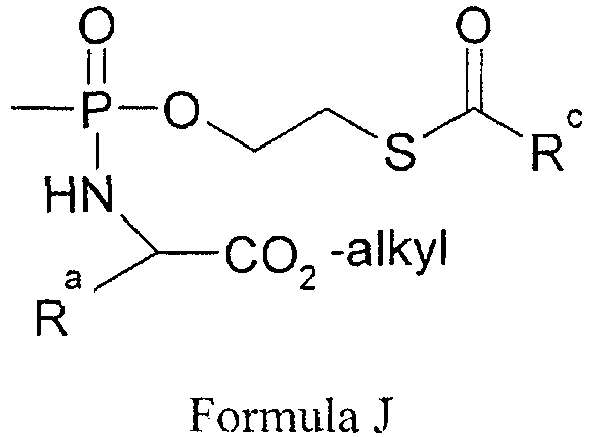
- Other prodrugs are possible based on literature reports such as substituted ethyls for example, bis(trichloroethyl)esters as disclosed by McGuigan, et al., Bioorg Med. Chem. Lett., 3:1207-1210 (1993), and the phenyl and benzyl combined nucleotide esters reported by Meier, C. et al., Bioorg. Med. Chem. Lett. 7:99-104 (1997).
- "Sulfonate prodrugs", are compounds that break down chemically or enzymatically to a sulfonic acid group in vivo. Examples of sulfonate prodrugs include aryl esters such as nitrophenylsulfonyl esters and have been demonstrated to generate the corresponding sulfonic acids under physiological conditions (Yan and Muller, J.Med.Chem 47, 1031 (2004)). An example of a nitrophenylsulfonyl ester prodrug is:

- The structure of formula L has a plane of symmetry running through the phosphorus-oxygen double bond when both R60s are the same, V=W, and V and W (defined herein) are either both pointing up or both pointing down. The same is true of structures where both -NR60s are replaced with -O-.

- The term "cyclic phosphonate ester of 1,3-propane diol", "cyclic phosphonate diester of 1,3-propane diol", "2-oxo-2λ5-[1,3,2]-dioxaphosphonane", "2-oxo-[1,3,2]-dioxaphosphonane", "dioxaphosphonane" refers to the following:

- The phrase "together V and Z are connected via an additional 3-5 atoms to form a cyclic group containing 5-7 atoms, optionally containing 1 heteroatom, substituted with hydroxy, acyloxy, alkylthiocarbonyloxy, alkoxycarbonyloxy, or aryloxycarbonyloxy attached to a carbon atom that is three atoms from both Y groups attached to the phosphorus" includes the following:

- The structure shown above (left) has an additional 3 carbon atoms that forms a five member cyclic group. Such cyclic groups must possess the listed substitution to be oxidized.
- The phrase "together V and Z are connected via an additional 3-5 atoms to form a cyclic group, optionally containing one heteroatom, that is fused to an aryl group attached at the beta and gamma position to the G attached to the phosphorus" includes the following:

- The phrase "together V and W are connected via an additional 3 carbon atoms to form an optionally substituted cyclic group containing 6 carbon atoms and substituted with one substituent selected from the group consisting of hydroxy, acyloxy, alkoxycarbonyloxy, alkylthiocarbonyloxy, and aryloxycarbonyloxy, attached to one of said additional carbon atoms that is three atoms from a Y attached to the phosphorus" includes the following:
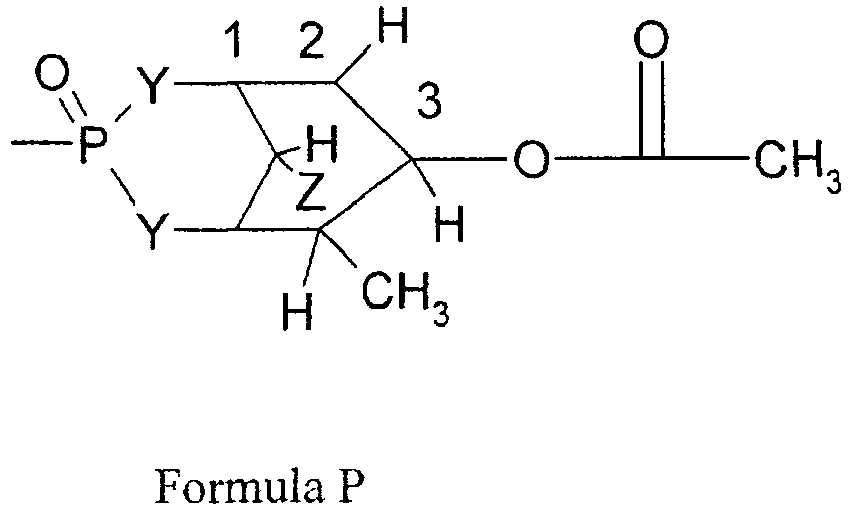
- The structure above has an acyloxy substituent that is three carbon atoms from a Y, and an optional substituent, -CH3, on the new 6-membered ring. There has to be at least one hydrogen at each of the following positions: the carbon attached to Z; both carbons alpha to the carbon labeled "3"; and the carbon attached to "OC(O)CH3" above.
- The phrase "together W and W' are connected via an additional 2-5 atoms to form a cyclic group, optionally containing 0-2 heteroatoms, and V must be aryl, substituted aryl, heteroaryl, or substituted heteroaryl" includes the following:

- The structure above has V=aryl, and a spiro-fused cyclopropyl group for W and W'. The term "cyclic phosphon(amid)ate" refers to:

- wherein Y is independently -O- or -NR60-. The carbon attached to V must have a C-H bond. The carbon attached to Z must also have a C-H bond.
- For cylic 1,3-propanyl phosphonate prodrugs of compounds of the present invention the term "cis" stereochemistry refers to the spatial relationship of the V group and the carbon attached to the phosphorus atom on the six-membered ring. The formula below shows a cis stereochemistry.

- The term "trans" stereochemistry for the same moiety refers to the spatial relationship of the V group and the carbon, attached to the phosphorus atom, on the six-membered ring. The formula below shows a trans-stereochemistry.

- The formula below shows another trans-stereochemistry of the same moiety.

- The terms "S-configuration", "S-isomer" and "S-prodrug" of the same refers to the absolute configuration S of carbon C'. The formula below shows the S-stereochemistry.

- The terms "R-configuration", "R-isomer" and "R-prodrug" of the same refers to the absolute configuration R of carbon C'. The formula below shows the R-stereochemistry.

- The term "percent enantiomeric excess (% ce)" refers to optical purity. It is obtained by using the following formula:

where [R] is the amount of the R isomer and [S] is the amount of the S isomer. This formula provides the % ee when R is the dominant isomer. - The term "enantioenriched" or "enantiomerically enriched" refers to a sample of a chiral compound that consists of more of one enantiomer than the other. The extent to which a sample is enantiomerically enriched is quantitated by the enantiomeric ratio or the enantiomeric excess.
- R. Kurukulasuriya et al. [Biorganic & Medicinal Chemistry Letters 14 (2004), p. 2047-2050] teach biaryl amides derived from a series of ureas. They were evaluated and found to be potent human glucagon receptor antagonists.
-
WO 03/048109 A1 - One aspect of the present invention provides compounds of formula

- R44 is H, CH3 or CH3CH2;
- R45 is C1-C6 alkyl, alkenyl, alkoxy, C3-6 cycloalkyl, aryl, phenyl or C4-8 cycloalkenyl, any of which can be optionally substituted with one or more substituents;
- L is phenyl, indenyl, benzofuran-2-yl or benzoxazol-2-yl, optionally substituted with one or more substituents; and
- R46 is H, F, Cl, CH3, CF3, OCF3 or CN,
- or single enantiomer, diastereomer, pharmaceutically acceptable salt, co-crystal, anhydrate, hydrate, or solvate thereof,
- and wherein "aryl" refers to aromatic groups which have 5-17 ring atoms and at least one ring having a conjugated pi electron system and includes carbocyclic aryl, heterocyclic aryl, monocyclic aryl, bicyclic aryl, and biaryl groups, all of which may be optionally substituted.
- In one embodiment, compounds of the invention are able to displace radiolabeled glucagon from the human glucagon receptor by at least 15% at 1000 nM. Preferably, compounds of the invention are able to displace at least 16%, 17%, 18%, 19%, 20%, 21%, 22%, 23%, 24%, 25%, 26%, 27%, 28%, 29%, 30%, 31%, 32%, 33%, 34%, 35%, 36%, 37%, 38%, 39%, 40%, 41%, 42%, 43%, 44%, 45%, 46%, 47%, 48%, 49%, 50%, 51%, 52%, 53%, 54%, 55%, 56%, 57%, 58%, 59%, 60%, 61%, 62%, 63%, 64%, 65%, 66%, 67%, 68%, 69%, 70%, 71%, 72%, 73%, 74%, 75%, 76%, 77%, 78%, 79%, 80%, 81%, 82%, 83%, 84%, 85%, 86%, 87%, 88%, 89%, 90%, 91%, 92%, 93%, 94%, 95%, 96%, 97%, 98%, or 99% of radiolabeled glucagon from the human glucagon receptor as described in Example A.
- Alternatively, the activities of the compounds of the invention can be described in terms of the concentrations of compounds required for displacement of 50% of the radiolabeled glucagon from the human glucagon receptor (the IC50 values) according to the methods of Example A. Preferably, the IC50 values for compounds of the subject invention are less than < 10,000 nM, 9,000 nM, 8,000 nM, 7,000 nM, 6,000 nM, 5,000 nM, 4,000 nM, 3,000 nM, 2,000 nM, 1,000 nM, 900 nM, 800 nM, 700 nM, 600 nM, 500 nM, 400 nM, 300 nM, 200 nM, 100 nM, 90 nM, 80 nM, 70 nM, 60 nM, 50 nM, 40 nM, 30 nM, 25 nM, 20 nM, 15 nM, 10 nM or 5 nM.
- In another alternative, the activities of the compounds of the invention can be described in terms of the concentrations of compounds required for functional antagonism of glucagon in hepatocytes from various species. The EC50 is determined using the method of Example B. Preferably, the EC50 values for compounds of the subject invention are less than < 10,000 nM, 9,000 nM, 8,000 nM, 7,000 nM, 6,000 nM, 5,000 nM, 4,000 nM, 3,000 nM, 2,000 nM, 1,000 nM, 900 nM, 800 nM, 700 nM, 600 nM, 500 nM, 400 nM, 300 nM, 200 nM, 100 nM, 90 nM, 80 nM, 70 nM, 60 nM, 50 nM, 40 nM, 30 nM, 25 nM, 20 nM, 15 nM, 10 nM or 5 nM.
- Compounds of the present invention also exhibit the ability to reduce blood glucose in an animal. In various aspects of the invention, circulating blood glucose in fasting or non-fasting (freely-feeding) animals can be reduced between 10% and 100%. A reduction of 100% refers to complete normalization of blood glucose levels, not 0% blood glucose levels. Normal blood glucose in rats, for example, is approximately 80 mg/dl (fasted) and approximately 120 mg/dl (fed). Thus, the subject invention contemplates reducing excessive circulating blood glucose levels in fasting or freely fed animals (e.g. rat), administered 10 mg/kg of a compound of the present invention, by at least 10%, 11%, 12%, 13%, 14%,15%, 16%, 17%, 18%, 19%, 20%, 21%, 22%, 23%, 24%, 25%, 26%, 27%, 28%, 29%, 30%, 31%, 32%, 33%, 34%, 35%, 36%, 37%, 38%, 39%, 40%, 41%, 42%, 43%, 44%, 45%, 46%, 47%, 48%, 49%, 50%, 51%, 52%, 53%, 54%, 55%, 56%, 57%, 58%, 59%, 60%, 61%, 62%, 63%, 64%, 65%, 66%, 67%, 68%, 69%, 70%, 71%, 72%, 73%, 74%, 75%, 76%, 77%, 78%, 79%, 80%, 81%, 82%, 83%, 84%, 85%, 86%, 87%, 88%, 89%, 90%, 91%, 92%, 93%, 94%, 95%, 96%, 97%, 98%, or 99%.
- The invention provides for compounds, and compositions comprising the compounds wherein the compound is:

- R44 is H, CH3 or CH3CH2; R45 is optionally substituted, is located at any position on the aryl ring and is C1-C6 alkyl, alkenyl or alkoxy, C3-6 cycloalkyl, aryl, phenyl or C4-8 cycloalkenyl; L is phenyl, indenyl, benzofuran-2-yl or benzoxazol-2-yl, optionally substituted with one or more substituents; and R46 is H, F, Cl, CH3, CF3, OCF3 and CN. In certain embodiments, R45 is located at the 3 or 4 position of the aryl ring. Other aspects of the invention provide for L to be substituted with one or more substituents independently selected from H, F, Cl, CH3, CF3, OCF3 or CN. Alternatively, L can be substituted with one or more substituents independently selected from optionally substituted C1-6-alkyl, optionally substituted C2-6-alkenyl, optionally substituted C2-6-alkynyl, optionally substituted C3-4-cycloalkyl, optionally substituted C4-8-cycloalkenyl, optionally substituted C3-8-alkoxy, optionally substituted C3-8-alkylthio-,optionally substituted C3-8-cycloalkylalkoxy, optionally substituted C3-8-cycloalkylalkylthio-, optionally substituted C3-8-cycloalkyloxy, optionally substituted C3-8-cycloalkylthio, halogen, -NO2, -CN, -CF3,-NR10R10, -OR9, -SR9, -S(O)R9, -SO2R9, -NR9SOR10, -NR9SO2R10, -SO2NR10R10, -CONR10R10, -NR9COR10, -OC(O)NR10R10, -CH2NR10R10, -OC(O)R9, -C(O)R9 or -COOR9; wherein R9 is independently selected from hydrogen, optionally substituted aralkyl, C1-6-alkyl or optionally substituted aryl; and, wherein each R10 is independently selected from hydrogen, optionally substituted C1-6-alkyl, optionally substituted aryl or R10R10 together with the N to which they are attached form a 3 to 8 membered optionally substituted heterocyclic ring; wherein said heterocyclic ring contains at least one C atom; wherein said heterocyclic ring optionally contains one or two further heteroatoms independently selected from nitrogen, oxygen and sulfur; and wherein said heterocyclic ring optionally contains 0, 1 or 2, double bonds. Certain other aspects of the compounds provide for R45 to be optionally substituted and selected from (CH3)3C-, (CH3)3CCH=CH-, t-butylcycloalkenyl-, or (CH3)3CCH2O-. Various other aspects provide for R45 to be optionally substituted and selected from (CH3)3C-, (CH3)3CCH=CH-, t-butyl-cycloalkenyl-, or (CH3)3CCH2O- and L is substituted with one or more substituents independently selected from H, F, Cl, CH3, CF3, OCF3 or CN. Other aspects of the invention provide for R45 to be selected from (CH3)3C-, (CH3)3CCH=CH- or (CH3)3CCH2O- and L is substituted with one or more substituents independently selected from optionally substituted C1-6-alkyl, optionally substituted C2-6-alkenyl, optionally substituted C2-6-alkynyl, optionally substituted C3-4-cycloalkyl, optionally substituted C4-8-cycloalkenyl, optionally substituted C3-8-alkoxy, optionally substituted C3-8-alkylthio-,optionally substituted C3-8-cycloalkylalkoxy, optionally substituted C3-8-cycloalkylalkylthio-, optionally substituted C3-8-cycloalkyloxy, optionally substituted C3-8-cycloalkylthio, halogen, -NO2, -CN, -NR10R10, -OR9, -SR9, -S(O)R9, -SO2R9, -NR9SOR10, -NR9SO2R10, -SO2NR10R10, -CONR10R10, -NR9COR10, -OC(O)NR10R10, -CH2NR10R10, -OC(O)R9, -C(O)R9 or -COOR9; wherein R9 is independently selected from hydrogen, optionally substituted aralkyl, C1-6-alkyl or optionally substituted aryl; and, wherein each R10 is independently selected from hydrogen, optionally substituted C1-6-alkyl, optionally substituted aryl or R10R10 together with the N to which they are attached form a 3 to 8 membered optionally substituted heterocyclic ring; wherein said heterocyclic ring contains at least one C atom; wherein said heterocyclic ring optionally contains one or two further heteroatoms independently selected from nitrogen, oxygen and sulfur; and wherein said heterocyclic ring optionally contains 0, 1 or 2 double bonds. In some embodiments where R45 is substituted, R45 can be substituted with C1-C4 alkyl.
- Another aspect of the present invention are pharmaceutical compositions comprising a compound as disclosed herein.
- Another aspect of the present invention are single enantiomers or diasteromers of a compound as disclosed herein.
- Another aspect of the present invention are enantiomerically enriched compositions comprising an enantiomer of a compound of the present invention. In one embodiment, a single enantiomer is >60%, >70%, >80%, >85%, >90%, >91%, >92%, >93%, >94%, >95%, >96%, >97%, >98% or >99% enriched as compared to the total percentage of all other enantiomers of the same compound present in the composition.
- Another aspect provides for salts, including pharmaceutically acceptable salts, of compounds of the present invention and pharmaceutical compositions comprising a pharmaceutically acceptable salt of the present invention. Salts of compounds of the present invention include an inorganic base addition salt such as sodium, potassium, lithium, calcium, magnesium, ammonium, aluminum salts or organic base addition salts, or an inorganic acid addition salt such as HBr, HCl, sulfuric, nitric, or phosphoric acid addition salts or an organic acid addition salt such as acetic, propionic, pyruvic, malanic, succinic, malic, maleic, fumaric, tartaric, citric, benzoic, methanesulfonic, ethanesulforic, stearic or lactic acid addition salt.
- Another aspect provides for anhydrates, hydrates and solvates of compounds of the present invention and pharmaceutical compositions comprising a pharmaceutically acceptable anhydrates, hydrates and solvates of the present invention. Included are an anhydrate, hydrate or solvate of a free form or salt of a compound of the present invention. Hydrates include, for example, a hemihydrate, monohydrate, dihydrate, trihydrate, quadrahydrate, pentahydrate, sesquihydrate.
- Another aspect provides for the use of a compound of the present invention for the manufacture of a medicament for treating, preventing, delaying the time to onset or reducing the risk for the development or progression of a disease or condition responsive to decreased hepatic glucose production or responsive to lowered blood glucose levels.
- In one embodiment, the hyperglycemia is postprandial hyperglycemia. In another embodiment, the hyperglycemia is fasting hyperglycemia.
- In one aspect, compounds of the invention are administered in a total daily dose of 0.01 to 2500 mg. In one aspect the range is about 1 mg to about 1000 mg. In one aspect the range is about 1 mg to about 500 mg. In one aspect the range is about 10 mg to about 500 mg. The dose may be administered in as many divided doses as is convenient or necessary.
- In another aspect, compounds of the invention are administered in a unit dose of a range between 0.01 to 1000 mg. In one aspect the range is about 0.1 mg to about 500 mg. In one aspect the range is about 0.1 mg to about 100 mg. In one aspect the range is about 1 mg to about 1000 mg. In one aspect the range is about 1 mg to about 500 mg. In one aspect the range is about 1 mg to about 100 mg. In one aspect the range is about 1 mg to about 10 mg. In one aspect the range is about 10 mg to about 1000 mg. In one aspect the range is about 10 mg to about 500 mg. In one aspect the range is about 10 mg to about 100 mg. In one aspect, the unit dose is 10 mg. In one aspect, the unit dose is 25 mg. In one aspect, the unit dose is 50 mg. In one aspect, the unit dose is 75 mg. In one aspect, the unit dose is 100 mg. In one aspect, the unit dose is 150 mg. In one aspect, the unit dose is 200 mg. In one aspect, the unit dose is 250 mg. In one aspect, the unit dose is 300 mg. In one aspect, the unit dose is 400 mg. In one aspect, the unit dose is 500 mg. In one aspect, the unit dose is 600 mg. In one aspect, the unit dose is 700 mg. In one aspect, the unit dose is 800 mg. In one aspect, the unit dose is 900 mg. In one aspect, the unit dose is 1000 mg.
- In one aspect the compound is administered QD (once a day). In another aspect the compound is administered BID (twice a day). In another aspect the compound is administered TID (three times a day). In another aspect the compound is administered QID (four times a day). In one aspect the compound is administered before a meal. In one aspect the compound is administered after a meal. In one aspect the compound is administered in the morning hours. In one aspect the compound is administered upon awaking in the morning. In one aspect the compound is administered in the evening hours. In one aspect the compound is administered at bedtime in the evening.
- Compounds of this invention may be used in combination with other pharmaceutical agents. The compounds may be administered as a daily dose or an appropriate fraction of the daily dose (e.g., bid). Administration of the compound may occur at or near the time in which the other pharmaceutical agent is administered or at a different time. The compounds of this invention may be used in a multidrug regimen, also known as combination or 'cocktail' therapy, wherein, multiple agents may be administered together, may be administered separately at the same time or at different intervals, or administered sequentially. The compounds of this invention may be administered after a course of treatment by another agent, during a course of therapy with another agent, administered as part of a therapeutic regimen, or may be administered prior to therapy by another agent in a treatment program.
- The compounds may be administered by a variety of means including orally, parenterally, by inhalation spray, topically, or rectally in formulations containing pharmaceutically acceptable carriers, adjuvants and vehicles. The term parenteral as used here includes subcutaneous, intravenous, intramuscular, and intraarterial injections with a variety of infusion techniques. Intraarterial and intravenous injection as used herein includes administration through catheters. Intravenous administration is generally preferred.
- Pharmaceutically acceptable salts include acetate, adipate, besylate, bromide, camsylate, chloride, citrate, edisylate, estolate, fumarate, gluceptate, gluconate, glucoranate, hippurate, hyclate, hydrobromide, hydrochloride, iodide, isethionate, lactate, lactobionate, maleate, mesylate, methylbromide, methylsulfate, napsylate, nitrate, oleate, palmoate, phosphate, polygalacturonate, stearate, succinate, sulfate, sulfosalicylate, tannate, tartrate, terphthalate, tosylate, and triethiodide.
- Pharmaceutical compositions containing the active ingredient may be in any form suitable for the intended method of administration. When used for oral use for example, tablets, troches, lozenges, aqueous or oil suspensions, dispersible powders or granules, emulsions, hard or soft capsules, syrups or elixirs may be prepared. Compositions intended for oral use may be prepared according to any method known to the art for the manufacture of pharmaceutical compositions and such compositions may contain one or more agents including sweetening agents, flavoring agents, coloring agents and preserving agents, in order to provide a palatable preparation. Tablets containing the active ingredient in admixture with non-toxic pharmaceutically acceptable excipient which are suitable for manufacture of tablets are acceptable. These excipients may be, for example, inert diluents, such as calcium or sodium carbonate, lactose, calcium or sodium phosphate; granulating and disintegrating agents, such as maize starch, or alginic acid; binding agents, such as starch, gelatin or acacia; and lubricating agents, such as magnesium stearate, stearic acid or talc. Tablets may be uncoated or may be coated by known techniques including microencapsulation to delay disintegration and adsorption in the gastrointestinal tract and thereby provide a sustained action over a longer period. One aspect relates to the administration of a pharmaceutically acceptable composition of the present invention by controlled- or delayed-release means. Controlled-release pharmaceutical products have a common goal of improving drug therapy over that achieved by their non-controlled release counterparts.
- A variety of known controlled- or extended-release dosage forms, formulations, and devices can be adapted for use with the crystalline forms of the invention. Examples include, but are not limited to, those described in
U.S. Pat. Nos.: 3,845,770 ;3,916,899 ;3,536,809 ;3,598, 123 ;4,008,719 ;5,674,533 ;5,059,595 ;5,591,767 ;5,120,548 ;5,073,543 ;5, 639,476 ;5,354,556 ;5,733,566 ; and6,365,185 . - These dosage forms can be used to provide delayed or controlled- release of one or more active ingredients using, for example, hydroxypropylmethyl cellulose, other polymer matrices, gels, permeable membranes, osmotic systems (such as OROS, Alza Corporation, Mountain View, Calif. USA), multilayer coatings, microparticles, liposomes, or microspheres or a combination thereof to provide the desired release profile in varying proportions. Additionally, ion exchange materials can be used to prepare immobilized, adsorbed co-crystals and thus effect controlled delivery of the drug. Examples of specific anion exchangers include, but are not limited to, Duolite A568 and Duolite AP143 (Rohm & Haas, Spring House, PA, USA).
- One aspect encompasses a unit dosage form which comprises a pharmaceutically acceptable composition comprising a crystalline form of a compound of the present invention and one or more pharmaceutically acceptable excipients or diluents, wherein the pharmaceutical composition, medicament or dosage forms is formulated for controlled-release. In another aspect, the dosage form utilizes an osmotic drug delivery system.
- A particular and well-known osmotic drug delivery system is referred to as OROS (Alza Corporation, Mountain View, Calif. USA). This technology can readily be adapted for the delivery of compounds and compositions of the invention. Various aspects of the technology are disclosed in
U.S. Pat. Nos. 6, 375, 978 ;6,368,626 ;6,342,249 ;6,333,050 ;6,287,295 ;6, 283,953 ;6,270,787 ;6,245,357 ; and6,132,420 . Specific adaptations of OROS that can be used to administer compounds and compositions of the invention include, but are not limited to, the OROS; Push- Pull, Delayed Push-Pull, Multi-Layer Push- Pull, and Push-Stick Systems, all of which are well known. See, e.g., www. alza.com. Additional OROS systems that can be used for the controlled oral delivery of compounds and compositions of the invention include OROS- CT and L-OROS (Id.; see also, Delivery Times, vol. II, issue II (Alza Corporation). - Conventional OROS oral dosage forms are made by compressing a drug powder (e.g. a crystalline form selected from Forms A-D) into a hard tablet, coating the tablet with cellulose derivatives to form a semi-permeable membrane, and then drilling an orifice in the coating (e.g., with a laser). Kim, Cherug-ju, Controlled Release Dosage Form Design, 231-238 (Technomic Publishing, Lancaster, PA: 2000). The advantage of such dosage forms is that the delivery rate of the drug is not influenced by physiological or experimental conditions. Even a drug with a pH-dependent solubility can be delivered at a constant rate regardless of the pH of the delivery medium. But because these advantages are provided by a build-up of osmotic pressure within the dosage form after administration, conventional OROS drug delivery systems cannot be used to effectively deliver drugs with low water solubility. Id. at 234.
- A specific dosage form comprises: a wall defining a cavity, the wall having an exit orifice formed or formable therein and at least a portion of the wall being semipermeable; an expandable layer located within the cavity remote from the exit orifice and in fluid communication with the semipermeable portion of the wall; a dry or substantially dry state drug layer located within the cavity adjacent to the exit orifice and in direct or indirect contacting relationship with the expandable layer; and a flow-promoting layer interposed between the inner surface of the wall and at least the external surface of the drug layer located within the cavity, wherein the drug layer comprises a crystalline form of a compound of the present invention. See
U.S. Pat. No. 6,368,626 . - Another specific dosage form comprises: a wall defining a cavity, the wall having an exit orifice formed or formable therein and at least a portion of the wall being semipermeable; an expandable layer located within the cavity remote from the exit orifice and in fluid communication with the semipermeable portion of the wall; a drug layer located within the cavity adjacent the exit orifice and in direct or indirect contacting relationship with the expandable layer; the drug layer comprising a liquid, active agent formulation absorbed in porous particles, the porous particles being adapted to resist compaction forces sufficient to form a compacted drug layer without significant exudation of the liquid, active agent formulation, the dosage form optionally having a placebo layer between the exit orifice and the drug layer, wherein the active agent formulation comprises a crystalline form of a compound of the present invention. See
U. S. Pat. No. 6,342,249 . - A pharmaceutical composition or medicament comprising a crystalline form of a compound of the present invention can be administered transdermally, Such a transdermal (TD) delivery can avoid first-pass metabolism. Additionally, a "pill-and-patch" strategy can be taken, where only a fraction of the daily dose is delivered through the skin to generate basal systemic levels, onto which oral therapy is added.
- Formulations for oral use may be also presented as hard gelatin capsules where the active ingredient is mixed with an inert solid diluent, for example calcium phosphate or kaolin, or as soft gelatin capsules wherein the active ingredient is mixed with water or an oil medium, such as peanut oil, liquid paraffin or olive oil.
- Aqueous suspensions contain the active materials in admixture with excipients suitable for the manufacture of aqueous suspensions. Such excipients include a suspending agent, such as sodium carboxymethylcellulose, methylcellulose, ethylcellulose, hydroxypropylcellulose, hydroxypropyl methylcellulose, sodium alginate, polyvinylpyrrolidone, gum tragacanth and gum acacia, and dispersing or wetting agents such as a naturally occurring phosphatide (e.g., lecithin), a condensation product of an alkylene oxide with a fatty acid (e.g., polyoxyethylene stearate), a condensation product of ethylene oxide with a long chain aliphatic alcohol (e.g., heptadecaethyleneoxycetanol), a condensation product of ethylene oxide with a partial ester derived from a fatty acid and a hexitol anhydride (e.g., polyoxyethylene sorbitan monooleate). The aqueous suspension may also contain one or more preservatives such as ethyl or n-propyl p-hydroxy-benzoate, one or more coloring agents, one or more flavoring agents and one or more sweetening agents, such as sucrose or saccharin.
- Oil suspensions may be formulated by suspending the active ingredient in a vegetable oil, such as arachid oil, olive oil, sesame oil or coconut oil, or in a mineral oil such as liquid paraffin. The oral suspensions may contain a thickening agent, such as beeswax, hard paraffin or cetyl alcohol. Sweetening agents, such as those set forth above, and flavoring agents may be added to provide a palatable oral preparation. These compositions may be preserved by the addition of an antioxidant such as ascorbic acid.
- Dispersible powders and granules suitable for preparation of an aqueous suspension by the addition of water provide the active ingredient in admixture with a dispersing or wetting agent, a suspending agent, and one or more preservatives. Suitable dispersing or wetting agents and suspending agents are exemplified by those disclosed above. Additional excipients, for example sweetening, flavoring and coloring agents, may also be present.
- The pharmaceutical compositions of the invention may also be in the form of oil-in-water emulsions. The oily phase may be a vegetable oil, such as olive oil or arachid oil, a mineral oil, such as liquid paraffin, or a mixture of these. Suitable emulsifying agents include naturally-occurring gums, such as gum acacia and gum tragacanth, naturally occurring phosphatides, such as soybean lecithin, esters or partial esters derived from fatty acids and hexitol anhydrides, such as sorbitan monooleate, and condensation products of these partial esters with ethylene oxide, such as polyoxyethylene sorbitan monooleate. The emulsion may also contain sweetening and flavoring agents.
- Syrups and elixirs may be formulated with sweetening agents, such as glycerol, sorbitol or sucrose. Such formulations may also contain a demulcent, a preservative, a flavoring or a coloring agent.
- The pharmaceutical compositions of the invention may be in the form of a sterile injectable preparation, such as a sterile injectable aqueous or oleaginous suspension. This suspension may be formulated according to the known art using those suitable dispersing or wetting agents and suspending agents which have been mentioned above. The sterile injectable preparation may also be a sterile injectable solution or suspension in a non-toxic parenterally acceptable diluent or solvent, such as a solution in 1,3-butane-diol or prepared as a lyophilized powder. Among the acceptable vehicles and solvents that may be employed are water, Ringer's solution and isotonic sodium chloride solution. In addition, sterile fixed oils may conventionally be employed as a solvent or suspending medium. For this purpose any bland fixed oil may be employed including synthetic mono- or diglycerides. In addition, fatty acids such as oleic acid may likewise be used in the preparation of injectables.
- As noted above, formulations of the present invention suitable for oral administration may be presented as discrete units such as capsules, cachets or tablets each containing a predetermined amount of the active ingredient; as a powder or granules; as a solution or a suspension in an aqueous or non-aqueous liquid; or as an oil-in-water liquid emulsion or a water-in-oil liquid emulsion. The active ingredient may also be administered as a bolus, electuary or paste.
- A tablet may be made by compression or molding, optionally with one or more accessory ingredients. Compressed tablets may be prepared by compressing in a suitable machine the active ingredient in a free flowing form such as a powder or granules, optionally mixed with a binder (e.g., povidone, gelatin, hydroxypropylmethyl cellulose), lubricant, inert diluent, preservative, disintegrant (e.g., sodium starch glycolate, cross-linked povidone, cross-linked sodium carboxymethyl cellulose) surface active or dispersing agent. Molded tablets may be made by molding in a suitable machine a mixture of the powdered compound moistened with an inert liquid diluent. The tablets may optionally be coated or scored and may be formulated so as to provide slow or controlled release of the active ingredient therein using, for example, hydroxypropyl methylcellulose in varying proportions to provide the desired release profile. Tablets may optionally be provided with an enteric coating, to provide release in parts of the gut other than the stomach. This is particularly advantageous with the compounds of Formula I when such compounds are susceptible to acid hydrolysis.
- Formulations suitable for topical administration in the mouth include lozenges comprising the active ingredient in a flavored base, usually sucrose and acacia or tragacanth; pastilles comprising the active ingredient in an inert base such as gelatin and glycerin, or sucrose and acacia; and mouthwashes comprising the active ingredient in a suitable liquid carrier.
- Formulations for rectal administration may be presented as a suppository with a suitable base comprising for example cocoa butter or a salicylate.
- Formulations suitable for vaginal administration may be presented as pessaries, tampons, creams, gels, pastes, foams or spray formulations containing in addition to the active ingredient such carriers as are known in the art to be appropriate.
- Formulations suitable for parenteral administration include aqueous and non-aqueous isotonic sterile injection solutions which may contain antioxidants, buffers, bacteriostats and solutes which render the formulation isotonic with the blood of the intended recipient; and aqueous and non-aqueous sterile suspensions which may include suspending agents and thickening agents. The formulations may be presented in unit-dose or multi-dose sealed containers, for example, ampoules and vials, and may be stored in a freeze-dried (lyophilized) condition requiring only the addition of the sterile liquid carrier, for example water for injections, immediately prior to use. Injection solutions and suspensions may be prepared from sterile powders, granules and tablets of the kind previously described.
- Formulations suitable for parenteral administration may be administered in a continuous infusion manner via an indwelling pump or via a hospital bag. Continuous infusion includes the infusion by an external pump. The infusions may be done through a Hickman or PICC or any other suitable means of administering a formulation either parenterally or i.v.
- Preferred unit dosage formulations are those containing a daily dose or unit, daily sub-dose, or an appropriate fraction thereof, of a drug.
- It will be understood, however, that the specific dose level for any particular patient will depend on a variety of factors including the activity of the specific compound employed; the age, body weight, general health, sex and diet of the individual being treated; the time and route of administration; the rate of excretion; other drugs which have previously been administered; and the severity of the particular disease undergoing therapy, as is well understood by those skilled in the art.
-

- Compounds of Formula I can be prepared according to the methodology outlined in the following general synthetic schemes or with modifications of these schemes that will be evident to persons skilled in the art.
- The carboxylic acids A1c can be generated using standard methods. As shown below, an ester can be alkylated by reaction with a base (such as lithium diisopropylamide or lithium hexamethyldisilylamide) in a suitable solvent (such as THF or DME) followed by reaction with an aralkyl halide. It is preferred that Ra and Rb groups are adequately chosen so that liberation of the carboxylic acid to generate A1c can take place selectively. For example, a standard Rb group can be a methyl or ethyl group while the Ra group can be a benzyl, t-butyl, 2-trimethylsilylethyl group or other groups that can be selectively removed under conditions where the other ester group Rb would remain intact.


- An alternative route for the synthesis of this particular building block can involve condensation of an acetic acid derivative with an aldehyde or a ketone leading to the α,β-unsaturated ester intermediate A1a. The esters A1a can be hydrogenated under conditions that are well-documented in the literature (for example, hydrogen atmosphere and palladium on carbon as a catalyst in a solvent such as ethanol) to generate the carboxylate esters A1b (where R1 and R27 are both hydrogen). 1,4-Addition of an alkyl group can take place by reaction with a suitable carbon nucleophile (e.g. copper mediated reaction of alkyl lithium or alkyl Grignard reagent) to yield compounds A1b wherein R27 is alkyl. Other methods for the incorporation of R27 include the reaction with dilakylzinc halides with or without the presence of metal catalysts. The group R1 can be incorporated into A1b by quenching the anions generated in the above reactions with a suitable electrophile (e.g. R1-Hal where Hal is a halogen or a trifluoromethanesulfonate ester or other suitable leaving group). On the other hand, the above discussed reaction can be quenched with a suitable proton source (e.g. aqueous ammonium chloride or dilute aqueous hydrochloric acid) to give compounds A1b wherein R1 is H. Alternatively, the R1 group can also be incorporated from A1b (R1 = H) by enolization followed by reaction with a suitable electrophile R1-Hal.


- Compounds of formula A1d can be prepared via the condensation of phenylacetic acid derivatives with aldehydes or ketones, which is performed in a manner such that dehydration does not take place. Examples of methods for this conversion would be the deprotonation of a phenylacetic acid ester derivative with a suitable base followed by addition of an aromatic aldehyde or ketone. This hydroxyl group can be manipulated to afford a fluoride analog A1e by a variety of established methods. The reaction of alcohols with fluorinating agents (such as Et2NSF3, (PhSO2)2NF, etc.) is known to directly yield the corresponding fluorides. Alternatively, the alcohol can be converted into a good leaving group such as a mesylate and treated with a fluoride source such as CsF or KF.

- If R27 in A1d is hydrogen, oxidation can also lead to an intermediate A1h. This oxidation can take place by a suitable method, such as oxidation with Dess-Martin periodinane, Swern oxidation, or oxidation with other suitable oxidants such as PCC, PDC, or like reagents.

- It is recognized that the carbon atom to which E, Z and Y are attached is an asymmetric center. The synthesis of compounds of the invention in enantiomerically pure form can be achieved by utilization of the methods described above if the starting material A1b1 exists in enantiomerically pure form. An optically pure precursor A1b1*, can be generated by resolution of racemic A1b1 or by use of synthetic methods that generate the asymmetric center in an enantioselective manner.
- Resolution methods include the generation of a diastereomeric mixture of carboxylate salts with an optically active amine, which may be separated by fractional crystallization, Acidification of the individual diastereomeric salts and isolation of the carboxylic acid affords the individual enantiomers of the carboxylic acid (D.Kozma: 'CRCC Handbook of Optical Resolutions via Diastereomeric Salt Formation' CRC Press, 2001). Alternatively, diastereomeric mixtures of ester or amide derivatives may be prepared by condensation of the racemic carboxylic acid with an optically active alcohol or amine, respectively; these diastereomers may be separated by chromatographic methods and/or fractional crystallization. The pure enantiomers are then generated from the individual diastereomers by reconversion to the carboxylic acid, using methods that are well established in the literature.

- Methods that generate the chiral center in an enantioselective manner include, but are not limited to, the alkylation of precursors containing a chiral auxiliary Xc. This should generate an unequal amount of two diastereomers, which may be separated by fractional crystallization or chromatography. After the separation of the diastereomers, they can be converted into the corresponding enantiomerically enriched acids by known procedures and further elaborated into the compounds of the invention as described in the Examples below.

- Asymmetric centers may be present in other positions of the molecule. As an example, substitution on a cyclohexenyl group generates a new chiral center in compound 1.267. This center can be fixed in an appropriately functionalized precursor prior to construction of the target molecule. A potential route to this chiral precursor involves the desymmetrization of a racemic ketone. The reaction of 4-t-butylcyclohexanone with a chiral amide base has been reported to generate the corresponding chiral enolate in an enantioselective manner [Busch-Petersen and Corey, Tetrahedron Letters 41, 6941(2000), Lyapkalo et al, Synlett 1292(2001)]. Conversion of the enolate into a trifluoromethanesulfonate or a nonafluorobutanesulfonate [Busch-Petersen and Corey, Tetrahedron Letters 41, 6941(2000), Lyapkalo et al, Synlett 1292(2001)], leads to a chiral precursor that may be used in subsequent steps (A specific enantiomer is shown below, but it should be understood that either enantiomer can be synthesized by modifications of this method). The precursor B2a1 so obtained can then be elaborated into the single enantiomer as described above.

- When Y in A1 is a heteroatom such as oxygen, nitrogen or sulfur, the building blocks required for the synthesis of the target compound are as shown below. The starting material B2 can be functionalized to generate an intermediate B3, where Hal is a halogen or other good leaving group (for example, reaction of B2 with N-chlorosuccinimide or N-bromosuccinimide in warm carbon tetrachloride). Reaction of the intermediate B3 with a phenol or thiophenol or with a suitably substituted aniline in the presence of a suitable base leads to the intermediate A1j. If Y1 is sulfur, it can be oxidized with a suitable oxidant (e.g. mCPBA, peroxyacetic acid or peroxytrifluoroacetic acid) to give the corresponding sulfoxide or sulfone. Further conversion to the corresponding carboxylic acids A1 (Y1 = O, S, SO2) can be performed by selective removal of the protecting group Ra as discussed above.

- A method for the synthesis of precursors with the general structure A1r involves an adaptation of the Petasis boronic acid Mannich reaction (Kurti, L., Czako, B. Strategic Applications of Named Reactions in Organic Synthesis, Elsvier, 2005, 340-342; Petasis, N.A., Akritopoulou, I. Tetrahedron Lett. 1993, 34, 583-586). In this case, a boronic acid E-B(OH)2, a functionalized aniline and glyoxylic acid are mixed in equimolar ratios in dichloromethane, resulting in the formation of precursors A1r.

- An alternative route to A1j where Y1 is nitrogen involves the reductive amination of an α-ketoester with a suitably substituted aniline. On the other hand, if the 'Hal' group in B3 is hydroxyl, a Mitsunobu coupling reaction can be used to generate the intermediate A1j where Y1 is oxygen or sulfur.
- The methods shown in the schemes above can be modified to allow access to compounds where X is different from a 2,4-disubstituted phenyl. For example reaction of B2 (R1 = H) with an aldehyde can lead to compound A1m, where the X group can be a substituted cycloalkyl, cycloalkenyl, heteroary, alkynyl or alkenyl group. In a similar fashion, reaction of B2 with a halogenated precursor can lead to an analog A1k. Further modifications of these intermediates as illustrated above could lead to compounds of the invention.


- A method that can be used to synthesize compounds of formula I (where Z is -C(O)NR2-) is exemplified below. The carboxylic acids A1 are converted to the corresponding amides by methods known for amide bond formation reactions. As an example, generation of an acid chloride A2a from A1 takes place under standard conditions (e.g. thionyl chloride in toluene or oxalyl chloride and catalytic DMF in dichloromethane). Treatment of acid chloride A2a with amines or anilines generates the desired amides A3a. Alternatively, amines can be directly coupled with the carboxylic acid A1 by use of an activating agent (for example, DCC or EDCI with or without a catalyst such as DMAP) to generate the amides A3a. When D is an aromatic group, then aryl amides A3a with an appropriate substituent (e.g. a halo group such as bromo or iodo group on the aryl ring D) can be further functionalized through metal-mediated (e.g. Palladium) C-C bond coupling reactions to give further functionalized amides A3a. Hydrolysis of the ester group of A3a (e.g. M = -CO2CH3) results in a carboxylic acid A3a (wherein M = -CO2H), which can then be coupled with taurine or amine containing carboxylic acids or aminoalkyl phosph(i/o)nic acids using standard amide bond forming reactions to generate the targeted compounds A4a (M = -NHCO-).
- The amide bond in the last step can also be formed by other reported methods known for amide bond formation, for example, reaction of an N-hydroxysuccinimidyl ester and taurine gives the target taurine amide derivative A4a. Other activated esters (e.g. pentafluorophenyl esters) can also be used to effect the amide bond formation.

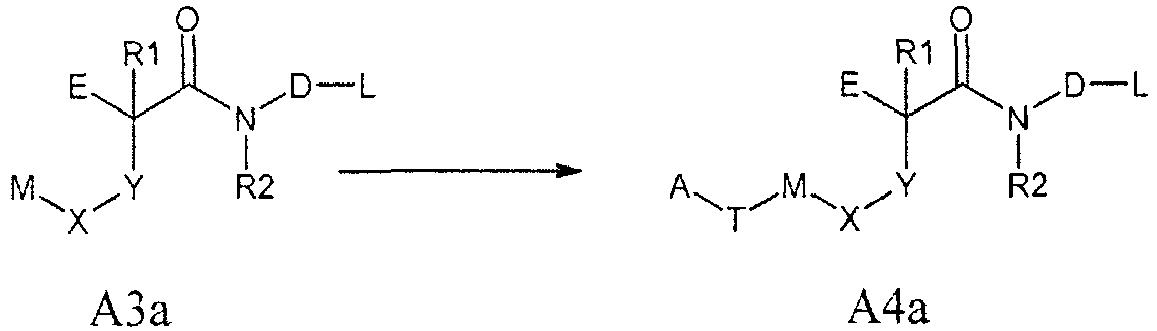
- A route to the synthesis of the isoxazole core is exemplified in the sequence below. The carboxylate A1 can be converted to the aldehyde A2b by methods known in the literature, including methods where the carboxylate is reduced to the alcohol stage followed by reoxidation to the aldehyde. The resulting aldehyde A2b is converted into the chloro-oxime A3b by a two-step sequence: (i) oxime formation (e.g. treatment with hydroxylamine hydrochloride in the presence of sodium acetate or other suitable base followed by) (ii) chlorination of the oxime (for example, using N-chlorosuccinimide in a suitable solvent such as DMF). A [3+2] cycloaddition reaction of A3 with substituted terminal acetylene derivatives (Yao et al, Tetrahedron 1998, 54(5/6), 791-822,) leads to isoxazoles with the general structure A4b.
- At this stage modification can be made on D, in order to reach the desired pattern of substitution on this fragment as illustrated in the Examples. Modification on the fragment M leads to generation of compounds of Formula I as will be described below.

- Another potential approach to the construction of the isoxazole core starts with reaction of the ketone A5 (which can be generated from the carboxylic acid A1 or a synthetic equivalent) with hydroxylamine hydrochloride or an O-protected hydroxylamine derivative in the presence of a suitable base. Deprotonation of the resulting oxime derivative A6 and reaction with a precursor D1 (Singh et al, Chem. Pharm. Bull. 1999, 47(10), 1501-1505) (wherein LG is a leaving group such as -OEt, -NMe(OMe), -Cl, etc.) will lead to an intermediate A7 which cyclizes spontaneously or under dehydrating conditions to generate A4b.

- The synthesis of isoxazoles can also take place from nitro compounds A8, which undergo [3+2] cycloaddition reactions with acetylene derivatives (Cereda et al, Tetrahedron Lett. 2001, 42(30) 4951) to generate isoxazoles A4b.

- In another route, the precursor A3 can be reacted with 1-tributylstannylacetylene (Lee et al, Bioorg. Med. Chem. Lett. 2003, 13(22) 4117-4120) to generate an intermediate A9. This stannane can be coupled with an aryl halide or triflate in the presence of a metal catalyst to generate a precursor A4b. Alternatively, iodination of A9 generates A10, which can then be coupled with a metallated precursor D-Met to generate A4b. In this case, Met is a metal such as MgBr, MgCl, Mgl, Sn(n-Bu)3, ZnCl, B(OH)2, etc.

- Modifications of the substituents at the 3-position of an isoxazole intermediate are also envisioned to give the desired compounds. For example, the commercially available chloro-oxime A11 can undergo a [3+2] cycloaddition reaction with an alkyne to generate the intermediate A12. The ester in A12 or a synthetic equivalent accessible from it such as an acid chloride, activated ester or an amide, can be used in reactions with organometallic reagents E-Met to generate ketones A13. In this case, Met is a metal such as Li, MgBr, MgCl, MgI, Sn(n-Bu)3, ZnCl, etc. and E is aryl, alkyl or cycloalkyl, cycloalkenyl, heteroaryl, etc as defined above.

- The intermediate ketones A13 can be the starting materials for multiple transformations. For example, the addition of organometallic reagents R1-Met to A13 results in the generation of alcohols A14. In this case, Met is a metal such as Li, MgBr, MgCl, MgI, Sn(n-Bu)3, ZnCl, etc. The intermediate alcohol A14 can in turn be converted into halo-substituted A15 (wherein Hal is F, Cl, Br, I, OSO2aryl, OSO2CF3 or other suitable leaving group). Reduction of the keto group in A13 to the methylene-containing A16 can be carried out using conventional chemistry, which provides a precursor for A17. A13 can also be a substrate for olefination reactions leading to intermediates A18 that can be further modified to give A19.

- Similar methods can be used for the synthesis of analogs where Y is O, N, etc as described above.
- The desired A-T-M fragments can be introduced at various points of the synthesis as a preformed unit. Alternatively, modifications of a precursor intermediate at the A-T-M region can also lead to the desired A-T-M configurations. To provide examples, the following section describes some of the many viable synthetic routes for the modification of the A-T-M fragments, which can either be used to prepare the desired A-T-M fragments to be incorporated into a synthetic route at various points or to modify a precursor intermediate.
- Examples for the A-T-M fragments include amino sulfonic acids, aminophosphonic acids and aminophosphinic acids. Many synthetic routes to these compounds can be envisioned and a few examples are discussed in the following section.
- Taurine analogs can be synthesized from aminoalcohols using existing methods (for example: Xu and Xu, Synthesis 2004, pp276-282). Amino alcohols with appropriate substituents can be protected with a group such as CO2CH2Ph to yield intermediates like T2, as exemplified below. The resulting alcohol is then treated with thioacetic acid under Mitsunobu conditions (e.g. triphenyl phosphine and diethylazodicarboxylate) in a solvent such as THF to generate a thioacetate ester T3. Oxidation to the sulfonic acid with hydrogen peroxide in formic acid leads to the aminosulfonic acid T4. These aminosulfonic acid fragments can be coupled with carboxylic acids directly under usual conditions (e.g. DCC, EDCI, etc.) or reacted with suitably activated carboxylic acid derivatives (e.g. pentafluorophenol esters, N-hydrolylsuccimide esters) to generate the target compounds T7.

- In an alternative route, the amino alcohols T1 can be coupled with a carboxylic acid precursor to give compounds of formula T5 and the alcohol group in T5 can then be converted into a sulfonic acid T7 by a sequence similar to the one shown above:


- Aminophosphonic and aminophosphinic acids can be prepared by known methods. As shown below, Arbuzov reaction of suitably protected haloalkyl amines T8 with a phosphite (e.g. (alkylO)3P) or a hydrogen phosphonate (e.g. (alkylO)2POH) or an equivalent reagent results in the formation of a phosphonate ester T9. The amine protecting group is then selectively removed and the resulting aminophosphonate T10 is coupled with a carboxylic acid to generate a protected version of the target compound T11. Removal of the alkyl groups of the phosphonate ester is achieved under well known conditions (e.g. reaction with bromo- or iodo-trimethylsilane in a suitable solvent such as dichloromethane). A similar sequence can be employed for the synthesis of aminophosphinic acids, except that (alkyl)P(O-alkyl')2 is used in the initial Arbuzov reaction.

- Related methods can be utilized for the synthesis of compounds wherein M is oxygen, an alkene, an alkyne, sulfonamide, etc. For example, halogenated precursors T12 (where Hal is a halogen or a suitable leaving group) can be reacted with phosphorus or sulfur sources such phosphites or thioacetates and converted into the desired targets T13 or T14 by methods similar to those described above.

- In the route below, the amino group attached to X is functionalized to generate a derivative T16 where M3 is a carbonyl or an SO2 group and Hal is a halogen or other suitable leaving group. Replacement of this halogen by a phosphonate, phosphinate or sulfonate following the methods described earlier will give compounds wherein A is a phosphonate, phosphinate or a sulfonate group.

- The reaction of diamines or amino alcohols with carboxylic acids T18 (or activated esters derived from it) generates amides T19, wherein Re is hydrogen or C1-6 alkyl and U is oxygen or NRg, where Rg is hydrogen or C1-6 alkyl. Conversion of T19 into the corresponding sulfamates or sulfates T20 (A3 = HO3S-) can take place by reaction with PhOSO2Cl in a suitable solvent such as dichloromethane and in the presence of a suitable base such as triethylamine, followed by hydrolysis.

- Prodrugs can be introduced at different stages of the synthesis. Most often these prodrugs are made from the phosphonic acids of Formula I because of their lability.
- Phosphonic acids of Formula I can be alkylated with electrophiles such as alkyl halides and alkyl sulfonates under nucleophilic substitution conditions to give phosphonate esters. For example, compounds of Formula: 1 wherein GR21 is an acyloxyalkyl group can be prepared by direct alkylation of compounds of Formula I with an appropriate acyloxyalkyl halide (e.g., Cl, Br, I; Phosphorus Sulfur 54:143 (1990); Synthesis 62 (1988)) in the presence of a suitable base (e.g., pyridine, TEA, diisopropylethylamine) in suitable solvents such as DMF (J. Med. Chem. 37:1875 (1994)). The carboxylate component of these acyloxyalkyl halides includes but is not limited to acetate, propionate, isobutyrate, pivalate, benzoate, carbonate and other carboxylates.
- Dimethylformamide dialkyl acetals can also be used for the alkylation of phosphonic acids (Collect. Czech Chem. Commu. 59:1853 (1994)). Compounds of Formula I wherein GR21 is a cyclic carbonate, a lactone or a phthalidyl group can also be synthesized by direct alkylation of the free phosphonic acids with appropriate halides in the presence of a suitable base such as NaH or diisopropylethylamine ( J. Med. Chem. 38:1372 (1995); J. Med. Chem. 37:1857 (1994); J. Pharm. Sci. 76:180 (1987)).
- Alternatively, these phosphonate prodrugs can be synthesized by the reactions of the corresponding dichlorophosphonates and an alcohol (Collect Czech Chem. Commun. 59:1853 (1994)). For example, a dichlorophosphonate is reacted with substituted phenols and arylalkyl alcohols in the presence of a base such as pyridine or TEA to give the compounds of Formula I wherein GR21 is an aryl group (J. Med. Chem. 39:4109 (1996); J. Med. Chem. 38:1372 (1995); J. Med Chem. 37:498 (1994)) or an arylalkyl group (J. Chem. Soc. Perkin Trans. 1 38:2345 (1992)). The disulfide-containing prodrugs (Antiviral Res. 22:155 (1993)) can be prepared from a dichlorophosphonate and 2-hydroxyethyldisulfide under standard conditions. Dichlorophosphonates are also useful for the preparation of various phosphonamides as prodrugs. For example, treatment of a dichlorophosphonate with ammonia gives both a monophosphonamide and a diphosphonamide; treatment of a dichlorophosphonate with 1-amino-3-propanol gives a cyclic 1,3-propylphosphonamide; treatment of a chlorophosphonate monophenyl ester with an amino acid ester in the presence of a suitable base gives a substituted monophenyl monophosphonamidate.
- Such reactive dichlorophosphonates can be generated from the corresponding phosphonic acids with a chlorinating agent (e.g., thionyl chloride, J. Med. Chem. 1857 (1994); oxalyl chloride, Tetrahedron Lett. 31:3261 (1990); phosphorous pentachloride, Synthesis 490 (1974)). Alternatively, a dichlorophosphonate can be generated from its corresponding disilyl phosphonate esters (Synth. Commu. 17:1071 (1987)) or dialkyl phosphonate esters (Tetrahedron Lett. 24:4405 (1983); Bull. Soc. Chim. 130:485 (1993)).
- The compounds of Formula I can be mixed phosphonate ester (e.g., phenyl and benzyl esters, or phenyl and acyloxyalkyl esters) including the chemically combined mixed esters such as phenyl and benzyl combined prodrugs reported in Bioorg. Med. Chem. Lett. 7:99 (1997).
- Dichlorophosphonates are also useful for the preparation of various phosphonamides as prodrugs. For example, treatment of a dichlorophosphonate with an amine (e.g. an amino acid alkyl ester such as L-alanine ethyl ester) in the presence of a suitable base (e.g. triethylamine, pyridine, etc.) gives the corresponding bisphosphonamide; treatment of a dichlorophosphonate with 1-amino-3-propanol gives a cyclic 1,3-propylphosphonamide; treatment of a chlorophosphonate monophenyl ester with an amino acid ester in the presence of a suitable base gives a substituted monophenyl monophosphonamidate. Direct couplings of a phosphonic acid with an amine (e.g. an amino acid alkyl ester such as L-alanine ethyl ester) are also reported to give the corresponding bisamidates under Mukaiyama conditions (J. Am. Chem. Soc., 94:8528 (1972)).
- The SATE (S-acetyl thioethyl) prodrugs can be synthesized by the coupling reaction of the phosphonic acids of Formula I and S-acyl-2-thioethanol in the presence of DCC, EDCI or PyBOP (J. Med. Chem. 39:1981 (1996)).
- Cyclic phosphonate esters of substituted 1,3-propane diols can be synthesized by either reactions of the corresponding dichlorophosphonate with a substituted 1,3-propanediol or coupling reactions using suitable coupling reagents (e.g., DCC, EDCI, PyBOP; Synthesis 62 (1988)). The reactive dichlorophosphonate intermediates can be prepared from the corresponding acids and chlorinating agents such as thionyl chloride ( J. Med. Chem. 1857 (1994)), oxalyl chloride (Tetrahedron Lett. 31:3261 (1990)) and phosphorus pentachloride (Synthesis 490 (1974)). Alternatively, these dichlorophosphonates can also be generated from disilyl esters (Synth. Commun. 17:1071 (1987)) and dialkyl esters (Tetrahedron Lett. 24:4405 (1983); Bull. Soc. Chim. Fr., 130:485 (1993)).
- Alternatively, these cyclic phosphonate esters of substituted 1,3-propane diols are prepared from phosphonic acids by coupling with diols under Mitsunobu reaction conditions ( synthesis 1 (1981); J.Org. Chem. 52:6331 (1992)), and other acid coupling reagents including, but not limited to, carbodiimides (Collect. Czech. Chem. Commun. 59:1853 (1994); Bioorg. Med. Chem. Lett. 2:145 (1992); Tetrahedron Lett. 29:1189 (1988)), and benzotriazolyloxytris-(dimethylamino) phosphonium salts ( Tetrahedron Lett. 34:6743 (1993)).
- Phosphonic acids also undergo cyclic prodrug formation with cyclic acetals or cyclic ortho esters of substituted propane-1,3-diols to provide prodrugs as in the case of carboxylic acid esters (Helv. Chim. Acta. 48:1746 (1965)). Alternatively, more reactive cyclic sulfites or sulfates are also suitable coupling precursors to react with phosphonic acid salts. These precursors can be made from the corresponding diols as described in the literature.
- Alternatively, cyclic phosphonate esters of substituted 1,3-propane diols can be synthesized by trans esterification reaction with substituted 1,3-propane diol under suitable conditions. Mixed anhydrides of parent phosphonic acids generated in situ under appropriate conditions react with diols to give prodrugs as in the case of carboxylic acid esters (Bull. Chem. Soc. Jpn. 52:1989 (1979)). Aryl esters of phosphonates are also known to undergo transesterification with alkoxy intermediates (Tetrahedron Lett. 38:2597 (1997); Synthesis 968 (1993)).
- Because phosphorus is a stereogenic atom, formation of a prodrug with a substituted-1,3-propane-diol will produce a mixture of isomers. For example, formation of a prodrug with a racemic 1-(V)-substituted-1,3-propane diol gives a racemic mixture of cis-prodrugs and a racemic mixture of trans-prodrugs. The use of the enantioenriched substituted-1,3-propane diol with the R-configuration gives enantioenriched R-cis-and R-trans-prodrugs. These compounds can be separated by a combination of column chromatography and/or fractional crystallization.
- The compounds of Formula I can be mixed phosphonate esters (e.g. phenyl benzyl phosphonate esters, phenyl acyloxyalkyl phosphonate esters, phenyl aminoacid esters etc). For example, the chemically combined phenyl-benzyl prodrugs are reported by Meier, et al. Bioorg. Med. Chem. Lett., 1997, 7: 99.
- The substituted cyclic propyl phosphonate esters of Formula I, can be synthesized by reaction of the corresponding dichlorophosphonate and the substituted 1,3-propane diol. The following are non-limiting methods to prepare the substituted 1,3-propane diols.
- The discussion of this step includes various synthetic methods for the preparation of the following types of propane-1,3-diols: i) 1-substituted; ii) 2-substituted; and iii) 1,2- or 1,3-annulated. Different groups on the prodrug part of the molecule i.e., on the propane diol moiety can be introduced or modified either during the synthesis of the diols or after the synthesis of the prodrugs.
- Propane-1,3-diols can be synthesized by several well known methods in the literature. Aryl Grignard additions to 1-hydroxypropan-3-al gives 1-aryl-substituted propane-1,3-diols (path a). This method will enable conversion of various substituted aryl halides to 1-arylsubstituted-1,3-propane diols (Coppi, et. al., J. Org. Chem., 1988, 53, 911). Aryl halides can also be used to synthesize 1-substituted propanediols by Heck coupling of 1,3-diox-4-ene followed by reduction and hydrolysis (Sakamoto, et. al., Tetrahedron Lett., 1992, 33, 6845). A variety of aromatic aldehydes can be converted to 1-substituted-1,3-propane diols by vinyl Grignard addition followed by hydroboration (path b). Substituted aromatic aldehydes are also useful for lithium-t-butylacetate addition followed by ester reduction (path e) (Turner., J. Org. Chem., 1990, 55 4744). In another method, commercially available cinnamyl alcohols can be converted to epoxy alcohols under catalytic asymmetric epoxidation conditions. These epoxy alcohols are reduced by Red-A1 to result in enantiomerically pure propane-1,3-diols (path c). Alternatively, enantiomerically pure 1,3-diols can be obtained by chiral borane reduction of hydroxyethyl aryl ketone derivatives (Ramachandran, et. al., Tetrahedron Lett., 1997, 38 761). Pyridyl, quinoline, and isoquinoline propan-3-ol derivatives can be oxygenated to 1-substituted propan-1,3-diols by N-oxide formation followed by rearrangement under acetic anhydride conditions (path d) (Yamamoto, et. al., Tetrahedron, 1981, 37, 1871).

- Various 2-substituted propane-1,3-diols can be made from commercially available 2-(hydroxymethyl)-1,3-propane diol. Triethyl methanetricarboxylate can be converted to the triol by complete reduction (path a) or diol-monocarboxylic acid derivatives can be obtained by partial hydrolysis and diester reduction (Larock, Comprehensive Organic Transformations, VCH, New York, 1989). Nitrotriol is also known to give the triol by reductive elimination (path b) (Latour, et. al., Synthesis, 1987, 8, 742). The triol can be derivatized as a mono acetate or carbonate by treatment with alkanoyl chloride, or alkylchloroformate, respectively (path d) (Greene and Wuts, Protective Groups in Organic Synthesis, John Wiley, New York, 1990). Aryl substitution effected by oxidation to the aldehyde followed by aryl Grignard additions (path c) and the aldehyde can also be converted to substituted amines by reductive amination reactions (path e).

- Prodrugs of Formula I where V - Z or V - W are fused by three carbons are made from cyclohexane diol derivatives. Commercially available cis, cis-1,3,5-cyclohexane triol can be used for prodrug formation. This cyclohexanetriol can also be modified as described in the case of 2-substituted propan-1,3-diols to give various analogues. These modifications can either be made before or after formation of prodrugs. Various 1,3-cyclohexane diols can be made by Diels-Alder methodology using pyrone as the diene (Posner, et. al., Tetrahedron Lett., 1991, 32, 5295). Cyclohexyl diol derivatives are also made by nitrile oxide olefin-additions (Curran, et. al., J. Am. Chem. Soc., 1985, 107, 6023). Alternatively, cyclohexyl precursors can be made from quinic acid (Rao, et. al., Tetrahedron Lett., 1991, 32, 547.)
- Select compounds may be prepared from phosphonate esters using known phosphate and phosphonate ester cleavage conditions. In general, silyl halides have been used to cleave the various phosphonate esters, followed by mild hydrolysis of the resulting silyl phosphonate esters to give the desired phosphonic acids. Depending on the stability of the products, these reactions are usually accomplished in the presence of acid scavengers such as 1,1,1,3,3,3-hexamethyldisilazane, 2,6-lutidine, etc. Such silyl halides include, chlorotrimethylsilane (Rabinowitz, J. Org. Chem., 1963, 28: 2975), bromotrimethylsilane (McKenna, et al, Tetrahedron Lett., 1977, 155), iodotrimethylsilane (Blackburn, et al, J. Chem. Soc., Chem. Commun., 1978, 870). Alternately, phosphonate esters can be cleaved under strong acid conditions, (e.g HBr, HCl, etc.) in polar solvents, preferably acetic acid (
Moffatt, et al, US. Patent 3,524,846, 1970 ) or water. These esters can also be cleaved via dichlorophosphonates, prepared by treating the esters with halogenating agents e.g. phosphorus pentachloride, thionyl chloride, BBr3, etc.(Pelchowicz, et al, J. Chem. Soc., 1961, 238) followed by aqueous hydrolysis to give phosphonic acids. Aryl and benzyl phosphonate esters can be cleaved under hydrogenolysis conditions (Lejczak, et al, Synthesis, 1982, 412; Elliott, et al, J. Med. Chem., 1985, 28: 1208; Baddiley, et al, Nature, 1953, 171: 76) or dissolving metal reduction conditions(Shafer, et al, J. Am. Chem. Soc., 1977, 99: 5118). Electrochemical (Shono, et al, J. Org. Chem., 1979, 44: 4508) and pyrolysis (Gupta, et al, Synth. Commun., 1980, 10: 299) conditions have also been used to cleave various phosphonate esters. - The following examples are provided so that the invention can be more fully understood.
- Thionyl chloride (1.8 mL) was added to 3.137g of the starting carboxylic acid (prepared as reported in Bioorg. Med. Chem Lett. 2004, 14, 2047 -2050) in 25 mL of toluene and the reaction mixture was heated to reflux for a period of 1h. The volatiles were removed under reduced pressure. The crude acid chloride, obtained as a yellow oil, was used immediately.
- A sample of 1.672g of the above acid chloride in toluene (25 mL) was treated with 4-iodoaniline (1.547g) and N, N-diisopropyl-ethylamine (1.54 mL). The resulting mixture was heated at 100 °C for 2h, cooled to room temperature and diluted with ethyl acetate. The organic phase was washed with 1M aqueous hydrochloric acid and saturated sodium chloride. After drying over magnesium sulfate and chromatography on silica gel (ethyl acetate-hexanes gradient) obtained the iodoanilide (1.179g)
LCMS (m/z): 542.6 (M+H)+ -

- A mixture of the aryl iodide from Step A above (659mg) in THF:ethanol:water (6mL:3mL:2mL) was placed in a glass vial and treated with 2,4-dichlorophenyl boronic acid (1.137g), 96 mg of palladium dichloride bis(tri(o-tolyl)phosphine) and sodium carbonate (659 mg). The flask was sealed and the reaction mixture was heated in a microwave reactor at 125 °C for a period of 6min. To the resulting mixture added an excess of 1M aqueous hydrochloric acid and ethyl acetate. The heterogeneous mixture was filtered through a pad of celite. The organic phase was separated, washed with water and saturated sodium chloride and dried over magnesium sulfate. Chromatography on silica gel using an ethyl acetate-hexanes gradient afforded the biphenylamide (442 mg)
LCMS (m/z): 560.4 (M+H)+ -

- To a solution of the methyl ester obtained in Step B above (442 mg) in THF: methanol: water (30 mL: 20 mL: 10 mL) was added sodium hydroxide (347 mg) and the reaction stirred at room temperature for a 15h period. The THF and methanol were removed under reduced pressure. The residue was treated with an excess of 1M aqueous HCl and extracted with ethyl acetate. The organic phase was washed (water, saturated sodium chloride), dried over magnesium sulfate and concentrated to leave the crude carboxylic acid that was used without further purification in the following step.
LCMS (m/z): 546.6 (M+H)+ -

- To the crude carboxylic acid derived from 442 mg of the corresponding methyl ester (Step C, above) in DMF (5 mL) added HOBt-H2O (130 mg), EDCI (183 mg), taurine (129 mg) and N, N-diisopropyl ethylamine (0.194 mL). The reaction mixture was stirred at room temperature for 21h. Added a solution of sodium carbonate (541mg in water and loaded the crude mixture on top of a reverse phase (C18) silica gel column. The column was eluted with a gradient of acetonitrile and water. The product-containing fractions were concentrated and coevaporated with a mixture of acetonitrile and toluene. The title compound was obtained as a white solid.
LCMS: (m/z): 653.6 (M+H)+. Elemental Analysis calculated for C34H35N2O5Cl2SNa + 4H2O: C: 54.62, H: 5.53, N: 3.75. Found: C:54.38, H: 5.28, N: 3.77 -

- A mixture of 200mg of 4-[2-(4-Benzofuran-2-yl-phenylcarbamoyl)-2-(4-tert-butyl-phenyl)-ethyl]-benzoic acid (prepared as in Example 1.001, Steps A - C, except that benzofuran-2-yl boronic acid was used instead of 2,4-dichlorophenyl boronic acid in Step B), 65mg of N-hydroxysuccinimide and 91mg of DCC was stirred in THF at room temperature for a 16h period. The white precipitate formed was removed by filtration and rinsed with THF. The filtrate was concentrated and chromatographed on silica gel using an ethyl acetate-hexanes mixture. The product N-hydroxysuccinyl ester was obtained as a white foam (230 mg)
1H NMR (DMSO-d6): δ 10.28 (1H, s), 7.98 - 8.00 (2H, d, J= 8.2Hz), 7.80 - 7.83 (2H, d, J = 8.8Hz), 7.65 - 7.68 (2H, d, J= 8.8Hz), 7.59 - 7.63 (2H, m), 7.51 - 7.53 (2H, d, J = 8.5Hz), 7.37 - 7.38 (4H, d, J= 2.0Hz), 7.23 - 7.29 (3H, m), 4.01 - 4.06 (1H, m), 3.50 - 3.60 (1H, m), 3.10 - 3.14 (1H, m), 2.87 (4H, s), 1.25 (9H, s). -

- A mixture of the above obtained N-hydroxysuccinyl ester (230 mg), taurine (91 mg) and triethylamine (0.2 mL) in a mixture of ethanol (2mL) and water (1 mL) was heated in a microwave reactor at 125 °C for a 6 min period. The crude mixture was treated with an excess of aqueous sodium hydroxide and loaded on top of a reverse phase silica gel column The product was eluted with an acetonitrile-water gradient. The product containing fractions were concentrated to afford the title compound.
1H NMR (MeOH-d4): δ 7.78 - 7.81 (2H, d, J = 8.8Hz), 7.69 - 7.72 (2H, d, J = 7.9Hz), 7.55 - 7.58 (2H, d, J = 8.8Hz), 7.47 - 7.50 (2H, d, J = 8.5Hz), 7.38 (4H, s), 7.31 - 7.34 (2H, d, J = 8.3Hz), 7.17 - 7.27 (2H, m), 7.08 (1H, s), 3.94 - 3.99 (1H, m), 3.75 - 3.79 (2H, m), 3.49 - 3.57 (1H, m), 3.04 - 3.08 (3H, m), 1.31 (9H, s). -

- To a stirred solution of 4-bromophenyl acetic acid (7.5 g, 35.0 mmol) in DMF (60 mL) at rt were added Cs2CO3 (12.41 g, 38.15 mmol) and benzyl bromide (6.77 g, 39.6 mmol). The reaction mixture was stirred overnight at room temperature, and then at 100 °C for 1 h and cooled to rt. The solvent was removed under reduced pressure and poured into cold 1 N HCl (50 mL). The mixture was extracted with ethyl acetate (2x100 mL) and the combined organic layers were washed with brine, dried over Na2SO4, filtered and concentrated under reduced pressure. The crude product was recrystallized from hexanes to afford (4-bromo-phenyl) acetic acid benzyl ester as a white solid. (10.65 g, 100%): 1H NMR (300 MHz, CDCl3): δ 7.42 (d, J = 8.4 Hz, 2 H), 7.25 - 7.34 m, 5 H), 7.14 (d, J = 8.4 Hz, 2 H), 5.12 (s, 2 H), 3.61 (s, 2 H); TLC conditions: Uniplate silica gel, 250 microns; mobile phase = ethyl acetate-hexanes (1:5); Rf = 0.8.
-

- To a stirred solution of (4-bromo-phenyl) acetic acid benzyl ester (14.7 g, 48.3 mmol) in anhydrous THF (15 mL) was added LiHMDS (50.7 mL, 50.7 mmol, 1.0 M solution in toluene) at -78° C. The reaction mixture was stirred for 1.5 h at -78° C, and then methyl-4-bromo methyl benzoate (11.6 g, 50.7 mmol, in THF 3.0mL) was added dropwise, stirred for 2 h at -78° C and then allowed to warm to rt for 1 h. After completion, the reaction was quenched with saturated NH4Cl solution (20 mL) and stirred for 10 min. The reaction mixture was extracted with ethyl acetate (100 mL) and the organic layer was washed with brine, dried over Na2SO4 and concentrated under reduced pressure. The crude product was recrystallized from a minimum amount of EtOAc and hexane at room temperature to afford 4-[2-benzyloxycarbonyl-2-(4-bromo-phenyl)-ethyl]-benzoic acid methyl ester as a white solid (14.2 g, 90%): 1H NMR (300 MHz, CDCl3): δ 7.87 (d, J = 8.4 Hz, 2 H), 7.41 (d, J = 8.4 Hz, 2 H), 7.25 - 7.28 (m, 3 H), 7.11 - 7.15 (m, 6 H), 5.06 (dd, J = 12.3, 28.5 Hz, 2 H), 3.89 (s, 3 H), 3.83 (d, J = 7.5 Hz, 1 H), 3.41 (dd, J = 8.4, 13.8 Hz, 1 H), 3.05 (dd, J = 7.2, 13.5 Hz, 1 H); TLC conditions: Uniplate silica gel, 250 microns; mobile phase = ethyl acetate-hexanes (1:4); Rf = 0.6.
-

- To a stirred solution of 4-[2-benzyloxycarbonyl-2-(4-bromo-phenyl)-ethyl]-benzoic acid methyl ester (0.7 g, 1.54 mmol) in EtOH (25 mL) at rt, was added platinum (IV) oxide (0.1 g) and the reaction mixture was stirred at room temperature for 3 h under H2 gas (1 atm)
- The reaction mixture was filtered through a celite plug, washed with ethyl acetate (50 mL) and concentrated under reduced pressure. The crude product was dried under vacuum for 3 h to afford 4-[2-(4-bromo-phenyl)-2-carboxy-ethyl]-benzoic acid methyl ester (0.51 g, 91%): 1H NMR (300 MHz, DMSO-d 6): δ 12.52 (s, 1 H), 7.77 (d, J = 8.4 Hz, 2 H), 7.48 (d, J = 8.7 Hz, 2 H), 7.28 (d, J = 8.4 Hz, 2 H), 7.22 (d, J = 8.4 Hz, 2 H), 3.93 (t, J = 7.8 Hz, 1 H), 3.79 (s, 3 H), 3.30 (dd, J = 8.4, 13.8 Hz, 1 H), 3.0 (dd, J = 8.1, 13.8 Hz, 1 H).
-

- A mixture of 4-iodo-aniline (25.0 g, 114.1 mmol), 2-benzofuran-boronic acid (27.7 g, 171.2 mmol), PdCl2(O-tolylphosphine) (11.66 g, 14.8 mmol), and Na2CO3(60.49 g, 570.7 mmol) in DME/EtOH/H2O (4:2:1)(700 mL) was heated at 125 °C for 2 h. The reaction mixture was cooled to room temperature, filtered and washed. The solvent was removed under reduced pressure. The residue was partitioned (ethyl acetate/water) and the organic layer was washed with brine, dried over Na2SO4 and concentrated under reduced pressure. The resulting crude was purified by column chromatography on silica gel, eluting with dichloromethane to afford 4-benzofuran-2-yl-phenylamine (11) as a pale yellow solid (23.78 g, 99.5%): 1H NMR (300 MHz, CDCl3): δ 7.66 (d, J = 9.0 Hz, 2 H), 7.51 - 7.55 (m, 2 H), 7.20 - 7.23 (m, 2 H), 6.81 (s, 1 H), 6.73 (d, J = 9.0 Hz, 2 H), 3.83 (bs, 2 H) TLC conditions: Uniplate silica gel, 250 microns; mobile phase = ethyl acetate/ hexanes (2:1); Rf = 0.45.
-

- To a stirred suspension of 4-[2-(4-bromo-phenyl)-2-carboxy-ethyl]-benzoic acid methyl ester (0.4 g, 1.10 mmol) in anhydrous CH2Cl2 (10 mL), was added oxalyl chloride (0.28 g, 2.7 mmol) at room temperature. The reaction mixture was stirred for 14 h, concentrated under reduced pressure and coevaporated with CH2Cl2 (2x10 mL. The crude material was dried under vacuum for 3 h. The crude acid chloride (0.4 g, 1.04 mmol) was treated with 4-benzofuran phenyl amine (Step E above, 0.26 g, 1.25 mmol) and N,N-diispropylethylamine (0.6 mL, 3.12 mmol) in CH2Cl2 at 0 °C. The resulting mixture was stirred for 14 h at room temperature and concentrated under reduced pressure. The residue was treated with MeOH tand the precipitate was filtered and washed with cold MeOH to give 4-[2-(4-benzofuran-2yl-phenylcarbamoyl)-2-(4-bromo-phenyl)-ethyl]-benzoic acid methyl ester as a brownish solid (0.4 g, 69%): 1H NMR (300 MHz, CDCl3): δ 7.82 (d, J = 8.1 Hz, 2 H), 7.68 (d, J = 8.7 Hz, 2 H), 7.38 - 7.47 (m, 5 H), 7.09 - 7.20 (m, 7 H), 6.87 (s, 1 H), 3.81 (s, 3 H), 3.53 -3.64 (m, 2 H), 3.0 (dd, J = 6.6, 12.9 Hz, 1 H);LC-MS m/z = 554 [ C31H42NBrO4+H]+; TLC conditions: Uniplate silica gel, 250 microns; mobile phase = ethyl acetate/ hexanes (2:1); Rf = 0.4.
-

- A mixture of 4-[2-(4-benzofuran-2yl-phenylcarbamoyl)-2-(4-bromo-phenyl)-ethyl]-benzoic acid methyl ester (0.4 g, 0.74 mmol), cyclohexen-2-ylboronic acid (0.23 g, 1.85 mmol), PdCl2(o-tolylphosphine) (75 mg, 0.096 mmol), and Na2CO3( 390 mg, 3.70 mmol) in DME/EtOH/H2O (4:2:1)(17.5 mL) was heated in an oil bath at 130 °C for 2 h, cooled to rt, filtered and washed with EtOAc (20 mL). The solvent was removed under reduced pressure. The crude mixture was extracted with ethyl acetate (100 mL) and the organic layer was washed with brine, dried over Na2SO4 and concentrated under reduced pressure. The resulting crude was purified by column chromatography on silica gel, eluting with ethyl acetate:hexanes (3:2) to afford 4-[2-(4-benzofuran-2-yl-phenylcarbamoyl)-2-(4-cyclohex-1-enyl-phenyl)-ethyl]-benzoic acid methyl ester as a white solid (0.42 g). 1H NMR (300 MHz, CDCl3): δ 10.23 (s, 1 H), 7.81 (d, J = 8.4 Hz, 2 H), 7.54 - 7.65 (m, 4 H), 7.21 - 7.34 (m, 8 H), 6.10 (bt, 1 H), 4.02 (m, 1 H), 3.78 (s, 3 H), 3.45 (dd, J = 8.7, 13.5 Hz, 1 H), 3.04 (dd, J = 6.6, 13.5 Hz, 1 H), 2.25 - 2.40 (m, 2 H), 2.10 - 2.20 (m, 2 H), 1.64 - 1.72 (m, 2 H), 1.54 - 1.59 (m, 2 H); LC-MS m/z = 556 [C37H33NO4+H]+; TLC conditions: Uniplate silica gel, 250 microns; mobile phase = ethyl acetate/ hexanes (2:1); Rf = 0.45.
-

- To a stirred solution of 4-[2-(4-benzofuran-2-yl-phenylcarbamoyl)-2-(4-cyclohex-1-enyl-phenyl)-ethyl]-benzoic acid methylester (6) (0.42 g, 0.75 mmol) in EtOH/THF/H2O(4:2:1) (20 mL) at rt, was added aq. 40% NaOH (2.5 ml), The reaction mixture was stirred overnight. After completion of the reaction, the solvent was removed under reduced pressure and the crude was acidified with 4N HCl (pH = 2). The resulting mixture was extracted with ethyl acetate, the organic layer was dried over MgSO4 and concentrated. The resulting compound was dried under vacuum to afford 4-[2-(4-benzofuran-2yl-phenylcarbamoyl)-2-(4-cyclohex-1-enyl-phenyl)-ethyl]-benzoic acid as a solid (0.35 g): 1H NMR (300 MHz, CD3OD): 10.23 (s, 1 H), 7.78 (d, J = 8.7 Hz, 4 H), 7.55 - 7.66 (m, 4 H), 7.20 - 7.40 (m, 9 H), 6.10 (bt, 1 H), 4.03 (t, J = 7.2 Hz, 1 H), 3.45 (dd, J = 5.0, 9.0 Hz, 1 H), 3.03 (dd, J = 5.7, 12.9 Hz, 1 H), 2.20 - 2.40 (m, 2 H), 2.10 - 2.15 (m, 2 H), 1.65 - 1.75 (m, 2 H), 1.50 - 1.60 (m, 2 H); LC-MS m/z = 541 [C37H34NO3+H]+.
-

- To a mixture of 4-[2-(4-benzofuran-2yl-phenylcarbamoyl)-2-(4-cyclohex-1-enyl-phenyl)-ethyl]-benzoic acid (7) (0.23 g, 0.42 mmol), EDCI (0.162 g, 0.85 mmol), HOBt (130 mg, 0.85 mmol and N,N-diispropylethylamine (0.31 mL, 2.75 mmol) in DMF (15 mL) was added taurine (106 mg, 0.85 mmol). After stirring for 14 h the solvent was removed under reduced pressure. The residue was treated with an excess of sodium hydroxide and loaded on a C18 reverse phase column. Elution with H2O/acetonitrile 40% afforded 4-[2-(4-benzofuran-2-yl-phenylcarbamoyl)-2-(4-cyclohex-1-enyl-phenyl)-ethyl]-benzoyl amino-ethane sulfonic acid sodium salt (8) as a white solid. (0.11 g, 40%): 'H'NMR (300 MHz, DMSO-d 6): 10.24 (s, 1 H), 8.39 (t, J = 5.7 Hz, 1 H), 7.78 (d, J = 8.7 Hz, 2 H), 7.50 - 7.66 (m, 6 H), 7.21 - 7.40 (m, 9 H), 6.10 (bt, 1 H), 4.0 (t, J = 7.2 Hz, 1 H), 3.30 - 3.50 (m, 3 H), 3.03 (dd, J = 6.6, 13.2 Hz, 1 H), 2.60 (t, J = 8.1 Hz, 2 H), 2.25 - 2.40 (m, 2 H), 2.10 - 2.15 (m, 2 H), 1.65 - 1.75 (m, 2 H), 1.55 - 1.60 (m, 2 H); LC-MS m/z = 671 [C38H35N2O6SNa+H]+; HPLC conditions: Waters Atlantis C-18 OBD 4.6x150 mm; mobile phase = ACN/(H2O:0.1TFA) flow rate = 1.0 mL/min; detection = UV@254, 220 nm retention time in min: 23.08; Anal Calcd: (MF:C38H35N2O6SNa+1.9H2O) Calcd: C:64.74, H:5.55,N:3.97 Found: C: 64.73, H:5.49, N:4.35.
-

- To a stirred solution of 4-[2-(4-benzofuran-2yl-phenylcarbamoyl)-2-(4-cyclohex-1-enyl-phenyl)-ethyl]-benzoic acid (Example 1.003, Step F) (0.23 g, 0.42 mmol) in EtOH (15 mL) at room temperature, was added 10% Pd/C (30 mg) and hydrogenated under 1 atm. H2 (gas) for a 3h period. The reaction mixture was filtered through a celite plug, washed with ethyl acetate (2x50 mL) and concentrated under reduced pressure. The resulting compound was dried under vacuum to afford 4-[2-(4-benzofuran-2yl-phenylcarbamoyl)-2-(4-cyclohexyl-phenyl)-ethyl]-benzoic acid (9) (0.21 g, 92%). 1H NMR (300 MHz, CD3OD): 7.85 (d, J = 8.1 Hz, 2 H), 7.70 (d, J = 8.7 Hz, 2 H), 7.50 (d, J = 9.0 Hz, 2 H), 7.16 - 7.45 (m, 8 H), 7.07 (s, 1 H), 3.95 (dd, J = 6.0, 9.3 Hz, 1 H), 3.51 (dd, J = 9.3, 12.0 Hz, 1 H), 3.06 (dd, J = 5.7, 10.8 Hz, 1 H), 2.42 - 2.48 (m, 1 H), 1.72 - 1.90 (m, 5 H), 1.35 - 1.46 (m, 5 H); LC-MS m/z = 543 [C37H36NO3+H]+
-

- To a mixture of 4-[2-(4-benzofuran-2yl-phenylcarbamoyl)-2-(4-cyclohexyl-phenyl)-ethyl]-benzoic acid (9) (0.21 g, 0.38 mmol), EDCI (148 g, 1.11 mmol), HOBt (118 mg, 0.77 mmol) and N,N-diispropylethylamine (0.2 g, 1.54 mmol) in DMF (15 mL) was added taurine (97 mg, 0.77 mmol). After stirring for 14 h the solvent was removed under reduced pressure. The residue was treated with an excess of sodium hydroxide and loaded on a C18 reverse phase column. Eluted with H2O/acetonitrile 40% to afford 4-[2-(4-benzofuran-2-yl-phenylcarbamoyl)-2-(4-cyclohexyl-phenyl)-ethyl]-benzoyl amino-ethane sulfonic acid sodium salt (10) (124 mg, 50%), as a white solid. 1H NMR (300 MHz, DMSO-d 6): 10.25 (s, 1 H), 8.42 (t, J = 4.8 Hz, 1 H), 7.81 (d, J = 8.7 Hz, 2 H), 7.55 - 7.70 (m, 6 H), 7.18 - 7.40 (m, 9 H), 4.0 (dd, J = 6.0, 13.5 Hz, 1 H), 3.45 - 3.55 (m, 3 H), 3.01 (dd, J = 7.8, 14.1 Hz, 1 H), 2.63 (t, J = 6.9 Hz, 2 H), 2.30 - 2.46 (m. 1 H), 1.65 - 1.80 (m, 5 H), 1.24 - 1.45 (m, 5 H); LC-MS m/z = 673 [C38H37N2O6SNa+H]+; HPLC conditions: Waters Atlantis C-18 OBD 4.6x150 mm; mobile phase = ACN/(H2O:0.1TFA) flow rate = 1.0 mL/min; detection = UV@254, 220 nm retention time in min: 19.42; Anal Calcd: (MF:C38H37N2O6SNa+1.9H2O) Calcd: C:64.07, H:5.86, N:3.93 Found: C: 63.87, H:5.78, N:3.94.
- The following compounds were prepared by the methods described above with modifications evident to an individual skilled in the art: (the compounds marked with * are not according to the invention)
Example STRUCTURE MASS SPECT. .(MODE) Formula CHN (Calcd) CHN (Found) 1.005 * 
579.3 (+) C32H38N2O6S + 0.8 H2O C: 61.58 H: 6.40 N: 4.49 C: 61.87 H: 7.03 N: 4.80 1.006 * 
567.3 (+) C31H38N2O6S + 1.5 H2O C:62.71 H: 6.96 N:4.72 C:62.89 H: 6.88 N: 5.14 1.007 * 
571.5 (-) C33H36N2O6S + 1 H2O + 0.2 TFA C: 65.39 H: 6.28 N:4.57 C: 65.21 H: 6.43 N: 4.81 1.008 * 
633.3 (-) C36H46N2O6S + 2.25 H2O C: 64.02 H: 7.54 N: 4.15 C: 64.29 H: 8.04 N: 4.31 1.009 * 
619.5 (-) C35H44N2O6S + 3 H2O C: 62.29 H: 7.47 N: 4.15 C: 64.64 H: 7.85 N: 4.15 1.010 * 
633.0 (-) C28H31IN2O5S + 2 H2O C: 50.15 H: 5.26 N: 4.18 C: 50.28 H: 5.53 N: 5.49 1.011 * 
597.3 (-) C35H38N2O6S + 2.75 H2O C: 64.84 H: 6.76 N: 4.32 C: 64.85 H: 6.86 N: 4.31 1.012 * 
666.5 (-) C39H45N306S + 1.75 H2O C: 66.98 H: 6.99 N: 6.01 C: 67.10 H: 7.31 N: 5.98 1.013 * 
565.5 (+) C32H40N2O5S + 2.75 H2O C: 62.57 H: 7.47 N: 4.56 C: 62.57 H: 7.62 N: 5.80 1.014 * 
565.5 (+) C32H40N2O5S + 2.75 H2O C: 62.57 H: 7.47 N: 4.56 C: 62.59 H: 7.30 N: 5.21 1.015 * 
567.9 (+) C32H42N2O5S + 2.75 H2O C: 62.36 H: 7.77 N: 4.55 C: 62.01 H: 7.56 N: 5.41 1.016 * 
579.3 (-) C33H44N2O5S + 2.75 H2O C: 62.88 H: 7.92 N: 4.44 C: 62.57 H: 7.73 N: 5.06 1.017 * 
515.3 (-) C28H40N2O5S + 2.25 H2O C: 60.35 H: 8.05 N: 5.03 C: 60.01 H: 8.09 N: 6.13 1.018 * 
544 C28H31N2O5ClS+3H2O 56.32 6.25 4.69 56.17 5.10 4.77 1.019 * 
588 C28H31N2O5BrS + 3.7H2O 51.41 5.92 4.28 51.04 5.53 4.38 1.020 * 
545 C28H30N2O5F2S+3.6H2O 55.09 6.31 4.59 54.75 5.36 4.80 1.021 * 
578 C28H30N2O5Cl2S +1.5H2O +0.3 Taurine 53.50 5.51 5.02 53.45 5.23 5.33 1 022 * 
642.6 (+) C37H43N3O5S + 1.0 H2O + 0.5 TFA 63.67 6.40 5.86 63.51 6.69 5.93 1.023 * 
557.3 (+) C29H33ClN2O5S +2 1H2O 58.55 6.30 4.71 58.15 6.15 5.10 1.024 * 
573.3 (+) C29H33ClN2O6S +3H2O 55.54 6.27 4.47 55.39 6.05 4.84. 1.025 * 
533.5 (+) C29H32N2O7S +3.3H2O 56.91 6.36 4.58. 56.66 5.41 4.49. 1.026 * 
577.3 (+) C28H30Cl2N2O5S +3.8H2O 52.06 5.87 4.34 52.07 4.87 3.97. 1.027 * 
577.3 (+) C29H31F3N2O5S +3H2O 55.23 5.91 4.44. 54.75 5.37 4.50 1.028 * 
534.3 (+) C29H31N3O5S +3H2O 59.27 6.35 7.15. 59.26 5.30 6.81. 1.029 * 
621.3 (-) C34H42N2O7S +3H2O 60.34 7.05 4.14 60.11 7.20;4.54 1.030 * 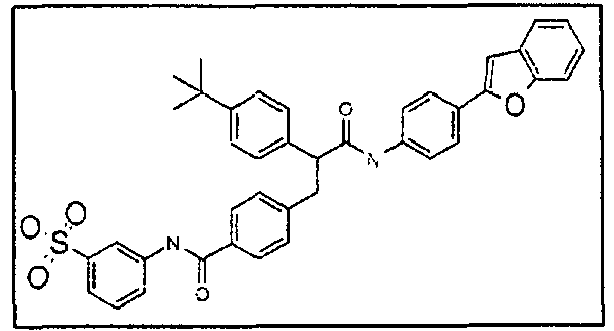
673.6 (+) C40H36N2O6S + 2.2 H2O + 0.6 TFA C: 63.37, H: 5.29, N: 3.59 C: 63.70, H: 5.68, N: 3.96 1.031 * 
673.6 (+) C40H36N206S + 1.5 H2O C: 68.65, H: 5.62, N: 4.00 C: 69.03, H: 6.09, N: 4.18 1.032 
637.9 (+) C37H38N2O6S + 2.0 H2O + 0.2 CF3CO2H C: 64.39, H: 6.10, N: 4.02 C: 64.39, H: 6.00, N: 4.01 1.033 
687.6 (-) C34H32N2O5Cl3SNa + 0.6 H2O 56.65 4.64 3.89 56.30 4.40 3.91 1.034 
657.4 C36H35N2O6ClS + 2.5 H2O + 0.3CF3COOH 59.53 5.50 3.79 59.26 5.87 4.02 1.035 
687.6 (-) C34H33N2O5Cl3S + 1 H2O + 0.6CF3COOH 54.59 4.63 3.62 54.31 4.42 3.50 1.036 
657.4 (-) C36H35N2O6ClS + 1 H2O + 0.4CF3COOH 61.15 5.22 3.88 61.13 4.92 3.82 1.037 
613.4 (-) C35H38N2O6S + 2 H2O +0.5CF3COOH 61.09 6.05 3.96 60.78 6.23 4.24 1.038 
701.4 (-) C35H34N2O6F3ClS + 3 H2O 55.52 5.32 3.70 55.82 5.29 3.57 1.039 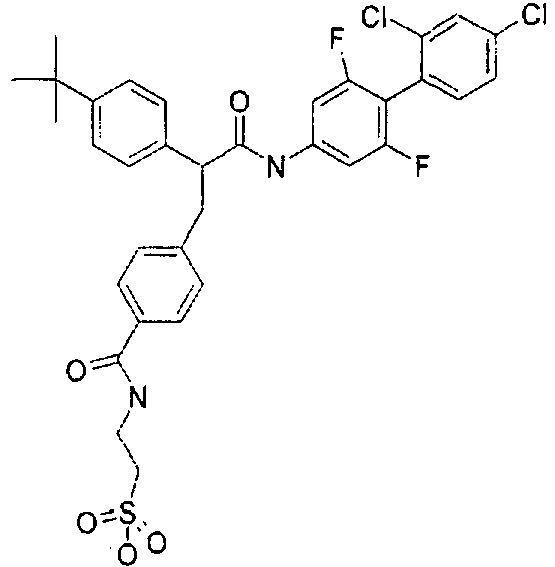
687.6 (-) C34H32N205F2Cl2S + 0.8 CF3COOH 54.76 4.23 3.59 54.72 4.23 3.63 1.040 
659.6 (-) C36H34N2O6F2S + 0.1 H2O + 0.6 CF3COOH 61.13 4.80 3.83 60.78 4.99 4.19 1.041 
701.4 (-) C35H34N2O6F3ClS + 0.7 CF3COOH 55.84 4.47 3.58 56.11 4.08 3.44 1.042 
603.4 (-) C32H27N2O6ClS + H2O C: 61.88 H: 4.71 N: 4.51 C: 61.55 H: 4.60 N: 4.82 1.043 
603.9 (-) C30H25N2O5Cl3S + 0.4 H2O C: 56.37 H: 4.07 N: 4.38 C: 56.61 H: 4.15 N: 4.36 * 1.044 
661.6 (-) C33H29N2O6BrS + 2H2O C: 56.82 H: 4.77 N: 4.02 C: 56.79 H: 4.76 N: 4.07 1.045 
649 (+) C35H31N2O6SN+1.2H2O C: 64.35, H: 5.31, N: 4.29 C: 64.10, H: 4.77, N: 4.46 1.046 
609 (+) C35H31N2O6SNa +1.2H2O C: 64.35, H: 5.31, N: 4.29 C: 64.10, H: 4.77, N: 4.46 * 1.047 
577 (+) C32H36N2O6SNa +0.4 CH2Cl2 C: 61.41, H: 5.85, N: 4.42 C: 61.15 H: 5.57, N: 4.19 * 1.048 
605 (+) C30H34N2O6SNa +0.8 NaCl C: 61.41, H: 5.85, N: 4.42: C: 55.26 H: 5.07, N: 3.99 1.049 
635 (+) C37H33N2O6SNa +4.0H2O C: 60.89, H: 5.80, N: 3.84 C: 60.50, H: 5.45, N: 4.08 (C37H33N2O6SNa+4.0H2 O) 1.050 
569 (+) C32H28N2O6S +2.5H2O +0.1CH3CN C: 62.70, H: 5.28, N: 4.77 C: 62.70, H: 5.50, N: 4.99 1.051 
632 (+) C35H31N2O6SNa +2.0 H2O C: 62.96, H: 5.43, N: 4.20 C: 62.97, H: 5.63, N: 4.53 (C35H31N2O6SNa+2.0H2 O) 1.052 
651 (+) C38H37N2O6SNa +2.0 H2O C: 64.39, H: 5.83, N: 3.95 C: 64.28, H: 5.86, N: 4.12 * 1.053 
626.6 (+) C35H34N3O6SNa + 6.0 H2O C:55.62, H:6.13, N:5.56; C:55.32, H:5.71, N:5.36. * 1.054 
626.6 (+) C35H34N3O6SNa + 2.5 H2O) C:60.68, H:5.67, N:6.07; C:60.79, H:5.40, N:6.02 * 1.055 
539.4 (+) C29H32N4O5S + 0.2 TFA C:61.79, H:5.68, N:9.80; C:61.56, H:5.41, N:9.84 * 1.056 
633.6 (+) C30H30F3N4O6SNa + 3.6 H2O) C:50.08, H:5.21, N:7.79; C:49.95, H:4.88, N:7.40. * 1.057 
563.4 (+) C30H33N4O5SNa + 4.2 H2O) C:54.57, H:6.32, N:8.48; C:54.58, H:5.59, N:8.41. * 1.058 
583.1 (+) C20H30ClN4O5SNa + 1.8 H2O C:54.64, H:5.31, N:8.79; C:54.59, H:5.28, N:8.68. * 1.059 
633.6 (-) C28H30N2O5SINa + (0.5) H2O C: 50.53, H: 4.69, N: 4.21 C: 50.64, H: 4.64, N: 4.33 * 1.060 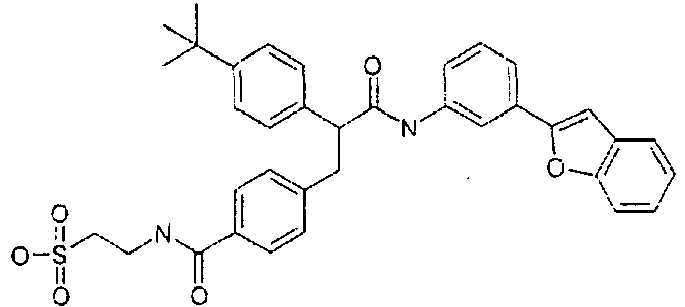
623.6 (-) C36H36N2O6S + (19) H2O C: 65.62, H: 6.09, N: 4.25 C: 65.31, H: 5.68, N: 4.15 * 1.061 
623 9 (+) C37H39N2O5P C: 71.37, H: 6.31; N: 4.50 C: 64.86; H: 5.75; N: 4.04 * 1.062 
593.6 (+) C29H31F3N206S 58.77 5.27 4.73 57.66 6.54 6.00 * 1.063 
586.3 (+) C35H35N3O5S+1.5H2O+1 .1CF3CO2H C: 57.27; H: 5.34; N: 5.69 C: 57.07; H: 5.52; N: 5.78 * 1.064 
584.6 (-) C33H34N3O5SNa+2.5H2O C: 60.72; H: 6.02; N: 6.44 C: 60.56; H: 5.73; N: 6.41 1.065 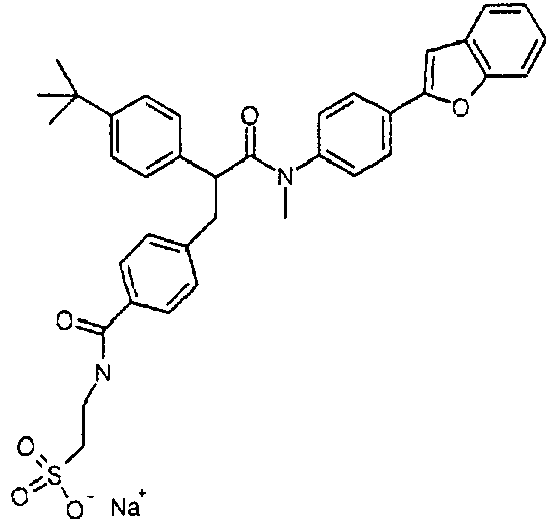
639.6 (+) C37H37N2O6SNa C: 67.26 H: 5.64; N: 4.24 Not measured * 1.066 
611.6 (+) C35H33N2O6S + 0.5Na + 0.5 HTEA + 1H2O 66.12 6.28 5.07 65.75 6.51 5.27 1.067 
625.3 (+) C36H35N2O6S + 0.8 H2O + C6H16N 68.14 7.16 5.68 68.00 7.30 5.81 1.068 
585.3 (+) C34H36N2O5S+3H2O C: 63.93; H: 6.63; N: 4.39 C: 63.63; H: 6.17; N: 4.49 * 1.069 
631.2 (+) C36H36N2O4Cl2 C: 68.46 H; 5.75 N: 4.44 C: 68.59 H: 5.87 N: 4.32 * 1.070 
625.3 (-) C35 H50 N2 06 S + 1.2 H20 C: 64.83 H: 8.14 N: 4.32 C: 64.73 H: 7.89 N: 4.74 * 1.071 
625.3 (-) C35 H50 N2 06 S + 3 H20 C: 61.74 H: 8.29 N: 4.11 C: 61.97 H: 8.56 N: 4.39 * 1.072 
611 3 (+) C30H36N2O5S + 2 5H2O + 0.16DMF C 61.69; H: 7.15; N: 5.10 C: 61.41; H: 7.43; N: 5.49 1.073 
631 4 (-) C30H25Cl3N2O5S + 1.7H2O C 5438, H:4.32, N:4.23 C 54 04, H 4 07, N.4 34 1.074 
637.3 (+) C33H27N2O6F3S + 2.6 H2O + 0.1 TFA C: 57.39, H:4.69, N:4.03 C: 5767, H:520, N:4.20 1.075 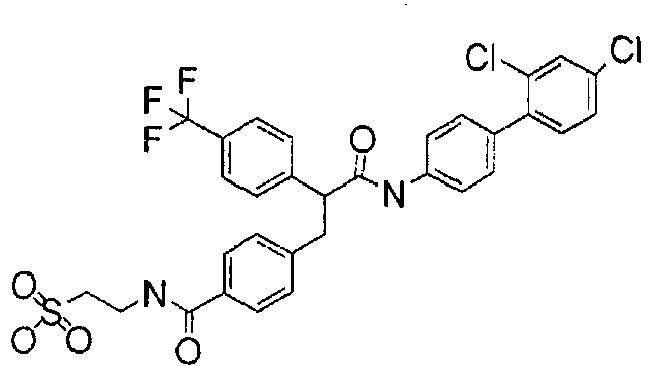
665.2 (+) C31H25N2O5F3Cl2S + 1.4 H2O + 0.1 TFA C: 53.37, H: 4.01, N:3.99 C: 53.15, H:4.53, N: 4.39 1.076 
653.6 (+) C33H27F3N2O7S +0.8 H2O +0.1 TFA C: 58.77, H: 4.26, N: 4.13 C: 58.37, H: 4.16, N: 4.55 1.077 
601.6 (-) C32H27ClN2O6S + 1.3H2O C: 61.35, H: 4.76, N: 4.47 C: 61.07, H: 4.79, N: 4.68 1.078 
645.4 (+) C38H32N2O6S + 2.6 H2O + 0.3 DMF C: 65.48, H: 5.55, N: 4.52 C: 65.88, H:5.98, N: 4.22 1.079 
673.4 (+) C36H30N2O5Cl2S + 2.6 H2O + 0.6 DMF C: 59.40, H:5.20, N:4.76 C: 59.29, H:5.55, N:4.78 1.080 
681.4 (+) C31H25Cl2F3N2O6S + 1 H2O + 0.1 TFA C: 52.55, H: 3.84, N: 3.94 C: 52.33, H: 4.21, N:3.95 1.081 
665.6 (+) C32H26N2O5F6S + 2.7 H2O + 0.3 TFA C: 52.38, H:4.27, N: 3.75 C: 52.21, H:4.58, N: 4.10 1.082 
651.6 (-) C35H35F3N2O5S + 2.1H2O C: 60.88, H:5.72, N: 4.06 C: 61.26, H: 6.20, N: 4.37 1.083 
601.6 (-) C34H35FN2O5S + 1.9H2O C: 64.11, H: 6.14, N: 4.40 C: 64.27, H: 5.94, N: 4.60 1.084 
681.4 (+) C32H26N2O6F6S + 1.2 H2O + 0.2 TFA C: 53.67, H: 3.98, N: 3.86 C: 53.64, H: 4.02, N: 4.11 1.085 
617,4 (-) C34H35ClN2O5S + 1.7H20 + 0.1TFA C: 62.12, H: 5.87, N: 4.24 C: 61.84, H: 6.20, N: 4.14 1.086 
667.4 (-) C35H35F3N2O6S 2.0H2O C 59.65, H: 5.58, N: 3.97 C 59.38, H: 4.94, N: 3.96 * 1.087 
699 1 (+) C31H25Cl2F3N2O5S + 1.8 H2O C: 51.00, H: 3.95, N: 3.84 C: 50.89, H: 3.57, N:3.75 * 1.088 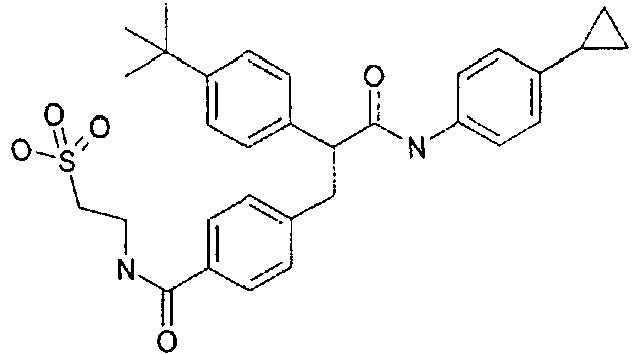
547.6 (-) C31H36N2O5S + 2.3H2O C: 63.09, H: 6.93, N: 4.57 C: 62.93, H: 7.19, N: 4.77 * 1.089 
669.4 (+) C33H27F3N2O6S2 + 1.5 H2O C: 56.97, H: 4.35, N: 4.03 C: 56.81, H: 3.99, N: 4.25 1 090 
615.4 (+) C31H26N2O5F4S + 0.9 H2O + 0.3 TFA C: 57.07, H: 4.26, N: 4.21 C: 56.76, H: 3.83, N: 4.64 1.091 
631.6 (+) C31H26N2O5F3ClS + 2.6 H2O + 0.1 TFA C: 54.36, H: 4.58, N: 4.06 C: 54.53, H: 4.88, N: 4.43 1.092 
619.4 (-) C34H34F2N2O5S + 1.6H2O C: 62.87, H: 5.77, N: 4.31 C: 62.60, H: 5.62, N: 4.50 * 1.093 
587.4 (-) C34H40N2O5S + 2.5H2O C: 64.43, H: 7.16, N: 4.42 C: 64.10, H: 6.43, N: 4.34 * 1.094 
639.6 (-) C36H36N2O5S2 + 1.8H2O C: 64.23, H: 5.93, N: 4.16 C: 64.06, H: 5.73, N: 4.14 * 1.095 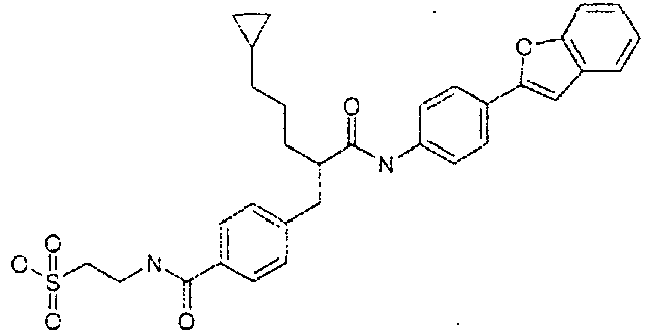
573.7 (-) C32 H34 N2 O6 S + 3 H20 C: 61.13 H: 6.41 N: 4.46 C: 53.75 H: 4.41 N: 6.91 Example STRUCTURE MASS SPECT. (MODE) Formula CHN (Calcd) CHN (Found) 1.096 
651.19 (-) C35H34N2O5SF3Na+ (2.2) H2O C: 58.85, H: 5.42, N: 3.92 C: 58.52, H: 5.01, N: 4.03 * 1.097 
537.3 (+) C30H36N2O5S + 2.5H2O + 0.16DMF C: 61.69, H: 7.15, N: 5.10 C: 61.41, H: 7.43, N: 5.49 -
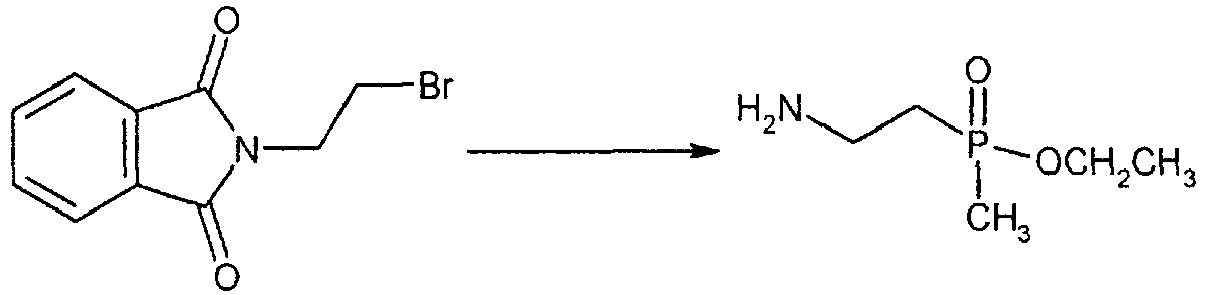
- A mixture of 2.372g of the commercially available N-(2-bromoethyl)phthalimide and 5.00g of diethylmethylphosphonite was heated at 140 °C for a 21h period. The volatiles were removed under reduced pressure and the residue purified by chromatography on silica gel (methanol-dichloromethane gradient). The product was obtained as a yellow oil. HNMR (300MHz, DMSO-d6): 7.8 (4H, m), 3.83 (6H, m), 2.10 (2H, m), 1.46 (3H, d, J = 13.9 Hz), 1.10(3H, t, J = 7.0 Hz).
- The oil obtained in the previous step (2.454g) in 7 mL of ethanol was treated with 2.12 mL of hydrazine hydrate. The resulting mixture was heated to reflux for a 2h period and allowed to cool to room temperature. The white precipitate formed was removed by filtration and the solution concentrated under reduced pressure to afford Precursor 1 as a yellow oil HNMR (300MHz, DMSO-d6): 3.90 (4H, m), 2.75 (2H, m), 2.60 (2H, broad), 1.80 (2H, m), 1.38 (3H, d, J = 13.8 Hz), 1.20 (3H, t, J = 7.0 Hz)
-

- 4-[1-(4-Benzofuran-2-yl-phenylcarbamoyl)-heptyloxy]-benzoic acid was prepared as described in Bioorganic & Medicinal Chemistry Letters 14 (2004) 2047 -2050. To a solution of 200mg of the starting carboxylic acid (prepared as described in Bioorganic & Medicinal Chemistry Letters 2004, 14, 2047 -2050) in THF was added carbonyl diimidazole (85 mg) and the solution stirred at room temperature for 1h. Precursor 1 (77 mg) was added in one portion and the reaction mixture was stirred for a further 1h period. The mixture was then diluted with ethyl acetate and washed with water. After drying over magnesium sulfate and concentration, the crude product was chromatographed on silica gel using an ethyl acetate-hcxanes gradient.
1H NMR (CDCl3): δ 8.30 (1H, s), 7.80-7.87 (4H, m), 7.72 (1H, m), 7.63-7.66 (2H, d, J = 8.8Hz), 7.52 - 7.58 (2H, m), 7.20 - 7.29 (2H, m), 7.00 - 7.03 (2H, d, J = 8.8 Hz), 6.97 (1H, s), 4.71 -4.75 (1H, t, J = 5.7 Hz), 4.06 - 4.19 (2H, m), 3.74 - 3.82 (2H, m), 2.01 - 2.11 (2H, m), 1.51 - 1.55 (3H, d, J = 13.5 Hz), 1.45 - 1.52 (2H, m), 1.20 - 1.35 (11H, m), 0.86 -0.90 (3H, t, J = 6.7 Hz). -

- A solution of 70 mg of phosphinic ester (from Step A above) in dichloromethane was treated with 0.174 mL of bromotrimethylsilane. The mixture was stirred at room temperature for 3 days. The reaction mixture was diluted with water and acetonitrile (1:1) and stirred at room temperature for a further 0.5 h. The mixture was evaporated under reduced pressure and partitioned between ethyl acetate and water. The organic phase was washed with water and saturated sodium chloride and dried over magnesium sulfate. Chromatography on reverse phase silica gel using an acetonitrile-water gradient yielded the product as a white solid.
1H NMR (DMSO-d6): δ 8.53 (1H, s), 8.47-8.49 (1H, t, J = 5.3 Hz), 7.74-7.80 (2H, d, J = 9.3Hz), 7.54 -7.55 (2H, d,J = 8.8 Hz), 7.31-7.35 (2H, d, J = 7.7Hz), 7.21-7.23 (2H, d, J = 9.1 Hz), 4.61 (2H, s), 4.06 (1H, m), 3.45 (2H, m), 1.69-1.89 (2H, m), 1.64-1.75 (4H, m), 1.31-1.34 (3H, d, J = 14Hz), 1.36-1.41 (2H, m), 1.06-1.11 (2H, m), 0.84-0.87 (1H, m), 0.81 (9H, s). -

- To a 2M solution of LDA in THF (5.4 mL, 10.8 mmol) in 300 mL THF cooled to -78 °C was slowly added 4-tertbutylphenyl acetic acid methyl ester (2 g, 9.8 mmol). After stirring for 1 hr at -78 °C a solution of 2.7 g of 1-benzyloxy-4-bromomethylbenzene (Chow and Mak, J. Org. Chem 1997, 62(15), 5116) in THF (10 mL) was added. The mixture was allowed to warm to room temperature overnight. Saturated ammonium chloride was added and the solution extracted with ethyl acetate. The solution was washed with brine, dried over sodium sulfate and concentrated to afford 3-(4-Benzyloxyphenyl)-2-(4-tert-butylphenyl)-propionic acid methyl ester as a yellow oil. TLC: Rf = 0.42 hexane/ethyl acetate (8:1). The crude was carried on as is for the next step.
-

- The mixture of crude 3-(4-Benzyloxyphenyl)-2-(4-tert-butylphenyl)-propionic acid methyl ester from step A and 10% Pd/C (200 mg) in methanol (75 mL) was stirred under an atmosphere of H2 overnight. The mixture was filtered through celite and concentrated under vacuum to afford 2-(4-tert-Butylphenyl)-3-(4-hydroxyphenyl)-propionic acid methyl ester as a light yellow oil. TLC: Rf = 0.15 hexane/ethyl acetate (7:1).
-

- To 2-Benzyloxyethanol (1.1 g, 7.3 mmol) and N,N-diisopropyl ethylamine (1.3 mL, 8.1 mmol) in dichloromethane (30 mL) at 0 - 4 °C was added trifluoromethane sulfonic anhydride (1.4 mL, 8.1 mmol). The solution was stirred for 1 hr then quenched with water. The mixture was partitioned and the organic portion washed with brine, dried over sodium sulfate then concentrated to afford trifluoromethanesulfonic acid 2-benzyloxy-ether ester as a dark colored oil (1.74 g, 83%). 1H NMR (300 MHz, DMSO-d6): 7.41 (m, 5 H), 4.60 (s, 2 H), 4.35 (m, 2 H), 3.75 (m, 2 H).
-

- To a solution of 2-(4-tert-Butylphenyl)-3-(4-hydroxyphenyl)-propionic acid methyl ester (419 mg, 1.3 mmol) in anhydrous DMF (8 mL) was added NaH (54 mg, 1.3 mmol, 60%). After H2 evolution had ceased, precursor 2 was added and the resulting mixture was allowed to stir at rt overnight. The reaction mixture was quenched with 1N HCl then extracted with diethyl ether. The organic portion was washed with brine, dried over Na2SO4 then concentrated to afford 3-[4-(2-Benzyloxyethoxy)-phenyl]-2-(4-tert-butylphenyl)-propionic acid methyl ester as an amber colored oil. TLC: Rf = 0.48 hexane/ethyl acetate (4:1). The crude product was carried into the next step without further pruifications.
-

- To the crude 3-[4-(2-Benzyloxyethoxy)-phenyl]-2-(4-tert-butylphenyl)-propionic acid methyl ester from step d dissolved in 20 mL of THF/MeOH/H2O (3:1:1) was added lithium hydroxide (270 mg, 6.5 mmol) After stirring for 5 hrs at rt, the organic solvents were removed under vacuum and the reaction residue diluted further with water (25 mL). The aqueous mixture was extracted with diethyl ether, made acidic with 1 N HCl and extracted again with ethyl acetate. The ethyl acetate portion was then dried over Na2SO4 and concentrated under vacuum to afford 3-[4-(2-Benzyloxyethoxy)-phenyl]-2-(4-tertbutylphenyl)-propionic acid as a semi-solid mass. (456 mg, 81 % over 2 steps)
-

- The compound 3-[4-(2-Benzyloxyethoxy)-phenyl]-2-(4-tert-butylphenyl)-N-(4-cyclohexylmethoxyphenyl)-propionamide was prepared from 3-[4-(2-Benzyloxyethoxy)-phenyl] -2-(4-tert-butylphenyl)-propionic acid according to the procedure described for the synthesis of Example 1.001, Step A. The crude was purified by chromatography on silica gel eluting with a gradient of ethyl acetate in hexane to afford the desired product. LC-MS m/z = 619 [C41H49NO4 + H]+.
-

- A mixture of 3-[4-(2-Benzyloxyethoxy)-phenyl]-2-(4-tert-butylphenyl)-N-(4-cyclohexylmethoxyphenyl)-propionamide (200 mg, 0.32 mmol) and 10% Pd/C (20 mg) in a solution of methanol/ethyl acetate (60 mL, 4:1) was stirred under an atmosphere of H2 overnight. The mixture was filtered through celite and concentrated under vacuum. The crude was purified by chromatography on silica gel (ISCO cartridge, 40 g), eluting with dichloromethane over 20 minutes to afford 2-(4-tert-Butylphenyl)-N-(4-cyclohexylmethoxyphenyl)-3-[4-(2-hydroxy ethoxy)-phenyl]-propionamide (126 mg, 74%). LC-MS m/z = 530 [C34H43NO4 + H]+.
-

- To a solution of triphenylphosphine (125 mg, 0.48 mmol) in anhydrous THF (5 mL) at 0 °C was added diisopropylazodicarboxylate (94 uL, 0.48 mmol). After stirring for 30 min. a solution consisting of thioacetic acid (34 uL, 0.48 mmol) and 2-(4-tert-Butylphenyl)-N-(4-cyclohexylmethoxyphenyl)-3-[4-(2-hydroxyethoxy)-phenyl]-propionamide (126 mg, 0.23 mmol) was added. The resulting solution was allowed to warm to rt overnight. The mixture was partitioned between ethyl acetate and H2O and the organic portion concentrated under vacuum. Purification of the crude by preparative TLC (SiO2, 2 mm) using hexane/ethyl acetate (4:1) as eluant afforded Thioacetic acid S-(2-{4-[2-(4-tert-Butylphenyl)-2-(4-cyclohexylmethoxyphenyl carbamoyl)-ethyl]-phenoxy}-ethyl) ester (102 mg, 73%). TLC: Rf = 0.38 hexane/ethyl acetate (4:1).
-

- To a solution of Thioacetic acid S-(2-{4-[2-(4-tert-Butylphenyl)-2-(4-cyclohexyl methoxyphenylcarbamoyl)-ethyl]-phenoxy}-ethyl) ester (102 mg, 0.17 mmol) from Step H in formic acid (3 mL, 88%) chilled at 0 °C was added performic acid (1 mL) pre-chilled to 0 °C prior to addition. The resulting mixture was stirred at 0 °C for 2 hrs and allowed to warm to rt overnight. The reaction mixture was carefully concentrated under vacuum and the crude material purified by preparatory HPLC on a Shimadzu modular HPLC system using a Waters Atlantis dC18 30x150 mm preparatory column and running a gradient from 40% to 100% acetonitrile over 13 minutes. TFA was used as an ionizer and was present in 0.05% (v/v). Detection was accomplished using an in-line UV detector running at 254 nm. Rotary evaporation of the solvated compound provided the title compound (7.6 mg): 1H NMR (500 MHz, CD3OD): δ 7.35 (s, 4H), 7.25 (d, J = 9.0 Hz, 2 H,), 7.12 (d, J= 8.5 Hz, 2 H,), 6.83 (d, J = 9.0 Hz, 2 H), 6.79 (d, J = 8.5 Hz, 2 H), 4.32 (t, J = 7.0 Hz, 2 H), 3.83 (dd, J = 10.0 Hz, J = 9.5 Hz, 1H), 3.71 (d, J = 6.5 Hz, 2H), 3.24 (t, J = 7.0 Hz, 2 H), 2.93 (dd, J = 10.0 Hz, J = 9.5 Hz, 1H), 1.85-1.69 (m, 6H), 1.35-1.21 (m, 11 H), 1.10-1.03 (m, 3 H). LC-MS m/z = 592 [C34H43N2O6S + H]-.
-

-

- To a solution of 4-(3-Benzyloxypropoxy)-benzaldehyde (1.9 g, 6.9 mmol) in methanol (30 mL) chilled to 0 °C was added portionwise NaBH4 (523 mg, 13.8 mmol). The resulting mixture was stirred for 1 hr before being quenched with water. After extracting with EtOAc the organic portion was washed with brine, dried over Na2SO4 and concentrated under vacuum to afford 4-(3-Benzyloxypropoxy)-methanol as a colorless oil (1.86g, 99%). TLC: Rf = 0.21 hexane/ethyl acetate (4:1).
- To a solution of 4-(3-Benzyloxypropoxy)-methanol (1.86 g, 6.8 mmol) in diethyl ether chilled to 0 °C was slowly added PBr3 (1.9 mL, 20.4 mmol). After stirring for 2 hrs the reaction was carefully quenched by addition of ice and then water. The mixture was partitioned and the organic portion washed with brine, dried over Na2SO4 and concentrated under vacuum to afford 1-(3-Benzyloxypropoxy)-4-bromomethylbenzene as a colorless oil.
-

- The compound 3-[4-(3-Benzyloxypropoxy)-phenyl]-2-(4-tert-butylphenyl)- propionic acid methyl ester was prepared from 4-tertbutylphenyl acetic acid methyl ester according to the procedure described for the synthesis of Example 1.099, step A. TLC: Rf = 0.55 hexane/ethyl acetate (4:1).
-

- The compound 3-[4-(3-Benzyloxypropoxy)-phenyl]-2-(4-tert-butylphenyl)- propionic acid was prepared from the corresponding methyl ester according to the procedure described for the synthesis of Example 1.099), step E.
-

- The compound 3-[4-(3-Benzyloxypropoxy)-phenyl]-2-(4-tert-butylphenyl)-N-(4-cyclohexylmethoxyphenyl)-propionamide was prepared from [4-(3-Benzyloxypropoxy)-phenyl]-2-(4-tert-butylphenyl)-propionic acid according to the procedure described for the synthesis of Example 1.099 step F. The crude was purified by chromatography on silica gel eluting with a gradient of ethyl acetate in hexanes. TLC: Rf = 0.42 hexane/ethyl acetate (4:1).
-

- The compound 2-(4-tert-Butylphenyl)-N-(4-cyclohexylmethoxyphenyl)-3-[4-(3-hydroxypropoxy)phenyl]-propionamide was prepared from 3-[4-(3-Benzyloxypropoxy)-phenyl]-2-(4-tert-butylphenyl)-N-(4-cyclohexylmethoxyphenyl)-propionamide according to the procedure described for the synthesis of Example 1.099, step G. The crude was purified by chromatography on silica gel eluting with a gradient of methanol in dichloromethane. TLC: Rf = 0.40 dichloromethane/methanol (20:1).
-

- The compound Thioacetic acid S-(2-{4-[2-(4-tert-Butylphenyl)-2-(4-cyclohexyl methoxyphenylcarbamoyl)-propyl]-phenoxy}-ethyl) ester was prepared from 2-(4-tert-Butylphenyl)-N-(4-cyclohexylmethoxyphenyl)-3-[4-(3-hydroxypropoxy)phenyl]-propionamide according to the procedure described for the synthesis of Example 1.099, step H. (105 mg, 81%). TLC: Rf = 0.36 hexane/ethyl acetate (4:1).
-
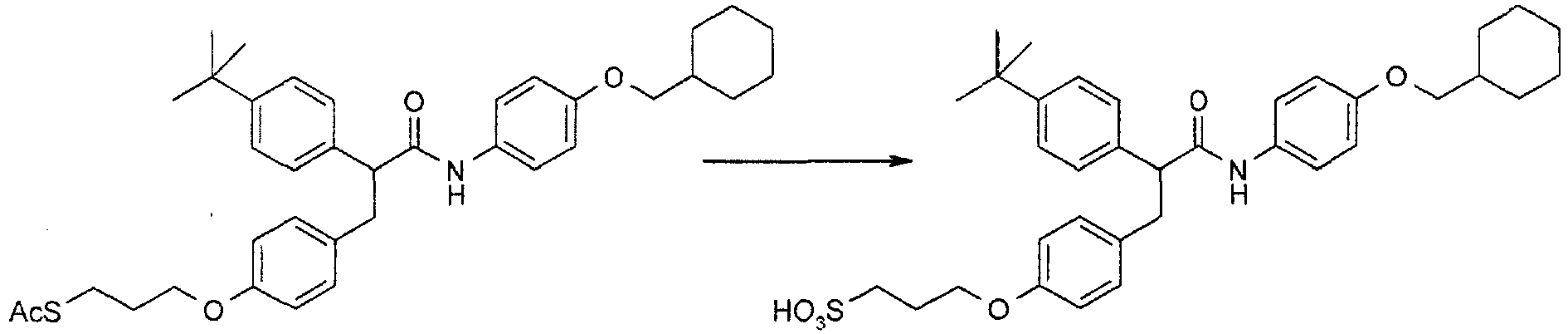
- The title compound was prepared from Thioacetic acid S-(2-{4-[2-(4-tert-Butyl phenyl)-2-(4-cyclohexylmethoxyphenylcarbamoyl)-propyl]-phenoxy}-ethyl) ester according to the procedure described for the synthesis of Example 1.099, step 1. (8 mg). 1H NMR (300 MHz, DMSO-d6): δ 9.84 (s, 1H), 7.40 (d, J = 9.3 Hz, 2 H), 7.34 (s, 4H), 7.12 (d, J = 8.7 Hz, 2 H), 6.81-6.77 (m, 4H), 3.97 (t, J = 6.6 Hz, 2 H), 3.83 (dd, J = 9.6 Hz, J = 9.3 Hz, 1H), 3.69 (d, J = 6.3 Hz, 2H), 2.81 (dd, J = 9.6 Hz, J = 9.3 Hz, 1H), 1.99-1.89 (m, 2H), 1.80-1.60 (m, 6H), 1.25-1.11 (m, 12 H), 1.0-0.95 (m, 2 H). LC-MS m/z = 606 [C35H45N2O6S + H]-.
-

- To a stirring solution of (4-tert-butyl-phenyl)-acetic acid (1.5 g, 7.8 mmol) in benzene (30 mL) at room temperature was added NBS (1.39 g, 7.8 mmol) and AIBN (15 mg, 0.08 mmol). The mixture was heated at 70 °C for 16 hrs, added EtOAc and water. The organic layer was collected and dried over Na2SO4, filtered and concentrated under reduced pressure to afford crude bromo-(4-tert-butyl-phenyl)-acetic acid as a light yellow solid (2.1 g, 99%): 1H HNMR (300 MHz, DMSO-d6 ): 7.46 (m, 4 H), 5.74 (s, 1 H), 1.29 (s, 9 H).
-

- To a stirring solution of bromo-(4-tert-butyl-phenyl)-acetic acid (1.2 g, 4.43 mmol) in toluene (20 mL) was added SOCl2 (0.8 mL, 11.1 mmol). The mixture was stirred at 90°C for 1 hr and concentrated under reduced pressure. This crude product was dissolved into toluene (20 ml), and 4-cyclohexylmethoxy-phenylamine (0.91 g, 4.43 mmol) and ethyl-diisopropylamine (0.85 mL, 4.87 mmol) were added at room temperature. The reaction mixture was stirred at room temperature for 1 hr. The reaction mixture was quenched with water and diluted with EtOAc. The organic layer was dried over Na2SO4, filtered and concentrated under reduced pressure. The crude product was purified by column chromatography on silica gel, eluting with ethyl acetate-hexanes (3:7) to afford 2-bromo-2-(4-tert-butyl-phenyl)-N-(4-cyclohexylmethoxy-phenyl)-acetamide as a brown oil (1.2 g, 59%): 1H NMR (300 MHz, DMSO-d6 ): δ 10.35 (s, 1 H) 7.49 (m, 6 H), 6.87 (d, J = 9.3 Hz, 2 H), 5.74 (s, 1 H), 3.75 (d, J = 6.3 Hz, 2 H), 1.69 (m, 6 H), 1.27 (m, 12 H), 1.09 (m, 2 H).
-

- To a stirring solution of 4-mercapto-benzoic acid methyl ester (0.44 g, 2.6 mmol) in DMF (20 mL) at room temperature was added Cs2CO3 (1.7 g, 5.2 mmol) and a solution of 2-bromo-2-(4-tert-butyl-phenyl)-N-(4-cyclohexylmethoxy-phenyl)-acetamide (1.2 g, 2.6 mmol) in DMF (10 mL). The reaction mixture was stirred at room temperature for 16 hrs. The solvent was removed under reduced pressure and the residue was partitioned between ethyl acetate and water. The organic layer was dried over Na2SO4, filtered and concentrated under reduced pressure. The crude product was purified by column chromatography on silica gel, eluting with ethyl acetate-hexanes (4:6) to afford the crude product, then it was washed with MeOH to afford 4-[(4-tert-butyl-phenyl)-(4-cyclohexylmethoxy-phenylcarbamoyl)-methylsulfanyl]-benzoic acid methyl ester as a white solid (0.45 g, 32%): 1H NMR (300 MHz, DMSO-d6 ): δ 10.33 (s, 1H), 7.89 (d, J = 8.4 Hz, 2 H), 7.59 (m, 8 H), 6.86 (d, , J = 9.0 Hz, 2 H), 5.49 (s, 1 H), 3.84 (s, 3 H), 3.75 (d, J = 6.3 Hz, 2 H), 1.69 (m, 6 H), 1.27 (s, 9 H), 1.24 (m, 3 H), 1.08 (m, 2 H).
-

- To a stirring solution of 4-[(4-tert-butyl-phenyl)-(4-cyclohexylmethoxy-phenylcarbamoyl)-methylsulfanyl]-benzoic acid methyl ester (0.33 g, 0.61 mmol) in THF (8 mL), methanol (6 mL) and water (2 mL) at room temperature was added LiOH (0.145 g, 6.1 mmol). The reaction mixture was stirred at room temperature for 16 hr. The mixture was acidified with 1M aqueous HCl and extracted with ethyl acetate. The solution was washed with water and saturated sodium chloride and dried over magnesium sulfate. The solvent was removed under reduced pressure. The crude product was purified by column chromatography on silica gel, eluting with MeOH-CH2Cl2 (5:95) to afford 4-[(4-tert-butyl-phenyl)-(4-cyclohexylmethoxy-phenylcarbamoyl)-methylsulfanyl]-benzoic acid as a white solid (0.24 g, 74%): 1H NMR (300 MHz, DMSO-d6 ): δ 10.33 (s, 1 H), 7.89 (d, J = 8.4 Hz, 2 H), 7.59 (m, 8 H), 6.86 (d, , J = 9.0 Hz, 2 H), 5.49 (s, 1 H), 3.75 (d, J = 6.3 Hz, 2 H), 1.69 (m, 6 H), 1.27 (s, 9 H), 1.24 (m, 3 H), 1.08 (m, 2 H). Then a mixture of 4-[(4-tert-butyl-phenyl)-(4-cyclohexylmethoxy-phenylcarbamoyl)-methylsulfanyl]-benzoic acid (240 mg, 0.45 mmol), HOBt (104 mg, 0.68 mmol), EDCI (130 mg, 0.68 mmol), taurine (85 mg, 0.68 mmol) and diisopropylethylamine (0.24 mL, 1.35 mmol) in DMF (15mL) was stirred at 23 °C for a period of 16h. The mixture was concentrated under reduced pressure and the residue partitioned between ethyl acetate and aqueous 1M HCl. The organic phase was washed (water, sat NaCl) and dried over magnesium sulfate. The solvent was removed under reduced pressure. The crude product was purified by chromatographed on reverse phase silica gel (C18) using a gradient of acetonitrile: water (20% to 80% in acetonitrile). Evaporation of the product-containing fractions afforded 150mg of 2-{4-[(4-tert-butyl-phenyl)-(4-cyclohexylmethoxy-phenylcarbamoyl)-methylsulfanyl]-benzoylamino}-ethanesulfonic acid as a white solid. 1NMR (300 MHz, DMSO-d6 ): δ 10.33 (s, 1 H), 8.49 (m, 1 H), 7.73 (d, J = 8.4 Hz, 2 H), 7.45 (m, 8 H), 6.86 (d, , J = 9.0 Hz, 2 H), 5.41 (s, 1 H), 3.72 (d, J = 6.3 Hz, 2 H), 3.49 (m, 2 H), 2.57 (m, 2 H), 1.69 (m, 6 H), 1.27 (s, 9 H), 1.24 (m, 3 H), 1.08 (m, 2 H). LC-MS mlz = 639.3 [C34H42N2O6S2 + H]+; Anal Calcd for (C34H42N2O6S2 + 2.5H2O): C, 59.71; H, 6.93; N, 4.10. Found: C, 59.70; H, 6.16; N, 4.20.
-

- To a stirring solution of 2-{4-[(4-tert-butyl-phenyl)-(4-cyclohexylmethoxy-phenylcarbamoyl)-methylsulfanyl]-benzoylamino}-ethanesulfonic acid (Example 1.101, 80 mg, 0.125 mmol) in CH2Cl2 (15 mL) at room temperature was added m-CPBA (71 mg, 0.413 mmol). The reaction mixture was stirred at room temperature for 16 hrs. The solvent was removed under reduced pressure and the residue was purified by chromatographed on reverse phase silica gel (C18) using a gradient of acetonitrile: water (20% to 80% in acetonitrile). Evaporation of the product-containing fractions afforded 50mg of 2-{4-[(4-tert-butyl-phenyl)-(4-cyclohexylmethoxy-phenylcarbamoyl)-methanesulfonyl]-benzoylamino}-ethanesulfonic acid as a white solid. 1H NMR (300 MHz, DMSO-d6 ): δ 10.23 (s, 1 H), 8.79 (m, 1 H), 7.95 (d, J = 8.4 Hz, 2 H), 7.73 (d, J = 8.4 Hz, 2 H), 7.45 (m, 6 H), 6.86 (d, , J = 9.0 Hz, 2 H), 5.54 (s, 1 H), 3.72 (d, J = 6.3 Hz, 2 H), 3.49 (m, 2 H), 2.57 (m, 2 H), 1.69 (m, 6 H), 1.27 (s, 9 H), 1.24 (m, 3 H), 1.08 (m, 2 H). LC-MS m/z = 671.2 [C34H42N2O8S2 + H]+; Anal Calcd for (C34H42N2O8S2 + 2.3H2O): C, 57.33; H, 6.59; N, 3.93. Found: C, 56.95; H, 6.36; N, 4.46.
-

- The intermediate from Example 1.101, Step C, was treated with MCPBA in dichloromethane and converted into the corresponding sulfoxide. Application of the method shown in Example 1.101 gave the targeted sulfonic acid as a white solid, LC-MS m/z = 655.3 [C34H42N2O7S2 + H]+; Anal Calcd for (C34H42N2O7S2 + 3.3H2O): C, 57.17; H, 6.86; N, 3.92. Found: C, 56.86; H, 6.43; N, 3.95.
-

- 2-{4-[(4-Benzofuran-2-yl-phenylcarbamoyl)-(4-tert-butyl-phenyl)-methoxy]-benzoylamino}-ethanesulfonic acid was prepared as a white solid using methods that were described in Example 1.098.
1H NMR (300 MHz, DMSO-d6 ): δ 10.55 (s, 1 H), 8.38 (m, 1 H), 7.85 (d, J = 8.7 Hz, 2 H), 7.74 (m, 4 H), 7.57 (m, 4 H), 7.44 (d, J = 8.7 Hz, 2 H), 7.23 (m, 3 H), 7.07 (d, J = 9.0 Hz, 2 H), 5.95 (s, 1 H), 3.49 (m, 2 H), 2.61 (m, 2 H), 1.26 (s, 9 H). LC-MS m/z = 625.6 [C35H34N2O7S - H]-; Anal Calcd for (C35H34N2O7S + 1.2H2O): C, 64.84; H, 5.66; N, 4.32. Found: C, 64.54; H, 5.60; N, 4.96. -

- 2- {4-[(4-Benzofuran-2-yl-phenylcarbamoyl)-(4-tert-butyl-phenyl)-methylsulfanyl]-benzoylamino}-ethanesulfonic acid was prepared as a white solid using those methods that were described in Example 1.101.
1H NMR (300 MHz, DMSO-d6 ): δ 10.62 (s, 1 H), 8.42 (m, 1 H), 7.85 (d, J = 9.0 Hz, 2 H), 7.57 (m, 8 H), 7.24 (m, 7 H), 5.44 (s, 1 H), 3.49 (m, 2 H), 2.61 (m, 2 H), 1.23 (s, 9 H). LC-MS m/z = 641.4 [C35H34N2O6S2 - H]-; Anal Calcd for (C35H34N2O6S2 + 1.7H2O): C, 62.43; H, 5.60; N, 4.16. Found: C, 62.09; H, 5.22; N, 4.04. -

- 1H NMR (CD3OD): δ 7.83 - 7.84 (2H, d, J = 8.3 Hz), 7.63 - 7.69 (3H, m), 7.55 - 7.57 (4H, m), 7.45 - 7.48 (3H, m), 7.10 - 7.26 (4H, m), 5.86 (1H, s), 3.75 (2H, m), 3.05 (3H, m), 1.30 (9H, s).
-

- To (4-tert-butyl-phenyl)-acetic acid (1.15g, 6.0mmol) was added 5-formyl-thiophene-2-carboxylic acid methyl ester (1g, 5.7mmol), acetic anhydride (3.08g, 30.2mmol), and triethyl amine (574mg, 5.7mmol). The resulting mixture was stirred at 120°C for 16 hours and cooled down. Water (1.9ml) was added. The reaction mixture was heated up to 100°C for 5 minutes in microwave and cooled down to 23°C. A mixture of acetic acid and water (2.5ml:2.5ml) was added. The resulting reaction mixture was stirred at 23°C for 1 hour. The precipitate was filtered off, washed with 25% aqueous acetic acid, then water. The solid was dried under high vacuum to afford 5-[(E)-2-(4-tert-Butyl-phenyl)-2-carboxy-vinyl]-hiophene-2-carboxylic acid methyl ester as a brownish solid (1.32g, 67%).
1H NMR (CDCl3): δ 8.03 (1H, s), 7.58 - 7.59 (1H, d, J = 3.8Hz), 7.51 - 7.54 (2H, d, J = 8.2Hz), 7.17 - 7.20 (2H, d, J = 8.2Hz), 7.09 - 7.10 (1H, d, J = 4.1 Hz), 3.79 (3H, s), 1.39 (9H, s). -

- To 5-[(E)-2-(4-tert-Butyl-phenyl)-2-carboxy-vinyl]-thiophene-2-carboxylic acid methyl ester (600mg, 1.7mmol) in 50ml THF and 10ml 1NHCl was added 10% palladium on carbon (1.5g). The resulting mixture was stirred under 50psi hydrogen gas for 2 hours. The catalyst was filtered off and the solvent was evaporated. The residue was sonicated in hexane for 30 seconds. The solvent was filtered to afford 5-[2-(4-tert-Butylphenyl)-2-carboxy-ethyl]-thiophene-2-carboxylic acid methyl ester as a yellow solid (480mg, 81%).
1H NMR (EDCI;): δ 7.58 - 7.59 (2H, d, J = 3.8 Hz), 7.36 - 7.37 (2H, d, J = 4.7 Hz), 7.24 - 7.26 (1H, d, J = 3.7 Hz), 6.75 - 6.76 (1H, d, J = 3.8 Hz), 3.85 (3H, s), 3.85 - 3.92 (1H, m), 3.60 - 3.68 (1 H, m), 3.22 - 3.27 (1H, m), 1.31 (9H, s). -

- To 5-[2-(4-tert-Butyl-phenyl)-2-carboxy-ethyl]-thiophene-2-carboxylic acid methyl ester (424mg, 1.22mmol) in toluene (10ml) was added N,N'-dicyclohexylcarbodiimide (504mg, 2.44mmmol), 4-iodoaniline (267mg, 1.22mmol), and 4-dimethylaminopyridine (15mg, 0.122mmol). The resulting mixture was stirred at 115°C for 16 hours. The solid was filtered off and the solvent was evaporated. Chromatography of the residue (10% ethyl acetate in hexane) afforded 5-[2-(4-tert-Butyl-phenyl)-2-(4-iodo-henyl-carbamoyl) -ethyl]-thiophene-2-carboxylic acid methyl ester as a white foam (640mg, 96%).
1H NMR (CDCl3): δ 7.56 - 7.59 (3H, m), 7.37 - 7.42 (2H, m), 7.20 - 7.35 (4H, m), 7.05 (1 H, s), 6.72 - 6.73 (1H, d, J = 3.7 Hz), 3.84 (3H, s), 3.80 - 3.85 (1H, m), 3 .66 - 3.76 (1H, m), 3.22 - 3.26 (1H, m), 1.31 (9H, s). -

- To 5-[2-(4-tert-Butyl-phenyl)-2-(4-iodo-henyl-carbamoyl) -ethyl]-thiophene-2-carboxylic acid methyl ester (640mg, 1.2mmol) in 15ml tetrahydrofuran , 10ml methanol, and 5ml water was added sodium hydroxide (234mg, 5.8mmol). The reaction mixture was stirred at 40°C for 2 hours. The solvent was evaporated. The residue was washed with 10% ethyl acetate in hexane (50ml). The solvents were decanted. The residue was partitioned between ethyl acetate and 1N hydrochloric acid. The organic phase was washed with water, dried with magnesium sulfate, and concentrated to afford 5-[2-(4-tert-Butyl-phenyl)-2-(4-iodo-phenylcarbamoyl)-ethyl]-thiophene-2-carboxylic acid as a yellowish foam (616mg, 96%).
1H NMR (CDCl3): δ 7.56 - 7.59 (3H, m), 7.37 - 7.42 (2H, m), 7.20 - 7.35 (4H, m), 7.05 (1H, s), 6.72 - 6.73 (1H, d, J = 3.7 Hz), 3.80 - 3.85 (1H, m), 3.66 - 3.76 (1H, m), 3.22 - 3.26 (1H, m), 1.31 (9H, s). -

- To 2-({5-[2-(4-tert-Butyl-phenyl)-2-(4-iodo-phenylcarbamoyl)-ethyl]-thiop hene-2-carbonyl}-amino)-ethanesulfonic acid (616mg, 1.15mmol) in N,N-dimethylformamide (10ml) was added 1-hydroxybenzotriazole hydrate (194mg, 1.27mmol), N-(3-dimethylaminopropyl)-N'-ethylcarbodiimide hydrochloride (243mg, 1.27mmol), taurine (216mg, 1.7mmol), and N,N-diisopropylethylamine (221mg, 1.84mmol). The resulting mixture was stirred at 23°C for 16 hours. Chromatography (20% to 80% acetonitrile in water) obtained 2-({5-[2-(4-tert-Butyl-phenyl)-2-(4-iodo-phenyl-carbamoyl)-ethyl]-thiophene-2-carbonyl}-amino)-ethanesulfonic acid as a white solid (440mg, 60%).
1H NMR (CD3OD): δ 7.55 - 7.59 (2H, m), 7.29 - 7.40 (8H, m), 6.80 - 6.81 (1H, d, J = 3.8 Hz), 3.91 - 3.96 (1H, m), 3.70 - 3.77 (3H, m), 3.00 - 3.19 (3H, m), 1.30 (9H, s). -

- To 2-({5-[2-(4-tert-Butyl-phenyl)-2-(4-iodo-phenylcarbamoyl)-ethyl]-thiop hene-2-carbonyl}-amino)-ethanesulfonic acid (100mg, 0.16mmol) in 2ml 1,2-dimethoxyethane, 1ml ethanol, and 0.5ml water was added benzofuran-2-boronic acid (76mg, 0.47mmol), sodium carbonate (83mg, 0.78mmol), and dichlorobis(tri-o-tolylphosphine)palladium(II) (12mg, 0.016mmol). The resulting mixture was heated to 125°C in microwave for 6 minutes. Chromatography of the reaction mixture (20% to 80% acetonitrile in water) obtained 2-({5-[2-(4-Benzofuran-2-yl-phenylcarbamoyl)-2-(4-tert-butyl-phenyl)-ethyl]-thiophene-2-carbonyl}-amino)-ethanesulfonic acid as a white solid (12mg, 12%).
1H NMR (CD3OD): δ 7.80 - 7.83 (2H, d, J = 8.8 Hz), 7.56 - 7.64 (3H, m), 7.40 - 7.50 (5H, m), 7.20 - 7.28 (3H, m), 7.10 (1H, s), 6.84 - 6.85 (1 H, d, J = 3.8 Hz), 3.97 - 4.02 (1H, m), 3.68 - 3.76 (3H, m), 3.04 - 3.09 (3H, m), 1.32 (9H, s). -

- Prepared as described in Example 1.107., except that 2,4-dichlorophenylboronic acid was used instead of benzofuran-2-boronic acid in Step F.
1H NMR (CD3OD): δ 7.52 - 7.59 (3H, m), 7.31 - 7.42 (9H, m), 6.83 - 6.84 (1H, d, J = 4.1 Hz), 3.97 - 4.02 (1H, m), 3.68 - 3.76 (3H, m), 3.04 - 3.09 (3H, m), 1.32 (9H, s). -

- To a suspension of 864mg of carboxylic acid (2.56 mmol) (obtained as described in
WO 03/048109 A1 -

- To 400 mg of the acid chloride from Step A above, added 20 ml of toluene under nitrogen. To this solution added 690 mg of 4-cyclohexylmethoxy-phenylamine and then 1.03 mL of diisopropylethylamine. This solution was heated to 90 °C for 12 hours. After cooling to room temperatue, the reaction was diluted with ethyl ether and washed with 1 N HCl, saturated bicarbonate solution, water, then brine. The solvent was dried (magnesium sulfate), filtered and removed. Isomers were separated utilizing normal phase silica using 10 % EtOAc/Hexane as the eluent. After five chromatographies in this fashion, 94 mg of the upper spot and 39 mg of the lower spot were isolated and shown to be pure by HNMR.
- Upper spot (major isomer) HNMR data
300MHz - CDCl3 (ppm) - 7.975, s; 7.838, d, J = 8.5 Hz; 7.534, d, J = 8.5 Hz; 7.388, d, J = 8.8 Hz; 7.412, d, J = 8.5 Hz; 7.229, s; 7.096, d, J = 8.2 Hz; 6.862, d, J = 8.8 Hz; 3.757, d, J = 6.48 Hz; 1.903 - 1.766, m; 1.424, s; 1.342 - 1.043, m. - Lower spot (minor isomer) HNMR data
300 MHz - CDCl3 (ppm) - 8.024, d, J = 8.2 Hz; 7.632 - 7.575, m; 7.468, d, J = 8.5; 7.355, d, J = 9.1 Hz; 7.237, s; 7.092, s; 6.882, d, J = 9 Hz; 3.768, d, J = 6.2 Hz; 1.913 - 1.779, m; 1.374, s; 1.314 - 1.052, m. - To 94 mg (0.179 mmol) of methyl ester in THF:MeOH:H2O (6ml:3mL:1mL) was added six equivalents of lithium hydroxide at room temperature. Stirred at room temperature for 12 hours and removed the volatile components under reduced pressure. The residue was partitioned between H2O/Ether. The ether layer was discarded and the water layer acidified with 1N HCl. Extracted with ethyl acetate to give 85 mg of the carboxylic acid. Used without any further purification.
LCMS: (m/z) = 512.3 (M +H) +, for both isomers.
- The starting carboxylic acid (1 eq) is combined with 1.2 eq of HOBt and 1.2 eq of EDCI. To this was added 1.5 eq of taurine then dimethylformamide as solvent, then 3 eq of diisopropylethylamine as base. The solution was allowed to stir for 12 hours at room temperature. The product was purified by injecting the crude reaction mixture on prep HPLC using a gradient from 10% to 90% of water/acetonitrile + 0.4% TFA. Product fractions where collected and lyophillized to give the desired product.
- Major isomer HNMR data:
- 300 MHz - DMSO (ppm) - 9.940, s; 8.485, bs; 7.629 - 7.577, m; 7.434, d, J = 8.2 Hz; 7.302, s; 7.195 - 7.157, m; 6.898, d, J = 9.1 Hz; 3.774 - 3.490, m; 2.682 - 2.636, m; 1.838 - 1.703, m; 1.327, s; 1.251 - 1.060, m.
- Minor isomer HNMR data:
- 300 MHz - DMSO (ppm) - 10.363, s; 8.505, bs; 7.747, d, J = 8.5 Hz; 7.631 - 7.461, m; 7.182, s; 6.913, d, J = 9; 3.782 - 3.503, m; 3.186, s; 2.685 - 2.638, bs; 1.844 - 1.713, m; 1.317, s; 1.257 - 1.227, m; 1.104-1.031, m.
-

- 4-[2-(4-Benzofuran-2-yl-phenylcarbamoyl)-2-(4-tert-butyl-phenyl)-ethyl]-benzoic acid was used as a starting material. This compound was prepared as in Example 1.001, Steps A - C, except that benzofuran-2-yl boronic acid was used instead of 2,4-dichlorophenyl boronic acid in Step B.
- t-Butyl-N-(2-aminoethyl)carbamate was coupled with 4-[2-(4-Benzofuran-2-yl-phenylcarbamoyl)-2-(4-tert-butyl-phenyl)-ethyl]-benzoic acid as described in Step D of Example 1.001.
- BOC-protected amine from step A (500 mg, 0.75 mmol) was dissolved in ice-cold 70% aq trifluoroacetic acid. The reaction was warmed to room temperature and stirred for 1h. The mixture was concentrated under reduced pressure and the residue was chromatographed on silica gel with 5% to 20% MeOH-dichloromethane to get 440 mg of pure deprotected product.
-
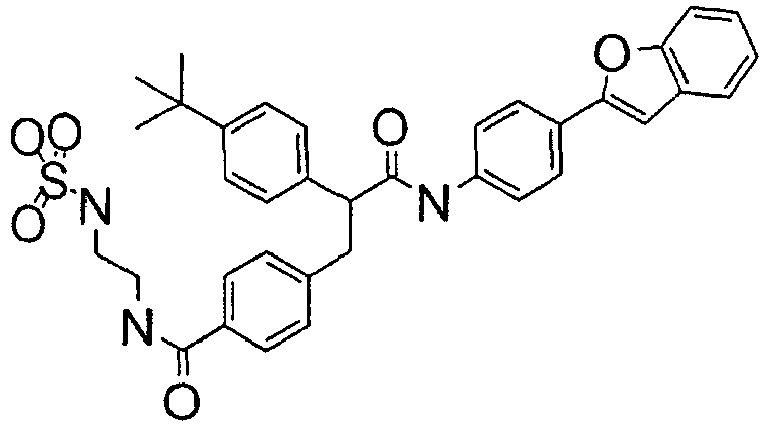
- (Kerns et al., Synthetic communications., 1996, 26, 2671-2680)
- A solution of amine from Example 1.110 (110 mg, 0.2 mmol), in dichloromethane (2 mL) and triethylamine (0.27 mL, 2 mmol) was added to phenyl chlorosulfate (77 mg, 0.4 mmol) (Younker et al., J. Org. Chem., 2004, 69, 9043-9048) in dichloromethane (2 mL) at 0 °C. The reaction was warmed to room temperature and stirred for 1 h. Upon completion of the reaction, the mixture was concentrated under reduced pressure. The crude product was chromatographed on silica gel using 5% to 20% methanol-ethyl acetate to get 70 mg of the pure product.
LCMS: (m/z): 638 (M-H)-. Elemental Analysis calculated for C36H37N3O6S+ 2.5 H2O: C: 63.14, H: 6.18, N: 6.14. Found: C: 62.70, H: 6.24, N: 6.33 -

- 4-[2-(4-Benzofuran-2-yl-phenylcarbamoyl)-2-(4-tert-butyl-phenyl)-ethyl]-benzoic acid was used as a starting material. This compound was prepared as in Example 1.001, Steps A - C, except that benzofuran-2-yl boronic acid was used instead of 2,4-dichlorophenyl boronic acid in Step B.
- 2-Aminoethanol was coupled with 4-[2-(4-Benzofuran-2-yl-phenylcarbamoyl)-2-(4-tert-butyl-phenyl)-ethyl]-benzoic acid as described in Step D of Example 1.001 to generate the targeted product. LCMS: 561.3 (M+H)+.
-

- Sulfate formation of the product from Example 1.112 was carried out as described in example 1.111. LCMS: (m/z): 639 (M-H)-.
-

- In a 100 mL round bottom flask, t-butyl phenyl boronic acid (850 mg, 4.4 mmol), glyoxylic acid (404 mg, 4.4 mmol) and 4-Amino-benzoic acid tert-butyl ester (780 mg, 4.4 mmol) were dissolved in 25 mL of dichloromethane and allowed to stir at RT. After 30 min the reaction turned cloudy, but was allowed to stir an additional 2 h. Upon completion, the reaction was quenched with 20 mL water and the organic layer was separated, dried over sodium sulfate and filtered. The solvent was removed under reduced pressure to give 1.6 g (95%). of a light yellow powder. 1H NMR (CDCl3): δ 1,29 (9H, s), 1.55 (9H, s), 5.17 (1H, s), 6.57 (2H, d, J = 8.4 Hz), 7.39 (4H, s), 7.78 (2H, d, J = 8.4 Hz).
-

- (4-{[(4-tert-Butyl-phenyl)-carboxy-methyl]-amino}-benzoic acid tert-butyl ester (760 mg, 2.0 mmol), was taken up in 5 mL of DMF followed by addition of HOBt (765 mg, 5.0 mmol) and EDCI (958 mg, 5.0 mmol). The reaction was stirred at RT for 30 min, 4-iodoaniline (657 mg, 3 mmol) was added followed by Hunig's base (640 mg, 5 mmol) and allowed to stir an additional 16 h at RT. Ethyl acetate (20 mL) and 20 mL water were added and separated. The aqueous layer was then back extracted with another 10 mL of EtOAc, the organic layer were combined and washed with water (3 x 20 mL). The organic layer was dried over sodium sulfate, filtered and the solvent was removed under reduced pressure to give a brown solid. The solids were triturated with methanol to give a white solid (818 mg, 70 %). 1H NMR (CDCl3): δ 1.32 (9H, s), 1.58 (9H, s), 4.89 (2H, d), 5.02 (1H, d), 6.62 (2H, d, J = 8.4 Hz), 7.22-7.95 (10H, m), 8.81 (1H, s).
-

- 4-{[(4-tert-Butyl-phenyl)-(4-iodo-phenylcarbamoyl)-methyl]-amino}-benzoic acid tert-butyl ester (430 mg, 0.74 mmol) was taken up in 10 mL of dichloromethane followed by addition of 1 ml, of TFA and stirred for 16 h at RT. Removal of the organic layer under reduced pressure followed by addition of water to the precipitate. The solids were filtered to give 340 mg (87 %) of white solids. 1H NMR showed the compound to be very clean and sufficient for the following step. LCMS (M+1 = 529.6).
-

- 4-{[(4-tert-Butyl-phenyl)-(4-iodo-phenylcarbamoyl)-methyl]-amino}-benzoic acid acid (340 mg, 0.6 mmol) was taken up in 8 mL of DME, 4 mL of ethanol and 2 mL of water. Na2CO3 (254 mg, 2.4 mmol), PdCl2(O-tolyl)2 (61 mg, mg, 0.0078 mmol) and benzo[B]furan-2-boronic acid (194 mg, 1.2 mmol) were then added, flushed with nitrogen and heated to reflux for 1h. Cooled to RT, EtOAc (20 mL) was added and extracted with water (20 mL). The organic layer was washed again with water (20 mL), dried over sodium sulfate, filtered and the organic layer was removed under reduced pressure to give a white solid (120 mg, 100 %). 1 H NMR showed the compound to be very clean and sufficient for the following step. LCMS (M+1 = 599.4)
-

- (4-{[(4-tert-Butyl-phenyl)-carboxy-methyl]-amino}-benzoic acid tert-butyl ester (340 mg, 0.6 mmol), was taken up in 10 mL of DMF followed by addition of HOBt (251 mg, 1.6 mmol) and EDCI (314 mg, 1.6 mmol). The reaction was stirred at RT for 30 min, taurine (300 mg, 2.4 mmol) was added followed by Hunig's base (310 mg, 2.4 mmol) and allowed to stir an additional 16 h at RT. The solution was filtered through a frit and the solution was subjected to reverse phase HPLC separations. The water/acetonitrile were removed under reduced pressure, gave a white solid (320 mg, 77 %). 1H HNMR (CDCl3): δ 1.21 (9H, s), 2.66 (2H, t), 3.45 (2H, m), 5.02 (1H, d), 6.62 (2H, d), 7.22-7.95 (10H, m), 8.81 (1H, s). 19F NMR (CDCl3): δ -75.17 (s). Anal. Calcd. For C36H37N3O6S +1.3 H2O + 0.4 TFA; C = 61.89; H = 5.51; N = 6.05. Found C = 62.28; H = 5.87; N = 5.60.
-

- 4-{[(4-tert-Butyl-phenyl)-(4-iodo-phenylcarbamoyl)-methyl]-amino}-benzoic acid tert-butyl ester (110 mg, 0.19 mmol) was dissolved in 2 mL of HOAc. paraformaldehyde (51 mg, 0.57 mmol) and sodium cyano-borohydride (36 mg, 0.57 mmol) were then added and heated to 40 C for 1h. Cooled to RT, EtOAc (20 mL) was added and extracted water (20 mL). The organic layer was washed again with water (20 mL), dried over sodium sulfate, filtered and the organic layer was removed under reduced pressure to give a white solid (120 mg, 100 %). 1 H NMR showed the compound to be very clean and sufficient for the following step. LCMS (M+1 = 599.4)
-

- 4-{[(4-tert-Butyl-phenyl)-(4-iodo-phenylcarbamoyl)-methyl]-methyl-amino}-benzoic acid tert-butyl ester (120 mg, 0.19 mmol) was taken up in 8 mL of DME, 4 mL of ethanol and 2 mL of water. Na2CO3 (81 mg, 2.4 mmol), PdCh(O-tolyl)2, (15 mg, 0.0019 mmol) and benzo[B]furan-2-boronic acid (62 mg, 0.38 mmol) were then added, flushed with nitrogen and heated to reflux for 1h. Cooled to RT, EtOAc (20 mL) was added, and filtered through a plug of celite. The solvents were removed under reduced pressure to give a yellow viscous solid. Water was added to the solid to give a yellow precipitate, which was filtered and triturated with methanol to give 140 mg of a white solid. LCMS (M+1 = 589.6)
-

- 4-{[(4-Benzofuran-2-yl-phenylcarbamoyl)-(4-tert-butyl-phenyl)-methyl]-methyl-amino}-benzoic acid tert-butyl ester (∼140 mg, 0.19 mmol) was taken up in 5 mL of dichloromethane followed by addition of 0.5 mL of TFA and stirred for 16 h at RT. Removal of the organic layer and water was added to give a precipitate, which was filtered to give 110 mg (100 %) of pinkish solids. LCMS (M-1 = 531.1).
-

- 4-{[(4-Benzofuran-2-yl-phenylcarbamoyl)-(4-tert-butyl-phenyl)-methyl]-methyl-amino}-benzoic acid (110 mg, 0.2 mmol), was taken up in 3 mL of DMF followed by addition of HOBt (79 mg, 0.52 mmol) and EDCI (99 mg, 0.52 mmol). The reaction was stirred at RT for 30 min, taurine (103 mg, .083 mmol) was added followed by Hunig's base (107 mg, 0.083 mmol) and allowed to stir an additional 16 h at RT. The solution was filtered through a frit and the DMF was subjected to reverse phase HPLC purification. After removal acetonitrile/water under reduced pressure, followed by trituration with methanol, gave a white solid (50 mg, 39 %).
1H NMR (EDCl3): δ 1.21 (9H, s), 2.61 (2H, brt), 3.44 (2H, br), 4.30 (3H, brt), 5.83 (1H, s), 6.87 (2H, d, J = 8.4 Hz), 7.19-7.86 (10H, m), 8.19 (1h, brs), 10.54 (1H, brs). Anal. Calcd. For C36H37N3O6S +2 H2O; C = 63.98; H = 6.12; N = 6.22. Found C = 63.91; H = 6.16; N = 6.10. -

- This compound was prepared using the methods described above, with modifications that will be evident to an individual skilled in the art.
Mass Spectrum: 602. 7 (M+H)+. Formula: C30H30F3N3O5S + 1.5 H2O + 0.5 CF3CO2H. Elemental Analysis: Calculated: C: 54.30, H: 4.92, N: 6.13. Found: C: 54.38, H: 4.96, N: 6.45 -

- To (4-tert-Butyl-phenyl)-acetic acid benzyl ester (92g, 7.1mmol) in tetrahydrofuran (50ml) was added lithium diisopropylamide (8.5mmol) at -78°C. After 30min, 4- nitrobenzyl bromide (1.6g, 7.5mmol) was added. The cold bath was removed and the reaction mixture was allowed to warm to ambient temperature in 1h. The reaction mixture was concentrated, partitioned between ethyl acetate and 1N ammonium chloride, washed with water, and dried over magnesium sulfate. Chromatography of the residue (5% ethyl acetate in hexane) afforded 2-(4-tert-Butyl-phenyl)-3-(4-nitro-phenyl)-propionic acid benzyl ester as a yellow oil (2.46, 83%).
1HNMR (CDCl3) δ 8.02 - 8.05 (2H, d, J = 8.8Hz), 7.33 - 7.39 (4H, m), 7.21 - 7.32 (5H, m), 7.09 - 7.12 (2H, m), 4.95 - 5.12 (2H, m), 3.89 - 3.93 (1H, m), 3.46 - 3.49 (1H, m), 3.11 - 3.16 (1H, m), 1.31 - 1.32 (9H, s). -

- To 2-(4-tert-Butyl-phenyl)-3-(4-nitro-phenyl)-propionic acid benzyl ester (8.6g, 20.6mmol) in 30ml tetrahydrofuran, 20ml methanol and 10ml water was added sodium hydroxide (0.6g, 24.7mmol). The reaction mixture was stirred at 23°C for 16h, acidified with 4N hydrochloride acid, and concentrated. The residue was partitioned between ethyl acetate and water. The organic phase was washed with water, dried over magnesium sulfate, and concentrated to afford 2-(4-tert-Butyl-phenyl)-3-(4-nitro-phenyl)-propionic acid as a brownish oil (8.04g, 100%).
1HNMR (EDCl3) δ 8.08 - 8.11 (2H, d, J = 8.8 Hz), 7.27 - 7.38 (4H, m), 7.21 - 7.24 (2H, d, J = 8.2Hz), 3.84 - 3.88 (1H, m), 3.46 - 3.53 (1H, m), 3.10 - 3.17 (1H, m), 1.31 (9H, s). -

- To 2-(4-tert-Butyl-phenyl)-3-(4-nitro-phenyl)-propionic acid (4.58g, 14mmol) in 100ml toluene was added 4-iodoaniline (3.37g, 15.4mmol), N,N'-dicyclohexyl-carbodiimide (3.2g, 15.4mmol), and 4-dimethylaminopyridine (171mg, 1.4mmol). The reaction mixture was stirred at 100°C for 16h, and was filtered. The filtrate was concentrated and chromatography of the residue (10% ethyl acetate in hexane) afforded 2-(4-tert-Butyl-phenyl)-N-(4-iodo-phenyl)-3-(4-nitro-phenyl)-propionamide as a grey powder (3 g, 41%).
1HNMR (CDCl3) δ 8.06 - 8.09 (2H, d, J = 8.8Hz), 7.56 - 7.59 (2H, d, J = 8.5 Hz), 7.36 - 7.39 (2H, d, J = 8.2Hz), 7.27 - 7.30 (2H, m), 7.17 - 7.26 (4H, m), 6.95 (1H, s), 3.67 - 3.75 (2H, m), 3.08 - 3.17 (1H, m), 1.32 (9H, s). -

- To 2-(4-tert-Butyl-phenyl)-N-(4-iodo-phenyl)-3-(4-nitro-phenyl)-propionamide (1056mg, 2mmol) in 8ml 1,2-dimethoxyethane, 4ml ethanol, and 2ml water was added benzo[b]furan-2-boronic acid (972mg, 6mmol), bis(tri-o-tolylphosphine)palladium(II) dichloride (158mg, 0.2mmol), and sodium carbonate (1060mg, 10mmol). The reaction mixture was stirred at 125°C for 6 min, filtered, and concentrated. Chromatography of the residue (20% ethyl acetate in hexane) afforded N-(4-Benzofuran-2-yl-phenyl)-2-(4-tert-butyl-phenyl)-3-(4-nitro-phenyl)-propionamide as a yellow foam (830mg, 80%).
1HNMR (CDCl3) δ 8.05 - 8.11 (4H, m), 7.77 - 7.79 (2H, d, J = 8.8Hz), 7.50 - 7.60 (6H, m), 7.38 - 7.41 (2H, d, J = 8.5Hz), 7.20 - 7.23 (3H, m), 6.95 (1H, s), 3.74 - 3.77 (2H, m), 3.15 - 3.17 (1H, m), 1.31 (9H, s). -

- To N-(4-Benzofuran-2-yl-phenyl)-2-(4-tert-butyl-phenyl)-3-(4-nitro-phenyl)-propionamide (830mg, 1.6mmol) in tetrahydrofuran (20ml) was added 20% palladium hydroxide on carbon (172mg). The reaction mixture was stirred under hydrogen for 16h, filtered and concentrated. Chromatography of the residue (20% ethyl acetate in hexane) afforded 3-(4-Amino-phenyl)-N-(4-benzofuran-2-yl-phenyl)-2-(4-tert-butyl-phenyl)-propionamide as a white solid (600mg, 77%).
1HNMR (DMSO-d6) δ 10.17 (1H, s), 7.79 - 7.82 (2H, d, J = 8.8 Hz), 7.66 - 7.69 (2H, d, J = 8.8Hz), 7.57 - 7.63 (2H, m), 7.35 (4H, s), 7.21 - 7.29 (3H, m), 6.87 - 6.89 (2H, d, J = 8.5Hz), 6.41 - 6.42 (2H, d, J = 8.2Hz), 4.82 (2H, s), 3.87 - 3.92 (2H, m), 2.73 - 2.77 (1H, m), 1.25 (9H, s). -

- To 3-(4-Amino-phenyl)-N-(4-benzofuran-2-yl-phenyl)-2-(4-tert-butyl-phenyl)-propionamide (100mg, 0.2mmol) in 2ml diethyl ether, 2ml toluene and 1 ml 1,4-dioxane was added succinic anhydride (22mg, 0.22mmol). The reaction mixture was stirred at 23°C for 16h, concentrated, and loaded to reverse phase silica gel. After chromatography (from 20% acetonitrile to 80% acetonitrile in water in 12 column volume), the fractions containing the desired product were collected and concentrated. The residue was diluted with methanol (1ml) and water was added dropwise until the precipitate stop forming. The white precipitate was removed by filtration and dried under high vacuum at 50°C to afford the title compound (6.3mg, 5%).
1HNMR (DMSO-d6) δ 10.20 (1H, s), 9.88 (1H, s), 7.79 - 7.82 (2H, d, J = 8.8 Hz), 7.65 - 7.68 (2H, d, J = 8.8Hz), 7.57 - 7.63 (2H, m), 7.42 - 7.45 (2H, d, J = 8.5Hz), 7.36 (4H, s), 7.21 - 7.31 (3H, m), 7.13 - 7.16 (2H, d, J = 8.5Hz), 3.94 - 3.98 (2H, m), 3.30 - 3.40 (2H, m), 2.73 - 2.92 (1H, m), 2.42 - 2.56 (2H, m), 1.25 (9H, s). -

-

- 1.5 eq of chloroacetylchloride was dissolved in acetonitrile in a round bottom flask. To this mixture was drop added a solution of 3-(4-Amino-phenyl)-N-(4-benzofuran-2-yl-phenyl)-2-(4-tert-butyl-phenyl)-propionamide (Example 1.117, Step E, 1 eq), and N,N-diisoprropyl-ethyl amine (3 eq) in acetonitrile from an addition funnel at room temperature. After addition was complete, the reaction was stirred for 9 hours at room temperature. The reaction was quenched by pouring into ice water and the precipitate collected to yield the desired product.
HNMR (DMSO-d6) (ppm): 10.287 (s) 1H, 10.186 (d, J = 4.8 Hz) 1H, 7.960 (d, J = 9.3 Hz) 2H, 7.808 - 7.551 (m) 5H, 7.453 - 7.171 (m) 10H, 4.181 (s) 2H, 3.985 - 3.936 (m) 1H, 2.909 - 2.881 (m) 1H, 1.237 (s) 9H. -

- To N-(4-Benzofuran-2-yl-phenyl)-2-(4-tert-butyl-phenyl)-3-[4-(2-chloroacetylamino)- phenyl]-propionamide dissolved in ethanol was added a solution of water containing 5 eq of Na2S2O6 in a microwave vial. The solvent ratio was 2:1 ethanol: water. The reaction was heated to 120 °C for 6 min. The solvent was removed and the residue was purified by chromatography on reverse phase (C18) silica gel using a water/acetonitrile gradient to give the sodium salt.
HNMR (ppm): (CD3OD): 7.774 (dd, J = 1.8 Hz, J = 6.9 Hz) 2H, 7.572 - 7.368 (m) 9H, 7.267 - 7.064 (m) 6H, 3.921 (dd, J = 6 Hz, J = 9.5 Hz) 1H, 3.816 (s) 2H, 3.436 (dd, J = 9.3 Hz, J = 13.65 Hz) 1H, 2.978 (dd, J = 6Hz, J = 13.5 Hz) 1H, 1.297 (s) 9H. - This compound was prepared by the method indicated in Example 1.118, with appropriate modifications

-

- A mixture of benzyl bromoacetate (8.309g, 36.3 mmol) and triphenylphosphine (9.546g, 36.4 mmol) in 50 mL of ethyl acetate was heated to reflux for a period of 18h. After cooling to ambient temperature the white precipitate formed was filtered and rinsed with ethyl acetate. The solid was partitioned between 1N NaOH (aqueous) and ethyl acetate. The organic phase was washed with water and saturated sodium chloride and dried over magnesium sulfate. Evaporation under reduced pressure left a pale yellow oil that was used without chararcterization in the following step. Crude yield: 8.223g
-

- A solution of the product from Step A above (4.742g, 11.6 mmol) in methanol (10 mL) was cooled in an acetone/ice bath. A solution of PhI(OAc)2 (3.757g, 11.7 mmol) and HBF4 (1.6 mL of a 7.26M solution in ether, 11.6 mmol) in methanol (15 mL) was added dropwise. After the addition was complete, the mixture was stirred for an additional 1h at the same temperature. The white precipitate was filtered, rinsed with methanol and dried under reduced pressure. The product was used without further characterization. Crude yield: 6.564g
-

- A mixture of 4-formyl-methyl benzoate (1.547g, 9.4 mmol) and 6.564g (9.4 mmol) of the product from Step B above in dichloromethane (30 mL) was treated with tetra-n-butyl ammonium iodide (3.468g, 9.4 mmol) and the resulting mixture stirred at room temperature for a 4-day period. The mixture was then washed with aqueous sodium bisulfite, and water. The organic phase was dried over MgSO4 and concentrated under reduced pressure. The product obtained after evaporation was chromatographed on silica usin an ethyl acetate-hexanes gradient. The first fraction obtained weighed 596 mg. HNMR (300 MHz,. DMSO-d6): 8.35 (1H, s), 8.02 (2H, d, J = 8.5 Hz), 8.00 - 7.85 (3H, m), 7.5 - 7.3 (4H, m), 5.31 (2H, s), 3.86 (3H, s). The second fraction obtained weighed 2.095g. HNMR (300 MHz,. DMSO-d6): 8.35 (1H, s), 8.02 (2H, d, J = 8.5 Hz), 7.95 - 7.87 (3H, m), 7.5 - 7.3 (4H, m), 5.31 (2H, s), 3.86 (3H, s). Both fractions appeared to contain a contaminant but were used without further purification in the following steps.
-

- A mixture of 343 mg (0.81 mmol) of the iodide obtained in Step C above, 705 mg (3.3 mmol) of 6-ethoxy-2-naphthalen boronic acid, dichlorobis(tri-o-tolylphosphine)palladium (67 mg, 0.085 mmol) and sodium carbonate (496 mg, 4.7 mmol) in a mixture of THF (6 mL), ethanol (4 mL) and water (2 mL) was heated in a microwave reactor at 125 °C for a 6 min period. An excess of 1M aqueous HCl was added and the mixture extracted with ethyl acetate. The organic phase was washed with water and a saturated sodium chloride solution, and dried over magnesium sulfate. Chromatography on silica gel eluting with an ethyl acetate-hexanes gradient. Obtained 178 mg of the product. LCMS: 467.3 (M+H)+
-

- A mixture of the product from Step D above (178 mg, 0.38 mmol) and 10% Pd/C in THF(5 mL) and ethanol (9 mL) was stirred under a balloon of hydrogen for a 1.75h period. The catalyst was removed by filtration and the product obtained after concentration (139 mg) was used without further purification. LCMS: 379.4 (M+H)+
-

- A mixture of the carboxylic acid from Step E above (139 mg, 0.37 mmol), 4-(benzofuran-2-yl-aniline (96 mg, 0.46 mmol), EDCI (291 mg, 1.52 mmol), HOBt-H2O (309 mg, 2.02 mmol) and N,N-diisopropyl -N ethylamine (0.303 mL, 1.85 mmol) in DMF (5.6 mL) was stirred at room temperature for a 16h period. The crude mixture was diluted with ethyl acetate and washed successively with water, 10% aqueous NaHCO3, water, 1M aqueous HCl, water and saturated sodium chloride. The organic phase was dried over magnesium sulfate and concentrated under rduced pressure. The residue was chromatographed on silica gel using an ethyl acetate-hexanes gradient. The product was obtained as a yellowish solid. Yield: 74 mg. LC/MS: 570.6 (M+H)+
-

- The methyl ester from Step F above (74 mg, 0.13 mmol) was treated as described in Example 1.001, Step C, to afford the corresponding carboxylic acid (53 mg), which was utilized without characterization in the following step
-

- The product was synthesized from 53mg (0.095 mmol) of the carboxylate from Step G above using the method described in Example 1.001, Step D, except that the product was purified by preparative HPLC on a reverse phase column using an acetonitrile-water gradient, with both solvents containing 0.05% of trifluoroacetic acid.
LCMS: 661.6 (M-H)- HNMR (300MHz, DMSO-d6): 10.32 (1H, s), 8.39 (1H, m), 7.83 - 7.11 (19H, m), 4.2 - 4.0 (3H, m), 3.46 (1H, m), 3.14 (1H, m), 1.38 (3H, t, J = 7.0 Hz). -
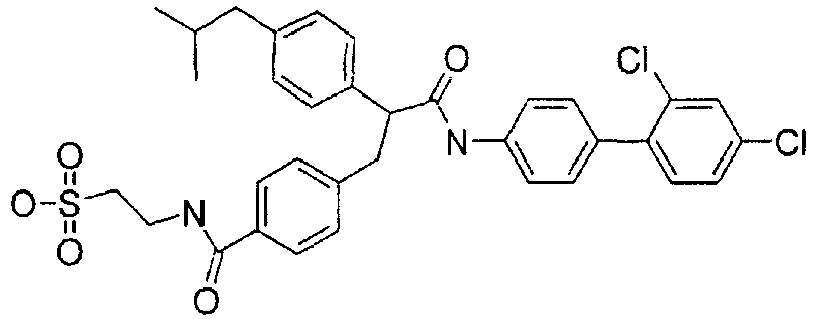
-

- To a solution of benzyl dimethyl phosphonoacetate (1.94 g, 7.5 mmol) in THF (15 mL) cooled to -78 °C in a dry ice/isopropanol bath was added LHMDS (9.0 mL of a 1 M solution in THF, 9.0 mmol). The reaction was allowed to warm to 10 °C over 30 min, then recooled to - 78 °C. NBS (1.6 g, 9.0 mmol) was added as a solution in THF (20 mL), and the reaction was allowed to warm to room temperature over 18h. Saturated ammonium chloride was added to quench any remaining base, and the reaction was concentrated to dryness. Ethyl acetate was added, and the organic layer was washed with water and brine, and dried over sodium sulfate. The crude product was obtained as a yellow oil and was subsequently purified by flash column chromatography on silica gel eluting with 30% ethyl acetate in hexanes to afford the desired product, bromo-(dimethoxy-phosphoryl)-acetic acid benzyl ester, as a pale yellow oil, 1.61 g (63%). 1H NMR (300 MHz, EDCl3): δ 7.36 (m, 5 H), 5.24 (s, 2 H), 4.44 (d, J = 14.1 Hz, 1 H), 3.83 (q, J = 4.8 Hz, 6 H). LC-MS m/z = 417 [C11H15O5P+ H]+.
-

- To a cooled (-78 °C) solution of bromo-(dimethoxy-phosphoryl)-acetic acid benzyl ester (500 mg, 1.5 mmol) in THF (10 mL) was added LHMDS (1.2 mL of a 1M solution in THF, 1.2 mmol). The reaction was warmed to 0 °C and stirred for 30 minutes, then recooled to -78 °C. 4-Formyl-benzoic acid methyl ester (163 mg, 1.0 mmol) in THF (2 mL) was added dropwise, and the reaction was allowed to warm to room temperature and stirred for 18 hours. The reaction was evaporated to dryness by rotary evaporator and purified by column chromatography on silica gel eluting with 50% ethyl acetate in hexanes to yield 4-(2-Benzyloxycarbonyl-2-bromo-vinyl)-benzoic acid methyl ester (358 mg, 64%) as a mixture of E and Z isomers. 1H NMR (300 MHz, CDCl3): δ 8.33 (s, 1 H), 8.05 (d, J = 7.5 Hz, 1 H), 7.88 (m, 2 H), 7.4-7.2 (m, 7 H), 5.33 (s, 1 H), 5.16 (s, 2 H), 3.93-3.91 (s, 3 H). LC-MS m/z = 376 [C18H15BrO4 + H]+.
-

- 4-(2-Benzyloxycarbonyl-2-bromo-vinyl)-benzoic acid methyl ester (2.0 g, 5.33 mmol) was added to a 100 mL RB flask containing 4-isobutylphenylboronic acid (2.85 g, 15.99 mmol), sodium carbonate (2.83 g, 26.65 mmol), and dichlorobis(tri-o-tolylphosphine)palladium(II) (544 mg, 0.69 mmol). Dimethoxyethane (16 mL), ethanol (8 mL), and water (4 mL) were added, and the reaction was stirred at 120 °C for 1 hour at which point TLC analysis indicated that the reaction had gone to completion. The reaction was filtered hot through celite and concentrated to dryness. Purification by flash column chromatography was performed on an ISCO Sg-100c system, using a 40 gram pre-packed column and eluting with a linear gradient of ethyl acetate in hexanes starting at 10% EtOAc and ending at 40% EtOAc over 22 minutes. This afforded the desired product, 4-[2-Benzyloxycarbonyl-2-(4-isobutyl-phenyl)-vinyl]-benzoic acid methyl ester as a pale oil, 1.8 g, 79%. LC-MS m/z = 429 [C28H28O4 + H]+.
-

- To a stirred solution of 4-[2-Benzyloxycarbonyl-2-(4-isobutyl-phenyl)-vinyl]-benzoic acid methyl ester (1.8 g, 4.2 mmol) in acetic acid (30 mL) was added palladium on activated carbon (∼150 mg). The flask was purged with hydrogen and stirred under hydrogen atmosphere for 18h. TLC and LC/MS analysis indicated that the reaction had gone to completion. The reaction was filtered through celite and concentrated by rotary evaporation. Toluene (100 mL) was added and the reaction was concentrated to dryness yielding 4-[2-Carboxy-2-(4-isobutyl-phenyl)-ethyl]-benzoic acid methyl ester as a colorless solid, 1.33g (93%). LC-MS m/z = 341 [C21H24O4 + H]+.
-

- The title compound was synthesized from 4-[2-Carboxy-2-(4-isobutyl-phenyl)-ethyl]-benzoic acid methyl ester according as described inExample 1.001 with appropriate substitutions. 1H NMR (300 MHz, DMSO-D6): δ 10.17 (s, 1 H), 8.38 (t, 1H), 7.6-7.4 (m, 5 H), 7.4-7.2 (m, 8 H), 7.10 (d, J = 7.5 Hz, 2 H), 4.0 (m, 1 H), 3.40 (m, 3 H), 3.00 (m, 1 H), 2.60 (t, J = 7.3 Hz 2 H), 2.36 (d, J = 6.5 Hz 2 H), 1.77 (m, 1H), 0.81 (d, J = 6.4 Hz, 6 H). LC-MS m/z = 655 [C34H34Cl2N2O5S + H]+. Anal. Calcd for (C34H34Cl2N2O5S + 1.8 H2O + 0.3 TFA): C, 57.70; H, 5.30; N, 3.89. Found: C, 57.81; H, 5.30; N, 3.91. HPLC conditions: Column = Waters Atlantis; dC18-150×4.6 mm; Mobile phase = Solvent A: H2O/0.05% TFA; Solvent B: ACN/0.05% TFA. Flow rate = 2.0 mL/min; UV@ 254 nm. Retention time in minutes. (rt = 9.20/20.00,98% purity).
LC/MS: 625.6 (M+H)+.
Formula: C36H36N2O6S + 2.6 H2O + 0.05 CF3CO2H Elemental Analysis: Calculated: C:64.02 H:6.14 N:4.14 Found: C:64.33 H:6.52 N:4.42 -
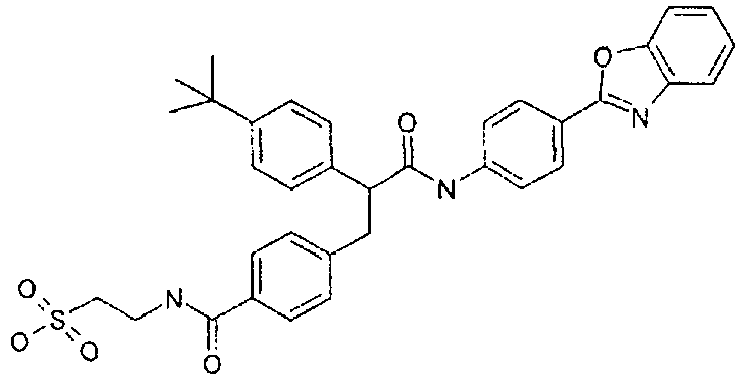
- This product was synthesized as described in Example 1.001, except that 4-benzoxazol-2-yl phenyl amine was used instead of 4-iodoaniline and the Suzuki coupling step was omitted.
LC/MS: 626.6 (M+H)+.
Formula: C35H35N3O6S + 1.4 H2O. Elemental Analysis: Calculated: C:64.58 H:5.85 N:6.46. Found: C:64.97 H:6.29 N:6.32 -

- This product was synthesized as described in Example 1.001, with appropriate modifications.
LC/MS: 626.6 (M+H)+.
Formula: C35H35N3O6S + 1.4 H2O. Elemental Analysis: Calculated: C:64.58 H:5.85 N:6.46. Found: C:64.97 H:6.29 N:6.32 -

- This product was synthesized as described in Example 1.001, with appropriate modifications.
LC/MS: 641.4 (M-H)-.
Formula: C36H36N2O6FSNa + 1.4H2O + 0.1CH3CN. Elemental Analysis: Calculated: C: 62.65 H: 5.39 N: 4.24. Found: C: 62.39 H: 5.56 N: 4.48 -

- This product was synthesized as described in Example 1.003, with appropriate modifications.
LC/MS: 683.6(M-H)-.
Formula: C38H37N206ClS + 0.7H2O. Elemental Analysis: Calculated: C: 65.40 H: 5.55 N:4.01. Found: C: 65.37 H: 5.04 N: 3.85 -

- This product was synthesized as described in Example 1.001, with appropriate modifications.
LC/MS: 665.6(M-H)-.
Formula: C35H36N205Cl2S + 1.9H20. Elemental Analysis: Calculated: C: 59.89 H: 5.72 N: 3.99. Found: C: 60.15 H: 6.09 N: 3.81 -

- This product was synthesized as described in Example 1.001, with appropriate modifications.
LC/MS: 645.4(MH)-.
Formula: C36H39N2OSClS + 2.5H2O + 0.8CF3COOH + 0.1CH3CN. Elemental Analysis: Calculated: C: 57.65 H: 5.77 N: 3.73. Found: C: 57.40 H: 5.77 N: 4.00 -

-

- A mixture consisting of Meldrum's acid (2 g, 13.9 mmol), terephthalic acid monomethyl ester (2.5 g, 13.9 mmol), EDC (3.5 g, 18 mmol) and DMAP (2.2 g, 18 mmol) in DCM (50 mL) was stirred at RT overnight. The reaction mixture was diluted with DCM (to ∼ 100 mL) then washed with water (2 x 50 mL). The organic solution was dried over Na2SO4 and concentrated to afford 3.9 g of crude 4-(2,2-Dimethyl-4,6-dioxo-[1,3]dioxane-5-carbonyl)-benzoic acid methyl ester as a yellow solid. The crude was carried on as is for the next step.
-

- The mixture of crude 4-(2,2-Dimethyl-4,6-dioxo-[1,3]dioxane-5-carbonyl)-benzoic acid methyl ester from step A was dissolved in DCM (50 mL) and AcOH (5 mL) and chilled to ice-bath temperature. To the solution was added portion-wise, over 30 min, NaBH4 (722 mg, 19.1 mmol). The reaction mixture was allowed to warm to RT overnight. The mixture was quenched with water, stirred for 10 min then extracted with DCM. The organic solution was dried over Na2SO4 and concentrated to afford an off-white solid that was suspended in Et2O to give pure 4-(2,2-Dimethyl-4,6-dioxo-[1,3]dioxan-5-ylmethyl)-benzoic acid methyl ester as a white solid (2.24 g , 60%). 1H NMR (500 MHz, DMSO-d6): δ 7.87 (d, J = 8 Hz, 2 H), 7.43 (d, J = 8 Hz, 2 H), 4.86 (t, 7.87 (d, J = 5 Hz, 1 H), 2 H), 3.84 (s, 3 H), 3.35 (d, J = 5 Hz, 2 H), 1.83 (s, 3 H), 1.64 (s, 3H)
-

- To 4-(2,2-Dimethyl-4,6-dioxo-[1,3]dioxan-5-ylmethyl)-benzoic acid methyl ester (3 g, 10.3 mmol) and K2CO3 (2.1 g, 15.4 mmol) in DMF (15 mL) was added 4-bromobenzyl bromide (3 g, 12.3 mmol). The solution was stirred at room temperature overnight. After partitioning between Et2O and water, the organic portion washed with brine, dried over Na2SO4 then concentrated to afford crude material which was crystallized from MeOH to afford 4-[5-(4-Bromobenzyl)-2,2-dimethyl-4,6- dioxo-[1,3]dioxan-5-ylmethyl]-benzoic acid methyl ester as a white solid (4.12 g, 87%). 1H NMR (500 MHz, DMSO-d6): δ 7.91 (d, J = 8.5 Hz, 2 H), 7.55 (d, J = 8.5 Hz, 2 H), 7.21 (d, J = 8 Hz, 2 H), 7.02 (d, J = 8 Hz, 2 H), 3.81 (s, 3 H), 3.45 (s, 2 H), 3.38 (s, 2 H), 0.71 (s, 3 H), 0.65 (s, 3 H).
-

- A solution of 4-[5-(4-Bromobenzyl)-2,2-dimethyl-4,6-dioxo-[1,3]dioxan-5-ylmethyl]-benzoic acid methyl ester (1.35 g, 2.93 mmol) and 4-benzofuran-2-ylphenylamine (736 mg, 3.52 mmol) in dry NMP (10 mL) was heated at 220°C for 5 min in the microwave. The reaction mixture was diluted with water then extracted with EtOAc. After concentrating, the crude material was purified by flash chromatography on silica gel (ISCO cartridge, 40 g), eluting with a gradient of zero to 35% ethyl acetate in hexane over 30 minutes to afford 4-[2-(4-Benzofuran-2-ylphenylcarbamoyl)-3-(4-bromophenyl)-propyl]-benzoic acid methyl ester (935 mg, 56%). 1H NMR (300 MHz, DMSO-d6): δ 9.92 (s, 1H), 7.86 (d, J = 8.4 Hz, 2 H), 7.80 (d, J = 8.7 Hz, 2 H), 7.64-7.17 (m, 13 H), 3.81 (s, 3 H), 3.10-2.93 (m, 3 H), 2.85-2.71 (m, 2 H).
-

- A solution consisting of 4-[2-(4-Benzofuran-2-ylphenylcarbamoyl)-3-(4-bromo phenyl)-propyl]-benzoic acid methyl ester (200 mg, 0.35 mmol), dichlorobis(tri-o-tolyl phosphine)-palladium(II), 1-cyclohexenyl boronic acid (222 mg, 1.76 mmol) and sodium carbonate (373 mg, 3.5 mmol) in DME (8 mL), EtOH (4 mL) and water (2 mL) was heated at 125°C for 7 min in the microwave. The crude reaction mixture was partitioned between EtOAc and water. Evaporation of the organic portion afforded crude 4-[2-(4-Benzofuran-2-ylphenylcarbamoyl)-3-(4-cyclohex-1-enylphenyl)-propyl]-benzoic acid methyl ester which was carried on as is for the next step. LC-MS m/z = 570 [C38H35NO4 + H]+.
-

- To the crude 4-[2-(4-Benzofuran-2-ylphenylcarbamoyl)-3-(4-cyclohex-1-enylphenyl)-propyl]-benzoic acid methyl ester from step e dissolved in 20 mL of THF/MeOH/H2O (3:1:1) was added lithium hydroxide (74 mg, 1.8 mmol) After stirring for 5 hrs at RT, the organic solvents were removed under vacuum and the reaction residue diluted further with water (25 mL). The aqueous mixture was made acidic with 1 N HCl and extracted with ethyl acetate. The ethyl acetate portion was then dried over Na2SO4 and concentrated under vacuum to afford 4-[2-(4-Benzofuran-2-ylphenylcarbamoyl)-3-(4-cyclohex-1-enylphenyl)-propyl]-benzoic acid which was carried on as is for the next step.
-

- A mixture consisting of 4-[2-(4-Benzofuran-2-ylphenylcarbamoyl)-3-(4-cyclohex-1-enylphenyl)-propyl]-benzoic acid from step f above, EDC (101 mg, 0.53 mmol), HOBT hydrate (80 mg, 0.53 mmol), taurine (66 mg, 0.53 mmol) and diisopropyl diethylamine (0.18 mL, 1.1 mmol) in DMF (10 mL) was stirred at RT overnight. The solvent was removed under vacuum and 1N HCl was added. The resulting precipitate was filtered, washed with water and purified by preparatory HPLC on a Shimadzu modular HPLC system using a Waters Atlantis dC18 30x75 mm preparatory column and running a gradient from 40% to 100% acetonitrile over 13 minutes. TFA was used as an ionizer and was present in 0.05% (v/v). Detection was accomplished using an in-line UV detector running at 254 nm. Rotary evaporation of the solvated compound provided the title compound (50 mg): 1H NMR (300 MHz, DMSO-d6): δ 9.94 (s, 1H), 8.43 (t, J = 6.12 Hz, 1 H), 7.80 (d, J = 8.4 Hz, 2 H), 7.69 (d, J = 8.4 Hz, 2 H) 7.64-7.21 (m, 11 H), 7.15 (d, J = 8.4 Hz, 2 H,), 3.48 (dd, J = 12.6 Hz, J = 6.3 Hz, 2H), 3.1-2.9 (m, 3H), 2.8-2.4 (m, 4 H), 2.38 (s, 1 H), 2.35-2.25 (br m, 2H), 2.19-2.09 (br m, 2H), 1.77-1.67 (br m, 2H), 1.6-1.5 (br m, 2H). LC-MS m/z = 661 [C349H38N2O6S + H]-.
-

-

- The compound 4-(2,2-Dimethyl-4,6-dioxo-5-pent-2-ynyl-[1,3]dioxan-5-ylmethyl]-benzoic acid methyl ester was prepared as described in Example 1.128, step C, using 1-bromo-2-pentyne. 1NMR (300 MHz, DMSO-d6): δ 7.94 (d, J = 8.4 Hz, 2 H), 7.20 (d, J = 8.4 Hz, 2 H), 3.85 (s, 3H), 3.28 (s, 2H), 2.97 (s, 2 H), 2.12 (m, 2 H), 1.63 (s, 3H), 0.98 (br m, 3 H), 0.84 (s, 3 H).
-

- The compound 4-[2-(2-Fluoro-4-iodo-phenylcarbamoyl)-hept-4-ynyl]-benzoic acid methyl ester was prepared from the corresponding methyl ester from step a above according to the procedure described for the synthesis of Example 1.128, step D using 2-fluoro-4-iodoaniline. TLC: Rf = 0.45 hexane/ethyl acetate (4:1).
-

- The compound 4-[2-(4-Benzofuran-2-yl-fluorophenylcarbamoyl)-hept-4-ynyl]-benzoic acid methyl ester was prepared 4-[2-(2-Fluoro-4-iodo-phenylcarbamoyl)-hept-4-ynyl]-benzoic acid methyl ester according to the procedure described for the synthesis of Example 1.128, step E. LC-MS m/z = 484 [C30H26FNO4 + H]+.
-

- The compound 4-[2-(4-Benzofuran-2-yl-fluorophenylcarbamoyl)-hept-4-ynyl]-benzoic acid was prepared from the corresponding ester obtained from step c above according to the procedure described for the synthesis of Example 1.128, step F. The crude material was carried on without purification for the following step.
-

- The title compound was prepared from 4-[2-(4-Benzofuran-2-yl-fluorophenylcarbamoyl)-hept-4-ynyl]-benzoic acid according to the procedure described for the synthesis of Example 1.128, step G. 1H NMR (300 MHz, DMSO-d6): δ 9.89 (s, 1H), 8.45 (t, J= 5.1 Hz, 1 H), 7.95 (t, J= 8.1 Hz, 1 H), 7.81-7.61 (complex m, 6 H), 7.45 (s, 1H), 7.36-7.24 (complex m, 4 H), 6.81-6.77 (m, 4 H), 3.48 (dt, J = 12.6 Hz, J = 7.2 Hz, 2 H), 3.17-2.81 (m, 4 H), 2.64 (t, J = 7.2 Hz, 2 H), 2.4-2.1 (complex m, 4 H), 1.01 (t, (t, J = 7.5 Hz, 3 H); LC-MS m/z = 575 [C31H29FN2O6S + H]-.
-

-

- To a stirred solution of 4-hydroxy-phenyl acetic acid (10.0 g, 65.72 mmol) in DMF (70 mL) at rt were added Cs2CO3 (47.11 g, 144.5 mmol) and benzyl bromide (17.29 mL, 144.5 mmol). The reaction mixture was stirred overnight at room temperature, heated at 100 °C for 1 h and cooled to rt. The solvent was removed under reduced pressure and poured into H2O. The aqueous solution was extracted with ethyl acetate and the combined organic layers were washed with brine, dried over Na2SO4, filtered and concentrated under reduced pressure. The crude product was recrystallization in hexanes to afford (4-benzyloxy-phenyl) acetic acid benzyl ester as a yellow solid. (20.5 g, 94%): 1H NMR (300 MHz, CDCl3): δ 7.25 - 7.34 (m, 10 H), 7.14 (d, J = 8.4 Hz, 2 H), 7.02 (d, J = 8.4 Hz, 2 H), 5.50 (s, 2 H), 5.12 (s, 2 H), 3.61 (s, 2 H); TLC conditions: Uniplate silica gel, 250 microns; mobile phase = ethyl acetate-hexanes (1:5); Rf = 0.8.
-

- To a stirred solution of (4-benzyloxy-phenyl) acetic acid benzyl ester (Step A, 8.0 g, 24.08 mmol) in anhydrous THF (60 mL) was added LiHMDS (25.28 mL, 25.28 mmol, 1.0 M solution in toluene) at -78° C. The reaction mixture was stirred for 1.5 h at -78° C, and then methyl-4-bromo methyl benzoate (5.79 g, 25.28 mmol, in THF 10 mL) was added dropwise, stirred for 2 h at -78° C and then allowed to warm to rt for 1 h. After completion of the reaction quenched with saturated NH4Cl solution (20 mL) and stirred for 10 min. The reaction mixture was extracted with ethyl acetate (100 mL) and the organic layer was washed with brine, dried over Na2SO4 and concentrated under reduced pressure. The crude product was recrystallization from minimum amount of EtOAc and hexane at room temperature) to afford 4-[2-benzyloxycarbonyl-2(4-benzyloxy-phenyl)-ethyl]-benzoic acid methyl ester as a yellow solid (7.4 g, 64%): 1H NMR (300 MHz, CDCl3): δ 7.88 (d, J = 8.1 Hz, 2 H), 7.42 - 7.12 (m, 14 H), 6.89 (d, J = 8.7 Hz, 2 H), 5.10 (d, J = 6.0, Hz, 1 H), 5.06 - 5.03 (m, 2 H), 4.95 (d, J = 12.6 Hz, 1 H), 3.89 (s, 3 H), 3.87 - 3.75 (m, 1 H), 3.41 (dd, J = 9.0, 13.8 Hz, 1 H), 3.05 (dd, J = 7.2, 13.8 Hz, 1 H); TLC conditions: Uniplate silica gel, 250 microns; mobile phase = ethyl acetate-hexanes (1:4); Rf = 0.6.
-

- To a stirred solution of 4-[2-benzyloxycarbonyl-2-(4-benzyloxy-phenyl)-ethyl]-benzoic acid methyl ester (Step C, 3.0 g, 6.66 mmol) in EtOH:EtOAc (50 mL, 1:1 ratio) at rt, was added 10% palladium on carbon (0.3 g), hydrogenated at 1 atm. H2 (gas) and the reaction mixture was stirred at rt for 14 h. The reaction mixture was filtered through celite plug and washed with ethyl acetate (50 mL) and concentrated under reduced pressure. The crude product was dried under vaccum for 3 h to afford 4-[2-carboxy-2-(4-hydroxy-phenyl)-ethyl]-benzoic acid methyl ester as a white solid (1.6 g, 86%): 1H NMR (300 MHz, CDCl3): δ 7.83 (d, J = 8.4 Hz, 2 H), 7.27 (d, J = 8.4 Hz, 2 H), 7.08 (dd, J = 4.62, 12.5 Hz, 2 H), 6.66 (dd, J = 6.6, 12.5 Hz, 2 H), 3.79 (s, 3 H), 3.75 (t, J = 8.1 Hz, 1 H), 3.22 (dd, J = 8.4, 13.5 Hz, 1 H), 2.93 (dd, J = 7.2, 13.8 Hz, 1 H).
-

- To a stirred suspension of 4-[2-carboxy-2-(4-hydroxy-phenyl)-ethyl]-benzoic acid methyl ester (Step C, 1.5 g, 5.0 mmol) in anhydrous CH2Cl2 (10 mL), was added oxalylchloride (1.57 g, 12.5 mmol) at rt, the reaction mixture was stirred for 14 h. The reaction mixture was concentrated under reduced pressure and azeotroped with CH2Cl2 (2x10 mL) dried under vaccum for 3 h, The crude acid chloride (1.8 g, 5.66 mmol) was treated with 4-iodoaniline (1.48 g, 6.79 mmol) and N,N-diispropylethylamine (3.0 mL, 16.9 mmol) in CH2Cl2 at 0 °C. The reaction mixture was stirred for 14 h at rt and the reaction mixture was concentrated under reduced pressure. The mixture was extracted with ethyl acetate (100 mL) and the organic layer was washed with brine, dried over Na2SO4 and concentrated under reduced pressure.. The residue was treated with CH2Cl2 to get solid compound, which was filtered and washed with CH2Cl2 to give 4-[2-(4-hydroxy-phenyl)-2-(4-iodo-phenylcarbamoyl)-ethyl]-benzoic acid methyl ester as a yellowish solid (1.6 g, 64%): 1H NMR (300 MHz, DMSO-d 6): δ 10.05 (s, 1 H, NH), 9.28 (s, 1 H, OH), 7.81 (d, J = 8.1 Hz, 2 H), 7.53 (d, J = 8.7Hz, 2H), 7.31 (t, J = 8.4Hz, 4H), 7.18 (d, J = 8.4Hz, 2H), 6.65 (d, J = 8.4 Hz, 2 H), 3.85 (t, J = 6.9 Hz, 1 H), 3.77 (s, 3 H), 3.40 - 3.36 (m, 1 H), 2.95 (dd, J = 6.0, 12.9 Hz, 1 H); TLC conditions: Uniplate silica gel, 250 microns; mobile phase = ethyl acetate/ hexanes (1:2); Rf = 0.5.
-
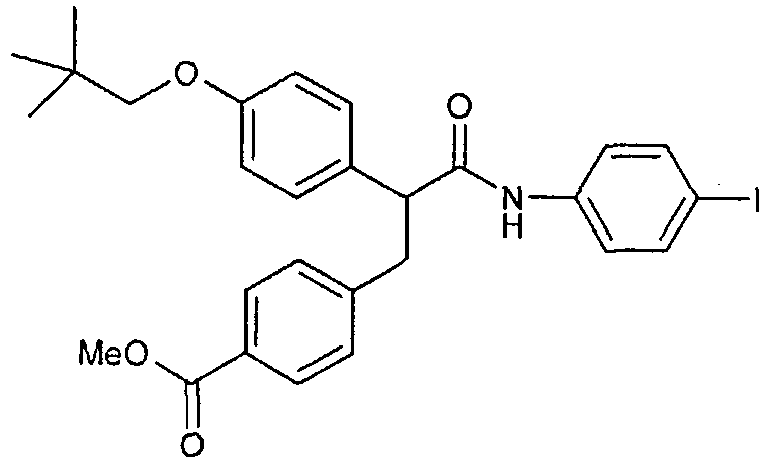
- To a stirred solution of 4-[2-(4-hydroxy-phenyl)-2-(4-iodo-phenyl-carbamoyl)-ethyl]-benzoic acid methyl ester (Step D, .6 g, 1.60 mmol) in DMF (15 mL) at rt were added Cs2CO3 (2.07 g, 6.38 mmol) and Neopentyliodide (2.53 g, 12.7 mmol). The reaction mixture was heated at 80 °C for 14 h and cool to rt and after completion of the reaction, the solvent was removed under reduced pressure and poured into H2O (50 mL). The aqueous solution was extracted with ethyl acetate (2x100 mL) and the combined organic layers were washed with brine, dried over Na2SO4, filtered and concentrated under reduced pressure. The crude product was recrystallization in hexanes to afford 4-[2-(4-(2,2-dimethylpropoxy)-phenyl)-2-(4-iodo-phenyl-carbamoyl)-ethyl]-benzoic acid methyl ester as a yellow solid. (1.6 g, 88%): 1H NMR (300 MHz, CDCl3): δ 10.15 (s, 1 H, NH), 7.80 (d, J = 8.4 Hz, 2 H), 7.53 (d, J = 8.7 Hz, 2 H), 7.35 - 7.26 (m, 6 H), 6.82 (d, J = 8.7 Hz, 2 H), 3.93 (t, J = 7.2 Hz, 1 H), 3.77 (s, 3 H), 3.54 (s, 2 H), 3.35 (dd, J = 9.0, 13.5 Hz, 1 H), 2.98 (dd, J = 6.6, 13.8 Hz, 1 H), 0.94 (s, 9 H) ; TLC conditions: Uniplate silica gel, 250 microns; mobile phase = ethyl acetate/ hexanes (1:3); Rf = 0.7.
-

- The precursor from Step E was used to synthesize the target compound by theroute described in Example 1.001 with appropiate modifications
-

-

- To a stirred solution of 4-tert-butyl-phenyl acetic acid (5.0 g, 26.04 mmol) in DMF (30 mL) at rt were added Cs2CO3 (12.72 g, 39.06 mmol) and benzyl bromide (4.89 g, 28.6 mmol). The reaction mixture was stirred for overnight at room temperature and then the reaction mixture was heated at 100 °C for 1 h and cool to rt. The solvent was removed under reduced pressure and poured into cold 1 N HCl (50 mL). The aqueous solution was extracted with ethyl acetate (2x100 mL) and the combined organic layers were washed with brine, dried over Na2SO4, filtered and concentrated under reduced pressure, dried under vaccum. (4-tert-butyl-phenyl) acetic acid benzyl ester was obtained as a yellowish liquid. (5.96 g, 81 %): 1H NMR (300 MHz, CDCl3): δ 7.37 - 7.33 (m, 7 H), 7.25 (dd, J = 5.4, 13.2 Hz, 2 H), 5.14 (s, 2 H), 3.65 (s, 2 H), 1.32 (s, 9 H); TLC conditions: Uniplate silica gel, 250 microns; mobile phase = ethyl acetate-hexanes (1:5); Rf = 0.8.
-

- To a stirred solution of 4-Acetyl-benzoic acid methyl ester (5.0 g, 28.06 mmol) in MeOH (25 mL) at 0 °C, was added sodium borohydride (NaBH4) (2.12 g, 56.12 mmol), the reaction mixture was stirred at rt for 3 h. The solvent was removed under reduced pressure, was diluted with H2O, the reaction mixture was extracted with ethyl acetate (150 mL), dried over Na2SO4 and concentrated under reduced pressure. The crude product was dried under vaccum for 3 h to afford 4-(1-hydroxy-ethyl)-benzoic acid methyl ester (4.9 g, 99%): 1H NMR (300 MHz, CDCl3): δ 8.0 (d, J = 7.8 Hz, 2 H), 7.47 (d, J = 8.1 Hz, 2 H), 5.20 (q, J = 6.9 Hz, 1 H), 3.91 (s, 3 H), 2.02 (d, J = 7.2, Hz, 3 H). TLC conditions: Uniplate silica gel, 250 microns; mobile phase = ethyl acetate-hexanes (1:2); Rf = 0.5.
-

- To a stirred solution of 4-(1-hydroxy-ethyl)-benzoic acid methyl ester (Step B, 2.12 g, 11.7 mmol) in CH2Cl2 (25 mL) at 0 °C were added carbon tetra bromide (5.07 g, 15.3 mmol) and triphenylphosphine (3.71 g, 14.04 mmol). The reaction mixture was stirred overnight at room temperature, after completion of the reaction, was poured into H2O (50 mL). The aqueous solution was extracted with CH2Cl2 (2x100 mL) and the combined organic layers were washed with brine, dried over Na2SO4, filtered and concentrated under reduced pressure. The crude product was purified by column chromatography in hexanes/ethyl acetate (5%) to afford 4-(1-bromo-ethyl)-benzoic acid methyl ester as a colorless liquid. (2.45 g, 85%): 1H NMR (300 MHz, CDCl3): δ 8.0 (d, J = 8.4 Hz, 2 H), 7.47 (d, J = 8.1 Hz, 2 H), 5.11 (q, J = 6.9 Hz, 1 H), 3.91 (s, 3 H), 1.83 (d, J= 6.9 Hz, 3 H); TLC conditions: Uniplate silica gel, 250 microns; mobile phase = ethyl acetate-hexanes (1:5); Rf = 0.8.
-

- To a stirred solution of (4-tert-butyl-phenyl) acetic acid benzyl ester (Step C,1.8 g, 6.38 mmol) in anhydrous THF (15 mL) was added LiHMDS (9.57 mL, 9.57 mmol, 1.0 M solution in toluene) at -78° C. The reaction mixture was stirred for 1.5 h at -78° C, and then 4-(1-bromo-ethyl)-benzoic acid methyl ester (1.7 g, 7.02 mmol, in THF 5.0mL) was added dropwise, stirred for 2 h at -78° C and then allowed to warm to rt for 1 h. After completion of the reaction quenched with saturated NH4Cl solution (20 mL) and stirred for 10 min. The reaction mixture was extracted with ethyl acetate (100 mL) and the organic layer was washed with brine, dried over Na2SO4 and concentrated under reduced pressure. The crude product was recrystallization from minimum amount of EtOAc and hexane at room temperature to afford 4-[2-benzyloxycarbonyl-2-(4-tert-butyl-phenyl)-1-methyl-ethyl]-benzoic acid methyl ester as a mixture of diastereomers (2.3 g, 80%), d/r(2:1) : 1H NMR (300 MHz, CDCl3): δ 8.02 (d, J = 8.4 Hz, 2 H), 7.47 (d, J = 8.4 Hz, 2 H), 7.3 0 - 7.38 (m, 7 H), 7.06 (d, J = 6.9 Hz, 2 H), 5.11 (dd, J = 6.0, 12.9 Hz, 2 H), 3.92 (s, 3 H), 3.75 (d, J = 7.5 Hz, 1 H), 3.49 - 3.46 (m, 1 H), 1.29 (s, 9 H), 1.24 (d, J = 6.9, Hz, 3 H); TLC conditions: Uniplate silica gel, 250 microns; mobile phase = ethyl acetate-hexanes (1:4); Rf = 0.6.
-

- To a stirred solution of 4-[2-benzyloxycarbonyl-2-(4-tert-butyl-phenyl)-1-methyl-ethyl]-benzoic acid methyl ester (Step D, 2.3 g, 5.38 mmol) in EtOH (25 mL) at rt, was added Pd/C(10% activated on carbon) (0.25 g), hydrogenated at 1 atm of H2 (gas) and the reaction mixture was stirred at rt for 8 h. The reaction mixture was filtered through a celite plug, washed with ethyl acetate (50 mL) and concentrated under reduced pressure. The crude product was dried under vaccum for 3 h to afford 4-[2-(4-tert-butyl-phenyl)-2-carboxy-1-methyl-ethyl]-benzoic acid methyl ester (7) (1.66 g, 90%) LC-MS m/z = 355 [C22H26O4+H] +
-

- The precursor from Step E above was utilized to synthesize the target compound utilizing the route described in Example 1.001 with appropriate modifications as a mixture of diastereomers
LCMS: 677 (M+Na)+. Elemental Analysis: Calculated for C37H37N2O7SNa+(3.0)H2O; C: 60.81, H: 5.93, H: 3.83. Found: C: 60.83, H: 5.75, H: 3.76. -
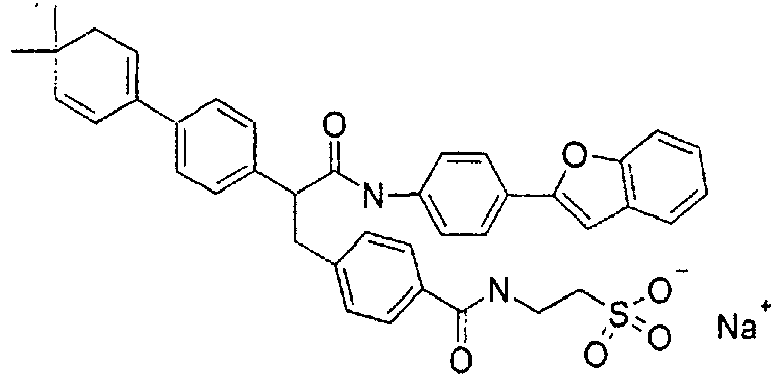
- This product was synthesized as described in Example 1.003, with appropriate modifications.
LC/MS: 675 (M+H)+.
Formula: C40H37N2O6SNa+2.4H2O. Elemental Analysis: Calculated: C: 64.92, H:5.69, N: 3.79 Found: C: 64.86, H: 5.48, N: 3.71 -

-

- A mixture of 4-(bromophenyl) acetic acid (4 g, 18.6 mmol), tert-butyl-vinyl boronic acid (3.57 g, 27.90 mmol), PdCl2 (tri-o-tolylphosphine)2 (1.90 g, 2.42 mmol), and sodium carbonate (9.85 g, 93.0 mmol) DME/EtOH/H2O (4:2:1)(70 mL) was heated at 130 °C for 2 h. The reaction mixture was cooled to rt, filtered and washed with EtOAc (20 mL). The filtrate was concentrated under reduced pressure. The crude residue was washed with acetonitrile and filtered. The resulting solid was treated with 1N HCl (50 mL) and extracted with CH2Cl2 (2X200 mL). The organic layer was washed with brine, dried over Na2SO4 and concentrated under reduced pressure. The product was then dried under vaccum to give [4-(3,3-dimethyl-but-1-enyl) phenyl]-acetic acid as a yellow solid (4.0 g, 100%).
1H NMR (300 MHz, DMSO-d 6): δ 10.11 (bs, 1 H), 7.78 (d, J= 8.4 Hz, 2 H), 7.55 (d, J= 8.4 Hz, 2 H), 6.24 (dd, J = 16.5, 20.7 Hz, 2 H), 3.78 (s, 2 H), 1.05 (s, 9 H); TLC conditions: Uniplate silica gel, 250 microns; mobile phase = CH2Cl2/MeOH (10%); Rf = 0.45. -

- To a stirred solution of 4-(3,3-dimethyl-but-1-enyl) phenyl]-acetic acid (Step A, 1.0 g, 4.62 mmol) and to 4-(1-bromo-ethyl)-benzoic acid methyl ester (1.34 g, 5.55 mmol) in anhydrous THF (30 mL) at -20° C was added dropwise LiHMDS (13.8 mL, 13.8 mmol, 1.0 M solution in toluene). The reaction mixture was stirred for 3 h at -20° C, and then allowed to warm to rt for 1 h. After completion of the reaction, added a saturated solution of NH4Cl (20 mL) and stirred for 10 min. The reaction mixture was extracted with ethyl acetate (100 mL) and the organic layer was washed with brine, dried over Na2SO4 and concentrated under reduced pressure. The crude product was purified by column chromatography eluted with 10% CH2Cl2/MeOH to afford (4-{2-carboxy-2-[4-(3,3-dimethyl-1-but-1-enyl)-phenyl]-1-methyl-ethyl}-benzoic acid methyl ester as a mixture of diastereomers (0.57 g, 33%), d/r(9.5:0.5) : 1H NMR (300 MHz, DMSO-d 6): δ 12.06 (bs, 1 H), 7.87 (d, J = 8.1 Hz, 2 H), 7.48 (d, J = 8.4 Hz, 2 H), 7.35 - 7.41 (m, 4 H), 6.24 (dd, J = 16.0, 20.1 Hz, 2 H), 3.82 (s, 3 H), 3.77 (d, J = 14.1 Hz, 1 H), 3.38 - 3.45 (m, 1 H), 1.08 (s, 9 H), 0.84 (d, J= 6.9, Hz, 3 H);
- Using the intermediate obtained in Step B, the product was synthesized as described in Example 1.003, with appropriate modifications.
LC/MS: 679 (M+H)+.
Formula: C36H35N2O5Cl2SNa+2.5H2O. Elemental Analysis: Calculated: C: 57.91, H: 5.40, N: 3.75 Found: C: 57.81, H: 5.33, N: 3.62 -
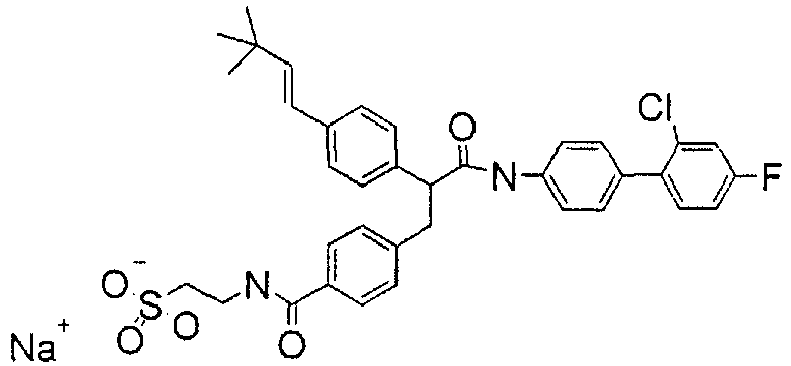
- This product was synthesized as described in Example 1.003, with appropriate modifications.
LC/MS: 663 (M+H)+.
Formula: C36H35ClFN2O5S+2.5H2O. Elemental Analysis: Calculated: C: 59.21, H: 5.52, N: 3.84 Found: C: 59.16, H: 5.42, N: 4.06 -

- This product was synthesized as described in Example 1.003, with appropriate modifications.
LC/MS: 713 (M+H)+.
Formula: C37H35N2O5F3ClSNa+2.4H2O. Elemental Analysis: Calculated: C: 57.09, H: 5.15, N: 3.60. Found: C: 57.05, H: 4.77, N: 3.59 -

- This compound was synthesized as described in Example 1.130 with appropriate modifications.
LCMS: 683 (M+H)+. Calculated for C35H35N2Cl2O6SNa+(3.4)H2O: C: 54.82, H: 5.49, N: 3.65. Found: C: 54.62, H: 5.31, N: 3.52 -

- This compound was synthesized as described in Example 1.131 with appropriate modifications.
LCMS: 715 (M+Na)+. Calculated for C35H35N2Cl2O6SNa + (3.4) H2O: C: 59.69 H: 5.44 N: 3.76. Found: C: 59.81, H: 5.61, N: 3.66 -
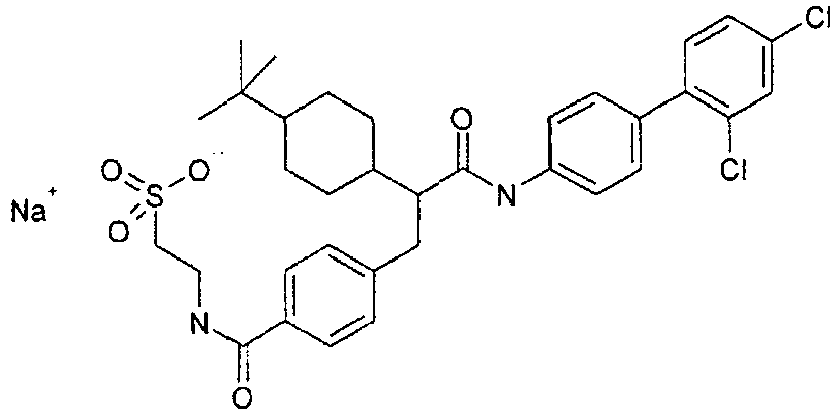
-

- 1 eq of 4-t-butylcyclohexanone (0.3mol) and 0.1eq of piperidine (0.03mol) were dissolved in 100mL of anhydrous pyridine at room temperature. To this solution was added 1 eq of Meldrum's acid (0.3mol) dissolved in 200mL of anhydrous pyridine at room temperature. After the addition was complete, the mixture was stirred at room temperature. After 24 hours the solvent was removed and the residue partitioned between ethyl acetate/diethyl ether (1:1) and 0.1N HCl. The combined organic phases were collected, dried over MgSO4, filtered and the solvent removed. The resulting residue was then dissolved in 100mL of methanol/dichloromethane (1:1) and placed in an ice bath. Sodium borohydride solid was added to the solution with stirring approximately every 15 minutes keeping the reaction temperature below 30 degrees centigrade. The addition was repeated until 2 eq. of sodium borohydride were added in this manner. (Caution: extremely exothermic with gas evolution) After the addition was complete, the reaction mixture was stirred to room temperature over 3 hours. The reaction mixture was then diluted with 500 mL of dichloromethane and quenched with ∼500 mL of aqueous saturated ammonium chloride solution. The layers were separated and the organics collected, dried (MgSO4), filtered and the solvent removed. The product was isolated from the residue by re-crystallization in methanol yielding 20g (23%)
- To 1 eq. (35mmol) of the re-crystallized product was added 1.5 eq (52.5mmol) of potassium carbonate, 1eq (35mmol) of methyl-(4-bromomethyl)-benzoate and 50 mL of anhydrous dimethyl formamide. This mixture was stirred at room temperature for 16 hours. The reaction was diluted with ethyl acetate/diethyl ether (1:1) and quenched with aqueous saturated ammonium chloride solution. The organic layer was washed with water, then brine. The organic layer was collected, dried (MgSO4), filtered and the solvent was removed. The resulting residue was re-crystallized from methanol to yield 14 g (93%) of a cis-trans mixture.
HNMR (DMSO-d6) 500 MHz (ppm): 7.894-7.878 (m, 2H), 7.227-7.199 (m, 2H), 3.815 (s 3H), 3.337-3.310 (m, 2H), 2.300-2.271 (m, 0.7H), 2.098-2.004 (m, 0.3H), 1.973-1.795 (m, 1H), 1.625-1.585 (m, 3H), 1.519-1.504 (m 3H), 1.490-1.382 (m 3H), 1.215-0.839 (m 3), 0.809 (s, 9H),0.584 (s 3H)
LCMS: 431.6 (M+1) -

- To 1 eq (2.32mmol) of 4-[5-(4-tert-Butyl-cyclohexyl)-2,2-dimethyl-4,6-dioxo-[1,3]dioxan-5-ylmethyl]-benzoic acid methyl ester was added 1.5 eq (3.5mmol) of 4-bromoaniline in 2mL of n-methyl-pyrrolidinone in a microwave vial. The reaction was run for eight minutes at 220 degrees C. The reaction mixture was worked up by partitioning with ethyl acetate/diethyl ether (1:1)/1 N HCl. Product was isolated by chromatography gradient: 10% ethyl acetate/hexane to 40% ethyl acetate hexane.
HNMR CD3OD (300MHz) (ppm): 7.885-7.848 (m, 2H), 7.370-7.192 (m, 6H), 3.851-3.844 (m, 3H), 3.091-2.757 (m, 3H), 2.090-2.007 (m, 2H), 1.915-1.053 (m, 10H), 0.908 (s, 6.4H), 0.861 (s, 2.6H) -

- The target compound was synthesized as described in Example 1.001 with appropriate modifications.
LC/MS: 657.4 (M-H)-
Elemental Analysis: Calculated for C34H39N2O5Cl2SNa +(1.5 )H2O: C:57.62, H: 5.97, N: 3.95. Found: C: 57.65, H: 6.07, N: 3.98 -
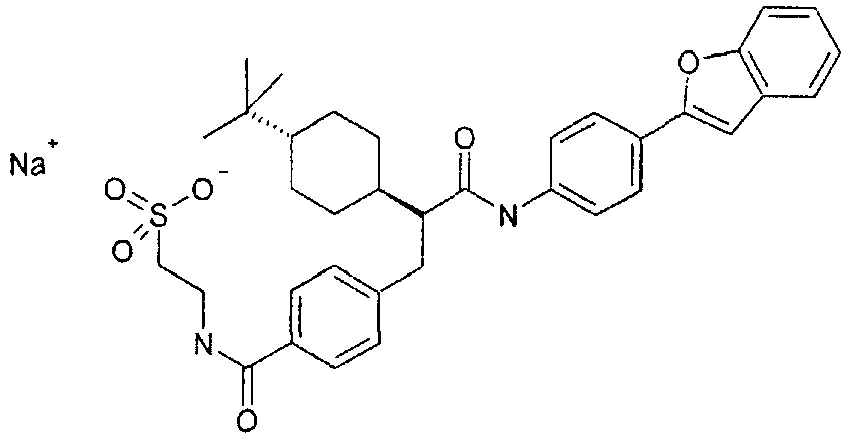
- The target compound was synthesized as described in Example 1.138 with appropriate modifications.
LC/MS: 657.4 (M-H)-
Elemental Analysis: Calculated for C36H41N2O6SNa + 1.8 H2O + 0.2 NaHCO3: C: 61.94, H: 6.43, N: 3.99. Found: C: 61.85, H: 6.14, N: 3.88 -

- This product was synthesized as described in Example 1.003, with appropriate modifications.
LC/MS: 707.6 (M+Na)+.
Formula: C40H31N2O7SNa + 2.5H2O. Elemental Analysis: Calculated: C: 63.91, H: 4.83 , N: 3.73. Found: C: 63.87, H: 4.46, N: 3.91 -
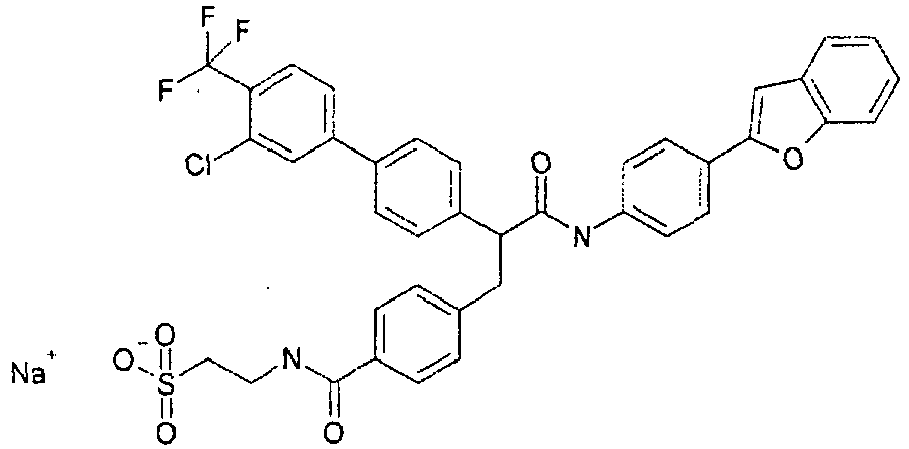
- This product was synthesized as described in Example 1.003, with appropriate modifications.
LC/MS: 769.9 (M+Na)+.
Formula: C39H29N2O6F3SNa + 4 H2O. Elemental Analysis: Calculated: C: 58.13 H: 4.63, N: 3.48. Found: C: 58.05, H: 4.59, N: 3.87 - The following compounds were synthesized utilizing the methods described above: (the compounds marked with * are not according to the invention)
Ex# Structure LC/MS
(mode)Formula
CHN (Calcd)
CHN (Found)1.142 * 
652.9 (+) C37H37N3O6S + 1.5 H2O + 0.2 CF3CO2H 64.03 5.78 5.99 64.09 5.75 5.87 1.143 
656.6 (+) C36H37N3O7 S +0.1 H2O + 0.1 CF3CO2H 64.99 5.62 6.28 64.99 5.79 6.50 1.144 
797.9 (+) C38H35N2O6F6ClS + 0.8 H2O + 0.3 CF3CO2H 54.81 4.40 3.31 54.79 4.17 3.20 1.145 
682.9 (+) C38H39N3O7S + 1.7 H2O + 0.3 CF3CO2H 62.09 5.76 5.63 61.90 5.65 5.57 1.146 
666.6 (+) C38H39N3O6S + 0.9 H2O + 0.1 CF3CO2H 66.17 5.95 6.06 66.19 5.90 6.03 1.147 
666.6 (+) C38H39N3O6S + 0.9 H2O + 0.3 CF3CO2H 64.73 5.78 5.87 64.73 5.49 5.73 1.148 
666.6 (+) C38H39N3O6S + 1.5 H2O + 0.3 CF3CO2H 63.77 5.86 5.78 63.74 5.85 5.67 1.149 * 
650.9 (+) C38H39N305S + 2.1 H2O + 0.1 CF3CO2H 65.64 6.24 6.01 65.95 6.58 5.80 1.150 
686.6 (+) C37H36N3O6ClS + 2.0 H2O 61.53 5.58 5.82 61.55 5.40 5.84 1.151 * 
681.6 (+) C38H40N4O6S + 1.9 H2O + 0.1 CF3CO2H 62.51 6.01 7.59 62.47 6.07 7.44 1.152 * 
685.9 (+) C37H37N4O5ClS + 1.5 H2O + 0.1 CF3CO2H 61.74 5.59 7.74 61.85 5.65 7.76 1.153 * 
668.4 (+) C37H37N3O5S2 + 0.8 H2O + 0.1(CH3)2C(O) 65.05 5.75 6.12 65.09 5.85 6.24 1.154 
652.6 (+) C37H37N3O6S + 0.3 H2O + 0.1(CH3)2C(O) 67.51 5.82 6.35 67.68 5.93 6.38 1.155 
687.6 (+) C33H26N2O7F3ClS +1.6 H2O + 0.1 CF3CO2H 54.83 4.06 3.85 55.11 4.44 3.84 1.156 
638.6 (+) C32H26N3O6F3S + 3.0 H2O + 0.4 CF3CO2H 53.43 4.43 5.70 53.46 4.46 5.75 1.157 * 
642.4 (+) C35H35N3O5S2 + 0.2 H2O 65.13 5.53 6.51 65.16 5.35 6.51 1.158 
655.6 (+) C33H26N2O6F4S + 1.7 H2O + 0.3 CF3CO2H 56.09 4.16 3.89 56.15 3.96 3.76 1.159 
671.4 (+) C33H26N2O7F4S + 1.8 H2O + 0.2 CF3CO2H 55.27 4.14 3.86 55.38 4.05 3.75 1.160 
683.4 (+) C31H24N2O5F4Cl2S + 1.2 H2O +0.1 CF3CO2H 52.30 3.73 3.91 52.13 3.98 3.74 1.161 
671.4 (+) C33H26N2O6F3ClS + 1.6 H2O + 0.1 CF3CO2H 56.06 4.15 3.94 56.14 4.09 3.82 1.162 
699.4 (+) C31H24N2O5F3Cl3S + 1.7 H2O + 0.1 CF3CO2H 50.51 3.74 3.78 50.78 4.04 3.73 1.163 * 
638.6 (+) C32H26N3O6F3S + 1.3 CH3OH + 0.3 CF3CO2H 57.07 4.45 5.89 57.43 4.87 5.53 LC/MS (mode) Formula Ex# Structure CHN (Calcd) CHN (Found) 1.164 
625.6 (+) C36H36N2O6S + 2.6H2O + 0.05 CF3CO2H 64.02 6.14 4.14 64.33 6.52 4.42 1.165 * 
610.6 (+) C33H27N3O7S + 2.9H2O 59.88 4.99 6.35 59.84 4.88 6.32 1.166 
653.6 (+) C35H35N2O5F3S + 1.5 H2O + 0.3 CF3CO2H 59.89 5.41 3.92 59.78 5.73 3.95 1.167 * 
615.6 (+) C39H38N2O5 + 1.0 CH3OH 74.28 6.55 4.33 74.35 6.96 4.54 1.168 * 
667.4 (+) C34H29N2O5F3S2 + 2.5 H2O 57.37 4.81 3.94 57.40 4.63 3.96 1.169 
642.4 (-) C35H34N3O5ClS + 2.3H2O + 0.4CF3COOH 58.80 5.38 5.75 58.76 5.07 5.58 1.170 
662.9 (-) C34H31N3O5 Cl2S + 0.8CF3COOH 56.57 4.24 5.56 56.53 4.16 5.64 1.171 
648.6 (-) C38H39N3O5 S + 2H2O + 0.2CF3COOH 65.09 6.14 5.93 65.28 6.06 5.86 1.172 
645.6 (-) C37H34N2O5F3Cl2SNa + 2.3H2O 54.79 4.80 3.45 54.62 4.41 3.51 1.173 
725.6 (-) C38H38N2O5F3Cl S + 3H2O 58.42 5.68 3.59 58.44 5.84 3.19 1.174 
668.4 (-) C37H36N3O5Cl S + 2.5H2O + 0.4CF3COOH 59.67 5.48 5.52 59.81 5.64 5.65 1.175 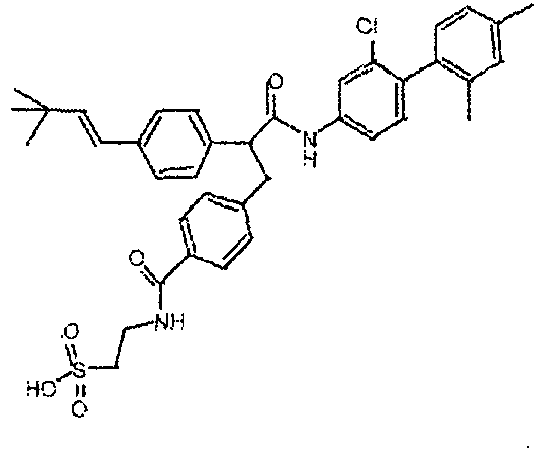
671.6 (-) C38H40N2O5ClS Na + 2.5H2O 61.65 6.13 3.78 61.25 5.70 3.88 1.176 
671.4 (-) C38H40N2O5Cl SNa + 2.5H2O 61.65 6.13 3.78 61.59 5.83 3.81 1.177 
725.6 (-) C38H38N2O5Cl S + 2H2O + 0.2CF3COOH 58.67 5.41 3.55 58.67 5.32 3.55 1.178 
745.6 (-) C37H34N2O5F3Cl2 SNa + 2H2O 55.16 4.75 3.48 55.35 4.51 3.51 1.179 
725.6 (-) C38H37N2O5F3Cl SNa + 2H2O + 0.3CF3COOH 56.58 5.08 3.42 56.76 5.04 3.48 1.180 
759.9 (-) C39H38N2O5F6S + 1.8H2O 59.05 5.29 3.53 59.05 5.37 3.70 1.181 
725.6 (-) C38H40N2O5ClS Na + 2H2O + 0.2CF3COOH 61.16 5.91 3.71 61.2 6.27 3.83 1.182 
675.6 (-) C37H38N2O5FClS + 2H2O + 0.3CF3COOH 60.42 5.70 3.75 60.66 5.51 3.57 1.183 
691.6 (-) C37H38N2O5Cl2S 64.06 5.52 4.04 Not tested. 1.184 
699.4 (-) C36H36N2O5F3ClS + 2.2H2O + CF3COOH 53.39 4.88 3.28 53.13 5.01 3.11 1.185 
649.6 (-) C35H36N2O5FClS 64.56 5.57 4.30 Not tested. 1.186 * 
627.9 (-) C37H44N2O5S + 2H2O + 0.8CF3COOH 61.32 6.51 3.71 61.03 6.25 3.34 1.187 * 
647.6 (-) C36H41N2O5ClS + 2.5H2O 55.49 5.72 3.37 55.25 5.75 3.52 1.188 
631.6 (-) C35H37N2O5ClS + 2H2O + 0.3CF3COOH 60.79 5.92 3.98 60.91 6.25 3.72 1.189 
665.6 (-) C35H35N2O5Cl2SNa + 2.2H2O + 0.2CF3COOH 56.54 5.31 3.72 56.62 5.70 4.02 1.190 
649.6 (-) C35H35N2O5FClSNa + 2 2H2O + 0.3CF3COOH 57.24 5.36 3.75 57.06 5.44 3.88 1.192 
649.6 (-) C35H36N2O5FClS 64.56 5.57 4.30 Not tested. 1.193 
631.6 (-) C35H37N2O5ClS + 2H2O + 0.4CF3COOH 60.15 5.84 3.92 60.34 5.98 3.99 1.194 
665.6 (-) C35H35N2O5Cl2SNa + 1.5H2O 58.66 5.34 3.91 58.53 5.35 3.98 1.195 
649.6 (-) C35H36N2O5FClS + 2H2O + 0.3CF3COOH 59.27 5.63 3.88 59.08 5.75 3.85 1.196 
637.6 (-) C37H37N2O6SNa + 3H2O 62.17 6.06 3.92 62.02 6.35 4.13 1.197 
649.6 (-) C35H35N2O5FClSNa + 2H2O 59.18 5.54 3.95 59.19 5.94 4.07 1.198 
645.4 (-) C36H39ClN2O5S 66.81 6.07 4.33 Not tested. 1.199 
651.6 (-) C34H34N2O5Cl2S + 1.5H2O + 0.2CF3COOH 58.74 5.33 3.98 58.89 5.03 3.88 1.200 
669.4 (-) C34H33N2O5FCl2S + 2H2O + 0.5CF3COOH 54.98 4.94 3.66 54.85 4.65 3.52 1.201 
703.6 (-) C39H45N2O6ClS 66.41 6.43 3.97 Not tested. 1.202 
687.9 (-) C39H45N2O5ClS 67.96 6.58 4.06 Not tested 1.203 
669.4 (-) C34H33N2O5FCl2S + 1.8H2O + 0.1CF3COOH 57.42 5.17 3.92 57.43 4.88 3.53 1.204 
669.4 (-) C34H33N2O5FCl2S + 2H2O + 0.4CF3COOH 55.49 5.00 3.72 55.66 5.01 3.47 1.205 * 
623.6 (-) C34H41N2O5ClS + 0.6H2O + 0.1CF3COOH 63.45 6.59 4.33 63.14 6.24 4.24 1.206 
653.6 (-) C39H46N2O5S+3H2O 66.08 7.39 3.95 66.17 7.07 3.64 1.207 
635.9 (-) C34H34N2O5FClS + 2H2O + 0.2CF3COOH 59.36 5.53 4.02 59.53 5.93 3.67 1.208 
622.6 (-) C36H37N3O5S 69.32 5.98 6.74 Not tested. 1.209 * 
589.6 (-) C34H42N2O5S + 3H2O 63.33 7.50 4.34 63.19 7.27 3.99 1.210 
703.6 (-) C34H26N2O6F6S + 2H2O + 0.1CF3COOH 54.62 4.03 3.72 54.88 4.32 3.46 1.211 
613.4 (-) C34H32N2O7S + 2.5H2O + 0.3DMF 61.66 5.80 4.74 61.86 5.74 4.90 1.212 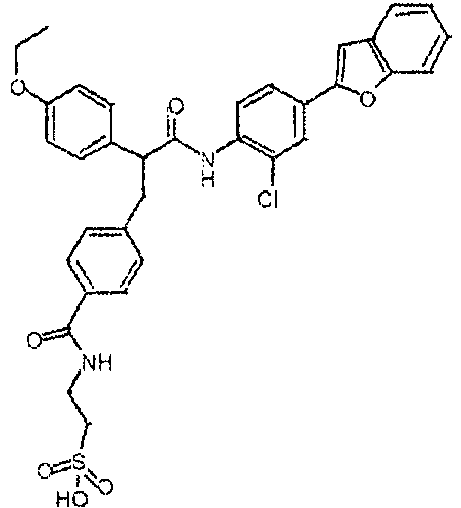
647.6 (+) C34H31N2O7ClS + 0 6H2O 62.07 4.93 4.26 61.90 4.82 4.15 1.213 
629.6 (-) C34H31N2O7FS + 2.6H2O 60.27 5.39 4.13 60.11 5.24 4.07 1.214 
631.4 (-) C33H29N2O7ClS + 2H2O + 0.4CF3COOH 56.80 4.71 3.92 56.96 4.88 3.94 1.215 
643.4 (-) C35H33N2O6ClS + H2O 63.39 5.32 4.22 63.36 5.16 4.17 1.216 * 
665.6 (-) C37H31N2O7FS + 3H2O 61.67 5.17 3.89 61.73 5.45 3.66 1.217 * 
681.6 (-) C37H31N2O7ClS + 3H2O 60.28 5.06 3.80 60.21 4.87 3.67 1.218 
691.9 (-) C35H39N2O5F3ClSNa + 1H2O 57.33 5.64 3.82 57.07 5.83 3.90 1.219 
691.9 (-) C35 H39N2O5F3ClSNa + 1H2O 57.33 5.64 3.82 57.11 5.74 4.06 1.220 
673.6 (-) C38H39N2O5F2SNa + 1.4H2O 63.21 5.84 3.88 63.11 5.70 4.14 1.221 
727.6 (-) C38H36N2O5F5SNa + 1.5H2O 58.68 5.05 3.60 58.60 4.90 3.87 1.222 
693.6 (-) C37H36N2O5F2ClSNa + 2.5 H2O 58.30 5.42 3.68 57.94 5.22 4.04 1.223 
747.6 (-) C37H34N2O5F5ClSNa + 1 H2O 56.31 4.47 3.55 56.39 4.65 3.69 1.224 
713.6 (-) C36H33N2O5F2Cl2SNa + 1.5H2O 56.55 4.75 3.66 56.62 4.56 3.69 1.225 * 
723.6 (-) C41H40N2O6ClSNa + 2.5 H2O + 0.5 NaHCO3 59.74 5.50 3.36 59.74 5.16 3.27 1.226 * 
745.9 (-) C38H35N2O5F6SNa + 3 H2O + 0.5 NaHCO3 53.47 4.84 3.24 53.18 4.63 3.06 1.227 * 
779.6 (-) C38H34N2O5F6ClSNa + 3 H2O + 0.5 NaHCO3 51.42 4.54 3.12 51.54 4.21 2.99 1.228 * 
661.9 (-) C36H36N2O5FClSNa + 2 H2O 59.87 5.58 3.88 59.69 5.39 3.71 1.229 * 
649.6 (-) C36H42N2O5ClSNa + 0.1 NaHCO3 + 3 H2O 58.94 6.59 3.81 58.79 6.26 3.65 1.230 * 
679.6 (-) C36H34N2O5F2ClSNa + 1.5 H2O 59.22 5.11 3.84 59.06 5.06 3.73 1.231 * 
647.4 (-) C30H31N2O5ClBrSNa + 1.4 H2O 51.83 4.90 4.03 51.84 4.87 3.97 1.232 * 
651.6 (-) C31H31N2O6F3ClSNa + 1.5 H2O 53.03 4.88 3.99 53.06 4.58 3.93 1.233 * 
666.6 (-) C37H36N3O5S2Na + 2 H2O 61.22 5.55 5.79 61.03 5.43 5.69 1.234 * 
687.6 (-) C34H32N2O5Cl3SNa + 2.5 H2O 54.08 4.94 3.71 54.01 4.68 3.49 1.236 * 
655.6 (-) C34H33N2O5Cl2SNa + 2.5 H2O 56.67 5.31 3.89 56.55 4.94 3.71 1.237 * 
653.6 (+) C34H33N2O5ClSNa + 3H2O 55.97 5.39 3.84 55.88 5.24 3.74 1.238 * 
625.6 (+) C34H40N2O5ClSNa + 1.8 H2O 60.09 6.47 4.12 60.04 6.31 3.95 1.239 * 
703.6 (+) C35H33N2O6F3ClSNa + 2.5 H2O 54.58 4.97 3.64 54.40 4.79 3.42 1.240 * 
648.6 (+) C35H40N3O5S2Na + 4H2O + 0.2 NaHCO3 55.72 6.40 5.54 55.60 6.71 5.36 1.241 * 
633.6 (+) C29H35N2O6F3ClSNa + 1.8 H2O + 0.3 NaHCO3 49.38 5.50 3.93 48.53 5.92 3.75 1.242 * 
633.6 (+) C29H35N2O6F3ClSNa + 1.8 H2O + 0.1 NaHCO3 50.22 5.60 4.03 49.98 5.23 3.79 1.243 * 
679.6 (+) C36H35N2O5Cl2Na + 3 H2O + 0.4 NaHCO3 55.39 5.29 3.55 55.07 4.89 3.43 1.244 * 
726.6 (+) C37H35N2O6F3ClSNa + 3 H2O + 0.2 NaHCO3 54.35 5.03 3.41 54.17 4.77 3.49 1.245 
659.6 (+) C34H39N2O5Cl2SNa + 1.9 H2O 57.04 6.03 3.91 56.71 5.82 3.64 1.246 
629.6 (-) C36H4lN2O6SNa + 2.5 H2O + 0.2 NaHCO3 60.84 6.52 3.92 60.82 6.25 3.90 1.247 
673.4 (+) C35H41N2Cl2SNa + 3 H2O 56.07 6.32 3.74 56.41 5.10 3.74 1.248 
645.4 (+) C37H43N2O6SNa + 4 H2O 60.15 6.96 3.79 59.85 6.82 3.68 1.249 * 
627.6 (+) C34H29N2O8SNa + 2.7 H2O 58.56 4.97 4.02 58.32 4.62 4.04 1.250 
609.9 (+) C34H40N2O5FSNa + 1.5 H2O + 0.1 NaHCO3 61.48 6.52 4.21 61.24 6.22 4.18 1.251 * 
753.4 (-) C39H31N2O5F6SNa + 2.2 H2O 57.38 4.37 3.43 57.45 4.17 3.33 1.252 
725.6 (-) C37H36Cl3N2O5SNa + 1.8H2 56.79 5.10 3.58 56.54 4.81 3.35 1.253 
701.6 (-) C40H43 F2N2O5SNa + 2H2O 63.14 6.23 3.68 63.25 6.08 3.68 1.254 
732.1 (-) C41H45F2N2O6SNa + 1.6H2O 62.84 6.20 3.57 62.97 5.97 3.45 1.255 
781.6 (-) C38H33F8N2O5Na + 0.6H2O + 0.4Na2CO3 53.76 4.02 3.27 53.59 3.62 2.95 1.256 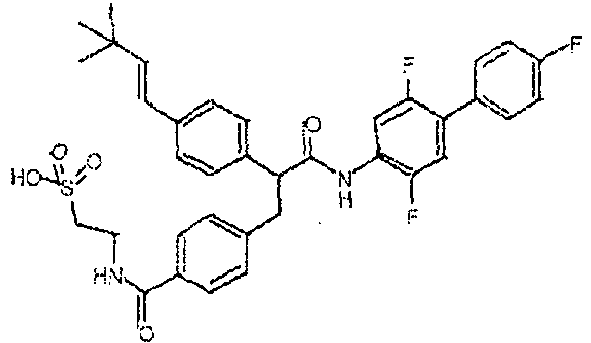
664.1 (-) C36H34F3N2O5SNa + 1.7H2O 60.28 5.26 3.91 60.15 5.10 3.75 1.257 
673.6 (-) C38H39F2N2O5SNa + 2H2O 62.28 5.91 3.82 62.23 5.52 3.60 1.258 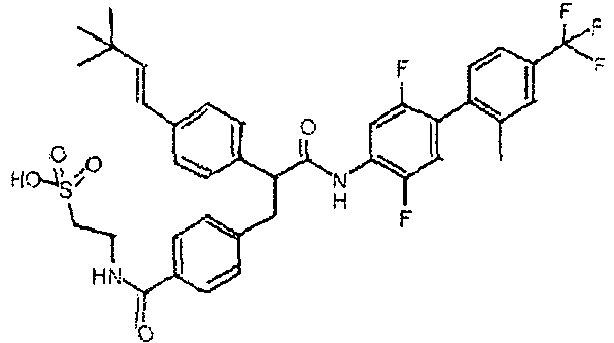
727.6 (-) C38H36F5N2O5SNa + 1.2H2O + 0.15Na2CO3 58.13 4.91 3.55 58.52 4.50 3.14 1.259 
713.6 (-) C36H33Cl2F2N2O5SNa + 2.5H2O 55.25 4.89 3.58 55.19 4.81 3.40 1.260 
743.9 (-) C38H36ClF4N2O5SNa + 2.4H2O 56.32 5.07 3.46 56.32 4.85 3.30 1.261 
747.6 (-) C37H33ClF5N2O5SNa + 2.6H2O 54.33 4.71 3.42 54.30 4.38 3.09 1.262 
729.6 (-) C37H34ClF4N2O5SNa + 2H2O 56.31 4.85 3.55 56.36 4.68 3.42 1.263 
679.6 (-) C36H34ClF2N2O5SNa + 3.2H2O 56.83 5.35 3.68 57.15 4.96 3.15 1.264 
569.6(-) C30H31F2N2O5SNa + 2.9H2O 55.88 5.75 4.34 55.63 5.36 4.25 1.265 
693.6 (-) C37H36ClF2N2O5SNa + 2.2H2O 58.72 5.38 3.70 58.57 5.26 3.56 1.266 
649.6 (-) C30H30BrF2N2O5SNa + 1.9H2O 51.06 4.83 3.97 51.08 4.54 4.02 1.267 
715.9 (-) C40H41ClFN2O5SNa + 2H2O + 0.1Na2CO3 61.28 5.77 3.56 60.96 5.44 3.44 1.268 
731.9 (-) C40H41Cl2N2O5SNa + 1.6H2O 61.24 5.68 3.57 61.21 5.71 3.32 1.269 
711.6 (-) C41H44ClN2O5SNa +2H2O 63.84 6.27 3.63 63.82 6.23 3.34 1.270 
765.6 (-) C41H41ClF3N2O5SNa + 2.9H2O + 0.1Na2CO3 57.93 5.54 3.29 57.56 5.17 3.12 1.271 * 
675.6 (-) C37H37ClFN2O5SNa + 3H2O 59.00 5.75 3.72 58.88 5.62 3.53 1.272 * 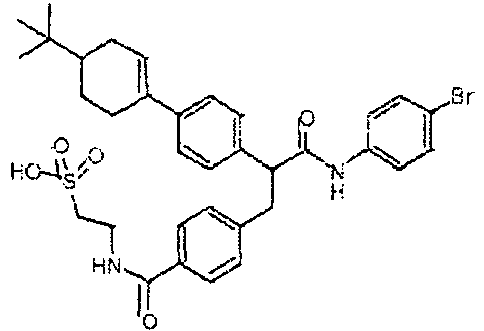
665.6 (-) C34H38BrN2O5SNa + 2.8H2O 55.18 5.94 3.79 55.45 6.68 3.76 1.273 * 
551.6 (-) C30H32FN2O5SNa + 2.5H2O + 0.1Na2CO3 57.36 5.92 4.44 57.35 5.61 4.31 1.274 * 
631.4 (-) C30H31 BrFN205SNa + 2H2O 52.25 5.12 4.05 51.96 4.95 3.96 1.275 * 
567.6 (-) C30H32ClN2O5SNa + 1.7H20 + 0.25Na2CO3 56.05 5.50 4.32 55.74 5.13 4.07 1.276 * 
677.6 (-) C36H35Cl2N2O5SNa + 3.2H2O + 0.2Na2CO3 55.71 5.35 3.59 55.33 4.95 3.38 1.277 * 
711.4 (-) C36H34Cl3N2O5SNa + 2.2H2O 55.74 4.99 3.61 54.49 4.68 3.43 1.278 
711.4 (-) C36H34Cl3N2O5SNa + 2H2O 56.00 4.96 3.63 55.83 4.94 3.61 1.279 * 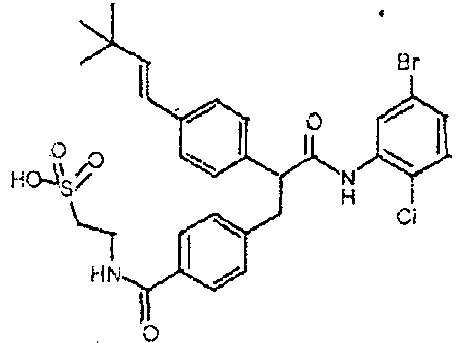
647.4 (-) C30H31BrClN2O5SNa + 2H2O + 0.1Na2CO3 50.45 4.92 3.91 50.21 4.57 4.10 1.280 
727.4 (-) C37H35ClF3N2O6SNa + 1.8H2O + 0.2Na2CO3 55.52 4.83 3.48 55.21 4.45 3.56 1.281 * 
569.6 (-) C30H31F2N2O5SNa + 2.3H2O + 0.1Na2CO3 56.08 5.57 4.35 55.83 5.27 4.26 1.282 
677.6 (-) C36H35Cl2N2O5SNa + 2.3H2O 58.19 5.37 3.77 57.87 4.98 3.54 1.283 * 
601.69 (-) C31H32F3N2O5SNa + 2.9H2O + 0.15Na2CO3 54.00 5.50 4.04 53.66 5.13 3.87 1.284 * 
693.4 (-) C30H31ClIN2O5SNa+3H2O 46.73 4.84 3.63 46.68 4.65 3.67 1.285 * 
601.6 (-) C30H31Cl2N2O3SNa + 2.5H2O 53.73 5.41 4.18 54.10 5.74 4.27 1.286 * 
589.6 (-) C34H41N2O5SNa + 2.9H2O 61.41 7.09 4.21 61.13 6.57 3.94 1.287 * 
609.9 (-) C35H33N2NaO6S + 3H2O 61.21 5.72 4.08 61.12 5.57 3.82 1.288 * 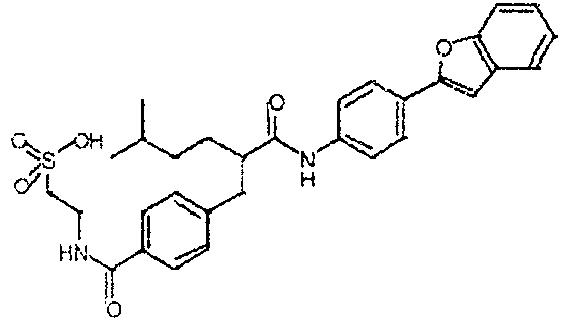
561.4 (-) C31H33N2O6SNa + 4.7H2O 55.63 6.38 4.19 55.25 5.44 4.00 1.289 * 
533.1 (-) C29H29N2O6SNa + 4.1H2O 55.25 5.95 4.44 54.96 5.57 4.28 1.290 * 
605.6 (-) C35H29N2O6SMa + 3H2O 61.57 5.17 4.10 61.38 4.92 4.05 1.291 * 
589.4 (-) C29H29Cl2N2O5SNa + 2H2O 53.79 5.14 4.33 53.51 4.42 4.26 1.292 * 
559.4 (-) C31H31N2O6SNa + 3.2H2O 58.15 5.89 4.38 57.83 5.57 4.26 1.293 * 
623.9 (-) C34H41ClN2O5S + 2.5H2O 60.93 6.92 4.18 60.69 6.55 4.44 1.294 * 
529.6 (-) C29H26N2O6S + 2.3H2O 60.89 5.39 4.90 60.78 5.23 5.05 1.295 * 
589.6 (-) C34H42N205S + 1.8H20 65.53 7.38 4.50 65.30 6.90 4.49 1.296 
651 (+) C38H37N2O6SNa+ 2.5 H2O 63.58, 5.90, 3.90 63.49, 5.90, 3.71 1.297 
693(+) C38H38N2O5F3SNa+ 0.65H2O 62.82, 5.45, 3.86 62.82, 5.37, =3.80 1.298 
711(-) C37H35N2O5F3ClSNa+ 1.2H2O 58.72, 4.98, 3.70 58.77, 4.75, 3.60 1 299 
661(+) C37H38N2O5ClSNa+ 0.7H2O 64.05, 5.72, 4.04 64.09, 5.47, 4.04 1.300 
681(+) C36H35N2O5Cl2SNa+ 0.7H2O 60.54, 5.14, 3.92 60.54, 4.99, 3.88 1.301 
661 (+) C37H38N2O5ClSNa+ 0.8H2O 63.88, 5.74, 4.03 63.85, 5.85, 3.76 1.302 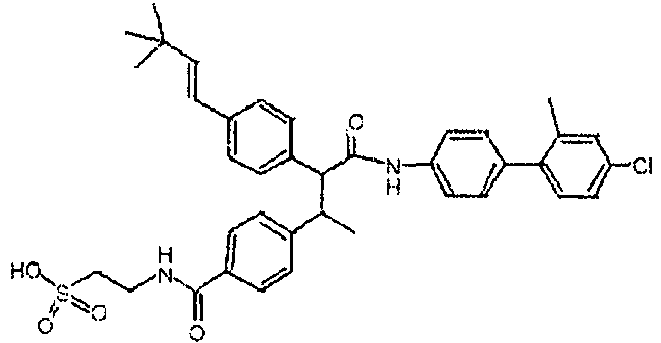
675(+) C38H40N2O5ClSNa+1 2H2O 63.67, 5.96, 3.91 63.71, 5.87, 3.86 1.303 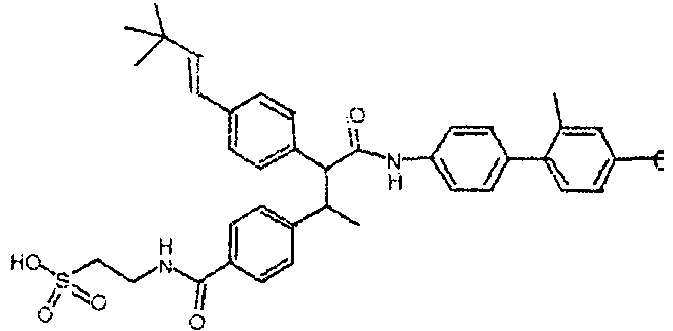
705(M+) C39H40N2O5F3SNa+ 1.1H2O 62.57, 5.68, 3.74 62.58, 5.87, 3.69 1.304 
711 (+) C38H40N2O6F3SNa+ 1.2H2O 60.50, 5.66, 3.71 60.43, 5.65, 3.97 1.305 
733(+) C37H37N2O6F3ClSNa+ 2.3H2O 55.92, 5.28, 3.53 55.89, 4.94, 3.74 1.306 
677(M+) C37H40N2O6ClSNa+ 1.3H2O 61.50, 5.94, 3.88 61.47, 5.94, 3.73 1.307 
699(+) C36H37N2O6Cl2SNa+1.5H2O 57.91, 5.40, 3.75 57.91, 5.51, 3.70 1.308 
679(+) C37H40N2O6SClNa+ 2.2 H2O 60.15, 6.06, 3.79 59.96, 5.65, 3.65 1.309 
719(+) C36H35N2O6SF3ClNa+ 2.0 H2O 55.78, 5.07, 3.61 55.71, 4.82, 3.52 1.310 
716(+) C37H35N2O5F3ClSNa+ 0.8 H2O 59.28, 4.92, 3.74 59.33, 5.15, 3.63 1.311 
709(-) C38H40N2O6F3SN 0.8 H2O 61.08, 5.61, 3.75 61.09, 5.24, 3.59 1.312 
732(+) 57.62, 5.10, 3.63 57.61, 4.66, 3.42 (C37H37N2O6F3SClNa+ 1.0 H2O) 1.313 
697(-) C37H38N2O6F3SClNa+ 1.1 H2O 60.17, 5.49, 3.79 60.17, 5.61, 3.70 1.314 
717(M+) C36H35N2O6SF3ClNa+ 1.0 H2O 57.10, 4.93, 3.70 57.04, 4.56, 3.44 1.315 
709(+) C38H39N2O5Cl2SNa+ 1.3H2O 60.60. 5.57, 3.72 60.50, 5.41, 3.67 1.316 
677 (M+) C40H41N2O6SNa+ 2.2 H2O 64.88, 6.18, 3.78 64.81, 6.06, 3.7 1.317 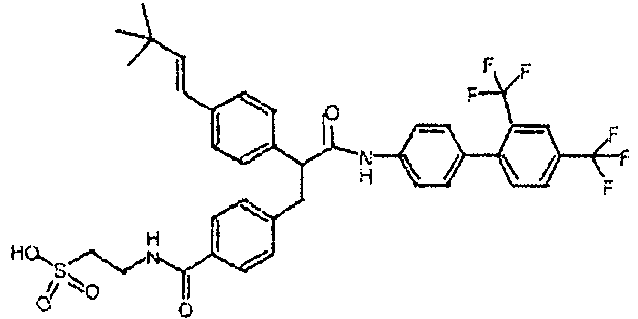
745 (M+) 58.28, 4.71, 3.58 58.26, 4.89, 3.69 (C38H35N2O5F6SNa+0.8 H2O) 1.318 
697(+) C37H35N2O5F4SNa+ 0.6 H2O 60.91, 5.00, 3.87 60.92, 4.95, 3.88 1.319 
728(+) C38H37N2O5F3ClSNa+1.1 H2O 59.35, 5.14, 3.64 59.23, 5.14, 3.75 1.320 
693(+) C38H38N2O5F3SN 0.8 H2O 62.59, 5.47, 3.84 62.64, 5.36, 3.83 1.321 
647(-) C39H39N2O5SNa+ 1.6 H2O 66.95, 6.08, 4.00 66.95, 5.93, 3.98 1.322 
637(-) C38H42N2OS+ 1.8 H2O 67.99, 6.85, 4.17 67.80, 7.12, 4.35 1.323 * 
643 (M+) C38H47N2O5SNa+ 1.8 H2O 65.27, 7.29, 4.01 65.22, 7.68, 3.90 1.324 * 
638(+) C37H38N3O5SNa+ 2.6 H2O 62.89, 6.16, 5.95 62.97, 6.30, 6.30 1.325 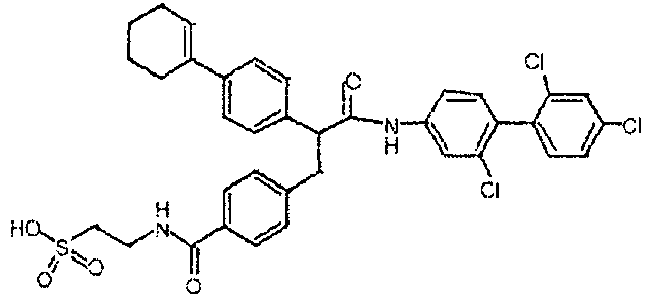
713(+) C36H32N2O5Cl3SNa+ 1.0H2O + 0.1 CH3CN 57.50, 4.57, 3.89 57.34, 4.50, 4.20 1.326 
665(+) C39H39N2O6SNa+2.0 H2O 64.80, 6.00, 3.88 64.75, 6.11, 3.71 1.327 
683 (+) C35H33N2O6Cl2S+1.6 H2O 57.39, 4.98, 3.82 57.35, 4.66, 3.52 1.328 
653(+) C36H35N2O7SNa+1.1 H2O 63.98, 5.40, 4.03 63.86, 4.93, 3.71 1.329 
670(+) C35H35N2O6FSClNa+ 3.7 H2O 55.62, 5.65, 3.71 55.44, 5.21, 3.71 1.330 
651(+) C38H37N2O6SNa+ 3.7 H2O 61.73, 6.05, 3.79 61.52, 5.74, 3.74 1.331 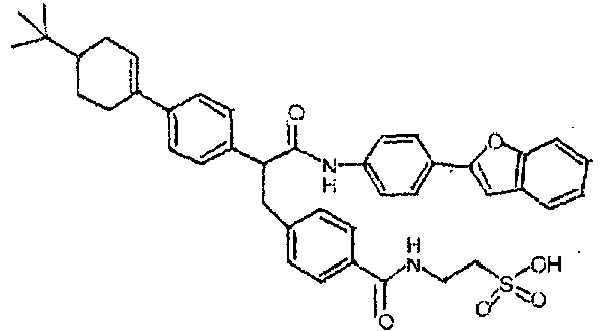
705(+) C42H43N2O6SNa+ 2.1 H2O 65.97, 6.22, 3.66 65.91, 6.29, 3.57 1.332 * 
652(+) C37H36N3O6SNa+ 4.0 H2O 59.59, 5.95, 5.63 59.50, 5.67, 5.36 1.333 
639(+) C36H33N2O7SNa+ 1.6 H2O 62.71, 5.29, 4.06 62.72, 5.26, 3.81 1.334 * 
623(+) C36H33N2O6SNa+ 2.9 H2O 62.04, 5.61, 4.02 61.77, 5.15, 4.15 1.335 * 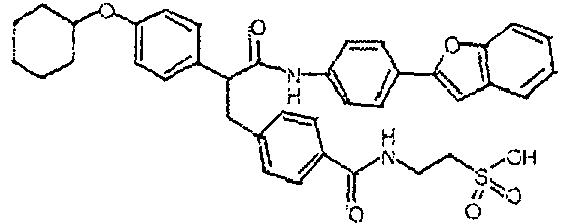
665(-) C38H38N2O7SNa + 1.2 H2O + 0.2 CH3CN 64.09, 5.74, 4.28 64.10, 5.90, 4.54 1.336 
677(+) C40H39N2O6SNa+ 2 0 H2O 65.38, 5.90, 3.81 65.34, 5.72, 4.01 1.337 
679(+) C40H41 N206SNa+ 1.8 H2O 65.52, 6.13, 3.82 65.55, 6.20, 3.74 1.338 
653(+) C38H39N2O6SNa+ 1.5 H2O+0.4 4 CH3CN 64.88, 6.06, 4.68 64.61, 5.63, 5.12 1.339 * 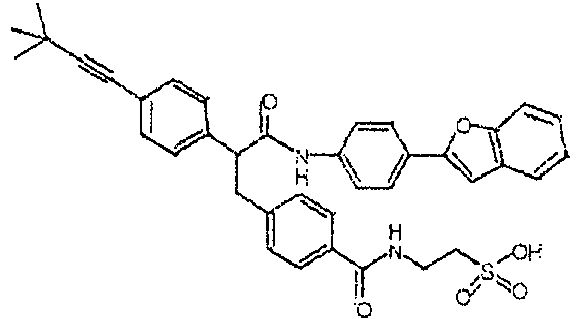
649(+) C38H35N2O6SNa + 3.2 H2O 62.66, 5.73, 3.85 62.55, 5.66, 3.86 1.340 * 
671.4 (-) C35H39F3N2O6S + 2.25H2O 58.94 6.15 3.93 59.02 6.25 3.74 1.341 * 
655.6 C34H38Cl2N2O5S + 3H2O + 0.1CF3CO2H 657.6 (-) 56.81 6.15 3.87 56.57 5.99 3.71 1.342 * 
643.6 (-) C38H48N2O5S + 3H2O + 0.2CF3CO2H 63.91 7.57 3.88 63.83 7.23 3.82 1.343 
765.4 C40H40Cl3N2O5SN + 3H20 767.4 (-) 56.91 5.49 3.32 56.75 5.08 3.32 1.344 
695.4 C36H34Cl2FN2O5SNa + 1.75H2O 697.4 (-) 57.56 5.03 3.73 57.50 4.90 3.57 1.345 
731.6 C36N33Cl3FN2O5SNa + 2.25H2O 733.6 (-) 54.42 4.76 3.53 54.30 4.43 3.47 1.346 
743.9 (-) C38H37ClF4N2O5S + 3H2O + 0.2CF3CO2H 56.10 5.30 3.41 55.93 5.41 3.30 1.347 
709.6 C37H37Cl2FN2O5S + 2.25H2O + 0.2CF3CO2H 711.6 (-) 57.96 5.42 3.61 57.81 5.44 3.60 1.348 
709.6 C37H37Cl2FN2O5S +2.25H2O + 711.6 (-) 0.1CF3CO2H 58.51 5.49 3.67 58.52 5.59 3.55 1.349 
689 9 (-) C38H40ClFN2O5S + 3H2O 61.24 6.22 3.76 61.22 6.36 3.75 1.350 
675 6 (-) C37H38ClFN2O5S + 2 25H2O + 0.1CF3CO2H 61.28 5.89 3.84 61.09 6.13 4.15 1.351 * 
695.1 C31H32BrF3N2O6S + 3H2O 6974 (-) 49.54 5.10 3.73 49.49 4.72 3.71 1 352 * 
741 6 (-) C38H38ClF3N2O6S + 2.5H2O + 0.2CF3CO2H 56.86 5.37 3.45 56.91 5.50 3.82 1.353 
687.6 (-) C38H41ClN2O6S + 3H20 + 0.3CF3CO2H 59.63 6.13 3.60 59.85 6.00 3.59 1.354 
741.6 (-) C38H38ClF3N2O6S + 3H2O + 0.1CF3CO2H 56.74 5.50 3.46 56.67 5.74 3.18 1.355 * 
695.4 C36H35Cl2FN2O5S + 2.75H2O +0.5CF3CO2H 697.6 (-) 55.26 5.14 3.48 55.24 4.23 3.38 1.356 * 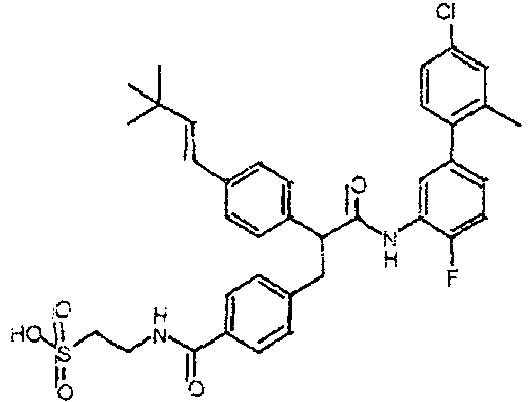
675.6 (-) C37H38ClFN2O5S + 2.75H2O + 0.2CF3CO2H 59.93 5.88 3.74 60.11 5.96 3.49 1.357 * 
695.6 C36H35Cl2FN2O5S + 2.75 H2O + 0.1 CF3CO2H 697.4 (-) 57.32 5.39 3.69 57.33 5.53 3.57 1.358 * 
675.6 (-) C37H38ClFN2O5S + 2.75H2O + 0.2CF3CO2H 59.93 5.88 3.74 60.01 5.82 3.75 1.359 
691.6 C37H38Cl2N2O5S + 3H2O + 0.2CF3CO2H 693.4 (-) 58.30 5.78 3.64 58.37 5.71 3.66 1.360 * 
647.6 (-) C36N39ClN2O5S + 3H2O 61.48 6.74 3.98 61.66 6.89 4.08 1.361 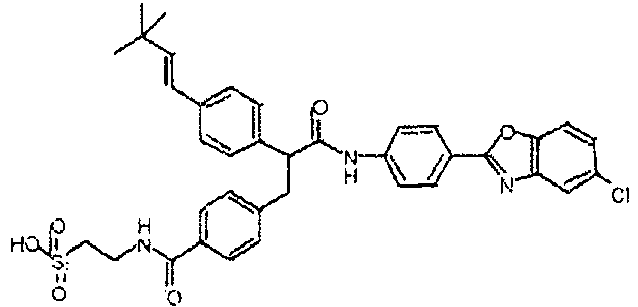
684.6 (-) C37H36ClN3O6S + 2.75H2O + 0.2CF3CO2H 59.22 5.54 5.54 59.13 5.10 5.54 1.362 * 
631.6 (-) C35H4ON2O7S + 3.25 H2O 60.81 6.78 4.05 60.65 6.77 4.16 1.363 * 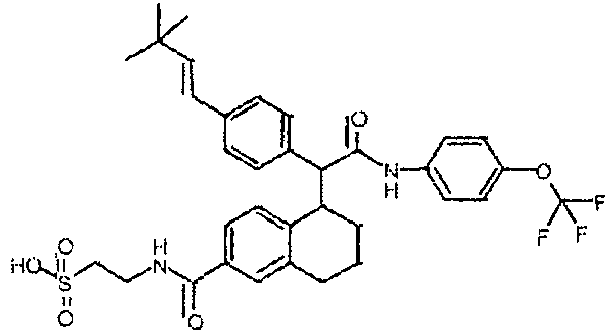
657.6 (-) C34H37F3N2O6S + 3.5H2O 56.58 6.14 3.88 56.40 6.16 3.59 1.364 * 
617.4 (-) C31H33F3N2O6S + 3H20 + 0.1CF3CO2H 54.78 5.76 4.09 54.52 5.41 4.32 1.365 * 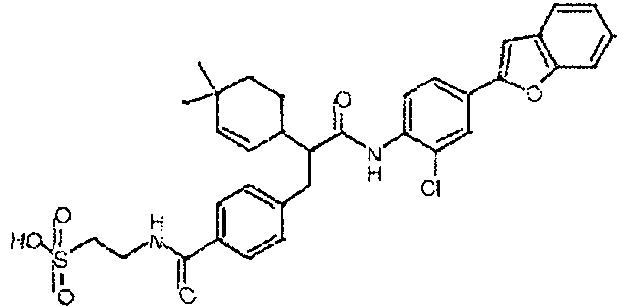
633.6 (-) C34H35ClN2O6S + 3H2O + 0.3CF3CO2H 57.45 5.75 3.87 57.44 5.49 3.80 1.366 * 
627.4 C32H34Cl2N2O5S + 2.25H20 629.4 (-) 57.35 5.79 4.18 57.58 5.88 4.10 1.367 * 
557.6 (-) C32H34N2O5S + 3.5H2O 62.27 6.61 4.54 62.23 6.71 4.84 1.368 * 
658.6, 660.6 (-) C35H34ClN3O6S + 3.5H2O 58.12 5.71 5.81 58.37 6.37 5.73 1.369 * 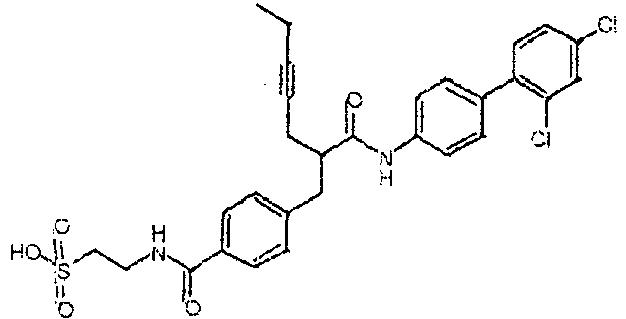
585.4, 587.1 (-) C29H28Cl2N2O5S + 1.75H2O 56.27 5.13 4.53 56.52 5.54 4.61 1.370 * 
689.9 (-) C42H42N2O6S + 3H20 + 0.4CF3CO2H 63.51 6.17 3.54 63.17 6.25 3.67 1.371 * 
687.9 C31H29ClN206S + 1.5H20 689.9 (-) 60.04 5.20 4.52 59.71 5.47 5.10 1.372 * 
569.6 (-) C30H31F2N2O5SNa + 1.75H2O 57.73 5.57 4.49 57.93 5.50 4.87 1.373 * 
607.6 (-) C32H32ClN2O6Na + 2.25 H2O 57.22 5.48 4.17 57.29 5.59 4.44 1.374 * 
591.4 (-) C32H32FN2O6SNa + 1.7H2O 59.96 5.53 4.34 59.75 6.10 5.70 1.375 * 
637.6 (-) C37H37N2O6SNa + 4.5H2O 59.91 6.25 3.78 59.92 6.02 3.60 1.376 * 
655.6 (-) C37H37FN2O6S + 1H2O 65.86 5.83 4.15 65.98 5.98 3.09 1.377 * 
663.9 (-) C39H40N2O6S + 2.5H2O 65.99 6.39 3.95 65.69 6.40 3.76 1.378 * 
725.4 (-) C40H33F3N2O65 + 2.5H2O 62.25 4.9 3.63 62.37 4.89 3.40 1.379 * 
667.4 (-) C34H28F4N2O6S + 3H20 +0.3CF3CO2H 54.90 4.57 3.70 54.81 4.49 3.65 1.380 * 
649.6 (-) C34H29F3N2O6S + 0.5 H20 + 0.4 CF3CO2H 59.26 4.34 3.97 58.84 4.04 4.46 1.381 * 
675.6 (-) C39H33FN2O6S + 3H20 64.10 5.38 3.83 63.91 5.13 3.80 1.382 * 
571.5 (-) C32H32N2O6S + 2H2O + 0.3CF3CO2H 60.90 5.69 4.36 60.57 5.57 4.59 1.383 * 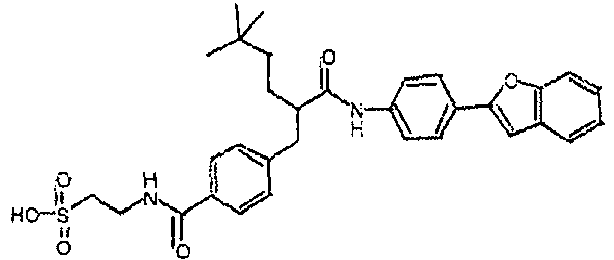
575.6 (-) C32H36N2O6S + 0.5 H20 +0.3 CF3CO2H 63.16 6.06 4.52 63.27 5.74 3.70 1.384 * 
603.6 (-) C30H34Cl2N2O5S +1H2O + 0.2 CF3CO2H 56.49 5.64 4.33 56.13 5.47 4.57 1.385 
759.6 (+) C38H32Cl3N2O5SNa + 1 H2O + 0.2 Na2CO3 57.55 4.30 3.51 57.25 3.91 3.26 1.386 
803.4 (+) C40H32ClF6N2O5SNa + 0 5 Na2CO3 55.39 3.67 3.19 55.49 3.39 3.26 1.387 
745.9 (+) C42H42ClN2O5SNa + 0.8 H2O 61.77 5.38 3.43 61.73 5.50 3.59 1.388 * 
693.4 (+) C24H2OBrIClN2O5SNa 37.40 2.62 3.63 37.30 2.51 3.54 1.389 
717.6 (+) C40H38ClN2O5SNa + 2.2 H2O 63.48 5.65 3.70 63.08 5.25 3.77 1.390 * 
653.6 (+) C35H34N2O5F3SNa + 1 H2O 60.69 5.24 4.04 60.37 5.39 4.05 1.391 
833.6 (+) C43H39N2O5F6SNa + 1 H2O 60.70 4.86 3.29 60.87 5.19 3.57 1.392 
779.6 (+) C41H3SN2O5Cl3SNa + 1.3 H2O 59.79 4.97 3.40 59.76 5.14 3.67 1.393 
777.6 (+) C42H39N2O5F3ClSNa + 3.1 H2O 58.99 5.33 3.28 58.73 5.00 3.10 1.394 
779.6 (+) C43H42N2O5F3SNa + 2.7 H2O 62.41 5.77 3.39 62.67 5.60 3.14 1.395 
732.1 (+) C45H49N2O5SNa + 1.2 H2O 69.78 6.69 3.62 69.40 7.02 3.83 1.396 
837.6 (+) C41H32N2O5F9SNa + 1 H2O + 0.2 Na2CO3 55.39 3.84 3.14 55.21 3.44 3.07 1.397 * 
599.9 (+) C35H37N2O5SNa + (0.4)NaO3SCH2CH2NH2 63.27 5.84 4.95 63.07 6.07 5.25 1.398 
710.4 (+) C41H40N205CISNa + 1.7 H2O 64.63 5.74 3.68 64.56 5.70 3.56 1.399 
779.6 (+) C42H39N205F3ClSNa + 1 H2O 61.72 5.06 3.43 61.50 5.33 3.32 1.400 
745.6 (+) C41H39Cl2N2O5SNa + 3.7 H2O 59.16 5.62 3.37 59.17 5.46 3.54 1.401 
757.6 (+) C43H42F3N2O5SNa + 3 H2O 62.01 5.81 3.36 61.86 5.65 3.52 1.402 
769.6 (+) C39H32Cl2F3N2O5SNa + 3 H2O 55.39 4.53 3.31 55.39 4.17 3.57 1.403 
729.6 (+) C41H3SN2O5F3SNa + 0.6 H2O + 0.3 Na2CO3 63.07 5.02 3.56 62.74 4.71 3.42 1.404 * 
679.4 (+) C25H20N2O5F3Br2SNa + 1.5 H2O 41.28 3.19 3.85 41.16 2.97 3.96 1.405 
703.6 (+) C43H45N2O5SNa + 2.5 H2O + 0.1 Na2CO3 66.52 6.48 3.60 66.47 6.11 3.73 1.406 
752.6 (+) C40H37N2O5Cl2SNa + 1.7 H2O 61.41 5.21 3.58 61.07 4.82 3.42 1.407 
703.6 (+) C43H45N2O5SNa + 2.6 H2O 66.92 6.56 3.63 66.83 6.32 3.43 1.408 * 
585.6 (+) C34H35N2O5SNa + 2.4 H2O 62.83 6.17 4.31 62.66 6.23 4.51 1.409 
787.4 (+) C41H37ClF3N2O5SNa + 1.5 H2O 60.63 4.96 3.45 60.89 5.25 3.31 1.410 
709.6 (+) C41H40N2OClSNa + 1.8 H2O 64.48 5.75 3.67 64.27 5.43 3.61 1.411 
689.6 (+) C42H43N2O5SNa + 2.9 H2O 66.11 6.45 3.67 66.13 6.13 3.54 1.412 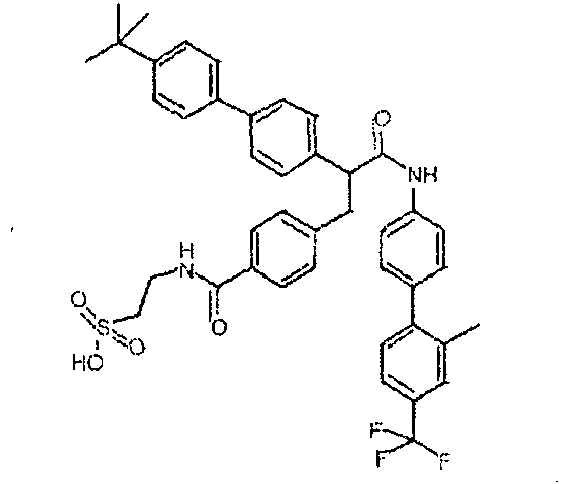
743.6 (+) C42H41F3N2O5SNa+ 1.8 H2O 63.27 5.51 3.51 63.26 5.55 3.64 1.413 
799.4 (+) C37H26N2O5Cl2SNa + 2.5 H2O 52.62 3.70 3.32 52.69 3.53 3.29 1.414 
645.1 (+) C36H36N2ClSNa + 2.1 H2O 61.33 5.75 3.97 61.38 5.83 4.13 1.415 
807.6 (+) C45H46N2O5F3SNa + 2.5 H2O + 0.4 MeOH 63.06 6.13 3.24 63.43 5.90 2.84 1.416 
717.9 (+) C44H47N2O5SNa + 3.2 H2O 66.34 6.76 3.52 66.05 6.47 3.49 1.417 
685.6 (+) C38H35N2O7SNa + 4 H2O 60.15 5.71 3.69 60.12 5.38 3.44 1.418 
811 6 (+) C38H27N2O5F6Cl2SNa + 2.3 H2O 52.28 3.65 3.21 52.13 3.50 3.25 1.419 
633.4 (+) C38H35N2O5SNa + 3 H2O 64.39 5.83 3.95 64.66 5.72 4.04 1.420 
661.6 (+) C40H39N2O5SNa + 2.3 H2O 66.34 6.07 3.87 66.33 6.05 3.88 1.421 
703.6 (+) C38H33N2O5Cl2SNa + 1.8 H2O 60.37 4.88 3.71 60.27 4.67 3.71 1.422 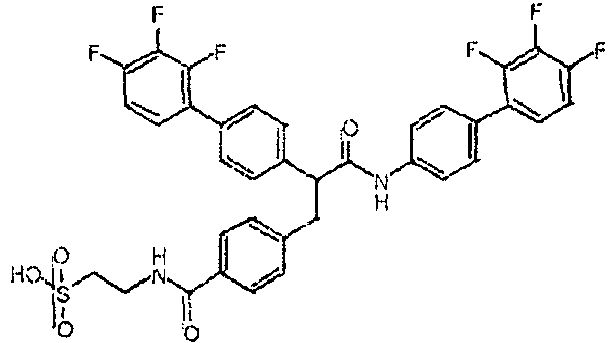
7359.9 (+) C36H25N2O5F6SNa + 1.5 H2O +0.1 Na2CO3 56.15 3.65 3.63 56.11 3.32 3.80 1.423 
675.4 (+) C36H29N2O5Cl2SNa + 3 H2O 57.68 4.71 3.74 57.86 4.67 3.81 1.424 * 
613.6 (+) C36H39N2O5SNa + 2.5 H20 63.61 6.52 4.12 63.47 6.46 4.04 1.425 * 
611.1 (+) C24H21N2O5Br2SNa + 4.1 H2O 40.82 4.17 3.97 40.48 3.78 3.82 1.426 
688.9 (+) C36H34N2O5F3SNa + 2.5 H2O + 0.3 Na2CO3 57.10 5.15 3.67 56.85 4.85 3.84 1.427 
809.4 (+) C38H27N2O5F6Cl2SNa + 2.9 H2O 51.64 3.74 3.17 51.33 3.66 3.17 1.428 
810.4 (+) C38H27N2O5F6Cl2SNa + 2.5 H2O 52.06 3.68 3.20 51.71 3.54 3.20 1.429 
743.6 (+) C36H28N2O5Cl4S + 0.5 H2O 57.54 3.89 3.73 57.63 3.99 3.71 1.430 
699.4 (+) C36H27N2O5F4SNa +3.5 H2O 56.77 4.50 3.68 56.60 4.18 3.63 1.431 * 
687.6 (+) C38H39N4O5SNa + 3H2O +1 MEOH 60.32 6.47 7.16 60.64 6.16 6.77 1.432 * 
693.4 (+) C34H42N2O8SPNa + 2H2O 56.04 6.36 3.84 55.86 6.40 3.96 1.433 
655.10 (+) C37H37N2O7SNa + 5.5 H2O 57.28 6.24 3.61 57.26 5.97 3.78 1.434 * 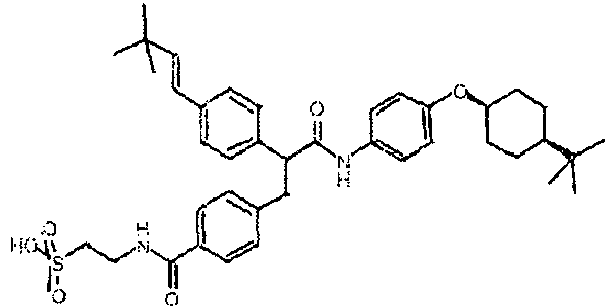
690.1 (+) C40H51N2O6SNa+(1.5)H2O+(0. 3)C9H20N3O 64.61 7.62 5.12 64.94 7.96 5.28 1.435 * 
707.6 (+) C37H35N2O6Cl2SNa + (4.0)H2O + (0 5) C9H20N3O 55.70 5.97 5.48 55.48 6.11 5.79 1.436 * 
689.9 (+) C40H51N2O6SNa + (1.5)H2O + (0 35) C9H20N3O 64.53 7.66 5.32 64.24 7.65 5.38 1.437 * 
697.4 (+) C36H35Cl2N2O6SNa + 3.5 H2O 55.46 5.30 3.59 55.41 4.95 3.54 1.438 
713.6 (+) C37H35N2O5F3ClSNa + 3 6 H2O 55.55 5.32 3.50 55.17 5.29 3.72 1.439 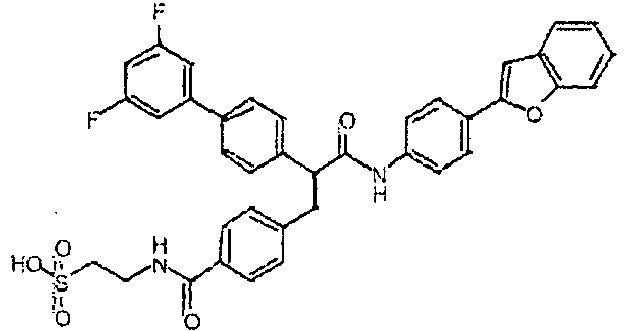
681 6 (+) C38H29N2O6F2SNa + 2.7 H2O 60.75 4.61 3.73 60.44 4.21 3.56 1.440 
733 1 (+) C41H38N3O8SNa + 2.5 H2O 61.49 5.41 5.25 61.26 5.55 5.37 1.441 
745.6 (+) C39H33N2O8S2Na + 2.5 H2O 59.31 4.88 3.93 59.12 4.68 3.55 1.442 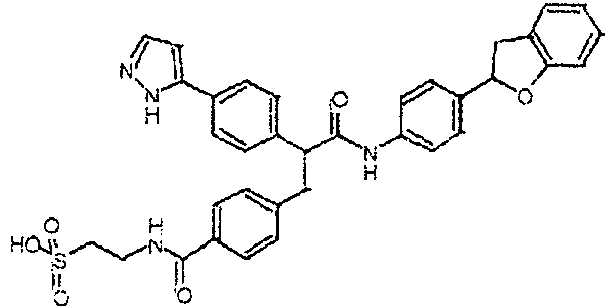
657.6 (+) C35H29N4O6SNa + 3.5 H2O 58.41 5.04 7.78 58.18 4.86 7.73 1.443 
702.6 (+) C37H29N3O6ClSNa + 5.8 H2O 55.09 5.07 5.21 54.72 4.67 5.34 1.444 
668.4 (+) C37H30N3O6SNa + 4.2 H2O 59.78 5.21 5.65 59.50 4.87 5.86 1.445 
665.4 (+) C37H32N2O6S2 + 0.5 H2O 65.95 4.94 4.16 65.73 4.83 4.20 1.446 
673.4 (+) C36H29N2O6S2Na + 3.5 H2O 58.76 4.93 3.81 58.92 4.56 4.00 1.447 
673.1 (+) C36H29N2O6S2Na + 3.5 H2O 58.76 4.93 3.81 58.39 4.68 3.96 1.448 
657.4 (+) C36H29N2O7SNa + 3 H2O 60.84 4.96 3.94 60.51 4.58 4.12 1.449 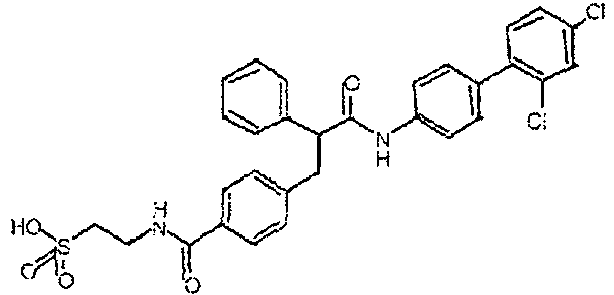
597.4 (+) C30H26Cl2N2O5S + 3.8 H2O + 0.4 TFA 51.99 4.80 3.94 51.67 4.50 4.44 1.450 
665.6 (+) C38H39N3O6S + H2O + 0.7 TFA 61.97 5.50 5.50 62.00 5.20 5.34 1.451 
769.9 (+) C41H44ClF3N2O5S + 2 H2O + TFA 56.18 5.37 3.05 55.86 5.48 3.21 1.452 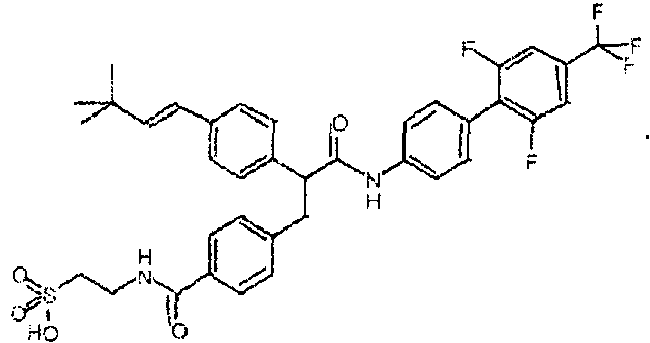
715.6 (+) C37H35F5N2O5S + 1.2 H2O +0.2 TFA 59.17 4.99 3.69 59.04 5.26 3.30 1.453 
696.6 (+) C37H36F4N2O5S + 0.5 H2O + 0.1 TFA 62.30 5.21 3.91 62.24 5.25 2.65 1.454 
653.6 (+) C38H40N2O6S + 2 H2O + 0.2 TFA 64.81 6.21 3.94 64.51 5.99 3.82 1.455 
713.6 (+) C37H36ClF3N2O5S + 0.8 H2O + 0.1 TFA 60.46 5.14 3.79 60.75 6.39 4.68 1.456 * 
701.6 (+) C42H40N2O6 + H2O + 0.4 TFA 67.24 5.59 3.66 67.13 5.89 3.39 1.457 
719.6 (+) C39H37F3N2O6S + H2O + 0.2 TFA 62.30 5.19 3.90 62.54 5.16 3.71 1.458 * 
733.6 (+) C34H33BrCl2N2O5S + H2O + 0.5 TFA 52.06 4.43 3.47 51.86 4.21 3.25 1.459 * 
705.6 (+) C36H35BrN2O6S + 3 H2O +0.3 TFA 55.51 5.26 3.54 55.12 5.03 3.77 1.460 
693.6 (-) C37H35F3N2O6S + 3 H2O + 0.1 TFA + 0.1 DMF 58.84 5.50 3.84 58.93 5.55 4.24 1.461 
661.6 (+) C36H34F2N2O6S + 1.4 H2O + 0.1 TFA 62.35 5.33 4.02 62.55 5.64 3.67 1.462 
659.6 (+) C36H35ClN2O6S + 2 H2O + 0.2 TFA 60.89 5.50 3.90 60.59 5.25 4.27 1.463 
709.6 (+) C37H35F3N2O7S + 0.5 TFA 59.60 4.67 3.66 59.29 4.58 3.51 1.464 
653.6 (+) C37H36N2O7S + 2 H2O + 0.1 TFA 63.81 5.57 4.00 63.69 5.48 3.91 1.465 
655.6 (+) C37H38N2O7S + 3 H2O + 0.4 TFA 60.18 5.93 3.71 59.98 5.78 3.55 1.466 
650.9 (+) C37H35N3O6S + 3.4 H2O 63.14 5.87 5.97 62.13 5.99 6.91 1.467 
653.1 (+) C37H37N3O6S + 2.5 H2O 63.78 6.08 6.03 64.09 6.48 7.31 1.468 * 
574.5 (+) C311H31N3O6S + 0.5 TFA 60.94 5.03 6.66 60.60 4.74 6.79 1.469 * 
602.7 (+) C31H31N3O6S + 0.5 TFA 60.94 5.03 6.66 60.60 4.74 6.79 1.470 
656.6 (+) C36H37N307S + (0.1) H2O + (0.1) TFA C: 64.99 H: 5.62 N: 6.28 C: 64.99 H: 5.79 N: 6.50 1.471 * 
652.9 (+) C37H37N3O6S + (1.5) H2O + (0.2) TFA C: 64.03 H: 5.78 N: 5.99 C: 64.09 H: 5.75 N: 5.87 1.472 
747.6 (-) C36H33N2O5Cl4SNa + (1) H2O C: 54.83 H: 4.47 N: 3.55 C: 54.68 H: 4.47 N: 3.52 1.473 
727.4 (-) C37H36N2OCl3SNa + (1 5) H2O C: 57.18 H: 5.06 N: 3.60 C: 57.20 H: 4.90 N: 3.59 1.474 
741 9 (+) C39H40ClF3N2O5S + (0.9) EtOH C: 62.61 H: 5.85 N: 3.58 C: 62.84 H: 5.46 N: 4.02 1.475 
705.9 (-) C39H41F3N2O5S C: 66.27 H: 5.85 N: 3.96 Not Tested 1.476 
725.6 (-) C38H38ClF3N2O5S C: 62.76 H: 5.27 N: 3.85 Not Tested 1.477 
705.9 (-) C38H39Cl2N2O5SNa + (1 7) H2O C: 60.03 H: 5.62 N: 3.68 C: 59.82 H: 5.40 N: 3.61 1.478 
705.9 (-) C38H39Cl2N2O5SNa + (0.5) H20 + (0.2) NaHCO3 C: 60.73 H: 5.36 N: 3.71 C: 60.65 H: 4.88 N: 3.57 1.479 
733.9 (-) C40H43Cl2N2O5SNa + (1.5) H2O + (0.2) NaHCO3 C: 60.24 H: 5.81 N: 3.49 C: 60.59 H: 5.47 N: 3.22 1.480 * 
620.6 (+) C34H41N3O6S + (2.0) H2O + (0.3) TFA C: 60.23 H: 6.62 N: 6.09 C: 60.04 H: 6.43 N: 5.96 1.481 
765.6 (+) C37H35N2O6F3Cl2S + (1.5) H2O + (0.1) TFA C: 55.71 H:4.79 N: 3.49 C: 55.45 H: 4.87 N: 3.44 1.482 * 
707.6 (-) C31H33ClIN2O5SNa + (1.7) H2O C: 48.89 H: 4.82 N: 3.68 C: 48.70 H: 4.63 N: 3.50 1.483 
685.9 (-) C39H42ClN2O5SNa + (1.5) H2O C: 63.62 H: 6.16 N: 3.80 C: 63.63 H: 6.01 N: 3.70 1.484 
691 9 (-) C37H37Cl2N2O5SNa + (1.6) H2O C: 59.69 H: 5.44 N: 3.76 C: 59.57 H: 5.10 N: 3.66 1.485 
759.9 (-) C38H36Cl2F3N2O5SNa + (2.3) H2O C: 55.32 H: 4.96 N: 3.40 C: 55.67 H: 4.70 N: 3.30 1.486 
739 9 (-) C39H39ClF3N2O5SNa + (2.0) H2O C: 58.61 H: 5.42 N: 3.50 C: 58.67 H: 5.27 N: 3.34 1.487 
761 9 (+) C38H36Cl2F3N2O5SNa + (2.3) H2O C: 55.32 H: 4.96 N: 3.40 C: 55.09 H: 4.70 N: 3.29 1.488 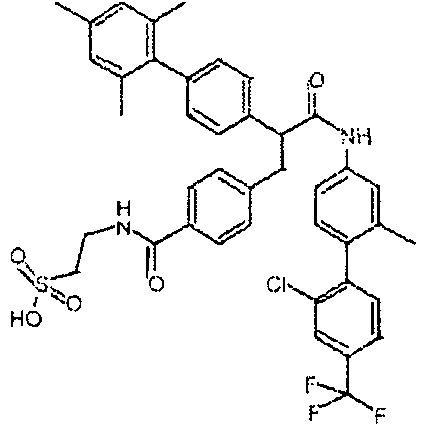
763.9 (+) C41H37ClF3N2O5SNa + (2.2) H2O C: 59.70 H: 5.06 N: 3.40 C: 59.67 H: 4.96 N: 3.24 1.489 
750.6 (+) C40H35ClF3N2O5SNa + (2.1) H2O C: 59.38 H: 4.88 N: 3.46 C: 59.04 H: 4.52 N: 3.39 1.490 * 
653.6 (+) C36H36N4O6S + (1.5) H2O + (0.2) TFA C: 62.23 H: 5.63 N: 7.97 C: 62.26 H: 5.63 N: 7.67 1.491 * 
733.6 (+) C35H33N2O5F3BrSNa + (1.0) H2O C: 54.48 H: 4.57 N: 3.63 C: 54.48 H: 4.28 N: 3.42 1.492 
677.9 (-) C37H36F3N2O5SNa + (1.5) H2O C: 61.06 H: 5.40 N: 3.85 C: 61.06 H: 5.31 N: 3.74 1.493 
701.9 (-) C43H45N2O5SNa + (2.8) H2O C: 66.61 H: 6.58 N: 3.61 C: 66.54 H: 6.15 N: 3.60 1.494 
735.9 (-) C39H37N2O5F3ClSNa + (0.8) H2O C: 60.39 H: 5.02 N: 3.61 C: 60.38 H: 4.76 N: 3.59 1.495 
671.6 (-) C41H41N2O5Na + (1.0) H2O + (0.2) NaHCO3 C: 65.35 H: 5.67 N: 3.66 C: 65.36 H: 5.49 N: 3.58 1.496 
672.6 (-) C37H39N305ClSNa + (2.8) H2O + (0.3) NaCO3 C: 57.55 H: 5.77 N: 5.40 C: 57.49 H: 5.54 N: 5.28 - Benzoxazole containing anilines required for the synthesis of compounds such as the one in Example 1.146 were generated using known methods as shown below:

- To a suspension of 4-acetylamino-2-methyl-benzoic acid (2.0 g. 10.3 mmol) in PPA (∼85 g) was added aminophenol (1.2 g, 10.8 mmol). The reaction was heated to 200 °C for 2h, then carefully quenched in aqueous sodium carbonate (∼50% saturated) at room temperature. Ethyl acetate was added, and the organic layer was washed with water and brine, and dried over sodium sulfate. The crude product was obtained as an orange oil and was subsequently purified by flash column chromatography on silica gel eluting with ethyl acetate in hexanes to afford the desired product, 4-benzooxazol-2-yl-3-methyl-phenylamine as a colorless solid, 290 mg (13%). 1H NMR (300 MHz, DMSO-d6): δ 7.84-7.81 (m, 1 H), 7.64-7.62 (m, 2 H), 7.32-7.27 (m, 2H), 6.51 (d, J = 9.0 Hz, 2 H), 5.83 (s, 2 H), 2.61 (s, 3H). LC-MS m/z = 225 [C14H12N2O+ H]+.
-

-
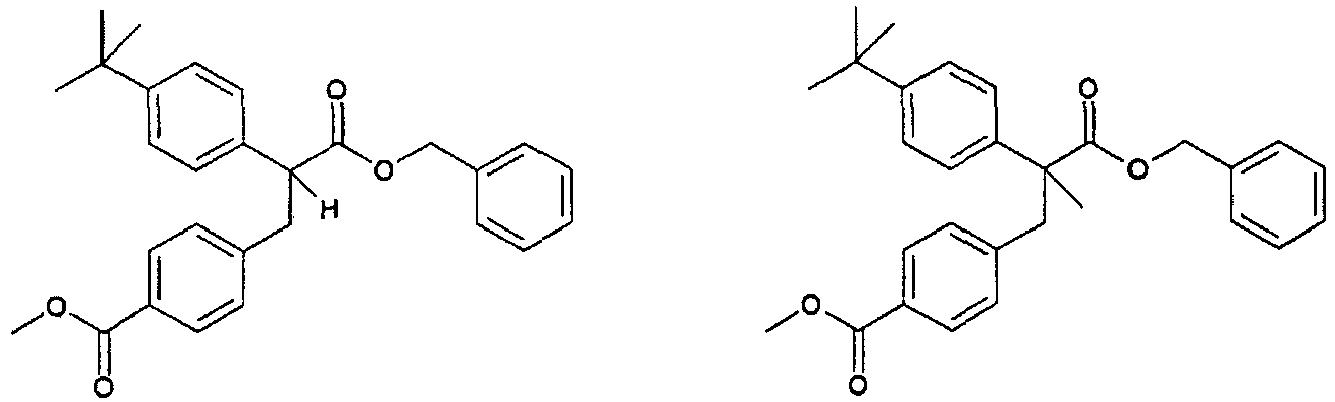
- A solution of LiHMDS in toluene (1.0M, 1.6mL), 1.6mmol) was cooled in a dry-ice acetone bath (-78 °C) and diluted with 3 mL of THF. A solution of 4-[2- Benzyloxycarbonyl-2-(4-tert-butyl-phenyl)-ethyl]-benzoic acid methyl ester (675mg, prepared as described in Bioorg. Med. Chem Lett. 2004, 14, 2047 -2050) in 5 mL of THF was added via cannula. The mixture was stirred at the same temperature 30 min. It was then transferred to an acetone/ice bath, where it was warmed to ∼10 °C over a 1.5h period. The mixture was cooled back to -78 °C and iodomethane (0.11 mL) was added via syringe. The mixture was then stirred for a 2h period while allowing it to warm up to room temperature (approximately 2h). The mixture was poured over a mixture of ethyl acetate and ice cold aqueous ammonium chloride. The organic phase was washed with water and saturated aqueous sodium chloride and dried over magnesium sulfate. The residue obtained after removal of the solven was treated with hexanes/ethyl acetate to cause the formation to precipitate the title compound (307 mg, 44%) HNMR (500MHz, DMSO-d6, selected signals): 5.12 (2H, ABquartet), 3.82 (3H, s), 3.47 (1H, d, J = 13.0 Hz), 3.22 (1H, d, J = 13.2 Hz), 1.37 (3H, s), 1.28 (9H, s)
-

- To a mixture of 4-[2-Benzyloxycarbonyl-2-(4-tert-butyl-phenyl)-propyl]-benzoic acid methyl ester (307 mg), ethanol (10 mL) and ethyl acetate (5 mL) added diisopropyl ethyl amine (0.15 mL) and 10% Pd/C (351mg). The heterogeneous mixture was stirred under an atmosphere of hydrogen for a period of 3h. The solids were removed at this time by filtration and the solvents removed under educed pressure. The residue was partitioned between ethyl acetate and 0.5M aqueous hydrochloric acid. The organic phase was washed (water, saturated sodium chloride and dried over magnesium sulfate. Concentration afforded the carboxylic acid as a white powder. LCMS: 355.6 (M+H)+
- Using the methods described in Example 1.001 with appropriate modifications, the title compound was obtained.
LCMS: 637.9 (M-H)- Elemental Analysis: Calculated for C37H38N2O6S + (2.0)H2O: C: 65.86, H: 6.27, N: 4.15; Found: C: 65.92, H: 6.23, N: 3.98 - Enantiomerically enriched compounds of this class were synthesized using the methods illustrated below: (not according to the invention)
-

- To a solution of 4-[2-carboxy-2-[4-(3,3-dimethyl-but-1-enyl)-phenyl)-ethyl]-benzoic acid methyl ester (1) (1.5 g, 4.0 mmol) in CH2Cl2 (25 mL) at room temperature was added oxalyl chloride (1.03 g, 8.19 mmol). The reaction mixture was stirred overnight at room temperature and the solvent was removed under reduced pressure. The residue was dried under vacuum for 3-4 h. The crude product was used in the next step.
- To a stirred solution of R- (+)- 4-benzyl-oxazolidinone (2) (0.89 g, 4.9 mmol) in THF (30 mL) at -78° C was added n-BuLi (4.9 mL, 4.9 mmol, 1.0 M solution in hexane). The reaction mixture was stirred for 45 min, at -78 °C, then acid chloride (1.6 g, 4.16 mmole) was added dropwise, stirred for 2 h at -78° C then allowed to warm to room temperature and stirred for another hour (monitored by TLC). The reaction mixture was quenched with saturated NH4Cl solution (50 mL) and stirred for 10 min. The reaction mixture was extracted with ethyl acetate (2x150 mL) and the combined organic layers were washed with brine, dried over MSO4 and concentrated under reduced pressure. The crude product was purified by column chromatography on silica gel, eluting with CH2Cl2-hexanes (40%) to separate the (R)- and (S)- diastereomers of 4-{3-(4-(R)-Benzyl-2-oxo-oxazolidin-3-yl)-2-[4-(3,3-dimethyl-but-1-enyl)-phenyl)-3-oxo-propyl}-benzoic acid methyl ester (3) and (4) as a mixture (0.82 g, and 0.8 g, 75%):
- (R)-Diastereomer
1H NMR (300 MHz, DMSO-d 6): 7.92 (d, J = 8.7 Hz, 2 H), 7.35 - 7.00 (m, 9 H), 7.0 - 6.96 (m, 2H), 6.24 (s, 2H), 5.42 (dd, J = 6.3, 9.0 Hz, 1H), 4.56 - 4.51 (m, 1H), 4.04- 3.99 (m, 2 H), 3.87 (s, 3 H), 3.54 (dd, J = 9.3, 13.5 Hz, 1 H), 3.13 - 3.10 (m, 2 H), 2.59 (dd, J = 6.3, 9.0 Hz, 1 H), 1.11 (s, 9 H); TLC conditions: Uniplate silica gel, 250 microns; mobile phase = ethyl acetate/ hexanes (4:1); Rf= 0.55. - (S)-Diastereomer
1H NMR (300 MHz, DMSO-d 6): 7.88 (d, J = 8.1 Hz, 2 H), 7.36 - 7.16 (m, 9 H), 6.95 - 6.92 (m, 2H), 6.27 (s, 2 H), 5.35 (dd, J = 7.2, 9.0 Hz, 1 H), 4.66 - 4.60 (m, 1 H), 4.09 - 3.98 (m, 2 H), 3.88 (s, 3H), 3.49 (dd, J = 9.3, 13.5 Hz, 1H), 3.13 - 3.02 (m, 2 H), 2.52 (dd, J = 6.3, 9.0 Hz, 1 H), 1.12 (s, 9 H); TLC conditions: Uniplate silica gel, 250 microns; mobile phase = ethyl acetate/ hexanes (4:1); Rf = 0.4. - To a stirred solution of the (R)-diastereomer of 4-{3-(4-(R)-Benzyl-2-oxo-oxazolidin-3-yl)-2-[4-(3,3-dimethyl-but-l-enyl)-phenyl)-3-oxo-propyl}-benzoic acid methyl ester (0.43 g, 0.81 mmol) in THF/H2O (20 mL) (3:1) at room temperature were added H2O2 (2.2 mL, 8.1 mmol 35% in H2O) followed by LiOH(40 mg, 1.63 mmol). The reaction mixture was stirred for 3 h, at room temperature, quenched with (0.1 N RCl). The reaction mixture was extracted with ethyl acetate (100 mL) and dried over MgSO4, filtered and concentrated under reduced pressure to afford corresponding acid. The crude product was purified by column chromatography on silica gel, eluting with CH2Cl2/MeOH 2%-15% to afford the title compound (0.4 g, 100%).
1H NMR (300 MHz, CDCl3): δ 7.77 (d, J = 8.1 Hz, 2 H), 7.28 (d, J = 8.7 Hz, 4 H), 7.18 (d, J = 8.4 Hz, 2 H), 6.24 (dd, J = 4.5, 13.4 Hz, 2H), 3.90 (t, J = 6.9 Hz, 1 H), 3.78 (s, 3 H), 3.43 (dd, J = 7.2, 12.9 Hz, 1 H), 2.95 (dd, J = 7.2, 12.9 Hz, 1 H), 1.05 (s, 9 H); TLC conditions: Uniplate silica gel, 250 microns; mobile phase = CH2Cl2/ MeOH (10%); Rf= 0.35.
Chiral HPLC conditions: Kromasil 100-5-TBB chiral column 250x4.6 cm, (5% hexane/2-propanol to 30 %), 35 min, flow rate 1 mL/min, RT= 12.41 min (enantiomeric excess = >96% single enantiomer) - The procedure described for the synthesis of the (R)-isomer was followed with appropriate modifications.

-

- To a stirred suspension of 4-[2-carboxy-2-[4-(3,3-dimethyl-but-l-enyl)-phenyl)-ethyl]-benzoic acid methyl ester (0.56 g, 1.10 mmol) in anhydrous CH2Cl2 (20 mL), was added oxalylchloride (0.38 g, 3.06 mmol) at rt. The reaction mixture was stirred for 14 h, concentrated under reduced pressure and azeotroped with CH2Cl2 (2x10 mL). The crude acid chloride (0.062 g, 1.61 mmol) was treated with 4-benzofuran phenyl amine (0.37 g, 1.93 mmol) and N,N-diispropylethylamine (0.83 g, 6.44 mmol) in CH2Cl2 (25 mL) at 0 °C. The reaction mixture was stirred for 14 h at rt and concentrated under reduced pressure. The crude product was purified by column chromatography on silica gel, eluting with CH2Cl2-hexanes (30%-100%) to afford (R)-4-[2-(4-Benzofuran-2-yl-phenylcarbamoyl)-2-[4-(3,3-dimethyl-but-1-enyl)-phenyl-ethyl]-benzoic acid methyl ester as a brownish solid (0.35 g, 48%)
1H NMR (300 MHz, CDCl3): δ 7.80 (d, J = 8.1 Hz, 2 H), 7.71 - 7.66 (m, 2 H), 7.50 - 7.43 (m, 4 H), 7.28 - 6.94 (m, 8 H), 6.87 (s, 1 H), 6.20 (s, 2 H), 3.81 (s, 3 H), 3.71 -3.59 (m, 2 H), 3.03 (dd, J = 7.2, 12.9 Hz, 1 H), 1.04 (s, 9 H); TLC conditions: Uniplate silica gel, 250 microns; mobile phase = ethyl acetate/ hexanes (2:1); Rf = 0.55. -
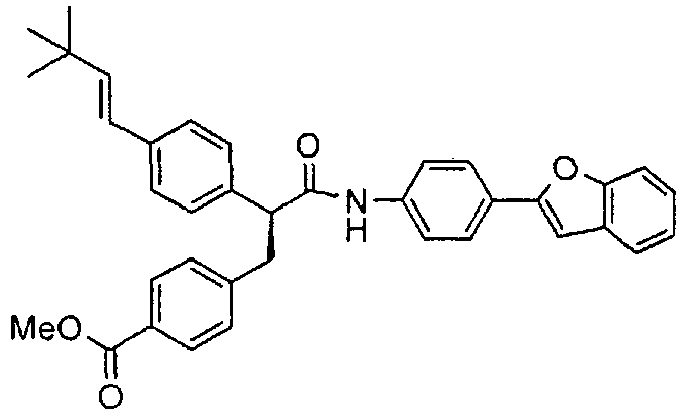
- The procedure described in for the synthesis of the (R)- isomer was followed with appropriate modifications.
1H NMR (300 MHz, CDCl3): δ 7.80 (d, J= 8.4 Hz, 2 H), 7.74 (d, J= 8.7 Hz, 2 H), 7.56 - 7.47 (m, 4 H), 7.34 - 7.11 (m, 8 H), 6.93 (s, 1 H), 6.27 (s, 2 H), 3.87 (s, 3 H), 3.77 -3.65 (m, 2 H), 3.10 (dd, J= 7.5, 12.6 Hz, 1 H), 1.11 (s, 9 H);LC-MS m/z = 554 [C31H42NBrO4+H]+; TLC conditions: Uniplate silica gel, 250 microns; mobile phase = ethyl acetate/ hexanes (2:1); Rf= 0.55. -

- To a stirred solution of (R)-4-[2-(4-Benzofuran-2-yl-phenylcarbamoyl)-2-[4-(3,3-dimethyl-but-1-enyl)-phenyl-ethyl]-benzoic acid methyl ester (0.29 g, 0.52 mmol) in EtOH/THP/H2O(4:2:1) (12 mL) at rt, was added aq. 40% NaOH (2.5 ml), The reaction mixture was stirred for overnight, After completion of the reaction, the solvent was removed under reduced pressure. The crude was taken to pH =2 with 4N HCl and the resulting mixture was extracted with ethyl acetate. The organic layer was dried over MgSO4 and concentrated, the resulting compound was dried under vacuum to afford 4-[2-(4-Benzofuran-2-yl-phenylcarbamoyl)-2-[4-(3,3-dimethyl-but-1-enyl)-phenyl-ethyl]-benzoic acid as a solid (0.27 g, 98%):
1H NMR (300 MHz, CD3OD): 10.23 (s, 1 H), 7.78 (d, J= 8.7 Hz, 4 H), 7.55 - 7.66 (m, 4 H), 7.20 - 7.40 (m, 9 H), 6.10 (bt, 1 H), 4.03 (t, J= 7.2 Hz, 1 H), 3.45 (dd, J= 5.0, 9.0 Hz, 1 H), 3.03 (dd, J = 5.7, 12.9 Hz, 1 H), 2.20 - 2.40 (m, 2 H), 2.10 - 2.15 (m, 2 H), 1.65 - 1.75 (m, 2 H), 1.50 - 1.60 (m, 2 H); LC-MS m/z = 541 [C37H34NO3+H]+. -

- To a mixed of (R)-4-[2-(4-Benzofuran-2-yl-phenylcarbamoyl)-2-[4-(3,3-dimethyl-but-1-enyl)-phenyl-ethyl]-benzoic acid (0.14 g, 0.25 mmol), EDCI (95 mg, 0. 5 mmol), HOBt (79 mg, 0.5 mmol), N,N-diisopropylethylamine (134 mg, 1.0 mmol) in DMF (7 mL), and followed by taurine (65 mg, 0.5 mmol) was added. The resulting mixture was stirred for 14 h and monitored by LCMS. After completion of the reaction the solvent was removed under reduced pressure. The resulting mixture was treated with an excess of sodium bicarbonate and loaded on top of a C-18 chromatography column. The column was eluted with H2O/Acetonitrile 0% - 100%, the product-containing fractions were lypholized to give 2-(4-{2-(4-Benzofuran-2-yl-phenylcarbamoyl)-2-[4-(3,3-dimethyl-but-1-enyl)-phenyl]-ethyl}-benzoyl amino-ethane sulfonic acid sodium salt as a white solid. (95 mg) 1H NMR (500 MHz, DMSO-d 6): 10.25 (s, 1 H), 8.40 (t, J= 5.5 Hz, 1 H), 7.80 (d, J= 8.5 Hz, 2 H), 7.67 - 7.57 (m, 6 H), 7.34 (s, 1 H), 7.28 - 7.21 (m, 8 H), 6.28 (d, J= 9.9 Hz, 2 H), 4.0 (t, J = 4.8 Hz, 1 H), 3.48 - 3.42 (m, 3 H), 3.04 (dd, J = 4.2, 8.4 Hz, 1 H), 2.62 (t, J = 11.0 Hz, 2 H), 1.09 (s, 9 H); LC-MS m/z = 651 [C38H35N2O6SNa+H]+; HPLC conditions: Waters Atlantis C-18 OBD 4.6x150 mm; mobile phase = ACN/(H2O:0.1TFA) flow rate = 1.0 mL/min; detection = UV @ 254 and 220 nm retention time in min: 24.03; Anal Calcd: (MF:C38H37N2O6SNa+2.5H2O) Calcd: C:63.58, H:5.90, N:3.90 Found: C: 63.49, H:5.90, N:3.71.
Chiral HPLC conditions: Regis-Whelh-Ol-786615 T=30°C; mobile phase = 100%ACN/(5% Phosphate pH =7.0, ACN) flow rate = 1.0 mL/min; detection = 320 nm. Retention time in min: 26.34 min (enantiomeric excess = 75.8%) -

- The procedure described for the synthesis of the (R)-isomer was followed with appropriate modifications.
1H NMR (500 MHz, DMSO-d 6): 10.25 (s, 1 H), 8.39(t, J= 5.5 Hz, 1 H), 7.80 (d, J= 8.5 Hz, 2 H), 7.67 - 7.57 (m, 6 H), 7.34 (s, 1 H), 7.28 - 7.21 (m, 8 H), 6.28 (dd, J = 16.5, 25.5 Hz, 2 H), 4.0 (t, J = 7.5 Hz, 1 H), 3.47 - 3.41 (m, 3 H), 3.04 (dd, J = 4.2. 6.5 Hz, 1 H), 2.62 (t, J = 7.0 Hz, 2 H), 1.07 (s, 9 H); LC-MS m/z = 651 [C38H35N2O6SNa+H]+; HPLC conditions: Waters Atlantis C-18 OBD 4.6x150 mm; mobile phase = ACN/(H2O:0.1TFA) flow rate = 1.0 mL/min; detection = UV @ 254 and 220 nm retention time in min: 23.55; Anal Calcd: (MF:C38H37N2O6SNa+3.7H2O) Calcd: C:61.73, H:6.05, N:3.79 Found: C: 61.52, H:5.74, N:3.74.
Chiral HPLC conditions: Regis-Whelh-01-786615 T=30°C; mobile phase = 100%ACN/(5% Phosphate pH =7.0, ACN) flow rate = 1.0 mL/min; detection = 320 nm. Retention time in min: 20.29 min (enantiomeric excess = 66.4%) -

- A solution of 10g (30 mmol) of the carboxylic acid in THF was cooled to 0 °C and treated with 60mL of a 1M solution of borane in THF (60mmol). The cooling bath was removed and the mixture stirred at room temperature for 2.5h. Added 8mL of a 1:1 mixture of acetic acid and water and concentrated under reduced pressure. The residue was partitioned between ethyl acetate and saturated aqueous sodium bicarbonate. The organic phase was washed (water, saturated sodium chloride) and dried over magnesium sulfate. Concentration under reduced pressure left 9.73g of the alcohol as a yellow oil.
HNMR (300MHz, CDCl3): 7.90 (2H, m), 7.33 (2H, m), 7.18 - 7.11 (4H, m), 3.89 (3H, s), 3.77 (2H, m), 3.09 (2H, m), 2.95 (1H, m), 1.31 (9H, s) -

- To a solution of the alcohol (9.73g, 30mmol) in dichloromethane added pyridinium chlorochromate (4.8g, 150 mmol) and stirred at room temperature for a period of 16h. Added further PCC (2.0 equivalents) and stirred for an additional 1h, followed by the addition of 3.0 more equivalents of PCC and stirring for 3 more hours. The mixture was filtered through a silica plug and the solution concentrated and chromatographed on silica, using an ethyl acetate-hexanes gradient. Obtained 7.9 g of the aldehyde as a yellow oil.
HNMR (300MHz, CDCl3): 9.72 (1H, d, J = 1.5 Hz), 7.89 (2H, d, J = 8.5 Hz), 7.37 (2H, d, J = 8.5 Hz), 7.14 (2H, d, J = 8.5 Hz), 7.06 (2H, d, J = 8.2 Hz), 3.91 (3H, s), 3.90 (1H, m), 3.54 (1H, m), 3.03 (1H, m), 1.34 (9H, s) - Alternative oxidation conditions: To a solution of the alcohol (9.730g) in dichloromethane (100 mL) at 0 °C was slowly added a 15% w/w solution of Dess-Martin periodinane (20.43g) in dichloromethane. The reaction was warmed to 23 °C and stirred at the same temperature for a 3h period, when it was quenched by addition of saturated sodium bicarbonate. The organic phase was separated, washed with brine and dried over sodium sulfate. Removal of the solvent and chromatography on silica gel using an ethyl acetate-hexanes gradient yielded 9.7g of the aldehyde
-
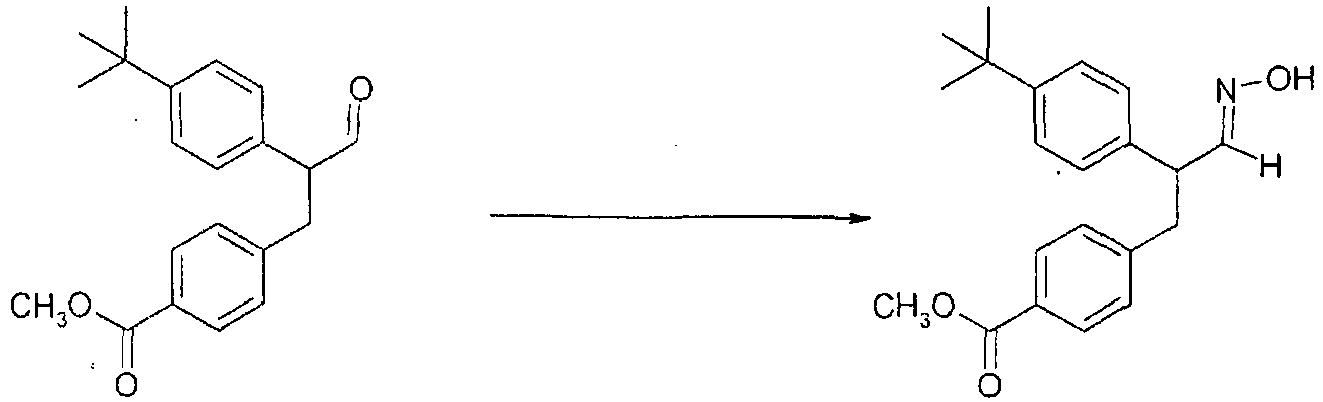
- A mixture of 7.9g (24.4 mmol) of the aldehyde, 4g (48.8 mmol) of sodium acetate and 1.7g (24.4 mmol) of hydroxylamine hydrochloride in THF was stirred at room temperature for 16h. Further 0.17g of hydroxylamine hydrochloride were added and after three additional hours the mixture was concentrated and the residue was partitioned between ethyl acetate and water. The organic phase was washed (water, saturated sodium chloride) and dried (magnesium sulfate). Concentrated and chromatographed on silica gel using a gradient of ethyl acetate and hexanes to afford a mixture of geometric isomers of the oxime (5.19g). LCMS (C21H25NO3+H): 340
-

- A solution of 3.53g (10.4 mmol) of the starting oxime in DMF was treated with 1.39g of N-chlorosuccinimide (10.4 mmol) and the resulting mixture was stirred at room temperature for 3h. The DMF was evaporated under reduced pressure and the residue was partitioned between ether and water. The organic phase was washed (water, saturated sodium chloride) and dried (magnesium sulfate). Obtained 3.5g of the product as a yellow oil. LCMS (C21H24CIN03+H): 374.1
-

- To a mixture of 1.0g (5.5 mmol) of 4-bromophenyl acetylene and 0.767mL (5.5 mmol) of triethylamine in dichloromethane (10mL) was added dropwise a solution of 516mg (1.4 mmol) of the starting chloroooxime. The mixture was stirred at room temperature overnight and worked up by washing with aqueous hydrochloric acid and half saturated sodium chloride solution. The solution was dried (magnesium sulfate), concentrated under reduced pressure and the residue was chromatographed on silica using an ethyl acetate hexane gradient. Obtained a light yellow foam (280mg). LCMS (C29H28BrNO3+H): 520.2
-

- To the starting methyl ester 280 mg (0.54 mmol) in THF (6mL), methanol (4mL) and water (2 mL) added sodium hydroxide (24mg, 0.6 mmol). The reaction mixture was stirred at room temperature for 16h. Added further 24mg (0.6mmol) of sodium hydroxide and stirred for an additional 3h at the same temperature. The mixture was acidified with 1M aqueous HCl and extracted with ethyl acetate. The solution was washed with water and saturated sodium chloride and dried over magnesium sulfate. Concentration left a white solid that was used without further purification. LCMS (C28H26BrNO3+H): 505
-

- A mixture of the starting carboxylic acid (100mg, 0.2 mmol), HOBt-H2O (33mg, 0.22 mmol), EDCI (42mg, 0.22 mmol), taurine (38 mg, 0.3 mmol) and N,N-diisopropylethylamine (49mg, 0.32 mmol) in DMF (5mL) was stirred at 23 °C for a period of 16h. The mixture was concentrated under reduced pressure and the residue partitioned between ethyl acetate and aqueous 4M HCl. The organic phase was washed (water, sat NaCl) and dried over magnesium sulfate. The reaction was repeated in the same scale and the two batches were combined and chromatographed on reverse phase silica gel (C18) using a gradient of acetonitrile:water (20% to 80% in acetonitrile). Evaporation of the product-containing fractions afforded 20mg of a white solid.
HNMR (300MHz, CD3OD): 7.71 - 7.61 (6H, m), 7.35 - 7.22 (6H, m), 6.76 (1H, s), 4.33 (1H, t, J = 8.2 Hz), 3.8 (2H, m), 3.54 (1H, m), 3.22 (1H, m), 3.06 (1H, m), 1.28 (9H, s) -

- The starting bromide (Step G, 50 mg, 0.08mmol) in DME (2mL), ethanol (1mL) and water (0.5mL) was treated with 2,4-dichlorophenyl boronic acid (46mg, 0.24 mmol), bistri(o-tolylphosphine) palladium dichloride (6mg, 0.008 mmol) and sodium carbonate (42mg, 0.4 mmol) and the container was sealed and irradiated in a microwave reactor at 125 °C for a 6 min period. The precipitated palladium was removed by filtration. The residue was loaded on top of a reverse phase silica column (C18) and eluted with an acetonitrile-water gradient (20% to 80% in acetonitrile. The sodium salt of the product was obtained as a white solid.
LCMS for C36H33Cl2N2O5S (-): 675.6; 677.6. HNMR (300Mz, CD3OD): 7.88 (2H, d, J = 8.5 Hz), 7.67 (2H, d, J = 8.5 Hz), 7.61 (1H, s), 7.58 (2H, d, J = 11.1 Hz), 7.53 - 7.26 (8H, m), 6.81 (1H, s), 4.46 (1H, t, J = 7.9 Hz), 3.78 (2H, t, J = 6.7 Hz), 3.6 (1H, m), 3.4 (1H, m), 3.07 (2H, t, J = 6.5 Hz), 1.30 (9H, s) - The following compounds were made by the methods illustrated above, with modifications that will be evident to individuals skilled in the art (these examples are not according to the invention):
Example STRUCTURE MASS SPECTRUM (mode) Formula CHN (Calcd) CHN (Found) 2.003 
531.4 (-) C30H31N2O5SNa + 2H2O 61.00 5.97 4.74 60.66 5.86 4.58 2.005 
643.6 (-) C36H33N205F2SNa+ 2.2H2O 61.22 5.34 3.97 60.91 4.93 4.21 2.007 
675.6 (-) C37H34N205F3SNa+ 1.1H2O '61.85 5.08 3.90 61.50 5.16 3.87 2008 
641.4, 643 6 (-) C36H34N2O5ClSNa + 0.2NaOH + 1.4 H2O 61.91 5.34 4.01 61.56 4.97 4.09 2.009 
641 4, 643 6 (-) C36H34N2O5ClSNa + 1.5H2O '62.47 5.39 4.05 62.29 5.25 4.09 2.010 
609.6 (-) C30H30N2O5BrSNa+ 1.2 H2O 55.00 4.98 4.28 54.67 4.97 4.43 2.011 
675.6 (-) C36H33N2O5Cl2SNa+ 2.5H2O 58.07 5.14 3.76 58.47 5.58 4.02 2.012 
643.3 (-) C36H33N2O5F2SNa+ 1H2O '63.15 5.15 4.09 62.95 5.29 4.14 2.013 
675.6 (-) C37H34N2O5F3SNa + 2H2O 60.48 5.21 3.81 60.23 4.87 3.77 2.014 
607.3 (+) C37H35ClN2O4 +(1.0)H2O C: 71.09; H: 5.97 N: 4.48 C:71.33; H: 6.11; N:4.60 2.015 
675.0 (-) C37H35F3N2O5S + 2H2O C: 62.35; H: 5.51; N:3.93 C: 62.18; H: 5.60; N: 3.89 2.016 
621.3 (-) C37H38N2O5 S + 1H20 + 0.2 TFA C: 67.69 H: 6.11 N: 4.22 C: 67.96 H: 6.37 N: 4.17 2.017 
675.0 (-) C37 H35 F3 N2 O5 S + 1.5 H20 + 0.25CF3CO2H C: 61.51 H: 5.26 N: 3.83 C: 61.66 H: 5.55 N: 3.78 2.018 
C 36 H35 Cl N2 O5 S + 2 H20 + 0.1 TFA C: 62.96 H: 5.71 N: 4.06 C: 63.03 H: 5.91 N: 3.87 2.019 
668.66 C32H30F6N2O5S 55.83 4.80 4.39 56.21 5.17 4.22 2.020 
644.81 C35H32ClF3N2O6S2 + 2 H2O + 0.5 CF3CO2H 54.44 4.63 3.53 54.30 4.96 3.56 2.021 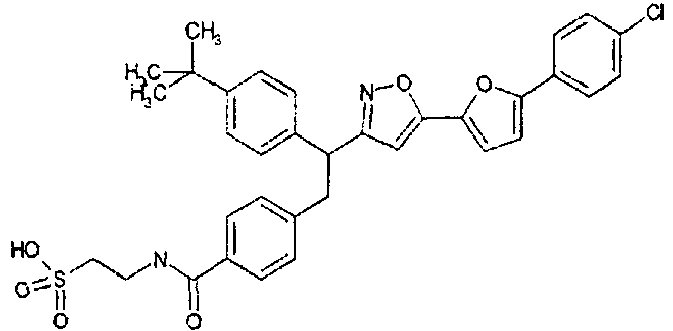
590.30 (+) C34H33ClN2O6S +2H2O C: 61.02; H: 5.57; N: 4.19 C: 60.74; H: 5.67; N: 4.14 2.022 
625.6 (-) C36H34N205FSNa+1.2 H2O C: 64.50; H: 5.47; N: 4.18 C: 64.12; H: 5.10; N: 4.12 2.023 
643.2 (-) C36H34F2N2O5S + 2.2H2O C:63.18; H: 5.66; N: 4.09 C: 62.95; H: 5.73; N: 4.21 2.024 
701.16 C35H32ClF3N2O6S2 + 2 H2O + 0.5 CF3CO2H 54.44 4.63 3.53 54.30 4.96 3.56 2.025 
685.6(-) C37H37N2O7S2Na +1.8H2O C: 59.95; H: 5.52; N: 3.78 C: 60.06; H: 5.55; N: 3.97 2.026 
685.6 (-) C37H37N2O7S2Na +1.9H2O C: 59.81; H: 5.53; N: 3.77 C: 59.57; H: 5.13; N: 3.43 2.027 
692.76 C37H35F3N2O6S + CF3CO2H + 0.5 H2O C: 57.42; H: 4.57; N: 3.43 C: 57.13; H: 4.73; N: 3.55 2.028 
643.2 (-) C36H34F2N2O5S + 2.2H2O C: 63.18; H: 5.66; N: 4.09 C: 62.95; H: 5.73; N: 4.21 2.029 
71.4.6 (-) C38H40N3O7S2Na + 1.2H2O 60.10 5.63 5.53 59.96 5.53 5.50 2.030 
768.6 (-) C39H40N3O6SNa +1H2O 65.07 5.88 5.84 64.71 5.99 5.72 2.031 
700.4 (-) C37H38N3O7SNa + 2H2O 58.48 5.57 5.53 58.24 5.67 5.69 2.032 
632.6 (-) C37H34N3O5SNa + 0.8H2O 66.31 5.35 6.27 66.26 5.36 5.96 2.033 
650.6 (-) C36H34N2O6SClNa + 2.5H2O + 0.2 CH3CN 59.53 5.43 4.20 59.32 5.51 4.59 2.034 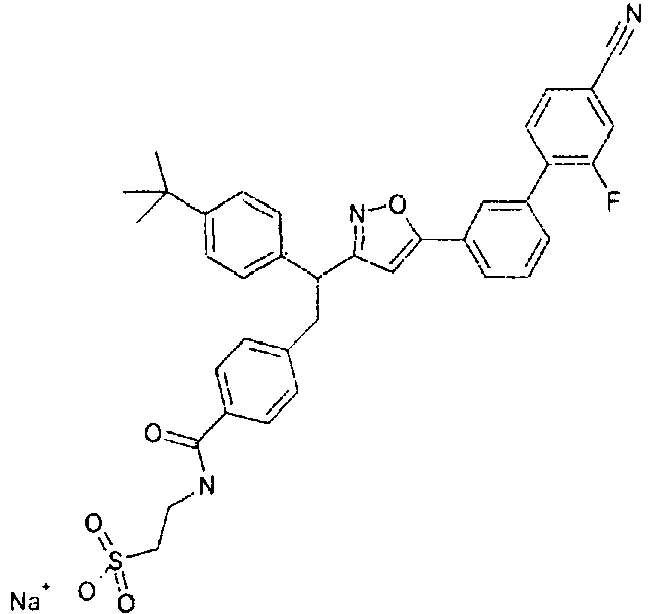
650.6 (-) C37H33N3O5FSNa + 1H2O 64.24 5.10 6.07 64.08 5.15 5.96 2.035 
691.6 (-) C36H33N206Cl2SNa + 1.5H2O 58.22 4.89 3.77 58.55 4.67 3.42 2.036 
691.6 (-) C36H33N2O6Cl2SNa + 1H2O 58.94 4.81 3.82 59.13 4.61 3.45 2.037 
647.4 (-) C38H35N2O6SNa +H2O 66.27 5.41 4.07 65.95 5.41 4.02 2.038 
657.2 (-) C36H34N2O6ClSNa + 3H2O + 0.1 CH3CN 58.81 5.49 3.98 59.04 5.22 4.33 2.039 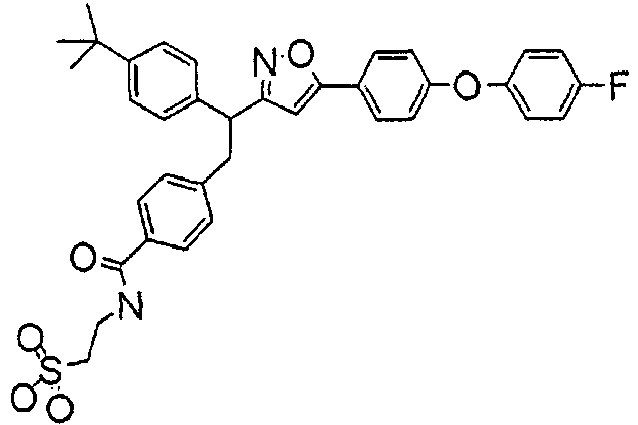
643.2 (-) C36H35N2O6FS + 2.5 H2O 62.87 5.86 4.07 62.70 5.73 4.02 2.040 
733 (+) C43H41N2O6FS + (0.9) H2O +(0.2) CF3CO2H C:67.53 H:5.61 N:3.63 C:67.57 H:5.83 N:3.67 2.041 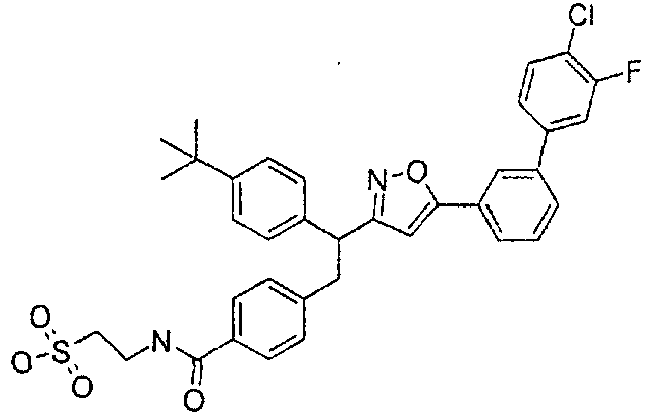
661.6 (+) C36H34N2O5FClS + (0.5) H2O + (0.2) TFA C:63.09 H:5.12 N:4.04 C:63.09 H:5.23 N:3.79 2.042 
617.4 (+) C31H31N2O6F3S + (1.5) H2O +(0.6) TFA C:54.31 H:4.90 N:3.93 C:54.29 H:5.00 N:3.93 2.043 
633.6 (+) C31H31N2O5S2 + (1.0) H2O C:57.22 H:5.11 N:4.30 C:57.22 H:5.45 N:4.04 2.044 
649.6 (+) C34H33N2O5ClS2 + (1.5) H2O C:60.39 H:5.37 N:4.14 C:60.49 H:5.75 N:4.10 2.045 
643.6 (+) C36H35N2O6FS + (1.2) H2O + (0.8) TFA C:59.77 H:5.10 N:3.71 C:59.69 H:5.38 N:3.58 2.046 
745.6 (+) C38H34N2O5F6S + (1.2) TFA C:55.04 H:4.02 N:3.18 C:55.18 H:3.93 N:2.84 2.047 
695.4 (+) C37H34N2O5F4S + (1.5) TFA C:55.49 H:4.13 N:3.24 C:55.28 H:3.97 N:2.89 2.048 
661.6 (+) C36H34N2O5FClS + (1.1) H2O + (0.1) TFA C:62.79 H:5.28 N:4.05 C:62.78 H:5.59 N:4.20 2.049 
715.9 (+) C43H42N2O6S + (2.2) H2O + (0.1) TFA C:67.75 H:6.12 N:3.66 C:67.60 H:6.30 N:3.71 2.050 
657.2 (+) C37H37N2O6FS +(1.8) H2O + (0.1) TFA C:63.77 H:5.86 N:4.00 C:63.79 H:6.22 N:4.39 2.051 
633.3 (+) C34H33N2O6ClS + (2 2) H2O + (0.1) TFA C 60.04 H:5 52 N:4 09 C:60 01 H.5 86 N:4 23 2.052 
655.6 (+) C33H26ClF3N2O5S + (0.3) H2O + (0.1) TFA C:59.35 H:4.01 N:4.17 C:59.40 H:3.68 N:3.98 2.053 
581.6 (+) C32H31N2O5F3 + (0.1) DMF + (0 5) H2O C:64.99 H:5.52 N:4.93 C:65.36 H:5.99 N:4.88 2.054 
618.4 (+) C28H29BrN2O5S2 + H2O + (0.6) TFA C: 49.82 H: 4.52 N: 3.98 Found C = 49.86 H = 4.59 N=4.03 2.055 
639.6 (+) C37H38N2O6S + (3.0) H2O C: 64.14 H: 6.40 N: 4.04 C: 64.12 H: 6.03 N: 4.06 2.056 
625.6 (+) C36H36N2O6S + 5H2O C: 60.19 H:6.51 N: 3.90 C: 60.02 H:6.15 N: 3.95 2.057 
650.6 (+) C34H33ClN2O5S2 + (0.6) TFA C: 57.19 H: 4.54 N: 3.73 C: 57.19 H: 4.59 N: 3.69 2.058 
650.6 (+) C35H32F4N2O5S2 + (1.1) DMF + (0.2) H2O C: 58.62 H: 5.15 N: 5.53 C: 59.02 H: 5.55 N: 5.28 2.059 
709 (-) C37H34ClF3N2O5S + (0.3) TFA + (1.2) H20 C: 58.88, H: 4.82, N: 3.65 C: 58.86, H: 4.95, N: 3.57 2.060 
727,729 (-) C37H33ClF4N2O5S + (0.7) TFA + (0.3) H20 C: 56.63, H: 4.25, N: 3.44 C: 56.20, H: 4.47, N: 3.64 2.061 
639 (-) C37H37FN2O5S + (0.1) TFA + (1.1) H20 C: 66.49, H: 5.89, N: 4.17 C: 66.33, H: 5.89, N: 4.0 2.062 
683 (-) C39H41FN2O6S + (0.2) TFA + (1.7) H20 C: 64.10, H: 6.09, N: 3.79 C: 64.02, H:5.92, N: 3.7 2.063 
655 (-) C37H37FN2O6S + (0.7) TFA + (1.7) H20 C: 60.12, H: 5.40, N: 3.65 C: 60.19, H:5.26, N: 3.50 2.064 
659.6 (-) C36 H34 Cl F N2 O5 S + 0.6 H20 C: 64.34 H: 5.28 N: 4.17 C: 64.27 H: 5.48 N: 4.1 2.065 
695.4 (+) C37 H34 N2 O5 F4 S + 1.6 H2O C: 61.42; H:5.18; N: 3.87 C: 61.63; H: 5.53; N: 3.79 2.066 
645.4 (-)? C36 H34 N2 O5 S + 0.7 H2O + 1.2 CF3CO2H C: 60.99 H: 4.88 N: 3.70 C: 61.08 H: 4.55 N: 3.84 2.067 
695.4 (+) C37 H34 N2 05 F4 S + 1.5H2O C: 61.57 H: 5.17 N: 3.88 C: 61.94 H: 5.54 N: 3.72 2.068 
729.6 (+) C37 H33 N2 05 F4 Cl S + 0.6 H2O + 0.2 CF3CO2H C: 58.89 H: 4.55 N: 3.67 C: 58.88 H: 4.28 N: 3.65 2.069 
729.6 (+) C37 H33 N2 05 F Cl S + 1 H2O + 0.4 CF3CO2H C: 57.21 H: 4.50 N: 3.53 C: 57.25 H: 4.34 N: 3.43 2.070 
661.9 (+) C36H34N2O5FClS + 0.9 CF3CO2H C: 59.76 H: 4.93 N: 3.76 C: 59.50 H: 4.44 N: 3.66 2.071 
645.4 (+) C 36H34N2 05 F2 S + 0.5 H2O C: 66.14 H: 5.40 N: 4.29 C: 66.17 H: 5.46 N: 4.09 2.072 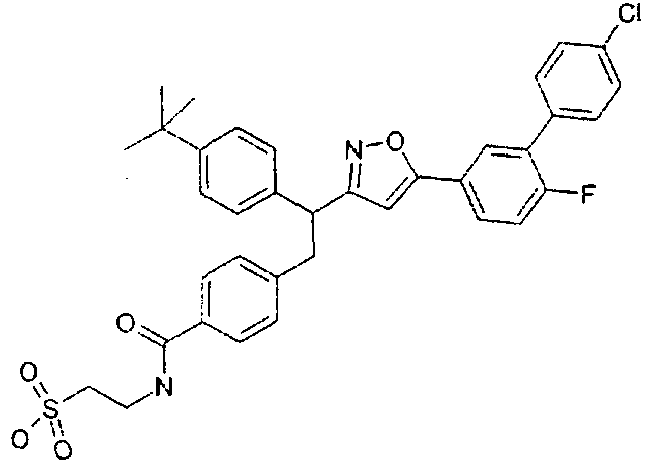
661.2 (+) C 36 H34 N2 O5 F Cl S + 1 H2O C: 63.66 H: 5.34 N: 4.12 C: 63.36 H: 5.48 N: 4.07 2.073 
693.0 (-) C37 H34 N2 O5 F4 S Na + 2H2O C: 58.96 H: 5.08 N: 3.72 C: 58.79 H: 5.05 N: 3.76 2.074 
725 (-) C37H33ClF3N2O6S Na + 3H2O C: 55.33 H: 4.89 N: 3.49 C: 55.42 H: 5.03 N: 3.24 2.075 
659.6 (-) C 36 H34 N2 O5 F Cl S + 1.2 H2O C: 63.33 H: 5.37 N: 4.10 C: 63.25 H: 5.14 N: 4.13 2.076 
645.4 (+) C36 H34 N2 O5 F2 S + 1.3 H2O C: 64.71 H: 5.52 N: 4.19 C: 64.71 H: 5.29 N: 4.20 2.077 
692.8 (-) C37 H35 N2 06 F3 S + 0.6 H2O C: 63.17 H: 5.19 N: 3.98 C: 63.22 H: 5.47 N: 4.14 2.078 
633.9 (+) C39H36N2O4ClNa+ (1.3)H2O C: 69.03 H:5.73 N: 4.13 C: 69.05 H:5.48 N: 4.07 2.079 
669.6 (+) C38H36N2O5ClSNa+ (0.6)H2O C: 65.01 H: 5.34 N: 3.99 C: 64.94 H: 5.51 N: 3.87 2.080 
677 (-) C36H33F3N2O6S +1.5H2O C 61.27, H: 5.14, N: 3.97 C 61.04, H: 5.02, N: 3.88 20.81 
647 (-) C35H33C1N2O6S+1.5 H2O C: 62.54, H: 5.40, N: 4.17 C: 62.27, H: 5.20, N: 4.09 2.082 
7.27.4 (-) C37H33N2O5SClF4 + (0.7) CF3CO2H C: 57.01; H 4.20; N: 346 C: 56.93; H 4.47; N: 3.40 2.083 
681 (-) C35H32Cl2N2O6S +2.0 H2O +0 6CH2Cl2 C:55.78, H: 4.89, N: 3.65 C:55.68, H: 4.73, N: 3.32 2.084 
630 (-) C35H33FN2O6S +2 0 H2O +01CH3CN C6321, H: 5 62, N 4 40 C6319, H:5.02, N: 471 2.085 
664 (-) C35H32ClFN2O6S+1.5 H2O+0.1CH3CN C:60.89, H: 5.12, N: 4.24 C:60.75, H: 5.00, N: 4.35 2.086 
641 (-) C36H35FN2O6S +2.5 H2O C:62.87, H: 5.86, N: 4.07 C:62.89, H: 5.82, N: 4.02 2.087 
613 (+) C29H29BrN2O6S +1.5 H2O C:54.38, H: 5.04, N: 4.37 C:54.21, H: 4.74, N: 4.49 2.088 
645 (-) C35H32F2N2O6 +2.7 H2O +0.2CH3CN C:60.43, H: 5.44, N: 4.38 C:60.16, H: 5.00, N: 4.62 2.089 
657.0 (+) C36H35N2O5ClS + (1.4) H2O + (1.0) LiCl C: 61.31, H: 5.53, N: 3.86 C: 61.27, H: 5.63, N: 3.94 2.090 
601.9 (+) C35H31N602Cl + (1.2)HCl +(0.1)CH3CO2H C: 64.87, H:5.03, N: 12.93 C: 65.15, H: 4.65, N: 12.53 2.091 
623.6 (+) C37H35N2O5Cl + (1.4) H2O + (0.4) CF3CO2H C: 65.42, H: 5.55, N: 4.04 C: 65.16, H: 5.24, N: 4.37 2.092 
622.3 (+) C37H36N3O4Cl + (1.2) C6H6 + (0.4) CF3CO2H C: 70.98, H: 5.77, N: 5.52 C: 71.36, H: 5.69, N: 5.16 2.093. 
643.2 (+) C36H36N2O5ClP + (0.8) H2O C: 65.76, H: 5.76, N: 4.26 C: 65.81, H: 5.70, N: 4.27 2.094 
641.3 (+) C37H38N2O4CIP +(2.1) H2O + (1.2) CH3OH C: 63.95, H: 6.60, N: 3.90 C: 64.21, H: 7.00, N: 3.84 2.095 
671.3 (+) C38H39N2O5ClPNa + (1.7) H2O + (0.2) CH3OH C: 62.84, H: 5.96, N: 3.84 C: 62.90, H: 5.73, N: 3.77 2.096 
601.2 (+) C30H30N2O5Cl2SNa + (1.5) H2O C: 55.30, H: 5.10, N: 4.30 C: 55.25, H: 4.93, N: 4.25 2.097 
675,677 (-) C36H34Cl2N2O5S + 0.25 CF3CO2H C: 61.61, H:4.94, N: 3.94 C: 61.38, H: 5.31, N: 3.88 2.098 
659.6 (-) C36H34ClFN2O5S + 0.5 CF3CO2H + 0.5 H20 C: 61.11, H: 4.92, N: 3.85 C: 61.18, H:4.57, N: 3.96 2.099 
565 (-) C30H31ClN2O5S + 0.1 CF3CO2H + 1.5 H2O Expected C 59 90, H 5.68, N: 4 63 Found C: 6022, H:566, N:456 2.100 
710 (-) C37H36F2N206S + 0.1 CF3CO2H - 1.7 H20 C: 63.76, H: 5.68, N: 4.00 C: 63.53, H: 5.64, N: 3.88 2.101 
673 (-) C37H36F2N2O6S + 0 1 CF3CO2H + 1.7 H2O Expected C.63 76, H 5.68, N: 4.00 Found C: 63.53, H: 5.64, N: 3.88 2.102 
C33H35ClN2O5S + 0.2 CF3CO2H + 1.5 H2O C: 61.06, H: 5.86, N: 4.26 C: 60.92, H: 6.13, N: 4.58 2.103 
571 (-) C33H35ClN2O5S + 0.2 CF3CO2H + 1.5 H20 C: 61.06, H: 5.86, N: 4.26 C: 60.92, H: 6.13, N: 4.58 2.104 
605,607 (-) C33H35ClN2O5S + 0.2 CF3C02H + 1.5 H2O C: 61.06, H: 5.86, N: 4.26 C: 60.92, H: 6.13, N: 4.58 2.105 
675.4 (-) C36H34Cl2N2O5S + 1.2 H2O C: 61.84, H: 5.25, N:4.01 C: 61.71, H:4.99, N:4.18 2.106 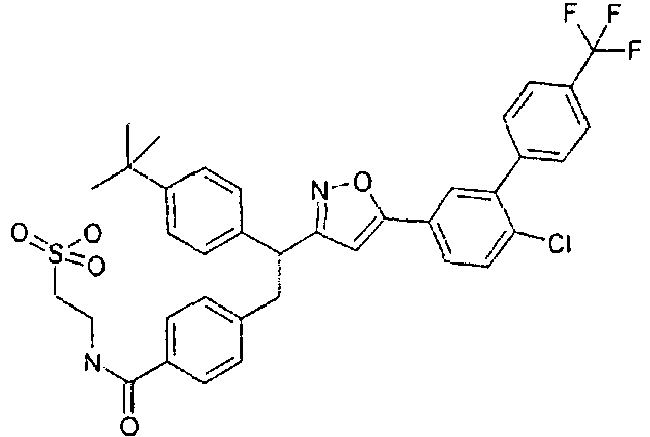
709.6 (-) C37H34ClF3N2O5S + 1H2O 60.94 4.98 3.84 60.91 4.63 3.67 2.107 
725.4 (-) C37H34ClF3N2O6S + 1.8H2O C: 58.50, H:4.99, N:3.69 C: 58.18, H: 4.33, N:3.64 2.108 
677.6 (-) C36H34ClN2O5S + 1.2H2O + 0.1 CH2Cl2 C:61.62, H:5.21, N:3.96 C: 60.93, H: 4.61, N:3.90 2.109 
659.6 (-) C361134ClFN2O5S + 1.0H2O + 1.0TFA C: 57.54, H:4.70, N:3.53 C: 57.35, H:4.53, N:3.44 2.110 
645.0 (-) C30H30BrClN2O5S + 0.5TFA C: 52.96, H:4.37, N:3.98 C: 52.64, H:4.69, N:3.81 2.111 
739.6 (+) C36H35ClN2O4S + 0.5 CF3CO2H C: 64.95, H:5.23, N:4.09 C: 64.91, H:4.97, N:4.19 2.112 
711.4 (-) C36H33Cl3N2O5S + 1.2H2O C: 58.93, H: 4.86, N:3.82 C: 58.66, H:5.16, N:4.16 2.113 
743.6 (-) C37H33Cl3F3N2O5S + 1.3H2O C: 57.79, H: 4.67, N: 3.64 C: 57.83, H: 4.43, N:3.77 2.114 
709.2 (-) C37H34ClF3N2O5S + 1.3H2O C:60.49, H:5.02, N:3.81 C:60.18, H:4.95, N:4.14 2.115 
759.2 (-) C38H34F6N206S + 1.3H2O C: 58.20, H:4.70, N:3.57 C: 57.94, H:4.67, N:3.73 2.116 
693.0 (-) C37H34F4N2O5S + 15H2O C: 61.57, H:5.17, N:3.88 C:61.26, H:4.86, N:4.10 2.117 
705.6 (-) C38H37F3N2O6S + 1.5H2O C: 62.20, H: 549, N:3.82 C: 61.99, H:5.54, N:4.22 Example STRUCTURE MASS SPECTRUM (mode) Fonnula CHN (Calcd) CHN (Found) 2.118 
709.6 (-) C37H34ClF3N2O5S + 1.3H2O C: 60.49, H:5.02, N:3.81 C: 60.20, H: 4.83, N:4.43 2.119 
675.0 (-) C37H35F3N2O5S + 2 H2O C: 62.35, H: 5.51, N: 3.93 C: 62.18, H: 5.60, N: 3.89 - Enantiomerically enriched compounds of this class were synthesized as described below: (not according to the invention):
-
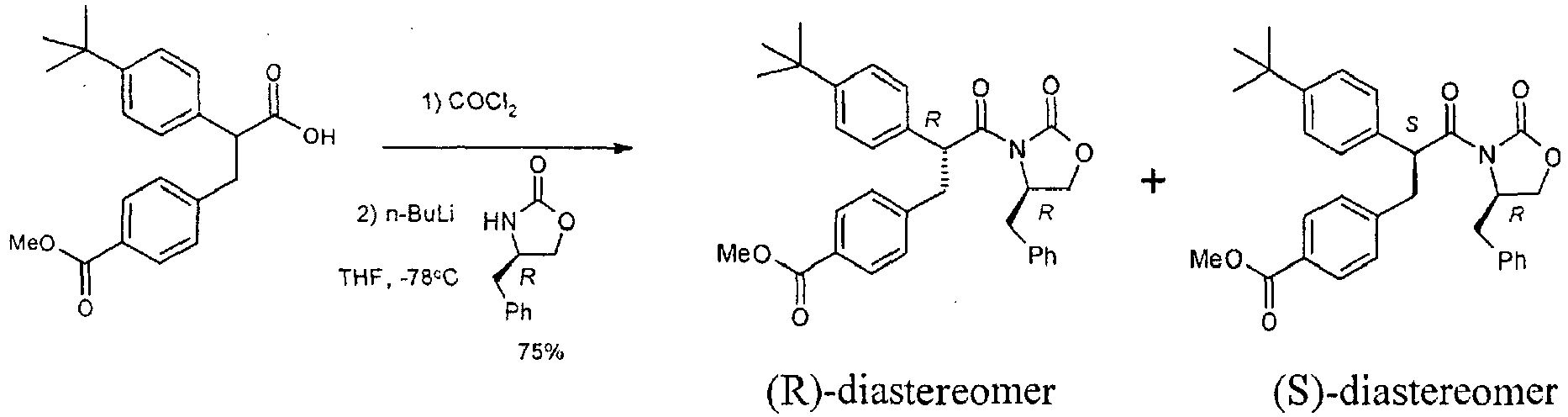
- To a solution of 4-tert-butyl-phenyl)-2-carboxy-ethyl]-benzoic acid methyl ester (2.5 g, 5.20 mmol, prepared as reported in Bioorg. Med. Chem Lett. 2004, 14, 2047 -2050) in CH2Cl2 (50 mL) at room temperature was added oxalyl chloride (0.98 g, 7.81 mmol). The reaction mixture was stirred at room temperature for overnight and the solvent was removed under reduced pressure. The residue was dried under vacuum for 3-4 h. The crude acid chloride was used in the next step.
- To a stirred solution of R- (+)- 4-benzyl-oxazolidinone (1.48 g, 8.37 mmol) in THF (20 mL) at -78° C was added n-BuLi (5.2 mL, 8.37 mmol, 1.6 M solution in hexane). The reaction mixture was stirred for 30 min, at -78° C, then acid chloride (2.5 g, 6.98 mmol) was added dropwise, stirred for 1 h at -78° C then allowed to warm to rt and stirred for another hour (monitored by TLC). The reaction mixture was quenched with saturated NH4Cl solution (20 mL) and stirred for 10 min. The reaction mixture was extracted with ethyl acetate (2x50 mL) and the combined organic layers were washed with brine, dried over Na2SO4 and concentrated under reduced pressure. The crude product was purified by column chromatography on silica gel, eluting with ethyl acetate-hexanes 5-15% to afford 4-[3-(4-benzyl-2-oxo-oxazolidin-3-yl)-(2-(4-tert-butyl-phenyl)-3-oxo-propyl]-benzoic acid methyl ester as a mixture of (R) and (S) diastereomers (1.56 g, and 1.25 g respectively, 79% overall yield).
- (R)-diastereomer
1H NMR (300 MHz, CDCl3): 7.97 (d, J= 8.4 Hz, 2 H), 7.41 - 7.26 (m, 9 H), 7.0 - 6.97 (m, 2 H), 5.52 (dd, J= 5.7, 9.6 Hz, 1 H), 4.61 - 4.57 (m, 1 H), 4.04 (d, J= 4.8 Hz, 2 H), 3.91 (s, 3 H), 3.61 (dd, J = 9.6, 13.2 Hz, 1 H), 3.16- 3.07 (m, 2 H), 2.58 (dd, J = 9.3, 13.5 Hz, 1 H), 1.34 (s, 9 H); TLC conditions: Uniplate silica gel, 250 microns; mobile phase = ethyl acetate/ hexanes (2:1); Rf = 0.55. - (S)-diastereomer
1H NMR (300 MHz, CDCl3): 7.95 (d, J= 8.4 Hz, 2 H), 7.41 - 7.26 (m, 9 H), 6.90 (dd, J= 7.5, 12.5 Hz, 2 H), 5.43 (dd, J= 5.7, 9.9 Hz, 1 H), 4.68 - 4.63 (m, 1 H), 4.11 - 4.03 (m, 2 H), 3.92 (s, 3 H), 3.56 (dd, J= 9.9, 13.8 Hz, 1 H), 3.16- 3.02 (m, 2 H), 2.64 (dd, J= 8.4, 13.8 Hz, 1 H), 1.35 (s, 9 H); TLC conditions: Uniplate silica gel, 250 microns; mobile phase = ethyl acetate/ hexanes (2:1); Rf = 0.4. -

- To a stirred solution of the (R)-diastereomer obtained in the step above (0.62 g, 1.24 mmol) in THF/H2O (20 mL) (3:1) at room temperature was added H2O2 (0.42 g, 12.4 mmol 30% in H2O) followed by LiOH( 60 mg, 2.48 mmol). The reaction mixture was stirred for 2 h, at room temperature, and quenched with 0.1 N HCl. The reaction mixture was extracted with ethyl acetate (100 mL) and dried over Na2SO4, filtered and concentrated under reduced pressure to afford corresponding acid. The crude title product was used in the next step without further purification (0.34 g, 80%):
1H NMR (300 MHz, CD3OD): δ 7.85 (d, J= 4.8 Hz, 2 H), 7.34 - 7.22 (m, 6 H), 3.86 (s, 3 H), 3.85 - 3.83 (m, 1 H), 3.40 (dd, J = 5.4, 8.4 Hz, 1 H), 3.03 (dd, J = 4.2, 8.4 Hz, 1 H), 1.30 (s, 9 H); TLC conditions: Uniplate silica gel, 250 microns; mobile phase = CH2Cl2/ MeOH (10%); Rf = 0.35.
Chiral HPLC conditions: Kromasil 100-5-TBB chiral column 250x4.6 cm, 5% Hexane/2-propanol, 1 mL/min, RT= 4.2 min. Enantiomeric excess: >90% -

- The title compound was synthesized as described above from the (S)-diastereomer of the isoxazolone precursor.
1H NMR (300 MHz, CDCl3): δ 7.85 (d, J= 4.8 Hz, 2 H), 7.34 - 7.22 (m, 6 H), 3.86 (s, 3 H), 3.85 - 3.83 (m, 1 H), 3.40 (dd, J= 5.4, 8.4 Hz, 1 H), 3.03 (dd, J= 4.2, 8.4 Hz, 1 H), 1.30 (s, 9 H); TLC conditions: Uniplate silica gel, 250 microns; mobile phase = CH2Cl2/ MeOH (10%); Rf = 0.35.
Chiral HPLC conditions: Kromasil 100-5-TBB chiral column 250x4.6 cm, 5% Hexane/2-propanol, 1 mL/min, RT= 3.5 min. Enantiomeric excess: > 94% -

- The methods described in Example2.002 were utilized to synthesize the title compounds from the (R)-4-[2-(4-tert-butyl-phenyl)-2-carboxy-ethyl]-benzoic acid methyl ester and (S)-4-[2-(4-tert-butyl-phenyl)-2-carboxy-ethyl]-benzoic acid methyl ester respectively
-

- To a mixture of (S)-4-{2-(4-tert-Butyl-phenyl)-2-[5-(4'-chloro-biphenyl-3-yl)-isoxazol-3-yl]-ethyl}-benzoic acid (0.25 g, 0.46 mmol), EDCI (133 mg, 0.69 mmol), HOBt (107 mg, 0.69 mmol), N,N-diispropylethylamine (0.25 mL, 1.95 mmol) in DMF (10 mL), and followed by taurine (116 mg, 0.093 mmol) was added. The resulting mixture was stirred for 14 h and monitored by LCMS after completion of the reaction the solvent was removed under reduced pressure. The resulting mixture was purified by column chromatography on C-18, eluting with H2O/Acetonitrile 40% to afford (4-{2-(4-tert-Butyl-phenyl)-2-[5-(4'-chloro-biphenyl-3-yl)-isoxazol-3-yl]-ethyl}-benzoylamino)ethane sulfonic acid (29) as a white solid. (125 mg, 42%): 1H NMR (300 MHz, MeOD): 8.01 (s, 1 H), 7.78 (d, J= 6.9 Hz, 2 H), 7.70 - 7.47 (m, 6 H), 7.35 (d, J = 9.0 Hz, 2 H), 7.30 (d, J= 8.1 Hz, 2 H), 6.86 (s, 1H), 4.47 (t, J = 6.9 Hz, 1 H), 3.85 - 3.70 (m, 2 H), 3.75 (dd, J= 4.9, 13.2 Hz, 1 H), 3.25 -3.05 (m, 2 H), 1.31 (s, 9 H); LC-MS m/z = 643 [C36H35ClN2O5S]+; HPLC conditions: Waters Atlantis C-18 OBD 4.6x150 mm; mobile phase = ACN/(H2O:0.1TFA) flow rate = 1.0 mL/min; detection = UV @ 254 and 220 nm retention time in min: 21.20; Anal Calcd:
(MF:C36H35ClN2O5S+1.5H2O+0.2 CH2Cl2) Calcd: C:63.27, H:5.63,N:4.08 Found: C: 63.24, H:5.75, N:3.96. αD[25] MeOH (4.66 mg in 1.0 mL) = + 13.487. -

- The method described in Example 2.120 was followed to synthesize the title compound, except that (R)-4-{2-(4-tert-Butyl-phenyl)-2-[5-(4'-chloro-biphenyl-3-yl)-isoxazol-3-yl]-ethyl}-benzoic acid was used as a starting material
1H NMR (300 MHz, MeOD): 8.03 (s, 1 H), 7.79 (d, J= 6.9 Hz, 2 H), 7.73 - 7.49 (m, 6 H), 7.36 (d, J= 9.3 Hz, 2 H), 7.30 (d, J = 8.1 Hz, 2 H), 6.87 (s, 1 H), 4.48 (t, J= 6.9 Hz, 1 H), 3.79 (t, J= 6.6 Hz, 2 H), 3.43 (dd, J= 4.9, 13.2 Hz, 1 H), 3.41 (dd, J= 5.7, 14.1 Hz, 1 H), 3.08 (t, J= 6.9 Hz, 2 H), 1.31 (s, 9 H); LC-MS m/z = 644 [C36H35ClN2O5S+H]+; HPLC conditions: Waters Atlantis C-18 OBD 4.6x150 mm; mobile phase = ACN/(H2O:0.1TFA) flow rate = 1.0 mL/min; detection = UV @ 254 and 220 nm, retention time in min: 21.20; Anal Calcd: (MF:C36H35ClN2O5S+2.0H2O) Calcd: C:63.66, H:5.79,N:4.12 Found: C: 63.53, H:5.68, N:4.34. αD[25] MeOH(4.12mg in 1.0 mL) -15.460 - Compounds of the invention are dissolved in a suitable solvent (e.g. dimethlysulfoxide) at a concentration of 10 mM and then diluted in buffer (50 mM Hepes, pH 7.4, 5 mM MgCl2, 1 mM CaCl2, 0.2% BSA) to concentrations ranging from 1 nM to 100 µM. Compounds (20 µl/well) and [125I]Glucagon (Perkin Elmer; final concentration: 0.125 nM;20 µl/well) are added to and mixed in wells of a 96-well plate (Costar, Coming) containing 120 µl of buffer. Next, an appropriate aliquot of a membrane preparation containing the human glucagon receptor (isolated from human liver samples or obtained from a recombinant cell line) is added to the wells. The binding mixtures are incubated for 2 hour at room temperature. In the meantime, a MultiScreen 96-well filter plate (Millipore) is incubated with 200 µl of buffer, which is vacuumed through the filter just before the binding mixtures are transferred to the plate. At the end of incubation, binding mixtures are transferred to the wells of the MultiScreen 96-well filter plate and filtered through by applying vacuum. The plate is washed once with 200 µl per well of buffer and the filters are dried and counted by means of a gamma counter.
- Exemplified compounds displace radiolabeled glucagon from the human glucagon receptor by ≥15% at 1000 nM or have an IC50 of < 10,000 nM.
- Primary human, monkey, dog, rat, or mouse hepatocytes are seeded onto collagen-coated 24-well plates in Williams E medium (supplemented with 10% fetal bovine serum) and incubated at 37°C overnight in M199 medium (supplemented with 15 mM glucose and 10 nM human insulin). The following day cells are washed twice with a glucose-free Kreb-bicarbonate buffer, pH 7.4, containing 0.1% BSA. Cells are then incubated at 37° C with the aforementioned buffer containing 1 nM glucagon and varying concentrations of a glucagon antagonist (0 - 100 microM). Control wells without glucagon or antagonist are also included. After 1 hour, an aliquot of the medium is removed and analyzed for glucose content by means of the glucose oxidase method. The background glucose levels observed in the control wells are subtracted from the glucagon and antagonist containing wells. A graph of % glucose concentration vs drug concentration is plotted and an EC50 value for inhibition of glucose production generated using Sigmaplot software (SAS, Cary, North Carolina). Alternatively, intracellular cAMP levels are measured using standard kits and EC50 values determined by plotting these levels against drug concentration. Antagonists of the glucagon receptor inhibit glucagon-induced cAMP production.
- The effects of compounds of the invention on blood glucose levels are assessed in animal models of type 1 or 2 diabetes such as, but not limited to, the db/db mouse, the Zucker fatty (ZF) rat, the Zucker diabetic (ZDF) rat, the glucagon-challenged dog, the alloxan- or streptozotocin-treated mouse or rat, the NOD mouse or the BB rat.
- Compounds are dissolved in an appropriate vehicle such as polyethylene glycol-400 or cyclodextrin and administered to animals at doses of 0.1 to 100 mg/kg either by intraperitoneal injection, intravenous injection, or oral gavage. Animal models used in this evaluation [e.g. the db/db mouse, the ZF rat, the ZDF rat, the glucagon-challenged (0.3-5 µg/kg) dog, the alloxan- or streptozotocin-treated mouse or rat, the NOD mouse, or BB rat] are either freely-feeding or fasted from 3 to 24 hours prior to compound administration. In some instances, animals may be subjected to a glucose tolerance test following compound administration by intravenous or oral administration of up to 2g/kg of glucose. Blood glucose levels are assessed in blood samples obtained by tail bleed or by sampling an appropriate blood vessel by means of a syringe or catheter. Glucose is measured using a portable glucometer such as the OneTouch or HemoCue meters at regular time intervals for up to 24 hours. The extent of blood glucose lowering elicited by the compounds of the invention is determined by comparison to those in control animals administered only the vehicle. The percentage of blood glucose lowering attained is calculated relative to blood glucose levels in vehicle-treated nondiabetic or non-glucagon-challenged control animals.
- Purpose: To assess the effects of compounds of the invention on blood glucose levels in the db/db mouse, an animal model of type 2 diabetes.
- Methods: Compounds were dissolved in polyethylene glycol-400 and administered by oral gavage to db/db mice in the freely-feeding state at doses of 30 and/or 100 mg/kg. Blood glucose levels were assessed in blood samples obtained by tail bleed at baseline (prior to drug administration) and at regular time intervals over 24 hours using a portable glucometer such as the OneTouch or HemoCue meters. The magnitude of blood glucose lowering elicited by the compounds of the invention was determined by comparison to those in db/db mice administered only the vehicle. The percentage glucose lowering was calculated by factoring in the blood glucose levels of vehicle-treated lean db/+ (heterozygote) mice, with 100% representing the normalization of blood glucose levels from the hyperglycemic state (vehicle-treated db/db mice) to the normoglycemic state (vehicle-treated db/+ mice).
- Results: As shown in the table below, compounds of the invention lowered blood glucose of db/db mice in the freely-feeding state by 19 to 172 mg/dL. The percentage blood glucose lowering achieved ranged from 6 to 68% relative to lean control animals.
Example# DOSE (mg/Kg) Glucose lowering (mg/dL) % Glucose lowering 1.052 30 147 61 1.155 30 108 49 1.321 30 161 68 1.135 100 131 41 1.137 30 159 53 1.136 30 47 16 1.320 30 121 39 1.270 30 63 24 1.138 30 19 6 1.315 30 172 57 1.311 30 109 36 1.359 100 150 48 1.179 30 102 34 1.314 30 95 40 1.173 30 172 50 1.269 30 124 42 1.133 30 157 57 - Conclusion: Compounds of the invention have pronounced antihyperglycemic activity in animal models of type 2 diabetes and may therefore have utility for the treatment of type 2 diabetes.
- Purpose: To assess the effects of compounds of the invention on blood glucose levels in glucagon-challenged Beagle dogs.
- Methods: Beagle dogs (n=3) were treated with vehicle (polyethylenelglycol-400) by oral gavage. After 1.5 hours, glucagon (20 µg) was administered subcutaneously. Blood glucose levels were measured prior to glucagon administration and at 10-minute intervals thereafter for up to an hour. Blood samples for these determinations were obtained from a superficial ear vein and were measured using a OneTouch glucometer. After a 1-week washout, the animals were treated by oral gavage with the compound of Example 2.009 at a dose of 38 mg/kg (polyethylenelglycol-400 formulation). The glucagon challenge and blood sampling were then performed as before.
- Results: As shown in the graphs below, treatment with the compound of Example 2.009 attenuated the glucagon-induced glucose excursion by approximately 40%.

- Conclusion: The compound of Example 2.009 is a potent glucagon antagonist in the dog. The in vivo profile obtained suggests the compound of Example 2.009 may have utility for the treatment of hyperglycemia in patients with type 2 diabetes, a disorder believed to be caused in part by inappropriately elevated glucagon levels.


Claims (9)
- A compound of formula
 R44 is H, CH3 or CH3CH2;R45 is C1-C6 alkyl, alkenyl, alkoxy, C3-6 cycloalkyl, aryl, phenyl or C4-8 cycloalkenyl, any of which can be optionally substituted with one or more substituents;L is phenyl, indenyl, benzofuran-2-yl or benzoxazol-2-yl, optionally substituted with one or more substituents; andR46 is H, F, Cl, CH3, CF3, OCF3 or CN,or single enantiomer, diastereomer, pharmaceutically acceptable salt, co-crystal, anhydrate, hydrate, or solvate thereof,and wherein "aryl" refers to aromatic groups which have 5-17 ring atoms and at least one ring having a conjugated pi electron system and includes carbocyclic aryl, heterocyclic aryl, monocyclic aryl, bicyclic aryl, and biaryl groups, all of which may be optionally substituted.
 - The compound according to claim 1, wherein L is substituted with one or more substituents independently selected from H, F, Cl, CH3, CF3, OCF3 or CN.
- The compound according to claim 1, wherein L is substituted with one or more substituents independently selected from optionally substituted C1-6-alkyl, optionally substituted C2-6-alkenyl, optionally substituted C2-6-alkynyl, optionally substituted C3-4-cycloalkyl, optionally substituted C4-8-cycloalkenyl, optionally substituted C3-8-alkoxy, optionally substituted C3-8-alkylthio-, optionally substituted C3-8-cycloalkylalkoxy, optionally substituted C3-8-cycloalkylalkylthio-, optionally substituted C3-8-cycloalkyloxy, optionally substituted C3-8-cycloalkylthio, halogen, -NO2, -CN, -CF3, -NR10R10, -OR9, -SR9, -S(O)R9, -SO2R9, -NR9SOR10, -NR9SO2R10, -SO2NR10R10, -CONR10R10, -NR9COR10, -OC(O)NR10R10, -CH2NR10R10, -OC(O)R9, -C(O)R9 or -COOR9;
wherein R9 is independently selected from hydrogen, optionally substituted aralkyl, C1-6-alkyl or optionally substituted aryl; and
wherein each R10 is independently selected from hydrogen, optionally substituted C1-C6-alkyl, optionally substituted aryl or R10R10 together with the N to which they are attached form a 3 to 8 membered optionally substituted heterocyclic ring; wherein said heterocyclic ring contains at least one C atom; wherein said heterocyclic ring optionally contains one or two further heteroatoms independently selected from nitrogen, oxygen and sulfur; and wherein said heterocyclic ring optionally contains 0, 1 or 2 double bonds. - The compound according to claim 1, 2 or 3 wherein R45 is optionally substituted and is selected from (CH3)3C-, (CH3)3CCH=CH-, t-butyl-cycloalkenyl-, or (CH3)3CCH2O-.
- The compound according to claim 1, wherein R45 is substituted with C1-C4 alkyl or R45 is t-butylvinyl, (S)-4-t-butylcyclohexenyl, (R)-4-t-butylcyclohexenyl, 4,4-dimethylcyclohexadienyl, 4,4-dimethylcyclohexenyl, cyclohexenyl, 4,4-diethylcyclohexenyl, 4,4-dipropylcyclohexenyl, cis-4-t-butylcyclohexyl, trans-4-t-butylcyclohexyl or 4-t-butylphenyl.
- The compound according to claim 1, 2, 3, 4, or 5, wherein R45 is attached to the 3 (meta) or 4 (para) position.
- A pharmaceutical composition comprising a compound of any of claims 1 to 6.
- Use of a compound of any one of claims 1 to 6
for the manufacture of a medicament for treating, preventing, delaying the time to onset or reducing the risk for the development or progression of a disease or condition selected from the group consisting of: Type I diabetes, Type II diabetes, impaired glucose tolerance, insulin resistance, postprandial hyperglycemia, fasting hyperglycemia, accelerated gluconeogenesis, increased or excessive (greater than normal levels) hepatic glucose output, hyperinsulinemia, hyperlipidemia, dyslipidemia, hypercholesterolemia, atherosclerosis, obesity, Metabolic Syndrome X. - Compound according to any one of claims 1 to 6, or pharmaceutical composition according to claim 7,
for use in a method for treating, preventing, delaying the time to onset or reducing the risk for the development or progression of a disease or condition selected from the group consisting of: Type I diabetes, Type II diabetes, impaired glucose tolerance, insulin resistance, postprandial hyperglycemia, fasting hyperglycemia, accelerated gluconeogenesis, increased or excessive (greater than normal levels) hepatic glucose output, hyperinsulinemia, hyperlipidemia, dyslipidemia, hypercholesterolemia, atherosclerosis, obesity, Metabolic Syndrome X, the method comprising the step of administering to an animal a therapeutically effective amount of the pharmaceutical composition or of the compound.
Priority Applications (1)
| Application Number | Priority Date | Filing Date | Title |
|---|---|---|---|
| EP14162609.3A EP2786985B1 (en) | 2007-02-09 | 2008-02-11 | Antagonists of the glucagon receptor |
Applications Claiming Priority (3)
| Application Number | Priority Date | Filing Date | Title |
|---|---|---|---|
| US88918307P | 2007-02-09 | 2007-02-09 | |
| US98928707P | 2007-11-20 | 2007-11-20 | |
| PCT/US2008/053581 WO2008098244A1 (en) | 2007-02-09 | 2008-02-11 | Novel antagonists of the glucagon receptor |
Related Child Applications (2)
| Application Number | Title | Priority Date | Filing Date |
|---|---|---|---|
| EP14162609.3A Division-Into EP2786985B1 (en) | 2007-02-09 | 2008-02-11 | Antagonists of the glucagon receptor |
| EP14162609.3A Division EP2786985B1 (en) | 2007-02-09 | 2008-02-11 | Antagonists of the glucagon receptor |
Publications (3)
| Publication Number | Publication Date |
|---|---|
| EP2129654A1 EP2129654A1 (en) | 2009-12-09 |
| EP2129654A4 EP2129654A4 (en) | 2012-08-01 |
| EP2129654B1 true EP2129654B1 (en) | 2014-05-28 |
Family
ID=39682141
Family Applications (2)
| Application Number | Title | Priority Date | Filing Date |
|---|---|---|---|
| EP08729528.3A Active EP2129654B1 (en) | 2007-02-09 | 2008-02-11 | Antagonists of the glucagon receptor |
| EP14162609.3A Not-in-force EP2786985B1 (en) | 2007-02-09 | 2008-02-11 | Antagonists of the glucagon receptor |
Family Applications After (1)
| Application Number | Title | Priority Date | Filing Date |
|---|---|---|---|
| EP14162609.3A Not-in-force EP2786985B1 (en) | 2007-02-09 | 2008-02-11 | Antagonists of the glucagon receptor |
Country Status (13)
| Country | Link |
|---|---|
| US (5) | US8710236B2 (en) |
| EP (2) | EP2129654B1 (en) |
| JP (4) | JP5322951B2 (en) |
| KR (7) | KR20150008922A (en) |
| CN (3) | CN107669669A (en) |
| AU (3) | AU2008212816B2 (en) |
| CA (2) | CA2678265C (en) |
| DK (1) | DK2129654T3 (en) |
| ES (2) | ES2494294T3 (en) |
| HK (1) | HK1244694A1 (en) |
| MX (2) | MX2009008534A (en) |
| PT (1) | PT2129654E (en) |
| WO (1) | WO2008098244A1 (en) |
Families Citing this family (33)
| Publication number | Priority date | Publication date | Assignee | Title |
|---|---|---|---|---|
| WO2008098244A1 (en) | 2007-02-09 | 2008-08-14 | Metabasis Therapeutics, Inc. | Novel antagonists of the glucagon receptor |
| WO2010019828A1 (en) * | 2008-08-13 | 2010-02-18 | Metabasis Therapeutics, Inc. | Glucagon receptor antagonists |
| CN104803891B (en) | 2008-08-13 | 2017-10-20 | 症变治疗公司 | Glucagon antagonist |
| WO2010088061A1 (en) | 2009-01-28 | 2010-08-05 | Merck Sharp & Dohme Corp. | Glucagon receptor antagonist compounds, compositions containing such compounds and methods of use |
| EP2330137B1 (en) * | 2009-12-04 | 2013-06-26 | LANXESS Deutschland GmbH | Methylenaminoethylsulfonic acids-chelate resins |
| WO2011107494A1 (en) | 2010-03-03 | 2011-09-09 | Sanofi | Novel aromatic glycoside derivatives, medicaments containing said compounds, and the use thereof |
| US8822516B2 (en) | 2010-06-10 | 2014-09-02 | Technion Research & Development Foundation Limited | Process for the preparation of iodides |
| US8933024B2 (en) | 2010-06-18 | 2015-01-13 | Sanofi | Azolopyridin-3-one derivatives as inhibitors of lipases and phospholipases |
| US8530413B2 (en) | 2010-06-21 | 2013-09-10 | Sanofi | Heterocyclically substituted methoxyphenyl derivatives with an oxo group, processes for preparation thereof and use thereof as medicaments |
| TW201221505A (en) | 2010-07-05 | 2012-06-01 | Sanofi Sa | Aryloxyalkylene-substituted hydroxyphenylhexynoic acids, process for preparation thereof and use thereof as a medicament |
| TW201215388A (en) | 2010-07-05 | 2012-04-16 | Sanofi Sa | (2-aryloxyacetylamino)phenylpropionic acid derivatives, processes for preparation thereof and use thereof as medicaments |
| TW201215387A (en) | 2010-07-05 | 2012-04-16 | Sanofi Aventis | Spirocyclically substituted 1,3-propane dioxide derivatives, processes for preparation thereof and use thereof as a medicament |
| MX2013006768A (en) | 2010-12-23 | 2013-07-22 | Pfizer | Glucagon receptor modulators. |
| ES2597972T3 (en) | 2011-02-08 | 2017-01-24 | Pfizer Inc | Glucagon receptor modulator |
| RU2013157388A (en) | 2011-07-22 | 2015-08-27 | Пфайзер Инк. | QUINOLINYL MODULATORS OF THE GLUCAGON RECEPTOR |
| WO2013037390A1 (en) | 2011-09-12 | 2013-03-21 | Sanofi | 6-(4-hydroxy-phenyl)-3-styryl-1h-pyrazolo[3,4-b]pyridine-4-carboxylic acid amide derivatives as kinase inhibitors |
| WO2013045413A1 (en) | 2011-09-27 | 2013-04-04 | Sanofi | 6-(4-hydroxy-phenyl)-3-alkyl-1h-pyrazolo[3,4-b]pyridine-4-carboxylic acid amide derivatives as kinase inhibitors |
| US8859098B2 (en) * | 2012-05-18 | 2014-10-14 | Lord Corporation | Acrylic adhesion promoters |
| TW201427658A (en) | 2012-12-10 | 2014-07-16 | Merck Sharp & Dohme | Methods of treating diabetes by administering a glucagon receptor antagonist in combination with a cholesterol absorption inhibitor |
| JP2017519000A (en) * | 2014-06-12 | 2017-07-13 | リガンド・ファーマシューティカルズ・インコーポレイテッド | Glucagon antagonist |
| CA2987914C (en) * | 2015-06-30 | 2022-09-13 | Dana-Farber Cancer Institute, Inc. | Inhibitors of egfr and methods of use thereof |
| CN106336387A (en) * | 2015-07-10 | 2017-01-18 | 浙江海正药业股份有限公司 | Amides derivative, preparation method thereof and purpose of amides derivative on medicine |
| CN104987314A (en) * | 2015-07-14 | 2015-10-21 | 佛山市赛维斯医药科技有限公司 | Compound containing benzisoxazole and structure with nitryl and benzyl groups at the tail end and application thereof |
| CN105001174A (en) * | 2015-07-14 | 2015-10-28 | 佛山市赛维斯医药科技有限公司 | Compound containing benzisoxazole and tail end cyano benzyl group structure as well as application of compound |
| CN105384703A (en) * | 2015-10-29 | 2016-03-09 | 河南大学 | Thiazolidinedione chemical compound preparation method |
| WO2017215586A1 (en) * | 2016-06-14 | 2017-12-21 | 浙江海正药业股份有限公司 | Amide derivatives, preparation process thereof and use thereof in medicine |
| EP3500565A1 (en) * | 2016-08-17 | 2019-06-26 | Ligand Pharmaceuticals, Inc. | Glucagon receptor antagonists |
| JP7173962B2 (en) | 2016-08-30 | 2022-11-16 | リジェネロン・ファーマシューティカルズ・インコーポレイテッド | Methods of treating severe insulin resistance by interfering with glucagon receptor signaling |
| US20190248888A1 (en) | 2016-10-20 | 2019-08-15 | Regeneron Pharmaceuticals, Inc. | Methods of lowering blood glucose levels |
| DK3573611T3 (en) * | 2017-01-24 | 2022-04-11 | Alphala Co Ltd | Amide compounds and their use |
| CA3071387A1 (en) | 2017-08-22 | 2019-02-28 | Regeneron Pharmaceuticals, Inc. | Methods of treating urea cycle disorders by interfering with glucagon receptor signaling |
| JP2021513564A (en) | 2018-02-13 | 2021-05-27 | リガンド・ファーマシューティカルズ・インコーポレイテッド | Glucagon receptor antagonist |
| CN119039291A (en) * | 2024-09-09 | 2024-11-29 | 南京药坦生物科技有限公司 | Enalidomide intermediate and preparation method thereof |
Family Cites Families (90)
| Publication number | Priority date | Publication date | Assignee | Title |
|---|---|---|---|---|
| US3524846A (en) | 1967-06-02 | 1970-08-18 | Syntex Corp | Process for the didealkylation of phosphonate esters |
| US3536809A (en) | 1969-02-17 | 1970-10-27 | Alza Corp | Medication method |
| US3598123A (en) | 1969-04-01 | 1971-08-10 | Alza Corp | Bandage for administering drugs |
| US3845770A (en) | 1972-06-05 | 1974-11-05 | Alza Corp | Osmatic dispensing device for releasing beneficial agent |
| US3916899A (en) | 1973-04-25 | 1975-11-04 | Alza Corp | Osmotic dispensing device with maximum and minimum sizes for the passageway |
| JPS5322951B2 (en) | 1974-06-05 | 1978-07-12 | ||
| US4008719A (en) | 1976-02-02 | 1977-02-22 | Alza Corporation | Osmotic system having laminar arrangement for programming delivery of active agent |
| JPS55100859A (en) | 1979-01-16 | 1980-08-01 | Kikai Syst Shinko Kyokai | Dummy bar containing device |
| IE58110B1 (en) | 1984-10-30 | 1993-07-14 | Elan Corp Plc | Controlled release powder and process for its preparation |
| US4968788A (en) | 1986-04-04 | 1990-11-06 | Board Of Regents, The University Of Texas System | Biologically reversible phosphate and phosphonate protective gruops |
| US5091552A (en) | 1986-06-30 | 1992-02-25 | Board Of Regents, The University Of Texas System | Novel antitumor aldophosphamide analogs |
| JPH0738070B2 (en) * | 1986-07-25 | 1995-04-26 | 富士写真フイルム株式会社 | Silver halide photographic light-sensitive material |
| EP0284240B2 (en) * | 1987-03-09 | 1993-06-16 | EASTMAN KODAK COMPANY (a New Jersey corporation) | Photographic silver halide materials and process comprising a pyrazolotriazole coupler |
| JPH081079B2 (en) | 1987-10-12 | 1996-01-10 | 大和ハウス工業株式会社 | Multi-story structure |
| JPH01197740A (en) * | 1988-02-01 | 1989-08-09 | Konica Corp | Silver halide photographic sensitive material |
| US5073543A (en) | 1988-07-21 | 1991-12-17 | G. D. Searle & Co. | Controlled release formulations of trophic factors in ganglioside-lipsome vehicle |
| IT1229203B (en) | 1989-03-22 | 1991-07-25 | Bioresearch Spa | USE OF 5 METHYLTHETRAHYDROPHOLIC ACID, 5 FORMYLTHETRAHYDROPHOLIC ACID AND THEIR PHARMACEUTICALLY ACCEPTABLE SALTS FOR THE PREPARATION OF PHARMACEUTICAL COMPOSITIONS IN THE FORM OF CONTROLLED RELEASE ACTIVE IN THE THERAPY OF MENTAL AND ORGANIC DISORDERS. |
| US5120548A (en) | 1989-11-07 | 1992-06-09 | Merck & Co., Inc. | Swelling modulated polymeric drug delivery device |
| US5733566A (en) | 1990-05-15 | 1998-03-31 | Alkermes Controlled Therapeutics Inc. Ii | Controlled release of antiparasitic agents in animals |
| AU651835B2 (en) | 1990-06-13 | 1994-08-04 | Arnold Glazier | Phosphorous prodrugs |
| US5157027A (en) | 1991-05-13 | 1992-10-20 | E. R. Squibb & Sons, Inc. | Bisphosphonate squalene synthetase inhibitors and method |
| US5580578A (en) | 1992-01-27 | 1996-12-03 | Euro-Celtique, S.A. | Controlled release formulations coated with aqueous dispersions of acrylic polymers |
| US5591767A (en) | 1993-01-25 | 1997-01-07 | Pharmetrix Corporation | Liquid reservoir transdermal patch for the administration of ketorolac |
| ATE199906T1 (en) | 1993-06-29 | 2001-04-15 | Mitsubishi Chem Corp | PHOSPHONATE NUCLEOTIDE ESTER DERIVATIVES |
| IT1270594B (en) | 1994-07-07 | 1997-05-07 | Recordati Chem Pharm | CONTROLLED RELEASE PHARMACEUTICAL COMPOSITION OF LIQUID SUSPENSION MOGUISTEIN |
| US5780058A (en) | 1995-07-21 | 1998-07-14 | Alza Corporation | Oral delivery of discrete units |
| US6132420A (en) | 1996-02-02 | 2000-10-17 | Alza Corporation | Osmotic delivery system and method for enhancing start-up and performance of osmotic delivery systems |
| JPH09241284A (en) | 1996-03-08 | 1997-09-16 | Koji Yamashita | New oxyazaphosphorine derivative |
| MY125849A (en) | 1997-07-25 | 2006-08-30 | Alza Corp | Osmotic delivery system, osmotic delivery system semipermeable body assembly, and method for controlling delivery rate of beneficial agents from osmotic delivery systems |
| JPH1197740A (en) | 1997-09-19 | 1999-04-09 | Showa Denko Kk | Epitaxial wafer for gap light emitting diode and gap light emitting diode |
| DK1041975T3 (en) | 1997-12-22 | 2002-11-04 | Alza Corp | Speed-controlling membranes for controlled drug delivery devices |
| WO1999033446A1 (en) | 1997-12-29 | 1999-07-08 | Alza Corporation | Osmotic delivery system with membrane plug retention mechanism |
| DE69834213T2 (en) | 1997-12-31 | 2007-01-25 | Alza Corp., Mountain View | Osmotic delivery system for a beneficial agent |
| US6245357B1 (en) | 1998-03-06 | 2001-06-12 | Alza Corporation | Extended release dosage form |
| US6365185B1 (en) | 1998-03-26 | 2002-04-02 | University Of Cincinnati | Self-destructing, controlled release peroral drug delivery system |
| EP1652516A3 (en) | 1998-11-02 | 2006-05-17 | ALZA Corporation | Osmotic controlled delivery of active agents |
| US6375975B1 (en) | 1998-12-21 | 2002-04-23 | Generex Pharmaceuticals Incorporated | Pharmaceutical compositions for buccal and pulmonary application |
| US6342249B1 (en) | 1998-12-23 | 2002-01-29 | Alza Corporation | Controlled release liquid active agent formulation dosage forms |
| US6503949B1 (en) | 1999-05-17 | 2003-01-07 | Noro Nordisk A/S | Glucagon antagonists/inverse agonists |
| BR0010651A (en) | 1999-05-17 | 2002-03-19 | Novo Nordisk As | Compound, use of a compound, pharmaceutical composition, and method for the treatment and / or prevention of disorders or diseases mediated by an antagonistic action of glucagon |
| AU5283800A (en) * | 1999-05-24 | 2000-12-12 | Cor Therapeutics, Inc. | Inhibitors of factor xa |
| WO2001019830A1 (en) | 1999-09-10 | 2001-03-22 | Novo Nordisk A/S | MODULATORS OF PROTEIN TYROSINE PHOSPHATASES (PTPases) |
| DE19943636A1 (en) * | 1999-09-13 | 2001-03-15 | Bayer Ag | Novel dicarboxylic acid derivatives with pharmaceutical properties |
| DE10008329A1 (en) | 2000-02-23 | 2001-08-30 | Merck Patent Gmbh | New aminosulfonyl-biphenyl derivatives are Factor Xa and Factor VIIa inhibitors useful e.g. for treating thrombosis, myocardial infarction, arteriosclerosis, inflammation or angina pectoris |
| WO2002000612A1 (en) * | 2000-06-23 | 2002-01-03 | Novo Nordisk A/S | Glucagon antagonists/inverse agonists |
| AU2002223501A1 (en) | 2000-11-17 | 2002-05-27 | Agouron Pharmaceuticals, Inc. | Glucagon antagonists/inverse agonists |
| JP2002293764A (en) * | 2001-01-26 | 2002-10-09 | Takeda Chem Ind Ltd | Aminoethanol derivative |
| US6881746B2 (en) | 2001-12-03 | 2005-04-19 | Novo Nordick A/S | Glucagon antagonists/inverse agonists |
| US6762318B2 (en) | 2001-12-03 | 2004-07-13 | Novo Nordisk A/S | Glucagon antagonists |
| EP1463715A1 (en) | 2001-12-03 | 2004-10-06 | Novo Nordisk A/S | Novel glucagon antagonists |
| US20030212119A1 (en) | 2001-12-20 | 2003-11-13 | Jesper Lau | Novel glucagon receptor antagonists/inverse agonists |
| AU2002347022A1 (en) | 2001-12-20 | 2003-07-09 | Novo Nordisk A/S | Benzimidazols and indols as glucagon receptor antagonists/inverse agonisten |
| JP2006500325A (en) * | 2002-06-27 | 2006-01-05 | ノボ ノルディスク アクティーゼルスカブ | Novel glucagon antagonist |
| CA2508581A1 (en) | 2002-12-04 | 2004-06-17 | Merck & Co., Inc. | Spirocyclic ureas, compositions containing such compounds and methods of use |
| MY141521A (en) | 2002-12-12 | 2010-05-14 | Hoffmann La Roche | 5-substituted-six-membered heteroaromatic glucokinase activators |
| US20040152750A1 (en) | 2002-12-20 | 2004-08-05 | Kodra Janos Tibor | Novel glucagon antagonists |
| US7572922B2 (en) | 2003-01-27 | 2009-08-11 | Merck & Co., Inc. | Substituted pyrazoles, compositions containing such compounds and methods of use |
| US7138529B2 (en) * | 2003-04-16 | 2006-11-21 | Hoffmann-La Roche Inc. | Substituted 3-cyanothiophene acetamides as glucagon receptor antagonists |
| ZA200508082B (en) | 2003-04-21 | 2007-07-25 | Daiichi Seiyaku Co | Five-membered heterocyclic derivative |
| CN1784226A (en) * | 2003-05-09 | 2006-06-07 | 麦克公司 | Benzimidazole compounds, compositions containing benzimidazole compounds, and methods of use |
| EP1689383B1 (en) | 2003-11-19 | 2012-10-31 | Metabasis Therapeutics, Inc. | Novel phosphorus-containing thyromimetics |
| US20070054902A1 (en) | 2003-12-02 | 2007-03-08 | Shionogi & Co., Ltd. | Isoxazole derivatives as peroxisome proliferator-activated receptors agonists |
| US20070015757A1 (en) | 2003-12-19 | 2007-01-18 | Novo Nordisk A/S | Novel Glucagon Antagonists/Inverse Agonists |
| US7301036B2 (en) | 2003-12-19 | 2007-11-27 | Merck & Co., Inc. | Cyclic guanidines, compositions containing such compounds and methods of use |
| US7989457B2 (en) | 2004-05-28 | 2011-08-02 | Eli Lilly And Company | Glucagon receptor antagonists, preparation and therapeutic uses |
| CN1964947A (en) | 2004-06-04 | 2007-05-16 | 默克公司 | Pyrazole derivatives, compositions containing them and uses thereof |
| DK1758853T3 (en) | 2004-06-14 | 2010-04-06 | Lilly Co Eli | Glucagon Receptor Antagonists, Preparation and Therapeutic Uses |
| WO2006002361A2 (en) * | 2004-06-24 | 2006-01-05 | Incyte Corporation | 2-methylpropanamides and their use as pharmaceuticals |
| JP2008505905A (en) | 2004-07-07 | 2008-02-28 | メルク エンド カムパニー インコーポレーテッド | Pyrazole amide derivatives, compositions containing such compounds and methods of use |
| CA2574147A1 (en) | 2004-07-22 | 2006-02-09 | Linda Brockunier | Substituted pyrazoles, compositions containing such compounds and methods of use |
| PL1856090T3 (en) | 2005-02-11 | 2010-02-26 | Lilly Co Eli | Substituted thiophene derivatives as glucagon receptor antagonists, preparation and therapeutic uses |
| CN101146762A (en) | 2005-03-21 | 2008-03-19 | 默克公司 | Substituted Aryl and Heteroaryl Derivatives |
| WO2006104826A2 (en) | 2005-03-30 | 2006-10-05 | Merck & Co., Inc. | Glucagon receptor antagonist compounds, compositions containing such compounds and methods of use |
| KR100738004B1 (en) | 2005-05-23 | 2007-07-13 | (주)주빅스테크놀러지 | Hybrid Peer To Peer Network Intelligent Distributed Compiler System and Method thereof, and Computer Readable Recording Medium on which a Program therefor is recorded |
| WO2007015999A2 (en) | 2005-07-26 | 2007-02-08 | Merck & Co., Inc. | Process for synthesizing a substituted pyrazole |
| TW200745031A (en) | 2005-10-13 | 2007-12-16 | Merck & Co Inc | Acyl indoles, compositions containing such compounds and methods of use |
| SI1951661T1 (en) | 2005-11-17 | 2012-11-30 | Lilly Co Eli | Glucagon receptor antagonists, preparation and therapeutic uses |
| DK1951658T3 (en) | 2005-11-17 | 2012-10-15 | Lilly Co Eli | GLUCAGON RECEPTOR ANTAGONISTS, MANUFACTURING AND THERAPEUTIC APPLICATIONS |
| PT1951659E (en) | 2005-11-18 | 2010-09-10 | Lilly Co Eli | Glucagon receptor antagonists, preparation and therapeutic uses |
| CA2629172C (en) | 2005-11-22 | 2014-05-06 | Eli Lilly And Company | Glucagon receptor antagonists, preparation and therapeutic uses |
| JP5140599B2 (en) | 2005-11-23 | 2013-02-06 | イーライ リリー アンド カンパニー | Glucagon receptor antagonists and their preparation and therapeutic use |
| EP2001472A2 (en) | 2006-03-23 | 2008-12-17 | Merck and Co., Inc. | Glucagon receptor antagonist compounds, compositions containing such compounds and methods of use |
| JP2009537525A (en) | 2006-05-16 | 2009-10-29 | メルク エンド カムパニー インコーポレーテッド | Glucagon receptor antagonist compounds, compositions containing such compounds and methods of use |
| US7512570B2 (en) | 2006-05-30 | 2009-03-31 | Zaracom Technologies Inc. | Artificial intelligence analyzer and generator |
| WO2008001883A1 (en) | 2006-06-29 | 2008-01-03 | Nissan Chemical Industries, Ltd. | α-AMINO ACID DERIVATIVE AND PHARMACEUTICAL COMPRISING THE SAME AS ACTIVE INGREDIENT |
| TW200821284A (en) | 2006-10-03 | 2008-05-16 | Merck & Co Inc | Glucagon receptor antagonist compounds, compositions containing such compounds and methods of use |
| JP5455636B2 (en) * | 2006-12-02 | 2014-03-26 | ソウル ナショナル ユニバーシティー インダストリー ファンデーション | Aryl compounds, hydrates thereof, solvates thereof, stereoisomers thereof, or pharmaceutically acceptable salts thereof, methods for producing aryl compounds, and uses of aryl compounds, etc. |
| WO2008098244A1 (en) | 2007-02-09 | 2008-08-14 | Metabasis Therapeutics, Inc. | Novel antagonists of the glucagon receptor |
| CN104803891B (en) | 2008-08-13 | 2017-10-20 | 症变治疗公司 | Glucagon antagonist |
| CN103813794A (en) | 2011-07-18 | 2014-05-21 | 拓凯制药公司 | Novel compositions and methods for treating prostate cancer |
-
2008
- 2008-02-11 WO PCT/US2008/053581 patent/WO2008098244A1/en not_active Ceased
- 2008-02-11 ES ES08729528.3T patent/ES2494294T3/en active Active
- 2008-02-11 MX MX2009008534A patent/MX2009008534A/en active IP Right Grant
- 2008-02-11 KR KR1020147036395A patent/KR20150008922A/en not_active Ceased
- 2008-02-11 CN CN201710667499.5A patent/CN107669669A/en active Pending
- 2008-02-11 JP JP2009549286A patent/JP5322951B2/en not_active Expired - Fee Related
- 2008-02-11 CA CA2678265A patent/CA2678265C/en not_active Expired - Fee Related
- 2008-02-11 ES ES14162609T patent/ES2720430T3/en active Active
- 2008-02-11 CA CA2894112A patent/CA2894112C/en not_active Expired - Fee Related
- 2008-02-11 DK DK08729528.3T patent/DK2129654T3/en active
- 2008-02-11 KR KR1020187024604A patent/KR20180099916A/en not_active Ceased
- 2008-02-11 EP EP08729528.3A patent/EP2129654B1/en active Active
- 2008-02-11 KR KR1020167011147A patent/KR20160052792A/en not_active Ceased
- 2008-02-11 KR KR1020177019679A patent/KR20170085615A/en not_active Ceased
- 2008-02-11 MX MX2014003565A patent/MX351656B/en unknown
- 2008-02-11 KR KR1020207030498A patent/KR20200123866A/en not_active Withdrawn
- 2008-02-11 EP EP14162609.3A patent/EP2786985B1/en not_active Not-in-force
- 2008-02-11 CN CN201510884273.1A patent/CN105566265A/en active Pending
- 2008-02-11 CN CN200880004461.9A patent/CN101610995B/en not_active Expired - Fee Related
- 2008-02-11 KR KR1020197032519A patent/KR20190126460A/en not_active Abandoned
- 2008-02-11 PT PT87295283T patent/PT2129654E/en unknown
- 2008-02-11 AU AU2008212816A patent/AU2008212816B2/en not_active Ceased
- 2008-02-11 KR KR1020097016602A patent/KR101538810B1/en not_active Expired - Fee Related
-
2011
- 2011-04-08 US US13/083,321 patent/US8710236B2/en not_active Expired - Fee Related
-
2013
- 2013-05-24 JP JP2013110101A patent/JP2013177426A/en not_active Withdrawn
-
2014
- 2014-01-03 US US14/147,457 patent/US9169201B2/en active Active
- 2014-07-15 AU AU2014204420A patent/AU2014204420B2/en not_active Ceased
-
2015
- 2015-09-21 US US14/860,593 patent/US9701626B2/en not_active Expired - Fee Related
- 2015-10-01 JP JP2015196171A patent/JP6377589B2/en not_active Expired - Fee Related
-
2017
- 2017-06-05 US US15/614,418 patent/US10239829B2/en not_active Expired - Fee Related
- 2017-08-28 AU AU2017219117A patent/AU2017219117A1/en not_active Abandoned
-
2018
- 2018-02-28 JP JP2018034934A patent/JP6790007B2/en not_active Expired - Fee Related
- 2018-03-28 HK HK18104224.0A patent/HK1244694A1/en unknown
-
2019
- 2019-03-25 US US16/363,825 patent/US10807946B2/en not_active Expired - Fee Related
Also Published As
Similar Documents
| Publication | Publication Date | Title |
|---|---|---|
| US10807946B2 (en) | Antagonists of the glucagon receptor | |
| JP2010536773A (en) | Novel activator of glucokinase | |
| WO2005113484A1 (en) | Phenyl carboxamide compounds useful as beta-secretase inhibitors for the treatment of alzheimer's disease | |
| TWI912295B (en) | Phd inhibitor compounds, compositions, and methods of use | |
| HK1225014A (en) | Novel antagonists of the glucagon receptor | |
| HK1225014A1 (en) | Novel antagonists of the glucagon receptor | |
| HK40008389B (en) | 1 h-pyrazol-1 -yl-thiazoles as inhibitors of lactate dehydrogenase and methods of use thereof |
Legal Events
| Date | Code | Title | Description |
|---|---|---|---|
| PUAI | Public reference made under article 153(3) epc to a published international application that has entered the european phase |
Free format text: ORIGINAL CODE: 0009012 |
|
| 17P | Request for examination filed |
Effective date: 20090909 |
|
| AK | Designated contracting states |
Kind code of ref document: A1 Designated state(s): AT BE BG CH CY CZ DE DK EE ES FI FR GB GR HR HU IE IS IT LI LT LU LV MC MT NL NO PL PT RO SE SI SK TR |
|
| AX | Request for extension of the european patent |
Extension state: AL BA MK RS |
|
| RIN1 | Information on inventor provided before grant (corrected) |
Inventor name: CRAIGO, WILLIAM Inventor name: LI, HAIQING Inventor name: BOYER, SERGE, HENRI Inventor name: SUN, ZHILI Inventor name: CHEN, MINGWEI Inventor name: MALI, VENKAT, REDDY Inventor name: HECKER, SCOTT, J. Inventor name: DANG, QUN Inventor name: GROTE, MATTHEW, P. Inventor name: NGUYEN, THANH, HUU Inventor name: LEMUS, ROBERT, HUERTA Inventor name: VAN POELJE, PAUL, D. Inventor name: REDDY, RAJA, K. Inventor name: GOMEZ-GALENO, JORGE, E. |
|
| RIN1 | Information on inventor provided before grant (corrected) |
Inventor name: CRAIGO, WILLIAM Inventor name: LI, HAIQING Inventor name: BOYER, SERGE, HENRI Inventor name: SUN, ZHILI Inventor name: CHEN, MINGWEI Inventor name: MALI, VENKAT, REDDY Inventor name: HECKER, SCOTT, J. Inventor name: DANG, QUN Inventor name: GROTE, MATTHEW, P. Inventor name: NGUYEN, THANH, HUU Inventor name: LEMUS, ROBERT, HUERTA Inventor name: VAN POELJE, PAUL, D. Inventor name: REDDY, RAJA, K. Inventor name: GOMEZ-GALENO, JORGE, E. |
|
| RAP1 | Party data changed (applicant data changed or rights of an application transferred) |
Owner name: METABASIS THERAPEUTICS, INC. |
|
| A4 | Supplementary search report drawn up and despatched |
Effective date: 20120629 |
|
| RIC1 | Information provided on ipc code assigned before grant |
Ipc: A61P 3/10 20060101ALI20120625BHEP Ipc: A61P 3/06 20060101ALI20120625BHEP Ipc: C07C 309/11 20060101ALI20120625BHEP Ipc: A61K 31/185 20060101ALI20120625BHEP Ipc: C07C 323/62 20060101ALI20120625BHEP Ipc: C07C 309/15 20060101ALI20120625BHEP Ipc: C07C 307/02 20060101AFI20120625BHEP Ipc: C07C 317/44 20060101ALI20120625BHEP |
|
| 17Q | First examination report despatched |
Effective date: 20130220 |
|
| REG | Reference to a national code |
Ref country code: DE Ref legal event code: R079 Ref document number: 602008032490 Country of ref document: DE Free format text: PREVIOUS MAIN CLASS: C07C0311080000 Ipc: C07C0307020000 |
|
| GRAP | Despatch of communication of intention to grant a patent |
Free format text: ORIGINAL CODE: EPIDOSNIGR1 |
|
| GRAJ | Information related to disapproval of communication of intention to grant by the applicant or resumption of examination proceedings by the epo deleted |
Free format text: ORIGINAL CODE: EPIDOSDIGR1 |
|
| RIC1 | Information provided on ipc code assigned before grant |
Ipc: C07C 307/02 20060101AFI20131025BHEP Ipc: C07C 309/11 20060101ALI20131025BHEP Ipc: C07C 309/15 20060101ALI20131025BHEP Ipc: C07D 261/08 20060101ALI20131025BHEP Ipc: C07C 323/62 20060101ALI20131025BHEP Ipc: C07D 235/30 20060101ALI20131025BHEP Ipc: C07D 317/66 20060101ALI20131025BHEP Ipc: C07D 263/56 20060101ALI20131025BHEP Ipc: A61P 3/06 20060101ALI20131025BHEP Ipc: C07D 213/75 20060101ALI20131025BHEP Ipc: C07D 333/38 20060101ALI20131025BHEP Ipc: A61P 3/10 20060101ALI20131025BHEP Ipc: A61K 31/185 20060101ALI20131025BHEP Ipc: C07C 317/44 20060101ALI20131025BHEP Ipc: C07D 307/68 20060101ALI20131025BHEP |
|
| GRAP | Despatch of communication of intention to grant a patent |
Free format text: ORIGINAL CODE: EPIDOSNIGR1 |
|
| INTG | Intention to grant announced |
Effective date: 20131128 |
|
| INTC | Intention to grant announced (deleted) | ||
| INTG | Intention to grant announced |
Effective date: 20131220 |
|
| GRAS | Grant fee paid |
Free format text: ORIGINAL CODE: EPIDOSNIGR3 |
|
| GRAA | (expected) grant |
Free format text: ORIGINAL CODE: 0009210 |
|
| RAP1 | Party data changed (applicant data changed or rights of an application transferred) |
Owner name: METABASIS THERAPEUTICS, INC. |
|
| AK | Designated contracting states |
Kind code of ref document: B1 Designated state(s): AT BE BG CH CY CZ DE DK EE ES FI FR GB GR HR HU IE IS IT LI LT LU LV MC MT NL NO PL PT RO SE SI SK TR |
|
| AX | Request for extension of the european patent |
Extension state: AL BA MK RS |
|
| REG | Reference to a national code |
Ref country code: GB Ref legal event code: FG4D |
|
| REG | Reference to a national code |
Ref country code: CH Ref legal event code: EP |
|
| REG | Reference to a national code |
Ref country code: AT Ref legal event code: REF Ref document number: 670289 Country of ref document: AT Kind code of ref document: T Effective date: 20140615 |
|
| REG | Reference to a national code |
Ref country code: IE Ref legal event code: FG4D |
|
| REG | Reference to a national code |
Ref country code: DE Ref legal event code: R096 Ref document number: 602008032490 Country of ref document: DE Effective date: 20140710 |
|
| REG | Reference to a national code |
Ref country code: DK Ref legal event code: T3 Effective date: 20140818 |
|
| REG | Reference to a national code |
Ref country code: CH Ref legal event code: NV Representative=s name: PATENTANWAELTE SCHAAD, BALASS, MENZL AND PARTN, CH |
|
| REG | Reference to a national code |
Ref country code: PT Ref legal event code: SC4A Free format text: AVAILABILITY OF NATIONAL TRANSLATION Effective date: 20140820 |
|
| REG | Reference to a national code |
Ref country code: SE Ref legal event code: TRGR |
|
| REG | Reference to a national code |
Ref country code: ES Ref legal event code: FG2A Ref document number: 2494294 Country of ref document: ES Kind code of ref document: T3 Effective date: 20140915 |
|
| REG | Reference to a national code |
Ref country code: NL Ref legal event code: T3 |
|
| REG | Reference to a national code |
Ref country code: LT Ref legal event code: MG4D |
|
| PG25 | Lapsed in a contracting state [announced via postgrant information from national office to epo] |
Ref country code: GR Free format text: LAPSE BECAUSE OF FAILURE TO SUBMIT A TRANSLATION OF THE DESCRIPTION OR TO PAY THE FEE WITHIN THE PRESCRIBED TIME-LIMIT Effective date: 20140829 Ref country code: LT Free format text: LAPSE BECAUSE OF FAILURE TO SUBMIT A TRANSLATION OF THE DESCRIPTION OR TO PAY THE FEE WITHIN THE PRESCRIBED TIME-LIMIT Effective date: 20140528 Ref country code: CY Free format text: LAPSE BECAUSE OF FAILURE TO SUBMIT A TRANSLATION OF THE DESCRIPTION OR TO PAY THE FEE WITHIN THE PRESCRIBED TIME-LIMIT Effective date: 20140528 Ref country code: NO Free format text: LAPSE BECAUSE OF FAILURE TO SUBMIT A TRANSLATION OF THE DESCRIPTION OR TO PAY THE FEE WITHIN THE PRESCRIBED TIME-LIMIT Effective date: 20140828 |
|
| PG25 | Lapsed in a contracting state [announced via postgrant information from national office to epo] |
Ref country code: HR Free format text: LAPSE BECAUSE OF FAILURE TO SUBMIT A TRANSLATION OF THE DESCRIPTION OR TO PAY THE FEE WITHIN THE PRESCRIBED TIME-LIMIT Effective date: 20140528 Ref country code: LV Free format text: LAPSE BECAUSE OF FAILURE TO SUBMIT A TRANSLATION OF THE DESCRIPTION OR TO PAY THE FEE WITHIN THE PRESCRIBED TIME-LIMIT Effective date: 20140528 |
|
| PG25 | Lapsed in a contracting state [announced via postgrant information from national office to epo] |
Ref country code: SK Free format text: LAPSE BECAUSE OF FAILURE TO SUBMIT A TRANSLATION OF THE DESCRIPTION OR TO PAY THE FEE WITHIN THE PRESCRIBED TIME-LIMIT Effective date: 20140528 Ref country code: EE Free format text: LAPSE BECAUSE OF FAILURE TO SUBMIT A TRANSLATION OF THE DESCRIPTION OR TO PAY THE FEE WITHIN THE PRESCRIBED TIME-LIMIT Effective date: 20140528 Ref country code: CZ Free format text: LAPSE BECAUSE OF FAILURE TO SUBMIT A TRANSLATION OF THE DESCRIPTION OR TO PAY THE FEE WITHIN THE PRESCRIBED TIME-LIMIT Effective date: 20140528 Ref country code: RO Free format text: LAPSE BECAUSE OF FAILURE TO SUBMIT A TRANSLATION OF THE DESCRIPTION OR TO PAY THE FEE WITHIN THE PRESCRIBED TIME-LIMIT Effective date: 20140528 |
|
| PG25 | Lapsed in a contracting state [announced via postgrant information from national office to epo] |
Ref country code: PL Free format text: LAPSE BECAUSE OF FAILURE TO SUBMIT A TRANSLATION OF THE DESCRIPTION OR TO PAY THE FEE WITHIN THE PRESCRIBED TIME-LIMIT Effective date: 20140528 |
|
| REG | Reference to a national code |
Ref country code: DE Ref legal event code: R097 Ref document number: 602008032490 Country of ref document: DE |
|
| PLBE | No opposition filed within time limit |
Free format text: ORIGINAL CODE: 0009261 |
|
| STAA | Information on the status of an ep patent application or granted ep patent |
Free format text: STATUS: NO OPPOSITION FILED WITHIN TIME LIMIT |
|
| 26N | No opposition filed |
Effective date: 20150303 |
|
| REG | Reference to a national code |
Ref country code: DE Ref legal event code: R097 Ref document number: 602008032490 Country of ref document: DE Effective date: 20150303 |
|
| PG25 | Lapsed in a contracting state [announced via postgrant information from national office to epo] |
Ref country code: SI Free format text: LAPSE BECAUSE OF FAILURE TO SUBMIT A TRANSLATION OF THE DESCRIPTION OR TO PAY THE FEE WITHIN THE PRESCRIBED TIME-LIMIT Effective date: 20140528 |
|
| PG25 | Lapsed in a contracting state [announced via postgrant information from national office to epo] |
Ref country code: LU Free format text: LAPSE BECAUSE OF FAILURE TO SUBMIT A TRANSLATION OF THE DESCRIPTION OR TO PAY THE FEE WITHIN THE PRESCRIBED TIME-LIMIT Effective date: 20150211 |
|
| PG25 | Lapsed in a contracting state [announced via postgrant information from national office to epo] |
Ref country code: MC Free format text: LAPSE BECAUSE OF FAILURE TO SUBMIT A TRANSLATION OF THE DESCRIPTION OR TO PAY THE FEE WITHIN THE PRESCRIBED TIME-LIMIT Effective date: 20140528 |
|
| REG | Reference to a national code |
Ref country code: FR Ref legal event code: PLFP Year of fee payment: 9 |
|
| PG25 | Lapsed in a contracting state [announced via postgrant information from national office to epo] |
Ref country code: IS Free format text: LAPSE BECAUSE OF FAILURE TO SUBMIT A TRANSLATION OF THE DESCRIPTION OR TO PAY THE FEE WITHIN THE PRESCRIBED TIME-LIMIT Effective date: 20140528 |
|
| PG25 | Lapsed in a contracting state [announced via postgrant information from national office to epo] |
Ref country code: MT Free format text: LAPSE BECAUSE OF FAILURE TO SUBMIT A TRANSLATION OF THE DESCRIPTION OR TO PAY THE FEE WITHIN THE PRESCRIBED TIME-LIMIT Effective date: 20140528 |
|
| REG | Reference to a national code |
Ref country code: FR Ref legal event code: PLFP Year of fee payment: 10 |
|
| REG | Reference to a national code |
Ref country code: SE Ref legal event code: RPOT |
|
| PG25 | Lapsed in a contracting state [announced via postgrant information from national office to epo] |
Ref country code: HU Free format text: LAPSE BECAUSE OF FAILURE TO SUBMIT A TRANSLATION OF THE DESCRIPTION OR TO PAY THE FEE WITHIN THE PRESCRIBED TIME-LIMIT; INVALID AB INITIO Effective date: 20080211 Ref country code: BG Free format text: LAPSE BECAUSE OF FAILURE TO SUBMIT A TRANSLATION OF THE DESCRIPTION OR TO PAY THE FEE WITHIN THE PRESCRIBED TIME-LIMIT Effective date: 20140528 |
|
| PG25 | Lapsed in a contracting state [announced via postgrant information from national office to epo] |
Ref country code: TR Free format text: LAPSE BECAUSE OF FAILURE TO SUBMIT A TRANSLATION OF THE DESCRIPTION OR TO PAY THE FEE WITHIN THE PRESCRIBED TIME-LIMIT Effective date: 20140528 |
|
| REG | Reference to a national code |
Ref country code: FR Ref legal event code: PLFP Year of fee payment: 11 |
|
| REG | Reference to a national code |
Ref country code: DE Ref legal event code: R082 Ref document number: 602008032490 Country of ref document: DE Representative=s name: EISENFUEHR SPEISER PATENTANWAELTE RECHTSANWAEL, DE |
|
| PGFP | Annual fee paid to national office [announced via postgrant information from national office to epo] |
Ref country code: FI Payment date: 20200128 Year of fee payment: 13 Ref country code: NL Payment date: 20200130 Year of fee payment: 13 Ref country code: ES Payment date: 20200302 Year of fee payment: 13 Ref country code: IT Payment date: 20200218 Year of fee payment: 13 Ref country code: AT Payment date: 20200128 Year of fee payment: 13 Ref country code: PT Payment date: 20200129 Year of fee payment: 13 Ref country code: GB Payment date: 20200130 Year of fee payment: 13 Ref country code: DE Payment date: 20200115 Year of fee payment: 13 Ref country code: IE Payment date: 20200128 Year of fee payment: 13 Ref country code: DK Payment date: 20200128 Year of fee payment: 13 Ref country code: SE Payment date: 20200210 Year of fee payment: 13 |
|
| PGFP | Annual fee paid to national office [announced via postgrant information from national office to epo] |
Ref country code: BE Payment date: 20200117 Year of fee payment: 13 Ref country code: CH Payment date: 20200106 Year of fee payment: 13 |
|
| PGFP | Annual fee paid to national office [announced via postgrant information from national office to epo] |
Ref country code: FR Payment date: 20200124 Year of fee payment: 13 |
|
| REG | Reference to a national code |
Ref country code: DE Ref legal event code: R119 Ref document number: 602008032490 Country of ref document: DE |
|
| REG | Reference to a national code |
Ref country code: DK Ref legal event code: EBP Effective date: 20210228 |
|
| REG | Reference to a national code |
Ref country code: SE Ref legal event code: EUG |
|
| REG | Reference to a national code |
Ref country code: FI Ref legal event code: MAE |
|
| REG | Reference to a national code |
Ref country code: AT Ref legal event code: MM01 Ref document number: 670289 Country of ref document: AT Kind code of ref document: T Effective date: 20210211 |
|
| GBPC | Gb: european patent ceased through non-payment of renewal fee |
Effective date: 20210211 |
|
| REG | Reference to a national code |
Ref country code: BE Ref legal event code: MM Effective date: 20210228 |
|
| PG25 | Lapsed in a contracting state [announced via postgrant information from national office to epo] |
Ref country code: FI Free format text: LAPSE BECAUSE OF NON-PAYMENT OF DUE FEES Effective date: 20210211 Ref country code: LI Free format text: LAPSE BECAUSE OF NON-PAYMENT OF DUE FEES Effective date: 20210228 Ref country code: CH Free format text: LAPSE BECAUSE OF NON-PAYMENT OF DUE FEES Effective date: 20210228 Ref country code: AT Free format text: LAPSE BECAUSE OF NON-PAYMENT OF DUE FEES Effective date: 20210211 |
|
| PG25 | Lapsed in a contracting state [announced via postgrant information from national office to epo] |
Ref country code: SE Free format text: LAPSE BECAUSE OF NON-PAYMENT OF DUE FEES Effective date: 20210212 Ref country code: PT Free format text: LAPSE BECAUSE OF NON-PAYMENT OF DUE FEES Effective date: 20210811 |
|
| REG | Reference to a national code |
Ref country code: NL Ref legal event code: MM Effective date: 20210301 |
|
| PG25 | Lapsed in a contracting state [announced via postgrant information from national office to epo] |
Ref country code: NL Free format text: LAPSE BECAUSE OF NON-PAYMENT OF DUE FEES Effective date: 20210301 |
|
| PG25 | Lapsed in a contracting state [announced via postgrant information from national office to epo] |
Ref country code: DE Free format text: LAPSE BECAUSE OF NON-PAYMENT OF DUE FEES Effective date: 20210901 Ref country code: DK Free format text: LAPSE BECAUSE OF NON-PAYMENT OF DUE FEES Effective date: 20210228 Ref country code: FR Free format text: LAPSE BECAUSE OF NON-PAYMENT OF DUE FEES Effective date: 20210228 Ref country code: GB Free format text: LAPSE BECAUSE OF NON-PAYMENT OF DUE FEES Effective date: 20210211 Ref country code: IE Free format text: LAPSE BECAUSE OF NON-PAYMENT OF DUE FEES Effective date: 20210211 |
|
| PG25 | Lapsed in a contracting state [announced via postgrant information from national office to epo] |
Ref country code: IT Free format text: LAPSE BECAUSE OF NON-PAYMENT OF DUE FEES Effective date: 20210211 |
|
| REG | Reference to a national code |
Ref country code: ES Ref legal event code: FD2A Effective date: 20220510 |
|
| PG25 | Lapsed in a contracting state [announced via postgrant information from national office to epo] |
Ref country code: ES Free format text: LAPSE BECAUSE OF NON-PAYMENT OF DUE FEES Effective date: 20210212 Ref country code: BE Free format text: LAPSE BECAUSE OF NON-PAYMENT OF DUE FEES Effective date: 20210228 |