EP2129518B1 - Metal compound coated particulate mineral materials, methods of making them, and uses thereof - Google Patents
Metal compound coated particulate mineral materials, methods of making them, and uses thereof Download PDFInfo
- Publication number
- EP2129518B1 EP2129518B1 EP08732726.8A EP08732726A EP2129518B1 EP 2129518 B1 EP2129518 B1 EP 2129518B1 EP 08732726 A EP08732726 A EP 08732726A EP 2129518 B1 EP2129518 B1 EP 2129518B1
- Authority
- EP
- European Patent Office
- Prior art keywords
- metal
- silicate
- particulate mineral
- perlite
- coated
- Prior art date
- Legal status (The legal status is an assumption and is not a legal conclusion. Google has not performed a legal analysis and makes no representation as to the accuracy of the status listed.)
- Revoked
Links
Images




Classifications
-
- C—CHEMISTRY; METALLURGY
- C09—DYES; PAINTS; POLISHES; NATURAL RESINS; ADHESIVES; COMPOSITIONS NOT OTHERWISE PROVIDED FOR; APPLICATIONS OF MATERIALS NOT OTHERWISE PROVIDED FOR
- C09C—TREATMENT OF INORGANIC MATERIALS, OTHER THAN FIBROUS FILLERS, TO ENHANCE THEIR PIGMENTING OR FILLING PROPERTIES ; PREPARATION OF CARBON BLACK ; PREPARATION OF INORGANIC MATERIALS WHICH ARE NO SINGLE CHEMICAL COMPOUNDS AND WHICH ARE MAINLY USED AS PIGMENTS OR FILLERS
- C09C1/00—Treatment of specific inorganic materials other than fibrous fillers; Preparation of carbon black
-
- B—PERFORMING OPERATIONS; TRANSPORTING
- B01—PHYSICAL OR CHEMICAL PROCESSES OR APPARATUS IN GENERAL
- B01J—CHEMICAL OR PHYSICAL PROCESSES, e.g. CATALYSIS OR COLLOID CHEMISTRY; THEIR RELEVANT APPARATUS
- B01J21/00—Catalysts comprising the elements, oxides, or hydroxides of magnesium, boron, aluminium, carbon, silicon, titanium, zirconium, or hafnium
- B01J21/06—Silicon, titanium, zirconium or hafnium; Oxides or hydroxides thereof
- B01J21/08—Silica
-
- B—PERFORMING OPERATIONS; TRANSPORTING
- B01—PHYSICAL OR CHEMICAL PROCESSES OR APPARATUS IN GENERAL
- B01J—CHEMICAL OR PHYSICAL PROCESSES, e.g. CATALYSIS OR COLLOID CHEMISTRY; THEIR RELEVANT APPARATUS
- B01J21/00—Catalysts comprising the elements, oxides, or hydroxides of magnesium, boron, aluminium, carbon, silicon, titanium, zirconium, or hafnium
- B01J21/12—Silica and alumina
-
- B—PERFORMING OPERATIONS; TRANSPORTING
- B01—PHYSICAL OR CHEMICAL PROCESSES OR APPARATUS IN GENERAL
- B01J—CHEMICAL OR PHYSICAL PROCESSES, e.g. CATALYSIS OR COLLOID CHEMISTRY; THEIR RELEVANT APPARATUS
- B01J23/00—Catalysts comprising metals or metal oxides or hydroxides, not provided for in group B01J21/00
- B01J23/06—Catalysts comprising metals or metal oxides or hydroxides, not provided for in group B01J21/00 of zinc, cadmium or mercury
-
- B—PERFORMING OPERATIONS; TRANSPORTING
- B01—PHYSICAL OR CHEMICAL PROCESSES OR APPARATUS IN GENERAL
- B01J—CHEMICAL OR PHYSICAL PROCESSES, e.g. CATALYSIS OR COLLOID CHEMISTRY; THEIR RELEVANT APPARATUS
- B01J37/00—Processes, in general, for preparing catalysts; Processes, in general, for activation of catalysts
- B01J37/02—Impregnation, coating or precipitation
- B01J37/0215—Coating
-
- C—CHEMISTRY; METALLURGY
- C04—CEMENTS; CONCRETE; ARTIFICIAL STONE; CERAMICS; REFRACTORIES
- C04B—LIME, MAGNESIA; SLAG; CEMENTS; COMPOSITIONS THEREOF, e.g. MORTARS, CONCRETE OR LIKE BUILDING MATERIALS; ARTIFICIAL STONE; CERAMICS; REFRACTORIES; TREATMENT OF NATURAL STONE
- C04B20/00—Use of materials as fillers for mortars, concrete or artificial stone according to more than one of groups C04B14/00 - C04B18/00 and characterised by shape or grain distribution; Treatment of materials according to more than one of the groups C04B14/00 - C04B18/00 specially adapted to enhance their filling properties in mortars, concrete or artificial stone; Expanding or defibrillating materials
- C04B20/10—Coating or impregnating
- C04B20/1055—Coating or impregnating with inorganic materials
- C04B20/1074—Silicates, e.g. glass
-
- C—CHEMISTRY; METALLURGY
- C04—CEMENTS; CONCRETE; ARTIFICIAL STONE; CERAMICS; REFRACTORIES
- C04B—LIME, MAGNESIA; SLAG; CEMENTS; COMPOSITIONS THEREOF, e.g. MORTARS, CONCRETE OR LIKE BUILDING MATERIALS; ARTIFICIAL STONE; CERAMICS; REFRACTORIES; TREATMENT OF NATURAL STONE
- C04B20/00—Use of materials as fillers for mortars, concrete or artificial stone according to more than one of groups C04B14/00 - C04B18/00 and characterised by shape or grain distribution; Treatment of materials according to more than one of the groups C04B14/00 - C04B18/00 specially adapted to enhance their filling properties in mortars, concrete or artificial stone; Expanding or defibrillating materials
- C04B20/10—Coating or impregnating
- C04B20/1055—Coating or impregnating with inorganic materials
- C04B20/1077—Cements, e.g. waterglass
-
- C—CHEMISTRY; METALLURGY
- C04—CEMENTS; CONCRETE; ARTIFICIAL STONE; CERAMICS; REFRACTORIES
- C04B—LIME, MAGNESIA; SLAG; CEMENTS; COMPOSITIONS THEREOF, e.g. MORTARS, CONCRETE OR LIKE BUILDING MATERIALS; ARTIFICIAL STONE; CERAMICS; REFRACTORIES; TREATMENT OF NATURAL STONE
- C04B20/00—Use of materials as fillers for mortars, concrete or artificial stone according to more than one of groups C04B14/00 - C04B18/00 and characterised by shape or grain distribution; Treatment of materials according to more than one of the groups C04B14/00 - C04B18/00 specially adapted to enhance their filling properties in mortars, concrete or artificial stone; Expanding or defibrillating materials
- C04B20/10—Coating or impregnating
- C04B20/1055—Coating or impregnating with inorganic materials
- C04B20/1077—Cements, e.g. waterglass
- C04B20/1085—Waterglass
-
- C—CHEMISTRY; METALLURGY
- C04—CEMENTS; CONCRETE; ARTIFICIAL STONE; CERAMICS; REFRACTORIES
- C04B—LIME, MAGNESIA; SLAG; CEMENTS; COMPOSITIONS THEREOF, e.g. MORTARS, CONCRETE OR LIKE BUILDING MATERIALS; ARTIFICIAL STONE; CERAMICS; REFRACTORIES; TREATMENT OF NATURAL STONE
- C04B35/00—Shaped ceramic products characterised by their composition; Ceramics compositions; Processing powders of inorganic compounds preparatory to the manufacturing of ceramic products
- C04B35/622—Forming processes; Processing powders of inorganic compounds preparatory to the manufacturing of ceramic products
- C04B35/626—Preparing or treating the powders individually or as batches ; preparing or treating macroscopic reinforcing agents for ceramic products, e.g. fibres; mechanical aspects section B
- C04B35/628—Coating the powders or the macroscopic reinforcing agents
- C04B35/62802—Powder coating materials
- C04B35/62805—Oxide ceramics
- C04B35/62807—Silica or silicates
-
- C—CHEMISTRY; METALLURGY
- C04—CEMENTS; CONCRETE; ARTIFICIAL STONE; CERAMICS; REFRACTORIES
- C04B—LIME, MAGNESIA; SLAG; CEMENTS; COMPOSITIONS THEREOF, e.g. MORTARS, CONCRETE OR LIKE BUILDING MATERIALS; ARTIFICIAL STONE; CERAMICS; REFRACTORIES; TREATMENT OF NATURAL STONE
- C04B41/00—After-treatment of mortars, concrete, artificial stone or ceramics; Treatment of natural stone
- C04B41/009—After-treatment of mortars, concrete, artificial stone or ceramics; Treatment of natural stone characterised by the material treated
-
- C—CHEMISTRY; METALLURGY
- C04—CEMENTS; CONCRETE; ARTIFICIAL STONE; CERAMICS; REFRACTORIES
- C04B—LIME, MAGNESIA; SLAG; CEMENTS; COMPOSITIONS THEREOF, e.g. MORTARS, CONCRETE OR LIKE BUILDING MATERIALS; ARTIFICIAL STONE; CERAMICS; REFRACTORIES; TREATMENT OF NATURAL STONE
- C04B41/00—After-treatment of mortars, concrete, artificial stone or ceramics; Treatment of natural stone
- C04B41/45—Coating or impregnating, e.g. injection in masonry, partial coating of green or fired ceramics, organic coating compositions for adhering together two concrete elements
- C04B41/4584—Coating or impregnating of particulate or fibrous ceramic material
-
- C—CHEMISTRY; METALLURGY
- C09—DYES; PAINTS; POLISHES; NATURAL RESINS; ADHESIVES; COMPOSITIONS NOT OTHERWISE PROVIDED FOR; APPLICATIONS OF MATERIALS NOT OTHERWISE PROVIDED FOR
- C09C—TREATMENT OF INORGANIC MATERIALS, OTHER THAN FIBROUS FILLERS, TO ENHANCE THEIR PIGMENTING OR FILLING PROPERTIES ; PREPARATION OF CARBON BLACK ; PREPARATION OF INORGANIC MATERIALS WHICH ARE NO SINGLE CHEMICAL COMPOUNDS AND WHICH ARE MAINLY USED AS PIGMENTS OR FILLERS
- C09C1/00—Treatment of specific inorganic materials other than fibrous fillers; Preparation of carbon black
- C09C1/28—Compounds of silicon
-
- C—CHEMISTRY; METALLURGY
- C09—DYES; PAINTS; POLISHES; NATURAL RESINS; ADHESIVES; COMPOSITIONS NOT OTHERWISE PROVIDED FOR; APPLICATIONS OF MATERIALS NOT OTHERWISE PROVIDED FOR
- C09C—TREATMENT OF INORGANIC MATERIALS, OTHER THAN FIBROUS FILLERS, TO ENHANCE THEIR PIGMENTING OR FILLING PROPERTIES ; PREPARATION OF CARBON BLACK ; PREPARATION OF INORGANIC MATERIALS WHICH ARE NO SINGLE CHEMICAL COMPOUNDS AND WHICH ARE MAINLY USED AS PIGMENTS OR FILLERS
- C09C1/00—Treatment of specific inorganic materials other than fibrous fillers; Preparation of carbon black
- C09C1/40—Compounds of aluminium
-
- C—CHEMISTRY; METALLURGY
- C09—DYES; PAINTS; POLISHES; NATURAL RESINS; ADHESIVES; COMPOSITIONS NOT OTHERWISE PROVIDED FOR; APPLICATIONS OF MATERIALS NOT OTHERWISE PROVIDED FOR
- C09C—TREATMENT OF INORGANIC MATERIALS, OTHER THAN FIBROUS FILLERS, TO ENHANCE THEIR PIGMENTING OR FILLING PROPERTIES ; PREPARATION OF CARBON BLACK ; PREPARATION OF INORGANIC MATERIALS WHICH ARE NO SINGLE CHEMICAL COMPOUNDS AND WHICH ARE MAINLY USED AS PIGMENTS OR FILLERS
- C09C1/00—Treatment of specific inorganic materials other than fibrous fillers; Preparation of carbon black
- C09C1/40—Compounds of aluminium
- C09C1/405—Compounds of aluminium containing combined silica, e.g. mica
-
- C—CHEMISTRY; METALLURGY
- C01—INORGANIC CHEMISTRY
- C01P—INDEXING SCHEME RELATING TO STRUCTURAL AND PHYSICAL ASPECTS OF SOLID INORGANIC COMPOUNDS
- C01P2004/00—Particle morphology
- C01P2004/01—Particle morphology depicted by an image
- C01P2004/03—Particle morphology depicted by an image obtained by SEM
-
- C—CHEMISTRY; METALLURGY
- C01—INORGANIC CHEMISTRY
- C01P—INDEXING SCHEME RELATING TO STRUCTURAL AND PHYSICAL ASPECTS OF SOLID INORGANIC COMPOUNDS
- C01P2004/00—Particle morphology
- C01P2004/51—Particles with a specific particle size distribution
-
- C—CHEMISTRY; METALLURGY
- C01—INORGANIC CHEMISTRY
- C01P—INDEXING SCHEME RELATING TO STRUCTURAL AND PHYSICAL ASPECTS OF SOLID INORGANIC COMPOUNDS
- C01P2004/00—Particle morphology
- C01P2004/80—Particles consisting of a mixture of two or more inorganic phases
- C01P2004/82—Particles consisting of a mixture of two or more inorganic phases two phases having the same anion, e.g. both oxidic phases
- C01P2004/84—Particles consisting of a mixture of two or more inorganic phases two phases having the same anion, e.g. both oxidic phases one phase coated with the other
-
- C—CHEMISTRY; METALLURGY
- C01—INORGANIC CHEMISTRY
- C01P—INDEXING SCHEME RELATING TO STRUCTURAL AND PHYSICAL ASPECTS OF SOLID INORGANIC COMPOUNDS
- C01P2006/00—Physical properties of inorganic compounds
- C01P2006/10—Solid density
-
- C—CHEMISTRY; METALLURGY
- C01—INORGANIC CHEMISTRY
- C01P—INDEXING SCHEME RELATING TO STRUCTURAL AND PHYSICAL ASPECTS OF SOLID INORGANIC COMPOUNDS
- C01P2006/00—Physical properties of inorganic compounds
- C01P2006/11—Powder tap density
-
- C—CHEMISTRY; METALLURGY
- C01—INORGANIC CHEMISTRY
- C01P—INDEXING SCHEME RELATING TO STRUCTURAL AND PHYSICAL ASPECTS OF SOLID INORGANIC COMPOUNDS
- C01P2006/00—Physical properties of inorganic compounds
- C01P2006/60—Optical properties, e.g. expressed in CIELAB-values
-
- C—CHEMISTRY; METALLURGY
- C01—INORGANIC CHEMISTRY
- C01P—INDEXING SCHEME RELATING TO STRUCTURAL AND PHYSICAL ASPECTS OF SOLID INORGANIC COMPOUNDS
- C01P2006/00—Physical properties of inorganic compounds
- C01P2006/60—Optical properties, e.g. expressed in CIELAB-values
- C01P2006/62—L* (lightness axis)
-
- C—CHEMISTRY; METALLURGY
- C01—INORGANIC CHEMISTRY
- C01P—INDEXING SCHEME RELATING TO STRUCTURAL AND PHYSICAL ASPECTS OF SOLID INORGANIC COMPOUNDS
- C01P2006/00—Physical properties of inorganic compounds
- C01P2006/60—Optical properties, e.g. expressed in CIELAB-values
- C01P2006/63—Optical properties, e.g. expressed in CIELAB-values a* (red-green axis)
-
- C—CHEMISTRY; METALLURGY
- C01—INORGANIC CHEMISTRY
- C01P—INDEXING SCHEME RELATING TO STRUCTURAL AND PHYSICAL ASPECTS OF SOLID INORGANIC COMPOUNDS
- C01P2006/00—Physical properties of inorganic compounds
- C01P2006/60—Optical properties, e.g. expressed in CIELAB-values
- C01P2006/64—Optical properties, e.g. expressed in CIELAB-values b* (yellow-blue axis)
-
- Y—GENERAL TAGGING OF NEW TECHNOLOGICAL DEVELOPMENTS; GENERAL TAGGING OF CROSS-SECTIONAL TECHNOLOGIES SPANNING OVER SEVERAL SECTIONS OF THE IPC; TECHNICAL SUBJECTS COVERED BY FORMER USPC CROSS-REFERENCE ART COLLECTIONS [XRACs] AND DIGESTS
- Y10—TECHNICAL SUBJECTS COVERED BY FORMER USPC
- Y10T—TECHNICAL SUBJECTS COVERED BY FORMER US CLASSIFICATION
- Y10T428/00—Stock material or miscellaneous articles
- Y10T428/29—Coated or structually defined flake, particle, cell, strand, strand portion, rod, filament, macroscopic fiber or mass thereof
- Y10T428/2982—Particulate matter [e.g., sphere, flake, etc.]
- Y10T428/2991—Coated
- Y10T428/2993—Silicic or refractory material containing [e.g., tungsten oxide, glass, cement, etc.]
-
- Y—GENERAL TAGGING OF NEW TECHNOLOGICAL DEVELOPMENTS; GENERAL TAGGING OF CROSS-SECTIONAL TECHNOLOGIES SPANNING OVER SEVERAL SECTIONS OF THE IPC; TECHNICAL SUBJECTS COVERED BY FORMER USPC CROSS-REFERENCE ART COLLECTIONS [XRACs] AND DIGESTS
- Y10—TECHNICAL SUBJECTS COVERED BY FORMER USPC
- Y10T—TECHNICAL SUBJECTS COVERED BY FORMER US CLASSIFICATION
- Y10T428/00—Stock material or miscellaneous articles
- Y10T428/29—Coated or structually defined flake, particle, cell, strand, strand portion, rod, filament, macroscopic fiber or mass thereof
- Y10T428/2982—Particulate matter [e.g., sphere, flake, etc.]
- Y10T428/2991—Coated
- Y10T428/2993—Silicic or refractory material containing [e.g., tungsten oxide, glass, cement, etc.]
- Y10T428/2996—Glass particles or spheres
Definitions
- particulate mineral materials coated with at least one metal compound are disclosed herein.
- the at least one metal compound is a metal silicate compound.
- methods of making particulate mineral materials coated with at least one metal compound as well as various uses for metal-compound coated particulate mineral materials.
- Particulate mineral materials find use in a variety of different applications including, but not limited to, coatings, pigments, fillers, proppants, catalysts, extenders, inert carriers, for filtration, for insulations, and for horticultural applications.
- a particulate mineral material is perlite.
- Perlite is a naturally occurring siliceous volcanic glass rock, generally distinguishable from other volcanic glasses due to its expansion from about four to about twenty times its original volume when heated to a temperature within its softening range. Perlite particles have been found to be useful in an array of applications, such as those mentioned above, both in their expanded and in their unexpanded form.
- the expanded form of perlite may be achieved due in part to the presence of water trapped within the crude perlite glass rock. When perlite is quickly heated, the water vaporizes, creating bubbles in the heat-softened glassy particles and generally resulting in a light-weight, chemically inert, highly expanded perlite product.
- An expanded perlite product may be manufactured to weigh from, for example, about 2 pds/ft 3 (0.03 g/cm 3 ) to about 15 pds/ft 3 (0.24 g/cm 3 ), allowing it to be adapted for numerous uses, such as those previously described.
- the final form and grade of an expanded perlite product may be controlled by, among other things, changing the heating cycle within a perlite expander, altering the size profile of an unexpanded perlite feed material by milling, or other processes now known to those of skill in the art or hereafter discovered.
- the perlite particles are aggregate particles.
- the perlite particles are solid microspheres.
- the perlite particles are porous microspheres. Expanded perlite in the form of porous microspheres has, in general, fewer inner cells compared to the relatively larger number of inner cells found in the more commonly produced expanded perlite aggregate particles.
- Perlite may additionally be milled after it is expanded. Expanded perlite that has not been subsequently milled generally has a foamy or bubbly structure and may include porous spheres. When expanded perlite is subsequently milled, the bubbles in the structure are generally crushed, resulting in bubble fragments that are smaller and generally of a platy structure.
- diatomaceous earth also called "DE” or "diatomite”
- DE diatomaceous earth
- diatomaceous earth is generally regarded as a sediment enriched in biogenic silica (i.e ., silica produced or brought about by living organisms) in the form of siliceous skeletons (frustules) of diatoms.
- Diatoms are a diverse array of microscopic, single-celled, golden-brown algae of the class Bacillariophyceae that possess an ornate siliceous skeleton of varied and intricate structures comprising two valves that, in the living diatom, fit together much like a pill box.
- Diatomaceous earth may be freshwater diatomite or saltwater diatomite.
- U.S. 3,769,065 A relates to a method of coating expanded perlite comprising spraying with an acid solution.
- GB 1,186,245 A relates to a coated filler for extending polymeric materials which comprises coated expanded perlite particles.
- U.S. 4,525,388 A relates to a process for manufacturing expanded perlite which is coated with a hydrophobic coating material.
- U.S. 4,686,253 A describes expanded perlite coated with a composition to render the perlite impervious to water.
- U.S. 4,298,554 A relates to high strength, high temperature material for insulation which comprises expanded perlite.
- U.S. 4,183,980 A relates to an expanded perlite which is coated with polysiloxane to form an attrition-resistant, non-porous, particulate filler for inclusion in polymeric materials.
- the compressive strength, hardness, and/or color of the particulate mineral materials may play an important roll in fulfilling their intended purpose. It has been known in the art to improve certain attributes of particulate mineral materials through surface coating or binding particles together.
- U.S. Patent No. 3,849,149 to Swift et al. appears to disclose a method of modifying the surface properties of certain particulate mineral materials with a surface coating having a significant number of acidic sites with pKa values less than 2.8, so as to result in greater ease of incorporation and uniformity of dispersion in pigment and filler end uses.
- U.S. Patent No. 5,352,287 to Wason et al. appears to disclose a composite pigment product that comprises a mineral nucleus coated with a substantially continuous and uniform active paper pigment coating, which may be used to enhance the opacity, brightness, and/or optical performance characteristics of paper.
- U.S. Patent No. 6,641,908 B1 to Clough appears to disclose inorganic substrate materials comprising a metal oxide coating that may be formed by high temperature plasma coating.
- the present inventors have unexpectedly discovered that, by coating particulate mineral materials with at least one metal compound, the compressive strength, hardness, and/or color of those materials may be improved.
- the at least one metal compound is a metal silicate compound. None of the references mentioned above in the previous paragraph appear to teach or suggest at least the following: (1) the use of at least one metal silicate coating to improve the compressive strength, hardness, and/or coloration of at least one particulate mineral material; (2) the application of at least one zirconium or zinc silicate coating onto at least one diatomite particulate mineral material; (3) the application of at least one aluminosilicate coating onto at least one perlite particulate mineral material; and (4) the coating of at least one particulate mineral material with a metal oxide coating, by use of low (e.g., room) temperature solution coating.
- metal silicate coated particulate mineral materials comprising perlite comprising a coating comprising at least one metal silicate.
- metal silicate coated particulate mineral materials comprising diatomite comprising a coating comprising at least one metal silicate selected from at least one of zirconium silicates and zinc silicates.
- metal silicate coated particulate mineral materials comprising a particulate perlite microsphere comprising a coating comprising at least one metal silicate.
- Also disclosed herein are methods of forming coated expanded perlite microspheres comprising: introducing perlite microspheres into an expander heated to a temperature of from about 900 °F (482 °C) to about 1100 °F (593 °C); injecting into the expander at least one metal silicate; and, allowing the perlite microspheres and the at least one metal silicate to reside in the expander for a time sufficient to coat the perlite microspheres with the at least one metal silicate.
- Also disclosed herein are methods of forming coated expanded perlite microspheres comprising: introducing perlite microspheres into an expander heated to a temperature of from about 900 °F (482 °C) to about 1100 °F (593 °C); injecting into the expander at least one metal compound and at least one silicate compound; and, allowing the perlite microspheres, the at least one metal compound, and the at least one silicate compound to reside in the expander for a time sufficient to coat the perlite microspheres with the at least one metal compound and the at least one silicate compound, wherein the at least one metal compound and the at least one silicate compound form at least one metal silicate.
- coating, catalyst, pigment, filler, proppant, or extender products comprising perlite comprising a coating comprising at least one metal silicate.
- coating, catalyst, pigment, filler, proppant, or extender products comprising diatomite comprising a coating comprising at least one metal silicate selected from at least one of zirconium silicates and zinc silicates.
- coating, catalyst, pigment, filler, proppant, or extender products comprising at least one particulate microsphere mineral material comprising a coating comprising at least one metal silicate.
- Also disclosed herein are methods of increasing the brightness of at least one particulate mineral material comprising applying by low temperature solution coating at least one coating of at least one metal oxide compound to the at least one particulate mineral material, wherein the b value of the at least one particulate mineral material decreases by about 1 unit.
- the at least one particulate mineral material is a naturally occurring or manufactured mineral material capable of receiving at least one coating comprising at least one metal compound provided that the mineral material comprises perlite and the perlite is in the form of microspheres.
- the at least one particulate mineral material may be of one or more varying properties, e.g., composition, form, shape, size, and/or density.
- the at least one particulate mineral material may benefit from an increase in compressive strength.
- the at least one particulate mineral material may benefit from an increase in hardness.
- the at least one particulate mineral material may benefit from improved coloration.
- the at least one particulate mineral material may benefit from improved scrub resistance.
- a non-limiting list of at least one particulate mineral materials contemplated for use with the present invention includes perlite, diatomite, pumice, vermiculite, obsidian, kaolin, bauxite, bauxitic kaolin, calcium carbonate, talc, mica, oxide pigments, silica, alumina, zirconia, sintered bauxite, andalusite, feldspar, nepheline syenite, colorants, and particulate glasses including but not limited to soda lime, borosilicate, calcium aluminum silicate (E-Glass), and recycled-post consumer glass, provided the at least one particulate mineral material comprises perlite.
- the at least one particulate mineral material may be in any suitable form, including but not limited to amorphous, spherical, non-spherical, micron scale, non-micron scale, microspherical, porous, solid, non-expanded, expanded, and milled provided that the mineral material comprises perlite and the perlite is in the form of microspheres.
- microsphere refers to a sphere or spherical material that is micron in scale.
- solid refers to a particulate mineral material having a theoretical density of greater than or equal to about 90%.
- the term “hollow” or “porous” refers to a particulate mineral material having a theoretical density of less than about 90%.
- the terms “sphere” or “spherical” refer to a particle that, when magnified as a two-dimensional image, generally appears rounded and generally free of sharp corners or edges, whether or not the particle appears to be truly or substantially circular, elliptical, globular, or any other rounded shape; thus, in addition to the truly circular and elliptical shapes, other shapes with curved but not circular or elliptical outlines are included as a "sphere” or as "spherical”.
- a particulate mineral material may also be considered a "sphere” or as "spherical” even though it may have some individual particles that have agglomerated, thereby forming non-spherical agglomerates in the otherwise spherical material, or are otherwise non-spherical.
- the at least one particulate mineral material may be of any shape selected by the skilled artisan for the intended purpose.
- the at least one particulate mineral material is amorphous.
- the at least one particulate mineral material is spherical.
- the at least one particulate mineral material is in the shape of solid microspheres.
- the at least one particulate mineral material is in the shape of porous microspheres.
- the at least one particulate mineral material is in the shape of hollow microbubbles.
- the at least one particulate mineral material is in the shape of hollow beads.
- the at least one particulate mineral material is in the shape of hollow voids.
- the at least one particulate mineral material comprises perlite in the shape of microspheres which may be solid.
- the at least one particulate mineral material is perlite in the shape of porous microspheres.
- the at least one particulate mineral material may be of any size selected by the skilled artisan for the intended purpose.
- the at least one particulate mineral material is micron scale.
- the at least one particulate mineral material is non-micron scale.
- micro and the term “micron scale” both refer to a particulate mineral material having an equivalent spherical diameter of less than 100 ⁇ m, while the prefix “non-micron scale” refers to a particulate mineral material having an equivalent spherical diameter equal to or greater than 100 ⁇ m.
- a particulate mineral material may be considered "micron scale" even though it may have some individual particles that have agglomerated, thereby forming non-micron scale agglomerates in the otherwise micron scale material, or are otherwise non-micron scale.
- the at least one particulate mineral material has an equivalent spherical diameter of less than about 10 mm. In another embodiment, the at least one particulate mineral material has an equivalent spherical diameter (esd) of less than about 5 mm. In a further embodiment, the at least one particulate mineral material has an esd of less than about 1 mm. In yet another embodiment, the at least one particulate mineral material has an esd of less than about 100 ⁇ m. In yet a further embodiment, the at least one particulate mineral material has equivalent spherical diameter of less than about 10 ⁇ m. In still another embodiment, the at least one particulate mineral material has an equivalent spherical diameter of less than about 1 ⁇ m.
- the at least one particulate mineral material has an esd from about 0.5 ⁇ m to about 10 mm. In another embodiment, the at least one particulate mineral material has an esd from about 1 ⁇ m to about 5 mm. In a further embodiment, the at least one particulate mineral material has an esd from about 1 ⁇ m to about 1 mm. In still another embodiment, the at least one particulate mineral material has an esd from about 10 ⁇ m to about 100 ⁇ m.
- the equivalent spherical diameter of a particulate mineral material may be measured using any of a variety of methods now known or hereafter discovered.
- esd may be measured using SEDIGRAPH particle size analyzer.
- Esd analysis may also yield information such as a d 10 (the size at which 10 percent of the particle volume is accounted for by particles having a diameter less than or equal to the specified value), d 50 (same as d 10 but for 50 percent particle volume, as called average particle size), and d 90 (same as d 10 but for 90 percent particle volume).
- the at least one particulate mineral material is perlite. In another embodiment, the at least one particulate mineral material is non-expanded perlite. In a further embodiment, the particulate mineral material is expanded perlite. In yet another embodiment, the particulate mineral material is expanded perlite that has been subsequently milled. In yet a further embodiment, the particulate mineral material is perlite in the form of non-expanded microspheres. In still another embodiment, the particulate mineral material is perlite in the form of expanded microspheres. In still a further another embodiment, the particulate mineral material is perlite in the form of expanded microspheres that have been subsequently milled.
- the at least one particulate mineral material is coated with at least one coating comprising at least one metal compound, such that after at least one coating process the at least one particulate mineral material comprises at least one coating comprising at least one metal compound.
- the at least one metal compound comprises at least one metal component and at least one other component chosen from the group consisting of oxide components and silicate components provided that the coating comprises at least one metal silicate which is an alumino silicate.
- the separate component materials may also be called starting materials and the at least one metal compound may be formed from many different starting materials by many different processes.
- the at least one metal compound comprises at least one metal component and at least one silicate component.
- the at least one metal compound may comprise at least one metal component and at least one oxide component.
- the at least one metal component comprises at least one metal now known to the skilled artisan or hereafter discovered.
- Semimetals or metalloids such as boron and silicon, are contemplated as at least one metals within the scope of the present inventions.
- a non-limiting list of at least one metals contemplated for use with the present invention includes aluminum, copper, chromium, copper, iron, lead, nickel, silver, titanium, zinc, zirconium, boron, silicon, and mixtures thereof.
- the at least one metal component comprises aluminum.
- the at least one metal component is chosen from the group consisting of metal nitrates, metal sulfates, metal aluminates, sodium metals, metal chlorides, metal alkoxides, metal acetates, metal formates, bayerite, pseudoboehmite, gibbsite, colloidal metals, metal gels, metal sols, metal trichlorides, ammonium metal carbonates, metal hydrates, and metal chlorohydrates.
- the at least one metal component is at least one aluminum compound.
- the at least one aluminum compound include, but are not limited to, aluminum salts, aluminum nitrate, aluminum sulfate, alkali aluminate, sodium aluminate, aluminum halides (such as aluminum chloride), aluminum alkoxide, aluminum acetate, aluminum formate, bayerite, pseudoboehmite, gibbsite, colloidal alumina, alumina gel, alumina sol, aluminum trichloride, ammonium aluminum carbonate, and aluminum chlorohydrate.
- the at least one aluminum compound is aluminum nitrate.
- the at least one aluminum compound is aluminum sulfate.
- the at least one aluminum compound is sodium aluminate.
- the at least one aluminum compound is aluminum chloride.
- the at least one metal compound is formed in the presence of at least one acid.
- at least one acid may act to facilitate precipitation or coating of the at least one metal compound onto the at least one particulate mineral material.
- Appropriate acids will be known or may be hereafter discovered by the skilled artisan.
- the at least one acid include, but are not limited to, hydrochloric acid, sulfuric acid, phosphoric acid, formic acid, and acetic acid.
- the at least one acid is hydrochloric acid.
- the at least one acid is phosphoric acid.
- the at least one metal compound comprises at least one metal component and at least one silicate component.
- the at least one silicate component include, but are not limited to, tetraethylorthosilicate (TEOS), tetramethylorthosilicate (TMOS), sodium silicate, alkali silicate, colloidal silica, solid silica, alkaline metal silicates, and sodium metasilicate.
- TEOS tetraethylorthosilicate
- TMOS tetramethylorthosilicate
- sodium silicate alkali silicate
- colloidal silica colloidal silica
- solid silica colloidal silica
- alkaline metal silicates alkaline metal silicates
- sodium metasilicate sodium metasilicate.
- the at least one silicate component is TEOS.
- the at least one silicate component is sodium silicate.
- the at least one metal compound may be at least one alumino silicate.
- the starting materials for the at least one alumino silicate comprise TEOS and aluminum nitrate.
- the starting materials for the at least one alumino silicate comprise sodium silicate and aluminum sulfate.
- the at least one alumino silicate is formed by a sol-gel reaction.
- the at least one alumino silicate is formed by a sol-gel reaction comprising TEOS and aluminum nitrate.
- the at least one alumino silicate is formed from a mixture of sodium silicate and aluminum sulfate.
- the at least one coating may take various forms.
- the at least one coating is in the form of a glassy-type coating.
- the at least one coating is in the form of a ceramic-type coating.
- the coating is in the form of a sol-gel type coating.
- the method of preparing the at least one metal compound and the method of applying the at least one metal compound to the at least one particulate mineral material are not critical, so long as at least one coating comprising the at least one metal compound is formed on the at least one particulate mineral material.
- the starting materials of the at least one metal compound may be applied separately and directly to the particulate mineral material, forming a coating comprising at least one metal compound thereon.
- the starting materials of the at least one metal compound are first mixed or reacted, and then applied to the at least one particulate mineral material to form at least one coating.
- the at least one metal compound or one or more starting materials of the at least one metal compound, including mixtures of starting materials are applied to the at least one particulate mineral material by spraying onto the surface of the at least one particulate mineral material.
- the at least one metal compound is applied to the at least one particulate mineral material by solution coating.
- the solution coating is performed at or about room temperature (i.e., about 70 °F (about 21 °C)).
- the solution coating is performed at a temperature less than about 300 °F (149 °C).
- the solution coating is performed at a temperature less than about 150 °F (66 °C).
- the perlite may be coated with the at least one metal compound at any time during and/or after the perlite expansion process.
- the at least one metal component and the at least one other component of the at least one metal compound are applied separately and directly to the perlite during and/or after expansion of the perlite.
- the at least one metal component and the at least one other component may first be mixed or reacted and then applied to the perlite during and/or after expansion of the perlite.
- the at least one metal component and the at least one other component are applied to the perlite while the perlite is at an elevated temperature relative to room temperature (e.g., 70 °F (21 °C)).
- the at least one metal compound is applied to the perlite while it is undergoing expansion and it is at an elevated temperature.
- the at least one metal compound is applied to perlite after it has undergone expansion and while it is at an elevated temperature.
- the elevated temperature may be from about 900 °F (482 °C) to about 1500 °F (816 °C).
- forming the at least one coating in accordance with the embodiments in which the perlite is at an elevated temperature is believed to allow the metal compound to more easily precipitate onto the expanded perlite and/or to induce the formation of a ceramic coating.
- coating in accordance with the embodiments in which the perlite is at an elevated temperature may facilitate the formation of a hard metal compound glass/ceramic coating on the surface of the substrate.
- the at least one metal component and the at least one other component may be injected directly into the perlite expander.
- a coating process according to this embodiment may be employed using existing expander equipment with no or minimum modification.
- the at least one metal compound and/or its starting materials is injected in-line into the perlite expander.
- the coated particulate mineral materials of the present inventions may exhibit increased hardness, compressive strength, and/or improved coloration over particulate mineral materials that do not comprise at least one coating comprising at least one metal compound.
- the particulate mineral materials of the present invention exhibit an increased compressive strength (as measured by compaction resistance).
- compaction resistance measures the compressive force in pd/in 2 (psi) (kPa) required to reduce a specified column of mineral aggregate by 1 or 2 inches (2.54 or 5.08 cm).
- psi pd/in 2
- a Dillion TC 2 Tension Compression Cyclic machine may be used to test cylinders packed with the mineral material to be tested.
- test cylinders are prepared by packing the mineral to be tested into a test cylinder with 11 ⁇ 8 inch (2.9 cm) inside diameter and 5 inch (12.7 cm) inside depth.
- the filled test cylinder is then held on the platform of a compaction density machine and bounced 25 times. After fitting a flanged collar on the test cylinder, more samples are added to bring the height to within an inch (2.54 cm) of the top of the collar.
- the filled test cylinder is then bounced for an additional 25 times. After removing the collar, the mineral above the level of the test cylinder was struck off with a straight edge. The cylinder with samples may then be weighed for a compaction density measurement, if desired.
- each cylinder is then transferred to the compaction resistance testing unit, where each cylinder is slowly compressed with a piston at a speed of 2 inch/min (5.08 cm/min) to the 1 inch (2.54 cm) or 2 inch (5.08 cm) mark.
- the resistance of the particulate material during the compaction can then be measured.
- the compressive strength is at least about 2 times that of the uncoated material. In another embodiment, the compressive strength is at least about 4 times that of the uncoated material. In a further embodiment, the compressive strength is at least about 6 times that of the uncoated material. In yet another embodiment, the compressive strength is at least about 10 times that of the uncoated material.
- the coated particulate mineral materials of the present inventions may exhibit increased hardness.
- the skilled artisan is aware of hardness attributes desirable for particulate mineral materials in an intended use or application.
- the hardness of particulate mineral materials may be difficult to measure directly.
- One exemplary method of those known to the skilled artisan for measuring hardness is a scrub resistance test according to ASTM D 2486-89.
- the hardness of the coated particulate mineral material is increased by about 2%, according to its scrub resistance.
- the hardness is increased by about 5%.
- the hardness is increased by about 10%.
- the hardness is increased by about 15%.
- the hardness is increased by about 20% or more.
- the hardness is increased by about 2% to about 20%.
- the hardness is increased by about 10% to about 20%.
- the coated particulate mineral materials of the present inventions may exhibit improved coloration.
- the skilled artisan is aware of coloration attributes desirable for particulate mineral materials in an intended use or application.
- the coloration of the coated particulate mineral materials may be evaluated using Hunter L, a, b color measurements collected, for example, on a Spectro/plus Spectrophotometer (Color and Appearance Technology, Inc., Princeton, New Jersey).
- L, a, and b values rank the whiteness, red/green, and blue/yellow values spectrophotometrically by measuring the reflection of light off of a colored sample.
- L is numbered between 0 and 100, with 0 being a completely black sample and 100 being a completely white sample.
- the a value is the red/green value which is a positive number for red samples (the more positive, the redder) and negative for green samples (the more negative, the greener).
- the b value is similar to the a but looks at the blue/yellow values of the material. Positive samples are yellow, negative samples are blue. The more positive or negative the number, the more yellow or blue, respectively.
- Blue light brightness may also be calculated from Hunter scale color data (L, a, b).
- the coated particulate mineral materials of the present invention have a b value closer to 0 than uncoated materials. In another embodiment, the coated particulate mineral materials have a b value about 1 unit lower than uncoated materials. In a further embodiment, the coated particulate mineral materials have a b value about 0.5 to about 2 units lower than uncoated materials. In yet another embodiment, the coated particulate mineral minerals have about the same L value as the uncoated materials. In yet a further embodiment, the coated particulate mineral materials have a b value closer to 0 than uncoated materials, with about the same L value.
- the coated particulate mineral materials have a b value closer to about 0 than uncoated materials, with a change in L value of about 4 units or less. In still a further embodiment, the coated particulate mineral materials have a b value about 0.5 units lower than uncoated materials, with a change in L value of about 4 units or less. In another embodiment, the coated particulate mineral materials have a b value of about 0.5 to about 2 units lower than uncoated materials, with a change in L value of about 0.2 to about 4 units. In a further embodiment, the coated particulate mineral materials have an a value within about 0.5 units of the uncoated materials.
- the coated particulate mineral materials of the present invention may be used in many applications.
- the coated particulate mineral materials may be used as pigments, fillers, proppants, or extenders in various materials such as paints, coatings, catalysts, stuccos, plastics, polymers, papers, potting compounds, spackling, tape joint compounds, concretes, plywood patches, resin based castings, water-based construction compounds, and sensitizers in blasting explosives.
- the particulate mineral materials are used in paints (including but not limited to architectural, industrial, automotive, and maintenance paints) for, among other things, improved scrubablity, hardness, burnish, mar, and stain resistance, corrosion resistance, and abrasion resistance.
- the coated particulate mineral materials are used in filter aid/filtration applications. In a further embodiment, the coated particulate mineral materials are used in insulation end uses for, among other things, increased reduced volume fill resistance and increased insulation behavior. In yet another embodiment, the coated particulate mineral materials are used in plywood patches for, among other things, cost reduction, sandability, and reduced shrinkage. In yet a further embodiment, the coated particulate mineral materials are used in polymer concretes for, among other things, higher compressive strength, cost reduction, reduced shrinkage, and improved flow. In still another embodiment, the coated particulate mineral materials are used in potting compounds for, among other things, thermal stress crack resistance and reduced shrinkage.
- the coated particulate mineral materials are used in powder coatings for, among other things, abrasion resistance and improved flow.
- the coated particulate mineral materials are used in spackling compounds for, among other things, improved sandability and reduced shrinkage.
- the coated particulate mineral materials are used in tape joint compounds for, among other things, improved sandability and reduced shrinkage.
- the coated particulate mineral materials are used in coatings.
- Exemplary coatings including, but are not limited to, architectural coatings, light industrial coatings, industrial coatings, decorative coatings, traffic paint coatings, automotive primer coatings, automotive top coatings, electro deposition primer (“EDP") coatings, cross-linkable lacquer coatings, electrostatic coatings, electrostatic lacquer coatings, high solid enamel coatings, low energy coatings (including two-component urethane coatings), powder coatings, radiation curable coatings, water reducible coatings, solventless coatings (including epoxy/curing agents), solventless primer coatings, elastomeric coatings, epoxy coatings (including urethane hybrid coatings, terrazzo coatings, and high heat system coatings), urethane and water-based coatings (including industrial & architectural polymer flooring coatings), wood coatings, self-leveling & trowelable surface coatings, chemical resistant coatings, traffic deck membrane system coatings, deck and dock stain and coating systems, bridge deck overlays, color driveway sealer
- the coated particulate mineral materials are used in catalysts.
- Exemplary catalysts include, but are not limited to, acid catalysts (used, for example, in ammonia & methanol applications), amination catalysts (used, for example, in alcohol applications), ammonia synthesis catalysts (used, for example, in amine applications), methanol synthesis catalysts (used, for example, in carrier applications), custom manufactured catalysts (used, for example, in cyclohexane applications), dehydrogenation catalysts (used, for example, in diol and poliol applications), hydrogenation catalysts (used, for example, in flavor and fragrance applications), pre-reforming catalysts (used, for example, in feed purification applications), steam-reforming catalysts (used, for example, in ketone and alcohol applications), shift catalysts (used, for example, in nylon intermediate applications), sulfur catalysts (used, for example, in resin and wax applications), and chloride removal catalysts (used, for example, in oxidation and oxychlorination applications).
- acid catalysts used
- Examples 1 to 4 are of the invention.
- An in-line coating process was used to coat Harborlite 50x50, a commercially available perlite filler product from World Minerals Inc., with at least one coating that comprises at least one alumino silicate.
- 38 pounds (17 kg) of aluminum sulfate (Brenntag) was added to the solution. After mixing for 10 minutes, the solution was injected at 20 pds/min (9 kg/min) into a perlite expander in production of Harborlite 50x50.
- the injection point was located adjacent to the port for the thermocouple in the perlite expander (also called "in-line”).
- the temperature at the injection point was from 900°F to 1100°F (482 °C to 593 °C).
- the injection was started after 10 minutes of production of the control product (non-alumino silicate coated Harborlite 50x50). Samples were collected every 5 minutes.
- the first sample consisting of the non-alumino silicate coated Harborlite 50x50 control material, was collected at time 0, just before the start of injection.
- Four additional samples, consisting of the alumino silicate coated material were then collected at times 5 min, 10 min, 15 min, and 20 min. A total of 684 pounds (310 kg) of coated product was produced during the run.
- Table 1 Compaction Density and Resistance of Alumino silicate Glass/Ceramic Coated Perlite Sample ID Compaction Density (pd/cf) (g/cm 3 ) 1-Inch Compaction Resistance (psi) (kPa) 2-Inch Compaction Resistance (psi) (kPa) Non-Al-Si Coated Harborlite 50x50 (control), 0 min 3.1 (0.05) 10.4 (71.7) 35.3 (243.4) Al-Si Coated Harborlite 50x50, 5 min 3.5 (0.06) 16.5 (113.8) 47.0 (324.1) Al-Si Coated Harborlite 50x50, 10 min 3.3 (0.05) 15.5 (106.9) 45.5 (313.7) Al-Si Coated Harborlite 50x50, 15 min 2.9 (0.05) 12.8 (88.3) 36.4 (251.0) Al-Si Coated Harborlite 50x50
- the methods used for determining the strength and hardness of the perlite material presented in Table 1 were a compaction density test and a compaction resistance test.
- the compaction density test the perlite to be tested was packed into a test cylinder with 11 ⁇ 8 inch (2.9 cm) inside diameter and 5 inch (12.7 cm) inside depth. The filled test cylinder was then held on the platform of a compaction density machine and bounced 25 times. After fitting a flanged collar on the test cylinder, more samples were added to bring the height to within an inch (2.54 cm) of the top of the collar. The filled test cylinder was then bounced for an additional 25 times. After removing the collar, the perlite above the level of the test cylinder was struck off with a straight edge. The cylinder with samples was then weighed for a compaction density measurement.
- a Dillion TC 2 Tension Compression Cyclic machine was used to test cylinders packed with the perlite produced according to this example. During the test, the cylinder was slowly compressed with a piston at a speed of 2 inch/min (5.08 cm/min) to the 1 inch (2.54 cm) or 2 inch (5.08 cm) mark. The resistance of the particulate material during the compaction was measured.
- Example 1 An expanded perlite microsphere product different from Example 1 was used as the substrate for an alumino silicate glass/ceramic coating. Prior to coating, the non-coated alumino silicate perlite microsphere product was measured to have an average particle size of 46 microns ( ⁇ m), a 1-inch (2.54 cm) compaction resistance of 22 psi (151.7 kPa), and a compaction density of 9.1 lb/cf (0.15 g/cm 3 ). Figure 1 shows the scanning electron micrograph of this starting, non-coated sample.
- This alumino silicate glass/ceramic coated sample had a 1-inch (2.54 cm) compaction resistance of 44 psi (303.4 kPa) and a compaction density of 9.4 Ib/cf (0.15 g/cm 3 ).
- Example 2 In practice, it is often times desirable to obtain a product that exhibits higher strength at lower densities. In general, a thicker coating yields a larger or greater increase in compaction density. Since only a relatively small sample of expanded perlite microspheres was used in this Example 2, as compared with Example 1, it is believed that a greater percentage of the expanded perlite microspheres were substantially fully coated, thus leading to a higher degree of homogeneity than in that Example 1. Notably, while the applied alumino silicate coating was not thick enough to significantly increase the compaction density of the expanded perlite microsphere sample, it did result in greatly and unexpectedly improved strength characteristics, as measured by compaction resistance.
- Example 2 was repeated except that 60 g of the perlite microspheres were used.
- the alumino silicate glass/ceramic coated sample had a 1-inch (2.54 cm) compaction resistance of 51 psi (351.6 kPa) and a compaction density of 9.8 Ib/cf (0.16 g/cm 3 ), measured by the techniques used in Example 1.
- the Al-Si to substrate ratio in Example 2 increased to 21:60 from 21:80 in Example 1. It is believed that this Example 3 resulted in a thicker coating than in Example 2 and lead to both a higher compaction density and a higher compressive strength, as measured by compaction resistance.
- Samples of perlite microspheres were coated with alumino-silicate coatings according to the present invention to evaluate the increase in compaction density and compaction resistance.
- Samples of commercially available perlite microspheres, Harborlite PA1000 and Harborlite PA116 (from World Minerals Inc.) were coated with an alumino silicate coating.
- the alumino silicate coating comprised aluminum sulfate and sodium silicate.
- the sodium silicate to aluminum sulfate ratio in the coating solution was fixed at 20, and the coating solution to perlite microsphere ratio was varied from 0.3 to 2.
- the sodium silicate to aluminum sulfate ratio in the coating solution was varied from 5 to 60, and the coating solution to perlite microsphere ratio was fixed at 1.
- the desired amount of aluminum sulfate Alfa Aesar, Al 2 (SO 4 ) 3 ⁇ XH 2 O, X ⁇ 14-18
- Alfa Aesar Al 2 (SO 4 ) 3 ⁇ XH 2 O, X ⁇ 14-18
- Compaction density and 1-inch (2.54 cm) compaction resistance of the uncoated perlite materials were measured as stated in Example 1 and compared with the compaction density and 1-inch (2.54 cm) compaction resistance of the same material after coating with an alumino silicate coating in accordance with the present invention.
- the ratio of aluminum compound to silicate compound and alumino silicate coating solution to perlite material were varied in order to evaluate the impact of those concentrations on the same parameters.
- three additional uncoated glass microsphere products, 3M Company's Scotchlite glass bubble K-1, K-15, and S-22 were also evaluated to determine their compaction density and 1-inch (2.54 cm) compaction resistance. The results of those tests are shown in Table 2 below.
- the samples of perlite microspheres coated with the metal silicate (alumino silicate) coatings according to the present invention exhibited a marked increase in 1-inch (2.54 cm) compaction resistance, with minimal effect on compaction density as compared to the uncoated control samples.
- increasing the ratio of alumino silicate coating to perlite material had a minimal effect on compaction density, while compressive strength (as measured by compaction resistance) was dramatically increased.
- Example 5 samples of perlite microspheres were coated with zirconium silicate coatings according to the present invention to evaluate the increase in compaction density and compaction resistance.
- Samples of Harborlite PA116 available from World Minerals Inc., were used for the samples of perlite microspheres.
- the zirconium silicate coated perlite samples exhibited a dramatic increase in compressive strength as compared with the uncoated perlite sample, while only a slight increase in compaction density.
- the compaction resistance was also increased.
- the tested samples were found to exhibit the greatest strength at a Na 2 SiO 3 /Zr(SO 4 ) 2 ratio between 1 to 3.
- Example 6 samples of diatomite were coated with various metal silicate coatings to evaluate their increase on scrub resistance.
- the diatomite samples were coated with zirconium silicate and boron-silicate coatings according to the present invention and compared with an uncoated diatomite sample and samples of diatomite coated with an ammonium zirconium carbonate (Zr(AZC)) coating not in accordance with the present invention.
- Zr(AZC) ammonium zirconium carbonate
- the desired amount of ammonium zirconium carbonate solution (Aldrich, (NH 4 )ZrO(CO 3 ) 2 , 14-16% Zr as reflected in Table 4 below) was mixed with 20 g of water for 10 minutes. Next, the solution was sprayed onto 200 g of CelTix. After drying at 120°C overnight in the air, the ammonium zirconium carbonate coated samples were tested for scrub resistance.
- CelTix was also coated with zirconium silicate using zirconyl chloride and ammonium zirconium carbonate as the starting materials.
- ammonium zirconium carbonate solution Aldrich
- desired amount (5 - 10 grams) of ammonium pentaborate octahydrate (Aldrich, (NH 4 ) 2 B 10 O 16 ⁇ 8H 2 O, >99%) was mixed with desired amount (3 - 45 grams) of water for 10 minutes and then added to the sodium silicate solution.
- the ammonium pentaborate octahydrate to sodium silicate ratio was varied from 1 to 5.
- the borosilicate coating solution was sprayed onto 200 g of CelTix.
- each of the samples treated with the coatings according to the present invention exhibited increased scrub resistance as compared to the uncoated control sample, regardless of the loading concentration.
- meaningful improvement on scrub resistance within testing parameters for the ammonium zirconium carbonate coating was only seen at a loading of 24%.
- scrub resistance improvement was seen for the zirconium silicate coatings regardless of the zirconium compound starting material (17% improvement for the ammonium zirconium carbonate starting material and 12% for the zirconyl chloride).
- Example 7 samples of diatomite were coated with zinc oxide coatings to evaluate their change in coloration.
- To coat the CelTix with zinc oxide the desired amount (6 - 24 grams as reflected in Table 5 below) of zinc sulfate (Mallinckrodt, ZnSO 4 ⁇ 7H 2 O, 99.3%) was mixed with 20 g of water for 10 minutes, and then the solution at about room temperature was sprayed onto 200 g of CelTix. The coated samples were then dried at 120°C overnight in the air.
- Table 5 Improved Coloration of Zinc Oxide Coated Diatomite Celtix (g) Zn(SO 4 ) (g) Drying/heat-treatment Temperature (°C) d10 d50 d90 L a b Blue Light Brightness Control 4.91 13.57 28.78 93.16 0.20 4.53 80.76 200 6 120 4.86 13.35 30.61 92.72 0.59 3.46 81.39 200 6 300 4.57 13.47 31.72 90.14 0.36 3.45 76.81 200 12 120 4.67 13.09 29.98 92.48 0.36 3.47 80.94 200 12 300 4.58 13.51 32.04 89.55 0.17 2.92 76.46 200 24 120 4.76 12.70 28.85 91.81 0.29 3.15 80.16 200 24 300 4.58 13.44 32.41 89.53 0.19 2.69 76.72
- the diatomite samples coated with the zinc oxide coating exhibited unexpected and desirable reduction in yellowness (b value). In general, yellowness is not found to be desirable for many filler applications.
- the heat-treatment at 300°C was also found to further reduce yellowness. Decreases in brightness (L value) were acceptable given the decrease in yellowness, as were decreases in blue light brightness, as overall the dried as well as the heat treated samples still exhibited improved coloration.
Landscapes
- Chemical & Material Sciences (AREA)
- Engineering & Computer Science (AREA)
- Organic Chemistry (AREA)
- Ceramic Engineering (AREA)
- Materials Engineering (AREA)
- Structural Engineering (AREA)
- Chemical Kinetics & Catalysis (AREA)
- Inorganic Chemistry (AREA)
- Manufacturing & Machinery (AREA)
- Silicates, Zeolites, And Molecular Sieves (AREA)
Description
- This application claims the benefit of priority to
U.S. Provisional Patent Application No. 60/896,506 filed March 23, 2007 - Disclosed herein are particulate mineral materials coated with at least one metal compound. The at least one metal compound is a metal silicate compound. Also disclosed herein are methods of making particulate mineral materials coated with at least one metal compound, as well as various uses for metal-compound coated particulate mineral materials.
- Particulate mineral materials find use in a variety of different applications including, but not limited to, coatings, pigments, fillers, proppants, catalysts, extenders, inert carriers, for filtration, for insulations, and for horticultural applications. One example of a particulate mineral material is perlite. Perlite is a naturally occurring siliceous volcanic glass rock, generally distinguishable from other volcanic glasses due to its expansion from about four to about twenty times its original volume when heated to a temperature within its softening range. Perlite particles have been found to be useful in an array of applications, such as those mentioned above, both in their expanded and in their unexpanded form.
- The expanded form of perlite may be achieved due in part to the presence of water trapped within the crude perlite glass rock. When perlite is quickly heated, the water vaporizes, creating bubbles in the heat-softened glassy particles and generally resulting in a light-weight, chemically inert, highly expanded perlite product. An expanded perlite product may be manufactured to weigh from, for example, about 2 pds/ft3 (0.03 g/cm3) to about 15 pds/ft3 (0.24 g/cm3), allowing it to be adapted for numerous uses, such as those previously described.
- The final form and grade of an expanded perlite product may be controlled by, among other things, changing the heating cycle within a perlite expander, altering the size profile of an unexpanded perlite feed material by milling, or other processes now known to those of skill in the art or hereafter discovered. In one expanded form, the perlite particles are aggregate particles. In another expanded form, the perlite particles are solid microspheres. In a further expanded form, the perlite particles are porous microspheres. Expanded perlite in the form of porous microspheres has, in general, fewer inner cells compared to the relatively larger number of inner cells found in the more commonly produced expanded perlite aggregate particles.
- Perlite may additionally be milled after it is expanded. Expanded perlite that has not been subsequently milled generally has a foamy or bubbly structure and may include porous spheres. When expanded perlite is subsequently milled, the bubbles in the structure are generally crushed, resulting in bubble fragments that are smaller and generally of a platy structure.
- Another example of a particulate mineral material is diatomaceous earth (also called "DE" or "diatomite"), which is generally regarded as a sediment enriched in biogenic silica (i.e., silica produced or brought about by living organisms) in the form of siliceous skeletons (frustules) of diatoms. Diatoms are a diverse array of microscopic, single-celled, golden-brown algae of the class Bacillariophyceae that possess an ornate siliceous skeleton of varied and intricate structures comprising two valves that, in the living diatom, fit together much like a pill box. Diatomaceous earth may be freshwater diatomite or saltwater diatomite.
U.S. 4,033,783 A relates to the use of surface activated perlite in making lime-silica bonded structural materials.U.S. 3,769,065 A relates to a method of coating expanded perlite comprising spraying with an acid solution.GB 1,186,245 A U.S. 4,525,388 A relates to a process for manufacturing expanded perlite which is coated with a hydrophobic coating material.U.S. 4,686,253 A describes expanded perlite coated with a composition to render the perlite impervious to water. In Dewey Richard Andersen: "Coated diatomite for treatment of reactive wastes", Retrospective theses and Dissertations, , the development of a suitable base exchange coating for diatomite is investigated.U.S. 4,298,554 A relates to high strength, high temperature material for insulation which comprises expanded perlite.U.S. 4,183,980 A relates to an expanded perlite which is coated with polysiloxane to form an attrition-resistant, non-porous, particulate filler for inclusion in polymeric materials. - In some applications, the compressive strength, hardness, and/or color of the particulate mineral materials may play an important roll in fulfilling their intended purpose. It has been known in the art to improve certain attributes of particulate mineral materials through surface coating or binding particles together.
U.S. Patent No. 3,849,149 to Swift et al. , for example, appears to disclose a method of modifying the surface properties of certain particulate mineral materials with a surface coating having a significant number of acidic sites with pKa values less than 2.8, so as to result in greater ease of incorporation and uniformity of dispersion in pigment and filler end uses. As another example,U.S. Patent No. 4,432,798 to Helferich et al. appears to disclose moldable, self-setting composition consisting of a granular or particulate aggregrate held together by an alkali-aluminosilicate binder hydrogel. As a further example,U.S. Patent No. 5,352,287 to Wason et al. appears to disclose a composite pigment product that comprises a mineral nucleus coated with a substantially continuous and uniform active paper pigment coating, which may be used to enhance the opacity, brightness, and/or optical performance characteristics of paper. As another example,U.S. Patent No. 6,641,908 B1 to Clough appears to disclose inorganic substrate materials comprising a metal oxide coating that may be formed by high temperature plasma coating. - The present inventors have unexpectedly discovered that, by coating particulate mineral materials with at least one metal compound, the compressive strength, hardness, and/or color of those materials may be improved. The at least one metal compound is a metal silicate compound. None of the references mentioned above in the previous paragraph appear to teach or suggest at least the following: (1) the use of at least one metal silicate coating to improve the compressive strength, hardness, and/or coloration of at least one particulate mineral material; (2) the application of at least one zirconium or zinc silicate coating onto at least one diatomite particulate mineral material; (3) the application of at least one aluminosilicate coating onto at least one perlite particulate mineral material; and (4) the coating of at least one particulate mineral material with a metal oxide coating, by use of low (e.g., room) temperature solution coating.
- The present invention is defined in and by the appended claims. Disclosed herein are metal silicate coated particulate mineral materials comprising perlite comprising a coating comprising at least one metal silicate.
- Also disclosed herein are metal silicate coated particulate mineral materials comprising diatomite comprising a coating comprising at least one metal silicate selected from at least one of zirconium silicates and zinc silicates.
- Also disclosed herein are metal silicate coated particulate mineral materials comprising a particulate perlite microsphere comprising a coating comprising at least one metal silicate.
- Also disclosed herein are methods of forming coated expanded perlite microspheres, comprising: introducing perlite microspheres into an expander heated to a temperature of from about 900 °F (482 °C) to about 1100 °F (593 °C); injecting into the expander at least one metal silicate; and, allowing the perlite microspheres and the at least one metal silicate to reside in the expander for a time sufficient to coat the perlite microspheres with the at least one metal silicate.
- Also disclosed herein are methods of forming coated expanded perlite microspheres, comprising: introducing perlite microspheres into an expander heated to a temperature of from about 900 °F (482 °C) to about 1100 °F (593 °C); injecting into the expander at least one metal compound and at least one silicate compound; and, allowing the perlite microspheres, the at least one metal compound, and the at least one silicate compound to reside in the expander for a time sufficient to coat the perlite microspheres with the at least one metal compound and the at least one silicate compound, wherein the at least one metal compound and the at least one silicate compound form at least one metal silicate.
- Also disclosed herein are coating, catalyst, pigment, filler, proppant, or extender products comprising perlite comprising a coating comprising at least one metal silicate.
- Also disclosed herein are coating, catalyst, pigment, filler, proppant, or extender products comprising diatomite comprising a coating comprising at least one metal silicate selected from at least one of zirconium silicates and zinc silicates.
- Also disclosed herein are coating, catalyst, pigment, filler, proppant, or extender products comprising at least one particulate microsphere mineral material comprising a coating comprising at least one metal silicate.
- Also disclosed herein are methods of applying at least one metal oxide coating to at least one particulate mineral material comprising solution coating at about room temperature.
- Also disclosed herein are methods of increasing the brightness of at least one particulate mineral material, comprising applying by low temperature solution coating at least one coating of at least one metal oxide compound to the at least one particulate mineral material, wherein the b value of the at least one particulate mineral material decreases by about 1 unit.
- Also disclosed herein are methods of increasing the compressive strength of at least one particulate mineral material, comprising applying at least one coating of at least one metal silicate to the at least one particulate mineral material, wherein the compressive strength as measured by compaction resistance increases at least about two times.
- Also disclosed herein are methods of increasing the hardness of at least one particulate mineral material, comprising applying at least one coating of at least one metal silicate to the at least one particulate mineral material, wherein the hardness as measured by scrub resistance increases by at least about two percent.
-
-
Figure 1 is a scanning electron micrograph of expanded perlite microspheres. -
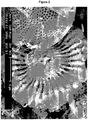
Figure 2 is a scanning electron micrograph of a zirconium silicate coated diatomaceous earth sample. -
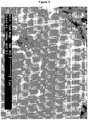
Figure 3 is another scanning electron micrograph of a zirconium silicate coated diatomaceous earth sample. -
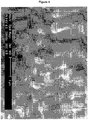
Figure 4 is another scanning electron micrograph of a zirconium silicate coated diatomaceous earth sample. -
Figure 5 is another scanning electron micrograph of a zirconium silicate coated diatomaceous earth sample. -
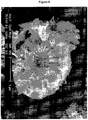
Figure 6 is another scanning electron micrograph of a zirconium silicate coated diatomaceous earth sample. -
Figure 7 depicts the relationship between the coating solution to perlite ratio and 1-inch (2.54 cm) compaction resistance of perlite microspheres tested according to Example 4. -
Figure 8 depicts the relationship between the sodium silicate to aluminum sulfate ratio and 1-inch (2.54 cm) compaction resistance of perlite microspheres tested according to Example 4, with an aluminosilicate to perlite ratio of 1. - The at least one particulate mineral material is a naturally occurring or manufactured mineral material capable of receiving at least one coating comprising at least one metal compound provided that the mineral material comprises perlite and the perlite is in the form of microspheres. Those of skill in the art will understand appropriate at least one particulate mineral materials for use in accordance with the present invention. The at least one particulate mineral material may be of one or more varying properties, e.g., composition, form, shape, size, and/or density. The at least one particulate mineral material may benefit from an increase in compressive strength. The at least one particulate mineral material may benefit from an increase in hardness. The at least one particulate mineral material may benefit from improved coloration. The at least one particulate mineral material may benefit from improved scrub resistance.
- A non-limiting list of at least one particulate mineral materials contemplated for use with the present invention includes perlite, diatomite, pumice, vermiculite, obsidian, kaolin, bauxite, bauxitic kaolin, calcium carbonate, talc, mica, oxide pigments, silica, alumina, zirconia, sintered bauxite, andalusite, feldspar, nepheline syenite, colorants, and particulate glasses including but not limited to soda lime, borosilicate, calcium aluminum silicate (E-Glass), and recycled-post consumer glass, provided the at least one particulate mineral material comprises perlite.
- The at least one particulate mineral material may be in any suitable form, including but not limited to amorphous, spherical, non-spherical, micron scale, non-micron scale, microspherical, porous, solid, non-expanded, expanded, and milled provided that the mineral material comprises perlite and the perlite is in the form of microspheres. As used herein, the term "microsphere" refers to a sphere or spherical material that is micron in scale. As used herein, the term "solid" refers to a particulate mineral material having a theoretical density of greater than or equal to about 90%. As used herein, the term "hollow" or "porous" refers to a particulate mineral material having a theoretical density of less than about 90%. As used herein, the terms "sphere" or "spherical" refer to a particle that, when magnified as a two-dimensional image, generally appears rounded and generally free of sharp corners or edges, whether or not the particle appears to be truly or substantially circular, elliptical, globular, or any other rounded shape; thus, in addition to the truly circular and elliptical shapes, other shapes with curved but not circular or elliptical outlines are included as a "sphere" or as "spherical". A particulate mineral material may also be considered a "sphere" or as "spherical" even though it may have some individual particles that have agglomerated, thereby forming non-spherical agglomerates in the otherwise spherical material, or are otherwise non-spherical.
- The at least one particulate mineral material may be of any shape selected by the skilled artisan for the intended purpose. In one embodiment, the at least one particulate mineral material is amorphous. In another embodiment, the at least one particulate mineral material is spherical. In yet another embodiment, the at least one particulate mineral material is in the shape of solid microspheres. In yet a further embodiment, the at least one particulate mineral material is in the shape of porous microspheres. In still another embodiment, the at least one particulate mineral material is in the shape of hollow microbubbles. In still a further embodiment, the at least one particulate mineral material is in the shape of hollow beads. In another embodiment, the at least one particulate mineral material is in the shape of hollow voids. The at least one particulate mineral material comprises perlite in the shape of microspheres which may be solid. In yet another embodiment, the at least one particulate mineral material is perlite in the shape of porous microspheres.
- The at least one particulate mineral material may be of any size selected by the skilled artisan for the intended purpose. In one embodiment, the at least one particulate mineral material is micron scale. In another embodiment, the at least one particulate mineral material is non-micron scale. As used herein, the prefix "micro" and the term "micron scale" both refer to a particulate mineral material having an equivalent spherical diameter of less than 100 µm, while the prefix "non-micron scale" refers to a particulate mineral material having an equivalent spherical diameter equal to or greater than 100 µm. As used herein, a particulate mineral material may be considered "micron scale" even though it may have some individual particles that have agglomerated, thereby forming non-micron scale agglomerates in the otherwise micron scale material, or are otherwise non-micron scale.
- In one embodiment, the at least one particulate mineral material has an equivalent spherical diameter of less than about 10 mm. In another embodiment, the at least one particulate mineral material has an equivalent spherical diameter (esd) of less than about 5 mm. In a further embodiment, the at least one particulate mineral material has an esd of less than about 1 mm. In yet another embodiment, the at least one particulate mineral material has an esd of less than about 100 µm. In yet a further embodiment, the at least one particulate mineral material has equivalent spherical diameter of less than about 10 µm. In still another embodiment, the at least one particulate mineral material has an equivalent spherical diameter of less than about 1 µm.
- In one embodiment, the at least one particulate mineral material has an esd from about 0.5 µm to about 10 mm. In another embodiment, the at least one particulate mineral material has an esd from about 1 µm to about 5 mm. In a further embodiment, the at least one particulate mineral material has an esd from about 1 µm to about 1 mm. In still another embodiment, the at least one particulate mineral material has an esd from about 10 µm to about 100 µm.
- The equivalent spherical diameter of a particulate mineral material may be measured using any of a variety of methods now known or hereafter discovered. For example, esd may be measured using SEDIGRAPH particle size analyzer. Esd analysis may also yield information such as a d10 (the size at which 10 percent of the particle volume is accounted for by particles having a diameter less than or equal to the specified value), d50 (same as d10 but for 50 percent particle volume, as called average particle size), and d90 (same as d10 but for 90 percent particle volume).
- In one embodiment, the at least one particulate mineral material is perlite. In another embodiment, the at least one particulate mineral material is non-expanded perlite. In a further embodiment, the particulate mineral material is expanded perlite. In yet another embodiment, the particulate mineral material is expanded perlite that has been subsequently milled. In yet a further embodiment, the particulate mineral material is perlite in the form of non-expanded microspheres. In still another embodiment, the particulate mineral material is perlite in the form of expanded microspheres. In still a further another embodiment, the particulate mineral material is perlite in the form of expanded microspheres that have been subsequently milled.
- The at least one particulate mineral material is coated with at least one coating comprising at least one metal compound, such that after at least one coating process the at least one particulate mineral material comprises at least one coating comprising at least one metal compound. In one embodiment, the at least one metal compound comprises at least one metal component and at least one other component chosen from the group consisting of oxide components and silicate components provided that the coating comprises at least one metal silicate which is an alumino silicate. The separate component materials may also be called starting materials and the at least one metal compound may be formed from many different starting materials by many different processes. In one embodiment, the at least one metal compound comprises at least one metal component and at least one silicate component. The at least one metal compound may comprise at least one metal component and at least one oxide component.
- The at least one metal component comprises at least one metal now known to the skilled artisan or hereafter discovered. Semimetals or metalloids, such as boron and silicon, are contemplated as at least one metals within the scope of the present inventions. A non-limiting list of at least one metals contemplated for use with the present invention includes aluminum, copper, chromium, copper, iron, lead, nickel, silver, titanium, zinc, zirconium, boron, silicon, and mixtures thereof. The at least one metal component comprises aluminum. In yet a further embodiment, the at least one metal component is chosen from the group consisting of metal nitrates, metal sulfates, metal aluminates, sodium metals, metal chlorides, metal alkoxides, metal acetates, metal formates, bayerite, pseudoboehmite, gibbsite, colloidal metals, metal gels, metal sols, metal trichlorides, ammonium metal carbonates, metal hydrates, and metal chlorohydrates.
- In one embodiment, the at least one metal component is at least one aluminum compound. Examples of the at least one aluminum compound include, but are not limited to, aluminum salts, aluminum nitrate, aluminum sulfate, alkali aluminate, sodium aluminate, aluminum halides (such as aluminum chloride), aluminum alkoxide, aluminum acetate, aluminum formate, bayerite, pseudoboehmite, gibbsite, colloidal alumina, alumina gel, alumina sol, aluminum trichloride, ammonium aluminum carbonate, and aluminum chlorohydrate. In one embodiment, the at least one aluminum compound is aluminum nitrate. In another embodiment, the at least one aluminum compound is aluminum sulfate. In a further embodiment, the at least one aluminum compound is sodium aluminate. In yet another embodiment, the at least one aluminum compound is aluminum chloride.
- In one embodiment, the at least one metal compound is formed in the presence of at least one acid. Without wishing to be bound by theory, it is believed that at least one acid may act to facilitate precipitation or coating of the at least one metal compound onto the at least one particulate mineral material. Appropriate acids will be known or may be hereafter discovered by the skilled artisan. Examples of the at least one acid include, but are not limited to, hydrochloric acid, sulfuric acid, phosphoric acid, formic acid, and acetic acid. In one embodiment, the at least one acid is hydrochloric acid. In another embodiment, the at least one acid is phosphoric acid.
- In one embodiment, the at least one metal compound comprises at least one metal component and at least one silicate component. Exemplary embodiments of the at least one silicate component include, but are not limited to, tetraethylorthosilicate (TEOS), tetramethylorthosilicate (TMOS), sodium silicate, alkali silicate, colloidal silica, solid silica, alkaline metal silicates, and sodium metasilicate. In one embodiment, the at least one silicate component is TEOS. In another embodiment, the at least one silicate component is sodium silicate.
- The at least one metal compound may be at least one alumino silicate. In one embodiment, the starting materials for the at least one alumino silicate comprise TEOS and aluminum nitrate. In another embodiment, the starting materials for the at least one alumino silicate comprise sodium silicate and aluminum sulfate. In a further embodiment, the at least one alumino silicate is formed by a sol-gel reaction. In yet another embodiment, the at least one alumino silicate is formed by a sol-gel reaction comprising TEOS and aluminum nitrate. In yet another embodiment, the at least one alumino silicate is formed from a mixture of sodium silicate and aluminum sulfate.
- The at least one coating may take various forms. In one embodiment, the at least one coating is in the form of a glassy-type coating. In another embodiment, the at least one coating is in the form of a ceramic-type coating. In still another embodiment, the coating is in the form of a sol-gel type coating.
- The method of preparing the at least one metal compound and the method of applying the at least one metal compound to the at least one particulate mineral material are not critical, so long as at least one coating comprising the at least one metal compound is formed on the at least one particulate mineral material. In one embodiment, the starting materials of the at least one metal compound may be applied separately and directly to the particulate mineral material, forming a coating comprising at least one metal compound thereon. In another embodiment, the starting materials of the at least one metal compound are first mixed or reacted, and then applied to the at least one particulate mineral material to form at least one coating. In a further embodiment, the at least one metal compound or one or more starting materials of the at least one metal compound, including mixtures of starting materials, are applied to the at least one particulate mineral material by spraying onto the surface of the at least one particulate mineral material. In yet another embodiment, the at least one metal compound is applied to the at least one particulate mineral material by solution coating. In one embodiment, the solution coating is performed at or about room temperature (i.e., about 70 °F (about 21 °C)). In another embodiment, the solution coating is performed at a temperature less than about 300 °F (149 °C). In a further embodiment, the solution coating is performed at a temperature less than about 150 °F (66 °C).
- In one embodiment in which the at least one particulate mineral material is perlite, the perlite may be coated with the at least one metal compound at any time during and/or after the perlite expansion process. In one such embodiment, the at least one metal component and the at least one other component of the at least one metal compound are applied separately and directly to the perlite during and/or after expansion of the perlite. In another such embodiment, the at least one metal component and the at least one other component may first be mixed or reacted and then applied to the perlite during and/or after expansion of the perlite.
- In one embodiment, the at least one metal component and the at least one other component, either individually or as a mixture, are applied to the perlite while the perlite is at an elevated temperature relative to room temperature (e.g., 70 °F (21 °C)). In another embodiment, the at least one metal compound is applied to the perlite while it is undergoing expansion and it is at an elevated temperature. In a further embodiment, the at least one metal compound is applied to perlite after it has undergone expansion and while it is at an elevated temperature. For example, the elevated temperature may be from about 900 °F (482 °C) to about 1500 °F (816 °C). While not wishing to be bound by theory, forming the at least one coating in accordance with the embodiments in which the perlite is at an elevated temperature is believed to allow the metal compound to more easily precipitate onto the expanded perlite and/or to induce the formation of a ceramic coating. In addition, it is believed that coating in accordance with the embodiments in which the perlite is at an elevated temperature may facilitate the formation of a hard metal compound glass/ceramic coating on the surface of the substrate.
- In a further embodiment, the at least one metal component and the at least one other component, either individually or a mixture, may be injected directly into the perlite expander. Once again, while not wishing to be bound by theory, it is contemplated that, to help reduce the production cost, a coating process according to this embodiment may be employed using existing expander equipment with no or minimum modification. In one such embodiment, the at least one metal compound and/or its starting materials is injected in-line into the perlite expander.
- The coated particulate mineral materials of the present inventions may exhibit increased hardness, compressive strength, and/or improved coloration over particulate mineral materials that do not comprise at least one coating comprising at least one metal compound. In one embodiment, the particulate mineral materials of the present invention exhibit an increased compressive strength (as measured by compaction resistance). One example of a compaction resistance test measures the compressive force in pd/in2 (psi) (kPa) required to reduce a specified column of mineral aggregate by 1 or 2 inches (2.54 or 5.08 cm). In one exemplary method to determine the compaction resistance, a Dillion TC2 Tension Compression Cyclic machine may be used to test cylinders packed with the mineral material to be tested. First, test cylinders are prepared by packing the mineral to be tested into a test cylinder with 1⅛ inch (2.9 cm) inside diameter and 5 inch (12.7 cm) inside depth. The filled test cylinder is then held on the platform of a compaction density machine and bounced 25 times. After fitting a flanged collar on the test cylinder, more samples are added to bring the height to within an inch (2.54 cm) of the top of the collar. The filled test cylinder is then bounced for an additional 25 times. After removing the collar, the mineral above the level of the test cylinder was struck off with a straight edge. The cylinder with samples may then be weighed for a compaction density measurement, if desired. The cylinders are then transferred to the compaction resistance testing unit, where each cylinder is slowly compressed with a piston at a speed of 2 inch/min (5.08 cm/min) to the 1 inch (2.54 cm) or 2 inch (5.08 cm) mark. The resistance of the particulate material during the compaction can then be measured.
- In one embodiment, the compressive strength is at least about 2 times that of the uncoated material. In another embodiment, the compressive strength is at least about 4 times that of the uncoated material. In a further embodiment, the compressive strength is at least about 6 times that of the uncoated material. In yet another embodiment, the compressive strength is at least about 10 times that of the uncoated material.
- In one embodiment, the coated particulate mineral materials of the present inventions may exhibit increased hardness. The skilled artisan is aware of hardness attributes desirable for particulate mineral materials in an intended use or application. The hardness of particulate mineral materials may be difficult to measure directly. One exemplary method of those known to the skilled artisan for measuring hardness is a scrub resistance test according to ASTM D 2486-89. In one embodiment, the hardness of the coated particulate mineral material is increased by about 2%, according to its scrub resistance. In another embodiment, the hardness is increased by about 5%. In a further embodiment, the hardness is increased by about 10%. In yet another embodiment, the hardness is increased by about 15%. In yet a further embodiment, the hardness is increased by about 20% or more. In still another embodiment, the hardness is increased by about 2% to about 20%. In still a further embodiment, the hardness is increased by about 10% to about 20%.
- In one embodiment, the coated particulate mineral materials of the present inventions may exhibit improved coloration. The skilled artisan is aware of coloration attributes desirable for particulate mineral materials in an intended use or application. The coloration of the coated particulate mineral materials may be evaluated using Hunter L, a, b color measurements collected, for example, on a Spectro/plus Spectrophotometer (Color and Appearance Technology, Inc., Princeton, New Jersey). L, a, and b values rank the whiteness, red/green, and blue/yellow values spectrophotometrically by measuring the reflection of light off of a colored sample. The desired values for L, a, and b may be different for various particulate mineral materials and intended uses; values of L, a, and b may be considered independently from each other such that, for example, relatively small changes in one value (such as b) may be highly desirable even with relatively larger changes in another value (such as L). L is numbered between 0 and 100, with 0 being a completely black sample and 100 being a completely white sample. The a value is the red/green value which is a positive number for red samples (the more positive, the redder) and negative for green samples (the more negative, the greener). The b value is similar to the a but looks at the blue/yellow values of the material. Positive samples are yellow, negative samples are blue. The more positive or negative the number, the more yellow or blue, respectively. Blue light brightness ("BLB") may also be calculated from Hunter scale color data (L, a, b).
- In one embodiment, the coated particulate mineral materials of the present invention have a b value closer to 0 than uncoated materials. In another embodiment, the coated particulate mineral materials have a b value about 1 unit lower than uncoated materials. In a further embodiment, the coated particulate mineral materials have a b value about 0.5 to about 2 units lower than uncoated materials. In yet another embodiment, the coated particulate mineral minerals have about the same L value as the uncoated materials. In yet a further embodiment, the coated particulate mineral materials have a b value closer to 0 than uncoated materials, with about the same L value. In still another embodiment, the coated particulate mineral materials have a b value closer to about 0 than uncoated materials, with a change in L value of about 4 units or less. In still a further embodiment, the coated particulate mineral materials have a b value about 0.5 units lower than uncoated materials, with a change in L value of about 4 units or less. In another embodiment, the coated particulate mineral materials have a b value of about 0.5 to about 2 units lower than uncoated materials, with a change in L value of about 0.2 to about 4 units. In a further embodiment, the coated particulate mineral materials have an a value within about 0.5 units of the uncoated materials.
- The coated particulate mineral materials of the present invention may be used in many applications. For example, the coated particulate mineral materials may be used as pigments, fillers, proppants, or extenders in various materials such as paints, coatings, catalysts, stuccos, plastics, polymers, papers, potting compounds, spackling, tape joint compounds, concretes, plywood patches, resin based castings, water-based construction compounds, and sensitizers in blasting explosives. In one embodiment, the particulate mineral materials are used in paints (including but not limited to architectural, industrial, automotive, and maintenance paints) for, among other things, improved scrubablity, hardness, burnish, mar, and stain resistance, corrosion resistance, and abrasion resistance. In another embodiment, the coated particulate mineral materials are used in filter aid/filtration applications. In a further embodiment, the coated particulate mineral materials are used in insulation end uses for, among other things, increased reduced volume fill resistance and increased insulation behavior. In yet another embodiment, the coated particulate mineral materials are used in plywood patches for, among other things, cost reduction, sandability, and reduced shrinkage. In yet a further embodiment, the coated particulate mineral materials are used in polymer concretes for, among other things, higher compressive strength, cost reduction, reduced shrinkage, and improved flow. In still another embodiment, the coated particulate mineral materials are used in potting compounds for, among other things, thermal stress crack resistance and reduced shrinkage. In still a further embodiment, the coated particulate mineral materials are used in powder coatings for, among other things, abrasion resistance and improved flow. In another embodiment, the coated particulate mineral materials are used in spackling compounds for, among other things, improved sandability and reduced shrinkage. In a further embodiment, the coated particulate mineral materials are used in tape joint compounds for, among other things, improved sandability and reduced shrinkage.
- In one embodiment, the coated particulate mineral materials are used in coatings. Exemplary coatings including, but are not limited to, architectural coatings, light industrial coatings, industrial coatings, decorative coatings, traffic paint coatings, automotive primer coatings, automotive top coatings, electro deposition primer ("EDP") coatings, cross-linkable lacquer coatings, electrostatic coatings, electrostatic lacquer coatings, high solid enamel coatings, low energy coatings (including two-component urethane coatings), powder coatings, radiation curable coatings, water reducible coatings, solventless coatings (including epoxy/curing agents), solventless primer coatings, elastomeric coatings, epoxy coatings (including urethane hybrid coatings, terrazzo coatings, and high heat system coatings), urethane and water-based coatings (including industrial & architectural polymer flooring coatings), wood coatings, self-leveling & trowelable surface coatings, chemical resistant coatings, traffic deck membrane system coatings, deck and dock stain and coating systems, bridge deck overlays, color driveway sealer, color roof repair coatings, pickup truck bed liner coatings, muffler repair coatings, ship deck coatings, concrete floor coatings, hockey stick tape coatings, workboot toe protection coatings, rust and corrosion preventative coatings, and anti-slip protection coatings.
- In another embodiment, the coated particulate mineral materials are used in catalysts. Exemplary catalysts include, but are not limited to, acid catalysts (used, for example, in ammonia & methanol applications), amination catalysts (used, for example, in alcohol applications), ammonia synthesis catalysts (used, for example, in amine applications), methanol synthesis catalysts (used, for example, in carrier applications), custom manufactured catalysts (used, for example, in cyclohexane applications), dehydrogenation catalysts (used, for example, in diol and poliol applications), hydrogenation catalysts (used, for example, in flavor and fragrance applications), pre-reforming catalysts (used, for example, in feed purification applications), steam-reforming catalysts (used, for example, in ketone and alcohol applications), shift catalysts (used, for example, in nylon intermediate applications), sulfur catalysts (used, for example, in resin and wax applications), and chloride removal catalysts (used, for example, in oxidation and oxychlorination applications).
- Other than in the examples, or where otherwise indicated, all numbers expressing quantities of ingredients, reaction conditions, and so forth used in the specification and claims are to be understood as being modified in all instances by the term "about." Accordingly, unless indicated to the contrary, the numerical parameters set forth in the specification and attached claims are approximations that may vary depending upon the desired properties sought to be obtained by the present disclosure. At the very least, and not as an attempt to limit the application of the doctrine of equivalents to the scope of the claims, each numerical parameter should be construed in light of the number of significant digits and ordinary rounding approaches.
- Notwithstanding that the numerical ranges and parameters setting forth the broad scope of the invention are approximations and, unless otherwise indicated, the numerical values set forth in the specific examples are reported as precisely as possible. Any numerical value, however, inherently contains certain errors necessarily resulting from the standard deviation found in their respective testing measurements.
- By way of non-limiting illustration, examples of certain embodiments of the present disclosure are given below. Examples 1 to 4 are of the invention.
- An in-line coating process was used to coat Harborlite 50x50, a commercially available perlite filler product from World Minerals Inc., with at least one coating that comprises at least one alumino silicate. First, 200 pounds (91 kg) of sodium silicate (Brenntag N grade, SiO2/Na2O=3.22) was mixed with 250 pounds (113 kg) of water in a stainless steel container for 10 minutes. Next, 38 pounds (17 kg) of aluminum sulfate (Brenntag) was added to the solution. After mixing for 10 minutes, the solution was injected at 20 pds/min (9 kg/min) into a perlite expander in production of Harborlite 50x50. The injection point was located adjacent to the port for the thermocouple in the perlite expander (also called "in-line"). The temperature at the injection point was from 900°F to 1100°F (482 °C to 593 °C). The injection was started after 10 minutes of production of the control product (non-alumino silicate coated Harborlite 50x50). Samples were collected every 5 minutes. The first sample, consisting of the non-alumino silicate coated Harborlite 50x50 control material, was collected at
time 0, just before the start of injection. Four additional samples, consisting of the alumino silicate coated material, were then collected at times 5 min, 10 min, 15 min, and 20 min. A total of 684 pounds (310 kg) of coated product was produced during the run. - As shown in Table 1, the alumino silicate glass/ceramic coating clearly and unexpectedly improved the compaction resistance of the Harborlite 50x50.
Table 1 Compaction Density and Resistance of Alumino silicate Glass/Ceramic Coated Perlite Sample ID Compaction Density (pd/cf) (g/cm3) 1-Inch Compaction Resistance (psi) (kPa) 2-Inch Compaction Resistance (psi) (kPa) Non-Al-Si Coated Harborlite 50x50 (control), 0 min 3.1 (0.05) 10.4 (71.7) 35.3 (243.4) Al-Si Coated Harborlite 50x50, 5 min 3.5 (0.06) 16.5 (113.8) 47.0 (324.1) Al-Si Coated Harborlite 50x50, 10 min 3.3 (0.05) 15.5 (106.9) 45.5 (313.7) Al-Si Coated Harborlite 50x50, 15 min 2.9 (0.05) 12.8 (88.3) 36.4 (251.0) Al-Si Coated Harborlite 50x50, 20 min 3.2 (0.05) 14.0 (96.5) 42.2 (291.0) - The methods used for determining the strength and hardness of the perlite material presented in Table 1 were a compaction density test and a compaction resistance test. In the compaction density test, the perlite to be tested was packed into a test cylinder with 1⅛ inch (2.9 cm) inside diameter and 5 inch (12.7 cm) inside depth. The filled test cylinder was then held on the platform of a compaction density machine and bounced 25 times. After fitting a flanged collar on the test cylinder, more samples were added to bring the height to within an inch (2.54 cm) of the top of the collar. The filled test cylinder was then bounced for an additional 25 times. After removing the collar, the perlite above the level of the test cylinder was struck off with a straight edge. The cylinder with samples was then weighed for a compaction density measurement.
- To determine the compaction resistance, a Dillion TC2 Tension Compression Cyclic machine was used to test cylinders packed with the perlite produced according to this example. During the test, the cylinder was slowly compressed with a piston at a speed of 2 inch/min (5.08 cm/min) to the 1 inch (2.54 cm) or 2 inch (5.08 cm) mark. The resistance of the particulate material during the compaction was measured.
- It is believed that the slight downward trend in density and compaction resistance of the coated particulate material was due to a gradual increase in the homogeneity of the Al-Si coatings formed on the samples. This homogeneity was most likely caused by large agglomerated/melted chunk material that built up in the expander after expansion. It is believed that the Al-Si solution was concentrated on some spots in the expander at the end of the expansion, thus resulting in an Al-Si coating on the substrate that gradually became thinner and thinner, thereby gradually decreasing the density and compaction resistance of the samples.
- An expanded perlite microsphere product different from Example 1 was used as the substrate for an alumino silicate glass/ceramic coating. Prior to coating, the non-coated alumino silicate perlite microsphere product was measured to have an average particle size of 46 microns (µm), a 1-inch (2.54 cm) compaction resistance of 22 psi (151.7 kPa), and a compaction density of 9.1 lb/cf (0.15 g/cm3).
Figure 1 shows the scanning electron micrograph of this starting, non-coated sample. - To coat the starting perlite microsphere product, first, 20 grams of sodium silicate solution (PQ Corporation N® 38, SiO2/Na2O=3.22) was mixed with 10 grams of water for 10 minutes. Second, 1 gram of aluminum sulfate (Alfa Aesar, Al2(SO4)3·XH2O, X ≈ 14-18) was added to the silicate solution. That solution was mixed for another 10 minutes. Next, the solution was sprayed onto 80 grams of the substrate perlite microspheres. After drying overnight in the air, the alumino silicate glass/ceramic coated sample was tested for compaction resistance as stated in Example 1. This alumino silicate glass/ceramic coated sample had a 1-inch (2.54 cm) compaction resistance of 44 psi (303.4 kPa) and a compaction density of 9.4 Ib/cf (0.15 g/cm3).
- In practice, it is often times desirable to obtain a product that exhibits higher strength at lower densities. In general, a thicker coating yields a larger or greater increase in compaction density. Since only a relatively small sample of expanded perlite microspheres was used in this Example 2, as compared with Example 1, it is believed that a greater percentage of the expanded perlite microspheres were substantially fully coated, thus leading to a higher degree of homogeneity than in that Example 1. Notably, while the applied alumino silicate coating was not thick enough to significantly increase the compaction density of the expanded perlite microsphere sample, it did result in greatly and unexpectedly improved strength characteristics, as measured by compaction resistance.
- Example 2 was repeated except that 60 g of the perlite microspheres were used. The alumino silicate glass/ceramic coated sample had a 1-inch (2.54 cm) compaction resistance of 51 psi (351.6 kPa) and a compaction density of 9.8 Ib/cf (0.16 g/cm3), measured by the techniques used in Example 1. The Al-Si to substrate ratio in Example 2 increased to 21:60 from 21:80 in Example 1. It is believed that this Example 3 resulted in a thicker coating than in Example 2 and lead to both a higher compaction density and a higher compressive strength, as measured by compaction resistance.
- Samples of perlite microspheres were coated with alumino-silicate coatings according to the present invention to evaluate the increase in compaction density and compaction resistance. Samples of commercially available perlite microspheres, Harborlite PA1000 and Harborlite PA116 (from World Minerals Inc.) were coated with an alumino silicate coating. The alumino silicate coating comprised aluminum sulfate and sodium silicate. For coating the Harborlite PA1000 samples, the sodium silicate to aluminum sulfate ratio in the coating solution was fixed at 20, and the coating solution to perlite microsphere ratio was varied from 0.3 to 2. For coating the Harborlite PA116 samples, the sodium silicate to aluminum sulfate ratio in the coating solution was varied from 5 to 60, and the coating solution to perlite microsphere ratio was fixed at 1.
- To coat the perlite microsphere samples, first, the desired amount of sodium silicate solution (PQ Corporation N® 38, SiO2/Na2O=3.22), reflected in Table 2 below, was mixed with 10 grams of water for 10 minutes. Next, the desired amount of aluminum sulfate (Alfa Aesar, Al2(SO4)3·XH2O, X ≈ 14-18), reflected in Table 2 below, was added to the silicate solution. That solution was mixed for another 10 minutes. The solution was then sprayed onto the specified amount of the substrate perlite microspheres, as reflected in Table 2 below. After drying overnight in the air, the aluminosilicate glass/ceramic coated samples were tested for compaction density and resistance.
- Compaction density and 1-inch (2.54 cm) compaction resistance of the uncoated perlite materials were measured as stated in Example 1 and compared with the compaction density and 1-inch (2.54 cm) compaction resistance of the same material after coating with an alumino silicate coating in accordance with the present invention. In addition, the ratio of aluminum compound to silicate compound and alumino silicate coating solution to perlite material were varied in order to evaluate the impact of those concentrations on the same parameters. Finally, for purposes of comparison, three additional uncoated glass microsphere products, 3M Company's Scotchlite glass bubble K-1, K-15, and S-22, were also evaluated to determine their compaction density and 1-inch (2.54 cm) compaction resistance. The results of those tests are shown in Table 2 below.
Table 2 Compaction Density and Resistance of Alumino Silicate Coated Perlite Microspheres Sample ID Na2SiO3/AL2(SO4)3XH20 Ratio Al-Si solution / Perlite Ratio Compaction Density (lb/cf) (g/cm3) 1-Inch Compaction Resistance (psi)(kPa) 3M K-1 (control) 5.7(0.09) 57(393.0) 3M K-15 (control) 6.6(0.11) 74(510.2) SM S-22 (control) 8.6(0.14) 125(861.8) PA1000 (control) 11.4(0.18) 23(158.6) Al-Si coated PA1000 20 2 15.0(0.24) 135(930.8) Al-Si coated PA1000 20 1 14.5(0.23) 73(503.3) Al-Si coated PA1000 20 0.5 12.0(0.19) 49(337.8) Al-Si coated PA1000 20 0.3 11.0(0.18) 44(303.4) PA116 (control) 10.2(0.16) 20(137.9) Al-Si coated PA116 5 1 14.6(0.23) 178(1227.3) Al-Si coated PA116 10 1 10.7(0.17) 35(241.3) Al-Si coated PA116 20 1 11.5(0.18) 45(310.3) Al-Si coated PA116 40 1 12.1(0.19) 57(393.0) Al-Si coated PA116 60 1 11.4(0.18) 51(351.6) - As can be seen from Table 2, the samples of perlite microspheres coated with the metal silicate (alumino silicate) coatings according to the present invention exhibited a marked increase in 1-inch (2.54 cm) compaction resistance, with minimal effect on compaction density as compared to the uncoated control samples. In addition, it can be seen that increasing the ratio of alumino silicate coating to perlite material had a minimal effect on compaction density, while compressive strength (as measured by compaction resistance) was dramatically increased.
- The results demonstrate that compaction resistance increased linearly with increasing coating solution to perlite ratio. Without wishing to be bound by theory, it is believed that the coating layer on the perlite microsphere surface became thicker with larger amount of coating solution, thus leading to higher strength. This relationship from the above testing is depicted in
Figure 7 . - In addition, at an alumino silicate to perlite ratio of 1, higher strength was observed at low silicate to aluminum ratio (<5), while higher silicate to aluminum ratio (>5) had no significant impact on the strength. This relationship from the above testing is depicted in
Figure 8 . Moreover, as compared to the commercial glass microsphere samples K-1, K-15, and S-22, the testing results also demonstrate that the strength for the aluminosilicate coated perlite microspheres according to the present invention were at least comparable to that of the commercial products. - In Example 5, samples of perlite microspheres were coated with zirconium silicate coatings according to the present invention to evaluate the increase in compaction density and compaction resistance. Samples of Harborlite PA116, available from World Minerals Inc., were used for the samples of perlite microspheres. To coat the perlite microsphere samples, first, the desired amount (17 to 40 grams as reflected in Table 3 below) of sodium silicate solution (PQ Corporation N® 38, SiO2/Na2O=3.22) was mixed with desired amount (17 to 33 grams as reflected in Table 3 below) of zirconium sulfate solution (Aldrich, Zr(SO4)2, 35 %) for 10 minutes. In some cases, additional water was also added into the solution. Next, the solution was sprayed onto the desired amount of the substrate perlite microspheres as reflected in Table 3 below. After drying overnight in the air, the aluminosilicate glass/ceramic coated samples were tested for compaction resistance and density using the techniques of Example 1.
- Measurements of the compaction density and 1-inch (2.54 cm) compaction resistance of the uncoated perlite materials was measured and compared with the compaction density and 1-inch compaction resistance of the same material after coating with a zirconium silicate coating in accordance with the present invention. In addition, the ratio of zirconium compound to silicate compound and zirconium silicate coating to perlite material were varied in order to evaluate the impact of those concentrations on the same parameters. The results of those tests is shown in Table 3 below.
Table 3 Compaction Density and Resistance of Zirconium Silicate Coated Perlite Perlite (g) H2O (g) Zr(SO4)2 (g) Na2SiO3 (g) Na2SiO3/Zr(SO4)2 Ratio Zr-Si Solution/Perlite Ratio Loose Weight Density (lb/cf)(g/cm3) Compaction Density (lb/cf)(g/cm3) 1-Inch Compaction Resistance (psi)(kPa) Control (PA116) 8.9(0.14) 10.2(0.16) 10(68.9) 50 0 23 17 0.7 1 10.8(0.17) 12.6(0.20) 18(124.1) 50 0 25 25 1 1 12.6(0.20) 14.7(0.24) 71(489.53) 50 0 17 33 1.9 1 12.8(0.21) 15.5(0.25) 100(689.48) 50 10 7 33 4.7 0.8 9.8(0.16) 11.6(0.19) 29(199.95) 50 10 10 30 3.0 0.8 11.6(0.19) 13.6(0.22) 85(586.05) 50 10 15 25 1.7 0.8 11.7(0.19) 13.8(0.22) 78(537.79) - As can be seen from Table 3, the zirconium silicate coated perlite samples exhibited a dramatic increase in compressive strength as compared with the uncoated perlite sample, while only a slight increase in compaction density. In addition, as the ratio of zirconium silicate coating to perlite material was increased, the compaction resistance was also increased. The tested samples were found to exhibit the greatest strength at a Na2SiO3/Zr(SO4)2 ratio between 1 to 3.
- In Example 6, samples of diatomite were coated with various metal silicate coatings to evaluate their increase on scrub resistance. Samples of CelTix diatomite, available from World Minerals Inc., were treated with the various coatings. The diatomite samples were coated with zirconium silicate and boron-silicate coatings according to the present invention and compared with an uncoated diatomite sample and samples of diatomite coated with an ammonium zirconium carbonate (Zr(AZC)) coating not in accordance with the present invention.
- To coat the CelTix, first, the desired amount of ammonium zirconium carbonate solution (Aldrich, (NH4)ZrO(CO3)2, 14-16% Zr as reflected in Table 4 below) was mixed with 20 g of water for 10 minutes. Next, the solution was sprayed onto 200 g of CelTix. After drying at 120°C overnight in the air, the ammonium zirconium carbonate coated samples were tested for scrub resistance.
- CelTix was also coated with zirconium silicate using zirconyl chloride and ammonium zirconium carbonate as the starting materials. For zirconyl chloride coating, first, 3 grams of sodium silicate solution (PQ Corporation N® 38, SiO2/Na2O=3.22) was mixed with 15 grams of water for 10 minutes. Second, 6 grams of zirconyl chloride solution (Aldrich, ZrOCl2, 30%) was mixed with 15 g of water for 10 minutes and then added to the sodium silicate solution. Next, the Zr-Si coating solution was sprayed onto 200 g of CelTix. After drying at 120°C overnight in the air, the zirconium silicate coated samples were tested for scrub resistance. For ammonium zirconium carbonate coating, first, 5 grams of sodium silicate solution (PQ Corporation N® 38, SiO2/Na2O=3.22) was mixed with 30 grams of water for 10 minutes. Second, 40 grams of ammonium zirconium carbonate solution (Aldrich) was mixed with 20 g of water for 10 minutes and then added to the sodium silicate solution. Next, the Zr-Si coating solution was sprayed onto 200 g of CelTix. After drying at 120°C overnight in the air, the zirconium silicate coated sample was tested for scrub resistance.
- To coat the CelTix samples with borosilicate, first, the desired amount (2 - 5 grams) of sodium silicate solution (PQ Corporation N® 38, SiO2/Na2O=3.22) was mixed with 10 grams of water for 10 minutes. Second, desired amount (5 - 10 grams) of ammonium pentaborate octahydrate (Aldrich, (NH4)2B10O16·8H2O, >99%) was mixed with desired amount (3 - 45 grams) of water for 10 minutes and then added to the sodium silicate solution. The ammonium pentaborate octahydrate to sodium silicate ratio was varied from 1 to 5. Next, the borosilicate coating solution was sprayed onto 200 g of CelTix. After drying at 120°C overnight in the air, the borosilicate coated samples were tested for scrub resistance. The scrub resistance of the uncoated diatomite material and ammonium zirconium carbonate coated diatomite materials were measured and compared with the scrub resistance of the same material coated with zirconium silicate and boron-silicate coatings in accordance with the present invention. The results of those tests are shown in Table 4 below.
Table 4 Scrub Resistance of Metal Silicate Coated Diatomite Sample ID % Increase of Scrub Resistance CelTix (control) 0 12% (NH4)ZrO(CO3)2 coated CelTix -12 24% (NH4)ZrO(CO3)2 coated CelTix 14 Zirconium silicate coated CelTix (ZrOCl2 to Na2SiO3 ratio of 2) 12 Zirconium silicate coated CelTix ((NH4)ZrO(CO3)2 to Na2SiO3 ratio of 8) 17 Borosilicate coated CelTix ((NH4)2B10O16 to Na2SiO3 ratio of 2) 14 Borosilicate coated CelTix ((NH4)2B10O 16 to Na2SiO3 ratio of 1) 7 Borosilicate coated CelTix ((NH4)2B10O 16 to Na2SiO3 ratio of 5) 2 - As can be seen from Table 4, each of the samples treated with the coatings according to the present invention exhibited increased scrub resistance as compared to the uncoated control sample, regardless of the loading concentration. In contrast, meaningful improvement on scrub resistance within testing parameters for the ammonium zirconium carbonate coating was only seen at a loading of 24%. In addition, scrub resistance improvement was seen for the zirconium silicate coatings regardless of the zirconium compound starting material (17% improvement for the ammonium zirconium carbonate starting material and 12% for the zirconyl chloride).
- In Example 7, samples of diatomite were coated with zinc oxide coatings to evaluate their change in coloration. Seven samples of CelTix diatomite, available from World Minerals Inc., were treated with the zinc oxide coatings in various weight percentages, at various temperatures, and for various particle sizes of the base diatomite material as reflected in Table 5 below. To coat the CelTix with zinc oxide, the desired amount (6 - 24 grams as reflected in Table 5 below) of zinc sulfate (Mallinckrodt, ZnSO4·7H2O, 99.3%) was mixed with 20 g of water for 10 minutes, and then the solution at about room temperature was sprayed onto 200 g of CelTix. The coated samples were then dried at 120°C overnight in the air. As reflected in Table 5, many of the dried samples were additionally heat-treated at 300°C for 15 minutes. The coloration of the resultant zinc oxide coated diatomite materials were evaluated for improved coloration using Hunter L, a, b color measurements collected on a Spectro/plus Spectrophotometer (Color and Appearance Technology, Inc., Princeton, New Jersey). The coated samples were then compared to the uncoated control sample. The results of those tests are shown in Table 5 below.
Table 5 Improved Coloration of Zinc Oxide Coated Diatomite Celtix (g) Zn(SO4) (g) Drying/heat-treatment Temperature (°C) d10 d50 d90 L a b Blue Light Brightness Control 4.91 13.57 28.78 93.16 0.20 4.53 80.76 200 6 120 4.86 13.35 30.61 92.72 0.59 3.46 81.39 200 6 300 4.57 13.47 31.72 90.14 0.36 3.45 76.81 200 12 120 4.67 13.09 29.98 92.48 0.36 3.47 80.94 200 12 300 4.58 13.51 32.04 89.55 0.17 2.92 76.46 200 24 120 4.76 12.70 28.85 91.81 0.29 3.15 80.16 200 24 300 4.58 13.44 32.41 89.53 0.19 2.69 76.72 - As can be seen from the results in Table 5, the diatomite samples coated with the zinc oxide coating exhibited unexpected and desirable reduction in yellowness (b value). In general, yellowness is not found to be desirable for many filler applications. The heat-treatment at 300°C was also found to further reduce yellowness. Decreases in brightness (L value) were acceptable given the decrease in yellowness, as were decreases in blue light brightness, as overall the dried as well as the heat treated samples still exhibited improved coloration.
- Other embodiments of this invention will be apparent to those skilled in the art from consideration of the specification and practice of the invention disclosed herein. It is intended that the specification and examples be considered as exemplary only, with a true scope and spirit of the invention being indicated by the following claims.
- The following statements (numbered paragraphs) define subject-matter considered to be of interest in relation to the present disclosure:
- 1: A metal silicate coated particulate mineral material, comprising perlite comprising a coating comprising at least one metal silicate.
- 2: The metal silicate coated particulate mineral material of
paragraph 1, wherein the at least one metal silicate is chosen from at least one of an alumino silicate, zirconium silicate, and zinc silicate. - 3: The metal silicate coated particulate mineral material of
paragraph 1, wherein the perlite material is non-expanded. - 4: The metal silicate coated particulate mineral material of
paragraph 1, wherein the perlite is expanded. - 5: The metal silicate coated particulate mineral material of paragraph 4, wherein the expanded perlite is milled.
- 6: The metal silicate coated particulate mineral material of
paragraph 1, wherein the perlite is porous. - 7: The metal silicate coated particulate mineral material of
paragraph 1, wherein the perlite is solid. - 8: The metal silicate coated particulate mineral material of
paragraph 1, wherein the perlite is micron scale. - 9: The metal silicate coated particulate mineral material of paragraph 8, wherein the perlite is in the form of microspheres.
- 10: The metal silicate coated particulate mineral material of paragraph 9, wherein the microspheres are porous.
- 11: The metal silicate coated particulate mineral material of paragraph 9, wherein the microspheres are solid.
- 12: The metal silicate coated particulate mineral material of
paragraph 1, wherein the perlite is in a form chosen from one of hollow microbubbles, hollow beads, and hollow voids. - 13: The metal silicate coated particulate mineral material of
paragraph 1, wherein the at least one metal silicate comprises at least one metal component and at least one silicate component. - 14: The metal silicate coated particulate mineral material of paragraph 13, wherein the at least one silicate component is chosen from the group consisting of tetraethylorthosilicate, tetramethylorthosilicate, sodium silicate, alkali silicate, colloidal silica, solid silica, alkaline metal silicates, and sodium metasilicate.
- 15: The metal silicate coated particulate mineral material of paragraph 13, wherein the at least one metal component is chosen from the group consisting of metal nitrates, metal sulfates, metal aluminates, sodium metals, metal chlorides, metal alkoxides, metal acetates, metal formates, bayerite, pseudoboehmite, gibbsite, colloidal metals, metal gels, metal sols, metal trichlorides, ammonium metal carbonates, metal hydrates, and metal chlorohydrates.
- 16: The metal silicate coated particulate mineral material of
paragraph 15, wherein the at least one metal component comprises at least one of aluminum, zirconium, boron, and zinc. - 17: The metal silicate coated particulate mineral material of paragraph 16, wherein the at least one metal component is chosen from aluminum nitrate, aluminum sulfate, sodium aluminate, and aluminum halides.
- 18: The metal silicate coated particulate mineral material of paragraph 16, wherein the at least one metal component is chosen from zirconium sulfate, zirconium chloride, ammonium pentaborate octahydrate, and ammonium zirconium carbonate.
- 19: The metal silicate coated particulate mineral material of paragraph 16, wherein the at least one metal component is chosen from zinc sulfate and zinc nitrate.
- 20: A metal silicate coated particulate mineral material, comprising diatomite comprising a coating comprising at least one metal silicate selected from at least one of zirconium silicates and zinc silicates.
- 21: The metal silicate coated particulate mineral material of
paragraph 20, wherein the diatomite is a freshwater diatomite. - 22: The metal silicate coated particulate mineral material of
paragraph 20, wherein the diatomite is a saltwater diatomite. - 23: The metal silicate coated particulate mineral material of
paragraph 20, wherein the at least one metal silicate comprises at least one metal component and at least one silicate component. - 24: The metal silicate coated particulate mineral material of paragraph 23, wherein the at least one silicate component is chosen from the group consisting of tetraethylorthosilicate, tetramethylorthosilicate, sodium silicate, alkali silicate, colloidal silica, solid silica, alkaline metal silicates, and sodium metasilicate.
- 25: The metal silicate coated particulate mineral material of paragraph 23, wherein the at least one metal component is chosen from the group consisting of metal nitrates, metal sulfates, metal aluminates, sodium metals, metal chlorides, metal alkoxides, metal acetates, metal formates, bayerite, pseudoboehmite, gibbsite, colloidal metals, metal gels, metal sols, metal trichlorides, ammonium metal carbonates, metal hydrates, and metal chlorohydrates.
- 26: The metal silicate coated particulate mineral material of paragraph 25, wherein the at least one metal component is chosen from zirconium sulfate, zirconium chloride, and ammonium zirconium carbonate.
- 27: The metal silicate coated particulate mineral material of paragraph 25, wherein the at least one metal component is chosen from zinc sulfate and zinc nitrate.
- 28: A metal silicate coated particulate mineral material, comprising a particulate perlite microsphere comprising a coating comprising at least one metal silicate.
- 29: The metal silicate coated particulate mineral material of paragraph 28, wherein the at least one metal silicate is chosen from at least one of an alumino silicate, zirconium silicate, and zinc silicate.
- 30: The metal silicate coated particulate mineral material of paragraph 28, wherein the perlite microsphere is non-expanded.
- 31: The metal silicate coated particulate mineral material of paragraph 28, wherein the perlite microsphere is expanded.
- 32: The metal silicate coated particulate mineral material of paragraph 31, wherein the perlite microsphere is milled.
- 33: The metal silicate coated particulate mineral material of paragraph 28, wherein the at least one particulate perlite microsphere is porous.
- 34: The metal silicate coated particulate mineral material of paragraph 28, wherein the at least one particulate perlite microsphere is solid.
- 35: The metal silicate coated particulate mineral material of paragraph 28, wherein the at least one metal silicate comprises at least one metal component and at least one silicate component.
- 36: The metal silicate coated particulate mineral material of paragraph 35, wherein the at least one silicate component is chosen from the group consisting of tetraethylorthosilicate, tetramethylorthosilicate, sodium silicate, alkali silicate, colloidal silica, solid silica, alkaline metal silicates, and sodium metasilicate.
- 37: The metal silicate coated particulate mineral material of paragraph 35, wherein the at least one metal component is chosen from the group consisting of metal nitrates, metal sulfates, metal aluminates, sodium metals, metal chlorides, metal alkoxides, metal acetates, metal formates, bayerite, pseudoboehmite, gibbsite, colloidal metals, metal gels, metal sols, metal trichlorides, ammonium metal carbonates, metal hydrates, and metal chlorohydrates.
- 38: The metal silicate coated particulate mineral material of paragraph 37, wherein the at least one metal component comprises at least one of aluminum, zirconium, boron, and zinc.
- 39: The metal silicate coated particulate mineral material of paragraph 38, wherein the at least one metal component is chosen from aluminum nitrate, aluminum sulfate, sodium aluminate, and aluminum halides.
- 40: The metal silicate coated particulate mineral material of paragraph 38, wherein the at least one metal component is chosen from zirconium sulfate, zirconium chloride, ammonium pentaborate octahydrate, and ammonium zirconium carbonate.
- 41: The metal silicate coated particulate mineral material of paragraph 38, wherein the at least one metal component is chosen from zinc sulfate and zinc nitrate.
- 42: A method of forming coated expanded perlite microspheres, comprising:
- introducing perlite microspheres into an expander heated to a temperature of from about 900 °F (482 °C) to about 1100 °F (593 °C);
- injecting into the expander at least one metal silicate; and,
- allowing the perlite microspheres and the at least one metal silicate to reside in the expander for a time sufficient to coat the perlite microspheres with the at least one metal silicate.
- 43: The method of paragraph 42, wherein the at least one metal silicate is injected into the expander during expansion of the perlite microspheres.
- 44: The method of paragraph 42, wherein the at least one metal silicate is injected into the expander after expansion of the perlite microspheres.
- 45: The method of paragraph 42, further comprising milling the expanded perlite.
- 46: The metal silicate coated particulate mineral material of paragraph 42, wherein the at least one metal silicate comprises at least one metal component and at least one silicate component.
- 47: The metal silicate coated particulate mineral material of paragraph 46, wherein the at least one silicate component is chosen from the group consisting of tetraethylorthosilicate, tetramethylorthosilicate, sodium silicate, alkali silicate, colloidal silica, solid silica, alkaline metal silicates, and sodium metasilicate.
- 48: The metal silicate coated particulate mineral material of paragraph 46, wherein the at least one metal component is chosen from the group consisting of metal nitrates, metal sulfates, metal aluminates, sodium metals, metal chlorides, metal alkoxides, metal acetates, metal formates, bayerite, pseudoboehmite, gibbsite, colloidal metals, metal gels, metal sols, metal trichlorides, ammonium metal carbonates, metal hydrates, and metal chlorohydrates.
- 49: The metal silicate coated particulate mineral material of paragraph 48, wherein the at least one metal component comprises at least one of aluminum, zirconium, boron, and zinc.
- 50: The metal silicate coated particulate mineral material of paragraph 49, wherein the at least one metal component is chosen from aluminum nitrate, aluminum sulfate, sodium aluminate, and aluminum halides.
- 51: The metal silicate coated particulate mineral material of paragraph 49, wherein the at least one metal component is chosen from zirconium sulfate, zirconium chloride, ammonium pentaborate octahydrate, and ammonium zirconium carbonate.
- 52: The metal silicate coated particulate mineral material of paragraph 49, wherein the at least one metal component is chosen from zinc sulfate and zinc nitrate.
- 53: A method of forming coated expanded perlite microspheres, comprising:
- introducing perlite microspheres into an expander heated to a temperature of from about 900 °F (482 °C) to about 1100 °F (593 °C);
- injecting into the expander at least one metal component and at least one silicate component; and,
- allowing the perlite microspheres, the at least one metal component, and the at least one silicate component to reside in the expander for a time sufficient to coat the perlite microspheres with the at least one metal component and the at least one silicate component, wherein the at least one metal component and the at least one silicate component form at least one metal silicate.
- 54: The metal silicate coated particulate mineral material of paragraph 53, wherein the at least one silicate component is chosen from the group consisting of tetraethylorthosilicate, tetramethylorthosilicate, sodium silicate, alkali silicate, colloidal silica, solid silica, alkaline metal silicates, and sodium metasilicate.
- 55: The metal silicate coated particulate mineral material of paragraph 53, wherein the at least one metal component is chosen from the group consisting of metal nitrates, metal sulfates, metal aluminates, sodium metals, metal chlorides, metal alkoxides, metal acetates, metal formates, bayerite, pseudoboehmite, gibbsite, colloidal metals, metal gels, metal sols, metal trichlorides, ammonium metal carbonates, metal hydrates, and metal chlorohydrates.
- 56: The metal silicate coated particulate mineral material of paragraph 55, wherein the at least one metal component comprises at least one of aluminum, zirconium, boron, and zinc.
- 57: The metal silicate coated particulate mineral material of paragraph 56, wherein the at least one metal component is chosen from aluminum nitrate, aluminum sulfate, sodium aluminate, and aluminum halides.
- 58: The metal silicate coated particulate mineral material of paragraph 56, wherein the at least one metal component is chosen from zirconium sulfate, zirconium chloride, ammonium pentaborate octahydrate, and ammonium zirconium carbonate.
- 59: The metal silicate coated particulate mineral material of paragraph 56, wherein the at least one metal component is chosen from zinc sulfate and zinc nitrate.
- 60: A coating, catalyst, pigment, filler, proppant, or extender product comprising perlite comprising a coating comprising at least one metal silicate.
- 61: The product of
paragraph 60, wherein the perlite in the form of microspheres chosen from the group consisting of solid microspheres and porous microspheres. - 62: A coating, catalyst, pigment, filler, proppant, or extender product comprising diatomite comprising a coating comprising at least one metal silicate selected from at least one of zirconium silicates and zinc silicates.
- 63: A coating, catalyst, pigment, filler, proppant, or extender product comprising at least one particulate microsphere mineral material comprising a coating comprising at least one metal silicate.
- 64: The product of paragraph 63, wherein the at least one particulate microsphere mineral material is perlite.
- 65: A method of applying at least one metal oxide coating to at least one particulate mineral material, comprising the use of temperature solution coating at about room temperature.
- 66: The method of paragraph 65, wherein the metal oxide comprises at least one metal chosen from aluminum, zinc, and zirconium.
- 67: A method of increasing the brightness of at least one particulate mineral material, comprising applying by low temperature solution coating at least one coating of at least one metal oxide compound to the at least one particulate mineral material, wherein the b value of the at least one particulate mineral material decreases by about 1 unit.
- 68: The method of paragraph 67, wherein after solution coating the at least one coated particulate mineral material is heat treated at about 300 °F (149 °C).
- 69: A method of increasing the compressive strength of at least one particulate mineral material, comprising applying at least one coating of at least one metal silicate to the at least one particulate mineral material, wherein the compressive strength as measure by compaction resistance increases at least about two times.
- 70: A method of increasing the hardness of at least one particulate mineral material, comprising applying at least one coating of at least one metal silicate to the at least one particulate mineral material, wherein the hardness as measured by scrub resistance increases by at least about two percent.
Claims (6)
- A metal silicate coated particulate mineral material, comprising perlite comprising a coating comprising at least one metal silicate, wherein the at least one metal silicate is an alumino silicate and wherein the perlite is in the form of microspheres.
- The metal silicate coated particulate mineral material according to claim 1, wherein the perlite is non-expanded.
- The metal silicate coated particulate mineral material according to claim 1, wherein the perlite is expanded.
- A method of forming a metal silicate coated particulate mineral in accordance with claim 3, comprising:introducing perlite microspheres into an expander heated to a temperature of from 482°C (900 °F) to 593°C (1100 °F);injecting into the expander at least one metal silicate; and,allowing the perlite microspheres and the at least one metal silicate to reside in the expander for a time sufficient to coat the perlite microspheres with the at least one metal silicate,wherein the at least one metal silicate is an alumino silicate.
- A method of forming coated expanded perlite microspheres, comprising:introducing perlite microspheres into an expander heated to a temperature of from 482°C (900 °F) to 593°C (1100 °F);injecting into the expander at least one metal component and at least one silicate component; and,allowing the perlite microspheres, the at least one metal component, and the at least one silicate component to reside in the expander for a time sufficient to coat the perlite microspheres with the at least one metal component and the at least one silicate component, wherein the at least one metal component and the at least one silicate component form at least one metal silicate and the at least one metal silicate is an alumino silicate.
- A coating, catalyst, pigment, filler, proppant, or extender product comprising a metal silicate coated particulate mineral in accordance with any of claims 1-3.
Applications Claiming Priority (2)
| Application Number | Priority Date | Filing Date | Title |
|---|---|---|---|
| US89650607P | 2007-03-23 | 2007-03-23 | |
| PCT/US2008/057957 WO2008118827A1 (en) | 2007-03-23 | 2008-03-22 | Metal compound coated particulate mineral materials, methods of making them, and uses thereof |
Publications (3)
| Publication Number | Publication Date |
|---|---|
| EP2129518A1 EP2129518A1 (en) | 2009-12-09 |
| EP2129518A4 EP2129518A4 (en) | 2015-05-06 |
| EP2129518B1 true EP2129518B1 (en) | 2019-05-08 |
Family
ID=39788966
Family Applications (1)
| Application Number | Title | Priority Date | Filing Date |
|---|---|---|---|
| EP08732726.8A Revoked EP2129518B1 (en) | 2007-03-23 | 2008-03-22 | Metal compound coated particulate mineral materials, methods of making them, and uses thereof |
Country Status (5)
| Country | Link |
|---|---|
| US (2) | US20100104873A1 (en) |
| EP (1) | EP2129518B1 (en) |
| CN (1) | CN101678635A (en) |
| ES (1) | ES2741674T3 (en) |
| WO (1) | WO2008118827A1 (en) |
Families Citing this family (24)
| Publication number | Priority date | Publication date | Assignee | Title |
|---|---|---|---|---|
| ES2741674T3 (en) | 2007-03-23 | 2020-02-11 | Imerys Filtration Minerals Inc | Mineral particulate materials coated with metal compound, methods for making them and their uses |
| US9284200B2 (en) * | 2008-08-13 | 2016-03-15 | Contech Engineered Solutions LLC | Thermally treated expanded perlite |
| WO2010066605A1 (en) * | 2008-12-11 | 2010-06-17 | Basf Se | Interference pigments on the basis of perlite flakes |
| US9315641B2 (en) * | 2009-09-18 | 2016-04-19 | Imerys Filtration Minerals, Inc. | Product comprising ultrafine natural glass |
| CN102597131B (en) * | 2009-10-28 | 2015-11-25 | 巴斯夫欧洲公司 | There is the pigment improving sparkle effect |
| CN107614581A (en) * | 2011-04-13 | 2018-01-19 | 希提米克斯公司 | Lightweight synthesis particle and the method for manufacturing lightweight synthesis particle |
| US8969464B2 (en) * | 2011-04-13 | 2015-03-03 | Citymix, Inc. | Synthetic construction aggregate and method of manufacturing same |
| FR2989613A1 (en) * | 2012-04-18 | 2013-10-25 | Adptcf Agence De Distrib De Produits De Traitements Contre Le Feu | PROTECTIVE COMPOSITION. |
| US10087365B2 (en) | 2013-10-30 | 2018-10-02 | Baker Hughes, A Ge Company, Llc | Proppants with improved strength |
| EP3199613B1 (en) * | 2013-12-23 | 2021-02-03 | Imertech Sas | Cleansing compositions |
| US10226750B2 (en) * | 2013-12-26 | 2019-03-12 | Imerys Filtration Minerals, Inc. | Co-agglomerated composite materials, methods for making co-agglomerated composite materials, and methods for using co-agglomerated composite materials |
| JP6562841B2 (en) * | 2014-01-31 | 2019-08-21 | 日本碍子株式会社 | Porous plate filler |
| WO2015191779A1 (en) * | 2014-06-10 | 2015-12-17 | Advanced Concrete Technologies, Llc | Methods for increasing aggregate hardness, hardened aggregate, and structures including the hardened aggregate |
| US20180296447A1 (en) * | 2015-04-28 | 2018-10-18 | Imerys Filtration Minerals, Inc. | Biocidal compositions and related methods |
| EP3288908A4 (en) * | 2015-05-01 | 2019-01-16 | Imerys Filtration Minerals, Inc. | METHODS OF REINFORCING PERLITE MICROSPHERES, AND FLUIDS AND CEMENTS INCLUDING REINFORCED PERLITE MICROSPHERES |
| EP3207917A1 (en) * | 2016-02-22 | 2017-08-23 | Imerys Minerals Limited | Visually enhanced perlite particulate |
| ES2901945T3 (en) | 2016-06-30 | 2022-03-24 | Imertech Sas | Hydrophobic building material |
| EP3293164A1 (en) | 2016-09-13 | 2018-03-14 | Linde Aktiengesellschaft | Vacuum insulation with insulating fill made of blown perlite particles |
| EP3694640B1 (en) * | 2017-10-13 | 2022-05-04 | Basf Se | Core-shell expanding agents and their use in cementitious systems |
| CN108219538A (en) * | 2018-02-26 | 2018-06-29 | 山东好白陶瓷原料有限公司 | A kind of preparation method of ultrawhite zirconium silicate |
| CN108410296A (en) * | 2018-04-19 | 2018-08-17 | 合肥博创机械制造有限公司 | A kind of mechanical equipment anticorrosive paint and preparation method thereof |
| US11155751B2 (en) | 2019-01-22 | 2021-10-26 | Baker Hughes Holdings Llc | Method of treating subterranean formations with composites having enhanced strength |
| US11180691B2 (en) | 2019-01-22 | 2021-11-23 | Baker Hughes Holdings Llc | Use of composites having coating of reaction product of silicates and polyacrylic acid |
| CN115651483A (en) * | 2022-11-06 | 2023-01-31 | 中远关西涂料(上海)有限公司 | Solvent-free ultrahigh-solid epoxy paint for containers and preparation method thereof |
Citations (11)
| Publication number | Priority date | Publication date | Assignee | Title |
|---|---|---|---|---|
| GB1186245A (en) | 1967-11-22 | 1970-04-02 | Bp Chem Int Ltd | Filler. |
| US3769065A (en) | 1971-12-06 | 1973-10-30 | D Dunn | Method of coating perlite and producing materials of construction |
| US3961978A (en) | 1974-09-20 | 1976-06-08 | General Refractories Company | Process for producing perlite microspheres |
| US4183980A (en) * | 1976-10-21 | 1980-01-15 | Grefco, Inc. | Perlite filler coated with polydimethylsiloxane |
| DE2909652A1 (en) | 1979-03-12 | 1980-09-25 | Peter O Glienke | Lightweight flowable aggregate for construction industries - consists of beads or pellets with expanded perlite core bonded to glass and/or ceramic sheath |
| JPH05221746A (en) | 1992-02-10 | 1993-08-31 | Jsp Corp | Inorganic lightweight decorative laminated sheet and its production |
| US5344866A (en) | 1993-05-21 | 1994-09-06 | General Electric Company | Fire resistant composites |
| US5833728A (en) | 1996-03-27 | 1998-11-10 | Agency Of Industrial Science And Technology | Method for the preparation of vitreous hollow microspheres |
| CN1232004A (en) | 1999-02-10 | 1999-10-20 | 信阳师范学院 | Manufacturing method and product of spherical closed-cell expanded perlite |
| US20030224702A1 (en) | 2002-04-25 | 2003-12-04 | Roulston John S. | Unexpanded perlite ore polishing composition and methods |
| WO2006084236A1 (en) | 2005-02-04 | 2006-08-10 | Oxane Materials, Inc. | A composition and method for making a proppant |
Family Cites Families (24)
| Publication number | Priority date | Publication date | Assignee | Title |
|---|---|---|---|---|
| US2583292A (en) * | 1948-02-24 | 1952-01-22 | Bowen | Building material and process of making same |
| NL232500A (en) * | 1957-10-22 | |||
| GB1380361A (en) | 1971-02-10 | 1975-01-15 | Commw Scient Ind Res Org | Mineral surfaces |
| USRE30568E (en) | 1971-11-05 | 1981-04-07 | J. M. Huber Corporation | Modified, precipitated alumino silicate pigments |
| US4033783A (en) * | 1975-06-23 | 1977-07-05 | General Refractories Company | Method for making lime-silica insulation from perlite |
| US4298554A (en) * | 1977-11-14 | 1981-11-03 | Lebanon Steel Foundry | Coherent rigid solid material |
| DE2835880A1 (en) | 1978-08-16 | 1980-02-28 | Bayer Ag | METHOD FOR PRODUCING TITANIUM DIOXIDE PIGMENTS WITH HIGH WEATHER RESISTANCE |
| US5212143A (en) * | 1978-08-28 | 1993-05-18 | Torobin Leonard B | Hollow porous microspheres made from dispersed particle compositions |
| US4443258A (en) | 1980-12-08 | 1984-04-17 | Kirkhuff, Shield & Fink | Fire retardant materials |
| US4432798A (en) | 1980-12-16 | 1984-02-21 | The Duriron Company, Inc. | Aluminosilicate hydrogel bonded aggregate articles |
| JPS57145063A (en) * | 1981-02-27 | 1982-09-07 | Nippon Petrochemicals Co Ltd | Manufacture of inorganic lightweight material |
| US4525388A (en) * | 1983-12-23 | 1985-06-25 | Usg Corporation | Process for expanding and coating perlite |
| US4677022A (en) * | 1986-01-24 | 1987-06-30 | Potters, Industries, Inc. | Process for making lightweight body suitable for use as an additive in an article of manufacture, such lightweight body itself, and composite containing same |
| US4686253A (en) * | 1986-02-20 | 1987-08-11 | United States Gypsum Company | Lightweight joint compound having improved paintability |
| US5352287A (en) * | 1988-08-05 | 1994-10-04 | J. M. Huber Corporation | Precipitated encapsulated paper pigments and methods |
| US5304526A (en) * | 1991-10-18 | 1994-04-19 | W. R. Grace & Co.-Conn. | Silica bayerite/eta alumina |
| JO1812B1 (en) * | 1993-10-15 | 1995-07-05 | ساسول كيميكال اندستريز ليمتد | Porous prilled ammonium nitrate |
| WO2001002314A1 (en) * | 1999-06-30 | 2001-01-11 | Asahi Glass Company, Limited | Fine hollow glass sphere and method for preparing the same |
| US6302835B1 (en) * | 1999-12-01 | 2001-10-16 | Nexpress Solutions Llc | Polysiloxane based fuser member containing zirconium silicate and a silicon T-resin |
| US6333072B1 (en) * | 1999-12-23 | 2001-12-25 | The United States Of America As Represented By The Department Of Energy | Method of producing adherent metal oxide coatings on metallic surfaces |
| CN100462318C (en) * | 2001-03-27 | 2009-02-18 | Hoya株式会社 | Opposed chip and dust-proof chip for glass-ceramics and its chip, liquid crystal elbow-board |
| US6641908B1 (en) | 2001-05-18 | 2003-11-04 | Ensci Inc | Metal oxide coated diatomite substrates |
| US7845409B2 (en) * | 2005-12-28 | 2010-12-07 | 3M Innovative Properties Company | Low density proppant particles and use thereof |
| ES2741674T3 (en) | 2007-03-23 | 2020-02-11 | Imerys Filtration Minerals Inc | Mineral particulate materials coated with metal compound, methods for making them and their uses |
-
2008
- 2008-03-22 ES ES08732726T patent/ES2741674T3/en active Active
- 2008-03-22 CN CN200880017158A patent/CN101678635A/en active Pending
- 2008-03-22 EP EP08732726.8A patent/EP2129518B1/en not_active Revoked
- 2008-03-22 WO PCT/US2008/057957 patent/WO2008118827A1/en not_active Ceased
- 2008-03-22 US US12/531,904 patent/US20100104873A1/en not_active Abandoned
-
2012
- 2012-10-17 US US13/653,866 patent/US8728573B2/en active Active
Patent Citations (11)
| Publication number | Priority date | Publication date | Assignee | Title |
|---|---|---|---|---|
| GB1186245A (en) | 1967-11-22 | 1970-04-02 | Bp Chem Int Ltd | Filler. |
| US3769065A (en) | 1971-12-06 | 1973-10-30 | D Dunn | Method of coating perlite and producing materials of construction |
| US3961978A (en) | 1974-09-20 | 1976-06-08 | General Refractories Company | Process for producing perlite microspheres |
| US4183980A (en) * | 1976-10-21 | 1980-01-15 | Grefco, Inc. | Perlite filler coated with polydimethylsiloxane |
| DE2909652A1 (en) | 1979-03-12 | 1980-09-25 | Peter O Glienke | Lightweight flowable aggregate for construction industries - consists of beads or pellets with expanded perlite core bonded to glass and/or ceramic sheath |
| JPH05221746A (en) | 1992-02-10 | 1993-08-31 | Jsp Corp | Inorganic lightweight decorative laminated sheet and its production |
| US5344866A (en) | 1993-05-21 | 1994-09-06 | General Electric Company | Fire resistant composites |
| US5833728A (en) | 1996-03-27 | 1998-11-10 | Agency Of Industrial Science And Technology | Method for the preparation of vitreous hollow microspheres |
| CN1232004A (en) | 1999-02-10 | 1999-10-20 | 信阳师范学院 | Manufacturing method and product of spherical closed-cell expanded perlite |
| US20030224702A1 (en) | 2002-04-25 | 2003-12-04 | Roulston John S. | Unexpanded perlite ore polishing composition and methods |
| WO2006084236A1 (en) | 2005-02-04 | 2006-08-10 | Oxane Materials, Inc. | A composition and method for making a proppant |
Non-Patent Citations (2)
| Title |
|---|
| B. WANG ET AL.: "Reinforced Mineral Particles by Surface Coating", ADVANCED MATERIALS RESEARCH, vol. 311-313, 2011, pages 314 - 318, XP055682249 |
| Y. SAKKA ET AL.: "Whiteness of Fine Hollow Microspheres Prepared from Vitric Volcanic Materials", JOURNAL OF THE CERAMIC SOCIETY OF JAPAN, vol. 108, 2000, pages 108 - 111, XP055682245 |
Also Published As
| Publication number | Publication date |
|---|---|
| ES2741674T3 (en) | 2020-02-11 |
| WO2008118827A1 (en) | 2008-10-02 |
| EP2129518A4 (en) | 2015-05-06 |
| US8728573B2 (en) | 2014-05-20 |
| US20100104873A1 (en) | 2010-04-29 |
| US20130081556A1 (en) | 2013-04-04 |
| CN101678635A (en) | 2010-03-24 |
| EP2129518A1 (en) | 2009-12-09 |
Similar Documents
| Publication | Publication Date | Title |
|---|---|---|
| EP2129518B1 (en) | Metal compound coated particulate mineral materials, methods of making them, and uses thereof | |
| CA1269216A (en) | Transparent non-vitreous ceramic particulate | |
| EP1106574B1 (en) | Scaly silica particles and hardenable composition containing them | |
| AU2007282111B2 (en) | A composition and method for making a proppant | |
| KR940001656B1 (en) | Transparent non-vitreous zirconia microspheres | |
| Murray | Kaolin applications | |
| AU2006261669B2 (en) | Aluminum phosphate based microspheres | |
| EP2844706B1 (en) | High solar-reflectivity roofing granules utilizing low absorption components | |
| JP2001163613A (en) | Scaly silica particles, curable composition, cured product comprising the same, and method for producing the same | |
| KR101121608B1 (en) | Structurally Enhanced Cracking Catalysts | |
| CA2977222C (en) | Particulates having high total solar reflectance | |
| JPH0784726B2 (en) | Pavement markings containing transparent non-glassy ceramic microspheres | |
| US9890288B2 (en) | Solar reflective particulates | |
| WO2013003728A1 (en) | Zeolite impregnated with titanium dioxide | |
| US5219660A (en) | Precipitated encapsulated paper pigments and methods | |
| EP1794226B1 (en) | New functional additive in polymers | |
| US20180118621A1 (en) | Methods for strengthening perlite microspheres, and fluids and cements including strengthened perlite microspheres | |
| KR101971888B1 (en) | Manufacturing method of long life lane paint containing nanoceramic incorporated | |
| EP4062006B1 (en) | Ceramic granules with a photocatalytic coating and method of making | |
| AU2013200446A1 (en) | A composition and method for making a proppant | |
| JP3228066B2 (en) | Zirconium oxide for liquid chromatography and its production method | |
| JP2003300719A (en) | Highly durable spherical inorganic porous body and method for producing the same |
Legal Events
| Date | Code | Title | Description |
|---|---|---|---|
| PUAI | Public reference made under article 153(3) epc to a published international application that has entered the european phase |
Free format text: ORIGINAL CODE: 0009012 |
|
| 17P | Request for examination filed |
Effective date: 20091019 |
|
| AK | Designated contracting states |
Kind code of ref document: A1 Designated state(s): AT BE BG CH CY CZ DE DK EE ES FI FR GB GR HR HU IE IS IT LI LT LU LV MC MT NL NO PL PT RO SE SI SK TR |
|
| DAX | Request for extension of the european patent (deleted) | ||
| RAP1 | Party data changed (applicant data changed or rights of an application transferred) |
Owner name: IMERYS FILTRATION MINERALS, INC. |
|
| RA4 | Supplementary search report drawn up and despatched (corrected) |
Effective date: 20150410 |
|
| RIC1 | Information provided on ipc code assigned before grant |
Ipc: C04B 35/628 20060101ALI20150405BHEP Ipc: C09C 1/40 20060101ALI20150405BHEP Ipc: C04B 41/45 20060101ALI20150405BHEP Ipc: C04B 20/10 20060101ALI20150405BHEP Ipc: C04B 41/00 20060101ALI20150405BHEP Ipc: B01J 37/02 20060101ALI20150405BHEP Ipc: C09C 1/28 20060101ALI20150405BHEP Ipc: B01J 21/12 20060101ALI20150405BHEP Ipc: B01J 21/08 20060101AFI20150405BHEP Ipc: B01J 23/06 20060101ALI20150405BHEP |
|
| STAA | Information on the status of an ep patent application or granted ep patent |
Free format text: STATUS: EXAMINATION IS IN PROGRESS |
|
| 17Q | First examination report despatched |
Effective date: 20170102 |
|
| GRAP | Despatch of communication of intention to grant a patent |
Free format text: ORIGINAL CODE: EPIDOSNIGR1 |
|
| STAA | Information on the status of an ep patent application or granted ep patent |
Free format text: STATUS: GRANT OF PATENT IS INTENDED |
|
| INTG | Intention to grant announced |
Effective date: 20181121 |
|
| GRAS | Grant fee paid |
Free format text: ORIGINAL CODE: EPIDOSNIGR3 |
|
| GRAA | (expected) grant |
Free format text: ORIGINAL CODE: 0009210 |
|
| STAA | Information on the status of an ep patent application or granted ep patent |
Free format text: STATUS: THE PATENT HAS BEEN GRANTED |
|
| AK | Designated contracting states |
Kind code of ref document: B1 Designated state(s): AT BE BG CH CY CZ DE DK EE ES FI FR GB GR HR HU IE IS IT LI LT LU LV MC MT NL NO PL PT RO SE SI SK TR |
|
| REG | Reference to a national code |
Ref country code: GB Ref legal event code: FG4D |
|
| REG | Reference to a national code |
Ref country code: CH Ref legal event code: EP Ref country code: AT Ref legal event code: REF Ref document number: 1129321 Country of ref document: AT Kind code of ref document: T Effective date: 20190515 |
|
| REG | Reference to a national code |
Ref country code: DE Ref legal event code: R096 Ref document number: 602008060009 Country of ref document: DE Ref country code: IE Ref legal event code: FG4D |
|
| REG | Reference to a national code |
Ref country code: NL Ref legal event code: FP |
|
| REG | Reference to a national code |
Ref country code: LT Ref legal event code: MG4D |
|
| PG25 | Lapsed in a contracting state [announced via postgrant information from national office to epo] |
Ref country code: HR Free format text: LAPSE BECAUSE OF FAILURE TO SUBMIT A TRANSLATION OF THE DESCRIPTION OR TO PAY THE FEE WITHIN THE PRESCRIBED TIME-LIMIT Effective date: 20190508 Ref country code: SE Free format text: LAPSE BECAUSE OF FAILURE TO SUBMIT A TRANSLATION OF THE DESCRIPTION OR TO PAY THE FEE WITHIN THE PRESCRIBED TIME-LIMIT Effective date: 20190508 Ref country code: FI Free format text: LAPSE BECAUSE OF FAILURE TO SUBMIT A TRANSLATION OF THE DESCRIPTION OR TO PAY THE FEE WITHIN THE PRESCRIBED TIME-LIMIT Effective date: 20190508 Ref country code: NO Free format text: LAPSE BECAUSE OF FAILURE TO SUBMIT A TRANSLATION OF THE DESCRIPTION OR TO PAY THE FEE WITHIN THE PRESCRIBED TIME-LIMIT Effective date: 20190808 Ref country code: PT Free format text: LAPSE BECAUSE OF FAILURE TO SUBMIT A TRANSLATION OF THE DESCRIPTION OR TO PAY THE FEE WITHIN THE PRESCRIBED TIME-LIMIT Effective date: 20190908 Ref country code: LT Free format text: LAPSE BECAUSE OF FAILURE TO SUBMIT A TRANSLATION OF THE DESCRIPTION OR TO PAY THE FEE WITHIN THE PRESCRIBED TIME-LIMIT Effective date: 20190508 |
|
| PG25 | Lapsed in a contracting state [announced via postgrant information from national office to epo] |
Ref country code: BG Free format text: LAPSE BECAUSE OF FAILURE TO SUBMIT A TRANSLATION OF THE DESCRIPTION OR TO PAY THE FEE WITHIN THE PRESCRIBED TIME-LIMIT Effective date: 20190808 Ref country code: LV Free format text: LAPSE BECAUSE OF FAILURE TO SUBMIT A TRANSLATION OF THE DESCRIPTION OR TO PAY THE FEE WITHIN THE PRESCRIBED TIME-LIMIT Effective date: 20190508 Ref country code: GR Free format text: LAPSE BECAUSE OF FAILURE TO SUBMIT A TRANSLATION OF THE DESCRIPTION OR TO PAY THE FEE WITHIN THE PRESCRIBED TIME-LIMIT Effective date: 20190809 |
|
| REG | Reference to a national code |
Ref country code: AT Ref legal event code: MK05 Ref document number: 1129321 Country of ref document: AT Kind code of ref document: T Effective date: 20190508 |
|
| PG25 | Lapsed in a contracting state [announced via postgrant information from national office to epo] |
Ref country code: EE Free format text: LAPSE BECAUSE OF FAILURE TO SUBMIT A TRANSLATION OF THE DESCRIPTION OR TO PAY THE FEE WITHIN THE PRESCRIBED TIME-LIMIT Effective date: 20190508 Ref country code: DK Free format text: LAPSE BECAUSE OF FAILURE TO SUBMIT A TRANSLATION OF THE DESCRIPTION OR TO PAY THE FEE WITHIN THE PRESCRIBED TIME-LIMIT Effective date: 20190508 Ref country code: AT Free format text: LAPSE BECAUSE OF FAILURE TO SUBMIT A TRANSLATION OF THE DESCRIPTION OR TO PAY THE FEE WITHIN THE PRESCRIBED TIME-LIMIT Effective date: 20190508 Ref country code: CZ Free format text: LAPSE BECAUSE OF FAILURE TO SUBMIT A TRANSLATION OF THE DESCRIPTION OR TO PAY THE FEE WITHIN THE PRESCRIBED TIME-LIMIT Effective date: 20190508 Ref country code: RO Free format text: LAPSE BECAUSE OF FAILURE TO SUBMIT A TRANSLATION OF THE DESCRIPTION OR TO PAY THE FEE WITHIN THE PRESCRIBED TIME-LIMIT Effective date: 20190508 Ref country code: SK Free format text: LAPSE BECAUSE OF FAILURE TO SUBMIT A TRANSLATION OF THE DESCRIPTION OR TO PAY THE FEE WITHIN THE PRESCRIBED TIME-LIMIT Effective date: 20190508 |
|
| REG | Reference to a national code |
Ref country code: DE Ref legal event code: R026 Ref document number: 602008060009 Country of ref document: DE |
|
| REG | Reference to a national code |
Ref country code: ES Ref legal event code: FG2A Ref document number: 2741674 Country of ref document: ES Kind code of ref document: T3 Effective date: 20200211 |
|
| PLBI | Opposition filed |
Free format text: ORIGINAL CODE: 0009260 |
|
| PLAX | Notice of opposition and request to file observation + time limit sent |
Free format text: ORIGINAL CODE: EPIDOSNOBS2 |
|
| 26 | Opposition filed |
Opponent name: OMYA INTERNATIONAL AG Effective date: 20200206 |
|
| PG25 | Lapsed in a contracting state [announced via postgrant information from national office to epo] |
Ref country code: TR Free format text: LAPSE BECAUSE OF FAILURE TO SUBMIT A TRANSLATION OF THE DESCRIPTION OR TO PAY THE FEE WITHIN THE PRESCRIBED TIME-LIMIT Effective date: 20190508 |
|
| PG25 | Lapsed in a contracting state [announced via postgrant information from national office to epo] |
Ref country code: PL Free format text: LAPSE BECAUSE OF FAILURE TO SUBMIT A TRANSLATION OF THE DESCRIPTION OR TO PAY THE FEE WITHIN THE PRESCRIBED TIME-LIMIT Effective date: 20190508 |
|
| PG25 | Lapsed in a contracting state [announced via postgrant information from national office to epo] |
Ref country code: SI Free format text: LAPSE BECAUSE OF FAILURE TO SUBMIT A TRANSLATION OF THE DESCRIPTION OR TO PAY THE FEE WITHIN THE PRESCRIBED TIME-LIMIT Effective date: 20190508 |
|
| PLAF | Information modified related to communication of a notice of opposition and request to file observations + time limit |
Free format text: ORIGINAL CODE: EPIDOSCOBS2 |
|
| PLBB | Reply of patent proprietor to notice(s) of opposition received |
Free format text: ORIGINAL CODE: EPIDOSNOBS3 |
|
| PG25 | Lapsed in a contracting state [announced via postgrant information from national office to epo] |
Ref country code: MC Free format text: LAPSE BECAUSE OF FAILURE TO SUBMIT A TRANSLATION OF THE DESCRIPTION OR TO PAY THE FEE WITHIN THE PRESCRIBED TIME-LIMIT Effective date: 20190508 |
|
| REG | Reference to a national code |
Ref country code: CH Ref legal event code: PL |
|
| PG25 | Lapsed in a contracting state [announced via postgrant information from national office to epo] |
Ref country code: LU Free format text: LAPSE BECAUSE OF NON-PAYMENT OF DUE FEES Effective date: 20200322 |
|
| REG | Reference to a national code |
Ref country code: DE Ref legal event code: R082 Ref document number: 602008060009 Country of ref document: DE Representative=s name: HL KEMPNER PATENTANWAELTE, SOLICITORS (ENGLAND, DE Ref country code: DE Ref legal event code: R082 Ref document number: 602008060009 Country of ref document: DE Representative=s name: HL KEMPNER PATENTANWALT, RECHTSANWALT, SOLICIT, DE |
|
| PG25 | Lapsed in a contracting state [announced via postgrant information from national office to epo] |
Ref country code: CH Free format text: LAPSE BECAUSE OF NON-PAYMENT OF DUE FEES Effective date: 20200331 Ref country code: LI Free format text: LAPSE BECAUSE OF NON-PAYMENT OF DUE FEES Effective date: 20200331 Ref country code: IE Free format text: LAPSE BECAUSE OF NON-PAYMENT OF DUE FEES Effective date: 20200322 |
|
| PLAB | Opposition data, opponent's data or that of the opponent's representative modified |
Free format text: ORIGINAL CODE: 0009299OPPO |
|
| R26 | Opposition filed (corrected) |
Opponent name: OMYA INTERNATIONAL AG Effective date: 20200206 |
|
| PG25 | Lapsed in a contracting state [announced via postgrant information from national office to epo] |
Ref country code: MT Free format text: LAPSE BECAUSE OF FAILURE TO SUBMIT A TRANSLATION OF THE DESCRIPTION OR TO PAY THE FEE WITHIN THE PRESCRIBED TIME-LIMIT Effective date: 20190508 Ref country code: CY Free format text: LAPSE BECAUSE OF FAILURE TO SUBMIT A TRANSLATION OF THE DESCRIPTION OR TO PAY THE FEE WITHIN THE PRESCRIBED TIME-LIMIT Effective date: 20190508 |
|
| PG25 | Lapsed in a contracting state [announced via postgrant information from national office to epo] |
Ref country code: IS Free format text: LAPSE BECAUSE OF FAILURE TO SUBMIT A TRANSLATION OF THE DESCRIPTION OR TO PAY THE FEE WITHIN THE PRESCRIBED TIME-LIMIT Effective date: 20190908 |
|
| APAH | Appeal reference modified |
Free format text: ORIGINAL CODE: EPIDOSCREFNO |
|
| APBM | Appeal reference recorded |
Free format text: ORIGINAL CODE: EPIDOSNREFNO |
|
| APBP | Date of receipt of notice of appeal recorded |
Free format text: ORIGINAL CODE: EPIDOSNNOA2O |
|
| APBQ | Date of receipt of statement of grounds of appeal recorded |
Free format text: ORIGINAL CODE: EPIDOSNNOA3O |
|
| P01 | Opt-out of the competence of the unified patent court (upc) registered |
Effective date: 20230526 |
|
| PGFP | Annual fee paid to national office [announced via postgrant information from national office to epo] |
Ref country code: ES Payment date: 20240402 Year of fee payment: 17 |
|
| APBU | Appeal procedure closed |
Free format text: ORIGINAL CODE: EPIDOSNNOA9O |
|
| REG | Reference to a national code |
Ref country code: DE Ref legal event code: R103 Ref document number: 602008060009 Country of ref document: DE Ref country code: DE Ref legal event code: R064 Ref document number: 602008060009 Country of ref document: DE |
|
| PGFP | Annual fee paid to national office [announced via postgrant information from national office to epo] |
Ref country code: NL Payment date: 20250219 Year of fee payment: 18 |
|
| PGFP | Annual fee paid to national office [announced via postgrant information from national office to epo] |
Ref country code: DE Payment date: 20250218 Year of fee payment: 18 |
|
| PGFP | Annual fee paid to national office [announced via postgrant information from national office to epo] |
Ref country code: BE Payment date: 20250218 Year of fee payment: 18 |
|
| PGFP | Annual fee paid to national office [announced via postgrant information from national office to epo] |
Ref country code: FR Payment date: 20250219 Year of fee payment: 18 |
|
| RDAF | Communication despatched that patent is revoked |
Free format text: ORIGINAL CODE: EPIDOSNREV1 |
|
| RDAG | Patent revoked |
Free format text: ORIGINAL CODE: 0009271 |
|
| STAA | Information on the status of an ep patent application or granted ep patent |
Free format text: STATUS: PATENT REVOKED |
|
| PGFP | Annual fee paid to national office [announced via postgrant information from national office to epo] |
Ref country code: IT Payment date: 20250218 Year of fee payment: 18 Ref country code: GB Payment date: 20250221 Year of fee payment: 18 |
|
| REG | Reference to a national code |
Ref country code: CH Ref legal event code: PL |
|
| 27W | Patent revoked |
Effective date: 20250304 |
|
| GBPR | Gb: patent revoked under art. 102 of the ep convention designating the uk as contracting state |
Effective date: 20250304 |