EP2125849B1 - Sulfoglycolipid antigens, their process of preparation, and their use against tuberculosis - Google Patents
Sulfoglycolipid antigens, their process of preparation, and their use against tuberculosis Download PDFInfo
- Publication number
- EP2125849B1 EP2125849B1 EP08702217.4A EP08702217A EP2125849B1 EP 2125849 B1 EP2125849 B1 EP 2125849B1 EP 08702217 A EP08702217 A EP 08702217A EP 2125849 B1 EP2125849 B1 EP 2125849B1
- Authority
- EP
- European Patent Office
- Prior art keywords
- ppm
- compound
- formula
- tuberculosis
- anyone
- Prior art date
- Legal status (The legal status is an assumption and is not a legal conclusion. Google has not performed a legal analysis and makes no representation as to the accuracy of the status listed.)
- Not-in-force
Links
- 238000000034 method Methods 0.000 title claims description 28
- 201000008827 tuberculosis Diseases 0.000 title claims description 27
- 230000008569 process Effects 0.000 title claims description 16
- 238000002360 preparation method Methods 0.000 title claims description 13
- 150000005844 sulfoglycolipids Chemical class 0.000 title description 13
- 239000000427 antigen Substances 0.000 title description 10
- 108091007433 antigens Proteins 0.000 title description 9
- 102000036639 antigens Human genes 0.000 title description 9
- 150000001875 compounds Chemical class 0.000 claims description 109
- 125000002496 methyl group Chemical group [H]C([H])([H])* 0.000 claims description 38
- 239000000203 mixture Substances 0.000 claims description 28
- 108010074328 Interferon-gamma Proteins 0.000 claims description 19
- 210000001744 T-lymphocyte Anatomy 0.000 claims description 19
- 238000006243 chemical reaction Methods 0.000 claims description 19
- 102100037850 Interferon gamma Human genes 0.000 claims description 18
- 150000003839 salts Chemical class 0.000 claims description 18
- 238000000338 in vitro Methods 0.000 claims description 15
- 241000187479 Mycobacterium tuberculosis Species 0.000 claims description 14
- 230000004913 activation Effects 0.000 claims description 12
- 125000001924 fatty-acyl group Chemical group 0.000 claims description 11
- 238000011321 prophylaxis Methods 0.000 claims description 11
- 108090000623 proteins and genes Proteins 0.000 claims description 10
- 238000011282 treatment Methods 0.000 claims description 10
- 102000004169 proteins and genes Human genes 0.000 claims description 9
- 229960005486 vaccine Drugs 0.000 claims description 8
- 108060008682 Tumor Necrosis Factor Proteins 0.000 claims description 7
- 102000000852 Tumor Necrosis Factor-alpha Human genes 0.000 claims description 7
- 239000012190 activator Substances 0.000 claims description 6
- 238000004519 manufacturing process Methods 0.000 claims description 6
- 239000008194 pharmaceutical composition Substances 0.000 claims description 6
- HBAQYPYDRFILMT-UHFFFAOYSA-N 8-[3-(1-cyclopropylpyrazol-4-yl)-1H-pyrazolo[4,3-d]pyrimidin-5-yl]-3-methyl-3,8-diazabicyclo[3.2.1]octan-2-one Chemical class C1(CC1)N1N=CC(=C1)C1=NNC2=C1N=C(N=C2)N1C2C(N(CC1CC2)C)=O HBAQYPYDRFILMT-UHFFFAOYSA-N 0.000 claims description 5
- 206010061218 Inflammation Diseases 0.000 claims description 4
- 229910006069 SO3H Inorganic materials 0.000 claims description 4
- 210000004443 dendritic cell Anatomy 0.000 claims description 4
- 125000002887 hydroxy group Chemical group [H]O* 0.000 claims description 4
- 230000008105 immune reaction Effects 0.000 claims description 4
- 230000004054 inflammatory process Effects 0.000 claims description 4
- 238000007127 saponification reaction Methods 0.000 claims description 4
- 125000000020 sulfo group Chemical group O=S(=O)([*])O[H] 0.000 claims description 4
- 102100021186 Granulysin Human genes 0.000 claims description 3
- 101710168479 Granulysin Proteins 0.000 claims description 3
- 238000007239 Wittig reaction Methods 0.000 claims description 3
- 229910052799 carbon Inorganic materials 0.000 claims description 3
- 125000004432 carbon atom Chemical group C* 0.000 claims description 3
- 239000012472 biological sample Substances 0.000 claims description 2
- 150000001768 cations Chemical class 0.000 claims description 2
- 125000004122 cyclic group Chemical group 0.000 claims description 2
- 125000005843 halogen group Chemical group 0.000 claims description 2
- 229910052751 metal Inorganic materials 0.000 claims description 2
- 239000002184 metal Substances 0.000 claims description 2
- 239000000523 sample Substances 0.000 claims description 2
- MZOFCQQQCNRIBI-VMXHOPILSA-N (3s)-4-[[(2s)-1-[[(2s)-1-[[(1s)-1-carboxy-2-hydroxyethyl]amino]-4-methyl-1-oxopentan-2-yl]amino]-5-(diaminomethylideneamino)-1-oxopentan-2-yl]amino]-3-[[2-[[(2s)-2,6-diaminohexanoyl]amino]acetyl]amino]-4-oxobutanoic acid Chemical compound OC[C@@H](C(O)=O)NC(=O)[C@H](CC(C)C)NC(=O)[C@H](CCCN=C(N)N)NC(=O)[C@H](CC(O)=O)NC(=O)CNC(=O)[C@@H](N)CCCCN MZOFCQQQCNRIBI-VMXHOPILSA-N 0.000 claims 1
- 108090000978 Interleukin-4 Proteins 0.000 claims 1
- 102000004388 Interleukin-4 Human genes 0.000 claims 1
- LFQSCWFLJHTTHZ-UHFFFAOYSA-N Ethanol Chemical compound CCO LFQSCWFLJHTTHZ-UHFFFAOYSA-N 0.000 description 16
- 239000002253 acid Substances 0.000 description 16
- 125000001931 aliphatic group Chemical group 0.000 description 16
- ZMXDDKWLCZADIW-UHFFFAOYSA-N N,N-Dimethylformamide Chemical compound CN(C)C=O ZMXDDKWLCZADIW-UHFFFAOYSA-N 0.000 description 12
- 239000000047 product Substances 0.000 description 12
- 239000000243 solution Substances 0.000 description 11
- VHYFNPMBLIVWCW-UHFFFAOYSA-N 4-Dimethylaminopyridine Chemical compound CN(C)C1=CC=NC=C1 VHYFNPMBLIVWCW-UHFFFAOYSA-N 0.000 description 10
- RTZKZFJDLAIYFH-UHFFFAOYSA-N Diethyl ether Chemical compound CCOCC RTZKZFJDLAIYFH-UHFFFAOYSA-N 0.000 description 10
- OKKJLVBELUTLKV-VMNATFBRSA-N methanol-d1 Chemical compound [2H]OC OKKJLVBELUTLKV-VMNATFBRSA-N 0.000 description 10
- YMWUJEATGCHHMB-UHFFFAOYSA-N Dichloromethane Chemical compound ClCCl YMWUJEATGCHHMB-UHFFFAOYSA-N 0.000 description 9
- XEKOWRVHYACXOJ-UHFFFAOYSA-N Ethyl acetate Chemical compound CCOC(C)=O XEKOWRVHYACXOJ-UHFFFAOYSA-N 0.000 description 9
- 238000001840 matrix-assisted laser desorption--ionisation time-of-flight mass spectrometry Methods 0.000 description 9
- HEDRZPFGACZZDS-UHFFFAOYSA-N Chloroform Chemical compound ClC(Cl)Cl HEDRZPFGACZZDS-UHFFFAOYSA-N 0.000 description 8
- 241000894006 Bacteria Species 0.000 description 7
- 239000002904 solvent Substances 0.000 description 7
- 238000012360 testing method Methods 0.000 description 7
- 238000002965 ELISA Methods 0.000 description 6
- OKKJLVBELUTLKV-UHFFFAOYSA-N Methanol Chemical compound OC OKKJLVBELUTLKV-UHFFFAOYSA-N 0.000 description 6
- JUJWROOIHBZHMG-UHFFFAOYSA-N Pyridine Chemical compound C1=CC=NC=C1 JUJWROOIHBZHMG-UHFFFAOYSA-N 0.000 description 6
- UIIMBOGNXHQVGW-UHFFFAOYSA-M Sodium bicarbonate Chemical compound [Na+].OC([O-])=O UIIMBOGNXHQVGW-UHFFFAOYSA-M 0.000 description 6
- WYURNTSHIVDZCO-UHFFFAOYSA-N Tetrahydrofuran Chemical compound C1CCOC1 WYURNTSHIVDZCO-UHFFFAOYSA-N 0.000 description 6
- YXFVVABEGXRONW-UHFFFAOYSA-N Toluene Chemical compound CC1=CC=CC=C1 YXFVVABEGXRONW-UHFFFAOYSA-N 0.000 description 6
- 125000006239 protecting group Chemical group 0.000 description 6
- XLYOFNOQVPJJNP-UHFFFAOYSA-N water Substances O XLYOFNOQVPJJNP-UHFFFAOYSA-N 0.000 description 6
- 0 C[C@@](CC(C)(C)CC(C)(C)C)C=C1OC(C(CO)OC(C2OC(C)=O)OC(*(*)*3*)OC(CO)C3O)C2OC1=O Chemical compound C[C@@](CC(C)(C)CC(C)(C)C)C=C1OC(C(CO)OC(C2OC(C)=O)OC(*(*)*3*)OC(CO)C3O)C2OC1=O 0.000 description 5
- PCSMJKASWLYICJ-UHFFFAOYSA-N Succinic aldehyde Chemical compound O=CCCC=O PCSMJKASWLYICJ-UHFFFAOYSA-N 0.000 description 5
- 239000003153 chemical reaction reagent Substances 0.000 description 5
- 239000013078 crystal Substances 0.000 description 5
- 201000010099 disease Diseases 0.000 description 5
- 208000037265 diseases, disorders, signs and symptoms Diseases 0.000 description 5
- 150000002148 esters Chemical class 0.000 description 5
- 150000004665 fatty acids Chemical group 0.000 description 5
- 239000011541 reaction mixture Substances 0.000 description 5
- 239000012646 vaccine adjuvant Substances 0.000 description 5
- 229940124931 vaccine adjuvant Drugs 0.000 description 5
- 229960000549 4-dimethylaminophenol Drugs 0.000 description 4
- 241000282414 Homo sapiens Species 0.000 description 4
- 241001465754 Metazoa Species 0.000 description 4
- QAOWNCQODCNURD-UHFFFAOYSA-N Sulfuric acid Chemical compound OS(O)(=O)=O QAOWNCQODCNURD-UHFFFAOYSA-N 0.000 description 4
- 230000010933 acylation Effects 0.000 description 4
- 238000005917 acylation reaction Methods 0.000 description 4
- 150000001408 amides Chemical class 0.000 description 4
- IPCSVZSSVZVIGE-UHFFFAOYSA-N hexadecanoic acid Chemical compound CCCCCCCCCCCCCCCC(O)=O IPCSVZSSVZVIGE-UHFFFAOYSA-N 0.000 description 4
- 150000002430 hydrocarbons Chemical group 0.000 description 4
- -1 hydrochloric Chemical class 0.000 description 4
- 238000001727 in vivo Methods 0.000 description 4
- 210000002540 macrophage Anatomy 0.000 description 4
- 230000004044 response Effects 0.000 description 4
- 230000000638 stimulation Effects 0.000 description 4
- 239000006228 supernatant Substances 0.000 description 4
- QTBSBXVTEAMEQO-UHFFFAOYSA-N Acetic acid Chemical compound CC(O)=O QTBSBXVTEAMEQO-UHFFFAOYSA-N 0.000 description 3
- WEVYAHXRMPXWCK-UHFFFAOYSA-N Acetonitrile Chemical compound CC#N WEVYAHXRMPXWCK-UHFFFAOYSA-N 0.000 description 3
- 108091023037 Aptamer Proteins 0.000 description 3
- UHOVQNZJYSORNB-UHFFFAOYSA-N Benzene Chemical compound C1=CC=CC=C1 UHOVQNZJYSORNB-UHFFFAOYSA-N 0.000 description 3
- 229930186217 Glycolipid Natural products 0.000 description 3
- 150000007513 acids Chemical class 0.000 description 3
- 125000002252 acyl group Chemical group 0.000 description 3
- 210000000612 antigen-presenting cell Anatomy 0.000 description 3
- 230000015572 biosynthetic process Effects 0.000 description 3
- 210000004027 cell Anatomy 0.000 description 3
- 238000003745 diagnosis Methods 0.000 description 3
- 235000014113 dietary fatty acids Nutrition 0.000 description 3
- 230000000694 effects Effects 0.000 description 3
- 229930195729 fatty acid Natural products 0.000 description 3
- 239000000194 fatty acid Substances 0.000 description 3
- 238000003818 flash chromatography Methods 0.000 description 3
- 239000012634 fragment Substances 0.000 description 3
- 208000015181 infectious disease Diseases 0.000 description 3
- 239000003446 ligand Substances 0.000 description 3
- 150000002632 lipids Chemical class 0.000 description 3
- VLKZOEOYAKHREP-UHFFFAOYSA-N n-Hexane Chemical compound CCCCCC VLKZOEOYAKHREP-UHFFFAOYSA-N 0.000 description 3
- 231100000252 nontoxic Toxicity 0.000 description 3
- 230000003000 nontoxic effect Effects 0.000 description 3
- UMJSCPRVCHMLSP-UHFFFAOYSA-N pyridine Natural products COC1=CC=CN=C1 UMJSCPRVCHMLSP-UHFFFAOYSA-N 0.000 description 3
- 238000010992 reflux Methods 0.000 description 3
- 229920006395 saturated elastomer Polymers 0.000 description 3
- 229910000030 sodium bicarbonate Inorganic materials 0.000 description 3
- 238000003786 synthesis reaction Methods 0.000 description 3
- 125000000647 trehalose group Chemical group 0.000 description 3
- 229960001005 tuberculin Drugs 0.000 description 3
- FBPINGSGHKXIQA-UHFFFAOYSA-N 2-amino-3-(2-carboxyethylsulfanyl)propanoic acid Chemical compound OC(=O)C(N)CSCCC(O)=O FBPINGSGHKXIQA-UHFFFAOYSA-N 0.000 description 2
- 101000608750 Arachis hypogaea Alpha-methyl-mannoside-specific lectin Proteins 0.000 description 2
- CIWBSHSKHKDKBQ-JLAZNSOCSA-N Ascorbic acid Chemical compound OC[C@H](O)[C@H]1OC(=O)C(O)=C1O CIWBSHSKHKDKBQ-JLAZNSOCSA-N 0.000 description 2
- IJGRMHOSHXDMSA-UHFFFAOYSA-N Atomic nitrogen Chemical compound N#N IJGRMHOSHXDMSA-UHFFFAOYSA-N 0.000 description 2
- 241000193830 Bacillus <bacterium> Species 0.000 description 2
- ZETHHMPKDUSZQQ-UHFFFAOYSA-N Betulafolienepentol Natural products C1C=C(C)CCC(C(C)CCC=C(C)C)C2C(OC)OC(OC)C2=C1 ZETHHMPKDUSZQQ-UHFFFAOYSA-N 0.000 description 2
- 102000004127 Cytokines Human genes 0.000 description 2
- 108090000695 Cytokines Proteins 0.000 description 2
- 102000000588 Interleukin-2 Human genes 0.000 description 2
- 108010002350 Interleukin-2 Proteins 0.000 description 2
- KFZMGEQAYNKOFK-UHFFFAOYSA-N Isopropanol Chemical compound CC(C)O KFZMGEQAYNKOFK-UHFFFAOYSA-N 0.000 description 2
- 241000186359 Mycobacterium Species 0.000 description 2
- KDLHZDBZIXYQEI-UHFFFAOYSA-N Palladium Chemical compound [Pd] KDLHZDBZIXYQEI-UHFFFAOYSA-N 0.000 description 2
- DTQVDTLACAAQTR-UHFFFAOYSA-N Trifluoroacetic acid Chemical compound OC(=O)C(F)(F)F DTQVDTLACAAQTR-UHFFFAOYSA-N 0.000 description 2
- 101000771730 Tropidolaemus wagleri Waglerin-3 Proteins 0.000 description 2
- 150000001241 acetals Chemical class 0.000 description 2
- 150000001263 acyl chlorides Chemical class 0.000 description 2
- 230000006978 adaptation Effects 0.000 description 2
- 238000009835 boiling Methods 0.000 description 2
- 239000003795 chemical substances by application Substances 0.000 description 2
- 238000004587 chromatography analysis Methods 0.000 description 2
- 239000012230 colorless oil Substances 0.000 description 2
- 230000000052 comparative effect Effects 0.000 description 2
- 238000001514 detection method Methods 0.000 description 2
- HEOKFDGOFROELJ-UHFFFAOYSA-N diacetal Natural products COc1ccc(C=C/c2cc(O)cc(OC3OC(COC(=O)c4cc(O)c(O)c(O)c4)C(O)C(O)C3O)c2)cc1O HEOKFDGOFROELJ-UHFFFAOYSA-N 0.000 description 2
- 125000005313 fatty acid group Chemical group 0.000 description 2
- 229930195733 hydrocarbon Natural products 0.000 description 2
- 210000000987 immune system Anatomy 0.000 description 2
- 238000003018 immunoassay Methods 0.000 description 2
- 230000002163 immunogen Effects 0.000 description 2
- 150000007522 mineralic acids Chemical class 0.000 description 2
- 230000007935 neutral effect Effects 0.000 description 2
- WWZKQHOCKIZLMA-UHFFFAOYSA-N octanoic acid Chemical compound CCCCCCCC(O)=O WWZKQHOCKIZLMA-UHFFFAOYSA-N 0.000 description 2
- 150000007524 organic acids Chemical class 0.000 description 2
- 235000005985 organic acids Nutrition 0.000 description 2
- 239000003960 organic solvent Substances 0.000 description 2
- CTSLXHKWHWQRSH-UHFFFAOYSA-N oxalyl chloride Chemical compound ClC(=O)C(Cl)=O CTSLXHKWHWQRSH-UHFFFAOYSA-N 0.000 description 2
- LEHBURLTIWGHEM-UHFFFAOYSA-N pyridinium chlorochromate Chemical compound [O-][Cr](Cl)(=O)=O.C1=CC=[NH+]C=C1 LEHBURLTIWGHEM-UHFFFAOYSA-N 0.000 description 2
- 210000002966 serum Anatomy 0.000 description 2
- 238000003756 stirring Methods 0.000 description 2
- 239000000126 substance Substances 0.000 description 2
- AKEJUJNQAAGONA-UHFFFAOYSA-N sulfur trioxide Chemical group O=S(=O)=O AKEJUJNQAAGONA-UHFFFAOYSA-N 0.000 description 2
- 239000000725 suspension Substances 0.000 description 2
- 238000002255 vaccination Methods 0.000 description 2
- 230000001018 virulence Effects 0.000 description 2
- HDTRYLNUVZCQOY-UHFFFAOYSA-N α-D-glucopyranosyl-α-D-glucopyranoside Natural products OC1C(O)C(O)C(CO)OC1OC1C(O)C(O)C(O)C(CO)O1 HDTRYLNUVZCQOY-UHFFFAOYSA-N 0.000 description 1
- DPVHGFAJLZWDOC-PVXXTIHASA-N (2r,3s,4s,5r,6r)-2-(hydroxymethyl)-6-[(2r,3r,4s,5s,6r)-3,4,5-trihydroxy-6-(hydroxymethyl)oxan-2-yl]oxyoxane-3,4,5-triol;dihydrate Chemical compound O.O.O[C@@H]1[C@@H](O)[C@H](O)[C@@H](CO)O[C@@H]1O[C@@H]1[C@H](O)[C@@H](O)[C@H](O)[C@@H](CO)O1 DPVHGFAJLZWDOC-PVXXTIHASA-N 0.000 description 1
- JFYAXXZUKVGZAG-IUCAKERBSA-N (4s,6s)-2,4,6-trimethyloct-2-enoic acid Chemical compound CC[C@H](C)C[C@H](C)C=C(C)C(O)=O JFYAXXZUKVGZAG-IUCAKERBSA-N 0.000 description 1
- BQXXIJJXOVXHSN-GSDHBNRESA-N (4s,6s,8s)-2,4,6,8-tetramethyltetracos-2-enoic acid Chemical compound CCCCCCCCCCCCCCCC[C@H](C)C[C@H](C)C[C@H](C)C=C(C)C(O)=O BQXXIJJXOVXHSN-GSDHBNRESA-N 0.000 description 1
- HEVMDQBCAHEHDY-UHFFFAOYSA-N (Dimethoxymethyl)benzene Chemical compound COC(OC)C1=CC=CC=C1 HEVMDQBCAHEHDY-UHFFFAOYSA-N 0.000 description 1
- IJXJGQCXFSSHNL-QMMMGPOBSA-N (R)-(-)-2-Phenylglycinol Chemical compound OC[C@H](N)C1=CC=CC=C1 IJXJGQCXFSSHNL-QMMMGPOBSA-N 0.000 description 1
- MIOPJNTWMNEORI-GMSGAONNSA-N (S)-camphorsulfonic acid Chemical compound C1C[C@@]2(CS(O)(=O)=O)C(=O)C[C@@H]1C2(C)C MIOPJNTWMNEORI-GMSGAONNSA-N 0.000 description 1
- DIXAYZJEZFMZEV-FMQUCBEESA-N (e)-2-methylicos-2-enoic acid Chemical compound CCCCCCCCCCCCCCCCC\C=C(/C)C(O)=O DIXAYZJEZFMZEV-FMQUCBEESA-N 0.000 description 1
- RFOLFFZPHHOVFR-HOGKFDNTSA-N (e,4r)-2,4-dimethyldocos-2-enoic acid Chemical compound CCCCCCCCCCCCCCCCCC[C@@H](C)\C=C(/C)C(O)=O RFOLFFZPHHOVFR-HOGKFDNTSA-N 0.000 description 1
- RFOLFFZPHHOVFR-MOBKVPTQSA-N (e,4s)-2,4-dimethyldocos-2-enoic acid Chemical compound CCCCCCCCCCCCCCCCCC[C@H](C)\C=C(/C)C(O)=O RFOLFFZPHHOVFR-MOBKVPTQSA-N 0.000 description 1
- SJZUAPDAKBPNQS-JSMKFMQKSA-N (e,4s,6s)-2,4,6-trimethyltetracos-2-enoic acid Chemical compound CCCCCCCCCCCCCCCCCC[C@H](C)C[C@H](C)\C=C(/C)C(O)=O SJZUAPDAKBPNQS-JSMKFMQKSA-N 0.000 description 1
- 108091003079 Bovine Serum Albumin Proteins 0.000 description 1
- SJZUAPDAKBPNQS-UHFFFAOYSA-N C27-Mycolipensaeure Natural products CCCCCCCCCCCCCCCCCCC(C)CC(C)C=C(C)C(O)=O SJZUAPDAKBPNQS-UHFFFAOYSA-N 0.000 description 1
- QTDQXDNYPZOBRA-OJWMBPNFSA-N CCCCCCCCCCCCCCCCCC[C@H](C)/C=C(\C)/C(OC(C(C(CO)OC1OC(C(C2O)O)OC(CO)C2O)O)C1OC(CCCCCCCCCCCCCCC)=O)=O Chemical compound CCCCCCCCCCCCCCCCCC[C@H](C)/C=C(\C)/C(OC(C(C(CO)OC1OC(C(C2O)O)OC(CO)C2O)O)C1OC(CCCCCCCCCCCCCCC)=O)=O QTDQXDNYPZOBRA-OJWMBPNFSA-N 0.000 description 1
- 241000283707 Capra Species 0.000 description 1
- 206010011224 Cough Diseases 0.000 description 1
- XDTMQSROBMDMFD-UHFFFAOYSA-N Cyclohexane Chemical compound C1CCCCC1 XDTMQSROBMDMFD-UHFFFAOYSA-N 0.000 description 1
- 206010051392 Diapedesis Diseases 0.000 description 1
- 108090000790 Enzymes Proteins 0.000 description 1
- 102000004190 Enzymes Human genes 0.000 description 1
- 102000004457 Granulocyte-Macrophage Colony-Stimulating Factor Human genes 0.000 description 1
- 108010017213 Granulocyte-Macrophage Colony-Stimulating Factor Proteins 0.000 description 1
- 241000282412 Homo Species 0.000 description 1
- 101000599940 Homo sapiens Interferon gamma Proteins 0.000 description 1
- 108010001336 Horseradish Peroxidase Proteins 0.000 description 1
- 108010021625 Immunoglobulin Fragments Proteins 0.000 description 1
- 102000008394 Immunoglobulin Fragments Human genes 0.000 description 1
- 102000008070 Interferon-gamma Human genes 0.000 description 1
- 206010065048 Latent tuberculosis Diseases 0.000 description 1
- 241000186366 Mycobacterium bovis Species 0.000 description 1
- 241001467552 Mycobacterium bovis BCG Species 0.000 description 1
- HRNLUBSXIHFDHP-UHFFFAOYSA-N N-(2-aminophenyl)-4-[[[4-(3-pyridinyl)-2-pyrimidinyl]amino]methyl]benzamide Chemical compound NC1=CC=CC=C1NC(=O)C(C=C1)=CC=C1CNC1=NC=CC(C=2C=NC=CC=2)=N1 HRNLUBSXIHFDHP-UHFFFAOYSA-N 0.000 description 1
- CTQNGGLPUBDAKN-UHFFFAOYSA-N O-Xylene Chemical compound CC1=CC=CC=C1C CTQNGGLPUBDAKN-UHFFFAOYSA-N 0.000 description 1
- 241000283973 Oryctolagus cuniculus Species 0.000 description 1
- 235000021314 Palmitic acid Nutrition 0.000 description 1
- 206010034133 Pathogen resistance Diseases 0.000 description 1
- 108010079855 Peptide Aptamers Proteins 0.000 description 1
- ZLMJMSJWJFRBEC-UHFFFAOYSA-N Potassium Chemical compound [K] ZLMJMSJWJFRBEC-UHFFFAOYSA-N 0.000 description 1
- 206010037660 Pyrexia Diseases 0.000 description 1
- VYPSYNLAJGMNEJ-UHFFFAOYSA-N Silicium dioxide Chemical compound O=[Si]=O VYPSYNLAJGMNEJ-UHFFFAOYSA-N 0.000 description 1
- VMHLLURERBWHNL-UHFFFAOYSA-M Sodium acetate Chemical compound [Na+].CC([O-])=O VMHLLURERBWHNL-UHFFFAOYSA-M 0.000 description 1
- 235000021355 Stearic acid Nutrition 0.000 description 1
- 238000005903 acid hydrolysis reaction Methods 0.000 description 1
- 230000002378 acidificating effect Effects 0.000 description 1
- 238000001042 affinity chromatography Methods 0.000 description 1
- 150000007933 aliphatic carboxylic acids Chemical class 0.000 description 1
- HDTRYLNUVZCQOY-LIZSDCNHSA-N alpha,alpha-trehalose Chemical compound O[C@@H]1[C@@H](O)[C@H](O)[C@@H](CO)O[C@@H]1O[C@@H]1[C@H](O)[C@@H](O)[C@H](O)[C@@H](CO)O1 HDTRYLNUVZCQOY-LIZSDCNHSA-N 0.000 description 1
- OBETXYAYXDNJHR-UHFFFAOYSA-N alpha-ethylcaproic acid Natural products CCCCC(CC)C(O)=O OBETXYAYXDNJHR-UHFFFAOYSA-N 0.000 description 1
- AZDRQVAHHNSJOQ-UHFFFAOYSA-N alumane Chemical class [AlH3] AZDRQVAHHNSJOQ-UHFFFAOYSA-N 0.000 description 1
- 230000009435 amidation Effects 0.000 description 1
- 238000007112 amidation reaction Methods 0.000 description 1
- 230000000845 anti-microbial effect Effects 0.000 description 1
- 230000030741 antigen processing and presentation Effects 0.000 description 1
- 125000003118 aryl group Chemical group 0.000 description 1
- 238000003556 assay Methods 0.000 description 1
- 230000002238 attenuated effect Effects 0.000 description 1
- 210000003719 b-lymphocyte Anatomy 0.000 description 1
- WPYMKLBDIGXBTP-UHFFFAOYSA-N benzoic acid group Chemical group C(C1=CC=CC=C1)(=O)O WPYMKLBDIGXBTP-UHFFFAOYSA-N 0.000 description 1
- 230000003115 biocidal effect Effects 0.000 description 1
- 210000004369 blood Anatomy 0.000 description 1
- 239000008280 blood Substances 0.000 description 1
- 239000003914 blood derivative Substances 0.000 description 1
- 229940098773 bovine serum albumin Drugs 0.000 description 1
- 239000006227 byproduct Substances 0.000 description 1
- 125000003178 carboxy group Chemical group [H]OC(*)=O 0.000 description 1
- 239000003054 catalyst Substances 0.000 description 1
- DDYAZDRFUVZBMM-UHFFFAOYSA-N chloro-[chloro-di(propan-2-yl)silyl]oxy-di(propan-2-yl)silane Chemical compound CC(C)[Si](Cl)(C(C)C)O[Si](Cl)(C(C)C)C(C)C DDYAZDRFUVZBMM-UHFFFAOYSA-N 0.000 description 1
- 239000003593 chromogenic compound Substances 0.000 description 1
- 238000004440 column chromatography Methods 0.000 description 1
- 229940125898 compound 5 Drugs 0.000 description 1
- 239000007822 coupling agent Substances 0.000 description 1
- 239000012043 crude product Substances 0.000 description 1
- 230000016396 cytokine production Effects 0.000 description 1
- 230000034994 death Effects 0.000 description 1
- 231100000517 death Toxicity 0.000 description 1
- 238000012217 deletion Methods 0.000 description 1
- 230000037430 deletion Effects 0.000 description 1
- 230000001419 dependent effect Effects 0.000 description 1
- 238000010511 deprotection reaction Methods 0.000 description 1
- 238000005828 desilylation reaction Methods 0.000 description 1
- 231100000676 disease causative agent Toxicity 0.000 description 1
- 238000004090 dissolution Methods 0.000 description 1
- 239000003814 drug Substances 0.000 description 1
- 239000003937 drug carrier Substances 0.000 description 1
- 239000012636 effector Substances 0.000 description 1
- 210000003162 effector t lymphocyte Anatomy 0.000 description 1
- 150000002170 ethers Chemical class 0.000 description 1
- KZENFXVDPUMQOE-UHFFFAOYSA-N ethyl 2-(triphenyl-$l^{5}-phosphanylidene)propanoate Chemical compound C=1C=CC=CC=1P(C=1C=CC=CC=1)(=C(C)C(=O)OCC)C1=CC=CC=C1 KZENFXVDPUMQOE-UHFFFAOYSA-N 0.000 description 1
- 238000010228 ex vivo assay Methods 0.000 description 1
- 238000002474 experimental method Methods 0.000 description 1
- 238000000605 extraction Methods 0.000 description 1
- 239000012467 final product Substances 0.000 description 1
- 125000000524 functional group Chemical group 0.000 description 1
- 210000003714 granulocyte Anatomy 0.000 description 1
- 231100001261 hazardous Toxicity 0.000 description 1
- 238000005984 hydrogenation reaction Methods 0.000 description 1
- 230000007062 hydrolysis Effects 0.000 description 1
- 238000006460 hydrolysis reaction Methods 0.000 description 1
- 230000003301 hydrolyzing effect Effects 0.000 description 1
- 239000005457 ice water Substances 0.000 description 1
- 230000005847 immunogenicity Effects 0.000 description 1
- 239000002955 immunomodulating agent Substances 0.000 description 1
- 229940121354 immunomodulator Drugs 0.000 description 1
- 239000003547 immunosorbent Substances 0.000 description 1
- 238000011534 incubation Methods 0.000 description 1
- 230000006698 induction Effects 0.000 description 1
- 230000002757 inflammatory effect Effects 0.000 description 1
- 238000009434 installation Methods 0.000 description 1
- 229960003130 interferon gamma Drugs 0.000 description 1
- 238000007918 intramuscular administration Methods 0.000 description 1
- 238000007912 intraperitoneal administration Methods 0.000 description 1
- 150000002576 ketones Chemical group 0.000 description 1
- 239000002502 liposome Substances 0.000 description 1
- 230000004048 modification Effects 0.000 description 1
- 238000012986 modification Methods 0.000 description 1
- 210000001616 monocyte Anatomy 0.000 description 1
- DXASQZJWWGZNSF-UHFFFAOYSA-N n,n-dimethylmethanamine;sulfur trioxide Chemical compound CN(C)C.O=S(=O)=O DXASQZJWWGZNSF-UHFFFAOYSA-N 0.000 description 1
- WQEPLUUGTLDZJY-UHFFFAOYSA-N n-Pentadecanoic acid Natural products CCCCCCCCCCCCCCC(O)=O WQEPLUUGTLDZJY-UHFFFAOYSA-N 0.000 description 1
- 229930014626 natural product Natural products 0.000 description 1
- 229910052757 nitrogen Inorganic materials 0.000 description 1
- 231100000989 no adverse effect Toxicity 0.000 description 1
- 239000012457 nonaqueous media Substances 0.000 description 1
- 230000009871 nonspecific binding Effects 0.000 description 1
- QIQXTHQIDYTFRH-UHFFFAOYSA-N octadecanoic acid Chemical compound CCCCCCCCCCCCCCCCCC(O)=O QIQXTHQIDYTFRH-UHFFFAOYSA-N 0.000 description 1
- OQCDKBAXFALNLD-UHFFFAOYSA-N octadecanoic acid Natural products CCCCCCCC(C)CCCCCCCCC(O)=O OQCDKBAXFALNLD-UHFFFAOYSA-N 0.000 description 1
- 230000003647 oxidation Effects 0.000 description 1
- 238000007254 oxidation reaction Methods 0.000 description 1
- 230000001717 pathogenic effect Effects 0.000 description 1
- 210000003819 peripheral blood mononuclear cell Anatomy 0.000 description 1
- 230000008823 permeabilization Effects 0.000 description 1
- 239000003208 petroleum Substances 0.000 description 1
- 239000000546 pharmaceutical excipient Substances 0.000 description 1
- 229910052700 potassium Inorganic materials 0.000 description 1
- 239000011591 potassium Substances 0.000 description 1
- 238000012746 preparative thin layer chromatography Methods 0.000 description 1
- 108090000765 processed proteins & peptides Proteins 0.000 description 1
- 230000001681 protective effect Effects 0.000 description 1
- 208000008128 pulmonary tuberculosis Diseases 0.000 description 1
- 238000000746 purification Methods 0.000 description 1
- 150000003242 quaternary ammonium salts Chemical class 0.000 description 1
- 238000001953 recrystallisation Methods 0.000 description 1
- 230000009467 reduction Effects 0.000 description 1
- 238000001226 reprecipitation Methods 0.000 description 1
- 238000003118 sandwich ELISA Methods 0.000 description 1
- 238000000926 separation method Methods 0.000 description 1
- 239000000741 silica gel Substances 0.000 description 1
- 229910002027 silica gel Inorganic materials 0.000 description 1
- 238000006884 silylation reaction Methods 0.000 description 1
- 238000010583 slow cooling Methods 0.000 description 1
- 239000001632 sodium acetate Substances 0.000 description 1
- 235000017281 sodium acetate Nutrition 0.000 description 1
- 235000017557 sodium bicarbonate Nutrition 0.000 description 1
- JOVLEOXYYWEEEW-UHFFFAOYSA-M sodium;1-amino-8-hydroxy-4-sulfonaphthalene-2-sulfonate Chemical compound [Na+].C1=CC(O)=C2C(N)=C(S([O-])(=O)=O)C=C(S(O)(=O)=O)C2=C1 JOVLEOXYYWEEEW-UHFFFAOYSA-M 0.000 description 1
- 238000010186 staining Methods 0.000 description 1
- 239000007858 starting material Substances 0.000 description 1
- 239000008117 stearic acid Substances 0.000 description 1
- 238000006467 substitution reaction Methods 0.000 description 1
- QAOWNCQODCNURD-UHFFFAOYSA-L sulfate group Chemical group S(=O)(=O)([O-])[O-] QAOWNCQODCNURD-UHFFFAOYSA-L 0.000 description 1
- 238000006277 sulfonation reaction Methods 0.000 description 1
- 239000001117 sulphuric acid Substances 0.000 description 1
- 235000011149 sulphuric acid Nutrition 0.000 description 1
- 208000032922 susceptibility to mycobacterium tuberculosis Diseases 0.000 description 1
- 239000006188 syrup Substances 0.000 description 1
- 235000020357 syrup Nutrition 0.000 description 1
- FPGGTKZVZWFYPV-UHFFFAOYSA-M tetrabutylammonium fluoride Chemical compound [F-].CCCC[N+](CCCC)(CCCC)CCCC FPGGTKZVZWFYPV-UHFFFAOYSA-M 0.000 description 1
- YLQBMQCUIZJEEH-UHFFFAOYSA-N tetrahydrofuran Natural products C=1C=COC=1 YLQBMQCUIZJEEH-UHFFFAOYSA-N 0.000 description 1
- 238000002560 therapeutic procedure Methods 0.000 description 1
- 230000009466 transformation Effects 0.000 description 1
- 238000000844 transformation Methods 0.000 description 1
- 229930195735 unsaturated hydrocarbon Natural products 0.000 description 1
- 239000003981 vehicle Substances 0.000 description 1
- 238000005406 washing Methods 0.000 description 1
- 239000008096 xylene Substances 0.000 description 1
Images

Classifications
-
- C—CHEMISTRY; METALLURGY
- C07—ORGANIC CHEMISTRY
- C07H—SUGARS; DERIVATIVES THEREOF; NUCLEOSIDES; NUCLEOTIDES; NUCLEIC ACIDS
- C07H13/00—Compounds containing saccharide radicals esterified by carbonic acid or derivatives thereof, or by organic acids, e.g. phosphonic acids
- C07H13/02—Compounds containing saccharide radicals esterified by carbonic acid or derivatives thereof, or by organic acids, e.g. phosphonic acids by carboxylic acids
- C07H13/04—Compounds containing saccharide radicals esterified by carbonic acid or derivatives thereof, or by organic acids, e.g. phosphonic acids by carboxylic acids having the esterifying carboxyl radicals attached to acyclic carbon atoms
- C07H13/06—Fatty acids
-
- A—HUMAN NECESSITIES
- A61—MEDICAL OR VETERINARY SCIENCE; HYGIENE
- A61P—SPECIFIC THERAPEUTIC ACTIVITY OF CHEMICAL COMPOUNDS OR MEDICINAL PREPARATIONS
- A61P31/00—Antiinfectives, i.e. antibiotics, antiseptics, chemotherapeutics
- A61P31/04—Antibacterial agents
-
- A—HUMAN NECESSITIES
- A61—MEDICAL OR VETERINARY SCIENCE; HYGIENE
- A61P—SPECIFIC THERAPEUTIC ACTIVITY OF CHEMICAL COMPOUNDS OR MEDICINAL PREPARATIONS
- A61P31/00—Antiinfectives, i.e. antibiotics, antiseptics, chemotherapeutics
- A61P31/04—Antibacterial agents
- A61P31/06—Antibacterial agents for tuberculosis
-
- G—PHYSICS
- G01—MEASURING; TESTING
- G01N—INVESTIGATING OR ANALYSING MATERIALS BY DETERMINING THEIR CHEMICAL OR PHYSICAL PROPERTIES
- G01N33/00—Investigating or analysing materials by specific methods not covered by groups G01N1/00 - G01N31/00
- G01N33/48—Biological material, e.g. blood, urine; Haemocytometers
- G01N33/50—Chemical analysis of biological material, e.g. blood, urine; Testing involving biospecific ligand binding methods; Immunological testing
- G01N33/53—Immunoassay; Biospecific binding assay; Materials therefor
- G01N33/569—Immunoassay; Biospecific binding assay; Materials therefor for microorganisms, e.g. protozoa, bacteria, viruses
- G01N33/56911—Bacteria
- G01N33/5695—Mycobacteria
-
- G—PHYSICS
- G01—MEASURING; TESTING
- G01N—INVESTIGATING OR ANALYSING MATERIALS BY DETERMINING THEIR CHEMICAL OR PHYSICAL PROPERTIES
- G01N2333/00—Assays involving biological materials from specific organisms or of a specific nature
- G01N2333/195—Assays involving biological materials from specific organisms or of a specific nature from bacteria
- G01N2333/35—Assays involving biological materials from specific organisms or of a specific nature from bacteria from Mycobacteriaceae (F)
Definitions
- the present invention relates to new sulfoglycolipid antigens, their process of preparation and said compounds for their use in the treatment or the prophylaxis of tuberculosis.
- tuberculosis is the estimated cause of 3 million deaths.
- the causative agent of this disease is a bacterium, Mycobacterium tuberculosis, by which one of every three people is infected worldwide. It is transmitted through the air by sneezes or coughs of infected persons.
- the bacterium may be harboured in an inactive state by infected persons who will never develop the disease. However, under certain conditions, such as age or depression of the immune system, the bacterium may become active and cause the onset of tuberculosis.
- mycobacterial envelope accounts for an important part of the virulence of bacteria of the Mycobacterium genus. Indeed, up to 40% of mycobacteria dry weight is constituted by lipids. Among those lipids, some of them seem restricted to Mycobacterium tuberculosis, such as sulfoglycolipids for instance ( Vergne I. and Daffe M. Frontiers in Bioscience (1998) 3:865-876 ).
- This family of glycolipids is typified by a sulfate substituent on position 2' of a trehalose unit (i.e. ⁇ -D-glucopyranosyl-(1-1')- ⁇ '-D-glucopyranoside) (A).
- the fatty acids substituents notably comprise palmitic acid, stearic acid, phthioceranoic acid and hydroxyphthioceranoic acid.
- the latter two fatty acids are characteristic of sulfoglycolipids.
- the most abundant sulfoglycolipid is SL-I ( Goren et al. Biochemistry (1976) 15:2728-2735 ) (B).
- the vaccine used for the prophylaxis of tuberculosis consists of a live attenuated bacterium of the Mycobacterium bovis species. It is named BCG, Bacillus of Calmette and Guerin, after the two scientists who first devised it, at the beginning of the 20 th century. In addition to its flaw as being a live vaccine, which precludes its use in immunodepressed patients, its protection against tuberculosis is controversial. Thus, BCG protective efficacy in adults range from 0% to 80% according to varying studies, besides, it fails to protect against pulmonary tuberculosis, the most prevalent disease form in adults.
- the invention notably provides new synthetic sulfoglycolipid antigens, which have been shown to stimulate CD1-restricted T lymphocytes in vitro.
- the invention relates to a compound of general formula (I): wherein:
- the carbon atom to which T i is attached is asymmetric.
- said carbon atom exhibits a ( S ) configuration.
- R 2 is a) fatty acyl group and R 3 is (b-2) as defined above.
- Fatty acyl groups are derived from fatty acid groups which esterify the hydroxyl groups in position 2 or 3 of the 2'- or 3'-sulfated trehalose unit.
- Fatty acid groups are aliphatic carboxylic acids which can be linear or ramified, saturated or unsaturated, unsubstituted or substituted by groups such as hydroxyl, or ketone.
- the fatty acyl groups notably comprise linear and saturated fatty acyl groups.
- fatty acyl groups are chosen from the group consisting in: wherein m is 14 or 16 and n is an integer from 2 to 10, wherein m is 14 or 16 and n is an integer from 2 to 10.
- fatty acyl groups are selected from the group comprising palmitic acyl and stearic acyl.
- R 2 represents a fatty acyl group, preferably, a palmitic acyl group or a stearic acyl group and R 3 represents a (b-2) chain, namely compounds of following formula (II):
- the invention more specifically relates to compounds of following formulae: and their corresponding salts, and its enantiomers, diastereoisomers, mixtures thereof and pharmaceutically acceptable salts or esters.
- pharmaceutically acceptable salts refer to derivatives of the disclosed compounds wherein the parent compound is modified by making acid or base salts thereof.
- the pharmaceutically acceptable salts include the conventional non-toxic salts or the quaternary ammonium salts of the parent compound formed, for example, from non-toxic inorganic or organic acids.
- such conventional non-toxic salts include those derived from inorganic acids such as hydrochloric, sulfuric, sulfamic, phosphoric, nitric and the like; and the salts prepared from organic acids such as acetic, propionic, succinic, tartaric, citric, glutamic, benzoic, salicylic, toluenesulfonic, oxalic, and the like.
- the pharmaceutically acceptable salts of the present invention can be synthesized from the parent compound which contains a basic or acidic moiety by conventional chemical methods.
- such salts can be prepared by reacting the free acid or base forms of these compounds with a stoichiometric amount of the appropriate base or acid in water or in an organic solvent, or in a mixture of the two.
- non-aqueous media like ether, ethyl acetate, ethanol, isopropanol, or acetonitrile are preferred. Lists of suitable salts are found in Remington's Pharmaceutical Sciences, 17th ed., Mack Publishing Company, Easton, PA, 1985, p. 1418 .
- the invention relates to a composition comprising at least two different compounds of formula I such as defined above.
- the invention also relates to a pharmaceutical composition
- a pharmaceutical composition comprising at least one compound as defined above, or a composition as defined above, in association with a pharmaceutically acceptable vehicle.
- a pharmaceutically acceptable carrier comprises in particular liposomes.
- composition may also comprise vaccine adjuvants.
- vaccine adjuvants for use in human individuals or animals are well known to the man skilled in the art, a list of such salts can be found for instance in " A compendium of vaccine adjuvants and excipients" 2nd edition, Vogel et al.
- Particular vaccine adjuvants notably comprise aluminum salts or M59, for example.
- the invention particularly relates to a pharmaceutical composition as defined above, characterized in that it is presented in a form intended for administration by oral or injectable route.
- the invention more particularly relates to a pharmaceutical composition as defined above, characterized in that it comprises one or more other products useful for the treatment or the prophylaxis of tuberculosis, such as BCG or mycobacterial proteins.
- BCG stands for Bacillus of Calmette and Guerin, the different strains of BCG currently used for vaccination are notably described in Behr M.A. et al. Science (1999) 284:1520-1523 .
- mycobacterial proteins refers to proteins, or fragments thereof, which are encoded by the genome of bacteria of the Mycobacterium genus and notably by the genome of Mycobacterium tuberculosis, such proteins may be advantageously recombinant. According to a preferred embodiment said mycobacterial proteins are antigens of M . tuberculosis.
- kits for the treatment or the prophylaxis of tuberculosis notably comprise immunomodulators, such as cytokines, DNA fragments encoding M. tuberculosis antigens, live M . tuberculosis deletion mutants, such as mutants in which virulence genes have been deleted, or live recombinant BCG, such as BCG expressing antigens of M . tuberculosis.
- immunomodulators such as cytokines, DNA fragments encoding M. tuberculosis antigens, live M . tuberculosis deletion mutants, such as mutants in which virulence genes have been deleted, or live recombinant BCG, such as BCG expressing antigens of M . tuberculosis.
- tuberculosis refers to the disease caused in humans by the bacterium Mycobacterium tuberculosis, but also to the corresponding disease in animals.
- the invention relates to products comprising:
- the vaccine may comprise a vaccine adjuvant such as described above.
- the invention relates to the use of at least one compound as defined above, or of a composition according as defined above, as an in vitro immune reaction activator, and more particularly an inflammatory reaction activator.
- immune reaction activator is meant a compound which has the ability to activate components or processes of the immune reaction, in vitro or in vivo , in particular cells of the immune system, such as T lymphocytes, B lymphocytes, antigen presenting cells (APCs), such as dendritic cells or macrophages, monocytes or granulocytes.
- T lymphocytes T lymphocytes
- B lymphocytes B lymphocytes
- antigen presenting cells such as dendritic cells or macrophages, monocytes or granulocytes.
- inflammatory reaction activator is meant a compound which has the ability to activate components or processes of the inflammatory reaction, in vitro or in vivo , such as diapedesis, capillary permeabilization, macrophage activation or fever onset for instance.
- the invention also relates to the use of at least one compound as defined above, or of a composition as defined above, to induce in vitro the activation of T lymphocytes, notably CD1-restricted T lymphocytes.
- the activation can proceed in vitro.
- T lymphocytes can be assessed by several methods, such as measuring cell multiplication or cytokine production such as IFN- ⁇ (interferon- ⁇ ), IL-2 (interleukine-2), IL-4 (interleukine-4), or TNF- ⁇ (tumor necrosis factor ⁇ ), for instance.
- IFN- ⁇ interferon- ⁇
- IL-2 interleukine-2
- IL-4 interleukine-4
- TNF- ⁇ tumor necrosis factor ⁇
- CD1-restricted T lymphocytes are T lymphocytes which are activated by antigens presented by CD1 molecules.
- the invention also relates to the use of at least one compound as defined above, or of a composition as defined above, to induce the production of IFN- ⁇ , TNF- ⁇ , IL-4 or granulysin.
- IFN- ⁇ , TNF- ⁇ , IL-4 or granulysin can be measured for instance by immunoassays, such as ELISA (enzyme linked immunosorbent assay) or EIA (enzyme immunoassay).
- immunoassays such as ELISA (enzyme linked immunosorbent assay) or EIA (enzyme immunoassay).
- Tuberculosis diagnosis may prove to be difficult as the current test (tuberculin or so-called "PPD” test) can not differentiate those PPD + individuals who received BCG from those PPD + patients actually infected with latent tuberculosis.
- the compounds of the invention are highly specific to Mycobacterium tuberculosis species. They may be used to discriminate PPD + individuals into those vaccinated with BCG and those actually infected with tuberculosis.
- the present invention thus provides an in vitro method for diagnosing infection by Mycobacterium tuberculosis comprising the following steps:
- T lymphocytes e.g. where IFN- ⁇ release increased after administering a compound of the invention are infected with Mycobacterium tuberculosis.
- the present invention also provides a kit for diagnosing tuberculosis comprising:
- the sulfoglycolipid activation of T cells is detected by measuring the IFN- ⁇ released in the supernatant 48 hr after stimulation with dendritic cells and sulfoglycolipids, using any human IFN- ⁇ ELISA detection kit (for example, purchased from BD Pharmingen).
- the present invention also relates to the use of the compounds (I) of the invention to assess in vitro the efficacy of the vaccines prepared with recombinant Mycobacterium tuberculosis.
- Vaccines have been developed using recombinant living bacteria obtained from Mycobacterium tuberculosis or Mycobacterium bovis BCG , which may e.g. overexpress a protein. It is highly desirable to assess whether such vaccines are effective and protect the patient administered therewith. Assessment is made possible by carrying out the in vitro diagnosis method of the invention.
- the present invention also relates to specific ligands to the compounds of formula (X).
- a "specific ligand” relates to any compound which can be prepared or elicited to specifically bind to a compound according to the invention.
- Specific ligands notably encompass antibodies and aptamers.
- antibodies relates to complete antibodies, in particular monoclonal antibodies, but also to antibody fragments which retain the ability to specifically bind to the compounds of the invention, such as the Fab, Fab', F(ab') 2 , Fv or scFv fragments.
- Antibody preparation is well known to the man skilled in the art. Usually, a preparation of a compound according to the invention is administered to an animal, such as a mouse, a rat, a rabbit, or a goat, by various routes, such as the intramuscular, intravascular or intraperitoneal route. Additional administration can be performed after the first administration in order to increase the production of antibodies. Antibodies are then obtained from blood drawn from the animals, or from blood derivatives such as serum or plasma, and optionally purified, for instance using affinity chromatography. Monoclonal antibodies can notably be prepared as described by Koller & Milstein (1975) Nature 256:495-499 .
- “Aptamers” may be of the peptide type or of the nucleic (e.g. desoxyribonucleic or ribonucleic) type. Nucleic aptamers can notably prepared using the well known SELEX method or as described by Ellington & Szostak (1990) Nature 346:818-22 . Peptide aptamers can be obtained as described by Cohen et al. (1998) Proc. Natl. Acad. Sci. USA 95:14272-7 .
- General formula (X) includes formula (I) as disclosed in WO 2004/092192 as well as compounds of formula (I) and (II) of the present invention.
- the compounds of formula (X) are those of formulae (I) and (II) and their preferred embodiments as disclosed above.
- the present invention also relates to the process of preparation of a compound of formula (I) as defined above.
- the compounds and process of the present invention may be prepared in a number of ways well known to those skilled in the art.
- the compounds can be synthesized, for example, by application or adaptation the methods described below, or variations thereon as appreciated by the skilled artisan.
- the appropriate modifications and substitutions are readily apparent and well known or readily obtainable from the scientific literature to those skilled in the art.
- reagents and starting materials are commercially available, or readily synthesized by well-known techniques by one of ordinary skilled in the arts.
- Suitable solvent usually be used, provided that it has no adverse effect on the reaction or on the reagents involved.
- suitable solvents include: hydrocarbons, which may be aromatic, aliphatic or cycloaliphatic hydrocarbons, such as hexane, cyclohexane, benzene, toluene and xylene; amides, especially fatty acid amides, such as dimethylformamide; and ethers, such as diethyl ether and tetrahydrofuran.
- the reactions can take place over a wide range of temperatures. In general, we find it convenient to carry out the reaction at a temperature of from about 0°C to about 150°C (more preferably from about room temperature to about 100°C).
- the time required for the reaction may also vary widely, depending on many factors, notably the reaction temperature and the nature of the reagents. However, provided that the reaction is effected under the preferred conditions outlined above, a period of from about 3 hours to about 20 hours will usually suffice.
- the compound thus prepared may be recovered from the reaction mixture by conventional means.
- the compounds may be recovered by distilling off the solvent from the reaction mixture or, if necessary after distilling off the solvent from the reaction mixture, pouring the residue into water followed by extraction with a water-immiscible organic solvent and distilling off the solvent from the extract.
- the product can, if desired, be further purified by various well techniques, such as recrystallization, reprecipitation or the various chromatography techniques, notably column chromatography or preparative thin layer chromatography.
- the present invention provides a process of preparation of a compound of formula (I) as defined above comprising the steps of:
- One or two sulfonating and acylating reactions may be required.
- the sulfonating and acylating steps may be carried out in any order, successively or alternatively.
- One or more protecting and/or deprotecting steps may be required before and/or after the acylating and/or sulfonating steps, as appropriate.
- Such protecting groups include acetals or ketal, such as or bidentate protecting groups such as
- the process of the invention comprises the further step of hydrolyzing said protecting groups. This reaction is usually carried out in acid conditions.
- Said sulfonation reaction is generally carried out with any suitable sulfonating agent, such as the pyridine-sulfur trioxide complex or trimethylamine-sulfur trioxide complex.
- any suitable sulfonating agent such as the pyridine-sulfur trioxide complex or trimethylamine-sulfur trioxide complex.
- the two required acylations may be carried out in one or two steps.
- the acylation step(s) is/are usually conducted with coupling agents such as DMAP and/or DCC.
- the process of the invention may also comprise the final step of isolating the desired compound.
- the 2', 3' bi-sulfonated compound ( 7" ) may be obtained by using excess of the sulfonating reagent.
- the 3'-sulfonated compound ( 7' ) is obtained as a byproduct of the sulfonating reaction; usually, the selectivity of the sulfonating reaction is about 5/1.
- Compounds 7 , 7' and 7" are separated by chromatography.
- the compound of formula (IV) is generally commercially available.
- the compounds of formula (IV') may be prepared by application or adaptation of the following illustrative scheme: wherein R represents the corresponding optionally substituted unsaturated linear or ramified hydrocarbon chain so that corresponds to X. More precisely, starting from commercially available A, steps are carried out up to G which then comprises an additional methyl group with the required (S) stereochemistry. G is then reduced into reduced A' leading to desired B', then C' which in turn is saponified to lead to the desired compound of formula (IV').
- the process may be carried out by applying or adapting the experimental conditions and/or starting products given in the examples.
- Figures 1 and 2 represent the amount of IFN- ⁇ (in pg/mL, vertical axis) produced by T cell clone Z4B27 in response to stimulation (horizontal axis) by the compounds of the invention comparative compounds.
- ⁇ , ⁇ -Trehalose dihydrate (1 eq.) was dehydrated by boiling in absolute ethanol (0.4 M) under reflux for 30 min.
- the dry residue 1 was then suspended in dry N , N- dimethylformamide (DMF, 0.4 M), and ⁇ , ⁇ -dimethoxytoluene (DMT, 2 eq.) was added, together with 10-camphorsulfonic acid (CSA, 0.05 eq.).
- DMT N- dimethylformamide
- CSA 10-camphorsulfonic acid
- the mixture was heated (60°C) during 1 h on a rotary evaporator with a light vacuum to eliminate the methanol. More DMT (0.25 eq.) and CSA (0.01 eq.) were then added and the mixture was attached again on the rotary evaporator.
- the dibenzylidene derivative 7 , 7' or 7" was treated with a solution of chloroform/methanol/1.7 % H 2 SO 4 (60/40/8) for 2 days at room temperature.
- the reaction mixture was made neutral with a solution of NaHCO 3 . This deprotection afforded quantitatively the corresponding diacylated sulfoglycolipid 8 , 8' or 8" .
- the conjugated ester C (1 eq.) was hydrogenolyzed in ethyl acetate (0.4 M) using 10% palladium on carbon as catalyst.
- the saturated ester D was obtained in 77 % as a 1/1 enantiomeric (diastereoisomeric) mixture on the C-2 position.
- Ester D (1 eq.) was heated overnight at 110 °C in a solution of potassium hydroxyde (12 eq.) in water/ethanol 2/3 (0.2 M). This reaction afforded quantitavely the corresponding acid E as a racemic (1/1 diastereoisomeric) mixture on the C-2 position.
- Acid E (1 eq.) was heated under reflux with oxalyl chloride (10 eq.) for 1 h. Excess reagent was removed under reduced pressure. Dry dichloromethane (0.4 M) and DMAP (1.2 eq.) followed by ( R )-2-phenylglycinol (1.1 eq.) were added to the crude acyl chloride and the reaction mixture wax stirred at room temperature overnight. A flash chromatography permitted the separation of the diastereoisomers. The 2S diastereisomer F was the less polar compound and was isolated in 36 % yield.
- Acid G (1 eq.) was dissolved in a solution of BH 3 in THF (1 M, 1.7 eq.) and this mixture was stirred overnight at room temperature. Ethanol was added, then 80 % aqueous acetic acid and the mixture was made neutral with NaHCO 3 . The alcohol was obtained quantitatively in pure form.
- Unsaturated acids were obtained by saponification as above of the unsaturated esters C .
- Example 2 Ex vivo assay of Mycobacterium tuberculosis sulfoglycolipids
- IFN- ⁇ release is measured after stimulation with the purified sulfoglycolipids. 2 x 10 5 PBMC per/well are incubated for 4 days in the presence of GM-CSF (500 U/mL) and IL-4 (5 ng/mL). Autologous effector T-cells are incubated in 10% human serum during this time. The sulfoglycolipids (10 ⁇ g/mL) are added to the irradiated, CD1-expressing antigen-presenting cells. Finally, effector cells are added (2 x 10 5 /well) and IFN- ⁇ release is measured by ELISA in the supernatants after 18 hours.
- the IFN- ⁇ ELISA is performed in 96-well immunosorbent plates, which are coated with an IFN- ⁇ capture antibody (2 ⁇ g/mL) overnight. Non-specific binding sites are blocked with PBS containing 1% bovine serum albumin. The supernatants are diluted 1:1 and added in a final volume of 100 ⁇ l. Plates are incubated at room temperature for 2 hours and removed by thorough washing (3-4 times). Finally, a biotinylated anti-IFN- ⁇ antibody is added for 1 hour (2 ⁇ g/mL). For detection of immunoreactive IFN- ⁇ horseradish-peroxidase is added for 30 min. Finally, a chromogenic substrate (TMB, Endogen, MA, USA) is added. After 20 min.
- TMB Endogen, MA, USA
- PPD + donors positive to the tuberculin test
- PPD - donors negative to the tuberculin test
- the response to the sulfoglycolipids is measured by assessing the IFN- ⁇ production with the ELISA test (15 pg/mL) in each patient in each group. The responses in each group are compared.
- CD1+ APC were preincubated at 5x10 4 cells/well for 2 h at 37°C with sonicated antigen (1-10 ⁇ g/mL) before addition of T cells (5x10 4 /well in triplicate). After 36 h released TNF- ⁇ and IFN- ⁇ were measured using sandwich ELISA kits (Instrumentation Laboratory). Data are expressed as mean ng/mL or pg/mL ⁇ SD of triplicates. All experiments were repeated at least 2 times.
Landscapes
- Health & Medical Sciences (AREA)
- Life Sciences & Earth Sciences (AREA)
- Chemical & Material Sciences (AREA)
- Engineering & Computer Science (AREA)
- General Health & Medical Sciences (AREA)
- Molecular Biology (AREA)
- Organic Chemistry (AREA)
- Immunology (AREA)
- Biotechnology (AREA)
- Medicinal Chemistry (AREA)
- Urology & Nephrology (AREA)
- Hematology (AREA)
- Biomedical Technology (AREA)
- Biochemistry (AREA)
- Public Health (AREA)
- Physics & Mathematics (AREA)
- Pharmacology & Pharmacy (AREA)
- Animal Behavior & Ethology (AREA)
- General Chemical & Material Sciences (AREA)
- Veterinary Medicine (AREA)
- Pathology (AREA)
- Tropical Medicine & Parasitology (AREA)
- Virology (AREA)
- Chemical Kinetics & Catalysis (AREA)
- Oncology (AREA)
- Cell Biology (AREA)
- Communicable Diseases (AREA)
- Microbiology (AREA)
- Genetics & Genomics (AREA)
- Food Science & Technology (AREA)
- Nuclear Medicine, Radiotherapy & Molecular Imaging (AREA)
- Analytical Chemistry (AREA)
- General Physics & Mathematics (AREA)
- Pulmonology (AREA)
- Pharmaceuticals Containing Other Organic And Inorganic Compounds (AREA)
- Saccharide Compounds (AREA)
- Medicines That Contain Protein Lipid Enzymes And Other Medicines (AREA)
- Medicines Containing Antibodies Or Antigens For Use As Internal Diagnostic Agents (AREA)
Description
- The present invention relates to new sulfoglycolipid antigens, their process of preparation and said compounds for their use in the treatment or the prophylaxis of tuberculosis.
- Each year, tuberculosis is the estimated cause of 3 million deaths. The causative agent of this disease is a bacterium, Mycobacterium tuberculosis, by which one of every three people is infected worldwide. It is transmitted through the air by sneezes or coughs of infected persons. The bacterium may be harboured in an inactive state by infected persons who will never develop the disease. However, under certain conditions, such as age or depression of the immune system, the bacterium may become active and cause the onset of tuberculosis.
- It seems that the mycobacterial envelope accounts for an important part of the virulence of bacteria of the Mycobacterium genus. Indeed, up to 40% of mycobacteria dry weight is constituted by lipids. Among those lipids, some of them seem restricted to Mycobacterium tuberculosis, such as sulfoglycolipids for instance (Vergne I. and Daffe M. Frontiers in Bioscience (1998) 3:865-876). This family of glycolipids is typified by a sulfate substituent on position 2' of a trehalose unit (i.e. α-D-glucopyranosyl-(1-1')-α'-D-glucopyranoside) (A).

- Members of the family differ from one another by the number, the position and the type of fatty acids substituted on the trehalose units. The fatty acids substituents notably comprise palmitic acid, stearic acid, phthioceranoic acid and hydroxyphthioceranoic acid. The latter two fatty acids are characteristic of sulfoglycolipids. The most abundant sulfoglycolipid is SL-I (Goren et al. Biochemistry (1976) 15:2728-2735) (B).
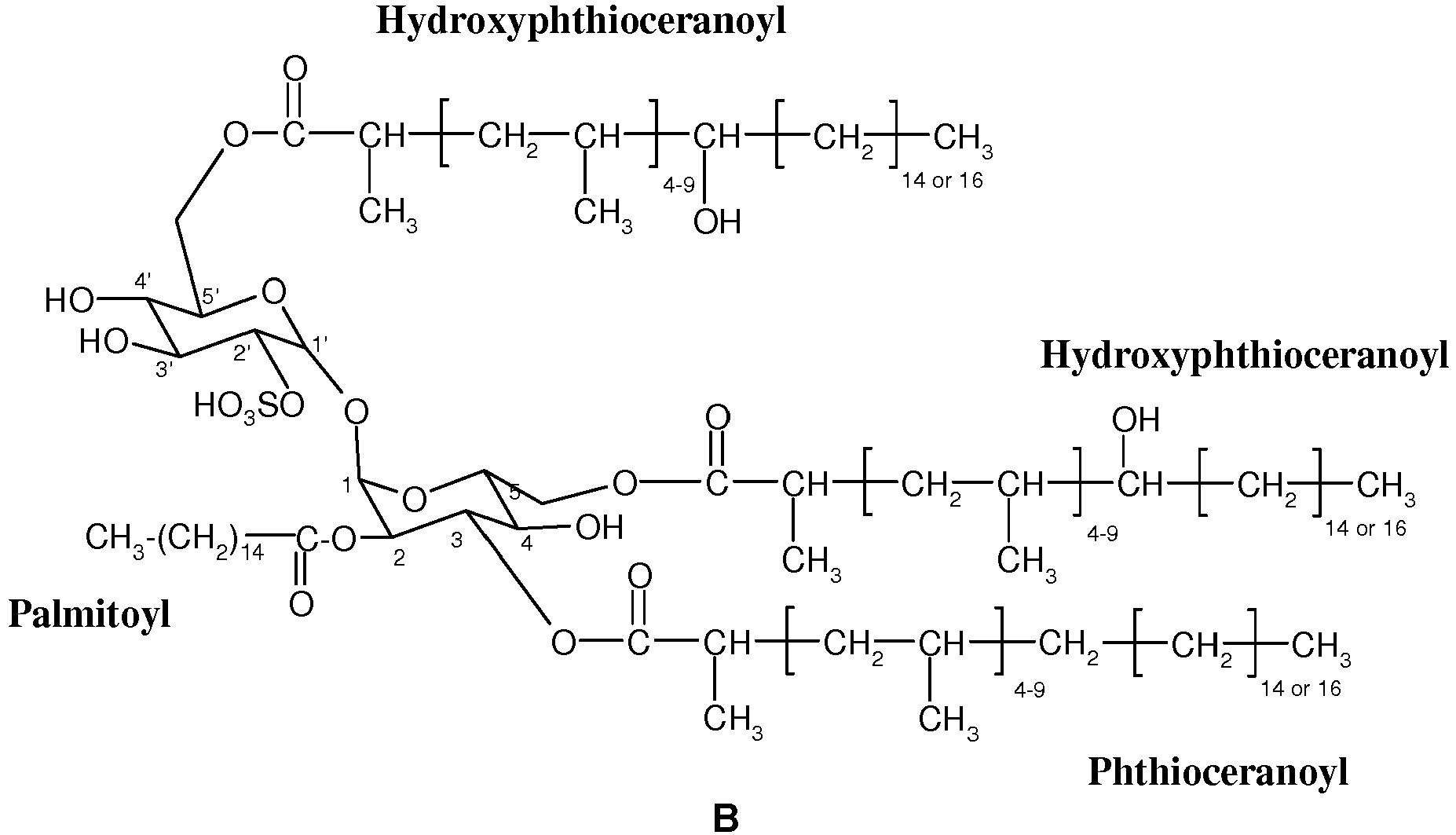
- It has been demonstrated that SL-I was able to inhibit macrophage antimicrobial activity and to block the effects of several inflammatory agents such as LPS, IFN-γ or TNF-α on macrophages (Vergne I. and Daffe M. Frontiers in Bioscience (1998) 3:865-876).
- At present, there are two ways of fighting tuberculosis: antibiotic therapy and vaccination.
- The vaccine used for the prophylaxis of tuberculosis consists of a live attenuated bacterium of the Mycobacterium bovis species. It is named BCG, Bacillus of Calmette and Guerin, after the two scientists who first devised it, at the beginning of the 20th century. In addition to its flaw as being a live vaccine, which precludes its use in immunodepressed patients, its protection against tuberculosis is controversial. Thus, BCG protective efficacy in adults range from 0% to 80% according to varying studies, besides, it fails to protect against pulmonary tuberculosis, the most prevalent disease form in adults.
- Moreover, antibiotic resistant strains of M. tuberculosis have been found in over 35 countries.
- Hence, it is a subject of the present invention to provide a more effective way of treating and/or preventing tuberculosis.
- Wallace et al., O. Chemical Society, 3, 1994, 329-330 disclose 2,3-di-O-aryl-tetrahalose lipid antigens acylated with an unsaturated hydrocarbon chain and a palmitate group.
- Further immunogenic glycolipids extracted from Mycobacterium tuberculosis are disclosed in
WO2004/092192 . However, these natural products are obtainable in limited amount; additionally, they are obtained from a pathogenic strain and their preparation may be hazardous and requires specific safety installations. - It is thus highly desirable to provide further new synthetic immunogenic glycolipids obtainable in industrial scale and practicable conditions.
- The invention notably provides new synthetic sulfoglycolipid antigens, which have been shown to stimulate CD1-restricted T lymphocytes in vitro.
- The invention relates to a compound of general formula (I):

- R2' is SO3H or SO3 -/M+ and R3' is H, or R2' is H and R3' is SO3H or SO3 -/M+.
- M+ is the cation of a metal, such as Na+, K+;
- R2, R3, identical or different, are independently chosen from:
- a) fatty acyl groups of formula -C=O-(CH2)k-CH3, where k is an integer from 14 to 50;
- b)

- where r is 1;
- l is an integer chosen from 0 to 10;
- q is an integer chosen from 0 to 50;
- provided that l + q ≥ 1;
- T2 is methyl;
- each Ti, is methyl.
- where at least one of R2, R3 is b);
- and its enantiomers, diastereoisomers, mixtures thereof and pharmaceutically acceptable salts.
- The carbon atom to which Ti is attached is asymmetric. Preferably, said carbon atom exhibits a (S) configuration.
- According to another preferred aspect, R2 is a) fatty acyl group and R3 is (b-2) as defined above.
- Fatty acyl groups are derived from fatty acid groups which esterify the hydroxyl groups in position 2 or 3 of the 2'- or 3'-sulfated trehalose unit.
- Fatty acid groups are aliphatic carboxylic acids which can be linear or ramified, saturated or unsaturated, unsubstituted or substituted by groups such as hydroxyl, or ketone.
- The fatty acyl groups notably comprise linear and saturated fatty acyl groups. Fatty acyl groups are of formula -C=O-(CH2)k-CH3 wherein k is an integer from 14 to 50.
- Preferably, fatty acyl groups are chosen from the group consisting in:


- Still more preferably, fatty acyl groups are selected from the group comprising palmitic acyl and stearic acyl.
- It is also disclosed compounds of formula I, wherein R2 represents a fatty acyl group, preferably, a palmitic acyl group or a stearic acyl group and R3 represents a (b-2) chain, namely compounds of following formula (II):

- where R2, R3, r, p, l, q, T2, Ti are defined as above, or the corresponding salt thereof,
- and its enantiomers, diastereoisomers, mixtures thereof and pharmaceutically acceptable salts or esters.
- It is also disclosed compounds of formula II, wherein:
- l = 1 , q = 14 and r = 1 ;
- l = 2, q = 14 and r = 1 ;
- l = 3, q = 14 and r = 1 ;
- l = 4, q = 14 and r = 1 ;
- l = 1 , q = 1 2 and r = 1 ;
- l = 2, q = 12 and r = 1 ;
- l = 3, q = 12 and r = 1 ;
- l = 4, q = 12 and r = 1 ;
- l = 1 , q = 16 and r = 1 ;
- l = 2, q = 16 and r = 1 ;
- l = 3, q = 16 and r = 1 ;
- l = 4, q = 16 and r = 1 ;
- The invention more specifically relates to compounds of following formulae:


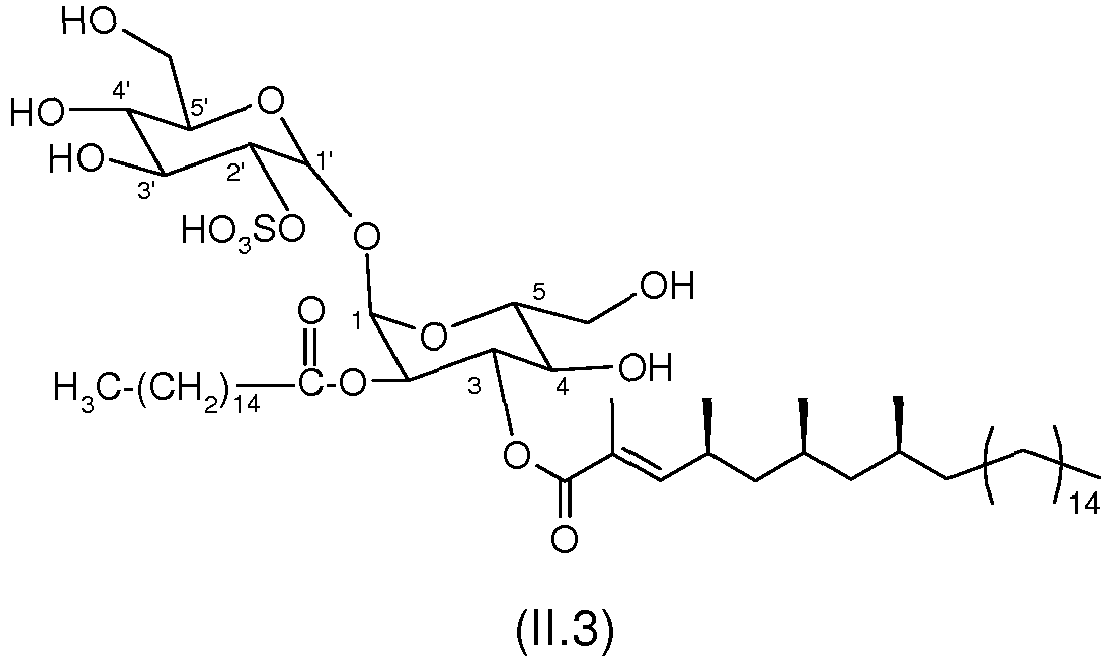


and its enantiomers, diastereoisomers, mixtures thereof and pharmaceutically acceptable salts or esters. - As used herein, "pharmaceutically acceptable salts" refer to derivatives of the disclosed compounds wherein the parent compound is modified by making acid or base salts thereof. The pharmaceutically acceptable salts include the conventional non-toxic salts or the quaternary ammonium salts of the parent compound formed, for example, from non-toxic inorganic or organic acids. For example, such conventional non-toxic salts include those derived from inorganic acids such as hydrochloric, sulfuric, sulfamic, phosphoric, nitric and the like; and the salts prepared from organic acids such as acetic, propionic, succinic, tartaric, citric, glutamic, benzoic, salicylic, toluenesulfonic, oxalic, and the like.
- The pharmaceutically acceptable salts of the present invention can be synthesized from the parent compound which contains a basic or acidic moiety by conventional chemical methods. Generally, such salts can be prepared by reacting the free acid or base forms of these compounds with a stoichiometric amount of the appropriate base or acid in water or in an organic solvent, or in a mixture of the two. Generally, non-aqueous media like ether, ethyl acetate, ethanol, isopropanol, or acetonitrile are preferred. Lists of suitable salts are found in Remington's Pharmaceutical Sciences, 17th ed., Mack Publishing Company, Easton, PA, 1985, p. 1418.
- According to another embodiment, the invention relates to a composition comprising at least two different compounds of formula I such as defined above.
- The invention also relates to a pharmaceutical composition comprising at least one compound as defined above, or a composition as defined above, in association with a pharmaceutically acceptable vehicle.
- A pharmaceutically acceptable carrier comprises in particular liposomes.
- The composition may also comprise vaccine adjuvants. Vaccine adjuvants for use in human individuals or animals are well known to the man skilled in the art, a list of such salts can be found for instance in "A compendium of vaccine adjuvants and excipients" 2nd edition, Vogel et al. Particular vaccine adjuvants notably comprise aluminum salts or M59, for example.
- The invention particularly relates to a pharmaceutical composition as defined above, characterized in that it is presented in a form intended for administration by oral or injectable route.
- The invention more particularly relates to a pharmaceutical composition as defined above, characterized in that it comprises one or more other products useful for the treatment or the prophylaxis of tuberculosis, such as BCG or mycobacterial proteins.
- BCG stands for Bacillus of Calmette and Guerin, the different strains of BCG currently used for vaccination are notably described in Behr M.A. et al. Science (1999) 284:1520-1523.
- The expression "mycobacterial proteins" refers to proteins, or fragments thereof, which are encoded by the genome of bacteria of the Mycobacterium genus and notably by the genome of Mycobacterium tuberculosis, such proteins may be advantageously recombinant. According to a preferred embodiment said mycobacterial proteins are antigens of M. tuberculosis.
- Other products useful for the treatment or the prophylaxis of tuberculosis notably comprise immunomodulators, such as cytokines, DNA fragments encoding M. tuberculosis antigens, live M. tuberculosis deletion mutants, such as mutants in which virulence genes have been deleted, or live recombinant BCG, such as BCG expressing antigens of M. tuberculosis.
- As used herein, tuberculosis refers to the disease caused in humans by the bacterium Mycobacterium tuberculosis, but also to the corresponding disease in animals.
- According to another embodiment, the invention relates to products comprising:
- at least one compound as defined above,
- and at least one other product useful for the treatment or the prophylaxis of tuberculosis, such as BCG or mycobacterial proteins,
- It is disclosed the use of at least one compound as defined above, or of an above mentioned composition, for the preparation of a medicament, notably a vaccine, intended for the treatment or the prophylaxis of tuberculosis.
- Optionally, the vaccine may comprise a vaccine adjuvant such as described above.
- The invention relates to the use of at least one compound as defined above, or of a composition according as defined above, as an in vitro immune reaction activator, and more particularly an inflammatory reaction activator.
- By "immune reaction activator" is meant a compound which has the ability to activate components or processes of the immune reaction, in vitro or in vivo, in particular cells of the immune system, such as T lymphocytes, B lymphocytes, antigen presenting cells (APCs), such as dendritic cells or macrophages, monocytes or granulocytes.
- By "inflammatory reaction activator" is meant a compound which has the ability to activate components or processes of the inflammatory reaction, in vitro or in vivo, such as diapedesis, capillary permeabilization, macrophage activation or fever onset for instance.
- The invention also relates to the use of at least one compound as defined above, or of a composition as defined above, to induce in vitro the activation of T lymphocytes, notably CD1-restricted T lymphocytes. The activation can proceed in vitro.
- The activation of T lymphocytes can be assessed by several methods, such as measuring cell multiplication or cytokine production such as IFN-γ (interferon-γ), IL-2 (interleukine-2), IL-4 (interleukine-4), or TNF-α (tumor necrosis factor α), for instance.
- CD1-restricted T lymphocytes are T lymphocytes which are activated by antigens presented by CD1 molecules.
- The invention also relates to the use of at least one compound as defined above, or of a composition as defined above, to induce the production of IFN-γ, TNF-α, IL-4 or granulysin.
- This production induction can be done in vitro or in vivo. The production of IFN-γ, TNF-α, IL-4 or granulysin can be measured for instance by immunoassays, such as ELISA (enzyme linked immunosorbent assay) or EIA (enzyme immunoassay).
- It is also disclosed the use of at least one compound as defined above, or of an above mentioned composition, for the preparation of a composition for the diagnosis of the infection by Mycobacterium tuberculosis.
- Tuberculosis diagnosis may prove to be difficult as the current test (tuberculin or so-called "PPD" test) can not differentiate those PPD+ individuals who received BCG from those PPD+ patients actually infected with latent tuberculosis.
- It is thus highly desirable to provide a test specific for the infection by Mycobacterium tuberculosis.
- This has now been made possible with the compounds of the invention.
- The compounds of the invention are highly specific to Mycobacterium tuberculosis species. They may be used to discriminate PPD+ individuals into those vaccinated with BCG and those actually infected with tuberculosis.
- According to a further aspect, the present invention thus provides an in vitro method for diagnosing infection by Mycobacterium tuberculosis comprising the following steps:
- providing a biological sample from a PPD+ individual;
- contacting said sample with a compound of formula (I) as defined above:
- assessing T lymphocytes activation; and
- comparing the T lymphocytes activation after and before administration of the compound.
- Those individuals for which T lymphocytes are activated (ie) e.g. where IFN-γ release increased after administering a compound of the invention are infected with Mycobacterium tuberculosis.
- The present invention also provides a kit for diagnosing tuberculosis comprising:
- a compound of formula (I) as defined above;
- dendritic cells;
- means for detecting T lymphocytes activation, e.g. release of IFN-γ.
- Generally, the sulfoglycolipid activation of T cells is detected by measuring the IFN-γ released in the supernatant 48 hr after stimulation with dendritic cells and sulfoglycolipids, using any human IFN-γ ELISA detection kit (for example, purchased from BD Pharmingen).
- The present invention also relates to the use of the compounds (I) of the invention to assess in vitro the efficacy of the vaccines prepared with recombinant Mycobacterium tuberculosis. Vaccines have been developed using recombinant living bacteria obtained from Mycobacterium tuberculosis or Mycobacterium bovis BCG, which may e.g. overexpress a protein. It is highly desirable to assess whether such vaccines are effective and protect the patient administered therewith. Assessment is made possible by carrying out the in vitro diagnosis method of the invention.
- The present invention also relates to specific ligands to the compounds of formula (X).
- As intended herein a "specific ligand" relates to any compound which can be prepared or elicited to specifically bind to a compound according to the invention.
- Specific ligands notably encompass antibodies and aptamers.
- The term "antibodies" relates to complete antibodies, in particular monoclonal antibodies, but also to antibody fragments which retain the ability to specifically bind to the compounds of the invention, such as the Fab, Fab', F(ab')2, Fv or scFv fragments.
- Antibody preparation is well known to the man skilled in the art. Usually, a preparation of a compound according to the invention is administered to an animal, such as a mouse, a rat, a rabbit, or a goat, by various routes, such as the intramuscular, intravascular or intraperitoneal route. Additional administration can be performed after the first administration in order to increase the production of antibodies. Antibodies are then obtained from blood drawn from the animals, or from blood derivatives such as serum or plasma, and optionally purified, for instance using affinity chromatography. Monoclonal antibodies can notably be prepared as described by Koller & Milstein (1975) Nature 256:495-499.
- "Aptamers" may be of the peptide type or of the nucleic (e.g. desoxyribonucleic or ribonucleic) type. Nucleic aptamers can notably prepared using the well known SELEX method or as described by Ellington & Szostak (1990) Nature 346:818-22. Peptide aptamers can be obtained as described by Cohen et al. (1998) Proc. Natl. Acad. Sci. USA 95:14272-7.
- General formula (X) includes formula (I) as disclosed in
WO 2004/092192 as well as compounds of formula (I) and (II) of the present invention. Preferably, the compounds of formula (X) are those of formulae (I) and (II) and their preferred embodiments as disclosed above. - According to a further object, the present invention also relates to the process of preparation of a compound of formula (I) as defined above.
- The compounds and process of the present invention may be prepared in a number of ways well known to those skilled in the art. The compounds can be synthesized, for example, by application or adaptation the methods described below, or variations thereon as appreciated by the skilled artisan. The appropriate modifications and substitutions are readily apparent and well known or readily obtainable from the scientific literature to those skilled in the art.
- In particular, such methods can be found in R.C. Larock, Comprehensive Organic Transformations, VCH publishers, 1989.
- The reagents and starting materials are commercially available, or readily synthesized by well-known techniques by one of ordinary skilled in the arts.
- In the reactions described hereinafter it may be necessary to protect reactive functional groups, for example hydroxy, amino, imino, thio or carboxy groups, where these are desired in the final product, to avoid their unwanted participation in the reactions. Conventional protecting groups may be used in accordance with standard practice, for examples see T.W. Green and P. G. M. Wuts in Protective Groups in Organic Chemistry, John Wiley and Sons, 1991; J. F. W. McOmie in Protective Groups in Organic Chemistry, Plenum Press, 1973.
- Usually, reactions are carried out in a suitable solvent. A variety of solvents may be used, provided that it has no adverse effect on the reaction or on the reagents involved. Examples of suitable solvents include: hydrocarbons, which may be aromatic, aliphatic or cycloaliphatic hydrocarbons, such as hexane, cyclohexane, benzene, toluene and xylene; amides, especially fatty acid amides, such as dimethylformamide; and ethers, such as diethyl ether and tetrahydrofuran.
- The reactions can take place over a wide range of temperatures. In general, we find it convenient to carry out the reaction at a temperature of from about 0°C to about 150°C (more preferably from about room temperature to about 100°C). The time required for the reaction may also vary widely, depending on many factors, notably the reaction temperature and the nature of the reagents. However, provided that the reaction is effected under the preferred conditions outlined above, a period of from about 3 hours to about 20 hours will usually suffice.
- The compound thus prepared may be recovered from the reaction mixture by conventional means. For example, the compounds may be recovered by distilling off the solvent from the reaction mixture or, if necessary after distilling off the solvent from the reaction mixture, pouring the residue into water followed by extraction with a water-immiscible organic solvent and distilling off the solvent from the extract. Additionally, the product can, if desired, be further purified by various well techniques, such as recrystallization, reprecipitation or the various chromatography techniques, notably column chromatography or preparative thin layer chromatography.
- According to a further object, the present invention provides a process of preparation of a compound of formula (I) as defined above comprising the steps of:
- sulfonating; and
- acylating with corresponding compounds of formulae (IV) and (IV'):
R2X R (IV)
3Y (IV')
where R2 and R3 are defined as in formula (I) and X and Y independently represent a halogen atom or a OH group; a compound of formula (III):
- One or two sulfonating and acylating reactions may be required.
- The sulfonating and acylating steps may be carried out in any order, successively or alternatively.
- One or more protecting and/or deprotecting steps may be required before and/or after the acylating and/or sulfonating steps, as appropriate.
- Such protecting groups include acetals or ketal, such as


- The process of the invention comprises the further step of hydrolyzing said protecting groups. This reaction is usually carried out in acid conditions.
- Said sulfonation reaction is generally carried out with any suitable sulfonating agent, such as the pyridine-sulfur trioxide complex or trimethylamine-sulfur trioxide complex.
- The two required acylations may be carried out in one or two steps. The acylation step(s) is/are usually conducted with coupling agents such as DMAP and/or DCC.
- The process of the invention may also comprise the final step of isolating the desired compound.
- A representative process of the invention is illustrated in the following scheme:

- The 2', 3' bi-sulfonated compound ( 7" ) may be obtained by using excess of the sulfonating reagent. The 3'-sulfonated compound ( 7' ) is obtained as a byproduct of the sulfonating reaction; usually, the selectivity of the sulfonating reaction is about 5/1. Compounds 7, 7' and 7" are separated by chromatography.
- The compound of formula (IV) is generally commercially available.
- Preferably, when R3 represents the b) chain as defined above, the compounds of formula (IV') may be prepared by application or adaptation of the following illustrative scheme:

R represents the corresponding optionally substituted unsaturated linear or ramified hydrocarbon chain so that
- In particular, the compound of formula R3Y (IV') having the following formula (IV'-a):


- The above process of preparation of compounds of formula (IV') is particularly advantageous in that it leads to compounds with the desired stereochemistry.
- The process may be carried out by applying or adapting the experimental conditions and/or starting products given in the examples.
-
Figures 1 and2 represent the amount of IFN-γ (in pg/mL, vertical axis) produced by T cell clone Z4B27 in response to stimulation (horizontal axis) by the compounds of the invention comparative compounds. -

- α,α-Trehalose dihydrate (1 eq.) was dehydrated by boiling in absolute ethanol (0.4 M) under reflux for 30 min. The
dry residue 1 was then suspended in dry N,N-dimethylformamide (DMF, 0.4 M), and α,α-dimethoxytoluene (DMT, 2 eq.) was added, together with 10-camphorsulfonic acid (CSA, 0.05 eq.). The mixture was heated (60°C) during 1 h on a rotary evaporator with a light vacuum to eliminate the methanol. More DMT (0.25 eq.) and CSA (0.01 eq.) were then added and the mixture was attached again on the rotary evaporator. At the end of the reaction, DMF was evaporated. The mixture was stirred overnight in an aqueous sodium hydrogencarbonate solution (5 %) to give crystalline diacetal 2 . The product was recrystallized by dissolution in boiling ethanol, addition of hot water, and slow cooling. Finally, the white crystals of 2 were filtered, washed with water and ether petroleum and dried (84 %). - A suspension of diacetal 2 (1 eq.), 4-dimethylaminopyridine (DMAP, 1 eq.) and acyl chloride (1.3 eq) in dry pyridine (0.6 M) was boiled under reflux during 25 h. The mono-acylated product 3 was obtained in 45 % yield.
- To an ice-cooled solution of 3 (1 eq.) in pyridine (0.1 M) was added 1,3-dichloro-1,1,3,3-tetraisopropyldisiloxane (1.2 eq.). After stirring for 2 days at room temperature, the mixture was poured into ice-water and the product extracted with ethyl acetate. Purification by flash chromatography and gave product 4 as a syrup in 58 % yield.
- Compound 4 (1.5 eq.) was treated during 15 min under microwaves with the acid R3OH (obtained from part B) (1 eq.), DMAP (1 eq.) and DCC (1.5 eq.) in dry toluene (0.1 M of acid). At the end, the solvent was evaporated and the
diacylated product 5 was purified by flash chromatography. The yield of the reaction in highly dependent on the structure of the acid used (25-60 %). - Compound 5 (1 eq.) was heated at 40°C with a solution of Bu4NF/THF (1 M, acidified with trifluoroacetic acid to have pH ≈ 6, 40 eq.) during 24 h. The crystalline product 6 was obtained in 90 % yield.
- To a solution of 6 (1 eq.) in pyridine (0.06 M) was added a solution of pyridine-sulfur trioxide complex in DMF (0.5 M, 3 eq.) and the mixture was stirred at room temperature. After 2 days, the mixture was evaporated and the residue chromatographed on silica gel to give 7 (62 %), its 3'-sulfate isomer 7' and the 2',3'-disulfated compound 7".
- The dibenzylidene derivative 7 , 7' or 7" was treated with a solution of chloroform/methanol/1.7 % H2SO4 (60/40/8) for 2 days at room temperature. The reaction mixture was made neutral with a solution of NaHCO3. This deprotection afforded quantitatively the corresponding diacylated sulfoglycolipid 8 , 8' or 8" .
-

- Alcohol A (1 eq.) was added to a rapidly stirred suspension of pyridinium chlorochromate (2 eq.) and sodium acetate (5 eq.) in dry dichloromethane (0.4 M of A ) under nitrogen at room temperature. After stirring during 1.5 h diethyl ether was added and the mixture was filtered. The crude product B was not purified further.
- To a solution of B (1 eq.) in dry dichloromethane (0.6 M) was added 1-carboethoxyethylidene triphenylphosphorane (1.2 eq.). The mixture was then stirred overnight at room temperature and furnished the ester C . The yield of the 2 steps from A was 87 %.
- The conjugated ester C (1 eq.) was hydrogenolyzed in ethyl acetate (0.4 M) using 10% palladium on carbon as catalyst. The saturated ester D was obtained in 77 % as a 1/1 enantiomeric (diastereoisomeric) mixture on the C-2 position.
- Ester D (1 eq.) was heated overnight at 110 °C in a solution of potassium hydroxyde (12 eq.) in water/ethanol 2/3 (0.2 M). This reaction afforded quantitavely the corresponding acid E as a racemic (1/1 diastereoisomeric) mixture on the C-2 position.
- Acid E (1 eq.) was heated under reflux with oxalyl chloride (10 eq.) for 1 h. Excess reagent was removed under reduced pressure. Dry dichloromethane (0.4 M) and DMAP (1.2 eq.) followed by (R)-2-phenylglycinol (1.1 eq.) were added to the crude acyl chloride and the reaction mixture wax stirred at room temperature overnight. A flash chromatography permitted the separation of the diastereoisomers. The 2S diastereisomer F was the less polar compound and was isolated in 36 % yield.
- Amide F (1 eq.) was refluxed overnight in a solution of sulphuric acid (3 N) in a 1/1dioxan/water mixture (0.02 M) to quantitatively liberate the 2S-acid G .
- Acid G (1 eq.) was dissolved in a solution of BH3 in THF (1 M, 1.7 eq.) and this mixture was stirred overnight at room temperature. Ethanol was added, then 80 % aqueous acetic acid and the mixture was made neutral with NaHCO3. The alcohol was obtained quantitatively in pure form.
- The whole sequence of reaction was repeated for the introduction of other methyl ramifications on the fatty acid chain.
- Unsaturated acids were obtained by saponification as above of the unsaturated esters C .
- The following acids were obtained:

- δ = 0.88 ppm (t, H-t, 3 J = 6.5 Hz) ; δ = 1-1.7 ppm (m, H aliphatic) ; δ = 1.84 ppm (d, H-2', d, 4 J 2'-3 = 1.5 Hz) ; δ = 2.19 ppm (quad, H-4, 3 J 4-3 = 3 J 4-5 = 7 Hz) ; δ = 6.9 ppm
(tq, H-3, 3 J 3-4 = 7 Hz and 4 J 3-2' = 1.5 Hz)
- δ = 0.87 ppm (t, H-t, 3 J = 6.5 Hz) ; δ = 1.0 ppm (d, H-4', 3J 4'-4 = 6.5 Hz) ; δ = 1.1-1.6 ppm (m, H aliphatic) ; δ = 1.84 ppm (d, H-2', d, 4 J 2'-3 = 1.5 Hz) ; δ = 2.5 ppm (m, H-4) ; δ = 6.65 ppm (dquad, H-3, 3 J 3-4 = 10 Hz and 4 J 3-2' = 1.5 Hz)

- δ = 0.88 ppm (t, H-t, 3 J = 6.5 Hz) ; δ = 1.01 ppm (d, H-4', 3 J 4'-4 = 6.5 Hz) ; δ = 1.1-1.5 ppm (m, H aliphatic) ; δ = 1.85 ppm (d, H-2', d, 4 J 2'-3 = 1.5 Hz) ; δ = 2.5 ppm (m, H-4) ; δ = 6.67 ppm (dquad, H-3, 3 J 3-4 = 10 Hz and 4 J 3-2' = 1.5 Hz) ;

- [α]D25 = + 13.8 (chloroform)
- δ = 0.82 ppm (d, H-6', 3 J 6'-6 = 6.5 Hz) ; δ = 0.88 ppm (t, H-t, 3 J = 7 Hz) ; δ = 0.99 ppm (d, H-4', 3 J 4'-4 = 6.5 Hz) ; δ = 1.05-1.4 ppm (m, H aliphatic) ; δ = 1.85 ppm (d, H-2', 4 J 2'-3 = 1.5 Hz) ; δ = 2.6 ppm (m, H-4) ; δ = 6.66 ppm (d, H-3, 3 J 3-4 = 10 Hz, 4 J 3-2' = 1.5 Hz)
- δ = 12.1 ppm, C-6' ; δ = 14.1 ppm, C-t ; δ = 19-32 ppm, C aliphatic
δ = 37.6 ppm, C-2' ; δ = 44.4 ppm, C-5 ; δ = 125 ppm, C-2 ; δ = 151.2 ppm, C-3.
- [α]D25 = + 15 (chloroform)
- δ = 0.83 ppm (d, H-8', 3J8'-8 = 6.3 Hz) ; δ = 0.85 ppm (d, H-6', 3J6'-6 = 6.3 Hz) ; δ = 0.9 ppm (t, H-t, 3J = 6.6 Hz) ; δ = 1.01 ppm (d, H-4', 3 J 4'-4 = 6.6 Hz) ; δ = 1.1-1.5 ppm (m, H aliphatic) ; δ = 1.88 ppm (s, H-2') ; δ = 2.67 ppm (m, H-4) ; δ = 6.69 ppm (d, H-3, 3J3-4 = 10.2 Hz)

- [α]D25 = + 53.2 (chloroform)
- δ = 0.86 ppm (d, H-6', 3 J 6'-6 = 5,5 Hz) ; δ = 0.88 ppm (t, H-8, 3 J 8-7 = 7 Hz) ; δ = 1.03 ppm (d, H-4', 3 J 4'-4 = 6,6 Hz) ; δ = 1.1-1.5 ppm (m, H-5, H-6, H-7) ; δ = 1.89 ppm (s, H-2') ; δ = 2.67 ppm (m, H-4) ; δ = 6.7 ppm (d, H-3, 3 J 3-4 = 10 Hz) ;
- δ = 11.2 ppm, C-8 ; δ = 12.1 ppm, C-2' ; δ = 19.0 ppm, C-6' ; δ = 20.4 ppm, C-4' δ = 30.0 ppm, C-7 ; δ = 31.1 ppm, C-4 ; δ = 32.3 ppm, C-6 ; δ = 44.1 ppm, C-5 δ = 125.5 ppm, C-2 ; δ = 151.1 ppm, C-3 ; δ = 174.1 ppm, C-1.
- The following compounds of the invention were prepared by applying the above procedures.
-

- δ = 0.89 ppm (t, 3H-t, 3H-t', 3 J = 7 Hz) ; δ = 1-1.6 ppm (m, H aliphatic) ; δ = 1.81 ppm (d, (CH3)α', 4J = 1 Hz) ; δ = 2.2 ppm (m, 2H-α, 2H-γ') ; δ = 3.3-4.7 ppm (m, H-2', H-3', H-4, H-4', H-5, H-5', H-6ax, H-6'ax, H-6éq, H-6'éq) ; δ = 4.95 ppm (dd, H-2, 3 J 2-1 = 4 Hz and 3 J 2-3 = 10 Hz) ; δ = 5.29 ppm (d, H-1, 3J 1-2 = 4 Hz) ; δ = 5.45 ppm (t, H-3, 3 J 3-4 = 3 J 3-2 = 10 Hz) ; δ = 5.52 ppm (d, H-1', 3 J 1'-2' = 4 Hz) ; δ = 6.8 ppm (tquad, H-β', 2 Jβ'-γ' = 7.5 Hz, 4 J= 1 Hz).
-

- δ = 0.9 ppm (t, 3H-t, 3H-t', 3 J = 6.5 Hz) ; δ = 0.99 ppm (d, (CH3)γ', 3 J = 6.5 Hz) ; δ = 1.1-1.6 ppm (m, H aliphatic) ; δ = 1.82 ppm (d, (CH3)α', 4 J = 1 Hz) ; δ = 2.22 ppm (t, 2H-α, 3 J = 7 Hz) ; δ = 2.46 ppm (m, H-γ') ; δ = 3.4-4.4 ppm (m, H-2', H-3', H-4, H-4', H-5, H-5', H-6ax, H-6'ax, H-6éq, H-6'éq) ; δ = 4.87 ppm (dd, H-2, 3 J 2-1 = 4 Hz and 3 J 2-3 = 10 Hz) ; δ = 5.29 ppm (d, H-1, 3 J 1-2 = 4 Hz) ; δ = 5.44 ppm (t, H-3, 3 J 3-4 = 3 J 3-2 = 10 Hz) ; δ = 5.51 ppm (d, H-1', 3 J 1'-2' = 4 Hz) ; δ = 6.57 ppm (dquad, H-β', 3 Jβ'-γ' = 10 Hz, 4 J = 1 Hz).
-

- δ = 0.89 ppm (t, 3H-t, 3H-t', 3 J = 6.5 Hz) ; δ = 0.99 ppm (d, (CH3)γ', 3 J = 6.5 Hz) ; δ = 1-1.6 ppm (m, H aliphatic) ; δ = 1.82 ppm (d, (CH3)α', 4J = 1 Hz) ; δ = 2.21 ppm (t, 2H-α, 3 J = 7.5 Hz) ; δ = 2.5 ppm (m, H-γ') ; δ = 3.3-4.7 ppm (m, H-2', H-3', H-4, H-4', H-5, H-5', H-6ax, H-6'ax, H-6éq, H-6'éq) ; δ = 4.95 ppm (dd, H-2, 3 J 2-1 = 4 Hz and 3 J 2-3 = 10 Hz) ; δ = 5.29 ppm (d, H-1, 3 J 1-2 = 4 Hz) ; δ = 5.45 ppm (t, H-3, 3 J 3-4 = 3 J 3-2 = 10 Hz) ; δ = 5.52 ppm (d, H-1', 3 J 1'-2' = 4 Hz) ; δ = 6.57 ppm (dquad, H-β', 3 Jβ'-γ' = 10 Hz, 4 J = 1 Hz).
-

- δ = 0.86 ppm (d, (CH3)δ', 3 J = 6.5 Hz) ; δ = 0.88 ppm (t, 3H-t, 3H-t', 3J = 7 Hz) ; δ = 0.97 ppm (d, (CH3)γ', 3 J = 6.5 Hz) ; δ = 1-1.6 ppm (m, H aliphatic) ; δ = 1.82 ppm (d, (OH3)α', 4J = 1.5 Hz) ; δ = 2.22 and 2.26 ppm (2quint, 2H-α, 3 J α-β = 8 Hz, 2 J = 16 Hz) ; δ = 2.62 ppm (m, H-γ') ; δ = 3.5-3.8 ppm (m, H-4, H-4', H-5', H-6, 2H-6') ; δ = 3.94 ppm (t, H-3', 3 J 3'-2' = 3 J 3'-4' = 10 Hz) ; δ = 3.97ppm (dd, H-6, 2 J = 12 Hz, 3 J 6-5 = 3 Hz) ; δ = 4.23 ppm (m, H-2', H-5) ; δ = 4.97 ppm (dd, H-2, 3 J 2-1 = 3.6 Hz and 3 J 2-3 = 10 Hz) ; δ = 5.25 ppm (d, H-1, 3 J 1-2 = 3.6 Hz) ; δ = 5.43 ppm (t, H-3, 3 J 3-4 = 3 J 3-2 = 10 Hz) ; δ = 5.46 ppm (d, H-1', 3 J 1'-2' = 3.6 Hz) ; δ = 6.54 ppm (dquad, H-β', 3 J β'-γ' = 10 Hz, 4 J = 1.5 Hz)
-

- δ = 0.89 ppm (t, 3H-t, 3H-t', 3 J = 6,5 Hz) ; δ = 0.82 ; 0.84 and 0.97 ppm (3d, (CH3)γ', (CH3)δ', (CH3)ε') ; δ = 1-1.6 ppm (m, H aliphatic) ; δ = 1.84 ppm (d, (CH3)α', 4J = 1 Hz) ; δ = 2.24 ppm (m, 2H-α) ; δ = 2.6 ppm (m, H-γ') ; δ = 3 -4.5 ppm (m, H-2', H-3', H-4, H-4', H-5, H-5', 2H-6, 2H-6') ; δ = 4.96 ppm (dd, H-2, 3 J 2-1 = 4 Hz and 3 J 2-3 = 10 Hz) ; δ = 5.27 ppm (d, H-1, 3 J 1-2 = 4 Hz) ; δ = 5.43 ppm (t, H-3, 3 J 3-4 = 3 J 3-2 = 10 Hz) ; δ = 5.48 ppm (d, H-1', 3 J 1'-2' = 4 Hz) ; δ = 6.54 ppm (dq, H-β', 3 J β'-γ' = 10.2 Hz, 4 J = 1 Hz).
-


- δ = 0.77 ppm (t, 3H-t, 3H-t', 3 J = 6,5 Hz) ; δ = 0.7 ; 0.72 and 0.86 ppm (3d, (CH3)γ', (CH3)δ', (CH3)ε') ; δ = 1-1.5 ppm (m, H aliphatic) ; δ = 1.73 ppm (d, (CH3)α', 4 J = 1.5 Hz) ; δ = 2.13 ppm (m, 2H-α) ; δ = 2.5 ppm (m, H-γ') ; δ = 3.2-3.9 ppm (m, H-2', H-3', H-4, H-4', H-5, H-5', 2H-6, 2H-6') ; δ = 4.84 ppm (dd, H-2, 3 J 2-1 = 4 Hz and 3 J 2-3 = 10 Hz) ; δ = 5.0 ppm (d, H-1, 3 J 1-2 = 4 Hz) ; δ = 5.16 ppm (d, H-1', 3 J 1'-2' = 4 Hz) ; δ = 5.36 ppm (t, H-3, 3 J 3-4 = 3 J 3-2 = 10 Hz) ; δ = 6.43 ppm (dq, H-β', 3 Jβ'-γ' = 10.2 Hz, 4J = 1 Hz).
-

- δ = 0.6-0.9 ppm (m, 3H-t, 3H-t', (CH3)γ', (CH3)δ', (CH3)ε') ; δ = 1-1.5 ppm (m, H aliphatic) ; δ = 1.73 ppm (d, (CH3)α', 4J = 1 Hz) ; δ = 2.1 ppm (m, 2H-α) ; δ = 2.5 ppm (m, H-γ') ; δ = 3.1-4.5 ppm (m, H-2', H-3', H-4, H-4', H-5, H-5', 2H-6, 2H-6') ; δ = 4.8 ppm (dd, H-2, 3 J 2-1 = 4 Hz and 3 J 2-3 = 10 Hz) ; δ = 5.16 ppm (d, H-1, 3 J 1-2 = 4 Hz) ; δ = 5.3 ppm (t, H-3, 3 J 3-4 = 3 J 3-2 = 10 Hz) ; δ = 5.46 ppm (d, H-1', 3 J 1'-2' = 4 Hz) ; δ = 6.43 ppm (dq, H-β', 3 J β'-γ' = 10.2 Hz, 4 J = 1 Hz)
-

- δ = 0.65 ppm (d, (CH3)δ', 3 J = 7 Hz) ; δ = 0.7 ppm (t, 3H-t, 3H-t', 3 J = 7 Hz) ; δ = 0.8 ppm (d, (CH3)γ', 3 J = 7 Hz) ; δ = 1.1-1.5 ppm (m, H aliphatic) ; δ = 1.7 ppm (s, (CH3)α') ; δ = 2.1 ppm (t, 2H-α, 3 J α-β = 7 Hz) ; δ = 2.5 ppm (m, H-γ') ; δ = 3.1-4.5 ppm (m, H-2', H-3', H-4, H-4', H-5, H-5', 2H-6, 2H-6') ; δ = 4.8 ppm (dd, H-2, 3 J 2-1 = 4 Hz and 3 J 2-3 = 10 Hz) ; δ = 5.15 ppm (d, H-1, 3 J 1-2 = 4 Hz) ; δ = 5.3 ppm (t, H-3, 3 J 3-4 = 3 J 3-2 = 10 Hz) ; δ = 5.4 ppm (d, H-1', 3 J 1'-2' = 4 Hz) ; δ = 6.4 ppm (d, H-β', 3 J β'-γ' = 10.2 Hz).
-

- δ = 0.86 ppm (d, (CH3)δ', 3 J = 6.6 Hz) ; δ = 0.88 ppm (t, 3H-t', 3 J = 7.2 Hz) ; δ = 0.9 ppm (t, 3H-t, 3 J = 7.2 Hz) ; δ = 0.99 ppm (d, (CH3)γ' , 3 J = 7.2 Hz) ; δ = 1.1-1.6 ppm (m, H aliphatic) ; δ = 1.85 ppm (d, (CH3)α', 4 J = 1.5 Hz) ; δ = 2.27 and 2.3 ppm (2td, 2H-α, 3 J α-β = 7.2 Hz, 2 J = 14.4 Hz) ; δ = 2.66 ppm (m, H-γ') ; δ = 3.41 ppm (t, H-4', 3 J 4'-3' = 3 J 4'-5' = 9.3 Hz) ; δ = 3.66 ppm (dd, 1H-6', 3 J 6'-5' = 5.7 and 2 J = 11.7 Hz) ; δ = 3.68 ppm (t, H-4, 3 J 4-5 = 3 J 4-3 = 10 Hz) ; δ = 3.75 ppm (m, H-5', H-6, H-6') ; δ = 3.91 ppm (dd, H-6, 2 J = 12 Hz, 3 J 6-5 = 2.4 Hz) ; δ = 3.92 ppm (t, H-3', 3 J 3'-2' = 3 J 3'-4' = 9.3 Hz) ; δ = 4.19 ppm (dd, H-2', 3 J 2'-1' = 3.6 Hz, 3 J 2'-3' = 9.3 Hz) ; δ = 4.24 ppm (ddd, H-5, 3 J 5-6 = 2.4 Hz, 3 J 5-6 = 4.2 Hz, 3 J 5-4 = 10 Hz) ; δ = 4.98 ppm (dd, H-2, 3 J 2-1 = 3.6 Hz and 3 J 2-3 = 10 Hz) ; δ = 5.27 ppm (d, H-1, 3 J 1-2 = 3.6 Hz) ; δ = 5.50 ppm (d, H-1', 3 J 1'-2' = 3.6 Hz) ; δ = 5.51 ppm (t, H-3, 3 J 3-4 = 3 J 3-2 = 10 Hz) ; δ = 6.52 ppm (dquad, H-β', 3 J β'-γ' = 10.2 Hz, 4 J = 1.5 Hz)
- δ = 11.6 ppm, C-t' ; δ = 12.8 ppm, (CH3)α' ; δ = 14.4 ppm, C-t ; δ = 19.5 ppm, (CH3)δ' ; δ = 20.8 ppm, (CH3)γ' ; δ = 23.7 ppm, C-(t-1) ; δ = 26.0 ppm, C-β ; δ = 30 ; 30.1 ; 32.8 ppm, C octanoic acid ; δ = 31.1 ppm, C-(t-1)' ; δ = 32.1 ppm, C-γ' ; δ = 33.6 ppm, C-δ' ; δ = 35.0 ppm, C-α ; δ = 45.3 ppm, C-ε' ; δ = 61.8 ppm, C-6 ; δ = 62.5 ppm, C-6' ; δ = 69.9 ppm, C-4 ; δ = 71.6 ppm, C-4' ; δ = 72.0 ppm, C-2 ; δ = 72.8 ppm, C-3' ; δ = 73.4 ppm, C-5 ; δ = 74.1 ppm, C-5' ; δ = 74.4 ppm, C-3 ; δ = 78.4 ppm, C-2' ; δ = 93.5 ppm, C-1 ; δ = 94.3 ppm, C-1' ; δ = 127.2 ppm, C-α' ; δ = 150.2 ppm, C-β' ; δ = 169.3 ppm, (C=O)3 ; δ = 174.3 ppm, (C=O)2.
- as well as the following compounds:
-

-

-

-

-

-

- To define the immunogenicity of sulfoglycolipids-antigens, IFN-γ release is measured after stimulation with the purified sulfoglycolipids. 2 x 10⁵ PBMC per/well are incubated for 4 days in the presence of GM-CSF (500 U/mL) and IL-4 (5 ng/mL). Autologous effector T-cells are incubated in 10% human serum during this time. The sulfoglycolipids (10 µg/mL) are added to the irradiated, CD1-expressing antigen-presenting cells. Finally, effector cells are added (2 x 10⁵/well) and IFN-γ release is measured by ELISA in the supernatants after 18 hours. The IFN-γ ELISA is performed in 96-well immunosorbent plates, which are coated with an IFN-γ capture antibody (2 µg/mL) overnight. Non-specific binding sites are blocked with PBS containing 1% bovine serum albumin. The supernatants are diluted 1:1 and added in a final volume of 100 µl. Plates are incubated at room temperature for 2 hours and removed by thorough washing (3-4 times). Finally, a biotinylated anti-IFN-γ antibody is added for 1 hour (2 µg/mL). For detection of immunoreactive IFN-γ horseradish-peroxidase is added for 30 min. Finally, a chromogenic substrate (TMB, Endogen, MA, USA) is added. After 20 min. incubation, the reaction is stopped by the addition of sulfuric acid (2%). The intensity of the staining is determined photometrically at a wavelength of 480 nm. To estimate the concentration of cytokine in the supernatants, an IFN-γ standard with a known concentration is included in all tests.
- PPD+ donors (positive to the tuberculin test) and PPD- donors (negative to the tuberculin test) are recruited and administered with a compound of the invention. The response to the sulfoglycolipids is measured by assessing the IFN-γ production with the ELISA test (15 pg/mL) in each patient in each group. The responses in each group are compared.
- The release of IFN-γ produced by T cell clone Z4B27 prepared in accordance with the method disclosed in
WO 2004/092192 in response to stimulation by the compounds of the invention was measured. - CD1+ APC were preincubated at 5x10⁴cells/well for 2 h at 37°C with sonicated antigen (1-10 µg/mL) before addition of T cells (5x10⁴/well in triplicate). After 36 h released TNF-α and IFN-γ were measured using sandwich ELISA kits (Instrumentation Laboratory). Data are expressed as mean ng/mL or pg/mL ±SD of triplicates. All experiments were repeated at least 2 times.
- Results are illustrated in
Figure 1 for compound e (cpd e) of the invention. They evidence that compounds of the invention show better activity than corresponding unsulfated compounds (see compound f "cpd f") and than corresponding saturated compounds as disclosed inWO 2004/092192 on the basis of comparative compound (see "comp".) of formula :
- Further results illustrated in
Figure 2 show the activity of compounds b and d (cpd b and cpd d).
Claims (19)
- A compound of general formula (I):
 R2' is SO3H or SO3 -/M+ and R3' is H, or R2' is H and R3' is SO3H or SO3 -/M+.M+ is the cation of a metal, such as Na+, K+;R2, R3, identical or different, are independently chosen from:a) fatty acyl groups of formula -C=O-(CH2)k-CH3 where k is an integer from 14 to 50;b)
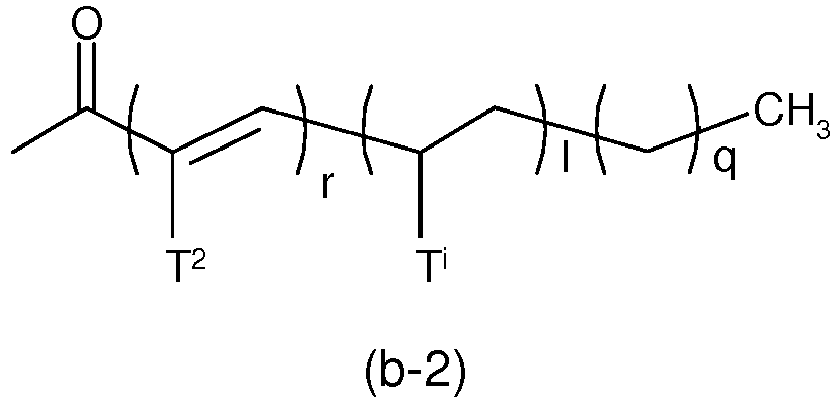 where r is 1;l is an integer chosen from 0 to 10;q is an integer chosen from 0 to 50;provided that l + q≥1;T2 is methyl;each Ti is methyl.where at least one of R2, R3 is b);and its enantiomers, diastereoisomers, mixtures thereof and pharmaceutically acceptable salts.
 - A compound according to claim 1 , wherein the fatty acyl groups of group a) are chosen from the group consisting in:


- A compound according to anyone of the preceding claims, wherein r is 1; I is 1, 2 or 3;
q is an integer chosen from 10 to 20;
and the carbon atom to which Ti is attached exhibits a (S) configuration. - A compound according to anyone of the preceding claims chosen from the group consisting in:


 and their corresponding salts,and its enantiomers, diastereoisomers, mixtures thereof and pharmaceutically acceptable salts.
 - A pharmaceutical composition comprising at least one compound as defined in anyone of the preceding claims in association with a pharmaceutically acceptable vehicle.
- A pharmaceutical composition according to claim 5 in a form intended for administration by oral or injectable route.
- A pharmaceutical composition according to claim 5 or 6, characterized in that it comprises one or more other products useful for the treatment or the prophylaxis of tuberculosis, such as BCG or mycobacterial proteins.
- Products comprising:- at least one compound according to any of claims 1 to 4,- and at least one other product useful for the treatment or the prophylaxis of tuberculosis, such as BCG or mycobacterial proteins,as a combined preparation for simultaneous, separate or sequential use in the treatment or the prophylaxis of tuberculosis.
- A compound according to any one of claims 1 to 4, for use in the treatment or for use in the prophylaxis of tuberculosis.
- Use of at least one compound according to any one of claims 1 to 4 as an in vitro immune reaction activator, and more particularly an inflammatory reaction activator.
- Use of at least one compound according to any one of claims 1 to 4, to induce in vitro the activation of T lymphocytes.
- Use of at least one compound according to any one of claims 1 to 4, to induce in vitro the production of IFN-γ, TNF-α, IL-4 or granulysin.
- An in vitro method for diagnosing tuberculosis comprising the following steps:- providing a biological sample from a PPD positive individual;- contacting said sample with a compound of formula (I) as defined in anyone of claims 1 to 4;- assessing T lymphocytes activation; and- comparing T lymphocytes activation after and before administration of the compound.
- A kit for diagnosing tuberculosis comprising:- a compound of formula (I) as defined in anyone of claims 1 to 4;- dendritic cells; and- means for detecting T lymphocytes activation.
- Use of a compound of formula (I) as defined in anyone of claims 1 to 4, to assess in vitro the efficacy of a vaccine prepared with recombinant Mycobacterium tuberculosis.
- A process of preparation of a compound of formula (I) according to anyone of claims 1 to 4 comprising the steps of:- sulfonating, and- acylating with corresponding compounds of formulae (IV) and (IV'):
R2X (IV)
R3Y (IV')
where R2 and R3 are defined as in formula (I) and X and Y independently represent a halogen atom or a OH group,a compound of formula (III): where each of P4, P5, P4', P5' identical or different represents H or a OH- protecting group or P4 and P5 and/or P4' and P5' form together a cyclic OH-protecting group; wherein the sulfonating and acylating reactions are conducted in any order, successively or alternatively.
 - The process according to claim 16 further comprising protecting and/or deprotecting steps.
- The process according to claim 16 or 17 further comprising the step of isolating the obtained compound.
- The process according to claim 16, 17 or 18, wherein when the compound of formula (IV') is of formula (IV'-a):
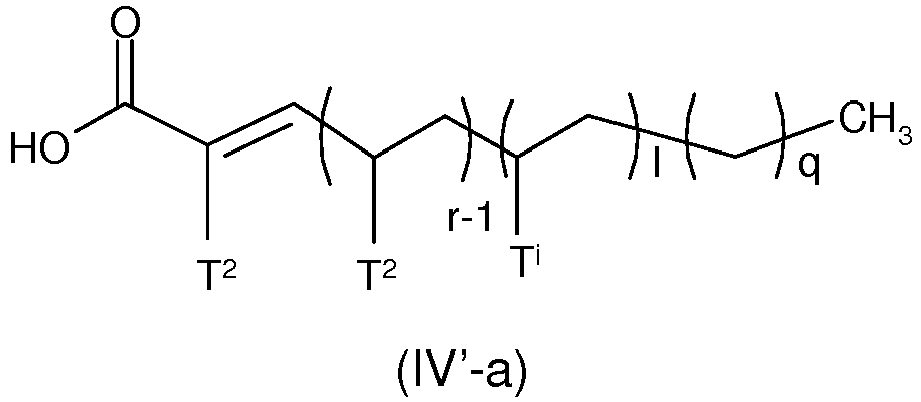
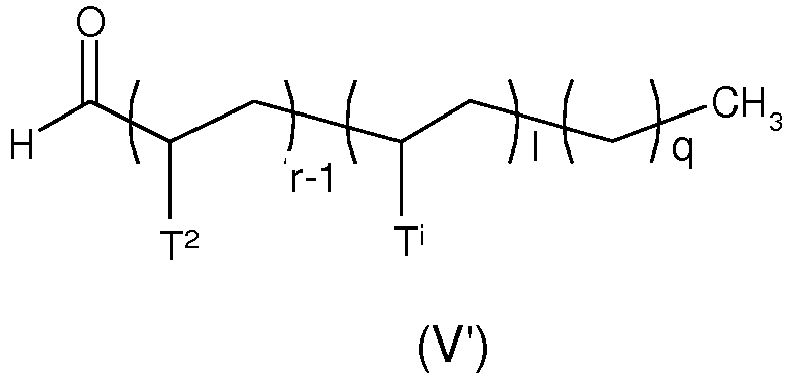
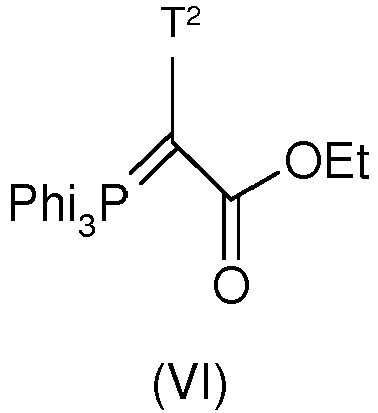
Priority Applications (1)
| Application Number | Priority Date | Filing Date | Title |
|---|---|---|---|
| EP08702217.4A EP2125849B1 (en) | 2007-01-24 | 2008-01-11 | Sulfoglycolipid antigens, their process of preparation, and their use against tuberculosis |
Applications Claiming Priority (3)
| Application Number | Priority Date | Filing Date | Title |
|---|---|---|---|
| EP07290097A EP1950218A1 (en) | 2007-01-24 | 2007-01-24 | Sulfoglycolipid antigens, their process of preparation, and their use against tuberculosis |
| PCT/IB2008/000053 WO2008090425A1 (en) | 2007-01-24 | 2008-01-11 | Sulfoglycolipid antigens, their process of preparation, and their use against tuberculosis |
| EP08702217.4A EP2125849B1 (en) | 2007-01-24 | 2008-01-11 | Sulfoglycolipid antigens, their process of preparation, and their use against tuberculosis |
Publications (2)
| Publication Number | Publication Date |
|---|---|
| EP2125849A1 EP2125849A1 (en) | 2009-12-02 |
| EP2125849B1 true EP2125849B1 (en) | 2017-11-15 |
Family
ID=38080940
Family Applications (2)
| Application Number | Title | Priority Date | Filing Date |
|---|---|---|---|
| EP07290097A Withdrawn EP1950218A1 (en) | 2007-01-24 | 2007-01-24 | Sulfoglycolipid antigens, their process of preparation, and their use against tuberculosis |
| EP08702217.4A Not-in-force EP2125849B1 (en) | 2007-01-24 | 2008-01-11 | Sulfoglycolipid antigens, their process of preparation, and their use against tuberculosis |
Family Applications Before (1)
| Application Number | Title | Priority Date | Filing Date |
|---|---|---|---|
| EP07290097A Withdrawn EP1950218A1 (en) | 2007-01-24 | 2007-01-24 | Sulfoglycolipid antigens, their process of preparation, and their use against tuberculosis |
Country Status (7)
| Country | Link |
|---|---|
| US (1) | US8268801B2 (en) |
| EP (2) | EP1950218A1 (en) |
| JP (1) | JP5547491B2 (en) |
| CN (1) | CN101622266B (en) |
| BR (1) | BRPI0806400A8 (en) |
| ES (1) | ES2659516T3 (en) |
| WO (1) | WO2008090425A1 (en) |
Families Citing this family (13)
| Publication number | Priority date | Publication date | Assignee | Title |
|---|---|---|---|---|
| US8288509B2 (en) * | 2002-02-22 | 2012-10-16 | National Hospital Organization Kinki-chuo Chest Medical center | Therapeutic agent for infections, and treatment method using the same |
| EP2807177B1 (en) | 2012-01-27 | 2019-11-13 | The Regents of The University of California | Stabilization of biomolecules using sugar polymers |
| JP6276806B2 (en) * | 2016-05-30 | 2018-02-07 | マイクロ波化学株式会社 | Method for producing sucrose fatty acid ester |
| JP5945756B1 (en) * | 2015-06-01 | 2016-07-05 | マイクロ波化学株式会社 | Method for producing sucrose fatty acid ester |
| JP5952980B1 (en) * | 2016-02-17 | 2016-07-13 | マイクロ波化学株式会社 | Method for producing sucrose stearate |
| KR20180016919A (en) * | 2015-06-01 | 2018-02-20 | 마이크로파 화학 주식회사 | Method for producing sucrose fatty acid ester |
| WO2017211314A1 (en) | 2016-06-08 | 2017-12-14 | Kei International Limited | Method for detecting presence of mycobacterial material in sample using immobilised mannosyl phosphoketide antigen |
| NL2017204B1 (en) * | 2016-06-08 | 2017-12-18 | Kei International Ltd | Solid substrate comprising antigens immobilised thereto, biosensor comprising said solid substrate and method for detecting the presence of mycobacterial material in a sample |
| NL2016913B1 (en) * | 2016-06-08 | 2017-12-18 | Kei International Ltd | Solid substrate comprising antigens immobilised thereto and use thereof in a method for detecting the presence of mycobacterial material in a sample |
| NL2021443B1 (en) | 2018-08-08 | 2020-02-20 | Kei International Ltd | Synthetic antigens for tuberculosis detection |
| NL2022166B1 (en) | 2018-12-10 | 2020-07-02 | Kei International Ltd | Nitrocellulose sheet comprising immobilized immunoglobulins and lipid based antigens and use thereof |
| FR3092112B1 (en) * | 2019-01-29 | 2023-01-06 | Arkema France | LUBRICATING BASE OIL SYNTHETIZED FROM POLYOLS ESTERS AND BIOSOURCED FATTY ACIDS |
| FR3092113B1 (en) * | 2019-01-29 | 2023-04-21 | Arkema France | LUBRICATING BASE OIL SYNTHETIZED FROM SUGAR ALCOHOL DESTERS |
Family Cites Families (1)
| Publication number | Priority date | Publication date | Assignee | Title |
|---|---|---|---|---|
| EP1469007A1 (en) * | 2003-04-18 | 2004-10-20 | Centre National De La Recherche Scientifique (Cnrs) | Sulfoglycolipid antigens, their extraction from mycobacterieum tuberculosis, and their use against tuberculosis |
-
2007
- 2007-01-24 EP EP07290097A patent/EP1950218A1/en not_active Withdrawn
-
2008
- 2008-01-11 CN CN2008800060908A patent/CN101622266B/en not_active Expired - Fee Related
- 2008-01-11 ES ES08702217.4T patent/ES2659516T3/en active Active
- 2008-01-11 WO PCT/IB2008/000053 patent/WO2008090425A1/en not_active Ceased
- 2008-01-11 US US12/524,091 patent/US8268801B2/en not_active Expired - Fee Related
- 2008-01-11 EP EP08702217.4A patent/EP2125849B1/en not_active Not-in-force
- 2008-01-11 BR BRPI0806400A patent/BRPI0806400A8/en not_active Application Discontinuation
- 2008-01-11 JP JP2009546828A patent/JP5547491B2/en not_active Expired - Fee Related
Non-Patent Citations (1)
| Title |
|---|
| None * |
Also Published As
| Publication number | Publication date |
|---|---|
| US8268801B2 (en) | 2012-09-18 |
| CN101622266B (en) | 2013-09-11 |
| JP5547491B2 (en) | 2014-07-16 |
| WO2008090425A1 (en) | 2008-07-31 |
| CN101622266A (en) | 2010-01-06 |
| BRPI0806400A2 (en) | 2011-09-06 |
| BRPI0806400A8 (en) | 2018-10-23 |
| EP2125849A1 (en) | 2009-12-02 |
| EP1950218A1 (en) | 2008-07-30 |
| JP2010516748A (en) | 2010-05-20 |
| ES2659516T3 (en) | 2018-03-16 |
| US20100166801A1 (en) | 2010-07-01 |
Similar Documents
| Publication | Publication Date | Title |
|---|---|---|
| EP1950218A1 (en) | Sulfoglycolipid antigens, their process of preparation, and their use against tuberculosis | |
| JP2010516748A5 (en) | ||
| AU783486B2 (en) | Synthetic oligomannosides, preparation and uses thereof | |
| EP3710462B1 (en) | Brartemicin analogues | |
| TW200838546A (en) | Functionalized beta 1,6 glucosamine disaccharides and process for their preparation | |
| Bourke et al. | The synthesis and biological evaluation of mycobacterial p-hydroxybenzoic acid derivatives (p-HBADs) | |
| Nalla et al. | Design, synthesis and immunological evaluation of 1, 2, 3-triazole-tethered carbohydrate–Pam3Cys conjugates as TLR2 agonists | |
| Taher et al. | Synthesis of wax esters and related trehalose esters from Mycobacterium avium and other mycobacteria | |
| EP2391634B1 (en) | Compositions comprising sugar ester of mycolic acid derivatives and process for the preparation thereof. | |
| Bhat et al. | Semi-synthetic analogs of pinitol as potential inhibitors of TNF-α cytokine expression in human neutrophils | |
| Mohammed et al. | Arabino mycolates from synthetic mycolic acids | |
| Ali et al. | Glycerol mycolates from synthetic mycolic acids | |
| EP3707147B1 (en) | New synthetic agonists of tlr4 receptor | |
| US8153610B2 (en) | Sulfoglycolipid antigens, their extraction from Mycobacterium tuberculosis, and their use against tuberculosis | |
| JPH07316181A (en) | 2,3,4'-tris(acetyl)-4,6-ethylidene-beta-d-glucopyranoside, its production,and its use for producing 4'- demethylepipodophillotoxin.ethylidene-beta-d-glucopyranoside | |
| Yamamoto et al. | Concise synthesis of a probe molecule enabling analysis and imaging of vizantin | |
| Jäger et al. | Convenient synthesis of the immunogenic glycolipid BbGL1 | |
| EP4656648A1 (en) | Immunomodulatory thiourea and urea carbohydrate compounds and uses thereof | |
| Khan | The Synthesis and Biological Evaluation of Ligands for C-Type Lectin Receptors | |
| JPWO2018155051A1 (en) | Lipid A | |
| JP2519128B2 (en) | Reagent for detecting antibody corresponding to mycobacterial antigen and use thereof | |
| HK40093328A (en) | Novel aminoalkyl glucosaminide 4-phosphate derivative | |
| KR20230106604A (en) | Novel aminoalkylglucosaminide 4-phosphate derivatives | |
| Fukuda et al. | Chemosynthetic homologues of Mycoplasma pneumoniae β-glycolipid antigens for the diagnosis of mycoplasma infectious diseases | |
| Taher et al. | Mark S. Baird1. 1. School of Chemistry, Bangor University, Bangor, Wales, LL57 2UW, UK 2. Scientific Institute of Public Health, Brussels, Belgium |
Legal Events
| Date | Code | Title | Description |
|---|---|---|---|
| PUAI | Public reference made under article 153(3) epc to a published international application that has entered the european phase |
Free format text: ORIGINAL CODE: 0009012 |
|
| 17P | Request for examination filed |
Effective date: 20090717 |
|
| AK | Designated contracting states |
Kind code of ref document: A1 Designated state(s): AT BE BG CH CY CZ DE DK EE ES FI FR GB GR HR HU IE IS IT LI LT LU LV MC MT NL NO PL PT RO SE SI SK TR |
|
| 17Q | First examination report despatched |
Effective date: 20100208 |
|
| DAX | Request for extension of the european patent (deleted) | ||
| GRAP | Despatch of communication of intention to grant a patent |
Free format text: ORIGINAL CODE: EPIDOSNIGR1 |
|
| RIC1 | Information provided on ipc code assigned before grant |
Ipc: G01N 33/569 20060101ALI20170601BHEP Ipc: A61P 31/06 20060101ALI20170601BHEP Ipc: C07H 13/06 20060101AFI20170601BHEP Ipc: A61K 31/7024 20060101ALI20170601BHEP |
|
| INTG | Intention to grant announced |
Effective date: 20170621 |
|
| GRAS | Grant fee paid |
Free format text: ORIGINAL CODE: EPIDOSNIGR3 |
|
| GRAA | (expected) grant |
Free format text: ORIGINAL CODE: 0009210 |
|
| AK | Designated contracting states |
Kind code of ref document: B1 Designated state(s): AT BE BG CH CY CZ DE DK EE ES FI FR GB GR HR HU IE IS IT LI LT LU LV MC MT NL NO PL PT RO SE SI SK TR |
|
| REG | Reference to a national code |
Ref country code: CH Ref legal event code: EP Ref country code: GB Ref legal event code: FG4D Ref country code: AT Ref legal event code: REF Ref document number: 946174 Country of ref document: AT Kind code of ref document: T Effective date: 20171115 |
|
| REG | Reference to a national code |
Ref country code: IE Ref legal event code: FG4D |
|
| REG | Reference to a national code |
Ref country code: DE Ref legal event code: R096 Ref document number: 602008052954 Country of ref document: DE |
|
| REG | Reference to a national code |
Ref country code: CH Ref legal event code: NV Representative=s name: MICHELI AND CIE SA, CH |
|
| REG | Reference to a national code |
Ref country code: ES Ref legal event code: FG2A Ref document number: 2659516 Country of ref document: ES Kind code of ref document: T3 Effective date: 20180316 |
|
| REG | Reference to a national code |
Ref country code: NL Ref legal event code: MP Effective date: 20171115 |
|
| REG | Reference to a national code |
Ref country code: LT Ref legal event code: MG4D |
|
| REG | Reference to a national code |
Ref country code: FR Ref legal event code: PLFP Year of fee payment: 11 |
|
| REG | Reference to a national code |
Ref country code: AT Ref legal event code: MK05 Ref document number: 946174 Country of ref document: AT Kind code of ref document: T Effective date: 20171115 |
|
| PG25 | Lapsed in a contracting state [announced via postgrant information from national office to epo] |
Ref country code: FI Free format text: LAPSE BECAUSE OF FAILURE TO SUBMIT A TRANSLATION OF THE DESCRIPTION OR TO PAY THE FEE WITHIN THE PRESCRIBED TIME-LIMIT Effective date: 20171115 Ref country code: NL Free format text: LAPSE BECAUSE OF FAILURE TO SUBMIT A TRANSLATION OF THE DESCRIPTION OR TO PAY THE FEE WITHIN THE PRESCRIBED TIME-LIMIT Effective date: 20171115 Ref country code: SE Free format text: LAPSE BECAUSE OF FAILURE TO SUBMIT A TRANSLATION OF THE DESCRIPTION OR TO PAY THE FEE WITHIN THE PRESCRIBED TIME-LIMIT Effective date: 20171115 Ref country code: NO Free format text: LAPSE BECAUSE OF FAILURE TO SUBMIT A TRANSLATION OF THE DESCRIPTION OR TO PAY THE FEE WITHIN THE PRESCRIBED TIME-LIMIT Effective date: 20180215 Ref country code: LT Free format text: LAPSE BECAUSE OF FAILURE TO SUBMIT A TRANSLATION OF THE DESCRIPTION OR TO PAY THE FEE WITHIN THE PRESCRIBED TIME-LIMIT Effective date: 20171115 |
|
| PG25 | Lapsed in a contracting state [announced via postgrant information from national office to epo] |
Ref country code: LV Free format text: LAPSE BECAUSE OF FAILURE TO SUBMIT A TRANSLATION OF THE DESCRIPTION OR TO PAY THE FEE WITHIN THE PRESCRIBED TIME-LIMIT Effective date: 20171115 Ref country code: HR Free format text: LAPSE BECAUSE OF FAILURE TO SUBMIT A TRANSLATION OF THE DESCRIPTION OR TO PAY THE FEE WITHIN THE PRESCRIBED TIME-LIMIT Effective date: 20171115 Ref country code: AT Free format text: LAPSE BECAUSE OF FAILURE TO SUBMIT A TRANSLATION OF THE DESCRIPTION OR TO PAY THE FEE WITHIN THE PRESCRIBED TIME-LIMIT Effective date: 20171115 Ref country code: BG Free format text: LAPSE BECAUSE OF FAILURE TO SUBMIT A TRANSLATION OF THE DESCRIPTION OR TO PAY THE FEE WITHIN THE PRESCRIBED TIME-LIMIT Effective date: 20180215 Ref country code: GR Free format text: LAPSE BECAUSE OF FAILURE TO SUBMIT A TRANSLATION OF THE DESCRIPTION OR TO PAY THE FEE WITHIN THE PRESCRIBED TIME-LIMIT Effective date: 20180216 |
|
| PG25 | Lapsed in a contracting state [announced via postgrant information from national office to epo] |
Ref country code: DK Free format text: LAPSE BECAUSE OF FAILURE TO SUBMIT A TRANSLATION OF THE DESCRIPTION OR TO PAY THE FEE WITHIN THE PRESCRIBED TIME-LIMIT Effective date: 20171115 Ref country code: SK Free format text: LAPSE BECAUSE OF FAILURE TO SUBMIT A TRANSLATION OF THE DESCRIPTION OR TO PAY THE FEE WITHIN THE PRESCRIBED TIME-LIMIT Effective date: 20171115 Ref country code: CZ Free format text: LAPSE BECAUSE OF FAILURE TO SUBMIT A TRANSLATION OF THE DESCRIPTION OR TO PAY THE FEE WITHIN THE PRESCRIBED TIME-LIMIT Effective date: 20171115 Ref country code: CY Free format text: LAPSE BECAUSE OF FAILURE TO SUBMIT A TRANSLATION OF THE DESCRIPTION OR TO PAY THE FEE WITHIN THE PRESCRIBED TIME-LIMIT Effective date: 20171115 Ref country code: EE Free format text: LAPSE BECAUSE OF FAILURE TO SUBMIT A TRANSLATION OF THE DESCRIPTION OR TO PAY THE FEE WITHIN THE PRESCRIBED TIME-LIMIT Effective date: 20171115 |
|
| REG | Reference to a national code |
Ref country code: DE Ref legal event code: R097 Ref document number: 602008052954 Country of ref document: DE |
|
| PG25 | Lapsed in a contracting state [announced via postgrant information from national office to epo] |
Ref country code: PL Free format text: LAPSE BECAUSE OF FAILURE TO SUBMIT A TRANSLATION OF THE DESCRIPTION OR TO PAY THE FEE WITHIN THE PRESCRIBED TIME-LIMIT Effective date: 20171115 Ref country code: RO Free format text: LAPSE BECAUSE OF FAILURE TO SUBMIT A TRANSLATION OF THE DESCRIPTION OR TO PAY THE FEE WITHIN THE PRESCRIBED TIME-LIMIT Effective date: 20171115 |
|
| PLBE | No opposition filed within time limit |
Free format text: ORIGINAL CODE: 0009261 |
|
| STAA | Information on the status of an ep patent application or granted ep patent |
Free format text: STATUS: NO OPPOSITION FILED WITHIN TIME LIMIT |
|
| 26N | No opposition filed |
Effective date: 20180817 |
|
| PG25 | Lapsed in a contracting state [announced via postgrant information from national office to epo] |
Ref country code: LU Free format text: LAPSE BECAUSE OF NON-PAYMENT OF DUE FEES Effective date: 20180111 |
|
| REG | Reference to a national code |
Ref country code: IE Ref legal event code: MM4A |
|
| REG | Reference to a national code |
Ref country code: BE Ref legal event code: MM Effective date: 20180131 |
|
| PG25 | Lapsed in a contracting state [announced via postgrant information from national office to epo] |
Ref country code: BE Free format text: LAPSE BECAUSE OF NON-PAYMENT OF DUE FEES Effective date: 20180131 Ref country code: SI Free format text: LAPSE BECAUSE OF FAILURE TO SUBMIT A TRANSLATION OF THE DESCRIPTION OR TO PAY THE FEE WITHIN THE PRESCRIBED TIME-LIMIT Effective date: 20171115 |
|
| PG25 | Lapsed in a contracting state [announced via postgrant information from national office to epo] |
Ref country code: IE Free format text: LAPSE BECAUSE OF NON-PAYMENT OF DUE FEES Effective date: 20180111 |
|
| PGFP | Annual fee paid to national office [announced via postgrant information from national office to epo] |
Ref country code: CH Payment date: 20190118 Year of fee payment: 12 Ref country code: ES Payment date: 20190220 Year of fee payment: 12 Ref country code: GB Payment date: 20190118 Year of fee payment: 12 Ref country code: IT Payment date: 20190114 Year of fee payment: 12 Ref country code: FR Payment date: 20190130 Year of fee payment: 12 Ref country code: DE Payment date: 20190114 Year of fee payment: 12 |
|
| PG25 | Lapsed in a contracting state [announced via postgrant information from national office to epo] |
Ref country code: MC Free format text: LAPSE BECAUSE OF FAILURE TO SUBMIT A TRANSLATION OF THE DESCRIPTION OR TO PAY THE FEE WITHIN THE PRESCRIBED TIME-LIMIT Effective date: 20171115 |
|
| PG25 | Lapsed in a contracting state [announced via postgrant information from national office to epo] |
Ref country code: MT Free format text: LAPSE BECAUSE OF NON-PAYMENT OF DUE FEES Effective date: 20180111 |
|
| PG25 | Lapsed in a contracting state [announced via postgrant information from national office to epo] |
Ref country code: TR Free format text: LAPSE BECAUSE OF FAILURE TO SUBMIT A TRANSLATION OF THE DESCRIPTION OR TO PAY THE FEE WITHIN THE PRESCRIBED TIME-LIMIT Effective date: 20171115 |
|
| PG25 | Lapsed in a contracting state [announced via postgrant information from national office to epo] |
Ref country code: HU Free format text: LAPSE BECAUSE OF FAILURE TO SUBMIT A TRANSLATION OF THE DESCRIPTION OR TO PAY THE FEE WITHIN THE PRESCRIBED TIME-LIMIT; INVALID AB INITIO Effective date: 20080111 Ref country code: PT Free format text: LAPSE BECAUSE OF FAILURE TO SUBMIT A TRANSLATION OF THE DESCRIPTION OR TO PAY THE FEE WITHIN THE PRESCRIBED TIME-LIMIT Effective date: 20171115 |
|
| PG25 | Lapsed in a contracting state [announced via postgrant information from national office to epo] |
Ref country code: IS Free format text: LAPSE BECAUSE OF FAILURE TO SUBMIT A TRANSLATION OF THE DESCRIPTION OR TO PAY THE FEE WITHIN THE PRESCRIBED TIME-LIMIT Effective date: 20180315 |
|
| REG | Reference to a national code |
Ref country code: DE Ref legal event code: R119 Ref document number: 602008052954 Country of ref document: DE |
|
| REG | Reference to a national code |
Ref country code: CH Ref legal event code: PL |
|
| GBPC | Gb: european patent ceased through non-payment of renewal fee |
Effective date: 20200111 |
|
| PG25 | Lapsed in a contracting state [announced via postgrant information from national office to epo] |
Ref country code: DE Free format text: LAPSE BECAUSE OF NON-PAYMENT OF DUE FEES Effective date: 20200801 Ref country code: FR Free format text: LAPSE BECAUSE OF NON-PAYMENT OF DUE FEES Effective date: 20200131 Ref country code: GB Free format text: LAPSE BECAUSE OF NON-PAYMENT OF DUE FEES Effective date: 20200111 |
|
| PG25 | Lapsed in a contracting state [announced via postgrant information from national office to epo] |
Ref country code: CH Free format text: LAPSE BECAUSE OF NON-PAYMENT OF DUE FEES Effective date: 20200131 Ref country code: LI Free format text: LAPSE BECAUSE OF NON-PAYMENT OF DUE FEES Effective date: 20200131 |
|
| PG25 | Lapsed in a contracting state [announced via postgrant information from national office to epo] |
Ref country code: IT Free format text: LAPSE BECAUSE OF NON-PAYMENT OF DUE FEES Effective date: 20200111 |
|
| REG | Reference to a national code |
Ref country code: ES Ref legal event code: FD2A Effective date: 20210603 |
|
| PG25 | Lapsed in a contracting state [announced via postgrant information from national office to epo] |
Ref country code: ES Free format text: LAPSE BECAUSE OF NON-PAYMENT OF DUE FEES Effective date: 20200112 |