EP2125761B1 - Novel process for synthesis of pramipexole and its pharmaceutically acceptable salts - Google Patents
Novel process for synthesis of pramipexole and its pharmaceutically acceptable salts Download PDFInfo
- Publication number
- EP2125761B1 EP2125761B1 EP08705438.3A EP08705438A EP2125761B1 EP 2125761 B1 EP2125761 B1 EP 2125761B1 EP 08705438 A EP08705438 A EP 08705438A EP 2125761 B1 EP2125761 B1 EP 2125761B1
- Authority
- EP
- European Patent Office
- Prior art keywords
- formula
- reaction
- pramipexole
- process according
- nitro
- Prior art date
- Legal status (The legal status is an assumption and is not a legal conclusion. Google has not performed a legal analysis and makes no representation as to the accuracy of the status listed.)
- Active
Links
- JKALGKKOQYMWGN-WJXVXWFNSA-N Nc1nc(CC[C@@H](C2)NS([AlH2])(=O)=O)c2[s]1 Chemical compound Nc1nc(CC[C@@H](C2)NS([AlH2])(=O)=O)c2[s]1 JKALGKKOQYMWGN-WJXVXWFNSA-N 0.000 description 1
Classifications
-
- C—CHEMISTRY; METALLURGY
- C07—ORGANIC CHEMISTRY
- C07D—HETEROCYCLIC COMPOUNDS
- C07D277/00—Heterocyclic compounds containing 1,3-thiazole or hydrogenated 1,3-thiazole rings
- C07D277/60—Heterocyclic compounds containing 1,3-thiazole or hydrogenated 1,3-thiazole rings condensed with carbocyclic rings or ring systems
- C07D277/62—Benzothiazoles
- C07D277/68—Benzothiazoles with hetero atoms or with carbon atoms having three bonds to hetero atoms with at the most one bond to halogen, e.g. ester or nitrile radicals, directly attached in position 2
- C07D277/82—Nitrogen atoms
Definitions
- the present invention belongs to the field of organic chemistry and relates to a novel process of synthesis of pramipexole and its pharmaceutically acceptable salts.
- Pramipexole preferably its dihidrochloride monohydrate, is a compound used for a treatment of Parkinson's disease.
- Pramipexole with a chemical name S(-)-2-amino-4,5,6,7-tetrahydro-6-propylaminobenzothiazole, belongs to a family of bioisosters of hydroxytetraline and ergoline, which have been developed as antagonists of dopamine receptors. Pramipexole is used for the treatment of signs and symptoms of Parkinson's disease and restless leg syndrome.
- Pramipexole is the subject of patent EP 186087 , describing several possible processes for synthesis
- the process according to the present invention represents novel inventive approach to the solution of a synthesis, providing high conversion rate of intermediates and a process, whereby a formation of undesired side products is avoided.
- An advantage of the process according to the present invention is that high optical purity is preserved in all steps and that racemization does not occur in any of the steps.
- the subject of the present invention is a process for the preparation of pramipexole, comprising a process for synthesis, shown in the scheme 1
- a process according to the present invention comprises:
- the process can be carried out continuously or uncontinuously.
- Organic base can be selected from a group of tertiary amines, such as trimethylamine, triethylamine, diisopropylethyl amine, tri-n-propylamine, tri-n-butylamine, N,N,N',N'-tetramethyl-1,3-propanediamine, N-methyl morpholine, N,N'-dimethylpiperazine, 1,4-diazabicyclo[2.2.2]octane, 1,5-diazabicyclo[4.3.0]-5-nonene; 1,8-diazabicyclo[5.4.0]-7-undecene; heterocyclic aromatic amines selected from pyridine, pyrrolidine such as N-methyl pyrrolidine, dimethylpyrrolidine, 4-dimethylamino pyridine, colidine, lutidine; preferably triethyl
- Inorganic base can be selected from alkaline and alkaline earth hydroxides, such as NaOH, KOH, LiOH, Mg(OH) 2 , carbonates, hydrogen carbonates, quarternary ammonium hydroxides, such as tetrabutyl ammonium hydroxide, tetraethylammonium hydroxide, or alkoxides.
- alkaline and alkaline earth hydroxides such as NaOH, KOH, LiOH, Mg(OH) 2
- carbonates such as tetrabutyl ammonium hydroxide, tetraethylammonium hydroxide, or alkoxides.
- An organic solvent can be selected from ketones such as acetone, methylethyl ketone; ethers such as THF, diethylether; nitriles such as acetonitrile; amides such as dimethyl acetamide, dimethyl formamide; pyrrolidones such as n-methylpyrrolidone; halogenated alkanes such as methylene chloride, chloroform.
- the reaction is carried out in such a manner that nitro-substituted aryl sulfonyl chloride is dissolved in a solvent, cooled to a temperature from -20°C to 10°C, preferably under 0°C, a base and then the compound of formula I are added and it is allowed that the reaction temperature gradually rises to room temperature.
- aryl sulfonyl chloride can be used, preferably nitro or halogen substituted aryl sulfonyl chloride.
- nitro substituted aryl sulfonyl chloride a mono-, di- or tri-nitro substituted benzene sulfonyl chloride such as 2-nitrobenzene sulfonyl chloride, 4-nitrobenzene sulfonyl chloride 2,4-, 2,3-, 2,5-, 2,6-dinitrobenzene sulfonyl chloride, 2,4,6-trinitrobenzene sulfonyl chloride, preferably 2-nitrobenzene sulfonyl chloride can be used.
- halogen substituted aryl sulfonyl chlorides 4-Br-, 4-Cl- and 4-F-benzene sulfonyl chlorides can be used.
- intermediate of formula III is carried in such a manner that, after desalination a solution is evaporated to a dry residue, which is poured over with water and, under stirring, a yellow precipitate falls out, which can be optionally washed with water. Alternatively the solution could be evaporated to approximately 1/3 of the volume and water could be added.
- a reaction of intermediate III with intermediate IV is carried out in an organic solvent in the presence of a base, optionally in a presence of a catalyst such as KI, whereby an intermediate V is obtained.
- organic or inorganic base can be used as a base.
- organic bases primary, secondary and tertiary amines such as triethylamine, diisopropylamine, methylamine, pyridine, pyrrolidine, piperazine, pyrimidine can be used.
- Inorganic base can be selected from alkaline or alkaline earth hydroxides such as NaOH, KOH, LiOH, Mg(OH) 2 , carbonates such as K 2 CO 3 , Cs 2 CO 3 , hydrogen carbonates, quaternary ammonium hydroxides such as tetrabutyl ammonium hydroxide, tetraethylammonium hydoxide or alkoxides, preferably potassium carbonate, cesium carbonate.
- ketons such as acetone, methylethylketone diethylketone; ethers such as THF, diethyl ether, dioxane; nitriles such as acetonitrile, propionitrile; alcohols such as propanol; amides such as dimethyl acetamide, dimethyl formamide; pyrrolidones such as N-methylpyrrolidone, aromatic hydrocarbons such as toluene, xylene; sulfoxides such as dimethyl sulfoxide can be used.
- propyl bromide propyl iodide, propyl chloride, propyl tosylate, propyl methanesulfonate, propyl sulfate, preferably propyl bromide can be used.
- the obtained intermediate V is converted into pramipexole by the use of a reagent for a selective removal of arylsulfonyl group.
- a reagent for selective removal of nitrobenzene sulfonyl group a thiol in the presence of a base or alkoxide is used.
- a thiol there can be used thiophenol, thioglycolic acid, mercaptoethanol, preferably thioglycolic acid.
- a base an organic or inorganic base can be used.
- organic bases there can be used primary, secondary and tertiary amines, such as trimethylamine, triethylamine, diisopropylethylamine, tri-n-propylamine, tri-n-butylamine, N,N,N',N'-tetramethyl-1,3-propanediamine, N-methyl morpholine, N,N'-dimethylpiperazine, 1,4-diazabicyclo[2.2.2]octane, 1,5-diazabicyclo[4.3.0]-5-nonene; 1,8-diazabicyclo[5.4.0]-7-undecene; heterocyclic aromatic amines, selected from pyridine, pyrrolidine such as N-methylpyrrolidine, dimethylpyrrolidine, 4-dimethylaminopyridine, colidine, lutidine; preferably triethylamine.
- primary, secondary and tertiary amines such as trimethylamine, triethylamine, diiso
- inorganic bases there can be used hydroxides, preferably lithium hydroxide, carbonates, hydrogen carbonates, alkoxides of alkaline or alkaline earth metals, preferably potassium carbonate, cesium carbonate.
- alkoxides such as methoxides, ethoxides, propoxides, preferably methoxides, of alkaline or alkaline earth metals.
- the reaction can be carried out in an organic solvent such as ketones, such as acetone, methylethylketone, diethylketone; ethers such as THF, diethylether, methylethylether, dioxane, dimethoxyethane; nitriles such as acetonitrile, propionitrile; amides such as dimethyl acetamide, dimethyl formamide; pyrrolidones such as N-methylpyrrolidone, aromatic hydrocarbons such as toluene, xylene, sulfoxides such as dimethylsulfoxide, halogenated alkanes.
- ketones such as acetone, methylethylketone, diethylketone
- ethers such as THF, diethylether, methylethylether, dioxane, dimethoxyethane
- nitriles such as acetonitrile, propionitrile
- amides
- the reaction runs at a temperature from room temperature to reflux temperature of a reaction mixture, preferably at a temperature from 40-70°C.
- Preferable embodiment of the reaction according to the present process is that a reagent for removal of the protection is previously activated in such a manner that it is stirred together with a base from 10 minutes to 1 hour, preferably for 30 minutes, prior to addition of the intermediate of formula V.
- the starting compound I a product, obtained according to any of the known processes from e.g. EP 186087 , WO 2004/041797 , EP 1731514 , can be used.
- the starting compound may be obtained also according to the manufacturing processes disclosed in CN 1772744 , J Med Chem, 1987, vol.30, no.3, p.494-498 , J Het Chem, 2000, vol.37, no.2, p.405-409 .
- reaction is usually being followed by the use of analytic methods such as thin layer chromathography, HPLC, gas chromatography and similar, and when the absence of the starting compound is confirmed, the reaction is completed.
- analytic methods such as thin layer chromathography, HPLC, gas chromatography and similar
- An isolation is carried out in such a manner that, to a mixture of a free base of pramipexole and a solvent, HCl in a form of gas and a solution of HCl gas in a solvent respectively is added.
- Pramipexole crystallizes from a solution in a form of dihydrochloride hydrate.
- Solvents suitable for isolation, are alcohols, preferably methanol, ethanol, isopropanol, 2-butanol, esters, preferably methylacetate, ethylacetate, ketones, preferably acetone, t-butyl methyl ketone.
- Isolation of pramipexole in a form of dihydrochloride can be carried out with re-precipitation with anti-solvents.
- the product can be isolated by lyophilization or fast evaporation of aqueous solutions of pramipexole dihydrochloride.
- Pramipexole in the form of dihydrochloride hydrate is recrystallized from alcohols or a mixture of alcohols, preferably from methanol with addition of ethanol.
- Pramipexole base obtained according to the process of the present invention, can further be converted into dihydrochloride according to processes described in EP 186087 , WO 2006/070349 , EP1318987 , WO 2006/012276 .
- a compound, obtained according to the process, which is the object of the present invention, can be used as a therapeutic active ingredient, which, together with a pharmaceutically acceptable carrier, can be used as a medicine. It can be used for the treatment of symptoms associated with Parkinson's disease as well as for the treatment of restless leg syndrome.
- the compound, obtained according to the present invention can be incorporated into a pharmaceutical formulation, which, in addition to the active ingredient, also comprises pharmaceutically acceptable adjuvants, generally known to an average person skilled in the art of pharmacy as described in e.g. EP 1318987 , WO 2006/015944 , WO 2006/015942 , WO 03/053402 , IPCOM000145762D.
- the average particle size of the active ingredient could be from 5 to 500 microns, preferably from 10 to 300 microns, most preferably from 50-170 microns. Size distribution of particles can be determined by laser light scattering method using e.g. a Malvern Mastersizer 2000 Apparatus with Isopar L as the dilution medium.
- the pharmaceutical formulation can be prepared according to the processes, known to an average person skilled in the art of pharmacy, such as direct compacting, dry granulation or wet granulation.
- o-Nitrobenzenesulfonyl chloride (8.865 g, 40 mmol) was dissolved in 100 ml of THF and during stirring cooled to -10°C (ice + salt). Then, first 3 equiv. of triethylamine (Et 3 N) (120 mmol, 16.8 ml) and then also 1.1 equiv. of 4,5,6,7-tetrahydrobenzo[ d ]thiazol-2,6-diamine (7.605 g, 45 mmol) were added. The formed suspension was, during stirring, gradually heated to room temperature and was left standing until the reaction was completed.
- Et 3 N triethylamine
- N- (2-amino-4,5,6,7-tetrahydrobenzo[ d ]thiazole-6-yl)-2-nitrobenzenesulfonamide (1.770 g, 5 mmol) and K 2 CO 3 (2.856 g, 20 mmol) were suspended in acetonitrile (40 ml) and was, during stirring, heated to 60°C. Then propylbromide (1.65 ml, 18 mmol) was added and the reaction was left to run over night (the course of the reaction was followed by the use of a suitable method).
- N -(2-amino-4,5,6,7-tetrahydrobenzo[ d ]thiazole-6-yl)-2-nitrobenzenesulfonamide (1.770 g, 5 mmol), Cs 2 CO 3 (3.909 g, 12 mmol) and KI (0.415 g, 2.5 mmol) was suspended in acetonitrile (40 ml) and heated to 60°C. Then propyl bromide (0.9 ml, 10 mmol) was added and the course of the reaction was followed by the use of a suitable method.
- the process of the isolation was the same as in the process A.
- the precipitate was transferred into 100 ml round-bottom flask and anhydrous ethanol (50 ml) was added. The suspension was heated to 45°C and ethanol was evaporated on a rotatory evaporator. The process was repeated for another two times in order to drive out all of the excessive HCl (g) .
- the product was recrystallized from methanol: a salt was dissolved in methanol (70 ml) at 45°C, approximately 40 ml of methanol was evaporated and 20 ml of ethanol were added. It was cooled to room temperature and the resulting precipitate was filtered by suction, washed with some cooled anhydrous ethanol and dried in vacuum over P 2 O 5 and NaOH. Yield: 11.631 g (89.01 %)
- 2-Nitrobenzenesulfonyl chloride (390 g, 1.76 mol) was dissolved in 4 1 of THF. The solution was cooled to approximately -10°C. Triethylamine (Et 3 N) (740 g, 7.313 mol) and (6S)-4,5,6,7-tetrahydrobenzotiazole-2,6-diamine (327 g, 1.932 mol) were added. The suspension was heated during mixing to approximately 25°C and allowed to react at this temperature for approximately 1 hour.
- Ethanol (2.35 1) and of LiOH (288 g, 12 mol) were put into the reactor and the suspension was cooled to 0 - 5°C.
- thioglycolic acid (SHCH 2 COOH) (720 g, 7.816 mol) was added (the temperature must not exceed 25°C).
- the suspension was heated to about 25°C and mixed for about 45 minutes.
- Ethanolic solution of (6S)- N -(2-amino-4,5,6,7-tetrahydrobenzotiazole-6-yl)-2-nitro-N-propylbenzenesulfonamide was added.
- the air in the reactor was replaced by nitrogen.
- the mixture was heated to about 50°C and mixed at this temperature for about 4 hours.
- the mixture was cooled to about 25°C and filtrated.
- the filtrate was concentrated at 40°C to about 1/4 of the volume and cooled to the ambient temperature.
- Methylene chloride (4.23 1) and of 1M aqueous NaOH solution solution (2.53 1) were added and the mixture was mixed for about 30 minutes. Phases were separated and water phase was washed again with 4.23 1 of methylene chloride. Organic phases containing pramipexole were collected and concentrated to about 1/4 of the volume. 5 1 of ethanol was added.
Landscapes
- Chemical & Material Sciences (AREA)
- Organic Chemistry (AREA)
- Thiazole And Isothizaole Compounds (AREA)
- Pharmaceuticals Containing Other Organic And Inorganic Compounds (AREA)
- Plural Heterocyclic Compounds (AREA)
- Heterocyclic Carbon Compounds Containing A Hetero Ring Having Oxygen Or Sulfur (AREA)
- Nitrogen Condensed Heterocyclic Rings (AREA)
- Peptides Or Proteins (AREA)
Description
- The present invention belongs to the field of organic chemistry and relates to a novel process of synthesis of pramipexole and its pharmaceutically acceptable salts. Pramipexole, preferably its dihidrochloride monohydrate, is a compound used for a treatment of Parkinson's disease.
- There existed a need for a novel economical process which would provide high yields and, at the same time, be industrially acceptable.
- Pramipexole, with a chemical name S(-)-2-amino-4,5,6,7-tetrahydro-6-propylaminobenzothiazole, belongs to a family of bioisosters of hydroxytetraline and ergoline, which have been developed as antagonists of dopamine receptors. Pramipexole is used for the treatment of signs and symptoms of Parkinson's disease and restless leg syndrome.
- A new synthetic approach has been published in Przemysl Chemiczny, 85/5 (2006), Balicki Roman; Ciesielska Agnieszka, 344-346.
- Pramipexole is the subject of patent
EP 186087 - a) a reaction of cyclohexanone of formula


- b) a reaction of cyclohexanone of formula

- c) a cleavage of a protecting group from the compound of formula

- d) a reduction of acyl or phenylacyl group with the use of metal hydride in a solvent, whereby an appropriate alkyl or phenylalkyl group is obtained;
- e) a reaction of a compound of formula

- There also exists a series of patents, describing resolution of racemic pramipexole, the examples are in
EP 1318987 , wherein a resolution of diastereoisomeric salts by crystallization is described, inWO 2006/003471 , wherein a resolution with chiral chromatography is described, inWO 2006/012276 , wherein resolution with liquid chromatography is described, inWO 2006/120268 , wherein separation with derivatives of tartaric acid is described. - The processes for the preparation of pramipexole with reductive amination of diamine intermediate of formula

WO 2005/092871 ,WO 2006/003677 ,WO 2006/070349 ,WO 2006/097014 . - The process according to the present invention represents novel inventive approach to the solution of a synthesis, providing high conversion rate of intermediates and a process, whereby a formation of undesired side products is avoided. An advantage of the process according to the present invention is that high optical purity is preserved in all steps and that racemization does not occur in any of the steps.
- The subject of the present invention is a process for the preparation of pramipexole, comprising a process for synthesis, shown in the scheme 1

- A process according to the present invention comprises:
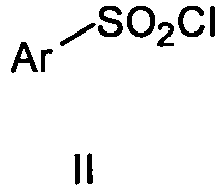
- (i) a reaction of 4,5,6,7-tetrahydrobenzo[d]thiazole-2,6-diamine of formula I with nitro or halogen substituted or unsubstituted aryl sulfonyl chloride of formula II, whereby sulfonamide intermediate of formula III is obtained;
- (ii) a reaction of an intermediate of formula III with a compound of formula IV, wherein X can be selected from Cl, Br, I, or other nucleophilically exchangeable group, such as OTs, OMs, whereby an intermediate of formula V is obtained;
- (iii) a conversion of intermediate of formula V with a selective reagent for a cleaving off of the sulfonyl protection into pramipexole of formula VI;
- (iv) optionally, pramipexole can be converted into pharmaceutically acceptable salt.
- The process can be carried out continuously or uncontinuously.
- A reaction of a compound I with a compound II is carried out in the presence of an inorganic or organic base in an organic solvent. Organic base can be selected from a group of tertiary amines, such as trimethylamine, triethylamine, diisopropylethyl amine, tri-n-propylamine, tri-n-butylamine, N,N,N',N'-tetramethyl-1,3-propanediamine, N-methyl morpholine, N,N'-dimethylpiperazine, 1,4-diazabicyclo[2.2.2]octane, 1,5-diazabicyclo[4.3.0]-5-nonene; 1,8-diazabicyclo[5.4.0]-7-undecene; heterocyclic aromatic amines selected from pyridine, pyrrolidine such as N-methyl pyrrolidine, dimethylpyrrolidine, 4-dimethylamino pyridine, colidine, lutidine; preferably triethyl amine. Inorganic base can be selected from alkaline and alkaline earth hydroxides, such as NaOH, KOH, LiOH, Mg(OH)2, carbonates, hydrogen carbonates, quarternary ammonium hydroxides, such as tetrabutyl ammonium hydroxide, tetraethylammonium hydroxide, or alkoxides.
- An organic solvent can be selected from ketones such as acetone, methylethyl ketone; ethers such as THF, diethylether; nitriles such as acetonitrile; amides such as dimethyl acetamide, dimethyl formamide; pyrrolidones such as n-methylpyrrolidone; halogenated alkanes such as methylene chloride, chloroform.
- Preferably the reaction is carried out in such a manner that nitro-substituted aryl sulfonyl chloride is dissolved in a solvent, cooled to a temperature from -20°C to 10°C, preferably under 0°C, a base and then the compound of formula I are added and it is allowed that the reaction temperature gradually rises to room temperature.
- As a compound of formula II aryl sulfonyl chloride can be used, preferably nitro or halogen substituted aryl sulfonyl chloride.
- As nitro substituted aryl sulfonyl chloride, a mono-, di- or tri-nitro substituted benzene sulfonyl chloride such as 2-nitrobenzene sulfonyl chloride, 4-nitrobenzene sulfonyl chloride 2,4-, 2,3-, 2,5-, 2,6-dinitrobenzene sulfonyl chloride, 2,4,6-trinitrobenzene sulfonyl chloride, preferably 2-nitrobenzene sulfonyl chloride can be used. As halogen substituted aryl sulfonyl chlorides, 4-Br-, 4-Cl- and 4-F-benzene sulfonyl chlorides can be used.
- The isolation of intermediate of formula III is carried in such a manner that, after desalination a solution is evaporated to a dry residue, which is poured over with water and, under stirring, a yellow precipitate falls out, which can be optionally washed with water. Alternatively the solution could be evaporated to approximately 1/3 of the volume and water could be added.
- A reaction of intermediate III with intermediate IV is carried out in an organic solvent in the presence of a base, optionally in a presence of a catalyst such as KI, whereby an intermediate V is obtained.
- As a base an organic or inorganic base can be used. As organic bases primary, secondary and tertiary amines such as triethylamine, diisopropylamine, methylamine, pyridine, pyrrolidine, piperazine, pyrimidine can be used. Inorganic base can be selected from alkaline or alkaline earth hydroxides such as NaOH, KOH, LiOH, Mg(OH)2, carbonates such as K2CO3, Cs2CO3, hydrogen carbonates, quaternary ammonium hydroxides such as tetrabutyl ammonium hydroxide, tetraethylammonium hydoxide or alkoxides, preferably potassium carbonate, cesium carbonate.
- As a solvent ketons such as acetone, methylethylketone diethylketone; ethers such as THF, diethyl ether, dioxane; nitriles such as acetonitrile, propionitrile; alcohols such as propanol; amides such as dimethyl acetamide, dimethyl formamide; pyrrolidones such as N-methylpyrrolidone, aromatic hydrocarbons such as toluene, xylene; sulfoxides such as dimethyl sulfoxide can be used.
- As a reagent of formula IV propyl bromide, propyl iodide, propyl chloride, propyl tosylate, propyl methanesulfonate, propyl sulfate, preferably propyl bromide can be used.
- An isolation of intermediate V is carried out in such a manner that a reaction mixture is desalinated, the solution is evaporated to dryness and the residue is dissolved in dichloromethane. This solution is washed with alkaline aqueous solution, saturated aqueous NaCl solution and dried with Na2SO4. After the evaporation an oily product is obtained.
- The obtained intermediate V, is converted into pramipexole by the use of a reagent for a selective removal of arylsulfonyl group. As a reagent for selective removal of nitrobenzene sulfonyl group a thiol in the presence of a base or alkoxide is used. As a thiol there can be used thiophenol, thioglycolic acid, mercaptoethanol, preferably thioglycolic acid. As a base an organic or inorganic base can be used. As organic bases there can be used primary, secondary and tertiary amines, such as trimethylamine, triethylamine, diisopropylethylamine, tri-n-propylamine, tri-n-butylamine, N,N,N',N'-tetramethyl-1,3-propanediamine, N-methyl morpholine, N,N'-dimethylpiperazine, 1,4-diazabicyclo[2.2.2]octane, 1,5-diazabicyclo[4.3.0]-5-nonene; 1,8-diazabicyclo[5.4.0]-7-undecene; heterocyclic aromatic amines, selected from pyridine, pyrrolidine such as N-methylpyrrolidine, dimethylpyrrolidine, 4-dimethylaminopyridine, colidine, lutidine; preferably triethylamine. As inorganic bases there can be used hydroxides, preferably lithium hydroxide, carbonates, hydrogen carbonates, alkoxides of alkaline or alkaline earth metals, preferably potassium carbonate, cesium carbonate. As an alkoxide there can be used alkoxides such as methoxides, ethoxides, propoxides, preferably methoxides, of alkaline or alkaline earth metals.
- The reaction can be carried out in an organic solvent such as ketones, such as acetone, methylethylketone, diethylketone; ethers such as THF, diethylether, methylethylether, dioxane, dimethoxyethane; nitriles such as acetonitrile, propionitrile; amides such as dimethyl acetamide, dimethyl formamide; pyrrolidones such as N-methylpyrrolidone, aromatic hydrocarbons such as toluene, xylene, sulfoxides such as dimethylsulfoxide, halogenated alkanes.
- The reaction runs at a temperature from room temperature to reflux temperature of a reaction mixture, preferably at a temperature from 40-70°C.
- Preferable embodiment of the reaction according to the present process is that a reagent for removal of the protection is previously activated in such a manner that it is stirred together with a base from 10 minutes to 1 hour, preferably for 30 minutes, prior to addition of the intermediate of formula V.
- As the starting compound I a product, obtained according to any of the known processes from e.g.
EP 186087 WO 2004/041797 ,EP 1731514 , can be used. The starting compound may be obtained also according to the manufacturing processes disclosed inCN 1772744 , J Med Chem, 1987, vol.30, no.3, p.494-498, J Het Chem, 2000, vol.37, no.2, p.405-409. - The reaction is usually being followed by the use of analytic methods such as thin layer chromathography, HPLC, gas chromatography and similar, and when the absence of the starting compound is confirmed, the reaction is completed.
- An isolation is carried out in such a manner that, to a mixture of a free base of pramipexole and a solvent, HCl in a form of gas and a solution of HCl gas in a solvent respectively is added. Pramipexole crystallizes from a solution in a form of dihydrochloride hydrate. Solvents, suitable for isolation, are alcohols, preferably methanol, ethanol, isopropanol, 2-butanol, esters, preferably methylacetate, ethylacetate, ketones, preferably acetone, t-butyl methyl ketone. Isolation of pramipexole in a form of dihydrochloride can be carried out with re-precipitation with anti-solvents. The product can be isolated by lyophilization or fast evaporation of aqueous solutions of pramipexole dihydrochloride.
- Pramipexole in the form of dihydrochloride hydrate is recrystallized from alcohols or a mixture of alcohols, preferably from methanol with addition of ethanol.
- Pramipexole base, obtained according to the process of the present invention, can further be converted into dihydrochloride according to processes described in
EP 186087 WO 2006/070349 ,EP1318987 ,WO 2006/012276 . - A compound, obtained according to the process, which is the object of the present invention, can be used as a therapeutic active ingredient, which, together with a pharmaceutically acceptable carrier, can be used as a medicine. It can be used for the treatment of symptoms associated with Parkinson's disease as well as for the treatment of restless leg syndrome.
- The compound, obtained according to the present invention, can be incorporated into a pharmaceutical formulation, which, in addition to the active ingredient, also comprises pharmaceutically acceptable adjuvants, generally known to an average person skilled in the art of pharmacy as described in e.g.
EP 1318987 ,WO 2006/015944 ,WO 2006/015942 ,WO 03/053402 - The pharmaceutical formulation can be prepared according to the processes, known to an average person skilled in the art of pharmacy, such as direct compacting, dry granulation or wet granulation.
- Reactions can be followed and purity of the products can be controlled by the use of the following two methods:
- High performance liquid chromatography, HPLC, percentage method
Column: Gemini C-18 110A 150 mm x 4.6 mm, 5 µm particles (alternatively Alltima C-18, 250 mm x 4.6 mm, 5 µm particles could be used) Mobile phase: - buffer solution A: 0.01M KH2PO4 (pH=10) - buffer solution B: CH3CN : CH3OH : H2O = 600 : 300: 100 (pH=10) - gradient: Time (min) % A % B 0.0 80 20 18 50 50 24 30 70 40 30 70 41 80 20 post time 7 min Flow: approximately 1.0 mL/min Detection: UV, wave length: 263 nm Injection: 20 µL Temperature: 25 °C (room temperature) - High performance liquid chromatography, HPLC.
Evaluation method: area % Column: Chiralpack IA 250 mm x 4.6 mm, 5 µm particles Mobile phase: hexane/ethanol/DEA in a ratio of 75/25/0.05 Column temperature: 25°C Flow: 0,8 mL/min Detection: UV, 263nm Injection: 20 µL - Alternatively the following chromatographic conditions could be used:
Column: Chiralpack AD-H 250 mm x 4.6 mm, 5 µm particles Mobile phase: ethanol/hexane/DEA in a ratio of 90/10/0.1 Column temperature: 25°C Flow: 0,5 mL/min Detection: UV, 263nm Injection: 5 µL - The present invention is illustrated with the following examples without being limited thereto.
-

- o-Nitrobenzenesulfonyl chloride (8.865 g, 40 mmol) was dissolved in 100 ml of THF and during stirring cooled to -10°C (ice + salt). Then, first 3 equiv. of triethylamine (Et3N) (120 mmol, 16.8 ml) and then also 1.1 equiv. of 4,5,6,7-tetrahydrobenzo[d]thiazol-2,6-diamine (7.605 g, 45 mmol) were added. The formed suspension was, during stirring, gradually heated to room temperature and was left standing until the reaction was completed. In the course of the reaction, in addition to a soluble product, also in THF non-soluble Et3NH+Cl- was formed, which was, at the end of the reaction, filtered off by suction and the reaction mixture was evaporated to dryness on a rotatory evaporator. The residue was poured over with H2O (300 ml), whereby on the bottom of a round-bottom flask an orange viscous liquid was obtained. After rubbing with the glass stick a yellow precipitate (N-(2-amino-4,5,6,7-tetrahydrobenzo[d]thiazole-6-yl)-2-nitrobenzenesulfonamide) was formed. The precipitate was filtered off and washed with 100 ml of cold ethylether and dried. The yield of the reaction was 95%.
-

- N-(2-amino-4,5,6,7-tetrahydrobenzo[d]thiazole-6-yl)-2-nitrobenzenesulfonamide (1.770 g, 5 mmol) and K2CO3 (2.856 g, 20 mmol) were suspended in acetonitrile (40 ml) and was, during stirring, heated to 60°C. Then propylbromide (1.65 ml, 18 mmol) was added and the reaction was left to run over night (the course of the reaction was followed by the use of a suitable method).
- After the reaction was completed, the present precipitate was filtered off by suction. The reaction mixture was evaporated to dryness and the residue was dissolved in dichloromethane (150 ml). Organic phase was washed with 1M NaOH (3 x 50 ml), saturated NaCl solution (2 x 50 ml) and dried with Na2SO4. After evaporation of dichloromethane an orange oily product N-(2-amino-4,5,6,7-tetrahydrobenzo[d]thiazole-6-yl)-2-nitro-N-propylbenzenesulfonamide was obtained.
- N-(2-amino-4,5,6,7-tetrahydrobenzo[d]thiazole-6-yl)-2-nitrobenzenesulfonamide (1.770 g, 5 mmol), Cs2CO3 (3.909 g, 12 mmol) and KI (0.415 g, 2.5 mmol) was suspended in acetonitrile (40 ml) and heated to 60°C. Then propyl bromide (0.9 ml, 10 mmol) was added and the course of the reaction was followed by the use of a suitable method.
- The process of the isolation was the same as in the process A.
-

- K2CO3 (2.073 g, 15 mmol) was suspended in 20 ml of DMF (stored above molecular sieves), thioglycolic acid (SHCH2COOH, 0.6 ml, 7.5 mmol) was added and stirred for 30 minutes. Then N-(2-amino-4,5,6,7-tetrahydrobenzo[d]thiazole-6-yl)-2-nitro-N-propylbenzenesulfonamide (0,99 g, 2,5 mmol), dissolved in 20 ml of DMF was added and the reaction was left to run over night. After the reaction was completed, DMF was evaporated, the residue was poured over with H2O (100 ml) and 1M NaOH (200 ml). The aqueous phase was then washed with dichloromethane (3 x 80 ml) and the combined organic fractions were dried with z Na2SO4. After the evaporation of the solvent an oily residue of orange-red colour (presence of DMF is possible) was obtained.
- LiOH (0.5 g, 20 mmol) was suspended in 20 ml of DMF (stored above molecular sieves), thioglycolic acid (SHCH2COOH, 0.6 ml, 7.5 mmol) was added and stirred for 30 minutes. Then N-(2-amino-4,5,6,7-tetrahidrobenzo[d]thiazole-6-yl)-2-nitro-N-propylbenzenesulfonamide (0.99 g, 2.5 mmol), dissolved in 20 ml of DMF was added and the reaction was left to run over night (the solution was coloured in orange-red).
- After the reaction was completed, DMF was evaporated off, the residue was poured over with H2O (100 ml) and 1M NaOH (200 ml). The aqueous phase was then washed with dichloromethane (3 x 80 ml) and the combined organic fractions were dried with Na2SO4. After the evaporation of the solvent an oily residue of an orange-red colour was obtained.
- (S)-(-)-2-Amino-6-(N-propylamino)-4,5,6,7-tetrahydrobenzothiazole (9.15 g, 43.28 mmol) in 500 ml round-bottom flask was dissolved in 30 ml of ethanol and water (0.78 g, 43.33 mmol) was added. A solution was cooled in an ice bath to 0°C and gaseous HCl(g), was blown through whereby a white precipitate fell out. The roundbottomed flask was sealed and it was stirred over night at room temperature. The next day the precipitate was filtered off by suction and washed with a small amount of anhydrous ethanol. The precipitate was transferred into 100 ml round-bottom flask and anhydrous ethanol (50 ml) was added. The suspension was heated to 45°C and ethanol was evaporated on a rotatory evaporator. The process was repeated for another two times in order to drive out all of the excessive HCl(g). The product was recrystallized from methanol: a salt was dissolved in methanol (70 ml) at 45°C, approximately 40 ml of methanol was evaporated and 20 ml of ethanol were added. It was cooled to room temperature and the resulting precipitate was filtered by suction, washed with some cooled anhydrous ethanol and dried in vacuum over P2O5 and NaOH.
Yield: 11.631 g (89.01 %) -

- 2-Nitrobenzenesulfonyl chloride (390 g, 1.76 mol) was dissolved in 4 1 of THF. The solution was cooled to approximately -10°C. Triethylamine (Et3N) (740 g, 7.313 mol) and (6S)-4,5,6,7-tetrahydrobenzotiazole-2,6-diamine (327 g, 1.932 mol) were added. The suspension was heated during mixing to approximately 25°C and allowed to react at this temperature for approximately 1 hour.
- Precipitated triethylammonium chloride (Et3NH+Cl-) was filtered off. The filtrate was concentrated to about 1/3 of the volume and water (2 l) was added. Again, approximately 1/2 of the solvent was distilled off. Water (2 l) was added, the mixture was cooled to about 25°C and mixed for about 1 hour. The precipitated product ((6S)-N-(2-amino-4,5,6,7-tetrahydrobenzotiazole-6-yl)-2-nitrobenzenesulfonamide) was separated by filtration or centrifuging.
-

- Potassium carbonate (1890 g, 13.675 mol), (6S)-N-(2-amino-4,5,6,7-tetrahydrobenzotiazole-6-yl)-2-nitrobenzenesulfonamide (590 g, 1.665 mol) and propyl bromide (1.09 1, 12 mol) were suspended in 4.1 1 of acetonitrile. The mixture was heated during stirring to approximately 60°C and mixed at this temperature for about 12 hours. The mixture was cooled to about 25°C. Potassium bromide was removed by filtration. The solution was concentrated to about 1/4 of the volume (not exceeding 60°C) and cooled to the room temperature. Methylene chloride (2 1) and 1 M NaOH water solution (2.43 1) were added and the mixture was mixed for about 30 minutes. Phases were separated and water phase was washed again with methylene chloride (1.46 1). Organic phases were collected and concentrated to about 1/10 of the volume. 0.83 1 of ethanol was added and the solution was concentrated to 1/10 of the volume. 3.35 1 of ethanol was added and ethanolic solution of (6S)-N-(2-amino-4,5,6,7-tetrahydrobenzotiazole-6-yl)-2-nitro-N-propylbenzenesulfonamide was stored for further reaction.
- Ethanol (2.35 1) and of LiOH (288 g, 12 mol) were put into the reactor and the suspension was cooled to 0 - 5°C. During about 30 minutes thioglycolic acid (SHCH2COOH) (720 g, 7.816 mol) was added (the temperature must not exceed 25°C). The suspension was heated to about 25°C and mixed for about 45 minutes. Ethanolic solution of (6S)-N-(2-amino-4,5,6,7-tetrahydrobenzotiazole-6-yl)-2-nitro-N-propylbenzenesulfonamide was added. The air in the reactor was replaced by nitrogen. The mixture was heated to about 50°C and mixed at this temperature for about 4 hours. The mixture was cooled to about 25°C and filtrated. The filtrate was concentrated at 40°C to about 1/4 of the volume and cooled to the ambient temperature. Methylene chloride (4.23 1) and of 1M aqueous NaOH solution solution (2.53 1) were added and the mixture was mixed for about 30 minutes. Phases were separated and water phase was washed again with 4.23 1 of methylene chloride. Organic phases containing pramipexole were collected and concentrated to about 1/4 of the volume. 5 1 of ethanol was added.
- To the ethanolic solution of pramipexole water was added (27.6 ml,1.53 mol) and solution was cooled to about -10°C. Gaseous HCl(g) was introduced into the solution (200 g). The temperature of the solution and later the suspension must not exceed 25°C during addition of gaseous HCl(g). After the addition the suspension was heated to about 40°C and concentrated to 2/3 of the volume. 2.65 1 of ethanol was added and the suspension was concentrated to 1/2 of the volume. Again 3.5 1 of ethanol was added and the suspension was concentrated to 1/2 of the volume. The solution was cooled to about -15°C and the product was separated by filtration. The product was dried at 25°C and finally at 40°C on air.
Claims (10)
- A process for the preparation of pramipexole, characterized in that it comprises:(i) a reaction of 4,5,6,7-tetrahydrobenzo[d]thiazole-2,6-diamine of formula I

 (ii) a reaction of an intermediate of formula III with a compound of formula IV,
 (iii) a conversion of an intermediate of formula V with a selective reagent for cleaving off the sulfonyl protection into pramipexole;(iv) optional conversion of pramipexole into pharmaceutically acceptable salt.
 - A process according to claim 1, wherein a reaction between intermediates I and II is carried out in the presence of a base.
- A process according to claim 1, wherein as nitro substituted aryl sulfonyl chloride of formula II, mono-, di- or tri-nitro substituted benzene sulfonyl chloride is used.
- A process according to claim 1, wherein as nitro substituted aryl sulfonyl chloride of formula II, 2-nitrobenzene sulfonyl chloride is used.
- A process according to claim 1, wherein a reaction between intermediate III and a compound of formula IV is carried out in the presence of a base.
- A process according to claim 1, wherein as a selective reagent, thiol in the presence of a base or alkoxide is used.
- A process according to claim 6, wherein as thiol, thiophenol or thioglycolic acid in the presence of a base is used.
- A process according to claim 1, wherein the process is a continuous process.
- A compound of formula III

- A compound of formula V

Priority Applications (1)
| Application Number | Priority Date | Filing Date | Title |
|---|---|---|---|
| SI200831809A SI2125761T1 (en) | 2007-02-07 | 2008-02-07 | Novel process for synthesis of pramipexole and its pharmaceutically acceptable salts |
Applications Claiming Priority (2)
| Application Number | Priority Date | Filing Date | Title |
|---|---|---|---|
| SI200700029A SI22446A (en) | 2007-02-07 | 2007-02-07 | New procedure for synthesis of pramipexole and its pharmaceutically acceptable salts |
| PCT/SI2008/000007 WO2008097203A1 (en) | 2007-02-07 | 2008-02-07 | Novel process for synthesis of pramipexole and its pharmaceutically acceptable salts |
Publications (2)
| Publication Number | Publication Date |
|---|---|
| EP2125761A1 EP2125761A1 (en) | 2009-12-02 |
| EP2125761B1 true EP2125761B1 (en) | 2017-03-01 |
Family
ID=39472495
Family Applications (1)
| Application Number | Title | Priority Date | Filing Date |
|---|---|---|---|
| EP08705438.3A Active EP2125761B1 (en) | 2007-02-07 | 2008-02-07 | Novel process for synthesis of pramipexole and its pharmaceutically acceptable salts |
Country Status (6)
| Country | Link |
|---|---|
| EP (1) | EP2125761B1 (en) |
| CN (1) | CN101622235B (en) |
| EA (1) | EA015818B1 (en) |
| SI (2) | SI22446A (en) |
| UA (1) | UA93945C2 (en) |
| WO (1) | WO2008097203A1 (en) |
Families Citing this family (2)
| Publication number | Priority date | Publication date | Assignee | Title |
|---|---|---|---|---|
| CN104744400B (en) * | 2012-11-22 | 2017-08-11 | 北京三泉医药技术有限公司 | Tetrahydrobenzothiazderivative derivative for treating sacred disease |
| CN103724291B (en) * | 2013-12-30 | 2016-04-13 | 四川科伦药业股份有限公司 | The synthetic method of body of Pramipexole dihydrochloride related substance B |
Family Cites Families (3)
| Publication number | Priority date | Publication date | Assignee | Title |
|---|---|---|---|---|
| DE3572485D1 (en) * | 1984-12-22 | 1989-09-28 | Thomae Gmbh Dr K | Tetrahydro-benzothiazoles, their production and their use as intermediates or drugs |
| GB2394951A (en) * | 2002-11-04 | 2004-05-12 | Cipla Ltd | One pot synthesis of 2,6-diamino-4,5,6,7-tetrahydro-benzothiazole |
| CN1834092B (en) * | 2005-03-15 | 2010-04-28 | 姜能桥 | Preparation of pramipexole |
-
2007
- 2007-02-07 SI SI200700029A patent/SI22446A/en not_active IP Right Cessation
-
2008
- 2008-02-07 UA UAA200909101A patent/UA93945C2/en unknown
- 2008-02-07 SI SI200831809A patent/SI2125761T1/en unknown
- 2008-02-07 WO PCT/SI2008/000007 patent/WO2008097203A1/en not_active Ceased
- 2008-02-07 CN CN200880003177XA patent/CN101622235B/en not_active Expired - Fee Related
- 2008-02-07 EP EP08705438.3A patent/EP2125761B1/en active Active
- 2008-02-07 EA EA200900982A patent/EA015818B1/en not_active IP Right Cessation
Non-Patent Citations (1)
| Title |
|---|
| None * |
Also Published As
| Publication number | Publication date |
|---|---|
| EA015818B1 (en) | 2011-12-30 |
| SI2125761T1 (en) | 2017-06-30 |
| CN101622235B (en) | 2012-07-25 |
| CN101622235A (en) | 2010-01-06 |
| EP2125761A1 (en) | 2009-12-02 |
| UA93945C2 (en) | 2011-03-25 |
| EA200900982A1 (en) | 2009-12-30 |
| WO2008097203A1 (en) | 2008-08-14 |
| SI22446A (en) | 2008-08-31 |
Similar Documents
| Publication | Publication Date | Title |
|---|---|---|
| CA2723207C (en) | Aminodihydrothiazine derivatives as bace inhibitors for the treatment of alzheimer's disease | |
| KR101052122B1 (en) | Aminodihydrothiazine derivatives | |
| US11858900B2 (en) | Fluorinated 2-amino-4-(substituted amino)phenyl carbamate derivatives | |
| RU2727772C1 (en) | Pyrimidine derivatives against influenza virus | |
| SK54794A3 (en) | Substituted salicylic acids | |
| US10183915B2 (en) | Axially chiral isomers, and preparation methods therefor and pharmaceutical uses thereof | |
| PT2057115E (en) | 4-substituted phenoxyphenylacetic acid derivatives | |
| RS54136B1 (en) | PIPERIDINE- AND PIPERAZINE-1-CARBOXYLIC ACID DERIVATIVES AND RELATED COMPOUNDS AS FATTY ACID MODIDERS OF FATTY ACIDS HYDROLASE (FAAH) FOR THE TREATMENT OF ANXIETY, PAIN AND OTHER CONDITIONS | |
| BRPI0515944B1 (en) | PROCESS FOR THE PREPARATION OF 4-{4-[({[4-CHLORINE-3-(TRIFLUOROMETHYL)PHEN]AMINO}CARBONYL) AMINO]PHENOXY}NMETHYLPYRIDINE-2-CARBOXAMIDE | |
| US20060258871A1 (en) | (S)-n,n-dimethyl-3-(1-naphthalenyloxy)-3-(2-thienyl) propanamine-di-p-toluoyl-l-tartarate and methods of preparation thereof | |
| US20110152543A1 (en) | Process for the preparation of optically active (s)-(-)-2-(n-propylamino)-5-methoxytetraline and (s)-(-)-2-(n-propylamino)-5-hydroxytetraline compounds | |
| US10676437B2 (en) | Fluorinated 4-(substituted amino)phenyl carbamate derivatives | |
| US20030195219A1 (en) | Hybrid 2-aminotetralin and aryl-substituted piperazine compounds and their use in altering cns activity | |
| WO2008097203A1 (en) | Novel process for synthesis of pramipexole and its pharmaceutically acceptable salts | |
| BRPI0910595B1 (en) | process for the production of pyrimidine compound | |
| EP2062881B1 (en) | Process for making N-(diphenylmethyl)piperazines | |
| CA3213234A1 (en) | Preparation method of quinoline derivative compounds | |
| AU2003220894B8 (en) | Kappa-opioid receptor agonist comprising 2-phenylbenzothiazoline derivative | |
| CN107098866B (en) | The method for splitting of drug Lesinurad axial chirality enantiomer | |
| CN112694434A (en) | New lefenacin intermediate, active electrophilic building block thereof and new preparation method of lefenacin | |
| CN103923058B (en) | A kind of method synthesizing Wei Lanteluo intermediate and salt thereof | |
| IE921319A1 (en) | 2-aminopyrimidine-4-carboxamide derivatives, their¹preparation and their application in therapy | |
| CN105218457A (en) | A kind of preparation method of 3,5,5 '-three replacement-2-thiohydantoin | |
| JP4895230B2 (en) | Method for producing salt of 4-sulfinylamino-1-cyclohexanecarboxylic acid | |
| US7767813B2 (en) | Preparation method |
Legal Events
| Date | Code | Title | Description |
|---|---|---|---|
| PUAI | Public reference made under article 153(3) epc to a published international application that has entered the european phase |
Free format text: ORIGINAL CODE: 0009012 |
|
| 17P | Request for examination filed |
Effective date: 20090805 |
|
| AK | Designated contracting states |
Kind code of ref document: A1 Designated state(s): AT BE BG CH CY CZ DE DK EE ES FI FR GB GR HR HU IE IS IT LI LT LU LV MC MT NL NO PL PT RO SE SI SK TR |
|
| AX | Request for extension of the european patent |
Extension state: AL BA MK RS |
|
| GRAP | Despatch of communication of intention to grant a patent |
Free format text: ORIGINAL CODE: EPIDOSNIGR1 |
|
| INTG | Intention to grant announced |
Effective date: 20161025 |
|
| GRAS | Grant fee paid |
Free format text: ORIGINAL CODE: EPIDOSNIGR3 |
|
| GRAA | (expected) grant |
Free format text: ORIGINAL CODE: 0009210 |
|
| AK | Designated contracting states |
Kind code of ref document: B1 Designated state(s): AT BE BG CH CY CZ DE DK EE ES FI FR GB GR HR HU IE IS IT LI LT LU LV MC MT NL NO PL PT RO SE SI SK TR |
|
| AX | Request for extension of the european patent |
Extension state: AL BA MK RS |
|
| REG | Reference to a national code |
Ref country code: GB Ref legal event code: FG4D |
|
| REG | Reference to a national code |
Ref country code: CH Ref legal event code: EP Ref country code: AT Ref legal event code: REF Ref document number: 871149 Country of ref document: AT Kind code of ref document: T Effective date: 20170315 |
|
| REG | Reference to a national code |
Ref country code: IE Ref legal event code: FG4D |
|
| REG | Reference to a national code |
Ref country code: DE Ref legal event code: R096 Ref document number: 602008048924 Country of ref document: DE |
|
| REG | Reference to a national code |
Ref country code: NL Ref legal event code: MP Effective date: 20170301 |
|
| REG | Reference to a national code |
Ref country code: LT Ref legal event code: MG4D |
|
| REG | Reference to a national code |
Ref country code: AT Ref legal event code: MK05 Ref document number: 871149 Country of ref document: AT Kind code of ref document: T Effective date: 20170301 |
|
| PG25 | Lapsed in a contracting state [announced via postgrant information from national office to epo] |
Ref country code: LT Free format text: LAPSE BECAUSE OF FAILURE TO SUBMIT A TRANSLATION OF THE DESCRIPTION OR TO PAY THE FEE WITHIN THE PRESCRIBED TIME-LIMIT Effective date: 20170301 Ref country code: GR Free format text: LAPSE BECAUSE OF FAILURE TO SUBMIT A TRANSLATION OF THE DESCRIPTION OR TO PAY THE FEE WITHIN THE PRESCRIBED TIME-LIMIT Effective date: 20170602 Ref country code: HR Free format text: LAPSE BECAUSE OF FAILURE TO SUBMIT A TRANSLATION OF THE DESCRIPTION OR TO PAY THE FEE WITHIN THE PRESCRIBED TIME-LIMIT Effective date: 20170301 Ref country code: NO Free format text: LAPSE BECAUSE OF FAILURE TO SUBMIT A TRANSLATION OF THE DESCRIPTION OR TO PAY THE FEE WITHIN THE PRESCRIBED TIME-LIMIT Effective date: 20170601 Ref country code: FI Free format text: LAPSE BECAUSE OF FAILURE TO SUBMIT A TRANSLATION OF THE DESCRIPTION OR TO PAY THE FEE WITHIN THE PRESCRIBED TIME-LIMIT Effective date: 20170301 |
|
| PG25 | Lapsed in a contracting state [announced via postgrant information from national office to epo] |
Ref country code: LV Free format text: LAPSE BECAUSE OF FAILURE TO SUBMIT A TRANSLATION OF THE DESCRIPTION OR TO PAY THE FEE WITHIN THE PRESCRIBED TIME-LIMIT Effective date: 20170301 Ref country code: AT Free format text: LAPSE BECAUSE OF FAILURE TO SUBMIT A TRANSLATION OF THE DESCRIPTION OR TO PAY THE FEE WITHIN THE PRESCRIBED TIME-LIMIT Effective date: 20170301 Ref country code: ES Free format text: LAPSE BECAUSE OF FAILURE TO SUBMIT A TRANSLATION OF THE DESCRIPTION OR TO PAY THE FEE WITHIN THE PRESCRIBED TIME-LIMIT Effective date: 20170301 Ref country code: BG Free format text: LAPSE BECAUSE OF FAILURE TO SUBMIT A TRANSLATION OF THE DESCRIPTION OR TO PAY THE FEE WITHIN THE PRESCRIBED TIME-LIMIT Effective date: 20170601 Ref country code: SE Free format text: LAPSE BECAUSE OF FAILURE TO SUBMIT A TRANSLATION OF THE DESCRIPTION OR TO PAY THE FEE WITHIN THE PRESCRIBED TIME-LIMIT Effective date: 20170301 |
|
| PG25 | Lapsed in a contracting state [announced via postgrant information from national office to epo] |
Ref country code: NL Free format text: LAPSE BECAUSE OF FAILURE TO SUBMIT A TRANSLATION OF THE DESCRIPTION OR TO PAY THE FEE WITHIN THE PRESCRIBED TIME-LIMIT Effective date: 20170301 |
|
| PG25 | Lapsed in a contracting state [announced via postgrant information from national office to epo] |
Ref country code: RO Free format text: LAPSE BECAUSE OF FAILURE TO SUBMIT A TRANSLATION OF THE DESCRIPTION OR TO PAY THE FEE WITHIN THE PRESCRIBED TIME-LIMIT Effective date: 20170301 Ref country code: EE Free format text: LAPSE BECAUSE OF FAILURE TO SUBMIT A TRANSLATION OF THE DESCRIPTION OR TO PAY THE FEE WITHIN THE PRESCRIBED TIME-LIMIT Effective date: 20170301 Ref country code: SK Free format text: LAPSE BECAUSE OF FAILURE TO SUBMIT A TRANSLATION OF THE DESCRIPTION OR TO PAY THE FEE WITHIN THE PRESCRIBED TIME-LIMIT Effective date: 20170301 Ref country code: CZ Free format text: LAPSE BECAUSE OF FAILURE TO SUBMIT A TRANSLATION OF THE DESCRIPTION OR TO PAY THE FEE WITHIN THE PRESCRIBED TIME-LIMIT Effective date: 20170301 |
|
| PG25 | Lapsed in a contracting state [announced via postgrant information from national office to epo] |
Ref country code: PL Free format text: LAPSE BECAUSE OF FAILURE TO SUBMIT A TRANSLATION OF THE DESCRIPTION OR TO PAY THE FEE WITHIN THE PRESCRIBED TIME-LIMIT Effective date: 20170301 Ref country code: IS Free format text: LAPSE BECAUSE OF FAILURE TO SUBMIT A TRANSLATION OF THE DESCRIPTION OR TO PAY THE FEE WITHIN THE PRESCRIBED TIME-LIMIT Effective date: 20170701 Ref country code: PT Free format text: LAPSE BECAUSE OF FAILURE TO SUBMIT A TRANSLATION OF THE DESCRIPTION OR TO PAY THE FEE WITHIN THE PRESCRIBED TIME-LIMIT Effective date: 20170703 |
|
| REG | Reference to a national code |
Ref country code: DE Ref legal event code: R097 Ref document number: 602008048924 Country of ref document: DE |
|
| PLBE | No opposition filed within time limit |
Free format text: ORIGINAL CODE: 0009261 |
|
| STAA | Information on the status of an ep patent application or granted ep patent |
Free format text: STATUS: NO OPPOSITION FILED WITHIN TIME LIMIT |
|
| PG25 | Lapsed in a contracting state [announced via postgrant information from national office to epo] |
Ref country code: DK Free format text: LAPSE BECAUSE OF FAILURE TO SUBMIT A TRANSLATION OF THE DESCRIPTION OR TO PAY THE FEE WITHIN THE PRESCRIBED TIME-LIMIT Effective date: 20170301 |
|
| 26N | No opposition filed |
Effective date: 20171204 |
|
| PG25 | Lapsed in a contracting state [announced via postgrant information from national office to epo] |
Ref country code: IT Free format text: LAPSE BECAUSE OF FAILURE TO SUBMIT A TRANSLATION OF THE DESCRIPTION OR TO PAY THE FEE WITHIN THE PRESCRIBED TIME-LIMIT Effective date: 20170301 |
|
| REG | Reference to a national code |
Ref country code: CH Ref legal event code: PL |
|
| PG25 | Lapsed in a contracting state [announced via postgrant information from national office to epo] |
Ref country code: MC Free format text: LAPSE BECAUSE OF FAILURE TO SUBMIT A TRANSLATION OF THE DESCRIPTION OR TO PAY THE FEE WITHIN THE PRESCRIBED TIME-LIMIT Effective date: 20170301 |
|
| GBPC | Gb: european patent ceased through non-payment of renewal fee |
Effective date: 20180207 |
|
| REG | Reference to a national code |
Ref country code: IE Ref legal event code: MM4A |
|
| REG | Reference to a national code |
Ref country code: BE Ref legal event code: MM Effective date: 20180228 |
|
| PG25 | Lapsed in a contracting state [announced via postgrant information from national office to epo] |
Ref country code: SI Free format text: LAPSE BECAUSE OF NON-PAYMENT OF DUE FEES Effective date: 20180208 Ref country code: LU Free format text: LAPSE BECAUSE OF NON-PAYMENT OF DUE FEES Effective date: 20180207 Ref country code: LI Free format text: LAPSE BECAUSE OF NON-PAYMENT OF DUE FEES Effective date: 20180228 Ref country code: CH Free format text: LAPSE BECAUSE OF NON-PAYMENT OF DUE FEES Effective date: 20180228 |
|
| REG | Reference to a national code |
Ref country code: SI Ref legal event code: KO00 Effective date: 20181008 Ref country code: FR Ref legal event code: ST Effective date: 20181031 |
|
| PG25 | Lapsed in a contracting state [announced via postgrant information from national office to epo] |
Ref country code: IE Free format text: LAPSE BECAUSE OF NON-PAYMENT OF DUE FEES Effective date: 20180207 |
|
| PG25 | Lapsed in a contracting state [announced via postgrant information from national office to epo] |
Ref country code: FR Free format text: LAPSE BECAUSE OF NON-PAYMENT OF DUE FEES Effective date: 20180228 Ref country code: GB Free format text: LAPSE BECAUSE OF NON-PAYMENT OF DUE FEES Effective date: 20180207 Ref country code: BE Free format text: LAPSE BECAUSE OF NON-PAYMENT OF DUE FEES Effective date: 20180228 |
|
| PG25 | Lapsed in a contracting state [announced via postgrant information from national office to epo] |
Ref country code: MT Free format text: LAPSE BECAUSE OF NON-PAYMENT OF DUE FEES Effective date: 20180207 |
|
| PG25 | Lapsed in a contracting state [announced via postgrant information from national office to epo] |
Ref country code: TR Free format text: LAPSE BECAUSE OF FAILURE TO SUBMIT A TRANSLATION OF THE DESCRIPTION OR TO PAY THE FEE WITHIN THE PRESCRIBED TIME-LIMIT Effective date: 20170301 |
|
| PG25 | Lapsed in a contracting state [announced via postgrant information from national office to epo] |
Ref country code: HU Free format text: LAPSE BECAUSE OF FAILURE TO SUBMIT A TRANSLATION OF THE DESCRIPTION OR TO PAY THE FEE WITHIN THE PRESCRIBED TIME-LIMIT; INVALID AB INITIO Effective date: 20080207 |
|
| PG25 | Lapsed in a contracting state [announced via postgrant information from national office to epo] |
Ref country code: CY Free format text: LAPSE BECAUSE OF FAILURE TO SUBMIT A TRANSLATION OF THE DESCRIPTION OR TO PAY THE FEE WITHIN THE PRESCRIBED TIME-LIMIT Effective date: 20170301 |
|
| PGFP | Annual fee paid to national office [announced via postgrant information from national office to epo] |
Ref country code: DE Payment date: 20260226 Year of fee payment: 19 |