PROCESS FOR PREPARING CHIRALLY PURE
2-AMINO-6-(ALKYL)AMINO-4,5,657-
TETRAHYDROBENZOTHIAZOLES BY LIQUID
CHROMATOGRAPHIC RESOLUTION
[0001] This application claims the benefit of U.S. Provisional Patent
Application Serial No. 60/584,183, filed June 30, 2004, which is hereby incorporated by reference in its entirety.
FIELD OF THE INVENTION [0002] The present invention relates to a process for obtaining single enantiomers of2-amino-6-(alkyl)amino-4,5,6,7-tetrahydrobenzothiazoles by liquid chromatographic resolution.
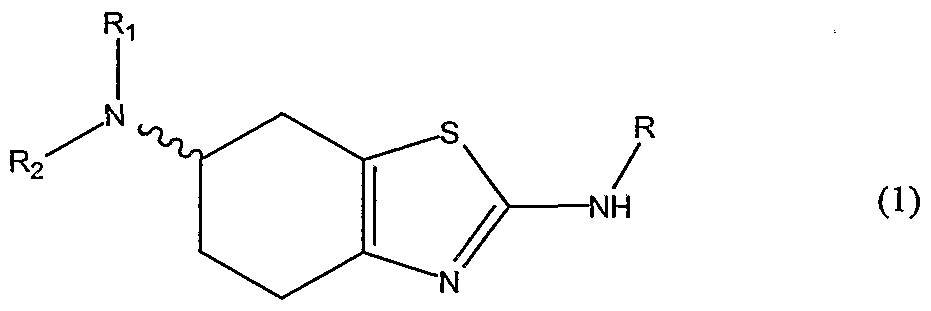
BACKGROUND OF THE INVENTION [0003] 2-(Acyl)amino-6-(alkyl)amino-4,5,6,7-tetrahydrobenzothiazoles having the general formula (1)
where R is hydrogen or acyl, R
1 is hydrogen, alkyl, or aralkyl, and R
2 is hydrogen, are useful pharmaceutical agents. Some of these compounds are known to have dopamine D-2 agonist activity.
[0004] Pramipexole is a well-known compound of formula (1). Its chemical name is (5)-2-amino-6-propylamino-4,5,6,7-tetxahydrobenzothiazole, and its chemical structure is:
CR) [0005] Pramipexole is available commercially (Mirapex , Pfizer,
Pharmacia & Upjohn Company, Kalamazoo, MI, USA) as the dichloride
monohydrate salt, and is indicated in the treatment of Parkinson's disease and schizophrenia.
[0006] Compounds of formula (1) are described in European Patent No.
EP 186087. Methods for preparing compounds of formula (1) are described in European Patent Nos. EP 186087 and EP 207696, and Published International Application WO 2004/041797. A common core of these methods is a process comprising ring halogenation (preferably bromination) of a substituted aminoketone (2) and the condensation of the so obtained alpha-halogenated aminoketone (3) with thiourea or iV-acylthiourea to form a 2- aminotetrahydrobenzothiazole ring, as shown in Equation 1.
Equation 1
[0007] Dependent on the nature of substituents R1, R2 in (2) and (3), and on the desired structure of the product (1), the corresponding amino substituents which are desired to be in position 6 of compounds (1) may or have to be accordingly modified before and after this two-step condensation. [0008] A compound of formula (1), wherein both R1 and R2 are hydrogen, is prepared from a compound (2) wherein either R1 is an amino-protective group such as an acyl or alkoxycarbonyl group and R2 is hydrogen, or R1ZR2 together form an iminoprotective group such as phthalimidogroup. After halogenation (X) and condensation with thiourea, the protective group is removed in a separate step. [0009] A compound of formula (1), wherein R1 is acyl and R2 is hydrogen, is prepared from a compound (2) wherein R1 is acyl and R2 is hydrogen. [0010] A compound of formula (1), wherein R1 is alkyl or aralkyl and R2 is hydrogen, is either prepared from a compound (2) wherein R1 is alkyl or aralkyl
and R2 is hydrogen or a protective group (with subsequent deprotection in the latter case), or it can be prepared by alkylation/aralkylation of the compound (1) wherein both R1 and R2 is hydrogen, or finally, it can be prepared by metal hydride or borane reduction of the acyl group in a compound of formula (1) wherein R1 is acyl or arylacyl and R2 is hydrogen.
[0011] hi all of the above cases, where R is acyl, this substituent should be furthermore hydrolyzed to form the amine, whenever necessary. [0012] If desired, the compounds of formula (1) may subsequently be converted into salts with inorganic and organic acids, and particularly, with pharmaceutically acceptable acids.
[0013] hi practice, due to its reactivity, a primary amino group or secondary alkylamino group present in the compounds of formula (1) cannot be introduced and maintained during the oxidation, bromination and cyclization step without the introduction of a protective group. The protective group is removed afterwards.
[0014] U.S. Patent Application 2004/0029936 Al discloses a further process for preparing compounds of formula (1). The process (depicted in Equation 2) involves the selective bromination of 1,4-cyclohexanedione (4) in an alcoholic solvent to produce a compound of formula (5), where R3 and R4 are either the same, and each of them represents an alkoxy group of 1-4 carbons, or they together can form a C2-C5 alkylenedioxy group or an oxo-group. Condensation of the compound of formula (5), where R3 and R4 represent an oxo group), with thiourea produces a compound of formula (6), where R3 and R4 are as defined above. Reaction of the compound of formula (6) with a suitable amine under conditions of reductive animation, provides a compound of formula (1).
Equation 2
[0015] This process allows the formation of enantiomerically enriched (ιS)-pramipexole by either using a chiral catalyst for the reductive animation to propylamine, or by using a chiral amine convertible to propylamine as a reagent in the reductive animation.
[0016] As regards pramipexole and similar compounds, the following synthetic sequence is currently suggested to be most useful. [0017] The last step of the overall synthesis involves reductive alkylation of 2,6-diamino-4,5,6,7-tetrahydrobenzothiazole (a compound of formula (1) where R1 and R2 are both H), for example, by propionaldehyde/sodium borohydride. The starting diamino compound can be prepared by a sequence starting from 4-aminocyclohexanol, which is acetylated or phthalidated and subsequently oxidized to yield acetamido- or 4-phthalimidocyclohexanone, which is monobrominated and subsequently reacted with thiourea, to give 6-acetamido or (6-phthalimido)-2-amino-4,5,6,7-tetrahydrobenzothiazole (a compound of formula (1) where R1 is H and R2 is COCH3, or R1ZR2 taken together are phthalimido). Finally, the protective acetyl or phthalimido group is removed. [0018] Thus, the overall synthetic sequence, starting from commonly available materials, represents six synthetic steps.
[0019] Compounds of formula (1) have an asymmetric carbon and they exist either as single enantiomers or in a racemic form. As is often the case, pharmacological activity of compounds of formula (1) is generally connected only or mainly with one stereoisomer. Pramipexole, for example, is marketed as the single S isomer, and the dopaminergic activity of this isomer is reported to be twice as high as that of the R isomer. It is anticipated that the produced racemic compounds of formula (1) may be resolved into its optical isomers by classical
chromatography methods, or by fractional crystallization. Generally, it should therefore be expected that, on an industrial scale, the produced racemic compounds of formula (1) can be resolved into their optical isomers by adding a subsequent production sequence involving steps of forming a salt with an appropriate optically active acid, resolving the salts by fractional crystallization, and, if necessary, liberating the free base of the resolved product from the salt. An example of such a resolution process for producing optically pure pramipexole is disclosed in Schneider et al., J. Med. Chem. 30:494 (1987). The process uses the diamino derivative (a compound of formula (1) where R, R1, and R2 are each H) as a substrate and L-tartaric acid as a resolution agent. Following resolution of the diamino precursor, optically active pramipexole is prepared by a two-step propylation of the single enantiomer diamino precursor, which involves reacting the precursor with propionic anhydride, and then reducing the resulting propionyl intermediate. [0020] Another known process for producing (>S)-pramipexole is disclosed in Published International Applications WO 02/22591 and WO 04/041797. This process involves converting compounds of formula (1) into their monovalent salts; reacting the monovalent salts with a chiral salt such as a tartaric acid derivative forming diasteromers; and selectively separating the diasteromers by fractional crystallization techniques.
[0021] Published International Application WO 02/22590 discloses that
()S)-pramipexole can also be achieved by using chiral agents to carry out enantioselective reductive amination. According to the disclosed process, enantiomerically enriched pramipexole is prepared using (5)-2-hydroxypropyl amine.
[0022] It is apparent that the prior art processes for obtaining optically pure isomers of compounds of formula (1), and chiral precursors of compounds of formula (1), suffer from severe drawbacks as they are lengthy and economically undesirable. Thus the need exists for a more straightforward resolution process. [0023] The present invention is directed to overcoming these and other deficiencies in the art.
SUMMARY OF THE INVENTION
[0024] One aspect of the present invention relates to a process for obtaining a single enantiomer of a compound of formula 10, where R is alkyl.
The process involves resolving a compound of formula I by liquid chromatography under conditions effective to produce a compound of formula (S)-I,
where R is alkyl, and recovering the compound of formula (S)-I.
[0025] Another aspect of the present invention relates to a process for obtaining a single enantiomer of a compound of formula I which involves resolving the compound of formula I by liquid chromatography under conditions effective to produce a compound of formula (R)-I,
where R is alkyl, and recovering the compound of formula (R)-I. [0026] A further aspect of the present invention relates to a process for obtaining a single enantiomer of a compound of formula I which involves resolving a providing a compound of formula II
where R
1 is H or acyl, by liquid chromatography under conditions effective to produce a compound of formula (S)-II,
where R
1 is H or acyl. The compound of formula (S)-U is reacted under conditions effective to produce a compound of formula (S)-I. The compound of formula (S)-I is recovered.
[0027] Yet another aspect of the present invention relates to a process for obtaining a single enantiomer of a compound of formula I which involves resolving a compound of formula II by liquid chromatography under conditions effective to produce a compound of formula (K)-II,
where R
1 is H or acyl. The compound of formula (R)-U is reacted under conditions effective to produce a compound of formula (R)-I. The compound of formula (R)-I is recovered.
[0028] Still another aspect of the present invention relates to a process for obtaining a single enantiomer of a compound of formula II which involves resolving the compound of formula II by liquid chromatography under conditions effective to produce a compound of formula (S)-H, and recovering the compound of formula (S)-Il.
[0029] Yet a further aspect of the present invention relates to a process for obtaining a single enantiomer of a compound of formula II which involves resolving the compound of formula II by liquid chromatography under conditions effective to produce a compound of formula (R)-II, and recovering the compound of formula (R)-II.
[0030] The present invention thus provides a direct process for preparing chirally pure 2-amino-6-(alkyl)amino-4,5,6,7-tetrahydrobenzothiazoles by resolving the corresponding racemic compounds. The chromatographic chiral resolution processes of the present invention are linearly scaleable and reproducible, and provide feasible and efficient alternatives to traditional chemical resolution routes. As a further advantage, the present invention provides a direct
process for preparing (<S)-pramipexole, a particularly valuable 2-amino-6- (alkyl)amino-4,5,6,7-tetrahydrobenzothiazole.
DETAILED DESCRIPTION OF THE INVENTION [0031] According to one aspect, the present invention provides a process for obtaining a single enantiomer of a compound of formula I,
where R is alkyl. The process involves resolving the compound of formula I by liquid chromatography under conditions effective to produce a compound of formula (S)-I, where R is alkyl.
The compound of formula (S)-I is recovered.
[0032] Alkyl may, for example, include any C1-20 linear or branched hydrocarbon radicals and combinations thereof. The substituent R, may, for example, be methyl, ethyl, n-propyl, isopropyl, /z-butyl, isobutyl, sec-butyl, tert- butyl, pentyl, zsø-amyl, hexyl, octyl, or the like. Preferably, R is propyl, and the compound of formula (S)-I is (5)-pramipexole.
[0033] The compound of formula I may, for example, be resolved by preparative chiral high performance liquid chromatography ("HPLC"). The
HPLC may, for example, include a chiral stationary phase and a mobile phase.
The chiral stationary phase may, for example, be tm-3,5-dimethylphenyl carbamate derived amylose coated on silica gel.
[0034] According to this aspect of the invention, the mobile phase may, for example, involve polar organic solvents, constituted of, for example, combinations of 2-propanol and acetonitrile or methanol and ethanol, or normal phase solvents, constituted of, for example, a combination of an alcohol and n- heptane or hexanes.
[0035] Another aspect of the present invention provides a process for obtaining a single enantiomer of a compound of formula I, which involves resolving the compound of formula I by liquid chromatography under conditions effective to produce a compound of formula (R)-I, where R is alkyl.
The compound of formula (R)-I is recovered.
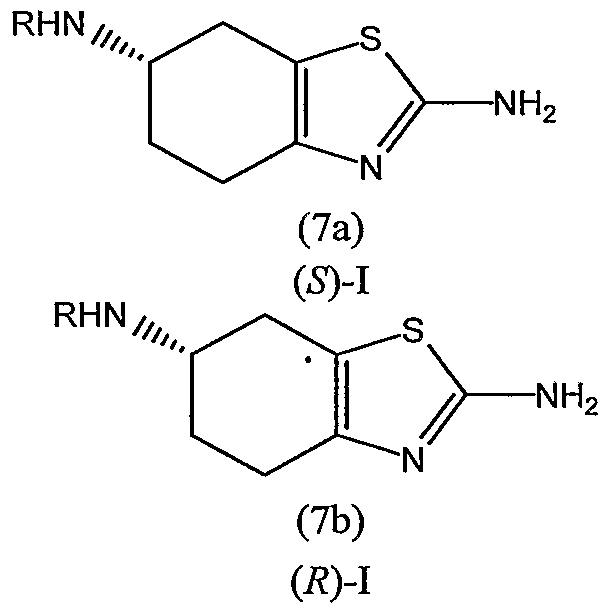
[0036] Alkyl may, for example, include any C1-20 linear or branched hydrocarbon radicals and combinations thereof, as described above. Preferably, R is propyl, and the compound of formula (R)-I is (i?)-pramipexole. [0037] The compound of formula I may, for example, be resolved by preparative chiral high performance liquid chromatography, as described above. [0038] Scheme 1 illustrates the separation and isolation of the two enantiomers of a compound of formula I by preparative chiral HPLC. The resolution may be on an amylase-based chiral stationary phase using either normal phase or polar organic mobile phases. According to this aspect of the invention, the compounds of formula (7a) and (7b) are produced quantitatively pure, and represent the (S)- and (i?)-enantiomers of the compound of formula I, respectively.
Scheme 1
Preparative Chiral HPLC
[0039] A further aspect of the present invention provides a process for preparing a single enantiomer of a compound of formula I, which involves resolving a compound of formula II,
where R
1 is H or acyl, by liquid chromatography under conditions effective to produce a compound of formula (<S)-II,
where R
1 H or acyl. The compound of formula (S)-II is reacted under conditions effective to produce a compound of formula (S)-I. The compound of formula (S)-I is recovered.
[0040] Alkyl may, for example, include any C1-20 linear or branched hydrocarbon radicals and combinations thereof, as described above. Preferably, R is propyl, and the compound of formula (S)-I is (*S)-pramipexole. [0041] The compound of formula II may, for example, be resolved by preparative chiral high performance liquid chromatography, as described above. [0042] R1 may, for example, be H, and the reacting may, for example, involve N-acylation, followed by a reduction reaction.
[0043] Alternatively, R1 may be acyl, and the reacting may, for example, involve a reduction reaction. [0044] Yet another aspect of the present invention provides a process for preparing for a single enantiomer of a compound of formula I, which involves resolving a compound of formula II by liquid chromatography under conditions effective to produce a compound of formula (R)-II,
(R)-II
where R
1 H or acyl. The compound of formula (R)-U is reacted under conditions effective to produce a compound of formula (R)-I, and the compound of formula (R)-I is recovered.
[0045] Alkyl may, for example, include any C1-20 linear or branched hydrocarbon radicals and combinations thereof, as described above. Preferably, R is propyl, and the compound of formula (R)-I is (i?)-pramipexole. [0046] The compound of formula II may, for example, be resolved by preparative chiral high performance liquid chromatography, as described above. [0047] R1 may, for example, be H, and the reacting may, for example, involve N-acylation, followed by a reduction reaction.
[0048] Alternatively, R1 may be acyl, and the reacting may, for example, involve a reduction reaction.
[0049] Scheme 2 illustrates the separation and isolation of the two enantiomers of a compound of formula II (formula (8)) by preparative chiral HPLC, and the transformation of these chirally pure compounds into the chirally pure target 2-amino-6-(alkyl)amino-4,5,6,7-tetrahydrobenzothiazoles. Resolution may, for example, be on an amylase-based chiral stationary phase using polar organic mobile phases. When R1 is H (formula (9)), quantitatively pure compounds of formulas (9a) and (9b) are produced, and when R1 is acyl (formula (10)), quantitatively pure compounds of formulas (10a) and (10b) are produced. As seen in Scheme 2, compounds of formulas (9a) and (9b) are transformed into compounds of the formulas (7a) and (7b) by performing N-acylation, followed by a reduction reaction. Compounds of the formulas (10a) and (10b) are transformed into compounds of the formulas (7a) and (7b) by performing a reduction reaction. N-acylation may involve, for example, propionic anhydride, and the reduction reaction may involve, for example, BH3/tetrahydrofuran ("THF").
Scheme 2
[0050] Still another aspect of the present invention provides a process for preparing a single enantiomer of a compound of formula II, which involves resolving the compound of formula II by liquid chromatography under conditions effective to produce a compound of formula (S)-IL, and recovering the compound of formula (S)-IL.
[0051] The compound of formula II may, for example, be resolved by preparative chiral high performance liquid chromatography, as described above.
[0052] Yet a further aspect of the present invention provides a process for preparing a single enantiomer of a compound of formula II, which involves resolving the compound of formula II by liquid chromatography under conditions effective to produce a compound of formula (R)-LL, and recovering the compound of formula (R)-LL.
[0053] According to this aspect of the invention, the compound of formula
II may, for example, be resolved by preparative chiral high performance liquid chromatography, as described above.
[0054] The present invention is further illustrated by the following examples.
EXAMPLES
Example 1 Determination of Chromatographic Conditions
[0055] In order to identify the appropriate chromatographic conditions for use in the various aspects of the present invention, compounds of the formulas (2), (9), and (10) were screened on a wide platform of chiral stationary phases and mobile phases.
[0056] Sample solutions were screened on different column chemistries
(4.6 mm x 250 mm, 10 μm) on Waters Alliance 2690 units coupled to Waters 996 Photodiode array detectors (UV-VIS) (Waters Corporation, Milford, MA, USA). The column and mobile phase preparations were maintained at ambient temperature during all the analyses while running on isocratic mode as general instrumental conditions. The flow rate was maintained at 1.0 mL/min except for the conditions ran in 100% alcohol using combinations of either 2-propanol ("IPA"), ethanol ("EtOH"), or methanol ("MeOH",) which were run at 0.5 mL/min. The mobile phase solutions were prepared from HPLC grade solvents (Fisher Scientific International Inc., Hampton, NH, USA) and certified ACS reagents (Fisher Scientific International Inc., Hampton, NH, USA). The solutions were premixed to contain either 1% diethylamine v/v ("DEA") or trifluoroacetic acid v/v ("TFA") in alcohol for use in the normal phase screen, while 0.2% DEA (v/v) was added to each solvent during the polar organic solvent screen. The solutions for the column screens were prepared from a suitable sample such as an enantio-enriched materials or a racemate. The sample solutions for the amylose and cellulose-based columns screen were prepared by weighing approximately 1 mg of sample and dissolving in 1 mL of 10% 2-propanol in heptane, while acetonitrile ("ACN") was used as diluent for samples run in the polar organic mode. The samples screened on the macrocyclic glycopeptide columns were prepared at 1 mg/mL concentration in MeOH.
[0057] Subsequently, normal phase methods were developed for the compounds of formulas (7) and (10), while polar organic methods were developed for all compounds screened on an amylase-based stationary phase. The compound of the formula (10) was resolved into compounds of formulas (10a) and (10b) using 5-10% EtOH in heptane with an acidic additive (preferably as TFA) as
mobile phase. Preferably, the EtOH content is about 10%, and about 0.1% v/v of the acidic additive is used. The compound of the formula (9) was resolved into compounds of formulas (9a) and (9b) using 10-60% EtOH in heptane with an amine additive (preferably as DEA) as mobile phase. Preferably, the mobile phase should contain about 15% EtOH and 0.2% of the amine additive.
[0058] Compounds of formulas (7), (9), and (10) were resolved into the corresponding compounds of formula (7a) and (7b), (9a) and (9b), and (10a) and 10b), using 0-10% IPA in ACN with 0.2% of an amine additive as mobile phase. Preferably, the mobile phase for resolving a compound of formula (7) contains about 10% IPA in ACN, while 5% IPA in ACN may be appropriate for resolving compounds of formulas (9) and (10). The amine additive content is preferably maintained at 0.2% v/v.
[0059] Alternatively, compounds of the formula (9) were resolved into the corresponding compounds of formula (9a) and (9b) on crown ether derivative coated silica (Crownpak CR (+), Chiral Technologies, Exton, PA, USA, 4.0 x 150 mm) using perchloric acid buffer at pH 2 as mobile phase.
Example 2 Preparative Scale Methods
[0060] Analytical methods developed for the compounds of formula (7), (9), and (10) were then scaled-up to a preparative HPLC process in which the components of the mixture loaded onto the column were collected and/or recovered.
[0061] The methods were linearly scaled-up to a 50 mm x 500 mm (D x L)
Chiralpak AD column (Chiral Technologies, Exton, PA, USA) using a Waters Preparative HPLC system (Waters Corporation, Milford, MA, USA) with pump heads #5 coupled to a Waters 484 UV-VIS detector (Waters Corporation, Milford, MA, USA) as follows.
[0062] The column was equilibrated in a premixed mobile phase prepared from HPLC grade solvents and certified ACS grade reagents for at least 15 minutes prior to each injection while monitoring using UV detection. The separation was carried out on isocratic mobile phases running at the direct scaled- up flow rate as general conditions. The sample solution was prepared in the
mobile phase at concentrations of 1-10 mg/mL and loaded onto the column. The components of the mixture were collected upon elution and an aliquot of each fraction was analyzed using the corresponding analytical method. Each fraction was independently concentrated to dryness using a rotary evaporator (Buchi, model 114A, BUCHI Labortechnik AG, Flawil, CH) with a bath temperature of 30-35 °C. The recovered material was dried under vacuum for at least 12 h to remove residual solvents. A sample of each fraction was dissolved in the corresponding mobile phase at a concentration of 1 mg/mL and analyzed using the chiral method for chiral purity evaluation. [0063] Subsequently, sample batches of compounds of formulas (7), (9), and (10) were separated into both (R)- and (S)-enantiomers, i.e., compounds of formulas (7a) and (7b), (9a) and (9b), and (10a) and (10b), respectively, using at least one of the methods previously described herein.
Example 3 Transformation of Compounds of Formulas (9a) and (10a) into Compounds of Formula 7a
[0064] Compounds of formulas (9a) and (10a) were chemically transformed into compounds of formula (7a). Samples of compound of formula (9) were dissolved in tetrahydrofuran ("THF"), then triethyamine ("TEA") was added, and the solution was cooled down to -10 0C prior to the addition of propionic anhydride. The temperature was modified and controlled during the reaction. After completion of the reaction, potassium carbonate (K2CO3) was added slowly, and the solid materials formed were recovered by filtration and washed with THF. The organic layer from the filtrate was separated, dried using sodium sulfate (Na2SO4), filtered, and concentrated. The recovered tan solid was triturated with isopropyl acetate ("IPAc"), and the solid collected by filtration and washed with IPAc affording (10a) as a white solid. Compound (10a) was then dissolved in THF and heated to 50 °C under a nitrogen atmosphere prior to the addition of BH3/THF. After completion of the reaction, the solution was allowed to cool and the THF removed by rotary evaporation. The solution was cooled in an ice bath prior to the addition of aqueous sodium hydroxide (50% NaOH), the IPAc was added dissolving the solids and separating the solution in two layers. All the organic layers were recovered and processed as mentioned above. The
crade compound (7a) was slurried in ACN, and the solution was homogenized by heating at 60 °C, allowed to cool down and slowly crystallize. The solids were recovered by filtration and dried on vacuum oven overnight to afford free-based compound (7a). The compound (7a) was further converted into the di- hydrochloride salt. The optical rotation of the obtained material matched that of pramipexole (7a, where R is propyl).
[0065] Thus, in accordance with the processes of the invention, sample batches of compounds of formulas (9a) and (10a), were effectively converted into (S)-pramipexole.
Example 4 Preparation of 2-amino-6-(alkyl)amino-4,5,6,7- tetrahydrobenzothiazole Compounds of Formulas (9a) and (9b) Under Polar Organic Conditions on a Chiralpak AD Column
[0066] The resolution of the compound of formula (9) was completed as follows. A sample solution was prepared by dissolving 100 mg of a compound of formula (9) in 100 mL of ACN with 0.2% DEA. The sample solution was loaded onto the Chiralpak AD column (50 mm x 500 mm) using ACN with 0.2% DEA as mobile phase. The first enantiomer was observed from 38-50 minutes while the second one eluted from 91-110 minutes. Both components were collected and concentrated to dryness using a rotary evaporator with a bath temperature of 30-35 °C. The recovered material was dried under vacuum for at least 12 h to remove residual solvents.
Example 5 Preparation of 2-amino-6-(alkyl)amino-4,5,6,7- tetrahydrobenzothiazole Compounds of Formulas (9a) and (9b) Under Polar Organic Conditions on a Chiralpak AD Column [0067] The resolution of the compound of formula (9) was completed as follows. A sample solution was prepared by dissolving 100 mg of a compound of formula (9) in 100 mL of 5:95 IPA/ACN with 0.2% DEA. The sample solution was loaded onto the Chiralpak AD column (50 mm x 500 mm) using 5:95 IPA/ACN with 0.2% DEA as mobile phase. The first component of the mixture was observed from 28-35 minutes while the second one eluted from 56-70 minutes. Both components were collected upon elution and processed as
described above. These conditions are preferred for the resolution of large scale batches.
Example 6 Preparation of Chirally Pure 2-amino-6-(alkyl)amino-4,5,6,7- tetrahydrobenzothiazole Compounds of Formulas (9a) and (9b) Under Polar Organic Conditions on a Chiralpak AD Column
[0068] The resolution of the compound of formula (9) was completed as follows. A sample solution was prepared by dissolving 100 mg of a compound of formula (9) in 100 mL of 10:90 IP A/ACN with 0.2% DEA. The sample solution was loaded onto the Chiralpak AD column (50 mm x 500 mm) using 10:90 IP A/ ACN with 0.2% DEA as mobile phase. The first enantiomer was observed from 13-18 minutes while the second one eluted from 20-30 minutes. Both components were collected and processed as described previously. [0069] Samples of the resolved material from Examples 4-6 (1 mg each) were dissolved at 1 mg/mL in ACN and analyzed by HPLC. The chiral purity of both fractions was greater than 99%, while the weight recovery was greater than 90%.
Example 7 Preparation of 2-amino-6-(alkyl)amino-4,5,6,7- tetrahydrobenzothiazole Compounds of Formulas (10a) and (10b) Under Normal Phase Conditions on a Chiralpak AD Column
[0070] The resolution of a compound of formula (10) was completed as follows. A sample solution was prepared by dissolving 100 mg of compound of formula (10) in 20 mL of EtOH by using sonication, then 80 mL of heptane was added. The sample solution was loaded onto the Chiralpak AD column (50 mm x 500 mm) using 1 :9 EtOH/Heptane with 0.1 % TFA as mobile phase. The first enantiomer was observed from 12.5-14.5 minutes while the second one eluted from 16-18 minutes. Both components were collected and concentrated to dryness using a bench-top rotary evaporator.
Example 8 Preparation of 2-amino-6-(alkyl)amino-4,5,6,7- tetrahydrobenzothiazole Compounds of Formulas (10a) and (10b) Under Polar Organic Conditions on a Chiralpak AD Column [0071] The resolution ofthe compound of formula (10) was completed as follows. A sample solution was prepared by dissolving 100 mg of compound of formula (10) in 100 mL of 5:95 IPA/ACN with 0.2% DEA. The sample solution was loaded onto the Chiralpak AD column (50 mm x 500 mm) using the same above-mentioned mobile phase. The first enantiomer was observed from 18.5-22 minutes while the second one eluted from 23.5-27 minutes. Both components were collected and processed as for the normal phase resolution processes in Example 7. This method is preferred for large-scale resolution processes. [0072] Samples ofthe resolved material (1 mg each) from Examples 7 and
8 were dissolved at 1 mg/mL in a 15:85 EtOH/heptane solution and analyzed by HPLC. The chiral purity of both fractions was greater than 99%, while the recovery was greater than 90%. The elution order ofthe fractions was the same in both methods according to the results obtained from analyzing the polar organic fractions in the noπnal phase method.
Example 9 Preparation of 2-amino-6-(alkyl)amino-4,5,6,7- tetrahydrobenzothiazole Compounds of Formulas (7a) and (7b)
Under Normal Phase Conditions on a Chiralpak AD Column
[0073] Resolution ofthe compound of formula (7) was completed as follows. A sample solution was prepared by dissolving 200 mg of compound of formula (7) in 20 mL of EtOH by using sonication, then 80 mL of heptane was added. The sample solution was loaded onto the Chiralpak AD column (50 mm x 500 mm) using 15:85 EtOH/Heptane with 0.15% DEA as mobile phase. The first enantiomer was observed from 16-22 minutes while the second one eluted from 40-50 minutes. Both components were collected, concentrated, and analyzed by HPLC under the corresponding analytical conditions showing chiral purities of 100%.
Example 10 Preparation of 2-amino-6-(alkyI)amino-4,5,6,7- tetrahydrobenzothiazole Compounds of Formulas (7a) and (7b) Under Normal Phase Conditions on a Chiralpak AD Column
[0074] Resolution of the compound of formula (7) was completed as follows. The scalability of the process described in Example 9 was evaluated by scaling-up the sample load three times and repeating the above described procedure. The sample solution was prepared by dissolving 750 mg racemate in 20 mL of EtOH, then adding 120 mL of mobile phase. The solution was loaded onto the Chiralpak AD column (50 mm x 500 mm) and the sample bands were observed at 16-25 and 38-55 minutes. Both fractions were recovered as described above showing similar purities and combined yield. This method may be scaled- up further, and used for the resolution of large quantities of pramipexole racemate.
Example 11 Preparation of 2-amino-6-(alkyl)amino-4,5,6,7- tetrahydrobenzothiazole Compounds of Formulas (7a) and (7b) Under Polar Organic Conditions on a Chiralpak AD Column
[0075] The resolution of the compound of formula (7) was completed as follows. A sample solution was prepared by dissolving 100 mg of compound of formula (7) in 100 mL of 1 :9 IPA/ACN with 0.2% DEA. The sample solution was loaded onto the Chiralpak AD column (50 mm x 500 mm) using the same above-mentioned mobile phase. The first enantiomer was observed from 12.5-15 minutes while the second one eluted from 25-33 minutes. Both components were collected and processed as for the normal phase resolution processes. [0076] Samples of the recovered material (1 mg each) were dissolved at 1 mg/mL in a 15:85 EtOH/Heptane solution and analyzed by HPLC. The chiral purity of both fractions was 100%, while the recovery was greater than 90%. The elution order of the fractions was the same in both methods according to the results obtained from analyzing the polar organic samples in the normal phase method.
Example 12 Preparation of 2-amino-6-(alkyl)amino-4,5,6,7- tetrahydrobenzothiazole Compound of Formulas (10a) from
Compound of Formula (9a)
[0077] Compound (9a) (20.31 g, 0.12 mol) was added to THF (200 mL) in a three-neck 1-L RB flask equipped with an overhead stirrer, an addition funnel,
and an internal temperature probe. TEA (18.4 mL, 0.132 mol) was added and the mixture cooled in an ice/acetone bath to an internal temperature of -10 0C. After holding at that temperature for 30 min, propionic anhydride (16.2 mL, 0.126 mol) was added over 20 min. The temperature rose during the addition to -4 °C and then went back down after the addition was complete. After an additional 1 h, an aliquot was diluted with MeOH and HPLC analysis indicated complete reaction. The ice bath was removed and 50% aq K2CO3 (200 mL) was added over 20 min. After stirring the mixture for 1 h, the solids were removed by filtration using Sharkskin filter paper washing the solids with THF (2 x 30 mL). From the filtrate, the layers were separated and the organic layer dried (Na2SO4), filtered, and concentrated. The tan solid was triturated with IPAc (10O mL). After stirring for 1 h, the solid was collected by filtration and washed with IPAc to afford 24.1 g (89%) of (10a) as an off-white solid: 1H NMR (300 MHz, OMSO-d6) δ 7.8 (d, IH), 6.6 (s, 2H), 4.0 (m, IH), 2.7 (m, IH), 2.5 (m, 2H), 2.3 (m, IH) 2.1 (q, 2H), 1.8 (m, 1 H), 1.7 (m, IH), 1.0 (t, 3H); APCI MS m/z 226 [C10H15N3OS + H]+; HPLC 96.4% (AUC), tκ = 3.3 min.
Example 13 Preparation of 2-amino-6-(alkyl)amino-4,5,6,7- tetrahydrobenzothiazole Compounds of Formula (7a) from Compounds of Formula (10a): Second Step on Example 12 [0078] Compound (10a) [25.7 g, 0.114 mol], was added to THF (175 mL) in a three-neck 1-L RB flask equipped with an overhead stirrer, addition funnel, and a Claisen adapter fitted with a condenser and an internal temperature probe. The mixture was heated to 50 °C purging with N2. After holding at 50 °C for 10 min, BH3ATHF (340 mL of 1 M in THF, 0.342 mol) was added. The temperature rose to a maximum of only 52 0C during the addition, and was mostly held between 49 to 51 °C. The addition took 65 min. After holding at 50 °C for an additional 30 min, an aliquot was quenched with 6 N HCl and diluted with H2O. HPLC analysis indicated complete reaction. The mixture was allowed to cool to 25 0C. Water (50 mL) was added over 5 min and the temperature rose to 30 0C. Concentrated HCl (100 mL) was then added over 15 min and the temperature rose to 48 °C. After cooling to ambient, the THF was removed by rotary evaporation. The mixture was cooled in an ice bath and 50% NaOH (110 g) was added over 20
min. Additional 50% NaOH (ca. 5 g) was added to make the pH 10 (pH paper). IPAc (80 mL) was added and after all solids dissolved, the layers were separated. The aqueous layer was extracted with IPAc (60 mL). The combined organic layers were dried (Na2SO4), filtered, and concentrated. The resulting solid was triturated with EPAc (20 mL). The solid was collected by filtration and washed with IPAc. The filtrate from the trituration was 65.3% (AUC). [0079] The crude (2a) [20.6 g, 96.8% (AUC)], was slurried in CH3CN (60 mL) and heated to reflux at which point the mixture became homogeneous. The mixture was allowed to cool to 60 °C. After holding at 60 °C for a short time, the mixture was allowed to cool to 50 °C. Upon reaching 52 0C, product began to precipitate out. The mixture was allowed to cool to ambient in 10 °C increments. The solid was collected by filtration and washed with CH3CN. The filtrate from the recrystallization was 68.6% (AUC). The solid was dried in a vacuum oven at 40 0C overnight to afford 17.93 g (74%) of (7a) free base as an off-white solid: 1H NMR (300 MHz, CDCl3) δ 4.8 (s, 2H), 2.9 (m, IH), 2.8 (m, IH), 2.6 (m, 4H)5 2.4 (m, IH), 2.0 (m, IH), 1.7 (m, IH), 1.5 (m, 2H), 0.9 (t, 3H); 13C NMR (75 MHz, CDCl3) δ 165.5, 145.3, 116.8, 54.2, 49.4, 30.3, 29.7, 25.2, 23.7, 12.0; APCI MS m/z 212 [C10H17N3OS + H]+; HPLC 98.7% (AUC), tR = 2.8 min. Anal. Calcd for C21H28O5: C, 69.98; H, 7.83. Found: C, 69.77; H, 7.70. [0080] Compound (7a) free base [15.85 g, 0.075 mol, 98.7% (AUC) as prepared above] in EtOH (105 mL) was cooled in an ice/water bath. After equilibrating for 30 min, HCl in EtOH [prepared from adding AcCl (12 mL, 0.17 mol) to EtOH (36 mL)] was added over 15 min. The mixture became a thick slurry that was difficult to stir. Additional EtOH (20 mL) was added. After stirring an additional 1 h in the ice/water bath, the solid was collected by filtration and washed with cold EtOH (3 x 25 mL). The solid was dried on the filter funnel blowing N2 over the top. The solid was additionally dried in a vacuum oven at 40 0C overnight to afford 20.71 g (97%) of (7a)-2HCl at 98.6% (AUC) by HPLC analysis. [0081] The (7a)-2HCl from above was slurried in MeOH (60 mL). The mixture was difficult to stir. An additional 40 mL (in 2 x 20 mL increments) was added to allow stirring. The mixture was then heated to reflux. An additional 20 mL of MeOH was added to dissolve the solid (a total volume of 120 mL of
MeOH). Upon cooling to 45 °C (in 10 °C increments), the compound began to crystallize. The mixture was cooled to ambient in 10 °C increments. After stirring overnight, the mixture was cooled in an ice/H2O bath. After equilibrating for 1 h, the solid was collected by filtration washing with pre-chilled MeOH (3 x 20 mL). The filtrate from the recrystallization was 98.6% (AUC) by HPLC analysis. The solid was dried in a vacuum oven overnight at 40 °C to afford 10.26 g of a first crop of (7a)-2HCl (48%) as white crystals: mp (DSC) 259.3-263.3 and 265.8-283.5°C; [α]25 D -62.5° (c 1.0, methanol); HPLC 99.1% (AUC), tR = 2.8 min; chiral HPLC >99% (AUC), tR = 12.8 min. Anal. Calcd for C10H19Cl2N3S: C, 42.25; H, 6.74; Cl, 24.95; N, 14.78. Found: C, 42.28; H, 6.58; Cl, 24.83; N, 14.63.
[0082] The above described examples for the resolution of compounds of the formulas (7), (9), and (10) according to the present invention resulted in chirally pure materials. The processes using preparative chiral chromatography are scaleable allowing the processing of large quantities of material using the same technology. The simple sample isolation step with minimal sample manipulation resulted in good recoveries. Although the chiral method employing the Crownpak CR (+) column was not used in the resolution of the compounds of formula (9) but in their analyses, it could potentially be scaled-up and use in preparative chromatographic applications.
[0083] Although preferred embodiments have been depicted and described in detail herein, it will be apparent to those skilled in the relevant art that various modifications, additions, substitutions, and the like can be made without departing from the spirit of the invention and these are therefore considered to be within the scope of the invention as defined in the claims which follow.