EP2124163A2 - Widerrufsstatusprüfung für die digitale Verwaltung von Rechten - Google Patents
Widerrufsstatusprüfung für die digitale Verwaltung von Rechten Download PDFInfo
- Publication number
- EP2124163A2 EP2124163A2 EP08172393A EP08172393A EP2124163A2 EP 2124163 A2 EP2124163 A2 EP 2124163A2 EP 08172393 A EP08172393 A EP 08172393A EP 08172393 A EP08172393 A EP 08172393A EP 2124163 A2 EP2124163 A2 EP 2124163A2
- Authority
- EP
- European Patent Office
- Prior art keywords
- devices
- information
- status information
- access rights
- status
- Prior art date
- Legal status (The legal status is an assumption and is not a legal conclusion. Google has not performed a legal analysis and makes no representation as to the accuracy of the status listed.)
- Withdrawn
Links
Images




Classifications
-
- H—ELECTRICITY
- H04—ELECTRIC COMMUNICATION TECHNIQUE
- H04L—TRANSMISSION OF DIGITAL INFORMATION, e.g. TELEGRAPHIC COMMUNICATION
- H04L63/00—Network architectures or network communication protocols for network security
- H04L63/10—Network architectures or network communication protocols for network security for controlling access to devices or network resources
-
- G—PHYSICS
- G06—COMPUTING OR CALCULATING; COUNTING
- G06F—ELECTRIC DIGITAL DATA PROCESSING
- G06F21/00—Security arrangements for protecting computers, components thereof, programs or data against unauthorised activity
- G06F21/10—Protecting distributed programs or content, e.g. vending or licensing of copyrighted material ; Digital rights management [DRM]
- G06F21/107—License processing; Key processing
- G06F21/1076—Revocation
-
- H—ELECTRICITY
- H04—ELECTRIC COMMUNICATION TECHNIQUE
- H04L—TRANSMISSION OF DIGITAL INFORMATION, e.g. TELEGRAPHIC COMMUNICATION
- H04L2463/00—Additional details relating to network architectures or network communication protocols for network security covered by H04L63/00
- H04L2463/101—Additional details relating to network architectures or network communication protocols for network security covered by H04L63/00 applying security measures for digital rights management
-
- H—ELECTRICITY
- H04—ELECTRIC COMMUNICATION TECHNIQUE
- H04L—TRANSMISSION OF DIGITAL INFORMATION, e.g. TELEGRAPHIC COMMUNICATION
- H04L63/00—Network architectures or network communication protocols for network security
- H04L63/04—Network architectures or network communication protocols for network security for providing a confidential data exchange among entities communicating through data packet networks
- H04L63/0428—Network architectures or network communication protocols for network security for providing a confidential data exchange among entities communicating through data packet networks wherein the data content is protected, e.g. by encrypting or encapsulating the payload
Definitions
- the present invention relates to communications and, more particularly, to techniques for managing the distribution of and access to content and its access rights among multiple devices.
- Content such as television broadcasts, Internet content, and content stored on prerecorded media are valuable commodities in the current economy. Accordingly, there is an interest in protecting such content from illegal copying.
- content may be delivered from a content distributor to particular devices in various formats. For example, content may be delivered in an unprotected or encrypted manner. Also, content may be protected using conditional access (CA) or digital rights management (DRM) technologies.
- CA conditional access
- DRM digital rights management
- a method, apparatus or tangible computer medium (which stores computer executable code or program code) performs or facilitates: maintaining information identifying a plurality of devices with which interaction has occurred; transmitting the information identifying the plurality of devices to a remote trusted party; receiving from the trusted party status information pertaining to a trustworthiness of the identified devices based on the transmitted information; and controlling subsequent interaction relating to transfer or exchange of access rights for electronic content with one or more devices based on the received status information corresponding to the one or more devices.
- a method, apparatus or tangible computer medium (which stores computer executable code or program code) performs or facilitates: receiving from a device information identifying devices with which interaction has occurred with the communications device; generating status information as to the trustworthiness of the identified devices based on the received information; and transmitting the status information to the device.
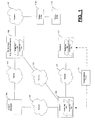
- FIG. 1 is a diagram of an exemplary operational environment, in which content and access rights thereto may be distributed according an embodiment
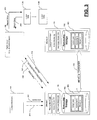
- FIG. 2 is a block diagram of one exemplary operational scenario
- FIG. 3 is a block diagram of another exemplary operational scenario
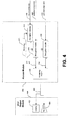
- FIG. 4 is a block diagram of an exemplary access module and an exemplary user output module
- FIG. 5 is a flowchart of an exemplary process by which a device allows access to content and/or access rights thereto in accordance with an embodiment
- FIG. 6 is a flowchart of an exemplary process by which a device obtains status information of other devices in accordance with an embodiment
- FIG. 7 is a flowchart of an exemplary process by which a trusted party provides status information of devices to a device in accordance with an embodiment
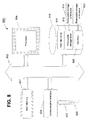
- FIG. 8 is a block diagram of an exemplary computer system in accordance with an embodiment.
- FIG. 9 is a block diagram of an exemplary removable or portable memory device or unit in accordance with an embodiment.
- FIG. 1 is a diagram of an operational environment where content and access rights thereto may be distributed among devices according to an embodiment.
- This environment includes a content distributor 104, an issuer of rights (e.g., Rights Issuer or authorized agent) 106, a first device 108, a second device 110 and portable memory device 114.
- Devices 108, 110 and 114 may be associated with a single user or different users.
- Both content distributor 104 and rights issuer 106 may be an issuer of access rights.
- Access rights generally include usage rules or the like associated or linked to some content.
- Access rights may be a voucher which may include data identifying the corresponding content item, the content distributor, and the usage rules.
- the usage rules may reflect a collection of permissions, constraints and/or obligations under which access may be granted to a user or some device.
- a voucher may also include one or more encryption keys either in plain form (public keys) or encrypted. The voucher may have restricted validity.
- usage rules may state the rights of the user or possessor of the corresponding content items to render, read, write, copy, store, move and/or transfer the received content.
- Usage rules may restrict the rendering of content items to a prescribed number of times or the distribution or sharing to a prescribed number of users/devices.
- usage rules may restrict the transfer of content items to other devices and/or other users.
- Usage rules may also set temporal restrictions regarding the use of corresponding content items. For example, a temporal usage rule may require that a content item shall only be stored or accessible for a prescribed period of time, and geographical usage rule may require that a content item shall only be stored or accessible in a prescribed region. In addition, usage rules may only have temporally limited validity.
- Usage rules may be expressed as one or more data files. These data files may be in various formats. For example, the data files may be in an XML-based markup language such as the Open Digital Rights Language (ODRL) or the eXtensible rights Markup Language (XrML). The data files may also be directly in XML.
- ODRL Open Digital Rights Language
- XrML eXtensible rights Markup Language
- the data files may also be directly in XML.
- ODRL provides for the expression of terms and conditions involving content, such as permissions, constraints, and obligations.
- XrML provides techniques for specifying and managing rights and conditions associated with content.
- An example of access rights is a voucher such as the Rights Object described and implemented in the Open Mobile Alliance (OMA) Digital Rights Management (DRM) standard, Version 2.0.
- OMA Open Mobile Alliance
- DRM Digital Rights Management
- each DRM content has a Rights Object associated therewith.
- the DRM content may not be accessible without its associated Rights Object, which may be distributed along with or separately from its associated DRM content.
- Content and Rights Objects may be distributed or exchanged between devices across a wireline or wireless network connection or through or to a device, such as a removable or portable memory device.
- content distributor 104 may include a content provider and/or a service provider, which transmits content items and/or access rights to one or more devices or offers services related to the distribution of content items.
- content items include (but are not limited to) video broadcasts, multimedia content, hypertext documents, and files.
- Content distributor 104 may be, for example, a digital video broadcaster. Such transmissions may be in either protected (e.g., conditional access encrypted) or unencrypted formats. 1f implemented in a service environment, a device may need to register with the service beforehand.
- the registration may involve providing identification information of the user or device, payment or account information and so forth to the content distributor, and the provision of information or data to facilitate delivery of the service, including various keys (e.g., content item encryption key (CIEK), pricing attribute key, etc.) and pricing information to the device.
- various keys e.g., content item encryption key (CIEK), pricing attribute key, etc.
- CIEK content item encryption key
- pricing attribute key etc.
- content distributor 104 may transmit content item as well as access rights, the access rights may also be delivered separately or modified subsequently through a trusted or authorized agent. Thus, a content item and its associated access rights may be transmitted together or at different times, or across different media. Such content items and access rights may include pointers, indexes or associating data which allows them to be associated with each other when necessary.
- public and private encryption key pairs may also be associated with devices 108 and 110.
- first device 108 has a public key 124 and a corresponding private key 126.
- Second device 110 has a public key 142 and a corresponding private key 144.
- a public key 152 and a corresponding private key 154 are associated with an issuer of rights, e.g., rights issuer 106.
- these devices may employ asymmetric encryption techniques to encrypt and decrypt information, such as content items, access rights, encryption keys, pricing attributes or any other information to be protected.
- a network 120 couples content distributor 104 and first device 108
- a network 122 couples first device 108 and second device 110
- a network 125 couples first device 108 and rights issuer 106
- a network 130 couples rights issuer 106 and content distributor 104
- a network 127 couples rights issuer 106 to one or more trusted entities 112A, 112B.
- Networks 120, 122, 125, 127 and 130 may each be any suitable network that enables the transfer of information between the coupled devices and entities.
- network 120 may be a broadcast network. Examples of broadcast networks include terrestrial and satellite wireless television distribution systems, such as DVB-T, DVB-C, DVB-H (DVB handheld), ATSC, and ISDB systems.
- Network 120 may also be a broadcast cable network, such as a Data Over Cable Service Interface Specification (DOCSIS) network.
- DOCSIS Data Over Cable Service Interface Specification
- network 120 may be a packet-based network, such as the Internet.
- one or more of networks 120, 122, 125, 127, 130 may be wireline or wireless cellular networks.
- one or more of these networks may be short-range proximity networks, which employ technology, such as Bluetooth or Ultra-Wideband (UWB) or etc.
- devices 104, 106, 108, and 110 may be implemented as mobile devices such as mobile phones, mobile personal digital assistant (PDA), mobile computer, etc.
- FIG. 1 illustrates distinct networks, in embodiments, a single network may replace two or more of networks 120, 122, 125, 127 and 130.
- a user terminal (such first device 108) may comprise a DVB receiver, a mobile phone and in addition have a Bluetooth connection.
- rights issuer 106 may be involved in managing the distribution of content among devices.
- Rights issuer 106 is trusted by content distributor 104 and is authorized to act on its behalf.
- rights issuer 106 may perform acts that, in principle, are imputed to content distributor I04. Examples of such acts include changing existing access rights (e.g., usage rules), creating new access rights (e.g., usage rules), transacting business for access to content such as determining pricing for content and obtaining payments, and so forth.
- Other exemplary acts may include modification of the binding of content to a device or a set of multiple devices also known as a domain, and modification of a domain. The domain may alternatively be defined and modified by a device, e.g., first device 108, which may act as the managing device.
- Content distributor I04 may, however, set limits to the authorization given to rights issuer 106. For instance, content distributor 104 may impose temporal limits on this authorization. Such temporal limits may specify a particular time (e.g., month/day/year) at which this authorization expires. In addition, content distributor 104 may revoke this authorization at any time. Moreover, any authorization that content distributor 104 grants to rights issuer 106 may include various limitations and/or qualifications. For example, content distributor 104 may limit authorization to certain types of content. Such content types include low-priced content, obsolete content, lower grade content, or any combination of these. Thus, content distributor 104 may impose restrictions (or limited authority) upon rights issuer 106 so that it is not allowed to perform all of the functions that content distributor 104 may perform.
- Rights issuer 106 may be locally accessible by devices, such as first device 108.
- rights issuer 106 may be positioned at a publicly available location, such as a kiosk that is near first device 108.
- network 125 may be an ad hoc proximity network, such as a Bluetooth network.
- rights issuer 106 may be located in a different area or region than content distributor 104. In such locations, the "original" owner of rights (i.e., content distributor 104) may not be accessible.
- rights issuer 106 provides for local content access instead of central content access from content distributor 104. This feature relieves communications and processing loads from content distributor 104.
- FIG. 1 only shows a single content distributor, rights issuer 106 may be trusted by multiple content distributors. Similarly, although FIG. 1 only shows a single rights issuer (e.g., authorized agent), content distributor 104 may trust multiple rights issuers. Also, in the various exemplary embodiments herein, content distributor 104 may perform the role of rights issuer 106 or vice versa. As described above, rights issuer 106 may be implemented in a mobile phone. In such implementations, rights issuer 106 may operate as a personal rights issuer for an individual, or a shared rights issuer between multiple people (e.g., family members).
- content and access rights thereto can be distributed or exchanged among multiple devices.
- content distributor 104 may transmit a content item, along with access rights, that is authorized for reception by first device 108. These two items may be provided together such as from the same source or separately from different sources, as desired.
- the user of first device 108 may desire to forward, transfer, transmit, move, distribute, etc. this content and/or the access rights thereto to one or more other devices, such as second device 110. This may be performed through communications or connection across a network, e.g., network 122.
- Such information may be stored or transferred onto portable memory device 114 at or by first device 110 and transferred to second device 110 through device 114.
- Examples of memory device 114 are described below with reference devices 300, 814, 816 and 900 of FIGS. 3 , 8 and 9 .
- one device may transfer the content item (as well as other associated information) and/or the access rights to a receiving device subject to certain conditions, for example, such as the trustworthiness (or untrustworthiness) of the receiving device.
- a device may check a status of the other device pertaining to its trustworthiness. This may involve, for example, performing a revocation status check, e.g., source device checks the revocation status (e.g., certificate revocation status) or the like of a sink device and/or vice versa.
- the access rights and/or the content are not made accessible to the other device. Otherwise, if its status is valid or not revoked then the access rights or the content may be made accessible to the other device.
- the accessibility of access rights and/or content may be further subject to other limitations, such as provided by the access rights.
- Revocation status checking can be done using approaches such as for example Certificate Revocation Lists (CRL) or Online Certificate Status Protocol (OCSP) or the like.
- CRL Certificate Revocation Lists
- OCSP Online Certificate Status Protocol
- the use of CRLs may involve significant use of a device's storage space and processing since a CRL may contain information as to numerous other devices or entities which may never interact with a device such as first device 108.
- the use of OCSP would require a device to maintain or have available communications capacity to communicate with an OCSP responder, which may not always be the case such as for non-networked devices or those that are not always connected to a network or the like.
- a device may keep track, collect and/or maintain information as to those devices with which some interaction has occurred, e.g., contact, communications, connections, transaction, exchange or transmission or transfer or distribution of data (e.g., content, access rights, etc.), etc.
- the device may request from a trusted party, e.g., content distributor 104 or rights issuer 106, status information as to a trustworthiness (or untrustworthiness) of selective devices, such as those with which interaction has occurred.
- the device may transmit to a trusted party information identifying (e.g., device identifiers (IDs)) those devices with which interaction has occurred.
- IDs device identifiers
- the trusted party may then generate customized or selective status information pertaining to the trustworthiness (or untrustworthiness) of the identified devices. This may entail the trusted party, e.g., content distributor 104 or rights issuer 106, requesting or gathering status information from other entities such as trusted entities 112A, 112B (and those may further request status from other entities and so on). Trusted entities 112A, 122B may be an OCSP responder, Certificate Authority (CA) or other trusted entity. The trusted party can then obtain the specific trustworthiness status for each identified device from maintained, requested or gathered information, and provide this customized status information to the status requesting device for use in interacting with other devices (e.g., data transfer, etc.).
- CA Certificate Authority
- This status information may take the form of a list (e.g., a good or trustworthy device list (white list) and/or a bad or untrustworthy device list (black list), etc.) and may correspond to status revocation information for those identified devices (e.g., a list of revoked devices or unrevoked devices from those identified).
- Status revocation checking is simply provided as one example of the type of status information which may be employed to check a trustworthiness of a device. As such, other types of information depending on security or authentication protocol may also be employed.
- the status information may be customized for a user or device or event a domain (e.g., a group of devices) to reduce storage and processing over other approaches such as the use of CRLs while providing a compromise to the online status checking of OCSP.
- a domain e.g., a group of devices
- devices connect only to a few other devices.
- such an arrangement may be of use for example for those devices with limited processing, network access and/or storage capabilities.
- a single device may collect the device IDs of those devices with which any one of the devices in the domain has interacted, and obtain status information for the identified devices from a trusted party.
- status information can be exchanged between devices in the domain.
- a device may be configured to request or update or modify such status information upon predetermined conditions, which may be defined by the user. For example, customized status information may also be requested from various trusted parties, such as an issuer of rights, e.g., content distributor 104 or rights issuer 106, during or as part of a transaction to access some content therefrom.
- a device may also be set to request or update or modify such information periodically, upon an available network or communications access to a trusted party from which such information may be obtained, at a predetermined time(s), at the expiration of a validity of the current status information, etc.
- Customized status information may also be requested, updated or modified upon a user command. The operations of updating or modifying may involve transmission of an updated list of devices with which interaction has occurred. This updated list may also be subject to update or modification under certain conditions (e.g., after a period of time, new device interactions, etc.).
- the device may maintain and employ the customized status information to check the trustworthiness (or untrustworthiness) of another device prior to proceeding with any further interactions or particular types of interactions with such other device.
- This interaction may involve or relate to the transfer, copying, reading, writing, moving, transmission or distribution of access rights and/or content between the devices. This may cover the scenarios in which a copy of the data (e.g., content and/or access rights) is provided to another device, or the original data is completely moved from one device to another device.
- a copy of the data e.g., content and/or access rights
- devices in general may exchange their and other's customized status information (e.g., collected over course of time). Through such exchange, it is possible to build networks of trustworthy or untrustworthy (e.g., revoked) devices. For example, a network of trustworthy or untrustworthy device can be built and expanded as the devices interact with other devices (e.g., like a tree branching out). In this way, a domain of devices may be created and updated to access and share particular content.
- networks of trustworthy or untrustworthy devices e.g., revoked
- a number of exemplary scenarios may be employed to distribute or allow access to data, such as content and/or access rights thereto and/or status information, etc. between devices.
- FIG. 2 is a block diagram of one exemplary operational scenario.
- first device 108 may include a security module 220 for controlling access to data such as stored in storage 228, an access module 222 for accessing content such as content items with access rights associated therewith, user output module 224 for outputting accessed content, and a transaction/history log 226 to track and collect information on other devices with which interaction has occurred.
- the information collected may include identification (1D) information of the devices, the time of any interaction, the type of interaction (e.g., exchange of or access to access rights, content, etc.), type of communications (e.g., wire connection, wireless connection, secure connection, unsecure connection, etc.) or any information which may be used to select which devices to request status information on.
- Second device 110 also includes similar components, such as a security module 230, access module 232, user output module 234, transaction/history log 236 and storage 238.
- first device 108 receives content item from content distributor 104 as shown by reference 202 and may receive access rights thereto (e.g., voucher, Rights Object, usage rules, etc.) along with the content item as shown by reference 204 or separately from another source, e.g., rights issuer 106, as shown by reference 206.
- access rights thereto e.g., voucher, Rights Object, usage rules, etc.
- First device 108 may also receive status information from a trusted party, such as rights issuer 106.
- first device 108 can request status information for particular devices, e.g., those with which interaction or particular types of interaction has occurred. This may involve transmitting ID information for these particular devices to a trusted party as shown by reference to 212.
- the trusted party may be rights issuer 106, and the ID information may be provided during a transaction for access rights for some content. As discussed herein, such a request may be initiated automatically under conditions which may be predetermined and set in advance, or manually upon a user request or command.
- the trusted party e.g., rights issuer 106
- the trusted party thereafter generates customized status information according to or based on the received ID information of the devices from gathered and/or maintained information on statuses.
- rights issuer may request the status of the particular identified devices from one or more trusted entities 112A, 112B (e.g., CA, OCSP responder, etc.) as shown by reference 250, and receive the status therefrom as shown by reference 252.
- the gathering of statuses may involve multiple requests and responses from one level of trusted entities to another level and so on.
- Rights issuer 106 can then create customized status information for the requesting device, e.g., first device 108, according to the transmitted ID information of devices.
- This customized information may relate to status revocation and may be in the form of one or more lists (e.g., a good, trustworthy or white list and/or a bad, untrustworthy or black list).
- the status information may be provided in other exemplary forms to enable a device to ascertain a trustworthiness (or untrustworthiness) of other devices.
- the created status information can then transmitted to first device 108 as shown by reference 214 and stored in storage 228.
- first device 108 determines whether second device 110 is trustworthy in view of the status information. For example, first device 108 may check if the status has been revoked for second device, e.g., whether its certificate is still valid, by evaluating the status information. If second device 106 is determined to be untrustworthy, first device 108 does not provide access to data such as access rights and/or content and/or status information. 1f trustworthy, first device 108 provides second device 110 with access (e.g., read, write, copy, move, etc.) to such data as shown by reference to 208, 210 and 211.
- access e.g., read, write, copy, move, etc.
- first device 108 is shown as receiving content item from content distributor 104, first device 108 may simply be a downstream device which has received a content item and access rights thereto from some other device or through superdistribution.
- FIG. 3 is a block diagram of another exemplary operational scenario. This scenario is similar to the exemplary scenario in FIG. 2 except that a removable or portable storage device, e.g., removable storage 300, is used to obtain and transfer data, such as content item, access rights and/or status information, as shown by reference 310.
- Removable storage 302 may have a security layer 302 to perform authentication or other security related features, such as described herein, to prevent the unauthorized access to data stored thereon. Examples of removable storage 300 are described below with reference to FIGS. 8 and 9 .
- Security checking prior to data access or transfer may occur in several situations depending on how or when data is to be transferred or made accessible. For example, security checking for trustworthiness may occur when data is to be made accessible (e.g., read, write, copy, move, etc.) to removable storage 300 from first device, and when data is to be made accessible to second device 110 from removable storage 300.
- security checking for trustworthiness may occur when data is to be made accessible (e.g., read, write, copy, move, etc.) to removable storage 300 from first device, and when data is to be made accessible to second device 110 from removable storage 300.
- removable storage 300 may be a device with communications capabilities such as wireless and wireline communications. As such, removable storage 300 may able to independently obtain and access data, such as status information, access rights and/or content, from rights issuer 106 and provide such data to other devices accordingly, as desired. Removable storage 300 may be communicatively connected with other devices through physical connection (e.g., interface/line) or wirelessly or a combination thereof.
- the scenarios described herein may involve the authentication of devices and the transfer and use of secret information, such as content, access rights, customized status information and/or pricing attribute keys or other keys.
- secret information such as content, access rights, customized status information and/or pricing attribute keys or other keys.
- the public keys of devices such as rights issuer 106 and second device 110, may be transferred to other devices in digital certificates. This verifies that the public keys belong to these devices and establishes these devices as trusted entities.
- the devices in the above scenarios and herein may employ a certificate authority (e.g., trusted entity 112A or 112B) to embed their public keys in a digital certificate.
- the certificate authority creates such certificates by encrypting a device's public key (as well as other identifying information) such that it may be decrypted using the certificate authority's public key.
- This public key is publicly available (e.g., through the Internet).
- a device may obtain the sender's public key by decrypting certificate with the certificate authority's public key.
- a device may evaluate the trustworthiness (or untrustworthiness) of other device by for example checking whether the other device's digital certificate is still valid or has been revoked.
- first device 108 and second device 110 may each include an access module and a user output module. An example of these modules is shown in FIG. 4 .
- an access module 402 may include decryption modules 414, 416, and 418.
- access module 402 may include a rendering engine 420 coupled to decryption modules 416 and 418. These elements may be implemented in hardware, software, firmware, or in any combination thereof.
- Each of decryption modules 414, 416, and 418 has an input interface (indicated with an “I”) for receiving encrypted data, and an input interface (indicated with a "K”) for receiving an encryption key.
- each of these modules includes an output interface (indicated with an "O") for outputting decrypted data.
- Access module 402 receives secure content key 406, protected content item 408, and protected usage rules 410.
- Secure content key 406 is a content key encrypted with a public key of the device in which access module 402 is implemented.
- decryption module 414 decrypts secure content key 406 with a corresponding private key 412 of the device in which access module 402 is implemented. This decryption produces a content key 407.
- FIG. 4 shows that decryption module 416 receives protected content item 408 and content key 407 to generate content item 450.
- Decryption module 418 receives protected usage rules 410 and content key 407 to generate usage rules 452. This generation may be based on symmetric encryption techniques, since content key 407 may have also been used to generate protected content item 408, and protected usage rules 410.
- Content item 450 and usage rules 452 are sent to rendering engine, where content item is decoded or rendered into an output signal 454. This decoding or rendering is subject to any restrictions or conditions of usage rules 452.
- FIG. 4 shows that user output module 404 may include one or more displays 422, and one or more speakers 424 for outputting signal 454 to a user.
- user output module 404 may include other devices, as would be apparent to persons skilled in the relevant arts.
- FIG. 5 is a flowchart of an exemplary process 500 by which a device may allow access to content, access rights and/or status information or other types of information thereto in accordance with an embodiment.
- the process 500 may be performed for example by devices 106, 108, 114 of FIG. 1 .
- the process 500 begins with step 502 in which the device receives or maintains content and access rights to the content.
- the device interacts or is in the process of interacting with another device.
- the device determines whether the other device is trustworthy. This may involve an authentication or security operation, e.g., checking a status of the other device to see whether the other device's certificate has been revoked or checking a revocation status.
- the device checks the status information which may include customized status information from trusted party, e.g., rights issuer 106 or content distributor 104, or from other trustworthy devices through transfer or exchange of status information, or generally from other devices.
- the device If the other device is trustworthy, then the device allows access to the access rights, content and/or other information such as status information at step 508. Otherwise, if the other device is untrustworthy, e.g., its status has been revoked, then the process 500 terminates.
- the process 500 may be implemented when transmitting or exchanging or accessing data (e.g., access rights, content, etc.) between first device 108 and second device 110, first device 108 and memory device 114, or memory device 114 and second device 110.
- data e.g., access rights, content, etc.
- a security check with the status information may be performed whenever data is to be accessed, transmitted or exchanged between devices.
- the status information may be transmitted from the trusted party to the portable memory device directly or via another device depending on the communications capability of the portable memory device or whether the portable memory device is attached to a status information requesting device (e.g., first device 110) during status information transaction.
- a status information requesting device e.g., first device 110
- FIG. 6 is a flowchart of an exemplary process 600 by which a device obtains status information of other devices in accordance with an embodiment.
- the process 600 may be performed for example by devices 106, 108, 114 of FIG. 1 .
- the process 600 begins with step 602 in which the device maintains identification (ID) information for devices with which interaction has occurred.
- ID identification
- the device may track devices with which interaction has occurred and collect and store information identifying such devices, such as in a history or transaction log (e.g., ID, date, user and/or type of transaction) containing the IDs of such devices. This information may be maintained or generated from transaction history or log or the like.
- the device requests from trusted party (e.g., issuer of rights) new or updated status information and transmits ID information for the devices with which interaction has occurred.
- the ID information may be new or updated information.
- the list of IDs to send may be based on predetermined parameters, such as the type of interaction (e.g., exchange of access rights, connection, etc.), time period of interaction (e.g., last 30 days), the user of the device, etc. These parameters may be predefined or set or modified by a user.
- the device receives status information for the identified devices.
- the device evaluates the status information to ascertain trustworthiness of other device(s) as a condition for interaction.
- the interaction may relate to access or distribution of data, e.g., access rights, content, etc..
- the device may also transmit status information to or exchange status information with other device(s) to facilitate formation trusted or non-trusted networks.
- FIG. 7 is a flowchart of an exemplary process 700 by which a trusted party (or entity) provides status information of devices to a status requesting device in accordance with an embodiment.
- the process 700 may be performed for example by trusted party, such as for example an issuer of rights, e.g. content distributor 104, rights issuer 106, etc. of FIG. 1 .
- This process may be performed as part of a transaction to obtain access rights for content, during registration for some service or product (e.g., purchased content), etc.
- the process 700 begins with step 702 in which the trusted party receives identification (ID) information of devices from a status requesting device. As noted above, these identified devices can be those devices with which the requesting device has interacted with.
- ID identification
- the trusted party generates status information for or according to the identified devices. As noted above, this may involve for example the gathering of statuses from other trusted entities and the creation of the status information therefrom for to the identified devices.
- the trusted party transmits the status information to the device.
- the trusted party may also transmit access rights (new or modified) to device if requested.
- the various processes described herein in general may be implemented by software including firmware through one or more processors or one or more hardwired or integrated circuits or a combination thereof.
- the software implementation may take the form of a tangible medium having computer executable code which when read and executed by one or more processors performs the processes described above and herein. These processes are provided as a few examples. The processes are not limited to the described operations or order of operations which can be modified to perform the various functions described herein.
- devices 104, 106, 108, and 110 may include software components. Accordingly, these devices may be implemented with one or more computer systems.
- An example of a computer system 801 is shown in FIG. 8 .
- Computer system 801 represents any single or multi-processor computer. Single-threaded and multi-threaded computers can be used. Unified or distributed memory systems can be used.
- Computer system 801 includes one or more processors, such as processor 804.
- processors 804 can execute software implementing the functionality described above.
- Each processor 804 is connected to a communication infrastructure 802 (for example, a communications bus, cross-bar, or network).
- a communication infrastructure 802 for example, a communications bus, cross-bar, or network.
- Computer system 801 also includes a main memory 807 which is preferably random access memory (RAM).
- Computer system 801 may also include a secondary memory 808.
- Secondary memory 808 may include, for example, a hard disk drive 810 and/or a removable storage drive 812, representing a floppy disk drive, a magnetic tape drive, an optical disk drive, etc.
- Removable storage drive 812 reads from and/or writes to a removable storage unit 814 in a well known manner.
- Removable storage unit 814 represents a floppy disk, magnetic tape, optical disk, etc., which is read by and written to by removable storage drive 812.
- the removable storage unit 814 includes a computer usable storage medium having stored therein computer software and/or data.
- secondary memory 808 may include other similar means for allowing computer programs or other instructions to be loaded into computer system 801.
- Such means can include, for example, a removable storage unit 822 and an interface 820.
- Examples can include a program cartridge and cartridge interface (such as that found in video game devices), a removable memory chip (such as an EPROM, PROM, or flash memory) and associated socket, and other removable storage units 822 and interfaces 820 which allow software and data to be transferred from the removable storage unit 822 to computer system 801.
- removable storage device 814 or 822 may take the form of a portable media such as a secure removable media (SRM) which includes means to protect against unauthorized access to stored data.
- SRM secure removable media
- a SRM may include one or more processors and a secure storage area, and is able to perform security related operations, such as encryption and authentication, to control access to stored data (e.g., reading, writing, updating, etc.).
- the security related operations may be implemented by a module or agent (e.g., SRM agent).
- SRM may for example be a Secure Memory Card (SMC), Smart Card, Multi Media Card (MMC), Secure Digital (SD), USB Flash Drive (USD), and so forth.
- SMC Secure Memory Card
- MMC Multi Media Card
- SD Secure Digital
- USD USB Flash Drive
- a SRM may be used to store content and/or a Rights Object for such content.
- An example of a portable or removable storage device e.g., 114, 300, 814 and 822 is discussed below with reference to FIG. 9 .
- Computer system 801 may also include a communications interface 824.
- Communications interface 824 allows software and data to be transferred between computer system 801 and external devices via communications path 827.
- Examples of communications interface 827 include a modem, a network interface (such as Ethernet card), Bluetooth and/or other short-range wireless network modules, etc.
- Software and data transferred via communications interface 827 are in the form of signals 828 which can be electronic, electromagnetic, optical or other signals capable of being received by communications interface 824, via communications path 827.
- communications interface 824 provides a means by which computer system 801 can interface to a network such as the Internet.
- the various embodiments can be implemented using software running (that is, executing) in an environment similar to that described above with respect to FIG. 8 .
- the term "computer program product” is used to generally refer to removable storage units 814 and 822, a hard disk installed in hard disk drive 810, or a signal carrying software over a communication path 827 (wireless link or cable) to communication interface 824.
- a computer useable medium can include magnetic media, optical media, or other recordable media, or media that transmits a carrier wave or other signal.
- Computer programs are stored in main memory 807 and/or secondary memory 808. Computer programs can also be received via communications interface 824. Such computer programs, when executed, enable the computer system 801 to perform the various features as discussed herein. In particular, the computer programs, when executed, enable the processor 804 to perform the various features described herein. Accordingly, such computer programs represent controllers of the computer system 801.
- the various embodiments can be implemented as control logic in software, firmware, hardware or any combination thereof.
- the software may be stored in a computer program product and loaded into computer system 801 using removable storage drive 812, hard drive 810, or interface 820.
- the computer program product may be downloaded to computer system 801 over communications path 827.
- the control logic when executed by the one or more processors 804, causes the processor(s) 804 to perform the functions of the various embodiments as described herein.
- the various features and functions maybe implemented primarily in firmware and/or hardware using, for example, hardware components such as application specific integrated circuits (ASICs).
- ASICs application specific integrated circuits
- Implementation of a hardware state machine so as to perform the functions described herein will be apparent to persons skilled in the relevant art(s).
- a portable or removable memory device e.g., 114, 300, 814, 822
- status information e.g., status revocation information
- computer programs or executable code An example is shown by removable/portable memory device 900.
- memory device 900 includes one or more processors 902 (e.g., microprocessor(s)), a storage 904 for storing data, a security layer 906 for controlling access to the stored data, and a communications interface(s) 908 for communicating data to and from device 900.
- Security layer 906 may be implemented through a security module or agent, such as a SRM agent as noted above.
- memory device 900 may also perform various functions and operations through execution of computer program or computer executable code and include communications capability (e.g., wireless or wireline) depending on the type of memory, e.g., smart card, flash memory, etc.
Landscapes
- Engineering & Computer Science (AREA)
- General Engineering & Computer Science (AREA)
- Computer Hardware Design (AREA)
- Computer Security & Cryptography (AREA)
- Signal Processing (AREA)
- Computer Networks & Wireless Communication (AREA)
- Computing Systems (AREA)
- Software Systems (AREA)
- Theoretical Computer Science (AREA)
- Multimedia (AREA)
- Technology Law (AREA)
- Physics & Mathematics (AREA)
- General Physics & Mathematics (AREA)
- Storage Device Security (AREA)
Applications Claiming Priority (1)
| Application Number | Priority Date | Filing Date | Title |
|---|---|---|---|
| US11/963,344 US20090164776A1 (en) | 2007-12-21 | 2007-12-21 | Revocation status checking for digital rights managment |
Publications (1)
| Publication Number | Publication Date |
|---|---|
| EP2124163A2 true EP2124163A2 (de) | 2009-11-25 |
Family
ID=40790070
Family Applications (1)
| Application Number | Title | Priority Date | Filing Date |
|---|---|---|---|
| EP08172393A Withdrawn EP2124163A2 (de) | 2007-12-21 | 2008-12-19 | Widerrufsstatusprüfung für die digitale Verwaltung von Rechten |
Country Status (3)
| Country | Link |
|---|---|
| US (1) | US20090164776A1 (de) |
| EP (1) | EP2124163A2 (de) |
| CN (1) | CN101470782A (de) |
Families Citing this family (19)
| Publication number | Priority date | Publication date | Assignee | Title |
|---|---|---|---|---|
| US7487363B2 (en) | 2001-10-18 | 2009-02-03 | Nokia Corporation | System and method for controlled copying and moving of content between devices and domains based on conditional encryption of content key depending on usage |
| KR101517942B1 (ko) * | 2008-08-21 | 2015-05-06 | 삼성전자주식회사 | 디지털 저작권 관리에서 에스알엠을 사용하기 위한 장치 및방법 |
| US9070149B2 (en) * | 2008-09-30 | 2015-06-30 | Apple Inc. | Media gifting devices and methods |
| US8131645B2 (en) * | 2008-09-30 | 2012-03-06 | Apple Inc. | System and method for processing media gifts |
| US20100146601A1 (en) * | 2008-12-09 | 2010-06-10 | Motorola, Inc. | Method for Exercising Digital Rights via a Proxy |
| CA2659016A1 (en) * | 2009-03-23 | 2010-09-23 | Doug P. Horsley | Polychromatic harmonica |
| WO2010144898A1 (en) * | 2009-06-12 | 2010-12-16 | General Instrument Corporation | Certificate status information protocol (csip) proxy and responder |
| CN101989319B (zh) * | 2009-08-03 | 2016-09-14 | 精品科技股份有限公司 | 应用于电脑及电脑系统架构的资讯安全管理方法 |
| US8411861B2 (en) * | 2009-10-21 | 2013-04-02 | Intel Corporation | Apparatus, systems, and methods for checking if a receiver is on a revocation list based on SRMs of DVDs |
| US8402555B2 (en) | 2010-03-21 | 2013-03-19 | William Grecia | Personalized digital media access system (PDMAS) |
| US20100185868A1 (en) * | 2010-03-21 | 2010-07-22 | William Grecia | Personilized digital media access system |
| US10096046B2 (en) * | 2011-04-14 | 2018-10-09 | Garrett Wade Mathews | Web-based user support system and method |
| US8904557B2 (en) | 2012-02-15 | 2014-12-02 | Sap Ag | Solution for continuous control and protection of enterprise data based on authorization projection |
| US9942213B2 (en) * | 2013-03-15 | 2018-04-10 | Comcast Cable Communications, Llc | Systems and methods for providing secure services |
| US9798892B2 (en) * | 2013-03-15 | 2017-10-24 | Live Nation Entertainment, Inc. | Prioritized link establishment for data transfer using task scheduling |
| US10657278B2 (en) | 2013-03-15 | 2020-05-19 | Live Nation Entertainment, Inc. | Prioritized link establishment for data transfer using task scheduling |
| CN105490998B (zh) * | 2014-12-12 | 2019-05-07 | 哈尔滨安天科技股份有限公司 | 一种基于数字证书认证的安全信用评估方法及系统 |
| US10447485B2 (en) | 2015-11-05 | 2019-10-15 | International Business Machines Corporation | Determining trustworthiness of a cryptographic certificate |
| US11736466B2 (en) * | 2019-09-18 | 2023-08-22 | Bioconnect Inc. | Access control system |
Family Cites Families (3)
| Publication number | Priority date | Publication date | Assignee | Title |
|---|---|---|---|---|
| GB2372594B (en) * | 2001-02-23 | 2004-10-06 | Hewlett Packard Co | Trusted computing environment |
| AU2003286146A1 (en) * | 2003-10-31 | 2005-06-08 | Telefonaktiebolaget Lm Ericsson (Publ) | Method and devices for the control of the usage of content |
| EP1829332A2 (de) * | 2004-12-15 | 2007-09-05 | Exostar Corporation | Vertrauensermöglichung bei einer föderierten kollaboration von netzwerken |
-
2007
- 2007-12-21 US US11/963,344 patent/US20090164776A1/en not_active Abandoned
-
2008
- 2008-12-19 EP EP08172393A patent/EP2124163A2/de not_active Withdrawn
- 2008-12-22 CN CNA2008101870919A patent/CN101470782A/zh active Pending
Also Published As
| Publication number | Publication date |
|---|---|
| US20090164776A1 (en) | 2009-06-25 |
| CN101470782A (zh) | 2009-07-01 |
Similar Documents
| Publication | Publication Date | Title |
|---|---|---|
| EP2124163A2 (de) | Widerrufsstatusprüfung für die digitale Verwaltung von Rechten | |
| US20050091173A1 (en) | Method and system for content distribution | |
| US20050102513A1 (en) | Enforcing authorized domains with domain membership vouchers | |
| KR101143228B1 (ko) | 디지털 콘텐츠 권리 관리 아키텍처로의 drm 서버등록/부등록 방법 | |
| CA2457291C (en) | Issuing a publisher use license off-line in a digital rights management (drm) system | |
| CN100458642C (zh) | 将内容绑定到实体 | |
| US7617158B2 (en) | System and method for digital rights management of electronic content | |
| US20060282391A1 (en) | Method and apparatus for transferring protected content between digital rights management systems | |
| CN102394869B (zh) | 一种用于数字网络的数字内容共享方法及系统 | |
| US20020157002A1 (en) | System and method for secure and convenient management of digital electronic content | |
| US8181266B2 (en) | Method for moving a rights object between devices and a method and device for using a content object based on the moving method and device | |
| CN101606161A (zh) | 用于确定超分发录制品的价格的方法 | |
| JP2009505307A (ja) | 第1プラットフォームから第2プラットフォームへのディジタルライセンスの移送 | |
| KR20080046253A (ko) | Lan에 미디어 컨텐츠를 분배하기 위한 디지털 보안 | |
| JP2021520093A (ja) | 装置、リクエスト装置、方法、およびコンピュータプログラム製品 | |
| KR102120929B1 (ko) | P2p 기반의 콘텐츠 유통 방법과 이를 수행하기 위한 컴퓨팅 장치 및 시스템 | |
| Kim et al. | A robust and flexible digital rights management system for home networks | |
| CN101243469A (zh) | 从第一平台到第二平台的数字许可证迁移 |
Legal Events
| Date | Code | Title | Description |
|---|---|---|---|
| PUAI | Public reference made under article 153(3) epc to a published international application that has entered the european phase |
Free format text: ORIGINAL CODE: 0009012 |
|
| AK | Designated contracting states |
Kind code of ref document: A2 Designated state(s): AT BE BG CH CY CZ DE DK EE ES FI FR GB GR HR HU IE IS IT LI LT LU LV MC MT NL NO PL PT RO SE SI SK TR |
|
| AX | Request for extension of the european patent |
Extension state: AL BA MK RS |
|
| STAA | Information on the status of an ep patent application or granted ep patent |
Free format text: STATUS: THE APPLICATION HAS BEEN WITHDRAWN |
|
| 18W | Application withdrawn |
Effective date: 20101119 |