EP2122192B1 - Coil spring having two-way shape memory effect and the fabrication method thereof, and adiabatic product using the same - Google Patents
Coil spring having two-way shape memory effect and the fabrication method thereof, and adiabatic product using the same Download PDFInfo
- Publication number
- EP2122192B1 EP2122192B1 EP08704868.2A EP08704868A EP2122192B1 EP 2122192 B1 EP2122192 B1 EP 2122192B1 EP 08704868 A EP08704868 A EP 08704868A EP 2122192 B1 EP2122192 B1 EP 2122192B1
- Authority
- EP
- European Patent Office
- Prior art keywords
- shape memory
- coil spring
- memory effect
- spring
- precipitates
- Prior art date
- Legal status (The legal status is an assumption and is not a legal conclusion. Google has not performed a legal analysis and makes no representation as to the accuracy of the status listed.)
- Not-in-force
Links
Images

Classifications
-
- F—MECHANICAL ENGINEERING; LIGHTING; HEATING; WEAPONS; BLASTING
- F16—ENGINEERING ELEMENTS AND UNITS; GENERAL MEASURES FOR PRODUCING AND MAINTAINING EFFECTIVE FUNCTIONING OF MACHINES OR INSTALLATIONS; THERMAL INSULATION IN GENERAL
- F16F—SPRINGS; SHOCK-ABSORBERS; MEANS FOR DAMPING VIBRATION
- F16F3/00—Spring units consisting of several springs, e.g. for obtaining a desired spring characteristic
- F16F3/02—Spring units consisting of several springs, e.g. for obtaining a desired spring characteristic with springs made of steel or of other material having low internal friction
- F16F3/04—Spring units consisting of several springs, e.g. for obtaining a desired spring characteristic with springs made of steel or of other material having low internal friction composed only of wound springs
-
- F—MECHANICAL ENGINEERING; LIGHTING; HEATING; WEAPONS; BLASTING
- F16—ENGINEERING ELEMENTS AND UNITS; GENERAL MEASURES FOR PRODUCING AND MAINTAINING EFFECTIVE FUNCTIONING OF MACHINES OR INSTALLATIONS; THERMAL INSULATION IN GENERAL
- F16F—SPRINGS; SHOCK-ABSORBERS; MEANS FOR DAMPING VIBRATION
- F16F1/00—Springs
- F16F1/02—Springs made of steel or other material having low internal friction; Wound, torsion, leaf, cup, ring or the like springs, the material of the spring not being relevant
- F16F1/04—Wound springs
-
- F—MECHANICAL ENGINEERING; LIGHTING; HEATING; WEAPONS; BLASTING
- F16—ENGINEERING ELEMENTS AND UNITS; GENERAL MEASURES FOR PRODUCING AND MAINTAINING EFFECTIVE FUNCTIONING OF MACHINES OR INSTALLATIONS; THERMAL INSULATION IN GENERAL
- F16F—SPRINGS; SHOCK-ABSORBERS; MEANS FOR DAMPING VIBRATION
- F16F1/00—Springs
-
- F—MECHANICAL ENGINEERING; LIGHTING; HEATING; WEAPONS; BLASTING
- F16—ENGINEERING ELEMENTS AND UNITS; GENERAL MEASURES FOR PRODUCING AND MAINTAINING EFFECTIVE FUNCTIONING OF MACHINES OR INSTALLATIONS; THERMAL INSULATION IN GENERAL
- F16F—SPRINGS; SHOCK-ABSORBERS; MEANS FOR DAMPING VIBRATION
- F16F3/00—Spring units consisting of several springs, e.g. for obtaining a desired spring characteristic
-
- A—HUMAN NECESSITIES
- A62—LIFE-SAVING; FIRE-FIGHTING
- A62B—DEVICES, APPARATUS OR METHODS FOR LIFE-SAVING
- A62B17/00—Protective clothing affording protection against heat or harmful chemical agents or for use at high altitudes
- A62B17/005—Active or passive body temperature control
-
- F—MECHANICAL ENGINEERING; LIGHTING; HEATING; WEAPONS; BLASTING
- F16—ENGINEERING ELEMENTS AND UNITS; GENERAL MEASURES FOR PRODUCING AND MAINTAINING EFFECTIVE FUNCTIONING OF MACHINES OR INSTALLATIONS; THERMAL INSULATION IN GENERAL
- F16F—SPRINGS; SHOCK-ABSORBERS; MEANS FOR DAMPING VIBRATION
- F16F2224/00—Materials; Material properties
- F16F2224/02—Materials; Material properties solids
- F16F2224/0258—Shape-memory metals, e.g. Ni-Ti alloys
Definitions
- the present invention relates to a coil spring having a two-way shape memory effect, a fabrication method thereof, and an adiabatic product using the same, and more particularly, to a coil spring implementing a two-way shape memory effect by using precipitates oriented in a particular direction, a fabrication method thereof, and an adiabatic product having an excellent adiabatic properties and being easy to fabricate, using the same.
- JP S 59-162262 A which is considered to be the closest prior art, shows a two-way shape memory spring consisting of a Ti-Ni alloy and being of a coil spring shape.
- the fabrication method includes heat-treating at ⁇ 600°C with the coil elements being in a tight contact state, and an aging treatment at ⁇ 600°C when the spring is in an extended state.
- the spring is extended at 60°C and contracted at 30°C.
- US 6,682,521 B2 shows a shape memory material activated device comprising a shell containing a substance, and a shape memory material spring within the shell.
- the spring temperature is above a predetermined temperature, the spring extends and creates a path through the shell converting the shell wall to a permeable wall.
- JP H01-92406 A discloses warmth retaining clothes enclosing between to fabrics a shape memorizing alloy member in a conical spiral shape.
- the conical spiral shape extends to 5cm height, and when the temperature is above a predetermined temperature the shape memorizing alloy member takes a flat shape.
- a shape memory alloy (SMA) has many merits in that it has a good recovery force accompanied by a shape memory, and is excellent for repetitive usage.
- SMAs generally employ a coil spring shape so as to increase the displacement, and performance including the displacement caused by temperature change according to different fabrication methods, etc. may be greatly different.
- a method may be considered for enhancing the adiabatic performance by applying this SMA to adiabatic products such as the heatproof clothing.
- this SMA adiabatic products
- the present invention provides a coil spring which can implement two-way shape memory effect by generating precipitates having a certain directional orientation in an SMA coil spring by using a simple and inexpensive manner, and have a large displacement between above and below transformation temperatures.
- the present invention is to provide a coil spring which has two-way shape memory effect and has a large displacement between before and after transformation temperatures by using an SMA (Shape Memory Alloy). And, such coil spring may be applied to adiabatic products such as heatproof clothing.
- SMA Shape Memory Alloy
- SMAs have a good recovery force accompanied by a shape memory, and are excellent for repetitive usage. However, there are still some obstacles which must be overcome in order to be actually applicable in industrial fields. Such an SMA employs a coil spring shape for a large displacement. Displacement due to a temperature change may vary greatly depending upon the fabrication method, and the like.
- the following three characteristics are required.
- an SMA As fabricated, an SMA is deformed at low temperature and is returned to its original state when heated. If it is cooled again, there is generally no shape change. This is called the “one-way shape memory effect.” Meanwhile, the ability of an SMA to change its shape by memorizing both a higher temperature form and a lower temperature form is known as the “two-way shape memory effect" or the “reversible shape memory effect.”
- the present invention provides an adiabatic product which maximizes a displacement between two members according to a temperature change, by using a two-way shape memory effect of an SMA which memorizes both a closed shape (a) at low temperatures and an expanded shape (b) at high temperatures.
- Figure 2 illustrates a fabrication method for an SMA spring operating in two ways of being expanded at high temperature and being contracted at low temperature.
- an expanded SMA spring is fabricated (state 1).
- the expanded spring is contracted at low temperature (from state 1 to state 2).
- the contracted spring is expanded when heated (from state 2 to state 3).
- the expanded spring is cooled again (from state 3 to state 2).
- the expansion by heating and contraction by low temperatures are repeated (to and from states 2 and 3).
- the resultant two-way memory effect is shown by the dashed line in Fig. 2 .
- this method is characterized in that, after an initially expanded spring is contracted, in a closed state, heating and cooling are repeated at a temperature above or below the transformation temperature.
- the resultant two-way memory effect is shown by the dashed line in the drawing.
- this method also has the same problem as above-mentioned.
- the present invention provides a method for processing the two-way shape memory effect which overcomes the above-mentioned problems.
- a spring is contracted at low temperature, and the spring is greatly expanded when the temperature increases. Then, when the spring is cooled, it is contracted again to be closed, thus to implement the two-way shape memory effect.
- Such method facilitates a fabrication process and requires an inexpensive unit cost.
- Ni-Ti based alloys Ni 4 Ti 3 precipitates serve to generate the two-way shape memory effect.
- an alloy composed of 50.2 ⁇ 52.0 at% of Ni among Ni-Ti should be used. If the composition ratio of Ni is less than 50.2 at%, precipitates are not generated, thereby not achieving the two-way effect. If the composition ratio of Ni is more than 52.0 at%, a processing to fabricate a wire rod becomes very difficult.
- inevitable impurities may be included in the alloy composition, however, it does not greatly affect the effects of the present invention.
- a process of implementing the two-way shape memory effect using precipitates is as follows: First, the coil spring, in a contracted state, undergoes a solution treatment at 600 ⁇ 1200 °C and quenching. Next, in a state that the coil spring is back in an expanded state, an aging process is undergone at 350 ⁇ 600°C so as to generate precipitates. If the aging process is performed while the spring is in the expanded state, an external stress is applied thereto, thus to generate precipitates in a certain direction.
- precipitates amounting to more than 0 and less than 15 vol% of the total alloy composition are generated.
- the precipitates may have four different orientations (e.g., orientations of [111], [-111], [1-11], [11-1] of a certain grain.
- the symbol "-" indicates a minus sign in Miller indices). If there is no stress during aging, almost the same amount of precipitates is generated in four orientations, thereby not generating any shape change when cooling. But, if stress is applied, the precipitates are generated in only one of the four orientations (e. g., precipitates in the [111] orientation in the grain), thereby generating a shape change when cooling.
- martensite of the certain orientation one of 12 orientations
- a two-way shape memory effect is expressed and exhibits the behavior shown in Fig. 4 .
- the spring is expanded.
- the temperature decreases the spring is contracted.
- Even after the spring is fully closed it attempts to contract to a minus state. However, it cannot be further contracted, thus maintaining the fully closed state.
- a wire rod having a diameter of 1.0mm and composed of 50.7Ni-Ti was wound 10 times around a bar having a diameter of 19mm, with an interval of 12.5mm between coil elements. Then, the wire rod wound on the bar was heated at 450°C for 2 hours, thereby memorizing a shape, thus to fabricate a spring. Applying the principle in Fig. 2 , the spring was compressed to be deformed at -10°C and then restored when heated at 60°C. Such process was repeated 50 times.
- a wire rod having a diameter of 1.0mm and composed of 50.7Ni-Ti was wound 10 times around a bar having a diameter of 19mm, with an interval of 12.5mm between coil elements. Then, the wire rod wound on the bar was heated at 450°C for 2 hours, thereby memorizing a shape, thus to manufacture a spring. Applying the principle in Fig. 3 , the spring was compressed at -10°C and, in a compressed state, was heated at 60°C and cooled at -10°C. Such process was repeated 50 times. (Sample B)
- a wire rod having a diameter of 1.0mm and composed of 50.7Ni-Ti was wound 10 times around a bar having a diameter of 19mm, with the windings closely contacting each other. Then, the wire rod underwent a solution treatment at 800°C for 30 minutes, and then was water-cooled. The water cooling was performed up to a temperature below room temperature. The wire rod was expanded to have an interval of 12.5mm between the windings. Then, the wire rod was compressed, and was aged at 450°C for 2 hours (Sample C).
- Table 1 shows the results of the spring length of each sample respectively measured at 60°C and -10°C. [Table 1] Comparison of spring length according to temperature in each process sample low temperature (mm) high temperature (mm) A 125 132 B 119 134 C 10 115
- Sample A exhibited a slight change of 7mm in length according to the temperature change. This is because the degree of deformation necessary to be compressed was small.
- Sample B exhibited a difference of 15mm in length.
- Sample C exhibited a large degree of deformation of 105mm, and also, is in a closed state at low temperature (the diameter of the winding was 1mm and the windings were wound 10 times, thus to be 10mm in a closed state). Accordingly, Sample C had a very appropriate property for use.
- Samples A and B were obtained by repetitive treatments. On the contrary, Sample C was obtained by only one thermal treatment, thereby having an excellent productivity.
- the heat protection effect of the conventional heatproof clothing (firefighters' clothing) and the SMA heatproof clothing fabricated according to the present invention were compared to each other.
- a felt material is filled as an insulator between the inner and outer sides of the clothing.
- the SMA coil is installed between the inner and outer sides of the clothing.
- the coil is fabricated such that It has a length of 7mm at low temperature when contracted, and has a length of 36mm when expanded at a temperature higher than 45°C.
- a radiant heat test was performed with equipment made by the Korea Apparel Testing & Research Institute (KATRI). The time respectively taken to increase to 12°C and 24°C from a radiant heat of 1200°C was measured.
- KATRI Korea Apparel Testing & Research Institute
Landscapes
- Engineering & Computer Science (AREA)
- General Engineering & Computer Science (AREA)
- Mechanical Engineering (AREA)
- Springs (AREA)
Description
- The present invention relates to a coil spring having a two-way shape memory effect, a fabrication method thereof, and an adiabatic product using the same, and more particularly, to a coil spring implementing a two-way shape memory effect by using precipitates oriented in a particular direction, a fabrication method thereof, and an adiabatic product having an excellent adiabatic properties and being easy to fabricate, using the same.
-
JP S 59-162262 A -
US 6,682,521 B2 shows a shape memory material activated device comprising a shell containing a substance, and a shape memory material spring within the shell. When the spring temperature is above a predetermined temperature, the spring extends and creates a path through the shell converting the shell wall to a permeable wall. -
JP H01-92406 A - In general, industrial safety-related products such as heatproof clothing guarantee the safety for a wearer by generating and adiabatic effect under external conditions of high temperature. For such adiabatic effect, there is a widely used method which, when the temperature increases, increases the size of a layer of air between inner and outer cloths of the heatproof clothing.
- Currently, in order to generate such an adiabatic effect, a bimetal using a difference in thermal expansion of metals has been widely used. However, the bimetal is not much effective considering its small displacement according to temperature increase.
- Meanwhile, a shape memory alloy (SMA) has many merits in that it has a good recovery force accompanied by a shape memory, and is excellent for repetitive usage. However, there are still some obstacles that must be overcome in order to be actually applied in industrial fields. Such SMAs generally employ a coil spring shape so as to increase the displacement, and performance including the displacement caused by temperature change according to different fabrication methods, etc. may be greatly different.
- Accordingly, a method may be considered for enhancing the adiabatic performance by applying this SMA to adiabatic products such as the heatproof clothing. However, no such attempt has been made.
- To overcome these problems and in accordance with the purpose of the present invention, as embodied and broadly described herein, there are provided
- 1) a coil spring having a two-way shape memory effect, and having a large displacement difference between below and above phase transformation temperatures, and a fabrication method thereof, and
- 2) an adiabatic product which has an excellent adiabatic performance and inexpensive fabrication cost, thereby being easily applied industrially.
- To achieve these and other advantages and in accordance with an aspect of the present invention, there are provided
- 1) a coil spring having a two-way shape memory effect, which has a coil shape, and is made of an SMA (shape memory alloy) material, and shows two-way shape memory effect by containing precipitates oriented in a certain direction.
- 2) A fabrication method of a coil spring having a two-way shape memory effect, including:
forming a coil spring by winding a wire rod formed of a shape memory alloy so as to closely contact coil elements with each other; performing a solution treatment on the coil spring at 600 - 1200°C and then quenching; and forming precipitates oriented in a certain direction through aging at 350 - 600°C while the coil spring is in an expanded state. - 3) An adiabatic product using a shape memory alloy, including:
first and second members; and a coil spring interposed between the two members, and having a coil shape, being formed of an SMA (shape memory alloy) material, and exhibiting two-way shape memory effect by containing precipitates oriented in a certain direction. - The present invention provides a coil spring which can implement two-way shape memory effect by generating precipitates having a certain directional orientation in an SMA coil spring by using a simple and inexpensive manner, and have a large displacement between above and below transformation temperatures.
- When this coil spring is applied to adiabatic products such as heatproof clothing, due to the large displacement, a layer of air between the inner and outer sides of the clothing can be increased, thus making it possible to fabricate heatproof clothing having an excellent adiabatic effect.
-
-
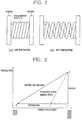
Figure 1 is a schematic view illustrating the control of the distance between two members by using a coil spring showing two-way shape memory effect according to the present invention; -
Figure 2 illustrates a conventional art method for implementing two-way shape memory effect; -
Figure 3 illustrates the conventional art method for implementing the two-way shape memory effect; and -
Figure 4 illustrates an operational principle of a coil spring showing two-way shape memory effect according to the present invention. - Description will now be given in detail of the preferred embodiments of the present invention, examples of which are illustrated in the accompanying drawings.
- The present invention is to provide a coil spring which has two-way shape memory effect and has a large displacement between before and after transformation temperatures by using an SMA (Shape Memory Alloy). And, such coil spring may be applied to adiabatic products such as heatproof clothing.
- SMAs have a good recovery force accompanied by a shape memory, and are excellent for repetitive usage. However, there are still some obstacles which must be overcome in order to be actually applicable in industrial fields. Such an SMA employs a coil spring shape for a large displacement. Displacement due to a temperature change may vary greatly depending upon the fabrication method, and the like.
- For commercial application of an SMA, the following three characteristics are required. First, displacement according to temperature change should be large. If the displacement according to temperature change is large, the amount of alloy to be used could be small, thereby being economical and light in weight for a product. Second, the fabrication method should be simple, which relates to the unit cost. Third, it is preferable that the coil spring should have the shortest length at low temperatures, and with the coil elements contacting as closely as possible, thus to maximize the expanding effect caused by a temperature increase.
- As fabricated, an SMA is deformed at low temperature and is returned to its original state when heated. If it is cooled again, there is generally no shape change. This is called the "one-way shape memory effect." Meanwhile, the ability of an SMA to change its shape by memorizing both a higher temperature form and a lower temperature form is known as the "two-way shape memory effect" or the "reversible shape memory effect."
- The present invention, as shown in
Fig. 1 , provides an adiabatic product which maximizes a displacement between two members according to a temperature change, by using a two-way shape memory effect of an SMA which memorizes both a closed shape (a) at low temperatures and an expanded shape (b) at high temperatures. - There are several methods known to generate the two-way shape memory effect in an SMA.
- As the most widely used method, if a process of 'cooling-deformation-heating' is repeated, the two-way shape memory effect can be achieved with relative ease.
Figure 2 illustrates a fabrication method for an SMA spring operating in two ways of being expanded at high temperature and being contracted at low temperature. First, an expanded SMA spring is fabricated (state 1). Then, the expanded spring is contracted at low temperature (fromstate 1 to state 2). The contracted spring is expanded when heated (fromstate 2 to state 3). And, the expanded spring is cooled again (fromstate 3 to state 2). The expansion by heating and contraction by low temperatures are repeated (to and fromstates 2 and 3). The resultant two-way memory effect is shown by the dashed line inFig. 2 . - However, there are three problems for this method to be applied. First, in order to increase the two-way memory shape effect, the degree of deformation needs to be large when the coil spring is contracted at low temperature. But, it is contracted by only as much as the coil elements are closely contacted to each other, thereby not effectively. Second, the spring is greatly expanded even at low temperatures, thereby reducing operational efficiency. That is, referring to
Fig. 2 , when the spring is contracted at low temperature, contraction occurs only up to the dashed arrow (state 4). Third, it costs a great deal to repeat the process of the 'cooling-deformation-heating' for several tens to several hundreds times. - Meanwhile, there is another method to implement the two-way shape memory effect. As shown in
Fig. 3 , this method is characterized in that, after an initially expanded spring is contracted, in a closed state, heating and cooling are repeated at a temperature above or below the transformation temperature. The resultant two-way memory effect is shown by the dashed line in the drawing. However, this method also has the same problem as above-mentioned. - The present invention provides a method for processing the two-way shape memory effect which overcomes the above-mentioned problems. According to the present invention, a spring is contracted at low temperature, and the spring is greatly expanded when the temperature increases. Then, when the spring is cooled, it is contracted again to be closed, thus to implement the two-way shape memory effect. Such method facilitates a fabrication process and requires an inexpensive unit cost.
- The present invention is well applied to a Ni-Ti based alloy among other various types of shape memory alloys. In Ni-Ti based alloys, Ni4Ti3 precipitates serve to generate the two-way shape memory effect. In order to generate such precipitates, an alloy composed of 50.2 ∼ 52.0 at% of Ni among Ni-Ti should be used. If the composition ratio of Ni is less than 50.2 at%, precipitates are not generated, thereby not achieving the two-way effect. If the composition ratio of Ni is more than 52.0 at%, a processing to fabricate a wire rod becomes very difficult. Here, inevitable impurities may be included in the alloy composition, however, it does not greatly affect the effects of the present invention.
- A process of implementing the two-way shape memory effect using precipitates is as follows:
First, the coil spring, in a contracted state, undergoes a solution treatment at 600∼1200 °C and quenching. Next, in a state that the coil spring is back in an expanded state, an aging process is undergone at 350∼600°C so as to generate precipitates. If the aging process is performed while the spring is in the expanded state, an external stress is applied thereto, thus to generate precipitates in a certain direction. Here, although depending upon the alloy composition and temperature, precipitates amounting to more than 0 and less than 15 vol% of the total alloy composition are generated. Originally, the precipitates may have four different orientations (e.g., orientations of [111], [-111], [1-11], [11-1] of a certain grain. Here, the symbol "-" indicates a minus sign in Miller indices). If there is no stress during aging, almost the same amount of precipitates is generated in four orientations, thereby not generating any shape change when cooling. But, if stress is applied, the precipitates are generated in only one of the four orientations (e. g., precipitates in the [111] orientation in the grain), thereby generating a shape change when cooling. When the precipitates are generated in a certain orientation, martensite of the certain orientation (one of 12 orientations) is preferentially generated. Accordingly, a two-way shape memory effect is expressed and exhibits the behavior shown inFig. 4 . At higher temperatures, the spring is expanded. When the temperature decreases, the spring is contracted. Even after the spring is fully closed, it attempts to contract to a minus state. However, it cannot be further contracted, thus maintaining the fully closed state. - A wire rod having a diameter of 1.0mm and composed of 50.7Ni-Ti was wound 10 times around a bar having a diameter of 19mm, with an interval of 12.5mm between coil elements. Then, the wire rod wound on the bar was heated at 450°C for 2 hours, thereby memorizing a shape, thus to fabricate a spring. Applying the principle in
Fig. 2 , the spring was compressed to be deformed at -10°C and then restored when heated at 60°C. Such process was repeated 50 times. (Sample A) - A wire rod having a diameter of 1.0mm and composed of 50.7Ni-Ti was wound 10 times around a bar having a diameter of 19mm, with an interval of 12.5mm between coil elements. Then, the wire rod wound on the bar was heated at 450°C for 2 hours, thereby memorizing a shape, thus to manufacture a spring. Applying the principle in
Fig. 3 , the spring was compressed at -10°C and, in a compressed state, was heated at 60°C and cooled at -10°C. Such process was repeated 50 times. (Sample B) - A wire rod having a diameter of 1.0mm and composed of 50.7Ni-Ti was wound 10 times around a bar having a diameter of 19mm, with the windings closely contacting each other. Then, the wire rod underwent a solution treatment at 800°C for 30 minutes, and then was water-cooled. The water cooling was performed up to a temperature below room temperature. The wire rod was expanded to have an interval of 12.5mm between the windings. Then, the wire rod was compressed, and was aged at 450°C for 2 hours (Sample C).
- Table 1 shows the results of the spring length of each sample respectively measured at 60°C and -10°C.
[Table 1] Comparison of spring length according to temperature in each process sample low temperature (mm) high temperature (mm) A 125 132 B 119 134 C 10 115 - Sample A exhibited a slight change of 7mm in length according to the temperature change. This is because the degree of deformation necessary to be compressed was small. Sample B exhibited a difference of 15mm in length. Sample C exhibited a large degree of deformation of 105mm, and also, is in a closed state at low temperature (the diameter of the winding was 1mm and the windings were wound 10 times, thus to be 10mm in a closed state). Accordingly, Sample C had a very appropriate property for use. In addition, Samples A and B were obtained by repetitive treatments. On the contrary, Sample C was obtained by only one thermal treatment, thereby having an excellent productivity.
- The heat protection effect of the conventional heatproof clothing (firefighters' clothing) and the SMA heatproof clothing fabricated according to the present invention were compared to each other. In the conventional heatproof clothing, a felt material is filled as an insulator between the inner and outer sides of the clothing. In the SMA heatproof clothing, the SMA coil is installed between the inner and outer sides of the clothing. The coil is fabricated such that It has a length of 7mm at low temperature when contracted, and has a length of 36mm when expanded at a temperature higher than 45°C. A radiant heat test was performed with equipment made by the Korea Apparel Testing & Research Institute (KATRI). The time respectively taken to increase to 12°C and 24°C from a radiant heat of 1200°C was measured.
[Table 2] Radiant heat test result Sample time taken to increase to 12°C time taken to increased to 24°C conventional heatproof clothing 29 sec. 46 sec. SMA heatproof clothing 38.7 sec. 50.8 sec. - Through this test, it could be observed that the SMA heatproof clothing has excellent heat protection performance, compared to the conventional heatproof clothing.
- The foregoing embodiments and advantages are merely exemplary and are not to be construed as limiting the present invention. Many alternatives, modifications, and variations will be apparent to those skilled in the art.
Claims (6)
- A fabrication method of a coil spring having two-way shape memory effect, comprising:forming a coil spring by winding a wire rod formed of a shape memory alloy so as to closely contact coil elements with each other;performing a solution treatment on the coil spring at 600 - 1200 °C and then quenching; and characterized in that it comprises forming precipitates oriented in a certain direction through aging at 350 - 600 °C while the coil spring is in an expanded state and an external stress is applied to the coil spring.
- A coil spring having two-way shape memory effect, obtainable by a fabrication method according to claim 1, which has a coil shape and is made of an SMA (shape memory alloy) material and characterized in that it shows two-way shape memory effect by containing precipitates oriented in a certain direction.
- The coil spring of claim 2, wherein the shape memory alloy is composed of 50.2∼52.0 at% of Ni, and the rest of Ti and other inevitable impurities.
- The coil spring of claim 3, wherein the precipitates are Ni4Ti3 precipitates having a certain orientation.
- An adiabatic product using a shape memory alloy, comprising:first and second members; anda coil spring according to claim 2 interposed between the two members, having a coil shape, being made of an SMA (shape memory alloy) material, and showing two-way shape memory effect by containing precipitates oriented in a certain direction.
- The adiabatic product of claim 5, wherein the adiabatic product is fireproof clothing, and the first and second members are respectively inner and outer cloths of the fireproof clothing.
Applications Claiming Priority (3)
| Application Number | Priority Date | Filing Date | Title |
|---|---|---|---|
| KR20070006269 | 2007-01-19 | ||
| KR1020080005446A KR100936183B1 (en) | 2007-01-19 | 2008-01-17 | Coil spring having this shape memory effect and its manufacturing method, and insulation product using the same |
| PCT/KR2008/000336 WO2008088197A1 (en) | 2007-01-19 | 2008-01-18 | Coil spring having two-way shape memory effect and the fabrication method thereof, and adiabatic product using the same |
Publications (3)
| Publication Number | Publication Date |
|---|---|
| EP2122192A1 EP2122192A1 (en) | 2009-11-25 |
| EP2122192A4 EP2122192A4 (en) | 2014-03-05 |
| EP2122192B1 true EP2122192B1 (en) | 2018-09-05 |
Family
ID=39822330
Family Applications (1)
| Application Number | Title | Priority Date | Filing Date |
|---|---|---|---|
| EP08704868.2A Not-in-force EP2122192B1 (en) | 2007-01-19 | 2008-01-18 | Coil spring having two-way shape memory effect and the fabrication method thereof, and adiabatic product using the same |
Country Status (3)
| Country | Link |
|---|---|
| EP (1) | EP2122192B1 (en) |
| KR (1) | KR100936183B1 (en) |
| WO (1) | WO2008088197A1 (en) |
Families Citing this family (9)
| Publication number | Priority date | Publication date | Assignee | Title |
|---|---|---|---|---|
| WO2015038598A1 (en) * | 2013-09-11 | 2015-03-19 | Massachusetts Institute Of Technology | Controllable compression garments using shape memory alloys and associated techniques and structures |
| US10828221B2 (en) | 2014-11-14 | 2020-11-10 | Massachusetts Institute Of Technology | Wearable, self-locking shape memory alloy (SMA) actuator cartridge |
| KR101657407B1 (en) | 2015-04-16 | 2016-09-30 | 경희대학교 산학협력단 | Opening and closing apparatus and the clothes using the same |
| KR101708285B1 (en) * | 2015-07-29 | 2017-02-20 | 창원대학교 산학협력단 | Metal composite material including an aligned precipitation and method of manufacturing the metal composite material |
| KR101973237B1 (en) | 2016-09-08 | 2019-04-26 | 경희대학교 산학협력단 | Samrt opening and closing apparatus |
| DE102017217416A1 (en) * | 2017-09-29 | 2019-04-04 | E.G.O. Elektro-Gerätebau GmbH | Spring device for the resilient mounting of a functional unit of an electrical device and method for influencing such a spring device |
| KR102017560B1 (en) * | 2018-06-27 | 2019-09-03 | 이재현 | An actuator using a shape memory alloy with improved linear response characteristics |
| IT201900004715A1 (en) * | 2019-03-29 | 2020-09-29 | Getters Spa | Linear actuator comprising a spiral spring in shape memory alloy operating at low electrical power |
| WO2024238464A1 (en) * | 2023-05-15 | 2024-11-21 | Ta Instruments-Waters Llc | Hermetically sealed sample pan and device for unsealing same |
Family Cites Families (7)
| Publication number | Priority date | Publication date | Assignee | Title |
|---|---|---|---|---|
| JPS59162262A (en) * | 1983-03-08 | 1984-09-13 | Tohoku Metal Ind Ltd | Production of spring having two-way shape memory effect |
| JPS59230189A (en) * | 1983-06-13 | 1984-12-24 | 松下電器産業株式会社 | Heat sensor |
| JPS60169551A (en) * | 1984-01-30 | 1985-09-03 | Hitachi Metals Ltd | Manufacture of shape memory alloy |
| JP2769616B2 (en) * | 1987-03-30 | 1998-06-25 | 時枝 直満 | Polycrystalline crystal orientation rearrangement method |
| JPH0192406A (en) * | 1987-09-29 | 1989-04-11 | Teijin Ltd | Heat insulating clothing |
| JP2851086B2 (en) * | 1989-11-24 | 1999-01-27 | 古河電気工業株式会社 | Manufacturing method of two-way shape memory coil spring |
| US6682521B2 (en) * | 2000-03-23 | 2004-01-27 | Dennis N. Petrakis | Temperature activated systems |
-
2008
- 2008-01-17 KR KR1020080005446A patent/KR100936183B1/en not_active Expired - Fee Related
- 2008-01-18 WO PCT/KR2008/000336 patent/WO2008088197A1/en not_active Ceased
- 2008-01-18 EP EP08704868.2A patent/EP2122192B1/en not_active Not-in-force
Non-Patent Citations (1)
| Title |
|---|
| None * |
Also Published As
| Publication number | Publication date |
|---|---|
| KR20080068579A (en) | 2008-07-23 |
| KR100936183B1 (en) | 2010-01-11 |
| EP2122192A4 (en) | 2014-03-05 |
| EP2122192A1 (en) | 2009-11-25 |
| WO2008088197A1 (en) | 2008-07-24 |
Similar Documents
| Publication | Publication Date | Title |
|---|---|---|
| WO2008088197A1 (en) | Coil spring having two-way shape memory effect and the fabrication method thereof, and adiabatic product using the same | |
| US4533411A (en) | Method of processing nickel-titanium-base shape-memory alloys and structure | |
| KR930007143B1 (en) | A method of controlling the physical and mechanical properties of a shape memory alloy member. | |
| US3953253A (en) | Annealing of NiTi martensitic memory alloys and product produced thereby | |
| US4894100A (en) | Ti-Ni-V shape memory alloy | |
| CN101305109A (en) | Iron-based alloy with forming memory and superelasticity and manufacturing method thereof | |
| KR101183650B1 (en) | Fabrication method of unique two way shape memory coil spring and unique two way shape memory coil spring fabricated by using the same | |
| GB2142724A (en) | Shape memory effect devices | |
| JPS59150069A (en) | Manufacture of shape memory alloy | |
| Isokawa et al. | Shape memory effect of sputtered Ni-rich Ni2MnGa alloy films aged in constraint condition | |
| Wang et al. | Study of two-way shape memory extension spring of narrow hysteresis TiNiCu shape memory alloys | |
| JPH0665740B2 (en) | Method for manufacturing NiTi-based shape memory material | |
| JPH03166347A (en) | Manufacture of two-way shape memory coil spring | |
| JPS61227141A (en) | Niti shape memory alloy wire | |
| JPH0762506A (en) | Super elastic spring manufacturing method | |
| CN120330536B (en) | Nickel-titanium alloy wire plastic processing-heat treatment process for driving spaceflight unlocking device | |
| JPS61106740A (en) | Ti-ni alloy having reversible shape memory effect and its manufacture | |
| JPS58217834A (en) | Superelastic spring | |
| JPH0288737A (en) | Super elastic ni-ti-cu alloy and its manufacture | |
| Jost | Microstructure and shape-memory-properties of thermo-mechanical treated Fe-Ni-Co-Ti-alloys | |
| JPS63169367A (en) | Production of shape memory ni-ti alloy element for spring | |
| JPH0413853A (en) | Method for plastic-working tini-based shape memory alloy | |
| JPS60141852A (en) | Manufacture of shape memory alloy | |
| JPH0238547A (en) | Manufacture of ti-ni shape memory alloy | |
| RU2309192C2 (en) | Method of manufacture of spring from memorized-shape effect alloy and spring manufactured by this method |
Legal Events
| Date | Code | Title | Description |
|---|---|---|---|
| PUAI | Public reference made under article 153(3) epc to a published international application that has entered the european phase |
Free format text: ORIGINAL CODE: 0009012 |
|
| 17P | Request for examination filed |
Effective date: 20090812 |
|
| AK | Designated contracting states |
Kind code of ref document: A1 Designated state(s): AT BE BG CH CY CZ DE DK EE ES FI FR GB GR HR HU IE IS IT LI LT LU LV MC MT NL NO PL PT RO SE SI SK TR |
|
| DAX | Request for extension of the european patent (deleted) | ||
| A4 | Supplementary search report drawn up and despatched |
Effective date: 20140204 |
|
| RIC1 | Information provided on ipc code assigned before grant |
Ipc: A41D 31/00 20060101ALI20140129BHEP Ipc: F16F 1/04 20060101ALI20140129BHEP Ipc: F16F 3/04 20060101AFI20140129BHEP |
|
| STAA | Information on the status of an ep patent application or granted ep patent |
Free format text: STATUS: EXAMINATION IS IN PROGRESS |
|
| 17Q | First examination report despatched |
Effective date: 20161114 |
|
| GRAP | Despatch of communication of intention to grant a patent |
Free format text: ORIGINAL CODE: EPIDOSNIGR1 |
|
| STAA | Information on the status of an ep patent application or granted ep patent |
Free format text: STATUS: GRANT OF PATENT IS INTENDED |
|
| INTG | Intention to grant announced |
Effective date: 20180328 |
|
| GRAS | Grant fee paid |
Free format text: ORIGINAL CODE: EPIDOSNIGR3 |
|
| GRAA | (expected) grant |
Free format text: ORIGINAL CODE: 0009210 |
|
| STAA | Information on the status of an ep patent application or granted ep patent |
Free format text: STATUS: THE PATENT HAS BEEN GRANTED |
|
| AK | Designated contracting states |
Kind code of ref document: B1 Designated state(s): AT BE BG CH CY CZ DE DK EE ES FI FR GB GR HR HU IE IS IT LI LT LU LV MC MT NL NO PL PT RO SE SI SK TR |
|
| REG | Reference to a national code |
Ref country code: GB Ref legal event code: FG4D |
|
| REG | Reference to a national code |
Ref country code: CH Ref legal event code: EP |
|
| REG | Reference to a national code |
Ref country code: AT Ref legal event code: REF Ref document number: 1038177 Country of ref document: AT Kind code of ref document: T Effective date: 20180915 |
|
| REG | Reference to a national code |
Ref country code: IE Ref legal event code: FG4D |
|
| REG | Reference to a national code |
Ref country code: DE Ref legal event code: R096 Ref document number: 602008056798 Country of ref document: DE |
|
| REG | Reference to a national code |
Ref country code: NL Ref legal event code: MP Effective date: 20180905 |
|
| REG | Reference to a national code |
Ref country code: LT Ref legal event code: MG4D |
|
| PG25 | Lapsed in a contracting state [announced via postgrant information from national office to epo] |
Ref country code: LT Free format text: LAPSE BECAUSE OF FAILURE TO SUBMIT A TRANSLATION OF THE DESCRIPTION OR TO PAY THE FEE WITHIN THE PRESCRIBED TIME-LIMIT Effective date: 20180905 Ref country code: SE Free format text: LAPSE BECAUSE OF FAILURE TO SUBMIT A TRANSLATION OF THE DESCRIPTION OR TO PAY THE FEE WITHIN THE PRESCRIBED TIME-LIMIT Effective date: 20180905 Ref country code: FI Free format text: LAPSE BECAUSE OF FAILURE TO SUBMIT A TRANSLATION OF THE DESCRIPTION OR TO PAY THE FEE WITHIN THE PRESCRIBED TIME-LIMIT Effective date: 20180905 Ref country code: BG Free format text: LAPSE BECAUSE OF FAILURE TO SUBMIT A TRANSLATION OF THE DESCRIPTION OR TO PAY THE FEE WITHIN THE PRESCRIBED TIME-LIMIT Effective date: 20181205 Ref country code: NO Free format text: LAPSE BECAUSE OF FAILURE TO SUBMIT A TRANSLATION OF THE DESCRIPTION OR TO PAY THE FEE WITHIN THE PRESCRIBED TIME-LIMIT Effective date: 20181205 Ref country code: GR Free format text: LAPSE BECAUSE OF FAILURE TO SUBMIT A TRANSLATION OF THE DESCRIPTION OR TO PAY THE FEE WITHIN THE PRESCRIBED TIME-LIMIT Effective date: 20181206 |
|
| REG | Reference to a national code |
Ref country code: AT Ref legal event code: MK05 Ref document number: 1038177 Country of ref document: AT Kind code of ref document: T Effective date: 20180905 |
|
| PG25 | Lapsed in a contracting state [announced via postgrant information from national office to epo] |
Ref country code: HR Free format text: LAPSE BECAUSE OF FAILURE TO SUBMIT A TRANSLATION OF THE DESCRIPTION OR TO PAY THE FEE WITHIN THE PRESCRIBED TIME-LIMIT Effective date: 20180905 Ref country code: LV Free format text: LAPSE BECAUSE OF FAILURE TO SUBMIT A TRANSLATION OF THE DESCRIPTION OR TO PAY THE FEE WITHIN THE PRESCRIBED TIME-LIMIT Effective date: 20180905 Ref country code: ES Free format text: LAPSE BECAUSE OF FAILURE TO SUBMIT A TRANSLATION OF THE DESCRIPTION OR TO PAY THE FEE WITHIN THE PRESCRIBED TIME-LIMIT Effective date: 20180905 |
|
| PG25 | Lapsed in a contracting state [announced via postgrant information from national office to epo] |
Ref country code: CZ Free format text: LAPSE BECAUSE OF FAILURE TO SUBMIT A TRANSLATION OF THE DESCRIPTION OR TO PAY THE FEE WITHIN THE PRESCRIBED TIME-LIMIT Effective date: 20180905 Ref country code: IT Free format text: LAPSE BECAUSE OF FAILURE TO SUBMIT A TRANSLATION OF THE DESCRIPTION OR TO PAY THE FEE WITHIN THE PRESCRIBED TIME-LIMIT Effective date: 20180905 Ref country code: RO Free format text: LAPSE BECAUSE OF FAILURE TO SUBMIT A TRANSLATION OF THE DESCRIPTION OR TO PAY THE FEE WITHIN THE PRESCRIBED TIME-LIMIT Effective date: 20180905 Ref country code: PL Free format text: LAPSE BECAUSE OF FAILURE TO SUBMIT A TRANSLATION OF THE DESCRIPTION OR TO PAY THE FEE WITHIN THE PRESCRIBED TIME-LIMIT Effective date: 20180905 Ref country code: IS Free format text: LAPSE BECAUSE OF FAILURE TO SUBMIT A TRANSLATION OF THE DESCRIPTION OR TO PAY THE FEE WITHIN THE PRESCRIBED TIME-LIMIT Effective date: 20190105 Ref country code: AT Free format text: LAPSE BECAUSE OF FAILURE TO SUBMIT A TRANSLATION OF THE DESCRIPTION OR TO PAY THE FEE WITHIN THE PRESCRIBED TIME-LIMIT Effective date: 20180905 Ref country code: NL Free format text: LAPSE BECAUSE OF FAILURE TO SUBMIT A TRANSLATION OF THE DESCRIPTION OR TO PAY THE FEE WITHIN THE PRESCRIBED TIME-LIMIT Effective date: 20180905 Ref country code: EE Free format text: LAPSE BECAUSE OF FAILURE TO SUBMIT A TRANSLATION OF THE DESCRIPTION OR TO PAY THE FEE WITHIN THE PRESCRIBED TIME-LIMIT Effective date: 20180905 |
|
| PG25 | Lapsed in a contracting state [announced via postgrant information from national office to epo] |
Ref country code: PT Free format text: LAPSE BECAUSE OF FAILURE TO SUBMIT A TRANSLATION OF THE DESCRIPTION OR TO PAY THE FEE WITHIN THE PRESCRIBED TIME-LIMIT Effective date: 20190105 Ref country code: SK Free format text: LAPSE BECAUSE OF FAILURE TO SUBMIT A TRANSLATION OF THE DESCRIPTION OR TO PAY THE FEE WITHIN THE PRESCRIBED TIME-LIMIT Effective date: 20180905 |
|
| REG | Reference to a national code |
Ref country code: DE Ref legal event code: R097 Ref document number: 602008056798 Country of ref document: DE |
|
| PLBE | No opposition filed within time limit |
Free format text: ORIGINAL CODE: 0009261 |
|
| STAA | Information on the status of an ep patent application or granted ep patent |
Free format text: STATUS: NO OPPOSITION FILED WITHIN TIME LIMIT |
|
| PG25 | Lapsed in a contracting state [announced via postgrant information from national office to epo] |
Ref country code: DK Free format text: LAPSE BECAUSE OF FAILURE TO SUBMIT A TRANSLATION OF THE DESCRIPTION OR TO PAY THE FEE WITHIN THE PRESCRIBED TIME-LIMIT Effective date: 20180905 |
|
| REG | Reference to a national code |
Ref country code: DE Ref legal event code: R119 Ref document number: 602008056798 Country of ref document: DE |
|
| 26N | No opposition filed |
Effective date: 20190606 |
|
| PG25 | Lapsed in a contracting state [announced via postgrant information from national office to epo] |
Ref country code: MC Free format text: LAPSE BECAUSE OF FAILURE TO SUBMIT A TRANSLATION OF THE DESCRIPTION OR TO PAY THE FEE WITHIN THE PRESCRIBED TIME-LIMIT Effective date: 20180905 Ref country code: SI Free format text: LAPSE BECAUSE OF FAILURE TO SUBMIT A TRANSLATION OF THE DESCRIPTION OR TO PAY THE FEE WITHIN THE PRESCRIBED TIME-LIMIT Effective date: 20180905 |
|
| REG | Reference to a national code |
Ref country code: CH Ref legal event code: PL |
|
| GBPC | Gb: european patent ceased through non-payment of renewal fee |
Effective date: 20190118 |
|
| PG25 | Lapsed in a contracting state [announced via postgrant information from national office to epo] |
Ref country code: LU Free format text: LAPSE BECAUSE OF NON-PAYMENT OF DUE FEES Effective date: 20190118 |
|
| REG | Reference to a national code |
Ref country code: BE Ref legal event code: MM Effective date: 20190131 |
|
| REG | Reference to a national code |
Ref country code: IE Ref legal event code: MM4A |
|
| PG25 | Lapsed in a contracting state [announced via postgrant information from national office to epo] |
Ref country code: DE Free format text: LAPSE BECAUSE OF NON-PAYMENT OF DUE FEES Effective date: 20190801 |
|
| PG25 | Lapsed in a contracting state [announced via postgrant information from national office to epo] |
Ref country code: BE Free format text: LAPSE BECAUSE OF NON-PAYMENT OF DUE FEES Effective date: 20190131 |
|
| PG25 | Lapsed in a contracting state [announced via postgrant information from national office to epo] |
Ref country code: CH Free format text: LAPSE BECAUSE OF NON-PAYMENT OF DUE FEES Effective date: 20190131 Ref country code: GB Free format text: LAPSE BECAUSE OF NON-PAYMENT OF DUE FEES Effective date: 20190118 Ref country code: LI Free format text: LAPSE BECAUSE OF NON-PAYMENT OF DUE FEES Effective date: 20190131 |
|
| PG25 | Lapsed in a contracting state [announced via postgrant information from national office to epo] |
Ref country code: IE Free format text: LAPSE BECAUSE OF NON-PAYMENT OF DUE FEES Effective date: 20190118 |
|
| PG25 | Lapsed in a contracting state [announced via postgrant information from national office to epo] |
Ref country code: TR Free format text: LAPSE BECAUSE OF FAILURE TO SUBMIT A TRANSLATION OF THE DESCRIPTION OR TO PAY THE FEE WITHIN THE PRESCRIBED TIME-LIMIT Effective date: 20180905 |
|
| PG25 | Lapsed in a contracting state [announced via postgrant information from national office to epo] |
Ref country code: MT Free format text: LAPSE BECAUSE OF NON-PAYMENT OF DUE FEES Effective date: 20190118 |
|
| PG25 | Lapsed in a contracting state [announced via postgrant information from national office to epo] |
Ref country code: CY Free format text: LAPSE BECAUSE OF FAILURE TO SUBMIT A TRANSLATION OF THE DESCRIPTION OR TO PAY THE FEE WITHIN THE PRESCRIBED TIME-LIMIT Effective date: 20180905 |
|
| PG25 | Lapsed in a contracting state [announced via postgrant information from national office to epo] |
Ref country code: HU Free format text: LAPSE BECAUSE OF FAILURE TO SUBMIT A TRANSLATION OF THE DESCRIPTION OR TO PAY THE FEE WITHIN THE PRESCRIBED TIME-LIMIT; INVALID AB INITIO Effective date: 20080118 |
|
| PGFP | Annual fee paid to national office [announced via postgrant information from national office to epo] |
Ref country code: FR Payment date: 20230105 Year of fee payment: 16 |
|
| PG25 | Lapsed in a contracting state [announced via postgrant information from national office to epo] |
Ref country code: FR Free format text: LAPSE BECAUSE OF NON-PAYMENT OF DUE FEES Effective date: 20240131 |
|
| PG25 | Lapsed in a contracting state [announced via postgrant information from national office to epo] |
Ref country code: FR Free format text: LAPSE BECAUSE OF NON-PAYMENT OF DUE FEES Effective date: 20240131 |