EP2116296B1 - Startheizgerät für Ammoniakreaktoren - Google Patents
Startheizgerät für Ammoniakreaktoren Download PDFInfo
- Publication number
- EP2116296B1 EP2116296B1 EP08008252A EP08008252A EP2116296B1 EP 2116296 B1 EP2116296 B1 EP 2116296B1 EP 08008252 A EP08008252 A EP 08008252A EP 08008252 A EP08008252 A EP 08008252A EP 2116296 B1 EP2116296 B1 EP 2116296B1
- Authority
- EP
- European Patent Office
- Prior art keywords
- heater
- plate
- beams
- heating members
- supporting
- Prior art date
- Legal status (The legal status is an assumption and is not a legal conclusion. Google has not performed a legal analysis and makes no representation as to the accuracy of the status listed.)
- Active
Links
Images



Classifications
-
- B—PERFORMING OPERATIONS; TRANSPORTING
- B01—PHYSICAL OR CHEMICAL PROCESSES OR APPARATUS IN GENERAL
- B01J—CHEMICAL OR PHYSICAL PROCESSES, e.g. CATALYSIS OR COLLOID CHEMISTRY; THEIR RELEVANT APPARATUS
- B01J8/00—Chemical or physical processes in general, conducted in the presence of fluids and solid particles; Apparatus for such processes
- B01J8/02—Chemical or physical processes in general, conducted in the presence of fluids and solid particles; Apparatus for such processes with stationary particles, e.g. in fixed beds
- B01J8/0285—Heating or cooling the reactor
-
- C—CHEMISTRY; METALLURGY
- C01—INORGANIC CHEMISTRY
- C01C—AMMONIA; CYANOGEN; COMPOUNDS THEREOF
- C01C1/00—Ammonia; Compounds thereof
- C01C1/02—Preparation, purification or separation of ammonia
- C01C1/04—Preparation of ammonia by synthesis
- C01C1/0405—Preparation of ammonia by synthesis from N2 and H2 in presence of a catalyst
- C01C1/0417—Preparation of ammonia by synthesis from N2 and H2 in presence of a catalyst characterised by the synthesis reactor, e.g. arrangement of catalyst beds and heat exchangers in the reactor
-
- C—CHEMISTRY; METALLURGY
- C01—INORGANIC CHEMISTRY
- C01C—AMMONIA; CYANOGEN; COMPOUNDS THEREOF
- C01C1/00—Ammonia; Compounds thereof
- C01C1/02—Preparation, purification or separation of ammonia
- C01C1/04—Preparation of ammonia by synthesis
- C01C1/0405—Preparation of ammonia by synthesis from N2 and H2 in presence of a catalyst
- C01C1/0482—Process control; Start-up or cooling-down procedures
-
- B—PERFORMING OPERATIONS; TRANSPORTING
- B01—PHYSICAL OR CHEMICAL PROCESSES OR APPARATUS IN GENERAL
- B01J—CHEMICAL OR PHYSICAL PROCESSES, e.g. CATALYSIS OR COLLOID CHEMISTRY; THEIR RELEVANT APPARATUS
- B01J2208/00—Processes carried out in the presence of solid particles; Reactors therefor
- B01J2208/00008—Controlling the process
- B01J2208/00017—Controlling the temperature
- B01J2208/00389—Controlling the temperature using electric heating or cooling elements
- B01J2208/00398—Controlling the temperature using electric heating or cooling elements inside the reactor bed
-
- B—PERFORMING OPERATIONS; TRANSPORTING
- B01—PHYSICAL OR CHEMICAL PROCESSES OR APPARATUS IN GENERAL
- B01J—CHEMICAL OR PHYSICAL PROCESSES, e.g. CATALYSIS OR COLLOID CHEMISTRY; THEIR RELEVANT APPARATUS
- B01J2208/00—Processes carried out in the presence of solid particles; Reactors therefor
- B01J2208/00008—Controlling the process
- B01J2208/00017—Controlling the temperature
- B01J2208/00389—Controlling the temperature using electric heating or cooling elements
- B01J2208/00407—Controlling the temperature using electric heating or cooling elements outside the reactor bed
-
- B—PERFORMING OPERATIONS; TRANSPORTING
- B01—PHYSICAL OR CHEMICAL PROCESSES OR APPARATUS IN GENERAL
- B01J—CHEMICAL OR PHYSICAL PROCESSES, e.g. CATALYSIS OR COLLOID CHEMISTRY; THEIR RELEVANT APPARATUS
- B01J2208/00—Processes carried out in the presence of solid particles; Reactors therefor
- B01J2208/00008—Controlling the process
- B01J2208/00017—Controlling the temperature
- B01J2208/00389—Controlling the temperature using electric heating or cooling elements
- B01J2208/00415—Controlling the temperature using electric heating or cooling elements electric resistance heaters
-
- B—PERFORMING OPERATIONS; TRANSPORTING
- B01—PHYSICAL OR CHEMICAL PROCESSES OR APPARATUS IN GENERAL
- B01J—CHEMICAL OR PHYSICAL PROCESSES, e.g. CATALYSIS OR COLLOID CHEMISTRY; THEIR RELEVANT APPARATUS
- B01J2208/00—Processes carried out in the presence of solid particles; Reactors therefor
- B01J2208/00008—Controlling the process
- B01J2208/00716—Means for reactor start-up
-
- Y—GENERAL TAGGING OF NEW TECHNOLOGICAL DEVELOPMENTS; GENERAL TAGGING OF CROSS-SECTIONAL TECHNOLOGIES SPANNING OVER SEVERAL SECTIONS OF THE IPC; TECHNICAL SUBJECTS COVERED BY FORMER USPC CROSS-REFERENCE ART COLLECTIONS [XRACs] AND DIGESTS
- Y02—TECHNOLOGIES OR APPLICATIONS FOR MITIGATION OR ADAPTATION AGAINST CLIMATE CHANGE
- Y02P—CLIMATE CHANGE MITIGATION TECHNOLOGIES IN THE PRODUCTION OR PROCESSING OF GOODS
- Y02P20/00—Technologies relating to chemical industry
- Y02P20/50—Improvements relating to the production of bulk chemicals
- Y02P20/52—Improvements relating to the production of bulk chemicals using catalysts, e.g. selective catalysts
Definitions
- the invention relates to the field of reactors for producing ammonia.
- the invention relates to an internal start-up heater with elongated electric heating members, for use in ammonia reactors.
- synthesis of ammonia is carried out in a catalytic reactor or converter where gaseous hydrogen (H 2 ) and nitrogen (N 2 ) are reacted at a high pressure and temperature, usually 130 bar or more and around 500 °C.
- gaseous hydrogen (H 2 ) and nitrogen (N 2 ) are reacted at a high pressure and temperature, usually 130 bar or more and around 500 °C.
- a common layout for example is a cylindrical vessel containing three radial-flow catalytic beds with intermediate quenching heat exchangers.
- the prior art includes the provision of an appropriate start-up heater; which can be realized as an external heater or as an internal electric heater located inside the reactor itself.
- the internal start-up heater is a substantially cylindrical equipment, which is coaxially inserted into the reactor through a suitable aperture of a high-pressure cover of the vessel, and essentially consisting of a mounting flange, with the necessary electrical connections, and a bundle of longitudinal heating members.
- said heating members are made by a non-insulated metal ribbon extending up and down along the electrical heater, in the longitudinal direction, supported by ceramic insulating elements.
- the heating members are formed by armored metal bars, normally bent in a U-like shape. Said metal bars are usually insulated, but in some cases non-insulated bars are also used.
- the gaseous reactants flow longitudinally through the pre-heater and between the heating members, before entering the catalytic reaction zone, e.g. the first catalytic bed.
- the internal heater can be some meters long and requires appropriate spacing and supporting means for the heating members.
- the heating members are kept in position by metal grids or ceramic supports connected by tie-bars.
- Each of said grids or ceramic supports consists essentially of a ring with crossing beams defining a square grid, retaining each of the heating members with a certain clearance.
- the heating members Due to the relatively large clearance between the heating members and the elements of the spacing and supporting grid, the heating members are relatively free to move in any radial direction, i.e. in the plane perpendicular to the longitudinal direction, and hence they are highly sensitive to flow-induced vibrations, to the related mechanical stress and to wear caused by relative movements.
- the mechanical stress may result in a permanent deformation or mechanical damage of the heating members.
- Deformation of the heating members causes damage to the same heating members; contact between heating members may also damage the surfaces of the heating members; contact between non-insulated heating members may also cause short circuits; any damage of a heating member may cause local overheating, due for example to a local reduction of the cross section, with possible melting and destruction of the heating element itself.
- the internal start-up heater is a critical component because the overall diameter must be kept as little as possible, as the heater takes away some of the volume available to the catalytic beds and, hence, to the chemical reaction. For the same reason, the heating members are relatively long and close together, with a compromise between the need of a little diameter and the need of maintaining a sufficient cross-section for the gas flow between the heating members. It is generally not possible to design a larger and/or shorter start-up internal heater to make it more resistant to flow-induced vibrations.
- the problem underlying the invention is to provide an internal start-up heater for an ammonia reactor more adapted to withstand the stress induced by the gaseous flow and, in particular, less sensitive to flow-induced vibrations.
- an internal start-up heater for an ammonia reactor comprising a plurality of elongated electric heating members extended in a longitudinal axis of said heater, characterized in that:
- the differently-arranged supporting beams of supporting plates forming a plate set provide a synergistic radial support for the heating members.
- the support beams of a selected plate act as stop means for the heating members in a selected radial direction of the start-up heater, so that the sets of supporting plates, thanks to said synergistic radial support, can prevent displacement or vibration of the heating members in any direction perpendicular to the longitudinal axis.
- the heater is equipped with set(s) of supporting plates comprising perpendicular and/or staggered beams, in order to support the heating members against displacement in any radial direction perpendicular to the longitudinal axis of the heater.
- the pre-heater comprises at least one set of supporting plates, said set comprising at least a first plate with parallel supporting beams disposed in a first direction in said plane perpendicular to the longitudinal axis of the heater, and at least a second plate with parallel supporting beams disposed in a second direction perpendicular to said first direction.
- the pre-heater comprises at least one set of supporting plates, said set comprising at least a first plate with parallel supporting beams disposed in a first direction, and at least a second plate with parallel supporting beams disposed in the same direction and staggered with respect to beams of said first plate.
- the plates have parallel and equally-spaced supporting beams.
- At least some of the sets of supporting plates comprise plates with differently arranged supporting beams extending in an alternate arrangement in lanes between the rows and/or columns formed by the elongate heating members, so that the set of supporting plates provides at least one supporting beam in each of said lanes.
- This arrangement provides appropriate contact with the heating members against displacement and vibration in any radial direction perpendicular to the longitudinal axis of the heater.
- the pre-heater comprises at least one four-plate set comprising a sequence of:
- the heating members of the start-up heater are arranged in a square pitch and the supporting beams are passing through diagonal lanes between the heating members.
- the supporting beams are passing through orthogonal lanes between the heating members.
- the outer frame of the supporting plates is a ring substantially perpendicular to the direction of the elongated heating members.
- the supporting beams are realized for example with metal tubes welded at the ends to said outer ring frame.
- terms like perpendicular and parallel are to be intended in relation to normal tolerances of construction.
- each of said heating members comprises essentially an external shell and an electric heating element disposed inside said shell and electrically insulated from said shell, to prevent the risk of a short circuit.
- An object of the invention is also an ammonia converter or ammonia reactor equipped with said start-up heater.
- a further object of the invention is a method for revamping an ammonia reactor by at least the steps of removing an existing start-up heater, and fitting a start-up heater according to the invention in the original vessel of the ammonia reactor.
- the main advantage of the invention is that the elongated heating members of the start-up heater are supported in an efficient and reliable way against stress and vibrations induced by the gas flow of the reactants fed to the ammonia reactor. More in detail, the direct contact with the supporting beams gives support to the heating members against any radial displacement in directions perpendicular to the longitudinal axis of the pre-heater.
- the plates with differently-arranged supporting beams provide synergistic effect in preventing the flow-induced vibrations.
- the alternate disposition of the supporting beams of plates forming a plate set is particularly preferred because a given heating member is supported against displacement in a certain direction by direct contact with at least the supporting beams of one of the plates of each plate set, with no or negligible clearance.
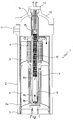
- a three-bed ammonia reactor or converter is shown as 1, comprising a vessel 2 containing catalytic beds 3, 4 and 5 with intermediate quenching heat exchangers 6 and 7.
- the reactor 1 is equipped with an internal electric start-up heater 10; a high-pressure cover 12 of the vessel 2 is also shown in Fig. 1 .
- the heater 10 is substantially a cylindrical equipment coaxial to the vessel 2, surrounded by a wall 8.
- the main components of the start-up heater 10 are: a mounting flange 13 for coupling with the high pressure cover 12, electrical connections 14, a sheet 15 supporting a plurality of elongate heating members, extended in a direction parallel to a longitudinal axis X-X of the heater 10 itself. Said axis X-X is coincident with the axis of the main vessel 2.
- the gaseous reactants enter the vessel 2 at upper inlet 11 and flow in annular space 2a, are pre-heated flowing upwards in exchangers 7 and 6, then flow in an interspace 8a around the wall 8, entering the space 8c via inlet 8b and hence passing axially through the heater 10 and contacting the heating members thereof, reaching the desired temperature of around 450 - 480 °C.
- the reactants pass to the first catalytic bed 3 where conversion into ammonia starts.
- the path of the gaseous reactants is shown by the arrows in Figs. 1 and 2 . This kind of ammonia converter is well known to the skilled man and hence is not described in further detail.
- the heating members are electrical resistances in the form of U-shaped armored bars 16 comprising an external sheet and an internal heating element electrically insulated from said external sheet.
- the bars are filled with a compressed magnesium oxide powder, insulating the heating element from the sheet itself. The internal element is heated by the passage of an electric current.
- the electric bars 16 are disposed in a square pitch, i.e. in parallel rows and columns ( Figs. 2-7 ).
- the heater 10 is further provided with supporting plates 20 for the heating members, namely for said electric heating bars 16.
- Said supporting plates 20 are disposed in planes perpendicular to longitudinal axis X-X and connected by longitudinal tie-bars 23, forming a supporting cage for the bars 16.
- Plates 20 are made substantially with an outer ring frame and parallel beams having opposite ends fixed to said ring frame.
- the start-up heater 10 comprises supporting plates 20 with perpendicular and staggered beams in contact with the heating bars 16.
- the plates 20 are arranged in a plurality of four-plate sets.
- Each plate set comprises a sequence of four, differently structured plates 20A, 20B, 20C and 20D.
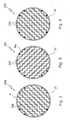
- Fig. 2 show a four-plate set 20' comprising the said plates 20A to 20D and another, adjacent four-plate set 20". Plates 20A to 20D of the second set 20" follows the same sequence of the first set 20', and so on.
- the plate 20A is formed essentially by a ring 21 and parallel supporting beams 22A, extending in alternate diagonal lanes N between the bars 16.
- a dimension (e.g. diameter or equivalent) of beams 22A is substantially equivalent to the clearance " t " between the diagonal rows of bars 16 ( Fig. 3 ), so that each beam 22A is in contact with the two diagonal rows adjacent to the same beam 22A.
- the beams 22A are made with tubes welded to the ring 21, the nominal diameter of said tubes being equal to said clearance t .
- the next plate 20B of the plate set 20' is shown in Fig. 4 .
- Supporting beams 22B of the plate 20B are also diagonal, but arranged in a direction perpendicular to the beams of the plate 20A.
- the beams 22B are fitted in lanes P between the bars 16, arranged at 90° with respect to the lanes N receiving the beams 22A of the first plate 20A.
- the third plate 20C ( Fig. 5 ) has parallel beams 22C arranged in the same direction of the beams 22A of first plate 20A, and extending in diagonal lanes N.
- the beams 22C of third plate 20C are however staggered with respect to beams 22A of said first plate 20A, by a distance which is equal to the distance between two consecutive diagonal rows of heating bars 16. This can be appreciated from the drawings, making a comparison between Fig. 3 and Fig. 5 , and considering the bar marked 16* which is in contact with the right-upper first beam 22* of the plate 20A, while the first, right upper beam 22C of plate 20C is not in contact with the same bar 16*, lying in the next diagonal lane.
- the fourth plate 20D has beams 22D arranged in the same direction of the beams 22B of the second plate 20B, extending in diagonal lanes P and staggered in an equivalent manner.
- the number of plate sets may vary as well as the number of plates 20 in each set. Some plate sets, e.g. the last set, may be incomplete, comprising for example only three plates or less.
- the supporting beams of plates 22A and 22C or, respectively, 22B and 22D are complementary, i.e. fitted in complementary sets of diagonal lanes N or P.
- Fig. 7 is a typical section of the pre-heater 10, showing that the succession of the different plate sets allows to furnish a radial support on each sides to heating bars 16.
- a given bar 16 is supported in a synergistic manner by each of beams 22A to 22D, being thus prevented from possible vibrations in any direction perpendicular to X-X.
- the natural vibration modes of the heating bars 16 are shifted to higher frequencies, with the result that the start-up heater 10 is much less sensitive to destructive flow-induced vibrations.
- the bars 16 are not subject to any mechanical constraint and for example thermal expansion is freely allowed.
- Fig. 7 also shows that the heating bars 16 cover around 50% of the available cross section of the pre-heater, leaving the other 50% cross section for gas flow, through spaces 24.
- an equivalent embodiment is possible with the supporting beams fitted in the orthogonal lanes L and M between the heating members 16 ( Fig. 3 ).
- the first plate 20A in this equivalent embodiment, is realized with vertical beams in alternate lanes M, and the second plate 20B with horizontal beams in alternate lanes L.
- the third and fourth plates 20C and 20C in this embodiment have beams parallel and staggered with respect of beams of plates 20A and 20B.
- the beams of plates 20 can be e.g. arranged in two next lanes between the heating bars 16, then skipping two lanes and providing further two beams, etc., or any variation thereof.
- the inventive start-up heater 10 can substitute an existing internal heater of an ammonia reactor, in a revamping operation.
- basic steps of the revamping are removing the existing heater from top aperture of cover 12, and providing the new heater with the same overall diameter of the old one, through the original aperture of said cover 12.
- the provision of the new heater which is less sensitive to flow-induced vibrations, makes it possible to increase the inlet speed of the reactants and, then, their mass flow rate to the catalytic beds and the production rate of the whole converter 1. It should be noted that these advantages are obtained without taking away any reaction space and without any modification of the vessel 2 or cover 12.
Landscapes
- Chemical & Material Sciences (AREA)
- Organic Chemistry (AREA)
- Chemical Kinetics & Catalysis (AREA)
- Analytical Chemistry (AREA)
- Inorganic Chemistry (AREA)
- Engineering & Computer Science (AREA)
- Automation & Control Theory (AREA)
- Physical Or Chemical Processes And Apparatus (AREA)
- Organic Low-Molecular-Weight Compounds And Preparation Thereof (AREA)
- Exhaust Gas After Treatment (AREA)
- Furnace Details (AREA)
- Physical Water Treatments (AREA)
Claims (13)
- Internes Startheizgerät (10) für einen Ammoniakreaktor (1), wobei das Heizgerät (10) eine Vielzahl von länglichen, elektrischen Heizeinrichtungen (16) umfasst, die sich in einer Längsachse (X-X) des Heizgeräts (10) erstrecken, dadurch gekennzeichnet, dass:- das Startheizgerät (10) eine Vielzahl von Stützplatten (20) für die Heizeinrichtungen (16) umfasst, wobei jede Stützplatte einen äußeren Rahmen (21) und Stützstreben (22A-22D) in paralleler Anordnung umfasst, mit an den äußeren Rahmen befestigten gegenüberliegenden Enden, wobei die Stützstreben in einer Ebene senkrecht zur Längsachse (X-X) und in Strängen (L, M, N, P) zwischen den Heizeinrichtungen (16) angeordnet sind und in Kontakt mit den Heizeinrichtungen stehen, und- die Stützplatten (20) in mindestens einem Set (20', 20") mit mindestens einer ersten und einer zweiten Platte angeordnet sind, wobei die erste Platte (20A) die Stützstreben (22A) hat, die im Vergleich zu den Stützstreben (22B) der zweiten Platte (20B) in einer unterschiedlichen Anordnung angeordnet sind.
- Heizgerät (10) gemäß Anspruch 1, wobei das mindestens eine Set (20') mindestens eine erste Platte (20A) mit parallelen Stützstreben (22A) umfasst, die in einer ersten Ausrichtung in der Ebene senkrecht zur Längsachse (X-X) des Heizgeräts (10) angeordnet sind, und mindestens eine andere Platte (20B) mit parallelen Stützstreben (22B), die in einer zweiten Ausrichtung in dieser Ebene und senkrecht zur ersten Ausrichtung angeordnet sind.
- Heizgerät (10) gemäß Anspruch 1 oder 2, wobei das mindestens eine Set (20') mindestens eine erste Platte (20A) mit Stützstreben (22A) gemäß einer ersten Ausrichtung in der Ebene senkrecht zur Längsachse (X-X) des Heizgeräts (10) umfasst, und mindestens eine andere Platte (20C) mit Stützstreben (22C), die in Bezug auf die Streben (22A) der ersten Platte parallel und versetzt angeordnet sind.
- Heizgerät (10) gemäß einem der vorangegangenen Ansprüche, wobei die parallelen Stützstreben (22A-22D) der Platten (20) abstandsgleich sind.
- Heizgerät (10) gemäß einem der vorangegangenen Ansprüche, wobei mindestens einige der Plattensets (20', 20") Platten (20A-20D) mit Stützstreben (22A-22D) umfassen, die sich in alternierenden Strängen (L, M, N, P) zwischen Reihen und/oder Spalten, die von den länglichen Heizeinrichtungen (16) gebildet werden, erstrecken, so dass jedes Plattenset mindestens eine Stützstrebe in jedem der Stränge hat.
- Heizgerät (10) gemäß Anspruch 5, wobei das Heizgerät mindestens ein Set (20') aus vier Platten umfasst, umfassend die Reihenfolge:- eine erste Platte (20A) mit parallelen und abstandsgleichen Stützstreben (22A), die sich in alternierenden Strängen zwischen den Heizeinrichtungen erstrecken (16);- eine zweite Platte (20B) mit Stützstreben (22B), die sich in alternierenden Strängen zwischen den Heizeinrichtungen (16) erstrecken, wobei die Stützstreben der zweiten Platte zu den Streben der ersten Platte senkrecht sind;- eine dritte Platte (20C) mit in Bezug auf die erste Platte parallelen und versetzt angeordneten Stützstreben (22C), so dass sich die Streben (22C) der dritten Platte (20C) in parallelen und alternierenden Strängen in Bezug auf die Streben (22A) der ersten Platte (20A) erstrecken;- eine vierte Platte (20D) mit in Bezug auf die zweite Platte parallelen und versetzten Stützstreben (22D), so dass sich die Streben (22D) der vierten Platte (20D) in parallelen und alternierenden Strängen in Bezug auf die Streben (22B) der zweiten Platte (20B) erstrecken;
- Heizgerät (10) gemäß Anspruch 6, wobei die Heizeinrichtungen (16) in einem quadratischen Raster angeordnet sind.
- Heizgerät (10) gemäß einem der Ansprüche 5 bis 7, wobei sich die Streben (22A-22D) der Platten in diagonalen Strängen (N, P) zwischen den Heizeinrichtungen erstrecken.
- Heizgerät gemäß einem der Ansprüche 5 bis 7, wobei sich die Streben (22A-22D) der Platten in orthogonalen Strängen (L,M) zwischen den Heizeinrichtungen (16) erstrecken.
- Heizgerät (10), das eine Vielzahl von konsekutiven Vier-Platten-Sets (20', 20") gemäß einem der Ansprüche 6 bis 9 umfasst.
- Heizgerät (10) gemäß einem der vorangegangenen Ansprüche, wobei jede der Heizeinrichtungen (16) ein elektrisch abgeschirmter Widerstand ist, der ein äußeres Gehäuse und ein elektrisches Heizelement innerhalb dieses Gehäuses umfasst, wobei das Heizelement von dem Gehäuse elektrisch isoliert ist.
- Ammoniakkonverter (1), der dafür geeignet ist, dass Wasserstoff und Stickstoff für die Herstellung von Ammoniak miteinander reagieren, wobei der Konverter (1) einen Kessel (2) und ein internes Startheizgerät (10) gemäß einem der vorangegangenen Ansprüche umfasst.
- Verfahren zur Nachrüstung eines Ammoniakkonverters (1), der einen Kessel (2) und ein Startheizgerät innerhalb des Kessels (2) umfasst, wobei das Verfahren die Schritte umfasst: Herausziehen des existierenden Startheizgeräts aus dem Kessel (2) und Einpassen eines Startheizgeräts (10) gemäß einem der Ansprüche 1 bis 10 in den Kessel (2).
Priority Applications (8)
| Application Number | Priority Date | Filing Date | Title |
|---|---|---|---|
| DE602008002324T DE602008002324D1 (de) | 2008-04-30 | 2008-04-30 | Startheizgerät für Ammoniakreaktoren |
| EP08008252A EP2116296B1 (de) | 2008-04-30 | 2008-04-30 | Startheizgerät für Ammoniakreaktoren |
| AT08008252T ATE478728T1 (de) | 2008-04-30 | 2008-04-30 | Startheizgerät für ammoniakreaktoren |
| BRPI0911867A BRPI0911867A2 (pt) | 2008-04-30 | 2009-04-16 | aquecedor de partida para reatores de amônia |
| US12/990,180 US8518330B2 (en) | 2008-04-30 | 2009-04-16 | Start-up heater for ammonia reactors |
| AU2009242319A AU2009242319B2 (en) | 2008-04-30 | 2009-04-16 | Start-up heater for ammonia reactors |
| CN2009801152992A CN102015089B (zh) | 2008-04-30 | 2009-04-16 | 用于氨反应器的开工加热炉 |
| PCT/EP2009/054500 WO2009132961A1 (en) | 2008-04-30 | 2009-04-16 | Start-up heater for ammonia reactors |
Applications Claiming Priority (1)
| Application Number | Priority Date | Filing Date | Title |
|---|---|---|---|
| EP08008252A EP2116296B1 (de) | 2008-04-30 | 2008-04-30 | Startheizgerät für Ammoniakreaktoren |
Publications (2)
| Publication Number | Publication Date |
|---|---|
| EP2116296A1 EP2116296A1 (de) | 2009-11-11 |
| EP2116296B1 true EP2116296B1 (de) | 2010-08-25 |
Family
ID=39811464
Family Applications (1)
| Application Number | Title | Priority Date | Filing Date |
|---|---|---|---|
| EP08008252A Active EP2116296B1 (de) | 2008-04-30 | 2008-04-30 | Startheizgerät für Ammoniakreaktoren |
Country Status (8)
| Country | Link |
|---|---|
| US (1) | US8518330B2 (de) |
| EP (1) | EP2116296B1 (de) |
| CN (1) | CN102015089B (de) |
| AT (1) | ATE478728T1 (de) |
| AU (1) | AU2009242319B2 (de) |
| BR (1) | BRPI0911867A2 (de) |
| DE (1) | DE602008002324D1 (de) |
| WO (1) | WO2009132961A1 (de) |
Families Citing this family (9)
| Publication number | Priority date | Publication date | Assignee | Title |
|---|---|---|---|---|
| WO2015177342A1 (en) * | 2014-05-23 | 2015-11-26 | Haldor Topsøe A/S | Multiple element support beam |
| EP4402100A1 (de) * | 2021-09-16 | 2024-07-24 | thyssenkrupp Uhde GmbH | Ammoniak-synthese-vorrichtung |
| BE1029758B1 (de) * | 2021-09-16 | 2023-04-11 | Thyssenkrupp Ind Solutions Ag | Ammoniak-Synthese-Vorrichtung |
| DE102022204105A1 (de) | 2022-04-27 | 2023-11-02 | Thyssenkrupp Ag | Wärmetauscher mit integrierter Anfahrheizung |
| BE1030484B1 (de) | 2022-04-27 | 2023-11-27 | Thyssenkrupp Ind Solutions Ag | Wärmetauscher mit integrierter Anfahrheizung |
| EP4515168A1 (de) | 2022-04-27 | 2025-03-05 | thyssenkrupp Uhde GmbH | Wärmetauscher mit integrierter anfahrheizung |
| EP4454745A1 (de) | 2023-04-28 | 2024-10-30 | Linde GmbH | Verfahren und anlage zur herstellung eines verfahrensprodukts |
| EP4606769A1 (de) | 2024-02-20 | 2025-08-27 | Linde GmbH | Verfahren und anlage zur herstellung eines verfahrensprodukts |
| US12590732B2 (en) * | 2024-05-28 | 2026-03-31 | Brillouin Energy Corp. | Heating system and methods |
Family Cites Families (4)
| Publication number | Priority date | Publication date | Assignee | Title |
|---|---|---|---|---|
| US1639272A (en) * | 1926-01-21 | 1927-08-16 | Forrest C Reed | Process for the direct synthesis of ammonia |
| US3254967A (en) * | 1963-06-17 | 1966-06-07 | Chem Processes Inc | Multiple bed catalyst apparatus having close temperature control |
| US4760210A (en) * | 1981-01-27 | 1988-07-26 | Sweeney Maxwell P | Partial oxidation system |
| AU2003259090A1 (en) * | 2002-08-09 | 2004-02-25 | Christopher Todd Gricius | Electrically heated catalyst support plate and method for starting up water gas shift reactors |
-
2008
- 2008-04-30 AT AT08008252T patent/ATE478728T1/de not_active IP Right Cessation
- 2008-04-30 EP EP08008252A patent/EP2116296B1/de active Active
- 2008-04-30 DE DE602008002324T patent/DE602008002324D1/de active Active
-
2009
- 2009-04-16 BR BRPI0911867A patent/BRPI0911867A2/pt not_active IP Right Cessation
- 2009-04-16 AU AU2009242319A patent/AU2009242319B2/en active Active
- 2009-04-16 US US12/990,180 patent/US8518330B2/en active Active
- 2009-04-16 CN CN2009801152992A patent/CN102015089B/zh active Active
- 2009-04-16 WO PCT/EP2009/054500 patent/WO2009132961A1/en not_active Ceased
Also Published As
| Publication number | Publication date |
|---|---|
| CN102015089B (zh) | 2013-10-02 |
| CN102015089A (zh) | 2011-04-13 |
| WO2009132961A1 (en) | 2009-11-05 |
| US20110123404A1 (en) | 2011-05-26 |
| US8518330B2 (en) | 2013-08-27 |
| EP2116296A1 (de) | 2009-11-11 |
| AU2009242319A1 (en) | 2009-11-05 |
| ATE478728T1 (de) | 2010-09-15 |
| AU2009242319B2 (en) | 2013-11-21 |
| DE602008002324D1 (de) | 2010-10-07 |
| BRPI0911867A2 (pt) | 2019-09-24 |
Similar Documents
| Publication | Publication Date | Title |
|---|---|---|
| EP2116296B1 (de) | Startheizgerät für Ammoniakreaktoren | |
| US7117934B2 (en) | Method and apparatus for minimizing adverse effects of thermal expansion in a heat exchange reactor | |
| CA2637001C (en) | Nubbed u-bend tube support | |
| EP2123977B1 (de) | Rohrstützplatte eines dampferzeugers | |
| US4285396A (en) | Steam generator tube support system | |
| CN101896260A (zh) | 等温化学反应器中热交换器板片的支承系统 | |
| EP3878547A1 (de) | Reaktor und verfahren zur durchführung einer chemischen reaktion | |
| US20120037572A1 (en) | Strainer wall structure including curved sections, method of manufacturing the same, and filtering method using the same | |
| JP2010506128A (ja) | スロット付きバッフルを有する低振動管束デバイス | |
| EP1530563B1 (de) | Vorrichtung zur harnstoffherstellung | |
| US2790889A (en) | Fluid electric heater | |
| JP6004413B2 (ja) | チューブ支持構造 | |
| US3070534A (en) | Fuel elements | |
| WO2022171603A1 (en) | An electrically heated apparatus | |
| AU2022257277A1 (en) | An electrically heated apparatus | |
| KR20090115979A (ko) | 히터 요소 및 전기로용 인서트 | |
| CZ284455B6 (cs) | Výměník tepla s trubkami ve tvaru U | |
| US12590730B2 (en) | Electric heater system | |
| RU2481888C2 (ru) | Пусковой нагреватель для реакторов синтеза аммиака | |
| WO2005046858A1 (en) | High pressure pseudo-isothermal chemical reactor | |
| EP1068482A1 (de) | Wärmetauscher | |
| AU2023279821A1 (en) | Catalyst support system for ammonia oxidation burners | |
| JP2005093746A (ja) | 熱処理炉 | |
| CN109328103A (zh) | 用于反应器的催化床的壁以及用于实现该壁的方法 | |
| US5005529A (en) | Modular heat recovery steam generator having parallel offset headers |
Legal Events
| Date | Code | Title | Description |
|---|---|---|---|
| PUAI | Public reference made under article 153(3) epc to a published international application that has entered the european phase |
Free format text: ORIGINAL CODE: 0009012 |
|
| 17P | Request for examination filed |
Effective date: 20090422 |
|
| AK | Designated contracting states |
Kind code of ref document: A1 Designated state(s): AT BE BG CH CY CZ DE DK EE ES FI FR GB GR HR HU IE IS IT LI LT LU LV MC MT NL NO PL PT RO SE SI SK TR |
|
| AX | Request for extension of the european patent |
Extension state: AL BA MK RS |
|
| GRAP | Despatch of communication of intention to grant a patent |
Free format text: ORIGINAL CODE: EPIDOSNIGR1 |
|
| AKX | Designation fees paid |
Designated state(s): AT BE BG CH CY CZ DE DK EE ES FI FR GB GR HR HU IE IS IT LI LT LU LV MC MT NL NO PL PT RO SE SI SK TR |
|
| GRAS | Grant fee paid |
Free format text: ORIGINAL CODE: EPIDOSNIGR3 |
|
| GRAA | (expected) grant |
Free format text: ORIGINAL CODE: 0009210 |
|
| AK | Designated contracting states |
Kind code of ref document: B1 Designated state(s): AT BE BG CH CY CZ DE DK EE ES FI FR GB GR HR HU IE IS IT LI LT LU LV MC MT NL NO PL PT RO SE SI SK TR |
|
| REG | Reference to a national code |
Ref country code: GB Ref legal event code: FG4D |
|
| REG | Reference to a national code |
Ref country code: CH Ref legal event code: EP |
|
| REG | Reference to a national code |
Ref country code: IE Ref legal event code: FG4D |
|
| REF | Corresponds to: |
Ref document number: 602008002324 Country of ref document: DE Date of ref document: 20101007 Kind code of ref document: P |
|
| REG | Reference to a national code |
Ref country code: NL Ref legal event code: VDEP Effective date: 20100825 |
|
| LTIE | Lt: invalidation of european patent or patent extension |
Effective date: 20100825 |
|
| PG25 | Lapsed in a contracting state [announced via postgrant information from national office to epo] |
Ref country code: FI Free format text: LAPSE BECAUSE OF FAILURE TO SUBMIT A TRANSLATION OF THE DESCRIPTION OR TO PAY THE FEE WITHIN THE PRESCRIBED TIME-LIMIT Effective date: 20100825 Ref country code: NO Free format text: LAPSE BECAUSE OF FAILURE TO SUBMIT A TRANSLATION OF THE DESCRIPTION OR TO PAY THE FEE WITHIN THE PRESCRIBED TIME-LIMIT Effective date: 20101125 Ref country code: LT Free format text: LAPSE BECAUSE OF FAILURE TO SUBMIT A TRANSLATION OF THE DESCRIPTION OR TO PAY THE FEE WITHIN THE PRESCRIBED TIME-LIMIT Effective date: 20100825 Ref country code: AT Free format text: LAPSE BECAUSE OF FAILURE TO SUBMIT A TRANSLATION OF THE DESCRIPTION OR TO PAY THE FEE WITHIN THE PRESCRIBED TIME-LIMIT Effective date: 20100825 |
|
| PG25 | Lapsed in a contracting state [announced via postgrant information from national office to epo] |
Ref country code: PL Free format text: LAPSE BECAUSE OF FAILURE TO SUBMIT A TRANSLATION OF THE DESCRIPTION OR TO PAY THE FEE WITHIN THE PRESCRIBED TIME-LIMIT Effective date: 20100825 Ref country code: BG Free format text: LAPSE BECAUSE OF FAILURE TO SUBMIT A TRANSLATION OF THE DESCRIPTION OR TO PAY THE FEE WITHIN THE PRESCRIBED TIME-LIMIT Effective date: 20101125 Ref country code: SI Free format text: LAPSE BECAUSE OF FAILURE TO SUBMIT A TRANSLATION OF THE DESCRIPTION OR TO PAY THE FEE WITHIN THE PRESCRIBED TIME-LIMIT Effective date: 20100825 Ref country code: IS Free format text: LAPSE BECAUSE OF FAILURE TO SUBMIT A TRANSLATION OF THE DESCRIPTION OR TO PAY THE FEE WITHIN THE PRESCRIBED TIME-LIMIT Effective date: 20101225 Ref country code: CY Free format text: LAPSE BECAUSE OF FAILURE TO SUBMIT A TRANSLATION OF THE DESCRIPTION OR TO PAY THE FEE WITHIN THE PRESCRIBED TIME-LIMIT Effective date: 20100825 Ref country code: HR Free format text: LAPSE BECAUSE OF FAILURE TO SUBMIT A TRANSLATION OF THE DESCRIPTION OR TO PAY THE FEE WITHIN THE PRESCRIBED TIME-LIMIT Effective date: 20100825 |
|
| PG25 | Lapsed in a contracting state [announced via postgrant information from national office to epo] |
Ref country code: SE Free format text: LAPSE BECAUSE OF FAILURE TO SUBMIT A TRANSLATION OF THE DESCRIPTION OR TO PAY THE FEE WITHIN THE PRESCRIBED TIME-LIMIT Effective date: 20100825 Ref country code: BE Free format text: LAPSE BECAUSE OF FAILURE TO SUBMIT A TRANSLATION OF THE DESCRIPTION OR TO PAY THE FEE WITHIN THE PRESCRIBED TIME-LIMIT Effective date: 20100825 Ref country code: NL Free format text: LAPSE BECAUSE OF FAILURE TO SUBMIT A TRANSLATION OF THE DESCRIPTION OR TO PAY THE FEE WITHIN THE PRESCRIBED TIME-LIMIT Effective date: 20100825 Ref country code: GR Free format text: LAPSE BECAUSE OF FAILURE TO SUBMIT A TRANSLATION OF THE DESCRIPTION OR TO PAY THE FEE WITHIN THE PRESCRIBED TIME-LIMIT Effective date: 20101126 Ref country code: LV Free format text: LAPSE BECAUSE OF FAILURE TO SUBMIT A TRANSLATION OF THE DESCRIPTION OR TO PAY THE FEE WITHIN THE PRESCRIBED TIME-LIMIT Effective date: 20100825 |
|
| PG25 | Lapsed in a contracting state [announced via postgrant information from national office to epo] |
Ref country code: DK Free format text: LAPSE BECAUSE OF FAILURE TO SUBMIT A TRANSLATION OF THE DESCRIPTION OR TO PAY THE FEE WITHIN THE PRESCRIBED TIME-LIMIT Effective date: 20100825 |
|
| PG25 | Lapsed in a contracting state [announced via postgrant information from national office to epo] |
Ref country code: CZ Free format text: LAPSE BECAUSE OF FAILURE TO SUBMIT A TRANSLATION OF THE DESCRIPTION OR TO PAY THE FEE WITHIN THE PRESCRIBED TIME-LIMIT Effective date: 20100825 Ref country code: SK Free format text: LAPSE BECAUSE OF FAILURE TO SUBMIT A TRANSLATION OF THE DESCRIPTION OR TO PAY THE FEE WITHIN THE PRESCRIBED TIME-LIMIT Effective date: 20100825 Ref country code: IT Free format text: LAPSE BECAUSE OF FAILURE TO SUBMIT A TRANSLATION OF THE DESCRIPTION OR TO PAY THE FEE WITHIN THE PRESCRIBED TIME-LIMIT Effective date: 20100825 Ref country code: RO Free format text: LAPSE BECAUSE OF FAILURE TO SUBMIT A TRANSLATION OF THE DESCRIPTION OR TO PAY THE FEE WITHIN THE PRESCRIBED TIME-LIMIT Effective date: 20100825 Ref country code: EE Free format text: LAPSE BECAUSE OF FAILURE TO SUBMIT A TRANSLATION OF THE DESCRIPTION OR TO PAY THE FEE WITHIN THE PRESCRIBED TIME-LIMIT Effective date: 20100825 |
|
| PG25 | Lapsed in a contracting state [announced via postgrant information from national office to epo] |
Ref country code: ES Free format text: LAPSE BECAUSE OF FAILURE TO SUBMIT A TRANSLATION OF THE DESCRIPTION OR TO PAY THE FEE WITHIN THE PRESCRIBED TIME-LIMIT Effective date: 20101206 |
|
| PLBE | No opposition filed within time limit |
Free format text: ORIGINAL CODE: 0009261 |
|
| STAA | Information on the status of an ep patent application or granted ep patent |
Free format text: STATUS: NO OPPOSITION FILED WITHIN TIME LIMIT |
|
| 26N | No opposition filed |
Effective date: 20110526 |
|
| REG | Reference to a national code |
Ref country code: DE Ref legal event code: R097 Ref document number: 602008002324 Country of ref document: DE Effective date: 20110526 |
|
| PG25 | Lapsed in a contracting state [announced via postgrant information from national office to epo] |
Ref country code: MC Free format text: LAPSE BECAUSE OF NON-PAYMENT OF DUE FEES Effective date: 20110430 |
|
| PG25 | Lapsed in a contracting state [announced via postgrant information from national office to epo] |
Ref country code: MT Free format text: LAPSE BECAUSE OF FAILURE TO SUBMIT A TRANSLATION OF THE DESCRIPTION OR TO PAY THE FEE WITHIN THE PRESCRIBED TIME-LIMIT Effective date: 20100825 |
|
| REG | Reference to a national code |
Ref country code: IE Ref legal event code: MM4A |
|
| PG25 | Lapsed in a contracting state [announced via postgrant information from national office to epo] |
Ref country code: IE Free format text: LAPSE BECAUSE OF NON-PAYMENT OF DUE FEES Effective date: 20110430 |
|
| REG | Reference to a national code |
Ref country code: CH Ref legal event code: PL |
|
| GBPC | Gb: european patent ceased through non-payment of renewal fee |
Effective date: 20120430 |
|
| PG25 | Lapsed in a contracting state [announced via postgrant information from national office to epo] |
Ref country code: LI Free format text: LAPSE BECAUSE OF NON-PAYMENT OF DUE FEES Effective date: 20120430 Ref country code: GB Free format text: LAPSE BECAUSE OF NON-PAYMENT OF DUE FEES Effective date: 20120430 Ref country code: CH Free format text: LAPSE BECAUSE OF NON-PAYMENT OF DUE FEES Effective date: 20120430 |
|
| PG25 | Lapsed in a contracting state [announced via postgrant information from national office to epo] |
Ref country code: LU Free format text: LAPSE BECAUSE OF NON-PAYMENT OF DUE FEES Effective date: 20110430 |
|
| PG25 | Lapsed in a contracting state [announced via postgrant information from national office to epo] |
Ref country code: PT Free format text: LAPSE BECAUSE OF NON-PAYMENT OF DUE FEES Effective date: 20100825 |
|
| PG25 | Lapsed in a contracting state [announced via postgrant information from national office to epo] |
Ref country code: TR Free format text: LAPSE BECAUSE OF FAILURE TO SUBMIT A TRANSLATION OF THE DESCRIPTION OR TO PAY THE FEE WITHIN THE PRESCRIBED TIME-LIMIT Effective date: 20100825 |
|
| PG25 | Lapsed in a contracting state [announced via postgrant information from national office to epo] |
Ref country code: HU Free format text: LAPSE BECAUSE OF FAILURE TO SUBMIT A TRANSLATION OF THE DESCRIPTION OR TO PAY THE FEE WITHIN THE PRESCRIBED TIME-LIMIT Effective date: 20100825 |
|
| REG | Reference to a national code |
Ref country code: FR Ref legal event code: PLFP Year of fee payment: 9 |
|
| REG | Reference to a national code |
Ref country code: FR Ref legal event code: PLFP Year of fee payment: 10 |
|
| REG | Reference to a national code |
Ref country code: FR Ref legal event code: PLFP Year of fee payment: 11 |
|
| P01 | Opt-out of the competence of the unified patent court (upc) registered |
Effective date: 20230527 |
|
| PGFP | Annual fee paid to national office [announced via postgrant information from national office to epo] |
Ref country code: DE Payment date: 20250319 Year of fee payment: 18 |
|
| PGFP | Annual fee paid to national office [announced via postgrant information from national office to epo] |
Ref country code: FR Payment date: 20260319 Year of fee payment: 19 |