EP2116136A1 - Novel phytases - Google Patents
Novel phytases Download PDFInfo
- Publication number
- EP2116136A1 EP2116136A1 EP08155927A EP08155927A EP2116136A1 EP 2116136 A1 EP2116136 A1 EP 2116136A1 EP 08155927 A EP08155927 A EP 08155927A EP 08155927 A EP08155927 A EP 08155927A EP 2116136 A1 EP2116136 A1 EP 2116136A1
- Authority
- EP
- European Patent Office
- Prior art keywords
- polypeptide
- nucleic acid
- nucleotide sequence
- amino acid
- acid molecule
- Prior art date
- Legal status (The legal status is an assumption and is not a legal conclusion. Google has not performed a legal analysis and makes no representation as to the accuracy of the status listed.)
- Withdrawn
Links
- 108010011619 6-Phytase Proteins 0.000 title claims abstract description 176
- 229940085127 phytase Drugs 0.000 claims abstract description 121
- 108090000765 processed proteins & peptides Proteins 0.000 claims abstract description 116
- 229920001184 polypeptide Polymers 0.000 claims abstract description 113
- 102000004196 processed proteins & peptides Human genes 0.000 claims abstract description 113
- 108091033319 polynucleotide Proteins 0.000 claims abstract description 65
- 102000040430 polynucleotide Human genes 0.000 claims abstract description 65
- 239000002157 polynucleotide Substances 0.000 claims abstract description 65
- 230000000694 effects Effects 0.000 claims abstract description 51
- 238000000034 method Methods 0.000 claims abstract description 27
- 239000013598 vector Substances 0.000 claims abstract description 20
- 230000001131 transforming effect Effects 0.000 claims abstract description 3
- 150000007523 nucleic acids Chemical class 0.000 claims description 112
- 108090000623 proteins and genes Proteins 0.000 claims description 106
- 102000039446 nucleic acids Human genes 0.000 claims description 103
- 108020004707 nucleic acids Proteins 0.000 claims description 103
- 239000002773 nucleotide Substances 0.000 claims description 76
- 125000003729 nucleotide group Chemical group 0.000 claims description 76
- 210000004027 cell Anatomy 0.000 claims description 67
- 125000003275 alpha amino acid group Chemical group 0.000 claims description 63
- 102000004169 proteins and genes Human genes 0.000 claims description 57
- 235000018102 proteins Nutrition 0.000 claims description 56
- 235000002949 phytic acid Nutrition 0.000 claims description 19
- IMQLKJBTEOYOSI-GPIVLXJGSA-N Inositol-hexakisphosphate Chemical compound OP(O)(=O)O[C@H]1[C@H](OP(O)(O)=O)[C@@H](OP(O)(O)=O)[C@H](OP(O)(O)=O)[C@H](OP(O)(O)=O)[C@@H]1OP(O)(O)=O IMQLKJBTEOYOSI-GPIVLXJGSA-N 0.000 claims description 18
- 230000000295 complement effect Effects 0.000 claims description 18
- 241000233866 Fungi Species 0.000 claims description 14
- 235000013305 food Nutrition 0.000 claims description 13
- 239000012634 fragment Substances 0.000 claims description 13
- 230000002068 genetic effect Effects 0.000 claims description 12
- 238000004519 manufacturing process Methods 0.000 claims description 11
- 235000018417 cysteine Nutrition 0.000 claims description 10
- XUJNEKJLAYXESH-UHFFFAOYSA-N cysteine Natural products SCC(N)C(O)=O XUJNEKJLAYXESH-UHFFFAOYSA-N 0.000 claims description 10
- 230000001580 bacterial effect Effects 0.000 claims description 9
- 240000004808 Saccharomyces cerevisiae Species 0.000 claims description 8
- 241000196324 Embryophyta Species 0.000 claims description 7
- IMQLKJBTEOYOSI-UHFFFAOYSA-N Phytic acid Natural products OP(O)(=O)OC1C(OP(O)(O)=O)C(OP(O)(O)=O)C(OP(O)(O)=O)C(OP(O)(O)=O)C1OP(O)(O)=O IMQLKJBTEOYOSI-UHFFFAOYSA-N 0.000 claims description 7
- 229940068041 phytic acid Drugs 0.000 claims description 7
- 239000000467 phytic acid Substances 0.000 claims description 7
- 239000001963 growth medium Substances 0.000 claims description 5
- 239000000203 mixture Substances 0.000 claims description 5
- 229910052816 inorganic phosphate Inorganic materials 0.000 claims description 4
- 239000000654 additive Substances 0.000 claims description 3
- 230000000996 additive effect Effects 0.000 claims description 3
- 210000004102 animal cell Anatomy 0.000 claims description 2
- 235000012041 food component Nutrition 0.000 claims description 2
- 239000005428 food component Substances 0.000 claims description 2
- 239000002253 acid Substances 0.000 abstract description 4
- 239000013589 supplement Substances 0.000 abstract description 2
- 230000002538 fungal effect Effects 0.000 description 22
- 108010076504 Protein Sorting Signals Proteins 0.000 description 12
- 238000013518 transcription Methods 0.000 description 12
- 108020004414 DNA Proteins 0.000 description 11
- 101150069003 amdS gene Proteins 0.000 description 11
- 239000003550 marker Substances 0.000 description 11
- 230000035897 transcription Effects 0.000 description 11
- 235000001014 amino acid Nutrition 0.000 description 10
- 150000001413 amino acids Chemical class 0.000 description 10
- 230000010354 integration Effects 0.000 description 10
- 230000009466 transformation Effects 0.000 description 10
- 108020004705 Codon Proteins 0.000 description 9
- 108010073178 Glucan 1,4-alpha-Glucosidase Proteins 0.000 description 9
- 102100022624 Glucoamylase Human genes 0.000 description 9
- 210000001938 protoplast Anatomy 0.000 description 9
- 241001674013 Chrysosporium lucknowense Species 0.000 description 8
- 108091028043 Nucleic acid sequence Proteins 0.000 description 8
- 108091005804 Peptidases Proteins 0.000 description 8
- FAPWRFPIFSIZLT-UHFFFAOYSA-M Sodium chloride Chemical compound [Na+].[Cl-] FAPWRFPIFSIZLT-UHFFFAOYSA-M 0.000 description 8
- 239000013604 expression vector Substances 0.000 description 7
- 239000013612 plasmid Substances 0.000 description 7
- 108091032973 (ribonucleotides)n+m Proteins 0.000 description 6
- 108700007698 Genetic Terminator Regions Proteins 0.000 description 6
- 241001344131 Magnaporthe grisea Species 0.000 description 6
- OAICVXFJPJFONN-UHFFFAOYSA-N Phosphorus Chemical compound [P] OAICVXFJPJFONN-UHFFFAOYSA-N 0.000 description 6
- 239000004365 Protease Substances 0.000 description 6
- 102100037486 Reverse transcriptase/ribonuclease H Human genes 0.000 description 6
- 125000000539 amino acid group Chemical group 0.000 description 6
- 238000010367 cloning Methods 0.000 description 6
- 239000002609 medium Substances 0.000 description 6
- 229910052698 phosphorus Inorganic materials 0.000 description 6
- 239000011574 phosphorus Substances 0.000 description 6
- 238000013519 translation Methods 0.000 description 6
- UXVMQQNJUSDDNG-UHFFFAOYSA-L Calcium chloride Chemical compound [Cl-].[Cl-].[Ca+2] UXVMQQNJUSDDNG-UHFFFAOYSA-L 0.000 description 5
- 108091026890 Coding region Proteins 0.000 description 5
- FBPFZTCFMRRESA-FSIIMWSLSA-N D-Glucitol Natural products OC[C@H](O)[C@H](O)[C@@H](O)[C@H](O)CO FBPFZTCFMRRESA-FSIIMWSLSA-N 0.000 description 5
- 102000004190 Enzymes Human genes 0.000 description 5
- 108090000790 Enzymes Proteins 0.000 description 5
- 239000001110 calcium chloride Substances 0.000 description 5
- 229910001628 calcium chloride Inorganic materials 0.000 description 5
- 101150052795 cbh-1 gene Proteins 0.000 description 5
- 229940088598 enzyme Drugs 0.000 description 5
- 238000012545 processing Methods 0.000 description 5
- 239000000600 sorbitol Substances 0.000 description 5
- DLFVBJFMPXGRIB-UHFFFAOYSA-N Acetamide Chemical compound CC(N)=O DLFVBJFMPXGRIB-UHFFFAOYSA-N 0.000 description 4
- 241000228212 Aspergillus Species 0.000 description 4
- 241001465318 Aspergillus terreus Species 0.000 description 4
- IJGRMHOSHXDMSA-UHFFFAOYSA-N Atomic nitrogen Chemical compound N#N IJGRMHOSHXDMSA-UHFFFAOYSA-N 0.000 description 4
- 241000193830 Bacillus <bacterium> Species 0.000 description 4
- 102000053602 DNA Human genes 0.000 description 4
- 108020004511 Recombinant DNA Proteins 0.000 description 4
- 241000282849 Ruminantia Species 0.000 description 4
- 230000001939 inductive effect Effects 0.000 description 4
- 108020004999 messenger RNA Proteins 0.000 description 4
- 229920000642 polymer Polymers 0.000 description 4
- 230000010076 replication Effects 0.000 description 4
- 230000028327 secretion Effects 0.000 description 4
- 239000011780 sodium chloride Substances 0.000 description 4
- 241000351920 Aspergillus nidulans Species 0.000 description 3
- 241000228245 Aspergillus niger Species 0.000 description 3
- 108700005088 Fungal Genes Proteins 0.000 description 3
- 241001344133 Magnaporthe Species 0.000 description 3
- 230000002457 bidirectional effect Effects 0.000 description 3
- 235000013339 cereals Nutrition 0.000 description 3
- 239000003795 chemical substances by application Substances 0.000 description 3
- 239000000306 component Substances 0.000 description 3
- 239000012895 dilution Substances 0.000 description 3
- 238000010790 dilution Methods 0.000 description 3
- 239000003623 enhancer Substances 0.000 description 3
- 238000000855 fermentation Methods 0.000 description 3
- 230000004927 fusion Effects 0.000 description 3
- 108020001507 fusion proteins Proteins 0.000 description 3
- 102000037865 fusion proteins Human genes 0.000 description 3
- 238000012239 gene modification Methods 0.000 description 3
- 230000005017 genetic modification Effects 0.000 description 3
- 235000013617 genetically modified food Nutrition 0.000 description 3
- 230000006801 homologous recombination Effects 0.000 description 3
- 238000002744 homologous recombination Methods 0.000 description 3
- 230000007062 hydrolysis Effects 0.000 description 3
- 238000006460 hydrolysis reaction Methods 0.000 description 3
- 238000001727 in vivo Methods 0.000 description 3
- 244000005700 microbiome Species 0.000 description 3
- 238000005065 mining Methods 0.000 description 3
- 238000005457 optimization Methods 0.000 description 3
- 239000008188 pellet Substances 0.000 description 3
- 230000008569 process Effects 0.000 description 3
- 239000000126 substance Substances 0.000 description 3
- 239000000758 substrate Substances 0.000 description 3
- 238000011144 upstream manufacturing Methods 0.000 description 3
- 102000040650 (ribonucleotides)n+m Human genes 0.000 description 2
- 108010080981 3-phytase Proteins 0.000 description 2
- 241000251468 Actinopterygii Species 0.000 description 2
- 241000235349 Ascomycota Species 0.000 description 2
- 241001513093 Aspergillus awamori Species 0.000 description 2
- 241000228195 Aspergillus ficuum Species 0.000 description 2
- 241001225321 Aspergillus fumigatus Species 0.000 description 2
- 240000006439 Aspergillus oryzae Species 0.000 description 2
- 241000894006 Bacteria Species 0.000 description 2
- 241000123650 Botrytis cinerea Species 0.000 description 2
- 241000123346 Chrysosporium Species 0.000 description 2
- 108700010070 Codon Usage Proteins 0.000 description 2
- 241000588724 Escherichia coli Species 0.000 description 2
- 108010058643 Fungal Proteins Proteins 0.000 description 2
- QNAYBMKLOCPYGJ-REOHCLBHSA-N L-alanine Chemical compound C[C@H](N)C(O)=O QNAYBMKLOCPYGJ-REOHCLBHSA-N 0.000 description 2
- 241000124008 Mammalia Species 0.000 description 2
- 229910002651 NO3 Inorganic materials 0.000 description 2
- NHNBFGGVMKEFGY-UHFFFAOYSA-N Nitrate Chemical compound [O-][N+]([O-])=O NHNBFGGVMKEFGY-UHFFFAOYSA-N 0.000 description 2
- 108700026244 Open Reading Frames Proteins 0.000 description 2
- 239000008118 PEG 6000 Substances 0.000 description 2
- 241000736122 Parastagonospora nodorum Species 0.000 description 2
- 229920002584 Polyethylene Glycol 6000 Polymers 0.000 description 2
- 241000519590 Pseudoalteromonas Species 0.000 description 2
- 241000589516 Pseudomonas Species 0.000 description 2
- 108091028664 Ribonucleotide Proteins 0.000 description 2
- 241000221696 Sclerotinia sclerotiorum Species 0.000 description 2
- 241000282898 Sus scrofa Species 0.000 description 2
- 240000008042 Zea mays Species 0.000 description 2
- 235000002017 Zea mays subsp mays Nutrition 0.000 description 2
- 238000010521 absorption reaction Methods 0.000 description 2
- 235000004279 alanine Nutrition 0.000 description 2
- 101150024193 alp1 gene Proteins 0.000 description 2
- 238000004458 analytical method Methods 0.000 description 2
- 229940091771 aspergillus fumigatus Drugs 0.000 description 2
- 238000003556 assay Methods 0.000 description 2
- 238000002869 basic local alignment search tool Methods 0.000 description 2
- 230000008901 benefit Effects 0.000 description 2
- AIYUHDOJVYHVIT-UHFFFAOYSA-M caesium chloride Chemical compound [Cl-].[Cs+] AIYUHDOJVYHVIT-UHFFFAOYSA-M 0.000 description 2
- 125000000151 cysteine group Chemical group N[C@@H](CS)C(=O)* 0.000 description 2
- 239000005547 deoxyribonucleotide Substances 0.000 description 2
- 125000002637 deoxyribonucleotide group Chemical group 0.000 description 2
- MTHSVFCYNBDYFN-UHFFFAOYSA-N diethylene glycol Chemical compound OCCOCCO MTHSVFCYNBDYFN-UHFFFAOYSA-N 0.000 description 2
- 238000004520 electroporation Methods 0.000 description 2
- 230000029142 excretion Effects 0.000 description 2
- 101150097026 facA gene Proteins 0.000 description 2
- 239000006052 feed supplement Substances 0.000 description 2
- 230000004151 fermentation Effects 0.000 description 2
- 230000001976 improved effect Effects 0.000 description 2
- 238000003780 insertion Methods 0.000 description 2
- 230000037431 insertion Effects 0.000 description 2
- 244000144972 livestock Species 0.000 description 2
- 239000011159 matrix material Substances 0.000 description 2
- 230000000813 microbial effect Effects 0.000 description 2
- 230000004048 modification Effects 0.000 description 2
- 238000012986 modification Methods 0.000 description 2
- 238000010369 molecular cloning Methods 0.000 description 2
- 229910052757 nitrogen Inorganic materials 0.000 description 2
- 238000007747 plating Methods 0.000 description 2
- 230000008488 polyadenylation Effects 0.000 description 2
- 244000144977 poultry Species 0.000 description 2
- 238000002360 preparation method Methods 0.000 description 2
- 101150054232 pyrG gene Proteins 0.000 description 2
- 108091008146 restriction endonucleases Proteins 0.000 description 2
- 239000002336 ribonucleotide Substances 0.000 description 2
- 125000002652 ribonucleotide group Chemical group 0.000 description 2
- 239000000243 solution Substances 0.000 description 2
- 230000005026 transcription initiation Effects 0.000 description 2
- 230000005030 transcription termination Effects 0.000 description 2
- FQVLRGLGWNWPSS-BXBUPLCLSA-N (4r,7s,10s,13s,16r)-16-acetamido-13-(1h-imidazol-5-ylmethyl)-10-methyl-6,9,12,15-tetraoxo-7-propan-2-yl-1,2-dithia-5,8,11,14-tetrazacycloheptadecane-4-carboxamide Chemical compound N1C(=O)[C@@H](NC(C)=O)CSSC[C@@H](C(N)=O)NC(=O)[C@H](C(C)C)NC(=O)[C@H](C)NC(=O)[C@@H]1CC1=CN=CN1 FQVLRGLGWNWPSS-BXBUPLCLSA-N 0.000 description 1
- QRBLKGHRWFGINE-UGWAGOLRSA-N 2-[2-[2-[[2-[[4-[[2-[[6-amino-2-[3-amino-1-[(2,3-diamino-3-oxopropyl)amino]-3-oxopropyl]-5-methylpyrimidine-4-carbonyl]amino]-3-[(2r,3s,4s,5s,6s)-3-[(2s,3r,4r,5s)-4-carbamoyl-3,4,5-trihydroxy-6-(hydroxymethyl)oxan-2-yl]oxy-4,5-dihydroxy-6-(hydroxymethyl)- Chemical compound N=1C(C=2SC=C(N=2)C(N)=O)CSC=1CCNC(=O)C(C(C)=O)NC(=O)C(C)C(O)C(C)NC(=O)C(C(O[C@H]1[C@@]([C@@H](O)[C@H](O)[C@H](CO)O1)(C)O[C@H]1[C@@H]([C@](O)([C@@H](O)C(CO)O1)C(N)=O)O)C=1NC=NC=1)NC(=O)C1=NC(C(CC(N)=O)NCC(N)C(N)=O)=NC(N)=C1C QRBLKGHRWFGINE-UGWAGOLRSA-N 0.000 description 1
- QKNYBSVHEMOAJP-UHFFFAOYSA-N 2-amino-2-(hydroxymethyl)propane-1,3-diol;hydron;chloride Chemical compound Cl.OCC(N)(CO)CO QKNYBSVHEMOAJP-UHFFFAOYSA-N 0.000 description 1
- 230000005730 ADP ribosylation Effects 0.000 description 1
- 108010051457 Acid Phosphatase Proteins 0.000 description 1
- 102000013563 Acid Phosphatase Human genes 0.000 description 1
- 229920001817 Agar Polymers 0.000 description 1
- 235000001674 Agaricus brunnescens Nutrition 0.000 description 1
- 241000222532 Agrocybe Species 0.000 description 1
- 102000007698 Alcohol dehydrogenase Human genes 0.000 description 1
- 108010021809 Alcohol dehydrogenase Proteins 0.000 description 1
- 102100034035 Alcohol dehydrogenase 1A Human genes 0.000 description 1
- 102100031795 All-trans-retinol dehydrogenase [NAD(+)] ADH4 Human genes 0.000 description 1
- 108700023418 Amidases Proteins 0.000 description 1
- 239000004382 Amylase Substances 0.000 description 1
- 235000002247 Aspergillus oryzae Nutrition 0.000 description 1
- 244000063299 Bacillus subtilis Species 0.000 description 1
- 235000014469 Bacillus subtilis Nutrition 0.000 description 1
- 108010077805 Bacterial Proteins Proteins 0.000 description 1
- 239000002028 Biomass Substances 0.000 description 1
- 108010006654 Bleomycin Proteins 0.000 description 1
- OKTJSMMVPCPJKN-UHFFFAOYSA-N Carbon Chemical compound [C] OKTJSMMVPCPJKN-UHFFFAOYSA-N 0.000 description 1
- 102000014914 Carrier Proteins Human genes 0.000 description 1
- 108010078791 Carrier Proteins Proteins 0.000 description 1
- 108010008885 Cellulose 1,4-beta-Cellobiosidase Proteins 0.000 description 1
- 241000221955 Chaetomium Species 0.000 description 1
- 241001515917 Chaetomium globosum Species 0.000 description 1
- 241001085790 Coprinopsis Species 0.000 description 1
- 244000251987 Coprinus macrorhizus Species 0.000 description 1
- 235000001673 Coprinus macrorhizus Nutrition 0.000 description 1
- 241001252397 Corynascus Species 0.000 description 1
- 241000238424 Crustacea Species 0.000 description 1
- 241000206602 Eukaryota Species 0.000 description 1
- 108091092566 Extrachromosomal DNA Proteins 0.000 description 1
- 241000223218 Fusarium Species 0.000 description 1
- 101000892220 Geobacillus thermodenitrificans (strain NG80-2) Long-chain-alcohol dehydrogenase 1 Proteins 0.000 description 1
- WQZGKKKJIJFFOK-GASJEMHNSA-N Glucose Natural products OC[C@H]1OC(O)[C@H](O)[C@@H](O)[C@@H]1O WQZGKKKJIJFFOK-GASJEMHNSA-N 0.000 description 1
- 102000017722 Glutamine amidotransferases Human genes 0.000 description 1
- 108050005901 Glutamine amidotransferases Proteins 0.000 description 1
- 244000068988 Glycine max Species 0.000 description 1
- 235000010469 Glycine max Nutrition 0.000 description 1
- 101100295959 Halobacterium salinarum (strain ATCC 700922 / JCM 11081 / NRC-1) arcB gene Proteins 0.000 description 1
- 241000238631 Hexapoda Species 0.000 description 1
- 101000780443 Homo sapiens Alcohol dehydrogenase 1A Proteins 0.000 description 1
- 101000775437 Homo sapiens All-trans-retinol dehydrogenase [NAD(+)] ADH4 Proteins 0.000 description 1
- 241000223198 Humicola Species 0.000 description 1
- 229930010555 Inosine Natural products 0.000 description 1
- UGQMRVRMYYASKQ-KQYNXXCUSA-N Inosine Chemical compound O[C@@H]1[C@H](O)[C@@H](CO)O[C@H]1N1C2=NC=NC(O)=C2N=C1 UGQMRVRMYYASKQ-KQYNXXCUSA-N 0.000 description 1
- 108091092195 Intron Proteins 0.000 description 1
- 241001149568 Laccaria Species 0.000 description 1
- 241001465754 Metazoa Species 0.000 description 1
- 229930193140 Neomycin Natural products 0.000 description 1
- 241001507755 Neosartorya Species 0.000 description 1
- 101100032166 Neosartorya fumigata (strain ATCC MYA-4609 / Af293 / CBS 101355 / FGSC A1100) pyr5 gene Proteins 0.000 description 1
- 241000221960 Neurospora Species 0.000 description 1
- 241000221961 Neurospora crassa Species 0.000 description 1
- 101100494726 Neurospora crassa (strain ATCC 24698 / 74-OR23-1A / CBS 708.71 / DSM 1257 / FGSC 987) pep-4 gene Proteins 0.000 description 1
- 108091005461 Nucleic proteins Proteins 0.000 description 1
- 102000007981 Ornithine carbamoyltransferase Human genes 0.000 description 1
- 101710198224 Ornithine carbamoyltransferase, mitochondrial Proteins 0.000 description 1
- 241000228143 Penicillium Species 0.000 description 1
- 241000228150 Penicillium chrysogenum Species 0.000 description 1
- 241000123255 Peniophora Species 0.000 description 1
- 241001676646 Peniophora lycii Species 0.000 description 1
- 108091093037 Peptide nucleic acid Proteins 0.000 description 1
- 102000003992 Peroxidases Human genes 0.000 description 1
- 241000555275 Phaeosphaeria Species 0.000 description 1
- LTQCLFMNABRKSH-UHFFFAOYSA-N Phleomycin Natural products N=1C(C=2SC=C(N=2)C(N)=O)CSC=1CCNC(=O)C(C(O)C)NC(=O)C(C)C(O)C(C)NC(=O)C(C(OC1C(C(O)C(O)C(CO)O1)OC1C(C(OC(N)=O)C(O)C(CO)O1)O)C=1NC=NC=1)NC(=O)C1=NC(C(CC(N)=O)NCC(N)C(N)=O)=NC(N)=C1C LTQCLFMNABRKSH-UHFFFAOYSA-N 0.000 description 1
- 108010035235 Phleomycins Proteins 0.000 description 1
- 108010064851 Plant Proteins Proteins 0.000 description 1
- 241000221535 Pucciniales Species 0.000 description 1
- 102000009572 RNA Polymerase II Human genes 0.000 description 1
- 108010009460 RNA Polymerase II Proteins 0.000 description 1
- 102000007056 Recombinant Fusion Proteins Human genes 0.000 description 1
- 108010008281 Recombinant Fusion Proteins Proteins 0.000 description 1
- 108700005075 Regulator Genes Proteins 0.000 description 1
- 108700008625 Reporter Genes Proteins 0.000 description 1
- 241000235527 Rhizopus Species 0.000 description 1
- 102000002278 Ribosomal Proteins Human genes 0.000 description 1
- 108010000605 Ribosomal Proteins Proteins 0.000 description 1
- 101100424621 Schizosaccharomyces pombe (strain 972 / ATCC 24843) tub1 gene Proteins 0.000 description 1
- 241001123650 Schwanniomyces occidentalis Species 0.000 description 1
- 108091081024 Start codon Proteins 0.000 description 1
- 101100370749 Streptomyces coelicolor (strain ATCC BAA-471 / A3(2) / M145) trpC1 gene Proteins 0.000 description 1
- 108700005078 Synthetic Genes Proteins 0.000 description 1
- 241000228341 Talaromyces Species 0.000 description 1
- 241001100181 Thermothelomyces heterothallica Species 0.000 description 1
- 241001313536 Thermothelomyces thermophila Species 0.000 description 1
- 241001494489 Thielavia Species 0.000 description 1
- 241000222354 Trametes Species 0.000 description 1
- 241000223259 Trichoderma Species 0.000 description 1
- 239000007983 Tris buffer Substances 0.000 description 1
- 101150044776 URA5 gene Proteins 0.000 description 1
- 108020005202 Viral DNA Proteins 0.000 description 1
- 241000700605 Viruses Species 0.000 description 1
- 235000005824 Zea mays ssp. parviglumis Nutrition 0.000 description 1
- 235000016383 Zea mays subsp huehuetenangensis Nutrition 0.000 description 1
- 108010048241 acetamidase Proteins 0.000 description 1
- 230000003213 activating effect Effects 0.000 description 1
- 230000006978 adaptation Effects 0.000 description 1
- 238000001042 affinity chromatography Methods 0.000 description 1
- 239000008272 agar Substances 0.000 description 1
- 101150084761 alp2 gene Proteins 0.000 description 1
- 230000004075 alteration Effects 0.000 description 1
- 102000005922 amidase Human genes 0.000 description 1
- 230000037354 amino acid metabolism Effects 0.000 description 1
- 238000003975 animal breeding Methods 0.000 description 1
- 235000019728 animal nutrition Nutrition 0.000 description 1
- 101150008194 argB gene Proteins 0.000 description 1
- 230000003115 biocidal effect Effects 0.000 description 1
- 230000033228 biological regulation Effects 0.000 description 1
- 238000005422 blasting Methods 0.000 description 1
- 229960001561 bleomycin Drugs 0.000 description 1
- OYVAGSVQBOHSSS-UAPAGMARSA-O bleomycin A2 Chemical compound N([C@H](C(=O)N[C@H](C)[C@@H](O)[C@H](C)C(=O)N[C@@H]([C@H](O)C)C(=O)NCCC=1SC=C(N=1)C=1SC=C(N=1)C(=O)NCCC[S+](C)C)[C@@H](O[C@H]1[C@H]([C@@H](O)[C@H](O)[C@H](CO)O1)O[C@@H]1[C@H]([C@@H](OC(N)=O)[C@H](O)[C@@H](CO)O1)O)C=1N=CNC=1)C(=O)C1=NC([C@H](CC(N)=O)NC[C@H](N)C(N)=O)=NC(N)=C1C OYVAGSVQBOHSSS-UAPAGMARSA-O 0.000 description 1
- 235000008429 bread Nutrition 0.000 description 1
- 229910052799 carbon Inorganic materials 0.000 description 1
- 238000006243 chemical reaction Methods 0.000 description 1
- 229930002875 chlorophyll Natural products 0.000 description 1
- 235000019804 chlorophyll Nutrition 0.000 description 1
- ATNHDLDRLWWWCB-AENOIHSZSA-M chlorophyll a Chemical compound C1([C@@H](C(=O)OC)C(=O)C2=C3C)=C2N2C3=CC(C(CC)=C3C)=[N+]4C3=CC3=C(C=C)C(C)=C5N3[Mg-2]42[N+]2=C1[C@@H](CCC(=O)OC\C=C(/C)CCC[C@H](C)CCC[C@H](C)CCCC(C)C)[C@H](C)C2=C5 ATNHDLDRLWWWCB-AENOIHSZSA-M 0.000 description 1
- 238000004587 chromatography analysis Methods 0.000 description 1
- 210000000349 chromosome Anatomy 0.000 description 1
- 238000003776 cleavage reaction Methods 0.000 description 1
- 238000010276 construction Methods 0.000 description 1
- 235000005822 corn Nutrition 0.000 description 1
- 230000001461 cytolytic effect Effects 0.000 description 1
- 238000001514 detection method Methods 0.000 description 1
- 238000011161 development Methods 0.000 description 1
- 235000005911 diet Nutrition 0.000 description 1
- 230000037213 diet Effects 0.000 description 1
- 230000029087 digestion Effects 0.000 description 1
- 102000038379 digestive enzymes Human genes 0.000 description 1
- 108091007734 digestive enzymes Proteins 0.000 description 1
- 229940079919 digestives enzyme preparation Drugs 0.000 description 1
- 230000003028 elevating effect Effects 0.000 description 1
- 238000005516 engineering process Methods 0.000 description 1
- 230000007613 environmental effect Effects 0.000 description 1
- 238000007824 enzymatic assay Methods 0.000 description 1
- 230000007071 enzymatic hydrolysis Effects 0.000 description 1
- 238000006047 enzymatic hydrolysis reaction Methods 0.000 description 1
- 210000003527 eukaryotic cell Anatomy 0.000 description 1
- 238000012851 eutrophication Methods 0.000 description 1
- 238000002474 experimental method Methods 0.000 description 1
- 210000003608 fece Anatomy 0.000 description 1
- 238000005194 fractionation Methods 0.000 description 1
- 239000000446 fuel Substances 0.000 description 1
- 230000006251 gamma-carboxylation Effects 0.000 description 1
- 210000001035 gastrointestinal tract Anatomy 0.000 description 1
- 238000010353 genetic engineering Methods 0.000 description 1
- 238000012248 genetic selection Methods 0.000 description 1
- 239000008103 glucose Substances 0.000 description 1
- 125000000291 glutamic acid group Chemical group N[C@@H](CCC(O)=O)C(=O)* 0.000 description 1
- 108020004445 glyceraldehyde-3-phosphate dehydrogenase Proteins 0.000 description 1
- 230000002414 glycolytic effect Effects 0.000 description 1
- 230000013595 glycosylation Effects 0.000 description 1
- 238000006206 glycosylation reaction Methods 0.000 description 1
- 230000036541 health Effects 0.000 description 1
- 238000004128 high performance liquid chromatography Methods 0.000 description 1
- 210000004408 hybridoma Anatomy 0.000 description 1
- 229910052739 hydrogen Inorganic materials 0.000 description 1
- 239000001257 hydrogen Substances 0.000 description 1
- 230000033444 hydroxylation Effects 0.000 description 1
- 238000005805 hydroxylation reaction Methods 0.000 description 1
- 230000014726 immortalization of host cell Effects 0.000 description 1
- 230000003053 immunization Effects 0.000 description 1
- 238000002649 immunization Methods 0.000 description 1
- 238000003312 immunocapture Methods 0.000 description 1
- 230000006872 improvement Effects 0.000 description 1
- 238000010348 incorporation Methods 0.000 description 1
- 238000011534 incubation Methods 0.000 description 1
- 229910052500 inorganic mineral Inorganic materials 0.000 description 1
- 229960003786 inosine Drugs 0.000 description 1
- 150000002500 ions Chemical class 0.000 description 1
- 150000002632 lipids Chemical class 0.000 description 1
- 239000007788 liquid Substances 0.000 description 1
- 238000004811 liquid chromatography Methods 0.000 description 1
- 239000010871 livestock manure Substances 0.000 description 1
- 101150039489 lysZ gene Proteins 0.000 description 1
- 230000002934 lysing effect Effects 0.000 description 1
- 235000009973 maize Nutrition 0.000 description 1
- 210000004962 mammalian cell Anatomy 0.000 description 1
- 238000005259 measurement Methods 0.000 description 1
- 239000012528 membrane Substances 0.000 description 1
- 230000004060 metabolic process Effects 0.000 description 1
- 239000011707 mineral Substances 0.000 description 1
- 235000010755 mineral Nutrition 0.000 description 1
- 238000002156 mixing Methods 0.000 description 1
- 239000013642 negative control Substances 0.000 description 1
- 229960004927 neomycin Drugs 0.000 description 1
- 101150095344 niaD gene Proteins 0.000 description 1
- 230000037360 nucleotide metabolism Effects 0.000 description 1
- 235000016709 nutrition Nutrition 0.000 description 1
- 108040007629 peroxidase activity proteins Proteins 0.000 description 1
- 108010092509 phosphoribosylanthranilate isomerase-indoleglycerol-phosphate synthase Proteins 0.000 description 1
- 235000021118 plant-derived protein Nutrition 0.000 description 1
- 229920001223 polyethylene glycol Polymers 0.000 description 1
- 125000002924 primary amino group Chemical group [H]N([H])* 0.000 description 1
- 210000001236 prokaryotic cell Anatomy 0.000 description 1
- 108020001580 protein domains Proteins 0.000 description 1
- 238000001742 protein purification Methods 0.000 description 1
- 101150089778 pyr-4 gene Proteins 0.000 description 1
- 238000010188 recombinant method Methods 0.000 description 1
- 230000006798 recombination Effects 0.000 description 1
- 238000005215 recombination Methods 0.000 description 1
- 230000003362 replicative effect Effects 0.000 description 1
- 238000011160 research Methods 0.000 description 1
- 230000004044 response Effects 0.000 description 1
- 210000003660 reticulum Anatomy 0.000 description 1
- 239000007320 rich medium Substances 0.000 description 1
- 210000004767 rumen Anatomy 0.000 description 1
- 150000003839 salts Chemical group 0.000 description 1
- 230000007017 scission Effects 0.000 description 1
- 238000012216 screening Methods 0.000 description 1
- 239000006152 selective media Substances 0.000 description 1
- 238000001542 size-exclusion chromatography Methods 0.000 description 1
- 239000007787 solid Substances 0.000 description 1
- 241000894007 species Species 0.000 description 1
- 210000004989 spleen cell Anatomy 0.000 description 1
- 238000003860 storage Methods 0.000 description 1
- 230000019635 sulfation Effects 0.000 description 1
- 238000005670 sulfation reaction Methods 0.000 description 1
- 230000009469 supplementation Effects 0.000 description 1
- 239000000725 suspension Substances 0.000 description 1
- 210000001519 tissue Anatomy 0.000 description 1
- 235000013619 trace mineral Nutrition 0.000 description 1
- 239000011573 trace mineral Substances 0.000 description 1
- 230000002103 transcriptional effect Effects 0.000 description 1
- 238000010361 transduction Methods 0.000 description 1
- 230000026683 transduction Effects 0.000 description 1
- 238000001890 transfection Methods 0.000 description 1
- 230000014621 translational initiation Effects 0.000 description 1
- LENZDBCJOHFCAS-UHFFFAOYSA-N tris Chemical compound OCC(N)(CO)CO LENZDBCJOHFCAS-UHFFFAOYSA-N 0.000 description 1
- 101150016309 trpC gene Proteins 0.000 description 1
- -1 vanadate ion Chemical class 0.000 description 1
- 238000001238 wet grinding Methods 0.000 description 1
- 235000015099 wheat brans Nutrition 0.000 description 1
- 210000005253 yeast cell Anatomy 0.000 description 1
Images









Classifications
-
- C—CHEMISTRY; METALLURGY
- C12—BIOCHEMISTRY; BEER; SPIRITS; WINE; VINEGAR; MICROBIOLOGY; ENZYMOLOGY; MUTATION OR GENETIC ENGINEERING
- C12N—MICROORGANISMS OR ENZYMES; COMPOSITIONS THEREOF; PROPAGATING, PRESERVING, OR MAINTAINING MICROORGANISMS; MUTATION OR GENETIC ENGINEERING; CULTURE MEDIA
- C12N9/00—Enzymes; Proenzymes; Compositions thereof; Processes for preparing, activating, inhibiting, separating or purifying enzymes
- C12N9/14—Hydrolases (3)
- C12N9/16—Hydrolases (3) acting on ester bonds (3.1)
-
- A—HUMAN NECESSITIES
- A23—FOODS OR FOODSTUFFS; TREATMENT THEREOF, NOT COVERED BY OTHER CLASSES
- A23K—FODDER
- A23K20/00—Accessory food factors for animal feeding-stuffs
- A23K20/10—Organic substances
- A23K20/189—Enzymes
-
- A—HUMAN NECESSITIES
- A23—FOODS OR FOODSTUFFS; TREATMENT THEREOF, NOT COVERED BY OTHER CLASSES
- A23L—FOODS, FOODSTUFFS OR NON-ALCOHOLIC BEVERAGES, NOT OTHERWISE PROVIDED FOR; PREPARATION OR TREATMENT THEREOF
- A23L29/00—Foods or foodstuffs containing additives; Preparation or treatment thereof
- A23L29/06—Enzymes
Definitions
- the present invention is in the field of food and feed supplements.
- the present invention relates to phytase enzymes useful as a feed supplement, and to methods of producing said phytase enzymes by genetic engineering techniques.
- Phytic acid (known as inositol hexakisphosphate (IP6), or phytate when in salt form) is the principal storage form of phosphorus in many plant tissues, especially bran and seeds. Phosphorus in phytate form is, in general, not bioavailable to non-ruminant animals because they lack the digestive enzyme phytase, which is required to separate phosphorus from the phytate molecule. On the other hand, ruminants readily utilize phytate because of the phytase produced by rumen microorganisms.
- IP6 inositol hexakisphosphate
- non-ruminant livestock such as swine and poultry are fed mainly grains such as soybeans and maize. Because phytate from these grains is unavailable for absorption, the unabsorbed phytate passes through the gastrointestinal tract, elevating the amount of phosphorus in the manure. Excess phosphorus excretion can lead to environmental problems such as eutrophication. The bioavailability of phytate phosphorus can be increased by supplementation of the diet with phytase enzyme.
- Phytases are by far the most industrially relevant feed enzymes due to their nutritional and environment benefits in intensive animal breeding, and applications in fish feed are rapidly developing.
- a wheat-bran phytase is known ( Thomlinson et al., Biochemistry 1 (1962), 166-171 ).
- An alkaline phytase from Lilly pollen has been described by Barrientos et al., Plant Physiol.106 (1994), 1489-1495 .
- phytases have been described which are derived from Bacillus subtilis ( Paver and Jagannathan, Journal of Bacteriology 151 (1982), 1102-1108 ) and Pseudomonas ( Cosgrove, Australian Journal of Biological Sciences 23 (1970), 1207-1220 ).
- EP 0 420 358 describes the cloning and expression of a phytase of Aspergillus ficuum ( niger ).
- EP 0 684 313 describes the cloning and expression of phytases of the ascomycetes Myceliophthora thermophila and Aspergillus terreus .
- EP 897 010 entitled “Modified phytases” discloses, i.a., certain variants of an Aspergillus fumigatus phytase.
- EP 897 985 entitled “Consensus phytases” discloses, i.a., a fungal consensus phytase which may be designed on the basis of, i.a., a multiple alignment of several ascomycete phytases.
- WO 99/48380 entitled “Thermostable phytases in feed preparation and plant expression” relates to certain aspects of using thermostable phytases.
- WO 00/143503 entitled "Improved phytases” relates inter alia to certain phytase variants of increased thermo-stability, which may be designed by a process similar to the one described in EP 897985 .
- a phytase derived from Peniophora lycii is disclosed in WO 98/28408 , and certain variants thereof in WO 99/49022 , as well as in WO 03/066847 .
- EP 0 699 762 A2 describes the cloning and expression of a phytase of the yeast Schwanniomyces occidentalis.
- the present inventors have now discovered novel fungal phytases dissimilar to previously identified phytases, including two different groups.
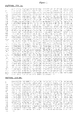
- the other class consists of a fungal gene having two tandemly linked phytase domains (such as Phy7789ab Fig 1, 2-5, 10 ). Both of these domains have high levels of homology to phytases, proteins to date only characterized from bacterial sources.
- the structure of these phytases is homologous to known bacterial phytases ( vide Paver and Jagannathan supra , and Cosgrove, supra ).
- the present inventors discovered the existence of a completely new class of fungal proteins with homology to bacterial phytases.
- the present invention provides an isolated polypeptide selected from the group consisting of:
- polypeptide of the present invention is a double domain phytase comprising a first and second phytase domain,
- said first and second phytase domains are separated by a cysteine-rich region having a sequence which is at least 40, preferably at least 50% more preferably at least 55%, 60%, 65%, 70%, 75%, 80%, 85%, 90%, 95%, 96%, 97%, 98% or 99% identical to the amino acid sequence shown in FIG. 5 .
- the present invention provides an isolated nucleic acid molecule encoding a protein having phytase activity selected from the group consisting of:
- the present invention provides a recombinant nucleic acid molecule comprising a polynucleotide selected from the group consisting of:
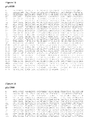
- a further embodiment of the present invention is provided by two new classes of fungal phytases, exemplified by Phy538 and Phy1900. Also included in said class are homologous proteins that are preferably at least 40, preferably at least 50% more preferably at least 55%, 60%, 65%, 70%, 75%, 80%, 85%, 90%, 95%, 96%, 97%, 98% or 99% identical to the amino acid sequence depicted in Fig. 7 or 8 .
- the present invention provides an isolated nucleic acid molecule encoding a protein having phytase activity selected from the group consisting of:
- the present invention provides a recombinant nucleic acid molecule comprising a polynucleotide selected from the group consisting of:
- said recombinant nucleic acid molecule further comprises expression control sequences operably linked to said polynucleotide.
- the present invention provides a vector comprising the recombinant nucleic acid molecule of the invention as described above.
- the present invention provides a method for producing genetically engineered host cells comprising introducing the recombinant nucleic acid molecule of the present invention or the vector of the present invention into a host cell.
- the present invention provides a host cell that is genetically engineered with the recombinant nucleic acid molecule or the vector of the present invention or a host cell that is obtainable by the method of the present invention.
- said host cell is a bacterial, yeast, fungus, plant or animal cell, most preferably a fungus.
- the present invention provides a method for the production of a polypeptide having phytase activity, comprising cultivating the host cell of the present invention under conditions that allow for the expression of the polynucleotide, and in which the polypeptide encoded by said polynucleotide is isolated from the cells and/or the culture medium.
- the present invention provides a polypeptide having phytase activity obtainable by a method of the present invention.
- the present invention provides an antibody specifically recognizing the polypeptide of the present invention.
- the present invention provides a composition comprising a polypeptide of the present invention.
- said composition is a feed, food or an additive for a feed or a food.
- the present invention provides a process for preparing a feed or a food comprising the step of adding a polypeptide of the present invention to the feed or food components.
- the present invention provides the use of a polypeptide of the present invention for liberating inorganic phosphate from phytic acid.
- polypeptide polypeptide
- peptide protein
- proteins are used interchangeably herein to refer to a polymer of amino acid residues.
- the terms apply to amino acid polymers in which one or more amino acid residue is an artificial chemical analogue of a corresponding naturally occurring amino acid, as well as to naturally occurring amino acid polymers.
- the essential nature of such analogues of naturally occurring amino acids is that, when incorporated into a protein, that protein is specifically reactive to antibodies elicited to the same protein but consisting entirely of naturally occurring amino acids.
- polypeptide polypeptide
- peptide protein
- modifications including, but not limited to, glycosylation, lipid attachment, sulfation, gamma-carboxylation of glutamic acid residues, hydroxylation and ADP-ribosylation.
- sequence identity is generally expressed as a percentage and refers to the percent of amino acid residues or nucleotides, as appropriate, that are identical as between two sequences when optimally aligned.
- sequence identity means the sequence identity determined using the well-known Basic Local Alignment Search Tool (BLAST), which is publicly available through the National Cancer Institute/National Institutes of Health (Bethesda, Maryland) and has been described in printed publications (see, e.g., Altschul et al., J. MoI. Biol, 215(3), 403-10 (1990 )).
- BLAST Basic Local Alignment Search Tool
- Preferred parameters for amino acid sequences comparison using BLASTP are gap open 11.0, gap extend 1, Blosum 62 matrix.
- the term "phytase” is defined herein as a protein or polypeptide which is capable of catalysing the hydrolysis of phytate (inositol hexakisphosphate (IP6) or phytic acid and releasing inorganic phosphate.
- the term encompasses both 3-phytase (E.C.3.1.3.8), 4-phytase (also referred to as 6-phytase, E.C.3.1.3.26), or 5-phytase (E. C.3.1.3.72) as classified in accordance with the Nomenclature Committee of the International Union of Biochemistry and Molecular Biology.
- the phytase is 3-phytase (E.C.3.1.3.8), 4-phytase (E.C.3.1.3.26) or 5-phytase (E.C.3.1.3.72).
- the term phytase includes reference to the protein that exhibits peroxidase activity when the vanadate ion is incorporated into the active site of the phytase enzyme. ( Van de Velde et al. 2000, Biotech. Bioeng. 67:87-96 ).
- phytase activity refers to the specific enzyme activity of a phytase to catalysing the hydrolysis of phytate or phytic acid expressed in ⁇ mol substrate/min/mg protein.
- double domain refers to the presence of two related domains in a single protein molecule resulting in an active protein.
- cyste-rich region refers to a protein domain which has an amino acid sequence of about 10-200, preferably about 40-90, more preferably about 50-80 amino acid residues, and even more preferably at least about 60-65 amino acids of which at least about 8-30, preferably about 10-15, and more preferably about 11, 12, 13, or 14 of the amino acids are cysteine residues.
- signal peptide or “signal sequence” as used herein, refers to an amino acid sequence, typically located at the amino terminus of an immature protein or polypeptide (e.g., prior to secretion from a cell and associated processing and cleavage), which directs the secretion of the protein or polypeptide from the cell in which it is produced.
- the signal peptide typically is removed from an immature protein or polypeptide prior to or during secretion and, thus, is not present in the mature, secreted polypeptide.
- recombinant nucleic acid molecule refers to a recombinant DNA molecule or a recombinant RNA molecule.
- a recombinant nucleic acid molecule is any synthetic nucleic acid construct or nucleic acid molecule containing joined nucleic acid molecules from different original sources or and not naturally occurring or attached together and prepared by using recombinant DNA techniques.
- recombinant host cell refers to a host cell strain containing nucleic acid not naturally occurring in that strain and which has been introduced into that strain using recombinant DNA techniques.
- nucleic acid includes reference to a deoxyribonucleotide or ribonucleotide polymer, i.e. a polynucleotide, in either single-or double-stranded form, and unless otherwise limited, encompasses known analogues having the essential nature of natural nucleotides in that they hybridize to single-stranded nucleic acids in a manner similar to naturally occurring nucleotides (e. g., peptide nucleic acids).
- a polynucleotide can be full-length or a subsequence of a native or heterologous structural or regulatory gene. Unless otherwise indicated, the term includes reference to the specified sequence as well as the complementary sequence thereof.
- DNAs or RNAs with backbones modified for stability or for other reasons are "polynucleotides" (a polymeric form of nucleotides, either ribonucleotides or deoxyribonucleotides, double- or single-stranded of any length) as that term is intended herein.
- DNAs or RNAs comprising unusual bases, such as inosine, or modified bases, such as tritylated bases, to name just two examples are polynucleotides as the term is used herein. It will be appreciated that a great variety of modifications have been made to DNA and RNA that serve many useful purposes known to those of skill in the art.
- polynucleotide as it is employed herein embraces such chemically, enzymatically or metabolically modified forms of polynucleotides, as well as the chemical forms of DNA and RNA characteristic of viruses and cells, including among other things, simple and complex cells.
- nucleic acid sequence herein that encodes a polypeptide also, by reference to the genetic code, describes every possible silent variation of the nucleic acid.
- conservatively modified variants applies to both amino acid and nucleic acid sequences. With respect to particular nucleic acid sequences, conservatively modified variants refer to those nucleic acids which encode identical or conservatively modified variants of the amino acid sequences due to the degeneracy of the genetic code.
- the term "degeneracy of the genetic code” refers to the fact that a large number of functionally identical nucleic acids encode any given protein. For instance, the codons GCA, GCC, GCG and GCU all encode the amino acid alanine. Thus, at every position where an alanine is specified by a codon, the codon can be altered to any of the corresponding codons described without altering the encoded polypeptide. Such nucleic acid variations are "silent variations" and represent one species of conservatively modified variation.
- gene refers to a nucleic acid sequence containing a template for a nucleic acid polymerase, in eukaryotes, RNA polymerase II. Genes are transcribed into mRNAs that are then translated into protein.
- “Expression” refers to the transcription of a gene into structural RNA (rRNA, tRNA) or messenger RNA (mRNA) with subsequent translation into a protein.
- complementary refers to a sequence of nucleotides which forms a hydrogen-bonded duplex with another sequence of nucleotides according to Watson-Crick base-paring rules.
- complementary base sequence for 5'-AAGGCT-3' is 3'-TTCCGA-5'.
- substantially complementary means that two nucleic acid sequences have at least about 40, preferably about 50% more preferably at least 55%, more preferably about 60%, more preferably about 70%, more preferably about 80%, even more preferably 90%, and most preferably about 98%, sequence complementarity to each other.
- hybridise refers to the process by which single strands of nucleic acid sequences form double-helical segments through hydrogen bonding between complementary nucleotides.
- expression control sequence refers to a nucleic acid sequence that regulates the transcription and translation of a gene to which it is operatively linked.
- An expression control sequence is "operatively linked” to a gene when the expression control sequence controls and regulates the transcription and, where appropriate, translation of the gene.
- operatively linked includes the provision of an appropriate start codon (e.g. ATG), in front of a polypeptide-encoding gene and maintaining the correct reading frame of that gene to permit proper translation of the mRNA.
- operably linked refers to a juxtaposition wherein the components so described are in a relationship permitting them to function in their intended manner.
- a control sequence "operably linked" to another control sequence and/or to a coding sequence is ligated in such a way that transcription and/or expression of the coding sequence is achieved under conditions compatible with the control sequence.
- operably linked means that the nucleic acid sequences being linked are contiguous and, where necessary to join two protein coding regions, contiguous and in the same reading frame.
- vector includes reference to an autosomal expression vector and to an integration vector used for integration into the chromosome.
- expression vector refers to a DNA molecule, linear or circular, that comprises a segment encoding a polypeptide of interest under the control of (i.e., operably linked to) additional nucleic acid segments that provide for its transcription.
- additional segments may include promoter and terminator sequences, and may optionally include one or more origins of replication, one or more selectable markers, an enhancer, a polyadenylation signal, and the like.
- Expression vectors are generally derived from plasmid or viral DNA, or may contain elements of both.
- an expression vector comprises a nucleotide sequence that comprises in the 5' to 3' direction and operably linked: (a) a fungal-recognized transcription and translation initiation region, (b) a coding sequence for a polypeptide of interest, and (c) a fungal-recognized transcription and translation termination region.
- “Plasmid” refers to autonomously replicating extrachromosomal DNA which is not integrated into a microorganism's genome and is usually circular in nature.
- an “integration vector” refers to a DNA molecule, linear or circular, that can be incorporated in a microorganism's genome and provides for stable inheritance of a gene encoding a polypeptide of interest.
- the integration vector generally comprises one or more segments comprising a gene sequence encoding a polypeptide of interest under the control of (i.e., operably linked to) additional nucleic acid segments that provide for its transcription. Such additional segments may include promoter and terminator sequences, and one or more segments that drive the incorporation of the gene of interest into the genome of the target cell, usually by the process of homologous recombination.
- the integration vector will be one which can be transferred into the host cell, but which has a replicon which is nonfunctional in that organism. Integration of the segment comprising the gene of interest may be selected if an appropriate marker is included within that segment.
- Transformation and “transforming”, as used herein, refers to the insertion of an exogenous polynucleotide into a host cell, irrespective of the method used for the insertion, for example, direct uptake, transduction, f-mating or electroporation.
- the exogenous polynucleotide may be maintained as a non-integrated vector, for example, a plasmid, or alternatively, may be integrated into the host cell genome.
- host cell is meant a cell which contains a vector or recombinant nucleic acid molecule and supports the replication and/or expression of the vector or recombinant nucleic acid molecule.
- Host cells may be prokaryotic cells such as E. coli, or eukaryotic cells such as yeast, fungus, plant, insect, amphibian, or mammalian cells.
- host cells are fungal cells.
- fungus or "fungi” includes a wide variety of nucleated, spore-bearing organisms which are devoid of chlorophyll. Examples of fungi include yeasts, mildews, molds, rusts and mushrooms. Preferred fungi in aspects of the present invention are organisms of the genera Aspergillus, Trichoderma, Myceliophtora, Rhizopus, Magnaporthe, Chrysosporium, Gibberella, Phaeosphaeria, Chaetomium , Coprinopsis, Ajellomyces, Penicillium, Thielavia, Corynascus, Agrocybe, Peniophora, Trametes, Laccaria, Ceriphora, Neurospora, Humicola, Talaromyces, Neosartorya.
- isolated or “purified” as used herein refer to a nucleic acid or protein or peptide that is removed from at least one component with which it is naturally associated.
- an isolated nucleic acid can include a vector comprising the nucleic acid.
- Purified as used herein to describe a polypeptide produced by cultivation of a recombinant host cell refers to removing that polypeptide from at least one component with which it is naturally associated in the host cell or culture medium.
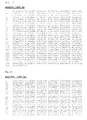
- amino acid sequence of the double domain phytase protein of the present invention is, in a preferred embodiment, the polypeptide as shown in FIG. 2 .
- This double domain protein resembles a phytase with very low levels of sequence homology (sequence identity to Bacillus sequence in US6638746 is 36%) with the phytases presently known.
- sequence identity to Bacillus sequence in US6638746 is 36%) with the phytases presently known.
- the protein exhibits the highest level of sequence homology with Bacillus phytases.
- the finding that genes in the natural fungal genome are present that encode proteins that resemble bacterial-type phytases is a surprising finding. The expression of such bacterial phytase genes in fungi has hitherto not been described.
- phytase domain 1 comprises two phytase domains in a single open reading frame and phytase activity has yet only been observed for the double domain protein. It is, however, expressly noticed that the individual phytase domains are part of the present invention. Although known in bacteria, phytase genes having a double phytase domain structure are poorly studied and have hitherto not been reported in the fungal genome.
- the phytases of the present invention may be expressed in any host cell, but are preferably expressed in fungal cells.
- Phytase producing organisms may not only be obtained by using recombinant techniques and expression vectors.
- DNA fragments may be generated using restriction-endonuclease digestion or PCR the expression of the endogenous gene in an organism may be controlled by methods known in the art, which expression may be altered by any available method for genetic modification, for instance via alteration of the regulation of the expression.
- a polypeptide of the present invention has an amino acid sequence which is at least 40, preferably at least 50% more preferably at least 55%, 60%, 65%, 70%,75%, 80%, 85%, 90%, 95%, 96%, 97%, 98% or 99% identical to the amino acid sequence shown in FIG. 2 wherein said polypeptide exhibits phytase activity.
- the polypeptide can be synthesized or expressed in a host cell and the optionally purified polypeptide can be brought in contact with a phytate or phytic acid substrate under conditions of temperature, salinity, pH and ions and the like that allow for the enzymatic hydrolysis of the substrate by phytases.
- a phytate or phytic acid substrate under conditions of temperature, salinity, pH and ions and the like that allow for the enzymatic hydrolysis of the substrate by phytases.
- a reference enzyme a commercially available bacterial or fungal phytase can be used.
- the hydrolysis of phytate or phytic acid may be determined by measuring the liberation of inorganic phosphates by spectrophotometric, chromatographic or chemical assay methods.
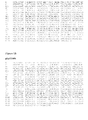
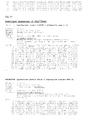
- a polypeptide of the present invention may be a fragment of the polypeptide as shown in FIG. 2 , such as for instance the fragment shown in FIG. 3 or the fragment shown in FIG. 4 , preferably having phytase activity, or a polypeptide of the present invention may be a fragment of the polypeptide having an amino acid sequence which is at least 40, preferably at least 50% more preferably at least 55%, 60%, 65%, 70%,75%, 80%, 85%, 90%, 95%, 96%, 97%, 98% or 99% identical to the amino acid sequence shown in FIG. 2 as described above, having phytase activity.
- Whether a polypeptide or fragment thereof exhibits phytase activity as required by the present invention may be established by using a suitable enzymatic assay.
- a suitable enzymatic assay One suitable assay for the measurement or detection of phytase activity is provided in the Examples below.
- a polypeptide of the present invention is a double domain phytase comprising a first and second phytase domain, wherein said first phytase domain has an amino acid sequence which is at least 40, preferably at least 50% more preferably at least 55%, 60%, 65%, 70%,75%, 80%, 85%, 90%, 95%, 96%, 97%, 98% or 99% identical to the amino acid sequence shown in FIG.
- said second phytase domain has an amino acid sequence which is at least 40, preferably at least 50% more preferably at least 55%, 60%, 65%, 70%,75%, 80%, 85%, 90%, 95%, 96%, 97%, 98% or 99% identical to the amino acid sequence shown in FIG. 4 .
- the double domain phytase comprises two or more copies of one of these domains.
- the first phytase domain as described above is preferably located at the 5' end, while the second phytase domain as described above is preferably located at the 3' end of the gene encoding the phytase of the invention.
- the order in which the domains are ordered is not limiting, the domain ordering may be in principle be AB, BA, AA and BB (wherein A and B denote the first and second domain). Even proteins with more than two domains would be considered covered, and of course any permutation of these domains is intended.
- the present invention also contemplates the use of fusion proteins, accomplished by the use of a gene fusion, for instance with a carrier protein such as glucoamylase in order to increase secretion levels of the phytase protein.
- the first and second phytase domains may be separated by a cysteine-rich region.
- a cysteine-rich region is generally characterized by an amino acid sequence having an unusual high level of cysteine residues, for instance more than 10%, preferably around 20%, of the amino acid residues being cysteine.
- the cysteine-rich region serves as a region connecting and separating the two phytase domains of the double domain phytase of the present invention. This region may suitably be between 10 and 200 amino acid residues in length.
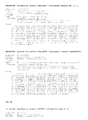
- a fungal double domain phytase of the present invention preferably comprises a cysteine-rich region having a sequence which is at least 40, preferably at least 50% more preferably at least 55%, 60%, 65%, 70%,75%, 80%, 85%, 90%, 95%, 96%, 97%, 98% or 99% identical to the amino acid sequence shown in FIG. 5 . Most preferably the region consists of the amino acid sequence shown in FIG. 5 . It should be noted that all uncharacterized database examples of fungal proteins are proteins with double domains carrying a Cysteine linker. There are very few uncharacterized bacterial proteins from Pseudomonas or Pseudoalteromonas with double domain but without Cysteine domain; e.g. emb
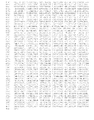
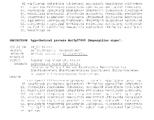
- the present invention comprises two new classes of phytases, characterized by the two exemplary sequences phy0538 and phy1900 (of which the amino acid sequence is given in Figures 7 and 8 respectively, and of which the nucleotide sequence is given in Fig. 17 and 18 , respectively). Both protein sequences are derived from the fungus Magnaporthe grisea . As indicated in the experimental part, these phytases do not resemble the currently known phytases. Further they form, together with the orthologues indicated in Example 1 two separate , new groups of phytases, as is indicated in Figure 6 .
- orthologues listed have a relatively low identity with the sequences of phy538 and phy1900, they can be classified in distinct groups since the sequence identity with the classical phytases and acid phosphatases is even much lower (see fig. 6 ).
- a further embodiment of the present invention is provided by two new classes of fungal phytases, exemplified by Phy538 and Phy1900. Also included in said class are homologous proteins that are preferably at least 40, preferably at least 50% more preferably at least 55%, 60%, 65%, 70%, 75%, 80%, 85%, 90%, 95%, 96%, 97%, 98% or 99% identical to the amino acid sequence depicted in Fig. 7 or 8 .
- the present invention provides an isolated nucleic acid molecule encoding a protein having phytase activity selected from the group consisting of:
- the present invention provides a recombinant nucleic acid molecule comprising a polynucleotide selected from the group consisting of:
- a polypeptide of the present invention may comprise a signal sequence, or may be fused to additional polypeptide sequences, such as for instance to a signal peptide, which signal sequence or peptide may contribute to excretion of the produced polypeptide from the host cell of the invention.
- a preferred signal sequence is the signal sequence as shown in FIGS. 2, 3 and 4 .
- Recombinant nucleic acid molecules of the present invention comprise polynucleotides that encode for polypeptides and phytases of the present invention.
- polynucleotide comprises a nucleotide sequence as disclosed in FIG. 1 .
- This polynucleotide encodes a polypeptide according to FIG. 2 .
- the skilled person will understand that other polypeptides will also encode a functional phytase as described in FIG. 2 , for instance polynucleotides comprising a nucleotide sequence that deviates from the nucleotide sequence shown in FIG. 1 by the degeneracy of the genetic code will also encode a functional enzyme.
- nucleic acid molecules comprising a polynucleotide comprising a nucleotide sequence encoding a polypeptide or phytase of the present invention as defined above are part of the present invention.
- nucleic acid molecules comprising a polynucleotide comprising a nucleotide sequence the complementary strand of which hybridizes to the polynucleotide encodes a polypeptide according to FIG. 2 or deviating therefrom due to the degeneracy of the genetic code.
- nucleic acid molecules comprising a polynucleotide comprising a nucleotide sequence encoding a polypeptide having phytase activity according to the present invention and polynucleotides deviating therefrom by the degeneracy of the genetic code.
- the recombinant nucleic acid molecule of the present invention may further comprise one or more expression control sequences, such as a promoter, a ribosome binding site, a transcription initiation region, a transcription termination region, operably linked to said polynucleotide.
- promoter is a DNA sequence that directs the transcription of a gene. Typically, a promoter is located in the 5'-region of a gene, proximal to the transcriptional start site of a gene. Promoter sequences useful in aspects of the present invention may be constitutive, inducible or repressible. If a promoter is an inducible promoter, then the rate of transcription increases in response to an inducing agent. Preferred promoter sequences are sequences functional in fungi.
- the codon (pair) usage of the polynucleotides encoding the polypeptides and phytases of the present invention may be optimized by using any one of a variety of synthetic gene design software packages, for instance GeneOptimizer® from Geneart AG (Regensburg, Germany) for codon usage optimization or for codon pair usage optimization.
- GeneOptimizer® from Geneart AG (Regensburg, Germany) for codon usage optimization or for codon pair usage optimization.
- Such adaptation of codon usage ensures that the gene, which is essentially of fungal origin, is effectively processed by the projected host cell's transcription and translation machinery. Optimization of codon (pair) usage will generally result in enhanced protein expression in the host cell.
- the recombinant nucleic acid molecule of the present invention may for instance be cloned into a high-copy-number plasmid or other suitable vector system for transformation of and subsequent expression in the host cell.
- Recombinant host cells can be obtained using methods known in the art for providing cells with recombinant nucleic acids. These include transformation, transconjugation, transfection or electroporation of a host cell with a suitable plasmid or vector comprising the nucleic acid construct of interest operationally coupled to a promoter sequence to drive expression.
- Host cells of the invention are preferably transformed with a recombinant nucleic acid molecule of the present invention and may comprise a single but preferably comprise multiple copies of the nucleic acid construct.
- the nucleic acid construct may be maintained episomally and thus comprise a sequence for autonomous replication, such as an ARS sequence. Suitable episomal nucleic acid constructs may e.g.
- the nucleic acid construct is integrated in one or more copies into the genome of the host cell. Integration into the host cell's genome may occur at random by illegitimate recombination but preferably the nucleic acid construct is integrated into the host cell's genome by homologous recombination as is well known in the art of fungal molecular genetics (see e.g. WO 90/14423 , EP-A-0 481 008 , EP-A-0 635 574 and US 6,265,186 ).
- Transformation of host cells with the nucleic acid constructs of the invention and additional genetic modification of the fungal host cells of the invention as described above may be carried out by methods well known in the art. Such methods are e.g. known from standard handbooks, such as Sambrook and Russel (2001) "Molecular Cloning: A Laboratory Manual (3rd edition), Cold Spring Harbor Laboratory, Cold Spring Harbor Laboratory Press , or F. Ausubel et al, eds., "Current protocols in molecular biology", Green Publishing and Wiley Interscience, New York (1987 ). Methods for transformation and genetic modification of fungal host cells are known from e.g. EP-A-0 635 574 , WO 98/46772 , WO 99/60102 and WO 00/37671 .
- Promotors suitable to drive expression of the genes in the hosts of the invention include e.g. promoters from glycolytic genes (e.g. from a glyceraldehyde-3-phosphate dehydrogenase gene), ribosomal protein encoding gene promoters, alcohol dehydrogenase promoters (ADH1, ADH4, and the like), promoters from genes encoding amylo- or cellulolytic enzymes (glucoamylase, TAKA-amylase and cellobiohydrolase).
- glycolytic genes e.g. from a glyceraldehyde-3-phosphate dehydrogenase gene
- ribosomal protein encoding gene promoters e.g. from a glyceraldehyde-3-phosphate dehydrogenase gene
- ADH1, ADH4 alcohol dehydrogenase promoters
- promoters from genes encoding amylo- or cellulolytic enzymes encoding am
- the promoters used in the nucleic acid constructs of the present invention may be modified, if desired, to affect their control characteristics.
- the promoter used in the nucleic acid construct for expression of the genes is homologous to the host cell in which genes are expressed.
- the 3'-end of the coding nucleotide acid sequence(s) preferably is/are operably linked to a transcription terminator sequence.
- the terminator sequence is operable in a host cell of choice. In any case the choice of the terminator is not critical; it may e.g. be from any fungal gene, although terminators may sometimes work if from a non-fungal, eukaryotic, gene.
- the transcription termination sequence further preferably comprises a polyadenylation signal.
- a selectable marker may be present in the nucleic acid construct.
- the term "marker” refers to a gene encoding a trait or a phenotype which permits the selection of, or the screening for, a host cell containing the marker.
- selectable marker genes are available for use in the transformation of fungi. Suitable markers include auxotrophic marker genes involved in amino acid or nucleotide metabolism, such as e.g.
- bidirectional selection markers are used for which both a positive and a negative genetic selection is possible.
- bidirectional markers examples include the pyrG (URA3, pyr4), pyrE (ura5, pyr5) facA and amdS genes. Due to their bidirectionality these markers can be deleted from transformed filamentous fungus while leaving the introduced recombinant DNA molecule in place, in order to obtain fungi that do not contain selectable markers. This essence of this MARKER GENE FREETM transformation technology is disclosed in EP-A-0 635 574 , which is herein incorporated by reference. Of these selectable markers the use of dominant and bidirectional selectable markers such as acetamidase genes like the amdS genes of A. nidulans, A. niger and P. chrysogenum is most preferred. In addition to their bidirectionality these markers provide the advantage that they are dominant selectable markers that, the use of which does not require mutant (auxotrophic) strains, but which can be used directly in wild type strains.
- nucleic acid constructs of the invention include, but are not limited to, one or more leader sequences, enhancers, integration factors, and/or reporter genes, intron sequences, centromers, telomers and/or matrix attachment (MAR) sequences.
- the nucleic acid constructs of the invention may further comprise a sequence for autonomous replication, such as an ARS sequence.
- Suitable episomal nucleic acid constructs may e.g. be based on the yeast 2 ⁇ or pKD1 ( Fleer et al., 1991, Biotechnology 9: 968-975 ) plasmids.
- the nucleic acid construct may comprise sequences for integration, preferably by homologous recombination (see e.g.
- nucleic acid constructs of the invention can be provided in a manner known per se, which generally involves techniques such as restricting and linking nucleic acids/nucleic acid sequences, for which reference is made to the standard handbooks, such as Sambrook and Russel (2001) "Molecular Cloning: A Laboratory Manual (3rd edition), Cold Spring Harbor Laboratory, Cold Spring Harbor Laboratory Press , or F. Ausubel et al, eds., "Current protocols in molecular biology", Green Publishing and Wiley Interscience, New York (1987 ).
- the transformed host cell comprising the recombinant nucleic acid molecule or the vector of the present invention can be used to produce the polypeptides of the present invention.
- the host cell is preferably a fungal cell, such as a yeast cell, but may also be a bacterial cell.
- the polypeptide of the present invention can then be produced by cultivating the host cell under conditions that allow said host cell to replicate and express the polynucleotide encoding the polypeptide of the invention. Such conditions depend on the specific host cell applied, but are generally are well known to those of skill in the art.
- the cultivation may be on solid media, but is preferably in liquid medium, the cells may be freely suspended or may, alternatively, be immobilized to a support.
- the cultivation medium may comprise agents that induce the expression of the polynucleotide in the host cell.
- a method for the production of a polypeptide having phytase activity further comprises the step of isolating the polypeptide from the cells and/or the culture medium, depending on whether the polypeptide is excreted or remains associated with the host cells.
- a suitable signal sequence such as MVASSIGVLLAAVLLGGTSTIVTA or other suitable signal sequence, is incorporated at for instance the N-terminus of the polypeptide, the polypeptide may be transported to the endoplasmatic reticulum and excreted from the cells.
- the polypeptide can be easily purified therefrom by using chromatographic or immunocapture techniques well known in the art. Chromatographic techniques may include liquid chromatography such as HPLC, size exclusion chromatography or affinity chromatography.
- polypeptides of the invention may be isolated form the host cell by disrupting or lysing the host cells, separating the membrane fragments from the cell contents and purifying the polypeptide from either of these using the same techniques as described above. Suitable alternative protein purification techniques are well known to the skilled person and may be employed in methods of the present invention.
- the polypeptide of the present invention may be used for immunization of a mammal and the antibodies raised may in the mammal may be isolated and purified, optionally after producing hybridoma cell lines with isolated spleen cells producing specific antibodies, to produce polyclonal or monoclonal antibodies against the polypeptides of the invention.
- the phytases of the present invention can be incorporated into any composition, preferably an animal feed, a human food product, or can be used as an additive or supplement for a feed or food product, most preferably a feed for non-ruminant animals, most preferably poultry or swine.
- An effective amount of phytase in food or feed is from about 10 to 20,000 FTU/kg; preferably from about 10 to 15,000 FTU/kg, more preferably from about 10 to 10,000 FTU/kg, in particular from about 100 to 5,000 FTU/kg, especially from about 100 to about 2,000 FTU/kg feed or food.
- the analytical method for determining microbial phytase activity and the definition of a phytase unit has been published by Engelen et al. (Journal of AOAC International 77 (3): 760-764 (1994 ).
- phytase In addition to its major application in animal nutrition (including livestock and crustaceans and fish), phytase is also used for processing of human food. Research in this field focuses on better mineral absorption and technical improvement of food processing such as bread making, production of plant protein isolates, corn wet milling and the fractionation of cereal bran. Also applications relating to biodefense and to biomass conversion for fuels development are foreseen.
- the protein may be provided in solution or in dry enzyme preparations.
- a plug-in expression cassette based on the cbh1 promoter and terminator sequences of Chrysosporium lucknowense was synthesized in vivo (GENEART).
- the NcoI and the EcoRV sites were present as cloning sites.
- Hundred fifty base pairs of the 3' end of the cbh1 promoter (from NcoI until ATG) are introduced with the gene of interest.
- Fifteen hundred base pairs upstream the NcoI site a synthetic amdS gene was synthesized, based on the Aspergillus nidulans amdS gene.
- C. lucknowense strains are naturally amdS- negative.
- the amdS gene encodes an amidase, and introduction of this gene into C.
- the phytase genes were cloned with NcoI and EcoRV in the expression vector.
- the expression cassettes were digested with NotII and isolated to obtain E.coli DNA free fragments for transformation of C. lucknowense .
- Another non-limiting example of this invention encompasses these phytases linked to glucoamylase with the KEX processing site to increase the expression and production of these phytases.
- Heerikhuisen Heerikhuisen, M., van den Hondel, C.A.M.J.J. and P.J. Punt (2005) Aspergillus sojae.
- Novel microbial and eukaryotic expression systems (Gerd Gellissen, Ed). Wiley-VCH Verlag, Weinheim. pp. 191-214 ) is described that fusion of heterologous proteins to glucoamylase results in higher production of heterologous proteins.
- glucoamylase phytase fusion protein (glucoamylase phy7789ab) before processing of both KEX-sites is shown in Figure 15 .
- the nucleotide sequence encoding this protein is shown in Figure 16 .
- Exemplary low protease strains include, but are not limited to, a mutant of strain UV18-25, which has been mutated with ultraviolet light and selected for low protease activity, denoted herein as UV18#100.f; a strain denoted UV18#100.f ⁇ pyr5 ⁇ alp1, in which the protease gene alp1 has been selectively disrupted; and a strain denoted UV18#100.f ⁇ pyr5 ⁇ alp1 ⁇ pep4 ⁇ alp2, in which three protease genes, alp1, pep4, and alp2 have been disrupted.
- the protocol is based on a procedure originally used for Aspergillus transformation ( P. Punt, C. van den Hondel, Methods in Enzymology 1992 216:447-457 ). Rich medium (250 ml) was inoculated with 10 6 spores/ml of a Chrysosporium lucknowense protease mutant in a1L Erlenmeyer flask. The culture was grown for 24-36 hours at 35 °C in an air incubator 25 (300 rpm). The mycelium was filtered through a sterile Miracloth(TM) filter (Calbiochem) and washed with ca.
- the protoplasts were filtered through a sterile Myracloth filter and the filter was washed with 1 volume cold STC1700 (1.2 M sorbitol/ 10 mM Tris.HCl pH 7.5/ 50 mM CaCl 2 / 35 mM NaCl).
- the protoplasts were spun down at 2500 rpm for 10 minutes at 4 °C.
- the pellet was resuspended in STC1700 and centrifuged again. After resuspending the pellet in STC1700, the protoplasts were counted.
- STC1700 was added to a final concentration of 2 x 10 8 protoplasts per ml.
- DNA fragment of the phytase expression vector (5-10 ⁇ g) was pipetted into the bottom of a sterile tube and 1 ⁇ l 1M ATA (aurintricarbonic acid) and 100 ⁇ l protoplasts (ca. 2 x 10⁷) were added to the DNA. A minus DNA negative control was included in the experiment. After mixing, the protoplasts were incubated at room temperature for 25 minutes. 1350 ⁇ l PEG6000 (60% PEG/50 mM CaCl 2 / 10 mM Tris pH 7.5) was added drop by drop and mixed. The solution was kept at room temperature for 20 minutes.
- the tubes were then filled with 8 ml STC1700, mixed and centrifuged at 2500 rpm for 10 minutes at 4°C, and the pellet was suspended in 250 ⁇ l STC1700. Aliquots of the sample were used for plating on selective medium. For amdS + selection, plates were prepared containing 1.5% Oxoid agar, 1.2 M sorbitol, 2mM MgSO 4 .7 H 2 O, 1x trace elements, 1% glucose, 1x AspA without nitrate, 15mM CsCl and 10mM acetamide. The plates were incubated at 30 or 35°C.
- the spores and viable protoplasts before and after PEG6000 treatment were counted by plating dilutions in STC1700 on minimal medium plates with nitrate and with or without sorbitol. 100 ⁇ l of 10 -1 , 10 -2 and 10 -3 dilutions were plated on plates without sorbitol to count for spores and 100 ⁇ l of 10 -2 , 10 -3 , 10 -4 and 10 -5 dilutions were plated on plates with sorbitol to count the viable protoplasts.
- the transformant was grown in controlled fed batch fermentation.
- Phytase activity was determined in end-of-fermentation samples as described in Piddington et al at pH5.5 and at pH 7.0 with the addition of 1mMCaCl 2 .
- Phytase pH7 +1mMCaCl 2 U/ml
- Phytase pH 4.5 U/ml
- Parent strain 0.01 0.05 0.01 0.05
- phytase activity from phytase produced by glucoamylase phytase fusions was measured.
Landscapes
- Life Sciences & Earth Sciences (AREA)
- Chemical & Material Sciences (AREA)
- Health & Medical Sciences (AREA)
- Engineering & Computer Science (AREA)
- Zoology (AREA)
- Polymers & Plastics (AREA)
- Genetics & Genomics (AREA)
- Bioinformatics & Cheminformatics (AREA)
- Food Science & Technology (AREA)
- Organic Chemistry (AREA)
- Wood Science & Technology (AREA)
- Microbiology (AREA)
- Animal Husbandry (AREA)
- Biomedical Technology (AREA)
- Biotechnology (AREA)
- Molecular Biology (AREA)
- Medicinal Chemistry (AREA)
- Biochemistry (AREA)
- General Engineering & Computer Science (AREA)
- General Health & Medical Sciences (AREA)
- Nutrition Science (AREA)
- Micro-Organisms Or Cultivation Processes Thereof (AREA)
- Enzymes And Modification Thereof (AREA)
Abstract
The present invention provides novel polypeptides having phytase activity, recombinant nuclei acid molecules and vectors encoding said novel phytases, and to host cells transformed with said recombinant nuclei acid molecules and vectors. Also provided is a method of transforming a suitable host cell with polynucleotides encoding the phytases, expression of the transformed polynucleotides and the use of the expressed phytase in feed as a supplement.
Description
- The present invention is in the field of food and feed supplements. In particular, the present invention relates to phytase enzymes useful as a feed supplement, and to methods of producing said phytase enzymes by genetic engineering techniques.
- Phytic acid (known as inositol hexakisphosphate (IP6), or phytate when in salt form) is the principal storage form of phosphorus in many plant tissues, especially bran and seeds. Phosphorus in phytate form is, in general, not bioavailable to non-ruminant animals because they lack the digestive enzyme phytase, which is required to separate phosphorus from the phytate molecule. On the other hand, ruminants readily utilize phytate because of the phytase produced by rumen microorganisms.
- In most commercial agriculture, non-ruminant livestock such as swine and poultry are fed mainly grains such as soybeans and maize. Because phytate from these grains is unavailable for absorption, the unabsorbed phytate passes through the gastrointestinal tract, elevating the amount of phosphorus in the manure. Excess phosphorus excretion can lead to environmental problems such as eutrophication. The bioavailability of phytate phosphorus can be increased by supplementation of the diet with phytase enzyme.
- Phytases are by far the most industrially relevant feed enzymes due to their nutritional and environment benefits in intensive animal breeding, and applications in fish feed are rapidly developing.
- From the plant kingdom, e.g. a wheat-bran phytase is known (Thomlinson et al., Biochemistry 1 (1962), 166-171). An alkaline phytase from Lilly pollen has been described by Barrientos et al., Plant Physiol.106 (1994), 1489-1495. Amongst the bacteria, phytases have been described which are derived from Bacillus subtilis (Paver and Jagannathan, Journal of Bacteriology 151 (1982), 1102-1108) and Pseudomonas (Cosgrove, Australian Journal of Biological Sciences 23 (1970), 1207-1220).
- There are several descriptions of phytase producing filamentous fungi. In particular, there are several references to phytase producing ascomycetes of the Aspergillus genus such as Aspergillus terreus (Yamada et al., Agric. Biol. Chem. 322 (1986), 1275-1282). Also, the cloning and expression of the phytase gene from Aspergillus niger var. awamori has been described (Piddington et al., Gene 133 (1993), 55-62).
-
EP 0 420 358EP 0 684 313 -
EP 897 010 EP 897 985 WO 99/48380 WO 00/143503 EP 897985 - A phytase derived from Peniophora lycii is disclosed in
WO 98/28408 WO 99/49022 WO 03/066847 - Phytase producing yeasts are also described: For example,
EP 0 699 762 A2 - There is however still need for additional sources of phytase. In addition there is need for phytases having improved properties, such as increased activity.
- The present inventors have now discovered novel fungal phytases dissimilar to previously identified phytases, including two different groups.
- One group including Phy 538 and Phy1900 (
Figure 7, 8 ,13, 14 ) consists of a new subclass of phytases with very low similarity to previously know fungal phytases. - The other class consists of a fungal gene having two tandemly linked phytase domains (such as Phy7789ab
Fig 1, 2-5, 10 ). Both of these domains have high levels of homology to phytases, proteins to date only characterized from bacterial sources. The structure of these phytases is homologous to known bacterial phytases (vide Paver and Jagannathan supra, and Cosgrove, supra). Thus, the present inventors discovered the existence of a completely new class of fungal proteins with homology to bacterial phytases. - In a first aspect, the present invention provides an isolated polypeptide selected from the group consisting of:
- (a) polypeptides having the amino acid sequence as shown in
FIG. 2 ; - (b) polypeptides having an amino acid sequence which is at least 40, preferably at least 50% more preferably at least 55%, 60%, 65%, 70%,75%, 80%, 85%, 90%, 95%, 96%, 97%, 98% or 99% identical to the amino acid sequence shown in
FIG. 2 and having phytase activity; and - (c) fragments of the polypeptide of (a) or (b) having phytase activity.
- In a preferred embodiment of a polypeptide of the present invention, said polypeptide is a double domain phytase comprising a first and second phytase domain,
- said first phytase domain having an amino acid sequence which is at least 40, preferably at least 50% more preferably at least 55%, 60%, 65%, 70%,75%, 80%, 85%, 90%, 95%, 96%, 97%, 98% or 99% identical to the amino acid sequence shown in
FIG. 3 , and - said second phytase domain having an amino acid sequence which is at least 40, preferably at least 50% more preferably at least 55%, 60%, 65%, 70%,75%, 80%, 85%, 90%, 95%, 96%, 97%, 98% or 99% identical to the amino acid sequence shown in
FIG. 4 . - In a further preferred embodiment of a polypeptide of the present invention, said first and second phytase domains are separated by a cysteine-rich region having a sequence which is at least 40, preferably at least 50% more preferably at least 55%, 60%, 65%, 70%, 75%, 80%, 85%, 90%, 95%, 96%, 97%, 98% or 99% identical to the amino acid sequence shown in
FIG. 5 . - In yet another aspect, the present invention provides an isolated nucleic acid molecule encoding a protein having phytase activity selected from the group consisting of:
- a) a nucleic acid molecule having a nucleotide sequence which is at least 50% identical to the nucleotide sequence shown in
Fig. 1 ; - b) a nucleic acid molecule hybridizing under stringent conditions to the nucleotide sequence shown in
Fig. 1 ; - c) a nucleic acid molecule encoding a polypeptide having the amino acid sequence which is at least 50% identical to the amino acid sequence shown in
Fig. 2 and having phytase activity; - d) a nucleic acid molecule encoding a naturally occurring allelic variant of the polypeptide having the amino acid sequence shown in
Fig.2 ; - e) a nucleic acid molecule complementary to the nucleic acid molecules of any one of a) to d).
- In yet another aspect, the present invention provides a recombinant nucleic acid molecule comprising a polynucleotide selected from the group consisting of:
- (a) polynucleotides comprising a nucleotide sequence as disclosed in
FIG. 1 ; - (b) polynucleotides comprising a nucleotide sequence encoding a polypeptide as defined above;
- (c) polynucleotides comprising a nucleotide sequence the complementary strand of which hybridizes to the polynucleotide of (a) or (b), wherein said nucleotide sequence encodes a polypeptide having phytase activity; and
- (d) polynucleotides comprising a nucleotide sequence that deviates from the nucleotide sequence defined in (c) by the degeneracy of the genetic code.
- As indicated above a further embodiment of the present invention is provided by two new classes of fungal phytases, exemplified by Phy538 and Phy1900. Also included in said class are homologous proteins that are preferably at least 40, preferably at least 50% more preferably at least 55%, 60%, 65%, 70%, 75%, 80%, 85%, 90%, 95%, 96%, 97%, 98% or 99% identical to the amino acid sequence depicted in
Fig. 7 or 8 . - In yet another aspect, the present invention provides an isolated nucleic acid molecule encoding a protein having phytase activity selected from the group consisting of:
- a) a nucleic acid molecule having a nucleotide sequence which is at least 40, preferably at least 50% more preferably at least 55%, 60%, 65%, 70%, 75%, 80%, 85%, 90%, 95%, 96%, 97%, 98% or 99% identical to identical to the nucleotide sequence shown in
Fig. 17 or 18 ; - b) a nucleic acid molecule hybridizing under stringent conditions to the nucleotide sequence shown in
Fig. 17 or 18 ; - c) a nucleic acid molecule encoding a polypeptide having the amino acid sequence which is at least 40, preferably at least 50% more preferably at least 55%, 60%, 65%, 70%, 75%, 80%, 85%, 90%, 95%, 96%, 97%, 98% or 99% identical to identical to the amino acid sequence shown in
Fig. 7 or 8 and having phytase activity; - d) a nucleic acid molecule encoding a naturally occurring allelic variant of the polypeptide having the amino acid sequence shown in
Fig.7 or 8 ; - e) a nucleic acid molecule complementary to the nucleic acid molecules of any one of a) to d).
- In yet another aspect, the present invention provides a recombinant nucleic acid molecule comprising a polynucleotide selected from the group consisting of:
- (a) polynucleotides comprising a nucleotide sequence as disclosed in
FIG. 17 or 18 ; - (b) polynucleotides comprising a nucleotide sequence encoding a polypeptide as defined above;
- (c) polynucleotides comprising a nucleotide sequence the complementary strand of which hybridizes to the polynucleotide of (a) or (b), wherein said nucleotide sequence encodes a polypeptide having phytase activity; and
- (d) polynucleotides comprising a nucleotide sequence that deviates from the nucleotide sequence defined in (c) by the degeneracy of the genetic code.
- In a preferred embodiment of a recombinant nucleic acid molecule of the present invention, said recombinant nucleic acid molecule further comprises expression control sequences operably linked to said polynucleotide.
- In yet another aspect, the present invention provides a vector comprising the recombinant nucleic acid molecule of the invention as described above.
- In yet another aspect, the present invention provides a method for producing genetically engineered host cells comprising introducing the recombinant nucleic acid molecule of the present invention or the vector of the present invention into a host cell.
- In yet another aspect, the present invention provides a host cell that is genetically engineered with the recombinant nucleic acid molecule or the vector of the present invention or a host cell that is obtainable by the method of the present invention.
- In a preferred embodiment, said host cell is a bacterial, yeast, fungus, plant or animal cell, most preferably a fungus.
- In yet another aspect, the present invention provides a method for the production of a polypeptide having phytase activity, comprising cultivating the host cell of the present invention under conditions that allow for the expression of the polynucleotide, and in which the polypeptide encoded by said polynucleotide is isolated from the cells and/or the culture medium.
- In yet another aspect, the present invention provides a polypeptide having phytase activity obtainable by a method of the present invention.
- In yet another aspect, the present invention provides an antibody specifically recognizing the polypeptide of the present invention.
- In yet another aspect, the present invention provides a composition comprising a polypeptide of the present invention. In a preferred embodiment, said composition is a feed, food or an additive for a feed or a food.
- In yet another aspect, the present invention provides a process for preparing a feed or a food comprising the step of adding a polypeptide of the present invention to the feed or food components.
- In yet another aspect, the present invention provides the use of a polypeptide of the present invention for liberating inorganic phosphate from phytic acid.
-
-
Figure 1 shows the complete nucleotide sequence of the ORF encoding the double domain phytase protein of the present invention. Also separately presented are the nucleotide sequences of the two domains. -
Figure 2 shows the complete amino acid sequence of the double domain phytase protein of the present invention encoded by the gene inFig. 1 . -
Figure 3 shows the sequence of the first phytase domain of the double domain phytase protein of the present invention the complete amino acid sequence of which is displayed inFig. 2 . -
Figure 4 shows the sequence of the second phytase domain of the double domain phytase protein of the present invention. -
Figure 5 shows the sequence of the cysteine-rich region that separates first and second phytase domains. -
Figure 6 : Homology tree of selected fungal phytases. The boxed entries are Magnaporthe sequences selected for expression. -
Figure 7 shows the amino acid sequence based on a manually corrected annotation of a DNA sequence of Phy0538 from Magnaporthe grisea. -
Figure 8 shows the amino acid sequence of Phy1900 based on the annotation of a DNA sequence from Magnaporthe grisea. -
Figure 9 . Plug-in expression cassette based on the cbh1 promoter and terminator sequences of Chrysosporium lucknowense. -
Figure 10 . Synthetic expression cassette for phy7789ab. -
Figure 11 . Synthetic expression cassette for phy7789a. -
Figure 12 . Synthetic expression cassette for phy7789b. -
Figure 13 . Synthetic expression cassette for phy0538. -
Figure 14 . Synthetic expression cassette for phy1900. -
Figure 15 . Glucoamylase phytase fusion protein (glucoamylase phy7789ab). -
Figure 16 . DNA sequence coding for the protein ofFig. 15 . -
Figure 17 . Nucleotide sequence of coding region of phy0538. -
Figure 18 . Nucleotide sequence of coding region of phy1900. -
Figure 19 . Homologue protein sequences of phy7789ab -
Figure 20 . Homologue protein sequences of phy0538 - The terms "polypeptide", "peptide" and "protein" are used interchangeably herein to refer to a polymer of amino acid residues. The terms apply to amino acid polymers in which one or more amino acid residue is an artificial chemical analogue of a corresponding naturally occurring amino acid, as well as to naturally occurring amino acid polymers. The essential nature of such analogues of naturally occurring amino acids is that, when incorporated into a protein, that protein is specifically reactive to antibodies elicited to the same protein but consisting entirely of naturally occurring amino acids. The terms "polypeptide", "peptide" and "protein" are also inclusive of modifications including, but not limited to, glycosylation, lipid attachment, sulfation, gamma-carboxylation of glutamic acid residues, hydroxylation and ADP-ribosylation.
- The term "sequence identity," as used herein, is generally expressed as a percentage and refers to the percent of amino acid residues or nucleotides, as appropriate, that are identical as between two sequences when optimally aligned. For the purposes of this invention, sequence identity means the sequence identity determined using the well-known Basic Local Alignment Search Tool (BLAST), which is publicly available through the National Cancer Institute/National Institutes of Health (Bethesda, Maryland) and has been described in printed publications (see, e.g., Altschul et al., J. MoI. Biol, 215(3), 403-10 (1990)). Preferred parameters for amino acid sequences comparison using BLASTP are gap open 11.0, gap extend 1,
Blosum 62 matrix. - The term "phytase" is defined herein as a protein or polypeptide which is capable of catalysing the hydrolysis of phytate (inositol hexakisphosphate (IP6) or phytic acid and releasing inorganic phosphate. The term encompasses both 3-phytase (E.C.3.1.3.8), 4-phytase (also referred to as 6-phytase, E.C.3.1.3.26), or 5-phytase (E. C.3.1.3.72) as classified in accordance with the Nomenclature Committee of the International Union of Biochemistry and Molecular Biology. Preferably, the phytase is 3-phytase (E.C.3.1.3.8), 4-phytase (E.C.3.1.3.26) or 5-phytase (E.C.3.1.3.72). The term phytase includes reference to the protein that exhibits peroxidase activity when the vanadate ion is incorporated into the active site of the phytase enzyme. (Van de Velde et al. 2000, Biotech. Bioeng. 67:87-96).
- The term "phytase activity" as used herein, refers to the specific enzyme activity of a phytase to catalysing the hydrolysis of phytate or phytic acid expressed in µmol substrate/min/mg protein.
- The term "double domain" as used herein, refers to the presence of two related domains in a single protein molecule resulting in an active protein.
- As used herein, the term "cysteine-rich region" refers to a protein domain which has an amino acid sequence of about 10-200, preferably about 40-90, more preferably about 50-80 amino acid residues, and even more preferably at least about 60-65 amino acids of which at least about 8-30, preferably about 10-15, and more preferably about 11, 12, 13, or 14 of the amino acids are cysteine residues.
- The term "signal peptide" or "signal sequence" as used herein, refers to an amino acid sequence, typically located at the amino terminus of an immature protein or polypeptide (e.g., prior to secretion from a cell and associated processing and cleavage), which directs the secretion of the protein or polypeptide from the cell in which it is produced. The signal peptide typically is removed from an immature protein or polypeptide prior to or during secretion and, thus, is not present in the mature, secreted polypeptide.
- As used herein, the term "recombinant nucleic acid molecule" refers to a recombinant DNA molecule or a recombinant RNA molecule. A recombinant nucleic acid molecule is any synthetic nucleic acid construct or nucleic acid molecule containing joined nucleic acid molecules from different original sources or and not naturally occurring or attached together and prepared by using recombinant DNA techniques.
- The term "recombinant host cell" as used herein, refers to a host cell strain containing nucleic acid not naturally occurring in that strain and which has been introduced into that strain using recombinant DNA techniques.
- The term "nucleic acid" as used herein, includes reference to a deoxyribonucleotide or ribonucleotide polymer, i.e. a polynucleotide, in either single-or double-stranded form, and unless otherwise limited, encompasses known analogues having the essential nature of natural nucleotides in that they hybridize to single-stranded nucleic acids in a manner similar to naturally occurring nucleotides (e. g., peptide nucleic acids). A polynucleotide can be full-length or a subsequence of a native or heterologous structural or regulatory gene. Unless otherwise indicated, the term includes reference to the specified sequence as well as the complementary sequence thereof. Thus, DNAs or RNAs with backbones modified for stability or for other reasons are "polynucleotides" (a polymeric form of nucleotides, either ribonucleotides or deoxyribonucleotides, double- or single-stranded of any length) as that term is intended herein. Moreover, DNAs or RNAs comprising unusual bases, such as inosine, or modified bases, such as tritylated bases, to name just two examples, are polynucleotides as the term is used herein. It will be appreciated that a great variety of modifications have been made to DNA and RNA that serve many useful purposes known to those of skill in the art. The term polynucleotide as it is employed herein embraces such chemically, enzymatically or metabolically modified forms of polynucleotides, as well as the chemical forms of DNA and RNA characteristic of viruses and cells, including among other things, simple and complex cells.
- Every nucleic acid sequence herein that encodes a polypeptide also, by reference to the genetic code, describes every possible silent variation of the nucleic acid. The term "conservatively modified variants" applies to both amino acid and nucleic acid sequences. With respect to particular nucleic acid sequences, conservatively modified variants refer to those nucleic acids which encode identical or conservatively modified variants of the amino acid sequences due to the degeneracy of the genetic code.
- The term "degeneracy of the genetic code" refers to the fact that a large number of functionally identical nucleic acids encode any given protein. For instance, the codons GCA, GCC, GCG and GCU all encode the amino acid alanine. Thus, at every position where an alanine is specified by a codon, the codon can be altered to any of the corresponding codons described without altering the encoded polypeptide. Such nucleic acid variations are "silent variations" and represent one species of conservatively modified variation.
- The term "gene", as used herein, refers to a nucleic acid sequence containing a template for a nucleic acid polymerase, in eukaryotes, RNA polymerase II. Genes are transcribed into mRNAs that are then translated into protein.
- "Expression" refers to the transcription of a gene into structural RNA (rRNA, tRNA) or messenger RNA (mRNA) with subsequent translation into a protein.
- The term "complementary", as used herein, refers to a sequence of nucleotides which forms a hydrogen-bonded duplex with another sequence of nucleotides according to Watson-Crick base-paring rules. For example, the complementary base sequence for 5'-AAGGCT-3' is 3'-TTCCGA-5'. As used herein, "substantially complementary" means that two nucleic acid sequences have at least about 40, preferably about 50% more preferably at least 55%, more preferably about 60%, more preferably about 70%, more preferably about 80%, even more preferably 90%, and most preferably about 98%, sequence complementarity to each other.
- The term "hybridise" refers to the process by which single strands of nucleic acid sequences form double-helical segments through hydrogen bonding between complementary nucleotides.
- As used herein, the term "expression control sequence" refers to a nucleic acid sequence that regulates the transcription and translation of a gene to which it is operatively linked. An expression control sequence is "operatively linked" to a gene when the expression control sequence controls and regulates the transcription and, where appropriate, translation of the gene. The term "operatively linked" includes the provision of an appropriate start codon (e.g. ATG), in front of a polypeptide-encoding gene and maintaining the correct reading frame of that gene to permit proper translation of the mRNA.
- As used herein, the term "operably linked" refers to a juxtaposition wherein the components so described are in a relationship permitting them to function in their intended manner. A control sequence "operably linked" to another control sequence and/or to a coding sequence is ligated in such a way that transcription and/or expression of the coding sequence is achieved under conditions compatible with the control sequence. Generally, operably linked means that the nucleic acid sequences being linked are contiguous and, where necessary to join two protein coding regions, contiguous and in the same reading frame.
- The term "vector" as used herein, includes reference to an autosomal expression vector and to an integration vector used for integration into the chromosome.
- The term "expression vector" refers to a DNA molecule, linear or circular, that comprises a segment encoding a polypeptide of interest under the control of (i.e., operably linked to) additional nucleic acid segments that provide for its transcription. Such additional segments may include promoter and terminator sequences, and may optionally include one or more origins of replication, one or more selectable markers, an enhancer, a polyadenylation signal, and the like. Expression vectors are generally derived from plasmid or viral DNA, or may contain elements of both. In particular an expression vector comprises a nucleotide sequence that comprises in the 5' to 3' direction and operably linked: (a) a fungal-recognized transcription and translation initiation region, (b) a coding sequence for a polypeptide of interest, and (c) a fungal-recognized transcription and translation termination region. "Plasmid" refers to autonomously replicating extrachromosomal DNA which is not integrated into a microorganism's genome and is usually circular in nature.
- An "integration vector" refers to a DNA molecule, linear or circular, that can be incorporated in a microorganism's genome and provides for stable inheritance of a gene encoding a polypeptide of interest. The integration vector generally comprises one or more segments comprising a gene sequence encoding a polypeptide of interest under the control of (i.e., operably linked to) additional nucleic acid segments that provide for its transcription. Such additional segments may include promoter and terminator sequences, and one or more segments that drive the incorporation of the gene of interest into the genome of the target cell, usually by the process of homologous recombination. Typically, the integration vector will be one which can be transferred into the host cell, but which has a replicon which is nonfunctional in that organism. Integration of the segment comprising the gene of interest may be selected if an appropriate marker is included within that segment.
- "Transformation" and "transforming", as used herein, refers to the insertion of an exogenous polynucleotide into a host cell, irrespective of the method used for the insertion, for example, direct uptake, transduction, f-mating or electroporation. The exogenous polynucleotide may be maintained as a non-integrated vector, for example, a plasmid, or alternatively, may be integrated into the host cell genome.
- By "host cell" is meant a cell which contains a vector or recombinant nucleic acid molecule and supports the replication and/or expression of the vector or recombinant nucleic acid molecule. Host cells may be prokaryotic cells such as E. coli, or eukaryotic cells such as yeast, fungus, plant, insect, amphibian, or mammalian cells. Preferably, host cells are fungal cells.
- The term "fungus" or "fungi" includes a wide variety of nucleated, spore-bearing organisms which are devoid of chlorophyll. Examples of fungi include yeasts, mildews, molds, rusts and mushrooms. Preferred fungi in aspects of the present invention are organisms of the genera Aspergillus, Trichoderma, Myceliophtora, Rhizopus, Magnaporthe, Chrysosporium, Gibberella, Phaeosphaeria, Chaetomium , Coprinopsis, Ajellomyces, Penicillium, Thielavia, Corynascus, Agrocybe, Peniophora, Trametes, Laccaria, Ceriphora, Neurospora, Humicola, Talaromyces, Neosartorya.
- The terms "isolated" or "purified" as used herein refer to a nucleic acid or protein or peptide that is removed from at least one component with which it is naturally associated. In the present invention, an isolated nucleic acid can include a vector comprising the nucleic acid. Purified as used herein to describe a polypeptide produced by cultivation of a recombinant host cell refers to removing that polypeptide from at least one component with which it is naturally associated in the host cell or culture medium.
- The amino acid sequence of the double domain phytase protein of the present invention is, in a preferred embodiment, the polypeptide as shown in
FIG. 2 . - This double domain protein resembles a phytase with very low levels of sequence homology (sequence identity to Bacillus sequence in
US6638746 is 36%) with the phytases presently known. Despite being encoded by a fungal gene, the protein exhibits the highest level of sequence homology with Bacillus phytases. The finding that genes in the natural fungal genome are present that encode proteins that resemble bacterial-type phytases is a surprising finding. The expression of such bacterial phytase genes in fungi has hitherto not been described. The gene as presently identified and presented inFIG. 1 , comprises two phytase domains in a single open reading frame and phytase activity has yet only been observed for the double domain protein. It is, however, expressly noticed that the individual phytase domains are part of the present invention. Although known in bacteria, phytase genes having a double phytase domain structure are poorly studied and have hitherto not been reported in the fungal genome. - The phytases of the present invention may be expressed in any host cell, but are preferably expressed in fungal cells.
- Phytase producing organisms may not only be obtained by using recombinant techniques and expression vectors. Alternatively, DNA fragments may be generated using restriction-endonuclease digestion or PCR the expression of the endogenous gene in an organism may be controlled by methods known in the art, which expression may be altered by any available method for genetic modification, for instance via alteration of the regulation of the expression.
- In another preferred embodiment, a polypeptide of the present invention has an amino acid sequence which is at least 40, preferably at least 50% more preferably at least 55%, 60%, 65%, 70%,75%, 80%, 85%, 90%, 95%, 96%, 97%, 98% or 99% identical to the amino acid sequence shown in
FIG. 2 wherein said polypeptide exhibits phytase activity. - The skilled person is well aware how phytase activity can be determined for such polypeptides. For instance, the polypeptide can be synthesized or expressed in a host cell and the optionally purified polypeptide can be brought in contact with a phytate or phytic acid substrate under conditions of temperature, salinity, pH and ions and the like that allow for the enzymatic hydrolysis of the substrate by phytases. As a reference enzyme a commercially available bacterial or fungal phytase can be used. The hydrolysis of phytate or phytic acid may be determined by measuring the liberation of inorganic phosphates by spectrophotometric, chromatographic or chemical assay methods.
- In another preferred embodiment, a polypeptide of the present invention may be a fragment of the polypeptide as shown in
FIG. 2 , such as for instance the fragment shown inFIG. 3 or the fragment shown inFIG. 4 , preferably having phytase activity, or a polypeptide of the present invention may be a fragment of the polypeptide having an amino acid sequence which is at least 40, preferably at least 50% more preferably at least 55%, 60%, 65%, 70%,75%, 80%, 85%, 90%, 95%, 96%, 97%, 98% or 99% identical to the amino acid sequence shown inFIG. 2 as described above, having phytase activity. - Whether a polypeptide or fragment thereof exhibits phytase activity as required by the present invention may be established by using a suitable enzymatic assay. One suitable assay for the measurement or detection of phytase activity is provided in the Examples below.
- In a highly preferred embodiment, a polypeptide of the present invention is a double domain phytase comprising a first and second phytase domain, wherein said first phytase domain has an amino acid sequence which is at least 40, preferably at least 50% more preferably at least 55%, 60%, 65%, 70%,75%, 80%, 85%, 90%, 95%, 96%, 97%, 98% or 99% identical to the amino acid sequence shown in
FIG. 3 , and wherein said second phytase domain has an amino acid sequence which is at least 40, preferably at least 50% more preferably at least 55%, 60%, 65%, 70%,75%, 80%, 85%, 90%, 95%, 96%, 97%, 98% or 99% identical to the amino acid sequence shown inFIG. 4 . Alternatively, the double domain phytase comprises two or more copies of one of these domains. - The first phytase domain as described above is preferably located at the 5' end, while the second phytase domain as described above is preferably located at the 3' end of the gene encoding the phytase of the invention. It should be noted that the order in which the domains are ordered is not limiting, the domain ordering may be in principle be AB, BA, AA and BB (wherein A and B denote the first and second domain). Even proteins with more than two domains would be considered covered, and of course any permutation of these domains is intended.
- The present invention also contemplates the use of fusion proteins, accomplished by the use of a gene fusion, for instance with a carrier protein such as glucoamylase in order to increase secretion levels of the phytase protein.
- The first and second phytase domains may be separated by a cysteine-rich region. Such a region is generally characterized by an amino acid sequence having an unusual high level of cysteine residues, for instance more than 10%, preferably around 20%, of the amino acid residues being cysteine. The cysteine-rich region serves as a region connecting and separating the two phytase domains of the double domain phytase of the present invention. This region may suitably be between 10 and 200 amino acid residues in length. A fungal double domain phytase of the present invention preferably comprises a cysteine-rich region having a sequence which is at least 40, preferably at least 50% more preferably at least 55%, 60%, 65%, 70%,75%, 80%, 85%, 90%, 95%, 96%, 97%, 98% or 99% identical to the amino acid sequence shown in
FIG. 5 . Most preferably the region consists of the amino acid sequence shown inFIG. 5 . It should be noted that all uncharacterized database examples of fungal proteins are proteins with double domains carrying a Cysteine linker. There are very few uncharacterized bacterial proteins from Pseudomonas or Pseudoalteromonas with double domain but without Cysteine domain; e.g. emb|CAI85536.1| putative phytase domain protein [Pseudoalteromonas haloplanhtis]. - In another embodiment the present invention comprises two new classes of phytases, characterized by the two exemplary sequences phy0538 and phy1900 (of which the amino acid sequence is given in
Figures 7 and 8 respectively, and of which the nucleotide sequence is given inFig. 17 and 18 , respectively). Both protein sequences are derived from the fungus Magnaporthe grisea. As indicated in the experimental part, these phytases do not resemble the currently known phytases. Further they form, together with the orthologues indicated in Example 1 two separate , new groups of phytases, as is indicated inFigure 6 . - Although the orthologues listed have a relatively low identity with the sequences of phy538 and phy1900, they can be classified in distinct groups since the sequence identity with the classical phytases and acid phosphatases is even much lower (see
fig. 6 ). - As indicated above a further embodiment of the present invention is provided by two new classes of fungal phytases, exemplified by Phy538 and Phy1900. Also included in said class are homologous proteins that are preferably at least 40, preferably at least 50% more preferably at least 55%, 60%, 65%, 70%, 75%, 80%, 85%, 90%, 95%, 96%, 97%, 98% or 99% identical to the amino acid sequence depicted in
Fig. 7 or 8 . - In yet another aspect, the present invention provides an isolated nucleic acid molecule encoding a protein having phytase activity selected from the group consisting of:
- a) a nucleic acid molecule having a nucleotide sequence which is at least 40, preferably at least 50% more preferably at least 55%, 60%, 65%, 70%, 75%, 80%, 85%, 90%, 95%, 96%, 97%, 98% or 99% identical to identical to the nucleotide sequence shown in
Fig. 17 or 18 ; - b) a nucleic acid molecule hybridizing under stringent conditions to the nucleotide sequence shown in
Fig. 17 or 18 ; - c) a nucleic acid molecule encoding a polypeptide having the amino acid sequence which is at least 40, preferably at least 50% more preferably at least 55%, 60%, 65%, 70%, 75%, 80%, 85%, 90%, 95%, 96%, 97%, 98% or 99% identical to identical to the amino acid sequence shown in
Fig. 7 or 8 and having phytase activity; - d) a nucleic acid molecule encoding a naturally occurring allelic variant of the polypeptide having the amino acid sequence shown in
Fig.7 or 8 ; - e) a nucleic acid molecule complementary to the nucleic acid molecules of any one of a) to d).
- In yet another aspect, the present invention provides a recombinant nucleic acid molecule comprising a polynucleotide selected from the group consisting of:
- (a) polynucleotides comprising a nucleotide sequence as disclosed in
FIG. 17 or 18 ; - (b) polynucleotides comprising a nucleotide sequence encoding a polypeptide as defined above;
- (c) polynucleotides comprising a nucleotide sequence the complementary strand of which hybridizes to the polynucleotide of (a) or (b), wherein said nucleotide sequence encodes a polypeptide having phytase activity; and
- (d) polynucleotides comprising a nucleotide sequence that deviates from the nucleotide sequence defined in (c) by the degeneracy of the genetic code.
- A polypeptide of the present invention may comprise a signal sequence, or may be fused to additional polypeptide sequences, such as for instance to a signal peptide, which signal sequence or peptide may contribute to excretion of the produced polypeptide from the host cell of the invention. A preferred signal sequence is the signal sequence as shown in
FIGS. 2, 3 and 4 . - Recombinant nucleic acid molecules of the present invention comprise polynucleotides that encode for polypeptides and phytases of the present invention.
- One such polynucleotide comprises a nucleotide sequence as disclosed in
FIG. 1 . This polynucleotide encodes a polypeptide according toFIG. 2 . The skilled person will understand that other polypeptides will also encode a functional phytase as described inFIG. 2 , for instance polynucleotides comprising a nucleotide sequence that deviates from the nucleotide sequence shown inFIG. 1 by the degeneracy of the genetic code will also encode a functional enzyme. - In general all recombinant nucleic acid molecules comprising a polynucleotide comprising a nucleotide sequence encoding a polypeptide or phytase of the present invention as defined above are part of the present invention.
- Also part of the present invention are recombinant nucleic acid molecules comprising a polynucleotide comprising a nucleotide sequence the complementary strand of which hybridizes to the polynucleotide encodes a polypeptide according to
FIG. 2 or deviating therefrom due to the degeneracy of the genetic code. - Also part of the present invention are recombinant nucleic acid molecules comprising a polynucleotide comprising a nucleotide sequence encoding a polypeptide having phytase activity according to the present invention and polynucleotides deviating therefrom by the degeneracy of the genetic code.
- The recombinant nucleic acid molecule of the present invention may further comprise one or more expression control sequences, such as a promoter, a ribosome binding site, a transcription initiation region, a transcription termination region, operably linked to said polynucleotide. As used herein "promoter" is a DNA sequence that directs the transcription of a gene. Typically, a promoter is located in the 5'-region of a gene, proximal to the transcriptional start site of a gene. Promoter sequences useful in aspects of the present invention may be constitutive, inducible or repressible. If a promoter is an inducible promoter, then the rate of transcription increases in response to an inducing agent. Preferred promoter sequences are sequences functional in fungi.
- In order to achieve optimal expression in the host cell of interest, such as a fungal cell, the codon (pair) usage of the polynucleotides encoding the polypeptides and phytases of the present invention may be optimized by using any one of a variety of synthetic gene design software packages, for instance GeneOptimizer® from Geneart AG (Regensburg, Germany) for codon usage optimization or for codon pair usage optimization. Such adaptation of codon usage ensures that the gene, which is essentially of fungal origin, is effectively processed by the projected host cell's transcription and translation machinery. Optimization of codon (pair) usage will generally result in enhanced protein expression in the host cell.
- The recombinant nucleic acid molecule of the present invention may for instance be cloned into a high-copy-number plasmid or other suitable vector system for transformation of and subsequent expression in the host cell.
- Recombinant host cells can be obtained using methods known in the art for providing cells with recombinant nucleic acids. These include transformation, transconjugation, transfection or electroporation of a host cell with a suitable plasmid or vector comprising the nucleic acid construct of interest operationally coupled to a promoter sequence to drive expression. Host cells of the invention are preferably transformed with a recombinant nucleic acid molecule of the present invention and may comprise a single but preferably comprise multiple copies of the nucleic acid construct. The nucleic acid construct may be maintained episomally and thus comprise a sequence for autonomous replication, such as an ARS sequence. Suitable episomal nucleic acid constructs may e.g. be based on the yeast 2µ or pKD1 (Fleer et al., 1991, Biotechnology 9: 968-975) plasmids. Preferably, however, the nucleic acid construct is integrated in one or more copies into the genome of the host cell. Integration into the host cell's genome may occur at random by illegitimate recombination but preferably the nucleic acid construct is integrated into the host cell's genome by homologous recombination as is well known in the art of fungal molecular genetics (see e.g.
WO 90/14423 EP- ,A-0 481 008EP-A-0 635 574 andUS 6,265,186 ). - Transformation of host cells with the nucleic acid constructs of the invention and additional genetic modification of the fungal host cells of the invention as described above may be carried out by methods well known in the art. Such methods are e.g. known from standard handbooks, such as Sambrook and Russel (2001) "Molecular Cloning: A Laboratory Manual (3rd edition), Cold Spring Harbor Laboratory, Cold Spring Harbor Laboratory Press, or F. Ausubel et al, eds., "Current protocols in molecular biology", Green Publishing and Wiley Interscience, New York (1987). Methods for transformation and genetic modification of fungal host cells are known from e.g.
EP-A-0 635 574 ,WO 98/46772 WO 99/60102 WO 00/37671 - Promotors suitable to drive expression of the genes in the hosts of the invention include e.g. promoters from glycolytic genes (e.g. from a glyceraldehyde-3-phosphate dehydrogenase gene), ribosomal protein encoding gene promoters, alcohol dehydrogenase promoters (ADH1, ADH4, and the like), promoters from genes encoding amylo- or cellulolytic enzymes (glucoamylase, TAKA-amylase and cellobiohydrolase). Other promoters, both constitutive and inducible and enhancers or upstream activating sequences will be known to those of skill in the art. The promoters used in the nucleic acid constructs of the present invention may be modified, if desired, to affect their control characteristics. Preferably, the promoter used in the nucleic acid construct for expression of the genes is homologous to the host cell in which genes are expressed.
- In the nucleic acid construct, the 3'-end of the coding nucleotide acid sequence(s) preferably is/are operably linked to a transcription terminator sequence. Preferably the terminator sequence is operable in a host cell of choice. In any case the choice of the terminator is not critical; it may e.g. be from any fungal gene, although terminators may sometimes work if from a non-fungal, eukaryotic, gene. The transcription termination sequence further preferably comprises a polyadenylation signal.
- Optionally, a selectable marker may be present in the nucleic acid construct. As used herein, the term "marker" refers to a gene encoding a trait or a phenotype which permits the selection of, or the screening for, a host cell containing the marker. A variety of selectable marker genes are available for use in the transformation of fungi. Suitable markers include auxotrophic marker genes involved in amino acid or nucleotide metabolism, such as e.g. genes encoding ornithine-transcarbamylases (argB), orotidine-5'-decaboxylases (pyrG, URA3) or glutamine-amido-transferase indoleglycerol-phosphate-synthase phosphoribosyl-anthranilate isomerases (trpC), or involved in carbon or nitrogen metabolism, such e.g. niaD or facA, and antibiotic resistance markers such as genes providing resistance against phleomycin, bleomycin or neomycin (G418). Preferably, bidirectional selection markers are used for which both a positive and a negative genetic selection is possible. Examples of such bidirectional markers are the pyrG (URA3, pyr4), pyrE (ura5, pyr5) facA and amdS genes. Due to their bidirectionality these markers can be deleted from transformed filamentous fungus while leaving the introduced recombinant DNA molecule in place, in order to obtain fungi that do not contain selectable markers. This essence of this MARKER GENE FREE™ transformation technology is disclosed in
EP-A-0 635 574 , which is herein incorporated by reference. Of these selectable markers the use of dominant and bidirectional selectable markers such as acetamidase genes like the amdS genes of A. nidulans, A. niger and P. chrysogenum is most preferred. In addition to their bidirectionality these markers provide the advantage that they are dominant selectable markers that, the use of which does not require mutant (auxotrophic) strains, but which can be used directly in wild type strains. - Optional further elements that may be present in the nucleic acid constructs of the invention include, but are not limited to, one or more leader sequences, enhancers, integration factors, and/or reporter genes, intron sequences, centromers, telomers and/or matrix attachment (MAR) sequences. The nucleic acid constructs of the invention may further comprise a sequence for autonomous replication, such as an ARS sequence. Suitable episomal nucleic acid constructs may e.g. be based on the yeast 2µ or pKD1 (Fleer et al., 1991, Biotechnology 9: 968-975) plasmids. Alternatively the nucleic acid construct may comprise sequences for integration, preferably by homologous recombination (see e.g.
WO98/46772 - The transformed host cell comprising the recombinant nucleic acid molecule or the vector of the present invention can be used to produce the polypeptides of the present invention. As stated above, the host cell is preferably a fungal cell, such as a yeast cell, but may also be a bacterial cell. The polypeptide of the present invention can then be produced by cultivating the host cell under conditions that allow said host cell to replicate and express the polynucleotide encoding the polypeptide of the invention. Such conditions depend on the specific host cell applied, but are generally are well known to those of skill in the art. The cultivation may be on solid media, but is preferably in liquid medium, the cells may be freely suspended or may, alternatively, be immobilized to a support. Suitably, the cultivation medium may comprise agents that induce the expression of the polynucleotide in the host cell.
- A method for the production of a polypeptide having phytase activity further comprises the step of isolating the polypeptide from the cells and/or the culture medium, depending on whether the polypeptide is excreted or remains associated with the host cells. When a suitable signal sequence, such as MVASSIGVLLAAVLLGGTSTIVTA or other suitable signal sequence, is incorporated at for instance the N-terminus of the polypeptide, the polypeptide may be transported to the endoplasmatic reticulum and excreted from the cells.
- Once excreted to the culture medium, the polypeptide can be easily purified therefrom by using chromatographic or immunocapture techniques well known in the art. Chromatographic techniques may include liquid chromatography such as HPLC, size exclusion chromatography or affinity chromatography.
- If not excreted to the medium the polypeptides of the invention may be isolated form the host cell by disrupting or lysing the host cells, separating the membrane fragments from the cell contents and purifying the polypeptide from either of these using the same techniques as described above. Suitable alternative protein purification techniques are well known to the skilled person and may be employed in methods of the present invention.
- Once purified, the polypeptide of the present invention may be used for immunization of a mammal and the antibodies raised may in the mammal may be isolated and purified, optionally after producing hybridoma cell lines with isolated spleen cells producing specific antibodies, to produce polyclonal or monoclonal antibodies against the polypeptides of the invention.
- The phytases of the present invention can be incorporated into any composition, preferably an animal feed, a human food product, or can be used as an additive or supplement for a feed or food product, most preferably a feed for non-ruminant animals, most preferably poultry or swine. An effective amount of phytase in food or feed is from about 10 to 20,000 FTU/kg; preferably from about 10 to 15,000 FTU/kg, more preferably from about 10 to 10,000 FTU/kg, in particular from about 100 to 5,000 FTU/kg, especially from about 100 to about 2,000 FTU/kg feed or food. The analytical method for determining microbial phytase activity and the definition of a phytase unit has been published by Engelen et al. (Journal of AOAC International 77 (3): 760-764 (1994).
- In addition to its major application in animal nutrition (including livestock and crustaceans and fish), phytase is also used for processing of human food. Research in this field focuses on better mineral absorption and technical improvement of food processing such as bread making, production of plant protein isolates, corn wet milling and the fractionation of cereal bran. Also applications relating to biodefense and to biomass conversion for fuels development are foreseen. The protein may be provided in solution or in dry enzyme preparations.
- The invention will now be illustrated in more detail by the following non-limiting Examples.
- Genome mining in Magnaporthe grisea with phytase of Aspergillus and of Bacillus resulted in the identification of three new classes of fungal phytases:
- 1) a completely new class of fungal phytases, resembling bacterial phytases. This phytase consist of a double phytase domain fused by a linker region. Further genome mining showed that also the genomes from Giberella zeae (hypothetical protein FG05062.1 Identities = 414/765 (54%), Positives = 508/765 (66%)), Aspergillus nidulans, (hypothetical protein AN4140.2 (Identities = 365/752 (48%), Positives = 486/752 (64%)), Aspergillus terreus (XP_001212017, Identities = 368/757 (48%), Positives = 484/757 (63%), Phaeosphaeria nodorum (hypothetical protein SNOG_10880 Identities = 330/737 (44%), Positives = 429/737 (58%), Chaetomium globosum (hypothetical protein CHGG_04017 Identities = 288/590 (48%), Positives = 371/590 (62%)) and Coprinopsis cinerea (hypothetical protein CC1G_05528, Identities = 301/744 (40%), Positives = 408/744 (54%), carry a similar gene. None of these genes have been previously described. The Magnaporthe gene was manually annotated. This polypeptide sequence is shown in
Figure 2 (phy7789ab). - (2) In addition also two diverse fungal type phytases were identified from Magnaporthe grisea (Phy538 and Phy1900,
Fig 6 ,7 and 8 ). From Phy538, homologous proteins are present in Giberella zeae (hypothetical protein FG00530.1,Identities = 350/549 (63%), Positives = 404/549 (73%), Neurospora crassa, (hypothetical protein NCU03255, Identities = 324/502 (64%), Positives = 381/502 (75%), Botryotinia fuckeliana, (hypothetical protein BC1G_11835, Identities = 302/450 (67%), Positives = 350/450 (77%), Aspergillus terreus (XP_001210909.1, Identities = 263/544 (48%), Positives = 343/544; XP_001211533, Identities = 236/506 (46%), Positives = 320/506 (63%), Aspergillus niger (hypothetical protein An18g01340, Identities = 248/531 (46%), Positives = 334/531 (62%); hypothetical protein An15g07000 , Identities = 240/528 (45%), Positives = 313/528 (59%), Phaeosphaeria nodorum (hypothetical protein SNOG_11624, A.oryzae (BAE55917, Identities = 234/521 (44%), Positives = 312/521 (59%), and Sclerotinia sclerotiorum, (hypothetical protein SS1G_04790, Identities = 181/284 (63%), Positives = 214/284 (75%). See alsoFig. 20 . - Phy1900 is very dissimilar to all known phytases. In blasting the sequence, the highest scoring sequences were present in Sclerotinia sclerotiorum (hypothetical protein SS1G_09959, Identities = 202/468 (43%), Positives = 282/468 (60%), Botryotinia fuckeliana, hypothetical protein BC1G_07284, Identities = 197/442 (44%), Positives = 272/442 (61%), Aspergillus fumigatus, (CAD12029, Identities = 176/436 (40%), Positives = 253/436 (58%), Thielavia heterothallica , (Identities = 187/463 (40%), Positives = 257/463 (55%), Aspergillus niger (Identities = 190/468 (40%), Positives = 269/468 (57%); XP_001401713 , (Identities = 186/467 (39%), Positives = 265/467 (56%)), Aspergillus ficuum, (Identities = 186/467 (39%), Positives = 265/467 (56%)), Aspergillus awamori , P34753 (Identities = 186/466 (39%), Positives = 262/466 (56%)), Aspergillus oryzae, (Identities = 176/463 (38%), Positives = 264/463 (57%),
- From Magnaporthe grisea Phy 538 and Phy 1900 were annotated (
Figure 7 (phy0538) andFigure 8 (phy1900)). - A plug-in expression cassette based on the cbh1 promoter and terminator sequences of Chrysosporium lucknowense was synthesized in vivo (GENEART). The NcoI and the EcoRV sites were present as cloning sites. Hundred fifty base pairs of the 3' end of the cbh1 promoter (from NcoI until ATG) are introduced with the gene of interest. Fifteen hundred base pairs upstream the NcoI site a synthetic amdS gene was synthesized, based on the Aspergillus nidulans amdS gene. C. lucknowense strains are naturally amdS-negative. The amdS gene encodes an amidase, and introduction of this gene into C. lucknowense allows the strain to grow on acetamide as sole nitrogen source. The introns and most of the six-base restriction enzymes were removed in this amdS gene. Fivehundred basepairs of the cbh1 promoter upstream the amdS were also introduced downstream the amdS marker to create a repeat flanked selection marker. This repeat flanked amdS marker can be removed with StuI. The sequence of this expression cassette including the amdS marker is shown in
Figure 9 . - From the polypeptide sequence of the bacillus type phytase phy7789ab three gene versions were designed and synthesized in vivo (GENEART). The codons were optimized for C. lucknowense. The double domain (phy7789ab,
Figure 10 )) and each of the separate mono-domain genes (phy7789a, (Figure 11 ) and phy7789b (Figure 12 )) were made in all cases carrying the native signal sequence. The nucleotide sequence of these three genes can be found inFigure 10, 11 and12 . The genes for phy0538 and phy1900 were designed and synthesized in vivo (GENEART). The codons were optimized for C. lucknowense. The nucleotide sequence of these genes can be found inFigure 13 , respectivelyFigure 14 . To facilitate the construction of the final expression cassette 150 bp of the cbh1 promoter were also synthesized at the 3' of the gene starting with an NcoI site. At the 5' end of the gene an EcoRV site was introduced for cloning purposes. - The phytase genes were cloned with NcoI and EcoRV in the expression vector. The expression cassettes were digested with NotII and isolated to obtain E.coli DNA free fragments for transformation of C. lucknowense.
- Another non-limiting example of this invention encompasses these phytases linked to glucoamylase with the KEX processing site to increase the expression and production of these phytases. In Heerikhuisen (Heerikhuisen, M., van den Hondel, C.A.M.J.J. and P.J. Punt (2005) Aspergillus sojae. In: Production of Recombinant Proteins. Novel microbial and eukaryotic expression systems. (Gerd Gellissen, Ed). Wiley-VCH Verlag, Weinheim. pp. 191-214) is described that fusion of heterologous proteins to glucoamylase results in higher production of heterologous proteins. An example of a glucoamylase phytase fusion protein (glucoamylase phy7789ab) before processing of both KEX-sites is shown in
Figure 15 . The nucleotide sequence encoding this protein is shown inFigure 16 . - For transformation of Chrysoporium lucknowense low protease mutants were used. These protease mutants may be obtained not only by disrupting actual protease encoding genes. Exemplary low protease strains include, but are not limited to, a mutant of strain UV18-25, which has been mutated with ultraviolet light and selected for low protease activity, denoted herein as UV18#100.f; a strain denoted UV18#100.f Δpyr5 Δalp1, in which the protease gene alp1 has been selectively disrupted; and a strain denoted UV18#100.f Δpyr5 Δalp1 Δpep4 Δalp2, in which three protease genes, alp1, pep4, and alp2 have been disrupted.
- The protocol is based on a procedure originally used for Aspergillus transformation (P. Punt, C. van den Hondel, Methods in Enzymology 1992 216:447-457). Rich medium (250 ml) was inoculated with 106 spores/ml of a Chrysosporium lucknowense protease mutant in a1L Erlenmeyer flask. The culture was grown for 24-36 hours at 35 °C in an air incubator 25 (300 rpm). The mycelium was filtered through a sterile Miracloth(TM) filter (Calbiochem) and washed with ca. 100 ml 1700 mOsmol NaCl/CaCl2 (0.27 M CaCl2/ 0.6 M NaCl). The mycelium was weighed and then kept on ice. Caylase(TM) (Cayla) was added (20 mg per gram mycelium) and 1700 mOsmol NaCl/CaCl2 (3.3ml/g mycelium) and the suspension was incubated in a 33 °C air incubator (100 rpm). The protoplasting was followed under the microscope. After 1-3 hours of incubation, most of the mycelium was digested, leaving mostly protoplasts in the microscopic view of the preparation. The protoplasts were filtered through a sterile Myracloth filter and the filter was washed with 1 volume cold STC1700 (1.2 M sorbitol/ 10 mM Tris.HCl pH 7.5/ 50 mM CaCl2/ 35 mM NaCl). The protoplasts were spun down at 2500 rpm for 10 minutes at 4 °C. The pellet was resuspended in STC1700 and centrifuged again. After resuspending the pellet in STC1700, the protoplasts were counted. STC1700 was added to a final concentration of 2 x 10⁸ protoplasts per ml.
- DNA fragment of the phytase expression vector (5-10 µg) was pipetted into the bottom of a sterile tube and 1 µl 1M ATA (aurintricarbonic acid) and 100 µl protoplasts (ca. 2 x 10⁷) were added to the DNA. A minus DNA negative control was included in the experiment. After mixing, the protoplasts were incubated at room temperature for 25 minutes. 1350 µl PEG6000 (60% PEG/50 mM CaCl2/ 10 mM Tris pH 7.5) was added drop by drop and mixed. The solution was kept at room temperature for 20 minutes. The tubes were then filled with 8 ml STC1700, mixed and centrifuged at 2500 rpm for 10 minutes at 4°C, and the pellet was suspended in 250 µl STC1700. Aliquots of the sample were used for plating on selective medium. For amdS + selection, plates were prepared containing 1.5% Oxoid agar, 1.2 M sorbitol, 2mM MgSO4.7 H2O, 1x trace elements, 1% glucose, 1x AspA without nitrate, 15mM CsCl and 10mM acetamide. The plates were incubated at 30 or 35°C.
- The spores and viable protoplasts before and after PEG6000 treatment were counted by plating dilutions in STC1700 on minimal medium plates with nitrate and with or without sorbitol. 100 µl of 10-1, 10-2 and 10-3 dilutions were plated on plates without sorbitol to count for spores and 100 µl of 10-2, 10-3, 10-4 and 10-5 dilutions were plated on plates with sorbitol to count the viable protoplasts.
- Twelve transformants of UV18#100.f Δpyr5 Δalp1 Δpep4 Δalp2 Phy7789ab, were purified. The transformants were grown in 3 ml cultures. Phytase activity (as described in Piddington et al, (1993) Gene 133. 55-62) was measured in these medium samples. Activity could be measured in some medium samples of the transformants. A transformant was selected for controlled fermentation (UV18#100.f Δpyr5 Δalp1 Δpep4 Δalp2 Phy7789ab#3). Southern analysis showed that 2-3 phytase expression copies were integrated in each transformant.
- The transformant was grown in controlled fed batch fermentation. Phytase activity was determined in end-of-fermentation samples as described in Piddington et al at pH5.5 and at pH 7.0 with the addition of 1mMCaCl2.
Phytase pH7 +1mMCaCl2 U/ml Phytase pH 4.5 U/ml Phytase 7789ab UV18#100.f Δalp1Δpep4Δalp2 #87-2 7789ab #3 0,23 0.09 0.20 Parent strain 0.01 0.05 0.01 0.05 - In another non-limiting example of this invention the phytase activity from phytase produced by glucoamylase phytase fusions was measured.


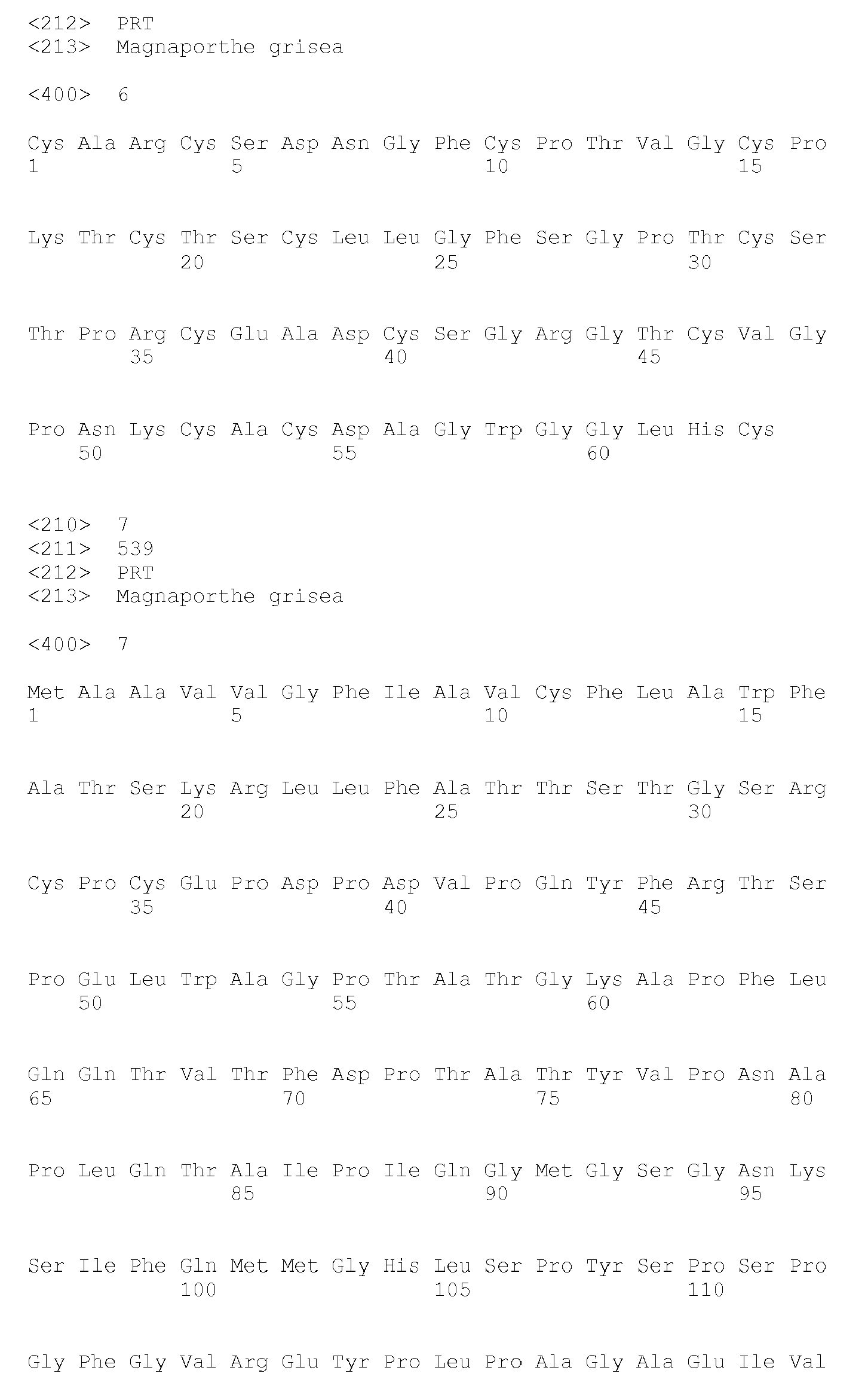


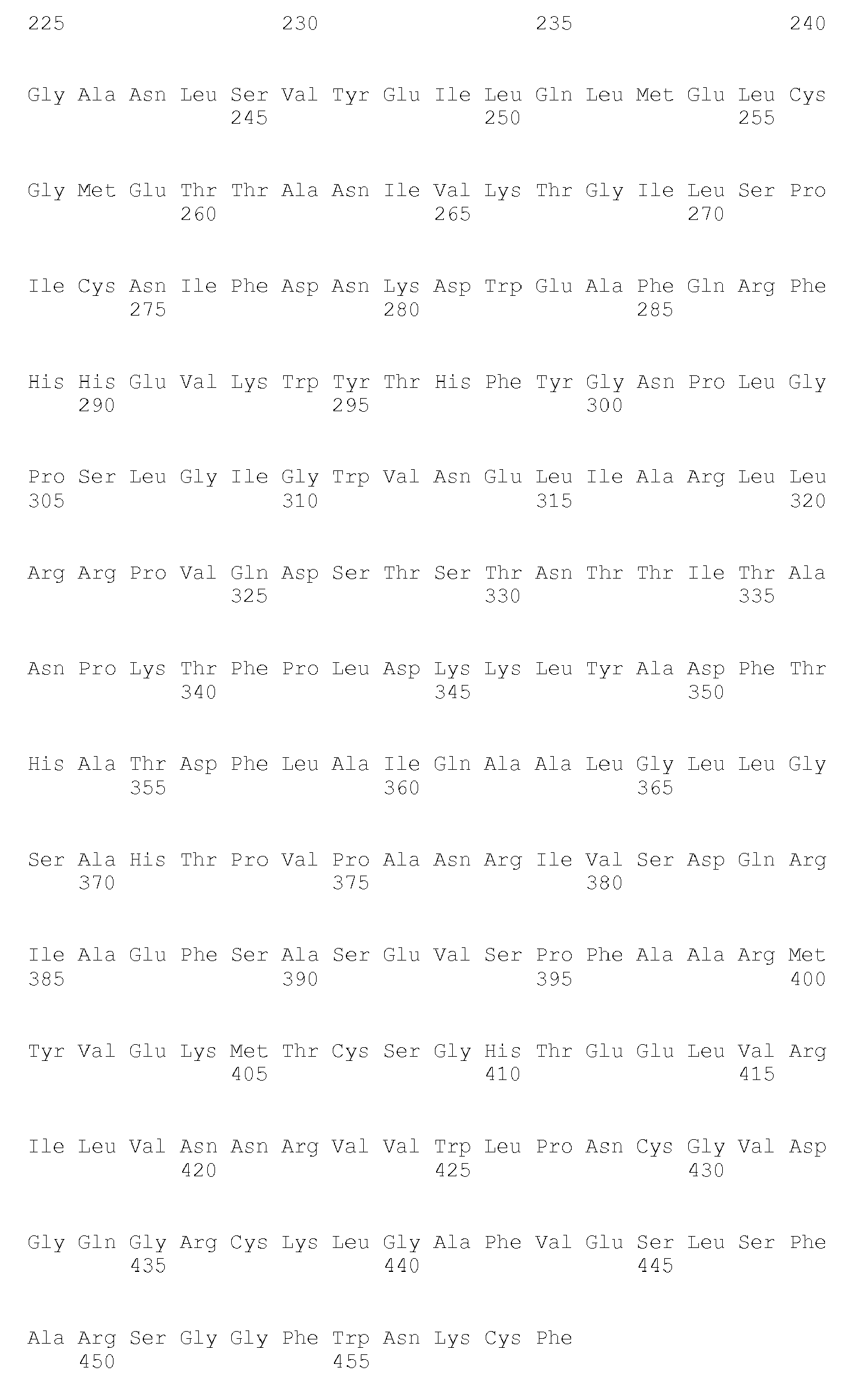


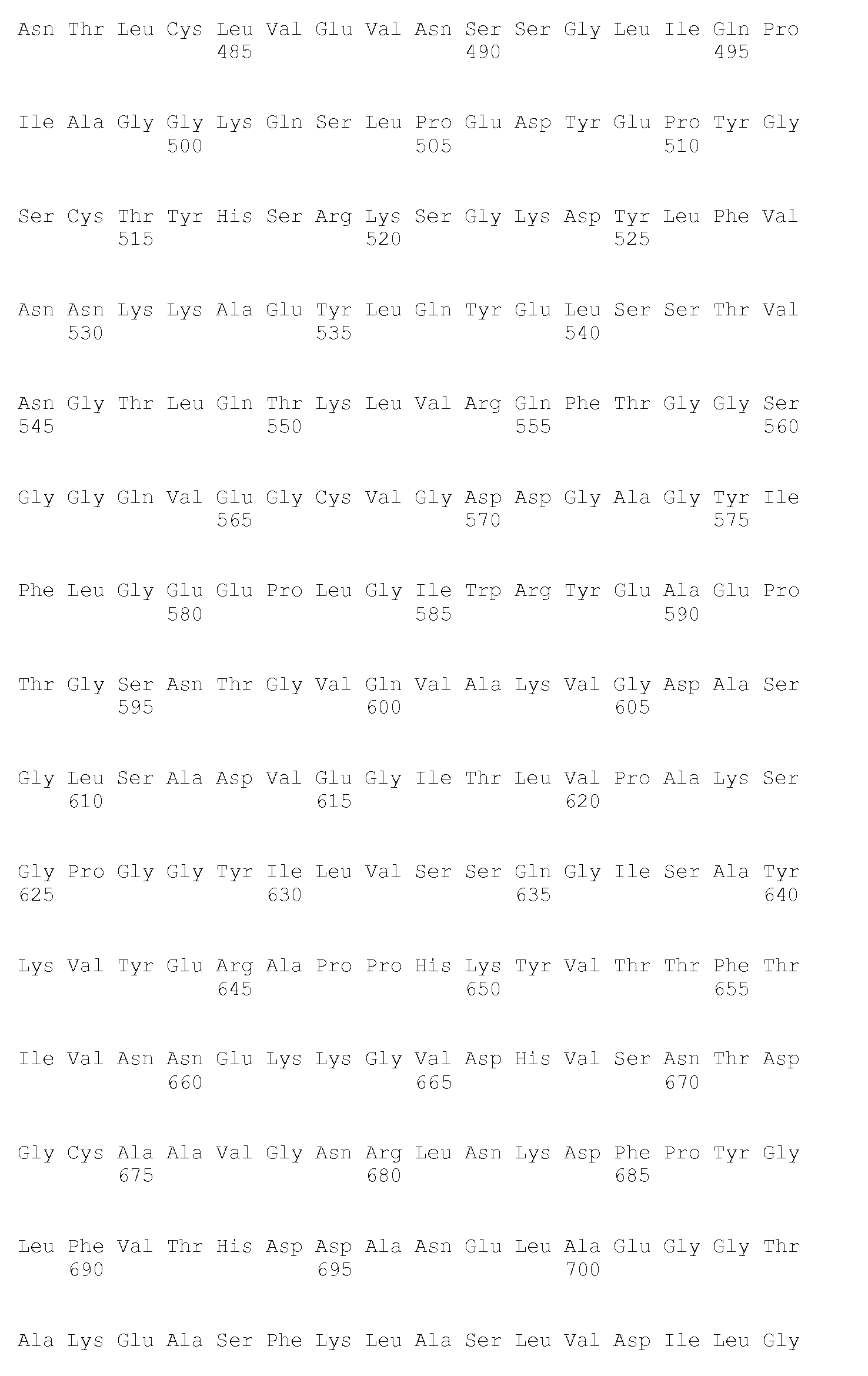
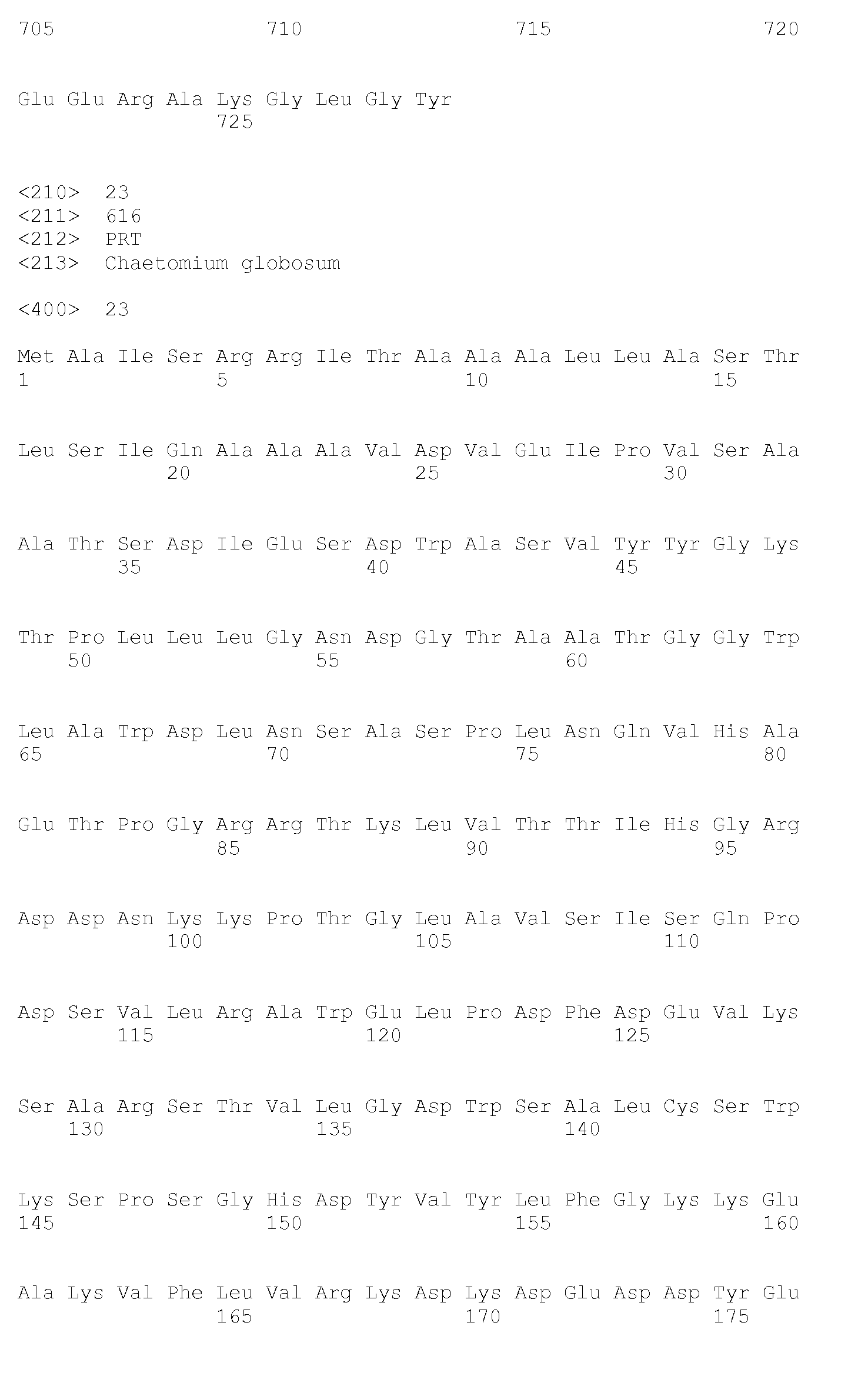


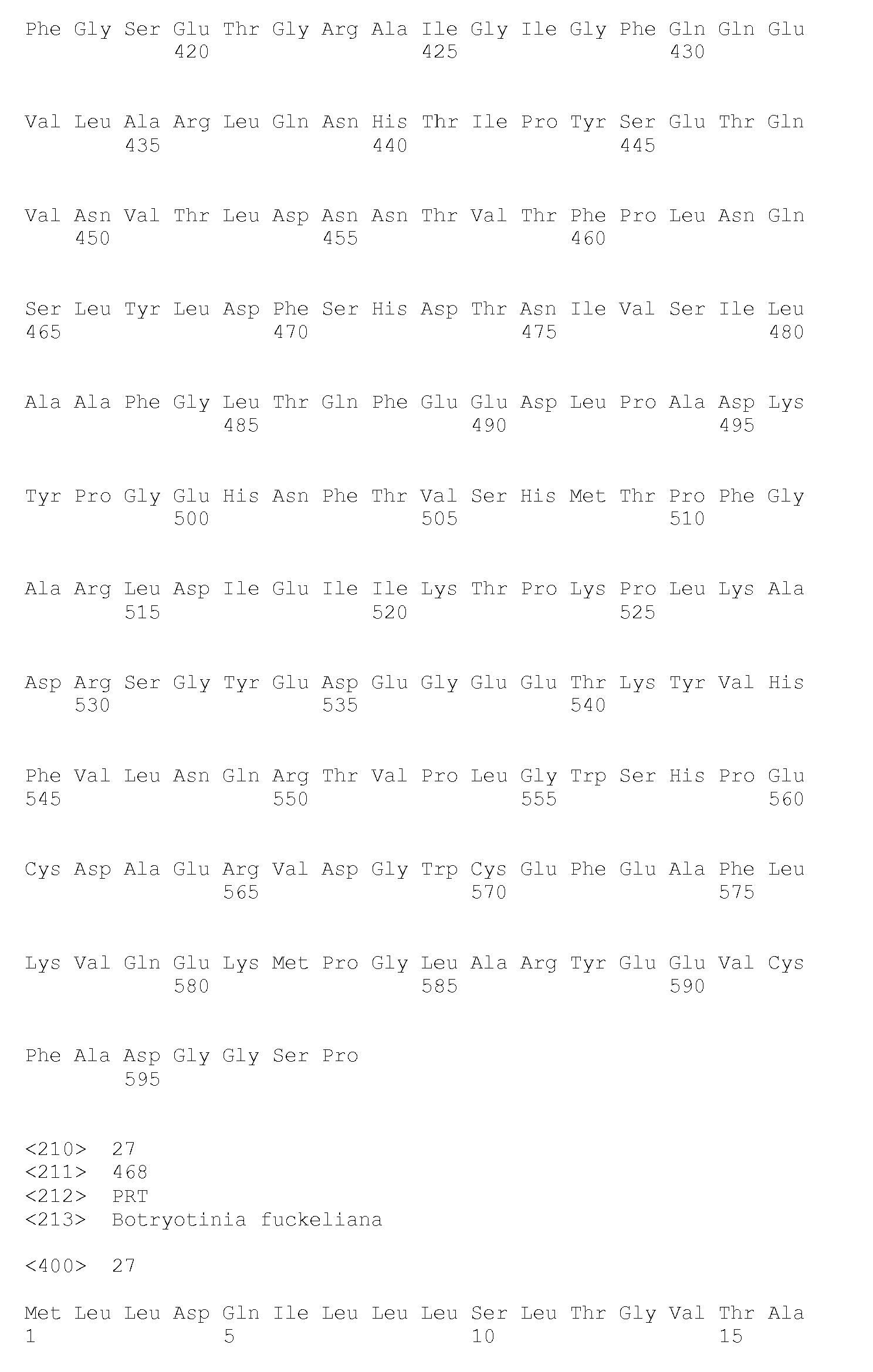


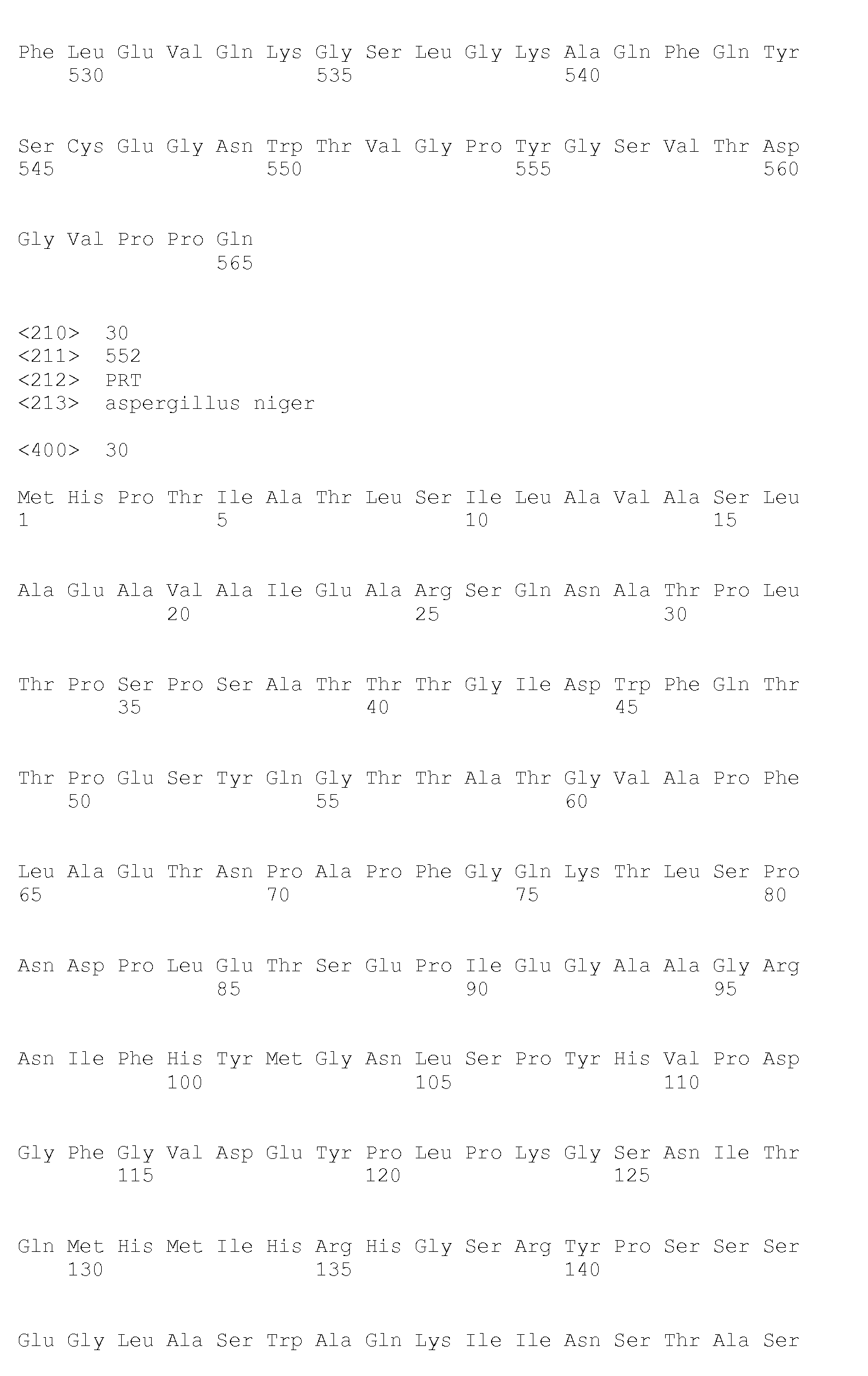


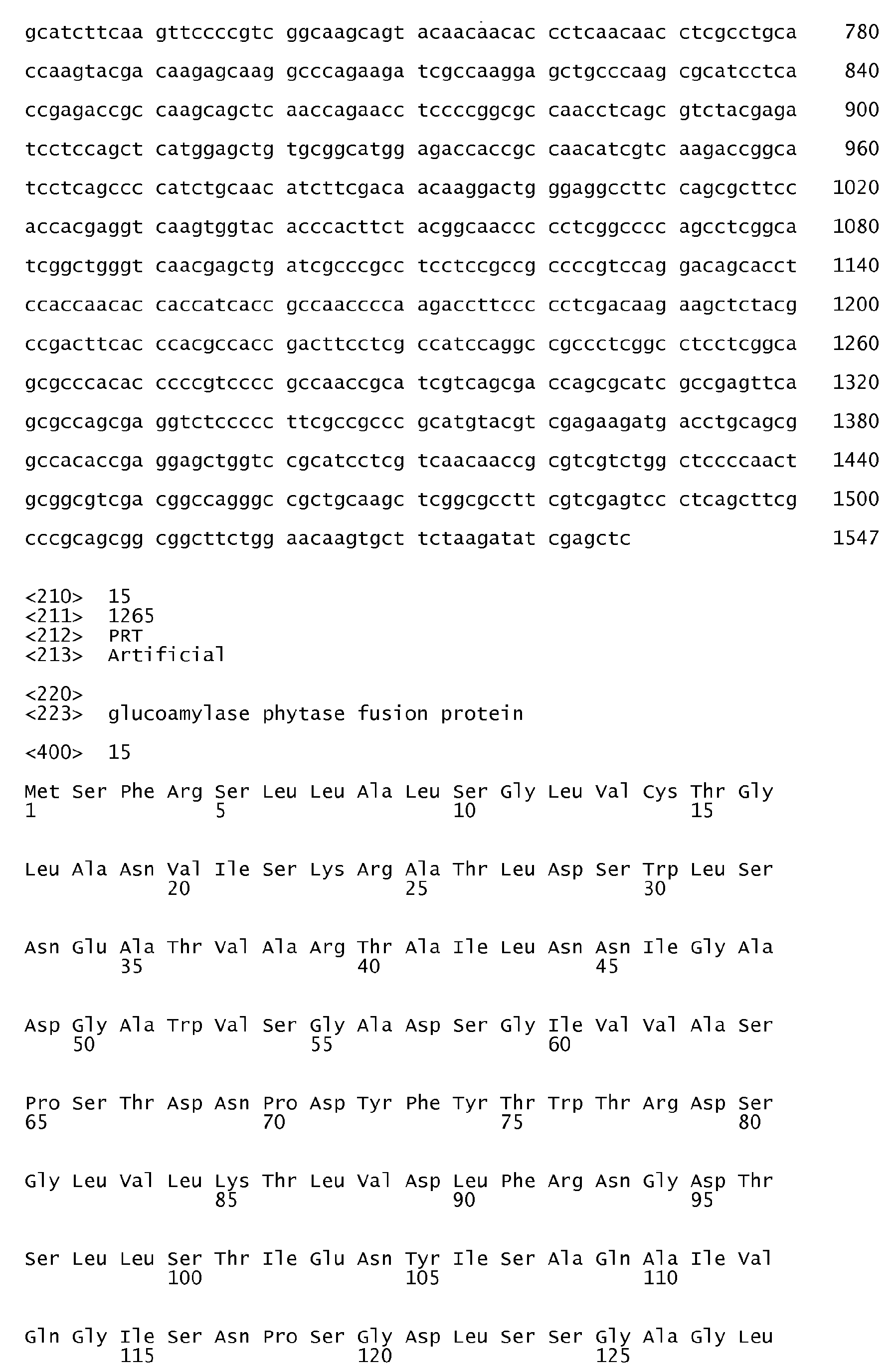


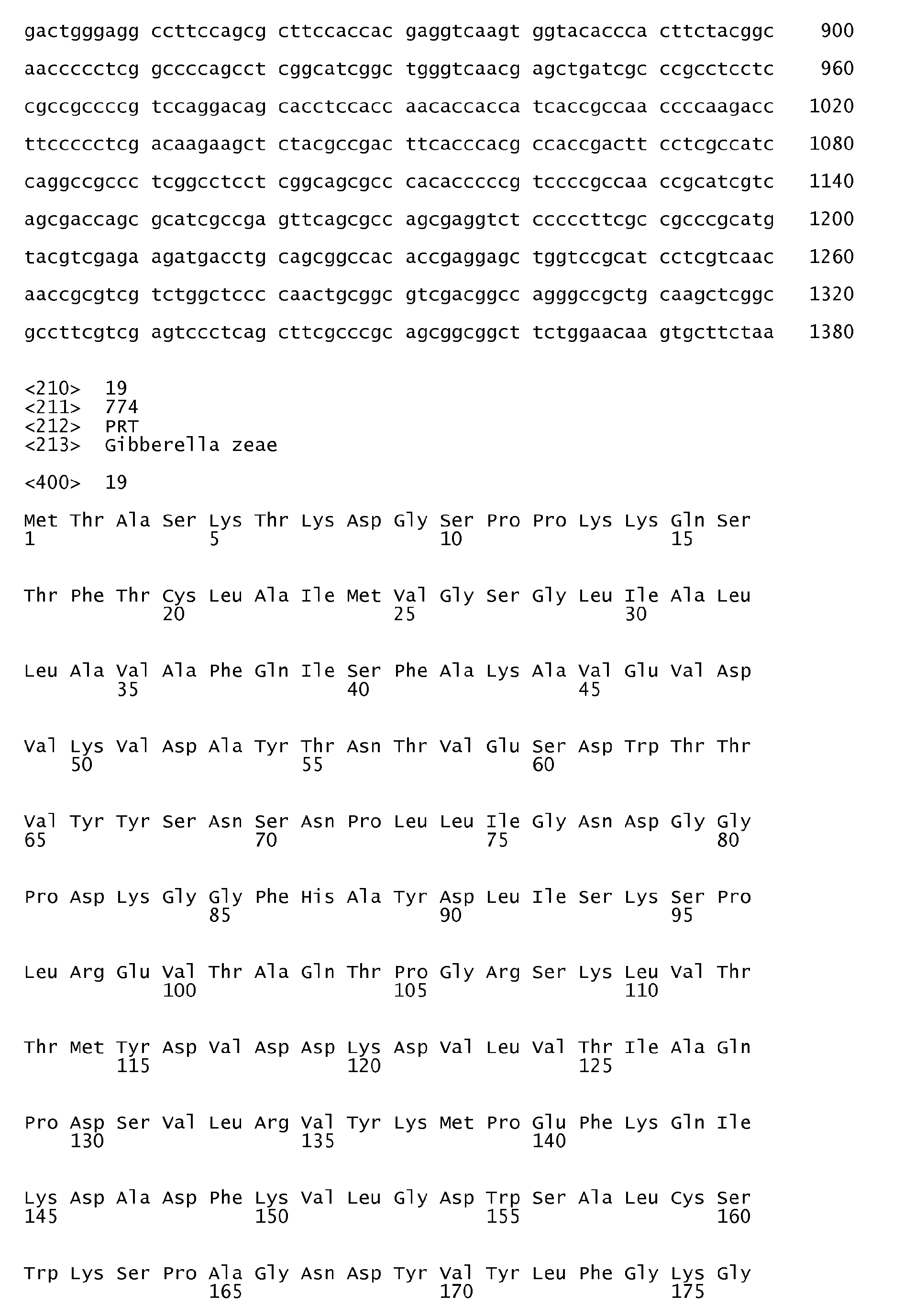
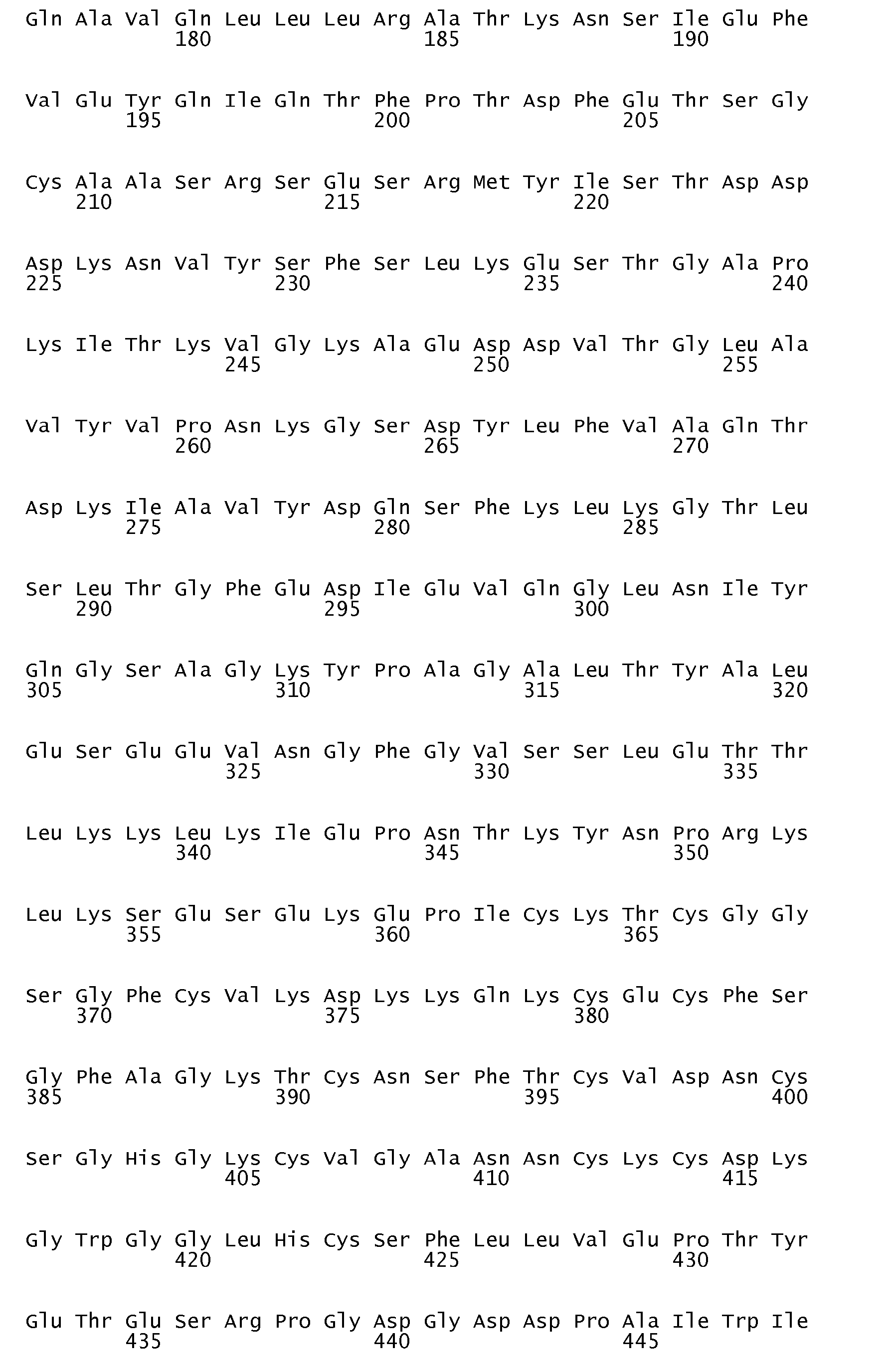


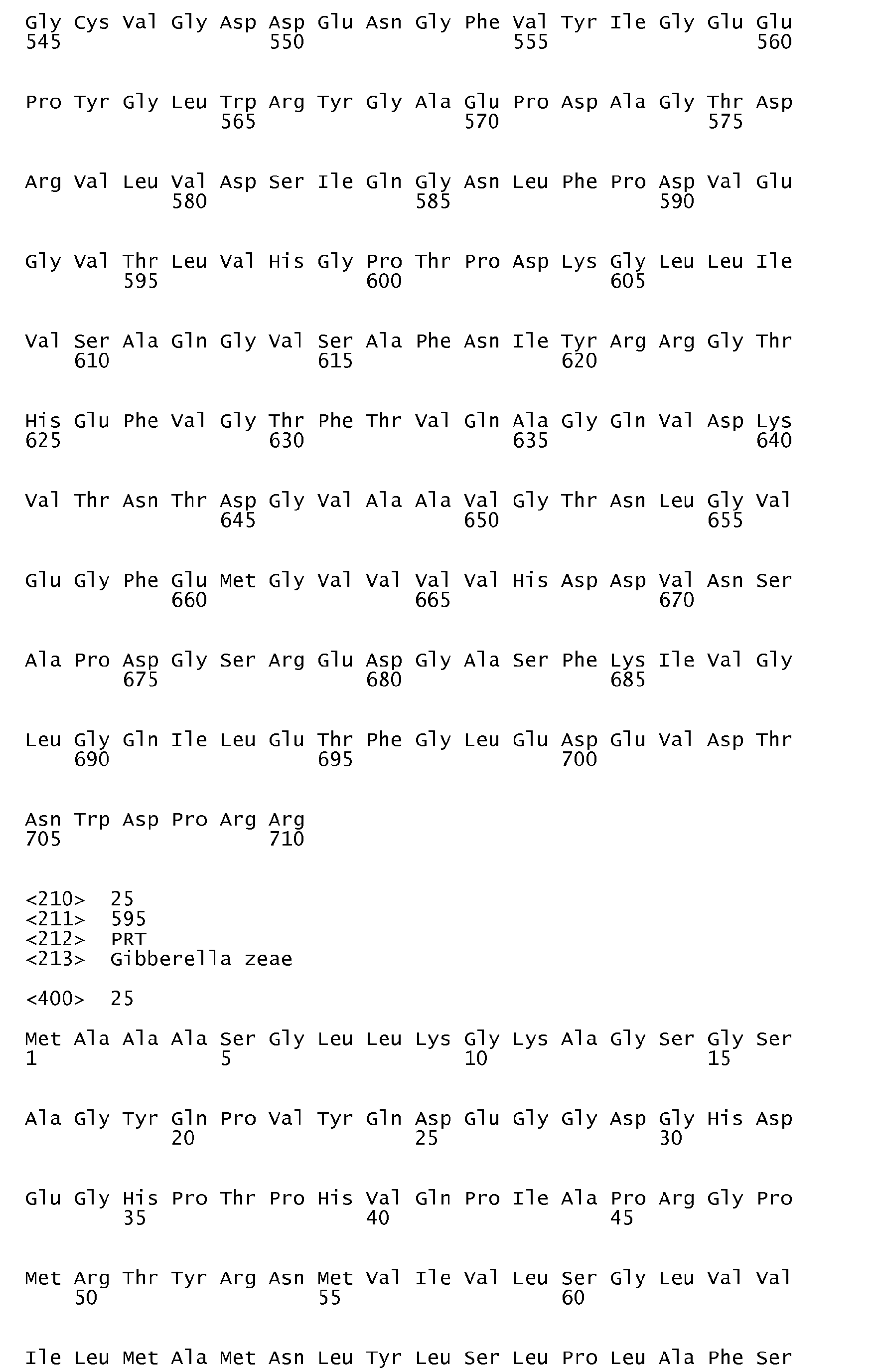


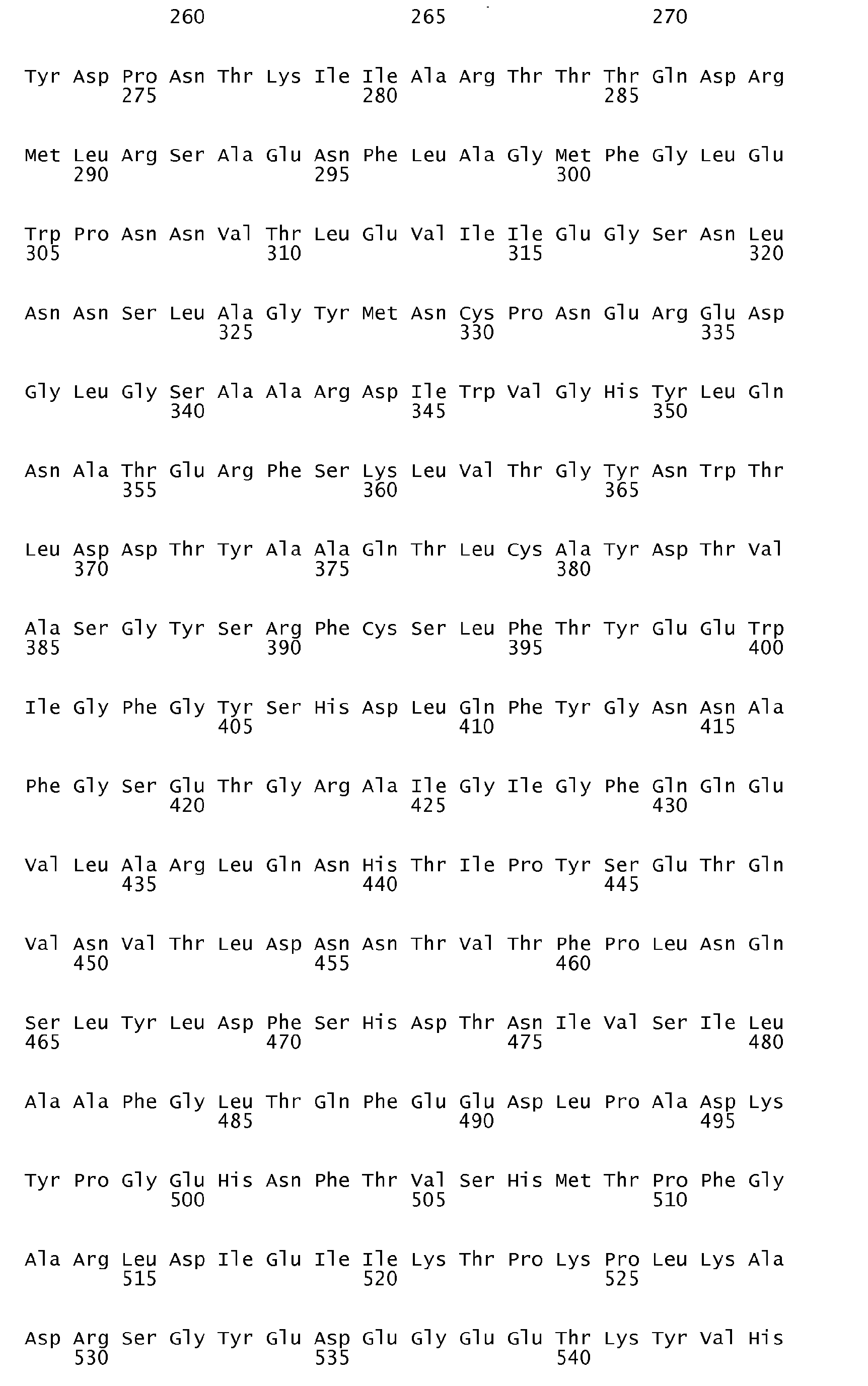


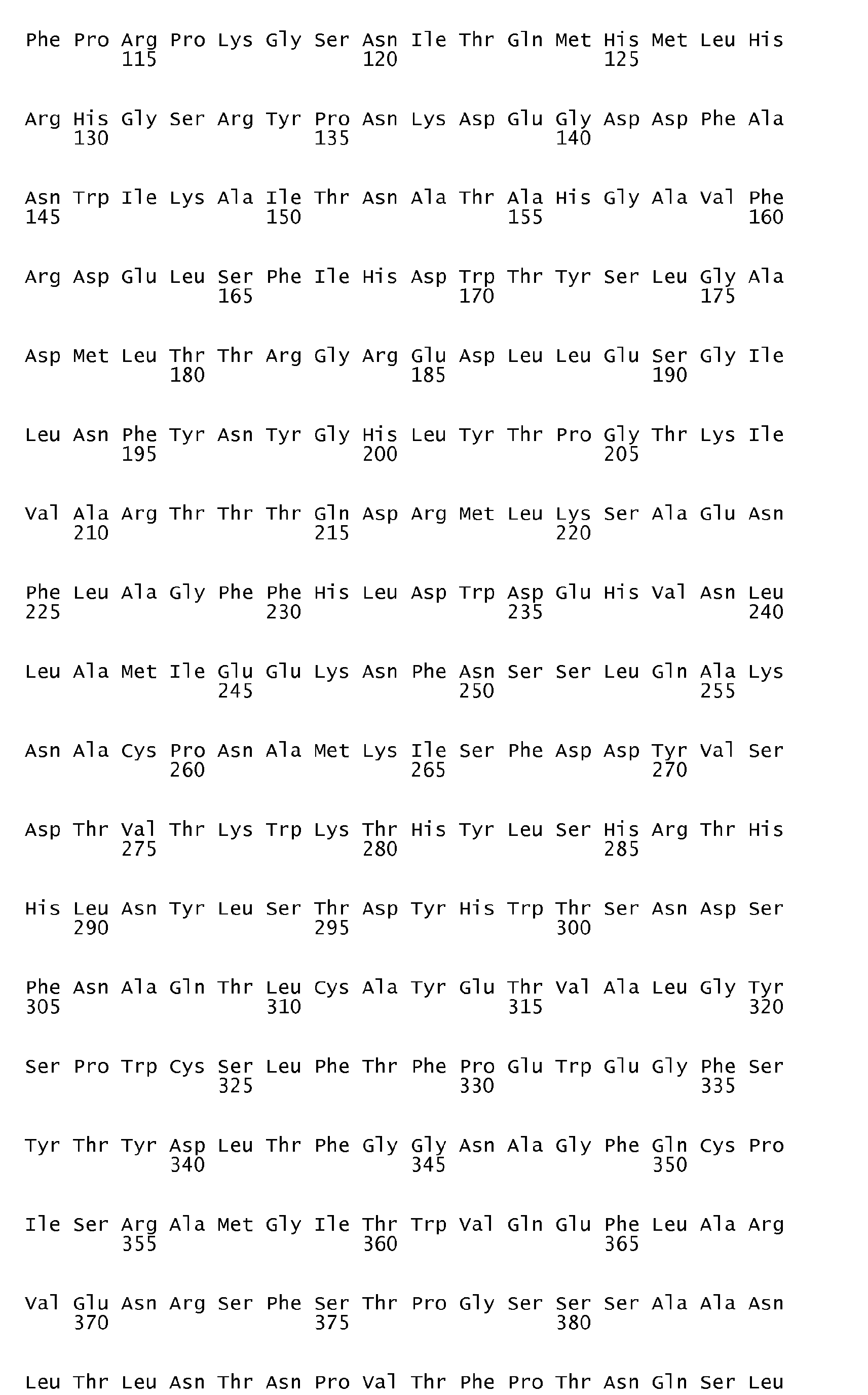


Claims (21)
- An isolated polypeptide selected from the group consisting of:(a) polypeptides having the amino acid sequence as shown in FIG. 2;(b) polypeptides having an amino acid sequence which is at least 40% identical to the amino acid sequence shown in FIG. 2 and having phytase activity;(c) fragments of the polypeptide of (a) or (b) having phytase activity.
- Polypeptide according to claim 1, wherein said polypeptide is a double domain phytase comprising a first and second phytase domain,- said first phytase domain having an amino acid sequence which is at least 40% identical to the amino acid sequence shown in FIG. 3, and- said second phytase domain having an amino acid sequence which is at least 40% identical to the amino acid sequence shown in FIG. 4.
- Polypeptide according to claim 2, wherein said first and second phytase domains are separated by a cysteine-rich region having a sequence which is at least 40% identical to the amino acid sequence shown in FIG. 5.
- An isolated nucleic acid molecule encoding a protein having phytase activity selected from the group consisting of:a) a nucleic acid molecule having a nucleotide sequence which is at least 40% identical to the nucleotide sequence shown in Fig. 1;b) a nucleic acid molecule hybridizing under stringent conditions to the nucleotide sequence shown in Fig. 1;c) a nucleic acid molecule encoding a polypeptide having the amino acid sequence which is at least 40% identical to the amino acid sequence shown in Fig. 2 and having phytase activity;d) a nucleic acid molecule encoding a naturally occurring allelic variant of the polypeptide having the amino acid sequence shown in Fig.2;e) a nucleic acid molecule complementary to the nucleic acid molecules of any one of a) to d).
- A recombinant nucleic acid molecule comprising a polynucleotide selected from the group consisting of:(a) polynucleotides comprising a nucleotide sequence as disclosed in FIG. 1;(b) polynucleotides comprising a nucleotide sequence encoding a polypeptide as defined in any one of claims 1-3;(c) polynucleotides comprising a nucleotide sequence the complementary strand of which hybridizes to the polynucleotide of (a) or (b), wherein said nucleotide sequence encodes a polypeptide having phytase activity; and(d) polynucleotides comprising a nucleotide sequence that deviates from the nucleotide sequence defined in (a), (b) or (c) by the degeneracy of the genetic code.
- An isolated polypeptide selected from the group consisting of:(a) polypeptides having the amino acid sequence as shown in FIG. 7;(b) polypeptides having an amino acid sequence which is at least 40% identical to the amino acid sequence shown in FIG. 7 and having phytase activity;(c) fragments of the polypeptide of (a) or (b) having phytase activity.
- An isolated nucleic acid molecule encoding a protein having phytase activity selected from the group consisting of:a) a nucleic acid molecule having a nucleotide sequence which is at least 40% identical to the nucleotide sequence shown in Fig. 17;b) a nucleic acid molecule hybridizing under stringent conditions to the nucleotide sequence shown in Fig. 17;c) a nucleic acid molecule encoding a polypeptide having the amino acid sequence which is at least 40% identical to the amino acid sequence shown in Fig. 7 and having phytase activity;d) a nucleic acid molecule encoding a naturally occurring allelic variant of the polypeptide having the amino acid sequence shown in Fig. 7;e) a nucleic acid molecule complementary to the nucleic acid molecules of any one of a) to d).
- A recombinant nucleic acid molecule comprising a polynucleotide selected from the group consisting of:(a) polynucleotides comprising a nucleotide sequence as disclosed in FIG. 17;(b) polynucleotides comprising a nucleotide sequence encoding a polypeptide as defined in claim 6;(c) polynucleotides comprising a nucleotide sequence the complementary strand of which hybridizes to the polynucleotide of (a) or (b), wherein said nucleotide sequence encodes a polypeptide having phytase activity; and(d) polynucleotides comprising a nucleotide sequence that deviates from the nucleotide sequence defined in (a), (b) or (c) by the degeneracy of the genetic code.
- An isolated polypeptide selected from the group consisting of:(a) polypeptides having the amino acid sequence as shown in FIG. 8;(b) polypeptides having an amino acid sequence which is at least 50% identical to the amino acid sequence shown in FIG. 8 and having phytase activity;(c) fragments of the polypeptide of (a) or (b) having phytase activity.
- An isolated nucleic acid molecule encoding a protein having phytase activity selected from the group consisting of:a) a nucleic acid molecule having a nucleotide sequence which is at least 50% identical to the nucleotide sequence shown in Fig. 18;b) a nucleic acid molecule hybridizing under stringent conditions to the nucleotide sequence shown in Fig. 18;c) a nucleic acid molecule encoding a polypeptide having the amino acid sequence which is at least 50% identical to the amino acid sequence shown in Fig. 8 and having phytase activity;d) a nucleic acid molecule encoding a naturally occurring allelic variant of the polypeptide having the amino acid sequence shown in Fig.8;e) a nucleic acid molecule complementary to the nucleic acid molecules of any one of a) to d).
- A recombinant nucleic acid molecule comprising a polynucleotide selected from the group consisting of:(a) polynucleotides comprising a nucleotide sequence as disclosed in FIG. 18;(b) polynucleotides comprising a nucleotide sequence encoding a polypeptide as defined in claim 9;(c) polynucleotides comprising a nucleotide sequence the complementary strand of which hybridizes to the polynucleotide of (a) or (b), wherein said nucleotide sequence encodes a polypeptide having phytase activity; and(d) polynucleotides comprising a nucleotide sequence that deviates from the nucleotide sequence defined in (a), (b) or (c) by the degeneracy of the genetic code.
- Recombinant nucleic acid molecule according to claim 4, 8 or 11 further comprising expression control sequences operably linked to said polynucleotide.
- A vector comprising the recombinant nucleic acid molecule of claim 4, 8, 11 or 12.
- A method for producing a recombinant host cell comprising transforming a host cell with the recombinant nucleic acid molecule of claim 4, 8, 11 or 12 or the vector of claim 13.
- A host cell transformed with the recombinant nucleic acid molecule of claim 4, 8, 11 or 12 or the vector of claim 13, preferably wherein said host cell is a bacterial, yeast, fungus, plant or animal cell.
- A method for the production of a polypeptide having phytase activity, comprising cultivating the host cell of claim 15 under conditions allowing for the expression of the polynucleotide and in which the polypeptide encoded by said polynucleotide is isolated from the cells and/or the culture medium.
- A purified polypeptide having phytase activity obtainable by the method of claim 11.
- An antibody specifically recognizing the polypeptide of any one of claims 1-3, 6, 9 or 17.
- A composition comprising a polypeptide of any one of claims 1-3, 6, 9 or 17, preferably wherein said composition is a feed, food or an additive for a feed or a food.
- A process for preparing a feed or a food comprising the step of adding a polypeptide of any one of claims 1-3, 6, 9 or 17 to the feed or food components.
- Use of a polypeptide of any one of claims 1-3, 6, 9 or 17 for liberating inorganic phosphate from phytic acid.
Priority Applications (2)
| Application Number | Priority Date | Filing Date | Title |
|---|---|---|---|
| EP08155927A EP2116136A1 (en) | 2008-05-08 | 2008-05-08 | Novel phytases |
| PCT/NL2009/050246 WO2009136791A2 (en) | 2008-05-08 | 2009-05-08 | Novel phytases |
Applications Claiming Priority (1)
| Application Number | Priority Date | Filing Date | Title |
|---|---|---|---|
| EP08155927A EP2116136A1 (en) | 2008-05-08 | 2008-05-08 | Novel phytases |
Publications (1)
| Publication Number | Publication Date |
|---|---|
| EP2116136A1 true EP2116136A1 (en) | 2009-11-11 |
Family
ID=39587901
Family Applications (1)
| Application Number | Title | Priority Date | Filing Date |
|---|---|---|---|
| EP08155927A Withdrawn EP2116136A1 (en) | 2008-05-08 | 2008-05-08 | Novel phytases |
Country Status (2)
| Country | Link |
|---|---|
| EP (1) | EP2116136A1 (en) |
| WO (1) | WO2009136791A2 (en) |
Cited By (1)
| Publication number | Priority date | Publication date | Assignee | Title |
|---|---|---|---|---|
| WO2023225459A2 (en) | 2022-05-14 | 2023-11-23 | Novozymes A/S | Compositions and methods for preventing, treating, supressing and/or eliminating phytopathogenic infestations and infections |
Citations (18)
| Publication number | Priority date | Publication date | Assignee | Title |
|---|---|---|---|---|
| WO1990014423A1 (en) | 1989-05-18 | 1990-11-29 | The Infergene Company | Microorganism transformation |
| EP0420358A1 (en) | 1989-09-27 | 1991-04-03 | Gist-Brocades N.V. | Cloning and expression of microbial phytase |
| EP0481008A1 (en) | 1989-07-07 | 1992-04-22 | Unilever Plc | Process for preparing a protein by a fungus transformed by multicopy integration of an expression vector |
| EP0635574A1 (en) | 1993-07-23 | 1995-01-25 | Gist-Brocades N.V. | Selection marker gene free recombinant strains, a method for obtaining them and the use of these strains |
| EP0684313A2 (en) | 1994-04-25 | 1995-11-29 | F. Hoffmann-La Roche AG | Polypeptides with phytase activity |
| EP0699762A2 (en) | 1994-07-05 | 1996-03-06 | MITSUI TOATSU CHEMICALS, Inc. | Novel Phytase |
| WO1998028408A1 (en) | 1996-12-20 | 1998-07-02 | Novo Nordisk A/S | Peniophora phytase |
| WO1998046772A2 (en) | 1997-04-11 | 1998-10-22 | Dsm N.V. | Gene conversion as a tool for the construction of recombinant industrial filamentous fungi |
| EP0897010A2 (en) | 1997-03-25 | 1999-02-17 | F. Hoffmann-La Roche Ag | Modified phytases |
| EP0897985A2 (en) | 1997-07-24 | 1999-02-24 | F.Hoffmann-La Roche Ag | Consensus phytases |
| WO1999048380A1 (en) | 1998-03-23 | 1999-09-30 | Novo Nordisk A/S | Thermostable phytases in feed preparation and plant expression |
| WO1999049022A1 (en) | 1998-03-23 | 1999-09-30 | Novo Nordisk A/S | Phytase variants |
| WO1999060102A2 (en) | 1998-05-19 | 1999-11-25 | Dsm N.V. | Improved in vivo production of cephalosporins |
| WO2000037671A2 (en) | 1998-12-22 | 2000-06-29 | Dsm N.V. | Improved in vivo production of cephalosporins |
| WO2000043503A1 (en) | 1999-01-22 | 2000-07-27 | Novozymes A/S | Improved phytases |
| US6265186B1 (en) | 1997-04-11 | 2001-07-24 | Dsm N.V. | Yeast cells comprising at least two copies of a desired gene integrated into the chromosomal genome at more than one non-ribosomal RNA encoding domain, particularly with Kluyveromyces |
| WO2003066847A2 (en) | 2002-02-08 | 2003-08-14 | Novozymes A/S | Phytase variants |
| US6638746B2 (en) | 1996-08-13 | 2003-10-28 | Finnfeeds International Ltd. | Phytase from bacillus subtilis, gene encoding said phytase, method for its production and use |
-
2008
- 2008-05-08 EP EP08155927A patent/EP2116136A1/en not_active Withdrawn
-
2009
- 2009-05-08 WO PCT/NL2009/050246 patent/WO2009136791A2/en not_active Ceased
Patent Citations (19)
| Publication number | Priority date | Publication date | Assignee | Title |
|---|---|---|---|---|
| WO1990014423A1 (en) | 1989-05-18 | 1990-11-29 | The Infergene Company | Microorganism transformation |
| EP0481008A1 (en) | 1989-07-07 | 1992-04-22 | Unilever Plc | Process for preparing a protein by a fungus transformed by multicopy integration of an expression vector |
| EP0420358A1 (en) | 1989-09-27 | 1991-04-03 | Gist-Brocades N.V. | Cloning and expression of microbial phytase |
| EP0779037A1 (en) * | 1989-09-27 | 1997-06-18 | Gist-Brocades N.V. | Cloning and expression of microbial phytase |
| EP0635574A1 (en) | 1993-07-23 | 1995-01-25 | Gist-Brocades N.V. | Selection marker gene free recombinant strains, a method for obtaining them and the use of these strains |
| EP0684313A2 (en) | 1994-04-25 | 1995-11-29 | F. Hoffmann-La Roche AG | Polypeptides with phytase activity |
| EP0699762A2 (en) | 1994-07-05 | 1996-03-06 | MITSUI TOATSU CHEMICALS, Inc. | Novel Phytase |
| US6638746B2 (en) | 1996-08-13 | 2003-10-28 | Finnfeeds International Ltd. | Phytase from bacillus subtilis, gene encoding said phytase, method for its production and use |
| WO1998028408A1 (en) | 1996-12-20 | 1998-07-02 | Novo Nordisk A/S | Peniophora phytase |
| EP0897010A2 (en) | 1997-03-25 | 1999-02-17 | F. Hoffmann-La Roche Ag | Modified phytases |
| WO1998046772A2 (en) | 1997-04-11 | 1998-10-22 | Dsm N.V. | Gene conversion as a tool for the construction of recombinant industrial filamentous fungi |
| US6265186B1 (en) | 1997-04-11 | 2001-07-24 | Dsm N.V. | Yeast cells comprising at least two copies of a desired gene integrated into the chromosomal genome at more than one non-ribosomal RNA encoding domain, particularly with Kluyveromyces |
| EP0897985A2 (en) | 1997-07-24 | 1999-02-24 | F.Hoffmann-La Roche Ag | Consensus phytases |
| WO1999048380A1 (en) | 1998-03-23 | 1999-09-30 | Novo Nordisk A/S | Thermostable phytases in feed preparation and plant expression |
| WO1999049022A1 (en) | 1998-03-23 | 1999-09-30 | Novo Nordisk A/S | Phytase variants |
| WO1999060102A2 (en) | 1998-05-19 | 1999-11-25 | Dsm N.V. | Improved in vivo production of cephalosporins |
| WO2000037671A2 (en) | 1998-12-22 | 2000-06-29 | Dsm N.V. | Improved in vivo production of cephalosporins |
| WO2000043503A1 (en) | 1999-01-22 | 2000-07-27 | Novozymes A/S | Improved phytases |
| WO2003066847A2 (en) | 2002-02-08 | 2003-08-14 | Novozymes A/S | Phytase variants |
Non-Patent Citations (17)
| Title |
|---|
| "Current protocols in molecular biology", 1987, GREEN PUBLISHING AND WILEY INTERSCIENCE |
| ALTSCHUL ET AL., J. MOI. BIOL, vol. 215, no. 3, 1990, pages 403 - 10 |
| BARRIENTOS ET AL., PLANT PHYSIOL., vol. 106, 1994, pages 1489 - 1495 |
| COSGROVE, AUSTRALIAN JOURNAL OF BIOLOGICAL SCIENCES, vol. 23, 1970, pages 1207 - 1220 |
| DATABASE UniProt [online] 15 May 2007 (2007-05-15), "SubName: Full=Putative uncharacterized protein;", XP002498076, retrieved from EBI accession no. UNIPROT:A4QYV5 Database accession no. A4QYV5 * |
| DEAN RALPH A ET AL: "The genome sequence of the rice blast fungus Magnaporthe grisea.", NATURE 21 APR 2005, vol. 434, no. 7036, 21 April 2005 (2005-04-21), pages 980 - 986, XP002498074, ISSN: 1476-4687 * |
| ENGELEN ET AL., JOURNAL OF AOAC INTERNATIONAL, vol. 77, no. 3, 1994, pages 760 - 764 |
| FLEER ET AL., BIOTECHNOLOGY, vol. 9, 1991, pages 968 - 975 |
| HEERIKHUISEN, M.; VAN DEN HONDEL, C.A.M.J.J.; P.J. PUNT: "Production of Recombinant Proteins. Novel microbial and eukaryotic expression systems", 2005, WILEY-VCH VERLAG, pages: 191 - 214 |
| P. PUNT; C. VAN DEN HONDEL, METHODS IN ENZYMOLOGY, vol. 216, 1992, pages 447 - 457 |
| PAVER; JAGANNATHAN, JOURNAL OF BACTERIOLOGY, vol. 151, 1982, pages 1102 - 1108 |
| PIDDINGTON ET AL., GENE, vol. 133, 1993, pages 55 - 62 |
| RALPH A. DEAN ET AL, NATURE SUPPLEMENTARY INFORMATION, 21 April 2005 (2005-04-21), XP002498075, Retrieved from the Internet <URL:http://www.nature.com/nature/journal/v434/n7036/suppinfo/nature03449.html> [retrieved on 20081001] * |
| SAMBROOK; RUSSEL: "Molecular Cloning: A Laboratory Manual", 2001, COLD SPRING HARBOR LABORATORY PRESS |
| THOMLINSON ET AL., BIOCHEMISTRY, vol. 1, 1962, pages 166 - 171 |
| VAN DE VELDE ET AL., BIOTECH. BIOENG., vol. 67, 2000, pages 87 - 96 |
| YAMADA ET AL., AGRIC. BIOL. CHEM., vol. 322, 1986, pages 1275 - 1282 |
Cited By (1)
| Publication number | Priority date | Publication date | Assignee | Title |
|---|---|---|---|---|
| WO2023225459A2 (en) | 2022-05-14 | 2023-11-23 | Novozymes A/S | Compositions and methods for preventing, treating, supressing and/or eliminating phytopathogenic infestations and infections |
Also Published As
| Publication number | Publication date |
|---|---|
| WO2009136791A3 (en) | 2009-12-30 |
| WO2009136791A2 (en) | 2009-11-12 |
Similar Documents
| Publication | Publication Date | Title |
|---|---|---|
| Daba et al. | The ancient koji mold (Aspergillus oryzae) as a modern biotechnological tool | |
| JP3382228B2 (en) | Method for obtaining DNA encoding thermostable phytase | |
| Lima et al. | Lipase production by Aspergillus niger C by submerged fermentation | |
| US11136561B2 (en) | Polypeptide for the enzymatic detoxification of zearalenone, isolated polynucleotide, and associated additive, use and method | |
| CN101230355A (en) | Process for producing fine chemicals by fermentation | |
| KR102152138B1 (en) | An activity-improved xylanase mutant and a method for producing the same | |
| EP2758514B1 (en) | Endogenous dnase activity to reduce dna content | |
| KR20000016576A (en) | Dna sequences encoding phytases of ruminal microorganisms | |
| JP2019503168A (en) | Method for producing a protein in a filamentous fungus with reduced CLR2 activity | |
| JP2019501646A (en) | Method for producing a protein in a filamentous fungus with reduced CLR1 activity | |
| EP2421963B2 (en) | Method of producing a lipolytic enzyme | |
| CN109661402A (en) | The high-level protein production system of fungi | |
| CN111684065B (en) | Random transesterification lipase | |
| EP2062967A1 (en) | Genetically engineered aspergillus | |
| AU784466B2 (en) | Cyclic depsipeptide synthases, genes thereof and mass production system of cyclic depsipeptide | |
| Gómez et al. | Heterologous expression of proteins in Aspergillus | |
| RU2329301C2 (en) | Modified phytases | |
| WO2009136791A2 (en) | Novel phytases | |
| CN112639117A (en) | Method for producing glutathione | |
| Xuan et al. | Cloning and over Expression of an Aspergillus niger XP Phytase Gene (phyA) in Pichia pastoris | |
| RU2785901C1 (en) | Recombinant strain of ogataea haglerorum yeast - producer of escherichia coli phytase | |
| RU2843874C1 (en) | Glucoamylase and methods of using same | |
| Dung et al. | HETEROLOGOUS PHYTASE EXPRESSION IN THE FOOD FILAMENTOUS FUNGUS Aspergillus oryzae USING THE ADDED RICE HUSK CULTIVATION MODEL. | |
| WO2007043330A1 (en) | Process for producing recombinant protein | |
| García et al. | Technological Advances in the Production of Phytases |
Legal Events
| Date | Code | Title | Description |
|---|---|---|---|
| PUAI | Public reference made under article 153(3) epc to a published international application that has entered the european phase |
Free format text: ORIGINAL CODE: 0009012 |
|
| AK | Designated contracting states |
Kind code of ref document: A1 Designated state(s): AT BE BG CH CY CZ DE DK EE ES FI FR GB GR HR HU IE IS IT LI LT LU LV MC MT NL NO PL PT RO SE SI SK TR |
|
| AX | Request for extension of the european patent |
Extension state: AL BA MK RS |
|
| AKX | Designation fees paid | ||
| REG | Reference to a national code |
Ref country code: DE Ref legal event code: 8566 |
|
| STAA | Information on the status of an ep patent application or granted ep patent |
Free format text: STATUS: THE APPLICATION IS DEEMED TO BE WITHDRAWN |
|
| 18D | Application deemed to be withdrawn |
Effective date: 20100512 |