EP2115979B2 - Method and apparatus for selecting pre-coding vectors - Google Patents
Method and apparatus for selecting pre-coding vectors Download PDFInfo
- Publication number
- EP2115979B2 EP2115979B2 EP08719450.2A EP08719450A EP2115979B2 EP 2115979 B2 EP2115979 B2 EP 2115979B2 EP 08719450 A EP08719450 A EP 08719450A EP 2115979 B2 EP2115979 B2 EP 2115979B2
- Authority
- EP
- European Patent Office
- Prior art keywords
- channel status
- status information
- coding
- coding vector
- recommended
- Prior art date
- Legal status (The legal status is an assumption and is not a legal conclusion. Google has not performed a legal analysis and makes no representation as to the accuracy of the status listed.)
- Active
Links
Images



Classifications
-
- H—ELECTRICITY
- H04—ELECTRIC COMMUNICATION TECHNIQUE
- H04B—TRANSMISSION
- H04B7/00—Radio transmission systems, i.e. using radiation field
- H04B7/02—Diversity systems; Multi-antenna system, i.e. transmission or reception using multiple antennas
- H04B7/04—Diversity systems; Multi-antenna system, i.e. transmission or reception using multiple antennas using two or more spaced independent antennas
- H04B7/0413—MIMO systems
- H04B7/0456—Selection of precoding matrices or codebooks, e.g. using matrices antenna weighting
-
- H—ELECTRICITY
- H04—ELECTRIC COMMUNICATION TECHNIQUE
- H04L—TRANSMISSION OF DIGITAL INFORMATION, e.g. TELEGRAPHIC COMMUNICATION
- H04L25/00—Baseband systems
- H04L25/02—Details ; arrangements for supplying electrical power along data transmission lines
- H04L25/03—Shaping networks in transmitter or receiver, e.g. adaptive shaping networks
- H04L25/03006—Arrangements for removing intersymbol interference
- H04L25/03343—Arrangements at the transmitter end
-
- H—ELECTRICITY
- H04—ELECTRIC COMMUNICATION TECHNIQUE
- H04B—TRANSMISSION
- H04B7/00—Radio transmission systems, i.e. using radiation field
- H04B7/02—Diversity systems; Multi-antenna system, i.e. transmission or reception using multiple antennas
- H04B7/04—Diversity systems; Multi-antenna system, i.e. transmission or reception using multiple antennas using two or more spaced independent antennas
- H04B7/0413—MIMO systems
- H04B7/0417—Feedback systems
-
- H—ELECTRICITY
- H04—ELECTRIC COMMUNICATION TECHNIQUE
- H04B—TRANSMISSION
- H04B7/00—Radio transmission systems, i.e. using radiation field
- H04B7/02—Diversity systems; Multi-antenna system, i.e. transmission or reception using multiple antennas
- H04B7/04—Diversity systems; Multi-antenna system, i.e. transmission or reception using multiple antennas using two or more spaced independent antennas
- H04B7/0413—MIMO systems
- H04B7/0452—Multi-user MIMO systems
-
- H—ELECTRICITY
- H04—ELECTRIC COMMUNICATION TECHNIQUE
- H04B—TRANSMISSION
- H04B7/00—Radio transmission systems, i.e. using radiation field
- H04B7/02—Diversity systems; Multi-antenna system, i.e. transmission or reception using multiple antennas
- H04B7/04—Diversity systems; Multi-antenna system, i.e. transmission or reception using multiple antennas using two or more spaced independent antennas
- H04B7/06—Diversity systems; Multi-antenna system, i.e. transmission or reception using multiple antennas using two or more spaced independent antennas at the transmitting station
- H04B7/0613—Diversity systems; Multi-antenna system, i.e. transmission or reception using multiple antennas using two or more spaced independent antennas at the transmitting station using simultaneous transmission
- H04B7/0615—Diversity systems; Multi-antenna system, i.e. transmission or reception using multiple antennas using two or more spaced independent antennas at the transmitting station using simultaneous transmission of weighted versions of same signal
- H04B7/0619—Diversity systems; Multi-antenna system, i.e. transmission or reception using multiple antennas using two or more spaced independent antennas at the transmitting station using simultaneous transmission of weighted versions of same signal using feedback from receiving side
- H04B7/0621—Feedback content
- H04B7/0626—Channel coefficients, e.g. channel state information [CSI]
-
- H—ELECTRICITY
- H04—ELECTRIC COMMUNICATION TECHNIQUE
- H04B—TRANSMISSION
- H04B7/00—Radio transmission systems, i.e. using radiation field
- H04B7/02—Diversity systems; Multi-antenna system, i.e. transmission or reception using multiple antennas
- H04B7/04—Diversity systems; Multi-antenna system, i.e. transmission or reception using multiple antennas using two or more spaced independent antennas
- H04B7/06—Diversity systems; Multi-antenna system, i.e. transmission or reception using multiple antennas using two or more spaced independent antennas at the transmitting station
- H04B7/0613—Diversity systems; Multi-antenna system, i.e. transmission or reception using multiple antennas using two or more spaced independent antennas at the transmitting station using simultaneous transmission
- H04B7/0615—Diversity systems; Multi-antenna system, i.e. transmission or reception using multiple antennas using two or more spaced independent antennas at the transmitting station using simultaneous transmission of weighted versions of same signal
- H04B7/0619—Diversity systems; Multi-antenna system, i.e. transmission or reception using multiple antennas using two or more spaced independent antennas at the transmitting station using simultaneous transmission of weighted versions of same signal using feedback from receiving side
- H04B7/0621—Feedback content
- H04B7/0634—Antenna weights or vector/matrix coefficients
-
- H—ELECTRICITY
- H04—ELECTRIC COMMUNICATION TECHNIQUE
- H04B—TRANSMISSION
- H04B7/00—Radio transmission systems, i.e. using radiation field
- H04B7/02—Diversity systems; Multi-antenna system, i.e. transmission or reception using multiple antennas
- H04B7/04—Diversity systems; Multi-antenna system, i.e. transmission or reception using multiple antennas using two or more spaced independent antennas
- H04B7/06—Diversity systems; Multi-antenna system, i.e. transmission or reception using multiple antennas using two or more spaced independent antennas at the transmitting station
- H04B7/0613—Diversity systems; Multi-antenna system, i.e. transmission or reception using multiple antennas using two or more spaced independent antennas at the transmitting station using simultaneous transmission
- H04B7/0615—Diversity systems; Multi-antenna system, i.e. transmission or reception using multiple antennas using two or more spaced independent antennas at the transmitting station using simultaneous transmission of weighted versions of same signal
- H04B7/0619—Diversity systems; Multi-antenna system, i.e. transmission or reception using multiple antennas using two or more spaced independent antennas at the transmitting station using simultaneous transmission of weighted versions of same signal using feedback from receiving side
- H04B7/0636—Feedback format
- H04B7/0639—Using selective indices, e.g. of a codebook, e.g. pre-distortion matrix index [PMI] or for beam selection
-
- H—ELECTRICITY
- H04—ELECTRIC COMMUNICATION TECHNIQUE
- H04L—TRANSMISSION OF DIGITAL INFORMATION, e.g. TELEGRAPHIC COMMUNICATION
- H04L25/00—Baseband systems
- H04L25/02—Details ; arrangements for supplying electrical power along data transmission lines
- H04L25/03—Shaping networks in transmitter or receiver, e.g. adaptive shaping networks
- H04L25/03006—Arrangements for removing intersymbol interference
- H04L2025/0335—Arrangements for removing intersymbol interference characterised by the type of transmission
- H04L2025/03426—Arrangements for removing intersymbol interference characterised by the type of transmission transmission using multiple-input and multiple-output channels
-
- H—ELECTRICITY
- H04—ELECTRIC COMMUNICATION TECHNIQUE
- H04L—TRANSMISSION OF DIGITAL INFORMATION, e.g. TELEGRAPHIC COMMUNICATION
- H04L25/00—Baseband systems
- H04L25/02—Details ; arrangements for supplying electrical power along data transmission lines
- H04L25/03—Shaping networks in transmitter or receiver, e.g. adaptive shaping networks
- H04L25/03006—Arrangements for removing intersymbol interference
- H04L2025/03777—Arrangements for removing intersymbol interference characterised by the signalling
- H04L2025/03802—Signalling on the reverse channel
Definitions
- the present invention relates to a multi-user multi-input multi-output (MIMO) communication system, and more particularly to a method and apparatus for selecting pre-coding vectors in a multi-user MIMO communication system.
- MIMO multi-user multi-input multi-output
- a next generation communication system aims at providing high rate data transmission, high spectrum utilization and large system capacity.
- the MIMO technique has been focused on and researched for several years, since it proved to be capable of improving the data transmission rate and system capacity dramatically.
- techniques of joint detection, spatial code, etc. could not be used together with user terminals because antennas between different users are independent from each other, it is needed to transfer information about channel characteristics acquired by each terminal to the network, so that techniques, such as the multi-user interference technique, could be further adopted in base stations.
- PU2RC per-user unitary rate control
- the pre-coding codebook used by a base station must be a unitary matrix, i.e., any two pre-coding vectors in the pre-coding codebook should be orthogonal to each other, so that the selection range of pre-coding vectors is limited, thus resulting in that the pre-coding codebook selected in most cases could only meet requirements of partial users for transmission rate and signal-noise ratio at the cost of other users' performance. Consequently, the total data transmission rate and total system capacity of the system as a whole are further limited.
- US Patent Application No. 200602700360 discloses a method for transmitting and receiving date in a mobile communication system.
- the receiver estimates fading channel and transmits feedback information including a selected weight set and channel state information to the transmitter.
- the embodiment of the invention relates to a method of recommending a pre-coding vector in a terminal as claimed in claim 1; a method of transmitting from a base station using a pre-coding codebook as claimed in claim 5 and the corresponding apparatus as claimed in claims 9 and 11, respectively.
- An object of the invention is to provide a method of recommending pre-coding vectors, which could feed back channel informations acquired by each terminal and desired pre-coding vectors to base stations.
- Another object of the invention is to provide a method for data transmission, which serves to optimize the selection of pre-coding vectors in base stations based on the information fed back by each terminal so as to improve the total system performance.
- a method of recommending pre-coding vectors that is performed in a terminal, the method including: calculating a channel response matrix using a plurality of received signals, wherein each element of the channel response matrix describes a channel status response of a channel between the terminal and a corresponding base station; calculating a plurality of channel status informations using a predefined pre-coding codebook and the channel response matrix, wherein each of the plurality of channel status informations corresponds to a pre-coding vector in the predefined pre-coding codebook; selecting a plurality of pre-coding vectors from the predefined pre-coding codebook as a recommended pre-coding codebook, using the correlation between the pre-coding vectors of the predefined pre-coding codebook and the plurality of channel status informations; and generating a feedback signal based on the recommended pre-coding codebook and the corresponding plurality of channel status informations, and transmitting the feedback signal to the base station, where
- a method of transmitting data in a multi-user MIMO system which comprises a base station and a plurality of terminals, the method comprising the steps of: receiving a plurality of feedback signals from the plurality of terminals, wherein at least one feedback signal includes a plurality of recommended pre-coding vector informations and a plurality of channel status informations (CSI), each of the channel status informations corresponding to a recommended pre-coding vector information, and each of the recommended pre-coding vector informations being used for determining a corresponding pre-coding vector in a predefined pre-coding codebook as a recommended pre-coding vector; generating a pre-coding codebook based on the plurality of feedback signals, wherein at least one pre-coding vector in the pre-coding codebook is determined based on a correlation coefficient between at least two recommended pre-coding vectors; and performing the transmission operation using the pre-coding codebook.
- CSI channel status informations
- the step of generating a pre-coding codebook further includes the steps of: selecting a maximum channel status information from all the channel status informations; determining a pre-coding vector and a terminal corresponding to the maximum channel status information and a transmitting antenna corresponding to the determined pre-coding vector and the determined terminal, so as to allocate the determined pre-coding vector to the transmitting antenna; for each of the other channel status informations, performing a weighting operation on the channel status information, based on the correlation coefficient between the determined pre-coding vector and a pre-coding vector corresponding to the channel status information, to acquire a corresponding weighted channel status information; selecting a maximum weighted channel status information from all the weighted channel status informations; and determining a pre-coding vector and a terminal corresponding to the maximum weighted channel status information, so as to allocate the newly determined pre-coding vector to the terminal.
- the method further includes the following steps: for each weighted channel status information generated in the previous weighting step, performing a weighting operation on the weighted channel status information, according to the correlation coefficient between a determined pre-coding vector determined in the previous determining step and a pre-coding vector corresponding to the weighted channel status information, to update the weighted channel status information; selecting a maximum weighted channel status information from all the weighted channel status informations that have been updated; and determining a pre-coding vector and a terminal corresponding to the maximum weighted channel status information and a transmitting antenna corresponding to the terminal, so as to allocate the determined pre-coding vector to the transmitting antenna.
- the basic concept of the invention is: in a base station, to try to select the pre-coding vectors having the best correlation, using correlation characteristics between pre-coding vectors and different channel characteristics obtained by a plurality of terminals, to form a pre-coding codebook enabling data to be transmitted to be pre-coding vector modulated.
- the above pre-coding codebook is not generated by selecting pre-coding vectors merely through the comparison of the magnitudes of channel responses, but rather by selecting a plurality of pre-coding vectors that correspond to larger channel responses and have better correlation with each other, taking into account the correlation characteristics between pre-coding vectors and the magnitudes of the corresponding channel responses.
- the method of the invention does not need any two pre-coding vectors in the pre-coding codebook being strictly orthogonal with each other, so as to widen the selection range of pre-coding vectors, take different users' needs into account sufficiently, and improve the total data transmission rate and total system capacity of a system.
- a weighting operation is performed on measured channel responses of different channels using the correlation characteristics between a plurality of pre-coding vectors, so as to generate a recommended pre-coding codebook.
- the recommended pre-coding codebook is not generated by recommending pre-coding vectors merely through the comparison of the magnitudes of a plurality of channel responses, but rather by recommending, in connection with the correlation characteristics between pre-coding vectors and corresponding channel responses, pre-coding vectors that correspond to larger channel responses and have a better correlation with each other.
- Figure 1 illustrates a flow chart of a method of generating recommended pre-coding vectors that is performed in a terminal according to an embodiment of the invention.
- the terminal receives a plurality of signals from a base station, measures channel responses corresponding to a plurality of channels that are used for transmitting the plurality of signals, and generates a channel response matrix.
- Each element of the channel response matrix represents the channel response of the transmission channel between a receiving antenna of the terminal and a transmitting antenna of a corresponding base station.
- the terminal extracts a pre-coding vector each time from a known predefined pre-coding codebook, and calculates a channel status information corresponding to the pre-coding vector, using the channel response matrix obtained at step S110. After traversing all the pre-coding vectors in the predefined pre-coding codebook, the terminal obtains different channel status information corresponding to different pre-coding vectors.
- the channel status information may be a signal-noise ratio SNR, a signal-interference ratio SINR, or a channel quality indicator CQI.
- a recommended pre-coding codebook is generated using the correlation characteristics between pre-coding vectors and corresponding channel status information, wherein, each of the recommended pre-coding vectors is a pre-coding vector in the predefined pre-coding codebook.
- the terminal transmits the recommended pre-coding codebook and the corresponding channel status information to the base station, wherein, each of the channel status informations corresponds to a recommended pre-coding vector.
- each of the recommended pre-coding vectors themselves may be transmitted back to the base station, or the index number of the recommended pre-coding vector in the predefined pre-coding codebook may be transmitted back to the base station for saving bandwidth.
- Figure 2 illustrates a flow chart of the method of generating the recommended pre-coding codebook at step S130 according to an embodiment of the invention.
- a channel status information having the largest value is selected from a plurality of channel status informations.
- a corresponding pre-coding vector is found, through the corresponding relation between a channel status information and a pre-coding vector, as a first recommended pre-coding vector to be added to the recommended pre-coding codebook.
- a weighting operation is performed.
- a maximum weighted channel status information is selected from a plurality of weighted channel status informations, and at step S250, a corresponding pre-coding vector is determined as a new recommended pre-coding vector to be added to the recommended pre-coding codebook.
- step S260 it is determined whether the recommending step has been completed under predefined criteria, if not, reversion to step S230 takes place, otherwise, there is proceeded to step S140.
- the predefined criteria may be whether a predefined number of pre-coding vectors have been recommended, or whether the channel status information other than the channel status information corresponding to the recommended pre-coding vectors is larger than a predefined threshold, so that there is a need to continue recommending, etc.
- CSI current ( i ) f ( e i , e j ) ⁇ CSI previous ( i ) ⁇
- CSI previous ( i ) may also represent a weighted channel status information before the current weighting step
- CSI current ( i ) may also represent a weighted channel status information obtained in the current weighting step.
- the terminal could generate a recommended pre-coding codebook including a plurality of recommended pre-coding vectors, and transmit the pre-coding codebook and corresponding channel status information to the base station, so that the base station could optimize the selection of pre-coding vectors.
- the method proposed in EP1699145A2 determines the best suitable pre-coding vector for the terminal only by comparing the magnitudes of signal-noise ratios.
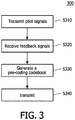
- Figure 3 illustrates a flow chart of a method of transmitting data by optimizing the selection of pre-coding vectors that is performed in a base station according to an embodiment of the invention.
- a plurality of signals is transmitted from the base station to a plurality of terminals, wherein each of the signals may be a pilot signal or a signal including a pilot signal.
- the base station does not perform a precoding operation on the pilot signal or the pilot portion, for the terminal measures a corresponding channel response by evaluating received pilot signals.
- the base station receives a plurality of feedback signals from the plurality of terminals, wherein at least one of the feedback signals includes a plurality of recommended pre-coding vectors and a plurality of corresponding channel status informations.
- the recommended pre-coding vectors included in the feedback signals may be pre-coding vectors or the index numbers of the pre-coding vectors in a predefined pre-coding codebook that can be used for determining corresponding pre-coding vectors.
- the base station generates a pre-coding codebook, using the correlation characteristics between the recommended pre-coding vectors that are obtained or meet predefined criteria.
- Each pre-coding vector of the pre-coding codebook is a recommended pre-coding vector in the recommended pre-coding codebook transmitted from the terminal, and the determining procedure of the pre-coding vector utilizes the correlation characteristics between the recommended pre-coding vectors and the corresponding channel status information.
- the base station performs a transmission operation on subsequent signals, using the pre-coding codebook at step S340.
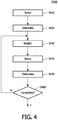
- Figure 4 illustrates a flow chart of a method of generating a pre-coding codebook according to an embodiment of the invention.
- the base station selects the maximum channel status information from all the received channel status informations at step S410.
- the base station determines a pre-coding vector and a corresponding terminal corresponding to the maximum channel status information, and a transmitting antenna corresponding to the determined pre-coding vector and the determined terminal, so as to allocate the determined pre-coding vector to the transmitting antenna.
- the base station performs a weighting operation on the channel status information, based on the correlation coefficient between the determined pre-coding vector and a pre-coding vector corresponding to the channel status information, to acquire corresponding weighted channel status information.
- the base station selects, at step S440, a maximum weighted channel status information from all the weighted channel status informations, and determines, at step S450, a pre-coding vector and a corresponding terminal corresponding to the maximum weighted channel status information and a transmitting antenna corresponding to the determined pre-coding vector and the determined terminal, so as to allocate the determined pre-coding vector to the transmitting antenna.
- CSI current ( i ) f ( e i , e j ) ⁇ CSI previous ( i ) ⁇
- CSI previous ( i ) may also represent a weighted channel status information before the current weighting step
- CSI current ( i ) may also represent a weighted channel status information obtained in the current weighting step
- the pre-coding vector e j is the determined pre-coding vector that is determined by the operation in the previous cycle
- the pre-coding vector e i is the pre-coding vector corresponding to the channel status information in the current weighting operation.
- the pre-coding codebook obtained through the embodiment in Figures 3 and 4 may be a unitary matrix in which any two pre-coding vectors are orthogonal to each other, or a non-unitary matrix, with the correlation coefficient being smaller than 1, in which there are two pre-coding vectors that are not strictly orthogonal to each other.
- a pre-coding codebook which has a better correlation (i.e., the correlation coefficient is large) and the corresponding channel status response is also large, could be selected, so that each antenna could be allocated to a suitable pre-coding vector, the corresponding terminal may obtain a higher data transmission rate, and further the total data transmission rate and system capacity obtained by the system may be higher.
- FIG. 5 illustrates a block diagram of a terminal according to an embodiment of the invention.
- the terminal 500 includes a receiver 510, an evaluator 520, a calculator 530, a recommending unit 540, and a transmitter 550.
- the receiver 510 is configured to receive a plurality of signals from a base station.
- the evaluator 520 is configured to evaluate a channel response matrix corresponding to the plurality of received signals, wherein, each element of the channel response matrix is used for representing a channel response of a channel corresponding to a signal.
- the calculator 530 is configured to calculate a plurality of channel status informations, wherein each of the channel status informations corresponds to a pre-coding vector in the predefined pre-coding codebook.
- the recommending unit 540 is configured to generate a recommended pre-coding codebook based on the correlation coefficients between pre-coding vectors and the corresponding channel status information, wherein each recommended pre-coding vector is a pre-coding vector in the predefined pre-coding codebook.
- the transmitter 550 is configured to transmit the recommended pre-coding codebook and a plurality of corresponding channel status informations to the base station.
- the calculator 530 includes: a first selector 532 for selecting a pre-coding vector from the predefined pre-coding codebook; and a channel status information calculator 534 for calculating a channel status information.
- the recommending unit 540 includes: a second selector 542, a determining unit 544, a generator 546 and a weighting device 548.
- the second selector 542 is configured to select maximum channel status information.
- the determining unit 544 is configured to determine a pre-coding vector corresponding to the maximum channel status information.
- the generator 546 is configured to add the pre-coding vector selected by the determining unit to the recommended pre-coding codebook.
- the weighting device 548 is configured to perform a weighting operation on the plurality of channel status informations, which weighting device further comprises: a correlation coefficient calculator 5481 for calculating the correlation coefficient between two pre-coding vectors; and a multiplier 5482 for multiplying the correlation coefficient with corresponding channel status information to update the corresponding channel status information.
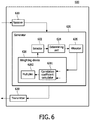
- FIG. 6 illustrates a block diagram of a base station according to an embodiment of the invention.
- the base station 600 includes a receiver 610, a generator 620 and a transmitter 630.
- the receiver 610 is configured to receive a plurality of feedback signals from a plurality of terminals, wherein, at least one feedback signal includes a plurality of recommended pre-coding vectors and a plurality of corresponding channel status informations.
- the generator 620 is configured to generate a pre-coding codebook based on the plurality of feedback signals, wherein at least one pre-coding vector in the pre-coding codebook is determined based on a correlation coefficient between at least two recommended pre-coding vectors.
- the transmitter 630 is configured to perform transmission operations using the pre-coding codebook.
- the transmitter 630 is further configured to transmit signals without being pre-coding vectored.
- the generator 620 further includes a selector 622, a determining unit 624, an allocator 626 and a weighting device 628.
- the selector 622 is configured to select maximum channel status information from the plurality of channel status informations.
- the determining unit 624 is configured to determine a pre-coding vector and a terminal corresponding to the maximum channel status information, and a corresponding transmitting antenna.
- the allocator 626 is configured to allocate the determined pre-coding vector to the determined transmitting antenna.
- the weighting device 628 is configured to perform a weighting operation on the plurality of channel status informations, which weighting device further comprises: a correlation coefficient calculator 6281 for calculating a correlation coefficient between two pre-coding vectors; and a multiplier 6282 for multiplying the correlation coefficient with corresponding channel status information to update the corresponding channel status information.
Landscapes
- Engineering & Computer Science (AREA)
- Computer Networks & Wireless Communication (AREA)
- Signal Processing (AREA)
- Physics & Mathematics (AREA)
- Mathematical Physics (AREA)
- Power Engineering (AREA)
- Mobile Radio Communication Systems (AREA)
- Radio Transmission System (AREA)
Description
- The present invention relates to a multi-user multi-input multi-output (MIMO) communication system, and more particularly to a method and apparatus for selecting pre-coding vectors in a multi-user MIMO communication system.
- A next generation communication system aims at providing high rate data transmission, high spectrum utilization and large system capacity. The MIMO technique has been focused on and researched for several years, since it proved to be capable of improving the data transmission rate and system capacity dramatically. However, in a multi-user MIMO system, since techniques of joint detection, spatial code, etc. could not be used together with user terminals because antennas between different users are independent from each other, it is needed to transfer information about channel characteristics acquired by each terminal to the network, so that techniques, such as the multi-user interference technique, could be further adopted in base stations.
- However, in practice, since the bandwidth of a feedback channel between a terminal and a base station is limited and thus limits the amount of feedback information, there is a need for a method such that, in the case of limited feedback and user selection diversity, the base station could acquire exact information on channel characteristics etc. known by each terminal, thus enabling, for different channel characteristics of different users, to improve the data transmission rate and system capacity etc. through optimizing the selection of pre-coding vectors.
- For optimizing the selection of pre-coding vectors, a method for per-user unitary rate control (PU2RC) has been proposed in a Patent Application with Serial No.
EP1699145A2 , entitled "Beam and power allocation method for MIMO communication system", filed in March, 2006 by SAMSUNG Company. However, there is a limitation in PU2RC, i.e. that the pre-coding codebook used by a base station must be a unitary matrix, i.e., any two pre-coding vectors in the pre-coding codebook should be orthogonal to each other, so that the selection range of pre-coding vectors is limited, thus resulting in that the pre-coding codebook selected in most cases could only meet requirements of partial users for transmission rate and signal-noise ratio at the cost of other users' performance. Consequently, the total data transmission rate and total system capacity of the system as a whole are further limited. -
US Patent Application No. 200602700360 - Therefore, there is a need to propose a method that is capable of improving the total data transmission rate and total system capacity of a system through further optimizing the selection of pre-coding vectors.
- The embodiment of the invention relates to a method of recommending a pre-coding vector in a terminal as claimed in claim 1; a method of transmitting from a base station using a pre-coding codebook as claimed in claim 5 and the corresponding apparatus as claimed in claims 9 and 11, respectively. An object of the invention is to provide a method of recommending pre-coding vectors, which could feed back channel informations acquired by each terminal and desired pre-coding vectors to base stations.
- Another object of the invention is to provide a method for data transmission, which serves to optimize the selection of pre-coding vectors in base stations based on the information fed back by each terminal so as to improve the total system performance.
- For optimizing the selection of pre-coding vectors in a multi-user MIMO system, according to an embodiment of the invention, there is provided a method of recommending pre-coding vectors that is performed in a terminal, the method including: calculating a channel response matrix using a plurality of received signals, wherein each element of the channel response matrix describes a channel status response of a channel between the terminal and a corresponding base station; calculating a plurality of channel status informations using a predefined pre-coding codebook and the channel response matrix, wherein each of the plurality of channel status informations corresponds to a pre-coding vector in the predefined pre-coding codebook; selecting a plurality of pre-coding vectors from the predefined pre-coding codebook as a recommended pre-coding codebook, using the correlation between the pre-coding vectors of the predefined pre-coding codebook and the plurality of channel status informations; and generating a feedback signal based on the recommended pre-coding codebook and the corresponding plurality of channel status informations, and transmitting the feedback signal to the base station, wherein each of the channel status informations corresponds to a recommended pre-coding vector in the recommended pre-coding codebook.
- According to an embodiment of the invention, there is provided a method of transmitting data in a multi-user MIMO system, which comprises a base station and a plurality of terminals, the method comprising the steps of: receiving a plurality of feedback signals from the plurality of terminals, wherein at least one feedback signal includes a plurality of recommended pre-coding vector informations and a plurality of channel status informations (CSI), each of the channel status informations corresponding to a recommended pre-coding vector information, and each of the recommended pre-coding vector informations being used for determining a corresponding pre-coding vector in a predefined pre-coding codebook as a recommended pre-coding vector; generating a pre-coding codebook based on the plurality of feedback signals, wherein at least one pre-coding vector in the pre-coding codebook is determined based on a correlation coefficient between at least two recommended pre-coding vectors; and performing the transmission operation using the pre-coding codebook.
- Alternatively, the step of generating a pre-coding codebook further includes the steps of: selecting a maximum channel status information from all the channel status informations; determining a pre-coding vector and a terminal corresponding to the maximum channel status information and a transmitting antenna corresponding to the determined pre-coding vector and the determined terminal, so as to allocate the determined pre-coding vector to the transmitting antenna; for each of the other channel status informations, performing a weighting operation on the channel status information, based on the correlation coefficient between the determined pre-coding vector and a pre-coding vector corresponding to the channel status information, to acquire a corresponding weighted channel status information; selecting a maximum weighted channel status information from all the weighted channel status informations; and determining a pre-coding vector and a terminal corresponding to the maximum weighted channel status information, so as to allocate the newly determined pre-coding vector to the terminal.
- Alternatively, the method further includes the following steps: for each weighted channel status information generated in the previous weighting step, performing a weighting operation on the weighted channel status information, according to the correlation coefficient between a determined pre-coding vector determined in the previous determining step and a pre-coding vector corresponding to the weighted channel status information, to update the weighted channel status information; selecting a maximum weighted channel status information from all the weighted channel status informations that have been updated; and determining a pre-coding vector and a terminal corresponding to the maximum weighted channel status information and a transmitting antenna corresponding to the terminal, so as to allocate the determined pre-coding vector to the transmitting antenna.
- The basic concept of the invention is: in a base station, to try to select the pre-coding vectors having the best correlation, using correlation characteristics between pre-coding vectors and different channel characteristics obtained by a plurality of terminals, to form a pre-coding codebook enabling data to be transmitted to be pre-coding vector modulated. Unlike the method proposed in
EP 1699145A2 , the above pre-coding codebook is not generated by selecting pre-coding vectors merely through the comparison of the magnitudes of channel responses, but rather by selecting a plurality of pre-coding vectors that correspond to larger channel responses and have better correlation with each other, taking into account the correlation characteristics between pre-coding vectors and the magnitudes of the corresponding channel responses. The method of the invention does not need any two pre-coding vectors in the pre-coding codebook being strictly orthogonal with each other, so as to widen the selection range of pre-coding vectors, take different users' needs into account sufficiently, and improve the total data transmission rate and total system capacity of a system. - Alternatively, in terminals, a weighting operation is performed on measured channel responses of different channels using the correlation characteristics between a plurality of pre-coding vectors, so as to generate a recommended pre-coding codebook. Unlike the method proposed in
EP1699145A2 , the recommended pre-coding codebook is not generated by recommending pre-coding vectors merely through the comparison of the magnitudes of a plurality of channel responses, but rather by recommending, in connection with the correlation characteristics between pre-coding vectors and corresponding channel responses, pre-coding vectors that correspond to larger channel responses and have a better correlation with each other. - These and other aspects and effects of the invention will be more apparent and easy to understand through the following description in connection with the drawings and the claims.
-
-
Figure 1 illustrates a flow chart of generating a recommended pre-coding codebook in a terminal according to an embodiment of the invention; -
Figure 2 illustrates a detailed flow chart of the step of recommending according to an embodiment of the invention; -
Figure 3 illustrates a flow chart of generating a pre-coding codebook in a base station according to an embodiment of the invention; -
Figure 4 illustrates a detailed flow chart of the step of generating a pre-coding codebook according to an embodiment of the invention; -
Figure 5 illustrates a block diagram of a terminal according to an embodiment of the invention; and -
Figure 6 illustrates a block diagram of a base station according to an embodiment of the invention. - In all Figures, the same or similar reference numbers refer to the same or similar functions and features.
-
Figure 1 illustrates a flow chart of a method of generating recommended pre-coding vectors that is performed in a terminal according to an embodiment of the invention. In themethod 100, first, at step S110, the terminal receives a plurality of signals from a base station, measures channel responses corresponding to a plurality of channels that are used for transmitting the plurality of signals, and generates a channel response matrix. Each element of the channel response matrix represents the channel response of the transmission channel between a receiving antenna of the terminal and a transmitting antenna of a corresponding base station. - At step S120, the terminal extracts a pre-coding vector each time from a known predefined pre-coding codebook, and calculates a channel status information corresponding to the pre-coding vector, using the channel response matrix obtained at step S110. After traversing all the pre-coding vectors in the predefined pre-coding codebook, the terminal obtains different channel status information corresponding to different pre-coding vectors. The channel status information may be a signal-noise ratio SNR, a signal-interference ratio SINR, or a channel quality indicator CQI. The channel status information may be calculated according to the equation

- At step S130, a recommended pre-coding codebook is generated using the correlation characteristics between pre-coding vectors and corresponding channel status information, wherein, each of the recommended pre-coding vectors is a pre-coding vector in the predefined pre-coding codebook.
- At step S140, the terminal transmits the recommended pre-coding codebook and the corresponding channel status information to the base station, wherein, each of the channel status informations corresponds to a recommended pre-coding vector. Alternatively, each of the recommended pre-coding vectors themselves may be transmitted back to the base station, or the index number of the recommended pre-coding vector in the predefined pre-coding codebook may be transmitted back to the base station for saving bandwidth.
-
Figure 2 illustrates a flow chart of the method of generating the recommended pre-coding codebook at step S130 according to an embodiment of the invention. First, at step S120, a channel status information having the largest value is selected from a plurality of channel status informations. At step S220, a corresponding pre-coding vector is found, through the corresponding relation between a channel status information and a pre-coding vector, as a first recommended pre-coding vector to be added to the recommended pre-coding codebook. At step S230, a weighting operation is performed. In the main embodiment of the invention, the weighting operation follows the equation CSIcurrent (i) = f(ei ,ej ) αCSIprevious (i) β , wherein, f(ei ,ej ) is the correlation coefficient between the pre-coding vectors ei and ej , the pre-coding vector ej is the first recommended pre-coding vector, the pre-coding vector ei is the pre-coding vector corresponding to the channel status information, CSIprevious (i) is the channel status information, CSIcurrent (i) is the weighted channel status information. The correlation coefficient may be calculated according to the equation

- Through the embodiment of
Figure 1 and2 , the terminal could generate a recommended pre-coding codebook including a plurality of recommended pre-coding vectors, and transmit the pre-coding codebook and corresponding channel status information to the base station, so that the base station could optimize the selection of pre-coding vectors. In comparison, the method proposed inEP1699145A2 determines the best suitable pre-coding vector for the terminal only by comparing the magnitudes of signal-noise ratios. -
Figure 3 illustrates a flow chart of a method of transmitting data by optimizing the selection of pre-coding vectors that is performed in a base station according to an embodiment of the invention. Inmethod 300, first, at step S310, a plurality of signals is transmitted from the base station to a plurality of terminals, wherein each of the signals may be a pilot signal or a signal including a pilot signal. The base station does not perform a precoding operation on the pilot signal or the pilot portion, for the terminal measures a corresponding channel response by evaluating received pilot signals. At step S320, the base station receives a plurality of feedback signals from the plurality of terminals, wherein at least one of the feedback signals includes a plurality of recommended pre-coding vectors and a plurality of corresponding channel status informations. Alternatively, the recommended pre-coding vectors included in the feedback signals may be pre-coding vectors or the index numbers of the pre-coding vectors in a predefined pre-coding codebook that can be used for determining corresponding pre-coding vectors. At step S330, the base station generates a pre-coding codebook, using the correlation characteristics between the recommended pre-coding vectors that are obtained or meet predefined criteria. Each pre-coding vector of the pre-coding codebook is a recommended pre-coding vector in the recommended pre-coding codebook transmitted from the terminal, and the determining procedure of the pre-coding vector utilizes the correlation characteristics between the recommended pre-coding vectors and the corresponding channel status information. After the pre-coding codebook is obtained, the base station performs a transmission operation on subsequent signals, using the pre-coding codebook at step S340. -
Figure 4 illustrates a flow chart of a method of generating a pre-coding codebook according to an embodiment of the invention. Firstly, at step S330, the base station selects the maximum channel status information from all the received channel status informations at step S410. At step S420, the base station determines a pre-coding vector and a corresponding terminal corresponding to the maximum channel status information, and a transmitting antenna corresponding to the determined pre-coding vector and the determined terminal, so as to allocate the determined pre-coding vector to the transmitting antenna. At step S430, for each of the other channel status informations, the base station performs a weighting operation on the channel status information, based on the correlation coefficient between the determined pre-coding vector and a pre-coding vector corresponding to the channel status information, to acquire corresponding weighted channel status information. The weighting operation may follow the equation CSIcurrent (i) = f(ei , ej ) αC-SIprevious (i) β , wherein, f(ei , ej ) is the correlation coefficient between the pre-coding vectors ei and ej , the pre-coding vector ej is the determined pre-coding vector, the pre-coding vector e i is the pre-coding vector corresponding to the channel status information, CSIprevious (i) is the channel status information, CSIcurrent (i) is the weighted channel status information. The correlation coefficient may be calculated according to the equation

- Unlike the method proposed in
EP1699145A2 , the pre-coding codebook obtained through the embodiment inFigures 3 and4 may be a unitary matrix in which any two pre-coding vectors are orthogonal to each other, or a non-unitary matrix, with the correlation coefficient being smaller than 1, in which there are two pre-coding vectors that are not strictly orthogonal to each other. Through the method of the embodiment inFigures 3 and4 , a pre-coding codebook, which has a better correlation (i.e., the correlation coefficient is large) and the corresponding channel status response is also large, could be selected, so that each antenna could be allocated to a suitable pre-coding vector, the corresponding terminal may obtain a higher data transmission rate, and further the total data transmission rate and system capacity obtained by the system may be higher. - For utilizing the method of the invention,
Figure 5 illustrates a block diagram of a terminal according to an embodiment of the invention. The terminal 500 includes areceiver 510, anevaluator 520, acalculator 530, a recommendingunit 540, and atransmitter 550. Thereceiver 510 is configured to receive a plurality of signals from a base station. Theevaluator 520 is configured to evaluate a channel response matrix corresponding to the plurality of received signals, wherein, each element of the channel response matrix is used for representing a channel response of a channel corresponding to a signal. Thecalculator 530 is configured to calculate a plurality of channel status informations, wherein each of the channel status informations corresponds to a pre-coding vector in the predefined pre-coding codebook. The recommendingunit 540 is configured to generate a recommended pre-coding codebook based on the correlation coefficients between pre-coding vectors and the corresponding channel status information, wherein each recommended pre-coding vector is a pre-coding vector in the predefined pre-coding codebook. Thetransmitter 550 is configured to transmit the recommended pre-coding codebook and a plurality of corresponding channel status informations to the base station. - The
calculator 530 includes: afirst selector 532 for selecting a pre-coding vector from the predefined pre-coding codebook; and a channelstatus information calculator 534 for calculating a channel status information. - The recommending
unit 540 includes: asecond selector 542, a determiningunit 544, agenerator 546 and aweighting device 548. Thesecond selector 542 is configured to select maximum channel status information. The determiningunit 544 is configured to determine a pre-coding vector corresponding to the maximum channel status information. Thegenerator 546 is configured to add the pre-coding vector selected by the determining unit to the recommended pre-coding codebook. Theweighting device 548 is configured to perform a weighting operation on the plurality of channel status informations, which weighting device further comprises: acorrelation coefficient calculator 5481 for calculating the correlation coefficient between two pre-coding vectors; and amultiplier 5482 for multiplying the correlation coefficient with corresponding channel status information to update the corresponding channel status information. - For utilizing the method of the invention,
Figure 6 illustrates a block diagram of a base station according to an embodiment of the invention. Thebase station 600 includes areceiver 610, agenerator 620 and atransmitter 630. Thereceiver 610 is configured to receive a plurality of feedback signals from a plurality of terminals, wherein, at least one feedback signal includes a plurality of recommended pre-coding vectors and a plurality of corresponding channel status informations. Thegenerator 620 is configured to generate a pre-coding codebook based on the plurality of feedback signals, wherein at least one pre-coding vector in the pre-coding codebook is determined based on a correlation coefficient between at least two recommended pre-coding vectors. Thetransmitter 630 is configured to perform transmission operations using the pre-coding codebook. Thetransmitter 630 is further configured to transmit signals without being pre-coding vectored. - The
generator 620 further includes aselector 622, a determiningunit 624, anallocator 626 and aweighting device 628. Theselector 622 is configured to select maximum channel status information from the plurality of channel status informations. The determiningunit 624 is configured to determine a pre-coding vector and a terminal corresponding to the maximum channel status information, and a corresponding transmitting antenna. Theallocator 626 is configured to allocate the determined pre-coding vector to the determined transmitting antenna. Theweighting device 628 is configured to perform a weighting operation on the plurality of channel status informations, which weighting device further comprises: acorrelation coefficient calculator 6281 for calculating a correlation coefficient between two pre-coding vectors; and amultiplier 6282 for multiplying the correlation coefficient with corresponding channel status information to update the corresponding channel status information. - It will be appreciated by those skilled in the art that various modifications are possible to the method and apparatus thereof provided in various embodiments of the invention without departing from the scope of the invention. Therefore, the scope of the invention is limited only by the appended claims.
Claims (11)
- A method of recommending a pre-coding vector in a terminal in a multi-user MIMO system, the method comprising:(a) calculating a channel response matrix (S110), using a plurality of received signals, wherein each element of the channel response matrix describes a channel status response of a transmission channel between a receiving antenna of the terminal and a transmitting antenna of a corresponding base station;(b) calculating a plurality of channel status informations (S120), using a predefined pre-coding codebook and the channel response matrix, wherein each of the plurality of channel status informations corresponds to a pre-coding vector in the predefined pre-coding codebook;(c) selecting (S130) a plurality of pre-coding vectors from the predefined pre-coding codebook as a recommended pre-coding codebook, using the correlation between the pre-coding vectors of the predefined pre-coding codebook and the plurality of channel status information; and(d) generating (S140) a feedback signal based on the recommended pre-coding codebook and a plurality of corresponding channel status information, and transmitting the feedback signal to the base station, wherein each of the plurality of corresponding channel status informations corresponds to a recommended pre-coding vector in the recommended pre-coding codebook respectively;wherein step (c) further comprises:(i) selecting (S210) the maximum channel status information from the plurality of channel status informations;(ii) determining (S220) a pre-coding vector corresponding to the maximum channel status information as a first recommended pre-coding vector in the recommended pre-coding codebook;(iii) for each of the other channel status information, performing (S230) a weighting operation on each of the other channel status informations, based on the correlation coefficient between the first recommended pre-coding vector and a pre-coding vector corresponding to the each of the other channel status information, to generate a weighted channel status information;(iv) selecting (S240) a maximum weighted channel status information from the plurality of weighted channel status information; and(v) determining (S250) a pre-coding vector corresponding to the maximum weighted channel status information as a second recommended pre-coding vector in the recommended pre-coding codebook;wherein step (c) further performs the following steps several times:I) for each weighted channel status information generated in the previous weighting step, performing (S230) a weighting operation on the weighted channel status information, according to the correlation coefficient between the pre-coding vector corresponding to the weighted channel status information and the recommended pre-coding vector determined in the previous determining step, to update the weighted channel status information;II) selecting (S240) a maximum weighted channel status information from the plurality of weighted channel status informations generated in step (I); andIII) determining (S250) a pre-coding vector corresponding to the maximum weighted channel status information as a recommended pre-coding vector to be added into the recommended pre-coding codebook; and wherein the weighted channel status information is calculated according to the equation CSIcurrent (i) = ƒ(ei,ej)αCSIprevious(i)β , wherein, ƒ(ei, ej) is the correlation coefficient between the pre-coding vectors ei and ej , the pre-coding vector ej is the first recommended pre-coding vector in step (iii) or the recommended pre-coding vector in step (I), the pre-coding vector ei is any one of the pre-coding vector corresponding to each of the other channel status information in step (iii) or the pre-coding vector corresponding to the weighted channel status information in step (I), CSIprevious(i) is any one of the channel status information in step (iii) or the weighted channel status information before the current weighting step in step (I), CSIcurrent(i) is any one of the weighted channel status information in step (iii) or the updated weighted channel status information in step (I), and α and β are predefined natural numbers.
- The method of claim 1, wherein, in step (b), the channel status information is calculated according to the equation

- The method of claim 1, wherein the correlation coefficient is calculated according to any one of the equations


- The method of claim 1, wherein the feedback signal comprises any one of each recommended pre-coding vector in the recommended pre-coding codebook and the index number of the recommended pre-coding vector in the predefined pre-coding codebook.
- A method of transmitting data in a multi-user MIMO system which includes a base station and a plurality of terminals, the method comprising the steps of:(a) the base station receiving (S320) a plurality of feedback signals from the plurality of terminals, wherein at least one feedback signal includes a plurality of recommended pre-coding vector informations and a plurality of channel status informations, each of the plurality of channel status informations corresponding to a recommended pre-coding vector information, and each of the recommended pre-coding vector informations being used for determining a corresponding pre-coding vector in a predefined pre-coding codebook as a recommended pre-coding vector;(b) the base station generating (S330) a pre-coding codebook based on the plurality of feedback signals, wherein at least one pre-coding vector in the pre-coding codebook is determined based on a correlation coefficient between at least two recommended pre-coding vectors; and(c) the base station performing (S340) the transmission operation using the pre-coding codebook; wherein step (b) further comprises the steps of:(i) selecting (S410) the maximum channel status information from all the channel status informations;(ii) determining (S420) a pre-coding vector and a terminal corresponding to the maximum channel status information, and a transmitting antenna corresponding to the determined pre-coding vector and the determined terminal, so as to allocate the determined pre-coding vector to the transmitting antenna;(iii) for each of the other channel status informations, performing (S430) a weighting operation on each of the other channel status information, based on the correlation coefficient between the determined pre-coding vector and a pre-coding vector corresponding to each of the other channel status information, to acquire a corresponding weighted channel status information;(iv) selecting (S440) a maximum weighted channel status information from all the weighted channel status information generated in step (iii); and(v) determining (S450) a pre-coding vector and a terminal corresponding to the maximum weighted channel status information, and a transmitting antenna corresponding to the determined pre-coding vector and the determined terminal, so as to allocate the determined pre-coding vector to the transmitting antenna;wherein step (b) further performs the following steps a plurality of times:I) for each weighted channel status information generated in the previous weighting step, performing (S430) a weighting operation on the weighted channel status information, according to the correlation coefficient between a determined pre-coding vector determined in the previous determining step and a pre-coding vector corresponding to the weighted channel status information, to update the weighted channel status information;II) selecting (S440) the maximum weighted channel status information from all the weighted channel status informations updated in step (I); andIII) determining (S450) a pre-coding vector and a terminal corresponding to the maximum weighted channel status information and a transmitting antenna corresponding to the terminal, so as to allocate the determined precode to the transmitting antenna; andwherein the weighted channel status information is calculated according to the equation CSIcurrent(i) = ƒ(ei,ej)αCSIprevious(i)β , ƒ(ei , ej) representing the correlation coefficient between the pre-coding vectors ei and ej, the pre-coding vector ei is anyone of the precoding vector corresponding to each of the other channel status information in step (iii) or the pre-coding vector corresponding to the weighted channel status information in step (I), the pre-coding vector ej is the pre-coding vector corresponding to the maximum channel status information in step (iii) or the determined pre-coding vector in step (I), CSIprevious(i) representing any one of each of the other channel status information in step (iii) or the weighted channel status information before the current weighting step in step (I), CSIcurrent(i) representing any one of the weighted channel status information in step (iii) or the weighted channel status information updated in step (I), and α and β are predefined natural numbers.
- The method of claim 5, before step (a), further including the step of:
transmitting a plurality of pilot signals, without being precoded, to the plurality of terminals. - The method of claim 5, wherein at least two pre-coding vectors in the pre-coding codebook are non-orthogonal.
- The method of claim 5, wherein the correlation coefficient is calculated according to any one of the equations


- An apparatus (500) for recommending pre-coding vectors for a multi-user MIMO system, comprising:a receiver (510), configured to receive a plurality of signals from a base station;an evaluator (520), configured to evaluate a channel response matrix corresponding to the plurality of received signals, wherein each element of the channel response matrix represents a channel response of a transmission channel between a receiving antenna of the apparatus and a transmitting antenna of the base station;a calculator (530), configured to calculate a plurality of channel status informations using a predefined pre-coding codebook and the channel response matrix, wherein each of the channel status information corresponds to a pre-coding vector in the predefined pre-coding codebook;a recommending unit (540), configured to select a plurality of pre-coding vectors from the predefined pre-coding codebook as a recommended pre-coding codebook, the selection being based on the correlation coefficients between pre-coding vectors in the predefined pre-coding codebook and the plurality of channel status informations; anda transmitter (550), configured to transmit the recommended pre-coding codebook and a plurality of corresponding channel status informations to the base station, wherein each of the channel status information corresponds to a recommended pre-coding vector in the recommended pre-coding codebook;wherein the recommending unit (540) comprises:a second selector (542), configured to select the maximum channel status information from the plurality of channel status informations;a determining unit (544), configured to determine a pre-coding vector corresponding to the maximum channel status information as a first recommended pre-coding vector in the recommended pre-coding codebook;a weighting device (548), configured to perform a weighting operation for each of the other channel status information, performing a weighting operation on each of the other channel status informations, based on the correlation coefficient between the first recommended pre-coding vector and a pre-coding vector corresponding to the each of the other channel status information, to generate a weighted channel status information,said second selector (542) being configured for selecting a maximum weighted channel status information from the plurality of weighted channel status information; andsaid determining unit (544) being configured for determining a pre-coding vector corresponding to the maximum weighted channel status information as a second recommended pre-coding vector in the recommended pre-coding codebook;wherein the recommending unit (540) is further configured to perform the following steps several times:I) for each weighted channel status information generated in the previous weighting step, performing (S230) a weighting operation on the weighted channel status information, according to the correlation coefficient between the pre-coding vector corresponding to the weighted channel status information and the recommended pre-coding vector determined in the previous determining step, to update the weighted channel status information;II) selecting (S240) a maximum weighted channel status information from the plurality of weighted channel status informations generated in step (I); andIII) determining (S250) a pre-coding vector corresponding to the maximum weighted channel status information as a recommended pre-coding vector to be added into the recommended pre-coding codebook; andwherein the weighted channel status information is calculated according to the equation CSIcurrent(i) = ƒ(ei,ej)αCSIprevious(i)β , wherein, ƒ(ei, ej) is the correlation coefficient between the pre-coding vectors ei and ej, the pre-coding vector ej is the first recommended pre-coding vector in step (iii) or the recommended pre-coding vector in step (I), the pre-coding vector ei is any one of the pre-coding vector corresponding to each of the other channel status information in step (iii) or the pre-coding vector corresponding to the weighted channel status information in step (I), CSIprevious(i) is any one of the channel status information in step (iii) or the weighted channel status information before the current weighting step in step (I), CSIcurrent(i) is any one of the weighted channel status information in step (iii) or the updated weighted channel status information in step (I), and α and β are predefined natural numbers.
- The apparatus of claim 9, wherein the calculator (530) further includes:a first selector (532), configured to select a pre-coding vector from the predefined pre-coding codebook; anda channel status information calculator (534), configured to calculate a channel status information according to the equation

- An apparatus (600) for transmitting data for a multi-user MIMO system, comprising:a receiver (610), configured to receive a plurality of feedback signals from a plurality of terminals in the multi-user MIMO system, wherein at least one feedback signal includes a plurality of recommended pre-coding vector informations and a plurality of corresponding channel status informations, each of the recommended pre-coding vector information is used for determining a corresponding pre-coding vector in a predefined pre-coding codebook as a recommended pre-coding vector;a generator (620), configured to generate a pre-coding codebook based on the plurality of feedback signals, wherein, at least one pre-coding vector in the pre-coding codebook is determined based on a correlation coefficient between at least two recommended pre-coding vectors; anda transmitter (630), configured to perform transmission operation using the pre-coding codebook;wherein the generator (620) further comprises:a selector (622), configured to select the maximum channel status information from the plurality of channel status informations;a determining unit (624), configured to determine a pre-coding vector and a terminal corresponding to the maximum channel status information, and a transmitting antenna corresponding to the determined pre-coding vector and the determined terminal;a weighting device (628), configured to perform for each of the other channel status informations a weighting operation on each of the other channel status information, based on the correlation coefficient between the determined pre-coding vector and a pre-coding vector corresponding to each of the other channel status information, to acquire a corresponding weighted channel status information;said selector (622) being configured for selecting a maximum weighted channel status information from all the weighted channel status information generated by the weighting device (628); andsaid determining unit (624) determining (S450) a pre-coding vector and a terminal corresponding to the maximum weighted channel status information, and a transmitting antenna corresponding to the determined pre-coding vector and the determined terminal, so as to allocate the determined pre-coding vector to the transmitting antenna;wherein the generator (620) is further configured to perform the following steps a plurality of times:I) for each weighted channel status information generated in the previous weighting step, performing (S430) a weighting operation on the weighted channel status information, according to the correlation coefficient between a determined pre-coding vector determined in the previous determining step and a pre-coding vector corresponding to the weighted channel status information, to update the weighted channel status information;II) selecting (S440) the maximum weighted channel status information from all the weighted channel status informations updated in step (I); andIII) determining (S450) a pre-coding vector and a terminal corresponding to the maximum weighted channel status information and a transmitting antenna corresponding to the terminal, so as to allocate the determined precode to the transmitting antenna; andwherein the weighted channel status information is calculated according to the equation CSIcurrent(i) = ƒ(ei,ej)αCSIprevious(i)β , ƒ(ei, ej) representing the correlation coefficient between the pre-coding vectors ei and ej , the pre-coding vector ei is anyone of the precoding vector corresponding to each of the other channel status information in step (iii) or the pre-coding vector corresponding to the weighted channel status information in step (I), the pre-coding vector ej is the pre-coding vector corresponding to the maximum channel status information in step (iii) or the determined pre-coding vector in step (I), CSIprevious(i) representing any one of each of the other channel status information in step (iii) or the weighted channel status information before the current weighting step in step (I), CSIcurrent(i) representing any one of the weighted channel status information in step (iii) or the weighted channel status information updated in step (I), and α and β are predefined natural numbers.
Applications Claiming Priority (2)
| Application Number | Priority Date | Filing Date | Title |
|---|---|---|---|
| CN2007100843820A CN101257367B (en) | 2007-02-28 | 2007-02-28 | Method and device for choosing precoding |
| PCT/IB2008/050643 WO2008104907A2 (en) | 2007-02-28 | 2008-02-22 | Method and apparatus for selecting pre-coding vectors |
Publications (3)
| Publication Number | Publication Date |
|---|---|
| EP2115979A2 EP2115979A2 (en) | 2009-11-11 |
| EP2115979B1 EP2115979B1 (en) | 2018-04-11 |
| EP2115979B2 true EP2115979B2 (en) | 2022-01-12 |
Family
ID=39721662
Family Applications (1)
| Application Number | Title | Priority Date | Filing Date |
|---|---|---|---|
| EP08719450.2A Active EP2115979B2 (en) | 2007-02-28 | 2008-02-22 | Method and apparatus for selecting pre-coding vectors |
Country Status (7)
| Country | Link |
|---|---|
| US (1) | US8300727B2 (en) |
| EP (1) | EP2115979B2 (en) |
| JP (1) | JP5295980B2 (en) |
| KR (1) | KR101346123B1 (en) |
| CN (1) | CN101257367B (en) |
| TW (1) | TWI413370B (en) |
| WO (1) | WO2008104907A2 (en) |
Families Citing this family (50)
| Publication number | Priority date | Publication date | Assignee | Title |
|---|---|---|---|---|
| US7917176B2 (en) * | 2006-02-14 | 2011-03-29 | Nec Laboratories America, Inc. | Structured codebook and successive beamforming for multiple-antenna systems |
| CN101330357B (en) * | 2007-06-18 | 2013-04-17 | 华为技术有限公司 | Method for feedback of channel condition information and net element equipment |
| US20080317145A1 (en) * | 2007-06-25 | 2008-12-25 | Bruno Clerckx | Multiple input multiple output communication system and a method of adaptively generating codebook |
| CN101388703B (en) * | 2008-10-08 | 2012-06-13 | 安徽创毅通信科技有限公司 | Multi-user MIMO pre-encoding method and system |
| US8649455B2 (en) * | 2008-10-20 | 2014-02-11 | Samsung Electronics Co., Ltd. | Multiple input multiple output communication system and communication method of adaptably transforming codebook |
| US8385452B2 (en) * | 2008-10-24 | 2013-02-26 | Qualcomm Incorporated | Method and apparatus for separable channel state feedback in a wireless communication system |
| US20120260777A1 (en) | 2010-06-23 | 2012-10-18 | Baer Jr Russel F | Protective gripping sleeve on rotating tool extension arm |
| US8565064B2 (en) | 2008-12-15 | 2013-10-22 | Futurewei Technologies, Inc. | System and method for employing six-bit rank 1 and 2 codebooks for four transmit antennas |
| JP5280193B2 (en) * | 2008-12-26 | 2013-09-04 | Kddi株式会社 | Transmitting apparatus and transmitting / receiving method |
| KR101587005B1 (en) * | 2009-03-11 | 2016-02-02 | 삼성전자주식회사 | Method and apparatus for transmitting control information for interference mitigation in a multi-antenna system |
| TWI517620B (en) * | 2009-03-17 | 2016-01-11 | 皇家飛利浦電子股份有限公司 | Method and apparatus for communicating in a mimo network |
| WO2010118557A1 (en) * | 2009-04-16 | 2010-10-21 | 上海贝尔股份有限公司 | Method and apparatus for selecting object terminal in multiple base stations mimo system |
| CN101877684B (en) * | 2009-04-28 | 2012-11-14 | 电信科学技术研究院 | Method and device for determining precoding matrix |
| WO2010130097A1 (en) | 2009-05-14 | 2010-11-18 | 华为技术有限公司 | Information process method, device and system |
| EP2448136B1 (en) | 2009-06-23 | 2019-01-23 | Alcatel Lucent | Method for channel status information feedback and device thereof |
| KR101587563B1 (en) * | 2009-09-01 | 2016-02-02 | 삼성전자주식회사 | Communication system and method of performing interference alignment |
| US20110075752A1 (en) * | 2009-09-25 | 2011-03-31 | Hongming Zheng | Non-unitary precoding scheme for wireless communications |
| US8369439B2 (en) | 2009-09-30 | 2013-02-05 | Alcatel Lucent | Transmission of precoding codebook over an air interface |
| PL2504934T3 (en) * | 2009-11-25 | 2015-04-30 | Ericsson Telefon Ab L M | A method and apparatus for using factorized precoding |
| US8112049B2 (en) | 2009-12-17 | 2012-02-07 | Telefonaktiebolaget Lm Ericsson (Publ) | Channel quality handling for precoder override |
| CN102118863B (en) * | 2009-12-31 | 2014-12-10 | 华为技术有限公司 | Methods and devices for feeding back channel state information and determining multi-point cooperation mode |
| CN102130708B (en) | 2010-01-15 | 2014-04-30 | 华为技术有限公司 | Method for feeding back multicell channel state information and user equipment |
| JP5373650B2 (en) * | 2010-01-20 | 2013-12-18 | 株式会社エヌ・ティ・ティ・ドコモ | Mobile station apparatus and channel information feedback method |
| JP5388356B2 (en) * | 2010-01-20 | 2014-01-15 | 株式会社Nttドコモ | Precoding weight generation method, mobile station apparatus and base station apparatus |
| US8897386B2 (en) * | 2010-02-12 | 2014-11-25 | Htc Corporation | Multiple-input multiple-output systems and methods for wireless communication thereof for reducing the quantization effect of precoding operations utilizing finite codebooks |
| US20110200139A1 (en) * | 2010-02-12 | 2011-08-18 | Yu-Chih Jen | Multiple-input multiple-output systems and methods for wireless communication thereof for reducing the quantization effect of precoding operations utilizing a finite codebook |
| WO2011122911A2 (en) * | 2010-04-01 | 2011-10-06 | 엘지전자 주식회사 | Method for transmitting channel state information in wireless access system |
| JP5611447B2 (en) * | 2010-04-07 | 2014-10-22 | アルカテル−ルーセント | Information feedback and precoding method and apparatus |
| ES2750869T3 (en) | 2010-04-07 | 2020-03-27 | Ericsson Telefon Ab L M | A precoder structure for MIMO precoding |
| CN102299732B (en) * | 2010-06-22 | 2014-12-03 | 宏达国际电子股份有限公司 | Multiple-input multiple-output system and related wireless communication method and receiver |
| KR101358301B1 (en) | 2010-07-01 | 2014-02-06 | 한국전자통신연구원 | Fixed station receiver for mimo communication system and uplink adaptation method thereof |
| CN101984570B (en) * | 2010-10-25 | 2013-09-18 | 北京邮电大学 | Codebook selection and modulation method being applied under MIMO-OFDM system to overcome weak scattering |
| CN102013906B (en) * | 2010-12-03 | 2013-07-10 | 中国科学技术大学 | Multi-mode transmission method based on mailmonitor normalization beamforming and rate control |
| CN102647218A (en) * | 2011-02-15 | 2012-08-22 | 宏达国际电子股份有限公司 | Method of geodetic interpolation for handling mimo precoding and related communication device |
| ES2426164T3 (en) * | 2011-04-21 | 2013-10-21 | Ntt Docomo, Inc. | Procedure and apparatus for determining a precoding vector for precoding data to be transmitted to a wireless device in a wireless communication system |
| CN103312393B (en) * | 2012-03-14 | 2016-03-30 | 中兴通讯股份有限公司 | A kind of uplink coordinated multipoint iterations and system |
| KR101977593B1 (en) * | 2012-06-25 | 2019-08-28 | 삼성전자주식회사 | Method for transmitting secret information in transmitting end and method for receiving secret information in sending end based on a mimo multiplexing using plural antennas |
| JP5870207B2 (en) * | 2012-11-07 | 2016-02-24 | 日本電信電話株式会社 | Transmitter and wireless communication method |
| JP5552180B2 (en) * | 2013-04-08 | 2014-07-16 | Kddi株式会社 | Transmitting apparatus and transmitting / receiving method |
| US9112554B1 (en) * | 2013-06-12 | 2015-08-18 | Marvell International Ltd. | Estimation of correlated MIMO channels |
| CN103441820B (en) * | 2013-09-02 | 2017-06-16 | 中国科学技术大学 | A kind of joint decoding method based on policy selection |
| BR112016025486A2 (en) * | 2014-04-30 | 2017-08-15 | Huawei Tech Co Ltd | channel measurement method, channel measurement device, user equipment, and system |
| US10051634B2 (en) * | 2014-06-10 | 2018-08-14 | Qualcomm Incorporated | Devices and methods for facilitating non-orthogonal wireless communications |
| CN105207745A (en) * | 2015-08-31 | 2015-12-30 | 清华大学 | Multi-user coding modulation transmission method of multi-access channel |
| CN106936484B (en) * | 2015-12-28 | 2020-03-24 | 电信科学技术研究院 | Uplink information feedback and downlink data transmission method and equipment |
| CN108880644B (en) * | 2017-07-26 | 2019-06-11 | 华为技术有限公司 | Method, apparatus and system for data transmission |
| CN116746077A (en) * | 2021-02-01 | 2023-09-12 | 株式会社Ntt都科摩 | Base stations and terminals |
| US20240283499A1 (en) * | 2021-06-15 | 2024-08-22 | Beijing Xiaomi Mobile Software Co., Ltd. | Precoding matrix determination methods, user equipment, and base station |
| CN117353779A (en) * | 2022-06-29 | 2024-01-05 | 华为技术有限公司 | A communication method and device |
| CN117807383B (en) * | 2024-03-01 | 2024-07-02 | 深圳市大数据研究院 | Channel state information recovery method and device, equipment and storage medium |
Family Cites Families (12)
| Publication number | Priority date | Publication date | Assignee | Title |
|---|---|---|---|---|
| US7088671B1 (en) * | 1999-11-24 | 2006-08-08 | Peter Monsen | Multiple access technique for downlink multibeam digital radio systems |
| US6952455B1 (en) | 2000-08-02 | 2005-10-04 | Via Telecom, Co., Ltd. | Adaptive antenna method and apparatus |
| US7197084B2 (en) * | 2002-03-27 | 2007-03-27 | Qualcomm Incorporated | Precoding for a multipath channel in a MIMO system |
| WO2006062356A1 (en) | 2004-12-08 | 2006-06-15 | Electronics And Telecommunications Research Institute | Transmitter, receiver and method for controlling multiple input multiple output system |
| KR100950644B1 (en) * | 2005-03-04 | 2010-04-01 | 삼성전자주식회사 | Feedback method of multi-user multi-input / output system |
| US8189714B2 (en) * | 2005-05-04 | 2012-05-29 | Rockstar Bidco, LP | Wireless feedback system and method |
| KR101124932B1 (en) * | 2005-05-30 | 2012-03-28 | 삼성전자주식회사 | Apparatus and method for transmitting/receiving a data in mobile communication system with array antennas |
| KR20060130806A (en) | 2005-06-08 | 2006-12-20 | 삼성전자주식회사 | Transmission and reception apparatus and method in codebook based closed loop multiple transmit / receive antenna system |
| EP2854302A1 (en) * | 2006-03-17 | 2015-04-01 | Apple Inc. | Closed-loop mimo systems and methods |
| US10044532B2 (en) * | 2006-03-20 | 2018-08-07 | Texas Instruments Incorporated | Pre-coder selection based on resource block grouping |
| KR101066151B1 (en) * | 2006-08-17 | 2011-09-20 | 인터디지탈 테크날러지 코포레이션 | Method and apparatus for providing efficient precoding feedback in a MIO wireless communication system |
| KR20080074004A (en) * | 2007-02-07 | 2008-08-12 | 엘지전자 주식회사 | Uplink virtual multi-antenna transmission method using feedback information and mobile terminal supporting same |
-
2007
- 2007-02-28 CN CN2007100843820A patent/CN101257367B/en active Active
- 2007-03-03 TW TW096107383A patent/TWI413370B/en active
-
2008
- 2008-02-22 WO PCT/IB2008/050643 patent/WO2008104907A2/en not_active Ceased
- 2008-02-22 EP EP08719450.2A patent/EP2115979B2/en active Active
- 2008-02-22 KR KR1020097020042A patent/KR101346123B1/en active Active
- 2008-02-22 US US12/528,096 patent/US8300727B2/en active Active
- 2008-02-22 JP JP2009551292A patent/JP5295980B2/en active Active
Also Published As
| Publication number | Publication date |
|---|---|
| KR101346123B1 (en) | 2013-12-31 |
| JP5295980B2 (en) | 2013-09-18 |
| KR20090126271A (en) | 2009-12-08 |
| US8300727B2 (en) | 2012-10-30 |
| TW200838190A (en) | 2008-09-16 |
| WO2008104907A3 (en) | 2008-12-31 |
| CN101257367A (en) | 2008-09-03 |
| TWI413370B (en) | 2013-10-21 |
| JP2010520657A (en) | 2010-06-10 |
| EP2115979A2 (en) | 2009-11-11 |
| WO2008104907A2 (en) | 2008-09-04 |
| EP2115979B1 (en) | 2018-04-11 |
| US20100027713A1 (en) | 2010-02-04 |
| CN101257367B (en) | 2013-03-27 |
Similar Documents
| Publication | Publication Date | Title |
|---|---|---|
| EP2115979B2 (en) | Method and apparatus for selecting pre-coding vectors | |
| CN103139117B (en) | Use the generalized reference signaling schemes of the MU MIMO of any precoded | |
| EP2227869B1 (en) | Method for reducing inter-cell interference | |
| KR101402242B1 (en) | Apparatus and method for beamforming in a multiple input multiple output wireless communication system based on hybrid division duplex | |
| CN101919172B (en) | Long-time statistical CSI assistant MU-MIMO scheduling method, base station and user device | |
| US9935693B2 (en) | Method for communicating in a MIMO network | |
| KR101585697B1 (en) | Method and apparatus for pre-scheduling in closed-loop mu-mimo system | |
| US20090296650A1 (en) | Coordinated linear beamforming in downlink multi-cell wireless networks | |
| CN101686214B (en) | Method and device for performing channel quality indicator estimation | |
| US9124322B2 (en) | Method and apparatus for constructing codebook, and method, apparatus and system for precoding | |
| JP2012531132A (en) | Method and related apparatus for transmitting signals in a time division multiple access MIMO system | |
| CN102497222B (en) | Adaptive switching method of SU-MIMO mode and MU-MIMO mode and adaptive switching apparatus thereof | |
| CN101207590A (en) | A multiple-input multiple-output (MIMO) transmission method and system | |
| EP2795807B1 (en) | Downlink transmission in a mu-mimo system | |
| US9276658B2 (en) | Method for communicating in a MIMO network | |
| US7907552B2 (en) | MIMO communication system with user scheduling and modified precoding based on channel vector magnitudes | |
| EP2517375B1 (en) | Telecommunication transmission method and system | |
| CN101090286A (en) | Radio system, base station device and terminal device | |
| CN102111244A (en) | Method and device for scheduling users in MU-MIMO (multiple user-multiple input multiple output) communication system | |
| CN101834650A (en) | Multiuser MIMO (multiple-input multiple-output) downlink transmitting and dispatching method | |
| CN102104450B (en) | Sending method in MU-MIMO system and equipment | |
| CN102571180B (en) | The method and apparatus carrying out user scheduling in mimo wireless communication system | |
| CN202435416U (en) | A multi-input multi-output adaptive mode switching device | |
| CN102404806B (en) | MIMO (Multiple-input Multiple-output) self-adapting mode switching method and device | |
| CN106792926A (en) | The changing method of pattern, system and the base station being applicable |
Legal Events
| Date | Code | Title | Description |
|---|---|---|---|
| PUAI | Public reference made under article 153(3) epc to a published international application that has entered the european phase |
Free format text: ORIGINAL CODE: 0009012 |
|
| 17P | Request for examination filed |
Effective date: 20090928 |
|
| AK | Designated contracting states |
Kind code of ref document: A2 Designated state(s): AT BE BG CH CY CZ DE DK EE ES FI FR GB GR HR HU IE IS IT LI LT LU LV MC MT NL NO PL PT RO SE SI SK TR |
|
| DAX | Request for extension of the european patent (deleted) | ||
| RAP1 | Party data changed (applicant data changed or rights of an application transferred) |
Owner name: KONINKLIJKE PHILIPS N.V. |
|
| STAA | Information on the status of an ep patent application or granted ep patent |
Free format text: STATUS: EXAMINATION IS IN PROGRESS |
|
| 17Q | First examination report despatched |
Effective date: 20170214 |
|
| GRAP | Despatch of communication of intention to grant a patent |
Free format text: ORIGINAL CODE: EPIDOSNIGR1 |
|
| STAA | Information on the status of an ep patent application or granted ep patent |
Free format text: STATUS: GRANT OF PATENT IS INTENDED |
|
| INTG | Intention to grant announced |
Effective date: 20170919 |
|
| GRAS | Grant fee paid |
Free format text: ORIGINAL CODE: EPIDOSNIGR3 |
|
| GRAA | (expected) grant |
Free format text: ORIGINAL CODE: 0009210 |
|
| STAA | Information on the status of an ep patent application or granted ep patent |
Free format text: STATUS: THE PATENT HAS BEEN GRANTED |
|
| AK | Designated contracting states |
Kind code of ref document: B1 Designated state(s): AT BE BG CH CY CZ DE DK EE ES FI FR GB GR HR HU IE IS IT LI LT LU LV MC MT NL NO PL PT RO SE SI SK TR |
|
| REG | Reference to a national code |
Ref country code: GB Ref legal event code: FG4D |
|
| REG | Reference to a national code |
Ref country code: CH Ref legal event code: EP |
|
| REG | Reference to a national code |
Ref country code: AT Ref legal event code: REF Ref document number: 989151 Country of ref document: AT Kind code of ref document: T Effective date: 20180415 |
|
| REG | Reference to a national code |
Ref country code: IE Ref legal event code: FG4D |
|
| REG | Reference to a national code |
Ref country code: DE Ref legal event code: R096 Ref document number: 602008054772 Country of ref document: DE |
|
| REG | Reference to a national code |
Ref country code: NL Ref legal event code: MP Effective date: 20180411 |
|
| REG | Reference to a national code |
Ref country code: LT Ref legal event code: MG4D |
|
| PG25 | Lapsed in a contracting state [announced via postgrant information from national office to epo] |
Ref country code: NL Free format text: LAPSE BECAUSE OF FAILURE TO SUBMIT A TRANSLATION OF THE DESCRIPTION OR TO PAY THE FEE WITHIN THE PRESCRIBED TIME-LIMIT Effective date: 20180411 |
|
| PG25 | Lapsed in a contracting state [announced via postgrant information from national office to epo] |
Ref country code: SE Free format text: LAPSE BECAUSE OF FAILURE TO SUBMIT A TRANSLATION OF THE DESCRIPTION OR TO PAY THE FEE WITHIN THE PRESCRIBED TIME-LIMIT Effective date: 20180411 Ref country code: LT Free format text: LAPSE BECAUSE OF FAILURE TO SUBMIT A TRANSLATION OF THE DESCRIPTION OR TO PAY THE FEE WITHIN THE PRESCRIBED TIME-LIMIT Effective date: 20180411 Ref country code: NO Free format text: LAPSE BECAUSE OF FAILURE TO SUBMIT A TRANSLATION OF THE DESCRIPTION OR TO PAY THE FEE WITHIN THE PRESCRIBED TIME-LIMIT Effective date: 20180711 Ref country code: ES Free format text: LAPSE BECAUSE OF FAILURE TO SUBMIT A TRANSLATION OF THE DESCRIPTION OR TO PAY THE FEE WITHIN THE PRESCRIBED TIME-LIMIT Effective date: 20180411 Ref country code: PL Free format text: LAPSE BECAUSE OF FAILURE TO SUBMIT A TRANSLATION OF THE DESCRIPTION OR TO PAY THE FEE WITHIN THE PRESCRIBED TIME-LIMIT Effective date: 20180411 Ref country code: FI Free format text: LAPSE BECAUSE OF FAILURE TO SUBMIT A TRANSLATION OF THE DESCRIPTION OR TO PAY THE FEE WITHIN THE PRESCRIBED TIME-LIMIT Effective date: 20180411 Ref country code: BG Free format text: LAPSE BECAUSE OF FAILURE TO SUBMIT A TRANSLATION OF THE DESCRIPTION OR TO PAY THE FEE WITHIN THE PRESCRIBED TIME-LIMIT Effective date: 20180711 |
|
| PG25 | Lapsed in a contracting state [announced via postgrant information from national office to epo] |
Ref country code: LV Free format text: LAPSE BECAUSE OF FAILURE TO SUBMIT A TRANSLATION OF THE DESCRIPTION OR TO PAY THE FEE WITHIN THE PRESCRIBED TIME-LIMIT Effective date: 20180411 Ref country code: GR Free format text: LAPSE BECAUSE OF FAILURE TO SUBMIT A TRANSLATION OF THE DESCRIPTION OR TO PAY THE FEE WITHIN THE PRESCRIBED TIME-LIMIT Effective date: 20180712 Ref country code: HR Free format text: LAPSE BECAUSE OF FAILURE TO SUBMIT A TRANSLATION OF THE DESCRIPTION OR TO PAY THE FEE WITHIN THE PRESCRIBED TIME-LIMIT Effective date: 20180411 |
|
| REG | Reference to a national code |
Ref country code: AT Ref legal event code: MK05 Ref document number: 989151 Country of ref document: AT Kind code of ref document: T Effective date: 20180411 |
|
| PG25 | Lapsed in a contracting state [announced via postgrant information from national office to epo] |
Ref country code: PT Free format text: LAPSE BECAUSE OF FAILURE TO SUBMIT A TRANSLATION OF THE DESCRIPTION OR TO PAY THE FEE WITHIN THE PRESCRIBED TIME-LIMIT Effective date: 20180813 |
|
| REG | Reference to a national code |
Ref country code: DE Ref legal event code: R026 Ref document number: 602008054772 Country of ref document: DE |
|
| PLBI | Opposition filed |
Free format text: ORIGINAL CODE: 0009260 |
|
| PLAX | Notice of opposition and request to file observation + time limit sent |
Free format text: ORIGINAL CODE: EPIDOSNOBS2 |
|
| PG25 | Lapsed in a contracting state [announced via postgrant information from national office to epo] |
Ref country code: AT Free format text: LAPSE BECAUSE OF FAILURE TO SUBMIT A TRANSLATION OF THE DESCRIPTION OR TO PAY THE FEE WITHIN THE PRESCRIBED TIME-LIMIT Effective date: 20180411 Ref country code: DK Free format text: LAPSE BECAUSE OF FAILURE TO SUBMIT A TRANSLATION OF THE DESCRIPTION OR TO PAY THE FEE WITHIN THE PRESCRIBED TIME-LIMIT Effective date: 20180411 Ref country code: SK Free format text: LAPSE BECAUSE OF FAILURE TO SUBMIT A TRANSLATION OF THE DESCRIPTION OR TO PAY THE FEE WITHIN THE PRESCRIBED TIME-LIMIT Effective date: 20180411 Ref country code: EE Free format text: LAPSE BECAUSE OF FAILURE TO SUBMIT A TRANSLATION OF THE DESCRIPTION OR TO PAY THE FEE WITHIN THE PRESCRIBED TIME-LIMIT Effective date: 20180411 Ref country code: CZ Free format text: LAPSE BECAUSE OF FAILURE TO SUBMIT A TRANSLATION OF THE DESCRIPTION OR TO PAY THE FEE WITHIN THE PRESCRIBED TIME-LIMIT Effective date: 20180411 Ref country code: RO Free format text: LAPSE BECAUSE OF FAILURE TO SUBMIT A TRANSLATION OF THE DESCRIPTION OR TO PAY THE FEE WITHIN THE PRESCRIBED TIME-LIMIT Effective date: 20180411 |
|
| 26 | Opposition filed |
Opponent name: MOLNIA, DAVID Effective date: 20190111 |
|
| PG25 | Lapsed in a contracting state [announced via postgrant information from national office to epo] |
Ref country code: IT Free format text: LAPSE BECAUSE OF FAILURE TO SUBMIT A TRANSLATION OF THE DESCRIPTION OR TO PAY THE FEE WITHIN THE PRESCRIBED TIME-LIMIT Effective date: 20180411 |
|
| PG25 | Lapsed in a contracting state [announced via postgrant information from national office to epo] |
Ref country code: SI Free format text: LAPSE BECAUSE OF FAILURE TO SUBMIT A TRANSLATION OF THE DESCRIPTION OR TO PAY THE FEE WITHIN THE PRESCRIBED TIME-LIMIT Effective date: 20180411 |
|
| PLBB | Reply of patent proprietor to notice(s) of opposition received |
Free format text: ORIGINAL CODE: EPIDOSNOBS3 |
|
| REG | Reference to a national code |
Ref country code: CH Ref legal event code: PL |
|
| PG25 | Lapsed in a contracting state [announced via postgrant information from national office to epo] |
Ref country code: LU Free format text: LAPSE BECAUSE OF NON-PAYMENT OF DUE FEES Effective date: 20190222 Ref country code: MC Free format text: LAPSE BECAUSE OF FAILURE TO SUBMIT A TRANSLATION OF THE DESCRIPTION OR TO PAY THE FEE WITHIN THE PRESCRIBED TIME-LIMIT Effective date: 20180411 |
|
| REG | Reference to a national code |
Ref country code: BE Ref legal event code: MM Effective date: 20190228 |
|
| REG | Reference to a national code |
Ref country code: IE Ref legal event code: MM4A |
|
| PG25 | Lapsed in a contracting state [announced via postgrant information from national office to epo] |
Ref country code: CH Free format text: LAPSE BECAUSE OF NON-PAYMENT OF DUE FEES Effective date: 20190228 Ref country code: LI Free format text: LAPSE BECAUSE OF NON-PAYMENT OF DUE FEES Effective date: 20190228 |
|
| PG25 | Lapsed in a contracting state [announced via postgrant information from national office to epo] |
Ref country code: IE Free format text: LAPSE BECAUSE OF NON-PAYMENT OF DUE FEES Effective date: 20190222 |
|
| PG25 | Lapsed in a contracting state [announced via postgrant information from national office to epo] |
Ref country code: BE Free format text: LAPSE BECAUSE OF NON-PAYMENT OF DUE FEES Effective date: 20190228 |
|
| RAP2 | Party data changed (patent owner data changed or rights of a patent transferred) |
Owner name: KONINKLIJKE PHILIPS N.V. |
|
| PG25 | Lapsed in a contracting state [announced via postgrant information from national office to epo] |
Ref country code: TR Free format text: LAPSE BECAUSE OF FAILURE TO SUBMIT A TRANSLATION OF THE DESCRIPTION OR TO PAY THE FEE WITHIN THE PRESCRIBED TIME-LIMIT Effective date: 20180411 |
|
| PG25 | Lapsed in a contracting state [announced via postgrant information from national office to epo] |
Ref country code: MT Free format text: LAPSE BECAUSE OF NON-PAYMENT OF DUE FEES Effective date: 20190222 |
|
| PG25 | Lapsed in a contracting state [announced via postgrant information from national office to epo] |
Ref country code: CY Free format text: LAPSE BECAUSE OF FAILURE TO SUBMIT A TRANSLATION OF THE DESCRIPTION OR TO PAY THE FEE WITHIN THE PRESCRIBED TIME-LIMIT Effective date: 20180411 |
|
| PG25 | Lapsed in a contracting state [announced via postgrant information from national office to epo] |
Ref country code: IS Free format text: LAPSE BECAUSE OF FAILURE TO SUBMIT A TRANSLATION OF THE DESCRIPTION OR TO PAY THE FEE WITHIN THE PRESCRIBED TIME-LIMIT Effective date: 20180811 |
|
| PG25 | Lapsed in a contracting state [announced via postgrant information from national office to epo] |
Ref country code: HU Free format text: LAPSE BECAUSE OF FAILURE TO SUBMIT A TRANSLATION OF THE DESCRIPTION OR TO PAY THE FEE WITHIN THE PRESCRIBED TIME-LIMIT; INVALID AB INITIO Effective date: 20080222 |
|
| PUAH | Patent maintained in amended form |
Free format text: ORIGINAL CODE: 0009272 |
|
| STAA | Information on the status of an ep patent application or granted ep patent |
Free format text: STATUS: PATENT MAINTAINED AS AMENDED |
|
| 27A | Patent maintained in amended form |
Effective date: 20220112 |
|
| AK | Designated contracting states |
Kind code of ref document: B2 Designated state(s): AT BE BG CH CY CZ DE DK EE ES FI FR GB GR HR HU IE IS IT LI LT LU LV MC MT NL NO PL PT RO SE SI SK TR |
|
| REG | Reference to a national code |
Ref country code: DE Ref legal event code: R102 Ref document number: 602008054772 Country of ref document: DE |
|
| PGFP | Annual fee paid to national office [announced via postgrant information from national office to epo] |
Ref country code: GB Payment date: 20260223 Year of fee payment: 19 |
|
| PGFP | Annual fee paid to national office [announced via postgrant information from national office to epo] |
Ref country code: DE Payment date: 20260220 Year of fee payment: 19 |
|
| PGFP | Annual fee paid to national office [announced via postgrant information from national office to epo] |
Ref country code: FR Payment date: 20260224 Year of fee payment: 19 |