EP2115973B1 - Empfang von multicast-verkehr bei nicht-zugewiesenen routern - Google Patents
Empfang von multicast-verkehr bei nicht-zugewiesenen routern Download PDFInfo
- Publication number
- EP2115973B1 EP2115973B1 EP08751149.9A EP08751149A EP2115973B1 EP 2115973 B1 EP2115973 B1 EP 2115973B1 EP 08751149 A EP08751149 A EP 08751149A EP 2115973 B1 EP2115973 B1 EP 2115973B1
- Authority
- EP
- European Patent Office
- Prior art keywords
- multicast stream
- designated router
- designated
- router
- host
- Prior art date
- Legal status (The legal status is an assumption and is not a legal conclusion. Google has not performed a legal analysis and makes no representation as to the accuracy of the status listed.)
- Not-in-force
Links
- 238000000034 method Methods 0.000 claims description 49
- 238000004590 computer program Methods 0.000 claims 4
- 230000008569 process Effects 0.000 description 33
- 238000011084 recovery Methods 0.000 description 6
- 238000011144 upstream manufacturing Methods 0.000 description 6
- 238000001514 detection method Methods 0.000 description 5
- 238000010586 diagram Methods 0.000 description 4
- 238000012986 modification Methods 0.000 description 3
- 230000004048 modification Effects 0.000 description 3
- 238000012876 topography Methods 0.000 description 3
- 230000008859 change Effects 0.000 description 2
- 230000007246 mechanism Effects 0.000 description 2
- 235000008694 Humulus lupulus Nutrition 0.000 description 1
- 230000002411 adverse Effects 0.000 description 1
- 230000002457 bidirectional effect Effects 0.000 description 1
- 238000004891 communication Methods 0.000 description 1
- 238000005259 measurement Methods 0.000 description 1
- 230000003287 optical effect Effects 0.000 description 1
- 230000004044 response Effects 0.000 description 1
- 239000004557 technical material Substances 0.000 description 1
Images




Classifications
-
- H—ELECTRICITY
- H04—ELECTRIC COMMUNICATION TECHNIQUE
- H04L—TRANSMISSION OF DIGITAL INFORMATION, e.g. TELEGRAPHIC COMMUNICATION
- H04L12/00—Data switching networks
- H04L12/02—Details
- H04L12/16—Arrangements for providing special services to substations
- H04L12/18—Arrangements for providing special services to substations for broadcast or conference, e.g. multicast
- H04L12/1863—Arrangements for providing special services to substations for broadcast or conference, e.g. multicast comprising mechanisms for improved reliability, e.g. status reports
- H04L12/1868—Measures taken after transmission, e.g. acknowledgments
-
- H—ELECTRICITY
- H04—ELECTRIC COMMUNICATION TECHNIQUE
- H04L—TRANSMISSION OF DIGITAL INFORMATION, e.g. TELEGRAPHIC COMMUNICATION
- H04L45/00—Routing or path finding of packets in data switching networks
- H04L45/02—Topology update or discovery
-
- H—ELECTRICITY
- H04—ELECTRIC COMMUNICATION TECHNIQUE
- H04L—TRANSMISSION OF DIGITAL INFORMATION, e.g. TELEGRAPHIC COMMUNICATION
- H04L45/00—Routing or path finding of packets in data switching networks
- H04L45/16—Multipoint routing
-
- H—ELECTRICITY
- H04—ELECTRIC COMMUNICATION TECHNIQUE
- H04L—TRANSMISSION OF DIGITAL INFORMATION, e.g. TELEGRAPHIC COMMUNICATION
- H04L45/00—Routing or path finding of packets in data switching networks
- H04L45/22—Alternate routing
-
- H—ELECTRICITY
- H04—ELECTRIC COMMUNICATION TECHNIQUE
- H04L—TRANSMISSION OF DIGITAL INFORMATION, e.g. TELEGRAPHIC COMMUNICATION
- H04L45/00—Routing or path finding of packets in data switching networks
- H04L45/28—Routing or path finding of packets in data switching networks using route fault recovery
Definitions
- Protocol independent multicast - sparse-mode is a protocol associated with forwarding of multicast traffic.
- the designated router DR
- LAN local area network
- a designated router will fail.
- failure of the designated router is undesirable because some amount of multicast traffic is lost while the network recovers (e.g., a few seconds).
- the multicast traffic includes audio/video and a listener/viewer notices a glitch. Techniques to recover in a shorter amount of time in the event a designated router fails would be desirable.
- Document WO00/69119 discloses a method and system for receiving a multicast stream and comprising the step of receiving at a non-designated router a multicast stream with respect to which the non-designated router is not a designated router responsible for sending the multicast stream to a host. The received multicast stream is then discarded.
- the invention can be implemented in numerous ways, including as a process, an apparatus, a system, a composition of matter, a computer readable medium such as a computer readable storage medium or a computer network wherein program instructions are sent over optical or communication links.
- these implementations, or any other form that the invention may take, may be referred to as techniques.
- a component such as a processor or a memory described as being configured to perform a task includes both a general component that is temporarily configured to perform the task at a given time or a specific component that is manufactured to perform the task.
- the order of the steps of disclosed processes may be altered within the scope of the invention.
- a protocol for routing to a multicast group is used between routers, such as Protocol Independent Multicast - Sparse Mode (PIM-SM).
- PIM-SM Protocol Independent Multicast - Sparse Mode
- a request is sent by a host to receive a multicast stream on a LAN. The request is seen by all routers on the LAN. One of the routers on the LAN is elected as a designated router. The designated router is responsible for providing multicast traffic to a host.
- a non-designated router is a router other than a designated router. What is disclosed is receiving a multicast stream at a non-designated router.
- a protocol for routing to a multicast group is used, such as protocol independent multicast - sparse-mode (PIM-SM). The received multicast stream is discarded.
- the process further includes sending the multicast stream to the host in the event the designated router fails.
- the process further includes determining whether to receive the multicast stream.
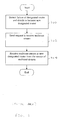
- FIG. 1 is a flowchart illustrating an example of an existing technique for handling the failure of a designated router.
- the process is performed by a non-designated router, and the designated router and non-designated router are configured to support protocol independent multicast - sparse-mode (PIM-SM).
- PIM-SM protocol independent multicast - sparse-mode
- the designated router is responsible for forwarding multicast traffic on a local area network (LAN).
- LAN local area network
- the failure of a designated router is detected and it is decided to become the new designated router.
- a designated router and a non-designated router periodically exchange hello messages.
- a non-designated router has a timer and determines that the designated router has failed if a hello message is not received from the designated router before the timer expires.
- hello messages are used to exchange priority values and the non-designated router with the highest priority value becomes the new designated router.
- a request is sent to receive a multicast stream.
- PIM-SM is supported and PIM Join messages are used.
- a PIM Join message is passed upstream (via any number of intermediary nodes or routers) from the new designated router towards the source of the particular multicast stream.
- downstream refers to the direction towards a requesting host and away from the source of a given multicast stream; downstream refers to the reverse direction.
- a stream refers to a logical or associated group of information being carried over the network (e.g., from a particular source to a particular group/multicast address), traffic refers in general to information that is carrier over a network.
- multicast traffic may comprise content associated with Internet protocol television (IPTV); one multicast stream is associated with content from one television channel and another multicast stream is associated with content from another television channel.
- IPTV Internet protocol television
- the multicast stream is received at the new designated router from the source of the multicast stream.
- the new designated router forwards the received multicast stream to the requesting host on the LAN.
- the amount of time to recover from a designated router failure in this example is equal to the sum of the failure detection time (i.e., step 100), the time for the request to be sent upstream (i.e., step 102), and the time for the multicast stream to be received at the host (i.e., step 104).
- the recovery time is on the order of several seconds and it would be desirable if the recovery time could be reduced.
- FIG 2 is a diagram illustrating an embodiment of a network that includes a non-designated router configured to received, but not forward to a downstream host, multicast traffic to which the downstream host has subscribed.
- requesting host 210 requests a multicast stream that is generated by source 200.
- LAN 212 includes designated router 206, traffic receiving non-designated router 208, and requesting host 210.
- the devices in LAN 212 are connected using an Ethernet connection. In some embodiments, some other type of broadcast connection is used besides an Ethernet connection.
- Designated router 206 is connected to router 202.
- Traffic receiving non-designated router 208 is connected to router 204, which in turn is connected to router 202.
- Router 202 is connected to source 200.
- a network varies from the example shown herein (e.g., different topology, components, types of connections, etc.).
- PIM-SM and Internel Group Management Protocol are used.
- designated router 206 traffic receiving non-designated router 208, and requesting host 210 use IGMP to manage the example multicast group.
- Routers 202, 204, 206, and 208 use PIM-SM to perform routing for the example multicast group.
- one or more protocols besides and/or in addition to PIM-SM and/or IGMP are used.
- designated router 206 is responsible for forwarding the multicast stream on LAN 212. For example, after determining that it should be the designated router, a PIM Join is sent upstream by designated router 206. To properly forward or route the PIM Join message, designated router 206 may consult a routing table and send the PIM Join message to router 202. Upon receiving the PIM Join message, router 202 may consult its own routing table and forward the PIM Join message to source 200. The desired multicast stream is sent from source 200 to requesting host 210 via router 202 and designated router 206.
- router 202 may already be receiving the desired multicast stream and router 202 in such cases may simply forward the multicast stream to designated router 206 without forwarding on the PIM Join to source 200.
- Traffic receiving non-designated router 208 is configured to attract multicast streams requested by the LAN even though it is a non-designated router.
- traffic receiving non-designated router 208 uses the same type of message as designated router 206 to indicate or otherwise signal to source 200 that it desires a particular multicast stream.
- traffic receiving non-designated router 208 may send a PIM Join message to source 200 via routers 204 and 202.
- Router 202, 204, and 208 may each consult routing tables to determine the next node or router to send a PIM Join message to.
- the multicast stream is sent from source 200 to traffic receiving non-designated router 208.
- an intervening router between source 200 and traffic receiving non-designated router 208 i.e., router 202 or 204) is already receiving the desired multicast stream and sends the multicast stream downstream without sending the PIM Join message further upstream.
- traffic receiving non-designated router 208 receives the multicast stream, it does not forward it to requesting host 210 via the Ethernet connection. In some embodiments, traffic receiving non-designated router 208 forwards a received multicast stream only if it determines that designated router 206 has failed and if router 208 is elected as the designated router. An embodiment of determining that a designated router has failed is described in further detail below.
- the recovery time is equal to the amount of time to detect a failure (e.g., instead of the sum of the failure detection time, the time to send a request upstream, and the time for the multicast stream to begin being received at the newly determined designated router, as in the process of Figure 1 ). In some applications, a faster recovery time in the event of a designated router failure is desirable.
- the multicast stream includes "live" content.
- the multicast stream may be IPTV data of a sports game. In these and other scenarios, reducing the recovery time is desirable.
- the techniques disclosed herein are combined or supplemented with other techniques to achieve further improvements.
- a process or mechanism that is capable of detecting the failure of a designated router within a relatively short time may be attractive.
- bidirectional forwarding detection BFD is used. When such embodiments are used, the failure detection time is significantly reduced and the recovery time is in the order of milliseconds.
- LAN 212 includes additional non-designated routers. In various embodiments, whether or not these additional non-designated routers also receive multicast traffic is handled in a variety of ways. In some embodiments, routers are hard-coded or fixed and all non-designated routers are configured to receive multicast traffic. In some embodiments, there is some parameter or variable by which each router is able to be individually configured to receive multicast traffic or not.
- determination of which non-designated routers receive multicast traffic is based on network topography and/or traffic load. For example, if a network has relatively little traffic, there may be little or no drawback to having all non-designated routers receive multicast traffic. As an example of how network topography may be considered in such a decision, in some embodiments, if a path or route associated with a given non-designated router overlaps more than a certain number of hops (or some other unit of measurement) with a path or router associated with the designated router, that non-designated router receives a multicast stream.
- a setting for a particular non-designated router to receive traffic is set manually. For example, the topography of some networks change infrequently and a network administrator configures newly installed non-designated routers to receive multicast traffic or not. In some embodiments, remote access to configure such a setting is available. For example, a network administrator who manages a network distributed over a large geographical area (e.g., a company with offices in many locations) may desire the ability to remotely access a particular non-designated router and turn off/on reception of a multicast stream for that router (e.g., in response to a change in network topology and/or traffic load). In some embodiments, a setting for a particular non-designated router to receive traffic is set automatically. For example, a non-designated router may build a partial or complete map of the network and/or monitor traffic and configure itself to receive a multicast stream or not accordingly.
- a given source generates two or more multicast streams
- a given traffic receiving non-designated router receives two or more multicast streams
- a given host receives or more multicast traffic streams.
- the techniques disclosed herein may be modified as appropriate to accommodate two or more multicast streams.
- Figure 3 is a flowchart illustrating an embodiment of a process for recovering from a designated router failure using a non-designated router that has been configured to receive while in the non-designated state one or more multicast streams.
- the process of Figure 3 is performed by traffic receiving non-designated router 208 of Figure 2 .
- a register or Boolean variable is consulted or accessed in making this determination.
- non-designated routers are hard-coded to receive multicast traffic.
- some subset of non-designated routers receives multicast traffic. If it determined to receive traffic, at 302, a request is sent to receive a multicast stream. For example, traffic receiving non-designated router 208 sends a PIM Join message upstream to source 200 via routers 204 and 202 in Figure 2 .
- a message sent at 302 includes a source address (e.g., of source 200) and/or a multicast address associated with the multicast stream.
- a multicast stream is received but is not sent to a requesting host.
- source 200 sends the multicast stream downstream to traffic receiving non-designated router 208 via routers 202 and 204 but traffic receiving non-designated router 208 does not send it out the Ethernet port connected to requesting host 210.
- hello messages are exchanged periodically and if a traffic receiving non-designated router does not receive a hello message from a designated router for some period of time, it concludes that the designated router has failed. If no failure is detected, a new failure determination is performed at 306.
- a new failure determination is performed at 306. For example, the traffic-receiving non-designated router that becomes the new designated router may fail and another traffic-receiving non-designated router may have to take over as the next designated router. If it is decided to become the designated router, at 310 a multicast stream is sent to a requesting host. The router is already receiving the multicast stream and now forwards it to the requesting host rather than discarding it.
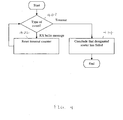
- Figure 4 is a flowchart illustrating an embodiment of a process for detecting the failure of a designated router.
- the process is performed by a traffic receiving non-designated router.
- the example process is used at step 306 in Figure 3 .
- some other process is used for detecting the failure of a designated router.
- the type of event is determined. If a hello message is received, at 402 a timeout counter is reset. In this example, the timeout counter is free running and counts up/down since the last received hello message. If the type of event is a timeout, at 404 it is concluded that the designated router has failed.
- Figure 5 is a flowchart illustrating an embodiment of a process for determining whether to become a designated router.
- the process is performed by a traffic receiving non-designated router.
- the process shown is used at step 308 of Figure 3 . In some embodiments, some other process is used.
- a priority comparison is performed. If the router performing the process does not have the highest priority value, the process ends. If it has the highest priority value and there is a tie, it is determined at 508 if it wins the tie. If so, it becomes the new designated router at 510. If the router has the highest priority value and there is no tie, at 510 it becomes the new designated router.
- steps are taken to ensure that the non-designated router that becomes the new designated router is a traffic receiving one.
- priority values are set so that a traffic receiving non-designated router always has the highest priority value. In some applications, it may be difficult to control the priority values.
- the non-designated router with the highest priority is configured to receive multicast traffic.
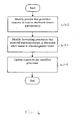
- FIG. 6 is a flowchart illustrating an embodiment of a process for modifying an existing process to be able to receive traffic at a non-designated router.
- an existing process may be implemented in variety of ways, including in hardware (e.g., an application specific integrated circuit (ASIC) or a field programmable gate array (FPGA)) and/or in software (e.g., firmware, macros, executable code, etc.).
- ASIC application specific integrated circuit
- FPGA field programmable gate array
- a process that generates requests to receive a multicast stream is modified appropriately.
- Some existing routers only generate a request to receive multicast traffic when it is the designated router. In some embodiments where a non-designated router always receives multicast traffic, this check is removed. In some embodiments, whether or not a non-designated router receives multicast traffic is configurable. In some embodiments, a process for generating a request to receive a multicast stream is modified to generate such a request based on a register, setting, or Boolean value used to turn on/off reception of a multicast stream.
- a forwarding process is modified so that a received multicast stream is discarded when a router is a non-designated router at 602.
- a forwarding process is modified to include a check that the router is the designated router, otherwise the received multicast stream is discarded.
- routers are updated to use the modified processes.
- firmware or new executable instructions are distributed to the routers and used to update the routers.
- Routers are implemented in a variety of ways and in various embodiments different modifications are needed. The modifications described above are merely examples.
- Figure 7 is a diagram illustrating an embodiment of a network that includes a traffic receiving non-designated router and non-designated router.
- non-designated router 702 and traffic receiving non-designated router 700 are included in LAN 704.
- Non-designated router 702 in this example does not receive the multicast stream associated with source 706 that is desired by requesting host 708.
- both routers 700 and 702 are capable of receiving the multicast stream from source 706, but non-designated router 702 is configured to not receive traffic because of the topology of the example network.
- designated router 710 and non-designated router 702 have relatively different paths (e.g., that pass through routers 712 and 714 and routers 716 and 718, respectively). Sending a multicast stream from source 706 through routers 716 and 718 to non-designated router 702 may adversely affect other traffic passing through those routers.
Landscapes
- Engineering & Computer Science (AREA)
- Computer Networks & Wireless Communication (AREA)
- Signal Processing (AREA)
- Data Exchanges In Wide-Area Networks (AREA)
Claims (11)
- Verfahren zum Weiterleiten eines Multicast-Stroms, die folgenden Schritte umfassend:Bestimmen (300), an einem nicht zugewiesenen Router (208), welches den Multicast-Strom nicht empfängt und nicht für das Senden des Multicast-Stroms an einen Host (210) zuständig ist, ob der Multicast-Strom empfangen werden soll;Senden (302) einer Anforderung für den Empfang des Multicast-Stroms an dem nicht zugewiesenen Router (208), wenn bestimmt wird, dass der Multicast-Strom an dem nicht zugewiesenen Router empfangen werden soll;Empfangen (304) des Multicast-Stroms an dem nicht zugewiesenen Router (208);Senden (310) des empfangenen Multicast-Stroms an den Host (210), wenn ermittelt wird (306, 308), dass ein zugewiesener Router (206), welcher für das Senden des Multicast-Stroms an den Host zuständig ist, ausgefallen ist und der nicht zugewiesene Router (208) als der zugewiesene Router bestimmt wird, undanderenfalls Verwerfen des empfangenen Multicast-Stroms.
- Verfahren nach Anspruch 1, wobei das Bestimmen, ob der Mutticast-Strom empfangen werden soll, zumindest teilweise auf der Netzwerk-Topologie und/oder der Verkehrslast basiert.
- Verfahren nach Anspruch 1, weiterhin umfassend das Erkennen eines Ausfalls des zugewiesenen Routers zumindest teilweise auf einem Timeout basiert.
- Verfahren nach Anspruch 1, weiterhin umfassend, wenn der zugewiesene Router ausfällt:Bestimmen, ob der empfangene Multicast-Strom an den Host gesendet werden soll, wenn eine Vielzahl von nicht zugewiesenen Routern vorhanden ist, die den Multicast-Strom empfangen; undSenden des empfangenen Multicast-Stroms an den Host, wenn bestimmt wird, dass das Senden erfolgen soll.
- Verfahren nach Anspruch 1, wobei ein protokollunabhängiger Multicast-Sparse-Modus verwendet wird.
- Verfahren nach Anspruch 1, wobei ein Internet-Group-Management-Protokoll verwendet wird.
- Verfahren nach Anspruch 1, wobei der Multicast-Strom Daten enthält, welche mit Internetprotokoll-Fernsehen assoziiert sind.
- System zum Weiterleiten eines Multicast-Stroms, umfassend:Einen zugewiesenen Router (206), welcher für das Senden des Multicast-Stroms an einen Host (210) zuständig ist;einen nicht zugewiesenen Router (208), welcher den Multicast-Strom nicht empfängt und nicht für das Senden des Multicast-Stroms an einen Host (210) zuständig ist, wobei der nicht zugewiesene Router konfiguriert ist für:Das Bestimmen, ob der Multicast-Strom empfangen werden soll;das Senden einer Anforderung für den Empfang des Multicast-Stroms, wenn bestimmt wird, dass der Multicast-Strom an dem nicht zugewiesenen Router empfangen werden soll;das Empfangen des Multicast-Stroms;das Senden des empfangenen Multicast-Stroms an den Host, wenn ermittelt wird, dass der zugewiesene Router (206) ausgefallen ist und der nicht zugewiesene Router als der zugewiesene Router bestimmt wird, undanderenfalls das Verwerfen des empfangenen Multicast-Stroms.
- System nach Anspruch 8, wobei, wenn der zugewiesene Router ausfälle, der nicht zugewiesene Router weiterhin konfiguriert ist für:das Bestimmen, ob der empfangene Multicast-Strom an den Host gesendet werden soll, wenn eine Vielzahl von nicht zugewiesenen Routern vorhanden ist, die den Multicast-Strom empfangen; unddas Senden des empfangenen Multicast-Stroms an den Host, wenn bestimmt wird, dass das Senden erfolgen soll.
- Computerprogramm-Produkt zum Weiterleiten eines Multicast-Stroms, wobei das Computerprogramm-Produkt in einem computerlesbaren Medium enthalten ist und Computerbefehle umfasst für:Das Bestimmen (300), an einem nicht zugewiesenen Router (208), welcher den Multicast-Strom nicht empfängt und nicht für das Senden des Multicast-Stroms an einen Host (210) zuständig ist, ob der Multicast-Strom empfangen werden soll;das Senden (302) einer Anforderung für den Empfang des Multicast-Stroms an dem nicht zugewiesenen Router (208), wenn bestimmt wird, dass der Multicast-Strom an dem nicht zugewiesenen Router empfangen werden soll;das Empfangen des Multicast-Stroms an dem nicht zugewiesenen Router (208);das Senden des empfangenen Multicast-Stroms an den Host, wenn ermittelt wird, dass ein zugewiesener Router (206), welcher für das Senden des Multicast-Stroms an den Host zuständig ist, ausgefallen ist und der nicht zugewiesene Router als der zugewiesene Router bestimmt wird.
- Computerprogramm-Produkt nach Anspruch 10, wobei, wenn der zugewiesene Router ausfällt, das Computerprogramm-Produkt weiterhin Computerbefehle umfasst für:Das Bestimmen, ob der empfangene Multicast-Strom an den Host gesendet werden soll, wenn eine Vielzahl von nicht zugewiesenen Routern vorhanden ist, die den Multicast-Strom empfangen; unddas Senden des empfangenen Multicast-Stroms an den Host, wenn bestimmt wird, dass das Senden erfolgen soll
Applications Claiming Priority (2)
| Application Number | Priority Date | Filing Date | Title |
|---|---|---|---|
| US11/710,136 US8576702B2 (en) | 2007-02-23 | 2007-02-23 | Receiving multicast traffic at non-designated routers |
| PCT/IB2008/051779 WO2008102327A2 (en) | 2007-02-23 | 2008-02-13 | Receiving multicast traffic at non-designated routers |
Publications (2)
| Publication Number | Publication Date |
|---|---|
| EP2115973A2 EP2115973A2 (de) | 2009-11-11 |
| EP2115973B1 true EP2115973B1 (de) | 2014-04-02 |
Family
ID=39710592
Family Applications (1)
| Application Number | Title | Priority Date | Filing Date |
|---|---|---|---|
| EP08751149.9A Not-in-force EP2115973B1 (de) | 2007-02-23 | 2008-02-13 | Empfang von multicast-verkehr bei nicht-zugewiesenen routern |
Country Status (4)
| Country | Link |
|---|---|
| US (1) | US8576702B2 (de) |
| EP (1) | EP2115973B1 (de) |
| CN (1) | CN101617512B (de) |
| WO (1) | WO2008102327A2 (de) |
Families Citing this family (18)
| Publication number | Priority date | Publication date | Assignee | Title |
|---|---|---|---|---|
| US9032095B1 (en) | 2004-01-06 | 2015-05-12 | Juniper Networks, Inc. | Routing device having multiple logical routers |
| US20080240096A1 (en) * | 2007-03-29 | 2008-10-02 | Twisted Pair Solutions, Inc. | Method, apparatus, system, and article of manufacture for providing distributed convergence nodes in a communication network environment |
| US7860093B2 (en) * | 2007-12-24 | 2010-12-28 | Cisco Technology, Inc. | Fast multicast convergence at secondary designated router or designated forwarder |
| WO2010002844A2 (en) | 2008-07-01 | 2010-01-07 | Twisted Pair Solutions, Inc. | Method, apparatus, system, and article of manufacture for reliable low-bandwidth information delivery across mixed-mode unicast and multicast networks |
| US8493846B2 (en) | 2009-09-30 | 2013-07-23 | At&T Intellectual Property I, L.P. | Robust multicast broadcasting |
| US8369345B1 (en) * | 2009-11-13 | 2013-02-05 | Juniper Networks, Inc. | Multi-router system having shared network interfaces |
| CN102158415B (zh) * | 2011-04-22 | 2015-01-28 | 中兴通讯股份有限公司 | 本地局域网中组播流量转发方法及组播路由器 |
| US9071546B2 (en) * | 2011-05-20 | 2015-06-30 | Cisco Technology, Inc. | Protocol independent multicast designated router redundancy |
| CN102611566B (zh) * | 2011-12-16 | 2015-01-21 | 华为技术有限公司 | 一种恢复用户业务的方法和装置 |
| US9088517B2 (en) * | 2012-02-08 | 2015-07-21 | Cisco Technology, Inc. | Stitching multicast trees |
| US8842517B2 (en) * | 2012-09-27 | 2014-09-23 | Cisco Technology, Inc. | System and method for maintaining connectivity in a single-hop network environment |
| US9036634B2 (en) * | 2013-01-18 | 2015-05-19 | Lenovo Enterprise Solutions (Singapore) Pte. Ltd. | Multicast route entry synchronization |
| US8976644B2 (en) | 2013-01-18 | 2015-03-10 | International Business Machines Corporation | Multicast traffic forwarding on pruned interface |
| CN106330728B (zh) * | 2015-07-07 | 2019-09-24 | 中兴通讯股份有限公司 | 选举候备指定路由器及指定路由器故障处理的方法、设备 |
| US10257074B1 (en) * | 2015-09-30 | 2019-04-09 | Juniper Networks, Inc. | Avoiding multicast traffic loss in networks having multi-homing designated routers |
| US10348647B2 (en) * | 2017-12-13 | 2019-07-09 | Cisco Technology, Inc. | Graceful designated router handoff |
| US11108622B2 (en) | 2018-11-29 | 2021-08-31 | Hewlett Packard Enterprise Development Lp | Protocol-independent multicast designated router (PIM-DR) failover in a multi-chassis environment |
| US11509494B2 (en) | 2018-11-30 | 2022-11-22 | Cisco Technology, Inc. | Protocol independent multicast (PIM) designated router (DR) election |
Family Cites Families (19)
| Publication number | Priority date | Publication date | Assignee | Title |
|---|---|---|---|---|
| US6385647B1 (en) * | 1997-08-18 | 2002-05-07 | Mci Communications Corporations | System for selectively routing data via either a network that supports Internet protocol or via satellite transmission network based on size of the data |
| US6707796B1 (en) | 1999-05-07 | 2004-03-16 | Nortel Networks Limited | System device and method for reducing forwarding states in a communication system |
| US6751191B1 (en) * | 1999-06-29 | 2004-06-15 | Cisco Technology, Inc. | Load sharing and redundancy scheme |
| US7639680B1 (en) * | 2001-10-04 | 2009-12-29 | Cisco Technology, Inc. | Out of band data base synchronization for OSPF |
| ATE297619T1 (de) * | 2001-10-29 | 2005-06-15 | Nokia Corp | Verfahren zur bereitstellung von multicast- und/oder rundsendediensten zu benutzerendgeräten |
| US7227838B1 (en) * | 2001-12-14 | 2007-06-05 | Cisco Technology, Inc. | Enhanced internal router redundancy |
| US20030193958A1 (en) * | 2002-04-11 | 2003-10-16 | Vidya Narayanan | Methods for providing rendezvous point router redundancy in sparse mode multicast networks |
| US7593346B2 (en) * | 2003-07-31 | 2009-09-22 | Cisco Technology, Inc. | Distributing and balancing traffic flow in a virtual gateway |
| US20050129017A1 (en) * | 2003-12-11 | 2005-06-16 | Alcatel | Multicast flow accounting |
| US7769862B2 (en) * | 2003-12-19 | 2010-08-03 | Check Point Software Technologies Inc. | Method and system for efficiently failing over interfaces in a network |
| US9491084B2 (en) * | 2004-06-17 | 2016-11-08 | Hewlett Packard Enterprise Development Lp | Monitoring path connectivity between teamed network resources of a computer system and a core network |
| US20060182049A1 (en) * | 2005-01-31 | 2006-08-17 | Alcatel | IP multicasting with improved redundancy |
| JP4881564B2 (ja) * | 2005-02-04 | 2012-02-22 | 株式会社日立製作所 | データ転送装置、マルチキャストシステム、およびプログラム |
| CN1731760A (zh) * | 2005-08-05 | 2006-02-08 | 武汉理工大学 | 一种基于泛洪机制的Ad Hoc网络的路由方法 |
| US8099483B2 (en) * | 2005-08-30 | 2012-01-17 | At&T Intellectual Property I, L.P | Dynamic source selection within an IP multicast network |
| US7817535B2 (en) * | 2005-11-02 | 2010-10-19 | Cisco Technology, Inc. | Method of fault tolerance and synchronous failover for broadcast video across the network |
| US8270395B2 (en) * | 2006-01-30 | 2012-09-18 | Juniper Networks, Inc. | Forming multicast distribution structures using exchanged multicast optimization data |
| US7929420B2 (en) * | 2006-02-02 | 2011-04-19 | Avaya, Inc. | Method and apparatus for learning VRRP backup routers |
| US20070239879A1 (en) * | 2006-04-10 | 2007-10-11 | Sbc Knowledge Ventures, L.P. | Method and apparatus for router recovery |
-
2007
- 2007-02-23 US US11/710,136 patent/US8576702B2/en active Active
-
2008
- 2008-02-13 EP EP08751149.9A patent/EP2115973B1/de not_active Not-in-force
- 2008-02-13 CN CN2008800058359A patent/CN101617512B/zh not_active Expired - Fee Related
- 2008-02-13 WO PCT/IB2008/051779 patent/WO2008102327A2/en not_active Ceased
Also Published As
| Publication number | Publication date |
|---|---|
| CN101617512A (zh) | 2009-12-30 |
| EP2115973A2 (de) | 2009-11-11 |
| US20080205395A1 (en) | 2008-08-28 |
| US8576702B2 (en) | 2013-11-05 |
| CN101617512B (zh) | 2012-10-10 |
| WO2008102327A3 (en) | 2008-12-04 |
| WO2008102327A2 (en) | 2008-08-28 |
Similar Documents
| Publication | Publication Date | Title |
|---|---|---|
| EP2115973B1 (de) | Empfang von multicast-verkehr bei nicht-zugewiesenen routern | |
| CN101669105B (zh) | 多播快速重新路由 | |
| JP5899305B2 (ja) | ネットワークノードを動作させる技術 | |
| US10243841B2 (en) | Multicast fast reroute at access devices with controller implemented multicast control plane | |
| US20070133530A1 (en) | Acknowledgement-based rerouting of multicast traffic | |
| CN112565046A (zh) | 同步多播路由器能力 | |
| JP2013520137A (ja) | パケットネットワークにおけるクロック分配のためのレート変動型マルチキャスト伝送 | |
| CN103348630A (zh) | 用于在组播网络中控制选择的方法 | |
| US20080019265A1 (en) | Systems and methods for configuring a network to include redundant upstream connections using an upstream control protocol | |
| CN101674199A (zh) | 用于实现网络故障时切换的方法及查询器 | |
| US10439929B2 (en) | Graceful recovery of a multicast-enabled switch | |
| US8553691B2 (en) | Efficient multicasting in a distributed system architecture | |
| CN100417141C (zh) | 一种组播业务实现方法 | |
| EP3059910B1 (de) | Verfahren und system für redundanzschutz | |
| CN102308518B (zh) | 使用计算机网络的方法 | |
| WO2016131359A1 (zh) | 环型组网组播线路切换的方法及装置 | |
| JP4822905B2 (ja) | ブリッジ装置、ブリッジ装置における制御方法、及び制御プログラム | |
| JP6042549B2 (ja) | コンピュータネットワークを稼働する方法 | |
| JP5486547B2 (ja) | マルチキャスト配信システム、配信ルータ、および、マルチキャスト配信方法 | |
| CN118283539B (zh) | 一种组播切换方法、装置、电子设备及存储介质 | |
| CN108881006A (zh) | 一种关于使用计算机网络的方法 | |
| HK1189310A (en) | Technique for operating a network node |
Legal Events
| Date | Code | Title | Description |
|---|---|---|---|
| PUAI | Public reference made under article 153(3) epc to a published international application that has entered the european phase |
Free format text: ORIGINAL CODE: 0009012 |
|
| 17P | Request for examination filed |
Effective date: 20090923 |
|
| AK | Designated contracting states |
Kind code of ref document: A2 Designated state(s): AT BE BG CH CY CZ DE DK EE ES FI FR GB GR HR HU IE IS IT LI LT LU LV MC MT NL NO PL PT RO SE SI SK TR |
|
| 17Q | First examination report despatched |
Effective date: 20100125 |
|
| RAP1 | Party data changed (applicant data changed or rights of an application transferred) |
Owner name: ALCATEL LUCENT |
|
| DAX | Request for extension of the european patent (deleted) | ||
| REG | Reference to a national code |
Ref country code: DE Ref legal event code: R079 Ref document number: 602008031266 Country of ref document: DE Free format text: PREVIOUS MAIN CLASS: H04L0012560000 Ipc: H04L0012751000 |
|
| 111Z | Information provided on other rights and legal means of execution |
Free format text: AT BE BG CH CY CZ DE DK EE ES FI FR GB GR HR HU IE IS IT LI LT LU LV MC MT NL NO PL PT RO SE SI SK TR Effective date: 20130410 |
|
| GRAP | Despatch of communication of intention to grant a patent |
Free format text: ORIGINAL CODE: EPIDOSNIGR1 |
|
| RIC1 | Information provided on ipc code assigned before grant |
Ipc: H04L 12/707 20130101ALI20130917BHEP Ipc: H04L 12/751 20130101AFI20130917BHEP Ipc: H04L 12/18 20060101ALI20130917BHEP Ipc: H04L 12/761 20130101ALI20130917BHEP Ipc: H04L 12/703 20130101ALI20130917BHEP |
|
| INTG | Intention to grant announced |
Effective date: 20131011 |
|
| GRAS | Grant fee paid |
Free format text: ORIGINAL CODE: EPIDOSNIGR3 |
|
| GRAA | (expected) grant |
Free format text: ORIGINAL CODE: 0009210 |
|
| AK | Designated contracting states |
Kind code of ref document: B1 Designated state(s): AT BE BG CH CY CZ DE DK EE ES FI FR GB GR HR HU IE IS IT LI LT LU LV MC MT NL NO PL PT RO SE SI SK TR |
|
| REG | Reference to a national code |
Ref country code: GB Ref legal event code: FG4D |
|
| REG | Reference to a national code |
Ref country code: CH Ref legal event code: EP Ref country code: AT Ref legal event code: REF Ref document number: 660698 Country of ref document: AT Kind code of ref document: T Effective date: 20140415 |
|
| REG | Reference to a national code |
Ref country code: IE Ref legal event code: FG4D |
|
| REG | Reference to a national code |
Ref country code: DE Ref legal event code: R096 Ref document number: 602008031266 Country of ref document: DE Effective date: 20140515 |
|
| REG | Reference to a national code |
Ref country code: CH Ref legal event code: PCOW Free format text: NEW ADDRESS: 148/152 ROUTE DE LA REINE, 92100 BOULOGNE-BILLANCOURT (FR) |
|
| REG | Reference to a national code |
Ref country code: AT Ref legal event code: MK05 Ref document number: 660698 Country of ref document: AT Kind code of ref document: T Effective date: 20140402 |
|
| RAP2 | Party data changed (patent owner data changed or rights of a patent transferred) |
Owner name: ALCATEL LUCENT |
|
| REG | Reference to a national code |
Ref country code: NL Ref legal event code: VDEP Effective date: 20140402 |
|
| REG | Reference to a national code |
Ref country code: LT Ref legal event code: MG4D |
|
| PG25 | Lapsed in a contracting state [announced via postgrant information from national office to epo] |
Ref country code: GR Free format text: LAPSE BECAUSE OF FAILURE TO SUBMIT A TRANSLATION OF THE DESCRIPTION OR TO PAY THE FEE WITHIN THE PRESCRIBED TIME-LIMIT Effective date: 20140703 Ref country code: IS Free format text: LAPSE BECAUSE OF FAILURE TO SUBMIT A TRANSLATION OF THE DESCRIPTION OR TO PAY THE FEE WITHIN THE PRESCRIBED TIME-LIMIT Effective date: 20140802 Ref country code: CY Free format text: LAPSE BECAUSE OF FAILURE TO SUBMIT A TRANSLATION OF THE DESCRIPTION OR TO PAY THE FEE WITHIN THE PRESCRIBED TIME-LIMIT Effective date: 20140402 Ref country code: FI Free format text: LAPSE BECAUSE OF FAILURE TO SUBMIT A TRANSLATION OF THE DESCRIPTION OR TO PAY THE FEE WITHIN THE PRESCRIBED TIME-LIMIT Effective date: 20140402 Ref country code: BG Free format text: LAPSE BECAUSE OF FAILURE TO SUBMIT A TRANSLATION OF THE DESCRIPTION OR TO PAY THE FEE WITHIN THE PRESCRIBED TIME-LIMIT Effective date: 20140702 Ref country code: NO Free format text: LAPSE BECAUSE OF FAILURE TO SUBMIT A TRANSLATION OF THE DESCRIPTION OR TO PAY THE FEE WITHIN THE PRESCRIBED TIME-LIMIT Effective date: 20140702 Ref country code: NL Free format text: LAPSE BECAUSE OF FAILURE TO SUBMIT A TRANSLATION OF THE DESCRIPTION OR TO PAY THE FEE WITHIN THE PRESCRIBED TIME-LIMIT Effective date: 20140402 Ref country code: LT Free format text: LAPSE BECAUSE OF FAILURE TO SUBMIT A TRANSLATION OF THE DESCRIPTION OR TO PAY THE FEE WITHIN THE PRESCRIBED TIME-LIMIT Effective date: 20140402 Ref country code: CZ Free format text: LAPSE BECAUSE OF FAILURE TO SUBMIT A TRANSLATION OF THE DESCRIPTION OR TO PAY THE FEE WITHIN THE PRESCRIBED TIME-LIMIT Effective date: 20140402 |
|
| PG25 | Lapsed in a contracting state [announced via postgrant information from national office to epo] |
Ref country code: HR Free format text: LAPSE BECAUSE OF FAILURE TO SUBMIT A TRANSLATION OF THE DESCRIPTION OR TO PAY THE FEE WITHIN THE PRESCRIBED TIME-LIMIT Effective date: 20140402 Ref country code: PL Free format text: LAPSE BECAUSE OF FAILURE TO SUBMIT A TRANSLATION OF THE DESCRIPTION OR TO PAY THE FEE WITHIN THE PRESCRIBED TIME-LIMIT Effective date: 20140402 Ref country code: AT Free format text: LAPSE BECAUSE OF FAILURE TO SUBMIT A TRANSLATION OF THE DESCRIPTION OR TO PAY THE FEE WITHIN THE PRESCRIBED TIME-LIMIT Effective date: 20140402 Ref country code: SE Free format text: LAPSE BECAUSE OF FAILURE TO SUBMIT A TRANSLATION OF THE DESCRIPTION OR TO PAY THE FEE WITHIN THE PRESCRIBED TIME-LIMIT Effective date: 20140402 Ref country code: LV Free format text: LAPSE BECAUSE OF FAILURE TO SUBMIT A TRANSLATION OF THE DESCRIPTION OR TO PAY THE FEE WITHIN THE PRESCRIBED TIME-LIMIT Effective date: 20140402 Ref country code: ES Free format text: LAPSE BECAUSE OF FAILURE TO SUBMIT A TRANSLATION OF THE DESCRIPTION OR TO PAY THE FEE WITHIN THE PRESCRIBED TIME-LIMIT Effective date: 20140402 |
|
| PG25 | Lapsed in a contracting state [announced via postgrant information from national office to epo] |
Ref country code: PT Free format text: LAPSE BECAUSE OF FAILURE TO SUBMIT A TRANSLATION OF THE DESCRIPTION OR TO PAY THE FEE WITHIN THE PRESCRIBED TIME-LIMIT Effective date: 20140804 |
|
| REG | Reference to a national code |
Ref country code: DE Ref legal event code: R097 Ref document number: 602008031266 Country of ref document: DE |
|
| PG25 | Lapsed in a contracting state [announced via postgrant information from national office to epo] |
Ref country code: DK Free format text: LAPSE BECAUSE OF FAILURE TO SUBMIT A TRANSLATION OF THE DESCRIPTION OR TO PAY THE FEE WITHIN THE PRESCRIBED TIME-LIMIT Effective date: 20140402 Ref country code: BE Free format text: LAPSE BECAUSE OF FAILURE TO SUBMIT A TRANSLATION OF THE DESCRIPTION OR TO PAY THE FEE WITHIN THE PRESCRIBED TIME-LIMIT Effective date: 20140402 Ref country code: SK Free format text: LAPSE BECAUSE OF FAILURE TO SUBMIT A TRANSLATION OF THE DESCRIPTION OR TO PAY THE FEE WITHIN THE PRESCRIBED TIME-LIMIT Effective date: 20140402 Ref country code: EE Free format text: LAPSE BECAUSE OF FAILURE TO SUBMIT A TRANSLATION OF THE DESCRIPTION OR TO PAY THE FEE WITHIN THE PRESCRIBED TIME-LIMIT Effective date: 20140402 Ref country code: RO Free format text: LAPSE BECAUSE OF FAILURE TO SUBMIT A TRANSLATION OF THE DESCRIPTION OR TO PAY THE FEE WITHIN THE PRESCRIBED TIME-LIMIT Effective date: 20140402 |
|
| PLBE | No opposition filed within time limit |
Free format text: ORIGINAL CODE: 0009261 |
|
| STAA | Information on the status of an ep patent application or granted ep patent |
Free format text: STATUS: NO OPPOSITION FILED WITHIN TIME LIMIT |
|
| REG | Reference to a national code |
Ref country code: FR Ref legal event code: PLFP Year of fee payment: 8 |
|
| 26N | No opposition filed |
Effective date: 20150106 |
|
| PG25 | Lapsed in a contracting state [announced via postgrant information from national office to epo] |
Ref country code: IT Free format text: LAPSE BECAUSE OF FAILURE TO SUBMIT A TRANSLATION OF THE DESCRIPTION OR TO PAY THE FEE WITHIN THE PRESCRIBED TIME-LIMIT Effective date: 20140402 |
|
| REG | Reference to a national code |
Ref country code: DE Ref legal event code: R097 Ref document number: 602008031266 Country of ref document: DE Effective date: 20150106 |
|
| PG25 | Lapsed in a contracting state [announced via postgrant information from national office to epo] |
Ref country code: SI Free format text: LAPSE BECAUSE OF FAILURE TO SUBMIT A TRANSLATION OF THE DESCRIPTION OR TO PAY THE FEE WITHIN THE PRESCRIBED TIME-LIMIT Effective date: 20140402 |
|
| PG25 | Lapsed in a contracting state [announced via postgrant information from national office to epo] |
Ref country code: LU Free format text: LAPSE BECAUSE OF FAILURE TO SUBMIT A TRANSLATION OF THE DESCRIPTION OR TO PAY THE FEE WITHIN THE PRESCRIBED TIME-LIMIT Effective date: 20150213 |
|
| REG | Reference to a national code |
Ref country code: CH Ref legal event code: PL |
|
| PG25 | Lapsed in a contracting state [announced via postgrant information from national office to epo] |
Ref country code: MC Free format text: LAPSE BECAUSE OF FAILURE TO SUBMIT A TRANSLATION OF THE DESCRIPTION OR TO PAY THE FEE WITHIN THE PRESCRIBED TIME-LIMIT Effective date: 20140402 Ref country code: CH Free format text: LAPSE BECAUSE OF NON-PAYMENT OF DUE FEES Effective date: 20150228 Ref country code: LI Free format text: LAPSE BECAUSE OF NON-PAYMENT OF DUE FEES Effective date: 20150228 |
|
| REG | Reference to a national code |
Ref country code: IE Ref legal event code: MM4A |
|
| PG25 | Lapsed in a contracting state [announced via postgrant information from national office to epo] |
Ref country code: IE Free format text: LAPSE BECAUSE OF NON-PAYMENT OF DUE FEES Effective date: 20150213 |
|
| REG | Reference to a national code |
Ref country code: FR Ref legal event code: PLFP Year of fee payment: 9 |
|
| PGFP | Annual fee paid to national office [announced via postgrant information from national office to epo] |
Ref country code: DE Payment date: 20160218 Year of fee payment: 9 |
|
| PGFP | Annual fee paid to national office [announced via postgrant information from national office to epo] |
Ref country code: FR Payment date: 20160218 Year of fee payment: 9 Ref country code: GB Payment date: 20160217 Year of fee payment: 9 |
|
| PG25 | Lapsed in a contracting state [announced via postgrant information from national office to epo] |
Ref country code: MT Free format text: LAPSE BECAUSE OF FAILURE TO SUBMIT A TRANSLATION OF THE DESCRIPTION OR TO PAY THE FEE WITHIN THE PRESCRIBED TIME-LIMIT Effective date: 20140402 |
|
| PG25 | Lapsed in a contracting state [announced via postgrant information from national office to epo] |
Ref country code: HU Free format text: LAPSE BECAUSE OF FAILURE TO SUBMIT A TRANSLATION OF THE DESCRIPTION OR TO PAY THE FEE WITHIN THE PRESCRIBED TIME-LIMIT; INVALID AB INITIO Effective date: 20080213 |
|
| PG25 | Lapsed in a contracting state [announced via postgrant information from national office to epo] |
Ref country code: TR Free format text: LAPSE BECAUSE OF FAILURE TO SUBMIT A TRANSLATION OF THE DESCRIPTION OR TO PAY THE FEE WITHIN THE PRESCRIBED TIME-LIMIT Effective date: 20140402 |
|
| REG | Reference to a national code |
Ref country code: DE Ref legal event code: R119 Ref document number: 602008031266 Country of ref document: DE |
|
| GBPC | Gb: european patent ceased through non-payment of renewal fee |
Effective date: 20170213 |
|
| REG | Reference to a national code |
Ref country code: FR Ref legal event code: ST Effective date: 20171031 |
|
| PG25 | Lapsed in a contracting state [announced via postgrant information from national office to epo] |
Ref country code: FR Free format text: LAPSE BECAUSE OF NON-PAYMENT OF DUE FEES Effective date: 20170228 Ref country code: DE Free format text: LAPSE BECAUSE OF NON-PAYMENT OF DUE FEES Effective date: 20170901 |
|
| PG25 | Lapsed in a contracting state [announced via postgrant information from national office to epo] |
Ref country code: GB Free format text: LAPSE BECAUSE OF NON-PAYMENT OF DUE FEES Effective date: 20170213 |