EP2115134B1 - citrullinierte Enolase-Peptide - Google Patents
citrullinierte Enolase-Peptide Download PDFInfo
- Publication number
- EP2115134B1 EP2115134B1 EP08701940A EP08701940A EP2115134B1 EP 2115134 B1 EP2115134 B1 EP 2115134B1 EP 08701940 A EP08701940 A EP 08701940A EP 08701940 A EP08701940 A EP 08701940A EP 2115134 B1 EP2115134 B1 EP 2115134B1
- Authority
- EP
- European Patent Office
- Prior art keywords
- peptide
- enolase
- citrullinated
- rheumatoid arthritis
- individual
- Prior art date
- Legal status (The legal status is an assumption and is not a legal conclusion. Google has not performed a legal analysis and makes no representation as to the accuracy of the status listed.)
- Active
Links
Images




Classifications
-
- C—CHEMISTRY; METALLURGY
- C12—BIOCHEMISTRY; BEER; SPIRITS; WINE; VINEGAR; MICROBIOLOGY; ENZYMOLOGY; MUTATION OR GENETIC ENGINEERING
- C12N—MICROORGANISMS OR ENZYMES; COMPOSITIONS THEREOF; PROPAGATING, PRESERVING, OR MAINTAINING MICROORGANISMS; MUTATION OR GENETIC ENGINEERING; CULTURE MEDIA
- C12N9/00—Enzymes; Proenzymes; Compositions thereof; Processes for preparing, activating, inhibiting, separating or purifying enzymes
- C12N9/88—Lyases (4.)
-
- A—HUMAN NECESSITIES
- A61—MEDICAL OR VETERINARY SCIENCE; HYGIENE
- A61P—SPECIFIC THERAPEUTIC ACTIVITY OF CHEMICAL COMPOUNDS OR MEDICINAL PREPARATIONS
- A61P19/00—Drugs for skeletal disorders
- A61P19/02—Drugs for skeletal disorders for joint disorders, e.g. arthritis, arthrosis
Definitions
- the present invention relates to the use of citrullinated enolase peptides in medicine.
- the invention relates to the use of citrullinated enolase peptides in aiding in diagnosing, prognosing, preventing or delaying onset of or treating rheumatoid arthritis, methods of distinguishing between different types or stages of rheumatoid arthritis, of identifying an individual at risk of developing rheumatoid arthritis, and of monitoring efficacy of a treatment regime in an individual being treated for rheumatoid arthritis, using the citrullinated enolase peptide to detect or capture antibodies associated with rheumatoid arthritis.
- Rheumatoid arthritis is a chronic, inflammatory joint disorder that is considered to be autoimmune, although the autoantigens that trigger and sustain the immune response remain unknown.
- the main genetic risk factor is a sequence common to several HLA DRB1 alleles known as the shared epitope (SE) (reviewed in Silman and Pearson (2002) Arthritis Res 4:S265-S272 ).
- SE shared epitope
- Environmental factors which affect the risk of RA are thought to include female sex hormones, diet, cigarette smoking and exposure to silica dust (reviewed in Oliver and Silman (2006) Scand J Rheumatol 35: 169-174 .
- Epstein-Barr virus Exposure to infection has been suggested to act as a trigger for RA, and a number of agents have been implicated, including Epstein-Barr virus, parvovirus, Proteus and Mycoplasma (Silman and Pearson, supra ). Findings which make Epstein-Bar virus a promising candidate include the discovery that antibodies in RA cross-react with EBV nuclear antigen, sequence similarity between EBV glycoprotein and HLA DRB1-SE and EBV DNA load in peripheral blood mononuclear cells of RA patients has been found to be 10 times that of controls (Oliver and Silman, supra ; Balandraud, Roudier and Roudier (2004) Autoimmunity Rev 3:362-367 ).
- the staphylococcal enterotoxin B has also been suggested to play a critical role in the pathogenesis of RA ( Origuchi et al (1995) Ann Rheum Dis 54:713-720 ), as has human parvovirus B19 ( Takahashi et al (1998) Proc Natl Acad Sci USA 95:8227-8232 ).
- other researchers have cautioned against ignoring the possibility that RA is unrelated to infection, concluding that there is no overwhelming evidence linking any single known infectious agent with RA ( Carty, Snowden and Silman (2004) Ann Rheum Dis 63:46-49 ).
- rheumatoid factors Circulating IgM antibodies that are specific for IgG are present in up to 75% of patients with RA, and are known as rheumatoid factors. However, rheumatoid factors are also present in patients with other diseases and in up to 5% of healthy individuals ( Mageed RA: The RF antigen. In Manual of Biological Markers of Disease Edited by: van Venrooij WJ, Maini RN. Dordrecht: Kluwer Academic Publishing; 1996:1-27 ).
- antiperinuclear factor Nienhuis RL & Mandema E, Ann Rheum Dis 1964, 23:302-305
- antikeratin antibodies Young BJ et al, Br Med J 1979, 2:97-99 . Because both antiperinuclear factor and antikeratin antibodies react with human filaggrin ( Sebbag M et al, J Clin Invest 1995, 95:2672-2679 ) they were collectively designated "antifilaggrin antibodies”.
- filaggrin is notably absent from the RA joint ( Nijenhuis S et al, Clin Chim Acta 2004, 350:17-34 ).
- Citrullinated fibrin is present in interstitial deposits in the synovial membrane (Masson-Bessiere C et al (supra )) and is recognised by anti- filaggrin antibodies. Endogenous citrullination of fibrin has also been demonstrated in murine models of arthritis ( Vossenaar ER et al, Arthritis Rheum 2003, 48-2489-2500 ).
- ACPAs anti-citrullinated protein antibodies
- anti-SA antibodies which bind citrullinated vimentin
- Vossenaar ER et al Arthritis Res Ther 2004, 6:R142-R150
- Vossenaar ER et al Ann Rheum Dis 2004, 63:373-381
- Despres N et al J. Rheumatol 1994, 21:1027-1033
- Anti-citrullinated collagen type II antibodies have also been described ( Burkhardt et al (2005) Eur. J. Immunol.
- citrullinated ⁇ -enolase ( Kinloch et al (2005) Arthritis Research & Therapy 7:R1421-R1429 ). Sera of RA patients reacted with citrullinated ⁇ -enolase, and a commercially available antibody against ⁇ -enolase recognized a band co-migrating with purified ⁇ -enolase in synovial cell lysates from RA patients. The band which RA sera reacted with was excised and identified by mass spectrometry as citrullinated ⁇ -enolase.
- a single cyclic citrullinated peptide derived from filaggrin has been used as the basis of an ELISA test for rheumatoid arthritis, although the sensitivity of the test was not as high as the sensitivity of IgM rheumatoid factors (reviewed in E.R. Vossenaar & W.J. van Venrooij, Clin. Applied Immunol. Rev. 4 (2004) 239-262 ).
- a second generation test, anti-CCP2 based on synthetic cyclic citrullinated peptides having no homology with filaggrin or other known proteins is preferred (Vossenaar & van Venrooij (supra)).
- the anti-CCP2 assay is more sensitive (up to 80%) and specific (97%) for RA than rheumatoid factors are ( Nijenhuis S et al, Clin Chim Acta 2004, 350:17-34 ). Anti-CCPs may occur early in disease ( van Gaalen Fa et al, Arthritis Rheum 2004, 50:709-715 ), or even before clinical manifestations ( Rantapaa-Dahlqvist S et al, Arthritis Rheum 2003, 48:2741-2749 ).
- Anti-CCP positivity also predicts a more aggressive form of RA ( Vencovsky J et al, Ann Rheum Dis 2003, 62:427-430 ; Forslind K et al, Ann Rheum Dis 2004, 63:1090-1095 ).
- Schellekens et al (Arthritis Rheum. (2000) 43(1):155-63 ) used a cyclic peptide having the sequence HQCHQESTXGRSRGRCGRSGS where X is citrulline as the basis for a anti-CCP test.
- WO 01/46222 to Innogenetics N.V. describes synthetic citrulline-containing peptides which are recognised by RA sera.
- WO 03/050542 and EP 1 456 662 B1 to Stichting voor de Technische Wetenschappen describe a number of peptides that were identified after screening a library of synthetic cyclic citrullinated peptides with a pool of RA sera.
- the commercial anti-CCP2 assay was developed based on a proprietary composition using some or all of these peptides, to facilitate and standardise the screening of RA sera for the presence of anti-citrullinated protein reactivity.
- the assay is available from Euro-diagnostica AB, Medeon, SE-205 12 Malmo, Sweden as "Immunoscan RA" (Catalogue No. RA-96RT).
- Vossenaar & van Venrooij ( supra ) report that the anti-CCP2 ELISA is commercially available from Euro-Diagnostica, Arnhem, The Netherlands; Axis-Shield, Dundee, Scotland; INOVA, San Diego, USA and that all of these companies use the same type of CCP2 peptides in their assay.
- the assay has been reported to have a sensitivity of 60%-80%. Average sensitivity is around 70%. However, since anti-CCP positivity is also a severity factor for RA, the sensitivity will depend on the RA-population in which the sensitivity was determined.
- the commercial anti-CCP2 test is useful, it is based on several different artificial synthetic peptides that do not correspond to any known protein sequences, rather than a single peptide derived from a genuine RA epitope. Therefore, reactivity in the anti-CCP2 test may not reflect a causative mechanism. It is also a poor marker of disease subsets. Since the CCP2 test comprises several different epitopes, it diagnoses CCP positive RA, but this group of patients might comprise several disease subsets, with different disease course, that might need different treatments.
- Citrullinated ⁇ -enolase peptide can form the basis of a new diagnostic test for RA, which complements the existing anti-CCP assay. It is surprising that this test is highly specific for RA, as antibodies to ⁇ -enolase have been detected in a wide range of autoimmune and other diseases.
- Enolase is a glycolytic enzyme which is believed to have been conserved through millions of years of evolution, and which generally has a cytoplasmic location (reviewed in Pancholi (2001) Cell Mol Life Sci 58:902-920 ). In vertebrates, the enzyme occurs as three isoforms: ⁇ -enolase is found in a variety of tissues including liver and joints; ⁇ -enolase is almost exclusively found in muscle tissues; and ⁇ -enolase is found in neuron and neuroendocrine tissues. In addition to its enzymatic functions, ⁇ -enolase is thought to be a receptor for plasminogen, and is expressed on the surface of various eukaryotic cells including neutrophils, monocytes, T cells and B cells.
- Enolase also acts as a plasminogen receptor on the surface of group A streptococci.
- ⁇ -enolase has been reported to be an immunodominant antigen in patients suffering from systemic candidiasis (Pancholi 2001 (supra)) and bakers' yeast ( Saccharomyces cerevisiae ) enolase has been identified as an important allergen in inhalant allergies to bakers' yeast (Pancholi 2001 ( supra )).
- systemic candidiasis Pancholi 2001 (supra)
- bakers' yeast Saccharomyces cerevisiae
- enolase has been identified as an important allergen in inhalant allergies to bakers' yeast (Pancholi 2001 ( supra )).
- immune reactions to self enolases have also been described.
- Anti-enolase antibodies have been identified in a variety of autoimmune diseases, in particular systemic lupus erythromatosus (SLE), vasculitis, nephritis, ulcerative colitis, Crohn's disease, primary sclerosing cholangitis, biliary cirrhosis, autoimmune hepatitis, polyglandular candidal ectodermal dystrophy, discoid lupus erythematosus, cancer-associated retinopathy, endometriosis and acute rheumatic fever.
- SLE systemic lupus erythromatosus
- vasculitis nephritis
- ulcerative colitis Crohn's disease
- primary sclerosing cholangitis biliary cirrhosis
- autoimmune hepatitis polyglandular candidal ectodermal dystrophy
- discoid lupus erythematosus cancer-associated
- ⁇ -enolase has also more recently been identified as an autoantigen in early rheumatoid arthritis ( Saulot et al (2002) Anthritis & Rheumatism 46:1196-1201 ), Hashimoto's encephalopathy ( Fujii et al (2005) J Neuroimmunol 162: 130-136 ) and lymphocytic hypophysitis ( O'Dwyer et al (2002) J Clin Endocrinol & Metab 87:752-757 ).
- antibodies present in patient sera were additionally found to react with S. cerevisiae enolase.
- the present inventors surprisingly found that antibodies in sera from RA patients reacted preferentially to a single peptide 5-21 of citrullinated human ⁇ -enolase, of which an immunodominant epitope was identified surrounding the second citrulline residue, at position 15.
- a first aspect of the invention provides a citrullinated enolase peptide consisting of (a) a region of human ⁇ -enolase consisting of fewer than fifty but at least eight of amino acids encompassing amino acids 14 to 16 of human ⁇ -enolase in which amino acid 15 is citrulline and (b) optionally, further amino acids N-terminal and/or C-terminal to the region of (a), where said further amino acids are not derived from human ⁇ -enolase, for use in medicine.
- Amino acids 14 to 16 of human ⁇ -enolase are SRG (SXG when citrullinated, with X representing a citrulline residue), which the present inventors believe to be a key region of the immunodominant epitope of citrullinated human ⁇ -enolase in RA.
- SRG SXG when citrullinated, with X representing a citrulline residue
- the full length human ⁇ -enolase protein sequence (NCBI Accession No. P006733) is given below.
- a region of human ⁇ -enolase we mean a single contiguous sequence of human ⁇ -enolase.
- a region of human ⁇ -enolase consisting of five to 150 amino acids encompassing amino acids 14 to 16 of human ⁇ -enolase in which amino acid 15 is citrulline or an analogue thereof is a region in which SXG must be contiguous with at least two amino acids which occur immediately adjacent to SXG in human ⁇ -enolase.
- the region of human ⁇ -enolase consists of or comprises a pentapeptide motif selected from FDSXG, DSXGN and SXGNP.
- the region of human ⁇ -enolase may comprise further contiguous sequence, which may be N-terminal to the first residue of any one of these pentapeptide motifs, or C-terminal to the last residue of any one of these pentapeptide motifs, or both.
- the region of human ⁇ -enolase consists of fewer than, , 50, 45, 40, 35, 30, 25, 20 or fewer than 15 amino acids. For example, it may consist of 14, 13, 12, 11, 10, 9 or 8 amino acids.
- the citrullinated enolase peptide comprises the region of human ⁇ -enolase and may also comprise further amino acids (not derived from human ⁇ -enolase), typically N-terminal or C-terminal to the region.
- the citrullinated enolase peptide may contain a short peptide tag such as a glutathione S-transferase tag to facilitate purification of the citrullinated enolase peptide.
- the citrullinated enolase peptide may be a fusion of a region of human ⁇ -enolase and a further polypeptide sequence.
- a cysteine residue may be included at each of the N- and C-termini.
- the region of human ⁇ -enolase comprises or consists of KIHAXEIFDSXGNPTVE or KIHAREIFDSXGNPTVE in which X is citrulline or an analogue thereof, which corresponds to positions 5-21 of the full length human ⁇ -enolase protein.
- the citrullinated enolase peptide is CKIHAXEIFDSXGNPTVEC (Peptide 1A) or CKIHAREIFDSXGNPTVEC (Peptide 1B).
- peptide we include not only molecules in which amino acid residues are joined by peptide (-CO-NH-) linkages but also molecules in which the peptide bond is reversed.
- retro-inverso peptidomimetics may be made using methods known in the art, for example such as those described in Meziere et al (1997) J. Immunol. 159, 3230-3237 . This approach involves making pseudopeptides containing changes involving the backbone, and not the orientation of side chains.
- Retro-inverse peptides which contain NH-CO bonds instead of CO-NH peptide bonds, are much more resistant to proteolysis.
- the peptide bond may be dispensed with altogether provided that an appropriate linker moiety which retains the spacing between the C ⁇ atoms of the amino acid residues is used; it is particularly preferred if the linker moiety has substantially the same charge distribution and substantially the same planarity of a peptide bond.
- the peptide may conveniently be blocked at its N- or C-terminus so as to help reduce susceptibility to exoproteolytic digestion.
- Peptides (at least those containing peptide linkages between amino acid residues) may be synthesised by the Fmoc-polyamide mode of solid-phase peptide synthesis as disclosed by Lu et al (1981) J. Org. Chem. 46, 3433 and references therein. Temporary N-amino group protection is afforded by the 9-fluorenylmethyloxycarbonyl (Fmoc) group. Repetitive cleavage of this highly base-labile protecting group is effected using 20% piperidine in N,N-dimethylformamide.
- Side-chain functionalities may be protected as their butyl ethers (in the case of serine threonine and tyrosine), butyl esters (in the case of glutamic acid and aspartic acid), butyloxycarbonyl derivative (in the case of lysine and histidine), trityl derivative (in the case of cysteine) and 4-methoxy-2,3,6-trimethylbenzenesulphonyl derivative (in the case of arginine).
- glutamine or asparagine are C-terminal residues, use is made of the 4,4'-dimethoxybenzhydryl group for protection of the side chain amido functionalities.
- the solid-phase support is based on a polydimethyl-acrylamide polymer constituted from the three monomers dimethylacrylamide (backbone-monomer), bisacryloylethylene diamine (cross linker) and acryloylsarcosine methyl ester (functionalising agent).
- the peptide-to-resin cleavable linked agent used is the acid-labile 4-hydroxymethyl-phenoxyacetic acid derivative. All amino acid derivatives are added as their preformed symmetrical anhydride derivatives with the exception of asparagine and glutamine, which are added using a reversed N,N-dicyclohexyl-carbodiimide/1-hydroxybenzotriazole mediated coupling procedure.
- Any scavengers present are removed by a simple extraction procedure which on lyophilisation of the aqueous phase affords the crude peptide free of scavengers.
- Reagents for peptide synthesis are generally available from Calbiochem-Novabiochem (UK) Ltd, Nottingham NG7 2QJ, UK. Purification may be effected by any one, or a combination of, techniques such as size exclusion chromatography, ion-exchange chromatography and (principally) reverse-phase high performance liquid chromatography. Analysis of peptides may be carried out using thin layer chromatography, reverse-phase high performance liquid chromatography, amino-acid analysis after acid hydrolysis and by fast atom bombardment (FAB) mass spectrometric analysis.
- FAB fast atom bombardment
- peptides may also be produced by recombinant protein expression or in vitro translation systems ( Sambrook et al, "Molecular cloning: A laboratory manual", 2001, 3rd edition, Cold Spring Harbor Laboratory Press, Cold Spring Harbor, NY ). Of course, it is only peptides which contain naturally occurring amino acid residues joined by naturally-occurring peptide bonds which are encodable by a polynucleotide. Such methods are preferred over solid phase peptide synthesis techniques where the peptide is particularly large, such as larger than 50 amino acids, or larger than 100 amino acids.
- Recombinant peptides may be subjected to deimination in vitro with the enzyme peptide arginine deiminase to convert the arginine side chain in the polypeptide as defined in relation to the first aspect of the invention to citrulline. This process also converts other arginines present in the peptide to citrulline.
- Citrullinated peptides may be made by recombinant methods, in which the host organism expresses functional PAD. Synthetic peptides may also be deiminated in vitro, or can be generated with citrulline de novo.
- a second aspect of the invention provides a citrullinated enolase peptide according to the first aspect for use in aiding in diagnosing rheumatoid arthritis, aiding in distinguishing between different types of stages of rheumatioid arthritis, aiding in prognosing rheumatoid arthritis, aiding in identifying an individual at risk of developing rheumatoid arthritis, treating rheumatoid arthritis, preventing or delaying onset of rheumatoid arthritis, or monitoring efficacy of a treatment regime in an individual being treated for rheumatoid arthritis
- the invention further provides for the use of a peptide according to the first aspect in the manufacture of an agent for use according to the second aspect.
- a further aspect of the invention provides an in vitro method of aiding in diagnosing rheumatoid arthritis in an individual; aiding in distinguishing between different types or stages of rheumatoid arthritis in an individual; prognosing rheumatoid arthritis in an individual; or aiding in identifying an individual at risk of developing rheumatoid arthritis comprising exposing a citrullinated enolase peptide according to any proceeding aspect to a sample from said individual and detecting antibody which has bound to the peptide.
- the citrullinated enolase peptide defined in relation to the first aspect of the invention has surprising serological properties, which allow it to be used in a method of aiding in diagnosing rheumatoid arthritis.
- Peptide 1A was found to have a sensitivity of nearly 40% for rheumatoid arthritis and a specificity of 97%.
- Peptide 1A is a cyclic peptide based on Peptide 1, having the sequence CKIHAXEIFDSXGNPTVEC, where X is citrulline.
- sensitivity is the percentage of individuals known to have the disease scored as positive for antibody which can bind to the peptide.
- Specificity is the percentage of individuals not having the disease scored as negative for antibody which can bind to the peptide.
- the sensitivity of Peptide 1A for rheumatoid arthritis is likely to vary depending on the patient group tested. It is envisaged that the method of this aspect of the invention, which, as is apparent, is intended to determine whether the individual has antibodies reactive with the region of human ⁇ -enolase according to the first aspect may be complemented by other diagnostic tests, such as tests for rheumatoid factor and tests for antibodies to cyclic citrullinated peptides (ccp), for examples, tests disclosed in Rantapaa-Dahlqvist S et al (2003) Arthritis Rheum. 48(10):2741-9 or WO 03/050542 (supra) or WO 01/46222 to Innogenetics N.V.
- ccp cyclic citrullinated peptides
- Combining tests may increase the sensitivity for diagnosing rheumatoid arthritis. It is known, for example, that not all rheumatoid arthritis patients are positive for antibodies to ccp. As described in Example 3, the percentage of rheumatoid arthritis patients scored negative for antibodies to ccp was 19.8%. Even though this group of patients were negative for ccp, a proportion of them (17%) were positive for antibodies to Peptide 1A, and so the presence of antibodies to Peptide 1A can assist in the diagnosis of rheumatoid arthritis in this subset of patients.
- Immunoassays are particularly appropriate for obtaining a quantitative estimate of antibody.
- Western blotting provides a semi-quantitative estimate.
- Immunoassays can be competitive or noncompetitive.
- a typical competitive immunoassay the antibody in the sample competes with labeled antibody to bind with the peptide. The amount of labeled antibody bound to the peptide is then measured. There is an inverse relationship between concentration of antibody in the sample and the quantity of labelled antibody detected.
- noncompetitive immunoassays antibody in the sample is bound to the peptide, then a labeled detection reagent, typically an anti-immunoglobulin antibody, is bound to the anitbody. The amount of labeled detection reagent bound to the antibody is then measured. Unlike the competitive method, the results of the noncompetitive method will be directly proportional to the concentration of the antibody.
- a labelled detection reagent typically an anti-immunoglobulin antibody
- a suitable anti-immunoglobulin antibody must bind specifically to immunoglobulin of the species from which the sample is obtained. It may bind to all immunoglobulin isotypes of that species, or only a subset of isotypes. For example, it may bind only to IgA, IgD, IgE, IgG or IgM, or combinations of two or more of these isotypes.
- the anti-immunoglobulin antibody may bind specifically only to certain subtypes of any given isotype.
- Subtypes of human IgA are IgA1 and IgA2.
- the anti-immunoglobulin antibody may bind only to one of these subtypes.
- Subtypes of human IgG are IgGl, IgG2, IgG3 and IgG4.
- the anti-immunoglobulin may bind to one or more of these human IgG subtypes. It will be appreciated that there are different isotypes and subtypes in different vertebrate species.
- the immunogloubulin isotyope measured in the immunoassays of the invention is IgG and so, typically, the detection reagent is an anti-IgG antibody.
- the antibody or detection reagent is labelled with a radioisotope, such as 13 I or 125 I.
- enzyme immunoassays the antibody or detection reagent is labelled with an enzyme. Suitable enzymes are capable of being detected with the use of a chromogenic substrate.
- a chromogenic substrate is a substance which, as a result of the reaction with the enzyme, gives rise to a coloured product which can thus be detected spectrophotometrically.
- Enzymes such as horse radish peroxidase, alkaline phosphatase, beta-galactosidase, and pyrophosphatase from E.coli have been widely employed. Chemi-luminescent systems based on enzymes such as luciferase can also be used. Other labels include fluorescent labels such as fluorophores of the Alexa series.
- the sample to be analyzed is placed in contact and incubated with the citrullinated enolase peptide adsorbed on a solid substrate. Any anti-citrullinated enolase peptide antibodies that are possibly present in the sample are thus specifically bound by the peptide adsorbed on the solid substrate, producing a citrullinated enolase peptide/anti-citrullinated enolase peptide antibody complex.
- the sample is then separated from the solid substrate so as to eliminate non-bound materials, for example, by washing.
- an indicator antibody capable of binding any anti-citrullinated enolase peptide antibodies that are present on the substrate in the form of a citrullinated enolase peptide/anti-citrullinated enolase peptide antibody complex is added to the solid substrate, thus producing a citrullinated enolase peptide/anti-citrullinated enolase peptide antibody/indicator antibody complex.
- the indicator antibody may, for example, be an anti-human IgG immunoglobulin raised in a non-human animal species.
- citrullinated enolase peptide/anti-citrullinated enolase peptide antibody/ indicator antibody complex on the solid substrate is detected, the presence of said complex on the solid substrate being indicative of the presence of anti-citrullinated enolase peptide antibodies in the sample from the individual.
- the solid substrate is a micro-titration plate, for example, of the type commonly used for performing ELISA immunological assays.
- the micro-titration plate is preferably a polystyrene plate.
- suitable solid substrates are latex particles, beads and coated red blood cells.
- the citrullinated enolase peptide is adsorbed to the solid substrate by incubating the peptide in a buffer with the solid substrate. Suitable buffers include carbonate buffer or phosphate buffered saline.
- the citrullinated enolase peptide may be covalently linked to the solid substrate.
- the solid substrate is incubated with a blocking agent to reduce non-specific binding of matter from the sample to the solid substrate.
- Suitable blocking agents include bovine serum albumin.
- a quantitative estimate of antibody which can bind to the citrullinated enolase peptide is obtained by one or more of the above techniques.
- a linear relationship between the measured variable, whether it be optical density or some other read-out, and antibody concentration is assumed. For example, if sample A has double the optical density of sample B in the assay (background having been subtracted from both), it is assumed that the concentration of antibody is double in A compared to B.
- a standard curve of serial dilutions of a pool of positive serum samples Preferably, such dilutions are assayed at the same time as the test samples.
- a sample having at least a particular quantity, greater or equal to a cut-off value, of citrullinated enolase peptide-binding antibody is classified as positive.
- a sample having less than the cut-off value is classified as negative.
- the cut-off value may be defined with reference to the range of concentrations of citrullinated enolase peptide-binding antibody found in a group of samples, particularly a group of control samples obtained from individuals who do not have rheumatoid arthritis.
- values above a particular percentile may be classified as positive. For example, values for control samples above the 95 th percentile may be classified as positive.
- citrullinated enolase peptide-binding antibody 5% of control individuals are classified as positive for citrullinated enolase peptide-binding antibody.
- concentration of citrullinated enolase peptide-binding antibody in a sample from an individual to be tested is compared against the cut-off value to determine whether that individual is classified as positive or negative for citrullinated enolase peptide-binding antibody.
- the skilled person will appreciate that other approaches may be used to define the cut-off value for classifying a sample as being positive or negative for citrullinated enolase peptide-binding antibody. For example, the cut-off may be defined by an arbitrarily selected value.
- concentrations of citrullinated enolase peptide-binding antibody could be categorized into more than two groups. For example, concentrations could be classified as "low", "medium” or "high.
- the serological properties of the citrullinated enolase peptide as defined in relation to the first aspect of the invention are exploited in the method of aiding in distinguishing between different types or stages of rheumatoid arthristis in an individual of the Preceding aspect of the invention.
- the experiments performed by the inventors, as described in the examples, indicate that not all patients suffering from rheumatoid arthritis can be scored as positive for antibody which can bind to the citrullinated enolase peptide. Therefore, testing individuals for the presence or absence of citrullinated enolase peptide-binding antibodies can identify subsets of rheumatoid arthritis.
- citrullinated enolase peptide-binding antibodies One subset of rheumatoid arthritis patients produce citrullinated enolase peptide-binding antibodies and the other subset does not. Where the test for citrullinated enolase peptide-binding antibodies is complemented with other tests, a more complex diagnostic picture would emerge. For example, as illustrated in Example 3, where rheumatoid arthritis patients are also tested for antibodies which bind in a commercial ELISA to cyclic citrullinated peptides (CCP), patients may be positive for both indicators, negative for both indicators, positive for citrullinated enolase peptide-biding antibodies only, or positive for anti-CCP antibodies only. A suitable anti-CCP test is "Immunoscan RA" (Catalogue No.
- RA-96RT from Euro-diagnostica AB, Medeon, SE-205 12 Malmo, Sweden.
- patients may accordingly be categorised into four subsets.
- the outcome of the various tests will be informative in prognosing rheumatoid arthritis and informing clinical decisions relating to treatment regimes.
- the serological properties of the citrullinated enolase peptide as defined in relation to the first aspect of the invention are exploited in the method of aiding in prognosing rheumatoid arthritis in an individual of the preceding aspect of the invention.
- different types or stages of rheumatoid arthritis may be distinguished by testing individuals for antibodies which bind to the citrullinated enolase peptide. It is considered that determination of the presence of antibodies which bind to the citrullinated enolase peptide are useful in predicting disease progression.
- Studies can be performed to determine disease progression in a group of patients testing positive for antibodies which bind to the citrullinated enolase peptide, and a group of patients testing negative for antibodies which bind to the citrullinated enolase peptide. In this way, correlations between the presence of the antibodies and disease progression can be identified. This information can then be used in prognosis of new patients presenting with antibodies to the citrullinated enolase peptide.
- the serological properties of the citrullinated enolase peptide as defined in relation to the first aspect of the invention are useful in the method of aiding in identifying an individual at risk of developing rheumatoid arthritis of the preceding aspect of the invention.
- Peptide 1A has a specificity of approximately 97% or 98% for rheumatoid arthritis. In other words, only about 3% or 2% of individuals tested who did not have rheumatoid arthritis were scored as positive for antibodies which can bind to Peptide 1A. These individuals may be at increased risk of developing rheumatoid arthritis, as they have already tested positive for a predictor of the disease.
- a cohort of individuals not suffering from rheumatoid arthritis but scoring positive for anti-citrullinated enolase peptide antibodies can be studied to determine if they develop rheumatoid arthritis over the course of months or years, as compared to a control group of individuals scoring negative for anti-citrullinated enolase peptide antibodies.
- retrospective studies may be performed, for example by examining samples collected prior to a person developing RA to identify anti-citrullinated enolase peptide antibodies. Such samples may be available for individuals who have donated blood prior to diagnosis of RA.
- Such approaches can be used to show that the presence of antibodies against the citrullinated enolase peptide is a risk factor in development of rheumatoid arthritis.
- Example 3 there is a correlation between the presence of antibodies to Peptide 1A and positivity in the cyclic citrullinated peptides assay amongst healthy people. 25% of healthy people positive in the ccp assay were also positive for antibodies to Peptide 1A, whereas only 0.8% of healthy people negative in the ccp assay were positive for antibodies to Peptide 1A. This correlation between the presence of antibodies to Peptide 1A and the presence of a known predictor of rheumatoid arthritis suggests that antibodies to Peptide 1A may themselves be predictive of the future development of rheumatoid arthritis among healthy people.
- a further aspect of the invention provides an anti-TNF drug or an antibiotic for use in treating rheumatoid arthritis in an individual where antibodies that bind the citrullinated enolase peptide of the first aspect have been detected in a sample obtained from said individual following exposure of the peptide to the sample.
- the anti-TNF therapy may be given with methotrexate ( Symmons DPM and Silman AJ (2006) Lupus 15(3): 122-126 ).
- Other treatments for RA may also be given, for example treatment with Rituximab.
- an antibiotic is administered in the preceding aspect.
- Porphyromonas gingivalis which can inhabit the human mouth and cause periodontal disease, is the only prokaryote known to express a functional peptidylarginine deaminase (PAD) enzyme ( Rosenstein ED et al (2004) Inflammation 28(6):311-8 ).
- PAD functional peptidylarginine deaminase
- the inventors have surprisingly found that the amino acid sequence of Peptide 1 shares a high degree of sequence identity with the enolase of P. gingivalis. This finding raises the possibility that the antibody response to the citrullinated enolase peptide represents a cross-reactivity of antibodies directed to the P.
- gingivalis enolase or perhaps another microbial enolase, during infection or colonisation.
- prevention or treatment of infection or colonisation may cause a prevention or reduction of the production of anticitrullinated enolase peptide antibodies by the individual and hence an improvement in symptoms of rheumatoid arthritis.
- administration of an antibiotic according to the preceding aspect of the invention may be an effective treatment of rheumatoid arthritis.
- a further aspect of the invention provides an antibiotic for use in preventing or delaying onset of rheumatoid arthritis in an individual where antibodies that bind the citrullinated enolase peptide of the first aspect have been detected in a sample obtained from said individual following exposiure of the peptide to the sample.
- individuals not suffering from rheumatoid arthritis are tested for antibodies which are capable of binding to the citrullinated enolase peptide as defined in relation to the first aspect of the invention.
- the individual tested may be an individual considered at risk for other reasons, for example family history or genotype, as discussed above.
- administration of an antibiotic is intended to prevent or treat infection or colonisation of the individual with a microbe which can produce a citrullinated enolase having a region sharing a high degree of sequence identity with the citrullinated enolase .peptide.
- this may cause a prevention or reduction of the production of anti-citrullinated enolase peptide antibodies by the individual, which could have the effect of preventing or delaying onset of rheumatoid arthritis, particularly where the anti-citrullinated enolase peptide contributes to the pathogenesis of rheumatoid arthritis.
- the antibiotic is doxycycline.
- An antibiotic dose of doxycycline may be administered, for example as described in O'Dell et al (Arthritis & Rheumatism (2006) 54:621-627 ).
- doxycycline is administered with methotrexate (O'Dell et al (supra)).
- the methods, anti-TNF drug or antibiotic of the invention further comprise exposing a control peptide to a sample from the same individual and detecting antibody which has bound to the control peptide, wherein the control peptide is identical to the citrullinated enolase peptide except that:
- the citrulline residue corresponding to human ⁇ -enolase amino acid 15 is replaced by an arginine residue.
- the citrullinated enolase peptide comprises a citrulline corresponding to position 9 of human ⁇ -enolase, this is replaced by an arginine residue in the control peptide.
- the purpose of this further step is to provide an estimate of the quantity of antibody in the sample which binds specifically to the citrullinated enolase peptide, compared to the quantity of antibody which binds to the control peptide which lacks the citrulline residue corresponding to human ⁇ -enolase amino acid 15 and, optionally, amino acid 9.
- the inventors believe that the presence of the citrulline residue corresponding to amino acid 15 is a key determinant which gives rise to the high specificity of Peptides 1A and 1B for rheumatoid arthritis. Therefore, the quantity of antibody which binds only to the peptide having the key citrulline residue may be more relevant for determining whether an individual should be scored as positive or negative for anti-enolase antibody. If all or the majority of antibody binding to the citrullinated enolase peptide also binds to the control peptide, the individual may be scored as negative for antibodies to the citrullinated enolase peptide.
- control peptide Preferably, where a control peptide is used:
- Peptide 1A is used as the citrullinated enolase peptide
- Peptide 1C or Peptide 1D are suitable control peptides.
- Peptide 1B is used as the citrullinated enolase peptide
- Peptide 1D is a suitable control peptide.
- the methods, anti-TNF drug or antibiotic of the invention further comprise testing a sample from the same individual for antibodies which bind to cyclic citrullinated peptides, which peptides are not citrullinated enolase peptides according to the first aspect.
- RA-96RT available from Euro-diagnostica AB, Medeon, SE-205 12 Malmo, Sweden, and based on WO 03/050542 , is considered as particularly complementary to the test for anticitrullinated enolase peptide antibodies as described herein because, as described in the examples, rheumatoid arthritis patients have been identified who are scored negative in this test but who, nonetheless, are positive for antibodies to the citrullinated enolase peptide.
- the methods, anti-TNF drug or antibiotic of the invention further comprise exposing the citrullinated enolase peptide to a control sample and detecting antibody which has bound to the peptide.
- the control sample is from one or more individuals not suffering from RA. This test confirms that the citrullinated enolase peptide has a high Specificity for rheumatoid arthritis and is not bound non-specifically by antibodies.
- the individual is a human.
- the sample from the individual is serum.
- Other suitable samples include saliva and synovial fluid. Where available, samples of antibodies eluted from tissue samples may be used.
- a yet further aspect of the invention provides an in vitro method of monitoring efficacy of a treatment regime in an individual being treated for rheumatoid arthritis comprising:
- the citrullinated enolase peptide and the step of exposing the citrullinated enolase peptide to a sample and detecting antibody which has bound to the peptide are as described above in relation to the methods of the invention.
- two samples are obtained, the second after the individual has been subject to a treatment regime for a period of time.
- the two samples are of the same type of biological fluid, for example serum, saliva or synovial fluid.
- anti-citrullinated enolase peptide antibodies can decrease in response to therapy with a combination of anti-TNF and methotrexate. Accordingly, the method of the immediately preceding aspect of the invention allows for the efficacy of the treatment regime to be monitored.
- the treatment regime comprises anti-TNF drug ( Symmons DPM and Silman AJ (2006) Lupus 15(3): 122-126 ) or doxycycline therapy ( O'Dell et al (2006) Arthritis & Rheumatism 54:621-627 ).
- anti-TNF or doxycycline are administered with methotrexate.
- the second sample is obtained up to one month, two months, three months, six months, 1 year or 2 years after the first sample was obtained. It is also envisaged that samples may be obtained at intervals during the treatment regime, such as intervals of up to one month, two months, three months, six months, 1 year or 2 years.
- the number of samples obtained may be 2, 3, 4, 5, 6, 7, 8, 9, 10, 15, 20, 30 or more.
- the immediately preceding aspect of the invention further comprises exposing a control peptide to a sample from the same individual collected at substantially the same time as the first sample, and to a sample from the same individual collected at substantially the same time as the second sample, and, for each of the samples, detecting antibody which has bound to the control peptide, wherein the control peptide is identical to the peptide except that:
- the citrulline residue corresponding to human ⁇ -enolase amino acid 15 is replaced by an arginine residue.
- the citrullinated enolase peptide comprises a citrulline corresponding to position 9 of human ⁇ -enolase, this is replaced by an arginine residue in the control peptide.
- control peptide preferably, where a control peptide is used:
- Peptide 1A is used as the citrullinated enolase peptide
- Peptide 1C or Peptide 1D are suitable control peptides.
- Peptides 1 B is used as the citrullinated enolase peptide
- Peptide 1D is a suitable control peptide.
- the individual is a human.
- the sample is serum.
- a yet further aspect of the invention provides a citrullinated enolase peptide according to the first aspect for use as an agent for performing immunoapheresis to treat an individual with rheumatoid arthritis, wherein the agent comprises the peptide immobilised to a support; and immunoapheresis is performed with the peptide immobilised to the support.
- a further aspect of the invention provides a use of a citrullinated enolase peptide according to the first aspect in the manufacture of an agent for performing immunoapheresis to treat an individual with rheumatoid arthritis wherein the agent comprises the peptide immobilized to a support, and immunoapheresis is performed with the peptide immobilised to the support.
- the purpose of the two immediately preceding aspects of the invention is to remove antibodies which can bind to citrullinated enolase peptides from an individual with rheumatoid arthritis. This is expected to be of therapeutic benefit where the antibodies contribute to the pathogenesis of the disease and has been used successfully in treatment of autoimmune diseases.
- Eming R & Hertl M (Immunoadsorption in pemphigus. (2006) Autoimmunity. Nov;39(7):609-16 ) describe treatment of a patient for pemphigus (a serious blistering skin disease) by extracorporeal immunosorption of pathogenic autoantibodies which bound.to the autoantigen immobilized on the adsorber.
- the techniques described in Eming R & Hertl M ( supra ) could be adapted by the skilled person to perform the two immediately preceding aspects of the invention.
- the peptide is a cyclic peptide.
- Cyclisation of a citrullinated peptide has been shown to increase its sensitivity in an RA test, without loss of specificity for RA ( Schellekens GA et al (2000) Arthritis Rheum. 43(1):155-63 ). It is thought that cyclisation may constrain a peptide to conformations that favour antibody binding,. Cyclisation may also improve the adsorption of the peptide to a solid substrate, as required in certain immunoassay techniques as described above.
- cysteine bridge formation may be effected by oxidation, such as iodine/methanol oxidation.
- the citrullinated enolase peptide comprises or consists of KIHAXEIFDSXGNPTVE or KIHAREIFDSXGNPTVE wherein X is citrulline
- the citrullinated enolase peptide is a cyclic peptide.
- the citrullinated enolase peptide comprises or consists of CKIHAXEIFDSXGNPTVEC or CKIHAREIFDSXGNPTVEC wherein X is citrulline.
- a yet further aspect of the invention provides a citrullinated enolase peptide consisting of (a) a region of human ⁇ -enolase consisting of fewer than fifty but at least eight of amino acids encompassing amino acids 14 to 16 of human ⁇ -enolase in which amino acid 15 is citrulline and (b) optionally, further amino acids N-terminal and/or C-terminal to the region of (a), where said further amino acids are not derived from human ⁇ -enolase wherein the peptide comprises or consists of KIHAXEIFDSXGNPTVE, KIHAREIFDSXGNPTVE, CKIHAXEIFDSXGNPTVEC or CKIHAREIFDSXGNPTVEC wherein X is citrulline.
- the citrullinated enolase peptide is a cyclic peptide.
- a further aspect of the invention provides a control peptide which is identical to the citrullinated enolase peptide of the preceding aspect except that:
- control peptide is a cyclic peptide.
- control peptide does not have the same sensitivity for RA in an assay as does the corresponding citrullinated enolase peptide.
- control peptide has a much lower sensitivity for RA. It may have a higher or equal specificity for RA, in that a higher or equal proportion of samples from healthy donors may be negative for binding to the control peptide compared to the corresponding citrullinated enolase peptide. In some instances, it may have a lower specificity for RA.
- a further aspect of the invention provides a kit of parts comprising:
- the kit of the invention also comprises a control peptide as defined above.
- RA patients have a stronger IgG response to citrullinated ⁇ -enolase peptides than either control group.
- IgG was measured by ELISA and data presented as peptide OD450 with the background (carbonate buffer) OD450 subtracted. One dot represents one individual for each of the nine citrullinated ⁇ -enolase peptides. Horizontal lines indicate mean OD450 for the individual peptides.
- y-axis Percentage of positive individuals (y-axis) for antibodies to each of the nine citrullinated ⁇ -enolase peptides (x-axis).
- Data for RA patients are represented by black columns, non-RA patients by grey columns and healthy controls by white columns.
- a larger percentage of RA-patients have antibodies to citrullinated ⁇ -enolase peptides, than do non-RA patients and healthy controls.
- Antibodies to the immunodominant peptidelA were detected in 37.3% of the RA-patients, but only in 4.3% and 2.2% of the controls respectively, resulting in a specificity of 97%.
- RA patient sera were tested for antibodies to each of Peptides 1A to 1D.
- the antibody response observed towards the immunodominant Peptide 1A is dependent on the presence of citrulline, demonstrated here by the low number of RA patients positive for antibodies to the control Peptide ID and by the low IgG-levels recorded towards this peptide. It is the second citrulline residue, rather than the first, that generates the high sensitivity and IgG levels, for this B-cell epitope (compare Peptides 1B and 1C).
- RA-patients treated with a combination of methotrexate (MTX) and Infliximab (INF) (n 11) had a significant decrease in DAS28 (CRP and ESR) 6, 18. and 52 weeks post treatment ( A and B ), * P ⁇ 0.05 (6 and 18 weeks) and ** P ⁇ 0.01 (52 weeks).
- MTX alone (n 13), however, did not result in such statistically significant decrease, not for DAS28 (CRP) nor for DAS28 (ESR) ( C and D ).
- DAS28 (CRP and ESR) were assessed, by a rheumatologist, pre-treatment as well as 6, 18 and 52 weeks post treatment. The horizontal bars indicate mean CRP and ESR at the different time points.
- a Anti-Peptide1A antibody levels decreased over time in RA patients treated with MTX+INF (n 11).
- IgG responses to citrullinated Peptide 1A (black circles) and to the arginine containing control Peptide ID (white circles) were measured by ELISA for various dilutions of A rabbit anti-Peptide 1A antisera or B affinity purified human anti-Peptide 1A antisera.
- a high degree of specificity for Peptide 1A compared to Peptide ID was demonstrated for the rabbit polyclonal antibody, ** P ⁇ 0.01, while cross-reactivity with the control Peptide 1D was observed for the affinity purified human immunoglobulins. Data are presented as OD450 (peptide) - OD450 (background).
- IgG was measured by ELISA and data presented as peptide OD 450 with the background (carbonate buffer) OD 450 subtracted.
- One dot represents the reactivity of one serum sample with each of the eleven citrullinated ⁇ -enolase peptides.
- the antibody response to the immunodominant peptide1 is dependent on the presence of citrulline, demonstrated here by the low IgG-levels recorded towards the arginine-containing control peptide1D, *** P ⁇ 0.0001. It is the second citrulline residue, rather than the first, that generates the high IgG levels for this B cell epitope (compare peptide1B and 1C), ** P ⁇ 0.01. Data was generated by ELISA on sera from 102 RA patients and presented as OD 450 (peptide) - OD 450 (background).
- Anti-CEP-1 antibodies do not cross-react with other citrullinated ⁇ -enolase epitopes.
- a dose dependent decrease in binding to CEP-1-coated plates was seen in six anti-CEP-1 positive RA serum samples pre-incubated with increasing concentrations of CEP-1 (A), while pre-incubation with the control peptide1D (B), peptide4 (C), peptide9 (D) or peptide11 (E) did not result in decreased antibody binding.
- Sera were pre-incubated in liquid phase with increasing concentrations (0, 1, 10 and 100 ⁇ g/ml) of peptides before transferred to CEP-1-coated ELISA plates. Data are presented as OD 450 for each of the peptide concentrations.
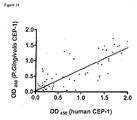
- RA patients have anti-CEP-1-specific as well as CCP-cross-reactive anti-CEP-1 antibodies.
- Individual sera exhibited differing degrees of cross-reactivity, as demonstrated by a reduction in antibody binding that ranged between 0 and 53%, following pre-incubation with CCP (grey bars).
- Sera from nine double positive (anti-CEP-1 positive and anti-CCP positive) RA patients were pre-absorbed on CEP-1- or CCP-coated plates before transferred to CEP-1-coated plates. Results are expressed as the percentage of maximum inhibition, which by definition was set to 100% for pre-incubation with CEP-1 (black bars).
- Anti-CEP-1 antibodies cross-react with bacterial enolase.
- Bacterial enolase was demonstrated in both lane 1 and 2 (C). Presence of citrullinated proteins was also detected in both P . gingivalis lysates (D).
- S. pyogenes lysates treated with PAD was bound by the rabbit anti-CEP-1 antibody (lane 5), whilst the untreated lysate (lane 6) was not (E).
- Citrullinated proteins were present in the PAD-treated S. pyogenes lysate (lane 5), but not in the untreated lysate (lane 6) (F).
- RA Rheumatoid arthritis
- ACPA Anti-citrullinated protein autoantibodies
- Citrullinated proteins are present in all healthy individuals in the skin, the hair follicles and the myelin sheaths of nerve fibres. In addition, abnormal accumulation of citrullinated proteins have been described at sites of inflammation, including the joints of patients with all forms of arthritis [17], the brain of patients suffering from multiple sclerosis [18] or Alzheimer's disease [19] and in the muscle fibres of patients with myositis [20].
- Citrullinated proteins are present in health and disease, while tolerance to citrullinated proteins appears to be selectively lost in patients with RA.
- RA it is the antibody response rather than the expression of antigen, which is specific to the disease.
- RA is a complex and heterogeneous disease, where genes and environment are likely to interact in the development of pathology.
- HLA-SE HLA-DRB1 shared epitope alleles
- HLA-SE the best known genetic risk factor for RA
- HLA-SE may be a specific risk factor for the production of ACPA, rather than the disease itself [21, 22].
- a strong gene-environment interaction between HLA-SE and the well established environmental risk factor cigarette smoking is present in (anti-) CCP positive patients but not in (anti-)CCP negative patients [21] [23].
- Alpha-enolase is abundantly expressed in the rheumatoid synovial membrane and antibodies targeting only the citrullinated form of the molecule are specific for the disease.
- the molecule is also highly conserved throughout eukaryotes and prokaryotes, and could therefore be a candidate for molecular mimicry between bacterial and host proteins [30].
- Table 1 Peptides used in this Example Peptide name Corresponding amino acids in human ⁇ -enblase Peptide sequence 1 A (CEP-1) 5 - 21 ckiha- X -eifds- X -gnptvec 1A P .
- 96-well plates (Maxisorp; Nunc, Roskilde, Denmark) were coated with ⁇ -enolase peptides at 10 ⁇ g/ml (diluted in a 50 mM carbonate buffer, pH 9.6), or with carbonate buffer alone, and incubated over night at 4°C. Wells were washed with PBS-Tween (0.05%) and blocked with 2% BSA (diluted in PBS) for 3 hours at room temperature. Sera were diluted 1:50 in RIA-buffer (10 mM Tris, 1% BSA, 350 mM NaCl, 1% Triton-X, 0.5% Na-deoxychlate, 0.1% SDS) supplemented with 10% FCS, added in duplicates and incubated four 1.5 hour at room temperature.
- RIA-buffer 10 mM Tris, 1% BSA, 350 mM NaCl, 1% Triton-X, 0.5% Na-deoxychlate, 0.1% SDS
- Plates were washed as described above and incubated with peroxidase-conjugated mouse anti-human IgG (Hybridoma Reagent Laboratory, Baltimore, USA) (diluted 1:1000 in RIA-buffer, 10% FCS) for 1 hour at room temperature. After a final wash (PBS-Tween, 0.05%), bound antibodies were detected with TMB substrate (KPL, Maryland, USA). The reaction was stopped by the addition of 1M H 2 SO 4 and absorbance measured at 450 nm in a Multiscan Ascent microplate reader (Thermo Labsystems). A control serum was included on all plates to correct for plate-to-plate variation.
- Inhibition experiments were performed in liquid phase on six anti-CEP-1 positive RA serum samples or on solid phase using serum from nine double positive (anti-CEP-1 and CCP positive) RA patients.
- Sera were either pre-incubated for 2 hours in RIA-buffer containing increasing concentrations (0, 1, 10 and 100 ⁇ g / ml) of CEP-1, control peptide1D, peptide4, peptide7, peptide9 or peptide11, or pre-absorbed on plates coated with CEP-1, carbonate buffer alone or pre-absorbed on commercial CCP2 plates.
- liquid phase mixtures were centrifuged at 13 000 rpm, for 15 minutes, before the supernatants were transferred to CEP-1-coated plates and assessed as described above. Inhibition of binding to CEP-1, for serum samples pre-absorbed to CCP, was calculated in relation to the maximum inhibition, which by definition was set to 100% for samples pre-incubated with CEP-1.
- a rabbit polyclonal anti-peptidel (anti-CEP-1) antibody was generated at Cambridge Research Biochemicals. Briefly; 2 rabbits were immunised subcutaneously every two weeks, for 10 weeks, with 200 ⁇ g KLH-conjugated Peptide 1A (peptide/KLH ratio 1:1) in FIA per boost. Blood was collected seven days after each injection and sera analysed for presence of anti-Peptide 1A antibodies. When antibody titres had reached significant levels, animals were sacrificed and blood harvested. The crude antisera were purified by affinity chromatography on a thiopropyl sepharose column conjugated to Peptide 1A.
- Anti-Peptide 1A specific antibodies were eluted by triethylamine (TEA) followed by glycine and further depleted of non-specific antibodies with a thiopropyl sepharose column, conjugated to the control peptide (peptide D1) containing native arginines instead of citrulline).
- TAA triethylamine
- peptide D1 thiopropyl sepharose column
- the crude antisera were depleted of cross-reactive antibodies by chromatography on a thiopropyl sepharose column conjugated to peptide1D.
- the unbound fraction was affinity purified by affinity chromatography on a second thiopropyl sepharose column conjugated to Peptide 1A.
- Anti-Peptide 1A specific antibodies were eluted by triethylamine (TEA) followed by glycine and further depleted of non-specific antibodies by three subsequent passages through the depleting column. Purified anti-peptidel antibodies, 0.39mg/ml, were collected as the unbound fraction from the depleting column and stored at -20°C until further use.
- TAA triethylamine
- Serum from an RA-patient with high titres of anti-Peptide 1A (anti CEP-1) antibodies, was circulated through a thiopropyl sepharose column, derivatised with Peptide 1A. Bound antibodies were eluted, after repeated PBS-washes, using 3M GuHCl. Purified anti-Peptide 1A antibodies were dialysed against PBS and stored at -20°C until further use.
- anti-Peptide 1A anti CEP-1A
- Affinity purified anti-CEP-1 antibodies (rabbit and human) were tested for their anti-CEP-1-specificity in serial dilutions (starting at 1:50 for the rabbit anti-CEP-1 antibody and at 1:2 for the human anti-CEP-1 antibody) on plates coated with peptidelA or peptide1D, and assayed as described above in the ELISA section
- P. gingivalis was cultured in Trypticase soy broth, supplemented with bovine haemin (50 ⁇ g/ml) and menadione (50 ⁇ g/ml), harvested by centrifugation and subjected to sonication in the presence of a protease inhibitor cocktail (Roche) before being freeze dried. P. gingivalis was later re-dissolved in 0.1M Tris-HCl, pH 7.6. Cultures of Streptococcus pyogenes were boiled and kept at -20°C until further lysed by sonication and a 10 minutes incubation with lysozyme (2 mg/ml) and mutanolysin (200 units/ml) at 37°C. The Streptococcal lysate was then centrifuged at 13 000 rpm for 15 minutes to remove insoluble material. Protein concentrations were determined using the Bradford assay (Bio-Rad Laboratories, Munchen).
- Bacterial lysates and non-neuronal ⁇ -enolase were diluted to a concentration of 0.9 mg/ml in PAD-buffer (0.1 M Tris-HCl, pH 7.6, 10 mM CaCl 2 , 5 mM dithiothreitol) and incubated with rabbit skeletal PAD (Sigma), at a concentration of 2 U/mg protein, for 2 hours at 50°C. Citrullination was terminated by the addition of 20 mM EDTA. Control proteins were either treated similarly, apart from the addition of PAD, or by direct addition of EDTA in the absence CaCl and PAD. All samples were stored at -20°C until further use.
- PAD-buffer 0.1 M Tris-HCl, pH 7.6, 10 mM CaCl 2 , 5 mM dithiothreitol
- Bacterial lysates were separated on 4-12% NuPAGE Bis-Tris gels (Invitrogen, Paisley, Renfrewshire, UK) and transferred to nitrocellulose membranes. Non-specific binding was blocked with 5% non-fat milk (diluted in PBS-Tween, 0.05%) overnight at 4°C before incubation with the primary antibody (rabbit anti-enolase IgG, diluted 1:200, (Santa Cruz Biotechnology, Santa Cruz, CA, USA) or rabbit anti-Peptide 1A antibody, diluted 1:25, or non-diluted human anti-Peptide 1A antibody) for 1.5 hour at room temperature.
- the primary antibody rabbit anti-enolase IgG, diluted 1:200, (Santa Cruz Biotechnology, Santa Cruz, CA, USA) or rabbit anti-Peptide 1A antibody, diluted 1:25, or non-diluted human anti-Peptide 1A antibody
- Membranes were washed in PBS-Tween (0.05%) and incubated with peroxidase-conjugated secondary antibody (swine anti-rabbit IgG, diluted 1:3000, (Dako, Denmark) or mouse anti-human IgG, diluted 1:1000, (Hybridoma Reagent Laboratory, Baltimore, USA) for 1 hour at room temperature. Following another wash, membranes were developed using the enhanced chemiluminescence technique (Amersham Biosciences, Little Chalfont, Buckinghamshire, UK). Citrullinated proteins were detected using the anti-citrulline (modified) detection kit (Upstate, Lake Placid, NY, USA) in accordance with the manufacturer's instructions.
- Peptide1A was the immunodominant peptide, with a sensitivity of 37.3% in RA and a specificity of 97% ( Fig2 ). In studies using the larger control group, peptide 1A reacted with 2% of the health controls and 3% of the disease controls (Table 2).
- Peptide 1A consists of a region of human alpha-enolase KIHAXEIFDSXGNPTVE, and N- and C- terminal cysteine residues to facilitate cyclisation.
- the X residues in Peptide 1A are both citrulline. However, alpha-enolase might naturally contain an arginine in place of citrulline at one or both of these positions.
- Peptide 1A and 1B can be considered to be immunodominant peptides.
- Peptide1A containing both citrullinated residues, ws chosen for further study and referred to as citrullinated ⁇ -enolase peptide-1 (CEP-1).
- Anti-CCP2 antibodies in the same serum samples gave a sensitivity of 71 % with a specificity of 98% when assayed by "Immunoscan RA" (Catalogue No. RA-96RT) from Euro-diagnostica AB, Medeon, SE-205 12 Malmo, Sweden.
- 7 (23%) of the anti-CCP negative RA-patients were positive in the citrullinated ⁇ -enolase peptide (CEP-1) based ELISA (data not shown).
- CEP-1 citrullinated ⁇ -enolase peptide
- the diagnostic sensitivity and specificity of the anti-CEP-1 ELISA is confirmed in an independent cohort of patients with RA
- RA patients have anti-CEP-1-specific, as well as CCP cross-reactive antibodies
- the epitope-specificity of the anti-CEP-1 antibody response was tested in two separate inhibition assays.
- inhibition of binding to CEP-1 was evaluated in sera from six anti-CEP-1 positive rheumatoid patients using liquid phase. There was a dose-dependent inhibition by the homologous peptide, while no inhibition was seen by the arginine-containing control peptide1D or by citrullinated ⁇ -enolase peptides 4, 7, 9 and 11 ( Figure 12 ).
- the second experiment where we examined cross-reactivity to CCP, it was necessary to use the commercially available CCP2 plates in a solid phase assay, because the sequences of the peptides used in the assay have not been published.
- Anti-Peptide 1A antibody levels decrease in response to combination therapy
- sequence similarity between human and bacterial enolase is around 50%, when comparing the whole protein. However, when comparing the sequence for Peptide 1, the similarity is much higher; 65% for Streptococcus pyogenes (SwissProt accession number AAX71649.1) and 82% for Porphyromonas gingivalis (SwissProt accession number AAQ66821). For the nine amino acids spanning the immunodominant epitope on Peptide 1, the sequence similarity is even higher at 89% and 100% for Streptococcus pyogenes and Porphyromonas gingivalis respectively, as shown below.
- Table 3 Sequence similarities, presented as percentages, between human ⁇ -enolase and bacterial enolases Species Whole protein (aa1-434) Peptide 1 (aa 5-21) Immunodominant epitope (aa 13-21) Peptide 1 sequence Human kiha- R -eifds- R -gnptve S. pyogenes 46 % 65 % 89 % dvya- R -evlds- R -gnptle P.
- Polyclonal anti-human Peptide 1A antibodies were raised in rabbits, and human anti-Peptide 1A antibodies were purified from serum from a patient with RA. Specificity for Peptide 1A was analysed by ELISA; serial dilutions of the rabbit polyclonal antibody showed a high Peptide 1A-specificity, while affinity purified human immunoglobulins also showed reactivity with the arginine-containing control-peptide ( Fig 6 ).
- Human anti-Peptide 1A antibodies cross-react with bacterial enolase
- Streptococcus pyogenes and Porphyromonas gingivalis lysates were in vitro treated with PAD and blotted with anti-Peptide 1A antibodies.
- RA patients have antibodies to P. gingivalis CEP-1 and purified anti-CEP-1 antibodies cross-react with bacterial enolase
- the anti-citrulline (modified) blot also confirmed that citrullinated proteins were restricted to the PAD-treated S. pyogenes lysate ( Figure 16F).
- RA is associated with polyclonal B cell activation and autoantibody production, of which ACPA are the most specific.
- Recent publications provide evidence of a pathogenic involvement for these autoantibodies in RA.
- Petkova et al have, for example, demonstrated that passive transfer of plasma or serum from RA patients induced arthritis in mice deficient in the low-affinity inhibitory Fc receptor, Fc ⁇ RIIB [44], and Kuhn et al showed that administration of ACPA enhanced the severity of arthritis in an experimental model of collagen-induced arthritis [45]. Since RA is a heterogeneous disease, where only four out of the seven ACR criteria have to be fulfilled for the diagnosis, it is likely that there are different subpopulations, with distinct etiopathological features.
- citrullinated ⁇ -enolase As a candidate physiological target for ACPA [29]. Using immunoblotting of whole protein, we found that 46% of patients with RA reacted with citrullinated ⁇ -enolase, of which seven (13%) also recognized the non-citrullinated protein. Fifteen per cent of healthy controls reacted with both forms of the molecule and we speculated that this was due to reactivity with non-citrullinated epitopes.
- citrulline in the anti-Peptide 1A antibody response was demonstrated by the low degree of reactivity to the arginine-containing control peptide.
- neighbouring amino acids constitute important antigenic determinants, since the response to the other citrullinated ⁇ -enolase peptides was much weaker.
- the two amino acids, serine and glycine, flanking the second citrulline residue in CEP-1 have previously been reported to enhance ACPA recognition and binding (32, 35).
- peptide1B containing the Ser-Cit-Gly-motif, had a higher sensitivity than peptide1C, which lacks this motif.
- CEP-1 is not just a surrogate marker (surrogate antigen) for another citrullinated antigen (which is screened for by the CCP assay), but some of the anti-CEP-1 antibody response is detected by the CCP assay. It is possible that there is a degree of cross-reactivity at certain time points in the disease course, while later on, after affinity maturation of the anti-CEP-1 antibody response, this cross-reactivity is lost and the differences that we see between patients is explained by patients in different phases of the disease.
- citrullinated alpha-enolase might be the driving autoantigen (and the anti-CCP antibodies might be the result of epitope spreading), while in patients where there is cross-reactivity, other citrullinated antigens might be driving the immune response.
- the anti-Peptide 1A antibody response could be the result of cross-reactivity with a yet unidentified protein, however, peptidelA has no significant sequence similarity to other known human proteins, suggesting that citrullinated ⁇ -enolase is a true autoantigen.
- P. gingivalis is a gram-negative bacterium that causes adult periodontitis (AP), a disease which shares many features with RA.
- AP is a chronic inflammatory disorder where accumulation of immune cells leads to local production of pro-inflammatory cytokines, such as TNF and IL1- ⁇ , metalloproteinases (MMPs) and prostaglandins, which results in tissue swelling and degradation (reviewed in [36, 37]).
- gingivalis may be 'the septic stimulus' in RA, as proposed by Rosenstein et al (37). Therefore individuals with periodontal infection may already be exposed to citrullinated antigens, including citrullinated bacterial enolase. In the genetic context of the HLA-SE, and in the presence of danger signals, this could result in a pathological immune response with the formation of ACPA. If an unspecific arthritis developed at a later time point, accompanied by citrullination of synovial proteins, anti-CEP-1 antibodies could cross-react with citrullinated proteins in the joint, amplify the inflammatory process and cause RA.
- Sera from 29 patients diagnosed with systemic lupus erythromatosus were tested by ELISA for reactivity with 11 citrullinated ⁇ -enolase peptides, namely Peptide 1A, 1B, 1D and Peptides 2 to 9 as shown in Table 1.
- the ELISA assay was as described in Example 1.
- the percentage of SLE patients positive for any of the 11 citrullinated peptides was calculated as 13.8%.
- Sera from the 29 SLE patients were also tested for antibodies to cyclic citrullinated peptides using the commerically available anti-CCP ELISA. All patients were negative for such anti-CCP antibodies.
- a serum sample would be collected from a patient with arthritis and assayed for anti-citrullinated ⁇ -enolase peptides using the method of the invention, and anti-CCP2 antibodies using a commercially available ELISA. If the sample was found to be negative for anti-CCP2 antibodies, but positive for anti-citrullinated enolase peptide antibodies, the physician would interpret this result and diagnose the arthritis as rheumatoid arthritis. Other clinical indications may be used by the physician to assist in arriving at a diagnosis.
- a serum sample would be collected from a patient with rheumatoid arthritis and assayed for anti-citrullinated enolase peptides using the method of the invention. If the sample was positive in this test, the physician would interpret this result and diagnose a more severe form of disease. Other clinical indications may be used by the physician to assist in arriving at a diagnosis. The patient will be given a more careful follow-up and more aggressive treatment than if the sample had been scored as negative in the test.
- a serum sample would be collected from a patient with early stage rheumatoid arthritis and assayed for anti-citrullinated enolase peptides using the method of the invention. If the sample was positive in this test, the physician would interpret this result and prescribe treament with an antibiotic such doxycycline.
- the patient may also be prescribed with conventional drugs, such as anti-TNF, to be used contemporaneously with the antibiotic.
- a serum sample would be collected from a patient and assayed for anticitrullinated enolase peptides using the method of the invention. If the sample was positive in this test, the physician would interpret this result and prescribe a novel treatment developed as a result of improved understanding of the pathogenesis of rheumatoid arthritis. Other clinical indications may be used by the physician to assist in determining a suitable course of therapy.
Landscapes
- Health & Medical Sciences (AREA)
- Life Sciences & Earth Sciences (AREA)
- Chemical & Material Sciences (AREA)
- Organic Chemistry (AREA)
- Engineering & Computer Science (AREA)
- Bioinformatics & Cheminformatics (AREA)
- Zoology (AREA)
- Wood Science & Technology (AREA)
- Genetics & Genomics (AREA)
- Medicinal Chemistry (AREA)
- General Health & Medical Sciences (AREA)
- Biochemistry (AREA)
- Microbiology (AREA)
- General Engineering & Computer Science (AREA)
- Biomedical Technology (AREA)
- Molecular Biology (AREA)
- Biotechnology (AREA)
- General Chemical & Material Sciences (AREA)
- Veterinary Medicine (AREA)
- Orthopedic Medicine & Surgery (AREA)
- Immunology (AREA)
- Pharmacology & Pharmacy (AREA)
- Nuclear Medicine, Radiotherapy & Molecular Imaging (AREA)
- Public Health (AREA)
- Animal Behavior & Ethology (AREA)
- Chemical Kinetics & Catalysis (AREA)
- Physical Education & Sports Medicine (AREA)
- Rheumatology (AREA)
- Peptides Or Proteins (AREA)
- Medicines That Contain Protein Lipid Enzymes And Other Medicines (AREA)
- Investigating Or Analysing Biological Materials (AREA)
Claims (22)
- Citrulliniertes Enolase-Peptid, bestehend aus(a) einer Region von humaner α-Enolase, die aus weniger als fünfzig, jedoch mindestens acht Aminosäuren besteht, die die Aminosäuren 14 bis 16 von humaner α-Enolase, von denen die Aminosäure 15 Citrullin ist, umfassen, und(b) optional weiteren, zur Region von (a) N-terminalen und/oder C-terminalen Aminosäuren, wobei die weiteren Aminosäuren nicht von humaner α-Enolase stammen,zur Verwendung in der Medizin.
- Citrulliniertes Enolase-Peptid nach Anspruch 1 zur Verwendung zur:(a) Unterstützung bei der Diagnostizierung von rheumatoider Arthritis;(b) Unterstützung bei der Unterscheidung zwischen verschiedenen Arten oder Stadien von rheumatoider Arthritis;(c) Unterstützung bei der Prognostizierung von rheumatoider Arthritis;(d) Unterstützung bei der Identifizierung eines Individuums mit einem Risiko zur Entwicklung von rheumatoider Arthritis;(e) Behandlung von rheumatoider Arthritis;(f) Verhinderung oder Verzögerung des Einsetzens von rheumatoider Arthritis; oder(g) Überwachung der Wirksamkeit eines Behandlungsprotokolls bei einem Individuum, das wegen rheumatoider Arthritis behandelt wird.
- Verwendung des citrullinierten Enolase-Peptids nach Anspruch 1 zur Herstellung eines Mittels zur:(a) Unterstützung bei der Diagnostizierung von rheumatoider Arthritis;(b) Unterstützung bei der Unterscheidung zwischen verschiedenen Arten oder Stadien von rheumatoider Arthritis;(c) Unterstützung bei der Prognostizierung von rheumatoider Arthritis;(d) Unterstützung bei der Identifizierung eines Individuums mit einem Risiko zur Entwicklung von rheumatoider Arthritis;(e) Behandlung von rheumatoider Arthritis;(f) Verhinderung oder Verzögerung des Einsetzens von rheumatoider Arthritis; oder(g) Überwachung der Wirksamkeit eines Behandlungsprotokolls bei einem Individuum, das wegen rheumatoider Arthritis behandelt wird.
- In-vitro-Verfahren zur Unterstützung bei der Diagnostizierung von rheumatoider Arthritis bei einem Individuum; Unterstützung bei der Unterscheidung zwischen verschiedenen Arten oder Stadien von rheumatoider Arthritis bei einem Individuum, Prognostizierung von rheumatoider Arthritis bei einem Individuum; oder Unterstützung bei der Identifizierung eines Individuums mit einem Risiko zur Entwicklung von rheumatoider Arthritis,
wobei das Verfahren das Einwirken eines citrullinierten Enolase-Peptids auf eine Probe von dem Individuum und das Detektieren eines Antikörpers, der an das Peptid gebunden hat, umfasst,
wobei das citrullinierte Enolase-Peptid aus(a) einer Region von humaner α-Enolase, die aus weniger als fünfzig, jedoch mindestens acht Aminosäuren besteht, die die Aminosäuren 14 bis 16 von humaner α-Enolase, von denen die Aminosäure 15 Citrullin ist, umfassen, und(b) optional weiteren, zur Region von (a) N-terminalen und/oder C-terminalen Aminosäuren, wobei die weiteren Aminosäuren nicht von humaner α-Enolase stammen, besteht. - Anti-TNF-Arzneistoff zur Verwendung bei der Behandlung von rheumatoider Arthritis bei einem Individuum, bei dem Antikörper, die an das citrullinierte Enolase-Peptid nach Anspruch 1 binden, in einer von dem Individuum erhaltenen Probe nach dem Einwirken des Peptids auf die Probe detektiert wurden.
- Antibiotikum zur Verwendung bei der Behandlung von rheumatoider Arthritis bei einem Individuum, bei dem Antikörper, die an das citrullinierte Enolase-Peptid nach Anspruch 1 binden, in einer von dem Individuum erhaltenen Probe nach dem Einwirken des Peptids auf die Probe detektiert wurden;
und wobei das Antibiotikum optional Doxycyclin ist. - Verwendung eines Anti-TNF-Arzneistoffs bei der Herstellung eines Medikaments zur Behandlung von rheumatoider Arthritis bei einem Individuum, bei dem Antikörper, die an das citrullinierte Enolase-Peptid nach Anspruch 1 binden, in einer von dem Individuum erhaltenen Probe nach dem Einwirken des Peptids auf die Probe detektiert wurden.
- Verwendung eines Antibiotikums bei der Herstellung eines Medikaments zur Behandlung von rheumatoider Arthritis bei einem Individuum, bei dem Antikörper, die an das citrullinierte Enolase-Peptid nach Anspruch 1 binden, in einer von dem Individuum erhaltenen Probe nach dem Einwirken des Peptids auf die Probe detektiert wurden;
und wobei das Antibiotikum optional Doxycyclin ist. - Antibiotikum zur Verwendung zur Verhinderung oder Verzögerung des Einsetzens von rheumatoider Arthritis bei einem Individuum, bei dem Antikörper, die an das citrullinierte Enolase-Peptid nach Anspruch 1 binden, in einer von dem Individuum erhaltenen Probe nach dem Einwirken des Peptids auf die Probe detektiert wurden;
und wobei das Antibiotikum optional Doxycyclin ist. - Verwendung eines Antibiotikums bei der Herstellung eines Medikaments zur Verhinderung oder Verzögerung des Einsetzens von rheumatoider Arthritis bei einem Individuum, bei dem Antikörper, die an das citrullinierte Enolase-Peptid nach Anspruch 1 binden, in einer von dem Individuum erhaltenen Probe nach dem Einwirken des Peptids auf die Probe detektiert wurden;
und wobei das Antibiotikum optional Doxycyclin ist. - Verfahren nach Anspruch 4, Anti-TNF-Arzneistoff zur Verwendung nach Anspruch 5, Antibiotikum zur Verwendung nach Anspruch 6, Antibiotikum zur Verwendung nach Anspruch 9 oder Verwendung nach Anspruch 7 oder Anspruch 10, wobei ein Kontrollpeptid auf eine Probe von dem gleichen Individuum einwirken gelassen wird und ein Antikörper, der an das Kontrollpeptid gebunden hat, detektiert wird, wobei das Kontrollpeptid identisch mit dem citrullinierten Enolase-Peptid mit der Ausnahme, dass:(a) der Rest, der der Aminosäure 15 von humaner α-Enolase entspricht, durch einen anderen Rest als Citrullin oder ein Analogon hiervon, vorzugsweise einen Argininrest ausgetauscht ist; und(b) wobei das citrullinierte Enolase-Peptid einen der Aminosäure 9 von humaner α-Enolase entsprechenden Rest, wobei dieser Rest Citrullin ist, umfasst, wobei der der Aminosäure 9 von humaner α-Enolase entsprechende Rest in dem Kontrollpeptid Citrullin oder ein anderer Rest, vorzugsweise ein Argininrest ist, ist;und wobei optional:(c) das citrullinierte Enolase-Peptid KIHAXEIFDSXGNPTVE umfasst oder aus diesem besteht und das Kontrollpeptid KIHAXEIFDSRGNPTVE oder KIHAREIFDSRGNPTVE umfasst oder aus diesen besteht, wobei X für Citrullin steht; oder(d) das citrullinierte Enolase-Peptid KIHAREIFDSXGNPTVE umfasst oder aus diesem besteht und das Kontrollpeptid KIHAREIFDSRGNPTVE umfasst oder aus diesem besteht, wobei X für Citrullin steht.
- Verfahren nach Anspruch 4 oder 11, Anti-TNF-Arzneistoff zur Verwendung nach Anspruch 5 oder 11, Antibiotikum zur Verwendung nach Anspruch 6 oder 11, Antibiotikum zur Verwendung nach Anspruch 9 oder 11 oder Verwendung nach Anspruch 7, 10 oder 11, wobei eine Probe von dem gleichen Individuum auf Antikörper getestet wird, die an cyclische citrullinierte Peptide binden, wobei diese Peptide keine citrullinierten Enolase-Peptide gemäß der Definition in Anspruch 1 sind.
- Verfahren nach Anspruch 4, 11 oder 12; Anti-TNF-Arzneistoff zur Verwendung zur Behandlung von rheumatoider Arthritis nach Anspruch 5, 11 oder 12; Antibiotikum zur Verwendung zur Behandlung von rheumatoider Arthritis nach Anspruch 6, 11 oder 12; Antibiotikum zur Verwendung zur Verhinderung oder Verzögerung des Einsetzens von rheumatoider Arthritis nach Anspruch 9, 11 oder 12; oder Verwendung nach Anspruch 7, 10, 11 oder 12,
wobei das citrullinierte Enolase-Peptid auf eine Kontrollprobe einwirken gelassen wird und ein Antikörper, der an das Peptid gebunden hat, detektiert wird,
und wobei die Kontrollprobe optional von einem oder mehreren Individuen, die nicht an RA leiden, ist,
und wobei das Individuum optional ein Mensch ist,
und wobei die Probe optional Serum ist. - In-vitro-Verfahren zur Überwachung der Wirksamkeit eines Behandlungsprotokolls bei einem Individuum, das wegen rheumatoider Arthritis behandelt wird, umfassend:(i) Bereitstellen einer ersten Probe, die von dem Individuum erhalten wurde;(ii) Bereitstellen einer zweiten Probe, die von dem Individuum erhalten wurde, nachdem das Individuum dem Behandlungsprotokoll über einen gewissen Zeitraum unterworfen war;(iii) Bereitstellen eines citrullinierten Enolase-Peptids, bestehend aus(a) einer Region von humaner α-Enolase, die aus weniger als fünfzig, jedoch mindestens acht Aminosäuren besteht, die die Aminosäuren 14 bis 16 von humaner α-Enolase, von denen die Aminosäure 15 Citrullin ist, umfassen, und(b) optional weiteren, zur Region von (a) N-terminalen und/oder C-terminalen Aminosäuren, wobei die weiteren Aminosäuren nicht von humaner α-Enolase stammen;(iv) Einwirken des citrullinierten Enolase-Peptids auf die erste Probe und Detektieren eines Antikörpers, der an das Peptid gebunden hat; und(v) Einwirken des citrullinierten Enolase-Peptids auf die zweite Probe und Detektieren eines Antikörpers, der an das Peptid gebunden hat;wobei das Behandlungsprotokoll optional eine Anti-TNF-Arzneistoff- oder Doxycyclin-Therapie umfasst;
und wobei die zweite Probe optional bis einen Monat, zwei Monate, drei Monate, sechs Monate, 1 Jahr oder 2 Jahre nach dem Gewinnen der ersten Probe gewonnen wird. - Verfahren nach Anspruch 14, das ferner das Einwirken eines Kontrollpeptids auf eine Probe von dem gleichen Individuum, die zum im Wesentlichen gleichen Zeitpunkt wie die erste Probe gewonnen wurde, und auf eine Probe von dem gleichen Individuum, die zum im Wesentlichen gleichen Zeitpunkt wie die zweite Probe gewonnen wurde, und für jede der Proben das Detektieren eines Antikörpers, der an das Kontrollpeptid gebunden hat, umfasst, wobei das Kontrollpeptid identisch mit dem citrullinierten Enolase-Peptid mit Ausnahme davon, dass:(a) der Rest, der der Aminosäure 15 von humaner α-Enolase entspricht, durch einen anderen Rest als Citrullin, vorzugsweise einen Argininrest ausgetauscht ist; und(b) wobei das citrullinierte Enolase-Peptid einen der Aminosäure 9 von humaner α-Enolase entsprechenden Rest, wobei dieser Rest Citrullin ist, umfasst, wobei der der Aminosäure 9 von humaner α-Enolase entsprechende Rest in dem Kontrollpeptid Citrullin oder ein anderer Rest, vorzugsweise ein Argininrest ist, ist;und wobei optional:(c) das citrullinierte Enolase-Peptid KIHAXEIFDSXGNPTVE umfasst oder aus diesem besteht und das Kontrollpeptid KIHAXEIFDSRGNPTVE oder KIHAREIFDSRGNPTVE umfasst oder aus diesen besteht, wobei X für Citrullin steht; oder(d) das citrullinierte Enolase-Peptid KIHAREIFDSXGNPTVE umfasst oder aus diesem besteht und das Kontrollpeptid KIHAREIFDSRGNPTVE umfasst oder aus diesem besteht, wobei X für Citrullin steht.
- Verfahren nach Anspruch 14 oder 15, wobei das Individuum ein Mensch ist und/oder wobei die Probe Serum ist.
- Citrulliniertes Enolase-Peptid nach Anspruch 1 zur Verwendung als Mittel zur Durchführung einer Immunapherese zur Behandlung eines Individuums mit rheumatoider Arthritis, wobei das Mittel das an einem Träger immobilisierte Peptid umfasst und eine Immunapherese mit dem an dem Träger immobilisieren Peptid durchgeführt wird.
- Verwendung des citrullinierten Enolase-Peptids nach Anspruch 1 bei der Herstellung eines Mittels zur Durchführung einer Immunapherese zur Behandlung eines Individuums mit rheumatoider Arthritis, wobei das Mittel das an einem Träger immobilisierte Peptid umfasst und eine Immunapherese mit dem an dem Träger immobilisieren Peptid durchgeführt wird.
- Citrulliniertes Enolase-Peptid zur Verwendung nach Anspruch 1, 2 oder 17, Anti-TNF-Arzneistoff zur Verwendung nach einem der Ansprüche 5 oder 11 bis 13, Antibiotikum zur Verwendung nach einem der Ansprüche 6, 9 oder 10 bis 13, Verwendung nach einem der Ansprüche 3, 7, 8, 10 bis 13 oder 18 oder Verfahren nach einem der Ansprüche 4 oder 11 bis 16, wobei das citrullinierte Enolase-Peptid KIHAXEIFDSXGNPTVE oder KIHAREIFDSXGNPTVE umfasst oder aus diesen besteht, wobei X für Citrullin steht, und/oder das citrullinierte Enolase-Peptid ein cyclisches Peptid ist und/oder das citrullinierte Enolase-Peptid CKIHAXEIFDSXGNPTVEC oder CKIHAREIFDSXGNPTVEC umfasst oder aus diesen besteht, wobei X für Citrullin steht.
- Citrulliniertes Enolase-Peptid, bestehend aus(a) einer Region von humaner α-Enolase, die aus weniger als fünfzig, jedoch mindestens acht Aminosäuren besteht, die die Aminosäuren 14 bis 16 von humaner α-Enolase, von denen die Aminosäure 15 Citrullin ist, umfassen, und(b) optional weiteren, zur Region von (a) N-terminalen und/oder C-terminalen Aminosäuren, wobei die weiteren Aminosäuren nicht von humaner α-Enolase stammen,wobei das Peptid KIHAXEIFDSXGNPTVE, CKIHAXEIFDSXGNPTVEC, KIHAREIFDSXGNPTVE oder CKIHAREIFDSXGNPTVEC, wobei X für Citrullin steht, umfasst oder aus diesen besteht;
und wobei das Peptid optional ein cyclisches Peptid ist. - Kontrollpeptid, das identisch mit dem citrullinierten Enolase-Peptid nach Anspruch 20 mit der Ausnahme, dass:(a) der Citrullinrest, der der Aminosäure 15 von humaner α-Enolase entspricht, durch einen anderen Rest, vorzugsweise einen Argininrest ausgetauscht ist; und(b) das citrullinierte Enolase-Peptid ferner Citrullin an der der Aminosäure 9 von humaner α-Enolase äquivalenten Position umfasst; ist,wobei das Kontrollpeptid optional ein cyclisches Peptid ist.
- Kit aus Teilen, umfassend:(i) ein citrulliniertes Enolase-Peptid gemäß der Definition in einem der Ansprüche 1 bis 20 und(ii) ein Detektionsreagens, das an einen Antikörper bindet und die Detektion des an das citrullinierte Enolase-Peptid gebundenen Antikörpers ermöglicht;wobei das Kit optional ferner das Kontrollpeptid nach Anspruch 21 umfasst.
Applications Claiming Priority (3)
| Application Number | Priority Date | Filing Date | Title |
|---|---|---|---|
| GB0701417A GB0701417D0 (en) | 2007-01-25 | 2007-01-25 | Methods |
| GB0722035A GB0722035D0 (en) | 2007-11-09 | 2007-11-09 | Methods |
| PCT/GB2008/000267 WO2008090360A1 (en) | 2007-01-25 | 2008-01-25 | Methods |
Publications (2)
| Publication Number | Publication Date |
|---|---|
| EP2115134A1 EP2115134A1 (de) | 2009-11-11 |
| EP2115134B1 true EP2115134B1 (de) | 2012-08-15 |
Family
ID=39468255
Family Applications (1)
| Application Number | Title | Priority Date | Filing Date |
|---|---|---|---|
| EP08701940A Active EP2115134B1 (de) | 2007-01-25 | 2008-01-25 | citrullinierte Enolase-Peptide |
Country Status (3)
| Country | Link |
|---|---|
| US (2) | US20100047256A1 (de) |
| EP (1) | EP2115134B1 (de) |
| WO (1) | WO2008090360A1 (de) |
Families Citing this family (18)
| Publication number | Priority date | Publication date | Assignee | Title |
|---|---|---|---|---|
| US8314212B2 (en) * | 2008-02-08 | 2012-11-20 | Lindsey Miles | Plasminogen receptor PLG-RKT and antibodies thereof |
| CN101407541B (zh) * | 2008-11-26 | 2012-12-26 | 上海精臻生物科技有限公司 | 变性变构型环瓜氨酸多肽、及其融合蛋白、抗体和试剂盒 |
| CN102004154B (zh) * | 2009-08-28 | 2013-06-19 | 上海荣盛生物药业有限公司 | 斑点金免疫渗滤法检测类风湿关节炎免疫抗体的组合物 |
| CN102012431B (zh) * | 2009-09-04 | 2013-06-19 | 上海荣盛生物药业有限公司 | 斑点金免疫渗滤法检测类风湿关节炎免疫抗体的ccp肽 |
| EP3412680B1 (de) | 2011-04-05 | 2020-11-04 | Curara AB | Neuartige peptide zur bindung an einzelne typen der mhc-klasse-ii und deren verwendung in diagnose und behandlung |
| WO2012152882A1 (en) * | 2011-05-10 | 2012-11-15 | INSERM (Institut National de la Santé et de la Recherche Médicale) | Methods and pharmaceutical compositions for the treatment of autoimmune diseases |
| US20140227303A1 (en) * | 2011-06-29 | 2014-08-14 | Viracor-Ibt Laboratories | Methods for diagnosing and monitoring diseases or conditions using disease modified biomolecules and measurement of a functional immune response |
| US10566082B1 (en) | 2012-01-10 | 2020-02-18 | Cerner Innovation, Inc. | Proximity-based mobile-device updates of electronic health records |
| US9141726B1 (en) | 2012-01-10 | 2015-09-22 | Cerner Innovation, Inc. | Computerized systems and methods for providing mobile-device updates of electronic health records |
| US10586617B1 (en) | 2012-01-10 | 2020-03-10 | Cerner Innovation, Inc. | Decision support tool for managing autoimmune inflammatory disease |
| WO2013109185A1 (en) * | 2012-01-19 | 2013-07-25 | Vilara Ab | Novel antibodies |
| KR102438838B1 (ko) * | 2013-01-18 | 2022-09-02 | 서울대학교산학협력단 | 류마티스 관절염 진단용 바이오마커 |
| EP2968435B1 (de) * | 2013-03-12 | 2019-01-30 | Tel HaShomer Medical Research Infrastructure and Services Ltd. | Synthetische peptide zur behandlung von autoimmunkrankheiten |
| WO2015010791A2 (en) | 2013-07-24 | 2015-01-29 | Klareskog, Lars | Novel antibodies for the diagnosis and treatment of rheumatoid arthritis |
| CN112336851A (zh) | 2014-01-13 | 2021-02-09 | 博格有限责任公司 | 烯醇酶1(eno1)组合物及其用途 |
| US20170014495A1 (en) * | 2015-07-16 | 2017-01-19 | Berg Llc | Enolase 1 (eno1) compositions and uses thereof |
| US12178908B2 (en) | 2018-02-26 | 2024-12-31 | AnTolRx, Inc. | Tolerogenic liposomes and methods of use thereof |
| WO2021086259A1 (en) * | 2019-10-30 | 2021-05-06 | Glycoprobe Ab | Adsorbent and a kit containing said adsorbent in a column |
Citations (1)
| Publication number | Priority date | Publication date | Assignee | Title |
|---|---|---|---|---|
| WO1996020276A1 (en) * | 1994-12-23 | 1996-07-04 | Sri International | Tissue specific hypoxia regulated therapeutic constructs |
Family Cites Families (3)
| Publication number | Priority date | Publication date | Assignee | Title |
|---|---|---|---|---|
| ES2174770T1 (es) | 1999-12-21 | 2002-11-16 | Innogenetics Nv | Peptidos diseñados para el diagnostico y el tratamiento de artritis reumatoide. |
| NL1019540C2 (nl) | 2001-12-11 | 2003-07-01 | Stichting Tech Wetenschapp | Werkwijze voor het detecteren van auto-antilichamen van patienten die lijden aan reumatoïde artritis, peptide en assaykit. |
| EP1814901B1 (de) * | 2004-11-04 | 2008-07-16 | Biomerieux | Von fibrin abgeleitete citrullinpeptide, die durch für rheumatoide arthritis spezifische autoantikörper erkannt werden, und deren verwendung |
-
2007
- 2007-01-25 US US12/524,465 patent/US20100047256A1/en not_active Abandoned
-
2008
- 2008-01-25 WO PCT/GB2008/000267 patent/WO2008090360A1/en not_active Ceased
- 2008-01-25 EP EP08701940A patent/EP2115134B1/de active Active
-
2012
- 2012-10-22 US US13/657,612 patent/US9334487B2/en active Active
Patent Citations (1)
| Publication number | Priority date | Publication date | Assignee | Title |
|---|---|---|---|---|
| WO1996020276A1 (en) * | 1994-12-23 | 1996-07-04 | Sri International | Tissue specific hypoxia regulated therapeutic constructs |
Non-Patent Citations (1)
| Title |
|---|
| MEWAR D ET AL: "Autoantibodies in rheumatoid arthritis: a review", BIOMEDICINE AND PHARMACOTHERAPY, ELSEVIER, PARIS, FR, vol. 60, no. 10, 1 December 2006 (2006-12-01), pages 648 - 655, XP025163481, ISSN: 0753-3322, [retrieved on 20061201], DOI: DOI:10.1016/J.BIOPHA.2006.09.002 * |
Also Published As
| Publication number | Publication date |
|---|---|
| US20100047256A1 (en) | 2010-02-25 |
| WO2008090360A8 (en) | 2009-07-16 |
| US20130078654A1 (en) | 2013-03-28 |
| WO2008090360A1 (en) | 2008-07-31 |
| US9334487B2 (en) | 2016-05-10 |
| EP2115134A1 (de) | 2009-11-11 |
Similar Documents
| Publication | Publication Date | Title |
|---|---|---|
| EP2115134B1 (de) | citrullinierte Enolase-Peptide | |
| Lundberg et al. | Antibodies to citrullinated α‐enolase peptide 1 are specific for rheumatoid arthritis and cross‐react with bacterial enolase | |
| Terrier et al. | Alpha-enolase: a target of antibodies in infectious and autoimmune diseases | |
| Jenning et al. | Bacterial citrullinated epitopes generated by Porphyromonas gingivalis infection—a missing link for ACPA production | |
| Albani et al. | Positive selection in autoimmunity: abnormal immune responses to a bacterial dnaJ antigenic determinant in patients with early rheumatoid arthritis | |
| Pratesi et al. | Deiminated Epstein‐Barr virus nuclear antigen 1 is a target of anti–citrullinated protein antibodies in rheumatoid arthritis | |
| Mahler et al. | Novel aspects of autoantibodies to the PM/Scl complex: clinical, genetic and diagnostic insights | |
| Lu et al. | Anti–citrullinated protein antibodies bind surface‐expressed citrullinated Grp78 on monocyte/macrophages and stimulate tumor necrosis factor α production | |
| Burkhardt et al. | Humoral immune response to citrullinated collagen type II determinants in early rheumatoid arthritis | |
| Low et al. | Determination of anti-cyclic citrullinated peptide antibodies in the sera of patients with juvenile idiopathic arthritis. | |
| Wang et al. | Immunogenic HLA-DR-presented self-peptides identified directly from clinical samples of synovial tissue, synovial fluid, or peripheral blood in patients with rheumatoid arthritis or lyme arthritis | |
| Sordet et al. | Contribution of autoantibodies to the diagnosis and nosology of inflammatory muscle disease | |
| van Beers et al. | Anti-citrullinated fibronectin antibodies in rheumatoid arthritis are associated with human leukocyte antigen-DRB1 shared epitope alleles | |
| US20120083423A1 (en) | Biomarkers, Methods and Kits for the Diagnosis of Rheumatoid Arthritis | |
| Cho et al. | Identification of HnRNP-A2/B1 as a target antigen of anti-endothelial cell IgA antibody in Behcet's disease | |
| Cantagrel et al. | New autoantibodies associated with rheumatoid arthritis recognize posttranslationally modified self-proteins | |
| Tuncel et al. | Class II major histocompatibility complex–associated response to type XI collagen regulates the development of chronic arthritis in rats | |
| Rashid et al. | The link between Proteus mirabilis, environmental factors and autoantibodies in rheumatoid arthritis | |
| US11982671B2 (en) | Identification of a T cell epitope of Prevotella copri that induces T cell responses in patients with rheumatoid arthritis | |
| Misaki et al. | B cell epitope on the U1 snRNP‐C autoantigen contains a sequence similar to that of the herpes simplex virus protein | |
| Goëb et al. | Diagnostic and prognostic usefulness of antibodies to citrullinated peptides | |
| WO2013103628A1 (en) | Peptides and methods for detecting mpo-anca | |
| Hida et al. | Influence of arginine deimination on antigenicity of fibrinogen | |
| Hemon et al. | PAD2 immunization induces ACPA in wild‐type and HLA‐DR4 humanized mice | |
| Kato et al. | Identification of a universal B cell epitope on DNA topoisomerase I, an autoantigen associated with scleroderma |
Legal Events
| Date | Code | Title | Description |
|---|---|---|---|
| PUAI | Public reference made under article 153(3) epc to a published international application that has entered the european phase |
Free format text: ORIGINAL CODE: 0009012 |
|
| 17P | Request for examination filed |
Effective date: 20090825 |
|
| AK | Designated contracting states |
Kind code of ref document: A1 Designated state(s): AT BE BG CH CY CZ DE DK EE ES FI FR GB GR HR HU IE IS IT LI LT LU LV MC MT NL NO PL PT RO SE SI SK TR |
|
| 17Q | First examination report despatched |
Effective date: 20100205 |
|
| DAX | Request for extension of the european patent (deleted) | ||
| GRAP | Despatch of communication of intention to grant a patent |
Free format text: ORIGINAL CODE: EPIDOSNIGR1 |
|
| RTI1 | Title (correction) |
Free format text: CITRULLINATED ENOLASE PEPTIDES |
|
| GRAS | Grant fee paid |
Free format text: ORIGINAL CODE: EPIDOSNIGR3 |
|
| GRAA | (expected) grant |
Free format text: ORIGINAL CODE: 0009210 |
|
| RAP1 | Party data changed (applicant data changed or rights of an application transferred) |
Owner name: IMPERIAL INNOVATIONS LIMITED |
|
| AK | Designated contracting states |
Kind code of ref document: B1 Designated state(s): AT BE BG CH CY CZ DE DK EE ES FI FR GB GR HR HU IE IS IT LI LT LU LV MC MT NL NO PL PT RO SE SI SK TR |
|
| REG | Reference to a national code |
Ref country code: GB Ref legal event code: FG4D Ref country code: CH Ref legal event code: EP Ref country code: AT Ref legal event code: REF Ref document number: 570869 Country of ref document: AT Kind code of ref document: T Effective date: 20120815 |
|
| REG | Reference to a national code |
Ref country code: IE Ref legal event code: FG4D |
|
| REG | Reference to a national code |
Ref country code: DE Ref legal event code: R096 Ref document number: 602008017997 Country of ref document: DE Effective date: 20121011 |
|
| REG | Reference to a national code |
Ref country code: NL Ref legal event code: VDEP Effective date: 20120815 |
|
| REG | Reference to a national code |
Ref country code: AT Ref legal event code: MK05 Ref document number: 570869 Country of ref document: AT Kind code of ref document: T Effective date: 20120815 |
|
| PG25 | Lapsed in a contracting state [announced via postgrant information from national office to epo] |
Ref country code: NO Free format text: LAPSE BECAUSE OF FAILURE TO SUBMIT A TRANSLATION OF THE DESCRIPTION OR TO PAY THE FEE WITHIN THE PRESCRIBED TIME-LIMIT Effective date: 20121115 Ref country code: AT Free format text: LAPSE BECAUSE OF FAILURE TO SUBMIT A TRANSLATION OF THE DESCRIPTION OR TO PAY THE FEE WITHIN THE PRESCRIBED TIME-LIMIT Effective date: 20120815 Ref country code: HR Free format text: LAPSE BECAUSE OF FAILURE TO SUBMIT A TRANSLATION OF THE DESCRIPTION OR TO PAY THE FEE WITHIN THE PRESCRIBED TIME-LIMIT Effective date: 20120815 Ref country code: LT Free format text: LAPSE BECAUSE OF FAILURE TO SUBMIT A TRANSLATION OF THE DESCRIPTION OR TO PAY THE FEE WITHIN THE PRESCRIBED TIME-LIMIT Effective date: 20120815 Ref country code: IS Free format text: LAPSE BECAUSE OF FAILURE TO SUBMIT A TRANSLATION OF THE DESCRIPTION OR TO PAY THE FEE WITHIN THE PRESCRIBED TIME-LIMIT Effective date: 20121215 Ref country code: FI Free format text: LAPSE BECAUSE OF FAILURE TO SUBMIT A TRANSLATION OF THE DESCRIPTION OR TO PAY THE FEE WITHIN THE PRESCRIBED TIME-LIMIT Effective date: 20120815 |
|
| PG25 | Lapsed in a contracting state [announced via postgrant information from national office to epo] |
Ref country code: GR Free format text: LAPSE BECAUSE OF FAILURE TO SUBMIT A TRANSLATION OF THE DESCRIPTION OR TO PAY THE FEE WITHIN THE PRESCRIBED TIME-LIMIT Effective date: 20121116 Ref country code: SI Free format text: LAPSE BECAUSE OF FAILURE TO SUBMIT A TRANSLATION OF THE DESCRIPTION OR TO PAY THE FEE WITHIN THE PRESCRIBED TIME-LIMIT Effective date: 20120815 Ref country code: SE Free format text: LAPSE BECAUSE OF FAILURE TO SUBMIT A TRANSLATION OF THE DESCRIPTION OR TO PAY THE FEE WITHIN THE PRESCRIBED TIME-LIMIT Effective date: 20120815 Ref country code: PL Free format text: LAPSE BECAUSE OF FAILURE TO SUBMIT A TRANSLATION OF THE DESCRIPTION OR TO PAY THE FEE WITHIN THE PRESCRIBED TIME-LIMIT Effective date: 20120815 Ref country code: LV Free format text: LAPSE BECAUSE OF FAILURE TO SUBMIT A TRANSLATION OF THE DESCRIPTION OR TO PAY THE FEE WITHIN THE PRESCRIBED TIME-LIMIT Effective date: 20120815 Ref country code: BE Free format text: LAPSE BECAUSE OF FAILURE TO SUBMIT A TRANSLATION OF THE DESCRIPTION OR TO PAY THE FEE WITHIN THE PRESCRIBED TIME-LIMIT Effective date: 20120815 Ref country code: PT Free format text: LAPSE BECAUSE OF FAILURE TO SUBMIT A TRANSLATION OF THE DESCRIPTION OR TO PAY THE FEE WITHIN THE PRESCRIBED TIME-LIMIT Effective date: 20121217 |
|
| PG25 | Lapsed in a contracting state [announced via postgrant information from national office to epo] |
Ref country code: NL Free format text: LAPSE BECAUSE OF FAILURE TO SUBMIT A TRANSLATION OF THE DESCRIPTION OR TO PAY THE FEE WITHIN THE PRESCRIBED TIME-LIMIT Effective date: 20120815 |
|
| PG25 | Lapsed in a contracting state [announced via postgrant information from national office to epo] |
Ref country code: RO Free format text: LAPSE BECAUSE OF FAILURE TO SUBMIT A TRANSLATION OF THE DESCRIPTION OR TO PAY THE FEE WITHIN THE PRESCRIBED TIME-LIMIT Effective date: 20120815 Ref country code: DK Free format text: LAPSE BECAUSE OF FAILURE TO SUBMIT A TRANSLATION OF THE DESCRIPTION OR TO PAY THE FEE WITHIN THE PRESCRIBED TIME-LIMIT Effective date: 20120815 Ref country code: EE Free format text: LAPSE BECAUSE OF FAILURE TO SUBMIT A TRANSLATION OF THE DESCRIPTION OR TO PAY THE FEE WITHIN THE PRESCRIBED TIME-LIMIT Effective date: 20120815 Ref country code: ES Free format text: LAPSE BECAUSE OF FAILURE TO SUBMIT A TRANSLATION OF THE DESCRIPTION OR TO PAY THE FEE WITHIN THE PRESCRIBED TIME-LIMIT Effective date: 20121126 Ref country code: CZ Free format text: LAPSE BECAUSE OF FAILURE TO SUBMIT A TRANSLATION OF THE DESCRIPTION OR TO PAY THE FEE WITHIN THE PRESCRIBED TIME-LIMIT Effective date: 20120815 |
|
| PG25 | Lapsed in a contracting state [announced via postgrant information from national office to epo] |
Ref country code: CY Free format text: LAPSE BECAUSE OF FAILURE TO SUBMIT A TRANSLATION OF THE DESCRIPTION OR TO PAY THE FEE WITHIN THE PRESCRIBED TIME-LIMIT Effective date: 20120815 Ref country code: SK Free format text: LAPSE BECAUSE OF FAILURE TO SUBMIT A TRANSLATION OF THE DESCRIPTION OR TO PAY THE FEE WITHIN THE PRESCRIBED TIME-LIMIT Effective date: 20120815 |
|
| PLBE | No opposition filed within time limit |
Free format text: ORIGINAL CODE: 0009261 |
|
| STAA | Information on the status of an ep patent application or granted ep patent |
Free format text: STATUS: NO OPPOSITION FILED WITHIN TIME LIMIT |
|
| 26N | No opposition filed |
Effective date: 20130516 |
|
| PG25 | Lapsed in a contracting state [announced via postgrant information from national office to epo] |
Ref country code: BG Free format text: LAPSE BECAUSE OF FAILURE TO SUBMIT A TRANSLATION OF THE DESCRIPTION OR TO PAY THE FEE WITHIN THE PRESCRIBED TIME-LIMIT Effective date: 20121115 |
|
| PG25 | Lapsed in a contracting state [announced via postgrant information from national office to epo] |
Ref country code: MC Free format text: LAPSE BECAUSE OF NON-PAYMENT OF DUE FEES Effective date: 20130131 |
|
| REG | Reference to a national code |
Ref country code: CH Ref legal event code: PL |
|
| REG | Reference to a national code |
Ref country code: DE Ref legal event code: R097 Ref document number: 602008017997 Country of ref document: DE Effective date: 20130516 |
|
| REG | Reference to a national code |
Ref country code: IE Ref legal event code: MM4A |
|
| PG25 | Lapsed in a contracting state [announced via postgrant information from national office to epo] |
Ref country code: LI Free format text: LAPSE BECAUSE OF NON-PAYMENT OF DUE FEES Effective date: 20130131 Ref country code: CH Free format text: LAPSE BECAUSE OF NON-PAYMENT OF DUE FEES Effective date: 20130131 |
|
| PG25 | Lapsed in a contracting state [announced via postgrant information from national office to epo] |
Ref country code: IE Free format text: LAPSE BECAUSE OF NON-PAYMENT OF DUE FEES Effective date: 20130125 |
|
| PG25 | Lapsed in a contracting state [announced via postgrant information from national office to epo] |
Ref country code: MT Free format text: LAPSE BECAUSE OF FAILURE TO SUBMIT A TRANSLATION OF THE DESCRIPTION OR TO PAY THE FEE WITHIN THE PRESCRIBED TIME-LIMIT Effective date: 20120815 |
|
| PG25 | Lapsed in a contracting state [announced via postgrant information from national office to epo] |
Ref country code: TR Free format text: LAPSE BECAUSE OF FAILURE TO SUBMIT A TRANSLATION OF THE DESCRIPTION OR TO PAY THE FEE WITHIN THE PRESCRIBED TIME-LIMIT Effective date: 20120815 |
|
| PG25 | Lapsed in a contracting state [announced via postgrant information from national office to epo] |
Ref country code: LU Free format text: LAPSE BECAUSE OF NON-PAYMENT OF DUE FEES Effective date: 20130125 Ref country code: HU Free format text: LAPSE BECAUSE OF FAILURE TO SUBMIT A TRANSLATION OF THE DESCRIPTION OR TO PAY THE FEE WITHIN THE PRESCRIBED TIME-LIMIT; INVALID AB INITIO Effective date: 20080125 |
|
| REG | Reference to a national code |
Ref country code: FR Ref legal event code: PLFP Year of fee payment: 9 |
|
| REG | Reference to a national code |
Ref country code: FR Ref legal event code: PLFP Year of fee payment: 10 |
|
| REG | Reference to a national code |
Ref country code: FR Ref legal event code: PLFP Year of fee payment: 11 |
|
| P01 | Opt-out of the competence of the unified patent court (upc) registered |
Effective date: 20230530 |
|
| PGFP | Annual fee paid to national office [announced via postgrant information from national office to epo] |
Ref country code: DE Payment date: 20250120 Year of fee payment: 18 |
|
| PGFP | Annual fee paid to national office [announced via postgrant information from national office to epo] |
Ref country code: FR Payment date: 20250122 Year of fee payment: 18 |
|
| PGFP | Annual fee paid to national office [announced via postgrant information from national office to epo] |
Ref country code: IT Payment date: 20250131 Year of fee payment: 18 Ref country code: GB Payment date: 20250123 Year of fee payment: 18 |