EP2111406B1 - Substituted spirochromanone derivatives as acc inhibitors - Google Patents
Substituted spirochromanone derivatives as acc inhibitors Download PDFInfo
- Publication number
- EP2111406B1 EP2111406B1 EP08713050A EP08713050A EP2111406B1 EP 2111406 B1 EP2111406 B1 EP 2111406B1 EP 08713050 A EP08713050 A EP 08713050A EP 08713050 A EP08713050 A EP 08713050A EP 2111406 B1 EP2111406 B1 EP 2111406B1
- Authority
- EP
- European Patent Office
- Prior art keywords
- group
- chroman
- piperidin
- carbonyl
- cyclopropyl
- Prior art date
- Legal status (The legal status is an assumption and is not a legal conclusion. Google has not performed a legal analysis and makes no representation as to the accuracy of the status listed.)
- Active
Links
- 0 Cc(c(C(N(CC1)CCC1(C1)Oc(ccc(-c2nnn[n]2)c2)c2C1=O)=O)c1)c2[n](C*)ncc2c1ON Chemical compound Cc(c(C(N(CC1)CCC1(C1)Oc(ccc(-c2nnn[n]2)c2)c2C1=O)=O)c1)c2[n](C*)ncc2c1ON 0.000 description 6
- OYZMUGLPMDQPDV-UHFFFAOYSA-N CC[n]1nc(C)c2c1[s]c(C(N(CC1)CCC1(C1)Oc(ccc(-c3nnn[nH]3)c3)c3C1=O)=O)c2 Chemical compound CC[n]1nc(C)c2c1[s]c(C(N(CC1)CCC1(C1)Oc(ccc(-c3nnn[nH]3)c3)c3C1=O)=O)c2 OYZMUGLPMDQPDV-UHFFFAOYSA-N 0.000 description 1
- MWOXXNTYIFYXJQ-UHFFFAOYSA-N Cc1c[n](C2CC2)c2cc(C(N(CC3)CCC3(C3)Oc(ccc(-c4nnn[nH]4)c4)c4C3=O)=O)cc(OC)c12 Chemical compound Cc1c[n](C2CC2)c2cc(C(N(CC3)CCC3(C3)Oc(ccc(-c4nnn[nH]4)c4)c4C3=O)=O)cc(OC)c12 MWOXXNTYIFYXJQ-UHFFFAOYSA-N 0.000 description 1
Classifications
-
- C—CHEMISTRY; METALLURGY
- C07—ORGANIC CHEMISTRY
- C07D—HETEROCYCLIC COMPOUNDS
- C07D519/00—Heterocyclic compounds containing more than one system of two or more relevant hetero rings condensed among themselves or condensed with a common carbocyclic ring system not provided for in groups C07D453/00 or C07D455/00
-
- C—CHEMISTRY; METALLURGY
- C07—ORGANIC CHEMISTRY
- C07D—HETEROCYCLIC COMPOUNDS
- C07D495/00—Heterocyclic compounds containing in the condensed system at least one hetero ring having sulfur atoms as the only ring hetero atoms
- C07D495/02—Heterocyclic compounds containing in the condensed system at least one hetero ring having sulfur atoms as the only ring hetero atoms in which the condensed system contains two hetero rings
- C07D495/04—Ortho-condensed systems
-
- A—HUMAN NECESSITIES
- A61—MEDICAL OR VETERINARY SCIENCE; HYGIENE
- A61K—PREPARATIONS FOR MEDICAL, DENTAL OR TOILETRY PURPOSES
- A61K31/00—Medicinal preparations containing organic active ingredients
- A61K31/33—Heterocyclic compounds
- A61K31/395—Heterocyclic compounds having nitrogen as a ring hetero atom, e.g. guanethidine or rifamycins
- A61K31/435—Heterocyclic compounds having nitrogen as a ring hetero atom, e.g. guanethidine or rifamycins having six-membered rings with one nitrogen as the only ring hetero atom
- A61K31/438—The ring being spiro-condensed with carbocyclic or heterocyclic ring systems
-
- A—HUMAN NECESSITIES
- A61—MEDICAL OR VETERINARY SCIENCE; HYGIENE
- A61P—SPECIFIC THERAPEUTIC ACTIVITY OF CHEMICAL COMPOUNDS OR MEDICINAL PREPARATIONS
- A61P1/00—Drugs for disorders of the alimentary tract or the digestive system
- A61P1/04—Drugs for disorders of the alimentary tract or the digestive system for ulcers, gastritis or reflux esophagitis, e.g. antacids, inhibitors of acid secretion, mucosal protectants
-
- A—HUMAN NECESSITIES
- A61—MEDICAL OR VETERINARY SCIENCE; HYGIENE
- A61P—SPECIFIC THERAPEUTIC ACTIVITY OF CHEMICAL COMPOUNDS OR MEDICINAL PREPARATIONS
- A61P1/00—Drugs for disorders of the alimentary tract or the digestive system
- A61P1/16—Drugs for disorders of the alimentary tract or the digestive system for liver or gallbladder disorders, e.g. hepatoprotective agents, cholagogues, litholytics
-
- A—HUMAN NECESSITIES
- A61—MEDICAL OR VETERINARY SCIENCE; HYGIENE
- A61P—SPECIFIC THERAPEUTIC ACTIVITY OF CHEMICAL COMPOUNDS OR MEDICINAL PREPARATIONS
- A61P11/00—Drugs for disorders of the respiratory system
-
- A—HUMAN NECESSITIES
- A61—MEDICAL OR VETERINARY SCIENCE; HYGIENE
- A61P—SPECIFIC THERAPEUTIC ACTIVITY OF CHEMICAL COMPOUNDS OR MEDICINAL PREPARATIONS
- A61P13/00—Drugs for disorders of the urinary system
- A61P13/12—Drugs for disorders of the urinary system of the kidneys
-
- A—HUMAN NECESSITIES
- A61—MEDICAL OR VETERINARY SCIENCE; HYGIENE
- A61P—SPECIFIC THERAPEUTIC ACTIVITY OF CHEMICAL COMPOUNDS OR MEDICINAL PREPARATIONS
- A61P15/00—Drugs for genital or sexual disorders; Contraceptives
- A61P15/08—Drugs for genital or sexual disorders; Contraceptives for gonadal disorders or for enhancing fertility, e.g. inducers of ovulation or of spermatogenesis
-
- A—HUMAN NECESSITIES
- A61—MEDICAL OR VETERINARY SCIENCE; HYGIENE
- A61P—SPECIFIC THERAPEUTIC ACTIVITY OF CHEMICAL COMPOUNDS OR MEDICINAL PREPARATIONS
- A61P15/00—Drugs for genital or sexual disorders; Contraceptives
- A61P15/10—Drugs for genital or sexual disorders; Contraceptives for impotence
-
- A—HUMAN NECESSITIES
- A61—MEDICAL OR VETERINARY SCIENCE; HYGIENE
- A61P—SPECIFIC THERAPEUTIC ACTIVITY OF CHEMICAL COMPOUNDS OR MEDICINAL PREPARATIONS
- A61P17/00—Drugs for dermatological disorders
-
- A—HUMAN NECESSITIES
- A61—MEDICAL OR VETERINARY SCIENCE; HYGIENE
- A61P—SPECIFIC THERAPEUTIC ACTIVITY OF CHEMICAL COMPOUNDS OR MEDICINAL PREPARATIONS
- A61P19/00—Drugs for skeletal disorders
- A61P19/02—Drugs for skeletal disorders for joint disorders, e.g. arthritis, arthrosis
-
- A—HUMAN NECESSITIES
- A61—MEDICAL OR VETERINARY SCIENCE; HYGIENE
- A61P—SPECIFIC THERAPEUTIC ACTIVITY OF CHEMICAL COMPOUNDS OR MEDICINAL PREPARATIONS
- A61P19/00—Drugs for skeletal disorders
- A61P19/06—Antigout agents, e.g. antihyperuricemic or uricosuric agents
-
- A—HUMAN NECESSITIES
- A61—MEDICAL OR VETERINARY SCIENCE; HYGIENE
- A61P—SPECIFIC THERAPEUTIC ACTIVITY OF CHEMICAL COMPOUNDS OR MEDICINAL PREPARATIONS
- A61P27/00—Drugs for disorders of the senses
- A61P27/02—Ophthalmic agents
-
- A—HUMAN NECESSITIES
- A61—MEDICAL OR VETERINARY SCIENCE; HYGIENE
- A61P—SPECIFIC THERAPEUTIC ACTIVITY OF CHEMICAL COMPOUNDS OR MEDICINAL PREPARATIONS
- A61P3/00—Drugs for disorders of the metabolism
-
- A—HUMAN NECESSITIES
- A61—MEDICAL OR VETERINARY SCIENCE; HYGIENE
- A61P—SPECIFIC THERAPEUTIC ACTIVITY OF CHEMICAL COMPOUNDS OR MEDICINAL PREPARATIONS
- A61P3/00—Drugs for disorders of the metabolism
- A61P3/04—Anorexiants; Antiobesity agents
-
- A—HUMAN NECESSITIES
- A61—MEDICAL OR VETERINARY SCIENCE; HYGIENE
- A61P—SPECIFIC THERAPEUTIC ACTIVITY OF CHEMICAL COMPOUNDS OR MEDICINAL PREPARATIONS
- A61P3/00—Drugs for disorders of the metabolism
- A61P3/06—Antihyperlipidemics
-
- A—HUMAN NECESSITIES
- A61—MEDICAL OR VETERINARY SCIENCE; HYGIENE
- A61P—SPECIFIC THERAPEUTIC ACTIVITY OF CHEMICAL COMPOUNDS OR MEDICINAL PREPARATIONS
- A61P3/00—Drugs for disorders of the metabolism
- A61P3/08—Drugs for disorders of the metabolism for glucose homeostasis
-
- A—HUMAN NECESSITIES
- A61—MEDICAL OR VETERINARY SCIENCE; HYGIENE
- A61P—SPECIFIC THERAPEUTIC ACTIVITY OF CHEMICAL COMPOUNDS OR MEDICINAL PREPARATIONS
- A61P3/00—Drugs for disorders of the metabolism
- A61P3/08—Drugs for disorders of the metabolism for glucose homeostasis
- A61P3/10—Drugs for disorders of the metabolism for glucose homeostasis for hyperglycaemia, e.g. antidiabetics
-
- A—HUMAN NECESSITIES
- A61—MEDICAL OR VETERINARY SCIENCE; HYGIENE
- A61P—SPECIFIC THERAPEUTIC ACTIVITY OF CHEMICAL COMPOUNDS OR MEDICINAL PREPARATIONS
- A61P31/00—Antiinfectives, i.e. antibiotics, antiseptics, chemotherapeutics
-
- A—HUMAN NECESSITIES
- A61—MEDICAL OR VETERINARY SCIENCE; HYGIENE
- A61P—SPECIFIC THERAPEUTIC ACTIVITY OF CHEMICAL COMPOUNDS OR MEDICINAL PREPARATIONS
- A61P31/00—Antiinfectives, i.e. antibiotics, antiseptics, chemotherapeutics
- A61P31/04—Antibacterial agents
-
- A—HUMAN NECESSITIES
- A61—MEDICAL OR VETERINARY SCIENCE; HYGIENE
- A61P—SPECIFIC THERAPEUTIC ACTIVITY OF CHEMICAL COMPOUNDS OR MEDICINAL PREPARATIONS
- A61P31/00—Antiinfectives, i.e. antibiotics, antiseptics, chemotherapeutics
- A61P31/10—Antimycotics
-
- A—HUMAN NECESSITIES
- A61—MEDICAL OR VETERINARY SCIENCE; HYGIENE
- A61P—SPECIFIC THERAPEUTIC ACTIVITY OF CHEMICAL COMPOUNDS OR MEDICINAL PREPARATIONS
- A61P33/00—Antiparasitic agents
-
- A—HUMAN NECESSITIES
- A61—MEDICAL OR VETERINARY SCIENCE; HYGIENE
- A61P—SPECIFIC THERAPEUTIC ACTIVITY OF CHEMICAL COMPOUNDS OR MEDICINAL PREPARATIONS
- A61P35/00—Antineoplastic agents
-
- A—HUMAN NECESSITIES
- A61—MEDICAL OR VETERINARY SCIENCE; HYGIENE
- A61P—SPECIFIC THERAPEUTIC ACTIVITY OF CHEMICAL COMPOUNDS OR MEDICINAL PREPARATIONS
- A61P43/00—Drugs for specific purposes, not provided for in groups A61P1/00-A61P41/00
-
- A—HUMAN NECESSITIES
- A61—MEDICAL OR VETERINARY SCIENCE; HYGIENE
- A61P—SPECIFIC THERAPEUTIC ACTIVITY OF CHEMICAL COMPOUNDS OR MEDICINAL PREPARATIONS
- A61P5/00—Drugs for disorders of the endocrine system
-
- A—HUMAN NECESSITIES
- A61—MEDICAL OR VETERINARY SCIENCE; HYGIENE
- A61P—SPECIFIC THERAPEUTIC ACTIVITY OF CHEMICAL COMPOUNDS OR MEDICINAL PREPARATIONS
- A61P9/00—Drugs for disorders of the cardiovascular system
-
- A—HUMAN NECESSITIES
- A61—MEDICAL OR VETERINARY SCIENCE; HYGIENE
- A61P—SPECIFIC THERAPEUTIC ACTIVITY OF CHEMICAL COMPOUNDS OR MEDICINAL PREPARATIONS
- A61P9/00—Drugs for disorders of the cardiovascular system
- A61P9/04—Inotropic agents, i.e. stimulants of cardiac contraction; Drugs for heart failure
-
- A—HUMAN NECESSITIES
- A61—MEDICAL OR VETERINARY SCIENCE; HYGIENE
- A61P—SPECIFIC THERAPEUTIC ACTIVITY OF CHEMICAL COMPOUNDS OR MEDICINAL PREPARATIONS
- A61P9/00—Drugs for disorders of the cardiovascular system
- A61P9/10—Drugs for disorders of the cardiovascular system for treating ischaemic or atherosclerotic diseases, e.g. antianginal drugs, coronary vasodilators, drugs for myocardial infarction, retinopathy, cerebrovascula insufficiency, renal arteriosclerosis
-
- A—HUMAN NECESSITIES
- A61—MEDICAL OR VETERINARY SCIENCE; HYGIENE
- A61P—SPECIFIC THERAPEUTIC ACTIVITY OF CHEMICAL COMPOUNDS OR MEDICINAL PREPARATIONS
- A61P9/00—Drugs for disorders of the cardiovascular system
- A61P9/12—Antihypertensives
-
- C—CHEMISTRY; METALLURGY
- C07—ORGANIC CHEMISTRY
- C07D—HETEROCYCLIC COMPOUNDS
- C07D491/00—Heterocyclic compounds containing in the condensed ring system both one or more rings having oxygen atoms as the only ring hetero atoms and one or more rings having nitrogen atoms as the only ring hetero atoms, not provided for by groups C07D451/00 - C07D459/00, C07D463/00, C07D477/00 or C07D489/00
- C07D491/02—Heterocyclic compounds containing in the condensed ring system both one or more rings having oxygen atoms as the only ring hetero atoms and one or more rings having nitrogen atoms as the only ring hetero atoms, not provided for by groups C07D451/00 - C07D459/00, C07D463/00, C07D477/00 or C07D489/00 in which the condensed system contains two hetero rings
- C07D491/10—Spiro-condensed systems
Definitions
- Acetyl CoA carboxylase (hereinafter this may be abbreviated to ACC) is an enzyme that carboxylates acetyl CoA to produce malonyl CoA, and mammals have two isozymes of ACC 1 and ACC2 in their own bodies.
- Malonyl CoA produced by ACC may be a starting material for long-chain fatty acids or neutral fats, and in addition, it may negatively control carnitine palmitoyl transferase-1 (CPT-1) that participates in oxidative decomposition of fatty acids.
- CPT-1 carnitine palmitoyl transferase-1
- ACC1 exists in cytoplasm and is considered as a rate-limiting enzyme in biosynthesis of long-chain fatty acids, while, ACC2 exists predominantly on mitochondria and is said to participate principally in oxidation of fatty acids. Accordingly, compounds capable of inhibiting ACC 1 and/or ACC2 are expected not only to inhibit synthesis of fatty acids but also to reduce accumulated fats. In fact, it is shown that, as compared with normal mice, ACC2-knocked out mice hardly get fat (see Proceedings of the National Academy of Sciences of the United States of America, 100 (18), pp. 10207-10212, 2003 ).
- An excess of accumulated fats may cause, for example, insulin resistance, diabetes, hypertension, hyperlipemia and obesity, and it is known that a plurality of those factors, as combined, lead to an extremely higher risk of arteriosclerosis, and the symptom is referred to as a metabolic syndrome. Further, it is known that hypertriglyceridemia or obesity leads to a higher risk of, for example, pancreatitis, liver dysfunction, cancers such as breast cancer, uterine cancer, ovarian cancer, colon cancer and prostate cancer, emmeniopathy, arthritis, gout, cholecystitis, gastroesophageal reflux, pickwickian syndrome, sleep apnea syndrome.
- ACC inhibitors are useful for the treatment and/or prevention of such disorders.
- ACC exists also in plants, parasites, bacteria and fungi, and it is known that it participates in the growth of cells.
- aryloxyphenoxypropionic acid-type herbicides represented by diclofop and cyclohexanedione-type herbicides represented by setoxydim excert their activity by inhibiting ACC in plants (see Biochemical Society of Transaction, 22(3), p. 616 (1994 )), and the aryloxyphenoxypropionic acids also exhibit a growth-inhibiting effect on parasites (see Journal of Biological Chemistry, 277 (26), pp. 23208-23215 (2002 )).
- sorafen and moiramide B known as ACC inhibitors exhibit an antibacterial effect and an antifungal effect (see Current Genetics, 25 (2), pp. 95-100 (1994 ); Journal ofBiological Chemistry, 279 (25), pp. 26066-26073 (2004 )).
- Tumor cells generally show an increased synthesis of fatty acids, and it is reported that some fatty acid synthesis inhibitors exhibit a cell growth-inhibiting effect.
- ACC inhibitors are expected to be useful for the treatment and/or prevention of disorders such as hyperlipemia, fatty liver, dyslipidemia, hepatic dysfunction, obesity, diabetes, insulin resistance, metabolic syndrome, arteriosclerosis, hypertension, cardiac angina, heart failure, cardiac infarction, stroke, claudication, retinopathy, eyesight failure, renal failure, electrolyte metabolism disorder, neuropathy, skin ulcer, bulimia, pancreatitis, emmeniopathy, arthritis, gout, cholecystitis, gastroesophageal reflux, pickwickian syndrome, sleep apnea syndrome, neoplasm, infectious diseases, such as parasite infection, bacterial infection, viral infection and fungal infection, and also as herbicides.
- disorders such as hyperlipemia, fatty liver, dyslipidemia, hepatic dysfunction, obesity, diabetes, insulin resistance, metabolic syndrome, arteriosclerosis, hypertension, cardiac angina, heart failure, cardiac infarction, stroke, claudication, retinopathy, eyes
- substituted spirochromanone derivatives of the invention are acetyl CoA carboxylase inhibitors useful as therapeutical agents for various vascular diseases, nervous system diseases, metabolic diseases, genital diseases, digestive system diseases, respiratory diseases, neoplasm and infectious diseases. In addition, they are also useful as herbicides.
- the present invention provides compounds of the following general formula (I), and salts and esters thereof, which have a strong ACC-inhibiting effect: wherein, Ar 1 represents a group formed from an aromatic ring selected from a group consisting of indole, 1H-indazole, 2H-indazole, 1H-thieno[2,3-c]pyrazole, 1H-pyrazolo[3,4-b]pyridine, benzo[b]furan, benzimidazole, benzoxazole, 1,2-benzisoxazole and imidazo[1,2-a]pyridine, having R 3 and R 4 , and optionally having a substituent selected from a group consisting of a halogen atom, a nitro group, a cyano group, a hydroxyl group, a C1-C6 alkyl group, a halo-C1-C6 alkyl group, a hydroxy-C1-C6 alkyl group, a cyclo-C3
- the compounds (I) of the invention have an ACC-inhibiting effect and are useful as therapeutical agents for various ACC-related disorders, for example, vascular diseases such as hypertension, cardiac angina, heart failure, cardiac infarction, stroke, claudication, diabetic nephropathy, diabetic retinopathy, eyesight failure, electrolyte metabolism disorder, arteriosclerosis; nervous system diseases such as bulimia, diabetic neuropathy; metabolic diseases such as metabolic syndrome, obesity, diabetes, insulin resistance, hyperlipemia, hypercholesterolemia, hypertriglyceridemia, dyslipidemia, nonalcoholic fatty liver, hormone secretion failure, gout, and hepatic steatosis; genital diseases such as emmeniopathy, sexual dysfunction; digestive system diseases such as liver dysfunction, pancreatitis, cholecystitis, gastroesophageal reflux; respiratory diseases such as obesity-hypoventilation syndrome (pickwickian syndrome), sleep apnea syndrome; infectious diseases caused by bacteria, fung
- the compounds (I) of the invention are useful as therapeutical agents, for example, for metabolic syndrome, fatty liver, hyperlipemia, obesity, diabetes, bulimia, malignant neoplasm and infectious diseases.
- the invention relates to the compounds of formula (I), and their salts and esters, and to their production and use.
- Halogen atom includes a fluorine atom, a chlorine atom, a bromine atom, and an iodine atom.
- C1-C6 alkyl group means a linear or branched alkyl group having from 1 to 6 carbon atoms, and it includes, for example, a methyl group, an ethyl group, a propyl group, an isopropyl group, a butyl group, an isobutyl group, a sec-butyl group, a tert-butyl group, a pentyl group, an isopentyl group, a hexyl group, and an isohexyl group.
- Halo-C1-C6 alkyl group means the above-mentioned C1-C6 alkyl group which is substituted with the above-mentioned halogen atom(s) of the same type or different types and which has one or two or more, but preferably from 1 to 3 unlimited substitutable positions, and it includes, for example, a fluoromethyl group, a difluoromethyl group, a trifluoromethyl group, a 2-fluoroethyl group, a 1,2-difluoroethyl group, a chloromethyl group, a 2-chloroethyl group, a 1,2-dichloroethyl group, a bromomethyl group, and an iodomethyl group.
- “Hydroxy-C1-C6 alkyl group” means the above-mentioned C1-C6 alkyl group which is substituted with hydroxyl group(s) and which has one or two or more, but preferably one or two unlimited substitutable positions, and it includes, for example, a hydroxymethyl group, a 2-hydroxyethyl group, a 1-hydroxy-1-methylethyl group, a 1,2-dihydroxyethyl group, and a 3-hydroxypropyl group.
- Cyclo-C3-C6 alkyl group means a cycloalkyl group having from 3 to 6 carbon atoms, and it includes a cyclopropyl group, a cyclobutyl group, a cyclopentyl group, and a cyclohexyl group.
- C2-C6 alkenyl group means a linear or branched alkenyl group having from 2 to 6 carbon atoms, and it includes, for example, a vinyl group, a 1-propenyl group, a 2-propenyl group, an isopropenyl group, a 3-butenyl group, a 2-butenyl group, a 1-butenyl group, a 1-methyl-2-propenyl group, a 1-methyl-1-propenyl group, a 1-ethyl-1-ethenyl group, a 2-methyl-2-propenyl group, a 2-methyl-1-propenyl group, a 3-methyl-2-butenyl group, and a 4-pentenyl group.
- C1-C6 alkoxy group means a linear or branched alkoxy group having from 1 to 6 carbon atoms, and it includes, for example, a methoxy group, an ethoxy group, a propoxy group, an isopropoxy group, a butoxy group, a sec-butoxy group, an isobutoxy group, a tert-butoxy group, a pentyloxy group, an isopentyloxy group, a hexyloxy group, and an isohexyloxy group.
- Halo-C1-C6 alkoxy group means the above-mentioned C1-C6 alkoxy group which is substituted with the above-mentioned halogen atom(s) of the same type or different types and which has one or two or more, but preferably from 1 to 3 unlimited substitutable positions, and it includes, for example, a fluoromethoxy group, a difluoromethoxy group, a trifluoromethoxy group, a 2-fluaroethoxy group, a 1,2-difluoroethoxy group, a 2,2,2-trifluoroethethy group, a chloromethoxy group, a 2-chloroethoxy group, a 1,2-dichloroethoxy group, a bromomethoxy group, and an iodomethoxy group.
- C1-C6 alkylthio group means a linear or branched alkylthio group having from 1 to 6 carbon atoms, and it includes, for example, a methylthio group, an ethylthio group, a propylthio group, an isopropylthio group, a butylthio group, a sec-butylthio group, an isobutylthio group, a tert-butylthio group, a pentylthio group, an isopentylthio group, a hexylthio group, and an isohexylthio group.
- C2-C7 alkanoyl group means an alkanoyl group having the above-mentioned C1-C6 alkyl group, or that is, an alkanoyl group having from 2 to 7 carbon atoms, and it includes, for example, an acetyl group, a propionyl group, a butyryl group, an isobutyryl group, a valeryl group, an isovaleryl group, and a pivaloyl group.
- C2-C7 alkoxycarbonyl group means an alkoxycarbonyl group having the above-mentioned C1-C6 alkoxy group, or that is, an alkoxycarbonyl group having from 2 to 7 carbon atoms, and it includes, for example, a ethoxycarbonyl group, an ethoxycarbonyl group, a propoxycarbonyl group, an isopropoxycarbonyl group, a butoxycarbonyl group, an isobutoxycarbonyl group, a tert-butoxycarbonyl group, and a pentyloxycarbonyl group.
- C2-C7 alkanoyloxy group means an alkanoyloxy group having the above-mentioned C2-C7 alkanoyl group, and it includes, for examples, an acetyloxy group, a propionyloxy group, a butyryloxy group, an isobutyryloxy group, a valeryloxy group, an isovaleryloxy group, and a pivaloyloxy group.
- C1-C6 alkylsulfonyl groups means a linear or branched alkylsulfonyl group having from 1 to 6 carbon atoms, and it includes, for examples, a methylsulfonyl group, an ethylsulfonyl group, a propylsulfonyl group, an isopropylsulfonyl group, a butylsulfonyl group, a sec-butylsulfonyl group, an isobutylsulfonyl groups a tert-butylsulfonyl group, a pentylsulfonyl group, an isopentylsulfonyl group, a hexylsufonyl group, and an isohexylsulfonyl group.
- Cyclo-C3-C6 alkylsulfonyl group means a cycloalkylsulfonyl group having the above-mentioned cyclo-C3-C6 alkyl group, or that is a cycloalkylsulfonyl group having from 3 to 6 carbon atoms, and it includes, for example, a cyclopropylsulfonyl group, a cyclobutylsulfonyl group, and a cyclopentylsulfonyl group.
- C2-C7 alkanoyloxy-C1-C6 alkyl group means the above-mentioned G1-C6 alkyl group substituted with one or two or more, preferably one above-mentioned C2-C7 alkanoyloxy group at any substitutable position thereof, and it includes, for example, all acetyloxymethyl group, a propionyloxymethyl group, a butyryloxymethyl group, an isobutyryloxymethyl group, a valeryloxymethyl group, an isovaleryloxymethyl group, and a pivaloyloxymethyl group.
- Aryl group includes, for example, a phenyl group, a 1-naphthyl group, and a 2-naphthyl group.
- Heteroaromatic group means a 5-membered or 6-membered monocyclic aromatic heterocyclic group which has one or two or more, but preferably from 1 to 3 and the same or different hetero atoms selected from group consisting of oxygen, nitrogen and sulfur atoms, or means a condensed-cyclic aromatic heterocyclic group which is constructed through condensation of the monocyclic aromatic heterocyclic group and the above-mentioned aryl group or through condensation of those, same or different monocyclic aromatic heterocyclic groups; and it includes, for example, a pyrrolyl group, a furyl group, a thienyl group, an imidazolyl group, a pyrazolyl group, a thiazolyl group, an isothiazolyl group, an oxazolyl group, an isoxazolyl group, a triazolyl group, a tetrazolyl group, an oxadiazolyl group, a 1,2,3-tliadiazolyl group
- heterocyclic group means a 3- to 7-membercd monocyclic heterocyclic group which has one or two or more, but preferably from 1 to 3 and the same or different hetero atoms selected from a group consisting of oxygen, nitrogen and sulfur atoms, or means a condensed-cyclic heterocyclic group which is constructed through condensation of the monocyclic heterocyclic group and a 3- to 7-membered carbocyclic group or through condensation of those, same or different monocyclic heterocyclic groups; and it includes the above-mentioned heteroaromatic groups.
- heteroaromatic group a pyrrolidinyl group, a dihydro-1,2,4-triazolyl group, a dihydro-1,2,4-oxadiazolyl group, a dihydro-1,3,4-oxadiazolyl group, a dihydro-1,2,4-thiadiazolyl group, a dihydro-1,2,3,5-oxathiadiazolyl group, a piperidyl group, a piperazinyl group, a morpholinyl group, and a thiomorpholinyl group.
- Carbamoyl group optionally substituted with a C1-C6 alkyl group or a cyclo-C3-C6 alkyl group means a carbamoyl group which may be substituted with the above-mentioned C1-C6 alkyl group and/or the above-mentioned cyclo-C3-C6 alkyl group, and it includes, for example, a carbamoyl group, a methylcarbamoyl group, a dimethylcarbamoyl group, a cyclopropylcarbamoyl groups, and a cyclopropyl(methyl)carbamoyl group.
- Cyclo-C3-C6 alkyloxy group means a cycloalkyloxy group having the above-mentioned cyclo-C3-C6 alkyl group, and it includes a cyclopropyloxy group, a cyclobutyloxy group, a cyclopentyloxy group, and a cyclohexyloxy group.
- Cyclo-C3-C6 alkyloxycarbonyl group means a cycloalkyloxycarbonyl group having the above-mentioned cyclo-C3-C6 alkyloxy group, and it includes, for example, a cyclopropyloxycarbonyl group, a cyclobutyloxycarbonyl group.
- Cyclo-C3-C6 alkyl-C1-C6 alkoxy group means the above-mentioned C1-C6 alkoxy group which is substituted by the above-mentioned cyclo-C3-C6 alkyl group and which has one or two or more, but preferably one unlimited substitutable position, and it includes, for example, a cyclopropylmethoxy group, a cyclobutylmethoxy group, a cyclopentylmethoxy group, a cyclopropylethoxy group, a cyclobutylethoxy group, and a cyclopropylpropoxy group.
- Cyclo-C3-C6 alkylthio group means a cycloalkylthio group having the above-mentioned cyclo-C3-C6 alkyl group, and it includes a cyclopropylthio group, a cyclobutylthio group, a cyclopentylthio group, and a cyclohexylthio group.
- Cyclo-C3-C6 alkyl-C1-C6 alkylthio group means the above-mentioned C1-C6 alkylthio group substituted with one or two or more, preferably one above-mentioned cyclo-C3-C6 alkyl group at any substitutable position thereof, and it includes, for example, a cyclopropylmethylthio group, a cyclobutylmethylthio group, a cyclopentylmethylthio group, a cyclopropylethylthio group, a cyclobutylethylthio group, and a cyclopropylpropylthio group.
- Cyclo-C3-C6 alkyl group optionally interrupted by an oxygen atom, a sulfur atom or an imino group means that the cyclo-C3-C6 alkyl group is the above-mentioned cyclo-C3-C6 alkyl group, or means that the carbon atom(s) constituting the cyclo-C3-C6 alkyl group is/are replaced with one or two or more, preferably one oxygen atom, sulfur atom or imino group so that the cyclo-C3-C6 alkyl group is interrupted by it.
- the group includes, for example, those listed hereinabove as the above-mentioned cyclo-C3-C6 alkyl group, and in addition to these, an oxiranyl group, an oxetanyl group, a tetrahydrofuranyl group, a tetrahydro-2H-pyranyl group, a thiiranyl group, a thietanyl group, a tetrahydrothienyl group, a tetrahydro-2H-thiopyranyl group, an aziridinyl group, an azetidinyl group, a pyrrolidinyl group, and a piperidyl group.
- C1-C6 alkylene group means a linear or branched alkylene group having from 1 to 6 carbon atoms, and it includes, for example, a methylene group, an ethylene group, a trimethylene group, a tetramethylene group, a pentamethylene group, and a hexamethylene group.
- C2-C5 alkylene group optionally interrupted by an oxygen atom, a sulfur atom or an imino group means an alkylene group having from 2 to 5 carbon atoms, which is interrupted or not by one or two or more, but preferably one oxygen atom, sulfur atom or imino group at any position of the alkylene chain thereof capable of being interrupted by it, and this includes, for example, an ethylene group, a trimethylene group, a tetramethylene group, a pentamethylene group, a 2-oxatetramethylene group, a 2-oxapentamethylene group, 3-oxapentamethylene group, a 2-thiatetramethylene group, a 2-thiapentamethylene group, a 3-thiapentamethylene group, a 2-azatetramethylene group, 2-azapentamethylene group, and a 3-azapentamethylene group.
- Salts of the compound of formula (I) means pharmaceutically acceptable and common salts, including, for example, base addition salts of the compound having a carboxyl group, a hydroxyl group or an acidic heterocyclic group such as a tetrazolyl group, with a base added to the carboxyl group, the hydroxyl group or the acidic heterocyclic group of the compound; and acid addition salts of the compound having an amino group or a basic heterocyclic group, with an acid added to the amino group or the basic heterocyclic group of the compound.
- the base addition salts include, for example, alkaline metal salts such as sodium salts, potassium salts; alkaline earth metal salts such as calcium salts, magnesium salts; ammonium salts; and organic amine salts such as trimethylamine salts, triethylamine salts, dicyclohexylamine salts, ethanolamine salts, diethanolamine salts, triethanolamine salts, procaine salts, N,N'-dibenzylethylenediamine salts.
- alkaline metal salts such as sodium salts, potassium salts
- alkaline earth metal salts such as calcium salts, magnesium salts
- ammonium salts such as sodium salts, potassium salts
- organic amine salts such as trimethylamine salts, triethylamine salts, dicyclohexylamine salts, ethanolamine salts, diethanolamine salts, triethanolamine salts, procaine salts, N,N'-dibenzylethylenediamine salts.
- the acid addition salts include, for example, inorganic acid salts such as hydrochlorides, sulfates, nitrates, phosphates, perchlorates; organic acid salts such as maleates, fumarates, tartrates, citrates, ascorbates, trifluoroacetates; and sulfonates such as methanesulfonates, isethionates, benzenesulfonates, p-toluenesulfonates.
- inorganic acid salts such as hydrochlorides, sulfates, nitrates, phosphates, perchlorates
- organic acid salts such as maleates, fumarates, tartrates, citrates, ascorbates, trifluoroacetates
- sulfonates such as methanesulfonates, isethionates, benzenesulfonates, p-toluenesulfonates.
- Esters of the compound of formula (I) mean those of the compound having a carboxyl group, which are esterified at the carboxyl group of the compound and which are pharmaceutically acceptable and common esters, including, for example, esters with a C1-C6 (cyclo)alkyl group such as a methyl group, an ethyl group, a propyl group, an isopropyl group, a butyl group, a sec-butyl group, a tert-butyl group, a pentyl group, an isopentyl group, a neopentyl group, a cyclopropyl group, a cyclobutyl group or cyclopentyl group; esters with an aralkyl group such as a benzyl group or a phenethyl group; esters with a C2-C6 alkenyl group such as an allyl group (2-propenyl group), or a 2-butenyl group;
- “Therapeutical agent” means a medicine used for the treatment and/or prevention of various disorders.
- Ar 1 represents a group formed from an aromatic ring selected from a group consisting of indole, 1H-indazole, 2H-indazole, 1H-thieno[2,3-c]pyrazole, 1H-pyrazolo[3,4-b]pyridine, benzo[b]furan, benzimidazole, benzoxazole, 1,2-benzisoxazole and imidazo[1,2-a]pyridine, having R 3 and R 4 , and optionally having a substituent selected from a group consisting of a halogen atom, a nitro group, a cyano group, a hydroxyl group, a C1-C6 alkyl group, a halo-C1-C6 alkyl group, a hydroxy-C1 -C6 alkyl group, a cyclo-C3-C6 alkyl group, a C2-C6 alkenyl group, a C1-C6 alkoxy group, a hal
- Group formed from an aromatic ring selected from a group consisting of indole, 1H-indazole, 2H-indazole, 1H-thieno[2,3-c]pyrazole, 1H-pyrazolo[3,4-b]pyridine, benzo[b]furan, benzimidazole, benzoxazole, 1,2-benzisoxazole and imidazo[1,2-a]pyridine means an atomic group formed by normally removing the hydrogen atom from the ring-constituting atoms of the aromatic ring.
- the group includes an at least tri-substituted group, necessarily bonding to the adjacent carbonyl group and to R 3 and R4, and as the case may be, it may have an additional substituent, and may include a 4-substituted or 5-substituted or more poly- substituted group, bonding to the substituent.
- the substituent which the group may additionally have may be one or two or more, preferably one selected from a group consisting of a halogen atom, a nitro group, a cyano group, a hydroxyl group, a C1-C6 alkyl group, a halo-C1-C6 alkyl group, a hydroxy-C1-C6 alkyl group, a cyclo-C3-C6 alkyl group, a C2-C6 alkenyl group, a C1-C6 alkoxy group, a halo-C1-C6 alkoxy group, a C1-C6 alkylthio group, a carboxyl group and a carbamoyl group.
- Ar 1 is especially preferably a 3-substituted or 4-substituted group, which is formed from an aromatic ring such as indole, 1H-thieno[2,3-c]pyrazole, benzo[b]furan, benzimidazole, or imidazo[1,2-a]pyridine, more preferably indole.
- R 3 and R 4 may bond each independently to any bondable position on Ar 1 .
- the substituent selected from a group consisting of a halogen atom, a nitro group, a cyano group, a hydroxyl group, a C1-C6 alkyl group, a halo-C1-C6 alkyl group, a hydroxy-C1-C6 alkyl group, a cyclo-C3-C6 alkyl group, a C2-C6 alkenyl group, a C1-C6 alkoxy group, a halo-C1-C6 alkoxy group, a C1-C6 alkylthio group, a carboxyl group and a carbamoyl group may be on any desired and substitutable position of Ar 1 except the position at which the above mentioned R 3 and R 4 bond.
- the halogen atom for the substituent is, for example, preferably a fluorine atom, a chlorine atom, a bromine atom.
- the C1-C6 alkyl group for the substituent is, for example, preferably a methyl group, an ethyl group.
- the halo-C1-C6 alkyl group for the substituent is, for example, preferably a fluoromethyl group, a difluoromethyl group, a trifluoromethyl group.
- the hydroxy-C1-C6 alkyl group for the substituent is, for example, preferably a hydroxymethyl group, a 1-hydroxyethyl group, a 2-hydroxyethylgroup.
- the cyclo-C3-C6 alkyl group for the substituent is, for example, preferably a cyclopropyl group.
- the C2-G6 alkenyl group for the substituent is, for example, preferably a 2-propenyl group, an isopropenyl group.
- the C1-C6 alkoxy group for the substituent is, for example, preferably a methoxy group, an methoxy group.
- the halo-C1-C6 alkoxy group for the substituent is, for example, preferably a difluoromethoxy group.
- the C1-C6 alkylthio group for the substituent is, for example, preferably a methylthio group, an ethylthio group.
- the substituent is, for example, preferably a halogen atom, a hydroxyl group, a C1 -C6 alkyl group, a halo-C1-C6 alkyl group, a hydroxy-C1-C6 alkyl group, a cyclo-C1-C6 alkyl group, a C1-C6 alkoxy group, a halo-C1-C6 alkoxy group and carbamoyl group.
- R3 and R 4 each independently represent a halogen atom, a nitro group, a cyclo-C3-C6 alkyl group, a carbamoyl group optionally substituted with a C1-C6 alkyl or cyclo-C3-C6 alkyl group, or a group of -N(R e )R f ; a C2-C7 alkanoyl group, a C1-C6 alkoxy group, a C2-C7 alkoxycarbonyl group, a cyclo-C3-C6 alkyloxycarbonyl group, a C1-C6 alkylsulfonyl group, a C1-C6 alkylthio group, a cyclo-C3-C6 alkyloxy group, a cyclo-C3-C6 alkyl-C1-C6 alkoxy group, a cyclo-C3-C6 alkylsulfonyl group, a cycl
- the halogen atom for R 3 and R 4 is, for example, preferably a fluorine atom, a chlorine atom.
- the cyclo-C3-C6 alkyl group for R 3 and R 4 is, for example, preferably a cyclopropyl group.
- the carbamoyl group optionally substituted with a C1-C6 alkyl group or a cyclo-C3-C6 alkyl group for R 3 and R 4 is, for example, preferably a carbamoyl group, a methylcarbamoyl group, a dimethylcarbamoyl group.
- Re and R f each independently represent a hydrogen atom, a C1-C6 alkyl group or a halo-C1-C6 alkyl group, or taken together, they may form a C2-C5 alkylene group optionally interrupted by an oxygen atom, a sulfur atom or an imino group.
- the C1-C6 alkyl group for Re and R f is, for example, preferably a methyl group, an ethyl group.
- the halo-C1-C6 alkyl group for Re and R f is, for example, preferably a fluoromethyl group, a difluoromethyl group.
- the C2-C5 alkylene group optionally interrupted by an oxygen atom, a sulfur atom or an imino group, which is formed by Re and Rf taken together, is for example, preferably a tetramethylene group, a pentamethylene group, a 3-oxapentamethylene group.
- the group form, along with the adjacent nitrogen atom, a 1-pyrrolidinyl group, a piperidino group, a morpholino group, etc.
- R e and R f each are a C1-C6 alkyl group, or taken together, form the above-mentioned C2-C5 alkylene group.
- the group of -N(R e )R f for is, for example, more concretely a dimethylamino group, a 1-pyrrolidinyl group, or a morpholino group.
- a C2-C7 alkanoyl group a C1-C6 alkoxy group, a C2-C7 alkoxycarbonyl group, a cyclo-C3-C6 alkyloxycarbonyl group, a C1-C6 alkylsulfonyl group, a C1-C6 alkylthio group, a cyclo-C3-C6 alkyloxy group, a cyclo-C3-C6 alkyl-C1-C6 alkoxy group, a cyclo-C3-C6 alkylsulfonyl group, a cyclo-C3-C6 alkylthio group or a cyclo-C3-C6 alkyl-C1-C6 alkylthio group, optionally substituted with a halogen atom or a hydroxyl group, wherein the cyclo-C3-C6 alkyl group in the cyclo-C3-C6 alkyloxycarbonyl
- the C2-C7 alkanoyl group optionally substituted with a halogen atom or a hydroxyl group for R3 and R4 is, for example, preferably an acetyl group, a propanoyl group, a trifluoroacetyl group, a hydroxyacetyl group, more preferably an acetyl group, a hydroxyacetyl group.
- the C1-C6 alkoxy group optionally substituted with a halogen atom or a hydroxyl group for R 3 and R 4 is, for example, preferably a methoxy group, an ethoxy group, a propoxy group, an isopropoxy group, a difluoromethoxy group, a 2,2-difluoroethoxy group, a 2-hydroxyethoxy group, more preferably a methoxy group, an ethoxy group.
- the C2-C7 alkoxycarbonyl group optionally substituted with a halogen atom or a hydroxyl group for R3 and R4 is, for example, preferably a methoxycarbonyl group, an ethoxycarbonyl group, a propoxycarbonyl group, an isopropoxycarbonyl group, a difluoromethoxycarbonyl group, a 2,2-difluoroethoxycarbonyl group, a 2-hydroxyethoxycarbonyl group, more preferably a methoxycarbonyl group, an ethoxycarbonyl group.
- the cyclo-C3-C6 alkyloxycarbonyl group optionally substituted with a halogen atom or a hydroxyl group for R3 and R4 is, for example, preferably a cyclopropyloxycarbonyl group, a difluorocyclopropyloxycarbonyl group, more preferably a cyclopropyloxycarbonyl group.
- the C1-C6 alkylsulfonyl group optionally substituted with a halogen atom or a hydroxyl group for R 3 and R 4 is, for example, preferably a methylsulfonyl group, an ethylsulfonyl group, a difluoromethylsulfonyl group, a trifluoromethylsulfonyl group, a 2-hydroxyethylsulfonyl group.
- the C1-C6 alkylthio group optionally substituted with a halogen atom or a hydroxyl group for R 3 and R 4 is, for example, preferably a methylthio group, an ethylthio group, a difluoromethylthio group, a 2-hydroxyethylthio group.
- the cyclo-C3-C6 alkyloxy group optionally substituted with a halogen atom or a hydroxyl group for R3 and R4 is, for example, preferably a cyclopropyloxy group, a 3-tetrahydrofuranyloxy group.
- the cyclo-C3-C6 alkyl-C1-C6 alkoxy group optionally substituted with a halogen atom or a hydroxyl group for R3 and R4 is, for example, preferably a cyclopropylmethoxy group, a 3-tetrahydrofuranylmethoxy group.
- the cyclo-C3-C6 alkylsulfonyl group optionally substituted with a halogen atom or a hydroxyl group for R 3 and R 4 is, for example, preferably a cyclopropylsulfonyl group.
- the cyclo-C3-C6 alkylthio group optionally substituted with a halogen atom or a hydroxyl group for R 3 and R 4 is, for example, preferably a cyclopropylthio group, a 3-tetrahydrothienylthio group.
- the cyclo-C3-C6 alkyl-C1-C6 alkylthio group optionally substituted with a halogen atom or a hydroxyl group for R 3 and R 4 is, for example, preferably a cyclopropylmethylthio group, a 3-tetrahydrothienylmethylthio group.
- C2-C7 alkanoyl group the C1-C6 alkoxy group, the C2-C7 alkoxycarbonyl group, the cyclo-C3-C6 alkyloxycarbonyl group, the C1-C6 alkylsulfonyl group, the C1-C6 alkylthio group, cyclo-C3-C6 alkyloxy group, the cyclo-C3-C6 alkyl-C1-C6 alkoxy group, the cyclo-C3-C6 alkylsulfonyl group, the cyclo-C3-C6 alkylthio group or the cyclo-C3-C6 alkyl-C1-C6 alkylthio group, optionally substituted with a halogen atom or a hydroxyl group, for R 3 and R 4 , for example, preferred is a C1-C6 alkoxy group optionally substituted with a halogen atom or a hydroxyl group.
- C1-C6 alkyl group optionally having a substituent selected from a group consisting of a halogen atom, a hydroxyl group and a cyclo-C3-C6 alkyl group for R3 and R 4 , means the above-mentioned, unsubstituted C1-C6 alkyl group, or the above-mentioned C1-C6 alkyl group having a substituent at any substitutable position thereof, in which the substituent is one or two or more, the same or different, preferably one or two groups selected from a halogen atom, a hydroxyl group and a cyclo-C3-C6 alkyl group.
- the halogen atom for the substituent is, for example, preferably a fluorine atom, a chlorine atom.
- the cyclo-C3-C6 alkyl group for the substituent is, for example, preferably a cyclopropyl group.
- the C1-C6 alkyl group optionally having the substituent for R 3 and R 4 is, for example, preferably a methyl group, an ethyl group, an isopropyl group, a fluoromethyl group, a difluoromethyl group, a trifluoromethyl group, a 2-fluoroethyl group, a 2,2-difluoroethyl group, a hydroxymethyl group, a 2-hydroxyethyl group, a cyclopropylmethyl group.
- R3 and R4 are, for example, preferably a nitro group, a cyclo-C3-C6 alkyl group, a carbamoyl group, a C1-C6 alkoxy group optionally substituted with a hydroxyl group, or a C1-C6 alkyl group optionally substituted with a hydroxyl group; more preferably, R3 is a C1-C6 alkoxy group optionally substituted with a hydroxyl group, and R4 is a cyclo-C3-C6 alkyl group, a C1-C6 alkoxy group or a C1-C6 alkyl group.
- the group of the following formula is preferably formed through combination of the above-mentioned preferred groups; for example, it is preferably a 1-cyclopropyl-7-methoxy-5-indolyl group, a 1-cyclopropyl-7-ethoxy-5-indolyl group, a 3-chloro-1-cyclopropyl-7-ethoxy-5-indolyl group, a 1-ethyl-4-nitro-6-indolyl group, a 1-ethyl-4-methoxy-6-indolyl group, a 1-ethyl-4-(2-hydroxyethyl)-6-indolyl group, a 1-ethyl-4-(2-hydroxyethoxy)-6-indolyl group, a 1-(2-hydroxyethyl)-4-methoxy-6-indolyl group, a 1,4-dimethoxy-6-indolyl group, a 1-ethoxy-4-me
- R' represents an aryl or heterocyclic group optionally having a substituent selected from a group consisting of a halogen atom, a hydroxyl group, an oxo group, a thioxo group, a C1-C6 alkyl group, a halo-C1-C6 alkyl group, a hydroxy-C1-C6 alkyl group, a C2-C7 alkanoyloxy-C1-C6 alkyl group, a C1-C6 alkoxy group, a halo-C1-C6 alkoxy goup, a formyl group, a carboxyl group, a C2-C7 alkanoyl group, a C2-C7 alkoxycarbonyl group, a C1-C6 alkylsulfonyl group and a group of -CON(R c )R d ; or a C1-C6 alkyl group or a C2-C6 alkenyl group
- Aryl or heterocyclic group optionally having a substituent selected from a group consisting of a halogen atom, a hydroxyl group, an oxo group, a thioxo group, a C1-C6 alkyl group, a halo-C1-C6 alkyl group, a hydroxy-C1-C6 alkyl group, a C2-C7 alkanoyloxy-C1-C6 alkyl group, a C1-C6 alkoxy group, a halo-C1-C6 alkoxy group, a formyl group, a carboxyl group, a C2-C7 alkanoyl group, a C2-C7 alkoxycarbonyl group, a C1-C6 alkylsulfonyl group and a group of -CO-N(R c )R d
- for R 1 means the above-mentioned unsubstituted aryl or heterocyclic group, or the
- the halogen atom for the substituent is, for example, preferably a fluorine atom, a chlorine atom.
- the C1-C6 alkyl for the substituent is, for example, preferably a methyl group, an ethyl group.
- the halo-C1-C6 alkyl group for the substituent is, for example, preferably a fluoromethyl group, a difluoromethyl group, a trifluoromethyl group.
- the hydroxy-C1-C6 alkyl group for the substituent is, for example, preferably a hydroxymethyl group, a 1-hydroxyethyl group, a 2-hydroxyethyl group.
- the C2-C7 alkanoyloxy-C1-C6 alkyl group for the substituent is, for example, preferably an acetyloxymethyl group, a pivaloyloxymethyl group.
- the C1-C6 alkoxy group for the substituent is, for example, preferably a methoxy group, an ethoxy group.
- the halo-C1-C6 alkoxy group for the substituent is, for example, preferably a difluoromethoxy group.
- the C2-C7 alkanoyl group for the substituent is, for example, preferably an acetyl group, a propionyl group.
- the C2-C7 alkoxycarbonyl group for the substituent is, for example, preferably a methoxycarbonyl group, an ethoxycarbonyl group.
- the C1-C6 alkylsulfonyl group for the substituent is, for example, preferably a methylsulfonyl group.
- R c and R d each independently represent a hydrogen atom, a C1-C6 alkyl group or a halo-C1-C6 alkyl group.
- the C1-C6 alkyl group for R c and Rd is, for example, preferably a methyl group, an ethyl group.
- the substituent is, for example, preferably an oxo goup, a C1-C6 alkyl group, a formyl group, a carboxyl group, a C2-C7 alkoxycarbonyl group, a C1-C6 alkylsulfonyl group, a group of -CO-N(R c )R d ,
- Aryl group itself of the above-mentioned optionally-substituted aryl or heterocyclic group for R 1 is, for example, preferably a phenyl group; "heterocyclic group” itself thereof is, for example, preferably a pyrrolyl group, an imidazolyl group, a pyrazolyl group, a 1,2,4-triazolyl group, a tetrazolyl group, a pyridyl group, a pyrimidinyl group, a pyrrolidinyl group, a dihydro-1,2,4-triazolyl group, a dihydro-1,2,4-oxadiazolyl group, a dihydro-1,3,4-oxadiazolyl group, a dihydro-1,2,4-thiadiazolyl group, a dihydro-1,2,3,5-oxathiadiazolyl group, a dihydropyridyl group, a piperidyl group,
- a pyrazolyl group a 1,2,4-triazolyl group, a tetrazolyl group, a pyridyl group, a dihydro-1,2,4-triazolyl goup, a dihydro-1,2,4-oxadiazolyl group; even more preferred are a phenyl group, a tetrazolyl group, a pyridyl group, a dihydro-1,2,4-oxadiazolyl group; still more preferred are a tetrazolyl group, a pyridyl group.
- R 1 is, for example, preferably a phenyl group optionally substituted with a carboxyl group, a C12-C7 alkoxycarbonyl group or a group of -CO-N(R c )R d ; a pyrazolyl group optionally substituted with a C1-C6 alkyl group; a 1,2,4-triazolyl group; a tetrazolyl group optionally substituted with a C2-C7 alkanoyloxy-C1-C6 alkyl group; a pyridyl group optionally substituted with a halogen atom, a C1-C6 alkyl group, a C1-C6 alkoxy group, a carboxyl group, a C2-C7 alkoxycarbonyl group or a group of -C4-N(R c )R d ; a pyr
- a phenyl group optionally substituted with a carboxyl group or a group of -CON(R c )R d a pyrazolyl group optionally substituted with a C1-C6 alkyl group; a 1,2,4-triazolyl group; a tetrazolyl group optionally substituted with a C2-C7 alkanoyloxy-C1-C6 alkyl group; a pyridyl group optionally substituted with a C1-C6 alkoxy group, a carboxyl group or a group of-CO-N(R c )R d ; a dihydro-1,2,4-triazolyl group optionally substituted with an oxo group; or a dihydro-1,2,4-oxadiazolyl group optionally substituted with an oxo group; even more preferred are a phenyl group optionally substituted with a carboxyl group or a group of -CON(R c
- Examples of the aryl group or the heterocyclic group for R 1 include, for example, a phenyl group, a 3-carboxyphenyl group, a 3-carbamoylphenyl group, a 4-carbamoylphenyl group, a 3-methoxycarbonylphenyl group, a 1-pyrrolyl group, a 1-imidazolyl group, a 3-pyrazolyl group, a 4-pyrazolyl group, a 1-methyl-4-pyrazolyl group, a 1,2,4-triaxol-3-yl group, a 1,2,4-triazol-4-yl group, a 5-carbamoyl-1,2,4-triazol-3-yl group, a 1-tetrazolyl group, a 5-tetrazolyl group, a 1-methyl-5-tetrazolyl group, a 2-methyl-5-tetrazolyl group, a 2-pivaloyloxymethyl-5-tetrazoly
- a 3-carboxyphenyl group preferred are a 3-carboxyphenyl group, a 4-pyrazolyl group, a 5-carbamoyl-1,2,4-triazol-3-yl group, a 5-tetrazolyl group, a 4-carboxy-2-pyridyl group, a 5-carboxy-3-pyridyl group, a 5-carboxy-6-methyl-3-pyridyl group, a 6-carboxy-3-pyridyl group, a 2-carboxy-4-pyridyl group, a 5-oxo-4,5-dihydro-1,2,4-triazol-3-yl group, a 5-oxo-4,5-dihydro-1,2,4-oxadiazol-3-yl group; more preferred are a 3-carboxyphenyl group, a 5-tetrazolyl group, a 4-carboxy-2-pyridyl group, a 5-carboxy-3-pyridyl group,
- C1-C6 alkyl or C2-C6 alkenyl group having the aryl or heterocyclic group for R 1 means a C1-C6 alkyl or C2-C6 alkenyl group having the same or different, one or two or more, preferably one aryl or heterocyclic group selected from then above-mentioned "aryl or heterocyclic group optionally having a substituent selected from a group consisting of a halogen atom, a hydroxyl group, anti oxo group, a thioxo group, a C1-C6 alkyl group, a halo-C1-C6 alkyl group, a hydroxy-C1-C6 alkyl group, a C2-C7 alkanoyloxy-C1-C6 alkyl group, a C1-C6 alkoxy group, a halo-C1-C6 alkoxy group, a formyl group, a carboxyl group, a C2-C7 al
- R 20 is preferably a hydrogen atom.
- a substitutable position and "a bondable position” mean a position of a group at which the group has a chemically-substitutable hydrogen atom on the carbon atom, the nitrogen atom, the oxygen atom and/or the sulfur atom thereof, and the substitution gives a chemically-stable compound; or mean that a chemical bond gives a chemically-stable compound not resulting from the substitution of the type.
- the compounds of the invention include stereoisomers and tautomers such as optical isomers, diastereoisomers and geometrical isomers, and the compounds of the invention encompass all these stereoisomers and tautomers and their mixtures.
- the invention encompasses various crystals, amorphous phases, salts, hydrates and solvates of the compounds of the invention.
- the compounds are selected from the group consisting of:
- the compounds (I) of the invention may be produced according to the production method mentioned below, or according to the methods shown in Examples and Reference Examples given hereinunder. However, the production of the compounds (I) of the invention should not be restricted by these reaction examples.
- a compound protected with a suitable group (II in the following drawing) is deprotected, and then condensed with an aromatic carboxylic acid or its reactive derivative of a formula (III): wherein Ar 1 , R 3 and R 4 have the same meanings as above, according to a chemical process well known in the field of organic chemistry. wherein Ar represents a group of the following formula: and Ar 1 , R 3 and R 4 have the same meanings as above.
- the protective group (PG) may be, for example, a tert-butoxycarbonyl, benzyloxycarbonyl or benzoyl group, and may also be any other known protective group.
- suitable protective groups and their deprotection for example, referred to is Protective Groups in Organic Synthesis (Theodora W. Greene & Peter G. M. Wuts, John Woley & Sons, 1999 ).
- the functional groups such as hydroxyl group, amino group, imino group and carboxyl group which are not concerned with the reaction may be suitably protected, if desired, and they may be deprotected after the reaction.
- protecting group for hydroxyl group may be any one having its function and includes, for example, a C1-C6 alkyl group such as a methyl group, an ethyl group, a propyl group, an isopropyl group, a tert-butyl group; a C1-C6 alkylsilyl group such as a trimethylsilyl group, a tert-butyldimethylsilyl group; a C1-C6 alkoxymethyl group such as a methoxymethyl group, a 2-methoxyethoxymethyl group; a tetrahydropyranyl group; a trimethylsilylethoxymethyl group, an aralkyl group such as a benzyl group, a p-methoxybenzyl group, a 2,3-dimethoxybenzyl group, an o-nitrobenzyl group, a p-nitrobenzyl group, a trityl group;
- a methyl group preferably a methoxymethyl group, a tetrahydropyranyl group, a trityl group, a trimethylsilylethoxymethyl group, a tert-butyldimethylsilyl group, an acetyl group.
- protecting group for amino group and imino group may be any one having its function and includes, for example, an aralkyl group such as a benzyl group, a p-methoxybenzyl group, a 3,4-dimethoxybenzyl group, an o-nitrobenzyl group, a p-nitrobenzyl group, a benzhydryl group, a trityl group; a C2-C7 alkanoyl group such as a formyl group, an acetyl group, a propionyl group, a butyryl group, a pivaloyl group; a benzoyl group; an arylalkanoyl group such as a phenylacetyl group, a phenoxyacetyl group; a C2-C7 alkoxycarbonyl group such as a methoxycarbonyl group, an ethoxycarbonyl group, a propyloxycarbonyl group,
- acetyl group Especially preferred are an acetyl group, a benzoyl group, a tert-butoxycarbonyl group, a benzyloxycarbonyl group, a trimethylsilylethoxymethyl group, a methylsulfonyl group.
- protecting group for carboxyl group may be any one having its function and includes, for example, a C1-C6 alkyl group such as a methyl group, an ethyl group, a propyl group, an isopropyl group, a tert-butyl group; a halo-C1-C6 alkyl group such as a 2,2,2-trichloroethyl group; a C2-C6 alkenyl groups such as a 2-propenyl group; an aralkyl group such as a benzoyl group, a p-methoxybenzyl group, a p-nitrobenzyl group, a benzhydryl group, a trityl group.
- a C1-C6 alkyl group such as a methyl group, an ethyl group, a propyl group, an isopropyl group, a tert-butyl group
- a methyl group an ethyl group, a tert-butyl group, a 2-propenyl group, a benzyl group, a p-methoxybenzyl group, a benzhydryl group.
- the substituent R 1 may be converted into a group of any other type (R 1' , R 1" ) in any suitable stage according to a chemical process per-se well known in the field of organic chemistry.
- R 1 when R 1 is a bromide group, then it may be converted into a cyano group and may be further into a tetrazolyl group.
- the conversion reaction may be attained according to a chemical process well known in the field of organic chemistry.
- condensation of the amino compound derived from the compound of formula (II), with an aromatic carboxylic acid may be attained in the same manner.
- from 0.5 mol to an excessive molar amount, preferably from 1 mol to 1.5 mols of an aromatic carboxylic acid is used relative to one mol of the amino compound.
- the reaction may be attained generally in an inert solvent.
- the insert solvent is preferably methylene chloride, chloroform, tetrahydrofuran, dimethylformamide, pyridine or their mixtures.
- the reaction is effected in the presence of a condensing agent.
- the condensing agent includes, for example, N,N'-dicyclohexylcarbodiimide, N,N'-diisopropylcarbodiimide, 1-(3-dimethylaminopropyl)-3-ethylcarbodiimide, 1-(3-dimethylaminopropyl)-3-ethylcarbodiimide hydrochloride, benzotriazol-1-yloxy-tris(dimethylamino)phosphonium hexafluorophosphate, benzotriazol-1-yloxy-tris-pyrrolidinophosphonium hexafluorophosphate, bromotris-(dimethylamino)phosphonium hexafluorophosphate, diphenylphosphoryl azide, 1,1'-carbonyldiimidazole.
- the condensing agent may be used in an amount of from 1 mol to an excessive molar amount, preferably from 1 mol to 1.5 mols relative to 1 mol of the aromatic carboxylic acid.
- the reaction temperature may be generally from -50°C to 100°C, preferably from -20°C to 50°C.
- the reaction time may be generally from 30 minutes to 7 days, preferably from 1 hour to 24 hours.
- a reactive derivative of the carboxylic acid may be reacted with the amino compound to produce the intended product.
- the reactive derivative of the aromatic carboxylic acid usable herein includes, for example, acid halides, mixed acid anhydrides, active esters, and active amides.
- the acid halide may be prepared by reacting the aromatic carboxylic acid with a halogenating agent in an ordinary manner.
- the halogenating agent includes, for example, thionyl chloride, phosphorus trichloride, phosphorus pentachloride, phosphorus oxychloride, phosphorus trichloride, oxalyl chloride, phosgene.
- the mixed acid anhydride may be prepared by reacting the aromatic carboxylic acid with an alkyl chlorocarbonate such as ethyl chlorocarbonate or with an aliphatic carboxylic acid chloride such as pivaloyl chloride, in an ordinary manner.
- an alkyl chlorocarbonate such as ethyl chlorocarbonate
- an aliphatic carboxylic acid chloride such as pivaloyl chloride
- the active ester may be prepared by reacting the aromatic carboxylic acid with an N-hydroxy compound such as N-hydroxysuccinimide, N-hydroxyphthalimide, and 1-hydroxybenzotriazole, or with a phenol compound such as 4-nitrophenol, 2,4-dinitrophenol, 2,4,5-trichlorophenol, and pentachlorophenol, in the presence of a condensing agent such as N,N'-dicyclohexylcarbodiimide and 1-(3-dimethylaminopropyl)-3-ethylcarbodiimide, in an ordinary manner.
- an N-hydroxy compound such as N-hydroxysuccinimide, N-hydroxyphthalimide, and 1-hydroxybenzotriazole
- a phenol compound such as 4-nitrophenol, 2,4-dinitrophenol, 2,4,5-trichlorophenol, and pentachlorophenol
- a condensing agent such as N,N'-dicyclohexylcarbodiimide and 1-(3-di
- the active amide may be prepared by reacting the aromatic carboxylic acid with, for example, 1,1'-carbonyldiimidazole or 1,1'-carbonylbis(2-methylimidazole) in an ordinary manner.
- the reaction between the amino compound and the reactive derivative of the carboxylic acid may be attained, generally using from 0.5 mols to an excessive molar amount, preferably from 1 mol to 1.5 mols of the reactive derivative of the carboxylic acid, per 1 mol of the amino compound.
- the reaction may be effected generally in an inert solvent.
- the inert solvent is, for example, preferably methylene chloride, chloroform, tetrahydrofuran, dimethylformamide, pyridine and their mixtures.
- the reaction may go on in the absence of a base, but for more smoothly promoting it, the reaction is preferably effected in the presence of a base.
- the base includes an organic base such as triethylamine, diisopropylethylamine, pyridine, and 4-dimethylaminopyridine; and inorganic base such as sodium hydroxide, potassium hydroxide, sodium carbonate, potassium carbonate and sodium hydrogencarbonate.
- organic base such as triethylamine, diisopropylethylamine, pyridine, and 4-dimethylaminopyridine
- inorganic base such as sodium hydroxide, potassium hydroxide, sodium carbonate, potassium carbonate and sodium hydrogencarbonate.
- the base is used preferably in an amount of from 1 mol to an excessive molar amount relative to 1 mol of the amino compound.
- the base may serve also as a solvent.
- the reaction temperature may be generally from -50°C to 130°C, preferably from -20°C to 100°C.
- the reaction time may be generally from 5 minutes to 7 days, preferably from 30 minutes to 24 hours.
- the system may be processed in an ordinary manner to give a crude product of the intended compound.
- the thus-obtained compound may be purified in an ordinary manner, or not purified, it may be subjected to the next reaction, if desired.
- the protective group may be removed.
- the product does not have a protective group, it may be processed in any ordinary manner, and the intended final product may be thus produced.
- the compounds of formula (II) and (III) may be commercial products, or may be prepared according to a known method or according to a method similar to a known method, or with reference to the methods described in Examples and Reference Examples, suitably as combined, if desired.
- the compounds of formula (I) may be administered orally or parenterally, and after formulation into preparations suitable for the intended administration route, they can be used as therapeutic agents, for example, for vascular diseases such as hypertension, cardiac angina, heart failure, cardiac infarction, stroke, claudication, diabetic nephropathy, diabetic retinopathy, eyesight failure, electrolyte abnormality and arteriosclerosis; nervous system diseases such as bulimia and diabetic neuropathy; metabolic diseases such as metabolic syndrome, obesity, diabetes, insulin resistance, hyperlipemia, hypercholesterolemia, hypertriglyceridemia, dyslipidemia, non-alcoholic fatty liver disease, hormone secretion failure, gout and hepatic steatosis; genital diseases such as emmeniopathy, sexual dysfunction; digestive system diseases such as liver dysfunction, pancreatitis, cholecystitis and gastroesophageal reflux; respiratory diseases such as Pickwickian syndrome and sleep apnea syndrome; infectious diseases caused by bacteria, fungi
- diabetes related disorders are diseases, disorders and conditions that are related to Type 2 diabetes, and therefore may be treated, controlled or in some cases prevented, by treatment with the compounds of this invention: (1) hyperglycemia, (2) low glucose tolerance, (3) insulin resistance, (4) obesity, (5) lipid disorders, (6) dyslipidemia, (7) hyperlipidemia, (8) hypertriglyceridemia, (9) hypercholesterolemia, (10) low HDL levels, (11) high LDL levels, (12) atherosclerosis and its sequelae, (13) vascular restenosis, (14) irritable bowel syndrome, (15) inflammatory bowel disease, including Crohn's disease and ulcerative colitis, (16) other inflammatory conditions, (17) pancreatitis, (18) abdominal obesity, (19) neurodegenerative disease, (20) retinopathy, (21) nephropathy, (22) neuropathy, (23) Syndrome X, (24) ovarian hyperandrogenism (polycystic ovarian syndrome), and other disorders where insulin resistance is a component.
- Syndrome a component e.g
- Another aspect of the present invention provides a pharmaceutical composition
- a pharmaceutical composition comprising a compound of formula (I), or a pharmaceutically acceptable salt or ester thereof, and a pharmaceutically acceptable carrier.
- Yet another aspect of the present invention relates to a compound of formula (I), or a pharmaceutically acceptable salt or ester thereof, for use in medicine.
- Yet another aspect of the present invention relates to the use of a compound of formula (I), or a pharmaceutically acceptable salt or ester thereon, for the manufacture of a medicament useful for the treatment or prevention, or suppression of a disease mediated by ACC-1 or ACC-2 in a subject in need thereof.
- Yet another aspect of the present invention relates to the use of a compound of formula (I), or a pharmaceutically acceptable salt or ester thereof, for the manufacture of a medicament useful for the treatment or prevention of metabolic syndrome, hyperlipemia, dyslipidemia, non-alcoholic fatty liver disease, obesity, diabetes, bulimia, malignant neoplasm or an infectious disease in a subject in need thereof.
- Yet another aspect of the present invention relates to the use of a compound of formula (I), or a pharmaceutically acceptable salt or ester thereof, for the manufacture of a medicament useful for the treatment or prevention of obesity in a subject in need thereof.
- Yet another aspect of the present invention relates to the use of a compound of formula (I), or a pharmaceutically acceptable salt or ester thereof, for the manufacture of a medicament useful for the treatment or prevention of diabetes in a subject in need thereof.
- Yet another aspect of the present invention relates to the use of a compound of formula (I), or a pharmaceutically acceptable salt or ester thereof, for the manufacture of a medicament useful for the treatment or prevention of hyperlipemia or dyslipidemia in a subject in need thereof.
- Yet another aspect of the present invention relates to the use of a therapeutically effective amount of a compound of formula (I), or a pharmaceutically acceptable salt or ester thereof, and a therapeutically effective amount of an agent selected from the group consisting of an insulin sensitizer, an insulin mimetic, a sulfonylurea, an ⁇ -glucosidase inhibitor, a dipeptidyl peptidase 4 (DPP-4 or DP-IV) inhibitor, a glucagons like peptide 1 (GLP-1) agonist, a HMG-CoA reductase inhibitor, a serotonergic agent, a ⁇ 3-adrenoreceptor agonist, a neuropeptide Y1 antagonist, a neuropeptide Y2 agonist, a neuropeptide Y5 antagonist, a pancreatic lipase inhibitor, a cannabinoid CB 1 receptor antagonist or inverse agonist, a melanin-concentrating hormone receptor antagonist, a melanocortin
- Yet another aspect of the present invention relates to the use of a therapeutically effective amount of a compound of formula (I), or a pharmaceutically acceptable salt or ester thereof, and a therapeutically effective amount of an agent selected from the group consisting of an insulin sensitizer, an insulin mimetic, a sulfonylurea, an ⁇ -glucosidase inhibitor, a dipeptidyl peptidase 4 (DPP-4 or DP-IV) inhibitor, a glucagon-like peptide 1 agonist, a HMG-CoA reductase inhibitor, a serotonergic agent, a ⁇ 3-adrenoreceptor agonist, a neuropeptide Y1 antagonist, a neuropeptide Y2 agonist, a neuropeptide Y5 antagonist, a pancreatic lipase inhibitor, a cannabinoid CB 1 receptor antagonist or inverse agonist, a melanin-concentrating hormone receptor antagonist, a melanocortin 4 receptor agonist,
- Yet another aspect of the present invention relates to a product containing a therapeutically effective amount of a compound of formula (I), or a pharmaceutically acceptable salt or ester thereof; and and a therapeutically effective amount of an agent selected from the group consisting of an insulin sensitizer, an insulin mimetic, a sulfonylurea, an ⁇ -glucosidase inhibitor, a dipeptidyl peptidase 4 (DPP-4 or DP-IV) inhibitor, a HMG-CoA reductase inhibitor, a serotonergic agent, a ⁇ 3-adrenoreceptor agonist, a neuropeptide Y1 antagonist, a neuropeptide Y2 agonist, a neuropeptide Y5 antagonist, a pancreatic lipase inhibitor, a cannabinoid CB 1 receptor antagonist or inverse agonist, a melanocortin 4 receptor agonist, a melanin-concentrating hormone receptor antagonist, a bombesin receptor subtype 3 agonist
- Yet another aspect of the present invention relates to the use of a therapeutically effective amount of a compound of formula (I), or a pharmaceutically acceptable salt or ester thereof, and a therapeutically effective amount of at least one agent selected from the group consisting of: simvastatin, mevastatin, ezetimibe, atorvastatin, sitagliptin, metformin, sibutramine, orlistat, Qnexa, topiramate, phentermine, losartan, losartan with hydrochlorothiazide, or a CB1 antagonist/inverse agonist selected from: rimonabant, taranabant, N -[3-(4-chlorophenyl)-2(S)-phenyl-1(S)-methylpropyl]-2-(4-trifluoromethyl-2-pyrimidyloxy)-2-methylpropanamide, N- [(1 S ,2 S )-3-(4-chlorophenyl)-2-(3-cyanopheny
- additives may be added thereto to formulate various preparations in accordance with the intended administration route thereof, and the preparations may be administered.
- Various additives generally used in the field of pharmaceutical compositions may be used herein, including, for example, gelatin, lactose, sucrose, titanium oxide, starch, crystalline cellulose, methyl cellulose, hydroxypropylmethyl cellulose, carboxymethyl cellulose, corn starch, microcrystalline wax, white petrolatum, magnesium metasilicate aluminate, anhydrous calcium phosphate, citric acid, trisodium citrate, hydroxypropyl cellulose, sorbitol, sorbitan fatty acid ester, polysorbate, sucrose fatty acid ester, polyoxyethylene, hardened castor oil, polyvinylpyrrolidone, magnesium stearate, palmitoleic acid, light silicic acid anhydride, talc, vegetable oil, benzyl alcohol, gum arabic, propylene glycol,
- the compound of the invention may be formulated into various forms of preparations, for example, solid preparations such as tablets, capsules, granules, powders and suppositories; and liquid preparations such as syrups, elixirs and injections.
- solid preparations such as tablets, capsules, granules, powders and suppositories
- liquid preparations such as syrups, elixirs and injections.
- the liquid preparations may be in such a form that is dissolved or suspended in water or in any other suitable medium before use.
- the preparation may be dissolved or suspended, if desired, in a physiological saline or glucose solution, and a buffer and a preservative may be added thereto.
- the compounds of the invention are effective for animals including humans and other mammals and plants that require the treatment with the compound.
- humans are preferred and they may be either men or women.
- the mammals except humans are, for example, companion animals such as dogs and cats.
- the compounds of the invention are effective also for obesity and obesity-related disorders of dogs and cats. Any ordinary physicians, veterinarians and clinicians may readily determine the necessity, if any, of the treatment with the compound of the invention.
- the dose and its administration frequency may vary depending on the sex, the age, the body weight and the condition of the patient and on the type and the range of the necessary treatment with the compound.
- the dose of the compound may be from 0.01 to 100 mg/kg of adult/day, preferably from 0.03 to 1 mg/kg of adult/day, and the administration frequency is preferably from one to a few times; and in parenteral administration, the dose may be from 0.001 to 10 mg/kg of adult/day, preferably from 0.001 to 0.1 mg/kg of adult/day, more preferably from 0.01 to 0.1 mg/kg of adult/day, and the administration frequency is preferably from one to a few times.
- compositions are preferably provided in the form of tablets containing 1.0 to 1000 mg of the active ingredient, particularly 1.0, 5.0, 10.0, 15.0, 20.0, 25.0, 50.0, 75.0, 100.0, 150.0, 200.0, 250.0, 300.0, 400.0, 500.0, 600.0, 750.0, 800.0, 900.0, and 1000.0 mg of the active ingredient for the symptomatic adjustment of the dosage to the patient to be treated.
- the compounds may be administered on a regimen of 1 to 4 times per day, preferably once or twice per day.
- the compounds of the present invention are administered at a daily dosage of from about 0.1 mg to about 100 mg per kilogram of animal body weight, preferably given as a single daily dose or in divided doses two to six times a day, or in sustained release form.
- the total daily dosage is from about 1.0 mg to about 1000 mg, preferably from about 1 mg to about 50 mg. In the case of a 70 kg adult human, the total daily dose will generally be from about 7 mg to about 350 mg. This dosage regimen may be adjusted to provide the optimal therapeutic response.
- the preparation may contain the compound of the invention in an amount of from 1.0 to 100 % by weight, preferably from 1.0 to 60 % by weight of the preparation.
- the preparation may contain any other therapeutically-effective compound.
- the compounds of the invention may be combined with any other therapeutic agents that are useful for the treatment of disorders, for example, vascular diseases such as hypertension, cardiac angina, heart failure, cardiac infarction, stroke, claudication, diabetic nephropathy, diabetic retinopathy, eyesight failure, electrolyte abnormality and arteriosclerosis; nervous system diseases such as bulimia and diabetic neuropathy; metabolic diseases such as metabolic syndrome, obesity, diabetes, pre-diabetes, insulin resistance, hyperlipemia, hypercholesterolemia, hypertriglyceridemia, dyslipidemia, non-alcoholic fatty liver disease, hormone secretion failure, gout and hepatic steatosis; genital diseases such as emmeniopathy and sexual dysfunction; digestive tract diseases such as liver dysfunction, pancreatitis, cholecystitis and gastroesophageal reflux; respiratory system diseases such as Pickwickian syndrome and sleep apnea syndrome; infectious diseases caused by bacteria, fungi or parasites;
- the individual ingredients to be combined may be administered at the same time or at different times during the treatment period, either as one preparation or as different preparations. Accordingly, the invention should be so interpreted that it encompasses any and every administration mode at the same time or at different times, and the administration in the invention should be interpreted so.
- the range of the combination of the compound of the invention and the other therapeutic agent useful for the above-mentioned disorders encompasses, in principle, all combinations of the compound of the invention and any and every pharmaceutical agent useful for the above-mentioned disorders.
- the combination includes not only the composition of compounds of the invention and one other active substance but also the composition of compounds of the invention and two or more other active substances.
- the combinations of a compound of the invention and one, two or more active substances selected from the therapeutic agents for the above-mentioned disorders For example, for the treatment, management and prevention of metabolic syndrome, a combination of a compound of the invention and one, two or more active substances selected from hypolipidemic agents, lipid lowering agents, and anti-diabetic agents is useful.
- compositions that also contains an anti-obesity agent and an anti-hypertension agent in addition to an anti-diabetic agent and/or a hypolipidemic agent or lipid lowering agent, may exhibit a synergistic effect for treatment, management and prevention of metabolic syndrome.
- the pharmaceutical agents that may be combined with the compound of the invention are, for example, ACAT inhibitor, ⁇ -blocker, aldose reductase inhibitor, ⁇ -amylase inhibitor, angiotensin-converting enzyme inhibitor, angiotensin receptor antagonist, anion exchange resin, anorectic, antioxidant, antiplatelet, ⁇ -blocker, biguanide agent, calcium antagonist, CB1 receptor inverse agonist/antagonist, CETP inhibitor, cholesterol absorption inhibitor, DGAT inhibitor, DP-IV inhibitor, diuretic, eicosapentaenoic acid, endothelin antagonist, FLAP inhibitor, FXR modulator, Ghrelin antagonist, GLP-1 agonist, GLP-1 secretagogue, glucagon antagonist, glucokinase activator, glucocorticoid receptor ligand, ⁇ -glucosidase inhibitor, GPAT inhibitor, histamine-H3 receptor ligand, HMG-CoA reductase inhibitor, HSD inhibitor, 11-
- the present agent may be combined with non-drug therapy such as kinesitherapy, dietetic treatment, and radiation therapy.
- diabetes includes both insulin-dependent diabetes (that is, also known as IDDM, type-1 diabetes), and insulin-independent diabetes (that is, also known as NIDDM, type-2 diabetes).
- Diabetes is characterized by a fasting plasma glucose level of greater than or equal to 126 mg/dl.
- a diabetic subject has a fasting plasma glucose level of greater than or equal to 126 mg/dl.
- Prediabetes is characterized by an impaired fasting plasma glucose (FPG) level of greater than or equal to 110 mg/dl and less than 126 mg/dl; or impaired glucose tolerance; or insulin resistance.
- FPG fasting plasma glucose
- a prediabetic subject is a subject with impaired fasting glucose (a fasting plasma glucose (FPG) level of greater than or equal to 110 mg/dl and less than 126 mg/dl); or impaired glucose tolerance (a 2 hour plasma glucose level of ⁇ 140 mg/dl and ⁇ 200 mg/dl); or insulin resistance, resulting in an increased risk of developing diabetes.
- the compounds and compositions of the invention are useful for treatment of both type-1 diabetes and type-2 diabetes.
- the compounds and compositions are especially useful for treatment of type-2 diabetes.
- the compounds and compositions of the invention are especially useful for treatment and/or prevention of pre-diabetes.
- the compounds and compositions of the invention are especially useful for treatment and/or prevention of gestational diabetes mellitus.
- Treatment of diabetes mellitus refers to the administration of a compound or combination of the present invention to treat a diabetic subject.
- One outcome of the treatment of diabetes is to reduce an increased plasma glucose concentration.
- Another outcome of the treatment of diabetes is to reduce an increased insulin concentration.
- Still another outcome of the treatment of diabetes is to reduce an increased blood triglyceride concentration.
- Still another outcome of the treatment of diabetes is to increase insulin sensitivity.
- Still another outcome of the treatment of diabetes may be enhancing glucose tolerance in a subject with glucose intolerance.
- Still another outcome of the treatment of diabetes is to reduce insulin resistance.
- Another outcome of the treatment of diabetes is to lower plasma insulin levels.
- Still another outcome of treatment of diabetes is an improvement in glycemic control, particulary in type 2 diabetes.
- Yet another outcome of treatment is to increase hepatic insulin sensitivity.
- Prevention of diabetes mellitus refers to the administration of a compound or combination of the present invention to prevent or treat the onset of diabetes in a subject in need thereof.
- hypertension includes essential, or primary, hypertension wherein the cause is not known or where hypertension is due to greater than one cause, such as changes in both the heart and blood vessels; and secondary hypertension wherein the cause is known.
- causes of secondary hypertension include, but are not limited to obesity; kidney disease; hormonal disorders; use of certain drugs, such as oral contraceptives, corticosteroids, cyclosporin, and the like.
- hypertension encompasses high blood pressure, in which both the systolic and diastolic pressure levels are elevated, and isolated systolic hypertension, in which only the systolic pressure is elevated to greater than or equal to 140 mm Hg, while the diastolic pressure is less than 90 mm Hg.
- One outcome of treatment is decreasing blood pressure in a subject with high blood pressure.
- Dyslipidemias or disorders of lipid metabolism include various conditions characterized by abnormal concentrations of one or more lipids (i.e. cholesterol and triglycerides), and/or apolipoproteins (i.e., apolipoproteins A, B, C and E), and/or lipoproteins (i.e., the macromolecular complexes formed by the lipid and the apolipoprotein that allow lipids to circulate in blood, such as LDL, VLDL and IDL).
- Dyslipidemia includes atherogenic dyslipidemia. Hyperlipidemia is associated with abnormally high levels of lipids, LDL and VLDL cholesterol, and/or triglycerides.
- An outcome of the treatment of dyslipidemia, including hyperlipemia, is to reduce an increased LDL cholesterol concentration. Another outcome of the treatment is to increase a low-concentration of HDL cholesterol. Another outcome of treatment is to decrease very low density lipoproteins (VLDL) and/or small density LDL.
- VLDL very low density lipoproteins
- metabolic syndrome also known as syndrome X
- syndrome X is defined in the Third Report of the National Cholesterol Education Program Expert Panel on Detection, Evaluation and Treatment of High Blood Cholesterol in Adults (ATP-III). E.S. Ford et al., JAMA, vol. 287 (3), Jan. 16, 2002, pp 356-359 . Briefly, a person is defined as having metabolic syndrome if the person has three or more of the following symptoms: abdominal obesity, hypertriglyceridemia, low HDL cholesterol, high blood pressure, and high fasting plasma glucose. The criteria for these are defined in ATP-III.
- the term "obesity” as used herein is a condition in which there is an excess of body fat, and includes visceral obesity.
- the operational definition of obesity is based on the Body Mass Index (BMI), which is calculated as body weight per height in meters squared (kg/m 2 ).
- BMI Body Mass Index
- "Obesity” refers to a condition whereby an otherwise healthy subject has a Body Mass Index (BMI) greater than or equal to 30 kg/m 2 , or a condition whereby a subject with at least one co-morbidity has a BMI greater than or equal to 27 kg/m 2 .
- An “obese subject” is an otherwise healthy subject with a Body Mass Index (BMI) greater than or equal to 30 kg/m 2 or a subject with at least one co-morbidity with a BMI greater than or equal to 27 kg/m 2 .
- a “subject at risk of obesity” is an otherwise healthy subject with a BMI of 25 kg/m 2 to less than 30 kg/m 2 or a subject with at least one co-morbidity with a BMI of 25 kg/m 2 to less than 27 kg/m 2 .
- BMI Body Mass Index
- Asian countries including Japan, “obesity” refers to a condition whereby a subject with at least one obesity-induced or obesity-related co-morbidity, that requires weight reduction or that would be improved by weight reduction, has a BMI greater than or equal to 25 kg/m 2 .
- a "subject at risk of obesity” is a subject with a BMI of greater than 23 kg/m 2 to less than 25 kg/m 2 .
- obesity is meant to encompass all of the above definitions of obesity.
- Obesity-induced or obesity-related co-morbidities include, but are not limited to, diabetes, impaired glucose tolerance, insulin resistance syndrome, dyslipidemia, hypertension, hyperuricacidemia, gout, coronary artery disease, myocardial infarction, angina pectoris, sleep apnea syndrome, Pickwickian syndrome, fatty liver; cerebral infarction, cerebral thrombosis, transient ischemic attack, orthopedic disorders, arthritis deformans, lumbodynia, emmeniopathy, and infertility.
- co-morbidities include: hypertension, hyperlipidemia, dyslipidemia, glucose intolerance, cardiovascular disease, sleep apnea, diabetes mellitus, and other obesity-related conditions.
- Treatment of obesity and obesity-related disorders refers to the administration of the compounds or combinations of the present invention to reduce or maintain the body weight of an obese subject.
- One outcome of treatment may be reducing the body weight of an obese subject relative to that subject's body weight immediately before the administration of the compounds or combinations of the present invention.
- Another outcome of treatment may be decreasing body fat, including visceral body fat.
- Another outcome of treatment may be preventing body weight gain.
- Another outcome of treatment may be preventing body weight regain of body weight previously lost as a result of diet, exercise, or pharmacotherapy.
- Another outcome of treatment may be decreasing the occurrence of and/or the severity of obesity-related diseases.
- the treatment may suitably result in a reduction in food or calorie intake by the subject, including a reduction in total food intake, or a reduction of intake of specific components of the diet such as carbohydrates or fats; and/or the inhibition of nutrient absorption; and/or the inhibition of the reduction of metabolic rate.
- the treatment may also result in an alteration of metabolic rate, such as an increase in metabolic rate, rather than or in addition to an inhibition of the reduction of metabolic rate; and/or in minimization of the metabolic resistance that normally results from weight loss.
- Prevention of obesity and obesity-related disorders refers to the administration of the compounds or combinations of the present invention to reduce or maintain the body weight of a subject at risk of obesity
- One outcome of prevention may be reducing the body weight of a subject at risk of obesity relative to that subject's body weight immediately before the administration of the compounds or combinations of the present invention.
- Another outcome of prevention may be preventing body weight regain of body weight previously lost as a result of diet, exercise, or pharmacotherapy.
- Another outcome of prevention may be preventing obesity from occurring if the treatment is administered prior to the onset of obesity in a subject at risk of obesity.
- Another outcome of prevention may be decreasing the occurrence and/or severity of obesity-related disorders if the treatment is administered prior to the onset of obesity in a subject at risk of obesity.
- Such treatment may prevent the occurrence, progression or severity of obesity-related disorders, such as, but not limited to, arteriosclerosis, Type 2 diabetes, polycystic ovary disease, cardiovascular diseases, osteoarthritis, dermatological disorders, hypertension, insulin resistance, hypercholesterolemia, hypertriglyceridemia, and cholelithiasis.
- Silica gel 60 F 254 (Merck) was used as the plate; and a UV detector was used for detection.
- column silica gel used was WakogelTM C-300 or C-200 (Wako Jun-yaku), FLASH+ cartridge (Biotage) or Chromatorex (FUJI SILYSIA CHEMICAL).
- ODS ODS (C18) filler. The MS spectrum was determined through electrospray ionization (ESI), using Micromass ZQ2000 (Waters).
- NMR spectrometry used was dimethylsulfoxide as the internal standard in a deuterated dimethylsulfoxide solution, or used was tetramethylsilane as the internal standard in a deuterated chloroform solution.
- a TFA salt of 3-ethyl-7-methoxy-3H-benzimidazole-5-carboxylic acid methyl ester (182 mg, 0.523 mmol) was dissolved in THF (3 mL) and MeOH (3 mL), aqueous 5 N sodium hydroxide solution (0.52 mL, 2.62 mmol) was added thereto and stirred at room temperature for 2 hours and at 60°C for 1 hour. This was cooled to room temperature, then 5 N hydrochloric acid (0.55 mL, 2.75 mL) was added thereto, the solvent was evaporated under reduced pressure, and this was azeotroped twice with methanol and once with toluene to obtain a white solid.
- Methyl 3-cyclopropyl-8-methoxyimidazo[1,2-a]pyridin-6-carboxylate (30 mg, 0.122 mmol) was dissolved in THF (1.5 mL) and MeOH (1.5 mL), and added by aqueous 5 N sodium hydroxide solution (0.12 mL, 0.609 mmol), then stirred at 60°C for 2 hours. This was cooled to room temperature, added by 5 N hydrochloric acid (0.12 mL, 0.609 mL), concentrated under reduced pressure, and then azeotroped with toluene.
- N,N'-carbonyldiimidazole (130 mg) and triethylamine (0.446 mL) were added to a solution of 1-cyclopropyl-4-methoxy-1H-indole-6-carboxylic acid (185 mg) in DMF (4 mL), and stirred at 70°C for 7 hours.
- DMF dimethyl methoxyethyl
- 1 N hydrochloric acid and water were added to the reaction mixutre, and the formed solid was collected by filtration.
- Triethylamine (310 ⁇ l) and water (1.5 mL) were added to a solution of 1,4-dimethoxy-1H-indole-6-carboxylic acid(300 mg), 6-(1H-tetrazol-5-yl)spiro[chroman-2,4'-piperidin]-4-one hydrochloride (478 mg), WSC (311 mg) and HOBT (249 mg) in DMF (6 mL), and stirred at 90°C for 30 minutes. Water was added thereto at room temperature, and a white precipitate was thus obtained. This was dried under reduced pressure, washed with a mixed solvent of methanol and diethyl ether, and dried again under reduced pressure to obtain the above-described compound as a colorless solid.
- Aqueous 1 N sodium hydroxide solution (495 ⁇ l) was added to a solution in water (8 mL) of the free compound (220 mg) obtained in Example 8, and stirred at room temperature for 30 minutes. Next, using Sep-Pak® cartridge (Waters), this was purified to obtain the title compound sodium salt as a colorless amorphous substance.
- the title compound was obtained as a colorless solid, in the same manner as in Example 2 but using 1-ethyl-4-methoxy-1H-indazole-6-carboxylic acid in place of 1,4-dimethoxy-1H-indole-6-carboxylic acid.
- the title compound was obtained as a colorless solid in the same manner as in Example 8 but using 1-cyclopropyl-4-methoxy-1H-indole-6-carboxylic acid in place of 1,4-dimethoxy-1H-indole-6-carboxylic acid.
- the title compound was obtained as a colorless solid in the same manner as in Example 8 but using 1-cyclopropyl-4-ethoxy-1H-indole-6-carboxylic acid in place of 1,4-dimethoxy-1H-indole-6-carboxylic acid.
- the intended compound was obtained as a colorless solid in the same manner as in Example 8 but using 1,4-diethoxy-1H-indole-6-carboxylic acid in place of 1,4-dimethoxy-1H-indole-6-carboxylic acid.
- the intended compound was obtained as a colorless solid in the same manner as in Example 8 but using 3-chloro-1-cyclopropyl-4-ethoxy-1H-indole-6-carboxylic acid in place of 1,4-dimethoxy-1H-indole-6-carboxylic acid.
- the intended compound was obtained as a colorless solid in the same manner as in Example 8 but using 1-cyclopropyl-4-ethoxy-3-methyl-1H-indole-6-carboxylic acid in place of 1,4-dimethoxy-1H-indole-6-carboxylic acid.
- Triethylamine (164 ⁇ l) was added to a solution of 1-cyclopropyl-4-(2-hydroxyethoxy)-1H-indole-6-carboxylic acid (166 mg), 3-(4-oxo-spiro[chroman-2,4'-piperidin]-6-yl)benzoic acid methyl ester hydrochloride (124 mg), EDCI ⁇ HCl (124 mg) and HOBT (99 mg) in DMF (4 mL), and stirred at 60°C for 1 hour.
- this mixture was diluted with ethyl acetate at room temperature, washed with aqueous 1 N hydrochloric acid solution, saturated sodium bicarbonate water, water and saturated saline water in that order, and dried over sodium sulfate. After filtered and concentrated, the mixture was purified through a silica gel column (Biotage) to obtain the ester of the intended compound.
- Aqueous 5 N sodium hydroxide solution (240 ⁇ l) was added to a methanol solution (10 mL) of the ester derivative (380 mg), and stirred at 60°C for 4 hours.
- aqueous 5N hydrochloric acid solution 250 ⁇ l was added thereto at room temperature, extracted with a mixed solvent of chloroform and methanol, and dried over sodium sulfate. After filtered and concentrated, the residue was crystallized using a mixed solvent of ethyl acetate and hexane, the above compound was obtained as a colorless crystal.
- the intended compound was obtained as a colorless amorphous substance according to the methods of Examples 18 and 9, but using 1-cyclopropyl-4-ethoxy-1H-indole-6-carboxylic acid in place of 1-cyclopropyl-4-(2-hydroxyethoxy)-1H-indole-6-carboxylic acid, and using 5-(4-oxo-spiro[chroman-2,4'-piperidin]-6-yl)nicotinic acid methyl ester hydrochloride in place of 3-(4-oxo-spiro[chroman-2,4'-piperidin]-6-yl)benzoic acid methyl ester hydrochloride.
- the intended compound was obtained as a colorless amorphous substance according to the methods of Example 18 and Example 9 but using 1-cyclopropyl-4-methoxy-1H-indole-6-carboxylic acid in place of 1-cyclopropyl-4-(2-hydroxyethoxy)-1H-indole-6-carboxylic acid, and using 2-(4-oxo-spiro[chroman-2,4'-piperidin]-6-yl)isonicotinic acid methyl ester hydrochloride in place of 3-(4-oxo-spiro[chroman-2,4'-piperidin]-6-yl)benzoic acid methyl ester hydrochloride.
- the intended compound was obtained as a colorless amorphous substance according to the methods of Example 18 and Example 9, but using 1-cyclopropyl-4-methoxy-1H-indole-6-carboxylic acid was used in place of 1-cyclopropyl-4-(2-hydroxyethoxy)-1H-indole-6-carboxylic acid, and using 4-(4-oxo-spiro[chroman-2,4'-piperidin]-6-yl)pyridine-2-carboxylic acid methyl ester hydrochloride in place of 3-(4-oxo-spiro[chroman-2,4'-piperidin]-6-yl)benzoic acid methyl ester hydrochloride.
- the intended compound was obtained as a colorless amorphous substance, according to the methods of Example 18 and Example 9, but using 1-cyclopropyl-4-methoxy-1H-indole-6-carboxylic acid in place of 1-cyclopropyl-4-(2-hydroxyethoxy)-1H-indole-6-carboxylic acid, and using 5-(4-oxo-spiro[chroman-2,4'-piperidin]-6-yl)pyridine-2-carboxylic acid methyl ester hydrochloride in place of 3-(4-oxo-spiro[chroman-2,4'-piperidin]-6-yl)benzoic acid methyl ester hydrochloride.
- Example 18 the intended compound was obtained as a colorless amorphous substance, but using 3-chloro-1-cyclopropyl-4-methoxy-1H-indole-6-carboxylic acid in place of 1-cyclopropyl-4-(2-hydroxyethoxy)-1H-indole-6-carboxylic acid, and using 5-(4-oxo-spiro[chroman-2,4'-piperidin]-6-yl)nicotinic acid methyl ester hydrochloride in place of 3-(4-oxo-spiro[chroman-2,4'-piperidin]-6-yl)benzoic acid methyl ester hydrochloride.
- the title compound was obtained as a colorless amorphous substance, according to the method of Example 8 but using 4-acetyl-7-methoxy-1-benzofuran-2-carboxylic acid in place of 1,4-dimethoxy-1H-indole-6-carboxylic acid.
- the title compound was obtained as a pale yellow amorphous substance, according to the method of Example 8, but using 1-ethyl-3-methyl-1H-thieno[2,3-c]pyrazol-5-carboxylic acid in place of 1,4-dimethoxy-1H-indole-6-carboxylic acid.
- Ethyl 4-methoxy-1-methyl-1H-pyrazolo[3,4-b]pyridine-6-carboxylate (140 mg) was dissolved in THF (2.0 mL) and MeOH (2.0 mL), and aqueous 5 N sodium hydroxide solution (0.0.2 mL) was added to the solution, which was stirred at r.t. over night, The reaction mixture was added by 5 N hydrochloric acid (0.2 mL) and concentrated under reduced pressure.
- N-Carbamoylmethyl-4-oxospiro[chroman-2,4'-piperidine]-6-carboxamide hydrochloride (389 mg), 1-cyclopropyl-4-ethoxy-1H-indole-6-carboxylic acid (245 mg), WSC hydrochloride (230 mg), HOBT (183 mg) and triethylamine (0.209 mL) were suspended in DMF (8 mL), and the mixture was stirred at 80°C for 1.5 hours. The reaction mixture was allowed to cool to room temperature, diluted with methyl acetate, and washed successively with water, 1N hydrochloric acid , aqueous saturated sodium bicarbonate and saturated saline water.
- the intended compound was obtained as a colorless solid according to the methods described in Example 28, but using ethyl 3-chloro-1-cyclopropyl-7-ethoxy-1H-indole-5-carboxylate in place of ethyl 4-methoxy-1-methyl-1H-pyrazolo[3,4-b]pyridine-6-carboxylate.
- the intended compound was obtained as a colorless solid according to the method described in Example 28, but using methyl 3-cyclopropyl-7-ethoxy-1,2-benzisoxazole-5-carboxylate in place of ethyl 4-methoxy-1-methyl-1H-pyrazolo[3,4-b]pyridine-6-carboxylate.
- the intended compound was obtained as a colorless solid according to the methods described in Example 8, but using 2-cyclopropyl-7-ethoxy-1,3-benzoxazole-5-carboxylic acid in place of 1,4-dimethoxy-1H-indole-6-carboxylic acid.
- the intended compound was obtained as a colorless solid according to the methods described in Example 8, but using 3-(carbamoyl)-1-cyclopropyl-4ethoxy-1H-indole-6-carboxylic acid in place of 1,4-dimethoxy-1H-indole -6-carboxylic acid.
- the title compound was obtained as a colorless amorphous substance according to the methods of Example 29 but using 1-cyclopropyl-4-ethoxy-3-methyl-1 H -indole-6-carboxylic acid in place of 1-cyclopropyl-4-ethoxy-1 H -indole-6-carboxylic acid.
- the title compound was obtained as a colorless amorphous substance according to the methods described in Example 29, but using 1,4-diethoxy-1 H -indole-6-carboxylic acid in place of 1-cyclopropyl-4-ethoxy-1 H -indole-6-carboxylic acid.
- Example 8 the intended compound was obtained as a colorless solid, but using 1-cyclopropyl-4-(2-hydroxyethoxy)-1 H -indole-6-carboxylic acid in place of 1,4-dimethoxy-1 H -indole-6-carboxylic acid.
- the title compound was obtained as a colorless solid according to the method shown in Example 28, but using ethyl 1-cyclopropyl-4-ethoxy-3-(methylcarbamoyl)-1 H -indole-6-carboxylate instead of ethyl 4-methoxy-1-methyl-1 H -pyrazolo[3,4-b]pyridine-6-carboxylate.
- Triethylamine (0.22 mL) was added to a solution of 3-carbamoyl-1-cyclopropyl-4-ethoxy-1H-indole-6-carboxylic acid (229 mg), 3-(4-oxo-spiro[chroman-2,4'-piperidin]-6-yl)benzoic acid methyl ester hydrochloride (306 mg), WSC hydrochloride (166 mg) and HOBT (133 mg) in DMF (4 mL), and the mixture was stirred at 60°C for 1 hour. After cooling to room temperature, the reaction mixutre was diluted with ethyl acetate, then washed successively with water, aqueous saturated sodium bicarbonate and saturated saline water.
- Aqueous 5 N sodium hydroxide solution (0.32 mL) was added to a methanolic (10 mL) solution of the ester compound (523 mg), and the mixture was stirred at 60°C for 4 hours. The organic solvent was evaporated, and the residue was diluted with water. Aqueous 5N hydrochloric acid solution (330 ⁇ l) was added thereto at room temperature, and the mixture was extracted with a mixed solvent of chloroform and methanol, and dried over sodium sulfate. The organic layer was filtered and concentrated to afford the title compound as a colorless solid.
- Triethylamine (0.21 mL) was added to a solution of 3-(tert-butoxycarbonyl)-1-cyclopropyl-4-ethoxy-1 H -indole-6-carboxylic acid (177 mg), 6-(1 H -pyrazol-4-yl)spiro[chroman-2,4'-piperidin]-4-one hydrochloride (156 mg), WSC hydrochloride (106 mg) and HOBT (85 mg) in DMF (4 mL) and the mixture was stirred at 90°C for 1 hour.
- Example 40 According to the methods described in Example 40 but using 6-[(1-methyl-1H-pyrazol-5-yl)amino]spiro[chroman-2,4'-piperidin]-4-one hydrochloride in place of 6-(1H-pyrazol-4-yl)spiro[chroman-2,4'-piperidin]-4-one hydrochloride, the intended compound was obtained as a colorless solid.
- Triethylamine (0.22 mL) was added to a solution of 1-cyclopropyl-4-methoxy-3-methyl-1H-indole-6-carboxylic acid (98 mg), methyl 4-(4-oxospiro[chroman-2,4'-piperidin]-6-yl)pyridine-2-carboxylate dihydrochloride (170 mg), WSC hydrochloride (109mg) and HOBT (74 mg) in DMF (3 mL) and the mixture was stirred at room temperature over night. The organic solvent was evaporated and the residue was purified through a silica gel column to obtain methyl ester of the intended compound as a colorless amorphous substance.
- Aqueous 1 N sodium hydroxide solution (1 mL) was added to a solution of the ester in methanol (3 ml) and THF (3 ml) and the mixture was stirred at room temperature for 4 hours.
- the mixture was concentrated, diluted with water, added by aqueous 1N hydrochloric acid solution (1 ml) at room temperature, and extracted with a mixed solvent of chloroform and methanol.
- the organic layer was dried over sodium sulfate, filtered, and concentrated. The residue was crystallized from a mixed solvent of hexane and ethyl acetate to afford the intended compound as a colorless solid.
- the title compound was obtained as a colorless amorphous substance in the same manner as described in Example 42, but using methyl 2-methyl-5-(4-oxospiro[chroman-2,4'-piperidin]-6-yl)nicotinate dihydrochloride instead of methyl 4-(4-oxospiro[chroman-2,4'-piperidin]-6-yl)pyridine-2-carboxylate dihydrochloride.
- the title compound was obtained as a colorless amorphous substance in the same manner as described in Example 42, from methyl 6-(4-oxospiro[chroman-2,4'-piperidin]-6-yl)nicotinate dihydrochloride instead of methyl 4-(4-oxospiro[chroman-2,4'-piperidin]-6-yl)pyridine-2-carboxylate dihydrochloride.
- TEA (162mg) was added to a mixture of EDCI (92mg), HOBT (73.5mg), 1-cyclopropyl-4-ethoxy-3-methyl-1H-indole-6-carboxylic acid (104mg), and methyl 5-(4-oxospiro[chroman-2,4'-piperidin]-6-yl)nicotinate dihydrochloride (170mg) and DMF (3 ml), and the mixture was stirred at r.t. for 5 hours. The mixture was evaporated and purified through SiO2 column chromatography (eluted with Hex-EtOAc, then MeOH-CHCl3) to give methyl ester of the title compound as a pale yellow solid.
- Example 42 In the same manner as described in Example 42 except using 1-cyclopropyl-4-ethoxy-3-methyl-1H-indole-6-carboxylic acid and methyl 4-(4-oxospiro[chroman-2,4'-piperidin]-6-yl)pyridine-2-carboxylate dihydrochloride, the title compound was obtained as a colorless amorphous substance.
- the title compound was obtained as a colorless amorphous substance in the same manner as described in Example 42 but using 1,4-dimethoxy-3-methyl-1H-indole-6-carboxylic acid and methyl 5-(4-oxospiro[chroman-2,4'-piperidin]-6-yl)pyridine-3-carboxylate dihydrochloride.
- Triethylamine (0.33 mL) was added to a DMF (7.5 mL) solution of 1-cyclopropyl-4-methoxy-3-methyl-1H-indole-6-carboxylic acid (147 mg), 6-(5-bromo-3-pyridinyl)spiro-[chroman-2,4'-piperidin]-4-one dihydrochloride (268 mg), WSC hydrochloride (164 mg) and HOBT (110 mg), and stirred at r.t. for 5 h. This reaction mixture was diluted with ethyl acetate, then washed with water, aqueous saturated sodium bicarbonate and saturated saline water in that order, and dried with sodium sulfate.
- the title compound was obtained as a colorless amorphous substance in the same manner as described in Example 49 using methyl 5-[4-oxospiro(chroman-2,4'-piperidin)-6-yl]pyridine-3-carboxylate dihydrochloride in place of 6-(5-bromo-3-pyridinyl)spiro[chroman-2,4'-piperidin]-4-one dihydrochloride.
- the intended compound was obtained as a pale yellow foam according to the methods of Example 18 and Example 9 but using 1-cyclopropyl- 4-ethoxy-1H-indole-6-carboxylic acid in place of 1-cyclopropyl-4-(2-hydroxycthoxy)-1H-indole-6-carboxylic acid, and using methyl 2-methyl-5-(4-oxo-spiro[chroman-2,4'-piperidin]-6-yl)-3-pyridinecarboxylate hydrochloride in place of 3-(4-oxo-spiro[chroman-2,4'-piperidin]-6-yl)benzoic acid methyl ester hydrochloride.
- Example 8 According to the methods of Example 8 but using 1-ethyl- 4-moipholino-1H-indole-6-carboxylic acid in place of 1,4-dimethoxy-1H-indole-6-carboxylic acid, the intended compound was obtained as a slightly yellowish substance.
- the intended compound was obtained as a slightly yellowish substance, according to the method of Example 8 but using 1-cyclopropyl-3-methyl-4-methoxy-1H-indole-6-carboxylic acid in place of 1,4-dimethoxy-1H-indole-6-carboxylic acid.
- the intended compound was obtained as a slightly yellowish substance according to the method of Example 8 but using 1-ethyl-4-methoxy-1H-indole-6-carboxylic acid in place of 1,4-dimethoxy-1H-indole-6-carboxylic acid.
- the intended compound was obtained as an off-white solid according to the method of Example 28 but using methyl 1,3-diethyl-7-methoxy-2-oxo-2,3-dihydro-1H-benzimidazol-5-carboxylate in place of ethyl 4-methoxy-1-methyl-1H-pyrazolo[3,4-b]pyridine-6-carboxylate.
- the title compound was prepared as a colorless amorphous substance according to the method descried in Example 45 but using 6-cyclopropyl-1-isopropyl-1H-pyrazolo[3,4-b]pyridine-4-carboxylic acid in place of cyclopropyl-4-ethoxy-3-methyl-1H-indole-6-carboxylic acid.
- the compound was prepared according to the procedure for ethyl 1-cyclopropyl-4-methoxy-1H-indole-6-carboxylate but using EtI in place of MeI.
- the compound was prepared according to the procedure for 1-Cyclopropyl-4-methoxy-1H-indole-6-carboxylic acid but using ethyl 1-cyclopropyl-4-ethoxy-1H-indole-6-carboxylate in place of ethyl 1-cyclopropyl-4-methoxy-1H-indole-6-carboxylate.
- 6-(1 H -tetrazol-5-yl)spiro[chroman-2,4'-piperidine]-4-one 6 N HCl-1,4-dioxane (200 mL) was added to 40.6 g tert -butyl 4-oxo-6-(1 H -tetrazol-5-yl)spiro[chroman-2,4'-piperidine]-1'-carboxylate produced in Reference Example 17, and stirred at room temperature for 5 hours. The reaction mixture was concentrated, and the residue was triturated with methanol. The insoluble solid was collected through filtration, and dried under reduced pressure to obtain 6-(1H-tetrazol-5-yl)-spiro[chroman-2,4'-piperidine]-4-one as a colorless solid.
- 5-Bromo-nicotinic acid (20.2g, 100mmol) was dissolved in CHCl 3 (200 mL) and tert -BuOH (40 mL); and WSC (21.1g, 110mmol) and DMAP (21.1g, 110mmol) was added thereto in order, and stirred at room temperature over night.
- the reaction mixture was diluted with chloroform, washed with 0.5N HCl aq. (220 mL), 0.5N NaOH aq. (100 mL), brine and dried over MgSO 4 and silica gel. After filtration, the solvents were removed in vacuo to afford 5-Bromo-nicotinic acid tert-butyl ester as a colorless solid. This solid was used for the next step without further purification.
- 5- ⁇ 4-oxospiro[chroman-2,4'-piperidin]-6-yl ⁇ nicotinic acid di-hydrochloride 5- ⁇ 1'- tert- butoxycarbonyl]-4-oxospiro[chroman-2,4'-piperidin]-6-yl ⁇ nicotinic acid tert -butyl ester (14.0g, 28.3mmol) was dissolved in CHCl 3 (70 mL) and 4N HCl in dioxane (210 mL) was added thereto, and stirred at room temperature for 20h.
- tert -butyl 4- ⁇ [ tert -butyl(dimethyl)silyl]oxy ⁇ -6-cyano-1'H-spiro[chroman-2,4'-piperidine]-1'-carboxylate To a solution of 15.1 g of tert -butyl 6-cyano-4-hydroxyspiro[chroman-2,4'-piperidine]-1'-carboxylate in DMF were added 3.6 g of imidazole and 7.95 g of TBSCI at r.t., and the reaction mixture was stirred at r.t. for 1d.
- tert -butyl 6-[aminol(hydroxylmino)methyl]-4- ⁇ [ tert -butyl(dimethyl)silyl]oxy ⁇ -1'H-spiro[chroman-2,4'-piperidine]-1'-carboxylate To a suspension of 18.2 g of tert-butyl 4- ⁇ [tert-butyl(dimethyl)silyl]oxy ⁇ -6-cyanospiro[chroman-2,4'-piperidine]-1'-carboxylate in EtOH was added 16.3 mL of Et 3 N and 8.12 g of hydroxyamine hydrochloride at rt, and the reaction mixture was stirred at 85 °C for 1d.
- tert -butyl 4-hydroxy-6-(5-oxo-4,5-dihydro-1,2,4-oxadiazol-3-yl)spiro[chroman-2,4'-piperidine]-1'-carboxylate To a solution of 13.4 g of tert -butyl 4- ⁇ [tert-butyl(dimethyl)silyl]oxy ⁇ -6-(5-oxo-4,5-dihydro-1,2,4-oxadiazol-3-yl)spiro[chroman-2,4'-piperidine]-1'-carboxylate in 200 mL of EtOH-THF (5.5 : 1) at 0 °C was added 67 ml of 1M HClaq dropwise, and the reaction mixture was stirred at r.t.
- tert -butyl 4-oxo-6-(5-oxo-4,5-dihydro-1,2,4-oxadiazol-3-yl)spiro[chroman-2,4'-piperidine]-1'-carboxylate To a solution of 1.0 g of tert-butyl 4-hydroxy-6-(5-oxo-4,5-dihydro-1,2,4-oxadiazol-3-yl)spiro[chroman-2,4'-piperidine]-1'-carboxylate in 40 ml of THF-CH 3 CN (1:1) ar r.t.
- the reaction mixture was filtered through Celite, the residue on the Celite was washed with chloroform, and the filtrate and the washing were combined and concentrated under a reduced pressure.
- 5-(4-oxospiro[chroman-2,4'-piperidin]-6-yl)nicotinic acid methyl ester di-hydrochloride 5-(1'- tert -butoxycarbonyl-4-oxospiro[chroman-2,4'-piperidin]-6-yl)nicotinic acid methyl ester (22.0 g, 48.6 mmol) was suspended in MeOH (110 mL) and 4 N HCl in dioxane (220 mL) was added thereto, and stirred at room temperature for 14 hours. The solvents were removed in vacuo and the resulting solid was washed with MeOH / Et 2 O (50 mL / 200 mL) to obtain the intended compound as a colorless solid.
- Methyl 3"- ⁇ 1'- tert -butoxycarbonyl]-4-oxospiro[chroman-2,4'-piperidin]-6-yl ⁇ benzoate 3"- ⁇ 1'- tert -butoxycarbonyl-4-oxospiro[chroman-2,4'-piperidin]-6-yl ⁇ benzoic acid (24.0 g, 54.9 mmol) was dissolved in CHCl 3 (120 ml), and MeOH (24 ml), WSC (15.8 g, 82.4 mmol) and DMAP (10.0 g, 82.4 mmol) was added thereto in this order, and the mixture was stirred at room temperature over night.
- the reaction mixture was diluted with CHCl 3 and diluted HCl aq. (220 mmol).
- the organic layer was washed with 0.5N NaOH aq., brine and dried over MgSO 4 and silica gel.
- the desiccant was removed through filtration and the filtrate was concentrated under reduced pressure. The residue was triturated with MeOH and the insoluble solid was collected through filtration to obtain the intended compound as a pale yellow solid.
- Methyl 5- ⁇ 4-oxospiro[chroman-2,4'-piperidin]6-yl ⁇ benzoate was produced according to the synthetic procedure for 5"- ⁇ 4-oxospiro[chroman-2,4'-piperidin]-6-yl ⁇ nicotinic acid methyl ester di-hydrochloride but using methyl 3"- ⁇ 1'- tert -butoxycarbonyl]-4-oxospiro[chroman-2,4'-piperidin]-6-yl ⁇ benzoate in place of 5"- ⁇ 1'- tert -butoxycarbonyl]-4-oxospiro[chroman-2,4'-piperidin]-6-yl ⁇ nicotinic acid methyl ester.
- 6-(1 H -tetrazol-5-yl)spiro[chroman-2,4'-piperidine]-4-one hydrochloride salt A mixture of 5-bromo-2-hydroxyacetophenone (104.35 g, 485.26 mmol), N -Boc-piperidin-4-one (98.62 g, 494.96 mmol), 20 mL of pyrrolidine (17.26 g, 242.63 mmol) and 261 mL of MeOH was heated under reflux until the reaction was complete.
- Ethyl 1,4-dimethoxy-1 H -indole-6-carboxylate 250mg of ethyl 3-(methoxy)-5-nitro-4-(2-oxoethyl)benzoate was dissolved in 5 ml of DMF and the solution was stirred over 50mg of 10% Pd/C (50% wet) under hydrogen atmosphere for 6 hrs. Then the mixture was purged with N 2 and 126 uL of MeI and 276mg of K2CO3 was added thereto. After stirred for 2 hrs, the mixture was diluted with Et2O, filtered through Celite. The filtrate was concentrated and purified on SiO2 column chromatography to give 184mg of the intended compound as colorless oil.
- Ethyl 1,4-dimethoxy-1 H -indole-6-carboxylic acid 513mg of ethyl 1,4-dimethoxy-1H-indole-6-carboxylate was dissolved in 10 ml of MeOH and 1 ml of 5N NaOHaq was added thereto. The mixture was heated at 80 °C with stirring overnight. After cooled to 0 °C, the mixture was neutralized by 1 ml of 5N HClaq and extracted with CHCl3 and MeOH. The extract was dried over Na2SO4, concentrated. The resulting solid was washed with a mixed solvent of n-hexane, diethyl ether and MeOH to afford 352mg of the intended compound as a pale purple solid.
- reaction mixture was quenched with saturated aqueous sodium bicarbonate, then washed with water, and saturated saline water in that order, and dried with sodium sulfate. This was filtered, concentrated, and purified through silica gel column chromatography (hexane/ethyl acetate) to obtain the title compound (1.71 g) as a colorless solid.
- reaction mixture was diluted with ethyl acetate and water, washed with water and saturated saline water in that order, and dried with sodium sulfate. This was filtered, concentrated, and crystallized from mixed solvent of hexane and ethyl acetate to give the title compound (5.06 g) as a colorless solid
- reaction mixture was stirred for 2 h at r.t., evaporated, and dissolved in THF (5 ml).
- 2M solution of methylamine in THF (3 ml) was added to the reaction mixture, stirred for 30 min at r.t., diluted with ethyl acetate and water, washed with water and saturated saline water in that order, and dried with sodium sulfate. This was filtered, concentrated to give title compound (216 mg).
- the compound was prepared according to the procedure for ethyl 1-cyclopropyl-4-methoxy-1H-indole-6-carboxylate but using bromoethyl acetate in place of MeI.
- the intended compound was obtained as a colorless oil, but using ethyl 5-methoxy-4-(1-methyl-2-oxoethyl)-3-nitrobenzoate in place of ethyl 3-methoxy-5-nitro-4-(2-oxoethyl)benzoate.
- tert-Butyl 6-bromo-4-oxospiro[chroman-2,4'-piperidine]-1'-carboxylate (16.3g), 5-amino-1-methyl-1H-pyrazole (4.00g), palladium acetate (922mg), 2-(di-t-butylphosphino)biphenyl (1.23g) and cesium carbonate (16.1g) were suspended in 1,4-dioxane (20 mL), and heated under reflux at 110°C for 5 hours. The reaction liquid was filtered through Celite, the residue on the Celite was washed with chloroform, and the filtrate was concentrated under reduced pressure. The resulting residue was purified through silica gel column chromatography (hexane/EtOAc) to obtain the intended compound as a yellow amorphous substance.
- the intended compound was produced according to the procedure described in Reference Example 18 but using tert-Butyl 6-[(1-methyl-1H-pyrazol-5-yl)amino] -4-oxo-spiro[chroman-2,4'-piperidine]-1'-carboxylate in place of tert-butyl 4-oxo-6-(1H-tetrazol-5-yl)spiro[chroman-2,4'-piperidine]-1'-carboxylate.
- tert-butyl 6-carboxy-4-oxospiro[chroman-2,4'-piperidine]-1'-carboxylate (7.50 g, 20.8 mmol), glycinamide hydrochloride (2.76g, 24.9 mmol), EDCI (4.78 g, 24.9 mmol), HOBT (3.78 g, 24.9 mmol), and TEA (5.80 ml, 41.6 mmol) were suspended in DMF (75 ml) and stirred at room temperature for 23 h. After removal of the solvent, the residue was diluted with EtOAc and H2O. The aqueous layer was extracted with EtOAc and the combined organic layer was washed with saturated NaHCO3 aq.
- the intended compound was produced according to the Reference Example 18 but using 1'-tert-butoxycarbonyl-[4-oxospiro[chroman-2,4'-piperidine]-6-yl]- carboxylic acid N-carbamoylmethylamide in place of tert -butyl 4-oxo-6-(1H-tetrazol-5-yl)spiro[chroman-2,4'-piperidine]-1'-carboxylate.
- test compound is dissolved in dimethyl sulfoxide (DMSO) to a concentration of 10 mM and then diluted with DMSO to give a 100-fold concentrated solution of the compound compared with target assay concentration.
- DMSO dimethyl sulfoxide
- the ACC enzyme activity inhibition test is carried out according to a modification of Thampy & Wakil's method (J. Biol. Chem., Vol. 260, pp. 6318-6323 (1985 )).
- 0.8 ⁇ l of the diluted test compound is added to each well of 96-well assay plate (Perkin Elmer Opti Plate), then 40 ⁇ l of a substrate solution (50 mM Hepes sodium (pH 7.5), 2 mM DTT, 10 mM ATP, 500 ⁇ M acetyl CoA, 0.17 mM NaH[ 14 C]O 3 (58 mCi/mmol, by Amersham), 8 mM NaHCO 3 ) is added to each well, and 40 ⁇ L of an enzyme solution (1 to 2 nM human ACC1 or human ACC2, 50 mM Hepes sodium (pH 7.5), 2 mM DTT, 40 mM MgCl 2 , 40 mM tripotassium citrate 1 mg/ml fetal bovine serum albumin) is added thereto.
- a substrate solution 50 mM Hepes sodium (pH 7.5), 2 mM DTT, 10 mM ATP, 500 ⁇ M acet
- the upper side of the plate is sealed up, and the plate is incubated with gently stirring at 37°C for 40 minutes.
- 20 ⁇ l of 1 N HCl is added to each well to stop the enzyme reaction, and the assay plate is stirred overnight to remove the unreacted NaH[ 14 C]O 3 .
- 100 ⁇ l of a scintillator Perkin Elmer's Microscinti 40
- the radioactivity of the fixed [ 14 C] is counted using a microplate scintillation counter (Perkin Elmer's Topcount), the radioactivity of which represents the enzyme activity in each well.
- the human ACC1 and human ACC2 enzyme-inhibition activities of the test compounds are calculated, based on the radioactivity of the well added by DMSO without test compound as a control.
- Representative compounds of the present invention including the compounds of Example 1-60, were tested in the above assay and found to have a percent inhibition of greater than or equal to 50% for ACC-1 and a percent inhibition of greater than or equal to 50% for ACC-2 in the acetyl CoA carboxylase (ACC) activity inhibition test.
- ACC acetyl CoA carboxylase
- Effect of ACC1/2 inhibitor on body weight, fat mass, fatty liver and plasma glucose level can be determined in either high fat diet induced obese or KKAy diabetic mice.
- Body weight is determined on a daily basis and fat mass is measured by NMR every other week. Hepatic triglyceride content is determined at week 6.
- Effective ACC1/2 inhibitors result reduced body weight gain, reduced fat mass gain, and reduced hepatic triglyceride content in ACC1/2 inhibitor treated male C57black/6J mice in contrast to the vehicle control group.
- mice Male KKAy mice at approximately 8 weeks old are individually housed and maintained on for 2 weeks prior to the study.
- vehicle control (0.5% methylcellulose solution
- ACC1/2 inhibitor variant doses
- blood is collected at 23 hours post dose and plasma glucose concentration is determined.
- Effective ACC1/2 inhibitors result in reduced plasma glucose levels in ACC1/2 inhibitor treated KKAy mice in contrast to the vehicle control group.
- Effective compounds result in body weight loss or an improvement in serum insulin levels, indicative of improved insulin sensitivity or lower fasting blood glucose levels.
Landscapes
- Health & Medical Sciences (AREA)
- Chemical & Material Sciences (AREA)
- Organic Chemistry (AREA)
- Veterinary Medicine (AREA)
- Medicinal Chemistry (AREA)
- Life Sciences & Earth Sciences (AREA)
- Pharmacology & Pharmacy (AREA)
- Public Health (AREA)
- General Health & Medical Sciences (AREA)
- Animal Behavior & Ethology (AREA)
- Nuclear Medicine, Radiotherapy & Molecular Imaging (AREA)
- General Chemical & Material Sciences (AREA)
- Chemical Kinetics & Catalysis (AREA)
- Bioinformatics & Cheminformatics (AREA)
- Engineering & Computer Science (AREA)
- Diabetes (AREA)
- Obesity (AREA)
- Hematology (AREA)
- Endocrinology (AREA)
- Cardiology (AREA)
- Heart & Thoracic Surgery (AREA)
- Reproductive Health (AREA)
- Communicable Diseases (AREA)
- Oncology (AREA)
- Rheumatology (AREA)
- Emergency Medicine (AREA)
- Urology & Nephrology (AREA)
- Gynecology & Obstetrics (AREA)
- Physical Education & Sports Medicine (AREA)
- Hospice & Palliative Care (AREA)
- Tropical Medicine & Parasitology (AREA)
- Dermatology (AREA)
- Gastroenterology & Hepatology (AREA)
- Immunology (AREA)
- Orthopedic Medicine & Surgery (AREA)
- Ophthalmology & Optometry (AREA)
- Child & Adolescent Psychology (AREA)
- Pain & Pain Management (AREA)
- Pulmonology (AREA)
- Vascular Medicine (AREA)
Description
- Acetyl CoA carboxylase (hereinafter this may be abbreviated to ACC) is an enzyme that carboxylates acetyl CoA to produce malonyl CoA, and mammals have two isozymes of ACC 1 and ACC2 in their own bodies. Malonyl CoA produced by ACC may be a starting material for long-chain fatty acids or neutral fats, and in addition, it may negatively control carnitine palmitoyl transferase-1 (CPT-1) that participates in oxidative decomposition of fatty acids. Of the above isozymes, ACC1 exists in cytoplasm and is considered as a rate-limiting enzyme in biosynthesis of long-chain fatty acids, while, ACC2 exists predominantly on mitochondria and is said to participate principally in oxidation of fatty acids. Accordingly, compounds capable of inhibiting ACC 1 and/or ACC2 are expected not only to inhibit synthesis of fatty acids but also to reduce accumulated fats. In fact, it is shown that, as compared with normal mice, ACC2-knocked out mice hardly get fat (see Proceedings of the National Academy of Sciences of the United States of America, 100 (18), pp. 10207-10212, 2003).
- An excess of accumulated fats may cause, for example, insulin resistance, diabetes, hypertension, hyperlipemia and obesity, and it is known that a plurality of those factors, as combined, lead to an extremely higher risk of arteriosclerosis, and the symptom is referred to as a metabolic syndrome. Further, it is known that hypertriglyceridemia or obesity leads to a higher risk of, for example, pancreatitis, liver dysfunction, cancers such as breast cancer, uterine cancer, ovarian cancer, colon cancer and prostate cancer, emmeniopathy, arthritis, gout, cholecystitis, gastroesophageal reflux, pickwickian syndrome, sleep apnea syndrome. It is well known that diabetes often causes, for example, cardiac angina, heart failure, stroke, claudication, retinopathy, eyesight failure, renal failure, neuropathy, skin ulcer, infectious diseases (see The Merck Manual of Medical Information, second home edition, Merck & Co., 2003). Accordingly, ACC inhibitors are useful for the treatment and/or prevention of such disorders.
- ACC exists also in plants, parasites, bacteria and fungi, and it is known that it participates in the growth of cells. For example, aryloxyphenoxypropionic acid-type herbicides represented by diclofop, and cyclohexanedione-type herbicides represented by setoxydim excert their activity by inhibiting ACC in plants (see Biochemical Society of Transaction, 22(3), p. 616 (1994)), and the aryloxyphenoxypropionic acids also exhibit a growth-inhibiting effect on parasites (see Journal of Biological Chemistry, 277 (26), pp. 23208-23215 (2002)). In addition, sorafen and moiramide B known as ACC inhibitors exhibit an antibacterial effect and an antifungal effect (see Current Genetics, 25 (2), pp. 95-100 (1994); Journal ofBiological Chemistry, 279 (25), pp. 26066-26073 (2004)).
- Tumor cells generally show an increased synthesis of fatty acids, and it is reported that some fatty acid synthesis inhibitors exhibit a cell growth-inhibiting effect.
- Based on the above-mentioned information, ACC inhibitors are expected to be useful for the treatment and/or prevention of disorders such as hyperlipemia, fatty liver, dyslipidemia, hepatic dysfunction, obesity, diabetes, insulin resistance, metabolic syndrome, arteriosclerosis, hypertension, cardiac angina, heart failure, cardiac infarction, stroke, claudication, retinopathy, eyesight failure, renal failure, electrolyte metabolism disorder, neuropathy, skin ulcer, bulimia, pancreatitis, emmeniopathy, arthritis, gout, cholecystitis, gastroesophageal reflux, pickwickian syndrome, sleep apnea syndrome, neoplasm, infectious diseases, such as parasite infection, bacterial infection, viral infection and fungal infection, and also as herbicides.
- Up to the present, for example, those described in
JP 2005/119987 WO 2003/094912 ,WO 2003/072197 ,WO 2003/059886 andWO 2003/059871 are known as compounds capable of inhibiting ACC, but the compounds described in these references are totally different from the compounds of the present invention in point of their structures. - On the other hand, various compounds having the same spirochromanone skeleton as that of the compounds of the present invention are disclosed in
WO 95/30642 EP 431973A WO 2004/092179 . However, these references do neither disclose nor suggest the ACC-inhibiting effect of those compounds or the compounds of the present invention. - The present invention is useful in the field of medicines. More precisely, substituted spirochromanone derivatives of the invention are acetyl CoA carboxylase inhibitors useful as therapeutical agents for various vascular diseases, nervous system diseases, metabolic diseases, genital diseases, digestive system diseases, respiratory diseases, neoplasm and infectious diseases. In addition, they are also useful as herbicides.
- The present invention provides compounds of the following general formula (I), and salts and esters thereof, which have a strong ACC-inhibiting effect:

Ar1 represents a group formed from an aromatic ring selected from a group consisting of indole, 1H-indazole, 2H-indazole, 1H-thieno[2,3-c]pyrazole, 1H-pyrazolo[3,4-b]pyridine, benzo[b]furan, benzimidazole, benzoxazole, 1,2-benzisoxazole and imidazo[1,2-a]pyridine, having R3 and R4, and optionally having a substituent selected from a group consisting of a halogen atom, a nitro group, a cyano group, a hydroxyl group, a C1-C6 alkyl group, a halo-C1-C6 alkyl group, a hydroxy-C1-C6 alkyl group, a cyclo-C3-C6 alkyl group, a C2-C6 alkenyl group, a C1-C6 alkoxy group, a halo-C1-C6 alkoxy group, a C1-C6 alkylthio group, a carboxyl group and a carbamoyl group;
R1 represents an aryl or heterocyclic group optionally having a substituent selected from a group consisting of a halogen atom, a hydroxyl group, an oxo group, a thioxo group, a C1-C6 alkyl group, a halo-C1-C6 alkyl group, a hydroxy-C1-C6 alkyl group, a C2-C7 alkanoyloxy-C1-C6 alkyl group, a C1-C6 alkoxy group, a halo-C1-C6 alkoxy group, a formyl group, a carboxyl group, a C2-C7 alkanoyl group, a C2-C7 alkoxycarbonyl group, a C1-C6 alkylsulfonyl group and a group of -CO-N(Rc)Rd; or a C1-C6 alkyl group or a C2-C6 alkenyl group having the aryl or heterocyclic group;
R20 represents a hydrogen atom, a halogen atom, a C1-C6 alkyl group, or a C1-C6 alkoxy group;
R3 and R4 each independently represent a halogen atom, a nitro group, a cyclo-C3-C6 alkyl group, a carbamoyl group optionally substituted with a C1-C6 alkyl or cyclo-C3-C6 alkyl group, or a group of -N(Re)Rf or
a C2-C7 alkanoyl group, a C1-C6 alkoxy group, a C2-C7 alkoxycarbonyl group, a cyclo-C3-C6 alkyloxycarbonyl group, a C1-C6 alkylsulfonyl group, a C1-C6 alkylthio group, a cyclo-C3-C6 alkyloxy group, a cyclo-C3-C6 alkyl-C1-C6 alkoxy group, a cyclo-C3-C6 alkylsulfonyl group, a cyclo-C3-C6 alkylthio group or a cyclo-C3-C6 alkyl-C1-C6 alkylthio group, optionally substituted with a halogen atom or a hydroxyl group, wherein the cyclo-C3-C6 alkyl group in the cyclo-C3-C6 alkyloxycarbonyl group, the cyclo-C3-C6 alkyloxy group, the cyclo-C3-C6 alkyl-C1-C6 alkoxy group, the cyclo-C3-C6 alkylsulfonyl group, the cyclo-C3-C6 alkylthio group or the cyclo-C3-C6 alkyl-C1-C6 alkylthio group may be interrupted by an oxygen atom, a sulfur atom or an imino group; or
a C1-C6 alkyl group optionally having a substituent selected from a group consisting of a halogen atom, a hydroxyl group and a cyclo-C3-C6 alkyl group;
Rc and Rd each independently represent a hydrogen atom, a C1-C6 alkyl group, or a halo-C1-C6 alkyl group; and
Re and Rf each independently represent a hydrogen atom, a C1-C6 alkyl group, or a halo-C1-C6 alkyl group, or taken together, they may form a C2-C5 alkylene group optionally interrupted by an oxygen atom, a sulfur atom or an imino group. - The compounds (I) of the invention have an ACC-inhibiting effect and are useful as therapeutical agents for various ACC-related disorders, for example, vascular diseases such as hypertension, cardiac angina, heart failure, cardiac infarction, stroke, claudication, diabetic nephropathy, diabetic retinopathy, eyesight failure, electrolyte metabolism disorder, arteriosclerosis; nervous system diseases such as bulimia, diabetic neuropathy; metabolic diseases such as metabolic syndrome, obesity, diabetes, insulin resistance, hyperlipemia, hypercholesterolemia, hypertriglyceridemia, dyslipidemia, nonalcoholic fatty liver, hormone secretion failure, gout, and hepatic steatosis; genital diseases such as emmeniopathy, sexual dysfunction; digestive system diseases such as liver dysfunction, pancreatitis, cholecystitis, gastroesophageal reflux; respiratory diseases such as obesity-hypoventilation syndrome (pickwickian syndrome), sleep apnea syndrome; infectious diseases caused by bacteria, fungi or parasites; malignant neoplasm; and inflammatory diseases such as arthritis and skin ulcer. The compounds are also useful as herbicides.
- In particular, the compounds (I) of the invention are useful as therapeutical agents, for example, for metabolic syndrome, fatty liver, hyperlipemia, obesity, diabetes, bulimia, malignant neoplasm and infectious diseases.
- The invention relates to the compounds of formula (I), and their salts and esters, and to their production and use.
- The meanings of the terms used herein are mentioned below, and the invention is described in more detail hereinunder.
- "Halogen atom" includes a fluorine atom, a chlorine atom, a bromine atom, and an iodine atom.
- "C1-C6 alkyl group" means a linear or branched alkyl group having from 1 to 6 carbon atoms, and it includes, for example, a methyl group, an ethyl group, a propyl group, an isopropyl group, a butyl group, an isobutyl group, a sec-butyl group, a tert-butyl group, a pentyl group, an isopentyl group, a hexyl group, and an isohexyl group.
- "Halo-C1-C6 alkyl group" means the above-mentioned C1-C6 alkyl group which is substituted with the above-mentioned halogen atom(s) of the same type or different types and which has one or two or more, but preferably from 1 to 3 unlimited substitutable positions, and it includes, for example, a fluoromethyl group, a difluoromethyl group, a trifluoromethyl group, a 2-fluoroethyl group, a 1,2-difluoroethyl group, a chloromethyl group, a 2-chloroethyl group, a 1,2-dichloroethyl group, a bromomethyl group, and an iodomethyl group.
- "Hydroxy-C1-C6 alkyl group" means the above-mentioned C1-C6 alkyl group which is substituted with hydroxyl group(s) and which has one or two or more, but preferably one or two unlimited substitutable positions, and it includes, for example, a hydroxymethyl group, a 2-hydroxyethyl group, a 1-hydroxy-1-methylethyl group, a 1,2-dihydroxyethyl group, and a 3-hydroxypropyl group.
- "Cyclo-C3-C6 alkyl group" means a cycloalkyl group having from 3 to 6 carbon atoms, and it includes a cyclopropyl group, a cyclobutyl group, a cyclopentyl group, and a cyclohexyl group.
- "C2-C6 alkenyl group" means a linear or branched alkenyl group having from 2 to 6 carbon atoms, and it includes, for example, a vinyl group, a 1-propenyl group, a 2-propenyl group, an isopropenyl group, a 3-butenyl group, a 2-butenyl group, a 1-butenyl group, a 1-methyl-2-propenyl group, a 1-methyl-1-propenyl group, a 1-ethyl-1-ethenyl group, a 2-methyl-2-propenyl group, a 2-methyl-1-propenyl group, a 3-methyl-2-butenyl group, and a 4-pentenyl group.
- "C1-C6 alkoxy group" means a linear or branched alkoxy group having from 1 to 6 carbon atoms, and it includes, for example, a methoxy group, an ethoxy group, a propoxy group, an isopropoxy group, a butoxy group, a sec-butoxy group, an isobutoxy group, a tert-butoxy group, a pentyloxy group, an isopentyloxy group, a hexyloxy group, and an isohexyloxy group.
- "Halo-C1-C6 alkoxy group" means the above-mentioned C1-C6 alkoxy group which is substituted with the above-mentioned halogen atom(s) of the same type or different types and which has one or two or more, but preferably from 1 to 3 unlimited substitutable positions, and it includes, for example, a fluoromethoxy group, a difluoromethoxy group, a trifluoromethoxy group, a 2-fluaroethoxy group, a 1,2-difluoroethoxy group, a 2,2,2-trifluoroethethy group, a chloromethoxy group, a 2-chloroethoxy group, a 1,2-dichloroethoxy group, a bromomethoxy group, and an iodomethoxy group.
- "C1-C6 alkylthio group" means a linear or branched alkylthio group having from 1 to 6 carbon atoms, and it includes, for example, a methylthio group, an ethylthio group, a propylthio group, an isopropylthio group, a butylthio group, a sec-butylthio group, an isobutylthio group, a tert-butylthio group, a pentylthio group, an isopentylthio group, a hexylthio group, and an isohexylthio group.
- "C2-C7 alkanoyl group" means an alkanoyl group having the above-mentioned C1-C6 alkyl group, or that is, an alkanoyl group having from 2 to 7 carbon atoms, and it includes, for example, an acetyl group, a propionyl group, a butyryl group, an isobutyryl group, a valeryl group, an isovaleryl group, and a pivaloyl group.
- "C2-C7 alkoxycarbonyl group" means an alkoxycarbonyl group having the above-mentioned C1-C6 alkoxy group, or that is, an alkoxycarbonyl group having from 2 to 7 carbon atoms, and it includes, for example, a ethoxycarbonyl group, an ethoxycarbonyl group, a propoxycarbonyl group, an isopropoxycarbonyl group, a butoxycarbonyl group, an isobutoxycarbonyl group, a tert-butoxycarbonyl group, and a pentyloxycarbonyl group.
- "C2-C7 alkanoyloxy group" means an alkanoyloxy group having the above-mentioned C2-C7 alkanoyl group, and it includes, for examples, an acetyloxy group, a propionyloxy group, a butyryloxy group, an isobutyryloxy group, a valeryloxy group, an isovaleryloxy group, and a pivaloyloxy group.
- "C1-C6 alkylsulfonyl groups" means a linear or branched alkylsulfonyl group having from 1 to 6 carbon atoms, and it includes, for examples, a methylsulfonyl group, an ethylsulfonyl group, a propylsulfonyl group, an isopropylsulfonyl group, a butylsulfonyl group, a sec-butylsulfonyl group, an isobutylsulfonyl groups a tert-butylsulfonyl group, a pentylsulfonyl group, an isopentylsulfonyl group, a hexylsufonyl group, and an isohexylsulfonyl group.
- "Cyclo-C3-C6 alkylsulfonyl group" means a cycloalkylsulfonyl group having the above-mentioned cyclo-C3-C6 alkyl group, or that is a cycloalkylsulfonyl group having from 3 to 6 carbon atoms, and it includes, for example, a cyclopropylsulfonyl group, a cyclobutylsulfonyl group, and a cyclopentylsulfonyl group.
- "C2-C7 alkanoyloxy-C1-C6 alkyl group" means the above-mentioned G1-C6 alkyl group substituted with one or two or more, preferably one above-mentioned C2-C7 alkanoyloxy group at any substitutable position thereof, and it includes, for example, all acetyloxymethyl group, a propionyloxymethyl group, a butyryloxymethyl group, an isobutyryloxymethyl group, a valeryloxymethyl group, an isovaleryloxymethyl group, and a pivaloyloxymethyl group.
- "Aryl group" includes, for example, a phenyl group, a 1-naphthyl group, and a 2-naphthyl group.
- "Heteroaromatic group" means a 5-membered or 6-membered monocyclic aromatic heterocyclic group which has one or two or more, but preferably from 1 to 3 and the same or different hetero atoms selected from group consisting of oxygen, nitrogen and sulfur atoms, or means a condensed-cyclic aromatic heterocyclic group which is constructed through condensation of the monocyclic aromatic heterocyclic group and the above-mentioned aryl group or through condensation of those, same or different monocyclic aromatic heterocyclic groups; and it includes, for example, a pyrrolyl group, a furyl group, a thienyl group, an imidazolyl group, a pyrazolyl group, a thiazolyl group, an isothiazolyl group, an oxazolyl group, an isoxazolyl group, a triazolyl group, a tetrazolyl group, an oxadiazolyl group, a 1,2,3-tliadiazolyl group, a, 1,2,4-thiadiazolyl group, a 1,3,4-thiadiazolyl group, a pyridyl group, a pyrazinyl group, a pyrimidinyl group, a pyridazinyl group, a 1,2,4-triazinyl group, a 1,3,5-triazinyl group, an indolyl group, a benzofuranyl group, a benzothienyl group, benzimidazolyl group, a benzoxazolyl group, a benzisoxazolyl group, a benzothiazolyl group, a benzisothiazolyl group, an indazolyl group, a purinyl group, a quinolyl group, an isoquinolyl group, a phthalazinyl group, a napthyridinyl group, a quinoxalinyl group, a quinazolinyl group, a cinnolinyl group, a pteridinyl group, and a pyrido[3,2-b]pyridyl group.
- "heterocyclic group" means a 3- to 7-membercd monocyclic heterocyclic group which has one or two or more, but preferably from 1 to 3 and the same or different hetero atoms selected from a group consisting of oxygen, nitrogen and sulfur atoms, or means a condensed-cyclic heterocyclic group which is constructed through condensation of the monocyclic heterocyclic group and a 3- to 7-membered carbocyclic group or through condensation of those, same or different monocyclic heterocyclic groups; and it includes the above-mentioned heteroaromatic groups. Its examples are, in addition to those listed hereinabove for the above-mentioned heteroaromatic group, a pyrrolidinyl group, a dihydro-1,2,4-triazolyl group, a dihydro-1,2,4-oxadiazolyl group, a dihydro-1,3,4-oxadiazolyl group, a dihydro-1,2,4-thiadiazolyl group, a dihydro-1,2,3,5-oxathiadiazolyl group, a piperidyl group, a piperazinyl group, a morpholinyl group, and a thiomorpholinyl group.
- "Carbamoyl group optionally substituted with a C1-C6 alkyl group or a cyclo-C3-C6 alkyl group" means a carbamoyl group which may be substituted with the above-mentioned C1-C6 alkyl group and/or the above-mentioned cyclo-C3-C6 alkyl group, and it includes, for example, a carbamoyl group, a methylcarbamoyl group, a dimethylcarbamoyl group, a cyclopropylcarbamoyl groups, and a cyclopropyl(methyl)carbamoyl group.
- "Cyclo-C3-C6 alkyloxy group" means a cycloalkyloxy group having the above-mentioned cyclo-C3-C6 alkyl group, and it includes a cyclopropyloxy group, a cyclobutyloxy group, a cyclopentyloxy group, and a cyclohexyloxy group.
- "Cyclo-C3-C6 alkyloxycarbonyl group" means a cycloalkyloxycarbonyl group having the above-mentioned cyclo-C3-C6 alkyloxy group, and it includes, for example, a cyclopropyloxycarbonyl group, a cyclobutyloxycarbonyl group.
- "Cyclo-C3-C6 alkyl-C1-C6 alkoxy group" means the above-mentioned C1-C6 alkoxy group which is substituted by the above-mentioned cyclo-C3-C6 alkyl group and which has one or two or more, but preferably one unlimited substitutable position, and it includes, for example, a cyclopropylmethoxy group, a cyclobutylmethoxy group, a cyclopentylmethoxy group, a cyclopropylethoxy group, a cyclobutylethoxy group, and a cyclopropylpropoxy group.
- "Cyclo-C3-C6 alkylthio group" means a cycloalkylthio group having the above-mentioned cyclo-C3-C6 alkyl group, and it includes a cyclopropylthio group, a cyclobutylthio group, a cyclopentylthio group, and a cyclohexylthio group.
- "Cyclo-C3-C6 alkyl-C1-C6 alkylthio group" means the above-mentioned C1-C6 alkylthio group substituted with one or two or more, preferably one above-mentioned cyclo-C3-C6 alkyl group at any substitutable position thereof, and it includes, for example, a cyclopropylmethylthio group, a cyclobutylmethylthio group, a cyclopentylmethylthio group, a cyclopropylethylthio group, a cyclobutylethylthio group, and a cyclopropylpropylthio group.
- "Cyclo-C3-C6 alkyl group optionally interrupted by an oxygen atom, a sulfur atom or an imino group" means that the cyclo-C3-C6 alkyl group is the above-mentioned cyclo-C3-C6 alkyl group, or means that the carbon atom(s) constituting the cyclo-C3-C6 alkyl group is/are replaced with one or two or more, preferably one oxygen atom, sulfur atom or imino group so that the cyclo-C3-C6 alkyl group is interrupted by it. The group includes, for example, those listed hereinabove as the above-mentioned cyclo-C3-C6 alkyl group, and in addition to these, an oxiranyl group, an oxetanyl group, a tetrahydrofuranyl group, a tetrahydro-2H-pyranyl group, a thiiranyl group, a thietanyl group, a tetrahydrothienyl group, a tetrahydro-2H-thiopyranyl group, an aziridinyl group, an azetidinyl group, a pyrrolidinyl group, and a piperidyl group.
- "C1-C6 alkylene group" means a linear or branched alkylene group having from 1 to 6 carbon atoms, and it includes, for example, a methylene group, an ethylene group, a trimethylene group, a tetramethylene group, a pentamethylene group, and a hexamethylene group.
- "C2-C5 alkylene group optionally interrupted by an oxygen atom, a sulfur atom or an imino group" means an alkylene group having from 2 to 5 carbon atoms, which is interrupted or not by one or two or more, but preferably one oxygen atom, sulfur atom or imino group at any position of the alkylene chain thereof capable of being interrupted by it, and this includes, for example, an ethylene group, a trimethylene group, a tetramethylene group, a pentamethylene group, a 2-oxatetramethylene group, a 2-oxapentamethylene group, 3-oxapentamethylene group, a 2-thiatetramethylene group, a 2-thiapentamethylene group, a 3-thiapentamethylene group, a 2-azatetramethylene group, 2-azapentamethylene group, and a 3-azapentamethylene group.
- "Salts" of the compound of formula (I) means pharmaceutically acceptable and common salts, including, for example, base addition salts of the compound having a carboxyl group, a hydroxyl group or an acidic heterocyclic group such as a tetrazolyl group, with a base added to the carboxyl group, the hydroxyl group or the acidic heterocyclic group of the compound; and acid addition salts of the compound having an amino group or a basic heterocyclic group, with an acid added to the amino group or the basic heterocyclic group of the compound.
- The base addition salts include, for example, alkaline metal salts such as sodium salts, potassium salts; alkaline earth metal salts such as calcium salts, magnesium salts; ammonium salts; and organic amine salts such as trimethylamine salts, triethylamine salts, dicyclohexylamine salts, ethanolamine salts, diethanolamine salts, triethanolamine salts, procaine salts, N,N'-dibenzylethylenediamine salts.
- The acid addition salts include, for example, inorganic acid salts such as hydrochlorides, sulfates, nitrates, phosphates, perchlorates; organic acid salts such as maleates, fumarates, tartrates, citrates, ascorbates, trifluoroacetates; and sulfonates such as methanesulfonates, isethionates, benzenesulfonates, p-toluenesulfonates.
- "Esters" of the compound of formula (I) mean those of the compound having a carboxyl group, which are esterified at the carboxyl group of the compound and which are pharmaceutically acceptable and common esters, including, for example, esters with a C1-C6 (cyclo)alkyl group such as a methyl group, an ethyl group, a propyl group, an isopropyl group, a butyl group, a sec-butyl group, a tert-butyl group, a pentyl group, an isopentyl group, a neopentyl group, a cyclopropyl group, a cyclobutyl group or cyclopentyl group; esters with an aralkyl group such as a benzyl group or a phenethyl group; esters with a C2-C6 alkenyl group such as an allyl group (2-propenyl group), or a 2-butenyl group; esters with a C1-C6 alkoxy-C1-C6 alkyl group such as a methoxymethyl group, a 2-methoxyethyl group or a 2-ethoxyethyl group; esters with a C2-C7 alkanoyloxy-C1-C6 alkyl group such as an acetoxymethyl group, a pivaloyloxymethyl group or a 1-pivaloyloxyethyl group; esters with a C2-C7 alkoxycarbonyl-C1-C6 alkyl group such as a methoxycarbonylmethyl group or an isopropoxycarbonylmethyl group; esters with a carboxy-C1-C6 alkyl group such as a carboxymethyl group; esters with a C2-C7 alkoxycarbonyloxy-C1-C6 alkyl group such as a 1-(ethoxycarbonyloxy)ethyl group or a 1-(cyclohexyloxycarbonyloxy)ethyl group; esters with a carbamoyloxy-C1-C6 alkyl group such as a carbamoyloxymethyl group; esters with a phthalidyl group; and esters with a (5-substituted-2-oxo-1,3-dioxol-4-yl)methyl group such as a (5-methyl-2-oxo- 1 ,3-dioxol:4-yl)methyl group.
- "Therapeutical agent" means a medicine used for the treatment and/or prevention of various disorders.
- For more concrete disclosure of the compounds of formula (I) of the invention, the symbols used in formula (I) are described in detail hereinunder with reference to their preferred examples.
- Ar1 represents a group formed from an aromatic ring selected from a group consisting of indole, 1H-indazole, 2H-indazole, 1H-thieno[2,3-c]pyrazole, 1H-pyrazolo[3,4-b]pyridine, benzo[b]furan, benzimidazole, benzoxazole, 1,2-benzisoxazole and imidazo[1,2-a]pyridine, having R3 and R4, and optionally having a substituent selected from a group consisting of a halogen atom, a nitro group, a cyano group, a hydroxyl group, a C1-C6 alkyl group, a halo-C1-C6 alkyl group, a hydroxy-C1 -C6 alkyl group, a cyclo-C3-C6 alkyl group, a C2-C6 alkenyl group, a C1-C6 alkoxy group, a halo-C1-C6 alkoxy group, a C1-C6 alkylthio group, a carboxyl group and a carbamoyl group.
- "Group formed from an aromatic ring selected from a group consisting of indole, 1H-indazole, 2H-indazole, 1H-thieno[2,3-c]pyrazole, 1H-pyrazolo[3,4-b]pyridine, benzo[b]furan, benzimidazole, benzoxazole, 1,2-benzisoxazole and imidazo[1,2-a]pyridine" means an atomic group formed by normally removing the hydrogen atom from the ring-constituting atoms of the aromatic ring. The group includes an at least tri-substituted group, necessarily bonding to the adjacent carbonyl group and to R3 and R4, and as the case may be, it may have an additional substituent, and may include a 4-substituted or 5-substituted or more poly- substituted group, bonding to the substituent.
- The substituent which the group may additionally have may be one or two or more, preferably one selected from a group consisting of a halogen atom, a nitro group, a cyano group, a hydroxyl group, a C1-C6 alkyl group, a halo-C1-C6 alkyl group, a hydroxy-C1-C6 alkyl group, a cyclo-C3-C6 alkyl group, a C2-C6 alkenyl group, a C1-C6 alkoxy group, a halo-C1-C6 alkoxy group, a C1-C6 alkylthio group, a carboxyl group and a carbamoyl group.
- Ar1 is especially preferably a 3-substituted or 4-substituted group, which is formed from an aromatic ring such as indole, 1H-thieno[2,3-c]pyrazole, benzo[b]furan, benzimidazole, or imidazo[1,2-a]pyridine, more preferably indole.
- R3 and R4 may bond each independently to any bondable position on Ar1.
- The substituent selected from a group consisting of a halogen atom, a nitro group, a cyano group, a hydroxyl group, a C1-C6 alkyl group, a halo-C1-C6 alkyl group, a hydroxy-C1-C6 alkyl group, a cyclo-C3-C6 alkyl group, a C2-C6 alkenyl group, a C1-C6 alkoxy group, a halo-C1-C6 alkoxy group, a C1-C6 alkylthio group, a carboxyl group and a carbamoyl group may be on any desired and substitutable position of Ar1 except the position at which the above mentioned R3 and R4 bond.
- The halogen atom for the substituent is, for example, preferably a fluorine atom, a chlorine atom, a bromine atom.
- The C1-C6 alkyl group for the substituent is, for example, preferably a methyl group, an ethyl group.
- The halo-C1-C6 alkyl group for the substituent is, for example, preferably a fluoromethyl group, a difluoromethyl group, a trifluoromethyl group.
- The hydroxy-C1-C6 alkyl group for the substituent is, for example, preferably a hydroxymethyl group, a 1-hydroxyethyl group, a 2-hydroxyethylgroup.
- The cyclo-C3-C6 alkyl group for the substituent is, for example, preferably a cyclopropyl group.
- The C2-G6 alkenyl group for the substituent is, for example, preferably a 2-propenyl group, an isopropenyl group.
- The C1-C6 alkoxy group for the substituent is, for example, preferably a methoxy group, an methoxy group.
- The halo-C1-C6 alkoxy group for the substituent is, for example, preferably a difluoromethoxy group.
- The C1-C6 alkylthio group for the substituent is, for example, preferably a methylthio group, an ethylthio group.
- The substituent is, for example, preferably a halogen atom, a hydroxyl group, a C1 -C6 alkyl group, a halo-C1-C6 alkyl group, a hydroxy-C1-C6 alkyl group, a cyclo-C1-C6 alkyl group, a C1-C6 alkoxy group, a halo-C1-C6 alkoxy group and carbamoyl group.
- R3 and R4 each independently represent a halogen atom, a nitro group, a cyclo-C3-C6 alkyl group, a carbamoyl group optionally substituted with a C1-C6 alkyl or cyclo-C3-C6 alkyl group, or a group of -N(Re)Rf;
a C2-C7 alkanoyl group, a C1-C6 alkoxy group, a C2-C7 alkoxycarbonyl group, a cyclo-C3-C6 alkyloxycarbonyl group, a C1-C6 alkylsulfonyl group, a C1-C6 alkylthio group, a cyclo-C3-C6 alkyloxy group, a cyclo-C3-C6 alkyl-C1-C6 alkoxy group, a cyclo-C3-C6 alkylsulfonyl group, a cyclo-C3-C6 alkylthio group or a cyclo-C1-C6 alkyl-C1-C6 alkylthio group, optionally substituted with a halogen atom or a hydroxyl group, wherein the cyclo-C3-C6 alkyl group in the cyclo-C3-C6 alkyloxycarbonyl group, the cyclo-C3-C6 alkyloxy group, the cyclo-C3-C6 alkyl-C1-C6 alkoxy group, the cyclo-C3-C6 alkylsulfonyl group, the cyclo-C3-C6 alkylthio group or the cyclo-C3-C6 alkyl-C1-C6 alkylthio group may be interrupted by an oxygen atom, a sulfur atom or an imino group; or
a C1-C6 alkyl group optionally having a substituent selected from a group consisting of a halogen atom, a hydroxyl group and a cyclo-C3-C6 alkyl group. - The halogen atom for R3 and R4 is, for example, preferably a fluorine atom, a chlorine atom.
- The cyclo-C3-C6 alkyl group for R3 and R4 is, for example, preferably a cyclopropyl group.
- The carbamoyl group optionally substituted with a C1-C6 alkyl group or a cyclo-C3-C6 alkyl group for R3 and R4 is, for example, preferably a carbamoyl group, a methylcarbamoyl group, a dimethylcarbamoyl group.
- In the group of -N(Re)Rf for R3 and R4, Re and Rf each independently represent a hydrogen atom, a C1-C6 alkyl group or a halo-C1-C6 alkyl group, or taken together, they may form a C2-C5 alkylene group optionally interrupted by an oxygen atom, a sulfur atom or an imino group.
- The C1-C6 alkyl group for Re and Rf is, for example, preferably a methyl group, an ethyl group.
- The halo-C1-C6 alkyl group for Re and Rf is, for example, preferably a fluoromethyl group, a difluoromethyl group.
- The C2-C5 alkylene group optionally interrupted by an oxygen atom, a sulfur atom or an imino group, which is formed by Re and Rf taken together, is for example, preferably a tetramethylene group, a pentamethylene group, a 3-oxapentamethylene group. The group form, along with the adjacent nitrogen atom, a 1-pyrrolidinyl group, a piperidino group, a morpholino group, etc.
- Preferably, for example, Re and Rf each are a C1-C6 alkyl group, or taken together, form the above-mentioned C2-C5 alkylene group.
- Accordingly, the group of -N(Re)Rf for is, for example, more concretely a dimethylamino group, a 1-pyrrolidinyl group, or a morpholino group.
- In "a C2-C7 alkanoyl group, a C1-C6 alkoxy group, a C2-C7 alkoxycarbonyl group, a cyclo-C3-C6 alkyloxycarbonyl group, a C1-C6 alkylsulfonyl group, a C1-C6 alkylthio group, a cyclo-C3-C6 alkyloxy group, a cyclo-C3-C6 alkyl-C1-C6 alkoxy group, a cyclo-C3-C6 alkylsulfonyl group, a cyclo-C3-C6 alkylthio group or a cyclo-C3-C6 alkyl-C1-C6 alkylthio group, optionally substituted with a halogen atom or a hydroxyl group, wherein the cyclo-C3-C6 alkyl group in the cyclo-C3-C6 alkyloxycarbonyl group, the cyclo-C3-C6 alkyloxy group, the cyclo-C3-C6 alkyl-C1-C6 alkoxy group, the cyclo-C3-C6 alkylsulfonyl group, the cyclo-C3-C6 alkylthio group or the cyclo-C3-C6 alkyl-C1-C6 alkylthio group may be interrupted by an oxygen atom, a sulfur atom or an imino group" for R3 and R4, the halogen atom for the substituent is, for example, preferably a fluorine atom, a chlorine atom.
- The C2-C7 alkanoyl group optionally substituted with a halogen atom or a hydroxyl group for R3 and R4 is, for example, preferably an acetyl group, a propanoyl group, a trifluoroacetyl group, a hydroxyacetyl group, more preferably an acetyl group, a hydroxyacetyl group.
- The C1-C6 alkoxy group optionally substituted with a halogen atom or a hydroxyl group for R3 and R4 is, for example, preferably a methoxy group, an ethoxy group, a propoxy group, an isopropoxy group, a difluoromethoxy group, a 2,2-difluoroethoxy group, a 2-hydroxyethoxy group, more preferably a methoxy group, an ethoxy group.
- The C2-C7 alkoxycarbonyl group optionally substituted with a halogen atom or a hydroxyl group for R3 and R4 is, for example, preferably a methoxycarbonyl group, an ethoxycarbonyl group, a propoxycarbonyl group, an isopropoxycarbonyl group, a difluoromethoxycarbonyl group, a 2,2-difluoroethoxycarbonyl group, a 2-hydroxyethoxycarbonyl group, more preferably a methoxycarbonyl group, an ethoxycarbonyl group.
- The cyclo-C3-C6 alkyloxycarbonyl group optionally substituted with a halogen atom or a hydroxyl group for R3 and R4 is, for example, preferably a cyclopropyloxycarbonyl group, a difluorocyclopropyloxycarbonyl group, more preferably a cyclopropyloxycarbonyl group.
- The C1-C6 alkylsulfonyl group optionally substituted with a halogen atom or a hydroxyl group for R3 and R4 is, for example, preferably a methylsulfonyl group, an ethylsulfonyl group, a difluoromethylsulfonyl group, a trifluoromethylsulfonyl group, a 2-hydroxyethylsulfonyl group.
- The C1-C6 alkylthio group optionally substituted with a halogen atom or a hydroxyl group for R3 and R4 is, for example, preferably a methylthio group, an ethylthio group, a difluoromethylthio group, a 2-hydroxyethylthio group.
- The cyclo-C3-C6 alkyloxy group optionally substituted with a halogen atom or a hydroxyl group for R3 and R4 is, for example, preferably a cyclopropyloxy group, a 3-tetrahydrofuranyloxy group.
- The cyclo-C3-C6 alkyl-C1-C6 alkoxy group optionally substituted with a halogen atom or a hydroxyl group for R3 and R4 is, for example, preferably a cyclopropylmethoxy group, a 3-tetrahydrofuranylmethoxy group.
- The cyclo-C3-C6 alkylsulfonyl group optionally substituted with a halogen atom or a hydroxyl group for R3 and R4 is, for example, preferably a cyclopropylsulfonyl group.
- The cyclo-C3-C6 alkylthio group optionally substituted with a halogen atom or a hydroxyl group for R3 and R4 is, for example, preferably a cyclopropylthio group, a 3-tetrahydrothienylthio group.
- The cyclo-C3-C6 alkyl-C1-C6 alkylthio group optionally substituted with a halogen atom or a hydroxyl group for R3 and R4 is, for example, preferably a cyclopropylmethylthio group, a 3-tetrahydrothienylmethylthio group.
- Of the C2-C7 alkanoyl group, the C1-C6 alkoxy group, the C2-C7 alkoxycarbonyl group, the cyclo-C3-C6 alkyloxycarbonyl group, the C1-C6 alkylsulfonyl group, the C1-C6 alkylthio group, cyclo-C3-C6 alkyloxy group, the cyclo-C3-C6 alkyl-C1-C6 alkoxy group, the cyclo-C3-C6 alkylsulfonyl group, the cyclo-C3-C6 alkylthio group or the cyclo-C3-C6 alkyl-C1-C6 alkylthio group, optionally substituted with a halogen atom or a hydroxyl group, for R3 and R4, for example, preferred is a C1-C6 alkoxy group optionally substituted with a halogen atom or a hydroxyl group.
- "C1-C6 alkyl group optionally having a substituent selected from a group consisting of a halogen atom, a hydroxyl group and a cyclo-C3-C6 alkyl group" for R3 and R4, means the above-mentioned, unsubstituted C1-C6 alkyl group, or the above-mentioned C1-C6 alkyl group having a substituent at any substitutable position thereof, in which the substituent is one or two or more, the same or different, preferably one or two groups selected from a halogen atom, a hydroxyl group and a cyclo-C3-C6 alkyl group.
- The halogen atom for the substituent is, for example, preferably a fluorine atom, a chlorine atom.
- The cyclo-C3-C6 alkyl group for the substituent is, for example, preferably a cyclopropyl group.
- The C1-C6 alkyl group optionally having the substituent for R3 and R4 is, for example, preferably a methyl group, an ethyl group, an isopropyl group, a fluoromethyl group, a difluoromethyl group, a trifluoromethyl group, a 2-fluoroethyl group, a 2,2-difluoroethyl group, a hydroxymethyl group, a 2-hydroxyethyl group, a cyclopropylmethyl group.
- R3 and R4 are, for example, preferably a nitro group, a cyclo-C3-C6 alkyl group, a carbamoyl group, a C1-C6 alkoxy group optionally substituted with a hydroxyl group, or a C1-C6 alkyl group optionally substituted with a hydroxyl group; more preferably, R3 is a C1-C6 alkoxy group optionally substituted with a hydroxyl group, and R4 is a cyclo-C3-C6 alkyl group, a C1-C6 alkoxy group or a C1-C6 alkyl group.
- Accordingly, in the compounds of the invention, the group of the following formula:
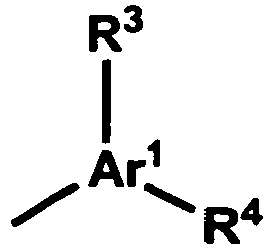
- R' represents an aryl or heterocyclic group optionally having a substituent selected from a group consisting of a halogen atom, a hydroxyl group, an oxo group, a thioxo group, a C1-C6 alkyl group, a halo-C1-C6 alkyl group, a hydroxy-C1-C6 alkyl group, a C2-C7 alkanoyloxy-C1-C6 alkyl group, a C1-C6 alkoxy group, a halo-C1-C6 alkoxy goup, a formyl group, a carboxyl group, a C2-C7 alkanoyl group, a C2-C7 alkoxycarbonyl group, a C1-C6 alkylsulfonyl group and a group of -CON(Rc)Rd; or a C1-C6 alkyl group or a C2-C6 alkenyl group having the aryl or heterocyclic group.
- "Aryl or heterocyclic group optionally having a substituent selected from a group consisting of a halogen atom, a hydroxyl group, an oxo group, a thioxo group, a C1-C6 alkyl group, a halo-C1-C6 alkyl group, a hydroxy-C1-C6 alkyl group, a C2-C7 alkanoyloxy-C1-C6 alkyl group, a C1-C6 alkoxy group, a halo-C1-C6 alkoxy group, a formyl group, a carboxyl group, a C2-C7 alkanoyl group, a C2-C7 alkoxycarbonyl group, a C1-C6 alkylsulfonyl group and a group of -CO-N(Rc)Rd" for R1 means the above-mentioned unsubstituted aryl or heterocyclic group, or the above-mentioned aryl or heterocyclic group having the substituent at any substitutable position thereof, in which the substituent may be the same or different, one or two or more, preferably one or two groups selected from a group consisting of a halogen atom, a hydroxyl group, an oxo group, a thioxo group, a C1-C6 alkyl group, a halo-C1-C6 alkyl group, a hydroxy-C1-C6 alkyl group, a C2-C7 alkanoyloxy-C1-C6 alkyl group, a C1-C6 alkoxy group, a halo-C1-C6 alkoxy group, a formyl group, a carboxyl group, a C2-C7 alkanoyl group, a C2-C7 alkoxycarbonyl group, a C1-C6 alkylsulfonyl group and a group of -CO-N(Rc)Rd.
- The halogen atom for the substituent is, for example, preferably a fluorine atom, a chlorine atom.
- The C1-C6 alkyl for the substituent is, for example, preferably a methyl group, an ethyl group.
- The halo-C1-C6 alkyl group for the substituent is, for example, preferably a fluoromethyl group, a difluoromethyl group, a trifluoromethyl group.
- The hydroxy-C1-C6 alkyl group for the substituent is, for example, preferably a hydroxymethyl group, a 1-hydroxyethyl group, a 2-hydroxyethyl group.
- The C2-C7 alkanoyloxy-C1-C6 alkyl group for the substituent is, for example, preferably an acetyloxymethyl group, a pivaloyloxymethyl group.
- The C1-C6 alkoxy group for the substituent is, for example, preferably a methoxy group, an ethoxy group.
- The halo-C1-C6 alkoxy group for the substituent is, for example, preferably a difluoromethoxy group.
- The C2-C7 alkanoyl group for the substituent is, for example, preferably an acetyl group, a propionyl group.
- The C2-C7 alkoxycarbonyl group for the substituent is, for example, preferably a methoxycarbonyl group, an ethoxycarbonyl group.
- The C1-C6 alkylsulfonyl group for the substituent is, for example, preferably a methylsulfonyl group.
- In the group of -CO-N(Rc)Rd for the substituent, Rc and Rd each independently represent a hydrogen atom, a C1-C6 alkyl group or a halo-C1-C6 alkyl group.
- The C1-C6 alkyl group for Rc and Rd is, for example, preferably a methyl group, an ethyl group.
- The group of -CO=N(Rc)Rd for the substituent is, for example, preferably a carbamoyl group, a dimethylcarbamoyl group.
- The substituent is, for example, preferably an oxo goup, a C1-C6 alkyl group, a formyl group, a carboxyl group, a C2-C7 alkoxycarbonyl group, a C1-C6 alkylsulfonyl group, a group of -CO-N(Rc)Rd,
- "Aryl group" itself of the above-mentioned optionally-substituted aryl or heterocyclic group for R1 is, for example, preferably a phenyl group; "heterocyclic group" itself thereof is, for example, preferably a pyrrolyl group, an imidazolyl group, a pyrazolyl group, a 1,2,4-triazolyl group, a tetrazolyl group, a pyridyl group, a pyrimidinyl group, a pyrrolidinyl group, a dihydro-1,2,4-triazolyl group, a dihydro-1,2,4-oxadiazolyl group, a dihydro-1,3,4-oxadiazolyl group, a dihydro-1,2,4-thiadiazolyl group, a dihydro-1,2,3,5-oxathiadiazolyl group, a dihydropyridyl group, a piperidyl group, a piperazinyl group, a morpholinyl group, a thiomorpholinyl group. Of those, more preferred are a pyrazolyl group, a 1,2,4-triazolyl group, a tetrazolyl group, a pyridyl group, a dihydro-1,2,4-triazolyl goup, a dihydro-1,2,4-oxadiazolyl group; even more preferred are a phenyl group, a tetrazolyl group, a pyridyl group, a dihydro-1,2,4-oxadiazolyl group; still more preferred are a tetrazolyl group, a pyridyl group.
- The above-mentioned, optionally-substituted aryl or heterocyclic group for R1 is, for example, preferably a phenyl group optionally substituted with a carboxyl group, a C12-C7 alkoxycarbonyl group or a group of -CO-N(Rc)Rd; a pyrazolyl group optionally substituted with a C1-C6 alkyl group; a 1,2,4-triazolyl group; a tetrazolyl group optionally substituted with a C2-C7 alkanoyloxy-C1-C6 alkyl group; a pyridyl group optionally substituted with a halogen atom, a C1-C6 alkyl group, a C1-C6 alkoxy group, a carboxyl group, a C2-C7 alkoxycarbonyl group or a group of -C4-N(Rc)Rd; a pyrimidinyl group; a dihydro-1,2,4-triazolyl group optionally substituted with an oxo group; a dihydro-1,2,4-oxadiazolyl group optionally substituted with an oxo group; or a dihydropyridyl group optionally substituted with an oxo group. Above all, more preferred are a phenyl group optionally substituted with a carboxyl group or a group of -CON(Rc)Rd; a pyrazolyl group optionally substituted with a C1-C6 alkyl group; a 1,2,4-triazolyl group; a tetrazolyl group optionally substituted with a C2-C7 alkanoyloxy-C1-C6 alkyl group; a pyridyl group optionally substituted with a C1-C6 alkoxy group, a carboxyl group or a group of-CO-N(Rc)Rd; a dihydro-1,2,4-triazolyl group optionally substituted with an oxo group; or a dihydro-1,2,4-oxadiazolyl group optionally substituted with an oxo group; even more preferred are a phenyl group optionally substituted with a carboxyl group or a group of -CO-N(Rc)Rd; a tetrazolyl group optionally substituted with a C2-C7 alkanoyloxy-C1-C6 alkyl group; a pyridyl group optionally substituted with a C1-C6 alkoxy group, a carboxyl group or a group of -CON(Rc)Rd; or a dihydro-1,2,4-oxadiazolyl group optionally substituted with an oxo group; still more preferred are a tetrazolyl group optionally substituted with a C2-C7 alkanoyloxy-C1-C6 alkyl group; or a pyridyl group optionally substituted with a C1-C6 alkoxy group, a carboxyl group or a group of -CO-N(Rc)Rd, especially a pyridyl group substituted with a carboxyl group.
- Examples of the aryl group or the heterocyclic group for R1 include, for example, a phenyl group, a 3-carboxyphenyl group, a 3-carbamoylphenyl group, a 4-carbamoylphenyl group, a 3-methoxycarbonylphenyl group, a 1-pyrrolyl group, a 1-imidazolyl group, a 3-pyrazolyl group, a 4-pyrazolyl group, a 1-methyl-4-pyrazolyl group, a 1,2,4-triaxol-3-yl group, a 1,2,4-triazol-4-yl group, a 5-carbamoyl-1,2,4-triazol-3-yl group, a 1-tetrazolyl group, a 5-tetrazolyl group, a 1-methyl-5-tetrazolyl group, a 2-methyl-5-tetrazolyl group, a 2-pivaloyloxymethyl-5-tetrazolyl group, a 2-dimethylcarbamoyl-5-tetrazolyl group, a 2-pyridyl group, a 4-carboxy-2-pyridyl group, a 5-carboxy-2-pyridyl group, a 3-pyridyl group, a 5-bromo-3-pyridyl group, a 6-methoxy-3-pyridyl group, a 5-carboxy-3-pyridyl group, a 5-carboxy-6-methyl-3-pyridyl group, a 6-carboxy-3-pyridyl group, a 5-carbamoyl-2-pyridyl group, a 5-carbamoyl-3-pyridyl group, a 5-methoxycarbonyl-3-pyridyl group, a 4-pyridyl group, a 2-carboxy-4-pyridyl group, a 2-pyrimidinyl group, a 5-pyrimidinyl group, a 2-oxo-1-pyrrolidinyl group, a 5-oxo-4,5-dihydro-1,2,4-triazol-3-yl group, a 3-oxo-2,3-dihydro-1,2,4-triazol-4-yl group, a 5-oxo-4,5-dihydro-1,2,4-oxadiazol-3-yl group, a 5-thioxo-4,5-dihydro-1,2,4-oxadiazol-3-yl group, a 5-oxo-4,5-dihydro-1,3,4-oxadiazol-2-yl group, a 5-oxo-4,5-dihydro-1,2,4-thiadiazol-3-yl group, a 2-oxo-2,3-dihydro-1,2,3,5-oxathiadiazol-4-yl group, a 6-oxo-1,6-dihydro-3-pyridyl group, a 1-piperidyl group, a 4-oxo-1-piperidyl group, a 1-piperazinyl group, a 3-oxo-1-piperazinyl group, a 4-methyl-1-piperazinyl group, a 4-formyl-1-piperazinyl group, a 4-acetyl-1-piperazinyl group, a 4-methoxycarbonyl-1-piperazinyl group, a 4-carbamoyl-1-piperazinyl group, a 4-methylsulfonyl-1-piperazinyl group, a 4-morpholinyl group, a 1,1-dioxo-4-thiomorpholinyl group. Of those, preferred are a 3-carboxyphenyl group, a 4-pyrazolyl group, a 5-carbamoyl-1,2,4-triazol-3-yl group, a 5-tetrazolyl group, a 4-carboxy-2-pyridyl group, a 5-carboxy-3-pyridyl group, a 5-carboxy-6-methyl-3-pyridyl group, a 6-carboxy-3-pyridyl group, a 2-carboxy-4-pyridyl group, a 5-oxo-4,5-dihydro-1,2,4-triazol-3-yl group, a 5-oxo-4,5-dihydro-1,2,4-oxadiazol-3-yl group; more preferred are a 3-carboxyphenyl group, a 5-tetrazolyl group, a 4-carboxy-2-pyridyl group, a 5-carboxy-3-pyridyl group, a 6-carboxy-3-pyridyl group, a 2-carboxy-4-pyridyl group, a 5-oxo-4,5-dihydro-1,2,4-oxadiazol-3-yl group; even more preferred are a 5-tetrazolyl group, a 5-carboxy-3-pyridyl group.
- "C1-C6 alkyl or C2-C6 alkenyl group having the aryl or heterocyclic group" for R1 means a C1-C6 alkyl or C2-C6 alkenyl group having the same or different, one or two or more, preferably one aryl or heterocyclic group selected from then above-mentioned "aryl or heterocyclic group optionally having a substituent selected from a group consisting of a halogen atom, a hydroxyl group, anti oxo group, a thioxo group, a C1-C6 alkyl group, a halo-C1-C6 alkyl group, a hydroxy-C1-C6 alkyl group, a C2-C7 alkanoyloxy-C1-C6 alkyl group, a C1-C6 alkoxy group, a halo-C1-C6 alkoxy group, a formyl group, a carboxyl group, a C2-C7 alkanoyl group, a C2-C7 alkoxycarbonyl group, a C1-C6 alkylsulfonyl group and a group of -CO-N(Rc)Rd", and is, for example, preferably a 5-tetrarolylmethyl group, a 2-(5-tetrazolyl)ethyl group, a 2-(5-tetrazolyl)vinyl group, a 3-(5-tetrazolyl)-1-propenyl group.
- R20 is preferably a hydrogen atom.
- "A substitutable position" and "a bondable position" mean a position of a group at which the group has a chemically-substitutable hydrogen atom on the carbon atom, the nitrogen atom, the oxygen atom and/or the sulfur atom thereof, and the substitution gives a chemically-stable compound; or mean that a chemical bond gives a chemically-stable compound not resulting from the substitution of the type.
- Depending on the type of the substituents therein and on the form of their salts, the compounds of the invention include stereoisomers and tautomers such as optical isomers, diastereoisomers and geometrical isomers, and the compounds of the invention encompass all these stereoisomers and tautomers and their mixtures.
- The invention encompasses various crystals, amorphous phases, salts, hydrates and solvates of the compounds of the invention.
- Specific examples of the compounds of formula (I), and their salts and esters are, for example, as follows:
- (1) 1-[(1-Ethyl-4-methoxy-1H-benzimidazol-6-yl)carbonyl]-6-(1H-tetrazol-5-yl)spiro[chroman-2,4'-piperidine]-4-one,
- (2) 1'-[(3-Cyclopropyl-8-methoxyimidazo[1,2-a]pyridin-6-yl)carbonyl]-6-(1H-tetrazol-5-yl)spiro[chroman-2,4'-piperidin]-4-one,
- (3) 1'-[(1-Cyclopropyl-4-methoxy-1H-indol-6-yl)carbonyl]-6-(5-oxo-4,5-dihydro-1,2,4-oxadiazol-3-yl)spiro[chroman-2,4'-piperidin]-4-one,
- (4) 1'-{[1-Ethyl-4-(2-hydroxyethoxy)-1H-indol-6-yl]carbony}-6-(1H-tetrazol-5-yl)spiro[chroman-2,4'-piperidin]-4-one,
- (5) Sodium 3-{1'-[(1-cyclopropyl-4-methoxy-1H-indol-6-yl)carbonyl]-4-oxospiro[chroman- 2,4'-piperidin]-6-yl}benzoate,
- (6) 5-{1'-[(1-Cyclopropyl-4-methoxy-1H-indol-6-yl)carbonyl]-4-oxospiro[chroman-2,4'-piperidin]-6-yl}nicotinic acid,
- (7) 5- {1'-[(1-Cyclopropyl-4-methoxy-1H-indol-6-yl)carbonyl]-4-oxo-3,4-dihydrospiro[chroman-2,4'-piperidin]-6-yl}nicotinic acid sodium salt,
- (8) 1'-{[1,4-Dimethoxy-1H-indol-6-yl]carbonyl}-6-(1H-tetrazol-5-yl)spiro[chroman-2,4'-piperidin]-4-one,
- (9) 1'-{[1,4-Dimethoxy-1H-indol-6-yl]carbonyl}-6-(1H-tetrazol-5-yl)spiro[chroman-2,4'-piperidin]-4-one sodium salt,
- (10) 1'-[(1-Ethyl-4-methoxy-1H-indazol-6-yl)carbonyl]-6-(1H-tetrazol-5-yl)spiro[chroman-2,4'-piperidin]-4-one,
- (11) 1'-[(1-Cyclopropyl-4-methoxy-1H-indol-6-yl)carbonyl]-6-(1H-tetrazol-5-yl)spiro[chroman-2,4'-piperidin]-4-one,
- (12) 1'-[(1-Cyclopropyl-4-methoxy-1H-indol-6-yl)carbonyl]-6-(1H-tetrazol-5-yl)spiro[chroman-2,4'-piperidin]-4-one sodium salt,
- (13) 1'-[(1-Cycopropyl-4-ethoxy-1H-indol-6-yl)carbonyl]-6-(1H-tetrazol-5-yl)spiro[chroman-2,4'-piperidin]-4-one,
- (14) 1'-[(1-Cyclopropyl-4-ethoxy-1H-indol-6-yl)carbonyl]-6-(1H-tetrazol-5-yl)spiro[chroman-2,4'-piperidin]-4-one sodium salt,
- (15) 1'-[(1,4-piethoxy-1H-indazol-6-yl)carbonyl]-6-(1H-tetrazol-5-yl)spiro[chroman-2,4'-piperidin]-4-one,
- (16) 1'-[(3-Chloro-1-cyclopropyl-4-ethoxy-1H-indol-6-yl)carbonyl]-6-(1H-tetrazol-5-yl)spiro[chronian-2,4'-piperidin]-4-one,
- (17) 1'-[(1-Cyclopropyl-4-ethoxy-3-methyl-1H-indol-6-yl)carbonyl]-6-(1H-tetrazol-5-yl)spiro[chroman-2,4'-piperidin]-4-one,
- (18) 3-(1'-{[1-Cyclopropyl-4-(2-hydroxyethoxy)-1H-indol-6-yl]carbonyl}-4-oxo-spiro[chroman-2,4'-piperidin]-6-yl)benzoic acid,
- (19) 5-{1'[(1-Cyclopropyl-4-ethoxy-1H-indol-6-yl)carbonyl]-4-oxo-spiro[chroman-2,4'-piperidin]-6-yl}nicotinc acid sodium salt,
- (20) 2-{1'-[(1-Cyclopropyl-4-methoxy-1H-indol-6-yl)carbonyl]-4-oxo-spiro[chroman-2,4'-piperidin]-6-yl}isonicotinic acid sodium salt,
- (21) 4-{1'-[(1-Cyclopropyl-4-methoxy-1H-indol-6-yl)carbonul]-4-oxo-spiro[chroman-2,4'-piperidín]-6-yl}pyridine-2-carboxylic acid sodium salt,
- (22) 5-{1'-[(1-Cyclopropyl-4-methoxy-1H-indol-6-yl)carbonyl]-4-oxo-spiro[chroman-2,4'-piperidin]-6-yl}pyridine-2-carboxylic acid sodium salt,
- (23) 5-{1'-[(1-Cyclopropyl-4-methoxy-3-methyl-1H-indol-6-yl)carbonyl]-4'oxo-spiro[chroman-2,4'-piperidin]-6-yl}nicotinic acid sodium salt,
- (24) 5-{1'-[(3-Chloro-1-cyclopropyl-4-methoxy-1H-indol-6-yl)carbonyl]-4-oxo-spiro[choman-2,4'-piperidin]-6-yl}nicotinic acid sodium salt,
- (25) 1'-[(4-Acetyl-7-methoxy-1-benzofuran-2-yl)carbonyl]-6-(1H-tetrazol-5-yl)spiro[chroinan-2,4'-piperidin]-4-one,
- (26) 1'-[(1-Ethyl-3-methyl-1H-thieno[2,3-c]pyrazol-5-yl)carbonyl]-6-(1H-tetrazol-5-yl)spiro[chroman-2,4'-piperidin]-4-one,
- (27) 5-{1'-[(1-Cyclopropyl-4-methoxy-3-methyl-1H-indol-6-yl)carbonyl]-4-oxo-spiro[chroman-2,4'-piperidin]-6-yl}nicotinic acid,
- (28) 1'-[(4-Methoxy-1-methyl-1H-pyrazolo[3,4-b]pyridin-6-yl)carbonyl]-6-(1H-tetrazol-5-yl)spiro[chroman-2,4'piperidin]-4-one,
- (30) 1'-[(3-Chloro-1-cyclopropyl-7-ethoxy-1H-indol-5-yl)carbonyl]-6-(1H-tetrazol-5-yl)spiro[chroman-2,4'-piperidin]-4-one,
- (31) 1'-[(3-Cyclopropyl-7-ethoxy-1,2-benzisoxazol-5-yl)carbonyl]-6-(1H-tetrazol-5-yl)spiro[chroman-2,4'-piperidin]-4-one,
- (32) 1'-[(2-Cyclopropyl-7-ethoxy-1,3-benzoxazol-5-yl)carbonyl]-6-(1H-tetrazol-5-yl)spiro[chroman-2,4'-piperidin]-4-one;
- (33) 1-Cyclopropyl-4-ethoxy-5-{[4-oxo-5-(1H-tetrazol-5-yl)spiro[chroman-2,4'-piperidin]-1'-yl]carbonyl}-1H-indole-3-carboxamide,
- (36) 1'-{[1-Cyclopropyl-4-(2-hydroxyethoxy)-1H-indol-6-yl]carbonyl}-6-(1H-tetrazol-5-yl)spiro[chroman-2,4'-piperidin]-4-one,
- (37) 1-Cyclopropyl-4-thoxy-N-methyl-6-{[4-oxo-6-(1H-tetrazol-5-yl)spiro[chroman-2,4'-piperidin]-1'-yl]carbonyl}-1H-indole-3-carboxamide,
- (38)Methyl 3-(1'-{[3-carbamoyl-1-cyclopropyl-4-ethoxy-1H-indol-6-yl]carbonyl}-4-oxospiro[chroman-2,4'-piperidin]-6-yl)benzoate,
- (39) 3-(1'-{[3-Carbamoyl-1-cyclopropyl-4-ethoxy-1H-indol-6-yl]carbonyl}-4-oxospiro[chroman-2,4'-piperidin]-6-yl)benzoic acid,
- (40) 1-Cyclopropyl-4-ethoxy-6-{[4-oxo-6-(1H-pyrazol-4-yl)spiro[chraman-2,4'-piperidin]-1'-yl]carbonyl}-1H-indole-3-carboxylic acid,
- (41) 1-Cyclopropyl-4-ethoxy-6-({6-[(1-methyl-1H-pyrazol-5-yl)amino]-4-oxospiro[chroman-2,4'-piperidin]-1'-yl}carbonyl)-1H-indole-3-carboxylic acid,
- (42) 4-{1'-[(1-Cyclopropyl-4-methoxy-3-methyl-1H-indol-6-yl)carbonyl]-4-oxospiro[chroman-2,4'-piperidin]-6-yl}pyridine-2-carboxylic acid,
- (43) 5-{1'-[(1-Cyclopropyl-4-methoxy-3-methyl-1H-indol-6-yl)carbonyl]-4-oxospiro[chroman-2,4'-piperidin]-6-yl}-2-methylnicotinic acid,
- (44) 6-{1'-[(1-Cyclopropyl-4-methoxy-3-methyl-1H-indol-6-yl)carbonyl]-4-oxospiro[chroman-2,4'-piperidin]-6-yl}nicotinic acid,
- (45) 5-{1'-[(1-Cyclopropyl-4-ethoxy-3-methyl-1H-indol-6-yl)carbonyl]-4-oxospiro[chroman-2,4'-piperidin]-6-yl}nicotinic acid,
- (46) 4-{1'-[(1-Cyclopropyl-4-ethoxy-3-methyl-1H-indol-6-yl)carbonyl]-4-oxospiro[chroman-2,4'-piperidin]-6-yl}pyridine-2-carboxylic acid,
- (47) 5-{1'-[(1-Cyclopropyl-4-ethoxy-3-methyl-1H-indol-6-yl)carbonyl]-4-oxo-spiro[chroman-2,4'-piperidin]-6-yl}nicotinic acid sodium salt,
- (48) 5-{1'-[(1,4-Dimethoxy-3-methyl-1H-indol-6-yl)carbonyl]-4-oxospiro[chroman-2,4'-piperidin]-6-yl}nicotinic acid,
- (49) 6-(5-Bromopyridin-3-yl)-1'-[(1-cyclopropyl-4-methoxy-3-methyl-1H-indol-6-yl)carbonyl]spiro[chroman-2,4'-piperidin]-4-one,
- (50) Methyl 5-{1'-[(1-cyclopropyl-4-methoxy-3-methyl-1H-indol-6-yl)carbonyl]-4-oxospiro[chroman-2,4'-piperidin]-6-yl}nicotinate;
- (51) 1'-[(1-Cyclopropyl-4-methoxy-1H-i-indol-6-yl)carbonyl]-6-(5-oxo-4,5-dihydro-1H-1,2,4-triazol-3-yl)spiro[chroman-2,4'-piperidin]-4-one,
- (53) Sodium 5-{1'-[(1-cyclopropyl-ethoxy-3-methyl-1H-indol-6-yl)carbonyl]-4-oxospiro[chroman-2,4'-piperidin]-6-yl}-2-methylnicotinate,
- (54) 1'-[(1-methyl-4-morpholin-4-yl-1H-indol-6-yl)carbonyl]-6-(1H-tetrazol-5-yl)spiro[chroman-2,4'-piperidin]-4-one,
- (55) 1'-[(1-Cyclopropyl-4-methoxy-3-methyl-1H-indol-6-yl)carbonyl]-6-(1H-tetrazol-5-yl)spiro[chroman-2,4'-piperidin]-4-one,
- (56) 1'-[(1-Ethyl-4-methoxy-1H-indol-6-yl)carbonyl]-6-(1H-tetrazol-5-yl)spiro[chroman-2,4'-piperidin]-4-one,
- (57) 5-{1'-[(1-Cyclopropyl-4-methoxy-1H-indol-6-yl)carbonyl]-4-oxo-spiro[chroman-2,4'-piperidin]-6-yl}-4H-1,2,4-triazole-3-carboxamide,
- (58) 1'-[(1,3-Diethyl-7-methoxy-2-oxo-2,3-dihydro-1H-benzimidazol-5-yl)carbonyl]-6-(1H-tetrazol-5-yl)spiro[chroman-2,4'-pipendin]-4-one,
- (59) 5-{1'-[(6-Cyclopropyl-1-isopropyl-1H-pyrazolo[3,4-b]pyridin-4-yl)carbonyl]-4-oxo-spiro[chroman-2,4'-piperidin]-6-yl}nicotinic acid, or
- (60) 1'-[(1-Cyclopropyl-4-methoxy-1H-benzimidazol-6-yl]carbonyl]-6-(1H-tetrazol-5-yl)spiro[chroman-2,4'-piperidin]-4-one.
- In one embodiment of the present invention, the compounds are selected from the group consisting of:
- 3-{1'-[(1-cyclopropyl-4-methoxy-1H-indol-6-yl)carbonyl]-4-oxospiro[chroman-2,4'-piperidin]-6-yl}benzoic acid, or a salt or ester thereof;
- 5-{1'[(1-cyclopropyl-4-methoxy-1H-indol-6-yl)carbonyl]-4-oxospiro[chroman-2,4'-piperidin]-6-yl}nicotinic acid, or a salt or ester thereof;
- 1'-[(1-cyclopropyl-4-methoxy-1H-indol-6-yl)carbonyl]-6-(1H-tetrazol-5-yl)spiro[chroman-2,4'-piperidin]-4-one, or a salt thereof;
- 1'-[(1-cyclopropyl-ethoxy-3-methyl-1H-indol-6-yl)carbonyl]-6-(1H-tetraxol-5-yl)spiro[chroman-2,4'-piperidin]-4-one, or a salt thereof; or
- 5-{1'-[(1-cyclopropyl-4-methoxy-3-methyl-1H-indol-6-yl)carbonyl]-4-oxo-spiro[chroman-2,4'-piperidin]-6-yl}nicotinic acid, or a salt or ester thereof.
- Methods for producing the compounds of the invention are described below.
- The compounds (I) of the invention may be produced according to the production method mentioned below, or according to the methods shown in Examples and Reference Examples given hereinunder. However, the production of the compounds (I) of the invention should not be restricted by these reaction examples.
- A compound protected with a suitable group (II in the following drawing) is deprotected, and then condensed with an aromatic carboxylic acid or its reactive derivative of a formula (III):


- The protective group (PG) may be, for example, a tert-butoxycarbonyl, benzyloxycarbonyl or benzoyl group, and may also be any other known protective group. For selecting suitable protective groups and their deprotection, for example, referred to is Protective Groups in Organic Synthesis (Theodora W. Greene & Peter G. M. Wuts, John Woley & Sons, 1999).
- In the above series of reaction, the functional groups such as hydroxyl group, amino group, imino group and carboxyl group which are not concerned with the reaction may be suitably protected, if desired, and they may be deprotected after the reaction.
- Not specifically defined, "protective group for hydroxyl group" may be any one having its function and includes, for example, a C1-C6 alkyl group such as a methyl group, an ethyl group, a propyl group, an isopropyl group, a tert-butyl group; a C1-C6 alkylsilyl group such as a trimethylsilyl group, a tert-butyldimethylsilyl group; a C1-C6 alkoxymethyl group such as a methoxymethyl group, a 2-methoxyethoxymethyl group; a tetrahydropyranyl group; a trimethylsilylethoxymethyl group, an aralkyl group such as a benzyl group, a p-methoxybenzyl group, a 2,3-dimethoxybenzyl group, an o-nitrobenzyl group, a p-nitrobenzyl group, a trityl group; an acyl group such as a formyl group, an acetyl group. Especially preferred are a methyl group, a methoxymethyl group, a tetrahydropyranyl group, a trityl group, a trimethylsilylethoxymethyl group, a tert-butyldimethylsilyl group, an acetyl group.
- Also not specifically defined, "protective group for amino group and imino group" may be any one having its function and includes, for example, an aralkyl group such as a benzyl group, a p-methoxybenzyl group, a 3,4-dimethoxybenzyl group, an o-nitrobenzyl group, a p-nitrobenzyl group, a benzhydryl group, a trityl group; a C2-C7 alkanoyl group such as a formyl group, an acetyl group, a propionyl group, a butyryl group, a pivaloyl group; a benzoyl group; an arylalkanoyl group such as a phenylacetyl group, a phenoxyacetyl group; a C2-C7 alkoxycarbonyl group such as a methoxycarbonyl group, an ethoxycarbonyl group, a propyloxycarbonyl group, a tert-butoxycarbonyl group; an aralkyloxycarbonyl group such as a benzyloxycarbonyl group, a p-nitrobenzyloxycarbonyl group, a phenethyloxycarbonyl group; a C1-C6 alkylsilyl group such as a trimethylsilyl group, a tert-butyldimethylsilyl group; a tetrahydropyranyl group; a trimethylsilylethoxymethyl group; a C1-C6 alkylsulfonyl group such as a methylsulfonyl group, an ethylsulfonyl group; an arylsulfonyl group such as a benzenesulfonyl group, a toluenesulfonyl group. Especially preferred are an acetyl group, a benzoyl group, a tert-butoxycarbonyl group, a benzyloxycarbonyl group, a trimethylsilylethoxymethyl group, a methylsulfonyl group.
- Also not specifically defined, "protective group for carboxyl group" may be any one having its function and includes, for example, a C1-C6 alkyl group such as a methyl group, an ethyl group, a propyl group, an isopropyl group, a tert-butyl group; a halo-C1-C6 alkyl group such as a 2,2,2-trichloroethyl group; a C2-C6 alkenyl groups such as a 2-propenyl group; an aralkyl group such as a benzoyl group, a p-methoxybenzyl group, a p-nitrobenzyl group, a benzhydryl group, a trityl group. Especially preferred are a methyl group, an ethyl group, a tert-butyl group, a 2-propenyl group, a benzyl group, a p-methoxybenzyl group, a benzhydryl group.
- For the introduction and the removal of the protective groups, referred to are the above references.
- The substituent R1 may be converted into a group of any other type (R1', R1") in any suitable stage according to a chemical process per-se well known in the field of organic chemistry.
- For example, when R1 is a bromide group, then it may be converted into a cyano group and may be further into a tetrazolyl group. The conversion reaction may be attained according to a chemical process well known in the field of organic chemistry.
- In the above drawing, the condensation of the amino compound derived from the compound of formula (II), with an aromatic carboxylic acid may be attained in the same manner. In general, from 0.5 mol to an excessive molar amount, preferably from 1 mol to 1.5 mols of an aromatic carboxylic acid is used relative to one mol of the amino compound.
- The reaction may be attained generally in an inert solvent. The insert solvent is preferably methylene chloride, chloroform, tetrahydrofuran, dimethylformamide, pyridine or their mixtures.
- Preferably, the reaction is effected in the presence of a condensing agent. The condensing agent includes, for example, N,N'-dicyclohexylcarbodiimide, N,N'-diisopropylcarbodiimide, 1-(3-dimethylaminopropyl)-3-ethylcarbodiimide, 1-(3-dimethylaminopropyl)-3-ethylcarbodiimide hydrochloride, benzotriazol-1-yloxy-tris(dimethylamino)phosphonium hexafluorophosphate, benzotriazol-1-yloxy-tris-pyrrolidinophosphonium hexafluorophosphate, bromotris-(dimethylamino)phosphonium hexafluorophosphate, diphenylphosphoryl azide, 1,1'-carbonyldiimidazole.
- The condensing agent may be used in an amount of from 1 mol to an excessive molar amount, preferably from 1 mol to 1.5 mols relative to 1 mol of the aromatic carboxylic acid.
- The reaction temperature may be generally from -50°C to 100°C, preferably from -20°C to 50°C.
- The reaction time may be generally from 30 minutes to 7 days, preferably from 1 hour to 24 hours.
- In place of the aromatic carboxylic acid, a reactive derivative of the carboxylic acid may be reacted with the amino compound to produce the intended product.
- The reactive derivative of the aromatic carboxylic acid usable herein includes, for example, acid halides, mixed acid anhydrides, active esters, and active amides.
- The acid halide may be prepared by reacting the aromatic carboxylic acid with a halogenating agent in an ordinary manner. The halogenating agent includes, for example, thionyl chloride, phosphorus trichloride, phosphorus pentachloride, phosphorus oxychloride, phosphorus trichloride, oxalyl chloride, phosgene.
- The mixed acid anhydride may be prepared by reacting the aromatic carboxylic acid with an alkyl chlorocarbonate such as ethyl chlorocarbonate or with an aliphatic carboxylic acid chloride such as pivaloyl chloride, in an ordinary manner.
- The active ester may be prepared by reacting the aromatic carboxylic acid with an N-hydroxy compound such as N-hydroxysuccinimide, N-hydroxyphthalimide, and 1-hydroxybenzotriazole, or with a phenol compound such as 4-nitrophenol, 2,4-dinitrophenol, 2,4,5-trichlorophenol, and pentachlorophenol, in the presence of a condensing agent such as N,N'-dicyclohexylcarbodiimide and 1-(3-dimethylaminopropyl)-3-ethylcarbodiimide, in an ordinary manner.
- The active amide may be prepared by reacting the aromatic carboxylic acid with, for example, 1,1'-carbonyldiimidazole or 1,1'-carbonylbis(2-methylimidazole) in an ordinary manner.
- The reaction between the amino compound and the reactive derivative of the carboxylic acid may be attained, generally using from 0.5 mols to an excessive molar amount, preferably from 1 mol to 1.5 mols of the reactive derivative of the carboxylic acid, per 1 mol of the amino compound.
- The reaction may be effected generally in an inert solvent. The inert solvent is, for example, preferably methylene chloride, chloroform, tetrahydrofuran, dimethylformamide, pyridine and their mixtures.
- The reaction may go on in the absence of a base, but for more smoothly promoting it, the reaction is preferably effected in the presence of a base.
- The base includes an organic base such as triethylamine, diisopropylethylamine, pyridine, and 4-dimethylaminopyridine; and inorganic base such as sodium hydroxide, potassium hydroxide, sodium carbonate, potassium carbonate and sodium hydrogencarbonate.
- In general, the base is used preferably in an amount of from 1 mol to an excessive molar amount relative to 1 mol of the amino compound. When the base is liquid, then the base may serve also as a solvent.
- The reaction temperature may be generally from -50°C to 130°C, preferably from -20°C to 100°C.
- The reaction time may be generally from 5 minutes to 7 days, preferably from 30 minutes to 24 hours.
- After the reaction, the system may be processed in an ordinary manner to give a crude product of the intended compound. The thus-obtained compound may be purified in an ordinary manner, or not purified, it may be subjected to the next reaction, if desired.
- After the reaction, when the product has a protective group, then the protective group may be removed. When the product does not have a protective group, it may be processed in any ordinary manner, and the intended final product may be thus produced.
- The compounds of formula (II) and (III) may be commercial products, or may be prepared according to a known method or according to a method similar to a known method, or with reference to the methods described in Examples and Reference Examples, suitably as combined, if desired.
- The compounds of formula (I) may be administered orally or parenterally, and after formulation into preparations suitable for the intended administration route, they can be used as therapeutic agents, for example, for vascular diseases such as hypertension, cardiac angina, heart failure, cardiac infarction, stroke, claudication, diabetic nephropathy, diabetic retinopathy, eyesight failure, electrolyte abnormality and arteriosclerosis; nervous system diseases such as bulimia and diabetic neuropathy; metabolic diseases such as metabolic syndrome, obesity, diabetes, insulin resistance, hyperlipemia, hypercholesterolemia, hypertriglyceridemia, dyslipidemia, non-alcoholic fatty liver disease, hormone secretion failure, gout and hepatic steatosis; genital diseases such as emmeniopathy, sexual dysfunction; digestive system diseases such as liver dysfunction, pancreatitis, cholecystitis and gastroesophageal reflux; respiratory diseases such as Pickwickian syndrome and sleep apnea syndrome; infectious diseases caused by bacteria, fungi or parasites; malignant neoplasm; and inflammatory diseases such as arthritis and skin ulcer.
- The following "diabetes related disorders" are diseases, disorders and conditions that are related to Type 2 diabetes, and therefore may be treated, controlled or in some cases prevented, by treatment with the compounds of this invention: (1) hyperglycemia, (2) low glucose tolerance, (3) insulin resistance, (4) obesity, (5) lipid disorders, (6) dyslipidemia, (7) hyperlipidemia, (8) hypertriglyceridemia, (9) hypercholesterolemia, (10) low HDL levels, (11) high LDL levels, (12) atherosclerosis and its sequelae, (13) vascular restenosis, (14) irritable bowel syndrome, (15) inflammatory bowel disease, including Crohn's disease and ulcerative colitis, (16) other inflammatory conditions, (17) pancreatitis, (18) abdominal obesity, (19) neurodegenerative disease, (20) retinopathy, (21) nephropathy, (22) neuropathy, (23) Syndrome X, (24) ovarian hyperandrogenism (polycystic ovarian syndrome), and other disorders where insulin resistance is a component. In Syndrome X, also known as Metabolic Syndrome, obesity is thought to promote insulin resistance, diabetes, dyslipidemia, hypertension, and increased cardiovascular risk: Therefore, ACC 1/2 inhibitors may also be useful to treat hypertension associated with this condition.
- Another aspect of the present invention provides a pharmaceutical composition comprising a compound of formula (I), or a pharmaceutically acceptable salt or ester thereof, and a pharmaceutically acceptable carrier.
- Yet another aspect of the present invention relates to a compound of formula (I), or a pharmaceutically acceptable salt or ester thereof, for use in medicine.
- Yet another aspect of the present invention relates to the use of a compound of formula (I), or a pharmaceutically acceptable salt or ester thereon, for the manufacture of a medicament useful for the treatment or prevention, or suppression of a disease mediated by ACC-1 or ACC-2 in a subject in need thereof.
- Yet another aspect of the present invention relates to the use of a compound of formula (I), or a pharmaceutically acceptable salt or ester thereof, for the manufacture of a medicament useful for the treatment or prevention of metabolic syndrome, hyperlipemia, dyslipidemia, non-alcoholic fatty liver disease, obesity, diabetes, bulimia, malignant neoplasm or an infectious disease in a subject in need thereof.
- Yet another aspect of the present invention relates to the use of a compound of formula (I), or a pharmaceutically acceptable salt or ester thereof, for the manufacture of a medicament useful for the treatment or prevention of obesity in a subject in need thereof.
- Yet another aspect of the present invention relates to the use of a compound of formula (I), or a pharmaceutically acceptable salt or ester thereof, for the manufacture of a medicament useful for the treatment or prevention of diabetes in a subject in need thereof.
- Yet another aspect of the present invention relates to the use of a compound of formula (I), or a pharmaceutically acceptable salt or ester thereof, for the manufacture of a medicament useful for the treatment or prevention of hyperlipemia or dyslipidemia in a subject in need thereof.
- Yet another aspect of the present invention relates to the use of a therapeutically effective amount of a compound of formula (I), or a pharmaceutically acceptable salt or ester thereof, and a therapeutically effective amount of an agent selected from the group consisting of an insulin sensitizer, an insulin mimetic, a sulfonylurea, an α-glucosidase inhibitor, a dipeptidyl peptidase 4 (DPP-4 or DP-IV) inhibitor, a glucagons like peptide 1 (GLP-1) agonist, a HMG-CoA reductase inhibitor, a serotonergic agent, a β3-adrenoreceptor agonist, a neuropeptide Y1 antagonist, a neuropeptide Y2 agonist, a neuropeptide Y5 antagonist, a pancreatic lipase inhibitor, a cannabinoid CB1 receptor antagonist or inverse agonist, a melanin-concentrating hormone receptor antagonist, a melanocortin 4 receptor agonist, a bombesin receptor subtype 3 agonist, a ghrelin receptor antagonist, PYY, PYY3-36, and a NK-1 antagonist, or a pharmaceutically acceptable salt thereof, for the manufacture of a medicament useful for the treatment, control, or prevention of obesity, diabetes, a diabetes related disorder, or an obesity-related disorder in a subject in need of such treatment.
- Yet another aspect of the present invention relates to the use of a therapeutically effective amount of a compound of formula (I), or a pharmaceutically acceptable salt or ester thereof, and a therapeutically effective amount of an agent selected from the group consisting of an insulin sensitizer, an insulin mimetic, a sulfonylurea, an α-glucosidase inhibitor, a dipeptidyl peptidase 4 (DPP-4 or DP-IV) inhibitor, a glucagon-like peptide 1 agonist, a HMG-CoA reductase inhibitor, a serotonergic agent, a β3-adrenoreceptor agonist, a neuropeptide Y1 antagonist, a neuropeptide Y2 agonist, a neuropeptide Y5 antagonist, a pancreatic lipase inhibitor, a cannabinoid CB1 receptor antagonist or inverse agonist, a melanin-concentrating hormone receptor antagonist, a melanocortin 4 receptor agonist, a bombesin receptor subtype 3 agonist, a ghrelin receptor antagonist, PYY, PYY3-36, and a NK-1 antagonist, or a pharmaceutically acceptable salt thereof, for the manufacture of a medicament for treatment or prevention of obesity, diabetes, a diabetes related disorder, or an obesity-related disorder which comprises an effective amount of a compound of formula (I), or a pharmaceutically acceptable salt or ester thereof, and an effective amount of the agent, together or separately.
- Yet another aspect of the present invention relates to a product containing a therapeutically effective amount of a compound of formula (I), or a pharmaceutically acceptable salt or ester thereof; and and a therapeutically effective amount of an agent selected from the group consisting of an insulin sensitizer, an insulin mimetic, a sulfonylurea, an α-glucosidase inhibitor, a dipeptidyl peptidase 4 (DPP-4 or DP-IV) inhibitor, a HMG-CoA reductase inhibitor, a serotonergic agent, a β3-adrenoreceptor agonist, a neuropeptide Y1 antagonist, a neuropeptide Y2 agonist, a neuropeptide Y5 antagonist, a pancreatic lipase inhibitor, a cannabinoid CB1 receptor antagonist or inverse agonist, a melanocortin 4 receptor agonist, a melanin-concentrating hormone receptor antagonist, a bombesin receptor subtype 3 agonist, a ghrelin receptor antagonist, PYY, PYY3-36, and a NK-1 antagonist, or a pharmaceutically acceptable salt thereof, as a combined preparation for simultaneous, separate or sequential use in obesity, diabetes, a diabetes related disorder, or an obesity-related disorder.
- Yet another aspect of the present invention relates to the use of a therapeutically effective amount of a compound of formula (I), or a pharmaceutically acceptable salt or ester thereof, and a therapeutically effective amount of at least one agent selected from the group consisting of: simvastatin, mevastatin, ezetimibe, atorvastatin, sitagliptin, metformin, sibutramine, orlistat, Qnexa, topiramate, phentermine, losartan, losartan with hydrochlorothiazide, or a CB1 antagonist/inverse agonist selected from: rimonabant, taranabant, N-[3-(4-chlorophenyl)-2(S)-phenyl-1(S)-methylpropyl]-2-(4-trifluoromethyl-2-pyrimidyloxy)-2-methylpropanamide, N-[(1S,2S)-3-(4-chlorophenyl)-2-(3-cyanophenyl)-1-methylpropyl]-2-methyl-2-{[5-(trifluoromethyl)pyridin-2-yl]oxy}propanamide, N-[3-(4-chlorophenyl)-2-(5-chloro-3-pyridyl)-1-methylpropyl]-2-(5-trifluoromethyl-2-pyridyloxy)-2-methylpropanamide, 3-{1-[bis(4-chlorophenyl)methyl]azetidin-3-ylidene}-3-(3,5-difluorophenyl)-2,2-dimethylpropanenitrile, 1-{1-[1-(4-chlorophenyl)pentyl]-azetidin-3-yl}-1-(3,5-difluorophenyl)-2-methylpropan-2-ol, 3-((S)-(4-chlorophenyl){3-[(1S)-1-(3,5-difluorophenyl)-2-hydroroxy-2-methylpropyl]azetidin-1-yl}methyl)benzonitrile, 3-((S)-(4-chlorophenyl){3-[(1S)-1-(3,5-difluorophenyl)-2-fluoro-2-methylpropyl]azetidin-1-yl}methyl)-benzonitrile, 3-((4-chlorophenyl){3-[1-(3,5-difluorophenyl)-2,2-dimethylpropyl]azetidin-1-yl}methyl)benzonitrile, 3-((1S)-1-{1-[(S)-(3-cyanophenyl)(4-cyanophenyl)methyl]azetidin-3-yl}-2-fluoro-2-methylpropyl)-5-fluorobenzonitrile, 3-[(S)-(4-chlorophenyl)(3-{(1S)-2-fluoro-1-[3-fluoro-5-(4H-1,2,4-triazol-4'-yl)phenyl]-2-methylpropyl}azetidin-1-yl)methyl]benzonitrile, and 5-((4-chlorophenyl){3-[1-(3,5-difluorophenyl)-2-fluoro-2-methylpropyl]azetidin-1-yl}methyl)thiophene-3-carbonitrle, or a pharmaceutically acceptable salt or ester or prodrug thereof, for the manufacture of a medicament useful for the treatment, control, or prevention of obesity, diabetes, a diabetes related disorder, or an obesity-related disorder in a subject in need of such treatment.
- In clinical use of the compounds of the invention, pharmaceutically-acceptable additives may be added thereto to formulate various preparations in accordance with the intended administration route thereof, and the preparations may be administered. Various additives generally used in the field of pharmaceutical compositions may be used herein, including, for example, gelatin, lactose, sucrose, titanium oxide, starch, crystalline cellulose, methyl cellulose, hydroxypropylmethyl cellulose, carboxymethyl cellulose, corn starch, microcrystalline wax, white petrolatum, magnesium metasilicate aluminate, anhydrous calcium phosphate, citric acid, trisodium citrate, hydroxypropyl cellulose, sorbitol, sorbitan fatty acid ester, polysorbate, sucrose fatty acid ester, polyoxyethylene, hardened castor oil, polyvinylpyrrolidone, magnesium stearate, palmitoleic acid, light silicic acid anhydride, talc, vegetable oil, benzyl alcohol, gum arabic, propylene glycol, polyalkylene glycol, cyclodextrin, and hydroxypropylcyclodextrin.
- Combined with such additives, the compound of the invention may be formulated into various forms of preparations, for example, solid preparations such as tablets, capsules, granules, powders and suppositories; and liquid preparations such as syrups, elixirs and injections. These preparations can be produced in any method known in the field of pharmaceutical compositions. The liquid preparations may be in such a form that is dissolved or suspended in water or in any other suitable medium before use. Especially for injections, the preparation may be dissolved or suspended, if desired, in a physiological saline or glucose solution, and a buffer and a preservative may be added thereto.
- The compounds of the invention are effective for animals including humans and other mammals and plants that require the treatment with the compound. For the mammals, humans are preferred and they may be either men or women. The mammals except humans are, for example, companion animals such as dogs and cats. The compounds of the invention are effective also for obesity and obesity-related disorders of dogs and cats. Any ordinary physicians, veterinarians and clinicians may readily determine the necessity, if any, of the treatment with the compound of the invention.
- When the compound of the invention is, for example, put into clinical use, then its dose and its administration frequency may vary depending on the sex, the age, the body weight and the condition of the patient and on the type and the range of the necessary treatment with the compound. In oral administration, in general, the dose of the compound may be from 0.01 to 100 mg/kg of adult/day, preferably from 0.03 to 1 mg/kg of adult/day, and the administration frequency is preferably from one to a few times; and in parenteral administration, the dose may be from 0.001 to 10 mg/kg of adult/day, preferably from 0.001 to 0.1 mg/kg of adult/day, more preferably from 0.01 to 0.1 mg/kg of adult/day, and the administration frequency is preferably from one to a few times. For oral administration, the compositions are preferably provided in the form of tablets containing 1.0 to 1000 mg of the active ingredient, particularly 1.0, 5.0, 10.0, 15.0, 20.0, 25.0, 50.0, 75.0, 100.0, 150.0, 200.0, 250.0, 300.0, 400.0, 500.0, 600.0, 750.0, 800.0, 900.0, and 1000.0 mg of the active ingredient for the symptomatic adjustment of the dosage to the patient to be treated. The compounds may be administered on a regimen of 1 to 4 times per day, preferably once or twice per day.
- When treating or preventing obesity and/or diabetes mellitus and/or hyperlipemia and/or dyslipidemia and/or non-alcoholic fatty liver disease, or other diseases for which compounds of the present invention are indicated, generally satisfactory results are obtained when the compounds of the present invention are administered at a daily dosage of from about 0.1 mg to about 100 mg per kilogram of animal body weight, preferably given as a single daily dose or in divided doses two to six times a day, or in sustained release form. For most large mammals, the total daily dosage is from about 1.0 mg to about 1000 mg, preferably from about 1 mg to about 50 mg. In the case of a 70 kg adult human, the total daily dose will generally be from about 7 mg to about 350 mg. This dosage regimen may be adjusted to provide the optimal therapeutic response.
- Ordinary physicians, veterinarians and clinicians may readily determine the effective dose of the pharmaceutical compound necessary to treat, prevent, inhibit, retard or stop the intended disease, and may readily treat the diseased patient with the compound.
- The preparation may contain the compound of the invention in an amount of from 1.0 to 100 % by weight, preferably from 1.0 to 60 % by weight of the preparation. The preparation may contain any other therapeutically-effective compound.
- In their use, the compounds of the invention may be combined with any other therapeutic agents that are useful for the treatment of disorders, for example, vascular diseases such as hypertension, cardiac angina, heart failure, cardiac infarction, stroke, claudication, diabetic nephropathy, diabetic retinopathy, eyesight failure, electrolyte abnormality and arteriosclerosis; nervous system diseases such as bulimia and diabetic neuropathy; metabolic diseases such as metabolic syndrome, obesity, diabetes, pre-diabetes, insulin resistance, hyperlipemia, hypercholesterolemia, hypertriglyceridemia, dyslipidemia, non-alcoholic fatty liver disease, hormone secretion failure, gout and hepatic steatosis; genital diseases such as emmeniopathy and sexual dysfunction; digestive tract diseases such as liver dysfunction, pancreatitis, cholecystitis and gastroesophageal reflux; respiratory system diseases such as Pickwickian syndrome and sleep apnea syndrome; infectious diseases caused by bacteria, fungi or parasites; malignant neoplasm; and inflammatory diseases such as arthritis and skin ulcer. The individual ingredients to be combined may be administered at the same time or at different times during the treatment period, either as one preparation or as different preparations. Accordingly, the invention should be so interpreted that it encompasses any and every administration mode at the same time or at different times, and the administration in the invention should be interpreted so. The range of the combination of the compound of the invention and the other therapeutic agent useful for the above-mentioned disorders encompasses, in principle, all combinations of the compound of the invention and any and every pharmaceutical agent useful for the above-mentioned disorders.
- The combination includes not only the composition of compounds of the invention and one other active substance but also the composition of compounds of the invention and two or more other active substances. There are a lot of examples of the combinations of a compound of the invention and one, two or more active substances selected from the therapeutic agents for the above-mentioned disorders. For example, for the treatment, management and prevention of metabolic syndrome, a combination of a compound of the invention and one, two or more active substances selected from hypolipidemic agents, lipid lowering agents, and anti-diabetic agents is useful. In particular, a composition that also contains an anti-obesity agent and an anti-hypertension agent, in addition to an anti-diabetic agent and/or a hypolipidemic agent or lipid lowering agent, may exhibit a synergistic effect for treatment, management and prevention of metabolic syndrome.
- The pharmaceutical agents that may be combined with the compound of the invention are, for example, ACAT inhibitor, α-blocker, aldose reductase inhibitor, α-amylase inhibitor, angiotensin-converting enzyme inhibitor, angiotensin receptor antagonist, anion exchange resin, anorectic, antioxidant, antiplatelet, β-blocker, biguanide agent, calcium antagonist, CB1 receptor inverse agonist/antagonist, CETP inhibitor, cholesterol absorption inhibitor, DGAT inhibitor, DP-IV inhibitor, diuretic, eicosapentaenoic acid, endothelin antagonist, FLAP inhibitor, FXR modulator, Ghrelin antagonist, GLP-1 agonist, GLP-1 secretagogue, glucagon antagonist, glucokinase activator, glucocorticoid receptor ligand, α-glucosidase inhibitor, GPAT inhibitor, histamine-H3 receptor ligand, HMG-CoA reductase inhibitor, HSD inhibitor, 11-beta HSD-1 inhibitor, insulin and insulin mimetics, kinase inhibitors such as VEGF inhibitor and PDGF inhibitor, leptin, lipase inhibitor, 5-LO inhibitor, LXR ligand, melanocortin agonist, MCH antagonist, MTTP inhibitor, orexin antagonist, opioid antagonist, neuropeptide Y antagonist, nicotinic acid agonist, PPAR ligand, PTP-1B inhibitor, SCD-1 inhibitor, serotonin transporter inhibitor, SGLT inhibitor, SUR ligand, thyroid hormone agonist, UCP activator, VPAC receptor agonist.
- More concretely, examples of the other active ingredients that can be combined with a compound of the invention as different or the same pharmaceutical compositions are shown below, which, however, do not restrict the invention.
- (a) Anti-diabetic medicines or agents, for example, (1) glitazones (e.g., ciglitazone, darglitazone, englitazone, isaglitazone (MCC-555), pioglitazone, rosiglitazone, troglitazone, tularik, BRL49653, CLX-0921, 5-BTZD), and PPAR-γ agonists such as GW-0207, LG-100641 and LY-300512; (2) biguanides such as buformin, metformin and phenformin; (3) protein tyrosine phosphatase-1B (PTP-1B) inhibitors; (4) sulfonylureas such as acetohexamide, chlorpropamide, diabinese, glibenclamide, glipizide, glyburide, glimepiride, gliclazide, glipentide, gliquidone, glisolamide, tolazamide and tolbutamide; (5) meglitinides such as repaglinide, nateglinide, and the like; (6) α-glucosidase inhibitors such as acarbose, adiposine, camiglibose, emiglitate, miglitol, voglibose, pradimicin-Q, salbostatin, CKD-711, MDL-25,637, MDL-73,945, and MOR14; (7) α-amylase inhibitors such as tendamistat, trestatin, and Al-3688; (8) insulin secretagogues such as linogliride, A-4166 and the like; (9) fatty acid oxidation inhibitors such as clomoxir, and etomoxir; (10) α-2 antagonists such as midaglizole, isaglidole, deriglidole, idazoxan, earoxan, and fluparoxan; (11) insulin and insulin mimetics such as biota, LP-100, novarapid, insulin detemir, insulin lispro, insulin glargine, insulin zinc suspension (lente and ultralente), Lys-Pro insulin, GLP-1 (73-7) (insulintropin), and GLP-1 (7-36)-NH2; (12) non-thiazolidinediones such as JT-501, farglitazar (GW-2570/GI-262579), and muraglitazar; PPAR α/agonists, such as muraglitazar, and the compounds disclosed in

US 6,414,002 ; (13) PPAR-α/γ dual agonists such as MK-0767/KRP-297, CLX-0940, GW-1536, GW-1929, GW-2433, L-796449, LR-90, and SB219994; (14) other insulin sensitizers; (15) VPAC2 receptor agonists; (16) glucokinase activators; and (17) DPP-4 inhibitors, such as sitagliptin (Januvia™), isoleucine thiazolidide (P32/98); NVP-DPP-728; vildagliptin (LAF 237); P93/01; denagliptin (GSK 823093), SYR322, RO 0730699, TA-6666, and saxagliptin (BMS 477118). - (b) lipid lowering agents, for example, (1) bile acid sequestrants such as cholestyramine, colesevelam, colestipol, dialkylaminoalkyl derivatives of a cross-linked dextran, Colestid®, LoCholest®, and Questran®, and the like; (2) HMG-CoA reductase inhibitors such as atorvastatin, itavastatin, fluvastatin, lovastatin, pitavastatin, pravastatin, rivastatin, rosuvastatin, and simvastatin, ZD-4522, and the like; (3) HMG-CoA synthase inhibitors; (4) cholesterol absorption inhibitors such as stanol esters, β-sitosterol, sterol glycosides such as tiqueside, and azetidinones like ezetimibe; (5) acyl coenzyme A-cholesterol acyl-transferase (ACAT) inhibitors such as avasimibe, eflucimibe, KY505, and SMP797, and the like; (6) CETP inhibitors such as JTT705, torcetrapib, CP532632, BAY63-2149, SC591, and SC795, and the like; (7) squalene synthase inhibitors; (8) antioxidants such as probucol; (9) PPAR-α agoists such as beclofibrate, benzafibrate, ciprofibrate, clofibrate, etofibrate, fenofibrate, gemcabene, gemfibrozil, and other fibric acid derivatives, e.g., GW7647, BM170744, LY518674, Atromid®, Loped®, and Tricor®, and compounds described in
WO 97/36579 WO97/28149 - (c) anti-hypertensive agents, for example, (1) diuretics such as thiazides including chlorthalidone, chlorothiazide, dichlorphenamide, hydroflumethiazide, indapamide and hydrochlorothiazide; loop diuretics such as bumetanide, ethacrynic acid, furosemide, and torsemide; potassium sparing agents such as amiloride, triamterene; aldosterone antagonists such as spironolactone, and epirenone, and the like; (2) β-adrenergic blockers such as acebutolol, atenolol, betaxolol, bevantolol, bisoprolol, bopindolol, carteolol, carvedilol, celiprolol, esmolol, indenolol, metaprolol, nadolol, nebivolol, penbutolol, pindolol, propanolol, sotalol, tertatolol, tilisolol, and timolol, and the like; (3) calcium channel blockers such as amlodipine, aranidipine, azelnidipine, barnidipine, benidipine, bepridil, cinaldipine, clevidipine, diltiazem, efonidipine, felodipine, gallopamil, isradipine, lacidipine, lemildipine, lercanidipine, nicardipine, nifedipine, nilvadipine, nimodipine, nisoldipine, nitrendipine, manidipine, pranidipine, and verapamil, and the like; (4) angiotensin converting enzyme (ACE) inhibitors such as benazepril, captopril, cilazapril, delapril, enalapril, fosinopril, imidapril, lisinopril, moexipril, quinapril, quinaprilat, ramipril, perindopril, perindropril, quanipril, spirapril, tenocapril, trandolapril, and zofenopril, and the like; (5) neutral endopeptidase inhibitors such as omapatrilat, cadoxatril, ecadotril, fosidotril, sampatrilat, AVE7688, ER4030, and the like; (6) endothelin antagonists such as bosentan, tezosentan, A308165, and YM62899, and the like; (7) vasodilators such as hydralazine, clonidine, minoxidil, and nicotinyl alcohol; (8) angiotensin II receptor antagonists such as candesartan, eprosartan, irbesartan, losartan, losartan and hydrochlorothiazide, pratosartan, tasosartan, telmisartan, valsartan, EXP-3137, FI6828K, and RNH6270, and the like; (9) α/β-adrenergic blockers such as nipradilol, arotinolol, and amosulalol; (10) α1 blockers such as terazosin, urapidil, prazosin, bunazosin, trimazosin, doxazosin, naftopidil, indoramin, WHIP164, and XEN010; (11) α2 agonists such as lofexidine, tiamenidine, moxonidine, rilmenidine, and guanobenz; (12) aldosterone inhibitors; and
- (d) anti-obesity agents, for example, (1) 5HT (serotonin) transporter inhibitors such as paroxetine, fluoxetine, fenfluramine, fluvoxamine, sertraline, and imipramine; (2) NE (norepinephrine) transporter inhibitors such as GW320659, despiramine, talsupram, nomifensine, and the like; (3) CB-1 (cannabinoid-1 receptor) antagonists/inverse agonists such as rimonabant (Sanofi Synthelabo), SR-147778 (Sanofi Synthelabo), BAY65-2520 (Bayer), SLV319 (Solvey); and the compounds disclosed in
USP 5,532,237 ,4,973,587 ,5,013,837 ,5,081,122 ,5,112,820 ,5,292,736 ,5,624,941 ,6,028,084 ,WO96/33159 WO98/33765 WO98/43636 WO98/43635 WO01/09120 WO01/96330 WO98/31227 WO98/41519 WO98/37061 WO00/10967 WO00/10968 WO97/29079 WO99/02499 WO01/58869 WO02/076949 WO01/64632 WO01/64633 WO01/64634 WO03/006007 WO03/007887 WO04/048317 WO05/000809 EP-658546 EP656354 EP576357 WO01/87335 WO02/08250 WO02/15905 WO01/82925 WO01/87834 WO02/051809 WO02/06245 WO02/076929 WO02/076947 WO02/04433 WO02/51809 WO02/083134 WO02/094799 WO03/004027 JP13226269 JP2004-139909 USP 6,001,836 ,WO96/14307 WO01/23387 WO99/51600 WO01/85690 WO01/85098 WO01/85173 WO01/89528 USP 6,057,335 ,6,043,246 ,6,140,354 ,6,166,038 ,6,180,653 ,6,191,160 ,6,258,837 ,6,313,298 ,6,337,332 ,6,329,395 ,6,340,683 ,6,326,375 ,6,329,395 ,6,337,332 ,6,335,345 ,6,388,077 ,6,462,053 ,6,649,624 ,6,723,847 , EPOEP-01010691 EP-01044970 PCT WO97/19682 WO97/20820 WO97/20821 WO97/20822 WO97/20823 WO98/27063 WO00/107409 WO00/185714 WO00/185730 WO00/64880 WO00/68197 WO00/69849 WO01/09120 WO01/14376 WO01/85714 WO01/85730 WO01/07409 WO01/02379 WO01/23388 WO01/23389 WO01/44201 WO01/62737 WO01/62738 WO01/09120 WO02/20488 WO02/22592 WO02/48152 WO02/49648 WO02/094789 WO02/094825 WO03/014083 WO03/10191 WO03/092889 WO2004/002986 ,WO2004/031175 , and Norman et al., J. Med. Chem., 43:4288-4312 (2000); (10) leptins such as recombinant human leptin (PEG-OB, Hoffman La Roche), and recombinant methionyl human leptin (Amgen); (11) leptin derivatives such as those disclosed in UPS5,552,524 ,5,552,523 ,5,552,522 ,5,521,283 ,PCT WO96/23513 WO96/23514 WO96/23515 WO96/23516 WO96/23517 WO96/23518 WO96/23519 WO96/23520 WO00/21509 WO01/96302 WO01/68609 WO02/51232 WO02/51838 WO03/023561 USP 5,739,106 ; (16) CNTF (ciliary neurotrophic factors) such as GI-181771 (Glaxo-SmithKline), SR146131 (Sanofi Synthelabo), butabindide, and PD 170292 and PD 149164 (Pfizer); (17) CNTF derivatives such as axokine (Regeneron), and the compounds disclosed inWO94/09134 WO98/22128 WO99/43813 USP 5,536,716 ,6,358,951 ,USP Application Nos. 2002/049196 ,2002/022637 ,WO01/56592 WO02/32888 USP 3,914,250 ,WO02/36596 WO02/48124 WO02/10169 WO01/66548 WO02/44152 WO02/51844 WO02/40456 WO02/40457 USP No. 6,410,548 ,6,294,534 ,6,350,760 ,6,458,790 ,6,472,398 ,6,376,509 , and6,818,658 , USP Application No.US2002/0137664 ,US2003/0236262 ,US2004/009751 ,US2004/0092501 ,WO99/64002 WO00/74679 WO01/991752 WO01/74844 WO01/70708 WO01/70337 WO01/91752 WO02/059095 WO02/059107 WO02/059108 WO02/059117 WO02/12166 WO02/11715 WO02/12178 WO02/15909 WO02/068387 WO02/068388 WO02/067869 WO03/007949 WO03/009847 WO04/024720 WO04/078716 WO04/078717 WO04/087159 WO04/089307 WO05/009950 USP 4,746,680 ,4,806,570 ,5,436,272 ,USP Publication No. 2002/0006964 , andWO01/27068 WO01/62341 USP 6,365,633 , andWO01/27060 WO01/162341 USP Application No. 5,705,515 ,USP 5,451,677 , andWO94/18161 WO95/29159 WO97/46556 WO98/04526 WO98/32753 WO01/74782 WO02/32897 WO02/15845 JP2000256190 WO99/00123 WO01/90091 WO01/90090 WO01/90092 USP No. 6,730,690 andUSP Application No. 2004/0133011 ; (38) SCD-1 (stearoyl-CoA desaturase-1) inhibitors; (39) dipeptidyl peptidase IV (DP-IV) inhibitors such as isoleucine thiazolidide, valine pyrrolidide, NVP-DPP728, LAF237, P93/01, TSL225, TMC-2A/2B/2C, FE999011, P9310/K364, VIP0177, SDZ274-444, and the compounds disclosed inUSP No. 6,699,871 ,WO03/004498 WO03/004496 EP1258476 ,WO02/083128 WO02/062764 WO03/000250 WO03/002530 WO03/002531 WO03/002553 WO03/002593 WO03/000180 WO03/00018 WO01/7709 USP 4,598,089 ,4,452,813 ,5,512,565 ,5,391,571 ,5,602,151 ,4,405,644 ,4,189,438 , and4,242,453 ; (41) fatty acid transporter inhibitors; (42) dicarboxylate transporter inhibitors; (43) glucose transporter inhibitors; (44) phosphate transporter inhibitors; (45) melanocortin agonists such as melanotan II and the compounds described inWO99/64002 WO00/746799 WO01/21577 WO01/21169 US 5,026,685 ,US 5,604,203 ,US 5,574 ,010 ,US 5, 696,093 ,US 5,936,092 ,US 6,046 ,162 ,US 6,046,167 ,US, 6,093,692 ,US 6,225,445 ,U.S. 5,604,203 ,US 4,002,531 ,US 4, 179,337 ,US 5,122,614 ,US 5,349,052 ,US 5,552,520 ,US 6, 127,355 ,WO 95/06058 WO 98/32466 WO 03/026591 WO 03/057235 WO 03/027637 WO 2004/066966 , which are incorporated herein by reference; (56) Neuropeptide Y2 (NPY2) receptor agonists such NPY3-36, N acetyl [Leu(28,31)] NPY 24-36, TASP-V, and cyclo-(28/32)-Ac-[Lys28-Glu32]-(25-36)-pNPY; (57) Neuropeptide Y4 (NPY4) agonists such as pancreatic peptide (PP) as described in Batterham et al., J. Clin. Endocrinol. Metab. 88:3989-3992 (2003), and other Y4 agonists such as 1229U91; (58) cyclooxygenase-2 inhibitors such as etoricoxib, celecoxib, valdecoxib, parecoxib, lumiracoxib, BMS347070, tiracoxib or JTE522, ABT963, CS502 and GW406381, and pharmaceutically acceptable salts thereof; (59) aminorex; (60) amphechloral; (61) amphetamine; (62) benzphetamine; (63) chlorphentermine; (64) clobenzorex; (65) cloforex; (66) clominorex; (67) clortermine; (68) cyclexedrine; (69) dextroamphetamine; (70) diphemethoxidine, (71) N-ethylamphetamine; (72) fenbutrazate; (73) fenisorex; (74) fenproporex; (75) fludorex; (76) fluminorex; (77) furfurylmethylamphetamine; (78) levamfetamine; (79) levophacetoperane; (80) mefenorex; (81) metamfepramone; (82) methamphetamine; (83) norpseudoephedrine; (84) pentorex; (85) phendimetrazine; (86) phenmetrazine; (87) picilorex; (88) zonisamide, and (89) Neurokinin-1 receptor antagonists (NK-1 antagonists) such as the compounds disclosed in:U.S. Patent Nos. 5,162,339 ,5,232,929 ,5,242,930 ,5,373,003 ,5,387,595 ,5,459,270 ,5,494,926 ,5,496,833 , and5,637,699 ;PCT International Patent Publication Nos. WO 90/05525 90/05729 91/09844 91/18899 92/01688 92/06079 92/12151 92/15585 92/17449 92/20661 92/20676 92/21677 92/22569 93/00330 93/00331 93/01159 93/01165 93/01169 93/01170 93/06099 93/09116 93/10073 93/14084 93/14113 93/18023 93/19064 93/21155 93/21181 93/23380 93/24465 94/00440 94/01402 94/02461 94/02595 94/03429 94/03445 94/04494 94/04496 94/05625 94/07843 94/08997 94/10165 94/10167 94/10168 94/10170 94/11368 94/13639 94/13663 94/14767 94/15903 94/19320 94/19323 94/20500 94/26735 94/26740 94/29309 95/02595 95/04040 95/04042 95/06645 95/07886 95/07908 95/08549 95/11880 95/14017 95/15311 95/16679 95/17382 95/18124 95/18129 95/19344 95/20575 95/21819 95/22525 95/23798 95/26338 95/28418 95/30674 95/30687 95/33744 96/05181 96/05193 96/05203 96/06094 96/07649 96/10562 96/16939 96/18643 96/20197 96/21661 96/29304 96/29317 96/29326 96/29328 96/31214 96/32385 96/37489 97/01553 97/01554 97/03066 97/08144 97/14671 97/17362 97/18206 97/19084 97/19942 97/21702 97/49710 - (e) (1) Glucagon Receptor Agonists; (2) G Protein Receptor Agonist-40 (GPR-40) also called SNORF 55 such as BG 700, and those disclosed in
WO 04/041266 04/022551 03/099793 - The present agent may be combined with non-drug therapy such as kinesitherapy, dietetic treatment, and radiation therapy.
- The compound and the combined compositions of the invention are effective for treating and preventing diabetes. The term "diabetes" as used herein includes both insulin-dependent diabetes (that is, also known as IDDM, type-1 diabetes), and insulin-independent diabetes (that is, also known as NIDDM, type-2 diabetes).
- Diabetes is characterized by a fasting plasma glucose level of greater than or equal to 126 mg/dl. A diabetic subject has a fasting plasma glucose level of greater than or equal to 126 mg/dl. Prediabetes is characterized by an impaired fasting plasma glucose (FPG) level of greater than or equal to 110 mg/dl and less than 126 mg/dl; or impaired glucose tolerance; or insulin resistance. A prediabetic subject is a subject with impaired fasting glucose (a fasting plasma glucose (FPG) level of greater than or equal to 110 mg/dl and less than 126 mg/dl); or impaired glucose tolerance (a 2 hour plasma glucose level of ≥140 mg/dl and <200 mg/dl); or insulin resistance, resulting in an increased risk of developing diabetes.
- The compounds and compositions of the invention are useful for treatment of both type-1 diabetes and type-2 diabetes. The compounds and compositions are especially useful for treatment of type-2 diabetes. The compounds and compositions of the invention are especially useful for treatment and/or prevention of pre-diabetes. Also, the compounds and compositions of the invention are especially useful for treatment and/or prevention of gestational diabetes mellitus.
- Treatment of diabetes mellitus refers to the administration of a compound or combination of the present invention to treat a diabetic subject. One outcome of the treatment of diabetes is to reduce an increased plasma glucose concentration. Another outcome of the treatment of diabetes is to reduce an increased insulin concentration. Still another outcome of the treatment of diabetes is to reduce an increased blood triglyceride concentration. Still another outcome of the treatment of diabetes is to increase insulin sensitivity. Still another outcome of the treatment of diabetes may be enhancing glucose tolerance in a subject with glucose intolerance. Still another outcome of the treatment of diabetes is to reduce insulin resistance. Another outcome of the treatment of diabetes is to lower plasma insulin levels. Still another outcome of treatment of diabetes is an improvement in glycemic control, particulary in type 2 diabetes. Yet another outcome of treatment is to increase hepatic insulin sensitivity.
- Prevention of diabetes mellitus, in particular diabetes associated with obesity, refers to the administration of a compound or combination of the present invention to prevent or treat the onset of diabetes in a subject in need thereof. A subject in need of preventing diabetes in a prediabetic subject.
- The term "hypertension" as used herein includes essential, or primary, hypertension wherein the cause is not known or where hypertension is due to greater than one cause, such as changes in both the heart and blood vessels; and secondary hypertension wherein the cause is known. Causes of secondary hypertension include, but are not limited to obesity; kidney disease; hormonal disorders; use of certain drugs, such as oral contraceptives, corticosteroids, cyclosporin, and the like. The term "hypertension" encompasses high blood pressure, in which both the systolic and diastolic pressure levels are elevated, and isolated systolic hypertension, in which only the systolic pressure is elevated to greater than or equal to 140 mm Hg, while the diastolic pressure is less than 90 mm Hg. One outcome of treatment is decreasing blood pressure in a subject with high blood pressure.
- Dyslipidemias or disorders of lipid metabolism, include various conditions characterized by abnormal concentrations of one or more lipids (i.e. cholesterol and triglycerides), and/or apolipoproteins (i.e., apolipoproteins A, B, C and E), and/or lipoproteins (i.e., the macromolecular complexes formed by the lipid and the apolipoprotein that allow lipids to circulate in blood, such as LDL, VLDL and IDL). Dyslipidemia includes atherogenic dyslipidemia. Hyperlipidemia is associated with abnormally high levels of lipids, LDL and VLDL cholesterol, and/or triglycerides. An outcome of the treatment of dyslipidemia, including hyperlipemia, is to reduce an increased LDL cholesterol concentration. Another outcome of the treatment is to increase a low-concentration of HDL cholesterol. Another outcome of treatment is to decrease very low density lipoproteins (VLDL) and/or small density LDL.
- The term "metabolic syndrome", also known as syndrome X, is defined in the Third Report of the National Cholesterol Education Program Expert Panel on Detection, Evaluation and Treatment of High Blood Cholesterol in Adults (ATP-III). E.S. Ford et al., JAMA, vol. 287 (3), Jan. 16, 2002, pp 356-359. Briefly, a person is defined as having metabolic syndrome if the person has three or more of the following symptoms: abdominal obesity, hypertriglyceridemia, low HDL cholesterol, high blood pressure, and high fasting plasma glucose. The criteria for these are defined in ATP-III.
- The term "obesity" as used herein is a condition in which there is an excess of body fat, and includes visceral obesity. The operational definition of obesity is based on the Body Mass Index (BMI), which is calculated as body weight per height in meters squared (kg/m2). "Obesity" refers to a condition whereby an otherwise healthy subject has a Body Mass Index (BMI) greater than or equal to 30 kg/m2, or a condition whereby a subject with at least one co-morbidity has a BMI greater than or equal to 27 kg/m2. An "obese subject" is an otherwise healthy subject with a Body Mass Index (BMI) greater than or equal to 30 kg/m2 or a subject with at least one co-morbidity with a BMI greater than or equal to 27 kg/m2. A "subject at risk of obesity" is an otherwise healthy subject with a BMI of 25 kg/m2 to less than 30 kg/m2 or a subject with at least one co-morbidity with a BMI of 25 kg/m2 to less than 27 kg/m2.
- The increased risks associated with obesity occur at a lower Body Mass Index (BMI) in Asians than that in Europeans and Americans. In Asian countries, including Japan, "obesity" refers to a condition whereby a subject with at least one obesity-induced or obesity-related co-morbidity, that requires weight reduction or that would be improved by weight reduction, has a BMI greater than or equal to 25 kg/m2. In Asia-Pacific, a "subject at risk of obesity" is a subject with a BMI of greater than 23 kg/m2 to less than 25 kg/m2.
- As used herein, the term "obesity" is meant to encompass all of the above definitions of obesity.
- Obesity-induced or obesity-related co-morbidities include, but are not limited to, diabetes, impaired glucose tolerance, insulin resistance syndrome, dyslipidemia, hypertension, hyperuricacidemia, gout, coronary artery disease, myocardial infarction, angina pectoris, sleep apnea syndrome, Pickwickian syndrome, fatty liver; cerebral infarction, cerebral thrombosis, transient ischemic attack, orthopedic disorders, arthritis deformans, lumbodynia, emmeniopathy, and infertility. In particular, co-morbidities include: hypertension, hyperlipidemia, dyslipidemia, glucose intolerance, cardiovascular disease, sleep apnea, diabetes mellitus, and other obesity-related conditions.
- Treatment of obesity and obesity-related disorders refers to the administration of the compounds or combinations of the present invention to reduce or maintain the body weight of an obese subject. One outcome of treatment may be reducing the body weight of an obese subject relative to that subject's body weight immediately before the administration of the compounds or combinations of the present invention. Another outcome of treatment may be decreasing body fat, including visceral body fat. Another outcome of treatment may be preventing body weight gain. Another outcome of treatment may be preventing body weight regain of body weight previously lost as a result of diet, exercise, or pharmacotherapy. Another outcome of treatment may be decreasing the occurrence of and/or the severity of obesity-related diseases. The treatment may suitably result in a reduction in food or calorie intake by the subject, including a reduction in total food intake, or a reduction of intake of specific components of the diet such as carbohydrates or fats; and/or the inhibition of nutrient absorption; and/or the inhibition of the reduction of metabolic rate. The treatment may also result in an alteration of metabolic rate, such as an increase in metabolic rate, rather than or in addition to an inhibition of the reduction of metabolic rate; and/or in minimization of the metabolic resistance that normally results from weight loss.
- Prevention of obesity and obesity-related disorders refers to the administration of the compounds or combinations of the present invention to reduce or maintain the body weight of a subject at risk of obesity One outcome of prevention may be reducing the body weight of a subject at risk of obesity relative to that subject's body weight immediately before the administration of the compounds or combinations of the present invention. Another outcome of prevention may be preventing body weight regain of body weight previously lost as a result of diet, exercise, or pharmacotherapy. Another outcome of prevention may be preventing obesity from occurring if the treatment is administered prior to the onset of obesity in a subject at risk of obesity. Another outcome of prevention may be decreasing the occurrence and/or severity of obesity-related disorders if the treatment is administered prior to the onset of obesity in a subject at risk of obesity. Moreover, if treatment is commenced in already obese subjects, such treatment may prevent the occurrence, progression or severity of obesity-related disorders, such as, but not limited to, arteriosclerosis, Type 2 diabetes, polycystic ovary disease, cardiovascular diseases, osteoarthritis, dermatological disorders, hypertension, insulin resistance, hypercholesterolemia, hypertriglyceridemia, and cholelithiasis.
- The invention is described more concretely with reference to Examples and Reference Examples mentioned below, which, however, do not restrict the invention.
- In thin-layer chromatography in Examples, Silica gel60F254 (Merck) was used as the plate; and a UV detector was used for detection. In column silica gel, used was Wakogel™ C-300 or C-200 (Wako Jun-yaku), FLASH+ cartridge (Biotage) or Chromatorex (FUJI SILYSIA CHEMICAL). In high-performance partitioning liquid chromatography, used was ODS (C18) filler. The MS spectrum was determined through electrospray ionization (ESI), using Micromass ZQ2000 (Waters). In NMR spectrometry, used was dimethylsulfoxide as the internal standard in a deuterated dimethylsulfoxide solution, or used was tetramethylsilane as the internal standard in a deuterated chloroform solution. For it, used was a spectrophotometer of JNM-AL400 (JEOL), Mercury400 (400MHz; Varian) or Inova400 (400MHz; Varian), and the total δ value was shown as ppm.
- Abbreviations in NMR have the following meanings: s: singlet; d: doublet; dd: double doublet; t: triplet; dt: double triplet; q: quartet; m: multiplet; br: broad; br m: broad multiplet; J: coupling constant; Hz: hertz; DMSO-d6: deuterated dimethylsulfoxide; and CDCl3: deuterated chloroform.
- Abbreviations in Examples have the following meanings: aq: aqueous; HOBT: 1-hydroxybenzotriazole hydrate; NMP: N-methylpyrrolidone; WSC: 1-(3-dimethylamino-propyl)-3-ethylcarbodiimide; DMF: dimethylformamide; Et: ethyl; Et2O: diethyl ether; Et3N: triethylamine; EtOAc: ethyl acetate; EDCI: 1-(3-dimethylaminopropyl)-3-ethylcarbodiimide hydrochloride; TEA: triethylamine; g: gram; HCl: hydrochloric acid; Hex: hexane; kg: kilogram; 1 or L: liter; ml or mL: milliliter; mg: milligram; MeOH: methanol; N: normal; NMO: N-methylmorpholine N-oxide; TPAP: tetrapropylammonium perruthenate; THF: tetrahydrofuran; TFA: trifluoroacetic acid; Tf2O: trifluoromethanesulfonic anhydride; CHCl3: chloroform; µL: microliter; r.t.: room temperature; sat: saturated; Me: methyl; EtOH: ethanol; BuOH: butanol; EtI: ethyl iodide; MeI: methyl iodide; Ts: tosylate; AcOK: potassium acetate; AcOEt: ethyl acetate; h: hour; min: minute(s); dil: dilute; DMAP: 4-dimethylaminopyridine; Boc: tert-butoxy; TBSCI: tert-butyldimethylsilyl chloride; ODS: Octadecylsilica; mol: mole; and DPPF or dppf: 1,1'-bis(diphenyl-phosphino)ferrocene.
-

- A TFA salt of 3-ethyl-7-methoxy-3H-benzimidazole-5-carboxylic acid methyl ester (182 mg, 0.523 mmol) was dissolved in THF (3 mL) and MeOH (3 mL), aqueous 5 N sodium hydroxide solution (0.52 mL, 2.62 mmol) was added thereto and stirred at room temperature for 2 hours and at 60°C for 1 hour. This was cooled to room temperature, then 5 N hydrochloric acid (0.55 mL, 2.75 mL) was added thereto, the solvent was evaporated under reduced pressure, and this was azeotroped twice with methanol and once with toluene to obtain a white solid. This material was dissolved in DMF (4 mL) and water (1 mL), and 6-(1H-tetrazol-5-yl)spiro-[chroman-2,4'-piperidin]-4-one hydrochloride (202 mg, 0.628 mmol), triethylamine (0.21 mL, 1.57 mmol), HOBT (106 mg, 0.785 mmol) and EDCI HCI (151 mg, 0.785 mmol) were added thereto. The reaction mixture was stirred at 90°C for 2 hours, then cooled to room temperature, and water was added thereto. The precipitated solid was collected by filtration, and dried under reduced pressure to obtain the intended compound as a white solid. 1H-NMR (400 MHz, DMSO-d6) δ: 8.42 (1H, d, J = 2.2 Hz), 8.24 (1H, dd, J = 8.8, 2.2 Hz), 8.21 (1H, s), 7.33 (1H, d, J = 8.8 Hz), 7.26 (1H, s), 6.73 (1H, s), 4.50-3.25 (4H, m), 4.26 (2H, q, J = 7.2 Hz), 3.95 (3H, s), 2.98 (2H, s), 2.15-1.75 (4H, m), 1.38 (3H, t, J = 7.2 Hz); MS [M+H]+ = 488.
-

- Methyl 3-cyclopropyl-8-methoxyimidazo[1,2-a]pyridin-6-carboxylate (30 mg, 0.122 mmol) was dissolved in THF (1.5 mL) and MeOH (1.5 mL), and added by aqueous 5 N sodium hydroxide solution (0.12 mL, 0.609 mmol), then stirred at 60°C for 2 hours. This was cooled to room temperature, added by 5 N hydrochloric acid (0.12 mL, 0.609 mL), concentrated under reduced pressure, and then azeotroped with toluene. The residue was dissolved in DMF (2 mL) and water (0.5 mL), and 6-(1H-tetrazol-5-yl)spiro[chroman-2,4'-piperidin]-4-one hydrochloride (47 mg, 0.146 mmol), triethylamine (0.026 mL, 0.183 mmol), HOBT (25 mg, 0.183 mmol) and EDCI HCl (35 mg, 0.183 mol) were added thereto. The reaction mixture was stirred at 90°C for 2 hours, then cooled to room temperature, and water was added thereto. The precipitated solid was collected by filtration, and dried under reduced pressure to obtain the intended compound as a white solid. 1H-NMR (400 MHz, DMSO-d6) δ: 8.42 (1H, s), 8.24 (1H, d, J = 8.5 Hz), 8.19 (1H, s), 7.33 (1H, d, J = 8.5 Hz), 7.30 (1H, s), 6.68 (1H, s), 4.50-3.20 (5H, m), 3.95 (3H, s), 2.98 (2H, s), 2.10-1.80 (4H, m), 1.03-0.96 (2H, m), 0.69-0.64 (2H, m); MS [M+H]+ = 500.
-

- Et3N (58 µL), HOBT (32 mg) and WSC (40 mg) were added to a solution of 1-cyclopropyl-4-methoxy-1H-indol-6-carboxylic acid (40 mg) and 6-(5-oxo-4,5-dihydro-1,2,4-oxadiazol-3-yl)spiro[chroman-2,4'-piperidin]-4-one hydrochloride (70 mg) in DMF (4 mL), and stirred overnight at room temperature. Water was added to the reaction mixture, and the formed solid was collected by filtration. The solid was washed thoroughly with water and ether. This was dried under reduced pressure to obtain the title compound. 1H-NMR (400 MHz, DMSO-d6) δ: 12.91(1H, brs), 8.20(1H, d, J=4.0 Hz), 8.00(1H, dd, J=8.0, 4.0 Hz), 7.36-7.26(2H, m), 7.22(1H, s), 6.57(1H, s), 6.39 (1H, d, J=4.0 Hz), 4.20-4.00(1H, m), 3.87(3H, s), 3.46-3.40(1H, m), 3.40-3.20(3H, m), 2.89(2H, s), 2.06-1.77(4H, m), 1.07-1.03(2H, m), 0.94-0.90(2H, m); MS [M+H]+ = 515.
-

- EDCI·HCl (212 mg), HOBT·H2O (169 mg) and 6-(1H-tetrazol-5-yl)spiro[chroman-2,4'-piperidin]-4-one hydrochloride (170 mg/0.53 mmol) were added in this order at room temperature to a solution of 1-ethyl-4-(2-hydroxyethyl)indole-6-carboxylic acid (110 mg/0.442 mmol) in DMF (1.0 mL), pyridine (1.0 mL) and H2O (0.5 mL). The reaction mixture was stirred overnight at room temperature, and then concentrated under reduced pressure. CHCl3 (5 mL) was added to the residue, stirred for 10 minutes, and the insoluble material was removed by filtration. The filtrate was concentrated, then dissolved in DMSO, and purified through reversed-phase HPLC to obtain the intended compound. 1H-NMR (400 Mz, DMSO-d6) δ: 8.42 (1H, d, J = 2.2 Hz), 8.30 (1H, s), 8.24 (1H, dd, J = 8.7, 2.3 Hz), 7.35-7.31 (2H, m), 7.16 (1H, s), 6.52 (1H, s), 6.42 (1H, d, J = 2.4 Hz), 4.20-4.12 (4H, m), 3.68 (2H, t, J = 5.5 Hz), 3.44-3.27 (3H, m), 2.99 (2H, s), 1.97 (2H, br s), 1.85-1.77 (2H, m), 1.38 (3H, t, J = 7.0 Hz), 1.08 (2H, m); MS [M+H]+ = 517.
-

- N,N'-carbonyldiimidazole (130 mg) and triethylamine (0.446 mL) were added to a solution of 1-cyclopropyl-4-methoxy-1H-indole-6-carboxylic acid (185 mg) in DMF (4 mL), and stirred at 70°C for 7 hours. To the reaction mixture was added 3-(4-oxo-spiro[chroman-2,4'-piperidin]-6-yl)benzoic acid hydrochloride (374 mg), which was further stirred at that temperature for 16 hours. 1 N hydrochloric acid and water were added to the reaction mixutre, and the formed solid was collected by filtration. The resulting solid was recrystallized from methanol, and purified through silica gel column chromatography (chloroform/methanol) to obtain 3-{1'-[(1-cyclopropyl-4-methoxy-1H-indol-6-yl)carbonyl]-4-oxospiro[chroman-2,4'-piperidin]-6-yl}benzoic acid. This was suspended in water (5 mL), and aqueous 1 N sodium hydroxide solution (0.762 mL) was added thereto and stirred at room temperature for 30 minutes. The solution was purified through ODS reversed-phase column chromatography (water/methanol) to obtain the intended compound. 1H-NMR (400 MHz, DMSO-d6) δ: 8.11-8.09 (1H, m), 7.96-7.93 (1H, m), 7.90 (1H, dd, J = 8.5, 2.4 Hz), 7.83-7.79 (1H, m), 7.56-7.50 (1H, m), 7.32 (1H, dd, J = 7.6, 7.6 Hz), 7.29 (1H, d, J = 3.2 Hz), 7.23 (1H, s), 7.20 (1H, d, J = 8.5 Hz), 6.59 (1H, s), 6.41-6.39 (1H, m), 4.45-4.11 (1H, br m), 3.86 (3H, s), 3.86-3.55 (1H, br m), 3.52-3.22 (3H, m), 2.93 (2H, s), 2.17-1.64 (4H, br m), 1.11-1.00 (2H, m), 0.96-0.88 (2H, m); MS [M+Na]+ = 573.
-

- N,N'-carbonyldiimidazole (130 mg) and triethylamine (0.446 mL) were added to a solution of 1-cyclopropyl-4-methoxy-1H-indole-6-carboxylic acid (185 mg) in DMF (4 mL), and stirred at 70°C for 20 hours. To the reaction mixture was added 5-(4-oxo-spiro[chroman-2,4'-piperidin]-6-yl)nicotinic acid hydrochloride (370 mg), which was further stirred at that temperature for 6 hours. 1 N hydrochloric acid and water were added to the reaction mixture, and the formed solid was collected by filtration. The solid was purified through silica gel column chromatography (chloroform/methanol) to obtain the intended compound. 1H-NMR (400 MHz, DMSO-d6) δ: 9.04-9.00 (2H, m), 8.40 (1H, s), 8.06-8.00 (2H, m), 7.30.-7.22 (3H, m), 6.58 (1H, s), 6.40 (1H, d, J = 3.2 Hz), 4.47-4.01 (1H, m), 3.88 (3H, s), 3.79-3.09 (4H, m), 2.96 (2H, s), 2.15-1.71 (4H, m), 1.09-1.01 (2H, m), 0.96-0.89 (2H, m); MS [M+H]+ = 552.
-

- 5-{1'-[(1-Cyclopropyl-4-methoxy-1H-indol-6-yl)carbonyl]-4-oxospiro[chroman-2,4'-piperidin]-6-yl}nicotinic acid (434 mg) was suspended in water (5 mL), and aqueous 1 N sodium hydroxide solution (0.865 mL) was added thereto and stirred at room temperature for 1 hour. The solution was purified by ODS reversed-phase column chromatography (water/methanol, gradient) to obtain the intended compound. 1H-NMR (400 MHz, DMSO-d6) δ:8.90 (1H, d, J = 1.7 Hz), 8.74 (1H, d, J = 2.4 Hz), 8.29-8.27 (1H, m), 7.99-7.94 (2H, m), 7.29 (1H, d, J = 3.2 Hz), 7.25-7.22 (2H, m), 6.59 (1H, s), 6.40 (1H, d, J = 3.2 Hz), 4.49-4.04 (1H, br m), 3.87 (3H, s), 3.82-3.58 (1H, br m), 3.51-3.28 (3H, m), 2.95 (2H, s), 2.13-1.90 (2H, br m), 1.88-1.75 (2H, br m), 1.09-1.02 (2H, m), 0.95-0.90 (2H, m); MS [M+Na]+ = 574.
-

- Triethylamine (310 µl) and water (1.5 mL) were added to a solution of 1,4-dimethoxy-1H-indole-6-carboxylic acid(300 mg), 6-(1H-tetrazol-5-yl)spiro[chroman-2,4'-piperidin]-4-one hydrochloride (478 mg), WSC (311 mg) and HOBT (249 mg) in DMF (6 mL), and stirred at 90°C for 30 minutes. Water was added thereto at room temperature, and a white precipitate was thus obtained. This was dried under reduced pressure, washed with a mixed solvent of methanol and diethyl ether, and dried again under reduced pressure to obtain the above-described compound as a colorless solid. 1H-NMR (400 MHz, DMSO-d6) δ: 8.41 (1H, d, J = 2.2 Hz), 8.23 (1H, dd, J = 8.5, 2.2 Hz), 7.63 (1H, d, J = 3.4 Hz), 7.33 (1H, d, J = 8.5 Hz), 7.11 (1H, s), 6.58 (1H, s), 6.37 (1H, d, J = 3.4 Hz), 4.34-4.18 (1H, br m), 4.05 (3H, s), 3.89 (3H, s), 3.73-3.14 (3H, br m), 2.98 (2H, s), 2.15-1.76 (4H, br m); MS [M+H]+ = 489.
-

- Aqueous 1 N sodium hydroxide solution (495 µl) was added to a solution in water (8 mL) of the free compound (220 mg) obtained in Example 8, and stirred at room temperature for 30 minutes. Next, using Sep-Pak® cartridge (Waters), this was purified to obtain the title compound sodium salt as a colorless amorphous substance. 1H-NMR (400 MHz, DMSO-d6) δ: 8.30 (1H, d, J = 2.2 Hz), 8.15 (1H, dd, J = 8.7, 2.1 Hz), 7.62 (1H, d, J = 3.4 Hz), 7.12-7.08 (2H, m), 6.58 (1H, s), 6.37 (1H, dd, J = 3.4, 0.7 Hz), 4.30-4.18 (1H, br m), 4.05 (3H, s), 3.89 (3H, s), 3.69-3.25 (3H, br m), 2.90 (2H, s), 2.10-1.71 (4H, br m); MS [M+H]+ = 489.
-

- The title compound was obtained as a colorless solid, in the same manner as in Example 2 but using 1-ethyl-4-methoxy-1H-indazole-6-carboxylic acid in place of 1,4-dimethoxy-1H-indole-6-carboxylic acid. 1H-NMR (400 MHz, DMSO-d6) δ: 8.42 (1H, d, J = 2.2 Hz), 8.24 (1H, dd, J = 8.7, 2.3 Hz), 8.04 (1H, d, J = 1.0 Hz), 7.33 (1H, d, J = 8.8 Hz), 7.29 (1H, s), 6.55 (1H, s), 4.41 (2H, q, J = 7.2 Hz), 4.36-4.23 (1H, br m), 3.93 (3H, s), 3.59-3.19 (3H, br m), 2.99 (2H, s), 2.13-1.78 (4H, br m), 1.36 (3H, t, J = 7.2 Hz); MS [M+H]+ = 488.
-
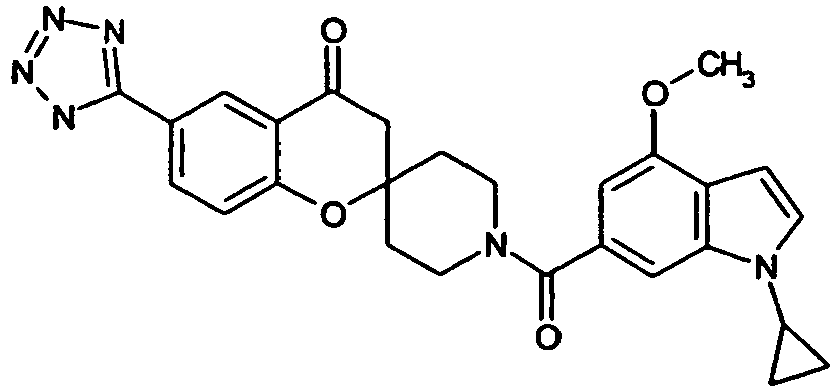
- The title compound was obtained as a colorless solid in the same manner as in Example 8 but using 1-cyclopropyl-4-methoxy-1H-indole-6-carboxylic acid in place of 1,4-dimethoxy-1H-indole-6-carboxylic acid. 1H-NMR (400 MHz, DMSO-d6) δ: 8.42 (1H, d, J = 2.2 Hz), 8.24 (1H, dd, J = 8.8, 2.2 Hz), 7.34 (1H, d, J = 8.8 Hz), 7.29 (1H, d, J = 3.2 Hz), 7.23 (1H, s), 6.58 (1H, s), 6.40 (1H, d, J = 3.2 Hz), 4.47-4.10 (1H, br m), 3.87 (3H, s), 3.79-3.21 (4H, br m), 2.99 (2H, s), 2.14-1.73 (4H, br m), 1.08-0.90 (4H, br m); MS [M+H]+ = 499.
-

- In the same manner as in Example 9, the intended compound was obtained as a colorless amorphous substance from the compound (330 mg) of Example 11. 1H-NMR (400 MHz, DMSO-d6) δ: 8.30 (1H, d, J = 2.0 Hz), 8.15 (1H, dd, J = 8.5, 2.2 Hz), 7.28 (1H, d, J = 3.2 Hz), 7.24-7.21 (1H, br m), 7.10 (1H, d, J = 8.5 Hz), 6.59 (1H, s), 6.39 (1H, d, J = 3.2 Hz), 4.37-4.19 (1H, br m), 3.87 (3H, s), 3.75-3.25 (4H, br m), 2.90 (2H, s), 2.10-1.74 (4H, br m), 1.08-0.90 (4H, br m); MS [M+H]+ = 499.
-

- The title compound was obtained as a colorless solid in the same manner as in Example 8 but using 1-cyclopropyl-4-ethoxy-1H-indole-6-carboxylic acid in place of 1,4-dimethoxy-1H-indole-6-carboxylic acid. 1H-NMR (400 MHz, DMSO-d6) δ: 8.42 (1H, s), 8.23 (1H, d, J = 8.8 Hz), 7.34 (1H, d, J = 8.8 Hz), 7.29-7.27 (1H, m), 7.21 (1H, s), 6.56 (1H, s), 6.38 (1H, s), 4.33-4.14 (1H, br m), 4.15 (2H, q, J = 7.2 Hz), 3.89-3.17 (4H, br m), 2.99 (2H, s), 2.12-1.78 (4H, br m), 1.38 (3H, t, J = 7.2 Hz), 1.09-0.88 (4H, br m); MS [M+H]+=513.
-

- In the same manner as in Example 9, the intended compound was obtained as a colorless amorphous substance from the compound (316 mg) of Example 13. 1H-NMR (400 MHz, DMSO-d6) δ: 8.30 (1H, d, J = 2.0 Hz), 8.15 (1H, dd, J = 8.5, 2.0 Hz), 7.27 (1H, d, J = 3.2 Hz), 7.21 (1H, dd, J = 0.7, 0.7 Hz), 7.10 (1H, d, J = 8.5 Hz), 6.57 (1H, d, J = 0.7 Hz), 6.38 (1H, dd, J = 3.2, 0.7 Hz), 4.36-4.28 (1H, br m), 4.15 (2H, q, J = 7.0 Hz), 3.79-3.27 (4H, br m), 2.90 (2H, s), 2.13-1.71 (4H, br m), 1.38 (3H, t, J = 7.0 Hz), 1.10-0.90 (4H, br m); MS [M+H]+ = 513.
-

- The intended compound was obtained as a colorless solid in the same manner as in Example 8 but using 1,4-diethoxy-1H-indole-6-carboxylic acid in place of 1,4-dimethoxy-1H-indole-6-carboxylic acid. 1H-NMR (400 MHz, DMSO-d6) δ: 8.42 (1H, d, J = 2.4 Hz), 8.23 (1H, dd, J = 8.7, 2.4 Hz), 7.59 (1H, d, J = 3.4 Hz), 7.33 (1H, d, J = 8.7 Hz), 7.07 (1H, dd, J = 0.8, 0.8 Hz), 6.55 (1H, d, J = 0.8 Hz), 6.35 (1H, dd, J = 3.4, 0.8 Hz), 4.37-4.03 (1H, br m), 4.28 (2H, q, J = 7.0 Hz), 4.16 (2H, q, J = 7.0 Hz), 3.75-3.21 (3H, br m), 2.98 (2H, s), 2.12-1.75 (4H, br m), 1.39 (3H, t, J = 7.0 Hz), 1.29 (3H, t, J = 7.0 Hz); MS [M+H]+ = 517.
-

- The intended compound was obtained as a colorless solid in the same manner as in Example 8 but using 3-chloro-1-cyclopropyl-4-ethoxy-1H-indole-6-carboxylic acid in place of 1,4-dimethoxy-1H-indole-6-carboxylic acid. 1H-NMR (400 MHz, DMSO-d6) δ: 8.42 (1H, d, J = 2.4 Hz), 8.24 (1H, dd, J = 8.7, 2.4 Hz), 7.43 (1H, s), 7.33 (1H, d, J = 8.7 Hz), 7.21 (1H, d, J = 1.0 Hz), 6.59 (1H, s), 4.35-4.17 (1H, br m), 4.12 (2H, q, J = 7.0 Hz), 3.74-3.19 (4H, br m), 2.99 (2H, s), 2.16-1.72 (4H, br m), 1.37 (3H, t, J = 7.0 Hz), 1.08-0.91 (4H, br m); MS [M+H]+ = 547.
-

- The intended compound was obtained as a colorless solid in the same manner as in Example 8 but using 1-cyclopropyl-4-ethoxy-3-methyl-1H-indole-6-carboxylic acid in place of 1,4-dimethoxy-1H-indole-6-carboxylic acid. 1H-NMR (400 MHz, DMSO-d6) δ: 8.41 (1H, d, J = 2.4 Hz), 8.23 (1H, dd, J = 8.8, 2.4 Hz), 7.32 (1H, d, J = 8.8 Hz), 7.12 (1H, d, J = 1.0 Hz), 6.99 (1H, d, J = 1.0 Hz), 6.48 (1H, s), 4.30-4.14 (1H, br m), 4.08 (2H, q, J = 6.9 Hz), 3.79-3.13 (4H, br m), 2.98 (2H, s), 2.33 (3H, d, J = 1.0 Hz), 2.08-1.74 (4H, br m), 1.37 (3H, t, J = 6.8 Hz), 1.03-0.98 (2H, m), 0.89-0.84 (2H, m); MS [M+H]+ = 527.
-
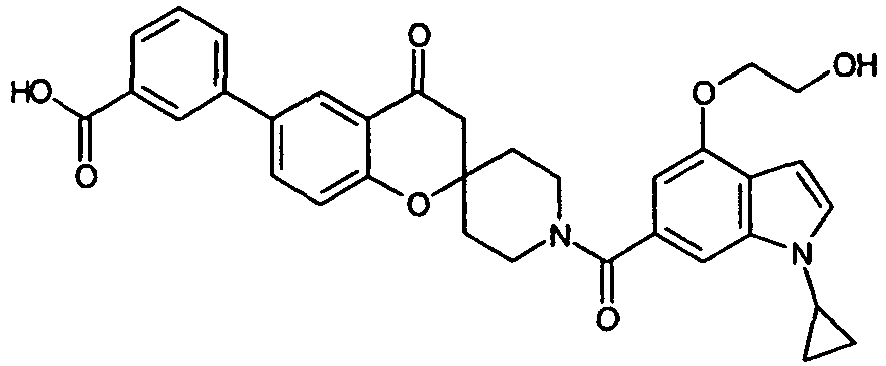
- Triethylamine (164 µl) was added to a solution of 1-cyclopropyl-4-(2-hydroxyethoxy)-1H-indole-6-carboxylic acid (166 mg), 3-(4-oxo-spiro[chroman-2,4'-piperidin]-6-yl)benzoic acid methyl ester hydrochloride (124 mg), EDCI·HCl (124 mg) and HOBT (99 mg) in DMF (4 mL), and stirred at 60°C for 1 hour. Next, this mixture was diluted with ethyl acetate at room temperature, washed with aqueous 1 N hydrochloric acid solution, saturated sodium bicarbonate water, water and saturated saline water in that order, and dried over sodium sulfate. After filtered and concentrated, the mixture was purified through a silica gel column (Biotage) to obtain the ester of the intended compound. Aqueous 5 N sodium hydroxide solution (240 µl) was added to a methanol solution (10 mL) of the ester derivative (380 mg), and stirred at 60°C for 4 hours. Next, aqueous 5N hydrochloric acid solution (250 µl) was added thereto at room temperature, extracted with a mixed solvent of chloroform and methanol, and dried over sodium sulfate. After filtered and concentrated, the residue was crystallized using a mixed solvent of ethyl acetate and hexane, the above compound was obtained as a colorless crystal. 1H-NMR (400 MHz, DMSO-d6) δ: 8.13 (1H, s), 7.98-7.95 (2H, m), 7.93-7.87 (2H, br m), 7.57 (1H, dd, J = 8.2, 8.2 Hz), 7.29 (1H, d, J = 3.2 Hz), 7.25-7.21 (2H, m), 6.58 (1H, s), 6.42 (1H, d, J = 3.2 Hz), 4.90-4.82 (1H, br m), 4.33-4.17 (1H, br m), 4.11 (2H, t, J = 5.1 Hz), 3.79-3.74 (2H, br m), 3.51-3.24 (4H, br m), 2.95 (2H, s), 2.10-1.74 (4H, br m), 1.08-1.02 (2H, m), 0.95-0.90 (2H, m); MS [M+H]+ = 581.
-

- The intended compound was obtained as a colorless amorphous substance according to the methods of Examples 18 and 9, but using 1-cyclopropyl-4-ethoxy-1H-indole-6-carboxylic acid in place of 1-cyclopropyl-4-(2-hydroxyethoxy)-1H-indole-6-carboxylic acid, and using 5-(4-oxo-spiro[chroman-2,4'-piperidin]-6-yl)nicotinic acid methyl ester hydrochloride in place of 3-(4-oxo-spiro[chroman-2,4'-piperidin]-6-yl)benzoic acid methyl ester hydrochloride. 1H-NMR (400 MHz, DMSO-d6) δ: 8.90 (1H, d, J = 1.7 Hz), 8.74 (1H, d, J = 2.4 Hz), 8.28 (1H, dd, J = 2.4, 1.7 Hz), 7.99-7.95 (2H, m), 7.28 (1H, d, J = 3.2 Hz), 7.25-7.20 (2H, m), 6.57 (1H, s), 6.39 (1H, d, J = 3.2 Hz), 4.35-4.20 (1H, br m), 4.15 (2H, q, J = 7.0 Hz), 3.75-3.26 (4H, br m), 2.95 (2H, s), 2.11-1.74 (4H, br m), 1.38 (3H, t, J = 7.0 Hz), 1.08-1.02 (2H, m), 0.95-0.89 (2H, m); MS [M+H]+ = 566.
-

- The intended compound was obtained as a colorless amorphous substance according to the methods of Example 18 and Example 9 but using 1-cyclopropyl-4-methoxy-1H-indole-6-carboxylic acid in place of 1-cyclopropyl-4-(2-hydroxyethoxy)-1H-indole-6-carboxylic acid, and using 2-(4-oxo-spiro[chroman-2,4'-piperidin]-6-yl)isonicotinic acid methyl ester hydrochloride in place of 3-(4-oxo-spiro[chroman-2,4'-piperidin]-6-yl)benzoic acid methyl ester hydrochloride. 1H-NMR (400 MHz, DMSO-d6) δ: 8.54 (1H, d, J = 4.9 Hz), 8.41 (1H, d, J = 2.2 Hz), 8.30 (1H, dd, J = 8.5, 2.2 Hz), 8.15 (1H, s), 7.59 (1H, dd, J = 4.9, 1.0 Hz), 7.29 (1H, d, J = 3.4 Hz), 7.23 (1H, s), 7.21 (1H, d, J = 8.5 Hz), 6.59 (1H, s), 6.40 (1H, d, J = 3.4 Hz), 4.34-4.16 (1H, br m), 3.87 (3H, s), 3.74-3.27 (3H, br m), 3.51-3.41 (1H, m), 2.95 (2H, s), 2.14-1.75 (4H, br m), 1.08-1.03 (2H, m), 0.95-0.90 (2H, m); MS [M+H]+ = 552.
-

- The intended compound was obtained as a colorless amorphous substance according to the methods of Example 18 and Example 9, but using 1-cyclopropyl-4-methoxy-1H-indole-6-carboxylic acid was used in place of 1-cyclopropyl-4-(2-hydroxyethoxy)-1H-indole-6-carboxylic acid, and using 4-(4-oxo-spiro[chroman-2,4'-piperidin]-6-yl)pyridine-2-carboxylic acid methyl ester hydrochloride in place of 3-(4-oxo-spiro[chroman-2,4'-piperidin]-6-yl)benzoic acid methyl ester hydrochloride. 1H-NMR (400 MHz, DMSO-d6) δ: 8.47 (1H, d, J = 5.4 Hz), 8.14 (1H, d, J = 1.2 Hz), 8.07 (1H, d, J = 2.2 Hz), 8.04 (1H, dd, J = 8.5, 2.2 Hz), 7.59 (1H, dd, J = 5.4, 1.2 Hz), 7.29-7.23 (3H, m), 6. 58 (1H, d, J = 1.2 Hz), 6.40 (1H, dd, J = 3.4, 1.2 Hz), 4.41-4.17 (1H, br m), 3.87 (3H, s), 3.77-3.59 (1H, br m), 3.49-3.28 (3H, br m), 2.96 (2H, s), 2.13-1.74 (4H, br m), 1.08-1.02 (2H, m), 0.95-0.90 (2H, m); MS [M+H]+ = 552.
-

- The intended compound was obtained as a colorless amorphous substance, according to the methods of Example 18 and Example 9, but using 1-cyclopropyl-4-methoxy-1H-indole-6-carboxylic acid in place of 1-cyclopropyl-4-(2-hydroxyethoxy)-1H-indole-6-carboxylic acid, and using 5-(4-oxo-spiro[chroman-2,4'-piperidin]-6-yl)pyridine-2-carboxylic acid methyl ester hydrochloride in place of 3-(4-oxo-spiro[chroman-2,4'-piperidin]-6-yl)benzoic acid methyl ester hydrochloride. 1H-NMR (400 MHz, DMSO-d6) δ: 8.69 (1H, d, J = 1.7 Hz), 8.02-7.94 (4H, m), 7.29 (1H, d, J = 3.2 Hz), 7.26-7.22 (2H, m), 6.58 (1H, s), 6.40 (1H, d, J = 3.2 Hz), 4.38-4.14 (1H, br m), 3.87 (3H, s), 3.79-3.61 (1H, br m), 3.50-3.31 (3H, br m), 2.95 (2H, s), 2.13-1.75 (4H, br m), 1.09-1.02 (2H, br m), 0.95-0.89 (2H, br m); MS [M+H]+ = 552.
-

- To a mixture of 5-(4-oxo-spiro[chroman-2,4'-piperidin]-6-yl)nicotinic acid methyl ester di-hydrochloride (2.98 g), 1-cyclopropyl-4-methoxy-3-methyl-1H-indole-6-carboxylic acid (1.717 g), EDCI (1.61 g), HOBT (1.286 g) and DMF (40 mL) was added TEA(2.83 g) and the mixture was stirred overnight. The mixture was diluted with EtOAc and H2O, and partitionized. The organic layer was washed with H2O, saturated NaHCO3 aqueous, and brine, dried over Na2SO4, and concentrated. The residue was purified by SiO2 column chromatography (Hexane-EtOAc gradient), crystallized from EtOAc/n-hexane and dried in vacuo to give the methyl ester of the title compound as a colorless solid. 3.0g of the ester was suspended in 30 mL of THF and 30 mL of MeOH, then 1.5 mL of 5N NaOH aqueous was added thereto. The mixture was stirred overnight and then concentrated. The residue was diluted with 30 mL of MeOH and 22 mL of H2O, and 7.76 mL of 1N HCl aqueous was added thereto. The precipitate was collected by filtration, washed with H2O, and dried in vacuo. The solid was washed with EtOAc-nHexane and dried in vacuo. The material was suspended in water and then 7.76 mL of 1N NaOH aqueous was added thereto. The mixture was purified by ODS column chromatography (MeOH-H2O gradient) to give the title compound as a colorless amorphous substance. 1H-NMR (400 MHz, DMSO-d6) δ: 8.91 (1H, d, J = 2.0 Hz), 8.75 (1H, d, J = 2.4 Hz), 8.29 (1H, dd, J = 2.4, 2.0 Hz), 7.99-7.96 (2H, m), 7.23 (1H, d, J = 8.8 Hz), 7.14 (1H, d, J = 1.0 Hz), 7.00 (1H, d, J = 1.0 Hz), 6.51 (1H, s), 4.38-4.17 (1H, br m), 3.84 (3H, s), 3.77-3.62 (1H, br m), 3.45-3.29 (3H, br m), 2.95 (2H, s), 2.32 (3H, s), 2.11-1.72 (4H, br m), 1.03-0.98 (2H, m), 0.89-0.85 (2H, m); MS [M+Na]+ = 588.
-

- According to the methods of Example 18 and Example 9, the intended compound was obtained as a colorless amorphous substance, but using 3-chloro-1-cyclopropyl-4-methoxy-1H-indole-6-carboxylic acid in place of 1-cyclopropyl-4-(2-hydroxyethoxy)-1H-indole-6-carboxylic acid, and using 5-(4-oxo-spiro[chroman-2,4'-piperidin]-6-yl)nicotinic acid methyl ester hydrochloride in place of 3-(4-oxo-spiro[chroman-2,4'-piperidin]-6-yl)benzoic acid methyl ester hydrochloride. 1H-NMR (400 MHz, DMSO-d6) δ: 8.90 (1H, d, J = 2.0 Hz), 8.74 (1H, d, J = 2.4 Hz), 8.28 (1H, dd, J = 2.4, 2.0 Hz), 7.99-7.96 (2H, m), 7.44 (1H, s), 7.25-7.22 (2H, m), 6.62 (1H, s), 4.36-4.16 (1H, br m), 3.71-3.54 (1H, br m), 3.52-3.29 (3H, br m), 3.86 (3H, s), 2.95 (2H, s), 2.15-1.74 (4H, br m), 1.07-0.92 (4H, br m); MS [M+Na]+ = 608.
-

- The title compound was obtained as a colorless amorphous substance, according to the method of Example 8 but using 4-acetyl-7-methoxy-1-benzofuran-2-carboxylic acid in place of 1,4-dimethoxy-1H-indole-6-carboxylic acid. 1H-NMR (400 MHz, DMSO-d6) δ: 8.41 (1H, d, J = 2.2 Hz), 8.23 (1H, dd, J = 8.5, 2.2 Hz), 8.01 (1H, d, J = 8.5 Hz), 7.75 (1H, s), 7.36 (1H, d, J = 8.5 Hz), 7.13 (1H, d, J = 8.5 Hz), 4.30-4.00 (2H, br m), 4.02 (3H, s), 4.00-3.70 (2H, br m), 2.98 (2H, s), 2.59 (3H, s), 2.10-1.98 (2H, m), 1.91-1.75 (2H, m); MS [M+H]+ = 502.
-

- The title compound was obtained as a pale yellow amorphous substance, according to the method of Example 8, but using 1-ethyl-3-methyl-1H-thieno[2,3-c]pyrazol-5-carboxylic acid in place of 1,4-dimethoxy-1H-indole-6-carboxylic acid. 1H-NMR (400 MHz, DMSO-d6) δ: 8.44 (1H, d, J = 2.2 Hz), 8.26 (1H, dd, J = 8.7, 2.3 Hz), 7.47 (1H, s), 7.36 (1H, d, J = 8.5 Hz), 4.29-4.05 (2H, m), 4.16 (2H, q, J = 7.3 Hz), 3.53-3.38 (2H, m), 3.00 (2H, br s), 2.33 (3H, s), 2.09-1.99 (2H, m), 1.91-1.78 (2H, m), 1.37 (3H, t, J = 7.3 Hz); MS [M+H]+ = 478.
-

- To a stirred solution of the compound of Example 23 in MeOH (25 mL) and H2O (25 mL) was added 4 mL of 1N HCl aqueous at 0 °C. 60 mL of MeOH was added thereto and the mixture was stirred at r.t. for 3 hours. The precipitate was filtered and dried at 60 °C in vacuo to give the title compound as a colorless solid. 1H-NMR (400MHz, DMSO-d6) δ: 13.56 (1H, s), 9.09 (1H, d, J = 2.2 Hz), 9.03 (1H, d, J = 2.2 Hz), 8.41 (1H, dd, J = 2.2, 2.2 Hz), 8.07-8.03 (2H, m), 7.29-7.25 (1H, m), 7.14 (1H, d, J = 1.0 Hz), 7.00 (1H, d, J = 1.0 Hz), 6.51 (1H, d, J = 1.0 Hz), 4.41-4.10 (1H, br m), 3.83 (3H, s), 3.51-3.41 (1H, br m), 3.51-3.26 (3H, br m), 2.96 (2H, s), 2.31 (3H, s), 2.13-1.74 (4H, br m), 1.06-0.85 (4H, m); MS [M+H]+ = 566.
-

- Ethyl 4-methoxy-1-methyl-1H-pyrazolo[3,4-b]pyridine-6-carboxylate (140 mg) was dissolved in THF (2.0 mL) and MeOH (2.0 mL), and aqueous 5 N sodium hydroxide solution (0.0.2 mL) was added to the solution, which was stirred at r.t. over night, The reaction mixture was added by 5 N hydrochloric acid (0.2 mL) and concentrated under reduced pressure. The residue was dissolved in DMF (3 mL) and water (1 mL), and 6-(1H-tetrazol-5-yl)spiro[chroman-2,4'-piperidin]-4-one hydrochloride (212 mg), triethylamine (0.334 mL), HOBT (110 mg) and EDCI HCI (138 mg) were added thereto. The reaction mixture was stirred at 90°C for 3 hours, then cooled to room temperature, and water was added thereto and a colorless precipitate was then formed. The material was collected and dried under reduced pressure, washed with a mixed solvent of methanol and diethyl ether, and dried under reduced pressure to obtain the above. described compound as a colorless solid. 1H-NMR (400MHz, DMSO-d6) δ: 8.41 (1H, d, J = 2.4 Hz), 8.23 (1H, dd, J = 8.8, 2.4 Hz), 8.02 (1H, s), 7.33 (1H, d, J = 8.8 Hz), 6.66 (1H, s), 4.36-4.29 (1H, br m), 3.98 (3H, s), 3.98 (3H, s), 3.34 (3H, d, J = 28.5 Hz), 2.98 (2H, s), 2.12-2.04 (1H, m), 1.94-1.82 (2H, m), 1.79-1.70 (1H, br m); MS [Nl+H]+ = 475.
-

- N-Carbamoylmethyl-4-oxospiro[chroman-2,4'-piperidine]-6-carboxamide hydrochloride (389 mg), 1-cyclopropyl-4-ethoxy-1H-indole-6-carboxylic acid (245 mg), WSC hydrochloride (230 mg), HOBT (183 mg) and triethylamine (0.209 mL) were suspended in DMF (8 mL), and the mixture was stirred at 80°C for 1.5 hours. The reaction mixture was allowed to cool to room temperature, diluted with methyl acetate, and washed successively with water, 1N hydrochloric acid , aqueous saturated sodium bicarbonate and saturated saline water. The organic layer was dried over sodium sulfite, filtered, concentrated, and purified through silica gel column chromatography (chloroform/methanol) to afford the title compound as a colorless amorphous substance. 1H-NMR (400MHz, DMSO-d6) δ: 8.78-8.71 (1H, m), 8.32-8.30 (1H, m), 8.08 (1H, dd, J = 8.7, 2.3 Hz), 7.34 (1H, s), 7.28 (1H, d, J = 3.4 Hz), 7.22-7.16 (2H, m), 6.99 (1H, s), 6.56 (1H, s), 6.38 (1H, d, J = 3.4 Hz), 4.27-4.15 (1H, br m), 4.15 (2H, q, J = 7.0 Hz), 3.77 (2H, d, J = 5.9 Hz), 3.46-3.25 (3H, br m), 3.45-3.39 (1H, m), 2.95 (2H, s), 2.09-1.75 (4H, brm), 1.38 (3H, t, J = 7.0 Hz), 1.08-1.01 (2H, m), 0.95-0.90 (2H, m); MS [M+H]+ = 545.
-

- The intended compound was obtained as a colorless solid according to the methods described in Example 28, but using ethyl 3-chloro-1-cyclopropyl-7-ethoxy-1H-indole-5-carboxylate in place of ethyl 4-methoxy-1-methyl-1H-pyrazolo[3,4-b]pyridine-6-carboxylate. 1H-NMR (400MHz, DMSO-d6) δ: 8.42 (1H, d, J = 2.4 Hz), 8.23 (1H, dd, J = 8.8, 2.4 Hz), 7.50 (1H, s), 7.33 (1H, d, J = 8.8 Hz), 7.06 (1H, d, J = 1.2 Hz), 6.75 (1H, s), 4.21-4.16 (1H, br m), 4.17 (2H, q, J = 7.0 Hz), 3.79-3.72 (1H, m), 3.48-3.26 (3H, br m), 2.98 (2H, s), 2.07-1.76 (4H, br m), 1.42 (3H, t, J = 7.0 Hz), 1.09-0.94 (4H, m); MS [M+H]+ = 547, 549.
-

- The intended compound was obtained as a colorless solid according to the method described in Example 28, but using methyl 3-cyclopropyl-7-ethoxy-1,2-benzisoxazole-5-carboxylate in place of ethyl 4-methoxy-1-methyl-1H-pyrazolo[3,4-b]pyridine-6-carboxylate. 1H-NMR (400MHz, DMSO-d6) δ: 8.42 (1H, d, J = 2.4 Hz), 8.24 (1H, dd, J = 8.7, 2.3 Hz), 7.45 (1H, d, J = 1.0 Hz), 7.33 (1H, d, J = 8.8 Hz), 7.18 (1H, d, J = 1.0 Hz), 4.28-4.26 (1H, br m), 4.27 (2H, q, J = 7.0 Hz), 3.62-3.17 (3H, br m), 2.98 (2H, s), 2.41-2.33 (1H, m), 2.15-1.74 (4H, br m), 1.40 (3H, t, J = 7.0 Hz), 1.18-1.06 (4H, m); MS [M+H]+ = 515.
-

- The intended compound was obtained as a colorless solid according to the methods described in Example 8, but using 2-cyclopropyl-7-ethoxy-1,3-benzoxazole-5-carboxylic acid in place of 1,4-dimethoxy-1H-indole-6-carboxylic acid. 1H-NMR (400MHz, DMSO-d6) δ: 8.42 (1H, d, J = 2.2 Hz), 8.23 (1H, dd, J = 8.5, 2.2 Hz), 7.33 (1H, d, J = 8.5 Hz), 7.20 (1H, d, J = 1.2 Hz), 6.95 (1H, d, J = 1.2 Hz), 4.37-4.22 (1H, br m), 4.25 (2H, q, J = 7.0 Hz), 3.51-3.20 (3H, br m), 2.97 (2H, s), 2.32-2.25 (1H, m), 2.14-1.75 (4H, br m), 1.38 (3H, t, J = 7.0 Hz), 1.20-1.08 (4H, m); MS [M+H]+ = 515.
-

- The intended compound was obtained as a colorless solid according to the methods described in Example 8, but using 3-(carbamoyl)-1-cyclopropyl-4ethoxy-1H-indole-6-carboxylic acid in place of 1,4-dimethoxy-1H-indole -6-carboxylic acid. 1H-NMR (400MHz, DMSO-d6) δ: 8.41 (1H, d, J = 2.4Hz), 8.23 (2H, dd, J = 8.8, 2.4 Hz), 7.86 (1H, s), 7.34-7.28 (2H, m), 7.18 (1H, s), 6.78 (1H, s), 4.31-4.23 (1H, br m), 4.26 (2H, q, J = 7.0 Hz), 3.80-3.14 (4H, m), 2.98 (2H, s), 2.18-1.74 (4H, br m), 1.41 (3H, t, J = 7.0 Hz), 1.09-0.98 (4H, m); MS [M+H]+ = 556.
-

- The title compound was obtained as a colorless amorphous substance according to the methods of Example 29 but using 1-cyclopropyl-4-ethoxy-3-methyl-1H-indole-6-carboxylic acid in place of 1-cyclopropyl-4-ethoxy-1H-indole-6-carboxylic acid. 1H-NMR (400MHz, DMSO-d6) δ: 8.76-8.72 (1H, in), 8.32-8.30 (1H, m), 8.08 (1H, dd, J = 8.8, 2.3 Hz), 7.34 (1H, s), 7.18 (1H, d, J = 8.8 Hz), 7.11 (1H, d, J = 1.0 Hz), 7.00-6.97 (2H, br m), 6.47 (1H, s) 4.28-4.16 (1H, br m), 4.08 (2H, q, J = 6.9 Hz), 3.77 (2H, d, J = 5.9 Hz), 3.72-3.24 (4H, br m), 2.94 (2H, s), 2.05-1.73 (4H, br m), 2.33 (3H, s), 1.37 (3H, t, J = 6.9 Hz), 1.01-0.87 (4H, m); films [M+H]+ = 559.
-

- The title compound was obtained as a colorless amorphous substance according to the methods described in Example 29, but using 1,4-diethoxy-1H-indole-6-carboxylic acid in place of 1-cyclopropyl-4-ethoxy-1H-indole-6-carboxylic acid. 1H-NMR (400MHz, DMSO-d6) δ: 8.74 (1H, t, J = 6.0 Hz), 8.31 (1H, d, J = 2.2 Hz), 8.08 (1H, dd, J = 8.7, 2.2 Hz), 7.58 (1H, d, J = 3.4 Hz), 7.33 (1H, s), 7.18 (1H, d, J = 8.7 Hz), 7.07 (1H, s), 6.98 (1H, s), 6.54 (1H, s), 6.35 (1H, d, J = 3.4 Hz), 4.33-4.14 (1H, br m), 4.28 (2H, q, J = 7.0 Hz), 4.16 (2H, q, J = 7.0 Hz), 3.77 (2H, d, J = 6.0 Hz), 3.37-3.29 (3H, br m), 2.94 (2H, s), 2.04-1.76 (4H, br m), 1.39 (3H, t, J = 7.0 Hr), 1.29 (3H, t, J = 7.0 Hz); MS [M+H]+ = 549.
-

- According to the methods of Example 8, the intended compound was obtained as a colorless solid, but using 1-cyclopropyl-4-(2-hydroxyethoxy)-1H-indole-6-carboxylic acid in place of 1,4-dimethoxy-1H-indole-6-carboxylic acid. 1H-NHR (400MHz, DMSO-d6) δ: 8.42 (1H, d, J = 2.4 Hz), 8.23 (1H, dd, J = 8.7, 2.4 Hz), 7.33 (1H, d, J = 8.7 Hz), 7.29 (1H d, J - 3.2 Hz), 7.21 (1H, s), 6.58 (1H, s), 6.42 (1H, d, J = 3.2 Hz), 4.90-4.82 (1H, br m), 4.30-4.20 (1H, br m), 4.10 (2H, t, J = 5.0 Hz), 3.79-3.74 (2H, br m), 3.48-3.26 (4H, br m), 2.99 (2H, s), 2.07-1.76 (4H, br m), 1.07-0.88 (4H, m); MS [M+H]+ = 529.
-

- The title compound was obtained as a colorless solid according to the method shown in Example 28, but using ethyl 1-cyclopropyl-4-ethoxy-3-(methylcarbamoyl)-1H-indole-6-carboxylate instead of ethyl 4-methoxy-1-methyl-1H-pyrazolo[3,4-b]pyridine-6-carboxylate. 1H-NMR (400MHz, DMSO-d6) δ: 8.63-8.58 (1H, br m), 8.42 (1H, s), 8.24 (1H, d, J = 8.8 Hz), 7.84 (1H, s), 7.36-7.31 (2H, br m), 6.77 (1H, s), 4.55-4.04 (1H, br m), 4.25 (2H, q, J = 6.9 Hz), 3.56-3.29 (4H, br m), 2.99 (2H, s), 2.80 (3H, d, J = 4.6 Hz), 2.12-1.77 (4H, br m), 1.47 (3H, t, J = 6.9 Hz), 1.16-0.96 (4H, m); MS [M+H]+ = 570.
-

- Triethylamine (0.22 mL) was added to a solution of 3-carbamoyl-1-cyclopropyl-4-ethoxy-1H-indole-6-carboxylic acid (229 mg), 3-(4-oxo-spiro[chroman-2,4'-piperidin]-6-yl)benzoic acid methyl ester hydrochloride (306 mg), WSC hydrochloride (166 mg) and HOBT (133 mg) in DMF (4 mL), and the mixture was stirred at 60°C for 1 hour. After cooling to room temperature, the reaction mixutre was diluted with ethyl acetate, then washed successively with water, aqueous saturated sodium bicarbonate and saturated saline water. The organic layer was dried over sodium sulfate, filtered, concentrated, and purified through silica gel column chromatography (chloroform/methanol) to obtain the intended ester derivative as a colorless amorphous substance. 1H-NMR (400MHz, CDCl3) δ: 8.71 (1H, s), 8.25 (1H, dd, J = 1.5, 1.5 Hz), 8.14 (1H, d, J = 2.4 Hz), 8.04-8.00 (2H, m), 7.83-7.74 (2H, m), 7.51 (1H, dd, J = 7.8, 7.8 Hz), 7.37 (1H, d, J = 1.5 Hz), 7.13 (1H, d, J = 7.8 Hz), 6.74 (1H, d, J = 1.5 Hz), 5.54 (1H, s), 4.62-4.41 (1H, br m), 4.29 (2H, q, J = 7.0 Hz), 3.95 (3H, s), 2.28-1.71 (4H, br m), 3.88-3.32 (4H, br m), 2.82 (2H, s), 1.55 (3H, t, J = 7.0 Hz), 1.16-1.00 (4H, m); MS [M+H]+ = 622.
-

- Aqueous 5 N sodium hydroxide solution (0.32 mL) was added to a methanolic (10 mL) solution of the ester compound (523 mg), and the mixture was stirred at 60°C for 4 hours. The organic solvent was evaporated, and the residue was diluted with water. Aqueous 5N hydrochloric acid solution (330 µl) was added thereto at room temperature, and the mixture was extracted with a mixed solvent of chloroform and methanol, and dried over sodium sulfate. The organic layer was filtered and concentrated to afford the title compound as a colorless solid. 1H-NMR (400MHz, DMSO-d6) δ: 8.22 (1H, s), 8.15-8.12 (1H, br m), 7.99-7.85 (5H, m), 7.58 (1H, dd, J = 7.7, 7.7 Hz), 7.34 (1H, s), 7.24-7.16 (2H, m), 6.79 (1H, s), 4.32-4.24 (2H, br m), 4.27 (1H, q, J = 6.8 Hz), 3.72-3.19 (4H, br m), 2.95 (2H, s), 2.01-1.77 (4H, br m), 1.41 (3H, t, J = 6.8 Hz), 1.11-0.94 (4H, m); MS [M+H]+ = 608.
-

- Triethylamine (0.21 mL) was added to a solution of 3-(tert-butoxycarbonyl)-1-cyclopropyl-4-ethoxy-1H-indole-6-carboxylic acid (177 mg), 6-(1H-pyrazol-4-yl)spiro[chroman-2,4'-piperidin]-4-one hydrochloride (156 mg), WSC hydrochloride (106 mg) and HOBT (85 mg) in DMF (4 mL) and the mixture was stirred at 90°C for 1 hour. After cooling to room temperature, the mixture was diluted with ethyl acetate, then washed with water, 1N hydrochloric acid solution, aqueous saturated sodium bicarbonate and saturated saline in this order, and dried over sodium sulfate. The solution was filtered, concentrated, and purified through silica gel column chromatography (chloroform/methanol) to give the methyl ester of the title compound as a colorless amorphous substance. TFA (3 ml) was added to the solution of this ester in chloroform (10 ml) at room temperature and stirred for 3 h. The solvent was evapolated and the residue was crystallized from a mixed solvent of methanol and ether to give title compound as a colorless solid. 1H-NMR (400MHz, DMSO-d6) δ: 8.03 (2H, s), 7.94 (1H, s), 7.87 (1H, d, J = 2.4 Hz), 7.83 (1H, dd, J = 8.5, 2.4 Hz), 7.33 (1H, d, J = 1.0 Hz), 7.10 (1H, d, J = 8.5 Hz), 6.79 (1H, d, J = 1.0 Hz), 4.31-4.19 (1H, br m), 4.21 (2H, q, J = 7.0 Hz), 3.85-3.21 (4H, br m), 2.89 (2H, s), 2.11-1.70 (4H, br m), 1.39 (3H, t, J = 7.0 Hz), 1.10-1.00 (4H, m); MS [M+H]+ = 555.
-

- According to the methods described in Example 40 but using 6-[(1-methyl-1H-pyrazol-5-yl)amino]spiro[chroman-2,4'-piperidin]-4-one hydrochloride in place of 6-(1H-pyrazol-4-yl)spiro[chroman-2,4'-piperidin]-4-one hydrochloride, the intended compound was obtained as a colorless solid. 1H-NMR (400MHz, DMSO-d6) δ: 7.97 (1H, br s), 7.94 (1H, s), 7.36 (1H, d, J = 2.0 Hz), 7.32 (1H, d, J = 1.2 Hz), 7.18-7.14 (2H, m), 7.01-6.98 (1H, m), 6.78 (1H, d, J = 1.2 Hz), 5.91 (1H, d, J = 2.0 Hz), 4.35-4.15 (1H, br m), 4.21 (2H, q, J = 7.0 Hz), 3.62 (3H, s), 3.62-3.19 (4H, m), 2.82 (2H, s), 2.10-1.69 (4H, br m), 1.39 (3H, t, J = 7.0 Hz), 1.11-0.98 (4H, m); MS [M+H]+ = 584.
-

- Triethylamine (0.22 mL) was added to a solution of 1-cyclopropyl-4-methoxy-3-methyl-1H-indole-6-carboxylic acid (98 mg), methyl 4-(4-oxospiro[chroman-2,4'-piperidin]-6-yl)pyridine-2-carboxylate dihydrochloride (170 mg), WSC hydrochloride (109mg) and HOBT (74 mg) in DMF (3 mL) and the mixture was stirred at room temperature over night. The organic solvent was evaporated and the residue was purified through a silica gel column to obtain methyl ester of the intended compound as a colorless amorphous substance. Aqueous 1 N sodium hydroxide solution (1 mL) was added to a solution of the ester in methanol (3 ml) and THF (3 ml) and the mixture was stirred at room temperature for 4 hours. The mixture was concentrated, diluted with water, added by aqueous 1N hydrochloric acid solution (1 ml) at room temperature, and extracted with a mixed solvent of chloroform and methanol. The organic layer was dried over sodium sulfate, filtered, and concentrated. The residue was crystallized from a mixed solvent of hexane and ethyl acetate to afford the intended compound as a colorless solid. 1H-NMR (400MHz, DMSO-d6) δ: 13.27 (1H, br s), 8.72 (1H, d, J = 4.9 Hz), 8.25 (1H, d, J = 1.0 Hz), 8.15-8.11 (2H, m), 7.95 (1H, dd, J = 4.9, 2.0 Hz), 7.29 (1H, dd, J = 6.3, 2.9 Hz), 7.14 (1H, d, J =1.0 Hz), 7.00 (1H, d, J = 1.0 Hz), 6.50 (1H, d, J = 1.0 Hz), 4.42-4.14 (1H, br m), 3.84-3.58 (1H, br m), 3.83 (3H, s), 3.56-3.15 (3H, br m), 2.97 (2H, s), 2.31 (3H, d, J = 1.0 Hz), 2.08-1.76 (4H, br m), 1.03-0.98 (2H, m), 0.90-0.84 (2H, m); MS [M+H]+ = 566.
-

- The title compound was obtained as a colorless amorphous substance in the same manner as described in Example 42, but using methyl 2-methyl-5-(4-oxospiro[chroman-2,4'-piperidin]-6-yl)nicotinate dihydrochloride instead of methyl 4-(4-oxospiro[chroman-2,4'-piperidin]-6-yl)pyridine-2-carboxylate dihydrochloride. 1H-NMR (400MHz, DMSO-d6) δ: 13.38 (0.8H, s), 8.89 (1.0H, d, J = 2.0 Hz), 8.33 (1.0H, d, J = 2.0 Hz), 8.02-7.99 (1.9H, m), 7.25 (1.0H, dd, J = 6.6, 2.0 Hz), 7.14 (1.0H, d, J = 1.0 Hz), 7.00 (0.9H, d, J = 1.0 Hz), 6.50 (0.9H, d, J = 1.0 Hz), 4.37-4.06 (1.0H, br m), 3.83 (2.8H, s), 3.83-3.59 (1.0H, br m), 3.36-3.26 (3.0H, m), 2.95 (1.8H, s), 2.73 (2.9H, s), 2.31 (3.1H, d, J = 1.0 Hz), 2.12-1.76 (3.6H, m), 1.03-0.98 (1.8H, m), 0.89-0.83 (2.0H, m); MS [M+H]+ = 580.
-

- The title compound was obtained as a colorless amorphous substance in the same manner as described in Example 42, from methyl 6-(4-oxospiro[chroman-2,4'-piperidin]-6-yl)nicotinate dihydrochloride instead of methyl 4-(4-oxospiro[chroman-2,4'-piperidin]-6-yl)pyridine-2-carboxylate dihydrochloride. 1H-NMR (400MHz, DMSO-d6) δ: 13.37 (1H, s), 9.12-9.10 (1H, m), 8.54 (1H, d, J = 2.4 Hz), 8.40 (1H, dd, J = 8.8, 2.4 Hz), 8.29 (1H, dd, J = 8.8, 2.4 Hz), 8.10 (1H, d, J = 8.8 Hz), 7.26 (1H, d, J = 8.8 Hz), 7.14 (1H, s), 7.00 (1H, d, J = 1.0 Hz), 6.50 (1H, d, J = 1.0 Hz), 4.44-4.09 (1H, br m), 3.83 (3H, s), 3.77-3.58 (1H, br m), 3.39-3.32 (3H, m), 2.31 (3H, s), 2.97 (2H, s), 2.10-1.77 (4H, br m), 1.03-0.98 (2H, m), 0.89-0.85 (2H, m); MS [M+H]+ = 566.
-

- TEA (162mg) was added to a mixture of EDCI (92mg), HOBT (73.5mg), 1-cyclopropyl-4-ethoxy-3-methyl-1H-indole-6-carboxylic acid (104mg), and methyl 5-(4-oxospiro[chroman-2,4'-piperidin]-6-yl)nicotinate dihydrochloride (170mg) and DMF (3 ml), and the mixture was stirred at r.t. for 5 hours. The mixture was evaporated and purified through SiO2 column chromatography (eluted with Hex-EtOAc, then MeOH-CHCl3) to give methyl ester of the title compound as a pale yellow solid. 1ml of 1N NaOHaq was added to its solution in 3ml of MeOH and 3ml of THF, and the mixture was stirred at r.t. for 4h. Then the mixture was neutralized with 1N HClaq and diluted with CHCl3-MeOH. The mixture was dried over Na2SO4, filtered, and concentrated. The residue was crystallized from EtOAc-n-hexane to give the title compound as a slightly yellowish powder. 1H-NMR (400MHz, DMSO-d6) δ: 13.57 (1H, s), 9.08 (1H, d, J = 2.0 Hz), 9.03 (1H, d, J = 2.0 Hz), 8.41 (1H, dd, J = 2.0, 2.0 Hz), 8.08-8.02 (2H, m), 7.26 (1H, dd, J = 7.8, 1.0 Hz), 7.12 (1H, d, J = 1.0 Hz), 7.00 (1H, d, J = 1.0 Hz), 6.48 (1H, s), 4.36-4.14 (1H, br m), 4.08 (2H, q, J = 7.0 Hz), 3.78-3.20 (4H, br m), 2.96 (2H, s), 2.33 (3H, d, J = 1.0 Hz), 2.09-1.73 (4H, m), 1.37 (3H, t, J = 7.0 Hz), 1.03-0.98 (2H, m), 0.89-0.85 (2H, m); MS [M+H]+ = 580.
-

- In the same manner as described in Example 42 except using 1-cyclopropyl-4-ethoxy-3-methyl-1H-indole-6-carboxylic acid and methyl 4-(4-oxospiro[chroman-2,4'-piperidin]-6-yl)pyridine-2-carboxylate dihydrochloride, the title compound was obtained as a colorless amorphous substance. 1H-NMR (400MHz, DMSO-d6) δ: 8.72 (1H, d, J = 4.9 Hz), 8.25 (1H, d, J = 1.5 Hz), 8.15-8.11 (2H, m), 7.94 (1H, dd, J = 6.0, 2.0 Hz), 7.28 (1H, dd, J = 6.0, 2.9 Hz), 7.12 (1H, d, J = 1.0 Hz), 6.99 (1H, d, J = 1.0 Hz), 6.48 (1H, s), 4.45-4.10 (1H, br m), 4.08 (2H, q, J = 6.8 Hz), 3.67-3.19 (4H, m), 2.97 (2H, s), 2.32 (3H, s), 2.12-1.74 (4H, br m), 1.37 (3H, t, J = 6.8 Hz), 1.03-0.98 (2H, m), 0.88-0.85 (2H, m); MS [M+H]+ = 580.
-

- To a suspension of 138mg of compound of Example 45 in a mixed solvent of MeOH and water (1:9) was added 1N NaOH aq (1.5 eq) and the mixture was purified on ODS column (eluent: H2O-MeOH gradient system) to give the title compound as a slightly yellowish amorphous substance. 1H-NMR (400MHz, DMSO-d6) δ: 8.90 (1H, d, J = 2.0 Hz), 8.74 (1H, d, J = 2.0 Hz), 8.28 (1H, dd, J = 2.0, 1.1 Hz), 7.97-7.92 (2H, m), 7.21 (1H, d, J = 8.8 Hz), 7.10 (1H, d, J = 1.0 Hz), 6.97 (1H, d, J = 1.0 Hz), 6.46 (1H, s), 4.29-4.15 (1H, br m), 4.06 (2H, q, J = 7.0 Hz), 3.77-3.55 (1H, br m), 3.39 (3H, s), 2.92 (2H, s), 2.30 (3H, s), 2.07-1.71 (4H, br m), 1.35 (3H, t, J= 6.9 Hz), 1.01-0.95 (2H, m), 0.87-0.82 (2H, m); MS [M+H]+ = 580.
-

- The title compound was obtained as a colorless amorphous substance in the same manner as described in Example 42 but using 1,4-dimethoxy-3-methyl-1H-indole-6-carboxylic acid and methyl 5-(4-oxospiro[chroman-2,4'-piperidin]-6-yl)pyridine-3-carboxylate dihydrochloride. 1H-NMR (400MHz, DMSO-d6) δ: 9.04 (1H, d, J = 2.2 Hz), 8.99 (1H, d, J = 2.2 Hz), 8.3 8 (1H, dd, J = 2.2, 2.2 Hz), 8.04-8.00 (2H, m), 7.32-7.30 (1H, br m), 7.25-7.22 (1H, m), 6.99 (1H, d, J = 1.0 Hz), 6.48 (1H, d, J = 1.0 Hz), 4.37-4.10 (1H, br m), 3.96 (3H, s), 3.83 (3H, s), 3.73-3.09 (3H, br m), 2.93 (2H, s), 2.30 (3H, d, J = 1.0 Hz), 2.10-1.72 (4H, br m); MS [M+H]+ = 556.
-

- Triethylamine (0.33 mL) was added to a DMF (7.5 mL) solution of 1-cyclopropyl-4-methoxy-3-methyl-1H-indole-6-carboxylic acid (147 mg), 6-(5-bromo-3-pyridinyl)spiro-[chroman-2,4'-piperidin]-4-one dihydrochloride (268 mg), WSC hydrochloride (164 mg) and HOBT (110 mg), and stirred at r.t. for 5 h. This reaction mixture was diluted with ethyl acetate, then washed with water, aqueous saturated sodium bicarbonate and saturated saline water in that order, and dried with sodium sulfate. This was filtered, concentrated, and purified through silica gel column chromatography (hexane/ethyl acetate) to obtain the title compound as a colorless amorphous substance. 1H-NMR (400MHz, DMSO-d6) δ: 8.86 (1H, d, J = 2.0 Hz), 8.66 (1H, d, J = 2.0 Hz), 8.36 (1H, t, J = 2.0 Hz), 8.05-7.99 (2H, m), 7.24 (1H, d, J = 8.6 Hz), 7.13 (1H, s), 7.00 (1H, s), 6.50 (1H, s), 4.40-4.08 (1H, br m), 3.83 (3H, s), 3.78-3.22 (4H, br m), 2.94 (2H, s), 2.31 (3H, s), 2.04-1.75 (4H, br m), 1.03-0.97 (2H, m), 0.89-0.84 (2H, m); MS [M+H]+ = 600, 602.
-

- The title compound was obtained as a colorless amorphous substance in the same manner as described in Example 49 using methyl 5-[4-oxospiro(chroman-2,4'-piperidin)-6-yl]pyridine-3-carboxylate dihydrochloride in place of 6-(5-bromo-3-pyridinyl)spiro[chroman-2,4'-piperidin]-4-one dihydrochloride. 1H-NMR (400MHz, DMSO-d6) δ: 9.12 (1H, d, J = 2.0 Hz), 9.05 (1H, d, J = 2.0 Hz), 8.44 (1H, dd, J = 2.0, 2.0 Hz), 8.08-8.05 (2H, m), 7.27 (1H, d, J = 8.8 Hz), 7.14 (1H, s), 7.00 (1H, d, J = 1.0 Hz), 6.51 (1H, d, J = 1.0 Hz), 4.34-4.16 (1H, br m), 3.92 (3H, s), 3.84 (3H, s), 3.81-3.21 (4H, br m), 2.96 (2H, s), 2.31 (3H, s), 2.08-1.76 (4H, br m), 1.03-0.98 (2H, m), 0.89-0.84 (2H, m); MS [M+H]+ = 580.
-

- Et3N (209uL), HOBT (91.2mg) and WSC (115mg) were added to a suspension of 1-cyclopropyl- 4-(methyloxy)-IH-indole-6-carboxylic acid (116mg) and 6-(5-oxo-4,5-dihydro-1H-1,2,4-triazol-3-yl)spiro[chroman-2,4'-piperidin]-4-one hydrochloride (202mg) in DMF (3 mL), and the mixture was stirred overnight at 50°C. Water was added to the reaction mixture, and the formed solid was collected by filtration. The solid was purified by silicagel column chromatography (CHCl3/MeOH) to obtain the intended compound as colorless foam. 1H-NMR (400 MHz, DMSO-d6) δ: 8.06 (1H, d, J = 2.3 Hz), 8.00 (1H, dd, J = 8.7, 2.3 Hz), 7.29 (1H, d, J = 3.2 Hz), 7.26 (1H, d, J = 8.7 Hz), 7.24-7.21 (3H, m), 6.58 (1H, d, J = 1.0 Hz), 6.40 (1H, dd, J = 3.2,1.0 Hz), 4.44.4.08 (1H, br m), 3.87 (3H, s), 3.80-3.25 (4H, m), 2.97 (2H, s), 2.10-1.70 (4H, m), 1.09-1.01 (2H, m), 0.96-0.89 (2H, m); MS [M+H]+ = 514.
-

- Et3N (209uL), HOBT (91.2mg) and WSC (115mg) were added to a suspension of 1-cyclopropyl- 4-(methyloxy)-1H-indole-6-carboxylic acid (145mg) and N-carbamoylmethyl-4-oxo-spiro[chroman-2,4'-piperidine]-6-carboxamide hydrochloride (354mg) in DMF (3 mL), and the mixture was stirred overnight at 50°0. After cooled to room temperatyre, the mixture was diluted with water, and the formed solid was collected by filtration. The solid was dried and purified on silica gel preparative TLC (development: CHCl3/MeOH) to obtain the intended compound as colorless foam. 1H-NMR (400 MHz, DMSO-d6) δ: 8.84-8.72 (1H, m), 8,80-8.62 (1H, m), 8.33-8.29 (1H, m), 8.08 (1H, dd, J = 8.7, 2.3 Hz), 7.35 (1H, s), 7.28 (1H, d, J= 3.2 Hz), 7.23-7.16 (2H, m), 6.99 (1H, s), 6.58 (1H, d, J = 1.0 Hz), 6.39 (1H, dd, J = 3.2, 0.7 Hz), 4.40-4.02 (2H, br m), 3.87 (3H, s), 3.80-3.76 (2H, br m), 3.48-3.25 (4H, m), 2.98 (2H, s), 2.06-1.56 (2H, m), 1.09-1.01 (2H, m), 0.95-0.89 (2H, m); MS [M+H]+ = 531.
-
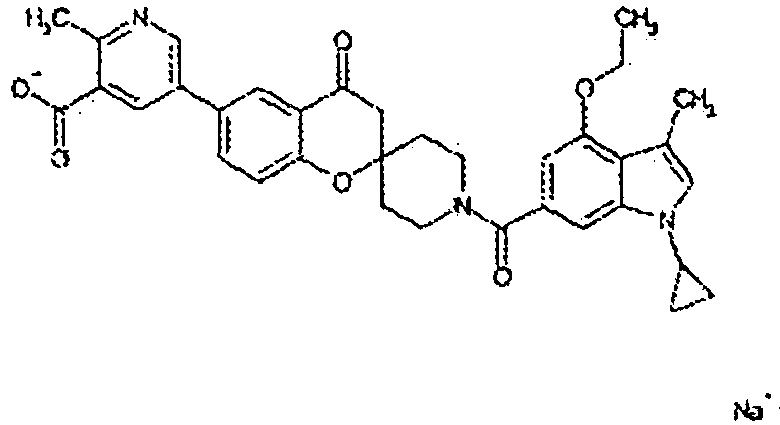
- The intended compound was obtained as a pale yellow foam according to the methods of Example 18 and Example 9 but using 1-cyclopropyl- 4-ethoxy-1H-indole-6-carboxylic acid in place of 1-cyclopropyl-4-(2-hydroxycthoxy)-1H-indole-6-carboxylic acid, and using methyl 2-methyl-5-(4-oxo-spiro[chroman-2,4'-piperidin]-6-yl)-3-pyridinecarboxylate hydrochloride in place of 3-(4-oxo-spiro[chroman-2,4'-piperidin]-6-yl)benzoic acid methyl ester hydrochloride. 1H-NMR (400 MHz, DMSO-d6) δ: 8.52 (1H, d, J= 2.7 Hz), 7.98 (1H, d, J= 2.7 Hz), 7.93-7.89 (2H, m), 7.23-7.19 (1H, m), 7.12 (1H, d, J = 1.0 Hz), 6.99 (1H, d, J = 1.0 Hz), 6.48 (1H, d, J = 1.0 Hz), 4.38-4.11 (1H, br m), 4.08 (2H, q, J= 7.0 Hz), 3.77-3.18 (4H, br m), 2.93 (2H, s), 2.63 (3H, s), 2.32 (3H, d, J = 1.0 Hz), 2.10-1.88 (2H, br m), 1.85-1.73 (2H, br m), 1.37 (3H, t, J = 7.0 Hz), 1.03-0.97 (2H, m), 0.89-0.84 (2H, m); MS [M+H]+ = 594.
-

- According to the methods of Example 8 but using 1-ethyl- 4-moipholino-1H-indole-6-carboxylic acid in place of 1,4-dimethoxy-1H-indole-6-carboxylic acid, the intended compound was obtained as a slightly yellowish substance. 1H-NMR (400MHz, DMSO-d6) δ: 8.42 (1H, d, J = 2.2 Hz), 8.23 (1H, dd, J = 8.5, 2.2 Hz), 7.40 (1H, d, J = 3.2 Hz), 7.34 (1H, d, J = 8.5 Hz), 7.19 (1H, s), 6.49 (1H, s), 6.45 (1H, d, J = 3.2 Hz), 4.3 5-4.05 (1H, br s), 4.19 (2H, q, J = 7.3 Hz), 3.83-3.76 (4H, m), 3.6-3.2 (3H, br m), 3.14-3.09 (4H, br m), 2.99 (2H, s), 2.10-1.74 (4H, m), 1.33 (3H, t, J = 7.3 Hz); MS [M+H]+ = 542.
-

- The intended compound was obtained as a slightly yellowish substance, according to the method of Example 8 but using 1-cyclopropyl-3-methyl-4-methoxy-1H-indole-6-carboxylic acid in place of 1,4-dimethoxy-1H-indole-6-carboxylic acid. 1H-NMR (400MHz, DMSO-d6) δ: 8.42 (1H, d, J = 2.0 Hz), 8.24 (1H, dd, J = 8.8, 2.0 Hz), 7.35 (1H, d, J = 8.8 Hz), 7.14 (1H, d, J = 1 .0 Hz), 7.01-7.00 (1H, br m), 6.50 (1H, d, J = 1.0 Hz), 4.58-3.98 (1H, br m), 3.83 (3H, s), 3.74-3.29 (4H, br m), 2.99 (2H, s), 2.31 (3H, d, J = 1.1 Hz), 2.08-1.77 (4H, m), 1.03-0.98 (2H, m), 0.89-0.85 (2H, m); MS [M+H]+ = 513.
-

- The intended compound was obtained as a slightly yellowish substance according to the method of Example 8 but using 1-ethyl-4-methoxy-1H-indole-6-carboxylic acid in place of 1,4-dimethoxy-1H-indole-6-carboxylic acid. 1H-NMR (400MHz, DMSO-d6) δ: 8.42-8.40 (1H, br m), 8.24 (1H, dd, J = 8.5, 2.0 Hz), 7.33-7.27 (2H, m), 7.11 (1H, s), 6.53 (1H, s), 6.42 (1H, d, J = 3.2 Hz), 4.41-4.10 (1H, br m), 4.15 (3H, q, J = 7.2 Hz), 3.77 (3H, s), 3.75-3.20 (3H, br m), 2.98 (2H, s), 1.97-1.78 (4H, m), 1.38 (3H, t, J = 7.2 Hz); MS [M+H]+ = 487.
-

- To a solution of 1-cyclopropyl-4-methoxy-1H-indole-6-carboxylic acid (54mg) and 5-[4-oxo-spiro(chroman-2,4'-piperidin)-6-yl]-4H-1,2,4-triazole-3-carboxamide (102mg) in DMF (4mL) were added TEA (77uL), HOBT (42mg), and WSC (53mg) at room temperateture and the reaction mixture was stirred at room temperature overnight. The reaction mixture was poured into H2O, extracted with CHCl3, dried over sodium sulfate, filtered, and concentrated in reduced pressure. The residue was purified by column chromatography on silica gel using a mixture of CHCl3 / MeOH (1:0~10:1) as eluent to give the title compound as a colorless solid.
1H-NMR (400 MHz, CDCl3) δ: 8.78-8.60 (1H, m), 8.40-8.25 (1H, m),7.29 (1H, s), 7.15 (1H, d, J=8.0Hz), 7.09 (1H, d, J=4.0Hz), 6.57 (1H, s), 6.52 (1H, d, J=4.0Hz), 4.30-4.17 (1H, m), 3.95 (3H, s), 3.62-3.38 (3H, m), 3.38-3.32 (1H, m), 2.85 (2H, s), 2.28-1.70 (4H, m), 1.06-1.04 (2H, m), 1.00-0.97 (2H, m); MS [M+H]+ = 541. -

- The intended compound was obtained as an off-white solid according to the method of Example 28 but using methyl 1,3-diethyl-7-methoxy-2-oxo-2,3-dihydro-1H-benzimidazol-5-carboxylate in place of ethyl 4-methoxy-1-methyl-1H-pyrazolo[3,4-b]pyridine-6-carboxylate. 1H-NMR (400MHz, DMSO-d6) δ: 8.42 (1.0H, d, J = 2.2 Hz), 8.24 (1.0H, dd, J = 8.7, 2.2 Hz), 7.33 (1.0H, d, J = 8.7 Hz), 6.93 (1.0H, s), 6.80 (1.0H, s), 4.30-4.10 (1.0H, m), 3.98 (2.0H, q, J = 6.8 Hz), 3.89 (3.0H, s), 3.85 (2.0H, q, J = 6.8 Hz), 3.40-3.20 (3.0H, m), 2.98 (2.0H, s), 2.10-1.88 (2.0H, m), 1.86-1.73 (2.0H, m), 1.18 (6.0H, q, J = 6.8 Hz); MS [M+H]+ = 532.
-

- The title compound was prepared as a colorless amorphous substance according to the method descried in Example 45 but using 6-cyclopropyl-1-isopropyl-1H-pyrazolo[3,4-b]pyridine-4-carboxylic acid in place of cyclopropyl-4-ethoxy-3-methyl-1H-indole-6-carboxylic acid. 1H-NMR (400MHz, DMSO-d6) δ:9.03-8.98 (2H, m), 8.41 (1H, s), 8.07-8.01 (3H, m), 7.25 (1H, d, J = 8.8 Hz), 7.13 (1H, s), 5.10 (1H, sept, J = 6.8 Hz), 4.39-4.30 (1H, br m), 3.73-3.28 (3H, br m), 2.95 (2H, s), 2.32-2.24 (1H, m), 2.12-1.65 (4H, m), 1.46 (6H, d, J = 6.8 Hz), 1.08-1.04 (4H, m); MS [M+H]+ = 566.
-

- To a solution of methyl 1-cyclopropyl-4-methoxy-1H-benzimidazole-6-carboxylate (94 mg) in THF (4 mL) and MeOH (4 mL) was added 5N NaOH (0.38 mL) at rt. and the reaction mixture was stirred 2 h at 60 °C followed by addition of 5N HCl (0.38 mL). The mixture was concentrated in vacuo and coevaporated with toluene (x 2). The residue was diluted with DMF (4 mL) and H2O (1 mL) followed by addition of amine (147 mg), triethylamine (0.080 mL), EDCI×HCl (110 mg) and HOBT (77 mg) at r.t. The reaction mixture was stirred for 1 h at 90 °C. Water was added to the solution at r.t., precipitated solid was collected, and washed with water and dried in vacuo to afford the title compound as a beige solid. 1H-NMR (400MHz, DMSO-d6) δ: 8.42 (1H, d, J = 2.2 Hz), 8.24 (1H, dd, J = 8.7, 2.2 Hz), 8.18 (1H, s), 7.34 (1H, d, J = 8.7 Hz), 7.25 (1H, s), 6.76 (1H, s), 4.41-4.20 (1H, m), 3.94 (3H, s), 3.66-3.64 (3H, m), 3.55-3.45 (1H, m), 2.99 (2H, s), 2.10-1.75 (4H, m), 1.11-0.98 (4H, m); MS [M+H]+ = 500.
- 3.05g of Ethylhydrazine and 6.54g of Ethyl acetoacetate was dissolved in 10 mL of EtOH and the mixture was heated at 80 °C overnight. The mixture was cooled and partitioned between CHCl3 and water. The organic layer was drier over Na2SO4, concentrated to give 2.43g of crude 2-ethyl-5-methyl-2,4-dihydro-3H-pyrazol-3-one. 2.35g of the material was diluted with 4 mL of DMF and 6.2 mL of POC13 was added dropwise thereto. The mixture was heated at 80 °C overnight, then cooled to room temperature. After addition of ice, the mixture was partitioned between CHCl3 and water. The organic layer was dried over Na2SO4 and concentrated to give 1.46g of crude 5-chloro-1-ethyl-3-methyl-1H-pyrazole-4-carbaldehyde. 516mg of the material was diluted with 10 mL of EtOH and 440mg of HSCH2COOEt and 930mg of K2CO3 was added thereto. The mixture was stirred at 80 °C overnight. The reaction mixture was cooled and 5 mL of 1N NaOHaq and 5 mL of MeOH was added thereto successively. Then the mixture was heated at 85 °C for 3 hrs. After cooled, the mixture was acidified with 1N HCl (to pH 1.5), then diluted with water. The precipitate was filtered, washed with water and n-hexane, dried in vacuo to afford 214mg of the targeted compound.
- 44.46 ml of POCl3 was added to a stirred solution of 1-cyclopropyl-1H-pyrrole (46.46g) in 37 ml of DMF with cooling with ice, then the mixture was stirred at room temperature overnight. The mixture was poured into 336 ml of 5N NaOHaq with cooling with ice, and the mixture was made basic with an additional 5N NaOHaq. The mixture was extracted with CH2Cl2 and the organic extract was dried over Na2SO4, concentrated, and the residue was purified on SiO2 column chromatography (n-hexane-EtOAc system) to give 38.91g of 1-cyclopropyl-1H-pyrrol-2-carbaldehyde as a colorless oil.
- 14.57g of Na was added portionwise to 400 ml of EtOH. To the mixture was added a solution of 38.91g of 1-cyclopropyl-1H-pyrrole-2-carbaldehyde and 48.23 ml of diethyl succinate in 100ml of EtOH at 50 °C, then the mixture was refluxed overnight. 140 ml of 5N HCl was added to the mixture at 0 °C and EtOH was evaporated. The concentrate was extracted with CHCl3 and the extract was dried over Na2SO4 and concentrated to give red oil. The material was dissolved in 400 ml of acetic anhydride and 47.40g of AcOK was added thereto. The mixture was refluxed for 30min and allowed to cool to room temperature. The mixture was filtrated and the filtrate was concentrated. The residue was purified on SiO2 column chromatography (n-hexane-EtOAc system) to give 72.3g of ethyl 4-acetoxy-1-cyclopropyl-1H-indole-6-carboxylate as red oil.
- To a solution of 72.33g of ethyl 4-acetoxy-1-cyclopropyl-1H-indole-6-carboxylate in 360 ml of EtOH placed in a 2L flask was added 69.58g of K2CO3 and the mixture was stirred at room temperature for 4 hrs. EtOH was evaporated and the concentrate was diluted with EtOAc. The mixture was washed with water and saturated brine, dried over Na2SO4, and concentrated. The residue was triturated with toluene and n-hexane to give 49.78g of ethyl 1-cyclopropyl-4-hydroxy-1H-indole-6-carboxylate as a pale tan solid.
- To a stirred suspension of 14.56g of ethyl 1-cyclopropyl-4-hydroxy-1H-indole-6-carboxylate and 16.2g of K2CO3 and 220 ml of DMF was added 7.48 ml of MeI and the mixture was stirred at 60 °C for 3 hrs. The mixture was allowed to cool, diluted with EtOAc, washed with water and saturated brine successively, dried over Na2SO4, then concentrated. The residue was purified on SiO2 column chromatography (n-hexane-EtOAc) to afford 15.15g of ethyl 1-cyclopropyl-4-methoxy-1H-indole-6-carboxylate as a pale yellow oil.
- The compound was prepared according to the procedure for ethyl 1-cyclopropyl-4-methoxy-1H-indole-6-carboxylate but using EtI in place of MeI.
- The compound was prepared according to the procedure for 1-Cyclopropyl-4-methoxy-1H-indole-6-carboxylic acid but using ethyl 1-cyclopropyl-4-ethoxy-1H-indole-6-carboxylate in place of ethyl 1-cyclopropyl-4-methoxy-1H-indole-6-carboxylate.
- 35 ml of 5N NaOHaq was added to a solution of 15.15g of ethyl 1-cyclopropyl-4-methoxy-1H-indole-6-carboxylate in MeOH and the mixture was stirred at 60 °C for 8 hrs. The mixture was cooled to 0 °C and 35 ml of 5N HCl was added thereto. The precipitate was filtered and dried in vacul to give 13.8g of 1-cyclopropyl-4-methoxy-1H-indole-6-carboxylic acid as a colorless solid.
- 1.28 ml of POCl3 was added dropwise to a solution of 3.24g of ethyl 1-cyclopropyl-4-methoxy-1H-indole-6-carboxylate in 30 ml of DMF and the mixture was stirred at 0 °C for 2 hrs. The mixture was diluted with EtOAc and 25 ml of 1N NaOH was added. Then the mixture was made basic using saturated NaHC03aq. The mixture was extracted with EtOAc and the extract was washed with water and saturated brine, dried over Na2SO4, then concentrated. The residue was purified on SiO2 column chromatography (EtOAc-n-Hexane system) to give 2.4 g of ethyl 1-cyclopropyl-3-formyl-4-methoxy-1H-indole-6-carboxylate.
- To a stirred solution of 3.30g of ethyl 1-cyclopropyl-3-formyl-4-methoxy-1H-indole-6-carboxylate in 33 ml of EtOH was added 2.57g of TsNHNH2 and the mixture was refluxed for 30min. After evaporation of EtOH, the mixture was diluted with 28 ml of DMF and 28 ml of sulfolane, then 2.89g of NaBH3CN and 0.57g of TsOH H2O was added thereto successively. The mixture was refluxed for 30min and cooled to room temperature. After diluted with Et2O, the mixture was washed successively with water, saturated NaHCO3aq, and saturated brine, dried over Na2SO4, concentrated. The residue was purified on SiO2 column chromatography (EtOAc/ n-hexane system) to give 2.78g of Ethyl 1-cyclopropyl-3-methyl-4-methoxy-1H-indole-6-carboxylate as a colorless powder.
- To a stirred solution of 1.29g of ethyl 1-cyclopropyl-4-methoxy-1H-indole-6-carboxylate in 13 ml ofTHF was added 801mg of N-chlorosuccinimide and the mixture was stirred at 60 °C for 2 hrs. After diluted with EtOAc, the mixture was washed successively with water and saturated brine, dried over Na2SO4, and concentrated. The residue was purified on SiO2 column chromatography to afford 1.03g of ethyl -3-chloro-1-cyclopropyl-4-(methoxy)-1H-indole-6-carboxylate as a colorless solid.
- To a stirred solution of 1.03g of ethyl -3-chloro-1-cyclopropyl-4-(methyloxy)-1H-indole-6-carboxylate in 15 ml of MeOH and 10 ml of THF was added 2 ml of 5N NaOHaq and the mixture was stirred at 60 °C for 9 hrs. After evaporation of MeOH and THF, the mixture was diluted with water and 2 ml of 5N HClaq was added thereto. The precipitate was collected by filtration and dried in vacuo to give 798mg of 3-chloro-1-cyclopropyl-4-(methyloxy)-1H-indole-6-carboxylic acid as a colorless solid.
- 4.66 mL of 5 N NaOH aqueous was added to a solution of 3.19 g of ethyl 1-cyclopropyl-3-methyl-4-methoxy-1H-indole-6-carboxylate in 32 mL of MeOH and the mixture was stirred at 60 °C overnight. The mixture was cooled and 46.6 mL of 1N HCl was added thereto. The precipitate was filtered, collected and dried in vacuo to afford 2.70 g of 1-Cyclopropyl-3-methyl-4-methoxy-1H-indole-6-carboxylic acid as a colorless solid.
- 60 mL of MeOH, 7.97 g of N-Boc-piperidin-4-one, and 3.34 mL of pyrrolidine were added to 8.60 g of 5-bromo-2-hydroxyacetophenone put in a 200- mL flask equipped with a condenser, and the mixture was overnight heated under reflux. The reaction mixture was cooled to room temperature, and concentrated. The residue was purified through silica gel column chromatography (eluted with n-hexane/EtOAc=6/1) to obtain the intended compound as a pale yellow solid.
- A mixture of 25.0 g of 5-bromo-2-hydroxyacetophenone, 25.0 g of N-Boc-piperidin-4-one, 9.68 mL of pyrrolidine and 250 mL of MeOH was heated under reflux overnight. The reaction mixture was cooled to room temperature and concentrated. The residue was put into 300 mL of 1,4-dioxane, and 100 mL of concentrated hydrochloric acid was added thereto and stirred at room temperature for 4 hour. The reaction solution was poured into water, and stirred overnight. The resulting precipitate was taken out through filtration, washed with water and n-hexane, and dried under reduced pressure to obtain the intended compound as a yellow solid.
- A mixture of tert-butyl 6-bromo-4-oxospiro[chroman-2,4'-piperidine]-1'-carboxylate (143 g, 0.36 mol), Zn(CN)2 (84.7 g, 0.72 mol), Pd(PPh3)4 (20 g, 17 mmol) and dry DMF (1 liter) was stirred under an argon atmosphere at 90°C for 6 hours. The resulting mixture was, after cooled, diluted with ethyl acetate (1 liter), and washed with aqueous 12 % ammonia, water, and saturated brine in order. The organic layer was dried over sodium sulfate, and concentrated, and the residue was treated with methanol, and the resulting insoluble solid was taken out through filtration, and dried under a reduced pressure to obtain tert-butyl 6-cyano-4-oxospiro[chroman-2,4'-piperidine]-1'-carboxylate as a colorless solid.
- 67.5 g of sodium azide, 143 g of triethylamine hydrochloride, and 1.2 liters of dry DMF were added to the cyano compound (119 g) produced in Reference Example 16, and the mixture was stirred under a nitrogen atmosphere at 100°C for 12 hours. After cooled, the reaction mixture was partitioned between 1 N hydrochloric acid (200 mL), water and ethyl acetate. The aqueous layer was further extracted three times with ethyl acetate, and the combined organic layers were washed with water and brine, dried over sodium sulfate and concentrated. The residue was triturated with methanol, and the insoluble solid was collected through filtration and dried under reduced pressure to obtain tert-butyl 4-oxo-6-(1H-tetrazol-5-yl)spiro[chroman-2,4'-piperidine]-1 '-carboxylate as a colorless solid.
- 6-(1H-tetrazol-5-yl)spiro[chroman-2,4'-piperidine]-4-one. 4 N HCl-1,4-dioxane (200 mL) was added to 40.6 g tert-butyl 4-oxo-6-(1H-tetrazol-5-yl)spiro[chroman-2,4'-piperidine]-1'-carboxylate produced in Reference Example 17, and stirred at room temperature for 5 hours. The reaction mixture was concentrated, and the residue was triturated with methanol. The insoluble solid was collected through filtration, and dried under reduced pressure to obtain 6-(1H-tetrazol-5-yl)-spiro[chroman-2,4'-piperidine]-4-one as a colorless solid.
- 5-Bromo-nicotinic acid (20.2g, 100mmol) was dissolved in CHCl3 (200 mL) and tert-BuOH (40 mL); and WSC (21.1g, 110mmol) and DMAP (21.1g, 110mmol) was added thereto in order, and stirred at room temperature over night. The reaction mixture was diluted with chloroform, washed with 0.5N HCl aq. (220 mL), 0.5N NaOH aq. (100 mL), brine and dried over MgSO4 and silica gel. After filtration, the solvents were removed in vacuo to afford 5-Bromo-nicotinic acid tert-butyl ester as a colorless solid. This solid was used for the next step without further purification.
- ester. tert-butyl-6-bromo-4-oxospiro[chroman-2,4'-piperidine]-1'-carboxylate (19.8 g, 50.0 mmol), bis(pinacolato)diboran (14.0 g, 55.0 mmol), Pd(OAc)2 (560 mg, 2.50 mmol), DPPF (2.77 g, 5.00 mmol), and AcOK (5.82 g, 60.0mmol) were suspended in dioxane (250 mL) and heated at 100°C for 10 hours. After cooling down to room temperature, 5-bromo-nicotinicacid tert-butyl ester (14.2g, 55.0 mmol), Pd(PPh3)4 (5.78g, 5.00 mmol) and 2M Na2CO3 aq. (125 mL, 250mmol) were added to the reaction mixture; and then heated at 100°C for 15 hours. The reaction mixture was diluted with EtOAc and H2O, organic layer was washed with brine and dried over MgSO4. After filtration, the solvents were removed in vacuo and the residue was purified by silica gel column chromatography (hexane/EtOAc = 10/0 to 6/4) and the obtained brown solid was crystallized from EtOAc/hexane (1/1) to afford 5-{1'-tert-butoxycarbonyl]-4-oxospiro[chroman-2,4'-piperidin]-6-yl} nicotinic acid tert-butyl ester as a pale yellow solid.
- 5-{4-oxospiro[chroman-2,4'-piperidin]-6-yl}nicotinic acid di-hydrochloride. 5-{1'-tert-butoxycarbonyl]-4-oxospiro[chroman-2,4'-piperidin]-6-yl}nicotinic acid tert-butyl ester (14.0g, 28.3mmol) was dissolved in CHCl3 (70 mL) and 4N HCl in dioxane (210 mL) was added thereto, and stirred at room temperature for 20h. The resulted precipitate was filtered and washed with CHCl3 and Et2O to afford 5-{4-oxospiro[chroman-2,4'-piperidin]-6-yl}nicotinic acid di-hydrochloride as a colorless solid.
- To a solution of 15 g of tert-butyl 6-cyano-4-oxospiro[chroman-2,4'-piperidine]-1'-carboxylate in 250 mL of EtOH-THF(1:4) at 0 °C was added NaBH4 portionwise, and the reaction mixture was allowed to warm up to r.t. After stirring for 1h, NH4Claq was added to the reaction mixture and the aqueous mixture was extracted with AcOEt twice. The combined organic layers were washed with brine, dried over Na2SO4, filtered, and concentrated in reduced pressure to give the intended compound as a pale yellow solid.
- tert-butyl 4-{[tert-butyl(dimethyl)silyl]oxy}-6-cyano-1'H-spiro[chroman-2,4'-piperidine]-1'-carboxylate. To a solution of 15.1 g of tert-butyl 6-cyano-4-hydroxyspiro[chroman-2,4'-piperidine]-1'-carboxylate in DMF were added 3.6 g of imidazole and 7.95 g of TBSCI at r.t., and the reaction mixture was stirred at r.t. for 1d. To this reaction mixture was added 598 mg of imidazole and 1.3 g of TBSCl at rt, and the reaction mixture was stirred at r.t. for 1d. The reaction mixture was poured into ice-cold brine, and the aqueous mixture was extracted with AcOEt twice. The combined organic layers were washed with H2O and brine, dried over Na2SO4, filtered, and concentrated in reduced pressure. The residue was purified by column chromatography on silica gel using a mixture of hexane and AcOEt (100/0 - 80/20) as eluent to give the intended compound.
- tert-butyl 6-[aminol(hydroxylmino)methyl]-4-{[tert-butyl(dimethyl)silyl]oxy}-1'H-spiro[chroman-2,4'-piperidine]-1'-carboxylate. To a suspension of 18.2 g of tert-butyl 4-{[tert-butyl(dimethyl)silyl]oxy}-6-cyanospiro[chroman-2,4'-piperidine]-1'-carboxylate in EtOH was added 16.3 mL of Et3N and 8.12 g of hydroxyamine hydrochloride at rt, and the reaction mixture was stirred at 85 °C for 1d. The resultant solution was cooled to r.t., and concentrated in reduced pressure. To the residue was added H2O, the resultant white solid was filtered, washed with H2O, and dried in vacuo to give a crude product, which was used in the next step without further purification.
- tert-butyl 6-{amino[({[(2-ethylhexyl)oxy]carbony}oxy)-imino]methyl}-4-{[tert-butyl(dimethyl)silyl]oxy}spiro[chroman-2,4'-piperidine]-1'-carboxylate. To a solution of tert-butyl 6-[amino(hydroxyimino)methyl]-4-{[tert-butyl(dimethyl)silyl]oxy}spiro[chroman-2,4'-piperidine]-1'-carboxylate in 80 mL ofDMF were added 3.78 mL of pyridine and 8.4 mL of 2-Ethylhexyl chloroformate at 0 °C, and the reaction mixture was stirred at 0 °C for 1.5 h. The reaction mixture was poured into ice-cold brine, and extracted with AcOEt twice. The combined organic layers were washed with H2O and brine, dried over Na2SO4, filtered, and concentrated in reduced pressure to give a crude product, which was used in the next step without further purification.
- tert-butyl 4-{[tert-butyl(dimethlyl)silyl]oxy}-6-(5-oxo-4,5-dihydro-1,2,4-oxadiazol-3-yl)spiro[chroman-2,4'-piperidine]-1'-carboxylate. A solution of tert-butyl 6-{amino[({[(2-ethylhexyl)oxy]carbonyl}oxy)imino]methyl}-4-{[tert-butyl(dimethyl)silyl]oxy}spiro[chroman-2,4'-piperidine]-1'-carboxylate in 100 mL of xylene was stirred at 145 °C for 14 h. The reaction mixture was cooled to r.t., and concentrated in reduced pressure. The residue was purified by column chromatography on silica gel using a mixture of hexane-AcOEt (100/1-35/65) as an eluent to give the product as an off-white solid.
- tert-butyl 4-hydroxy-6-(5-oxo-4,5-dihydro-1,2,4-oxadiazol-3-yl)spiro[chroman-2,4'-piperidine]-1'-carboxylate. To a solution of 13.4 g of tert-butyl 4-{[tert-butyl(dimethyl)silyl]oxy}-6-(5-oxo-4,5-dihydro-1,2,4-oxadiazol-3-yl)spiro[chroman-2,4'-piperidine]-1'-carboxylate in 200 mL of EtOH-THF (5.5 : 1) at 0 °C was added 67 ml of 1M HClaq dropwise, and the reaction mixture was stirred at r.t. for 18 h. The reaction mixture was cooled to 0 °C, and the mixture was basified with NaHCO3. The mixture was concentrated in reduced pressure, and the residue was acidified with 1M HClaq. The aqueous mixture was extracted with a mixture of CHCl3-MeOH (9:1) three times, and the combined organic layers was washed with brine, dried over Na2SO4, and concentrated in reduces pressure to give the product as a pale brown solid.
- tert-butyl 4-oxo-6-(5-oxo-4,5-dihydro-1,2,4-oxadiazol-3-yl)spiro[chroman-2,4'-piperidine]-1'-carboxylate. To a solution of 1.0 g of tert-butyl 4-hydroxy-6-(5-oxo-4,5-dihydro-1,2,4-oxadiazol-3-yl)spiro[chroman-2,4'-piperidine]-1'-carboxylate in 40 ml of THF-CH3CN (1:1) ar r.t. were added 2.0 g of MS 4A, 435 mg ofNMO, and 88 mg of TPAP, and the reaction mixture was stirred at r.t. overnight. The mixture was filtered through a Celite pad, washed with CHCl3 and CHCl3-MeOH (9:1), and the filtrate was concentrated in reduced pressure. The residue was purified by column chromatography on silica gel using a mixture of hexane-AcOEt (100/0-0/100) as eluent to give the intended compound as a colorless solid.
- A suspension of 437 mg of tert-butyl 4-oxo-6-(5-oxo-4,5-dihydro-1,2,4-oxadiazol-3-yl)spiro[chroman-2,4'-piperidine]-1'-carboxylate in 10 mL of 4N HCl in dioxane was stirred at rt for 1d, the resultant white solid was filtered, and washed with ether. The collected white solid was dried in vacuo at 50°C to give the intended compound as a colorless solid.
- 1'-tert-butoxycarbonyl-6-(4",4",5",5"-tetramethyl-1",3",2"-dioxaborolan-2"-yl) spiro[chroman-2,4'-piperidin]-4-one. tert-Butyl 6-bromo-4-oxospiro[chroman-2,4'-piperidine]-1'-carboxylate (99.0 g, 250 mmol), bis(pinacolato)diboran (70.2 g, 275 mmol), Pd(OAc)2 (2.80 g, 12.5 mmol), DPPF (13.9 g, 25.0 mmol), and AcOK (29.1 g, 300 mmol) were suspended in dioxane (500 ml) and heated at 100°C for 20 h. After cooling down to room temperature, MeOH (500 ml) was added and further stirred for 1h. The resulted precipitate was filtered and the cake was washed with MeOH to obtain the intended compound as a pale brown solid.
- 1'-tert-butoxycarbonyl-6-(4",4",5",5"-tetramethyl-1",3",2"-dioxaborolan-2"-yl)spiro[chroman-2,4'-piperidin]-4-one (2.00 g, 4.51 mmol), 5-bromonicotinic acid methyl ester (1.17 g, 5.42 mmol), Pd(OAc)2 (50.6 mg, 0.226 mmol), DPPF (250 g, 0.451 mmol), and K3PO4 (1.91 g, 9.02 mmol) were suspended in DME (500 mL) and heated at 100°C for 18 hours. The reaction mixture was filtered through Celite, the residue on the Celite was washed with chloroform, and the filtrate and the washing were combined and concentrated under a reduced pressure. The resulting residue was purified through silica gel column chromatography (hexane / EtOAc = 10 / 0 to 2 / 8) to obtain the intended compound as a pale yellow foam.
- 5-(4-oxospiro[chroman-2,4'-piperidin]-6-yl)nicotinic acid methyl ester di-hydrochloride. 5-(1'-tert-butoxycarbonyl-4-oxospiro[chroman-2,4'-piperidin]-6-yl)nicotinic acid methyl ester (22.0 g, 48.6 mmol) was suspended in MeOH (110 mL) and 4 N HCl in dioxane (220 mL) was added thereto, and stirred at room temperature for 14 hours. The solvents were removed in vacuo and the resulting solid was washed with MeOH / Et2O (50 mL / 200 mL) to obtain the intended compound as a colorless solid.
- 3"-{1'-tert-butoxycarbonyl]-4-oxospiro[chroman-2,4'-piperidin]-6-yl} benzoic acid. tert-butyl-6-bromo-4-oxospiro[chroman-2,4'-piperidine]-1'-carboxylate (39.6 g, 100 mmol), 3-carboxy-phenylboronicacid (16.6 g, 100 mmol), Pd(PPh3)4 (5.78 g, 5.00 mmol), and 2M Na2CO3 aq. (250 ml, 500 mmol) were suspended in 1,4-dioxane (400 ml) and heated at 100°C for 18 h. The reaction mixture was diluted with CHCl3 and dil HCl aq. (1.1 mol), the aqueous layer was extracted with CHCl3. The combined organic layer was washed with H2O and brine, dried over MgSO4. The desiccant was removed through filtration and the filtrate was concentrated under reduced pressure. The residue was triturated with EtOAc and the insoluble solid was collected through filtration to obtain the intended compound as a colorless solid.
- Methyl 3"-{1'-tert-butoxycarbonyl]-4-oxospiro[chroman-2,4'-piperidin]-6-yl} benzoate. 3"-{1'-tert-butoxycarbonyl-4-oxospiro[chroman-2,4'-piperidin]-6-yl} benzoic acid (24.0 g, 54.9 mmol) was dissolved in CHCl3 (120 ml), and MeOH (24 ml), WSC (15.8 g, 82.4 mmol) and DMAP (10.0 g, 82.4 mmol) was added thereto in this order, and the mixture was stirred at room temperature over night. The reaction mixture was diluted with CHCl3 and diluted HCl aq. (220 mmol). The organic layer was washed with 0.5N NaOH aq., brine and dried over MgSO4 and silica gel. The desiccant was removed through filtration and the filtrate was concentrated under reduced pressure. The residue was triturated with MeOH and the insoluble solid was collected through filtration to obtain the intended compound as a pale yellow solid.
- Methyl 5-{4-oxospiro[chroman-2,4'-piperidin]6-yl}benzoate. The intended compound was produced according to the synthetic procedure for 5"-{4-oxospiro[chroman-2,4'-piperidin]-6-yl}nicotinic acid methyl ester di-hydrochloride but using methyl 3"-{1'-tert-butoxycarbonyl]-4-oxospiro[chroman-2,4'-piperidin]-6-yl}benzoate in place of 5"-{1'-tert-butoxycarbonyl]-4-oxospiro[chroman-2,4'-piperidin]-6-yl}nicotinic acid methyl ester.
- 6-(1H-tetrazol-5-yl)spiro[chroman-2,4'-piperidine]-4-one hydrochloride salt. A mixture of 5-bromo-2-hydroxyacetophenone (104.35 g, 485.26 mmol), N-Boc-piperidin-4-one (98.62 g, 494.96 mmol), 20 mL of pyrrolidine (17.26 g, 242.63 mmol) and 261 mL of MeOH was heated under reflux until the reaction was complete. The mixture was cooled, then 87 mL of H2O were added, and the mixture was filtered and dried to give tert-butyl 6-bromo-4-oxospiro[chroman-2,4'-piperidine]-1'-carboxylate. Alternatively, 10 mL of pyrrolidine (121.31 mmol) may be used in this procedure. To a solution of tert-butyl 6-bromo-4-oxospiro[chroman-2,4'-piperidine]-1'-carboxylate (6593 g, 16.6 mol) and DMF (33 L) was added Zn(CN)2 (1947 g, 16.6 mol) and Pd(PPh3)4 (192 g, .17 mol). The slurry was heated to 90°C for 3 hours, then cooled to room temperature and filtered. Water (16 L) was added to the filtrate. The resulting slurry was cooled to 5°C, stirred for 1 hour and filtered. The solid was washed with DMF/water (2:1) and dried under vacuum to give tert-butyl 6-cyano-4-oxospiro[chroman-2,4'-piperidine]-1'-carboxylate. A solution of 23 g of tert-butyl 6-cyano-4-oxospiro[chroman-2,4'-piperidine]-1'-carboxylate (67.17 mmol), 13.10 g sodium azide (201.52 mmol), 27.74 g of triethylamine hydrochloride (201.52 mmol), and 460 mL of dry DMF was stirred under a nitrogen atmosphere at 100 °C for 12 hours. After cooling to room temperature, 506 mL of EtOAc were added, followed by 322 mL of 1M HCl (322 mmol). Alternatively, 0.5M HCl maybe added until pH = 3. The resulting layers were separated, the organic layer was washed with water/methanol (115 mL/46 mL), and then concentrated to give tert-butyl 4-oxo-6-(1H-tetrazol-5-yl)spiro[chroman-2,4'-piperidine]-1-carboxylate. A solution of 5.08 g of tert-butyl 4-oxo-6-(1H-tetrazol-5-yl)spiro[chroman-2,4'-piperidine]-1'-carboxylate (13.18 mmol), 8.8 mL of 12 M HCl (105.44 mmol) and 8 mL of methanol was heated to 50°C until the reaction was complete. The resulting slurry was filtered, washed with 25 mL of methanol at room temperature, and dried to give 6-(1H-tetrazol-5-yl)spiro[chroman-2,4'-piperidine]-4-one hydrochloride salt.
- Ethyl 3-methoxy-5-nitro-4-H(trifluoromethyl)sulfonyl]oxy}benzoate 17.7 ml of Tf2O was added to a solution of 16.8g of ethyl 4-hydroxy-3-(methyloxy)-5-nitrobenzoate and 11.3 ml of pyridine in 500 ml of CHCl3 at 0 °C. The mixture was stirred for 30 min, then washed successively with water, HClaq, and saturated NaHCO3aq, dried over Na2SO4, and concentrated. The residual solid was washed with a mixed solvent of CHCl3 and n-hexane to give a 22.0g of the intended compound as a pale orange solid.
- Ethyl 4-methyl-3-(methoxy)-5-nitrobenzoate To a stirred solution of 4.92g of MeB(OH)2, 33.9g of K2CO3, 25.6g of ethyl 3-methoxy-5-nitro-4-{[(trifluoromethyl)sulfonyl]oxy}benzoate in 500 ml of THF and 50 ml of water was added 5.03g of PdCl2 dppf and the mixture was stirred under argon atmosphere at 80 °C overnight. The mixture was diluted with AcOEt and water, filtered through Celite and the filtrate was extracted with AcOEt. The extract was washed successively with saturated NaCO3aq and saturated brine, dried over Na2SO4, and concentrated. The residue was purified on SiO2 column chromatography and the fractions containing the intended compound were concentrated. The resulting solid was washed with n-hexane and dried to give 12.9g of the intended compound as a yellow solid.
- Ethyl 3-(methoxy)-5-nitro-4-(2-oxoethyl)benzoate 13.3 ml of Me2NCH(OMe)2 was added to a solution of 4.78g of ethyl 4-methyl-3-(methoxy)-5-nitrobenzoate in 10 ml of dimethylacetamide and the mixture was heated at 80 °C in a sealed tube for 40 minutes. The mixture was diluted with CHCl3, washed with water, dried over Na2SO4, and concentrated. The residue was purified on SiO2 column chromatography to give 4.02g of the intended compound as a pale tan solid.
- Ethyl 1,4-dimethoxy-1H-indole-6-carboxylate 250mg of ethyl 3-(methoxy)-5-nitro-4-(2-oxoethyl)benzoate was dissolved in 5 ml of DMF and the solution was stirred over 50mg of 10% Pd/C (50% wet) under hydrogen atmosphere for 6 hrs. Then the mixture was purged with N2 and 126 uL of MeI and 276mg of K2CO3 was added thereto. After stirred for 2 hrs, the mixture was diluted with Et2O, filtered through Celite. The filtrate was concentrated and purified on SiO2 column chromatography to give 184mg of the intended compound as colorless oil.
- Ethyl 1,4-dimethoxy-1H-indole-6-carboxylic acid 513mg of ethyl 1,4-dimethoxy-1H-indole-6-carboxylate was dissolved in 10 ml of MeOH and 1 ml of 5N NaOHaq was added thereto. The mixture was heated at 80 °C with stirring overnight. After cooled to 0 °C, the mixture was neutralized by 1 ml of 5N HClaq and extracted with CHCl3 and MeOH. The extract was dried over Na2SO4, concentrated. The resulting solid was washed with a mixed solvent of n-hexane, diethyl ether and MeOH to afford 352mg of the intended compound as a pale purple solid.
- (COCl)2 (713 ul) was added to the solution of ethyl 1-cyclopropyl-4-ethoxy-1H-indole-6-carboxylate (1.36 g) in Et2O 20 ml at r.t. and stirred for over night. The solvent was evaporated away and the residue was dissolved in toluene 20 ml. The reaction mixture was stirred at reflux for 1 h and cooled to room temperature. Pyridine (810 ul) and tert-butanol (3 ml) were added to the mixture, stirred for 1 h at r.t.. The reaction mixture was quenched with saturated aqueous sodium bicarbonate, then washed with water, and saturated saline water in that order, and dried with sodium sulfate. This was filtered, concentrated, and purified through silica gel column chromatography (hexane/ethyl acetate) to obtain the title compound (1.71 g) as a colorless solid.
- (COCl)2 (713 ul) was added to the solution of ethyl 1-cyclopropyl-4-ethoxy-1H-indole-6-carboxylate (5.46 g) in Et2O 70 ml at r.t. and stirred for over night. The solvent was evaporated away and the residue was dissolved in toluene 70 ml. The reaction mixture was stirred at reflux for 1 h and cooled to room temperature and 0.5 N solution of NH3 in dioxane (100 ml) was added dropwise and stirred for 2 h at r.t.. The reaction mixture was diluted with ethyl acetate and water, washed with water and saturated saline water in that order, and dried with sodium sulfate. This was filtered, concentrated, and crystallized from mixed solvent of hexane and ethyl acetate to give the title compound (5.06 g) as a colorless solid
- 3-O-tert-Butyl 6-O-ethyl 1-cyclopropyl-4-ethoxy-1H-indole-3,6-dicarboxylate (1.23 g) was added to 4N solution of hydrochloric acid in dioxane (5 ml) at r.t. and the mixture was stirred for 1 h, evaporated and crystallized from hexane to give carboxylic acid of intended compound (996 mg) as a colorless solid. (COCl)2 (117 ul) to the solution of this carboxylic acid (217 mg) in chloroform (5 ml) and then one portion ofDMF was added at 0 °C. The reaction mixture was stirred for 2 h at r.t., evaporated, and dissolved in THF (5 ml). 2M solution of methylamine in THF (3 ml) was added to the reaction mixture, stirred for 30 min at r.t., diluted with ethyl acetate and water, washed with water and saturated saline water in that order, and dried with sodium sulfate. This was filtered, concentrated to give title compound (216 mg).
- The compound was prepared according to the procedure for ethyl 1-cyclopropyl-4-methoxy-1H-indole-6-carboxylate but using bromoethyl acetate in place of MeI.
- Sodium bicarbonate (318 mg) was added to the mixture of ethyl 3-nitro-4-(2-oxoethyl)benzoate (401 mg) and MeI (426 mg) in DMF (5 ml), stirred for over night at r.t., diluted with ethyl acetate, washed with water and saturated saline water in that order, and dried with sodium sulfate. This was filtered, concentrated, and purified through silica gel column (hexane/ethyl acetate) to give title compound (227 mg) as a colorless oil.
- According to the methods of Reference Example 40, the intended compound was obtained as a colorless oil, but using ethyl 5-methoxy-4-(1-methyl-2-oxoethyl)-3-nitrobenzoate in place of ethyl 3-methoxy-5-nitro-4-(2-oxoethyl)benzoate.
- tert-Butyl 6-bromo-4-oxospiro[chroman-2,4'-piperidine]-1'-carboxylate (16.3g), 5-amino-1-methyl-1H-pyrazole (4.00g), palladium acetate (922mg), 2-(di-t-butylphosphino)biphenyl (1.23g) and cesium carbonate (16.1g) were suspended in 1,4-dioxane (20 mL), and heated under reflux at 110°C for 5 hours. The reaction liquid was filtered through Celite, the residue on the Celite was washed with chloroform, and the filtrate was concentrated under reduced pressure. The resulting residue was purified through silica gel column chromatography (hexane/EtOAc) to obtain the intended compound as a yellow amorphous substance.
- The intended compound was produced according to the procedure described in Reference Example 18 but using tert-Butyl 6-[(1-methyl-1H-pyrazol-5-yl)amino] -4-oxo-spiro[chroman-2,4'-piperidine]-1'-carboxylate in place of tert-butyl 4-oxo-6-(1H-tetrazol-5-yl)spiro[chroman-2,4'-piperidine]-1'-carboxylate.
- tert-butyl 6-carboxy-4-oxospiro[chroman-2,4'-piperidine]-1'-carboxylate (7.50 g, 20.8 mmol), glycinamide hydrochloride (2.76g, 24.9 mmol), EDCI (4.78 g, 24.9 mmol), HOBT (3.78 g, 24.9 mmol), and TEA (5.80 ml, 41.6 mmol) were suspended in DMF (75 ml) and stirred at room temperature for 23 h. After removal of the solvent, the residue was diluted with EtOAc and H2O. The aqueous layer was extracted with EtOAc and the combined organic layer was washed with saturated NaHCO3 aq. and brine, dried over MgSO4. The desiccant was removed through filtration and the filtrate was concentrated under reduced pressure. The residue was triturated with MeOH - Et2O and the insoluble solid was collected through filtration to obtain the intended compound as a colorless solid.
- The intended compound was produced according to the Reference Example 18 but using 1'-tert-butoxycarbonyl-[4-oxospiro[chroman-2,4'-piperidine]-6-yl]- carboxylic acid N-carbamoylmethylamide in place of tert-butyl 4-oxo-6-(1H-tetrazol-5-yl)spiro[chroman-2,4'-piperidine]-1'-carboxylate.
- The usefulness of the compounds of the invention as medicines is demonstrated, for example, by the following pharmacological test example.
- A test compound is dissolved in dimethyl sulfoxide (DMSO) to a concentration of 10 mM and then diluted with DMSO to give a 100-fold concentrated solution of the compound compared with target assay concentration. The ACC enzyme activity inhibition test is carried out according to a modification of Thampy & Wakil's method (J. Biol. Chem., Vol. 260, pp. 6318-6323 (1985)). Concretely, 0.8µl of the diluted test compound is added to each well of 96-well assay plate (Perkin Elmer Opti Plate), then 40 µl of a substrate solution (50 mM Hepes sodium (pH 7.5), 2 mM DTT, 10 mM ATP, 500 µM acetyl CoA, 0.17 mM NaH[14C]O3 (58 mCi/mmol, by Amersham), 8 mM NaHCO3) is added to each well, and 40 µL of an enzyme solution (1 to 2 nM human ACC1 or human ACC2, 50 mM Hepes sodium (pH 7.5), 2 mM DTT, 40 mM MgCl2, 40 mM tripotassium citrate 1 mg/ml fetal bovine serum albumin) is added thereto. Then, the upper side of the plate is sealed up, and the plate is incubated with gently stirring at 37°C for 40 minutes. Next, 20 µl of 1 N HCl is added to each well to stop the enzyme reaction, and the assay plate is stirred overnight to remove the unreacted NaH[14C]O3. Next, 100 µl of a scintillator (Perkin Elmer's Microscinti 40) is added to each well and the plate is stirred, then the radioactivity of the fixed [14C] is counted using a microplate scintillation counter (Perkin Elmer's Topcount), the radioactivity of which represents the enzyme activity in each well. The human ACC1 and human ACC2 enzyme-inhibition activities of the test compounds are calculated, based on the radioactivity of the well added by DMSO without test compound as a control.
- The compounds of the invention were tested according to this method and the compounds tested all inhibited both ACC1 and ACC2. The results are shown in the following
Table. Inhibition (%) by 1 µmol/liter Chemical Compound human ACC1 human ACC2 Example 1 91 % 89 % Example 2 93 % 93 % Example 3 100 % 97 % Example 4 96 % 97 % Example 5 99% 99% Example 7 100% 99% Example 8 99 % 99 % Example 10 93 % 96 % Example 11 99 % 98 % Example 13 100 % 99 % Example 17 98 % 99 % Example 23 99% 98% Example 24 99% 100% Example 31 97% 98% Example 36 99% 99% Example 45 100% 100% Example 56 99% 99% Example 57 99% 99% - Representative compounds of the present invention, including the compounds of Example 1-60, were tested in the above assay and found to have a percent inhibition of greater than or equal to 50% for ACC-1 and a percent inhibition of greater than or equal to 50% for ACC-2 in the acetyl CoA carboxylase (ACC) activity inhibition test.
- Effect of ACC1/2 inhibitor on body weight, fat mass, fatty liver and plasma glucose level can be determined in either high fat diet induced obese or KKAy diabetic mice.
- Male C57black/6J mice at approximately 6 weeks old are individually housed and maintained on chow diet for 2 weeks prior to the study. Then the mice are fed with a 60% fat diet for 5 weeks before dosing. The mice (n = 8) on the high fat diet are orally dosed with either vehicle control (0.5% methylcellulose solution) or an ACC1/2 inhibitor (various doses) for 6 weeks. Body weight is determined on a daily basis and fat mass is measured by NMR every other week. Hepatic triglyceride content is determined at week 6. Effective ACC1/2 inhibitors result reduced body weight gain, reduced fat mass gain, and reduced hepatic triglyceride content in ACC1/2 inhibitor treated male C57black/6J mice in contrast to the vehicle control group.
- Male KKAy mice at approximately 8 weeks old are individually housed and maintained on for 2 weeks prior to the study. The mice (n = 10) are orally dosed with either vehicle control (0.5% methylcellulose solution) or an ACC1/2 inhibitor (various doses) for 2 weeks. At week 2, blood is collected at 23 hours post dose and plasma glucose concentration is determined. Effective ACC1/2 inhibitors result in reduced plasma glucose levels in ACC1/2 inhibitor treated KKAy mice in contrast to the vehicle control group.
- 800 people with a BMI ≥30 who have impaired fasting plasma glucose levels, impaired glucose tolerance, or elevated serum insulin, indicative of a prediabetic insulin resistant state, and who may have elevated serum glucose levels, indicative of type II diabetes, are advised to diet and increase their physical activity. After a two-week placebo run-in period, which includes a standardized program of diet, physical activity, and lifestyle changes, the patients are randomized into 2 treatment groups: placebo; and an effective dose of a compound of formula (I). The compound of formula (I) is given once or more per day, as previously determined to be effective. Patients are treated for 6 months, body weights are measured biweekly, and appetite, hunger, satiety are measured weekly using standard questionnaires. Serum glucose, insulin levels and body weight are determined at day 0, monthly, and after the final dose.
- Effective compounds result in body weight loss or an improvement in serum insulin levels, indicative of improved insulin sensitivity or lower fasting blood glucose levels.
- 20.0 g of the compound of Example 1, 417 g of lactose, 80 g of crystalline cellulose and 80 g of partially-alphatized starch are mixed in a V-shape mixer, and 3.0 g of magnesium stearate is added to it and mixed. The mixture powder is tabletted according to an ordinary method to obtain 3000 tablets each having a diameter of 7.0 mm and a weight of 150 mg.
-
Compound of Example 1 5.0 mg Lactose 104.25 mg Crystalline cellulose 20.0 mg Partially-alphatized starch 20.0 mg Magnesium stearate 0.75 mg - 10.8 g of hydroxypropyl cellulose 2910 and 2.1 g of polyethylene glycol 6000 are dissolved in 172.5 g of pure water, and 2.1 g of titanium oxide is dispersed therein to prepare a coating liquid. Using a high-coater-mini, 2500 tablets of Preparation Example 1 that is prepared separately is sprayed with the coating liquid to obtain film-coated tables each having a weight of 155 mg.
-
Tablet of Preparation Example 1 150 mg Hydroxypropyl cellulose 2910 3.6 mg Polyethylene glycol 6000 0.7 mg Titanium dioxide 0.7 mg
Claims (17)
- A compound or a salt or ester thereof, wherein the compound is represented by a general formula (I):
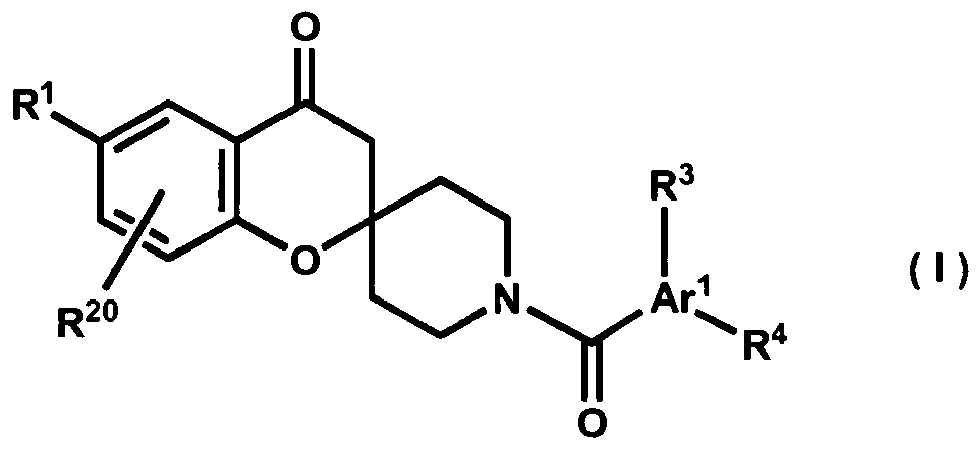
Ar1 represents a group formed from an aromatic ring selected from a group consisting of indole, 1H-indazole, 2H-indazole, 1H-thieno[2,3-c]pyrazole, 1H-pyrazolo[3,4-b]pyridine, benzo[b]furan, benzimidazole, benzoxazole, 1,2-benzisoxazole and imidazo[1,2-a]pyridine, having R30 and R40, and optionally having a substituent selected from a group consisting of a halogen atom, a nitro group, a cyano group, a hydroxyl group, a C1-C6 alkyl group, a halo-Cl-C6 alkyl group, a hydroxy-C1-C6 alkyl group, a cyclo-C3-C6 alkyl group, a C2-C6 alkenyl group, a C1-C6 alkoxy group, a halo-C1-C6 alkoxy group, a C1-C6 alkylthio group, a carboxyl group and a carbamoyl group;
R1 represents an aryl or heterocyclic group optionally having a substituent selected from a group consisting of a halogen atom, a hydroxyl group, an oxo group, a thioxo group, a C1-C6 alkyl group, a halo-C1-C6 alkyl group, a hydroxy-C1-C6 alkyl group, a C2-C7 alkanoyloxy-C1-C6 alkyl group, a C1-C6 alkoxy group, a halo-C1-C6 alkoxy group, a formyl group, a carboxyl group, a C2-C7 alkanoyl group, a C2-C7 alkoxycarbonyl group, a C1-C6 alkylsulfonyl group and a group of -CO-N(Rc)Rd; or a C1-C6 alkyl group or a C2-C6 alkenyl group having the aryl or heterocyclic group;
R20 represents a hydrogen atom, a halogen atom, a C1-C6 alkyl group, or a C1-C6 alkoxy group;
R3 and R4 each independently represent a halogen atom, a nitro group, a cyclo-C3-C6 alkyl group, a carbamoyl group optionally substituted with a C1-C6 alkyl or cyclo-C3-C6 alkyl group, or a group of -N(Re)Rf; or
a C2-C7 alkanoyl group, a C1-C6 alkoxy group, a C2-C7 alkoxycarbonyl group, a cyclo-C3-C6 alkyloxycarbonyl group, a C1-C6 alkylsulfonyl group, a C1-C6 alkylthio group, a cyclo-C3-C6 alkyloxy group, a cyclo-C3-C6 alkyl-C1-C6 alkoxy group, a cyclo-C3-C6 alkylsulfonyl group, a cyclo-C3-C6 alkylthio group or a cyclo-C3-C6 alkyl-C1-C6 alkylthio group, optionally substituted with a halogen atom or a hydroxyl group, wherein the cyclo-C3-C6 alkyl group in the cyclo-C3-C6 alkyloxycarbonyl group, the cyclo-C3-C6 alkyloxy group, the cyclo-C3-C6 alkyl-C1-C6 alkoxy group, the cyclo-C3-C6 alkylsulfonyl group, the cyclo-C3-C6 alkylthio group or the cyclo-C3-C6 alkyl-C1-C6 alkylthio group may be interrupted by an oxygen atom, a sulfur atom or an imino group; or
a C1-C6 alkyl group optionally having a substituent selected from a group consisting of a halogen atom, a hydroxyl group and a cyclo-C3-C6 alkyl group;
Rc and Rd each independently represent a hydrogen atom, a C1-C6 alkyl group, or a halo-C1-C6 alkyl group; and
Re and Rf each independently represent a hydrogen atom, a C1-C6 alkyl group, or a halo-C1-C6 alkyl group, or taken together, they may form a C2-C5 alkylene group optionally interrupted by an oxygen atom, a sulfur atom or an imino group. - The compound as claimed in claim 1, or a salt or ester thereof, wherein R3 and R4 each independently represent a nitro group, a cyclo-C3-C6 alkyl group, a carbamoyl group optionally substituted with a C1-C6 alkyl or cyclo-C3-C6 alkyl group, a C1-C6 alkoxy group optionally substituted with a hydroxyl group, or a C1-C6 alkyl group optionally substituted with a hydroxyl group.
- The compound as claimed in claim 1, or a salt or ester thereof, wherein R3 is a C1-C6 alkoxy group optionally substituted with a hydroxyl group; and R4 is a cyclo-C3-C6 alkyl group, a C1-C6 alkoxy group or a C1-C6 alkyl group.
- The compound as claimed in claim 1, or a salt or ester thereof, wherein R1 is an aryl or a heterocyclic group optionally having a substituent selected from a group consisting of a halogen atom, a hydroxyl group, an oxo group, a thioxo group, a C1-C6 alkyl group, a halo-C1-C6 alkyl group, a hydroxy-C1-C6 alkyl group, a C2-C7 alkanoyloxy-C1-C6 alkyl group, a C1-C6 alkoxy group, a halo-C1-C6 alkoxy group, a formyl group, a carboxyl group, a C2-C7 alkanoyl group, a C2-C7 alkoxycarbonyl group, a C1-C6 alkylsulfonyl group and a group of -CON(Rc)Rd.
- The compound as claimed in claim 4, or a salt or ester thereof, wherein the aryl or heterocyclic group for R1 is a phenyl group optionally substituted with a carboxyl group, a C2-C7 alkoxycarbonyl group or a group of -CO-N(Rc)Rd; a pyrazolyl group optionally substituted with a C1-C6 alkyl group; a 1,2,4-triazolyl group; a tetrazolyl group optionally substituted with a C2-C7 alkanoyloxy-C1-C6 alkyl group; a pyridyl group optionally substituted with a halogen atom, a C1-C6 alkyl group, a C1-C6 alkoxy group, a carboxyl group, a C2-C7 alkoxycarbonyl group or a group of-CO-N(Rc)Rd; a pyrimidinyl group; a dihydro-1,2,4-triazolyl group optionally substituted with an oxo group; a dihydro-1,2,4-oxadiazolyl group optionally substituted with an oxo group; or a dihydropyridyl group optionally substituted with an oxo group.
- The compound as claimed in claim 4, or a salt or ester thereof, wherein the aryl or heterocyclic group for R1 is a phenyl group optionally substituted with a carboxyl group or a group of -CO-N(Rc)Rd; a pyrazolyl group optionally substituted with a C1-C6 alkyl group; a 1,2,4-triazolyl group; a tetrazolyl group optionally substituted with a C2-C7 alkanoyloxy-C1-C6 alkyl group; a pyridyl group optionally substituted with a C1-C6 alkoxy group, a carboxyl group or a group of-CO-N(Rc)Rd; a dihydro-1,2,4-triazolyl group optionally substituted with an oxo group; or a dihydro-1,2,4-oxadiazolyl group optionally substituted with an oxo group.
- The compound as claimed in claim 4, or a salt or ester thereof, wherein the aryl or heterocyclic group for R1 is a phenyl group optionally substituted with a carboxyl group or a group of -CO-N(Rc)Rd; a tetrazolyl group optionally substituted with a C2-C7 alkanoyloxy-C1-C6 alkyl group; a pyridyl group optionally substituted with a C1-C6 alkoxy group, a carboxyl group or a group of -CO-N(Rc)Rd; or a dihydro-1,2,4-oxadiazolyl group optionally substituted with an oxo group.
- The compound as claimed in claim 1, or a salt or ester thereof, wherein R1 is a pyridyl group substituted with a carboxyl group.
- The compound as claimed in claim 1, or a salt or ester thereof, which is selected from the following:(1) 1-[(1-Ethyl-4-methoxy-1H-benzimidazol-6-yl)carbonyl]-6-(1H-tetrazol-5-yl)spiro[chroman-2,4'-piperidine]-4-one,(2) 1'-[(3-Cyclopropyl-8-methoxyimidazo[1,2-a]pyridin-6-yl)carbonyl]-6-(1H-tetrazol-5-yl)spiro[chroman-2,4'-piperidin]-4-one,(3) 1'-[(1-Cyclopropyl-4-methoxy-1H-indol-6-yl)carbonyl]-6-(5-oxo-4,5-dihydro-1,2,4-oxadiazol-3-yl)spiro[chroman-2,4'-piperidin]-4-one,(4) 1'-{[1-Ethyl-4-(2-hydroxyethoxy)-1H-indol-6-yl]carbonyl}-6-(1H-tetrazol-5-yl)spiro[chroman-2,4'-piperidin]-4-one,(5) Sodium 3- {1'-[(1-cyclopropyl-4-methoxy-1H-indol-6-yl)carbonyl]-4-oxospiro[chroman-2,4'-piperidin]-6-yl} benzoate,(6) 5-{1'-[(1-Cyclopropyl-4-methoxy-1H-indol-6-yl)carbonyl]-4-oxospiro[chroman-2,4'-piperidin]-6-yl}nicotinic acid,(7) 5-{1'-[(1-Cyclopropyl-4-methoxy-1H-indol-6-yl)carbonyl]-4-oxo-3,4-dihydrospiro[chroman-2,4'-piperidin]-6-yl}nicotinic acid sodium salt,(8) 1'-{[1,4-Dimethoxy-1H-indol-6-yl]carbonyl}-6-(1H-tetrazol-5-yl)spiro[chroman-2,4'-piperidin]-4-one,(9) 1'-{[1,4-Dimethoxy-1H-indol-6-yl]carbonyl}-6-(1H-tetrazol-5-yl)spiro[chroman-2,4'-piperidin]-4-one sodium salt,(10) 1'-[(1-Ethyl-4-methoxy-1H-indazol-6-yl)carbonyl]-6-(1H-tetrazol-5-yl)spiro[chroman-2,4'-piperidin]-4-one,(11) 1'-[(1-Cyclopropyl-4-methoxy-1H-indol-6-yl)carbonyl]-6-(1H-tetrazol-5-yl)spiro[chroman-2,4'-piperidin]-4-one,(12) 1'-[(1-Cyclopropyl-4-methoxy-1H-indol-6-yl)carbonyl]-6-(1H-tetrazol-5-yl)spiro[chroman-2,4'-piperidin]-4-one sodium salt,(13) 1'-[(1-Cyclopropyl-4-ethoxy-1H-indol-6-yl)carbonyl]-6-(1H-tetrazol-5-yl)spiro[chroman-2,4'-piperidin]-4-one,(14) 1'-[(1-Cyclopropyl-4-ethoxy-1H-indol-6-yl)carbonyl]-6-(1H-tetrazol-5-yl)spiro[chroman-2,4'-piperidin]-4-one sodium salt,(15) 1'-[(1,4-Diethoxy-1H-indazol-6-yl)carbonyl]-6-(1H-tetrazol-5-yl)spiro[chroman-2,4'-piperidin]-4-one,(16) 1'-[(3-Chloro-1-cyclopropyl-4-ethoxy-1H-indol-6-yl)carbonyl]-6-(1H-tetrazol-5-yl)spiro[chroman-2,4'-piperidin]-4-one,(17) 1'-[(1-Cyclopropyl-4-ethoxy-3-methyl-1H-indol-6-yl)carbonyl]-6-(1H-tetrazol-5-yl)spiro[chroman-2,4'-piperidin]-4-one,(18) 3-(1'-{[1-Cyclopropyl-4-(2-hydroxyethoxy)-1H-indol-6-yl]carbonyl}-4-oxo-spiro[chroman-2,4'-piperidin]-6-yl)benzoic acid,(19) 5-{1'-[(1-Cyclopropyl-4-ethoxy-1H-indol-6-yl)carbonyl]-4-oxo-spiro[chroman-2,4'-piperidin]-6-yl}nicotinic acid sodium salt,(20) 2- {1'-[(1-Cyclopropyl-4-methoxy-1H-indol-6-yl)carbonyl]-4-oxo-spiro[chroman-2,4'-piperidin]-6-yl}isonicotinic acid sodium salt,(21) 4-{1'-[(1-Cyclopropyl-4-methoxy-1H-indol-6-yl)carbonyl]-4-oxo-spiro[chroman-2,4'-piperidin]-6-yl}pyridine-2-carboxylic acid sodium salt,(22) 5-{1'-[(1-Cyclopropyl-4-methoxy-1H-indol-6-yl)carbonyl]-4-oxo-spiro[chroman-2,4'-piperidin]-6-yl}pyridine-2-carboxylic acid sodium salt,(23) 5-{1'-[(1-Cyclopropyl-4-methoxy-3-methyl-1H-indol-6-yl)carbonyl]-4-oxo-spiro[chroman-2,4'-piperidin]-6-yl}nicotinic acid sodium salt,(24) 5-{1'-[(3-Chloro-1-cyclopropyl-4-methoxy-1H-indol-6-yl)carbonyl]-4-oxo-spiro[chroman-2,4'-piperidin]-6-yl}nicotinic acid sodium salt,(25) 1'-[(4-Acetyl-7-methoxy-1-benzofuran-2-yl)carbonyl]-6-(1H-tetrazol-5-yl)spiro[chroman-2,4'-piperidin]-4-one,(26) 1'-[(1-Ethyl-3-methyl-1H-thieno[2,3-c]pyrazol-5-yl)carbonyl]-6-(1H-tetrazol-5-yl)spiro[chroman-2,4'-piperidin]-4-one,(27) 5-{1'-[(1-Cyclopropyl-4-methoxy-3-methyl-1H-indol-6-yl)carbonyl]-4-oxo-spiro[chroman-2,4'-piperidin]-6-yl} nicotipic, acid,(28) 1'-[(4-Methoxy-1-methyl-1H-pyrazolo[3,4-b]pyridin-6-yl)carbonyl]-6-(1H-tetrazol-5-yl)spiro[chroman-2,4'-piperidin]-4-one,(30) 1'-[(3-Chloro-1-cyclopropyl-7-ethoxy-1H-indol-5-yl)carbonyl]-6-(1H-tetrazol-5-yl)spiro[chroman-2,4'-piperidin]-4-one,(31) 1'-[(3-Cyclopropyl-7-ethoxy-1,2-benzisoxazol-5-yl)carbonyl]-6-(1H-tetrazol-5-yl)spiro[chroman-2,4'-piperidin]-4-one,(32) 1'-[(2-Cyclopropyl-7-ethoxy-1,3-benzoxazol-5-yl)carbonyl]-6-(1H-tetrazol-5-yl)spiro[chroman-2,4'-piperidin]-4-one,(33) 1-Cyclopropyl-4-ethoxy-6-{[4-oxo-6-(1H-tetrazol-5-yl)spiro[chroman-2,4'-piperidin]-1'-yl]carbonyl}-1H-indole-3-carboxamide,(36) 1'-{[1-Cyclopropyl-4-(2-hydroxyethoxy)-1H-indol-6-yl]carbonyl}-6-(1H-tetrazol-5-yl)spiro[chroman-2,4'-piperidin]-4-one,(37) 1-Cyclopropyl-4-ethoxy-N-methyl-6-{[4-oxo-6-(1H tetrazol-5-yl)spiro[chroman-2,4'-piperidin]-1'-yl]carbonyl}-1H-indole-3-carboxamide,(38) Methyl 3-(1'-{[3-carbamoyl-1-cyclopropyl-4-ethoxy-1H-indol-6-yl]carbonyl}-4-oxospiro[chroman-2,4'-piperidin]-6-yl)benzoate,(39) 3-(1'-{[3-Carbamoyl-1-cyclopropyl-4-ethoxy-1H-indol-6-yl]carbonyl}-4-oxospiro[chroman-2,4'-piperidin]-6-yl)benzoic acid,(40) 1-Cyclopropyl-4-ethoxy-6-{[4-oxo-6-(1H-pyrazol-4-yl)spiro[chroman-2,4'-piperidin]-1'-yl]carbonyl}-1H-indole-3-carboxylic acid,(41) 1-Cyclopropyl-4-ethoxy-6-({6-[(1-methyl-1H-pyrazol-5-yl)amino]-4-oxospiro[chroman-2,4'-piperidin]-1'-yl}carbonyl)-1H-indole-3-carboxylic acid,(42) 4-{1'-[(1-Cyclopropyl-4-methoxy-3-methyl-1H-indol-6-yl)carbonyl]-4-oxospiro[chroman-2,4'-piperidin]-6-yl}pyridine-2-carboxylic acid,(43) 5-{1'-[(1-Cyclopropyl-4-methoxy-3-methyl-1H-indol-6-yl)carbonyl]-4-oxospiro[chroman-2,4'-piperidin]-6-yl}-2-methylnicotinic acid,(44) 6-{1'-[(1-Cyclopropyl-4-methoxy-3-methyl-1H-indol-6-yl)carbonyl]-4-oxospiro[chroman-2,4'-piperidin]-6-yl}nicotinic acid,(45) 5- {1'-[(1-Cyclopropyl-4-ethoxy-3-methyl-1H-indol-6-yl)carbonyl]-4-oxospiro[chroman-2,4'-piperidin]-6-yl}nicotinic acid,(46) 4-{1'-[(1-Cyclopropyl-4-ethoxy-3-methyl-1H-indol-6-yl)carbonyl]-4-oxospiro[chroman-2,4'-piperidin]-6-yl}pyridine-2-carboxylic acid,(47) 5-{1'-[(1-Cyclopropyl-4-ethoxy-3-methyl-1H-indol-6-yl)carbonyl]-4-oxo-spiro[chroman-2,4'-piperidin]-6-yl}nicotinic acid sodium salt,(48) 5-{1'-[(1,4-Dimethoxy-3-methyl-1H-indol-6-yl)carbonyl]-4-oxospiro[chroman-2,4'-piperidin]-6-yl}nicotinic acid,(49) 6-(5-Bromopyridin-3-yl)-1'-[(1-cyclopropyl-4-methoxy-3-methyl-1H-indol-6-yl)carbonyl]spiro[chroman-2,4'-piperidin]-4-one,(50) Methyl 5-{1'-[(1-cyclopropyl-4-methoxy-3-methyl-1H-indol-6-yl)carbonyl]-4-oxospiro[chroman-2,4'-piperidin]-6-yl}nicotinate,(51) 1'-[(1-Cyclopropyl-4-methoxy-1H-indol-6-yl)carbonyl]-6-(5-oxo-4,5-dihydro-1H-1,2,4-triazol-3-yl)spiro[chroman-2,4'-piperidin]-4-one,(53) Sodium 5-{1'-[(1-cyclopropyl-4-ethoxy-3-methyl-1H-indol-6-yl)carbonyl]-4-oxospiro[chroman-2,4'-piperidin]-6-yl}-2-methylnicotinate,(54) 1'-[(1-Ethyl-4-morpholin-4-yl-1H-indol-6-yl)carbonyl]-6-(1H-tetrazol-5-yl)spiro[chroman-2,4'-piperidin]-4-one,(55) 1'-[(1-Cyclopropyl-4-methoxy-3-methyl-1H-indol-6-yl)carbonyl]-6-(1H-tetrazol-5-yl)spiro[chroman-2,4'-piperidin]-4-one,(56) 1'-[(1-Ethyl-4-methoxy-1H-indol-6-yl)carbonyl]-6-(1H-tetrazol-5-yl)spiro[chroman-2,4'-piperidin]-4-one,(57) 5-{1'-[(1-Cyclopropyl-4-methoxy-1H-indol-6-yl)carbonyl]-4-oxo-spiro[chroman-2,4'-piperidin]-6-yl}-4H-1,2,4-triazole-3-carboxamide,(58) 1'-[(1,3-Diethyl-7-methoxy-2-oxo-2,3-dihydro-1H-benzimidazol-5-yl)carbonyl]-6-(1H-tetrazol-5-yl)spiro[chroman-2,4'-piperidin]-4-one,(59) 5-{1'-[(6-Cyclopropyl-1-isopropyl-1H-pyrazolo[3,4-b]pyridin-4-yl)carbonyl]-4-oxo-spiro[chroman-2,4'-piperidin]-6-yl}nicotinic acid, or(60) 1'-[(1-Cyclopropyl-4-methoxy-1H-benzimidazol-6-yl)carbonyl]-6-(1H-tetrazol-5-yl)spiro[chroman-2,4'-piperidin]-4-one.
- A compound of claim 1 which is 3-{1'-[(1-Cyclopropyl-4-methoxy-1H-indol-6-yl)carbonyl]-4-oxospiro[chroman- 2,4'-piperidin]-6-yl}benzoic acid, or a salt or ester thereof.
- A compound of claim 1 which is 5-{1'-[(1-Cyclopropyl-4-methoxy-1H-indol-6-yl)carbonyl]-4-oxospiro[chroman-2,4'-piperidin]-6-yl}nicotinic acid, or a salt or ester thereof.
- A compound of claim 1 which is 1'-[(1-Cyclopropyl-4-methoxy-1H-indol-6-yl)carbonyl]-6-(1H-tetrazol-5-yl)spiro[chroman-2,4'-piperidin]-4-one, or a salt thereof
- A compound of claim 1 which is 1'-[(1-Cyclopropyl-4-ethoxy-3-methyl-1H-indol-6-yl)carbonyl]-6-(1H-tetrazol-5-yl)spiro[chroman-2,4'-piperidin]-4-one, or a salt thereof.
- A compound of claim 1 which is 5-{1'-[(1-Cyclopropyl-4-methoxy-3-methyl-1H-indol-6-yl)carbonyl]-4-oxo-spiro[chroman-2,4'-piperidin]-6-yl}nicotinic acid, or a salt or ester thereof
- A pharmaceutical composition comprising a therapeutically effective amount of the compound of any previous claim or a salt or ester thereof, and a pharmaceutically acceptable additive.
- A compound according to any of claims 1-14 for use in the treatment of metabolic syndrome, fatty liver, hyperlipemia, obesity, diabetes, bulimia, malignant neoplasm or infectious diseases.
- Use of a compound according to any of claims 1-14 for manufacturing a medicament for the treatment of metabolic syndrome, fatty liver, hyperlipemia, obesity, diabetes, bulimia, malignant neoplasm or infectious diseases.
Applications Claiming Priority (2)
| Application Number | Priority Date | Filing Date | Title |
|---|---|---|---|
| US88030207P | 2007-01-12 | 2007-01-12 | |
| PCT/US2008/000221 WO2008088688A1 (en) | 2007-01-12 | 2008-01-08 | Substituted spirochromanone derivatives as acc inhibitors |
Publications (2)
| Publication Number | Publication Date |
|---|---|
| EP2111406A1 EP2111406A1 (en) | 2009-10-28 |
| EP2111406B1 true EP2111406B1 (en) | 2012-10-24 |
Family
ID=39297859
Family Applications (1)
| Application Number | Title | Priority Date | Filing Date |
|---|---|---|---|
| EP08713050A Active EP2111406B1 (en) | 2007-01-12 | 2008-01-08 | Substituted spirochromanone derivatives as acc inhibitors |
Country Status (27)
| Country | Link |
|---|---|
| US (1) | US8093389B2 (en) |
| EP (1) | EP2111406B1 (en) |
| JP (1) | JP5319550B2 (en) |
| KR (1) | KR20090108022A (en) |
| CN (1) | CN101631791B (en) |
| AR (1) | AR064824A1 (en) |
| AU (1) | AU2008205638B2 (en) |
| BR (1) | BRPI0806531A2 (en) |
| CA (1) | CA2674573C (en) |
| CL (1) | CL2008000067A1 (en) |
| CO (1) | CO6190611A2 (en) |
| CR (1) | CR10944A (en) |
| DO (1) | DOP2009000176A (en) |
| EC (1) | ECSP099503A (en) |
| GT (1) | GT200900194A (en) |
| HN (1) | HN2009001276A (en) |
| MA (1) | MA31108B1 (en) |
| MX (1) | MX2009007502A (en) |
| NI (1) | NI200900139A (en) |
| NZ (1) | NZ577825A (en) |
| PE (1) | PE20081559A1 (en) |
| RU (1) | RU2009130736A (en) |
| SG (1) | SG177977A1 (en) |
| TW (1) | TW200836727A (en) |
| UA (1) | UA103990C2 (en) |
| WO (2) | WO2008088688A1 (en) |
| ZA (1) | ZA200904138B (en) |
Families Citing this family (38)
| Publication number | Priority date | Publication date | Assignee | Title |
|---|---|---|---|---|
| KR20080036041A (en) * | 2005-07-19 | 2008-04-24 | 머크 앤드 캄파니 인코포레이티드 | Spirochromenone Derivatives as Acetyl Coenzyme Carboxylase (ACC) Inhibitors |
| US8138197B2 (en) * | 2007-01-12 | 2012-03-20 | Msd K.K. | Spirochromanon derivatives |
| US7946800B2 (en) | 2007-04-06 | 2011-05-24 | Brooks Automation, Inc. | Substrate transport apparatus with multiple independently movable articulated arms |
| US8752449B2 (en) | 2007-05-08 | 2014-06-17 | Brooks Automation, Inc. | Substrate transport apparatus with multiple movable arms utilizing a mechanical switch mechanism |
| WO2009097995A1 (en) * | 2008-02-07 | 2009-08-13 | Sanofi-Aventis | Novel phenyl-substituted imidazolidines, method for the production thereof, medicaments containing said compounds and use thereof |
| WO2009144554A1 (en) * | 2008-05-28 | 2009-12-03 | Pfizer, Inc. | Pyrazolospiroketone acetyl-c0a carboxylase inhibitors |
| US8524730B2 (en) | 2008-07-04 | 2013-09-03 | Msd K.K. | Spirochromanone carboxylic acids |
| WO2010008521A1 (en) * | 2008-07-14 | 2010-01-21 | Cropsolution, Inc. | Modulators of acetyl-coenzyme a carboxylase and methods of use thereof |
| CA2744154A1 (en) | 2008-11-20 | 2010-05-27 | Genentech, Inc. | Pyrazolopyridine pi3k inhibitor compounds and methods of use |
| PT2499139E (en) * | 2009-11-10 | 2014-02-10 | Pfizer | N1-pyrazolospiroketone acetyl-coa carboxylase inhibitors |
| WO2011082272A2 (en) * | 2009-12-31 | 2011-07-07 | Deka Products Limited Partnership | Infusion pump assembley |
| CA2812526A1 (en) | 2010-05-06 | 2011-11-10 | Vertex Pharmaceuticals Incorporated | Heterocyclic chromene-spirocyclic piperidine amides as modulators of ion channels |
| CN101851237B (en) * | 2010-06-18 | 2012-10-17 | 南方医科大学 | A kind of spiro compound and its preparation method and application |
| US8933024B2 (en) | 2010-06-18 | 2015-01-13 | Sanofi | Azolopyridin-3-one derivatives as inhibitors of lipases and phospholipases |
| HRP20161178T1 (en) | 2010-09-30 | 2016-11-04 | Pfizer Inc. | N1-PYRAZOLOSPIROKETONE ACETYL-COA-CARBOXYLASE INHIBITORS |
| HUE025078T2 (en) | 2010-10-29 | 2016-01-28 | Pfizer | N1/N2-LACTAM ACETYL-CoA CARBOXYLASE INHIBITORS |
| WO2012077655A1 (en) * | 2010-12-07 | 2012-06-14 | 塩野義製薬株式会社 | Spiro derivative having gpr119 agonist activity |
| BR112013019211A2 (en) | 2011-02-02 | 2021-07-06 | Vertex Pharma | pyrrolopyrazine spirocyclic piperidine amides as ion channel modulators |
| CN103443105A (en) | 2011-02-18 | 2013-12-11 | 沃泰克斯药物股份有限公司 | Chroman-spirocyclic piperidine amides as modulators of ion channels |
| US8828996B2 (en) | 2011-03-14 | 2014-09-09 | Vertex Pharmaceuticals Incorporated | Morpholine-spirocyclic piperidine amides as modulators of ion channels |
| PE20141187A1 (en) | 2011-04-22 | 2014-09-18 | Pfizer | INHIBITORS SUBSTITUTED FOR AEITL-COA CARBOXYLASE |
| WO2012161119A1 (en) * | 2011-05-20 | 2012-11-29 | 興和株式会社 | Novel spiropiperidine derivative and pharmaceutical product containing same |
| WO2013113716A1 (en) | 2012-02-03 | 2013-08-08 | Basf Se | Fungicidal pyrimidine compounds |
| WO2013113773A1 (en) | 2012-02-03 | 2013-08-08 | Basf Se | Fungicidal pyrimidine compounds |
| WO2013113720A1 (en) | 2012-02-03 | 2013-08-08 | Basf Se | Fungicidal pyrimidine compounds |
| EP2809659A1 (en) | 2012-02-03 | 2014-12-10 | Basf Se | Fungicidal pyrimidine compounds |
| JP2015511940A (en) | 2012-02-03 | 2015-04-23 | ビーエーエスエフ ソシエタス・ヨーロピアBasf Se | Bactericidal pyrimidine compounds |
| WO2013113788A1 (en) | 2012-02-03 | 2013-08-08 | Basf Se | Fungicidal pyrimidine compounds |
| WO2013113776A1 (en) | 2012-02-03 | 2013-08-08 | Basf Se | Fungicidal pyrimidine compounds |
| US8889730B2 (en) | 2012-04-10 | 2014-11-18 | Pfizer Inc. | Indole and indazole compounds that activate AMPK |
| EP2970177A1 (en) | 2013-03-15 | 2016-01-20 | Pfizer Inc. | Indole compounds that activate ampk |
| CN105358155A (en) | 2013-05-10 | 2016-02-24 | 尼普斯阿波罗有限公司 | Acc inhibitors and uses thereof |
| CA2911932A1 (en) | 2013-05-10 | 2014-11-13 | Nimbus Apollo, Inc. | Acc inhibitors and uses thereof |
| BR112016004118A2 (en) | 2013-09-12 | 2017-10-17 | Pfizer | use of acetyl-coa carboxylase inhibitors for acne vulgaris treatment |
| WO2018112204A1 (en) | 2016-12-14 | 2018-06-21 | Cephalon, Inc. | Spiropiperidine derivatives |
| CA3068623A1 (en) * | 2017-06-30 | 2019-01-03 | Quixgen, Inc. | Novel spirolactone compounds |
| CN120019059A (en) * | 2022-07-29 | 2025-05-16 | 辉瑞公司 | New ACC inhibitors |
| CN119798270B (en) * | 2025-01-06 | 2026-02-24 | 中国海洋大学 | Small molecule compounds targeting EGFR and their applications |
Family Cites Families (28)
| Publication number | Priority date | Publication date | Assignee | Title |
|---|---|---|---|---|
| DE2814983A1 (en) * | 1978-04-07 | 1979-10-18 | Bayer Ag | NEW CHROMANON DERIVATIVES |
| JPH03182725A (en) | 1989-12-08 | 1991-08-08 | Internatl Business Mach Corp <Ibm> | Non-linear optical element and manufacture thereof |
| US5206240A (en) * | 1989-12-08 | 1993-04-27 | Merck & Co., Inc. | Nitrogen-containing spirocycles |
| IL96507A0 (en) * | 1989-12-08 | 1991-08-16 | Merck & Co Inc | Nitrogen-containing spirocycles and pharmaceutical compositions containing them |
| NZ243065A (en) | 1991-06-13 | 1995-07-26 | Lundbeck & Co As H | Piperidine derivatives and pharmaceutical compositions |
| ATE169001T1 (en) | 1993-01-28 | 1998-08-15 | Merck & Co Inc | SUBSTITUTED SPIRO-AZARINGENE AS TACHYKININ RECEPTOR ANTAGONISTS |
| CA2189634A1 (en) | 1994-05-06 | 1995-11-16 | John J. Baldwin | Combinatorial dihydrobenzopyran library |
| US5856083A (en) | 1994-05-06 | 1999-01-05 | Pharmacopeia, Inc. | Lawn assay for compounds that affect enzyme activity or bind to target molecules |
| US6017768A (en) | 1994-05-06 | 2000-01-25 | Pharmacopeia, Inc. | Combinatorial dihydrobenzopyran library |
| US5688997A (en) * | 1994-05-06 | 1997-11-18 | Pharmacopeia, Inc. | Process for preparing intermediates for a combinatorial dihydrobenzopyran library |
| JP2001516330A (en) | 1995-06-06 | 2001-09-25 | メルク エンド カンパニー インコーポレーテッド | Alpha 1a adrenergic receptor antagonist |
| GB9601724D0 (en) * | 1996-01-29 | 1996-03-27 | Merck Sharp & Dohme | Therapeutic agents |
| GB0003397D0 (en) * | 2000-02-14 | 2000-04-05 | Merck Sharp & Dohme | Therapeutic agents |
| WO2002020509A2 (en) | 2000-09-06 | 2002-03-14 | Bayer Aktiengesellschaft | Medicaments against viral infections |
| JP2005162612A (en) | 2002-01-09 | 2005-06-23 | Ajinomoto Co Inc | Acylsulfonamide derivative |
| JP2005170790A (en) | 2002-01-09 | 2005-06-30 | Ajinomoto Co Inc | N-alkylsulfonyl-substituted amide derivative |
| NZ534582A (en) | 2002-02-27 | 2006-03-31 | Pfizer Prod Inc | ACC inhibitors |
| JP2005320250A (en) | 2002-05-09 | 2005-11-17 | Ajinomoto Co Inc | Bislactone derivatives and their use as pharmaceutical compositions |
| WO2004058727A1 (en) | 2002-12-20 | 2004-07-15 | Bayer Pharmaceuticals Corporation | Substituted 3,5-dihydro-4h-imidazol-4-ones for the treatment of obesity |
| JPWO2004092179A1 (en) * | 2003-04-14 | 2006-07-06 | 日本曹達株式会社 | Spiro derivatives, production methods and antioxidants |
| FR2856685B1 (en) | 2003-06-25 | 2005-09-23 | Merck Sante Sas | THIAZOLYLPIPERIDINE DERIVATIVES, PROCESSES FOR PREPARING THEM AND PHARMACEUTICAL COMPOSITIONS CONTAINING THEM |
| JP2005119987A (en) | 2003-10-15 | 2005-05-12 | Ajinomoto Co Inc | Acylsulfonamide derivative |
| US8138342B2 (en) * | 2004-10-12 | 2012-03-20 | High Point Pharmacueticals, LLC | 11β-hydroxysteroid dehydrogenase type 1 active spiro compounds |
| MX2007005820A (en) | 2004-11-18 | 2007-07-18 | Incyte Corp | Inhibitors of 11-beta hydroxyl steroid dehydrogenase type 1 and methods of using the same. |
| US20090215742A1 (en) | 2005-05-03 | 2009-08-27 | Pfizer, Inc. | Amide resorcinol compounds |
| KR20080036041A (en) | 2005-07-19 | 2008-04-24 | 머크 앤드 캄파니 인코포레이티드 | Spirochromenone Derivatives as Acetyl Coenzyme Carboxylase (ACC) Inhibitors |
| EP2097420B1 (en) * | 2006-11-29 | 2012-04-04 | Pfizer Products Inc. | Spiroketone inhibitors of acetyl-coa carboxylase |
| US8138197B2 (en) * | 2007-01-12 | 2012-03-20 | Msd K.K. | Spirochromanon derivatives |
-
2008
- 2008-01-04 PE PE2008000089A patent/PE20081559A1/en not_active Application Discontinuation
- 2008-01-07 TW TW097100608A patent/TW200836727A/en unknown
- 2008-01-08 CA CA2674573A patent/CA2674573C/en not_active Expired - Fee Related
- 2008-01-08 AU AU2008205638A patent/AU2008205638B2/en not_active Ceased
- 2008-01-08 SG SG2012002739A patent/SG177977A1/en unknown
- 2008-01-08 JP JP2009545577A patent/JP5319550B2/en not_active Expired - Fee Related
- 2008-01-08 KR KR1020097014377A patent/KR20090108022A/en not_active Withdrawn
- 2008-01-08 NZ NZ577825A patent/NZ577825A/en not_active IP Right Cessation
- 2008-01-08 UA UAA200908468A patent/UA103990C2/en unknown
- 2008-01-08 WO PCT/US2008/000221 patent/WO2008088688A1/en not_active Ceased
- 2008-01-08 CN CN2008800021443A patent/CN101631791B/en not_active Expired - Fee Related
- 2008-01-08 MX MX2009007502A patent/MX2009007502A/en unknown
- 2008-01-08 US US12/007,000 patent/US8093389B2/en active Active
- 2008-01-08 WO PCT/US2008/000223 patent/WO2008088689A1/en not_active Ceased
- 2008-01-08 RU RU2009130736/04A patent/RU2009130736A/en not_active Application Discontinuation
- 2008-01-08 EP EP08713050A patent/EP2111406B1/en active Active
- 2008-01-08 BR BRPI0806531-4A2A patent/BRPI0806531A2/en not_active IP Right Cessation
- 2008-01-09 AR ARP080100081A patent/AR064824A1/en not_active Application Discontinuation
- 2008-01-10 CL CL200800067A patent/CL2008000067A1/en unknown
-
2009
- 2009-06-12 ZA ZA200904138A patent/ZA200904138B/en unknown
- 2009-07-06 GT GT200900194A patent/GT200900194A/en unknown
- 2009-07-06 HN HN2009001276A patent/HN2009001276A/en unknown
- 2009-07-08 NI NI200900139A patent/NI200900139A/en unknown
- 2009-07-09 EC EC2009009503A patent/ECSP099503A/en unknown
- 2009-07-09 DO DO2009000176A patent/DOP2009000176A/en unknown
- 2009-07-13 CO CO09072490A patent/CO6190611A2/en active IP Right Grant
- 2009-07-20 CR CR10944A patent/CR10944A/en unknown
- 2009-07-23 MA MA32114A patent/MA31108B1/en unknown
Also Published As
Similar Documents
| Publication | Publication Date | Title |
|---|---|---|
| CA2674573C (en) | Substituted spirochromanone derivatives | |
| EP2120569B1 (en) | Spirochromanon derivatives | |
| EP1910375B1 (en) | Spirochromanone derivatives as acetyl coenzyme a carboxylase (acc) inhibitors | |
| EP2307422B1 (en) | Novel spirochromanone carboxylic acids | |
| HK1131136B (en) | Substituted spirochromanone derivatives as acc inhibitors |
Legal Events
| Date | Code | Title | Description |
|---|---|---|---|
| PUAI | Public reference made under article 153(3) epc to a published international application that has entered the european phase |
Free format text: ORIGINAL CODE: 0009012 |
|
| 17P | Request for examination filed |
Effective date: 20090812 |
|
| AK | Designated contracting states |
Kind code of ref document: A1 Designated state(s): AT BE BG CH CY CZ DE DK EE ES FI FR GB GR HR HU IE IS IT LI LT LU LV MC MT NL NO PL PT RO SE SI SK TR |
|
| AX | Request for extension of the european patent |
Extension state: RS |
|
| REG | Reference to a national code |
Ref country code: HK Ref legal event code: DE Ref document number: 1131136 Country of ref document: HK |
|
| RAP1 | Party data changed (applicant data changed or rights of an application transferred) |
Owner name: BANYU PHARMACEUTICAL CO., LTD. Owner name: MERCK SHARP & DOHME CORP. |
|
| RAX | Requested extension states of the european patent have changed |
Extension state: RS Payment date: 20090812 |
|
| 17Q | First examination report despatched |
Effective date: 20100614 |
|
| RAP1 | Party data changed (applicant data changed or rights of an application transferred) |
Owner name: MSD K.K. Owner name: MERCK SHARP & DOHME CORP. |
|
| GRAP | Despatch of communication of intention to grant a patent |
Free format text: ORIGINAL CODE: EPIDOSNIGR1 |
|
| GRAC | Information related to communication of intention to grant a patent modified |
Free format text: ORIGINAL CODE: EPIDOSCIGR1 |
|
| RAP1 | Party data changed (applicant data changed or rights of an application transferred) |
Owner name: MERCK SHARP & DOHME CORP. Owner name: MSD K.K. |
|
| GRAS | Grant fee paid |
Free format text: ORIGINAL CODE: EPIDOSNIGR3 |
|
| GRAA | (expected) grant |
Free format text: ORIGINAL CODE: 0009210 |
|
| AK | Designated contracting states |
Kind code of ref document: B1 Designated state(s): AT BE BG CH CY CZ DE DK EE ES FI FR GB GR HR HU IE IS IT LI LT LU LV MC MT NL NO PL PT RO SE SI SK TR |
|
| AX | Request for extension of the european patent |
Extension state: RS |
|
| REG | Reference to a national code |
Ref country code: GB Ref legal event code: FG4D |
|
| REG | Reference to a national code |
Ref country code: CH Ref legal event code: EP |
|
| REG | Reference to a national code |
Ref country code: AT Ref legal event code: REF Ref document number: 580880 Country of ref document: AT Kind code of ref document: T Effective date: 20121115 |
|
| REG | Reference to a national code |
Ref country code: IE Ref legal event code: FG4D |
|
| REG | Reference to a national code |
Ref country code: CH Ref legal event code: NV Representative=s name: MARKS AND CLERK (LUXEMBOURG) LLP, CH |
|
| REG | Reference to a national code |
Ref country code: DE Ref legal event code: R096 Ref document number: 602008019588 Country of ref document: DE Effective date: 20121227 |
|
| REG | Reference to a national code |
Ref country code: NL Ref legal event code: T3 |
|
| REG | Reference to a national code |
Ref country code: AT Ref legal event code: MK05 Ref document number: 580880 Country of ref document: AT Kind code of ref document: T Effective date: 20121024 |
|
| PG25 | Lapsed in a contracting state [announced via postgrant information from national office to epo] |
Ref country code: SE Free format text: LAPSE BECAUSE OF FAILURE TO SUBMIT A TRANSLATION OF THE DESCRIPTION OR TO PAY THE FEE WITHIN THE PRESCRIBED TIME-LIMIT Effective date: 20121024 Ref country code: FI Free format text: LAPSE BECAUSE OF FAILURE TO SUBMIT A TRANSLATION OF THE DESCRIPTION OR TO PAY THE FEE WITHIN THE PRESCRIBED TIME-LIMIT Effective date: 20121024 Ref country code: NO Free format text: LAPSE BECAUSE OF FAILURE TO SUBMIT A TRANSLATION OF THE DESCRIPTION OR TO PAY THE FEE WITHIN THE PRESCRIBED TIME-LIMIT Effective date: 20130124 Ref country code: HR Free format text: LAPSE BECAUSE OF FAILURE TO SUBMIT A TRANSLATION OF THE DESCRIPTION OR TO PAY THE FEE WITHIN THE PRESCRIBED TIME-LIMIT Effective date: 20121024 Ref country code: IS Free format text: LAPSE BECAUSE OF FAILURE TO SUBMIT A TRANSLATION OF THE DESCRIPTION OR TO PAY THE FEE WITHIN THE PRESCRIBED TIME-LIMIT Effective date: 20130224 |
|
| PG25 | Lapsed in a contracting state [announced via postgrant information from national office to epo] |
Ref country code: GR Free format text: LAPSE BECAUSE OF FAILURE TO SUBMIT A TRANSLATION OF THE DESCRIPTION OR TO PAY THE FEE WITHIN THE PRESCRIBED TIME-LIMIT Effective date: 20130125 Ref country code: PT Free format text: LAPSE BECAUSE OF FAILURE TO SUBMIT A TRANSLATION OF THE DESCRIPTION OR TO PAY THE FEE WITHIN THE PRESCRIBED TIME-LIMIT Effective date: 20130225 Ref country code: BE Free format text: LAPSE BECAUSE OF FAILURE TO SUBMIT A TRANSLATION OF THE DESCRIPTION OR TO PAY THE FEE WITHIN THE PRESCRIBED TIME-LIMIT Effective date: 20121024 Ref country code: LV Free format text: LAPSE BECAUSE OF FAILURE TO SUBMIT A TRANSLATION OF THE DESCRIPTION OR TO PAY THE FEE WITHIN THE PRESCRIBED TIME-LIMIT Effective date: 20121024 Ref country code: SI Free format text: LAPSE BECAUSE OF FAILURE TO SUBMIT A TRANSLATION OF THE DESCRIPTION OR TO PAY THE FEE WITHIN THE PRESCRIBED TIME-LIMIT Effective date: 20121024 Ref country code: PL Free format text: LAPSE BECAUSE OF FAILURE TO SUBMIT A TRANSLATION OF THE DESCRIPTION OR TO PAY THE FEE WITHIN THE PRESCRIBED TIME-LIMIT Effective date: 20121024 Ref country code: CY Free format text: LAPSE BECAUSE OF FAILURE TO SUBMIT A TRANSLATION OF THE DESCRIPTION OR TO PAY THE FEE WITHIN THE PRESCRIBED TIME-LIMIT Effective date: 20121024 |
|
| PG25 | Lapsed in a contracting state [announced via postgrant information from national office to epo] |
Ref country code: AT Free format text: LAPSE BECAUSE OF FAILURE TO SUBMIT A TRANSLATION OF THE DESCRIPTION OR TO PAY THE FEE WITHIN THE PRESCRIBED TIME-LIMIT Effective date: 20121024 |
|
| REG | Reference to a national code |
Ref country code: HK Ref legal event code: GR Ref document number: 1131136 Country of ref document: HK |
|
| PG25 | Lapsed in a contracting state [announced via postgrant information from national office to epo] |
Ref country code: SK Free format text: LAPSE BECAUSE OF FAILURE TO SUBMIT A TRANSLATION OF THE DESCRIPTION OR TO PAY THE FEE WITHIN THE PRESCRIBED TIME-LIMIT Effective date: 20121024 Ref country code: CZ Free format text: LAPSE BECAUSE OF FAILURE TO SUBMIT A TRANSLATION OF THE DESCRIPTION OR TO PAY THE FEE WITHIN THE PRESCRIBED TIME-LIMIT Effective date: 20121024 Ref country code: EE Free format text: LAPSE BECAUSE OF FAILURE TO SUBMIT A TRANSLATION OF THE DESCRIPTION OR TO PAY THE FEE WITHIN THE PRESCRIBED TIME-LIMIT Effective date: 20121024 Ref country code: DK Free format text: LAPSE BECAUSE OF FAILURE TO SUBMIT A TRANSLATION OF THE DESCRIPTION OR TO PAY THE FEE WITHIN THE PRESCRIBED TIME-LIMIT Effective date: 20121024 Ref country code: BG Free format text: LAPSE BECAUSE OF FAILURE TO SUBMIT A TRANSLATION OF THE DESCRIPTION OR TO PAY THE FEE WITHIN THE PRESCRIBED TIME-LIMIT Effective date: 20130124 |
|
| PG25 | Lapsed in a contracting state [announced via postgrant information from national office to epo] |
Ref country code: RO Free format text: LAPSE BECAUSE OF FAILURE TO SUBMIT A TRANSLATION OF THE DESCRIPTION OR TO PAY THE FEE WITHIN THE PRESCRIBED TIME-LIMIT Effective date: 20121024 Ref country code: IT Free format text: LAPSE BECAUSE OF FAILURE TO SUBMIT A TRANSLATION OF THE DESCRIPTION OR TO PAY THE FEE WITHIN THE PRESCRIBED TIME-LIMIT Effective date: 20121024 Ref country code: MC Free format text: LAPSE BECAUSE OF NON-PAYMENT OF DUE FEES Effective date: 20130131 |
|
| PLBE | No opposition filed within time limit |
Free format text: ORIGINAL CODE: 0009261 |
|
| STAA | Information on the status of an ep patent application or granted ep patent |
Free format text: STATUS: NO OPPOSITION FILED WITHIN TIME LIMIT |
|
| 26N | No opposition filed |
Effective date: 20130725 |
|
| REG | Reference to a national code |
Ref country code: IE Ref legal event code: MM4A |
|
| PG25 | Lapsed in a contracting state [announced via postgrant information from national office to epo] |
Ref country code: ES Free format text: LAPSE BECAUSE OF FAILURE TO SUBMIT A TRANSLATION OF THE DESCRIPTION OR TO PAY THE FEE WITHIN THE PRESCRIBED TIME-LIMIT Effective date: 20130204 |
|
| REG | Reference to a national code |
Ref country code: DE Ref legal event code: R097 Ref document number: 602008019588 Country of ref document: DE Effective date: 20130725 |
|
| PG25 | Lapsed in a contracting state [announced via postgrant information from national office to epo] |
Ref country code: IE Free format text: LAPSE BECAUSE OF NON-PAYMENT OF DUE FEES Effective date: 20130108 |
|
| PGFP | Annual fee paid to national office [announced via postgrant information from national office to epo] |
Ref country code: NL Payment date: 20140108 Year of fee payment: 7 Ref country code: CH Payment date: 20140127 Year of fee payment: 7 |
|
| PG25 | Lapsed in a contracting state [announced via postgrant information from national office to epo] |
Ref country code: LT Free format text: LAPSE BECAUSE OF FAILURE TO SUBMIT A TRANSLATION OF THE DESCRIPTION OR TO PAY THE FEE WITHIN THE PRESCRIBED TIME-LIMIT Effective date: 20121024 Ref country code: MT Free format text: LAPSE BECAUSE OF FAILURE TO SUBMIT A TRANSLATION OF THE DESCRIPTION OR TO PAY THE FEE WITHIN THE PRESCRIBED TIME-LIMIT Effective date: 20121024 |
|
| PG25 | Lapsed in a contracting state [announced via postgrant information from national office to epo] |
Ref country code: TR Free format text: LAPSE BECAUSE OF FAILURE TO SUBMIT A TRANSLATION OF THE DESCRIPTION OR TO PAY THE FEE WITHIN THE PRESCRIBED TIME-LIMIT Effective date: 20121024 |
|
| PG25 | Lapsed in a contracting state [announced via postgrant information from national office to epo] |
Ref country code: LU Free format text: LAPSE BECAUSE OF NON-PAYMENT OF DUE FEES Effective date: 20130108 Ref country code: HU Free format text: LAPSE BECAUSE OF FAILURE TO SUBMIT A TRANSLATION OF THE DESCRIPTION OR TO PAY THE FEE WITHIN THE PRESCRIBED TIME-LIMIT; INVALID AB INITIO Effective date: 20080108 |
|
| REG | Reference to a national code |
Ref country code: NL Ref legal event code: V1 Effective date: 20150801 |
|
| REG | Reference to a national code |
Ref country code: CH Ref legal event code: PL |
|
| PG25 | Lapsed in a contracting state [announced via postgrant information from national office to epo] |
Ref country code: NL Free format text: LAPSE BECAUSE OF NON-PAYMENT OF DUE FEES Effective date: 20150801 |
|
| PG25 | Lapsed in a contracting state [announced via postgrant information from national office to epo] |
Ref country code: CH Free format text: LAPSE BECAUSE OF NON-PAYMENT OF DUE FEES Effective date: 20150131 Ref country code: LI Free format text: LAPSE BECAUSE OF NON-PAYMENT OF DUE FEES Effective date: 20150131 |
|
| REG | Reference to a national code |
Ref country code: FR Ref legal event code: PLFP Year of fee payment: 9 |
|
| REG | Reference to a national code |
Ref country code: FR Ref legal event code: PLFP Year of fee payment: 10 |
|
| REG | Reference to a national code |
Ref country code: FR Ref legal event code: PLFP Year of fee payment: 11 |
|
| REG | Reference to a national code |
Ref country code: DE Ref legal event code: R081 Ref document number: 602008019588 Country of ref document: DE Owner name: MSD K.K., JP Free format text: FORMER OWNERS: MERCK SHARP & DOHME CORP., RAHWAY, N.J., US; MSD K.K., TOKYO, JP Ref country code: DE Ref legal event code: R081 Ref document number: 602008019588 Country of ref document: DE Owner name: MERCK SHARP & DOHME LLC, RAHWAY, US Free format text: FORMER OWNERS: MERCK SHARP & DOHME CORP., RAHWAY, N.J., US; MSD K.K., TOKYO, JP |
|
| REG | Reference to a national code |
Ref country code: GB Ref legal event code: 732E Free format text: REGISTERED BETWEEN 20220908 AND 20220914 |
|
| PGFP | Annual fee paid to national office [announced via postgrant information from national office to epo] |
Ref country code: GB Payment date: 20251211 Year of fee payment: 19 |
|
| PGFP | Annual fee paid to national office [announced via postgrant information from national office to epo] |
Ref country code: FR Payment date: 20251216 Year of fee payment: 19 |
|
| PGFP | Annual fee paid to national office [announced via postgrant information from national office to epo] |
Ref country code: DE Payment date: 20251222 Year of fee payment: 19 |