EP2103625B1 - Thermostable l-ribose isomerase, process for producing the same and use thereof - Google Patents
Thermostable l-ribose isomerase, process for producing the same and use thereof Download PDFInfo
- Publication number
- EP2103625B1 EP2103625B1 EP07739605.9A EP07739605A EP2103625B1 EP 2103625 B1 EP2103625 B1 EP 2103625B1 EP 07739605 A EP07739605 A EP 07739605A EP 2103625 B1 EP2103625 B1 EP 2103625B1
- Authority
- EP
- European Patent Office
- Prior art keywords
- ribose
- thermostable
- ribulose
- isomerase
- enzyme
- Prior art date
- Legal status (The legal status is an assumption and is not a legal conclusion. Google has not performed a legal analysis and makes no representation as to the accuracy of the status listed.)
- Not-in-force
Links
Images


Classifications
-
- C—CHEMISTRY; METALLURGY
- C12—BIOCHEMISTRY; BEER; SPIRITS; WINE; VINEGAR; MICROBIOLOGY; ENZYMOLOGY; MUTATION OR GENETIC ENGINEERING
- C12N—MICROORGANISMS OR ENZYMES; COMPOSITIONS THEREOF; PROPAGATING, PRESERVING, OR MAINTAINING MICROORGANISMS; MUTATION OR GENETIC ENGINEERING; CULTURE MEDIA
- C12N9/00—Enzymes; Proenzymes; Compositions thereof; Processes for preparing, activating, inhibiting, separating or purifying enzymes
- C12N9/90—Isomerases (5.)
-
- C—CHEMISTRY; METALLURGY
- C07—ORGANIC CHEMISTRY
- C07K—PEPTIDES
- C07K14/00—Peptides having more than 20 amino acids; Gastrins; Somatostatins; Melanotropins; Derivatives thereof
- C07K14/195—Peptides having more than 20 amino acids; Gastrins; Somatostatins; Melanotropins; Derivatives thereof from bacteria
-
- C—CHEMISTRY; METALLURGY
- C12—BIOCHEMISTRY; BEER; SPIRITS; WINE; VINEGAR; MICROBIOLOGY; ENZYMOLOGY; MUTATION OR GENETIC ENGINEERING
- C12N—MICROORGANISMS OR ENZYMES; COMPOSITIONS THEREOF; PROPAGATING, PRESERVING, OR MAINTAINING MICROORGANISMS; MUTATION OR GENETIC ENGINEERING; CULTURE MEDIA
- C12N1/00—Microorganisms; Compositions thereof; Processes of propagating, maintaining or preserving microorganisms or compositions thereof; Processes of preparing or isolating a composition containing a microorganism; Culture media therefor
- C12N1/20—Bacteria; Culture media therefor
-
- C—CHEMISTRY; METALLURGY
- C12—BIOCHEMISTRY; BEER; SPIRITS; WINE; VINEGAR; MICROBIOLOGY; ENZYMOLOGY; MUTATION OR GENETIC ENGINEERING
- C12N—MICROORGANISMS OR ENZYMES; COMPOSITIONS THEREOF; PROPAGATING, PRESERVING, OR MAINTAINING MICROORGANISMS; MUTATION OR GENETIC ENGINEERING; CULTURE MEDIA
- C12N1/00—Microorganisms; Compositions thereof; Processes of propagating, maintaining or preserving microorganisms or compositions thereof; Processes of preparing or isolating a composition containing a microorganism; Culture media therefor
- C12N1/20—Bacteria; Culture media therefor
- C12N1/205—Bacterial isolates
-
- C—CHEMISTRY; METALLURGY
- C12—BIOCHEMISTRY; BEER; SPIRITS; WINE; VINEGAR; MICROBIOLOGY; ENZYMOLOGY; MUTATION OR GENETIC ENGINEERING
- C12P—FERMENTATION OR ENZYME-USING PROCESSES TO SYNTHESISE A DESIRED CHEMICAL COMPOUND OR COMPOSITION OR TO SEPARATE OPTICAL ISOMERS FROM A RACEMIC MIXTURE
- C12P19/00—Preparation of compounds containing saccharide radicals
- C12P19/24—Preparation of compounds containing saccharide radicals produced by the action of an isomerase, e.g. fructose
-
- C—CHEMISTRY; METALLURGY
- C12—BIOCHEMISTRY; BEER; SPIRITS; WINE; VINEGAR; MICROBIOLOGY; ENZYMOLOGY; MUTATION OR GENETIC ENGINEERING
- C12R—INDEXING SCHEME ASSOCIATED WITH SUBCLASSES C12C - C12Q, RELATING TO MICROORGANISMS
- C12R2001/00—Microorganisms ; Processes using microorganisms
- C12R2001/01—Bacteria or Actinomycetales ; using bacteria or Actinomycetales
Definitions
- the present invention relates to a thermostable L-ribose isomerase, a method for producing the same and the use of the same. More specifically, the invention relates to a thermostable L-ribose isomerase which isomerizes L-ribose to L-ribulose or to isomerize L-ribulose to L-ribose, a method for producing the thermostable L-ribose isomerase, a microorganism generating the L-ribose isomerase, and a method for producing ketose and aldose using the enzyme.
- Non-patent reference 1 For the development of biochemical industries, recently, attention has been increasingly raised toward the biological activities of rare sugars in the field of sugar chemistry (non-patent reference 1), so that demands toward various types of rare sugars conventionally never needed are now occurring. Therefore, the establishment of a method for stably producing these sugars has been desired.
- the method for producing these sugars may be done by approaches of organic chemistry. Generally, however, the conditions for the production by the approaches are very tough at very low yields of intended sugars, inappropriately as an industrial production method.
- sugar conversion methods with enzymes are listed. As described in the patent reference 1 for industrial production of L-ribose, the present inventors made a success in developing a milestone therefor.
- the inventors made further investigations regarding the production and utilization of L-ribose isomerase. Based on the partial amino acid sequence of L-ribose isomerase as disclosed in the patent reference 1, the inventors made diverse examinations about the chromosomal DNAs of microorganisms capable of generating the enzyme. Consequently, the inventors found that DNA encoding a series of amino acid sequences including the partial amino acid sequence was successfully cloned from a microorganism of the genus Acinetobacter (patent reference 2). Using the cloned DNA, then, the inventors made attempts to prepare a recombinant polypeptide, so that the inventors confirmed that a polypeptide with the activity of L-ribose isomerase could efficiently be produced.
- WALCKENAER ESTELLE ET AL "Genetic and biochemical characterization of the chromosomal class a beta-lactamases of Raoultella (formerly Klebsiella) planticola and Raoultella ornithinolytica.” ANTIMICROBIAL AGENTS AND CHEMOTHERAPY, vol. 48, no. 1, January 2004 (2004-01), pages 305-312 , and DRANCOURT M. ET AL.: 'Phylogenetic analyses of Klebsiella species delineate Klebsiella and Raoultella gen. nov., with description of Raoultella ornithinolytica comb. nov., Raoultella terrigena comb. nov.
- an enzyme derived from the microorganism which has a property useful for isomerizing L-ribose to generate L-ribulose or isomerizing L-ribulose to generate L-ribose and an ability to use various types of ketose or aldose as the substrate, as well as a method for producing ketose and aldose using the enzyme.
- the gist of the invention resides in a thermostable L-ribose isomerase described below in (1) through (3).
- the gist of the invention resides in a method for producing L-ribose isomerase as described below in (4) to (6).
- the gist of the invention is a microorganism belonging to the genus Raoultella as described below in (7).
- the gist of the invention resides in a method for producing a ketose as described below in (8) or (9) .
- a method for producing a ketose comprising allowing the thermostable L-ribose isomerase described above in (1), (2) or (3) to interact with an aldose selected from L-ribose, D-lyxose, D-tallose, D-mannose, L-allose, and L-gulose and collecting a ketose selected from the individually corresponding generated L-ribulose, D-xylulose, D-tagatose, D-fructose, L-psicose and L-sorbose.
- the gist of the invention resides in a method for producing an aldose as described below in (10) or (11).
- the gist of the invention resides in a conversion method between an aldose and a ketose, as described below in (12) or (13).
- the gist of the invention resides in a method for producing L-ribose as described below in (14) to (18).
- L-ribose isomerase obtained conventionally has poorly thermostable and is inactivated during isomerization reactions a method comprising treating the bacterial cell with toluene and immediately using the resulting bacterial cell is utilized.
- the bacterial cell cultured each time can be used only once, so such method is not suitable for producing L-ribose at a mass scale. Therefore, the enzyme at high stability is needed. It is desired to construct a bioreactor using such thermostable enzyme.
- thermostable L-ribose isomerase So as to screen for a microorganism with thermostable L-ribose isomerase, various soil types are added to a culture medium of inorganic salts and with L-ribose as a carbon source, for culturing at a relatively high temperature to isolate the microorganism, so that it has been expected to obtain L-ribose isomerase with higher thermostability than those of the existing enzymes.
- L-ribose was so expensive that L-ribose at an amount sufficient enough for separating numerous types of microorganisms from numerous sources for such separation could not be prepared.
- the present inventors could obtain a sufficient amount of L-ribose.
- the L-ribose for use in accordance with the invention could be prepared, which enabled the recovery of the intended microorganism.
- a method for screening for such microorganism from various separation sources was an effective method, which comprised culturing with L-ribose as a carbon source to assay the generated L-ribulose in the liquid culture resulting from the culturing at a high sensitivity by the cysteine-carbazole method and subsequently using the assay results of the generated L-ribulose as a marker.
- thermostable L-ribose isomerase of the invention is advantageously used in converting a great number of sugars with no need of high purification, so such L-ribose isomerase can advantageously be used for industrial production of rare sugars.
- a great number of rare sugars extremely hardly available conventionally can be provided efficiently in a ready manner. Accordingly, it is expected that the enzyme would give influences on diverse fields such as foods, cosmetics, pharmaceutical products and chemical industries. Thus, the enzyme has an extremely significant meaning industrially.
- the inventors made screenings for a wide variety of microorganisms generating an enzyme interactive with sugars of various types as many as possible, particularly with attention focused on L-ribose isomerase. Consequently, the inventors found that the strain MB426 isolated in soils in a river bed in Miki-cho, Kida-gun, Kagawa, Japan was a novel microorganism of the genus Raoultella to generate a novel L-ribose isomerase interactive with various types of sugars at a mass scale, which had relatively high optimal temperature and thermostability, high stability at the optimal pH, extremely advantageously for industrial utilization of the enzyme. Additionally, the inventors found that a great number of rare sugar types could be produced readily via the interaction of a solution containing a substrate ketose or aldose with the microorganism. Thus, the invention has been achieved.
- the strain MB426 isolated by the inventors is a novel microorganism belonging to the genus Raoultella.
- the bacterial strain "Raoultella ornithinolytica MB426" as a novel microorganism in accordance with the invention is a bacterial strain of the Raoultella ornithinolytica and was deposited domestically in Japan at Incorporated Administrative Agency, National Institute of Technology and Evaluation, Patent Microorganism Depositary, 2-5-8 Kamatari Kazusa, Kisarazu-shi, Chiba, Japan, for which an accession certificate was issued as an accession No. (NITE AP-277) on November 13, 2006. In filing an international application, currently, it was requested to transfer the original deposit (NITE AP-277) to the international depositary organization to which the original deposition was made. On March 22, 2007, an accession certificate (NITE BP-277) was issued for the original deposit by the international depositary organization.
- the microorganism was separated at 37°C in a culture broth of inorganic salts containing 0.5 w/w % L-ribose as a single carbon source.
- the bacterial strain growing under the conditions and generating L-ribose isomerase was separated.
- a culture medium of inorganic salts using L-ribose as a single carbon source was used.
- L-ribose isomerase could be produced in a stable manner at a mass scale, using the inexpensive carbon source. Specifically, the inventor found that the enzyme could be generated at a mass scale, even when a culture broth supplemented with a small amount (0.1% to 3 %, preferably 0.1 to 0.5 %) of D-lyxose added to 2 % TSB (tryptic soy broth) or the TSB culture medium with no addition of D-lyxose was used.
- TSB tryptic soy broth
- the DNA of the 16S rRNA region extracted from the bacterial strain was sequenced, and compared with those of plural types of known 16S rRNAs obtained from other microorganisms.
- the data was 97-% identical to the sequence derived from Raoultella ornithinolytica . Based on the evidence and other physiological features described in Table 2, it was concluded that the bacterial strain corresponded to Raoultella ornithinolytica .
- the nucleotide sequence of a DNA fragment can be sequenced by known methods, for example the Sanger method ( Molecular Cloning, Vol. 2, p. 13.3, 1989 ), and PCR-based methods.
- the reaction is performed with GenomeLab DTCS Quick Start Kit (sequencing kit containing fluorescence dideoxy terminator) manufactured by Beckman Coulter, to determine the sequence of the nucleotide sequence with an automatic sequence (CEQ 8000, etc.) of Beckman Coulter.
- GenomeLab DTCS Quick Start Kit sequencing kit containing fluorescence dideoxy terminator
- Table 1 shows the results of the identification test of the microbial strain MB426 of the genus Raoultella in accordance with the invention.
- Culturing at for example pH 5 to 9, preferably pH 6 to 8.5. Culturing is done under aerobic conditions, including for example shaking culture or aerated agitation culture).
- agar is added to a final concentration of 2 % to the culture media described above.
- long rod with a diameter of 0.3 to 1.0 ⁇ m and a length of 0.6 to 6.0 ⁇ m. No motility. No spore. Gram negative.
- Culturing properties> (Meat juice agar plate culture at 37°C) Morphology: circle. The size is 0.1 to 5 mm after 2-day culturing. Periphery: whole fringe. Protrusion: semi-lens state. Gloss: blunt. Surface: smooth. Color: opaque, pale yellow.
- bacterial strain described above not only the bacterial strain described above but also other bacterial strains of Raoultella and with an ability to generate L-ribose isomerase and variant strains thereof may also be used appropriately.
- any culture medium in which the microorganism can grow to generate L-ribose isomerase of the invention may be used as the culture medium for use in culturing the microorganism of the invention, which may satisfactorily be a synthetic medium or a natural medium.
- the carbon source for example, one type or two types or more selected from aldose, ketose and the like may appropriately be selected.
- the nitrogen source for example, inorganic nitrogen compounds such as ammonium salts and nitrate salts, and organic nitrogen-containing materials for example urea, corn steep liquor, casein, peptone, yeast extract and meat extract may be used.
- the inorganic ingredients additionally, calcium salts, magnesium salts, potassium salts, sodium salts and phosphate salts may appropriately be used.
- Any culture conditions under which the microorganism can grow to generate the enzyme of the invention are appropriate and are generally at a temperature and a pH selected from about 4 to 40°C, preferably about 20 to 37°C, and pH about 5 to 9, preferably about 6 to 8.5.
- the microorganism is cultured to recover the enzyme of the invention from the resulting culture.
- the activity of the enzyme is mainly observed in the bacterial cell, so the bacterial cell itself may also be used as an enzyme agent or the whole culture may also be used as an enzyme agent.
- the enzyme in the bacterial cell may be extracted from the bacterial cell by general methods, which may also be used as a crude enzyme.
- the crude enzyme may be used as it is, but the crude enzyme may further be purified by general methods.
- an extract solution from disruption of the bacterial cell is purified by a combination of polyethylene glycol fractionation, ion exchange chromatography, hydrophobic chromatography, and gel filtration chromatography, to obtain an enzyme, which is characterized by electrophoresis to be a homogenous enzyme.
- the activity of the L-ribose isomerase of the invention can be assayed as follows. 0.05 ml of 0.05 M glycine-NaOH buffer (pH 9.0), 0.05 ml of 0.05 M L-ribose and the enzyme solution were mixed together to a total volume of 0.5 ml, for the enzyme reaction at 45°C, to generate L-ribulose, which is assayed by the cysteine/carbazole method. One unit of the enzyme activity is designated as the enzyme amount to generate 1 ⁇ mol of L-ribulose per one minute.
- one type of the enzyme can produce various types of sugars, very advantageously industrially.
- thermostable L-ribose isomerase of the invention is not necessarily purified at high purity for use.
- the microorganism with the thermostable L-ribose isomerase may be treated with toluene for use, advantageously for industrial sugar conversion.
- the thermostable L-ribose isomerase of the invention may be immobilized and used advantageously, by disrupting the bacterial cell by known methods to extract the endogenous thermostable L-ribose isomerase and then immobilizing the enzyme.
- the microorganism with the enzyme activity or a partially purified enzyme may be immobilized by immobilization methods such as inclusion methods, adsorption methods or covalent bond methods, for repeated use for batch reaction or may be packed in a column for continuous use, appropriately.
- the reaction is performed at a temperature with no inactivation of the enzyme, for example 4 to 60°C, preferably 10 to 50°C.
- the reaction time may appropriately be selected, depending on the progress level of the enzyme reaction. Generally, the reaction time is about 0.1 to 100 hours when the enzyme is used at an amount of about 0.1 to 100 units per one gram of a solid substrate.
- the reaction solution thus obtained contains both aldose and ketose.
- insoluble matters are removed from the reaction solution by filtration, centrifugation and the like.
- the resulting solution is decolored with activated carbon, desalted with ion exchange resins of H type and CO 3 types, and concentrated into a syrup-like product or then dried into a powdery product.
- the crystal sugar may be prepared finally as a crystal product, optionally. If necessary, further purification at a high level may also be done.
- sugars at higher purity can also be obtained readily.
- Various sugars thus obtained can advantageously be utilized in various applications such as reagents, sweeteners and quality modifiers in food industries, raw materials and intermediates in pharmaceutical industries and chemical industries.
- D-ribose as an optical isomer of L-ribose is an essential component of RNA with a close relation with cell proliferation. Therefore, L-ribose itself or a derivative thereof as prepared from the raw material L-ribose can be used as an inhibitor of nucleic acid replication, including for example pharmaceutical agents such as antibacterial agents, antiviral agents, anti-HIV agents, and anti-cancer agents. As described above, L-ribose can readily be produced from L-ribulose, using the L-ribose isomerase of the invention. L-Ribulose from any source or any origin may be satisfactory.
- L-ribulose can readily be obtained via oxidation reaction with a microorganism of the genus Gluconobacter or the genus Acetobacter , specifically for example Gluconobacter flauteurii or Acetobacter aceti.
- the enzyme reaction continued at 45°C for 10 minutes, so that the amount of the generated ketose (L-ribulose) was assayed by the cysteine/carbazole method.
- the enzyme activity was assayed after 10-min treatment at individual temperatures.
- the enzyme reaction was performed at 45°C for 10 minutes in 50 mM acetate buffer (pH 2 to 6), 50 mM sodium phosphate buffer (pH 6 to 8), 50 mM Tris-HCl buffer (pH 8 to 9) or 50 mM glycine-sodium hydroxide buffer (pH 9 to 11), using 50 mM L-ribose as substrate, to assay the amount of a ketose (L-ribulose) generated thereafter by the cysteine/carbazole method (Table 2).
- the enzyme reaction was done at the composition shown in Table 2 at 45°C for 10 minutes (Table 3), and the reaction was terminated by adding 50 ⁇ l of 10 % TCA (trichloroacetic acid).
- the cysteine/carbazole method comprised sequentially adding 100 ⁇ l of 1.5 % cysteine solution and 3 ml of 70 % sulfuric acid to 0.5 ml of a sample after the enzyme reaction, for agitation; the resulting mixture was left in water, to which 100 ⁇ l of 0.12 % carbazole solution was added for reaction at 20°C for 20 minutes. After completion of the reaction, absorbance at 540 nm was measured with an ultraviolet/visible spectrophotometer V530 (JASCO Corporation). Additionally, the amount of the enzyme generating 1 ⁇ mol L-ribulose per one minute was designated as one unit. [Table 3] Substrate (50mM) 50 ⁇ l Buffer (50mM) 350 ⁇ l MnCl 2 10mM 50 ⁇ l Enzyme 50 ⁇ l
- the bacterial strain MB426 of the invention was cultured in 3 L of a culture broth supplemented with 0.1 % D-lyxose in 2 % TSB at 37°C for 2 days, to extract a crude enzyme solution by ultrasonication.
- the crude enzyme solution was fractionated with ammonium sulfate; subsequently, L-ribose isomerase was purified by chromatography on individual columns packed with Q-Sepharose, Resource-Q and phenyl Sepharose, in this order. It was confirmed by SDS-PAGE (SDS-polyacrylamide gel electrophoresis) that the resulting L-ribose isomerase was a single enzyme with no contamination.
- the purified enzyme was at 0.814 U/mg, as obtained at a yield of 7.4 %.
- the activity of the enzyme was assayed, using various aldose types as substrates.
- the activities on various aldose types are shown in relative activities to the activity on L-ribose, which is designated as 100 %.
- L-Ribose 100
- D-Tallose 56.9
- D-Lyxose 15.3
- L-Allose 2.2
- Fig. 4 shows that L-ribulose is generated via reaction of the substrate L-ribose with the thermostable L-ribose isomerase from Raoultella ornithinolytica ;
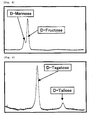
- Fig. 5 shows that D-mannose is generated via reaction of the substrate D-fructose therewith;
- Fig. 6 shows that D-tallose is generated via reaction of the substrate D-tagatose therewith; and
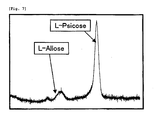
- Fig. 7 shows that L-allose is generated via reaction of the substrate L-psicose therewith.
- a crude enzyme solution (0.65 U/ml) was recovered after culturing in a culture medium with 0.1 % D-lyxose in 2 % TSB, at 37°C for 2 days and ultrasonication for extraction; 150 ⁇ l of the crude enzyme solution reacted with 50 mM of a substrate including individual ketose types such as L-ribose, D-fructose, D-tagatose and L-psicose at 40°C for 24 hours. After reaction, the enzyme was inactivated under heating in hot water for 2 minutes, and centrifuged at 12, 000 rpm for 5 minutes to recover the supernatant.
- the enzyme exerted the highest activity for L-ribose.
- the enzyme exerted activities for D-tallose, D-lyxose, D-mannose and L-allose.
- the reaction modes with these aldose and ketose types were examined. Consequently, their reaction modes are common.
- the reaction mode with L-ribose is shown below in Chemical Formula 1.
- the L-ribose isomerase of the invention reacts with aldose and aldoketose, where the alcohol group bound to the carbon at position 2 (OH-C-H) has L-glcyero coordination.
- the L-ribose isomerase of the invention never exerts any activities for D-glucose, D-allose and D-altrose, where the alcohol group bound to the carbon at position 2 (OH-C-H) has D-glcyero coordination.
- the L-ribose isomerase of the invention can advantageously be utilized for conversion of various types of sugars, with no need of purification at a higher level, so the L-ribose isomerase can advantageously be utilized for industrial production of rare sugars.
- diverse types of rare sugars extremely hardly available conventionally can readily be provided, so that such rare sugars may influence various fields such as foods, cosmetics, pharmaceutical products and chemical industries, very meaningfully industrially.
Landscapes
- Chemical & Material Sciences (AREA)
- Life Sciences & Earth Sciences (AREA)
- Organic Chemistry (AREA)
- Health & Medical Sciences (AREA)
- Engineering & Computer Science (AREA)
- Wood Science & Technology (AREA)
- Zoology (AREA)
- Genetics & Genomics (AREA)
- Bioinformatics & Cheminformatics (AREA)
- Biotechnology (AREA)
- General Health & Medical Sciences (AREA)
- Biochemistry (AREA)
- Microbiology (AREA)
- General Engineering & Computer Science (AREA)
- Medicinal Chemistry (AREA)
- Biomedical Technology (AREA)
- Molecular Biology (AREA)
- Tropical Medicine & Parasitology (AREA)
- Virology (AREA)
- Chemical Kinetics & Catalysis (AREA)
- General Chemical & Material Sciences (AREA)
- Proteomics, Peptides & Aminoacids (AREA)
- Biophysics (AREA)
- Gastroenterology & Hepatology (AREA)
- Enzymes And Modification Thereof (AREA)
- Preparation Of Compounds By Using Micro-Organisms (AREA)
- Micro-Organisms Or Cultivation Processes Thereof (AREA)
- Saccharide Compounds (AREA)
Description
- The present invention relates to a thermostable L-ribose isomerase, a method for producing the same and the use of the same. More specifically, the invention relates to a thermostable L-ribose isomerase which isomerizes L-ribose to L-ribulose or to isomerize L-ribulose to L-ribose, a method for producing the thermostable L-ribose isomerase, a microorganism generating the L-ribose isomerase, and a method for producing ketose and aldose using the enzyme.
- Following the development of biochemical industries, recently, attention has been increasingly raised toward the biological activities of rare sugars in the field of sugar chemistry (non-patent reference 1), so that demands toward various types of rare sugars conventionally never needed are now occurring. Therefore, the establishment of a method for stably producing these sugars has been desired. The method for producing these sugars may be done by approaches of organic chemistry. Generally, however, the conditions for the production by the approaches are very tough at very low yields of intended sugars, inappropriately as an industrial production method. As a biochemical approach, alternatively, sugar conversion methods with enzymes are listed. As described in the
patent reference 1 for industrial production of L-ribose, the present inventors made a success in developing a milestone therefor. The inventors made further investigations regarding the production and utilization of L-ribose isomerase. Based on the partial amino acid sequence of L-ribose isomerase as disclosed in thepatent reference 1, the inventors made diverse examinations about the chromosomal DNAs of microorganisms capable of generating the enzyme. Consequently, the inventors found that DNA encoding a series of amino acid sequences including the partial amino acid sequence was successfully cloned from a microorganism of the genus Acinetobacter (patent reference 2). Using the cloned DNA, then, the inventors made attempts to prepare a recombinant polypeptide, so that the inventors confirmed that a polypeptide with the activity of L-ribose isomerase could efficiently be produced. - Patent reference 1:
JP-A-10-155480 - Patent reference 2:
JP-A-2002-253254 - Non-patent reference 1: Rare Sugar Congress in Kagawa: 2005. Proc 2nd Symp Int Soc Rare Sugars, Takamatsu, Japan.
- WALCKENAER ESTELLE ET AL: "Genetic and biochemical characterization of the chromosomal class a beta-lactamases of Raoultella (formerly Klebsiella) planticola and Raoultella ornithinolytica." ANTIMICROBIAL AGENTS AND CHEMOTHERAPY, vol. 48, no. 1, January 2004 (2004-01), pages 305-312, and DRANCOURT M. ET AL.: 'Phylogenetic analyses of Klebsiella species delineate Klebsiella and Raoultella gen. nov., with description of Raoultella ornithinolytica comb. nov., Raoultella terrigena comb. nov. and Raoultella planticola comb. nov.' INT. J. SYST. EVOL. MICROBIOL. vol. 51, 2001, pages 925 - 932, describe strains of Raoultella ornithinolytica.
- In terms of the upsurge of the recent demand toward L-ribose, a method for preparing an enzyme generating L-ribose should be established while the properties of such enzyme should be improved further. In industrially producing sugars, it is strongly desired to establish a method for producing sugars of types as many as possible, using enzymes of types of a number as small as possible. It is an object of the invention to screen for a microorganism with properties advantageous for the method for industrially producing rare sugars such as L-ribose and D-tallose and with an ability to generate an enzyme capable of producing sugars of diverse types. Furthermore, it is an object of the invention to provide an enzyme derived from the microorganism, which has a property useful for isomerizing L-ribose to generate L-ribulose or isomerizing L-ribulose to generate L-ribose and an ability to use various types of ketose or aldose as the substrate, as well as a method for producing ketose and aldose using the enzyme.
- The gist of the invention resides in a thermostable L-ribose isomerase described below in (1) through (3).
- (1) A thermostable L-ribose isomerase with the following physico-chemical properties and with an action to isomerize L-ribose to generate L-ribulose or to isomerize L-ribulose to generate L-ribose inversely:
- 1) molecular weight: 32,000 (SDS-PAGE);
- 2) optimal temperature: 45°C;
- 3) optimal pH: pH 9.0 (glycine-NaOH buffer);
- 4) temperature stability: stable up to 45°C, during thermal treatment at pH 9.0 for 10 minutes;
- 5) the L-ribose isomerase is an enzyme derived from a microorganism belonging to the genus Raoultella.
- (2) The thermostable L-ribose isomerase described in (1), which is an enzyme derived from a microorganism belonging to Raoultella ornithinolytica.
- (3) The thermostable L-ribose isomerase described in (2), which is an enzyme derived from the bacterial strain MB426 (NITE BP-277) of the genus Raoultella.
- The gist of the invention resides in a method for producing L-ribose isomerase as described below in (4) to (6).
- (4) A method for producing a thermostable L-ribose isomerase comprising culturing a microorganism with an ability to generate L-ribose isomerase, and collecting a thermostable L-ribose isomerase with the following physico-chemical properties and with an action to isomerize L-ribose to generate L-ribulose or to isomerize L-ribulose to generate L-ribose inversely, from the culture:
- 1) molecular weight: 32,000 (SDS-PAGE);
- 2) optimal temperature: 45°C;
- 3) optimal pH: pH 9.0 (glycine-NaOH buffer);
- 4) temperature stability; stable up to 45°C, during thermal treatment at pH 9.0 for 10 minutes.
- 5) the microorganism is a microorganism belonging to the genus Raoultella.
- (5) The method for producing a thermostable L-ribose isomerase as described above in (4), where the microorganism is a microorganism belonging to Raoultella ornithinolytica.
- (6) The method for producing a thermostable L-ribose isomerase as described above in (4), where the thermostable L-ribose isomerase is an enzyme derived from the bacterial strain MB426 (NITE BP-277) of the genus Raoultella,
- The gist of the invention is a microorganism belonging to the genus Raoultella as described below in (7).
- (7) A microorganism belonging to the genus Raoultella and with the following physico-chemical properties and with an ability to generate a thermostable L-ribose isomerase with an action to isomerize L-ribose to generate L-ribulose or to isomerize L-ribulose to generate L-ribose inversely:
- 1) molecular weight: 32,000 (SDS-PAGE);
- 2) optimal temperature: 45°C;
- 3) optimal pH: pH 9.0 (glycine-NaOH buffer);
- 4) temperature stability; stable up to 45°C, during thermal treatment at pH 9.0 for 10 minutes;
- 5) the microorganism of the genus Raoultella is Raoultella ornithinolytica MB426 (NITE BP-277) or a variant strain thereof.
- The gist of the invention resides in a method for producing a ketose as described below in (8) or (9) . (8) A method for producing a ketose, comprising allowing the thermostable L-ribose isomerase described above in (1), (2)
or (3) to interact with an aldose selected from L-ribose, D-lyxose, D-tallose, D-mannose, L-allose, and L-gulose and collecting a ketose selected from the individually corresponding generated L-ribulose, D-xylulose, D-tagatose, D-fructose, L-psicose and L-sorbose. - (9) The method for producing a ketose as described above in
- (11), where the thermostable L-ribose isomerase is an enzyme obtained by toluene treatment of a microorganism with the activity of a thermostable L-ribose isomerase and/or is an immobilized enzyme.
- The gist of the invention resides in a method for producing an aldose as described below in (10) or (11).
- (10) A method for producing an aldose, comprising allowing the thermostable L-ribose isomerase described above in (1), (2)
or (3) to interact with a ketose selected from L-ribulose, D-xylulose, D-tagatose, D-fructose, L-psicose and L-sorbose and collecting an aldose selected from the individually corresponding generated L-ribose, D-lyxose, D-tallose, D-mannose, L-allose and L-gulose. (11) The method for producing an aldose as described above in (10), where the thermostable L-ribose isomerase is an enzyme obtained by toluene treatment of a microorganism with the activity of a thermostable L-ribose isomerase and/or is an immobilized enzyme. - The gist of the invention resides in a conversion method between an aldose and a ketose, as described below in (12) or (13).
- (12) A conversion method between an aldose and a ketose, comprising allowing a thermostable L-ribose isomerase described above in (1), (2) or (3) to interact with an aldose selected from L-ribose, D-lyxose, D-tallose, D-mannose, L-allose, and L-gulose to isomerizes the aldose to corresponding a ketose selected from L-ribulose, D-xylulose, D-tagatose, D-fructose, L-psicose and L-sorbose or comprising allowing a thermostable L-ribose isomerase described above in (1), (2) or (3) to interact with a ketose selected from L-ribulose, D-xylulose, D-tagatose, D-fructose, L-psicose and L-sorbose to isomerizes the ketose to corresponding an aldose selected from L-ribose, D-lyxose, D-tallose, D-mannose, L-allose and L-gulose.
- (13) Te conversion method between an aldose and a ketose as described above in (12), where the thermostable L-ribose isomerase is an enzyme obtained by toluene treatment of a microorganism with the activity of a thermostable L-ribose isomerase and/or is an immobilized enzyme.
- The gist of the invention resides in a method for producing L-ribose as described below in (14) to (18).
- (14) A method for producing L-ribose comprising a step of allowing the thermostable L-ribose isomerase described in (1), (2) or (3) to interact with L-ribulose and a step of colleting the generated L-ribose.
- (15) The method for producing L-ribose, as described in (14), where the L-ribulose is obtained by oxidizing ribitol with a microorganism belonging to the genus Glucobacter or the genus Acetobacter.
- (16) The method for producing L-ribose as described above in (14) or (15), where the thermostable L-ribose isomerase is obtained by toluene treatment of a microorganism with the activity of a thermostable L-ribose isomerase and/or is an immobilized enzyme.
- (17) The method for producing L-ribose as described in (14), (15), or (16), where the generated L-ribose is collected through a step including filtration, centrifugation, decoloring, desalting, concentration, drying, column chromatography, crystallization and/or sugar fractionation.
- (18) The method for producing L-ribose as described above in (17), where an ion exchange resin is used for column chromatography.
- Since L-ribose isomerase obtained conventionally has poorly thermostable and is inactivated during isomerization reactions, a method comprising treating the bacterial cell with toluene and immediately using the resulting bacterial cell is utilized. By the method, the bacterial cell cultured each time can be used only once, so such method is not suitable for producing L-ribose at a mass scale. Therefore, the enzyme at high stability is needed. It is desired to construct a bioreactor using such thermostable enzyme.
- So as to screen for a microorganism with thermostable L-ribose isomerase, various soil types are added to a culture medium of inorganic salts and with L-ribose as a carbon source, for culturing at a relatively high temperature to isolate the microorganism, so that it has been expected to obtain L-ribose isomerase with higher thermostability than those of the existing enzymes. However, it was difficult so far to isolate a microorganism generating L-ribose isomerase. The main reason is as follows: L-ribose was so expensive that L-ribose at an amount sufficient enough for separating numerous types of microorganisms from numerous sources for such separation could not be prepared.
- Using the L-ribose isomerase already separated as described in the
patent reference 1, the present inventors could obtain a sufficient amount of L-ribose. Hence, the L-ribose for use in accordance with the invention could be prepared, which enabled the recovery of the intended microorganism. - As a method for isolating a strain generating L-ribose isomerase, a method for screening for such microorganism from various separation sources was an effective method, which comprised culturing with L-ribose as a carbon source to assay the generated L-ribulose in the liquid culture resulting from the culturing at a high sensitivity by the cysteine-carbazole method and subsequently using the assay results of the generated L-ribulose as a marker.
- The thermostable L-ribose isomerase of the invention is advantageously used in converting a great number of sugars with no need of high purification, so such L-ribose isomerase can advantageously be used for industrial production of rare sugars. In accordance with the invention, a great number of rare sugars extremely hardly available conventionally can be provided efficiently in a ready manner. Accordingly, it is expected that the enzyme would give influences on diverse fields such as foods, cosmetics, pharmaceutical products and chemical industries. Thus, the enzyme has an extremely significant meaning industrially.
-
- [
Fig. 1] Fig. 1 is a view showing the effect of pH on the activity of the thermostable L-ribose isomerase derived from Raoultella ornithinolytica. In the table, "Acetate" denotes 50 mM acetate buffer (pH 2 to 6); Na-P denotes 50 mM sodium phosphate buffer (pH 6 to 8); Tris-HCl denotes 50 mM Tris-HCl buffer (pH 8 to 9); and Gly-NaOH denotes 50 mM glycine-sodium hydroxide buffer (pH 9 to 11). The condition using Gly-NaOH, pH 9.0 is the optimal condition (optimal pH) for the enzyme. The enzyme exerts extremely low activity in the Tris-HCl buffer at the same pH, which is generally due to the non-antagonistic inhibition of the isomerase activity with Tris. - [
Fig. 2] Fig. 2 is a view showing the effect of temperature on the activity of the thermostable L-ribose isomerase derived from Raoultella ornithinolytica. The condition using 45°C is the optimal condition (optimal temperature) for the enzyme. - [
Fig. 3] Fig. 3 is a view showing the temperature stability of the thermostable L-ribose isomerase derived from Raoultella ornithinolytica (described as MB426) in comparison with the temperature stability of the L-ribose isomerase derived from Acinetobacter calcoaceticus (described as DL-28). The graph shows that the temperature stability of the L-ribose isomerase of the invention is greater than the temperature stability of the L-ribose isomerase derived from Acinetobacter calcoaceticus. - [
Fig.4] Fig. 4 is a view showing the reaction of the substrate L-ribose with the thermostable L-ribose isomerase derived from Raoultella ornithinolytica to generate L-ribulose. - [
Fig. 5] Fig. 5 is a view showing the reaction of the substrate D-fructose with the thermostable L-ribose isomerase derived from Raoultella ornithinolytica to generate D-mannose. - [
Fig. 6] Fig. 6 is a view showing the reaction of the substrate D-tagatose with the thermostable L-ribose isomerase derived from Raoultella ornithinolytica to generate D-tallose. - [
Fig. 7] Fig. 7 is a view showing the reaction of the substrate L-psicose with the thermostable L-ribose isomerase derived from Raoultella ornithinolytica to generate L-allose. - So as to solve the problems, the inventors made screenings for a wide variety of microorganisms generating an enzyme interactive with sugars of various types as many as possible, particularly with attention focused on L-ribose isomerase. Consequently, the inventors found that the strain MB426 isolated in soils in a river bed in Miki-cho, Kida-gun, Kagawa, Japan was a novel microorganism of the genus Raoultella to generate a novel L-ribose isomerase interactive with various types of sugars at a mass scale, which had relatively high optimal temperature and thermostability, high stability at the optimal pH, extremely advantageously for industrial utilization of the enzyme. Additionally, the inventors found that a great number of rare sugar types could be produced readily via the interaction of a solution containing a substrate ketose or aldose with the microorganism. Thus, the invention has been achieved.
- The strain MB426 isolated by the inventors is a novel microorganism belonging to the genus Raoultella.
- The bacterial strain "Raoultella ornithinolytica MB426" as a novel microorganism in accordance with the invention is a bacterial strain of the Raoultella ornithinolytica and was deposited domestically in Japan at Incorporated Administrative Agency, National Institute of Technology and Evaluation, Patent Microorganism Depositary, 2-5-8 Kamatari Kazusa, Kisarazu-shi, Chiba, Japan, for which an accession certificate was issued as an accession No. (NITE AP-277) on November 13, 2006. In filing an international application, currently, it was requested to transfer the original deposit (NITE AP-277) to the international depositary organization to which the original deposition was made. On March 22, 2007, an accession certificate (NITE BP-277) was issued for the original deposit by the international depositary organization.
- For isolation of the strain MB426, the microorganism was separated at 37°C in a culture broth of inorganic salts containing 0.5 w/w % L-ribose as a single carbon source. The bacterial strain growing under the conditions and generating L-ribose isomerase was separated. In the agar culture medium for use in the isolation and storage of the microorganism, a culture medium of inorganic salts using L-ribose as a single carbon source was used.
- The enzyme-generating ability of the separated bacterial strain, the conditions for the enzyme generation and the like were examined. Consequently, the inventor found that L-ribose isomerase could be produced in a stable manner at a mass scale, using the inexpensive carbon source. Specifically, the inventor found that the enzyme could be generated at a mass scale, even when a culture broth supplemented with a small amount (0.1% to 3 %, preferably 0.1 to 0.5 %) of D-lyxose added to 2 % TSB (tryptic soy broth) or the TSB culture medium with no addition of D-lyxose was used.
- The DNA of the 16S rRNA region extracted from the bacterial strain was sequenced, and compared with those of plural types of known 16S rRNAs obtained from other microorganisms. The data was 97-% identical to the sequence derived from Raoultella ornithinolytica. Based on the evidence and other physiological features described in Table 2, it was concluded that the bacterial strain corresponded to Raoultella ornithinolytica. The nucleotide sequence of a DNA fragment can be sequenced by known methods, for example the Sanger method (Molecular Cloning, Vol. 2, p. 13.3, 1989), and PCR-based methods. Generally, the reaction is performed with GenomeLab DTCS Quick Start Kit (sequencing kit containing fluorescence dideoxy terminator) manufactured by Beckman Coulter, to determine the sequence of the nucleotide sequence with an automatic sequence (CEQ 8000, etc.) of Beckman Coulter.
- Table 1 shows the results of the identification test of the microbial strain MB426 of the genus Raoultella in accordance with the invention.
[Table 1] Raoultella ornithinolytica strain MB426 Gram staining: negative Motility: none Growth temperature: 37°C (possibly growing at 4 up to 40°C; preferably at 37°C) Oxygen demand: aerobic Morphology: long rod Colonies at growth state: semi-transparent, pale yellow colonies formed. - (Culturing at for
example pH 5 to 9, preferablypH 6 to 8.5. Culturing is done under aerobic conditions, including for example shaking culture or aerated agitation culture). - 1. TSB (tryptic soy broth)
culture medium 1 to 2 %
TSB: Becton, Dickinson Co., Ltd. - 2. Meat extract culture medium
[meat extracts (Wako Pure Chemical Industry Co., Ltd.) 0.5 %, polypeptone (Wako Pure Chemical Industry Co., Ltd.) 0.5 %, sodium chloride (Wako Pure Chemical Industry Co., Ltd.) 0.5 %, pH 7.0] - 3. Yeast extract culture medium
[yeast extracts (Wako Pure Chemical Industry Co., Ltd.) 0.5 %, polypeptone (Wako Pure Chemical Industry Co., Ltd.) 0.5 %, sodium chloride 0.5 %, pH 7.0] - 4. Composition of culture medium of inorganic salts 0.26 % ammonium sulfate, 0.24 % KH2PO4, 0.56 % K2HPO4, 0.01 % magnesium sulfate, 0.05 % yeast extract
- In case of an agar culture medium, agar is added to a final concentration of 2 % to the culture media described above.
- Generally, long rod with a diameter of 0.3 to 1.0 µm and a length of 0.6 to 6.0 µm. No motility. No spore. Gram negative.
- <B. Culturing properties> (Meat juice agar plate culture at 37°C) Morphology: circle. The size is 0.1 to 5 mm after 2-day culturing. Periphery: whole fringe. Protrusion: semi-lens state. Gloss: blunt. Surface: smooth. Color: opaque, pale yellow.
- In accordance with the invention, not only the bacterial strain described above but also other bacterial strains of Raoultella and with an ability to generate L-ribose isomerase and variant strains thereof may also be used appropriately.
- Any culture medium in which the microorganism can grow to generate L-ribose isomerase of the invention may be used as the culture medium for use in culturing the microorganism of the invention, which may satisfactorily be a synthetic medium or a natural medium. As the carbon source, for example, one type or two types or more selected from aldose, ketose and the like may appropriately be selected. As the nitrogen source, for example, inorganic nitrogen compounds such as ammonium salts and nitrate salts, and organic nitrogen-containing materials for example urea, corn steep liquor, casein, peptone, yeast extract and meat extract may be used. As the inorganic ingredients, additionally, calcium salts, magnesium salts, potassium salts, sodium salts and phosphate salts may appropriately be used. Any culture conditions under which the microorganism can grow to generate the enzyme of the invention are appropriate and are generally at a temperature and a pH selected from about 4 to 40°C, preferably about 20 to 37°C, and pH about 5 to 9, preferably about 6 to 8.5.
- In such manner, the microorganism is cultured to recover the enzyme of the invention from the resulting culture. The activity of the enzyme is mainly observed in the bacterial cell, so the bacterial cell itself may also be used as an enzyme agent or the whole culture may also be used as an enzyme agent. The enzyme in the bacterial cell may be extracted from the bacterial cell by general methods, which may also be used as a crude enzyme. The crude enzyme may be used as it is, but the crude enzyme may further be purified by general methods. For example, an extract solution from disruption of the bacterial cell is purified by a combination of polyethylene glycol fractionation, ion exchange chromatography, hydrophobic chromatography, and gel filtration chromatography, to obtain an enzyme, which is characterized by electrophoresis to be a homogenous enzyme.
- The activity of the L-ribose isomerase of the invention can be assayed as follows. 0.05 ml of 0.05 M glycine-NaOH buffer (pH 9.0), 0.05 ml of 0.05 M L-ribose and the enzyme solution were mixed together to a total volume of 0.5 ml, for the enzyme reaction at 45°C, to generate L-ribulose, which is assayed by the cysteine/carbazole method. One unit of the enzyme activity is designated as the enzyme amount to generate 1 µmol of L-ribulose per one minute.
- The L-ribose isomerase of the invention can be utilized for the conversion reaction between various types of ketose with various types of keto group (C=O) and aldose as substrates, where an alcohol group (HO-C-H) bound to the carbon at
position 2 has L-glycero coordination, which are for example L-ribose, L-ribulose, L-allose, L-psicose, D-tagatose, D-tallose, D-mannose, D-fructose, D-lyxose and D-xylulose. Hence, one type of the enzyme can produce various types of sugars, very advantageously industrially. - The thermostable L-ribose isomerase of the invention is not necessarily purified at high purity for use. For example, the microorganism with the thermostable L-ribose isomerase may be treated with toluene for use, advantageously for industrial sugar conversion. Additionally, the thermostable L-ribose isomerase of the invention may be immobilized and used advantageously, by disrupting the bacterial cell by known methods to extract the endogenous thermostable L-ribose isomerase and then immobilizing the enzyme. The microorganism with the enzyme activity or a partially purified enzyme may be immobilized by immobilization methods such as inclusion methods, adsorption methods or covalent bond methods, for repeated use for batch reaction or may be packed in a column for continuous use, appropriately.
- As to the reaction temperature, the reaction is performed at a temperature with no inactivation of the enzyme, for example 4 to 60°C, preferably 10 to 50°C. The reaction time may appropriately be selected, depending on the progress level of the enzyme reaction. Generally, the reaction time is about 0.1 to 100 hours when the enzyme is used at an amount of about 0.1 to 100 units per one gram of a solid substrate.
- The reaction solution thus obtained contains both aldose and ketose. By general methods, insoluble matters are removed from the reaction solution by filtration, centrifugation and the like. Subsequently, the resulting solution is decolored with activated carbon, desalted with ion exchange resins of H type and CO3 types, and concentrated into a syrup-like product or then dried into a powdery product. Otherwise, the crystal sugar may be prepared finally as a crystal product, optionally. If necessary, further purification at a high level may also be done. By fractionation by ion exchange column chromatography, fractionation with active charcoal column chromatography, fractionation with silica gel column chromatography, and decomposition and removal of ketose with alkali treatment, for example, sugars at higher purity can also be obtained readily. Various sugars thus obtained can advantageously be utilized in various applications such as reagents, sweeteners and quality modifiers in food industries, raw materials and intermediates in pharmaceutical industries and chemical industries.
- In particular, D-ribose as an optical isomer of L-ribose is an essential component of RNA with a close relation with cell proliferation. Therefore, L-ribose itself or a derivative thereof as prepared from the raw material L-ribose can be used as an inhibitor of nucleic acid replication, including for example pharmaceutical agents such as antibacterial agents, antiviral agents, anti-HIV agents, and anti-cancer agents. As described above, L-ribose can readily be produced from L-ribulose, using the L-ribose isomerase of the invention. L-Ribulose from any source or any origin may be satisfactory. From a raw material ribitol, for example, L-ribulose can readily be obtained via oxidation reaction with a microorganism of the genus Gluconobacter or the genus Acetobacter, specifically for example Gluconobacter flauteurii or Acetobacter aceti.
- The invention will now be described below in detail in Examples. The invention is not limited by these Examples.
- Using 50 mM L-ribose as a substrate, the enzyme reaction continued at 45°C for 10 minutes, so that the amount of the generated ketose (L-ribulose) was assayed by the cysteine/carbazole method. As to the temperature stability, the enzyme activity was assayed after 10-min treatment at individual temperatures. As to the optimal pH conditions, the enzyme reaction was performed at 45°C for 10 minutes in 50 mM acetate buffer (
pH 2 to 6), 50 mM sodium phosphate buffer (pH 6 to 8), 50 mM Tris-HCl buffer (pH 8 to 9) or 50 mM glycine-sodium hydroxide buffer (pH 9 to 11), using 50 mM L-ribose as substrate, to assay the amount of a ketose (L-ribulose) generated thereafter by the cysteine/carbazole method (Table 2). The enzyme reaction was done at the composition shown in Table 2 at 45°C for 10 minutes (Table 3), and the reaction was terminated by adding 50 µl of 10 % TCA (trichloroacetic acid). As shown in Table 2, the cysteine/carbazole method comprised sequentially adding 100 µl of 1.5 % cysteine solution and 3 ml of 70 % sulfuric acid to 0.5 ml of a sample after the enzyme reaction, for agitation; the resulting mixture was left in water, to which 100 µl of 0.12 % carbazole solution was added for reaction at 20°C for 20 minutes. After completion of the reaction, absorbance at 540 nm was measured with an ultraviolet/visible spectrophotometer V530 (JASCO Corporation). Additionally, the amount of the enzyme generating 1 µmol L-ribulose per one minute was designated as one unit.

[Table 3] Substrate (50mM) 50µl Buffer (50mM) 350µl MnCl2 10mM 50µl Enzyme 50µl - The bacterial strain MB426 of the invention was cultured in 3 L of a culture broth supplemented with 0.1 % D-lyxose in 2 % TSB at 37°C for 2 days, to extract a crude enzyme solution by ultrasonication. The crude enzyme solution was fractionated with ammonium sulfate; subsequently, L-ribose isomerase was purified by chromatography on individual columns packed with Q-Sepharose, Resource-Q and phenyl Sepharose, in this order. It was confirmed by SDS-PAGE (SDS-polyacrylamide gel electrophoresis) that the resulting L-ribose isomerase was a single enzyme with no contamination. The purified enzyme was at 0.814 U/mg, as obtained at a yield of 7.4 %.
-
- Molecular weight: 32,000 (SDS-PAGE)
- Optimal pH: pH 9.0 (glycine-NaOH buffer) (
Fig. 1 ) - Optimal temperature: 45°C (
Fig. 2 ) - Temperature stability: stable up to 45°C during thermal treatment at pH 9.0 for 10 minutes.
- According to the assay method of the activity, the activity of the enzyme was assayed, using various aldose types as substrates. The activities on various aldose types are shown in relative activities to the activity on L-ribose, which is designated as 100 %.
[Table 4] L-Ribose: 100 D-Tallose: 56.9 D-Lyxose: 15.3 L-Allose: 2.2 -
Fig. 4 shows that L-ribulose is generated via reaction of the substrate L-ribose with the thermostable L-ribose isomerase from Raoultella ornithinolytica;Fig. 5 shows that D-mannose is generated via reaction of the substrate D-fructose therewith;Fig. 6 shows that D-tallose is generated via reaction of the substrate D-tagatose therewith; andFig. 7 shows that L-allose is generated via reaction of the substrate L-psicose therewith. - A crude enzyme solution (0.65 U/ml) was recovered after culturing in a culture medium with 0.1 % D-lyxose in 2 % TSB, at 37°C for 2 days and ultrasonication for extraction; 150 µl of the crude enzyme solution reacted with 50 mM of a substrate including individual ketose types such as L-ribose, D-fructose, D-tagatose and L-psicose at 40°C for 24 hours. After reaction, the enzyme was inactivated under heating in hot water for 2 minutes, and centrifuged at 12, 000 rpm for 5 minutes to recover the supernatant. Then, about 2 spoonfuls of a desalted resin (mixed and dried at a ratio of IRA411: SKIB = 2:1) in a microspatula were added to the resulting supernatant, for mixing under inversion. After one hour, the solution was filtered through a 0.45-µm filter, for high-performance liquid chromatography (HPLC). As the column, Hitachi HPLC column GL-C611 (manufactured by Hitachi Chemical Industry Co., Ltd.) was used; as the detector, a differential refractive meter (L-7490 refractive index detector manufactured by Hitachi Hightech Co., Ltd.) was used. While the column was retained at 60°C, 10-4 M sodium hydroxide solution as an eluent was used at a flow rate of 1.0 mL/min. The resulting signals were collected and analyzed with a data analysis software (SmartChrom, manufactured by KYA Technologies Co., Ltd.).
- As shown in the results in Table 2, the enzyme exerted the highest activity for L-ribose. Other than the activity, the enzyme exerted activities for D-tallose, D-lyxose, D-mannose and L-allose. The reaction modes with these aldose and ketose types were examined. Consequently, their reaction modes are common. As one example, the reaction mode with L-ribose is shown below in
Chemical Formula 1.
- As apparently shown in
Chemical formula 1, the L-ribose isomerase of the invention reacts with aldose and aldoketose, where the alcohol group bound to the carbon at position 2 (OH-C-H) has L-glcyero coordination. However, the L-ribose isomerase of the invention never exerts any activities for D-glucose, D-allose and D-altrose, where the alcohol group bound to the carbon at position 2 (OH-C-H) has D-glcyero coordination. - As apparent from above description, the L-ribose isomerase of the invention can advantageously be utilized for conversion of various types of sugars, with no need of purification at a higher level, so the L-ribose isomerase can advantageously be utilized for industrial production of rare sugars. In accordance with the invention, diverse types of rare sugars extremely hardly available conventionally can readily be provided, so that such rare sugars may influence various fields such as foods, cosmetics, pharmaceutical products and chemical industries, very meaningfully industrially.
Claims (13)
- A thermostable L-ribose isomerase with the following physico-chemical properties and with an action to isomerize L-ribose to generate L-ribulose or to isomerize L-ribulose to generate L-ribose inversely:1) molecular weight: 32,000 (SDS-PAGE);2) optimal temperature: 45°C;3) optimal pH: pH 9.0 (glycine-NaOH buffer);4) temperature stability; stable up to 45°C, during thermal treatment at pH 9.0 for 10 minutes, wherein the L-ribose isomerase is an enzyme derived from a microorganism belonging to the genus Raoultella.
- A thermostable L-ribose isomerase according to claim 1, which is an enzyme derived from a microorganism belonging to Raoultella ornithinolytica.
- A thermostable L-ribose isomerase according to claim 1, which is an enzyme derived from the bacterial strain MB426 (NITE BP-277) of the genus Raoultella.
- A method for producing a thermostable L-ribose isomerase comprising culturing a microorganism as defined in any one of claims 1 to 3, and collecting a thermostable L-ribose isomerase with the following physico-chemical properties and with an action to isomerize L-ribose to generate L-ribulose or to isomerize L-ribulose to generate L-ribose inversely, from the culture:1) molecular weight: 32,000 (SDS-PAGE);2) optimal temperature: 45°C;3) optimal pH: pH 9.0 (glycine-NaOH buffer);4) temperature stability; stable up to 45°C, during thermal treatment at pH 9.0 for 10 minutes.
- A microorganism belonging to the genus Raoultella, wherein the microorganism of the genus Raoultella is Raoultella ornithinolytica MB426 (NITE BP-277).
- A method for producing a ketose, comprising allowing a thermostable L-ribose isomerase according to claim 1, 2 or 3 to interact with an aldose selected from L-ribose, D-lyxose, D-tallose, D-mannose, L-allose, and L-gulose and collecting a ketose selected from the individually corresponding generated L-ribulose, D-xylulose, D-tagatose, D-fructose, L-psicose and L-sorbose.
- A method for producing an aldose, comprising allowing a thermostable L-ribose isomerase according to claim 1, 2 or 3 to interact with a ketose selected from L-ribulose, D-xylulose, D-tagatose, D-fructose, L-psicose and L-sorbose and collecting an aldose selected from the individually corresponding generated L-ribose, D-lyxose, D-tallose, D-mannose, L-allose, and L-gulose.
- A conversion method between an aldose and a ketose, comprising allowing a thermostable L-ribose isomerase according to claim 1, 2 or 3 to interact with an aldose selected from L-ribose, D-lyxose, D-tallose, D-mannose, L-allose, and L-gulose to isomerize the aldose to a corresponding ketose selected from L-ribulose, D-xylulose, D-tagatose, D-fructose, L-psicose and L-sorbose or comprising allowing a thermostable L-ribose isomerase according to claim 1, 2 or 3 to interact with a ketose selected from L-ribulose, D-xylulose, D-tagatose, D-fructose, L-psicose and L-sorbose to isomerizes the ketose to a corresponding aldose selected from L-ribose, D-lyxose, D-tallose, D-mannose, L-allose and L-gulose.
- A method for producing L-ribose comprising a step of allowing a thermostable L-ribose isomerase according to claim 1, 2 or 3 to interact with L-ribulose and a step of colleting the generated L-ribose.
- A method for producing L-ribose according to claim 9, wherein the L-ribulose is obtained by oxidizing ribitol with a microorganism belonging to the genus Glucobacter or the genus Acetobacter.
- A method according to any one of claims 6 to 10, wherein the thermostable L-ribose isomerase is obtained by toluene treatment of a microorganism with the activity of a thermostable L-ribose isomerase and/or is an immobilized enzyme.
- A method according to claim 9, 10 or 11, wherein the generated L-ribose is collected through a step including filtration, centrifugation, decoloring, desalting, concentration, drying, column chromatography, crystallization and/or sugar fractionation.
- A method for producing L-ribose according to claim 12, wherein an ion exchange resin is used for column chromatography.
Applications Claiming Priority (2)
| Application Number | Priority Date | Filing Date | Title |
|---|---|---|---|
| JP2006313673 | 2006-11-20 | ||
| PCT/JP2007/056167 WO2008062569A1 (en) | 2006-11-20 | 2007-03-26 | Thermostable l-ribose isomerase, process for producing the same and use thereof |
Publications (3)
| Publication Number | Publication Date |
|---|---|
| EP2103625A1 EP2103625A1 (en) | 2009-09-23 |
| EP2103625A4 EP2103625A4 (en) | 2010-01-06 |
| EP2103625B1 true EP2103625B1 (en) | 2014-05-07 |
Family
ID=39429512
Family Applications (1)
| Application Number | Title | Priority Date | Filing Date |
|---|---|---|---|
| EP07739605.9A Not-in-force EP2103625B1 (en) | 2006-11-20 | 2007-03-26 | Thermostable l-ribose isomerase, process for producing the same and use thereof |
Country Status (6)
| Country | Link |
|---|---|
| US (1) | US8227232B2 (en) |
| EP (1) | EP2103625B1 (en) |
| JP (1) | JP5103597B2 (en) |
| KR (1) | KR101396313B1 (en) |
| ES (1) | ES2464774T3 (en) |
| WO (1) | WO2008062569A1 (en) |
Families Citing this family (5)
| Publication number | Priority date | Publication date | Assignee | Title |
|---|---|---|---|---|
| KR101617526B1 (en) * | 2014-06-12 | 2016-05-11 | 건국대학교 산학협력단 | A mutant of Escherichia coli sugar isomerase improved in its activity and production of L-gulose using the said enzyme |
| KR101785299B1 (en) | 2015-11-23 | 2017-11-15 | 대상 주식회사 | A optimized ribose 5 phosphate isomerase gene, a microorganism comprising the same, and a method for producing allose using the same |
| JPWO2022149542A1 (en) * | 2021-01-06 | 2022-07-14 | ||
| CN114806945B (en) * | 2022-04-29 | 2023-11-24 | 中国农业大学 | Raoultella ornithinolytica E315 and application thereof |
| CN119842533B (en) * | 2025-01-13 | 2025-09-26 | 安徽师范大学 | Denitrifying strain with toluene and nitrogen removal function under anaerobic condition and application thereof |
Family Cites Families (4)
| Publication number | Priority date | Publication date | Assignee | Title |
|---|---|---|---|---|
| JP4012596B2 (en) | 1996-05-16 | 2007-11-21 | 株式会社林原生物化学研究所 | L-ribose isomerase, production method and use thereof |
| JP2002253254A (en) | 2001-03-01 | 2002-09-10 | Hayashibara Biochem Lab Inc | DNA encoding L-ribose isomerase and uses thereof |
| KR20050064991A (en) | 2003-12-24 | 2005-06-29 | 변유량 | Thermophilic and Acidophilic L-Ribose Isomerase and Use thereof |
| WO2008020659A1 (en) * | 2006-08-17 | 2008-02-21 | Yu-Ryang Pyun | Thermophilic l-ribose isomerase and use thereof |
-
2007
- 2007-03-26 JP JP2008545316A patent/JP5103597B2/en active Active
- 2007-03-26 US US12/515,596 patent/US8227232B2/en not_active Expired - Fee Related
- 2007-03-26 WO PCT/JP2007/056167 patent/WO2008062569A1/en not_active Ceased
- 2007-03-26 ES ES07739605.9T patent/ES2464774T3/en active Active
- 2007-03-26 EP EP07739605.9A patent/EP2103625B1/en not_active Not-in-force
- 2007-03-26 KR KR1020097012895A patent/KR101396313B1/en not_active Expired - Fee Related
Also Published As
| Publication number | Publication date |
|---|---|
| KR101396313B1 (en) | 2014-05-16 |
| US8227232B2 (en) | 2012-07-24 |
| WO2008062569A1 (en) | 2008-05-29 |
| US20090325231A1 (en) | 2009-12-31 |
| KR20090081435A (en) | 2009-07-28 |
| JPWO2008062569A1 (en) | 2010-03-04 |
| EP2103625A4 (en) | 2010-01-06 |
| JP5103597B2 (en) | 2012-12-19 |
| ES2464774T3 (en) | 2014-06-04 |
| EP2103625A1 (en) | 2009-09-23 |
Similar Documents
| Publication | Publication Date | Title |
|---|---|---|
| JP5997693B2 (en) | Enzymes produced by Arthrobacter globiformis | |
| MX2008012233A (en) | Method for the enzymatic production of 2-hydroxy-2-methyl carboxylic acids. | |
| US8227232B2 (en) | Thermostable L-ribose isomerase and method for producing same and use of same | |
| KR20150076257A (en) | Method for producing d-allose | |
| KR100512062B1 (en) | L-ribose isomerase and its preparation method and use | |
| KR101348327B1 (en) | Microorganism with ability to produce deoxy polyol dehydrogenase and use thereof | |
| RU2727845C1 (en) | Method of producing d-psicose using microorganism of kaistia genus | |
| US7691619B2 (en) | Sequence of thermotolerant L-rhamnose isomerase gene and use of the same | |
| JP4336897B2 (en) | Novel microorganism, maltose phosphorylase, trehalose phosphorylase and method for producing the same | |
| JP3635133B2 (en) | Trehalose phosphorylase and preparation method thereof | |
| JPH08140691A (en) | Method for producing high-purity oligosaccharides from highly concentrated sugar mixture | |
| JP4571961B2 (en) | L-ribose isomerase, production method and use thereof | |
| JP3757598B2 (en) | Method for producing L-ribose | |
| JPH05276970A (en) | Production of saccharide solution having high content of xylosylfructoside by microorganism | |
| JP2004000082A (en) | Method for producing D-tagatose | |
| JPS6243675B2 (en) | ||
| JPH05130885A (en) | Production of sugar syrup having high lactosylfructoside content by microorganism |
Legal Events
| Date | Code | Title | Description |
|---|---|---|---|
| PUAI | Public reference made under article 153(3) epc to a published international application that has entered the european phase |
Free format text: ORIGINAL CODE: 0009012 |
|
| 17P | Request for examination filed |
Effective date: 20090617 |
|
| AK | Designated contracting states |
Kind code of ref document: A1 Designated state(s): AT BE BG CH CY CZ DE DK EE ES FI FR GB GR HU IE IS IT LI LT LU LV MC MT NL PL PT RO SE SI SK TR |
|
| RAP1 | Party data changed (applicant data changed or rights of an application transferred) |
Owner name: NATIONAL UNIVERSITY CORPORATION KAGAWA UNIVERSITY Owner name: KABUSHIKI KAISHA HAYASHIBARA SEIBUTSU KAGAKU KENKY Owner name: RARE SUGAR PRODUCTION TECHNICAL RESEARCH LABORATOR Owner name: MATSUTANI CHEMICAL INDUSTRY CO., LTD. |
|
| A4 | Supplementary search report drawn up and despatched |
Effective date: 20091203 |
|
| DAX | Request for extension of the european patent (deleted) | ||
| RAP1 | Party data changed (applicant data changed or rights of an application transferred) |
Owner name: RARE SUGAR PRODUCTION TECHNICAL RESEARCH LABORATOR Owner name: MATSUTANI CHEMICAL INDUSTRY CO., LTD. Owner name: NATIONAL UNIVERSITY CORPORATION KAGAWA UNIVERSITY |
|
| GRAP | Despatch of communication of intention to grant a patent |
Free format text: ORIGINAL CODE: EPIDOSNIGR1 |
|
| INTG | Intention to grant announced |
Effective date: 20130726 |
|
| GRAP | Despatch of communication of intention to grant a patent |
Free format text: ORIGINAL CODE: EPIDOSNIGR1 |
|
| GRAS | Grant fee paid |
Free format text: ORIGINAL CODE: EPIDOSNIGR3 |
|
| INTG | Intention to grant announced |
Effective date: 20140217 |
|
| GRAA | (expected) grant |
Free format text: ORIGINAL CODE: 0009210 |
|
| AK | Designated contracting states |
Kind code of ref document: B1 Designated state(s): AT BE BG CH CY CZ DE DK EE ES FI FR GB GR HU IE IS IT LI LT LU LV MC MT NL PL PT RO SE SI SK TR |
|
| REG | Reference to a national code |
Ref country code: GB Ref legal event code: FG4D |
|
| REG | Reference to a national code |
Ref country code: AT Ref legal event code: REF Ref document number: 666612 Country of ref document: AT Kind code of ref document: T Effective date: 20140515 |
|
| REG | Reference to a national code |
Ref country code: IE Ref legal event code: FG4D Ref country code: ES Ref legal event code: FG2A Ref document number: 2464774 Country of ref document: ES Kind code of ref document: T3 Effective date: 20140604 |
|
| REG | Reference to a national code |
Ref country code: DE Ref legal event code: R096 Ref document number: 602007036514 Country of ref document: DE Effective date: 20140618 |
|
| REG | Reference to a national code |
Ref country code: AT Ref legal event code: MK05 Ref document number: 666612 Country of ref document: AT Kind code of ref document: T Effective date: 20140507 |
|
| REG | Reference to a national code |
Ref country code: NL Ref legal event code: VDEP Effective date: 20140507 |
|
| REG | Reference to a national code |
Ref country code: LT Ref legal event code: MG4D |
|
| PG25 | Lapsed in a contracting state [announced via postgrant information from national office to epo] |
Ref country code: FI Free format text: LAPSE BECAUSE OF FAILURE TO SUBMIT A TRANSLATION OF THE DESCRIPTION OR TO PAY THE FEE WITHIN THE PRESCRIBED TIME-LIMIT Effective date: 20140507 Ref country code: LT Free format text: LAPSE BECAUSE OF FAILURE TO SUBMIT A TRANSLATION OF THE DESCRIPTION OR TO PAY THE FEE WITHIN THE PRESCRIBED TIME-LIMIT Effective date: 20140507 Ref country code: CY Free format text: LAPSE BECAUSE OF FAILURE TO SUBMIT A TRANSLATION OF THE DESCRIPTION OR TO PAY THE FEE WITHIN THE PRESCRIBED TIME-LIMIT Effective date: 20140507 Ref country code: IS Free format text: LAPSE BECAUSE OF FAILURE TO SUBMIT A TRANSLATION OF THE DESCRIPTION OR TO PAY THE FEE WITHIN THE PRESCRIBED TIME-LIMIT Effective date: 20140907 Ref country code: GR Free format text: LAPSE BECAUSE OF FAILURE TO SUBMIT A TRANSLATION OF THE DESCRIPTION OR TO PAY THE FEE WITHIN THE PRESCRIBED TIME-LIMIT Effective date: 20140808 |
|
| PG25 | Lapsed in a contracting state [announced via postgrant information from national office to epo] |
Ref country code: SE Free format text: LAPSE BECAUSE OF FAILURE TO SUBMIT A TRANSLATION OF THE DESCRIPTION OR TO PAY THE FEE WITHIN THE PRESCRIBED TIME-LIMIT Effective date: 20140507 Ref country code: PL Free format text: LAPSE BECAUSE OF FAILURE TO SUBMIT A TRANSLATION OF THE DESCRIPTION OR TO PAY THE FEE WITHIN THE PRESCRIBED TIME-LIMIT Effective date: 20140507 Ref country code: AT Free format text: LAPSE BECAUSE OF FAILURE TO SUBMIT A TRANSLATION OF THE DESCRIPTION OR TO PAY THE FEE WITHIN THE PRESCRIBED TIME-LIMIT Effective date: 20140507 Ref country code: LV Free format text: LAPSE BECAUSE OF FAILURE TO SUBMIT A TRANSLATION OF THE DESCRIPTION OR TO PAY THE FEE WITHIN THE PRESCRIBED TIME-LIMIT Effective date: 20140507 |
|
| PG25 | Lapsed in a contracting state [announced via postgrant information from national office to epo] |
Ref country code: PT Free format text: LAPSE BECAUSE OF FAILURE TO SUBMIT A TRANSLATION OF THE DESCRIPTION OR TO PAY THE FEE WITHIN THE PRESCRIBED TIME-LIMIT Effective date: 20140908 |
|
| PG25 | Lapsed in a contracting state [announced via postgrant information from national office to epo] |
Ref country code: DK Free format text: LAPSE BECAUSE OF FAILURE TO SUBMIT A TRANSLATION OF THE DESCRIPTION OR TO PAY THE FEE WITHIN THE PRESCRIBED TIME-LIMIT Effective date: 20140507 Ref country code: EE Free format text: LAPSE BECAUSE OF FAILURE TO SUBMIT A TRANSLATION OF THE DESCRIPTION OR TO PAY THE FEE WITHIN THE PRESCRIBED TIME-LIMIT Effective date: 20140507 Ref country code: BE Free format text: LAPSE BECAUSE OF FAILURE TO SUBMIT A TRANSLATION OF THE DESCRIPTION OR TO PAY THE FEE WITHIN THE PRESCRIBED TIME-LIMIT Effective date: 20140507 Ref country code: SK Free format text: LAPSE BECAUSE OF FAILURE TO SUBMIT A TRANSLATION OF THE DESCRIPTION OR TO PAY THE FEE WITHIN THE PRESCRIBED TIME-LIMIT Effective date: 20140507 Ref country code: RO Free format text: LAPSE BECAUSE OF FAILURE TO SUBMIT A TRANSLATION OF THE DESCRIPTION OR TO PAY THE FEE WITHIN THE PRESCRIBED TIME-LIMIT Effective date: 20140507 Ref country code: CZ Free format text: LAPSE BECAUSE OF FAILURE TO SUBMIT A TRANSLATION OF THE DESCRIPTION OR TO PAY THE FEE WITHIN THE PRESCRIBED TIME-LIMIT Effective date: 20140507 |
|
| REG | Reference to a national code |
Ref country code: DE Ref legal event code: R097 Ref document number: 602007036514 Country of ref document: DE |
|
| PG25 | Lapsed in a contracting state [announced via postgrant information from national office to epo] |
Ref country code: NL Free format text: LAPSE BECAUSE OF FAILURE TO SUBMIT A TRANSLATION OF THE DESCRIPTION OR TO PAY THE FEE WITHIN THE PRESCRIBED TIME-LIMIT Effective date: 20140507 |
|
| PLBE | No opposition filed within time limit |
Free format text: ORIGINAL CODE: 0009261 |
|
| STAA | Information on the status of an ep patent application or granted ep patent |
Free format text: STATUS: NO OPPOSITION FILED WITHIN TIME LIMIT |
|
| 26N | No opposition filed |
Effective date: 20150210 |
|
| REG | Reference to a national code |
Ref country code: DE Ref legal event code: R097 Ref document number: 602007036514 Country of ref document: DE Effective date: 20150210 |
|
| PG25 | Lapsed in a contracting state [announced via postgrant information from national office to epo] |
Ref country code: SI Free format text: LAPSE BECAUSE OF FAILURE TO SUBMIT A TRANSLATION OF THE DESCRIPTION OR TO PAY THE FEE WITHIN THE PRESCRIBED TIME-LIMIT Effective date: 20140507 |
|
| PG25 | Lapsed in a contracting state [announced via postgrant information from national office to epo] |
Ref country code: LU Free format text: LAPSE BECAUSE OF FAILURE TO SUBMIT A TRANSLATION OF THE DESCRIPTION OR TO PAY THE FEE WITHIN THE PRESCRIBED TIME-LIMIT Effective date: 20150326 Ref country code: MC Free format text: LAPSE BECAUSE OF FAILURE TO SUBMIT A TRANSLATION OF THE DESCRIPTION OR TO PAY THE FEE WITHIN THE PRESCRIBED TIME-LIMIT Effective date: 20140507 |
|
| REG | Reference to a national code |
Ref country code: CH Ref legal event code: PL |
|
| REG | Reference to a national code |
Ref country code: IE Ref legal event code: MM4A |
|
| PG25 | Lapsed in a contracting state [announced via postgrant information from national office to epo] |
Ref country code: LI Free format text: LAPSE BECAUSE OF NON-PAYMENT OF DUE FEES Effective date: 20150331 Ref country code: IE Free format text: LAPSE BECAUSE OF NON-PAYMENT OF DUE FEES Effective date: 20150326 Ref country code: CH Free format text: LAPSE BECAUSE OF NON-PAYMENT OF DUE FEES Effective date: 20150331 |
|
| REG | Reference to a national code |
Ref country code: FR Ref legal event code: PLFP Year of fee payment: 10 |
|
| PG25 | Lapsed in a contracting state [announced via postgrant information from national office to epo] |
Ref country code: MT Free format text: LAPSE BECAUSE OF FAILURE TO SUBMIT A TRANSLATION OF THE DESCRIPTION OR TO PAY THE FEE WITHIN THE PRESCRIBED TIME-LIMIT Effective date: 20140507 |
|
| REG | Reference to a national code |
Ref country code: FR Ref legal event code: PLFP Year of fee payment: 11 |
|
| PG25 | Lapsed in a contracting state [announced via postgrant information from national office to epo] |
Ref country code: BG Free format text: LAPSE BECAUSE OF FAILURE TO SUBMIT A TRANSLATION OF THE DESCRIPTION OR TO PAY THE FEE WITHIN THE PRESCRIBED TIME-LIMIT Effective date: 20140507 Ref country code: HU Free format text: LAPSE BECAUSE OF FAILURE TO SUBMIT A TRANSLATION OF THE DESCRIPTION OR TO PAY THE FEE WITHIN THE PRESCRIBED TIME-LIMIT; INVALID AB INITIO Effective date: 20070326 |
|
| PG25 | Lapsed in a contracting state [announced via postgrant information from national office to epo] |
Ref country code: TR Free format text: LAPSE BECAUSE OF FAILURE TO SUBMIT A TRANSLATION OF THE DESCRIPTION OR TO PAY THE FEE WITHIN THE PRESCRIBED TIME-LIMIT Effective date: 20140507 |
|
| REG | Reference to a national code |
Ref country code: FR Ref legal event code: PLFP Year of fee payment: 12 |
|
| REG | Reference to a national code |
Ref country code: ES Ref legal event code: PC2A Owner name: MATSUTANI CHEMICAL INDUSTRY CO., LTD. Effective date: 20201214 |
|
| REG | Reference to a national code |
Ref country code: GB Ref legal event code: 732E Free format text: REGISTERED BETWEEN 20210204 AND 20210210 |
|
| REG | Reference to a national code |
Ref country code: DE Ref legal event code: R082 Ref document number: 602007036514 Country of ref document: DE Representative=s name: TBK, DE Ref country code: DE Ref legal event code: R081 Ref document number: 602007036514 Country of ref document: DE Owner name: MATSUTANI CHEMICAL INDUSTRY CO., LTD., ITAMI-S, JP Free format text: FORMER OWNERS: MATSUTANI CHEMICAL INDUSTRY CO., LTD., ITAMI-SHI, HYOGO, JP; NATIONAL UNIVERSITY CORP. KAGAWA UNIVERSITY, TAKAMATSU-SHI, JP; RARE SUGAR PRODUCTION TECHNICAL RESEARCH LABORATORIES, LLC, KITA-GUN, KAGAWA-KEN, JP Ref country code: DE Ref legal event code: R081 Ref document number: 602007036514 Country of ref document: DE Owner name: NATIONAL UNIVERSITY CORP. KAGAWA UNIVERSITY, JP Free format text: FORMER OWNERS: MATSUTANI CHEMICAL INDUSTRY CO., LTD., ITAMI-SHI, HYOGO, JP; NATIONAL UNIVERSITY CORP. KAGAWA UNIVERSITY, TAKAMATSU-SHI, JP; RARE SUGAR PRODUCTION TECHNICAL RESEARCH LABORATORIES, LLC, KITA-GUN, KAGAWA-KEN, JP |
|
| PGFP | Annual fee paid to national office [announced via postgrant information from national office to epo] |
Ref country code: FR Payment date: 20230322 Year of fee payment: 17 |
|
| PGFP | Annual fee paid to national office [announced via postgrant information from national office to epo] |
Ref country code: GB Payment date: 20230321 Year of fee payment: 17 Ref country code: DE Payment date: 20220620 Year of fee payment: 17 |
|
| PGFP | Annual fee paid to national office [announced via postgrant information from national office to epo] |
Ref country code: IT Payment date: 20230328 Year of fee payment: 17 Ref country code: ES Payment date: 20230527 Year of fee payment: 17 |
|
| REG | Reference to a national code |
Ref country code: DE Ref legal event code: R119 Ref document number: 602007036514 Country of ref document: DE |
|
| GBPC | Gb: european patent ceased through non-payment of renewal fee |
Effective date: 20240326 |
|
| PG25 | Lapsed in a contracting state [announced via postgrant information from national office to epo] |
Ref country code: DE Free format text: LAPSE BECAUSE OF NON-PAYMENT OF DUE FEES Effective date: 20241001 |
|
| PG25 | Lapsed in a contracting state [announced via postgrant information from national office to epo] |
Ref country code: GB Free format text: LAPSE BECAUSE OF NON-PAYMENT OF DUE FEES Effective date: 20240326 |
|
| PG25 | Lapsed in a contracting state [announced via postgrant information from national office to epo] |
Ref country code: FR Free format text: LAPSE BECAUSE OF NON-PAYMENT OF DUE FEES Effective date: 20240331 |
|
| PG25 | Lapsed in a contracting state [announced via postgrant information from national office to epo] |
Ref country code: GB Free format text: LAPSE BECAUSE OF NON-PAYMENT OF DUE FEES Effective date: 20240326 Ref country code: FR Free format text: LAPSE BECAUSE OF NON-PAYMENT OF DUE FEES Effective date: 20240331 Ref country code: DE Free format text: LAPSE BECAUSE OF NON-PAYMENT OF DUE FEES Effective date: 20241001 |
|
| PG25 | Lapsed in a contracting state [announced via postgrant information from national office to epo] |
Ref country code: IT Free format text: LAPSE BECAUSE OF NON-PAYMENT OF DUE FEES Effective date: 20240326 |
|
| REG | Reference to a national code |
Ref country code: ES Ref legal event code: FD2A Effective date: 20250506 |
|
| PG25 | Lapsed in a contracting state [announced via postgrant information from national office to epo] |
Ref country code: ES Free format text: LAPSE BECAUSE OF NON-PAYMENT OF DUE FEES Effective date: 20240327 |