EP2101422B1 - Verfahren und Vorrichtung zur Ableitung des Übertragungstermins eines Downlink-Steuerkanals zur Unterstützung eines erweiterten Uplink-Betriebs - Google Patents
Verfahren und Vorrichtung zur Ableitung des Übertragungstermins eines Downlink-Steuerkanals zur Unterstützung eines erweiterten Uplink-Betriebs Download PDFInfo
- Publication number
- EP2101422B1 EP2101422B1 EP09160819.0A EP09160819A EP2101422B1 EP 2101422 B1 EP2101422 B1 EP 2101422B1 EP 09160819 A EP09160819 A EP 09160819A EP 2101422 B1 EP2101422 B1 EP 2101422B1
- Authority
- EP
- European Patent Office
- Prior art keywords
- frame
- time offset
- time
- channel
- base station
- Prior art date
- Legal status (The legal status is an assumption and is not a legal conclusion. Google has not performed a legal analysis and makes no representation as to the accuracy of the status listed.)
- Expired - Lifetime
Links
Images


Classifications
-
- H—ELECTRICITY
- H04—ELECTRIC COMMUNICATION TECHNIQUE
- H04W—WIRELESS COMMUNICATION NETWORKS
- H04W56/00—Synchronisation arrangements
- H04W56/0055—Synchronisation arrangements determining timing error of reception due to propagation delay
-
- H—ELECTRICITY
- H04—ELECTRIC COMMUNICATION TECHNIQUE
- H04W—WIRELESS COMMUNICATION NETWORKS
- H04W56/00—Synchronisation arrangements
- H04W56/0055—Synchronisation arrangements determining timing error of reception due to propagation delay
- H04W56/0065—Synchronisation arrangements determining timing error of reception due to propagation delay using measurement of signal travel time
- H04W56/007—Open loop measurement
- H04W56/0075—Open loop measurement based on arrival time vs. expected arrival time
-
- H—ELECTRICITY
- H04—ELECTRIC COMMUNICATION TECHNIQUE
- H04B—TRANSMISSION
- H04B1/00—Details of transmission systems, not covered by a single one of groups H04B3/00 - H04B13/00; Details of transmission systems not characterised by the medium used for transmission
- H04B1/69—Spread spectrum techniques
- H04B1/707—Spread spectrum techniques using direct sequence modulation
- H04B1/7073—Synchronisation aspects
- H04B1/7075—Synchronisation aspects with code phase acquisition
- H04B1/70754—Setting of search window, i.e. range of code offsets to be searched
-
- H—ELECTRICITY
- H04—ELECTRIC COMMUNICATION TECHNIQUE
- H04B—TRANSMISSION
- H04B7/00—Radio transmission systems, i.e. using radiation field
- H04B7/24—Radio transmission systems, i.e. using radiation field for communication between two or more posts
- H04B7/26—Radio transmission systems, i.e. using radiation field for communication between two or more posts at least one of which is mobile
- H04B7/2603—Arrangements for wireless physical layer control
-
- H—ELECTRICITY
- H04—ELECTRIC COMMUNICATION TECHNIQUE
- H04B—TRANSMISSION
- H04B7/00—Radio transmission systems, i.e. using radiation field
- H04B7/24—Radio transmission systems, i.e. using radiation field for communication between two or more posts
- H04B7/26—Radio transmission systems, i.e. using radiation field for communication between two or more posts at least one of which is mobile
- H04B7/2662—Arrangements for Wireless System Synchronisation
- H04B7/2671—Arrangements for Wireless Time-Division Multiple Access [TDMA] System Synchronisation
- H04B7/2678—Time synchronisation
- H04B7/2681—Synchronisation of a mobile station with one base station
-
- H—ELECTRICITY
- H04—ELECTRIC COMMUNICATION TECHNIQUE
- H04L—TRANSMISSION OF DIGITAL INFORMATION, e.g. TELEGRAPHIC COMMUNICATION
- H04L1/00—Arrangements for detecting or preventing errors in the information received
- H04L1/0001—Systems modifying transmission characteristics according to link quality, e.g. power backoff
- H04L1/0023—Systems modifying transmission characteristics according to link quality, e.g. power backoff characterised by the signalling
- H04L1/0026—Transmission of channel quality indication
-
- H—ELECTRICITY
- H04—ELECTRIC COMMUNICATION TECHNIQUE
- H04L—TRANSMISSION OF DIGITAL INFORMATION, e.g. TELEGRAPHIC COMMUNICATION
- H04L1/00—Arrangements for detecting or preventing errors in the information received
- H04L1/12—Arrangements for detecting or preventing errors in the information received by using return channel
- H04L1/16—Arrangements for detecting or preventing errors in the information received by using return channel in which the return channel carries supervisory signals, e.g. repetition request signals
- H04L1/18—Automatic repetition systems, e.g. Van Duuren systems
- H04L1/1829—Arrangements specially adapted for the receiver end
- H04L1/1861—Physical mapping arrangements
Definitions
- the present invention relates generally to wireless communication, and more specifically to cellular wireless communication.
- the field of communications has many applications including, e.g., paging, wireless local loops, Internet telephony, and satellite communication systems.
- An exemplary application is a cellular telephone system for mobile subscribers.
- the term "cellular" system encompasses both cellular and personal communications services (PCS) system frequencies.
- Modern communication systems such as a wireless communication system, designed to allow multiple users to access a common communications medium have been developed for such cellular systems. These modern communication systems may be based on multiple access techniques such as code division multiple access (CDMA), time division multiple access (TDMA), frequency division multiple access (FDMA), space division multiple access (SDMA), polarization division multiple access (PDMA), or other modulation techniques known in the art.
- CDMA code division multiple access
- TDMA time division multiple access
- FDMA frequency division multiple access
- SDMA space division multiple access
- PDMA polarization division multiple access
- modulation techniques demodulate signals received from multiple users of a communication system, thereby enabling an increase in the capacity of the communication system.
- various wireless communication systems have been established including, e.g., Advanced Mobile Phone Service (AMPS), Global System for Mobile communication (GSM), and other wireless systems.
- AMPS Advanced Mobile Phone Service
- GSM Global System for Mobile communication
- a CDMA system may be designed to support one or more CDMA standards such as (1) the "TIA/EIA-95-B Mobile Station-Base Station Compatibility Standard for Dual-Mode Wideband Spread Spectrum Cellular System” (the IS-95 standard), (2) the standard offered by a consortium named “3rd Generation Partnership Project” (3GPP) and embodied in a set of documents including Document Nos. 3G TS 25.211, 3G TS 25.212, 3G TS 25.213, and 3G TS 25.214 (the W-CDMA standard), and (3) the standard offered by a consortium named "3rd Generation Partnership Project 2" (3GPP2) and embodied in "TR-45.5 Physical Layer Standard for cdma2000 Spread Spectrum Systems” (the IS-2000 standard).
- CDMA standards such as (1) the "TIA/EIA-95-B Mobile Station-Base Station Compatibility Standard for Dual-Mode Wideband Spread Spectrum Cellular System” (the IS-95 standard), (2) the standard offered by a consortium named “3rd Generation Partnership
- EUL Enhanced Uplink
- a remote station sends high speed packet data to a base station on uplink channels.
- the base station sends back ACK or NAK signals to the remote station based on its ability to successfully decode the received packet data. For example, an ACK signal is transmitted to the remote station if the received packet data was decode successfully or the NAK signal is transmitted to the remote station if the received packet data was not successfully decoded or if the packet data was never received. If a NAK signal is received by the remote station, then the remote station may retransmit the packet data.
- a remote station for wireless communication includes a transmitter configured to transmit packet data on an uplink channel and a receiver.
- the receiver is configured to receive a first frame having a downlink dedicated physical channel, the first frame being defined by a first propagation delay and a first time offset relative to a reference timing based on a common control physical channel and receive a second frame having a downlink dedicated control channel responsive to the packet data received by a base station, a beginning of the second frame being defined by a second propagation delay and a second time offset from the reference timing, the second time offset being a function of the first time offset.
- an apparatus for a wireless communication system includes a control processor configured to receive packet data on an uplink channel from a remote station, generate a first frame having a downlink dedicated physical channel, the first frame being defined by a first time offset relative to a reference timing based on a common control physical channel, and generate a second frame having a downlink dedicated control channel responsive to the received packet data, a beginning of the second frame being defined by a second time offset from the reference timing, the second time offset being a function of the first time offset.
- a method of operating a remote station for wireless communication includes transmitting packet data on an uplink channel, receiving a first frame having a downlink dedicated physical channel, the first frame being defined by a first propagation delay and a first time offset relative to a reference timing based on a common control physical channel, and receiving a second frame having a downlink dedicated control channel responsive to the packet data received by a base station, a beginning of the second frame being defined by a second propagation delay and a second time offset from the reference timing, the second time offset being a function of the first time offset.
- a method of operating an apparatus for a wireless communication system includes receiving packet data on an uplink channel from a remote station, generating a first frame having a downlink dedicated physical channel, the first frame being defined by a first time offset relative to a reference timing based on a common control physical channel, and generating a second frame having a downlink dedicated control channel responsive to the received packet data, a beginning of the second frame being defined by a second time offset from the reference timing, the second time offset being a function of the first time offset.
- a machine-readable medium comprising instructions, the instructions when executed by the machine, cause the machine to perform operations.
- the operations include transmitting packet data on an uplink channel, receiving a first frame having a downlink dedicated physical channel, the first frame being defined by a first propagation delay and a first time offset relative to a reference timing based on a common control physical channel, and receiving a second frame having a downlink dedicated control channel responsive to the packet data received by a base station, a beginning of the second frame being defined by a second propagation delay and a second time offset from the reference timing, the second time offset being a function of the first time offset.
- an apparatus for a wireless communication system includes means for receiving packet data on an uplink channel from a remote station, means for generating a first frame having a downlink dedicated physical channel, the first frame being defined by a first time offset relative to a reference timing based on a common control physical channel, and means for generating a second frame having a downlink dedicated control channel responsive to the received packet data, a beginning of the second frame being defined by a second time offset from the reference timing, the second time offset being a function of the first time offset.
- a machine-readable medium comprising instructions, the instructions when executed by the machine, cause the machine to perform operations.
- the operations include receiving packet data on an uplink channel from a remote station, generating a first frame having a downlink dedicated physical channel, the first frame being defined by a first time offset relative to a reference timing based on a common control physical channel, and generating a second frame having a downlink dedicated control channel responsive to the received packet data, a beginning of the second frame being defined by a second time offset from the reference timing, the second time offset being a function of the first time offset.
- a remote station also known as an access terminal (AT), user equipment (UE) or subscriber unit, may be mobile or stationary, and may communicate with one or more base stations, also known as base transceiver stations (BTSs) or node Bs.
- a remote station transmits and receives data packets through one or more base stations to a base station controller, also known as radio network controllers (RNCs).
- Base stations and base station controllers are parts of a network called an access network.
- An access network transports data packets between multiple remote stations.
- the access network may be further connected to additional networks outside the access network, such as a corporate intranet or the Internet, and may transport data packets between each remote station and such outside networks.
- a remote station that has established an active traffic channel connection with one or more base stations is called an active remote station, and is said to be in a traffic state.
- a remote station that is in the process of establishing an active traffic channel connection with one or more base stations is said to be in a connection setup state.
- a remote station may be any data device that communicates through a wireless channel.
- a remote station may further be any of a number of types of devices including but not limited to PC card, compact flash, external or internal modem, or wireless phone.
- the communication link through which the remote station sends signals to the base station is called an uplink, also known as a reverse link.
- the communication link through which a base station sends signals to a remote station is called a downlink, also known as a forward link.
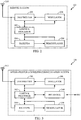
- an exemplary wireless communication system 100 includes one or more remote stations (RS) 102, one or more base stations (BS) 104, one or more base station controllers (BSC) 106, and a core network 108.
- Core network may be connected to an Internet 110 and a Public Switched Telephone Network (PSTN) 112 via suitable backhauls.
- PSTN Public Switched Telephone Network
- Wireless communication system 100 may employ any one of a number of multiple access techniques such as code division multiple access (CDMA), time division multiple access (TDMA), frequency division multiple access (FDMA), space division multiple access (SDMA), polarization division multiple access (PDMA), or other modulation techniques known in the art.
- CDMA code division multiple access
- TDMA time division multiple access
- FDMA frequency division multiple access
- SDMA space division multiple access
- PDMA polarization division multiple access
- remote station 102 includes transmitter 200 configured to transmit packet data 600 on an uplink channel and receiver 204.
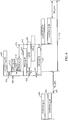
- Receiver 204 is configured to receive a first frame 624 having a downlink dedicated physical channel, first frame 624 being defined by a first propagation delay 623 and a first time offset 620 relative to a reference timing 608 based on a common control physical channel 606 and receive a second frame 614 having a downlink dedicated control channel responsive to the packet data received by a base station, a beginning of the second frame 614 being defined by a second propagation delay 613 and a second time offset 610 from reference timing 608, second time offset 610 being a function of first time offset 620.
- a downlink dedicated physical channel (DPCH) included in first frame 624 may be a downlink Dedicated Physical Data Channel (DPDCH), common control physical channel 606 may be a Primary Common Control Physical Channel (P-CCPCH), and a downlink dedicated control channel included in second frame 614 may be an E-DCH (Enhanced Dedicated Channel) Hybrid ARQ Indicator Channel (E-HICH), all of which are shown in Fig. 6 .
- common control physical channel 606 may be a Common Pilot Channel (CPICH) and a downlink dedicated control channel included in second frame 614 may be an E-DCH Relative Grant Channel (E-RGCH).
- First and second propagation delays 623, 613 may generally be the same delay.
- first time offset 620 may be ⁇ dpch and second time offset 610 may be ⁇ ec .
- an apparatus 104 for a wireless communication system includes a control processor 302 configured to receive packet data 602 on an uplink channel from a remote station, generate a first frame 618 having a downlink dedicated physical channel, first frame 618 being defined by a first time offset 620 relative to a reference timing 608 based on a common control physical channel 606, and generate a second frame 612 having a downlink dedicated control channel responsive to the received packet data, a beginning of second frame 612 being defined by a second time offset 610 from reference timing 608, second time offset 610 being a function of first time offset 620.
- a downlink dedicated physical channel (DPCH) included in first frame 618 may be a downlink Dedicated Physical Data Channel (DPDCH)
- common control physical channel 606 may be a Primary Common Control Physical Channel (P-CCPCH)
- E-DCH Enhanced Dedicated Channel
- E-HICH Hybrid ARQ Indicator Channel
- common control physical channel 606 may be a Common Pilot Channel (CPICH) and a downlink dedicated control channel included in second frame 612 may be an E-DCH Relative Grant Channel (E-RGCH).
- CPICH Common Pilot Channel
- E-RGCH E-DCH Relative Grant Channel
- apparatus 104 includes a modulator 306, an interface 308 for communicating with a BSC, such as BSC 106 shown in Fig. 1 , a transmitter 300, a receiver 304, a demodulator 310, and an antenna 312, the functions of which are known in the art.
- apparatus 104 is a base station.
- apparatus 104 is a base station controller in which case interface 308 communicates with a core network and antenna 312 may be replaced with a wireline connected to a base station.
- the transmitter and the receiver in either the remote station or the apparatus for a wireless communication system may be separate components as shown.
- the transmitter and receiver in either the remote station or the apparatus for a wireless communication may be a single component, commonly referred to as a "transceiver.”
- a flow diagram of a method or process 400 of operating a remote station for wireless communication in accordance with one embodiment of the present invention is shown in which process 400 may be implemented by a control processor in conjunction with other components of a remote station, such as control processor 202 of remote station 102, shown in Fig. 2 .
- a remote station such as remote station 102 (see Fig. 2 ) acquires the system.
- remote station 102 registers to the system and establishes a call/session at 406.
- remote station 102 transmits packet data on an uplink channel and at 410 receives a first frame having a downlink dedicated physical channel, the first frame being defined by a first propagation delay and a first time offset relative to a reference timing based on a common control physical channel.
- remote station 102 receives a second frame having a downlink dedicated control channel responsive to the packet data received by a base station, a beginning of the second frame being defined by a second propagation delay and a second time offset from the reference timing, the second time offset being a function of the first time offset.
- a flow diagram of a method or process 500 of operating an apparatus for a wireless communication system in accordance with one embodiment of the present invention is shown in which process 500 may be implemented by control processor 302 (see Fig. 3 ) in conjunction with other components of apparatus 104, e.g., transmitter 300 and receiver 304.
- apparatus 104 receives packet data on an uplink channel from a remote station, such as remote station 102 (see Fig. 2 ), and at 504 generates a first frame having a downlink dedicated physical channel, the first frame being defined by a first time offset relative to a reference timing based on a common control physical channel.
- apparatus 104 At 506, apparatus 104 generates a second frame having a downlink dedicated control channel responsive to the received packet data, a beginning of the second frame being defined by a second time offset from the reference timing, the second time offset being a function of the first time offset.
- apparatus 104 After transmitting common control physical channel in frame 606 in which the beginning of frame 606 establishes reference timing 608 (see Fig. 6 ), apparatus 104 transmits the first and second frames, in succession, to a remote station such as remote station 102, shown in Fig. 2 .
- FIG. 6 an exemplary relative timing of the downlink and uplink physical channels with the particular channels shown will be described with reference to a remote station or UE, such as remote station 102, and an apparatus for wireless communication, such as apparatus 104, in which case one example of apparatus 104 is a BS or base station, as depicted in Fig. 6 .
- Remote station 102 transmits packet data 600 on an uplink channel to a base station which subsequently receives it as packet data 602 and processes the received packet data within a suitable BS processing time 604.
- Base station then transmits common control physical channel within a frame 606, the beginning of which establishes reference timing 608 for transmitting additional channels to the remote station as well as to other remote stations.
- one such additional channel is a DPCH (Dedicated Physical Channel) channel within frame 618 which, in the embodiment shown in Fig. 6 , has first time offset 620 of zero chips such that frame 618 is time aligned with the start of frame 606 having a P-CCPCH channel.
- First frame 624 having a DPCH channel is received by remote station 102 after a first propagation delay 623.
- a second additional channel transmitted by the base station to remote station 102 is a downlink dedicated control channel in frame 612, such as E-HICH, the beginning of which is defined by second time offset 610. As shown in Fig.
- the transmission of frame 612 is such that the frame does not overlap with the BS_proc time 604 and UE_proc time 616.
- an ACK or NAK signal is transmitted to remote station 102 indicating that the received packet data has been successfully decoded (ACK) or that the received packet data has not been successfully decoded (NAK).
- Remote station 102 receives the downlink dedicated control channel (e.g., E-HICH) in second frame 614 after a second propagation delay 613 and processes the information within a suitable UE processing time 616. If a NAK signal was received by remote station 102, then a retransmission of the packet data may be attempted by remote station 102.
- Additional DPCH channels in additional frames 622 (shown in dotted lines) defined by their respective second time offsets are transmitted to other respective remote stations served by the base station.
- the DPCH channel may be a DPDCH channel (Dedicated Physical Data Channel).
- the transmission time of the DL (downlink) dedicated physical control channels related to E-DCH (Enhanced Dedicated Channel) or E-DPDCH (E-DCH Dedicated Physical Data Channel) may be such that their start or beginning of radio frame boundary occurs ⁇ ec chips later than the corresponding P-CCPCH start of radio frame boundary.
- TTI dpch is the transmission time interval of the DPCH channel
- TTI e-hich is the transmission time interval of the E-HICH channel
- T o_min is a constant
- UE proc_req is the processing time required for a given UE or remote station.
- the value of TTI dpch may be 10 ms
- the value of TTI e-hich may be 2 ms or 10 ms
- the value of T o_min may be 876 chips
- the value of UE proc_req may be 3.5 ms.
- k ⁇ ⁇ dpch T ec ⁇ , (Table 1 Channel E-DCH TTI [ms] ⁇ ec0 chips k E-HICH 10 -7 0...5 E-RGCH (dedicated) E-RGCH (common) 0 E-HICH 2 113 0...5 E-RGCH (dedicated) E-RGCH (common) 0
- a machine-readable medium comprising instructions, the instructions when executed by the machine, cause the machine to perform operations.
- the operations include transmitting packet data on an uplink channel, receiving a first frame having a downlink dedicated physical channel, the first frame being defined by a first propagation delay and a first time offset relative to a reference timing based on a common control physical channel, and receiving a second frame having a downlink dedicated control channel responsive to the packet data received by a base station, a beginning of the second frame being defined by a second propagation delay and a second time offset from the reference timing, the second time offset being a function of the first time offset.
- an apparatus for a wireless communication system includes means for receiving packet data on an uplink channel from a remote station, which may suitably include receiver 304 as shown, for example, in Fig. 3 .
- the apparatus further includes means for generating a first frame having a downlink dedicated physical channel, the first frame being defined by a first time offset relative to a reference timing based on a common control physical channel and means for generating a second frame having a downlink dedicated control channel responsive to the received packet data, a beginning of the second frame being defined by a second time offset from the reference timing, the second time offset being a function of the first time offset.
- Such a means for generating a first frame and a second frame may suitably include control processor 302 as shown, for example, in Fig. 3 .
- a remote station for wireless communication includes means for transmitting packet data on an uplink channel, which may suitably include transmitter 200 as shown, for example, in Fig. 2 .
- the remote station further includes means for receiving a first frame having a downlink dedicated physical channel, the first frame being defined by a first propagation delay and a first time offset relative to a reference timing based on a common control physical channel and means for receiving a second frame having a downlink dedicated control channel responsive to the packet data received by a base station, a beginning of the second frame being defined by a second propagation delay and a second time offset from the reference timing, the second time offset being a function of the first time offset.
- Such a means for receiving a first frame and a second frame may suitably include receiver 204 as shown, for example, in Fig. 2 .
- DSP digital signal processor
- ASIC application specific integrated circuit
- FPGA field programmable gate array
- a general purpose processor may be a microprocessor, but in the alternative, the processor may be any conventional processor, controller, microcontroller, or state machine.
- a processor may also be implemented as a combination of computing devices, e.g., a combination of a DSP and a microprocessor, a plurality of microprocessors, one or more microprocessors in conjunction with a DSP core, or any other such configuration.
- a software module may reside in RAM memory, flash memory, ROM memory, EPROM memory, EEPROM memory, registers, hard disk, a removable disk, a CD-ROM, or any other form of storage medium known in the art.
- An exemplary storage medium is coupled to the processor such the processor can read information from, and write information to, the storage medium.
- the storage medium may be integral to the processor.
- the processor and the storage medium may reside in an ASIC.
- the ASIC may reside in a user terminal.
- the processor and the storage medium may reside as discrete components in a user terminal.
Landscapes
- Engineering & Computer Science (AREA)
- Computer Networks & Wireless Communication (AREA)
- Signal Processing (AREA)
- Quality & Reliability (AREA)
- Mobile Radio Communication Systems (AREA)
- Time-Division Multiplex Systems (AREA)
- Transceivers (AREA)
Claims (17)
- Eine Basisstation für Drahtloskommunikation mit einer Verarbeitungszeit zum Verarbeiten von Paketdaten, wobei die Basisstation Folgendes aufweist:einen Empfänger, der konfiguriert ist zum:Empfangen von Paketdaten auf einem Uplink- bzw. Aufwärtsstreckenkanal von einer Mobilstation; undeinem Sender, der konfiguriert ist zum:
Senden, von der Basisstation, eines dedizierten physischen Kanals bzw. DPCH (DPCH = dedicated physical channel) auf einem ersten Rahmen (624), wobei der erste Rahmen einen ersten Zeitversatz relativ zu einer Zeitreferenz hat, die mit einem primären gemeinsamen physischen Steuerkanal bzw. P-CCPCH (P-CCPCH = primary common control physical channel) assoziiert ist; und der dadurch gekennzeichnet ist, dass er konfiguriert ist zum:
Senden, von der Basisstation, eines erweiterten dedizierten hybriden ARQ-Indikatorkanals bzw. E-HICH (E-HICH = enhanced dedicated hybrid ARQ indicator channel) oder eines erweiterten, dedizierten relativen Zuteilungskanals bzw. E-RGCH (E-RGCH = enhanced dedicated channel relative grant channel) auf einem zweiten Rahmen (612), wobei der zweite Rahmen in einer Zeitperiode gesendet wird, die sich nicht mit einer Fernstationsverarbeitungszeit überlappt, wobei der E-HICH oder E-RGCH auf die Paketdatensendung auf dem Aufwärtsstreckenkanal ansprechen, wobei der zweite Rahmen einen zweiten Zeitversatz relativ zu der Zeitreferenz hat, wobei der zweite Zeitversatz eine Funktion des ersten Zeitversatzes ist, wobei der zweite Zeitversatz durch folgende Gleichung definiert wird:

- Basisstation nach Anspruch 1, wobei der zweite Zeitversatz weiter eine Funktion eines Sendezeitintervalls des DPCH ist.
- Basisstation nach Anspruch 2, wobei der zweite Versatz weiter eine Funktion eines Sendezeitintervalls des E-HICH ist.
- Basisstation nach Anspruch 2, wobei der zweite Zeitversatz weiter eine Funktion eines Sendezeitintervalls des E-RGCH ist.
- Ein Verfahren für eine Basisstation für Drahtloskommunikation mit einer Verarbeitungszeit zum Verarbeiten von Paketdaten, wobei das Verfahren Folgendes aufweist:Empfangen von Empfangspaketdaten auf einem Uplink- bzw. Aufwärtsstreckenkanal von einer Mobilstation;Senden, von der Basisstation, eines dedizierten physischen Kanals bzw. DPCH (DPCH = dedicated physical channel) auf einem ersten Rahmen (624), wobei der erste Rahmen einen ersten Zeitversatz relativ zu einer Zeitreferenz hat, die mit einem primären gemeinsamen physischen Steuerkanal bzw. P-CCPCH (P-CCPCH = primary common control physical channel) assoziiert ist; und das gekennzeichnet ist durch:
Senden, von der Basisstation, eines erweiterten dedizierten hybriden ARQ-Indikatorkanals bzw. E-HICH (E-HICH = enhanced dedicated hybrid ARQ indicator channel) oder eines erweiterten, dedizierten relativen Zuteilungskanals bzw. E-RGCH (E-RGCH = enhanced dedicated channel relative grant channel) auf einem zweiten Rahmen (612), wobei der zweite Rahmen in einer Zeitperiode gesendet wird, die sich nicht mit einer Fernstationsverarbeitungszeit überlappt, wobei der E-HICH oder E-RGCH auf die Paketdatensendung auf dem Aufwärtsstreckenkanal ansprechen, wobei der zweite Rahmen einen zweiten Zeitversatz relativ zu der Zeitreferenz hat, wobei der zweite Zeitversatz eine Funktion des ersten Zeitversatzes ist, wobei der zweite Zeitversatz durch folgende Gleichung definiert wird:

- Verfahren nach Anspruch 5, wobei der zweite Zeitversatz weiter eine Funktion eines Sendezeitintervalls des DPCH ist.
- Verfahren nach Anspruch 6, wobei der zweite Zeitversatz weiter eine Funktion eines Sendezeitintervalls des E-HICH ist.
- Verfahren nach Anspruch 7, wobei der zweite Zeitversatz weiter eine Funktion eines Sendezeitintervalls des E-RGCH ist.
- Ein System für Drahtloskommunikation, das Folgendes aufweist: eine Basisstation nach Anspruch 1 und eine Fernstation bzw. entfernte Station, wobei die Fernstation Folgendes aufweist:
einen Sender, der konfiguriert ist zum:Senden von Paketdaten auf einem Uplink- bzw. Aufwärtsstreckenkanal an eine Basisstation gemäß Anspruch 1 mit einer Verarbeitungszeit zum Verarbeiten der Paketdaten;und einen Empfänger, der konfiguriert ist zum:
Empfangen, von der Basisstation, eines dedizierten physischen Kanals bzw. DPCH (DPCH = dedicated physical channel) auf einem ersten Rahmen (624), wobei der erste Rahmen einen ersten Zeitversatz relativ zu einer Zeitreferenz hat, die mit einem primären gemeinsamen physischen Steuerkanal bzw. P-CCPCH (P-CCPCH = primary common control physical channel) assoziiert ist; und der dadurch gekennzeichnet ist, dass er konfiguriert ist zum:Empfangen, von der Basisstation, eines erweiterten dedizierten hybriden ARQ-Indikatorkanals bzw. E-HICH (E-HICH = enhanced dedicated hybrid ARQ indicator channel) oder eines erweiterten, dedizierten relativen Zuteilungskanals bzw. E-RGCH (E-RGCH = enhanced dedicated channel relative grant channel) auf einem zweiten Rahmen (612),wobei der zweite Rahmen in einer Zeitperiode gesendet wird, die sich nicht mit einer Fernstationsverarbeitungszeit überlappt, wobei der E-HICH oder E-RGCH auf die Paketdatensendung auf dem Aufwärtsstreckenkanal ansprechen, wobei der zweite Rahmen einen zweiten Zeitversatz relativ zu der Zeitreferenz hat, wobei der zweite Zeitversatz eine Funktion des ersten Zeitversatzes ist. - System nach Anspruch 9, wobei in Bezug auf die Fernstation, der zweite Zeitversatz weiter eine Funktion eines Sendezeitintervalls des DPCH ist.
- System nach Anspruch 10, wobei in Bezug auf die Fernstation, der zweite Sendezeitversatz weiter eine Funktion eines Sendezeitintervalls des E-HICH oder des E-RGCH ist.
- Ein Verfahren für Drahtloskommunikation, wobei das Verfahren die Schritte nach Anspruch 5 aufweist, und an einer Fernstation die folgenden Schritte aufweist:Senden von Paketdaten auf einem Uplink- bzw. Aufwärtsstreckenkanal an eine Basisstation nach Anspruch 1 mit einer Verarbeitungszeit zum Verarbeiten der Paketdaten;Empfangen, von der Basisstation, eines physischen Kanals auf einem ersten Rahmen (624), wobei der erste Rahmen einen ersten Zeitversatz relativ zu einer Zeitreferenz hat, die mit einem gemeinsamen Steuerkanal assoziiert ist;und das gekennzeichnet ist durch:
Empfangen, von der Basisstation, eines erweiterten dedizierten hybriden ARQ-Indikatorkanals bzw. E-HICH (E-HICH = enhanced dedicated hybrid ARQ indicator channel) oder eines erweiterten, dedizierten relativen Zuteilungskanals bzw. E-RGCH (E-RGCH = enhanced dedicated channel relative grant channel) auf einem zweiten Rahmen (612), wobei der zweite Rahmen in einer Zeitperiode empfangen wird, die sich nicht mit einer Fernstationsverarbeitungszeit überlappt, wobei der E-HICH oder E-RGCH auf die Paketdatensendung auf dem Aufwärtsstreckenkanal ansprechen, wobei der zweite Rahmen einen zweiten Zeitversatz relativ zu der Zeitreferenz hat, wobei der zweite Zeitversatz eine Funktion des ersten Zeitversatzes ist. - Verfahren nach Anspruch 12, wobei, in Bezug auf die Fernstation, der zweite Zeitversatz weiter eine Funktion eines Sendezeitintervalls des physischen Kanals ist.
- Verfahren nach Anspruch 13, wobei, in Bezug auf die Fernstation, der zweite Zeitversatz weiter eine Funktion eines Sendezeitintervalls des E-HICH oder E-RGCH ist.
- System nach Anspruch 9, wobei, in Bezug auf die Fernstation, der zweite Zeitversatz weiter eine Funktion eines Sendezeitintervalls des DPCH ist.
- System nach Anspruch 15, wobei, in Bezug auf die Fernstation, der zweite Zeitversatz weiter eine Funktion eines Sendezeitintervalls des E-HICH ist.
- System nach Anspruch 15, wobei, in Bezug auf die Fernstation, der zweite Zeitversatz weiter eine Funktion eines Sendezeitintervalls des E-RGCH ist.
Priority Applications (1)
| Application Number | Priority Date | Filing Date | Title |
|---|---|---|---|
| EP20212517.5A EP3809608A1 (de) | 2004-11-10 | 2005-11-07 | Verfahren und vorrichtung zur ableitung des übertragungstermins eines downlink-steuerkanals zur unterstützung erweiterten uplinkbetriebs |
Applications Claiming Priority (4)
| Application Number | Priority Date | Filing Date | Title |
|---|---|---|---|
| US62704804P | 2004-11-10 | 2004-11-10 | |
| US11/266,810 US7643515B2 (en) | 2004-11-10 | 2005-11-03 | Method and apparatus for deriving transmission timing of a downlink control channel in support of enhanced uplink operation |
| EP05817024A EP1810425B1 (de) | 2004-11-10 | 2005-11-07 | Verfahren und vorrichtung zur ableitung des übertragungstermins eines downlink-steuerkanals zur unterstützung erweiterten uplinkbetriebs |
| PCT/US2005/040367 WO2006052932A1 (en) | 2004-11-10 | 2005-11-07 | Method and apparatus for deriving transmission timing of a downlink control channel in support of enhanced uplink operation |
Related Parent Applications (2)
| Application Number | Title | Priority Date | Filing Date |
|---|---|---|---|
| EP05817024A Division EP1810425B1 (de) | 2004-11-10 | 2005-11-07 | Verfahren und vorrichtung zur ableitung des übertragungstermins eines downlink-steuerkanals zur unterstützung erweiterten uplinkbetriebs |
| EP05817024.2 Division | 2005-11-07 |
Related Child Applications (1)
| Application Number | Title | Priority Date | Filing Date |
|---|---|---|---|
| EP20212517.5A Division EP3809608A1 (de) | 2004-11-10 | 2005-11-07 | Verfahren und vorrichtung zur ableitung des übertragungstermins eines downlink-steuerkanals zur unterstützung erweiterten uplinkbetriebs |
Publications (3)
| Publication Number | Publication Date |
|---|---|
| EP2101422A2 EP2101422A2 (de) | 2009-09-16 |
| EP2101422A3 EP2101422A3 (de) | 2013-03-13 |
| EP2101422B1 true EP2101422B1 (de) | 2020-12-16 |
Family
ID=35985848
Family Applications (3)
| Application Number | Title | Priority Date | Filing Date |
|---|---|---|---|
| EP20212517.5A Withdrawn EP3809608A1 (de) | 2004-11-10 | 2005-11-07 | Verfahren und vorrichtung zur ableitung des übertragungstermins eines downlink-steuerkanals zur unterstützung erweiterten uplinkbetriebs |
| EP05817024A Expired - Lifetime EP1810425B1 (de) | 2004-11-10 | 2005-11-07 | Verfahren und vorrichtung zur ableitung des übertragungstermins eines downlink-steuerkanals zur unterstützung erweiterten uplinkbetriebs |
| EP09160819.0A Expired - Lifetime EP2101422B1 (de) | 2004-11-10 | 2005-11-07 | Verfahren und Vorrichtung zur Ableitung des Übertragungstermins eines Downlink-Steuerkanals zur Unterstützung eines erweiterten Uplink-Betriebs |
Family Applications Before (2)
| Application Number | Title | Priority Date | Filing Date |
|---|---|---|---|
| EP20212517.5A Withdrawn EP3809608A1 (de) | 2004-11-10 | 2005-11-07 | Verfahren und vorrichtung zur ableitung des übertragungstermins eines downlink-steuerkanals zur unterstützung erweiterten uplinkbetriebs |
| EP05817024A Expired - Lifetime EP1810425B1 (de) | 2004-11-10 | 2005-11-07 | Verfahren und vorrichtung zur ableitung des übertragungstermins eines downlink-steuerkanals zur unterstützung erweiterten uplinkbetriebs |
Country Status (15)
| Country | Link |
|---|---|
| US (2) | US7643515B2 (de) |
| EP (3) | EP3809608A1 (de) |
| JP (1) | JP4648400B2 (de) |
| KR (2) | KR100916863B1 (de) |
| CN (2) | CN101099308B (de) |
| AT (1) | ATE496437T1 (de) |
| AU (1) | AU2005304715C1 (de) |
| BR (1) | BRPI0517599A (de) |
| CA (1) | CA2586282C (de) |
| DE (1) | DE602005026042D1 (de) |
| MX (1) | MX2007005595A (de) |
| MY (1) | MY144508A (de) |
| PL (1) | PL1810425T3 (de) |
| UA (1) | UA90871C2 (de) |
| WO (1) | WO2006052932A1 (de) |
Families Citing this family (19)
| Publication number | Priority date | Publication date | Assignee | Title |
|---|---|---|---|---|
| JP4056071B2 (ja) * | 2003-03-31 | 2008-03-05 | 富士通株式会社 | 無線通信ネットワークおよびフロー制御方法 |
| US7978663B2 (en) * | 2005-01-11 | 2011-07-12 | Ntt Docomo, Inc. | Wireless resource management method, wireless base station, and wireless line control station |
| JP2009505598A (ja) * | 2005-08-22 | 2009-02-05 | ノキア コーポレイション | 拡張ダウンリンク・チャネルのリリース、構成および再構成を提供する装置、方法およびコンピュータ・プログラム製品 |
| US20070049305A1 (en) * | 2005-08-25 | 2007-03-01 | Lucent Technologies, Inc. | Method for adjusting timing of channels in a wireless communications system |
| US7920517B2 (en) * | 2006-04-28 | 2011-04-05 | Alcatel-Lucent Usa Inc. | Uplink load control including individual measurements |
| FR2901954A1 (fr) | 2006-05-31 | 2007-12-07 | Nec Technologies Uk Ltd | Procede d'optimisation de la procedure de selection de format de donnees (e-tfc) pour une communication ascendante |
| US8446893B2 (en) * | 2006-12-21 | 2013-05-21 | Samsung Electronics Co., Ltd. | Enhanced coexistence beacon protocol (ECBP) for precise intercell synchronization of overlapping wireless base stations |
| EP2613604B1 (de) | 2007-09-28 | 2022-05-25 | RnB Wireless LLC | Verfahren und Vorrichtungen zum Beenden der Übertragung einer Nachricht in einem erweiterten dedizierten Kanal im CELL_FACH Status |
| EP3820243A2 (de) | 2007-10-25 | 2021-05-12 | Signal Trust for Wireless Innovation | Verwaltung und einrichtung von erweiterten mac-e/es-ressourcen |
| JP5127933B2 (ja) | 2008-01-02 | 2013-01-23 | インターデイジタル パテント ホールディングス インコーポレイテッド | セル再選択の方法および装置 |
| KR101344875B1 (ko) | 2008-06-11 | 2013-12-26 | 노키아 지멘스 네트웍스 오와이 | 업링크 제어 채널에 최적화된 로컬 영역 |
| US8886205B2 (en) | 2009-03-02 | 2014-11-11 | Qualcomm Incorporated | Timing adjustment for synchronous operation in a wireless network |
| US8457079B2 (en) | 2009-10-05 | 2013-06-04 | Motorola Mobility Llc | Method and apparatus for mitigating downlink control channel interference |
| JP4901947B2 (ja) * | 2009-12-16 | 2012-03-21 | 株式会社エヌ・ティ・ティ・ドコモ | 制御装置及び移動通信方法 |
| US9119197B2 (en) | 2012-05-22 | 2015-08-25 | Futurewei Technologies, Inc. | System and method for delay scheduling |
| US8897206B2 (en) | 2012-05-23 | 2014-11-25 | Hughes Network Systems, Llc | Frame timing synchronization in a geostationary satellite system |
| CN111431689B (zh) * | 2014-03-13 | 2023-04-11 | Lg电子株式会社 | 装置到装置用户设备在无线通信系统中发送信号的方法和设备 |
| EP3376814A4 (de) * | 2015-11-12 | 2018-10-31 | Fujitsu Limited | Endgerätevorrichtung, basisstationsvorrichtung, drahtloskommunikationssystem und drahtloskommunikationsverfahren |
| ES2941046T3 (es) | 2017-04-28 | 2023-05-16 | Guangdong Oppo Mobile Telecommunications Corp Ltd | Método de indicación de ubicación de canal y producto relacionado |
Family Cites Families (19)
| Publication number | Priority date | Publication date | Assignee | Title |
|---|---|---|---|---|
| US5404355A (en) | 1992-10-05 | 1995-04-04 | Ericsson Ge Mobile Communications, Inc. | Method for transmitting broadcast information in a digital control channel |
| AU677079B2 (en) | 1993-06-14 | 1997-04-10 | Telefonaktiebolaget Lm Ericsson (Publ) | Time alignment of transmission in a down-link of a CDMA system |
| RU2189072C2 (ru) | 1996-01-31 | 2002-09-10 | Ипсилон Нетуоркс, Инк. | Усовершенствованный способ и устройство для динамического смещения между пакетами маршрутизации и коммутации в сети передачи данных |
| ZA979449B (en) | 1996-11-01 | 1998-05-12 | Ericsson Telefon Ab L M | Multi-frame synchronization for parallel channel transmissions. |
| SE509836C2 (sv) | 1997-06-13 | 1999-03-15 | Ericsson Telefon Ab L M | Förfarande och arrangemang i ett radiokommunikationssystem |
| US6681099B1 (en) | 2000-05-15 | 2004-01-20 | Nokia Networks Oy | Method to calculate true round trip propagation delay and user equipment location in WCDMA/UTRAN |
| US7254118B1 (en) | 2000-05-22 | 2007-08-07 | Qualcomm Incorporated | Method and apparatus in a CDMA communication system |
| AU765333B2 (en) * | 2000-06-24 | 2003-09-18 | Samsung Electronics Co., Ltd. | Apparatus and method for synchronization of uplink synchronous transmission scheme in a CDMA communication system |
| US7120134B2 (en) | 2001-02-15 | 2006-10-10 | Qualcomm, Incorporated | Reverse link channel architecture for a wireless communication system |
| EP1261227A1 (de) | 2001-05-21 | 2002-11-27 | Motorola, Inc. | Verfahren und Gerät zur erhöhten Informationsübertragung in einem Kommunikationssystem |
| EP1286491B1 (de) | 2001-08-22 | 2004-06-30 | Matsushita Electric Industrial Co., Ltd. | Übertragungsverfahren und Übertragungsgerät mit Mehrkanal-ARQ |
| CN1192531C (zh) * | 2001-12-21 | 2005-03-09 | 华为技术有限公司 | 一种宽带码分多址系统同步的实现方法 |
| US7292854B2 (en) * | 2002-02-15 | 2007-11-06 | Lucent Technologies Inc. | Express signaling in a wireless communication system |
| JP4182469B2 (ja) | 2002-05-14 | 2008-11-19 | 日本電気株式会社 | 移動体通信システム、その基地局制御装置および無線基地局並びにこのシステムの通信タイミング制御方法 |
| EP1566027A2 (de) | 2002-11-25 | 2005-08-24 | Siemens Aktiengesellschaft | Kanalkonfiguration und timing für erweitertes aufwärts-dch |
| US8134994B2 (en) * | 2003-02-14 | 2012-03-13 | Alcatel Lucent | Method of scheduling on downlink and transmitting on uplink dedicated channels |
| US7680094B2 (en) * | 2003-09-29 | 2010-03-16 | Alcatel-Lucent Usa Inc. | Method of aligning physical channels for uplink transmission |
| GB0410108D0 (en) * | 2004-05-06 | 2004-06-09 | Koninkl Philips Electronics Nv | Communication system and method of operating the system |
| US7693110B2 (en) * | 2004-09-16 | 2010-04-06 | Motorola, Inc. | System and method for downlink signaling for high speed uplink packet access |
-
2005
- 2005-11-03 US US11/266,810 patent/US7643515B2/en active Active
- 2005-11-07 WO PCT/US2005/040367 patent/WO2006052932A1/en not_active Ceased
- 2005-11-07 KR KR1020097000661A patent/KR100916863B1/ko not_active Expired - Lifetime
- 2005-11-07 PL PL05817024T patent/PL1810425T3/pl unknown
- 2005-11-07 KR KR1020077012994A patent/KR100894754B1/ko not_active Expired - Lifetime
- 2005-11-07 CN CN200580046108.3A patent/CN101099308B/zh not_active Expired - Lifetime
- 2005-11-07 EP EP20212517.5A patent/EP3809608A1/de not_active Withdrawn
- 2005-11-07 UA UAA200706384A patent/UA90871C2/uk unknown
- 2005-11-07 BR BRPI0517599-2A patent/BRPI0517599A/pt not_active Application Discontinuation
- 2005-11-07 CN CN2010105867503A patent/CN102006117B/zh not_active Expired - Lifetime
- 2005-11-07 MX MX2007005595A patent/MX2007005595A/es active IP Right Grant
- 2005-11-07 AT AT05817024T patent/ATE496437T1/de not_active IP Right Cessation
- 2005-11-07 CA CA2586282A patent/CA2586282C/en not_active Expired - Lifetime
- 2005-11-07 JP JP2007541274A patent/JP4648400B2/ja not_active Expired - Lifetime
- 2005-11-07 EP EP05817024A patent/EP1810425B1/de not_active Expired - Lifetime
- 2005-11-07 EP EP09160819.0A patent/EP2101422B1/de not_active Expired - Lifetime
- 2005-11-07 DE DE602005026042T patent/DE602005026042D1/de not_active Expired - Lifetime
- 2005-11-07 AU AU2005304715A patent/AU2005304715C1/en not_active Expired
- 2005-11-09 MY MYPI20055254A patent/MY144508A/en unknown
-
2009
- 2009-11-19 US US12/622,267 patent/US8018974B2/en not_active Expired - Lifetime
Non-Patent Citations (2)
| Title |
|---|
| MOTOROLA: "Uplink Control Channel Design (Enhanced Uplink)", 3GPP DRAFT; R1-040454_EU9.1ULCCH, 3RD GENERATION PARTNERSHIP PROJECT (3GPP), MOBILE COMPETENCE CENTRE ; 650, ROUTE DES LUCIOLES ; F-06921 SOPHIA-ANTIPOLIS CEDEX ; FRANCE, vol. RAN WG1, no. Montreal, Canada; 20040506, 6 May 2004 (2004-05-06), XP050098830 * |
| QUALCOMM EUROPE: "TP on Timing of DL Support Channels", 3GPP DRAFT; R1-041115, 3RD GENERATION PARTNERSHIP PROJECT (3GPP), MOBILE COMPETENCE CENTRE ; 650, ROUTE DES LUCIOLES ; F-06921 SOPHIA-ANTIPOLIS CEDEX ; FRANCE, vol. RAN WG1, no. Seoul, Korea; 20040916, 16 September 2004 (2004-09-16), XP050099320 * |
Also Published As
Similar Documents
| Publication | Publication Date | Title |
|---|---|---|
| US8018974B2 (en) | Method and apparatus for deriving transmission timing of a downlink control channel in support of enhanced uplink operation | |
| US8644200B2 (en) | Time multiplexing of unicast and multicast signals on a downlink carrier frequency in a wireless communication system | |
| EP2654235A1 (de) | HARQ zum dynamischen Ändern der TTD-UL/DL-Konfiguration in LTE-TDD-Systemen | |
| CN101583196A (zh) | 用于提供随机接入窗口配置的方法和装置 | |
| EP2168291B1 (de) | Verfahren und vorrichtung zum vorsehen einer impliziten negativen empfangsquittierung | |
| US20150215821A1 (en) | METHOD AND APPARATUS FOR TIME-OF-DEPARTURE (ToD) ADJUSTMENT BASED ON TIME-OF-ARRIVAL (ToA) CORRECTION | |
| RU2367092C2 (ru) | Способ и устройство для вывода временной шкалы передачи канала управления нисходящей линии связи при поддержке расширенной работы восходящей линии связи | |
| HK1136400B (en) | Method and apparatus for deriving transmission timing of a downlink control channel in support of enhanced uplink operation | |
| HK1136400A (en) | Method and apparatus for deriving transmission timing of a downlink control channel in support of enhanced uplink operation | |
| CN114270748B (zh) | 一种重复传输方法、电子设备及存储介质 | |
| HK1108528B (en) | Method and apparatus for deriving transmission timing of a downlink control channel | |
| HK1156159B (en) | Method and apparatus for deriving transmission timing of a downlink control channel in support of enhanced uplink operation | |
| EP2944150B1 (de) | E-hich-informationsübertragungsverfahren, basisstation und benutzervorrichtung | |
| CN102100101B (zh) | 时分同步码分多址(td-scdma)网络中传输失败检测的方法和装置 |
Legal Events
| Date | Code | Title | Description |
|---|---|---|---|
| PUAI | Public reference made under article 153(3) epc to a published international application that has entered the european phase |
Free format text: ORIGINAL CODE: 0009012 |
|
| 17P | Request for examination filed |
Effective date: 20090520 |
|
| AC | Divisional application: reference to earlier application |
Ref document number: 1810425 Country of ref document: EP Kind code of ref document: P |
|
| AK | Designated contracting states |
Kind code of ref document: A2 Designated state(s): AT BE BG CH CY CZ DE DK EE ES FI FR GB GR HU IE IS IT LI LT LU LV MC NL PL PT RO SE SI SK TR |
|
| REG | Reference to a national code |
Ref country code: HK Ref legal event code: DE Ref document number: 1136400 Country of ref document: HK |
|
| PUAL | Search report despatched |
Free format text: ORIGINAL CODE: 0009013 |
|
| AK | Designated contracting states |
Kind code of ref document: A3 Designated state(s): AT BE BG CH CY CZ DE DK EE ES FI FR GB GR HU IE IS IT LI LT LU LV MC NL PL PT RO SE SI SK TR |
|
| RIC1 | Information provided on ipc code assigned before grant |
Ipc: H04B 7/26 20060101AFI20130205BHEP Ipc: H04W 56/00 20090101ALN20130205BHEP |
|
| STAA | Information on the status of an ep patent application or granted ep patent |
Free format text: STATUS: EXAMINATION IS IN PROGRESS |
|
| 17Q | First examination report despatched |
Effective date: 20171127 |
|
| RIC1 | Information provided on ipc code assigned before grant |
Ipc: H04B 7/26 20060101AFI20200409BHEP Ipc: H04W 56/00 20090101ALN20200409BHEP |
|
| GRAP | Despatch of communication of intention to grant a patent |
Free format text: ORIGINAL CODE: EPIDOSNIGR1 |
|
| STAA | Information on the status of an ep patent application or granted ep patent |
Free format text: STATUS: GRANT OF PATENT IS INTENDED |
|
| RIC1 | Information provided on ipc code assigned before grant |
Ipc: H04B 7/26 20060101AFI20200513BHEP Ipc: H04W 56/00 20090101ALN20200513BHEP |
|
| RIC1 | Information provided on ipc code assigned before grant |
Ipc: H04W 56/00 20090101ALN20200518BHEP Ipc: H04B 7/26 20060101AFI20200518BHEP |
|
| INTG | Intention to grant announced |
Effective date: 20200605 |
|
| GRAS | Grant fee paid |
Free format text: ORIGINAL CODE: EPIDOSNIGR3 |
|
| GRAA | (expected) grant |
Free format text: ORIGINAL CODE: 0009210 |
|
| STAA | Information on the status of an ep patent application or granted ep patent |
Free format text: STATUS: THE PATENT HAS BEEN GRANTED |
|
| AC | Divisional application: reference to earlier application |
Ref document number: 1810425 Country of ref document: EP Kind code of ref document: P |
|
| AK | Designated contracting states |
Kind code of ref document: B1 Designated state(s): AT BE BG CH CY CZ DE DK EE ES FI FR GB GR HU IE IS IT LI LT LU LV MC NL PL PT RO SE SI SK TR |
|
| REG | Reference to a national code |
Ref country code: GB Ref legal event code: FG4D |
|
| REG | Reference to a national code |
Ref country code: IE Ref legal event code: FG4D |
|
| REG | Reference to a national code |
Ref country code: DE Ref legal event code: R096 Ref document number: 602005057078 Country of ref document: DE |
|
| REG | Reference to a national code |
Ref country code: AT Ref legal event code: REF Ref document number: 1346550 Country of ref document: AT Kind code of ref document: T Effective date: 20210115 |
|
| PG25 | Lapsed in a contracting state [announced via postgrant information from national office to epo] |
Ref country code: GR Free format text: LAPSE BECAUSE OF FAILURE TO SUBMIT A TRANSLATION OF THE DESCRIPTION OR TO PAY THE FEE WITHIN THE PRESCRIBED TIME-LIMIT Effective date: 20210317 Ref country code: FI Free format text: LAPSE BECAUSE OF FAILURE TO SUBMIT A TRANSLATION OF THE DESCRIPTION OR TO PAY THE FEE WITHIN THE PRESCRIBED TIME-LIMIT Effective date: 20201216 |
|
| REG | Reference to a national code |
Ref country code: AT Ref legal event code: MK05 Ref document number: 1346550 Country of ref document: AT Kind code of ref document: T Effective date: 20201216 |
|
| REG | Reference to a national code |
Ref country code: NL Ref legal event code: MP Effective date: 20201216 |
|
| PG25 | Lapsed in a contracting state [announced via postgrant information from national office to epo] |
Ref country code: BG Free format text: LAPSE BECAUSE OF FAILURE TO SUBMIT A TRANSLATION OF THE DESCRIPTION OR TO PAY THE FEE WITHIN THE PRESCRIBED TIME-LIMIT Effective date: 20210316 Ref country code: LV Free format text: LAPSE BECAUSE OF FAILURE TO SUBMIT A TRANSLATION OF THE DESCRIPTION OR TO PAY THE FEE WITHIN THE PRESCRIBED TIME-LIMIT Effective date: 20201216 Ref country code: SE Free format text: LAPSE BECAUSE OF FAILURE TO SUBMIT A TRANSLATION OF THE DESCRIPTION OR TO PAY THE FEE WITHIN THE PRESCRIBED TIME-LIMIT Effective date: 20201216 |
|
| PG25 | Lapsed in a contracting state [announced via postgrant information from national office to epo] |
Ref country code: NL Free format text: LAPSE BECAUSE OF FAILURE TO SUBMIT A TRANSLATION OF THE DESCRIPTION OR TO PAY THE FEE WITHIN THE PRESCRIBED TIME-LIMIT Effective date: 20201216 |
|
| REG | Reference to a national code |
Ref country code: LT Ref legal event code: MG9D |
|
| PG25 | Lapsed in a contracting state [announced via postgrant information from national office to epo] |
Ref country code: SK Free format text: LAPSE BECAUSE OF FAILURE TO SUBMIT A TRANSLATION OF THE DESCRIPTION OR TO PAY THE FEE WITHIN THE PRESCRIBED TIME-LIMIT Effective date: 20201216 Ref country code: RO Free format text: LAPSE BECAUSE OF FAILURE TO SUBMIT A TRANSLATION OF THE DESCRIPTION OR TO PAY THE FEE WITHIN THE PRESCRIBED TIME-LIMIT Effective date: 20201216 Ref country code: PT Free format text: LAPSE BECAUSE OF FAILURE TO SUBMIT A TRANSLATION OF THE DESCRIPTION OR TO PAY THE FEE WITHIN THE PRESCRIBED TIME-LIMIT Effective date: 20210416 Ref country code: EE Free format text: LAPSE BECAUSE OF FAILURE TO SUBMIT A TRANSLATION OF THE DESCRIPTION OR TO PAY THE FEE WITHIN THE PRESCRIBED TIME-LIMIT Effective date: 20201216 Ref country code: CZ Free format text: LAPSE BECAUSE OF FAILURE TO SUBMIT A TRANSLATION OF THE DESCRIPTION OR TO PAY THE FEE WITHIN THE PRESCRIBED TIME-LIMIT Effective date: 20201216 Ref country code: LT Free format text: LAPSE BECAUSE OF FAILURE TO SUBMIT A TRANSLATION OF THE DESCRIPTION OR TO PAY THE FEE WITHIN THE PRESCRIBED TIME-LIMIT Effective date: 20201216 |
|
| PG25 | Lapsed in a contracting state [announced via postgrant information from national office to epo] |
Ref country code: AT Free format text: LAPSE BECAUSE OF FAILURE TO SUBMIT A TRANSLATION OF THE DESCRIPTION OR TO PAY THE FEE WITHIN THE PRESCRIBED TIME-LIMIT Effective date: 20201216 Ref country code: PL Free format text: LAPSE BECAUSE OF FAILURE TO SUBMIT A TRANSLATION OF THE DESCRIPTION OR TO PAY THE FEE WITHIN THE PRESCRIBED TIME-LIMIT Effective date: 20201216 |
|
| REG | Reference to a national code |
Ref country code: DE Ref legal event code: R097 Ref document number: 602005057078 Country of ref document: DE |
|
| PG25 | Lapsed in a contracting state [announced via postgrant information from national office to epo] |
Ref country code: IS Free format text: LAPSE BECAUSE OF FAILURE TO SUBMIT A TRANSLATION OF THE DESCRIPTION OR TO PAY THE FEE WITHIN THE PRESCRIBED TIME-LIMIT Effective date: 20210416 |
|
| PLBE | No opposition filed within time limit |
Free format text: ORIGINAL CODE: 0009261 |
|
| STAA | Information on the status of an ep patent application or granted ep patent |
Free format text: STATUS: NO OPPOSITION FILED WITHIN TIME LIMIT |
|
| PG25 | Lapsed in a contracting state [announced via postgrant information from national office to epo] |
Ref country code: IT Free format text: LAPSE BECAUSE OF FAILURE TO SUBMIT A TRANSLATION OF THE DESCRIPTION OR TO PAY THE FEE WITHIN THE PRESCRIBED TIME-LIMIT Effective date: 20201216 |
|
| 26N | No opposition filed |
Effective date: 20210917 |
|
| PG25 | Lapsed in a contracting state [announced via postgrant information from national office to epo] |
Ref country code: DK Free format text: LAPSE BECAUSE OF FAILURE TO SUBMIT A TRANSLATION OF THE DESCRIPTION OR TO PAY THE FEE WITHIN THE PRESCRIBED TIME-LIMIT Effective date: 20201216 Ref country code: ES Free format text: LAPSE BECAUSE OF FAILURE TO SUBMIT A TRANSLATION OF THE DESCRIPTION OR TO PAY THE FEE WITHIN THE PRESCRIBED TIME-LIMIT Effective date: 20201216 |
|
| PG25 | Lapsed in a contracting state [announced via postgrant information from national office to epo] |
Ref country code: SI Free format text: LAPSE BECAUSE OF FAILURE TO SUBMIT A TRANSLATION OF THE DESCRIPTION OR TO PAY THE FEE WITHIN THE PRESCRIBED TIME-LIMIT Effective date: 20201216 |
|
| PG25 | Lapsed in a contracting state [announced via postgrant information from national office to epo] |
Ref country code: IS Free format text: LAPSE BECAUSE OF FAILURE TO SUBMIT A TRANSLATION OF THE DESCRIPTION OR TO PAY THE FEE WITHIN THE PRESCRIBED TIME-LIMIT Effective date: 20210416 |
|
| PG25 | Lapsed in a contracting state [announced via postgrant information from national office to epo] |
Ref country code: MC Free format text: LAPSE BECAUSE OF FAILURE TO SUBMIT A TRANSLATION OF THE DESCRIPTION OR TO PAY THE FEE WITHIN THE PRESCRIBED TIME-LIMIT Effective date: 20201216 |
|
| REG | Reference to a national code |
Ref country code: CH Ref legal event code: PL |
|
| PG25 | Lapsed in a contracting state [announced via postgrant information from national office to epo] |
Ref country code: LU Free format text: LAPSE BECAUSE OF NON-PAYMENT OF DUE FEES Effective date: 20211107 Ref country code: BE Free format text: LAPSE BECAUSE OF NON-PAYMENT OF DUE FEES Effective date: 20211130 |
|
| REG | Reference to a national code |
Ref country code: BE Ref legal event code: MM Effective date: 20211130 |
|
| PG25 | Lapsed in a contracting state [announced via postgrant information from national office to epo] |
Ref country code: LI Free format text: LAPSE BECAUSE OF NON-PAYMENT OF DUE FEES Effective date: 20211130 Ref country code: CH Free format text: LAPSE BECAUSE OF NON-PAYMENT OF DUE FEES Effective date: 20211130 |
|
| PG25 | Lapsed in a contracting state [announced via postgrant information from national office to epo] |
Ref country code: IE Free format text: LAPSE BECAUSE OF NON-PAYMENT OF DUE FEES Effective date: 20211107 |
|
| PG25 | Lapsed in a contracting state [announced via postgrant information from national office to epo] |
Ref country code: HU Free format text: LAPSE BECAUSE OF FAILURE TO SUBMIT A TRANSLATION OF THE DESCRIPTION OR TO PAY THE FEE WITHIN THE PRESCRIBED TIME-LIMIT; INVALID AB INITIO Effective date: 20051107 Ref country code: CY Free format text: LAPSE BECAUSE OF FAILURE TO SUBMIT A TRANSLATION OF THE DESCRIPTION OR TO PAY THE FEE WITHIN THE PRESCRIBED TIME-LIMIT Effective date: 20201216 |
|
| PG25 | Lapsed in a contracting state [announced via postgrant information from national office to epo] |
Ref country code: TR Free format text: LAPSE BECAUSE OF FAILURE TO SUBMIT A TRANSLATION OF THE DESCRIPTION OR TO PAY THE FEE WITHIN THE PRESCRIBED TIME-LIMIT Effective date: 20201216 |
|
| PGFP | Annual fee paid to national office [announced via postgrant information from national office to epo] |
Ref country code: DE Payment date: 20241010 Year of fee payment: 20 |
|
| PGFP | Annual fee paid to national office [announced via postgrant information from national office to epo] |
Ref country code: GB Payment date: 20241010 Year of fee payment: 20 |
|
| PGFP | Annual fee paid to national office [announced via postgrant information from national office to epo] |
Ref country code: FR Payment date: 20241010 Year of fee payment: 20 |
|
| REG | Reference to a national code |
Ref country code: DE Ref legal event code: R071 Ref document number: 602005057078 Country of ref document: DE |
|
| REG | Reference to a national code |
Ref country code: GB Ref legal event code: PE20 Expiry date: 20251106 |