EP2098717A2 - Clogging sensor - Google Patents
Clogging sensor Download PDFInfo
- Publication number
- EP2098717A2 EP2098717A2 EP09154268A EP09154268A EP2098717A2 EP 2098717 A2 EP2098717 A2 EP 2098717A2 EP 09154268 A EP09154268 A EP 09154268A EP 09154268 A EP09154268 A EP 09154268A EP 2098717 A2 EP2098717 A2 EP 2098717A2
- Authority
- EP
- European Patent Office
- Prior art keywords
- contact point
- switch lever
- intermediate member
- clogging sensor
- movable contact
- Prior art date
- Legal status (The legal status is an assumption and is not a legal conclusion. Google has not performed a legal analysis and makes no representation as to the accuracy of the status listed.)
- Granted
Links
Images




Classifications
-
- B—PERFORMING OPERATIONS; TRANSPORTING
- B01—PHYSICAL OR CHEMICAL PROCESSES OR APPARATUS IN GENERAL
- B01D—SEPARATION
- B01D35/00—Filtering devices having features not specifically covered by groups B01D24/00 - B01D33/00, or for applications not specifically covered by groups B01D24/00 - B01D33/00; Auxiliary devices for filtration; Filter housing constructions
- B01D35/14—Safety devices specially adapted for filtration; Devices for indicating clogging
- B01D35/143—Filter condition indicators
-
- B—PERFORMING OPERATIONS; TRANSPORTING
- B01—PHYSICAL OR CHEMICAL PROCESSES OR APPARATUS IN GENERAL
- B01D—SEPARATION
- B01D36/00—Filter circuits or combinations of filters with other separating devices
- B01D36/003—Filters in combination with devices for the removal of liquids
- B01D36/006—Purge means
-
- F—MECHANICAL ENGINEERING; LIGHTING; HEATING; WEAPONS; BLASTING
- F02—COMBUSTION ENGINES; HOT-GAS OR COMBUSTION-PRODUCT ENGINE PLANTS
- F02D—CONTROLLING COMBUSTION ENGINES
- F02D33/00—Controlling delivery of fuel or combustion-air, not otherwise provided for
- F02D33/003—Controlling the feeding of liquid fuel from storage containers to carburettors or fuel-injection apparatus ; Failure or leakage prevention; Diagnosis or detection of failure; Arrangement of sensors in the fuel system; Electric wiring; Electrostatic discharge
-
- F—MECHANICAL ENGINEERING; LIGHTING; HEATING; WEAPONS; BLASTING
- F02—COMBUSTION ENGINES; HOT-GAS OR COMBUSTION-PRODUCT ENGINE PLANTS
- F02M—SUPPLYING COMBUSTION ENGINES IN GENERAL WITH COMBUSTIBLE MIXTURES OR CONSTITUENTS THEREOF
- F02M37/00—Apparatus or systems for feeding liquid fuel from storage containers to carburettors or fuel-injection apparatus; Arrangements for purifying liquid fuel specially adapted for, or arranged on, internal-combustion engines
- F02M37/22—Arrangements for purifying liquid fuel specially adapted for, or arranged on, internal-combustion engines, e.g. arrangements in the feeding system
- F02M37/32—Arrangements for purifying liquid fuel specially adapted for, or arranged on, internal-combustion engines, e.g. arrangements in the feeding system characterised by filters or filter arrangements
- F02M37/40—Arrangements for purifying liquid fuel specially adapted for, or arranged on, internal-combustion engines, e.g. arrangements in the feeding system characterised by filters or filter arrangements with means for detection of clogging
-
- F—MECHANICAL ENGINEERING; LIGHTING; HEATING; WEAPONS; BLASTING
- F02—COMBUSTION ENGINES; HOT-GAS OR COMBUSTION-PRODUCT ENGINE PLANTS
- F02M—SUPPLYING COMBUSTION ENGINES IN GENERAL WITH COMBUSTIBLE MIXTURES OR CONSTITUENTS THEREOF
- F02M37/00—Apparatus or systems for feeding liquid fuel from storage containers to carburettors or fuel-injection apparatus; Arrangements for purifying liquid fuel specially adapted for, or arranged on, internal-combustion engines
- F02M37/22—Arrangements for purifying liquid fuel specially adapted for, or arranged on, internal-combustion engines, e.g. arrangements in the feeding system
- F02M37/32—Arrangements for purifying liquid fuel specially adapted for, or arranged on, internal-combustion engines, e.g. arrangements in the feeding system characterised by filters or filter arrangements
- F02M37/44—Filters structurally associated with pumps
-
- H—ELECTRICITY
- H01—ELECTRIC ELEMENTS
- H01H—ELECTRIC SWITCHES; RELAYS; SELECTORS; EMERGENCY PROTECTIVE DEVICES
- H01H1/00—Contacts
- H01H1/50—Means for increasing contact pressure, preventing vibration of contacts, holding contacts together after engagement, or biasing contacts to the open position
-
- H—ELECTRICITY
- H01—ELECTRIC ELEMENTS
- H01H—ELECTRIC SWITCHES; RELAYS; SELECTORS; EMERGENCY PROTECTIVE DEVICES
- H01H35/00—Switches operated by change of a physical condition
- H01H35/24—Switches operated by change of fluid pressure, by fluid pressure waves, or by change of fluid flow
- H01H35/34—Switches operated by change of fluid pressure, by fluid pressure waves, or by change of fluid flow actuated by diaphragm
-
- F—MECHANICAL ENGINEERING; LIGHTING; HEATING; WEAPONS; BLASTING
- F02—COMBUSTION ENGINES; HOT-GAS OR COMBUSTION-PRODUCT ENGINE PLANTS
- F02B—INTERNAL-COMBUSTION PISTON ENGINES; COMBUSTION ENGINES IN GENERAL
- F02B3/00—Engines characterised by air compression and subsequent fuel addition
- F02B3/06—Engines characterised by air compression and subsequent fuel addition with compression ignition
-
- F—MECHANICAL ENGINEERING; LIGHTING; HEATING; WEAPONS; BLASTING
- F02—COMBUSTION ENGINES; HOT-GAS OR COMBUSTION-PRODUCT ENGINE PLANTS
- F02M—SUPPLYING COMBUSTION ENGINES IN GENERAL WITH COMBUSTIBLE MIXTURES OR CONSTITUENTS THEREOF
- F02M37/00—Apparatus or systems for feeding liquid fuel from storage containers to carburettors or fuel-injection apparatus; Arrangements for purifying liquid fuel specially adapted for, or arranged on, internal-combustion engines
- F02M37/04—Feeding by means of driven pumps
- F02M37/16—Feeding by means of driven pumps characterised by provision of personally-, e.g. manually-, operated pumps
Definitions
- the case member 80 is positioned in an upper portion of the clogging sensor 71.
- a switch assembly is housed in the case member 80.
- the switch assembly includes a fixed contact point 81, a movable, contact point 82, and a switch lever 83 with a spring property.
- the fixed contact point 81 is fixed at the case member 80.
- the movable contact point is fixed at one end of the switch lever 83.
- the other end of the switch lever 83 is connected to an end portion of a terminal 84.
- the members such as the switch assembly, are placed at positions shown in FIG. 10 at normal times when the element is not clogged. That is, the diaphragm 77 and the operation bar 76 move upward, the operation bar 76 presses the switch lever 83 to move the switch lever 83 upward against a spring force, and the movable contact point 82 contacts the fixed contact point 81.
- a clogging sensor 30 is provided on an upper surface of the cap 22. Dust and the like may be deposited in the element 25 of the diesel fuel filter 20 as time elapses, and as a result, the element 25 may be clogged. If the element 25 is clogged, a strong negative pressure is generated in the upper space 29 downstream of the element 25.
- the clogging sensor 30 is provided on the upper surface of the cap 22 to detect the negative pressure. When the clogging sensor 30 detects clogging of the element 25, for example, a warming light 30a ( FIG. 2 ) is turned on to notify a driver of the clogging.
- the outer diameter of the disc portion 44 is smaller than the outer diameter of the large-diameter portion 32 of the body member 31.
- a positioning member 47 is provided in an outer end portion of an upper surface of the disc portion 44.
- the positioning member 47 has a rectangular shape in a planar view.
- the positioning member 47 positions the protruding portion 46 so that the protruding portion 46 is farther from the support portion 59 than from the movable contact point 65.
- the positioning member 47 is fitted into a rectangular groove 56b formed in the case member 55 at a position closer to the movable contact point 65 than to the support portion 59.
- the diaphragm 51 is made of resin, and has a thin plate shape.
- FIG. 8 is an enlarged sectional view showing the diaphragm 51.
- the diaphragm 51 includes a thick root portion 51a and a protrusion 51b with a columnar shape.
- the root portion 51a is positioned at an outer peripheral end of the diaphragm 51.
- the protrusion 51b is positioned at a center of a bottom portion of the diaphragm 51 to protrude downward.
- the spring receiver 52 has a U-shape in a sectional view, and is made of resin.
- a circular opening 52a is formed at a center of the spring receiver 52.
- the protrusion 51b of the diaphragm 51 is fitted in the circular opening 52.
- the spring receiver 52 is positioned by fitting the protrusion 51b of the diaphragm 51 in the circular opening 52a.
- the switch lever 63 contacts the protruding portion 46 that functions as the stopper, and the switch lever 63 is supported at two points by the protruding portion 46 and the support portion 59.
- a length from a contact portion of the switch lever 63, which contacts the protruding portion 46, to the movable contact point 65 is shorter than a length from the support portion 59 to the movable contact point 65.
Landscapes
- Engineering & Computer Science (AREA)
- Chemical & Material Sciences (AREA)
- Combustion & Propulsion (AREA)
- Mechanical Engineering (AREA)
- General Engineering & Computer Science (AREA)
- Chemical Kinetics & Catalysis (AREA)
- Physics & Mathematics (AREA)
- Fluid Mechanics (AREA)
- Switches Operated By Changes In Physical Conditions (AREA)
- Measuring Fluid Pressure (AREA)
Abstract
Description
- The invention relates to a clogging sensor that detects clogging of, for example, a diesel fuel filter.
- A diesel engine has been used as an engine of, for example, a vehicle. In the diesel engine, light oil is used as fuel. The light oil is compressed by an injection pump so that the pressure of the light oil becomes high, and the light oil is injected from an injector into a combustion chamber of the engine. Thus, self-combustion occurs in the combustion chamber.
-
FIG. 2 shows an example of a fuel system for the diesel engine. The fuel system mainly includes afuel tank 4, adiesel fuel filter 5, an injection pump 1, acommon rail 2, andinjectors 3. The injection pump 1 is a pump that supplies high-pressure fuel. The fuel in thefuel tank 4 is introduced into the injection pump 1 through thediesel fuel filter 5. The injection pump 1 delivers the fuel to theinjectors 3 through thecommon rail 2 that distributes the fuel. - Foreign substances, for example, refuse, solid foreign substances such as rust, carbon, sludge such as gummy substances, and moisture are mixed into the fuel. For example, the
injectors 3 may be worn, or stuck due to the foreign substances. Therefore, the foreign substances need to be removed. Thus, thediesel fuel filter 5 is provided to remove the foreign substances. - The removed foreign substances are deposited on the surface of an element, which is a member that removes the foreign substances, as time elapses, depending on the usage state of the diesel fuel filter. Finally, the element may be clogged. If the element is clogged, the fuel is not delivered. If a driver drives a vehicle without knowing that the element is clogged and the fuel is not delivered, the engine may be suddenly stopped.
- A technology, in which a clogging sensor for the element is fitted to the diesel fuel filter, and clogging of the element is detected using the clogging sensor, is available to avoid the above-described situation.
FIG. 10 shows the clogging sensor in the technology. - The
clogging sensor 71 includes abody member 72, anintermediate member 75, and acase member 80. Thebody member 72 is positioned in a lower portion of theclogging sensor 71. Athin crimp portion 72a is formed in an upper portion of thebody member 72. Afemale thread 73 is provided around an outer periphery of a small-diameter portion 72b with a small diameter positioned in a lower portion of thebody member 72. Thefemale thread 73 is fitted to, for example, the diesel fuel filter. A negative-pressure introduction passage 74 is formed inside thebody member 72. A negative pressure, which is generated when the element is clogged, is guided through the negative-pressure introduction passage 74. - The
intermediate member 75 is held between thebody member 72 and thecase member 80. An opening 75a is formed in a center portion of theintermediate member 75. Anoperation bar 76 with a bar shape is inserted through the opening 75a in a manner such that theoperation bar 76 moves upward and downward. Adiaphragm 77, astopper 78 that supports thediaphragm 77, and abendable plate 79 are disposed between theintermediate member 75 and thebody member 72 in the manner shown inFIG. 10 . - The
bendable plate 79 has a spring property. When a negative pressure applied to a lower portion of thediaphragm 77 is equal to or larger than a predetermined value, thebendable plate 79 is pressed through thestopper 78, and bent downward. Thebendable plate 79 allows thediaphragm 77 to quickly move upward and downward. A lower end of theoperation bar 76 contacts an upper surface of thediaphragm 77. Theoperation bar 76 moves upward and downward in accordance with the upward and downward movement of thediaphragm 77. - The
case member 80 is positioned in an upper portion of theclogging sensor 71. A switch assembly is housed in thecase member 80. The switch assembly includes afixed contact point 81, a movable,contact point 82, and aswitch lever 83 with a spring property. Thefixed contact point 81 is fixed at thecase member 80. The movable contact point is fixed at one end of theswitch lever 83. The other end of theswitch lever 83 is connected to an end portion of aterminal 84. - When the
operation bar 76 moves downward, and theswitch lever 83 is placed in a free state, theswitch lever 83 is supported at only one end by the end portion of theterminal 84, and themovable contact point 82 fixed at the other end of theswitch lever 83 is separated from thefixed contact point 81. When theoperation bar 76 moves upward, theswitch lever 83 is pressed upward, and themovable contact point 82 contacts thefixed contact point 81. After the members, such as thebody member 72, theintermediate member 75, and thecase member 80, are assembled, thecrimp portion 72a of thebody member 72 is crimped toward a lower end portion of thecase member 80. Thus, the members are integrated with each other (refer to, for example, Japanese Patent Application Publication No.2001-189120 JP-A-2001-189120 - In the
clogging sensor 71 shown inFIG. 10 , the members, such as the switch assembly, are placed at positions shown inFIG. 10 at normal times when the element is not clogged. That is, thediaphragm 77 and theoperation bar 76 move upward, theoperation bar 76 presses theswitch lever 83 to move theswitch lever 83 upward against a spring force, and themovable contact point 82 contacts thefixed contact point 81. - When the element is clogged, and a negative pressure is applied to the lower surface of the
diaphragm 77, thebendable plate 79 is bent downward, and theoperation bar 76 moves downward together with thediaphragm 77. As a result, theswitch lever 83 is supported at only one end, and thus, theswitch lever 83 greatly swings around a supporting point due to an inertia force caused by, for example, the spring force of theswitch lever 83 and the weight of themovable contact point 82. Thus, in some cases, theswitch lever 83 may be deformed, or themovable contact point 82 may strongly hit thefixed contact point 81 due to the vibration of theswitch lever 83, and accordingly, for example, the contact points may be broken. - Also, in the
clogging sensor 71 shown inFIG. 10 , when the negative pressure decreases, and theoperation bar 76 returns to a normal position, or when a hand pump is used, for example, to remove air in the fuel passage, theoperation bar 76 is rapidly pressed upward, and theswitch lever 83 is pressed upward by an excessively strong force. As a result, theswitch lever 83 may be deformed, or themovable contact point 82 may strongly hit thefixed contact point 81, and accordingly, for example, the contact points may be broken. - The invention provides a clogging sensor in which a switch lever, a movable contact point, and a fixed contact point are prevented from being deformed or broken when an operation bar rapidly releases a pressing force applied to the switch lever, or the operation bar rapidly applies the pressing force to the switch lever.
- An aspect of the invention relates to a clogging sensor that includes a case member in which a switch assembly is housed, an intermediate member in which an operation bar moves, a diaphragm that moves in association with the operation bar, and a body member into which a negative pressure is introduced. The switch assembly includes a fixed contact point, a movable contact point, and a switch lever with a spring property. A movable contact point is provided at one end of the switch lever, and a support portion, which is supported by the case member, is formed at the other end of the switch lever. When a negative pressure equal to or larger than a first predetermined value is applied to the diaphragm, the movable contact point moves away from the fixed contact point, the switch lever contacts a stopper, and the switch lever is supported at at least two points by the stopper and the support portion.
- With the configuration, when clogging occurs, for example, the operation bar moves downward, and thus, rapidly moves away from the switch lever. However, the switch lever contacts the stopper, and the switch lever is supported at at least two points by the stopper and the support portion. When a plurality of the stoppers are provided, the switch lever is supported at three or more points. Thus, it is possible to reduce the possibility that the switch lever greatly vibrates, and the switch lever is deformed due to the vibration, or the movable contact point strongly hits the fixed contact point, and the contact points are worn or broken.
- In the above-described aspect, the stopper may be the intermediate member.
- With the configuration, because the stopper is the intermediate member, it is not necessary to provide a stopper member. This suppresses an increase in the production cost.
- In the above-described aspect, the stopper may be at least one protruding portion provided on an upper surface of the intermediate member.
- With the configuration, because the stopper is at least one protruding portion provided on the upper surface of the intermediate member, the height, shape, and position of each protruding portion, and the number of the protruding portions may be freely determined. The protruding portion may be formed integrally with the intermediate member, or separately from the intermediate member. Thus, it is possible to effectively and more reliably reduce, for example, the deformation of the switch lever.
- In the above-described aspect, the at least one protruding portion may be provided at a position farther from the support portion than from the movable contact point.
- With the configuration, because the protruding portion is provided at a position farther from the support portion than from the movable contact point, it is possible to reduce the inertia force of the free end of the switch lever, and to further reduce, for example, the deformation of the switch lever.
- In the above-described aspect, the switch lever may be supported at the at least two points by the stopper and the support portion, in a manner such that a spring force of the switch lever is applied to the stopper.
- In the above-described aspect, the switch lever may be supported in a manner such that a position of the movable contact point is higher than a position of the support portion.
- With the configuration, the switch lever is supported at the at least two points by the stopper and the support portion, in a manner such that the switch lever is tilted, and the spring force of the switch lever is applied to the stopper. Thus, it is possible to reduce the possibility that the switch lever greatly vibrates.
- In the above-described aspect, an arc-shaped protrusion, which protrudes downward, may be provided in the switch lever, and the operation bar may press the arc-shaped protrusion.
- In the above-described aspect, the operation bar may include a guard portion; and when the movable contact point contacts the fixed contact point, the guard portion may contact the intermediate member so that a contact pressure between the movable contact point and the fixed contact point is equal to or lower than a second predetermined pressure.
- With the configuration, when the movable contact point contacts the fixed contact point, the guard portion of the operation bar contacts the intermediate member. Therefore, for example, when the operation bar moves upward and strongly presses the switch lever, it is possible to reduce the possibility that the operation bar excessively presses the switch lever due to the inertia force of the operation bar, and the movable contact point strongly hits the fixed contact point. As a result, it is possible to reduce the possibility that the switch lever is deformed, or the movable contact point and the fixed contact point are worn or broken.
- In the above-described aspect, the intermediate member may include a recessed portion; and the guard portion may be inserted into, and may contact the recessed portion.
- With the configuration, because the guard portion is inserted into, and contacts the recessed portion of the intermediate member, the operation bar is substantially housed in the intermediate member. Thus, although the guard portion is provided, the height of the clogging sensor does not need to be increased. As a result, the size of the clogging sensor is reduced.
- In the above-described configuration, a projection may be provided in one of the guard portion and the intermediate member at a contact portion at which the guard portion contacts the intermediate member.
- With the configuration, because the projection is provided in one of the guard portion and the intermediate member at the contact portion at which the guard portion contacts the intermediate member, the following effect is obtained. When clogging occurs, for example, the operation bar moves downward, and thus, the pressing force applied to the switch lever is released. If the operation bar is in surface contact with the intermediate member, a great force is required to separate the operation bar from the intermediate member. However, with the configuration, it is possible to reduce the force required to separate the operation bar from the intermediate member. As a result, it is possible to more reliably separate the operation bar from the intermediate member.
- In the above-described aspect, when the movable contact point contacts the fixed contact point, the projection provided in the one of the guard portion and the intermediate member may make line contact with the other of the guard portion and the intermediate member.
- In the above-described aspect, the clogging sensor may be used for a diesel fuel filter.
- With the configuration, because the clogging sensor is used for a diesel fuel filter, it is possible to appropriately detect clogging of the diesel fuel filter.
- The features, advantages, and technical and industrial significance of this invention will be described in the following detailed description of example embodiments of the invention with reference to the accompanying drawings, in which like numerals denote like elements, and wherein:
-
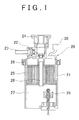
FIG. 1 is a sectional view showing a diesel fuel filter to which a clogging sensor according to an embodiment of the invention is fitted; -
FIG. 2 is a schematic diagram showing a position at which the clogging sensor according to the embodiment of the invention is disposed in a diesel fuel system; -
FIG. 3 is a sectional view showing the clogging sensor according to the embodiment of the invention at normal times; -
FIG. 4 is a sectional view showing the clogging sensor according to the embodiment of the invention when clogging occurs; -
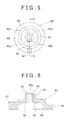
FIG. 5 is a plan view showing an intermediate member of the clogging sensor according to the embodiment; -
FIG. 6 is a sectional view taken along the line VI-VI inFIG. 5 ; -
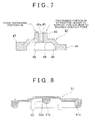
FIG. 7 is a sectional view showing another intermediate member of the clogging sensor according to the embodiment; -
FIG. 8 is a sectional view showing a diaphragm of the clogging sensor according to the embodiment; -
FIG. 9A is a bottom view showing a switch lever of the clogging sensor according to the embodiment, andFIG. 9B is a sectional view of the switch lever; and -
FIG. 10 is a sectional view showing a clogging sensor in related art. - A
diesel fuel filter 20 includes a framework member that includes acase 21 and acap 22. Thecase 21 has a bottomed cylindrical shape, and forms an outer wall. Thecap 22 is removably attached to an open end at an upper portion of thecase 21. Thecap 22 is made of resin. Afuel supply pipe 23 and a fuel discharge pipe (not shown) are provided in an upper portion of thecap 22. Also, ahand pump 24 is fitted to the upper portion of thecap 22. For example, after theelement 25 is replaced, or when water is drained from thediesel fuel filter 20, thehand pump 24 is used. - The
case 21 is a bottomed hollow cylindrical member made of resin. A top portion of thecase 21 is open. Anelement 25 is housed in thecase 21. Afuel passage 26 is formed in a center of thecase 21. Aflow sensor 28 is provided, and apool chamber 27 that includes a drain cock (not shown) is formed below theelement 25. Further, anupper space 29 is formed above theelement 25. - The
diesel fuel filter 20 is equivalent to adiesel fuel filter 5 inFIG. 2 . Thediesel fuel filter 5 has the above-described schematic structure. Fuel that contains dust and the like is introduced through thefuel supply pipe 23. Then, the fuel is introduced into thepool chamber 27 through thefuel passage 26, and water and the like contained in the fuel are separated from the fuel. After the water and the like are separated from the fuel, the fuel flows in a reverse direction. When the fuel passes through theelement 25, dust and the like contained in the fuel are separated from the fuel. After dust and the like are separated from the fuel, the fuel is discharged from theupper space 29 positioned above theelement 25 through the fuel discharge pipe (not shown). Then, the fuel is delivered to an injection pump 1. - A clogging
sensor 30 according to an embodiment of the invention is provided on an upper surface of thecap 22. Dust and the like may be deposited in theelement 25 of thediesel fuel filter 20 as time elapses, and as a result, theelement 25 may be clogged. If theelement 25 is clogged, a strong negative pressure is generated in theupper space 29 downstream of theelement 25. The cloggingsensor 30 is provided on the upper surface of thecap 22 to detect the negative pressure. When the cloggingsensor 30 detects clogging of theelement 25, for example, a warming light 30a (FIG. 2 ) is turned on to notify a driver of the clogging. - The clogging
sensor 30 may be provided directly on the upper surface of thecap 22, or may be connected to the upper surface of thecap 22 through a connection member such as a flexible tube. - The clogging
sensor 30, which functions as the clogging detection means, will be described with reference to, for example,FIG. 3 . The cloggingsensor 30 includes abody member 31, anintermediate member 42, and acase member 55. Thebody member 31 made of resin is positioned in a lower portion of the cloggingsensor 30. Thebody member 31 includes a large-diameter portion 32 with a large diameter, and a small-diameter portion 33 with a small diameter. Afitting groove 34 with a circular shape is formed on an outer peripheral portion of the large-diameter portion 32. A negative-pressure chamber 35 is formed in a center portion of the large-diameter portion 32. Acircular groove 36 is formed on an outer periphery of the small-diameter portion 33, and an O-ring 37 is fitted into thecircular groove 36. For example, an end of a flexible tube (not shown) is connected to thediesel fuel filter 20, and the other end of the flexible tube is fitted to the small-diameter portion 33. A negative-pressure introduction passage 38 with a circular cross section is formed in a center of the small-diameter portion 33. Athread 39 is cut at a position close to an inlet of the negative-pressure introduction passage 38. Aspring supporter 40 is fitted to thethread 39. Aport 40a is formed at a center of thespring supporter 40. - The
intermediate member 42, which is made of resin, is positioned in a center of the cloggingsensor 30. Theintermediate member 42 includes acylindrical portion 43 with a small diameter, and adisc portion 44 with a large diameter. Thecylindrical portion 43 is positioned in an upper portion of theintermediate member 42, and thedisc portion 44 is positioned in a lower portion of theintermediate member 42. Anopening 45 is formed in a center of thecylindrical portion 43. Theopening 45 extends through thecylindrical portion 43 from an upper portion to a lower portion of thecylindrical portion 43. An operation bar 50 (described later) is inserted into theopening 45. As shown inFIG. 5 , fourrectangular grooves 45a, which radially extend, are formed in theopening 45. When theoperation bar 50 is inserted in theopening 45, an upper space is connected to a lower space through the fourrectangular grooves 45a. - A protruding
portion 46 is provided on an upper end surface of thecylindrical portion 43. The protrudingportion 46 has a rectangular shape in a planar view, and has an arc shape in a sectional view. The protrudingportion 46 is provided at a position farther from a support portion 59 (described later) than from amovable contact point 65. That is, the protrudingportion 46 is provided at a position closer to themovable contact point 65 than to thesupport portion 59. The protrudingportion 46 functions as the stopper according to the invention. When clogging occurs, theoperation bar 50 moves downward, and accordingly, theswitch lever 63 is supported at only one end, theswitch lever 63 contacts the protrudingportion 46. Thus, theswitch lever 63 is supported at two points. The protrudingportion 46 may be formed integrally with theintermediate member 42, or may be formed separately from theintermediate member 42. For example, the protrudingportion 46 may have an arc shape along a circumferential end of thecylindrical portion 43 in the planar view. Also, an upper end portion of the protrudingportion 46 may be flat in the sectional view. For example, the protrudingportion 46 may have a rectangular shape in the sectional view. Also, the height of thecylindrical portion 43 may be increased without providing the protrudingportion 46. In this case, the upper end portion of thecylindrical portion 43 functions in the same manner as the manner in which the protrudingportion 46 functions. - The outer diameter of the
disc portion 44 is smaller than the outer diameter of the large-diameter portion 32 of thebody member 31. As shown inFIG. 5 , a positioningmember 47 is provided in an outer end portion of an upper surface of thedisc portion 44. The positioningmember 47 has a rectangular shape in a planar view. The positioningmember 47 positions the protrudingportion 46 so that the protrudingportion 46 is farther from thesupport portion 59 than from themovable contact point 65. The positioningmember 47 is fitted into arectangular groove 56b formed in thecase member 55 at a position closer to themovable contact point 65 than to thesupport portion 59. - A recessed
portion 48 is formed in a center of a bottom portion of thedisc portion 44. Aguard portion 50b of theoperation bar 50 is inserted in the recessedportion 48. Because theguard portion 50b is inserted in the recessedportion 48, the height of theoperation bar 50 is reduced to a value that is substantially the same as the height of theintermediate member 42. Therefore, the height of the entire clogging sensor is reduced. A ring-shapedprojection 49 is provided around theopening 45 in the recessedportion 48. The ring-shapedprojection 49 projects downward. The ring-shapedprojection 49 makes line contact with an upper surface of theguard portion 50b. The ring-shapedprojection 49 prevents theoperation bar 50 from excessively moving upward. Also, the ring-shapedprojection 49 makes it easier to separate theguard portion 50b from theintermediate member 42 when theoperation bar 50 moves downward. - The
operation bar 50, adiaphragm 51, aspring receiver 52, and aspring 53 are provided between thebody member 31 and theintermediate member 42. Theoperation bar 50 is made of resin, and has an inverse T-shape in a sectional view. Theoperation bar 50 includes abar portion 50a and theguard portion 50b. Thebar portion 50a is inserted through theopening 45 of theintermediate member 42 in a manner such that there is a small gap between an inner periphery of theopening 45 and an outer periphery of thebar portion 50a. When thebar portion 50a is inserted through theopening 45, an end portion of thebar portion 50 protrudes upward from theopening 45, and contacts theswitch lever 63 to move theswitch lever 63 upward. Because the gap between the inner periphery of theopening 45 of theintermediate member 42 and the outer periphery of thebar portion 50a is small, theoperation bar 50 is prevented from being tilted. Although the ring-shapedprojection 49 is provided in the recessedportion 48 of theintermediate member 42 in the embodiment, the ring-shapedprojection 49 may be provided on the upper surface of theguard portion 50b, instead of providing the ring-shapedprojection 49 in the recessedportion 48. - The
diaphragm 51 is made of resin, and has a thin plate shape.FIG. 8 is an enlarged sectional view showing thediaphragm 51. As shown inFIG. 8 , thediaphragm 51 includes athick root portion 51a and aprotrusion 51b with a columnar shape. Theroot portion 51a is positioned at an outer peripheral end of thediaphragm 51. Theprotrusion 51b is positioned at a center of a bottom portion of thediaphragm 51 to protrude downward. Thespring receiver 52 has a U-shape in a sectional view, and is made of resin. Acircular opening 52a is formed at a center of thespring receiver 52. Theprotrusion 51b of thediaphragm 51 is fitted in thecircular opening 52. Thespring receiver 52 is positioned by fitting theprotrusion 51b of thediaphragm 51 in thecircular opening 52a. - The
operation bar 50, thediaphragm 51, thespring receiver 52, thespring 53, and thespring supporter 40 are arranged between thebody member 31 and theintermediate member 42 in the stated order in a direction from an upper position toward a lower position. - The
case member 55 with a cap shape is made of resin, and positioned in the upper portion of the cloggingsensor 30. A firsthollow chamber 56 is formed inside thecase member 55. A thincylindrical portion 57 with a circular shape is positioned at a lower end of thecase member 55. A pass-throughpassage 58 is formed at a center of the upper portion of thecase member 55. The pass-throughpassage 58 extends through the upper portion of thecase member 55 from an upper position to a lower position. The firsthollow chamber 56 communicates with the atmosphere through the pass-throughpassage 58. Astep portion 56a is formed at a lower portion of the firsthollow chamber 56 of thecase member 55. Thus, a lower area of the firsthollow chamber 56 has a diameter larger than that of an upper area of the firsthollow chamber 56. An outer peripheral end of thedisc portion 44 of theintermediate member 42 is fitted into thestep portion 56a. Therectangular groove 56b is formed at an outer peripheral end of thestep portion 56a at a position closer to the fixedcontact point 64 than to thesupport portion 59. The positioningmember 47 of theintermediate member 42 is fitted into therectangular groove 56b. Therectangular groove 56b is slightly larger than the positioningmember 47. - Two first connecting
terminals 60 are formed, by insert molding, on an upper bottom surface of thecase member 55 at an outer end portion. The first connectingterminals 60 protrude into the firsthollow chamber 56. The first connectingterminals 60 are used to form thesupport portion 59. A second connectingterminal 61 is formed, by insert molding, on the upper bottom surface of thecase member 55 at an outer end portion on the side of the pass-throughpassage 58 opposite to the side where the first connectingterminals 60 are formed. The other end portions of the first connectingthermals 60 and the second connectingterminal 61 are positioned outside thecase member 55. - One end of the
switch lever 63 is fixed to the first connectingterminals 60 by crimping, and thus, thesupport portion 59 is formed in theswitch lever 63. The fixedcontact point 64 is fixed to the second connectingterminal 61 by crimping. The position of the fixedcontact point 64 is higher than the position of thesupport portion 59. When themovable contact point 65 contacts the fixedcontact point 64, theswitch lever 63 is tilted in a manner such that theswitch lever 63 extends upward toward the fixedcontact point 64. -
FIG. 9A is a bottom view showing theswitch lever 63, andFIG. 9B is a sectional view showing theswitch lever 63. Theswitch lever 63 has a flat plate shape. A center portion of theswitch lever 63 expands in a lateral direction. Theswitch lever 63 is made of metal, and has a spring property. Afirst opening 63a is formed at one end of theswitch lever 63. Themovable contact point 65 is fixed at thefirst opening 63a by crimping. Twosecond openings 63b are formed at the other end of theswitch lever 63. The two first connectingterminals 60 are fixed at the two respectivesecond openings 63b by crimping. Athird opening 63c with a heart shape is formed at a center portion of theswitch lever 63 to reduce the weight of theswitch lever 63. Further, an arc-shapedprotrusion 66, which protrudes downward, is provided at the center of theswitch lever 63. Theswitch lever 63, the fixedcontact point 64, and themovable contact point 65 constitute the switch assembly. - The
movable contact point 65 is fixed at thefirst opening 63a by crimping. The two first connectingterminals 60 are fixed at the two respectivesecond openings 63b by crimping. Thus, theswitch lever 63 is supported by thesupport portion 59. When no load is applied to theswitch lever 63, that is, theswitch lever 63 is in a free state, theswitch lever 63 is maintained in a substantially horizontal position. When theswitch lever 63 is pressed upward by theoperation bar 50, theswitch lever 63 is deformed, and themovable contact point 65 contacts the fixedcontact point 64. Thus, theswitch lever 63 is tilted in the manner as shown inFIG. 3 . When theoperation bar 50 stops pressing theswitch lever 63, theswitch lever 63 is returned to the original position due to the spring force. - An upper end of the
operation bar 50 contacts an arc surface of the arc-shapedprotrusion 66 of theswitch lever 63. Therefore, although theswitch lever 63 is tilted, theswitch lever 63 smoothly moves upward and downward. Also, a force applied to theoperation bar 50 in the direction of tilt is reduced. The upper end surface of theoperation bar 50 may be a flat surface, or more preferably an arc-shaped surface. - The clogging
sensor 30 is assembled according to the following method. After the switch assembly, which includes theswitch lever 63, the fixedcontact point 64, and themovable contact point 65, is fitted to thecase member 55, thecase member 55 is placed upside down. Then, theintermediate member 42 is placed on thecase member 55. In this case, the positioningmember 47 of theintermediate member 42 is fitted into therectangular groove 56b formed in thestep portion 56a of thecase member 55. As a result, the protrudingportion 46, which functions as the stopper of theintermediate member 42, is positioned farther from thesupport portion 59 than from the fixedcontact point 64. That is, the protrudingportion 46 is positioned closer to the fixedcontact point 64 than to thesupport portion 59. - Then, the
operation bar 50 is placed on theintermediate member 42, and thebar portion 50a is inserted in theopening 45 of theintermediate member 42. Then, thediaphragm 51 is placed on theoperation bar 50, and then, thespring receiver 52 is placed on thediaphragm 51 so that theprotrusion 51b of thediaphragm 51 is fitted into thecircular opening 52a of thespring receiver 52. - Then, the
spring 53 is placed on thespring receiver 52, and then, thebody member 31, to which thespring supporter 40 is fitted, is placed on thespring 53 to cover thespring 53. After thebody member 31 is placed on thespring 53, the thincylindrical portion 57 provided at the lower end of thecase member 55 is fitted into thefitting groove 34 of thebody member 31. Then, thebody member 31 is welded to thecase member 55 at fitting portions, for example, by ultrasonic welding. Thus, thebody member 31 is integrated with thecase member 55. - After the
clogging sensor 30 is assembled, thespring 53 moves theoperation bar 50 upward through thespring receiver 52 and thediaphragm 51. As a result, the upper surface of theguard portion 50b of theoperation bar 50 contacts the ring-shapedprojection 49 provided on the upper surface of the recessedportion 48 of theintermediate member 42. Thus, the upper end of thebar portion 50a protrudes upward from theintermediate member 42, and presses the arc-shapedprotrusion 66 of theswitch lever 63. Accordingly, a free end of theswitch lever 63 moves upward, and themovable contact point 65 at the end of theswitch lever 63 contacts the fixedcontact point 64. As a result, a circuit is closed (i.e., the circuit is turned on). Thus, the circuit is closed at normal times when the filter is not clogged. - In the clogging
sensor 30, the firsthollow chamber 56 is formed between thecase member 55 and theintermediate member 42. A secondhollow chamber 54 is formed between theintermediate member 42 and thediaphragm 51. The negative-pressure chamber 35 is formed between thediaphragm 51 and thebody member 31. The firsthollow chamber 56 communicates with the atmosphere through the pass-throughpassage 58. The secondhollow chamber 54 communicates with the firsthollow chamber 56 through therectangular grooves 45a formed around theopening 45. The negative-pressure chamber 35 communicates with theupper space 29 of thediesel fuel filter 20. - When the
element 25 of thediesel fuel filter 20 is clogged, a large negative pressure is generated in theupper space 29. The negative pressure is transmitted to the negative-pressure chamber 35 through theport 40a and the negative-pressure introduction passage 38. When a negative pressure is applied to the negative-pressure chamber 35, thediaphragm 51 is deformed downward against the force of thespring 53. Then, theoperation bar 50 moves downward together with thediaphragm 51 due to the weight of theoperation bar 50 and the spring force of theswitch lever 63. In this case, because the upper surface of theguard portion 50b of theoperation bar 50 is in line contact with the ring-shapedprojection 49 of theintermediate member 42, the force required to separate theoperation bar 50 from theintermediate member 42 is small, as compared to when the upper surface of theguard portion 50b of theoperation bar 50 is in surface contact with theintermediate member 42. Therefore, theoperation bar 50 is easily separated from theintermediate member 42. Because theelement 25 is clogged at low frequency, and theguard portion 50b of theoperation bar 50 contacts theintermediate member 42 for a long period, theguard portion 50b of theoperation bar 50 is likely to adhere to theintermediate member 42 at a contact portion as time elapses. Therefore, it is noteworthy that theoperation bar 50 is in line contact with theintermediate member 42. - When clogging occurs, and the
operation bar 50 moves downward, theswitch lever 63 is supported at only one end. If the protrudingportion 46 were not provided, theswitch lever 63 would greatly vibrate when the state of theswitch lever 63 is changed from the state where the spring force of theswitch lever 63 is applied to theoperation bar 50, to the state where theswitch lever 63 is supported at only one end. Accordingly, theswitch lever 63 would be deformed, or themovable contact point 65 would strongly hit the fixedcontact point 64, and as a result, the contact points would be deformed or broken. - In the embodiment of the invention, however, when clogging occurs, and the
operation bar 50 moves downward, theswitch lever 63 contacts the protrudingportion 46 that functions as the stopper, and theswitch lever 63 is supported at two points by the protrudingportion 46 and thesupport portion 59. When theswitch lever 63 contacts the protrudingportion 46 in the above-described manner, a length from a contact portion of theswitch lever 63, which contacts the protrudingportion 46, to themovable contact point 65 is shorter than a length from thesupport portion 59 to themovable contact point 65. That is, the length from the point at which theswitch lever 63 is supported to themovable contact point 65 is reduced, as compared to when theswitch lever 63 is supported by only thesupport portion 59. Accordingly, the inertia force is reduced, and as a result, the vibration is reduced. -
FIG. 4 shows the state of the cloggingsensor 30 when theswitch lever 63 contacts the protrudingportion 46. When theswitch lever 63 contacts the protrudingportion 46 as shown inFIG. 4 , theswitch lever 63 is tilted in a manner such that the position of themovable contact point 65 is higher than the position of thesupport portion 59, and the spring force is applied to the protrudingportion 46. By placing theswitch lever 63 in this state, it is possible to reduce the possibility that theswitch lever 63 greatly vibrates. When theelement 25 is clogged, and the cloggingsensor 30 is placed in the state shown inFIG. 4 , the circuit is opened (i.e., the circuit is turned off), and thewarning light 30a provided in the driver's seat is turned on. - When the
element 25 is replaced, and a negative pressure equal to or larger than a predetermined value is no longer applied to thediaphragm 51, thediaphragm 51 is returned to a normal position shown inFIG. 3 . Accordingly, themovable contact point 65 contacts the fixedcontact point 64, and thus, the cloggingsensor 30 is reset. When a negative pressure is no longer applied to thediaphragm 51, thediaphragm 51 is returned to the normal position shown inFIG. 3 . If theguard portion 50b were not provided in theoperation bar 50, theoperation bar 50 would move upward to a higher position due to the inertia force, and would strongly press theswitch lever 63, and as a result, for example, theswitch lever 63 would be deformed in the worst case. However, in the embodiment, because theguard portion 50b contacts theintermediate member 42, theoperation bar 50 is prevented from excessively moving upward. -
FIG. 7 shows a modified example of the protrudingportion 46. Three protrudingportions 46 are provided on the left side inFIG. 7 , that is, three protrudingportions 46 are provided at positions farther from thesupport portion 59 than from themovable contact point 65, instead of providing one protrudingportion 46 as shown inFIG. 3 . In this case, the number of the protrudingportions 46 is not limited to a specific number, as long as at least two protrudingportions 46 are provided. By providing a plurality of protrudingportions 46 in this manner, it is possible to disperse an impact force when theswitch lever 63 hits the protrudingportion 46. - One protruding
portion 46 is provided on the right side inFIG. 7 , as shown by the dotted line, that is, one protrudingportion 46 is provided at a position closer to thesupport portion 59 than to themovable contact point 65. In reality, it is preferable that the protrudingportion 46 should be provided at a position farther from thesupport portion 59 than from themovable contact point 65 as shown inFIG. 3 . In addition to one protrudingportion 46 shown by the dashed line inFIG. 7 , one protrudingportion 46 may be provided on the left side as shown inFIG. 3 , or three protrudingportions 46 may be provided on the left side, as shown inFIG. 7 . - The invention is not limited to the above-described embodiments. The design may be appropriately modified without deporting from the scope of the invention. For example, although the clogging sensor is used for the diesel fuel filter in the above-described embodiments, the clogging sensor may be used for other filters.
Claims (12)
- A clogging sensor that includes a case member (55) in which a switch assembly is housed, an intermediate member (42) in which an operation bar (50) moves, a diaphragm (51) that moves in association with the operation bar (50), and a body member (31) into which a negative pressure is introduced, characterized in that:the switch assembly includes a fixed contact point (64), a movable contact point (65), and a switch lever (63) with a spring property;a movable contact point (65) is provided at one end of the switch lever (63), and a support portion (59), which is supported by the case member (55), is formed at the other end of the switch lever (63); andwhen a negative pressure equal to or larger than a first predetermined value is applied to the diaphragm (51), the movable contact point (65) moves away from the fixed contact point (64), the switch lever (63) contacts a stopper, and the switch lever (63) is supported at at least two points by the stopper and the support portion (59).
- The clogging sensor according to claim 1, wherein the stopper is the intermediate member (42).
- The clogging sensor according to claim 1, wherein the stopper is at least one protruding portion (46) provided on an upper surface of the intermediate member (42).
- The clogging sensor according to claim 3, wherein the at least one protruding portion (46) is provided at a position farther from the support portion (59) than from the movable contact point (65).
- The clogging sensor according to any one of claims 1 to 4, wherein
the switch lever (63) is supported at the at least two points by the stopper and the support portion (59), in a manner such that a spring force of the switch lever (63) is applied to the stopper. - The clogging sensor according to claim 5, wherein
the switch lever (63) is supported in a manner such that a position of the movable contact point (65) is higher than a position of the support portion (59). - The clogging sensor according to claim 6, wherein
an arc-shaped protrusion (66), which protrudes downward, is provided in the switch lever (63), and the operation bar (50) presses the arc-shaped protrusion (66). - The clogging sensor according to any one of claims 1 to 7, wherein
the operation bar (50) includes a guard portion (50b); and
when the movable contact point (65) contacts the fixed contact point (64), the guard portion (50b) contacts the intermediate member (42) so that a contact pressure between the movable contact point (65) and the fixed contact point (64) is equal to or lower than a second predetermined pressure. - The clogging sensor according to claim 8, wherein
the intermediate member (42) includes a recessed portion (48); and
the guard portion (50b) is inserted into, and contacts the recessed portion (48). - The clogging sensor according to claim 8 or 9, wherein a projection (49) is provided in one of the guard portion (50b) and the intermediate member (42) at a contact portion at which the guard portion (50b) contacts the intermediate member (42).
- The clogging sensor according to claim 10, wherein when the movable contact point (65) contacts the fixed contact point (64), the projection (49) provided in the one of the guard portion (50b) and the intermediate member (42) makes line contact with the other of the guard portion (50b) and the intermediate member (42).
- The clogging sensor according to any one of claims 1 to 11, wherein the clogging sensor (30) is used for a diesel fuel filter.
Applications Claiming Priority (1)
| Application Number | Priority Date | Filing Date | Title |
|---|---|---|---|
| JP2008057505A JP5053131B2 (en) | 2008-03-07 | 2008-03-07 | Clogging sensor |
Publications (3)
| Publication Number | Publication Date |
|---|---|
| EP2098717A2 true EP2098717A2 (en) | 2009-09-09 |
| EP2098717A3 EP2098717A3 (en) | 2010-06-02 |
| EP2098717B1 EP2098717B1 (en) | 2013-08-07 |
Family
ID=40690982
Family Applications (1)
| Application Number | Title | Priority Date | Filing Date |
|---|---|---|---|
| EP09154268.8A Ceased EP2098717B1 (en) | 2008-03-07 | 2009-03-04 | Clogging sensor |
Country Status (4)
| Country | Link |
|---|---|
| EP (1) | EP2098717B1 (en) |
| JP (1) | JP5053131B2 (en) |
| CN (1) | CN101524608B (en) |
| BR (1) | BRPI0900483A2 (en) |
Families Citing this family (1)
| Publication number | Priority date | Publication date | Assignee | Title |
|---|---|---|---|---|
| CN103150868A (en) * | 2013-02-05 | 2013-06-12 | 太原市精微测控技术有限公司 | Air pressure type electronic information equipment failure alarm device |
Citations (1)
| Publication number | Priority date | Publication date | Assignee | Title |
|---|---|---|---|---|
| JP2001189120A (en) | 2000-01-06 | 2001-07-10 | Fuji Koki Corp | Pressure switch |
Family Cites Families (10)
| Publication number | Priority date | Publication date | Assignee | Title |
|---|---|---|---|---|
| US3209721A (en) * | 1961-04-06 | 1965-10-05 | Pall Corp | Pressure-responsive devices |
| US3535480A (en) * | 1968-01-29 | 1970-10-20 | Weatherhead Co | Pressure sensitive switch |
| DE2750419C3 (en) * | 1977-11-11 | 1981-11-26 | Fa. Leopold Kostal, 5880 Lüdenscheid | Pressure medium-operated electrical miniature switch |
| FR2594708B1 (en) * | 1986-02-25 | 1990-05-04 | Nippon Denso Co | FUEL FILTERING DEVICE OF THE FUEL HEATING TYPE |
| US5153396A (en) * | 1991-03-18 | 1992-10-06 | General Motors Corporation | Combination high pressure switch and valve device |
| JP4086977B2 (en) * | 1998-05-11 | 2008-05-14 | 株式会社不二工機 | pressure switch |
| DE10315052A1 (en) * | 2002-04-03 | 2003-12-11 | Kyosan Denki Kk | Fuel supply system has diesel filter with filtering device accommodated in housing, and displacement registering sensor set to predetermined range and installed on outflow side of filtering device |
| JP2004095531A (en) * | 2002-06-21 | 2004-03-25 | Saginomiya Seisakusho Inc | pressure switch |
| CN1495355A (en) * | 2002-07-31 | 2004-05-12 | 京三电机株式会社 | fuel supply system |
| DE102005058995A1 (en) * | 2005-12-09 | 2007-06-14 | Mahle International Gmbh | Control device of a heating device |
-
2008
- 2008-03-07 JP JP2008057505A patent/JP5053131B2/en active Active
-
2009
- 2009-03-04 EP EP09154268.8A patent/EP2098717B1/en not_active Ceased
- 2009-03-06 BR BRPI0900483-1A patent/BRPI0900483A2/en not_active Application Discontinuation
- 2009-03-06 CN CN2009100045336A patent/CN101524608B/en active Active
Patent Citations (1)
| Publication number | Priority date | Publication date | Assignee | Title |
|---|---|---|---|---|
| JP2001189120A (en) | 2000-01-06 | 2001-07-10 | Fuji Koki Corp | Pressure switch |
Also Published As
| Publication number | Publication date |
|---|---|
| CN101524608B (en) | 2013-09-11 |
| JP2009217954A (en) | 2009-09-24 |
| JP5053131B2 (en) | 2012-10-17 |
| EP2098717A3 (en) | 2010-06-02 |
| CN101524608A (en) | 2009-09-09 |
| BRPI0900483A2 (en) | 2009-11-03 |
| EP2098717B1 (en) | 2013-08-07 |
Similar Documents
| Publication | Publication Date | Title |
|---|---|---|
| US10137390B2 (en) | Filter device, especially liquid filter | |
| US20110094481A1 (en) | Exhaust gas recirculation valve device | |
| US6079450A (en) | Metal diaphragm type pulsation absorber for high-pressure fuel pump | |
| JP5030152B2 (en) | Fuel tank filler cap | |
| KR20100032818A (en) | Valve device | |
| KR100828054B1 (en) | Fuel pump attaching structure | |
| EP2098717B1 (en) | Clogging sensor | |
| US5697770A (en) | Pump using a single diaphragm having preformed oppositely directed bulges forming inlet and outlet valve closing bodies | |
| JP4260592B2 (en) | Element exchange type filtration device | |
| JP2007130560A (en) | Gas trap device for gas | |
| JP5407617B2 (en) | Sedimenta | |
| JP4147405B2 (en) | Fuel injection valve | |
| CN110242457B (en) | Oil-water separation filter | |
| EP2051873B1 (en) | Improved fuel vapour adsorbing device | |
| JP2019155335A (en) | Gas/liquid separator | |
| JP2019173707A (en) | Filter element | |
| JP2010084540A (en) | Fuel supply device | |
| JP2008175192A (en) | Fuel supply system for outboard motor | |
| JP2008106680A (en) | Fuel supply device | |
| JP2008121590A (en) | filter | |
| JP3933809B2 (en) | Metal diaphragm type pulsation absorber | |
| JP6815298B2 (en) | Fuel supply device | |
| JP2006242046A (en) | Fuel injection valve | |
| JP3344168B2 (en) | Fuel tank liquid level detection valve | |
| JP2018179025A (en) | Air bypass valve |
Legal Events
| Date | Code | Title | Description |
|---|---|---|---|
| PUAI | Public reference made under article 153(3) epc to a published international application that has entered the european phase |
Free format text: ORIGINAL CODE: 0009012 |
|
| AK | Designated contracting states |
Kind code of ref document: A2 Designated state(s): AT BE BG CH CY CZ DE DK EE ES FI FR GB GR HR HU IE IS IT LI LT LU LV MC MK MT NL NO PL PT RO SE SI SK TR |
|
| AX | Request for extension of the european patent |
Extension state: AL BA RS |
|
| PUAL | Search report despatched |
Free format text: ORIGINAL CODE: 0009013 |
|
| AK | Designated contracting states |
Kind code of ref document: A3 Designated state(s): AT BE BG CH CY CZ DE DK EE ES FI FR GB GR HR HU IE IS IT LI LT LU LV MC MK MT NL NO PL PT RO SE SI SK TR |
|
| AX | Request for extension of the european patent |
Extension state: AL BA RS |
|
| RIC1 | Information provided on ipc code assigned before grant |
Ipc: H01H 35/34 20060101AFI20100427BHEP Ipc: F02M 37/22 20060101ALI20100427BHEP |
|
| 17P | Request for examination filed |
Effective date: 20100901 |
|
| 17Q | First examination report despatched |
Effective date: 20101201 |
|
| AKX | Designation fees paid |
Designated state(s): DE |
|
| GRAP | Despatch of communication of intention to grant a patent |
Free format text: ORIGINAL CODE: EPIDOSNIGR1 |
|
| GRAS | Grant fee paid |
Free format text: ORIGINAL CODE: EPIDOSNIGR3 |
|
| GRAP | Despatch of communication of intention to grant a patent |
Free format text: ORIGINAL CODE: EPIDOSNIGR1 |
|
| RAP1 | Party data changed (applicant data changed or rights of an application transferred) |
Owner name: KYOSAN DENKI CO., LTD. |
|
| RIN1 | Information on inventor provided before grant (corrected) |
Inventor name: AGUI, TOSHIAKI |
|
| GRAA | (expected) grant |
Free format text: ORIGINAL CODE: 0009210 |
|
| INTG | Intention to grant announced |
Effective date: 20130618 |
|
| AK | Designated contracting states |
Kind code of ref document: B1 Designated state(s): DE |
|
| REG | Reference to a national code |
Ref country code: DE Ref legal event code: R096 Ref document number: 602009017762 Country of ref document: DE Effective date: 20131002 |
|
| PLBE | No opposition filed within time limit |
Free format text: ORIGINAL CODE: 0009261 |
|
| STAA | Information on the status of an ep patent application or granted ep patent |
Free format text: STATUS: NO OPPOSITION FILED WITHIN TIME LIMIT |
|
| 26N | No opposition filed |
Effective date: 20140508 |
|
| REG | Reference to a national code |
Ref country code: DE Ref legal event code: R097 Ref document number: 602009017762 Country of ref document: DE Effective date: 20140508 |
|
| REG | Reference to a national code |
Ref country code: DE Ref legal event code: R084 Ref document number: 602009017762 Country of ref document: DE |
|
| PGFP | Annual fee paid to national office [announced via postgrant information from national office to epo] |
Ref country code: DE Payment date: 20180322 Year of fee payment: 10 |
|
| REG | Reference to a national code |
Ref country code: DE Ref legal event code: R119 Ref document number: 602009017762 Country of ref document: DE |
|
| PG25 | Lapsed in a contracting state [announced via postgrant information from national office to epo] |
Ref country code: DE Free format text: LAPSE BECAUSE OF NON-PAYMENT OF DUE FEES Effective date: 20191001 |