EP2095225B1 - Software transaction commit order and conflict management - Google Patents
Software transaction commit order and conflict management Download PDFInfo
- Publication number
- EP2095225B1 EP2095225B1 EP07845108.5A EP07845108A EP2095225B1 EP 2095225 B1 EP2095225 B1 EP 2095225B1 EP 07845108 A EP07845108 A EP 07845108A EP 2095225 B1 EP2095225 B1 EP 2095225B1
- Authority
- EP
- European Patent Office
- Prior art keywords
- commit
- transaction
- transactions
- order
- determined
- Prior art date
- Legal status (The legal status is an assumption and is not a legal conclusion. Google has not performed a legal analysis and makes no representation as to the accuracy of the status listed.)
- Not-in-force
Links
Images


Classifications
-
- G—PHYSICS
- G06—COMPUTING OR CALCULATING; COUNTING
- G06F—ELECTRIC DIGITAL DATA PROCESSING
- G06F9/00—Arrangements for program control, e.g. control units
-
- G—PHYSICS
- G06—COMPUTING OR CALCULATING; COUNTING
- G06F—ELECTRIC DIGITAL DATA PROCESSING
- G06F9/00—Arrangements for program control, e.g. control units
- G06F9/06—Arrangements for program control, e.g. control units using stored programs, i.e. using an internal store of processing equipment to receive or retain programs
- G06F9/46—Multiprogramming arrangements
- G06F9/466—Transaction processing
-
- G—PHYSICS
- G06—COMPUTING OR CALCULATING; COUNTING
- G06F—ELECTRIC DIGITAL DATA PROCESSING
- G06F9/00—Arrangements for program control, e.g. control units
- G06F9/06—Arrangements for program control, e.g. control units using stored programs, i.e. using an internal store of processing equipment to receive or retain programs
-
- Y—GENERAL TAGGING OF NEW TECHNOLOGICAL DEVELOPMENTS; GENERAL TAGGING OF CROSS-SECTIONAL TECHNOLOGIES SPANNING OVER SEVERAL SECTIONS OF THE IPC; TECHNICAL SUBJECTS COVERED BY FORMER USPC CROSS-REFERENCE ART COLLECTIONS [XRACs] AND DIGESTS
- Y10—TECHNICAL SUBJECTS COVERED BY FORMER USPC
- Y10S—TECHNICAL SUBJECTS COVERED BY FORMER USPC CROSS-REFERENCE ART COLLECTIONS [XRACs] AND DIGESTS
- Y10S707/00—Data processing: database and file management or data structures
- Y10S707/99931—Database or file accessing
- Y10S707/99933—Query processing, i.e. searching
Definitions
- STM Software transactional memory
- a transaction in the context of transactional memory is a piece of code that executes a series of reads and writes to shared memory.
- STM is used as an alternative to traditional locking mechanisms.
- Programmers put a declarative annotation (e.g. atomic) around a code block to indicate safety properties they require and the system automatically guarantees that this block executes atomically with respect to other protected code regions.
- the software transactional memory programming model prevents lock-based priority-inversion and deadlock problems.
- One approach to simplifying parallel programming is to automatically parallelize sequential programs, in a manner that guarantees that the semantics of the program are unchanged. In other words, if the sequential program works correctly, so does the parallelized version.
- Two (separate) variations of this concept to parallelize sequential programs have been termed, respectively, safe futures and speculative loop parallelization.
- the sequential version of a program might perform "A; B" (that is, do A then do B).
- the programmer can add an annotation (a "future") indicating that he or she thinks it might be possible to perform A and B in parallel without changing the program semantics - that A does not read any memory locations that B reads, nor vice-versa.
- Speculative loop parallelization is a similar idea, where the actions performed in the sequential program are the successive iterations of a loop.
- the programmer indicates that it may be advantageous to execute the loop in parallel, and the system runs each iteration of the loop as a parallel transaction, requiring that these transactions commit in the order the iterations would have committed in the original program.
- US 206/026130 A1 relates to scheduling partial ordered transactions for event correlation.
- An event dispatcher conveys events sequentially to an event concurrency control unit according to a time stamp associated with each event, and an event processing unit starts event processing for each event.
- Event rules are used in order to process concurrently incoming events, it is checked if event transaction can be started according to the current event rules and the transactions execution is suspended if necessary.
- the event rules may be stored in an external database or in a data file accessed by the event dispatcher.
- the time stamp information associated with each event may be derived by an internal clock or by a predefined running order associated with each event.
- a software transactional memory system is provided with a feature to allow a pre-determined commit order to be specified for a plurality of transactions.
- the pre-determined commit order is used at runtime to aid in determining an order in which to commit the transactions in the software transactional memory system.
- the pre-determined commit order can be either total ordering or partial ordering. In the case of total ordering, the transactions are forced to commit in a linear order. In the case of partial ordering, the transactions are allowed to commit in one of multiple acceptable scenarios.
- a commit arbitrator keeps track of the next-to-commit value representing the transaction that should be allowed to commit next, and when a particular transaction is ready to commit, it is allowed to do so if its commit order number matches the next-to-commit value of the commit arbitrator.
- a contention management process is invoked when a conflict occurs between a first transaction and a second transaction.
- the pre-determined commit order is used in the contention management process to aid in determining whether the first transaction or the second transaction should win the conflict and be allowed to proceed.
- the system may be described in the general context as a software transactional memory system, but the system also serves other purposes in addition to these.
- one or more of the techniques described herein can be implemented as features within a framework program such as MICROSOFT® .NET Framework, or from any other type of program or service that provides platforms for developers to develop software applications.
- one or more of the techniques described herein are implemented as features with other applications that deal with developing applications that execute in concurrent environments.
- a feature is provided in the software transactional memory system to allow a pre-determined commit order to be specified for a plurality of transactions.
- the pre-determined commit order is used to aid in determining an order in which to commit the transactions.
- a contention management process is invoked when a conflict occurs between a first transaction and a second transaction.
- the pre-determined commit order is then used in the contention management process to aid in determining whether the first transaction or the second transaction should win the conflict and be allowed to proceed.
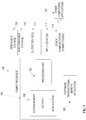
- an exemplary computer system to use for implementing one or more parts of the system includes a computing device, such as computing device 100.
- computing device 100 In its most basic configuration, computing device 100 typically includes at least one processing unit 102 and memory 104.
- memory 104 may be volatile (such as RAM), non-volatile (such as ROM, flash memory, etc.) or some combination of the two.
- This most basic configuration is illustrated in Figure 1 by dashed line 106.
- device 100 may also have additional features/functionality.
- device 100 may also include additional storage (removable and/or non-removable) including, but not limited to, magnetic or optical disks or tape.
- additional storage is illustrated in Figure 1 by removable storage 108 and non-removable storage 110.
- Computer storage media includes volatile and nonvolatile, removable and non-removable media implemented in any method or technology for storage of information such as computer readable instructions, data structures, program modules or other data.
- Memory 104, removable storage 108 and non-removable storage 110 are all examples of computer storage media.
- Computer storage media includes, but is not limited to, RAM, ROM, EEPROM, flash memory or other memory technology, CD-ROM, digital versatile disks (DVD) or other optical storage, magnetic cassettes, magnetic tape, magnetic disk storage or other magnetic storage devices, or any other medium which can be used to store the desired information and which can accessed by device 100. Any such computer storage media may be part of device 100.
- Computing device 100 includes one or more communication connections 114 that allow computing device 100 to communicate with other computers/applications 115.
- Device 100 may also have input device(s) 112 such as keyboard, mouse, pen, voice input device, touch input device, etc.
- Output device(s) 111 such as a display, speakers, printer, etc. may also be included. These devices are well known in the art and need not be discussed at length here.
- computing device 100 includes software transactional memory application 200.
- Software transactional memory application 200 will be described in further detail in Figure 2 .
- Software transactional memory application 200 is one of the application programs that reside on computing device 100. However, it will be understood that software transactional memory application 200 can alternatively or additionally be embodied as computer-executable instructions on one or more computers and/or in different variations than shown on Figure 1 . Alternatively or additionally, one or more parts of software transactional memory application 200 can be part of system memory 104, on other computers and/or applications 115, or other such variations as would occur to one in the computer software art.
- Software transactional memory application 200 includes program logic 204, which is responsible for carrying out some or all of the techniques described herein.
- Program logic 204 includes logic for providing a software transactional memory (STM) system 206; logic for providing a commit arbitrator that allows a pre-determined commit order to be specified, statically or dynamically, for a plurality of transactions in the STM system 208; logic for allowing the commit arbitrator to use the pre-determined commit order at runtime to aid in determining an order in which to commit the plurality of transactions in the software transactional memory system 210; logic for providing a contention management process that is invoked when a conflict occurs between a first transaction and a second transaction 212; logic for using the pre-determined commit order in the contention management process to aid in determining whether the first transaction or the second transaction should win the conflict and be allowed to proceed (e.g.
- STM software transactional memory
- program logic 204 is operable to be called programmatically from another program, such as using a single call to a procedure in program logic 204.
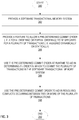
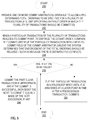
- Figure 3 is a high level process flow diagram for software transactional memory application 200.
- the process of Figure 3 is at least partially implemented in the operating logic of computing device 100.
- the procedure begins at start point 240 with providing a software transactional memory system (stage 242).
- a feature is provided to allow a pre-determined commit order (e.g. a total ordering or partial ordering) to be specified for a plurality of transactions (e.g. assigned dynamically or statically) (stage 244).
- a pre-determined commit order e.g. a total ordering or partial ordering
- a plurality of transactions e.g. assigned dynamically or statically
- pre-determined commit order is meant to include a specific order in which a particular group of related transactions should be committed, as determined at any point in time before the transactions start running.
- group of transactions as used herein includes a particular set of (e.g. plurality of) transactions managed by the same commit arbitrator, as well as nested children of those transactions.
- the pre-determined commit order is used at runtime to aid in determining an order in which to commit the plurality of transactions in the software transactional memory system (stage 246).
- the pre-determined commit order is used to aid in resolving conflicts occurring between two or more of the plurality of transactions (stage 248).
- the process ends at end point 250.
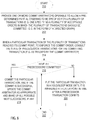
- Figure 4 illustrates one implementation of the stages involved in using a commit arbitrator to enforce a pre-determined commit order.
- the process of Figure 4 is at least partially implemented in the operating logic of computing device 100.
- the procedure begins at start point 270 with providing one or more commit arbitrators for a software transaction memory system, the commit arbitrator being operable to allow a pre-determined commit order to be specified for a plurality of transactions (stage 272).
- commit arbitrator as used herein is meant to include any type of program, feature, or process that is responsible for managing one or more groups of transactions that should be ordered with respect to one another.
- the commit arbitrator tracks and updates one or more ordering values that are used to determine the proper ordering of transactions with respect to one another (stage 274).
- a next-to-commit field can be used to represent a next transaction of a plurality of transactions that should be committed next) (stage 274).
- a directed graph of different possible orders is tracked using the ordering values.
- the commit arbitrator uses the pre-determined commit order to provide a commit order number for each of the plurality of transactions (stage 276).
- the commit arbitrator allows the transaction to commit (stage 278).
- this scenario occurs when the next-to-commit field and the commit order number for the particular transaction have the same value.
- the commit arbitrator allows the transaction to commit and then increments the next-to-commit field to a next number in a sequence (e.g. next higher number) if the commit is successful (stage 278).
- the particular transaction of the plurality of transactions prepares to commit, if the commit order number for the particular transaction when compared to the ordering values reveals that the commit is not proper, then the particular transaction is placed in a hold mode until it is awakened at a later point in time after a predecessor transaction commits (stage 280). In the case of total ordering, this hold mode is entered when the next-to-commit field and the order number for the particular transaction do not have the same value.
- the system may wake a transaction after its immediate predecessor has committed, in which case it may try to commit right away.
- the system may choose to wake a transaction after some non-immediate predecessor has committed, even though its immediate predecessor may not yet have committed.
- the system checks to see if it is appropriate for the transaction to really commit. If so, the transaction is committed. The process ends at end point 282.
- Figure 5 illustrates one implementation of the stages involved in using a commit arbitrator to enforce a total ordering of a plurality of transactions.
- the process of Figure 5 is at least partially implemented in the operating logic of computing device 100.
- the procedure begins at start point 290 with providing one or more commit arbitrators operable to allow a pre-determined total ordering to be specified for a plurality of transactions (e.g. one specifying an exact order in which the plurality of transactions should be committed) (stage 292).
- stage 292 When a particular transaction of the plurality of transactions reaches its commit point, to enforce the commit order, the commit order of the particular transaction is compared with a next-to-commit field of the commit arbitrator (stage 296).
- the system determines that enforcement of the total ordering is not necessary (e.g. such as because there is definitely no conflict)
- the total ordering requirement can be broken as appropriate (stage 294), then the process ends at end point 302.
- commit ordering is to be enforced, and if the commit order of the particular transaction has a same value as the next-to-commit field of the commit arbitrator (decision point 296), then the particular transaction is committed, and if the commit is successful, the next-to-commit field is incremented and the next successor is awakened, if any exist (stage 298). If the commit order of the particular transaction does not have the same value as the next-to-commit field of the commit arbitrator (decision point 296), then the particular transaction is put in a hold/sleep mode until it is awakened at a later point in time after a predecessor transaction commits (stage 300).
- Figure 6 illustrates one implementation of the stages involved in using a commit arbitrator to enforce a partial ordering of a plurality of transactions.
- the process of Figure 6 is at least partially implemented in the operating logic of computing device 100.
- the procedure begins at start point 310 with providing one or more commit arbitrators operable to allow a pre-determined partial ordering to be specified for a plurality of transactions (e.g. one specifying a plurality of acceptable orders in which the plurality of transactions should be committed - e.g. in the form of a directed graph) (stage 312).
- stage 312 When a particular transaction of the plurality of transactions reaches its commit point, to enforce the commit order, the state of the predecessor transactions (e.g. one or more ordering values) are consulted for the particular committing transaction (e.g.
- stage 3114 the commit arbitrator determines whether all predecessors to the particular transaction have committed (decision point 316). If the particular transaction has committed (stage 318), then the particular transaction is committed (stage 318). If the commit is successful, one or more values tracked by the commit arbitrator are updated as appropriate, and all possible next successors are awakened, if any exist (stage 318).
- stage 320 If all predecessors to the particular transaction have not committed (decision point 316), then the particular transaction is put in a hold/sleep mode until it is awakened at a later point in time after a predecessor transaction commits (stage 320). The process ends at end point 322.
- Figure 7 illustrates one implementation of the stages involved in providing a contention management process that manages conflicts using the pre-determined commit order information.
- the process of Figure 7 is at least partially implemented in the operating logic of computing device 100.
- the procedure begins at start point 340 with providing a software transactional memory system that supports a pre-determined commit order for one or more groups of transactions (stage 342).
- a contention management process is provided that is invoked when a conflict occurs between a first transaction and a second transaction (stage 344).
- the pre-determined commit order is used in the contention management process to aid in determining whether the first transaction or the second transaction should win the conflict and be allowed to proceed (stage 346).
- stage 350 If the first transaction and second transaction are not part of the same transaction group (decision point 348), then a pre-determined commit order is not enforced between these two transactions (because none existed) (stage 350). In such a scenario, since the two transactions are not in a same transaction group, the ordering factor is not used to help resolve the conflict (stage 350).
- the system compares the first order number of the first transaction and the second order number of the second transaction (stage 352).
- the transaction with the lower order number is allowed to proceed (or with another suitable priority ordering) (stage 354).
- the process ends at end point 356.
- Figure 8 illustrates one implementation of the stages involved in providing a contention management process that manages conflicts with nested transactions using the pre-determined commit order information.
- the process of Figure 8 is at least partially implemented in the operating logic of computing device 100.
- the entire ancestor chain is considered for each transaction before committing the particular transaction, so that any ordering present in that chain is enforced.
- the procedure begins at start point 370 with providing a contention management process that is invoked when a conflict occurs between a first transaction and a second transaction (stage 372).
- a pre-determined commit order is used in the contention management process to aid in determining whether the first transaction or the second transaction should win the conflict and be allowed to proceed (stage 372).
- stage 384 the order number (or other ordering indicator) of the first transaction is compared with the order number (or other ordering indicator) of the second transaction (stage 384).
- the transaction with the lower order number is allowed to proceed (or the one determined to be next in order by using other suitable ordering criteria) (stage 386).
- top level ancestor as used herein is meant to include the immediate children of common ancestors where common ancestors are involved, and the top level ancestor of each transaction where there is no common ancestor involved. These scenarios involving common and uncommon ancestors are illustrated in further detail in Figures 9 and 10 .
- the transaction with the lower order number is allowed to proceed (e.g. the transaction related to the ancestor that had the lower order number or other suitable criteria) (stage 386). The process ends at end point 388.
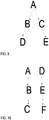
- Figure 9 is a logical diagram illustrating an exemplary ancestor tree with top level ancestors that have a common ancestor.
- transaction A is a common ancestor of D and E.
- the order number of transactions B and C are analyzed to determine which transaction D or E should be allowed to proceed (stage 382 in Figure 8 ).
- Figure 10 is a logical diagram illustrating an exemplary ancestor tree with top level ancestors that do not have common ancestors.
- transaction A is an ancestor of transaction C.
- Transaction D is an ancestor of transaction F.
- the order number of transactions A and D are compared to determine which transaction C or F should be allowed to proceed (stage 382 in Figure 8 ).
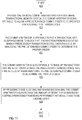
- Figure 11 illustrates one implementation of the stages involved in reducing the amount of wasted work by using a commit arbitrator in a software transactional memory system.
- the process of Figure 11 is at least partially implemented in the operating logic of computing device 100.
- the procedure begins at start point 400 with providing one or more commit arbitrators for a software transactional memory system, the commit arbitrator being operable to allow a pre-determined commit order to be specified for a plurality of transactions (stage 402).
- the commit arbitrator is operable to put a transaction into sleep/hold mode to block that transaction from re-executing when a predecessor transaction is still executing (e.g. by analyzing the pre-determined commit order to determine the proper order (stage 404).
- the commit arbitrator is also operable to wake up transactions that were put on hold once the predecessor transaction(s) have finished (e.g. by again analyzing the pre-determined commit order to determine the proper order) (stage 406). By providing these blocking and waking mechanisms, the commit arbitrator helps reduce the amount of work that is wasted by keeping operations from being performed that would have to be undone later (stage 408). The process ends at end point 410.
- Figure 12 illustrates one implementation of the stages involved in analyzing an entire ancestor chain in a contention management process to determine the proper conflict resolution.
- the process of Figure 12 is at least partially implemented in the operating logic of computing device 100.
- the procedure begins at start point 430 with providing a contention management process that is invoked when a conflict occurs between a first transaction and a second transaction (stage 432).
- a pre-determined commit order is used in the contention management process to aid in determining whether the first transaction or the second transaction should win the conflict and be allowed to proceed (stage 434).
- An entire ancestor chain of a pre-determined commit order is analyzed to help determine the proper conflict management (stage 436).
Landscapes
- Engineering & Computer Science (AREA)
- Theoretical Computer Science (AREA)
- Software Systems (AREA)
- Physics & Mathematics (AREA)
- General Engineering & Computer Science (AREA)
- General Physics & Mathematics (AREA)
- Information Retrieval, Db Structures And Fs Structures Therefor (AREA)
- Advance Control (AREA)
Applications Claiming Priority (2)
| Application Number | Priority Date | Filing Date | Title |
|---|---|---|---|
| US11/601,541 US7711678B2 (en) | 2006-11-17 | 2006-11-17 | Software transaction commit order and conflict management |
| PCT/US2007/085035 WO2008064139A1 (en) | 2006-11-17 | 2007-11-17 | Software transaction commit order and conflict management |
Publications (3)
| Publication Number | Publication Date |
|---|---|
| EP2095225A1 EP2095225A1 (en) | 2009-09-02 |
| EP2095225A4 EP2095225A4 (en) | 2010-10-20 |
| EP2095225B1 true EP2095225B1 (en) | 2017-11-01 |
Family
ID=39418139
Family Applications (1)
| Application Number | Title | Priority Date | Filing Date |
|---|---|---|---|
| EP07845108.5A Not-in-force EP2095225B1 (en) | 2006-11-17 | 2007-11-17 | Software transaction commit order and conflict management |
Country Status (10)
| Country | Link |
|---|---|
| US (1) | US7711678B2 (enExample) |
| EP (1) | EP2095225B1 (enExample) |
| JP (1) | JP4698757B2 (enExample) |
| KR (1) | KR101443930B1 (enExample) |
| CN (1) | CN101535950B (enExample) |
| BR (1) | BRPI0718463A2 (enExample) |
| CA (1) | CA2664041A1 (enExample) |
| RU (1) | RU2439663C2 (enExample) |
| TW (1) | TWI424313B (enExample) |
| WO (1) | WO2008064139A1 (enExample) |
Families Citing this family (32)
| Publication number | Priority date | Publication date | Assignee | Title |
|---|---|---|---|---|
| EP2232367A4 (en) * | 2007-12-12 | 2011-03-09 | Univ Washington | DETERMINIST MULTIPLE PROCESSING |
| WO2009114645A1 (en) * | 2008-03-11 | 2009-09-17 | University Of Washington | Efficient deterministic multiprocessing |
| US9170844B2 (en) * | 2009-01-02 | 2015-10-27 | International Business Machines Corporation | Prioritization for conflict arbitration in transactional memory management |
| US8266604B2 (en) * | 2009-01-26 | 2012-09-11 | Microsoft Corporation | Transactional memory compatibility management |
| US8627292B2 (en) * | 2009-02-13 | 2014-01-07 | Microsoft Corporation | STM with global version overflow handling |
| US9569254B2 (en) * | 2009-07-28 | 2017-02-14 | International Business Machines Corporation | Automatic checkpointing and partial rollback in software transaction memory |
| US9639392B2 (en) * | 2013-12-17 | 2017-05-02 | Intel Corporation | Unbounded transactional memory with forward progress guarantees using a hardware global lock |
| US8453120B2 (en) | 2010-05-11 | 2013-05-28 | F5 Networks, Inc. | Enhanced reliability using deterministic multiprocessing-based synchronized replication |
| US8327185B1 (en) | 2012-03-23 | 2012-12-04 | DSSD, Inc. | Method and system for multi-dimensional raid |
| US9870384B2 (en) | 2012-03-30 | 2018-01-16 | International Business Machines Corporation | Database system transaction management |
| US10536458B2 (en) | 2012-11-13 | 2020-01-14 | Koninklijke Philips N.V. | Method and apparatus for managing a transaction right |
| JP6021112B2 (ja) * | 2013-11-28 | 2016-11-02 | インターナショナル・ビジネス・マシーンズ・コーポレーションInternational Business Machines Corporation | 複数のスレッドで順序付きトランザクションを実行する方法、並びに、当該トランザクションを実行するためのコンピュータ及びそのコンピュータ・プログラム |
| CN103914300B (zh) * | 2014-03-24 | 2017-04-05 | 深圳天珑无线科技有限公司 | 一种软件开发事务的实现方法及电子设备 |
| US20150278123A1 (en) * | 2014-03-28 | 2015-10-01 | Alex Nayshtut | Low-overhead detection of unauthorized memory modification using transactional memory |
| US10303525B2 (en) * | 2014-12-24 | 2019-05-28 | Intel Corporation | Systems, apparatuses, and methods for data speculation execution |
| US10540524B2 (en) | 2014-12-31 | 2020-01-21 | Mcafee, Llc | Memory access protection using processor transactional memory support |
| KR20170100643A (ko) * | 2014-12-31 | 2017-09-04 | 후아웨이 테크놀러지 컴퍼니 리미티드 | 트랜잭션 충돌 검출 방법과 장치 및 컴퓨터 시스템 |
| CN105045563B (zh) * | 2015-06-19 | 2017-10-10 | 陕西科技大学 | 一种推测嵌套软件事务存储的冲突管理方法 |
| US10318430B2 (en) | 2015-06-26 | 2019-06-11 | International Business Machines Corporation | System operation queue for transaction |
| US10180921B2 (en) | 2015-06-26 | 2019-01-15 | International Business Machines Corporation | Non-interfering transactions |
| US9792147B2 (en) * | 2015-07-02 | 2017-10-17 | International Business Machines Corporation | Transactional storage accesses supporting differing priority levels |
| US9792148B2 (en) | 2016-01-07 | 2017-10-17 | International Business Machines Corporation | Prioritization of transactions based on execution progress |
| JP6645348B2 (ja) | 2016-05-06 | 2020-02-14 | 富士通株式会社 | 情報処理装置、情報処理プログラム、及び情報処理方法 |
| US10466930B2 (en) * | 2017-04-28 | 2019-11-05 | EMC IP Holding Company LLC | Method and system for fast ordered writes with atomic multicast |
| US10289491B1 (en) | 2017-04-28 | 2019-05-14 | EMC IP Holding Company LLC | Method and system for implementing multi-dimensional raid in an extensible storage array to optimize performance |
| US10614019B2 (en) | 2017-04-28 | 2020-04-07 | EMC IP Holding Company LLC | Method and system for fast ordered writes with target collaboration |
| US10339062B2 (en) | 2017-04-28 | 2019-07-02 | EMC IP Holding Company LLC | Method and system for writing data to and read data from persistent storage |
| GB2570466B (en) * | 2018-01-25 | 2020-03-04 | Advanced Risc Mach Ltd | Commit window move element |
| US11182379B2 (en) | 2018-08-24 | 2021-11-23 | Oracle International Corporation | DAG based methods and systems of transaction processing in a distributed ledger |
| WO2021251479A1 (ja) * | 2020-06-12 | 2021-12-16 | 株式会社情報科学研究所 | 並列分散計算システム |
| US11822538B2 (en) | 2020-11-05 | 2023-11-21 | Oracle International Corporation | Systems and methods of transaction identification generation for transaction-based environment |
| KR102567658B1 (ko) * | 2021-04-14 | 2023-08-16 | 주식회사 카카오뱅크 | 멀티 트랜잭션을 이용한 업무 컴포넌트 격리 개발 방법 및 시스템 |
Citations (1)
| Publication number | Priority date | Publication date | Assignee | Title |
|---|---|---|---|---|
| US20040236659A1 (en) * | 1999-12-01 | 2004-11-25 | Cazalet Edward G. | Method and apparatus for an engine system supporting transactions, schedules and settlements involving fungible, ephemeral commodities including electrical power |
Family Cites Families (29)
| Publication number | Priority date | Publication date | Assignee | Title |
|---|---|---|---|---|
| US4884228A (en) * | 1986-10-14 | 1989-11-28 | Tektronix, Inc. | Flexible instrument control system |
| JPH05197604A (ja) * | 1991-05-21 | 1993-08-06 | Digital Equip Corp <Dec> | マルチプロセッサ・コンピュータ及びその動作方法 |
| US5701480A (en) * | 1991-10-17 | 1997-12-23 | Digital Equipment Corporation | Distributed multi-version commitment ordering protocols for guaranteeing serializability during transaction processing |
| US5241675A (en) * | 1992-04-09 | 1993-08-31 | Bell Communications Research, Inc. | Method for enforcing the serialization of global multidatabase transactions through committing only on consistent subtransaction serialization by the local database managers |
| US5335343A (en) * | 1992-07-06 | 1994-08-02 | Digital Equipment Corporation | Distributed transaction processing using two-phase commit protocol with presumed-commit without log force |
| US5546546A (en) * | 1994-05-20 | 1996-08-13 | Intel Corporation | Method and apparatus for maintaining transaction ordering and arbitrating in a bus bridge |
| JP3434405B2 (ja) * | 1996-03-19 | 2003-08-11 | 富士通株式会社 | 通信制御装置及び通信制御方法並びに中間通信制御ユニット |
| JPH1049420A (ja) * | 1996-08-02 | 1998-02-20 | Fuji Xerox Co Ltd | データベース管理方法 |
| CA2209549C (en) * | 1997-07-02 | 2000-05-02 | Ibm Canada Limited-Ibm Canada Limitee | Method and apparatus for loading data into a database in a multiprocessor environment |
| US6456995B1 (en) | 1998-12-31 | 2002-09-24 | International Business Machines Corporation | System, method and computer program products for ordering objects corresponding to database operations that are performed on a relational database upon completion of a transaction by an object-oriented transaction system |
| WO2001013202A2 (en) * | 1999-08-17 | 2001-02-22 | Progress Software, Inc. | Concurrent commit lock |
| US6557048B1 (en) * | 1999-11-01 | 2003-04-29 | Advanced Micro Devices, Inc. | Computer system implementing a system and method for ordering input/output (IO) memory operations within a coherent portion thereof |
| CA2416909A1 (en) * | 2000-07-28 | 2002-02-07 | Xymphonic Systems As | Method, system and data structures for implementing nested databases |
| EP1197876A3 (en) * | 2000-10-13 | 2003-04-16 | Miosoft Corporation | Persistent data storage techniques |
| US7111023B2 (en) * | 2001-05-24 | 2006-09-19 | Oracle International Corporation | Synchronous change data capture in a relational database |
| GB0130399D0 (en) * | 2001-12-19 | 2002-02-06 | Ibm | Message ordering in a messaging system |
| US6754737B2 (en) * | 2001-12-24 | 2004-06-22 | Hewlett-Packard Development Company, L.P. | Method and apparatus to allow dynamic variation of ordering enforcement between transactions in a strongly ordered computer interconnect |
| US6785779B2 (en) * | 2002-01-09 | 2004-08-31 | International Business Machines Company | Multi-level classification method for transaction address conflicts for ensuring efficient ordering in a two-level snoopy cache architecture |
| US7685583B2 (en) * | 2002-07-16 | 2010-03-23 | Sun Microsystems, Inc. | Obstruction-free mechanism for atomic update of multiple non-contiguous locations in shared memory |
| US7103612B2 (en) * | 2002-08-01 | 2006-09-05 | Oracle International Corporation | Instantiation of objects for information-sharing relationships |
| US7076508B2 (en) * | 2002-08-12 | 2006-07-11 | International Business Machines Corporation | Method, system, and program for merging log entries from multiple recovery log files |
| US7089253B2 (en) * | 2002-09-13 | 2006-08-08 | Netezza Corporation | Computer method and system for concurrency control using dynamic serialization ordering |
| US6961821B2 (en) * | 2002-10-16 | 2005-11-01 | International Business Machines Corporation | Reconfigurable cache controller for nonuniform memory access computer systems |
| US7010645B2 (en) * | 2002-12-27 | 2006-03-07 | International Business Machines Corporation | System and method for sequentially staging received data to a write cache in advance of storing the received data |
| US6898685B2 (en) * | 2003-03-25 | 2005-05-24 | Emc Corporation | Ordering data writes from a local storage device to a remote storage device |
| US7136967B2 (en) * | 2003-12-09 | 2006-11-14 | International Business Machinces Corporation | Multi-level cache having overlapping congruence groups of associativity sets in different cache levels |
| US7266571B2 (en) * | 2004-07-27 | 2007-09-04 | International Business Machines Corporation | Method and system for scheduling a partial ordered transactions for event correlation |
| US7376675B2 (en) * | 2005-02-18 | 2008-05-20 | International Business Machines Corporation | Simulating multi-user activity while maintaining original linear request order for asynchronous transactional events |
| US7720891B2 (en) * | 2006-02-14 | 2010-05-18 | Oracle America, Inc. | Synchronized objects for software transactional memory |
-
2006
- 2006-11-17 US US11/601,541 patent/US7711678B2/en active Active
-
2007
- 2007-10-23 TW TW096139748A patent/TWI424313B/zh not_active IP Right Cessation
- 2007-11-17 RU RU2009118454/08A patent/RU2439663C2/ru not_active IP Right Cessation
- 2007-11-17 KR KR1020097010737A patent/KR101443930B1/ko not_active Expired - Fee Related
- 2007-11-17 EP EP07845108.5A patent/EP2095225B1/en not_active Not-in-force
- 2007-11-17 CN CN2007800428099A patent/CN101535950B/zh not_active Expired - Fee Related
- 2007-11-17 JP JP2009537403A patent/JP4698757B2/ja not_active Expired - Fee Related
- 2007-11-17 BR BRPI0718463-8A patent/BRPI0718463A2/pt not_active IP Right Cessation
- 2007-11-17 WO PCT/US2007/085035 patent/WO2008064139A1/en not_active Ceased
- 2007-11-17 CA CA002664041A patent/CA2664041A1/en not_active Abandoned
Patent Citations (1)
| Publication number | Priority date | Publication date | Assignee | Title |
|---|---|---|---|---|
| US20040236659A1 (en) * | 1999-12-01 | 2004-11-25 | Cazalet Edward G. | Method and apparatus for an engine system supporting transactions, schedules and settlements involving fungible, ephemeral commodities including electrical power |
Non-Patent Citations (1)
| Title |
|---|
| ANONYMOUS: "Commitment ordering - Wikipedia, the free encyclopedia", 10 November 2006 (2006-11-10), XP055270640, Retrieved from the Internet <URL:https://en.wikipedia.org/w/index.php?title=Commitment_ordering&oldid=86936284> [retrieved on 20160504] * |
Also Published As
| Publication number | Publication date |
|---|---|
| TWI424313B (zh) | 2014-01-21 |
| EP2095225A4 (en) | 2010-10-20 |
| RU2439663C2 (ru) | 2012-01-10 |
| CN101535950A (zh) | 2009-09-16 |
| US20080120484A1 (en) | 2008-05-22 |
| TW200834303A (en) | 2008-08-16 |
| US7711678B2 (en) | 2010-05-04 |
| JP4698757B2 (ja) | 2011-06-08 |
| KR101443930B1 (ko) | 2014-09-23 |
| WO2008064139A1 (en) | 2008-05-29 |
| RU2009118454A (ru) | 2010-11-20 |
| CA2664041A1 (en) | 2008-05-29 |
| KR20090082256A (ko) | 2009-07-29 |
| JP2010510590A (ja) | 2010-04-02 |
| BRPI0718463A2 (pt) | 2013-12-10 |
| CN101535950B (zh) | 2012-06-20 |
| EP2095225A1 (en) | 2009-09-02 |
Similar Documents
| Publication | Publication Date | Title |
|---|---|---|
| US7711678B2 (en) | Software transaction commit order and conflict management | |
| US8010550B2 (en) | Parallelizing sequential frameworks using transactions | |
| US7860847B2 (en) | Exception ordering in contention management to support speculative sequential semantics | |
| JP5813165B2 (ja) | トランザクションを用いるシーケンシャルフレームワークの並行化 | |
| US7908255B2 (en) | Transactional memory using buffered writes and enforced serialization order | |
| Cotard et al. | Stm-hrt: A robust and wait-free stm for hard real-time multicore embedded systems | |
| Scott et al. | Essential Theory | |
| Gudka | Lock Inference for Java | |
| Smolinski | Resolving classical concurrency problems using adaptive conflictless scheduling |
Legal Events
| Date | Code | Title | Description |
|---|---|---|---|
| PUAI | Public reference made under article 153(3) epc to a published international application that has entered the european phase |
Free format text: ORIGINAL CODE: 0009012 |
|
| 17P | Request for examination filed |
Effective date: 20090616 |
|
| AK | Designated contracting states |
Kind code of ref document: A1 Designated state(s): AT BE BG CH CY CZ DE DK EE ES FI FR GB GR HU IE IS IT LI LT LU LV MC MT NL PL PT RO SE SI SK TR |
|
| DAX | Request for extension of the european patent (deleted) | ||
| A4 | Supplementary search report drawn up and despatched |
Effective date: 20100916 |
|
| RAP1 | Party data changed (applicant data changed or rights of an application transferred) |
Owner name: MICROSOFT TECHNOLOGY LICENSING, LLC |
|
| 17Q | First examination report despatched |
Effective date: 20160512 |
|
| REG | Reference to a national code |
Ref country code: DE Ref legal event code: R079 Ref document number: 602007052916 Country of ref document: DE Free format text: PREVIOUS MAIN CLASS: G06F0009060000 Ipc: G06F0009460000 |
|
| GRAP | Despatch of communication of intention to grant a patent |
Free format text: ORIGINAL CODE: EPIDOSNIGR1 |
|
| RIC1 | Information provided on ipc code assigned before grant |
Ipc: G06F 9/46 20060101AFI20170510BHEP |
|
| INTG | Intention to grant announced |
Effective date: 20170526 |
|
| GRAS | Grant fee paid |
Free format text: ORIGINAL CODE: EPIDOSNIGR3 |
|
| GRAA | (expected) grant |
Free format text: ORIGINAL CODE: 0009210 |
|
| AK | Designated contracting states |
Kind code of ref document: B1 Designated state(s): AT BE BG CH CY CZ DE DK EE ES FI FR GB GR HU IE IS IT LI LT LU LV MC MT NL PL PT RO SE SI SK TR |
|
| REG | Reference to a national code |
Ref country code: GB Ref legal event code: FG4D |
|
| REG | Reference to a national code |
Ref country code: CH Ref legal event code: EP Ref country code: AT Ref legal event code: REF Ref document number: 942668 Country of ref document: AT Kind code of ref document: T Effective date: 20171115 |
|
| REG | Reference to a national code |
Ref country code: FR Ref legal event code: PLFP Year of fee payment: 11 |
|
| REG | Reference to a national code |
Ref country code: IE Ref legal event code: FG4D |
|
| REG | Reference to a national code |
Ref country code: DE Ref legal event code: R096 Ref document number: 602007052916 Country of ref document: DE |
|
| REG | Reference to a national code |
Ref country code: NL Ref legal event code: FP |
|
| REG | Reference to a national code |
Ref country code: LT Ref legal event code: MG4D |
|
| REG | Reference to a national code |
Ref country code: AT Ref legal event code: MK05 Ref document number: 942668 Country of ref document: AT Kind code of ref document: T Effective date: 20171101 |
|
| PG25 | Lapsed in a contracting state [announced via postgrant information from national office to epo] |
Ref country code: LT Free format text: LAPSE BECAUSE OF FAILURE TO SUBMIT A TRANSLATION OF THE DESCRIPTION OR TO PAY THE FEE WITHIN THE PRESCRIBED TIME-LIMIT Effective date: 20171101 Ref country code: ES Free format text: LAPSE BECAUSE OF FAILURE TO SUBMIT A TRANSLATION OF THE DESCRIPTION OR TO PAY THE FEE WITHIN THE PRESCRIBED TIME-LIMIT Effective date: 20171101 Ref country code: SE Free format text: LAPSE BECAUSE OF FAILURE TO SUBMIT A TRANSLATION OF THE DESCRIPTION OR TO PAY THE FEE WITHIN THE PRESCRIBED TIME-LIMIT Effective date: 20171101 Ref country code: FI Free format text: LAPSE BECAUSE OF FAILURE TO SUBMIT A TRANSLATION OF THE DESCRIPTION OR TO PAY THE FEE WITHIN THE PRESCRIBED TIME-LIMIT Effective date: 20171101 |
|
| PG25 | Lapsed in a contracting state [announced via postgrant information from national office to epo] |
Ref country code: GR Free format text: LAPSE BECAUSE OF FAILURE TO SUBMIT A TRANSLATION OF THE DESCRIPTION OR TO PAY THE FEE WITHIN THE PRESCRIBED TIME-LIMIT Effective date: 20180202 Ref country code: LV Free format text: LAPSE BECAUSE OF FAILURE TO SUBMIT A TRANSLATION OF THE DESCRIPTION OR TO PAY THE FEE WITHIN THE PRESCRIBED TIME-LIMIT Effective date: 20171101 Ref country code: IS Free format text: LAPSE BECAUSE OF FAILURE TO SUBMIT A TRANSLATION OF THE DESCRIPTION OR TO PAY THE FEE WITHIN THE PRESCRIBED TIME-LIMIT Effective date: 20180301 Ref country code: BG Free format text: LAPSE BECAUSE OF FAILURE TO SUBMIT A TRANSLATION OF THE DESCRIPTION OR TO PAY THE FEE WITHIN THE PRESCRIBED TIME-LIMIT Effective date: 20180201 Ref country code: AT Free format text: LAPSE BECAUSE OF FAILURE TO SUBMIT A TRANSLATION OF THE DESCRIPTION OR TO PAY THE FEE WITHIN THE PRESCRIBED TIME-LIMIT Effective date: 20171101 |
|
| PG25 | Lapsed in a contracting state [announced via postgrant information from national office to epo] |
Ref country code: LI Free format text: LAPSE BECAUSE OF NON-PAYMENT OF DUE FEES Effective date: 20171130 Ref country code: EE Free format text: LAPSE BECAUSE OF FAILURE TO SUBMIT A TRANSLATION OF THE DESCRIPTION OR TO PAY THE FEE WITHIN THE PRESCRIBED TIME-LIMIT Effective date: 20171101 Ref country code: DK Free format text: LAPSE BECAUSE OF FAILURE TO SUBMIT A TRANSLATION OF THE DESCRIPTION OR TO PAY THE FEE WITHIN THE PRESCRIBED TIME-LIMIT Effective date: 20171101 Ref country code: CH Free format text: LAPSE BECAUSE OF NON-PAYMENT OF DUE FEES Effective date: 20171130 Ref country code: CY Free format text: LAPSE BECAUSE OF FAILURE TO SUBMIT A TRANSLATION OF THE DESCRIPTION OR TO PAY THE FEE WITHIN THE PRESCRIBED TIME-LIMIT Effective date: 20171101 Ref country code: CZ Free format text: LAPSE BECAUSE OF FAILURE TO SUBMIT A TRANSLATION OF THE DESCRIPTION OR TO PAY THE FEE WITHIN THE PRESCRIBED TIME-LIMIT Effective date: 20171101 Ref country code: SK Free format text: LAPSE BECAUSE OF FAILURE TO SUBMIT A TRANSLATION OF THE DESCRIPTION OR TO PAY THE FEE WITHIN THE PRESCRIBED TIME-LIMIT Effective date: 20171101 |
|
| REG | Reference to a national code |
Ref country code: DE Ref legal event code: R097 Ref document number: 602007052916 Country of ref document: DE |
|
| PG25 | Lapsed in a contracting state [announced via postgrant information from national office to epo] |
Ref country code: IT Free format text: LAPSE BECAUSE OF FAILURE TO SUBMIT A TRANSLATION OF THE DESCRIPTION OR TO PAY THE FEE WITHIN THE PRESCRIBED TIME-LIMIT Effective date: 20171101 Ref country code: RO Free format text: LAPSE BECAUSE OF FAILURE TO SUBMIT A TRANSLATION OF THE DESCRIPTION OR TO PAY THE FEE WITHIN THE PRESCRIBED TIME-LIMIT Effective date: 20171101 Ref country code: PL Free format text: LAPSE BECAUSE OF FAILURE TO SUBMIT A TRANSLATION OF THE DESCRIPTION OR TO PAY THE FEE WITHIN THE PRESCRIBED TIME-LIMIT Effective date: 20171101 Ref country code: LU Free format text: LAPSE BECAUSE OF NON-PAYMENT OF DUE FEES Effective date: 20171117 |
|
| REG | Reference to a national code |
Ref country code: BE Ref legal event code: MM Effective date: 20171130 |
|
| REG | Reference to a national code |
Ref country code: IE Ref legal event code: MM4A |
|
| PLBE | No opposition filed within time limit |
Free format text: ORIGINAL CODE: 0009261 |
|
| STAA | Information on the status of an ep patent application or granted ep patent |
Free format text: STATUS: NO OPPOSITION FILED WITHIN TIME LIMIT |
|
| PG25 | Lapsed in a contracting state [announced via postgrant information from national office to epo] |
Ref country code: MT Free format text: LAPSE BECAUSE OF NON-PAYMENT OF DUE FEES Effective date: 20171117 |
|
| 26N | No opposition filed |
Effective date: 20180802 |
|
| REG | Reference to a national code |
Ref country code: FR Ref legal event code: PLFP Year of fee payment: 12 |
|
| PG25 | Lapsed in a contracting state [announced via postgrant information from national office to epo] |
Ref country code: IE Free format text: LAPSE BECAUSE OF NON-PAYMENT OF DUE FEES Effective date: 20171117 |
|
| PG25 | Lapsed in a contracting state [announced via postgrant information from national office to epo] |
Ref country code: BE Free format text: LAPSE BECAUSE OF NON-PAYMENT OF DUE FEES Effective date: 20171130 Ref country code: SI Free format text: LAPSE BECAUSE OF FAILURE TO SUBMIT A TRANSLATION OF THE DESCRIPTION OR TO PAY THE FEE WITHIN THE PRESCRIBED TIME-LIMIT Effective date: 20171101 |
|
| PG25 | Lapsed in a contracting state [announced via postgrant information from national office to epo] |
Ref country code: MC Free format text: LAPSE BECAUSE OF FAILURE TO SUBMIT A TRANSLATION OF THE DESCRIPTION OR TO PAY THE FEE WITHIN THE PRESCRIBED TIME-LIMIT Effective date: 20171101 Ref country code: HU Free format text: LAPSE BECAUSE OF FAILURE TO SUBMIT A TRANSLATION OF THE DESCRIPTION OR TO PAY THE FEE WITHIN THE PRESCRIBED TIME-LIMIT; INVALID AB INITIO Effective date: 20071117 |
|
| PG25 | Lapsed in a contracting state [announced via postgrant information from national office to epo] |
Ref country code: TR Free format text: LAPSE BECAUSE OF FAILURE TO SUBMIT A TRANSLATION OF THE DESCRIPTION OR TO PAY THE FEE WITHIN THE PRESCRIBED TIME-LIMIT Effective date: 20171101 |
|
| PG25 | Lapsed in a contracting state [announced via postgrant information from national office to epo] |
Ref country code: PT Free format text: LAPSE BECAUSE OF FAILURE TO SUBMIT A TRANSLATION OF THE DESCRIPTION OR TO PAY THE FEE WITHIN THE PRESCRIBED TIME-LIMIT Effective date: 20171101 |
|
| P01 | Opt-out of the competence of the unified patent court (upc) registered |
Effective date: 20230505 |
|
| PGFP | Annual fee paid to national office [announced via postgrant information from national office to epo] |
Ref country code: NL Payment date: 20231020 Year of fee payment: 17 |
|
| PGFP | Annual fee paid to national office [announced via postgrant information from national office to epo] |
Ref country code: GB Payment date: 20231019 Year of fee payment: 17 |
|
| PGFP | Annual fee paid to national office [announced via postgrant information from national office to epo] |
Ref country code: FR Payment date: 20231019 Year of fee payment: 17 Ref country code: DE Payment date: 20231019 Year of fee payment: 17 |
|
| REG | Reference to a national code |
Ref country code: DE Ref legal event code: R119 Ref document number: 602007052916 Country of ref document: DE |
|
| REG | Reference to a national code |
Ref country code: NL Ref legal event code: MM Effective date: 20241201 |
|
| GBPC | Gb: european patent ceased through non-payment of renewal fee |
Effective date: 20241117 |
|
| PG25 | Lapsed in a contracting state [announced via postgrant information from national office to epo] |
Ref country code: NL Free format text: LAPSE BECAUSE OF NON-PAYMENT OF DUE FEES Effective date: 20241201 |
|
| PG25 | Lapsed in a contracting state [announced via postgrant information from national office to epo] |
Ref country code: DE Free format text: LAPSE BECAUSE OF NON-PAYMENT OF DUE FEES Effective date: 20250603 |
|
| PG25 | Lapsed in a contracting state [announced via postgrant information from national office to epo] |
Ref country code: GB Free format text: LAPSE BECAUSE OF NON-PAYMENT OF DUE FEES Effective date: 20241117 |
|
| PG25 | Lapsed in a contracting state [announced via postgrant information from national office to epo] |
Ref country code: FR Free format text: LAPSE BECAUSE OF NON-PAYMENT OF DUE FEES Effective date: 20241130 |