EP2093687A2 - Verfahren und Vorrichtung zur Verwaltung der Autorisierung eines Rechtsobjekt bei der Verwaltung digitaler Rechte - Google Patents
Verfahren und Vorrichtung zur Verwaltung der Autorisierung eines Rechtsobjekt bei der Verwaltung digitaler Rechte Download PDFInfo
- Publication number
- EP2093687A2 EP2093687A2 EP09152740A EP09152740A EP2093687A2 EP 2093687 A2 EP2093687 A2 EP 2093687A2 EP 09152740 A EP09152740 A EP 09152740A EP 09152740 A EP09152740 A EP 09152740A EP 2093687 A2 EP2093687 A2 EP 2093687A2
- Authority
- EP
- European Patent Office
- Prior art keywords
- domain
- entity
- authorization
- issue
- information
- Prior art date
- Legal status (The legal status is an assumption and is not a legal conclusion. Google has not performed a legal analysis and makes no representation as to the accuracy of the status listed.)
- Granted
Links
Images


Classifications
-
- G—PHYSICS
- G06—COMPUTING OR CALCULATING; COUNTING
- G06F—ELECTRIC DIGITAL DATA PROCESSING
- G06F21/00—Security arrangements for protecting computers, components thereof, programs or data against unauthorised activity
- G06F21/10—Protecting distributed programs or content, e.g. vending or licensing of copyrighted material ; Digital rights management [DRM]
Definitions
- the present invention relates to a Digital Rights Management (DRM), and more particularly, to a method and device for managing authorization to issue a Domain Rights Object (Domain RO) between devices (entities) in the DRM system.
- DRM Digital Rights Management
- Domain RO Domain Rights Object
- a Digital Rights Management (DRM) system is a technology for securely protecting and systematically managing a rights object of digital contents, and provides a series of protection and management systems related to the prevention of illegal copy of digital contents and acquisition of rights object of the digital contents, generation and circulation of the digital contents, and procedures of use of the digital contents.
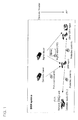
- Figure 1 is a schematic view of a digital rights management system.
- the digital rights management system controls digital contents provided from a contents provider to a user such that the user is able to use the digital contents as much as rights object granted to the user.
- the contents provider is an entity corresponding to a Contents Issuer (CI) and/or a Rights Issuer (RI).
- CI Contents Issuer
- RI Rights Issuer
- the Contents Issuer issues contents protected using a specific encoding key so as to protect the contents from users having no access rights, and the Rights Issuer (RI) issues Rights Object (RO) required to use the protected contents.
- a DRM agent installed in a device receives the protected contents and rights object, and controls a use of the contents by analyzing a license included in the rights object and converting the protected contents into a form suitable for being used in a corresponding terminal.
- a Domain Authority/Domain Enforce Agent is an entity for managing and controlling a user domain. That is, the DA defines a Domain Policy for the user domain, and the DEA is an entity for performing the domain policy defined by the DA and may be positioned in a network or in a device within the domain.
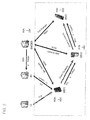
- Figure 2 is an overview showing exemplary user domain architecture in DRM.
- Figure 2 shows an exemplary framework for a Share-key management in a User Domain key Management scheme.
- the user domain is configured such that the RI only performs a function of issuing a Domain Rights Object, and the DA/DEA performs a function of managing Domain Members.
- the user domain members i.e., devices joined to the user domain
- the DA/DEA verifies (checks) the device (DRM agent) and securely transfers a Master Domain Key (MDK) to the terminal.
- MDK Master Domain Key
- the DA/DEA performs an encryption on the MDK using the device's public key. All devices joined in the specific user domain may share the same MDK.
- the DA/DEA securely issues, to the RI, a Diversified Domain Key (DDK) derived from the MDK.
- the DDK is used to encrypt a Rights Object Encryption Key (REK) of the domain rights object.
- the DA/DEA additionally issues a Validation Token (so called, V-Token) such that a member of the user domain, having received the RO, verifies the reliability of the RI.
- This V-Token includes information, such as a term or condition of a contract between the DA/DEA and the RI. Therefore, the device (e.g., DEV1 in Fig. 2 ) may verify through such information whether or not the RO transferred from the RI is valid (usable).
- the device may obtain the DDK by deriving the MDK issued by the DA/DEA, and may use the DDK to use the RO (i.e., domain RO) issued from the RI.
- the device may verify through the V-Token whether the RO is valid.
- the terminal e.g., DEV1
- DEV2 another terminal
- the terminal i.e., DEV1
- DEV2 may transfer a DRM Contents Format (DCF), the RO, and the V-Token to said another terminal (i.e., DEV2) for sharing.
- DCF DRM Contents Format
- Figure 3 is a schematic block diagram showing a process of creating a domain RO by an RI in a user domain.
- the RI checks an ID of a corresponding user domain (e.g., in Fig. 3 , a domain where the devices 1, 2 and 3 are joined), and requests domain information, the V-Token (or User Domain Token) and a key (DDK or DDK-set) from the DEA (Use Domain Request in Fig. 3 ) (S2).
- the RI receives a response to the request from the DEA (Use Domain Response in Fig. 3 ) (S3).
- the RI issues the generated RO to the device 1 (RO Response in Fig. 3 ) (S4).
- the RDP Use Domain protocol refers to a protocol between a DEA and an RI in which the DEA transfers, to the RI, a corresponding authorization, domain information, a key material (e.g., DDK or DDK-set) required to generate a Domain RO, etc. such that the RI creates an RO.
- the RDP Drop Domain protocol refers to a protocol between a DEA and a specific RI to restrict authorization (rights) to issue a RO, which has already been issued to the RI, such that the RI is disabled to create the domain RO.
- a method for managing authorization in a digital rights management including:
- the method further includes receiving, by the second entity, from a terminal a message requesting a domain RO issuance; and sending, by the second entity, to the terminal a response message for the request of the domain RO issuance.
- the method further includes updating, by the second entity, its authorization to issue a domain RO by using the third information.
- the first information consists of a resID parameter indicating an identity (ID) of the first entity, a reqURL parameter indicating an address of the first entity, and a domID parameter indicating an ID of a user domain in which authorization to issue a domain RO is to be terminated.
- ID identity
- reqURL address of the first entity
- domID indicating an ID of a user domain in which authorization to issue a domain RO is to be terminated.
- the second information consists of a reqID parameter indicating an identity (ID) of the second entity, a resID parameter indicating an ID of the first entity, and a reqInfo parameter including user domain information about the termination of the authorization to issue a domain RO and an ⁇ unauthorized> element.
- the third information consists of a reqID parameter indicating an ID of the second entity, a resID parameter indicating an ID of the first entity, and a resInfo parameter including user domain information about a termination of authorization to issue a domain RO, and a user domain token indicating a presence or absence of authorization to issue a domain RO.
- the step (B) comprises: checking whether or not the second entity has authorization to issue a domain RO for the domain; and notifying, to the first entity, through the ⁇ unauthorized> element that the second information in the request message does not have the authorization to issue the domain RO for the domain if the second entity is checked not to have the authorization to issue the domain RO.
- the step (B) comprises: checking whether or not the second entity has authorization to issue a domain RO for the domain; and removing, by the second entity, information related to the domain if the second entity is checked to have the authorization to issue the domain RO; and sending, to the first entity, the request message including the second information by using an address indicated by the reqURL parameter included in the trigger message.
- the third information is a status element which is set to either 'success' or 'fail.'
- the method further includes checking, by the second entity, a value of the status element included in the drop domain response message; and removing, by the second entity, a user domain context including at least one of user domain information, a key material, and a user domain token if the value of the status element is checked 'success.'
- the first entity transmits the response message by including a 'status' element which is set to 'success' therein.
- the first entity transmits the response message by including a 'status' element which is set to 'fail' therein.
- a method for managing authorization in digital rights management including: sending, by a first entity, to a second entity a drop domain request message including information about authorization to issue a domain RO; receiving, by the first entity, from the second entity a response message including a status element about the authorization to issue the domain RO; and checking, by the first entity, a value of the status element, and removing a user domain context according to the value of the status element.
- the method further includes receiving, by the first entity, from the second entity a trigger message for performing a protocol to terminate the authorization to issue the domain RO.
- a device for managing authorization in a digital rights management in which authorization to issue a domain RO for a specific domain is given to an entity of a DRM, including: a module performing a protocol for terminating the authorization to issue the domain RO, wherein the module sends a trigger message requesting an initiation (start) of the protocol to the entity; receives a message requesting a termination (stop) of the authorization to issue the domain RO from the entity; searches whether or not the received request message includes information indicating the presence or absence of the authorization to issue the domain RO in the entity; and based on the search result, sends to the entity a response message containing information to indicate an update of the authorization to issue the domain RO.
- the present invention performs a newly defined RDP Drop domain protocol between the RI and the DA/DEA, thereby terminating authorization (rights) to create and issue a domain RO for a specific domain in digital rights management. Therefore, the present invention may effectively manage the authorization to create and issue the domain RO for a user domain in digital rights management.
- the present invention is applied to a Digital Rights Management (DRM) system.
- DRM Digital Rights Management
- the present invention is not limited to the DRM system, and may also be applied to all communication systems and methods to which the technical scope of the present invention may be applied.
- the basic concept of the present invention is that a RDP Drop domain protocol between DA/DEA and RI is newly defined in a DRM system so as to disable an RI's authorization to create and issue a domain RO for a specific user domain, thus to effectively manage authorization in the DRM system.
- the terminal (or device) according to the present invention refers to all types of devices capable of performing the technical characteristics of the present invention. That is, the terminal according to the present invention may perform a function of setting an IP tunnel with a network, and transmit a network node and data through the setup IP tunnel, such as a mobile communication terminal (e.g., User Equipment (UE), a cellular phone, a portable terminal, a DMB phone, a gaming phone, a camera-equipped phone, a smart phone, and the like), a notebook, a desktop computer, a Personal Digital Assistant (PDA), general home appliances and the like.
- UE User Equipment
- PDA Personal Digital Assistant
- the DRM agent according to the present invention may be configured as one device of the terminal, serving as a module (e.g., a device comprised of software and hardware) performing functions related to the digital contents management.
- a module e.g., a device comprised of software and hardware
- the DRM agent and the terminal will be used without any distinction.
- the User Domain Token is a so called Validation Token (V-Token).
- V-Token is used by the DA/DEA to authorize certain entities (e.g., RI, LRM, or the like) to perform certain tasks (e.g., to issue RO to devices) in relation to the User Domain.
- the User Domain Token consists of an identity (ID) of the entity, the authorized roles of the entity, an expiration date and a digital signature.
- the Key Material is key information required to generate (create) a user domain RO, and includes DDK and DDK-set.
- the Diversified Domain Key is a value obtained by performing a hashing on a Master Domain Key (MDK) shared by the DA/DEA and a device (or DRM agent), and the MDK cannot be derived by an RI having received the DDK.
- MDK Master Domain Key
- both the MDK and the DDK for the user domain are changed if a user domain upgrade is performed.
- devices as a member of the user domain may receive a MDK of the most recent generation if a hash chain is supported, and derive a previous MDK from a hash chain.
- all DDKs of a previous domain generation should be transferred. Accordingly, when a domain RO of multiple domain generations is to be created, the DDK-set is transmitted.
- the signature provides a digital signature for all messages, integrity and authenticity of the message.
- an RDP Trigger ⁇ Drop Domain ⁇ message is a trigger message of a RDP Drop domain protocol.
- the Drop Domain Request message is a message for requesting a drop or termination (stop) of the authorization to create and issue a RO, and is sent from a RI to a DA/DEA.
- the Drop Domain Request message is the first message in the 2-pass RDP Drop domain protocol for disabling a certain RI to create RO (i.e., RO for the user domain).
- a Drop Domain Response message is a response message for the Drop Domain Request message, and includes information related to the authorization to create and issue the RO.
- Figures 4 and 5 are respective signal flowcharts showing a RDP Drop domain protocol.
- Fig. 4 shows a case in which the RI 200 has normally authorization to create and issue a user domain RO according to a first exemplary embodiment of the present invention
- Fig. 5 shows a case in which the RI 200 does not have authorization to create and issue a user domain RO (e.g., it has already dropped or does not have the authorization to create the user domain RO) according to a second exemplary embodiment of the present invention.
- the DA/DEA 300 desires to deprive an RI 200 of the authorization to create RO of a user domain managed by the DA/DEA 300.
- the DA/DEA 300 transfers a trigger message (i.e., RDP Trigger ⁇ Drop Domain ⁇ ) to the RI 200 so as to request the drop of the authorization to create the user domain RO (S41).
- the trigger message (RDP Trigger ⁇ Drop Domain ⁇ ) includes information (parameter, element or attribute) for performing a RDP Drop domain protocol: that is, type, version, proxy, resID, resAlias, reqURL, nonce, domID, domAlias, RI-ID, signature, and encKey.
- the 'resID' is a parameter (element or attribute) indicating an ID of the DA/DEA (if the DA/DEA is a single entity) or a DEA ID (if the DA/DEA is separated);
- the 'reqURL' is a parameter (element or attribute) indicating a URL of the DA/DEA (if the DA/DEA is a single entity) or a DEA URL (if the DA/DEA is separated);
- the 'domID' includes information related to a user domain ID managed by the DEA, and information notifying the drop of the authorization to create and issue the user domain RO.
- the RI 200 After receiving the RDP Trigger ⁇ Drop Domain ⁇ , the RI 200 checks its authorization to create and issue the user domain RO. Then, the RI 200 transmits a drop domain request message (i.e., Drop Domain Request in Figs. 4 and 5 ) to the DEA 300 (S42-1 in Fig. 4 and S42-2 in Fig. 5 ). Here, the RI 200 has normal authorization to create and issue the user domain RO.
- a drop domain request message i.e., Drop Domain Request in Figs. 4 and 5
- the RI 200 has normal authorization to create and issue the user domain RO.
- the RI 200 removes information about a corresponding user domain (domain information, key material, and the like), and then transfers the Drop Domain Request message to an address which is indicated by the reqURL (i.e., information indicating the address of the DA/DEA) included in the RDP Trigger ⁇ Drop Domain ⁇ (S42-1).
- the Drop Domain Request message includes ID information of a user domain required by the RI 200 to expire (disable) the authorization to create and issue RO, i.e., reqID, resID, nonce, time, certificateChain, reqInfo, and signature.
- the 'reqID' is a parameter (element or attribute) indicating an ID of a RI which is to drop the authorization to create and issue a domain RO
- the 'resID' is a parameter (element or attribute) indicating an ID of the DA/DEA (if the DA/DEA is a single entity) or a DEA ID (if the DA/DEA is separated)
- the 'reqInfo' is a parameter (element or attribute) containing information about a user domain from which the DA/DEA requests the expiry of the authorization to create a domain RO. That is, the reqInfo parameter basically includes a user domain ID (i.e., a sub-element of the reqInfo), and may additionally include a user domain alias.
- the DA/DEA 300 Upon receiving the Drop Domain Request message, the DA/DEA 300 transmits a Drop Domain Response message to the RI 200 (S43-1 in Fig. 4 and S43-2 in Fig. 5 ).
- the Drop Domain Response message contains information (parameter, element or attribute) to perform an RDP Drop domain protocol: that is, status, reqID, resID, nonce, resInfo, and signature.
- the 'reqID' element is information indicating an ID of a RI which is to drop the authorization to create and issue a domain RO
- the 'resID' element is information indicating an ID of the DA/DEA (if the DA/DEA is a single entity) or a DEA ID (if the DA/DEA is separated)
- the 'resInfo' element includes user domain information and a User Domain Token.
- the user domain information includes a 'user domain ID,' an 'expiry time of a Domain Context' and a 'user domain alias.'
- the DA/DEA 300 Upon receiving the Drop Domain Request message, the DA/DEA 300 checks (searches) whether or not an ⁇ unauthorized> element as a sub-element is included in the ⁇ reqInfo> element of the message. If the ⁇ unauthorized> element as a sub-element is not included in the ⁇ reqInfo> element, it indicates that the RI 200 has removed the authorization to create and issue the user domain RO bound to the DA/DEA 300 for a corresponding user domain. Therefore, the DA/DEA 300 updates current status information about the authorization to create and issue the corresponding user domain RO. For instance, it is updated from an 'enabled to issue RO' status (so called, 'Enable') to a 'disabled to issue RO' status (so called, 'Disable').
- the DA/DEA 300 uses a user domain token (i.e., V-Token) so as to transfer to the RI 200 information notifying the expiry of the authorization to create the user domain RO through the Drop Domain Response message, and requests the RI 200 to update the authorization for a RO (S43-1).
- V-Token a user domain token
- the RI 200 includes the user domain token and the domain ID.
- the DA/DEA 300 transmits a Drop Domain Response message by including a 'Status' element (or parameter) which is set to 'Success' therein.
- the DA/DEA 300 transmits a Drop Domain Response message by including a 'Status' element (or parameter) which is set to 'Fail' therein.
- the RI 200 checks the value of the 'Status' element (Success or Fail) included in the Drop Domain Response message.
- the RI 200 removes a User Domain Context which includes at least one of 'User Domain Info', 'Key Material', and 'User Domain Token,' such that the RI 200 cannot issue the user domain RO.
- the RI 200 receives the Drop Domain Response message, and removes (updates) its authorization on the RO based on the information (e.g., the Status element) contained in the received message (S44).
- a second exemplary embodiment in Fig. 5 will be given in detail. Descriptions which are the same as the first exemplary embodiment in Fig. 4 are omitted, and descriptions which are different from the exemplary embodiment in Fig. 4 (i.e., S42-2 and S43-2) will be given. Therefore, same reference numerals in Figs. 4 and 5 are used to have the same functions and operations.
- the second exemplary embodiment in Fig. 5 illustrates that the RI 200 does not have normal authorization to create and issue a user domain RO (e.g., it has already dropped or does not have the authorization to issue a user domain RO).
- the RI 200 may inform, through an extension of the Drop Domain Request message, that the authorization to create the user domain RO has already been dropped or expired. That is, the RI 200 transmits the Drop Domain Request message to an address indicated by a reqURL (i.e., information indicating an address of the DA/DEA) included in the RDP Trigger ⁇ Drop Domain ⁇ (S42-2).
- a reqURL i.e., information indicating an address of the DA/DEA
- the Drop Domain Request message may include ID information of the user domain required by the RI 200 to expire (disable) the authorization to create and issue the RO: that is, reqID, resID, nonce, time, certificateChain, reqInfo and signature.
- ID information of the user domain required by the RI 200 to expire (disable) the authorization to create and issue the RO that is, reqID, resID, nonce, time, certificateChain, reqInfo and signature.
- the ⁇ reqInfo> element includes two sub-elements: a user domain ID and an ⁇ unauthorized> element.
- the ⁇ unauthorized> element is transferred through the "unauthorized" extension of the ⁇ reqInfo> element.
- the RI 200 when the RI 200 has an already expired authorization to create and issue the user domain RO or does not have the authorization, and if the DA/DEA 300 sends the RDP Trigger ⁇ Drop Domain ⁇ message, the RI 200 transfers the ⁇ unauthorized> element to the DA/DEA 300 so as to notify that the RI 200 does not have the authorization to create and issue the user domain RO.
- the DA/DEA 300 checks (or updates) that the RI 200 does not have authorization to create and issue the corresponding user domain RO.
- the DA/DEA 300 may include the ⁇ resInfo> element in the user domain token having been updated with information indicating the expiry of the authorization to create and issue the RO by the RI 200, so as to transfer the same to the RI 200 through the Drop Domain Response message (S43-2).
- the DA/DEA 300 transmits a Drop Domain Response message by including a 'status' element (or parameter) set to 'Success' therein. Conversely, if the Drop Domain Request message has not been successfully received or if the status information about the authorization to create and issue the user domain RO of the RI 200 has not been successfully checked or updated, the DA/DEA 300 transmits a Drop Domain Response message by including a 'status' element (or parameter) which is set to 'Fail' therein.
- Figure 6 is a block diagram showing a RDP Drop domain protocol.
- Figure 6 schematically illustrates signaling of the RDP Drop domain protocol in Figs. 4 and 5 .
- the DA and the DEA are shown as a separate entity, however, the DA and the DEA may be separated from or coupled to each other. Operations of signaling corresponding to each reference numeral in Fig. 6 are the same as those of signaling corresponding to those in Figs. 4 and 5 .
- the DA/DEA includes a module performing the operation and function described in Figs. 4 through 6 .
- Such module is implemented through software and hardware including the software.
- the module may be referred to as a controller or a processor as a component performing the operations and functions described in Figs. 4 through 6 , but such naming is not meant to be limiting.
- the module implemented within the DA/DEA performs a newly defined RDP Drop domain protocol. That is, the module sends a trigger message (RDP trigger ⁇ Drop Domain ⁇ ) requesting an initiation (start) of the protocol to a specific entity (e.g., RI having the authorization to issue a domain RO); receives a Drop Domain Request message requesting a termination (stop) of the authorization to issue the domain RO from the entity (RI); searches (analyzes) whether the received request message includes information (i.e., ⁇ unauthorized> element within the reqInfo parameter) indicating the presence or absence of the authorization to issue the domain RO in the entity; and based on the search result, sends to the entity (RI) a response message containing information (i.e., user domain token) for updating the authorization to issue the domain RO (i.e., terminating the authorization to issue).
- a trigger message RDP trigger ⁇ Drop Domain ⁇
- start initiation
- RI having the authorization to issue a domain RO
- receives a Drop Domain Request
- the DA/DEA includes all communication components required to perform the RDP Drop domain protocol with the entity (RI), in addition to the module.
- the DA/DEA includes a transmitter, an output unit (e.g., a display, a speaker, etc.), an input unit and the like. These components are apparent to those skilled in the related art, thus detailed descriptions therefor are omitted.
- the RI may be a device corresponding to a server in a network.
- the RI includes a module performing the operations and functions described in Figs. 4 through 6 .
- This module is implemented through software and hardware including the software.
- the module may be referred to as a controller or a processor as a component performing the operations and functions described in Figs. 4 through 6 , but such naming is not meant to be limiting.
- the module implemented within the RI performs a newly defined RDP Drop domain protocol. That is, the module receives a trigger message (RDP trigger ⁇ Drop Domain ⁇ ) for requesting an initiation (start) of the protocol from a specific entity (e.g., DEA/DA); sends to the entity (DEA/DA) a Drop Domain Request message containing information indicating the presence or absence of the authorization to issue the domain RO; receives a response message for the request from the entity (DEA/DA) and searches (analyzes) whether or not the response message contains information (i.e., status element within the reqInfo parameter) indicating the presence or absence of the authorization to issue the domain RO; and based on the search result, updates (e.g., terminates the authorization to issue RO) the authorization to issue the domain RO.
- a trigger message RDP trigger ⁇ Drop Domain ⁇
- start initiation
- DEA/DA e.g., DEA/DA
- DEA/DA Drop Domain Request message containing information indicating the presence or absence of the
- the module (or processor) of the RI receives the Drop Domain Response message so as to check the value (success or fail) of the 'status' element included in the Drop Domain Response message.
- the module of the RI removes the user domain context which includes at least one of the user domain info, the key material and the user domain token.
- the RI includes all communication components required to perform the RDP Drop domain protocol with the entity (DEA/DA), in addition to the module. That is, the RI includes a transmitter, an output unit (e.g., a display, a speaker, etc.), an input unit and the like. These components are apparent to those skilled in the related art, thus detailed descriptions therefor are omitted.
- the method described so far may be implemented by software, hardware or their combination.
- the method according to the present invention may be stored in a storage medium (e.g., an internal memory of a mobile terminal, a flash memory, a hard disk, or the like), and may be implemented by codes or command languages in a software program that can be executed by a processor (e.g., an internal microprocessor of a mobile terminal).
- a storage medium e.g., an internal memory of a mobile terminal, a flash memory, a hard disk, or the like
- a processor e.g., an internal microprocessor of a mobile terminal.
Landscapes
- Engineering & Computer Science (AREA)
- Software Systems (AREA)
- Theoretical Computer Science (AREA)
- Multimedia (AREA)
- Technology Law (AREA)
- Computer Hardware Design (AREA)
- Computer Security & Cryptography (AREA)
- Physics & Mathematics (AREA)
- General Engineering & Computer Science (AREA)
- General Physics & Mathematics (AREA)
- Mobile Radio Communication Systems (AREA)
- Storage Device Security (AREA)
Applications Claiming Priority (4)
| Application Number | Priority Date | Filing Date | Title |
|---|---|---|---|
| US2983808P | 2008-02-19 | 2008-02-19 | |
| US3055108P | 2008-02-21 | 2008-02-21 | |
| US4446108P | 2008-04-11 | 2008-04-11 | |
| KR1020080055959A KR101513026B1 (ko) | 2008-02-19 | 2008-06-13 | 디지털 저작권 관리에서의 권한 관리 방법 및 장치 |
Publications (3)
| Publication Number | Publication Date |
|---|---|
| EP2093687A2 true EP2093687A2 (de) | 2009-08-26 |
| EP2093687A3 EP2093687A3 (de) | 2013-06-19 |
| EP2093687B1 EP2093687B1 (de) | 2018-07-04 |
Family
ID=40792615
Family Applications (1)
| Application Number | Title | Priority Date | Filing Date |
|---|---|---|---|
| EP09152740.8A Not-in-force EP2093687B1 (de) | 2008-02-19 | 2009-02-12 | Verfahren und Vorrichtung zur Verwaltung der Autorisierung eines Rechtsobjekt bei der Verwaltung digitaler Rechte |
Country Status (3)
| Country | Link |
|---|---|
| US (1) | US9135408B2 (de) |
| EP (1) | EP2093687B1 (de) |
| WO (1) | WO2009104873A2 (de) |
Families Citing this family (3)
| Publication number | Priority date | Publication date | Assignee | Title |
|---|---|---|---|---|
| US9397835B1 (en) | 2014-05-21 | 2016-07-19 | Amazon Technologies, Inc. | Web of trust management in a distributed system |
| US9866392B1 (en) * | 2014-09-15 | 2018-01-09 | Amazon Technologies, Inc. | Distributed system web of trust provisioning |
| US10469477B2 (en) | 2015-03-31 | 2019-11-05 | Amazon Technologies, Inc. | Key export techniques |
Family Cites Families (20)
| Publication number | Priority date | Publication date | Assignee | Title |
|---|---|---|---|---|
| US20060020790A1 (en) * | 2000-05-25 | 2006-01-26 | Sprunk Eric J | Authorization using ciphertext tokens in a content receiver |
| US20020092015A1 (en) * | 2000-05-26 | 2002-07-11 | Sprunk Eric J. | Access control processor |
| JP2005505885A (ja) | 2001-10-17 | 2005-02-24 | コーニンクレッカ フィリップス エレクトロニクス エヌ ヴィ | 安全な1つのドライブによるコピー方法および装置 |
| US8843413B2 (en) | 2004-02-13 | 2014-09-23 | Microsoft Corporation | Binding content to a domain |
| US7437551B2 (en) * | 2004-04-02 | 2008-10-14 | Microsoft Corporation | Public key infrastructure scalability certificate revocation status validation |
| KR100677344B1 (ko) * | 2004-07-29 | 2007-02-02 | 엘지전자 주식회사 | 권리객체 처리를 위한 메시지 및 이를 이용한 권리객체 처리 방법 및 시스템 |
| US20060056324A1 (en) * | 2004-09-10 | 2006-03-16 | Nokia Corporation | Apparatus and method to provide mobile music appliance with subscription-based play-list service |
| EP1635545B1 (de) | 2004-09-14 | 2013-04-10 | Sony Ericsson Mobile Communications AB | Verfahren und System zum Übertragen von rechtlich geschützen Inhalten mittels USB oder Speicherkarten |
| US7607176B2 (en) | 2004-11-12 | 2009-10-20 | International Business Machines Corporation | Trainable rule-based computer file usage auditing system |
| US20090217036A1 (en) * | 2005-05-04 | 2009-08-27 | Vodafone Group Plc | Digital rights management |
| KR100737395B1 (ko) * | 2005-07-08 | 2007-07-09 | 구주기술 주식회사 | 임상화학 분석용 자동 칼라 측정시스템 및 그 방법 |
| CN100527144C (zh) * | 2005-11-21 | 2009-08-12 | 华为技术有限公司 | 一种在数字版权管理中实现准确计费的方法及装置 |
| KR100830941B1 (ko) * | 2006-03-30 | 2008-05-22 | 엘지전자 주식회사 | 디지털 저작권 관리에 있어서 사용권리 전달방법 및 장치 |
| KR100819495B1 (ko) * | 2006-04-11 | 2008-04-07 | 엘지전자 주식회사 | Drm 콘텐츠의 사용권리 이동을 위한 인증 방법 및 장치 |
| KR100941535B1 (ko) * | 2006-06-09 | 2010-02-10 | 엘지전자 주식회사 | 디지털 저작권 관리에서 장치의 도메인 탈퇴 방법, 그 장치및 그 시스템 |
| KR101013686B1 (ko) * | 2006-06-29 | 2011-02-10 | 엘지전자 주식회사 | Drm에서 유저 도메인 내의 장치 관리 방법 및 시스템 |
| CN101119582A (zh) * | 2006-07-31 | 2008-02-06 | 华为技术有限公司 | 一种订阅移动业务的方法和系统 |
| KR101443612B1 (ko) * | 2006-08-08 | 2014-09-23 | 엘지전자 주식회사 | Ro 이동을 위한 drm 에이전트 간의 인증 방법 및 장치 |
| US20090132713A1 (en) * | 2007-11-20 | 2009-05-21 | Microsoft Corporation | Single-roundtrip exchange for cross-domain data access |
| US8925096B2 (en) * | 2009-06-02 | 2014-12-30 | Google Technology Holdings LLC | System and method for securing the life-cycle of user domain rights objects |
-
2009
- 2009-02-05 WO PCT/KR2009/000554 patent/WO2009104873A2/en not_active Ceased
- 2009-02-12 EP EP09152740.8A patent/EP2093687B1/de not_active Not-in-force
- 2009-02-18 US US12/372,825 patent/US9135408B2/en not_active Expired - Fee Related
Also Published As
| Publication number | Publication date |
|---|---|
| EP2093687A3 (de) | 2013-06-19 |
| US9135408B2 (en) | 2015-09-15 |
| WO2009104873A3 (en) | 2009-10-22 |
| US20090228960A1 (en) | 2009-09-10 |
| WO2009104873A2 (en) | 2009-08-27 |
| EP2093687B1 (de) | 2018-07-04 |
Similar Documents
| Publication | Publication Date | Title |
|---|---|---|
| KR101013686B1 (ko) | Drm에서 유저 도메인 내의 장치 관리 방법 및 시스템 | |
| US8656156B2 (en) | Method and terminal for authenticating between DRM agents for moving RO | |
| EP2158716B1 (de) | Bindung von inhaltslizenzen an tragbare speichergeräte | |
| EP2628125B1 (de) | Verfahren und vorrichtung zum herunterladen eines drm-moduls | |
| EP2018019B1 (de) | Erfassungsverfahren und system von Rechtsobjekten | |
| CN110535880B (zh) | 物联网的访问控制方法以及系统 | |
| US9177112B2 (en) | Method and device for communicating digital content | |
| EP1769604A1 (de) | System und verfahren zur digitalen verwaltung von rechten an elektronischem inhalt | |
| US20110119494A1 (en) | Method and apparatus for sharing licenses between secure removable media | |
| MX2014009822A (es) | Metodos y aparato para distribucion a gran escala de clientes de acceso electronico. | |
| US20080183831A1 (en) | Method, system, mobile terminal and ri server for withdrawing rights object | |
| US8307457B2 (en) | Method and terminal for receiving rights object for content on behalf of memory card | |
| US8205082B2 (en) | Domain upgrade method in digital rights management | |
| KR100988374B1 (ko) | 사용권리 이동 방법, 사용권리의 발급권한 관리 방법 및시스템 | |
| EP2093687B1 (de) | Verfahren und Vorrichtung zur Verwaltung der Autorisierung eines Rechtsobjekt bei der Verwaltung digitaler Rechte | |
| US20130219510A1 (en) | Drm/cas service device and method using security context | |
| KR101513026B1 (ko) | 디지털 저작권 관리에서의 권한 관리 방법 및 장치 | |
| EP2382576B1 (de) | Verfahren und vorrichtung für den erhalt eines rechteobjekts für inhalte für eine speicherkarte | |
| KR20090130799A (ko) | 사용자 도메인 중계 방법 | |
| KR20090036498A (ko) | 사용자 도메인에서의 키 관리 방법 및 콘텐츠 사용 방법 |
Legal Events
| Date | Code | Title | Description |
|---|---|---|---|
| PUAI | Public reference made under article 153(3) epc to a published international application that has entered the european phase |
Free format text: ORIGINAL CODE: 0009012 |
|
| 17P | Request for examination filed |
Effective date: 20090212 |
|
| AK | Designated contracting states |
Kind code of ref document: A2 Designated state(s): AT BE BG CH CY CZ DE DK EE ES FI FR GB GR HR HU IE IS IT LI LT LU LV MC MK MT NL NO PL PT RO SE SI SK TR |
|
| AX | Request for extension of the european patent |
Extension state: AL BA RS |
|
| REG | Reference to a national code |
Ref country code: DE Ref legal event code: R079 Ref document number: 602009053018 Country of ref document: DE Free format text: PREVIOUS MAIN CLASS: G06F0021000000 Ipc: G06F0021100000 |
|
| PUAL | Search report despatched |
Free format text: ORIGINAL CODE: 0009013 |
|
| AK | Designated contracting states |
Kind code of ref document: A3 Designated state(s): AT BE BG CH CY CZ DE DK EE ES FI FR GB GR HR HU IE IS IT LI LT LU LV MC MK MT NL NO PL PT RO SE SI SK TR |
|
| AX | Request for extension of the european patent |
Extension state: AL BA RS |
|
| RIC1 | Information provided on ipc code assigned before grant |
Ipc: G06F 21/10 20130101AFI20130515BHEP |
|
| RBV | Designated contracting states (corrected) |
Designated state(s): AT BE BG CH CY CZ DE DK EE ES FI FR GB GR HR HU IE IS IT LI LT LU LV MC MK MT NL NO PL PT RO SE SI SK TR |
|
| 17Q | First examination report despatched |
Effective date: 20140403 |
|
| STAA | Information on the status of an ep patent application or granted ep patent |
Free format text: STATUS: EXAMINATION IS IN PROGRESS |
|
| GRAP | Despatch of communication of intention to grant a patent |
Free format text: ORIGINAL CODE: EPIDOSNIGR1 |
|
| STAA | Information on the status of an ep patent application or granted ep patent |
Free format text: STATUS: GRANT OF PATENT IS INTENDED |
|
| INTG | Intention to grant announced |
Effective date: 20180123 |
|
| GRAS | Grant fee paid |
Free format text: ORIGINAL CODE: EPIDOSNIGR3 |
|
| GRAA | (expected) grant |
Free format text: ORIGINAL CODE: 0009210 |
|
| STAA | Information on the status of an ep patent application or granted ep patent |
Free format text: STATUS: THE PATENT HAS BEEN GRANTED |
|
| AK | Designated contracting states |
Kind code of ref document: B1 Designated state(s): AT BE BG CH CY CZ DE DK EE ES FI FR GB GR HR HU IE IS IT LI LT LU LV MC MK MT NL NO PL PT RO SE SI SK TR |
|
| REG | Reference to a national code |
Ref country code: GB Ref legal event code: FG4D |
|
| REG | Reference to a national code |
Ref country code: CH Ref legal event code: EP |
|
| REG | Reference to a national code |
Ref country code: AT Ref legal event code: REF Ref document number: 1015274 Country of ref document: AT Kind code of ref document: T Effective date: 20180715 |
|
| REG | Reference to a national code |
Ref country code: IE Ref legal event code: FG4D |
|
| REG | Reference to a national code |
Ref country code: DE Ref legal event code: R096 Ref document number: 602009053018 Country of ref document: DE |
|
| REG | Reference to a national code |
Ref country code: NL Ref legal event code: MP Effective date: 20180704 |
|
| REG | Reference to a national code |
Ref country code: LT Ref legal event code: MG4D |
|
| REG | Reference to a national code |
Ref country code: CH Ref legal event code: PK Free format text: BERICHTIGUNGEN |
|
| REG | Reference to a national code |
Ref country code: AT Ref legal event code: MK05 Ref document number: 1015274 Country of ref document: AT Kind code of ref document: T Effective date: 20180704 |
|
| PG25 | Lapsed in a contracting state [announced via postgrant information from national office to epo] |
Ref country code: NL Free format text: LAPSE BECAUSE OF FAILURE TO SUBMIT A TRANSLATION OF THE DESCRIPTION OR TO PAY THE FEE WITHIN THE PRESCRIBED TIME-LIMIT Effective date: 20180704 |
|
| RIC2 | Information provided on ipc code assigned after grant |
Ipc: G06F 21/10 20130101AFI20130515BHEP |
|
| PG25 | Lapsed in a contracting state [announced via postgrant information from national office to epo] |
Ref country code: LT Free format text: LAPSE BECAUSE OF FAILURE TO SUBMIT A TRANSLATION OF THE DESCRIPTION OR TO PAY THE FEE WITHIN THE PRESCRIBED TIME-LIMIT Effective date: 20180704 Ref country code: FI Free format text: LAPSE BECAUSE OF FAILURE TO SUBMIT A TRANSLATION OF THE DESCRIPTION OR TO PAY THE FEE WITHIN THE PRESCRIBED TIME-LIMIT Effective date: 20180704 Ref country code: IS Free format text: LAPSE BECAUSE OF FAILURE TO SUBMIT A TRANSLATION OF THE DESCRIPTION OR TO PAY THE FEE WITHIN THE PRESCRIBED TIME-LIMIT Effective date: 20181104 Ref country code: CZ Free format text: LAPSE BECAUSE OF FAILURE TO SUBMIT A TRANSLATION OF THE DESCRIPTION OR TO PAY THE FEE WITHIN THE PRESCRIBED TIME-LIMIT Effective date: 20180704 Ref country code: AT Free format text: LAPSE BECAUSE OF FAILURE TO SUBMIT A TRANSLATION OF THE DESCRIPTION OR TO PAY THE FEE WITHIN THE PRESCRIBED TIME-LIMIT Effective date: 20180704 Ref country code: GR Free format text: LAPSE BECAUSE OF FAILURE TO SUBMIT A TRANSLATION OF THE DESCRIPTION OR TO PAY THE FEE WITHIN THE PRESCRIBED TIME-LIMIT Effective date: 20181005 Ref country code: NO Free format text: LAPSE BECAUSE OF FAILURE TO SUBMIT A TRANSLATION OF THE DESCRIPTION OR TO PAY THE FEE WITHIN THE PRESCRIBED TIME-LIMIT Effective date: 20181004 Ref country code: BG Free format text: LAPSE BECAUSE OF FAILURE TO SUBMIT A TRANSLATION OF THE DESCRIPTION OR TO PAY THE FEE WITHIN THE PRESCRIBED TIME-LIMIT Effective date: 20181004 Ref country code: PL Free format text: LAPSE BECAUSE OF FAILURE TO SUBMIT A TRANSLATION OF THE DESCRIPTION OR TO PAY THE FEE WITHIN THE PRESCRIBED TIME-LIMIT Effective date: 20180704 Ref country code: SE Free format text: LAPSE BECAUSE OF FAILURE TO SUBMIT A TRANSLATION OF THE DESCRIPTION OR TO PAY THE FEE WITHIN THE PRESCRIBED TIME-LIMIT Effective date: 20180704 |
|
| REG | Reference to a national code |
Ref country code: CH Ref legal event code: PK Free format text: BERICHTIGUNGEN |
|
| RIC2 | Information provided on ipc code assigned after grant |
Ipc: G06F 21/10 20130101AFI20130515BHEP |
|
| PG25 | Lapsed in a contracting state [announced via postgrant information from national office to epo] |
Ref country code: ES Free format text: LAPSE BECAUSE OF FAILURE TO SUBMIT A TRANSLATION OF THE DESCRIPTION OR TO PAY THE FEE WITHIN THE PRESCRIBED TIME-LIMIT Effective date: 20180704 Ref country code: LV Free format text: LAPSE BECAUSE OF FAILURE TO SUBMIT A TRANSLATION OF THE DESCRIPTION OR TO PAY THE FEE WITHIN THE PRESCRIBED TIME-LIMIT Effective date: 20180704 Ref country code: HR Free format text: LAPSE BECAUSE OF FAILURE TO SUBMIT A TRANSLATION OF THE DESCRIPTION OR TO PAY THE FEE WITHIN THE PRESCRIBED TIME-LIMIT Effective date: 20180704 |
|
| REG | Reference to a national code |
Ref country code: DE Ref legal event code: R097 Ref document number: 602009053018 Country of ref document: DE |
|
| PG25 | Lapsed in a contracting state [announced via postgrant information from national office to epo] |
Ref country code: EE Free format text: LAPSE BECAUSE OF FAILURE TO SUBMIT A TRANSLATION OF THE DESCRIPTION OR TO PAY THE FEE WITHIN THE PRESCRIBED TIME-LIMIT Effective date: 20180704 Ref country code: IT Free format text: LAPSE BECAUSE OF FAILURE TO SUBMIT A TRANSLATION OF THE DESCRIPTION OR TO PAY THE FEE WITHIN THE PRESCRIBED TIME-LIMIT Effective date: 20180704 Ref country code: RO Free format text: LAPSE BECAUSE OF FAILURE TO SUBMIT A TRANSLATION OF THE DESCRIPTION OR TO PAY THE FEE WITHIN THE PRESCRIBED TIME-LIMIT Effective date: 20180704 |
|
| PLBE | No opposition filed within time limit |
Free format text: ORIGINAL CODE: 0009261 |
|
| STAA | Information on the status of an ep patent application or granted ep patent |
Free format text: STATUS: NO OPPOSITION FILED WITHIN TIME LIMIT |
|
| PG25 | Lapsed in a contracting state [announced via postgrant information from national office to epo] |
Ref country code: DK Free format text: LAPSE BECAUSE OF FAILURE TO SUBMIT A TRANSLATION OF THE DESCRIPTION OR TO PAY THE FEE WITHIN THE PRESCRIBED TIME-LIMIT Effective date: 20180704 Ref country code: SK Free format text: LAPSE BECAUSE OF FAILURE TO SUBMIT A TRANSLATION OF THE DESCRIPTION OR TO PAY THE FEE WITHIN THE PRESCRIBED TIME-LIMIT Effective date: 20180704 |
|
| 26N | No opposition filed |
Effective date: 20190405 |
|
| PG25 | Lapsed in a contracting state [announced via postgrant information from national office to epo] |
Ref country code: SI Free format text: LAPSE BECAUSE OF FAILURE TO SUBMIT A TRANSLATION OF THE DESCRIPTION OR TO PAY THE FEE WITHIN THE PRESCRIBED TIME-LIMIT Effective date: 20180704 |
|
| REG | Reference to a national code |
Ref country code: CH Ref legal event code: PL |
|
| PG25 | Lapsed in a contracting state [announced via postgrant information from national office to epo] |
Ref country code: LU Free format text: LAPSE BECAUSE OF NON-PAYMENT OF DUE FEES Effective date: 20190212 Ref country code: MC Free format text: LAPSE BECAUSE OF FAILURE TO SUBMIT A TRANSLATION OF THE DESCRIPTION OR TO PAY THE FEE WITHIN THE PRESCRIBED TIME-LIMIT Effective date: 20180704 |
|
| REG | Reference to a national code |
Ref country code: BE Ref legal event code: MM Effective date: 20190228 |
|
| REG | Reference to a national code |
Ref country code: IE Ref legal event code: MM4A |
|
| PG25 | Lapsed in a contracting state [announced via postgrant information from national office to epo] |
Ref country code: LI Free format text: LAPSE BECAUSE OF NON-PAYMENT OF DUE FEES Effective date: 20190228 Ref country code: CH Free format text: LAPSE BECAUSE OF NON-PAYMENT OF DUE FEES Effective date: 20190228 |
|
| PG25 | Lapsed in a contracting state [announced via postgrant information from national office to epo] |
Ref country code: IE Free format text: LAPSE BECAUSE OF NON-PAYMENT OF DUE FEES Effective date: 20190212 |
|
| PG25 | Lapsed in a contracting state [announced via postgrant information from national office to epo] |
Ref country code: BE Free format text: LAPSE BECAUSE OF NON-PAYMENT OF DUE FEES Effective date: 20190228 |
|
| PG25 | Lapsed in a contracting state [announced via postgrant information from national office to epo] |
Ref country code: TR Free format text: LAPSE BECAUSE OF FAILURE TO SUBMIT A TRANSLATION OF THE DESCRIPTION OR TO PAY THE FEE WITHIN THE PRESCRIBED TIME-LIMIT Effective date: 20180704 |
|
| PGFP | Annual fee paid to national office [announced via postgrant information from national office to epo] |
Ref country code: GB Payment date: 20200108 Year of fee payment: 12 |
|
| PG25 | Lapsed in a contracting state [announced via postgrant information from national office to epo] |
Ref country code: PT Free format text: LAPSE BECAUSE OF FAILURE TO SUBMIT A TRANSLATION OF THE DESCRIPTION OR TO PAY THE FEE WITHIN THE PRESCRIBED TIME-LIMIT Effective date: 20181105 Ref country code: MT Free format text: LAPSE BECAUSE OF NON-PAYMENT OF DUE FEES Effective date: 20190212 |
|
| PGFP | Annual fee paid to national office [announced via postgrant information from national office to epo] |
Ref country code: FR Payment date: 20200108 Year of fee payment: 12 |
|
| PG25 | Lapsed in a contracting state [announced via postgrant information from national office to epo] |
Ref country code: CY Free format text: LAPSE BECAUSE OF FAILURE TO SUBMIT A TRANSLATION OF THE DESCRIPTION OR TO PAY THE FEE WITHIN THE PRESCRIBED TIME-LIMIT Effective date: 20180704 |
|
| PG25 | Lapsed in a contracting state [announced via postgrant information from national office to epo] |
Ref country code: HU Free format text: LAPSE BECAUSE OF FAILURE TO SUBMIT A TRANSLATION OF THE DESCRIPTION OR TO PAY THE FEE WITHIN THE PRESCRIBED TIME-LIMIT; INVALID AB INITIO Effective date: 20090212 |
|
| GBPC | Gb: european patent ceased through non-payment of renewal fee |
Effective date: 20210212 |
|
| PG25 | Lapsed in a contracting state [announced via postgrant information from national office to epo] |
Ref country code: GB Free format text: LAPSE BECAUSE OF NON-PAYMENT OF DUE FEES Effective date: 20210212 Ref country code: FR Free format text: LAPSE BECAUSE OF NON-PAYMENT OF DUE FEES Effective date: 20210228 |
|
| PGFP | Annual fee paid to national office [announced via postgrant information from national office to epo] |
Ref country code: DE Payment date: 20220105 Year of fee payment: 14 |
|
| PG25 | Lapsed in a contracting state [announced via postgrant information from national office to epo] |
Ref country code: MK Free format text: LAPSE BECAUSE OF FAILURE TO SUBMIT A TRANSLATION OF THE DESCRIPTION OR TO PAY THE FEE WITHIN THE PRESCRIBED TIME-LIMIT Effective date: 20180704 |
|
| REG | Reference to a national code |
Ref country code: DE Ref legal event code: R119 Ref document number: 602009053018 Country of ref document: DE |
|
| PG25 | Lapsed in a contracting state [announced via postgrant information from national office to epo] |
Ref country code: DE Free format text: LAPSE BECAUSE OF NON-PAYMENT OF DUE FEES Effective date: 20230901 |