EP2092882A2 - Verfahren zur verbesserten nährwertlosen Ansaugung - Google Patents
Verfahren zur verbesserten nährwertlosen Ansaugung Download PDFInfo
- Publication number
- EP2092882A2 EP2092882A2 EP09250464A EP09250464A EP2092882A2 EP 2092882 A2 EP2092882 A2 EP 2092882A2 EP 09250464 A EP09250464 A EP 09250464A EP 09250464 A EP09250464 A EP 09250464A EP 2092882 A2 EP2092882 A2 EP 2092882A2
- Authority
- EP
- European Patent Office
- Prior art keywords
- suck
- nns
- sti
- pressure
- data
- Prior art date
- Legal status (The legal status is an assumption and is not a legal conclusion. Google has not performed a legal analysis and makes no representation as to the accuracy of the status listed.)
- Granted
Links
Images







Classifications
-
- A—HUMAN NECESSITIES
- A61—MEDICAL OR VETERINARY SCIENCE; HYGIENE
- A61B—DIAGNOSIS; SURGERY; IDENTIFICATION
- A61B5/00—Measuring for diagnostic purposes; Identification of persons
- A61B5/03—Measuring fluid pressure within the body other than blood pressure, e.g. cerebral pressure ; Measuring pressure in body tissues or organs
- A61B5/036—Measuring fluid pressure within the body other than blood pressure, e.g. cerebral pressure ; Measuring pressure in body tissues or organs by means introduced into body tracts
- A61B5/038—Measuring oral pressure
-
- A—HUMAN NECESSITIES
- A61—MEDICAL OR VETERINARY SCIENCE; HYGIENE
- A61B—DIAGNOSIS; SURGERY; IDENTIFICATION
- A61B5/00—Measuring for diagnostic purposes; Identification of persons
- A61B5/48—Other medical applications
- A61B5/486—Biofeedback
-
- A—HUMAN NECESSITIES
- A61—MEDICAL OR VETERINARY SCIENCE; HYGIENE
- A61B—DIAGNOSIS; SURGERY; IDENTIFICATION
- A61B5/00—Measuring for diagnostic purposes; Identification of persons
- A61B5/68—Arrangements of detecting, measuring or recording means, e.g. sensors, in relation to patient
- A61B5/6801—Arrangements of detecting, measuring or recording means, e.g. sensors, in relation to patient specially adapted to be attached to or worn on the body surface
- A61B5/6813—Specially adapted to be attached to a specific body part
- A61B5/6814—Head
- A61B5/682—Mouth, e.g., oral cavity; tongue; Lips; Teeth
-
- A—HUMAN NECESSITIES
- A61—MEDICAL OR VETERINARY SCIENCE; HYGIENE
- A61B—DIAGNOSIS; SURGERY; IDENTIFICATION
- A61B5/00—Measuring for diagnostic purposes; Identification of persons
- A61B5/68—Arrangements of detecting, measuring or recording means, e.g. sensors, in relation to patient
- A61B5/6887—Arrangements of detecting, measuring or recording means, e.g. sensors, in relation to patient mounted on external non-worn devices, e.g. non-medical devices
- A61B5/6896—Toys
-
- A—HUMAN NECESSITIES
- A61—MEDICAL OR VETERINARY SCIENCE; HYGIENE
- A61B—DIAGNOSIS; SURGERY; IDENTIFICATION
- A61B2503/00—Evaluating a particular growth phase or type of persons or animals
- A61B2503/04—Babies, e.g. for SIDS detection
- A61B2503/045—Newborns, e.g. premature baby monitoring
Definitions
- This document relates to improving non-nutritive suck skill and more particularly to generating a spatiotemporal index to monitoring development of non-nutritive suck skill.
- NNS non-nutritive sucking
- G gestation age
- Non-nutritive suck normally comprises a series of suck activity bursts seperated by pauses. Each burst consists of 6 to 12 suck cycles that occur at approximately 2 Hz and are separated by pauses for respiration.
- the mammalian NNS is primarily controlled by the suck central pattern generator (sCPG), which includes bilateral internuncial circuits within the brainstem reticular formation. The minimal circuitry for ororhythmic activity resides between the trigeminal motor nucleus and the facial nucleus in the brainstem.
- sCPG suck central pattern generator
- Oromotor discoordination represents challenge to neonatal care unit survivors and the survivor caretakers.
- Potential causes of oromotor discoordination or impaired suck development are numerous and include, but are not limited to, neurological insult to the developing brain, feeding intolerance and interventions that interfere with ororhythmic pattern formation. For example, lengthy oxygen supplementation procedures can interfere with ororhythmic pattern formation.
- NNS evaluation is still quite subjective.
- NNS is evaluated by placing a gloved finger in the infant's mouth to observe the rhythmicity, strength, cycle frequency, and burst duration of NNS.
- Clinical observations can then be characterized with validated scales, such as the NOMAS ® , which are designed to assess sucking patterns in preterm infants and monitor changes over time, or the Early Feeding Skills (EFS) Assessment, which is a checklist of suck-swallow coordination and physiological stability.
- NOMAS Early Feeding Skills
- One embodiment of the present subject relates to a method for generating a index of non-nutritive suck development.
- the method includes measuring a plurality of non-nutritive suck (NNS) pressure samples, generating a plurality of correlation values using the NNS pressure samples, and generating a measure of non-nutritive suck development using the plurality of correlation values.
- NNS non-nutritive suck
- an apparatus comprising a processor and memory coupled to the processor.
- the memory including computer executable instructions configured to receive non-nutritive suck data, normalize a plurality of identified non-nutritive suck events within the non-nutritive suck data, and generate a correlation factor indicative of non-nutritive suck stability using the plurality of normalized non-nutritive suck events.
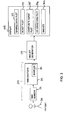
- FIG. 1 illustrates an apparatus for determining a non-nutritive suck spatiotemporal index (NNS-STI) according to one embodiment of the present subject matter.
- FIG. 2 illustrates an apparatus for determining a NNS-STI according to one embodiment of the present subject matter.
- FIG. 3 illustrates a system including an NNS-STI generator 300 according to one embodiment of the present subject matter.
- FIG. 4 illustrates a flow chart of a method 430 for processing NNS data to determine a NNS-STI according to one embodiment of the present subject matter.
- FIG. 5 shows a pacifier apparatus 540 according to one embodiment of the present subject matter for use in collecting data samples for generating NNS-STI.
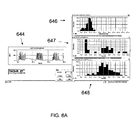
- FIG. 6A shows a sample plot 644 of NNS data samples collected using NeoSuck RT for a healthy preterm infant at 35 weeks post-menstrual age (PMA).
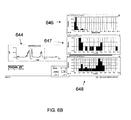
- FIG. 6B shows a sample plot of NNS data samples collected using NeoSuck RT for a tube-fed RDS preterm infant at 35 weeks PMA.
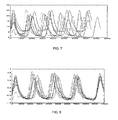
- FIG. 7 shows a plot of a plurality of bursts according to one embodiment of the present subject matter.
- FIG. 8 shows eight normalized trajectories based on the original data in FIG. 7 according to one embodiment of the present subject matter.
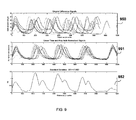
- FIG. 9 includes the STI analysis result for a preterm infant with good suck pressure patterning.
- FIG. 10 shows an example of poor NNS patterning sampled from a preterm infant with respiratory distress syndrome
- FIG. 11 shows a flow chart of a method for processing data to generate an NNS-STI according to one embodiment of the present subject matter.
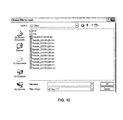
- FIG. 12 shows a Choose File dialog box for selecting a stored trajectory according to one embodiment of the present subject matter.
- FIG. 13 shows a "Block Suck Pressure" plot according to one embodiment of the present subject matter.
- FIGS. 14A and 14B illustrate deleting shoulder peaks according to one embodiment of the present subject matter.
- FIG. 15 shows a plot of selected bursts peaks according to one embodiment of the present subject matter.
- FIG. 16 shows a plot of the selected bursts of FIG. 15 normalized over 10000 sample points according to one embodiment of the present subject matter.
- FIG. 17 shows a plot of the SD waveform for the bursts of FIG. 16 according to one embodiment of the present subject matter.
- FIGS. 18 , 19A and 19B show screen shots for interfacing with an NNS STI generator according to one embodiment of the present subject matter.
- FIG. 20 illustrates a flow diagram for monitoring NNS entrainment progress using NNS-STI data according to one embodiment of the present subject matter.
- FIG. 21 shows a device for delivering patterned oral cutaneous stimulation according to one embodiment of the present subject matter.
- FIGS. 22A and 22B illustrate results of a study for improving NNS in a number of infants.
- An objective of the present subject matter is to provide a method and apparatus to stabilize patterned non-nutritive suck oromotor coordination. Another objective of the present subject matter is to provide an apparatus and method to objectively measure stability a patient's non-nutritive suck. Another objective is to provide a method to assess the efficacy of orosensory entrainment therapy on the emergence of patterned non-nutritive suck in patients with dysfunctional suck using patterned oral cutaneous stimulation intervention.
- FIG. 1 illustrates an apparatus for determining a non-nutritive suck spatiotemporal index (NNS-STI) according to one embodiment of the present subject matter.
- NNS-STI provides a quantitative composite index of non-nutritive suck stability.
- SD standard deviations
- NNS STI provides information about an infant's suck which is fundamentally unique from previous measures utilizing feature counts and duration measures on suck cycles or suck bursts. NNS STI quantifies suck over a selected burst pattern epoch. This quantitative approach provides a clinician with a summative index or 'gestalt' of oromotor pattern stability. In a repeated-measures design, the NNS STI provides an inclusive analysis of the emergent ororhythm and suck development. This approach successfully discriminates ororhythmic motor development in patients, such as preterm infants, with progressively severe forms of respiratory distress syndrome. FIG.
- NNS-STI generator 100 including an input adapted to connect to a data source 101 including non-nutritive suck samples.
- non-nutritive suck (NNS) samples include suck data gathered from one or more patients.
- non-nutritive suck samples include pressure data exhibiting periodic peak waveforms.
- the STI generator 100 processes the NNS data to generate a non-nutritive suck spatiotemporal index 102.
- a non-nutritive suck spatiotemporal index 102 provides, among other things, an indication of non-nutritive suck development.
- FIG. 2 illustrates an apparatus for determining a NNS-STI according to one embodiment of the present subject matter.
- FIG. 2 shows an NNS-STI generator 200 including an input adapted to connect to a data source 201 of non-nutritive suck samples.
- the NNS-STI generator 200 includes a peak selector 203, a burst selector 204, a burst queue 205, a STI waveform generator 206 and a NNS-STI processor 207.
- the NNS-STI generator 200 includes an output connection to a display 208 for presenting the NNS-STI 202 and programming parameters for peak selection and burst selection.
- the peak selector 203 allows the user to select peaks within an NNS sample. Peak selection allows identification and selection of NNS bursts. In various embodiments, the peak selector uses the display 208 to provide graphical assistance to the user for selecting peak data points within a NNS sample 201. In various embodiments, peak selection is automated upon selection by the user of criteria, such as a minimum peak threshold, for automatically identifying peaks within a NNS sample of data points.
- the burst selector 204 provides an interface for a user to identify, edit and select burst data for NNS-STI determination.
- a user selects a burst based on the pattern of selected peaks and a predetermined number of peaks to include in a burst selection. For example, a patient with some NNS development, may exhibit NNS samples with easily identifiable bursts. Such a burst may have 6-8 pressure peaks in each burst. However, a second patient may have a burst identified with only 4 or 5 pressure peaks. In order to compare the relative NNS health of the patients, each patient NNS-STI is based on bursts selected from the NNS data samples with an equal number of peaks.
- bursts selected for processing must include at least a minimum number of peaks.
- the burst selector allows the operator to delete peaks in selected bursts, such a shoulder peaks indicative of a secondary suck action related to a primary peak.
- selected bursts are stored in a queue 205 for further processing.
- further processing of the queued bursts includes normalizing the data points for each selected burst in both amplitude and time.
- amplitude normalization includes determining mean amplitude of the burst data points, determining a number of standard deviations derived from a predetermined number of consecutive data points and dividing each data point by the standard deviation derived using that data point.
- time normalization is based on various interpolation methods to extend the sample data over a predetermined number of data points. Linear, rational and spline interpolation are examples of interpolation methods used individually or in combination to time normalize each selected burst.
- Time normalized waveforms are input to the STI waveform generator 206 and processed to derive a predetermined number wave points values associated with standard deviation values of the combined normalized selected bursts.
- the STI waveform generator 206 outputs the wave points to the NNS-STI processor 1607 for summation and determination of the NNS-STI 202.
- the NNS-STI is presented on a display 208 attached to the STI generator 200.
- FIG. 3 illustrates a system including an NNS-STI generator 300 according to one embodiment of the present subject matter.
- the system includes the NNS STI generator 300, a display 308, and a NNS digitizer system 309 for collecting NNS samples from a patient 310.
- the illustrated NNS digitizer system 309 includes a NNS sensor 311 and NNS digitizer 312 with memory 301 for storing NNS samples.
- the NNS-STI generator 300 is connected to a display 308 and includes functionality to display plots of the sample data 313 input to the NNS-STI generator, plots of burst data 314, composite plots of selected bursts 315, plots of the STI waveform data 316 and presentation of the NNS-STI 302.
- FIG. 4 illustrates a flow chart of a method 430 for processing NNS data to determine a NNS-STI according to one embodiment of the present subject matter.
- the process includes selecting at least a portion of data sample set for processing 431, designating a plurality of peaks in the portion of the data set 432, designating one or more bursts in the portion of the data set 433, selecting a predetermined number of bursts from the selected portions of the data sample set 434, normalizing each selected burst upon selection 435, determining STI waveform data points from standard deviations derived from the normalized selected bursts 436 and determining a non-nutritive suck spatiotemporal index from a summation of the derived standard deviations 437.
- selecting a predetermined number of bursts from the selected portion of the data sample set includes selecting additional data sample set portions from data samples collected at the time of the initial data sample set, designating a plurality of peaks in the portion of the data set and designating one or more bursts in the portion of the data set. In various embodiments, selecting a predetermined number of bursts from the data set includes selecting bursts with an equal number of peaks.
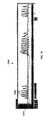
- FIG. 5 shows a pacifier apparatus 540 according to one embodiment of the present subject matter for use in collecting data samples for generating NNS-STI.
- a NNS data sample includes digitized NNS compression pressure waveforms recorded using the pacifier apparatus 540.
- the pacifier apparatus includes a pacifier 541 coupled to a tube 542.
- the tube is coupled to a pressure transducer, not shown.
- the pressure transducer is coupled to a computer and an output signal of the pressure transducer is digitized and recorded in an electronic file, such as a text file.
- the tension transducer generates an output signal indicative of the pneumatic pressure in the nipple of the pacifier.
- collecting NNS data samples, or trajectories, recorded from an infant includes examining the physiological state of the infant, holding the infant in a developmentally supportive inclined position, dimming any background or overhead lighting to promote eye contact between the infant and the caregiver holding the infant, waiting until the infant is in a optimal behavioral state such as states, 3, 4 or 5 as described by the naturalistic Observation of Newborn Behavior, Newborn Individualized Development Care and Assessment Program, providing the pacifier apparatus for the infant to suck on, and collecting about five minutes of NNS behavior.
- the data samples are collected from infants 15 minutes prior to scheduled feeding using a mobile device including the pacifier apparatus and computer running data collection software.
- NeoSuck RT is an example of data collection software specially designed to record NNS activity. It is understood that other data collection software is possible for collecting NNS data samples without departing from the scope of the present subject matter.
- Neonatal intensive care patients remain connected to appropriate monitors for observation of respiration, heartbeat and oxygen saturation while collecting the data samples.
- FIG. 6A shows a sample plot 644 ofNNS data samples collected using NeoSuck RT for a healthy preterm infant at 35 weeks post-menstrual age (PMA).
- FIG. 6B shows a sample plot ofNNS data samples collected using NeoSuck RT for a tube-fed RDS preterm infant at 35 weeks PMA.
- the real time display 644, 645 provides the clinician with the NNS compression waveform and associated histogram updates for suck amplitude (cmH 2 O) 646, inter-NNS burst pause periods (sec) 647, and intra-NNS burst suck cycle periods (sec) 648.
- two minutes of the digitized ororhythmic pressure waveforms with the greatest number of pressure peaks above 1 cm H 2 O, reflecting an infant's most active period of oromotor output, are selected for NNS STI analysis.
- suck bursts with a fixed number of peaks are used. For example, in a typical sample, the first five peaks from five successive bursts are included in analysis.
- the first five most burst-like mouthing movements are identified, based on period, amplitude, and duration. It is understood that more or less pressure peaks may be selected to form a suck burst without departing from the scope of the present subject matter.
- a NNS STI generator is programmed to initially perform pressure peak detection for each burst and to index the time stamp for each peak.
- the start- and end-points for a selected NNS burst are calculated by extending the waveform analysis window 300 samples prior to the first peak and 300 samples following the fifth pressure peak to ensure accurate pressure peak waveform discrimination.
- the five captured bursts are then sequentially normalized in amplitude and time. Time normalization is based on linear interpolation, which projects the five-peak-bursts ensemble to an analysis window based on a preset abscissa scale of 10,000 data samples.
- Amplitude normalization is accomplished by computing the mean value of each waveform and then dividing the waveform points by the standard deviation for each trajectory. A standard deviation is derived from each increment of 100 points through the 10,000 points of the sampled amplitude data points within the individual suck burst waveform. The resultant NNS STI is the cumulative sum of the standard deviations derived from the time and amplitude normalized NNS burst waveforms indexed at 100 ms intervals.
- STI is the cumulative sum of the standard deviations (SD) for a set of trajectories.
- NNS STI shows the stability of a sequence of movements representing the development of the baby's NNS.
- the purpose of non-nutritive suck spatiotemporal index is to compare the suck pressure control profiles among NNS bursts for comparative studies within and among preterm babies. This comparison is based on a set of selected bursts with fixed peak number. For example, for any individual comparison made, if 5 peaks are selected for the 1 st burst, then another 5 peaks must be for the 2nd burst, and always 5 peaks for all the other bursts in this comparison.
- FIG. 7 shows the first 5 peaks from eight bursts, which are also called trajectories. In various embodiments, selecting the same number of peaks from every burst is necessary to make different sets of trajectories comparable.
- the five NNS peaks from different bursts have different lengths in term of number of samples.
- the NNS STI generator normalizes the selected bursts over a predetermined number of samples to generate the index.
- FIG. 8 shows the eight normalized trajectories based on the original data in FIG. 7 according to one embodiment of the present subject matter.
- the sample number after normalization has to be larger than the maximum non-normalized sample number of each burst.
- the maximum non-normalized data length is around 8500, while after normalization, all the data are lengthened to 10000.
- N 8.
- the SD calculation is then based on eight normalized pressure values for each sample point.
- 10000 SD values are calculated for the normalized data.
- Figure 9 shows the original data 950, normalized data 951 and standard deviation waveform 952.
- the STI value represents the sum of standard deviation data points.
- SD is added every 100 samples, instead of adding all 10000 SDs.
- Figure 10 shows an example of poor NNS patterning sampled from a preterm infant with respiratory distress syndrome. In this case, the poor suck patterning results in an STI increase to 93.01.
- the NNS STI generator is implemented using a Labview application and input suck pressure data files collected from one or more patients.
- the next few paragraphs discuss a method for calculating an NNS STI using a particular Labview application embodiment. The discussion assumes the NNS-STI generator includes a display for user interaction with the generator.
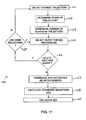
- FIG. 11 shows a flow chart of a method 1160 for processing data to generate an NNS-STI according to one embodiment of the present subject matter.
- the method includes selecting a stored trajectory 1161, determining peaks of the trajectory 1162, determining the number of bursts in the trajectory 1163 and selecting a burst for STI processing 1164.
- the method further includes determining additional 1166 peaks and bursts from the selected trajectory or a different trajectory 1164, normalizing the selected bursts 1167, calculating a plurality of correlation factors, such as standard deviation 1168, for a plurality of samples using the value of each normalized burst as each of the plurality of samples, and then summing the correlation factors 1169 to form the spatiotemporal index (SPI) for the selected non-nutritive suck trajectories.
- the input suck pressure files for NNS STI processing are *.txt files generated from a data collection software package such as NeoSuck RT TM .
- FIG. 12 shows a Choose File dialog box for selecting a stored trajectory. After the trajectory is chosen, the suck pressure data is shown in a "Block Suck Pressure" plot.
- FIG. 13 shows a "Block Suck Pressure” plot 1370 according to one embodiment of the present subject matter.
- a red line horizontal threshold cursor 1371 can be tuned (the red line could be dragged up and down) in order to assist in selecting a burst for processing. The cursor helps visualize the primary or dominant peaks 1372 of the trajectory.
- Peaks with shoulders representing a partial suck peak complicate the NNS STI calculation and the threshold provides a means to suppress a shoulder (should one be present) in the calculation.
- peaks recognized and designated for the NNS STI calculation are marked by yellow dots on the display panel.
- the peak detection algorithm locates the maxima point in the waveform and, in various embodiments, includes criteria related to first and 2 nd derivatives of the peak wavefonn.
- bursts are recognized by setting the distance from the last peak position of the first burst to the first peak position of the next burst.
- Experience of the user is important in recognizing the suck peak cluster constituting an individual burst (as discussed in this example, the burst must have 5 peaks but may also have more than 5 peaks; only the first 5 are included NNS STI calculations).
- a user may adjust a "Sample number for distance between bursts" parameter ( FIG. 18 , 1881)until a "Number of recognized bursts in current block" parameter ( FIG. 18 , 1882)shows the right burst number.
- a peak with a peak shoulder may be interpreted as a first and second peak of a burst as shown in Figure 14A according to one embodiment of the present subject matter. If the sample distance from a peak to its shoulder is less than a "Sample number from peak to its shoulder" parameter ( FIG. 18 , 1883), the shoulder is not selected as a peak of a burst.
- the parameter distance is set to 300 samples and shows the shoulder as a peak as indicated with the dots. While in FIG. 14B , the parameter distance is increased to 900 samples and the selection of the shoulders is deleted.
- the operator can select one or more bursts from the trajectory for analysis.
- the operator can select the number of peaks a burst must have for selection by using the "How many peaks you want to compare" parameter( FIG. 18 , 1884).
- the application assists in recognizing a burst by using a "Start to 1 st Peak" parameter ( FIG. 18 , 1885) to identify a pause between bursts.
- the application identifies the first peak of a potential burst where the peak is not preceded by another peak for the number of samples defined by the parameter.
- the application will identify the number of bursts available in the selected trajectory and the operator can sequentially select one or more of the identified bursts for processing.
- each burst is selected, it is plotted in a separate window of the application.
- the "selected length for comparison" parameter FIG. 18 , 1886) assists the user in fine tuning the number of samples to include for each selected burst.
- FIG. 15 shows a plot of selected bursts according to one embodiment of the present subject matter.
- the data is normalized and re-plotted.
- normalizing the data points for each selected burst includes normalizing the data with respect to both amplitude and time.
- amplitude normalization includes determining mean amplitude of the burst data points, determining a number of standard deviations derived from of a predetermined number of consecutive data points and dividing each data point by the standard deviation derived using that data point.
- time normalization is based on various interpolation methods to extend the sample data over a predetermined number of data points. Linear, rational and spline interpolation are examples of interpolation methods used individually or in combination to time normalize each selected burst.
- FIG. 16 shows a plot of the selected bursts of FIG. 15 normalized over 10000 sample points according to one embodiment of the present subject matter.
- the number of samples over which to normalize selected bursts must be more than the number of samples in each selected burst ( FIG. 18 ; 1886).
- correlation value such as, a standard deviation (SD) is calculated for each normalized data point across the selected number of trajectories.
- SD_Step a "SD_Step" parameter ( FIG. 19A ,B; 1991) allows the SD to be calculated once for every SD_Step normalized samples. For example, if SD_Step is equal to 100, SD will be calculated once for each 100 normalized samples, thus reducing the complexity of the calculation for the NNS-STI.
- FIG. 17 shows a plot of the SD waveform for the bursts of FIG. 16 according to one embodiment of the present subject matter.
- FIGS. 18 , 19A and 19B show screen shots for interfacing with an NNS STI generator according to one embodiment of the present subject matter.
- FIG. 18 shows a screen shot of NNS STI generator display interface 1880 according to one embodiment of the present subject matter.
- the screen shot 1880 includes an area to assist with peak detection 1887, and area to assist with burst detection and peak shoulder detection 1888 and deletion and an area to assist with burst selection 1889.
- the peak detection area shows a plot of recorded non-nutritive suck data 1870 and includes a threshold line 1871 to help identify pressure peaks in the data.
- the bust detection and peak shoulder detection and deletion area 1888 includes inputs for selecting the sample interval between a last peak of a first burst event and a first peak of a second burst event 1881.
- the area 1888 also includes an output parameter showing the number of identified bursts in the selected non-nutritive suck data 1882.
- the area 1888 also includes an input for preventing shoulder peaks from being recognized as primary pressure peaks in a burst 1883.
- the burst selection area includes an input to select a particular burst event in the selected non-nutritive suck data 1875, a input to assist in distinguishing between burst events 1885 and a input to select a minimum number of pressure peaks to include in a selected burst 1884.
- the area also includes a plot of the selected bursts 1876.
- FIG. 19A and 19B shows a screen shot 1990 and a portion of the screen shot 1992 related to the selected bursts and the spatiotemporal index according to one embodiment of the present subject matter.
- FIG. 19A shows a screen shot 1990 including plots of the selected bursts 1993, a plot of the normalized bursts 1994 and a plot of standard deviations derived from the normalized bursts 1995.
- FIG. 19B shows a detail 1992 of the SD and STI parameters associated with the selected bursts.
- the area includes an input to select the number of samples over which to normalize the duration of each of the selected bursts 1996 and an input to select the sample step (SD_Step) to use in generating the standard deviation data 1991.
- the selected bursts are normalized over 10000 samples.
- the SD Step parameter is set to 100, thus 100 (i.e. 10000/100) standard deviations will be generated for the selected bursts.
- the area also presents the generated NNS STI for the selected bursts 1997.
- the sCPG can be modified by peripheral input arising from oral mechanoreceptors which encode the consequences of oral movements along central pathways of the trigeminal system.
- Mechanosensory stimulation delivered to the baby's oral sensorium can entrain the sCPG.
- Entrainment is a powerful method of achieving neural synchrony among sensorimotor pathways.
- Entrainment therapy including patterned oral cutaneous stimulation can assist in organizing NNS.
- the NNS STI represents an efficient measurement tool to document a therapy of patterned oral cutaneous stimulation's ability to 'jump-start' and shape non-nutritive suck development.
- Patterned orosensory stimulation is highly effective in accelerating the development of ororhythmic motor output in preterm infants with delayed or disordered suck and poor feeding skills.
- Reductions in the spatiotemporal variability of NNS following patterned oral cutaneous stimulation treatment reflect an improvement in the brain's ability to organize the ororhythmic motor system for non-nutritive patterning.
- This skill appears to be an important adjunct or precursor to the higher order complexities involved with oral feeds, and may even predict success in later-developing oromotor skills, such as mastication, babble, and speech.
- the NNA STI provide clinicians with a single numerical value indicating the stability of NNS or oromotor sequence of a patient such as an infant.
- a higher NNS STI value indicates a poor suck burst pattern formation, whereas a lower value indicates suck burst pattern stability.
- FIG. 20 illustrates a flow diagram for a method 2020 monitoring NNS entrainment progress using NNS-STI data according to one embodiment of the present subject matter.
- the illustrated process includes collecting non-nutritive suck (NNS) data sample sets at a plurality of times 2021.
- NNS data is collected monthly.
- NNS data is collected weekly.
- NNS data is collected daily.
- the illustrated process further includes determining an NNS-STI for one or more of the collected data sets 2022 and presenting a temporal plot of the determined NNS-STIs 2023.
- evaluation, or sampling, of NNS data for an infant patient includes collecting digitized NNS nipple compression pressure waveforms on a daily or weekly schedule from the infant at crib side 15 minutes prior to feeding using the mobile data acquisition system including data acquisition software such as NeoSuck RT software.
- an apparatus for collecting digitized NNS nipple compression pressure waveforms includes a sterile pacifier coupled to a receiver instrumented with a pressure transducer, for example a Honeywell pressure transducer (DC-coupled, LP Butterworth @ 50Hz, 3 Ksamples/sec).
- a Soothie TM silicone pacifier (Children's Medical Ventures, Inc.) is an example of a typical pacifier used with a pressure transducer for sampling an infant patient.
- NNS Newborn Individualized Developmental Care and Assessment Program
- NNS entrainment therapy includes a patient, such as an infant, receiving 3-minute epochs of patterned oral somatosensory stimulation during gavage feeds.
- the patterned oral cutaneous stimulation is programmed to mimic the temporal features of NNS.
- precision stimulus control is achieved with a servo-controlled linear motor operating under position feedback and coupled in series with a pressurized actuator.
- FIG. 21 shows a device 2130 for delivering patterned oral cutaneous stimulation according to one embodiment of the present subject matter.
- a synthetic pulse train input is used to dynamically modulate the intraluminal pressure and conformation (shape) of an infant's preferred Soothie TM silicone pacifier 2031.
- the device includes a servo linear motor (H2W Technologies, Inc.) 2032 operating under position feedback and coupled in series with a pneumatic Airpel ® actuator 2033 and the pacifier receiver 2034.
- the device includes an MTS ® sensor 2035 for position feedback control, which provides for precision stimulus control.
- a 16-bit digital-to-analog converter is used to create a synthetic NNS train which consists of a series of 6-cycle bursts and 2-second pause periods. Individual cycles within-burst are presented at 1.8 Hz.
- the resulting dynamic changes in intraluminal pressure yields a radial expansion of the pacifier nipple of approximately 135 microns with a 25 millisecond rise/fall time.
- NTrainer System is an example of a device for providing patterned oral cutaneous stimulation.
- a total of 34 synthetic NNS burst-pause trains are presented to the infant during a single 3-minute stimulation session. Infants receive the stimulus three to four times per day during scheduled gavage feeds over a 10-day period, or until the infant attained 90% oral feeds for two consecutive days.
- FIGS. 21A and 21B illustrate results of a study for improving NNS in a number of infants.
- the study assessed NNS of the subjects, divided the subjects into a control group and stimulation group, applied patterned oral cutaneous stimulation to the subjects in the stimulation over a ten over a ten day period and assessed each subject of both groups using NNS STI about three weeks after beginning the stimulation.
- An article titled " Synthetic Orocutaneous Stimulation Entrains Suck in Preterm Infants With Feeding Difficulties "by S. M. Barlow et al. (Neonatology Today, vol. 3: 4, April 2008 ) discusses the study and is incorporated herein by reference in its entirety.
- Infants assigned to the stimulation group received alternating 3-minute epochs of patterned oral somatosensory stimulation during gavage feeds using a stimulation device.
- the patterned oral cutaneous stimulation mimics the temporal features of NNS.
- a total of 34 synthetic NNS burst-pause trains were presented to each infant during a single 3-minute stimulation session.
- Infants were typically treated with stimulation three to four times per day during scheduled gavage feeds over a 10-day period, or until the infant attained 90% oral feeds for two consecutive days.
- a statistical analysis procedure such as (Statistical Analysis System v.9.1.3, PROC MIXED, was used to conduct a Multilevel Analysis using NNS STI as the response variable in the study of preterm infants.
- the relation between developmental phase (pre-stimulation/early PMA vs. post-stimulation/late PMA) and group (stimulation treatment infants vs. no-treatment control infants) was examined.
- the controls were age-matched to the treated infants' pre- and post-stimulation PMAs.
- Treated infants had a mean PMA of 35.1 weeks pre-stimulation and 37.5 weeks post- stimulation. The mean of these (36.4 weeks PMA) served as a division point for the control infants' sessions.
- weekly NNS STI scores obtained before 36.4 weeks PMA were "pre” scores, and scores after 36.4 weeks PMA were "post” scores.
- An infant's ability to produce patterned oromotor output can predict their current health status as well as future outcomes.
- Non-nutritive suck has beneficial effects on the infant's behavioral state and reduces stress and restlessness.
- a functional NNS is also an important precursor to successful oral feeding, which is supported by the findings in the current report.
- the high levels of spatiotemporal instability in the suck pressure waveforms exhibited by the control infants was associated with only modest gains in percent oral feed (12% at early-PMA phase versus 36% at late-PMA phase). In contrast, STI values indicative of a highly organized suck.
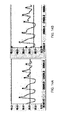
- FIG. 20A shows the waveforms and NNS STI of a control group subject recorded during the initial assessment and the final assessment of the study.
- the control subject's NNS STI went from 89 to 81 indicating an improvement of NNS skill.
- FIG. 20B shows the waveforms and NNS STI of a stimulation group subject recorded during the initial assessment and the final assessment of the study.
- the subjects NNS STI went from 99 to 50 indicating substantial improvement of NNS skill compared to the control group subject.
- Plots of the selected bursts used to determine the NNS STI show substantial correlation at the conclusion of the study indicating the stimulation group subject had developed very coordinated NNS behaviour.
- the subject or patient from whom the suck pressure measurements are obtained e.g. an infant
- the suck pressure measurements may be processed separately, in the absence of the subject or patient. Any person or equipment involved in making measurements of the suck pressure may be different to any person or equipment involved in the processing of these measurements.
- the suck pressure measurements may be received at a computing apparatus in order to calculate a quantitative determination of oral suck quality.
- the measured data may be stored in data storage means after the measurements, and later retrieved from the data storage means in order to perform the claimed method.
- the data may be retrieved for processing after a number of seconds, minutes, hours, days or longer, although this is not essential.
- the pressure measuring apparatus used to measure the suck pressures may comprise data transmission means.
- the data transmission means may be wired data transmission means, such as an electrical or optical cable.
- the data transmission means may be wireless data transmission means, such as wi-fi, bluetooth, infrared, radio transmissions, or any other type of wireless transmission.
- Data receiving means may then receive the transmitted data, in order for the data to be analysed or processed, e.g. for calculation of a quantitative determination of oral suck quality.
- data may be obtained from a subject or patient in one location, and analysed in another location, for example via a communications network.
- Examples of such a communications network may include a radio communications network, or a computer network such as a local area network, a wide area network, or the internet, or any other kind of communications network.
- data may be transferred on a portable data store, e.g. a CD-ROM, DVD-ROM, memory stick, portable disk, etc, to a computing apparatus for performing a method according to an embodiment of the invention.
- the present invention can be implemented in dedicated hardware, using a programmable digital controller suitably programmed, or using a combination of hardware and software. Alternatively, the present invention can be implemented by software or programmable computing apparatus.
- the code for each process in the methods according to the invention may be modular, or may be arranged in an alternative way to perform the same function.
- a computing apparatus for performing embodiments of the invention may or may not be provided with a network connection.
- the present invention encompasses a carrier medium carrying machine readable instructions or computer code for controlling a programmable controller, computer or number of computers as the apparatus of the invention.
- the carrier medium can comprise any storage medium such as a floppy disk, CD ROM, DVD ROM, hard disk, magnetic tape, or programmable memory device, or a transient medium such as an electrical, optical, microwave, RF, electromagnetic, magnetic or acoustical signal.
- An example of such a signal is an encoded signal carrying a computer code over a communications network, e.g. a TCP/IP signal carrying computer code over an IP network such as the Internet, an intranet, or a local area network.
Landscapes
- Health & Medical Sciences (AREA)
- Life Sciences & Earth Sciences (AREA)
- Medical Informatics (AREA)
- Animal Behavior & Ethology (AREA)
- Veterinary Medicine (AREA)
- Biophysics (AREA)
- Pathology (AREA)
- Engineering & Computer Science (AREA)
- Biomedical Technology (AREA)
- Heart & Thoracic Surgery (AREA)
- Public Health (AREA)
- Molecular Biology (AREA)
- Surgery (AREA)
- Physics & Mathematics (AREA)
- General Health & Medical Sciences (AREA)
- Dentistry (AREA)
- Hematology (AREA)
- Oral & Maxillofacial Surgery (AREA)
- Biodiversity & Conservation Biology (AREA)
- Measuring And Recording Apparatus For Diagnosis (AREA)
- Measurement Of The Respiration, Hearing Ability, Form, And Blood Characteristics Of Living Organisms (AREA)
- Investigating Or Analysing Biological Materials (AREA)
- Investigating Or Analysing Materials By Optical Means (AREA)
Priority Applications (1)
| Application Number | Priority Date | Filing Date | Title |
|---|---|---|---|
| EP18183647.9A EP3459448B1 (de) | 2008-02-21 | 2009-02-23 | Verfahren zur verbesserten nährwertlosen ansaugung |
Applications Claiming Priority (2)
| Application Number | Priority Date | Filing Date | Title |
|---|---|---|---|
| US3048408P | 2008-02-21 | 2008-02-21 | |
| US3630408P | 2008-03-13 | 2008-03-13 |
Related Child Applications (1)
| Application Number | Title | Priority Date | Filing Date |
|---|---|---|---|
| EP18183647.9A Division EP3459448B1 (de) | 2008-02-21 | 2009-02-23 | Verfahren zur verbesserten nährwertlosen ansaugung |
Publications (3)
| Publication Number | Publication Date |
|---|---|
| EP2092882A2 true EP2092882A2 (de) | 2009-08-26 |
| EP2092882A3 EP2092882A3 (de) | 2012-04-25 |
| EP2092882B1 EP2092882B1 (de) | 2018-07-18 |
Family
ID=40602158
Family Applications (2)
| Application Number | Title | Priority Date | Filing Date |
|---|---|---|---|
| EP18183647.9A Active EP3459448B1 (de) | 2008-02-21 | 2009-02-23 | Verfahren zur verbesserten nährwertlosen ansaugung |
| EP09250464.6A Active EP2092882B1 (de) | 2008-02-21 | 2009-02-23 | Verfahren zur verbesserten nährwertlosen Ansaugung |
Family Applications Before (1)
| Application Number | Title | Priority Date | Filing Date |
|---|---|---|---|
| EP18183647.9A Active EP3459448B1 (de) | 2008-02-21 | 2009-02-23 | Verfahren zur verbesserten nährwertlosen ansaugung |
Country Status (4)
| Country | Link |
|---|---|
| US (2) | US8226579B2 (de) |
| EP (2) | EP3459448B1 (de) |
| CN (1) | CN101637387B (de) |
| ES (1) | ES2691628T3 (de) |
Cited By (2)
| Publication number | Priority date | Publication date | Assignee | Title |
|---|---|---|---|---|
| WO2012145502A3 (en) * | 2011-04-19 | 2013-01-31 | The University Of Kansas | Medical device for therapeutic stimulation of the vestibular system |
| US10470979B2 (en) | 2017-01-24 | 2019-11-12 | Hive Design, Inc. | Intelligent pacifier |
Families Citing this family (11)
| Publication number | Priority date | Publication date | Assignee | Title |
|---|---|---|---|---|
| US11234607B2 (en) | 2008-02-21 | 2022-02-01 | Innara Health, Inc. | Methods of using an enhanced therapeutic stimulus for non-nutritive suck entrainment system |
| US8226579B2 (en) | 2008-02-21 | 2012-07-24 | University Of Kansas | Method and apparatus for measuring non-nutritive suck pattern stability |
| US9037266B2 (en) | 2008-02-21 | 2015-05-19 | Innara Health, Inc. | Enhanced therapeutic stimulus for non-nutritive suck entrainment system and method |
| EP2349178B1 (de) * | 2008-09-22 | 2013-09-11 | Innara Health, Inc. | Verfahren und vorrichtung für einen nicht-nahrungs-saugtrainings-impulsgenerator |
| CA2910406C (en) * | 2012-04-26 | 2023-07-04 | New Kcbx, Inc. | Methods of using an enhanced therapeutic stimulus for non-nutritive suck entrainment system |
| CA2910411C (en) * | 2012-04-26 | 2020-06-23 | New Kcbx, Inc. | Enhanced therapeutic stimulus for non-nutritive suck entrainment system and method |
| US8939919B2 (en) | 2012-04-26 | 2015-01-27 | Innara Health, Inc. | Enhanced therapeutic stimulus system and methods of use |
| EP4241677A3 (de) * | 2013-01-21 | 2024-02-28 | Innara Health, Inc. | System für prädiktive neuroentwicklungstherapie für orale fütterung |
| JP6437455B2 (ja) | 2013-01-21 | 2018-12-12 | イナラ ヘルス, インコーポレイテッド | ハンドヘルドコードレス非栄養吸啜査定デバイスおよびそのようなデバイスを使用する方法 |
| CN104436543B (zh) * | 2014-12-01 | 2017-05-10 | 复旦大学 | 一种新生儿吸吮训练仪及其训练方法 |
| US11744779B1 (en) | 2019-03-20 | 2023-09-05 | nuBorn Medical, Inc. | Infant feeding measurement device |
Family Cites Families (8)
| Publication number | Priority date | Publication date | Assignee | Title |
|---|---|---|---|---|
| US4232687A (en) | 1977-09-01 | 1980-11-11 | University Of Illinois Foundation | Apparatus and method for determining newborn infant feeding capability |
| US5830235A (en) | 1997-11-18 | 1998-11-03 | Florida State University | Pacifier system and method of therapeutically treating infant sucking response |
| US6033367A (en) | 1998-08-10 | 2000-03-07 | Children's Medical Center Corporation | Smart bottle and system for neonatal nursing development |
| CN101065092A (zh) * | 2004-08-30 | 2007-10-31 | 堪萨斯大学 | 用于刺激和诱导人类口面系统的假乳头系统 |
| US8979896B2 (en) * | 2004-08-30 | 2015-03-17 | University Of Kansas | Pacifier System for stimulating and entraining the human orofacial system |
| US8251926B2 (en) | 2004-08-30 | 2012-08-28 | University Of Kansas | Pacifier system for studying and stimulating the human orofacial system |
| US20090156967A1 (en) * | 2007-12-14 | 2009-06-18 | Kimberly-Clark Worldwide, Inc. | System for evaluating an infant's perception of aroma |
| US8226579B2 (en) | 2008-02-21 | 2012-07-24 | University Of Kansas | Method and apparatus for measuring non-nutritive suck pattern stability |
-
2009
- 2009-02-20 US US12/390,142 patent/US8226579B2/en active Active
- 2009-02-23 EP EP18183647.9A patent/EP3459448B1/de active Active
- 2009-02-23 EP EP09250464.6A patent/EP2092882B1/de active Active
- 2009-02-23 ES ES09250464.6T patent/ES2691628T3/es active Active
- 2009-02-23 CN CN2009100080467A patent/CN101637387B/zh active Active
-
2012
- 2012-07-23 US US13/555,976 patent/US8734367B2/en active Active
Non-Patent Citations (1)
| Title |
|---|
| S. M. BARLOW ET AL.: ""Synthetic Orocutaneous Stimulation Entrains Suck in Preterm Infants With Feeding Difficulties", NEONATOLOGY TODAY, vol. 3, 4 April 2008 (2008-04-04) |
Cited By (3)
| Publication number | Priority date | Publication date | Assignee | Title |
|---|---|---|---|---|
| WO2012145502A3 (en) * | 2011-04-19 | 2013-01-31 | The University Of Kansas | Medical device for therapeutic stimulation of the vestibular system |
| US9844483B2 (en) | 2011-04-19 | 2017-12-19 | The University Of Kansas | Medical device for therapeutic stimulation of the vestibular system |
| US10470979B2 (en) | 2017-01-24 | 2019-11-12 | Hive Design, Inc. | Intelligent pacifier |
Also Published As
| Publication number | Publication date |
|---|---|
| US8226579B2 (en) | 2012-07-24 |
| US20130023796A1 (en) | 2013-01-24 |
| EP3459448B1 (de) | 2026-04-08 |
| EP3459448A2 (de) | 2019-03-27 |
| EP2092882A3 (de) | 2012-04-25 |
| US8734367B2 (en) | 2014-05-27 |
| US20090222214A1 (en) | 2009-09-03 |
| CN101637387A (zh) | 2010-02-03 |
| EP3459448A3 (de) | 2021-10-13 |
| ES2691628T3 (es) | 2018-11-28 |
| EP2092882B1 (de) | 2018-07-18 |
| CN101637387B (zh) | 2013-10-09 |
Similar Documents
| Publication | Publication Date | Title |
|---|---|---|
| EP2092882B1 (de) | Verfahren zur verbesserten nährwertlosen Ansaugung | |
| US20210378581A1 (en) | Neural analysis and treatment system | |
| AU2003286409B2 (en) | Apparatus and method for beneficial modification of biorhythmic activity | |
| CN111466906B (zh) | 穿戴式睡眠监测仪及监测方法 | |
| US7297119B2 (en) | Sleep apnea risk evaluation | |
| Perlman et al. | Electrical activity from the superior pharyngeal constrictor during reflexive and nonreflexive tasks | |
| US20050131288A1 (en) | Flexible, patient-worn, integrated, self-contained sensor systems for the acquisition and monitoring of physiologic data | |
| US9662266B2 (en) | Systems and methods for the predictive assessment and neurodevelopment therapy for oral feeding | |
| US20170042470A1 (en) | System and method for monitoring behavior during sleep onset | |
| US10307100B2 (en) | Methods and systems of controlling a subject's body feature having a periodic wave function | |
| CN108078551A (zh) | 一种睡眠监测系统及方法 | |
| CN121079119B (zh) | 一种镇痛给药调控系统 | |
| US20240423535A1 (en) | Biomedical device and clinical algorithm for nicu infants | |
| US7549959B2 (en) | Stimulation arrangement for measurement of physiological signal reactivity | |
| Poore et al. | Respiratory treatment history predicts suck pattern stability in preterm infants | |
| AU2014207316B2 (en) | Predictive neurodevelopment therapy for oral feeding | |
| Wang et al. | Design of wireless multi-parameter monitoring system for oral feeding of premature infants | |
| Reix et al. | Monitoring pulse oximetry via radiotelemetry in freely-moving lambs | |
| Phương et al. | THE ROLE OF THE TECHNICIAN IN POLYPHYSIOLOGY: FROM LITERATURE REVIEW TO CASE STUDY | |
| Chiu et al. | AI Smart Materials for Enhancing Sucking Ability in Preterm Infants. | |
| EP2840967B1 (de) | Verfahren zur verwendung eines erweiterten therapeutischen reizes für system zur herbeiführung von nichtnutritivem saugen | |
| Bradley et al. | Nonlinear methods of analysis to examine respiratory waveform variability during oral feeding in preterm infants | |
| CN120859438A (zh) | 一种多通道生理信号融合的麻醉深度评估方法 | |
| Ochoa | Automatic Feature Discrimination of Non-Nutritive Suck Dynamics Among Extremely Preterm Infants. | |
| HK1207952B (en) | Methods of using an enhanced therapeutic stimulus for non-nutritive suck entrainment system |
Legal Events
| Date | Code | Title | Description |
|---|---|---|---|
| PUAI | Public reference made under article 153(3) epc to a published international application that has entered the european phase |
Free format text: ORIGINAL CODE: 0009012 |
|
| 17P | Request for examination filed |
Effective date: 20090227 |
|
| AK | Designated contracting states |
Kind code of ref document: A2 Designated state(s): AT BE BG CH CY CZ DE DK EE ES FI FR GB GR HR HU IE IS IT LI LT LU LV MC MK MT NL NO PL PT RO SE SI SK TR |
|
| AX | Request for extension of the european patent |
Extension state: AL BA RS |
|
| PUAL | Search report despatched |
Free format text: ORIGINAL CODE: 0009013 |
|
| AK | Designated contracting states |
Kind code of ref document: A3 Designated state(s): AT BE BG CH CY CZ DE DK EE ES FI FR GB GR HR HU IE IS IT LI LT LU LV MC MK MT NL NO PL PT RO SE SI SK TR |
|
| AX | Request for extension of the european patent |
Extension state: AL BA RS |
|
| RIC1 | Information provided on ipc code assigned before grant |
Ipc: A61B 5/03 20060101AFI20120316BHEP |
|
| AKX | Designation fees paid |
Designated state(s): AT BE BG CH CY CZ DE DK EE ES FI FR GB GR HR HU IE IS IT LI LT LU LV MC MK MT NL NO PL PT RO SE SI SK TR |
|
| 17Q | First examination report despatched |
Effective date: 20130702 |
|
| GRAP | Despatch of communication of intention to grant a patent |
Free format text: ORIGINAL CODE: EPIDOSNIGR1 |
|
| STAA | Information on the status of an ep patent application or granted ep patent |
Free format text: STATUS: GRANT OF PATENT IS INTENDED |
|
| RAP1 | Party data changed (applicant data changed or rights of an application transferred) |
Owner name: UNIVERSITY OF KANSAS |
|
| RIN1 | Information on inventor provided before grant (corrected) |
Inventor name: BARLOW, STEVEN M. Inventor name: WANG, JINGYAN |
|
| INTG | Intention to grant announced |
Effective date: 20180103 |
|
| GRAJ | Information related to disapproval of communication of intention to grant by the applicant or resumption of examination proceedings by the epo deleted |
Free format text: ORIGINAL CODE: EPIDOSDIGR1 |
|
| STAA | Information on the status of an ep patent application or granted ep patent |
Free format text: STATUS: EXAMINATION IS IN PROGRESS |
|
| GRAR | Information related to intention to grant a patent recorded |
Free format text: ORIGINAL CODE: EPIDOSNIGR71 |
|
| GRAS | Grant fee paid |
Free format text: ORIGINAL CODE: EPIDOSNIGR3 |
|
| STAA | Information on the status of an ep patent application or granted ep patent |
Free format text: STATUS: GRANT OF PATENT IS INTENDED |
|
| GRAJ | Information related to disapproval of communication of intention to grant by the applicant or resumption of examination proceedings by the epo deleted |
Free format text: ORIGINAL CODE: EPIDOSDIGR1 |
|
| GRAR | Information related to intention to grant a patent recorded |
Free format text: ORIGINAL CODE: EPIDOSNIGR71 |
|
| GRAS | Grant fee paid |
Free format text: ORIGINAL CODE: EPIDOSNIGR3 |
|
| GRAJ | Information related to disapproval of communication of intention to grant by the applicant or resumption of examination proceedings by the epo deleted |
Free format text: ORIGINAL CODE: EPIDOSDIGR1 |
|
| STAA | Information on the status of an ep patent application or granted ep patent |
Free format text: STATUS: EXAMINATION IS IN PROGRESS |
|
| GRAR | Information related to intention to grant a patent recorded |
Free format text: ORIGINAL CODE: EPIDOSNIGR71 |
|
| GRAS | Grant fee paid |
Free format text: ORIGINAL CODE: EPIDOSNIGR3 |
|
| STAA | Information on the status of an ep patent application or granted ep patent |
Free format text: STATUS: GRANT OF PATENT IS INTENDED |
|
| GRAA | (expected) grant |
Free format text: ORIGINAL CODE: 0009210 |
|
| STAA | Information on the status of an ep patent application or granted ep patent |
Free format text: STATUS: THE PATENT HAS BEEN GRANTED |
|
| INTC | Intention to grant announced (deleted) | ||
| INTG | Intention to grant announced |
Effective date: 20180605 |
|
| AK | Designated contracting states |
Kind code of ref document: B1 Designated state(s): AT BE BG CH CY CZ DE DK EE ES FI FR GB GR HR HU IE IS IT LI LT LU LV MC MK MT NL NO PL PT RO SE SI SK TR |
|
| INTG | Intention to grant announced |
Effective date: 20180611 |
|
| REG | Reference to a national code |
Ref country code: GB Ref legal event code: FG4D |
|
| REG | Reference to a national code |
Ref country code: CH Ref legal event code: EP |
|
| REG | Reference to a national code |
Ref country code: IE Ref legal event code: FG4D |
|
| REG | Reference to a national code |
Ref country code: AT Ref legal event code: REF Ref document number: 1018486 Country of ref document: AT Kind code of ref document: T Effective date: 20180815 |
|
| REG | Reference to a national code |
Ref country code: DE Ref legal event code: R096 Ref document number: 602009053297 Country of ref document: DE |
|
| REG | Reference to a national code |
Ref country code: NL Ref legal event code: MP Effective date: 20180718 |
|
| REG | Reference to a national code |
Ref country code: ES Ref legal event code: FG2A Ref document number: 2691628 Country of ref document: ES Kind code of ref document: T3 Effective date: 20181128 |
|
| REG | Reference to a national code |
Ref country code: LT Ref legal event code: MG4D |
|
| REG | Reference to a national code |
Ref country code: AT Ref legal event code: MK05 Ref document number: 1018486 Country of ref document: AT Kind code of ref document: T Effective date: 20180718 |
|
| PG25 | Lapsed in a contracting state [announced via postgrant information from national office to epo] |
Ref country code: NL Free format text: LAPSE BECAUSE OF FAILURE TO SUBMIT A TRANSLATION OF THE DESCRIPTION OR TO PAY THE FEE WITHIN THE PRESCRIBED TIME-LIMIT Effective date: 20180718 |
|
| PG25 | Lapsed in a contracting state [announced via postgrant information from national office to epo] |
Ref country code: NO Free format text: LAPSE BECAUSE OF FAILURE TO SUBMIT A TRANSLATION OF THE DESCRIPTION OR TO PAY THE FEE WITHIN THE PRESCRIBED TIME-LIMIT Effective date: 20181018 Ref country code: GR Free format text: LAPSE BECAUSE OF FAILURE TO SUBMIT A TRANSLATION OF THE DESCRIPTION OR TO PAY THE FEE WITHIN THE PRESCRIBED TIME-LIMIT Effective date: 20181019 Ref country code: SE Free format text: LAPSE BECAUSE OF FAILURE TO SUBMIT A TRANSLATION OF THE DESCRIPTION OR TO PAY THE FEE WITHIN THE PRESCRIBED TIME-LIMIT Effective date: 20180718 Ref country code: FI Free format text: LAPSE BECAUSE OF FAILURE TO SUBMIT A TRANSLATION OF THE DESCRIPTION OR TO PAY THE FEE WITHIN THE PRESCRIBED TIME-LIMIT Effective date: 20180718 Ref country code: LT Free format text: LAPSE BECAUSE OF FAILURE TO SUBMIT A TRANSLATION OF THE DESCRIPTION OR TO PAY THE FEE WITHIN THE PRESCRIBED TIME-LIMIT Effective date: 20180718 Ref country code: PL Free format text: LAPSE BECAUSE OF FAILURE TO SUBMIT A TRANSLATION OF THE DESCRIPTION OR TO PAY THE FEE WITHIN THE PRESCRIBED TIME-LIMIT Effective date: 20180718 Ref country code: IS Free format text: LAPSE BECAUSE OF FAILURE TO SUBMIT A TRANSLATION OF THE DESCRIPTION OR TO PAY THE FEE WITHIN THE PRESCRIBED TIME-LIMIT Effective date: 20181118 Ref country code: AT Free format text: LAPSE BECAUSE OF FAILURE TO SUBMIT A TRANSLATION OF THE DESCRIPTION OR TO PAY THE FEE WITHIN THE PRESCRIBED TIME-LIMIT Effective date: 20180718 Ref country code: BG Free format text: LAPSE BECAUSE OF FAILURE TO SUBMIT A TRANSLATION OF THE DESCRIPTION OR TO PAY THE FEE WITHIN THE PRESCRIBED TIME-LIMIT Effective date: 20181018 |
|
| PG25 | Lapsed in a contracting state [announced via postgrant information from national office to epo] |
Ref country code: LV Free format text: LAPSE BECAUSE OF FAILURE TO SUBMIT A TRANSLATION OF THE DESCRIPTION OR TO PAY THE FEE WITHIN THE PRESCRIBED TIME-LIMIT Effective date: 20180718 Ref country code: HR Free format text: LAPSE BECAUSE OF FAILURE TO SUBMIT A TRANSLATION OF THE DESCRIPTION OR TO PAY THE FEE WITHIN THE PRESCRIBED TIME-LIMIT Effective date: 20180718 |
|
| REG | Reference to a national code |
Ref country code: DE Ref legal event code: R097 Ref document number: 602009053297 Country of ref document: DE |
|
| PG25 | Lapsed in a contracting state [announced via postgrant information from national office to epo] |
Ref country code: EE Free format text: LAPSE BECAUSE OF FAILURE TO SUBMIT A TRANSLATION OF THE DESCRIPTION OR TO PAY THE FEE WITHIN THE PRESCRIBED TIME-LIMIT Effective date: 20180718 Ref country code: RO Free format text: LAPSE BECAUSE OF FAILURE TO SUBMIT A TRANSLATION OF THE DESCRIPTION OR TO PAY THE FEE WITHIN THE PRESCRIBED TIME-LIMIT Effective date: 20180718 Ref country code: CZ Free format text: LAPSE BECAUSE OF FAILURE TO SUBMIT A TRANSLATION OF THE DESCRIPTION OR TO PAY THE FEE WITHIN THE PRESCRIBED TIME-LIMIT Effective date: 20180718 |
|
| PLBE | No opposition filed within time limit |
Free format text: ORIGINAL CODE: 0009261 |
|
| STAA | Information on the status of an ep patent application or granted ep patent |
Free format text: STATUS: NO OPPOSITION FILED WITHIN TIME LIMIT |
|
| PG25 | Lapsed in a contracting state [announced via postgrant information from national office to epo] |
Ref country code: SK Free format text: LAPSE BECAUSE OF FAILURE TO SUBMIT A TRANSLATION OF THE DESCRIPTION OR TO PAY THE FEE WITHIN THE PRESCRIBED TIME-LIMIT Effective date: 20180718 Ref country code: DK Free format text: LAPSE BECAUSE OF FAILURE TO SUBMIT A TRANSLATION OF THE DESCRIPTION OR TO PAY THE FEE WITHIN THE PRESCRIBED TIME-LIMIT Effective date: 20180718 |
|
| 26N | No opposition filed |
Effective date: 20190423 |
|
| PG25 | Lapsed in a contracting state [announced via postgrant information from national office to epo] |
Ref country code: SI Free format text: LAPSE BECAUSE OF FAILURE TO SUBMIT A TRANSLATION OF THE DESCRIPTION OR TO PAY THE FEE WITHIN THE PRESCRIBED TIME-LIMIT Effective date: 20180718 |
|
| REG | Reference to a national code |
Ref country code: CH Ref legal event code: PL |
|
| PG25 | Lapsed in a contracting state [announced via postgrant information from national office to epo] |
Ref country code: LU Free format text: LAPSE BECAUSE OF NON-PAYMENT OF DUE FEES Effective date: 20190223 Ref country code: MC Free format text: LAPSE BECAUSE OF FAILURE TO SUBMIT A TRANSLATION OF THE DESCRIPTION OR TO PAY THE FEE WITHIN THE PRESCRIBED TIME-LIMIT Effective date: 20180718 |
|
| REG | Reference to a national code |
Ref country code: IE Ref legal event code: MM4A |
|
| PG25 | Lapsed in a contracting state [announced via postgrant information from national office to epo] |
Ref country code: CH Free format text: LAPSE BECAUSE OF NON-PAYMENT OF DUE FEES Effective date: 20190228 Ref country code: LI Free format text: LAPSE BECAUSE OF NON-PAYMENT OF DUE FEES Effective date: 20190228 |
|
| PG25 | Lapsed in a contracting state [announced via postgrant information from national office to epo] |
Ref country code: IE Free format text: LAPSE BECAUSE OF NON-PAYMENT OF DUE FEES Effective date: 20190223 |
|
| PG25 | Lapsed in a contracting state [announced via postgrant information from national office to epo] |
Ref country code: PT Free format text: LAPSE BECAUSE OF FAILURE TO SUBMIT A TRANSLATION OF THE DESCRIPTION OR TO PAY THE FEE WITHIN THE PRESCRIBED TIME-LIMIT Effective date: 20181118 Ref country code: MT Free format text: LAPSE BECAUSE OF NON-PAYMENT OF DUE FEES Effective date: 20190223 |
|
| PG25 | Lapsed in a contracting state [announced via postgrant information from national office to epo] |
Ref country code: CY Free format text: LAPSE BECAUSE OF FAILURE TO SUBMIT A TRANSLATION OF THE DESCRIPTION OR TO PAY THE FEE WITHIN THE PRESCRIBED TIME-LIMIT Effective date: 20180718 |
|
| PG25 | Lapsed in a contracting state [announced via postgrant information from national office to epo] |
Ref country code: HU Free format text: LAPSE BECAUSE OF FAILURE TO SUBMIT A TRANSLATION OF THE DESCRIPTION OR TO PAY THE FEE WITHIN THE PRESCRIBED TIME-LIMIT; INVALID AB INITIO Effective date: 20090223 |
|
| PG25 | Lapsed in a contracting state [announced via postgrant information from national office to epo] |
Ref country code: MK Free format text: LAPSE BECAUSE OF FAILURE TO SUBMIT A TRANSLATION OF THE DESCRIPTION OR TO PAY THE FEE WITHIN THE PRESCRIBED TIME-LIMIT Effective date: 20180718 |
|
| P01 | Opt-out of the competence of the unified patent court (upc) registered |
Effective date: 20230530 |
|
| PGFP | Annual fee paid to national office [announced via postgrant information from national office to epo] |
Ref country code: GB Payment date: 20260227 Year of fee payment: 18 |
|
| PGFP | Annual fee paid to national office [announced via postgrant information from national office to epo] |
Ref country code: ES Payment date: 20260302 Year of fee payment: 18 |
|
| PGFP | Annual fee paid to national office [announced via postgrant information from national office to epo] |
Ref country code: DE Payment date: 20260227 Year of fee payment: 18 |
|
| PGFP | Annual fee paid to national office [announced via postgrant information from national office to epo] |
Ref country code: BE Payment date: 20260227 Year of fee payment: 18 Ref country code: IT Payment date: 20260219 Year of fee payment: 18 |
|
| PGFP | Annual fee paid to national office [announced via postgrant information from national office to epo] |
Ref country code: FR Payment date: 20260225 Year of fee payment: 18 |
|
| PGFP | Annual fee paid to national office [announced via postgrant information from national office to epo] |
Ref country code: TR Payment date: 20260206 Year of fee payment: 18 |