EP2076884B1 - Improvements relating to event detection - Google Patents
Improvements relating to event detection Download PDFInfo
- Publication number
- EP2076884B1 EP2076884B1 EP07824097A EP07824097A EP2076884B1 EP 2076884 B1 EP2076884 B1 EP 2076884B1 EP 07824097 A EP07824097 A EP 07824097A EP 07824097 A EP07824097 A EP 07824097A EP 2076884 B1 EP2076884 B1 EP 2076884B1
- Authority
- EP
- European Patent Office
- Prior art keywords
- series
- values
- crowd
- complexity
- image frames
- Prior art date
- Legal status (The legal status is an assumption and is not a legal conclusion. Google has not performed a legal analysis and makes no representation as to the accuracy of the status listed.)
- Active
Links
Images
Classifications
-
- G—PHYSICS
- G06—COMPUTING OR CALCULATING; COUNTING
- G06T—IMAGE DATA PROCESSING OR GENERATION, IN GENERAL
- G06T7/00—Image analysis
- G06T7/20—Analysis of motion
-
- G—PHYSICS
- G06—COMPUTING OR CALCULATING; COUNTING
- G06V—IMAGE OR VIDEO RECOGNITION OR UNDERSTANDING
- G06V20/00—Scenes; Scene-specific elements
- G06V20/50—Context or environment of the image
- G06V20/52—Surveillance or monitoring of activities, e.g. for recognising suspicious objects
- G06V20/53—Recognition of crowd images, e.g. recognition of crowd congestion
Definitions
- This invention relates to a method and apparatus for detecting the occurrence of events in crowds, which events are captured in video footage (such as closed circuit television (CCTV) footage).
- video footage such as closed circuit television (CCTV) footage.
- the present invention may be used either to monitor video footage in real time, and alert an operator when an event occurs, or may be used to analyse pre-recorded video footage in order to search for events.
- emergent behaviour may include, for example, the sudden dispersion of a school of fish in response to the arrival of a predator.
- Wright et al. suggest that their measure could be used to evaluate and encourage desirable behaviours in a variety of complex systems, including artificial neural systems, evolutionary computation systems, and reinforcement learning systems. However, they unfortunately fail to realise how their complexity measure could be applied in other fields.
- the present invention resides in the realisation that analysis of crowd dynamics can be applied to the detection of events occurring in crowds. This enables an event of interest to be detected through the reaction of a crowd to that event, rather than by direct observation of the event.
- Event detection systems and methods in accordance with the present invention are therefore sensitive to a wide variety of events: the invention provides an event detector that is sensitive to the way in which the crowd reacts, as reflected through changes in the crowd motion, rather than a specific type of event.
- a method of detecting the occurrence of an event in a crowd comprising the steps of:
- the reactions of the crowd to an event are used to detect the occurrence of that event.
- the crowd has numerous proximal points of view with which to monitor its surroundings, and in addition the crowd might react to smells, such as smoke, and to audible cues, such as warnings or explosions. Such smells and audible cues cannot be directly detected by a video surveillance system.
- the crowd can identify peculiar or unusual behaviour using subtle clues such as body language that cannot be reliably read from a more remote viewing.
- the 1995 nerve gas attack on the Tokyo underground is an example of an event - the release of a toxic gas - that could have been detected indirectly through the reaction of those persons exposed to the gas, but not directly through video footage.
- the step of analysing the series of values may comprises the step of providing a normal range of values, and a discrepancy may then be identified when the value is outside the normal range.
- the normal range may be a predetermined range, or may be determined in dependence on the mean and standard deviation of the series of values.
- the method further comprises the steps of tracking a number of targets moving within the crowd to determine a number of target tracks, and updating the target tracks in response to each successive image frame; wherein the step of calculating a series of values comprises determining a value in dependence on the updated target tracks.
- the updated target tracks are a direct measure of the crowd dynamics, and therefore little useful information is lost in the processing of the series of images.
- the step of calculating a series of values comprises the step of forming a track matrix comprising rows, each row representing a target track, and evaluating Wright's complexity metric for the track matrix.
- the term 'Wright's complexity metric' is used to refer to the complexity metric derived by Wright et al . in their above-referenced paper.
- the step of calculating a series of values may comprise calculating a series of difference images in dependence on the series of image frames, the difference image for a current image frame being related to differences between the current image frame and a preceding image frame.
- the preceding image frame may be the image frame immediately preceding the first image frame in the series of image frames.
- the step of calculating the series of values in dependence on the difference images may comprise, for each of the series of values, the steps of: forming a difference matrix, the difference matrix comprising a number of rows and each row representing one of the series of difference images; and evaluating Wright's complexity metric for the difference matrix to provide said each of the series of values.
- the method may further comprise the step of lowering the resolution of at least one of the series of image frames prior to calculating the series of values, advantageously enhancing the efficiency of the processing of the difference matrix.
- the method is performed in real time.
- the series of values comprises a series of complexity values.
- Complexity values can be related to the number of effective degrees of freedom exhibited in the crowd dynamics.
- the complexity value is a scalar quantity that can be easily monitored.
- the invention extends to a computer program product comprising computer readable instructions, which product is operable, when inserted into a computer in operable association with a video camera, to perform a method as claimed in any preceding claim.
- an event detection system comprising a video camera, a processor, and an alert means; the video camera being operable to record video footage, and to transmit said video footage to the processor, said video footage comprising a series of image frames; and the processor comprising means to calculate, for each of the series of image frames, a value representative of the crowd dynamics, the value being calculated in dependence on said each of the series of image frames, such that a series of values is calculated; and means to analyse the series of values to identify any discrepancies occurring in the series of complexity values; and wherein the alert means is configured to alert an operator in response to the occurrence of any discrepancies identified by the processo
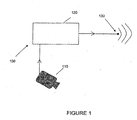
- Apparatus 100 comprises a video camera 110, processor 120, and alert means 130.
- Video camera 110 is arranged to monitor an area of interest in which there is a crowd.
- the area of interest may be a crowded high street, an airport terminal, or even a road on which traffic is flowing.
- the term 'crowd' should be construed broadly to include any collection of targets of interest, and also to include collections of targets of interest that move through an area, whether or not the targets are simultaneously present in that area.
- Camera 110 may be any type of device operable to record a series of images of its field of view, as will be understood by those skilled in the art, but in this particular embodiment, camera 110 is a CCTV camera.
- Video footage in the form of a series of image frames, is output from camera 110 to processor 120.
- processor 120 monitors the images it receives in real time in order to detect the occurrence of events. For each received image, a complexity value is calculated, so that the processor 120 calculates a series of complexity values.
- the complexity is a useful quantity to measure because it is representative of the crowd dynamics. More particularly, it is related to the effective number of degrees of freedom present in the movement of the members of the crowd.
- processor 120 provides a signal, via alert means 130, to an operator.
- alert means 130 is an audible alarm.
- deviation from the normal range of complexity values can be associated with the occurrence of an event of interest, and the alert provided to the operator allows the operator to investigate more closely. For example, where the operator must monitor the output of not just camera 110, but also several cameras, the alert may cause the operator to look at the footage recorded by camera 110 more closely.
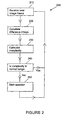
- processor 120 The operation of processor 120 is shown schematically in flow diagram 200, which illustrates the steps carried out by processor 120 in determining whether an alert should be given in response to the receipt of a new image frame.
- Flow diagram 200 therefore takes, as its starting point, the receipt of a new image frame by processor 120, which step is illustrated as step 210.
- this newly received image frame is referred to as the current image frame.
- a difference image is calculated.
- the difference image is indicative of how the current image frame has changed relative to a preceding frame. Images can be represented in the form of a matrix of the pixel values, and the difference image is calculated by subtracting, from the matrix representing the current image frame, the matrix representing the image frame received immediately prior to the current image frame.
- a difference image at step 220 considerably simplifies subsequent computations to be carried out on the images, since pixels unchanged between the two frames will all, in the difference image, be represented by a matrix element having a value of zero. Moreover, this removes redundant, background information from the current image frame. Processing can be further simplified by the application of a threshold to the difference image matrix, such that elements having a value below a preset threshold value are given a value of zero, and elements having a value above a preset threshold value are given a value of one.
- the difference image matrix is thus mapped to a binary matrix, and consists of elements having a value of either 1 or 0.
- a complexity value is calculated using data from a number of difference images stored by processor 100, and data from the difference image calculated from the current image frame.
- the stored difference images are those immediately preceding the current image frame.
- Processor 120 stores a constant number of difference images so that, in response to the current image frame being received (at step 210) and its associated difference image being calculated (at step 220), the oldest difference image stored is deleted. In the present embodiment, twenty difference images are stored at any one time.
- a complexity value is evaluated using a window of image frames, which window is of constant size ( T - t 0 ) and, in this specific embodiment, is equivalent to twenty image frames.
- the time index is measured in terms of the number of image frames received.
- One possible initialisation technique that is used in the present embodiment is to define an initial matrix Z 0 , of an appropriate size, whose elements are all valued at unity.
- the normalised singular values are obtained using singular value decomposition, a well-known operation applicable to any matrix that yields a diagonal matrix having diagonal entries that are the singular values of the original matrix.
- the singular values are the square roots of the eigenvalues of the matrix A*A , where A * denotes the transpose of matrix A .
- These values are normalised using a simple scaling procedure that scales the largest singular value of matrix Z to 1.
- the complexity metric ⁇ is derived in the paper by Wright et al . referred to above, and can be viewed as representing the effective number of degrees of freedom exhibited by the crowd.
- the complexity evaluated at step 230 is compared to a normal range.
- the normal range as described hereinabove, is defined to be within predetermined threshold values, set by an operator, that vary according to the standard deviation of the series of complexity values. In this particular embodiment, the normal range is chosen to be a range of two standard deviations either side of the mean of the complexity values. If the complexity value evaluated at step 230 is within the normal range, processor 120 returns to step 210 and awaits a further new image frame. If the complexity value is outside the normal range, processor 120, at step 250, provides an output to alert means 130 such that an operator is alerted to the discrepancy in the series of complexity values. The operator can then investigate further the causes of the discrepancy, for example by focusing attention on the output from camera 110.
- FIG. 2 The method illustrated by flow diagram 200 shown in Figure 2 has been demonstrated to work successfully using sample data from a car park.
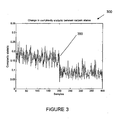
- An artificial event was created by placing a "scarecrow" in the car part approximately half-way through the trial period.
- Figure 3 is a graphical representation of the variation of the complexity measure with time, as measured using a method in accordance with the second embodiment of the invention. The presence of the scarecrow alters the path that persons walking across the car park take, and this is seen in graph 300 of Figure 3 as a transition (labelled 310) in the variation of the complexity with time.
- the transition 310 is clearly a statistically significant transition of the type that would be readily detectable by automatic means.
- the shift in the mean complexity value on placing the scarecrow in the car park is approximately equivalent to thirteen standard deviations.
- the complexity measure was evaluated, in this example, using an image resolution of approximately one pixel per person, equivalent to approximately 500 pixels per frame. Such a resolution was found to be sufficiently computationally efficient and still allowed for satisfactory event detection. Lowering the resolution further was found to have the effect of lowering the significance of the transition 310 in the complexity measure, since the standard deviation of the series of complexity values increased. Thus the detection of any discrepancies in the series of values was rendered less likely by lowering the resolution of the image frames.
- the complexity measure derived by Wright et al is related to the dynamics of the objects to which it is applied. It is therefore surprising that the application of Wright's complexity metric to a matrix Z comprising elements representing pixel values should result in any meaningful value.
- the difference images do, in fact, retain some information on the crowd dynamics which can be extracted through application of the complexity metric. Information contained within the difference images relates only to those pixels whose values have changed between consecutive frames. These changed pixels are clearly indicative of movement within the crowd, since any such movement will cause pixel values to change.
- the difference matrix Z may be successfully used in combination with the complexity measure for the purposes of event detection.
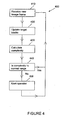
- step 410 represents a new image frame being received by processor 120 ( Figure 1 ).
- the image is taken to be of an area in which there are a number of targets of interest moving, which targets may, for example, be cars moving in traffic on a busy street.
- the targets are tracked by processor 120, and their tracks recorded and updated in response to the receipt of each new image frame.
- the step of updating the target tracks is represented as step 420 in flow diagram 400.
- the targets may be tracked using any known tracking algorithm, such as a Kalman Filter algorithm (disclosed by R. E. Kalman in “A New approach to linear filtering and prediction problems", published in the Transactions of the ASME Journal of Engineering, pages 33 to 45 (1960 )), or a particle filter algorithm (disclosed by N. Gordon, D. Salmond, and A. Smith in their paper “Novel Approach to non-linear/non-Gaussian Bayesian State Estimation", published in IEE Proc. F, volume 140, no.2, pages 107 to 113 (1993 )), in conjunction with a suitable target detection method, such as, for example, a template-matching technique.
- the template-matching technique requires a processor to attempt to match a template learned in advance to a part of a received image. Where a match is found, a target is identified.
- the complexity of the tracks is evaluated using Wright's complexity measure ⁇ defined above.
- the matrix Z comprises rows of data that represent the target tracks rather than data from the difference images, and is therefore referred to in the following as a track matrix.
- each row may comprise coordinates, in the image frame, of each target, with the time evolution of the tracks being recorded as new rows added to the track matrix with each new image received.
- the complexity value is then calculated as above, using Wright's complexity metric. It is noted that lowering the resolution of the images before calculating the complexity value is unnecessary in this case, since there is no link between image resolution and the size of the track matrix.
- step 440 it is determined whether or not the complexity value lies within a defined normal range, as described above in relation to step 240 of flow diagram 200 illustrated in Figure 1 . If the complexity value is within the normal range, the process returns to step 410. If it is outside of the normal range, an operator is alerted to the discrepancy at step 450, and the process returns to step 410.
- the method of the embodiment illustrated in Figure 4 is also applicable to targets other than cars, and, in particular, is applicable to crowds of people.
- the method can therefore be quantitatively compared to that illustrated in Figure 2 , and the inventors have shown that the Figure 4 method can produce better results than the Figure 2 method.
- a comparative test, analysing the same video data shown in Figure 2 using the method of the embodiment illustrated in Figure 4 showed a shift of 22, rather than 13, standard deviations of the complexity value on placing the scarecrow in the car park. This is thought to be because the track data is more closely related to the dynamics of the target crowd than the pixel-based data.
- the tracking of people moving across the car park was performed manually, rather than using any known tracking algorithms, because known tracking algorithms are frequently unreliable for tracking people.
- Template matching techniques can be used, as can model-based database techniques, in which use prior knowledge of the known skeletal system, and the manner in which is moves, to impose constraint on target detection.
- model-based database techniques in which use prior knowledge of the known skeletal system, and the manner in which is moves, to impose constraint on target detection.
- such techniques can require significant processing power.
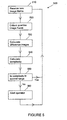
- a method in accordance with a yet further embodiment of the invention is illustrated schematically in flow diagram 500 shown in Figure 5 .
- the method can be performed using apparatus 100 shown in Figure 1 where camera 110 is operable to output colour image frames to processor 120.
- the steps illustrated in flow diagram 500 are similar to the steps illustrated in flow diagram 200 shown in Figure 2 , except in that the image is colour quantised at step 520 before difference images and complexity values are calculated.
- a new image frame is received at processor 120 (shown in Figure 1 ).
- the image frame is colour quantised.
- each pixel has a colour value.
- the colour quantisation process assigns a value of 1 or 0 to each pixel in dependence on whether its colour lies between a predetermined range of colour values.
- a number of colour quantised image matrices can therefore be produced, covering the spectrum of colours to which camera 110 is sensitive. Difference images can then be calculated, at step 530, for each of the colour quantised images, and thus a difference matrix can be calculated for each colour range.
- each new image frame generates a number of difference matrices, complexity values for which are evaluated at step 540 using Wright's complexity metric defined above.
- the various complexity values for each of the difference matrices are summed in order to arrive at a single complexity value for the image frame.
- step 510 the processor returns to step 510 and awaits a new image frame; if the complexity value is without the normal range, an operator is alerted at step 560.
- step of colour quantisation has been found to result in a more effective event detection method in some trials using real footage.
Landscapes
- Engineering & Computer Science (AREA)
- Multimedia (AREA)
- Physics & Mathematics (AREA)
- General Physics & Mathematics (AREA)
- Theoretical Computer Science (AREA)
- Computer Vision & Pattern Recognition (AREA)
- Image Analysis (AREA)
- Alarm Systems (AREA)
- Saccharide Compounds (AREA)
- Investigating Or Analysing Biological Materials (AREA)
- Pharmaceuticals Containing Other Organic And Inorganic Compounds (AREA)
Priority Applications (1)
| Application Number | Priority Date | Filing Date | Title |
|---|---|---|---|
| EP07824097A EP2076884B1 (en) | 2006-10-16 | 2007-10-10 | Improvements relating to event detection |
Applications Claiming Priority (4)
| Application Number | Priority Date | Filing Date | Title |
|---|---|---|---|
| EP06270091 | 2006-10-16 | ||
| GB0620353A GB0620353D0 (en) | 2006-10-16 | 2006-10-16 | Improvements relating to event detection |
| EP07824097A EP2076884B1 (en) | 2006-10-16 | 2007-10-10 | Improvements relating to event detection |
| PCT/GB2007/003843 WO2008047077A1 (en) | 2006-10-16 | 2007-10-10 | Improvements relating to event detection |
Publications (2)
| Publication Number | Publication Date |
|---|---|
| EP2076884A1 EP2076884A1 (en) | 2009-07-08 |
| EP2076884B1 true EP2076884B1 (en) | 2010-06-09 |
Family
ID=38947356
Family Applications (1)
| Application Number | Title | Priority Date | Filing Date |
|---|---|---|---|
| EP07824097A Active EP2076884B1 (en) | 2006-10-16 | 2007-10-10 | Improvements relating to event detection |
Country Status (8)
| Country | Link |
|---|---|
| US (1) | US9165372B2 (enExample) |
| EP (1) | EP2076884B1 (enExample) |
| JP (1) | JP2009506468A (enExample) |
| AT (1) | ATE470920T1 (enExample) |
| AU (1) | AU2007311761B2 (enExample) |
| DE (1) | DE602007007109D1 (enExample) |
| ES (1) | ES2346160T3 (enExample) |
| WO (1) | WO2008047077A1 (enExample) |
Families Citing this family (9)
| Publication number | Priority date | Publication date | Assignee | Title |
|---|---|---|---|---|
| JP5801614B2 (ja) | 2011-06-09 | 2015-10-28 | キヤノン株式会社 | 画像処理装置、画像処理方法 |
| US9451335B2 (en) | 2014-04-29 | 2016-09-20 | At&T Intellectual Property I, Lp | Method and apparatus for augmenting media content |
| JP6708122B2 (ja) | 2014-06-30 | 2020-06-10 | 日本電気株式会社 | 誘導処理装置及び誘導方法 |
| US9811989B2 (en) * | 2014-09-30 | 2017-11-07 | The Boeing Company | Event detection system |
| US10635909B2 (en) * | 2015-12-30 | 2020-04-28 | Texas Instruments Incorporated | Vehicle control with efficient iterative triangulation |
| JP7062879B2 (ja) * | 2017-03-31 | 2022-05-09 | サクサ株式会社 | 表示制御装置及び表示制御方法 |
| US10523342B1 (en) * | 2019-03-12 | 2019-12-31 | Bae Systems Information And Electronic Systems Integration Inc. | Autonomous reinforcement learning method of receiver scan schedule control |
| CN115880331B (zh) * | 2022-11-18 | 2025-10-17 | 广东博华超高清创新中心有限公司 | 一种快速移动目标的识别追踪方法及系统 |
| CN120339922B (zh) * | 2025-06-19 | 2025-11-04 | 山东云海国创云计算装备产业创新中心有限公司 | 一种群体异常事件检测方法、计算机程序产品、设备及介质 |
Family Cites Families (12)
| Publication number | Priority date | Publication date | Assignee | Title |
|---|---|---|---|---|
| US6400830B1 (en) * | 1998-02-06 | 2002-06-04 | Compaq Computer Corporation | Technique for tracking objects through a series of images |
| JP2000020499A (ja) * | 1998-06-29 | 2000-01-21 | Sharp Corp | 集団行動シミュレーション装置および方法 |
| US6731799B1 (en) * | 2000-06-01 | 2004-05-04 | University Of Washington | Object segmentation with background extraction and moving boundary techniques |
| US7433493B1 (en) * | 2000-09-06 | 2008-10-07 | Hitachi, Ltd. | Abnormal behavior detector |
| US6678635B2 (en) * | 2001-01-23 | 2004-01-13 | Intel Corporation | Method and system for detecting semantic events |
| GB2398423B (en) * | 2001-07-27 | 2005-12-14 | Hewlett Packard Co | Monitoring of crowd response to performances |
| US7688349B2 (en) * | 2001-12-07 | 2010-03-30 | International Business Machines Corporation | Method of detecting and tracking groups of people |
| US7643550B2 (en) * | 2002-10-09 | 2010-01-05 | Hewlett-Packard Development Company, L.P. | Method for presenting streaming media for an event |
| JP2004226272A (ja) * | 2003-01-23 | 2004-08-12 | Seiko Epson Corp | シミ欠陥の検出方法及び装置 |
| JP2006031645A (ja) | 2004-07-12 | 2006-02-02 | Nariyuki Mitachi | 動的群集密度のリアルタイム推定方法及び群集事故防止システム |
| JP2006221329A (ja) * | 2005-02-09 | 2006-08-24 | Toshiba Corp | 行動予測装置、行動予測方法および行動予測プログラム |
| US7558404B2 (en) * | 2005-11-28 | 2009-07-07 | Honeywell International Inc. | Detection of abnormal crowd behavior |
-
2007
- 2007-10-10 US US11/995,152 patent/US9165372B2/en active Active
- 2007-10-10 WO PCT/GB2007/003843 patent/WO2008047077A1/en not_active Ceased
- 2007-10-10 JP JP2008539512A patent/JP2009506468A/ja active Pending
- 2007-10-10 AT AT07824097T patent/ATE470920T1/de not_active IP Right Cessation
- 2007-10-10 EP EP07824097A patent/EP2076884B1/en active Active
- 2007-10-10 AU AU2007311761A patent/AU2007311761B2/en active Active
- 2007-10-10 DE DE602007007109T patent/DE602007007109D1/de active Active
- 2007-10-10 ES ES07824097T patent/ES2346160T3/es active Active
Also Published As
| Publication number | Publication date |
|---|---|
| ATE470920T1 (de) | 2010-06-15 |
| WO2008047077A1 (en) | 2008-04-24 |
| EP2076884A1 (en) | 2009-07-08 |
| US20100109867A1 (en) | 2010-05-06 |
| US9165372B2 (en) | 2015-10-20 |
| AU2007311761B2 (en) | 2012-12-06 |
| ES2346160T3 (es) | 2010-10-11 |
| AU2007311761A1 (en) | 2008-04-24 |
| JP2009506468A (ja) | 2009-02-12 |
| DE602007007109D1 (de) | 2010-07-22 |
Similar Documents
| Publication | Publication Date | Title |
|---|---|---|
| EP2076884B1 (en) | Improvements relating to event detection | |
| EP1631073B1 (en) | Apparatus and methods for the detection of abnormal motion in a video stream | |
| Andrade et al. | Hidden markov models for optical flow analysis in crowds | |
| Adam et al. | Robust real-time unusual event detection using multiple fixed-location monitors | |
| US7391907B1 (en) | Spurious object detection in a video surveillance system | |
| US6081606A (en) | Apparatus and a method for detecting motion within an image sequence | |
| US20060170769A1 (en) | Human and object recognition in digital video | |
| Khan et al. | Towards a crowd analytic framework for crowd management in Majid-al-Haram | |
| JP5047382B2 (ja) | ビデオ監視時に移動物体を分類するシステムおよび方法 | |
| KR102676020B1 (ko) | 영상의 객체 간 상호작용행위 검출 장치 및 방법 | |
| Kongurgsa et al. | Real-time intrusion—detecting and alert system by image processing techniques | |
| CN111832450B (zh) | 基于图像识别的持刀检测方法 | |
| CN118942159A (zh) | 一种基于数字孪生的园区访客安全预警方法、系统及介质 | |
| CN114581863A (zh) | 车辆危险状态识别方法及系统 | |
| CN117649736A (zh) | 一种基于ai视频管理平台的视频管理方法及其系统 | |
| KR20200043010A (ko) | 카메라 입력 영상을 딥러닝 활용한 행동 감지 시스템 및 방법 | |
| EP3336746A1 (en) | System and method of video content filtering | |
| Hatekar et al. | Fire detection on a surveillance system using Image processing | |
| Kumbhar et al. | Suspicious activity detection using machine learning | |
| CN119992653A (zh) | 一种基于ai的医院安防预警分析方法、系统 | |
| CN116977900A (zh) | 智能实验室监控报警系统及其方法 | |
| WO2020139071A1 (en) | System and method for detecting aggressive behaviour activity | |
| Teschioni et al. | Performance evaluation strategies of an image processing system for surveillance applications | |
| Sharif et al. | A simple method for eccentric event espial using mahalanobis metric | |
| Sajid | Crowd Behavior Categorization using Live Stream based on Motion Vector Estimation |
Legal Events
| Date | Code | Title | Description |
|---|---|---|---|
| PUAI | Public reference made under article 153(3) epc to a published international application that has entered the european phase |
Free format text: ORIGINAL CODE: 0009012 |
|
| 17P | Request for examination filed |
Effective date: 20090417 |
|
| AK | Designated contracting states |
Kind code of ref document: A1 Designated state(s): AT BE BG CH CY CZ DE DK EE ES FI FR GB GR HU IE IS IT LI LT LU LV MC MT NL PL PT RO SE SI SK TR |
|
| GRAP | Despatch of communication of intention to grant a patent |
Free format text: ORIGINAL CODE: EPIDOSNIGR1 |
|
| GRAS | Grant fee paid |
Free format text: ORIGINAL CODE: EPIDOSNIGR3 |
|
| DAX | Request for extension of the european patent (deleted) | ||
| GRAA | (expected) grant |
Free format text: ORIGINAL CODE: 0009210 |
|
| AK | Designated contracting states |
Kind code of ref document: B1 Designated state(s): AT BE BG CH CY CZ DE DK EE ES FI FR GB GR HU IE IS IT LI LT LU LV MC MT NL PL PT RO SE SI SK TR |
|
| REG | Reference to a national code |
Ref country code: CH Ref legal event code: EP |
|
| REG | Reference to a national code |
Ref country code: IE Ref legal event code: FG4D |
|
| REF | Corresponds to: |
Ref document number: 602007007109 Country of ref document: DE Date of ref document: 20100722 Kind code of ref document: P |
|
| REG | Reference to a national code |
Ref country code: SE Ref legal event code: TRGR |
|
| REG | Reference to a national code |
Ref country code: NL Ref legal event code: VDEP Effective date: 20100609 |
|
| REG | Reference to a national code |
Ref country code: ES Ref legal event code: FG2A Ref document number: 2346160 Country of ref document: ES Kind code of ref document: T3 |
|
| PG25 | Lapsed in a contracting state [announced via postgrant information from national office to epo] |
Ref country code: LT Free format text: LAPSE BECAUSE OF FAILURE TO SUBMIT A TRANSLATION OF THE DESCRIPTION OR TO PAY THE FEE WITHIN THE PRESCRIBED TIME-LIMIT Effective date: 20100609 |
|
| LTIE | Lt: invalidation of european patent or patent extension |
Effective date: 20100609 |
|
| PG25 | Lapsed in a contracting state [announced via postgrant information from national office to epo] |
Ref country code: SI Free format text: LAPSE BECAUSE OF FAILURE TO SUBMIT A TRANSLATION OF THE DESCRIPTION OR TO PAY THE FEE WITHIN THE PRESCRIBED TIME-LIMIT Effective date: 20100609 Ref country code: LV Free format text: LAPSE BECAUSE OF FAILURE TO SUBMIT A TRANSLATION OF THE DESCRIPTION OR TO PAY THE FEE WITHIN THE PRESCRIBED TIME-LIMIT Effective date: 20100609 Ref country code: AT Free format text: LAPSE BECAUSE OF FAILURE TO SUBMIT A TRANSLATION OF THE DESCRIPTION OR TO PAY THE FEE WITHIN THE PRESCRIBED TIME-LIMIT Effective date: 20100609 Ref country code: FI Free format text: LAPSE BECAUSE OF FAILURE TO SUBMIT A TRANSLATION OF THE DESCRIPTION OR TO PAY THE FEE WITHIN THE PRESCRIBED TIME-LIMIT Effective date: 20100609 |
|
| PG25 | Lapsed in a contracting state [announced via postgrant information from national office to epo] |
Ref country code: PL Free format text: LAPSE BECAUSE OF FAILURE TO SUBMIT A TRANSLATION OF THE DESCRIPTION OR TO PAY THE FEE WITHIN THE PRESCRIBED TIME-LIMIT Effective date: 20100609 Ref country code: CY Free format text: LAPSE BECAUSE OF FAILURE TO SUBMIT A TRANSLATION OF THE DESCRIPTION OR TO PAY THE FEE WITHIN THE PRESCRIBED TIME-LIMIT Effective date: 20100616 |
|
| PG25 | Lapsed in a contracting state [announced via postgrant information from national office to epo] |
Ref country code: NL Free format text: LAPSE BECAUSE OF FAILURE TO SUBMIT A TRANSLATION OF THE DESCRIPTION OR TO PAY THE FEE WITHIN THE PRESCRIBED TIME-LIMIT Effective date: 20100609 Ref country code: EE Free format text: LAPSE BECAUSE OF FAILURE TO SUBMIT A TRANSLATION OF THE DESCRIPTION OR TO PAY THE FEE WITHIN THE PRESCRIBED TIME-LIMIT Effective date: 20100609 |
|
| PG25 | Lapsed in a contracting state [announced via postgrant information from national office to epo] |
Ref country code: PT Free format text: LAPSE BECAUSE OF FAILURE TO SUBMIT A TRANSLATION OF THE DESCRIPTION OR TO PAY THE FEE WITHIN THE PRESCRIBED TIME-LIMIT Effective date: 20101011 Ref country code: SK Free format text: LAPSE BECAUSE OF FAILURE TO SUBMIT A TRANSLATION OF THE DESCRIPTION OR TO PAY THE FEE WITHIN THE PRESCRIBED TIME-LIMIT Effective date: 20100609 Ref country code: IS Free format text: LAPSE BECAUSE OF FAILURE TO SUBMIT A TRANSLATION OF THE DESCRIPTION OR TO PAY THE FEE WITHIN THE PRESCRIBED TIME-LIMIT Effective date: 20101009 Ref country code: RO Free format text: LAPSE BECAUSE OF FAILURE TO SUBMIT A TRANSLATION OF THE DESCRIPTION OR TO PAY THE FEE WITHIN THE PRESCRIBED TIME-LIMIT Effective date: 20100609 Ref country code: BE Free format text: LAPSE BECAUSE OF FAILURE TO SUBMIT A TRANSLATION OF THE DESCRIPTION OR TO PAY THE FEE WITHIN THE PRESCRIBED TIME-LIMIT Effective date: 20100609 Ref country code: CZ Free format text: LAPSE BECAUSE OF FAILURE TO SUBMIT A TRANSLATION OF THE DESCRIPTION OR TO PAY THE FEE WITHIN THE PRESCRIBED TIME-LIMIT Effective date: 20100609 |
|
| PLBE | No opposition filed within time limit |
Free format text: ORIGINAL CODE: 0009261 |
|
| STAA | Information on the status of an ep patent application or granted ep patent |
Free format text: STATUS: NO OPPOSITION FILED WITHIN TIME LIMIT |
|
| PG25 | Lapsed in a contracting state [announced via postgrant information from national office to epo] |
Ref country code: DK Free format text: LAPSE BECAUSE OF FAILURE TO SUBMIT A TRANSLATION OF THE DESCRIPTION OR TO PAY THE FEE WITHIN THE PRESCRIBED TIME-LIMIT Effective date: 20100609 |
|
| PG25 | Lapsed in a contracting state [announced via postgrant information from national office to epo] |
Ref country code: GR Free format text: LAPSE BECAUSE OF FAILURE TO SUBMIT A TRANSLATION OF THE DESCRIPTION OR TO PAY THE FEE WITHIN THE PRESCRIBED TIME-LIMIT Effective date: 20100910 Ref country code: MC Free format text: LAPSE BECAUSE OF NON-PAYMENT OF DUE FEES Effective date: 20101031 |
|
| REG | Reference to a national code |
Ref country code: DE Ref legal event code: R097 Ref document number: 602007007109 Country of ref document: DE Effective date: 20110309 |
|
| PG25 | Lapsed in a contracting state [announced via postgrant information from national office to epo] |
Ref country code: IE Free format text: LAPSE BECAUSE OF NON-PAYMENT OF DUE FEES Effective date: 20101010 |
|
| PG25 | Lapsed in a contracting state [announced via postgrant information from national office to epo] |
Ref country code: IT Free format text: LAPSE BECAUSE OF NON-PAYMENT OF DUE FEES Effective date: 20101010 Ref country code: MT Free format text: LAPSE BECAUSE OF FAILURE TO SUBMIT A TRANSLATION OF THE DESCRIPTION OR TO PAY THE FEE WITHIN THE PRESCRIBED TIME-LIMIT Effective date: 20100609 |
|
| REG | Reference to a national code |
Ref country code: CH Ref legal event code: PL |
|
| PG25 | Lapsed in a contracting state [announced via postgrant information from national office to epo] |
Ref country code: LI Free format text: LAPSE BECAUSE OF NON-PAYMENT OF DUE FEES Effective date: 20111031 Ref country code: CH Free format text: LAPSE BECAUSE OF NON-PAYMENT OF DUE FEES Effective date: 20111031 |
|
| PG25 | Lapsed in a contracting state [announced via postgrant information from national office to epo] |
Ref country code: BG Free format text: LAPSE BECAUSE OF FAILURE TO SUBMIT A TRANSLATION OF THE DESCRIPTION OR TO PAY THE FEE WITHIN THE PRESCRIBED TIME-LIMIT Effective date: 20100609 Ref country code: HU Free format text: LAPSE BECAUSE OF FAILURE TO SUBMIT A TRANSLATION OF THE DESCRIPTION OR TO PAY THE FEE WITHIN THE PRESCRIBED TIME-LIMIT Effective date: 20101210 Ref country code: LU Free format text: LAPSE BECAUSE OF NON-PAYMENT OF DUE FEES Effective date: 20101010 |
|
| PG25 | Lapsed in a contracting state [announced via postgrant information from national office to epo] |
Ref country code: TR Free format text: LAPSE BECAUSE OF FAILURE TO SUBMIT A TRANSLATION OF THE DESCRIPTION OR TO PAY THE FEE WITHIN THE PRESCRIBED TIME-LIMIT Effective date: 20100609 |
|
| PG25 | Lapsed in a contracting state [announced via postgrant information from national office to epo] |
Ref country code: BG Free format text: LAPSE BECAUSE OF FAILURE TO SUBMIT A TRANSLATION OF THE DESCRIPTION OR TO PAY THE FEE WITHIN THE PRESCRIBED TIME-LIMIT Effective date: 20100909 |
|
| REG | Reference to a national code |
Ref country code: FR Ref legal event code: PLFP Year of fee payment: 9 |
|
| REG | Reference to a national code |
Ref country code: FR Ref legal event code: PLFP Year of fee payment: 10 |
|
| REG | Reference to a national code |
Ref country code: FR Ref legal event code: PLFP Year of fee payment: 11 |
|
| PGFP | Annual fee paid to national office [announced via postgrant information from national office to epo] |
Ref country code: DE Payment date: 20171019 Year of fee payment: 11 Ref country code: FR Payment date: 20171024 Year of fee payment: 11 |
|
| PGFP | Annual fee paid to national office [announced via postgrant information from national office to epo] |
Ref country code: ES Payment date: 20171121 Year of fee payment: 11 Ref country code: IT Payment date: 20171025 Year of fee payment: 11 Ref country code: SE Payment date: 20171019 Year of fee payment: 11 |
|
| REG | Reference to a national code |
Ref country code: DE Ref legal event code: R119 Ref document number: 602007007109 Country of ref document: DE |
|
| REG | Reference to a national code |
Ref country code: SE Ref legal event code: EUG |
|
| PG25 | Lapsed in a contracting state [announced via postgrant information from national office to epo] |
Ref country code: SE Free format text: LAPSE BECAUSE OF NON-PAYMENT OF DUE FEES Effective date: 20181011 Ref country code: DE Free format text: LAPSE BECAUSE OF NON-PAYMENT OF DUE FEES Effective date: 20190501 |
|
| PG25 | Lapsed in a contracting state [announced via postgrant information from national office to epo] |
Ref country code: FR Free format text: LAPSE BECAUSE OF NON-PAYMENT OF DUE FEES Effective date: 20181031 |
|
| PG25 | Lapsed in a contracting state [announced via postgrant information from national office to epo] |
Ref country code: IT Free format text: LAPSE BECAUSE OF NON-PAYMENT OF DUE FEES Effective date: 20181010 |
|
| REG | Reference to a national code |
Ref country code: ES Ref legal event code: FD2A Effective date: 20191129 |
|
| PG25 | Lapsed in a contracting state [announced via postgrant information from national office to epo] |
Ref country code: ES Free format text: LAPSE BECAUSE OF NON-PAYMENT OF DUE FEES Effective date: 20181011 |
|
| PGFP | Annual fee paid to national office [announced via postgrant information from national office to epo] |
Ref country code: GB Payment date: 20250923 Year of fee payment: 19 |