EP2073540A1 - Image processing program, image processing device and image processing method - Google Patents
Image processing program, image processing device and image processing method Download PDFInfo
- Publication number
- EP2073540A1 EP2073540A1 EP07829493A EP07829493A EP2073540A1 EP 2073540 A1 EP2073540 A1 EP 2073540A1 EP 07829493 A EP07829493 A EP 07829493A EP 07829493 A EP07829493 A EP 07829493A EP 2073540 A1 EP2073540 A1 EP 2073540A1
- Authority
- EP
- European Patent Office
- Prior art keywords
- data item
- movie
- image data
- time point
- still image
- Prior art date
- Legal status (The legal status is an assumption and is not a legal conclusion. Google has not performed a legal analysis and makes no representation as to the accuracy of the status listed.)
- Withdrawn
Links
Images



















Classifications
-
- H—ELECTRICITY
- H04—ELECTRIC COMMUNICATION TECHNIQUE
- H04N—PICTORIAL COMMUNICATION, e.g. TELEVISION
- H04N5/00—Details of television systems
- H04N5/76—Television signal recording
- H04N5/765—Interface circuits between an apparatus for recording and another apparatus
-
- G—PHYSICS
- G06—COMPUTING OR CALCULATING; COUNTING
- G06F—ELECTRIC DIGITAL DATA PROCESSING
- G06F16/00—Information retrieval; Database structures therefor; File system structures therefor
- G06F16/50—Information retrieval; Database structures therefor; File system structures therefor of still image data
- G06F16/58—Retrieval characterised by using metadata, e.g. metadata not derived from the content or metadata generated manually
-
- G—PHYSICS
- G11—INFORMATION STORAGE
- G11B—INFORMATION STORAGE BASED ON RELATIVE MOVEMENT BETWEEN RECORD CARRIER AND TRANSDUCER
- G11B27/00—Editing; Indexing; Addressing; Timing or synchronising; Monitoring; Measuring tape travel
- G11B27/02—Editing, e.g. varying the order of information signals recorded on, or reproduced from, record carriers
- G11B27/031—Electronic editing of digitised analogue information signals, e.g. audio or video signals
- G11B27/034—Electronic editing of digitised analogue information signals, e.g. audio or video signals on discs
-
- H—ELECTRICITY
- H04—ELECTRIC COMMUNICATION TECHNIQUE
- H04N—PICTORIAL COMMUNICATION, e.g. TELEVISION
- H04N5/00—Details of television systems
- H04N5/76—Television signal recording
- H04N5/765—Interface circuits between an apparatus for recording and another apparatus
- H04N5/77—Interface circuits between an apparatus for recording and another apparatus between a recording apparatus and a television camera
- H04N5/772—Interface circuits between an apparatus for recording and another apparatus between a recording apparatus and a television camera the recording apparatus and the television camera being placed in the same enclosure
Definitions
- the present invention relates to an image processing program, an image processing device, and an image processing method for editing a plurality of images that have been acquired from different cameras.
- An image generation method for generating a continuous playback image data item by arranging a plurality of image data items in order of date and time of photography (for example, see Patent Reference #1).
- the image processing program according to the present invention can further comprise: selection process of selecting one editing mode from a plurality of editing modes according to a selection command output from an actuation member.
- the editing process generates the data item for playback by editing the image data item according to the editing mode selected by the selection process.
- the editing process includes:
- the image data item selection process can select the image data item that has been acquired by the camera of a highest priority level as the selected image data item, from among the plurality of extracted image data items that are acquired by the plurality of cameras assigned to different priority levels.
- the image data item selection process can select the still image data item as the selected image data item. Furthermore, if a movie data item and a still image data itemhave been extracted, the image data item selection process can to select a movie data item as the selected image data item.
- the image data item selection process selects a movie data item that has a longest playback time period, as the selected image data item.
- the image data item selection process can select a movie data item that has a shortest playback time period, as the selected image data item.
- the image data item selection process can select an image data item that has a latest starting time point of photography, among the plurality of extracted image data items, as the selected image data item.
- the image data item selection process can select an image data item that has an earliest starting time point of photography, among the plurality of extracted image data items, as the selected image data item.
- the image data item selection process may select as follows. Namely, on the basis of the plurality of extracted image data items, the selection process selects a first image data item that is one of the plurality of extracted image data items for a first time band in the same time band of date and time of photography. The selection process selects a second image data item that is different from the first image data item from among the plurality of extracted image data items, for a second time band within the same time band of date and time of photography that is different from the first time band.
- the image processing program may further comprise ranking assignment process of assigning priority levels to the plurality of image data items. If the data item for playback is a data item for playback that displays images corresponding to the plurality of extracted image data items upon two large and small screens on the display monitor, the editing process can generate the data item for playback so as to display an image corresponding to an image data item to which a high priority level has been assigned in a large screen display region, and so as to display an image corresponding to an image data item to which a low priority level has been assigned in a small screen display region.
- the ranking assignment process assigns the high priority level to an image data item that has been photographed with a camera to which a high priority level has been assigned, and assigns the low priority level to an image data item that has been photographed with a camera to which a low priority level has been assigned.
- the editing process can generate the data item for playback so as to display, in the large screen display region, the image corresponding to the image data item of which the date and time of photography do not overlap with an image corresponding to an image data item of which priority level is high and that has been photographed with the camera having the high priority level.
- the image processing program according to the present invention can further comprise: ranking assignment process of assigning priority levels to the plurality of image data items; and mode setting process of setting one of a movie priority mode and a still image priority mode.
- the data item for playback is a data item for playback that displays images corresponding to the plurality of extracted image data items in two large and small screen regions upon a display monitor
- a movie priority mode is set, when one of the plurality of extracted image data items by the editing process corresponds to a movie, and the other corresponds to a still image, the ranking assignment process can assign a high priority level to the image data item of the movie, and assign a low priority level to the image data item of the still image.
- the editing process can generate the data item for playback so as to display the movie that corresponds to the image data item to which the high priority level has been assigned in the large screen display region, and so as to display the still image that corresponds to the image data item to which the low priority level has been assigned in the small screen display region.
- the ranking assignment process can assign a high priority level to the image data item of the still image, and assigns a low priority level to the image data item of the movie.
- the editing process generates the data item for playback so as to display the still image that corresponds to the image data item to which the high priority level has been assigned in the large screen display region, and so as to display the movie that corresponds to the image data item to which the low priority level has been assigned in the small screen display region.
- the image processing program can further comprise: ranking assignment process of assigning priority levels to the plurality of image data items, and the editing process can include process to compare a starting time points of photography of the plurality of extracted image data items. If the data item for playback is a data item for playback that displays images corresponding to the plurality of extracted image data items in two large and small screen regions on a display monitor, the ranking assignment process can assign, on the basis of a results of comparison of starting time points of photography, a high priority level to an image data item that has a later starting time point of photography, and assigns a low priority level to an image data item that has an earlier starting time point of photography.
- the editing process If the data item for playback is a data item for playback that displays images corresponding to the plurality of extracted image data items in two large and small screen regions on a display monitor, the editing process generates the data item for playback so as to display the image that corresponds to the image data item to which the high priority level has been assigned and that has the later starting time point of photography in the large screen display region, and so as to display the image that corresponds to the image data item to which the low priority level has been assigned and that has the earlier starting time point of photography in the small screen display region.
- the editing process can generate the data item for playback so as to display the images corresponding to the plurality of still image data items, before a starting time point of playback, or after an ending time point of playback, of an image corresponding to the movie data item.
- the editing process of the image processing program according to the present invention can further include process to link together a plurality of separate movie data items that have been read by the readingmeans into one continuous program.
- These editing process extracts a plurality of still image data items of which dates and times of photography are overlapped the same time band with those of the plurality of movie data items before the program editing process, and generates the data item for playback so as to display images corresponding to the plurality of still image data items that have been extracted, before a starting time point of playback, or after an ending time point of playback, of the program.
- the editing process of the image processing program according to the present invention may include following (i) though (iv) : (i) If a still image data item and a movie data item that is accompanied by audio have been extracted, the editing process can generate the data item for playback so as to display an image corresponding to the still image data item, and so as to play back the audio corresponding to the movie data item that is accompanied by audio.
- the audio that is output during display of the image corresponding to the still image data item corresponds to a movie data item accompanied by audio that has been photographed with a camera designated by the user.
- the editing process may generate the data item for playback so as, while displaying an image that corresponds to the still image data item, to play back the audio corresponding to the movie data item accompanied by audio, the audio being played back directly before starting the display of the image corresponding to the still image data item.
- the editing process may generate the data item for playback so as to play back the audio corresponding to the still image data item accompanied by audio, while displaying an image corresponding to the movie data item.
- the editing process may generate the data item for playback so as to create and play back a sound effect, when the display of the plurality of images changes over.
- An image processing device comprises: a reading unit that reads a plurality of image data items that have been photographed and acquired by a plurality of cameras; and an editing unit that extracts image data items of which dates and times of photography overlap within a same time band from among the plurality of image data items that have been read, and generates a data item for playback by editing the plurality of extracted image data items.
- the image processing device further comprises a selection unit that selects one editing mode from a plurality of editing modes, according to a selection command output from an actuation member.
- the editing unit generates the data item for playback by editing the image data item according to the editing mode selected by the selection unit.
- the editing unit of the image processing device described above may include: an image data item selection unit that selects a single image data item as a selected image data item from the plurality of image data items that have been extracted; and a data item for playback generation unit that generates a data item for playback so as to display an image based upon the selected image data item as one screen. And, if a still image data item and a movie data item that is accompanied by audio have been extracted, the editing unit may generate the data item for playback so as to display an image corresponding to the still image data item, and so as to play back the audio corresponding to the movie data item accompanied by audio.
- the editing unit of the image processing device can generate the data item for playback so as to display an image corresponding to the movie data item, and so as to play back the audio corresponding to the still image data item accompanied by audio.
- An image processing method comprises: reading a plurality of image data items that have been photographed and acquired by a plurality of cameras; extracting image data items of which dates and times of photography overlap within a same time band from among the plurality of image data items that have been read; and generating a data item for playback by editing the plurality of extracted image data items.
- FIG. 1 is a block diagram for explanation of the structure of the principal portions of an image processing device according to an embodiment.
- This image processing device 100 includes an input device 101, a HDD (hard disk drive) 102, an external interface 103, a CPU 104, a monitor 105, a speaker 106, a memory 107, a monitor interface 108, and a speaker interface 109.
- HDD hard disk drive
- the input device 101 is actuated by the user, and may include, for example, a keyboard and/or a mouse or the like. And, for example, image data items corresponding to movie and still images photographed by an electronic camera 200 and so on are stored upon the HDD 102.
- the external interface 103 is a USB interface for connecting, for example, an electronic camera 200 or the like to this image processing device 100.
- the image processing device 100 reads image files and so on from such an external device via the external interface 103. And the image files that have been read are stored upon the HDD 102 by the CPU 104.
- movie data items and audio data items that is appended to those movie data items are stored in folders on the HDD 102 that are specific to each camera device.
- a movie folder F1 for a camera A and a movie folder F2 for a camera B have been created.
- still image data items and audio data items that are appended to those still image data items are stored in a still image folder SF, irrespective of camera device.
- the CPU 104 is a microcomputer that performs control of this image processing device.
- the CPU 104 executes an image editing program that is recorded in a ROM, and edits image data items stored upon the HDD 102 and generates a data item for playback.
- the memory 107 is a working memory for the CPU 104, and may, for example, consist of a SDRAM.
- the monitor 105 may be, for example, a liquid crystal monitor or a CRT monitor. Images corresponding to data items for playback and menu screens related to image editing and so on are displayed upon this monitor 105. Moreover, if an audio data item is set to correspond to an image data item, then audio is played back by the speaker 106 on the basis of this audio data item.
- the image data items for image editing are selected by the user actuating the input device 101 upon an editing subject image selection screen that is not shown in the figures.
- the movie data items that the user wishes to designate as the subject of editing are read from the specific folder that has been established upon the HDD 102 for each camera.
- the still image data items that the user wishes to designate as the subject of editing are read from the still image folder SF upon the HDD 102.
- These movie data items and still image data items are temporarily stored in the memory 107.
- the CPU 104 refers to the EXIF information of these image data items that are stored in the memory 107, reads out the dates and times of photography of the image data items, and extracts image data items for which the dates and times of photography are overlapped in the same time band.
- the editing subject consists only of movies or only of still images
- the playback data item after editing will be a movie playback data item. But if bothmovie data item and still image data item are selected, the playback data item will consist of movie and still images mixed together.
- EXIF information is information appended to an image file, in which various types of information about the image is recorded according to the EXIF standard.
- This EXIF information includes a region in which the date and time of photography are recorded, a region in which photographic conditions of various types are recorded, an optional region that can be used by each vendor as desired, and so on.
- a movie data item consists of a plurality of frames of still image data item that have been shot at a certain predetermined frame rate. Accordingly, by taking the movie starting time point as a reference, time points partway through photography and the end time point of photography may be calculated from the number of still image frames and the frame rate. Moreover, it would also be acceptable to record the length of time taken for photography of the movie data item in the movie tag information.
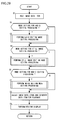
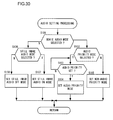
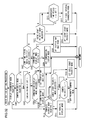
- the CPU 104 When a plurality of image data items for which the dates and times of photography overlap in the same time band have been extracted, the CPU 104 generates a playback data item by editing the image data items according to movie editing processing, still image editing processing, and audio editing processing as will be described hereinafter.
- the CPU 104 generates a data item for playback for display upon the monitor 105, on the basis of the image data items that have been selected. And the image data items that were selected, in other words the data item for playback, is displayed by the CPU 104 as an image upon the monitor 105 via the monitor interface 108.
- the CPU 104 plays back audio through the speaker 106 via the speaker interface 109.
- the movie editing processing is broadly classified into the following two modes; either of these modes may be selected by actuation of the input device 101:
- the CPU 104 In the display changeover mode, the CPU 104 generates the data item for playback so as to display one image upon the monitor 105 as a single screen. And, in the simultaneous display mode, the CPU 104 generates the data item for playback so as to display two images upon the monitor 105 as a double screen. It should be understood that the various modes for the movie editing processing are shown in Fig. 4 .
- This display changeover mode is further classified into the following four modes:
- the camera priority setting mode is a mode in which, if the dates and times of photography of items of movie data that have been photographed with a plurality of cameras are overlapped, the highest priority level movie data item is selected. As shown in Fig. 4(a), this camera priority setting mode includes the following two modes:
- the CPU 104 selects the movie data item of the priority camera A as the playback image data item. Furthermore, if the dates and times of photography of items of movie data that have been photographed by the cameras A and B do not overlap in the same time band, the CPU 104 selects that movie data item that is present by itself in that time band.
- movie data item from the non-priority camera B for which the time point of photography is overlapped in the same time band is not selected, even if it is present by itself.
- movie data item from the non-priority camera B for which the time point of photography does not overlap in the same time band is selected as the playback image.
- the setting of the priority camera is performed on a menu screen displayed on the monitor 105 by the user actuating the input device 101.
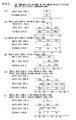
- the camera priority setting display mode of Fig. 3(a) When the camera priority setting display mode of Fig. 3(a) is selected, and a pull down menu for the first priority camera is actuated, the screen display changes to that shown in Fig. 3(b) .
- the first priority camera may be set by selecting any one of 1 through 4 on the screen of Fig. 3(b) .
- the pull down menu for the second priority camera is actuated, the screen display changes over to that shown in Fig. 3(b) .
- the second priority camera may be set by selecting any one of 1 through 4 on the screen of Fig. 3(b) .
- the CPU 104 selects between a plurality of items of movie data whose dates and times of photography are overlapped in the same time band, according to the priority level that has been set.
- the movie data item that is alternatively selected in some time band is the movie data item from the non-priority camera, and if photography of some movie data item whose priority level is higher is started before the end time point of that movie, the CPU 104 selects the movie data item whose priority level is the highest after that start time point.
- the horizontal axis is the time axis
- the movie data item A is a movie data item that has been photographed by an electronic camera 200A
- the movie data item B is a movie data item that has been photographed by an electronic camera 200B
- the movie data item C is a movie data item that has been photographed by an electronic camera 200C.
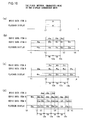
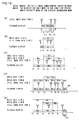
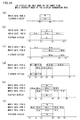
- Fig. 5 (a) shows a case in which no other movie data item overlapping the movie data item A in the same time band exists.
- the movie data item A is selected as the playback image data item by the CPU 104, and the movie A that corresponds to this movie data item A is displayed upon the monitor 105.
- Figs. 5 (b) through 5 (d) are figures for explanation of the playback image selection processing when the electronic camera 200A has been selected as the priority camera, in other words when the movie data item A is the priority data item.
- the movie data item A is an image data item that was photographed between the time points t2 and t3
- the movie data item B is an image data item that was photographed between the time points t1 and t4.
- the movie data item B the movie data item that corresponds to the interval between the time points t1 and t2 is termed Ba
- the movie data item that corresponds to the interval between the time points t2 and t3 is termed Bb
- the movie data item that corresponds to the interval between the time points t3 and t4 is termed Bc.
- the movie data items A and Bb are overlapped during the interval between the time points t2 and t3.
- the movie data item Ba is selected by the CPU 104, and the movie data item Ba is displayed upon the monitor 105 until the time point t2 that photography of the movie data item A starts.
- the time point t2 is the start time point of photography of the movie data item A, and, after this time point t2, the movie data item A that has higher priority than the movie data item B is selected by the CPU 104, so that the movie A is displayed upon the monitor 105 until the time point t3 that the photography of this movie data item A ends.
- the movie data item Bc is selected by the CPU 104, and thus the movie Bc is displayed upon the monitor 105.
- the CPU 104 selects the movie data item A when the time point arrives of the start of photography of the movie data item A of which priority level is higher when the movie data item B was selected. Accordingly the movie A is displayed upon the monitor 105, inserted into the movie B that was being displayed corresponding to the movie data item B.
- the movie data item A is an image data item that was photographed between the time points t1 and t4, and the movie data item B is an image data item that was photographed between the time points t2 and t3.
- the movie data item A the movie data item that corresponds to the interval between the time points t1 and t2 is termed Aa
- the movie data item that corresponds to the interval between the time points t2 and t3 is termed Ab
- the movie data item that corresponds to the interval between the time points t3 and t4 is termed Ac.
- the movie data items Ab and B are overlapped during the interval between the time points t2 and t3.
- the movie data item A Since the movie data item A has priority over the movie data item B, even though the movie Ab and the movie B overlap between the time points t2 and t3, the movie data item A is still selected by the CPU 104, and the movie A is displayed upon the monitor 105 during the interval between the photographic time points t1 and t4.
- the movie data item A is an image data item that was photographed between the time points t1 and t3
- the movie data item B is image data item that was photographed between the time points t2 and t4.
- the movie data item A the movie data item that corresponds to the interval between the time points t1 and t2 is termed Aa
- the movie data item that corresponds to the interval between the time points t2 and t3 is termed Ab.
- the movie data item B the movie data item that corresponds to the interval between the time points t2 and t3 is termed Ba
- the movie data item that corresponds to the interval between the time points t3 and t4 is termed Bb.
- the movie data items Ab and Ba are overlapped during the interval between the time points t2 and t3.
- the movie data item A has priority over the movie data item B.
- the movie data item A is still selected by the CPU 104 between the photographic time points t1 and t3. Since the movie data item A does not exist after the time point t3, therefore the movie data item Bb is selected by the CPU 104 until the timepoint t4. Accordingly the movie A that corresponds to the movie data item A whose priority level is higher is displayed upon the monitor 105 between the time points t1 and t3, while the movie Bb that corresponds to the movie data item Bb is displayed between the time points t3 and t4. In other words, the movie B is displayed from partway through the photographic time period.
- Figs. 5(e) and 5(f) show a case in which three movie data items A through C that have been photographed with three cameras A through C are the subjects of editing, and the movie data item A has the first priority, while the movie data item B has the second priority. Thus the movie data item A has priority over the movie data item B, and the movie data item B has priority over the movie data item C.
- the movie data item A that has the first priority A is an image data item that was photographed between the time points t3 and t4
- the movie data item B is an image data item that was photographed between the time points t1 and t5
- the movie data item C is an image data item that was photographed between the time points t2 and t6.
- the movie data items B and C are overlapped during the interval between the time points t2 and t5
- the movie data items A, B, and C are overlapped during the interval from the time point t3 to the time point t4.
- the movie data item that corresponds to the interval between the time points t1 and t3 is termed Ba
- the movie data item that corresponds to the interval between the time points t3 and t4 is termed Bb
- the movie data item that corresponds to the interval between the time points t4 and t5 is termed Bc.
- the movie data item that corresponds to the interval between the time points t2 and t3 is termed Ca
- the movie data item that corresponds to the interval between the time points t3 and t4 is termed Cb
- the movie data item that corresponds to the interval between the time points t4 and t5 is termed Cc
- the movie data item that corresponds to the interval between the time points t5 and t6 is termed Cd.
- the movie data item B is selected by the CPU 104. Since the priority level of the movie data item B is higher than that of the movie data item C, the movie data item B continues to be selected by the CPU 104 at the time point t2, even though this is the starting time point of photography of the movie data item C. And, at the starting time point t3 of photography of the movie data item A whose priority level is higher than that of the movie data item B, the movie data item A is selected by the CPU 104 instead of the movie data item B. At the time point t4 that photography of the movie data item A ends, the movie data item Bc that has second priority over the movie data item C is selected by the CPU 104.
- the movie data item Cd is selected by the CPU 104, since neither of the data items A and B that have higher priority levels is present. Subsequently, until the time point t6 at which the photography of the movie data item C ends, the movie data item C is selected by the CPU 104, so that the movie Cd that corresponds to this movie data item Cd is displayed upon the monitor 105.
- the movie data item A that has the first priority A is an image data item that was photographed between the time points t3 and t4
- the movie data item B is an image data item that was photographed between the time points t1 and t6
- the movie data item C is an image data item that was photographed between the time points t2 and t5.
- the movie data items B and C are overlapped during the interval between the time points t2 and t5
- the movie data items A, B, and C are overlapped during the interval from the time point t3 to the time point t4.
- the movie data item B the movie data item that corresponds to the interval between the time points t1 and t3 is termed Ba
- the movie data item that corresponds to the interval between the time points t3 and t4 is termed Bb
- the movie data item that corresponds to the interval between the time points t4 and t6 is termed Bc
- the movie data item that corresponds to the interval between the time points t2 and t3 is termed Ca
- the movie data item that corresponds to the interval between the time points t3 and t4 is termed Cb
- the movie data item that corresponds to the interval between the time points t4 and t5 is termed Cc.
- the movie data item B is selected by the CPU 104.
- the movie data item B is set to have a higher priority level than the movie data item C.
- the movie data item B still continues to be selected by the CPU 104.
- the movie data item A is selected by the CPU 104.
- the movie data item Bc that is second priority is selected by the CPU 104; and, although in the interval between the time points t4 and t5, the movie data item C whose priority level is lower overlaps it, the movie data item Bc continues to be selected by the CPU 104. And, subsequently, until the time point t6 that the photography of the movie data item B ends, the movie data item Bc continues to be selected by the CPU 104.
- Fig. 4 (b) the display one only mode shown in Fig. 4 (b) will be explained.
- the CPU 104 does not select any movie data item that has not been selected as a priority data item.
- only that movie among the plurality of movies whose priority level is the highest is displayed upon the monitor 105; and this is different from the case with the combined display mode.
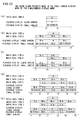
- the display one only mode in the camera priority setting mode will now be explained with reference to Fig. 6 .
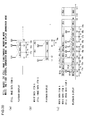
- Fig. 6 (a) shows a case in which, similarly to Fig. 5 (a) , no other movie data item exists that overlaps the movie data item A in the same time band.
- the movie data item A is selected by the CPU 104, and the movie A that corresponds to the movie data item A is playback displayed upon the monitor 105.
- the movie data item A that is the priority data item
- the movie data item B that is a non-priority data item
- the movie data item B is not selected by the CPU 104, and the image B is not displayed upon the monitor 105.
- the movie data item A is selected by the CPU 104.
- the time point t2 that is the starting time point of photography of the movie data item A that is the priority data item
- the movie data item A is selected by the CPU 104.
- the time point t3 that is the end time point of photography of the movie data item A
- the selection of the movie data item A by the CPU 104 terminates.
- the display of the movie A upon the monitor 105 terminates.
- the movie data item B is present subsequent to the time point t3 as well, since its priority level is low, the movie data item Bc is not selected by the CPU 104. Accordingly, only the movie A whose priority level is high is displayed by the CPU 104 upon the monitor 105 during the interval between the time points t2 and t3.
- the movie data item A is a data item that was photographed between the time points t1 and t3
- the movie data item B is an image data item that was photographed between the time points t2 and t4.
- the movie data item A is selected by the CPU 104.
- the time reaches the time point t2 although this is the starting time point of photography of the movie data item B, the selection of the movie data item Ab whose priority level is higher is continued by the CPU 104.
- the selection of the movie data item A by the CPU 104 ends. In other words, the display of the movie A upon the monitor 105 ends. At this time, although the time period of photography of the movie data item B continues, the movie data item Bb is not selected by the CPU 104, since its priority level is low. Accordingly, in a similar manner to the case of Fig. 6(b) , only the movie A whose priority level is high is displayed upon the monitor 105.
- Fig. 6(d) shows a case in which the photographic time period for the movie data item A that is selected as priority data item is the interval between the time points t1 and t2, while the photographic time period for the movie data item B is the interval between the time points t3 and t4, so that the movie data items A and B do not overlap one another.
- the movie data item A that is present between the time points t1 and t2, and the movie data item B that is present between the time points t3 and t4, are selected by the CPU 104.
- the image of the movie data item A and the image of the movie data item B are displayed in succession upon the monitor 105.
- the movie data item A that has the first priority is a data item that was photographed between the time points t3 and t4
- the movie data item B that has the second priority is an image data item that was photographed between the time points t1 and t5
- the movie data item C that is a non-priority data item is an image data item that was photographed between the time points t2 and t6.
- the image data items B and C are image data items that overlap the image data item A that has the first priority, neither of these image data items is selected by the CPU 104.
- the movie A is selected by the CPU 104 and is displayed.
- Fig. 6(f) shows a case in which the photographic time period for the movie data item A, that has been selected as the first priority data item, is during the interval between the time points t1 and t2, the photographic time period for the movie data item B, that has been selected as the second priority data item, is during the interval between the time points t4 and t6, and the photographic time period for the non-priority movie data item C is during the interval between the time points t3 and t5.
- the movie data item A is selected between the time points t1 and t2.
- the movie data item B exists.
- the movie data item B has priority over the movie data item C, and the movie data item B and the movie data item A do not overlap one another in any time band. Accordingly, the movie data item B that is present between the time points t4 and t6 is selected by the CPU 104.
- the movies A and B are playback displayed by the CPU 104 as sequential movie images.
- Fig. 6(g) shows a case in which the photographic time period for the movie data item A, that has been selected as the first priority data item, is between the time points t1 and t2, the photographic time period for the movie data item B, that has been selected as the second priority data item, is between the time points t5 and t6, and the photographic time period for the movie data item C is between the time points t3 and t4; in other words, there are not of these three items of movie data that overlap one another within the same time band.
- the movie data item A is selected by the CPU 104 between the time points t1 and t2; the movie data item C is selected between the time points t3 and t4; and the movie data item B is selected between the time points t5 and t6.
- the display one only mode is set, if there is no overlapping plurality of items of movie data whose dates and times of photography are in the same time band, each of these items of movie data is selected by the CPU 104, irrespective of the priority data item settings.
- the long time period movie priority mode is a mode in which, if a plurality of items of movie data whose dates and times of photography are in the same time band overlap one another, the movie data item whose playback time period is the longer is selected as a priority. As shown in Fig. 4(c), this long time period movie priority mode further includes two modes, that are selected and set via the input device 101.
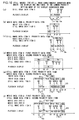
- the combined display mode of the long time period movie priority mode will now be explained with reference to Fig. 7 .
- the CPU 104 changes over the selection to that movie data item.
- the calculation of the length of time of photography may, for example, be performed by multiplying together the number of still image data frames that make up that movie data item, and the frame rate of these still images. If the ending time point of photography is recorded, this calculation may be performed by subtracting the starting time point of photography from the ending time point of photography. In the following, the explanation will presume that information giving the length of time of photography is recorded. It should be understood that the playback time period for the image data item after editing is equal to the time period of photography of the image data item.
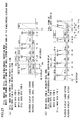
- Fig. 7(a) similarly to the cases of Figs. 5 (a) and 6(a), a case is shown in which no movie data item other than the movie data item A exists that overlaps with it in the same time band.
- the movie data item A is selected by the CPU 104, and the movie A that corresponds to this movie data item A is playback displayed upon the monitor 105.
- the movie data item A is an image data item that was photographed between the time points t2 and t3
- the movie data item B is an image data item that was photographed between the time points t1 and t4.
- the movie data item B is selected by the CPU 104.
- the starting time point of photography of the movie data item A arrives.
- the CPU 104 compares together the lengths of time of photography in the tag information of the movie data items A and B.
- the selection of the movie data item B is prioritized by the CPU 104. Subsequently, the selection of the movie data item B by the CPU 104 is continuously maintained until the time point t4. Accordingly, the movie data item A is not selected by the CPU 104.
- the movie data item A is an image data item that was photographed between the time points t1 and t3
- the movie data item B is an image data item that was photographed between the time points t2 and t4.
- the movie data item A is selected by the CPU 104.
- the movie data items A and B overlap between the time points t2 and t3.
- the CPU 104 compares together the time periods of photography of the movie data items A and B, as described above, and, since the photographic time period of the movie data item A is the longer, the movie data item A is selected as a priority by the CPU 104.
- the CPU 104 determines that the movie data item B is the movie data item that has the longest time period of photography, and selects the movie data item B.
- the movie A that corresponds to the movie data item A is displayed during the interval between the time points t1 and t3
- the movie Bb that corresponds to the movie data item Bb is displayed during the interval between the time points t3 and t4.
- Fig. 7(d) there are shown two different movie data items A1 andA2 that have been photographed with the electronic camera 200A, and a movie data item B that has been photographed with the electronic camera 200B.
- the photographic time period of the movie data item A1 is the interval between the time points t1 and t3
- the photographic time period of the movie data item B is the interval between the time points t2 and t5
- the photographic time period of the movie data item A2 is the interval between the time points t4 and t6.
- the movie data item A1 and the movie data item B overlap one another between the time points t2 and t3
- the movie data item A2 and the movie data item B overlap one another between the time points t4 and t5.
- the movie data item A1 is selected by the CPU 104.
- the CPU 104 compares together the photographic time periods of the movie data item A1 and the movie data item B. The result of this comparison is that the movie data item B that has the longer photographic time period is selected by the CPU 104.
- the CPU 104 compares together the photographic time periods of the movie data item A2 and the movie data item B.
- the result of this comparison is that the movie data item A2, that has a longer photographic time period than the movie data item B, is selected by the CPU 104. And, subsequently, since no movie data item exists whose photographic time period is longer than that of the movie data item A2, the selection of the movie data item A2 by the CPU 104 is continued until the time point t6. In other words, if at some time point a plurality of items of movie data overlap one another, that movie data item whose time period of photography is the longest is selected by the CPU 104 as a priority.
- Fig. 7(e) shows a case in which the time period of photography of the movie data item A is between the time points t3 and t4, the time period of photography of the movie data item B is between the time points t1 and t5, and the time period of photography of the movie data item C is between the time points t2 and t6, so that the photographic time period of the movie data item C is the longest among these three items of movie data.
- the movie data item B and the movie data item C are overlapped between the time points t2 and t5, while the movie data item A, the movie data item B, and the movie data item C are all overlapped between the time points t3 and t4.
- the movie data item B is selected by the CPU 104 at the time point t1.
- the movie data item C whose photographic time period is the longest is selected by the CPU 104.
- the selection of the movie data item C by the CP 104 is continued until the time point t6.
- Fig. 7(f) shows an example like Fig. 5(f) .
- the movie data item A is an image data item that has been photographed between the time point t3 and the time point t4
- the movie data item B is an image data item that has been photographed between the time point t1 and the time point t6
- the movie data item C is an image data item that has been photographed between the time point t2 and the time point t5.
- the movie data items B and C are overlapped during the interval between the time points t2 and t5, while the movie data items A, B, and C are all overlapped during the interval between the time points t3 and t4.
- the display one only mode is set in the long time period movie priority mode.
- the CPU 104 selects only that movie data item whose time period of photography is the longest, and no other movie data items are playback displayed.
- Fig. 8 (a) similarly to the cases of Figs. 5 (a) through 7(a), shows a case in which no movie data item other than the movie data item A exists that overlaps the movie data item A in the same time band.
- the movie data item A is selected by the CPU 104, and the movie A that corresponds to this movie data item A is playback displayed upon the monitor 105.
- the movie data item A is an image data item that was photographed between the time points t2 and t3
- the movie data item B is an image data item that was photographed between the time points t1 and t4.
- the CPU 104 compares together the photographic time periods of the movie data items A and B that overlap one another in the same time band. As a result of this comparison the movie data item B, whose photographic time period is the longer, is selected by the CPU 104. In other words, the movie data item B is selected by the CPU 104 at the timepoint t1. Subsequently, this selection of the movie data item B by the CPU 104 is continued until the time point t4. In other words, the movie data item A is not selected by the CPU 104.
- the movie data item A is an image data item that was photographed between the time points t1 and t3
- the movie data item B is an image data item that was photographed between the time points t2 and t4.
- the CPU 104 compares together the photographic time periods of the movie data items A and B that overlap one another in the same time band. As a result of this comparison the movie data item A, whose photographic time period is the longest, is selected by the CPU 104. In other words, the movie data item A is selected by the CPU 104 at the time point t1.
- Fig. 8(c) is an example in which the display one only mode is set, and at the time point t3 the movie data item B is not selected by the CPU 104; and this is different from the case of the combination mode of Fig. 7(c) . In other words, the movie data item B is not selected by the CPU 104.
- Fig. 8 (d) similarly to the case of Fig. 7(d) , there are shown two different items of movie data A1 and A2 that have been photographed by the electronic camera 200A, and a movie data item B that has been photographed by the electronic camera 200B.
- the photographic time period for the movie data item A1 is the interval between the time points t1 and t3
- the photographic time period for the movie data item B is the interval between the time points t2 and t5
- the photographic time period for the movie data item A1 is the interval between the time points t4 and t6.
- the movie data item A1 and the movie data item B are overlapped between the time points t2 and t3, while the movie data item A2 and the movie data item B are overlapped between the time points t4 and t5.
- the CPU 104 compares together the photographic time periods of the movie data items A1, A2, and B that are overlapped in the same time band. The result of this comparison is that the movie data item A2 whose photographic time period is the longest is selected by the CPU 104. Accordingly, the movie data items A1 and B are not selected by the CPU 104, even though the starting time point of photography of the movie data item A1 is the time point t1, and the starting time point of photography of the movie data item B is the time point t2. When the time reaches the time point t4 that is the starting time point of photography of the movie data item A2, the movie data item A2 is selected by the CPU 104. Subsequently, the selection of the movie data item A2 by the CPU 104 is continued until the time point t6. In other words, selection of the items of movie data A2 and B whose photographic time periods are shorter is not performed by the CPU 104.
- a case is shown in which the movie data item A is an image data item that was photographed between the time points t3 and t4, the movie data item B is an image data item that was photographed between the time points t1 and t5, and the movie data item C is an image data item that was photographed between the time points t2 and t6; so that the photographic time period of the movie data item C is the longest among these three items of movie data.
- the movie data item B and the movie data item C overlap between the time points t2 and t5, while the movie data item A, the movie data item B, and the movie data item C overlap between the time points t3 and t4.
- the CPU 104 compares together the movie data items A, B, and C that overlap one another in the same time band.
- the result of this comparison is that the movie data item C, whose photographic time period is the longest, is selected by the CPU 104. Accordingly, when the time reaches the time point t1 that is the starting time point of photography of the movie data item B, the movie data item B is not selected by the CPU 104, and moreover, when the time reaches the time point t3 that is the starting time point of photography of the movie data item A, the movie data item A is not selected by the CPU 104.
- the movie data item C is selected by the CPU 104. Subsequently, this selection of the movie data item C by the CPU 104 is continued until the time point t6. Accordingly, selection of the items of movie data A and B whose photographic time periods are shorter is not performed by the CPU 104.
- Fig. 8(f) shows a case in which the relationship between the movie data items A, B, and C is similar to that of Figs. 5(f) and 7(f) .
- the movie data item A is an image data item that was photographed between the time points t3 and t4
- the movie data item B is an image data item that was photographed between the time points t1 and t6
- the movie data item C is an image data item that was photographed between the time points t2 and t5.
- the movie data items B and C overlap one another during the interval between the time point t2 and the time point t5, and the movie data items A, B, and C overlap one another during the interval between the time points t3 and t4.
- the CPU 104 compares together the photographic time periods of the movie data items A, B, and C that overlap one another in the same time band. The result of this comparison is that the movie data item B, whose photographic time period is the longest, is selected by the CPU 104. Subsequently, this selection of the movie data item B by the CPU 104 is continued until the time point t6. Accordingly the items A and C of movie data, whose photographic time periods are the shorter, are not selected by the CPU 104.
- the scene start priority mode will now be explained with reference to Fig. 9 .
- the CPU 104 selects as a priority that image data item whose starting time point of photography is the most recent.
- the CPU 104 selects that other movie.
- the display of the movie upon the monitor 105 changes over to the movie whose starting time point of photography is the latest one.
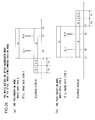
- Fig. 9(a) similarly to the cases of Figs. 5(a) through 8(a) , shows a case in which, apart from the movie data item A, no other movie data item exists that overlaps it in the same time band.
- the movie data item A is selected by the CPU 104, and the movie A that corresponds to this movie data item A is playback displayed upon the monitor 105.
- the movie data item A is an image data item that was photographed between the time points t2 and t3
- the movie data item B is an image data item that was photographed between the time points t1 and t4.
- the movie data item B is selected by the CPU 104.
- the movie data item A is selected by the CPU 104.
- the time point t3 that is the ending time point of photography of the movie data item A
- the selection of the movie data itemAby the CPU 104 terminates. Subsequently to this time point t3, there is no movie data itemwhose playback is started. In other words, the movie data item Bc is not selected by the CPU 104.
- the movie data item A is an image data item that was photographed between the time points t1 and t3
- the movie data item B is an image data item that was photographed between the time points t2 and t4.
- the movie data item A is selected by the CPU 104.
- the movie data item B is selected by the CPU 104.
- the ending time point of photography of the movie data item B has arrived, then the selection of the movie data item B by the CPU 104 terminates.
- Fig. 9(d) similarly to the case of Fig. 6(d) , a case is shown in which the movie data item A is an image data item that was photographed between the time points t1 and t2, and the movie data item B is an image data item that was photographed between the time points t3 and t4, so that the movie data items A and B do not overlap one another.
- the movie data item A that is present between the time point t1 and the time point t2, and the movie data item B that is present between the time point t3 and the time point t4, are selected by the CPU 104.
- the movie A that corresponds to the movie data item A and the movie B that corresponds to the movie data item B are displayed successively upon the monitor 105. In other words, if there are not a plurality of items of movie data that are mutually overlapped at the same moment, the movies that correspond to these items of movie image data item are edited and playback displayed as successive images.
- a movie data item A whose photographic time period is between the time points t3 and t4
- a movie data item B whose photographic time period is between the time points t1 and t5
- a movie data item C whose photographic time period is between the time points t2 and t6.
- the movie data item B and the movie data item C are overlapped between the time points t2 and t5
- the movie data item A, the movie data item B, and the movie data item C are overlapped between the time points t3 and t4.
- the movie data item B is selected by the CPU 104.
- the movie data item C is selected by the CPU 104.
- the time point t3 that is the starting time point of photography of the movie data item A
- the movie data item A is selected by the CPU 104.
- the time point t4 that is the ending time point of photography of the movie data item A arrives, the selection of the movie data item A by the CPU 140 is terminated. Since no movie data item that has a newer starting time point of photography is present after the time point t4, no selection of any movie data item by the CPU 104 is performed.
- the movie data item A is an image data item that was photographed between the time points t3 and t4
- the movie data item B is an image data item that was photographed between the time points t1 and t6
- the movie data item C is an image data item that was photographed between the time points t2 and t5.
- the movie data item B and the movie data item C are overlapped between the time point t2 and the time point t5
- the movie data items A, B, and C are overlapped between the time point t3 and the time point t4.
- the movie data item B is selected by the CPU 104.
- the movie data item C is selected by the CPU 104.
- the time point t3 arrives that is the starting time point of photography of the movie data item A
- the movie data item A is selected by the CPU 104.
- the selection of the movie data item A by the CPU 104 is terminated. And, since subsequently to the time point t4 no movie data item is present that has a more recent starting time point of photography, selection of movie data item by the CPU 104 is not performed.
- a movie data item A having a photographic time period between the time points t1 and t2
- a movie data item B having a photographic time period between the time points t4 and t6
- a movie data item C having a photographic time period between the time points t3 and t5.
- the movie data items B and C overlap one another in the interval between the time point t4 and the time point t5
- the movie data item A does not overlap any other image data item.
- the movie data item A is selected by the CPU 104.
- no selection of movie data item is performed by the CPU 104.
- the movie data item C is selected by the CPU 104.
- the time point t4 that is the starting time point of photography of the movie data item B
- the movie data item B is selected by the CPU 104.
- the time reaches the ending time point of photography of the movie data item B at the time point t6 the selection of the movie data item B by the CPU 104 is terminated.
- the image data items A through C that are selected as described above are edited so that the movie C is displayed by the CPU 104 following on from the movie A, and the movie B is displayed following on from the movie C.
- the fixed interval changeover mode will now be explained with reference to Fig. 10 . If a plurality of items of movie data are overlapped in the same time band, in the time period of overlap, the CPU 104 changes over the movie data item that is selected each time a changeover time period tm elapses.
- This changeover time period tm is set from a menu screen by the user actuating the input device 101.
- the sequence for the display of the movies that correspond to the movie data item to change over is determined on the basis of the starting time points of photography of the respective movie data items. It should be understood that, if the time period over which some movie data item was photographed within the overlapping time period is less than the changeover time period tm, the CPU 104 does not select that movie data item.
- Fig. 10(a) similarly to the cases of Figs. 5 (a) through 9(a), shows a case in which, apart from the movie data item A, no other movie data item exists that overlaps it in the same time band.
- the movie data item A is selected by the CPU 104, and the movie A that corresponds to this movie data item A is playback displayed upon the monitor 105.
- the movie data item A is an image data item that was photographed between the time points t2 and t3
- the movie data item B is an image data item that was photographed between the time points t1 and t4.
- the movie data item Ba is selected by the CPU 104.
- the movie data item Aa is selected by the CPU 104.
- the movie data item Bc is selected by the CPU 104, instead of the movie data item Aa. Then at the time point t3a when the changeover time period tm has elapsed from the time point t2a, the CPU 104 compares together the remaining time period of the movie data item Ac (t3-t3a) and the changeover time period tm. Since the result of this comparison is that the remaining time period is less than the changeover time period tm, the selection of the movie data item B by the CPU 104 is continued. And, at the time point t4 that is the ending time point of photography of the movie data item B, the selection of the movie data item B by the CPU 104 is terminated.
- the movie data item A is an image data item that was photographed between the time points t2 and t3
- the movie data item B is an image data item that was photographedbetween the time points t1 and t4.
- the movie data items Ba, Aa, and Bc are selected by the CPU 104 in that sequence. Then, at the time point t3a, as described above, the CPU 104 compares together the remaining time period (t3-t3a) of the movie data item Ac and the changeover time period tm.
- the movie data item Ac is selected by the CPU 104.
- the movie data item Be is selected by the CPU 104.
- this selection of the movie data item Be by the CPU 104 is continued.
- a movie data item A having a photographic time period between the time points t3 and t4
- a movie data item B having a photographic time period between the time points t1 and t5
- a movie data item C having a photographic time period between the time points t2 and t6.
- the movie data item B and the movie data item C are overlapped between the time point t2 and the time point t5, and the movie data item A, the movie data item B, and the movie data item C are overlappedbetween the time points t3 and t4.
- the sequence in which the movie data item selected by the CPU 104 is changed over each time the changeover time period tm elapses becomes: the movie data item B, the movie data item C, and the movie data item A.
- the movie data item B is selected by the CPU 104.
- the movie data item C is selected by the CPU 104.
- the starting time point of photography of the movie data item A arrives at the time point t3
- the changeover time period tm from the time point t2 has not yet elapsed. Accordingly, the movie data item C is selected by the CPU 104.
- the movie data item Ab is selected by the CPU 104.
- the movie data item Be is selected by the CPU 104.
- the movie data item Cf is selected by the CPU 104.
- the time point t5a that the changeover time period tm has elapsed from the time point t4a, since the remaining time period of the movie data item Bh is less than the changeover time period tm, the selection of the movie data item C by the CPU 104 is continued.
- the further two following modes may be set:
- a large screen display region and a small screen display region are set upon the monitor 105, and one of two images that overlap within a photographic time band is displayed in the large screen display region, while the other is displayed in the small screen display region.
- Fig. 11 it will be supposed that settings are established so that the movie A is displayed on the left of the screen of the monitor 105, while the movie B is displayed on the right of the screen of the monitor 105.
- Fig. 11(a) similarly to the cases of Figs. 5 (a) through 10(a), shows a case in which, apart from the movie data item A, no other movie data item exists that overlaps it in the same time band.
- the movie data item A is selected by the CPU 104, and the movie A that corresponds to this movie data item A is playback displayed upon the monitor 105, on its left screen. Since no movie exists to be displayed on the right screen of the monitor 105, a black screen is displayed.
- the movie data item A is an image data item that was photographed between the time points t2 and t3
- the movie data item B is an image data item that was photographed between the time points t1 and t4.
- the movie data item B is selected by the CPU 104 as an image data item to be displayed at the right of the screen.
- the movie B that corresponds to this selected movie data item B is displayed by the CPU 104, via the monitor interface 108, on the right screen of the monitor 105.
- the selection of the movie data item B by the CPU 104 is continued until the time point t4, that is the ending time point of photography of the movie data item B. And, during the interval between the time points t1 and t2, no image data item exists that is overlapped over the movie data item B. Accordingly, a black screen is displayed by the CPU 104 on the left screen of the monitor 105.
- the movie data item A is selected by the CPU 104 as an image data item to be displayed on the left of its screen.
- the movie A corresponding to this movie data item A that has been selected is accordingly displayed by the CPU 104, via the monitor interface 108, upon the left of the monitor 105.
- the selection of the movie data item B by the CPU 104 is continued as well. In other words, the movie B that corresponds to this movie data item B is still displayed on the right of the screen of the monitor 105.
- the selection of the movie data item A by the CPU 104 is ended. Accordingly, subsequent to this time point t3, in a similar manner to the case for the interval between the time point t1 and the time point t2 as previously described, a black screen is displayed by the CPU 104 on the left of the screen of the monitor 105.
- the movie data item A is an image data item that was photographed between the time points t1 and t3
- the movie data item B is an image data item that was photographed between the time points t2 and t4.
- the movie data item A is selected by the CPU 104 as a display image data item for the left of the screen.
- the movie A corresponding to this movie data item A that has been selected is displayed by the CPU 104, via the monitor interface 108, upon the left of the screen of the monitor 105.
- This selection of the movie data item A by the CPU 104 is continued until the time point t3, that is the ending time point of photography of the movie data item A. Between the time point t1 and the time point t2, no image data item exists that is overlapped with the movie data item A. Accordingly, a black screen is displayed by the CPU 104 on the right of the screen of the monitor 105.
- the movie data item B is selected by the CPU 104 as an image data item to be displayed on the right of the screen, and this selection is continued until the time point t4, that is the ending time point of photography of the movie data item B.
- the movie B corresponding to this movie data item B that has been selected is displayed by the CPU 104, via the monitor interface 108, at the right of the screen of the monitor 105.
- a movie data item A having a photographic time period between the time points t3 and t4
- a movie data item B having a photographic time period between the time points t1 and t5
- a movie data item C having a photographic time period between the time points t2 and t6.
- the movie data item B and the movie data item C are overlapped during the time period between the time point t2 and the time point t5, while the movie data item A, the movie data item B, and the movie data item C are overlapped during the time period between the time point t3 and the time point t4.
- the movie data item C is not selected by the CPU 104. Accordingly, the movie A and the movie B are displayed in parallel on the left and right of the screen of the monitor 105, in a similar manner to Fig. 11(b) .
- the CPU 104 displays the movie corresponding to the movie data item that has been selected as a priority data item in a large screen display region upon the monitor 105. Moreover, a non-priority image data item is displayed in a small screen display region upon the monitor 105. This small screen display region is displayed as superimposed upon the large screen display region, in a predetermined position upon the monitor 105.
- the setting of the camera priority setting display mode in the small screen display mode of the simultaneous display mode is performed upon a menu screen displayed upon the monitor 105 by the user actuating the input device 101.
- the camera priority setting display mode of Fig. 3(a) is selected, and a pull down menu for the first priority camera is actuated, the screen changes to the display shown in Fig. 3 (b) .
- the first priority camera is set by selecting any one of 1 through 4 upon the screen of Fig. 3(b) .
- the pull down menu for the second priority camera is actuated, the screen changes to the display shown in Fig. 3 (b) .
- the second priority camera is set by selecting any one of 1 through 4 upon the screen of Fig. 3(b) .
- the CPU 104 selects as a priority that image data item whose starting time point of photography is the most recent, and displays an image corresponding to the image data item that has thus been selected in a large screen upon the monitor 105.
- the CPU 104 selects that other movie data item. That is, the display in the large screen upon the monitor 105 changes over to an image of the movie data item whose starting time point of photography is the later, and the movie that was being displayed in the large screen up until that time point is now displayed in a small screen.
- Fig. 12(a) similarly to the cases of Figs. 5(a) through 10 (a), there is shown a case in which, apart from the movie data item A, no other movie data item exists that overlaps it in the same time band.
- the movie data item A is selected by the CPU 104, and the movie A that corresponds to this movie data item A is playback displayed upon the monitor 105, in a large screen display region thereof. It should be understood that, in this case, no small screen display region is displayed upon the monitor 105.
- the movie data item A that is the priority data item is an image data item that was photographed between the time points t2 and t3
- the movie data item B that is a non-priority data item is an image data item that was photographed between the time points t1 and t4.
- the movie data item B is selected by the CPU 104 as the large screen display image data item.
- the movie Ba corresponding to the movie data item Ba that has been selected is displayed by the CPU 104 in a large screen display region upon the monitor 105. At this time, no small screen display region is displayed upon the monitor 105.
- the movie data item A is selected by the CPU 104 as the large screen display image data item, and the movie A that corresponds to this movie data item A is displayed in the large screen display region upon the monitor 105.
- the movie data item Bb is selected by the CPU 104 as the small screen display image data item, and the movie Bb that corresponds to this movie data item Bb is displayed in a small screen display region.
- the time reaches the time point t3 that is the ending time point of photography of the movie data item A the selection of the movie data item A by the CPU 104 terminates. Accordingly, the movie Bc that corresponds to the movie data item Bc is displayed in the large screen display region upon the monitor 105. Subsequent to the time point t3, no small screen display region is displayed upon the monitor 105.
- the movie data item A that is set as the priority data item
- the movie data item B that is a non-priority data item is an image data item that was photographed between the time points t2 and t3.
- the movie data items Ab and B are overlapped between the time point t2 and the time point t3.
- the movie data item A that is the priority data item is selected by the CPU 104 as the large screen display image data item. And the movie A that corresponds to this movie data item A is displayed by the CPU 104 in the large screen display region upon the monitor 105. At this time no display is provided by the CPU 104 in the small screen display region of the monitor 105, since no movie data item exists that is overlapped with the movie data item A. Moreover, since no image data item exists whose priority level is higher than that of the movie data item A, the movie A is displayed by the CPU 104 in the large screen display region of the monitor 105 until the time point t4.
- the movie data item B that is a non-priority data item is selected by the CPU 104 as the small screen display image data item, and the movie B that corresponds to this movie data item B is displayed in the small screen display region of the monitor 105.
- the display by the CPU 104 of the movie data item B in the small screen display region of the monitor 105 is terminated. Subsequently, nodisplayisprovided in the small screen display region upon the monitor 105. Accordingly, only the movie A corresponding to the movie data item A that is the priority data item is displayed by the CPU 104 in the large screen display region upon the monitor 105.
- the movie data item A that is the priority data item is an image data item that was photographed between the time points t1 and t3
- the movie data item B that is a non-priority data item is an image data item that was photographed between the time points t2 and t4.
- the movie data item A that is the priority data item is selected by the CPU 104 as the large screen display image data item.
- the movie A that corresponds to this movie data item A is displayed in the large screen display region upon the monitor 105.
- the display by the CPU 104 of the movie data item A in the large screen display region of the monitor 105 is terminated. Accordingly, the movie Bb that corresponds to the movie data item Bb is displayed in the large screen display region of the monitor 105. Subsequently to the time point t3, no display is provided in the small screen display region upon the monitor 105.
- a first priority movie data item A that was photographed between the time points t3 and t4
- a second priority movie data item B that was photographed between the time points t1 and t5
- a non-priority movie data item C that was photographed between the time points t2 and t6.
- the movie data item B is selected by the CPU 104 as the large screen display image data item. And the movie B corresponding to this movie data item B that has been selected is displayed by the CPU 104 in the large screen display region of the monitor 105. At this time, no display is provided in the small screen display region upon the monitor 105.
- this movie data item C that is a non-priority data item is selected by the CPU 104 as the small screen display image data item, and the movie Ca that corresponds to this movie data item Ca is displayed in the small screen display region of the monitor 105.
- this movie data item A that is the first priority is selected by the CPU 104 as the large screen display image data item, and the movie A that corresponds to this movie data item A is displayed in the large screen display region of the monitor 105.
- the movie data item Bc that is the second priority data item is selected by the CPU 104 as the small screen display image data item, and the movie Bc that corresponds to this movie data item Bc is displayed in the small screen display region of the monitor 105.
- the movie C that corresponds to the movie data item C is not displayed by the CPU 104.
- the display of the movie A in the large screen display region of the monitor 105 is terminated.
- the movie data item Bd that is the second priority is selected by the CPU 104 as the large screen display image data item, and the movie Bd that corresponds to this second priority movie data item Bd is displayed in the large screen display region of the monitor 105.
- the movie data item Cc that is the non-priority data item is selected by the CPU 104 as the small screen display image data item, and the movie Cc that corresponds to this movie data item Cc is displayed in the small screen display region of the monitor 105.
- the display of the movie Bd in the large screen display region of the monitor 105 by the CPU 104 is terminated.
- the movie data item Cd is selected by the CPU 104 as the large screen display image data item, and the movie Cd that corresponds to this movie data item Cd is displayed in the large screen display region of the monitor 105.
- This display of the movie Cd by the CPU 104 in the large screen display region of the monitor 105 is continued until the time point t6 that is the ending time point of photography of the movie data item C. It should be understood that, after the time point t5, no display is provided in the small screen display region of the monitor 105.
- a first priority movie data item A that was photographed between the time points t3 and t4
- a second priority movie data item B that was photographed between the time points t1 and t6
- a non-priority movie data item C that was photographed between the time points t2 and t5.
- the movie data items B and C are overlapped during the interval between the time point t2 and the time point t5
- the movie data items A, B, and C are overlapped during the interval between the time point t3 and the time point t4.
- the movie data item B that is the second priority is selected by the CPU 104 as the large screen priority image data item.
- the movie Ba corresponding to this movie data item Ba that has been selected is displayed by the CPU 104 in the large screen display region of the monitor 105.
- no display is provided upon the monitor 105 in its small screen display region.
- this movie data item A whose priority level is the highest is selected by the CPU 104 as the large screen display image data item, and the movie A that corresponds to this movie data item A is displayed in the large screen display region of the monitor 105.
- the movie data item Bc that is the second priority data item is selected by the CPU 104 as the small screen display image data item, and the movie Bc that corresponds to this movie data item Bc is displayed in the small screen display region of the monitor 105.
- the movie C that corresponds to the movie data item C is not displayed by the CPU 104.
- the display of the movie A in the large screen display region of the monitor 105 by the CPU 104 is terminated.
- the movie data itemBd is selected by the CPU 104 as the large screen display image data item, and the movie Bd that corresponds to this movie Bd is displayed in the large screen display region of the monitor 105.
- the movie data item Cc is selected by the CPU 104 as the small screen display image, and the movie Cc that corresponds to this movie data item Cc is displayed in the small screen display region of the monitor 105.
- the display by the CPU 104 of the movie Cc that corresponds to the movie data item Cc in the small screen display region of the monitor 105 is terminated. Subsequent to the time point 5, no display is provided in the small screen display region of the monitor 105. However, the display of the movie B by the CPU 104 in the large screen display region of the monitor 105 is maintained until the time point t6 that is the ending time point of photography of the movie data item B.
- Fig. 13(a) similarly to the case of Fig. 12(a) , since no other movie data item exists that overlaps it in the same time band apart from the movie image data item A, the movie A that corresponds to this movie data item A is playback displayed upon the monitor 105, in a large screen display region thereof. It should be understood that, in this case, no small screen display region is displayed upon the monitor 105.
- the movie data item A is an image data item that was photographed between the time points t2 and t3
- the movie data item B is an image data item that was photographed between the time points t1 and t4.
- the movie data item B is selected by the CPU 104 as the large screen display image data item, and the movie Ba that corresponds to the movie data item Ba is displayed upon the monitor 105 in a large screen display region. At this time, no small screen display region is displayed upon the monitor 105.
- the movie data item A is selected by the CPU 104 as the large screen display image data item, and the movie A that corresponds to the movie data item A is displayed in the large screen display region upon the monitor 105, instead of the image Ba of the movie data item Ba.
- the movie data item Bb is selected by the CPU 104 as the small screen display image data item, and the movie Bb that corresponds to this movie data item Bb is displayed in the small screen display region upon the monitor 105.
- the time reaches the time point t3 that is the ending time point of photography of the movie data item A the display of the movie A by the CPU 104 in the large screen display region of the monitor 105 is terminated.
- the movie data item Bc is selected by the CPU 104 as the large screen display image data item, so that the movie Bc that corresponds to this movie data item Bc is displayed in the large screen display region of the monitor 105. Subsequent to the time point t3, no small screen display region is displayed upon the monitor 105.
- the movie data item A is an image data item that was photographed between the time points t1 and t3
- the movie data item B is an image data item that was photographed between the time points t2 and t4.
- the movie data item A is selected by the CPU 104 as the large screen display image data item. And the movie Aa that corresponds to the movie data item Aa is displayed upon the monitor 105 in the large screen display region. At this time, no small screen display region is displayed by the CPU 104 upon the monitor 105, since no movie data item exists that is overlapped with the movie data item A.
- the movie data item B is selected by the CPU 104 as the large screen display image data item, and the movie Ba that corresponds to this movie data item Ba is displayed in the large screen display region upon the monitor 105.
- the movie data item Ab is selected by the CPU 104 as the small screen display image data item, and the movie Ab that corresponds to this movie data item Ab is displayed in the small screen display region upon the monitor 105.
- the display of the movie Ab by the CPU 104 in the small screen display region of the monitor 105 is terminated. Subsequently, no small screen display region is displayed upon the monitor 105.
- a movie data item A that has a photographic time period from the time point t3 to the time point t4
- a movie data item B that has a photographic time period from the time point t1 to the time point t5
- a movie data item C that has a photographic time period from the time point t2 to the time point t6.
- the movie data item B and the movie data item C are overlapped during the interval between the time point t2 and the time point t5, while the movie data item A, the movie data item B, and the movie data item C are all mutually overlapped during the interval between the time point t3 and the time point t4.
- the movie data item B is selected by the CPU 104 as the large screen display image data item.
- the movie Ba that corresponds to the movie data item Ba is displayed by the CPU 104 upon the monitor 105 in a large screen display region.
- no small screen display region is displayed by the CPU 104 upon the monitor 105, since no movie data item exists that is overlapped with the movie data item B.
- the movie data item C is selected by the CPU 104 as the large screen display image data item, and the movie Ca that corresponds to the movie data item Ca is displayed in the large screen display region upon the monitor 105.
- the movie data item Bb is selected as the small screen display image data item, and is displayed by the CPU 104 in the small screen display region upon the monitor 105.
- the movie data item A is selected by the CPU 104 as the large screen display image data item, and the movie A that corresponds to this movie data item A is displayed in the large screen display region of the monitor 105.
- the movie data item Cb is selected by the CPU 104 as the small screen display image data item, and the display in the small screen display region of the monitor 105 is changed over to display of the movie Cb that corresponds to this movie data item Cb.
- the movie Bc that corresponds to the movie data item Bc is not displayed by the CPU 104.
- the display by the CPU 104 of the movie A in the large screen display region of the monitor 105 is terminated.
- the movie data item Cc that has a date and time of photography that are later than those of the movie data item B is selected by the CPU 104 as the large screen display image data item, and the movie Cc that corresponds to this movie data item Cc is displayed in the large screen display region of the monitor 105.
- the movie Bd corresponding to the movie data item Bd that has been selected by the CPU 104 as the small screen display image data item is displayed by the CPU 104 in the small screen display region of the monitor 105.
- the CPU 104 selects that movie data item whose remaining photographic time period is the longest, as the large screen display image data item. Subsequent to the time point t4, the remaining photographic time period of the movie data item B is the period (t5-t4), while the remaining time period for the movie data item C is (t6-t4) . Accordingly, the CPU 104 selects the movie data item C whose remaining time period is the longer, as the large screen display image data item. And, at the time point t5 that is the ending time point of photography of the movie data item B, the display of the small screen display region on the monitor 105 by the CPU 104 is terminated.
- a relationship between the movie data items A, B, and C is shown that is similar to the cases of Figs. 5 (f) and 7 (f) .
- the movie data item A is an image data item that was photographed between the time points t3 and t4
- the movie data item B is an image data item that was photographed between the time points t1 and t6
- the movie data item C is an image data item that was photographed between the time points t2 and t5.
- the movie data items B and C are overlapped during the interval between the time point t2 and the time point t5, while the movie data items A, B, and C are overlapped during the interval between the time point t3 and the time point t4.
- the movie data item B is selected by the CPU 104 as the large screen display image data item. And the movie B that corresponds to the movie data item B is displayed by the CPU 104 upon the monitor 105 in a large screen display region. At this time, no small screen display region is displayed by the CPU 104 upon the monitor 105, since no movie data item exists that is overlapped with the movie data item B.
- the movie data item C is selected by the CPU 104 as the large screen display image data item, and the movie C that corresponds to the movie data item Ca is displayed in the large screen display region upon the monitor 105.
- the movie data item Bb is selected as the small screen display image data item, and the movie Bb that corresponds to this movie data item Bb is displayed by the CPU 104 in the small screen display region upon the monitor 105.
- the time reaches the time point t3 that is the starting time point of photography of the movie data item A the movie data item A is selected by the CPU 104 as the large screen display image data item, and the movie A that corresponds to this movie data item A is displayed in the large screen display region of the monitor 105.
- the display in the small screen display region of the monitor 105 is changed over by the CPU 104 to display of the movie Cb corresponding to the movie data item Cb that has been selected as the small screen display image data item.
- the display by the CPU 104 of the movie A in the large screen display region of the monitor 105 is terminated.
- the movie data item B whose photographic time period is the longest is selected by the CPU 104 as the large screen display image data item.
- the movie Bd that corresponds to the movie data item Bd is displayed by the CPU 104 in the large screen display region of the monitor 105.
- the movie data item Cc is selected by the CPU 104 as the small screen display image data item, and the movie Cc that corresponds to this movie data item Cc is displayed in the small screen display region of the monitor 105.
- the display of the small screen display region on the monitor 105 by the CPU 104 is terminated.
- the display by the CPU 104 of the movie Be that corresponds to the movie data item Be in the large screen display region on the monitor 105 is terminated.
- the still image editing processing is broadly classified into the following two modes, either of which may be selected by actuation of the input device 101.
- This still image simultaneous editing mode is further classified into the following four modes:
- each of these modes is performed by actuation of the input device 101 upon a menu screen (not shown in the figures) that is displayed when the tag for still image editing processing shown in Fig. 3 is selected.
- this still image simultaneous editing mode editing is performed upon the images that become subjects for editing according to the three modes described above.
- still image data items are displayed by the CPU 104 along with movie data items by changing them over upon the monitor 105, according to the various modes set for the movie editing processing as previously described.
- the image editing when editing subject image data item including still image data items that have been read will now be explained for each of the following nine editing modes below, into which it may be classified.
- Fig. 15 (a) shows a case when items of still image data S1, S2, and S3 having the respective photographic time points t1, t2, and t3 have been selected as the editing subject image data items.
- the still image data items S1, S2, and S3 are selected by the CPU 104, and are edited so that each of them is displayed in succession for a playback time period ts.
- the movie data item A is the priority data item
- the still image data items are non-priority data items.
- the photographic time period of the movie data item A is the interval between the time points t2 and t5
- the respective photographic time points of the still image data items S1, S2, and S3 are the time points t1, t3, and t4. Since only the still image data item S1 exists between the time points t1 and t2, at the time point t1 the still image data item S1 is selected by the CPU 104, and the still image S1 that corresponds to this still image data item S1 is displayed upon the monitor 105.
- the movie data item A that is the priority data item is selected by the CPU 104, although the playback time period ts has not yet elapsed from the time point t1. Accordingly, the movie A that corresponds to this movie data item A is displayed upon the monitor 105 by the CPU 104. Subsequently, at the time points t3 and t4, the time arrives at the photographic time points of the still image data items S2 and S3. However, the selection by the CPU 104 of the movie data item A whose priority level is the higher is continued until the time point t5 that is the ending time point of photography of the movie data item A.
- the movie data item A is set as a non-priority data item, and the still image data items are set as priority data items.
- the photographic time period of the movie data item A is the interval between the time point t2 and the time point t5, while the photographic time points of the still image data items S1, S2, and S3 are the time points t1, t3, and t4 respectively.
- the still image data item S1 is selectedby the CPU 104, and the still image S1 that corresponds to this still image data item S1 is displayed upon the monitor 105.
- the display by the CPU 104 of the still image S1 that corresponds to the still image data item S1 whose priority level is the higher is continued.
- the display by the CPU 104 of the still image S1 is terminated.
- the movie data item Ab is selected by the CPU 104, and the movie Ab that corresponds to this movie data item Ab is displayed upon the monitor 105.
- the still image data item S2 is selected by the CPU 104 instead of the movie Ab, and the still image S2 that corresponds to this still image data item S2 is displayed upon the monitor 105.
- the still image data item S3 is selected by the CPU 104 instead of the still image data item S2 at this time point t4, and the still image S3 that corresponds to this still image data item S3 is displayed upon the monitor 105.
- This still image S3 is displayed by the CPU 104 upon the monitor 105 during the playback time period ts.
- the movie data item A is the first priority data item
- the movie data item B is the secondpriority data item.
- the photographic time period of the movie data item A is between the time point t3 and the time point t5, while the photographic time period of the movie data item B is between the time point t1 and the time point t8.
- the respective photographic time points of the still image data items S1, S2, S3, S4, and S5 are the time points t2, t4, t5, t6, and t7.
- the still image data items S1 through S5 are overlapped with the movie data item B that is the second priority data item, the still image data items S1 through S5 are not selected by the CPU 104.
- the image data items that are selected by the CPU 104 are the movie data items A and B.
- the images that are displayed by the CPU 104 upon the monitor 105 are similar to those in the case shown in Fig. 5(b) .
- the still image data items are the first priority data items
- the movie data item A is the second priority data item
- the movie data item B1 that consists of the movie data items B1a through B1d and the movie data item B2 are non-priority data items.
- the photographic time period of the movie data item A is between the time point t3 and the time point t5
- the photographic time period of the movie data item B1 is between the time point t1 and the time point t7
- the photographic time period of the movie data item B2 is between the time point t8 and the time point t9.
- the respective photographic time points of the still image data items S1, S2, S3, S4, and S5 are the time points t2, t4, t5, t6, and t7.
- the movie data item B1 is selected by the CPU 104, and the movie B1a that corresponds to the movie data item B1a is displayed upon the monitor 105.
- this still image data item S1 is selected by the CPU 104.
- the still image S1 is displayed upon the monitor 105 by the CPU 104, instead of the movie B1a.
- the display upon the monitor 105 of the still image S1 by the CPU 104 is terminated.
- the movie data item B1c is selected by the CPU 104, and the movie B1c that corresponds to this movie data item B1c is displayed upon the monitor 105 by the CPU 104, instead of the still image S1.
- this movie data item A is selected by the CPU 104, and the movie Aa is displayed upon the monitor 105, instead of the movie B1c. Then, at the photographic time point t4 of the still image data item S2 whose priority level is higher than that of the movie data item Aa, this still image data item S2 is selected by the CPU 104, and the still image S2 is displayed by the CPU 104 upon the monitor 105, instead of the movie Aa.
- this still image data item S3 is selected by the CPU 104.
- the still image S3 is displayed by the CPU 104 upon the monitor 105, instead of the still image S2.
- this still image data item S4 is selected by the CPU 104, and the still image S4 is displayed by the CPU 104 upon the monitor 105, instead of the still image S3.
- this still image data item S5 is selectedby the CPU 104, and the still image S5 is displayed upon the monitor 105, instead of the still image S4.
- the display of the still image S5 upon the monitor 105 by the CPU 104 is terminated.
- the movie data item B2 is not selected by the CPU 104, since the playback time period ts of the still image S5 has not yet elapsed.
- the movie data item A is the first priority data item
- the still image data item is the second priority data item
- the movie data item B is a non-priority data item.
- the overlapping relationship of the movie data item A, the movie data item B, and the still images S1 through S5 is the same as in Fig. 15(e) .
- the movie data item B1 is selected by the CPU 104, and the movie B1a that corresponds to the movie data item B1a is displayed upon the monitor 105.
- this still image data item S1 is selected by the CPU 104, and the still image S1 is displayed upon the monitor 105, instead of the movie B1a.
- the display of the still image S1 upon the monitor 105 by the CPU 104 is terminated.
- the movie data item B1c is selected by the CPU 140, and the movie B1c is displayed upon the monitor 105, instead of the still image S1.
- this movie data item A is selected by the CPU 104, and the movie Aa is displayed upon the monitor 105, instead of the movie B1c.
- the movie data item A that is the first priority data item is selected by the CPU 104, so that the display of the movie A upon the monitor 105 is continued. In other word, the still image S2 is not displayed upon the monitor 105 by the CPU 104.
- the still image data item S3 that is a second priority data item is selected by the CPU 104, although the movie data item B that is a non-priority data item exists. Subsequently, the image that is displayed upon the monitor 105 is changed over by the CPU 104, in a similar manner to the case in Fig. 15(e) .
- this display one only mode is a mode in which, among two image data items whose dates and times of photography or photographic time points overlap one another, only the priority image data item is displayed, and, even in a time band in which they do not overlap one another, still the non-priority data item is not displayed.
- FIG. 16 (a) shows a case in which, in a similar manner to the example shown in Fig. 15(a) , still image data items S1, S2, and S3 that have respective photographic time points t1, t2, and t3 have been selected as editing subject image data items.
- the still image data items S1, S2, and S3 are selected by the CPU 104, and are edited as successive image data items each of which is displayed in succession for a playback time period ts.
- Fig. 16(b) shows a case in which the movie data item A is set as the priority data item and still image data items are set as non-priority items, and in which the relationship between the movie data item A and the still image data items S1 through S3 is similar to that of Fig. 15(b) .
- the still image data item S1 is selected by the CPU 104, and the still image S1 is displayed upon the monitor 105.
- the movie data item A is selected by the CPU 104, and the movie A is displayed upon the monitor 105 instead of the still image S1.
- the time points t3 and t4 the time reaches the photographic time points of the still image data items S2 and S3.
- This selection of the movie data item A by the CPU 104 is continued until the time point t5 that is the ending time point of photography of the movie data item A. In this manner, although the movie data item A and the still image data items S2 and S3 are overlapped within the same time band, subsequent to the time point t2, only the movie data item A that has been selected as being the priority data item is selected by the CPU 104.
- the movie data item A is set as a non-priority data item, and the still image data items are set as priority data items.
- the photographic time period for the movie data item A is the interval between the time point t2 and the time point t5, and the respective photographic time points of the movie items S1, S2, and S3 are the time points t1, t3, and t4.
- the still image data items S1 through S3 that are the priority data items are selected by the CPU 104, and the movie data item A is not selected.
- Fig. 16(c) in the section between the time point t1a and the time point t3, there is a gap between the still image data items S1 and S2 that have been selected.
- the three still image data items S1 through S3 that are played back are edited as still image data items that follow one another in sequence.
- the movie data item A is the first priority data item
- the movie data item B is the second priority data item
- the still image data items are non-priority data items.
- the photographic time period of the movie data item A is between the time point t3 and the time point t5
- the photographic time period of the movie data item B is between the time point t1 and the time point t8.
- the respective photographic time points of the still image data items S1, S2, S3, S4, and S5 are the time points t2, t4, t5, t6, and t7.
- This example is an example in which the display one only mode in the movie editing mode setting has been selected.
- the movie data item B and the still image data items S1 through S5 that overlap one another in the section between the time points t1 and t8 the movie data item B is prioritized over the still image data items S1 through S5.
- the movie data item B that is the second priority data item and the movie data item A that is the first priority data item are overlapped in the section between the time points t3 and t5
- the movie data item A that is the first priority data item is prioritized over the movie B.
- only the movie data item A that has the length of time of photography from the time point t3 to the time point t5 is selected by the CPU 104.
- the still image data items are the first priority data items
- the movie data item A is the second priority data item
- the movie data item B1 that consists of the movie data items B1a through B1d and the movie data item B2 are non-priority data items.
- the photographic time period of the movie data item A is between the time point t3 and the time point t5
- the photographic time period of the movie data item B1 is between the time point t1 and the time point t7
- the photographic time period of the movie data item B2 is between the time point t8 and the time point t9.
- the respective photographic time points of the still image data items S1, S2, S3, S4, and S5 are the time points t2, t4, t5, t6, and t7.
- This example shown in Fig. 16 (e) is an example in which the display one only mode has been selected in the movie editing mode setting.
- the still image data items S1 through S5 that overlap one another in the section between the time point t1 and the time point t8 the still image data items S1 through S5 that are first priority data items are prioritized over the movie data item B1 that is a non-priority data item, and are accordingly selected by the CPU 104.
- the movie data item A that is a second priority data item is prioritized over the movie data item B1 that is a non-priority data item.
- the movie data item A is selected by the CPU 104.
- the still image data items S2 and S3 are selected by the CPU 104.
- the still images S1 through S5 are selected by the CPU 104. Since only the movie data item B2 exists between the time point t8 and the time point t9, this movie data item B2 that has a length of time of photography from the time point t8 to the time point t9 is selected by the CPU 104.
- the movie data item B1c exists during the interval between the time point t2a and the time point t3, it is not selected by the CPU 104, since the priority level of the movie data item B is lower than those of the still image data items. Moreover, since the photographic time point of the still image S4 arrives within the playback time period of the still image S3, the playback time period of this still image S3 becomes between the time point t5 and the time point t6 (that is less than ts). Yet further, since the starting time point of photography of the movie B2 arrives within the playback time period of the still image S5, the playback time period of this still image S5 becomes between the time point t7 and the time point t8 (that is less than ts).
- the movie data item A is the first priority data item
- the still image data item is the second priority data item
- the movie data item B is a non-priority data item.
- the overlapping relationship of the movie data item A, the movie data item B, and the still images S1 through S5 is the same as in Fig. 16(e) .
- This example shown in Fig. 16 (f) is an example in which the display one only mode has been selected during the movie editing mode setting.
- the still image data items S1 through S5 that overlap one another in the section from the time point t1 to the time point t8 are selected by the CPU 104 as a priority over the movie data item B1 that is a non-priority data item.
- the movie data item A that is the first priority data item is selected by the CPU 104 as a priority over the movie data item B1 that is a non-priority data item. Since the priority level of this movie data item A that is the first priority data item is higher than those of the still image data items S1 and S2 that are second priority data items and that overlap it in the section between the time point t3 and the time point t5, this movie data item A is selected by the CPU 104 in the section from the time point t3 to the time point t5.
- the still image S1 the movies Aa and Ab, and the still images S3, S4, and S5 are selected by the CPU 104. Since only the movie data item B2 exists between the time point t8 and the time point t9, this movie data item B2 that has a length of time of photography from the time point t8 to the time point t9 is selected by the CPU 104.
- FIG. 17 (a) shows a case in which, in a similar manner to the example shown in Fig. 15(a) , still image data items S1, S2, and S3 that have respective photographic time points t1, t2, and t3 have been selected as editing subject image data items.
- the still image data items S1, S2, and S3 are selected by the CPU 104, and are edited as successive data items, so as each to be displayed in succession for the playback time period ts.
- Fig. 17 (b) shows a case in which the combined display mode is set in the long time period display mode, and in which the overlapping relationship in the same time band between the movie data item A and the still image data items S1 through S3 is similar to that shown in Fig. 15 (b) .
- the movie data item has a predetermined length of time of photography, and is prioritized over the still image data items.
- the still image data item S1 exists. Since in this example the combination display mode is set, the still image data item S1 that does not overlap the image data item A is selected by the CPU 104.
- the movie data item A that is the long time period movie data item is prioritized over the still image data items S2 and S3, and is selected by the CPU 104. It should be understood that, since the starting time point of photography of the movie data item A arrives within the playback time period of the still image S1, the playback time period of the still image S1 is shorter than ts.
- Fig. 17 (c) shows a case in which the combined display mode is set in the long time period display mode, and in which the overlapping relationship in the same time band between the movie data items A and B and the still image data items S1 through S5 is similar to that shown in Fig. 15 (d) .
- the movie item B whose photographic time period is the longest is selected by the CPU 104 during the interval between the time point t1 and the time point t8.
- the photographic time periods of the movie data item A and of the still image data items S1 through S5 are shorter than that of the movie data item B, they are not selected by the CPU 104.
- Fig. 17 (d) shows a case in which the combined display mode is set in the long time period display mode, and in which the overlapping relationship in the same time band between the movie data items A and B and the still image data items S1 through S5 is similar to that shown in Fig. 15(e) or (f) .
- the movie data item B1 whose photographic time period is the longest is selected by the CPU 104.
- the movie data item A and the still image data items S1 through S4 are not selected by the CPU 104.
- the still image data item S5 is selected by the CPU 104, and the still image S5 is displayed upon the monitor 105, instead of the movie B1.
- the movie data item B2 is selected by the CPU 104, and the movie B2 is displayed upon the monitor 105 during the interval between the time point t8 and the time point t9, instead of the still image data item S5.
- this movie data item B2 and the movie data item A and the still image data items S1 through S5 do not overlap one another, the setting for long time period priority is not applied.
- Fig. 17 (e) shows a case in which the combined display mode is set in the long term priority mode, and the length of time of photography that the movie data item A has between the photographic time points t1 and t5 is longer than the length of time of photography that the movie data item B has between the photographic time points t3 and t6.
- the respective photographic time points of the still image data items S1, S2, and S3 are the time points t2, t4, and t7.
- the movie data item A and the movie data item B are overlapped during the interval between the time point t3 and the time point t5.
- the still image data items S1 and S2 are overlapped with the movie data item A at the time point t2 and the time point t4.
- the movies A and B are displayed upon the monitor 105 while being changed over by the CPU 104.
- the still image data item S3 is selected by the CPU 104, and the still image S3 is displayed upon the monitor 105 during the playback time period ts.
- FIG. 18 (a) shows a case in which, in a similar manner to the example shown in Fig. 15(a) , still image data items S1, S2, and S3 that have respective photographic time points t1, t2, and t3 have been selected as editing subject image data items.
- the still image data items S1, S2, and S3 are selected by the CPU 104, and are edited as successive data items, so as each to be displayed in succession for the playback time period ts.
- Fig. 18 (b) shows a case in which the display one only mode is set in the long time period display mode of the display changeover mode, and in which the relationship between the movie data item A and the still image data items S1 through S3 is similar to that shown in Fig. 17(b) .
- the movie data item has a predetermined length of time of photography, and is prioritized over the still image data items. Between the time point t1 and the time point t2, only the still image data item S1 is present.
- the display one only mode is set in this example, that is different from the combination display mode of Fig. 17(b) , the still image S1 that does not overlap with the image data item A is selected by the CPU 104.
- the movie data item A that is a long time period movie data item is selected by the CPU 104 as a priority over the still image data items S2 and S3. It shouldbe understood that, since the starting time point of photography of the movie data item A arrives within the playback time period of the still image S1, the playback time period of the still image S1 is shorter than the playback time period ts.
- Fig. 18 (c) shows a case in which the display one only mode is set in the long time period display mode of the display changeover mode, and in which the relationship between the movie data items A and B and the still image data items S1 through S5 is similar to that shown in Fig. 17(c) .
- the movie data item B is selected by the CPU 104 during the interval from the time point t1 to the time point t8, in a similar manner to the case in Fig. 17(c) .
- Fig. 18 (d) shows a case in which the display one only mode is set in the long time period display mode of the display changeover mode, and in which the relationship between the movie data items A, B1, and B2 and the still image data items S1 through S5 is similar to that shown in Fig. 17 (d) .
- the movie data item B1 whose photographic time period is the longest is selected by the CPU 104 during the period from the time point t1 to the time point t7.
- the movie data item A and the still image data items S1 through S4 are not selected by the CPU 104.
- the movie B1 is displayed upon the monitor 105 by the CPU 104 during the interval from the time point t1 to the time point t7.
- the still image data item S5 is selected by the CPU 104, and the still image S5 is displayed upon the monitor 105, instead of the movie B1.
- the movie data item B2 is selected by the CPU 104, and the movie B2 is displayed upon the monitor 105 during the interval from the time point t8 to the time point t9. It should be understood that, since the starting time point of photography of the movie data item B2 arrives during the playback time period of the still image S5, the playback time period of the still image S5 is shorter than ts.
- Fig. 18 (e) shows a case in which the combined display mode is set in the long time period priority mode of the display changeover mode, and in which the relationship between the movie data items A and B and the still image data items S1 through S3 is similar to that shown in Fig. 17(e) .
- the movie data item A is selected by the CPU 104, and the movie A is displayed upon the monitor 105 until the time point t5.
- the still image data item S3 is selected by the CPU 104, and the still image S3 is displayed upon the monitor 105 during the playback time period ts from the time point t7.
- the still image data item S3 is edited as a still image data item that follows on in sequence from the movie data item Ab.
- Fig. 19 (a) shows a case in which still image data items S1, S2, and S3 that have respective photographic time points t1, t2, and t3 have been selected as the editing subject data items.
- the still image data items S1, S2, and S3 are selected by the CPU 104, and editing is performed so that each of them is displayed in succession for the playback time period ts.
- Fig. 19(b) shows a case in which the movie data item A is present during the interval between the photographic time points t2 and t6, and the still image data items S1, S2, and S3 are present at the respective photographic time points t1, t3, and t4.
- the still image data item S1 is selected by the CPU 104, and the still image S1 is displayed upon the monitor 105.
- the movie data item A is selected by the CPU 104 instead of the still image data item S1, and the movie Aa that corresponds to this movie data item Aa is displayed upon the monitor 105.
- the still image data item S2 is selected by the CPU 104, and the still image S2 is displayed upon the monitor 105, instead of the movie Aa.
- the still image data item S3 is selected by the CPU 104.
- the still image S3 is displayed upon the monitor 105 by the CPU 104 during the photographic time period ts, since no image data item exists whose playback is started subsequently.
- Fig. 19 (c) shows a case in which the scene start priority mode is set in the display changeover mode, and in which the overlapping relationship in the same time band between the movie data items A and B and the still image data items S1 through S5 is similar to that shown in Figs. 15(d) and 17(c) .
- the movie data item B is selected by the CPU 104, and the movie B is displayed upon the monitor 105.
- the still image data item S1 is selected by the CPU 104, and the display of the still image S1 upon the monitor 105 is started, instead of the movie B.
- the still image S1 is displayed over the playback time period ts from the time point t2.
- the CPU 104 selects: at the time point t4, the still image data item S2; at the time point t5, the still image data item S3; at the time point t6, the still image data item S4; and, at the time point t7, the still image data item S5.
- the still image data item S4 is selected by the CPU 104 at the time point t6 during the playback of the still image S3 that has the photographic time point t5
- the playback time period of the still image S3 is shorter than the playback time period ts.
- the still image S5 is displayed by the CPU 104 upon the monitor 105 during the playback time period ts.
- Fig. 19 (d) shows a case in which the scene start priority mode is set in the display changeover mode, and in which the overlapping relationship in the same time band between the movie data items A and B and the still image data items S1 through S5 is similar to that shown in Figs. 15(e) or (f) , or in Fig. 17(d) .
- the movie data item B1a, the movie data item Aa, and the still image data items S1 through S5 are selected by the CPU 104 in the interval between the time point t1 and the time point t8.
- the movie data item B2 is selected by the CPU 104, and the movie B2 is displayed upon the monitor 105 during the interval until the time point t9.
- FIG. 20 (a) shows a case in which, in a similar manner to the example shown in Fig. 15(a) , still image data items S1, S2, and S3 that have respective photographic time points t1, t2, and t3 have been selected as editing subject image data items.
- the still image data items S1, S2, and S3 are selected by the CPU 104, and are edited as successive data items, so as each to be displayed in succession for the playback time period ts.
- Fig. 20(b) shows a case in which the movie data item A is present during the interval between the photographic time points t2 and t4, while the still image data items S1 and S2 are present at the photographic time points t1 and t3, so that the movie data item A and the still image data item S2 are overlapped within the same time band.
- the still image data item S1 is selected by the CPU 104, and the still image S1 is displayed upon the monitor 105.
- the movie data item A is selected by the CPU 104, and the movie A is displayed upon the monitor 105.
- the still image data item S2 is selected by the CPU 104, and the still image S2 is displayed upon the monitor 105, instead of the movie A. Subsequently, this still image data item S2 is playback displayed during the playback time period ts. In other words, the playback time period ts is applied as the display time period for the still image S2 that is overlapped with the movie A.
- a movie data item A there are shown a movie data item A, a movie data item B1, a movie data item B2, and still image data items S1 through S6.
- the photographic time period of the movie data item A is between the time point t3 and the time point t6, while the photographic time period of the movie data item B1 is between the time point t1 and the time point t9.
- the photographic time period of the movie data item B2 is between the time point t10 and the time point t11.
- the respective photographic time points of the still image data items S1, S2, S3, S4, S5, and S6 are the time points t2, t4, t5, t6, t7, and t8.
- the movie data item A and the movie data item B1 are overlapped between the time point t3 and the time point t6, while the still image data items S1 through S6 and the movie data item B1 are mutually overlapped.
- the movie data item B1 is selected by the CPU 104, and the movie B1 is displayed upon the monitor 105 during the changeover time period tm.
- the changeover time period tm has not elapsed from the time point t1. Accordingly, the still image data item S1 is not selected by the CPU 104, and the selection of the movie data item B1 is continued. And the movie B1b that corresponds to the movie data item B1b is displayed upon the monitor 105.
- the still image data item S1 whose photographic time point has been reached at the time point t2 is selected by the CPU 104, and, instead of the movie B1b, the still image S1 is displayed upon the monitor 105 during the playback time period ts.
- the movie data item B1d is selected by the CPU 104, and, instead of the still image S1, the movie B1d is displayed upon the monitor 105 during the changeover time period tm.
- the changeover time period tm has not elapsed from the time point t2a. Accordingly, the movie data item A is not selected by the CPU 104, but rather the selection of the movie data item B1 is continued.
- the movie data item A whose starting time point of photography has been reached at the time point t3 is selected by the CPU 104, and the movie Ab that corresponds to this movie data item Ab is displayed upon the monitor 105 during the changeover time period tm.
- the still image data item S2 whose photographic time point has been reached at the time point t4 is selected by the CPU 104, and, instead of the movie Ab, the still image S2 is displayed upon the monitor 105 during the playback time period ts.
- the still image data item S3 whose photographic time point has been reached at the time point t5 is selected by the CPU 104, and the still image S3 is displayed upon the monitor 105 during the playback time period ts.
- the still image data item S5 whose photographic time point has been reached at the time point t7 is selected by the CPU 104, and the still image S5 is displayed upon the monitor 105 during the playback time period ts.
- the time point t8a at which the playback time period ts has elapsed from the time point t7a, the still image data item S6 whose photographic time point has been reached at the time point t8 is selected by the CPU 104, and the still image S6 is displayed upon the monitor 105 during the playback time period ts.
- the movie data item B1j is selected by the CPU 104, and the movie B1j is displayed upon the monitor 105 until the time point t9.
- the movie data item B2 is selected by the CPU 104, and the movie B2 is displayed upon the monitor 105 until the time point t11.
- Images corresponding to a plurality of image data items whose dates and times of photography overlap one another in the same time band are displayed in parallel on the monitor 105 in two screens. If three or more image data items are overlapped within the same time band, the two different images that are to be displayed in parallel are selected by actuation of the input device 101. The selection of the images that are displayed in parallel is performed upon a menu screen that is displayed upon the monitor 105, as described above. Moreover, it is also possible to select which of the selected images is to be displayed on the left of the screen of the monitor 105, and which on the right.
- the photographic time point t100 of some still image data item is a specified time period tr before the starting time point of photography t200 of a movie data item
- the display of the still image is started from a predetermined time period ta before the movie display, in other words from a time point t300 that is given by (the movie starting time point of photography 200 - the predetermined time point ta).
- the display screen control before the movie display is performed as follows, according to the relationship between the lengths of the time period tr and the predetermined time period ta.
- Fig. 21 it will be supposed that a setting has been established for movies to be displayed upon the left screen of the monitor 105, and for still images to be displayed upon the right screen of the monitor 105.
- the photographic time period of the movie data item A is the interval between the time point t2 and the time point t5
- the respective photographic time points of the still image data items S1, S2, and S3 are the time points t1, t3, and t4, so that the movie data item A and the still image data items S2 and S3 are mutually overlapped.
- the still image data item S1 is selected by the CPU 104 as the data item to be displayed on the right of the screen of the monitor 105, and the still image S1 that corresponds to this still image data item S1 is displayed upon the right of its screen. Moreover, a black screen is displayed by the CPU 104 on the left of the screen of the monitor 105.
- the movie data item A is selected by the CPU 104 as the image data item to be displayed upon the left of the screen, and the display on the left screen of the monitor 105 changes over from a black screen to the movie A. And the movie A is displayed by the CPU 104 on the left screen of the monitor 105 until the time point t5 that is the ending time point of photography of the movie data item A.
- the still image data item S2 is selected by the CPU 104 as the image data item to be displayed upon the right of the screen, and the display on the right screen of the monitor 105 changes over from the still image S1 to the still image S2.
- the still image data item S3 is selected by the CPU 104 as the image data item to be displayed upon the right of the screen, and the display on the right screen of the monitor 105 changes over from the still image S2 to the still image S3.
- This display by the CPU 104 of the still image S3 on the right of the screen of the monitor 105 is terminated at the time point t5 that is the ending time point of photography of the movie data item A.
- FIG. 21(c) there are shown movie data items A and B and still image data items S1 through S7.
- the photographic time period of the movie data item A is the interval between the time point t3 and the time point t6, while the photographic time period of the movie data item B is the interval between the time point t1 and the time point t9.
- the respective photographic time points of the still image data items S1 through S7 are the time points t2, t4, t5, t6, t7, t8, and t10.
- the movie data items A and B overlap one another between the time point t3 and the time point t6, the still image data items S2 through S3 are overlapped with both of the movie data items A and B, and the still image data items S1 through S6 are overlapped with the movie data item B.
- a setting has been established, by actuation of the input device 101, so that the still images S are to be displayed upon the right screen of the monitor 105, while the movie A is to be displayed upon its left screen.
- the time reaches the starting time point of photography of the movie data item B, but the movie B is not set to be displayed upon the monitor 105. Accordingly, the movie data item B is not selected by the CPU 104.
- the time reaches the photographic time point of the still image data item S1, but, since tr>ta, at this time point t2, the still image data item S1 is not selected by the CPU 104.
- the still image data item S1 is selected by the CPU 104 as the image data item to be displayed at the right of the screen, and the still image S1 is displayed at the right screen of the monitor 105.
- a black screen is displayed at the left screen of the monitor 105.
- the movie data item A is selected by the CPU 104 as the image data item to be displayed at the left of the screen, and the movie A is displayed upon the left screen of the monitor 105.
- the still image data item S2 is selected by the CPU 104 as the image data item to be displayed at the right of the screen, and the right screen of the monitor 105 changes over from displaying the still image S1 to displaying the still image S2.
- the still image data item S3 is selected by the CPU 104 as the image data item to be displayed at the right of the screen, and the right screen of the monitor 105 changes over from displaying the still image S2 to displaying the still image S3.
- the still image data items S4 through S7 do not overlap the movie data item A. Accordingly, these still images S are displayed by the CPU 104 upon the right screen of the monitor 105 while being changed over each time the playback time period ts elapses. And, at the time point t6, the display of the movie A by the CPU 104 is terminated. Subsequent to the time point t6, until the time point t9a at which the display of the still image S7 on the right of the screen of the monitor 105 ends, a black screen is displayed by the CPU 104 at the left screen of the monitor 105.
- a movie data item A is the interval between the time point t3 and the time point t5
- the photographic time period of the movie data item B is the interval between the time point t1 and the time point t8.
- the respective photographic time points of the still image data items S1 through S5 are the time points t2, t4, t5, t6, and t7.
- the movie data items A and B overlap one another between the time point t3 and the time point t5, and the still image data items S1 through S5 are overlapped with the movie data item B.
- a setting has been established by actuation of the input device 101, such that the still images S are to be displayed upon the right screen of the monitor 105, while the movie B is to be displayed upon its left screen.
- the movie data item B is selected by the CPU 104 as the image data item to be displayed on the left of the screen, and the movie B is displayed on the left of the screen of the monitor 105. Subsequently, the movie B is displayed by the CPU 104 on the left screen of the monitor 105 until the time point t8. On the other hand, at the time point t1, a black screen is displayed by the CPU 104 on the right screen of the monitor 105. At the time point t2, the still image data item S1 is selected by the CPU 104 as the image data item to be displayed on the right screen, and the still image S1 is displayed upon the right screen of the monitor 105.
- the still image data item S2 is selected by the CPU 104 as the image data item to be displayed upon the right screen, and the display on the right screen of the monitor 105 changes over from the still image S1 to the still image S2.
- the still image data item S3 is selected by the CPU 104 as the image data item to be displayed upon the right screen, and the display on the right screen of the monitor 105 changes over from the still image S2 to the still image S3.
- the still image data item S4 is selected by the CPU 104 as the image data item to be displayed upon the right screen, and the display on the right screen of the monitor 105 changes over from the still image S3 to the still image S4.
- the still image data item S5 is selected by the CPU 104 as the image data item to be displayed upon the right screen, and the display on the right screen of the monitor 105 changes over from the still image S4 to the still image S5.
- the still image S5 is displayed by the CPU 104 on the right screen of the monitor 105, until the time point t8 at which the display of the movie B on the left screen of the monitor 105 ends.
- the CPU 104 selects, as the priority data item, that image data item that has been photographed with the electronic camera 200, which has been selected by the user as the priority camera.
- the image that corresponds to the image data item that has been selected as the priority data item is displayed by the CPU 104 in a large screen display region upon the monitor 105.
- an image of a data item that is not selected as a priority data item is displayed by the CPU 104 in a small screen display region upon the monitor 105.
- the selection of the priority camera is made by selecting one of the cameras pull down displayed upon a menu screen that has been displayed upon the monitor 105, as previously described. Moreover, it is possible to establish a setting relating to still images, so that such still images are always playback displayed in the small screen display region. This setting also is performed by actuating the input device 101 from a menu screen that is displayed upon the monitor 105.
- the CPU 104 changes the time point at which the display of this still image starts, in a similar manner to the case of the parallel display mode. However, if a setting is established to perform display of still images in the small screen display region, the CPU 104 starts the display of the still image and the display of the movie at the same time.
- Fig. 22 (b) is one example of a case in which a movie data item has been set as the priority data item, while still image data items have been set as non-priority data items.
- a case is shown in which the photographic time period of the movie data item A that has been selected as the priority data item is the interval between the time point t3 and the time point t5, while the respective photographic time points of the still image data items S1, S2, S3 and S4 are the time points t1, t3, t4, and t6.
- the movie data item A is overlapped with the still image data items S2 and S3.
- the photographic time point t1 of the still image data item S1 is earlier than the time point that is calculated by (the starting time point t2 of photography of the movie data item A - the predetermined time period ta) . Accordingly, at the time point t1, the still image S1 is not displayed by the CPU 104 in the large screen display region of the monitor 105. At a time point t2a that is earlier than the time point t2 by just the time period ta, the still image data item S1 is selected by the CPU 104 as the image data item to be displayed in the large screen, and the still image S1 that corresponds to this still image data item S1 is displayed in the large screen display region of the monitor 105. At this time, no display is provided in the small screen display region of the monitor 105.
- the movie data item A is selected by the CPU 104 as the image data item to be displayed in the large screen display region. And the movie A is displayed by the CPU 105 in the large screen display region of the monitor 105, instead of the still image S1.
- the still image S1 corresponding to the still image data item S1 that has been selected by the CPU 104 as the image data item for small screen display is displayed in the small screen display region of the monitor 105.
- the still image data item S2 is selected by the CPU 104 as the image data item to be displayed in the small screen display region, and the display in the small screen display region of the monitor 105 changes over from the still image S1 to the still image S2.
- the still image data item S3 is selected by the CPU 104 as the image data item to be displayed in the small screen display region, and the display in the small screen display region of the monitor 105 changes over from the still image S2 to the still image S3.
- the display by the CPU 104 of the movie A in the large screen display region of the monitor 105 is terminated.
- the display of the small screen display region of the monitor 105 by the CPU 104 is also terminated.
- the still image data item S4 whose photographic time point is the time point t6 is selected by the CPU 104 as the image data item for display in the large screen display region. Accordingly, the still image S4 is displayed in the large screen display region of the monitor 105 during the playback time period ts from the time point t5, so as to continue on from the movie A.
- Fig. 22 (c) is one example of a case in which still image data items have been set as priority data items, while a movie data item has been set as a non-priority data item; and a case is shown in which the overlapping relationship between a movie data item A and still image data items S1 through S4 is similar to that shown in Fig. 22(b) .
- the still image data item S1 is selected by the CPU 104 as the image data item for large screen display, and the still image S1 that corresponds to this still image data item S1 is displayed in the large screen display region of the monitor 105.
- the still image S1 is displayed in the large screen display region until the time point t3. At this time, no display is provided in the small screen display region of the monitor 105.
- the movie data item A is selected by the CPU 104 as the image data item to be displayed in the small screen display region, and the movie A whose priority level is low is displayed in the small screen display region of the monitor 105.
- This display of the movie A in the small screen display region of the monitor 105 is continued by the CPU 104 until the time point t5 that is the ending time point of photography of this movie data item A. And, after the time point t5, the small screen display region of the monitor 105 is not displayed.
- the still image data item S2 is selected by the CPU 104 as the image data item to be displayed in the large screen display region, and the display in the large screen display region of the monitor 105 changes over from the still image S1 to the still image S2.
- the still image data item S3 is selected by the CPU 104 as the image data item to be displayed in the large screen display region, and the display in the large screen display region of the monitor 105 changes over from the still image S2 to the still image S3.
- the still image data item S4 whose photographic time point is the time point t6 is selected by the CPU 104 as the image data item to be displayed in the large screen display region. Accordingly, until the time point t5a at which the playback time period ts has elapsed from the time point t4a, the still image S4 is displayed in the large screen display region of the monitor 105, so as to continue on from the still image S3.
- Fig. 22 (d) is an example in which a setting has been established for the still images to be always displayed upon the monitor 105 in a small screen display region, and shows a case in which the overlapping relationship between a movie data item A and still image data items S1 through S4 is similar to that shown in Fig. 22(b) .
- the still image data item S1 is not selected by the CPU 104.
- the movie data item A is selected by the CPU 104 as the image data item to be displayed upon the large screen, and the movie A is displayed in the large screen display region of the monitor 105.
- the still image data item S1 is selected by the CPU 104 as the image data item for display upon the small screen, and the still image S1 is displayed in the small screen display region of the monitor 105.
- the still image data item S2 is selected by the CPU 104 as the image data item for display upon the small screen, and the display in the small screen display region of the monitor 105 is changed over from the still image S1 to the still image S2.
- the still image data item S3 is selected by the CPU 104 as the image data item for display upon the small screen, and the display in the small screen display region of the monitor 105 is changed over from the still image S2 to the still image S3.
- the final frame included in the movie data item A is selected by the CPU 104, and this final frame included in the movie data item A is selected by the CPU 104 is displayed as a still image in the large screen display region of the monitor 105.
- the movie data item A is an image data item in which a plurality of still image data items succeed one another, and its final frame is the final one of this plurality of still image data items.
- the still image data item S4 is selected by the CPU 104 as the image data item to be displayed on the small screen at the playback time point that corresponds to the photographic time point t5, and, at this playback time point that corresponds to the photographic time point t5, the still image S4 whose photographic time point is supposed to be the time point t6 is displayed by the CPU 140 upon the monitor 105.
- This still image S4 is displayed by the CPU 104 in the small screen display region of the monitor 105 during the playback time period ts.
- the display of the still image S4 by the CPU 104 in the small screen display region of the monitor 105 is terminated.
- the display by the CPU 104 of the final frame of the movie data item A in the large screen display region of the monitor 105 as a still image is also terminated.
- Fig. 22 (e) is one example of a case in which a setting has been established for a movie data item A to be a first priority data item, a movie data item B to be a second priority data item, and still image data items to be non-priority data items. Moreover, this Fig. 22 (e) shows a case in which the overlapping relationship between the movie data items A and B and still image data items S1 through S5 is similar to that shown in Fig. 15(d) .
- the movie data item B is selected by the CPU 104 as the image data item to be displayed in the large screen display region, and the movie B is displayed in the large screen display region of the monitor 105.
- the small screen display region of the monitor 105 is not displayed.
- the display by the CPU 104 in the large screen display region of the monitor 105 of the movie B whose priority level is the higher is continued.
- the still image data item S1 is selected by the CPU 104 as the image data item to be displayed in the small screen display region, and the still image S1 is displayed by the CPU 104 in the small screen display region of the monitor 105.
- the movie data item A is selected by the CPU 104 as the image data item to be displayed in the large screen display region, and the display in the large screen display region of the monitor 105 is changed over to the movie A whose priority is the highest.
- the movie data item B is selected by the CPU 104 as the image data item to be displayed in the small screen display region, and the display of the still image S1 in the small screen display region of the monitor 105 is changed over by the CPU 104 to the movie Bb corresponding to the movie data item Bb that is the second priority data item.
- the still image S1 is no longer displayed by the CPU 104.
- the displays by the CPU 104 of the movie A in the large screen display region of the monitor 105 and of the movie Bb in the small screen display region of the monitor 105 are continued.
- the still image S2 whose priority level is low is not displayed by the CPU 104 upon the monitor 105.
- the display by the CPU 140 of the movie A in the large screen display region of the monitor 105 is terminated.
- the CPU 104 along with selecting the movie data item Bc as the image data item to be displayed in the large screen display region, also selects the still image data item S3 as the image data item to be displayed in the small screen display region.
- the display by the CPU 104 of the movie A in the large screen display region of the monitor 105 is changed over to the movie Bc corresponding to the movie data item Bc that is the second priority data item.
- the display of the movie Bb in the small screen display region of the monitor 105 is changed over by the CPU 104 to the still image S3.
- the display by the CPU 104 of the movie Bc whose priority level is the higher in the large screen display region of the monitor 105 is continued.
- the still image data item S4 is selected by the CPU 104 as the image data item to be displayed in the small screen display region, and the display in the small screen display region of the monitor 105 is changed over from the still image S3 to the still image S4.
- the still image data item S5 is selected by the CPU 104 as the image data item to be displayed in the small screen display region, and the display in the small screen display region of the monitor 105 is changed over from the still image S4 to the still image S5.
- the example shown in Fig. 22 (f) is one example of a case in which a setting has been established for a movie data item A to be a first priority data item, still image data items to be second priority data items, and a movie data item B to be a non-priority data item.
- the photographic time period of the movie data item A is between the time point t3 and the time point t5
- the photographic time period of the movie data item B1 is between the time point t1 and the time point t7
- the photographic time period of the movie data item B2 is between the time point t9 and the time point t10.
- the respective time points of the still image data items S1, S2, S3, S4, and S5 are the time points t2 ,t4, t5, t6, and t8.
- the movie data items A and B1 overlap one another in the interval between the time point t3 and the time point t5, while the still image data items S1 through S4 are overlapped with the movie data item B1.
- the movie data item B1 is selected by the CPU 104 as the image data item to be displayed in the large screen display region, and playback display of the movie B1a that corresponds to the movie data item B1a is started in the large screen display region of the monitor 105.
- the small screen display region is not displayed upon the monitor 105.
- the still image data item S1 is selected by the CPU 104 as the image data item to be displayed in the large screen display region, and the movie data item B1b is selected as the image data item to be displayed in the small screen display region.
- the still image S1 that corresponds to the still image data item S1 whose priority level is the higher is displayed by the CPU 104 in the large screen display region of the monitor 105, instead of the movie B1a.
- the movie B1b is displayed by the CPU 104 in the small screen display region of the monitor 105.
- the display by the CPU 104 of the still image S1 in the large screen display region of the monitor 105 is terminated.
- the movie B1c corresponding to the movie data item B1c that has been selected by the CPU 104 as the image data item to be displayed in the large screen display region is displayed in the large screen display region of the monitor 105, instead of the still image S1. Furthermore, the display by the CPU 104 of the movie B1b in the small screen display region of the monitor 105 is terminated. In other words, the small screen display region is not displayed upon the monitor 105.
- the movie data item A is selected by the CPU 104 as the image data item to be displayed in the large screen display region, and the display in the large screen display region of the monitor 105 is changed over from the movie B1 to the movie A that corresponds to the movie data item A whose priority level is the higher. Subsequently, the movie A is displayed by the CPU 105 in the large screen display region of the monitor 105 until the time point t5 that is the ending time point of photography of this movie data item A. Moreover, at the time point t3, the movie data item B1d is selected by the CPU 104 as the image data item to be displayed in the small screen display region, and the movie B1d is displayed in the small screen display region of the monitor 105.
- the still image data item S2 is selected by the CPU 104 as the image data item to be displayed in the small screen display region, and the display in the small screen display region of the monitor 105 is changed over from the movie B1d to the still image S2. And, at the time point t5, the display by the CPU 104 of the movie A in the large screen display region of the monitor 105 is terminated.
- this time point t5 is also the photographic time point of the still image data item S3 that is a second priority data item
- the still image data item S3 is selected by the CPU 104 as the image data item to be displayed in the large screen display region, and the still image S3 is displayed in the large screen display region of the monitor 105, instead of the movie Ab.
- the movie data item B1f is selected by the CPU 104 as the image data item to be displayed in the small screen display region, and the display in the small screen display region of the monitor 105 is changed over by the CPU 104 from the still image S2 to the movie B1f.
- the still image data item S4 is selected by the CPU 104 as the image data item to be displayed in the large screen display region, and the display in the large screen display region of the monitor 105 is changed over by the CPU 104 from the still image S3 to the still image S4. Meanwhile, the display by the CPU 104 of the movie B1f in the small screen display region of the monitor 105 is continued..
- the still image data item S5 is selected by the CPU 104 as the image data item to be displayed in the large screen display region, and the display of the still image S4 in the large screen display region of the monitor 105 is changed over by the CPU 104 to the still image S5 whose photographic time point is the time point t8.
- the still image S5 is edited by the CPU 104 as the playback image that continues on from the still image S4.
- this time point t7 is the ending time point of photography of the movie data item B1
- the display by the CPU 104 of the movie B1f in the small screen display region of the monitor 105 is terminated.
- the movie data item B2 is selected by the CPU 104 as the image data item to be displayed in the small screen display region, and the movie B2 whose starting time point of photography is the time point t9 is displayed in the small screen display region of the monitor 105.
- the CPU 104 brings forward the start of the display of the still image S5, in order to ensure that no time period occurs in which no image is displayed in the large screen display region of the monitor 105. Moreover, along with this bringing forward of the start of display of the still image S5, the CPU 104 also brings forward the starting time point of display of the movie data item B2 from the time point t9 to the time point t7, in order to ensure for a still image not to be displayed in the large screen display region of the monitor 105 by itself.
- the display by the CPU 104 of the movie B2 in the small screen display region of the monitor 105 is terminated. It should be understood that it is supposed that the time period (t10-t9) is less than ts. Moreover, although the playback time period ts has not elapsed from the time point t7, still the display of the still image S5 by the CPU 104 in the large screen display region of the monitor 105 is terminated. Accordingly, it does not happen than only a still image is displayed in the large screen display region of the monitor 105.
- Fig. 23 (a) is one example of a case in which a setting has been established for still image data items to be first priority data items, a movie data item A to be a second priority data item, and a movie data item B to be a non-priority data item.
- a case is shown in which the overlapping relationship between the movie data items A, B1, and B2 and the still image data items S1 through S5 is the same as in the case of Fig. 22 (f) .
- the display by the CPU 104 of images in both the large screen display region and also the small screen display region of the monitor 105 is performed.
- the still image data item S2 is selected by the CPU 104 as the image data item to be displayed in the large screen display region, and the movie data item Ab is selected as the image data item to be displayed in the small screen display region.
- the display by the CPU 104 in the large screen display region of the monitor 105 is changed over from the movie Aa to the still image S2.
- the display by the CPU 104 in the small screen display region of the monitor 105 is changed over from the movie B1d to the movie Ab corresponding to the movie data item Ab that is the second priority data item. Subsequent to the time point t5, display of images is performed by the CPU 104 in both the large screen display region of the monitor 105 and also in its small screen display region, in a similar manner to the case shown in Fig. 22(f) .
- the photographic time period of the movie data item A that has been selected as the priority data item is the interval between the time point t3 and the time point t5
- the photographic time period of the movie data item B1 is the interval between the time point t1 and the time point t7
- the photographic time period of the movie data item B2 is the interval between the time point t9 and the time point t10.
- the respective time points of the still image data items S1, S2, S3, S4, S5, S6, and S7 are the time points t2 ,t4, t5, t6, t8, t11, and t12.
- the movie data items A and B1 overlap one another in the interval between the time point t3 and the time point t5, while the still image data items S1 through S4 are overlapped with the movie data item B1. Moreover, it will be supposed that a setting has been established for the still images to be displayed in the small screen display region of the monitor 105.
- the movie data item B1a is selected by the CPU 104 as the image data item to be displayed in the large screen display region, and the movie B1a is displayed in the large screen display region of the monitor 105.
- the small screen display region is not displayed upon the monitor 105.
- the still image data item S1 is selected by the CPU 104 as the image data item to be displayed in the small screen display region, and the still image S1 is displayed in the small screen display region of the monitor 105.
- the display by the CPU 104 of the movie B1 in the large screen display region of the monitor 105 is continued.
- the display by the CPU 104 of the still image S1 in the small screen display region of the monitor 105 is continued.
- the movie data item A whose priority level is higher than that of the movie data item B is selected by the CPU 104 as the image data item to be displayed in the large screen display region, and the display in the large screen display region of the monitor 105 is changed over by the CPU 104 from the movie B1 to the movie A.
- the display is continued of the still image S1 corresponding to the still image data item S1 that has been selected by the CPU 104 as the image data item to be displayed in this small screen display region.
- the still image data item S2 is selected by the CPU 104 as the image data item to be displayed in the small screen display region, and the display by the CPU 104 in the small screen display region of the monitor 105 is changed over from the still image S1 to the still image S2.
- the display by the CPU 104 of the movie A in the large screen display region of the monitor 105 is continued.
- the movie data item B1e is selected by the CPU 104 as the image data item to be displayed in the large screen display region, and the display by the CPU 104 in the large screen display region of the monitor 105 is changed over from the movie Ab to the movie B1e.
- this time point t5 is the photographic time point of the still image data item S3
- the still image data item S3 is selected by the CPU 104 as the image data item to be displayed in the small screen display region, and the display by the CPU 104 in the small screen display region of the monitor 105 is changed over from the still image S2 to the still image S3.
- the display by the CPU 104 in the small screen display region of the monitor 105 is changed over from the still image S3 to the still image S4. It should be understood that the display by the CPU 104 of the movie B1e in the large screen display region of the monitor 105 is continued.
- the display by the CPU 104 of the movie B1e in the large screen display region of the monitor 105 is terminated.
- the display of the still image S4 in the small screen display region of the monitor 105 is terminated by the CPU 104 at the time point t7.
- the time reaches the photographic time point of the still image data item S5.
- the starting time point of photography of the movie data item B2 is the time point t9 and the time period (the time point t9 - the time point t8) is shorter than the predetermined time period ta
- the still image S5 that corresponds to the still image data item S5 is not selected by the CPU 104.
- the movie data item B2 is selected by the CPU 104 as the image data item to be displayed in the large screen display region
- the still image data item S5 is selected as the image data item to be displayed in the small screen display region.
- the movie B2 is displayed by the CPU 104 in the large screen display region of the monitor 105, while the still image S5 is displayed in the small screen display region of the monitor 105.
- the still image S6 that has the photographic time point t11 is displayed by the CPU 104 in the small screen display region of the monitor 105.
- the still image S7 that has the photographic time point t12 is displayed by the CPU 104 as the image in the small screen display region of the monitor 105.
- the display of the still image S7 in the small screen display region of the monitor 105 by the CPU 104 is terminated.
- the final frame of the movie data item B2 continues to be displayed as a still image by the CPU 104, as the display image in the large screen display region of the monitor 105.
- This still image is displayed by the CPU 104 in the large screen display region of the monitor 105, until the time point t11a at which the display of the still image S7 in the small screen display region of the monitor 105 ends.
- the image data items that are selected after the time point t9 as display images in the large screen display region and in the small screen display region are edited so that, on each of the screens, to be displayed as continuing on from the images that end at the time point t7.
- the still image simultaneous insertion mode when the scene start priority mode of the simultaneous display mode in the movie editing mode setting has been selected will now be explained with reference to Fig. 24 .
- this mode setting if a plurality of data items are mutually overlapped in the same time band, an image that corresponds to the image data item whose starting time point is the latest is displayed in the large screen region of the monitor 105.
- the CPU 104 displays an image that corresponds to that image data item whose starting time point of photography is the latest in the large screen display region of the monitor 105.
- the CPU 104 displays the image that, up until now, was being displayed in the large screen display region of the monitor 105, in the small screen display region of the monitor 105.
- the display in the large screen display region of the monitor 105 is changed over to display of the image whose starting time point of photography is the latest.
- Fig. 24(b) shows a case in which the relationship of the movie data item A and the still image data items S1 through S4 is similar to that of Fig. 22 (b) .
- the still image data item S1 is selected by the CPU 104 as the image data item to be displayed in the large screen display region, and display of the still image S1 in the large screen display region of the monitor 105 is started. The small screen display region upon the monitor 105 is not displayed.
- the movie data item Aa is selected by the CPU 104 as the image data item to be displayed in the large screen display region, and the display in the large screen display region of the monitor 105 is changed over from the still image S1 to the movie Aa.
- the still image data item S1 is selected by the CPU 104 as the image data item to be displayed in the small screen display region, and the still image S1 is displayed in the small screen display region of the monitor 105.
- this still image data item S2 is selected as the image data item to be displayed in the large screen display region, and the playback display in the large screen display region of the monitor 105 is changed over from the movie Aa to the still image S2.
- the movie data item Ab is selected by the CPU 104 as the image data item to be displayed in the small screen display region, and the display in the small screen display region of the monitor 105 is changed over by the CPU 104 from the still image S1 to the movie Ab.
- the still image data item S3 is selected by the CPU 104 as the image data item to be displayed in the large screen region, and the display in the large screen display region of the monitor 105 is changed over by the CPU 104 from the still image S2 to the still image S3.
- the display of the movie Ab in the small screen display region of the monitor 105 by the CPU 104 is continued.
- the display of the movie Ab in the small screen display region of the monitor 105 is terminated by the CPU 104. Subsequently, the small screen display region is not displayed upon the monitor 105.
- the display of the still image S3 in the large screen display region of the monitor 105 by the CPU 104 is continued.
- the still image data item S4 whose photographic time point is the time point t6 is selected by the CPU 104 as the image data item to be displayed in the large screen display region of the monitor 105.
- the image data items are edited so that the display is changed over from the still image S3 to the still image S4 continuously at the time point t4.
- the still image S4 is displayed by the CPU 104 in the large screen display region of the monitor 105 until the playback time period ts elapses.
- Fig. 24(c) shows a case in which the relationship of the movie data item A and the still image data items S1 through S4 is similar to that of Fig. 24(b) .
- display of the still image S1 that corresponds to the still image data item S1 is not started by the CPU 104, since (t2-t1)>ts as described above.
- the time point t1a that is just the playback time period ts earlier than the time point t2 (i.e.
- the still image data item S1 is selected by the CPU 104 as the image data item to be displayed in the large screen display region, and display of the still image S1 in the large screen display region of the monitor 105 is started. Moreover, the small screen display region on the monitor 105 is not displayed. Subsequent to the time point t2, the images that are displayed in both the large screen display region and the small screen display region of the monitor 105 are changed over by the CPU 104 in a similar manner to the case shown in Fig. 24(b) .
- the photographic time period of the movie data item A is the interval between the time point t3 and the time point t5
- the photographic time period of the movie data item B1 is the interval between the time point t1 and the time point t8
- the photographic time period of the movie data item B2 is the interval between the time point t10 and the time point t11.
- the respective photographic time points of the still image data items S1, S2, S3, S4, S5, and S6 are the time points t2, t4, t5, t6, t7, and t9.
- the movie data items A and B1 are mutually overlapped
- the still image data items S1 through S5 are overlapped with the movie data item B1.
- the movie data item B1 is selected by the CPU 104 as the image data item to be displayed in the large screen display region, and the display of the movie B1 in the large screen display region of the monitor 105 is started by the CPU 104.
- the small screen display region is not displayed upon the monitor 105.
- the still image data item S1 is selected by the CPU 104 as the image data item to be displayed in the large screen display region, and the display in the large screen display region of the monitor 105 is changed over by the CPU 104 from the movie B1 to the still image S1.
- the movie data item B1b is selected by the CPU 104 as the image data item to be displayed in the small screen display region, and the display of the movie B1b that corresponds to this movie data item B1b in the small screen display region of the monitor 105 is started.
- the movie data item B1c is selected by the CPU 104 as the image data item to be displayed in the large screen display region, and the display in the large screen display region of the monitor 105 is changed over by the CPU 104 from the still image S1 to the movie B1c.
- the display of the movie B1b in the small screen display region of the monitor 105 is terminated by the CPU 104. In other words, the small screen display region is not displayed upon the monitor 105.
- the movie data item Aa is selected by the CPU 104 as the image data item to be displayed in the large screen display region, and the display in the large screen display region of the monitor 105 is changed over by the CPU 104 from the movie B1c to the movie Aa.
- the movie data item B1d is selected by the CPU 104 as the image data item to be displayed in the small screen display region, and the movie B1d is displayed by the CPU 104 in the small screen display region of the monitor 105.
- the still image data item S2 is selected by the CPU 104 as the image data item to be displayed in the large screen display region, and the display in the large screen display region of the monitor 105 is changed over by the CPU 104 from the movie Aa to the still image S2.
- the movie data item Ab is selected by the CPU 104 as the image data item to be displayed in the small screen display region, and the display in the small screen display region of the monitor 105 is changed over by the CPU 104 from the movie B1d to the movie Ab.
- the still image data item S3 is selected by the CPU 104 as the image data item to be displayed in the small screen display region, and the display in the large screen display region of the monitor 105 is changed over by the CPU 104 from the still image S2 to the still image S3. Furthermore, since the time point t5 is the ending time point of photography of the movie data item A, the display of the movie Ab in the small screen display region of the monitor 105 by the CPU 104 is terminated. Moreover, this region is changed over to display of the movie B1f.
- the still image data item S4 is selected by the CPU 104 as the image data item to be displayed in the large screen display region, and the display in the large screen display region of the monitor 105 is changed over by the CPU 104 from the still image S3 to the still image S4.
- the display of the movie B1f in the small screen display region of the monitor 105 by the CPU 104 is continued.
- the still image data item S5 is selected by the CPU 104 as the image data item to be displayed in the large screen display region, and the display in the large screen display region of the monitor 105 is changed over by the CPU 104 from the still image S4 to the still image S5.
- the display of the movie B1f in the small screen display region of the monitor 105 by the CPU 104 is still continued.
- the display of the movie B1f in the small screen display region of the monitor 105 is terminated by the CPU 104. Subsequently, the small screen display region of the monitor 105 is not displayed. Moreover, the display of the still image S5 in the large screen display region of the monitor 105 by the CPU 104 is continued until a time point t7a at which the playback time period ts has elapsed from the time point t7.
- the still image data item S6 is selected by the CPU 104, so that, in the large screen display region of the monitor 105, the display is changed over by the CPU 104 to the still image S6 corresponding to this still image data item S6 whose photographic time point is the time point t9.
- the movie data item S2 is selected, so that, in the large screen display region of the monitor 105, the display is changed over by the CPU 104 from the still image S6 to the movie B2 whose photographic time point is the time point t10.
- This movie B2 whose display has been started at the time point t9a is displayed by the CPU 104 in the large screen display region of the monitor 105 until the time period (t11-t10) has elapsed.
- the movie before or after aggregated mode includes two modes: a pre-insertion mode and a post-insertion mode.
- the pre-insertion mode if a movie data item and a still image data item overlap one another in the same time band, the CPU 104 displays the still image that corresponds to the still image data item before starting the display of the movie that corresponds to the movie data item.
- the CPU 104 displays all of the still images that correspond to the still image data items together, before starting the display of the movie that corresponds to the movie data item.
- Fig. 25(a) shows a case in which a movie data item A and two still image data items S1 and S2 are mutually overlapped.
- the still images S1 and S2 that correspond to the still image data items S1 and S2 are displayed by the CPU 104 upon the monitor 105, before starting the display of the movie A that corresponds to the movie item A.
- the display time period for each of the still images S1 and S2 is the playback time period ts.
- Fig. 25(b) shows a case in which, similarly to the case of Fig. 25(a) , a movie data item A and two still image data items S1 and S2 are mutually overlapped.
- the still images S1 and S2 that correspond to the still image data items S1 and S2 are displayed by the CPU 104 upon the monitor 105, after ending the display of the movie A that corresponds to the movie item A.
- the display time period for each of the still images S1 and S2 is the playback time period ts.
- the program before or after aggregated mode includes three modes: a pre-insertion mode, a post-insertion mode, and a pre-and-post-insertion mode.
- a pre-insertion mode a temporally discontinuous, i.e. discrete, plurality of different movie data items are gathered together by the CPU 104, and a single program is created by joining them together successively in time sequence.
- the CPU 104 displays the still image that corresponds to the still image data item before starting the display of the program.
- the CPU 104 displays all of the plurality of still images together, before starting the display of the program.
- Fig. 26 (a) a case is shown in which a program X that has been created on the basis of the movie data items A, B, and C and still image data items S1 and S2 are overlapped.
- the still images S1 and S2 that correspond to the still image data items S1 and S2 are displayed by the CPU 104 upon the monitor 105, before starting the display of the program.
- the display time period for each of the still images S1 and S2 is the playback time period ts.
- Fig. 26 (b) shows a case in which, similarly to the case of Fig.
- a program X that has been created on the basis of movie data items A, B, and C and two still image data items S1 and S2 are mutually overlapped.
- the still images S1 and S2 that correspond to the still image data items S1 and S2 are displayed by the CPU 104 upon the monitor 105, after ending the display of the program.
- the display time period for each of the still images S1 and S2 is the playback time period ts.
- Fig. 26 (c) shows a case in which, similarly to the case of Fig. 26(a) , a program X that has been created on the basis of movie data items A, B, and C and two still image data items S1 and S2 are mutually overlapped.
- the still images S1 and S2 that correspond to the still image data items S1 and S2 are displayed by the CPU 104 upon the monitor 105, before starting the display of the program.
- these still images S1 and S2 are also displayed by the CPU 104 after ending the display of the program.
- the display time period for each of the still images S1 and S2 is the playback time period ts.
- This audio editing processing when performing editing processing of image data items that are accompanied by audio, a setting is made as to which audio accompanying which image data items should be playedback.
- This audio editing processing includes a movie audio setting mode and a still image audio setting mode.
- the movie audio setting mode the audio of a movie image data item accompanied by audio is played back by the CPU 104 through the speaker 106 via the speaker interface 109.
- This setting is performed by actuation of the input device 101 upon a menu screen that is displayed upon the monitor 105.
- the still image audio setting mode the audio of a still image data item accompanied by audio is played back by the CPU 104 through the speaker 106 via the speaker interface 109.
- this setting is performed by actuation of the input device 101 upon a menu screen that is displayed upon the monitor 105.
- the movie audio setting modes include an audio priority mode and a non-audio priority mode. These modes are set by actuation of the input device 101 and selection from a menu screen that is displayed upon the monitor 105.
- the audio of a movie image data item accompanied by audio to be played back through the speaker 106 is selected on the basis of the electronic camera 200 with which this movie image data item was photographed.
- an audio data item of a movie image data item accompanied by audio that was photographed with the electronic camera 200 selected by the user as the priority camera is set as a priority data item.
- the CPU 104 plays back the audio of this priority data item through the speaker 106 via the speaker interface 109.
- the selection of the priority camera is made on a menu screen that has been displayed on the monitor 105 by selecting from cameras that are so-called pull down displayed, as shown in Fig. 3(b) .
- Fig. 27 (a) is an example in which, with regard to the image priorities, still image data items are set as first priority data items and movie data items are set as second priority data item, and, with regard to the audio priorities, a movie data item B is set as an audio priority data item.
- the display is to be performed with the movies A, B1, and B2 and the still images S being changed over by the CPU 104 as previously described with reference to Fig. 15(e) .
- the audio priority data item is the movie data item B
- the audio Bv corresponding to the audio data item Bv that accompanies the movie data item B is played back through the speaker 106 by the CPU 104 in the interval between the time point t1 and the time point t9.
- the audio Bv that accompanies the movie data item B that is a priority data item is played back, and the audio that accompanies the movie data item A and the still image data items S is not played back.
- the audio that accompanies a movie image data item that is being playback displayed upon the monitor 105 is played back through the speaker 106.
- the audio that is played back through the speaker 106 is also changed over to the audio corresponding to the audio data item accompanying the image data item to which this changeover has been made.
- the CPU 104 plays back through the speaker 106 the audio that corresponds to the audio data item accompanying the movie data item before the changeover.
- Fig. 27(b) is also an example in which, with regard to the image priorities, still image data items are set as first priority data items and movie data items are set as second priority data items, and, with regard to the audio priorities, a movie data item B is set as an audio priority data item.
- the display is to be performed with the movies A, B1, and B2 and the still images S being changed over by the CPU 104 as previously described with reference to Fig. 15(e) .
- the audio corresponding to the audio data item B1v that accompanies the movie data item B1 is played back by the CPU 104 in the interval between the time point t1 and the time point t3. And, at the time point t2, the display is changed over by the CPU 104 to the still image S1. At this time, the audio B1v corresponding to the audio data item B1v that accompanies the movie data item B1 continues to be played back through the speaker 106. At the time point t3, the movie that is displayed on the monitor 105 is changed over by the CPU 104 to the movie A.
- this is changed over to the audio Av corresponding to the audio data item Av that accompanies the movie data item A.
- This playback of the audio Av corresponding to the audio data itemAv that accompanies the movie data item A is continued by the CPU 104 until the time point t5.
- the playback is changed over by the CPU 104 to playback of the audio B1v corresponding to the audio data item B1v that accompanies the movie data item B1.
- This playback of the audio B1v corresponding to the audio data item B1v that accompanies the movie data item B1 is continued by the CPU 104 until the time point t7.
- the still image audio setting modes include still image audio on mode and a still image audio off mode. These modes are set by actuation of the input device 101 and selection from a menu screen that is displayed upon the monitor 105.
- a still image data item S2 is set in the still image audio ON mode as an audio priority data item.
- the display is to be performed with the movies A and B being changed over by the CPU 104 as previously described with reference to Fig. 15(d) .
- an audio data item Sv accompanies the still image data item S2.
- the audio Sv corresponding to this audio data item Sv that accompanies the still image data item S2 is played back by the CPU 104. It should be understood that, at this time point t4, if an audio data item is appended to some movie data item, the audio Sv corresponding to this audio data item Sv that accompanies the still image data item S2 is played back by the CPU 104 by being superimposed over the audio corresponding to this audio data item that accompanies the movie data item.
- a program that performs the various processes shown in Figs. 29 through 32 is stored in a memory (not shown in the figures) within the CPU 104. This program is started, and is executed by the CPU 104, when a signal is input by actuation of the input device 101 for starting the application.
- Each of the steps shown in Figs. 29 through 32 is a process that is executed on the basis of commands by the CPU 104.
- a step S1 an image data item is read from the HDD 102, and then the flow of control proceeds to a step S2.
- a decision is made as to whether or not audio editing processing is being performed. If the editing mode of audio editing processing is set, an affirmative decision is made in this step S2 and the flow of control proceeds to a step S3.
- the subroutine of Fig. 30 for audio editing mode setting processing that will be described hereinafter is read out, and the editing mode of audio editing processing is set.
- the flow of control proceeds to a step S4. But, if the editing mode of audio editing processing is not set, a negative decision is made in the step S2, and the flow of control skips the step S3 and jumps straight to the step S4.
- step S4 a decision is made as to whether or not still image editing processing is being performed. If the editing mode of still image editing processing is set, an affirmative decision is made in this step S4 and the flow of control proceeds to a step S5.
- step S5 the subroutine of Fig. 31 for still image editing mode setting processing that will be described hereinafter is read out, and the editing mode of still image editing processing is set.
- step S6 the flow of control proceeds to a step S6. But, if the editing mode of still image editing processing is not set, a negative decision is made in the step S4, and the flow of control skips the step S5 and jumps straight to the step S6.
- step S6 a decision is made as to whether or not movie editing processing is being performed. If the editing mode of movie editing processing is set, an affirmative decision is made in this step S6 and the flow of control proceeds to a step S7.
- step S7 the subroutine of Fig. 32 for movie editing mode setting processing that will be described hereinafter is read out, and the editing mode of movie editing processing is set. When the processing in this subroutine ends, the flow of control proceeds to a step S8. But, if the editing mode of movie editingprocessing is not set, a negative decision is made in the step S6, and the flow of control skips the step S7 and jumps straight to the step S8.
- step S8 on the basis of the various editing modes that have been set in the step S3, the step S5, and the step S7, the various types of image data item editing processing described above are executed and a data item for playback is created, and then the flow of control proceeds to a step S9.
- step S9 an image is displayed upon the monitor 105 using the data item for playback that was created in the step S8, and then this processing series terminates.
- step S102 a decision is made as to whether or not the audio priority mode is being selected. If the audio priority mode is being selected, an affirmative decision is made in this step S102 and the flow of control proceeds to a step S103. But if the audio priority mode is not being selected, a negative decision is made in this step S102 and the flow of control is transferred to a step S105. In the step S105 the non-audio priority mode is set, and then the processing for this subroutine ends and the flow of control returns back to the calling point.
- step S103 a decision is made as to whether or not the selection of audio priority has ended. If a movie data item is selected to be taken as audio priority, an affirmative decision is made in this step S103 and the flow of control proceeds to a step S104. In this step S104, the audio priority mode is set, and then the processing for this subroutine ends and the flow of control returns back to the calling point. But if a movie data item is not selected to be taken as audio priority, a negative decision is made in this step S103, and this step S103 is repeated.
- step S106 a decision is made as to whether or not the still image audio ON mode is being selected. If the still image audio ON mode is being selected, an affirmative decision is made in this step S106 and the flow of control proceeds to a step S107. In this step S107, the still image audio ON mode is set, and then the processing for this subroutine ends and the flow of control returns back to the calling point. But if the still image audio ON mode is not being selected, in other words if the still image audio OFF mode is being selected, a negative decision is made in this step S106 and the flow of control proceeds to a step S108. In this step S108, the still image audio OFF mode is set, and then the processing for this subroutine ends and the flow of control returns back to the calling point.
- step S202 a decision is made as to whether or not the still image simultaneous insertion mode is being selected. If the still image simultaneous insertion mode is being selected, an affirmative decision is made in this step S202 and the flow of control proceeds to a step S204. But if the still image simultaneous insertion mode is not selected, a negative decision is made in this step S202 and the flow of control is transferred to a step S206.
- step S204 a decision is made as to whether or not the playback time period ts for still images has been set. If the playback time period ts has been set, an affirmative decision is made in this step S204 and the flow of control proceeds to a step S205. In this step S205, the still image simultaneous insertion mode is set, and then the processing for this subroutine ends, and the flow of control returns back to the calling point. But if the playback time period ts is not set, a negative decision is made in the step S204, and this step S204 is repeated until the playback time period ts is set.
- step S206 a decision is made as to whether or not the movie before or after aggregated mode is being selected. If the movie before or after aggregated mode is being selected, an affirmative decision is made in this step S206 and the flow of control proceeds to a step S207. But if the movie before or after aggregated mode is not being selected, in other words if the program before or after aggregated mode is being selected, a negative decision is made in the step S206, and the flow of control is transferred to a step S210.
- step S204 a decision is made as to whether or not the pre-insertion mode is being selected. If the pre-insertion mode is being selected, an affirmative decision is made in this step S207 and the flow of control proceeds to a step S208.
- step S208 the pre-insertion mode in the movie before or after aggregated mode is set, and then the processing for this subroutine ends, and the flow of control returns back to the calling point. But if the pre-insertion mode is not being selected, in other words if the post-insertion mode is being selected, a negative decision is made in the step S207, and the flow of control is transferred to a step S209. In this step S209, the post-insertion mode in the movie before or after aggregated mode is set, and then the processing for this subroutine ends, and the flow of control returns back to the calling point.
- step S210 a decision is made as to whether or not the pre-insertion mode is selected. If the pre-insertion mode is being selected, an affirmative decision is made in this step S210 and the flow of control proceeds to a step S211. In this step S211, the pre-insertion mode in the program before or after aggregated mode is set, and then the processing for this subroutine ends, and the flow of control returns back to the calling point. But if the pre-insertion mode is not being selected, a negative decision is made in the step S210, and the flow of control is transferred to a step S212.
- step S212 a decision is made as to whether or not the post-insertion mode is being selected. If the post-insertion mode is being selected, an affirmative decision is made in this step S212 and the flow of control proceeds to a step S213. In this step S213, the post-insertion mode in the movie before or after aggregated mode is set, and then the processing for this subroutine ends, and the flow of control returns back to the calling point. But if the post-insertion mode is not being selected, in other words if the pre-and-post-insertion mode is being selected, a negative decision is made in the step S212, and the flow of control is transferred to a step S214. In this step S214, the pre-and-post-insertion mode in the movie before or after aggregated mode is set, and then the processing for this subroutine ends, and the flow of control returns back to the calling point.
- step S302 a decision is made as to whether or not the camera priority setting mode is selected. If the camera priority setting mode is being selected, an affirmative decision is made in this step S302 and the flow of control proceeds to a step S303. But if the camera priority setting mode is not being selected, a negative decision is made in this step S302 and the flow of control is transferred to a step S307.
- step S303 a decision is made as to whether or not a setting of a priority camera has been performed. If the setting of a priority camera has been performed, an affirmative decision is made in this step S303 and the flow of control proceeds to a step S304. But if the setting of a priority camera has not been performed, a negative decision is made in this step S303 and this step S303 is repeated until the setting of a priority camera is performed.
- step S304 a decision is made as to whether or not the combined display mode is being selected. If the combined display mode is being selected, an affirmative decision is made in this step S304 and the flow of control proceeds to a step S305.
- step S305 the combined display mode of the camera priority setting mode is set, and then the processing for this subroutine ends, and the flow of control returns back to the calling point. But if the combined display mode is not being selected, in other words if the display one only mode is being selected, a negative decision is made in this step S304 and the flow of control is transferred to a step S306. In this step S306, the display one only mode of the camera priority setting mode is set, and then the processing for this subroutine ends, and the flow of control returns back to the calling point.
- step S307 a decision is made as to whether or not the long time period movie priority mode is being selected. If the long time period movie priority mode is being selected, an affirmative decision is made in this step S307 and the flow of control proceeds to a step S308. But if the long time period movie priority mode is not being selected, a negative decision is made in this step S307 and the flow of control is transferred to a step S311.
- step S308 a decision is made as to whether or not the combined display mode is being selected. If the combined display mode is being selected, an affirmative decision is made in this step S308 and the flow of control proceeds to a step S309. In this step S309, the combined display mode of the long time period movie priority mode is set, and then the processing for this subroutine ends, and the flow of control returns back to the calling point. But if the combined display mode is not being selected, in other words if the display one only mode is being selected, a negative decision is made in this step S308 and the flow of control is transferred to a step S310. In this step S310, the display one only mode of the long time period movie priority mode is set, and then the processing for this subroutine ends, and the flow of control returns back to the calling point.
- step S307 If in the step S307 the long time period movie priority mode is not being selected, the flow of control is transferred to the step S311.
- step S311 a decision is made as to whether or not the scene start prioritymode is being selected. If the scene start priority mode is being selected, an affirmative decision is made in this step S311 and the flow of control proceeds to a step S312. In this step S312, the scene start priority mode is set, and then the processing for this subroutine ends, and the flow of control returns back to the calling point. But if the scene start priority mode is not being selected, in other words if the fixed interval changeover mode is being selected, a negative decision is made in this step S311 and the flow of control is transferred to a step S313.
- step S313 a decision is made as to whether or not the changeover time period tm has been set. I f the changeover time period tm is set, an affirmative decision is made in this step S313 and the flow of control proceeds to a step S314. But if the changeover time period tm is not set, a negative decision is made in this step S313, and this step S313 is repeated until the changeover time period tm is set. In the step S314, the fixed interval changeover mode is set, and then the processing for this subroutine ends, and the flow of control returns back to the calling point.
- step S301 If in the step S301 the simultaneous display mode is being selected, the flow of control is transferred to the step S315. In this step S315, a decision is made as to whether or not the parallel displaymode is being selected. If the parallel display mode is being selected, an affirmative decision is made in this step S315 and the flow of control proceeds to a step S316. In this step S316, the parallel display mode is set, and then the processing for this subroutine ends, and the flow of control returns back to the calling point. But if the parallel display mode is not being selected, in other words if the small screen display mode is being selected, a negative decision is made in this step S315 and the flow of control is transferred to a step S317.
- step S317 a decision is made as to whether or not the scene start priority mode is selected. If the scene start priority mode is being selected, an affirmative decision is made in this step S317 and the flow of control proceeds to a step S318. In this step S318, the scene start priority mode in the small screen display mode is set, and then the processing for this subroutine ends, and the flow of control returns back to the calling point. But if the scene start priority mode is not being selected, in other words if the camera priority setting mode is selected, a negative decision is made in this step S317 and the flow of control is transferred to a step S319.
- step S319 in a similar manner to the step S303, a decision is made as to whether or not a setting of a priority camera has been performed. If the setting of a priority camera has been performed, an affirmative decision is made in this step S319 and the flow of control proceeds to a step S320. But if the setting of a priority camera has not been performed, a negative decision is made in this step S319 and this step S319 is repeated until the setting of a priority camera is performed.
- step S320 the camera priority setting mode in the small screen display mode is set, and then the processing for this subroutine ends, and the flow of control returns back to the calling point.
- the CPU 104 refers to the EXIF information and the tag information of each of the plurality of image data items that have been read into the HDD 102 from the plurality of electronic cameras 200, and extracts, from among the plurality of image data items, those image data items whose dates and times of photography overlap one another within the same time band. And the CPU 104 generates a data item for playback by editing these image data items that it has extracted. Then the CPU 104 displays this data item for playback upon the monitor 105.
- the CPU 104 selects the image data items according to the editing mode from among the plurality of image data items, according to the editing mode that the user has set by actuation of the input device 101. Accordingly the convenience of use is enhanced, since, when the user is editing or appreciating images or the like, it becomes unnecessary for an image to be displayed upon the monitor 105 by manual actuation by the user, from among the plurality of images whose dates and times of photography are mutually overlapped within the same time band.
- the camera priority setting mode As one editing mode, there is provided the camera priority setting mode.
- the CPU 104 selects those image data items that have been selected as priority data items, in other words those image data items that have been acquired by the camera whose priority level is the highest. Accordingly, since the images that have been photographed by the electronic camera 200 that has been selected by the user as the priority camera are displayed upon the monitor 105, therefore it is possible to prevent some desired image being omitted from the editing process, when the user is editing images.
- the long time period movie priority mode is provided.
- the CPU 104 selects, from the plurality of image data items that have been extracted, the image data item whose playback time period is the longest. Since thus the image whose playback time period is the longest, and that accordingly contains the most information, is displayed upon the monitor 105, it is possible for the user to obtain various types of information when editing images.
- the scene start priority mode is provided in the editing mode.
- the CPU 104 selects, from among a plurality of data items whose dates and times of photography overlap one another in the same time band, the image data item whose starting time point of photography is the latest time point. Accordingly, it is possible for the user to obtain novel information when editing images, since the image displayed upon the monitor 105 is the one that contains the newest information, differing from that up until now.
- the fixed interval changeover mode is provided as one among the editing modes.
- the CPU 104 changes over which image data item is selected, among a plurality of data items whose dates and times of photography overlap one another in the same time band, at fixed intervals. In other words, in the same time band, the CPU 104 selects different image data items from the image data item that was selected during some fixed interval, during fixed intervals that are different from that fixed interval.
- the fixed interval is the changeover time period tm if a movie data item is selected, and is the playback time period ts if a still image data item is selected. Accordingly it is possible for the user to obtain information of various types when editing images, since the display upon the monitor 105 is changed over between a plurality of different images at fixed intervals.
- the small screen display mode in the simultaneous display mode is provided as one among the editing modes.
- the CPU 104 displays images corresponding to a plurality of image data items that have been extracted in screens upon the monitor 105 of two sizes: in a large screen display region, and in a small screen display region of a predetermined small range.
- the CPU 104 displays an image corresponding to the image data item that has been photographed with the electronic camera 200 to which the highest priority level has been assigned in the large screen display region upon the monitor 105.
- the CPU 104 displays an image corresponding to the image data item that has been photographed with the electronic camera 200 to which a lower priority level has been assigned in the small screen display region upon the monitor 105.
- the CPU 104 displays an image corresponding to the image data level that has been photographed with the camera whose priority level is low in the large screen display region of the monitor 105. Accordingly, it is possible to prevent the state of affairs occurring in which no image is displayed in the large screen display region of the monitor 105.
- the CPU 104 selects a movie data item from among the plurality of image data items that have been extracted, and displays the movie corresponding to that movie data item that has been selected in the large screen display region of the monitor 105.
- still image priority has been selected, the CPU 104 selects a still image data item from among the plurality of image data items, and displays the still image corresponding to which still image data item in the large screen display region of the monitor 105. Accordingly, the convenience to the user when editing images is enhanced, since he is able to display either the movie or the still image in the large screen display region of the monitor 105, as he wishes.
- the scene start priority mode is provided in the small screen display mode of the simultaneous display mode.
- the CPU 104 compares the starting time points of photography of a plurality of data items that have been extracted, on the basis of their EXIF information or their tag information. As a result of this comparison, the CPU 104 displays the image corresponding to the data item whose starting time point of photography is the latest in the large screen display region of the monitor 105. Moreover, the CPU 104 displays the image corresponding to that data item whose starting time point of photography is the earliest in the small screen display region of the monitor 105. Accordingly, when the user is editing the images, the editing task is simple, since the image that has new information, different from what has been available up until the present, is displayed in the large screen display region of the monitor 105. Moreover, this feature can also be used for viewing.
- the movie before or after aggregated mode is provided as one of the editing modes.
- the CPU 104 has extracted a movie data item and a plurality of still image data items, it displays the still images corresponding to the plurality of still image data items upon the monitor 105, before starting the display of the movie that corresponds to the movie data item, or after that display ends. Accordingly, when the user is performing image editing, the task of editing becomes simple, since the movie and the still images are not displayed upon the monitor 105 while being mixed together.
- the program before or after aggregated mode is provided as one of the editing modes.
- the CPU 104 In this program before or after aggregated mode, the CPU 104 generates one continuous program by bringing together a plurality of different movie data items, in other words of discrete movie data items. Moreover, if the dates and times of photography of a movie data item and a plurality of still image data items that make up the program overlap one another in the same time band, the CPU 104 displays the still images corresponding to the plurality of still image data items upon the monitor 105, before starting the display of the program, or after that display ends. Accordingly, when the user is performing image editing, the task of editing becomes simple, since the program and the still images are not displayed upon the monitor 105 while being mixed together.
- the mode in which the audio of movie is played back is provided as one of the editing modes.
- the CPU 104 extracts a still image data item and a movie data item that is accompanied by audio, along with displaying the still image that corresponds to this still image data item upon the monitor 105, it also plays back the audio corresponding to this movie data item that is accompanied by audio through the speaker 106.
- the audio that is played back at this time is the audio corresponding to the movie data item accompanied by audio that has been photographed by a camera designated by the user. Accordingly, since it is possible for the user to select the audio that he desires to be played back, it is possible to play back audio according to the wishes of the user, or audio that is matched to the concept when editing.
- a non-audio priority mode when the CPU 104 extracts a still image data item and a movie data item that is accompanied by audio, when displaying the still image that corresponds to this still image data item on the monitor 105, directly before starting the display of the still image, the CPU 104 plays back through the speaker 106 the audio corresponding to this movie data item accompanied by audio, which has been displayed upon the monitor 105. Accordingly, if very important information is included in the audio corresponding to this movie data item accompanied by audio, it is possible for the user to obtain the desired information while performing the editing task, since it is possible reliably to play back this audio.
- the mode in which the audio of still images is played back in other words the still image audio priority mode, is provided.
- the CPU 104 extracts a still image data item that is accompanied by audio and a movie data item, along with displaying the movie item that corresponds to this movie data item on the monitor 105, the CPU 104 plays back through the speaker 106 the audio corresponding to this still image data item accompanied by audio. Accordingly, if very important information is included in the audio corresponding to this still image data item accompanied by audio, it is possible for the user to obtain the desired information while performing the editing task, since it is possible reliably to play back this audio.
- This short time period movie setting mode a setting is made as to whether or not movies that correspond to movie data items, the photographic time periods of which are less than some certain time period, should be displayed upon the monitor 105. This setting is performed by the user performing selection setting actuation upon a menu screen.
- This short time period movie setting mode includes a short time period movie utilize mode and a short time period movie ignore mode. When the short time period movie utilize mode is set, the CPU 104 selects all movie data items, irrespective of the lengths of their photographic time periods; in other words, it selects all movie data items, however short the photographic time periods of those movie data items may be.
- the CPU 104 does not select any movie data item whose total photographic time period is less than the certain time period. Moreover, the CPU 104 also does not select any movie data item for which the result of the movie editing processing or the still image editing processing explained with reference to the above embodiment is that the remaining photographic time period is less than the certain time period. In other words, a movie whose time period to be displayed is short is not displayed by the CPU 104 upon the monitor 105. It should be understood that the certain predetermined time period for the short time period ignore mode can be set by the user from a menu screen.
- this short time period movie priority mode also includes a combination display mode and a display one only mode. It should be understood that, if such a short time period movie priority mode is provided, a check box "short time period movie priority mode" should be provided on the menu screen of Fig. 3 , so that this mode can be selected by user actuation. In the following, each of the combination display mode and the display one only mode will be explained.
- the combination display mode of the short time period movie priority mode will now be explained with reference to Fig. 33 .
- the CPU 104 finds that movie data item whose photographic time period is the shortest, and, when the time reaches this photographic time point, the selection is changed over to this movie data item. It should be understood that, in the following explanation, it will be supposed that the information relating the starting time point of photography, the ending time point of photography, and the length of time of photography is recorded in a similar manner to the case of the embodiment described above.
- Fig. 33 (a) shows a case in which, similarly to the case of Fig. 7(a) , apart from the movie data item A, no other movie data item exists that overlaps it in the same time band.
- the movie data item A is selected by the CPU 104, and the movie A that corresponds to this movie data item A is playback displayed upon the monitor 105.
- the starting time points of photography of each of the movie data items A and B are the same as in the example shown in Fig. 7(b) .
- the movie data item B is selected by the CPU 104.
- the movie data item B is selected by the CPU 104, in a similar manner to the case shown in Fig. 7 (b) .
- the CPU 104 compares together the lengths of time of photography of the movie item A and the movie item B, which are in their tag information.
- the movie data item A is selected by the CPU 104, since the result of the above comparison is that the length of time of photography of this movie data item A is the shorter. And, since only the image data item B exists between the time point t3 and the time point t4, the movie data item B is selected by the CPU 104.
- the movie Ba that corresponds to the movie data item Ba is displayed between the time point t1 and the time point t2
- the movie A that corresponds to the movie data item A is displayed between the time point t2 and the time point t3
- the image Bc that corresponds to the movie data item Bc is displayed between the time point t3 and the time point t4.
- the starting time point of photography and the length of time of photography of each of the movie data items A and B is the same as in the case of Fig. 7(c) .
- the movie data item A is selected by the CPU 104.
- the movie data items A and B overlap one another between the time point t2 and the time point t3.
- the CPU 104 compares together the lengths of time of photography of the movie data item A and the movie data item B, as described above, and, since the length of time of photography of the movie data item B is the shorter, the movie data item B is selected by the CPU 104 as a priority, over the movie data item A. Subsequently, this selection by the CPU 104 of the movie data item B is continuously performed until the time point t4.
- the photographic time point and the length of time of photography of each of the movie data items A1, A2, and B is the same as in the case of Fig. 7(d) .
- the movie data item A1 is selected by the CPU 104.
- the CPU 104 compares together the lengths of time of photography of the movie data item A1 and the movie data item B. As the result of this comparison, the movie data item A1 whose length of time of photography is the shorter is selected by the CPU 104. Since, between the time point t3 and the time point t4, apart from the movie data item B, no other movie data item exists that overlaps it in the same time band, accordingly the movie data item B is selected by the CPU 104.
- the CPU 104 compares together the lengths of time of photography of the movie item A2 and the movie item B. And, as the result of this comparison, the movie data item B whose length of time of photography is shorter than that of the movie data item A2 is selected by the CPU 104. And, since only the image data item A2 exists between the time point t5 and the time point t6, this movie data item A2 is selected by the CPU 104.
- the movie A1 that corresponds to the movie data item A1 is displayed between the time point t1 and the time point t3, while the movie Bb that corresponds to the movie data item Bb is displayed between the time point t3 and the time point t4, the movie Bc that corresponds to the movie data item Bc is displayed between the time point t4 and the time point t5, and the movie A2b that corresponds to the movie data item A2 is displayed between the time point t5 and the time point t6.
- the photographic time point and the length of time of photography of each of the movie data items A, B, and C is the same as in the case of Fig. 7(e) .
- the movie data item B is selected by the CPU 104.
- the time point t2 that is the starting time point of photography of the movie data item C
- the lengths of time of photography of the movie data item B and the movie item C are compared together by the CPU 104.
- the movie data item B whose length of time of photography is shorter than that of the movie data item C is selected by the CPU 104.
- the CPU 104 compares together the lengths of time of photography of the movie data item A, the movie data item B, and the movie data item C. And, as the result of this comparison, the movie data item A whose length of time of photography is the shortest is selected by the CPU 104. And, at the time point t4 that is the ending time point of photography of the movie data item A, the lengths of time of photography of the movie data item B and the movie item C are compared together by the CPU 104. As the result of this comparison, the movie data item B whose length of time of photography is the shorter is selected by the CPU 104.
- the CPU 104 selects the movie data item C between the time point t5 and the time point t6.
- the movie B that corresponds to the movie data item B is displayed between the time point t1 and the time point t3
- the movie A that corresponds to the movie data item A is displayed between the time point t3 and the time point t4
- the movie Bd that corresponds to the movie data item Bd is displayed between the time point t4 and the time point t5
- the movie Cd that corresponds to the movie data item Cd is displayed between the time point t5 and the time point t6.
- the photographic time point and the length of time of photography of each of the movie data items A, B, and C is the same as in the case of Fig. 7(f) .
- the movie data item B is selected by the CPU 104.
- the time point t2 that is the starting time point of photography of the movie data item C
- the lengths of time of photography of the movie data item B and the movie item C are compared together by the CPU 104.
- the movie data item C whose length of time of photography is shorter than that of the movie data item B is selected by the CPU 104.
- the movie data item A is selected by the CPU 104, in a similar manner to the case of Fig. 33(e) .
- the CPU 104 selects the movie data item B between the time point t5 and the time point t6.
- the movie Ba that corresponds to the movie data item Ba is displayed between the time point t1 and the time point t2, while the movie Ca that corresponds to the movie data item Ca is displayed between the time point t2 and the time point t3, the movie A that corresponds to the movie data item A is displayed between the time point t3 and the time point t4, the movie Cc that corresponds to the movie data item Cc is displayed between the time point t4 and the time point t5, and the movie Be that corresponds to the movie data item Be is displayed between the time point t5 and the time point t6.
- the display one only mode is selected in the short time period movie priority mode.
- the CPU 104 selects only that movie data item whose length of time of photography is the shortest, and the other movie data items are not playback displayed.
- Fig. 34 (a) shows a case in which, similarly to the case of Fig. 8(a) , apart from the movie data item A, no other movie data item exists that overlaps it in the same time band.
- the movie data item A is selected by the CPU 104, and the movie A that corresponds to this movie data item A is playback displayed upon the monitor 105.
- Fig. 34(b) it is supposed that the starting time points of photography of each of the movie data items A and B are the same as in the example shown in Fig. 8(b) .
- the CPU 104 compares together the lengths of time of photography of the movie data items A and B that overlap one another in the same time band. And, as the result of this comparison, the movie data item A whose length of time of photography is the shortest is selected by the CPU 104. Accordingly, at the time point t1, the movie data item B is not selected by the CPU 104. When the time reaches the time point t2 that is the starting time point of photography of the movie data item A, the movie data item A is selected by the CPU 104.
- Fig. 34(b) is one example in which the display one only mode is set; the way in which it differs from the case of the combination display mode of Fig. 33 (b) , is that, at the time point t3, the movie data item B is not selected by the CPU 104. In other words, the movie data item B is not selected by the CPU 104.
- Fig. 34(c) it is supposed that the starting time points of photography of each of the movie data items A and B are the same as in the example shown in Fig. 8(c) .
- the CPU 104 compares together the lengths of time of photography of the movie data items A and B that overlap one another in the same time band. And, as the result of this comparison, the movie data item B whose length of time of photography is the shortest is selected by the CPU 104. Accordingly, at the time point t1 that is the starting time point of photography of the movie data item A, the movie data item A is not selected by the CPU 104. When the time reaches the time point t2 that is the starting time point of photography of the movie data item B, the movie data item B is selected by the CPU 104. Subsequently, this selection of the movie data item B by the CPU 104 is continued until the time point t3. In other words, the movie data item A is not selected by the CPU 104.
- the length of time of photography of each of the movie data items A1, A2, and B is the same as in the case of Fig. 8 (d) .
- the CPU 104 compares together the lengths of time of photography of the movie data items A1, A2, and B that overlap one another within the same time band. As the result of this comparison, the movie data item A1 whose length of time of photography is the shortest is selected by the CPU 104. In other words, in the interval between the time points t1 and t23, only the movie data item A1 is selected by the CPU 104. That is to say, the movie data items A2 and B whose lengths of time of photography are the longer, are not selected by the CPU 104.
- the photographic time point and the length of time of photography of each of the movie data items A, B, and C is the same as in the case of Fig. 8(e) .
- the CPU 104 compares together the lengths of time of photography of the movie item A, the movie data item B, and the movie item C. And, as the result of this comparison, the movie data item A whose length of time of photography is the shortest is selected by the CPU 104. Accordingly, at the starting time point of photography t1 of the movie data item B, the movie data item B is not selected by the CPU 104.
- the movie data item C is not selected by the CPU 104 either.
- the time reaches the time point t3 that is the starting time point of photography of the movie data item A the movie data item A is selected by the CPU 104.
- This selection of the movie data item A by the CPU 104 is continued until the time point t4.
- neither of the image data items B and C is selected by the CPU 104.
- the movie data items B and C whose lengths of time of photography are the longer are not selected by the CPU 104.
- the photographic time point and the length of time of photography of each of the movie data items A, B, and C is the same as in the case of Fig. 8(f) .
- the CPU 104 compares together the lengths of time of photography of the movie data items A, B, and C that overlap one another in the same time band. As the result of this comparison, the movie data item A whose length of time of photography is the shortest is selected by the CPU 104. Accordingly, in a similar manner to the example shown in Fig. 34(e) , the movie data item A is selected by the CPU 104. In other words, the movie data items B and C whose lengths of time of photography are the longer are not selected by the CPU 104
- the CPU 104 selects, from among the plurality of data items that have been extracted, that image data item whose length of time is the shortest. Accordingly, this mode is appropriate when the user is creating a paced slide show that uses movie images whose time periods are short. It should be understood that by selecting, in addition to this short time period movie priority mode described above, also the still image simultaneous insertion mode of the simultaneous editing mode it is possible to perform editing using both movie and still images in a similar manner as in the case explained in the above embodiment with reference to Figs. 17 and 18 . In this case, the CPU 104 handles still images like the movies of time period ts in Figs. 17 and 18 , and compares together the lengths of times of photography of those movies that overlap one another, thus determining the images that are to be displayed as priority.
- Fig. 35 (a) shows a case in which, similarly to the case of Fig. 9(a) , apart from the movie data item A, no other movie data item exists that overlaps it in the same time band.
- the movie data item A is selected by the CPU 104, and the movie A that corresponds to this movie data item A is playback displayed upon the monitor 105.
- the starting time point of photography and the length of time of photography of each of the movie data items A and B are the same as in the example shown in Fig. 9(b) .
- the CPU 104 compares together the starting time points of photography of the movie data item A and the movie data item B. Since the result of this comparison is that the starting time point of photography of the movie data item B is earlier than the starting time point of photography of the movie data item A, the movie data item B is selected by the CPU 104. In other words, in the interval between the time point t1 and the time point t4, the movie data item B is selected by the CPU 104. The movie data item A whose starting time point of photography is later than that of the movie data item B is not selected by the CPU 104.
- the starting time point of photography and the length of time of photography of each of the movie data items A and B are the same as in the example shown in Fig. 9(c) .
- the CPU 104 compares together the starting time points of photography of the movie data item A and the movie data item B. Since the result of this comparison is that the starting time point of photography of the movie data item A is earlier than the starting time point of photography of the movie data item B, the movie data item A is selected by the CPU 104. In other words, in the interval between the time point t1 and the time point t3, the movie data item A is selected by the CPU 104.
- the movie data item B is selected by the CPU 104. Accordingly, during the interval between the time point t1 and the time point t3, the movie A that corresponds to this movie data item A is displayed by the CPU 104, and during the interval between the time point t3 and the time point t4, the movie Bb that corresponds to this movie data item Bb is displayed.
- the starting time point of photography and the length of time of photography of each of the movie data items A, B, and C are the same as in the example shown in Fig. 9(e) .
- the CPU 104 compares together the starting time points of photography of the movie data items A, B, and C. Since the result of this comparison is that the starting time point of photography of the movie data item B is the earliest, the movie data item B is selected by the CPU 104. In other words, in the interval between the time point t1 and the time point t5, the movie data item B is selected by the CPU 104.
- the movie data item C is selected by the CPU 104, since no other movie data item exists other than the movie data item C. Accordingly, during the interval between the time point t1 and the time point t5, the movie B that corresponds to the movie data item B is displayed, and during the interval between the time point t5 and the time point t6, the movie Cd that corresponds to the movie data item Cd is displayed.
- the photographic time point and the length of time of photography of each of the movie data items A, B, and C are the same as in the example shown in Fig. 9(e) .
- the CPU 104 compares together the starting time points of photography of the movie data items A, B, and C. Since the result of this comparison is that the starting time point of photography of the movie data item B is the earliest, the movie data item B is selected by the CPU 104. In other words, in the interval between the time point t1 and the time point t6, the movie data item B is selected by the CPU 104. Accordingly the movie data items A and C are not selected by the CPU 104.
- the photographic time point and the length of time of photography of each of the movie data items A, B, and C are the same as in the example shown in Fig. 9(g) . Since in this case none of the movie data item A and the movie data items B and C do not overlap one another, the movie data item A is selected by the CPU between the time point t1 and the time point t2, in a similar manner to the case for Fig. 9(g) . Subsequent to the time point t3, the CPU 104 compares together the starting time points of photography of the movie data items B and C. The result of this comparison is that the movie data item C whose starting time point of photography is the earlier is selected by the CPU 104.
- the movie data item B is selected by the CPU 104. This selection by the CPU 104 of the movie data item B is continued until the time point t6 that is the ending time point of photography of the movie data item B. It should be understood that, in a similar manner to the case of Fig. 9(g) , the movie data items A through C are edited by the CPU 104 so that the movie C is displayed continuously after the movie A.
- the following programs (1) through (24) may be provided and executed by the CPU 104 individually, or in any combination.
- the image processing program executed by a computer includes reading process of reading a plurality of image data items that have been photographed and acquired by a plurality of cameras; and editing process of extracting image data items of which dates and times of photography overlap within a same time band from among the plurality of image data items that have been read, and generating a data item for playback by editing the plurality of extracted image data items.
- the image processing program further includes selection process of selecting one editing mode from a plurality of editing modes according to a selection command output from an actuation member, the editing process generates the data item for playback by editing the image data item according to the editing mode selected by the selection process.
- the editing process includes image data item selection process of selecting an image data item as a selected image data item, from the plurality of extracted image data items and data item for playback generation process of generating the data item for playback so as to display an image upon one screen, based upon the selected image data item.
- priority levels are assigned to the plurality of cameras and the image data item selection process described above selects the image data item that has been acquired by the camera of a highest priority level as the selected image data item, from among the plurality of extracted image data items.
- the image data item selection process selects the still image data item as the selected image data item.
- the image data item selection process selects a movie data item as the selected image data item.
- the image data item selection process selects a movie data item that has a longest playback time period, as the selected image data item.
- the image data item selection process selects a movie data item that has a shortest playback time period, as the selected image data item.
- the image data item selection process selects an image data item that has a latest starting time point of photography, among the plurality of extracted image data items, as the selected image data item.
- the image data item selection process selects an image data item that has an earliest starting time point of photography, among the plurality of extracted image data items, as the selected image data item.
- the image data item selection process selects, on the basis of the plurality of extracted image data items, a first image data item that is one of the plurality of extracted image data items for a first time band in the same time band of date and time of photography, and a second image data item that is different from the first image data item from among the plurality of extracted image data items, for a second time band within the same time band of date and time of photography that is different from the first time band.
- the image processing program according to the item (1) described above further includes ranking assignment process of assigning priority levels to the plurality of image data items, and in the image processing program the data item for playback is a data item for playback that displays images corresponding to the plurality of extracted image data items upon two large and small screens on the display monitor; and the editing process generates the data item for playback so as to display an image corresponding to an image data item to which a high priority level has been assigned in a large screen display region, and so as to display an image corresponding to an image data item to which a low priority level has been assigned in a small screen display region.
- the ranking assignment process assigns the high priority level to an image data item that has been photographed with a camera to which a high priority level has been assigned, and assigns the low priority level to an image data item that has been photographed with a camera to which a low priority level has been assigned.
- the editing process generates the data item for playback so as to display, in the large screen display region, the image corresponding to the image data item of which the date and time of photography do not overlap with an image corresponding to an image data item of which priority level is high and that has been photographed with the camera having the high priority level.
- the image processing program according to the item (1) described above further includes ranking assignment process of assigning priority levels to the plurality of image data items and mode setting process of setting one of a movie priority mode and a still image priority mode
- the data item for playback is a data item for playback that displays images corresponding to the plurality of extracted image data items in two large and small screen regions upon a display monitor, and if a movie priority mode is set, when one of the plurality of extracted image data items by the editing process corresponds to a movie, and the other corresponds to a still image
- the ranking assignment process assigns a high priority level to the image data item of the movie, and assigns a low priority level to the image data item of the still image
- the editing process generates the data item for playback so as to display the movie that corresponds to the image data item to which the high priority level has been assigned in the large screen display region, and so as to display the still image that corresponds to the image data item to which the low priority level has been assigned in the small screen display region.
- the image processing program according to the item (1) described above further includes ranking assignment process of assigning priority levels to the plurality of image data items; and mode setting process of setting one of a movie priority mode and a still image priority mode, and in the image processing program, the data item for playback is a data item for playback that displays images corresponding to the plurality of extracted image data items in two large and small screen regions on a display monitor, and if a still image priority mode is set, when one of the plurality of extracted image data items by the editing process corresponds to a movie, and the other corresponds to a still image, the ranking assignment process assigns a high priority level to the image data item of the still image, and assigns a low priority level to the image data item of the movie; and the editing process generates the data item for playback so as to display the still image that corresponds to the image data item to which the high priority level has been assigned in the large screen display region, and so as to display the movie that corresponds to the image data item to which the low priority level has been assigned in the small screen
- the image processing program further includes ranking assignment process of assigning priority levels to the plurality of image data items, and in the image processing program, the editing process has process to compare a starting time points of photography of the plurality of extracted image data items, the data item for playback is a data item for playback that displays images corresponding to the plurality of extracted image data items in two large and small screen regions on a display monitor, on the basis of a results of comparison of starting time points of photography, the ranking assignment process assigns a high priority level to an image data item that has a later starting time point of photography, and assigns a low priority level to an image data item that has an earlier starting time point of photography and the editing process generates the data item for playback so as to display the image that corresponds to the image data item to which the high priority level has been assigned and that has the later starting time point of photography in the large screen display region, and so as to display the image that corresponds to the image data item to which the low priority level has been assigned and that has the earlier starting time point of
- the editing process In the image processing program according to the item (1) described above, if a movie data item and a plurality of still image data items have been extracted, the editing process generates the data item for playback so as to display the images corresponding to the plurality of still image data items, before a starting time point of playback, or after an ending time point of playback, of an image corresponding to the movie data item.
- the editing process further includes process to link together a plurality of separate movie data items that have been read by the reading process into one continuous program, extracts a plurality of still image data items of which dates and times of photography are overlapped the same time band with those of the plurality of movie data items before the program editing process, and generates the data item for playback so as to display images corresponding to the plurality of still image data items that have been extracted, before a starting time point of playback, or after an ending time point of playback, of the program.
- the editing process In the image processing program according to the item (1) described above, if a still image data item and a movie data item that is accompanied by audio have been extracted, the editing process generates the data item for playback so as to display an image corresponding to the still image data item, and so as to play back the audio corresponding to the movie data item that is accompanied by audio.
- the audio that is output during display of the image corresponding to the still image data item corresponds to a movie data item accompanied by audio that has been photographed with a camera designated by the user.
- the editing process In the image processing program according to the item (1) described above, if a movie data item accompanied by audio and a still image data item have been extracted, the editing process generates the data item for playback so as, while displaying an image that corresponds to the still image data item, to play back the audio corresponding to the movie data item accompanied by audio, the audio being played back directly before starting the display of the image corresponding to the still image data item.
- the editing process generates the data item for playback so as to create and play back a sound effect, when the display of the plurality of images changes over.
- the same procedure may be employed as when implementing support for an already existing user via the internet or via a transportable recording medium. Accordingly, the program described above may also be applied to software for version updating in this manner.
- a program related to the control as described above may be supplied upon a recording medium such as a CD-ROM or the like, or via a data signal such as the internet or the like.
- Fig. 36 is a figure showing this situation.
- a personal computer 400 receives supply of the program via a CD-ROM 404.
- the personal computer 400 is endowed with a function of connection to a communication circuit 401.
- a computer 402 is a server computer that supplies the program described above, and stores this program upon a recording medium such as a hard disk 403 or the like.
- the communication circuit 401 is a communication circuit such as the internet or a personal computer communication link or the like, or is a dedicated communication circuit or the like.
- the computer 402 reads out the program using the hard disk 403, and transmits the program to the personal computer 400 via the communication circuit 401.
- the program is embodied as a data signal upon a carrier wave, and is transmitted via the communication circuit 401.
- the program may be supplied as a computer-readable computer program product in various formats, such as a recording medium or a carrier wave or the like.
Landscapes
- Engineering & Computer Science (AREA)
- Multimedia (AREA)
- Signal Processing (AREA)
- Theoretical Computer Science (AREA)
- Library & Information Science (AREA)
- Data Mining & Analysis (AREA)
- Databases & Information Systems (AREA)
- Physics & Mathematics (AREA)
- General Engineering & Computer Science (AREA)
- General Physics & Mathematics (AREA)
- Television Signal Processing For Recording (AREA)
- Management Or Editing Of Information On Record Carriers (AREA)
Abstract
Description
- The present invention relates to an image processing program, an image processing device, and an image processing method for editing a plurality of images that have been acquired from different cameras.
- An image generation method is known for generating a continuous playback image data item by arranging a plurality of image data items in order of date and time of photography (for example, see Patent Reference #1).
- Patent Reference #1: Japanese Laid-Open Patent Publication
2004-64396 - However, if the dates and times of photography of a plurality of image data items are overlapped in the same time band, with this prior art image generation method, it is has been necessary for the user to perform selection between them by manual actuation.
- According to the present invention, an image processing program that is executed by a computer comprises: reading process of reading a plurality of image data items that have been photographed and acquired by a plurality of cameras; and editing process of extracting image data items of which dates and times of photography overlap within a same time band from among the plurality of image data items that have been read, and generating a data item for playback by editing the plurality of extracted image data items.
The image processing program according to the present invention can further comprise: selection process of selecting one editing mode from a plurality of editing modes according to a selection command output from an actuation member. In the image processing program, the editing process generates the data item for playback by editing the image data item according to the editing mode selected by the selection process.
In the image processing program according to the present invention, it is preferred that the editing process includes: - image data item selection process of selecting an image data item as a selected image data item, from the plurality of extracted image data items and data item for playback
- generation process of generating the data item for playback so as to display an image upon one screen, based upon the selected image data item.
- In the image processing program that includes the selection process and the data item for playback generation process, the image data item selection process can select the image data item that has been acquired by the camera of a highest priority level as the selected image data item, from among the plurality of extracted image data items that are acquired by the plurality of cameras assigned to different priority levels.
In the image processing program that includes the selection process and the data item for playback generation process, if a movie data item and a still image data item have been extracted, the image data item selection process can select the still image data item as the selected image data item. Furthermore, if a movie data item and a still image data itemhave been extracted, the image data item selection process can to select a movie data item as the selected image data item.
In the image processing program that includes the selection process and the data item for playback generation process, it is preferred that the image data item selection process selects a movie data item that has a longest playback time period, as the selected image data item.
In the image processing program that includes the selection process and the data item for playback generation process, the image data item selection process can select a movie data item that has a shortest playback time period, as the selected image data item.
In the image processing program that includes the selection process and the data item for playback generation process, the image data item selection process can select an image data item that has a latest starting time point of photography, among the plurality of extracted image data items, as the selected image data item.
In the image processing program that includes the selection process and the data item for playback generation process, the image data item selection process can select an image data item that has an earliest starting time point of photography, among the plurality of extracted image data items, as the selected image data item.
In the image processing program that includes the selection process and the data item for playback generation process, the image data item selection process may select as follows. Namely, on the basis of the plurality of extracted image data items, the selection process selects a first image data item that is one of the plurality of extracted image data items for a first time band in the same time band of date and time of photography. The selection process selects a second image data item that is different from the first image data item from among the plurality of extracted image data items, for a second time band within the same time band of date and time of photography that is different from the first time band. - The image processing program according to the present invention, may further comprise ranking assignment process of assigning priority levels to the plurality of image data items. If the data item for playback is a data item for playback that displays images corresponding to the plurality of extracted image data items upon two large and small screens on the display monitor, the editing process can generate the data item for playback so as to display an image corresponding to an image data item to which a high priority level has been assigned in a large screen display region, and so as to display an image corresponding to an image data item to which a low priority level has been assigned in a small screen display region. In this case, for each of the plurality of image data item that are photographed by the cameras of which assigned to different priority levels and acquired, the ranking assignment process assigns the high priority level to an image data item that has been photographed with a camera to which a high priority level has been assigned, and assigns the low priority level to an image data item that has been photographed with a camera to which a low priority level has been assigned.
Even if the image corresponds to the image data item that has been photographed with the camera having the low priority level and of which priority level is low, the editing process can generate the data item for playback so as to display, in the large screen display region, the image corresponding to the image data item of which the date and time of photography do not overlap with an image corresponding to an image data item of which priority level is high and that has been photographed with the camera having the high priority level.
The image processing program according to the present invention can further comprise: ranking assignment process of assigning priority levels to the plurality of image data items; and mode setting process of setting one of a movie priority mode and a still image priority mode. If the data item for playback is a data item for playback that displays images corresponding to the plurality of extracted image data items in two large and small screen regions upon a display monitor, if a movie priority mode is set, when one of the plurality of extracted image data items by the editing process corresponds to a movie, and the other corresponds to a still image, the ranking assignment process can assign a high priority level to the image data item of the movie, and assign a low priority level to the image data item of the still image. If the data item for playback is a data item for playback that displays images corresponding to the plurality of extracted image data items in two large and small screen regions upon a display monitor, the editing process can generate the data item for playback so as to display the movie that corresponds to the image data item to which the high priority level has been assigned in the large screen display region, and so as to display the still image that corresponds to the image data item to which the low priority level has been assigned in the small screen display region. Furthermore, if a still image priority mode is set, when one of the plurality of extracted image data items by the editing process corresponds to a movie, and the other corresponds to a still image, the ranking assignment process can assign a high priority level to the image data item of the still image, and assigns a low priority level to the image data item of the movie. The editing process generates the data item for playback so as to display the still image that corresponds to the image data item to which the high priority level has been assigned in the large screen display region, and so as to display the movie that corresponds to the image data item to which the low priority level has been assigned in the small screen display region.
The image processing program according to the present invention can further comprise: ranking assignment process of assigning priority levels to the plurality of image data items, and the editing process can include process to compare a starting time points of photography of the plurality of extracted image data items. If the data item for playback is a data item for playback that displays images corresponding to the plurality of extracted image data items in two large and small screen regions on a display monitor, the ranking assignment process can assign, on the basis of a results of comparison of starting time points of photography, a high priority level to an image data item that has a later starting time point of photography, and assigns a low priority level to an image data item that has an earlier starting time point of photography. If the data item for playback is a data item for playback that displays images corresponding to the plurality of extracted image data items in two large and small screen regions on a display monitor, the editing process generates the data item for playback so as to display the image that corresponds to the image data item to which the high priority level has been assigned and that has the later starting time point of photography in the large screen display region, and so as to display the image that corresponds to the image data item to which the low priority level has been assigned and that has the earlier starting time point of photography in the small screen display region. - In the image processing program according to the present invention, if a movie data item and a plurality of still image data items have been extracted, the editing process can generate the data item for playback so as to display the images corresponding to the plurality of still image data items, before a starting time point of playback, or after an ending time point of playback, of an image corresponding to the movie data item.
The editing process of the image processing program according to the present invention can further include process to link together a plurality of separate movie data items that have been read by the readingmeans into one continuous program. These editing process extracts a plurality of still image data items of which dates and times of photography are overlapped the same time band with those of the plurality of movie data items before the program editing process, and generates the data item for playback so as to display images corresponding to the plurality of still image data items that have been extracted, before a starting time point of playback, or after an ending time point of playback, of the program. - The editing process of the image processing program according to the present invention may include following (i) though (iv) :
(i) If a still image data item and a movie data item that is accompanied by audio have been extracted, the editing process can generate the data item for playback so as to display an image corresponding to the still image data item, and so as to play back the audio corresponding to the movie data item that is accompanied by audio. In this case, it is preferred that the audio that is output during display of the image corresponding to the still image data item corresponds to a movie data item accompanied by audio that has been photographed with a camera designated by the user. - (ii) If a movie data item accompanied by audio and a still image data item have been extracted, the editing process may generate the data item for playback so as, while displaying an image that corresponds to the still image data item, to play back the audio corresponding to the movie data item accompanied by audio, the audio being played back directly before starting the display of the image corresponding to the still image data item.
(iii) If a still image data item accompanied by audio and a movie data item have been extracted, the editing process may generate the data item for playback so as to play back the audio corresponding to the still image data item accompanied by audio, while displaying an image corresponding to the movie data item.
(iv) The editing process may generate the data item for playback so as to create and play back a sound effect, when the display of the plurality of images changes over. - An image processing device according to the present invention comprises: a reading unit that reads a plurality of image data items that have been photographed and acquired by a plurality of cameras; and an editing unit that extracts image data items of which dates and times of photography overlap within a same time band from among the plurality of image data items that have been read, and generates a data item for playback by editing the plurality of extracted image data items. The image processing device further comprises a selection unit that selects one editing mode from a plurality of editing modes, according to a selection command output from an actuation member. The editing unit generates the data item for playback by editing the image data item according to the editing mode selected by the selection unit.
It is preferred that the editing unit of the image processing device described above may include: an image data item selection unit that selects a single image data item as a selected image data item from the plurality of image data items that have been extracted; and a data item for playback generation unit that generates a data item for playback so as to display an image based upon the selected image data item as one screen. And, if a still image data item and a movie data item that is accompanied by audio have been extracted, the editing unit may generate the data item for playback so as to display an image corresponding to the still image data item, and so as to play back the audio corresponding to the movie data item accompanied by audio. Furthermore, if a still image data item accompanied by audio and a movie data item have been extracted, the editing unit of the image processing device can generate the data item for playback so as to display an image corresponding to the movie data item, and so as to play back the audio corresponding to the still image data item accompanied by audio. - An image processing method according to the present invention comprises: reading a plurality of image data items that have been photographed and acquired by a plurality of cameras; extracting image data items of which dates and times of photography overlap within a same time band from among the plurality of image data items that have been read; and generating a data item for playback by editing the plurality of extracted image data items.
- According to the present invention, it is possible to generate a data item for playback by extracting image data items for which the date and time of photography are overlapped within the same time band.
-
-
Fig. 1 is a block diagram for explanation of the structure of the principal portions of an image processing device according to an embodiment; -
Fig. 2 is a figure showing a summary of an images folder, that is stored in this image processing device according to the embodiment; -
Fig. 3 is a figure for explanation of one example of a menu screen; -
Fig. 4 is a figure for explanation of the relationship between various modes of movie editing processing; -
Fig. 5 is a time chart showing movie that is displayed in a combined display mode of a camera priority setting mode; -
Fig. 6 is a time chart showing movie that is displayed in a display one only mode of the camera priority setting mode; -
Fig. 7 is a time chart showing movie that is displayed in a combined display mode of a long time period priority mode; -
Fig. 8 is a time chart showing movie that is displayed in a display one only mode of the long time period priority mode; -
Fig. 9 is a time chart showing movie that is displayed in a scene start priority mode; -
Fig. 10 is a time chart showing movie that is displayed in a fixed interval changeover mode; -
Fig. 11 is a time chart showing movie that is displayed in a parallel display mode; -
Fig. 12 is a time chart showing movie that is displayed in a camera priority setting mode of a small screen display mode; -
Fig. 13 is a time chart showing movie that is displayed in a scene start priority mode of the small screen display mode; -
Fig. 14 is a figure for explanation of the relationship between various modes during still image editing processing; -
Fig. 15 is a time chart showing movie and still images that are displayed in a combined display mode of a camera priority setting mode -
Fig. 16 is a time chart showing movie and still images that are displayed in a display one only mode of the camera priority setting mode; -
Fig. 17 is a time chart showing movie and still images that are displayed in a combined display mode of a long time period priority mode; -
Fig. 18 is a time chart showing movie and still images that are displayed in a display one only mode of the long time period priority mode; -
Fig. 19 is a time chart showing movie and still images that are displayed in a scene start priority mode; -
Fig. 20 is a time chart showing movie and still images that are displayed in a fixed interval changeover mode; -
Fig. 21 is a time chart showing movie and still images that are displayed in a parallel display mode; -
Fig. 22 is a time chart showing movie and still images that are displayed in a camera priority setting mode of a small screen display mode; -
Fig. 23 is a time chart showing movie and still images that are displayed in this camera priority setting mode of the small screen display mode; -
Fig. 24 is a time chart showing movie and still images that are displayed in a scene start priority mode of the small screen display mode; -
Fig. 25 is a timing chart showing movie and still images that are displayed in a movie before or after aggregated mode; -
Fig. 26 is a timing chart showing a program and still images that are displayed in a program before or after aggregated mode; -
Fig. 27 is a timing chart showing audio that is played back in a movie audio setting mode; -
Fig. 28 is a timing chart showing audio that is played back in a still image audio setting mode; -
Fig. 29 is a flow chart for explanation of various processes during image editing according to an embodiment; -
Fig. 30 is a flow chart for explanation of various processes during audio editing processing; -
Fig. 31 is a flow chart for explanation of various processes during still image editing processing; -
Fig. 32 is a flow chart for explanation of various processes during movie editing processing; -
Fig. 33 is a time chart showing movie that is displayed in a combined display mode of a short time period priority mode; -
Fig. 34 is a time chart showing movie that is displayed in a display one only mode of the short time period priority mode; -
Fig. 35 is a time chart showing movie that is displayed in a scene start priority mode of a variant embodiment; and -
Fig. 36 is a figure for explanation of the overall structure of apparatus used for supplying a program manufactured product. - An embodiment of the present invention will now be described with reference to the drawings.
Fig. 1 is a block diagram for explanation of the structure of the principal portions of an image processing device according to an embodiment. Thisimage processing device 100 includes aninput device 101, a HDD (hard disk drive) 102, anexternal interface 103, aCPU 104, amonitor 105, aspeaker 106, amemory 107, amonitor interface 108, and aspeaker interface 109. - The
input device 101 is actuated by the user, and may include, for example, a keyboard and/or a mouse or the like. And, for example, image data items corresponding to movie and still images photographed by anelectronic camera 200 and so on are stored upon theHDD 102. Theexternal interface 103 is a USB interface for connecting, for example, anelectronic camera 200 or the like to thisimage processing device 100. Theimage processing device 100 reads image files and so on from such an external device via theexternal interface 103. And the image files that have been read are stored upon theHDD 102 by theCPU 104. - Among the image files that have been input, movie data items and audio data items that is appended to those movie data items are stored in folders on the
HDD 102 that are specific to each camera device. On theHDD 102 shown inFig. 2 , a movie folder F1 for a camera A and a movie folder F2 for a camera B have been created. Moreover, still image data items and audio data items that are appended to those still image data items are stored in a still image folder SF, irrespective of camera device. - The
CPU 104 is a microcomputer that performs control of this image processing device. TheCPU 104 executes an image editing program that is recorded in a ROM, and edits image data items stored upon theHDD 102 and generates a data item for playback. Thememory 107 is a working memory for theCPU 104, and may, for example, consist of a SDRAM. Themonitor 105 may be, for example, a liquid crystal monitor or a CRT monitor. Images corresponding to data items for playback and menu screens related to image editing and so on are displayed upon thismonitor 105. Moreover, if an audio data item is set to correspond to an image data item, then audio is played back by thespeaker 106 on the basis of this audio data item. - Next, the image editing processing will be explained. When the user actuates the
input device 101 and starts the image editing program upon theCPU 104, this image editing processing starts. With theimage processing device 100 according to this embodiment, it is possible to execute movie editing processing, still image editing processing, and audio editing processing. TheCPU 104 combines these different types of editing processing in an appropriate combination, and thereby generates the data item for playback. Setting actuation for the above described various types of editing processing is performed via the screen of themonitor 105. For example, independent menu screens like the one shown inFig. 3 may be displayed upon themonitor 105, and settings for the various types of editing processing may be performed thereon via theinput device 101. The menu screen ofFig. 3 will be described hereinafter. - The image data items for image editing are selected by the user actuating the
input device 101 upon an editing subject image selection screen that is not shown in the figures. The movie data items that the user wishes to designate as the subject of editing are read from the specific folder that has been established upon theHDD 102 for each camera. And the still image data items that the user wishes to designate as the subject of editing are read from the still image folder SF upon theHDD 102. These movie data items and still image data items are temporarily stored in thememory 107. TheCPU 104 refers to the EXIF information of these image data items that are stored in thememory 107, reads out the dates and times of photography of the image data items, and extracts image data items for which the dates and times of photography are overlapped in the same time band. If only movie data items or only still image data items are selected, the editing subject consists only of movies or only of still images, and the playback data item after editing will be a movie playback data item. But if bothmovie data item and still image data item are selected, the playback data item will consist of movie and still images mixed together. - EXIF information is information appended to an image file, in which various types of information about the image is recorded according to the EXIF standard. This EXIF information includes a region in which the date and time of photography are recorded, a region in which photographic conditions of various types are recorded, an optional region that can be used by each vendor as desired, and so on. It should be understood that a movie data item consists of a plurality of frames of still image data item that have been shot at a certain predetermined frame rate. Accordingly, by taking the movie starting time point as a reference, time points partway through photography and the end time point of photography may be calculated from the number of still image frames and the frame rate. Moreover, it would also be acceptable to record the length of time taken for photography of the movie data item in the movie tag information.
- When a plurality of image data items for which the dates and times of photography overlap in the same time band have been extracted, the
CPU 104 generates a playback data item by editing the image data items according to movie editing processing, still image editing processing, and audio editing processing as will be described hereinafter. TheCPU 104 generates a data item for playback for display upon themonitor 105, on the basis of the image data items that have been selected. And the image data items that were selected, in other words the data item for playback, is displayed by theCPU 104 as an image upon themonitor 105 via themonitor interface 108. Moreover, if an audio data item is appended to any selected image data item, then theCPU 104 plays back audio through thespeaker 106 via thespeaker interface 109. - In the following, the various types of editing processing will be explained in detail. First, the movie editing processing will be explained.
- As shown in
Figs. 3 and4 , the movie editing processing is broadly classified into the following two modes; either of these modes may be selected by actuation of the input device 101: - A: A display changeover mode
- B: A simultaneous display mode
- In the display changeover mode, the
CPU 104 generates the data item for playback so as to display one image upon themonitor 105 as a single screen. And, in the simultaneous display mode, theCPU 104 generates the data item for playback so as to display two images upon themonitor 105 as a double screen. It should be understood that the various modes for the movie editing processing are shown inFig. 4 . - This display changeover mode is further classified into the following four modes:
- A1: a camera priority setting mode
- A2: A long time period movie priority mode
- A3: a scene start priority mode
- A4: a fixed interval changeover mode
- The selection and setting of each of these modes is performed upon a menu screen that is displayed upon the
monitor 105, as shown inFig. 3 , by actuating theinput device 101. In this display changeover mode, editing is performed upon the image that is the subject of editing, according to the four modes described above. - The camera priority setting mode is a mode in which, if the dates and times of photography of items of movie data that have been photographed with a plurality of cameras are overlapped, the highest priority level movie data item is selected. As shown in Fig. 4(a), this camera priority setting mode includes the following two modes:
- A1-1: A combined display mode
- A1-2: A display one only mode
- A case in which a priority camera A and a non-priority camera B are set will be explained. It should be understood that, in the following, a case will be explained in which the
CPU 104 performs editing processing upon the image data item that is the subject of editing while taking, as a reference, the information specifying the date and time of photography that is included in this image data item, in other words its time point of photography, and performs playback display of the playback image upon themonitor 105. - In the combined display mode, if the dates and times of photography of items of movie data that have been photographed by the cameras A and B overlap in the same time band, the
CPU 104 selects the movie data item of the priority camera A as the playback image data item. Furthermore, if the dates and times of photography of items of movie data that have been photographed by the cameras A and B do not overlap in the same time band, theCPU 104 selects that movie data item that is present by itself in that time band.
Although this matter will be described hereinafter, it should be understood that, in the display one only mode, theCPU 104 selects only the movie data item of the priority camera A as the playback image data item. Accordingly, movie data item from the non-priority camera B for which the time point of photography is overlapped in the same time band is not selected, even if it is present by itself. But movie data item from the non-priority camera B for which the time point of photography does not overlap in the same time band is selected as the playback image. - The setting of the priority camera is performed on a menu screen displayed on the
monitor 105 by the user actuating theinput device 101. When the camera priority setting display mode ofFig. 3(a) is selected, and a pull down menu for the first priority camera is actuated, the screen display changes to that shown inFig. 3(b) . The first priority camera may be set by selecting any one of 1 through 4 on the screen ofFig. 3(b) . And, in a similar manner as well, when the pull down menu for the second priority camera is actuated, the screen display changes over to that shown inFig. 3(b) . And the second priority camera may be set by selecting any one of 1 through 4 on the screen ofFig. 3(b) . - In this combined display mode, the
CPU 104 selects between a plurality of items of movie data whose dates and times of photography are overlapped in the same time band, according to the priority level that has been set. The movie data item that is alternatively selected in some time band is the movie data item from the non-priority camera, and if photography of some movie data item whose priority level is higher is started before the end time point of that movie, theCPU 104 selects the movie data item whose priority level is the highest after that start time point. The combined display mode in the camera priority setting mode will now be explained with reference toFig. 5 . It should be understood that, inFig. 5 , the horizontal axis is the time axis, the movie data item A is a movie data item that has been photographed by an electronic camera 200A, the movie data item B is a movie data item that has been photographed by an electronic camera 200B, and the movie data item C is a movie data item that has been photographed by an electronic camera 200C. -
Fig. 5 (a) shows a case in which no other movie data item overlapping the movie data item A in the same time band exists. In this case, the movie data item A is selected as the playback image data item by theCPU 104, and the movie A that corresponds to this movie data item A is displayed upon themonitor 105. -
Figs. 5 (b) through 5 (d) are figures for explanation of the playback image selection processing when the electronic camera 200A has been selected as the priority camera, in other words when the movie data item A is the priority data item. - In the example shown in
Fig. 5(b) , the movie data item A is an image data item that was photographed between the time points t2 and t3, and the movie data item B is an image data item that was photographed between the time points t1 and t4. It should be understood that, in the movie data item B, the movie data item that corresponds to the interval between the time points t1 and t2 is termed Ba, the movie data item that corresponds to the interval between the time points t2 and t3 is termed Bb, and the movie data item that corresponds to the interval between the time points t3 and t4 is termed Bc. In other words, in the example ofFig. 5(b) , the movie data items A and Bb are overlapped during the interval between the time points t2 and t3. - At the photographic time point t1 the movie data item Ba is selected by the
CPU 104, and the movie data item Ba is displayed upon themonitor 105 until the time point t2 that photography of the movie data item A starts. The time point t2 is the start time point of photography of the movie data item A, and, after this time point t2, the movie data item A that has higher priority than the movie data item B is selected by theCPU 104, so that the movie A is displayed upon themonitor 105 until the time point t3 that the photography of this movie data item A ends. When the movie data item A ends at the time point t3, in the interval between the time points t3 and t4, the movie data item Bc is selected by theCPU 104, and thus the movie Bc is displayed upon themonitor 105. In other words, theCPU 104 selects the movie data item A when the time point arrives of the start of photography of the movie data item A of which priority level is higher when the movie data item B was selected. Accordingly the movie A is displayed upon themonitor 105, inserted into the movie B that was being displayed corresponding to the movie data item B. - In
Fig. 5(c) , the movie data item A is an image data item that was photographed between the time points t1 and t4, and the movie data item B is an image data item that was photographed between the time points t2 and t3. It should be understood that, in the movie data item A, the movie data item that corresponds to the interval between the time points t1 and t2 is termed Aa, the movie data item that corresponds to the interval between the time points t2 and t3 is termed Ab, and the movie data item that corresponds to the interval between the time points t3 and t4 is termed Ac. In other words, in the example ofFig. 5(c) , the movie data items Ab and B are overlapped during the interval between the time points t2 and t3. - Since the movie data item A has priority over the movie data item B, even though the movie Ab and the movie B overlap between the time points t2 and t3, the movie data item A is still selected by the
CPU 104, and the movie A is displayed upon themonitor 105 during the interval between the photographic time points t1 and t4. - In
Fig. 5(d) , the movie data item A is an image data item that was photographed between the time points t1 and t3, and the movie data item B is image data item that was photographed between the time points t2 and t4. It should be understood that, in the movie data item A, the movie data item that corresponds to the interval between the time points t1 and t2 is termed Aa, and the movie data item that corresponds to the interval between the time points t2 and t3 is termed Ab. Moreover, in the movie data item B, the movie data item that corresponds to the interval between the time points t2 and t3 is termed Ba, and the movie data item that corresponds to the interval between the time points t3 and t4 is termed Bb. In other words, in the example ofFig. 5(d) , the movie data items Ab and Ba are overlapped during the interval between the time points t2 and t3. - The movie data item A has priority over the movie data item B. Thus, even though the movie Ab and the movie Ba are overlapped between the time points t2 and t3, the movie data item A is still selected by the
CPU 104 between the photographic time points t1 and t3. Since the movie data item A does not exist after the time point t3, therefore the movie data item Bb is selected by theCPU 104 until the timepoint t4. Accordingly the movie A that corresponds to the movie data item A whose priority level is higher is displayed upon themonitor 105 between the time points t1 and t3, while the movie Bb that corresponds to the movie data item Bb is displayed between the time points t3 and t4. In other words, the movie B is displayed from partway through the photographic time period. -
Figs. 5(e) and 5(f) show a case in which three movie data items A through C that have been photographed with three cameras A through C are the subjects of editing, and the movie data item A has the first priority, while the movie data item B has the second priority. Thus the movie data item A has priority over the movie data item B, and the movie data item B has priority over the movie data item C. - In
Fig. 5(e) , the movie data item A that has the first priority A is an image data item that was photographed between the time points t3 and t4, the movie data item B is an image data item that was photographed between the time points t1 and t5, and the movie data item C is an image data item that was photographed between the time points t2 and t6. In other words, the movie data items B and C are overlapped during the interval between the time points t2 and t5, and the movie data items A, B, and C are overlapped during the interval from the time point t3 to the time point t4. - It should be understood that, in the movie data item B, the movie data item that corresponds to the interval between the time points t1 and t3 is termed Ba, the movie data item that corresponds to the interval between the time points t3 and t4 is termed Bb, and the movie data item that corresponds to the interval between the time points t4 and t5 is termed Bc.
Moreover, in the movie data item C, the movie data item that corresponds to the interval between the time points t2 and t3 is termed Ca, the movie data item that corresponds to the interval between the time points t3 and t4 is termed Cb, the movie data item that corresponds to the interval between the time points t4 and t5 is termed Cc, and the movie data item that corresponds to the interval between the time points t5 and t6 is termed Cd. - At the time point t1, the movie data item B is selected by the
CPU 104. Since the priority level of the movie data item B is higher than that of the movie data item C, the movie data item B continues to be selected by theCPU 104 at the time point t2, even though this is the starting time point of photography of the movie data item C. And, at the starting time point t3 of photography of the movie data item A whose priority level is higher than that of the movie data item B, the movie data item A is selected by theCPU 104 instead of the movie data item B. At the time point t4 that photography of the movie data item A ends, the movie data item Bc that has second priority over the movie data item C is selected by theCPU 104. And at the time point t5 that the photography of the movie data item B ends, the movie data item Cd is selected by theCPU 104, since neither of the data items A and B that have higher priority levels is present. Subsequently, until the time point t6 at which the photography of the movie data item C ends, the movie data item C is selected by theCPU 104, so that the movie Cd that corresponds to this movie data item Cd is displayed upon themonitor 105. - In
Fig. 5(f) , the movie data item A that has the first priority A is an image data item that was photographed between the time points t3 and t4, the movie data item B is an image data item that was photographed between the time points t1 and t6, and the movie data item C is an image data item that was photographed between the time points t2 and t5. In other words, the movie data items B and C are overlapped during the interval between the time points t2 and t5, and the movie data items A, B, and C are overlapped during the interval from the time point t3 to the time point t4. - It should be understood that, in the movie data item B, the movie data item that corresponds to the interval between the time points t1 and t3 is termed Ba, the movie data item that corresponds to the interval between the time points t3 and t4 is termed Bb, and the movie data item that corresponds to the interval between the time points t4 and t6 is termed Bc.
Moreover, in the movie data item C, the movie data item that corresponds to the interval between the time points t2 and t3 is termed Ca, the movie data item that corresponds to the interval between the time points t3 and t4 is termed Cb, and the movie data item that corresponds to the interval between the time points t4 and t5 is termed Cc. - At the time point t1 the movie data item B is selected by the
CPU 104. The movie data item B is set to have a higher priority level than the movie data item C. Thus at the time point t2, even though this is the starting time point of photography of the movie data item C, the movie data item B still continues to be selected by theCPU 104. At the time point t3 of starting of the photography of the movie data item A whose priority level is higher than that of the movie data item B, the movie data item A is selected by theCPU 104. And, at the time point t4 that the photography of the movie data item A ends, the movie data item Bc that is second priority is selected by theCPU 104; and, although in the interval between the time points t4 and t5, the movie data item C whose priority level is lower overlaps it, the movie data item Bc continues to be selected by theCPU 104. And, subsequently, until the time point t6 that the photography of the movie data item B ends, the movie data item Bc continues to be selected by theCPU 104. - Next, the display one only mode shown in Fig. 4 (b) will be explained. In this display one only mode, if a plurality of items of movie data whose dates and times of photography are overlapped within the same time band, the
CPU 104 does not select any movie data item that has not been selected as a priority data item. In other words, only that movie among the plurality of movies whose priority level is the highest is displayed upon themonitor 105; and this is different from the case with the combined display mode. The display one only mode in the camera priority setting mode will now be explained with reference toFig. 6 . -
Fig. 6 (a) shows a case in which, similarly toFig. 5 (a) , no other movie data item exists that overlaps the movie data item A in the same time band. In this case, the movie data item A is selected by theCPU 104, and the movie A that corresponds to the movie data item A is playback displayed upon themonitor 105. - In the example shown in
Fig. 6(b) , similarly to the case ofFig. 5(b) , the movie data item A, that is the priority data item, is an image data item that was photographed between the time points t2 and t3, while the movie data item B that is a non-priority data item, is an image data item that was photographed between the time points t1 and t4. In this case, at the time point t1 that is the starting time point of photography of the movie data item B whose priority level is low, the movie data item B is not selected by theCPU 104, and the image B is not displayed upon themonitor 105. When the time reaches the time point t2 that is the starting time point of photography of the movie data item A that is the priority data item, the movie data item A is selected by theCPU 104.
And, when the time reaches the time point t3 that is the end time point of photography of the movie data item A, the selection of the movie data item A by theCPU 104 terminates. In other words, the display of the movie A upon themonitor 105 terminates. Although the movie data item B is present subsequent to the time point t3 as well, since its priority level is low, the movie data item Bc is not selected by theCPU 104. Accordingly, only the movie A whose priority level is high is displayed by theCPU 104 upon themonitor 105 during the interval between the time points t2 and t3. - In the example shown in
Fig. 6(c) , similarly to the case ofFig. 5(d) , the movie data item A is a data item that was photographed between the time points t1 and t3, while the movie data item B is an image data item that was photographed between the time points t2 and t4. In this case, at the time point t1 that is the starting time point of photography of the movie data item A that is the priority data item, the movie data item A is selected by theCPU 104. And, when the time reaches the time point t2, although this is the starting time point of photography of the movie data item B, the selection of the movie data item Ab whose priority level is higher is continued by theCPU 104. And when the time reaches the time point t3 that is the ending time point of photography of the movie data item A, the selection of the movie data item A by theCPU 104 ends. In other words, the display of the movie A upon themonitor 105 ends. At this time, although the time period of photography of the movie data item B continues, the movie data item Bb is not selected by theCPU 104, since its priority level is low. Accordingly, in a similar manner to the case ofFig. 6(b) , only the movie A whose priority level is high is displayed upon themonitor 105. -
Fig. 6(d) shows a case in which the photographic time period for the movie data item A that is selected as priority data item is the interval between the time points t1 and t2, while the photographic time period for the movie data item B is the interval between the time points t3 and t4, so that the movie data items A and B do not overlap one another. The movie data item A that is present between the time points t1 and t2, and the movie data item B that is present between the time points t3 and t4, are selected by theCPU 104. In this case, the image of the movie data item A and the image of the movie data item B are displayed in succession upon themonitor 105. In other words, even though this is the case in which the display one only mode has been set, if it is not the case that a plurality of items of movie data overlap one another at the same moment, the movies that correspond to these items of movie data are playback displayed as successive image segments. - In the example shown in
Fig. 6(e) , similarly to the case ofFig. 5(e) , the movie data item A that has the first priority is a data item that was photographed between the time points t3 and t4, the movie data item B that has the second priority is an image data item that was photographed between the time points t1 and t5, and the movie data item C that is a non-priority data item is an image data item that was photographed between the time points t2 and t6. Even when the time reaches the time point t1 that is the starting time point of photography of the movie data item B whose priority level is lower than that of the movie data item A that is the first priority data item, or the time point t2 that is the starting time point of photography of the non-priority movie data item C, these movie data items are not selected by theCPU 104. During the interval between the time points t3 and t4, the first priority movie data item A is selected. And between the time points t4 and t5, an overlap is present between the movie data item B that is the second priority and the non-priority movie data item C, while between the time points t5 and t6, only the non-priority image data item C is present. However, since the image data items B and C are image data items that overlap the image data item A that has the first priority, neither of these image data items is selected by theCPU 104. In other words, in the example ofFig. 6(e) , between the time points t3 and t4, only the movie A is selected by theCPU 104 and is displayed. -
Fig. 6(f) shows a case in which the photographic time period for the movie data item A, that has been selected as the first priority data item, is during the interval between the time points t1 and t2, the photographic time period for the movie data item B, that has been selected as the second priority data item, is during the interval between the time points t4 and t6, and the photographic time period for the non-priority movie data item C is during the interval between the time points t3 and t5. In this case, the movie data item A is selected between the time points t1 and t2. While only the non-priority image data item C exists between the time points t3 and t4, since the image data item C overlaps with the image data item B that is of the second priority between the time points t4 and t5, it is not selected by theCPU 104. During the interval between the time points t5 and t6, only the movie data item B exists. The movie data item B has priority over the movie data item C, and the movie data item B and the movie data item A do not overlap one another in any time band. Accordingly, the movie data item B that is present between the time points t4 and t6 is selected by theCPU 104. After the time point t1, the movies A and B are playback displayed by theCPU 104 as sequential movie images. -
Fig. 6(g) shows a case in which the photographic time period for the movie data item A, that has been selected as the first priority data item, is between the time points t1 and t2, the photographic time period for the movie data item B, that has been selected as the second priority data item, is between the time points t5 and t6, and the photographic time period for the movie data item C is between the time points t3 and t4; in other words, there are not of these three items of movie data that overlap one another within the same time band. In this case, the movie data item A is selected by theCPU 104 between the time points t1 and t2; the movie data item C is selected between the time points t3 and t4; and the movie data item B is selected between the time points t5 and t6. In other words, even in this case in which the display one only mode is set, if there is no overlapping plurality of items of movie data whose dates and times of photography are in the same time band, each of these items of movie data is selected by theCPU 104, irrespective of the priority data item settings. - The long time period movie priority mode is a mode in which, if a plurality of items of movie data whose dates and times of photography are in the same time band overlap one another, the movie data item whose playback time period is the longer is selected as a priority. As shown in Fig. 4(c), this long time period movie priority mode further includes two modes, that are selected and set via the
input device 101. - A2-1: A combined display mode
- A2-2:A display one only mode
- The combined display mode of the long time period movie priority mode will now be explained with reference to
Fig. 7 . When the starting time point of photography arrives of that movie data item, from among a plurality of movie data items that overlap in the same time band, whose time period of photography is the longest, theCPU 104 changes over the selection to that movie data item. The calculation of the length of time of photography may, for example, be performed by multiplying together the number of still image data frames that make up that movie data item, and the frame rate of these still images. If the ending time point of photography is recorded, this calculation may be performed by subtracting the starting time point of photography from the ending time point of photography. In the following, the explanation will presume that information giving the length of time of photography is recorded. It should be understood that the playback time period for the image data item after editing is equal to the time period of photography of the image data item. - In
Fig. 7(a) , similarly to the cases ofFigs. 5 (a) and 6(a), a case is shown in which no movie data item other than the movie data item A exists that overlaps with it in the same time band. In this case, the movie data item A is selected by theCPU 104, and the movie A that corresponds to this movie data item A is playback displayed upon themonitor 105. - In the example shown in
Fig. 7(b) , similarly to the cases ofFigs. 5(b) and6(b) , the movie data item A is an image data item that was photographed between the time points t2 and t3, while the movie data item B is an image data item that was photographed between the time points t1 and t4. At the time point t1, the movie data item B is selected by theCPU 104. And, at the time point t2, the starting time point of photography of the movie data item A arrives. TheCPU 104 compares together the lengths of time of photography in the tag information of the movie data items A and B. Since the result of this comparison is that the photographic time period of the movie data item B is the longer, accordingly the selection of the movie data item B is prioritized by theCPU 104. Subsequently, the selection of the movie data item B by theCPU 104 is continuously maintained until the time point t4. Accordingly, the movie data item A is not selected by theCPU 104. - In the example shown in
Fig. 7(c) , similarly to the cases ofFigs. 5(d) and6(c) , the movie data item A is an image data item that was photographed between the time points t1 and t3, while the movie data item B is an image data item that was photographed between the time points t2 and t4. At the time point t1, the movie data item A is selected by theCPU 104. And the movie data items A and B overlap between the time points t2 and t3. TheCPU 104 compares together the time periods of photography of the movie data items A and B, as described above, and, since the photographic time period of the movie data item A is the longer, the movie data item A is selected as a priority by theCPU 104. Between the time points t3 and t4 only the image data item B exists, so theCPU 104 determines that the movie data item B is the movie data item that has the longest time period of photography, and selects the movie data item B. Thus the movie A that corresponds to the movie data item A is displayed during the interval between the time points t1 and t3, while the movie Bb that corresponds to the movie data item Bb is displayed during the interval between the time points t3 and t4. - In the example shown in
Fig. 7(d) , there are shown two different movie data items A1 andA2 that have been photographed with the electronic camera 200A, and a movie data item B that has been photographed with the electronic camera 200B. The photographic time period of the movie data item A1 is the interval between the time points t1 and t3, while the photographic time period of the movie data item B is the interval between the time points t2 and t5 and the photographic time period of the movie data item A2 is the interval between the time points t4 and t6. Thus, the movie data item A1 and the movie data item B overlap one another between the time points t2 and t3, and the movie data item A2 and the movie data item B overlap one another between the time points t4 and t5. - In this example shown in
Fig. 7(d) , at the time point t1, the movie data item A1 is selected by theCPU 104. When the time point t2 arrives that is the starting time point of photography of the movie data item B, theCPU 104 compares together the photographic time periods of the movie data item A1 and the movie data item B. The result of this comparison is that the movie data item B that has the longer photographic time period is selected by theCPU 104. And, when the time point t4 that is the starting time point of photography of the movie data item A2 arrives, theCPU 104 compares together the photographic time periods of the movie data item A2 and the movie data item B. The result of this comparison is that the movie data item A2, that has a longer photographic time period than the movie data item B, is selected by theCPU 104. And, subsequently, since no movie data item exists whose photographic time period is longer than that of the movie data item A2, the selection of the movie data item A2 by theCPU 104 is continued until the time point t6. In other words, if at some time point a plurality of items of movie data overlap one another, that movie data item whose time period of photography is the longest is selected by theCPU 104 as a priority. -
Fig. 7(e) shows a case in which the time period of photography of the movie data item A is between the time points t3 and t4, the time period of photography of the movie data item B is between the time points t1 and t5, and the time period of photography of the movie data item C is between the time points t2 and t6, so that the photographic time period of the movie data item C is the longest among these three items of movie data. The movie data item B and the movie data item C are overlapped between the time points t2 and t5, while the movie data item A, the movie data item B, and the movie data item C are all overlapped between the time points t3 and t4. - In this example shown in
Fig. 7(e) , the movie data item B is selected by theCPU 104 at the time point t1. At the time point t2 that is the starting time point of photography of the movie data item C, the movie data item C whose photographic time period is the longest is selected by theCPU 104. Subsequently, since no movie data item exists whose time period of photography is longer than that of the movie data item C, the selection of the movie data item C by theCP 104 is continued until the time point t6. -
Fig. 7(f) shows an example likeFig. 5(f) . InFig. 7(f) , the movie data item A is an image data item that has been photographed between the time point t3 and the time point t4, while the movie data item B is an image data item that has been photographed between the time point t1 and the time point t6, and the movie data item C is an image data item that has been photographed between the time point t2 and the time point t5. In other words, the movie data items B and C are overlapped during the interval between the time points t2 and t5, while the movie data items A, B, and C are all overlapped during the interval between the time points t3 and t4. At the time point t1, no movie data item exists whose time period of photography is longer than that of the movie data item B, that is selected by theCPU 104. Accordingly, during the entire interval between the time points t1 and t6, the selection of the movie data item B by theCPU 104 is continued. Thus the movie data items A and C are not selected by theCPU 104. - The case in which the display one only mode is set in the long time period movie priority mode will now be explained with reference to
Fig. 8 . In this case, if a plurality of items of movie data overlap in the same time band, theCPU 104 selects only that movie data item whose time period of photography is the longest, and no other movie data items are playback displayed. -
Fig. 8 (a) , similarly to the cases ofFigs. 5 (a) through 7(a), shows a case in which no movie data item other than the movie data item A exists that overlaps the movie data item A in the same time band. In this case, the movie data item A is selected by theCPU 104, and the movie A that corresponds to this movie data item A is playback displayed upon themonitor 105. - In the example shown in
Fig. 8(b) , similarly to the cases ofFigs. 5 (b) through 7(b) , the movie data item A is an image data item that was photographed between the time points t2 and t3, and the movie data item B is an image data item that was photographed between the time points t1 and t4. TheCPU 104 compares together the photographic time periods of the movie data items A and B that overlap one another in the same time band. As a result of this comparison the movie data item B, whose photographic time period is the longer, is selected by theCPU 104. In other words, the movie data item B is selected by theCPU 104 at the timepoint t1. Subsequently, this selection of the movie data item B by theCPU 104 is continued until the time point t4. In other words, the movie data item A is not selected by theCPU 104. - In the example shown in
Fig. 8 c ), similarly to the cases ofFigs. 5(d) ,6(c) , and7(c) , the movie data item A is an image data item that was photographed between the time points t1 and t3, and the movie data item B is an image data item that was photographed between the time points t2 and t4. TheCPU 104 compares together the photographic time periods of the movie data items A and B that overlap one another in the same time band. As a result of this comparison the movie data item A, whose photographic time period is the longest, is selected by theCPU 104. In other words, the movie data item A is selected by theCPU 104 at the time point t1. Subsequently, this selection of the movie data item A by theCPU 104 is continued until the time point t3.Fig. 8(c) is an example in which the display one only mode is set, and at the time point t3 the movie data item B is not selected by theCPU 104; and this is different from the case of the combination mode ofFig. 7(c) . In other words, the movie data item B is not selected by theCPU 104. - In the example shown in
Fig. 8 (d) , similarly to the case ofFig. 7(d) , there are shown two different items of movie data A1 and A2 that have been photographed by the electronic camera 200A, and a movie data item B that has been photographed by the electronic camera 200B. The photographic time period for the movie data item A1 is the interval between the time points t1 and t3, the photographic time period for the movie data item B is the interval between the time points t2 and t5, and the photographic time period for the movie data item A1 is the interval between the time points t4 and t6. The movie data item A1 and the movie data item B are overlapped between the time points t2 and t3, while the movie data item A2 and the movie data item B are overlapped between the time points t4 and t5. - The
CPU 104 compares together the photographic time periods of the movie data items A1, A2, and B that are overlapped in the same time band. The result of this comparison is that the movie data item A2 whose photographic time period is the longest is selected by theCPU 104. Accordingly, the movie data items A1 and B are not selected by theCPU 104, even though the starting time point of photography of the movie data item A1 is the time point t1, and the starting time point of photography of the movie data item B is the time point t2. When the time reaches the time point t4 that is the starting time point of photography of the movie data item A2, the movie data item A2 is selected by theCPU 104. Subsequently, the selection of the movie data item A2 by theCPU 104 is continued until the time point t6. In other words, selection of the items of movie data A2 and B whose photographic time periods are shorter is not performed by theCPU 104. - In the example shown in
Fig. 8 (e) , similarly to the case ofFig. 7(e) , a case is shown in which the movie data item A is an image data item that was photographed between the time points t3 and t4, the movie data item B is an image data item that was photographed between the time points t1 and t5, and the movie data item C is an image data item that was photographed between the time points t2 and t6; so that the photographic time period of the movie data item C is the longest among these three items of movie data. The movie data item B and the movie data item C overlap between the time points t2 and t5, while the movie data item A, the movie data item B, and the movie data item C overlap between the time points t3 and t4. - In this example shown in
Fig. 8 (e) , theCPU 104 compares together the movie data items A, B, and C that overlap one another in the same time band. The result of this comparison is that the movie data item C, whose photographic time period is the longest, is selected by theCPU 104. Accordingly, when the time reaches the time point t1 that is the starting time point of photography of the movie data item B, the movie data item B is not selected by theCPU 104, and moreover, when the time reaches the time point t3 that is the starting time point of photography of the movie data item A, the movie data item A is not selected by theCPU 104. But, when the time reaches the time point t2 that is the starting time point of photography of the movie data item C, the movie data item C is selected by theCPU 104. Subsequently, this selection of the movie data item C by theCPU 104 is continued until the time point t6. Accordingly, selection of the items of movie data A and B whose photographic time periods are shorter is not performed by theCPU 104. - The example shown in
Fig. 8(f) shows a case in which the relationship between the movie data items A, B, and C is similar to that ofFigs. 5(f) and7(f) . In other words, the movie data item A is an image data item that was photographed between the time points t3 and t4, the movie data item B is an image data item that was photographed between the time points t1 and t6, and the movie data item C is an image data item that was photographed between the time points t2 and t5. The movie data items B and C overlap one another during the interval between the time point t2 and the time point t5, and the movie data items A, B, and C overlap one another during the interval between the time points t3 and t4. - The
CPU 104 compares together the photographic time periods of the movie data items A, B, and C that overlap one another in the same time band. The result of this comparison is that the movie data item B, whose photographic time period is the longest, is selected by theCPU 104. Subsequently, this selection of the movie data item B by theCPU 104 is continued until the time point t6. Accordingly the items A and C of movie data, whose photographic time periods are the shorter, are not selected by theCPU 104. - The scene start priority mode will now be explained with reference to
Fig. 9 . In this mode, with a plurality of movie data items that overlap in the same time band, theCPU 104 selects as a priority that image data item whose starting time point of photography is the most recent. In other words, when a movie is being displayed upon themonitor 105, and when the time reaches the starting time point of photography of some other movie that overlaps this one in this time band, theCPU 104 selects that other movie. Thus, the display of the movie upon themonitor 105 changes over to the movie whose starting time point of photography is the latest one. -
Fig. 9(a) , similarly to the cases ofFigs. 5(a) through 8(a) , shows a case in which, apart from the movie data item A, no other movie data item exists that overlaps it in the same time band. In this case, the movie data item A is selected by theCPU 104, and the movie A that corresponds to this movie data item A is playback displayed upon themonitor 105. - In the example shown in
Fig. 9 (b) , similarly to the cases ofFigs. 5(b) through 8(b) , the movie data item A is an image data item that was photographed between the time points t2 and t3, and the movie data item B is an image data item that was photographed between the time points t1 and t4. At the time point t1, the movie data item B is selected by theCPU 104. And, at the time point t2, since the time has reached the starting time point of photography of the movie data item A, the movie data item A is selected by theCPU 104. When the time reaches the time point t3 that is the ending time point of photography of the movie data item A, then the selection of the movie data itemAby theCPU 104 terminates. Subsequently to this time point t3, there is no movie data itemwhose playback is started. In other words, the movie data item Bc is not selected by theCPU 104. - In the example shown in
Fig. 9(c) , similarly to the cases ofFigs. 5(d) and6(c) through8(c) , the movie data item A is an image data item that was photographed between the time points t1 and t3, and the movie data item B is an image data item that was photographed between the time points t2 and t4. At the time point t1, the movie data item A is selected by theCPU 104. And, at the time point t2, since the starting time point of photography of the movie data item B has arrived, the movie data item B is selected by theCPU 104. And when, at the time point t4, the ending time point of photography of the movie data item B has arrived, then the selection of the movie data item B by theCPU 104 terminates. - In
Fig. 9(d) , similarly to the case ofFig. 6(d) , a case is shown in which the movie data item A is an image data item that was photographed between the time points t1 and t2, and the movie data item B is an image data item that was photographed between the time points t3 and t4, so that the movie data items A and B do not overlap one another. The movie data item A that is present between the time point t1 and the time point t2, and the movie data item B that is present between the time point t3 and the time point t4, are selected by theCPU 104. In this case, the movie A that corresponds to the movie data item A and the movie B that corresponds to the movie data item B are displayed successively upon themonitor 105. In other words, if there are not a plurality of items of movie data that are mutually overlapped at the same moment, the movies that correspond to these items of movie image data item are edited and playback displayed as successive images. - In
Fig. 9(e) , similarly to the cases ofFigs. 7 (e) and 8(e), there are shown a movie data item A whose photographic time period is between the time points t3 and t4, a movie data item B whose photographic time period is between the time points t1 and t5, and a movie data item C whose photographic time period is between the time points t2 and t6. The movie data item B and the movie data item C are overlapped between the time points t2 and t5, and the movie data item A, the movie data item B, and the movie data item C are overlapped between the time points t3 and t4. - At the time point t1, the movie data item B is selected by the
CPU 104. When the time point t2 that is the starting time point of photography of the movie data item C arrives, the movie data item C is selected by theCPU 104. And, when the time reaches the time point t3 that is the starting time point of photography of the movie data item A, the movie data item A is selected by theCPU 104. When the time point t4 that is the ending time point of photography of the movie data item A arrives, the selection of the movie data item A by the CPU 140 is terminated. Since no movie data item that has a newer starting time point of photography is present after the time point t4, no selection of any movie data item by theCPU 104 is performed. - In the example shown in
Fig. 9(f) , similarly to the cases ofFigs. 5(f) through 8(f) , the movie data item A is an image data item that was photographed between the time points t3 and t4, the movie data item B is an image data item that was photographed between the time points t1 and t6, and the movie data item C is an image data item that was photographed between the time points t2 and t5. In other words, the movie data item B and the movie data item C are overlapped between the time point t2 and the time point t5, and the movie data items A, B, and C are overlapped between the time point t3 and the time point t4. - At the time point t1, the movie data item B is selected by the
CPU 104. When the time reaches the time point t2 that is the starting time point of photography of the movie data item C, the movie data item C is selected by theCPU 104. And, when the time point t3 arrives that is the starting time point of photography of the movie data item A, the movie data item A is selected by theCPU 104. When the time reaches the ending time point of photography of the movie data item A at the time point t4, the selection of the movie data item A by theCPU 104 is terminated. And, since subsequently to the time point t4 no movie data item is present that has a more recent starting time point of photography, selection of movie data item by theCPU 104 is not performed. - In
Fig. 9(g) , there are shown a movie data item A having a photographic time period between the time points t1 and t2, a movie data item B having a photographic time period between the time points t4 and t6, and a movie data item C having a photographic time period between the time points t3 and t5. In this case, although the movie data items B and C overlap one another in the interval between the time point t4 and the time point t5, the movie data item A does not overlap any other image data item. Thus, between the time points t1 and t2, the movie data item A is selected by theCPU 104. Moreover, since no movie data item exists between the time point t2 and the time point t3, no selection of movie data item is performed by theCPU 104. When the time reaches the time point t3 that is the starting time point of photography of the movie data item C, the movie data item C is selected by theCPU 104. And, when the time reaches the time point t4 that is the starting time point of photography of the movie data item B, the movie data item B is selected by theCPU 104. When the time reaches the ending time point of photography of the movie data item B at the time point t6, the selection of the movie data item B by theCPU 104 is terminated. - The image data items A through C that are selected as described above are edited so that the movie C is displayed by the
CPU 104 following on from the movie A, and the movie B is displayed following on from the movie C. - The fixed interval changeover mode will now be explained with reference to
Fig. 10 . If a plurality of items of movie data are overlapped in the same time band, in the time period of overlap, theCPU 104 changes over the movie data item that is selected each time a changeover time period tm elapses. This changeover time period tm is set from a menu screen by the user actuating theinput device 101. The sequence for the display of the movies that correspond to the movie data item to change over is determined on the basis of the starting time points of photography of the respective movie data items. It should be understood that, if the time period over which some movie data item was photographed within the overlapping time period is less than the changeover time period tm, theCPU 104 does not select that movie data item. -
Fig. 10(a) , similarly to the cases ofFigs. 5 (a) through 9(a), shows a case in which, apart from the movie data item A, no other movie data item exists that overlaps it in the same time band. In this case, the movie data item A is selected by theCPU 104, and the movie A that corresponds to this movie data item A is playback displayed upon themonitor 105. - In the example shown in
Fig. 10(b) , similarly to the cases ofFigs. 5(b) through 9(b) , the movie data item A is an image data item that was photographed between the time points t2 and t3, and the movie data item B is an image data item that was photographed between the time points t1 and t4. At the time point t1, the movie data item Ba is selected by theCPU 104. At the time point t2 that is the starting time point of photography of the movie data item A, the movie data item Aa is selected by theCPU 104. And, at the time point t2a when the changeover time period tm has elapsed from the time point t2, the movie data item Bc is selected by theCPU 104, instead of the movie data item Aa. Then at the time point t3a when the changeover time period tm has elapsed from the time point t2a, theCPU 104 compares together the remaining time period of the movie data item Ac (t3-t3a) and the changeover time period tm. Since the result of this comparison is that the remaining time period is less than the changeover time period tm, the selection of the movie data item B by theCPU 104 is continued. And, at the time point t4 that is the ending time point of photography of the movie data item B, the selection of the movie data item B by theCPU 104 is terminated. - In the example shown in
Fig. 10(c) , similarly to the cases ofFigs. 5(b) through 9(b) , the movie data item A is an image data item that was photographed between the time points t2 and t3, and the movie data item B is an image data item that was photographedbetween the time points t1 and t4. Between the time point t1 and the time point t3a, in a similar manner to the case shown inFig. 10(b) , the movie data items Ba, Aa, and Bc are selected by theCPU 104 in that sequence. Then, at the time point t3a, as described above, theCPU 104 compares together the remaining time period (t3-t3a) of the movie data item Ac and the changeover time period tm. Since the result of this comparison is that the remaining time period and the changeover time period tm are equal, the movie data item Ac is selected by theCPU 104. And, at the time point t4a that the changeover time period tm has elapsed from the time point t3a (i.e. at the time point t3), the movie data item Be is selected by theCPU 104. Subsequently, until the time point t4, this selection of the movie data item Be by theCPU 104 is continued. - In Fig. 10(f), similarly to the cases of
Figs. 7(e) through 9(e) , there are shown a movie data item A having a photographic time period between the time points t3 and t4, a movie data item B having a photographic time period between the time points t1 and t5, and a movie data item C having a photographic time period between the time points t2 and t6. The movie data item B and the movie data item C are overlapped between the time point t2 and the time point t5, and the movie data item A, the movie data item B, and the movie data item C are overlappedbetween the time points t3 and t4. Accordingly, in the overlapped time period, the sequence in which the movie data item selected by theCPU 104 is changed over each time the changeover time period tm elapses becomes: the movie data item B, the movie data item C, and the movie data item A. Moreover, inFig. 10(d) , it is supposed that the time period (t3-t2) < tm, the time period (t4-t3a) < tm, and the time period (t5-t5a) < tm. - At the time point t1, the movie data item B is selected by the
CPU 104. When the time arrives at the time point t2 that is the starting time of photography of the movie data item C, the movie data item C is selected by theCPU 104. Although the starting time point of photography of the movie data item A arrives at the time point t3, the changeover time period tm from the time point t2 has not yet elapsed. Accordingly, the movie data item C is selected by theCPU 104. At the time point t2a at which the changeover time period tm has elapsed from the time point t2, the movie data item Ab is selected by theCPU 104. Then, at the time point t3a at which the changeover time period tm has elapsed from the time point t2a, the movie data item Be is selected by theCPU 104. And, at the time point t4a that the changeover time period tmhas elapsed from the time point t3a, the movie data item Cf is selected by theCPU 104. Then at the time point t5a that the changeover time period tm has elapsed from the time point t4a, since the remaining time period of the movie data item Bh is less than the changeover time period tm, the selection of the movie data item C by theCPU 104 is continued. - In the simultaneous display mode, the further two following modes may be set:
- B1: A parallel display mode
- B2: A small screen mode
- In the small screen mode, a large screen display region and a small screen display region are set upon the
monitor 105, and one of two images that overlap within a photographic time band is displayed in the large screen display region, while the other is displayed in the small screen display region. These two modes will be described below in detail. - The parallel display mode will now be explained with reference to
Fig. 11 . It should be understood that, inFig. 11 , it will be supposed that settings are established so that the movie A is displayed on the left of the screen of themonitor 105, while the movie B is displayed on the right of the screen of themonitor 105. -
Fig. 11(a) , similarly to the cases ofFigs. 5 (a) through 10(a), shows a case in which, apart from the movie data item A, no other movie data item exists that overlaps it in the same time band. In this case, the movie data item A is selected by theCPU 104, and the movie A that corresponds to this movie data item A is playback displayed upon themonitor 105, on its left screen. Since no movie exists to be displayed on the right screen of themonitor 105, a black screen is displayed. - In the example shown in
Fig. 11(b) , similarly to the cases ofFigs. 5(b) through 10(b) , the movie data item A is an image data item that was photographed between the time points t2 and t3, and the movie data item B is an image data item that was photographed between the time points t1 and t4. At the time point t1, the movie data item B is selected by theCPU 104 as an image data item to be displayed at the right of the screen. Thus the movie B that corresponds to this selected movie data item B is displayed by theCPU 104, via themonitor interface 108, on the right screen of themonitor 105. The selection of the movie data item B by theCPU 104 is continued until the time point t4, that is the ending time point of photography of the movie data item B. And, during the interval between the time points t1 and t2, no image data item exists that is overlapped over the movie data item B. Accordingly, a black screen is displayed by theCPU 104 on the left screen of themonitor 105. - When the time arrives at the time point t2 that is the starting time point of photography of the movie data item A, the movie data item A is selected by the
CPU 104 as an image data item to be displayed on the left of its screen. The movie A corresponding to this movie data item A that has been selected is accordingly displayed by theCPU 104, via themonitor interface 108, upon the left of themonitor 105. At this time point, the selection of the movie data item B by theCPU 104 is continued as well. In other words, the movie B that corresponds to this movie data item B is still displayed on the right of the screen of themonitor 105. At the time point t3 that is the ending time point of photography of the movie data item A, the selection of the movie data item A by theCPU 104 is ended. Accordingly, subsequent to this time point t3, in a similar manner to the case for the interval between the time point t1 and the time point t2 as previously described, a black screen is displayed by theCPU 104 on the left of the screen of themonitor 105. - In the example shown in
Fig. 11(c) , similarly to the cases ofFigs. 5 (d) and6 (c) through9(c) , the movie data item A is an image data item that was photographed between the time points t1 and t3, and the movie data item B is an image data item that was photographed between the time points t2 and t4. At the time point t1, the movie data item A is selected by theCPU 104 as a display image data item for the left of the screen. Thus, the movie A corresponding to this movie data item A that has been selected is displayed by theCPU 104, via themonitor interface 108, upon the left of the screen of themonitor 105. This selection of the movie data item A by theCPU 104 is continued until the time point t3, that is the ending time point of photography of the movie data item A. Between the time point t1 and the time point t2, no image data item exists that is overlapped with the movie data item A. Accordingly, a black screen is displayed by theCPU 104 on the right of the screen of themonitor 105. - At the time point t2 that is the starting time point of photography of the movie data item B, the movie data item B is selected by the
CPU 104 as an image data item to be displayed on the right of the screen, and this selection is continued until the time point t4, that is the ending time point of photography of the movie data item B. Thus, the movie B corresponding to this movie data item B that has been selected is displayed by theCPU 104, via themonitor interface 108, at the right of the screen of themonitor 105. In other words, between the time point t2 and the time point t3, an image of the movie data item A is displayed at the left of the screen, and an image of the movie data item B is displayed at the right of the screen; while, subsequent to the time point t3, a black screen is displayed at the left of the screen of themonitor 105. - In the example shown in
Fig. 11(d) , similarly to the cases ofFigs. 7 (e) through9(e) , there are shown a movie data item A having a photographic time period between the time points t3 and t4, a movie data item B having a photographic time period between the time points t1 and t5, and a movie data item C having a photographic time period between the time points t2 and t6. The movie data item B and the movie data item C are overlapped during the time period between the time point t2 and the time point t5, while the movie data item A, the movie data item B, and the movie data item C are overlapped during the time period between the time point t3 and the time point t4. Moreover, it will be supposed that a setting is established for the movies A and B to be displayed upon themonitor 105. In other words, the movie data item C is not selected by theCPU 104. Accordingly, the movie A and the movie B are displayed in parallel on the left and right of the screen of themonitor 105, in a similar manner toFig. 11(b) . - In the small screen display mode, the following two further modes can be set:
- B2-1: A priority camera mode
- B2-2: A scene start priority mode
- In the priority camera mode, if a plurality of items of movie data are overlapped in the same time band, then the
CPU 104 displays the movie corresponding to the movie data item that has been selected as a priority data item in a large screen display region upon themonitor 105. Moreover, a non-priority image data item is displayed in a small screen display region upon themonitor 105. This small screen display region is displayed as superimposed upon the large screen display region, in a predetermined position upon themonitor 105. - The setting of the camera priority setting display mode in the small screen display mode of the simultaneous display mode is performed upon a menu screen displayed upon the
monitor 105 by the user actuating theinput device 101. When the camera priority setting display mode ofFig. 3(a) is selected, and a pull down menu for the first priority camera is actuated, the screen changes to the display shown inFig. 3 (b) . The first priority camera is set by selecting any one of 1 through 4 upon the screen ofFig. 3(b) . In a similar manner, when the pull down menu for the second priority camera is actuated, the screen changes to the display shown inFig. 3 (b) . The second priority camera is set by selecting any one of 1 through 4 upon the screen ofFig. 3(b) . - In the scene start priority mode of the small screen display mode, among a plurality of items of movie data that are overlapped in the same time band, the
CPU 104 selects as a priority that image data item whose starting time point of photography is the most recent, and displays an image corresponding to the image data item that has thus been selected in a large screen upon themonitor 105. In other words, if a movie is being displayed in a large screen upon themonitor 105, when the starting time point of some other movie data item that is overlapped in the same time band arrives, theCPU 104 selects that other movie data item. That is, the display in the large screen upon themonitor 105 changes over to an image of the movie data item whose starting time point of photography is the later, and the movie that was being displayed in the large screen up until that time point is now displayed in a small screen. - In
Fig. 12(a) , similarly to the cases ofFigs. 5(a) through10 (a), there is shown a case in which, apart from the movie data item A, no other movie data item exists that overlaps it in the same time band. In this case, the movie data item A is selected by theCPU 104, and the movie A that corresponds to this movie data item A is playback displayed upon themonitor 105, in a large screen display region thereof. It should be understood that, in this case, no small screen display region is displayed upon themonitor 105. - In the example shown in
Fig. 12(b) , similarly to the cases ofFigs. 5 (b) through11 (b) , the movie data item A that is the priority data item is an image data item that was photographed between the time points t2 and t3, and the movie data item B that is a non-priority data item is an image data item that was photographed between the time points t1 and t4. At the time point t1, the movie data item B is selected by theCPU 104 as the large screen display image data item. Thus, the movie Ba corresponding to the movie data item Ba that has been selected is displayed by theCPU 104 in a large screen display region upon themonitor 105. At this time, no small screen display region is displayed upon themonitor 105. When the time arrives at the time point t2 that is the starting time point of photography of the movie data item A whose priority level is the higher, the movie data item A is selected by theCPU 104 as the large screen display image data item, and the movie A that corresponds to this movie data item A is displayed in the large screen display region upon themonitor 105.
Moreover, the movie data item Bb is selected by theCPU 104 as the small screen display image data item, and the movie Bb that corresponds to this movie data item Bb is displayed in a small screen display region. When the time reaches the time point t3 that is the ending time point of photography of the movie data item A, the selection of the movie data item A by theCPU 104 terminates. Accordingly, the movie Bc that corresponds to the movie data item Bc is displayed in the large screen display region upon themonitor 105. Subsequent to the time point t3, no small screen display region is displayed upon themonitor 105. - In the example shown in
Fig. 12(c) , similarly to the case ofFig. 5(c) , the movie data item A, that is set as the priority data item, is an image data item that was photographed between the time points t4 and t4, and the movie data item B that is a non-priority data item is an image data item that was photographed between the time points t2 and t3. In other words, in the example ofFig. 12(c) , the movie data items Ab and B are overlapped between the time point t2 and the time point t3. - At the time point t1, the movie data item A that is the priority data item is selected by the
CPU 104 as the large screen display image data item. And the movie A that corresponds to this movie data item A is displayed by theCPU 104 in the large screen display region upon themonitor 105. At this time no display is provided by theCPU 104 in the small screen display region of themonitor 105, since no movie data item exists that is overlapped with the movie data item A. Moreover, since no image data item exists whose priority level is higher than that of the movie data item A, the movie A is displayed by theCPU 104 in the large screen display region of themonitor 105 until the time point t4. When the time reaches the time point t2 that is the starting time point of photography of the movie data item B, the movie data item B that is a non-priority data item is selected by theCPU 104 as the small screen display image data item, and the movie B that corresponds to this movie data item B is displayed in the small screen display region of themonitor 105. When the time reaches the time point t3 that is the ending time point of photography of the movie data item B, the display by theCPU 104 of the movie data item B in the small screen display region of themonitor 105 is terminated. Subsequently, nodisplayisprovided in the small screen display region upon themonitor 105.
Accordingly, only the movie A corresponding to the movie data item A that is the priority data item is displayed by theCPU 104 in the large screen display region upon themonitor 105. - In the example shown in
Fig. 12(d) , similarly to the cases ofFigs. 5 (d) and6 (c) through9(c) , the movie data item A that is the priority data item is an image data item that was photographed between the time points t1 and t3, and the movie data item B that is a non-priority data item is an image data item that was photographed between the time points t2 and t4. At the time point t1, the movie data item A that is the priority data item is selected by theCPU 104 as the large screen display image data item. And the movie A that corresponds to this movie data item A is displayed in the large screen display region upon themonitor 105. At this time no display is provided in the small screen display region of themonitor 105, since no movie data item exists that is overlapped with the movie data item A. Moreover, since no image data item exists whose priority level is higher than that of the movie data item A, the movie A is displayed by theCPU 104 in the large screen display region of themonitor 105 until the time point t3. When the time point t2 arrives that is the starting time point of photography of the movie data item B, the movie data item B that is the non-priority data item is selected by theCPU 104 as the small screen display image data item, and the movie Ba that corresponds to this movie data item Ba is displayed in the small screen display region of themonitor 105. When the time reaches the time point t3 that is the ending time point of photography of the movie data item A, the display by theCPU 104 of the movie data item A in the large screen display region of themonitor 105 is terminated. Accordingly, the movie Bb that corresponds to the movie data item Bb is displayed in the large screen display region of themonitor 105. Subsequently to the time point t3, no display is provided in the small screen display region upon themonitor 105. - In the example shown in
Fig. 12(e) , similarly to the cases ofFigs. 5(e) through 9(e) , there are shown a first priority movie data item A that was photographed between the time points t3 and t4, a second priority movie data item B that was photographed between the time points t1 and t5, and a non-priority movie data item C that was photographed between the time points t2 and t6. - At the time point t1, the movie data item B is selected by the
CPU 104 as the large screen display image data item. And the movie B corresponding to this movie data item B that has been selected is displayed by theCPU 104 in the large screen display region of themonitor 105. At this time, no display is provided in the small screen display region upon themonitor 105. When the time point t2 arrives that is the starting time point of photography of the movie data item C, this movie data item C that is a non-priority data item is selected by theCPU 104 as the small screen display image data item, and the movie Ca that corresponds to this movie data item Ca is displayed in the small screen display region of themonitor 105. And, when the time reaches the time point t3 that is the starting time point of photography of the movie data item A, this movie data item A that is the first priority is selected by theCPU 104 as the large screen display image data item, and the movie A that corresponds to this movie data item A is displayed in the large screen display region of themonitor 105. Moreover, the movie data item Bc that is the second priority data item is selected by theCPU 104 as the small screen display image data item, and the movie Bc that corresponds to this movie data item Bc is displayed in the small screen display region of themonitor 105. Thus the movie C that corresponds to the movie data item C is not displayed by theCPU 104. - At the time point t4 that is the ending time point of photography of the movie data item A, the display of the movie A in the large screen display region of the
monitor 105 is terminated. And the movie data item Bd that is the second priority is selected by theCPU 104 as the large screen display image data item, and the movie Bd that corresponds to this second priority movie data item Bd is displayed in the large screen display region of themonitor 105. Moreover, the movie data item Cc that is the non-priority data item is selected by theCPU 104 as the small screen display image data item, and the movie Cc that corresponds to this movie data item Cc is displayed in the small screen display region of themonitor 105. Then, at the time point t5 that is the ending time point of photography of the movie data item B, the display of the movie Bd in the large screen display region of themonitor 105 by theCPU 104 is terminated. And the movie data item Cd is selected by theCPU 104 as the large screen display image data item, and the movie Cd that corresponds to this movie data item Cd is displayed in the large screen display region of themonitor 105. This display of the movie Cd by theCPU 104 in the large screen display region of themonitor 105 is continued until the time point t6 that is the ending time point of photography of the movie data item C. It should be understood that, after the time point t5, no display is provided in the small screen display region of themonitor 105. - In the example shown in
Fig. 12(f) , similarly to the cases ofFigs. 5(f) through 9(f) , there are shown a first priority movie data item A that was photographed between the time points t3 and t4, a second priority movie data item B that was photographed between the time points t1 and t6, and a non-priority movie data item C that was photographed between the time points t2 and t5. In other words, the movie data items B and C are overlapped during the interval between the time point t2 and the time point t5, and the movie data items A, B, and C are overlapped during the interval between the time point t3 and the time point t4. - At the time point t1, the movie data item B that is the second priority is selected by the
CPU 104 as the large screen priority image data item. And the movie Ba corresponding to this movie data item Ba that has been selected is displayed by theCPU 104 in the large screen display region of themonitor 105. At this time, no display is provided upon themonitor 105 in its small screen display region. When the time reaches the time point t2 that is the starting time point of photography of the movie data item C that is a non-priority data item, this movie data item C that is a non-priority data item is selected by theCPU 104 as the small screen display image data item, and the movie Ca that corresponds to this movie data item Ca is displayed in the small screen display region of themonitor 105. And, when the time reaches the time point t3 that is the starting time point of photography of the movie data item A that is the first priority, this movie data item A whose priority level is the highest is selected by theCPU 104 as the large screen display image data item, and the movie A that corresponds to this movie data item A is displayed in the large screen display region of themonitor 105. Moreover, the movie data item Bc that is the second priority data item is selected by theCPU 104 as the small screen display image data item, and the movie Bc that corresponds to this movie data item Bc is displayed in the small screen display region of themonitor 105. The movie C that corresponds to the movie data item C is not displayed by theCPU 104. - At the time point t4 that is the ending time point of photography of the movie data item A, the display of the movie A in the large screen display region of the
monitor 105 by theCPU 104 is terminated. And the movie data itemBd is selected by theCPU 104 as the large screen display image data item, and the movie Bd that corresponds to this movie Bd is displayed in the large screen display region of themonitor 105. Moreover, the movie data item Cc is selected by theCPU 104 as the small screen display image, and the movie Cc that corresponds to this movie data item Cc is displayed in the small screen display region of themonitor 105. And, at the time point t5 that is the ending time point of photography of the movie data item C, the display by theCPU 104 of the movie Cc that corresponds to the movie data item Cc in the small screen display region of themonitor 105 is terminated. Subsequent to thetime point 5, no display is provided in the small screen display region of themonitor 105. However, the display of the movie B by theCPU 104 in the large screen display region of themonitor 105 is maintained until the time point t6 that is the ending time point of photography of the movie data item B. - Next, the case in which the scene start priority mode is set in the small screen display mode will be explained with reference to
Fig. 13 . InFig. 13(a) , similarly to the case ofFig. 12(a) , since no other movie data item exists that overlaps it in the same time band apart from the movie image data item A, the movie A that corresponds to this movie data item A is playback displayed upon themonitor 105, in a large screen display region thereof. It should be understood that, in this case, no small screen display region is displayed upon themonitor 105. - In the example shown in
Fig. 13(b) , similarly to the cases ofFigs. 5(b) through 11(b) , the movie data item A is an image data item that was photographed between the time points t2 and t3, and the movie data item B is an image data item that was photographed between the time points t1 and t4. - At the time point t1, the movie data item B is selected by the
CPU 104 as the large screen display image data item, and the movie Ba that corresponds to the movie data item Ba is displayed upon themonitor 105 in a large screen display region. At this time, no small screen display region is displayed upon themonitor 105. When the time reaches the time point t2 that is the starting time point of photography of the movie data item A, the movie data item A is selected by theCPU 104 as the large screen display image data item, and the movie A that corresponds to the movie data item A is displayed in the large screen display region upon themonitor 105, instead of the image Ba of the movie data item Ba. Moreover, the movie data item Bb is selected by theCPU 104 as the small screen display image data item, and the movie Bb that corresponds to this movie data item Bb is displayed in the small screen display region upon themonitor 105. When the time reaches the time point t3 that is the ending time point of photography of the movie data item A, the display of the movie A by theCPU 104 in the large screen display region of themonitor 105 is terminated. And the movie data item Bc is selected by theCPU 104 as the large screen display image data item, so that the movie Bc that corresponds to this movie data item Bc is displayed in the large screen display region of themonitor 105. Subsequent to the time point t3, no small screen display region is displayed upon themonitor 105. - In the example shown in
Fig. 13(c) , similarly to the cases ofFigs. 5(d) ,6 (c) through9(c) ,11 (c) , and12 (d) , the movie data item A is an image data item that was photographed between the time points t1 and t3, and the movie data item B is an image data item that was photographed between the time points t2 and t4. - At the time point t1, the movie data item A is selected by the
CPU 104 as the large screen display image data item. And the movie Aa that corresponds to the movie data item Aa is displayed upon themonitor 105 in the large screen display region. At this time, no small screen display region is displayed by theCPU 104 upon themonitor 105, since no movie data item exists that is overlapped with the movie data item A. When the time reaches the time point t2 that is the starting time point of photography of the movie data item B, the movie data item B is selected by theCPU 104 as the large screen display image data item, and the movie Ba that corresponds to this movie data item Ba is displayed in the large screen display region upon themonitor 105. Moreover, the movie data item Ab is selected by theCPU 104 as the small screen display image data item, and the movie Ab that corresponds to this movie data item Ab is displayed in the small screen display region upon themonitor 105. When the time reaches the time point t3 that is the ending time point of photography of the movie data item A, the display of the movie Ab by theCPU 104 in the small screen display region of themonitor 105 is terminated. Subsequently, no small screen display region is displayed upon themonitor 105. Moreover, no movie data item exists, photography of which was started after the starting time point of photography of the movie data item B. Accordingly, the display of the movie Bb that corresponds to the movie data item Bb in the large screen display region of themonitor 105 by theCPU 104 is continued until the time point t4. - In
Fig. 13(d) , similarly to the case withFigs. 7(e) through 9(e) , there are shown a movie data item A that has a photographic time period from the time point t3 to the time point t4, a movie data item B that has a photographic time period from the time point t1 to the time point t5, and a movie data item C that has a photographic time period from the time point t2 to the time point t6. The movie data item B and the movie data item C are overlapped during the interval between the time point t2 and the time point t5, while the movie data item A, the movie data item B, and the movie data item C are all mutually overlapped during the interval between the time point t3 and the time point t4. - At the time point t1, the movie data item B is selected by the
CPU 104 as the large screen display image data item. And the movie Ba that corresponds to the movie data item Ba is displayed by theCPU 104 upon themonitor 105 in a large screen display region. At this time, no small screen display region is displayed by theCPU 104 upon themonitor 105, since no movie data item exists that is overlapped with the movie data item B. When the time reaches the time point t2 that is the starting time point of photography of the movie data item C, the movie data item C is selected by theCPU 104 as the large screen display image data item, and the movie Ca that corresponds to the movie data item Ca is displayed in the large screen display region upon themonitor 105. Moreover, the movie data item Bb is selected as the small screen display image data item, and is displayed by theCPU 104 in the small screen display region upon themonitor 105. When the time reaches the time point t3 that is the starting time point of photography of the movie data item A, the movie data item A is selected by theCPU 104 as the large screen display image data item, and the movie A that corresponds to this movie data item A is displayed in the large screen display region of themonitor 105. Moreover, the movie data item Cb is selected by theCPU 104 as the small screen display image data item, and the display in the small screen display region of themonitor 105 is changed over to display of the movie Cb that corresponds to this movie data item Cb. Furthermore, the movie Bc that corresponds to the movie data item Bc is not displayed by theCPU 104. - At the time point t4 that is the ending time point of photography of the movie data item A, the display by the
CPU 104 of the movie A in the large screen display region of themonitor 105 is terminated. Moreover the movie data item Cc that has a date and time of photography that are later than those of the movie data item B is selected by theCPU 104 as the large screen display image data item, and the movie Cc that corresponds to this movie data item Cc is displayed in the large screen display region of themonitor 105. And the movie Bd corresponding to the movie data item Bd that has been selected by theCPU 104 as the small screen display image data item is displayed by theCPU 104 in the small screen display region of themonitor 105. At this time, among the plurality of movie data items, theCPU 104 selects that movie data item whose remaining photographic time period is the longest, as the large screen display image data item. Subsequent to the time point t4, the remaining photographic time period of the movie data item B is the period (t5-t4), while the remaining time period for the movie data item C is (t6-t4) . Accordingly, theCPU 104 selects the movie data item C whose remaining time period is the longer, as the large screen display image data item. And, at the time point t5 that is the ending time point of photography of the movie data item B, the display of the small screen display region on themonitor 105 by theCPU 104 is terminated. Subsequent to the time point t5, no small screen display region is displayed upon themonitor 105. When the time reaches the time point t6 that is the ending time point of photography of the movie data item C, the display by theCPU 104 of the movie Cd that corresponds to the movie data item Cd in the large screen display region on themonitor 105 is terminated. - In the example shown in
Fig. 13(e) , a relationship between the movie data items A, B, and C is shown that is similar to the cases ofFigs. 5 (f) and7 (f) . In other words, the movie data item A is an image data item that was photographed between the time points t3 and t4, the movie data item B is an image data item that was photographed between the time points t1 and t6, and the movie data item C is an image data item that was photographed between the time points t2 and t5. The movie data items B and C are overlapped during the interval between the time point t2 and the time point t5, while the movie data items A, B, and C are overlapped during the interval between the time point t3 and the time point t4. - At the time point t1, the movie data item B is selected by the
CPU 104 as the large screen display image data item. And the movie B that corresponds to the movie data item B is displayed by theCPU 104 upon themonitor 105 in a large screen display region. At this time, no small screen display region is displayed by theCPU 104 upon themonitor 105, since no movie data item exists that is overlapped with the movie data item B. When the time reaches the time point t2 that is the starting time point of photography of the movie data item C, the movie data item C is selected by theCPU 104 as the large screen display image data item, and the movie C that corresponds to the movie data item Ca is displayed in the large screen display region upon themonitor 105. Moreover, the movie data item Bb is selected as the small screen display image data item, and the movie Bb that corresponds to this movie data item Bb is displayed by theCPU 104 in the small screen display region upon themonitor 105. When the time reaches the time point t3 that is the starting time point of photography of the movie data item A, the movie data item A is selected by theCPU 104 as the large screen display image data item, and the movie A that corresponds to this movie data item A is displayed in the large screen display region of themonitor 105. Moreover, the display in the small screen display region of themonitor 105 is changed over by theCPU 104 to display of the movie Cb corresponding to the movie data item Cb that has been selected as the small screen display image data item. - At the time point t4 that is the ending time point of photography of the movie data item A, the display by the
CPU 104 of the movie A in the large screen display region of themonitor 105 is terminated. As described above, subsequent to the time point t4, the movie data item B whose photographic time period is the longest is selected by theCPU 104 as the large screen display image data item. In other words, at the time point t4, the movie Bd that corresponds to the movie data item Bd is displayed by theCPU 104 in the large screen display region of themonitor 105. Moreover, the movie data item Cc is selected by theCPU 104 as the small screen display image data item, and the movie Cc that corresponds to this movie data item Cc is displayed in the small screen display region of themonitor 105. And, at the time point t5 that is the ending time point of photography of the movie data item C, the display of the small screen display region on themonitor 105 by theCPU 104 is terminated. When the time reaches the time point t6 that is the ending time point of photography of the movie data item B, the display by theCPU 104 of the movie Be that corresponds to the movie data item Be in the large screen display region on themonitor 105 is terminated. - In the above, the case has been explained in which two or more items of movie data whose dates and times of photography overlap have been read as editing subject image data items. In the following, cases will be explained in which editing subject image data items have been read that include, not only movie data items, but also still image data items.
- As shown in
Fig. 14 , the still image editing processing is broadly classified into the following two modes, either of which may be selected by actuation of theinput device 101. - (C) A still image simultaneous editing mode
- (D) A still image ignore mode
- This still image simultaneous editing mode is further classified into the following four modes:
- C1: A still image simultaneous insertion mode
- C2: A movie before or after aggregated mode
- C3: A program before or after aggregated mode
- The selection and setting of each of these modes is performed by actuation of the
input device 101 upon a menu screen (not shown in the figures) that is displayed when the tag for still image editing processing shown inFig. 3 is selected. In this still image simultaneous editing mode, editing is performed upon the images that become subjects for editing according to the three modes described above. - In the still image simultaneous insertion mode, still image data items are displayed by the
CPU 104 along with movie data items by changing them over upon themonitor 105, according to the various modes set for the movie editing processing as previously described. The image editing when editing subject image data item including still image data items that have been read will now be explained for each of the following nine editing modes below, into which it may be classified. - C1-1: The camera priority setting mode of the display changeover mode
- (a) The still image simultaneous insertion mode when the combined display mode is selected will be explained with reference to
Fig. 15 . - (b) The still image simultaneous insertion mode when the display one only mode is selected will be explained with reference to
Fig. 16 . - (a) The still image simultaneous insertion mode when the combined display mode is selected will be explained with reference to
Fig. 17 . - (b) The still image simultaneous insertion mode when the display one only mode is selected will be explained with reference to
Fig. 18 . - The still image simultaneous insertion mode when the scene start priority mode of the display changeover mode is selected will be explained with reference to
Fig. 19 . - The still image simultaneous insertion mode when the fixed interval changeover mode of the display changeover mode is selected will be explained with reference to
Fig. 20 . - The still image simultaneous insertion mode when the parallel display mode of the simultaneous display mode is selected will be explained with reference to
Fig. 21 . - The still image simultaneous insertion mode when the camera priority setting mode is selected in the small screen display mode of the simultaneous display mode will be explained with reference to
Figs. 22 and23 . - The still image simultaneous insertion mode when the scene start priority mode of the simultaneous display mode is selected will be explained with reference to
Fig. 24 . -
- (a) The still image simultaneous insertion mode when the combined display mode is selected in the camera priority setting mode of the display changeover mode will now be explained with reference to
Fig. 15 .
It should be understood that the combined display mode is a mode in which while, with two image data items whose dates and times of photography or photographic time points overlap, only the priority image data item is displayed, on the other hand, if there is no such overlap, the non-priority data item is also displayed. - Moreover it shouldbe understood that, when a still image data item is to be selected as the priority data item, then, as previously described, this is set by selecting the field "still image" that is displayed on the pull down menu shown in
Fig. 3 on the menu screen that is displayed upon themonitor 105. -
Fig. 15 (a) shows a case when items of still image data S1, S2, and S3 having the respective photographic time points t1, t2, and t3 have been selected as the editing subject image data items. In this case, the still image data items S1, S2, and S3 are selected by theCPU 104, and are edited so that each of them is displayed in succession for a playback time period ts. - In the example shown in
Fig. 15(b) , the movie data item A is the priority data item, and the still image data items are non-priority data items. And the photographic time period of the movie data item A is the interval between the time points t2 and t5, while the respective photographic time points of the still image data items S1, S2, and S3 are the time points t1, t3, and t4. Since only the still image data item S1 exists between the time points t1 and t2, at the time point t1 the still image data item S1 is selected by theCPU 104, and the still image S1 that corresponds to this still image data item S1 is displayed upon themonitor 105. At the time point t2 that is the starting time point of photography of the movie data item A whose priority level is the higher, the movie data item A that is the priority data item is selected by theCPU 104, although the playback time period ts has not yet elapsed from the time point t1. Accordingly, the movie A that corresponds to this movie data item A is displayed upon themonitor 105 by theCPU 104. Subsequently, at the time points t3 and t4, the time arrives at the photographic time points of the still image data items S2 and S3. However, the selection by theCPU 104 of the movie data item A whose priority level is the higher is continued until the time point t5 that is the ending time point of photography of the movie data item A. - In this manner, in the example shown in
Fig. 15(b) , if the time arrives at the starting time point of photography of some movie data item whose priority level is higher even before the playback time period of the still image that is being displayed upon thefirst monitor 105 elapses, the movie that corresponds to this movie data item is displayed as a priority. - In the example shown in
Fig. 15(c) , the movie data item A is set as a non-priority data item, and the still image data items are set as priority data items. And the photographic time period of the movie data item A is the interval between the time point t2 and the time point t5, while the photographic time points of the still image data items S1, S2, and S3 are the time points t1, t3, and t4 respectively. - At the time point t1, the still image data item S1 is selectedby the
CPU 104, and the still image S1 that corresponds to this still image data item S1 is displayed upon themonitor 105. Even at the time point t2 that is the starting time point of photography of the movie data item A, the display by theCPU 104 of the still image S1 that corresponds to the still image data item S1 whose priority level is the higher is continued. And, at the time point t1a when the playback time period ts has elapsed from the time point t1, the display by theCPU 104 of the still image S1 is terminated. And the movie data item Ab is selected by theCPU 104, and the movie Ab that corresponds to this movie data item Ab is displayed upon themonitor 105. - At the time point t3 that is the photographic time point of the still image data item S2 whose priority level is high, the still image data item S2 is selected by the
CPU 104 instead of the movie Ab, and the still image S2 that corresponds to this still image data item S2 is displayed upon themonitor 105. Since the time point t4, at which the playback time period ts has not elapsed from the time point t3, is the photographic time point of the still image data item S3, the still image data item S3 is selected by theCPU 104 instead of the still image data item S2 at this time point t4, and the still image S3 that corresponds to this still image data item S3 is displayed upon themonitor 105. This still image S3 is displayed by theCPU 104 upon themonitor 105 during the playback time period ts. - In this manner, in the example shown in
Fig. 15(c) , if the time has reached the photographic time point of a still image whose photographic time point is later than that of the still image that is being displayed upon thefirst monitor 105, this still image whose photographic time point is the later is displayed, even if this is before the playback time period ts has elapsed. - In the example shown in
Fig. 15(d) , the movie data item A is the first priority data item, and the movie data item B is the secondpriority data item. The photographic time period of the movie data item A is between the time point t3 and the time point t5, while the photographic time period of the movie data item B is between the time point t1 and the time point t8. Moreover, the respective photographic time points of the still image data items S1, S2, S3, S4, and S5 are the time points t2, t4, t5, t6, and t7. - In this case, since the still image data items S1 through S5 are overlapped with the movie data item B that is the second priority data item, the still image data items S1 through S5 are not selected by the
CPU 104. The image data items that are selected by theCPU 104 are the movie data items A and B. In other words, the images that are displayed by theCPU 104 upon themonitor 105 are similar to those in the case shown inFig. 5(b) . - In the example shown in
Fig. 15(e) , the still image data items are the first priority data items, the movie data item A is the second priority data item, and the movie data item B1 that consists of the movie data items B1a through B1d and the movie data item B2 are non-priority data items. The photographic time period of the movie data item A is between the time point t3 and the time point t5, the photographic time period of the movie data item B1 is between the time point t1 and the time point t7, and the photographic time period of the movie data item B2 is between the time point t8 and the time point t9. Moreover, the respective photographic time points of the still image data items S1, S2, S3, S4, and S5 are the time points t2, t4, t5, t6, and t7. - At the time point t1, the movie data item B1 is selected by the
CPU 104, and the movie B1a that corresponds to the movie data item B1a is displayed upon themonitor 105. And, at the photographic time point of the still image data item S1 that is a first priority data item, this still image data item S1 is selected by theCPU 104. Thus the still image S1 is displayed upon themonitor 105 by theCPU 104, instead of the movie B1a. At the time point t2a at which the playback time period ts has elapsed from the time point t2, the display upon themonitor 105 of the still image S1 by theCPU 104 is terminated. And the movie data item B1c is selected by theCPU 104, and the movie B1c that corresponds to this movie data item B1c is displayed upon themonitor 105 by theCPU 104, instead of the still image S1. - At the time point t3 that is the starting time point of photography of the movie data item A that is the second priority data item, this movie data item A is selected by the
CPU 104, and the movie Aa is displayed upon themonitor 105, instead of the movie B1c. Then, at the photographic time point t4 of the still image data item S2 whose priority level is higher than that of the movie data item Aa, this still image data item S2 is selected by theCPU 104, and the still image S2 is displayed by theCPU 104 upon themonitor 105, instead of the movie Aa. And, at the time point t5 when the playback time period ts has elapsed from the time point t4, since this is the photographic time point of the still image data item S3 whose priority level is high, this still image data item S3 is selected by theCPU 104. In this case, the still image S3 is displayed by theCPU 104 upon themonitor 105, instead of the still image S2. - And, at the time point t6 at which the playback time period ts has not elapsed from the time point t5, since this is the photographic time point of the still image data item S4, this still image data item S4 is selected by the
CPU 104, and the still image S4 is displayed by theCPU 104 upon themonitor 105, instead of the still image S3. Then, at the time point t7 when the playback time period ts has elapsed from the time point t6, since this is the photographic time point of the still image data item S5, this still image data item S5 is selectedby theCPU 104, and the still image S5 is displayed upon themonitor 105, instead of the still image S4. Then, at the time point t9 at which the playback time period ts has elapsed from the time point t7, the display of the still image S5 upon themonitor 105 by theCPU 104 is terminated. At the starting time point of photography of the movie data item B2, the movie data item B2 is not selected by theCPU 104, since the playback time period ts of the still image S5 has not yet elapsed. - In the example shown in
Fig. 15(f) , the movie data item A is the first priority data item, the still image data item is the second priority data item, and the movie data item B is a non-priority data item. The overlapping relationship of the movie data item A, the movie data item B, and the still images S1 through S5 is the same as inFig. 15(e) . - At the time point t1, the movie data item B1 is selected by the
CPU 104, and the movie B1a that corresponds to the movie data item B1a is displayed upon themonitor 105. At the photographic time point t2 of the still image data item S1 that is the second priority data item, this still image data item S1 is selected by theCPU 104, and the still image S1 is displayed upon themonitor 105, instead of the movie B1a. And, at the time point t2a at which the playback time period has elapsed from the time point t2, the display of the still image S1 upon themonitor 105 by theCPU 104 is terminated. And the movie data item B1c is selected by the CPU 140, and the movie B1c is displayed upon themonitor 105, instead of the still image S1. - At the time point t3 that is the starting time point of photography of the movie data item A that is the first priority data item, this movie data item A is selected by the
CPU 104, and the movie Aa is displayed upon themonitor 105, instead of the movie B1c. Even at the time point t4 that is the photographic time point of the still image data item S2 that is a second priority data item, the movie data item A that is the first priority data item is selected by theCPU 104, so that the display of the movie A upon themonitor 105 is continued. In other word, the still image S2 is not displayed upon themonitor 105 by theCPU 104. At the time point t5 that is the ending time point of photography of the movie data item A, and that also is the photographic time point of the still image data item S3, the still image data item S3 that is a second priority data item is selected by theCPU 104, although the movie data item B that is a non-priority data item exists. Subsequently, the image that is displayed upon themonitor 105 is changed over by theCPU 104, in a similar manner to the case inFig. 15(e) . - The still image simultaneous insertion mode when, in the movie editing mode setting, the display one only mode has been selected in the camera priority setting mode of the display changeover mode will now be explained with reference to
Fig. 16 . It should be understood that this display one only mode is a mode in which, among two image data items whose dates and times of photography or photographic time points overlap one another, only the priority image data item is displayed, and, even in a time band in which they do not overlap one another, still the non-priority data item is not displayed. - The example shown in
Fig. 16 (a) shows a case in which, in a similar manner to the example shown inFig. 15(a) , still image data items S1, S2, and S3 that have respective photographic time points t1, t2, and t3 have been selected as editing subject image data items. In this case, the still image data items S1, S2, and S3 are selected by theCPU 104, and are edited as successive image data items each of which is displayed in succession for a playback time period ts. - The example shown in
Fig. 16(b) shows a case in which the movie data item A is set as the priority data item and still image data items are set as non-priority items, and in which the relationship between the movie data item A and the still image data items S1 through S3 is similar to that ofFig. 15(b) . At the time point t1, the still image data item S1 is selected by theCPU 104, and the still image S1 is displayed upon themonitor 105. At the time point t2 that is the starting time point of photography of the data item A whose priority level is the highest, although the playback time period ts has not elapsed from the time point t1, the movie data item A is selected by theCPU 104, and the movie A is displayed upon themonitor 105 instead of the still image S1. Subsequently, at the time points t3 and t4, the time reaches the photographic time points of the still image data items S2 and S3. However the selection by theCPU 104 of the movie data item A whose priority level is higher is continued. This selection of the movie data item A by theCPU 104 is continued until the time point t5 that is the ending time point of photography of the movie data item A. In this manner, although the movie data item A and the still image data items S2 and S3 are overlapped within the same time band, subsequent to the time point t2, only the movie data item A that has been selected as being the priority data item is selected by theCPU 104. - In the example shown in
Fig. 16(c) , the movie data item A is set as a non-priority data item, and the still image data items are set as priority data items. And, in a similar manner toFig. 15(c) , the photographic time period for the movie data item A is the interval between the time point t2 and the time point t5, and the respective photographic time points of the movie items S1, S2, and S3 are the time points t1, t3, and t4. - In this example, since the display one only mode is selected, the still image data items S1 through S3 that are the priority data items are selected by the
CPU 104, and the movie data item A is not selected. InFig. 16(c) , in the section between the time point t1a and the time point t3, there is a gap between the still image data items S1 and S2 that have been selected. However, the three still image data items S1 through S3 that are played back are edited as still image data items that follow one another in sequence. - In the example shown in
Fig. 16(d) , the movie data item A is the first priority data item, the movie data item B is the second priority data item, and the still image data items are non-priority data items. And, in the same manner as inFig. 15(d) , the photographic time period of the movie data item A is between the time point t3 and the time point t5, and the photographic time period of the movie data item B is between the time point t1 and the time point t8. Moreover, the respective photographic time points of the still image data items S1, S2, S3, S4, and S5 are the time points t2, t4, t5, t6, and t7. - This example is an example in which the display one only mode in the movie editing mode setting has been selected. Among the movie data item B and the still image data items S1 through S5 that overlap one another in the section between the time points t1 and t8, the movie data item B is prioritized over the still image data items S1 through S5. However, since the movie data item B that is the second priority data item and the movie data item A that is the first priority data item are overlapped in the section between the time points t3 and t5, the movie data item A that is the first priority data item is prioritized over the movie B. Thus, in the section between the time point t1 and the time point t8, only the movie data item A that has the length of time of photography from the time point t3 to the time point t5 is selected by the
CPU 104. - In the example shown in
Fig. 16(e) , in a similar manner to the example shown inFig. 15(e) , the still image data items are the first priority data items, the movie data item A is the second priority data item, and the movie data item B1 that consists of the movie data items B1a through B1d and the movie data item B2 are non-priority data items. And the photographic time period of the movie data item A is between the time point t3 and the time point t5, the photographic time period of the movie data item B1 is between the time point t1 and the time point t7, and the photographic time period of the movie data item B2 is between the time point t8 and the time point t9. Moreover, the respective photographic time points of the still image data items S1, S2, S3, S4, and S5 are the time points t2, t4, t5, t6, and t7. - This example shown in
Fig. 16 (e) is an example in which the display one only mode has been selected in the movie editing mode setting. For the movie data item B1 and the still image data items S1 through S5 that overlap one another in the section between the time point t1 and the time point t8, the still image data items S1 through S5 that are first priority data items are prioritized over the movie data item B1 that is a non-priority data item, and are accordingly selected by theCPU 104. And, for the movie data item A and the movie data item B1 that overlap one another in the section between the time point t3 and the time point t4, the movie data item A that is a second priority data item is prioritized over the movie data item B1 that is a non-priority data item. However, since the priority of the movie data item A is lower than those of the still image data items S2 and S3 that are overlapped with it in the section between the time point t4 and the time point t5, in the section between the time point t3 and the time point t4, the movie data item A is selected by theCPU 104. In the section between the time point t4 and the time point t5, the still image data items S2 and S3 are selected by theCPU 104. Finally, in the section between the time point t1 and the time point t8, only the still images S1 through S5 are selected by theCPU 104. Since only the movie data item B2 exists between the time point t8 and the time point t9, this movie data item B2 that has a length of time of photography from the time point t8 to the time point t9 is selected by theCPU 104. - It should be understood that, although the movie data item B1c exists during the interval between the time point t2a and the time point t3, it is not selected by the
CPU 104, since the priority level of the movie data item B is lower than those of the still image data items. Moreover, since the photographic time point of the still image S4 arrives within the playback time period of the still image S3, the playback time period of this still image S3 becomes between the time point t5 and the time point t6 (that is less than ts). Yet further, since the starting time point of photography of the movie B2 arrives within the playback time period of the still image S5, the playback time period of this still image S5 becomes between the time point t7 and the time point t8 (that is less than ts). - In
Fig. 16(e) , in the section between the time point t2a and the time point t4, there is a gap between the still image data items S1 and S2 that have been selected. However, as explained inFig. 16(c) , the five still image data items S1 through S3 each of which is played back for the time period ts are edited as still image data items that follow one another in sequence. - In the example shown in
Fig. 16(f) , the movie data item A is the first priority data item, the still image data item is the second priority data item, and the movie data item B is a non-priority data item. The overlapping relationship of the movie data item A, the movie data item B, and the still images S1 through S5 is the same as inFig. 16(e) . - This example shown in
Fig. 16 (f) is an example in which the display one only mode has been selected during the movie editing mode setting. Among the movie data item B1 and the still image data items S1 through S5 that overlap one another in the section from the time point t1 to the time point t8, the still image data items S1 through S5 that are secondpriority data items are selected by theCPU 104 as a priority over the movie data item B1 that is a non-priority data item. And, among the movie data item A and the movie data item B1 that overlap one another in the section from the time point t3 to the time point t4, the movie data item A that is the first priority data item is selected by theCPU 104 as a priority over the movie data item B1 that is a non-priority data item. Since the priority level of this movie data item A that is the first priority data item is higher than those of the still image data items S1 and S2 that are second priority data items and that overlap it in the section between the time point t3 and the time point t5, this movie data item A is selected by theCPU 104 in the section from the time point t3 to the time point t5. Finally, in the section from the time point t1 to the time point t8, the still image S1, the movies Aa and Ab, and the still images S3, S4, and S5 are selected by theCPU 104. Since only the movie data item B2 exists between the time point t8 and the time point t9, this movie data item B2 that has a length of time of photography from the time point t8 to the time point t9 is selected by theCPU 104. - It should be understood that, in a similar manner to the case of
Fig. 16(e) , although the movie data item B1c exists during the interval between the time point t2a and the time point t3, it is not selected by theCPU 104, since the priority level of the movie data item B is lower than those of the still image data items. Moreover, since the photographic time point of the still image S4 arrives within the playback time period of the still image S3, the playback time period of this still image S3 becomes between the time point t5 and the time point t6 (that is less than ts). Yet further, since the starting time point of photography of the movie B2 arrives within the playback time period of the still image S5, the playback time period of this still image S5 becomes between the time point t7 and the time point t8 (that is less than ts). - In
Fig. 16(f) , in the section between the time point t2a and the time point t3, there is a gap between the still image data item S1 and the movie data item Aa that have been selected. However, as explained inFig. 16(c) , the still image data item S1 and the movie data item Aa are edited as data items that follow one another in sequence. - The still image simultaneous insertion mode when, in the movie editing mode setting, the combined display mode has been selected in the long time period movie priority mode of the display changeover mode will now be explained with reference to
Fig. 17 . - The example shown in
Fig. 17 (a) shows a case in which, in a similar manner to the example shown inFig. 15(a) , still image data items S1, S2, and S3 that have respective photographic time points t1, t2, and t3 have been selected as editing subject image data items. In this case, the still image data items S1, S2, and S3 are selected by theCPU 104, and are edited as successive data items, so as each to be displayed in succession for the playback time period ts. - The example shown in
Fig. 17 (b) shows a case in which the combined display mode is set in the long time period display mode, and in which the overlapping relationship in the same time band between the movie data item A and the still image data items S1 through S3 is similar to that shown inFig. 15 (b) . It should be understood that, in this example, the movie data item has a predetermined length of time of photography, and is prioritized over the still image data items. During the interval from the time point t1 to the time point t2, only the still image data item S1 exists. Since in this example the combination display mode is set, the still image data item S1 that does not overlap the image data item A is selected by theCPU 104. In the interval between the time point t2 and the time point t5, the movie data item A that is the long time period movie data item is prioritized over the still image data items S2 and S3, and is selected by theCPU 104.
It should be understood that, since the starting time point of photography of the movie data item A arrives within the playback time period of the still image S1, the playback time period of the still image S1 is shorter than ts. -
Fig. 17 (c) shows a case in which the combined display mode is set in the long time period display mode, and in which the overlapping relationship in the same time band between the movie data items A and B and the still image data items S1 through S5 is similar to that shown inFig. 15 (d) . In this case, the movie item B whose photographic time period is the longest is selected by theCPU 104 during the interval between the time point t1 and the time point t8. In other words, since the photographic time periods of the movie data item A and of the still image data items S1 through S5 are shorter than that of the movie data item B, they are not selected by theCPU 104. -
Fig. 17 (d) shows a case in which the combined display mode is set in the long time period display mode, and in which the overlapping relationship in the same time band between the movie data items A and B and the still image data items S1 through S5 is similar to that shown inFig. 15(e) or (f) . In this case, between the time point t1 and the time point t7, the movie data item B1 whose photographic time period is the longest is selected by theCPU 104. The movie data item A and the still image data items S1 through S4 are not selected by theCPU 104. At the time point t7 that is the ending time point of photography of the movie data item B1, the still image data item S5 is selected by theCPU 104, and the still image S5 is displayed upon themonitor 105, instead of the movie B1. And, at the time point t8 that is the starting time point of photography of the movie data item B2, the movie data item B2 is selected by theCPU 104, and the movie B2 is displayed upon themonitor 105 during the interval between the time point t8 and the time point t9, instead of the still image data item S5. In other words, since this movie data item B2 and the movie data item A and the still image data items S1 through S5 do not overlap one another, the setting for long time period priority is not applied. - The example shown in
Fig. 17 (e) shows a case in which the combined display mode is set in the long term priority mode, and the length of time of photography that the movie data item A has between the photographic time points t1 and t5 is longer than the length of time of photography that the movie data item B has between the photographic time points t3 and t6. Moreover, the respective photographic time points of the still image data items S1, S2, and S3 are the time points t2, t4, and t7. In this case, the movie data item A and the movie data item B are overlapped during the interval between the time point t3 and the time point t5. Moreover, the still image data items S1 and S2 are overlapped with the movie data item A at the time point t2 and the time point t4. During the interval between the time point t1 and the time point t6, in a similar manner to the case forFig. 7(c) , the movies A and B are displayed upon themonitor 105 while being changed over by theCPU 104. And, at the time point t7, the still image data item S3 is selected by theCPU 104, and the still image S3 is displayed upon themonitor 105 during the playback time period ts. - It should be understood that, in
Fig. 17(e) , in the section between the time point t6 and the time point t7, there is a gap between the movie data item B and the still image data item S3 that have been selected. However, as explained inFig. 16(c) , the still image data item S3 is edited as a still image data item that follows on in sequence from the movie data item Bb. - The still image simultaneous insertion mode when, in the movie editing mode setting, the display one only mode has been selected in the long time period movie priority mode of the display changeover mode will now be explained with reference to
Fig. 18 . - The example shown in
Fig. 18 (a) shows a case in which, in a similar manner to the example shown inFig. 15(a) , still image data items S1, S2, and S3 that have respective photographic time points t1, t2, and t3 have been selected as editing subject image data items. In this case, the still image data items S1, S2, and S3 are selected by theCPU 104, and are edited as successive data items, so as each to be displayed in succession for the playback time period ts. - The example shown in
Fig. 18 (b) shows a case in which the display one only mode is set in the long time period display mode of the display changeover mode, and in which the relationship between the movie data item A and the still image data items S1 through S3 is similar to that shown inFig. 17(b) . The movie data item has a predetermined length of time of photography, and is prioritized over the still image data items. Between the time point t1 and the time point t2, only the still image data item S1 is present. Although the display one only mode is set in this example, that is different from the combination display mode ofFig. 17(b) , the still image S1 that does not overlap with the image data item A is selected by theCPU 104. In the period between the time point t2 and the time point t5, the movie data item A that is a long time period movie data item is selected by theCPU 104 as a priority over the still image data items S2 and S3. It shouldbe understood that, since the starting time point of photography of the movie data item A arrives within the playback time period of the still image S1, the playback time period of the still image S1 is shorter than the playback time period ts. - The example shown in
Fig. 18 (c) shows a case in which the display one only mode is set in the long time period display mode of the display changeover mode, and in which the relationship between the movie data items A and B and the still image data items S1 through S5 is similar to that shown inFig. 17(c) . In this case as well, the movie data item B is selected by theCPU 104 during the interval from the time point t1 to the time point t8, in a similar manner to the case inFig. 17(c) . - The example shown in
Fig. 18 (d) shows a case in which the display one only mode is set in the long time period display mode of the display changeover mode, and in which the relationship between the movie data items A, B1, and B2 and the still image data items S1 through S5 is similar to that shown inFig. 17 (d) . In this case as well, in a similar manner to the case withFig. 17(d) , the movie data item B1 whose photographic time period is the longest is selected by theCPU 104 during the period from the time point t1 to the time point t7. Thus, the movie data item A and the still image data items S1 through S4 are not selected by theCPU 104. The movie B1 is displayed upon themonitor 105 by theCPU 104 during the interval from the time point t1 to the time point t7. At the time point t7 that is the ending time point of photography of the movie data item B1, the still image data item S5 is selected by theCPU 104, and the still image S5 is displayed upon themonitor 105, instead of the movie B1. And, at the time point t8 that is the starting time point of photography of the movie data item B2, the movie data item B2 is selected by theCPU 104, and the movie B2 is displayed upon themonitor 105 during the interval from the time point t8 to the time point t9.
It should be understood that, since the starting time point of photography of the movie data item B2 arrives during the playback time period of the still image S5, the playback time period of the still image S5 is shorter than ts. - The example shown in
Fig. 18 (e) shows a case in which the combined display mode is set in the long time period priority mode of the display changeover mode, and in which the relationship between the movie data items A and B and the still image data items S1 through S3 is similar to that shown inFig. 17(e) . In this case, between the time point t1 and the time point t5, in a similar manner to the case forFig. 8(c) , the movie data item A is selected by theCPU 104, and the movie A is displayed upon themonitor 105 until the time point t5. And, at the time point t7, the still image data item S3 is selected by theCPU 104, and the still image S3 is displayed upon themonitor 105 during the playback time period ts from the time point t7.
It should be understood that, inFig. 18(e) , in the section between the time point t5 and the time point t7, there is a gap between the movie data item A and the still image data item S3 that have been selected. However, as explained inFig. 16(c) , the still image data item S3 is edited as a still image data item that follows on in sequence from the movie data item Ab. - The still image simultaneous insertion mode when the scene start priority mode of the display changeover mode in the movie editing mode setting has been selected will now be explained with reference to
Fig. 19 . -
Fig. 19 (a) shows a case in which still image data items S1, S2, and S3 that have respective photographic time points t1, t2, and t3 have been selected as the editing subject data items. In this case, the still image data items S1, S2, and S3 are selected by theCPU 104, and editing is performed so that each of them is displayed in succession for the playback time period ts. -
Fig. 19(b) shows a case in which the movie data item A is present during the interval between the photographic time points t2 and t6, and the still image data items S1, S2, and S3 are present at the respective photographic time points t1, t3, and t4. At the time point t1, the still image data item S1 is selected by theCPU 104, and the still image S1 is displayed upon themonitor 105. And, at the time point t2 that is the starting time point of photography of the movie data item A, although the playback time period ts has not elapsed from the time point t1, the movie data item A is selected by theCPU 104 instead of the still image data item S1, and the movie Aa that corresponds to this movie data item Aa is displayed upon themonitor 105. At the time point t3 that is the photographic time point of the still image data item S2, the still image data item S2 is selected by theCPU 104, and the still image S2 is displayed upon themonitor 105, instead of the movie Aa. When the photographic time point t4 of the still image data item S3 arrives before the playback time period ts for the still image S2 has elapsed, the still image data item S3 is selected by theCPU 104. The still image S3 is displayed upon themonitor 105 by theCPU 104 during the photographic time period ts, since no image data item exists whose playback is started subsequently. -
Fig. 19 (c) shows a case in which the scene start priority mode is set in the display changeover mode, and in which the overlapping relationship in the same time band between the movie data items A and B and the still image data items S1 through S5 is similar to that shown inFigs. 15(d) and17(c) . At the time point t1, the movie data item B is selected by theCPU 104, and the movie B is displayed upon themonitor 105. At the time point t2, the still image data item S1 is selected by theCPU 104, and the display of the still image S1 upon themonitor 105 is started, instead of the movie B. The still image S1 is displayed over the playback time period ts from the time point t2. At the time point t2a when the playback time period ts has elapsed from the time point t2, since no image data item exists whose playback is to be newly started, no image data item is selected by theCPU 104. When the time reaches the time point t3, the movie data item Ac is selected by theCPU 104, and the movie Ac is displayed upon themonitor 105 continuing on from the still image S1. Subsequently theCPU 104 selects: at the time point t4, the still image data item S2; at the time point t5, the still image data item S3; at the time point t6, the still image data item S4; and, at the time point t7, the still image data item S5. - It should be understood that, since the still image data item S4 is selected by the
CPU 104 at the time point t6 during the playback of the still image S3 that has the photographic time point t5, the playback time period of the still image S3 is shorter than the playback time period ts. Moreover, since no image data item exists whose playback is to be started after the time point t8, the still image S5 is displayed by theCPU 104 upon themonitor 105 during the playback time period ts. -
Fig. 19 (d) shows a case in which the scene start priority mode is set in the display changeover mode, and in which the overlapping relationship in the same time band between the movie data items A and B and the still image data items S1 through S5 is similar to that shown inFigs. 15(e) or (f) , or inFig. 17(d) . In this case, in a similar manner to the case shown inFig. 19(c) , the movie data item B1a, the movie data item Aa, and the still image data items S1 through S5 are selected by theCPU 104 in the interval between the time point t1 and the time point t8. And, when the time reaches the time point t8, since this is the starting time point of photography of the movie data item B2, the movie data item B2 is selected by theCPU 104, and the movie B2 is displayed upon themonitor 105 during the interval until the time point t9. - It should be understood that, in
Fig. 19(d) , in the section between the time point t2a and the time point t3, there is a gap between the still image data item S1 and the movie data item A that have been selected. However, as explained inFig. 16(c) , the still image data item S1 and the movie data item Aa are edited as playback image data items that follow on in sequence. - The still image simultaneous insertion mode when, in the movie editing mode setting, the fixed interval changeover mode of the display changeover mode has been selected will now be explained with reference to
Fig. 20 . It should be understood that, as previously described, this explanation supposes that the changeover time period for the movie data item is tm. - The example shown in
Fig. 20 (a) shows a case in which, in a similar manner to the example shown inFig. 15(a) , still image data items S1, S2, and S3 that have respective photographic time points t1, t2, and t3 have been selected as editing subject image data items. In this case, the still image data items S1, S2, and S3 are selected by theCPU 104, and are edited as successive data items, so as each to be displayed in succession for the playback time period ts. -
Fig. 20(b) shows a case in which the movie data item A is present during the interval between the photographic time points t2 and t4, while the still image data items S1 and S2 are present at the photographic time points t1 and t3, so that the movie data item A and the still image data item S2 are overlapped within the same time band. At the time point t1, the still image data item S1 is selected by theCPU 104, and the still image S1 is displayed upon themonitor 105. At the time point t2, the movie data item A is selected by theCPU 104, and the movie A is displayed upon themonitor 105. And, at the time point t3, the still image data item S2 is selected by theCPU 104, and the still image S2 is displayed upon themonitor 105, instead of the movie A. Subsequently, this still image data item S2 is playback displayed during the playback time period ts. In other words, the playback time period ts is applied as the display time period for the still image S2 that is overlapped with the movie A. - In the example shown in
Fig. 20(c) , there are shown a movie data item A, a movie data item B1, a movie data item B2, and still image data items S1 through S6. The photographic time period of the movie data item A is between the time point t3 and the time point t6, while the photographic time period of the movie data item B1 is between the time point t1 and the time point t9. And the photographic time period of the movie data item B2 is between the time point t10 and the time point t11. The respective photographic time points of the still image data items S1, S2, S3, S4, S5, and S6 are the time points t2, t4, t5, t6, t7, and t8. The movie data item A and the movie data item B1 are overlapped between the time point t3 and the time point t6, while the still image data items S1 through S6 and the movie data item B1 are mutually overlapped. - At the time point t1, the movie data item B1 is selected by the
CPU 104, and the movie B1 is displayed upon themonitor 105 during the changeover time period tm. At the time point t2 that is the photographic time point of the still image data item S1, the changeover time period tm has not elapsed from the time point t1. Accordingly, the still image data item S1 is not selected by theCPU 104, and the selection of the movie data item B1 is continued. And the movie B1b that corresponds to the movie data item B1b is displayed upon themonitor 105. At the time point t1a at which the changeover time period tm has elapsed from the time point t1, the still image data item S1 whose photographic time point has been reached at the time point t2 is selected by theCPU 104, and, instead of the movie B1b, the still image S1 is displayed upon themonitor 105 during the playback time period ts. - At the time point t2a at which the playback time period ts has elapsed from the time point t1a, the movie data item B1d is selected by the
CPU 104, and, instead of the still image S1, the movie B1d is displayed upon themonitor 105 during the changeover time period tm. And, at the time point t3 that is the starting time point of photography of the movie data item A, the changeover time period tm has not elapsed from the time point t2a. Accordingly, the movie data item A is not selected by theCPU 104, but rather the selection of the movie data item B1 is continued. At the time point t3a at which the changeover time period tm has elapsed from the time point t2a, the movie data item A whose starting time point of photography has been reached at the time point t3 is selected by theCPU 104, and the movie Ab that corresponds to this movie data item Ab is displayed upon themonitor 105 during the changeover time period tm. At the time point t4a at which the changeover time period tm has elapsed from the time point t3a, the still image data item S2 whose photographic time point has been reached at the time point t4 is selected by theCPU 104, and, instead of the movie Ab, the still image S2 is displayed upon themonitor 105 during the playback time period ts. And, at the time point t5a at which the playback time period ts has elapsed from the time point t4a, the still image data item S3 whose photographic time point has been reached at the time point t5 is selected by theCPU 104, and the still image S3 is displayed upon themonitor 105 during the playback time period ts. - Then at the time point t7a at which the playback time period ts has elapsed from the time point t6a, the still image data item S5 whose photographic time point has been reached at the time point t7 is selected by the
CPU 104, and the still image S5 is displayed upon themonitor 105 during the playback time period ts. And, the time point t8a at which the playback time period ts has elapsed from the time point t7a, the still image data item S6 whose photographic time point has been reached at the time point t8 is selected by theCPU 104, and the still image S6 is displayed upon themonitor 105 during the playback time period ts. At the time point t9a at which the playback time period ts has elapsed from the time point t8a, the movie data item B1j is selected by theCPU 104, and the movie B1j is displayed upon themonitor 105 until the time point t9. And at the time point t10 the movie data item B2 is selected by theCPU 104, and the movie B2 is displayed upon themonitor 105 until the time point t11. - It should be understood that, in
Fig. 20(c) , in the section between the time point t9 and the time point t10, there is a gap between the movie data item B1 and the movie data item B2 that have been selected. However, as explained inFig. 16(c) , the movie data item B1j and the movie data item B2 are edited as playback image data items that follow on in sequence. - The still image simultaneous insertion mode when the parallel display mode of the simultaneous display mode in the movie editing mode setting has been selected will now be explained with reference to
Fig. 21 . - Images corresponding to a plurality of image data items whose dates and times of photography overlap one another in the same time band are displayed in parallel on the
monitor 105 in two screens. If three or more image data items are overlapped within the same time band, the two different images that are to be displayed in parallel are selected by actuation of theinput device 101. The selection of the images that are displayed in parallel is performed upon a menu screen that is displayed upon themonitor 105, as described above. Moreover, it is also possible to select which of the selected images is to be displayed on the left of the screen of themonitor 105, and which on the right. - In the example explained here, it will be supposed that the photographic time point t100 of some still image data item is a specified time period tr before the starting time point of photography t200 of a movie data item, and that the display of the still image is started from a predetermined time period ta before the movie display, in other words from a time point t300 that is given by (the movie starting time point of photography 200 - the predetermined time point ta). And the display screen control before the movie display is performed as follows, according to the relationship between the lengths of the time period tr and the predetermined time period ta.
-
- (a) If the time period tr is longer than the predetermined time period ta, the
CPU 104 displays a black screen upon themonitor 105 from the photographic time point t100 until the time point t300. Moreover, theCPU 104 displays a still image that corresponds to the still image data item during the predetermined time period ta from the time point t300 until the movie starting time point of photography t200. - (b) If the time period tr is shorter than the predetermined time period ta, the
CPU 104 displays a still image that corresponds to the still image data item during the time period tr from the still image photographic time point t100 until the movie starting time point of photography t200. - Next, the still image simultaneous insertion mode when the parallel display mode of the simultaneous display mode has been selected will be explained in detail with reference to
Fig. 21 . InFig. 21 , it will be supposed that a setting has been established for movies to be displayed upon the left screen of themonitor 105, and for still images to be displayed upon the right screen of themonitor 105. - In the example shown in
Fig. 21(a) , in a similar manner to the example shown inFig. 15(a) , still images S1, S2, and S3 that respectively correspond to still image data items S1, S2, and S3 are displayed by theCPU 104 in a screen on the right of the screen of themonitor 105, while being changed over each time the playback time period ts has elapsed. A black screen is displayed in a screen on the left of themonitor 105. - In the example shown in
Fig. 21(b) , the photographic time period of the movie data item A is the interval between the time point t2 and the time point t5, and the respective photographic time points of the still image data items S1, S2, and S3 are the time points t1, t3, and t4, so that the movie data item A and the still image data items S2 and S3 are mutually overlapped. Moreover, it will be supposed that the time period length tr of the interval between the photographic time point t1 of the still image data item S1 and the starting time point t2 of photography of the movie data item A (that = t2 - t1) is shorter than the predetermined time period ta, in other words that (t2-t1<ta). Accordingly, at the time point t1, the still image data item S1 is selected by theCPU 104 as the data item to be displayed on the right of the screen of themonitor 105, and the still image S1 that corresponds to this still image data item S1 is displayed upon the right of its screen. Moreover, a black screen is displayed by theCPU 104 on the left of the screen of themonitor 105. - At the time point t2, the movie data item A is selected by the
CPU 104 as the image data item to be displayed upon the left of the screen, and the display on the left screen of themonitor 105 changes over from a black screen to the movie A. And the movie A is displayed by theCPU 104 on the left screen of themonitor 105 until the time point t5 that is the ending time point of photography of the movie data item A. At the time point t3, the still image data item S2 is selected by theCPU 104 as the image data item to be displayed upon the right of the screen, and the display on the right screen of themonitor 105 changes over from the still image S1 to the still image S2. At the time point t4, the still image data item S3 is selected by theCPU 104 as the image data item to be displayed upon the right of the screen, and the display on the right screen of themonitor 105 changes over from the still image S2 to the still image S3. This display by theCPU 104 of the still image S3 on the right of the screen of themonitor 105 is terminated at the time point t5 that is the ending time point of photography of the movie data item A. - In the example shown in
Fig. 21(c) , there are shown movie data items A and B and still image data items S1 through S7. The photographic time period of the movie data item A is the interval between the time point t3 and the time point t6, while the photographic time period of the movie data item B is the interval between the time point t1 and the time point t9. And the respective photographic time points of the still image data items S1 through S7 are the time points t2, t4, t5, t6, t7, t8, and t10. In this case, the movie data items A and B overlap one another between the time point t3 and the time point t6, the still image data items S2 through S3 are overlapped with both of the movie data items A and B, and the still image data items S1 through S6 are overlapped with the movie data item B. Moreover, the time period tr between the photographic time point t2 of the still image data item S1 and the starting time point of photography t3 of the movie data item A (that = t3 - t2) is longer than the predetermined time period ta; in other words, (t3-t2>ta). Furthermore, it will be supposed that a setting has been established, by actuation of theinput device 101, so that the still images S are to be displayed upon the right screen of themonitor 105, while the movie A is to be displayed upon its left screen. - At the time point t1, the time reaches the starting time point of photography of the movie data item B, but the movie B is not set to be displayed upon the
monitor 105. Accordingly, the movie data item B is not selected by theCPU 104. At the time point t2, the time reaches the photographic time point of the still image data item S1, but, since tr>ta, at this time point t2, the still image data item S1 is not selected by theCPU 104. At a time point t2a that is a time point the predetermined time period ta before the time point t3, the still image data item S1 is selected by theCPU 104 as the image data item to be displayed at the right of the screen, and the still image S1 is displayed at the right screen of themonitor 105. Moreover, a black screen is displayed at the left screen of themonitor 105. - At the time point t3, the movie data item A is selected by the
CPU 104 as the image data item to be displayed at the left of the screen, and the movie A is displayed upon the left screen of themonitor 105. At the time point t4, the still image data item S2 is selected by theCPU 104 as the image data item to be displayed at the right of the screen, and the right screen of themonitor 105 changes over from displaying the still image S1 to displaying the still image S2. Furthermore, at the time point t5, the still image data item S3 is selected by theCPU 104 as the image data item to be displayed at the right of the screen, and the right screen of themonitor 105 changes over from displaying the still image S2 to displaying the still image S3. The still image data items S4 through S7 do not overlap the movie data item A. Accordingly, these still images S are displayed by theCPU 104 upon the right screen of themonitor 105 while being changed over each time the playback time period ts elapses. And, at the time point t6, the display of the movie A by theCPU 104 is terminated. Subsequent to the time point t6, until the time point t9a at which the display of the still image S7 on the right of the screen of themonitor 105 ends, a black screen is displayed by theCPU 104 at the left screen of themonitor 105. - In the example shown in
Fig. 21(d) , there are shown a movie data item A, a movie data item B, and still image data items S1 through S5. The photographic time period of the movie data item A is the interval between the time point t3 and the time point t5, while the photographic time period of the movie data item B is the interval between the time point t1 and the time point t8. And the respective photographic time points of the still image data items S1 through S5 are the time points t2, t4, t5, t6, and t7. In this case, the movie data items A and B overlap one another between the time point t3 and the time point t5, and the still image data items S1 through S5 are overlapped with the movie data item B. Moreover, it will be supposed that a setting has been established by actuation of theinput device 101, such that the still images S are to be displayed upon the right screen of themonitor 105, while the movie B is to be displayed upon its left screen. - At the time point t1, the movie data item B is selected by the
CPU 104 as the image data item to be displayed on the left of the screen, and the movie B is displayed on the left of the screen of themonitor 105. Subsequently, the movie B is displayed by theCPU 104 on the left screen of themonitor 105 until the time point t8. On the other hand, at the time point t1, a black screen is displayed by theCPU 104 on the right screen of themonitor 105. At the time point t2, the still image data item S1 is selected by theCPU 104 as the image data item to be displayed on the right screen, and the still image S1 is displayed upon the right screen of themonitor 105. And, at the time point t4 that is the photographic time point of the still image data item S2, the still image data item S2 is selected by theCPU 104 as the image data item to be displayed upon the right screen, and the display on the right screen of themonitor 105 changes over from the still image S1 to the still image S2. At the time point t5 that is the photographic time point of the still image data item S3, the still image data item S3 is selected by theCPU 104 as the image data item to be displayed upon the right screen, and the display on the right screen of themonitor 105 changes over from the still image S2 to the still image S3. Then, at the time point t6 that is the photographic time point of the still image data item S4, the still image data item S4 is selected by theCPU 104 as the image data item to be displayed upon the right screen, and the display on the right screen of themonitor 105 changes over from the still image S3 to the still image S4. And, at the time point t7 that is the photographic time point of the still image data item S5, the still image data item S5 is selected by theCPU 104 as the image data item to be displayed upon the right screen, and the display on the right screen of themonitor 105 changes over from the still image S4 to the still image S5. Subsequent to the time point t7, the still image S5 is displayed by theCPU 104 on the right screen of themonitor 105, until the time point t8 at which the display of the movie B on the left screen of themonitor 105 ends. - The still image simultaneous insertion mode when the camera priority setting mode in the movie editing mode setting has been selected in the small screen display mode of the simultaneous display mode will now be explained with reference to
Figs. 22 and23 . - If a plurality of image data items are overlapped with one another in the same time band, the
CPU 104 selects, as the priority data item, that image data item that has been photographed with theelectronic camera 200, which has been selected by the user as the priority camera. The image that corresponds to the image data item that has been selected as the priority data item is displayed by theCPU 104 in a large screen display region upon themonitor 105. And an image of a data item that is not selected as a priority data item is displayed by theCPU 104 in a small screen display region upon themonitor 105. - The selection of the priority camera is made by selecting one of the cameras pull down displayed upon a menu screen that has been displayed upon the
monitor 105, as previously described. Moreover, it is possible to establish a setting relating to still images, so that such still images are always playback displayed in the small screen display region. This setting also is performed by actuating theinput device 101 from a menu screen that is displayed upon themonitor 105. - Furthermore, if the photographic time point of some still image data item is earlier than the time point that is calculated by (starting time point of photography of a movie data item - the predetermined time period ta), the
CPU 104 changes the time point at which the display of this still image starts, in a similar manner to the case of the parallel display mode. However, if a setting is established to perform display of still images in the small screen display region, theCPU 104 starts the display of the still image and the display of the movie at the same time. - Next, the explanation will refer to the concrete examples of
Figs. 22 and23 . In the example shown inFig. 22(a) , in a similar manner to the example shown inFig. 21(a) , still image data items S1, S2, and S3 are displayed by theCPU 104 in a large screen display region of themonitor 105, while being changed over each time the playback time period ts has elapsed. No small screen display region is displayed upon themonitor 105. - The example shown in
Fig. 22 (b) is one example of a case in which a movie data item has been set as the priority data item, while still image data items have been set as non-priority data items. A case is shown in which the photographic time period of the movie data item A that has been selected as the priority data item is the interval between the time point t3 and the time point t5, while the respective photographic time points of the still image data items S1, S2, S3 and S4 are the time points t1, t3, t4, and t6. Thus, the movie data item A is overlapped with the still image data items S2 and S3. Moreover, the photographic time point t1 of the still image data item S1 is earlier than the time point that is calculated by (the starting time point t2 of photography of the movie data item A - the predetermined time period ta) . Accordingly, at the time point t1, the still image S1 is not displayed by theCPU 104 in the large screen display region of themonitor 105. At a time point t2a that is earlier than the time point t2 by just the time period ta, the still image data item S1 is selected by theCPU 104 as the image data item to be displayed in the large screen, and the still image S1 that corresponds to this still image data item S1 is displayed in the large screen display region of themonitor 105. At this time, no display is provided in the small screen display region of themonitor 105. - At the time point t2, the movie data item A is selected by the
CPU 104 as the image data item to be displayed in the large screen display region. And the movie A is displayed by theCPU 105 in the large screen display region of themonitor 105, instead of the still image S1. The still image S1 corresponding to the still image data item S1 that has been selected by theCPU 104 as the image data item for small screen display is displayed in the small screen display region of themonitor 105. And, at the time point t3, the still image data item S2 is selected by theCPU 104 as the image data item to be displayed in the small screen display region, and the display in the small screen display region of themonitor 105 changes over from the still image S1 to the still image S2. Moreover, at the time point t4, the still image data item S3 is selected by theCPU 104 as the image data item to be displayed in the small screen display region, and the display in the small screen display region of themonitor 105 changes over from the still image S2 to the still image S3. And, at the time point t5 that is the ending time point of photography of the movie data item A, the display by theCPU 104 of the movie A in the large screen display region of themonitor 105 is terminated. Furthermore, at this time point t5, the display of the small screen display region of themonitor 105 by theCPU 104 is also terminated. At this time, the still image data item S4 whose photographic time point is the time point t6 is selected by theCPU 104 as the image data item for display in the large screen display region. Accordingly, the still image S4 is displayed in the large screen display region of themonitor 105 during the playback time period ts from the time point t5, so as to continue on from the movie A. - The example shown in
Fig. 22 (c) is one example of a case in which still image data items have been set as priority data items, while a movie data item has been set as a non-priority data item; and a case is shown in which the overlapping relationship between a movie data item A and still image data items S1 through S4 is similar to that shown inFig. 22(b) . - Accordingly, in a similar manner to the case of
Fig. 22(b) , at a time point t2a that is just the time period ta before the time point t2, the still image data item S1 is selected by theCPU 104 as the image data item for large screen display, and the still image S1 that corresponds to this still image data item S1 is displayed in the large screen display region of themonitor 105. The still image S1 is displayed in the large screen display region until the time point t3. At this time, no display is provided in the small screen display region of themonitor 105. And, at the time point t2, the movie data item A is selected by theCPU 104 as the image data item to be displayed in the small screen display region, and the movie A whose priority level is low is displayed in the small screen display region of themonitor 105. This display of the movie A in the small screen display region of themonitor 105 is continued by theCPU 104 until the time point t5 that is the ending time point of photography of this movie data item A. And, after the time point t5, the small screen display region of themonitor 105 is not displayed. - At the time point t3, the still image data item S2 is selected by the
CPU 104 as the image data item to be displayed in the large screen display region, and the display in the large screen display region of themonitor 105 changes over from the still image S1 to the still image S2. And, at the time point t4, the still image data item S3 is selected by theCPU 104 as the image data item to be displayed in the large screen display region, and the display in the large screen display region of themonitor 105 changes over from the still image S2 to the still image S3. At a time point t4a at which the playback time period ts has elapsed from the time point t4, the still image data item S4 whose photographic time point is the time point t6 is selected by theCPU 104 as the image data item to be displayed in the large screen display region. Accordingly, until the time point t5a at which the playback time period ts has elapsed from the time point t4a, the still image S4 is displayed in the large screen display region of themonitor 105, so as to continue on from the still image S3. - The example shown in
Fig. 22 (d) is an example in which a setting has been established for the still images to be always displayed upon themonitor 105 in a small screen display region, and shows a case in which the overlapping relationship between a movie data item A and still image data items S1 through S4 is similar to that shown inFig. 22(b) . - At the time point t1, the still image data item S1 is not selected by the
CPU 104. At the time point t2, the movie data item A is selected by theCPU 104 as the image data item to be displayed upon the large screen, and the movie A is displayed in the large screen display region of themonitor 105. Moreover, the still image data item S1 is selected by theCPU 104 as the image data item for display upon the small screen, and the still image S1 is displayed in the small screen display region of themonitor 105. At the time point t3, the still image data item S2 is selected by theCPU 104 as the image data item for display upon the small screen, and the display in the small screen display region of themonitor 105 is changed over from the still image S1 to the still image S2. And, at the time point t4, the still image data item S3 is selected by theCPU 104 as the image data item for display upon the small screen, and the display in the small screen display region of themonitor 105 is changed over from the still image S2 to the still image S3. - At the time point t5 that is the ending time point of photography of the movie data item A, the final frame included in the movie data item A is selected by the
CPU 104, and this final frame included in the movie data item A is selected by theCPU 104 is displayed as a still image in the large screen display region of themonitor 105. Here, the movie data item A is an image data item in which a plurality of still image data items succeed one another, and its final frame is the final one of this plurality of still image data items. - On the other hand, the still image data item S4 is selected by the
CPU 104 as the image data item to be displayed on the small screen at the playback time point that corresponds to the photographic time point t5, and, at this playback time point that corresponds to the photographic time point t5, the still image S4 whose photographic time point is supposed to be the time point t6 is displayed by the CPU 140 upon themonitor 105. This still image S4 is displayed by theCPU 104 in the small screen display region of themonitor 105 during the playback time period ts. At a time point t6a when the playback time period ts has elapsed from the time point t6, the display of the still image S4 by theCPU 104 in the small screen display region of themonitor 105 is terminated. Moreover, the display by theCPU 104 of the final frame of the movie data item A in the large screen display region of themonitor 105 as a still image is also terminated. - The example shown in
Fig. 22 (e) is one example of a case in which a setting has been established for a movie data item A to be a first priority data item, a movie data item B to be a second priority data item, and still image data items to be non-priority data items. Moreover, thisFig. 22 (e) shows a case in which the overlapping relationship between the movie data items A and B and still image data items S1 through S5 is similar to that shown inFig. 15(d) . - At the time point t1, the movie data item B is selected by the
CPU 104 as the image data item to be displayed in the large screen display region, and the movie B is displayed in the large screen display region of themonitor 105. At this time, the small screen display region of themonitor 105 is not displayed. At the time point t2 that is the photographic time point of the still image data item S1, the display by theCPU 104 in the large screen display region of themonitor 105 of the movie B whose priority level is the higher is continued. Moreover, at this time point t2, the still image data item S1 is selected by theCPU 104 as the image data item to be displayed in the small screen display region, and the still image S1 is displayed by theCPU 104 in the small screen display region of themonitor 105. And, at the time point t3 that is the starting time point of photography of the movie data item A, the movie data item A is selected by theCPU 104 as the image data item to be displayed in the large screen display region, and the display in the large screen display region of themonitor 105 is changed over to the movie A whose priority is the highest. Moreover, the movie data item B is selected by theCPU 104 as the image data item to be displayed in the small screen display region, and the display of the still image S1 in the small screen display region of themonitor 105 is changed over by theCPU 104 to the movie Bb corresponding to the movie data item Bb that is the second priority data item. In other words, the still image S1 is no longer displayed by theCPU 104. - At the time point t4, the displays by the
CPU 104 of the movie A in the large screen display region of themonitor 105 and of the movie Bb in the small screen display region of themonitor 105 are continued. In other words, the still image S2 whose priority level is low is not displayed by theCPU 104 upon themonitor 105. And at the time point t5, the display by the CPU 140 of the movie A in the large screen display region of themonitor 105 is terminated. At this time theCPU 104, along with selecting the movie data item Bc as the image data item to be displayed in the large screen display region, also selects the still image data item S3 as the image data item to be displayed in the small screen display region. As a result, the display by theCPU 104 of the movie A in the large screen display region of themonitor 105 is changed over to the movie Bc corresponding to the movie data item Bc that is the second priority data item. Moreover, the display of the movie Bb in the small screen display region of themonitor 105 is changed over by theCPU 104 to the still image S3. Subsequently, the display by theCPU 104 of the movie Bc whose priority level is the higher in the large screen display region of themonitor 105 is continued. - At the time point t6, the still image data item S4 is selected by the
CPU 104 as the image data item to be displayed in the small screen display region, and the display in the small screen display region of themonitor 105 is changed over from the still image S3 to the still image S4. And, at the time point t7, the still image data item S5 is selected by theCPU 104 as the image data item to be displayed in the small screen display region, and the display in the small screen display region of themonitor 105 is changed over from the still image S4 to the still image S5. Finally, at the time point t8 that is the ending time point of photography of the movie data item B, the displays by theCPU 104 of the movie Bc in the large screen display region of themonitor 105, and of the still image S5 in the small screen display region of themonitor 105, are terminated. - The example shown in
Fig. 22 (f) is one example of a case in which a setting has been established for a movie data item A to be a first priority data item, still image data items to be second priority data items, and a movie data item B to be a non-priority data item. The photographic time period of the movie data item A is between the time point t3 and the time point t5, and the photographic time period of the movie data item B1 is between the time point t1 and the time point t7, while the photographic time period of the movie data item B2 is between the time point t9 and the time point t10. Moreover, the respective time points of the still image data items S1, S2, S3, S4, and S5 are the time points t2 ,t4, t5, t6, and t8. In this case, the movie data items A and B1 overlap one another in the interval between the time point t3 and the time point t5, while the still image data items S1 through S4 are overlapped with the movie data item B1. - At the time point t1, the movie data item B1 is selected by the
CPU 104 as the image data item to be displayed in the large screen display region, and playback display of the movie B1a that corresponds to the movie data item B1a is started in the large screen display region of themonitor 105. At this time, the small screen display region is not displayed upon themonitor 105. At the time point t2, the still image data item S1 is selected by theCPU 104 as the image data item to be displayed in the large screen display region, and the movie data item B1b is selected as the image data item to be displayed in the small screen display region. As a result, at the time point t2, the still image S1 that corresponds to the still image data item S1 whose priority level is the higher is displayed by theCPU 104 in the large screen display region of themonitor 105, instead of the movie B1a. Moreover, the movie B1b is displayed by theCPU 104 in the small screen display region of themonitor 105. At a time point t2a at which the playback time period ts has elapsed from the time point t2, the display by theCPU 104 of the still image S1 in the large screen display region of themonitor 105 is terminated. And the movie B1c corresponding to the movie data item B1c that has been selected by theCPU 104 as the image data item to be displayed in the large screen display region is displayed in the large screen display region of themonitor 105, instead of the still image S1. Furthermore, the display by theCPU 104 of the movie B1b in the small screen display region of themonitor 105 is terminated. In other words, the small screen display region is not displayed upon themonitor 105. - At the time point t3, the movie data item A is selected by the
CPU 104 as the image data item to be displayed in the large screen display region, and the display in the large screen display region of themonitor 105 is changed over from the movie B1 to the movie A that corresponds to the movie data item A whose priority level is the higher. Subsequently, the movie A is displayed by theCPU 105 in the large screen display region of themonitor 105 until the time point t5 that is the ending time point of photography of this movie data item A. Moreover, at the time point t3, the movie data item B1d is selected by theCPU 104 as the image data item to be displayed in the small screen display region, and the movie B1d is displayed in the small screen display region of themonitor 105. - At the photographic time point t4 of the still image data item S2 that has been selected as a second priority data item, the still image data item S2 is selected by the
CPU 104 as the image data item to be displayed in the small screen display region, and the display in the small screen display region of themonitor 105 is changed over from the movie B1d to the still image S2. And, at the time point t5, the display by theCPU 104 of the movie A in the large screen display region of themonitor 105 is terminated. Moreover, since this time point t5 is also the photographic time point of the still image data item S3 that is a second priority data item, the still image data item S3 is selected by theCPU 104 as the image data item to be displayed in the large screen display region, and the still image S3 is displayed in the large screen display region of themonitor 105, instead of the movie Ab. Furthermore, at this time point t5, the movie data item B1f is selected by theCPU 104 as the image data item to be displayed in the small screen display region, and the display in the small screen display region of themonitor 105 is changed over by theCPU 104 from the still image S2 to the movie B1f. Then at the time point t6 that is the photographic time point of the still image data item S4, the still image data item S4 is selected by theCPU 104 as the image data item to be displayed in the large screen display region, and the display in the large screen display region of themonitor 105 is changed over by theCPU 104 from the still image S3 to the still image S4. Meanwhile, the display by theCPU 104 of the movie B1f in the small screen display region of themonitor 105 is continued.. - At the time point t7 at which the playback time period ts has elapsed from the time point t6, the still image data item S5 is selected by the
CPU 104 as the image data item to be displayed in the large screen display region, and the display of the still image S4 in the large screen display region of themonitor 105 is changed over by theCPU 104 to the still image S5 whose photographic time point is the time point t8. In other words, the still image S5 is edited by theCPU 104 as the playback image that continues on from the still image S4. Moreover, since this time point t7 is the ending time point of photography of the movie data item B1, the display by theCPU 104 of the movie B1f in the small screen display region of themonitor 105 is terminated. Furthermore, the movie data item B2 is selected by theCPU 104 as the image data item to be displayed in the small screen display region, and the movie B2 whose starting time point of photography is the time point t9 is displayed in the small screen display region of themonitor 105. - In other words, the
CPU 104 brings forward the start of the display of the still image S5, in order to ensure that no time period occurs in which no image is displayed in the large screen display region of themonitor 105. Moreover, along with this bringing forward of the start of display of the still image S5, theCPU 104 also brings forward the starting time point of display of the movie data item B2 from the time point t9 to the time point t7, in order to ensure for a still image not to be displayed in the large screen display region of themonitor 105 by itself. - At the time point t7a at which the time period (t10-t9) that is the photographic time period of the movie data item B2 has elapsed from the time point t7, the display by the
CPU 104 of the movie B2 in the small screen display region of themonitor 105 is terminated. It should be understood that it is supposed that the time period (t10-t9) is less than ts. Moreover, although the playback time period ts has not elapsed from the time point t7, still the display of the still image S5 by theCPU 104 in the large screen display region of themonitor 105 is terminated. Accordingly, it does not happen than only a still image is displayed in the large screen display region of themonitor 105. - The example shown in
Fig. 23 (a) is one example of a case in which a setting has been established for still image data items to be first priority data items, a movie data item A to be a second priority data item, and a movie data item B to be a non-priority data item. Moreover, inFig. 23(a) , a case is shown in which the overlapping relationship between the movie data items A, B1, and B2 and the still image data items S1 through S5 is the same as in the case ofFig. 22 (f) . - In the interval from the time point t1 to the time point t4, in a similar manner to the case for
Fig. 22(f) , the display by theCPU 104 of images in both the large screen display region and also the small screen display region of themonitor 105 is performed. At the time point t4 that is the photographic time point of the still image data item S2 that is a first priority data item, the still image data item S2 is selected by theCPU 104 as the image data item to be displayed in the large screen display region, and the movie data item Ab is selected as the image data item to be displayed in the small screen display region. As a result, the display by theCPU 104 in the large screen display region of themonitor 105 is changed over from the movie Aa to the still image S2. Moreover, the display by theCPU 104 in the small screen display region of themonitor 105 is changed over from the movie B1d to the movie Ab corresponding to the movie data item Ab that is the second priority data item. Subsequent to the time point t5, display of images is performed by theCPU 104 in both the large screen display region of themonitor 105 and also in its small screen display region, in a similar manner to the case shown inFig. 22(f) . - In the example shown in
Fig. 23(b) , the photographic time period of the movie data item A that has been selected as the priority data item is the interval between the time point t3 and the time point t5, and the photographic time period of the movie data item B1 is the interval between the time point t1 and the time point t7, while the photographic time period of the movie data item B2 is the interval between the time point t9 and the time point t10. Moreover, the respective time points of the still image data items S1, S2, S3, S4, S5, S6, and S7 are the time points t2 ,t4, t5, t6, t8, t11, and t12. In this case, the movie data items A and B1 overlap one another in the interval between the time point t3 and the time point t5, while the still image data items S1 through S4 are overlapped with the movie data item B1. Moreover, it will be supposed that a setting has been established for the still images to be displayed in the small screen display region of themonitor 105. - At the time point t1, the movie data item B1a is selected by the
CPU 104 as the image data item to be displayed in the large screen display region, and the movie B1a is displayed in the large screen display region of themonitor 105. At this time, the small screen display region is not displayed upon themonitor 105. At the time point t2, the still image data item S1 is selected by theCPU 104 as the image data item to be displayed in the small screen display region, and the still image S1 is displayed in the small screen display region of themonitor 105. The display by theCPU 104 of the movie B1 in the large screen display region of themonitor 105 is continued. Even when the playback time period ts has elapsed from the time point t2, the display by theCPU 104 of the still image S1 in the small screen display region of themonitor 105 is continued. At the time point t3 that is the starting time point of photography of the movie data item A that is the first priority data item, the movie data item A whose priority level is higher than that of the movie data item B is selected by theCPU 104 as the image data item to be displayed in the large screen display region, and the display in the large screen display region of themonitor 105 is changed over by theCPU 104 from the movie B1 to the movie A. At this time, in the small screen display region of themonitor 105, the display is continued of the still image S1 corresponding to the still image data item S1 that has been selected by theCPU 104 as the image data item to be displayed in this small screen display region. - At the time point t4, the still image data item S2 is selected by the
CPU 104 as the image data item to be displayed in the small screen display region, and the display by theCPU 104 in the small screen display region of themonitor 105 is changed over from the still image S1 to the still image S2. It should be understood that the display by theCPU 104 of the movie A in the large screen display region of themonitor 105 is continued. At the time point t5 that is the ending time point of photography of the movie data item A, the movie data item B1e is selected by theCPU 104 as the image data item to be displayed in the large screen display region, and the display by theCPU 104 in the large screen display region of themonitor 105 is changed over from the movie Ab to the movie B1e. Moreover, since this time point t5 is the photographic time point of the still image data item S3, the still image data item S3 is selected by theCPU 104 as the image data item to be displayed in the small screen display region, and the display by theCPU 104 in the small screen display region of themonitor 105 is changed over from the still image S2 to the still image S3. And similarly, at the time point t6, the display by theCPU 104 in the small screen display region of themonitor 105 is changed over from the still image S3 to the still image S4. It should be understood that the display by theCPU 104 of the movie B1e in the large screen display region of themonitor 105 is continued. At the time point t7 that is the ending time point of photography of the movie data item B1, the display by theCPU 104 of the movie B1e in the large screen display region of themonitor 105 is terminated. Moreover, the display of the still image S4 in the small screen display region of themonitor 105 is terminated by theCPU 104 at the time point t7. - At the time point t8, the time reaches the photographic time point of the still image data item S5. However, since the starting time point of photography of the movie data item B2 is the time point t9 and the time period (the time point t9 - the time point t8) is shorter than the predetermined time period ta, the still image S5 that corresponds to the still image data item S5 is not selected by the
CPU 104. When the time reaches the time point t9 that is the starting time point of photography of the movie data item B2, the movie data item B2 is selected by theCPU 104 as the image data item to be displayed in the large screen display region, and the still image data item S5 is selected as the image data item to be displayed in the small screen display region. As a result, the movie B2 is displayed by theCPU 104 in the large screen display region of themonitor 105, while the still image S5 is displayed in the small screen display region of themonitor 105. - Subsequent to the time point t9, at the time point t9a at which the playback time period ts has elapsed, the still image S6 that has the photographic time point t11 is displayed by the
CPU 104 in the small screen display region of themonitor 105. And, at the time point t10a at which the playback time period ts has elapsed from the time point t9a, the still image S7 that has the photographic time point t12 is displayed by theCPU 104 as the image in the small screen display region of themonitor 105. Then, at the time point t11a at which the playback time period ts has elapsed from the time point t10a, the display of the still image S7 in the small screen display region of themonitor 105 by theCPU 104 is terminated. Moreover, in the large screen display region of themonitor 105, at the time point t10, the time reaches the ending time point of photography of the movie data item B2. However, since the display of the still images S5, S6, and S7 in the small screen display region of themonitor 105 is continued, the final frame of the movie data item B2 continues to be displayed as a still image by theCPU 104, as the display image in the large screen display region of themonitor 105. This still image is displayed by theCPU 104 in the large screen display region of themonitor 105, until the time point t11a at which the display of the still image S7 in the small screen display region of themonitor 105 ends. - By doing this, the image data items that are selected after the time point t9 as display images in the large screen display region and in the small screen display region are edited so that, on each of the screens, to be displayed as continuing on from the images that end at the time point t7.
- The still image simultaneous insertion mode when the scene start priority mode of the simultaneous display mode in the movie editing mode setting has been selected will now be explained with reference to
Fig. 24 . In this mode setting, if a plurality of data items are mutually overlapped in the same time band, an image that corresponds to the image data item whose starting time point is the latest is displayed in the large screen region of themonitor 105. In other words, when the time reaches the starting time point of that image data item whose starting time point of photography is the latest, theCPU 104 displays an image that corresponds to that image data item whose starting time point of photography is the latest in the large screen display region of themonitor 105. Moreover, theCPU 104 displays the image that, up until now, was being displayed in the large screen display region of themonitor 105, in the small screen display region of themonitor 105. In other words, the display in the large screen display region of themonitor 105 is changed over to display of the image whose starting time point of photography is the latest. - In the example that is explainedhere, it will be supposed that some still image data item exists having a photographic time point t400 that is more early than the time period tr before a movie data item that has a starting time point of photography t500. And display screen control before movie display is performed as follows, according to the relationship between the lengths of the time period tr and the playback time period ts.
-
- (a) If the time period tr is longer than the predetermined playback time period ts, the
CPU 104 displays the still image that corresponds to the still image data item during the playback time period ts, from a time point t600 that is calculated (the starting time point of photography t500 - the playback time period ts), to the movie starting time point of photography t500. - (b) If the time period tr is shorter than the predetermined playback time period ts, the
CPU 104 displays the still image that corresponds to the still image data item during the time period tr from the still image photographic time point t400 to the movie starting time point of photography t500. - Next, the still image simultaneous insertion mode when the scene start priority mode of the simultaneous display mode has been selected will be explained in detail with reference to
Fig. 24 . In the case shown inFig. 24(a) , in a similar manner to the case shown inFig. 22(a) , still image data items S1, S2, and S3 are displayed by theCPU 104 in the large screen display region of themonitor 105, while being changed over each time the playback time period ts has elapsed. No small screen display region is displayed upon themonitor 105. -
Fig. 24(b) shows a case in which the relationship of the movie data item A and the still image data items S1 through S4 is similar to that ofFig. 22 (b) . It should be understood that it will be supposed that the time period tr, that = (t2-t1), is less than ts. At the time point t1, the still image data item S1 is selected by theCPU 104 as the image data item to be displayed in the large screen display region, and display of the still image S1 in the large screen display region of themonitor 105 is started. The small screen display region upon themonitor 105 is not displayed. At the time point t2 that is the starting time point of photography of the movie data item A, the movie data item Aa is selected by theCPU 104 as the image data item to be displayed in the large screen display region, and the display in the large screen display region of themonitor 105 is changed over from the still image S1 to the movie Aa. Moreover, the still image data item S1 is selected by theCPU 104 as the image data item to be displayed in the small screen display region, and the still image S1 is displayed in the small screen display region of themonitor 105. At the time point t3 that is the photographic time point of the still image data item S2, this still image data item S2 is selected as the image data item to be displayed in the large screen display region, and the playback display in the large screen display region of themonitor 105 is changed over from the movie Aa to the still image S2. Moreover, the movie data item Ab is selected by theCPU 104 as the image data item to be displayed in the small screen display region, and the display in the small screen display region of themonitor 105 is changed over by theCPU 104 from the still image S1 to the movie Ab. - At the time point t4 that is the starting time point of photography of the still image data item S3, the still image data item S3 is selected by the
CPU 104 as the image data item to be displayed in the large screen region, and the display in the large screen display region of themonitor 105 is changed over by theCPU 104 from the still image S2 to the still image S3. The display of the movie Ab in the small screen display region of themonitor 105 by theCPU 104 is continued. And, at the time point t5 that is the ending time point of photography of the movie data item A, the display of the movie Ab in the small screen display region of themonitor 105 is terminated by theCPU 104. Subsequently, the small screen display region is not displayed upon themonitor 105. Moreover, the display of the still image S3 in the large screen display region of themonitor 105 by theCPU 104 is continued. At the time point t4a at which the playback time period ts has elapsed from the time point t4, the still image data item S4 whose photographic time point is the time point t6 is selected by theCPU 104 as the image data item to be displayed in the large screen display region of themonitor 105. In other words, the image data items are edited so that the display is changed over from the still image S3 to the still image S4 continuously at the time point t4. Subsequently, the still image S4 is displayed by theCPU 104 in the large screen display region of themonitor 105 until the playback time period ts elapses. -
Fig. 24(c) shows a case in which the relationship of the movie data item A and the still image data items S1 through S4 is similar to that ofFig. 24(b) . It will be supposed that the time period tr, that = (t2-t1), is greater than ts. Although the time reaches the photographic time point of the still image data item S1 at the time point t1, display of the still image S1 that corresponds to the still image data item S1 is not started by theCPU 104, since (t2-t1)>ts as described above. At the time point t1a that is just the playback time period ts earlier than the time point t2 (i.e. that equals t2-ts), the still image data item S1 is selected by theCPU 104 as the image data item to be displayed in the large screen display region, and display of the still image S1 in the large screen display region of themonitor 105 is started. Moreover, the small screen display region on themonitor 105 is not displayed. Subsequent to the time point t2, the images that are displayed in both the large screen display region and the small screen display region of themonitor 105 are changed over by theCPU 104 in a similar manner to the case shown inFig. 24(b) . - In the example shown in
Fig. 24(d) , the photographic time period of the movie data item A is the interval between the time point t3 and the time point t5, the photographic time period of the movie data item B1 is the interval between the time point t1 and the time point t8, and the photographic time period of the movie data item B2 is the interval between the time point t10 and the time point t11. Moreover, the respective photographic time points of the still image data items S1, S2, S3, S4, S5, and S6 are the time points t2, t4, t5, t6, t7, and t9. In this case, between the time point t3 and the time point t5, the movie data items A and B1 are mutually overlapped, and the still image data items S1 through S5 are overlapped with the movie data item B1. - At the time point t1, the movie data item B1 is selected by the
CPU 104 as the image data item to be displayed in the large screen display region, and the display of the movie B1 in the large screen display region of themonitor 105 is started by theCPU 104. At this time, the small screen display region is not displayed upon themonitor 105. At the time point t2, the still image data item S1 is selected by theCPU 104 as the image data item to be displayed in the large screen display region, and the display in the large screen display region of themonitor 105 is changed over by theCPU 104 from the movie B1 to the still image S1. Moreover, the movie data item B1b is selected by theCPU 104 as the image data item to be displayed in the small screen display region, and the display of the movie B1b that corresponds to this movie data item B1b in the small screen display region of themonitor 105 is started. At the time point t2a at which the playback time period ts has elapsed from the time point t2, the movie data item B1c is selected by theCPU 104 as the image data item to be displayed in the large screen display region, and the display in the large screen display region of themonitor 105 is changed over by theCPU 104 from the still image S1 to the movie B1c. Moreover, the display of the movie B1b in the small screen display region of themonitor 105 is terminated by theCPU 104. In other words, the small screen display region is not displayed upon themonitor 105. - At the time point t3 that is the starting time point of photography of the movie data item A, the movie data item Aa is selected by the
CPU 104 as the image data item to be displayed in the large screen display region, and the display in the large screen display region of themonitor 105 is changed over by theCPU 104 from the movie B1c to the movie Aa. Moreover, the movie data item B1d is selected by theCPU 104 as the image data item to be displayed in the small screen display region, and the movie B1d is displayed by theCPU 104 in the small screen display region of themonitor 105. At the time point t4 that is the photographic time point of the still image data item S2, the still image data item S2 is selected by theCPU 104 as the image data item to be displayed in the large screen display region, and the display in the large screen display region of themonitor 105 is changed over by theCPU 104 from the movie Aa to the still image S2. Moreover, the movie data item Ab is selected by theCPU 104 as the image data item to be displayed in the small screen display region, and the display in the small screen display region of themonitor 105 is changed over by theCPU 104 from the movie B1d to the movie Ab. At the time point t5 that is the photographic time point of the still image data item S3, the still image data item S3 is selected by theCPU 104 as the image data item to be displayed in the small screen display region, and the display in the large screen display region of themonitor 105 is changed over by theCPU 104 from the still image S2 to the still image S3. Furthermore, since the time point t5 is the ending time point of photography of the movie data item A, the display of the movie Ab in the small screen display region of themonitor 105 by theCPU 104 is terminated. Moreover, this region is changed over to display of the movie B1f. - At the photographic time point t6 that is the photographic time point of the still image data item S4, the still image data item S4 is selected by the
CPU 104 as the image data item to be displayed in the large screen display region, and the display in the large screen display region of themonitor 105 is changed over by theCPU 104 from the still image S3 to the still image S4. At this time, the display of the movie B1f in the small screen display region of themonitor 105 by theCPU 104 is continued. And, at the photographic time point t7 that is the photographic time point of the still image data item S5, the still image data item S5 is selected by theCPU 104 as the image data item to be displayed in the large screen display region, and the display in the large screen display region of themonitor 105 is changed over by theCPU 104 from the still image S4 to the still image S5. At this time, the display of the movie B1f in the small screen display region of themonitor 105 by theCPU 104 is still continued. - At the time point t8 that is the ending time point of photography of the movie data item B1, the display of the movie B1f in the small screen display region of the
monitor 105 is terminated by theCPU 104. Subsequently, the small screen display region of themonitor 105 is not displayed. Moreover, the display of the still image S5 in the large screen display region of themonitor 105 by theCPU 104 is continued until a time point t7a at which the playback time period ts has elapsed from the time point t7. At this time point t7a, the still image data item S6 is selected by theCPU 104, so that, in the large screen display region of themonitor 105, the display is changed over by theCPU 104 to the still image S6 corresponding to this still image data item S6 whose photographic time point is the time point t9. And, at the time point t8a at which the playback time period ts has elapsed from the time point t8, the movie data item S2 is selected, so that, in the large screen display region of themonitor 105, the display is changed over by theCPU 104 from the still image S6 to the movie B2 whose photographic time point is the time point t10. This movie B2 whose display has been started at the time point t9a is displayed by theCPU 104 in the large screen display region of themonitor 105 until the time period (t11-t10) has elapsed. - The movie before or after aggregated mode includes two modes: a pre-insertion mode and a post-insertion mode. In the pre-insertion mode, if a movie data item and a still image data item overlap one another in the same time band, the
CPU 104 displays the still image that corresponds to the still image data item before starting the display of the movie that corresponds to the movie data item. Moreover, if a movie data item and a plurality of still image data items overlap one another in the same time band, theCPU 104 displays all of the still images that correspond to the still image data items together, before starting the display of the movie that corresponds to the movie data item.Fig. 25(a) shows a case in which a movie data item A and two still image data items S1 and S2 are mutually overlapped. The still images S1 and S2 that correspond to the still image data items S1 and S2 are displayed by theCPU 104 upon themonitor 105, before starting the display of the movie A that corresponds to the movie item A. At this time, the display time period for each of the still images S1 and S2 is the playback time period ts. - And, in the post-insertion mode, if a movie data item and a still image data item overlap one another in the same time band, the
CPU 104 displays the still image that corresponds to the still image data item after ending the display of the movie that corresponds to the movie data item. Moreover, if a movie data item and a plurality of still image data items overlap one another in the same time band, theCPU 104 displays all of the still images that correspond to the still image data items together, after ending the display of the movie that corresponds to the movie data item.Fig. 25(b) shows a case in which, similarly to the case ofFig. 25(a) , a movie data item A and two still image data items S1 and S2 are mutually overlapped. The still images S1 and S2 that correspond to the still image data items S1 and S2 are displayed by theCPU 104 upon themonitor 105, after ending the display of the movie A that corresponds to the movie item A. At this time, the display time period for each of the still images S1 and S2 is the playback time period ts. - The program before or after aggregated mode includes three modes: a pre-insertion mode, a post-insertion mode, and a pre-and-post-insertion mode. In the pre-insertion mode, a temporally discontinuous, i.e. discrete, plurality of different movie data items are gathered together by the
CPU 104, and a single program is created by joining them together successively in time sequence. And, if a movie data item and a still image data item included in the program that has been generated overlap one another in the same time band, theCPU 104 displays the still image that corresponds to the still image data item before starting the display of the program. Moreover, if a movie data item and a plurality of still image data items included in the program that has been generated overlap one another, theCPU 104 displays all of the plurality of still images together, before starting the display of the program. - In
Fig. 26 (a) , a case is shown in which a program X that has been created on the basis of the movie data items A, B, and C and still image data items S1 and S2 are overlapped. The still images S1 and S2 that correspond to the still image data items S1 and S2 are displayed by theCPU 104 upon themonitor 105, before starting the display of the program. At this time, the display time period for each of the still images S1 and S2 is the playback time period ts. - In the post-insertion mode, if a program that has been created by editing processing of a plurality of movie data items and a still image data item overlap one another in the same time band, the
CPU 104 displays the still image that corresponds to the still image data item, after ending the display of the program. And, if a movie data item included in a program and a plurality of still image data items overlap one another, theCPU 104 displays all of the still images that correspond to the still image data items together, after starting the display of the program.Fig. 26 (b) shows a case in which, similarly to the case ofFig. 26(a) , a program X that has been created on the basis of movie data items A, B, and C and two still image data items S1 and S2 are mutually overlapped. The still images S1 and S2 that correspond to the still image data items S1 and S2 are displayed by theCPU 104 upon themonitor 105, after ending the display of the program. At this time, the display time period for each of the still images S1 and S2 is the playback time period ts. - In the pre-and-post-insertion mode, if a program that has been created by editing processing of a plurality of movie data items and one or more still image data items overlap one another in the same time band, the
CPU 104 displays the still images that correspond to the still image data items all together, both before starting the display of the program and after ending that display.Fig. 26 (c) shows a case in which, similarly to the case ofFig. 26(a) , a program X that has been created on the basis of movie data items A, B, and C and two still image data items S1 and S2 are mutually overlapped. The still images S1 and S2 that correspond to the still image data items S1 and S2 are displayed by theCPU 104 upon themonitor 105, before starting the display of the program. Moreover, these still images S1 and S2 are also displayed by theCPU 104 after ending the display of the program. At this time, the display time period for each of the still images S1 and S2 is the playback time period ts. - Next, the editing processing for image data items accompanied by audio data items will be explained.
- In the audio editing processing, when performing editing processing of image data items that are accompanied by audio, a setting is made as to which audio accompanying which image data items should be playedback. This audio editing processing includes a movie audio setting mode and a still image audio setting mode. In the movie audio setting mode, the audio of a movie image data item accompanied by audio is played back by the
CPU 104 through thespeaker 106 via thespeaker interface 109. This setting is performed by actuation of theinput device 101 upon a menu screen that is displayed upon themonitor 105. Similarly, in the still image audio setting mode, the audio of a still image data item accompanied by audio is played back by theCPU 104 through thespeaker 106 via thespeaker interface 109. And, in a similar manner, this setting is performed by actuation of theinput device 101 upon a menu screen that is displayed upon themonitor 105. - The movie audio setting modes include an audio priority mode and a non-audio priority mode. These modes are set by actuation of the
input device 101 and selection from a menu screen that is displayed upon themonitor 105. - In the audio priority mode, the audio of a movie image data item accompanied by audio to be played back through the
speaker 106 is selected on the basis of theelectronic camera 200 with which this movie image data item was photographed. In other words, an audio data item of a movie image data item accompanied by audio that was photographed with theelectronic camera 200 selected by the user as the priority camera is set as a priority data item. And theCPU 104 plays back the audio of this priority data item through thespeaker 106 via thespeaker interface 109. The selection of the priority camera is made on a menu screen that has been displayed on themonitor 105 by selecting from cameras that are so-called pull down displayed, as shown inFig. 3(b) . - The example shown in
Fig. 27 (a) is an example in which, with regard to the image priorities, still image data items are set as first priority data items and movie data items are set as second priority data item, and, with regard to the audio priorities, a movie data item B is set as an audio priority data item. With regard to the images to be displayed upon themonitor 105, the display is to be performed with the movies A, B1, and B2 and the still images S being changed over by theCPU 104 as previously described with reference toFig. 15(e) . - In this case, since the audio priority data item is the movie data item B, accordingly the audio Bv corresponding to the audio data item Bv that accompanies the movie data item B is played back through the
speaker 106 by theCPU 104 in the interval between the time point t1 and the time point t9. In other words, only the audio Bv that accompanies the movie data item B that is a priority data item is played back, and the audio that accompanies the movie data item A and the still image data items S is not played back. - In the non-audio priority mode, the audio that accompanies a movie image data item that is being playback displayed upon the
monitor 105 is played back through thespeaker 106. In other words, when theCPU 104 changes over the image that is displayed upon themonitor 105, the audio that is played back through thespeaker 106 is also changed over to the audio corresponding to the audio data item accompanying the image data item to which this changeover has been made. Moreover, when the display is changed over from a movie to a still image, theCPU 104 plays back through thespeaker 106 the audio that corresponds to the audio data item accompanying the movie data item before the changeover. - The example shown in
Fig. 27(b) is also an example in which, with regard to the image priorities, still image data items are set as first priority data items and movie data items are set as second priority data items, and, with regard to the audio priorities, a movie data item B is set as an audio priority data item. With regard to the images to be displayed upon themonitor 105, the display is to be performed with the movies A, B1, and B2 and the still images S being changed over by theCPU 104 as previously described with reference toFig. 15(e) . - In this case, the audio corresponding to the audio data item B1v that accompanies the movie data item B1 is played back by the
CPU 104 in the interval between the time point t1 and the time point t3. And, at the time point t2, the display is changed over by theCPU 104 to the still image S1. At this time, the audio B1v corresponding to the audio data item B1v that accompanies the movie data item B1 continues to be played back through thespeaker 106. At the time point t3, the movie that is displayed on themonitor 105 is changed over by theCPU 104 to the movie A. Accordingly, with regard to the audio that is played back through thespeaker 106 by theCPU 104 as well, this is changed over to the audio Av corresponding to the audio data item Av that accompanies the movie data item A. This playback of the audio Av corresponding to the audio data itemAv that accompanies the movie data item A is continued by theCPU 104 until the time point t5. At the time point t5, the playback is changed over by theCPU 104 to playback of the audio B1v corresponding to the audio data item B1v that accompanies the movie data item B1. This playback of the audio B1v corresponding to the audio data item B1v that accompanies the movie data item B1 is continued by theCPU 104 until the time point t7. - The still image audio setting modes include still image audio on mode and a still image audio off mode. These modes are set by actuation of the
input device 101 and selection from a menu screen that is displayed upon themonitor 105. - In the still image audio ON mode, if there is an audio data item that accompanies some still image data item, the
CPU 104 plays back this audio through thespeaker 106 via thespeaker interface 109.
The example shown inFig. 28 is an example in which, with regard to the image priorities, still image data items are set as first priority data items and movie data items are set as second priority data items, and, with regard to the audio priorities, a still image data item S2 is set in the still image audio ON mode as an audio priority data item. With regard to the images to be displayed upon themonitor 105, the display is to be performed with the movies A and B being changed over by theCPU 104 as previously described with reference toFig. 15(d) . - It will be supposed that, at this time, an audio data item Sv accompanies the still image data item S2. At the time point t4 that is the photographic time point of the still image data item S2, the audio Sv corresponding to this audio data item Sv that accompanies the still image data item S2 is played back by the
CPU 104. It should be understood that, at this time point t4, if an audio data item is appended to some movie data item, the audio Sv corresponding to this audio data item Sv that accompanies the still image data item S2 is played back by theCPU 104 by being superimposed over the audio corresponding to this audio data item that accompanies the movie data item. - In the still image audio OFF mode, even if an audio data item accompanies some still image data item, the audio corresponding to this audio data item is still not played back through the
speaker 106. - Next, the image editing processing performed by the
image processing device 100 described above will be explained using the flow charts shown inFigs. 29 through 32 . A program that performs the various processes shown inFigs. 29 through 32 is stored in a memory (not shown in the figures) within theCPU 104. This program is started, and is executed by theCPU 104, when a signal is input by actuation of theinput device 101 for starting the application. Each of the steps shown inFigs. 29 through 32 is a process that is executed on the basis of commands by theCPU 104. - In a step S1, an image data item is read from the
HDD 102, and then the flow of control proceeds to a step S2. In this step S2, a decision is made as to whether or not audio editing processing is being performed. If the editing mode of audio editing processing is set, an affirmative decision is made in this step S2 and the flow of control proceeds to a step S3. In this step S3, the subroutine ofFig. 30 for audio editing mode setting processing that will be described hereinafter is read out, and the editing mode of audio editing processing is set. When the processing in this subroutine ends, the flow of control proceeds to a step S4. But, if the editing mode of audio editing processing is not set, a negative decision is made in the step S2, and the flow of control skips the step S3 and jumps straight to the step S4. - In this step S4, a decision is made as to whether or not still image editing processing is being performed. If the editing mode of still image editing processing is set, an affirmative decision is made in this step S4 and the flow of control proceeds to a step S5. In this step S5, the subroutine of
Fig. 31 for still image editing mode setting processing that will be described hereinafter is read out, and the editing mode of still image editing processing is set. When the processing in this subroutine ends, the flow of control proceeds to a step S6. But, if the editing mode of still image editing processing is not set, a negative decision is made in the step S4, and the flow of control skips the step S5 and jumps straight to the step S6. - In this step S6, a decision is made as to whether or not movie editing processing is being performed. If the editing mode of movie editing processing is set, an affirmative decision is made in this step S6 and the flow of control proceeds to a step S7. In this step S7, the subroutine of
Fig. 32 for movie editing mode setting processing that will be described hereinafter is read out, and the editing mode of movie editing processing is set. When the processing in this subroutine ends, the flow of control proceeds to a step S8. But, if the editing mode of movie editingprocessing is not set, a negative decision is made in the step S6, and the flow of control skips the step S7 and jumps straight to the step S8. - In the step S8, on the basis of the various editing modes that have been set in the step S3, the step S5, and the step S7, the various types of image data item editing processing described above are executed and a data item for playback is created, and then the flow of control proceeds to a step S9. In this step S9, an image is displayed upon the
monitor 105 using the data item for playback that was created in the step S8, and then this processing series terminates. - The audio editing mode setting processing in the step S3 of
Fig. 29 will now be explained using the flow chart shown inFig. 30 .
In a step S101, a decision is made as to whether or not the movie audio mode is being selected. If the movie audio mode is being selected, an affirmative decision is made in this step S101 and the flow of control proceeds to a step S102. But if the movie audio mode is not being selected, in other words if the still image audio mode is being selected, a negative decision is made in this step S101 and the flow of control is transferred to a step S106. - In the step S102, a decision is made as to whether or not the audio priority mode is being selected. If the audio priority mode is being selected, an affirmative decision is made in this step S102 and the flow of control proceeds to a step S103. But if the audio priority mode is not being selected, a negative decision is made in this step S102 and the flow of control is transferred to a step S105. In the step S105 the non-audio priority mode is set, and then the processing for this subroutine ends and the flow of control returns back to the calling point.
- In the step S103, a decision is made as to whether or not the selection of audio priority has ended. If a movie data item is selected to be taken as audio priority, an affirmative decision is made in this step S103 and the flow of control proceeds to a step S104. In this step S104, the audio priority mode is set, and then the processing for this subroutine ends and the flow of control returns back to the calling point. But if a movie data item is not selected to be taken as audio priority, a negative decision is made in this step S103, and this step S103 is repeated.
- If the still image audio setting is being selected in the step S101, the flow of control proceeds to the step S106. In this step S106, a decision is made as to whether or not the still image audio ON mode is being selected. If the still image audio ON mode is being selected, an affirmative decision is made in this step S106 and the flow of control proceeds to a step S107. In this step S107, the still image audio ON mode is set, and then the processing for this subroutine ends and the flow of control returns back to the calling point. But if the still image audio ON mode is not being selected, in other words if the still image audio OFF mode is being selected, a negative decision is made in this step S106 and the flow of control proceeds to a step S108. In this step S108, the still image audio OFF mode is set, and then the processing for this subroutine ends and the flow of control returns back to the calling point.
- The still image editing mode setting processing in the step S5 of
Fig. 29 will now be explained using the flow chart shown inFig. 31 .
In a step S201, a decision is made as to whether or not the still image simultaneous editing mode is being selected. If the still image simultaneous editing mode is being selected, an affirmative decision is made in this step S201 and the flow of control proceeds to a step S202. But if the still image simultaneous editing mode is not being selected, in other words if the still image ignore mode is being selected, a negative decision is made in this step S201 and the flow of control is transferred to a step S203. In the step S203, the still image ignore mode is set, and then the processing for this subroutine ends, and the flow of control returns back to the calling point. - In the step S202, a decision is made as to whether or not the still image simultaneous insertion mode is being selected. If the still image simultaneous insertion mode is being selected, an affirmative decision is made in this step S202 and the flow of control proceeds to a step S204. But if the still image simultaneous insertion mode is not selected, a negative decision is made in this step S202 and the flow of control is transferred to a step S206.
- In the step S204, a decision is made as to whether or not the playback time period ts for still images has been set. If the playback time period ts has been set, an affirmative decision is made in this step S204 and the flow of control proceeds to a step S205. In this step S205, the still image simultaneous insertion mode is set, and then the processing for this subroutine ends, and the flow of control returns back to the calling point. But if the playback time period ts is not set, a negative decision is made in the step S204, and this step S204 is repeated until the playback time period ts is set.
- If in the step S202 the still image simultaneous insertion mode is not being selected, the flow of control is transferred to the step S206. In this step S206, a decision is made as to whether or not the movie before or after aggregated mode is being selected. If the movie before or after aggregated mode is being selected, an affirmative decision is made in this step S206 and the flow of control proceeds to a step S207. But if the movie before or after aggregated mode is not being selected, in other words if the program before or after aggregated mode is being selected, a negative decision is made in the step S206, and the flow of control is transferred to a step S210.
- In the step S204, a decision is made as to whether or not the pre-insertion mode is being selected. If the pre-insertion mode is being selected, an affirmative decision is made in this step S207 and the flow of control proceeds to a step S208. In this step S208, the pre-insertion mode in the movie before or after aggregated mode is set, and then the processing for this subroutine ends, and the flow of control returns back to the calling point. But if the pre-insertion mode is not being selected, in other words if the post-insertion mode is being selected, a negative decision is made in the step S207, and the flow of control is transferred to a step S209. In this step S209, the post-insertion mode in the movie before or after aggregated mode is set, and then the processing for this subroutine ends, and the flow of control returns back to the calling point.
- If, in the step S206, the program before or after aggregated mode is being selected, the flow of control is transferred to the step S210. In this
step 210, a decision is made as to whether or not the pre-insertion mode is selected. If the pre-insertion mode is being selected, an affirmative decision is made in this step S210 and the flow of control proceeds to a step S211. In this step S211, the pre-insertion mode in the program before or after aggregated mode is set, and then the processing for this subroutine ends, and the flow of control returns back to the calling point. But if the pre-insertion mode is not being selected, a negative decision is made in the step S210, and the flow of control is transferred to a step S212. - In the step S212, a decision is made as to whether or not the post-insertion mode is being selected. If the post-insertion mode is being selected, an affirmative decision is made in this step S212 and the flow of control proceeds to a step S213. In this step S213, the post-insertion mode in the movie before or after aggregated mode is set, and then the processing for this subroutine ends, and the flow of control returns back to the calling point. But if the post-insertion mode is not being selected, in other words if the pre-and-post-insertion mode is being selected, a negative decision is made in the step S212, and the flow of control is transferred to a step S214. In this step S214, the pre-and-post-insertion mode in the movie before or after aggregated mode is set, and then the processing for this subroutine ends, and the flow of control returns back to the calling point.
- The movie editing mode setting processing in the step S7 of
Fig. 29 will now be explained using the flow chart shown inFig. 32 .
In a step S301, a decision is made as to whether or not the display changeover mode is selected. If the display changeover mode is selected, an affirmative decision is made in this step S301 and the flow of control proceeds to a step S302. But if the display changeover mode is not selected, in other words if the simultaneous display mode is selected, a negative decision is made in this step S301 and the flow of control is transferred to a step S315. - In the step S302, a decision is made as to whether or not the camera priority setting mode is selected. If the camera priority setting mode is being selected, an affirmative decision is made in this step S302 and the flow of control proceeds to a step S303. But if the camera priority setting mode is not being selected, a negative decision is made in this step S302 and the flow of control is transferred to a step S307.
- In the step S303, a decision is made as to whether or not a setting of a priority camera has been performed. If the setting of a priority camera has been performed, an affirmative decision is made in this step S303 and the flow of control proceeds to a step S304. But if the setting of a priority camera has not been performed, a negative decision is made in this step S303 and this step S303 is repeated until the setting of a priority camera is performed.
- In the step S304, a decision is made as to whether or not the combined display mode is being selected. If the combined display mode is being selected, an affirmative decision is made in this step S304 and the flow of control proceeds to a step S305. In this step S305, the combined display mode of the camera priority setting mode is set, and then the processing for this subroutine ends, and the flow of control returns back to the calling point. But if the combined display mode is not being selected, in other words if the display one only mode is being selected, a negative decision is made in this step S304 and the flow of control is transferred to a step S306. In this step S306, the display one only mode of the camera priority setting mode is set, and then the processing for this subroutine ends, and the flow of control returns back to the calling point.
- If in the step S302 the camera priority setting mode is not being selected, the flow of control is transferred to the step S307. In this step S307, a decision is made as to whether or not the long time period movie priority mode is being selected. If the long time period movie priority mode is being selected, an affirmative decision is made in this step S307 and the flow of control proceeds to a step S308. But if the long time period movie priority mode is not being selected, a negative decision is made in this step S307 and the flow of control is transferred to a step S311.
- In the step S308, a decision is made as to whether or not the combined display mode is being selected. If the combined display mode is being selected, an affirmative decision is made in this step S308 and the flow of control proceeds to a step S309. In this step S309, the combined display mode of the long time period movie priority mode is set, and then the processing for this subroutine ends, and the flow of control returns back to the calling point. But if the combined display mode is not being selected, in other words if the display one only mode is being selected, a negative decision is made in this step S308 and the flow of control is transferred to a step S310. In this step S310, the display one only mode of the long time period movie priority mode is set, and then the processing for this subroutine ends, and the flow of control returns back to the calling point.
- If in the step S307 the long time period movie priority mode is not being selected, the flow of control is transferred to the step S311. In this step S311, a decision is made as to whether or not the scene start prioritymode is being selected. If the scene start priority mode is being selected, an affirmative decision is made in this step S311 and the flow of control proceeds to a step S312. In this step S312, the scene start priority mode is set, and then the processing for this subroutine ends, and the flow of control returns back to the calling point. But if the scene start priority mode is not being selected, in other words if the fixed interval changeover mode is being selected, a negative decision is made in this step S311 and the flow of control is transferred to a step S313.
- In the step S313, a decision is made as to whether or not the changeover time period tm has been set. I f the changeover time period tm is set, an affirmative decision is made in this step S313 and the flow of control proceeds to a step S314. But if the changeover time period tm is not set, a negative decision is made in this step S313, and this step S313 is repeated until the changeover time period tm is set. In the step S314, the fixed interval changeover mode is set, and then the processing for this subroutine ends, and the flow of control returns back to the calling point.
- If in the step S301 the simultaneous display mode is being selected, the flow of control is transferred to the step S315. In this step S315, a decision is made as to whether or not the parallel displaymode is being selected. If the parallel display mode is being selected, an affirmative decision is made in this step S315 and the flow of control proceeds to a step S316. In this step S316, the parallel display mode is set, and then the processing for this subroutine ends, and the flow of control returns back to the calling point. But if the parallel display mode is not being selected, in other words if the small screen display mode is being selected, a negative decision is made in this step S315 and the flow of control is transferred to a step S317.
- In this step S317, a decision is made as to whether or not the scene start priority mode is selected. If the scene start priority mode is being selected, an affirmative decision is made in this step S317 and the flow of control proceeds to a step S318. In this step S318, the scene start priority mode in the small screen display mode is set, and then the processing for this subroutine ends, and the flow of control returns back to the calling point. But if the scene start priority mode is not being selected, in other words if the camera priority setting mode is selected, a negative decision is made in this step S317 and the flow of control is transferred to a step S319.
- In the step S319, in a similar manner to the step S303, a decision is made as to whether or not a setting of a priority camera has been performed. If the setting of a priority camera has been performed, an affirmative decision is made in this step S319 and the flow of control proceeds to a step S320. But if the setting of a priority camera has not been performed, a negative decision is made in this step S319 and this step S319 is repeated until the setting of a priority camera is performed. In the step S320, the camera priority setting mode in the small screen display mode is set, and then the processing for this subroutine ends, and the flow of control returns back to the calling point.
- According to the image processing device of the embodiment explained above, the following beneficial operational effects are obtained.
(1) TheCPU 104 refers to the EXIF information and the tag information of each of the plurality of image data items that have been read into theHDD 102 from the plurality ofelectronic cameras 200, and extracts, from among the plurality of image data items, those image data items whose dates and times of photography overlap one another within the same time band. And theCPU 104 generates a data item for playback by editing these image data items that it has extracted. Then theCPU 104 displays this data item for playback upon themonitor 105. At this time, theCPU 104 selects the image data items according to the editing mode from among the plurality of image data items, according to the editing mode that the user has set by actuation of theinput device 101. Accordingly the convenience of use is enhanced, since, when the user is editing or appreciating images or the like, it becomes unnecessary for an image to be displayed upon themonitor 105 by manual actuation by the user, from among the plurality of images whose dates and times of photography are mutually overlapped within the same time band. - (2) As one editing mode, there is provided the camera priority setting mode. In the camera priority setting mode, from among the plurality of images whose dates and times of photography are mutually overlapped within the same time band, the
CPU 104 selects those image data items that have been selected as priority data items, in other words those image data items that have been acquired by the camera whose priority level is the highest. Accordingly, since the images that have been photographed by theelectronic camera 200 that has been selected by the user as the priority camera are displayed upon themonitor 105, therefore it is possible to prevent some desired image being omitted from the editing process, when the user is editing images. - (3) As one editing mode, the long time period movie priority mode is provided. In this long time period movie priority mode, the
CPU 104 selects, from the plurality of image data items that have been extracted, the image data item whose playback time period is the longest. Since thus the image whose playback time period is the longest, and that accordingly contains the most information, is displayed upon themonitor 105, it is possible for the user to obtain various types of information when editing images. - (4) The scene start priority mode is provided in the editing mode. In this scene start priority mode, the
CPU 104 selects, from among a plurality of data items whose dates and times of photography overlap one another in the same time band, the image data item whose starting time point of photography is the latest time point. Accordingly, it is possible for the user to obtain novel information when editing images, since the image displayed upon themonitor 105 is the one that contains the newest information, differing from that up until now. - (5) The fixed interval changeover mode is provided as one among the editing modes. In this fixed interval changeover mode, the
CPU 104 changes over which image data item is selected, among a plurality of data items whose dates and times of photography overlap one another in the same time band, at fixed intervals. In other words, in the same time band, theCPU 104 selects different image data items from the image data item that was selected during some fixed interval, during fixed intervals that are different from that fixed interval. It should be understood that the fixed interval is the changeover time period tm if a movie data item is selected, and is the playback time period ts if a still image data item is selected. Accordingly it is possible for the user to obtain information of various types when editing images, since the display upon themonitor 105 is changed over between a plurality of different images at fixed intervals. - (6) The small screen display mode in the simultaneous display mode is provided as one among the editing modes. In this small screen display mode, the
CPU 104 displays images corresponding to a plurality of image data items that have been extracted in screens upon themonitor 105 of two sizes: in a large screen display region, and in a small screen display region of a predetermined small range. In this case, theCPU 104 displays an image corresponding to the image data item that has been photographed with theelectronic camera 200 to which the highest priority level has been assigned in the large screen display region upon themonitor 105. Moreover, theCPU 104 displays an image corresponding to the image data item that has been photographed with theelectronic camera 200 to which a lower priority level has been assigned in the small screen display region upon themonitor 105. Thus, since a desired image or a very important scene or the like is displayed in the large screen display region of themonitor 105 by the user selecting the camera that has photographed its image, the task of editing becomes simple when the user is editing images. Moreover, this feature can also be used for viewing. - (7) Furthermore, during the small screen mode setting of the simultaneous display mode, it would also be acceptable to do the following. That is, if the dates and times of photography of some image data item and of an image data item that has been photographed with a camera whose priority level is high do not overlap one another, the
CPU 104 displays an image corresponding to the image data level that has been photographed with the camera whose priority level is low in the large screen display region of themonitor 105. Accordingly, it is possible to prevent the state of affairs occurring in which no image is displayed in the large screen display region of themonitor 105. - (8) In the small screen display mode of the simultaneous display mode, it is possible to select either movie priority or still image priority. If movie priority has been selected, the
CPU 104 selects a movie data item from among the plurality of image data items that have been extracted, and displays the movie corresponding to that movie data item that has been selected in the large screen display region of themonitor 105. However, if still image priority has been selected, theCPU 104 selects a still image data item from among the plurality of image data items, and displays the still image corresponding to which still image data item in the large screen display region of themonitor 105. Accordingly, the convenience to the user when editing images is enhanced, since he is able to display either the movie or the still image in the large screen display region of themonitor 105, as he wishes. - (9) The scene start priority mode is provided in the small screen display mode of the simultaneous display mode. In this scene start priority mode, the
CPU 104 compares the starting time points of photography of a plurality of data items that have been extracted, on the basis of their EXIF information or their tag information. As a result of this comparison, theCPU 104 displays the image corresponding to the data item whose starting time point of photography is the latest in the large screen display region of themonitor 105. Moreover, theCPU 104 displays the image corresponding to that data item whose starting time point of photography is the earliest in the small screen display region of themonitor 105. Accordingly, when the user is editing the images, the editing task is simple, since the image that has new information, different from what has been available up until the present, is displayed in the large screen display region of themonitor 105. Moreover, this feature can also be used for viewing. - (10) The movie before or after aggregated mode is provided as one of the editing modes. In this movie before or after aggregated mode, the
CPU 104 has extracted a movie data item and a plurality of still image data items, it displays the still images corresponding to the plurality of still image data items upon themonitor 105, before starting the display of the movie that corresponds to the movie data item, or after that display ends. Accordingly, when the user is performing image editing, the task of editing becomes simple, since the movie and the still images are not displayed upon themonitor 105 while being mixed together. - (11) The program before or after aggregated mode is provided as one of the editing modes. In this program before or after aggregated mode, the
CPU 104 generates one continuous program by bringing together a plurality of different movie data items, in other words of discrete movie data items. Moreover, if the dates and times of photography of a movie data item and a plurality of still image data items that make up the program overlap one another in the same time band, theCPU 104 displays the still images corresponding to the plurality of still image data items upon themonitor 105, before starting the display of the program, or after that display ends. Accordingly, when the user is performing image editing, the task of editing becomes simple, since the program and the still images are not displayed upon themonitor 105 while being mixed together. - (12) The mode in which the audio of movie is played back is provided as one of the editing modes. In this mode, when the
CPU 104 extracts a still image data item and a movie data item that is accompanied by audio, along with displaying the still image that corresponds to this still image data item upon themonitor 105, it also plays back the audio corresponding to this movie data item that is accompanied by audio through thespeaker 106. The audio that is played back at this time is the audio corresponding to the movie data item accompanied by audio that has been photographed by a camera designated by the user. Accordingly, since it is possible for the user to select the audio that he desires to be played back, it is possible to play back audio according to the wishes of the user, or audio that is matched to the concept when editing. - (13) Moreover, in this mode in which the audio of movie is played back, there is provided a non-audio priority mode. In this mode, when the
CPU 104 extracts a still image data item and a movie data item that is accompanied by audio, when displaying the still image that corresponds to this still image data item on themonitor 105, directly before starting the display of the still image, theCPU 104 plays back through thespeaker 106 the audio corresponding to this movie data item accompanied by audio, which has been displayed upon themonitor 105. Accordingly, if very important information is included in the audio corresponding to this movie data item accompanied by audio, it is possible for the user to obtain the desired information while performing the editing task, since it is possible reliably to play back this audio. - (14) The mode in which the audio of still images is played back, in other words the still image audio priority mode, is provided. In this mode, when the
CPU 104 extracts a still image data item that is accompanied by audio and a movie data item, along with displaying the movie item that corresponds to this movie data item on themonitor 105, theCPU 104 plays back through thespeaker 106 the audio corresponding to this still image data item accompanied by audio. Accordingly, if very important information is included in the audio corresponding to this still image data item accompanied by audio, it is possible for the user to obtain the desired information while performing the editing task, since it is possible reliably to play back this audio. - The embodiment described above may be varied in the following ways.
(1) As an image editing mode, it would also be acceptable to add a short time period movie setting mode. In this short time period movie setting mode, a setting is made as to whether or not movies that correspond to movie data items, the photographic time periods of which are less than some certain time period, should be displayed upon themonitor 105. This setting is performed by the user performing selection setting actuation upon a menu screen. This short time period movie setting mode includes a short time period movie utilize mode and a short time period movie ignore mode. When the short time period movie utilize mode is set, theCPU 104 selects all movie data items, irrespective of the lengths of their photographic time periods; in other words, it selects all movie data items, however short the photographic time periods of those movie data items may be. By contrast, when the short time period movie ignore mode is selected, theCPU 104 does not select any movie data item whose total photographic time period is less than the certain time period. Moreover, theCPU 104 also does not select any movie data item for which the result of the movie editing processing or the still image editing processing explained with reference to the above embodiment is that the remaining photographic time period is less than the certain time period. In other words, a movie whose time period to be displayed is short is not displayed by theCPU 104 upon themonitor 105. It should be understood that the certain predetermined time period for the short time period ignore mode can be set by the user from a menu screen. - (2) It would also be acceptable, in the movie editing processing or the still image editing processing, for the
CPU 104 to generate a sound effect and to play this sound effect back through thespeaker 106, when the plurality of images to be displayed upon themonitor 105 is changed over. It will be supposed that whether or not this sound effect corresponding to changeover of the images is to be played back or not, is set by the user from a menu screen upon themonitor 105. - (3) It would also be acceptable to add a short time period movie priority mode to the display changeover mode of the movie editing processing. In this case, it will be supposed that this short time period movie priority mode also includes a combination display mode and a display one only mode. It should be understood that, if such a short time period movie priority mode is provided, a check box "short time period movie priority mode" should be provided on the menu screen of
Fig. 3 , so that this mode can be selected by user actuation. In the following, each of the combination display mode and the display one only mode will be explained. - The combination display mode of the short time period movie priority mode will now be explained with reference to
Fig. 33 . Among a plurality of movie data items overlap one another within the same time band, theCPU 104 finds that movie data item whose photographic time period is the shortest, and, when the time reaches this photographic time point, the selection is changed over to this movie data item. It should be understood that, in the following explanation, it will be supposed that the information relating the starting time point of photography, the ending time point of photography, and the length of time of photography is recorded in a similar manner to the case of the embodiment described above. -
Fig. 33 (a) shows a case in which, similarly to the case ofFig. 7(a) , apart from the movie data item A, no other movie data item exists that overlaps it in the same time band. In this case, the movie data item A is selected by theCPU 104, and the movie A that corresponds to this movie data item A is playback displayed upon themonitor 105. - In the example shown in
Fig. 33(b) , it is supposed that the starting time points of photography of each of the movie data items A and B are the same as in the example shown inFig. 7(b) . At the time point t1, in a similar manner to the case shown inFig. 7(b) , the movie data item B is selected by theCPU 104. At the time point t1, the movie data item B is selected by theCPU 104, in a similar manner to the case shown inFig. 7 (b) . When the time reaches t2 that is the starting time point of photography of the movie data item A, theCPU 104 compares together the lengths of time of photography of the movie item A and the movie item B, which are in their tag information. The movie data item A is selected by theCPU 104, since the result of the above comparison is that the length of time of photography of this movie data item A is the shorter. And, since only the image data item B exists between the time point t3 and the time point t4, the movie data item B is selected by theCPU 104. Thus, the movie Ba that corresponds to the movie data item Ba is displayed between the time point t1 and the time point t2, while the movie A that corresponds to the movie data item A is displayed between the time point t2 and the time point t3, and the image Bc that corresponds to the movie data item Bc is displayed between the time point t3 and the time point t4. - In the example shown in
Fig. 33(c) , it is supposed that the starting time point of photography and the length of time of photography of each of the movie data items A and B is the same as in the case ofFig. 7(c) . At the time point t1, the movie data item A is selected by theCPU 104. The movie data items A and B overlap one another between the time point t2 and the time point t3. TheCPU 104 compares together the lengths of time of photography of the movie data item A and the movie data item B, as described above, and, since the length of time of photography of the movie data item B is the shorter, the movie data item B is selected by theCPU 104 as a priority, over the movie data item A. Subsequently, this selection by theCPU 104 of the movie data item B is continuously performed until the time point t4. - In the example shown in
Fig. 33(d) , the photographic time point and the length of time of photography of each of the movie data items A1, A2, and B is the same as in the case ofFig. 7(d) . At the time point t1, the movie data item A1 is selected by theCPU 104. And, at the time point t2 that is the starting time point of photography of the movie data item B, theCPU 104 compares together the lengths of time of photography of the movie data item A1 and the movie data item B. As the result of this comparison, the movie data item A1 whose length of time of photography is the shorter is selected by theCPU 104. Since, between the time point t3 and the time point t4, apart from the movie data item B, no other movie data item exists that overlaps it in the same time band, accordingly the movie data item B is selected by theCPU 104. - When the time reaches the time point t4 that is the starting time point of photography of the movie data item A2, the
CPU 104 compares together the lengths of time of photography of the movie item A2 and the movie item B. And, as the result of this comparison, the movie data item B whose length of time of photography is shorter than that of the movie data item A2 is selected by theCPU 104. And, since only the image data item A2 exists between the time point t5 and the time point t6, this movie data item A2 is selected by theCPU 104. Thus, the movie A1 that corresponds to the movie data item A1 is displayed between the time point t1 and the time point t3, while the movie Bb that corresponds to the movie data item Bb is displayed between the time point t3 and the time point t4, the movie Bc that corresponds to the movie data item Bc is displayed between the time point t4 and the time point t5, and the movie A2b that corresponds to the movie data item A2 is displayed between the time point t5 and the time point t6. - In the example shown in
Fig. 33(e) , the photographic time point and the length of time of photography of each of the movie data items A, B, and C is the same as in the case ofFig. 7(e) . In this case, at the time point t1, the movie data item B is selected by theCPU 104. And, at the time point t2 that is the starting time point of photography of the movie data item C, the lengths of time of photography of the movie data item B and the movie item C are compared together by theCPU 104. As the result of this comparison, the movie data item B whose length of time of photography is shorter than that of the movie data item C is selected by theCPU 104. - At the time point t3 that is the starting time point of photography of the movie data item A, the
CPU 104 compares together the lengths of time of photography of the movie data item A, the movie data item B, and the movie data item C. And, as the result of this comparison, the movie data item A whose length of time of photography is the shortest is selected by theCPU 104. And, at the time point t4 that is the ending time point of photography of the movie data item A, the lengths of time of photography of the movie data item B and the movie item C are compared together by theCPU 104. As the result of this comparison, the movie data item B whose length of time of photography is the shorter is selected by theCPU 104. Since, subsequent to the time point t5, no other movie data item exists that is overlapped with the movie data item C, theCPU 104 selects the movie data item C between the time point t5 and the time point t6. Thus, the movie B that corresponds to the movie data item B is displayed between the time point t1 and the time point t3, while the movie A that corresponds to the movie data item A is displayed between the time point t3 and the time point t4, the movie Bd that corresponds to the movie data item Bd is displayed between the time point t4 and the time point t5, and the movie Cd that corresponds to the movie data item Cd is displayed between the time point t5 and the time point t6. - In the example shown in
Fig. 33(f) , the photographic time point and the length of time of photography of each of the movie data items A, B, and C is the same as in the case ofFig. 7(f) . At the time point t1, the movie data item B is selected by theCPU 104. And, at the time point t2 that is the starting time point of photography of the movie data item C, the lengths of time of photography of the movie data item B and the movie item C are compared together by theCPU 104. As the result of this comparison, the movie data item C whose length of time of photography is shorter than that of the movie data item B is selected by theCPU 104. And, at the time point t3 that is the starting time point of photography of the movie data item A, the movie data item A is selected by theCPU 104, in a similar manner to the case ofFig. 33(e) . - And, at the time point t4 that is the ending time point of photography of the movie data item A, the lengths of time of photography of the movie data item B and the movie item C are compared together by the
CPU 104. As the result of this comparison, the movie data item C whose length of time of photography is the shorter is selected by theCPU 104. Since, subsequent to the time point t5, no other movie data item exists that is overlapped with the movie data item B, theCPU 104 selects the movie data item B between the time point t5 and the time point t6. Thus, the movie Ba that corresponds to the movie data item Ba is displayed between the time point t1 and the time point t2, while the movie Ca that corresponds to the movie data item Ca is displayed between the time point t2 and the time point t3, the movie A that corresponds to the movie data item A is displayed between the time point t3 and the time point t4, the movie Cc that corresponds to the movie data item Cc is displayed between the time point t4 and the time point t5, and the movie Be that corresponds to the movie data item Be is displayed between the time point t5 and the time point t6. - The case in which the display one only mode is selected in the short time period movie priority mode will now be explained with reference to
Fig. 34 . In this case, if a plurality of movie data items overlap one another within the same time band, theCPU 104 selects only that movie data item whose length of time of photography is the shortest, and the other movie data items are not playback displayed. -
Fig. 34 (a) shows a case in which, similarly to the case ofFig. 8(a) , apart from the movie data item A, no other movie data item exists that overlaps it in the same time band. In this case, the movie data item A is selected by theCPU 104, and the movie A that corresponds to this movie data item A is playback displayed upon themonitor 105. - In
Fig. 34(b) , it is supposed that the starting time points of photography of each of the movie data items A and B are the same as in the example shown inFig. 8(b) . TheCPU 104 compares together the lengths of time of photography of the movie data items A and B that overlap one another in the same time band. And, as the result of this comparison, the movie data item A whose length of time of photography is the shortest is selected by theCPU 104. Accordingly, at the time point t1, the movie data item B is not selected by theCPU 104. When the time reaches the time point t2 that is the starting time point of photography of the movie data item A, the movie data item A is selected by theCPU 104. Subsequently, this selection of the movie data item A by theCPU 104 is continued until the time point t3.Fig. 34(b) is one example in which the display one only mode is set; the way in which it differs from the case of the combination display mode ofFig. 33 (b) , is that, at the time point t3, the movie data item B is not selected by theCPU 104. In other words, the movie data item B is not selected by theCPU 104. - In
Fig. 34(c) , it is supposed that the starting time points of photography of each of the movie data items A and B are the same as in the example shown inFig. 8(c) . TheCPU 104 compares together the lengths of time of photography of the movie data items A and B that overlap one another in the same time band. And, as the result of this comparison, the movie data item B whose length of time of photography is the shortest is selected by theCPU 104. Accordingly, at the time point t1 that is the starting time point of photography of the movie data item A, the movie data item A is not selected by theCPU 104. When the time reaches the time point t2 that is the starting time point of photography of the movie data item B, the movie data item B is selected by theCPU 104. Subsequently, this selection of the movie data item B by theCPU 104 is continued until the time point t3. In other words, the movie data item A is not selected by theCPU 104. - In the example shown in
Fig. 34(d) , the length of time of photography of each of the movie data items A1, A2, and B is the same as in the case ofFig. 8 (d) . TheCPU 104 compares together the lengths of time of photography of the movie data items A1, A2, and B that overlap one another within the same time band. As the result of this comparison, the movie data item A1 whose length of time of photography is the shortest is selected by theCPU 104. In other words, in the interval between the time points t1 and t23, only the movie data item A1 is selected by theCPU 104. That is to say, the movie data items A2 and B whose lengths of time of photography are the longer, are not selected by theCPU 104. - In the example shown in
Fig. 34(e) , the photographic time point and the length of time of photography of each of the movie data items A, B, and C is the same as in the case ofFig. 8(e) . In this case as well, theCPU 104 compares together the lengths of time of photography of the movie item A, the movie data item B, and the movie item C. And, as the result of this comparison, the movie data item A whose length of time of photography is the shortest is selected by theCPU 104. Accordingly, at the starting time point of photography t1 of the movie data item B, the movie data item B is not selected by theCPU 104. Similarly, at the starting time point of photography t2 of the movie data item C, the movie data item C is not selected by theCPU 104 either. When the time reaches the time point t3 that is the starting time point of photography of the movie data item A, the movie data item A is selected by theCPU 104. This selection of the movie data item A by theCPU 104 is continued until the time point t4. Subsequent to the time point t4, neither of the image data items B and C is selected by theCPU 104. In other words, the movie data items B and C whose lengths of time of photography are the longer are not selected by theCPU 104. - In the example shown in
Fig. 34(f) , the photographic time point and the length of time of photography of each of the movie data items A, B, and C is the same as in the case ofFig. 8(f) . TheCPU 104 compares together the lengths of time of photography of the movie data items A, B, and C that overlap one another in the same time band. As the result of this comparison, the movie data item A whose length of time of photography is the shortest is selected by theCPU 104. Accordingly, in a similar manner to the example shown inFig. 34(e) , the movie data item A is selected by theCPU 104. In other words, the movie data items B and C whose lengths of time of photography are the longer are not selected by theCPU 104 - As has been explained above, when the short time period movie priority mode is provided as one of the editing modes, the
CPU 104 selects, from among the plurality of data items that have been extracted, that image data item whose length of time is the shortest. Accordingly, this mode is appropriate when the user is creating a paced slide show that uses movie images whose time periods are short. It should be understood that by selecting, in addition to this short time period movie priority mode described above, also the still image simultaneous insertion mode of the simultaneous editing mode it is possible to perform editing using both movie and still images in a similar manner as in the case explained in the above embodiment with reference toFigs. 17 and18 . In this case, theCPU 104 handles still images like the movies of time period ts inFigs. 17 and18 , and compares together the lengths of times of photography of those movies that overlap one another, thus determining the images that are to be displayed as priority. - (4) In the scene start priority mode during the display changeover mode of the movie editing processing, instead of according priority to the movie whose starting time point of photography is the latest, it would also be acceptable to accord priority to the movie whose starting time point of photography is the earliest. This case will now be explained in concrete terms using
Fig. 35 . -
Fig. 35 (a) shows a case in which, similarly to the case ofFig. 9(a) , apart from the movie data item A, no other movie data item exists that overlaps it in the same time band. In this case, the movie data item A is selected by theCPU 104, and the movie A that corresponds to this movie data item A is playback displayed upon themonitor 105. - In the example shown in
Fig. 35(b) , it is supposed that the starting time point of photography and the length of time of photography of each of the movie data items A and B are the same as in the example shown inFig. 9(b) . TheCPU 104 compares together the starting time points of photography of the movie data item A and the movie data item B. Since the result of this comparison is that the starting time point of photography of the movie data item B is earlier than the starting time point of photography of the movie data item A, the movie data item B is selected by theCPU 104. In other words, in the interval between the time point t1 and the time point t4, the movie data item B is selected by theCPU 104. The movie data item A whose starting time point of photography is later than that of the movie data item B is not selected by theCPU 104. - In the example shown in
Fig. 35(c) , it is supposed that the starting time point of photography and the length of time of photography of each of the movie data items A and B are the same as in the example shown inFig. 9(c) . TheCPU 104 compares together the starting time points of photography of the movie data item A and the movie data item B. Since the result of this comparison is that the starting time point of photography of the movie data item A is earlier than the starting time point of photography of the movie data item B, the movie data item A is selected by theCPU 104. In other words, in the interval between the time point t1 and the time point t3, the movie data item A is selected by theCPU 104. When the time reaches the time point t3 that is the ending time point of photography of the movie data item A, the movie data item B is selected by theCPU 104. Accordingly, during the interval between the time point t1 and the time point t3, the movie A that corresponds to this movie data item A is displayed by theCPU 104, and during the interval between the time point t3 and the time point t4, the movie Bb that corresponds to this movie data item Bb is displayed. - In the example shown in
Fig. 35(d) , it is supposed that the starting time point of photography and the length of time of photography of each of the movie data items A and B are the same as in the example shown inFig. 9(d) . Since in this case the movie data item A and the movie data item B do not overlap one another, the movies that correspond to each of these data items are edited as a continuous image, in a similar manner to the case forFig. 9(d) . - In the example shown in
Fig. 35(e) , it is supposed that the starting time point of photography and the length of time of photography of each of the movie data items A, B, and C are the same as in the example shown inFig. 9(e) . TheCPU 104 compares together the starting time points of photography of the movie data items A, B, and C. Since the result of this comparison is that the starting time point of photography of the movie data item B is the earliest, the movie data item B is selected by theCPU 104. In other words, in the interval between the time point t1 and the time point t5, the movie data item B is selected by theCPU 104. Subsequent to the time point t5, the movie data item C is selected by theCPU 104, since no other movie data item exists other than the movie data item C. Accordingly, during the interval between the time point t1 and the time point t5, the movie B that corresponds to the movie data item B is displayed, and during the interval between the time point t5 and the time point t6, the movie Cd that corresponds to the movie data item Cd is displayed. - In the example shown in
Fig. 35(f) , it is supposed that the photographic time point and the length of time of photography of each of the movie data items A, B, and C are the same as in the example shown inFig. 9(e) . TheCPU 104 compares together the starting time points of photography of the movie data items A, B, and C. Since the result of this comparison is that the starting time point of photography of the movie data item B is the earliest, the movie data item B is selected by theCPU 104. In other words, in the interval between the time point t1 and the time point t6, the movie data item B is selected by theCPU 104. Accordingly the movie data items A and C are not selected by theCPU 104. - In the example shown in
Fig. 35(g) , it is supposed that the photographic time point and the length of time of photography of each of the movie data items A, B, and C are the same as in the example shown inFig. 9(g) . Since in this case none of the movie data item A and the movie data items B and C do not overlap one another, the movie data item A is selected by the CPU between the time point t1 and the time point t2, in a similar manner to the case forFig. 9(g) . Subsequent to the time point t3, theCPU 104 compares together the starting time points of photography of the movie data items B and C. The result of this comparison is that the movie data item C whose starting time point of photography is the earlier is selected by theCPU 104. When the time reaches the ending time point of photography of the movie data item C at the time point t5, the movie data item B is selected by theCPU 104. This selection by theCPU 104 of the movie data item B is continued until the time point t6 that is the ending time point of photography of the movie data item B. It should be understood that, in a similar manner to the case ofFig. 9(g) , the movie data items A through C are edited by theCPU 104 so that the movie C is displayed continuously after the movie A. - By employing a structure of the type described above, it is possible to prevent the malfunction of the system changing over during editing, from the movie that is still being edited to a different movie. It should be understood that, by selecting the still image simultaneous insertion mode of the still image simultaneous editing mode in addition to the scene start priority mode described above, it is possible to perform editing using both movie and still images, in a similar manner to the case explained above with reference to
Fig. 19 . - With the image editing device explained above, the following programs (1) through (24) may be provided and executed by the
CPU 104 individually, or in any combination. - (1) The image processing program executed by a computer includes reading process of reading a plurality of image data items that have been photographed and acquired by a plurality of cameras; and editing process of extracting image data items of which dates and times of photography overlap within a same time band from among the plurality of image data items that have been read, and generating a data item for playback by editing the plurality of extracted image data items.
- (2) In the image processing program according to the item (1) described above, the image processing program further includes selection process of selecting one editing mode from a plurality of editing modes according to a selection command output from an actuation member, the editing process generates the data item for playback by editing the image data item according to the editing mode selected by the selection process.
- (3) In the image processing program according to the item (1) described above, the editing process includes image data item selection process of selecting an image data item as a selected image data item, from the plurality of extracted image data items and data item for playback generation process of generating the data item for playback so as to display an image upon one screen, based upon the selected image data item.
- (4) In the image processing program according to the item (3) described above, priority levels are assigned to the plurality of cameras and the image data item selection process described above selects the image data item that has been acquired by the camera of a highest priority level as the selected image data item, from among the plurality of extracted image data items.
- (5) In the image processing program according to the item (3) described above, if a movie data item and a still image data item have been extracted, the image data item selection process selects the still image data item as the selected image data item.
- (6) In the image processing program according to the item (3) described above, if a movie data item and a still image data item have been extracted, the image data item selection process selects a movie data item as the selected image data item.
- (7) In the image processing program according to the item (3) described above, the image data item selection process selects a movie data item that has a longest playback time period, as the selected image data item.
- (8) In the image processing program according to the item (3) described above, the image data item selection process selects a movie data item that has a shortest playback time period, as the selected image data item.
- (9) In the image processing program according to the item (3) described above, the image data item selection process selects an image data item that has a latest starting time point of photography, among the plurality of extracted image data items, as the selected image data item.
- (10) In the image processing program according to the item (3) described above, the image data item selection process selects an image data item that has an earliest starting time point of photography, among the plurality of extracted image data items, as the selected image data item.
- (11) In the image processing program according to the item (3) described above, the image data item selection process selects, on the basis of the plurality of extracted image data items, a first image data item that is one of the plurality of extracted image data items for a first time band in the same time band of date and time of photography, and a second image data item that is different from the first image data item from among the plurality of extracted image data items, for a second time band within the same time band of date and time of photography that is different from the first time band.
- (12) The image processing program according to the item (1) described above further includes ranking assignment process of assigning priority levels to the plurality of image data items, and in the image processing program the data item for playback is a data item for playback that displays images corresponding to the plurality of extracted image data items upon two large and small screens on the display monitor; and the editing process generates the data item for playback so as to display an image corresponding to an image data item to which a high priority level has been assigned in a large screen display region, and so as to display an image corresponding to an image data item to which a low priority level has been assigned in a small screen display region.
- (13) In the image processing program according to the item (12) described above, the ranking assignment process assigns the high priority level to an image data item that has been photographed with a camera to which a high priority level has been assigned, and assigns the low priority level to an image data item that has been photographed with a camera to which a low priority level has been assigned.
- (14) In the image processing program according to the item (13) described above, even if the image corresponds to the image data item that has been photographed with the camera having the low priority level and of which priority level is low, the editing process generates the data item for playback so as to display, in the large screen display region, the image corresponding to the image data item of which the date and time of photography do not overlap with an image corresponding to an image data item of which priority level is high and that has been photographed with the camera having the high priority level.
- (15) The image processing program according to the item (1) described above further includes ranking assignment process of assigning priority levels to the plurality of image data items and mode setting process of setting one of a movie priority mode and a still image priority mode, and in the image processing program, the data item for playback is a data item for playback that displays images corresponding to the plurality of extracted image data items in two large and small screen regions upon a display monitor, and if a movie priority mode is set, when one of the plurality of extracted image data items by the editing process corresponds to a movie, and the other corresponds to a still image, the ranking assignment process assigns a high priority level to the image data item of the movie, and assigns a low priority level to the image data item of the still image and the editing process generates the data item for playback so as to display the movie that corresponds to the image data item to which the high priority level has been assigned in the large screen display region, and so as to display the still image that corresponds to the image data item to which the low priority level has been assigned in the small screen display region.
- (16) The image processing program according to the item (1) described above further includes ranking assignment process of assigning priority levels to the plurality of image data items; and mode setting process of setting one of a movie priority mode and a still image priority mode, and in the image processing program, the data item for playback is a data item for playback that displays images corresponding to the plurality of extracted image data items in two large and small screen regions on a display monitor, and if a still image priority mode is set, when one of the plurality of extracted image data items by the editing process corresponds to a movie, and the other corresponds to a still image, the ranking assignment process assigns a high priority level to the image data item of the still image, and assigns a low priority level to the image data item of the movie; and the editing process generates the data item for playback so as to display the still image that corresponds to the image data item to which the high priority level has been assigned in the large screen display region, and so as to display the movie that corresponds to the image data item to which the low priority level has been assigned in the small screen display region.
- (17) The image processing program according to the item (1)described above further includes ranking assignment process of assigning priority levels to the plurality of image data items, and in the image processing program, the editing process has process to compare a starting time points of photography of the plurality of extracted image data items, the data item for playback is a data item for playback that displays images corresponding to the plurality of extracted image data items in two large and small screen regions on a display monitor, on the basis of a results of comparison of starting time points of photography, the ranking assignment process assigns a high priority level to an image data item that has a later starting time point of photography, and assigns a low priority level to an image data item that has an earlier starting time point of photography and the editing process generates the data item for playback so as to display the image that corresponds to the image data item to which the high priority level has been assigned and that has the later starting time point of photography in the large screen display region, and so as to display the image that corresponds to the image data item to which the low priority level has been assigned and that has the earlier starting time point of photography in the small screen display region.
- (18) In the image processing program according to the item (1) described above, if a movie data item and a plurality of still image data items have been extracted, the editing process generates the data item for playback so as to display the images corresponding to the plurality of still image data items, before a starting time point of playback, or after an ending time point of playback, of an image corresponding to the movie data item.
- (19) In the image processing program according to the item (1) described above, the editing process further includes process to link together a plurality of separate movie data items that have been read by the reading process into one continuous program, extracts a plurality of still image data items of which dates and times of photography are overlapped the same time band with those of the plurality of movie data items before the program editing process, and generates the data item for playback so as to display images corresponding to the plurality of still image data items that have been extracted, before a starting time point of playback, or after an ending time point of playback, of the program.
- (20) In the image processing program according to the item (1) described above, if a still image data item and a movie data item that is accompanied by audio have been extracted, the editing process generates the data item for playback so as to display an image corresponding to the still image data item, and so as to play back the audio corresponding to the movie data item that is accompanied by audio.
- (21) In the image processing program according to the item (17) described above, the audio that is output during display of the image corresponding to the still image data item corresponds to a movie data item accompanied by audio that has been photographed with a camera designated by the user.
- (22) In the image processing program according to the item (1) described above, if a movie data item accompanied by audio and a still image data item have been extracted, the editing process generates the data item for playback so as, while displaying an image that corresponds to the still image data item, to play back the audio corresponding to the movie data item accompanied by audio, the audio being played back directly before starting the display of the image corresponding to the still image data item.
- (23) In the image processing program according to the item (1) described above, if a still image data item accompanied by audio and a movie data item have been extracted, the editing process generates the data item for playback so as to play back the audio corresponding to the still image data item accompanied by audio, while displaying an image corresponding to the movie data item.
- (24) In the image processing program according to the item (1) described above, the editing process generates the data item for playback so as to create and play back a sound effect, when the display of the plurality of images changes over.
- When updating the program version or the like, the same procedure may be employed as when implementing support for an already existing user via the internet or via a transportable recording medium. Accordingly, the program described above may also be applied to software for version updating in this manner.
- Moreover, when the present invention is to be applied to a personal computer or the like, a program related to the control as described above may be supplied upon a recording medium such as a CD-ROM or the like, or via a data signal such as the internet or the like.
Fig. 36 is a figure showing this situation. Apersonal computer 400 receives supply of the program via a CD-ROM 404. Moreover, thepersonal computer 400 is endowed with a function of connection to acommunication circuit 401. A computer 402 is a server computer that supplies the program described above, and stores this program upon a recording medium such as a hard disk 403 or the like. Thecommunication circuit 401 is a communication circuit such as the internet or a personal computer communication link or the like, or is a dedicated communication circuit or the like. The computer 402 reads out the program using the hard disk 403, and transmits the program to thepersonal computer 400 via thecommunication circuit 401. In other words, the program is embodied as a data signal upon a carrier wave, and is transmitted via thecommunication circuit 401. In this manner, the program may be supplied as a computer-readable computer program product in various formats, such as a recording medium or a carrier wave or the like. - Furthermore, provided that the specific characteristics of the present invention are not lost, the present invention is not to be considered as being limited by the details of the embodiments described above; other modes that are considered to lie within the range of the technical concept of the present invention are also included within the scope of the present invention.
- The content of the disclosure of the following patent application, upon which priority is claimed, is hereby incorporated herein by reference:
- Japanese Patent Application
276,189 2006 (filed on 10 October 2006
Claims (30)
- An image processing program that is executed by a computer comprising:reading process of reading a plurality of image data items that have been photographed and acquired by a plurality of cameras; andediting process of extracting image data items of which dates and times of photography overlap within a same time band from among the plurality of image data items that have been read, and generating a data item for playback by editing the plurality of extracted image data items.
- An image processing program according to Claim 1, further comprising:selection process of selecting one editing mode from a plurality of editing modes according to a selection command output from an actuation member; and wherein:the editing process generates the data item for playback by editing the image data item according to the editing mode selected by the selection process.
- An image processing program according to Claim 1, wherein:the editing process includes:image data item selection process of selecting an image data item as a selected image data item, from the plurality of extracted image data items anddata item for playback generation process of generating the data item for playback so as to display an image upon one screen, based upon the selected image data item.
- An image processing program according to Claim 3, wherein:priority levels are assigned to the plurality of cameras; andthe image data item selection process selects the image data item that has been acquired by the camera of a highest priority level as the selected image data item, from among the plurality of extracted image data items.
- An image processing program according to Claim 3, wherein:if a movie data item and a still image data item have been extracted, the image data item selection process selects the still image data item as the selected image data item.
- An image processing program according to Claim 3, wherein:if a movie data item and a still image data item have been extracted, the image data item selection process selects a movie data item as the selected image data item.
- An image processing program according to Claim 3, wherein:the image data item selection process selects a movie data item that has a longest playback time period, as the selected image data item.
- An image processing program according to Claim 3, wherein:the image data item selection process selects a movie data item that has a shortest playback time period, as the selected image data item.
- An image processing program according to Claim 3, wherein:the image data item selection process selects an image data item that has a latest starting time point of photography, among the plurality of extracted image data items, as the selected image data item.
- An image processing program according to Claim 3, wherein:the image data item selection process selects an image data item that has an earliest starting time point of photography, among the plurality of extracted image data items, as the selected image data item.
- An image processing program according to Claim 3, wherein:the image data item selection process selects, on the basis of the plurality of extracted image data items, a first image data item that is one of the plurality of extracted image data items for a first time band in the same time band of date and time of photography, and a second image data item that is different from the first image data item from among the plurality of extracted image data items, for a second time band within the same time band of date and time of photography that is different from the first time band.
- An image processing program according to Claim 1, further comprising:ranking assignment process of assigning priority levels to the plurality of image data items, and wherein:the data item for playback is a data item for playback that displays images corresponding to the plurality of extracted image data items upon two large and small screens on the display monitor; andthe editing process generates the data item for playback so as to display an image corresponding to an image data item to which a high priority level has been assigned in a large screen display region, and so as to display an image corresponding to an image data item to which a low priority level has been assigned in a small screen display region.
- An image processing program according to Claim 12, wherein:priority levels are assigned to the plurality of cameras; andthe ranking assignment process assigns the high priority level to an image data item that has been photographed with a camera to which a high priority level has been assigned, and assigns the low priority level to an image data item that has been photographed with a camera to which a low priority level has been assigned.
- An image processing program according to Claim 13, wherein:even if the image corresponds to the image data item that has been photographed with the camera having the low priority level and of which priority level is low, the editing process generates the data item for playback so as to display, in the large screen display region, the image corresponding to the image data item of which the date and time of photography do not overlap with an image corresponding to an image data item of which priority level is high and that has been photographed with the camera having the high priority level.
- An image processing program according to Claim 1, further comprising:ranking assignment process of assigning priority levels to the plurality of image data items; andmode setting process of setting one of a movie priority mode and a still image priority mode, and wherein:the data item for playback is a data item for playback that displays images corresponding to the plurality of extracted image data items in two large and small screen regions upon a display monitor;if a movie priority mode is set, when one of the plurality of extracted image data items by the editing process corresponds to a movie, and the other corresponds to a still image, the ranking assignment process assigns a high priority level to the image data item of the movie, and assigns a low priority level to the image data item of the still image; andthe editing process generates the data item for playback so as to display the movie that corresponds to the image data item to which the high priority level has been assigned in the large screen display region, and so as to display the still image that corresponds to the image data item to which the lowpriority level has been assigned in the small screen display region.
- An image processing program according to Claim 1, further comprising:ranking assignmentprocessof assigning prioritylevels to the plurality of image data items; andmode setting process of setting one of a movie priority mode and a still image priority mode, and wherein:the data item for playback is a data item for playback that displays images corresponding to the plurality of extracted image data items in two large and small screen regions on a display monitor;if a still image priority mode is set, when one of the plurality of extracted image data items by the editing process corresponds to a movie, and the other corresponds to a still image, the ranking assignment process assigns a high priority level to the image data item of the still image, and assigns a low priority level to the image data item of the movie; andthe editing process generates the data item for playback so as to display the still image that corresponds to the image data item to which the high priority level has been assigned in the large screen display region, and so as to display the movie that corresponds to the image data item to which the lowpriority level has been assigned in the small screen display region.
- An image processing program according to Claim 1, further comprising:ranking assignmentprocessof assigning prioritylevels to the plurality of image data items, and wherein:the editing process includes process to compare a starting time points of photography of the plurality of extracted image data items;the data item for playback is a data item for playback that displays images corresponding to the plurality of extracted image data items in two large and small screen regions on a display monitor;on the basis of a results of comparison of starting time points of photography, the ranking assignment process assigns a high priority level to an image data item that has a later starting time point of photography, and assigns a low priority level to an image data item that has an earlier starting time point of photography; andthe editing process generates the data item for playback so as to display the image that corresponds to the image data item to which the high priority level has been assigned and that has the later starting time point of photography in the large screen display region, and so as to display the image that corresponds to the image data item to which the lowpriority level has been assigned and that has the earlier starting time point of photography in the small screen display region.
- An image processing program according to Claim 1, wherein:if a movie data item and a plurality of still image data items have been extracted, the editing process generates the data item for playback so as to display the images corresponding to the plurality of still image data items, before a starting time point of playback, or after an ending time point of playback, of an image corresponding to the movie data item.
- An image processing program according to Claim 1, wherein:the editing process further includes process to link together a plurality of separate movie data items that have been read by the reading means into one continuous program, extracts a plurality of still image data items of which dates and times of photography are overlapped the same time band with those of the plurality of movie data items before the program editing process, and generates the data item for playback so as to display images corresponding to the plurality of still image data items that have been extracted, before a starting time point of playback, or after an ending time point of playback, of the program.
- An image processing program according to Claim 1, wherein:if a still image data item and a movie data item that is accompanied by audio have been extracted, the editing process generates the data item for playback so as to display an image corresponding to the still image data item, and so as to play back the audio corresponding to the movie data item that is accompanied by audio.
- An image processing program according to Claim 20, wherein:the audio that is output during display of the image corresponding to the still image data item corresponds to a movie data item accompanied by audio that has been photographed with a camera designated by the user.
- An image processing program according to Claim 1, wherein:if a movie data item accompanied by audio and a still image data item have been extracted, the editing process generates the data item for playback so as, while displaying an image that corresponds to the still image data item, to play back the audio corresponding to the movie data item accompanied by audio, the audio being played back directly before starting the display of the image corresponding to the still image data item.
- An image processing program according to Claim 1, wherein:if a still image data item accompanied by audio and a movie data item have been extracted, the editing process generates the data item for playback so as to play back the audio corresponding to the still image data item accompanied by audio, while displaying an image corresponding to the movie data item.
- An image processing program according to Claim 1, wherein:the editing process generates the data item for playback so as to create and play back a sound effect, when the display of the plurality of images changes over.
- An image processing device, comprising:a reading unit that reads a plurality of image data items that have been photographed and acquired by a plurality of cameras; andan editing unit that extracts image data items of which dates and times of photography overlap within a same time band from among the plurality of image data items that have been read, and generates a data item for playback by editing the plurality of extracted image data items.
- An image processing device according to Claim 25, further comprising:a selection unit that selects one editing mode from a plurality of editing modes, according to a selection command output from an actuation member; and wherein:the editing unit generates the data item for playback by editing the image data item according to the editing mode selected by the selection unit.
- An image processing device according to Claim 25, wherein:the editing unit includes:an image data item selection unit that selects a single image data item as a selected image data item from the plurality of image data items that have been extracted; anda data item for playback generation unit that generates a data item for playback so as to display an image based upon the selected image data item as one screen.
- An image processing device according to Claim 25, wherein:if a still image data item and a movie data item that is accompanied by audio have been extracted, the editing unit generates the data item for playback so as to display an image corresponding to the still image data item, and so as to play back the audio corresponding to the movie data item accompanied by audio.
- An image processing device according to Claim 25, wherein:if a still image data item accompanied by audio and a movie data item have been extracted, the editing unit generates the data item for playback so as to display an image corresponding to the movie data item, and so as to play back the audio corresponding to the still image data item accompanied by audio.
- An image processing method, comprising:reading a plurality of image data items that have been photographed and acquired by a plurality of cameras;extracting image data items of which dates and times of photography overlap within a same time band from among the plurality of image data items that have been read; andgenerating a data item for playback by editing the plurality of extracted image data items.
Applications Claiming Priority (2)
| Application Number | Priority Date | Filing Date | Title |
|---|---|---|---|
| JP2006276189 | 2006-10-10 | ||
| PCT/JP2007/069755 WO2008047643A1 (en) | 2006-10-10 | 2007-10-10 | Image processing program, image processing device and image processing method |
Publications (2)
| Publication Number | Publication Date |
|---|---|
| EP2073540A1 true EP2073540A1 (en) | 2009-06-24 |
| EP2073540A4 EP2073540A4 (en) | 2011-06-08 |
Family
ID=39313882
Family Applications (1)
| Application Number | Title | Priority Date | Filing Date |
|---|---|---|---|
| EP07829493A Withdrawn EP2073540A4 (en) | 2006-10-10 | 2007-10-10 | Image processing program, image processing device and image processing method |
Country Status (4)
| Country | Link |
|---|---|
| US (1) | US8837910B2 (en) |
| EP (1) | EP2073540A4 (en) |
| JP (1) | JP5168147B2 (en) |
| WO (1) | WO2008047643A1 (en) |
Families Citing this family (11)
| Publication number | Priority date | Publication date | Assignee | Title |
|---|---|---|---|---|
| KR101567814B1 (en) * | 2009-01-21 | 2015-11-11 | 삼성전자주식회사 | METHOD, DEVICE, AND COMPUTER-READABLE STORAGE MEDIUM FOR PROVIDING SLIDE SHOW |
| US8707158B2 (en) | 2009-08-05 | 2014-04-22 | Microsoft Corporation | Customizing a form in a model-based system |
| JP5463990B2 (en) * | 2010-03-18 | 2014-04-09 | ブラザー工業株式会社 | Communication system and minutes creation program |
| US20140263181A1 (en) | 2013-03-15 | 2014-09-18 | Jaeyoung Park | Method and apparatus for generating highly repetitive pulsed plasmas |
| US10121123B1 (en) * | 2013-04-15 | 2018-11-06 | Atomized Llc | Systems and methods for managing related visual elements |
| JP2016100778A (en) * | 2014-11-21 | 2016-05-30 | カシオ計算機株式会社 | Image processor, image processing method and program |
| KR102700131B1 (en) * | 2016-07-29 | 2024-08-29 | 삼성전자주식회사 | Apparatus and Method for Sequentially displaying Images on the Basis of Similarity of Image |
| US10644968B1 (en) * | 2016-12-09 | 2020-05-05 | Tableau Software, Inc. | Sampling in sliding windows with tight optimality and time decayed design |
| US11494900B2 (en) * | 2019-07-26 | 2022-11-08 | Case Western Reserve University | Prognosis of prostate cancer with computerized histomorphometric features of tumor morphology from routine hematoxylin and eosin slides |
| US11659214B2 (en) * | 2020-07-20 | 2023-05-23 | Netflix, Inc. | Automated workflows from media asset differentials |
| US11910050B2 (en) * | 2021-05-21 | 2024-02-20 | Deluxe Media Inc. | Distributed network recording system with single user control |
Family Cites Families (15)
| Publication number | Priority date | Publication date | Assignee | Title |
|---|---|---|---|---|
| US5784519A (en) * | 1995-06-15 | 1998-07-21 | Kabushiki Kaisha Toshiba | Multi-scene recording medium and apparatus for reproducing data therefrom |
| JPH11341449A (en) * | 1998-05-22 | 1999-12-10 | Ricoh Co Ltd | Broadcast type distribution method and computer-readable recording medium recording a program for causing a computer to execute the method |
| JP2000244914A (en) * | 1999-02-18 | 2000-09-08 | Matsushita Electric Ind Co Ltd | Video and audio multiplex camera device |
| JP2000316146A (en) * | 1999-04-28 | 2000-11-14 | Matsushita Electric Ind Co Ltd | Remote monitoring system |
| JP2004064396A (en) | 2002-07-29 | 2004-02-26 | Fuji Photo Film Co Ltd | Method and apparatus for generating image as well as program |
| AU2003265042A1 (en) | 2002-09-26 | 2004-04-19 | Koninklijke Philips Electronics N.V. | Method and device for recording information on a record medium, record medium containing information, and method and device for reading information from a record medium" |
| US20040130635A1 (en) | 2002-10-09 | 2004-07-08 | Canon Kabushiki Kaisha | Image processing apparatus and image processing method |
| JP2004328185A (en) | 2003-04-23 | 2004-11-18 | Konica Minolta Photo Imaging Inc | Reproduction information file generating program |
| JP4228767B2 (en) * | 2003-04-25 | 2009-02-25 | ソニー株式会社 | REPRODUCTION DEVICE, REPRODUCTION METHOD, REPRODUCTION PROGRAM, AND RECORDING MEDIUM |
| JP2004343472A (en) | 2003-05-16 | 2004-12-02 | Konica Minolta Photo Imaging Inc | Reproduction information file creating program |
| JP2005123775A (en) * | 2003-10-15 | 2005-05-12 | Sony Corp | REPRODUCTION DEVICE, REPRODUCTION METHOD, REPRODUCTION PROGRAM, AND RECORDING MEDIUM |
| JP4193743B2 (en) * | 2004-04-09 | 2008-12-10 | ソニー株式会社 | Editing apparatus and method, program, and recording medium |
| JP2006033155A (en) | 2004-07-13 | 2006-02-02 | Make Softwear:Kk | Photographic print providing apparatus, photographic print providing method, and photographic print providing program |
| JP4649980B2 (en) * | 2004-12-21 | 2011-03-16 | ソニー株式会社 | Image editing apparatus, image editing method, and program |
| JP4881034B2 (en) * | 2005-02-28 | 2012-02-22 | 富士フイルム株式会社 | Electronic album editing system, electronic album editing method, and electronic album editing program |
-
2007
- 2007-10-10 JP JP2008539757A patent/JP5168147B2/en not_active Expired - Fee Related
- 2007-10-10 US US12/311,705 patent/US8837910B2/en not_active Expired - Fee Related
- 2007-10-10 WO PCT/JP2007/069755 patent/WO2008047643A1/en not_active Ceased
- 2007-10-10 EP EP07829493A patent/EP2073540A4/en not_active Withdrawn
Also Published As
| Publication number | Publication date |
|---|---|
| US20100027959A1 (en) | 2010-02-04 |
| JPWO2008047643A1 (en) | 2010-02-25 |
| JP5168147B2 (en) | 2013-03-21 |
| WO2008047643A1 (en) | 2008-04-24 |
| US8837910B2 (en) | 2014-09-16 |
| EP2073540A4 (en) | 2011-06-08 |
Similar Documents
| Publication | Publication Date | Title |
|---|---|---|
| US8837910B2 (en) | Image processing program, image processing device and image processing method | |
| CN112449229B (en) | Sound and picture synchronous processing method and display equipment | |
| JP2002359811A (en) | Automated video editing system and method | |
| US8988457B2 (en) | Multi image-output display mode apparatus and method | |
| WO2024027688A1 (en) | Video processing method and apparatus, and device and storage medium | |
| CN103680551A (en) | Player and method thereof for simultaneously playing multiple videos | |
| CN115599273B (en) | Media content processing method, device, equipment, readable storage medium and product | |
| CN113495664A (en) | Information display method, device, equipment and storage medium based on media information stream | |
| CN110265067B (en) | Method and device for recording hot segments, electronic equipment and readable medium | |
| CN112788376A (en) | Display device and music recommendation method | |
| CN118409683A (en) | Object display method, device, electronic device, storage medium and program product | |
| JP6265659B2 (en) | Information processing apparatus, control method thereof, and program | |
| US8644685B2 (en) | Image editing device, image editing method, and program | |
| US20040015595A1 (en) | System and method for generating synchronous playback of slides and corresponding audio/video information | |
| EP2924688A1 (en) | Information processing device, information processing method and program, and information processing system | |
| US20150371680A1 (en) | Content play device having content forming function and method for forming content thereof | |
| JP2006099532A (en) | Information processing apparatus, image data output method, and program | |
| EP3522549B1 (en) | Information processing terminal, information processing method, and program | |
| EP1811523B1 (en) | Data outputting device, data outputting method, data outputting program, and recording medium | |
| CN112399238A (en) | Video playing method and device and electronic equipment | |
| US20130002693A1 (en) | Video display apparatus, buffer management method and video display system | |
| JP4771085B2 (en) | Content information display device | |
| JP7766258B1 (en) | Electronic device, video management method, and video editing device | |
| Harrington et al. | An Editor's Guide to Adobe Premiere Pro | |
| CN109688455A (en) | Video broadcasting method, device and equipment |
Legal Events
| Date | Code | Title | Description |
|---|---|---|---|
| PUAI | Public reference made under article 153(3) epc to a published international application that has entered the european phase |
Free format text: ORIGINAL CODE: 0009012 |
|
| 17P | Request for examination filed |
Effective date: 20090331 |
|
| AK | Designated contracting states |
Kind code of ref document: A1 Designated state(s): AT BE BG CH CY CZ DE DK EE ES FI FR GB GR HU IE IS IT LI LT LU LV MC MT NL PL PT RO SE SI SK TR |
|
| AX | Request for extension of the european patent |
Extension state: AL BA HR MK RS |
|
| RAP1 | Party data changed (applicant data changed or rights of an application transferred) |
Owner name: NIKON CORPORATION |
|
| A4 | Supplementary search report drawn up and despatched |
Effective date: 20110506 |
|
| DAX | Request for extension of the european patent (deleted) | ||
| 17Q | First examination report despatched |
Effective date: 20150119 |
|
| RAP1 | Party data changed (applicant data changed or rights of an application transferred) |
Owner name: NIKON CORPORATION |
|
| STAA | Information on the status of an ep patent application or granted ep patent |
Free format text: STATUS: THE APPLICATION IS DEEMED TO BE WITHDRAWN |
|
| 18D | Application deemed to be withdrawn |
Effective date: 20150530 |