EP2072600A2 - Method of producing Hodge' carbonyls and oligomeric lignin - Google Patents
Method of producing Hodge' carbonyls and oligomeric lignin Download PDFInfo
- Publication number
- EP2072600A2 EP2072600A2 EP08164013A EP08164013A EP2072600A2 EP 2072600 A2 EP2072600 A2 EP 2072600A2 EP 08164013 A EP08164013 A EP 08164013A EP 08164013 A EP08164013 A EP 08164013A EP 2072600 A2 EP2072600 A2 EP 2072600A2
- Authority
- EP
- European Patent Office
- Prior art keywords
- carbonyls
- hodge
- lignin
- oligomeric lignin
- oligomeric
- Prior art date
- Legal status (The legal status is an assumption and is not a legal conclusion. Google has not performed a legal analysis and makes no representation as to the accuracy of the status listed.)
- Granted
Links
Images

Classifications
-
- C—CHEMISTRY; METALLURGY
- C10—PETROLEUM, GAS OR COKE INDUSTRIES; TECHNICAL GASES CONTAINING CARBON MONOXIDE; FUELS; LUBRICANTS; PEAT
- C10B—DESTRUCTIVE DISTILLATION OF CARBONACEOUS MATERIALS FOR PRODUCTION OF GAS, COKE, TAR, OR SIMILAR MATERIALS
- C10B53/00—Destructive distillation, specially adapted for particular solid raw materials or solid raw materials in special form
- C10B53/02—Destructive distillation, specially adapted for particular solid raw materials or solid raw materials in special form of cellulose-containing material
-
- C—CHEMISTRY; METALLURGY
- C05—FERTILISERS; MANUFACTURE THEREOF
- C05D—INORGANIC FERTILISERS NOT COVERED BY SUBCLASSES C05B, C05C; FERTILISERS PRODUCING CARBON DIOXIDE
- C05D9/00—Other inorganic fertilisers
-
- C—CHEMISTRY; METALLURGY
- C05—FERTILISERS; MANUFACTURE THEREOF
- C05G—MIXTURES OF FERTILISERS COVERED INDIVIDUALLY BY DIFFERENT SUBCLASSES OF CLASS C05; MIXTURES OF ONE OR MORE FERTILISERS WITH MATERIALS NOT HAVING A SPECIFIC FERTILISING ACTIVITY, e.g. PESTICIDES, SOIL-CONDITIONERS, WETTING AGENTS; FERTILISERS CHARACTERISED BY THEIR FORM
- C05G5/00—Fertilisers characterised by their form
- C05G5/30—Layered or coated, e.g. dust-preventing coatings
-
- C—CHEMISTRY; METALLURGY
- C10—PETROLEUM, GAS OR COKE INDUSTRIES; TECHNICAL GASES CONTAINING CARBON MONOXIDE; FUELS; LUBRICANTS; PEAT
- C10B—DESTRUCTIVE DISTILLATION OF CARBONACEOUS MATERIALS FOR PRODUCTION OF GAS, COKE, TAR, OR SIMILAR MATERIALS
- C10B51/00—Destructive distillation of solid carbonaceous materials by combined direct and indirect heating
-
- C—CHEMISTRY; METALLURGY
- C10—PETROLEUM, GAS OR COKE INDUSTRIES; TECHNICAL GASES CONTAINING CARBON MONOXIDE; FUELS; LUBRICANTS; PEAT
- C10C—WORKING-UP PITCH, ASPHALT, BITUMEN, TAR; PYROLIGNEOUS ACID
- C10C5/00—Production of pyroligneous acid distillation of wood, dry distillation of organic waste
-
- C—CHEMISTRY; METALLURGY
- C10—PETROLEUM, GAS OR COKE INDUSTRIES; TECHNICAL GASES CONTAINING CARBON MONOXIDE; FUELS; LUBRICANTS; PEAT
- C10J—PRODUCTION OF PRODUCER GAS, WATER-GAS, SYNTHESIS GAS FROM SOLID CARBONACEOUS MATERIAL, OR MIXTURES CONTAINING THESE GASES; CARBURETTING AIR OR OTHER GASES
- C10J3/00—Production of combustible gases containing carbon monoxide from solid carbonaceous fuels
-
- C—CHEMISTRY; METALLURGY
- C10—PETROLEUM, GAS OR COKE INDUSTRIES; TECHNICAL GASES CONTAINING CARBON MONOXIDE; FUELS; LUBRICANTS; PEAT
- C10K—PURIFYING OR MODIFYING THE CHEMICAL COMPOSITION OF COMBUSTIBLE GASES CONTAINING CARBON MONOXIDE
- C10K1/00—Purifying combustible gases containing carbon monoxide
- C10K1/02—Dust removal
- C10K1/026—Dust removal by centrifugal forces
-
- C—CHEMISTRY; METALLURGY
- C10—PETROLEUM, GAS OR COKE INDUSTRIES; TECHNICAL GASES CONTAINING CARBON MONOXIDE; FUELS; LUBRICANTS; PEAT
- C10K—PURIFYING OR MODIFYING THE CHEMICAL COMPOSITION OF COMBUSTIBLE GASES CONTAINING CARBON MONOXIDE
- C10K1/00—Purifying combustible gases containing carbon monoxide
- C10K1/08—Purifying combustible gases containing carbon monoxide by washing with liquids; Reviving the used wash liquors
-
- C—CHEMISTRY; METALLURGY
- C10—PETROLEUM, GAS OR COKE INDUSTRIES; TECHNICAL GASES CONTAINING CARBON MONOXIDE; FUELS; LUBRICANTS; PEAT
- C10L—FUELS NOT OTHERWISE PROVIDED FOR; NATURAL GAS; SYNTHETIC NATURAL GAS OBTAINED BY PROCESSES NOT COVERED BY SUBCLASSES C10G OR C10K; LIQUIFIED PETROLEUM GAS; USE OF ADDITIVES TO FUELS OR FIRES; FIRE-LIGHTERS
- C10L5/00—Solid fuels
- C10L5/40—Solid fuels essentially based on materials of non-mineral origin
- C10L5/44—Solid fuels essentially based on materials of non-mineral origin on vegetable substances
-
- Y—GENERAL TAGGING OF NEW TECHNOLOGICAL DEVELOPMENTS; GENERAL TAGGING OF CROSS-SECTIONAL TECHNOLOGIES SPANNING OVER SEVERAL SECTIONS OF THE IPC; TECHNICAL SUBJECTS COVERED BY FORMER USPC CROSS-REFERENCE ART COLLECTIONS [XRACs] AND DIGESTS
- Y02—TECHNOLOGIES OR APPLICATIONS FOR MITIGATION OR ADAPTATION AGAINST CLIMATE CHANGE
- Y02E—REDUCTION OF GREENHOUSE GAS [GHG] EMISSIONS, RELATED TO ENERGY GENERATION, TRANSMISSION OR DISTRIBUTION
- Y02E50/00—Technologies for the production of fuel of non-fossil origin
- Y02E50/10—Biofuels, e.g. bio-diesel
-
- Y—GENERAL TAGGING OF NEW TECHNOLOGICAL DEVELOPMENTS; GENERAL TAGGING OF CROSS-SECTIONAL TECHNOLOGIES SPANNING OVER SEVERAL SECTIONS OF THE IPC; TECHNICAL SUBJECTS COVERED BY FORMER USPC CROSS-REFERENCE ART COLLECTIONS [XRACs] AND DIGESTS
- Y02—TECHNOLOGIES OR APPLICATIONS FOR MITIGATION OR ADAPTATION AGAINST CLIMATE CHANGE
- Y02E—REDUCTION OF GREENHOUSE GAS [GHG] EMISSIONS, RELATED TO ENERGY GENERATION, TRANSMISSION OR DISTRIBUTION
- Y02E50/00—Technologies for the production of fuel of non-fossil origin
- Y02E50/30—Fuel from waste, e.g. synthetic alcohol or diesel
-
- Y—GENERAL TAGGING OF NEW TECHNOLOGICAL DEVELOPMENTS; GENERAL TAGGING OF CROSS-SECTIONAL TECHNOLOGIES SPANNING OVER SEVERAL SECTIONS OF THE IPC; TECHNICAL SUBJECTS COVERED BY FORMER USPC CROSS-REFERENCE ART COLLECTIONS [XRACs] AND DIGESTS
- Y02—TECHNOLOGIES OR APPLICATIONS FOR MITIGATION OR ADAPTATION AGAINST CLIMATE CHANGE
- Y02P—CLIMATE CHANGE MITIGATION TECHNOLOGIES IN THE PRODUCTION OR PROCESSING OF GOODS
- Y02P20/00—Technologies relating to chemical industry
- Y02P20/141—Feedstock
- Y02P20/145—Feedstock the feedstock being materials of biological origin
-
- Y—GENERAL TAGGING OF NEW TECHNOLOGICAL DEVELOPMENTS; GENERAL TAGGING OF CROSS-SECTIONAL TECHNOLOGIES SPANNING OVER SEVERAL SECTIONS OF THE IPC; TECHNICAL SUBJECTS COVERED BY FORMER USPC CROSS-REFERENCE ART COLLECTIONS [XRACs] AND DIGESTS
- Y10—TECHNICAL SUBJECTS COVERED BY FORMER USPC
- Y10T—TECHNICAL SUBJECTS COVERED BY FORMER US CLASSIFICATION
- Y10T428/00—Stock material or miscellaneous articles
- Y10T428/29—Coated or structually defined flake, particle, cell, strand, strand portion, rod, filament, macroscopic fiber or mass thereof
- Y10T428/2982—Particulate matter [e.g., sphere, flake, etc.]
Definitions
- the present invention relates to a method of converting biomass by pyrolyzing feed in the presence of steam (hydrous thermolysis) to produce (1) a stream of water-soluble Hodge' carbonyls, (2) a stream of water insoluble-oligomeric lignin and (3) a stream of charcoal particulates.
- flash pyrolysis consists of an operation wherein the dried, comminuted substantially organic fraction is combined with a particulate solid source of heat and a carrier gas which is nonreactive or non deleteriously reactive with respect to the product of pyrolysis under turbulent flow conditions in a flash pyrolysis zone maintained at a temperature from about 600 deg. F. to about 2000 deg. F. by the flow of a solid particulate source of heat there through" as in US Patent No. 4,260,473 issued to H.S. Bauer .
- Bio-oils as produced by fast pyrolysis, are not considered applicable as transportation fuels. They have heating values similar to that of the original biomass (but those are only approximately 60% of the higher heating value (HHV) of bunker C, on a volumetric basis). Thus, if these oils are not transportation fuels, then it is difficult to understand why dry and ground biomass is not burned directly (in a variety of boilers) instead of going through a rather costly pyrolysis step first to produce a new liquid boiler fuel - bio-oil. On the other hand, it seems, there can be a valid strategy to direct pyrolytic processing towards particular fractions or specific chemicals. For such a strategy, if adopted, critical requirements like homogeneity or a low water content, of importance in fuel applications, are no longer as relevant or a prerequisite.
- steam has a number of advantages. For example, steam enhances the removal of non-volatile chemical species (oligomeric lignin) from the reaction/pyrolysis zone due to their enhanced volatility with steam. Steam also tends to minimize thermal dehydration/condensation reactions occurring during pyrolysis and during condensation steps lessening yields of pyrolytic water. Polyaromatic hydrocarbons (PAHs), soot and coke yields are minimized. Steam increases yields of Hodge' carbonyls. Volumes of highly explosive and poisonous gases are no longer in re-circulation.
- PAHs Polyaromatic hydrocarbons
- pyrolytic charcoal absorbs a melt of oligomeric lignin. It is an object to use such composite as a base in a variety of soil enhancers and fertilizer formulations.
- An object of this invention is to provide thermal processing while minimizing dehydration reactions.
- An object of this invention is to provide a simplified method of producing Hodge' carbonyls and oligomeric lignin in improved yields and at lower costs.
- Another object of this invention is to improve and utilize properties of pyrolytic char as an absorbent.
- Still another object of this invention is to provide a method of using oligomeric lignin and pyrolytic char in novel formulations of slow release, carbon containing fertilizers by combining them with commercial N, P, K fertilizers like liquid and gas ammonia, ureas, polyureas, or ammonium, sodium, potassium nitrates or carbonates and similar, including nitrogen and phosphorous rich sludges, manures, and litters.
- a further object of this invention is to enhance the economic viability of biomass conversion processes, especially as an integral part of a "bio-refinery", by providing a method for utilization of different parts of liquid and solid products.
- a still further object of this invention is to provide a new product formulae leading to economically viable, high value partially organic "N, P, K, - C" slow release fertilizers which also can return bio-carbon to the soil (carbon sequestration in form of solid organic carbon).
- Another object of this invention is to provide a water solution of Hodge' carbonyls, potential feedstock for transportation fuel production, by means of well known processes like steam co-reforming of methane, gasification towards Fischer-Tropsh synthesis (Sasol), NREL catalytic hydrogen production, aqueous phase reforming and other similar processes, see :
- a plurality of product streams are produced at selected temperatures which include Hodge' carbonyls, oligomeric lignin and bio-char particulates.
- the biomass feed materials are cellulosics containing a low lignin content.
- the cellulosics may be selected from the group consisting of cellulosic pulps, microcrystalline cellulose (e.g., Avicel), marketable cellulose powders (e.g., lotech cellulose, Schleicher & Shuell, and also Whatman) and even cellulosic sludges.
- microcrystalline cellulose e.g., Avicel
- marketable cellulose powders e.g., lotech cellulose, Schleicher & Shuell, and also Whatman
- cellulosic sludges for such feeds the main product stream is a solution of Hodge' carbonyls.
- product streams of charcoal particulates (bio-char) and oligomeric lignin are minimized (yields of 10wt% or less).
- Anhydrosugar - levoglucosan is a minor component (usually below 2wt%).
- Steam or a steam-inert gas mixture is used at pyrolysis temperatures in the range of 490 to 590 degrees C.
- the biomass feed is lignocellulosics.
- Steam or steam-inert gas mixture is used at pyrolysis temperatures of 430 to 550 deg C.
- lignocellulosics are forest and agricultural biomass like wood chips, barks, straw, stalks, husks, chaff, hulls, grasses, shives, needles, vine prunings, yew clippings, waste paper, organosolve lignin and similar.
- main product streams are:
- the oligomeric lignin and oligomeric lignin in combination with char can be used to procure bio-carbon rich, slow release "N, P, K - C" fertilizers, soil enhancers and similar solid-organic-carbon (SOC) containing products.
- SOC solid-organic-carbon
- a product of the fast pyrolysis of biomass feed comprising charcoal mixed/combined with oligomeric lignin.
- the product of the fast pyrolysis of biomass feed may also be oligomeric lignin and oligomeric lignin in combination with bio- char to form a soil enhancer.
- the product of the fast pyrolysis of biomass feed may also be oligomeric lignin melt coating N, P, K, fertilizers making them into a slow or controllable release type of fertilizer.
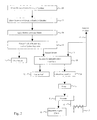
- the system used for the pyrolysis "in- steam” consists of a pyrolyzer 1 coupled to a feed source 3 and to a source of superheated steam 2 .
- the steam and external heaters 9 heat the feed material to a temperature high enough so that degradation occurs.
- Energy input to the steam source 2 and to the pyrolyzer 1 can be effected by heaters 9 running on product gas, on propane/butane/natural gas, solid fuels or electricity.
- the product stream from the pyrolyzer 1 is directed to a cyclone separator 7 which separates the char and then to a scrubber 4 which removes all condensibles including water.
- the output from the scrubber 4 is directed to a surge tank 5 where product gas (mostly carbon monoxide and carbon dioxide) is removed.
- the surge tank liquid slurry is directed by a pump 6 to a phase separation device 8 such as a hydroclone, or centrifuge yielding the stream of oligomeric lignin (heavier, tarry phase) 10 and the aqueous phase stream 12 containing Hodge' carbonyls/acids and water-soluble phenolics.
- a phase separation device 8 such as a hydroclone, or centrifuge yielding the stream of oligomeric lignin (heavier, tarry phase) 10 and the aqueous phase stream 12 containing Hodge' carbonyls/acids and water-soluble phenolics.
- a part of the aqueous stream 13 after extra cooling by heat exchanger 11 , is directed to the scrubber 4 .
- Biomass feed is directed from the feed source 3 to the pyrolyzer 1 at step 20 .
- superheated steam from the steam source 2 is directed to the pyrolyzer 1 at step 2 2.
- heat from an external heat supply 9 is applied to heat the feed material to raise its temperature high enough so that degradation occurs.
- the product streams are extracted and fed to a cyclone separator 7 which separates the char (bio-char) 28 and sends the remaining aerosol stream to the scrubber 4 .
- droplets, particulates, vapors are removed from the gas phase by the scrubber 4.
- the gas stream (mostly carbon monoxide and carbon dioxide) is extracted from the surge tank 5 at step 32 while at step 34 oligomeric lignin rich stream (tarry) and Hodge' carbonyls stream (watery) are collected.
- the separation of these two streams is achieved by directing all scrubber condensables from the surge tank 5 by pump 6 to decanter device 8 .
- Oligomeric lignin and some char are removed from the decanter 8 at one end and an aqueous product stream 14 is removed at the other end.
- An additional cooling 11 is applied to the aqueous product stream 14 before it is returned to the scrubber 4 along line 13 .
- the object of this example is to demonstrate an augmented yield of key Hodge' carbonyls, hydroxyacetaldehyde and glyoxal, resulting from the pyrolysis of Avicel cellulose in steam versus non-steam processing.
- Table 1 Cellulose pyrolysis. Avicel.
- STEAM in use Yields of hydroxyacetaldehyde and glyoxal Wt%, on dry feed base Temperature deg C Hydroxyacetaldehyde Glyoxal 575 16.9 4.2 550 19.2 2.9 525 16.3 4.4
- NO STEAM in use Temperature deg C Hydroxyacetaldehyde Glyoxal 600 12.1 3.4 550 10.9 4.0 525 10.6 3.7 475 4.9 0.3
- the yields of hydroxyacetaldehyde are consistently larger when cellulose is processed in steam.
- the object of this example is to demonstrate the augmented yields of Hodge' carbonyls from bleached pulps Table 2 Pyrolysis feed - bleached pulp (Tembec) Temperature - 550 deg C Yields, wt%, dry feed basis Steam processing Non-steam processing Run # 220 222 Hydroxyacetaldehyde 18.0 10.7 Glyoxal 4.1 1.5 Acetol 2.0 2.0 Formaldehyde 5.1 3.6
- Example 3 The objective of Example 3 is to demonstrate elevated-augmented yields of Hodge carbonyls in a specified temperature above 490 deg C.
- Table 3 Pyrolysis feed - unbleached pulp and cellulosic sludge from clarifier (Tembec) Steam processing Yields, wt% dry basis Feed Pulp Pulp Pulp Sludge Temperature, deg C 450 500 550 500 Glyoxal Trace 2.1 1.8 0.9 Methylglyoxal Trace 0.9 0.8 Hydroxyacetaldehyde 6.4 12.0 12.0 11.0 Formaldehyde 6.7 7.7 5.9 Acetol 2.8 4.7 Nd 2.5
- the table illustrates, that cellulosic pulps and sludges can be pyrolyzed, preferably at 500-550 deg C, to yield Hodge' carbonyls
- the objective of example 4 is to demonstrate elevated yields of Hodge' carbonyls and oligomeric lignin from lignocellulosics, when applying steam processing utilizing as a feed a British Columbia fir-spruce (softwood) mix Table 4 Yields, wt %, dry basis Run # 224 226 Temperature, deg C 485 460 Atmosphere Nitrogen Steam, Nitrogen Char 10.9 11.8 Oligomeric lignin 19.6 22.3 Glyoxal 0.8 1.4 Hydroxyacetaldehyde 12.5 15.0 Formaldehyde 2.2 2.4
- Example 5 compares steam processing of hardwoods (beech) with processing without steam for different temperatures. Apparent vapour residence time ⁇ 1 second Table 5 Yields, wt%, dry feed basis Temperature, deg C 435 425 Atmosphere Nitrogen Steam, Nitrogen Char 15.1 10.9 Oligomeric lignin 16.5 23.0 Glyoxal 2.0 2.2 Hydroxyacetaldehyde 7.1 8.6 Temperature, deg C 485 475 Atmosphere Nitrogen Steam, Nitrogen Char 9.3 8.3 Oligomeric lignin 18.0 28.0 Glyoxal 2.0 2.0 Hydroxyacetaldehyde 9.5 9.5 Temperature, deg C 530 545 Char 6.3 6.0 Oligomeric lignin 25.0 25.0 Hydroxyacetaldehyde 7.7 8.0 Levoglucosan 2.2 1.0
- the object of this example is to illustrate the advantageous effects of steam use in limiting dehydration reaction (less pyrolytic water production) and elevated yields of overall pyrolytic condensables (water-less organics)
- Oligomeric lignin (humus analog/precursor) and char yields are of interest when formulating proposed soil enhancers/fertilizers containing organic carbon.
- Table 7 Yields, wt% (on moisture, ash free basis) Biomass Pyrolytic CHAR Oligomeric LIGNIN Corn Bran 11 9 Corn Hulls 11 12 Corrugated Cardboard 12 12 Sugar Cane Bagasse 12 13.5 Giant Reed 14 14 Willow Coppice 12 17 Flax Straw 15 15 Oats Hulls 13 18 Switch Grass 14 16 Hemp 16 16 Miscanthus 13 19 Corn Stover 15 20 Distiller's Grain 17 20 Flax Shives 16 22 Olive Pits 16 24 Coffee Waste 16 24 Sewage Sludge 20 34 Pine Brush 18 35 Pine Needles 25 29
- Example 8 deals with fast pyrolysis of a spruce-fir mix in steam.
- the products obtained namely, charcoal and oligomeric lignin, were mixed together in weight proportion 30-70, respectively.
- the oligomeric lignin melt was absorbed totally by the charcoal.
- the charcoal retained the original particle size. Its bulk density increased more than 3 times.
- Such a dual product-component, charcoal + oligomeric lignin can be considered as a flexible matrix in the formulation of fertilizers, a matrix in which a range of nutrients and additives could be included.
- a unique and valuable fertilizer for agricultural and horticultural applications can simply be specified and then formulated.
- oligomeric lignin and char composite wherein the lignin and the char are physically combined.
- Such composite could be utilized as a novel soil enhancer, rich in SOC (soil organic carbon).
- SOC soil organic carbon
- Such composite can be utilized also (by adopting known-art) to formulate a variety of fertilizers with specified nitrogen, phosphorous, and potassium content.
- oligomeric lignin melt is suitable to be used as a coating of commercially available solid N.P,K fertilizers making them into a slow or controllable release type.
- a novel fertilizer formulae, this time, including an element carbon is described by the 4- letters "N,P,K and C".
- This example also deals with fast pyrolysis of a spruce-fir mix in steam. However, in this case a no cyclone with a condensing trapping unit is used in the recovery train to separate char particles. Steam : biomass (dry) ratio 1:1.
Landscapes
- Chemical & Material Sciences (AREA)
- Engineering & Computer Science (AREA)
- Organic Chemistry (AREA)
- Oil, Petroleum & Natural Gas (AREA)
- Combustion & Propulsion (AREA)
- Materials Engineering (AREA)
- Chemical Kinetics & Catalysis (AREA)
- Life Sciences & Earth Sciences (AREA)
- General Chemical & Material Sciences (AREA)
- Wood Science & Technology (AREA)
- Inorganic Chemistry (AREA)
- Pest Control & Pesticides (AREA)
- Processing Of Solid Wastes (AREA)
- Fertilizers (AREA)
- Production Of Liquid Hydrocarbon Mixture For Refining Petroleum (AREA)
Abstract
A soil enhancer comprising oligomeric lignin and oligomeric lignin in combination with biochar.
A slow or controllable release type of fertilizer comprising oligomeric lignin melt coating N, P, K, fertilizers, optionally including bio-carbon and described by the 4-letters N,P,K,C.
Description
- The present invention relates to a method of converting biomass by pyrolyzing feed in the presence of steam (hydrous thermolysis) to produce (1) a stream of water-soluble Hodge' carbonyls, (2) a stream of water insoluble-oligomeric lignin and (3) a stream of charcoal particulates.
- Since the late seventies, many researchers and developers have concentrated on fast pyrolysis of biomass, also termed flash, ultra, rapid, and ablative pyrolysis of biomass. Most often - "flash pyrolysis consists of an operation wherein the dried, comminuted substantially organic fraction is combined with a particulate solid source of heat and a carrier gas which is nonreactive or non deleteriously reactive with respect to the product of pyrolysis under turbulent flow conditions in a flash pyrolysis zone maintained at a temperature from about 600 deg. F. to about 2000 deg. F. by the flow of a solid particulate source of heat there through" as in
US Patent No. 4,260,473 issued to H.S. Bauer . - Attempts have been made by Occidental Research Corporation to commercialize a waste flash pyrolysis process which failed.
- Most initiatives involving fast pyrolysis, after those of Occidental Research Corporation, were aimed at the production of biomass-based homogeneous liquids, considered as potential liquid fuels in stationary applications. After about 25 years of effort, the commercial potential of liquid fuel often named "bio-oil" has not yet been fully realized, although some attempts for replacement of bunker C and heating oil #2 were reported.
- "Bio-oils", as produced by fast pyrolysis, are not considered applicable as transportation fuels. They have heating values similar to that of the original biomass (but those are only approximately 60% of the higher heating value (HHV) of bunker C, on a volumetric basis). Thus, if these oils are not transportation fuels, then it is difficult to understand why dry and ground biomass is not burned directly (in a variety of boilers) instead of going through a rather costly pyrolysis step first to produce a new liquid boiler fuel - bio-oil. On the other hand, it seems, there can be a valid strategy to direct pyrolytic processing towards particular fractions or specific chemicals. For such a strategy, if adopted, critical requirements like homogeneity or a low water content, of importance in fuel applications, are no longer as relevant or a prerequisite.
- From earlier work in the field, the following pyrolysis related products have been discovered:
- 1. Hodge' carbonyls - the main biomass carbohydrate polymers, cellulose and hemicellulose (holocellulose) upon fast pyrolysis conditions, above 480 deg C, convert to carbohydrate fragments like hydroxyacetaldehyde, glyoxal, methylglyoxal, acetol, formaldehyde (Hodge' carbonyls). Those components have high water affinity and are water soluble. Hodge' carbonyls are finding applications in food industry, as a water base solvents, as pesticides, in formulations of silver-containing inkjet inks, as desulfurization and odour removal agents, as polymer precursors (polyesters of high boiling points), in glycolic acid production etc.
- 2. Oligomeric lignin - the most abundant aromatic polymer in nature, lignin, under fast pyrolysis conditions, breaks downs to oligomeric molecular fragments - oligomeric lignin" containing circa 2-20 aromatic rings of molecular weight in the range of 400-2500 Daltons. This chemical fraction is water insoluble, odorless and rather non-volatile. There is a strong analogy/similarity between oligomeric lignin and humic acids. Humic acids are arguably the most important part of the soil. Both, oligomeric lignin and humic acids are products of lignin-polymer degradation. The exact chemical structures of both substances have not been established.
- 3. Pyrolytic char: See
US Patent # 5,676,727 issued to Radlein - "The pyrolytic char, which as a by-product of the pyrolysis process, has a high content of oxygenated functional groups and, in fact, represents a partially activated carbon. It may, therefore, serve not only as an absorbent, but may also bind nitrogen directly by reaction with NH2 groups". - 4. Pyrolytic water - in all pyrolytic processing (of biomass) the main product is 'pyrolytic water' which is a product of thermal dehydration. The dehydration reactions can lead to highly undesired products like poly-aromatic hydrocarbons (PAH), soot and coke.
- Methods of fast pyrolysis of biomass as practiced by emerging energy companies use an almost dry biomass feed and typically yield homogeneous "oils", commonly called bio-oils. The oils contain mainly a variety of carbonyls/acids, pyrolytic lignin and water. Char is considered as a by-product. The pyrolytic water yield (often underestimated by researchers) is typically over 12-16 wt % on a dry biomass basis. Such pyrolytic water yield indicates the occurrence of dehydration reactions taking place during pyrolysis.
- As set forth in
US Patent Application No. 2004/0108251 , a criticism of fast pyrolysis schemes is the need to circulate very high volumes of inert gas in order to transport the inorganic heat supplying material at a mass ratio versus the carbonaceous feedstock in the range of 12:1 to 200:1. - When the recycle gas stream in such volumes is required to transport the sand and biomass - such transport of gas increases the size and complexity of the entire pyrolysis recovery system. The required expenditure of energy to operate recycle blowers and compressors makes the pyrolysis operation very noisy, energy inefficient and often troublesome. The fouling of blowers and compressors is a common occurrence reported by the industry.
- Steam usage in fast pyrolysis towards energy products (fuels) was never considered because the steam-water usage dilutes the liquid fuel - bio-oil, causing phase separation, non-homogeneity, a lowering of BTU value, etc. However, for non-bio-oil targeted processing, as found out in this application, steam has a number of advantages. For example, steam enhances the removal of non-volatile chemical species (oligomeric lignin) from the reaction/pyrolysis zone due to their enhanced volatility with steam. Steam also tends to minimize thermal dehydration/condensation reactions occurring during pyrolysis and during condensation steps lessening yields of pyrolytic water. Polyaromatic hydrocarbons (PAHs), soot and coke yields are minimized. Steam increases yields of Hodge' carbonyls. Volumes of highly explosive and poisonous gases are no longer in re-circulation.
- It has been found that pyrolytic charcoal absorbs a melt of oligomeric lignin. It is an object to use such composite as a base in a variety of soil enhancers and fertilizer formulations.
- An object of this invention is to provide thermal processing while minimizing dehydration reactions.
- An object of this invention is to provide a simplified method of producing Hodge' carbonyls and oligomeric lignin in improved yields and at lower costs.
- Another object of this invention is to improve and utilize properties of pyrolytic char as an absorbent.
- Still another object of this invention is to provide a method of using oligomeric lignin and pyrolytic char in novel formulations of slow release, carbon containing fertilizers by combining them with commercial N, P, K fertilizers like liquid and gas ammonia, ureas, polyureas, or ammonium, sodium, potassium nitrates or carbonates and similar, including nitrogen and phosphorous rich sludges, manures, and litters.
- A further object of this invention is to enhance the economic viability of biomass conversion processes, especially as an integral part of a "bio-refinery", by providing a method for utilization of different parts of liquid and solid products.
- A still further object of this invention is to provide a new product formulae leading to economically viable, high value partially organic "N, P, K, - C" slow release fertilizers which also can return bio-carbon to the soil (carbon sequestration in form of solid organic carbon).
- Another object of this invention is to provide a water solution of Hodge' carbonyls, potential feedstock for transportation fuel production, by means of well known processes like steam co-reforming of methane, gasification towards Fischer-Tropsh synthesis (Sasol), NREL catalytic hydrogen production, aqueous phase reforming and other similar processes, see :
- Czernik, S., French R., Feik, C., Chornet E., - "Hydrogen by Catalytic Steam Reforming of Liquid By-Products from Biomass Thermo-Conversion Processes", Ind. Eng. Chem. Res. 41, 4209-4215 (2002) and
- G.W. Huber, J.A. Dumesic, - "An overview of aqueous-phase catalytic processes for production of hydrogen and alkanes in a biorefinery", Catalysis Today, 111, 119-132 (2006).
- There is provided a method of treating biomass feed by fast pyrolyzing it in the presence of superheated steam to produce at least one product stream.
- A plurality of product streams are produced at selected temperatures which include Hodge' carbonyls, oligomeric lignin and bio-char particulates.
- In the first instance, preferably, the biomass feed materials are cellulosics containing a low lignin content.
- The cellulosics may be selected from the group consisting of cellulosic pulps, microcrystalline cellulose (e.g., Avicel), marketable cellulose powders (e.g., lotech cellulose, Schleicher & Shuell, and also Whatman) and even cellulosic sludges. For such feeds the main product stream is a solution of Hodge' carbonyls. Also, for such feeds product streams of charcoal particulates (bio-char) and oligomeric lignin are minimized (yields of 10wt% or less).
- Anhydrosugar - levoglucosan is a minor component (usually below 2wt%).
- Steam or a steam-inert gas mixture is used at pyrolysis temperatures in the range of 490 to 590 degrees C.
- In the second instance, preferably the biomass feed is lignocellulosics. Steam or steam-inert gas mixture is used at pyrolysis temperatures of 430 to 550 deg C.
- Examples of lignocellulosics are forest and agricultural biomass like wood chips, barks, straw, stalks, husks, chaff, hulls, grasses, shives, needles, vine prunings, yew clippings, waste paper, organosolve lignin and similar. At this instance the main product streams are:
- 1. Oligomeric lignin (wet); - water-insoluble phase
- 2. Water-rich phase containing Hodge' carbonyls, acetic and formic acids, and partially water-soluble phenolics - homologs of syringol and guiacol.
- 3. Bio-char (charcoal, bio-carbon, agrichar)
- It is judged in this invention that the oligomeric lignin and oligomeric lignin in combination with char can be used to procure bio-carbon rich, slow release "N, P, K - C" fertilizers, soil enhancers and similar solid-organic-carbon (SOC) containing products. The utilization of whole fast pyrolysis bio-oil, in a procurement of nitrogen-slow- release fertilizer is described in
US Patent No. 5,676,727 issued to Radlein, Piskorz, and Majerski . - In another aspect of the invention there is provided a product of the fast pyrolysis of biomass feed, comprising charcoal mixed/combined with oligomeric lignin.
- The product of the fast pyrolysis of biomass feed, may also be oligomeric lignin and oligomeric lignin in combination with bio- char to form a soil enhancer.
- The product of the fast pyrolysis of biomass feed, may also be oligomeric lignin melt coating N, P, K, fertilizers making them into a slow or controllable release type of fertilizer.
- Further features and advantages will be apparent from the following detailed description, given by way of example, of a preferred embodiment taken in conjunction with the accompanying drawings, wherein:
-
Fig. 1 is a schematic drawing of an apparatus for fast hydrous pyrolysis of biomass; and -
Fig. 2 is a flow diagram showing the process ofFig. 1 . - Referring to
Fig. 1 , the system used for the pyrolysis "in- steam" consists of apyrolyzer 1 coupled to a feed source 3 and to a source of superheated steam 2. The steam and external heaters 9 heat the feed material to a temperature high enough so that degradation occurs. Energy input to the steam source 2 and to thepyrolyzer 1 can be effected by heaters 9 running on product gas, on propane/butane/natural gas, solid fuels or electricity. The product stream from thepyrolyzer 1 is directed to a cyclone separator 7 which separates the char and then to a scrubber 4 which removes all condensibles including water. The output from the scrubber 4 is directed to asurge tank 5 where product gas (mostly carbon monoxide and carbon dioxide) is removed. - The surge tank liquid slurry is directed by a
pump 6 to aphase separation device 8 such as a hydroclone, or centrifuge yielding the stream of oligomeric lignin (heavier, tarry phase) 10 and theaqueous phase stream 12 containing Hodge' carbonyls/acids and water-soluble phenolics. A part of theaqueous stream 13, after extra cooling byheat exchanger 11, is directed to the scrubber 4. - The process of pyrolyzing biomass in the presence of superheated steam is shown in
Fig. 2 . Biomass feed is directed from the feed source 3 to thepyrolyzer 1 atstep 20. At the same time superheated steam from the steam source 2 is directed to thepyrolyzer 1 atstep 22. Atstep 24 heat from an external heat supply 9 is applied to heat the feed material to raise its temperature high enough so that degradation occurs. Atstep 26 the product streams are extracted and fed to a cyclone separator 7 which separates the char (bio-char) 28 and sends the remaining aerosol stream to the scrubber 4. Atstep 30 droplets, particulates, vapors are removed from the gas phase by the scrubber 4. The gas stream (mostly carbon monoxide and carbon dioxide) is extracted from thesurge tank 5 atstep 32 while atstep 34 oligomeric lignin rich stream (tarry) and Hodge' carbonyls stream (watery) are collected. The separation of these two streams is achieved by directing all scrubber condensables from thesurge tank 5 bypump 6 todecanter device 8. Oligomeric lignin and some char are removed from thedecanter 8 at one end and anaqueous product stream 14 is removed at the other end. Anadditional cooling 11 is applied to theaqueous product stream 14 before it is returned to the scrubber 4 alongline 13. - There are a number of additional advantages of this processing. It is possible to process biomass having a high moisture content like leaves, branches, yard waste, brush. Also, agricultural residua of high ash and nitrogen content can be processed. It is well known that such feeds are not optimal for bio-oil-energy targeted thermal conversions.
- There are additional engineering advantages of using steam in the present application. For example, there is no need for recycle gas clean-up devices like filters, electrostatic precipitators, packed bed scrubbers-demisters. Such devices put additional (parasitic) energy demands on blowers/compressors. The presence of steam-water modulates pyrophillic properties of char-solids facilitating its safe removal/transport. The self-cleaning attributes of steam are of importance in keeping the recovery train unblocked. There is general simplicity of operation that requires only a farm level of technical sophistication. There is no start-up liquid medium required. The high temperature steam equipment and accessories required have an off-the-shelf availability.
- The technological consequences of using steam, apart from a lowering pyrolytic water yield, is a lower gas-product yield. Also, water improves the thermal stability of both liquid fractions. The presence of water minimizes phenolformaldehyde-like condensation reactions and aldol condensation reactions.
- The object of this example is to demonstrate an augmented yield of key Hodge' carbonyls, hydroxyacetaldehyde and glyoxal, resulting from the pyrolysis of Avicel cellulose in steam versus non-steam processing.
Table 1 Cellulose pyrolysis. Avicel. I. STEAM in use Yields of hydroxyacetaldehyde and glyoxal Wt%, on dry feed base Temperature deg C Hydroxyacetaldehyde Glyoxal 575 16.9 4.2 550 19.2 2.9 525 16.3 4.4 II. NO STEAM in use Temperature deg C Hydroxyacetaldehyde Glyoxal 600 12.1 3.4 550 10.9 4.0 525 10.6 3.7 475 4.9 0.3 - The yields of hydroxyacetaldehyde, in particular, are consistently larger when cellulose is processed in steam.
- The object of this example is to demonstrate the augmented yields of Hodge' carbonyls from bleached pulps
Table 2 Pyrolysis feed - bleached pulp (Tembec) Temperature - 550 deg C Yields, wt%, dry feed basis Steam processing Non-steam processing Run # 220 222 Hydroxyacetaldehyde 18.0 10.7 Glyoxal 4.1 1.5 Acetol 2.0 2.0 Formaldehyde 5.1 3.6 - Yields of key Hodge' carbonyls are consistently higher in steam processing.
- The objective of Example 3 is to demonstrate elevated-augmented yields of Hodge carbonyls in a specified temperature above 490 deg C.
Table 3 Pyrolysis feed - unbleached pulp and cellulosic sludge from clarifier (Tembec) Steam processing Yields, wt% dry basis Feed Pulp Pulp Pulp Sludge Temperature, deg C 450 500 550 500 Glyoxal Trace 2.1 1.8 0.9 Methylglyoxal Trace 0.9 0.8 Hydroxyacetaldehyde 6.4 12.0 12.0 11.0 Formaldehyde 6.7 7.7 5.9 Acetol 2.8 4.7 Nd 2.5 - The table illustrates, that cellulosic pulps and sludges can be pyrolyzed, preferably at 500-550 deg C, to yield Hodge' carbonyls
- The objective of example 4 is to demonstrate elevated yields of Hodge' carbonyls and oligomeric lignin from lignocellulosics, when applying steam processing utilizing as a feed a British Columbia fir-spruce (softwood) mix
Table 4 Yields, wt %, dry basis Run # 224 226 Temperature, deg C 485 460 Atmosphere Nitrogen Steam, Nitrogen Char 10.9 11.8 Oligomeric lignin 19.6 22.3 Glyoxal 0.8 1.4 Hydroxyacetaldehyde 12.5 15.0 Formaldehyde 2.2 2.4 - Again, steam processing yielded relatively more Hodge' carbonyls and, also this time in the case of lignocellulosics more oligomeric lignin.
- Example 5 compares steam processing of hardwoods (beech) with processing without steam for different temperatures.
Apparent vapour residence time ∼1 secondTable 5 Yields, wt%, dry feed basis Temperature, deg C 435 425 Atmosphere Nitrogen Steam, Nitrogen Char 15.1 10.9 Oligomeric lignin 16.5 23.0 Glyoxal 2.0 2.2 Hydroxyacetaldehyde 7.1 8.6 Temperature, deg C 485 475 Atmosphere Nitrogen Steam, Nitrogen Char 9.3 8.3 Oligomeric lignin 18.0 28.0 Glyoxal 2.0 2.0 Hydroxyacetaldehyde 9.5 9.5 Temperature, deg C 530 545 Char 6.3 6.0 Oligomeric lignin 25.0 25.0 Hydroxyacetaldehyde 7.7 8.0 Levoglucosan 2.2 1.0 - Again, for hardwoods, steam processing increases yield of oligomeric lignin, particularly when processed at temperature of 475 deg C.
Hodge carbonyls yield is affected only slightly. - The object of this example is to illustrate the advantageous effects of steam use in limiting dehydration reaction (less pyrolytic water production) and elevated yields of overall pyrolytic condensables (water-less organics)
Table # 6Yields, Wt% dry, ash free basis Run # 236 238 Atmosphere Nitrogen Steam/Nitrogen Temperature, deg C 490 475 Pyrolytic water 21.5 18.1 Organic condensables 37.9 43.2 Gases 19.0 16.6 Char 18.2 17.5 - Oligomeric lignin (humus analog/precursor) and char yields are of interest when formulating proposed soil enhancers/fertilizers containing organic carbon.
- The following table sets forth a summary of experimental work showing typical yields of chars and oligomeric lignin upon fast pyrolysis with steam processing at -500 deg C.
Table 7 Yields, wt% (on moisture, ash free basis) Biomass Pyrolytic CHAR Oligomeric LIGNIN Corn Bran 11 9 Corn Hulls 11 12 Corrugated Cardboard 12 12 Sugar Cane Bagasse 12 13.5 Giant Reed 14 14 Willow Coppice 12 17 Flax Straw 15 15 Oats Hulls 13 18 Switch Grass 14 16 Hemp 16 16 Miscanthus 13 19 Corn Stover 15 20 Distiller's Grain 17 20 Flax Shives 16 22 Olive Pits 16 24 Coffee Waste 16 24 Sewage Sludge 20 34 Pine Brush 18 35 Pine Needles 25 29 - Example 8 deals with fast pyrolysis of a spruce-fir mix in steam. The products obtained, namely, charcoal and oligomeric lignin, were mixed together in weight proportion 30-70, respectively. At a temperature of ∼ 45 deg C the oligomeric lignin melt was absorbed totally by the charcoal. The charcoal retained the original particle size. Its bulk density increased more than 3 times.
- Such a dual product-component, charcoal + oligomeric lignin, can be considered as a flexible matrix in the formulation of fertilizers, a matrix in which a range of nutrients and additives could be included. Thus, a unique and valuable fertilizer for agricultural and horticultural applications can simply be specified and then formulated.
- Judging from the examples 7 and 8 one can conclude that 20 to 50 % of biomass could be converted to a novel oligomeric lignin and char composite wherein the lignin and the char are physically combined. Such composite could be utilized as a novel soil enhancer, rich in SOC (soil organic carbon). Such composite can be utilized also (by adopting known-art) to formulate a variety of fertilizers with specified nitrogen, phosphorous, and potassium content. In particular, oligomeric lignin melt is suitable to be used as a coating of commercially available solid N.P,K fertilizers making them into a slow or controllable release type. A novel fertilizer formulae, this time, including an element carbon is described by the 4- letters "N,P,K and C".
- This example also deals with fast pyrolysis of a spruce-fir mix in steam. However, in this case a no cyclone with a condensing trapping unit is used in the recovery train to separate char particles.
Steam : biomass (dry) ratio 1:1. - The following two separate streams of products were targeted.
- 1. Hodge carbonyls in a yield of 50wt% on a dry wood basis, in water. The water content of the actual product is ∼50wt%.
- 2. Char - oligomeric lignin solids. The charcoal particulates contain all oligomeric lignin in their bulk volume. The yield of char + oligomeric lignin on a dry biomass basis is 32wt%. As produced this stream is still wet with approximately 27wt% water.
- The example teaches, that even more simplified processing, this time without cyclonic char particulate separation, could be adopted, if judged sufficient for a targeted products spectrum.
- Accordingly while this invention has been described with reference to illustrative embodiments, this description is not intended to be construed in a limiting sense. Various modifications of the illustrative embodiment will be apparent to those skilled in the art upon reference to this description. It is therefore contemplated that appended claims will cover any such modifications or embodiments as fall within the scope of the invention.
Claims (21)
- A method of treating biomass feed, comprising: fast pyrolyzing biomass feed in the presence of superheated steam at a selected temperature to produce at least one product stream .
- The method of claim 1, wherein the product stream includes Hodge' carbonyls, oligomeric lignin and bio-char particulates.
- The method of claim 1, wherein the first product stream includes a water slurry of produced charcoal particulates and oligomeric lignin.
- The method of claim 1, wherein the Hodge carbonyls are water soluble, carbohydrate-originated carbonyls.
- The method of claim 1, wherein the temperature exceeds 400 degrees C.
- The method of claim 4, wherein the Hodge' carbonyls include at least one of hydroxyacetaldehyde, glyceraldehydes, acetol, pyruvaldehyde, glyoxal, 5-hydroxymethylfurfural, furfurals, and formaldehyde
- The method of claim 1, wherein the biomass feed is cellulosics of low lignin content.
- The method of claim 7, wherein the temperature is in the range of 490 deg. C. to 590 deg. C.
- The method of claim 7, wherein the cellulosics are selected from the group consisting of cellulosic pulps and sludges, and micro-crystalline cellulose powders.
- A method of claim 7, wherein the product stream is a water-soluble mix of the Hodge' carbonyls with hydroxyacetaldehyde, glyoxal, methylglyoxal, formaldehyde, acetol, furfurals and 5-hydroxymethylfurfurals.
- The method of claim 1 wherein biomass feed is lignocellulosics.
- The method of claim 11, wherein the temperature is in the range 430 - 550 deg C
- The method of claim 11, wherein the lignocellulosicsare selected from forestry, and agriculture produced biomass including waste and residua.
- The method of claim 11, wherein a product stream of oligomeric lignin is produced.
- The method of claim 11, wherein the second product stream is a soluble mix of Hodge' carbonyls with hydroxyacetaldehyde, glyoxal, methyl glyoxal, formaldehyde, acetol, furfurals and 5-HMF and includes formic and acetic acids and water-soluble phenolics.
- The method of claim 1, wherein the oligomeric lignin and the bio-char are physically combined.
- The method of claim 16, wherein said char has a high content of oxygenated functional groups and functions not only as an absorbent, but also binds nitrogen directly by reaction with NH2 groups.
- A product of the fast pyrolysis of biomass feed, comprising charcoal combined with oligomeric lignin.
- A product of the fast pyrolysis of biomass feed, comprising oligomeric lignin and oligomeric lignin in combination with bio-char to form a soil enhancer.
- A product of the fast pyrolysis of biomass feed, comprising oligomeric lignin melt coating N, P, K, fertilizers making them into a slow or controllable release type of fertilizer.
- The product of claim 20 including bio-carbon and described by the 4-letters N,P,K,C.
Priority Applications (1)
| Application Number | Priority Date | Filing Date | Title |
|---|---|---|---|
| PL08164013T PL2072600T3 (en) | 2007-11-20 | 2008-09-10 | Method of producing Hodge' carbonyls and oligomeric lignin |
Applications Claiming Priority (1)
| Application Number | Priority Date | Filing Date | Title |
|---|---|---|---|
| US11/943,422 US8436120B2 (en) | 2007-11-20 | 2007-11-20 | Method of producing hodge carbonyls and oligomeric lignin |
Publications (3)
| Publication Number | Publication Date |
|---|---|
| EP2072600A2 true EP2072600A2 (en) | 2009-06-24 |
| EP2072600A3 EP2072600A3 (en) | 2011-03-23 |
| EP2072600B1 EP2072600B1 (en) | 2019-05-15 |
Family
ID=40361528
Family Applications (1)
| Application Number | Title | Priority Date | Filing Date |
|---|---|---|---|
| EP08164013.8A Active EP2072600B1 (en) | 2007-11-20 | 2008-09-10 | Method for enhancing soil |
Country Status (9)
| Country | Link |
|---|---|
| US (1) | US8436120B2 (en) |
| EP (1) | EP2072600B1 (en) |
| CN (1) | CN101440026B (en) |
| BR (1) | BRPI0804974B1 (en) |
| CA (1) | CA2639022C (en) |
| DE (1) | DE08164013T1 (en) |
| DK (1) | DK2072600T3 (en) |
| ES (1) | ES2329645T3 (en) |
| PL (1) | PL2072600T3 (en) |
Cited By (3)
| Publication number | Priority date | Publication date | Assignee | Title |
|---|---|---|---|---|
| WO2012022949A1 (en) * | 2010-08-20 | 2012-02-23 | Aston University | Thermal treatment |
| CN106990231A (en) * | 2017-04-06 | 2017-07-28 | 中国水产科学研究院东海水产研究所 | A kind of metering method of Filter feeding bivalves carbon sequestration |
| WO2020208301A1 (en) * | 2019-04-08 | 2020-10-15 | Carbofex Oy | Method and apparatus for the manufacturing of non-energent biocoal with thermal treatment |
Families Citing this family (83)
| Publication number | Priority date | Publication date | Assignee | Title |
|---|---|---|---|---|
| EP2408847A1 (en) * | 2009-03-20 | 2012-01-25 | Sika Technology AG | Method for producing chemically modified lignin decomposition products |
| US8852313B2 (en) | 2009-03-23 | 2014-10-07 | Diversified Global Technologies, Llc | Method and matrix for enhancing growth media |
| US20100236309A1 (en) * | 2009-03-23 | 2010-09-23 | Celia Wayne M | Method and matrix for enhancing growth media |
| US8241599B2 (en) * | 2009-06-01 | 2012-08-14 | Afton Chemical Corporation | Method of using volatile organometallics as biomass gasification catalysts |
| US8361186B1 (en) | 2009-06-08 | 2013-01-29 | Full Circle Biochar, Inc. | Biochar |
| WO2011035368A1 (en) * | 2009-09-23 | 2011-03-31 | Echidna Energy Pty Ltd | Methods and products using grass of the genus triodia |
| US8398738B2 (en) * | 2010-01-13 | 2013-03-19 | Ut-Battelle, Llc | Biochar production method and composition therefrom |
| US11332414B2 (en) | 2010-03-12 | 2022-05-17 | The Andersons, Inc. | Biosolid storage and dispersal |
| DE102010017175A1 (en) | 2010-05-31 | 2011-12-01 | EnBW Energie Baden-Württemberg AG | A reactor plant and process for producing a carbon-enriched solid product by increasing the carbon content |
| EP4206304A1 (en) | 2011-04-15 | 2023-07-05 | Carbon Technology Holdings, LLC | Process and system for producing high-carbon biogenic reagents |
| US8367881B2 (en) | 2011-05-09 | 2013-02-05 | Cool Planet Biofuels, Inc. | Method for biomass fractioning by enhancing biomass thermal conductivity |
| WO2012163364A2 (en) * | 2011-06-01 | 2012-12-06 | Blackcarbon A/S | Method for reducing the emission of greenhouse gasses from livestock into the atmosphere |
| US12054440B2 (en) | 2011-06-06 | 2024-08-06 | Carbon Technology Holdings, LLC | Method for application of biochar in turf grass and landscaping environments |
| US10118870B2 (en) | 2011-06-06 | 2018-11-06 | Cool Planet Energy Systems, Inc. | Additive infused biochar |
| US10233129B2 (en) | 2011-06-06 | 2019-03-19 | Cool Planet Energy Systems, Inc. | Methods for application of biochar |
| US8568493B2 (en) | 2011-07-25 | 2013-10-29 | Cool Planet Energy Systems, Inc. | Method for producing negative carbon fuel |
| US11279662B2 (en) | 2011-06-06 | 2022-03-22 | Carbon Technology Holdings, LLC | Method for application of biochar in turf grass and landscaping environments |
| US9216916B2 (en) | 2013-10-25 | 2015-12-22 | Cool Planet Energy Systems, Inc. | System and method for purifying process water produced from biomass conversion to fuels |
| US10252951B2 (en) | 2011-06-06 | 2019-04-09 | Cool Planet Energy Systems, Inc. | Biochars and biochar treatment processes |
| US10059634B2 (en) | 2011-06-06 | 2018-08-28 | Cool Planet Energy Systems, Inc. | Biochar suspended solution |
| US10392313B2 (en) | 2011-06-06 | 2019-08-27 | Cool Planet Energy Systems, Inc. | Method for application of biochar in turf grass and landscaping environments |
| US10640429B2 (en) | 2011-06-06 | 2020-05-05 | Cool Planet Energy System, Inc. | Methods for application of biochar |
| US10696603B2 (en) | 2011-06-06 | 2020-06-30 | Carbon Technology Holdings, LLC | Mineral solubilizing microorganism infused biochars |
| US12084392B2 (en) | 2011-06-06 | 2024-09-10 | Carbon Technology Holdings, LLC | Treated biochar for use in water treatment systems |
| US9809502B2 (en) | 2011-06-06 | 2017-11-07 | Cool Planet Energy Systems, Inc. | Enhanced Biochar |
| US10322389B2 (en) | 2014-10-01 | 2019-06-18 | Cool Planet Energy Systems, Inc. | Biochar aggregate particles |
| US11214528B2 (en) | 2011-06-06 | 2022-01-04 | Carbon Technology Holdings, LLC | Treated biochar for use in water treatment systems |
| US10173937B2 (en) | 2011-06-06 | 2019-01-08 | Cool Planet Energy Systems, Inc. | Biochar as a microbial carrier |
| US9493379B2 (en) * | 2011-07-25 | 2016-11-15 | Cool Planet Energy Systems, Inc. | Method for the bioactivation of biochar for use as a soil amendment |
| US12421176B2 (en) | 2011-06-06 | 2025-09-23 | Carbon Technology Holdings, LLC | Biochar as a microbial carrier |
| US9493380B2 (en) | 2011-06-06 | 2016-11-15 | Cool Planet Energy Systems, Inc. | Method for enhancing soil growth using bio-char |
| US9980912B2 (en) | 2014-10-01 | 2018-05-29 | Cool Planet Energy Systems, Inc. | Biochars for use with animals |
| US10550044B2 (en) | 2011-06-06 | 2020-02-04 | Cool Planet Energy Systems, Inc. | Biochar coated seeds |
| US8317891B1 (en) | 2011-06-06 | 2012-11-27 | Cool Planet Biofuels, Inc. | Method for enhancing soil growth using bio-char |
| CN102515930A (en) * | 2011-10-28 | 2012-06-27 | 商丘三利新能源有限公司 | Carbon-based biological potassium fertilizer |
| CN102515929A (en) * | 2011-10-28 | 2012-06-27 | 商丘三利新能源有限公司 | Carbon-based urea fertilizer |
| EP2834322A4 (en) | 2012-04-05 | 2016-02-17 | Full Circle Biochar Inc | BIOCHARBON COMPOSITIONS AND METHODS OF USE |
| CA3225246A1 (en) | 2012-05-07 | 2013-11-14 | Carbon Technology Holdings, LLC | Biogenic activated carbon and methods of making and using same |
| CA2821909A1 (en) | 2012-07-27 | 2014-01-27 | Carbon Basis Company Ltd. | Biochar products and method of manufacture thereof |
| CN103012335B (en) * | 2012-11-30 | 2015-03-11 | 中国科学院广州能源研究所 | Method for co-producing furfural and 5-hydroxymethylfurfural by using lignocellulose-containing biomass |
| US10589187B2 (en) * | 2013-05-31 | 2020-03-17 | Tolero Energy, Llc | Pyrolysis system for bio-oil component extraction |
| US10767114B2 (en) * | 2013-05-31 | 2020-09-08 | Tolero Energy, Llc | Pyrolysis system and method for bio-oil component extraction |
| US12350648B2 (en) | 2013-10-24 | 2025-07-08 | Carbon Technology Holdings, LLC | Methods and apparatus for producing activated carbon from biomass through carbonized ash intermediates |
| CN103695015B (en) * | 2014-01-06 | 2015-08-12 | 中盈长江国际新能源投资有限公司 | A kind ofly accelerate biomass pyrolytic aerogenesis speed and obtain the device and method of nanometer grade silica material |
| US10144875B2 (en) | 2014-01-10 | 2018-12-04 | Proton Power, Inc. | Systems, and devices for liquid hydrocarbon fuel production, hydrocarbon chemical production, and aerosol capture |
| US11358119B2 (en) | 2014-01-16 | 2022-06-14 | Carbon Technology Holdings, LLC | Carbon micro-plant |
| EP3110754B1 (en) | 2014-02-24 | 2026-04-15 | Carbon Technology Holdings, LLC | Highly mesoporous activated carbon |
| AU2015328022B2 (en) | 2014-10-01 | 2020-01-23 | Carbon Technology Holdings, LLC | Biochars and biochar treatment processes |
| US10472297B2 (en) | 2014-10-01 | 2019-11-12 | Cool Planet Energy System, Inc. | Biochars for use in composting |
| US11426350B1 (en) | 2014-10-01 | 2022-08-30 | Carbon Technology Holdings, LLC | Reducing the environmental impact of farming using biochar |
| US11053171B2 (en) | 2014-10-01 | 2021-07-06 | Carbon Technology Holdings, LLC | Biochars for use with animals |
| US11097241B2 (en) | 2014-10-01 | 2021-08-24 | Talipot Cool Extract (Ip), Llc | Biochars, biochar extracts and biochar extracts having soluble signaling compounds and method for capturing material extracted from biochar |
| US10870608B1 (en) | 2014-10-01 | 2020-12-22 | Carbon Technology Holdings, LLC | Biochar encased in a biodegradable material |
| US12599151B2 (en) | 2014-10-01 | 2026-04-14 | Talipot Cool Extract (Ip), Llc | Biochars, biochar extracts and biochar extracts having soluble signaling compounds and method for capturing material extracted from biochar |
| US11413601B2 (en) | 2014-10-24 | 2022-08-16 | Carbon Technology Holdings, LLC | Halogenated activated carbon compositions and methods of making and using same |
| WO2017049637A1 (en) * | 2015-09-25 | 2017-03-30 | 北京神雾环境能源科技集团股份有限公司 | System and method for rapid pyrolysis of coal |
| CA2999239A1 (en) | 2015-10-08 | 2017-04-13 | The Carbon Basis Company Ltd. | Biochar products and method of manufacture thereof |
| EP3362535B1 (en) | 2015-10-14 | 2020-05-06 | Haldor Topsøe A/S | A process for removing sulphur compounds from process streams |
| US11311039B2 (en) | 2017-04-19 | 2022-04-26 | Kerry Group Services International Limited | Methods of reducing a concentration of formaldehyde in aqueous solutions of sugar carbonyls |
| US20200262764A1 (en) | 2017-10-17 | 2020-08-20 | Kao Corporation | Plant growth promoter |
| CN107721610B (en) * | 2017-11-14 | 2021-05-14 | 湖南农业大学 | A kind of fast-growing peat-based controlled slow-release ecological fertilizer and its preparation method and application |
| MX2020006266A (en) | 2017-12-15 | 2021-01-20 | Talipot Cool Extract Ip Llc | Biochars and biochar extracts having soluble signaling compounds and method for capturing material extracted from biochar. |
| JP7665511B2 (en) | 2018-06-14 | 2025-04-21 | カーボン テクノロジー ホールディングス, エルエルシー | BIO-DERIVED POROUS CARBON SILICON DIOXIDE COMPOSITIONS AND METHODS OF MAKING AND USING SAME - Patent application |
| CN109370606A (en) * | 2018-12-10 | 2019-02-22 | 中国石油大学(华东) | Stereoscopic improvement and treatment product system for the preparation of salinized soil from biomass rapid pyrolysis products |
| CN110483253B (en) * | 2019-07-25 | 2022-05-06 | 中国林业科学研究院林产化学工业研究所 | A method for preparing guaiacol products by steam-assisted fixed bed pyrolysis of lignin |
| CN111440630A (en) * | 2020-05-12 | 2020-07-24 | 江西省蓝洁环保科技工程有限公司 | Agricultural biological straw pyrolysis gasification activation method |
| CN112029114A (en) * | 2020-09-23 | 2020-12-04 | 山东奥淼科技发展有限公司 | Method and device for extracting medical fulvic acid from biomass pyrolysis liquid |
| CN112167006A (en) * | 2020-09-23 | 2021-01-05 | 中国农业科学院都市农业研究所 | A method of using superheated steam to convert facility agricultural organic waste into cultivation substrate |
| KR20230087510A (en) | 2020-09-25 | 2023-06-16 | 카본 테크놀로지 홀딩스, 엘엘씨 | Bio-reduction of metal ores integrated with biomass pyrolysis |
| CN112400898A (en) * | 2020-10-27 | 2021-02-26 | 中国农业大学 | Bactericide and its preparation method and application |
| KR20230109723A (en) | 2020-11-20 | 2023-07-20 | 카본 테크놀로지 홀딩스, 엘엘씨 | Biomass pyrolysis integrated with bio-reduction of metal ores, hydrogen production and/or activated carbon production |
| CA3205957A1 (en) | 2021-01-21 | 2022-07-28 | James A. Mennell | Processes for producing biocarbon pellets with adjustable grindability index |
| WO2022178071A1 (en) | 2021-02-18 | 2022-08-25 | Carbon Technology Holdings, LLC | Carbon-negative metallurgical products |
| EP4329955A4 (en) | 2021-04-27 | 2025-03-12 | Carbon Technology Holdings, LLC | Biocarbon compositions with optimized fixed carbon and processes for producing the same |
| US12662633B2 (en) | 2021-07-07 | 2026-06-23 | Carbon Technology Holdings, LLC | Low-water-intensity biocarbon products, and processes for producing low-water-intensity biocarbon products |
| EP4367200A4 (en) | 2021-07-09 | 2025-04-30 | Carbon Technology Holdings, LLC | PROCESSES FOR PRODUCING BIOCARBON PELLETS HAVING A HIGH FIXED CARBON CONTENT AND OPTIMIZED REACTIVITY, AND BIOCARBON PELLETS THUS OBTAINED |
| AU2022322875A1 (en) | 2021-08-02 | 2024-03-21 | Carbon Technology Holdings, LLC | Processes and systems for recapturing carbon from biomass pyrolysis liquids |
| CN113800988A (en) * | 2021-09-27 | 2021-12-17 | 俏东方生物燃料集团有限公司 | Biological semicoke organic complete fertilizer and preparation method thereof |
| CN113831926A (en) * | 2021-10-13 | 2021-12-24 | 深圳市捷晶能源科技有限公司 | Anaerobic pyrolysis treatment device and method for printing ink slag |
| KR20240101832A (en) | 2021-11-12 | 2024-07-02 | 카본 테크놀로지 홀딩스, 엘엘씨 | Biocarbon composition with optimized composition parameters and process for producing the same |
| CN114391328B (en) * | 2022-01-13 | 2022-10-21 | 中国科学院南京土壤研究所 | Method for improving acid tobacco field soil by using flue-curing barn biomass fuel ash |
| CN115041103B (en) * | 2022-07-19 | 2025-12-26 | 上海治实合金科技有限公司 | Conveyor belt pyrolysis furnace |
| KR20260089505A (en) | 2023-10-02 | 2026-06-15 | 카본 테크놀로지 홀딩스, 엘엘씨 | Water-resistant and durable biocarbon pellets, and methods of manufacturing and using the same |
Citations (3)
| Publication number | Priority date | Publication date | Assignee | Title |
|---|---|---|---|---|
| US4260473A (en) | 1979-05-03 | 1981-04-07 | Occidental Research Corporation | Removal of particulates from pyrolytic oil |
| US5676727A (en) | 1994-12-09 | 1997-10-14 | Radlein; Desmond St. A. G. | Method of producing slow-release nitrogenous organic fertilizer from biomass |
| US20040108251A1 (en) | 2001-04-12 | 2004-06-10 | Steven Gust | Processing of carbonaceous material |
Family Cites Families (11)
| Publication number | Priority date | Publication date | Assignee | Title |
|---|---|---|---|---|
| US3186923A (en) * | 1961-06-12 | 1965-06-01 | Buckeye Cellulose Corp | Process for improving the low molecular weight yield in bark pyrolysis |
| US3309355A (en) * | 1963-11-22 | 1967-03-14 | Weyerhaeuser Co | Levoglucosan production by pyrolysis of cellulosic material |
| US4101412A (en) * | 1976-06-25 | 1978-07-18 | Occidental Petroleum Corporation | Process and apparatus for rapid pyrolysis of carbonaceous materials |
| US4069024A (en) * | 1977-05-09 | 1978-01-17 | Combustion Engineering, Inc. | Two-stage gasification system |
| US4579579A (en) * | 1985-04-08 | 1986-04-01 | Nitrogen Plus, Inc. | Method for preparing a slow-release fertilizer |
| US4994297A (en) * | 1987-11-12 | 1991-02-19 | Ensyn Engineering Associates, Inc. | Method of using fast pyrolysis liquids as liquid smoke |
| US5091499A (en) * | 1988-03-17 | 1992-02-25 | Midwest Research Institute | Process for preparing phenolic formaldehyde resole resin products derived from fractionated fast-pyrolysis oils |
| US4880473A (en) * | 1988-04-01 | 1989-11-14 | Canadian Patents & Development Ltd. | Process for the production of fermentable sugars from biomass |
| CA2326471A1 (en) * | 2000-11-20 | 2002-05-20 | Resource Transforms International Ltd. | Production of glycolaldehyde by hydrous thermolysis of sugars |
| US20040111968A1 (en) * | 2002-10-22 | 2004-06-17 | Day Danny Marshal | Production and use of a soil amendment made by the combined production of hydrogen, sequestered carbon and utilizing off gases containing carbon dioxide |
| US20080016769A1 (en) * | 2006-07-24 | 2008-01-24 | Clean Energy, L.L.C. | Conversion of carbonaceous materials to synthetic natural gas by pyrolysis, reforming, and methanation |
-
2007
- 2007-11-20 US US11/943,422 patent/US8436120B2/en active Active
-
2008
- 2008-08-21 CA CA2639022A patent/CA2639022C/en active Active
- 2008-09-10 EP EP08164013.8A patent/EP2072600B1/en active Active
- 2008-09-10 ES ES08164013T patent/ES2329645T3/en active Active
- 2008-09-10 DE DE08164013T patent/DE08164013T1/en active Pending
- 2008-09-10 PL PL08164013T patent/PL2072600T3/en unknown
- 2008-09-10 DK DK08164013.8T patent/DK2072600T3/en active
- 2008-10-27 CN CN200810169107.3A patent/CN101440026B/en active Active
- 2008-11-19 BR BRPI0804974-2A patent/BRPI0804974B1/en active IP Right Grant
Patent Citations (3)
| Publication number | Priority date | Publication date | Assignee | Title |
|---|---|---|---|---|
| US4260473A (en) | 1979-05-03 | 1981-04-07 | Occidental Research Corporation | Removal of particulates from pyrolytic oil |
| US5676727A (en) | 1994-12-09 | 1997-10-14 | Radlein; Desmond St. A. G. | Method of producing slow-release nitrogenous organic fertilizer from biomass |
| US20040108251A1 (en) | 2001-04-12 | 2004-06-10 | Steven Gust | Processing of carbonaceous material |
Non-Patent Citations (2)
| Title |
|---|
| CZERNIK, S. ET AL.: "Hydrogen by Catalytic Steam Reforming of Liquid By-Products from Biomass Thermo-Conversion Processes", IND. ENG. CHEM. RES., vol. 41, 2002, pages 4209 - 4215 |
| G.W. HUBER; J.A. DUMESIC: "An overview of aqueous-phase catalytic processes for production of hydrogen and alkanes in a biorefinery", CATALYSIS TODAY, vol. 111, 2006, pages 119 - 132, XP025116466, DOI: doi:10.1016/j.cattod.2005.10.010 |
Cited By (4)
| Publication number | Priority date | Publication date | Assignee | Title |
|---|---|---|---|---|
| WO2012022949A1 (en) * | 2010-08-20 | 2012-02-23 | Aston University | Thermal treatment |
| CN106990231A (en) * | 2017-04-06 | 2017-07-28 | 中国水产科学研究院东海水产研究所 | A kind of metering method of Filter feeding bivalves carbon sequestration |
| WO2020208301A1 (en) * | 2019-04-08 | 2020-10-15 | Carbofex Oy | Method and apparatus for the manufacturing of non-energent biocoal with thermal treatment |
| US12031090B2 (en) | 2019-04-08 | 2024-07-09 | Carbofex Oy | Method and apparatus for the manufacturing of biochar with thermal treatment |
Also Published As
| Publication number | Publication date |
|---|---|
| PL2072600T3 (en) | 2019-11-29 |
| US20090126433A1 (en) | 2009-05-21 |
| BRPI0804974B1 (en) | 2017-09-12 |
| EP2072600B1 (en) | 2019-05-15 |
| PL2072600T1 (en) | 2009-10-26 |
| EP2072600A3 (en) | 2011-03-23 |
| CA2639022C (en) | 2014-07-15 |
| ES2329645T3 (en) | 2019-12-12 |
| CN101440026A (en) | 2009-05-27 |
| US8436120B2 (en) | 2013-05-07 |
| BRPI0804974A2 (en) | 2010-05-04 |
| ES2329645T1 (en) | 2009-11-30 |
| DE08164013T1 (en) | 2010-01-21 |
| DK2072600T3 (en) | 2019-08-19 |
| CA2639022A1 (en) | 2009-05-20 |
| CN101440026B (en) | 2016-08-03 |
Similar Documents
| Publication | Publication Date | Title |
|---|---|---|
| CA2639022C (en) | Method of producing hodge' carbonyls and oligomeric lignin | |
| Carpenter et al. | Biomass feedstocks for renewable fuel production: a review of the impacts of feedstock and pretreatment on the yield and product distribution of fast pyrolysis bio-oils and vapors | |
| JP6882176B2 (en) | Distillation waste liquid and its use | |
| Xu et al. | Investigation of thermodynamic parameters in the pyrolysis conversion of biomass and manure to biochars using thermogravimetric analysis | |
| Yaman | Pyrolysis of biomass to produce fuels and chemical feedstocks | |
| Nanda et al. | Characterization of North American lignocellulosic biomass and biochars in terms of their candidacy for alternate renewable fuels | |
| Briens et al. | Biomass valorization for fuel and chemicals production--A review | |
| Singh et al. | Pyrolysis of Miscanthus and characterization of value‐added bio‐oil and biochar products | |
| CN108026450B (en) | Convert biomass to liquid hydrocarbons | |
| Ali et al. | Effect of operating parameters on production of bio-oil from fast pyrolysis of maize stalk in bubbling fluidized bed reactor | |
| Manurung et al. | Valorisation of Jatropha curcas L. plant parts: Nut shell conversion to fast pyrolysis oil | |
| EP2825618A1 (en) | A process for upgrading pyrolysis oil, treated pyrolysis oil and the use thereof | |
| Koskin et al. | Conversion of rice husk and nutshells into gaseous, liquid, and solid biofuels | |
| Rezaei et al. | Woody feedstock pretreatments to enhance pyrolysis bio-oil quality and produce transportation fuel | |
| AU2025203030A1 (en) | Thermochemical Treatment of Cellulosic Materials | |
| Shahid et al. | Circular bioeconomy perspective of agro-waste-based biochar | |
| Ibrahim | Evaluation on thermochemical processes for bioenergy applications of Bambara groundnut shell (BGS), Shea Nut Shell (SNS), Shea Nut chaff (SNC), and Sweet Sorghum Stalk (SSS) | |
| Paul et al. | Bio-oil production from agricultural crop residues-a review | |
| Mante | Influence of wood on the pyrolysis of poultry litter | |
| Trinh | Flash pyrolysis properties of algae and lignin residue | |
| US20240384174A1 (en) | Process to convert a solid biomass to a crude fuel | |
| Hidayat et al. | Production Biofuels from Palm Empty Fruit Bunch by Catalytic Pyrolysis Using Calcined Dolomite | |
| Dahawi et al. | A review of pyrolysis of oil palm empty fruit bunches (EFB) to produce bioenergy productions | |
| Biswas et al. | Pyrolysis of forest biomass residues: comparative study of shimbal, cokad, cheed and cerus | |
| Indira Pachamaanickam et al. | A review on biomass and pyrolysis technique |
Legal Events
| Date | Code | Title | Description |
|---|---|---|---|
| PUAI | Public reference made under article 153(3) epc to a published international application that has entered the european phase |
Free format text: ORIGINAL CODE: 0009012 |
|
| AK | Designated contracting states |
Kind code of ref document: A2 Designated state(s): AT BE BG CH CY CZ DE DK EE ES FI FR GB GR HR HU IE IS IT LI LT LU LV MC MT NL NO PL PT RO SE SI SK TR |
|
| AX | Request for extension of the european patent |
Extension state: AL BA MK RS |
|
| RAP1 | Party data changed (applicant data changed or rights of an application transferred) |
Owner name: PISKORZ, JAN Owner name: MAJERSKI, PIOTR |
|
| RIN1 | Information on inventor provided before grant (corrected) |
Inventor name: MAJERSKI, PIOTR Inventor name: PISKORZ, JAN |
|
| DET | De: translation of patent claims | ||
| PUAL | Search report despatched |
Free format text: ORIGINAL CODE: 0009013 |
|
| AK | Designated contracting states |
Kind code of ref document: A3 Designated state(s): AT BE BG CH CY CZ DE DK EE ES FI FR GB GR HR HU IE IS IT LI LT LU LV MC MT NL NO PL PT RO SE SI SK TR |
|
| AX | Request for extension of the european patent |
Extension state: AL BA MK RS |
|
| 17P | Request for examination filed |
Effective date: 20110923 |
|
| AKX | Designation fees paid |
Designated state(s): AT BE BG CH CY CZ DE DK EE ES FI FR GB GR HR HU IE IS IT LI LT LU LV MC MT NL NO PL PT RO SE SI SK TR |
|
| AXX | Extension fees paid |
Extension state: AL Payment date: 20110923 Extension state: BA Payment date: 20110923 Extension state: MK Payment date: 20110923 |
|
| 17Q | First examination report despatched |
Effective date: 20140422 |
|
| STAA | Information on the status of an ep patent application or granted ep patent |
Free format text: STATUS: EXAMINATION IS IN PROGRESS |
|
| RIN1 | Information on inventor provided before grant (corrected) |
Inventor name: PISKORZ, JAN Inventor name: MAJERSKI, PIOTR |
|
| RAP1 | Party data changed (applicant data changed or rights of an application transferred) |
Owner name: RESOURCE TRANSFORMS INTERNATIONAL LTD. |
|
| REG | Reference to a national code |
Ref country code: DE Ref legal event code: R079 Ref document number: 602008060080 Country of ref document: DE Free format text: PREVIOUS MAIN CLASS: C10B0051000000 Ipc: C09K0017320000 |
|
| GRAP | Despatch of communication of intention to grant a patent |
Free format text: ORIGINAL CODE: EPIDOSNIGR1 |
|
| STAA | Information on the status of an ep patent application or granted ep patent |
Free format text: STATUS: GRANT OF PATENT IS INTENDED |
|
| RIC1 | Information provided on ipc code assigned before grant |
Ipc: C05D 9/00 20060101ALN20181105BHEP Ipc: C10J 3/00 20060101ALN20181105BHEP Ipc: C10L 5/44 20060101ALN20181105BHEP Ipc: C10B 53/02 20060101ALN20181105BHEP Ipc: C05G 3/00 20060101ALN20181105BHEP Ipc: C09K 17/32 20060101AFI20181105BHEP Ipc: C10B 51/00 20060101ALN20181105BHEP Ipc: C10C 5/00 20060101ALN20181105BHEP |
|
| RAP1 | Party data changed (applicant data changed or rights of an application transferred) |
Owner name: KERRY LUXEMBOURG S.A.R.L. |
|
| RIC1 | Information provided on ipc code assigned before grant |
Ipc: C10B 53/02 20060101ALN20181112BHEP Ipc: C10C 5/00 20060101ALN20181112BHEP Ipc: C10B 51/00 20060101ALN20181112BHEP Ipc: C05D 9/00 20060101ALN20181112BHEP Ipc: C05G 3/00 20060101ALN20181112BHEP Ipc: C09K 17/32 20060101AFI20181112BHEP Ipc: C10L 5/44 20060101ALN20181112BHEP Ipc: C10J 3/00 20060101ALN20181112BHEP |
|
| INTG | Intention to grant announced |
Effective date: 20181129 |
|
| GRAS | Grant fee paid |
Free format text: ORIGINAL CODE: EPIDOSNIGR3 |
|
| GRAA | (expected) grant |
Free format text: ORIGINAL CODE: 0009210 |
|
| STAA | Information on the status of an ep patent application or granted ep patent |
Free format text: STATUS: THE PATENT HAS BEEN GRANTED |
|
| AK | Designated contracting states |
Kind code of ref document: B1 Designated state(s): AT BE BG CH CY CZ DE DK EE ES FI FR GB GR HR HU IE IS IT LI LT LU LV MC MT NL NO PL PT RO SE SI SK TR |
|
| AX | Request for extension of the european patent |
Extension state: AL BA MK |
|
| REG | Reference to a national code |
Ref country code: CH Ref legal event code: EP Ref country code: GB Ref legal event code: FG4D |
|
| REG | Reference to a national code |
Ref country code: DE Ref legal event code: R096 Ref document number: 602008060080 Country of ref document: DE |
|
| REG | Reference to a national code |
Ref country code: IE Ref legal event code: FG4D |
|
| REG | Reference to a national code |
Ref country code: RO Ref legal event code: EPE |
|
| REG | Reference to a national code |
Ref country code: NL Ref legal event code: FP |
|
| REG | Reference to a national code |
Ref country code: SE Ref legal event code: TRGR |
|
| REG | Reference to a national code |
Ref country code: DK Ref legal event code: T3 Effective date: 20190816 |
|
| REG | Reference to a national code |
Ref country code: LT Ref legal event code: MG4D |
|
| PG25 | Lapsed in a contracting state [announced via postgrant information from national office to epo] |
Ref country code: LT Free format text: LAPSE BECAUSE OF FAILURE TO SUBMIT A TRANSLATION OF THE DESCRIPTION OR TO PAY THE FEE WITHIN THE PRESCRIBED TIME-LIMIT Effective date: 20190515 Ref country code: HR Free format text: LAPSE BECAUSE OF FAILURE TO SUBMIT A TRANSLATION OF THE DESCRIPTION OR TO PAY THE FEE WITHIN THE PRESCRIBED TIME-LIMIT Effective date: 20190515 Ref country code: NO Free format text: LAPSE BECAUSE OF FAILURE TO SUBMIT A TRANSLATION OF THE DESCRIPTION OR TO PAY THE FEE WITHIN THE PRESCRIBED TIME-LIMIT Effective date: 20190815 Ref country code: FI Free format text: LAPSE BECAUSE OF FAILURE TO SUBMIT A TRANSLATION OF THE DESCRIPTION OR TO PAY THE FEE WITHIN THE PRESCRIBED TIME-LIMIT Effective date: 20190515 Ref country code: PT Free format text: LAPSE BECAUSE OF FAILURE TO SUBMIT A TRANSLATION OF THE DESCRIPTION OR TO PAY THE FEE WITHIN THE PRESCRIBED TIME-LIMIT Effective date: 20190915 |
|
| PG25 | Lapsed in a contracting state [announced via postgrant information from national office to epo] |
Ref country code: GR Free format text: LAPSE BECAUSE OF FAILURE TO SUBMIT A TRANSLATION OF THE DESCRIPTION OR TO PAY THE FEE WITHIN THE PRESCRIBED TIME-LIMIT Effective date: 20190816 Ref country code: BG Free format text: LAPSE BECAUSE OF FAILURE TO SUBMIT A TRANSLATION OF THE DESCRIPTION OR TO PAY THE FEE WITHIN THE PRESCRIBED TIME-LIMIT Effective date: 20190815 Ref country code: LV Free format text: LAPSE BECAUSE OF FAILURE TO SUBMIT A TRANSLATION OF THE DESCRIPTION OR TO PAY THE FEE WITHIN THE PRESCRIBED TIME-LIMIT Effective date: 20190515 |
|
| REG | Reference to a national code |
Ref country code: ES Ref legal event code: FG2A Ref document number: 2329645 Country of ref document: ES Kind code of ref document: T3 Effective date: 20191212 |
|
| REG | Reference to a national code |
Ref country code: AT Ref legal event code: MK05 Ref document number: 1133406 Country of ref document: AT Kind code of ref document: T Effective date: 20190515 |
|
| PG25 | Lapsed in a contracting state [announced via postgrant information from national office to epo] |
Ref country code: EE Free format text: LAPSE BECAUSE OF FAILURE TO SUBMIT A TRANSLATION OF THE DESCRIPTION OR TO PAY THE FEE WITHIN THE PRESCRIBED TIME-LIMIT Effective date: 20190515 Ref country code: AT Free format text: LAPSE BECAUSE OF FAILURE TO SUBMIT A TRANSLATION OF THE DESCRIPTION OR TO PAY THE FEE WITHIN THE PRESCRIBED TIME-LIMIT Effective date: 20190515 Ref country code: CZ Free format text: LAPSE BECAUSE OF FAILURE TO SUBMIT A TRANSLATION OF THE DESCRIPTION OR TO PAY THE FEE WITHIN THE PRESCRIBED TIME-LIMIT Effective date: 20190515 Ref country code: SK Free format text: LAPSE BECAUSE OF FAILURE TO SUBMIT A TRANSLATION OF THE DESCRIPTION OR TO PAY THE FEE WITHIN THE PRESCRIBED TIME-LIMIT Effective date: 20190515 |
|
| REG | Reference to a national code |
Ref country code: DE Ref legal event code: R097 Ref document number: 602008060080 Country of ref document: DE |
|
| PLBE | No opposition filed within time limit |
Free format text: ORIGINAL CODE: 0009261 |
|
| STAA | Information on the status of an ep patent application or granted ep patent |
Free format text: STATUS: NO OPPOSITION FILED WITHIN TIME LIMIT |
|
| PG25 | Lapsed in a contracting state [announced via postgrant information from national office to epo] |
Ref country code: TR Free format text: LAPSE BECAUSE OF FAILURE TO SUBMIT A TRANSLATION OF THE DESCRIPTION OR TO PAY THE FEE WITHIN THE PRESCRIBED TIME-LIMIT Effective date: 20190515 |
|
| 26N | No opposition filed |
Effective date: 20200218 |
|
| PG25 | Lapsed in a contracting state [announced via postgrant information from national office to epo] |
Ref country code: SI Free format text: LAPSE BECAUSE OF FAILURE TO SUBMIT A TRANSLATION OF THE DESCRIPTION OR TO PAY THE FEE WITHIN THE PRESCRIBED TIME-LIMIT Effective date: 20190515 Ref country code: MC Free format text: LAPSE BECAUSE OF FAILURE TO SUBMIT A TRANSLATION OF THE DESCRIPTION OR TO PAY THE FEE WITHIN THE PRESCRIBED TIME-LIMIT Effective date: 20190515 |
|
| REG | Reference to a national code |
Ref country code: CH Ref legal event code: PL |
|
| PG25 | Lapsed in a contracting state [announced via postgrant information from national office to epo] |
Ref country code: IE Free format text: LAPSE BECAUSE OF NON-PAYMENT OF DUE FEES Effective date: 20190910 Ref country code: LI Free format text: LAPSE BECAUSE OF NON-PAYMENT OF DUE FEES Effective date: 20190930 Ref country code: LU Free format text: LAPSE BECAUSE OF NON-PAYMENT OF DUE FEES Effective date: 20190910 Ref country code: CH Free format text: LAPSE BECAUSE OF NON-PAYMENT OF DUE FEES Effective date: 20190930 |
|
| REG | Reference to a national code |
Ref country code: BE Ref legal event code: MM Effective date: 20190930 |
|
| PG25 | Lapsed in a contracting state [announced via postgrant information from national office to epo] |
Ref country code: BE Free format text: LAPSE BECAUSE OF NON-PAYMENT OF DUE FEES Effective date: 20190930 |
|
| PG25 | Lapsed in a contracting state [announced via postgrant information from national office to epo] |
Ref country code: CY Free format text: LAPSE BECAUSE OF FAILURE TO SUBMIT A TRANSLATION OF THE DESCRIPTION OR TO PAY THE FEE WITHIN THE PRESCRIBED TIME-LIMIT Effective date: 20190515 |
|
| PG25 | Lapsed in a contracting state [announced via postgrant information from national office to epo] |
Ref country code: IS Free format text: LAPSE BECAUSE OF FAILURE TO SUBMIT A TRANSLATION OF THE DESCRIPTION OR TO PAY THE FEE WITHIN THE PRESCRIBED TIME-LIMIT Effective date: 20190915 |
|
| PG25 | Lapsed in a contracting state [announced via postgrant information from national office to epo] |
Ref country code: MT Free format text: LAPSE BECAUSE OF FAILURE TO SUBMIT A TRANSLATION OF THE DESCRIPTION OR TO PAY THE FEE WITHIN THE PRESCRIBED TIME-LIMIT Effective date: 20190515 Ref country code: HU Free format text: LAPSE BECAUSE OF FAILURE TO SUBMIT A TRANSLATION OF THE DESCRIPTION OR TO PAY THE FEE WITHIN THE PRESCRIBED TIME-LIMIT; INVALID AB INITIO Effective date: 20080910 |
|
| REG | Reference to a national code |
Ref country code: GB Ref legal event code: 732E Free format text: REGISTERED BETWEEN 20221103 AND 20221109 |
|
| P01 | Opt-out of the competence of the unified patent court (upc) registered |
Effective date: 20230530 |
|
| REG | Reference to a national code |
Ref country code: ES Ref legal event code: PC2A Owner name: KERRY GROUP SERVICES INTERNATIONAL LIMITED Effective date: 20241204 |
|
| REG | Reference to a national code |
Ref country code: DE Ref legal event code: R081 Ref document number: 602008060080 Country of ref document: DE Owner name: KERRY GROUP SERVICES INTERNATIONAL LIMITED, TR, IE Free format text: FORMER OWNER: KERRY LUXEMBOURG S.A.R.L., LUXEMBOURG, LU |
|
| REG | Reference to a national code |
Ref country code: NL Ref legal event code: PD Owner name: KERRY GROUP SERVICES INTERNATIONAL LIMITED; IE Free format text: DETAILS ASSIGNMENT: CHANGE OF OWNER(S), ASSIGNMENT; FORMER OWNER NAME: KERRY LUXEMBOURG S.A.R.L. Effective date: 20250516 |
|
| PGFP | Annual fee paid to national office [announced via postgrant information from national office to epo] |
Ref country code: DK Payment date: 20250925 Year of fee payment: 18 Ref country code: DE Payment date: 20250929 Year of fee payment: 18 |
|
| PGFP | Annual fee paid to national office [announced via postgrant information from national office to epo] |
Ref country code: PL Payment date: 20250923 Year of fee payment: 18 Ref country code: NL Payment date: 20250926 Year of fee payment: 18 Ref country code: IT Payment date: 20250919 Year of fee payment: 18 |
|
| PGFP | Annual fee paid to national office [announced via postgrant information from national office to epo] |
Ref country code: GB Payment date: 20250929 Year of fee payment: 18 |
|
| PGFP | Annual fee paid to national office [announced via postgrant information from national office to epo] |
Ref country code: FR Payment date: 20250925 Year of fee payment: 18 |
|
| PGFP | Annual fee paid to national office [announced via postgrant information from national office to epo] |
Ref country code: SE Payment date: 20250927 Year of fee payment: 18 |
|
| PGFP | Annual fee paid to national office [announced via postgrant information from national office to epo] |
Ref country code: RO Payment date: 20250925 Year of fee payment: 18 |
|
| PGFP | Annual fee paid to national office [announced via postgrant information from national office to epo] |
Ref country code: ES Payment date: 20251001 Year of fee payment: 18 |