EP2070497B1 - Apparatus for hair cell stimulation using acoustic signals - Google Patents
Apparatus for hair cell stimulation using acoustic signals Download PDFInfo
- Publication number
- EP2070497B1 EP2070497B1 EP08152464.7A EP08152464A EP2070497B1 EP 2070497 B1 EP2070497 B1 EP 2070497B1 EP 08152464 A EP08152464 A EP 08152464A EP 2070497 B1 EP2070497 B1 EP 2070497B1
- Authority
- EP
- European Patent Office
- Prior art keywords
- hair cell
- acoustic signal
- frequency band
- cell region
- recording media
- Prior art date
- Legal status (The legal status is an assumption and is not a legal conclusion. Google has not performed a legal analysis and makes no representation as to the accuracy of the status listed.)
- Active
Links
Images




Classifications
-
- A—HUMAN NECESSITIES
- A61—MEDICAL OR VETERINARY SCIENCE; HYGIENE
- A61F—FILTERS IMPLANTABLE INTO BLOOD VESSELS; PROSTHESES; DEVICES PROVIDING PATENCY TO, OR PREVENTING COLLAPSING OF, TUBULAR STRUCTURES OF THE BODY, e.g. STENTS; ORTHOPAEDIC, NURSING OR CONTRACEPTIVE DEVICES; FOMENTATION; TREATMENT OR PROTECTION OF EYES OR EARS; BANDAGES, DRESSINGS OR ABSORBENT PADS; FIRST-AID KITS
- A61F11/00—Methods or devices for treatment of the ears or hearing sense; Non-electric hearing aids; Methods or devices for enabling ear patients to achieve auditory perception through physiological senses other than hearing sense; Protective devices for the ears, carried on the body or in the hand
-
- A—HUMAN NECESSITIES
- A61—MEDICAL OR VETERINARY SCIENCE; HYGIENE
- A61B—DIAGNOSIS; SURGERY; IDENTIFICATION
- A61B5/00—Measuring for diagnostic purposes; Identification of persons
- A61B5/12—Audiometering
- A61B5/121—Audiometering evaluating hearing capacity
-
- G—PHYSICS
- G16—INFORMATION AND COMMUNICATION TECHNOLOGY [ICT] SPECIALLY ADAPTED FOR SPECIFIC APPLICATION FIELDS
- G16H—HEALTHCARE INFORMATICS, i.e. INFORMATION AND COMMUNICATION TECHNOLOGY [ICT] SPECIALLY ADAPTED FOR THE HANDLING OR PROCESSING OF MEDICAL OR HEALTHCARE DATA
- G16H20/00—ICT specially adapted for therapies or health-improving plans, e.g. for handling prescriptions, for steering therapy or for monitoring patient compliance
- G16H20/30—ICT specially adapted for therapies or health-improving plans, e.g. for handling prescriptions, for steering therapy or for monitoring patient compliance relating to physical therapies or activities, e.g. physiotherapy, acupressure or exercising
-
- H—ELECTRICITY
- H04—ELECTRIC COMMUNICATION TECHNIQUE
- H04R—LOUDSPEAKERS, MICROPHONES, GRAMOPHONE PICK-UPS OR LIKE ACOUSTIC ELECTROMECHANICAL TRANSDUCERS; ELECTRIC HEARING AIDS; PUBLIC ADDRESS SYSTEMS
- H04R25/00—Electric hearing aids
- H04R25/35—Electric hearing aids using translation techniques
- H04R25/353—Frequency, e.g. frequency shift or compression
-
- H—ELECTRICITY
- H04—ELECTRIC COMMUNICATION TECHNIQUE
- H04R—LOUDSPEAKERS, MICROPHONES, GRAMOPHONE PICK-UPS OR LIKE ACOUSTIC ELECTROMECHANICAL TRANSDUCERS; ELECTRIC HEARING AIDS; PUBLIC ADDRESS SYSTEMS
- H04R25/00—Electric hearing aids
- H04R25/48—Electric hearing aids using constructional means for obtaining a desired frequency response
Definitions
- the present invention relates to a recording media for hair cell stimulation using acoustic signals. More particularly, the present invention relates to a recording media for diagnosing accurately hearing ability of a user and improving the hearing ability on the basis of the diagnosed result.
- Every organ for delivering sound to a brain is referred to as an auditory organ.
- the auditory organ is divided into an outer ear, a middle ear and an inner ear. Sound inputted from an outside through the outer ear vibrates a tympanic membrane, and then the sound is delivered to a cochlea of the inner ear via the middle ear.
- Auditory hair cells are arranged on a basilar membrane of the cochlea.
- the number of the hair cells arranged on the basilar membrane is approximately 12,000.
- the basilar membrane has length of approximately 2.5 to 3cm.
- the hair cell located on an initial part of the basilar membrane senses high frequency-sound, and the hair cell located on an end of the basilar membrane senses low frequency-sound. This is referred to as frequency specificity of the hair cell.
- frequency specificity Generally, resolution of the frequency specificity corresponding to ideal stimulation intensity equals to approximately 0.2mm (0.5 semitone) on the basilar membrane.
- the sensorineural hearing loss is a hearing ability degeneration phenomenon caused by the hair cell damage, and is generated by aging, noise exposure, drug side effect, genetic cause, etc.
- the sensorineural hearing loss is divided into mild hearing loss, moderate hearing loss, severe hearing loss and profound hearing loss. Generally, people who have more severe hearing loss than moderate level are hard to have a normal conversation.
- the hearing aid simply amplifies external sound so that the sound is heard, and thus the hearing aid may not prevent degeneration of the hearing ability.
- the hearing ability of the hearing aid user is more degenerated due to the amplified sound.
- pure-tone audiometry which uses the frequency specificity of hair cells, is widely used as international standard hearing test method.
- the conventional pure-tone audiometry divides uniformly the basilar membrane into six parts through one octave interval resolution, and observes the frequency specificity of the hair cells located on each of the six parts with six frequency (for example 250, 500, 1000, 2000, 4000 and 8000Hz) signals.
- the frequency specificity of the hair cell may be induced in response to the signal with small sound pressure intensity.
- Multi-channel hearing aid can be regarded as a series of multi-channel amplifiers to compensate hearing deficiencies frequency-specifically.
- US laid-open 2006-167335 is about 'audiogram based TRT (tinnitus retraining therapy)'. They adopt only white noise (broad-band noise) as a stimulus for masking tinnitus, and their white noise stimulus which has a frequency equalized characteristics based on user's audiogram, plays a role as only a tinnitus masker.
- white noise broad-band noise
- the present invention is provided to substantially obviate one or more problems due to limitations and disadvantages of the related art.
- the present invention thus provides a recording media for hair cell stimulation using acoustic signals so as to improve hearing loss and is defined by the appended claims.
- a recording media readable by a computer and having a program of commands executed by the computer for the purpose of stimulating hair cell using acoustic stimulation wherein the computer is connected to a user input section, a display section an apparatus for hair cell stimulation by acoustic signals, said apparatus comprising:- a hearing diagnosis section (100) configured to measure hearing threshold of a hair cell region on the basis of a user's response information on a specific acoustic signal;- a stimulation region detecting section (102) configured to determine a frequency band corresponding to damaged hair cell region as a target frequency band using the measured hearing threshold; and- a stimulation treatment section (104) configured to output an acoustic signal with preset intensity to the determined target frequency band, and characterized in that the program of commands is adapted to cause the computer to perform a method comprising the steps of:(a) determining with the hearing diagnosis section (100) of a hair cell stimulation apparatus, a frequency band corresponding to a damaged hair cell region by outputting a cochlear model interface that is output by
- a user may diagnose easily and accurately hearing ability through cochlear model interface.
- a user may verify visually acoustic signal stimulation and the amount of improvement hearing ability.
- a recording media for hair cell stimulation of the present invention may improve fundamentally hearing ability.
- Example embodiments of the present invention are disclosed herein. However, specific structural and functional details disclosed herein are merely representative for purposes of describing example embodiments of the present invention, however, example embodiments of the present invention may be embodied in many alternate forms and should not be construed as limited to example embodiments of the present invention set forth herein.
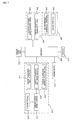
- FIG. 1 is a block diagram illustrating an apparatus for hair cell stimulation according to one example embodiment of the present invention.
- the apparatus for hair cell stimulation of the present embodiment includes a hearing diagnosis section 100, a stimulation region detecting section 102 and a stimulation treatment section 104.
- the hearing diagnosis section 100 provides an acoustic signal corresponding to specific frequency band to a user, and measures the hearing ability of a user at the frequency band through the user's response on the provided acoustic signal.
- the hearing ability may be measured through a pure-tone audiometry (PTA), an otoacoustic emission (OAE), an evoked response audiometry (ERA), etc.
- the hearing diagnosis section 100 provides the acoustic signal of the frequency band divided with resolution smaller than one octave resolution to the user, and detects location of damaged hair cells and the extent of the damage.
- the hearing diagnosis section 100 provides the acoustic signal of the frequency band with 1/k (is positive integer of above 2) octave resolution, more preferably 1/3 to 1/24 octave resolution to the user, and diagnoses hearing ability of the user.
- the acoustic signal provided to the user corresponds to a medium frequency in a range of 250Hz to 12000 Hz.
- whole hair cell region of the user may be divided into 134 frequency bands (134 hair cell regions).
- the acoustic signal of specific frequency band selected from 134 frequency bands is provided to the user, and the user inputs his response information on the provided acoustic signal of which volume is adjusted.
- the user's response information on the volume adjustment is stored as hearing threshold corresponding to the acoustic signal of the selected frequency band.
- the hearing threshold of a frequency band means a hearing threshold of the hair cell region having frequency specificity on the selected frequency band.
- the simulation region detecting section 102 detects a simulation region using the hearing threshold of each frequency band.
- the detection of the simulation region indicates detection of the hair cell region to which acoustic signal stimulation is to be provided.
- the detection of the simulation region determines the frequency band corresponding to a damaged hair cell region.
- the simulation treatment section 104 outputs the acoustic signal with preset intensity to the frequency band of the damaged hair cell region which is determined by the stimulation region detecting section 102.
- the acoustic signal is provided with intensity higher by predetermined level than the hearing threshold of corresponding frequency band, which is pre-stored in the hearing diagnosis section 100.
- the acoustic signal corresponds to at least one of amplitude modulated tone, frequency modulated tone, pulse tone and amplitude modulated narrowband noise, or combination of the tones and the noise.
- the acoustic signal may be provided to the damaged hair cell regions in an order of damage severity, be provided randomly to the damaged hair cell regions, or be provided simultaneously to the damaged hair cell regions.
- the user's hearing ability may be improved.
- FIG. 2 is a detail block diagram illustrating an apparatus for hair cell stimulation according to one example embodiment of the present invention.
- the hearing diagnosis section 100 of the present embodiment includes an UI output section 200 and a response information storage section 202.
- the UI output section 200 displays cochlear model interface shown in FIG 3 on a display section 232 so that the subject not a skilled expert can diagnose his hearing ability by himself.
- the cochlear model interface of the present embodiment has an image 300 corresponding to the hair cell regions divided with high resolution.
- the cochlear model interface may have 134 hair cell region images 300 in case of dividing the medium frequency range with 1/24 octave resolution.
- an acoustic signal of a frequency band matched with the selected hair cell region image is outputted.
- the frequency band matched with the hair cell region image means the frequency band to which corresponding hair cell region has frequency specificity.
- the hair cell region image 300 may be selected by using a key button, a mouse, a touch screen method, etc.
- the user may adjust intensity of the acoustic signal using volume control 302, and inputs response information about an intensity point at which the acoustic signal is not heard.
- the response information storage section 202 receives the response information corresponding to each of the acoustic signals from a user input section 220, and stores the received response information.
- the user input section 220 may be a keypad, a mouse or a touch screen.
- the response information may be stored as the hearing threshold of the frequency band related to corresponding acoustic signal as mentioned above.
- the hearing diagnosis on several hair cell regions may be performed by the above method.
- the stimulation region detecting section 102 includes a hearing threshold comparison section 204 and a target frequency band determining section 206.
- the hearing threshold comparison section 204 compares the user's hearing threshold stored in the response information storage section 202 with a reference hearing threshold.
- the hearing threshold comparison section 204 discriminates whether or not the hearing threshold of the measured frequency band is higher than the reference hearing threshold.
- the target frequency band determining section 206 determines a frequency band which requires treatment as a target frequency band.
- the determination of the target frequency band indicates detection of damaged hair cell region, and the target frequency band may be determined in a unit of 1/k octave resolution like in the hearing diagnosis section 100.
- the determination of the target frequency band is not limited as the above method.
- a frequency band range corresponding to the adjacent hair cell regions, in which the hair cell regions have high hearing threshold region may be determined as the target frequency band.
- Information about one or more target frequency band determined as above and information about order of damage severity are stored in the memory 208 in accordance with user identification information.
- the stimulation treatment section 104 of the present embodiment includes an acoustic signal intensity determining section 210, an acoustic signal type determining section 212, a stimulation order determining section 214, an acoustic signal output section 216 and a timing section 218, and provides the acoustic signal to the user using the information stored in the memory 208.
- the acoustic signal intensity determining section 210 determines intensity of the acoustic signal to be provided to the user.
- the acoustic signal intensity determining section 210 determines intensity higher by 3 decibel to 20 decibel than the hearing threshold of each target frequency band as the acoustic signal intensity of the corresponding target frequency band.
- the acoustic signal intensity determining section 210 may determines intensity higher by 3 decibel to 20 decibel than average value of the hearing thresholds of the hair cell regions as the acoustic signal intensity.
- the acoustic signal intensity may be determined in a range of 3 decibel to 10 decibel.
- the acoustic signal type determining section 212 determines type of the acoustic signal to be provided to the user.
- source of the acoustic signal may include amplitude modulated tone, frequency modulated tone, continuous tone, pulse tone, amplitude modulated narrowband noise, etc.
- the acoustic signal type determining section 212 determines at least one of the tones and the noise or combination of the tones and the noise as the acoustic signal to be provided to the user.
- the simulation order determining section 214 determines output order of the acoustic signals corresponding to several target frequency bands.
- the stimulation order determining section 214 may determine the output order so that the acoustic signal is outputted in sequence from the frequency band corresponding to the most damaged hair cell region.
- the above output order is not limited as the order mentioned above.
- the acoustic signal may be randomly outputted, or be simultaneously outputted to the several target frequency bands.
- the acoustic signal output section 216 outputs the acoustic signal with the determined intensity, type and order.
- output time of the each acoustic signal may be set.
- the timing section 218 detects whether or not the output time of the each acoustic signal is finished, and controls the acoustic signal output section 216 in accordance with the detection result so that the acoustic signal output section 216 outputs an acoustic signal of next target frequency band or finishes output of the acoustic signal.
- the UI output section 200 displays information on the cochlear model interface when the acoustic signal for hearing treatment of the user is outputted, wherein the user visually recognizes presence or absence, intensity, type, etc of the acoustic signal through the information.
- the UI output section 200 may change color or size of the hair cell region image 300 corresponding to the frequency band (target frequency band) of the acoustic signal outputted now in accordance with control of a controller 230.
- the UI output section 200 may change color or size of corresponding hair cell region image 300 synchronizing with amplitude change of the amplitude modulated tone.
- the UI output section 200 may change color or size of the hair cell region image 300 corresponding to the changed frequency synchronizing with frequency change of the frequency modulated tone.
- the UI output section 200 may change color or size of corresponding hair cell region image 300 so that the user recognizes the currently provided acoustic signal as the continuous tone or the pulse tone.
- the user may verify intuitively through the cochlear model interface whether or not the hearing ability of each hair cell region is improved.
- the UI output section 200 exhibits the hair cell region image 300 of the target frequency band differently from other hair cell image. Additionally, the UI output section 200 may indicate the image 300 of the damaged hair cell region with color or size varied in accordance with damage severity.
- the UI output section 200 changes color or size of corresponding hair cell region image 300 in accordance with the extent of improvement of each hair cell region so that the user recognizes the extent of hearing improvement.
- the extent of hearing improvement may be discriminated by measuring again hearing threshold of the target frequency band.
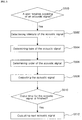
- FIG. 4 is a flow chart illustrating a diagnostic process of hearing ability according to one example embodiment of the present invention.
- the display section 232 of the apparatus for hair cell stimulation is embodied with a touch screen.
- the apparatus for hair cell stimulation displays the cochlear model interface shown in FIG. 3 on the touch screen 232 in case that the user requests diagnosis of his hearing ability in step.
- the cochlear model interface has several hair cell region images in which frequency bands generated by dividing medium frequency with maximum 1/24 octave resolution are visualized.
- step S402 it is discriminated whether or not the user selects the hair cell region image 300 displayed on the cochlear model interface.
- step S404 in case that the user selects the hair cell region image 300, an acoustic signal of the frequency band corresponding to the hair cell region related to the selected image 300 is outputted.
- step S406 the apparatus for hair cell stimulation discriminates whether or not the user's response information on the acoustic signal is received.
- the user may adjust volume in accordance with whether or not the user hears the acoustic signal, and input the response information on the intensity level at which the acoustic signal is not heard.
- step S408 the user's response information is stored as the hearing threshold of the frequency band corresponding to each of the acoustic signals.
- step S410 the apparatus for hair cell stimulation compares the user's hearing threshold with the reference hearing threshold after the response information input is finished.
- step S412 the target frequency band is determined by the result of comparison between hearing thresholds, wherein the acoustic signal stimulation is required for the target frequency band.
- step S414 information concerning the target frequency band is stored in the memory 208.
- the information concerning the target frequency band may include user identification information, hearing threshold information of the frequency band on which hearing diagnosis is performed, target frequency band information, order information on damage severity, etc.
- the target frequency band may be determined to the corresponding individual frequency band of each acoustic signal.
- the determination of the target frequency band is not limited as the above method. That is, specific frequency band range in which average of hearing thresholds of the frequency bands is higher than a reference value may be determined as the target frequency band.
- the target frequency band may be determined in a unit of intervals or in new interval having the above three intervals, i.e. 5920Hz to 6456Hz.
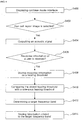
- FIG. 5 is a flow chart illustrating a process of hair cell stimulation according to one example embodiment of the present invention.
- the apparatus for hair cell stimulation determines intensity, type, order, etc of the target frequency band, and outputs the acoustic signal for improving the hearing ability of the user in accordance with the determination result.
- the apparatus for hair cell stimulation reads information concerning the target frequency band from the memory 208 and then determines intensity of the acoustic signal of the target frequency band in step S502.
- steps S504 and S506 type and output order of the acoustic signal are determined.
- the output order of the acoustic signal may be determined in accordance with damage severity, or be determined so that the acoustic signal is randomly or simultaneously outputted.
- step S508 the acoustic signal is outputted in accordance with the determined intensity, type and order.
- step S510 in case that the acoustic signal is outputted in accordance with damage severity or is randomly outputted, the apparatus for hair cell stimulation discriminates whether or not output time of one acoustic signal is finished.
- step S512 in case that the output time is finished, another acoustic signal corresponding to next target frequency band is outputted.
- the apparatus for hair cell stimulation synchronizes the cochlear model interface with output, amplitude change, frequency change or pulse period of the acoustic signal, and changes color or size of the hair cell region image 300 of the cochlear model interface in accordance with the synchronization.
- the method for hair cell stimulation of the present embodiment is provided through a computer or a portable terminal established by the user or in a hospital, etc.
- the method may be provided through a network at a remote place.
- FIG. 6 is a view illustrating a hearing improvement service system according to one example embodiment of the present invention.
- the hearing improvement service system of the present embodiment includes a hearing improvement sever 600 connected electrically to at least one user client 602 through a network.
- the network includes a wire network having an Internet and a private line and a wireless network having a wireless Internet, a mobile communication network and a satellite network.
- the hearing improvement sever 600 provides an application for outputting the cochlear model interface shown in FIG. 3 to the user client 602 in accordance with request of the user.
- the hearing improvement sever 600 may provide the application through various methods such as a download, webpage-inserted form, etc.
- the above application outputs an acoustic signal of a frequency band corresponding to the hair cell region selected by the user.
- the user client 602 transmits the response information to the hearing improvement sever 600.
- the hearing improvement sever 600 includes the stimulation region detecting section as shown in FIG. 1 and FIG. 2 , and determines the target frequency band requiring treatment on the basis of the transmitted response information of the user.
- the hearing improvement sever 600 stores information concerning the target frequency band and determines intensity, type, order, etc of the target frequency band. In case that the user requests, the hearing improvement sever 600 provides the acoustic signal corresponding to the target frequency band to the user client 602 through the network in accordance with the determined result.
- the user client 602 may be embodied with a terminal which operates the application and is equipped with a speaker, and include a desktop, a laptop, a mobile communication terminal, etc.
- the user client 602 stimulates the hair cell of the user by outputting the acoustic signal provided from the hearing improvement sever 600.
- the extent of hearing improvement by the apparatus for hair cell stimulation of the present embodiment is verified through an experiment.
- FIG. 7 is a view illustrating a graph indicating pure-tone audiometry result of one subject. Particularly, FIG. 7 shows result generated by examining hearing ability in the range of 2000Hz to 8000Hz with 1/24 octave resolution using the hearing diagnosis section 100.
- right ear of the subject has mild to moderate hearing loss in a frequency region of 3000Hz to 7000Hz.
- FIG. 8 is a view illustrating the target frequency band determined for the subject in FIG 7 .
- a frequency band range of 5920Hz to 6840Hz showing approximately 50dBHL of hearing threshold is determined as the target frequency band for the subject in FIG. 7 .
- the acoustic signal such as frequency modulated tone or amplitude modulated narrowband noise related to the target frequency band determined in FIG. 8 is provided to the right ear for thirty minutes in the morning and evening over fifteen days.
- the intensity of the acoustic signal is adjusted to 5 dBSL (sensational level) to 10 dBSL.
- FIG. 9 is a view illustrating schedule for acoustic signal stimulation. Particularly, hearing ability is measured before the acoustic signal stimulation is provided (first test), after providing the acoustic signal stimulation for ten days (second test), and after providing the acoustic signal stimulation for fifteen days (third test), and then hearing thresholds corresponding to the measurement are compared.
- the hearing ability is measured ten times with 1/24 octave resolution and then average of the measured values is used as the hearing ability.
- Table 1 is a a table in which hearing threshold measured before providing the acoustic signal stimulation to a right ear is compared with that measured after the acoustic signal stimulation is provided to the right ear for ten days.
- Table 2 is a table in which the hearing threshold measured after acoustic signal stimulation is provided to the right ear for ten days is compared with that measured after the acoustic signal stimulation is provided to the right ear for fifteen days.
- the hearing threshold of the target frequency band becomes lower after the acoustic signal stimulation is provided, i.e. the hearing ability is improved.
- FIG. 10 is a view illustrating a graph showing the hearing threshold of the right ear before and after the acoustic signal stimulation is provided.
- hearing threshold (right ear) of a frequency band of 5920Hz to 6840Hz equals to 45.4 dBHL.
- the hearing threshold of the frequency band is lowered to 38.2 dBHL.
- the hearing threshold is more lowered to 34.2 dBHL after the acoustic signal stimulation is provided for fifteen days.
- the extent of the hearing threshold reduction is statistically significant.
- FIG. 11 is a view illustrating schedule for verifying whether or not the hearing ability improvement is continuously maintained after the acoustic signal stimulation to the right ear is stopped.
- the hearing ability is measured from five days to eighteen days after the acoustic signal stimulation is stopped.
- Table 3 is a table showing hearing threshold of the right ear after the acoustic signal stimulation is stopped.
- FIG. 12 is a view illustrating a graph corresponding to the Table 3.
- the hearing ability improvement effect is maintained after the acoustic signal stimulation is stopped. Additionally, it is verified that the hearing ability is still improved by approximately 7.9 dB eighteen days after the acoustic signal stimulation is stopped.
- any reference in this specification to "one embodiment,” “an embodiment,” “example embodiment,” etc. means that a particular feature, structure, or characteristic described in connection with the embodiment is included in at least one embodiment of the invention.
- the appearances of such phrases in various places in the specification are not necessarily all referring to the same embodiment.
Landscapes
- Health & Medical Sciences (AREA)
- Life Sciences & Earth Sciences (AREA)
- Engineering & Computer Science (AREA)
- Physics & Mathematics (AREA)
- General Health & Medical Sciences (AREA)
- Acoustics & Sound (AREA)
- Otolaryngology (AREA)
- Public Health (AREA)
- Biophysics (AREA)
- Audiology, Speech & Language Pathology (AREA)
- Biomedical Technology (AREA)
- Heart & Thoracic Surgery (AREA)
- Veterinary Medicine (AREA)
- Animal Behavior & Ethology (AREA)
- Medical Informatics (AREA)
- Molecular Biology (AREA)
- Surgery (AREA)
- Psychology (AREA)
- Multimedia (AREA)
- Pathology (AREA)
- Vascular Medicine (AREA)
- Neurosurgery (AREA)
- Signal Processing (AREA)
- Physical Education & Sports Medicine (AREA)
- Epidemiology (AREA)
- Primary Health Care (AREA)
- Measurement Of The Respiration, Hearing Ability, Form, And Blood Characteristics Of Living Organisms (AREA)
- Electrotherapy Devices (AREA)
- Measurement And Recording Of Electrical Phenomena And Electrical Characteristics Of The Living Body (AREA)
Priority Applications (3)
| Application Number | Priority Date | Filing Date | Title |
|---|---|---|---|
| SI200832114T SI2070497T1 (sl) | 2007-12-10 | 2008-03-07 | Naprava za stimulacijo lasnih celic z uporabo zvočnih signalov |
| PL08152464T PL2070497T3 (pl) | 2007-12-10 | 2008-03-07 | Urządzenie do stymulacji komórek rzęsatych przy użyciu sygnałów akustycznych |
| HRP20200173TT HRP20200173T1 (hr) | 2007-12-10 | 2020-02-03 | Uređaj za stimuliranje cilijarnih stanica upotrebom zvučnih signala |
Applications Claiming Priority (1)
| Application Number | Priority Date | Filing Date | Title |
|---|---|---|---|
| KR1020070127477A KR100963888B1 (ko) | 2007-12-10 | 2007-12-10 | 음향 신호를 이용한 청각 세포 자극 방법 및 장치 |
Publications (2)
| Publication Number | Publication Date |
|---|---|
| EP2070497A1 EP2070497A1 (en) | 2009-06-17 |
| EP2070497B1 true EP2070497B1 (en) | 2019-12-18 |
Family
ID=40097160
Family Applications (1)
| Application Number | Title | Priority Date | Filing Date |
|---|---|---|---|
| EP08152464.7A Active EP2070497B1 (en) | 2007-12-10 | 2008-03-07 | Apparatus for hair cell stimulation using acoustic signals |
Country Status (12)
| Country | Link |
|---|---|
| US (1) | US8398563B2 (enExample) |
| EP (1) | EP2070497B1 (enExample) |
| JP (1) | JP5323381B2 (enExample) |
| KR (1) | KR100963888B1 (enExample) |
| CY (1) | CY1122750T1 (enExample) |
| DK (1) | DK2070497T3 (enExample) |
| ES (1) | ES2773045T3 (enExample) |
| HR (1) | HRP20200173T1 (enExample) |
| LT (1) | LT2070497T (enExample) |
| PL (1) | PL2070497T3 (enExample) |
| PT (1) | PT2070497T (enExample) |
| SI (1) | SI2070497T1 (enExample) |
Families Citing this family (15)
| Publication number | Priority date | Publication date | Assignee | Title |
|---|---|---|---|---|
| EP2542301B1 (en) * | 2010-03-04 | 2014-03-12 | Fraunhofer Gesellschaft zur Förderung der angewandten Forschung e.V. | Electrode stimulation signal generation in a neural auditory prosthesis |
| CN101953734B (zh) * | 2010-11-11 | 2013-07-31 | 欧声医疗器械有限公司 | 移动听力治疗装置 |
| KR101368927B1 (ko) * | 2012-01-03 | 2014-02-28 | (주)가온다 | 오디오 신호 출력 방법 및 장치, 오디오 신호의 볼륨 조정 방법 |
| KR102102604B1 (ko) * | 2018-03-06 | 2020-04-21 | 송하정 | 청각장애 치료 기능을 갖는 이어폰 |
| KR102112311B1 (ko) * | 2018-03-29 | 2020-06-04 | 한림대학교 산학협력단 | 인지 기능 검사 방법 및 시스템 |
| KR102163373B1 (ko) * | 2018-07-25 | 2020-10-08 | 주식회사 라스텔 | 청각 관리 장치 및 방법, 그리고 청각 관리 기능을 구비한 단일 마이크 음성 신호의 노이즈를 감쇄시키는 장치 |
| KR101963871B1 (ko) * | 2018-11-28 | 2019-04-01 | 주식회사 라스텔 | 소리 제어를 통한 지각 능력 향상 장치 및 방법 |
| CN109886170B (zh) * | 2019-02-01 | 2019-12-17 | 河海大学 | 一种钉螺智能检测识别与统计系统 |
| KR102054630B1 (ko) * | 2019-10-16 | 2019-12-12 | (주)소리대장간 | 청각 치료 주파수 스펙트럼 분석 방법 및 장치 |
| US12090327B2 (en) | 2019-10-30 | 2024-09-17 | Cochlear Limited | Synchronized pitch and timing cues in a hearing prosthesis system |
| KR20210045267A (ko) | 2019-11-14 | 2021-04-26 | 사운드백신 주식회사 | 청각 치료 주파수 스펙트럼 분석 방법 및 장치 |
| CN116113362A (zh) * | 2020-09-10 | 2023-05-12 | 科利耳有限公司 | 测量老年性聋 |
| CN112690783B (zh) * | 2020-12-28 | 2022-05-17 | 佛山博智医疗科技有限公司 | 一种控制声音频率交变输出的方法 |
| KR102438127B1 (ko) * | 2022-06-21 | 2022-08-30 | 사운드백신 주식회사 | 다차원 청력도 제공 방법 및 장치 |
| WO2025073924A1 (en) * | 2023-10-06 | 2025-04-10 | Sony Semiconductor Solutions Corporation | Apparatus, audio device and method |
Citations (1)
| Publication number | Priority date | Publication date | Assignee | Title |
|---|---|---|---|---|
| US20020165466A1 (en) * | 2001-02-07 | 2002-11-07 | Givens Gregg D. | Systems, methods and products for diagnostic hearing assessments distributed via the use of a computer network |
Family Cites Families (7)
| Publication number | Priority date | Publication date | Assignee | Title |
|---|---|---|---|---|
| US3531595A (en) * | 1966-10-31 | 1970-09-29 | Michael S Demaree | Method and apparatus for the testing and treatment of hearing deficiencies |
| AUPP927599A0 (en) * | 1999-03-17 | 1999-04-15 | Curtin University Of Technology | Tinnitus rehabilitation device and method |
| JP4143832B2 (ja) * | 2003-05-14 | 2008-09-03 | 独立行政法人産業技術総合研究所 | 外部音知覚装置 |
| JP2005051698A (ja) * | 2003-07-31 | 2005-02-24 | Nf Corp | 超音波駆動装置 |
| WO2005072168A2 (en) * | 2004-01-20 | 2005-08-11 | Sound Techniques Systems Llc | Method and apparatus for improving hearing in patients suffering from hearing loss |
| KR100647310B1 (ko) * | 2005-01-26 | 2006-11-23 | 삼성전자주식회사 | 인간의 청각특성에 따른 주파수 특성을 갖는 신호 출력 방법 및 이를 이용한 이명 치료 장치 |
| JP4963035B2 (ja) * | 2006-04-17 | 2012-06-27 | 独立行政法人産業技術総合研究所 | 聴覚機能訓練方法および装置 |
-
2007
- 2007-12-10 KR KR1020070127477A patent/KR100963888B1/ko not_active Expired - Fee Related
-
2008
- 2008-02-05 US US12/026,191 patent/US8398563B2/en active Active
- 2008-03-07 ES ES08152464T patent/ES2773045T3/es active Active
- 2008-03-07 DK DK08152464.7T patent/DK2070497T3/da active
- 2008-03-07 EP EP08152464.7A patent/EP2070497B1/en active Active
- 2008-03-07 SI SI200832114T patent/SI2070497T1/sl unknown
- 2008-03-07 LT LTEP08152464.7T patent/LT2070497T/lt unknown
- 2008-03-07 PT PT81524647T patent/PT2070497T/pt unknown
- 2008-03-07 PL PL08152464T patent/PL2070497T3/pl unknown
- 2008-03-31 JP JP2008093341A patent/JP5323381B2/ja active Active
-
2020
- 2020-01-30 CY CY20201100077T patent/CY1122750T1/el unknown
- 2020-02-03 HR HRP20200173TT patent/HRP20200173T1/hr unknown
Patent Citations (1)
| Publication number | Priority date | Publication date | Assignee | Title |
|---|---|---|---|---|
| US20020165466A1 (en) * | 2001-02-07 | 2002-11-07 | Givens Gregg D. | Systems, methods and products for diagnostic hearing assessments distributed via the use of a computer network |
Also Published As
| Publication number | Publication date |
|---|---|
| HRP20200173T1 (hr) | 2020-08-07 |
| JP5323381B2 (ja) | 2013-10-23 |
| US20090149916A1 (en) | 2009-06-11 |
| PL2070497T3 (pl) | 2020-07-13 |
| JP2009136662A (ja) | 2009-06-25 |
| KR100963888B1 (ko) | 2010-06-17 |
| PT2070497T (pt) | 2020-02-24 |
| LT2070497T (lt) | 2020-02-25 |
| CY1122750T1 (el) | 2021-03-12 |
| KR20090060598A (ko) | 2009-06-15 |
| EP2070497A1 (en) | 2009-06-17 |
| SI2070497T1 (sl) | 2020-04-30 |
| ES2773045T3 (es) | 2020-07-09 |
| DK2070497T3 (en) | 2020-03-09 |
| US8398563B2 (en) | 2013-03-19 |
Similar Documents
| Publication | Publication Date | Title |
|---|---|---|
| US8398563B2 (en) | Method and apparatus for hair cell stimulation using acoustic signals | |
| US9894450B2 (en) | Self-fitting of a hearing device | |
| JP6509213B2 (ja) | 聴力プロファイル検査システム及び方法 | |
| US10341790B2 (en) | Self-fitting of a hearing device | |
| EP2177054B1 (en) | Method for adjusting a hearing device with frequency transposition and corresponding arrangement | |
| Busby et al. | Effects of threshold adjustment on speech perception in nucleus cochlear implant recipients | |
| CN106215322A (zh) | 具有通道交互补偿的同时刺激的最佳模型常数 | |
| Lee et al. | Predicting speech recognition using the speech intelligibility index and other variables for cochlear implant users | |
| Scollie et al. | Stimuli and normative data for detection of Ling-6 sounds in hearing level | |
| CN107049333A (zh) | 听觉识别敏感度测试方法 | |
| Henry et al. | Reliability of tinnitus loudness matches under procedural variation | |
| Scollie et al. | Fitting noise management signal processing applying the American Academy of Audiology Pediatric Amplification Guideline: Verification protocols | |
| US20150314124A1 (en) | Systems and methods for detecting an occurrence of a stapedius reflex within a cochlear implant patient | |
| Plesch et al. | A psychoacoustic application for the adjustment of electrical hearing thresholds in cochlear implant patients | |
| Zhou et al. | Impaired cochlear function correlates with the presence of tinnitus and its estimated spectral profile | |
| CN101919698B (zh) | 使用声信号刺激毛细胞的方法和设备 | |
| Glista et al. | The effect of adaptive nonlinear frequency compression on phoneme perception | |
| RU2525223C2 (ru) | Способ стимулирования области волосковых сенсорных клеток | |
| CA2666155C (en) | Method and apparatus for stimulating a hair cell using an acoustic signal | |
| Munro et al. | Clinical verification of hearing aid performance | |
| AU2009202032B2 (en) | Method and apparatus for stimulating a hair cell using an acoustic signal | |
| Keller | Loudness discomfort levels: A retrospective study comparing data from Pascoe (1988) and Washington University School of Medicine | |
| Schlauch et al. | Effective identification of functional hearing loss using behavioral threshold measures | |
| van Esch et al. | Measuring spectral and temporal resolution simultaneously: A comparison between two tests | |
| KR20100021992A (ko) | 음향 신호를 이용한 청각 세포 자극 방법 및 장치 |
Legal Events
| Date | Code | Title | Description |
|---|---|---|---|
| PUAI | Public reference made under article 153(3) epc to a published international application that has entered the european phase |
Free format text: ORIGINAL CODE: 0009012 |
|
| AK | Designated contracting states |
Kind code of ref document: A1 Designated state(s): AT BE BG CH CY CZ DE DK EE ES FI FR GB GR HR HU IE IS IT LI LT LU LV MC MT NL NO PL PT RO SE SI SK TR |
|
| AX | Request for extension of the european patent |
Extension state: AL BA MK RS |
|
| RAP1 | Party data changed (applicant data changed or rights of an application transferred) |
Owner name: EARLOGIC KOREA INC. |
|
| 17P | Request for examination filed |
Effective date: 20091215 |
|
| AKX | Designation fees paid |
Designated state(s): AT BE BG CH CY CZ DE DK EE ES FI FR GB GR HR HU IE IS IT LI LT LU LV MC MT NL NO PL PT RO SE SI SK TR |
|
| 17Q | First examination report despatched |
Effective date: 20150512 |
|
| RAP1 | Party data changed (applicant data changed or rights of an application transferred) |
Owner name: THE GOOD EAR COMPANY, INC. |
|
| STAA | Information on the status of an ep patent application or granted ep patent |
Free format text: STATUS: EXAMINATION IS IN PROGRESS |
|
| GRAP | Despatch of communication of intention to grant a patent |
Free format text: ORIGINAL CODE: EPIDOSNIGR1 |
|
| STAA | Information on the status of an ep patent application or granted ep patent |
Free format text: STATUS: GRANT OF PATENT IS INTENDED |
|
| INTG | Intention to grant announced |
Effective date: 20190710 |
|
| GRAS | Grant fee paid |
Free format text: ORIGINAL CODE: EPIDOSNIGR3 |
|
| GRAA | (expected) grant |
Free format text: ORIGINAL CODE: 0009210 |
|
| STAA | Information on the status of an ep patent application or granted ep patent |
Free format text: STATUS: THE PATENT HAS BEEN GRANTED |
|
| AK | Designated contracting states |
Kind code of ref document: B1 Designated state(s): AT BE BG CH CY CZ DE DK EE ES FI FR GB GR HR HU IE IS IT LI LT LU LV MC MT NL NO PL PT RO SE SI SK TR |
|
| REG | Reference to a national code |
Ref country code: GB Ref legal event code: FG4D |
|
| REG | Reference to a national code |
Ref country code: CH Ref legal event code: EP |
|
| REG | Reference to a national code |
Ref country code: DE Ref legal event code: R096 Ref document number: 602008061831 Country of ref document: DE |
|
| REG | Reference to a national code |
Ref country code: IE Ref legal event code: FG4D |
|
| REG | Reference to a national code |
Ref country code: AT Ref legal event code: REF Ref document number: 1213763 Country of ref document: AT Kind code of ref document: T Effective date: 20200115 |
|
| REG | Reference to a national code |
Ref country code: HR Ref legal event code: TUEP Ref document number: P20200173T Country of ref document: HR |
|
| REG | Reference to a national code |
Ref country code: RO Ref legal event code: EPE |
|
| REG | Reference to a national code |
Ref country code: FI Ref legal event code: FGE |
|
| REG | Reference to a national code |
Ref country code: PT Ref legal event code: SC4A Ref document number: 2070497 Country of ref document: PT Date of ref document: 20200224 Kind code of ref document: T Free format text: AVAILABILITY OF NATIONAL TRANSLATION Effective date: 20200213 |
|
| REG | Reference to a national code |
Ref country code: SE Ref legal event code: TRGR |
|
| REG | Reference to a national code |
Ref country code: DK Ref legal event code: T3 Effective date: 20200304 |
|
| REG | Reference to a national code |
Ref country code: NL Ref legal event code: FP |
|
| REG | Reference to a national code |
Ref country code: EE Ref legal event code: FG4A Ref document number: E018679 Country of ref document: EE Effective date: 20200205 |
|
| REG | Reference to a national code |
Ref country code: NO Ref legal event code: T2 Effective date: 20191218 |
|
| PGFP | Annual fee paid to national office [announced via postgrant information from national office to epo] |
Ref country code: BG Payment date: 20200323 Year of fee payment: 13 Ref country code: FI Payment date: 20200320 Year of fee payment: 13 Ref country code: SE Payment date: 20200323 Year of fee payment: 13 Ref country code: HU Payment date: 20200323 Year of fee payment: 13 Ref country code: MC Payment date: 20200312 Year of fee payment: 13 Ref country code: LV Payment date: 20200320 Year of fee payment: 13 Ref country code: DK Payment date: 20200324 Year of fee payment: 13 Ref country code: RO Payment date: 20200323 Year of fee payment: 13 Ref country code: GR Payment date: 20200319 Year of fee payment: 13 Ref country code: IE Payment date: 20200320 Year of fee payment: 13 Ref country code: LT Payment date: 20200306 Year of fee payment: 13 Ref country code: AT Payment date: 20200320 Year of fee payment: 13 Ref country code: EE Payment date: 20200316 Year of fee payment: 13 Ref country code: NO Payment date: 20200326 Year of fee payment: 13 Ref country code: PT Payment date: 20200316 Year of fee payment: 13 |
|
| REG | Reference to a national code |
Ref country code: SK Ref legal event code: T3 Ref document number: E 33452 Country of ref document: SK |
|
| REG | Reference to a national code |
Ref country code: HR Ref legal event code: ODRP Ref document number: P20200173T Country of ref document: HR Payment date: 20200306 Year of fee payment: 13 |
|
| REG | Reference to a national code |
Ref country code: GR Ref legal event code: EP Ref document number: 20200400278 Country of ref document: GR Effective date: 20200511 |
|
| PGFP | Annual fee paid to national office [announced via postgrant information from national office to epo] |
Ref country code: CZ Payment date: 20200309 Year of fee payment: 13 Ref country code: LU Payment date: 20200324 Year of fee payment: 13 Ref country code: SK Payment date: 20200306 Year of fee payment: 13 Ref country code: SI Payment date: 20200305 Year of fee payment: 13 Ref country code: CH Payment date: 20200319 Year of fee payment: 13 Ref country code: IS Payment date: 20200310 Year of fee payment: 13 Ref country code: BE Payment date: 20200319 Year of fee payment: 13 |
|
| PGFP | Annual fee paid to national office [announced via postgrant information from national office to epo] |
Ref country code: MT Payment date: 20200311 Year of fee payment: 13 Ref country code: TR Payment date: 20200311 Year of fee payment: 13 |
|
| REG | Reference to a national code |
Ref country code: ES Ref legal event code: FG2A Ref document number: 2773045 Country of ref document: ES Kind code of ref document: T3 Effective date: 20200709 |
|
| PGFP | Annual fee paid to national office [announced via postgrant information from national office to epo] |
Ref country code: CY Payment date: 20200306 Year of fee payment: 13 |
|
| REG | Reference to a national code |
Ref country code: HR Ref legal event code: T1PR Ref document number: P20200173 Country of ref document: HR |
|
| PGFP | Annual fee paid to national office [announced via postgrant information from national office to epo] |
Ref country code: PL Payment date: 20200306 Year of fee payment: 13 Ref country code: HR Payment date: 20200406 Year of fee payment: 13 |
|
| REG | Reference to a national code |
Ref country code: DE Ref legal event code: R097 Ref document number: 602008061831 Country of ref document: DE |
|
| PLBE | No opposition filed within time limit |
Free format text: ORIGINAL CODE: 0009261 |
|
| STAA | Information on the status of an ep patent application or granted ep patent |
Free format text: STATUS: NO OPPOSITION FILED WITHIN TIME LIMIT |
|
| 26N | No opposition filed |
Effective date: 20200921 |
|
| REG | Reference to a national code |
Ref country code: HR Ref legal event code: PBON Ref document number: P20200173 Country of ref document: HR Effective date: 20210307 |
|
| REG | Reference to a national code |
Ref country code: FI Ref legal event code: MAE |
|
| REG | Reference to a national code |
Ref country code: EE Ref legal event code: MM4A Ref document number: E018679 Country of ref document: EE Effective date: 20210331 |
|
| REG | Reference to a national code |
Ref country code: NO Ref legal event code: MMEP |
|
| PG25 | Lapsed in a contracting state [announced via postgrant information from national office to epo] |
Ref country code: MC Free format text: LAPSE BECAUSE OF NON-PAYMENT OF DUE FEES Effective date: 20210331 Ref country code: CZ Free format text: LAPSE BECAUSE OF NON-PAYMENT OF DUE FEES Effective date: 20210307 Ref country code: CY Free format text: LAPSE BECAUSE OF NON-PAYMENT OF DUE FEES Effective date: 20210307 Ref country code: FI Free format text: LAPSE BECAUSE OF NON-PAYMENT OF DUE FEES Effective date: 20210307 |
|
| REG | Reference to a national code |
Ref country code: CH Ref legal event code: PL |
|
| REG | Reference to a national code |
Ref country code: DK Ref legal event code: EBP Effective date: 20210331 |
|
| REG | Reference to a national code |
Ref country code: LT Ref legal event code: MM4D Effective date: 20210307 |
|
| REG | Reference to a national code |
Ref country code: AT Ref legal event code: MM01 Ref document number: 1213763 Country of ref document: AT Kind code of ref document: T Effective date: 20210307 |
|
| REG | Reference to a national code |
Ref country code: SK Ref legal event code: MM4A Ref document number: E 33452 Country of ref document: SK Effective date: 20210307 |
|
| PG25 | Lapsed in a contracting state [announced via postgrant information from national office to epo] |
Ref country code: RO Free format text: LAPSE BECAUSE OF NON-PAYMENT OF DUE FEES Effective date: 20210307 Ref country code: LV Free format text: LAPSE BECAUSE OF NON-PAYMENT OF DUE FEES Effective date: 20210307 Ref country code: PT Free format text: LAPSE BECAUSE OF NON-PAYMENT OF DUE FEES Effective date: 20210907 |
|
| REG | Reference to a national code |
Ref country code: BE Ref legal event code: MM Effective date: 20210331 |
|
| PG25 | Lapsed in a contracting state [announced via postgrant information from national office to epo] |
Ref country code: SE Free format text: LAPSE BECAUSE OF NON-PAYMENT OF DUE FEES Effective date: 20210308 Ref country code: SK Free format text: LAPSE BECAUSE OF NON-PAYMENT OF DUE FEES Effective date: 20210307 Ref country code: IE Free format text: LAPSE BECAUSE OF NON-PAYMENT OF DUE FEES Effective date: 20210307 Ref country code: HU Free format text: LAPSE BECAUSE OF NON-PAYMENT OF DUE FEES Effective date: 20210308 Ref country code: HR Free format text: LAPSE BECAUSE OF NON-PAYMENT OF DUE FEES Effective date: 20210307 Ref country code: EE Free format text: LAPSE BECAUSE OF NON-PAYMENT OF DUE FEES Effective date: 20210331 Ref country code: NO Free format text: LAPSE BECAUSE OF NON-PAYMENT OF DUE FEES Effective date: 20210331 Ref country code: CH Free format text: LAPSE BECAUSE OF NON-PAYMENT OF DUE FEES Effective date: 20210331 Ref country code: AT Free format text: LAPSE BECAUSE OF NON-PAYMENT OF DUE FEES Effective date: 20210307 Ref country code: BG Free format text: LAPSE BECAUSE OF NON-PAYMENT OF DUE FEES Effective date: 20210930 Ref country code: LI Free format text: LAPSE BECAUSE OF NON-PAYMENT OF DUE FEES Effective date: 20210331 Ref country code: LT Free format text: LAPSE BECAUSE OF NON-PAYMENT OF DUE FEES Effective date: 20210307 Ref country code: LU Free format text: LAPSE BECAUSE OF NON-PAYMENT OF DUE FEES Effective date: 20210307 |
|
| REG | Reference to a national code |
Ref country code: SI Ref legal event code: KO00 Effective date: 20211130 |
|
| PG25 | Lapsed in a contracting state [announced via postgrant information from national office to epo] |
Ref country code: SI Free format text: LAPSE BECAUSE OF NON-PAYMENT OF DUE FEES Effective date: 20210308 Ref country code: GR Free format text: LAPSE BECAUSE OF NON-PAYMENT OF DUE FEES Effective date: 20211008 |
|
| PG25 | Lapsed in a contracting state [announced via postgrant information from national office to epo] |
Ref country code: DK Free format text: LAPSE BECAUSE OF NON-PAYMENT OF DUE FEES Effective date: 20210331 |
|
| PG25 | Lapsed in a contracting state [announced via postgrant information from national office to epo] |
Ref country code: MT Free format text: LAPSE BECAUSE OF NON-PAYMENT OF DUE FEES Effective date: 20210307 |
|
| PG25 | Lapsed in a contracting state [announced via postgrant information from national office to epo] |
Ref country code: BE Free format text: LAPSE BECAUSE OF NON-PAYMENT OF DUE FEES Effective date: 20210331 |
|
| PG25 | Lapsed in a contracting state [announced via postgrant information from national office to epo] |
Ref country code: PL Free format text: LAPSE BECAUSE OF NON-PAYMENT OF DUE FEES Effective date: 20210307 |
|
| REG | Reference to a national code |
Ref country code: AT Ref legal event code: UEP Ref document number: 1213763 Country of ref document: AT Kind code of ref document: T Effective date: 20191218 |
|
| REG | Reference to a national code |
Ref country code: NL Ref legal event code: PD Owner name: SOUND VACCINE, INC.; KR Free format text: DETAILS ASSIGNMENT: CHANGE OF OWNER(S), ASSIGNMENT; FORMER OWNER NAME: THE GOOD EAR COMPANY, INC. Effective date: 20240613 |
|
| REG | Reference to a national code |
Ref country code: GB Ref legal event code: 732E Free format text: REGISTERED BETWEEN 20240530 AND 20240605 |
|
| REG | Reference to a national code |
Ref country code: DE Ref legal event code: R081 Ref document number: 602008061831 Country of ref document: DE Owner name: SOUND VACCINE, INC., DAEJEON, KR Free format text: FORMER OWNER: THE GOOD EAR COMPANY, INC., VALENCIA, CA, US |
|
| PG25 | Lapsed in a contracting state [announced via postgrant information from national office to epo] |
Ref country code: TR Free format text: LAPSE BECAUSE OF NON-PAYMENT OF DUE FEES Effective date: 20210307 |
|
| REG | Reference to a national code |
Ref country code: ES Ref legal event code: PC2A Owner name: SOUND VACCINE, INC. Effective date: 20241111 |
|
| PGFP | Annual fee paid to national office [announced via postgrant information from national office to epo] |
Ref country code: ES Payment date: 20250925 Year of fee payment: 18 |
|
| PGFP | Annual fee paid to national office [announced via postgrant information from national office to epo] |
Ref country code: DE Payment date: 20250924 Year of fee payment: 18 |
|
| PGFP | Annual fee paid to national office [announced via postgrant information from national office to epo] |
Ref country code: NL Payment date: 20250918 Year of fee payment: 18 Ref country code: IT Payment date: 20250923 Year of fee payment: 18 |
|
| PG25 | Lapsed in a contracting state [announced via postgrant information from national office to epo] |
Ref country code: IS Free format text: LAPSE BECAUSE OF NON-PAYMENT OF DUE FEES Effective date: 20211011 |
|
| PGFP | Annual fee paid to national office [announced via postgrant information from national office to epo] |
Ref country code: GB Payment date: 20250918 Year of fee payment: 18 |
|
| PGFP | Annual fee paid to national office [announced via postgrant information from national office to epo] |
Ref country code: FR Payment date: 20250919 Year of fee payment: 18 |