EP2068452A2 - Method and system for multi-radio coexistence and a collaborative interface - Google Patents
Method and system for multi-radio coexistence and a collaborative interface Download PDFInfo
- Publication number
- EP2068452A2 EP2068452A2 EP08020301A EP08020301A EP2068452A2 EP 2068452 A2 EP2068452 A2 EP 2068452A2 EP 08020301 A EP08020301 A EP 08020301A EP 08020301 A EP08020301 A EP 08020301A EP 2068452 A2 EP2068452 A2 EP 2068452A2
- Authority
- EP
- European Patent Office
- Prior art keywords
- radio
- radio transceivers
- access
- serial bus
- information
- Prior art date
- Legal status (The legal status is an assumption and is not a legal conclusion. Google has not performed a legal analysis and makes no representation as to the accuracy of the status listed.)
- Granted
Links
Images
Classifications
-
- H—ELECTRICITY
- H04—ELECTRIC COMMUNICATION TECHNIQUE
- H04W—WIRELESS COMMUNICATION NETWORKS
- H04W72/00—Local resource management
- H04W72/12—Wireless traffic scheduling
- H04W72/1215—Wireless traffic scheduling for collaboration of different radio technologies
-
- H—ELECTRICITY
- H04—ELECTRIC COMMUNICATION TECHNIQUE
- H04B—TRANSMISSION
- H04B1/00—Details of transmission systems, not covered by a single one of groups H04B3/00 - H04B13/00; Details of transmission systems not characterised by the medium used for transmission
- H04B1/005—Details of transmission systems, not covered by a single one of groups H04B3/00 - H04B13/00; Details of transmission systems not characterised by the medium used for transmission adapting radio receivers, transmitters andtransceivers for operation on two or more bands, i.e. frequency ranges
- H04B1/0064—Details of transmission systems, not covered by a single one of groups H04B3/00 - H04B13/00; Details of transmission systems not characterised by the medium used for transmission adapting radio receivers, transmitters andtransceivers for operation on two or more bands, i.e. frequency ranges with separate antennas for the more than one band
-
- H—ELECTRICITY
- H04—ELECTRIC COMMUNICATION TECHNIQUE
- H04B—TRANSMISSION
- H04B1/00—Details of transmission systems, not covered by a single one of groups H04B3/00 - H04B13/00; Details of transmission systems not characterised by the medium used for transmission
- H04B1/005—Details of transmission systems, not covered by a single one of groups H04B3/00 - H04B13/00; Details of transmission systems not characterised by the medium used for transmission adapting radio receivers, transmitters andtransceivers for operation on two or more bands, i.e. frequency ranges
- H04B1/0067—Details of transmission systems, not covered by a single one of groups H04B3/00 - H04B13/00; Details of transmission systems not characterised by the medium used for transmission adapting radio receivers, transmitters andtransceivers for operation on two or more bands, i.e. frequency ranges with one or more circuit blocks in common for different bands
-
- H—ELECTRICITY
- H04—ELECTRIC COMMUNICATION TECHNIQUE
- H04B—TRANSMISSION
- H04B1/00—Details of transmission systems, not covered by a single one of groups H04B3/00 - H04B13/00; Details of transmission systems not characterised by the medium used for transmission
- H04B1/02—Transmitters
- H04B1/04—Circuits
- H04B1/0475—Circuits with means for limiting noise, interference or distortion
-
- H—ELECTRICITY
- H04—ELECTRIC COMMUNICATION TECHNIQUE
- H04B—TRANSMISSION
- H04B1/00—Details of transmission systems, not covered by a single one of groups H04B3/00 - H04B13/00; Details of transmission systems not characterised by the medium used for transmission
- H04B1/38—Transceivers, i.e. devices in which transmitter and receiver form a structural unit and in which at least one part is used for functions of transmitting and receiving
- H04B1/40—Circuits
-
- H—ELECTRICITY
- H04—ELECTRIC COMMUNICATION TECHNIQUE
- H04W—WIRELESS COMMUNICATION NETWORKS
- H04W88/00—Devices specially adapted for wireless communication networks, e.g. terminals, base stations or access point devices
- H04W88/02—Terminal devices
- H04W88/06—Terminal devices adapted for operation in multiple networks or having at least two operational modes, e.g. multi-mode terminals
-
- H—ELECTRICITY
- H04—ELECTRIC COMMUNICATION TECHNIQUE
- H04W—WIRELESS COMMUNICATION NETWORKS
- H04W72/00—Local resource management
- H04W72/02—Selection of wireless resources by user or terminal
Definitions
- Certain embodiments of the invention relate to coexistence in communication systems. More specifically, certain embodiments of the invention relate to a method and system for multi-radio coexistence and a collaborative interface.
- portable media devices may be enabled to provide a video output signal to a computer monitor or a television to allow display of, for example, digital photographs.
- one possible output format may be a low-power FM transmission signal.
- integrated multi-purpose portable devices comprising multi-radio devices or components may interfere with each other.
- a method for processing communication signals comprises:
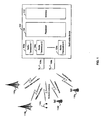
- FIG. 1 is a block diagram illustrating an exemplary multi-radio system in accordance with an embodiment of the invention.
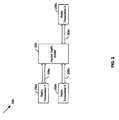
- FIG. 2 is a block diagram illustrating an exemplary packet traffic arbitration system, in accordance with an embodiment of the invention.
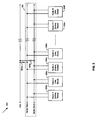
- FIG. 3 is a block diagram illustrating an exemplary implementation of a multi-radio coexistence system, in accordance with an embodiment of the invention.
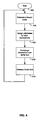
- FIG. 4 is a flow chart of an exemplary multi-radio coexistence system, in accordance with an embodiment of the invention.
- Certain embodiments of the invention may be found in a method and system for multi-radio coexistence and a collaborative interface. Aspects of the invention may comprise exchanging information between a plurality of radio transceivers integrated within a single device to enable coexistence, and coordinating sharing of transmit and receive resources between the plurality of radio transceivers by controlling access to the transmit and receive resources, where any one of the plurality of radio transceivers may be enabled to be selected to control the access based on the exchanged information.
- Selecting one of the radio transceivers for the controlling of the access band may be based on processing capability or priority of communication.
- the resources may comprise frequency bands, time slots, and antenna access.
- the information may be exchanged via a serial bus between the plurality of radio transceivers, where the serial bus may conform to an 12C (I-square-C) multi-master serial bus.
- Each of the radio transceivers may conform to one or more radio frequency technology.
- the exchanged information may comprise any combination of packet type, packet priority, start time of frame, end time of frame, node wireless technology specific information, transmit power level, received signal strength indicator, voice activity detection signaling, and sleep status indication.
- the priority of the plurality of radio transceivers may be assigned by appropriately choosing a device identity.
- the access may be controlled based on the exchanged information and a quality of service (QoS) requirement of one or more of the plurality of radio transceivers.
- QoS quality of service
- Each of the plurality of radio transceivers may be a Wireless LAN transceiver, an Ultrawideband transceiver, a WiMAX transceiver, a cellular radio transceiver, a Bluetooth transceiver, a WiBro transceiver, or a ZigBee transceiver.
- FIG. 1 is a block diagram illustrating an exemplary multi-radio system in accordance with an embodiment of the invention.
- a multi-radio device 102 comprising a processor 104, memory 112, and a plurality of radio transceivers, of which radio transceiver 106a, radio transceiver 106b, and radio receiver 106c may be illustrated.
- the multi-radio device 102 may be communicatively coupled to one or more antennas, of which antennas 108a and 108b may be illustrated.
- WLAN Wireless Local Area Network
- UWB Ultra-Wideband
- the multi-radio device 102 may be enabled to generate and/or receive radiofrequency (RF) signals in accordance with one or more RF technologies.
- the multi-radio device 102 may be enabled to perform, for example, baseband signal processing in the processor 104.
- the processor 104 may comprise suitable logic, circuitry and/or code that may be enabled to perform a variety of signal processing tasks and may include controlling of the radio transceivers 106a through 106c, for example.
- the memory 112 may comprise suitable logic, circuitry and/or code that may be enabled to store data and/or code that may be accessed by the processor 104 and/or the radio transceivers 106a through 106c (1-N).
- the radio transceiver 106a may comprise suitable logic, circuitry and/or code that may be enabled to generate RF signals and intermediate frequency (IF) signals from baseband signals, which may be communicated from the processor, in accordance with a radio frequency technology and/or standard.
- the radio transceiver 106a may comprise suitable logic, circuitry and/or code that may be enabled to receive RF signals via one or more antennas, for example, antennas 108a and 108b, and convert the RF signals to baseband signals.
- the generated baseband signals may be desirably formatted for further processing in the processor 104, for example.
- the radio transceivers 106b through 106c (2-N) may be substantially similar to radio transceiver 106a but may operate in accordance with different radio technologies.
- the radio transceivers 106a through 106c (1-N) may, for example, generate and/or receive signals in accordance with cellular radio standards (UMTS, GSM, EDGE, HSDPA, EV-DO, CDMA 2000 and others), broadband standards (for example WiMAX IEEE 802.16, WiBro), and short-range communication standards (WLAN IEEE 802.11, UWB, ZigBee and others).
- UMTS UMTS, GSM, EDGE, HSDPA, EV-DO, CDMA 2000 and others
- broadband standards for example WiMAX IEEE 802.16, WiBro
- the radio transceivers 106a though 106c may be enabled to conform with multiple radio frequency technologies, for example when a radio transceiver may be a software-defined radio platform.
- the plurality of antennas communicatively coupled to the multi-radio device 102 may be communicatively coupled to one or more radio transceivers 106a through 106c.
- Each radio transceiver may be communicatively coupled to at least one antenna, and some antennas may be shared between a plurality of radio transceivers.
- Each radio transceiver 106a through 106c may receive and/or transmit RF signals in accordance with an RF technology to/from another device, for example, a cellular basestation 110a, a WiMAX basestation 110b, a Bluetooth headphone 110c, a WLAN access point 110d, and/or a UWB access point 110e.
- the components of the multi-radio device 102 may be implemented in a single chip, or with multiple chips and associated circuitry.
- FIG. 2 is a block diagram illustrating an exemplary packet traffic arbitration system, in accordance with an embodiment of the invention.
- a packet traffic arbitration system 200 comprising a packet traffic arbiter 202, a plurality of radio transceivers, of which radio transceiver 206a through 206 (1-3) may be illustrated.
- communication links 208a, 208b, and 208c are also shown.
- the packet traffic arbiter 202 may comprise suitable logic, circuitry and/or code that may be enabled to control traffic flow and/or access to the radio resources of a plurality of radio transceivers in a system.
- the radio transceivers 206a, 206b, and 206c may be substantially similar to the radio transceivers in FIG. 1 .
- the communication links 208a, 208b and 208c may comprise suitable logic, circuitry and/or code that may be enabled to permit communications between radio transceivers and the packet traffic arbiter (PTA).
- the radio transceivers may often be physically co-located. Some radio transceivers may operate in the same or similar frequency bands.
- Table 1 may show some exemplary radio technologies and their associated frequency bands: Table 1 Exemplary frequency bands Wireless Technology Frequency Band Cellular: CDMA/GPRS 824-894 MHz, 800-960 MHz, 1170-1880 MHz, 1850-1900 MHz W-CDMA/UMTS 2110-2170 MHz EDGE 824-960 MHz, 1710/1990 MHz HSDPA 2110-2170 MHz Bluetooth 2.0 2.402-2.480 GHz UWB (and Bluetooth 3.0) 3.6-10.1 GHz WiFi (IEEE 802.11a/b/g/n) 2.4 GHz, 5.15-5.825 GHz WiMAX/WiBro (IEEE 802.16a) 2.3 GHz, 2.5 GHz, 3.3-3.8 GHz FM 76-108 MHz GPS 1.2 GHz, 1.5-1.6 GHz DVB-H TV 1.6-1.7 GHz
- radio transceivers may interfere with each other because of simultaneous or nearly simultaneous operation, and/or because one radio transceiver may desire to transmit while another radio transceiver may desire to receive, for example. In these instances, it may be desirable to implement some centralized traffic control that may help to avoid interference and hence errors, that may lead to lost packets.
- Some solutions to assist in interference avoidance may exist, for example the 2-wire interface, the 3-wire interface, and the 4-wire interface. In some instances, these wire interfaces may be proprietary. The wire interfaces may, however, only work for two radio transceivers and may be used to improve Bluetooth-WLAN coexistence and/or antenna sharing in some instances.
- the 3-wire interface for example, may be used for Bluetooth-WLAN coexistence, in accordance with the IEEE 802.15.2 Recommended Practice.
- the 2-wire and 3-wire interface techniques may not permit to transmit sophisticated data management data to a centralized management device and may be limited to blocking the resource access of one device while a transmission, for example, may be taking place on the other device.
- the PTA 202 may exchange information with the radio transceivers 206a, 206b, and 206c via the communication links 208a, 208b, and 208c.
- the information exchanged may be used by the PTA 202 to coordinate receiving and transmitting activities by the radio transceivers, for example radio transceivers 206a, 206b, and 206c.
- the PTA 202 may employ coordination algorithms that may reduce or eliminate traffic collisions and increase efficiency.
- coordination may aid in making handover decisions, for example in deciding to handover a phone call from a cellular radio transceiver to a Voice-over-IP (VoIP) call via a short-range radio transceiver, for example WLAN.
- VoIP Voice-over-IP
- a further benefit may be coordination of low-power activities by the radio transceivers. For example, scanning the spectrum for nearby nodes, or sending periodic messages to a nearby access point and/or basestation, or receiving broadcast information may be achieved more efficiently by the radio transceivers if they are coordinated. A reduction in interference for such low-power activities, as well as in active transmission and reception activities may reduce power consumption and increase battery life, for example stand-by times.
- judiciously selecting desirable radio transceiver combinations and parameters it may be possible, for example, to receive Bluetooth frames concurrently with the transmission of WLAN acknowledgement (ACK) packets, by selecting desirable transmit power levels.
- ACK WLAN acknowledgement
- FIG. 3 is a block diagram illustrating an exemplary implementation of a multi-radio coexistence system, in accordance with an embodiment of the invention.
- a coexistence system 300 comprising a serial bus 302 and a plurality of radio transceivers, of which radio transceivers 306a through 306f may be illustrated.
- the serial bus 302 may comprise a serial data line and a serial clock line.
- the serial data line may be coupled to a supply voltage Vdd via a pull-up resistor 304a
- the serial clock line may be coupled to the supply voltage Vdd via a pull-up resistor 304b.
- the plurality of radio transmitters may comprise suitable logic, circuitry and/or code that may be enabled to generate RF signals and intermediate frequency (IF) signals from baseband signals that may be communicated from the processor, in accordance with a radio frequency technology and/or standard.
- the radio transceivers 306a through 306f may be enabled to communicate to each other and, in some instances, to other devices via the serial bus 302.
- any one radio transceiver for example, any one of radio transceivers 306a through 306f may be a packet traffic arbiter (PTA), in accordance with the needs in the system.
- the PTA may be chosen from among the active nodes.
- the PTA may be an inactive radio transmitter that may have sufficient extra processing power to coordinate among the plurality of radio transceivers.
- the PTA node for example radio transceiver 306c, as illustrated in FIG. 3 , may coordinate the activities of the plurality of radio transceivers to minimize the interference between them.
- access to the radio spectrum may be controlled on a time slot basis by the PTA (Time Division Multiple Access, for example).
- access to spatial resources for example the antennas 108a and 108b, and/or frequency bands may be controlled.
- the PTA may control access to any available radio resources.
- the access may be granted on any number of performance and/or priority criteria, for example, required Quality-of-Service (QoS).
- QoS Quality-of-Service
- the PTA may receive desirable and appropriate information from the other nodes, for example the radio transceivers 306a through 306f.
- the parameters that may be exchanged may comprise, but are not limited to, packet type, packet priority, start time of frames, end time of frames, desired/current transmit power level, current received signal strength indication (RSSI), voice activity detection signaling, node wireless technology specific information, and/or sleep status indicator.
- RSSI current received signal strength indication
- voice activity detection signaling node wireless technology specific information
- sleep status indicator for example, for a Bluetooth-enabled radio transceiver, the radio transceiver may support common connection types and associated packet types.
- node wireless technology specific information may comprise information that indicated whether the radio transceiver may be operating in a master or slave role, the current hopping frequency and what the next hopping frequency may be, the inquiry mode and similar information.
- radio transceivers 306c may be, for example, radio transceiver 306c.
- this may be another radio transceiver, for example chosen from among the radio transceivers 306a through 306f.
- a serial bus where multiple master nodes may be present may be referred to as a multi-master bus.
- an exemplary serial bus 302 may be implemented as an I 2 C (I-square-C) serial bus, which may inherently be a multi-master bus. As illustrated in FIG.
- the I 2 C serial bus 302 may comprise a serial data line and a serial data clock that may be communicatively coupled to a plurality of radio transceivers 306a through 306f in order to permit the exchange of information as described above.
- both the serial data line and the serial clock line may be implemented in an open-drain design and may require biasing resistors. Biasing may be provided by the pull-up resistors 304a and 304b. The pull-up resistors 304a and 304b may ensure that the lines, when left floating, are maintained at voltage Vdd, which may correspond to a logic one/high state.
- Signaling on the I 2 C serial bus 302 may correspondingly be achieved by pulling-down a line to a logical zero, and this may be used as a means of channel access.
- a sleeping node, for example, radio transceiver 306b, will simply not do anything and hence let the line float at logic one.
- other desirable bus designs may be substituted for the I 2 C serial bus 302.
- FIG. 4 is a flow chart of an exemplary multi-radio coexistence system, in accordance with an embodiment of the invention.
- a master node may be determined according to desirable priority characteristics among the radio transceivers, for example, radio transceivers 306a through 306f as illustrated in FIG. 3 .
- priority among the radio transceivers in the system may be established based on their device address.
- a basic I2C protocol may be such that a lower device address may have higher access priority to the bus than a higher device address.
- the radio transceivers in the system may be prioritized accordingly, for example on the basis of required quality of service.
- the radio transceivers may be assigned device addresses and, in step 408, exchange of data may then take place among the radio transceivers via the serial bus, for example serial bus 302. If, or when, the traffic priorities among the radio transceivers may change, the radio transceivers may release the bus and start over the assignment of addresses in accordance with the above steps in step 410.
- a method and system for multi-radio coexistence and a collaborative interface may comprise exchanging information between a plurality of radio transceivers, for example radio transceivers 106a through 106c, integrated within a single device, for example multi-radio device 102, to enable coexistence, and coordinating sharing of transmit and receive resources between the plurality of radio transceivers, for example radio transceiver 106a through 106c, by controlling access to the transmit and receive resources, wherein any one of the plurality of radio transceivers, for example radio transmitter 306c or packet traffic arbiter 202, may be enabled to be selected to control the access based on the exchanged information.
- Selecting one of the radio transceivers for the controlling of the access band may be based on processing capability or priority of communication, as described for FIG. 3 .
- the resources may comprise frequency bands, time slots, and antenna access.
- the information may be exchanged via a serial bus 302 between the plurality of radio transceivers, for example radio transmitters 306a through 306f, wherein the serial bus may conform to an I2C (I-square-C) multi-master serial bus, as illustrated for FIG. 3 .
- Each of the radio transceivers may conform to one or more radio frequency technology.
- the exchanged information may comprise any combination of packet type, packet priority, start time of frame, end time of frame, node wireless technology specific information, transmit power level, received signal strength indicator, voice activity detection signaling, and sleep status indication, as described for FIG. 3 .
- the priority of the plurality of radio transceivers may be assigned by appropriately choosing a device identity, for example based on priority and numerical value, as described for FIG. 3 .
- the access may be controlled based on the exchanged information and a quality of service (QoS) requirement of one or more of the plurality of radio transceivers, for example radio transceivers 306a through 306f.
- QoS quality of service
- Each of the plurality of radio transceivers may be a Wireless LAN transceiver, an Ultrawideband transceiver, a WiMAX transceiver, a cellular radio transceiver, a Bluetooth transceiver, a WiBro transceiver, or a ZigBee transceiver.
- Another embodiment of the invention may provide a machine-readable storage, having stored thereon, a computer program having at least one code section executable by a machine, thereby causing the machine to perform the steps as described herein for multi-radio coexistence and a collaborative interface.
- the present invention may be realized in hardware, software, or a combination of hardware and software.
- the present invention may be realized in a centralized fashion in at least one computer system, or in a distributed fashion where different elements are spread across several interconnected computer systems. Any kind of computer system or other apparatus adapted for carrying out the methods described herein is suited.
- a typical combination of hardware and software may be a general-purpose computer system with a computer program that, when being loaded and executed, controls the computer system such that it carries out the methods described herein.
- the present invention may also be embedded in a computer program product, which comprises all the features enabling the implementation of the methods described herein, and which when loaded in a computer system is able to carry out these methods.
- Computer program in the present context means any expression, in any language, code or notation, of a set of instructions intended to cause a system having an information processing capability to perform a particular function either directly or after either or both of the following: a) conversion to another language, code or notation; b) reproduction in a different material form.
Landscapes
- Engineering & Computer Science (AREA)
- Computer Networks & Wireless Communication (AREA)
- Signal Processing (AREA)
- Mobile Radio Communication Systems (AREA)
Abstract
Description
- Not applicable
- Certain embodiments of the invention relate to coexistence in communication systems. More specifically, certain embodiments of the invention relate to a method and system for multi-radio coexistence and a collaborative interface.
- Electronic communication has become prolific over the last decade. While electronic communication was initially limited to the desktop, recent trends have been to make communications, media content and the Internet available anytime, anywhere and, increasingly, on any device. Already now, it is quite common to find mobile devices such as cellular phones or Personal Digital Assistants (PDAs) that incorporate a large range of communication technologies and associated software. For example, fully-featured web-browsers, email clients, MP3 players, instant messenger software, and Voice-over-IP may all be found on some recent devices.
- In this same spirit of the 'anytime, anywhere' paradigm, there is a drive towards making content stored on portable devices available to a large number of devices over a variety of radio frequency technologies. For example, many portable media devices may be enabled to provide a video output signal to a computer monitor or a television to allow display of, for example, digital photographs. For audio content, one possible output format may be a low-power FM transmission signal. Such integrated multi-purpose portable devices comprising multi-radio devices or components may interfere with each other.
- Further limitations and disadvantages of conventional and traditional approaches will become apparent to one of skill in the art, through comparison of such systems with some aspects of the present invention as set forth in the remainder of the present application with reference to the drawings.
- A method and/or system for multi-radio coexistence and a collaborative interface, substantially as shown in and/or described in connection with at least one of the figures, as set forth more completely in the claims.
According to an aspect, a method for processing communication signals comprises: - exchanging information between a plurality of radio transceivers integrated within a single device to enable coexistence; and
- coordinating sharing of transmit and receive resources between said plurality of radio transceivers by controlling access to said transmit and receive resources, wherein any one of said plurality of radio transceivers is enabled to be selected to control said access based on said exchanged information.
- exchange of information between a plurality of radio transceivers integrated within a single device to enable coexistence; and
- coordination of the sharing of transmit and receive resources between said plurality of radio transceivers by controlling access to said transmit and receive resources, wherein any one of said plurality of radio transceivers is enabled to be selected to control said access based on said exchanged information.
- These and other advantages, aspects and novel features of the present invention, as well as details of an illustrated embodiment thereof, will be more fully understood from the following description and drawings.
-
FIG. 1 is a block diagram illustrating an exemplary multi-radio system in accordance with an embodiment of the invention. -
FIG. 2 is a block diagram illustrating an exemplary packet traffic arbitration system, in accordance with an embodiment of the invention. -
FIG. 3 is a block diagram illustrating an exemplary implementation of a multi-radio coexistence system, in accordance with an embodiment of the invention. -
FIG. 4 is a flow chart of an exemplary multi-radio coexistence system, in accordance with an embodiment of the invention. - Certain embodiments of the invention may be found in a method and system for multi-radio coexistence and a collaborative interface. Aspects of the invention may comprise exchanging information between a plurality of radio transceivers integrated within a single device to enable coexistence, and coordinating sharing of transmit and receive resources between the plurality of radio transceivers by controlling access to the transmit and receive resources, where any one of the plurality of radio transceivers may be enabled to be selected to control the access based on the exchanged information.
- Selecting one of the radio transceivers for the controlling of the access band may be based on processing capability or priority of communication. The resources may comprise frequency bands, time slots, and antenna access. The information may be exchanged via a serial bus between the plurality of radio transceivers, where the serial bus may conform to an 12C (I-square-C) multi-master serial bus. Each of the radio transceivers may conform to one or more radio frequency technology. The exchanged information may comprise any combination of packet type, packet priority, start time of frame, end time of frame, node wireless technology specific information, transmit power level, received signal strength indicator, voice activity detection signaling, and sleep status indication. The priority of the plurality of radio transceivers may be assigned by appropriately choosing a device identity. The access may be controlled based on the exchanged information and a quality of service (QoS) requirement of one or more of the plurality of radio transceivers. Each of the plurality of radio transceivers may be a Wireless LAN transceiver, an Ultrawideband transceiver, a WiMAX transceiver, a cellular radio transceiver, a Bluetooth transceiver, a WiBro transceiver, or a ZigBee transceiver.
-
FIG. 1 is a block diagram illustrating an exemplary multi-radio system in accordance with an embodiment of the invention. Referring toFIG. 1 , there is shown amulti-radio device 102, comprising aprocessor 104,memory 112, and a plurality of radio transceivers, of whichradio transceiver 106a,radio transceiver 106b, andradio receiver 106c may be illustrated. Themulti-radio device 102 may be communicatively coupled to one or more antennas, of whichantennas cellular base station 110a, aWiMAX base station 110b,headphones 110c, a Wireless Local Area Network (WLAN)access point 110d, and an Ultra-Wideband (UWB)access point 110e. - The
multi-radio device 102 may be enabled to generate and/or receive radiofrequency (RF) signals in accordance with one or more RF technologies. Themulti-radio device 102 may be enabled to perform, for example, baseband signal processing in theprocessor 104. Theprocessor 104 may comprise suitable logic, circuitry and/or code that may be enabled to perform a variety of signal processing tasks and may include controlling of theradio transceivers 106a through 106c, for example. Thememory 112 may comprise suitable logic, circuitry and/or code that may be enabled to store data and/or code that may be accessed by theprocessor 104 and/or theradio transceivers 106a through 106c (1-N). Theradio transceiver 106a may comprise suitable logic, circuitry and/or code that may be enabled to generate RF signals and intermediate frequency (IF) signals from baseband signals, which may be communicated from the processor, in accordance with a radio frequency technology and/or standard. In addition, theradio transceiver 106a may comprise suitable logic, circuitry and/or code that may be enabled to receive RF signals via one or more antennas, for example,antennas processor 104, for example. Theradio transceivers 106b through 106c (2-N) may be substantially similar toradio transceiver 106a but may operate in accordance with different radio technologies. Theradio transceivers 106a through 106c (1-N) may, for example, generate and/or receive signals in accordance with cellular radio standards (UMTS, GSM, EDGE, HSDPA, EV-DO, CDMA 2000 and others), broadband standards (for example WiMAX IEEE 802.16, WiBro), and short-range communication standards (WLAN IEEE 802.11, UWB, ZigBee and others). In some instances, theradio transceivers 106a though 106c may be enabled to conform with multiple radio frequency technologies, for example when a radio transceiver may be a software-defined radio platform. The plurality of antennas communicatively coupled to themulti-radio device 102, forexample antennas more radio transceivers 106a through 106c. Each radio transceiver may be communicatively coupled to at least one antenna, and some antennas may be shared between a plurality of radio transceivers. Eachradio transceiver 106a through 106c may receive and/or transmit RF signals in accordance with an RF technology to/from another device, for example, acellular basestation 110a, aWiMAX basestation 110b, aBluetooth headphone 110c, aWLAN access point 110d, and/or aUWB access point 110e. In accordance with various embodiments of the invention, the components of themulti-radio device 102 may be implemented in a single chip, or with multiple chips and associated circuitry. -
FIG. 2 is a block diagram illustrating an exemplary packet traffic arbitration system, in accordance with an embodiment of the invention. Referring toFIG. 2 , there is shown a packettraffic arbitration system 200 comprising apacket traffic arbiter 202, a plurality of radio transceivers, of whichradio transceiver 206a through 206 (1-3) may be illustrated. There is also showncommunication links - The
packet traffic arbiter 202 may comprise suitable logic, circuitry and/or code that may be enabled to control traffic flow and/or access to the radio resources of a plurality of radio transceivers in a system. Theradio transceivers FIG. 1 . Thecommunication links - In multi-radio systems as illustrated in
FIG. 1 , the radio transceivers may often be physically co-located. Some radio transceivers may operate in the same or similar frequency bands. Table 1 may show some exemplary radio technologies and their associated frequency bands:Table 1 Exemplary frequency bands Wireless Technology Frequency Band Cellular: CDMA/GPRS 824-894 MHz, 800-960 MHz, 1170-1880 MHz, 1850-1900 MHz W-CDMA/UMTS 2110-2170 MHz EDGE 824-960 MHz, 1710/1990 MHz HSDPA 2110-2170 MHz Bluetooth 2.0 2.402-2.480 GHz UWB (and Bluetooth 3.0) 3.6-10.1 GHz WiFi (IEEE 802.11a/b/g/n) 2.4 GHz, 5.15-5.825 GHz WiMAX/WiBro (IEEE 802.16a) 2.3 GHz, 2.5 GHz, 3.3-3.8 GHz FM 76-108 MHz GPS 1.2 GHz, 1.5-1.6 GHz DVB-H TV 1.6-1.7 GHz - In some instances, radio transceivers may interfere with each other because of simultaneous or nearly simultaneous operation, and/or because one radio transceiver may desire to transmit while another radio transceiver may desire to receive, for example. In these instances, it may be desirable to implement some centralized traffic control that may help to avoid interference and hence errors, that may lead to lost packets.
- Some solutions to assist in interference avoidance may exist, for example the 2-wire interface, the 3-wire interface, and the 4-wire interface. In some instances, these wire interfaces may be proprietary. The wire interfaces may, however, only work for two radio transceivers and may be used to improve Bluetooth-WLAN coexistence and/or antenna sharing in some instances. The 3-wire interface, for example, may be used for Bluetooth-WLAN coexistence, in accordance with the IEEE 802.15.2 Recommended Practice. The 2-wire and 3-wire interface techniques may not permit to transmit sophisticated data management data to a centralized management device and may be limited to blocking the resource access of one device while a transmission, for example, may be taking place on the other device.
- In accordance with various embodiments of the invention, the
PTA 202 may exchange information with theradio transceivers communication links PTA 202 to coordinate receiving and transmitting activities by the radio transceivers, forexample radio transceivers PTA 202, thePTA 202 may employ coordination algorithms that may reduce or eliminate traffic collisions and increase efficiency. In some instances, coordination may aid in making handover decisions, for example in deciding to handover a phone call from a cellular radio transceiver to a Voice-over-IP (VoIP) call via a short-range radio transceiver, for example WLAN. A further benefit may be coordination of low-power activities by the radio transceivers. For example, scanning the spectrum for nearby nodes, or sending periodic messages to a nearby access point and/or basestation, or receiving broadcast information may be achieved more efficiently by the radio transceivers if they are coordinated. A reduction in interference for such low-power activities, as well as in active transmission and reception activities may reduce power consumption and increase battery life, for example stand-by times. In some instances, by judiciously selecting desirable radio transceiver combinations and parameters, it may be possible, for example, to receive Bluetooth frames concurrently with the transmission of WLAN acknowledgement (ACK) packets, by selecting desirable transmit power levels. -
FIG. 3 is a block diagram illustrating an exemplary implementation of a multi-radio coexistence system, in accordance with an embodiment of the invention. Referring toFIG. 3 , there is shown acoexistence system 300 comprising aserial bus 302 and a plurality of radio transceivers, of whichradio transceivers 306a through 306f may be illustrated. Theserial bus 302 may comprise a serial data line and a serial clock line. The serial data line may be coupled to a supply voltage Vdd via a pull-upresistor 304a, and the serial clock line may be coupled to the supply voltage Vdd via a pull-upresistor 304b. - The plurality of radio transmitters, for
example radio transceivers 306a through 306f, may comprise suitable logic, circuitry and/or code that may be enabled to generate RF signals and intermediate frequency (IF) signals from baseband signals that may be communicated from the processor, in accordance with a radio frequency technology and/or standard. In addition, theradio transceivers 306a through 306f, for example, may be enabled to communicate to each other and, in some instances, to other devices via theserial bus 302. - In most instances, it may be desirable that any one radio transceiver, for example, any one of
radio transceivers 306a through 306f may be a packet traffic arbiter (PTA), in accordance with the needs in the system. In this regard, the PTA may be chosen from among the active nodes. In some instances, the PTA may be an inactive radio transmitter that may have sufficient extra processing power to coordinate among the plurality of radio transceivers. The PTA node, forexample radio transceiver 306c, as illustrated inFIG. 3 , may coordinate the activities of the plurality of radio transceivers to minimize the interference between them. In one embodiment of the invention, access to the radio spectrum may be controlled on a time slot basis by the PTA (Time Division Multiple Access, for example). In another embodiment, access to spatial resources, for example theantennas - In order to achieve efficient resource sharing, the PTA may receive desirable and appropriate information from the other nodes, for example the
radio transceivers 306a through 306f. In accordance with various embodiments of the invention, the parameters that may be exchanged may comprise, but are not limited to, packet type, packet priority, start time of frames, end time of frames, desired/current transmit power level, current received signal strength indication (RSSI), voice activity detection signaling, node wireless technology specific information, and/or sleep status indicator. For example, for a Bluetooth-enabled radio transceiver, the radio transceiver may support common connection types and associated packet types. For example, synchronous connection-oriented (SCO) logical transport connections, extended SCO (eSCO) logical transport connections, and/or asynchronous connection oriented (ACL) logical transport connections. In the example of Bluetooth, node wireless technology specific information may comprise information that indicated whether the radio transceiver may be operating in a master or slave role, the current hopping frequency and what the next hopping frequency may be, the inquiry mode and similar information. - As mentioned above, it may be desirable that one of a plurality of radio transceivers in a multi-radio system may take the role of PTA. As illustrated in
FIG. 3 , this may be, for example,radio transceiver 306c. At another instance in time, this may be another radio transceiver, for example chosen from among theradio transceivers 306a through 306f. A serial bus where multiple master nodes may be present may be referred to as a multi-master bus. In accordance with one embodiment of the invention, an exemplaryserial bus 302 may be implemented as an I2C (I-square-C) serial bus, which may inherently be a multi-master bus. As illustrated inFIG. 3 , the I2Cserial bus 302 may comprise a serial data line and a serial data clock that may be communicatively coupled to a plurality ofradio transceivers 306a through 306f in order to permit the exchange of information as described above. At the physical layer, both the serial data line and the serial clock line may be implemented in an open-drain design and may require biasing resistors. Biasing may be provided by the pull-upresistors resistors serial bus 302 may correspondingly be achieved by pulling-down a line to a logical zero, and this may be used as a means of channel access. A sleeping node, for example,radio transceiver 306b, will simply not do anything and hence let the line float at logic one. In accordance with various embodiments of the invention, other desirable bus designs may be substituted for the I2Cserial bus 302. -
FIG. 4 is a flow chart of an exemplary multi-radio coexistence system, in accordance with an embodiment of the invention. After initializing the algorithm instep 402, a master node may be determined according to desirable priority characteristics among the radio transceivers, for example,radio transceivers 306a through 306f as illustrated inFIG. 3 . In instances where an I2C serial bus, for exampleserial bus 302, may be used, priority among the radio transceivers in the system may be established based on their device address. A basic I2C protocol may be such that a lower device address may have higher access priority to the bus than a higher device address. Hence, the radio transceivers in the system may be prioritized accordingly, for example on the basis of required quality of service. Instep 406, the radio transceivers may be assigned device addresses and, instep 408, exchange of data may then take place among the radio transceivers via the serial bus, for exampleserial bus 302. If, or when, the traffic priorities among the radio transceivers may change, the radio transceivers may release the bus and start over the assignment of addresses in accordance with the above steps instep 410. - In accordance with an embodiment of the invention, a method and system for multi-radio coexistence and a collaborative interface may comprise exchanging information between a plurality of radio transceivers, for
example radio transceivers 106a through 106c, integrated within a single device, for examplemulti-radio device 102, to enable coexistence, and coordinating sharing of transmit and receive resources between the plurality of radio transceivers, forexample radio transceiver 106a through 106c, by controlling access to the transmit and receive resources, wherein any one of the plurality of radio transceivers, forexample radio transmitter 306c orpacket traffic arbiter 202, may be enabled to be selected to control the access based on the exchanged information. - Selecting one of the radio transceivers for the controlling of the access band may be based on processing capability or priority of communication, as described for
FIG. 3 . The resources may comprise frequency bands, time slots, and antenna access. The information may be exchanged via aserial bus 302 between the plurality of radio transceivers, forexample radio transmitters 306a through 306f, wherein the serial bus may conform to an I2C (I-square-C) multi-master serial bus, as illustrated forFIG. 3 . Each of the radio transceivers may conform to one or more radio frequency technology. The exchanged information may comprise any combination of packet type, packet priority, start time of frame, end time of frame, node wireless technology specific information, transmit power level, received signal strength indicator, voice activity detection signaling, and sleep status indication, as described forFIG. 3 . The priority of the plurality of radio transceivers may be assigned by appropriately choosing a device identity, for example based on priority and numerical value, as described forFIG. 3 . The access may be controlled based on the exchanged information and a quality of service (QoS) requirement of one or more of the plurality of radio transceivers, forexample radio transceivers 306a through 306f. Each of the plurality of radio transceivers may be a Wireless LAN transceiver, an Ultrawideband transceiver, a WiMAX transceiver, a cellular radio transceiver, a Bluetooth transceiver, a WiBro transceiver, or a ZigBee transceiver. - Another embodiment of the invention may provide a machine-readable storage, having stored thereon, a computer program having at least one code section executable by a machine, thereby causing the machine to perform the steps as described herein for multi-radio coexistence and a collaborative interface.
- Accordingly, the present invention may be realized in hardware, software, or a combination of hardware and software. The present invention may be realized in a centralized fashion in at least one computer system, or in a distributed fashion where different elements are spread across several interconnected computer systems. Any kind of computer system or other apparatus adapted for carrying out the methods described herein is suited. A typical combination of hardware and software may be a general-purpose computer system with a computer program that, when being loaded and executed, controls the computer system such that it carries out the methods described herein.
- The present invention may also be embedded in a computer program product, which comprises all the features enabling the implementation of the methods described herein, and which when loaded in a computer system is able to carry out these methods. Computer program in the present context means any expression, in any language, code or notation, of a set of instructions intended to cause a system having an information processing capability to perform a particular function either directly or after either or both of the following: a) conversion to another language, code or notation; b) reproduction in a different material form.
- While the present invention has been described with reference to certain embodiments, it will be understood by those skilled in the art that various changes may be made and equivalents may be substituted without departing from the scope of the present invention. In addition, many modifications may be made to adapt a particular situation or material to the teachings of the present invention without departing from its scope. Therefore, it is intended that the present invention not be limited to the particular embodiment disclosed, but that the present invention will include all embodiments falling within the scope of the appended claims.
Advantageously, said resources comprise frequency bands, time slots, and antenna access.
Advantageously, the method further comprises exchanging said information via a serial bus between said plurality of radio transceivers.
Advantageously, said serial bus may conform to an I2C (I-square-C) multi-master serial bus.
Advantageously, each of said radio transceivers may conform to one or more radio frequency technologies.
Advantageously, said exchanged information comprises any combination of packet type, packet priority, start time of frame, end time of frame, node wireless technology specific information, transmit power level, received signal strength indicator, voice activity detection signaling, and sleep status indication.
Advantageously, a priority of said plurality of radio transceivers is assigned by appropriately choosing a device identity.
Advantageously, the method further comprises controlling said access based on said exchanged information and a quality of service (QoS) requirement of one or more of said plurality of radio transceivers.
Advantageously, each of said plurality of radio transceivers is a Wireless LAN transceiver, an Ultrawideband transceiver, a WiMAX transceiver, a cellular radio transceiver, a Bluetooth transceiver, a WiBro transceiver, a GPS transceiver, or a ZigBee transceiver.
According to an aspect, a system for processing communication signals comprises: one or more circuits, said one or more circuits enable:
Advantageously, said resources comprise frequency bands, time slots, and antenna access.
Advantageously, said one or more circuits exchange said information via a serial bus between said plurality of radio transceivers.
Advantageously, said serial bus may conform to an I2C (I-square-C) multi-master serial bus.
Advantageously, each of said radio transceivers may conform to one or more radio frequency technologies.
Advantageously, said exchanged information comprises any combination of packet type, packet priority, start time of frame, end time of frame, node wireless technology specific information, transmit power level, received signal strength indicator, voice activity detection signaling, and sleep status indication.
Advantageously, a priority of said plurality of radio transceivers is assigned by appropriately choosing a device identity.
Advantageously, said one or more circuits control said access based on said exchanged information and a quality of service (QoS) requirement of one or more of said plurality of radio transceivers.
Advantageously, each of said plurality of radio transceivers is a Wireless LAN transceiver, an Ultrawideband transceiver, a WiMAX transceiver, a cellular radio transceiver, a Bluetooth transceiver, a WiBro transceiver, a GPS transceiver, or a ZigBee transceiver.
Claims (10)
- A method for processing communication signals, the method comprising:exchanging information between a plurality of radio transceivers integrated within a single device to enable coexistence; andcoordinating sharing of transmit and receive resources between said plurality of radio transceivers by controlling access to said transmit and receive resources, wherein any one of said plurality of radio transceivers is enabled to be selected to control said access based on said exchanged information.
- The method according to claim 1, comprising selecting said any one of said radio transceivers for said controlling of said access based on processing capability or priority of communication.
- The method according to claim 1, wherein said resources comprise frequency bands, time slots, and antenna access.
- The method according to claim 1, comprising exchanging said information via a serial bus between said plurality of radio transceivers.
- The method according to claim 4, wherein said serial bus may conform to an I2C (I-square-C) multi-master serial bus.
- The method according to claim 1, wherein each of said radio transceivers may conform to one or more radio frequency technologies.
- A system for processing communication signals, the system comprising:one or more circuits, said one or more circuits enable:exchange of information between a plurality of radio transceivers integrated within a single device to enable coexistence; andcoordination of the sharing of transmit and receive resources between said plurality of radio transceivers by controlling access to said transmit and receive resources, wherein any one of said plurality of radio transceivers is enabled to be selected to control said access based on said exchanged information.
- The system according to claim 7, wherein said one or more circuits selects said one of said radio transceivers for said controlling of said access based on processing capability or priority of communication.
- The system according to claim 7, wherein said resources comprise frequency bands, time slots, and antenna access.
- The system according to claim 7, wherein said one or more circuits exchange said information via a serial bus between said plurality of radio transceivers.
Applications Claiming Priority (1)
| Application Number | Priority Date | Filing Date | Title |
|---|---|---|---|
| US11/950,559 US8345704B2 (en) | 2007-12-05 | 2007-12-05 | Method and system for multi-radio coexistence and a collaborative interface |
Publications (3)
| Publication Number | Publication Date |
|---|---|
| EP2068452A2 true EP2068452A2 (en) | 2009-06-10 |
| EP2068452A3 EP2068452A3 (en) | 2012-10-03 |
| EP2068452B1 EP2068452B1 (en) | 2018-07-04 |
Family
ID=40459768
Family Applications (1)
| Application Number | Title | Priority Date | Filing Date |
|---|---|---|---|
| EP08020301.1A Active EP2068452B1 (en) | 2007-12-05 | 2008-11-21 | Method and system for multi-radio coexistence and a collaborative interface |
Country Status (5)
| Country | Link |
|---|---|
| US (1) | US8345704B2 (en) |
| EP (1) | EP2068452B1 (en) |
| KR (1) | KR101024053B1 (en) |
| CN (1) | CN101453759A (en) |
| TW (1) | TWI504164B (en) |
Cited By (11)
| Publication number | Priority date | Publication date | Assignee | Title |
|---|---|---|---|---|
| WO2011014581A1 (en) * | 2009-07-29 | 2011-02-03 | Qualcomm Incorporated | Synchronous interface for multi-radio coexistence manager |
| WO2011006127A3 (en) * | 2009-07-09 | 2011-03-10 | Qualcomm Incorporated | Sleep mode design for coexistence manager |
| WO2012012665A1 (en) * | 2010-07-21 | 2012-01-26 | Qualcomm Incorporated | Coexistence interface and arbitration for multiple radios sharing an antenna |
| WO2012059125A1 (en) | 2010-11-03 | 2012-05-10 | Nokia Siemens Networks Oy | Apparatus and method for communication |
| US8594056B2 (en) | 2009-06-16 | 2013-11-26 | Qualcomm Incorporated | Method and apparatus for dynamic and dual antenna bluetooth (BT)/WLAN coexistence |
| WO2014085133A1 (en) * | 2012-11-28 | 2014-06-05 | Motorola Solutions, Inc. | Method and apparatus for confirming delivery in a multi-channel receiving apparatus |
| US8971456B2 (en) | 2011-12-19 | 2015-03-03 | Motorola Solutions, Inc. | Apparatus and method for a dual watch receiver |
| US9185718B2 (en) | 2009-06-29 | 2015-11-10 | Qualcomm Incorporated | Centralized coexistence manager for controlling operation of multiple radios |
| DE102010053968B4 (en) * | 2009-12-23 | 2016-03-24 | Intel Corporation | Multi-radio platform and method to suppress interference from radios in the same location |
| CN105704125A (en) * | 2016-01-15 | 2016-06-22 | 王新珩 | Multiprotocol interoperation communication device and method |
| EP3646662A4 (en) * | 2017-06-30 | 2021-03-10 | Intel Corporation | V2X COMMUNICATIONS USING MULTIPLE RADIO ACCESS TECHNOLOGIES (MULTI-RAT) |
Families Citing this family (58)
| Publication number | Priority date | Publication date | Assignee | Title |
|---|---|---|---|---|
| US8577305B1 (en) | 2007-09-21 | 2013-11-05 | Marvell International Ltd. | Circuits and methods for generating oscillating signals |
| WO2009050539A1 (en) * | 2007-10-19 | 2009-04-23 | Nokia Corporation | Radio access control utilizing quality of service access windows |
| US8588705B1 (en) | 2007-12-11 | 2013-11-19 | Marvell International Ltd. | System and method of determining Power over Ethernet impairment |
| GB0810035D0 (en) * | 2008-06-03 | 2008-07-09 | Cambridge Silicon Radio Ltd | Coexistence system |
| CN102067689B (en) | 2008-06-16 | 2016-11-09 | 马维尔国际贸易有限公司 | short-range wireless communication |
| GB0814483D0 (en) * | 2008-08-07 | 2008-09-10 | Cambridge Silicon Radio Ltd | Uwb coexistence scheme |
| US8472968B1 (en) | 2008-08-11 | 2013-06-25 | Marvell International Ltd. | Location-based detection of interference in cellular communications systems |
| EP2164289A1 (en) * | 2008-09-12 | 2010-03-17 | Nokia Siemens Networks OY | Method for changing radio channels, composed network and access router |
| EP2324653B1 (en) * | 2008-09-12 | 2019-10-23 | Nokia Technologies Oy | User equipment capability biasing |
| US8472427B1 (en) | 2009-04-06 | 2013-06-25 | Marvell International Ltd. | Packet exchange arbitration for coexisting radios |
| US9155103B2 (en) | 2009-06-01 | 2015-10-06 | Qualcomm Incorporated | Coexistence manager for controlling operation of multiple radios |
| US9161232B2 (en) * | 2009-06-29 | 2015-10-13 | Qualcomm Incorporated | Decentralized coexistence manager for controlling operation of multiple radios |
| US9135197B2 (en) | 2009-07-29 | 2015-09-15 | Qualcomm Incorporated | Asynchronous interface for multi-radio coexistence manager |
| US9185719B2 (en) | 2009-08-18 | 2015-11-10 | Qualcomm Incorporated | Method and apparatus for mapping applications to radios in a wireless communication device |
| US9066369B1 (en) | 2009-09-16 | 2015-06-23 | Marvell International Ltd. | Coexisting radio communication |
| US8340578B2 (en) | 2009-10-05 | 2012-12-25 | Apple Inc. | Methods and apparatus for enhanced coexistence algorithms in wireless systems |
| US8693569B2 (en) | 2009-10-19 | 2014-04-08 | Apple Inc. | Methods and apparatus for dynamic wireless device coexistence |
| US8942633B2 (en) | 2009-10-26 | 2015-01-27 | Mediatek Inc. | Systems and methods for activity coordination in multi-radio terminals |
| US8903314B2 (en) | 2009-10-29 | 2014-12-02 | Qualcomm Incorporated | Bluetooth introduction sequence that replaces frequencies unusable due to other wireless technology co-resident on a bluetooth-capable device |
| WO2011083568A1 (en) * | 2010-01-06 | 2011-07-14 | 三菱電機株式会社 | Wireless communication apparatus and wireless communication method |
| US8849272B2 (en) * | 2010-02-25 | 2014-09-30 | Mediatek Inc. | Methods for coordinating radio activities in different radio access technologies and apparatuses utilizing the same |
| US8364157B2 (en) * | 2010-02-25 | 2013-01-29 | Mediatek Inc. | Methods for coordinating radio activities of different radio access technologies and apparatuses utilizing the same |
| US8825860B2 (en) | 2010-03-30 | 2014-09-02 | Qualcomm, Incorporated | Method and apparatus to facilitate voice activity detection and coexistence manager decisions |
| US9130656B2 (en) | 2010-10-13 | 2015-09-08 | Qualcomm Incorporated | Multi-radio coexistence |
| CN102104392B (en) | 2010-12-15 | 2013-10-09 | 华为技术有限公司 | Multi-band multi-channel transceiving device and method as well as base station system |
| US8599709B2 (en) | 2011-02-10 | 2013-12-03 | Apple Inc. | Methods and apparatus for wireless coexistence based on transceiver chain emphasis |
| KR102002114B1 (en) * | 2011-04-29 | 2019-07-19 | 마벨 월드 트레이드 리미티드 | Multi-technology coexistence for ibss networks |
| US9125216B1 (en) | 2011-09-28 | 2015-09-01 | Marvell International Ltd. | Method and apparatus for avoiding interference among multiple radios |
| US8879445B2 (en) * | 2011-10-26 | 2014-11-04 | Qualcomm Incorporated | Mitigating impact of power imbalance on remote data rate in wireless local area network |
| US8995918B2 (en) | 2011-11-14 | 2015-03-31 | Motorola Solutions, Inc. | Mitigating transmission interference between digital radio and broadband communication devices |
| US10264587B2 (en) | 2012-01-17 | 2019-04-16 | Motorola Solutions, Inc. | Collaborative interference mitigation between physically-proximate narrowband and broadband communication devices |
| US9215708B2 (en) | 2012-02-07 | 2015-12-15 | Marvell World Trade Ltd. | Method and apparatus for multi-network communication |
| US20130225068A1 (en) * | 2012-02-24 | 2013-08-29 | Nokia Corporation | Method, apparatus, and computer program product for coexistence-aware communication mechanism for multi-radios |
| US9516698B2 (en) | 2012-04-02 | 2016-12-06 | Intel Deutschland Gmbh | Radio communication devices and methods for operating radio communication devices |
| US9497797B2 (en) | 2012-04-02 | 2016-11-15 | Intel Deutschland Gmbh | Radio communication devices and methods for operating radio communication devices |
| US10034329B2 (en) | 2012-04-02 | 2018-07-24 | Intel Deutschland Gmbh | Radio communication device and method for operating a radio communication device |
| US9094999B2 (en) | 2012-04-02 | 2015-07-28 | Intel Deutschland Gmbh | Radio communication device and method for operating a radio communication device |
| US9781701B2 (en) | 2012-04-02 | 2017-10-03 | Intel Deutschland Gmbh | Radio communication device and method for operating a radio communication device |
| US8995553B2 (en) * | 2012-06-08 | 2015-03-31 | Apple Inc. | Methods and apparatus for mitigating interference in aggressive form factor designs |
| US9450649B2 (en) | 2012-07-02 | 2016-09-20 | Marvell World Trade Ltd. | Shaping near-field transmission signals |
| US9131522B2 (en) * | 2012-08-22 | 2015-09-08 | Qualcomm Incorporated | Time-frequency scheduling to improve multi-radio coexistence |
| US9320049B2 (en) * | 2012-10-22 | 2016-04-19 | Qualcomm Incorporated | User admission for co-existence wireless systems |
| US8989328B2 (en) * | 2013-03-14 | 2015-03-24 | Qualcomm Incorporated | Systems and methods for serial communication |
| US9094835B2 (en) | 2013-03-15 | 2015-07-28 | Intel Mobile Communications GmbH | Radio communication device and method for operating a radio communication device |
| US9294246B2 (en) * | 2013-03-19 | 2016-03-22 | Electronics And Telecommunications Research Institute | Wireless communication device using common control channel and wireless communication method using the same |
| CN105075375B (en) | 2013-04-01 | 2019-12-31 | 马维尔国际有限公司 | Termination of a wireless communication uplink period to facilitate reception of other wireless communications |
| CN104301191A (en) * | 2013-06-05 | 2015-01-21 | 上海联影医疗科技有限公司 | Bus system |
| US9608678B1 (en) | 2013-12-19 | 2017-03-28 | Marvell International Ltd. | Method and apparatus for mitigating interference between wireless local area network (WLAN) communications and cellular communications |
| US9419846B2 (en) | 2014-01-03 | 2016-08-16 | Honeywell International Inc. | Integrated wireless module |
| WO2015180155A1 (en) * | 2014-05-30 | 2015-12-03 | 华为技术有限公司 | Resource sharing method and communication node |
| JP7043809B2 (en) * | 2017-11-30 | 2022-03-30 | Tdk株式会社 | Communications system |
| US10652912B2 (en) | 2018-04-30 | 2020-05-12 | Microchip Technology Incorporated | Smart radio arbiter with conflict resolution based on timing predictability |
| US10372190B1 (en) * | 2018-06-26 | 2019-08-06 | Cypress Semiconductor Corporation | System and methods for arbitrating communications by collocated communication circuitry |
| EP3629525B1 (en) * | 2018-09-27 | 2022-08-17 | Melexis Technologies SA | Method and system for communicating over a bus |
| US10873951B1 (en) | 2019-06-04 | 2020-12-22 | Motorola Solutions, Inc. | Method and device to minimize interference in a converged LMR/LTE communication device |
| KR102666354B1 (en) * | 2019-11-13 | 2024-05-20 | 삼성전자 주식회사 | Electronic device for managing coexistence of a plurality of communication method and operating method thereof |
| KR102908866B1 (en) | 2020-04-29 | 2026-01-07 | 삼성전자 주식회사 | Electronic device for supporting heterogeneous communication technology sharing frequency band and method thereof |
| EP4243540A4 (en) | 2021-03-15 | 2024-06-12 | Samsung Electronics Co., Ltd. | ELECTRONIC DEVICE AND METHOD FOR CONTROLLING COMMUNICATION IN AN ELECTRONIC DEVICE SUPPORTING HETEROGENEOUS COMMUNICATION TECHNOLOGIES SHARING A FREQUENCY BAND |
Family Cites Families (15)
| Publication number | Priority date | Publication date | Assignee | Title |
|---|---|---|---|---|
| US6633550B1 (en) | 1997-02-20 | 2003-10-14 | Telefonaktiebolaget Lm Ericsson (Publ) | Radio transceiver on a chip |
| FI112567B (en) * | 1998-10-23 | 2003-12-15 | Nokia Corp | Synchronization of terminals in radio link system |
| US7072616B2 (en) * | 2002-09-09 | 2006-07-04 | Conexant Systems, Inc. | Multi-protocol interchip interface |
| US20050215284A1 (en) | 2004-03-26 | 2005-09-29 | Broadcom Corporation | Collaborative coexistence with dynamic prioritization of wireless devices |
| US7190974B2 (en) | 2004-03-26 | 2007-03-13 | Broadcom Corporation | Shared antenna control |
| EP1605643B1 (en) | 2004-06-07 | 2020-01-15 | STMicroelectronics International N.V. | Packet priority setting method and apparatuses for a wireless terminal |
| EP1756973B1 (en) | 2004-06-07 | 2008-12-10 | Nxp B.V. | Arbitrating colocated transceivers associated with different systems |
| US7809283B2 (en) | 2004-10-29 | 2010-10-05 | Finisar Corporation | Multi-transceiver module control with single microcontroller |
| GB0519945D0 (en) | 2005-09-30 | 2005-11-09 | Cambridge Silicon Radio Ltd | Communication in dual protocol environments |
| JP4817372B2 (en) * | 2006-03-28 | 2011-11-16 | 富士通セミコンダクター株式会社 | Open drain output circuit |
| US7657286B2 (en) * | 2006-05-11 | 2010-02-02 | Nokia Corporation | Multiradio control interface element in modem |
| KR100784056B1 (en) | 2006-08-23 | 2007-12-10 | 엘지이노텍 주식회사 | Winchip Type RF Integrated Module |
| US7668565B2 (en) * | 2006-11-07 | 2010-02-23 | Nokia Corporation | Multiradio priority control based on modem buffer load |
| US20080139212A1 (en) * | 2006-12-07 | 2008-06-12 | Motorola, Inc. | Apparatus and method for interoperation of various radio links with a piconet link in a wireless device |
| US7809012B2 (en) * | 2007-02-16 | 2010-10-05 | Nokia Corporation | Managing low-power wireless mediums in multiradio devices |
-
2007
- 2007-12-05 US US11/950,559 patent/US8345704B2/en active Active
-
2008
- 2008-11-21 EP EP08020301.1A patent/EP2068452B1/en active Active
- 2008-12-04 CN CNA200810177248XA patent/CN101453759A/en active Pending
- 2008-12-05 TW TW097147450A patent/TWI504164B/en not_active IP Right Cessation
- 2008-12-05 KR KR1020080123063A patent/KR101024053B1/en not_active Expired - Fee Related
Cited By (17)
| Publication number | Priority date | Publication date | Assignee | Title |
|---|---|---|---|---|
| US8594056B2 (en) | 2009-06-16 | 2013-11-26 | Qualcomm Incorporated | Method and apparatus for dynamic and dual antenna bluetooth (BT)/WLAN coexistence |
| US9185718B2 (en) | 2009-06-29 | 2015-11-10 | Qualcomm Incorporated | Centralized coexistence manager for controlling operation of multiple radios |
| WO2011006127A3 (en) * | 2009-07-09 | 2011-03-10 | Qualcomm Incorporated | Sleep mode design for coexistence manager |
| US8995333B2 (en) | 2009-07-29 | 2015-03-31 | Qualcomm Incorporated | Synchronous interface for multi-radio coexistence manager |
| WO2011014581A1 (en) * | 2009-07-29 | 2011-02-03 | Qualcomm Incorporated | Synchronous interface for multi-radio coexistence manager |
| DE102010053968B4 (en) * | 2009-12-23 | 2016-03-24 | Intel Corporation | Multi-radio platform and method to suppress interference from radios in the same location |
| WO2012012665A1 (en) * | 2010-07-21 | 2012-01-26 | Qualcomm Incorporated | Coexistence interface and arbitration for multiple radios sharing an antenna |
| WO2012059125A1 (en) | 2010-11-03 | 2012-05-10 | Nokia Siemens Networks Oy | Apparatus and method for communication |
| US8971456B2 (en) | 2011-12-19 | 2015-03-03 | Motorola Solutions, Inc. | Apparatus and method for a dual watch receiver |
| US8995345B2 (en) | 2012-11-28 | 2015-03-31 | Motorola Solutions, Inc. | Method and apparatus for confirming delivery in a multi-channel receiving apparatus |
| WO2014085133A1 (en) * | 2012-11-28 | 2014-06-05 | Motorola Solutions, Inc. | Method and apparatus for confirming delivery in a multi-channel receiving apparatus |
| CN105704125A (en) * | 2016-01-15 | 2016-06-22 | 王新珩 | Multiprotocol interoperation communication device and method |
| WO2017121235A1 (en) * | 2016-01-15 | 2017-07-20 | 王新珩 | Communication device and method for achieving multi-protocol interoperability |
| CN105704125B (en) * | 2016-01-15 | 2018-08-28 | 王新珩 | The communication equipment and communication means of multi-protocols interoperability |
| EP3646662A4 (en) * | 2017-06-30 | 2021-03-10 | Intel Corporation | V2X COMMUNICATIONS USING MULTIPLE RADIO ACCESS TECHNOLOGIES (MULTI-RAT) |
| US11304037B2 (en) | 2017-06-30 | 2022-04-12 | Intel Corporation | V2X communications using multiple radio access technologies (multi-RAT) |
| US11751025B2 (en) | 2017-06-30 | 2023-09-05 | Intel Corporation | V2X communications using multiple radio access technologies (multi-RAT) |
Also Published As
| Publication number | Publication date |
|---|---|
| EP2068452A3 (en) | 2012-10-03 |
| KR20090059063A (en) | 2009-06-10 |
| US8345704B2 (en) | 2013-01-01 |
| KR101024053B1 (en) | 2011-03-22 |
| EP2068452B1 (en) | 2018-07-04 |
| US20090147763A1 (en) | 2009-06-11 |
| TWI504164B (en) | 2015-10-11 |
| TW200943745A (en) | 2009-10-16 |
| CN101453759A (en) | 2009-06-10 |
Similar Documents
| Publication | Publication Date | Title |
|---|---|---|
| EP2068452B1 (en) | Method and system for multi-radio coexistence and a collaborative interface | |
| US9107080B2 (en) | Method and system for auto coexistence priority selection for a SCO link | |
| US9432886B2 (en) | Multiservice communication device with dedicated control channel | |
| US8868000B2 (en) | Multiservice communication device with cognitive radio transceiver | |
| US8725203B2 (en) | Multiservice communication device with logical control channel | |
| US8737258B2 (en) | Multiservice communication device with dedicated environmental monitoring | |
| EP1860833A1 (en) | Method and system for changing priority of slave frames in multiwire coexistence | |
| US8429320B2 (en) | Method and system for dynamically programmable serial/parallel bus interface | |
| US8295824B2 (en) | Management unit for facilitating inter-network hand-off for a multiservice communication device | |
| US20150043502A1 (en) | Management unit with local agent | |
| US8855025B2 (en) | Management unit network for collaboratively managing a plurality of multiservice communication devices | |
| HK1133148A (en) | A system and method for coexisting and cooperative interface for multi-wireless technique | |
| US20100110977A1 (en) | Management unit network for managing a plurality of multiservice communication devices | |
| HK1114968B (en) | Wireless communication method and system |
Legal Events
| Date | Code | Title | Description |
|---|---|---|---|
| PUAI | Public reference made under article 153(3) epc to a published international application that has entered the european phase |
Free format text: ORIGINAL CODE: 0009012 |
|
| AK | Designated contracting states |
Kind code of ref document: A2 Designated state(s): AT BE BG CH CY CZ DE DK EE ES FI FR GB GR HR HU IE IS IT LI LT LU LV MC MT NL NO PL PT RO SE SI SK TR |
|
| AX | Request for extension of the european patent |
Extension state: AL BA MK RS |
|
| PUAL | Search report despatched |
Free format text: ORIGINAL CODE: 0009013 |
|
| AK | Designated contracting states |
Kind code of ref document: A3 Designated state(s): AT BE BG CH CY CZ DE DK EE ES FI FR GB GR HR HU IE IS IT LI LT LU LV MC MT NL NO PL PT RO SE SI SK TR |
|
| AX | Request for extension of the european patent |
Extension state: AL BA MK RS |
|
| RIC1 | Information provided on ipc code assigned before grant |
Ipc: H04B 1/04 20060101ALI20120830BHEP Ipc: H04B 1/40 20060101ALI20120830BHEP Ipc: H04B 1/00 20060101ALI20120830BHEP Ipc: H04B 1/38 20060101AFI20120830BHEP |
|
| 17P | Request for examination filed |
Effective date: 20130403 |
|
| AKX | Designation fees paid |
Designated state(s): DE GB |
|
| 17Q | First examination report despatched |
Effective date: 20170215 |
|
| RAP1 | Party data changed (applicant data changed or rights of an application transferred) |
Owner name: AVAGO TECHNOLOGIES GENERAL IP (SINGAPORE) PTE. LTD |
|
| REG | Reference to a national code |
Ref country code: DE Ref legal event code: R079 Ref document number: 602008055816 Country of ref document: DE Free format text: PREVIOUS MAIN CLASS: H04B0001380000 Ipc: H04W0072020000 |
|
| GRAP | Despatch of communication of intention to grant a patent |
Free format text: ORIGINAL CODE: EPIDOSNIGR1 |
|
| RIC1 | Information provided on ipc code assigned before grant |
Ipc: H04W 88/06 20090101ALI20171221BHEP Ipc: H04W 72/02 20090101AFI20171221BHEP Ipc: H04B 1/00 20060101ALI20171221BHEP Ipc: H04B 1/04 20060101ALI20171221BHEP Ipc: H04B 1/40 20150101ALI20171221BHEP |
|
| INTG | Intention to grant announced |
Effective date: 20180124 |
|
| GRAS | Grant fee paid |
Free format text: ORIGINAL CODE: EPIDOSNIGR3 |
|
| GRAA | (expected) grant |
Free format text: ORIGINAL CODE: 0009210 |
|
| AK | Designated contracting states |
Kind code of ref document: B1 Designated state(s): DE GB |
|
| REG | Reference to a national code |
Ref country code: GB Ref legal event code: FG4D |
|
| REG | Reference to a national code |
Ref country code: DE Ref legal event code: R096 Ref document number: 602008055816 Country of ref document: DE |
|
| REG | Reference to a national code |
Ref country code: DE Ref legal event code: R082 Ref document number: 602008055816 Country of ref document: DE Representative=s name: BOSCH JEHLE PATENTANWALTSGESELLSCHAFT MBH, DE Ref country code: DE Ref legal event code: R081 Ref document number: 602008055816 Country of ref document: DE Owner name: AVAGO TECHNOLOGIES INTERNATIONAL SALES PTE. LT, SG Free format text: FORMER OWNER: AVAGO TECHNOLOGIES GENERAL IP (SINGAPORE) PTE. LTD., SINGAPORE, SG |
|
| RAP2 | Party data changed (patent owner data changed or rights of a patent transferred) |
Owner name: AVAGO TECHNOLOGIES INTERNATIONAL SALES PTE. LIMITE |
|
| REG | Reference to a national code |
Ref country code: DE Ref legal event code: R097 Ref document number: 602008055816 Country of ref document: DE |
|
| PLBE | No opposition filed within time limit |
Free format text: ORIGINAL CODE: 0009261 |
|
| STAA | Information on the status of an ep patent application or granted ep patent |
Free format text: STATUS: NO OPPOSITION FILED WITHIN TIME LIMIT |
|
| 26N | No opposition filed |
Effective date: 20190405 |
|
| GBPC | Gb: european patent ceased through non-payment of renewal fee |
Effective date: 20181121 |
|
| PG25 | Lapsed in a contracting state [announced via postgrant information from national office to epo] |
Ref country code: GB Free format text: LAPSE BECAUSE OF NON-PAYMENT OF DUE FEES Effective date: 20181121 |
|
| PGFP | Annual fee paid to national office [announced via postgrant information from national office to epo] |
Ref country code: DE Payment date: 20251112 Year of fee payment: 18 |