EP2064234B1 - Bioactive peptides and method of using same - Google Patents
Bioactive peptides and method of using same Download PDFInfo
- Publication number
- EP2064234B1 EP2064234B1 EP07875175A EP07875175A EP2064234B1 EP 2064234 B1 EP2064234 B1 EP 2064234B1 EP 07875175 A EP07875175 A EP 07875175A EP 07875175 A EP07875175 A EP 07875175A EP 2064234 B1 EP2064234 B1 EP 2064234B1
- Authority
- EP
- European Patent Office
- Prior art keywords
- peptide
- amino acid
- disease
- cancer
- naturally occurring
- Prior art date
- Legal status (The legal status is an assumption and is not a legal conclusion. Google has not performed a legal analysis and makes no representation as to the accuracy of the status listed.)
- Not-in-force
Links
- 108090000765 processed proteins & peptides Proteins 0.000 title claims abstract description 374
- 102000004196 processed proteins & peptides Human genes 0.000 title claims description 182
- 238000000034 method Methods 0.000 title claims description 95
- 230000000975 bioactive effect Effects 0.000 title description 12
- 102000003688 G-Protein-Coupled Receptors Human genes 0.000 claims abstract description 35
- 108090000045 G-Protein-Coupled Receptors Proteins 0.000 claims abstract description 35
- 239000003814 drug Substances 0.000 claims description 76
- 229940024606 amino acid Drugs 0.000 claims description 74
- 235000001014 amino acid Nutrition 0.000 claims description 72
- 150000001413 amino acids Chemical class 0.000 claims description 70
- 241000282414 Homo sapiens Species 0.000 claims description 47
- 239000000203 mixture Substances 0.000 claims description 46
- 208000037265 diseases, disorders, signs and symptoms Diseases 0.000 claims description 38
- 229920001184 polypeptide Polymers 0.000 claims description 36
- 229940124597 therapeutic agent Drugs 0.000 claims description 34
- -1 cyclic lactam Chemical class 0.000 claims description 32
- 210000000440 neutrophil Anatomy 0.000 claims description 26
- 238000011282 treatment Methods 0.000 claims description 24
- 208000035475 disorder Diseases 0.000 claims description 22
- UCMIRNVEIXFBKS-UHFFFAOYSA-N beta-alanine Chemical compound NCCC(O)=O UCMIRNVEIXFBKS-UHFFFAOYSA-N 0.000 claims description 21
- 206010063837 Reperfusion injury Diseases 0.000 claims description 19
- 208000012947 ischemia reperfusion injury Diseases 0.000 claims description 17
- 201000010099 disease Diseases 0.000 claims description 16
- 238000009472 formulation Methods 0.000 claims description 16
- 208000010125 myocardial infarction Diseases 0.000 claims description 15
- 206010028980 Neoplasm Diseases 0.000 claims description 14
- 201000011510 cancer Diseases 0.000 claims description 14
- 239000012634 fragment Substances 0.000 claims description 14
- 206010019280 Heart failures Diseases 0.000 claims description 13
- 210000000056 organ Anatomy 0.000 claims description 13
- 239000008194 pharmaceutical composition Substances 0.000 claims description 13
- 206010016654 Fibrosis Diseases 0.000 claims description 12
- LRQKBLKVPFOOQJ-YFKPBYRVSA-N L-norleucine Chemical compound CCCC[C@H]([NH3+])C([O-])=O LRQKBLKVPFOOQJ-YFKPBYRVSA-N 0.000 claims description 12
- 201000003176 Severe Acute Respiratory Syndrome Diseases 0.000 claims description 12
- 230000000302 ischemic effect Effects 0.000 claims description 12
- 210000001519 tissue Anatomy 0.000 claims description 12
- 206010007559 Cardiac failure congestive Diseases 0.000 claims description 11
- 230000002265 prevention Effects 0.000 claims description 11
- 206010009944 Colon cancer Diseases 0.000 claims description 10
- 206010061218 Inflammation Diseases 0.000 claims description 10
- 230000002209 hydrophobic effect Effects 0.000 claims description 10
- 208000015181 infectious disease Diseases 0.000 claims description 10
- FSYKKLYZXJSNPZ-UHFFFAOYSA-N sarcosine Chemical compound C[NH2+]CC([O-])=O FSYKKLYZXJSNPZ-UHFFFAOYSA-N 0.000 claims description 10
- 239000002253 acid Substances 0.000 claims description 9
- 239000003937 drug carrier Substances 0.000 claims description 9
- 230000004761 fibrosis Effects 0.000 claims description 9
- 230000004054 inflammatory process Effects 0.000 claims description 9
- 238000004519 manufacturing process Methods 0.000 claims description 9
- 230000008569 process Effects 0.000 claims description 9
- QNAYBMKLOCPYGJ-UHFFFAOYSA-N D-alpha-Ala Natural products CC([NH3+])C([O-])=O QNAYBMKLOCPYGJ-UHFFFAOYSA-N 0.000 claims description 8
- 230000033115 angiogenesis Effects 0.000 claims description 8
- 208000006673 asthma Diseases 0.000 claims description 8
- 125000002924 primary amino group Chemical group [H]N([H])* 0.000 claims description 8
- 238000002054 transplantation Methods 0.000 claims description 8
- 201000004681 Psoriasis Diseases 0.000 claims description 7
- 208000036142 Viral infection Diseases 0.000 claims description 7
- 206010003246 arthritis Diseases 0.000 claims description 7
- 229940000635 beta-alanine Drugs 0.000 claims description 7
- 210000004899 c-terminal region Anatomy 0.000 claims description 7
- 208000027866 inflammatory disease Diseases 0.000 claims description 7
- 150000007523 nucleic acids Chemical class 0.000 claims description 7
- 230000009385 viral infection Effects 0.000 claims description 7
- YBJHBAHKTGYVGT-ZKWXMUAHSA-N (+)-Biotin Chemical group N1C(=O)N[C@@H]2[C@H](CCCCC(=O)O)SC[C@@H]21 YBJHBAHKTGYVGT-ZKWXMUAHSA-N 0.000 claims description 6
- 208000030507 AIDS Diseases 0.000 claims description 6
- 206010002383 Angina Pectoris Diseases 0.000 claims description 6
- 208000031104 Arterial Occlusive disease Diseases 0.000 claims description 6
- 208000031229 Cardiomyopathies Diseases 0.000 claims description 6
- 206010009900 Colitis ulcerative Diseases 0.000 claims description 6
- 208000011231 Crohn disease Diseases 0.000 claims description 6
- 201000005569 Gout Diseases 0.000 claims description 6
- QEFRNWWLZKMPFJ-ZXPFJRLXSA-N L-methionine (R)-S-oxide Chemical compound C[S@@](=O)CC[C@H]([NH3+])C([O-])=O QEFRNWWLZKMPFJ-ZXPFJRLXSA-N 0.000 claims description 6
- QEFRNWWLZKMPFJ-UHFFFAOYSA-N L-methionine sulphoxide Natural products CS(=O)CCC(N)C(O)=O QEFRNWWLZKMPFJ-UHFFFAOYSA-N 0.000 claims description 6
- 208000019693 Lung disease Diseases 0.000 claims description 6
- 206010025323 Lymphomas Diseases 0.000 claims description 6
- 208000009525 Myocarditis Diseases 0.000 claims description 6
- KSPIYJQBLVDRRI-UHFFFAOYSA-N N-methylisoleucine Chemical compound CCC(C)C(NC)C(O)=O KSPIYJQBLVDRRI-UHFFFAOYSA-N 0.000 claims description 6
- 208000000236 Prostatic Neoplasms Diseases 0.000 claims description 6
- 206010039491 Sarcoma Diseases 0.000 claims description 6
- 206010040047 Sepsis Diseases 0.000 claims description 6
- 208000007536 Thrombosis Diseases 0.000 claims description 6
- 206010043647 Thrombotic Stroke Diseases 0.000 claims description 6
- 206010052779 Transplant rejections Diseases 0.000 claims description 6
- 201000006704 Ulcerative Colitis Diseases 0.000 claims description 6
- 208000021328 arterial occlusion Diseases 0.000 claims description 6
- 210000000601 blood cell Anatomy 0.000 claims description 6
- 230000002490 cerebral effect Effects 0.000 claims description 6
- 206010012601 diabetes mellitus Diseases 0.000 claims description 6
- 210000004698 lymphocyte Anatomy 0.000 claims description 6
- 201000001441 melanoma Diseases 0.000 claims description 6
- 210000001616 monocyte Anatomy 0.000 claims description 6
- 108020004707 nucleic acids Proteins 0.000 claims description 6
- 102000039446 nucleic acids Human genes 0.000 claims description 6
- 230000026731 phosphorylation Effects 0.000 claims description 6
- 238000006366 phosphorylation reaction Methods 0.000 claims description 6
- 208000005069 pulmonary fibrosis Diseases 0.000 claims description 6
- 206010039073 rheumatoid arthritis Diseases 0.000 claims description 6
- 208000010110 spontaneous platelet aggregation Diseases 0.000 claims description 6
- MRTPISKDZDHEQI-YFKPBYRVSA-N (2s)-2-(tert-butylamino)propanoic acid Chemical compound OC(=O)[C@H](C)NC(C)(C)C MRTPISKDZDHEQI-YFKPBYRVSA-N 0.000 claims description 5
- NPDBDJFLKKQMCM-SCSAIBSYSA-N (2s)-2-amino-3,3-dimethylbutanoic acid Chemical compound CC(C)(C)[C@H](N)C(O)=O NPDBDJFLKKQMCM-SCSAIBSYSA-N 0.000 claims description 5
- 208000003174 Brain Neoplasms Diseases 0.000 claims description 5
- 206010006187 Breast cancer Diseases 0.000 claims description 5
- 208000026310 Breast neoplasm Diseases 0.000 claims description 5
- 208000024172 Cardiovascular disease Diseases 0.000 claims description 5
- 206010012438 Dermatitis atopic Diseases 0.000 claims description 5
- 208000022559 Inflammatory bowel disease Diseases 0.000 claims description 5
- 208000008839 Kidney Neoplasms Diseases 0.000 claims description 5
- 206010058467 Lung neoplasm malignant Diseases 0.000 claims description 5
- 206010033128 Ovarian cancer Diseases 0.000 claims description 5
- 206010061535 Ovarian neoplasm Diseases 0.000 claims description 5
- 206010061902 Pancreatic neoplasm Diseases 0.000 claims description 5
- 206010060862 Prostate cancer Diseases 0.000 claims description 5
- 206010038389 Renal cancer Diseases 0.000 claims description 5
- 108010077895 Sarcosine Proteins 0.000 claims description 5
- 208000028990 Skin injury Diseases 0.000 claims description 5
- 208000006011 Stroke Diseases 0.000 claims description 5
- 201000008937 atopic dermatitis Diseases 0.000 claims description 5
- 210000003979 eosinophil Anatomy 0.000 claims description 5
- 230000003176 fibrotic effect Effects 0.000 claims description 5
- 201000010982 kidney cancer Diseases 0.000 claims description 5
- 201000005202 lung cancer Diseases 0.000 claims description 5
- 208000020816 lung neoplasm Diseases 0.000 claims description 5
- 208000015486 malignant pancreatic neoplasm Diseases 0.000 claims description 5
- 230000007935 neutral effect Effects 0.000 claims description 5
- 201000002528 pancreatic cancer Diseases 0.000 claims description 5
- 208000008443 pancreatic carcinoma Diseases 0.000 claims description 5
- 208000023504 respiratory system disease Diseases 0.000 claims description 5
- 208000037803 restenosis Diseases 0.000 claims description 5
- 150000003839 salts Chemical class 0.000 claims description 5
- 238000011191 terminal modification Methods 0.000 claims description 5
- BVAUMRCGVHUWOZ-ZETCQYMHSA-N (2s)-2-(cyclohexylazaniumyl)propanoate Chemical compound OC(=O)[C@H](C)NC1CCCCC1 BVAUMRCGVHUWOZ-ZETCQYMHSA-N 0.000 claims description 4
- 201000004384 Alopecia Diseases 0.000 claims description 4
- 208000035143 Bacterial infection Diseases 0.000 claims description 4
- 208000020084 Bone disease Diseases 0.000 claims description 4
- 108010069514 Cyclic Peptides Proteins 0.000 claims description 4
- 102000001189 Cyclic Peptides Human genes 0.000 claims description 4
- AKCRVYNORCOYQT-YFKPBYRVSA-N N-methyl-L-valine Chemical compound CN[C@@H](C(C)C)C(O)=O AKCRVYNORCOYQT-YFKPBYRVSA-N 0.000 claims description 4
- 231100000360 alopecia Toxicity 0.000 claims description 4
- 208000022362 bacterial infectious disease Diseases 0.000 claims description 4
- 206010009887 colitis Diseases 0.000 claims description 4
- 208000029078 coronary artery disease Diseases 0.000 claims description 4
- 230000006378 damage Effects 0.000 claims description 4
- 230000002500 effect on skin Effects 0.000 claims description 4
- 230000001939 inductive effect Effects 0.000 claims description 4
- 230000004968 inflammatory condition Effects 0.000 claims description 4
- 230000002757 inflammatory effect Effects 0.000 claims description 4
- 208000037819 metastatic cancer Diseases 0.000 claims description 4
- 208000011575 metastatic malignant neoplasm Diseases 0.000 claims description 4
- 230000002093 peripheral effect Effects 0.000 claims description 4
- 210000000952 spleen Anatomy 0.000 claims description 4
- IYKLZBIWFXPUCS-VIFPVBQESA-N (2s)-2-(naphthalen-1-ylamino)propanoic acid Chemical compound C1=CC=C2C(N[C@@H](C)C(O)=O)=CC=CC2=C1 IYKLZBIWFXPUCS-VIFPVBQESA-N 0.000 claims description 3
- BWKMGYQJPOAASG-UHFFFAOYSA-N 1,2,3,4-tetrahydroisoquinoline-3-carboxylic acid Chemical compound C1=CC=C2CNC(C(=O)O)CC2=C1 BWKMGYQJPOAASG-UHFFFAOYSA-N 0.000 claims description 3
- 208000009304 Acute Kidney Injury Diseases 0.000 claims description 3
- 206010001052 Acute respiratory distress syndrome Diseases 0.000 claims description 3
- 208000026872 Addison Disease Diseases 0.000 claims description 3
- 206010002556 Ankylosing Spondylitis Diseases 0.000 claims description 3
- 201000001320 Atherosclerosis Diseases 0.000 claims description 3
- 208000004300 Atrophic Gastritis Diseases 0.000 claims description 3
- 208000023275 Autoimmune disease Diseases 0.000 claims description 3
- 208000023328 Basedow disease Diseases 0.000 claims description 3
- 208000008439 Biliary Liver Cirrhosis Diseases 0.000 claims description 3
- 208000033222 Biliary cirrhosis primary Diseases 0.000 claims description 3
- 208000014181 Bronchial disease Diseases 0.000 claims description 3
- 206010006458 Bronchitis chronic Diseases 0.000 claims description 3
- 206010007572 Cardiac hypertrophy Diseases 0.000 claims description 3
- 208000006545 Chronic Obstructive Pulmonary Disease Diseases 0.000 claims description 3
- 208000027932 Collagen disease Diseases 0.000 claims description 3
- 208000002330 Congenital Heart Defects Diseases 0.000 claims description 3
- 241000711573 Coronaviridae Species 0.000 claims description 3
- 241000725619 Dengue virus Species 0.000 claims description 3
- 208000003037 Diastolic Heart Failure Diseases 0.000 claims description 3
- 208000005189 Embolism Diseases 0.000 claims description 3
- 241000709661 Enterovirus Species 0.000 claims description 3
- 206010015150 Erythema Diseases 0.000 claims description 3
- 208000001640 Fibromyalgia Diseases 0.000 claims description 3
- 208000007882 Gastritis Diseases 0.000 claims description 3
- 208000036495 Gastritis atrophic Diseases 0.000 claims description 3
- 208000032612 Glial tumor Diseases 0.000 claims description 3
- 206010018338 Glioma Diseases 0.000 claims description 3
- 206010018364 Glomerulonephritis Diseases 0.000 claims description 3
- 208000024869 Goodpasture syndrome Diseases 0.000 claims description 3
- 206010018634 Gouty Arthritis Diseases 0.000 claims description 3
- 208000009329 Graft vs Host Disease Diseases 0.000 claims description 3
- 208000015023 Graves' disease Diseases 0.000 claims description 3
- 208000031886 HIV Infections Diseases 0.000 claims description 3
- 206010061192 Haemorrhagic fever Diseases 0.000 claims description 3
- 208000030836 Hashimoto thyroiditis Diseases 0.000 claims description 3
- 208000035186 Hemolytic Autoimmune Anemia Diseases 0.000 claims description 3
- 206010019668 Hepatic fibrosis Diseases 0.000 claims description 3
- 241000725303 Human immunodeficiency virus Species 0.000 claims description 3
- 241000713340 Human immunodeficiency virus 2 Species 0.000 claims description 3
- 206010020751 Hypersensitivity Diseases 0.000 claims description 3
- 206010020772 Hypertension Diseases 0.000 claims description 3
- 206010020880 Hypertrophy Diseases 0.000 claims description 3
- 208000001953 Hypotension Diseases 0.000 claims description 3
- 206010021245 Idiopathic thrombocytopenic purpura Diseases 0.000 claims description 3
- 208000024934 IgG4-related mediastinitis Diseases 0.000 claims description 3
- 208000014919 IgG4-related retroperitoneal fibrosis Diseases 0.000 claims description 3
- 208000005168 Intussusception Diseases 0.000 claims description 3
- 206010048858 Ischaemic cardiomyopathy Diseases 0.000 claims description 3
- 208000003456 Juvenile Arthritis Diseases 0.000 claims description 3
- 206010059176 Juvenile idiopathic arthritis Diseases 0.000 claims description 3
- QUOGESRFPZDMMT-UHFFFAOYSA-N L-Homoarginine Natural products OC(=O)C(N)CCCCNC(N)=N QUOGESRFPZDMMT-UHFFFAOYSA-N 0.000 claims description 3
- AHLPHDHHMVZTML-BYPYZUCNSA-N L-Ornithine Chemical compound NCCC[C@H](N)C(O)=O AHLPHDHHMVZTML-BYPYZUCNSA-N 0.000 claims description 3
- ZGUNAGUHMKGQNY-ZETCQYMHSA-N L-alpha-phenylglycine zwitterion Chemical compound OC(=O)[C@@H](N)C1=CC=CC=C1 ZGUNAGUHMKGQNY-ZETCQYMHSA-N 0.000 claims description 3
- RHGKLRLOHDJJDR-BYPYZUCNSA-N L-citrulline Chemical compound NC(=O)NCCC[C@H]([NH3+])C([O-])=O RHGKLRLOHDJJDR-BYPYZUCNSA-N 0.000 claims description 3
- QUOGESRFPZDMMT-YFKPBYRVSA-N L-homoarginine Chemical compound OC(=O)[C@@H](N)CCCCNC(N)=N QUOGESRFPZDMMT-YFKPBYRVSA-N 0.000 claims description 3
- 208000002805 Mediastinal fibrosis Diseases 0.000 claims description 3
- 208000036622 Mesenteric occlusion Diseases 0.000 claims description 3
- 208000003250 Mixed connective tissue disease Diseases 0.000 claims description 3
- 208000021908 Myocardial disease Diseases 0.000 claims description 3
- 206010064584 Myosclerosis Diseases 0.000 claims description 3
- 201000002481 Myositis Diseases 0.000 claims description 3
- 206010028665 Myxoedema Diseases 0.000 claims description 3
- KSPIYJQBLVDRRI-WDSKDSINSA-N N-methyl-L-isoleucine Chemical compound CC[C@H](C)[C@H](NC)C(O)=O KSPIYJQBLVDRRI-WDSKDSINSA-N 0.000 claims description 3
- RHGKLRLOHDJJDR-UHFFFAOYSA-N Ndelta-carbamoyl-DL-ornithine Natural products OC(=O)C(N)CCCNC(N)=O RHGKLRLOHDJJDR-UHFFFAOYSA-N 0.000 claims description 3
- 206010029098 Neoplasm skin Diseases 0.000 claims description 3
- 208000022873 Ocular disease Diseases 0.000 claims description 3
- 206010053159 Organ failure Diseases 0.000 claims description 3
- AHLPHDHHMVZTML-UHFFFAOYSA-N Orn-delta-NH2 Natural products NCCCC(N)C(O)=O AHLPHDHHMVZTML-UHFFFAOYSA-N 0.000 claims description 3
- UTJLXEIPEHZYQJ-UHFFFAOYSA-N Ornithine Natural products OC(=O)C(C)CCCN UTJLXEIPEHZYQJ-UHFFFAOYSA-N 0.000 claims description 3
- 208000001132 Osteoporosis Diseases 0.000 claims description 3
- 241000721454 Pemphigus Species 0.000 claims description 3
- 206010034464 Periarthritis Diseases 0.000 claims description 3
- 208000018262 Peripheral vascular disease Diseases 0.000 claims description 3
- 208000031845 Pernicious anaemia Diseases 0.000 claims description 3
- 206010035664 Pneumonia Diseases 0.000 claims description 3
- 206010036030 Polyarthritis Diseases 0.000 claims description 3
- 208000012654 Primary biliary cholangitis Diseases 0.000 claims description 3
- 201000001263 Psoriatic Arthritis Diseases 0.000 claims description 3
- 208000036824 Psoriatic arthropathy Diseases 0.000 claims description 3
- 208000033626 Renal failure acute Diseases 0.000 claims description 3
- 208000002200 Respiratory Hypersensitivity Diseases 0.000 claims description 3
- 206010038748 Restrictive cardiomyopathy Diseases 0.000 claims description 3
- 208000017442 Retinal disease Diseases 0.000 claims description 3
- 206010038923 Retinopathy Diseases 0.000 claims description 3
- 206010038979 Retroperitoneal fibrosis Diseases 0.000 claims description 3
- 208000025747 Rheumatic disease Diseases 0.000 claims description 3
- 206010039710 Scleroderma Diseases 0.000 claims description 3
- 206010040070 Septic Shock Diseases 0.000 claims description 3
- 208000021386 Sjogren Syndrome Diseases 0.000 claims description 3
- 206010042742 Sympathetic ophthalmia Diseases 0.000 claims description 3
- 201000009594 Systemic Scleroderma Diseases 0.000 claims description 3
- 206010042953 Systemic sclerosis Diseases 0.000 claims description 3
- 208000008253 Systolic Heart Failure Diseases 0.000 claims description 3
- 206010067584 Type 1 diabetes mellitus Diseases 0.000 claims description 3
- 208000025865 Ulcer Diseases 0.000 claims description 3
- 206010054880 Vascular insufficiency Diseases 0.000 claims description 3
- 206010053648 Vascular occlusion Diseases 0.000 claims description 3
- 206010047115 Vasculitis Diseases 0.000 claims description 3
- 208000033774 Ventricular Remodeling Diseases 0.000 claims description 3
- 241000700605 Viruses Species 0.000 claims description 3
- 201000006449 West Nile encephalitis Diseases 0.000 claims description 3
- 208000027418 Wounds and injury Diseases 0.000 claims description 3
- 201000011040 acute kidney failure Diseases 0.000 claims description 3
- 206010069351 acute lung injury Diseases 0.000 claims description 3
- 208000012998 acute renal failure Diseases 0.000 claims description 3
- 206010064930 age-related macular degeneration Diseases 0.000 claims description 3
- 230000010085 airway hyperresponsiveness Effects 0.000 claims description 3
- 208000026935 allergic disease Diseases 0.000 claims description 3
- 230000007815 allergy Effects 0.000 claims description 3
- 238000002583 angiography Methods 0.000 claims description 3
- 206010003230 arteritis Diseases 0.000 claims description 3
- 210000001367 artery Anatomy 0.000 claims description 3
- 208000010668 atopic eczema Diseases 0.000 claims description 3
- 230000001363 autoimmune Effects 0.000 claims description 3
- 201000000448 autoimmune hemolytic anemia Diseases 0.000 claims description 3
- 201000003710 autoimmune thrombocytopenic purpura Diseases 0.000 claims description 3
- 201000004982 autoimmune uveitis Diseases 0.000 claims description 3
- WTOFYLAWDLQMBZ-LURJTMIESA-N beta(2-thienyl)alanine Chemical compound OC(=O)[C@@H](N)CC1=CC=CS1 WTOFYLAWDLQMBZ-LURJTMIESA-N 0.000 claims description 3
- 229960002685 biotin Drugs 0.000 claims description 3
- 235000020958 biotin Nutrition 0.000 claims description 3
- 239000011616 biotin Substances 0.000 claims description 3
- 210000001772 blood platelet Anatomy 0.000 claims description 3
- 238000010322 bone marrow transplantation Methods 0.000 claims description 3
- 206010006451 bronchitis Diseases 0.000 claims description 3
- 238000007675 cardiac surgery Methods 0.000 claims description 3
- 230000002612 cardiopulmonary effect Effects 0.000 claims description 3
- 208000002849 chondrocalcinosis Diseases 0.000 claims description 3
- 208000016644 chronic atrophic gastritis Diseases 0.000 claims description 3
- 208000007451 chronic bronchitis Diseases 0.000 claims description 3
- 208000019069 chronic childhood arthritis Diseases 0.000 claims description 3
- 230000001684 chronic effect Effects 0.000 claims description 3
- 208000025302 chronic primary adrenal insufficiency Diseases 0.000 claims description 3
- 230000007882 cirrhosis Effects 0.000 claims description 3
- 208000019425 cirrhosis of liver Diseases 0.000 claims description 3
- 229960002173 citrulline Drugs 0.000 claims description 3
- 235000013477 citrulline Nutrition 0.000 claims description 3
- 208000029742 colonic neoplasm Diseases 0.000 claims description 3
- 208000028831 congenital heart disease Diseases 0.000 claims description 3
- 201000001981 dermatomyositis Diseases 0.000 claims description 3
- 230000003073 embolic effect Effects 0.000 claims description 3
- 201000010048 endomyocardial fibrosis Diseases 0.000 claims description 3
- 231100000321 erythema Toxicity 0.000 claims description 3
- 206010016629 fibroma Diseases 0.000 claims description 3
- 206010049444 fibromatosis Diseases 0.000 claims description 3
- 208000005017 glioblastoma Diseases 0.000 claims description 3
- 208000024908 graft versus host disease Diseases 0.000 claims description 3
- 230000000004 hemodynamic effect Effects 0.000 claims description 3
- 208000006454 hepatitis Diseases 0.000 claims description 3
- 231100000283 hepatitis Toxicity 0.000 claims description 3
- 206010020871 hypertrophic cardiomyopathy Diseases 0.000 claims description 3
- 230000036543 hypotension Effects 0.000 claims description 3
- 208000026278 immune system disease Diseases 0.000 claims description 3
- 208000014674 injury Diseases 0.000 claims description 3
- 230000000968 intestinal effect Effects 0.000 claims description 3
- 201000002215 juvenile rheumatoid arthritis Diseases 0.000 claims description 3
- 230000003902 lesion Effects 0.000 claims description 3
- 208000032839 leukemia Diseases 0.000 claims description 3
- 206010025135 lupus erythematosus Diseases 0.000 claims description 3
- 230000000527 lymphocytic effect Effects 0.000 claims description 3
- 210000002540 macrophage Anatomy 0.000 claims description 3
- 208000002780 macular degeneration Diseases 0.000 claims description 3
- 210000001758 mesenteric vein Anatomy 0.000 claims description 3
- 230000004089 microcirculation Effects 0.000 claims description 3
- 208000005907 mitral valve insufficiency Diseases 0.000 claims description 3
- 201000006417 multiple sclerosis Diseases 0.000 claims description 3
- 206010028417 myasthenia gravis Diseases 0.000 claims description 3
- 208000003786 myxedema Diseases 0.000 claims description 3
- 229960003104 ornithine Drugs 0.000 claims description 3
- 201000008482 osteoarthritis Diseases 0.000 claims description 3
- 210000000496 pancreas Anatomy 0.000 claims description 3
- 244000052769 pathogen Species 0.000 claims description 3
- 230000001717 pathogenic effect Effects 0.000 claims description 3
- 210000001539 phagocyte Anatomy 0.000 claims description 3
- 208000005987 polymyositis Diseases 0.000 claims description 3
- 230000030786 positive chemotaxis Effects 0.000 claims description 3
- 230000000750 progressive effect Effects 0.000 claims description 3
- 238000007634 remodeling Methods 0.000 claims description 3
- 230000008439 repair process Effects 0.000 claims description 3
- 230000004263 retinal angiogenesis Effects 0.000 claims description 3
- 201000003068 rheumatic fever Diseases 0.000 claims description 3
- 229940043230 sarcosine Drugs 0.000 claims description 3
- 230000036303 septic shock Effects 0.000 claims description 3
- 230000035939 shock Effects 0.000 claims description 3
- 201000009890 sinusitis Diseases 0.000 claims description 3
- 208000017520 skin disease Diseases 0.000 claims description 3
- 238000001356 surgical procedure Methods 0.000 claims description 3
- 201000000596 systemic lupus erythematosus Diseases 0.000 claims description 3
- 230000009092 tissue dysfunction Effects 0.000 claims description 3
- 231100000397 ulcer Toxicity 0.000 claims description 3
- 241000712461 unidentified influenza virus Species 0.000 claims description 3
- 208000023577 vascular insufficiency disease Diseases 0.000 claims description 3
- 208000021331 vascular occlusion disease Diseases 0.000 claims description 3
- 230000029663 wound healing Effects 0.000 claims description 3
- 201000009030 Carcinoma Diseases 0.000 claims description 2
- 206010008190 Cerebrovascular accident Diseases 0.000 claims description 2
- 206010008342 Cervix carcinoma Diseases 0.000 claims description 2
- 208000001333 Colorectal Neoplasms Diseases 0.000 claims description 2
- 201000003883 Cystic fibrosis Diseases 0.000 claims description 2
- 208000013875 Heart injury Diseases 0.000 claims description 2
- 208000006105 Uterine Cervical Neoplasms Diseases 0.000 claims description 2
- 230000003213 activating effect Effects 0.000 claims description 2
- 208000026106 cerebrovascular disease Diseases 0.000 claims description 2
- 201000010881 cervical cancer Diseases 0.000 claims description 2
- 208000022605 chemotherapy-induced alopecia Diseases 0.000 claims description 2
- 201000010536 head and neck cancer Diseases 0.000 claims description 2
- 208000014829 head and neck neoplasm Diseases 0.000 claims description 2
- 230000001394 metastastic effect Effects 0.000 claims description 2
- 206010061289 metastatic neoplasm Diseases 0.000 claims description 2
- 230000017423 tissue regeneration Effects 0.000 claims description 2
- 239000003446 ligand Substances 0.000 abstract description 23
- 230000004913 activation Effects 0.000 abstract description 13
- 210000004027 cell Anatomy 0.000 description 67
- 108090000623 proteins and genes Proteins 0.000 description 51
- 102100021126 N-formyl peptide receptor 2 Human genes 0.000 description 48
- 102000004169 proteins and genes Human genes 0.000 description 47
- 235000018102 proteins Nutrition 0.000 description 46
- 101710091942 N-formyl peptide receptor 2 Proteins 0.000 description 45
- 101800000864 VP58 Proteins 0.000 description 44
- 229920000392 Zymosan Polymers 0.000 description 35
- 239000003795 chemical substances by application Substances 0.000 description 32
- 230000000694 effects Effects 0.000 description 30
- 239000002502 liposome Substances 0.000 description 27
- 102100037097 Protein disulfide-isomerase A3 Human genes 0.000 description 26
- 241000699666 Mus <mouse, genus> Species 0.000 description 25
- 229940079593 drug Drugs 0.000 description 25
- 238000002360 preparation method Methods 0.000 description 25
- 239000003981 vehicle Substances 0.000 description 24
- 108060003951 Immunoglobulin Proteins 0.000 description 23
- 102000018358 immunoglobulin Human genes 0.000 description 23
- 230000003185 calcium uptake Effects 0.000 description 20
- 210000000265 leukocyte Anatomy 0.000 description 20
- 239000000243 solution Substances 0.000 description 20
- 238000009825 accumulation Methods 0.000 description 16
- 230000004048 modification Effects 0.000 description 16
- 238000012986 modification Methods 0.000 description 16
- 108010056859 Trp-Lys-Tyr-Met-Val-Met Proteins 0.000 description 15
- 125000000539 amino acid group Chemical group 0.000 description 14
- 150000001875 compounds Chemical class 0.000 description 14
- IXAQOQZEOGMIQS-SSQFXEBMSA-N lipoxin A4 Chemical compound CCCCC[C@H](O)\C=C\C=C/C=C/C=C/[C@@H](O)[C@@H](O)CCCC(O)=O IXAQOQZEOGMIQS-SSQFXEBMSA-N 0.000 description 14
- 230000001225 therapeutic effect Effects 0.000 description 14
- ODWGEWZOPBDSHW-ISLQBSBZSA-N ac2-26 Chemical compound C([C@@H](C(=O)N[C@@H]([C@@H](C)CC)C(=O)N[C@@H](CCC(O)=O)C(=O)N[C@@H](CC(N)=O)C(=O)N[C@@H](CCC(O)=O)C(=O)N[C@@H](CCC(O)=O)C(=O)N[C@@H](CCC(N)=O)C(=O)N[C@@H](CCC(O)=O)C(=O)N[C@@H](CC=1C=CC(O)=CC=1)C(=O)N[C@@H](C(C)C)C(=O)N[C@@H](CCC(N)=O)C(=O)N[C@@H]([C@@H](C)O)C(=O)N[C@@H](C(C)C)C(=O)N[C@@H](CCCCN)C(O)=O)NC(=O)[C@H](CC=1C2=CC=CC=C2NC=1)NC(=O)[C@H](C)NC(=O)[C@H](CCC(N)=O)NC(=O)[C@H](CCCCN)NC(=O)[C@H](CC(C)C)NC(=O)[C@H](CC=1C=CC=CC=1)NC(=O)[C@H](CCC(O)=O)NC(=O)[C@H](CO)NC(=O)[C@@H](NC(=O)[C@H](CCSC)NC(=O)[C@H](C)NC(C)=O)C(C)C)C1=CC=CC=C1 ODWGEWZOPBDSHW-ISLQBSBZSA-N 0.000 description 13
- 230000005764 inhibitory process Effects 0.000 description 13
- 229920001223 polyethylene glycol Polymers 0.000 description 13
- 229920000642 polymer Polymers 0.000 description 13
- 239000007924 injection Substances 0.000 description 12
- 238000002347 injection Methods 0.000 description 12
- 150000002632 lipids Chemical class 0.000 description 12
- 241000699670 Mus sp. Species 0.000 description 11
- 125000003275 alpha amino acid group Chemical group 0.000 description 11
- 150000001720 carbohydrates Chemical group 0.000 description 11
- 230000013595 glycosylation Effects 0.000 description 11
- 238000006206 glycosylation reaction Methods 0.000 description 11
- 102000005962 receptors Human genes 0.000 description 11
- 108020003175 receptors Proteins 0.000 description 11
- 239000000126 substance Substances 0.000 description 11
- 108010047041 Complementarity Determining Regions Proteins 0.000 description 10
- LFQSCWFLJHTTHZ-UHFFFAOYSA-N Ethanol Chemical compound CCO LFQSCWFLJHTTHZ-UHFFFAOYSA-N 0.000 description 10
- DHMQDGOQFOQNFH-UHFFFAOYSA-N Glycine Chemical compound NCC(O)=O DHMQDGOQFOQNFH-UHFFFAOYSA-N 0.000 description 10
- 108010021625 Immunoglobulin Fragments Proteins 0.000 description 10
- 238000007792 addition Methods 0.000 description 10
- 239000000556 agonist Substances 0.000 description 10
- 238000009739 binding Methods 0.000 description 10
- 238000006243 chemical reaction Methods 0.000 description 10
- 210000003622 mature neutrocyte Anatomy 0.000 description 10
- 239000012528 membrane Substances 0.000 description 10
- 210000004379 membrane Anatomy 0.000 description 10
- 239000003094 microcapsule Substances 0.000 description 10
- 230000005012 migration Effects 0.000 description 10
- 238000013508 migration Methods 0.000 description 10
- 239000000816 peptidomimetic Substances 0.000 description 10
- 238000010186 staining Methods 0.000 description 10
- 230000001960 triggered effect Effects 0.000 description 10
- XLYOFNOQVPJJNP-UHFFFAOYSA-N water Substances O XLYOFNOQVPJJNP-UHFFFAOYSA-N 0.000 description 10
- MTCFGRXMJLQNBG-REOHCLBHSA-N (2S)-2-Amino-3-hydroxypropansäure Chemical compound OC[C@H](N)C(O)=O MTCFGRXMJLQNBG-REOHCLBHSA-N 0.000 description 9
- 102000008394 Immunoglobulin Fragments Human genes 0.000 description 9
- 239000002202 Polyethylene glycol Substances 0.000 description 9
- DNIAPMSPPWPWGF-UHFFFAOYSA-N Propylene glycol Chemical compound CC(O)CO DNIAPMSPPWPWGF-UHFFFAOYSA-N 0.000 description 9
- 239000013543 active substance Substances 0.000 description 9
- 230000027455 binding Effects 0.000 description 9
- 238000005538 encapsulation Methods 0.000 description 9
- 238000001415 gene therapy Methods 0.000 description 9
- 238000006467 substitution reaction Methods 0.000 description 9
- 108010076288 Formyl peptide receptors Proteins 0.000 description 8
- 102000011652 Formyl peptide receptors Human genes 0.000 description 8
- 241001465754 Metazoa Species 0.000 description 8
- MTCFGRXMJLQNBG-UHFFFAOYSA-N Serine Natural products OCC(N)C(O)=O MTCFGRXMJLQNBG-UHFFFAOYSA-N 0.000 description 8
- 125000001797 benzyl group Chemical group [H]C1=C([H])C([H])=C(C([H])=C1[H])C([H])([H])* 0.000 description 8
- 239000000546 pharmaceutical excipient Substances 0.000 description 8
- 239000007787 solid Substances 0.000 description 8
- 235000000346 sugar Nutrition 0.000 description 8
- 239000013598 vector Substances 0.000 description 8
- FMBGOORJEKQQLG-JUZZZACGSA-N (2s)-6-amino-2-[[(2s)-2-amino-3-(1h-indol-3-yl)propanoyl]amino]-n-[(2s)-1-[[(2s)-1-[[(2s)-1-[[(2r)-1-amino-4-methylsulfanyl-1-oxobutan-2-yl]amino]-3-methyl-1-oxobutan-2-yl]amino]-4-methylsulfanyl-1-oxobutan-2-yl]amino]-3-(4-hydroxyphenyl)-1-oxopropan-2-yl Chemical compound C([C@@H](C(=O)N[C@@H](CCSC)C(=O)N[C@H](C(=O)N[C@H](CCSC)C(N)=O)C(C)C)NC(=O)[C@H](CCCCN)NC(=O)[C@@H](N)CC=1C2=CC=CC=C2NC=1)C1=CC=C(O)C=C1 FMBGOORJEKQQLG-JUZZZACGSA-N 0.000 description 7
- 102000004190 Enzymes Human genes 0.000 description 7
- 108090000790 Enzymes Proteins 0.000 description 7
- KDXKERNSBIXSRK-UHFFFAOYSA-N Lysine Natural products NCCCCC(N)C(O)=O KDXKERNSBIXSRK-UHFFFAOYSA-N 0.000 description 7
- 102000054727 Serum Amyloid A Human genes 0.000 description 7
- 108700028909 Serum Amyloid A Proteins 0.000 description 7
- 238000004458 analytical method Methods 0.000 description 7
- 230000003110 anti-inflammatory effect Effects 0.000 description 7
- 230000015572 biosynthetic process Effects 0.000 description 7
- 238000007385 chemical modification Methods 0.000 description 7
- 238000013270 controlled release Methods 0.000 description 7
- 231100000673 dose–response relationship Toxicity 0.000 description 7
- 229940088598 enzyme Drugs 0.000 description 7
- 210000000224 granular leucocyte Anatomy 0.000 description 7
- 239000000463 material Substances 0.000 description 7
- 239000002904 solvent Substances 0.000 description 7
- QTBSBXVTEAMEQO-UHFFFAOYSA-N Acetic acid Chemical compound CC(O)=O QTBSBXVTEAMEQO-UHFFFAOYSA-N 0.000 description 6
- 229920000858 Cyclodextrin Polymers 0.000 description 6
- IAZDPXIOMUYVGZ-UHFFFAOYSA-N Dimethylsulphoxide Chemical compound CS(C)=O IAZDPXIOMUYVGZ-UHFFFAOYSA-N 0.000 description 6
- PEDCQBHIVMGVHV-UHFFFAOYSA-N Glycerine Chemical compound OCC(O)CO PEDCQBHIVMGVHV-UHFFFAOYSA-N 0.000 description 6
- 101000818546 Homo sapiens N-formyl peptide receptor 2 Proteins 0.000 description 6
- GUBGYTABKSRVRQ-QKKXKWKRSA-N Lactose Natural products OC[C@H]1O[C@@H](O[C@H]2[C@H](O)[C@@H](O)C(O)O[C@@H]2CO)[C@H](O)[C@@H](O)[C@H]1O GUBGYTABKSRVRQ-QKKXKWKRSA-N 0.000 description 6
- 241001529936 Murinae Species 0.000 description 6
- ZMXDDKWLCZADIW-UHFFFAOYSA-N N,N-Dimethylformamide Chemical compound CN(C)C=O ZMXDDKWLCZADIW-UHFFFAOYSA-N 0.000 description 6
- OUUQCZGPVNCOIJ-UHFFFAOYSA-M Superoxide Chemical compound [O-][O] OUUQCZGPVNCOIJ-UHFFFAOYSA-M 0.000 description 6
- 235000010443 alginic acid Nutrition 0.000 description 6
- 229920000615 alginic acid Polymers 0.000 description 6
- 125000003118 aryl group Chemical group 0.000 description 6
- 238000003556 assay Methods 0.000 description 6
- 239000011575 calcium Substances 0.000 description 6
- 239000002775 capsule Substances 0.000 description 6
- 125000003178 carboxy group Chemical group [H]OC(*)=O 0.000 description 6
- 239000003153 chemical reaction reagent Substances 0.000 description 6
- 229940097362 cyclodextrins Drugs 0.000 description 6
- 239000000839 emulsion Substances 0.000 description 6
- 238000002474 experimental method Methods 0.000 description 6
- 239000013604 expression vector Substances 0.000 description 6
- 125000000524 functional group Chemical group 0.000 description 6
- 125000002887 hydroxy group Chemical group [H]O* 0.000 description 6
- 229940072221 immunoglobulins Drugs 0.000 description 6
- 238000001727 in vivo Methods 0.000 description 6
- 239000003112 inhibitor Substances 0.000 description 6
- 208000028867 ischemia Diseases 0.000 description 6
- 239000007788 liquid Substances 0.000 description 6
- 230000001404 mediated effect Effects 0.000 description 6
- 125000006239 protecting group Chemical group 0.000 description 6
- 238000003786 synthesis reaction Methods 0.000 description 6
- FUOOLUPWFVMBKG-UHFFFAOYSA-N 2-Aminoisobutyric acid Chemical compound CC(C)(N)C(O)=O FUOOLUPWFVMBKG-UHFFFAOYSA-N 0.000 description 5
- OYPRJOBELJOOCE-UHFFFAOYSA-N Calcium Chemical compound [Ca] OYPRJOBELJOOCE-UHFFFAOYSA-N 0.000 description 5
- 239000004471 Glycine Substances 0.000 description 5
- 241000282412 Homo Species 0.000 description 5
- KDXKERNSBIXSRK-YFKPBYRVSA-N L-lysine Chemical compound NCCCC[C@H](N)C(O)=O KDXKERNSBIXSRK-YFKPBYRVSA-N 0.000 description 5
- 239000004473 Threonine Substances 0.000 description 5
- 208000038016 acute inflammation Diseases 0.000 description 5
- 230000006022 acute inflammation Effects 0.000 description 5
- 239000002671 adjuvant Substances 0.000 description 5
- 125000001931 aliphatic group Chemical group 0.000 description 5
- 238000010171 animal model Methods 0.000 description 5
- 229910052791 calcium Inorganic materials 0.000 description 5
- 239000000969 carrier Substances 0.000 description 5
- XEYBRNLFEZDVAW-ARSRFYASSA-N dinoprostone Chemical compound CCCCC[C@H](O)\C=C\[C@H]1[C@H](O)CC(=O)[C@@H]1C\C=C/CCCC(O)=O XEYBRNLFEZDVAW-ARSRFYASSA-N 0.000 description 5
- 150000002148 esters Chemical class 0.000 description 5
- 125000001495 ethyl group Chemical group [H]C([H])([H])C([H])([H])* 0.000 description 5
- 239000012530 fluid Substances 0.000 description 5
- 238000001943 fluorescence-activated cell sorting Methods 0.000 description 5
- 230000006870 function Effects 0.000 description 5
- 230000004941 influx Effects 0.000 description 5
- 238000001990 intravenous administration Methods 0.000 description 5
- VNYSSYRCGWBHLG-AMOLWHMGSA-N leukotriene B4 Chemical compound CCCCC\C=C/C[C@@H](O)\C=C\C=C\C=C/[C@@H](O)CCCC(O)=O VNYSSYRCGWBHLG-AMOLWHMGSA-N 0.000 description 5
- 125000002496 methyl group Chemical group [H]C([H])([H])* 0.000 description 5
- 230000035515 penetration Effects 0.000 description 5
- 239000000843 powder Substances 0.000 description 5
- 230000002829 reductive effect Effects 0.000 description 5
- 238000012552 review Methods 0.000 description 5
- 238000012360 testing method Methods 0.000 description 5
- 230000032258 transport Effects 0.000 description 5
- PUPZLCDOIYMWBV-UHFFFAOYSA-N (+/-)-1,3-Butanediol Chemical compound CC(O)CCO PUPZLCDOIYMWBV-UHFFFAOYSA-N 0.000 description 4
- XKRFYHLGVUSROY-UHFFFAOYSA-N Argon Chemical compound [Ar] XKRFYHLGVUSROY-UHFFFAOYSA-N 0.000 description 4
- 150000008575 L-amino acids Chemical class 0.000 description 4
- SNDPXSYFESPGGJ-UHFFFAOYSA-N L-norVal-OH Natural products CCCC(N)C(O)=O SNDPXSYFESPGGJ-UHFFFAOYSA-N 0.000 description 4
- AYFVYJQAPQTCCC-GBXIJSLDSA-N L-threonine Chemical compound C[C@@H](O)[C@H](N)C(O)=O AYFVYJQAPQTCCC-GBXIJSLDSA-N 0.000 description 4
- OUYCCCASQSFEME-QMMMGPOBSA-N L-tyrosine Chemical compound OC(=O)[C@@H](N)CC1=CC=C(O)C=C1 OUYCCCASQSFEME-QMMMGPOBSA-N 0.000 description 4
- 229930184725 Lipoxin Natural products 0.000 description 4
- 239000004472 Lysine Substances 0.000 description 4
- 102100037611 Lysophospholipase Human genes 0.000 description 4
- 108091028043 Nucleic acid sequence Proteins 0.000 description 4
- 241000283973 Oryctolagus cuniculus Species 0.000 description 4
- 239000004698 Polyethylene Substances 0.000 description 4
- 108010076504 Protein Sorting Signals Proteins 0.000 description 4
- FAPWRFPIFSIZLT-UHFFFAOYSA-M Sodium chloride Chemical compound [Na+].[Cl-] FAPWRFPIFSIZLT-UHFFFAOYSA-M 0.000 description 4
- 229920002472 Starch Polymers 0.000 description 4
- AYFVYJQAPQTCCC-UHFFFAOYSA-N Threonine Natural products CC(O)C(N)C(O)=O AYFVYJQAPQTCCC-UHFFFAOYSA-N 0.000 description 4
- 230000010933 acylation Effects 0.000 description 4
- 238000005917 acylation reaction Methods 0.000 description 4
- QWCKQJZIFLGMSD-UHFFFAOYSA-N alpha-aminobutyric acid Chemical compound CCC(N)C(O)=O QWCKQJZIFLGMSD-UHFFFAOYSA-N 0.000 description 4
- 230000004075 alteration Effects 0.000 description 4
- 125000003277 amino group Chemical group 0.000 description 4
- 229920002988 biodegradable polymer Polymers 0.000 description 4
- 239000004621 biodegradable polymer Substances 0.000 description 4
- 235000014633 carbohydrates Nutrition 0.000 description 4
- 239000001768 carboxy methyl cellulose Substances 0.000 description 4
- 238000004113 cell culture Methods 0.000 description 4
- 229920002678 cellulose Polymers 0.000 description 4
- 239000001913 cellulose Substances 0.000 description 4
- 235000010980 cellulose Nutrition 0.000 description 4
- 230000008859 change Effects 0.000 description 4
- 210000004978 chinese hamster ovary cell Anatomy 0.000 description 4
- 238000002648 combination therapy Methods 0.000 description 4
- 239000002299 complementary DNA Substances 0.000 description 4
- 235000014113 dietary fatty acids Nutrition 0.000 description 4
- 238000009792 diffusion process Methods 0.000 description 4
- 239000003085 diluting agent Substances 0.000 description 4
- 229960002986 dinoprostone Drugs 0.000 description 4
- 239000002552 dosage form Substances 0.000 description 4
- 230000002708 enhancing effect Effects 0.000 description 4
- 230000002255 enzymatic effect Effects 0.000 description 4
- 239000002532 enzyme inhibitor Substances 0.000 description 4
- 235000019441 ethanol Nutrition 0.000 description 4
- 229930195729 fatty acid Natural products 0.000 description 4
- 239000000194 fatty acid Substances 0.000 description 4
- 239000000945 filler Substances 0.000 description 4
- BTCSSZJGUNDROE-UHFFFAOYSA-N gamma-aminobutyric acid Chemical compound NCCCC(O)=O BTCSSZJGUNDROE-UHFFFAOYSA-N 0.000 description 4
- 239000000499 gel Substances 0.000 description 4
- 238000001476 gene delivery Methods 0.000 description 4
- 230000028993 immune response Effects 0.000 description 4
- 238000003018 immunoassay Methods 0.000 description 4
- 230000001976 improved effect Effects 0.000 description 4
- 238000011065 in-situ storage Methods 0.000 description 4
- 230000001965 increasing effect Effects 0.000 description 4
- 230000003834 intracellular effect Effects 0.000 description 4
- 239000008101 lactose Substances 0.000 description 4
- 230000000670 limiting effect Effects 0.000 description 4
- 150000002639 lipoxins Chemical class 0.000 description 4
- HQKMJHAJHXVSDF-UHFFFAOYSA-L magnesium stearate Chemical compound [Mg+2].CCCCCCCCCCCCCCCCCC([O-])=O.CCCCCCCCCCCCCCCCCC([O-])=O HQKMJHAJHXVSDF-UHFFFAOYSA-L 0.000 description 4
- 210000004877 mucosa Anatomy 0.000 description 4
- 230000035772 mutation Effects 0.000 description 4
- 231100000252 nontoxic Toxicity 0.000 description 4
- 230000003000 nontoxic effect Effects 0.000 description 4
- 230000003204 osmotic effect Effects 0.000 description 4
- YBYRMVIVWMBXKQ-UHFFFAOYSA-N phenylmethanesulfonyl fluoride Chemical compound FS(=O)(=O)CC1=CC=CC=C1 YBYRMVIVWMBXKQ-UHFFFAOYSA-N 0.000 description 4
- 230000036515 potency Effects 0.000 description 4
- 230000000770 proinflammatory effect Effects 0.000 description 4
- XEYBRNLFEZDVAW-UHFFFAOYSA-N prostaglandin E2 Natural products CCCCCC(O)C=CC1C(O)CC(=O)C1CC=CCCCC(O)=O XEYBRNLFEZDVAW-UHFFFAOYSA-N 0.000 description 4
- 230000004044 response Effects 0.000 description 4
- 239000007790 solid phase Substances 0.000 description 4
- 239000007921 spray Substances 0.000 description 4
- 235000019698 starch Nutrition 0.000 description 4
- 150000008163 sugars Chemical class 0.000 description 4
- 230000002459 sustained effect Effects 0.000 description 4
- 239000000454 talc Substances 0.000 description 4
- 235000012222 talc Nutrition 0.000 description 4
- 229910052623 talc Inorganic materials 0.000 description 4
- 230000008685 targeting Effects 0.000 description 4
- 125000001493 tyrosinyl group Chemical group [H]OC1=C([H])C([H])=C(C([H])=C1[H])C([H])([H])C([H])(N([H])[H])C(*)=O 0.000 description 4
- 239000000080 wetting agent Substances 0.000 description 4
- AXDLCFOOGCNDST-VIFPVBQESA-N (2s)-3-(4-hydroxyphenyl)-2-(methylamino)propanoic acid Chemical compound CN[C@H](C(O)=O)CC1=CC=C(O)C=C1 AXDLCFOOGCNDST-VIFPVBQESA-N 0.000 description 3
- FHVDTGUDJYJELY-UHFFFAOYSA-N 6-{[2-carboxy-4,5-dihydroxy-6-(phosphanyloxy)oxan-3-yl]oxy}-4,5-dihydroxy-3-phosphanyloxane-2-carboxylic acid Chemical compound O1C(C(O)=O)C(P)C(O)C(O)C1OC1C(C(O)=O)OC(OP)C(O)C1O FHVDTGUDJYJELY-UHFFFAOYSA-N 0.000 description 3
- KSWRZJNADSIDKV-UHFFFAOYSA-N 8-amino-3-hydroxynaphthalene-1,6-disulfonic acid Chemical compound OC1=CC(S(O)(=O)=O)=C2C(N)=CC(S(O)(=O)=O)=CC2=C1 KSWRZJNADSIDKV-UHFFFAOYSA-N 0.000 description 3
- GUBGYTABKSRVRQ-XLOQQCSPSA-N Alpha-Lactose Chemical compound O[C@@H]1[C@@H](O)[C@@H](O)[C@@H](CO)O[C@H]1O[C@@H]1[C@@H](CO)O[C@H](O)[C@H](O)[C@H]1O GUBGYTABKSRVRQ-XLOQQCSPSA-N 0.000 description 3
- 239000004475 Arginine Substances 0.000 description 3
- 102000004127 Cytokines Human genes 0.000 description 3
- 108090000695 Cytokines Proteins 0.000 description 3
- XEKOWRVHYACXOJ-UHFFFAOYSA-N Ethyl acetate Chemical compound CCOC(C)=O XEKOWRVHYACXOJ-UHFFFAOYSA-N 0.000 description 3
- WQZGKKKJIJFFOK-GASJEMHNSA-N Glucose Natural products OC[C@H]1OC(O)[C@H](O)[C@@H](O)[C@@H]1O WQZGKKKJIJFFOK-GASJEMHNSA-N 0.000 description 3
- 102000003886 Glycoproteins Human genes 0.000 description 3
- 108090000288 Glycoproteins Proteins 0.000 description 3
- VEXZGXHMUGYJMC-UHFFFAOYSA-N Hydrochloric acid Chemical compound Cl VEXZGXHMUGYJMC-UHFFFAOYSA-N 0.000 description 3
- 108700005091 Immunoglobulin Genes Proteins 0.000 description 3
- KFZMGEQAYNKOFK-UHFFFAOYSA-N Isopropanol Chemical compound CC(C)O KFZMGEQAYNKOFK-UHFFFAOYSA-N 0.000 description 3
- ONIBWKKTOPOVIA-BYPYZUCNSA-N L-Proline Chemical compound OC(=O)[C@@H]1CCCN1 ONIBWKKTOPOVIA-BYPYZUCNSA-N 0.000 description 3
- QWCKQJZIFLGMSD-VKHMYHEASA-N L-alpha-aminobutyric acid Chemical compound CC[C@H](N)C(O)=O QWCKQJZIFLGMSD-VKHMYHEASA-N 0.000 description 3
- ODKSFYDXXFIFQN-BYPYZUCNSA-P L-argininium(2+) Chemical compound NC(=[NH2+])NCCC[C@H]([NH3+])C(O)=O ODKSFYDXXFIFQN-BYPYZUCNSA-P 0.000 description 3
- COLNVLDHVKWLRT-QMMMGPOBSA-N L-phenylalanine Chemical class OC(=O)[C@@H](N)CC1=CC=CC=C1 COLNVLDHVKWLRT-QMMMGPOBSA-N 0.000 description 3
- 241000124008 Mammalia Species 0.000 description 3
- VKZGJEWGVNFKPE-UHFFFAOYSA-N N-Isobutylglycine Chemical compound CC(C)CNCC(O)=O VKZGJEWGVNFKPE-UHFFFAOYSA-N 0.000 description 3
- 230000004988 N-glycosylation Effects 0.000 description 3
- 230000004989 O-glycosylation Effects 0.000 description 3
- 108010058864 Phospholipases A2 Proteins 0.000 description 3
- ONIBWKKTOPOVIA-UHFFFAOYSA-N Proline Natural products OC(=O)C1CCCN1 ONIBWKKTOPOVIA-UHFFFAOYSA-N 0.000 description 3
- 241000283984 Rodentia Species 0.000 description 3
- DBMJMQXJHONAFJ-UHFFFAOYSA-M Sodium laurylsulphate Chemical compound [Na+].CCCCCCCCCCCCOS([O-])(=O)=O DBMJMQXJHONAFJ-UHFFFAOYSA-M 0.000 description 3
- 244000061456 Solanum tuberosum Species 0.000 description 3
- 235000002595 Solanum tuberosum Nutrition 0.000 description 3
- 229930006000 Sucrose Natural products 0.000 description 3
- CZMRCDWAGMRECN-UGDNZRGBSA-N Sucrose Chemical compound O[C@H]1[C@H](O)[C@@H](CO)O[C@@]1(CO)O[C@@H]1[C@H](O)[C@@H](O)[C@H](O)[C@@H](CO)O1 CZMRCDWAGMRECN-UGDNZRGBSA-N 0.000 description 3
- 238000010521 absorption reaction Methods 0.000 description 3
- 230000001154 acute effect Effects 0.000 description 3
- 229940072056 alginate Drugs 0.000 description 3
- DLAMVQGYEVKIRE-UHFFFAOYSA-N alpha-(methylamino)isobutyric acid Chemical compound CNC(C)(C)C(O)=O DLAMVQGYEVKIRE-UHFFFAOYSA-N 0.000 description 3
- 230000010056 antibody-dependent cellular cytotoxicity Effects 0.000 description 3
- 239000000427 antigen Substances 0.000 description 3
- 108091007433 antigens Proteins 0.000 description 3
- 102000036639 antigens Human genes 0.000 description 3
- 238000013459 approach Methods 0.000 description 3
- ODKSFYDXXFIFQN-UHFFFAOYSA-N arginine Natural products OC(=O)C(N)CCCNC(N)=N ODKSFYDXXFIFQN-UHFFFAOYSA-N 0.000 description 3
- 125000005161 aryl oxy carbonyl group Chemical group 0.000 description 3
- 125000000613 asparagine group Chemical group N[C@@H](CC(N)=O)C(=O)* 0.000 description 3
- 229920000249 biocompatible polymer Polymers 0.000 description 3
- 230000004071 biological effect Effects 0.000 description 3
- 210000001185 bone marrow Anatomy 0.000 description 3
- 239000000872 buffer Substances 0.000 description 3
- 239000006172 buffering agent Substances 0.000 description 3
- 230000015556 catabolic process Effects 0.000 description 3
- 230000001413 cellular effect Effects 0.000 description 3
- 210000003169 central nervous system Anatomy 0.000 description 3
- 238000002512 chemotherapy Methods 0.000 description 3
- 238000003776 cleavage reaction Methods 0.000 description 3
- 230000000295 complement effect Effects 0.000 description 3
- 239000006071 cream Substances 0.000 description 3
- 230000001186 cumulative effect Effects 0.000 description 3
- 238000006731 degradation reaction Methods 0.000 description 3
- 230000003413 degradative effect Effects 0.000 description 3
- 238000001212 derivatisation Methods 0.000 description 3
- 238000011161 development Methods 0.000 description 3
- 230000018109 developmental process Effects 0.000 description 3
- 230000029087 digestion Effects 0.000 description 3
- 238000009826 distribution Methods 0.000 description 3
- 238000000684 flow cytometry Methods 0.000 description 3
- 108020001507 fusion proteins Proteins 0.000 description 3
- 102000037865 fusion proteins Human genes 0.000 description 3
- 125000000291 glutamic acid group Chemical group N[C@@H](CCC(O)=O)C(=O)* 0.000 description 3
- 102000057492 human FPR2 Human genes 0.000 description 3
- 210000000987 immune system Anatomy 0.000 description 3
- 230000003993 interaction Effects 0.000 description 3
- 210000003734 kidney Anatomy 0.000 description 3
- 210000004962 mammalian cell Anatomy 0.000 description 3
- 239000011159 matrix material Substances 0.000 description 3
- 230000007246 mechanism Effects 0.000 description 3
- 239000011859 microparticle Substances 0.000 description 3
- 239000004005 microsphere Substances 0.000 description 3
- 239000003921 oil Substances 0.000 description 3
- 235000019198 oils Nutrition 0.000 description 3
- 239000002674 ointment Substances 0.000 description 3
- 230000006320 pegylation Effects 0.000 description 3
- 239000006187 pill Substances 0.000 description 3
- 108091033319 polynucleotide Proteins 0.000 description 3
- 102000040430 polynucleotide Human genes 0.000 description 3
- 239000002157 polynucleotide Substances 0.000 description 3
- 239000013641 positive control Substances 0.000 description 3
- 230000003389 potentiating effect Effects 0.000 description 3
- 239000003755 preservative agent Substances 0.000 description 3
- 229960004063 propylene glycol Drugs 0.000 description 3
- 239000002510 pyrogen Substances 0.000 description 3
- 230000002285 radioactive effect Effects 0.000 description 3
- 238000010188 recombinant method Methods 0.000 description 3
- 230000007017 scission Effects 0.000 description 3
- 230000011664 signaling Effects 0.000 description 3
- RMAQACBXLXPBSY-UHFFFAOYSA-N silicic acid Chemical compound O[Si](O)(O)O RMAQACBXLXPBSY-UHFFFAOYSA-N 0.000 description 3
- 235000012239 silicon dioxide Nutrition 0.000 description 3
- 235000019333 sodium laurylsulphate Nutrition 0.000 description 3
- 239000007909 solid dosage form Substances 0.000 description 3
- 241000894007 species Species 0.000 description 3
- 239000005720 sucrose Substances 0.000 description 3
- 239000000829 suppository Substances 0.000 description 3
- 239000000725 suspension Substances 0.000 description 3
- 239000003826 tablet Substances 0.000 description 3
- 230000001988 toxicity Effects 0.000 description 3
- 231100000419 toxicity Toxicity 0.000 description 3
- 239000001993 wax Substances 0.000 description 3
- OGNSCSPNOLGXSM-UHFFFAOYSA-N (+/-)-DABA Natural products NCCC(N)C(O)=O OGNSCSPNOLGXSM-UHFFFAOYSA-N 0.000 description 2
- RSPOGBIHKNKRFJ-MSZQBOFLSA-N (2S)-2-amino-2,3-dimethylpentanoic acid Chemical compound C[C@@](C(=O)O)(C(CC)C)N RSPOGBIHKNKRFJ-MSZQBOFLSA-N 0.000 description 2
- CWLQUGTUXBXTLF-RXMQYKEDSA-N (2r)-1-methylpyrrolidine-2-carboxylic acid Chemical compound CN1CCC[C@@H]1C(O)=O CWLQUGTUXBXTLF-RXMQYKEDSA-N 0.000 description 2
- YAXAFCHJCYILRU-RXMQYKEDSA-N (2r)-2-(methylamino)-4-methylsulfanylbutanoic acid Chemical compound CN[C@@H](C(O)=O)CCSC YAXAFCHJCYILRU-RXMQYKEDSA-N 0.000 description 2
- SCIFESDRCALIIM-SECBINFHSA-N (2r)-2-(methylazaniumyl)-3-phenylpropanoate Chemical compound CN[C@@H](C(O)=O)CC1=CC=CC=C1 SCIFESDRCALIIM-SECBINFHSA-N 0.000 description 2
- CZCIKBSVHDNIDH-LLVKDONJSA-N (2r)-3-(1h-indol-3-yl)-2-(methylamino)propanoic acid Chemical compound C1=CC=C2C(C[C@@H](NC)C(O)=O)=CNC2=C1 CZCIKBSVHDNIDH-LLVKDONJSA-N 0.000 description 2
- AKCRVYNORCOYQT-RXMQYKEDSA-N (2r)-3-methyl-2-(methylazaniumyl)butanoate Chemical compound C[NH2+][C@H](C(C)C)C([O-])=O AKCRVYNORCOYQT-RXMQYKEDSA-N 0.000 description 2
- OZRWQPFBXDVLAH-RXMQYKEDSA-N (2r)-5-amino-2-(methylamino)pentanoic acid Chemical compound CN[C@@H](C(O)=O)CCCN OZRWQPFBXDVLAH-RXMQYKEDSA-N 0.000 description 2
- WTDHSXGBDZBWAW-QMMMGPOBSA-N (2s)-2-[cyclohexyl(methyl)azaniumyl]propanoate Chemical compound OC(=O)[C@H](C)N(C)C1CCCCC1 WTDHSXGBDZBWAW-QMMMGPOBSA-N 0.000 description 2
- IUYZJPXOXGRNNE-ZETCQYMHSA-N (2s)-2-[cyclopentyl(methyl)amino]propanoic acid Chemical compound OC(=O)[C@H](C)N(C)C1CCCC1 IUYZJPXOXGRNNE-ZETCQYMHSA-N 0.000 description 2
- LJRDOKAZOAKLDU-UDXJMMFXSA-N (2s,3s,4r,5r,6r)-5-amino-2-(aminomethyl)-6-[(2r,3s,4r,5s)-5-[(1r,2r,3s,5r,6s)-3,5-diamino-2-[(2s,3r,4r,5s,6r)-3-amino-4,5-dihydroxy-6-(hydroxymethyl)oxan-2-yl]oxy-6-hydroxycyclohexyl]oxy-4-hydroxy-2-(hydroxymethyl)oxolan-3-yl]oxyoxane-3,4-diol;sulfuric ac Chemical compound OS(O)(=O)=O.N[C@@H]1[C@@H](O)[C@H](O)[C@H](CN)O[C@@H]1O[C@H]1[C@@H](O)[C@H](O[C@H]2[C@@H]([C@@H](N)C[C@@H](N)[C@@H]2O)O[C@@H]2[C@@H]([C@@H](O)[C@H](O)[C@@H](CO)O2)N)O[C@@H]1CO LJRDOKAZOAKLDU-UDXJMMFXSA-N 0.000 description 2
- 125000004178 (C1-C4) alkyl group Chemical group 0.000 description 2
- WRIDQFICGBMAFQ-UHFFFAOYSA-N (E)-8-Octadecenoic acid Natural products CCCCCCCCCC=CCCCCCCC(O)=O WRIDQFICGBMAFQ-UHFFFAOYSA-N 0.000 description 2
- TZCPCKNHXULUIY-RGULYWFUSA-N 1,2-distearoyl-sn-glycero-3-phosphoserine Chemical compound CCCCCCCCCCCCCCCCCC(=O)OC[C@H](COP(O)(=O)OC[C@H](N)C(O)=O)OC(=O)CCCCCCCCCCCCCCCCC TZCPCKNHXULUIY-RGULYWFUSA-N 0.000 description 2
- VBICKXHEKHSIBG-UHFFFAOYSA-N 1-monostearoylglycerol Chemical compound CCCCCCCCCCCCCCCCCC(=O)OCC(O)CO VBICKXHEKHSIBG-UHFFFAOYSA-N 0.000 description 2
- FOUZISDNESEYLX-UHFFFAOYSA-N 2-(2-hydroxyethylazaniumyl)acetate Chemical compound OCCNCC(O)=O FOUZISDNESEYLX-UHFFFAOYSA-N 0.000 description 2
- XCDGCRLSSSSBIA-UHFFFAOYSA-N 2-(2-methylsulfanylethylamino)acetic acid Chemical compound CSCCNCC(O)=O XCDGCRLSSSSBIA-UHFFFAOYSA-N 0.000 description 2
- IVCQRTJVLJXKKJ-UHFFFAOYSA-N 2-(butan-2-ylazaniumyl)acetate Chemical compound CCC(C)NCC(O)=O IVCQRTJVLJXKKJ-UHFFFAOYSA-N 0.000 description 2
- HEPOIJKOXBKKNJ-UHFFFAOYSA-N 2-(propan-2-ylazaniumyl)acetate Chemical compound CC(C)NCC(O)=O HEPOIJKOXBKKNJ-UHFFFAOYSA-N 0.000 description 2
- LQJBNNIYVWPHFW-UHFFFAOYSA-N 20:1omega9c fatty acid Natural products CCCCCCCCCCC=CCCCCCCCC(O)=O LQJBNNIYVWPHFW-UHFFFAOYSA-N 0.000 description 2
- GAUBNQMYYJLWNF-UHFFFAOYSA-N 3-(Carboxymethylamino)propanoic acid Chemical compound OC(=O)CCNCC(O)=O GAUBNQMYYJLWNF-UHFFFAOYSA-N 0.000 description 2
- AOKCDAVWJLOAHG-UHFFFAOYSA-N 4-(methylamino)butyric acid Chemical compound C[NH2+]CCCC([O-])=O AOKCDAVWJLOAHG-UHFFFAOYSA-N 0.000 description 2
- QSBYPNXLFMSGKH-UHFFFAOYSA-N 9-Heptadecensaeure Natural products CCCCCCCC=CCCCCCCCC(O)=O QSBYPNXLFMSGKH-UHFFFAOYSA-N 0.000 description 2
- 229920001817 Agar Polymers 0.000 description 2
- 108010088751 Albumins Proteins 0.000 description 2
- 102000009027 Albumins Human genes 0.000 description 2
- VVJKKWFAADXIJK-UHFFFAOYSA-N Allylamine Chemical compound NCC=C VVJKKWFAADXIJK-UHFFFAOYSA-N 0.000 description 2
- 241000416162 Astragalus gummifer Species 0.000 description 2
- 102000004506 Blood Proteins Human genes 0.000 description 2
- 108010017384 Blood Proteins Proteins 0.000 description 2
- VTYYLEPIZMXCLO-UHFFFAOYSA-L Calcium carbonate Chemical compound [Ca+2].[O-]C([O-])=O VTYYLEPIZMXCLO-UHFFFAOYSA-L 0.000 description 2
- 241000282472 Canis lupus familiaris Species 0.000 description 2
- 229920002134 Carboxymethyl cellulose Polymers 0.000 description 2
- 102000010907 Cyclooxygenase 2 Human genes 0.000 description 2
- 108010037462 Cyclooxygenase 2 Proteins 0.000 description 2
- WHUUTDBJXJRKMK-GSVOUGTGSA-N D-glutamic acid Chemical compound OC(=O)[C@H](N)CCC(O)=O WHUUTDBJXJRKMK-GSVOUGTGSA-N 0.000 description 2
- SRBFZHDQGSBBOR-IOVATXLUSA-N D-xylopyranose Chemical compound O[C@@H]1COC(O)[C@H](O)[C@H]1O SRBFZHDQGSBBOR-IOVATXLUSA-N 0.000 description 2
- 108020004414 DNA Proteins 0.000 description 2
- QSJXEFYPDANLFS-UHFFFAOYSA-N Diacetyl Chemical compound CC(=O)C(C)=O QSJXEFYPDANLFS-UHFFFAOYSA-N 0.000 description 2
- KCXVZYZYPLLWCC-UHFFFAOYSA-N EDTA Chemical compound OC(=O)CN(CC(O)=O)CCN(CC(O)=O)CC(O)=O KCXVZYZYPLLWCC-UHFFFAOYSA-N 0.000 description 2
- 102000009109 Fc receptors Human genes 0.000 description 2
- 108010087819 Fc receptors Proteins 0.000 description 2
- 238000012413 Fluorescence activated cell sorting analysis Methods 0.000 description 2
- 108091006027 G proteins Proteins 0.000 description 2
- 102000030782 GTP binding Human genes 0.000 description 2
- 108091000058 GTP-Binding Proteins 0.000 description 2
- 108010010803 Gelatin Proteins 0.000 description 2
- WHUUTDBJXJRKMK-UHFFFAOYSA-N Glutamic acid Natural products OC(=O)C(N)CCC(O)=O WHUUTDBJXJRKMK-UHFFFAOYSA-N 0.000 description 2
- JZNWSCPGTDBMEW-UHFFFAOYSA-N Glycerophosphorylethanolamin Natural products NCCOP(O)(=O)OCC(O)CO JZNWSCPGTDBMEW-UHFFFAOYSA-N 0.000 description 2
- ZWZWYGMENQVNFU-UHFFFAOYSA-N Glycerophosphorylserin Natural products OC(=O)C(N)COP(O)(=O)OCC(O)CO ZWZWYGMENQVNFU-UHFFFAOYSA-N 0.000 description 2
- 229930186217 Glycolipid Natural products 0.000 description 2
- 102000005744 Glycoside Hydrolases Human genes 0.000 description 2
- 108010031186 Glycoside Hydrolases Proteins 0.000 description 2
- 101001059802 Homo sapiens N-formyl peptide receptor 3 Proteins 0.000 description 2
- WOBHKFSMXKNTIM-UHFFFAOYSA-N Hydroxyethyl methacrylate Chemical compound CC(=C)C(=O)OCCO WOBHKFSMXKNTIM-UHFFFAOYSA-N 0.000 description 2
- 102000009786 Immunoglobulin Constant Regions Human genes 0.000 description 2
- 108010009817 Immunoglobulin Constant Regions Proteins 0.000 description 2
- 102000018071 Immunoglobulin Fc Fragments Human genes 0.000 description 2
- 108010091135 Immunoglobulin Fc Fragments Proteins 0.000 description 2
- XEEYBQQBJWHFJM-UHFFFAOYSA-N Iron Chemical compound [Fe] XEEYBQQBJWHFJM-UHFFFAOYSA-N 0.000 description 2
- WHUUTDBJXJRKMK-VKHMYHEASA-N L-glutamic acid Chemical compound OC(=O)[C@@H](N)CCC(O)=O WHUUTDBJXJRKMK-VKHMYHEASA-N 0.000 description 2
- HNDVDQJCIGZPNO-YFKPBYRVSA-N L-histidine Chemical compound OC(=O)[C@@H](N)CC1=CN=CN1 HNDVDQJCIGZPNO-YFKPBYRVSA-N 0.000 description 2
- JTTHKOPSMAVJFE-VIFPVBQESA-N L-homophenylalanine Chemical compound OC(=O)[C@@H](N)CCC1=CC=CC=C1 JTTHKOPSMAVJFE-VIFPVBQESA-N 0.000 description 2
- TWRXJAOTZQYOKJ-UHFFFAOYSA-L Magnesium chloride Chemical compound [Mg+2].[Cl-].[Cl-] TWRXJAOTZQYOKJ-UHFFFAOYSA-L 0.000 description 2
- CERQOIWHTDAKMF-UHFFFAOYSA-N Methacrylic acid Chemical compound CC(=C)C(O)=O CERQOIWHTDAKMF-UHFFFAOYSA-N 0.000 description 2
- WRUZLCLJULHLEY-UHFFFAOYSA-N N-(p-hydroxyphenyl)glycine Chemical compound OC(=O)CNC1=CC=C(O)C=C1 WRUZLCLJULHLEY-UHFFFAOYSA-N 0.000 description 2
- OVRNDRQMDRJTHS-CBQIKETKSA-N N-Acetyl-D-Galactosamine Chemical compound CC(=O)N[C@H]1[C@@H](O)O[C@H](CO)[C@H](O)[C@@H]1O OVRNDRQMDRJTHS-CBQIKETKSA-N 0.000 description 2
- MBLBDJOUHNCFQT-UHFFFAOYSA-N N-acetyl-D-galactosamine Natural products CC(=O)NC(C=O)C(O)C(O)C(O)CO MBLBDJOUHNCFQT-UHFFFAOYSA-N 0.000 description 2
- 102100028130 N-formyl peptide receptor 3 Human genes 0.000 description 2
- 239000005642 Oleic acid Substances 0.000 description 2
- ZQPPMHVWECSIRJ-UHFFFAOYSA-N Oleic acid Natural products CCCCCCCCC=CCCCCCCCC(O)=O ZQPPMHVWECSIRJ-UHFFFAOYSA-N 0.000 description 2
- 206010033661 Pancytopenia Diseases 0.000 description 2
- 108090000526 Papain Proteins 0.000 description 2
- 102000057297 Pepsin A Human genes 0.000 description 2
- 108090000284 Pepsin A Proteins 0.000 description 2
- 108091005804 Peptidases Proteins 0.000 description 2
- 102000035195 Peptidases Human genes 0.000 description 2
- 239000004952 Polyamide Substances 0.000 description 2
- 229920002732 Polyanhydride Polymers 0.000 description 2
- 229920001273 Polyhydroxy acid Polymers 0.000 description 2
- 239000004365 Protease Substances 0.000 description 2
- 102000001253 Protein Kinase Human genes 0.000 description 2
- RADKZDMFGJYCBB-UHFFFAOYSA-N Pyridoxal Chemical compound CC1=NC=C(CO)C(C=O)=C1O RADKZDMFGJYCBB-UHFFFAOYSA-N 0.000 description 2
- 208000000453 Skin Neoplasms Diseases 0.000 description 2
- CDBYLPFSWZWCQE-UHFFFAOYSA-L Sodium Carbonate Chemical compound [Na+].[Na+].[O-]C([O-])=O CDBYLPFSWZWCQE-UHFFFAOYSA-L 0.000 description 2
- 238000010161 Student-Newman-Keuls test Methods 0.000 description 2
- NYTOUQBROMCLBJ-UHFFFAOYSA-N Tetranitromethane Chemical compound [O-][N+](=O)C([N+]([O-])=O)([N+]([O-])=O)[N+]([O-])=O NYTOUQBROMCLBJ-UHFFFAOYSA-N 0.000 description 2
- 229920001615 Tragacanth Polymers 0.000 description 2
- 102000004142 Trypsin Human genes 0.000 description 2
- XLOMVQKBTHCTTD-UHFFFAOYSA-N Zinc monoxide Chemical compound [Zn]=O XLOMVQKBTHCTTD-UHFFFAOYSA-N 0.000 description 2
- ATBOMIWRCZXYSZ-XZBBILGWSA-N [1-[2,3-dihydroxypropoxy(hydroxy)phosphoryl]oxy-3-hexadecanoyloxypropan-2-yl] (9e,12e)-octadeca-9,12-dienoate Chemical compound CCCCCCCCCCCCCCCC(=O)OCC(COP(O)(=O)OCC(O)CO)OC(=O)CCCCCCC\C=C\C\C=C\CCCCC ATBOMIWRCZXYSZ-XZBBILGWSA-N 0.000 description 2
- DPXJVFZANSGRMM-UHFFFAOYSA-N acetic acid;2,3,4,5,6-pentahydroxyhexanal;sodium Chemical compound [Na].CC(O)=O.OCC(O)C(O)C(O)C(O)C=O DPXJVFZANSGRMM-UHFFFAOYSA-N 0.000 description 2
- YRKCREAYFQTBPV-UHFFFAOYSA-N acetylacetone Chemical compound CC(=O)CC(C)=O YRKCREAYFQTBPV-UHFFFAOYSA-N 0.000 description 2
- 230000021736 acetylation Effects 0.000 description 2
- 238000006640 acetylation reaction Methods 0.000 description 2
- 230000002378 acidificating effect Effects 0.000 description 2
- 150000007513 acids Chemical class 0.000 description 2
- 239000004480 active ingredient Substances 0.000 description 2
- 125000002252 acyl group Chemical group 0.000 description 2
- ORILYTVJVMAKLC-UHFFFAOYSA-N adamantane Chemical compound C1C(C2)CC3CC1CC2C3 ORILYTVJVMAKLC-UHFFFAOYSA-N 0.000 description 2
- 239000000654 additive Substances 0.000 description 2
- 235000010419 agar Nutrition 0.000 description 2
- 239000000783 alginic acid Substances 0.000 description 2
- 229960001126 alginic acid Drugs 0.000 description 2
- 150000004781 alginic acids Chemical class 0.000 description 2
- 125000004453 alkoxycarbonyl group Chemical group 0.000 description 2
- AWUCVROLDVIAJX-UHFFFAOYSA-N alpha-glycerophosphate Natural products OCC(O)COP(O)(O)=O AWUCVROLDVIAJX-UHFFFAOYSA-N 0.000 description 2
- WNROFYMDJYEPJX-UHFFFAOYSA-K aluminium hydroxide Chemical compound [OH-].[OH-].[OH-].[Al+3] WNROFYMDJYEPJX-UHFFFAOYSA-K 0.000 description 2
- 230000009435 amidation Effects 0.000 description 2
- 238000007112 amidation reaction Methods 0.000 description 2
- 238000000540 analysis of variance Methods 0.000 description 2
- 208000007502 anemia Diseases 0.000 description 2
- 230000000890 antigenic effect Effects 0.000 description 2
- 239000002246 antineoplastic agent Substances 0.000 description 2
- 239000003963 antioxidant agent Substances 0.000 description 2
- 235000006708 antioxidants Nutrition 0.000 description 2
- YZXBAPSDXZZRGB-DOFZRALJSA-N arachidonic acid Chemical compound CCCCC\C=C/C\C=C/C\C=C/C\C=C/CCCC(O)=O YZXBAPSDXZZRGB-DOFZRALJSA-N 0.000 description 2
- 125000000637 arginyl group Chemical group N[C@@H](CCCNC(N)=N)C(=O)* 0.000 description 2
- 229910052786 argon Inorganic materials 0.000 description 2
- CKLJMWTZIZZHCS-REOHCLBHSA-N aspartic acid group Chemical group N[C@@H](CC(=O)O)C(=O)O CKLJMWTZIZZHCS-REOHCLBHSA-N 0.000 description 2
- 230000004888 barrier function Effects 0.000 description 2
- 230000009286 beneficial effect Effects 0.000 description 2
- 230000008901 benefit Effects 0.000 description 2
- 235000012216 bentonite Nutrition 0.000 description 2
- SESFRYSPDFLNCH-UHFFFAOYSA-N benzyl benzoate Chemical compound C=1C=CC=CC=1C(=O)OCC1=CC=CC=C1 SESFRYSPDFLNCH-UHFFFAOYSA-N 0.000 description 2
- WQZGKKKJIJFFOK-VFUOTHLCSA-N beta-D-glucose Chemical compound OC[C@H]1O[C@@H](O)[C@H](O)[C@@H](O)[C@@H]1O WQZGKKKJIJFFOK-VFUOTHLCSA-N 0.000 description 2
- 230000001588 bifunctional effect Effects 0.000 description 2
- 239000004305 biphenyl Substances 0.000 description 2
- 230000000903 blocking effect Effects 0.000 description 2
- 230000037396 body weight Effects 0.000 description 2
- 235000019437 butane-1,3-diol Nutrition 0.000 description 2
- 150000001718 carbodiimides Chemical class 0.000 description 2
- 235000010948 carboxy methyl cellulose Nutrition 0.000 description 2
- 150000007942 carboxylates Chemical class 0.000 description 2
- 239000008112 carboxymethyl-cellulose Substances 0.000 description 2
- 230000006041 cell recruitment Effects 0.000 description 2
- 230000005754 cellular signaling Effects 0.000 description 2
- 230000003399 chemotactic effect Effects 0.000 description 2
- HVYWMOMLDIMFJA-DPAQBDIFSA-N cholesterol Chemical compound C1C=C2C[C@@H](O)CC[C@]2(C)[C@@H]2[C@@H]1[C@@H]1CC[C@H]([C@H](C)CCCC(C)C)[C@@]1(C)CC2 HVYWMOMLDIMFJA-DPAQBDIFSA-N 0.000 description 2
- 208000037976 chronic inflammation Diseases 0.000 description 2
- 230000006020 chronic inflammation Effects 0.000 description 2
- 238000000576 coating method Methods 0.000 description 2
- 229940110456 cocoa butter Drugs 0.000 description 2
- 235000019868 cocoa butter Nutrition 0.000 description 2
- 230000002860 competitive effect Effects 0.000 description 2
- 238000010668 complexation reaction Methods 0.000 description 2
- 235000012343 cottonseed oil Nutrition 0.000 description 2
- 230000008878 coupling Effects 0.000 description 2
- 238000010168 coupling process Methods 0.000 description 2
- 238000005859 coupling reaction Methods 0.000 description 2
- 239000013078 crystal Substances 0.000 description 2
- 125000004122 cyclic group Chemical group 0.000 description 2
- 235000018417 cysteine Nutrition 0.000 description 2
- XUJNEKJLAYXESH-UHFFFAOYSA-N cysteine Natural products SCC(N)C(O)=O XUJNEKJLAYXESH-UHFFFAOYSA-N 0.000 description 2
- 125000000151 cysteine group Chemical group N[C@@H](CS)C(=O)* 0.000 description 2
- 208000024389 cytopenia Diseases 0.000 description 2
- 210000000805 cytoplasm Anatomy 0.000 description 2
- 230000003247 decreasing effect Effects 0.000 description 2
- 230000022811 deglycosylation Effects 0.000 description 2
- 230000001419 dependent effect Effects 0.000 description 2
- MUCZHBLJLSDCSD-UHFFFAOYSA-N diisopropyl fluorophosphate Chemical compound CC(C)OP(F)(=O)OC(C)C MUCZHBLJLSDCSD-UHFFFAOYSA-N 0.000 description 2
- 238000007865 diluting Methods 0.000 description 2
- 238000010790 dilution Methods 0.000 description 2
- 239000012895 dilution Substances 0.000 description 2
- XBDQKXXYIPTUBI-UHFFFAOYSA-N dimethylselenoniopropionate Natural products CCC(O)=O XBDQKXXYIPTUBI-UHFFFAOYSA-N 0.000 description 2
- ZUOUZKKEUPVFJK-UHFFFAOYSA-N diphenyl Chemical compound C1=CC=CC=C1C1=CC=CC=C1 ZUOUZKKEUPVFJK-UHFFFAOYSA-N 0.000 description 2
- 238000012377 drug delivery Methods 0.000 description 2
- 238000007876 drug discovery Methods 0.000 description 2
- 239000003995 emulsifying agent Substances 0.000 description 2
- 238000005516 engineering process Methods 0.000 description 2
- MMXKVMNBHPAILY-UHFFFAOYSA-N ethyl laurate Chemical compound CCCCCCCCCCCC(=O)OCC MMXKVMNBHPAILY-UHFFFAOYSA-N 0.000 description 2
- 210000003527 eukaryotic cell Anatomy 0.000 description 2
- 230000007717 exclusion Effects 0.000 description 2
- 238000013401 experimental design Methods 0.000 description 2
- 150000004665 fatty acids Chemical class 0.000 description 2
- 239000000796 flavoring agent Substances 0.000 description 2
- 239000007850 fluorescent dye Substances 0.000 description 2
- 229960005051 fluostigmine Drugs 0.000 description 2
- 229960003692 gamma aminobutyric acid Drugs 0.000 description 2
- 230000002496 gastric effect Effects 0.000 description 2
- 229920000159 gelatin Polymers 0.000 description 2
- 239000008273 gelatin Substances 0.000 description 2
- 235000019322 gelatine Nutrition 0.000 description 2
- 235000011852 gelatine desserts Nutrition 0.000 description 2
- 239000008103 glucose Substances 0.000 description 2
- 125000000404 glutamine group Chemical group N[C@@H](CCC(N)=O)C(=O)* 0.000 description 2
- 239000008187 granular material Substances 0.000 description 2
- 210000003714 granulocyte Anatomy 0.000 description 2
- 125000000623 heterocyclic group Chemical group 0.000 description 2
- HNDVDQJCIGZPNO-UHFFFAOYSA-N histidine Natural products OC(=O)C(N)CC1=CN=CN1 HNDVDQJCIGZPNO-UHFFFAOYSA-N 0.000 description 2
- 125000000487 histidyl group Chemical group [H]N([H])C(C(=O)O*)C([H])([H])C1=C([H])N([H])C([H])=N1 0.000 description 2
- 239000003906 humectant Substances 0.000 description 2
- 230000007062 hydrolysis Effects 0.000 description 2
- 238000006460 hydrolysis reaction Methods 0.000 description 2
- 150000002463 imidates Chemical class 0.000 description 2
- 230000001900 immune effect Effects 0.000 description 2
- 230000008676 import Effects 0.000 description 2
- 230000006872 improvement Effects 0.000 description 2
- 238000010348 incorporation Methods 0.000 description 2
- CGIGDMFJXJATDK-UHFFFAOYSA-N indomethacin Chemical compound CC1=C(CC(O)=O)C2=CC(OC)=CC=C2N1C(=O)C1=CC=C(Cl)C=C1 CGIGDMFJXJATDK-UHFFFAOYSA-N 0.000 description 2
- 239000003701 inert diluent Substances 0.000 description 2
- 230000002401 inhibitory effect Effects 0.000 description 2
- 238000007918 intramuscular administration Methods 0.000 description 2
- 238000007912 intraperitoneal administration Methods 0.000 description 2
- QXJSBBXBKPUZAA-UHFFFAOYSA-N isooleic acid Natural products CCCCCCCC=CCCCCCCCCC(O)=O QXJSBBXBKPUZAA-UHFFFAOYSA-N 0.000 description 2
- JVTAAEKCZFNVCJ-UHFFFAOYSA-N lactic acid Chemical compound CC(O)C(O)=O JVTAAEKCZFNVCJ-UHFFFAOYSA-N 0.000 description 2
- 239000008297 liquid dosage form Substances 0.000 description 2
- 239000000314 lubricant Substances 0.000 description 2
- 125000003588 lysine group Chemical group [H]N([H])C([H])([H])C([H])([H])C([H])([H])C([H])([H])C([H])(N([H])[H])C(*)=O 0.000 description 2
- 235000019359 magnesium stearate Nutrition 0.000 description 2
- 238000012423 maintenance Methods 0.000 description 2
- 239000003550 marker Substances 0.000 description 2
- 229910052751 metal Chemical class 0.000 description 2
- 239000002184 metal Chemical class 0.000 description 2
- 230000011987 methylation Effects 0.000 description 2
- 238000007069 methylation reaction Methods 0.000 description 2
- 238000010172 mouse model Methods 0.000 description 2
- 208000031225 myocardial ischemia Diseases 0.000 description 2
- XJODGRWDFZVTKW-ZCFIWIBFSA-N n-methylleucine Chemical compound CN[C@@H](C(O)=O)CC(C)C XJODGRWDFZVTKW-ZCFIWIBFSA-N 0.000 description 2
- 239000002105 nanoparticle Substances 0.000 description 2
- 208000004235 neutropenia Diseases 0.000 description 2
- 229910052757 nitrogen Inorganic materials 0.000 description 2
- 239000000346 nonvolatile oil Substances 0.000 description 2
- ZQPPMHVWECSIRJ-KTKRTIGZSA-N oleic acid Chemical compound CCCCCCCC\C=C/CCCCCCCC(O)=O ZQPPMHVWECSIRJ-KTKRTIGZSA-N 0.000 description 2
- 239000004006 olive oil Substances 0.000 description 2
- 229940055729 papain Drugs 0.000 description 2
- 235000019834 papain Nutrition 0.000 description 2
- 239000006072 paste Substances 0.000 description 2
- 235000021401 pellet diet Nutrition 0.000 description 2
- 229960001639 penicillamine Drugs 0.000 description 2
- 229940111202 pepsin Drugs 0.000 description 2
- 239000002304 perfume Substances 0.000 description 2
- 230000035699 permeability Effects 0.000 description 2
- 239000000825 pharmaceutical preparation Substances 0.000 description 2
- 230000000144 pharmacologic effect Effects 0.000 description 2
- 125000001997 phenyl group Chemical group [H]C1=C([H])C([H])=C(*)C([H])=C1[H] 0.000 description 2
- OJUGVDODNPJEEC-UHFFFAOYSA-N phenylglyoxal Chemical compound O=CC(=O)C1=CC=CC=C1 OJUGVDODNPJEEC-UHFFFAOYSA-N 0.000 description 2
- WTJKGGKOPKCXLL-RRHRGVEJSA-N phosphatidylcholine Chemical compound CCCCCCCCCCCCCCCC(=O)OC[C@H](COP([O-])(=O)OCC[N+](C)(C)C)OC(=O)CCCCCCCC=CCCCCCCCC WTJKGGKOPKCXLL-RRHRGVEJSA-N 0.000 description 2
- 150000008104 phosphatidylethanolamines Chemical class 0.000 description 2
- 230000001766 physiological effect Effects 0.000 description 2
- 229920002647 polyamide Polymers 0.000 description 2
- 229920000515 polycarbonate Polymers 0.000 description 2
- 239000004417 polycarbonate Substances 0.000 description 2
- 238000012545 processing Methods 0.000 description 2
- 230000000069 prophylactic effect Effects 0.000 description 2
- 108060006633 protein kinase Proteins 0.000 description 2
- NGVDGCNFYWLIFO-UHFFFAOYSA-N pyridoxal 5'-phosphate Chemical compound CC1=NC=C(COP(O)(O)=O)C(C=O)=C1O NGVDGCNFYWLIFO-UHFFFAOYSA-N 0.000 description 2
- 238000003653 radioligand binding assay Methods 0.000 description 2
- 238000001959 radiotherapy Methods 0.000 description 2
- 239000003642 reactive oxygen metabolite Substances 0.000 description 2
- 230000001105 regulatory effect Effects 0.000 description 2
- 230000010410 reperfusion Effects 0.000 description 2
- 238000004007 reversed phase HPLC Methods 0.000 description 2
- 238000012163 sequencing technique Methods 0.000 description 2
- 239000008159 sesame oil Substances 0.000 description 2
- 235000011803 sesame oil Nutrition 0.000 description 2
- 230000019491 signal transduction Effects 0.000 description 2
- 210000003491 skin Anatomy 0.000 description 2
- 235000019812 sodium carboxymethyl cellulose Nutrition 0.000 description 2
- 229920001027 sodium carboxymethylcellulose Polymers 0.000 description 2
- 239000008247 solid mixture Substances 0.000 description 2
- 238000010532 solid phase synthesis reaction Methods 0.000 description 2
- 238000000638 solvent extraction Methods 0.000 description 2
- 230000009870 specific binding Effects 0.000 description 2
- 150000003408 sphingolipids Chemical class 0.000 description 2
- 239000008107 starch Substances 0.000 description 2
- 238000007920 subcutaneous administration Methods 0.000 description 2
- 239000000375 suspending agent Substances 0.000 description 2
- 239000003765 sweetening agent Substances 0.000 description 2
- 239000008399 tap water Substances 0.000 description 2
- 235000020679 tap water Nutrition 0.000 description 2
- 125000000341 threoninyl group Chemical group [H]OC([H])(C([H])([H])[H])C([H])(N([H])[H])C(*)=O 0.000 description 2
- 230000007838 tissue remodeling Effects 0.000 description 2
- 231100000331 toxic Toxicity 0.000 description 2
- 230000002588 toxic effect Effects 0.000 description 2
- 235000010487 tragacanth Nutrition 0.000 description 2
- 239000000196 tragacanth Substances 0.000 description 2
- 229940116362 tragacanth Drugs 0.000 description 2
- 238000001890 transfection Methods 0.000 description 2
- 239000012588 trypsin Substances 0.000 description 2
- OUYCCCASQSFEME-UHFFFAOYSA-N tyrosine Natural products OC(=O)C(N)CC1=CC=C(O)C=C1 OUYCCCASQSFEME-UHFFFAOYSA-N 0.000 description 2
- 239000002691 unilamellar liposome Substances 0.000 description 2
- FXYPGCIGRDZWNR-UHFFFAOYSA-N (2,5-dioxopyrrolidin-1-yl) 3-[[3-(2,5-dioxopyrrolidin-1-yl)oxy-3-oxopropyl]disulfanyl]propanoate Chemical compound O=C1CCC(=O)N1OC(=O)CCSSCCC(=O)ON1C(=O)CCC1=O FXYPGCIGRDZWNR-UHFFFAOYSA-N 0.000 description 1
- XLBVNMSMFQMKEY-SCSAIBSYSA-N (2r)-2-(methylamino)pentanedioic acid Chemical compound CN[C@@H](C(O)=O)CCC(O)=O XLBVNMSMFQMKEY-SCSAIBSYSA-N 0.000 description 1
- VQBTUIJFUPRJOH-RSQZODEZSA-N (2r)-2-[[(2s)-2-[[(2s)-2-[[(2s)-2-[[(2s)-6-amino-2-[[(2s)-2-amino-3-(1h-indol-3-yl)propanoyl]amino]hexanoyl]amino]-3-(4-hydroxyphenyl)propanoyl]amino]-4-methylsulfanylbutanoyl]amino]-3-methylbutanoyl]amino]-4-methylsulfanylbutanoic acid Chemical compound C([C@@H](C(=O)N[C@@H](CCSC)C(=O)N[C@H](C(=O)N[C@H](CCSC)C(O)=O)C(C)C)NC(=O)[C@H](CCCCN)NC(=O)[C@@H](N)CC=1C2=CC=CC=C2NC=1)C1=CC=C(O)C=C1 VQBTUIJFUPRJOH-RSQZODEZSA-N 0.000 description 1
- NHTGHBARYWONDQ-SNVBAGLBSA-N (2r)-2-amino-3-(4-hydroxyphenyl)-2-methylpropanoic acid Chemical compound OC(=O)[C@@](N)(C)CC1=CC=C(O)C=C1 NHTGHBARYWONDQ-SNVBAGLBSA-N 0.000 description 1
- HYOWVAAEQCNGLE-SNVBAGLBSA-N (2r)-2-azaniumyl-2-methyl-3-phenylpropanoate Chemical compound [O-]C(=O)[C@@]([NH3+])(C)CC1=CC=CC=C1 HYOWVAAEQCNGLE-SNVBAGLBSA-N 0.000 description 1
- ZYVMPHJZWXIFDQ-ZCFIWIBFSA-N (2r)-2-azaniumyl-2-methyl-4-methylsulfanylbutanoate Chemical compound CSCC[C@@](C)(N)C(O)=O ZYVMPHJZWXIFDQ-ZCFIWIBFSA-N 0.000 description 1
- LWHHAVWYGIBIEU-ZCFIWIBFSA-N (2r)-2-methylpyrrolidin-1-ium-2-carboxylate Chemical compound OC(=O)[C@@]1(C)CCCN1 LWHHAVWYGIBIEU-ZCFIWIBFSA-N 0.000 description 1
- CYZKJBZEIFWZSR-ZCFIWIBFSA-N (2r)-3-(1h-imidazol-5-yl)-2-(methylamino)propanoic acid Chemical compound CN[C@@H](C(O)=O)CC1=CN=CN1 CYZKJBZEIFWZSR-ZCFIWIBFSA-N 0.000 description 1
- KSZFSNZOGAXEGH-SCSAIBSYSA-N (2r)-5-amino-2-(methylamino)-5-oxopentanoic acid Chemical compound CN[C@@H](C(O)=O)CCC(N)=O KSZFSNZOGAXEGH-SCSAIBSYSA-N 0.000 description 1
- JNYAEWCLZODPBN-JGWLITMVSA-N (2r,3r,4s)-2-[(1r)-1,2-dihydroxyethyl]oxolane-3,4-diol Chemical compound OC[C@@H](O)[C@H]1OC[C@H](O)[C@H]1O JNYAEWCLZODPBN-JGWLITMVSA-N 0.000 description 1
- KSPIYJQBLVDRRI-NTSWFWBYSA-N (2r,3s)-3-methyl-2-(methylazaniumyl)pentanoate Chemical compound CC[C@H](C)[C@@H](NC)C(O)=O KSPIYJQBLVDRRI-NTSWFWBYSA-N 0.000 description 1
- LDUWTIUXPVCEQF-LURJTMIESA-N (2s)-2-(cyclopentylamino)propanoic acid Chemical compound OC(=O)[C@H](C)NC1CCCC1 LDUWTIUXPVCEQF-LURJTMIESA-N 0.000 description 1
- NVXKJPGRZSDYPK-JTQLQIEISA-N (2s)-2-(methylamino)-4-phenylbutanoic acid Chemical compound CN[C@H](C(O)=O)CCC1=CC=CC=C1 NVXKJPGRZSDYPK-JTQLQIEISA-N 0.000 description 1
- HOKKHZGPKSLGJE-VKHMYHEASA-N (2s)-2-(methylamino)butanedioic acid Chemical compound CN[C@H](C(O)=O)CC(O)=O HOKKHZGPKSLGJE-VKHMYHEASA-N 0.000 description 1
- FPDYKABXINADKS-LURJTMIESA-N (2s)-2-(methylazaniumyl)hexanoate Chemical compound CCCC[C@H](NC)C(O)=O FPDYKABXINADKS-LURJTMIESA-N 0.000 description 1
- HCPKYUNZBPVCHC-YFKPBYRVSA-N (2s)-2-(methylazaniumyl)pentanoate Chemical compound CCC[C@H](NC)C(O)=O HCPKYUNZBPVCHC-YFKPBYRVSA-N 0.000 description 1
- GPYTYOMSQHBYTK-LURJTMIESA-N (2s)-2-azaniumyl-2,3-dimethylbutanoate Chemical compound CC(C)[C@](C)([NH3+])C([O-])=O GPYTYOMSQHBYTK-LURJTMIESA-N 0.000 description 1
- LWHHAVWYGIBIEU-LURJTMIESA-N (2s)-2-methylpyrrolidin-1-ium-2-carboxylate Chemical compound [O-]C(=O)[C@]1(C)CCC[NH2+]1 LWHHAVWYGIBIEU-LURJTMIESA-N 0.000 description 1
- KWWFNGCKGYUCLC-RXMQYKEDSA-N (2s)-3,3-dimethyl-2-(methylamino)butanoic acid Chemical compound CN[C@H](C(O)=O)C(C)(C)C KWWFNGCKGYUCLC-RXMQYKEDSA-N 0.000 description 1
- XKZCXMNMUMGDJG-AWEZNQCLSA-N (2s)-3-[(6-acetylnaphthalen-2-yl)amino]-2-aminopropanoic acid Chemical compound C1=C(NC[C@H](N)C(O)=O)C=CC2=CC(C(=O)C)=CC=C21 XKZCXMNMUMGDJG-AWEZNQCLSA-N 0.000 description 1
- LNSMPSPTFDIWRQ-VKHMYHEASA-N (2s)-4-amino-2-(methylamino)-4-oxobutanoic acid Chemical compound CN[C@H](C(O)=O)CC(N)=O LNSMPSPTFDIWRQ-VKHMYHEASA-N 0.000 description 1
- XJODGRWDFZVTKW-LURJTMIESA-N (2s)-4-methyl-2-(methylamino)pentanoic acid Chemical compound CN[C@H](C(O)=O)CC(C)C XJODGRWDFZVTKW-LURJTMIESA-N 0.000 description 1
- KSZFSNZOGAXEGH-BYPYZUCNSA-N (2s)-5-amino-2-(methylamino)-5-oxopentanoic acid Chemical compound CN[C@H](C(O)=O)CCC(N)=O KSZFSNZOGAXEGH-BYPYZUCNSA-N 0.000 description 1
- KYBXNPIASYUWLN-WUCPZUCCSA-N (2s)-5-hydroxypyrrolidine-2-carboxylic acid Chemical compound OC1CC[C@@H](C(O)=O)N1 KYBXNPIASYUWLN-WUCPZUCCSA-N 0.000 description 1
- RHMALYOXPBRJBG-WXHCCQJTSA-N (2s)-6-amino-2-[[(2s)-2-[[(2s)-2-[[(2s)-2-[[(2s)-6-amino-2-[[(2s)-2-[[(2s)-2-[[2-[[(2s,3r)-2-[[(2s)-2-[[2-[[2-[[(2r)-2-amino-3-phenylpropanoyl]amino]acetyl]amino]acetyl]amino]-3-phenylpropanoyl]amino]-3-hydroxybutanoyl]amino]acetyl]amino]propanoyl]amino]- Chemical compound C([C@@H](C(=O)N[C@@H]([C@H](O)C)C(=O)NCC(=O)N[C@@H](C)C(=O)N[C@@H](CCCN=C(N)N)C(=O)N[C@@H](CCCCN)C(=O)N[C@@H](CO)C(=O)N[C@@H](C)C(=O)N[C@@H](CCCN=C(N)N)C(=O)N[C@@H](CCCCN)C(N)=O)NC(=O)CNC(=O)CNC(=O)[C@H](N)CC=1C=CC=CC=1)C1=CC=CC=C1 RHMALYOXPBRJBG-WXHCCQJTSA-N 0.000 description 1
- 108091032973 (ribonucleotides)n+m Proteins 0.000 description 1
- BWKMGYQJPOAASG-UHFFFAOYSA-M 1,2,3,4-tetrahydroisoquinoline-3-carboxylate Chemical compound C1=CC=C2CNC(C(=O)[O-])CC2=C1 BWKMGYQJPOAASG-UHFFFAOYSA-M 0.000 description 1
- PORPENFLTBBHSG-MGBGTMOVSA-N 1,2-dihexadecanoyl-sn-glycerol-3-phosphate Chemical compound CCCCCCCCCCCCCCCC(=O)OC[C@H](COP(O)(O)=O)OC(=O)CCCCCCCCCCCCCCC PORPENFLTBBHSG-MGBGTMOVSA-N 0.000 description 1
- 229940058015 1,3-butylene glycol Drugs 0.000 description 1
- TUSDEZXZIZRFGC-UHFFFAOYSA-N 1-O-galloyl-3,6-(R)-HHDP-beta-D-glucose Natural products OC1C(O2)COC(=O)C3=CC(O)=C(O)C(O)=C3C3=C(O)C(O)=C(O)C=C3C(=O)OC1C(O)C2OC(=O)C1=CC(O)=C(O)C(O)=C1 TUSDEZXZIZRFGC-UHFFFAOYSA-N 0.000 description 1
- AXTGDCSMTYGJND-UHFFFAOYSA-N 1-dodecylazepan-2-one Chemical compound CCCCCCCCCCCCN1CCCCCC1=O AXTGDCSMTYGJND-UHFFFAOYSA-N 0.000 description 1
- MPBMJFQAGBVIDC-UHFFFAOYSA-N 1-hydroxy-1,2,3,4-tetrahydroisoquinoline-3-carboxylic acid Chemical compound C1=CC=C2C(O)NC(C(O)=O)CC2=C1 MPBMJFQAGBVIDC-UHFFFAOYSA-N 0.000 description 1
- IXPNQXFRVYWDDI-UHFFFAOYSA-N 1-methyl-2,4-dioxo-1,3-diazinane-5-carboximidamide Chemical compound CN1CC(C(N)=N)C(=O)NC1=O IXPNQXFRVYWDDI-UHFFFAOYSA-N 0.000 description 1
- NFGXHKASABOEEW-UHFFFAOYSA-N 1-methylethyl 11-methoxy-3,7,11-trimethyl-2,4-dodecadienoate Chemical compound COC(C)(C)CCCC(C)CC=CC(C)=CC(=O)OC(C)C NFGXHKASABOEEW-UHFFFAOYSA-N 0.000 description 1
- KYWCUACNBIYDNL-UHFFFAOYSA-N 1-oxo-2h-isoquinoline-3-carboxylic acid Chemical compound C1=CC=C2C(=O)NC(C(=O)O)=CC2=C1 KYWCUACNBIYDNL-UHFFFAOYSA-N 0.000 description 1
- 125000003287 1H-imidazol-4-ylmethyl group Chemical group [H]N1C([H])=NC(C([H])([H])[*])=C1[H] 0.000 description 1
- NHJVRSWLHSJWIN-UHFFFAOYSA-N 2,4,6-trinitrobenzenesulfonic acid Chemical compound OS(=O)(=O)C1=C([N+]([O-])=O)C=C([N+]([O-])=O)C=C1[N+]([O-])=O NHJVRSWLHSJWIN-UHFFFAOYSA-N 0.000 description 1
- WAAJQPAIOASFSC-UHFFFAOYSA-N 2-(1-hydroxyethylamino)acetic acid Chemical compound CC(O)NCC(O)=O WAAJQPAIOASFSC-UHFFFAOYSA-N 0.000 description 1
- UEQSFWNXRZJTKB-UHFFFAOYSA-N 2-(2,2-diphenylethylamino)acetic acid Chemical compound C=1C=CC=CC=1C(CNCC(=O)O)C1=CC=CC=C1 UEQSFWNXRZJTKB-UHFFFAOYSA-N 0.000 description 1
- PIINGYXNCHTJTF-UHFFFAOYSA-N 2-(2-azaniumylethylamino)acetate Chemical compound NCCNCC(O)=O PIINGYXNCHTJTF-UHFFFAOYSA-N 0.000 description 1
- STMXJQHRRCPJCJ-UHFFFAOYSA-N 2-(3,3-diphenylpropylamino)acetic acid Chemical compound C=1C=CC=CC=1C(CCNCC(=O)O)C1=CC=CC=C1 STMXJQHRRCPJCJ-UHFFFAOYSA-N 0.000 description 1
- DHGYLUFLENKZHH-UHFFFAOYSA-N 2-(3-aminopropylamino)acetic acid Chemical compound NCCCNCC(O)=O DHGYLUFLENKZHH-UHFFFAOYSA-N 0.000 description 1
- OGAULEBSQQMUKP-UHFFFAOYSA-N 2-(4-aminobutylamino)acetic acid Chemical compound NCCCCNCC(O)=O OGAULEBSQQMUKP-UHFFFAOYSA-N 0.000 description 1
- KGSVNOLLROCJQM-UHFFFAOYSA-N 2-(benzylamino)acetic acid Chemical compound OC(=O)CNCC1=CC=CC=C1 KGSVNOLLROCJQM-UHFFFAOYSA-N 0.000 description 1
- KQLGGQARRCMYGD-UHFFFAOYSA-N 2-(cyclobutylamino)acetic acid Chemical compound OC(=O)CNC1CCC1 KQLGGQARRCMYGD-UHFFFAOYSA-N 0.000 description 1
- DICMQVOBSKLBBN-UHFFFAOYSA-N 2-(cyclodecylamino)acetic acid Chemical compound OC(=O)CNC1CCCCCCCCC1 DICMQVOBSKLBBN-UHFFFAOYSA-N 0.000 description 1
- NPLBBQAAYSJEMO-UHFFFAOYSA-N 2-(cycloheptylazaniumyl)acetate Chemical compound OC(=O)CNC1CCCCCC1 NPLBBQAAYSJEMO-UHFFFAOYSA-N 0.000 description 1
- CTVIWLLGUFGSLY-UHFFFAOYSA-N 2-(cyclohexylazaniumyl)-2-methylpropanoate Chemical compound OC(=O)C(C)(C)NC1CCCCC1 CTVIWLLGUFGSLY-UHFFFAOYSA-N 0.000 description 1
- OQMYZVWIXPPDDE-UHFFFAOYSA-N 2-(cyclohexylazaniumyl)acetate Chemical compound OC(=O)CNC1CCCCC1 OQMYZVWIXPPDDE-UHFFFAOYSA-N 0.000 description 1
- PNKNDNFLQNMQJL-UHFFFAOYSA-N 2-(cyclooctylazaniumyl)acetate Chemical compound OC(=O)CNC1CCCCCCC1 PNKNDNFLQNMQJL-UHFFFAOYSA-N 0.000 description 1
- DFTZSHZOTLFTJU-UHFFFAOYSA-N 2-(cyclopentylamino)-2-methylpropanoic acid Chemical compound OC(=O)C(C)(C)NC1CCCC1 DFTZSHZOTLFTJU-UHFFFAOYSA-N 0.000 description 1
- DXQCCQKRNWMECV-UHFFFAOYSA-N 2-(cyclopropylazaniumyl)acetate Chemical compound OC(=O)CNC1CC1 DXQCCQKRNWMECV-UHFFFAOYSA-N 0.000 description 1
- PRVOMNLNSHAUEI-UHFFFAOYSA-N 2-(cycloundecylamino)acetic acid Chemical compound OC(=O)CNC1CCCCCCCCCC1 PRVOMNLNSHAUEI-UHFFFAOYSA-N 0.000 description 1
- BHANCCMWYDZQOR-UHFFFAOYSA-N 2-(methyldisulfanyl)pyridine Chemical compound CSSC1=CC=CC=N1 BHANCCMWYDZQOR-UHFFFAOYSA-N 0.000 description 1
- AWEZYTUWDZADKR-UHFFFAOYSA-N 2-[(2-amino-2-oxoethyl)azaniumyl]acetate Chemical compound NC(=O)CNCC(O)=O AWEZYTUWDZADKR-UHFFFAOYSA-N 0.000 description 1
- MNDBDVPDSHGIHR-UHFFFAOYSA-N 2-[(3-amino-3-oxopropyl)amino]acetic acid Chemical compound NC(=O)CCNCC(O)=O MNDBDVPDSHGIHR-UHFFFAOYSA-N 0.000 description 1
- DZNLECPWHICWPP-UHFFFAOYSA-N 2-[2-(1h-imidazol-2-yl)ethylamino]acetic acid Chemical compound OC(=O)CNCCC1=NC=CN1 DZNLECPWHICWPP-UHFFFAOYSA-N 0.000 description 1
- YDBPFLZECVWPSH-UHFFFAOYSA-N 2-[3-(diaminomethylideneamino)propylamino]acetic acid Chemical compound NC(=N)NCCCNCC(O)=O YDBPFLZECVWPSH-UHFFFAOYSA-N 0.000 description 1
- JKMHFZQWWAIEOD-UHFFFAOYSA-N 2-[4-(2-hydroxyethyl)piperazin-1-yl]ethanesulfonic acid Chemical compound OCC[NH+]1CCN(CCS([O-])(=O)=O)CC1 JKMHFZQWWAIEOD-UHFFFAOYSA-N 0.000 description 1
- 125000000979 2-amino-2-oxoethyl group Chemical group [H]C([*])([H])C(=O)N([H])[H] 0.000 description 1
- OFYAYGJCPXRNBL-UHFFFAOYSA-N 2-azaniumyl-3-naphthalen-1-ylpropanoate Chemical compound C1=CC=C2C(CC(N)C(O)=O)=CC=CC2=C1 OFYAYGJCPXRNBL-UHFFFAOYSA-N 0.000 description 1
- FKJSFKCZZIXQIP-UHFFFAOYSA-N 2-bromo-1-(4-bromophenyl)ethanone Chemical compound BrCC(=O)C1=CC=C(Br)C=C1 FKJSFKCZZIXQIP-UHFFFAOYSA-N 0.000 description 1
- UBDXZYYYWGIRGN-UHFFFAOYSA-N 2-cyano-5-phenylpenta-2,4-dienoic acid Chemical compound OC(=O)C(C#N)=CC=CC1=CC=CC=C1 UBDXZYYYWGIRGN-UHFFFAOYSA-N 0.000 description 1
- JQPFYXFVUKHERX-UHFFFAOYSA-N 2-hydroxy-2-cyclohexen-1-one Natural products OC1=CCCCC1=O JQPFYXFVUKHERX-UHFFFAOYSA-N 0.000 description 1
- VJINKBZUJYGZGP-UHFFFAOYSA-N 3-(1-aminopropylideneamino)propyl-trimethylazanium Chemical compound CCC(N)=NCCC[N+](C)(C)C VJINKBZUJYGZGP-UHFFFAOYSA-N 0.000 description 1
- HVCOBJNICQPDBP-UHFFFAOYSA-N 3-[3-[3,5-dihydroxy-6-methyl-4-(3,4,5-trihydroxy-6-methyloxan-2-yl)oxyoxan-2-yl]oxydecanoyloxy]decanoic acid;hydrate Chemical compound O.OC1C(OC(CC(=O)OC(CCCCCCC)CC(O)=O)CCCCCCC)OC(C)C(O)C1OC1C(O)C(O)C(O)C(C)O1 HVCOBJNICQPDBP-UHFFFAOYSA-N 0.000 description 1
- BMYNFMYTOJXKLE-UHFFFAOYSA-N 3-azaniumyl-2-hydroxypropanoate Chemical compound NCC(O)C(O)=O BMYNFMYTOJXKLE-UHFFFAOYSA-N 0.000 description 1
- BIGBDMFRWJRLGJ-UHFFFAOYSA-N 3-benzyl-1,5-didiazoniopenta-1,4-diene-2,4-diolate Chemical compound [N-]=[N+]=CC(=O)C(C(=O)C=[N+]=[N-])CC1=CC=CC=C1 BIGBDMFRWJRLGJ-UHFFFAOYSA-N 0.000 description 1
- ONZQYZKCUHFORE-UHFFFAOYSA-N 3-bromo-1,1,1-trifluoropropan-2-one Chemical compound FC(F)(F)C(=O)CBr ONZQYZKCUHFORE-UHFFFAOYSA-N 0.000 description 1
- QHSXWDVVFHXHHB-UHFFFAOYSA-N 3-nitro-2-[(3-nitropyridin-2-yl)disulfanyl]pyridine Chemical compound [O-][N+](=O)C1=CC=CN=C1SSC1=NC=CC=C1[N+]([O-])=O QHSXWDVVFHXHHB-UHFFFAOYSA-N 0.000 description 1
- 101800000535 3C-like proteinase Proteins 0.000 description 1
- 101800002396 3C-like proteinase nsp5 Proteins 0.000 description 1
- AEBRINKRALSWNY-UHFFFAOYSA-N 4-azaniumyl-2-methylbutanoate Chemical compound OC(=O)C(C)CCN AEBRINKRALSWNY-UHFFFAOYSA-N 0.000 description 1
- NLPWSMKACWGINL-UHFFFAOYSA-N 4-azido-2-hydroxybenzoic acid Chemical compound OC(=O)C1=CC=C(N=[N+]=[N-])C=C1O NLPWSMKACWGINL-UHFFFAOYSA-N 0.000 description 1
- XWHHYOYVRVGJJY-QMMMGPOBSA-N 4-fluoro-L-phenylalanine Chemical compound OC(=O)[C@@H](N)CC1=CC=C(F)C=C1 XWHHYOYVRVGJJY-QMMMGPOBSA-N 0.000 description 1
- 229940117976 5-hydroxylysine Drugs 0.000 description 1
- 230000005730 ADP ribosylation Effects 0.000 description 1
- 241000251468 Actinopterygii Species 0.000 description 1
- 239000005995 Aluminium silicate Substances 0.000 description 1
- 208000031873 Animal Disease Models Diseases 0.000 description 1
- 108090000663 Annexin A1 Proteins 0.000 description 1
- 102100040006 Annexin A1 Human genes 0.000 description 1
- 235000003276 Apios tuberosa Nutrition 0.000 description 1
- 244000105624 Arachis hypogaea Species 0.000 description 1
- 235000010777 Arachis hypogaea Nutrition 0.000 description 1
- 235000010744 Arachis villosulicarpa Nutrition 0.000 description 1
- BSYNRYMUTXBXSQ-UHFFFAOYSA-N Aspirin Chemical compound CC(=O)OC1=CC=CC=C1C(O)=O BSYNRYMUTXBXSQ-UHFFFAOYSA-N 0.000 description 1
- 241000532370 Atla Species 0.000 description 1
- 241000271566 Aves Species 0.000 description 1
- 102000008936 Biogenic Amine Receptors Human genes 0.000 description 1
- 108010088628 Biogenic Amine Receptors Proteins 0.000 description 1
- 241000283690 Bos taurus Species 0.000 description 1
- COVZYZSDYWQREU-UHFFFAOYSA-N Busulfan Chemical compound CS(=O)(=O)OCCCCOS(C)(=O)=O COVZYZSDYWQREU-UHFFFAOYSA-N 0.000 description 1
- 125000001433 C-terminal amino-acid group Chemical group 0.000 description 1
- COXVTLYNGOIATD-HVMBLDELSA-N CC1=C(C=CC(=C1)C1=CC(C)=C(C=C1)\N=N\C1=C(O)C2=C(N)C(=CC(=C2C=C1)S(O)(=O)=O)S(O)(=O)=O)\N=N\C1=CC=C2C(=CC(=C(N)C2=C1O)S(O)(=O)=O)S(O)(=O)=O Chemical compound CC1=C(C=CC(=C1)C1=CC(C)=C(C=C1)\N=N\C1=C(O)C2=C(N)C(=CC(=C2C=C1)S(O)(=O)=O)S(O)(=O)=O)\N=N\C1=CC=C2C(=CC(=C(N)C2=C1O)S(O)(=O)=O)S(O)(=O)=O COXVTLYNGOIATD-HVMBLDELSA-N 0.000 description 1
- UXVMQQNJUSDDNG-UHFFFAOYSA-L Calcium chloride Chemical compound [Cl-].[Cl-].[Ca+2] UXVMQQNJUSDDNG-UHFFFAOYSA-L 0.000 description 1
- KXDHJXZQYSOELW-UHFFFAOYSA-N Carbamic acid Chemical group NC(O)=O KXDHJXZQYSOELW-UHFFFAOYSA-N 0.000 description 1
- 241000282693 Cercopithecidae Species 0.000 description 1
- 108090000317 Chymotrypsin Proteins 0.000 description 1
- 101710137926 Chymotrypsin inhibitor Proteins 0.000 description 1
- 229940122644 Chymotrypsin inhibitor Drugs 0.000 description 1
- 102000008186 Collagen Human genes 0.000 description 1
- 108010035532 Collagen Proteins 0.000 description 1
- 108091035707 Consensus sequence Proteins 0.000 description 1
- 229920002261 Corn starch Polymers 0.000 description 1
- 241000938605 Crocodylia Species 0.000 description 1
- XDTMQSROBMDMFD-UHFFFAOYSA-N Cyclohexane Chemical compound C1CCCCC1 XDTMQSROBMDMFD-UHFFFAOYSA-N 0.000 description 1
- LVZWSLJZHVFIQJ-UHFFFAOYSA-N Cyclopropane Chemical compound C1CC1 LVZWSLJZHVFIQJ-UHFFFAOYSA-N 0.000 description 1
- XUJNEKJLAYXESH-UWTATZPHSA-N D-Cysteine Chemical compound SC[C@@H](N)C(O)=O XUJNEKJLAYXESH-UWTATZPHSA-N 0.000 description 1
- AGPKZVBTJJNPAG-RFZPGFLSSA-N D-Isoleucine Chemical compound CC[C@@H](C)[C@@H](N)C(O)=O AGPKZVBTJJNPAG-RFZPGFLSSA-N 0.000 description 1
- FBPFZTCFMRRESA-KVTDHHQDSA-N D-Mannitol Chemical compound OC[C@@H](O)[C@@H](O)[C@H](O)[C@H](O)CO FBPFZTCFMRRESA-KVTDHHQDSA-N 0.000 description 1
- AHLPHDHHMVZTML-SCSAIBSYSA-N D-Ornithine Chemical compound NCCC[C@@H](N)C(O)=O AHLPHDHHMVZTML-SCSAIBSYSA-N 0.000 description 1
- ONIBWKKTOPOVIA-SCSAIBSYSA-N D-Proline Chemical compound OC(=O)[C@H]1CCCN1 ONIBWKKTOPOVIA-SCSAIBSYSA-N 0.000 description 1
- MTCFGRXMJLQNBG-UWTATZPHSA-N D-Serine Chemical compound OC[C@@H](N)C(O)=O MTCFGRXMJLQNBG-UWTATZPHSA-N 0.000 description 1
- 229930195711 D-Serine Natural products 0.000 description 1
- QNAYBMKLOCPYGJ-UWTATZPHSA-N D-alanine Chemical compound C[C@@H](N)C(O)=O QNAYBMKLOCPYGJ-UWTATZPHSA-N 0.000 description 1
- 150000008574 D-amino acids Chemical class 0.000 description 1
- ODKSFYDXXFIFQN-SCSAIBSYSA-N D-arginine Chemical compound OC(=O)[C@H](N)CCCNC(N)=N ODKSFYDXXFIFQN-SCSAIBSYSA-N 0.000 description 1
- 229930028154 D-arginine Natural products 0.000 description 1
- CKLJMWTZIZZHCS-UWTATZPHSA-N D-aspartic acid Chemical compound OC(=O)[C@H](N)CC(O)=O CKLJMWTZIZZHCS-UWTATZPHSA-N 0.000 description 1
- 229930182847 D-glutamic acid Natural products 0.000 description 1
- ZDXPYRJPNDTMRX-GSVOUGTGSA-N D-glutamine Chemical compound OC(=O)[C@H](N)CCC(N)=O ZDXPYRJPNDTMRX-GSVOUGTGSA-N 0.000 description 1
- 229930195715 D-glutamine Natural products 0.000 description 1
- HNDVDQJCIGZPNO-RXMQYKEDSA-N D-histidine Chemical compound OC(=O)[C@H](N)CC1=CN=CN1 HNDVDQJCIGZPNO-RXMQYKEDSA-N 0.000 description 1
- 229930195721 D-histidine Natural products 0.000 description 1
- 229930182845 D-isoleucine Natural products 0.000 description 1
- ROHFNLRQFUQHCH-RXMQYKEDSA-N D-leucine Chemical compound CC(C)C[C@@H](N)C(O)=O ROHFNLRQFUQHCH-RXMQYKEDSA-N 0.000 description 1
- 229930182819 D-leucine Natural products 0.000 description 1
- KDXKERNSBIXSRK-RXMQYKEDSA-N D-lysine Chemical compound NCCCC[C@@H](N)C(O)=O KDXKERNSBIXSRK-RXMQYKEDSA-N 0.000 description 1
- FFEARJCKVFRZRR-SCSAIBSYSA-N D-methionine Chemical compound CSCC[C@@H](N)C(O)=O FFEARJCKVFRZRR-SCSAIBSYSA-N 0.000 description 1
- 229930182818 D-methionine Natural products 0.000 description 1
- COLNVLDHVKWLRT-MRVPVSSYSA-N D-phenylalanine Chemical compound OC(=O)[C@H](N)CC1=CC=CC=C1 COLNVLDHVKWLRT-MRVPVSSYSA-N 0.000 description 1
- 229930182832 D-phenylalanine Natural products 0.000 description 1
- 229930182820 D-proline Natural products 0.000 description 1
- AYFVYJQAPQTCCC-STHAYSLISA-N D-threonine Chemical compound C[C@H](O)[C@@H](N)C(O)=O AYFVYJQAPQTCCC-STHAYSLISA-N 0.000 description 1
- 229930182822 D-threonine Natural products 0.000 description 1
- 229930182827 D-tryptophan Natural products 0.000 description 1
- QIVBCDIJIAJPQS-SECBINFHSA-N D-tryptophane Chemical compound C1=CC=C2C(C[C@@H](N)C(O)=O)=CNC2=C1 QIVBCDIJIAJPQS-SECBINFHSA-N 0.000 description 1
- OUYCCCASQSFEME-MRVPVSSYSA-N D-tyrosine Chemical compound OC(=O)[C@H](N)CC1=CC=C(O)C=C1 OUYCCCASQSFEME-MRVPVSSYSA-N 0.000 description 1
- 229930195709 D-tyrosine Natural products 0.000 description 1
- KZSNJWFQEVHDMF-SCSAIBSYSA-N D-valine Chemical compound CC(C)[C@@H](N)C(O)=O KZSNJWFQEVHDMF-SCSAIBSYSA-N 0.000 description 1
- 229930182831 D-valine Natural products 0.000 description 1
- 201000004624 Dermatitis Diseases 0.000 description 1
- 235000019739 Dicalciumphosphate Nutrition 0.000 description 1
- 229930195710 D‐cysteine Natural products 0.000 description 1
- 238000002965 ELISA Methods 0.000 description 1
- LVGKNOAMLMIIKO-UHFFFAOYSA-N Elaidinsaeure-aethylester Natural products CCCCCCCCC=CCCCCCCCC(=O)OCC LVGKNOAMLMIIKO-UHFFFAOYSA-N 0.000 description 1
- 241000196324 Embryophyta Species 0.000 description 1
- 241000283073 Equus caballus Species 0.000 description 1
- 241000588724 Escherichia coli Species 0.000 description 1
- 239000001856 Ethyl cellulose Substances 0.000 description 1
- ZZSNKZQZMQGXPY-UHFFFAOYSA-N Ethyl cellulose Chemical compound CCOCC1OC(OC)C(OCC)C(OCC)C1OC1C(O)C(O)C(OC)C(CO)O1 ZZSNKZQZMQGXPY-UHFFFAOYSA-N 0.000 description 1
- 239000001263 FEMA 3042 Substances 0.000 description 1
- 241000282326 Felis catus Species 0.000 description 1
- NIGWMJHCCYYCSF-UHFFFAOYSA-N Fenclonine Chemical compound OC(=O)C(N)CC1=CC=C(Cl)C=C1 NIGWMJHCCYYCSF-UHFFFAOYSA-N 0.000 description 1
- 239000004606 Fillers/Extenders Substances 0.000 description 1
- 241000287828 Gallus gallus Species 0.000 description 1
- 241000206672 Gelidium Species 0.000 description 1
- 208000010412 Glaucoma Diseases 0.000 description 1
- SXRSQZLOMIGNAQ-UHFFFAOYSA-N Glutaraldehyde Chemical compound O=CCCCC=O SXRSQZLOMIGNAQ-UHFFFAOYSA-N 0.000 description 1
- 244000068988 Glycine max Species 0.000 description 1
- 235000010469 Glycine max Nutrition 0.000 description 1
- 239000007995 HEPES buffer Substances 0.000 description 1
- HTTJABKRGRZYRN-UHFFFAOYSA-N Heparin Chemical compound OC1C(NC(=O)C)C(O)OC(COS(O)(=O)=O)C1OC1C(OS(O)(=O)=O)C(O)C(OC2C(C(OS(O)(=O)=O)C(OC3C(C(O)C(O)C(O3)C(O)=O)OS(O)(=O)=O)C(CO)O2)NS(O)(=O)=O)C(C(O)=O)O1 HTTJABKRGRZYRN-UHFFFAOYSA-N 0.000 description 1
- 239000004705 High-molecular-weight polyethylene Substances 0.000 description 1
- 101000946053 Homo sapiens Lysosomal-associated transmembrane protein 4A Proteins 0.000 description 1
- 101001050288 Homo sapiens Transcription factor Jun Proteins 0.000 description 1
- PMMYEEVYMWASQN-DMTCNVIQSA-N Hydroxyproline Chemical compound O[C@H]1CN[C@H](C(O)=O)C1 PMMYEEVYMWASQN-DMTCNVIQSA-N 0.000 description 1
- 208000031226 Hyperlipidaemia Diseases 0.000 description 1
- 206010020850 Hyperthyroidism Diseases 0.000 description 1
- DGAQECJNVWCQMB-PUAWFVPOSA-M Ilexoside XXIX Chemical compound C[C@@H]1CC[C@@]2(CC[C@@]3(C(=CC[C@H]4[C@]3(CC[C@@H]5[C@@]4(CC[C@@H](C5(C)C)OS(=O)(=O)[O-])C)C)[C@@H]2[C@]1(C)O)C)C(=O)O[C@H]6[C@@H]([C@H]([C@@H]([C@H](O6)CO)O)O)O.[Na+] DGAQECJNVWCQMB-PUAWFVPOSA-M 0.000 description 1
- 108010054477 Immunoglobulin Fab Fragments Proteins 0.000 description 1
- 102000001706 Immunoglobulin Fab Fragments Human genes 0.000 description 1
- 102000006496 Immunoglobulin Heavy Chains Human genes 0.000 description 1
- 108010019476 Immunoglobulin Heavy Chains Proteins 0.000 description 1
- 102000012745 Immunoglobulin Subunits Human genes 0.000 description 1
- 108010079585 Immunoglobulin Subunits Proteins 0.000 description 1
- 108010067060 Immunoglobulin Variable Region Proteins 0.000 description 1
- 102000017727 Immunoglobulin Variable Region Human genes 0.000 description 1
- 206010061216 Infarction Diseases 0.000 description 1
- SNDPXSYFESPGGJ-BYPYZUCNSA-N L-2-aminopentanoic acid Chemical compound CCC[C@H](N)C(O)=O SNDPXSYFESPGGJ-BYPYZUCNSA-N 0.000 description 1
- GDFAOVXKHJXLEI-UHFFFAOYSA-N L-N-Boc-N-methylalanine Natural products CNC(C)C(O)=O GDFAOVXKHJXLEI-UHFFFAOYSA-N 0.000 description 1
- QIVBCDIJIAJPQS-VIFPVBQESA-N L-tryptophane Chemical compound C1=CC=C2C(C[C@H](N)C(O)=O)=CNC2=C1 QIVBCDIJIAJPQS-VIFPVBQESA-N 0.000 description 1
- NHTGHBARYWONDQ-JTQLQIEISA-N L-α-methyl-Tyrosine Chemical compound OC(=O)[C@](N)(C)CC1=CC=C(O)C=C1 NHTGHBARYWONDQ-JTQLQIEISA-N 0.000 description 1
- 240000007472 Leucaena leucocephala Species 0.000 description 1
- 235000010643 Leucaena leucocephala Nutrition 0.000 description 1
- 206010049287 Lipodystrophy acquired Diseases 0.000 description 1
- 206010025327 Lymphopenia Diseases 0.000 description 1
- 108020002496 Lysophospholipase Proteins 0.000 description 1
- 102100034728 Lysosomal-associated transmembrane protein 4A Human genes 0.000 description 1
- 240000003183 Manihot esculenta Species 0.000 description 1
- 235000016735 Manihot esculenta subsp esculenta Nutrition 0.000 description 1
- 229930195725 Mannitol Natural products 0.000 description 1
- VVQNEPGJFQJSBK-UHFFFAOYSA-N Methyl methacrylate Chemical compound COC(=O)C(C)=C VVQNEPGJFQJSBK-UHFFFAOYSA-N 0.000 description 1
- 102100024193 Mitogen-activated protein kinase 1 Human genes 0.000 description 1
- CYZKJBZEIFWZSR-LURJTMIESA-N N(alpha)-methyl-L-histidine Chemical compound CN[C@H](C(O)=O)CC1=CNC=N1 CYZKJBZEIFWZSR-LURJTMIESA-N 0.000 description 1
- CZCIKBSVHDNIDH-NSHDSACASA-N N(alpha)-methyl-L-tryptophan Chemical compound C1=CC=C2C(C[C@H]([NH2+]C)C([O-])=O)=CNC2=C1 CZCIKBSVHDNIDH-NSHDSACASA-N 0.000 description 1
- NQTADLQHYWFPDB-UHFFFAOYSA-N N-Hydroxysuccinimide Chemical class ON1C(=O)CCC1=O NQTADLQHYWFPDB-UHFFFAOYSA-N 0.000 description 1
- SCIFESDRCALIIM-UHFFFAOYSA-N N-Me-Phenylalanine Natural products CNC(C(O)=O)CC1=CC=CC=C1 SCIFESDRCALIIM-UHFFFAOYSA-N 0.000 description 1
- NTWVQPHTOUKMDI-YFKPBYRVSA-N N-Methyl-arginine Chemical compound CN[C@H](C(O)=O)CCCN=C(N)N NTWVQPHTOUKMDI-YFKPBYRVSA-N 0.000 description 1
- GXCLVBGFBYZDAG-UHFFFAOYSA-N N-[2-(1H-indol-3-yl)ethyl]-N-methylprop-2-en-1-amine Chemical compound CN(CCC1=CNC2=C1C=CC=C2)CC=C GXCLVBGFBYZDAG-UHFFFAOYSA-N 0.000 description 1
- OVRNDRQMDRJTHS-UHFFFAOYSA-N N-acelyl-D-glucosamine Natural products CC(=O)NC1C(O)OC(CO)C(O)C1O OVRNDRQMDRJTHS-UHFFFAOYSA-N 0.000 description 1
- OVRNDRQMDRJTHS-FMDGEEDCSA-N N-acetyl-beta-D-glucosamine Chemical compound CC(=O)N[C@H]1[C@H](O)O[C@H](CO)[C@@H](O)[C@@H]1O OVRNDRQMDRJTHS-FMDGEEDCSA-N 0.000 description 1
- MBLBDJOUHNCFQT-LXGUWJNJSA-N N-acetylglucosamine Natural products CC(=O)N[C@@H](C=O)[C@@H](O)[C@H](O)[C@H](O)CO MBLBDJOUHNCFQT-LXGUWJNJSA-N 0.000 description 1
- 230000006181 N-acylation Effects 0.000 description 1
- GDFAOVXKHJXLEI-VKHMYHEASA-N N-methyl-L-alanine Chemical compound C[NH2+][C@@H](C)C([O-])=O GDFAOVXKHJXLEI-VKHMYHEASA-N 0.000 description 1
- XLBVNMSMFQMKEY-BYPYZUCNSA-N N-methyl-L-glutamic acid Chemical compound CN[C@H](C(O)=O)CCC(O)=O XLBVNMSMFQMKEY-BYPYZUCNSA-N 0.000 description 1
- YAXAFCHJCYILRU-YFKPBYRVSA-N N-methyl-L-methionine Chemical compound C[NH2+][C@H](C([O-])=O)CCSC YAXAFCHJCYILRU-YFKPBYRVSA-N 0.000 description 1
- SCIFESDRCALIIM-VIFPVBQESA-N N-methyl-L-phenylalanine Chemical compound C[NH2+][C@H](C([O-])=O)CC1=CC=CC=C1 SCIFESDRCALIIM-VIFPVBQESA-N 0.000 description 1
- CWLQUGTUXBXTLF-YFKPBYRVSA-N N-methylproline Chemical compound CN1CCC[C@H]1C(O)=O CWLQUGTUXBXTLF-YFKPBYRVSA-N 0.000 description 1
- 125000000729 N-terminal amino-acid group Chemical group 0.000 description 1
- 101150054880 NASP gene Proteins 0.000 description 1
- 208000008589 Obesity Diseases 0.000 description 1
- 240000007817 Olea europaea Species 0.000 description 1
- 102000015636 Oligopeptides Human genes 0.000 description 1
- 108010038807 Oligopeptides Proteins 0.000 description 1
- 108700022034 Opsonin Proteins Proteins 0.000 description 1
- 102000016978 Orphan receptors Human genes 0.000 description 1
- 108070000031 Orphan receptors Proteins 0.000 description 1
- 101710126321 Pancreatic trypsin inhibitor Proteins 0.000 description 1
- 235000019483 Peanut oil Nutrition 0.000 description 1
- 241001494479 Pecora Species 0.000 description 1
- LRBQNJMCXXYXIU-PPKXGCFTSA-N Penta-digallate-beta-D-glucose Natural products OC1=C(O)C(O)=CC(C(=O)OC=2C(=C(O)C=C(C=2)C(=O)OC[C@@H]2[C@H]([C@H](OC(=O)C=3C=C(OC(=O)C=4C=C(O)C(O)=C(O)C=4)C(O)=C(O)C=3)[C@@H](OC(=O)C=3C=C(OC(=O)C=4C=C(O)C(O)=C(O)C=4)C(O)=C(O)C=3)[C@H](OC(=O)C=3C=C(OC(=O)C=4C=C(O)C(O)=C(O)C=4)C(O)=C(O)C=3)O2)OC(=O)C=2C=C(OC(=O)C=3C=C(O)C(O)=C(O)C=3)C(O)=C(O)C=2)O)=C1 LRBQNJMCXXYXIU-PPKXGCFTSA-N 0.000 description 1
- CWRVKFFCRWGWCS-UHFFFAOYSA-N Pentrazole Chemical compound C1CCCCC2=NN=NN21 CWRVKFFCRWGWCS-UHFFFAOYSA-N 0.000 description 1
- 102000007079 Peptide Fragments Human genes 0.000 description 1
- 108010033276 Peptide Fragments Proteins 0.000 description 1
- 108010081690 Pertussis Toxin Proteins 0.000 description 1
- 208000013544 Platelet disease Diseases 0.000 description 1
- 229920001710 Polyorthoester Polymers 0.000 description 1
- 241000700159 Rattus Species 0.000 description 1
- 108020004511 Recombinant DNA Proteins 0.000 description 1
- 208000001647 Renal Insufficiency Diseases 0.000 description 1
- 235000004443 Ricinus communis Nutrition 0.000 description 1
- 235000019485 Safflower oil Nutrition 0.000 description 1
- 108010022999 Serine Proteases Proteins 0.000 description 1
- 102000012479 Serine Proteases Human genes 0.000 description 1
- SSZBUIDZHHWXNJ-UHFFFAOYSA-N Stearinsaeure-hexadecylester Natural products CCCCCCCCCCCCCCCCCC(=O)OCCCCCCCCCCCCCCCC SSZBUIDZHHWXNJ-UHFFFAOYSA-N 0.000 description 1
- 229930182558 Sterol Natural products 0.000 description 1
- 238000000692 Student's t-test Methods 0.000 description 1
- 241000282887 Suidae Species 0.000 description 1
- QAOWNCQODCNURD-UHFFFAOYSA-L Sulfate Chemical compound [O-]S([O-])(=O)=O QAOWNCQODCNURD-UHFFFAOYSA-L 0.000 description 1
- NINIDFKCEFEMDL-UHFFFAOYSA-N Sulfur Chemical group [S] NINIDFKCEFEMDL-UHFFFAOYSA-N 0.000 description 1
- 241000282898 Sus scrofa Species 0.000 description 1
- 229920001963 Synthetic biodegradable polymer Polymers 0.000 description 1
- 210000001744 T-lymphocyte Anatomy 0.000 description 1
- YXFVVABEGXRONW-UHFFFAOYSA-N Toluene Chemical compound CC1=CC=CC=C1 YXFVVABEGXRONW-UHFFFAOYSA-N 0.000 description 1
- 102100023132 Transcription factor Jun Human genes 0.000 description 1
- DTQVDTLACAAQTR-UHFFFAOYSA-N Trifluoroacetic acid Chemical class OC(=O)C(F)(F)F DTQVDTLACAAQTR-UHFFFAOYSA-N 0.000 description 1
- 108090000631 Trypsin Proteins 0.000 description 1
- 229940122618 Trypsin inhibitor Drugs 0.000 description 1
- 101710162629 Trypsin inhibitor Proteins 0.000 description 1
- QIVBCDIJIAJPQS-UHFFFAOYSA-N Tryptophan Natural products C1=CC=C2C(CC(N)C(O)=O)=CNC2=C1 QIVBCDIJIAJPQS-UHFFFAOYSA-N 0.000 description 1
- 108060008682 Tumor Necrosis Factor Proteins 0.000 description 1
- 102000000852 Tumor Necrosis Factor-alpha Human genes 0.000 description 1
- 240000008042 Zea mays Species 0.000 description 1
- 235000005824 Zea mays ssp. parviglumis Nutrition 0.000 description 1
- 235000002017 Zea mays subsp mays Nutrition 0.000 description 1
- HCHKCACWOHOZIP-UHFFFAOYSA-N Zinc Chemical compound [Zn] HCHKCACWOHOZIP-UHFFFAOYSA-N 0.000 description 1
- 239000001089 [(2R)-oxolan-2-yl]methanol Substances 0.000 description 1
- 239000002250 absorbent Substances 0.000 description 1
- 230000002745 absorbent Effects 0.000 description 1
- 239000003655 absorption accelerator Substances 0.000 description 1
- DHKHKXVYLBGOIT-UHFFFAOYSA-N acetaldehyde Diethyl Acetal Natural products CCOC(C)OCC DHKHKXVYLBGOIT-UHFFFAOYSA-N 0.000 description 1
- 150000001241 acetals Chemical class 0.000 description 1
- 125000002777 acetyl group Chemical group [H]C([H])([H])C(*)=O 0.000 description 1
- 229960001138 acetylsalicylic acid Drugs 0.000 description 1
- 239000002535 acidifier Substances 0.000 description 1
- 230000009471 action Effects 0.000 description 1
- 210000004504 adult stem cell Anatomy 0.000 description 1
- 239000008272 agar Substances 0.000 description 1
- 150000001294 alanine derivatives Chemical class 0.000 description 1
- 230000003113 alkalizing effect Effects 0.000 description 1
- 125000003545 alkoxy group Chemical group 0.000 description 1
- 125000000217 alkyl group Chemical group 0.000 description 1
- 230000000735 allogeneic effect Effects 0.000 description 1
- WQZGKKKJIJFFOK-PHYPRBDBSA-N alpha-D-galactose Chemical compound OC[C@H]1O[C@H](O)[C@H](O)[C@@H](O)[C@H]1O WQZGKKKJIJFFOK-PHYPRBDBSA-N 0.000 description 1
- HYOWVAAEQCNGLE-JTQLQIEISA-N alpha-methyl-L-phenylalanine Chemical compound OC(=O)[C@](N)(C)CC1=CC=CC=C1 HYOWVAAEQCNGLE-JTQLQIEISA-N 0.000 description 1
- ZYVMPHJZWXIFDQ-LURJTMIESA-N alpha-methylmethionine Chemical compound CSCC[C@](C)(N)C(O)=O ZYVMPHJZWXIFDQ-LURJTMIESA-N 0.000 description 1
- 235000012211 aluminium silicate Nutrition 0.000 description 1
- 125000003368 amide group Chemical group 0.000 description 1
- 150000001408 amides Chemical class 0.000 description 1
- 125000006242 amine protecting group Chemical group 0.000 description 1
- 150000001412 amines Chemical class 0.000 description 1
- 238000011558 animal model by disease Methods 0.000 description 1
- 239000005557 antagonist Substances 0.000 description 1
- 229940124599 anti-inflammatory drug Drugs 0.000 description 1
- 230000000845 anti-microbial effect Effects 0.000 description 1
- 238000009175 antibody therapy Methods 0.000 description 1
- 210000000628 antibody-producing cell Anatomy 0.000 description 1
- 229940041181 antineoplastic drug Drugs 0.000 description 1
- 230000001640 apoptogenic effect Effects 0.000 description 1
- 235000021407 appetite control Nutrition 0.000 description 1
- 239000008346 aqueous phase Substances 0.000 description 1
- PYMYPHUHKUWMLA-UHFFFAOYSA-N arabinose Natural products OCC(O)C(O)C(O)C=O PYMYPHUHKUWMLA-UHFFFAOYSA-N 0.000 description 1
- 229940114079 arachidonic acid Drugs 0.000 description 1
- 235000021342 arachidonic acid Nutrition 0.000 description 1
- 150000007860 aryl ester derivatives Chemical class 0.000 description 1
- 229940009098 aspartate Drugs 0.000 description 1
- QVGXLLKOCUKJST-UHFFFAOYSA-N atomic oxygen Chemical group [O] QVGXLLKOCUKJST-UHFFFAOYSA-N 0.000 description 1
- 230000006399 behavior Effects 0.000 description 1
- 239000000440 bentonite Substances 0.000 description 1
- 229910000278 bentonite Inorganic materials 0.000 description 1
- SVPXDRXYRYOSEX-UHFFFAOYSA-N bentoquatam Chemical compound O.O=[Si]=O.O=[Al]O[Al]=O SVPXDRXYRYOSEX-UHFFFAOYSA-N 0.000 description 1
- WPYMKLBDIGXBTP-UHFFFAOYSA-N benzoic acid group Chemical group C(C1=CC=CC=C1)(=O)O WPYMKLBDIGXBTP-UHFFFAOYSA-N 0.000 description 1
- 125000003236 benzoyl group Chemical group [H]C1=C([H])C([H])=C(C([H])=C1[H])C(*)=O 0.000 description 1
- 229960002903 benzyl benzoate Drugs 0.000 description 1
- 125000001743 benzylic group Chemical group 0.000 description 1
- SRBFZHDQGSBBOR-UHFFFAOYSA-N beta-D-Pyranose-Lyxose Natural products OC1COC(O)C(O)C1O SRBFZHDQGSBBOR-UHFFFAOYSA-N 0.000 description 1
- 150000001576 beta-amino acids Chemical class 0.000 description 1
- 239000003833 bile salt Substances 0.000 description 1
- 229940093761 bile salts Drugs 0.000 description 1
- 239000011230 binding agent Substances 0.000 description 1
- 239000000560 biocompatible material Substances 0.000 description 1
- 229920000229 biodegradable polyester Polymers 0.000 description 1
- 239000004622 biodegradable polyester Substances 0.000 description 1
- 239000012620 biological material Substances 0.000 description 1
- 230000033228 biological regulation Effects 0.000 description 1
- 230000008512 biological response Effects 0.000 description 1
- 229960000074 biopharmaceutical Drugs 0.000 description 1
- 235000010290 biphenyl Nutrition 0.000 description 1
- 210000004369 blood Anatomy 0.000 description 1
- 239000008280 blood Substances 0.000 description 1
- 230000017531 blood circulation Effects 0.000 description 1
- 239000001045 blue dye Substances 0.000 description 1
- 230000036760 body temperature Effects 0.000 description 1
- 210000002798 bone marrow cell Anatomy 0.000 description 1
- 210000004556 brain Anatomy 0.000 description 1
- 210000000481 breast Anatomy 0.000 description 1
- 229910000019 calcium carbonate Inorganic materials 0.000 description 1
- 235000010216 calcium carbonate Nutrition 0.000 description 1
- 239000001110 calcium chloride Substances 0.000 description 1
- 229910001628 calcium chloride Inorganic materials 0.000 description 1
- 239000001506 calcium phosphate Substances 0.000 description 1
- 235000012241 calcium silicate Nutrition 0.000 description 1
- CJZGTCYPCWQAJB-UHFFFAOYSA-L calcium stearate Chemical compound [Ca+2].CCCCCCCCCCCCCCCCCC([O-])=O.CCCCCCCCCCCCCCCCCC([O-])=O CJZGTCYPCWQAJB-UHFFFAOYSA-L 0.000 description 1
- 239000008116 calcium stearate Substances 0.000 description 1
- 235000013539 calcium stearate Nutrition 0.000 description 1
- 150000004649 carbonic acid derivatives Chemical class 0.000 description 1
- JLQUFIHWVLZVTJ-UHFFFAOYSA-N carbosulfan Chemical compound CCCCN(CCCC)SN(C)C(=O)OC1=CC=CC2=C1OC(C)(C)C2 JLQUFIHWVLZVTJ-UHFFFAOYSA-N 0.000 description 1
- 150000001244 carboxylic acid anhydrides Chemical class 0.000 description 1
- 150000001732 carboxylic acid derivatives Chemical group 0.000 description 1
- 125000002843 carboxylic acid group Chemical group 0.000 description 1
- 125000006244 carboxylic acid protecting group Chemical group 0.000 description 1
- 125000002057 carboxymethyl group Chemical group [H]OC(=O)C([H])([H])[*] 0.000 description 1
- 239000012876 carrier material Substances 0.000 description 1
- 239000004359 castor oil Substances 0.000 description 1
- 238000006555 catalytic reaction Methods 0.000 description 1
- 229920002301 cellulose acetate Polymers 0.000 description 1
- 229930183167 cerebroside Natural products 0.000 description 1
- 150000001784 cerebrosides Chemical class 0.000 description 1
- 210000001175 cerebrospinal fluid Anatomy 0.000 description 1
- 229960000541 cetyl alcohol Drugs 0.000 description 1
- 239000002738 chelating agent Substances 0.000 description 1
- 230000035605 chemotaxis Effects 0.000 description 1
- VDQQXEISLMTGAB-UHFFFAOYSA-N chloramine T Chemical compound [Na+].CC1=CC=C(S(=O)(=O)[N-]Cl)C=C1 VDQQXEISLMTGAB-UHFFFAOYSA-N 0.000 description 1
- VIMWCINSBRXAQH-UHFFFAOYSA-M chloro-(2-hydroxy-5-nitrophenyl)mercury Chemical compound OC1=CC=C([N+]([O-])=O)C=C1[Hg]Cl VIMWCINSBRXAQH-UHFFFAOYSA-M 0.000 description 1
- VXIVSQZSERGHQP-UHFFFAOYSA-N chloroacetamide Chemical compound NC(=O)CCl VXIVSQZSERGHQP-UHFFFAOYSA-N 0.000 description 1
- FOCAUTSVDIKZOP-UHFFFAOYSA-N chloroacetic acid Chemical compound OC(=O)CCl FOCAUTSVDIKZOP-UHFFFAOYSA-N 0.000 description 1
- 229940106681 chloroacetic acid Drugs 0.000 description 1
- 150000005827 chlorofluoro hydrocarbons Chemical class 0.000 description 1
- 235000012000 cholesterol Nutrition 0.000 description 1
- 229960002376 chymotrypsin Drugs 0.000 description 1
- 239000003541 chymotrypsin inhibitor Substances 0.000 description 1
- 230000004087 circulation Effects 0.000 description 1
- 239000004927 clay Substances 0.000 description 1
- 239000011248 coating agent Substances 0.000 description 1
- 229920001436 collagen Polymers 0.000 description 1
- 239000003086 colorant Substances 0.000 description 1
- 230000000536 complexating effect Effects 0.000 description 1
- 239000008139 complexing agent Substances 0.000 description 1
- 238000009833 condensation Methods 0.000 description 1
- 230000005494 condensation Effects 0.000 description 1
- 238000010276 construction Methods 0.000 description 1
- 230000001276 controlling effect Effects 0.000 description 1
- 238000007796 conventional method Methods 0.000 description 1
- 229920001577 copolymer Polymers 0.000 description 1
- 235000005822 corn Nutrition 0.000 description 1
- 239000002285 corn oil Substances 0.000 description 1
- 235000005687 corn oil Nutrition 0.000 description 1
- 239000008120 corn starch Substances 0.000 description 1
- 210000004351 coronary vessel Anatomy 0.000 description 1
- 239000002385 cottonseed oil Substances 0.000 description 1
- 238000004132 cross linking Methods 0.000 description 1
- 239000003431 cross linking reagent Substances 0.000 description 1
- ATDGTVJJHBUTRL-UHFFFAOYSA-N cyanogen bromide Chemical compound BrC#N ATDGTVJJHBUTRL-UHFFFAOYSA-N 0.000 description 1
- 150000001924 cycloalkanes Chemical group 0.000 description 1
- OILAIQUEIWYQPH-UHFFFAOYSA-N cyclohexane-1,2-dione Chemical compound O=C1CCCCC1=O OILAIQUEIWYQPH-UHFFFAOYSA-N 0.000 description 1
- 230000001086 cytosolic effect Effects 0.000 description 1
- 229940127089 cytotoxic agent Drugs 0.000 description 1
- 230000003013 cytotoxicity Effects 0.000 description 1
- 231100000135 cytotoxicity Toxicity 0.000 description 1
- 239000007857 degradation product Substances 0.000 description 1
- 230000002939 deleterious effect Effects 0.000 description 1
- 238000012217 deletion Methods 0.000 description 1
- 230000037430 deletion Effects 0.000 description 1
- YSMODUONRAFBET-UHFFFAOYSA-N delta-DL-hydroxylysine Natural products NCC(O)CCC(N)C(O)=O YSMODUONRAFBET-UHFFFAOYSA-N 0.000 description 1
- 238000013461 design Methods 0.000 description 1
- 239000003599 detergent Substances 0.000 description 1
- NEFBYIFKOOEVPA-UHFFFAOYSA-K dicalcium phosphate Chemical compound [Ca+2].[Ca+2].[O-]P([O-])([O-])=O NEFBYIFKOOEVPA-UHFFFAOYSA-K 0.000 description 1
- 229940038472 dicalcium phosphate Drugs 0.000 description 1
- 229910000390 dicalcium phosphate Inorganic materials 0.000 description 1
- 235000005911 diet Nutrition 0.000 description 1
- 230000037213 diet Effects 0.000 description 1
- FFYPMLJYZAEMQB-UHFFFAOYSA-N diethyl pyrocarbonate Chemical compound CCOC(=O)OC(=O)OCC FFYPMLJYZAEMQB-UHFFFAOYSA-N 0.000 description 1
- 230000009699 differential effect Effects 0.000 description 1
- 102000038379 digestive enzymes Human genes 0.000 description 1
- 108091007734 digestive enzymes Proteins 0.000 description 1
- ZGSPNIOCEDOHGS-UHFFFAOYSA-L disodium [3-[2,3-di(octadeca-9,12-dienoyloxy)propoxy-oxidophosphoryl]oxy-2-hydroxypropyl] 2,3-di(octadeca-9,12-dienoyloxy)propyl phosphate Chemical compound [Na+].[Na+].CCCCCC=CCC=CCCCCCCCC(=O)OCC(OC(=O)CCCCCCCC=CCC=CCCCCC)COP([O-])(=O)OCC(O)COP([O-])(=O)OCC(OC(=O)CCCCCCCC=CCC=CCCCCC)COC(=O)CCCCCCCC=CCC=CCCCCC ZGSPNIOCEDOHGS-UHFFFAOYSA-L 0.000 description 1
- 239000002270 dispersing agent Substances 0.000 description 1
- PMMYEEVYMWASQN-UHFFFAOYSA-N dl-hydroxyproline Natural products OC1C[NH2+]C(C([O-])=O)C1 PMMYEEVYMWASQN-UHFFFAOYSA-N 0.000 description 1
- 230000003828 downregulation Effects 0.000 description 1
- 230000007783 downstream signaling Effects 0.000 description 1
- 239000008298 dragée Substances 0.000 description 1
- 239000006196 drop Substances 0.000 description 1
- 239000000890 drug combination Substances 0.000 description 1
- 230000036267 drug metabolism Effects 0.000 description 1
- 239000003221 ear drop Substances 0.000 description 1
- 229940047652 ear drops Drugs 0.000 description 1
- 239000012636 effector Substances 0.000 description 1
- 230000008030 elimination Effects 0.000 description 1
- 238000003379 elimination reaction Methods 0.000 description 1
- 210000001671 embryonic stem cell Anatomy 0.000 description 1
- 230000001804 emulsifying effect Effects 0.000 description 1
- 239000003623 enhancer Substances 0.000 description 1
- 239000002702 enteric coating Substances 0.000 description 1
- 238000009505 enteric coating Methods 0.000 description 1
- 230000007515 enzymatic degradation Effects 0.000 description 1
- 238000001976 enzyme digestion Methods 0.000 description 1
- 229940125532 enzyme inhibitor Drugs 0.000 description 1
- YSMODUONRAFBET-UHNVWZDZSA-N erythro-5-hydroxy-L-lysine Chemical compound NC[C@H](O)CC[C@H](N)C(O)=O YSMODUONRAFBET-UHNVWZDZSA-N 0.000 description 1
- 235000004626 essential fatty acids Nutrition 0.000 description 1
- RTZKZFJDLAIYFH-UHFFFAOYSA-N ether Substances CCOCC RTZKZFJDLAIYFH-UHFFFAOYSA-N 0.000 description 1
- 229940093499 ethyl acetate Drugs 0.000 description 1
- 235000019325 ethyl cellulose Nutrition 0.000 description 1
- 229920001249 ethyl cellulose Polymers 0.000 description 1
- LVGKNOAMLMIIKO-QXMHVHEDSA-N ethyl oleate Chemical compound CCCCCCCC\C=C/CCCCCCCC(=O)OCC LVGKNOAMLMIIKO-QXMHVHEDSA-N 0.000 description 1
- 229940093471 ethyl oleate Drugs 0.000 description 1
- VJJPUSNTGOMMGY-MRVIYFEKSA-N etoposide Chemical compound COC1=C(O)C(OC)=CC([C@@H]2C3=CC=4OCOC=4C=C3[C@@H](O[C@H]3[C@@H]([C@@H](O)[C@@H]4O[C@H](C)OC[C@H]4O3)O)[C@@H]3[C@@H]2C(OC3)=O)=C1 VJJPUSNTGOMMGY-MRVIYFEKSA-N 0.000 description 1
- 229960005420 etoposide Drugs 0.000 description 1
- 229960003699 evans blue Drugs 0.000 description 1
- 238000001125 extrusion Methods 0.000 description 1
- 239000003889 eye drop Substances 0.000 description 1
- 229940012356 eye drops Drugs 0.000 description 1
- 210000004700 fetal blood Anatomy 0.000 description 1
- 238000001914 filtration Methods 0.000 description 1
- 210000002557 fixed macrophage Anatomy 0.000 description 1
- 230000004907 flux Effects 0.000 description 1
- 125000002485 formyl group Chemical group [H]C(*)=O 0.000 description 1
- 230000004927 fusion Effects 0.000 description 1
- 229930182830 galactose Natural products 0.000 description 1
- 150000002270 gangliosides Chemical class 0.000 description 1
- 239000007903 gelatin capsule Substances 0.000 description 1
- 230000002068 genetic effect Effects 0.000 description 1
- 235000001727 glucose Nutrition 0.000 description 1
- 229930195712 glutamate Natural products 0.000 description 1
- 235000013922 glutamic acid Nutrition 0.000 description 1
- 239000004220 glutamic acid Substances 0.000 description 1
- ZDXPYRJPNDTMRX-UHFFFAOYSA-N glutamine Natural products OC(=O)C(N)CCC(N)=O ZDXPYRJPNDTMRX-UHFFFAOYSA-N 0.000 description 1
- YQEMORVAKMFKLG-UHFFFAOYSA-N glycerine monostearate Natural products CCCCCCCCCCCCCCCCCC(=O)OC(CO)CO YQEMORVAKMFKLG-UHFFFAOYSA-N 0.000 description 1
- SVUQHVRAGMNPLW-UHFFFAOYSA-N glycerol monostearate Natural products CCCCCCCCCCCCCCCCC(=O)OCC(O)CO SVUQHVRAGMNPLW-UHFFFAOYSA-N 0.000 description 1
- 150000002332 glycine derivatives Chemical class 0.000 description 1
- 150000002334 glycols Chemical class 0.000 description 1
- 229930182470 glycoside Natural products 0.000 description 1
- 150000002338 glycosides Chemical class 0.000 description 1
- 125000003630 glycyl group Chemical group [H]N([H])C([H])([H])C(*)=O 0.000 description 1
- HHLFWLYXYJOTON-UHFFFAOYSA-N glyoxylic acid Chemical compound OC(=O)C=O HHLFWLYXYJOTON-UHFFFAOYSA-N 0.000 description 1
- 239000003102 growth factor Substances 0.000 description 1
- ZRALSGWEFCBTJO-UHFFFAOYSA-N guanidine group Chemical group NC(=N)N ZRALSGWEFCBTJO-UHFFFAOYSA-N 0.000 description 1
- 230000036541 health Effects 0.000 description 1
- 229960002897 heparin Drugs 0.000 description 1
- 229920000669 heparin Polymers 0.000 description 1
- 125000005842 heteroatom Chemical group 0.000 description 1
- BXWNKGSJHAJOGX-UHFFFAOYSA-N hexadecan-1-ol Chemical compound CCCCCCCCCCCCCCCCO BXWNKGSJHAJOGX-UHFFFAOYSA-N 0.000 description 1
- 125000004051 hexyl group Chemical group [H]C([H])([H])C([H])([H])C([H])([H])C([H])([H])C([H])([H])C([H])([H])* 0.000 description 1
- 239000012510 hollow fiber Substances 0.000 description 1
- 230000006801 homologous recombination Effects 0.000 description 1
- 238000002744 homologous recombination Methods 0.000 description 1
- 150000002433 hydrophilic molecules Chemical class 0.000 description 1
- 229920001477 hydrophilic polymer Polymers 0.000 description 1
- 125000002349 hydroxyamino group Chemical group [H]ON([H])[*] 0.000 description 1
- 230000033444 hydroxylation Effects 0.000 description 1
- 238000005805 hydroxylation reaction Methods 0.000 description 1
- 229960002591 hydroxyproline Drugs 0.000 description 1
- RAXXELZNTBOGNW-UHFFFAOYSA-N imidazole Substances C1=CNC=N1 RAXXELZNTBOGNW-UHFFFAOYSA-N 0.000 description 1
- NBZBKCUXIYYUSX-UHFFFAOYSA-N iminodiacetic acid Chemical compound OC(=O)CNCC(O)=O NBZBKCUXIYYUSX-UHFFFAOYSA-N 0.000 description 1
- 230000008105 immune reaction Effects 0.000 description 1
- 230000016784 immunoglobulin production Effects 0.000 description 1
- 238000000338 in vitro Methods 0.000 description 1
- 238000005462 in vivo assay Methods 0.000 description 1
- 238000011534 incubation Methods 0.000 description 1
- 229960000905 indomethacin Drugs 0.000 description 1
- 230000006698 induction Effects 0.000 description 1
- 230000007574 infarction Effects 0.000 description 1
- 230000008595 infiltration Effects 0.000 description 1
- 238000001764 infiltration Methods 0.000 description 1
- 239000004615 ingredient Substances 0.000 description 1
- 230000000977 initiatory effect Effects 0.000 description 1
- 239000007972 injectable composition Substances 0.000 description 1
- 229940102223 injectable solution Drugs 0.000 description 1
- 229940102213 injectable suspension Drugs 0.000 description 1
- 239000000543 intermediate Substances 0.000 description 1
- 239000007928 intraperitoneal injection Substances 0.000 description 1
- 238000007913 intrathecal administration Methods 0.000 description 1
- 238000010253 intravenous injection Methods 0.000 description 1
- 229910052742 iron Inorganic materials 0.000 description 1
- 230000002427 irreversible effect Effects 0.000 description 1
- NLYAJNPCOHFWQQ-UHFFFAOYSA-N kaolin Chemical compound O.O.O=[Al]O[Si](=O)O[Si](=O)O[Al]=O NLYAJNPCOHFWQQ-UHFFFAOYSA-N 0.000 description 1
- 210000002510 keratinocyte Anatomy 0.000 description 1
- 201000006370 kidney failure Diseases 0.000 description 1
- 150000003951 lactams Chemical class 0.000 description 1
- 239000004310 lactic acid Substances 0.000 description 1
- 235000014655 lactic acid Nutrition 0.000 description 1
- 125000000400 lauroyl group Chemical group O=C([*])C([H])([H])C([H])([H])C([H])([H])C([H])([H])C([H])([H])C([H])([H])C([H])([H])C([H])([H])C([H])([H])C([H])([H])C([H])([H])[H] 0.000 description 1
- 231100000518 lethal Toxicity 0.000 description 1
- 230000001665 lethal effect Effects 0.000 description 1
- 230000011268 leukocyte chemotaxis Effects 0.000 description 1
- 201000002364 leukopenia Diseases 0.000 description 1
- 150000002617 leukotrienes Chemical class 0.000 description 1
- 238000012417 linear regression Methods 0.000 description 1
- 208000006132 lipodystrophy Diseases 0.000 description 1
- 210000004185 liver Anatomy 0.000 description 1
- 230000004807 localization Effects 0.000 description 1
- 239000006210 lotion Substances 0.000 description 1
- 210000004072 lung Anatomy 0.000 description 1
- 231100001023 lymphopenia Toxicity 0.000 description 1
- 229920002521 macromolecule Polymers 0.000 description 1
- 229910001629 magnesium chloride Inorganic materials 0.000 description 1
- VTHJTEIRLNZDEV-UHFFFAOYSA-L magnesium dihydroxide Chemical compound [OH-].[OH-].[Mg+2] VTHJTEIRLNZDEV-UHFFFAOYSA-L 0.000 description 1
- 239000000347 magnesium hydroxide Substances 0.000 description 1
- 229910001862 magnesium hydroxide Inorganic materials 0.000 description 1
- 125000005439 maleimidyl group Chemical class C1(C=CC(N1*)=O)=O 0.000 description 1
- 230000036210 malignancy Effects 0.000 description 1
- 239000000594 mannitol Substances 0.000 description 1
- 235000010355 mannitol Nutrition 0.000 description 1
- 238000004949 mass spectrometry Methods 0.000 description 1
- 230000008384 membrane barrier Effects 0.000 description 1
- 208000030159 metabolic disease Diseases 0.000 description 1
- MYWUZJCMWCOHBA-VIFPVBQESA-N methamphetamine Chemical compound CN[C@@H](C)CC1=CC=CC=C1 MYWUZJCMWCOHBA-VIFPVBQESA-N 0.000 description 1
- 125000000956 methoxy group Chemical group [H]C([H])([H])O* 0.000 description 1
- YCXSYMVGMXQYNT-UHFFFAOYSA-N methyl 3-[(4-azidophenyl)disulfanyl]propanimidate Chemical compound COC(=N)CCSSC1=CC=C(N=[N+]=[N-])C=C1 YCXSYMVGMXQYNT-UHFFFAOYSA-N 0.000 description 1
- RMAHPRNLQIRHIJ-UHFFFAOYSA-N methyl carbamimidate Chemical compound COC(N)=N RMAHPRNLQIRHIJ-UHFFFAOYSA-N 0.000 description 1
- NEGQCMNHXHSFGU-UHFFFAOYSA-N methyl pyridine-2-carboximidate Chemical compound COC(=N)C1=CC=CC=N1 NEGQCMNHXHSFGU-UHFFFAOYSA-N 0.000 description 1
- 239000004530 micro-emulsion Substances 0.000 description 1
- 244000005700 microbiome Species 0.000 description 1
- 150000007522 mineralic acids Chemical class 0.000 description 1
- 238000002156 mixing Methods 0.000 description 1
- CQDGTJPVBWZJAZ-UHFFFAOYSA-N monoethyl carbonate Chemical compound CCOC(O)=O CQDGTJPVBWZJAZ-UHFFFAOYSA-N 0.000 description 1
- 230000004682 mucosal barrier function Effects 0.000 description 1
- 210000003097 mucus Anatomy 0.000 description 1
- 238000002703 mutagenesis Methods 0.000 description 1
- 231100000350 mutagenesis Toxicity 0.000 description 1
- 230000002107 myocardial effect Effects 0.000 description 1
- 125000001419 myristoyl group Chemical group O=C([*])C([H])([H])C([H])([H])C([H])([H])C([H])([H])C([H])([H])C([H])([H])C([H])([H])C([H])([H])C([H])([H])C([H])([H])C([H])([H])C([H])([H])C([H])([H])[H] 0.000 description 1
- 229950006780 n-acetylglucosamine Drugs 0.000 description 1
- 239000002088 nanocapsule Substances 0.000 description 1
- 210000002850 nasal mucosa Anatomy 0.000 description 1
- 229920005615 natural polymer Polymers 0.000 description 1
- 239000013642 negative control Substances 0.000 description 1
- 230000011242 neutrophil chemotaxis Effects 0.000 description 1
- 239000002547 new drug Substances 0.000 description 1
- FEMOMIGRRWSMCU-UHFFFAOYSA-N ninhydrin Chemical compound C1=CC=C2C(=O)C(O)(O)C(=O)C2=C1 FEMOMIGRRWSMCU-UHFFFAOYSA-N 0.000 description 1
- FSVCQIDHPKZJSO-UHFFFAOYSA-L nitro blue tetrazolium dichloride Chemical compound [Cl-].[Cl-].COC1=CC(C=2C=C(OC)C(=CC=2)[N+]=2N(N=C(N=2)C=2C=CC=CC=2)C=2C=CC(=CC=2)[N+]([O-])=O)=CC=C1[N+]1=NC(C=2C=CC=CC=2)=NN1C1=CC=C([N+]([O-])=O)C=C1 FSVCQIDHPKZJSO-UHFFFAOYSA-L 0.000 description 1
- IJGRMHOSHXDMSA-UHFFFAOYSA-N nitrogen Substances N#N IJGRMHOSHXDMSA-UHFFFAOYSA-N 0.000 description 1
- 125000004433 nitrogen atom Chemical group N* 0.000 description 1
- QJGQUHMNIGDVPM-UHFFFAOYSA-N nitrogen group Chemical group [N] QJGQUHMNIGDVPM-UHFFFAOYSA-N 0.000 description 1
- 231100000344 non-irritating Toxicity 0.000 description 1
- 235000020824 obesity Nutrition 0.000 description 1
- 125000002811 oleoyl group Chemical group O=C([*])C([H])([H])C([H])([H])C([H])([H])C([H])([H])C([H])([H])C([H])([H])C([H])([H])/C([H])=C([H])\C([H])([H])C([H])([H])C([H])([H])C([H])([H])C([H])([H])C([H])([H])C([H])([H])C([H])([H])[H] 0.000 description 1
- 235000008390 olive oil Nutrition 0.000 description 1
- 238000011275 oncology therapy Methods 0.000 description 1
- 150000007524 organic acids Chemical class 0.000 description 1
- 235000005985 organic acids Nutrition 0.000 description 1
- 239000003960 organic solvent Substances 0.000 description 1
- 230000002611 ovarian Effects 0.000 description 1
- 239000001301 oxygen Chemical group 0.000 description 1
- 229910052760 oxygen Inorganic materials 0.000 description 1
- 229940094443 oxytocics prostaglandins Drugs 0.000 description 1
- YFZOUMNUDGGHIW-UHFFFAOYSA-M p-chloromercuribenzoic acid Chemical compound OC(=O)C1=CC=C([Hg]Cl)C=C1 YFZOUMNUDGGHIW-UHFFFAOYSA-M 0.000 description 1
- IPCSVZSSVZVIGE-UHFFFAOYSA-N palmitic acid group Chemical group C(CCCCCCCCCCCCCCC)(=O)O IPCSVZSSVZVIGE-UHFFFAOYSA-N 0.000 description 1
- 125000001312 palmitoyl group Chemical group O=C([*])C([H])([H])C([H])([H])C([H])([H])C([H])([H])C([H])([H])C([H])([H])C([H])([H])C([H])([H])C([H])([H])C([H])([H])C([H])([H])C([H])([H])C([H])([H])C([H])([H])C([H])([H])[H] 0.000 description 1
- 239000012188 paraffin wax Substances 0.000 description 1
- 230000036961 partial effect Effects 0.000 description 1
- 238000005192 partition Methods 0.000 description 1
- 230000001575 pathological effect Effects 0.000 description 1
- 230000037361 pathway Effects 0.000 description 1
- 239000000312 peanut oil Substances 0.000 description 1
- 238000010647 peptide synthesis reaction Methods 0.000 description 1
- 239000008191 permeabilizing agent Substances 0.000 description 1
- 238000002823 phage display Methods 0.000 description 1
- 230000003285 pharmacodynamic effect Effects 0.000 description 1
- 239000012071 phase Substances 0.000 description 1
- WVDDGKGOMKODPV-ZQBYOMGUSA-N phenyl(114C)methanol Chemical compound O[14CH2]C1=CC=CC=C1 WVDDGKGOMKODPV-ZQBYOMGUSA-N 0.000 description 1
- COLNVLDHVKWLRT-UHFFFAOYSA-N phenylalanine Natural products OC(=O)C(N)CC1=CC=CC=C1 COLNVLDHVKWLRT-UHFFFAOYSA-N 0.000 description 1
- 239000008363 phosphate buffer Substances 0.000 description 1
- 125000001095 phosphatidyl group Chemical group 0.000 description 1
- 150000003904 phospholipids Chemical class 0.000 description 1
- HMFAQQIORZDPJG-UHFFFAOYSA-N phosphono 2-chloroacetate Chemical compound OP(O)(=O)OC(=O)CCl HMFAQQIORZDPJG-UHFFFAOYSA-N 0.000 description 1
- YXJYBPXSEKMEEJ-UHFFFAOYSA-N phosphoric acid;sulfuric acid Chemical compound OP(O)(O)=O.OS(O)(=O)=O YXJYBPXSEKMEEJ-UHFFFAOYSA-N 0.000 description 1
- 230000035790 physiological processes and functions Effects 0.000 description 1
- 239000002504 physiological saline solution Substances 0.000 description 1
- 125000004193 piperazinyl group Chemical group 0.000 description 1
- 125000003386 piperidinyl group Chemical group 0.000 description 1
- 210000002381 plasma Anatomy 0.000 description 1
- 230000036470 plasma concentration Effects 0.000 description 1
- 230000004983 pleiotropic effect Effects 0.000 description 1
- 229920000083 poly(allylamine) Polymers 0.000 description 1
- 239000005014 poly(hydroxyalkanoate) Substances 0.000 description 1
- 229920001606 poly(lactic acid-co-glycolic acid) Polymers 0.000 description 1
- 229920002627 poly(phosphazenes) Polymers 0.000 description 1
- 229920000447 polyanionic polymer Polymers 0.000 description 1
- 229920002721 polycyanoacrylate Polymers 0.000 description 1
- 229920000867 polyelectrolyte Polymers 0.000 description 1
- 229920000570 polyether Polymers 0.000 description 1
- 229920000903 polyhydroxyalkanoate Polymers 0.000 description 1
- 238000003752 polymerase chain reaction Methods 0.000 description 1
- 229920006324 polyoxymethylene Polymers 0.000 description 1
- 229920001282 polysaccharide Polymers 0.000 description 1
- 239000005017 polysaccharide Substances 0.000 description 1
- 150000004804 polysaccharides Chemical class 0.000 description 1
- 229920001296 polysiloxane Polymers 0.000 description 1
- 229920000136 polysorbate Polymers 0.000 description 1
- 229940068965 polysorbates Drugs 0.000 description 1
- 229920002635 polyurethane Polymers 0.000 description 1
- 239000004814 polyurethane Substances 0.000 description 1
- 230000004481 post-translational protein modification Effects 0.000 description 1
- 229920001592 potato starch Polymers 0.000 description 1
- 239000002243 precursor Substances 0.000 description 1
- 230000013823 prenylation Effects 0.000 description 1
- 238000002953 preparative HPLC Methods 0.000 description 1
- 239000000047 product Substances 0.000 description 1
- 210000001236 prokaryotic cell Anatomy 0.000 description 1
- 230000001737 promoting effect Effects 0.000 description 1
- 239000003380 propellant Substances 0.000 description 1
- 235000019260 propionic acid Nutrition 0.000 description 1
- 150000003180 prostaglandins Chemical class 0.000 description 1
- 201000001514 prostate carcinoma Diseases 0.000 description 1
- 235000019833 protease Nutrition 0.000 description 1
- 230000001681 protective effect Effects 0.000 description 1
- 235000004252 protein component Nutrition 0.000 description 1
- 239000012268 protein inhibitor Substances 0.000 description 1
- 229940121649 protein inhibitor Drugs 0.000 description 1
- 230000002797 proteolythic effect Effects 0.000 description 1
- 230000002685 pulmonary effect Effects 0.000 description 1
- 238000000746 purification Methods 0.000 description 1
- 229960003581 pyridoxal Drugs 0.000 description 1
- 235000008164 pyridoxal Nutrition 0.000 description 1
- 239000011674 pyridoxal Substances 0.000 description 1
- 235000007682 pyridoxal 5'-phosphate Nutrition 0.000 description 1
- 239000011589 pyridoxal 5'-phosphate Substances 0.000 description 1
- 229960001327 pyridoxal phosphate Drugs 0.000 description 1
- 125000000719 pyrrolidinyl group Chemical group 0.000 description 1
- 150000003856 quaternary ammonium compounds Chemical class 0.000 description 1
- IUVKMZGDUIUOCP-BTNSXGMBSA-N quinbolone Chemical compound O([C@H]1CC[C@H]2[C@H]3[C@@H]([C@]4(C=CC(=O)C=C4CC3)C)CC[C@@]21C)C1=CCCC1 IUVKMZGDUIUOCP-BTNSXGMBSA-N 0.000 description 1
- 238000003127 radioimmunoassay Methods 0.000 description 1
- 229920013730 reactive polymer Polymers 0.000 description 1
- 230000008707 rearrangement Effects 0.000 description 1
- 210000000664 rectum Anatomy 0.000 description 1
- 230000009467 reduction Effects 0.000 description 1
- 238000006722 reduction reaction Methods 0.000 description 1
- 238000005932 reductive alkylation reaction Methods 0.000 description 1
- 238000011160 research Methods 0.000 description 1
- 239000011347 resin Substances 0.000 description 1
- 229920005989 resin Polymers 0.000 description 1
- 239000003340 retarding agent Substances 0.000 description 1
- 230000001177 retroviral effect Effects 0.000 description 1
- XMVJITFPVVRMHC-UHFFFAOYSA-N roxarsone Chemical group OC1=CC=C([As](O)(O)=O)C=C1[N+]([O-])=O XMVJITFPVVRMHC-UHFFFAOYSA-N 0.000 description 1
- 239000003813 safflower oil Substances 0.000 description 1
- 235000005713 safflower oil Nutrition 0.000 description 1
- 230000003248 secreting effect Effects 0.000 description 1
- 230000035945 sensitivity Effects 0.000 description 1
- 125000003607 serino group Chemical group [H]N([H])[C@]([H])(C(=O)[*])C(O[H])([H])[H] 0.000 description 1
- 210000002966 serum Anatomy 0.000 description 1
- 150000004760 silicates Chemical class 0.000 description 1
- 239000011734 sodium Substances 0.000 description 1
- 229910052708 sodium Inorganic materials 0.000 description 1
- 235000010413 sodium alginate Nutrition 0.000 description 1
- 239000000661 sodium alginate Substances 0.000 description 1
- 229940005550 sodium alginate Drugs 0.000 description 1
- 229910000029 sodium carbonate Inorganic materials 0.000 description 1
- 239000011780 sodium chloride Substances 0.000 description 1
- 239000001509 sodium citrate Substances 0.000 description 1
- NLJMYIDDQXHKNR-UHFFFAOYSA-K sodium citrate Chemical compound O.O.[Na+].[Na+].[Na+].[O-]C(=O)CC(O)(CC([O-])=O)C([O-])=O NLJMYIDDQXHKNR-UHFFFAOYSA-K 0.000 description 1
- IHQKEDIOMGYHEB-UHFFFAOYSA-M sodium dimethylarsinate Chemical compound [Na+].C[As](C)([O-])=O IHQKEDIOMGYHEB-UHFFFAOYSA-M 0.000 description 1
- 238000005063 solubilization Methods 0.000 description 1
- 230000007928 solubilization Effects 0.000 description 1
- 230000003381 solubilizing effect Effects 0.000 description 1
- 238000000527 sonication Methods 0.000 description 1
- VIDRYROWYFWGSY-UHFFFAOYSA-N sotalol hydrochloride Chemical compound Cl.CC(C)NCC(O)C1=CC=C(NS(C)(=O)=O)C=C1 VIDRYROWYFWGSY-UHFFFAOYSA-N 0.000 description 1
- 239000003549 soybean oil Substances 0.000 description 1
- 235000012424 soybean oil Nutrition 0.000 description 1
- 125000006850 spacer group Chemical group 0.000 description 1
- 230000003595 spectral effect Effects 0.000 description 1
- 230000007480 spreading Effects 0.000 description 1
- 238000003892 spreading Methods 0.000 description 1
- 125000004079 stearyl group Chemical group [H]C([*])([H])C([H])([H])C([H])([H])C([H])([H])C([H])([H])C([H])([H])C([H])([H])C([H])([H])C([H])([H])C([H])([H])C([H])([H])C([H])([H])C([H])([H])C([H])([H])C([H])([H])C([H])([H])C([H])([H])C([H])([H])[H] 0.000 description 1
- 239000008223 sterile water Substances 0.000 description 1
- 239000003206 sterilizing agent Substances 0.000 description 1
- 235000003702 sterols Nutrition 0.000 description 1
- 150000003432 sterols Chemical class 0.000 description 1
- 125000003107 substituted aryl group Chemical group 0.000 description 1
- 239000000758 substrate Substances 0.000 description 1
- 150000003462 sulfoxides Chemical class 0.000 description 1
- 229910052717 sulfur Chemical group 0.000 description 1
- 239000011593 sulfur Chemical group 0.000 description 1
- 229910021653 sulphate ion Inorganic materials 0.000 description 1
- 239000004094 surface-active agent Substances 0.000 description 1
- 238000013268 sustained release Methods 0.000 description 1
- 239000012730 sustained-release form Substances 0.000 description 1
- 230000001360 synchronised effect Effects 0.000 description 1
- 229920001059 synthetic polymer Polymers 0.000 description 1
- 239000006188 syrup Substances 0.000 description 1
- 235000020357 syrup Nutrition 0.000 description 1
- 238000012353 t test Methods 0.000 description 1
- 235000015523 tannic acid Nutrition 0.000 description 1
- 229920002258 tannic acid Polymers 0.000 description 1
- LRBQNJMCXXYXIU-NRMVVENXSA-N tannic acid Chemical compound OC1=C(O)C(O)=CC(C(=O)OC=2C(=C(O)C=C(C=2)C(=O)OC[C@@H]2[C@H]([C@H](OC(=O)C=3C=C(OC(=O)C=4C=C(O)C(O)=C(O)C=4)C(O)=C(O)C=3)[C@@H](OC(=O)C=3C=C(OC(=O)C=4C=C(O)C(O)=C(O)C=4)C(O)=C(O)C=3)[C@@H](OC(=O)C=3C=C(OC(=O)C=4C=C(O)C(O)=C(O)C=4)C(O)=C(O)C=3)O2)OC(=O)C=2C=C(OC(=O)C=3C=C(O)C(O)=C(O)C=3)C(O)=C(O)C=2)O)=C1 LRBQNJMCXXYXIU-NRMVVENXSA-N 0.000 description 1
- 229940033123 tannic acid Drugs 0.000 description 1
- NPDBDJFLKKQMCM-UHFFFAOYSA-N tert-butylglycine Chemical compound CC(C)(C)C(N)C(O)=O NPDBDJFLKKQMCM-UHFFFAOYSA-N 0.000 description 1
- BSYVTEYKTMYBMK-UHFFFAOYSA-N tetrahydrofurfuryl alcohol Chemical compound OCC1CCCO1 BSYVTEYKTMYBMK-UHFFFAOYSA-N 0.000 description 1
- 231100001274 therapeutic index Toxicity 0.000 description 1
- 238000002560 therapeutic procedure Methods 0.000 description 1
- 125000003396 thiol group Chemical group [H]S* 0.000 description 1
- 206010043554 thrombocytopenia Diseases 0.000 description 1
- 230000000451 tissue damage Effects 0.000 description 1
- 231100000827 tissue damage Toxicity 0.000 description 1
- 208000037816 tissue injury Diseases 0.000 description 1
- 125000005425 toluyl group Chemical group 0.000 description 1
- 230000000699 topical effect Effects 0.000 description 1
- FGMPLJWBKKVCDB-UHFFFAOYSA-N trans-L-hydroxy-proline Natural products ON1CCCC1C(O)=O FGMPLJWBKKVCDB-UHFFFAOYSA-N 0.000 description 1
- 230000037317 transdermal delivery Effects 0.000 description 1
- 238000010361 transduction Methods 0.000 description 1
- 230000026683 transduction Effects 0.000 description 1
- 230000014723 transformation of host cell by virus Effects 0.000 description 1
- 230000009261 transgenic effect Effects 0.000 description 1
- 238000003146 transient transfection Methods 0.000 description 1
- ITMCEJHCFYSIIV-UHFFFAOYSA-N triflic acid Chemical compound OS(=O)(=O)C(F)(F)F ITMCEJHCFYSIIV-UHFFFAOYSA-N 0.000 description 1
- 229960001322 trypsin Drugs 0.000 description 1
- 108010080050 trypsin drug combination chymotrypsin Proteins 0.000 description 1
- 239000002753 trypsin inhibitor Substances 0.000 description 1
- 208000001072 type 2 diabetes mellitus Diseases 0.000 description 1
- 230000034512 ubiquitination Effects 0.000 description 1
- 238000010798 ubiquitination Methods 0.000 description 1
- 229960005486 vaccine Drugs 0.000 description 1
- 235000019871 vegetable fat Nutrition 0.000 description 1
- 229920003169 water-soluble polymer Polymers 0.000 description 1
- 229910052725 zinc Inorganic materials 0.000 description 1
- 239000011701 zinc Substances 0.000 description 1
- 235000016804 zinc Nutrition 0.000 description 1
- 239000011787 zinc oxide Substances 0.000 description 1
- 235000014692 zinc oxide Nutrition 0.000 description 1
- JPZXHKDZASGCLU-LBPRGKRZSA-N β-(2-naphthyl)-alanine Chemical compound C1=CC=CC2=CC(C[C@H](N)C(O)=O)=CC=C21 JPZXHKDZASGCLU-LBPRGKRZSA-N 0.000 description 1
- 150000003953 γ-lactams Chemical class 0.000 description 1
Images


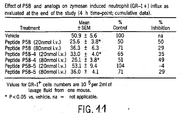
Classifications
-
- C—CHEMISTRY; METALLURGY
- C07—ORGANIC CHEMISTRY
- C07K—PEPTIDES
- C07K14/00—Peptides having more than 20 amino acids; Gastrins; Somatostatins; Melanotropins; Derivatives thereof
- C07K14/435—Peptides having more than 20 amino acids; Gastrins; Somatostatins; Melanotropins; Derivatives thereof from animals; from humans
- C07K14/46—Peptides having more than 20 amino acids; Gastrins; Somatostatins; Melanotropins; Derivatives thereof from animals; from humans from vertebrates
- C07K14/47—Peptides having more than 20 amino acids; Gastrins; Somatostatins; Melanotropins; Derivatives thereof from animals; from humans from vertebrates from mammals
-
- A—HUMAN NECESSITIES
- A61—MEDICAL OR VETERINARY SCIENCE; HYGIENE
- A61K—PREPARATIONS FOR MEDICAL, DENTAL OR TOILETRY PURPOSES
- A61K38/00—Medicinal preparations containing peptides
- A61K38/04—Peptides having up to 20 amino acids in a fully defined sequence; Derivatives thereof
- A61K38/08—Peptides having 5 to 11 amino acids
-
- A—HUMAN NECESSITIES
- A61—MEDICAL OR VETERINARY SCIENCE; HYGIENE
- A61K—PREPARATIONS FOR MEDICAL, DENTAL OR TOILETRY PURPOSES
- A61K38/00—Medicinal preparations containing peptides
- A61K38/04—Peptides having up to 20 amino acids in a fully defined sequence; Derivatives thereof
- A61K38/10—Peptides having 12 to 20 amino acids
-
- A—HUMAN NECESSITIES
- A61—MEDICAL OR VETERINARY SCIENCE; HYGIENE
- A61K—PREPARATIONS FOR MEDICAL, DENTAL OR TOILETRY PURPOSES
- A61K38/00—Medicinal preparations containing peptides
- A61K38/16—Peptides having more than 20 amino acids; Gastrins; Somatostatins; Melanotropins; Derivatives thereof
- A61K38/17—Peptides having more than 20 amino acids; Gastrins; Somatostatins; Melanotropins; Derivatives thereof from animals; from humans
- A61K38/1703—Peptides having more than 20 amino acids; Gastrins; Somatostatins; Melanotropins; Derivatives thereof from animals; from humans from vertebrates
- A61K38/1709—Peptides having more than 20 amino acids; Gastrins; Somatostatins; Melanotropins; Derivatives thereof from animals; from humans from vertebrates from mammals
-
- A—HUMAN NECESSITIES
- A61—MEDICAL OR VETERINARY SCIENCE; HYGIENE
- A61P—SPECIFIC THERAPEUTIC ACTIVITY OF CHEMICAL COMPOUNDS OR MEDICINAL PREPARATIONS
- A61P1/00—Drugs for disorders of the alimentary tract or the digestive system
-
- A—HUMAN NECESSITIES
- A61—MEDICAL OR VETERINARY SCIENCE; HYGIENE
- A61P—SPECIFIC THERAPEUTIC ACTIVITY OF CHEMICAL COMPOUNDS OR MEDICINAL PREPARATIONS
- A61P1/00—Drugs for disorders of the alimentary tract or the digestive system
- A61P1/04—Drugs for disorders of the alimentary tract or the digestive system for ulcers, gastritis or reflux esophagitis, e.g. antacids, inhibitors of acid secretion, mucosal protectants
-
- A—HUMAN NECESSITIES
- A61—MEDICAL OR VETERINARY SCIENCE; HYGIENE
- A61P—SPECIFIC THERAPEUTIC ACTIVITY OF CHEMICAL COMPOUNDS OR MEDICINAL PREPARATIONS
- A61P11/00—Drugs for disorders of the respiratory system
-
- A—HUMAN NECESSITIES
- A61—MEDICAL OR VETERINARY SCIENCE; HYGIENE
- A61P—SPECIFIC THERAPEUTIC ACTIVITY OF CHEMICAL COMPOUNDS OR MEDICINAL PREPARATIONS
- A61P11/00—Drugs for disorders of the respiratory system
- A61P11/06—Antiasthmatics
-
- A—HUMAN NECESSITIES
- A61—MEDICAL OR VETERINARY SCIENCE; HYGIENE
- A61P—SPECIFIC THERAPEUTIC ACTIVITY OF CHEMICAL COMPOUNDS OR MEDICINAL PREPARATIONS
- A61P13/00—Drugs for disorders of the urinary system
- A61P13/02—Drugs for disorders of the urinary system of urine or of the urinary tract, e.g. urine acidifiers
-
- A—HUMAN NECESSITIES
- A61—MEDICAL OR VETERINARY SCIENCE; HYGIENE
- A61P—SPECIFIC THERAPEUTIC ACTIVITY OF CHEMICAL COMPOUNDS OR MEDICINAL PREPARATIONS
- A61P13/00—Drugs for disorders of the urinary system
- A61P13/10—Drugs for disorders of the urinary system of the bladder
-
- A—HUMAN NECESSITIES
- A61—MEDICAL OR VETERINARY SCIENCE; HYGIENE
- A61P—SPECIFIC THERAPEUTIC ACTIVITY OF CHEMICAL COMPOUNDS OR MEDICINAL PREPARATIONS
- A61P13/00—Drugs for disorders of the urinary system
- A61P13/12—Drugs for disorders of the urinary system of the kidneys
-
- A—HUMAN NECESSITIES
- A61—MEDICAL OR VETERINARY SCIENCE; HYGIENE
- A61P—SPECIFIC THERAPEUTIC ACTIVITY OF CHEMICAL COMPOUNDS OR MEDICINAL PREPARATIONS
- A61P15/00—Drugs for genital or sexual disorders; Contraceptives
-
- A—HUMAN NECESSITIES
- A61—MEDICAL OR VETERINARY SCIENCE; HYGIENE
- A61P—SPECIFIC THERAPEUTIC ACTIVITY OF CHEMICAL COMPOUNDS OR MEDICINAL PREPARATIONS
- A61P15/00—Drugs for genital or sexual disorders; Contraceptives
- A61P15/08—Drugs for genital or sexual disorders; Contraceptives for gonadal disorders or for enhancing fertility, e.g. inducers of ovulation or of spermatogenesis
-
- A—HUMAN NECESSITIES
- A61—MEDICAL OR VETERINARY SCIENCE; HYGIENE
- A61P—SPECIFIC THERAPEUTIC ACTIVITY OF CHEMICAL COMPOUNDS OR MEDICINAL PREPARATIONS
- A61P15/00—Drugs for genital or sexual disorders; Contraceptives
- A61P15/10—Drugs for genital or sexual disorders; Contraceptives for impotence
-
- A—HUMAN NECESSITIES
- A61—MEDICAL OR VETERINARY SCIENCE; HYGIENE
- A61P—SPECIFIC THERAPEUTIC ACTIVITY OF CHEMICAL COMPOUNDS OR MEDICINAL PREPARATIONS
- A61P17/00—Drugs for dermatological disorders
-
- A—HUMAN NECESSITIES
- A61—MEDICAL OR VETERINARY SCIENCE; HYGIENE
- A61P—SPECIFIC THERAPEUTIC ACTIVITY OF CHEMICAL COMPOUNDS OR MEDICINAL PREPARATIONS
- A61P17/00—Drugs for dermatological disorders
- A61P17/02—Drugs for dermatological disorders for treating wounds, ulcers, burns, scars, keloids, or the like
-
- A—HUMAN NECESSITIES
- A61—MEDICAL OR VETERINARY SCIENCE; HYGIENE
- A61P—SPECIFIC THERAPEUTIC ACTIVITY OF CHEMICAL COMPOUNDS OR MEDICINAL PREPARATIONS
- A61P17/00—Drugs for dermatological disorders
- A61P17/06—Antipsoriatics
-
- A—HUMAN NECESSITIES
- A61—MEDICAL OR VETERINARY SCIENCE; HYGIENE
- A61P—SPECIFIC THERAPEUTIC ACTIVITY OF CHEMICAL COMPOUNDS OR MEDICINAL PREPARATIONS
- A61P17/00—Drugs for dermatological disorders
- A61P17/14—Drugs for dermatological disorders for baldness or alopecia
-
- A—HUMAN NECESSITIES
- A61—MEDICAL OR VETERINARY SCIENCE; HYGIENE
- A61P—SPECIFIC THERAPEUTIC ACTIVITY OF CHEMICAL COMPOUNDS OR MEDICINAL PREPARATIONS
- A61P19/00—Drugs for skeletal disorders
- A61P19/02—Drugs for skeletal disorders for joint disorders, e.g. arthritis, arthrosis
-
- A—HUMAN NECESSITIES
- A61—MEDICAL OR VETERINARY SCIENCE; HYGIENE
- A61P—SPECIFIC THERAPEUTIC ACTIVITY OF CHEMICAL COMPOUNDS OR MEDICINAL PREPARATIONS
- A61P19/00—Drugs for skeletal disorders
- A61P19/06—Antigout agents, e.g. antihyperuricemic or uricosuric agents
-
- A—HUMAN NECESSITIES
- A61—MEDICAL OR VETERINARY SCIENCE; HYGIENE
- A61P—SPECIFIC THERAPEUTIC ACTIVITY OF CHEMICAL COMPOUNDS OR MEDICINAL PREPARATIONS
- A61P19/00—Drugs for skeletal disorders
- A61P19/08—Drugs for skeletal disorders for bone diseases, e.g. rachitism, Paget's disease
-
- A—HUMAN NECESSITIES
- A61—MEDICAL OR VETERINARY SCIENCE; HYGIENE
- A61P—SPECIFIC THERAPEUTIC ACTIVITY OF CHEMICAL COMPOUNDS OR MEDICINAL PREPARATIONS
- A61P19/00—Drugs for skeletal disorders
- A61P19/08—Drugs for skeletal disorders for bone diseases, e.g. rachitism, Paget's disease
- A61P19/10—Drugs for skeletal disorders for bone diseases, e.g. rachitism, Paget's disease for osteoporosis
-
- A—HUMAN NECESSITIES
- A61—MEDICAL OR VETERINARY SCIENCE; HYGIENE
- A61P—SPECIFIC THERAPEUTIC ACTIVITY OF CHEMICAL COMPOUNDS OR MEDICINAL PREPARATIONS
- A61P21/00—Drugs for disorders of the muscular or neuromuscular system
-
- A—HUMAN NECESSITIES
- A61—MEDICAL OR VETERINARY SCIENCE; HYGIENE
- A61P—SPECIFIC THERAPEUTIC ACTIVITY OF CHEMICAL COMPOUNDS OR MEDICINAL PREPARATIONS
- A61P25/00—Drugs for disorders of the nervous system
-
- A—HUMAN NECESSITIES
- A61—MEDICAL OR VETERINARY SCIENCE; HYGIENE
- A61P—SPECIFIC THERAPEUTIC ACTIVITY OF CHEMICAL COMPOUNDS OR MEDICINAL PREPARATIONS
- A61P25/00—Drugs for disorders of the nervous system
- A61P25/02—Drugs for disorders of the nervous system for peripheral neuropathies
-
- A—HUMAN NECESSITIES
- A61—MEDICAL OR VETERINARY SCIENCE; HYGIENE
- A61P—SPECIFIC THERAPEUTIC ACTIVITY OF CHEMICAL COMPOUNDS OR MEDICINAL PREPARATIONS
- A61P25/00—Drugs for disorders of the nervous system
- A61P25/04—Centrally acting analgesics, e.g. opioids
-
- A—HUMAN NECESSITIES
- A61—MEDICAL OR VETERINARY SCIENCE; HYGIENE
- A61P—SPECIFIC THERAPEUTIC ACTIVITY OF CHEMICAL COMPOUNDS OR MEDICINAL PREPARATIONS
- A61P25/00—Drugs for disorders of the nervous system
- A61P25/06—Antimigraine agents
-
- A—HUMAN NECESSITIES
- A61—MEDICAL OR VETERINARY SCIENCE; HYGIENE
- A61P—SPECIFIC THERAPEUTIC ACTIVITY OF CHEMICAL COMPOUNDS OR MEDICINAL PREPARATIONS
- A61P25/00—Drugs for disorders of the nervous system
- A61P25/14—Drugs for disorders of the nervous system for treating abnormal movements, e.g. chorea, dyskinesia
- A61P25/16—Anti-Parkinson drugs
-
- A—HUMAN NECESSITIES
- A61—MEDICAL OR VETERINARY SCIENCE; HYGIENE
- A61P—SPECIFIC THERAPEUTIC ACTIVITY OF CHEMICAL COMPOUNDS OR MEDICINAL PREPARATIONS
- A61P25/00—Drugs for disorders of the nervous system
- A61P25/24—Antidepressants
-
- A—HUMAN NECESSITIES
- A61—MEDICAL OR VETERINARY SCIENCE; HYGIENE
- A61P—SPECIFIC THERAPEUTIC ACTIVITY OF CHEMICAL COMPOUNDS OR MEDICINAL PREPARATIONS
- A61P25/00—Drugs for disorders of the nervous system
- A61P25/28—Drugs for disorders of the nervous system for treating neurodegenerative disorders of the central nervous system, e.g. nootropic agents, cognition enhancers, drugs for treating Alzheimer's disease or other forms of dementia
-
- A—HUMAN NECESSITIES
- A61—MEDICAL OR VETERINARY SCIENCE; HYGIENE
- A61P—SPECIFIC THERAPEUTIC ACTIVITY OF CHEMICAL COMPOUNDS OR MEDICINAL PREPARATIONS
- A61P25/00—Drugs for disorders of the nervous system
- A61P25/30—Drugs for disorders of the nervous system for treating abuse or dependence
-
- A—HUMAN NECESSITIES
- A61—MEDICAL OR VETERINARY SCIENCE; HYGIENE
- A61P—SPECIFIC THERAPEUTIC ACTIVITY OF CHEMICAL COMPOUNDS OR MEDICINAL PREPARATIONS
- A61P25/00—Drugs for disorders of the nervous system
- A61P25/30—Drugs for disorders of the nervous system for treating abuse or dependence
- A61P25/36—Opioid-abuse
-
- A—HUMAN NECESSITIES
- A61—MEDICAL OR VETERINARY SCIENCE; HYGIENE
- A61P—SPECIFIC THERAPEUTIC ACTIVITY OF CHEMICAL COMPOUNDS OR MEDICINAL PREPARATIONS
- A61P27/00—Drugs for disorders of the senses
- A61P27/02—Ophthalmic agents
- A61P27/06—Antiglaucoma agents or miotics
-
- A—HUMAN NECESSITIES
- A61—MEDICAL OR VETERINARY SCIENCE; HYGIENE
- A61P—SPECIFIC THERAPEUTIC ACTIVITY OF CHEMICAL COMPOUNDS OR MEDICINAL PREPARATIONS
- A61P29/00—Non-central analgesic, antipyretic or antiinflammatory agents, e.g. antirheumatic agents; Non-steroidal antiinflammatory drugs [NSAID]
-
- A—HUMAN NECESSITIES
- A61—MEDICAL OR VETERINARY SCIENCE; HYGIENE
- A61P—SPECIFIC THERAPEUTIC ACTIVITY OF CHEMICAL COMPOUNDS OR MEDICINAL PREPARATIONS
- A61P3/00—Drugs for disorders of the metabolism
-
- A—HUMAN NECESSITIES
- A61—MEDICAL OR VETERINARY SCIENCE; HYGIENE
- A61P—SPECIFIC THERAPEUTIC ACTIVITY OF CHEMICAL COMPOUNDS OR MEDICINAL PREPARATIONS
- A61P3/00—Drugs for disorders of the metabolism
- A61P3/04—Anorexiants; Antiobesity agents
-
- A—HUMAN NECESSITIES
- A61—MEDICAL OR VETERINARY SCIENCE; HYGIENE
- A61P—SPECIFIC THERAPEUTIC ACTIVITY OF CHEMICAL COMPOUNDS OR MEDICINAL PREPARATIONS
- A61P3/00—Drugs for disorders of the metabolism
- A61P3/06—Antihyperlipidemics
-
- A—HUMAN NECESSITIES
- A61—MEDICAL OR VETERINARY SCIENCE; HYGIENE
- A61P—SPECIFIC THERAPEUTIC ACTIVITY OF CHEMICAL COMPOUNDS OR MEDICINAL PREPARATIONS
- A61P31/00—Antiinfectives, i.e. antibiotics, antiseptics, chemotherapeutics
-
- A—HUMAN NECESSITIES
- A61—MEDICAL OR VETERINARY SCIENCE; HYGIENE
- A61P—SPECIFIC THERAPEUTIC ACTIVITY OF CHEMICAL COMPOUNDS OR MEDICINAL PREPARATIONS
- A61P31/00—Antiinfectives, i.e. antibiotics, antiseptics, chemotherapeutics
- A61P31/04—Antibacterial agents
-
- A—HUMAN NECESSITIES
- A61—MEDICAL OR VETERINARY SCIENCE; HYGIENE
- A61P—SPECIFIC THERAPEUTIC ACTIVITY OF CHEMICAL COMPOUNDS OR MEDICINAL PREPARATIONS
- A61P31/00—Antiinfectives, i.e. antibiotics, antiseptics, chemotherapeutics
- A61P31/12—Antivirals
-
- A—HUMAN NECESSITIES
- A61—MEDICAL OR VETERINARY SCIENCE; HYGIENE
- A61P—SPECIFIC THERAPEUTIC ACTIVITY OF CHEMICAL COMPOUNDS OR MEDICINAL PREPARATIONS
- A61P35/00—Antineoplastic agents
-
- A—HUMAN NECESSITIES
- A61—MEDICAL OR VETERINARY SCIENCE; HYGIENE
- A61P—SPECIFIC THERAPEUTIC ACTIVITY OF CHEMICAL COMPOUNDS OR MEDICINAL PREPARATIONS
- A61P37/00—Drugs for immunological or allergic disorders
-
- A—HUMAN NECESSITIES
- A61—MEDICAL OR VETERINARY SCIENCE; HYGIENE
- A61P—SPECIFIC THERAPEUTIC ACTIVITY OF CHEMICAL COMPOUNDS OR MEDICINAL PREPARATIONS
- A61P37/00—Drugs for immunological or allergic disorders
- A61P37/08—Antiallergic agents
-
- A—HUMAN NECESSITIES
- A61—MEDICAL OR VETERINARY SCIENCE; HYGIENE
- A61P—SPECIFIC THERAPEUTIC ACTIVITY OF CHEMICAL COMPOUNDS OR MEDICINAL PREPARATIONS
- A61P39/00—General protective or antinoxious agents
- A61P39/06—Free radical scavengers or antioxidants
-
- A—HUMAN NECESSITIES
- A61—MEDICAL OR VETERINARY SCIENCE; HYGIENE
- A61P—SPECIFIC THERAPEUTIC ACTIVITY OF CHEMICAL COMPOUNDS OR MEDICINAL PREPARATIONS
- A61P7/00—Drugs for disorders of the blood or the extracellular fluid
-
- A—HUMAN NECESSITIES
- A61—MEDICAL OR VETERINARY SCIENCE; HYGIENE
- A61P—SPECIFIC THERAPEUTIC ACTIVITY OF CHEMICAL COMPOUNDS OR MEDICINAL PREPARATIONS
- A61P7/00—Drugs for disorders of the blood or the extracellular fluid
- A61P7/02—Antithrombotic agents; Anticoagulants; Platelet aggregation inhibitors
-
- A—HUMAN NECESSITIES
- A61—MEDICAL OR VETERINARY SCIENCE; HYGIENE
- A61P—SPECIFIC THERAPEUTIC ACTIVITY OF CHEMICAL COMPOUNDS OR MEDICINAL PREPARATIONS
- A61P9/00—Drugs for disorders of the cardiovascular system
-
- A—HUMAN NECESSITIES
- A61—MEDICAL OR VETERINARY SCIENCE; HYGIENE
- A61P—SPECIFIC THERAPEUTIC ACTIVITY OF CHEMICAL COMPOUNDS OR MEDICINAL PREPARATIONS
- A61P9/00—Drugs for disorders of the cardiovascular system
- A61P9/04—Inotropic agents, i.e. stimulants of cardiac contraction; Drugs for heart failure
-
- A—HUMAN NECESSITIES
- A61—MEDICAL OR VETERINARY SCIENCE; HYGIENE
- A61P—SPECIFIC THERAPEUTIC ACTIVITY OF CHEMICAL COMPOUNDS OR MEDICINAL PREPARATIONS
- A61P9/00—Drugs for disorders of the cardiovascular system
- A61P9/10—Drugs for disorders of the cardiovascular system for treating ischaemic or atherosclerotic diseases, e.g. antianginal drugs, coronary vasodilators, drugs for myocardial infarction, retinopathy, cerebrovascula insufficiency, renal arteriosclerosis
-
- A—HUMAN NECESSITIES
- A61—MEDICAL OR VETERINARY SCIENCE; HYGIENE
- A61P—SPECIFIC THERAPEUTIC ACTIVITY OF CHEMICAL COMPOUNDS OR MEDICINAL PREPARATIONS
- A61P9/00—Drugs for disorders of the cardiovascular system
- A61P9/12—Antihypertensives
-
- C—CHEMISTRY; METALLURGY
- C07—ORGANIC CHEMISTRY
- C07K—PEPTIDES
- C07K5/00—Peptides containing up to four amino acids in a fully defined sequence; Derivatives thereof
- C07K5/04—Peptides containing up to four amino acids in a fully defined sequence; Derivatives thereof containing only normal peptide links
- C07K5/10—Tetrapeptides
- C07K5/1002—Tetrapeptides with the first amino acid being neutral
- C07K5/1005—Tetrapeptides with the first amino acid being neutral and aliphatic
- C07K5/101—Tetrapeptides with the first amino acid being neutral and aliphatic the side chain containing 2 to 4 carbon atoms, e.g. Val, Ile, Leu
-
- C—CHEMISTRY; METALLURGY
- C07—ORGANIC CHEMISTRY
- C07K—PEPTIDES
- C07K7/00—Peptides having 5 to 20 amino acids in a fully defined sequence; Derivatives thereof
- C07K7/04—Linear peptides containing only normal peptide links
- C07K7/06—Linear peptides containing only normal peptide links having 5 to 11 amino acids
-
- C—CHEMISTRY; METALLURGY
- C07—ORGANIC CHEMISTRY
- C07K—PEPTIDES
- C07K7/00—Peptides having 5 to 20 amino acids in a fully defined sequence; Derivatives thereof
- C07K7/04—Linear peptides containing only normal peptide links
- C07K7/08—Linear peptides containing only normal peptide links having 12 to 20 amino acids
-
- Y—GENERAL TAGGING OF NEW TECHNOLOGICAL DEVELOPMENTS; GENERAL TAGGING OF CROSS-SECTIONAL TECHNOLOGIES SPANNING OVER SEVERAL SECTIONS OF THE IPC; TECHNICAL SUBJECTS COVERED BY FORMER USPC CROSS-REFERENCE ART COLLECTIONS [XRACs] AND DIGESTS
- Y02—TECHNOLOGIES OR APPLICATIONS FOR MITIGATION OR ADAPTATION AGAINST CLIMATE CHANGE
- Y02A—TECHNOLOGIES FOR ADAPTATION TO CLIMATE CHANGE
- Y02A50/00—TECHNOLOGIES FOR ADAPTATION TO CLIMATE CHANGE in human health protection, e.g. against extreme weather
- Y02A50/30—Against vector-borne diseases, e.g. mosquito-borne, fly-borne, tick-borne or waterborne diseases whose impact is exacerbated by climate change
Definitions
- the invention relates to bioactive peptides.
- GPCRs G-protein coupled receptors
- ligands Upon binding of a ligand to an extra-cellular portion or fragment of a GPCR, a signal is transduced within the cell that results in a change in a biological or physiological property or behavior of the cell.
- GPCRs are the components of a modular signaling system that connects the state of intra-cellular second messengers to extra-cellular inputs ( Pierce et al 2002, Nature Reviews Molecular Cell Biology 3, 639-650 ).
- the GPCRs seem to be of critical importance to both the central nervous system and peripheral physiological processes.
- the GPCR superfamily is diverse and sequencing of the human genome has revealed >850 genes that encode them ( Hopkins and Groom 2002, Nature Reviews Drug Discovery 1, 727-730 ). There is great diversity within the GPCRs, which is matched by a great variety of ligands that activate them.
- Known drugs target only -30 members of the GPCR family, mainly biogenic amine receptors. Thus, there is an enormous potential within the pharmaceutical industry to exploit the remaining family members, including the >100 orphan receptors for which no existing ligands have so far been identified ( Gilchrist 2004, Expert Opin. Ther. Targets 8, 495-498 ).
- the FPRL1 receptor belongs to the FPR (formyl-peptide receptor) related family of GPCRs that also includes FPR and FPRL2 ( Le et al 2001, Cytokine and Growth Factor Reviews 12, 91-105 ).
- This receptor also known as the lipoxin A 4 receptor, ALXR, binds pleiotropic ligands, i.e. both lipids and peptides, and is expressed primarily by neutrophils, eosinophils and monocytes ( Chiang et al 2006, Pharmacological Reviews 58, 463-487 ).
- LXA4 lipoxin A 4
- ATLs aspirin-triggered lipoxins
- AnnexinI protein and its N-tcrminal derived peptides have shown anti-inflammatory properties in various experimental animal models ( Gavins et al 2005, Prostaglandins, Leukotrienes and Essential Fatty Acids 73, 211-219 ).
- LXA4 and its stable analog ATLa
- Ac2-26 a peptide derived from the N-terminus of AnnexinI
- FPRL1 agonists open new avenues and approaches to therapeutic interventions via accelerated resolution of inflammation, and might have a beneficial therapeutic value in various pathological inflammatory conditions, such as ischemia/reperfusion injury, organ transplantation, inflammatory bowel disease, psoriasis, asthma, and arthritis.
- pathological inflammatory conditions such as ischemia/reperfusion injury, organ transplantation, inflammatory bowel disease, psoriasis, asthma, and arthritis.
- a stable lipoxin analog is indeed in clinical development for inflammatory bowel disease (Berlex).
- D1 Bae Yoe-Sik et al, "Differential Signalling of Formyl Peptide Receptor-like 1 by Trp-Lys-Tyr-Met-Val-Met-CONH2 or lipoxin A4 in human neutrophils", Molecular Pharmacology, Sept 2003, Vol 64, pp 721-730 ) relates to classical chemoattractant receptors which are of fundamental importance to immune responses. The two major roles of such receptors are the modulation of chemotaxis and the generation of reactive oxygen species.
- the formyl peptide receptor-like 1 can be stimulated by two different ligands, Trp-Lys-Tyr-Met-Val-Met-CONH2 (WKYMVM) and lipoxin A4 (LXA4).
- WKYMVM Trp-Lys-Tyr-Met-Val-Met-CONH2
- LXA4 lipoxin A4
- WKYMVM but not LXA4 stimulated superoxide generation in neutrophils.
- FPRL1 the authors compared the signaling pathways downstream of FPRL1 by the two different ligands. At first, the authors confirmed that both WKYMVM and LXA4 caused intracellular calcium ([Ca2+]i) increase in a pertussis toxin-sensitive manner and that these ligands competitively inhibited each other with respect to [Ca2+]i increase in neutrophils. This result suggests that WKYMVM and LXA4 share the same receptor, FPRL1.
- WKYMVM By investigating cellular signaling by WKYMVM and LXA4, the authors found that WKYMVM but not LXA4 induced extracellular signal-regulated protein kinases (ERKs), c-Jun NH2-terminal kinase, and phospholipase A2 (PLA2) activation. The authors also found that ERK-mediated cytosolic PLA2 activity is essential for superoxide generation. These results indicate that the activation of FPRL1 by the two different ligands can induce differential cellular signaling and unique functional consequences in human neutrophils.
- ERKs extracellular signal-regulated protein kinases
- PLA2 phospholipase A2
- both agonists stimulated cytosolic phospholipase A2-mediated arachidonic acid release, a precursor of leukotriene B4 (LTB4) and prostaglandin E2 (PGE2).
- WKYMVm also strongly stimulated LTB4 production in human neutrophils without affecting PGE2 production
- SAA strongly stimulates cyclooxygenase-2 (COX-2) expression and PGE2 production but not LTB4 production.
- COX-2 cyclooxygenase-2
- FPRL1 is involved in the production of LTB4 by WKYMVm and PGE2 production by SAA. This study demonstrates that the chemoattractant receptor, FPRL1, can be differentially regulated by distinct ligands to generate different lipid mediators, and thus, different immune responses.
- the invention is based in part on the identification of novel peptides: Peptide 58-type peptides, that act as ligands of known GPCR receptors, but do not show significant homology to known GPCR ligands.
- Peptides exemplified by Peptide 58, and compounds of Formula I activate FPRL1 (FPR-related receptor 1) (also known as lipoxin A 4 receptor, LXA4R or ALXR).
- FPRL1 FPR-related receptor 1
- LXA4R lipoxin A 4 receptor
- ALXR ALXR
- FPRL1 lipoxin A 4 receptor
- Peptide 58 induce calcium flux in FPRL-1 expressing cells.
- Peptide 58 and peptides derived from it exhibit anti-inflammatory activity in a mouse model of acute inflammation.
- peptides represented by Peptide 58, as well as compounds within Formula I are useful as agonists in conditions benefiting from increasing the activity of a FPRL1, such as acute and chronic inflammation.
- the invention in one embodiment includes a peptide less than 30 amino acids in length, said polypeptide comprising the amino acid sequence of Formula as defined in claim 1.
- the invention discloses any one of the foregoing peptides, wherein said peptide binds to a G-protein coupled receptor (GPCR) protein.
- GPCR G-protein coupled receptor
- the invention discloses any one of the foregoing peptides, wherein said GPCR protein belongs to the FPR-related family of proteins, selected from the group consisting of FPR, FPRL1 and FPRL2.
- the invention discloses any one of the foregoing peptides, wherein said peptide activates a GPCR protein.
- the invention discloses any one of the foregoing peptides, wherein said peptide is a degradation product of a naturally occurring protein isolated from a cell.
- the invention discloses any one of the foregoing peptides, wherein said peptide is isolated from a protein recombinantly produced in a cell, selected from a prokaryotic or eukaryotic cell.
- the invention discloses any one of the foregoing peptides, wherein said peptide is chemically synthesized in vitro.
- the invention in another embodiment includes any one of the foregoing peptides, wherein said peptide is coupled to a biotin moiety, or wherein said peptide includes a disulfide bond, or wherein said peptide is a cyclic peptide, or wherein said peptide is a cyclic lactam, or wherein said peptide is a branched peptide, or wherein said peptide is phosphorylated, optionaly wherein phosphorylation is at an S, T, or Y residue.
- the invention in another embodiment includes any one of the foregoing peptides, wherein said peptide is modified at its amino terminus, optionally wherein said amino terminal modification includes an N-glycated, N-alkylated, N-acetylated or N-acylated amino acid.
- the invention in another embodiment includes any one of the foregoing peptides, wherein said peptide is pegylated or sialylated.
- the invention in another embodiment includes any one of the foregoing peptides, wherein said peptide includes a C-terminal amidated amino acid.
- the invention discloses any one of the foregoing peptides, wherein said non-naturally occurring amino acid is an omega-amino acid.
- the invention in another embodiment includes any one of the foregoing peptides, wherein said omega-acid is beta-alanine (beta-Ala), or 3 aminopropionic (3-aP).
- the invention in another embodiment includes any one of the foregoing peptides, wherein said non-naturally occurring amino acid is sarcosine (Sar), ⁇ -alanine ( ⁇ -Ala), 2,3 diaminopropionic (2,3-diaP) or alpha-aminisobutyric acid (Aib); omega-acid is beta-alanine (beta-Ala), or 3 aminopropionic (3-aP).
- said non-naturally occurring amino acid is sarcosine (Sar), ⁇ -alanine ( ⁇ -Ala), 2,3 diaminopropionic (2,3-diaP) or alpha-aminisobutyric acid (Aib); omega-acid is beta-alanine (beta-Ala), or 3 aminopropionic (3-aP).
- the invention in another embodiment includes any one of the foregoing peptides, wherein said hydrophobic non-naturally occurring amino acid is t butylalanine (t BuA), t butylglycine (t BuG), N methylisoleucine (N MeIle), norleucine (Nle), methylvaline (Mvl), cyclohexylalanine (Cha), phenylglycine (Phg), NaI, ⁇ 2-thienylalanine (Thi), 2 naphthylalanine (2 Nal), or 1,2,3,4-tetrahydroisoquinoline-3 carboxylic acid (Tic).
- the invention in another embodiment includes any one of the foregoing peptides, wherein said basic non-naturally occurring amino acid is ornithine (Orn) or homoarginine (Har).
- the invention in another embodiment includes any one of the foregoing peptides, wherein neutral/polar non-naturally occurring amino acid is citrulline (Cit), Acetyl Lys, or methionine sulfoxide (MSO).
- neutral/polar non-naturally occurring amino acid is citrulline (Cit), Acetyl Lys, or methionine sulfoxide (MSO).
- the invention in another embodiment includes any one of the foregoing peptides, wherein said peptide is less than 20 or 10 amino acids.
- the invention in another embodiment includes any one of the foregoing peptides, wherein peptide comprises the amino acid sequence of Formula VI wherein the peptide is selected from the group consisting of:
- the invention discloses any one of the foregoing peptides, wherein said peptide is conjugated or fused to a second peptide or polypeptide, optionally wherein said second peptide or polypeptide are multiple antigenic peptides (MAP), or wherein said second peptide or polypeptide comprises a portion of an immunoglobulin, or wherein said second peptide or polypeptide comprises albumin or a portion of albumin.
- MAP multiple antigenic peptides
- the invention discloses any one of the foregoing peptides, wherein said second peptide or polypeptide includes a signal sequence.
- the invention discloses any one of the foregoing peptides, wherein signal sequence comprises: MATASPSVFLLMVNGQVES (SEQ ID NO:9) when said peptide is Formula I.
- the invention in another embodiment includes a pharmaceutical composition comprising any one of the foregoing peptides and a pharmaceutically acceptable carrier.
- the invention discloses any one of the foregoing peptide fragments, wherein said GPCR protein is the FPRL1 protein when said peptide is Formula VI.
- the invention discloses a purified nucleic acid sequence encoding any one of the foregoing peptides.
- the invention in another embodiment includes the use of the present peptides for the preparation of a medicament for use in a method of treating a cardiovascular disorder, said method comprising administering to a subject in need thereof a therapeutically effective amount of any one of the foregoing peptides, wherein said peptide is Formula I.
- the invention in another embodiment includes the foregoing method, wherein said cardiovascular disorder is selected from a group consisting of peripheral vascular diseases and medicament for use in coronary artery diseases, myocardial infarction; heart injury; congestive heart failure (CHF); myocardial failure; myocardial hypertrophy; ischemic cardiomyopathy; systolic heart failure; diastolic heart failure; stroke; thrombotic stroke; concentric LV hypertrophy, myocarditis; cardiomyopathy; hypertrophic cardiomyopathy; myocarditis; decompensated heart failure; ischemic myocardial disease; congenital heart disease; angina pectoris; prevention of heart remodeling or ventricular remodeling after myocardial infarction; ischemia - reperfusion injury in ischemic and post-ischcmic events (e.g. myocardial infarct); ccrcbrovascular accidcnt; mitral valve regurgitation; hypertension; hypotension; restenosis; fibrosis;
- the invention in another embodiment includes the use of the present peptides for the preparation of a medicament for use in a method of treating an ischemia-reperfusion injury related disorder, said method comprising administering to a subject in need thereof a therapeutically effective amount of anyone of foregoing peptides, wherein said peptide is Formula VI.
- the invention in another embodiment includes the foregoing use, wherein said ischemia-reperfusion injury related disorder is associated with ischemic and post-ischemic events in organs and tissues, and the disorder is selected from a group consisting of thrombotic stroke; myocardial infarction; angina pectoris; embolic vascular occlusions; peripheral vascular insufficiency; splanchnic artery occlusion; arterial occlusion by thrombi or embolisms, arterial occlusion by non-occlusive processes such as following low mesenteric flow or sepsis; mesenteric arterial occlusion; mesenteric vein occlusion; ischemia-reperfusion injury to the mesenteric microcirculation; ischemic acute renal failure; ischemia-reperfusion injury to the cerebral tissue; intestinal intussusception; hemodynamic shock; tissue dysfunction; organ failure; restenosis; atherosclerosis; thrombosis; platelet aggregation; or following conditions selected from a
- the invention in another embodiment includes the use of the present peptides for the preparation of a medicament for use in a method of treating an inflammatory disorder in a subject, said method comprising administering to a subject in need thereof a therapeutically effective amount of anyone of the foregoing peptides, wherein said peptide is Formula VI.
- the invention in another embodiment includes the foregoing use, wherein said inflammatory disorder is selected from the group consisting of gastritis, gout, gouty arthritis, arthritis, rheumatoid arthritis, inflammatory bowel disease, Crohn's disease, ulcerative colitis, ulcers, chronic bronchitis, asthma, allergy, acute lung injury, pulmonary inflammation, airway hyper-responsiveness, vasculitis, septic shock and inflammatory skin disorders, selected from the list comprising of psoriasis, atopic dermatitis, and eczema.
- said inflammatory disorder is selected from the group consisting of gastritis, gout, gouty arthritis, arthritis, rheumatoid arthritis, inflammatory bowel disease, Crohn's disease, ulcerative colitis, ulcers, chronic bronchitis, asthma, allergy, acute lung injury, pulmonary inflammation, airway hyper-responsiveness, vasculitis, septic shock and inflammatory skin disorders, selected from the list comprising
- the invention in another embodiment includes the use of the present peptides for the preparation of a medicament for use in a method of treating inflammatory conditions associated with an infection, said infection being a bacterial infection or viral infection or an infection caused by another type of pathogen, in a subject, said method comprising administering to a subject in need thereof a therapeutically effective amount of anyone of the foregoing peptides, wherein said peptide is Formula VI.
- the invention in another embodiment includes the foregoing use, wherein said inflammatory disorder is associated with a bacterial infection or viral infection or an infection caused by another type of pathogen, selected from a group consisting of a viral infection caused by human immunodeficiency virus I (HIV-1) or HIV-2, acquired immune deficiency (AIDS), West Nile encephalitis virus, coronavirus, rhinovirus, influenza virus, dengue virus, hemorrhagic fever; an otological infection; severe acute respiratory syndrome (SARS), sepsis and sinusitis.
- HIV-1 human immunodeficiency virus I
- HIV-2 acquired immune deficiency
- AIDS acquired immune deficiency
- SARS severe acute respiratory syndrome
- the invention in another embodiment includes the use of the present peptides for the preparation of a medicament for use in a method of treating a fibrotic condition in a subject, involving tissue remodeling following inflammation or ischemia-reperfusion injury, said method comprising administering to a subject in need thereof a therapeutically effective amount of anyone of the foregoing peptides, wherein said peptide is Formula VI.
- the invention in another embodiment includes the foregoing method, wherein said fibrotic conditions is selected from a group consisting of endomyocardial fibrosis; mediastinal fibrosis; idiopathy pulmonary fibrosis; pulmonary fibrosis; retroperitoneal fibrosis; fibrosis of the spleen; fibrosis of the pancreas; hepatic fibrosis (cirrhosis); fibromatosis; granulomatous lung disease; and glomerulonephritis
- said fibrotic conditions is selected from a group consisting of endomyocardial fibrosis; mediastinal fibrosis; idiopathy pulmonary fibrosis; pulmonary fibrosis; retroperitoneal fibrosis; fibrosis of the spleen; fibrosis of the pancreas; hepatic fibrosis (cirrhosis); fibromatosis; granulomatous lung disease; and glomerulonephritis
- the invention in another embodiment includes the use of the present peptides for the preparation of a medicament for use in a method of treating a respiratory disease in a subject, said method comprising administering to a subject in need thereof a therapeutically effective amount of anyone of the foregoing peptides, wherein said peptide is Formula VI.
- the invention in another embodiment includes the foregoing use, wherein said respiratory disease is selected from a group consisting of asthma, bronchial disease, lung diseases, cystic fibrosis, chronic obstructive pulmonary disease (COPD), Acute Respiratory Distress Syndrome (ARDS), severe acute respiratory syndrome (SARS).
- COPD chronic obstructive pulmonary disease
- ARDS Acute Respiratory Distress Syndrome
- SARS severe acute respiratory syndrome
- the invention in another embodiment includes the use of the present peptides for the preparation of a medicament for use in a method of preventing or treating a skin injury or tissue repair, said method comprising administering to a subject in need thereof a therapeutically effective amount of anyone of the foregoing peptides, wherein said peptide is Formula VI.
- the invention in another embodiment includes the foregoing use, wherein said skin injury is selected from a group selected of dermal repair, wound healing; burns, erythemas, skin or tissue lesions, and skin tumors.
- the invention in another embodiment includes the use of the present peptides for the preparation of a medicament for use in a method of treating a bone disease in a subject, said method comprising administering to a subject in need thereof a therapeutically effective amount of anyone of the foregoing peptides, wherein said peptide is Formula VI.
- the invention in another embodiment includes the foregoing use, wherein said bone disease is osteoporosis.
- the invention in another embodiment includes the use of the present peptides for the preparation of a medicament for use in a method of activating or inducing chemoattraction of blood cells to a site of injury in a subject, said method comprising administering to a subject in need thereof a therapeutically effective amount of anyone of the foregoing peptides, wherein said peptide is Formula VI .
- the invention in another embodiment includes the foregoing use, wherein said blood cells are selected from a group consisting of phagocyte cells, platelets, monocytes, macrophages, neutrophils, eosinophils and lymphocytes.
- the invention in another embodiment includes the use of the present peptides for the preparation of a medicament for use in a method of treating an immune related disorder in a subject, said method comprising administering to a subject in need thereof a therapeutically effective amount of anyone of the foregoing peptides, wherein said peptide is Formula VI.
- the invention in another embodiment includes the foregoing use, wherein said immune related disorder is selected from a group consisting of graft versus host disease; transplant rejection, bone marrow transplantation.
- the invention in another embodiment includes the foregoing use, wherein said immune related disorder is an autoimmune disease and is selected from a group consisting of multiple sclerosis, psoriasis, rheumatoid arthritis, systemic lupus erythematosus, ulcerative colitis, Crohn's disease, transplant rejection, immune disorders associated with graft transplantation rejection, benign lymphocytic angiitis, lupus erythematosus, Hashimoto's thyroiditis, primary myxedema, Graves' disease, pernicious anemia, autoimmune atrophic gastritis, Addison's disease, insulin dependent diabetes mellitis, Good pasture's syndrome, myasthenia gravis, pemphigus, sympathetic ophthalmia, autoimmune uveitis, autoimmune hemolytic anemia, idiopathic thrombocytopenia, primary biliary cirrhosis, chronic action hepatitis, ulceratis colitis, Sjo
- the invention in another embodiment includes the use of the present peptides in the preparation of a medicament for use in a method of treating a cancer or inflammation associated with cancer in a patient, said method comprising administering to a subject in need thereof a therapeutically effective amount of anyone of the foregoing peptides, wherein said peptide is Formula VI.
- the invention in another embodiment includes the foregoing use, wherein said cancer is selected from a group consisting of colon cancer, lung cancer, breast cancer, prostate cancer, brain cancer, pancreatic cancer, ovarian cancer, kidney cancer, melanoma, glioma, a carcinoma, a sarcoma, a leukemia, or lymphoma, including their invasive and metastatic forms.
- said cancer is selected from a group consisting of colon cancer, lung cancer, breast cancer, prostate cancer, brain cancer, pancreatic cancer, ovarian cancer, kidney cancer, melanoma, glioma, a carcinoma, a sarcoma, a leukemia, or lymphoma, including their invasive and metastatic forms.
- the invention in another embodiment includes the use of the present peptides in the preparation of a medicament for use in a method of treating an angiogenesis related disease in a patient, said method comprising administering to a subject in need thereof a therapeutically effective amount of of anyone of the foregoing peptides, wherein said peptide is Formula VI.
- the invention in another embodiment includes the foregoing use, wherein said angiogenesis related disease is retinal angiogenesis in human ocular diseases and is selected from a group consisting of diabetes mellitus, retinopathy of prematury, and age-related macular degeneration.
- the invention in another embodiment includes the foregoing use, wherein said angiogenesis related disease is primary or metastatic cancer, and is selected from a group consisting of prostate cancer, brain cancer, breast cancer, colorectal cancer, lung cancer, ovarian cancer, pancreatic cancer, renal cancer, cervical cancer, melanoma, soft tissue sarcomas, lymphomas, head-and-neck cancer, and glioblastomas.
- said angiogenesis related disease is primary or metastatic cancer, and is selected from a group consisting of prostate cancer, brain cancer, breast cancer, colorectal cancer, lung cancer, ovarian cancer, pancreatic cancer, renal cancer, cervical cancer, melanoma, soft tissue sarcomas, lymphomas, head-and-neck cancer, and glioblastomas.
- the invention in another embodiment includes the use of the present peptides in the preparation of a medicament for use in a method of preventing or treating alopecia in a patient, including chemotherapy (such as etoposide)-induced alopecia, said method comprising administering to a subject in need thereof a therapeutically effective amount of of anyone of the foregoing peptides, wherein said peptide is Formula VI.
- the invention discloses the cDNA that encodes the peptide sequences of the invention, which can be used in gene therapy.
- gene therapy can be used to deliver to a subject a peptide according to the invention.
- a nucleic acid encoding the peptide can be inserted into vectors, which are then used as gene therapy vectors.
- Gene therapy vectors can be delivered to a subject by, for example, intravenous injection, local administration or by stereotactic injection.
- the pharmaceutical preparation of the gene therapy vector can include the gene therapy vector in an acceptable diluent, or can comprise a slow release matrix in which the gene delivery vehicle is imbedded.
- the pharmaceutical preparation can include one or more cells that produce the gene delivery system.
- the invention in another embodiment discloses combination therapy using one or more peptides of the present invention provided in combination with another therapeutic agent or agents.
- combination therapy refers to treatment of a single condition or disease involving the concomitant use of more than one therapeutic agent.
- the invention in another embodiment includes an antibody that selectively binds to an epitope in anyone of the foregoing peptides.
- the invention in another embodiment includes anyone of the foregoing antibodies, wherein said peptide is TIPMFVPESTSKLQKFTSWFM (SEQ ID NO. 1), FTSWFM (SEQ ID NO. 2), LQKFTSWFM (SEQ ID NO.3), TIPMFVPESTSTLQKFTSWFM (SEQ ID NO. 4), HKRTIPMFVPESTSKLQKFTSWFM (SEQ ID NO.5).
- said peptide is TIPMFVPESTSKLQKFTSWFM (SEQ ID NO. 1), FTSWFM (SEQ ID NO. 2), LQKFTSWFM (SEQ ID NO.3), TIPMFVPESTSTLQKFTSWFM (SEQ ID NO. 4), HKRTIPMFVPESTSKLQKFTSWFM (SEQ ID NO.5).
- the invention in another embodiment includes anyone of the foregoing antibodies, wherein the antibody is a monoclonal antibody.
- the invention in another embodiment includes anyone of the foregoing antibodies, wherein the antibody is conjugated or coupled to a detectable label, a radioactive label, an enzyme, a fluorescent label, a luminescent label, a bioluminescent label, or a therapeutic agent.
- the invention provides bioactive peptides. These peptides are useful, inter alia , for treating a variety of indications and disorders, which are discussed in detail below.
- the peptides are ligands for GPCR receptors.
- bioactive peptides falling within Formula VI are provided.
- Peptide 58-type peptides are provided.
- a peptide consisting of the amino acid sequence of TIPMFVPESTSKLQKFTSWFM (SEQ ID NO:1) is also referred to herein as Peptide 58.
- Table 5 P58-type peptides falling within Formula I: Name Sequence SEQ ID P58 TIPMFVPESTSKLQKFTSWFM-amide SEQ ID 1 P58_4 FTSWFM-amide SEQ ID 2 P58_5 LQKFTSWFM-amide SEQ ID 3 P58_10 TIPMFVPESTSTLQKFTSWFM-amide SEQ ID 4 P58 derivative HKRTIPMFVPESTSKLQKFTSWFM-amide SEQ ID 5
- a peptide within Formula VI can be provided as part of a longer peptide that includes the specified amino acid sequence.
- the peptide can be provided on a peptide that is less than 25, 24, 23, 22, 21, 20, 19, 18, or 17 amino acids.
- a peptide within Formula VI activates a GPCR protein.
- Activation of a GPCR protein can be measured using methods known in the art.
- a peptide within Formula VI can be provided conjugated to a second peptide or polypeptide.
- second peptides or polypeptides are multiple antigenic peptides (MAP) and a signal sequence.
- MAP multiple antigenic peptides
- Suitable signal sequences include, e.g., MATASPSVFLLMVNGQVES (SEQ ID NO: 9).
- the second peptide or polypeptide is an immunoglobulin sequence (e.g., an IgG sequence).
- Immunoreactive ligands for use as a targeting moiety in the invention include an antigen-recognizing immunoglobulin (also referred to as "antibody”), or antigen-recognizing fragment thereof, e.g., immunoglobulins that can recognize a tumor-associated antigen.
- immunoglobulin refers to any recognized class or subclass of immunoglobulins such as IgG, IgA, IgM, IgD, or IgE.
- immunoglobulins which fall within the IgG class of immunoglobulins.
- the immunoglobulin can be derived from any species. Preferably, however, the immunoglobulin is of human, murine, or rabbit origin. In addition, the immunoglobulin may be polyclonal or monoclonal, but is preferably monoclonal.
- Conjugates of the invention may include an antigen-recognizing immunoglobulin fragment.
- immunoglobulin fragments may include, for example, the Fab', F (ab') 2, Fv or Fab fragments, or other antigen-recognizing immunoglobulin fragments.
- immunoglobulin fragments can be prepared, for example, by proteolytic enzyme digestion, for example, by pepsin or papain digestion, reductive alkylation, or recombinant techniques. The materials and methods for preparing such immunoglobulin fragments are well-known to those skilled in the art. See Parham, J. Immunology, 131,2895, 1983 ; Lamoyi et al. , J. Immunological Methods, 56,235, 1983 .
- polypeptide refers to a polymer of amino acid residues.
- the terms apply to amino acid polymers in which one or more amino acid residue is an analog or mimetic of a corresponding naturally occurring amino acid, as well as to naturally occurring amino acid polymers.
- the terms encompass any peptide (including cyclic peptides) or protein comprising two or more amino acids joined to each other by peptide bonds or modified peptide bonds.
- Polypeptide refers to both short chains, commonly referred to as peptides, oligopeptides or oligomers, and to longer chains, generally referred to as proteins.
- Polypeptides include amino acid sequences modified either by natural processes, or by chemical modification techniques which are well known in the art. Modifications may occur anywhere in a polypeptide, including the peptide backbone, the amino acid side-chains, and the amino or carboxyl termini. Polypeptides can be modified, e.g., by the addition of carbohydrate residues to form glycoproteins.
- the terms "polypeptide,” “peptide” and “protein” include glycoproteins, as well as non-glycoproteins.
- Peptides within the invention can be produced using methods known in the art, e.g., by purifying the peptide sequence from a naturally occurring protein or peptide. Purification can be performed along with a cleavage or degradation (either cnzymatic or non-cnzymatic) to produce the desired peptide using methods known ithe art.
- products can be biochemically synthesizedusing, e.g., solid phase synthesis, partial solid phase synthesis methods, fragment condensation, classical solution synthesis. These methods are preferably used when the peptide is relatively short (i.e., 10 kDa) and/or when it cannot be produced by recombinant techniques (i.e., not encoded by a nucleic acid sequence).
- Synthetic polypeptides can be purified by preparative high performance liquid chromatography [ Creighton T. (1983) Proteins, structures and molecular principles. WH Freeman and Co. N.Y .] and the composition of which can be confirmed via amino acid sequencing.
- Polypeptides or peptides can alternatively be synthesized using recombinant techniques such as those described by Bitter et al., (1987) Methods in Enzymol. 153:516-544 , Studier et al. (1990) Methods in Enzymol. 185:60-89 , Brisson et al. (1984) Nature 310:511-514 , Takamatsu et al. (1987) EMBO J. 3:1671-1680 and Brogli et al., (1984) Science 224:838-843 , Gurley et al. (1986) Mol. Cell. Biol. 6:559-565 and Weissbach & Weissbach, 1988, Methods for Plant Molecular Biology, Academic Press, NY, Section VIII, pp 421-463 .
- a peptide within the invention may include one or more modifications.
- it may be provided phosphorylated (typically at a serine, threonine, or tyrosine residue), pegylated, coupled to a biotin moiety, or include a disulfide bond to another peptide, polypeptide or amino acid.
- the peptide may be provided in a cyclic form, e.g., as a cyclic peptide or as a lactam.
- the peptide may be provided as a branched peptide.
- the peptide may be additionally modified (when linear) at its amino terminus or carboxy terminus.
- amino terminal modifications include, e.g., N-glycated, N-alkylated, N-acetylated or N-acylated amino acid.
- a terminal modification can include a pegylation.
- An example of a carboxy terminal modification is a c-terminal amidated amino acid.
- a peptide of the invention may contain amino acids other than the 20 gene-encoded amino acids.
- amino acids are not designated as either D-or L-amino acids, the amino acid is either an L-amino acid or could be either a D-or L-amino acid, unless the context requires a particular isomer.
- the notations used herein for the polypeptide amino acid residues are those abbreviations commonly used in the art.
- the less common abbreviations Abu, Cpa, Nle, Pal, Tle, Dip, 4-Fpa, and Nal stand for 2-amino-butyric acid, p-chloroPhenylalanine, norleucine, 3-pyridyl-2-alanine, tert-leucine, 2,2-diphenylalanine, 4-fluoro-phenylalanine, and 3-(2-naphthyl)-alanine or 3-(1-naphthyl)-alanine, respectively.
- non-naturally occurring amino acid is an omega-amino acid, e.g., beta-alanine (beta-Ala), or 3 aminopropionic (3-aP).
- Other examples are non-naturally occurring amino acids, e.g., sarcosine (Sar), ⁇ -alanine ( ⁇ -Ala), 2,3 diaminopropionic (2,3-diaP) or alpha-aminisobutyric acid (Aib); omega-acid is beta-alanine (beta-Ala), or 3 aminopropionic (3-aP); a hydrophobic non-naturally occurring amino acid, such as t-butylalanine (t BuA), t butylglycine (t BuG), N methylisoleucine (N MeIle), norleucine (Nle), methylvaline (Mvl), cyclohexylalanine (Cha), phenylglycine (Phg), NaI,
- Non-conventional amino acids are listed in Table 6.
- Table 6 Non-conventional amino cid Code
- a fusion protein may be prepared from a peptide according to the present invention by fusion with a portion of an immunoglobulin comprising a constant region of an immunoglobulin. More preferably, the portion of the immunoglobulin comprises a heavy chain constant region which is optionally and more preferably a human heavy chain constant region.
- the heavy chain constant region is most preferably an IgG heavy chain constant region, and optionally and most preferably is an Fc chain, most preferably an IgG Fc fragment that comprises CH2 and CH3 domains. Although any IgG subtype may optionally be used, the IgG1 subtype is preferred.
- the Fc chain may optionally be a known or "wild type" Fc chain, or alternatively may be mutated.
- Fc chain also optionally comprises any type of Fc fragment.
- Non-limiting, illustrative examples of mutations to Fc which may be made to modulate the activity of the fusion protein include the following changes (given with regard to the Fc sequence nomenclature as given by Kabat, from Kabat EA et al: Sequences of Proteins of Immunological Interest. US Department of Health and Human Services, NIH, 1991 ): 220C - > S; 233-238 ELLGGP - > EAEGAP; 265D - > A, preferably in combination with 434N -> A; 297N - > A (for example to block N-glycosylation); 318-322 EYKCK - > AYACA; 330-331AP - > SS; or a combination thereof (see for example M.
- the construct for the Fc chain which features the above changes optionally and preferably comprises a combination of the hinge region with the CH2 and CH3 domains.
- the above mutations may optionally be implemented to enhance desired properties or alternatively to block non-desired properties.
- aglycosylation of antibodies was shown to maintain the desired binding functionality while blocking depletion of T-cells or triggering cytokine release, which may optionally be undesired functions (see M. Clark, "Chemical Immunol and Antibody Engineering", pp 1-31 ).
- Substitution of 331 proline for serine may block the ability to activate complement, which may optionally be considered an undesired function (see M. Clark, "Chemical Immunol and Antibody Engineering", pp 1-31 ).
- Changing 330alanine to serine in combination with this change may also enhance the desired effect of blocking the ability to activate complement.
- Residues 235 and 237 were shown to be involved in antibody-dependent cell-mediated cytotoxicity (ADCC), such that changing the block of residues from 233-238 as described may also block such activity if ADCC is considered to be an undesirable function.
- ADCC antibody-dependent cell-mediated cytotoxicity
- Residue 220 is normally a cysteine for Fc from IgGI, which is the site at which the heavy chain forms a covalent linkage with the light chain.
- this residue may be changed to a serine, to avoid any type of covalent linkage (see M. Clark, "Chemical Immunol and Antibody Engineering", pp 1-31 ).
- residues 265 and 434 may optionally be implemented to reduce or block binding to the Fc receptor, which may optionally block undesired functionality of Fc related to its immune system functions (see “ Binding site on Human IgG1 for Fc Receptors", Shields et al. vol 276, pp 6591-6604, 2001 ).
- a peptide according to the present invention is a linear molecule
- various functional groups can be added to the termini of linear forms of the peptide.
- the functional groups improve the activity of the peptide with regard to one or more characteristics, including but not limited to, improvement in stability, penetration (through cellular membranes and/or tissue barriers), tissue localization, efficacy, decreased clearance, decreased toxicity, improved selectivity, improved resistance to expulsion by cellular pumps, and the like.
- the free N-terminus of one of the sequences contained in the compositions of the invention will be termed as the N-terminus of the composition, and the free C-terminal of the sequence will be considered as the C-terminus of the composition.
- Either the C-terminus or the N-terminus of the sequences, or both, can be linked to a carboxylic acid functional groups or an amine functional group, respectively.
- Non-limiting examples of suitable functional groups are described in Green and Wuts, "Protecting Groups in Organic Synthesis", John Wiley and Sons, Chapters 5 and 7, 1991 , the teachings of which are incorporated herein by reference.
- Preferred protecting groups are those that facilitate transport of the active ingredient attached thereto into a cell, for example, by reducing the hydrophilicity and increasing the lipophilicity of the active ingredient, these being an example for "a moiety for transport across cellular membranes".
- Hydroxyl protecting groups include esters, carbonates and carbamate protecting groups.
- Amine protecting groups include alkoxy and aryloxy carbonyl groups, as described above for N-terminal protecting groups.
- Carboxylic acid protecting groups include aliphatic, benzylic and aryl esters, as described above for C-terminal protecting groups.
- the carboxylic acid group in the side chain of one or more glutamic acid or aspartic acid residue in a composition of the present invention is protected, preferably with a methyl, ethyl, benzyl or substituted benzyl ester, more preferably as a benzyl ester.
- Non-limiting, illustrative examples of N-terminal protecting groups include acyl groups (-CO-R1) and alkoxy carbonyl or aryloxy carbonyl groups (-CO-O-R1), wherein R1 is an aliphatic, substituted aliphatic, benzyl, substituted benzyl, aromatic or a substituted aromatic group.
- acyl groups include but are not limited to acetyl, (ethyl)-CO-, n-propyl-CO-, iso-propyl-CO-, n-butyl-CO-, sec-butyl-CO-, t-butyl-CO-, hexyl, lauroyl, palmitoyl, myristoyl, stearyl, oleoyl phenyl-CO-, substituted phenyl-CO-, benzyl-CO- and (substituted benzyl)-CO-.
- alkoxy carbonyl and aryloxy carbonyl groups include CH3-O-CO-, (ethyl)-O-CO-, n-propyl-O-CO-, iso-propyl-O-CO-, n-butyl-O-CO-, sec-butyl-O-CO-, t-butyl-O-CO-, phenyl-O-CO-, substituted phenyl-O-CO- and benzyl-O-CO-, (substituted benzyl)- O-CO-, Adamantan, naphtalen, myristoleyl, toluen, biphenyl, cinnamoyl, nitrobenzoy, toluoyl, furoyl, benzoyl, cyclohexane, norbomane, or Z-caproic.
- one to four glycine residues can be present in the N-terminus of the molecule.
- the carboxyl group at the C-terminus of the compound can be protected, for example, by a group including but not limited to an amide (i.e., the hydroxyl group at the C-terminus is replaced with -NH 2 , -NHR 2 and -NR 2 R 3 ) or ester (i.e. the hydroxyl group at the C-terminus is replaced with -OR 2 ).
- R 2 and R 3 are optionally independently an aliphatic, substituted aliphatic, benzyl, substituted benzyl, aryl or a substituted aryl group.
- R 2 and R 3 can optionally form a C4 to C8 heterocyclic ring with from about 0-2 additional heteroatoms such as nitrogen, oxygen or sulfur.
- suitable heterocyclic rings include piperidinyl, pyrrolidinyl, morpholino, thiomorpholino or piperazinyl.
- C-terminal protecting groups include but are not limited to -NH 2 , -NHCH 3 , -N(CH 3 ) 2 , -NH(ethyl), -N(ethyl) 2 , -N(methyl) (ethyl), -NH(benzyl), -N(C1-C4 alkyl)(benzyl), -NH(phenyl), -N(C1-C4 alkyl) (phenyl), -OCH 3 , -O-(ethyl), -O-(n-propyl), -O-(n-butyl), -O-(iso-propyl), -O-(sec-butyl), -O-(t-butyl), -O-benzyl and -O-phenyl.
- a "peptidomimetic organic moiety" can optionally be substituted for amino acid residues in the composition of this invention both as conservative and as non-conservative substitutions. These moieties are also termed “non-natural amino acids” and may optionally replace amino acid residues, amino acids or act as spacer groups within the peptides in lieu of deleted amino acids.
- the peptidomimetic organic moieties optionally and preferably have steric, electronic or configurational properties similar to the replaced amino acid and such peptidomimetics are used to replace amino acids in the essential positions, and are considered conservative substitutions. However such similarities are not necessarily required. According to preferred embodiments of the present invention, one or more peptidomimetics are selected such that the composition at least substantially retains its physiological activity as compared to the native peptide protein according to the present invention.
- Peptidomimetics may optionally be used to inhibit degradation of the peptides by enzymatic or other degradative processes.
- the peptidomimetics can optionally and preferably be produced by organic synthetic techniques.
- suitable peptidomimetics include D amino acids of the corresponding L amino acids, tetrazol ( Zabrocki et al., J. Am Chem. Soc. 110:5875-5880 (1988 )); isosteres of amide bonds ( Jones et al., Tetrahedron Lett. 29: 3853-3856 (1988 )); LL-3-amino-2-propenidone-6-carboxylic acid (LL-Acp) ( Kemp et al., J. Org.
- exemplary peptidomimetics include hydroxy-1,2,3,4-tetrahydroisoquinoline- 3-carboxylate ( Miyake et al., J. Takeda Res. Labs 43:53-76 (1989 )); 1,2,3,4-tetrahydro- isoquinoline-3-carboxylate ( Kazmierski et al., J. Am. Chem.
- HIC histidine isoquinolone carboxylic acid
- (2S, 3S)-methyl-phenylalanine, (2S, 3R)-methyl-phenylalanine, (2R, 3S)-methyl- phenylalanine and (2R, 3R)-methyl-phenylalanine Kazmierski and Hruby, Tetrahedron Lett. (1991 )).
- Exemplary, illustrative but non-limiting non-natural amino acids include beta-amino acids (beta3 and beta2), homo-amino acids, cyclic amino acids, aromatic amino acids, Pro and Pyr derivatives, 3-substituted Alanine derivatives, Glycine derivatives, ring-substituted Phe and Tyr Derivatives, linear core amino acids or diamino acids. They are available from a variety of suppliers, such as Sigma-Aldrich (USA) for example.
- any part of a peptide may optionally be chemically modified, i.e. changed by addition of functional groups.
- the side amino acid residues appearing in the native sequence may optionally be modified, although as described below alternatively other part(s) of the protein may optionally be modified, in addition to or in place of the side amino acid residues.
- the modification may optionally be performed during synthesis of the molecule if a chemical synthetic process is followed, for example by adding a chemically modified amino acid.
- chemical modification of an amino acid when it is already present in the molecule (“in situ" modification) is also possible.
- the amino acid of any of the sequence regions of the molecule can optionally be modified according to any one of the following exemplary types of modification (in the peptide conceptually viewed as "chemically modified").
- Non-limiting exemplary types of modification include carboxymethylation, acylation, phosphorylation, glycosylation or fatty acylation.
- Ether bonds can optionally be used to join the serine or threonine hydroxyl to the hydroxyl of a sugar.
- Amide bonds can optionally be used to join the glutamate or aspartate carboxyl groups to an amino group on a sugar ( Garg and Jeanloz, Advances in Carbohydrate Chemistry and Biochemistry, Vol. 43, Academic Press (1985 ); Kunz, Ang. Chem. Int. Ed.
- Acetal and ketal bonds can also optionally be formed between amino acids and carbohydrates.
- Fatty acid acyl derivatives can optionally be made, for example, by acylation of a free amino group (e.g., lysine) ( Toth et al., Peptides: Chemistry, Structure and Biology, Rivier and Marshal, eds., ESCOM Publ., Leiden, 1078-1079 (1990 )).
- Examples of the numerous known modifications typically include, but are not limited to: acetylation, acylation, amidation, ADP-ribosylation, glycosylation, GPI anchor formation, covalent attachment of a lipid or lipid derivative, methylation, myristylation, pegylation, prenylation, phosphorylation, ubiquitination, or any similar process.
- modifications optionally include the addition of a cycloalkane moiety to a biological molecule, such as a protein, as described in PCT Application No. WO 2006/050262 , hereby incorporated by reference as if fully set forth herein. These moieties are designed for use with biomolecules and may optionally be used to impart various properties to proteins.
- any point on a protein may be modified.
- pegylation of a glycosylation moiety on a protein may optionally be performed, as described in PCT Application No. WO 2006/050247 , hereby incorporated by reference as if fully set forth herein.
- One or more polyethylene glycol (PEG) groups may optionally be added to O-linked and/or N-linked glycosylation.
- the PEG group may optionally be branched or linear.
- any type of water-soluble polymer may be attached to a glycosylation site on a protein through a glycosyl linker.
- Covalent modifications of the peptides of the present invention are included within the scope of this invention.
- Other types of covalent modifications of the peptides are introduced into the molecule by reacting targeted amino acid residues with an organic derivatizing agent that is capable of reacting with selected side chains or the N- or C-terminal residues.
- Cysteinyl residues most commonly are reacted with ⁇ -haloacetates (and corresponding amines), such as chloroacetic acid or chloroacetamide, to give carboxymethyl or carboxyamidomethyl derivatives. Cysteinyl residues also are derivatized by reaction with bromotrifluoroacetone, ⁇ -bromo- ⁇ -(5-imidozoyl)propionic acid, chloroacetyl phosphate, N-alkylmaleimides, 3-nitro-2-pyridyl disulfide, methyl 2-pyridyl disulfide, p-chloromercuribenzoate, 2-chloromercuri-4-nitrophenol, or chloro-7-nitrobenzo-2-oxa-1,3-diazole.
- Histidyl residues are derivatized by reaction with diethylpyrocarbonate at pH 5.5-7.0 because this agent is relatively specific for the histidyl side chain.
- Para-bromophenacyl bromide also is useful; the reaction is preferably performed in 0.1M sodium cacodylate at pH 6.0.
- Lysinyl and amino-terminal residues are reacted with succinic or other carboxylic acid anhydrides. Derivatization with these agents has the effect of reversing the charge of the lysinyl residues.
- Other suitable reagents for derivatizing ⁇ -amino-containing residues include imidoesters such as methyl picolinimidate, pyridoxal phosphate, pyridoxal, chloroborohydride, trinitrobenzenesulfonic acid, O-methylisourea, 2,4-pentanedione, and transaminase-catalyzed reaction with glyoxylate.
- Arginyl residues are modified by reaction with one or several conventional reagents, among them phenylglyoxal, 2,3-butanedione, 1,2-cyclohexanedione, and ninhydrin. Derivatization of arginine residues requires that the reaction be performed in alkaline conditions because of the high pKa of the guanidine functional group. Furthermore, these reagents may react with the groups of lysine as well as the arginine epsilon-amino group.
- tyrosyl residues may be made, with particular interest in introducing spectral labels into tyrosyl residues by reaction with aromatic diazonium compounds or tetranitromethane.
- aromatic diazonium compounds or tetranitromethane Most commonly, N-acetylimidizole and tetranitromethane are used to form O-acetyl tyrosyl species and 3-nitro derivatives, respectively.
- Tyrosyl residues are iodinatcd using 125 I or 131 I to prepare labeled proteins for use in radioimmunoassay, the chloramine T method described above being suitable.
- aspartyl and glutamyl residues are converted to asparaginyl and glutaminyl residues by reaction with ammonium ions.
- Derivatization with bifunctional agents is useful for crosslinking CHF to a water-insoluble support matrix or surface for use in the method for purifying anti-CHF antibodies, and vice-versa.
- Commonly used crosslinking agents include, e.g., 1,1-bis(diazoacetyl)-2-phenylethane, glutaraldehyde, N-hydroxysuccinimide esters, for example, esters with 4-azidosalicylic acid, homobifunctional imidoesters, including disuccinimidyl esters such as 3,3'-dithiobis(succinimidylpropionate), and bifunctional maleimides such as bis-N-maleimido-1,8-octane.
- Derivatizing agents such as methyl-3-[(p-azidophenyl)dithio]propioimidate yield photoactivatable intermediates that are capable of forming crosslinks in the presence of light.
- reactive water-insoluble matrices such as cyanogen bromide-activated carbohydrates and the reactive substrates described in U.S. Pat. Nos. 3,969,287 ; 3,691,016 ; 4,195,128 ; 4,247,642 ; 4,229,537 ; and 4,330,440 are employed for protein immobilization.
- Glutaminyl and asparaginyl residues are frequently deamidated to the corresponding glutamyl and aspartyl residues, respectively. These residues are deamidated under neutral or basic conditions. The deamidated form of these residues falls within the scope of this invention.
- Peptides of the invention may be modified to have an altered glycosylation pattern (i.e., altered from the original or native glycosylation pattern).
- altered means having one or more carbohydrate moieties deleted, and/or having at least one glycosylation site added to the original protein.
- N-linked refers to the attachment of the carbohydrate moiety to the side chain of an asparagine residue.
- the tripeptide sequences, asparagine-X-serine and asparagine-X-threonine, where X is any amino acid except proline, are the recognition sequences for enzymatic attachment of the carbohydrate moiety to the asparagine side chain.
- X is any amino acid except proline
- O-linked glycosylation refers to the attachment of one of the sugars N-acetylgalactosamine, galactose, or xylose to a hydroxyamino acid, most commonly serine or threonine, although 5-hydroxyproline or 5-hydroxylysine may also be used.
- Addition of glycosylation sites to peptides of the invention is conveniently accomplished by altering the amino acid sequence of the protein such that it contains one or more of the above-described tripeptide sequences (for N-linked glycosylation sites).
- the alteration may also be made by the addition of, or substitution by, one or more serine or threonine residues in the sequence of the original protein (for O-linked glycosylation sites).
- the protein's amino acid sequence may also be altered by introducing changes at the DNA level.
- sugars may be attached to (a) arginine and histidine, (b) free carboxyl groups, (c) free sulfhydryl groups such as those of cysteine, (d) free hydroxyl groups such as those of serine, threonine, or hydroxyproline, (e) aromatic residues such as those of phenylalanine, tyrosine, or tryptophan, or (f) the amide group of glutamine.
- Removal of any carbohydrate moieties present on peptides of the invention may be accomplished chemically or enzymatically. Chemical deglycosylation requires exposure of the protein to trifluoromethanesulfonic acid, or an equivalent compound. This treatment results in the cleavage of most or all sugars except the linking sugar (N-acetylglucosamine or N-acetylgalactosamine), leaving the amino acid sequence intact.
- variant is meant a polypeptide that differs from a reference polypeptide, but retains essential properties. Generally, differences are limited so that the sequences of the reference polypeptide and the variant are closely similar overall and, in many regions, identical.
- a variant and reference polypeptide may differ in amino acid sequence by one or more substitutions, additions, and/or deletions, in any combination.
- a substituted or inserted amino acid residue may or may not bc one encoded by the genetic code.
- a variant of a polypeptide may be a naturally occurring such as an allelic variant, or it may be a variant that is not known to occur naturally. Non-naturally occurring variants of polypeptides may be made by mutagenesis techniques or by direct synthesis.
- the variant differs from the reference polypeptide by conservative amino acid substitutions, whereby a residue is substituted by another with like characteristics (e.g. acidic, basic, aromatic, etc.).
- Typical substitutions are among Ala, Val, Leu and Ile; among Ser and Thr; among the acidic residues Asp and Glu; among Asn and Gln; and among the basic residues Lys and Arg; or aromatic residues Phe and Tyr.
- the invention also includes an antibody to a bioactive peptide disclosed herein, or a fragment of the bioactive peptide as defined in claim 25.
- the bioactive peptide is a GPCR ligand.
- Antibody refers to a polypeptide ligand substantially encoded by an immunoglobulin gene or immunoglobulin genes, or fragments thereof, which specifically binds and recognizes an epitope (e.g., an antigen).
- the antibody can be provided as, e.g., an intact immunoglobulin or as fragment, e.g., a fragment produced by digestion with various peptidases.
- Fab' and F(ab)' 2 Fv defined as a genetically engineered fragment containing the variable region of the light chain and the variable region of the heavy chain expressed as two chains
- SCA Single chain antibody
- antibody also includes antibody fragments either produced by the modification of whole antibodies or those synthesized de novo using recombinant DNA methodologies. It includes polyclonal antibodies, monoclonal antibodies, chimeric antibodies, humanized antibodies, or single chain antibodies. "Fc" portion of an antibody refers to that portion of an immunoglobulin heavy chain that comprises one or more heavy chain constant region domains, CH1, CH2 and CH3, but does not include the heavy chain variable region.
- Antibodies are raised against, e.g., an epitope in a peptide of Formula I.
- anti-GPCR peptide ligand antibodies are raised against TIPMFVPESTSKLQKFTSWFM (SEQ ID NO. 1) FTSWFM (SEQ ID NO. 2) LQKFTSWFM (SEQ ID NO. 3) TIPMFVPESTSTLQKFTSWFM (SEQ ID NO. 4) HKRTIPMFVPESTSKLQKFTSWFM (SEQ ID NO. 5)
- Antibody fragments can be prepared by proteolytic hydrolysis of the antibody or by expression in E. coli or mammalian cells (e.g. Chinese hamster ovary cell culture or other protein expression systems) of DNA encoding the fragment. Antibody fragments can be obtained by pepsin or papain digestion of whole antibodies by conventional methods.
- the bioactive peptide antibody can additionally be provided as a peptide coding corresponding a single complementarity-determining region (CDR).
- CDR peptides (“minimal recognition units") can be obtained by constructing genes encoding the CDR of an antibody of interest. Such genes are prepared, for example, by using the polymerase chain reaction to synthesize the variable region from RNA of antibody-producing cells. See, for example, Larrick and Fry [Methods, 2: 106-10 (1991 )].
- Humanized forms of non-human (e.g., murine) antibodies are chimeric molecules of immunoglobulins, immunoglobulin chains or fragments thereof (such as Fv, Fab, Fab', F(ab') or other antigen-binding subsequences of antibodies) which contain minimal sequence derived from non-human immunoglobulin.
- Humanized antibodies include human immunoglobulins (recipient antibody) in which residues from a complementary determining region (CDR) of the recipient are replaced by residues from a CDR of a non-human species (donor antibody) such as mouse, rat or rabbit having the desired specificity, affinity and capacity.
- CDR complementary determining region
- donor antibody such as mouse, rat or rabbit having the desired specificity, affinity and capacity.
- Fv framework residues of the human immunoglobulin are replaced by corresponding non-human residues.
- Humanized antibodies may also comprise residues which are found neither in the recipient antibody nor in the imported CDR or framework sequences.
- the humanized antibody will comprise substantially all of at least one, and typically two, variable domains, in which all or substantially all of the CDR regions correspond to those of a non-human immunoglobulin and all or substantially all of the FR regions are those of a human immunoglobulin consensus sequence.
- the humanized antibody optimally also will comprise at least a portion of an immunoglobulin constant region (Fc), typically that of a human immunoglobulin [ Jones et al., Nature, 321:522-525 (1986 ); Riechmann et al., Nature, 332:323-329 (1988 ); and Presta, Curr. Op. Struct. Biol., 2:593-596 (1992 )].
- Fc immunoglobulin constant region
- a humanized antibody has one or more amino acid residues introduced into it from a source which is non-human. These non-human amino acid residues are often referred to as import residues, which are typically taken from an import variable domain. Humanization can be essentially performed following the method of Winter and co-workers [ Jones et al., Nature, 321:522-525 (1986 ); Riechmann et al., Nature 332:323-327 (1988 ); Verhoeyen et al., Science, 239:1534-1536 (1988 )], by substituting rodent CDRs or CDR sequences for the corresponding sequences of a human antibody.
- humanized antibodies are chimeric antibodies ( U.S. Pat. No. 4,816,567 ), wherein substantially less than an intact human variable domain has been substituted by the corresponding sequence from a non-human species.
- humanized antibodies are typically human antibodies in which some CDR residues and possibly some FR residues are substituted by residues from analogous sites in rodent antibodies.
- Human antibodies can also be produced using various techniques known in the art, including phage display libraries [ Hoogenboom and Winter, J. Mol. Biol., 227:381 (1991 ); Marks et al., J. Mol. Biol., 222:581 (1991 )].
- the techniques of Cole et al. and Boerner et al. are also available for the preparation of human monoclonal antibodies ( Cole et al., Monoclonal Antibodies and Cancer Therapy, Alan R. Liss, p. 77 (1985 ) and Boemer et al., J. Immunol., 147(1):86-95 (1991 )].
- human antibodies can be made by introduction of human immunoglobulin loci into transgenic animals, e.g., mice in which the endogenous immunoglobulin genes have been partially or completely inactivated. Upon challenge, human antibody production is observed, which closely resembles that seen in humans in all respects, including gene rearrangement, assembly, and antibody repertoire. This approach is described, for example, in U.S. Pat. Nos.
- the antibody preferably binds specifically (or selectively) to a GPCR peptide ligand.
- the specified antibodies bind to a particular protein at least two times the background and do not substantially bind in a significant amount to other proteins present in the sample. Specific binding to an antibody under such conditions may require an antibody that is selected for its specificity for a particular protein.
- immunoassay formats may be used to select antibodies specifically immunoreactive with a particular protein.
- solid-phase ELISA immunoassays are routinely used to select antibodies specifically immunoreactive with a protein (see, e.g., Harlow & Lane, Antibodies, A Laboratory Manual (1988 ), for a description of immunoassay formats and conditions that can be used to determine specific immunoreactivity).
- a specific or selective reaction will be at least twice background signal or noise and more typically more than 10 to 100 times background.
- the antibody can be provided conjugated or coupled to a detectable label, a radioactive label, an enzyme, a fluorescent label, a luminescent label, a bioluminescent label, or a therapeutic agent.
- the present peptides for the preparation of a medicament for use in a method of treating disease, disorder or condition, as described hereinabove, in a subject.
- the subject according to the present invention is a mammal, preferably a human which is diagnosed with one of the disease, disorder or conditions described hereinabove, or alternatively is predisposed to at least one type of disease, disorder or conditions described hereinabove.
- treating refers to preventing, curing, reversing, attenuating, alleviating, minimizing, suppressing or halting the deleterious effects of the above-described diseases, disorders or conditions.
- Treating can be effected by specifically upregulating the expression of at least one of the polypeptides of the present invention in the subject.
- uprcgulation may be effected by administering to the subject at least one of the polypeptides of the present invention (e.g., recombinant or synthetic) or an active portion thereof, as described herein.
- the polypeptide or peptide may optionally be administered in as part of a pharmaceutical composition, described in more detail below.
- treatment of the above-described diseases according to the present invention may be combined with other treatment methods known in the art (i.e., combination therapy).
- treatment of malignancies using the agents of the present invention may be combined with, for example, radiation therapy, antibody therapy and/or chemotherapy.
- an upregulating method may optionally be effected by specifically upregulating the amount (optionally expression) in the subject of at least one of the polypeptides of the present invention or active portions thereof.
- Upregulating expression of the therapeutic peptides of the present invention may be effected via the administration of at least one of the exogenous polynucleotide sequences of the present invention, ligated into a nucleic acid expression construct designed for expression of coding sequences in eukaryotic cells (e.g., mammalian cells).
- the exogenous polynucleotide sequence may be a DNA or RNA sequence encoding the peptides of the present invention or active portions thereof.
- nucleic acid construct can be administered to the individual employing any suitable mode of administration including in vivo gene therapy (e.g., using viral transformation as described hereinabove).
- the nucleic acid construct is introduced into a suitable cell via an appropriate gene delivery vehicle/method (transfection, transduction, homologous recombination, etc.) and an expression system as needed and then the modified cells are expanded in culture and returned to the individual (i.e., ex-vivo gene therapy).
- Such cells can be any suitable cells, such as kidney, bone marrow, keratinocyte, lymphocyte, adult stem cells, cord blood cells, embryonic stem cells which are derived from the individual and are transfected ex vivo with an expression vector containing the polynucleotide designed to express the polypeptide of the present inevntion as described hereinabove.
- Administration of the ex vivo transfected cells of the present invention can be effected using any suitable route such as intravenous, intra peritoneal, intra kidney, intra gastrointestinal track, subcutaneous, transcutaneous, intramuscular, intracutaneous, intrathecal, epidural and rectal.
- the ex vivo transfected cells of the present invention are introduced to the individual using intravenous, intra kidney, intra gastrointestinal track and/or intra peritoneal administrations.
- ex vivo transfected cells of the present invention can be derived from either autologous sources such as self bone marrow cells or from allogeneic sources such as bone marrow or other cells derived from non-autologous sources. Since non-autologous cells are likely to induce an immune reaction when administered to the body several approaches have been developed to reduce the likelihood of rejection of non-autologous cells. These include either suppressing the recipient immune system or encapsulating the non-autologous cells or tissues in immunoisolating, semipermeable membranes before transplantation.
- Encapsulation techniques are generally classified as microencapsulation, involving small spherical vehicles and macroencapsulation, involving larger flat-sheet and hollow-fiber membranes ( Uludag, H. et al. Technology of mammalian cell encapsulation. Adv Drug Deliv Rev. 2000; 42: 29-64 ).
- microcapsules Methods of preparing microcapsules are known in the arts and include for example those disclosed by Lu MZ, et al., Cell encapsulation with alginate and alpha-phenoxycinnamylidene-acetylated poly(allylamine). Biotechnol Bioeng. 2000, 70: 479-83 , Chang TM and Prakash S. Procedures for microencapsulation of enzymes, cells and genetically engineered microorganisms. Mol Biotechnol. 2001, 17: 249-60 , and Lu MZ, et al., A novel cell encapsulation method using photosensitive poly(allylamine alpha-cyanocinnamylideneacetate). J Microencapsul. 2000, 17: 245-51 .
- microcapsules are prepared by complexing modified collagen with a ter-polymer shell of 2-hydroxyethyl methylacrylate (HEMA), methacrylic acid (MAA) and methyl methacrylate (MMA), resulting in a capsule thickness of 2-5 ⁇ m.
- HEMA 2-hydroxyethyl methylacrylate
- MAA methacrylic acid
- MMA methyl methacrylate
- Such microcapsules can be further encapsulated with additional 2-5 ⁇ m ter-polymer shells in order to impart a negatively charged smooth surface and to minimize plasma protein absorption ( Chia, S.M. et al. Multilayered microcapsules for cell encapsulation Biomaterials. 2002 23: 849-56 ).
- microcapsules are based on alginate, a marine polysaccharide ( Sambanis, A. Encapsulated islets in diabetes treatment. Diabetes Thechnol. Ther. 2003, 5: 665-8 ) or its derivatives.
- microcapsules can be prepared by the polyelectrolyte complexation between the polyanions sodium alginate and sodium cellulose sulphate with the polycation poly(methylene-co-guanidine) hydrochloride in the presence of calcium chloride.
- the bioactive peptide ligand is typically provided in a pharmaceutically acceptable carrier suitable for administering the pharmaceutical composition to a human patient.
- a pharmaceutically acceptable carrier suitable for administering the pharmaceutical composition to a human patient.
- the carriers may be chosen based on the route of administration as described below, the location of the target issue, the drug being delivered, the time course of delivery of the drug, etc.
- pharmaceutically acceptable carrier means a non-toxic, inert solid, semi-solid or liquid filler, diluent, encapsulating material or formulation auxiliary of any type.
- One exemplary pharmaceutically acceptable carrier is physiological saline.
- physiologically acceptable carriers and their formulations are known to one skilled in the art and described, for example, in Remington's Pharmaceutical Sciences, (18th edition),. A. Gennaro, 1990, Mack Publishing Company, Easton, Pa ..
- materials which can serve as pharmaceutically acceptable carriers include, but are not limited to, sugars such as lactose, glucose and sucrose; starches such as corn starch and potato starch; cellulose and its derivatives such as sodium carboxymethyl cellulose, ethyl cellulose and cellulose acetate; powdered tragacanth; malt; gelatin; talc; excipients such as cocoa butter and suppository waxes; oils such as peanut oil, cottonseed oil; safflower oil; sesame oil; olive oil; corn oil and soybean oil; glycols such as propylene glycol; esters such as ethyl oleate and ethyl laurate; agar; detergents such as TWEENTM 80; buffering agents such as magnesium hydroxide and aluminum hydroxide; alginic acid; pyrogen-free water; isotonic saline; Ringer's solution; ethyl alcohol; and phosphate buffer solutions, as well as other non-
- salt non-toxic acid addition salts or metal complexes which are commonly used in the pharmaceutical industry.
- acid addition salts include organic acids such as acetic, lactic, pamoic, maleic, citric, malic, ascorbic, succinic, benzoic, palmitic, suberic, salicylic, tartaric, methanesulfonic, toluenesulfonic, or trifluoroacetic acids or the like; polymeric acids such as tannic acid, carboxymethyl cellulose, or the like; and inorganic acids such as hydrochloric acid, hydrobromic acid, sulfuric acid phosphoric acid, or the like.
- Metal complexes include zinc, iron, and the like.
- the pharmaceutical compositions can be administered to a patient by any means known in the art including oral and parenteral routes.
- patient refers to humans as well as non-humans, including, for example, mammals, birds, reptiles, amphibians and fish.
- the non-humans are mammals (e.g., a rodent (including a mouse or rat), a rabbit, a monkey, a dog, a cat, sheep, cow, pig, horse).
- the non-human animal could alternatively be a bird, e.g., a chicken or turkey.
- inventive compositions including a therapeutic agent may be administered by injection (e.g., intravenous, subcutaneous or intramuscular, intraperitoneal injection), rectally, vaginally, topically (as by powders, creams, ointments, or drops), or by inhalation (as by sprays), intranasal, pulmonary, or intrabuccal.
- injection e.g., intravenous, subcutaneous or intramuscular, intraperitoneal injection
- rectally rectally, vaginally, topically (as by powders, creams, ointments, or drops), or by inhalation (as by sprays), intranasal, pulmonary, or intrabuccal.
- Injectable preparations for example, sterile injectable aqueous or oleaginous suspensions, may be formulated according to the known art using suitable dispersing or wetting agents and suspending agents.
- the sterile injectable preparation may also be a sterile injectable solution, suspension, or emulsion in a nontoxic parenterally acceptable diluent or solvent, for example, as a solution in 1,3-butanediol.
- acceptable vehicles and solvents that may be employed are water, Ringer's solution, U.S.P. and isotonic sodium chloride solution.
- sterile, fixed oils are conventionally employed as a solvent or suspending medium.
- any bland fixed oil can be employed including synthetic mono- or diglycerides.
- fatty acids such as oleic acid are used in the preparation of injectables.
- a therapeutic agent is suspended in a carrier fluid comprising 1% (w/v) sodium carboxymethyl cellulose and 0.1% (v/v) TWEEN80TM.
- the injectable formulations can be sterilized, for example, by filtration through a bacteria-retaining filter, or by incorporating sterilizing agents in the form of sterile solid compositions which can be dissolved or dispersed in sterile water or other sterile injectable medium prior to use.
- compositions for rectal or vaginal administration are preferably suppositories which can be prepared by mixing the therapeutic agent with suitable non-irritating excipients or carriers such as cocoa butter, polyethylene glycol, or a suppository wax which are solid at ambient temperature but liquid at body temperature and therefore melt in the rectum or vaginal cavity and release the therapeutic agent.
- suitable non-irritating excipients or carriers such as cocoa butter, polyethylene glycol, or a suppository wax which are solid at ambient temperature but liquid at body temperature and therefore melt in the rectum or vaginal cavity and release the therapeutic agent.
- Dosage forms for topical or transdermal administration of a pharmaceutical composition including a therapeutic agent include ointments, pastes, creams, lotions, gels, powders, solutions, sprays, inhalants, or patches.
- the therapeutic agent is admixed under sterile conditions with a pharmaceutically acceptable carrier and any needed preservatives or buffers as may be required.
- Ophthalmic formulations, ear drops and eye drops are also contemplated as being within the scope of this invention.
- the ointments, pastes, creams and gels may contain, in addition to the therapeutic agents of this invention, excipients such as animal and vegetable fats, oils, waxes, paraffins, starch, tragacanth, cellulose derivatives, polyethylene glycols, silicones, bentonites, silicic acid, talc and zinc oxide, or mixtures thereof.
- Transdermal patches have the added advantage of providing controlled delivery of a compound to the body. Such dosage forms can be made by dissolving or dispensing the therapeutic agents in a proper medium.
- Absorption enhancers can also be used to increase the flux of the compound across the skin. The rate can be controlled by either providing a rate controlling membrane or by dispersing the therapeutic agents in a polymer matrix or gel.
- Powders and sprays can also contain excipients such as lactose, talc, silicic acid, aluminum hydroxide, calcium silicates and polyamide powder, or mixtures of these drugs.
- Sprays can additionally contain customary propellants such as chlorofluorohydrocarbons.
- the therapeutic agent When administered orally, the therapeutic agent is optionally encapsulated.
- suitable encapsulation systems are known in the art (" Microcapsules and Nanoparticles in Medicine and Pharmacy,” Edited by Doubrow, M., CRC Press, Boca Raton, 1992 ; Mathiowitz and Langer J. Control. Release 5:13, 1987 ; Mathiowitz et al., Reactive Polymers 6:275, 1987 ; Mathiowitz et al., J. Appl. Polymer Sci. 35:755, 1988 ; Langer Acc. Chem. Res. 33:94,2000 ; Langer J. Control. Release 62:7, 1999 ; Uhrich et al., Chem. Rev.
- the therapeutic agent can be encapsulated within biodegradable polymeric microspheres or liposomes.
- Examples of natural and synthetic polymers useful in the preparation of biodegradable microspheres include carbohydrates such as alginate, cellulose, polyhydroxyalkanoates, polyamides, polyphosphazenes, polypropylfumarates, polyethers, polyacetals, polycyanoacrylates, biodegradable polyurethanes, polycarbonates, polyanhydrides, polyhydroxyacids, poly(ortho esters) and other biodegradable polyesters.
- lipids useful in liposome production include phosphatidyl compounds, such as phosphatidylglycerol, phosphatidylcholine, phosphatidylserine, phosphatidylethanolamine, sphingolipids, cerebrosides and gangliosides.
- phosphatidyl compounds such as phosphatidylglycerol, phosphatidylcholine, phosphatidylserine, phosphatidylethanolamine, sphingolipids, cerebrosides and gangliosides.
- compositions for oral administration can be liquid or solid.
- Liquid dosage forms suitable for oral administration of inventive compositions include pharmaceutically acceptable emulsions, microemulsions, solutions, suspensions, syrups and elixirs.
- the liquid dosage forms may contain inert diluents commonly used in the art such as, for example, water or other solvents, solubilizing agents and emulsifiers such as ethyl alcohol, isopropyl alcohol, ethyl carbonate, ethyl acetate, benzyl alcohol, benzyl benzoate, propylene glycol, 1,3-butylene glycol, dimethylformamide, oils (in particular, cottonseed, groundnut, corn, germ, olive, castor and sesame oils), glycerol, tetrahydrofurfuryl alcohol, polyethylene glycols and fatty acid esters of sorbitan and mixtures thereof.
- the oral compositions can also include adjuvants, wetting agents, emulsifying and suspending agents, sweetening, flavoring and perfuming agents.
- adjuvant refers to any compound which is a nonspecific modulator of the immune response.
- the adjuvant stimulates the immune response. Any adjuvant may be used in accordance with the present invention.
- a large number of adjuvant compounds are known in the art ( Allison, Dev. Biol. Stand. 92:3, 1998 ; Unkeless et al., Annu. Rev. Immunol. 6:251, 1998 ; and Phillips et al., Vaccine 10: 151, 1992 ).
- Solid dosage forms for oral administration include capsules, tablets, pills, powders and granules.
- the encapsulated or unencapsulated therapeutic agent is mixed with at least one inert, pharmaceutically acceptable excipient or carrier such as sodium citrate or dicalcium phosphate and/or (a) fillers or extenders such as starches, lactose, sucrose, glucose, mannitol and silicic acid, (b) binders such as, for example, carboxymethylcellulose, alginates, gelatin, polyvinylpyrrolidinone, sucrose and acacia, (c) humectants such as glycerol, (d) disintegrating agents such as agar-agar, calcium carbonate, potato or tapioca starch, alginic acid, certain silicates and sodium carbonate, (e) solution retarding agents such as paraffin, (f) absorption accelerators such as quaternary ammonium compounds, (g) wetting agents such as, for example, cetyl
- Solid compositions of a similar type may also be employed as fillers in soft and hard-filled gelatin capsules using such excipients as lactose or milk sugar as well as high molecular weight polyethylene glycols and the like.
- the solid dosage forms of tablets, dragees, capsules, pills and granules can be prepared with coatings and shells such as enteric coatings and other coatings well known in the pharmaceutical formulating art.
- the exact dosage of the therapeutic agent is chosen by the individual physician in view of the patient to be treated. In general, dosage and administration are adjusted to provide an effective amount of the therapeutic agent to the patient being treated.
- the "effective amount" of an therapeutic agent refers to the amount necessary to elicit the desired biological response.
- the effective amount of therapeutic agent may vary depending on such factors as the desired biological endpoint, the drug to be delivered, the target tissue, the route of administration, etc.
- the effective amount of therapeutic agent containing an anti-cancer drug might be the amount that results in a reduction in tumor size by a desired amount over a desired period of time.
- Additional factors which may be taken into account include the severity of the disease state; age, weight and gender of the patient being treated; diet, time and frequency of administration; drug combinations; reaction sensitivities; and tolerance/response to therapy.
- Long acting pharmaceutical compositions might be administered every 3 to 4 days, every week, or once every two weeks depending on half-life and clearance rate of the particular composition.
- the therapeutic agents of the invention are preferably formulated in dosage unit form for ease of administration and uniformity of dosage.
- dosage unit form refers to a physically discrete unit of therapeutic agent appropriate for the patient to be treated. It will be understood, however, that the total daily usage of the compositions of the present invention will be decided by the attending physician within the scope of sound medical judgment.
- the therapeutically effective dose can be estimated initially either in cell culture assays or in animal models, usually mice, rabbits, dogs, or pigs. The animal model is also used to achieve a desirable concentration range and route of administration. Such information can then be used to determine useful doses and routes for administration in humans.
- Therapeutic efficacy and toxicity of therapeutic agents can be determined by standard pharmaceutical procedures in cell cultures or experimental animals, e.g., ED50 (the dose is therapeutically effective in 50% of the population) and LD50 (the dose is lethal to 50% of the population).
- the dose ratio of toxic to therapeutic effects is the therapeutic index and it can be expressed as the ratio, LD50/ED50.
- Pharmaceutical compositions which exhibit large therapeutic indices are preferred. The data obtained from cell culture assays and animal studies is used in formulating a range of dosage for human use.
- a peptide could be chemically modified in order to alter its properties such as biodistribution, pharmacokinetics and solubility.
- Various methods have been used to increase the solubility and stability of drugs, among them the use of organic solvents, their incorporation within emulsions or liposomes, the adjustment of pH, their chemical modifications and their complexation with the cyclodextrins.
- the cyclodextrins are oligosacharides cyclic family, which include six, seven or eight units of glucopyranose. Due to sterics interactions, the cyclodextrins form a cycle structure in the shape of a cone with an internal cavity. Those are compounds chemically stable that can be modified.
- the cyclodextrins hosts form complexes with various hydrophobic guests in their cavity.
- the cyclodextrins are used for the solubilization and encapsulation of drugs.
- polymers can be chose from: poly(2- hidroxiethylmetacrilate), polyacrilamide, polymer from lactic acid (PLA), from glicolic acid (PGA), and the respective ones co-polymers, (PLGA) and the poly(anidrides), as described by Tamada and Langer, J. Biomater. Sci. Polym. Edn, 3(4):315-353 .
- Suitable controlled release vehicles include, but are not limited to, biocompatible polymers, other polymeric matrices, capsules, microcapsules, nanocapsules, microparticles, nanoparticies, bolus preparations, osmotic pumps, diffusion devices, liposomes, lipospheres and transdermal delivery systems, implantable or not.
- Satisfactory systems of controlled release include, but are not limited to, the ciclodextrines, biocompatible polymers, biodegradable polymers, other polymeric matrixes, capsules, micro-capsules, microparticles, bolus preparations, osmotic pumps, diffusion devices, lipossomes, lipoesferes, and systems of transdermic administration.
- Other compositions of controlled release include liquids that, when submitted the temperature changes, form a solid or a gel in situ.
- Liposomes are lipid vesicles that include aqueous internal compartments in which molecules, for example drugs, are encapsulated with the objective of reaching a controlled release of the drug after administration in individuals.
- Many different techniques have been proposed for the preparation of liposomes [Pat US 4,552,803, Lenk ; Pat US 4,310,506, Baldeschwieler ; Pat US 4,235,871, Papahadjopoulos ; Pat US 4, 224,179, Schneider ; Pat US 4,078,052, Papahadjopoulos ; Pat US 4, 394, 372, Tailor ; Pat US 4,308,166, Marchetti ; Pat US 4,485,054, Mczci ; and Pat US 4,508,703, Rcdziniak ; Woodle and Papahadjopoulos, Methods Enzymol.
- Satisfactory lipids include for example, phosphatidylcholine, phosphatidylserine, phosphatidylglycerol, cardiolipin, cholesterol, phosphatidic acid, sphingolipids, glycolipids, fatty acids, sterols, phosphatidylethanolamine, polymerizable lipids in their polymerized or non-polymerized form, mixture of these lipids.
- composition of the liposomes can be manipulated such as to turn them specific for an organ or a cell type.
- the targeting of liposomes has been classified either on the basis of anatomical factors or on the basis of the mechanism of their interaction with the environment.
- the anatomical classification is based on their level of selectivity, for example, organ-specific or cell-specific. From the point of view of the mechanisms, the-targeting can be considered as passive or active.
- the passive targeting exploits the natural tendency of conventional liposomes to be captured by the cells of the reticulo- endotheliai system, i.e. mainly the fixed macrophages in the liver, spleen and bone marrow.
- Sterically stabilized liposomes are characterized by a reduced rate of elimination from the blood circulation [ Lasic and Martin, Stealth Liposomes, CRC Press, Inc., Boca Raton, Fla. (1995 )].
- PEG-liposomes present a polyethylene glycol polymer conjugated to the head group of some phospholipid that reduces their interaction with plasma proteins, such as opsonins, and reduces the rate of their uptake by cells.
- the resulting steric barrier allows these liposomes to remain for a longer period of time within the circulation than conventional liposomes [ Lasic and Martin, Stealth Liposomes, CRC Press, Inc., Boca Raton, Fla. (1995 ); Woodle et al., Biochim. Biophys. Acta 1105:193-200 (1992 ); Litzinger et al., Biochim. Biophys. Acta 1190:99-107 (1994 ); Bedu Addo, et al., Pharm. Res.
- the diameter of the vesicles should be below 200 nm, the number of units in PEG of approximately 2.000 and the proportion of Pegylated lipid from 3 to 5 mol% [ Lasic and Martin, Stealth Liposomes, CRC Press, Inc., Boca Raton, Fla. (1995 ); Woodle et al., Biochim. Biophys. Acta 1105:193-200 (1992 ); Litzinger et al., Biochim. Biophys. Acta 1190:99-107(1994 ); Bedu Addo et al., Pharm. Res. 13:718- 724(1996 )].
- the active targeting involves alteration of liposomes through their association with a liguand, such as a monoclonal antibody, a sugar, a glycolipid, protein, a polymer or by changing the lipid composition or the liposome size to target them to organs and cells different from those which accumulate conventional liposomes.
- a liguand such as a monoclonal antibody, a sugar, a glycolipid, protein, a polymer or by changing the lipid composition or the liposome size to target them to organs and cells different from those which accumulate conventional liposomes.
- Mucosal delivery enhancing agents are defined as chemicals and other excipients that, when added to a formulation comprising water, salts and/or common buffers and peptide within the present invention (the control formulation) produce a formulation that produces a significant increase in transport of peptide across a mucosa as measured by the maximum blood, serum, or cerebral spinal fluid concentration (Cmax) or by the area under the curve, AUC, in a plot of concentration versus time.
- a mucosa includes the nasal, oral, intestional, buccal, bronchopulmonary, vaginal, and rectal mucosal surfaces and in fact includes all mucus-secreting membranes lining all body cavities or passages that communicate with the exterior. Mucosal delivery enhancing agents are sometimes called carriers.
- the present invention provides improved mucosal (e.g., nasal) delivery of a formulation comprising the peptide within the present invention in combination with one or more mucosal delivery-enhancing agents and an optional sustained release-enhancing agent or agents.
- Mucosal delivery-enhancing agents of the present invention yield an effective increase in delivery, e.g., an increase in the maximal plasma concentration (Cmax) to enhance the therapeutic activity of mucosally-administered peptide.
- Cmax maximal plasma concentration
- a second factor affecting therapeutic activity of the peptide in the blood plasma and CNS is residence time (RT).
- Sustained release-enhancing agents, in combination with intranasal delivery-enhancing agents increase Cmax and increase residence time (RT) of the peptide.
- polyethylene glycol PEG
- carrier means a pharmaceutically acceptable solid or liquid filler, diluent or encapsulating material.
- a water-containing liquid carrier can contain pharmaceutically acceptable additives such as acidifying agents, alkalizing agents, antimicrobial preservatives, antioxidants, buffering agents, chelating agents, complexing agents, solubilizing agents, humectants, solvents, suspending and/or viscosity-increasing agents, tonicity agents, wetting agents or other biocompatible materials.
- pharmaceutically acceptable additives such as acidifying agents, alkalizing agents, antimicrobial preservatives, antioxidants, buffering agents, chelating agents, complexing agents, solubilizing agents, humectants, solvents, suspending and/or viscosity-increasing agents, tonicity agents, wetting agents or other biocompatible materials.
- mucosal delivery-enhancing agents include agents which enhance the release or solubility (e.g., from a formulation delivery vehicle), diffusion rate, penetration capacity and timing, uptake, residence time, stability, effective half-life, peak or sustained concentration levels, clearance and other desired mucosal delivery characteristics (e.g., as measured at the site of delivery, or at a selected target site of activity such as the bloodstream or central nervous system) of the peptide or other biologically active compound(s).
- absorption-promoting agents for coordinate administration or combinatorial formulation with the peptide of the invention are selected from small hydrophilic molecules, including but not limited to, dimethyl sulfoxide (DMSO), dimethylformamide, ethanol, propylene glycol, and the 2-pyrrolidones.
- DMSO dimethyl sulfoxide
- long-chain amphipathic molecules for example, deacylmethyl sulfoxide, azone, sodium laurylsulfate, oleic acid, and the bile salts, may be employed toenhance mucosal penetration of the peptide.
- surfactants e.g., polysorbates
- Agents such as DMSO, polyethylene glycol, and ethanol can, if present in sufficiently high concentrations in delivery environment (e.g., by pre-administration or incorporation in a therapeutic formulation), enter the aqueous phase of the mucosa and alter its solubilizing properties, thereby enhancing the partitioning of the peptide from the vehicle into the mucosa.
- the mucosal therapeutic and prophylactic compositions of the present invention may be supplemented with any suitable penetration-promoting agent that facilitates absorption, diffusion, or penetration of the peptide across mucosal barriers.
- the penetration promoter may be any promoter that is pharmaceutically acceptable.
- the invention also provides techniques and reagents for charge modification of selected biologically active agents or delivery-enhancing agents described herein.
- the relative permeabilities of macromolecules is generally be related to their partition coefficients. The degree of ionization of molecules, which is dependent on the pKa of the molecule and the pH at the mucosal membrane surface, also affects permeability of the molecules.
- Permeation and partitioning of biologically active agents, including the peptide within the present invention, for mucosal delivery may be facilitated by charge alteration or charge spreading of the active agent or permeabilizing agent, which is achieved, for example, by alteration of charged functional groups, by modifying the pH of the delivery vehicle or solution in which the active agent is delivered, or by coordinate administration of a charge- or pH-altering reagent with the active agent.
- charge alteration or charge spreading of the active agent or permeabilizing agent which is achieved, for example, by alteration of charged functional groups, by modifying the pH of the delivery vehicle or solution in which the active agent is delivered, or by coordinate administration of a charge- or pH-altering reagent with the active agent.
- mucosal delivery of charged macromolecular species, including the peptide within the present invention is substantially improved when the active agent is delivered to the mucosal surface in a substantially un-ionized, or neutral, electrical charge state.
- Certain peptide and protein components of mucosal formulations for use within the invention will be charge modified to yield an increase in the positive charge density of the peptide or protein. These modifications extend also to cationization of peptide and protein conjugates, carriers and other delivery forms disclosed herein.
- a degradative enzyme inhibitor Any inhibitor that inhibits the activity of an enzyme to protect the biologically active agent(s) may be usefully employed in the compositions and methods of the invention.
- Useful enzyme inhibitors for the protection of biologically active proteins and peptides include, for example, soybean trypsin inhibitor, pancreatic trypsin inhibitor, chymotrypsin inhibitor and trypsin and chrymotrypsin inhibitor isolated from potato (solanum tuberosum L.) tubers. A combination or mixtures of inhibitors may be employed.
- the inhibitor(s) may be incorporated in or bound to a carrier, e.g., a hydrophilic polymer, coated on the surface of the dosage form which is to contact the nasal mucosa, or incorporated in the superficial phase of the surface, in combination with the biologically active agent or in a separately administered (e.g., pre-administered) formulation.
- a carrier e.g., a hydrophilic polymer
- Additional enzyme inhibitors for use within the invention are selected from a wide range of non-protein inhibitors that vary in their degree of potency and toxicity. As described in further detail below, immobilization of these adjunct agents to matrices or other delivery vehicles, or development of chemically modified analogues, may be readily implemented to reduce or even eliminate toxic effects, when they are encountered.
- organophosphorous inhibitors such as diisopropylfluorophosphate (DFP) and phenylmethylsulfonyl fluoride (PMSF), which are potent, irreversible inhibitors of serine proteases (e.g., trypsin and chymotrypsin).
- DFP diisopropylfluorophosphate
- PMSF phenylmethylsulfonyl fluoride
- Another type of enzyme inhibitory agent for use within the methods and compositions of the invention are amino acids and modified amino acids that interfere with enzymatic degradation of specific therapeutic compounds.
- the therapeutic agents of the invention can be used to treat disorders for which modulation of GPCR-related signal transduction pathways is efficacious.
- the peptides of the invention falling within Formula VI are used to treat disorders for which modulation of FPLR1 is efficacious. Examples of such peptides are depicted in SEQ ID NOs: 1-5. These peptides are used to treat any disease or condition that involves neutrophil (polymorphonuclear leukocyte, PMN)-dependent damage or neutrophil regulation.
- the peptides of the invention are also used to treat disorders associated with TNF ⁇ -initiated cytokine activity in a subject.
- peptides of the invention falling within Formula VI are useful for the treatment of inflammatory diseases including but not limited to gastritis, gout, gouty arthritis, arthritis, rheumatoid arthritis, inflammatory bowel disease, Crohn's disease, ulcerative colitis, ulcers, chronic bronchitis, asthma, allergy, acute lung injury, pulmonary inflammation, airway hyper-responsiveness, vasculitis, septic shock and inflammatory skin disorders, including but not limited to psoriasis, atopic dermatitis, eczema.
- inflammatory diseases including but not limited to gastritis, gout, gouty arthritis, arthritis, rheumatoid arthritis, inflammatory bowel disease, Crohn's disease, ulcerative colitis, ulcers, chronic bronchitis, asthma, allergy, acute lung injury, pulmonary inflammation, airway hyper-responsiveness, vasculitis, septic shock and inflammatory skin disorders, including but not limited to psoriasis, a
- peptides of the invention falling within Formula VI are also useful for the treatment of fibrotic conditions involving tissue remodeling following inflammation or ischemia-reperfusion injury, including but not limited to endomyocardial fibrosis; mediastinal fibrosis; idiopathy pulmonary fibrosis; pulmonary fibrosis; retroperitoneal fibrosis; fibrosis of the spleen; fibrosis of the pancreas; hepatic fibrosis (cirrhosis); fibromatosis; granulomatous lung disease; and glomerulonephritis
- peptides of the invention falling within Formula VI are also useful in the treatment of autoimmune disease, including but not limited to multiple sclerosis, psoriasis, rheumatoid arthritis, systemic lupus erythematosus, ulcerative colitis, Crohn's disease, transplant rejection, immune disorders associated with graft transplantation rejection, benign lymphocytic angiitis, lupus erythematosus, Hashimoto's thyroiditis, primary myxedema, Graves' disease, pernicious anemia, autoimmune atrophic gastritis, Addison's disease, insulin dependent diabetes mellitis, Good pasture's syndrome, myasthenia gravis, pemphigus, sympathetic ophthalmia, autoimmune uveitis, autoimmune hemolytic anemia, idiopathic thrombocytopenia, primary bili
- autoimmune disease including but not limited to multiple sclerosis, psoriasis, rheumato
- peptides of the invention falling within Formula VI are also useful in treating cardiovascular diseases and their complications, peripheral vascular diseases and coronary artery diseases, including but not limited to myocardial infarction; congestive heart failure (CHF); myocardial failure; myocardial hypertrophy; ischemic cardiomyopathy; systolic heart failure; diastolic heart failure; stroke; thrombotic stroke; concentric LV hypertrophy, myocarditis; cardiomyopathy; hypertrophic cardiomyopathy; myocarditis; decompensated heart failure; ischemic myocardial disease; congenital heart disease; angina pectoris; prevention of heart remodeling or ventricular remodeling after myocardial infarction; ischemia - reperfusion injury in ischemic and post-ischemic events (e.g. myocardial infarct); cerebrovascular accident; mitral valve regurgitation; hypertension; hypotension; restenos
- peptides of the invention falling within Formula VI are useful in treating ischemia-reperfusion injury associated with ischemic and post-ischemic events in organs and tissues, including but not limited to thrombotic stroke; myocardial infarction; angina pectoris; embolic vascular occlusions; peripheral vascular insufficiency; splanchnic artery occlusion; arterial occlusion by thrombi or embolisms, arterial occlusion by non-occlusive processes such as following low mesenteric flow or sepsis; mesenteric arterial occlusion; mesenteric vein occlusion; ischemia-reperfusion injury to the mesenteric microcirculation; ischemic acute renal failure; ischemia-reperfusion injury to the cerebral tissue; intestinal intussusception; hemodynamic shock; tissue dysfunction; organ failure; rcstcnosis; atherosclerosis;
- peptides of the invention falling within Formula VI are useful in treating ischemia-reperfusion injury following conditions including but not limited to procedures such as cardiac surgery; organ surgery; organ transplantation; angiography; cardiopulmonary and cerebral resuscitation.
- peptides of the invention falling within Formula VI are useful in the inhibition of alopecia, such as chemotherapy-induced alopecia; and treatment of bone disease, such as osteoporosis.
- peptides of the invention falling within Formula VI are also useful in treating inflammatory conditions associated with an infection, e.g., a bacterial infection or a viral infection, including but not limited to a viral infection caused by human immunodeficiency virus I (HIV-1) or HIV-2, acquired immune deficiency (AIDS), West Nile encephalitis virus, coronavirus, rhinovirus, influenza virus, dengue virus, hemorrhagic fever; an otological infection; severe acute respiratory syndrome (SARS), sepsis and sinusitis.
- HIV-1 human immunodeficiency virus I
- HIV-2 acquired immune deficiency
- AIDS acquired immune deficiency
- SARS severe acute respiratory syndrome
- the peptides of the invention falling within Formula VI are also useful in the prevention or treatment of cancer, or inflammation associated with cancer such as solid cancer, including but not limited to colon cancer, lung cancer, breast cancer, prostate cancer, brain cancer, pancreatic cancer, ovarian cancer or kidney cancer.
- cancer can alternatively be a melanoma, glioma, a sarcoma, a leukemia, or lymphoma.
- These peptides are also useful in the prevention or treatment of invasive and metastatic cancer.
- peptides of the invention falling within Formula VI are used for the prevention and treatment in skin injuries, including but not limited to dermal repair, wound healing; burns, erythemas, lesions, and skin tumors.
- peptides of the invention falling within Formula VI are used for the prevention or treatment of immune related conditions including but not limited to graft versus host disease; transplant rejection, bone marrow transplantation.
- the peptides of the invention falling within Formula VI are used for mobilization, activation or inducing chemoattraction of blood cells to a site of injury.
- the blood cells can include platelets, phagocytes, monocytcs, macrophages, eosinophils, neutrophils, and/or lymphocytes.
- cytopenia including but not limited to a multilineage cytopenia, a thrombocytopenia, anemia, anemia due to renal failure; lymphopenia, leucopenia, neutropenia, radio/chemotherapy-related neutropenia; and platelet disorders.
- the invention also provides peptides falling within Formula VI, such as for example, peptides as depicted in SEQ ID NOs: 1-5, that are used in the prevention or treatment of respiratory diseases, including but not limited to asthma, bronchial disease, lung diseases, chronic obstructive pulmonary disease (COPD), Acute Respiratory Distress Syndrome (ARDS), severe acute respiratory syndrome (SARS)
- respiratory diseases including but not limited to asthma, bronchial disease, lung diseases, chronic obstructive pulmonary disease (COPD), Acute Respiratory Distress Syndrome (ARDS), severe acute respiratory syndrome (SARS)
- the invention also provides peptides falling within Formula VI, such as for example, peptides as depicted in SEQ ID NOs: 1-5, that are used in the prevention or treatment of metabolic disorders including but not limited to diabetes, diabetis mellitus, lipodystrophy, hyperthyroidism, glaucoma, hyperlipidaemia, non-insulin dependent diabetes, appetite control and obesity.
- metabolic disorders including but not limited to diabetes, diabetis mellitus, lipodystrophy, hyperthyroidism, glaucoma, hyperlipidaemia, non-insulin dependent diabetes, appetite control and obesity.
- the peptides of the invention falling within Formula VI are also used in the prevention and treatment of angiogenesis related conditions including but not limited to retinal angiogenesis in a number of human ocular diseases such as diabetes mellitus, retinopathy of prematury, and age-related macular degeneration, or cancer associated angiogenesis in primary or metastatic cancer, including but not limited to cancer of the prostate, brain, breast, colorectal, lung, ovarian, pancreatic, renal, cervical, melanoma, soft tissue sarcomas, lymphomas, head-and-neck, and glioblastomas.
- angiogenesis related conditions including but not limited to retinal angiogenesis in a number of human ocular diseases such as diabetes mellitus, retinopathy of prematury, and age-related macular degeneration, or cancer associated angiogenesis in primary or metastatic cancer, including but not limited to cancer of the prostate, brain, breast, colorectal, lung, ovarian, pancreatic, renal, cervical, mel
- Compounds of Formula VI can be used to treat disorders, diseases and/or conditions as described herein, by administering to a subject in need thereof a therapeutically effective amount of a peptide falling within Formula I.
- the cDNA that encodes the peptide sequences of the invention are used in gene therapy to treat the respective diseases, disorders and/or conditions, as detailed hereinabove.
- the assay was carried out in CHO cells were transiently transfected with the GPCR of choice, by utilizing the promiscuous G ⁇ 16 to divert signaling to the Gq pathway, thus enabling readout of GPCR activation by testing for Calcium flux as described by Liu et al 2003 (Biomol Screen 8, 39-49 ).
- Peptides (listed in Figure 1 ) were synthesized by the solid phase peptide synthesis (SPPS) method, cleaved from the resin, and purified by RP-HPLC unless stated otherwise. The peptide's identity was verified by mass spectrometry. Final purity of peptide was >90% as measured by RP-HPLC. Peptides were diluted in PBS containing 0.1% BSA. All plates were stored at -80C until use.
- SPPS solid phase peptide synthesis
- telomeres were tested for their ability to change calcium flux in CHO-K1 cells (ATCC-CCL-61) transiently co-transfected with an expression vector containing the GPCR of choice and and expression vector containing the Ga16 encoding cDNA.
- Expression constructs containing cDNA clones for FPRL1 were commercially obtained in one of the following expression vectors: pcDNA3.1, pCMV6, or MO2.
- Transient transfections were performed using CHO-K1 cells as host cells. Cells (12 million) were plated into T75 flasks on the day preceding transfection. Cells were transfected with the appropriate GPCR expression vector and with a vector expressing G ⁇ 16 using a lipid-based reagent, MTI, according to the manufacturer's recommendation. Cells were transfected for 5 hours, then re-plated into 96-well dishes (60,000 cells per well) and grown overnight.
- a hit as a peptide which elicited a clear and distinct increase in intracellular calcium that is clearly visible and statistically significant upon examination of the calcium trace for at least two repeats.
- the criterion for statistical significance was a p-value lower than 0.001 in a t-test comparing the levels of calcium before and after peptide addition.
- EC50 best fit values were calculated by non-linear regression of sigmoidal dose-response curves, using Prism version 4 (GraphPad Software Inc., San Diego, CA).
- EXAMPLE 4 Induction of Calcium Flux in FPRL1-Transfected CHO Cells.
- the samples of P58 present in all three wells increased calcium flux during the time period between about 20 seconds and 90 seconds relative to the negative control.
- P58 and its derivates P58_4 (SEQ ID NO:2), P58_5 (SEQ ID NO:3) and P58_10 (SEQ ID NO:4) elicited calcium flux in the FPRL1 transfected CHO cells in a dose dependent manner. All peptides induced calcium flux via FPRL1, but were less potent than W peptide that served as a positive control ( Figure 3-4 ). W peptide is known for its very high affinity to FPRL1 (ref?). However, W peptide is an artificial peptide with no beneficial therapeutic activity.
- the P58 peptides were also compared to Ac2-26, a known FPRL1 agonist possessing anti-inflammatory activity, and were found to be more potent in eliciting calcium flux ( Figure 5 ).
- P58_6 SEQ ID NO: 8
- P58_7 SEQ ID NO: 6
- P58_12 SEQ ID NO: 7
- Figure 3-4 and data not shown FPRL1 activation is not always linked to calcium flux; for example, lipoxin A4 and its analogs evoke anti-inflammatory activity via FPRL1, but do not eliciting calcium flux.
- lipoxin A4 and its analogs evoke anti-inflammatory activity via FPRL1, but do not eliciting calcium flux.
- these peptides would activate FPRL1 via other patways.
- the experimental system is not sufficiently sensitive or that these peptides interact with the receptor in a different manner, or via different binding site than the calcium-inducing peptides.
- Peptide 58 SEQ ID NO: 1
- WKYMVm W peptide
- CK ⁇ 8-1 aa 46-137
- another known ligand of FPRL1 was used as a positive control in this assay ( Chiang et al 2006, Pharmacological Reviews 58, 463-487 ).
- EXAMPLE 6 The In Vivo Effect of Peptide 58 on Zymosan-induced Polymorphonuclear Leukocyte Influx into Air Pouches.
- mice Male out-bred Swiss albino mice were purchased from Harlan, UK (T.O. strain) and maintained on a standard chow pellet diet with tap water ad libitum and a 12:00 h light /dark cycle. All animals were housed for 7 days prior to experimentation to allow body weight to reach ⁇ 30 g on the day of the experiment.
- Peptide P58 was provided lyophilized; it was taken back to room temperature and dissolved with sterile PBS before use to make an initial 1 mg/ml solution.
- Peptide Ac2-26 (positive control) was also dissolved with sterile PBS before use to make an initial 1 mg/ml solution.
- Vehicle consisted of sterile pyrogen free PBS (Gibco, cat no. 14190-094). Once dissolved, P58 (SEQ ID NO:1) and Ac2-26 gave a clear solution. Drugs or vehicle were administered i.v. at a final volume of 200- ⁇ l, this volume containing the doses described below.
- Lavage fluids were kept all the time on ice, then used to determine the number of migrated leukocytes, by taking an aliquot (100 ⁇ l) and diluting it 1:10 in Turk's solution (0.01% crystal violet in 3% acetic acid). The samples were then vortexed and 10 ⁇ l of the stained cell solution were placed in a Neubauer haematocymometer. Differential cell count was done using a light microscope (Olympus B061). In view of their chromatic characteristics and their nucleus and cytoplasm appearance, polymorphonuclear leukocytes (PMN; >95% neutrophils) could be easily identified.
- PMN polymorphonuclear leukocytes
- Flow cytometry was performed using FACScan analyser (Becton Dickinson, Cowley, UK) with air-cooled 100 mW argon laser tuned to 488 nm connected to an Apple Macintosh G3 computer running Cell Quest II software. Forward and sidescatter characteristics were initially used to distinguish between the three distinct cell populations (lymphocytes, monocytes and granulocytes). Cells positive for GR-1 were detected in the FL2 channel (wavelength of 548 nm). Data are expressed as percentage of positive cells (in relation to the specific mAb). Determination of positive and negative populations was performed based on the control staining with irrelevant IgG isotype (rat IgG2b) labelled with PE. Once determined, quadrants were rigorously maintained for all analyses.
- mice Data arc shown for single mice, and also shown as mean ⁇ S.E. of (n) mice per group. Statistical differences were determined by ANOVA, plus Student Newman Keuls test. A P value ⁇ 0.05 was taken as significant.
- Intra-pouch challenge with zymosan A triggered a marked leukocyte accumulation into the air-pouches, (as determined by differential cell count).
- Figure 7 demonstrates the cumulative data on leukocyte accumulation. This leukocyte accumulation was inhibited significantly by the treatment with Ac2-26 ( Figure 7 ).
- Administration of P58 (SEQ ID NO: 1) reduced the leukocyte accumulation triggered by zymosan A, 38% and 26% of inhibition for 50 ⁇ g and 200 ⁇ g/mouse, respectively ( Figure 7 ). These results did not reach statistical significance (comparing with the vehicle-treated zymosan A), probably due to the small number of animals in each group.
- P58 SEQ ID NO:1
- vehicle sterile pyrogen free PBS
- Peptide P58 failed to trigger leukocyte or neutrophil accumulation into the mouse air pouch (Figs. 23 and 24), suggesting that this peptide does not possess any pro-inflammatory or chemotactic properties. This result also suggests that the peptide preparation was LPS-free.
- peptide P58 (SEQ ID NO:1), given at the dose of 50 ⁇ g/mouse, is effective in reducing PMN accumulation in an experimental model of cell recruitment, that is in response to local application of zymosan A in the mouse air-pouch cavity.
- Peptide 58 displayed a significant inhibition at 50 ⁇ g/mouse, comparable to the inhibition triggered by the peptide Ac2-26, despite lower inhibition was observed at 200 ⁇ g/mouse. It is uncertain if the dose-response profile for peptide P58 reflects unfavorable PK or if it is within the nature of activation of this endogenous receptor (target for P58). Construction of full dose-response curves (e.g.
- the anti-inflammatory activity of P58 shorter derivatives was tested in the same model of acute inflammation used in Example 6, the Zymosan-induced murine dorsal air pouch model.
- mice Male out-bred Swiss albino mice were purchased from Harlan, UK (T.O. strain) and maintained on a standard chow pellet diet with tap water ad libitum and a 12:00 h light /dark cycle. All animals were housed for 7 days prior to experimentation to allow body weight to reach ⁇ 25 g on the day of the experiment.
- Peptide P58 (SEQ ID NO: 1) was provided lyophilized; it was taken back to room temperature and dissolved with sterile PBS before use to make an initial 1 mg/ml solution.
- Peptide P58-4 (SEQ ID NO:2) was provided lyophilized; it was taken back to room temperature and dissolved with sterile PBS before use to make an initial 327 ⁇ g/ml solution.
- Peptide P58-5 (SEQ ID NO:3) was provided lyophilized; it was taken back to room temperature and dissolved with sterile PBS before use to make an initial 476 ⁇ g/ml solution.
- Vehicle consisted of sterile pyrogen free PBS (Gibco, cat no. 14190-094). Once dissolved, peptides P58 (SEQ ID NO:1), P58-4 (SEQ ID NO:2) and P58-5 (SEQ ID NO:3) gave a clear solution. Drugs or vehicle were administered i.v. at a final volume of 200 ⁇ l in the doses described below.
- Lavage fluids were kept all the time on ice, then used to determine the number of migrated leukocytes, by taking an aliquot (100 ⁇ l) and diluting it 1:10 in Turk's solution (0.0 1 % crystal violet in 3% acetic acid). The samples were then vortexed and 10 ⁇ l of the stained cell solution were placed in a Neubauer haematocymometer. Differential cell count was done using a light microscope (Olympus B061). In view of their chromatic characteristics and their nucleus and cytoplasm appearance, polymorphonuclear leukocytes (PMN; >95% neutrophils) could be easily identified.
- PMN polymorphonuclear leukocytes
- FACS analyses an aliquot of lavage fluid was stained with the PE-conjugated anti-GR-1 monoclonal antibody (1:100 dilution, eBiosciences; Cat 11-5931) to mark polymorphonuclear leukocytes. Staining was performed at 4°C. Flow cytometry was performed using FACScan analyser (Becton Dickinson, Cowley, UK) with air-cooled 100 mW argon laser tuned to 488 nm connected to an Apple Macintosh G3 computer running Cell Quest II software. Forward and sidescatter characteristics were initially used to distinguish between the three distinct cell populations (lymphocytes, monocytes and granulocytes).
- Cells positive for GR-1 were detected in the FL2 channel (wavelength of 548 nm). Data are expressed as percentage of positive cells (in relation to the specific mAb). Determination of positive and negative populations was performed based on the control staining with irrelevant IgG isotype (rat IgG2b) labelled with PE. Once determined, quadrants were rigorously maintained for all analyses.
- mice Data are shown for single mice, and also shown as mean ⁇ S.E. of (n) mice per group. Statistical differences were determined by ANOVA, plus Student Newman Keuls test. A P value ⁇ 0.05 was taken as significant.
- Intra-pouch challenge with zymosan A triggered a marked leukocyte accumulation into the air-pouches (as determined by differential cell count).
- Administration of P58 (SEQ ID NO:1) reduced the leukocyte accumulation triggered by zymosan A, 47% and 33% of inhibition for 20nmole and 80nmole/mouse, respectively ( Figure 10 ).
- peptide P58-4 (SEQ ID NO:2)
- peptide P58-5 SEQ ID NO:3
- a 9 amino acid peptide derived from P58 SEQ ID NO:1
- FIG 11 demonstrates the cumulative data on accumulation of neutrophils (GR-1 + cells).
- Administration of P58-4 (SEQ ID NO:2) at 20nmole/mouse or 80nmole/mouse inhibited neutrophil migration by 35% or 49%, respectively ( Figure 11 ).
- P58-5 had a weak effect only at 20nmole/mouse ( Figure 11 ).
- peptides P58 SEQ ID NO:1 and P58-4 (SEQ ID NO:2) are capable of reducing PMN accumulation in an experimental model of cell recruitment in response to local application of zymosan in the mouse air pouch cavity, with different potencies and efficacies.
- P58-5 SEQ ID NO:3
- Peptide P58 (SEQ ID NO:1) (20nmole/mose) and peptide P58-4 (SEQ ID NO:2) at 80nmole/mouse displayed ⁇ 50% inhibition of neutrophils accumulation in the pouch, which is the maximal effect expected in such biological system, indicating that these peptides show biological activity in an animal model of acute inflammation.
- This Example relates to testing the ability of P58 and its shorter derivative of the present invention to afford protection in murine acute myocardial infarct following ischaemia-reperfusion.
- Known agonists of the FRPRL1 receptor have been shown to have a protective effect in a murine model of myocardial ischemia-reperfusion ( La et al 2001, FASEB J. 15, 2247-2256 ; Gavins et al 2005, FASEB J. 19, 100-102 ). This model is thus being used to test the ability of P58 and its shorter derivative to afford protection in murine acute myocardial infarct.
- Peptides are administered i.v. at onset of reperfusion at different doses, ranging from 5 to 80 nmoles/mouse .
- the myocardial tissue damage is assessed by measuring the infarct size (using p-nitro-blue tetrazolium) and area at risk (using Evans blue dye). The results indicate the ability of the peptides to protect against experimental myocardial ischemia-reperfusion.
Landscapes
- Health & Medical Sciences (AREA)
- Chemical & Material Sciences (AREA)
- Life Sciences & Earth Sciences (AREA)
- Organic Chemistry (AREA)
- General Health & Medical Sciences (AREA)
- Medicinal Chemistry (AREA)
- Pharmacology & Pharmacy (AREA)
- Veterinary Medicine (AREA)
- Public Health (AREA)
- Animal Behavior & Ethology (AREA)
- Bioinformatics & Cheminformatics (AREA)
- Engineering & Computer Science (AREA)
- Chemical Kinetics & Catalysis (AREA)
- General Chemical & Material Sciences (AREA)
- Nuclear Medicine, Radiotherapy & Molecular Imaging (AREA)
- Neurology (AREA)
- Biomedical Technology (AREA)
- Neurosurgery (AREA)
- Proteomics, Peptides & Aminoacids (AREA)
- Physical Education & Sports Medicine (AREA)
- Biochemistry (AREA)
- Immunology (AREA)
- Molecular Biology (AREA)
- Gastroenterology & Hepatology (AREA)
- Genetics & Genomics (AREA)
- Biophysics (AREA)
- Rheumatology (AREA)
- Orthopedic Medicine & Surgery (AREA)
- Hematology (AREA)
- Pain & Pain Management (AREA)
- Cardiology (AREA)
- Diabetes (AREA)
- Epidemiology (AREA)
- Pulmonology (AREA)
- Reproductive Health (AREA)
- Psychiatry (AREA)
- Dermatology (AREA)
- Heart & Thoracic Surgery (AREA)
- Urology & Nephrology (AREA)
- Zoology (AREA)
Abstract
Description
- The invention relates to bioactive peptides.
- Known and uncharacterized GPCRs (G-protein coupled receptors) currently constitute major targets for drug action and development, and >30% of all marketed therapeutics act on them (Jacoby et al 2006, ChemMedChem 1, 760-782). GPCRs usually have seven transmembrane domains. Upon binding of a ligand to an extra-cellular portion or fragment of a GPCR, a signal is transduced within the cell that results in a change in a biological or physiological property or behavior of the cell. GPCRs, along with G-proteins and effectors (intracellular enzymes and channels modulated by G-proteins), are the components of a modular signaling system that connects the state of intra-cellular second messengers to extra-cellular inputs (Pierce et al 2002, Nature Reviews Molecular Cell Biology 3, 639-650). The GPCRs seem to be of critical importance to both the central nervous system and peripheral physiological processes.
- The GPCR superfamily is diverse and sequencing of the human genome has revealed >850 genes that encode them (Hopkins and Groom 2002, Nature Reviews Drug Discovery 1, 727-730). There is great diversity within the GPCRs, which is matched by a great variety of ligands that activate them. Known drugs target only -30 members of the GPCR family, mainly biogenic amine receptors. Thus, there is an enormous potential within the pharmaceutical industry to exploit the remaining family members, including the >100 orphan receptors for which no existing ligands have so far been identified (Gilchrist 2004, Expert Opin. Ther. ).
- There are ongoing efforts to identify new GPCRs and to deorphanize known GPCRs, which can be used to screen for new agonists and antagonists having potential prophylactic and therapeutical properties (Gilchrist 2004, Expert Opin. Ther. ; Schyler and Horuk 2006, Drug Discovery Today 11, 481-493). Below are examples of GPCRs pertinent to this application, which may serve as targets for novel therapeutic agents.
- The FPRL1 receptor belongs to the FPR (formyl-peptide receptor) related family of GPCRs that also includes FPR and FPRL2 (Le et al 2001, Cytokine and ). This receptor, also known as the lipoxin A4 receptor, ALXR, binds pleiotropic ligands, i.e. both lipids and peptides, and is expressed primarily by neutrophils, eosinophils and monocytes (Chiang et al 2006, Pharmacological Reviews 58, 463-487). The two prominent types of endogenous FPRL1 ligands, lipoxin A4 (LXA4) and the aspirin-triggered lipoxins (ATLs), and the AnnexinI protein and its N-tcrminal derived peptides, have shown anti-inflammatory properties in various experimental animal models (Gavins et al 2005, Prostaglandins, Leukotrienes and Essential Fatty Acids 73, 211-219).
- Extensive research has clarified that the mechanism underlying the anti-inflammatory activity gained upon FPRL1 activation by these ligands is achieved by promoting resolution of inflammation- an active and tightly synchronized process, involving counter-regulation of leukocytes (Scannell and Maderna 2006, The Scientific World Journal 6, 1555-1573). Activation of FPRL1 evokes inhibition of polymorphonuclear neutrophils (PMN's) and eosinophils migration and prevents leukocyte-mediated tissue injury. In addition, emigration of monocytes is stimulated upon FPRL1 activation, enabling the clearance of apoptotic cells from the inflammatory site in a nonphlogistic manner. Furthermore, NK cytotoxicity is inhibited which further contributes to downregulation of proinflammatory mediators at the site of inflammation.
- Both LXA4 (and its stable analog ATLa) and Ac2-26 (a peptide derived from the N-terminus of AnnexinI) have been extensively studied in various animal disease models of acute and chronic inflammation, such as dermal inflammation, colitis, asthma, and ischemia/reperfusion injury, and were found to be efficacious (Perretti and Gavins 2003, News Physiol. Sci. 18, 60-64; Gewirtz 2005, Current Opinion in ). These findings indicate that FPRL1 agonists open new avenues and approaches to therapeutic interventions via accelerated resolution of inflammation, and might have a beneficial therapeutic value in various pathological inflammatory conditions, such as ischemia/reperfusion injury, organ transplantation, inflammatory bowel disease, psoriasis, asthma, and arthritis. A stable lipoxin analog is indeed in clinical development for inflammatory bowel disease (Berlex).
- Two references were cited during prosecution. D1 (Bae Yoe-Sik et al, "Differential Signalling of Formyl Peptide Receptor-like 1 by Trp-Lys-Tyr-Met-Val-Met-CONH2 or lipoxin A4 in human neutrophils", Molecular Pharmacology, Sept 2003, Vol 64, pp 721-730) relates to classical chemoattractant receptors which are of fundamental importance to immune responses. The two major roles of such receptors are the modulation of chemotaxis and the generation of reactive oxygen species. The formyl peptide receptor-like 1 (FPRL1) can be stimulated by two different ligands, Trp-Lys-Tyr-Met-Val-Met-CONH2 (WKYMVM) and lipoxin A4 (LXA4). Although leukocyte chemotaxis mediated by activated FPRL1 has been reported, the role of FPRL1 in superoxide generation remains to be studied. In this study, the authors examined the effect of WKYMVM or LXA4 on chemotactic migration and superoxide generation in human neutrophils. WKYMVM and LXA4 stimulated neutrophil chemotaxis via tyrosine phosphorylation events. In terms of reactive oxygen species generation, WKYMVM but not LXA4 stimulated superoxide generation in neutrophils. To understand this difference on superoxide generation via the same receptor, FPRL1, the authors compared the signaling pathways downstream of FPRL1 by the two different ligands. At first, the authors confirmed that both WKYMVM and LXA4 caused intracellular calcium ([Ca2+]i) increase in a pertussis toxin-sensitive manner and that these ligands competitively inhibited each other with respect to [Ca2+]i increase in neutrophils. This result suggests that WKYMVM and LXA4 share the same receptor, FPRL1. By investigating cellular signaling by WKYMVM and LXA4, the authors found that WKYMVM but not LXA4 induced extracellular signal-regulated protein kinases (ERKs), c-Jun NH2-terminal kinase, and phospholipase A2 (PLA2) activation. The authors also found that ERK-mediated cytosolic PLA2 activity is essential for superoxide generation. These results indicate that the activation of FPRL1 by the two different ligands can induce differential cellular signaling and unique functional consequences in human neutrophils.
- D2 (Lee Ha Young et al, "Differential production of leukotriene B4 or prostaglandin E2 by WKYMVm or serum amyloid A via formyl peptide receptor-like 1", Biochemical Pharmacology, Sept 2006, Vol 72, pages 860-868) relates to serum amyloid A (SAA) and Trp-Lys-Tyr-Met-Val-D-Met (WKYMVm) have been reported as formyl peptide receptor-like 1 (FPRL1) ligands. WKYMVm but not SAA stimulated superoxide generation by human neutrophils. In terms of the downstream signalings triggered by WKYMVm and SAA, both agonists stimulated cytosolic phospholipase A2-mediated arachidonic acid release, a precursor of leukotriene B4 (LTB4) and prostaglandin E2 (PGE2). WKYMVm also strongly stimulated LTB4 production in human neutrophils without affecting PGE2 production, whereas SAA strongly stimulates cyclooxygenase-2 (COX-2) expression and PGE2 production but not LTB4 production. In terms of the receptors responsible for the differential actions of these two agonists, the authors found that FPRL1 is involved in the production of LTB4 by WKYMVm and PGE2 production by SAA. This study demonstrates that the chemoattractant receptor, FPRL1, can be differentially regulated by distinct ligands to generate different lipid mediators, and thus, different immune responses.
- The invention is based in part on the identification of novel peptides: Peptide 58-type peptides, that act as ligands of known GPCR receptors, but do not show significant homology to known GPCR ligands.
- Peptides exemplified by Peptide 58, and compounds of Formula I, activate FPRL1 (FPR-related receptor 1) (also known as lipoxin A4 receptor, LXA4R or ALXR). The activation of FPRL1 by lipoxins or annexinI-derived peptides results in anti-inflammatory effects. Peptide 58 induce calcium flux in FPRL-1 expressing cells. Furthermore, Peptide 58 and peptides derived from it, exhibit anti-inflammatory activity in a mouse model of acute inflammation. Thus, as explained below, peptides represented by Peptide 58, as well as compounds within Formula I, are useful as agonists in conditions benefiting from increasing the activity of a FPRL1, such as acute and chronic inflammation.
- The invention in one embodiment includes a peptide less than 30 amino acids in length, said polypeptide comprising the amino acid sequence of Formula as defined in
claim 1. - The invention discloses any one of the foregoing peptides, wherein said peptide binds to a G-protein coupled receptor (GPCR) protein.
- The invention discloses any one of the foregoing peptides, wherein said GPCR protein belongs to the FPR-related family of proteins, selected from the group consisting of FPR, FPRL1 and FPRL2.
- The invention discloses any one of the foregoing peptides, wherein said peptide activates a GPCR protein.
- The invention discloses any one of the foregoing peptides, wherein said peptide is a degradation product of a naturally occurring protein isolated from a cell.
- The invention discloses any one of the foregoing peptides, wherein said peptide is isolated from a protein recombinantly produced in a cell, selected from a prokaryotic or eukaryotic cell.
- The invention discloses any one of the foregoing peptides, wherein said peptide is chemically synthesized in vitro.
- The invention in another embodiment includes any one of the foregoing peptides, wherein said peptide is coupled to a biotin moiety, or wherein said peptide includes a disulfide bond, or wherein said peptide is a cyclic peptide, or wherein said peptide is a cyclic lactam, or wherein said peptide is a branched peptide, or wherein said peptide is phosphorylated, optionaly wherein phosphorylation is at an S, T, or Y residue.
- The invention in another embodiment includes any one of the foregoing peptides, wherein said peptide is modified at its amino terminus, optionally wherein said amino terminal modification includes an N-glycated, N-alkylated, N-acetylated or N-acylated amino acid.
- The invention in another embodiment includes any one of the foregoing peptides, wherein said peptide is pegylated or sialylated.
- The invention in another embodiment includes any one of the foregoing peptides, wherein said peptide includes a C-terminal amidated amino acid.
- The invention discloses any one of the foregoing peptides, wherein said non-naturally occurring amino acid is an omega-amino acid.
- The invention in another embodiment includes any one of the foregoing peptides, wherein said omega-acid is beta-alanine (beta-Ala), or 3 aminopropionic (3-aP).
- The invention in another embodiment includes any one of the foregoing peptides, wherein said non-naturally occurring amino acid is sarcosine (Sar), β -alanine (β -Ala), 2,3 diaminopropionic (2,3-diaP) or alpha-aminisobutyric acid (Aib); omega-acid is beta-alanine (beta-Ala), or 3 aminopropionic (3-aP).
- The invention in another embodiment includes any one of the foregoing peptides, wherein said hydrophobic non-naturally occurring amino acid is t butylalanine (t BuA), t butylglycine (t BuG), N methylisoleucine (N MeIle), norleucine (Nle), methylvaline (Mvl), cyclohexylalanine (Cha), phenylglycine (Phg), NaI, β2-thienylalanine (Thi), 2 naphthylalanine (2 Nal), or 1,2,3,4-tetrahydroisoquinoline-3 carboxylic acid (Tic).
- The invention in another embodiment includes any one of the foregoing peptides, wherein said basic non-naturally occurring amino acid is ornithine (Orn) or homoarginine (Har).
- The invention in another embodiment includes any one of the foregoing peptides, wherein neutral/polar non-naturally occurring amino acid is citrulline (Cit), Acetyl Lys, or methionine sulfoxide (MSO).
- The invention in another embodiment includes any one of the foregoing peptides, wherein said peptide is less than 20 or 10 amino acids.
- The invention in another embodiment includes any one of the foregoing peptides, wherein peptide comprises the amino acid sequence of Formula VI wherein the peptide is selected from the group consisting of:
- TIPMFVPESTSKLQKFTSWFM (SEQ ID NO. 1),
- FTSWFM (SEQ ID NO. 2),
- LQKFTSWFM (SEQ ID NO. 3),
- TIPMFVPESTSTLQKFTSWFM (SEQ ID NO. 4),
- HKRTIPMFVPESTSKLQKFTSWFM (SEQ ID NO. 5),
- The invention discloses any one of the foregoing peptides, wherein said peptide is conjugated or fused to a second peptide or polypeptide, optionally wherein said second peptide or polypeptide are multiple antigenic peptides (MAP), or wherein said second peptide or polypeptide comprises a portion of an immunoglobulin, or wherein said second peptide or polypeptide comprises albumin or a portion of albumin.
- The invention discloses any one of the foregoing peptides, wherein said second peptide or polypeptide includes a signal sequence.
- The invention discloses any one of the foregoing peptides, wherein signal sequence comprises: MATASPSVFLLMVNGQVES (SEQ ID NO:9) when said peptide is Formula I.
- The invention in another embodiment includes a pharmaceutical composition comprising any one of the foregoing peptides and a pharmaceutically acceptable carrier.
- The invention discloses any one of the foregoing peptide fragments, wherein said GPCR protein is the FPRL1 protein when said peptide is Formula VI.
- The invention discloses a purified nucleic acid sequence encoding any one of the foregoing peptides.
- The invention in another embodiment includes the use of the present peptides for the preparation of a medicament for use in a method of treating a cardiovascular disorder, said method comprising administering to a subject in need thereof a therapeutically effective amount of any one of the foregoing peptides, wherein said peptide is Formula I.
- The invention in another embodiment includes the foregoing method, wherein said cardiovascular disorder is selected from a group consisting of peripheral vascular diseases and medicament for use in coronary artery diseases, myocardial infarction; heart injury; congestive heart failure (CHF); myocardial failure; myocardial hypertrophy; ischemic cardiomyopathy; systolic heart failure; diastolic heart failure; stroke; thrombotic stroke; concentric LV hypertrophy, myocarditis; cardiomyopathy; hypertrophic cardiomyopathy; myocarditis; decompensated heart failure; ischemic myocardial disease; congenital heart disease; angina pectoris; prevention of heart remodeling or ventricular remodeling after myocardial infarction; ischemia - reperfusion injury in ischemic and post-ischcmic events (e.g. myocardial infarct); ccrcbrovascular accidcnt; mitral valve regurgitation; hypertension; hypotension; restenosis; fibrosis; thrombosis; and platelet aggregation.
- The invention in another embodiment includes the use of the present peptides for the preparation of a medicament for use in a method of treating an ischemia-reperfusion injury related disorder, said method comprising administering to a subject in need thereof a therapeutically effective amount of anyone of foregoing peptides, wherein said peptide is Formula VI.
- The invention in another embodiment includes the foregoing use, wherein said ischemia-reperfusion injury related disorder is associated with ischemic and post-ischemic events in organs and tissues, and the disorder is selected from a group consisting of thrombotic stroke; myocardial infarction; angina pectoris; embolic vascular occlusions; peripheral vascular insufficiency; splanchnic artery occlusion; arterial occlusion by thrombi or embolisms, arterial occlusion by non-occlusive processes such as following low mesenteric flow or sepsis; mesenteric arterial occlusion; mesenteric vein occlusion; ischemia-reperfusion injury to the mesenteric microcirculation; ischemic acute renal failure; ischemia-reperfusion injury to the cerebral tissue; intestinal intussusception; hemodynamic shock; tissue dysfunction; organ failure; restenosis; atherosclerosis; thrombosis; platelet aggregation; or following conditions selected from a list comprising of procedures such as cardiac surgery; organ surgery; organ transplantation; angiography; cardiopulmonary and cerebral resuscitation.
- The invention in another embodiment includes the use of the present peptides for the preparation of a medicament for use in a method of treating an inflammatory disorder in a subject, said method comprising administering to a subject in need thereof a therapeutically effective amount of anyone of the foregoing peptides, wherein said peptide is Formula VI.
- The invention in another embodiment includes the foregoing use, wherein said inflammatory disorder is selected from the group consisting of gastritis, gout, gouty arthritis, arthritis, rheumatoid arthritis, inflammatory bowel disease, Crohn's disease, ulcerative colitis, ulcers, chronic bronchitis, asthma, allergy, acute lung injury, pulmonary inflammation, airway hyper-responsiveness, vasculitis, septic shock and inflammatory skin disorders, selected from the list comprising of psoriasis, atopic dermatitis, and eczema.
- The invention in another embodiment includes the use of the present peptides for the preparation of a medicament for use in a method of treating inflammatory conditions associated with an infection, said infection being a bacterial infection or viral infection or an infection caused by another type of pathogen, in a subject, said method comprising administering to a subject in need thereof a therapeutically effective amount of anyone of the foregoing peptides, wherein said peptide is Formula VI.
- The invention in another embodiment includes the foregoing use, wherein said inflammatory disorder is associated with a bacterial infection or viral infection or an infection caused by another type of pathogen, selected from a group consisting of a viral infection caused by human immunodeficiency virus I (HIV-1) or HIV-2, acquired immune deficiency (AIDS), West Nile encephalitis virus, coronavirus, rhinovirus, influenza virus, dengue virus, hemorrhagic fever; an otological infection; severe acute respiratory syndrome (SARS), sepsis and sinusitis.
- The invention in another embodiment includes the use of the present peptides for the preparation of a medicament for use in a method of treating a fibrotic condition in a subject, involving tissue remodeling following inflammation or ischemia-reperfusion injury, said method comprising administering to a subject in need thereof a therapeutically effective amount of anyone of the foregoing peptides, wherein said peptide is Formula VI.
- The invention in another embodiment includes the foregoing method, wherein said fibrotic conditions is selected from a group consisting of endomyocardial fibrosis; mediastinal fibrosis; idiopathy pulmonary fibrosis; pulmonary fibrosis; retroperitoneal fibrosis; fibrosis of the spleen; fibrosis of the pancreas; hepatic fibrosis (cirrhosis); fibromatosis; granulomatous lung disease; and glomerulonephritis
- The invention in another embodiment includes the use of the present peptides for the preparation of a medicament for use in a method of treating a respiratory disease in a subject, said method comprising administering to a subject in need thereof a therapeutically effective amount of anyone of the foregoing peptides, wherein said peptide is Formula VI.
- The invention in another embodiment includes the foregoing use, wherein said respiratory disease is selected from a group consisting of asthma, bronchial disease, lung diseases, cystic fibrosis, chronic obstructive pulmonary disease (COPD), Acute Respiratory Distress Syndrome (ARDS), severe acute respiratory syndrome (SARS).
- The invention in another embodiment includes the use of the present peptides for the preparation of a medicament for use in a method of preventing or treating a skin injury or tissue repair, said method comprising administering to a subject in need thereof a therapeutically effective amount of anyone of the foregoing peptides, wherein said peptide is Formula VI.
- The invention in another embodiment includes the foregoing use, wherein said skin injury is selected from a group selected of dermal repair, wound healing; burns, erythemas, skin or tissue lesions, and skin tumors.
- The invention in another embodiment includes the use of the present peptides for the preparation of a medicament for use in a method of treating a bone disease in a subject, said method comprising administering to a subject in need thereof a therapeutically effective amount of anyone of the foregoing peptides, wherein said peptide is Formula VI.
- The invention in another embodiment includes the foregoing use, wherein said bone disease is osteoporosis.
- The invention in another embodiment includes the use of the present peptides for the preparation of a medicament for use in a method of activating or inducing chemoattraction of blood cells to a site of injury in a subject, said method comprising administering to a subject in need thereof a therapeutically effective amount of anyone of the foregoing peptides, wherein said peptide is Formula VI .
- The invention in another embodiment includes the foregoing use, wherein said blood cells are selected from a group consisting of phagocyte cells, platelets, monocytes, macrophages, neutrophils, eosinophils and lymphocytes.
- The invention in another embodiment includes the use of the present peptides for the preparation of a medicament for use in a method of treating an immune related disorder in a subject, said method comprising administering to a subject in need thereof a therapeutically effective amount of anyone of the foregoing peptides, wherein said peptide is Formula VI.
- The invention in another embodiment includes the foregoing use, wherein said immune related disorder is selected from a group consisting of graft versus host disease; transplant rejection, bone marrow transplantation.
- The invention in another embodiment includes the foregoing use, wherein said immune related disorder is an autoimmune disease and is selected from a group consisting of multiple sclerosis, psoriasis, rheumatoid arthritis, systemic lupus erythematosus, ulcerative colitis, Crohn's disease, transplant rejection, immune disorders associated with graft transplantation rejection, benign lymphocytic angiitis, lupus erythematosus, Hashimoto's thyroiditis, primary myxedema, Graves' disease, pernicious anemia, autoimmune atrophic gastritis, Addison's disease, insulin dependent diabetes mellitis, Good pasture's syndrome, myasthenia gravis, pemphigus, sympathetic ophthalmia, autoimmune uveitis, autoimmune hemolytic anemia, idiopathic thrombocytopenia, primary biliary cirrhosis, chronic action hepatitis, ulceratis colitis, Sjogren's syndrome, rheumatic disease, polymyositis, scleroderma, mixed connective tissue disease, inflammatory rheumatism, degenerative rheumatism, extra-articular rheumatism, collagen diseases, chronic polyarthritis, psoriasis arthropathica, ankylosing spondylitis, juvenile rheumatoid arthritis, periarthritis humeroscapularis, panarteriitis nodosa, progressive systemic scleroderma, arthritis uratica, dermatomyositis, muscular rheumatism, myositis, myogelosis and chondrocalcinosis.
- The invention in another embodiment includes the use of the present peptides in the preparation of a medicament for use in a method of treating a cancer or inflammation associated with cancer in a patient, said method comprising administering to a subject in need thereof a therapeutically effective amount of anyone of the foregoing peptides, wherein said peptide is Formula VI.
- The invention in another embodiment includes the foregoing use, wherein said cancer is selected from a group consisting of colon cancer, lung cancer, breast cancer, prostate cancer, brain cancer, pancreatic cancer, ovarian cancer, kidney cancer, melanoma, glioma, a carcinoma, a sarcoma, a leukemia, or lymphoma, including their invasive and metastatic forms.
- The invention in another embodiment includes the use of the present peptides in the preparation of a medicament for use in a method of treating an angiogenesis related disease in a patient, said method comprising administering to a subject in need thereof a therapeutically effective amount of of anyone of the foregoing peptides, wherein said peptide is Formula VI.
- The invention in another embodiment includes the foregoing use, wherein said angiogenesis related disease is retinal angiogenesis in human ocular diseases and is selected from a group consisting of diabetes mellitus, retinopathy of prematury, and age-related macular degeneration.
- The invention in another embodiment includes the foregoing use, wherein said angiogenesis related disease is primary or metastatic cancer, and is selected from a group consisting of prostate cancer, brain cancer, breast cancer, colorectal cancer, lung cancer, ovarian cancer, pancreatic cancer, renal cancer, cervical cancer, melanoma, soft tissue sarcomas, lymphomas, head-and-neck cancer, and glioblastomas.
- The invention in another embodiment includes the use of the present peptides in the preparation of a medicament for use in a method of preventing or treating alopecia in a patient, including chemotherapy (such as etoposide)-induced alopecia, said method comprising administering to a subject in need thereof a therapeutically effective amount of of anyone of the foregoing peptides, wherein said peptide is Formula VI.
- The invention discloses the cDNA that encodes the peptide sequences of the invention, which can be used in gene therapy.
- If desired, gene therapy can be used to deliver to a subject a peptide according to the invention. A nucleic acid encoding the peptide can be inserted into vectors, which are then used as gene therapy vectors. Gene therapy vectors can be delivered to a subject by, for example, intravenous injection, local administration or by stereotactic injection. The pharmaceutical preparation of the gene therapy vector can include the gene therapy vector in an acceptable diluent, or can comprise a slow release matrix in which the gene delivery vehicle is imbedded. Alternatively, where the complete gene delivery vector can be produced intact from recombinant cells, e.g., retroviral vectors, the pharmaceutical preparation can include one or more cells that produce the gene delivery system.
- The invention in another embodiment discloses combination therapy using one or more peptides of the present invention provided in combination with another therapeutic agent or agents. As used herein, the term "combination therapy" refers to treatment of a single condition or disease involving the concomitant use of more than one therapeutic agent.
- The invention in another embodiment includes an antibody that selectively binds to an epitope in anyone of the foregoing peptides.
- The invention in another embodiment includes anyone of the foregoing antibodies, wherein said peptide is
TIPMFVPESTSKLQKFTSWFM (SEQ ID NO. 1),
FTSWFM (SEQ ID NO. 2),
LQKFTSWFM (SEQ ID NO.3),
TIPMFVPESTSTLQKFTSWFM (SEQ ID NO. 4),
HKRTIPMFVPESTSKLQKFTSWFM (SEQ ID NO.5). - The invention in another embodiment includes anyone of the foregoing antibodies, wherein the antibody is a monoclonal antibody.
- The invention in another embodiment includes anyone of the foregoing antibodies, wherein the antibody is conjugated or coupled to a detectable label, a radioactive label, an enzyme, a fluorescent label, a luminescent label, a bioluminescent label, or a therapeutic agent.
- Unless otherwise defined, all technical and scientific terms used herein have the same meaning as commonly understood by one of ordinary skill in the art to which this invention belongs. Although methods and materials similar or equivalent to those described herein can be used in the practice or testing of the invention, suitable methods and materials are described below. In the case of conflict, the present Specification, including definitions, will control. In addition, the materials, methods, and examples are illustrative only and not intended to be limiting.
- Other features and advantages of the invention will be apparent from the following detailed description and claims.
-
-
Figure 1 lists the peptides described in this application. -
Figure 2 is a line graph demonstrating the effect of Peptide 58 on calcium flux in CHO-K1 cells transfected with FPRL1. -
Figure 3 is a line graph demonstrating the effect of Peptide P58 and some of its derivatives on calcium flux in CHO-K1 cells transfected with FPRL1, as compared to W peptide. -
Figure 4 is a line graph demonstrating the effect of Peptide P58 and some of its derivatives on calcium flux in CHO-K1 cells transfected with FPRL1, as compared to W peptide. -
Figure 5 is a line graph demonstrating the effect of Peptide 58 and its derivatives on calcium flux in CHO-K1 cells transfected with FPRL1, as compared to Ac2-26. -
Figure 6 is a response curve depicting the results of a competitive radioligand binding assay for Peptide 58 to FPRL-1. -
Figure 7 is a table showing the effect of P58 and Ac2-26 on zymosan-induced leukocyte influx to air pouch cavities, at the 4h time-point. -
Figure 8 is a table depicting the effect of P58 and Ac2-26 on zymosan-induced neutrophil (GR-1+ cells) influx into air pouch cavities, at the 4h time-point. -
Figure 9 is a representative flow cytometry histogram for GR-1 staining. Histograms demonstrate a representative staining from one mouse from each of the experimental groups. Grey Line: non specific background staining with IgG labeled with phycoerithrin. Black Histograms show GR-1+ staining. The numbers above the black histograms show the percentage of GR-1+ events in the leukocyte population. -
Figure 10 is a table demonstrating the effect of P58 and analogs on zymosan-induced leukocyte influx to air pouch cavities at the 4h time-point. -
Figure 11 is a table showing the effect of P58 and analogs on zymosan induced neutrophil (GR-1+) influx to air pouch cavities at the 4 h time-point. - The invention provides bioactive peptides. These peptides are useful, inter alia, for treating a variety of indications and disorders, which are discussed in detail below. The peptides are ligands for GPCR receptors.
- Provided are bioactive peptides falling within Formula VI (Peptide 58-type peptides).
- Examples of peptides that include some of the sequence within Formula VI are shown in Table 5 below.
- A peptide consisting of the amino acid sequence of TIPMFVPESTSKLQKFTSWFM (SEQ ID NO:1) is also referred to herein as Peptide 58.
Table 5: P58-type peptides falling within Formula I: Name Sequence SEQ ID P58 TIPMFVPESTSKLQKFTSWFM- amide SEQ ID 1 P58_4 FTSWFM- amide SEQ ID 2 P58_5 LQKFTSWFM- amide SEQ ID 3 P58_10 TIPMFVPESTSTLQKFTSWFM- amide SEQ ID 4 P58 derivative HKRTIPMFVPESTSKLQKFTSWFM- amide SEQ ID 5 - A peptide within Formula VI can be provided as part of a longer peptide that includes the specified amino acid sequence. For example, the peptide can be provided on a peptide that is less than 25, 24, 23, 22, 21, 20, 19, 18, or 17 amino acids.
- In some embodiments, a peptide within Formula VI activates a GPCR protein. Activation of a GPCR protein can be measured using methods known in the art.
- A peptide within Formula VI can be provided conjugated to a second peptide or polypeptide. Examples of second peptides or polypeptides are multiple antigenic peptides (MAP) and a signal sequence. Suitable signal sequences include, e.g., MATASPSVFLLMVNGQVES (SEQ ID NO: 9).
- In some embodiments, the second peptide or polypeptide is an immunoglobulin sequence (e.g., an IgG sequence). Immunoreactive ligands for use as a targeting moiety in the invention include an antigen-recognizing immunoglobulin (also referred to as "antibody"), or antigen-recognizing fragment thereof, e.g., immunoglobulins that can recognize a tumor-associated antigen. As used herein, "immunoglobulin" refers to any recognized class or subclass of immunoglobulins such as IgG, IgA, IgM, IgD, or IgE.
- Preferred are those immunoglobulins which fall within the IgG class of immunoglobulins. The immunoglobulin can be derived from any species. Preferably, however, the immunoglobulin is of human, murine, or rabbit origin. In addition, the immunoglobulin may be polyclonal or monoclonal, but is preferably monoclonal.
- Conjugates of the invention may include an antigen-recognizing immunoglobulin fragment. Such immunoglobulin fragments may include, for example, the Fab', F (ab') 2, Fv or Fab fragments, or other antigen-recognizing immunoglobulin fragments. Such immunoglobulin fragments can be prepared, for example, by proteolytic enzyme digestion, for example, by pepsin or papain digestion, reductive alkylation, or recombinant techniques. The materials and methods for preparing such immunoglobulin fragments are well-known to those skilled in the art. See Parham, J. Immunology, 131,2895, 1983; Lamoyi et al. , J. Immunological Methods, 56,235, 1983.
- The terms "polypeptide," "peptide" and "protein" are used interchangeably herein to refer to a polymer of amino acid residues. The terms apply to amino acid polymers in which one or more amino acid residue is an analog or mimetic of a corresponding naturally occurring amino acid, as well as to naturally occurring amino acid polymers. The terms encompass any peptide (including cyclic peptides) or protein comprising two or more amino acids joined to each other by peptide bonds or modified peptide bonds. "Polypeptide" refers to both short chains, commonly referred to as peptides, oligopeptides or oligomers, and to longer chains, generally referred to as proteins.
- "Polypeptides" include amino acid sequences modified either by natural processes, or by chemical modification techniques which are well known in the art. Modifications may occur anywhere in a polypeptide, including the peptide backbone, the amino acid side-chains, and the amino or carboxyl termini. Polypeptides can be modified, e.g., by the addition of carbohydrate residues to form glycoproteins. The terms "polypeptide," "peptide" and "protein" include glycoproteins, as well as non-glycoproteins.
- Peptides within the invention can be produced using methods known in the art, e.g., by purifying the peptide sequence from a naturally occurring protein or peptide. Purification can be performed along with a cleavage or degradation (either cnzymatic or non-cnzymatic) to produce the desired peptide using methods known ithe art.
- Alternatively, products can be biochemically synthesizedusing, e.g., solid phase synthesis, partial solid phase synthesis methods, fragment condensation, classical solution synthesis. These methods are preferably used when the peptide is relatively short (i.e., 10 kDa) and/or when it cannot be produced by recombinant techniques (i.e., not encoded by a nucleic acid sequence).
- Solid phase polypeptide synthesis procedures are well known in the art and further described by John Morrow Stewart and Janis Dillaha Young, Solid Phase Peptide Syntheses (2nd Ed., Pierce Chemical Company, 1984).
- Synthetic polypeptides can be purified by preparative high performance liquid chromatography [Creighton T. (1983) Proteins, structures and molecular principles. WH Freeman and Co. N.Y.] and the composition of which can be confirmed via amino acid sequencing.
- Polypeptides or peptides can alternatively be synthesized using recombinant techniques such as those described by Bitter et al., (1987) Methods in Enzymol. 153:516-544, Studier et al. (1990) Methods in Enzymol. 185:60-89, Brisson et al. (1984) Nature 310:511-514, Takamatsu et al. (1987) EMBO J. 6:307-311, Coruzzi et al. (1984) EMBO J. 3:1671-1680 and Brogli et al., (1984) Science 224:838-843, Gurley et al. (1986) Mol. Cell. Biol. 6:559-565 and Weissbach & Weissbach, 1988, Methods for Plant Molecular Biology, Academic Press, NY, Section VIII, pp 421-463.
- A peptide within the invention may include one or more modifications. For example, it may be provided phosphorylated (typically at a serine, threonine, or tyrosine residue), pegylated, coupled to a biotin moiety, or include a disulfide bond to another peptide, polypeptide or amino acid. The peptide may be provided in a cyclic form, e.g., as a cyclic peptide or as a lactam. Alternatively, or in addition, the peptide may be provided as a branched peptide.
- The peptide may be additionally modified (when linear) at its amino terminus or carboxy terminus. Examples of amino terminal modifications include, e.g., N-glycated, N-alkylated, N-acetylated or N-acylated amino acid. A terminal modification can include a pegylation. An example of a carboxy terminal modification is a c-terminal amidated amino acid.
- A peptide of the invention may contain amino acids other than the 20 gene-encoded amino acids. When amino acids are not designated as either D-or L-amino acids, the amino acid is either an L-amino acid or could be either a D-or L-amino acid, unless the context requires a particular isomer.
- The notations used herein for the polypeptide amino acid residues are those abbreviations commonly used in the art. The less common abbreviations Abu, Cpa, Nle, Pal, Tle, Dip, 4-Fpa, and Nal stand for 2-amino-butyric acid, p-chloroPhenylalanine, norleucine, 3-pyridyl-2-alanine, tert-leucine, 2,2-diphenylalanine, 4-fluoro-phenylalanine, and 3-(2-naphthyl)-alanine or 3-(1-naphthyl)-alanine, respectively.
- One example of a non-naturally occurring amino acid is an omega-amino acid, e.g., beta-alanine (beta-Ala), or 3 aminopropionic (3-aP). Other examples are non-naturally occurring amino acids, e.g., sarcosine (Sar), β -alanine (β -Ala), 2,3 diaminopropionic (2,3-diaP) or alpha-aminisobutyric acid (Aib); omega-acid is beta-alanine (beta-Ala), or 3 aminopropionic (3-aP); a hydrophobic non-naturally occurring amino acid, such as t-butylalanine (t BuA), t butylglycine (t BuG), N methylisoleucine (N MeIle), norleucine (Nle), methylvaline (Mvl), cyclohexylalanine (Cha), phenylglycine (Phg), NaI, β2-thienylalanine (Thi), 2 naphthylalanine (2 Nal), or 1,2,3,4-tetrahydroisoquinoline-3 carboxylic acid (Tic); a basic amino acid, such as ornithine (Orn) or homoarginine (Har); and a neutral/polar non-naturally occurring amino acid is citrulline (Cit), Acetyl Lys, or methionine sulfoxide (MSO).
- Other non-conventional amino acids are listed in Table 6.
Table 6 Non-conventional amino cid Code Non-conventional amino acid Code α-aminobutyric acid Abu L-N-methylalanine Nmala α-amino-a-methylbutyrate Mgabu L-N-methylarginine Nmarg aminocyclopropane- Cpro L-N-methylasparagine Nmasn carboxylate L-N-methylaspartic acid Nmasp aminoisobutyric acid Aib L-N-methylcysteine Nmcvs aminonorbornyl- Norb L-N-methylglutamine Nmgin carboxylate L-N-methylglutamic acid Nmglu cyclohexylalanine Chexa L-N-methylhistidine Nmhis cyclopentylalanine Cpen L-N-methylisolleucine Nmile D-alanine Dal L-N-methylleucine Nmleu D-arginine Darg L-N-methyllysine Nmlys D-aspartic acid Dasp L-N-methylmethionine Nmmet D-cysteine Dcys L-N-methylnorleucine Nmnle D-glutamine Dgln L-N-methylnorvaline Nmnva D-glutamic acid Dglu L-N-methylomithine Nmom D-histidine Dhis L-N-methylphenylalanine Nmphe D-isoleucine Dile L-N-methylproline Nmpro D-leucine Dleu L-N-methylserine Nmser D-lysine Dlys L-N-methylthreonine Nmthr D-methionine Dmet L-N-methyltryptophan Nmtrp D-ornithine Dorn L-N-methyltyrosine Nmtyr D-phenylalanine Dphe L-N-methylvaline Nmval D-proline Dpro L-N-methylethylglycine Nmetg D-serine Dser L-N-methyl-t-butylglycine Nmtbug D-threonine Dthr L-norleucine Nle D-tryptophan Dtrp L-norvaline Nva D-tyrosine Dtyr α-methyl-aminoisobutyrate Maib D-valine Dval α-methyl-γ-aminobutyrate Mgabu D-α-methylalanine Dmala α-methylcyclohexylalanine Mchexa D-α-methylarginine Dmarg α-methylcyclopentylalanine Mcpen D-α-methylasparagine Dmasn α-methyl-α-napthylalanine Manap D-α-methylaspartate Dmasp α-methylpenicillamine Mpen D-α-methylcysteine Dmcys N-(4-aminobutyl)glycine Nglu D-α-methylglutamine Dmgln N-(2-aminoethyl)glycine Naeg D-α-methylhistidine Dmhis N-(3-aminopropyl)glycine Nom D-α-methylisoleucine Dmile N-amino-α-methylbutyrate Nmaabu D-α-methylleucine Dmleu α-napthylalanine Anap D-α-methyllysine Dmlys N-benzylglycine Nphe D-α-methylmethionine Dmmet N-(2-carbamylethyl)glycine Ngln D-α-methylornithine Dmorn N-(carbamylmethyl)glycine Nasn D-α-methylphenylalanine Dmphe N-(2-carboxyethyl)glycine Nglu D-α-methylproline Dmpro N-(carboxymethyl)glycine Nasp D-α-methylserine Dmser N-cyclobutylglycine Ncbut D-α-methylthreonine Dmthr N-cycloheptylglycine Nchep D-α-methyltryptophan Dmtrp N-cyclohexylglycine Nchex D-α-methyltyrosine Dmty N-cyclodecylglycine Ncdcc D-α-methylvaline Dmval N-cyclododeclglycine Ncdod D-α-methylalnine Dnmala N-cyclooctylglycine Ncoct D-α-methylarginine Dnmarg N-cyclopropylglycine Ncpro D-α-methylasparagine Dnmasn N-cycloundecylglycine Ncund D-α-methylasparatate Dnmasp N-(2,2-diphenylethyl)glycine Nbhm D-α-methylcysteine Dnmcys N-(3,3-diphenylpropyl)glycine Nbhe D-N-methylleucine Dnmleu N-(3-indolylyethyl) glycine Nhtrp D-N-methyllysine Dnmlys N-methyl-γ-aminobutyrate Nmgabu N-methylcyclohexylalanine Nmchexa D-N-methylmethionine Dnmmet D-N-methylornithine Dnmom N-methylcyclopentylalanine Nmcpen N-methylglycine Nala D-N-methylphenylalanine Dnmphe N-methylaminoisobutyrate Nmaib D-N-methylproline Dnmpro N-(1-methylpropyl)glycine Nile D-N-methylserine Dnmser N-(2-methylpropyl)glycine Nile D-N-methylserine Dnmser N-(2-methylpropyl)glycine Nleu D-N-methylthreonine Dnmthr D-N-methyltryptophan Dnmtrp N-(1-methylethyl)glycine Nva D-N-methyltyrosine Dnmtyr N-methyla-napthylalanine Nmanap D-N-methylvaline Dnmval N-methypenicillamine Nmpen γ-aminobutyric acid Gabu N-(p-hydroxyphenyl)glycine Nhtyr L-t-butylglycine Tbug N-(thiomethyl)glycine Ncys L-ethylglycine Etg penicillamine Pen L-homophenylalanine Hphe L-α-methylalanine Mala L-α-methylarginine Marg L-α-methylasparagine Masn L-α-methylaspartate Masp L-α-methyl-t-butylglycine Mtbug L-α-methylcysteine Mcys L-methylethylglycine Metg L-α-methylglutamine Mgln L-α-methylglutamate Mglu L-α-methylhistidine Mhis L-α-methylhomo phenylalanine Mhphe L-α-methylisoleucine Mile N-(2-methylthioethyl)glycine Nmet D-N-methylglutamine Dnmgln N-(3-guanidinopropyl)glycine Narg D-N-methylglutamate Dnmglu N-(1-hydroxyethyl)glycine Nthr D-N-methylhistidine Dnmhis N-(hydroxyethyl)glycine Nser D-N-methylisoleucine Dnmile N-(imidazolylethyl)glycine Nhis D-N-methylleucine Dnmleu N-(3-indolylyethyl)glycine Nhtrp D-N-methyllysine Dnmlys N-methyl-γ-aminobutyrate Nmgabu N-methylcyclohexvlalanine Nmchexa D-N-methylmethionine Dnmmet D-N-methylornithine Dnmorn N-methylcyclopentylalanine Nmcpen N-methylglycine Nala D-N-methylphenylalanine Dnmphe N-methylaminoisobutyrate Nmaib D-N-methylproline Dnmpro N-(1-methylpropyl)glycine Nile D-N-methylserine Dnmser N-(2-methylpropyl)glycine Nleu D-N-methylthreonine Dnmthr D-N-methyltryptophan Dnmtrp N-(1-methylethyl)glycine Nval D-N-methyltyrosine Dnmtyr N-methyla-napthylalanine Nmanap D-N-methylvaline Dnmval N-methylpenicillamine Nmpen γ-aminobutyric acid Gabu N-(p-hydroxyphenyl)glycine Nhtyr L-t-butylglycine Tbug N-(thiomethyl)glycine Ncys L-ethylglycine Etg penicillamine Pen L-homophenylalanine Hphe L-α-methylalanine Mala L-α-methylarginine Marg L-α-methylasparagine Masn L-α-methylaspartate Masp L-α-methyl-t-butylglycine Mtbug L-α-methylcysteine Mcys L-methylethylglycine Metg L-α-methylglutamine Mgln L-α-methylglutamate Mglu L-α-methylhistidine Mhis L-α-methylhomophenylalanine Mhphe L-α-methylisoleucine Mile N-(2-methylthioethyl)glycine Nmet L-α-methylleucine Mleu L-α-methyllysine Mlys L-α-methylmethionine Mmet L-α-methylnorleucine Mnle L-α-methylnorvaline Mnva L-α-methylornithine Mom L-α-methylphenylalanine Mphe L-α-methylproline Mpro L-α-methylserine rnser L-α-methylthreonine Mthr L-α-methylvaline Mtrp L-α-methyltyrosine Mtyr L-α-methylleucine Mval
nbhmL-N-methylhomophenylalanine Nmhphe N-(N-(2,2-diphenylethyl) N-(N-(3,3-diphenylpropyl) carbamylmethyl-glycine Nnbhm carbamylmethyl(1)glycine Nnbhe 1-carboxy-1-(2,2-diphenyl hylamino)cyclopropane Nmbc Modifications
Fusion Proteins - A fusion protein may be prepared from a peptide according to the present invention by fusion with a portion of an immunoglobulin comprising a constant region of an immunoglobulin. More preferably, the portion of the immunoglobulin comprises a heavy chain constant region which is optionally and more preferably a human heavy chain constant region. The heavy chain constant region is most preferably an IgG heavy chain constant region, and optionally and most preferably is an Fc chain, most preferably an IgG Fc fragment that comprises CH2 and CH3 domains. Although any IgG subtype may optionally be used, the IgG1 subtype is preferred. The Fc chain may optionally be a known or "wild type" Fc chain, or alternatively may be mutated. Non-limiting, illustrative, exemplary types of mutations are described in
US Patent Application No. 20060034852, published on February 16 2006 , hereby incorporated by reference as if fully set forth herein. The term "Fc chain" also optionally comprises any type of Fc fragment. - Several of the specific amino acid residues that are important for antibody constant region-mediated activity in the IgG subclass have been identified. Inclusion, substitution or exclusion of these specific amino acids therefore allows for inclusion or exclusion of specific immunoglobulin constant region-mediated activity. Furthermore, specific changes may result in aglycosylation for example and/or other desired changes to the Fc chain. At least some changes may optionally be made to block a function of Fc which is considered to be undesirable, such as an undesirable immune system effect, as described in greater detail below.
- Non-limiting, illustrative examples of mutations to Fc which may be made to modulate the activity of the fusion protein include the following changes (given with regard to the Fc sequence nomenclature as given by Kabat, from Kabat EA et al: Sequences of Proteins of Immunological Interest. US Department of Health and Human Services, NIH, 1991): 220C - > S; 233-238 ELLGGP - > EAEGAP; 265D - > A, preferably in combination with 434N -> A; 297N - > A (for example to block N-glycosylation); 318-322 EYKCK - > AYACA; 330-331AP - > SS; or a combination thereof (see for example M. Clark, "Chemical Immunol and Antibody Engineering", pp 1-31 for a description of these mutations and their effect). The construct for the Fc chain which features the above changes optionally and preferably comprises a combination of the hinge region with the CH2 and CH3 domains.
- The above mutations may optionally be implemented to enhance desired properties or alternatively to block non-desired properties. For example, aglycosylation of antibodies was shown to maintain the desired binding functionality while blocking depletion of T-cells or triggering cytokine release, which may optionally be undesired functions (see M. Clark, "Chemical Immunol and Antibody Engineering", pp 1-31). Substitution of 331 proline for serine may block the ability to activate complement, which may optionally be considered an undesired function (see M. Clark, "Chemical Immunol and Antibody Engineering", pp 1-31). Changing 330alanine to serine in combination with this change may also enhance the desired effect of blocking the ability to activate complement.
- Residues 235 and 237 were shown to be involved in antibody-dependent cell-mediated cytotoxicity (ADCC), such that changing the block of residues from 233-238 as described may also block such activity if ADCC is considered to be an undesirable function.
- Residue 220 is normally a cysteine for Fc from IgGI, which is the site at which the heavy chain forms a covalent linkage with the light chain. Optionally, this residue may be changed to a serine, to avoid any type of covalent linkage (see M. Clark, "Chemical Immunol and Antibody Engineering", pp 1-31).
- The above changes to residues 265 and 434 may optionally be implemented to reduce or block binding to the Fc receptor, which may optionally block undesired functionality of Fc related to its immune system functions (see "Binding site on Human IgG1 for Fc Receptors", Shields et al. vol 276, pp 6591-6604, 2001).
- The above changes are intended as illustrations only of optional changes and are not meant to be limiting in any way. Furthermore, the above explanation is provided for descriptive purposes only, without wishing to be bound by a single hypothesis.
- If a peptide according to the present invention is a linear molecule, it is possible to place various functional groups at various points on the linear molecule which are susceptible to or suitable for chemical modification. Functional groups can be added to the termini of linear forms of the peptide. In some embodiments, the functional groups improve the activity of the peptide with regard to one or more characteristics, including but not limited to, improvement in stability, penetration (through cellular membranes and/or tissue barriers), tissue localization, efficacy, decreased clearance, decreased toxicity, improved selectivity, improved resistance to expulsion by cellular pumps, and the like. For convenience sake and without wishing to be limiting, the free N-terminus of one of the sequences contained in the compositions of the invention will be termed as the N-terminus of the composition, and the free C-terminal of the sequence will be considered as the C-terminus of the composition. Either the C-terminus or the N-terminus of the sequences, or both, can be linked to a carboxylic acid functional groups or an amine functional group, respectively.
- Non-limiting examples of suitable functional groups are described in Green and Wuts, "Protecting Groups in Organic Synthesis", John Wiley and Sons, , the teachings of which are incorporated herein by reference. Preferred protecting groups are those that facilitate transport of the active ingredient attached thereto into a cell, for example, by reducing the hydrophilicity and increasing the lipophilicity of the active ingredient, these being an example for "a moiety for transport across cellular membranes".
- These moieties can optionally and preferably be cleaved in vivo, either by hydrolysis or enzymatically, inside the cell. (Ditter et al., J. Pharm. Sci. 57:783 (1968); Ditter et al., J. Pharm. Sci. 57:828 (1968); Ditter et al., J. Pharm. Sci. 58:557 (1969); King et al., Biochemistry 26:2294 (1987); Lindberg et al., Drug Metabolism and Disposition 17:311 (1989); and Tunek et al., Biochem. Pharm. 37:3867 (1988), Anderson ct al., Arch. Biochcm. Biophys. 239:538 (1985) and Singhal ct al., FASEB J. 1:220 (1987)). Hydroxyl protecting groups include esters, carbonates and carbamate protecting groups. Amine protecting groups include alkoxy and aryloxy carbonyl groups, as described above for N-terminal protecting groups. Carboxylic acid protecting groups include aliphatic, benzylic and aryl esters, as described above for C-terminal protecting groups. In one embodiment, the carboxylic acid group in the side chain of one or more glutamic acid or aspartic acid residue in a composition of the present invention is protected, preferably with a methyl, ethyl, benzyl or substituted benzyl ester, more preferably as a benzyl ester.
- Non-limiting, illustrative examples of N-terminal protecting groups include acyl groups (-CO-R1) and alkoxy carbonyl or aryloxy carbonyl groups (-CO-O-R1), wherein R1 is an aliphatic, substituted aliphatic, benzyl, substituted benzyl, aromatic or a substituted aromatic group. Specific examples of acyl groups include but are not limited to acetyl, (ethyl)-CO-, n-propyl-CO-, iso-propyl-CO-, n-butyl-CO-, sec-butyl-CO-, t-butyl-CO-, hexyl, lauroyl, palmitoyl, myristoyl, stearyl, oleoyl phenyl-CO-, substituted phenyl-CO-, benzyl-CO- and (substituted benzyl)-CO-. Examples of alkoxy carbonyl and aryloxy carbonyl groups include CH3-O-CO-, (ethyl)-O-CO-, n-propyl-O-CO-, iso-propyl-O-CO-, n-butyl-O-CO-, sec-butyl-O-CO-, t-butyl-O-CO-, phenyl-O-CO-, substituted phenyl-O-CO- and benzyl-O-CO-, (substituted benzyl)- O-CO-, Adamantan, naphtalen, myristoleyl, toluen, biphenyl, cinnamoyl, nitrobenzoy, toluoyl, furoyl, benzoyl, cyclohexane, norbomane, or Z-caproic. In order to facilitate the N-acylation, one to four glycine residues can be present in the N-terminus of the molecule.
- The carboxyl group at the C-terminus of the compound can be protected, for example, by a group including but not limited to an amide (i.e., the hydroxyl group at the C-terminus is replaced with -NH2, -NHR2 and -NR2R3) or ester (i.e. the hydroxyl group at the C-terminus is replaced with -OR2). R2 and R3 are optionally independently an aliphatic, substituted aliphatic, benzyl, substituted benzyl, aryl or a substituted aryl group. In addition, taken together with the nitrogen atom, R2 and R3 can optionally form a C4 to C8 heterocyclic ring with from about 0-2 additional heteroatoms such as nitrogen, oxygen or sulfur. Non-limiting suitable examples of suitable heterocyclic rings include piperidinyl, pyrrolidinyl, morpholino, thiomorpholino or piperazinyl. Examples of C-terminal protecting groups include but are not limited to -NH2, -NHCH3, -N(CH3)2 , -NH(ethyl), -N(ethyl)2 , -N(methyl) (ethyl), -NH(benzyl), -N(C1-C4 alkyl)(benzyl), -NH(phenyl), -N(C1-C4 alkyl) (phenyl), -OCH3, -O-(ethyl), -O-(n-propyl), -O-(n-butyl), -O-(iso-propyl), -O-(sec-butyl), -O-(t-butyl), -O-benzyl and -O-phenyl.
- A "peptidomimetic organic moiety" can optionally be substituted for amino acid residues in the composition of this invention both as conservative and as non-conservative substitutions. These moieties are also termed "non-natural amino acids" and may optionally replace amino acid residues, amino acids or act as spacer groups within the peptides in lieu of deleted amino acids. The peptidomimetic organic moieties optionally and preferably have steric, electronic or configurational properties similar to the replaced amino acid and such peptidomimetics are used to replace amino acids in the essential positions, and are considered conservative substitutions. However such similarities are not necessarily required. According to preferred embodiments of the present invention, one or more peptidomimetics are selected such that the composition at least substantially retains its physiological activity as compared to the native peptide protein according to the present invention.
- Peptidomimetics may optionally be used to inhibit degradation of the peptides by enzymatic or other degradative processes. The peptidomimetics can optionally and preferably be produced by organic synthetic techniques. Non-limiting examples of suitable peptidomimetics include D amino acids of the corresponding L amino acids, tetrazol (Zabrocki et al., J. Am Chem. Soc. 110:5875-5880 (1988)); isosteres of amide bonds (Jones et al., Tetrahedron Lett. 29: 3853-3856 (1988)); LL-3-amino-2-propenidone-6-carboxylic acid (LL-Acp) (Kemp et al., J. Org. Chem. 50:5834-5838 (1985)). Similar analogs are shown in Kemp et al., Tetrahedron Lett. 29:5081-5082 (1988) as well as Kemp et al., Tetrahedron Lett. 29:5057-5060 (1988), Kemp et al., Tetrahedron Lett. 29:4935-4938 (1988) and Kemp et al., J. Org. Chem. 54:109-115 (1987). Other suitable but exemplary peptidomimetics are shown in Nagai and Sato, Tetrahedron Lett. 26:647-650 (1985); Di Maio et al., J. Chem. Soc. Perkin Trans., 1687 (1985); Kahn et al., Tetrahedron Lett. 30:2317 (1989); Olson et al., J. Am. Chem. Soc. 112:323-333 (1990); Garvey et al., J. Org. Chem. 56:436 (1990). Further suitable exemplary peptidomimetics include hydroxy-1,2,3,4-tetrahydroisoquinoline- 3-carboxylate (Miyake et al., J. Takeda Res. Labs 43:53-76 (1989)); 1,2,3,4-tetrahydro- isoquinoline-3-carboxylate (Kazmierski et al., J. Am. Chem. Soc. 133:2275-2283 (1991)); histidine isoquinolone carboxylic acid (HIC) (Zechel et al., Int. J. Pep. Protein Res. 43 (1991)); (2S, 3S)-methyl-phenylalanine, (2S, 3R)-methyl-phenylalanine, (2R, 3S)-methyl- phenylalanine and (2R, 3R)-methyl-phenylalanine (Kazmierski and Hruby, Tetrahedron Lett. (1991)).
- Exemplary, illustrative but non-limiting non-natural amino acids include beta-amino acids (beta3 and beta2), homo-amino acids, cyclic amino acids, aromatic amino acids, Pro and Pyr derivatives, 3-substituted Alanine derivatives, Glycine derivatives, ring-substituted Phe and Tyr Derivatives, linear core amino acids or diamino acids. They are available from a variety of suppliers, such as Sigma-Aldrich (USA) for example.
- In the present invention any part of a peptide may optionally be chemically modified, i.e. changed by addition of functional groups. For example the side amino acid residues appearing in the native sequence may optionally be modified, although as described below alternatively other part(s) of the protein may optionally be modified, in addition to or in place of the side amino acid residues. The modification may optionally be performed during synthesis of the molecule if a chemical synthetic process is followed, for example by adding a chemically modified amino acid. However, chemical modification of an amino acid when it is already present in the molecule ("in situ" modification) is also possible.
- The amino acid of any of the sequence regions of the molecule can optionally be modified according to any one of the following exemplary types of modification (in the peptide conceptually viewed as "chemically modified"). Non-limiting exemplary types of modification include carboxymethylation, acylation, phosphorylation, glycosylation or fatty acylation. Ether bonds can optionally be used to join the serine or threonine hydroxyl to the hydroxyl of a sugar. Amide bonds can optionally be used to join the glutamate or aspartate carboxyl groups to an amino group on a sugar (Garg and Jeanloz, Advances in Carbohydrate Chemistry and Biochemistry, Vol. 43, Academic Press (1985); Kunz, Ang. Chem. Int. Ed. English 26:294-308 (1987)). Acetal and ketal bonds can also optionally be formed between amino acids and carbohydrates. Fatty acid acyl derivatives can optionally be made, for example, by acylation of a free amino group (e.g., lysine) (Toth et al., Peptides: Chemistry, Structure and Biology, Rivier and Marshal, eds., ESCOM Publ., Leiden, 1078-1079 (1990)).
- As used herein the term "chemical modification", when referring to a protein or peptide according to the present invention, refers to a protein or peptide where at least one of its amino acid residues is modified either by natural processes, such as processing or other post-translational modifications, or by chemical modification techniques which are well known in the art. Examples of the numerous known modifications typically include, but are not limited to: acetylation, acylation, amidation, ADP-ribosylation, glycosylation, GPI anchor formation, covalent attachment of a lipid or lipid derivative, methylation, myristylation, pegylation, prenylation, phosphorylation, ubiquitination, or any similar process.
- Other types of modifications optionally include the addition of a cycloalkane moiety to a biological molecule, such as a protein, as described in
PCT Application No. WO 2006/050262 , hereby incorporated by reference as if fully set forth herein. These moieties are designed for use with biomolecules and may optionally be used to impart various properties to proteins. - Furthermore, optionally any point on a protein may be modified. For example, pegylation of a glycosylation moiety on a protein may optionally be performed, as described in
PCT Application No. WO 2006/050247 , hereby incorporated by reference as if fully set forth herein. One or more polyethylene glycol (PEG) groups may optionally be added to O-linked and/or N-linked glycosylation. The PEG group may optionally be branched or linear. Optionally any type of water-soluble polymer may be attached to a glycosylation site on a protein through a glycosyl linker. - Covalent modifications of the peptides of the present invention are included within the scope of this invention. Other types of covalent modifications of the peptides are introduced into the molecule by reacting targeted amino acid residues with an organic derivatizing agent that is capable of reacting with selected side chains or the N- or C-terminal residues.
- Cysteinyl residues most commonly are reacted with α-haloacetates (and corresponding amines), such as chloroacetic acid or chloroacetamide, to give carboxymethyl or carboxyamidomethyl derivatives. Cysteinyl residues also are derivatized by reaction with bromotrifluoroacetone, α-bromo-β-(5-imidozoyl)propionic acid, chloroacetyl phosphate, N-alkylmaleimides, 3-nitro-2-pyridyl disulfide, methyl 2-pyridyl disulfide, p-chloromercuribenzoate, 2-chloromercuri-4-nitrophenol, or chloro-7-nitrobenzo-2-oxa-1,3-diazole.
- Histidyl residues are derivatized by reaction with diethylpyrocarbonate at pH 5.5-7.0 because this agent is relatively specific for the histidyl side chain. Para-bromophenacyl bromide also is useful; the reaction is preferably performed in 0.1M sodium cacodylate at pH 6.0.
- Lysinyl and amino-terminal residues are reacted with succinic or other carboxylic acid anhydrides. Derivatization with these agents has the effect of reversing the charge of the lysinyl residues. Other suitable reagents for derivatizing α-amino-containing residues include imidoesters such as methyl picolinimidate, pyridoxal phosphate, pyridoxal, chloroborohydride, trinitrobenzenesulfonic acid, O-methylisourea, 2,4-pentanedione, and transaminase-catalyzed reaction with glyoxylate.
- Arginyl residues are modified by reaction with one or several conventional reagents, among them phenylglyoxal, 2,3-butanedione, 1,2-cyclohexanedione, and ninhydrin. Derivatization of arginine residues requires that the reaction be performed in alkaline conditions because of the high pKa of the guanidine functional group. Furthermore, these reagents may react with the groups of lysine as well as the arginine epsilon-amino group.
- The specific modification of tyrosyl residues may be made, with particular interest in introducing spectral labels into tyrosyl residues by reaction with aromatic diazonium compounds or tetranitromethane. Most commonly, N-acetylimidizole and tetranitromethane are used to form O-acetyl tyrosyl species and 3-nitro derivatives, respectively. Tyrosyl residues are iodinatcd using 125 I or 131 I to prepare labeled proteins for use in radioimmunoassay, the chloramine T method described above being suitable.
- Carboxyl side groups (aspartyl or glutamyl) are selectively modified by reaction with carbodiimides (R--N=C=N--R'), where R and R' are different alkyl groups, such as 1-cyclohexyl-3-(2-morpholinyl-4-ethyl)carbodiimide or 1-ethyl-3-(4-azonia-4,4-dimethylpentyl) carbodiimide. Furthermore, aspartyl and glutamyl residues are converted to asparaginyl and glutaminyl residues by reaction with ammonium ions.
- Derivatization with bifunctional agents is useful for crosslinking CHF to a water-insoluble support matrix or surface for use in the method for purifying anti-CHF antibodies, and vice-versa. Commonly used crosslinking agents include, e.g., 1,1-bis(diazoacetyl)-2-phenylethane, glutaraldehyde, N-hydroxysuccinimide esters, for example, esters with 4-azidosalicylic acid, homobifunctional imidoesters, including disuccinimidyl esters such as 3,3'-dithiobis(succinimidylpropionate), and bifunctional maleimides such as bis-N-maleimido-1,8-octane. Derivatizing agents such as methyl-3-[(p-azidophenyl)dithio]propioimidate yield photoactivatable intermediates that are capable of forming crosslinks in the presence of light. Alternatively, reactive water-insoluble matrices such as cyanogen bromide-activated carbohydrates and the reactive substrates described in
U.S. Pat. Nos. 3,969,287 ;3,691,016 ;4,195,128 ;4,247,642 ;4,229,537 ; and4,330,440 are employed for protein immobilization. - Glutaminyl and asparaginyl residues are frequently deamidated to the corresponding glutamyl and aspartyl residues, respectively. These residues are deamidated under neutral or basic conditions. The deamidated form of these residues falls within the scope of this invention.
- Other modifications include hydroxylation of proline and lysine, phosphorylation of hydroxyl groups of seryl or threonyl residues, methylation of the α-amino groups of lysine, arginine, and histidine side chains (T. E. Creighton, Proteins: Structure and Molecular Properties, W. H. Freeman & Co., San Francisco, pp. 79-86 [1983]), acetylation of the N-terminal amine, and amidation of any C-terminal carboxyl group.
- Peptides of the invention may be modified to have an altered glycosylation pattern (i.e., altered from the original or native glycosylation pattern). As used herein, "altered" means having one or more carbohydrate moieties deleted, and/or having at least one glycosylation site added to the original protein.
- Glycosylation of proteins is typically either N-linked or O-linked. N-linked refers to the attachment of the carbohydrate moiety to the side chain of an asparagine residue. The tripeptide sequences, asparagine-X-serine and asparagine-X-threonine, where X is any amino acid except proline, are the recognition sequences for enzymatic attachment of the carbohydrate moiety to the asparagine side chain. Thus, the presence of either of these tripeptide sequences in a polypeptide creates a potential glycosylation site. O-linked glycosylation refers to the attachment of one of the sugars N-acetylgalactosamine, galactose, or xylose to a hydroxyamino acid, most commonly serine or threonine, although 5-hydroxyproline or 5-hydroxylysine may also be used.
- Addition of glycosylation sites to peptides of the invention is conveniently accomplished by altering the amino acid sequence of the protein such that it contains one or more of the above-described tripeptide sequences (for N-linked glycosylation sites). The alteration may also be made by the addition of, or substitution by, one or more serine or threonine residues in the sequence of the original protein (for O-linked glycosylation sites). The protein's amino acid sequence may also be altered by introducing changes at the DNA level.
- Another means of increasing the number of carbohydrate moieties on proteins is by chemical or enzymatic coupling of glycosides to the amino acid residues of the protein. Depending on the coupling mode used, the sugars may be attached to (a) arginine and histidine, (b) free carboxyl groups, (c) free sulfhydryl groups such as those of cysteine, (d) free hydroxyl groups such as those of serine, threonine, or hydroxyproline, (e) aromatic residues such as those of phenylalanine, tyrosine, or tryptophan, or (f) the amide group of glutamine. These methods are described in
WO 87/05330 - Removal of any carbohydrate moieties present on peptides of the invention may be accomplished chemically or enzymatically. Chemical deglycosylation requires exposure of the protein to trifluoromethanesulfonic acid, or an equivalent compound. This treatment results in the cleavage of most or all sugars except the linking sugar (N-acetylglucosamine or N-acetylgalactosamine), leaving the amino acid sequence intact.
- Chemical deglycosylation is described by Hakimuddin et al., Arch. Biochem. Biophys., 259: 52 (1987); and Edge et al., Anal. Biochem., 118: 131 (1981). Enzymatic cleavage of carbohydrate moieties on proteins can be achieved by the use of a variety of endo- and exo- glycosidases as described by Thotakura et al., Meth. Enzymol., 138: 350 (1987).
- By "variant" is meant a polypeptide that differs from a reference polypeptide, but retains essential properties. Generally, differences are limited so that the sequences of the reference polypeptide and the variant are closely similar overall and, in many regions, identical. A variant and reference polypeptide may differ in amino acid sequence by one or more substitutions, additions, and/or deletions, in any combination. A substituted or inserted amino acid residue may or may not bc one encoded by the genetic code. A variant of a polypeptide may be a naturally occurring such as an allelic variant, or it may be a variant that is not known to occur naturally. Non-naturally occurring variants of polypeptides may be made by mutagenesis techniques or by direct synthesis.
- Generally, the variant differs from the reference polypeptide by conservative amino acid substitutions, whereby a residue is substituted by another with like characteristics (e.g. acidic, basic, aromatic, etc.). Typical substitutions are among Ala, Val, Leu and Ile; among Ser and Thr; among the acidic residues Asp and Glu; among Asn and Gln; and among the basic residues Lys and Arg; or aromatic residues Phe and Tyr.
- The invention also includes an antibody to a bioactive peptide disclosed herein, or a fragment of the bioactive peptide as defined in claim 25. In some embodiments, the bioactive peptide is a GPCR ligand.
- "Antibody" refers to a polypeptide ligand substantially encoded by an immunoglobulin gene or immunoglobulin genes, or fragments thereof, which specifically binds and recognizes an epitope (e.g., an antigen). The antibody can be provided as, e.g., an intact immunoglobulin or as fragment, e.g., a fragment produced by digestion with various peptidases. This includes, e.g., Fab' and F(ab)'2 Fv (defined as a genetically engineered fragment containing the variable region of the light chain and the variable region of the heavy chain expressed as two chains); and (5) Single chain antibody ("SCA"), a genetically engineered molecule containing the variable region of the light chain and the variable region of the heavy chain, linked by a suitable polypeptide linker as a genetically fused single chain molecule. The term "antibody," as used herein, also includes antibody fragments either produced by the modification of whole antibodies or those synthesized de novo using recombinant DNA methodologies. It includes polyclonal antibodies, monoclonal antibodies, chimeric antibodies, humanized antibodies, or single chain antibodies. "Fc" portion of an antibody refers to that portion of an immunoglobulin heavy chain that comprises one or more heavy chain constant region domains, CH1, CH2 and CH3, but does not include the heavy chain variable region.
- Antibodies are raised against, e.g., an epitope in a peptide of Formula I. In some embodiments, anti-GPCR peptide ligand antibodies are raised against
TIPMFVPESTSKLQKFTSWFM (SEQ ID NO. 1)
FTSWFM (SEQ ID NO. 2)
LQKFTSWFM (SEQ ID NO. 3)
TIPMFVPESTSTLQKFTSWFM (SEQ ID NO. 4)
HKRTIPMFVPESTSKLQKFTSWFM (SEQ ID NO. 5) - Methods of producing polyclonal and monoclonal antibodies as well as fragments thereof are well known in the art (See for example, Harlow and Lane, Antibodies: A Laboratory Manual, Cold Spring Harbor Laboratory, New York, 1988, incorporated herein by reference).
- Antibody fragments can be prepared by proteolytic hydrolysis of the antibody or by expression in E. coli or mammalian cells (e.g. Chinese hamster ovary cell culture or other protein expression systems) of DNA encoding the fragment. Antibody fragments can be obtained by pepsin or papain digestion of whole antibodies by conventional methods.
- The bioactive peptide antibody can additionally be provided as a peptide coding corresponding a single complementarity-determining region (CDR). CDR peptides ("minimal recognition units") can be obtained by constructing genes encoding the CDR of an antibody of interest. Such genes are prepared, for example, by using the polymerase chain reaction to synthesize the variable region from RNA of antibody-producing cells. See, for example, Larrick and Fry [Methods, 2: 106-10 (1991)].
- Humanized forms of non-human (e.g., murine) antibodies are chimeric molecules of immunoglobulins, immunoglobulin chains or fragments thereof (such as Fv, Fab, Fab', F(ab') or other antigen-binding subsequences of antibodies) which contain minimal sequence derived from non-human immunoglobulin. Humanized antibodies include human immunoglobulins (recipient antibody) in which residues from a complementary determining region (CDR) of the recipient are replaced by residues from a CDR of a non-human species (donor antibody) such as mouse, rat or rabbit having the desired specificity, affinity and capacity. In some instances, Fv framework residues of the human immunoglobulin are replaced by corresponding non-human residues. Humanized antibodies may also comprise residues which are found neither in the recipient antibody nor in the imported CDR or framework sequences. In general, the humanized antibody will comprise substantially all of at least one, and typically two, variable domains, in which all or substantially all of the CDR regions correspond to those of a non-human immunoglobulin and all or substantially all of the FR regions are those of a human immunoglobulin consensus sequence. The humanized antibody optimally also will comprise at least a portion of an immunoglobulin constant region (Fc), typically that of a human immunoglobulin [Jones et al., Nature, 321:522-525 (1986); Riechmann et al., Nature, 332:323-329 (1988); and Presta, Curr. Op. Struct. Biol., 2:593-596 (1992)].
- Methods for humanizing non-human antibodies are well known in the art. Generally, a humanized antibody has one or more amino acid residues introduced into it from a source which is non-human. These non-human amino acid residues are often referred to as import residues, which are typically taken from an import variable domain. Humanization can be essentially performed following the method of Winter and co-workers [Jones et al., Nature, 321:522-525 (1986); Riechmann et al., Nature 332:323-327 (1988); Verhoeyen et al., Science, 239:1534-1536 (1988)], by substituting rodent CDRs or CDR sequences for the corresponding sequences of a human antibody. Accordingly, such humanized antibodies are chimeric antibodies (
U.S. Pat. No. 4,816,567 ), wherein substantially less than an intact human variable domain has been substituted by the corresponding sequence from a non-human species. In practice, humanized antibodies are typically human antibodies in which some CDR residues and possibly some FR residues are substituted by residues from analogous sites in rodent antibodies. - Human antibodies can also be produced using various techniques known in the art, including phage display libraries [Hoogenboom and Winter, J. Mol. Biol., 227:381 (1991); Marks et al., J. Mol. Biol., 222:581 (1991)]. The techniques of Cole et al. and Boerner et al. are also available for the preparation of human monoclonal antibodies (Cole et al., Monoclonal Antibodies and Cancer Therapy, Alan R. Liss, p. 77 (1985) and Boemer et al., J. Immunol., 147(1):86-95 (1991)]. Similarly, human antibodies can be made by introduction of human immunoglobulin loci into transgenic animals, e.g., mice in which the endogenous immunoglobulin genes have been partially or completely inactivated. Upon challenge, human antibody production is observed, which closely resembles that seen in humans in all respects, including gene rearrangement, assembly, and antibody repertoire. This approach is described, for example, in
U.S. Pat. Nos. 5,545,807 ;5,545,806 ;5,569,825 ;5,625,126 ;5,633,425 ;5,661,016 , and in the following scientific publications: Marks et al., Bio/); Lonberg et al., Nature 368: 856-859 (1994); Morrison, Nature 368 812-13 (1994); Fishwild et al., ); Neuberger, Nature Biotechnology 14: 826 (1996); and Lonberg and Huszar, Intern. Rev. Immunol. 13, 65-93 (1995). - The antibody preferably binds specifically (or selectively) to a GPCR peptide ligand. The phrase "specifically (or selectively) binds" to an antibody or "specifically (or selectively) immunoreactive with," when referring to a protein or peptide, refers to a binding reaction that is determinative of the presence of the protein in a heterogeneous population of proteins and other biologics. Thus, under designated immunoassay conditions, the specified antibodies bind to a particular protein at least two times the background and do not substantially bind in a significant amount to other proteins present in the sample. Specific binding to an antibody under such conditions may require an antibody that is selected for its specificity for a particular protein. A variety of immunoassay formats may be used to select antibodies specifically immunoreactive with a particular protein. For example, solid-phase ELISA immunoassays are routinely used to select antibodies specifically immunoreactive with a protein (see, e.g., Harlow & Lane, Antibodies, A Laboratory Manual (1988), for a description of immunoassay formats and conditions that can be used to determine specific immunoreactivity). Typically a specific or selective reaction will be at least twice background signal or noise and more typically more than 10 to 100 times background.
- If desired, the antibody can be provided conjugated or coupled to a detectable label, a radioactive label, an enzyme, a fluorescent label, a luminescent label, a bioluminescent label, or a therapeutic agent.
- According to an additional aspect of the present invention there is provided the use of the present peptides for the preparation of a medicament for use in a method of treating disease, disorder or condition, as described hereinabove, in a subject.
- The subject according to the present invention is a mammal, preferably a human which is diagnosed with one of the disease, disorder or conditions described hereinabove, or alternatively is predisposed to at least one type of disease, disorder or conditions described hereinabove.
- As used herein the term "treating" refers to preventing, curing, reversing, attenuating, alleviating, minimizing, suppressing or halting the deleterious effects of the above-described diseases, disorders or conditions.
- Treating, according to the present invention, can be effected by specifically upregulating the expression of at least one of the polypeptides of the present invention in the subject.
- Optionally, uprcgulation may be effected by administering to the subject at least one of the polypeptides of the present invention (e.g., recombinant or synthetic) or an active portion thereof, as described herein. The polypeptide or peptide may optionally be administered in as part of a pharmaceutical composition, described in more detail below.
- It will be appreciated that treatment of the above-described diseases according to the present invention may be combined with other treatment methods known in the art (i.e., combination therapy). Thus, treatment of malignancies using the agents of the present invention may be combined with, for example, radiation therapy, antibody therapy and/or chemotherapy.
- Alternatively or additionally, an upregulating method may optionally be effected by specifically upregulating the amount (optionally expression) in the subject of at least one of the polypeptides of the present invention or active portions thereof.
- Upregulating expression of the therapeutic peptides of the present invention may be effected via the administration of at least one of the exogenous polynucleotide sequences of the present invention, ligated into a nucleic acid expression construct designed for expression of coding sequences in eukaryotic cells (e.g., mammalian cells). Accordingly, the exogenous polynucleotide sequence may be a DNA or RNA sequence encoding the peptides of the present invention or active portions thereof.
- It will be appreciated that the nucleic acid construct can be administered to the individual employing any suitable mode of administration including in vivo gene therapy (e.g., using viral transformation as described hereinabove). Alternatively, the nucleic acid construct is introduced into a suitable cell via an appropriate gene delivery vehicle/method (transfection, transduction, homologous recombination, etc.) and an expression system as needed and then the modified cells are expanded in culture and returned to the individual (i.e., ex-vivo gene therapy).
- Such cells (i.e., which are transfected with the nucleic acid construct of the present invention) can be any suitable cells, such as kidney, bone marrow, keratinocyte, lymphocyte, adult stem cells, cord blood cells, embryonic stem cells which are derived from the individual and are transfected ex vivo with an expression vector containing the polynucleotide designed to express the polypeptide of the present inevntion as described hereinabove.
- Administration of the ex vivo transfected cells of the present invention can be effected using any suitable route such as intravenous, intra peritoneal, intra kidney, intra gastrointestinal track, subcutaneous, transcutaneous, intramuscular, intracutaneous, intrathecal, epidural and rectal. According to presently preferred embodiments, the ex vivo transfected cells of the present invention are introduced to the individual using intravenous, intra kidney, intra gastrointestinal track and/or intra peritoneal administrations.
- The ex vivo transfected cells of the present invention can be derived from either autologous sources such as self bone marrow cells or from allogeneic sources such as bone marrow or other cells derived from non-autologous sources. Since non-autologous cells are likely to induce an immune reaction when administered to the body several approaches have been developed to reduce the likelihood of rejection of non-autologous cells. These include either suppressing the recipient immune system or encapsulating the non-autologous cells or tissues in immunoisolating, semipermeable membranes before transplantation.
- Encapsulation techniques are generally classified as microencapsulation, involving small spherical vehicles and macroencapsulation, involving larger flat-sheet and hollow-fiber membranes (Uludag, H. et al. Technology of mammalian cell encapsulation. Adv Drug Deliv Rev. 2000; 42: 29-64).
- Methods of preparing microcapsules are known in the arts and include for example those disclosed by Lu MZ, et al., Cell encapsulation with alginate and alpha-phenoxycinnamylidene-acetylated poly(allylamine). Biotechnol Bioeng. 2000, 70: 479-83, Chang TM and Prakash S. Procedures for microencapsulation of enzymes, cells and genetically engineered microorganisms. Mol Biotechnol. 2001, 17: 249-60, and Lu MZ, et al., A novel cell encapsulation method using photosensitive poly(allylamine alpha-cyanocinnamylideneacetate). J Microencapsul. 2000, 17: 245-51.
- For example, microcapsules are prepared by complexing modified collagen with a ter-polymer shell of 2-hydroxyethyl methylacrylate (HEMA), methacrylic acid (MAA) and methyl methacrylate (MMA), resulting in a capsule thickness of 2-5 µm. Such microcapsules can be further encapsulated with additional 2-5 µm ter-polymer shells in order to impart a negatively charged smooth surface and to minimize plasma protein absorption (Chia, S.M. et al. Multilayered microcapsules for cell encapsulation Biomaterials. 2002 23: 849-56).
- Other microcapsules are based on alginate, a marine polysaccharide (Sambanis, A. Encapsulated islets in diabetes treatment. Diabetes Thechnol. Ther. 2003, 5: 665-8) or its derivatives. For example, microcapsules can be prepared by the polyelectrolyte complexation between the polyanions sodium alginate and sodium cellulose sulphate with the polycation poly(methylene-co-guanidine) hydrochloride in the presence of calcium chloride.
- The bioactive peptide ligand is typically provided in a pharmaceutically acceptable carrier suitable for administering the pharmaceutical composition to a human patient. As would be appreciated by one of skill in this art, the carriers may be chosen based on the route of administration as described below, the location of the target issue, the drug being delivered, the time course of delivery of the drug, etc.
- The term "pharmaceutically acceptable carrier" means a non-toxic, inert solid, semi-solid or liquid filler, diluent, encapsulating material or formulation auxiliary of any type. One exemplary pharmaceutically acceptable carrier is physiological saline. Other physiologically acceptable carriers and their formulations are known to one skilled in the art and described, for example, in Remington's Pharmaceutical Sciences, (18th edition),. A. Gennaro, 1990, Mack Publishing Company, Easton, Pa.. Some examples of materials which can serve as pharmaceutically acceptable carriers include, but are not limited to, sugars such as lactose, glucose and sucrose; starches such as corn starch and potato starch; cellulose and its derivatives such as sodium carboxymethyl cellulose, ethyl cellulose and cellulose acetate; powdered tragacanth; malt; gelatin; talc; excipients such as cocoa butter and suppository waxes; oils such as peanut oil, cottonseed oil; safflower oil; sesame oil; olive oil; corn oil and soybean oil; glycols such as propylene glycol; esters such as ethyl oleate and ethyl laurate; agar; detergents such as
TWEEN™ 80; buffering agents such as magnesium hydroxide and aluminum hydroxide; alginic acid; pyrogen-free water; isotonic saline; Ringer's solution; ethyl alcohol; and phosphate buffer solutions, as well as other non-toxic compatible lubricants such as sodium lauryl sulfate and magnesium stearate, as well as coloring agents, releasing agents, coating agents, sweetening, flavoring and perfuming agents, preservatives and antioxidants can also be present in the composition, according to the judgment of the formulator. - By "pharmaceutically acceptable salt" is meant non-toxic acid addition salts or metal complexes which are commonly used in the pharmaceutical industry. Examples of acid addition salts include organic acids such as acetic, lactic, pamoic, maleic, citric, malic, ascorbic, succinic, benzoic, palmitic, suberic, salicylic, tartaric, methanesulfonic, toluenesulfonic, or trifluoroacetic acids or the like; polymeric acids such as tannic acid, carboxymethyl cellulose, or the like; and inorganic acids such as hydrochloric acid, hydrobromic acid, sulfuric acid phosphoric acid, or the like. Metal complexes include zinc, iron, and the like.
- The pharmaceutical compositions can be administered to a patient by any means known in the art including oral and parenteral routes. The term "patient", as used herein, refers to humans as well as non-humans, including, for example, mammals, birds, reptiles, amphibians and fish. Preferably, the non-humans are mammals (e.g., a rodent (including a mouse or rat), a rabbit, a monkey, a dog, a cat, sheep, cow, pig, horse). The non-human animal could alternatively be a bird, e.g., a chicken or turkey.
- In certain embodiments parenteral routes are preferred since they avoid contact with the digestive enzymes that are found in the alimentary canal. According to such embodiments, inventive compositions including a therapeutic agent may be administered by injection (e.g., intravenous, subcutaneous or intramuscular, intraperitoneal injection), rectally, vaginally, topically (as by powders, creams, ointments, or drops), or by inhalation (as by sprays), intranasal, pulmonary, or intrabuccal.
- Injectable preparations, for example, sterile injectable aqueous or oleaginous suspensions, may be formulated according to the known art using suitable dispersing or wetting agents and suspending agents. The sterile injectable preparation may also be a sterile injectable solution, suspension, or emulsion in a nontoxic parenterally acceptable diluent or solvent, for example, as a solution in 1,3-butanediol. Among the acceptable vehicles and solvents that may be employed are water, Ringer's solution, U.S.P. and isotonic sodium chloride solution. In addition, sterile, fixed oils are conventionally employed as a solvent or suspending medium. For this purpose any bland fixed oil can be employed including synthetic mono- or diglycerides. In addition, fatty acids such as oleic acid are used in the preparation of injectables. In a particularly preferred embodiment, a therapeutic agent is suspended in a carrier fluid comprising 1% (w/v) sodium carboxymethyl cellulose and 0.1% (v/v) TWEEN80™. The injectable formulations can be sterilized, for example, by filtration through a bacteria-retaining filter, or by incorporating sterilizing agents in the form of sterile solid compositions which can be dissolved or dispersed in sterile water or other sterile injectable medium prior to use.
- Compositions for rectal or vaginal administration are preferably suppositories which can be prepared by mixing the therapeutic agent with suitable non-irritating excipients or carriers such as cocoa butter, polyethylene glycol, or a suppository wax which are solid at ambient temperature but liquid at body temperature and therefore melt in the rectum or vaginal cavity and release the therapeutic agent.
- Dosage forms for topical or transdermal administration of a pharmaceutical composition including a therapeutic agent include ointments, pastes, creams, lotions, gels, powders, solutions, sprays, inhalants, or patches. The therapeutic agent is admixed under sterile conditions with a pharmaceutically acceptable carrier and any needed preservatives or buffers as may be required. Ophthalmic formulations, ear drops and eye drops are also contemplated as being within the scope of this invention. The ointments, pastes, creams and gels may contain, in addition to the therapeutic agents of this invention, excipients such as animal and vegetable fats, oils, waxes, paraffins, starch, tragacanth, cellulose derivatives, polyethylene glycols, silicones, bentonites, silicic acid, talc and zinc oxide, or mixtures thereof. Transdermal patches have the added advantage of providing controlled delivery of a compound to the body. Such dosage forms can be made by dissolving or dispensing the therapeutic agents in a proper medium. Absorption enhancers can also be used to increase the flux of the compound across the skin. The rate can be controlled by either providing a rate controlling membrane or by dispersing the therapeutic agents in a polymer matrix or gel.
- Powders and sprays can also contain excipients such as lactose, talc, silicic acid, aluminum hydroxide, calcium silicates and polyamide powder, or mixtures of these drugs. Sprays can additionally contain customary propellants such as chlorofluorohydrocarbons.
- When administered orally, the therapeutic agent is optionally encapsulated. A variety of suitable encapsulation systems are known in the art ("Microcapsules and Nanoparticles in Medicine and Pharmacy," Edited by Doubrow, M., CRC Press, Boca Raton, 1992; Mathiowitz and Langer J. Control. Release 5:13, 1987; Mathiowitz et al., Reactive Polymers 6:275, 1987; Mathiowitz et al., J. Appl. Polymer Sci. 35:755, 1988; Langer Acc. Chem. Res. 33:94,2000; Langer J. Control. Release 62:7, 1999; Uhrich et al., Chem. Rev. 99:3181, 1999; Zhou et al., J. Control. Release 75:27, 2001; and Hanes et al., Pharm. Biotechnol. 6:389, 1995). For example, the therapeutic agent can be encapsulated within biodegradable polymeric microspheres or liposomes. Examples of natural and synthetic polymers useful in the preparation of biodegradable microspheres include carbohydrates such as alginate, cellulose, polyhydroxyalkanoates, polyamides, polyphosphazenes, polypropylfumarates, polyethers, polyacetals, polycyanoacrylates, biodegradable polyurethanes, polycarbonates, polyanhydrides, polyhydroxyacids, poly(ortho esters) and other biodegradable polyesters. Examples of lipids useful in liposome production include phosphatidyl compounds, such as phosphatidylglycerol, phosphatidylcholine, phosphatidylserine, phosphatidylethanolamine, sphingolipids, cerebrosides and gangliosides.
- Pharmaceutical compositions for oral administration can be liquid or solid. Liquid dosage forms suitable for oral administration of inventive compositions include pharmaceutically acceptable emulsions, microemulsions, solutions, suspensions, syrups and elixirs. In addition to an encapsulated or unencapsulated therapeutic agent, the liquid dosage forms may contain inert diluents commonly used in the art such as, for example, water or other solvents, solubilizing agents and emulsifiers such as ethyl alcohol, isopropyl alcohol, ethyl carbonate, ethyl acetate, benzyl alcohol, benzyl benzoate, propylene glycol, 1,3-butylene glycol, dimethylformamide, oils (in particular, cottonseed, groundnut, corn, germ, olive, castor and sesame oils), glycerol, tetrahydrofurfuryl alcohol, polyethylene glycols and fatty acid esters of sorbitan and mixtures thereof. Besides inert diluents, the oral compositions can also include adjuvants, wetting agents, emulsifying and suspending agents, sweetening, flavoring and perfuming agents. As used herein, the term "adjuvant" refers to any compound which is a nonspecific modulator of the immune response. In certain preferred embodiments, the adjuvant stimulates the immune response. Any adjuvant may be used in accordance with the present invention. A large number of adjuvant compounds are known in the art (Allison, Dev. Biol. Stand. 92:3, 1998; Unkeless et al., Annu. Rev. Immunol. 6:251, 1998; and Phillips et al., Vaccine 10: 151, 1992).
- Solid dosage forms for oral administration include capsules, tablets, pills, powders and granules. In such solid dosage forms, the encapsulated or unencapsulated therapeutic agent is mixed with at least one inert, pharmaceutically acceptable excipient or carrier such as sodium citrate or dicalcium phosphate and/or (a) fillers or extenders such as starches, lactose, sucrose, glucose, mannitol and silicic acid, (b) binders such as, for example, carboxymethylcellulose, alginates, gelatin, polyvinylpyrrolidinone, sucrose and acacia, (c) humectants such as glycerol, (d) disintegrating agents such as agar-agar, calcium carbonate, potato or tapioca starch, alginic acid, certain silicates and sodium carbonate, (e) solution retarding agents such as paraffin, (f) absorption accelerators such as quaternary ammonium compounds, (g) wetting agents such as, for example, cetyl alcohol and glycerol monostearate, (h) absorbents such as kaolin and bentonite clay and (i) lubricants such as talc, calcium stearate, magnesium stearate, solid polyethylene glycols, sodium lauryl sulfate and mixtures thereof. In the case of capsules, tablets and pills, the dosage form may also comprise buffering agents.
- Solid compositions of a similar type may also be employed as fillers in soft and hard-filled gelatin capsules using such excipients as lactose or milk sugar as well as high molecular weight polyethylene glycols and the like. The solid dosage forms of tablets, dragees, capsules, pills and granules can be prepared with coatings and shells such as enteric coatings and other coatings well known in the pharmaceutical formulating art.
- The exact dosage of the therapeutic agent is chosen by the individual physician in view of the patient to be treated. In general, dosage and administration are adjusted to provide an effective amount of the therapeutic agent to the patient being treated. As used herein, the "effective amount" of an therapeutic agent refers to the amount necessary to elicit the desired biological response. As will be appreciated by those of ordinary skill in this art, the effective amount of therapeutic agent may vary depending on such factors as the desired biological endpoint, the drug to be delivered, the target tissue, the route of administration, etc. For example, the effective amount of therapeutic agent containing an anti-cancer drug might be the amount that results in a reduction in tumor size by a desired amount over a desired period of time. Additional factors which may be taken into account include the severity of the disease state; age, weight and gender of the patient being treated; diet, time and frequency of administration; drug combinations; reaction sensitivities; and tolerance/response to therapy. Long acting pharmaceutical compositions might be administered every 3 to 4 days, every week, or once every two weeks depending on half-life and clearance rate of the particular composition.
- The therapeutic agents of the invention are preferably formulated in dosage unit form for ease of administration and uniformity of dosage. The expression "dosage unit form" as used herein refers to a physically discrete unit of therapeutic agent appropriate for the patient to be treated. It will be understood, however, that the total daily usage of the compositions of the present invention will be decided by the attending physician within the scope of sound medical judgment. For any therapeutic agent, the therapeutically effective dose can be estimated initially either in cell culture assays or in animal models, usually mice, rabbits, dogs, or pigs. The animal model is also used to achieve a desirable concentration range and route of administration. Such information can then be used to determine useful doses and routes for administration in humans. Therapeutic efficacy and toxicity of therapeutic agents can be determined by standard pharmaceutical procedures in cell cultures or experimental animals, e.g., ED50 (the dose is therapeutically effective in 50% of the population) and LD50 (the dose is lethal to 50% of the population). The dose ratio of toxic to therapeutic effects is the therapeutic index and it can be expressed as the ratio, LD50/ED50. Pharmaceutical compositions which exhibit large therapeutic indices are preferred. The data obtained from cell culture assays and animal studies is used in formulating a range of dosage for human use.
- If several different therapeutic modalities (e.g., with different therapeutic agents) are to be administered simultaneously then they may be combined into a single pharmaceutical composition. Alternatively, they may be prepared as separate compositions that are then mixed or simply administered one after the other. If several different therapeutic agents (e.g., with different therapeutic agents) are to be administered at different times then they are preferably prepared as separate compositions. If additional drugs are going to be included in a combination therapy they can be added to one or more of these therapeutic agents or prepared as separate compositions.
- A peptide could be chemically modified in order to alter its properties such as biodistribution, pharmacokinetics and solubility. Various methods have been used to increase the solubility and stability of drugs, among them the use of organic solvents, their incorporation within emulsions or liposomes, the adjustment of pH, their chemical modifications and their complexation with the cyclodextrins. The cyclodextrins are oligosacharides cyclic family, which include six, seven or eight units of glucopyranose. Due to sterics interactions, the cyclodextrins form a cycle structure in the shape of a cone with an internal cavity. Those are compounds chemically stable that can be modified. The cyclodextrins hosts form complexes with various hydrophobic guests in their cavity. The cyclodextrins are used for the solubilization and encapsulation of drugs.
- In order to design a drug delivery system, various kinds of high performance carrier materials are being developed to deliver the necessary amount of drug to the targeted site for a necessary period of time, both efficiently and precisely.
Cyclodextrins, biodegradable or non biodegradable polymers, liposomes, emulsions. Multiple emulsions are potential candidates for such a role, because of their ability to alter physical, chemical and biological properties of guest molecules.
There are number of drug delivery systems including but not limited to polymer microcapsules, microparticles, nanoparticles, liposomes and emulsion. Many of these are prepared from synthetic biodegradable polymers such as polyanhydrides and poly hydroxy acids. In these systems the drugs incorporate in polymeric microspheres, which release the drug inside the organism in small and controlled daily doses during days months or until years. - Several polymers already were tested in controlled release systems. Such as: poiyuretans for its elasticity, polysiloxans or silicons for being a good one insulating, polymethyl-metacrilate for its physical form; polyvinilalcohol for its hydrofobicity and resistance, polyethilene for its hardness and impermeability (Gilding, D. K. Biodegradable polymers. Biocompat. Clin. Impl. Mater. 2:209-232, 1981). Biodegradable polymers and biocompatible polymers, have been extensively investigated as vehicle for controlled release systems due to their ability to undergo surface degradation. These kind of polymers can be chose from: poly(2- hidroxiethylmetacrilate), polyacrilamide, polymer from lactic acid (PLA), from glicolic acid (PGA), and the respective ones co-polymers, (PLGA) and the poly(anidrides), as described by Tamada and Langer, J. Biomater. Sci. Polym. Edn, 3(4):315-353.
- Suitable controlled release vehicles include, but are not limited to, biocompatible polymers, other polymeric matrices, capsules, microcapsules, nanocapsules, microparticles, nanoparticies, bolus preparations, osmotic pumps, diffusion devices, liposomes, lipospheres and transdermal delivery systems, implantable or not.
- Satisfactory systems of controlled release include, but are not limited to, the ciclodextrines, biocompatible polymers, biodegradable polymers, other polymeric matrixes, capsules, micro-capsules, microparticles, bolus preparations, osmotic pumps, diffusion devices, lipossomes, lipoesferes, and systems of transdermic administration. Other compositions of controlled release include liquids that, when submitted the temperature changes, form a solid or a gel in situ.
- Liposomes are lipid vesicles that include aqueous internal compartments in which molecules, for example drugs, are encapsulated with the objective of reaching a controlled release of the drug after administration in individuals. Many different techniques have been proposed for the preparation of liposomes [Pat
US 4,552,803, Lenk ; PatUS 4,310,506, Baldeschwieler ; PatUS 4,235,871, Papahadjopoulos ;Pat US 4, 224,179, Schneider ; PatUS 4,078,052, Papahadjopoulos ;Pat US 4, 394, 372, Tailor ; PatUS 4,308,166, Marchetti ; PatUS 4,485,054, Mczci ; and PatUS 4,508,703, Rcdziniak ; Woodle and Papahadjopoulos, Methods Enzymol. 171:193-215 (1989];. Unilamellar vesicles display a single membrane [Huang, Biochemistry 8:334-352 (1969] while muitilamellar vesicles (MLVs) have numerous concentric membranes [Bangham et al., J. Mol. Biol. 13:238-252 (1965]. The procedure of Bangham [J. Mol. Biol. 13:238-252 (1965] produces "ordinary MLVs", that present unequal solute distributions among the aqueous compartments and, consequently, differences of osmotic pressure.Lenk et al. (Pat US 4,522,803 ;US 5,030, 453 andUS 5,169,637 ),Fountain et al. (Pat US 4,588,578 ),Cullis et al. (Pat US 4,975,282 ) andGregoriadis et al. (Pat. W.O. 99/65465 Cullis et al. ( ) andPat US 5, 008,050Loughrey et al. (Pat US 5,059,421 )]. - Satisfactory lipids include for example, phosphatidylcholine, phosphatidylserine, phosphatidylglycerol, cardiolipin, cholesterol, phosphatidic acid, sphingolipids, glycolipids, fatty acids, sterols, phosphatidylethanolamine, polymerizable lipids in their polymerized or non-polymerized form, mixture of these lipids.
- The composition of the liposomes can be manipulated such as to turn them specific for an organ or a cell type. The targeting of liposomes has been classified either on the basis of anatomical factors or on the basis of the mechanism of their interaction with the environment. The anatomical classification is based on their level of selectivity, for example, organ-specific or cell-specific. From the point of view of the mechanisms, the-targeting can be considered as passive or active.
- The passive targeting exploits the natural tendency of conventional liposomes to be captured by the cells of the reticulo- endotheliai system, i.e. mainly the fixed macrophages in the liver, spleen and bone marrow.
- Sterically stabilized liposomes (also well-known as "PEG- liposomes") are characterized by a reduced rate of elimination from the blood circulation [Lasic and Martin, Stealth Liposomes, CRC Press, Inc., Boca Raton, Fla. (1995)].
- PEG-liposomes present a polyethylene glycol polymer conjugated to the head group of some phospholipid that reduces their interaction with plasma proteins, such as opsonins, and reduces the rate of their uptake by cells. The resulting steric barrier allows these liposomes to remain for a longer period of time within the circulation than conventional liposomes [Lasic and Martin, Stealth Liposomes, CRC Press, Inc., Boca Raton, Fla. (1995); Woodle et al., Biochim. Biophys. Acta 1105:193-200 (1992); Litzinger et al., Biochim. Biophys. Acta 1190:99-107 (1994); Bedu Addo, et al., Pharm. Res. 13:718- 724 (1996]. The drug encapsulation within PEG-liposomes has resulted in the improvement of the effectiveness of many chemotherapeutic agents [Lasic and Martin, Stealth liposomes, CRC Press, Inc., Boca Raton, Fla. (1995)] and bioactive peptides [Allen T.M. In: Liposomes, New Systems, New Trends in their Applications (F. Puisieux, P. Couvreur, J. Delattre, J. -P. Devissaguet Ed.), Editions de la Sante, France, 1995, pp. 125].
- Studies in this area demonstrated that different factors affect the effectiveness of PEG-liposomes. Ideally, the diameter of the vesicles should be below 200 nm, the number of units in PEG of approximately 2.000 and the proportion of Pegylated lipid from 3 to 5 mol% [Lasic and Martin, Stealth Liposomes, CRC Press, Inc., Boca Raton, Fla. (1995); Woodle et al., Biochim. Biophys. Acta 1105:193-200 (1992); Litzinger et al., Biochim. Biophys. Acta 1190:99-107(1994); Bedu Addo et al., Pharm. Res. 13:718- 724(1996)].
- The active targeting involves alteration of liposomes through their association with a liguand, such as a monoclonal antibody, a sugar, a glycolipid, protein, a polymer or by changing the lipid composition or the liposome size to target them to organs and cells different from those which accumulate conventional liposomes.
- "Mucosal delivery enhancing agents" are defined as chemicals and other excipients that, when added to a formulation comprising water, salts and/or common buffers and peptide within the present invention (the control formulation) produce a formulation that produces a significant increase in transport of peptide across a mucosa as measured by the maximum blood, serum, or cerebral spinal fluid concentration (Cmax) or by the area under the curve, AUC, in a plot of concentration versus time. A mucosa includes the nasal, oral, intestional, buccal, bronchopulmonary, vaginal, and rectal mucosal surfaces and in fact includes all mucus-secreting membranes lining all body cavities or passages that communicate with the exterior. Mucosal delivery enhancing agents are sometimes called carriers.
- The present invention provides improved mucosal (e.g., nasal) delivery of a formulation comprising the peptide within the present invention in combination with one or more mucosal delivery-enhancing agents and an optional sustained release-enhancing agent or agents. Mucosal delivery-enhancing agents of the present invention yield an effective increase in delivery, e.g., an increase in the maximal plasma concentration (Cmax) to enhance the therapeutic activity of mucosally-administered peptide. A second factor affecting therapeutic activity of the peptide in the blood plasma and CNS is residence time (RT). Sustained release-enhancing agents, in combination with intranasal delivery-enhancing agents, increase Cmax and increase residence time (RT) of the peptide. Polymeric delivery vehicles and other agents and methods of the present invention that yield sustained release-enhancing formulations, for example, polyethylene glycol (PEG), are disclosed herein. Within the mucosal delivery formulations and methods of the invention, the peptide is frequently combined or coordinately administered with a suitable carrier or vehicle for mucosal delivery. As used herein, the term "carrier" means a pharmaceutically acceptable solid or liquid filler, diluent or encapsulating material. A water-containing liquid carrier can contain pharmaceutically acceptable additives such as acidifying agents, alkalizing agents, antimicrobial preservatives, antioxidants, buffering agents, chelating agents, complexing agents, solubilizing agents, humectants, solvents, suspending and/or viscosity-increasing agents, tonicity agents, wetting agents or other biocompatible materials. A tabulation of ingredients listed by the above categories, can be found in the U.S. Pharmacopeia National Formulary, 1857-1859, (1990). As used herein, "mucosal delivery-enhancing agents" include agents which enhance the release or solubility (e.g., from a formulation delivery vehicle), diffusion rate, penetration capacity and timing, uptake, residence time, stability, effective half-life, peak or sustained concentration levels, clearance and other desired mucosal delivery characteristics (e.g., as measured at the site of delivery, or at a selected target site of activity such as the bloodstream or central nervous system) of the peptide or other biologically active compound(s). Within certain aspects of the invention, absorption-promoting agents for coordinate administration or combinatorial formulation with the peptide of the invention are selected from small hydrophilic molecules, including but not limited to, dimethyl sulfoxide (DMSO), dimethylformamide, ethanol, propylene glycol, and the 2-pyrrolidones. Alternatively, long-chain amphipathic molecules, for example, deacylmethyl sulfoxide, azone, sodium laurylsulfate, oleic acid, and the bile salts, may be employed toenhance mucosal penetration of the peptide. In additional aspects, surfactants (e.g., polysorbates) are employed as adjunct compounds, processing agents, or formulation additives to enhance intranasal delivery of the peptide. Agents such as DMSO, polyethylene glycol, and ethanol can, if present in sufficiently high concentrations in delivery environment (e.g., by pre-administration or incorporation in a therapeutic formulation), enter the aqueous phase of the mucosa and alter its solubilizing properties, thereby enhancing the partitioning of the peptide from the vehicle into the mucosa. The mucosal therapeutic and prophylactic compositions of the present invention may be supplemented with any suitable penetration-promoting agent that facilitates absorption, diffusion, or penetration of the peptide across mucosal barriers. The penetration promoter may be any promoter that is pharmaceutically acceptable.
- To improve the transport characteristics of biologically active agents (including the peptide within the present invention), for enhanced delivery across hydrophobic mucosal membrane barriers, the invention also provides techniques and reagents for charge modification of selected biologically active agents or delivery-enhancing agents described herein. In this regard, the relative permeabilities of macromolecules is generally be related to their partition coefficients. The degree of ionization of molecules, which is dependent on the pKa of the molecule and the pH at the mucosal membrane surface, also affects permeability of the molecules. Permeation and partitioning of biologically active agents, including the peptide within the present invention, for mucosal delivery may be facilitated by charge alteration or charge spreading of the active agent or permeabilizing agent, which is achieved, for example, by alteration of charged functional groups, by modifying the pH of the delivery vehicle or solution in which the active agent is delivered, or by coordinate administration of a charge- or pH-altering reagent with the active agent. Consistent with these general teachings, mucosal delivery of charged macromolecular species, including the peptide within the present invention is substantially improved when the active agent is delivered to the mucosal surface in a substantially un-ionized, or neutral, electrical charge state.
- Certain peptide and protein components of mucosal formulations for use within the invention will be charge modified to yield an increase in the positive charge density of the peptide or protein. These modifications extend also to cationization of peptide and protein conjugates, carriers and other delivery forms disclosed herein.
- Another excipient that may be included in a trans-mucosal preparation is a degradative enzyme inhibitor. Any inhibitor that inhibits the activity of an enzyme to protect the biologically active agent(s) may be usefully employed in the compositions and methods of the invention. Useful enzyme inhibitors for the protection of biologically active proteins and peptides include, for example, soybean trypsin inhibitor, pancreatic trypsin inhibitor, chymotrypsin inhibitor and trypsin and chrymotrypsin inhibitor isolated from potato (solanum tuberosum L.) tubers. A combination or mixtures of inhibitors may be employed. The inhibitor(s) may be incorporated in or bound to a carrier, e.g., a hydrophilic polymer, coated on the surface of the dosage form which is to contact the nasal mucosa, or incorporated in the superficial phase of the surface, in combination with the biologically active agent or in a separately administered (e.g., pre-administered) formulation. Additional enzyme inhibitors for use within the invention are selected from a wide range of non-protein inhibitors that vary in their degree of potency and toxicity. As described in further detail below, immobilization of these adjunct agents to matrices or other delivery vehicles, or development of chemically modified analogues, may be readily implemented to reduce or even eliminate toxic effects, when they are encountered. Among this broad group of candidate enzyme inhibitors for use within the invention are organophosphorous inhibitors, such as diisopropylfluorophosphate (DFP) and phenylmethylsulfonyl fluoride (PMSF), which are potent, irreversible inhibitors of serine proteases (e.g., trypsin and chymotrypsin). Yet another type of enzyme inhibitory agent for use within the methods and compositions of the invention are amino acids and modified amino acids that interfere with enzymatic degradation of specific therapeutic compounds.
- The therapeutic agents of the invention can be used to treat disorders for which modulation of GPCR-related signal transduction pathways is efficacious. For example, the peptides of the invention falling within Formula VI are used to treat disorders for which modulation of FPLR1 is efficacious. Examples of such peptides are depicted in SEQ ID NOs: 1-5. These peptides are used to treat any disease or condition that involves neutrophil (polymorphonuclear leukocyte, PMN)-dependent damage or neutrophil regulation. The peptides of the invention are also used to treat disorders associated with TNFα-initiated cytokine activity in a subject.
- The peptides of the invention falling within Formula VI, such as for example, peptides as depicted in SEQ ID NOs: 1-5 are useful for the treatment of inflammatory diseases including but not limited to gastritis, gout, gouty arthritis, arthritis, rheumatoid arthritis, inflammatory bowel disease, Crohn's disease, ulcerative colitis, ulcers, chronic bronchitis, asthma, allergy, acute lung injury, pulmonary inflammation, airway hyper-responsiveness, vasculitis, septic shock and inflammatory skin disorders, including but not limited to psoriasis, atopic dermatitis, eczema.
- The peptides of the invention falling within Formula VI, such as for example, peptides as depicted in SEQ ID NOs: 1-5, are also useful for the treatment of fibrotic conditions involving tissue remodeling following inflammation or ischemia-reperfusion injury, including but not limited to endomyocardial fibrosis; mediastinal fibrosis; idiopathy pulmonary fibrosis; pulmonary fibrosis; retroperitoneal fibrosis; fibrosis of the spleen; fibrosis of the pancreas; hepatic fibrosis (cirrhosis); fibromatosis; granulomatous lung disease; and glomerulonephritis
- The peptides of the invention falling within Formula VI, such as for example, pcptidcs as depicted in SEQ ID NOs: 1-5, are also useful in the treatment of autoimmune disease, including but not limited to multiple sclerosis, psoriasis, rheumatoid arthritis, systemic lupus erythematosus, ulcerative colitis, Crohn's disease, transplant rejection, immune disorders associated with graft transplantation rejection, benign lymphocytic angiitis, lupus erythematosus, Hashimoto's thyroiditis, primary myxedema, Graves' disease, pernicious anemia, autoimmune atrophic gastritis, Addison's disease, insulin dependent diabetes mellitis, Good pasture's syndrome, myasthenia gravis, pemphigus, sympathetic ophthalmia, autoimmune uveitis, autoimmune hemolytic anemia, idiopathic thrombocytopenia, primary biliary cirrhosis, chronic action hepatitis, ulceratis colitis, Sjogren's syndrome, rheumatic disease, polymyositis, scleroderma, mixed connective tissue disease, inflammatory rheumatism, degenerative rheumatism, extra- articular rheumatism, collagen diseases, chronic polyarthritis, psoriasis arthropathica, ankylosing spondylitis, juvenile rheumatoid arthritis, periarthritis humeroscapularis, panarteriitis nodosa, progressive systemic scleroderma, arthritis uratica, dermatomyositis, muscular rheumatism, myositis, myogelosis and chondrocalcinosis.
- The peptides of the invention falling within Formula VI, such as for example, peptides as depicted in SEQ ID NOs: 1-5, are also useful in treating cardiovascular diseases and their complications, peripheral vascular diseases and coronary artery diseases, including but not limited to myocardial infarction; congestive heart failure (CHF); myocardial failure; myocardial hypertrophy; ischemic cardiomyopathy; systolic heart failure; diastolic heart failure; stroke; thrombotic stroke; concentric LV hypertrophy, myocarditis; cardiomyopathy; hypertrophic cardiomyopathy; myocarditis; decompensated heart failure; ischemic myocardial disease; congenital heart disease; angina pectoris; prevention of heart remodeling or ventricular remodeling after myocardial infarction; ischemia - reperfusion injury in ischemic and post-ischemic events (e.g. myocardial infarct); cerebrovascular accident; mitral valve regurgitation; hypertension; hypotension; restenosis; fibrosis; thrombosis; or platelet aggregation.
- The peptides of the invention falling within Formula VI, such as for example, peptides as depicted in SEQ ID NOs: 1-5, are useful in treating ischemia-reperfusion injury associated with ischemic and post-ischemic events in organs and tissues, including but not limited to thrombotic stroke; myocardial infarction; angina pectoris; embolic vascular occlusions; peripheral vascular insufficiency; splanchnic artery occlusion; arterial occlusion by thrombi or embolisms, arterial occlusion by non-occlusive processes such as following low mesenteric flow or sepsis; mesenteric arterial occlusion; mesenteric vein occlusion; ischemia-reperfusion injury to the mesenteric microcirculation; ischemic acute renal failure; ischemia-reperfusion injury to the cerebral tissue; intestinal intussusception; hemodynamic shock; tissue dysfunction; organ failure; rcstcnosis; atherosclerosis; thrombosis; platelet aggregation.
- The peptides of the invention falling within Formula VI, such as for example, peptides as depicted in SEQ ID NOs: 1-5, are useful in treating ischemia-reperfusion injury following conditions including but not limited to procedures such as cardiac surgery; organ surgery; organ transplantation; angiography; cardiopulmonary and cerebral resuscitation.
- The peptides of the invention falling within Formula VI, such as for example, peptides as depicted in SEQ ID NOs: 1-5, are useful in the inhibition of alopecia, such as chemotherapy-induced alopecia; and treatment of bone disease, such as osteoporosis.
- The peptides of the invention falling within Formula VI, such as for example, peptides as depicted in SEQ ID NOs: 1 -5, are also useful in treating inflammatory conditions associated with an infection, e.g., a bacterial infection or a viral infection, including but not limited to a viral infection caused by human immunodeficiency virus I (HIV-1) or HIV-2, acquired immune deficiency (AIDS), West Nile encephalitis virus, coronavirus, rhinovirus, influenza virus, dengue virus, hemorrhagic fever; an otological infection; severe acute respiratory syndrome (SARS), sepsis and sinusitis.
- The peptides of the invention falling within Formula VI, such as for example, peptides as depicted in SEQ ID NOs: 1-5, are also useful in the prevention or treatment of cancer, or inflammation associated with cancer such as solid cancer, including but not limited to colon cancer, lung cancer, breast cancer, prostate cancer, brain cancer, pancreatic cancer, ovarian cancer or kidney cancer. The cancer can alternatively be a melanoma, glioma, a sarcoma, a leukemia, or lymphoma. These peptides are also useful in the prevention or treatment of invasive and metastatic cancer.
- The peptides of the invention falling within Formula VI, such as for example, peptides as depicted in SEQ ID NOs: 1-5, are used for the prevention and treatment in skin injuries, including but not limited to dermal repair, wound healing; burns, erythemas, lesions, and skin tumors.
- The peptides of the invention falling within Formula VI, such as for example, peptides as depicted in SEQ ID NOs: 1-5, are used for the prevention or treatment of immune related conditions including but not limited to graft versus host disease; transplant rejection, bone marrow transplantation.
- The peptides of the invention falling within Formula VI, such as for example, peptides as depicted in SEQ ID NOs: 1-5, are used for mobilization, activation or inducing chemoattraction of blood cells to a site of injury. The blood cells can include platelets, phagocytes, monocytcs, macrophages, eosinophils, neutrophils, and/or lymphocytes.
- The peptides of the invention falling within Formula VI, such as for example, peptides as depicted in SEQ ID NOs: 1-5, are used in the prevention or treatment of a cytopenia, including but not limited to a multilineage cytopenia, a thrombocytopenia, anemia, anemia due to renal failure; lymphopenia, leucopenia, neutropenia, radio/chemotherapy-related neutropenia; and platelet disorders.
- The invention also provides peptides falling within Formula VI, such as for example, peptides as depicted in SEQ ID NOs: 1-5, that are used in the prevention or treatment of respiratory diseases, including but not limited to asthma, bronchial disease, lung diseases, chronic obstructive pulmonary disease (COPD), Acute Respiratory Distress Syndrome (ARDS), severe acute respiratory syndrome (SARS)
- The invention also provides peptides falling within Formula VI, such as for example, peptides as depicted in SEQ ID NOs: 1-5, that are used in the prevention or treatment of metabolic disorders including but not limited to diabetes, diabetis mellitus, lipodystrophy, hyperthyroidism, glaucoma, hyperlipidaemia, non-insulin dependent diabetes, appetite control and obesity.
- The peptides of the invention falling within Formula VI, such as for example, peptides as depicted in SEQ ID NOs: 1-5, are also used in the prevention and treatment of angiogenesis related conditions including but not limited to retinal angiogenesis in a number of human ocular diseases such as diabetes mellitus, retinopathy of prematury, and age-related macular degeneration, or cancer associated angiogenesis in primary or metastatic cancer, including but not limited to cancer of the prostate, brain, breast, colorectal, lung, ovarian, pancreatic, renal, cervical, melanoma, soft tissue sarcomas, lymphomas, head-and-neck, and glioblastomas.
- Compounds of Formula VI can be used to treat disorders, diseases and/or conditions as described herein, by administering to a subject in need thereof a therapeutically effective amount of a peptide falling within Formula I.
- Optionally, the cDNA that encodes the peptide sequences of the invention are used in gene therapy to treat the respective diseases, disorders and/or conditions, as detailed hereinabove.
- The invention will be further illustrated in the following examples.
- The assay was carried out in CHO cells were transiently transfected with the GPCR of choice, by utilizing the promiscuous Gα16 to divert signaling to the Gq pathway, thus enabling readout of GPCR activation by testing for Calcium flux as described by Liu et al 2003 ().
- Peptides (listed in
Figure 1 ) were synthesized by the solid phase peptide synthesis (SPPS) method, cleaved from the resin, and purified by RP-HPLC unless stated otherwise. The peptide's identity was verified by mass spectrometry. Final purity of peptide was >90% as measured by RP-HPLC. Peptides were diluted in PBS containing 0.1% BSA. All plates were stored at -80C until use. - All the peptides thus obtained were tested for their ability to change calcium flux in CHO-K1 cells (ATCC-CCL-61) transiently co-transfected with an expression vector containing the GPCR of choice and and expression vector containing the Ga16 encoding cDNA. Expression constructs containing cDNA clones for FPRL1 were commercially obtained in one of the following expression vectors: pcDNA3.1, pCMV6, or MO2.
- Transient transfections were performed using CHO-K1 cells as host cells. Cells (12 million) were plated into T75 flasks on the day preceding transfection. Cells were transfected with the appropriate GPCR expression vector and with a vector expressing Gα16 using a lipid-based reagent, MTI, according to the manufacturer's recommendation. Cells were transfected for 5 hours, then re-plated into 96-well dishes (60,000 cells per well) and grown overnight.
- On the day of the experiment, cells were loaded with Fluo4-NW (Invitrogen) according to the manufacturer's recommendation. Plates were loaded into a FlexStationTM (Molecular Devices) plate reader and fluorescence was monitored. Seventeen seconds following initiation of reading, cells were stimulated with the indicated agonist/compound at final concentration of 1µM. Each 96 well plate contained cells transfected with one GPCR expression vector and each of the examined peptides was tested in triplicate.
- We defined a hit as a peptide which elicited a clear and distinct increase in intracellular calcium that is clearly visible and statistically significant upon examination of the calcium trace for at least two repeats. The criterion for statistical significance was a p-value lower than 0.001 in a t-test comparing the levels of calcium before and after peptide addition.
- Based on dose response experiments, EC50 best fit values were calculated by non-linear regression of sigmoidal dose-response curves, using Prism version 4 (GraphPad Software Inc., San Diego, CA). The formulae for the sigmoidal dose-response curves was defined as Y=Bottom + (Top - Bottom)/(1+ 10^ (LogEC50 - X) *HillSlope))
- The ability of Peptides to change calcium flux was examined in CHO-K1 cells co-transfected with FPRL1 and Ga16. Several peptides were found to induce calcium flux in this experimental system as follows:
- Peptide 58 (SEQ ID NO:1)
- As shown in
Figure 2 , the samples of P58 (SEQ ID NO:1) present in all three wells increased calcium flux during the time period between about 20 seconds and 90 seconds relative to the negative control. - In order to further characterize P58, shorter peptides derived from its sequence were synthesized and studied in the calcium flux assay. As shown in Figures 19-21, P58 and its derivates P58_4 (SEQ ID NO:2), P58_5 (SEQ ID NO:3) and P58_10 (SEQ ID NO:4), elicited calcium flux in the FPRL1 transfected CHO cells in a dose dependent manner. All peptides induced calcium flux via FPRL1, but were less potent than W peptide that served as a positive control (
Figure 3-4 ). W peptide is known for its very high affinity to FPRL1 (ref?). However, W peptide is an artificial peptide with no beneficial therapeutic activity. The P58 peptides were also compared to Ac2-26, a known FPRL1 agonist possessing anti-inflammatory activity, and were found to be more potent in eliciting calcium flux (Figure 5 ). - The following P58 derivative peptides did not induce calcium flux in the FPRL1-transfected cells: P58_6 (SEQ ID NO: 8), P58_7 (SEQ ID NO: 6), P58_12 (SEQ ID NO: 7) (
Figure 3-4 and data not shown). However, FPRL1 activation is not always linked to calcium flux; for example, lipoxin A4 and its analogs evoke anti-inflammatory activity via FPRL1, but do not eliciting calcium flux. Thus, it is still possible that these peptides would activate FPRL1 via other patways. In addition, it is possible that the experimental system is not sufficiently sensitive or that these peptides interact with the receptor in a different manner, or via different binding site than the calcium-inducing peptides. - Out of the 20 peptides screened by the calcium flux assay for FPRL1 activation, three peptides were chosen to be further examined in in vivo assays: P58 (SEQ ID NO:1), P58_4 (SEQ ID NO:2) and P58_5 (SEQ ID NO:3).
- The specific binding of Peptide 58 (SEQ ID NO: 1) to FPRL1 was analyzed by testing its ability to compete with 0.025 nM [125I] WKYMVm (W peptide), a known agonist of FPRL1, for binding to FPRL1 in CHO transfected cells. CKβ8-1 (aa 46-137), another known ligand of FPRL1 was used as a positive control in this assay (Chiang et al 2006, Pharmacological Reviews 58, 463-487). Peptides were incubated with cells for 90 minutes at 25°C, in the presence of Incubation Buffer (50mM HEPES, pH 7.4, 100 mM NaCl, 5 mM KCl, 5mM MgCl2, 2mM Ca Cl2, 0.5% BSA) and the amount of radioactive W peptide was measured. The results in
Figure 6 show inhibition of W peptide binding, and indicate that P58 inhibited W peptide binding to FPRL1 in a dose dependent manner, with an IC50 0.189µM and a Ki 0.0541µM. - EXAMPLE 6. The In Vivo Effect of Peptide 58 on Zymosan-induced Polymorphonuclear Leukocyte Influx into Air Pouches.
- In order to analyze the ability of P58 to exert in vivo effects via the FPRL1 receptor, an acute experimental model of inflammation, the Zymosan-induced murine dorsal air pouch model, was used. The Zymosan-induced infiltration of PMNs in this model has previously been shown to be inhibited by agonists of the FPRL1 receptor, such as lipoxins and Annexin 1-derived peptides (Perretti et al 2002, ).
- Male out-bred Swiss albino mice were purchased from Harlan, UK (T.O. strain) and maintained on a standard chow pellet diet with tap water ad libitum and a 12:00 h light /dark cycle. All animals were housed for 7 days prior to experimentation to allow body weight to reach ∼30 g on the day of the experiment.
- Drugs were stored at -20°C and defrosted on the day of the experiment. Peptide P58 was provided lyophilized; it was taken back to room temperature and dissolved with sterile PBS before use to make an initial 1 mg/ml solution. Peptide Ac2-26 (positive control) was also dissolved with sterile PBS before use to make an initial 1 mg/ml solution. Vehicle consisted of sterile pyrogen free PBS (Gibco, cat no. 14190-094). Once dissolved, P58 (SEQ ID NO:1) and Ac2-26 gave a clear solution. Drugs or vehicle were administered i.v. at a final volume of 200-µl, this volume containing the doses described below.
-
- Day -6: injection of 2.5 ml of sterile air for air pouch formation.
- Day -3: injection of 2.5 ml of sterile air for air pouch maintenance.
- Day 0:
- Time 0 - Intravenous administration of vehicle (Group A), P58 (Group B & C) or Ac2-26 (Group D), immediately before intra-pouch injection of 1 mg zymosan A (Sigma). Another group of mice received P58 (Group E), and a control group received vehicle (Group F), directly into the air-pouch in the absence of zymosan A.
- Time +4h - Air pouches were washed with 2 ml of ice cold PBS containing 3 mM EDTA.
- Lavage fluids were kept all the time on ice, then used to determine the number of migrated leukocytes, by taking an aliquot (100 µl) and diluting it 1:10 in Turk's solution (0.01% crystal violet in 3% acetic acid). The samples were then vortexed and 10 µl of the stained cell solution were placed in a Neubauer haematocymometer. Differential cell count was done using a light microscope (Olympus B061). In view of their chromatic characteristics and their nucleus and cytoplasm appearance, polymorphonuclear leukocytes (PMN; >95% neutrophils) could be easily identified.
-
- group A, vehicle (200 µl i.v.) + zymosan A (n=8)
- group B, peptide P58 (50-µg i.v.) + zymosan A (n=8)
- group C, peptide P58 (200-µg i.v.) + zymosan A (n=8)
- group D, peptide Ac2-26 (200-µg i.v.) + zymosan A (n=8)
- group E, peptide P58 (100 µg in situ) (n=8)
- group F, vehicle (100 µl in situ) (n=5)
- For FACS analyses, an aliquot of lavage fluid was stained with the PE-conjugated anti-GR-1 monoclonal antibody (1:100 dilution, BD Biosciences; Cat 553128) to mark polymorphonuclear leukocytes. Staining was performed at 4°C.
- Flow cytometry was performed using FACScan analyser (Becton Dickinson, Cowley, UK) with air-cooled 100 mW argon laser tuned to 488 nm connected to an Apple Macintosh G3 computer running Cell Quest II software. Forward and sidescatter characteristics were initially used to distinguish between the three distinct cell populations (lymphocytes, monocytes and granulocytes). Cells positive for GR-1 were detected in the FL2 channel (wavelength of 548 nm). Data are expressed as percentage of positive cells (in relation to the specific mAb). Determination of positive and negative populations was performed based on the control staining with irrelevant IgG isotype (rat IgG2b) labelled with PE. Once determined, quadrants were rigorously maintained for all analyses.
- Data arc shown for single mice, and also shown as mean ± S.E. of (n) mice per group. Statistical differences were determined by ANOVA, plus Student Newman Keuls test. A P value <0.05 was taken as significant.
- Intra-pouch challenge with zymosan A triggered a marked leukocyte accumulation into the air-pouches, (as determined by differential cell count).
Figure 7 demonstrates the cumulative data on leukocyte accumulation. This leukocyte accumulation was inhibited significantly by the treatment with Ac2-26 (Figure 7 ). Administration of P58 (SEQ ID NO: 1) reduced the leukocyte accumulation triggered by zymosan A, 38% and 26% of inhibition for 50µg and 200µg/mouse, respectively (Figure 7 ). These results did not reach statistical significance (comparing with the vehicle-treated zymosan A), probably due to the small number of animals in each group. - Injection of zymosan A into the air pouch produced a marked neutrophil migration, as determined by FACS analysis with the Gr1 marker. Leukocytes recovered from air pouches were stained for GR-1 as described above.
Figure 8 demonstrates the cumulative data on accumulation of neutrophils (GR-1+ cells). Administration to mice of peptide P58 (SEQ ID NO:1) at 50µg/mouse inhibited 40% of the neutrophil accumulation triggered by zymosan A (p<0.05;Figure 8 ). This degree of inhibition is comparable to the 52% of inhibition observed in the group treated with Ac2-26 (200µg/mouse). The treatment with P58 at 200µg/mouse led to a lower degree of inhibition (30%) that did not reach statistical significance, perhaps due to the pharmacodynamics of the peptide. Representative FACS histograms are presented inFigure 9 . Pro-inflammatory effects of P58: - The possible pro-inflammatory effects of P58 (SEQ ID NO:1) (100 µg given locally) were evaluated by its injection directly into the mouse air-pouch, and compared with the injection of the same volume (100 µl) of vehicle (sterile pyrogen free PBS). Peptide P58 failed to trigger leukocyte or neutrophil accumulation into the mouse air pouch (Figs. 23 and 24), suggesting that this peptide does not possess any pro-inflammatory or chemotactic properties. This result also suggests that the peptide preparation was LPS-free.
- This study demonstrates that peptide P58 (SEQ ID NO:1), given at the dose of 50 µg/mouse, is effective in reducing PMN accumulation in an experimental model of cell recruitment, that is in response to local application of zymosan A in the mouse air-pouch cavity. Peptide 58 displayed a significant inhibition at 50µg/mouse, comparable to the inhibition triggered by the peptide Ac2-26, despite lower inhibition was observed at 200µg/mouse. It is uncertain if the dose-response profile for peptide P58 reflects unfavorable PK or if it is within the nature of activation of this endogenous receptor (target for P58). Construction of full dose-response curves (e.g. 10-25-50-100 µg/mouse) would allow better assessment of the potency of P58, and possibly also closer comparison to the potency of peptide Ac2-26 and other known anti-inflammatory drugs (e.g. indomethacin, 10 mg/kg).
- The anti-inflammatory activity of P58 shorter derivatives was tested in the same model of acute inflammation used in Example 6, the Zymosan-induced murine dorsal air pouch model.
- Male out-bred Swiss albino mice were purchased from Harlan, UK (T.O. strain) and maintained on a standard chow pellet diet with tap water ad libitum and a 12:00 h light /dark cycle. All animals were housed for 7 days prior to experimentation to allow body weight to reach ∼25 g on the day of the experiment.
- Drugs were stored at -20°C and defrosted on the day of the experiment. Peptide P58 (SEQ ID NO: 1) was provided lyophilized; it was taken back to room temperature and dissolved with sterile PBS before use to make an initial 1 mg/ml solution. Peptide P58-4 (SEQ ID NO:2) was provided lyophilized; it was taken back to room temperature and dissolved with sterile PBS before use to make an initial 327 µg/ml solution. Peptide P58-5 (SEQ ID NO:3) was provided lyophilized; it was taken back to room temperature and dissolved with sterile PBS before use to make an initial 476 µg/ml solution. Vehicle consisted of sterile pyrogen free PBS (Gibco, cat no. 14190-094). Once dissolved, peptides P58 (SEQ ID NO:1), P58-4 (SEQ ID NO:2) and P58-5 (SEQ ID NO:3) gave a clear solution. Drugs or vehicle were administered i.v. at a final volume of 200µl in the doses described below.
-
- Day -6: injection of 2.5 ml of sterile air for air pouch formation.
- Day -3: injection of 2.5 ml of sterile air for air pouch maintenance.
- Day 0:
- Time 0 - Intravenous administration of vehicle (Group A), P58 (SEQ ID NO:1) (Group B & C), P58-4 (SEQ ID NO:2) (Group D & E), P58-5 (SEQ ID NO:3) (Group F & G) immediately before intra-pouch injection of 1 mg zymosan A (Sigma).
- Time +4h - Air pouches were washed with 2 ml of ice cold PBS containing 3 mM EDTA and 25U/mL of Heparin.
- Lavage fluids were kept all the time on ice, then used to determine the number of migrated leukocytes, by taking an aliquot (100 µl) and diluting it 1:10 in Turk's solution (0.0 1 % crystal violet in 3% acetic acid). The samples were then vortexed and 10 µl of the stained cell solution were placed in a Neubauer haematocymometer. Differential cell count was done using a light microscope (Olympus B061). In view of their chromatic characteristics and their nucleus and cytoplasm appearance, polymorphonuclear leukocytes (PMN; >95% neutrophils) could be easily identified.
-
- group A, vehicle (200 µl i.v.) + zymosan (n=7)
- group B, peptide P58 (200µg; 80nmole i.v.) + zymosan (n=7)
- group C, peptide P58 (50µg; 20 nmole i.v.) + zymosan (n=7)
- group D, peptide P58-4 (65.4µg; 80 nmole i.v.) + zymosan (n=7)
- group E, peptide P58-4 (16.35µg; 20 nmole i.v.) + zymosan (n=7)
- group F, peptide P58-5 (95.2µg; 80 nmole i.v.) + zymosan (n=7)
- group G, peptide P58-5 (24µg; 20 nmole i.v.) + zymosan (n=7)
- For FACS analyses, an aliquot of lavage fluid was stained with the PE-conjugated anti-GR-1 monoclonal antibody (1:100 dilution, eBiosciences; Cat 11-5931) to mark polymorphonuclear leukocytes. Staining was performed at 4°C. Flow cytometry was performed using FACScan analyser (Becton Dickinson, Cowley, UK) with air-cooled 100 mW argon laser tuned to 488 nm connected to an Apple Macintosh G3 computer running Cell Quest II software. Forward and sidescatter characteristics were initially used to distinguish between the three distinct cell populations (lymphocytes, monocytes and granulocytes). Cells positive for GR-1 were detected in the FL2 channel (wavelength of 548 nm). Data are expressed as percentage of positive cells (in relation to the specific mAb). Determination of positive and negative populations was performed based on the control staining with irrelevant IgG isotype (rat IgG2b) labelled with PE. Once determined, quadrants were rigorously maintained for all analyses.
- Data are shown for single mice, and also shown as mean ± S.E. of (n) mice per group. Statistical differences were determined by ANOVA, plus Student Newman Keuls test. A P value <0.05 was taken as significant.
- Intra-pouch challenge with zymosan A triggered a marked leukocyte accumulation into the air-pouches (as determined by differential cell count). Administration of P58 (SEQ ID NO:1) reduced the leukocyte accumulation triggered by zymosan A, 47% and 33% of inhibition for 20nmole and 80nmole/mouse, respectively (
Figure 10 ). Administration of peptide P58-4 (SEQ ID NO:2), reduced the leukocyte accumulation triggered by zymosan A, 35% and 47% of inhibition for 20nmole and 80nmole/mouse, respectively (Figure 10 ), while administration of peptide P58-5 (SEQ ID NO:3), a 9 amino acid peptide derived from P58 (SEQ ID NO:1) reduced the leukocyte accumulation triggered by zymosan by 29% at 80nmole, but did not inhibit leukocyte migration when administered at 20nmole/mouse (Figure 10 ). - Injection of zymosan into the air pouch produced a marked neutrophil migration, as determined by FACS analysis with the Gr1 marker.
Figure 11 demonstrates the cumulative data on accumulation of neutrophils (GR-1+ cells). Administration of peptide P58 (SEQ ID NO:1) at 20nmole/mouse or 80nmole/mouse inhibited the zymosan-induced neutrophil accumulation by 50% (p<0.05) or 29%, respectively (Figure 11 ). Administration of P58-4 (SEQ ID NO:2) at 20nmole/mouse or 80nmole/mouse inhibited neutrophil migration by 35% or 49%, respectively (Figure 11 ). P58-5 had a weak effect only at 20nmole/mouse (Figure 11 ). - This study demonstrates that peptides P58 (SEQ ID NO:1) and P58-4 (SEQ ID NO:2) are capable of reducing PMN accumulation in an experimental model of cell recruitment in response to local application of zymosan in the mouse air pouch cavity, with different potencies and efficacies. P58-5 (SEQ ID NO:3) displayed only a weak effect. Peptide P58 (SEQ ID NO:1) (20nmole/mose) and peptide P58-4 (SEQ ID NO:2) at 80nmole/mouse displayed ∼50% inhibition of neutrophils accumulation in the pouch, which is the maximal effect expected in such biological system, indicating that these peptides show biological activity in an animal model of acute inflammation.
- This Example relates to testing the ability of P58 and its shorter derivative of the present invention to afford protection in murine acute myocardial infarct following ischaemia-reperfusion. Known agonists of the FRPRL1 receptor have been shown to have a protective effect in a murine model of myocardial ischemia-reperfusion (La et al 2001, FASEB J. 15, 2247-2256; Gavins et al 2005, FASEB J. 19, 100-102). This model is thus being used to test the ability of P58 and its shorter derivative to afford protection in murine acute myocardial infarct.
- Male Albino mice (∼30g; n=6 / group) are subjected to ischemia-reperfusion by occlusion of the LADCA (left anterior descending coronary artery) for 25 min (ischemia) followed by reopening of LADCA (reperfusion) for 60 min. Peptides are administered i.v. at onset of reperfusion at different doses, ranging from 5 to 80 nmoles/mouse . The myocardial tissue damage is assessed by measuring the infarct size (using p-nitro-blue tetrazolium) and area at risk (using Evans blue dye). The results indicate the ability of the peptides to protect against experimental myocardial ischemia-reperfusion.
- The descriptions given are intended to exemplify, but not limit, the scope of the invention. Additional embodiments are within the claims.
-
- <110> Compugen Ltd
- <120> BIOACTIVE PEPTIDES AND METHOD OF USING SAME
- <130>
- <160> 9
- <210> 1
<211> 21
<212> PRT
<213> Homo sapiens - <400> 1

- <210> 2
<211> 6
<212> PRT
<213> Homo sapiens - <400> 2

- <210> 3
<211> 9
<212> PRT
<213> Homo sapiens - <400> 3

- <210> 4
<211> 21
<212> PRT
<213> Homo sapiens - <400> 4

- <210> 5
<211> 24
<212> PRT
<213> Homo sapiens - <400> 5

- <210> 6
<211> 14
<212> PRT
<213> Homo sapiens - <400> 6

- <210> 7
<211> 14
<212> PRT
<213> Homo sapiens - <400> 7

- <210> 8
<211> 11
<212> PRT
<213> Homo sapiens - <400> 8

- <210> 9
<211> 19
<212> PRT
<213> Homo sapiens - <400> 9

Claims (24)
- A purified peptide less than 30 amino acids in length, said polypeptide comprising the amino acid sequence of Formula VI, wherein Formula VI is F1- F2- F3- F4- F5-F6-F7-F8-F9-F10-F11-F12-F13 - F14- F15-F16-F17-F18- F19-F20-F21-F22-F23-F24 or a pharmaceutically acceptable salt thereof, wherein
F1 is absent or H or a basic non-naturally occurring amino acid;
F2 is absent or K or a basic non-naturally occurring amino acid;
F3 is absent or R or a basic non-naturally occurring amino acid;
F4 is T or a polar non-naturally occurring amino acid;
F5 is I or a hydrophobic non-naturally occurring amino acid;
F6 is P;
F7 is M or norleucine (Nle) or another hydrophobic non-naturally occurring amino acid;
F8 is F or a hydrophobic non-naturally occurring amino acid;
F9 is V or a hydrophobic non-naturally occurring amino acid;
F10 is P;
F11 is E or a non-naturally occurring amino acid;
F12 is S;
F13 is T or a polar non-naturally occurring amino acid;
F14 is S;
F15 is K or a basic non-naturally occurring amino acid;
F16 is L or a hydrophobic non-naturally occurring amino acid;
F17 is Q or a polar non-naturally occurring amino acid;
F18 is K or a basic non-naturally occurring amino acid;
F19 is F;
F20 is T;
F21 is S;
F22 is W;
F23 is F;
F24 is M,
or a fragment of said peptide, provided said fragment comprises SEQ ID NO:2, wherein said peptide and fragment bind to a G-protein coupled receptor (GPCR), wherein said non-naturally occurring amino acid is selected from the group consisting of sarcosine (Sar), beta-alanine (beta-Ala), 3 aminopropionic (3-aP), 2,3 diaminopropionic (2,3-diaP) and alpha-aminisobutyric acid (Aib); wherein said hydrophobic non-naturally occurring amino acid is t butylalanine (t BuA), t butylglycine (t BuG), N methylisoleucine (N MeIle), norleucine (Nle), methylvaline (Mvl), cyclohexylalanine (Cha), phenylglycine (Phg), NaI, beta2-thienylalanine (Thi), 2 naphthylalanine (2 Nal), or 1,2,3,4-tetrahydroisoquinoline-3 carboxylic acid (Tic);
wherein said basic non-naturally occurring amino acid is ornithine (Orn) or homoarginine (Har); and/or wherein neutral/polar non-naturally occurring amino acid is citrulline (Cit), Acetyl Lys, or methionine sulfoxide (MSO); or a non-naturally occurring amino acid of Table 6. - The peptide of claim 1, wherein said peptide is selected from the group consisting of
a peptide coupled to a biotin moiety, a peptide which includes a disulfide bond, a phosphorylated peptide, a cyclic peptide, a cyclic lactam, a branched peptide, a peptide modified at its amino terminus, a pegylated peptide, a sialylated peptide, and a peptide which includes a C-terminal amidated amino acid. - The peptide of claim 2, wherein said peptide comprises a phosphorylated peptide and wherein phosphorylation is at an S, T, or Y residue.
- The peptide of claim 2, wherein said amino terminal modification includes an N-glycated, N-alkytated, N-acetylated or N-acylated amino acid.
- The peptide of claim 1, wherein peptide is less than 20 amino acids.
- The peptide of claim 5, wherein peptide is less then 10 amino acids.
- The peptide of claim 1, wherein the peptide is selected from the group consisting of:TIPMFVPESTSKLQKFTSWFM (SEQ ID NO. 1),FTSWFM (SEQ ID NO. 2),LQKFTSWFM (SEQ ID NO. 3),TIPMFVPESTSTLQKFTSWFM (SEQ ID NO. 4),HKRTIPMFVPESTSKLQKFTSWFM (SEQ ID NO. 5).
- A pharmaceutical composition comprising the peptide of any of claims 1 to 7 and a pharmaceutically acceptable carrier.
- The pharmaceutical composition of claim 8, wherein said pharmaceutically acceptable carrier is adapted for an ophthalmic formulation.
- Use of the peptide of any of claims 1 to 7, or a nucleic acid molecule encoding the peptide of any of claims 1 to 7, or the pharmaceutical composition of claims 1 or 7, for manufacture of a medicament for the treatment of condition selected from a cardiovascular disorder, an ischemia-reperfusion injury related disorder, an inflammatory disorder, an immune related disorder, a fibrotic condition, a respiratory disease, a skin injury or tissue repair, a bone disease (including osteoporosis), an activating or inducing chemoattraction of blood cells to a site of injury, a cancer or inflammation associated with cancer in a patient, an angiogenesis related disease, and an alopecia (including chemotherapy-induced alopecia), wherein said peptide is administered alone or in combination with another therapeutic agent.
- The use of claim 10, wherein the cardiovascular disorder is selected from a group consisting of peripheral vascular diseases and coronary artery diseases, coronary heart disease; myocardial infarction; heart injury; congestive heart failure (CHF); myocardial failure; myocardial hypertrophy; ischemic cardiomyopathy; systolic heart failure; diastolic heart failure; stroke; thrombotic stroke; concentric LV hypertrophy, myocarditis; cardiomyopathy; hypertrophic cardiomyopathy; myocarditis; decompensated heart failure; ischemic myocardial disease; congenital heart disease; angina pectoris; prevention of heart remodeling or ventricular remodeling after myocardial infarction; ischemia - reperfusion injury in ischemic and post-ischemic events (e.g. myocardial infarct); cerebrovascular accident; mitral valve regurgitation; hypertension; hypotension; restenosis; fibrosis; thrombosis; and platelet aggregation.
- The use of claim 11, wherein the ischemia-reperfusion injury related disorder is associated with ischemic and post-ischemic events in organs and tissues, and the disorder is selected from a group consisting of thrombotic stroke; myocardial infarction; angina pectoris; embolic vascular occlusions; peripheral vascular insufficiency; splanchnic artery occlusion; arterial occlusion by thrombi or embolisms, arterial occlusion by non-occlusive processes such as following low mesenteric flow or sepsis; mesenteric arterial occlusion; mesenteric vein occlusion; ischemia-reperfusion injury to the mesenteric microcirculation; ischemic acute renal failure; ischemia-reperfusion injury to the cerebral tissue; intestinal intussusception; hemodynamic shock; tissue dysfunction; organ failure; restenosis; atherosclerosis; thrombosis; platelet aggregation; or following conditions selected from a list comprising of procedures such as cardiac surgery; organ surgery; organ transplantation; angiography; cardiopulmonary and cerebral resuscitation.
- The use of claim 10 wherein the inflammatory disorder is selected from the group consisting of gastritis, gout, gouty arthritis, arthritis, rheumatoid arthritis, inflammatory bowel disease, Crohn's disease, ulcerative colitis, ulcers, chronic bronchitis, asthma, allergy, acute lung injury, pulmonary inflammation, airway hyper-responsiveness, vasculitis, septic shock, inflammatory conditions associated with an infection, and inflammatory skin disorders, selected from the list comprising of psoriasis, atopic dermatitis, and eczema.
- The use of claim 13, wherein said inflammatory disorder is associated with a bacterial infection or viral infection or an infection caused by anoyher type of pathogen, selected from a group consisting of a viral infection caused by human immunodeficiency virus I (HIV-1) or HIV-2, acquired immune deficiency (AIDS), West Nile encephalitis virus, coronavirus, rhinovirus, influenza virus, dengue virus, hemorrhagic fever; an otological infection; severe acute respiratory syndrome (SARS), sepsis and sinusitis.
- The use of claim 10, wherein the immune related disorder is selected from a group consisting of graft versus host disease; transplant rejection, bone marrow transplantation.
- The use of claim 10, wherein said immune related disorder is an autoimmune disease and is selected from a group consisting of multiple sclerosis, psoriasis, rheumatoid arthritis, systemic lupus erythematosus, ulcerative colitis, Crohn's disease, transplant rejection, immune disorders associated with graft transplantation rejection, benign lymphocytic angiitis, lupus erythematosus, Hashimoto's thyroiditis, primary myxedema, Graves' disease, pernicious anemia, autoimmune atrophic gastritis, Addison's disease, insulin dependent diabetes mellitis, Good pasture's syndrome, myasthenia gravis, pemphigus, sympathetic ophthalmia, autoimmune uveitis, autoimmune hemolytic anemia, idiopathic thrombocytopenia, primary biliary cirrhosis, chronic action hepatitis, ulceratis colitis, Sjogren's syndrome, rheumatic disease, polymyositis, scleroderma, mixed connective tissue disease, inflammatory rheumatism, degenerative rheumatism, extra- articular rheumatism, collagen diseases, chronic polyarthritis, psoriasis arthropathica, ankylosing spondylitis, juvenile rheumatoid arthritis, periarthritis humeroscapularis, panarteriitis nodosa, progressive systemic scleroderma, arthritis uratica, dermatomyositis, muscular rheumatism, myositis, myogelosis and chondrocalcinosis.
- The use of claim 10 wherein the fibrotic condition is selected from a group consisting of endomyocardial fibrosis; mediastinal fibrosis; idiopathy pulmonary fibrosis; pulmonary fibrosis; retroperitoneal fibrosis; fibrosis of the spleen; fibrosis of the pancreas; hepatic fibrosis (cirrhosis); fibromatosis; granulomatous lung disease; and glomerulonephritis.
- The use of claim 10, wherein the respiratory disease is selected from a group consisting of asthma, bronchial disease, lung diseases, cystic fibrosis, chronic obstructive pulmonary disease (COPD), Acute Respiratory Distress Syndrome (ARDS), severe acute respiratory syndrome (SARS).
- The use of claim 10, wherein said skin injury is selected from a group consisting of dermal repair, wound healing; burns, erythemas, skin or tissue lesions, and skin tumours.
- The use of claim 10, wherein the blood cells are selected from a group consisting of phagocyte cells, platelets, monocytes, macrophages, neutrophils, eosinophils and lymphocytes.
- The use of claim 10, wherein the cancer is selected from a group consisting of colon cancer, lung cancer, breast cancer, prostate cancer; brain cancer, pancreatic cancer, ovarian cancer, kidney cancer, melanoma, glioma, a carcinoma, a sarcoma, a leukemia, or lymphoma, including their invasive and metastatic forms.
- The use of claim 10, wherein the angiogenesis related disease is retinal angiogenesis in human ocular diseases and is selected from a group consisting of diabetes mellitus, retinopathy of prematury, and age-related macular degeneration.
- The use of claim 10, wherein said angiogenesis related disease is primary or metastatic cancer, and is selected from a group consisting of prostate cancer, brain cancer, breast cancer, colorectal cancer, lung cancer, ovarian cancer, pancreatic cancer, renal cancer, cervical cancer, melanoma, soft tissue sarcomas, lymphomas, head-and-neck cancer, and glioblastomas.
- An antibody that selectively binds to an epitope in the peptide of any of claims 1-7 wherein said epitope comprises SEQ ID NO:2.
Priority Applications (2)
| Application Number | Priority Date | Filing Date | Title |
|---|---|---|---|
| EP14163050.9A EP2752423A3 (en) | 2006-09-18 | 2007-09-18 | GPCR ligands and method of using same |
| EP11171843A EP2492278A1 (en) | 2006-09-18 | 2007-09-18 | Antibodies against an agonist of G-protein coupled receptors and its use indiagnosis and therapy |
Applications Claiming Priority (4)
| Application Number | Priority Date | Filing Date | Title |
|---|---|---|---|
| US84560606P | 2006-09-18 | 2006-09-18 | |
| US84642106P | 2006-09-21 | 2006-09-21 | |
| US85159106P | 2006-10-12 | 2006-10-12 | |
| PCT/IB2007/004634 WO2009019531A2 (en) | 2006-09-18 | 2007-09-18 | Bioactive peptides and method of using same |
Related Child Applications (2)
| Application Number | Title | Priority Date | Filing Date |
|---|---|---|---|
| EP14163050.9A Division EP2752423A3 (en) | 2006-09-18 | 2007-09-18 | GPCR ligands and method of using same |
| EP11171843.3 Division-Into | 2011-06-29 |
Publications (2)
| Publication Number | Publication Date |
|---|---|
| EP2064234A2 EP2064234A2 (en) | 2009-06-03 |
| EP2064234B1 true EP2064234B1 (en) | 2011-11-02 |
Family
ID=40341819
Family Applications (3)
| Application Number | Title | Priority Date | Filing Date |
|---|---|---|---|
| EP11171843A Withdrawn EP2492278A1 (en) | 2006-09-18 | 2007-09-18 | Antibodies against an agonist of G-protein coupled receptors and its use indiagnosis and therapy |
| EP07875175A Not-in-force EP2064234B1 (en) | 2006-09-18 | 2007-09-18 | Bioactive peptides and method of using same |
| EP14163050.9A Withdrawn EP2752423A3 (en) | 2006-09-18 | 2007-09-18 | GPCR ligands and method of using same |
Family Applications Before (1)
| Application Number | Title | Priority Date | Filing Date |
|---|---|---|---|
| EP11171843A Withdrawn EP2492278A1 (en) | 2006-09-18 | 2007-09-18 | Antibodies against an agonist of G-protein coupled receptors and its use indiagnosis and therapy |
Family Applications After (1)
| Application Number | Title | Priority Date | Filing Date |
|---|---|---|---|
| EP14163050.9A Withdrawn EP2752423A3 (en) | 2006-09-18 | 2007-09-18 | GPCR ligands and method of using same |
Country Status (8)
| Country | Link |
|---|---|
| US (4) | US8349801B2 (en) |
| EP (3) | EP2492278A1 (en) |
| JP (1) | JP5502480B2 (en) |
| AT (1) | ATE531727T1 (en) |
| AU (1) | AU2007357448B2 (en) |
| CA (1) | CA2663580C (en) |
| IL (2) | IL197115A (en) |
| WO (1) | WO2009019531A2 (en) |
Families Citing this family (31)
| Publication number | Priority date | Publication date | Assignee | Title |
|---|---|---|---|---|
| EP2492278A1 (en) | 2006-09-18 | 2012-08-29 | Compugen Ltd. | Antibodies against an agonist of G-protein coupled receptors and its use indiagnosis and therapy |
| US8183342B2 (en) * | 2007-11-06 | 2012-05-22 | Case Western Reserve University | Method of treating chemotherapy-induced thrombocytopenia |
| US8193182B2 (en) | 2008-01-04 | 2012-06-05 | Intellikine, Inc. | Substituted isoquinolin-1(2H)-ones, and methods of use thereof |
| CA2711558C (en) | 2008-01-04 | 2016-12-13 | Intellikine, Inc. | Phosphatidyl inositol-3 kinase inhibiting compounds |
| WO2011017564A2 (en) * | 2009-08-06 | 2011-02-10 | California Institute Of Technology | Identification and use of compounds for treating persistent pain |
| US20130261066A1 (en) * | 2010-08-31 | 2013-10-03 | The Research Foundation Of State University Of New York | Treatment of inflammatory bowel diseases using a tripeptide |
| AU2012205669B2 (en) | 2011-01-10 | 2015-08-20 | Infinity Pharmaceuticals Inc. | Processes for preparing isoquinolinones and solid forms of isoquinolinones |
| PT2770989T (en) | 2011-10-26 | 2018-12-04 | Allergan Inc | Amide derivatives of n-urea substituted amino acids as formyl peptide receptor like-1 (fprl-1) receptor modulators |
| WO2013082458A1 (en) | 2011-12-02 | 2013-06-06 | The Regents Of The University Of California | Reperfusion protection solution and uses thereof |
| US10512691B2 (en) * | 2012-04-23 | 2019-12-24 | The Regents Of The University Of Michigan | Systems and methods for targeted imaging and ablation of cardiac cells |
| AU2013266066A1 (en) | 2012-05-25 | 2014-12-11 | Agenus Inc. | Identification of MHC class I phospho-peptide antigens from breast cancer utilizing sHLA technology and complementary enrichment strategies |
| US8828998B2 (en) | 2012-06-25 | 2014-09-09 | Infinity Pharmaceuticals, Inc. | Treatment of lupus, fibrotic conditions, and inflammatory myopathies and other disorders using PI3 kinase inhibitors |
| HK1212237A1 (en) | 2012-08-31 | 2016-06-10 | University Of Virginia Patent Foundation | Target peptides for immunotherapy and diagnostics |
| EP4088737A3 (en) | 2012-09-05 | 2023-02-08 | University Of Virginia Patent Foundation | Target peptides for colorectal cancer therapy and diagnostics |
| US20140120060A1 (en) * | 2012-11-01 | 2014-05-01 | Infinity Pharmaceuticals, Inc. | Treatment of rheumatoid arthritis and asthma using pi3 kinase inhibitors |
| KR102229478B1 (en) | 2012-11-01 | 2021-03-18 | 인피니티 파마슈티칼스, 인코포레이티드 | Treatment of cancers using pi3 kinase isoform modulators |
| WO2014078929A1 (en) * | 2012-11-26 | 2014-05-30 | Universidade Federal De Minas Gerais - Ufmg | Topical formulation for the prevention and treatment of alopecia and for inhibiting hair growth |
| RU2663911C2 (en) * | 2013-03-06 | 2018-08-13 | Аллерган, Инк. | Use of agonists of formyl peptide receptor 2 for treating inflammatory eye diseases |
| WO2014145749A1 (en) * | 2013-03-15 | 2014-09-18 | The Brigham And Women's Hospital, Inc. | Targeted polymeric inflammation-resolving nanoparticles |
| AU2014284496A1 (en) * | 2013-07-03 | 2016-01-21 | The Arizona Board Of Regents On Behalf Of The University Of Arizona | Method for treating cognitive dysfunction |
| KR101665846B1 (en) * | 2014-01-23 | 2016-10-12 | 동국대학교 산학협력단 | Pharmaceutical composition for preventing or treating of nonalcoholic fatty liver disease comprising G protein coupled receptor 119 ligand as an active ingredient |
| EP3137100B1 (en) | 2014-04-15 | 2023-12-20 | University Of Virginia Patent Foundation | Isolated t cell receptors and methods of use therefor |
| US20150320755A1 (en) | 2014-04-16 | 2015-11-12 | Infinity Pharmaceuticals, Inc. | Combination therapies |
| EP3171886A4 (en) | 2014-07-21 | 2018-01-24 | The Arizona Board of Regents On Behalf of the University of Arizona | Ang-(1-7) derviative oligopeptides and methods for using and producing the same |
| US10183055B2 (en) | 2014-07-21 | 2019-01-22 | Arizona Board Of Regents On Behalf Of The University Of Arizona | Ang-(1-7) derivative oligopeptides for the treatment of pain and other indications |
| MX391135B (en) | 2016-06-24 | 2025-03-21 | Infinity Pharmaceuticals Inc | COMBINATION THERAPIES. |
| WO2018090036A1 (en) * | 2016-11-14 | 2018-05-17 | Renova Therapeutics, Inc. | Method of protection for cardiac tissue |
| US11786511B2 (en) * | 2017-08-16 | 2023-10-17 | University Of Southern California | Methods for increasing circulating mesenchymal stem cells |
| EP3790540A4 (en) * | 2018-05-11 | 2022-05-18 | The University of Arizona | METHODS OF TREATMENT AND RESTRICTION OF THE DEVELOPMENT OF NEUROLOGICAL DISORDERS RELATED TO CARDIOVASCULAR DISEASE |
| US20210008173A1 (en) * | 2019-07-10 | 2021-01-14 | Musc Foundation For Research Development | Endostatin peptides for the treatment of tumors, fibrosis and acute lung injury |
| CN115245559B (en) * | 2021-04-25 | 2026-05-01 | 上海萨美细胞技术有限公司 | Medicine for treating lung injury |
Family Cites Families (40)
| Publication number | Priority date | Publication date | Assignee | Title |
|---|---|---|---|---|
| US3691016A (en) | 1970-04-17 | 1972-09-12 | Monsanto Co | Process for the preparation of insoluble enzymes |
| CA1023287A (en) | 1972-12-08 | 1977-12-27 | Boehringer Mannheim G.M.B.H. | Process for the preparation of carrier-bound proteins |
| US4195128A (en) * | 1976-05-03 | 1980-03-25 | Bayer Aktiengesellschaft | Polymeric carrier bound ligands |
| US4078052A (en) | 1976-06-30 | 1978-03-07 | The United States Of America As Represented By The Secretary Of Health, Education And Welfare | Large unilamellar vesicles (LUV) and method of preparing same |
| US4330440A (en) | 1977-02-08 | 1982-05-18 | Development Finance Corporation Of New Zealand | Activated matrix and method of activation |
| CA1093991A (en) | 1977-02-17 | 1981-01-20 | Hideo Hirohara | Enzyme immobilization with pullulan gel |
| CH624011A5 (en) * | 1977-08-05 | 1981-07-15 | Battelle Memorial Institute | |
| US4229537A (en) | 1978-02-09 | 1980-10-21 | New York University | Preparation of trichloro-s-triazine activated supports for coupling ligands |
| US4235871A (en) * | 1978-02-24 | 1980-11-25 | Papahadjopoulos Demetrios P | Method of encapsulating biologically active materials in lipid vesicles |
| IT1111367B (en) | 1978-11-17 | 1986-01-13 | Serono Ist Farm | PROCESS FOR THE ETHERPORARY PREPARATION OF LIPOSOMES AND LIPOSOMES SO OBTAINED |
| US4310506A (en) | 1979-02-22 | 1982-01-12 | California Institute Of Technology | Means of preparation and applications of liposomes containing high concentrations of entrapped ionic species |
| US4394372A (en) | 1980-12-22 | 1983-07-19 | The Procter & Gamble Company | Process for making lipid membrane structures |
| FR2521565B1 (en) | 1982-02-17 | 1985-07-05 | Dior Sa Parfums Christian | PULVERULENT MIXTURE OF LIPID COMPONENTS AND HYDROPHOBIC CONSTITUENTS, METHOD FOR PREPARING SAME, HYDRATED LIPID LAMELLAR PHASES AND MANUFACTURING METHOD, PHARMACEUTICAL OR COSMETIC COMPOSITIONS COMPRISING HYDRATED LAMID PHASES |
| US4522803A (en) | 1983-02-04 | 1985-06-11 | The Liposome Company, Inc. | Stable plurilamellar vesicles, their preparation and use |
| US4485054A (en) | 1982-10-04 | 1984-11-27 | Lipoderm Pharmaceuticals Limited | Method of encapsulating biologically active materials in multilamellar lipid vesicles (MLV) |
| US4552803A (en) * | 1983-01-28 | 1985-11-12 | Pearson Glenn A | Fire retardant powders and methods |
| US5030453A (en) | 1983-03-24 | 1991-07-09 | The Liposome Company, Inc. | Stable plurilamellar vesicles |
| US4588578A (en) | 1983-08-08 | 1986-05-13 | The Liposome Company, Inc. | Lipid vesicles prepared in a monophase |
| US5169637A (en) | 1983-03-24 | 1992-12-08 | The Liposome Company, Inc. | Stable plurilamellar vesicles |
| US4816567A (en) | 1983-04-08 | 1989-03-28 | Genentech, Inc. | Recombinant immunoglobin preparations |
| US5008050A (en) | 1984-06-20 | 1991-04-16 | The Liposome Company, Inc. | Extrusion technique for producing unilamellar vesicles |
| US5059421A (en) | 1985-07-26 | 1991-10-22 | The Liposome Company, Inc. | Preparation of targeted liposome systems of a defined size distribution |
| US4975282A (en) * | 1985-06-26 | 1990-12-04 | The Liposome Company, Inc. | Multilamellar liposomes having improved trapping efficiencies |
| WO1987005330A1 (en) | 1986-03-07 | 1987-09-11 | Michel Louis Eugene Bergh | Method for enhancing glycoprotein stability |
| GB8823869D0 (en) | 1988-10-12 | 1988-11-16 | Medical Res Council | Production of antibodies |
| US5633425A (en) * | 1990-08-29 | 1997-05-27 | Genpharm International, Inc. | Transgenic non-human animals capable of producing heterologous antibodies |
| US5661016A (en) | 1990-08-29 | 1997-08-26 | Genpharm International Inc. | Transgenic non-human animals capable of producing heterologous antibodies of various isotypes |
| US5625126A (en) | 1990-08-29 | 1997-04-29 | Genpharm International, Inc. | Transgenic non-human animals for producing heterologous antibodies |
| AU8507191A (en) | 1990-08-29 | 1992-03-30 | Genpharm International, Inc. | Transgenic non-human animals capable of producing heterologous antibodies |
| US5545806A (en) | 1990-08-29 | 1996-08-13 | Genpharm International, Inc. | Ransgenic non-human animals for producing heterologous antibodies |
| US7060479B2 (en) * | 1999-12-08 | 2006-06-13 | Serono Genetics Institute, S.A. | Full-length human cDNAs encoding potentially secreted proteins |
| GB9813100D0 (en) | 1998-06-18 | 1998-08-19 | Secr Defence | Method of forming liposomes |
| US6620985B1 (en) * | 1998-11-12 | 2003-09-16 | University Of Maryland Biotechnology Institute | PAD4 nucleic acid compositions from Arabidopsis and methods therefor |
| EA010594B1 (en) | 2001-05-24 | 2008-10-30 | Займодженетикс, Инк. | Taci-immunoglobulin fusion proteins |
| JP4128524B2 (en) * | 2001-06-08 | 2008-07-30 | 独立行政法人理化学研究所 | Body temperature raising amino acid group |
| AU2002324307A1 (en) * | 2001-07-31 | 2003-02-17 | Yeda Research And Development Co. Ltd. | Methods of sensitizing hepatocyte cell cultures to hepatitis infection, beads coated with hbv or hcv polypeptides and methods of using such beads to model viral infection or deliver substances into hepatocytes |
| WO2004041850A1 (en) * | 2002-11-07 | 2004-05-21 | Takeda Pharmaceutical Company Limited | Novel fprl1 ligands and use thereof |
| EP3061461A1 (en) | 2004-10-29 | 2016-08-31 | ratiopharm GmbH | Remodeling and glycopegylation of fibroblast growth factor (fgf) |
| EP1812031B1 (en) | 2004-11-01 | 2015-06-24 | The Regents of the University of California | Compositions and methods for modification of biomolecules |
| EP2492278A1 (en) | 2006-09-18 | 2012-08-29 | Compugen Ltd. | Antibodies against an agonist of G-protein coupled receptors and its use indiagnosis and therapy |
-
2007
- 2007-09-18 EP EP11171843A patent/EP2492278A1/en not_active Withdrawn
- 2007-09-18 AU AU2007357448A patent/AU2007357448B2/en not_active Ceased
- 2007-09-18 EP EP07875175A patent/EP2064234B1/en not_active Not-in-force
- 2007-09-18 AT AT07875175T patent/ATE531727T1/en active
- 2007-09-18 US US11/901,939 patent/US8349801B2/en not_active Expired - Fee Related
- 2007-09-18 CA CA2663580A patent/CA2663580C/en not_active Expired - Fee Related
- 2007-09-18 US US11/901,975 patent/US7884180B2/en not_active Expired - Fee Related
- 2007-09-18 JP JP2009527929A patent/JP5502480B2/en not_active Expired - Fee Related
- 2007-09-18 WO PCT/IB2007/004634 patent/WO2009019531A2/en not_active Ceased
- 2007-09-18 EP EP14163050.9A patent/EP2752423A3/en not_active Withdrawn
-
2009
- 2009-02-18 IL IL197115A patent/IL197115A/en active IP Right Grant
-
2010
- 2010-12-14 US US12/968,050 patent/US8828940B2/en not_active Expired - Fee Related
-
2012
- 2012-05-29 IL IL220045A patent/IL220045A0/en unknown
-
2014
- 2014-09-07 US US14/479,330 patent/US20150005227A1/en not_active Abandoned
Non-Patent Citations (1)
| Title |
|---|
| HECHT IRIS ET AL: "A Novel Peptide Agonist of Formyl-Peptide Receptor-Like 1 (ALX) Displays Anti-Inflammatory and Cardioprotective Effects", JOURNAL OF PHARMACOLOGY AND EXPERIMENTAL THERAPEUTICS, vol. 328, no. 2, February 2009 (2009-02-01), pages 426 - 434 URL, ISSN: 0022-3565 * |
Also Published As
| Publication number | Publication date |
|---|---|
| EP2752423A3 (en) | 2015-02-18 |
| WO2009019531A2 (en) | 2009-02-12 |
| US8828940B2 (en) | 2014-09-09 |
| JP5502480B2 (en) | 2014-05-28 |
| EP2492278A1 (en) | 2012-08-29 |
| US7884180B2 (en) | 2011-02-08 |
| WO2009019531A3 (en) | 2009-09-17 |
| US8349801B2 (en) | 2013-01-08 |
| CA2663580A1 (en) | 2009-02-12 |
| JP2010508012A (en) | 2010-03-18 |
| IL197115A0 (en) | 2009-11-18 |
| US20150005227A1 (en) | 2015-01-01 |
| IL220045A0 (en) | 2012-06-28 |
| EP2752423A2 (en) | 2014-07-09 |
| US20110104217A1 (en) | 2011-05-05 |
| EP2064234A2 (en) | 2009-06-03 |
| CA2663580C (en) | 2015-03-17 |
| AU2007357448B2 (en) | 2012-09-06 |
| US20120129776A1 (en) | 2012-05-24 |
| US20090054342A1 (en) | 2009-02-26 |
| IL197115A (en) | 2013-11-28 |
| ATE531727T1 (en) | 2011-11-15 |
| AU2007357448A1 (en) | 2009-02-12 |
Similar Documents
| Publication | Publication Date | Title |
|---|---|---|
| US8828940B2 (en) | Method of treating an ischemia-reperfusion injury-related disorder by administering GPCR ligands | |
| US8987191B2 (en) | Bioactive peptides and methods of using same | |
| US8529943B2 (en) | Angiopoietin derived peptides | |
| JP5419468B2 (en) | Compounds that bind to the BIR domain of IAP | |
| US20140056811A1 (en) | New cell-penetrating peptides and uses thereof | |
| EP3065759B1 (en) | Immunosuppressive agents and their use in therapy | |
| US20240182532A1 (en) | Micropeptides and uses thereof | |
| WO2010015090A1 (en) | Functionalized pyrrolidines and use thereof as iap inhibitors | |
| US20120277166A1 (en) | Conotoxin peptides useful as inhibitors of neuronal amine transporters | |
| US8691760B2 (en) | Peptides, pharmaceutical compositions comprising same and uses thereof | |
| US10906937B2 (en) | Peptides and compositions comprising same and uses thereof in the treatment of diseases | |
| US20110092448A1 (en) | Peptide Conjugate for Oral Delivery of Hydrophilic Peptide Analgesics | |
| JP2007074989A (en) | Peptides that inhibit invasion and metastasis of human cancer cells, polynucleotides encoding the same, and drugs containing them |
Legal Events
| Date | Code | Title | Description |
|---|---|---|---|
| PUAI | Public reference made under article 153(3) epc to a published international application that has entered the european phase |
Free format text: ORIGINAL CODE: 0009012 |
|
| 17P | Request for examination filed |
Effective date: 20090325 |
|
| AK | Designated contracting states |
Kind code of ref document: A2 Designated state(s): AT BE BG CH CY CZ DE DK EE ES FI FR GB GR HU IE IS IT LI LT LU LV MC MT NL PL PT RO SE SI SK TR |
|
| RIN1 | Information on inventor provided before grant (corrected) |
Inventor name: HECHT, IRIS Inventor name: LEVINE, ZURIT Inventor name: SHEMESH, RONEN Inventor name: AYALON-SOFFER, MICHAL Inventor name: ROTMAN, GALIT Inventor name: BEIMAN, MERAV Inventor name: WOOL, ASSAF Inventor name: TOPORIK, AMIR Inventor name: DAHARY, DVIR Inventor name: COHEN, YOSSI |
|
| R17D | Deferred search report published (corrected) |
Effective date: 20090917 |
|
| 17Q | First examination report despatched |
Effective date: 20091204 |
|
| DAX | Request for extension of the european patent (deleted) | ||
| GRAP | Despatch of communication of intention to grant a patent |
Free format text: ORIGINAL CODE: EPIDOSNIGR1 |
|
| DAC | Divisional application: reference to earlier application (deleted) | ||
| GRAS | Grant fee paid |
Free format text: ORIGINAL CODE: EPIDOSNIGR3 |
|
| GRAA | (expected) grant |
Free format text: ORIGINAL CODE: 0009210 |
|
| AK | Designated contracting states |
Kind code of ref document: B1 Designated state(s): AT BE BG CH CY CZ DE DK EE ES FI FR GB GR HU IE IS IT LI LT LU LV MC MT NL PL PT RO SE SI SK TR |
|
| REG | Reference to a national code |
Ref country code: GB Ref legal event code: FG4D |
|
| REG | Reference to a national code |
Ref country code: CH Ref legal event code: EP |
|
| REG | Reference to a national code |
Ref country code: IE Ref legal event code: FG4D |
|
| REG | Reference to a national code |
Ref country code: DE Ref legal event code: R096 Ref document number: 602007018532 Country of ref document: DE Effective date: 20111229 |
|
| REG | Reference to a national code |
Ref country code: NL Ref legal event code: VDEP Effective date: 20111102 |
|
| LTIE | Lt: invalidation of european patent or patent extension |
Effective date: 20111102 |
|
| PG25 | Lapsed in a contracting state [announced via postgrant information from national office to epo] |
Ref country code: IS Free format text: LAPSE BECAUSE OF FAILURE TO SUBMIT A TRANSLATION OF THE DESCRIPTION OR TO PAY THE FEE WITHIN THE PRESCRIBED TIME-LIMIT Effective date: 20120302 Ref country code: LT Free format text: LAPSE BECAUSE OF FAILURE TO SUBMIT A TRANSLATION OF THE DESCRIPTION OR TO PAY THE FEE WITHIN THE PRESCRIBED TIME-LIMIT Effective date: 20111102 |
|
| PG25 | Lapsed in a contracting state [announced via postgrant information from national office to epo] |
Ref country code: BE Free format text: LAPSE BECAUSE OF FAILURE TO SUBMIT A TRANSLATION OF THE DESCRIPTION OR TO PAY THE FEE WITHIN THE PRESCRIBED TIME-LIMIT Effective date: 20111102 Ref country code: PL Free format text: LAPSE BECAUSE OF FAILURE TO SUBMIT A TRANSLATION OF THE DESCRIPTION OR TO PAY THE FEE WITHIN THE PRESCRIBED TIME-LIMIT Effective date: 20111102 Ref country code: SE Free format text: LAPSE BECAUSE OF FAILURE TO SUBMIT A TRANSLATION OF THE DESCRIPTION OR TO PAY THE FEE WITHIN THE PRESCRIBED TIME-LIMIT Effective date: 20111102 Ref country code: GR Free format text: LAPSE BECAUSE OF FAILURE TO SUBMIT A TRANSLATION OF THE DESCRIPTION OR TO PAY THE FEE WITHIN THE PRESCRIBED TIME-LIMIT Effective date: 20120203 Ref country code: LV Free format text: LAPSE BECAUSE OF FAILURE TO SUBMIT A TRANSLATION OF THE DESCRIPTION OR TO PAY THE FEE WITHIN THE PRESCRIBED TIME-LIMIT Effective date: 20111102 Ref country code: SI Free format text: LAPSE BECAUSE OF FAILURE TO SUBMIT A TRANSLATION OF THE DESCRIPTION OR TO PAY THE FEE WITHIN THE PRESCRIBED TIME-LIMIT Effective date: 20111102 Ref country code: NL Free format text: LAPSE BECAUSE OF FAILURE TO SUBMIT A TRANSLATION OF THE DESCRIPTION OR TO PAY THE FEE WITHIN THE PRESCRIBED TIME-LIMIT Effective date: 20111102 Ref country code: PT Free format text: LAPSE BECAUSE OF FAILURE TO SUBMIT A TRANSLATION OF THE DESCRIPTION OR TO PAY THE FEE WITHIN THE PRESCRIBED TIME-LIMIT Effective date: 20120302 |
|
| PG25 | Lapsed in a contracting state [announced via postgrant information from national office to epo] |
Ref country code: CY Free format text: LAPSE BECAUSE OF FAILURE TO SUBMIT A TRANSLATION OF THE DESCRIPTION OR TO PAY THE FEE WITHIN THE PRESCRIBED TIME-LIMIT Effective date: 20111102 |
|
| PG25 | Lapsed in a contracting state [announced via postgrant information from national office to epo] |
Ref country code: BG Free format text: LAPSE BECAUSE OF FAILURE TO SUBMIT A TRANSLATION OF THE DESCRIPTION OR TO PAY THE FEE WITHIN THE PRESCRIBED TIME-LIMIT Effective date: 20120202 Ref country code: SK Free format text: LAPSE BECAUSE OF FAILURE TO SUBMIT A TRANSLATION OF THE DESCRIPTION OR TO PAY THE FEE WITHIN THE PRESCRIBED TIME-LIMIT Effective date: 20111102 Ref country code: CZ Free format text: LAPSE BECAUSE OF FAILURE TO SUBMIT A TRANSLATION OF THE DESCRIPTION OR TO PAY THE FEE WITHIN THE PRESCRIBED TIME-LIMIT Effective date: 20111102 Ref country code: EE Free format text: LAPSE BECAUSE OF FAILURE TO SUBMIT A TRANSLATION OF THE DESCRIPTION OR TO PAY THE FEE WITHIN THE PRESCRIBED TIME-LIMIT Effective date: 20111102 Ref country code: DK Free format text: LAPSE BECAUSE OF FAILURE TO SUBMIT A TRANSLATION OF THE DESCRIPTION OR TO PAY THE FEE WITHIN THE PRESCRIBED TIME-LIMIT Effective date: 20111102 |
|
| PG25 | Lapsed in a contracting state [announced via postgrant information from national office to epo] |
Ref country code: IT Free format text: LAPSE BECAUSE OF FAILURE TO SUBMIT A TRANSLATION OF THE DESCRIPTION OR TO PAY THE FEE WITHIN THE PRESCRIBED TIME-LIMIT Effective date: 20111102 Ref country code: RO Free format text: LAPSE BECAUSE OF FAILURE TO SUBMIT A TRANSLATION OF THE DESCRIPTION OR TO PAY THE FEE WITHIN THE PRESCRIBED TIME-LIMIT Effective date: 20111102 |
|
| PLBE | No opposition filed within time limit |
Free format text: ORIGINAL CODE: 0009261 |
|
| STAA | Information on the status of an ep patent application or granted ep patent |
Free format text: STATUS: NO OPPOSITION FILED WITHIN TIME LIMIT |
|
| REG | Reference to a national code |
Ref country code: AT Ref legal event code: MK05 Ref document number: 531727 Country of ref document: AT Kind code of ref document: T Effective date: 20111102 |
|
| 26N | No opposition filed |
Effective date: 20120803 |
|
| REG | Reference to a national code |
Ref country code: DE Ref legal event code: R097 Ref document number: 602007018532 Country of ref document: DE Effective date: 20120803 |
|
| PG25 | Lapsed in a contracting state [announced via postgrant information from national office to epo] |
Ref country code: AT Free format text: LAPSE BECAUSE OF FAILURE TO SUBMIT A TRANSLATION OF THE DESCRIPTION OR TO PAY THE FEE WITHIN THE PRESCRIBED TIME-LIMIT Effective date: 20111102 |
|
| PG25 | Lapsed in a contracting state [announced via postgrant information from national office to epo] |
Ref country code: ES Free format text: LAPSE BECAUSE OF FAILURE TO SUBMIT A TRANSLATION OF THE DESCRIPTION OR TO PAY THE FEE WITHIN THE PRESCRIBED TIME-LIMIT Effective date: 20120213 Ref country code: MC Free format text: LAPSE BECAUSE OF NON-PAYMENT OF DUE FEES Effective date: 20120930 |
|
| REG | Reference to a national code |
Ref country code: CH Ref legal event code: PL |
|
| REG | Reference to a national code |
Ref country code: IE Ref legal event code: MM4A |
|
| PG25 | Lapsed in a contracting state [announced via postgrant information from national office to epo] |
Ref country code: FI Free format text: LAPSE BECAUSE OF FAILURE TO SUBMIT A TRANSLATION OF THE DESCRIPTION OR TO PAY THE FEE WITHIN THE PRESCRIBED TIME-LIMIT Effective date: 20111102 |
|
| PG25 | Lapsed in a contracting state [announced via postgrant information from national office to epo] |
Ref country code: LI Free format text: LAPSE BECAUSE OF NON-PAYMENT OF DUE FEES Effective date: 20120930 Ref country code: IE Free format text: LAPSE BECAUSE OF NON-PAYMENT OF DUE FEES Effective date: 20120918 Ref country code: CH Free format text: LAPSE BECAUSE OF NON-PAYMENT OF DUE FEES Effective date: 20120930 |
|
| PG25 | Lapsed in a contracting state [announced via postgrant information from national office to epo] |
Ref country code: MT Free format text: LAPSE BECAUSE OF FAILURE TO SUBMIT A TRANSLATION OF THE DESCRIPTION OR TO PAY THE FEE WITHIN THE PRESCRIBED TIME-LIMIT Effective date: 20111102 |
|
| PG25 | Lapsed in a contracting state [announced via postgrant information from national office to epo] |
Ref country code: TR Free format text: LAPSE BECAUSE OF FAILURE TO SUBMIT A TRANSLATION OF THE DESCRIPTION OR TO PAY THE FEE WITHIN THE PRESCRIBED TIME-LIMIT Effective date: 20111102 |
|
| PG25 | Lapsed in a contracting state [announced via postgrant information from national office to epo] |
Ref country code: LU Free format text: LAPSE BECAUSE OF NON-PAYMENT OF DUE FEES Effective date: 20120918 |
|
| PG25 | Lapsed in a contracting state [announced via postgrant information from national office to epo] |
Ref country code: HU Free format text: LAPSE BECAUSE OF FAILURE TO SUBMIT A TRANSLATION OF THE DESCRIPTION OR TO PAY THE FEE WITHIN THE PRESCRIBED TIME-LIMIT Effective date: 20070918 |
|
| REG | Reference to a national code |
Ref country code: FR Ref legal event code: PLFP Year of fee payment: 10 |
|
| REG | Reference to a national code |
Ref country code: FR Ref legal event code: PLFP Year of fee payment: 11 |
|
| PGFP | Annual fee paid to national office [announced via postgrant information from national office to epo] |
Ref country code: DE Payment date: 20170928 Year of fee payment: 11 Ref country code: GB Payment date: 20170921 Year of fee payment: 11 Ref country code: FR Payment date: 20170928 Year of fee payment: 11 |
|
| REG | Reference to a national code |
Ref country code: DE Ref legal event code: R119 Ref document number: 602007018532 Country of ref document: DE |
|
| GBPC | Gb: european patent ceased through non-payment of renewal fee |
Effective date: 20180918 |
|
| PG25 | Lapsed in a contracting state [announced via postgrant information from national office to epo] |
Ref country code: DE Free format text: LAPSE BECAUSE OF NON-PAYMENT OF DUE FEES Effective date: 20190402 |
|
| PG25 | Lapsed in a contracting state [announced via postgrant information from national office to epo] |
Ref country code: FR Free format text: LAPSE BECAUSE OF NON-PAYMENT OF DUE FEES Effective date: 20180930 |
|
| PG25 | Lapsed in a contracting state [announced via postgrant information from national office to epo] |
Ref country code: GB Free format text: LAPSE BECAUSE OF NON-PAYMENT OF DUE FEES Effective date: 20180918 |