EP2055770B1 - Apparatus and method for growing algae by ionizing radiation - Google Patents
Apparatus and method for growing algae by ionizing radiation Download PDFInfo
- Publication number
- EP2055770B1 EP2055770B1 EP07119544A EP07119544A EP2055770B1 EP 2055770 B1 EP2055770 B1 EP 2055770B1 EP 07119544 A EP07119544 A EP 07119544A EP 07119544 A EP07119544 A EP 07119544A EP 2055770 B1 EP2055770 B1 EP 2055770B1
- Authority
- EP
- European Patent Office
- Prior art keywords
- algae
- container
- spores
- ionizing radiation
- medium
- Prior art date
- Legal status (The legal status is an assumption and is not a legal conclusion. Google has not performed a legal analysis and makes no representation as to the accuracy of the status listed.)
- Not-in-force
Links
Images






Classifications
-
- C—CHEMISTRY; METALLURGY
- C12—BIOCHEMISTRY; BEER; SPIRITS; WINE; VINEGAR; MICROBIOLOGY; ENZYMOLOGY; MUTATION OR GENETIC ENGINEERING
- C12N—MICROORGANISMS OR ENZYMES; COMPOSITIONS THEREOF; PROPAGATING, PRESERVING, OR MAINTAINING MICROORGANISMS; MUTATION OR GENETIC ENGINEERING; CULTURE MEDIA
- C12N1/00—Microorganisms; Compositions thereof; Processes of propagating, maintaining or preserving microorganisms or compositions thereof; Processes of preparing or isolating a composition containing a microorganism; Culture media therefor
- C12N1/12—Unicellular algae; Culture media therefor
-
- A—HUMAN NECESSITIES
- A01—AGRICULTURE; FORESTRY; ANIMAL HUSBANDRY; HUNTING; TRAPPING; FISHING
- A01G—HORTICULTURE; CULTIVATION OF VEGETABLES, FLOWERS, RICE, FRUIT, VINES, HOPS OR SEAWEED; FORESTRY; WATERING
- A01G33/00—Cultivation of seaweed or algae
-
- C—CHEMISTRY; METALLURGY
- C12—BIOCHEMISTRY; BEER; SPIRITS; WINE; VINEGAR; MICROBIOLOGY; ENZYMOLOGY; MUTATION OR GENETIC ENGINEERING
- C12N—MICROORGANISMS OR ENZYMES; COMPOSITIONS THEREOF; PROPAGATING, PRESERVING, OR MAINTAINING MICROORGANISMS; MUTATION OR GENETIC ENGINEERING; CULTURE MEDIA
- C12N13/00—Treatment of microorganisms or enzymes with electrical or wave energy, e.g. magnetism, sonic waves
-
- Y—GENERAL TAGGING OF NEW TECHNOLOGICAL DEVELOPMENTS; GENERAL TAGGING OF CROSS-SECTIONAL TECHNOLOGIES SPANNING OVER SEVERAL SECTIONS OF THE IPC; TECHNICAL SUBJECTS COVERED BY FORMER USPC CROSS-REFERENCE ART COLLECTIONS [XRACs] AND DIGESTS
- Y02—TECHNOLOGIES OR APPLICATIONS FOR MITIGATION OR ADAPTATION AGAINST CLIMATE CHANGE
- Y02A—TECHNOLOGIES FOR ADAPTATION TO CLIMATE CHANGE
- Y02A40/00—Adaptation technologies in agriculture, forestry, livestock or agroalimentary production
- Y02A40/80—Adaptation technologies in agriculture, forestry, livestock or agroalimentary production in fisheries management
Definitions
- the present invention relates to an apparatus and method for growing algae by ionizing radiation.
- Algae can be used to make medicine and food, process wastewater and provide energy. Therefore, there is a considerable need for algae.
- JP 2001231387 A discloses a culturing tool having a seed thread for attaching spores of algae and growing the spores and a frame body to which the seed thread is attached.
- the frame body has an upper frame part and a lower frame part arranged at a prescribed distance onto which the seed thread is wound.
- This prior art tool for culturing algae is said to be capable of heightening the efficiency of initial growing and intermediate growing, and facilitating the maintenance after making a seaweed bed, and further to enable a method for efficiently growing algae.
- a conventional apparatus for growing algae includes a flat rack 9, a cotton rope 91 wound on the flat rack 9, and a culture plate 10 for containing seawater 101.
- Spores 92 of algae are spread on segments of the cotton rope 91 located on an upper side of the flat rack 9. Then, the spores 92 planed in the cotton rope 91 are submerged in the seawater 101. The spores 92 will grow to be bodies 93 referring to Fig. 13 .
- the throughput of the production of the algae is low for two reasons. Firstly, the growth of the algae is low. Secondly, a small amount of spores 92 planted. The spores 92 are only spread on the segments of the cotton rope 91 located on the upper side of the flat rack 9 because segments of the cotton rope 91 are laid on an upper side of the culture plate 10 and cannot be irradiated by the sunlight.
- the present invention is therefore intended to obviate or at least alleviate the problems encountered in prior art.
- the primary objective of the present invention is to provide an apparatus for growing algae quickly.
- the present invention provides an apparatus according to claim 1 and a method according to claim 7.
- an apparatus for growing algae by ionizing radiation includes a container 1, a 3-dimensional rack 2 ("3-D rack"), an adherent element 3, an ionizing radiation element 32 and a timepiece 33 according to the preferred embodiment of the present invention.
- the container 1 includes a space 11 defined therein.
- a filter 12 is disposed in the space 11.
- the container 1 is preferably made of polyvinylchloride.
- the volume of the container 1 is about 120 liters.
- the 3-D rack 2 is preferably made of stainless steel.
- the 3-D rack 2 is a square rack including four bars 21, four bars 22 and four bars 24.
- the length of the bars 21 is 40 cm.
- the length of the bars 22 is 30 cm.
- the length of the bars 24 is 30 cm.
- the diameter of the bars 21, 22 and 24 is about 0.7 cm.
- the adherent element 3 is preferably a cotton rope.
- the diameter of the adherent element 3 is about 1 cm.
- the length of the adherent element 3 is about 33 m.
- the ionizing radiation element 32 preferably provides Co-60 ⁇ radiation.
- the adherent element 3 is wound on the 3-D rack 2. More particularly, the adherent element 3 is wound on the bars 21.
- the medium 4 is preferably seawater.
- the adherent element 3 wound on the 3-D rack 2 is completely submerged in the medium 4.
- the entire length thereof can be irradiated by sunlight when it is submerged in the medium 4.
- a large number of spores 5 of algae are implanted in the entire length of the adherent element 3.
- the filter 12 is disposed in the container 1.
- the container 1 is disposed in a green house where the spores 5 can be irradiated by sunlight. After 1 day or 2, the cells of the spores 5 are completely adhered to the adherent element 3. On the 15 th day after the planting of the spores 5, some of the spores 5 grow to be sprouts 51 about 0.5 to 1.0 mm long.
- the filter 12 is activated to filter the seawater 4 and generate a current. The flow rate of the current is about 50 to 75 ml/sec. That is, the algae are subjected to running-water culturing.
- the ionizing radiation element 32 is activated to irradiate the spores 5 and the sprouts 51.
- the control over the radiation dose is done via the control over the radiation time.
- the control over the radiation time is conducted with the timepiece 33. If the algae are ulvaceae, the optimal dose of the ionizing radiation is 15 Gy every three weeks. The 15 Gy is provided in two rounds under the control of the timepiece 33. If the ionizing radiation element 3 provides the ionizing radiation at a power of 5 Gy/min, the total time for the ionizing radiation is totally 3 min for every three weeks. The 3 min are divided into two periods of time.
- the spores 5 and the sprouts 51 can be irradiated in a conventional process.
- an ionizing radiation element like the ionizing radiation element 32 is disposed in a pool of water.
- the spores 5 and the sprouts 51 adhered to the adherent element 3 wound on the 3-D frame 2 are disposed in a watertight box. Then, the watertight box is submerged in the pool of water. Finally, the ionizing radiation element is activated to irradiate the spores 5 and the sprouts 51.
- the adherent element 3 is removed from the 3-D frame 2.
- the adherent element 3 is cut into segments of 1.0 m.
- the segments are hung in parallel on a rope 31.
- the diameter of the rope 31 is about 0.6 cm.
- the segments are submerged in seawater filled in an outdoor running-water pool 6.
- the outdoor running-water pool 6 is about 4.4 long, 2.2 mm wide and 1.3 meter high.
- the seawater is about 0.9 m deep so that the volume of the seawater is about 8.7 m 3 .
- the flow rate of the seawater is about 300 ml/sec.
- spores 5 have grown to be bodies 52 or algae of an appropriate length such as 10 mm.
- the bodies 52 are picked from the segments, washed with filtered seawater and baked in an oven at 70 degrees Celsius, thus removing the filtered seawater from the bodies 52. Finally, the dried bodies 52 are weighed to calculate the biomass thereof.
- the Co-60 ⁇ radiation was conducted on 7 September 2007.
- a specimen 71 was picked on 13 October 2007.
- the biomass of the specimen 71 is 0.0101 g/cm.
- a specimen 72 was picked on 20 October 2007.
- the biomass of the specimen 72 is 0.0267 g/cm.
- a specimen 73 was picked on 30 October 2007.
- the biomass of the specimen 73 is 0.0404 g/cm.
- the Co-60 ⁇ radiation was conducted on 7 September 2007 and 4 October 2007.
- a specimen 74 was picked on 13 October 2007.
- the biomass of the specimen 74 is 0.0085 g/cm.
- a specimen 75 was picked on 20 October 2007.
- the biomass of the specimen 75 is 0.0244 g/cm.
- a specimen 75 was picked on 30 October 2007.
- the biomass of the specimen 75 is 0.0381 g/cm.
- the Co-60 ⁇ radiation was conducted on 7 September 2007 and 28 September 2007.
- a specimen 77 was picked on 13 October 2007.
- the biomass of the specimen 77 is 0.0096 g/cm.
- a specimen 78 was picked on 20 October 2007.
- the biomass of the specimen 78 is 0.0223 g/cm.
- a specimen 79 was picked on 30 October 2007.
- the biomass of the specimen 79 is 0.0475 g/cm.
- the Co-60 ⁇ radiation was conducted on 7 September 2007, 21 September and 4 October 2007.
- a specimen 80 was picked on 13 October 2007.
- the biomass of the specimen 80 is 0.0108 g/cm.
- a specimen 81 was picked on 20 October 2007.
- the biomass of the specimen 81 is 0.0231 g/cm.
- a specimen 82 was picked on 30 October 2007.
- the biomass of the specimen 82 is 0.0404 g/cm.
- the Co-60 ⁇ radiation was conducted on 7 September 2007, 14 September 2007, 21 September 2007, 28 September 2007 and 4 October 2007.
- a specimen 83 was picked on 13 October 2007.
- the biomass of the specimen 83 is 0.0033 g/cm.
- a specimen 84 was picked on 20 October 2007.
- the biomass of the specimen 84 is 0.0121 g/cm.
- a specimen 85 was picked on 20 October 2007.
- the biomass of the specimen 85 is 0.0255 g/cm.
- the Co-60 ⁇ radiation was never conducted.
- a specimen 86 was picked on 13 October 2007.
- the biomass of the specimen 86 is 0.0059 g/cm.
- a specimen 87 was picked on 20 October 2007.
- the biomass of the specimen 87 is 0.0182 g/cm.
- a specimen 88 was picked on 20 October 2007.
- the biomass of the specimen 88 is 0.0377 g/cm.
- the biomasses of the specimens 73, 76 and 79 grown according to the first, second and third embodiments of the present invention are larger than that of the specimen 88 grown in the conventional method.
- the biomasses of the specimens 73 and 76 grown according to the first and second embodiments of the present invention are however close to that of the specimen 88 grown in the conventional method.
- the biomass of the specimen 79 grown according to the third embodiment of the present invention is the largest.
- the biomasses of the specimens 82 and 85 grown according to the fourth and fifth embodiments of the present invention are smaller than that of the specimen 88 grown in the conventional method.
- insufficient dosing of the Co-60 ⁇ radiation is good for the growth of the ulvaceae to a limited extent. It can also be inferred that excessive dosing of the Co-60 ⁇ radiation is bad for the growth of the ulvaceae.
Landscapes
- Life Sciences & Earth Sciences (AREA)
- Engineering & Computer Science (AREA)
- Chemical & Material Sciences (AREA)
- Health & Medical Sciences (AREA)
- Bioinformatics & Cheminformatics (AREA)
- Organic Chemistry (AREA)
- Biotechnology (AREA)
- Genetics & Genomics (AREA)
- Wood Science & Technology (AREA)
- Zoology (AREA)
- General Engineering & Computer Science (AREA)
- Biochemistry (AREA)
- Microbiology (AREA)
- General Health & Medical Sciences (AREA)
- Biomedical Technology (AREA)
- Botany (AREA)
- Environmental Sciences (AREA)
- Marine Sciences & Fisheries (AREA)
- Cell Biology (AREA)
- Medicinal Chemistry (AREA)
- Tropical Medicine & Parasitology (AREA)
- Virology (AREA)
- Micro-Organisms Or Cultivation Processes Thereof (AREA)
- Apparatus Associated With Microorganisms And Enzymes (AREA)
Abstract
Description
- The present invention relates to an apparatus and method for growing algae by ionizing radiation.
- Algae can be used to make medicine and food, process wastewater and provide energy. Therefore, there is a considerable need for algae.
- An apparatus for and a method of growing algae by ionizing radiation is known from
JP 2001231387 A JP 2001231387 A - Referring to
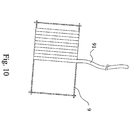
Figs. 10 through 13 , a conventional apparatus for growing algae includes aflat rack 9, acotton rope 91 wound on theflat rack 9, and aculture plate 10 for containingseawater 101.Spores 92 of algae are spread on segments of thecotton rope 91 located on an upper side of theflat rack 9. Then, thespores 92 planed in thecotton rope 91 are submerged in theseawater 101. Thespores 92 will grow to bebodies 93 referring toFig. 13 . However, the throughput of the production of the algae is low for two reasons. Firstly, the growth of the algae is low. Secondly, a small amount ofspores 92 planted. Thespores 92 are only spread on the segments of thecotton rope 91 located on the upper side of theflat rack 9 because segments of thecotton rope 91 are laid on an upper side of theculture plate 10 and cannot be irradiated by the sunlight. - The present invention is therefore intended to obviate or at least alleviate the problems encountered in prior art.
- The primary objective of the present invention is to provide an apparatus for growing algae quickly.
- To achieve the foregoing objective the present invention provides an apparatus according to
claim 1 and a method according to claim 7. - Advantageous embodiments are laid down in further claims.
- Further objectives, advantages and features of the present invention will become apparent from the following description referring to the attached drawings.
- The present invention will be described via detailed illustration of the preferred embodiment referring to the drawings.
-
Fig. 1 is a perspective view of an apparatus for growing algae by ionizing radiation according to the preferred embodiment of the present invention. -
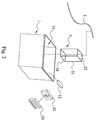
Fig. 2 is an exploded view of the apparatus shown inFig. 1 . -
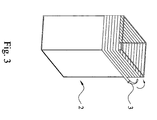
Fig. 3 is a perspective view of an adherent unit wound on a 3-dimensional rack used in the apparatus shown inFig. 1 . -
Fig. 4 shows sea water contained in the apparatus shown inFig. 1 . -
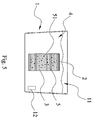
Fig. 5 is a partial cross-sectional view of the apparatus shown inFig. 4 . -
Fig. 6 is a cross-sectional view of the apparatus shown inFig. 4 . -
Fig. 7 is a perspective view of an outdoor running-water pool for the growth of algae cultured by the apparatus shown inFig. 5 . -
Fig. 8 is a cross-sectional view of the outdoor running-water pool shown inFig. 7 . -
Fig. 9 is a bar chart for showing different growth rates of algae cultured under different degrees of ionizing radiation. -
Fig. 10 is a top view of a cotton rope wound on a flat rack used in a conventional apparatus for growing algae. -
Fig. 11 is a top view of spores of algae spread on the cotton rope shown inFig. 10 . -
Fig. 12 shows a culture plate for containing seawater for submerging the spores shown inFig. 11 . -
Fig. 13 shows algae grown from the spores shown inFig. 12 . - Referring to
Figs. 1 and2 , an apparatus for growing algae by ionizing radiation includes acontainer 1, a 3-dimensional rack 2 ("3-D rack"), anadherent element 3, anionizing radiation element 32 and atimepiece 33 according to the preferred embodiment of the present invention. - The
container 1 includes aspace 11 defined therein. Afilter 12 is disposed in thespace 11. Thecontainer 1 is preferably made of polyvinylchloride. The volume of thecontainer 1 is about 120 liters. - The 3-
D rack 2 is preferably made of stainless steel. The 3-D rack 2 is a square rack including fourbars 21, fourbars 22 and fourbars 24. The length of thebars 21 is 40 cm. The length of thebars 22 is 30 cm. The length of thebars 24 is 30 cm. The diameter of thebars - The
adherent element 3 is preferably a cotton rope. The diameter of theadherent element 3 is about 1 cm. The length of theadherent element 3 is about 33 m. - The
ionizing radiation element 32 preferably provides Co-60 γ radiation. - Referring to
Fig. 3 , theadherent element 3 is wound on the 3-D rack 2. More particularly, theadherent element 3 is wound on thebars 21. - Referring to
Fig. 4 , about 100 liters ofmedium 4 are filled in thecontainer 1. Themedium 4 is preferably seawater. Theadherent element 3 wound on the 3-D rack 2 is completely submerged in themedium 4. As theadherent element 3 is wound on thebars 21, the entire length thereof can be irradiated by sunlight when it is submerged in themedium 4. - Referring to
Fig. 5 , a large number ofspores 5 of algae are implanted in the entire length of theadherent element 3. As mentioned above, thefilter 12 is disposed in thecontainer 1. Thecontainer 1 is disposed in a green house where thespores 5 can be irradiated by sunlight. After 1 day or 2, the cells of thespores 5 are completely adhered to theadherent element 3. On the 15th day after the planting of thespores 5, some of thespores 5 grow to besprouts 51 about 0.5 to 1.0 mm long. Thefilter 12 is activated to filter theseawater 4 and generate a current. The flow rate of the current is about 50 to 75 ml/sec. That is, the algae are subjected to running-water culturing. - Referring to
Fig. 6 , theionizing radiation element 32 is activated to irradiate thespores 5 and thesprouts 51. The control over the radiation dose is done via the control over the radiation time. The control over the radiation time is conducted with thetimepiece 33. If the algae are ulvaceae, the optimal dose of the ionizing radiation is 15 Gy every three weeks. The 15 Gy is provided in two rounds under the control of thetimepiece 33. If theionizing radiation element 3 provides the ionizing radiation at a power of 5 Gy/min, the total time for the ionizing radiation is totally 3 min for every three weeks. The 3 min are divided into two periods of time. - Alternatively, the
spores 5 and thesprouts 51 can be irradiated in a conventional process. In the conventional process, an ionizing radiation element like theionizing radiation element 32 is disposed in a pool of water. Thespores 5 and thesprouts 51 adhered to theadherent element 3 wound on the 3-D frame 2 are disposed in a watertight box. Then, the watertight box is submerged in the pool of water. Finally, the ionizing radiation element is activated to irradiate thespores 5 and thesprouts 51. - Referring to
Fig. 7 , on the 40th day, most of thespores 5 have grown to be thesprouts 51. The length of thesprouts 51 is about 3.0 to 5.0 mm. Theadherent element 3 is removed from the 3-D frame 2. Theadherent element 3 is cut into segments of 1.0 m. The segments are hung in parallel on arope 31. The diameter of therope 31 is about 0.6 cm. Then, the segments are submerged in seawater filled in an outdoor running-water pool 6. The outdoor running-water pool 6 is about 4.4 long, 2.2 mm wide and 1.3 meter high. The seawater is about 0.9 m deep so that the volume of the seawater is about 8.7 m3. The flow rate of the seawater is about 300 ml/sec. Thus, running-water deutero-culturing of thespores 5 andsprouts 51 is conducted. - Referring to
Fig. 8 , almost all of thespores 5 have grown to bebodies 52 or algae of an appropriate length such as 10 mm. Thebodies 52 are picked from the segments, washed with filtered seawater and baked in an oven at 70 degrees Celsius, thus removing the filtered seawater from thebodies 52. Finally, the driedbodies 52 are weighed to calculate the biomass thereof. - Referring to
Fig. 9 , an experiment was conducted from 24 August 2007 to 30 October 2007. Ulvaceae was grown in methods according to five embodiments of the present invention and in a conventional method. Results were measured.Spores 5 of the ulvaceae were planted in theadherent element 3 on 24 August 2007. - According to the first embodiment, the Co-60 γ radiation was conducted on 7 September 2007. A
specimen 71 was picked on 13 October 2007. The biomass of thespecimen 71 is 0.0101 g/cm. Aspecimen 72 was picked on 20 October 2007. The biomass of thespecimen 72 is 0.0267 g/cm. Aspecimen 73 was picked on 30 October 2007. The biomass of thespecimen 73 is 0.0404 g/cm. - According to the second embodiment, the Co-60 γ radiation was conducted on 7 September 2007 and 4 October 2007. A
specimen 74 was picked on 13 October 2007. The biomass of thespecimen 74 is 0.0085 g/cm. Aspecimen 75 was picked on 20 October 2007. The biomass of thespecimen 75 is 0.0244 g/cm. Aspecimen 75 was picked on 30 October 2007. The biomass of thespecimen 75 is 0.0381 g/cm. - According to the third embodiment, the Co-60 γ radiation was conducted on 7 September 2007 and 28 September 2007. A
specimen 77 was picked on 13 October 2007. The biomass of thespecimen 77 is 0.0096 g/cm. A specimen 78 was picked on 20 October 2007. The biomass of the specimen 78 is 0.0223 g/cm. Aspecimen 79 was picked on 30 October 2007. The biomass of thespecimen 79 is 0.0475 g/cm. - According to the fourth embodiment, the Co-60 γ radiation was conducted on 7 September 2007, 21 September and 4 October 2007. A
specimen 80 was picked on 13 October 2007. The biomass of thespecimen 80 is 0.0108 g/cm. A specimen 81 was picked on 20 October 2007. The biomass of the specimen 81 is 0.0231 g/cm. Aspecimen 82 was picked on 30 October 2007. The biomass of thespecimen 82 is 0.0404 g/cm. - According to the fifth embodiment, the Co-60 γ radiation was conducted on 7 September 2007, 14 September 2007, 21 September 2007, 28 September 2007 and 4 October 2007. A
specimen 83 was picked on 13 October 2007. The biomass of thespecimen 83 is 0.0033 g/cm. Aspecimen 84 was picked on 20 October 2007. The biomass of thespecimen 84 is 0.0121 g/cm. Aspecimen 85 was picked on 20 October 2007. The biomass of thespecimen 85 is 0.0255 g/cm. - In the conventional method embodiment, the Co-60 γ radiation was never conducted. A
specimen 86 was picked on 13 October 2007. The biomass of thespecimen 86 is 0.0059 g/cm. Aspecimen 87 was picked on 20 October 2007. The biomass of thespecimen 87 is 0.0182 g/cm. Aspecimen 88 was picked on 20 October 2007. The biomass of thespecimen 88 is 0.0377 g/cm. - The biomasses of the
specimens specimen 88 grown in the conventional method. The biomasses of thespecimens specimen 88 grown in the conventional method. The biomass of thespecimen 79 grown according to the third embodiment of the present invention is the largest. The biomasses of thespecimens specimen 88 grown in the conventional method. - It can be inferred that insufficient dosing of the Co-60 γ radiation is good for the growth of the ulvaceae to a limited extent. It can also be inferred that excessive dosing of the Co-60 γ radiation is bad for the growth of the ulvaceae.
Claims (11)
- An algae-growing apparatus comprising:a container (1) for containing medium for the growth of algae;a filter (121) disposed in the container (1); said filter being adapted to be activated to filter said medium in said container (1) and generate a current of said medium;a 3-dimensional rack (2) disposed in the container (1);an adherent element (3) wound on the 3-dimension rack (2) so that spores of the algae can be planted in the adherent element (3);an ionizing radiation element (32) disposed in the container (1) for irradiating the spores; anda timepiece (33) connected to the ionizing radiation element (32).
- The apparatus according to claim 1, wherein the medium is seawater.
- The apparatus according to claim 1 or 2, wherein the 3-dimensional rack (3) comprises a plurality of beams and bars (21, 22, 24) connected to one another.
- The apparatus according to one of claims 1 to 3, wherein the adherent element (3) is a cotton rope.
- The apparatus according to one of claims 1 to 4, wherein the ionizing radiation element (32) is a Co-60 γ radiation element.
- The apparatus according to one of claims 1 to 5, wherein the ionizing radiation element (32) provides a radiation dose of 15 Gy
- A method for growing algae, the method comprising the steps of:providing a 3-dimensional rack (2);winding an adherent element (3) on the 3-dimension rack (2);planting spores (5) of algae in the adherent element (3);providing a container (1);filling medium in the container (1);providing a filter (11) in the container (1) to filter said medium and generate a current of the medium for running-water culturing;submerging the spores (5) in the medium;providing a ionizing radiation dose of 15 Gy on the algae for every 3 weeks, wherein the 15 Gy is provided in two rounds; andproviding a running-water pool (6);submerging the algae in the running-water pool (6) for running-water deuteron-culturing after the spores (5) grow to be sprouts (51); andpicking the algae after the sprouts (51) grow to be properly long bodies.
- The method according to claim 7, wherein the 3-dimensional rack (2) comprises a plurality of beams and bars (21, 22, 24) connected to one another.
- The method according to claim 7 or 8, wherein the adherent element (3) is a cotton rope (31).
- The method according to one of claims 7 to 9, wherein the medium is seawater.
- The method according to one of claims 7 to 10, wherein the ionizing radiation is a Co-60 γ radiation.
Priority Applications (2)
| Application Number | Priority Date | Filing Date | Title |
|---|---|---|---|
| AT07119544T ATE519837T1 (en) | 2007-10-29 | 2007-10-29 | DEVICE AND METHOD FOR CULTIVATION OF ALGAE USING IONIZING RADIATION |
| EP07119544A EP2055770B1 (en) | 2007-10-29 | 2007-10-29 | Apparatus and method for growing algae by ionizing radiation |
Applications Claiming Priority (1)
| Application Number | Priority Date | Filing Date | Title |
|---|---|---|---|
| EP07119544A EP2055770B1 (en) | 2007-10-29 | 2007-10-29 | Apparatus and method for growing algae by ionizing radiation |
Publications (2)
| Publication Number | Publication Date |
|---|---|
| EP2055770A1 EP2055770A1 (en) | 2009-05-06 |
| EP2055770B1 true EP2055770B1 (en) | 2011-08-10 |
Family
ID=39156854
Family Applications (1)
| Application Number | Title | Priority Date | Filing Date |
|---|---|---|---|
| EP07119544A Not-in-force EP2055770B1 (en) | 2007-10-29 | 2007-10-29 | Apparatus and method for growing algae by ionizing radiation |
Country Status (2)
| Country | Link |
|---|---|
| EP (1) | EP2055770B1 (en) |
| AT (1) | ATE519837T1 (en) |
Family Cites Families (4)
| Publication number | Priority date | Publication date | Assignee | Title |
|---|---|---|---|---|
| US4324067A (en) * | 1980-02-04 | 1982-04-13 | The University Of Arizona Foundation | Algal cell harvesting |
| AU749885B2 (en) * | 1998-03-31 | 2002-07-04 | Bioreal, Inc. | Fine algae culture device |
| JP2001231387A (en) | 2000-02-21 | 2001-08-28 | Sumitomo Osaka Cement Co Ltd | Culturing tool and method for growing alga by using the culturing tool |
| JP4650808B2 (en) * | 2005-02-22 | 2011-03-16 | 株式会社日健総本社 | Apparatus and method for culturing filamentous microalgae |
-
2007
- 2007-10-29 AT AT07119544T patent/ATE519837T1/en not_active IP Right Cessation
- 2007-10-29 EP EP07119544A patent/EP2055770B1/en not_active Not-in-force
Also Published As
| Publication number | Publication date |
|---|---|
| EP2055770A1 (en) | 2009-05-06 |
| ATE519837T1 (en) | 2011-08-15 |
Similar Documents
| Publication | Publication Date | Title |
|---|---|---|
| US10834907B2 (en) | Method for cultivating oysters on land | |
| CN103820318B (en) | Photo bio cultivation apparatus | |
| KR102566544B1 (en) | Land aquaculture system for laver | |
| US10633628B1 (en) | Systems for cultivating and dewatering algae | |
| CN104126494A (en) | Zostera marina indoor long-term cultivation method and device | |
| CN104737897A (en) | Long stem grape caulerpa industrial cultivating method | |
| JP7276772B2 (en) | Seaweed growing method and seaweed growing apparatus | |
| US20100216207A1 (en) | Apparatus and method for growing algae by ionizing radiation | |
| CN201036286Y (en) | Liftable float grass cultivating rack | |
| JP4595131B2 (en) | Seaweed growth promotion device by ionizing radiation irradiation | |
| JP6810669B2 (en) | Microbial culture system | |
| EP2055770A1 (en) | Apparatus and method for growing algae by ionizing radiation | |
| US20080194015A1 (en) | Algae mass-producing device having radiation source for hormesis | |
| JP2003199455A (en) | Method and apparatus for growing microalgae | |
| WO2016060892A1 (en) | Systems and methods for cultivating algae | |
| CN105165698A (en) | Abalone seedling growing cultivation pond with water level adjusting device | |
| CN106212263B (en) | Sargassum muticum attaching base supporting device and sargassum muticum fine variety breeding method | |
| CN204907544U (en) | Abalone of taking water level regulating device is grown seedlings and breeds pond | |
| JP4350124B2 (en) | Seaweed mass production apparatus and seaweed mass production method for ionizing radiation irradiation | |
| CN111264375B (en) | Culture rack, seedling raising facility and method for culturing laver filament and laver by using culture rack | |
| KR101723607B1 (en) | Hydroponics Device Combined Domestic Aquarium | |
| JP2011087552A (en) | Method and apparatus for culturing microalgae | |
| JP2023133030A (en) | Rearing device of seedling algae, rearing method of seedling algae, and algae rearing method | |
| US20170142909A1 (en) | Method and a container for effecting at least one non-lethal change in inherent properties of a non-human biological system under the influence of zero gravity | |
| CN210671745U (en) | Free selection system for earthworm ecological factors |
Legal Events
| Date | Code | Title | Description |
|---|---|---|---|
| PUAI | Public reference made under article 153(3) epc to a published international application that has entered the european phase |
Free format text: ORIGINAL CODE: 0009012 |
|
| 17P | Request for examination filed |
Effective date: 20071129 |
|
| AK | Designated contracting states |
Kind code of ref document: A1 Designated state(s): AT BE BG CH CY CZ DE DK EE ES FI FR GB GR HU IE IS IT LI LT LU LV MC MT NL PL PT RO SE SI SK TR |
|
| AX | Request for extension of the european patent |
Extension state: AL BA HR MK RS |
|
| 17Q | First examination report despatched |
Effective date: 20091125 |
|
| AKX | Designation fees paid |
Designated state(s): AT BE BG CH CY CZ DE DK EE ES FI FR GB GR HU IE IS IT LI LT LU LV MC MT NL PL PT RO SE SI SK TR |
|
| GRAP | Despatch of communication of intention to grant a patent |
Free format text: ORIGINAL CODE: EPIDOSNIGR1 |
|
| GRAS | Grant fee paid |
Free format text: ORIGINAL CODE: EPIDOSNIGR3 |
|
| GRAA | (expected) grant |
Free format text: ORIGINAL CODE: 0009210 |
|
| AK | Designated contracting states |
Kind code of ref document: B1 Designated state(s): AT BE BG CH CY CZ DE DK EE ES FI FR GB GR HU IE IS IT LI LT LU LV MC MT NL PL PT RO SE SI SK TR |
|
| REG | Reference to a national code |
Ref country code: GB Ref legal event code: FG4D |
|
| REG | Reference to a national code |
Ref country code: CH Ref legal event code: EP |
|
| REG | Reference to a national code |
Ref country code: IE Ref legal event code: FG4D |
|
| REG | Reference to a national code |
Ref country code: DE Ref legal event code: R096 Ref document number: 602007016392 Country of ref document: DE Effective date: 20111013 |
|
| REG | Reference to a national code |
Ref country code: NL Ref legal event code: T3 |
|
| LTIE | Lt: invalidation of european patent or patent extension |
Effective date: 20110810 |
|
| PG25 | Lapsed in a contracting state [announced via postgrant information from national office to epo] |
Ref country code: PT Free format text: LAPSE BECAUSE OF FAILURE TO SUBMIT A TRANSLATION OF THE DESCRIPTION OR TO PAY THE FEE WITHIN THE PRESCRIBED TIME-LIMIT Effective date: 20111212 Ref country code: FI Free format text: LAPSE BECAUSE OF FAILURE TO SUBMIT A TRANSLATION OF THE DESCRIPTION OR TO PAY THE FEE WITHIN THE PRESCRIBED TIME-LIMIT Effective date: 20110810 Ref country code: LT Free format text: LAPSE BECAUSE OF FAILURE TO SUBMIT A TRANSLATION OF THE DESCRIPTION OR TO PAY THE FEE WITHIN THE PRESCRIBED TIME-LIMIT Effective date: 20110810 Ref country code: IS Free format text: LAPSE BECAUSE OF FAILURE TO SUBMIT A TRANSLATION OF THE DESCRIPTION OR TO PAY THE FEE WITHIN THE PRESCRIBED TIME-LIMIT Effective date: 20111210 Ref country code: SE Free format text: LAPSE BECAUSE OF FAILURE TO SUBMIT A TRANSLATION OF THE DESCRIPTION OR TO PAY THE FEE WITHIN THE PRESCRIBED TIME-LIMIT Effective date: 20110810 |
|
| REG | Reference to a national code |
Ref country code: AT Ref legal event code: MK05 Ref document number: 519837 Country of ref document: AT Kind code of ref document: T Effective date: 20110810 |
|
| PG25 | Lapsed in a contracting state [announced via postgrant information from national office to epo] |
Ref country code: SI Free format text: LAPSE BECAUSE OF FAILURE TO SUBMIT A TRANSLATION OF THE DESCRIPTION OR TO PAY THE FEE WITHIN THE PRESCRIBED TIME-LIMIT Effective date: 20110810 Ref country code: PL Free format text: LAPSE BECAUSE OF FAILURE TO SUBMIT A TRANSLATION OF THE DESCRIPTION OR TO PAY THE FEE WITHIN THE PRESCRIBED TIME-LIMIT Effective date: 20110810 Ref country code: LV Free format text: LAPSE BECAUSE OF FAILURE TO SUBMIT A TRANSLATION OF THE DESCRIPTION OR TO PAY THE FEE WITHIN THE PRESCRIBED TIME-LIMIT Effective date: 20110810 Ref country code: GR Free format text: LAPSE BECAUSE OF FAILURE TO SUBMIT A TRANSLATION OF THE DESCRIPTION OR TO PAY THE FEE WITHIN THE PRESCRIBED TIME-LIMIT Effective date: 20111111 Ref country code: CY Free format text: LAPSE BECAUSE OF FAILURE TO SUBMIT A TRANSLATION OF THE DESCRIPTION OR TO PAY THE FEE WITHIN THE PRESCRIBED TIME-LIMIT Effective date: 20110810 Ref country code: AT Free format text: LAPSE BECAUSE OF FAILURE TO SUBMIT A TRANSLATION OF THE DESCRIPTION OR TO PAY THE FEE WITHIN THE PRESCRIBED TIME-LIMIT Effective date: 20110810 |
|
| PG25 | Lapsed in a contracting state [announced via postgrant information from national office to epo] |
Ref country code: CZ Free format text: LAPSE BECAUSE OF FAILURE TO SUBMIT A TRANSLATION OF THE DESCRIPTION OR TO PAY THE FEE WITHIN THE PRESCRIBED TIME-LIMIT Effective date: 20110810 Ref country code: SK Free format text: LAPSE BECAUSE OF FAILURE TO SUBMIT A TRANSLATION OF THE DESCRIPTION OR TO PAY THE FEE WITHIN THE PRESCRIBED TIME-LIMIT Effective date: 20110810 |
|
| PG25 | Lapsed in a contracting state [announced via postgrant information from national office to epo] |
Ref country code: MC Free format text: LAPSE BECAUSE OF NON-PAYMENT OF DUE FEES Effective date: 20111031 Ref country code: EE Free format text: LAPSE BECAUSE OF FAILURE TO SUBMIT A TRANSLATION OF THE DESCRIPTION OR TO PAY THE FEE WITHIN THE PRESCRIBED TIME-LIMIT Effective date: 20110810 Ref country code: RO Free format text: LAPSE BECAUSE OF FAILURE TO SUBMIT A TRANSLATION OF THE DESCRIPTION OR TO PAY THE FEE WITHIN THE PRESCRIBED TIME-LIMIT Effective date: 20110810 |
|
| REG | Reference to a national code |
Ref country code: CH Ref legal event code: PL |
|
| PLBE | No opposition filed within time limit |
Free format text: ORIGINAL CODE: 0009261 |
|
| STAA | Information on the status of an ep patent application or granted ep patent |
Free format text: STATUS: NO OPPOSITION FILED WITHIN TIME LIMIT |
|
| PG25 | Lapsed in a contracting state [announced via postgrant information from national office to epo] |
Ref country code: DK Free format text: LAPSE BECAUSE OF FAILURE TO SUBMIT A TRANSLATION OF THE DESCRIPTION OR TO PAY THE FEE WITHIN THE PRESCRIBED TIME-LIMIT Effective date: 20110810 |
|
| 26N | No opposition filed |
Effective date: 20120511 |
|
| GBPC | Gb: european patent ceased through non-payment of renewal fee |
Effective date: 20111110 |
|
| PG25 | Lapsed in a contracting state [announced via postgrant information from national office to epo] |
Ref country code: CH Free format text: LAPSE BECAUSE OF NON-PAYMENT OF DUE FEES Effective date: 20111031 Ref country code: LI Free format text: LAPSE BECAUSE OF NON-PAYMENT OF DUE FEES Effective date: 20111031 |
|
| REG | Reference to a national code |
Ref country code: IE Ref legal event code: MM4A |
|
| REG | Reference to a national code |
Ref country code: DE Ref legal event code: R097 Ref document number: 602007016392 Country of ref document: DE Effective date: 20120511 |
|
| PG25 | Lapsed in a contracting state [announced via postgrant information from national office to epo] |
Ref country code: IE Free format text: LAPSE BECAUSE OF NON-PAYMENT OF DUE FEES Effective date: 20111029 Ref country code: GB Free format text: LAPSE BECAUSE OF NON-PAYMENT OF DUE FEES Effective date: 20111110 |
|
| PGFP | Annual fee paid to national office [announced via postgrant information from national office to epo] |
Ref country code: BE Payment date: 20121022 Year of fee payment: 6 Ref country code: FR Payment date: 20121113 Year of fee payment: 6 |
|
| PG25 | Lapsed in a contracting state [announced via postgrant information from national office to epo] |
Ref country code: MT Free format text: LAPSE BECAUSE OF FAILURE TO SUBMIT A TRANSLATION OF THE DESCRIPTION OR TO PAY THE FEE WITHIN THE PRESCRIBED TIME-LIMIT Effective date: 20110810 |
|
| PGFP | Annual fee paid to national office [announced via postgrant information from national office to epo] |
Ref country code: IT Payment date: 20121024 Year of fee payment: 6 |
|
| PGFP | Annual fee paid to national office [announced via postgrant information from national office to epo] |
Ref country code: NL Payment date: 20121018 Year of fee payment: 6 |
|
| PG25 | Lapsed in a contracting state [announced via postgrant information from national office to epo] |
Ref country code: ES Free format text: LAPSE BECAUSE OF FAILURE TO SUBMIT A TRANSLATION OF THE DESCRIPTION OR TO PAY THE FEE WITHIN THE PRESCRIBED TIME-LIMIT Effective date: 20111121 |
|
| PG25 | Lapsed in a contracting state [announced via postgrant information from national office to epo] |
Ref country code: LU Free format text: LAPSE BECAUSE OF NON-PAYMENT OF DUE FEES Effective date: 20111029 |
|
| PG25 | Lapsed in a contracting state [announced via postgrant information from national office to epo] |
Ref country code: BG Free format text: LAPSE BECAUSE OF FAILURE TO SUBMIT A TRANSLATION OF THE DESCRIPTION OR TO PAY THE FEE WITHIN THE PRESCRIBED TIME-LIMIT Effective date: 20111110 |
|
| PG25 | Lapsed in a contracting state [announced via postgrant information from national office to epo] |
Ref country code: TR Free format text: LAPSE BECAUSE OF FAILURE TO SUBMIT A TRANSLATION OF THE DESCRIPTION OR TO PAY THE FEE WITHIN THE PRESCRIBED TIME-LIMIT Effective date: 20110810 |
|
| PG25 | Lapsed in a contracting state [announced via postgrant information from national office to epo] |
Ref country code: HU Free format text: LAPSE BECAUSE OF FAILURE TO SUBMIT A TRANSLATION OF THE DESCRIPTION OR TO PAY THE FEE WITHIN THE PRESCRIBED TIME-LIMIT Effective date: 20110810 |
|
| PGFP | Annual fee paid to national office [announced via postgrant information from national office to epo] |
Ref country code: DE Payment date: 20131031 Year of fee payment: 7 |
|
| BERE | Be: lapsed |
Owner name: ATOMIC ENERGY COUNCIL - INSTITUTE OF NUCLEAR ENER Effective date: 20131031 |
|
| REG | Reference to a national code |
Ref country code: NL Ref legal event code: V1 Effective date: 20140501 |
|
| REG | Reference to a national code |
Ref country code: FR Ref legal event code: ST Effective date: 20140630 |
|
| PG25 | Lapsed in a contracting state [announced via postgrant information from national office to epo] |
Ref country code: IT Free format text: LAPSE BECAUSE OF NON-PAYMENT OF DUE FEES Effective date: 20131029 Ref country code: NL Free format text: LAPSE BECAUSE OF NON-PAYMENT OF DUE FEES Effective date: 20140501 Ref country code: FR Free format text: LAPSE BECAUSE OF NON-PAYMENT OF DUE FEES Effective date: 20131031 |
|
| PG25 | Lapsed in a contracting state [announced via postgrant information from national office to epo] |
Ref country code: BE Free format text: LAPSE BECAUSE OF NON-PAYMENT OF DUE FEES Effective date: 20131031 |
|
| REG | Reference to a national code |
Ref country code: DE Ref legal event code: R119 Ref document number: 602007016392 Country of ref document: DE |
|
| PG25 | Lapsed in a contracting state [announced via postgrant information from national office to epo] |
Ref country code: DE Free format text: LAPSE BECAUSE OF NON-PAYMENT OF DUE FEES Effective date: 20150501 |