EP2054439B1 - Peptides derives du récepteur cd4 et leur procédé de préparation - Google Patents
Peptides derives du récepteur cd4 et leur procédé de préparation Download PDFInfo
- Publication number
- EP2054439B1 EP2054439B1 EP07802491A EP07802491A EP2054439B1 EP 2054439 B1 EP2054439 B1 EP 2054439B1 EP 07802491 A EP07802491 A EP 07802491A EP 07802491 A EP07802491 A EP 07802491A EP 2054439 B1 EP2054439 B1 EP 2054439B1
- Authority
- EP
- European Patent Office
- Prior art keywords
- xaa
- peptide
- receptor
- activated
- preparing
- Prior art date
- Legal status (The legal status is an assumption and is not a legal conclusion. Google has not performed a legal analysis and makes no representation as to the accuracy of the status listed.)
- Not-in-force
Links
- 108090000765 processed proteins & peptides Proteins 0.000 title claims abstract description 154
- 108010041397 CD4 Antigens Proteins 0.000 title claims abstract description 58
- 238000000034 method Methods 0.000 title claims abstract description 30
- 102000004196 processed proteins & peptides Human genes 0.000 title claims description 16
- 238000002360 preparation method Methods 0.000 title description 6
- 238000010168 coupling process Methods 0.000 claims abstract description 33
- 238000005859 coupling reaction Methods 0.000 claims abstract description 32
- 230000008878 coupling Effects 0.000 claims abstract description 30
- 229920000447 polyanionic polymer Polymers 0.000 claims abstract description 27
- 102100021198 Chemerin-like receptor 2 Human genes 0.000 claims abstract description 19
- 101000750094 Homo sapiens Chemerin-like receptor 2 Proteins 0.000 claims abstract description 19
- 238000011282 treatment Methods 0.000 claims abstract description 15
- 230000000840 anti-viral effect Effects 0.000 claims abstract description 10
- 208000030507 AIDS Diseases 0.000 claims abstract description 8
- 150000001875 compounds Chemical group 0.000 claims description 36
- 150000003573 thiols Chemical class 0.000 claims description 35
- -1 N-maleimidopropionamido Chemical group 0.000 claims description 27
- WCMOHMXWOOBVMZ-UHFFFAOYSA-N (2,5-dioxopyrrolidin-1-yl) 6-[3-(2,5-dioxopyrrol-1-yl)propanoylamino]hexanoate Chemical compound O=C1CCC(=O)N1OC(=O)CCCCCNC(=O)CCN1C(=O)C=CC1=O WCMOHMXWOOBVMZ-UHFFFAOYSA-N 0.000 claims description 24
- 230000001588 bifunctional effect Effects 0.000 claims description 23
- 125000000539 amino acid group Chemical group 0.000 claims description 21
- HTTJABKRGRZYRN-UHFFFAOYSA-N Heparin Chemical compound OC1C(NC(=O)C)C(O)OC(COS(O)(=O)=O)C1OC1C(OS(O)(=O)=O)C(O)C(OC2C(C(OS(O)(=O)=O)C(OC3C(C(O)C(O)C(O3)C(O)=O)OS(O)(=O)=O)C(CO)O2)NS(O)(=O)=O)C(C(O)=O)O1 HTTJABKRGRZYRN-UHFFFAOYSA-N 0.000 claims description 19
- 229960002897 heparin Drugs 0.000 claims description 19
- 229920002971 Heparan sulfate Polymers 0.000 claims description 17
- 108700031620 S-acetylthiorphan Proteins 0.000 claims description 17
- 150000001412 amines Chemical group 0.000 claims description 17
- 125000006850 spacer group Chemical group 0.000 claims description 15
- PEEHTFAAVSWFBL-UHFFFAOYSA-N Maleimide Chemical compound O=C1NC(=O)C=C1 PEEHTFAAVSWFBL-UHFFFAOYSA-N 0.000 claims description 13
- 125000005439 maleimidyl group Chemical group C1(C=CC(N1*)=O)=O 0.000 claims description 13
- KOODSCBKXPPKHE-UHFFFAOYSA-N propanethioic s-acid Chemical compound CCC(S)=O KOODSCBKXPPKHE-UHFFFAOYSA-N 0.000 claims description 12
- 239000003814 drug Substances 0.000 claims description 11
- JWDFQMWEFLOOED-UHFFFAOYSA-N (2,5-dioxopyrrolidin-1-yl) 3-(pyridin-2-yldisulfanyl)propanoate Chemical compound O=C1CCC(=O)N1OC(=O)CCSSC1=CC=CC=N1 JWDFQMWEFLOOED-UHFFFAOYSA-N 0.000 claims description 10
- 238000004519 manufacturing process Methods 0.000 claims description 9
- 150000002148 esters Chemical class 0.000 claims description 7
- PWKSKIMOESPYIA-BYPYZUCNSA-N L-N-acetyl-Cysteine Chemical compound CC(=O)N[C@@H](CS)C(O)=O PWKSKIMOESPYIA-BYPYZUCNSA-N 0.000 claims description 6
- COLNVLDHVKWLRT-QMMMGPOBSA-N L-phenylalanine Chemical compound OC(=O)[C@@H](N)CC1=CC=CC=C1 COLNVLDHVKWLRT-QMMMGPOBSA-N 0.000 claims description 6
- 229940079593 drug Drugs 0.000 claims description 6
- NMHMNPHRMNGLLB-UHFFFAOYSA-N phloretic acid Chemical compound OC(=O)CCC1=CC=C(O)C=C1 NMHMNPHRMNGLLB-UHFFFAOYSA-N 0.000 claims description 6
- 238000006116 polymerization reaction Methods 0.000 claims description 6
- 229960004308 acetylcysteine Drugs 0.000 claims description 5
- 239000002253 acid Substances 0.000 claims description 4
- 230000008569 process Effects 0.000 claims description 4
- FLCQLSRLQIPNLM-UHFFFAOYSA-N (2,5-dioxopyrrolidin-1-yl) 2-acetylsulfanylacetate Chemical compound CC(=O)SCC(=O)ON1C(=O)CCC1=O FLCQLSRLQIPNLM-UHFFFAOYSA-N 0.000 claims description 3
- ZRTJVRDXVSDKPX-UHFFFAOYSA-N (2,5-dioxopyrrolidin-1-yl) 3-acetylsulfanylpropanoate Chemical compound CC(=O)SCCC(=O)ON1C(=O)CCC1=O ZRTJVRDXVSDKPX-UHFFFAOYSA-N 0.000 claims description 3
- JCZLABDVDPYLRZ-AWEZNQCLSA-N biphenylalanine Chemical compound C1=CC(C[C@H](N)C(O)=O)=CC=C1C1=CC=CC=C1 JCZLABDVDPYLRZ-AWEZNQCLSA-N 0.000 claims description 3
- MTHSVFCYNBDYFN-UHFFFAOYSA-N diethylene glycol Substances OCCOCCO MTHSVFCYNBDYFN-UHFFFAOYSA-N 0.000 claims description 3
- COLNVLDHVKWLRT-UHFFFAOYSA-N phenylalanine Natural products OC(=O)C(N)CC1=CC=CC=C1 COLNVLDHVKWLRT-UHFFFAOYSA-N 0.000 claims description 2
- 125000005843 halogen group Chemical group 0.000 claims 2
- KDXKERNSBIXSRK-UHFFFAOYSA-N Lysine Natural products NCCCCC(N)C(O)=O KDXKERNSBIXSRK-UHFFFAOYSA-N 0.000 description 23
- 102100036011 T-cell surface glycoprotein CD4 Human genes 0.000 description 19
- 229920003171 Poly (ethylene oxide) Polymers 0.000 description 16
- 238000003786 synthesis reaction Methods 0.000 description 15
- 230000003993 interaction Effects 0.000 description 14
- DTQVDTLACAAQTR-UHFFFAOYSA-N trifluoroacetic acid Substances OC(=O)C(F)(F)F DTQVDTLACAAQTR-UHFFFAOYSA-N 0.000 description 14
- 229920000669 heparin Polymers 0.000 description 12
- 238000004128 high performance liquid chromatography Methods 0.000 description 12
- 241000725303 Human immunodeficiency virus Species 0.000 description 10
- 230000015572 biosynthetic process Effects 0.000 description 9
- 210000004027 cell Anatomy 0.000 description 8
- 230000014759 maintenance of location Effects 0.000 description 8
- 125000003088 (fluoren-9-ylmethoxy)carbonyl group Chemical group 0.000 description 7
- 101100095028 Arabidopsis thaliana SAT3 gene Proteins 0.000 description 7
- 241000700605 Viruses Species 0.000 description 7
- 239000003795 chemical substances by application Substances 0.000 description 7
- 238000004007 reversed phase HPLC Methods 0.000 description 7
- 102100035875 C-C chemokine receptor type 5 Human genes 0.000 description 6
- 101710149870 C-C chemokine receptor type 5 Proteins 0.000 description 6
- 102100031650 C-X-C chemokine receptor type 4 Human genes 0.000 description 6
- 101000922348 Homo sapiens C-X-C chemokine receptor type 4 Proteins 0.000 description 6
- 238000010790 dilution Methods 0.000 description 6
- 239000012895 dilution Substances 0.000 description 6
- 239000012071 phase Substances 0.000 description 6
- 239000007790 solid phase Substances 0.000 description 6
- WEVYAHXRMPXWCK-UHFFFAOYSA-N Acetonitrile Chemical compound CC#N WEVYAHXRMPXWCK-UHFFFAOYSA-N 0.000 description 5
- CKLJMWTZIZZHCS-REOHCLBHSA-N L-aspartic acid Chemical compound OC(=O)[C@@H](N)CC(O)=O CKLJMWTZIZZHCS-REOHCLBHSA-N 0.000 description 5
- 239000004472 Lysine Substances 0.000 description 5
- 235000001014 amino acid Nutrition 0.000 description 5
- 150000001413 amino acids Chemical class 0.000 description 5
- 238000013459 approach Methods 0.000 description 5
- 230000002401 inhibitory effect Effects 0.000 description 5
- 238000010647 peptide synthesis reaction Methods 0.000 description 5
- 230000003612 virological effect Effects 0.000 description 5
- 238000003820 Medium-pressure liquid chromatography Methods 0.000 description 4
- JGFZNNIVVJXRND-UHFFFAOYSA-N N,N-Diisopropylethylamine (DIPEA) Chemical compound CCN(C(C)C)C(C)C JGFZNNIVVJXRND-UHFFFAOYSA-N 0.000 description 4
- 238000006243 chemical reaction Methods 0.000 description 4
- 238000011161 development Methods 0.000 description 4
- 230000018109 developmental process Effects 0.000 description 4
- RWSXRVCMGQZWBV-WDSKDSINSA-N glutathione Chemical compound OC(=O)[C@@H](N)CCC(=O)N[C@@H](CS)C(=O)NCC(O)=O RWSXRVCMGQZWBV-WDSKDSINSA-N 0.000 description 4
- 150000002367 halogens Chemical group 0.000 description 4
- 238000001819 mass spectrum Methods 0.000 description 4
- 108010043277 recombinant soluble CD4 Proteins 0.000 description 4
- 239000000243 solution Substances 0.000 description 4
- PMJWDPGOWBRILU-UHFFFAOYSA-N (2,5-dioxopyrrolidin-1-yl) 4-[4-(2,5-dioxopyrrol-1-yl)phenyl]butanoate Chemical compound O=C1CCC(=O)N1OC(=O)CCCC(C=C1)=CC=C1N1C(=O)C=CC1=O PMJWDPGOWBRILU-UHFFFAOYSA-N 0.000 description 3
- 150000003923 2,5-pyrrolediones Chemical class 0.000 description 3
- QTBSBXVTEAMEQO-UHFFFAOYSA-N Acetic acid Chemical compound CC(O)=O QTBSBXVTEAMEQO-UHFFFAOYSA-N 0.000 description 3
- RTZKZFJDLAIYFH-UHFFFAOYSA-N Diethyl ether Chemical compound CCOCC RTZKZFJDLAIYFH-UHFFFAOYSA-N 0.000 description 3
- IAZDPXIOMUYVGZ-UHFFFAOYSA-N Dimethylsulphoxide Chemical compound CS(C)=O IAZDPXIOMUYVGZ-UHFFFAOYSA-N 0.000 description 3
- 102100039104 Dolichyl-diphosphooligosaccharide-protein glycosyltransferase subunit DAD1 Human genes 0.000 description 3
- WHUUTDBJXJRKMK-UHFFFAOYSA-N Glutamic acid Natural products OC(=O)C(N)CCC(O)=O WHUUTDBJXJRKMK-UHFFFAOYSA-N 0.000 description 3
- 108010053070 Glutathione Disulfide Proteins 0.000 description 3
- 108090000288 Glycoproteins Proteins 0.000 description 3
- 102000003886 Glycoproteins Human genes 0.000 description 3
- 208000031886 HIV Infections Diseases 0.000 description 3
- 101000884921 Homo sapiens Dolichyl-diphosphooligosaccharide-protein glycosyltransferase subunit DAD1 Proteins 0.000 description 3
- WHUUTDBJXJRKMK-VKHMYHEASA-N L-glutamic acid Chemical compound OC(=O)[C@@H](N)CCC(O)=O WHUUTDBJXJRKMK-VKHMYHEASA-N 0.000 description 3
- 230000009471 action Effects 0.000 description 3
- 235000003704 aspartic acid Nutrition 0.000 description 3
- OQFSQFPPLPISGP-UHFFFAOYSA-N beta-carboxyaspartic acid Natural products OC(=O)C(N)C(C(O)=O)C(O)=O OQFSQFPPLPISGP-UHFFFAOYSA-N 0.000 description 3
- 229960000633 dextran sulfate Drugs 0.000 description 3
- KZNICNPSHKQLFF-UHFFFAOYSA-N dihydromaleimide Natural products O=C1CCC(=O)N1 KZNICNPSHKQLFF-UHFFFAOYSA-N 0.000 description 3
- 230000000694 effects Effects 0.000 description 3
- 235000013922 glutamic acid Nutrition 0.000 description 3
- 239000004220 glutamic acid Substances 0.000 description 3
- 150000004676 glycans Chemical class 0.000 description 3
- FUZZWVXGSFPDMH-UHFFFAOYSA-N hexanoic acid Chemical compound CCCCCC(O)=O FUZZWVXGSFPDMH-UHFFFAOYSA-N 0.000 description 3
- 239000008363 phosphate buffer Substances 0.000 description 3
- 229920001282 polysaccharide Polymers 0.000 description 3
- 239000005017 polysaccharide Substances 0.000 description 3
- 230000002441 reversible effect Effects 0.000 description 3
- 229960002317 succinimide Drugs 0.000 description 3
- 125000003396 thiol group Chemical group [H]S* 0.000 description 3
- TYKASZBHFXBROF-UHFFFAOYSA-N (2,5-dioxopyrrolidin-1-yl) 2-(2,5-dioxopyrrol-1-yl)acetate Chemical compound O=C1CCC(=O)N1OC(=O)CN1C(=O)C=CC1=O TYKASZBHFXBROF-UHFFFAOYSA-N 0.000 description 2
- VRDGQQTWSGDXCU-UHFFFAOYSA-N (2,5-dioxopyrrolidin-1-yl) 2-iodoacetate Chemical compound ICC(=O)ON1C(=O)CCC1=O VRDGQQTWSGDXCU-UHFFFAOYSA-N 0.000 description 2
- 0 *CCCCNC(CCCCCNC(CCN(C(C=C1)=O)C1=O)=O)=O Chemical compound *CCCCNC(CCCCCNC(CCN(C(C=C1)=O)C1=O)=O)=O 0.000 description 2
- GWNOTCOIYUNTQP-FQLXRVMXSA-N 4-[4-[[(3r)-1-butyl-3-[(r)-cyclohexyl(hydroxy)methyl]-2,5-dioxo-1,4,9-triazaspiro[5.5]undecan-9-yl]methyl]phenoxy]benzoic acid Chemical compound N([C@@H](C(=O)N1CCCC)[C@H](O)C2CCCCC2)C(=O)C1(CC1)CCN1CC(C=C1)=CC=C1OC1=CC=C(C(O)=O)C=C1 GWNOTCOIYUNTQP-FQLXRVMXSA-N 0.000 description 2
- SQDAZGGFXASXDW-UHFFFAOYSA-N 5-bromo-2-(trifluoromethoxy)pyridine Chemical compound FC(F)(F)OC1=CC=C(Br)C=N1 SQDAZGGFXASXDW-UHFFFAOYSA-N 0.000 description 2
- 239000004475 Arginine Substances 0.000 description 2
- 229920001287 Chondroitin sulfate Polymers 0.000 description 2
- 102000004127 Cytokines Human genes 0.000 description 2
- 108090000695 Cytokines Proteins 0.000 description 2
- IAJILQKETJEXLJ-UHFFFAOYSA-N Galacturonsaeure Natural products O=CC(O)C(O)C(O)C(O)C(O)=O IAJILQKETJEXLJ-UHFFFAOYSA-N 0.000 description 2
- 239000007821 HATU Substances 0.000 description 2
- 208000037357 HIV infectious disease Diseases 0.000 description 2
- 101100290374 Neurospora crassa (strain ATCC 24698 / 74-OR23-1A / CBS 708.71 / DSM 1257 / FGSC 987) mcd-4 gene Proteins 0.000 description 2
- QAOWNCQODCNURD-UHFFFAOYSA-L Sulfate Chemical compound [O-]S([O-])(=O)=O QAOWNCQODCNURD-UHFFFAOYSA-L 0.000 description 2
- 101800001690 Transmembrane protein gp41 Proteins 0.000 description 2
- 230000004913 activation Effects 0.000 description 2
- 230000036436 anti-hiv Effects 0.000 description 2
- ODKSFYDXXFIFQN-UHFFFAOYSA-N arginine Natural products OC(=O)C(N)CCCNC(N)=N ODKSFYDXXFIFQN-UHFFFAOYSA-N 0.000 description 2
- 229960002685 biotin Drugs 0.000 description 2
- 239000011616 biotin Substances 0.000 description 2
- 230000000903 blocking effect Effects 0.000 description 2
- 230000008859 change Effects 0.000 description 2
- 229940059329 chondroitin sulfate Drugs 0.000 description 2
- 238000001514 detection method Methods 0.000 description 2
- PEASPLKKXBYDKL-FXEVSJAOSA-N enfuvirtide Chemical compound C([C@@H](C(=O)N[C@@H](CO)C(=O)N[C@@H](CC(C)C)C(=O)N[C@@H]([C@@H](C)CC)C(=O)N[C@@H](CCC(O)=O)C(=O)N[C@@H](CCC(O)=O)C(=O)N[C@@H](CO)C(=O)N[C@@H](CCC(N)=O)C(=O)N[C@@H](CC(N)=O)C(=O)N[C@@H](CCC(N)=O)C(=O)N[C@@H](CCC(N)=O)C(=O)N[C@@H](CCC(O)=O)C(=O)N[C@@H](CCCCN)C(=O)N[C@@H](CC(N)=O)C(=O)N[C@@H](CCC(O)=O)C(=O)N[C@@H](CCC(N)=O)C(=O)N[C@@H](CCC(O)=O)C(=O)N[C@@H](CC(C)C)C(=O)N[C@@H](CC(C)C)C(=O)N[C@@H](CCC(O)=O)C(=O)N[C@@H](CC(C)C)C(=O)N[C@@H](CC(O)=O)C(=O)N[C@@H](CCCCN)C(=O)N[C@@H](CC=1C2=CC=CC=C2NC=1)C(=O)N[C@@H](C)C(=O)N[C@@H](CO)C(=O)N[C@@H](CC(C)C)C(=O)N[C@@H](CC=1C2=CC=CC=C2NC=1)C(=O)N[C@@H](CC(N)=O)C(=O)N[C@@H](CC=1C2=CC=CC=C2NC=1)C(=O)N[C@@H](CC=1C=CC=CC=1)C(N)=O)NC(=O)[C@@H](NC(=O)[C@H](CC(C)C)NC(=O)[C@H](CO)NC(=O)[C@@H](NC(=O)[C@H](CC=1C=CC(O)=CC=1)NC(C)=O)[C@@H](C)O)[C@@H](C)CC)C1=CN=CN1 PEASPLKKXBYDKL-FXEVSJAOSA-N 0.000 description 2
- 239000012634 fragment Substances 0.000 description 2
- 238000004108 freeze drying Methods 0.000 description 2
- 229960003180 glutathione Drugs 0.000 description 2
- YPZRWBKMTBYPTK-BJDJZHNGSA-N glutathione disulfide Chemical compound OC(=O)[C@@H](N)CCC(=O)N[C@H](C(=O)NCC(O)=O)CSSC[C@@H](C(=O)NCC(O)=O)NC(=O)CC[C@H](N)C(O)=O YPZRWBKMTBYPTK-BJDJZHNGSA-N 0.000 description 2
- 208000033519 human immunodeficiency virus infectious disease Diseases 0.000 description 2
- 208000015181 infectious disease Diseases 0.000 description 2
- 239000003112 inhibitor Substances 0.000 description 2
- 125000003588 lysine group Chemical group [H]N([H])C([H])([H])C([H])([H])C([H])([H])C([H])([H])C([H])(N([H])[H])C(*)=O 0.000 description 2
- 230000007246 mechanism Effects 0.000 description 2
- 230000003278 mimic effect Effects 0.000 description 2
- 239000002777 nucleoside Substances 0.000 description 2
- 229920001223 polyethylene glycol Polymers 0.000 description 2
- 235000018102 proteins Nutrition 0.000 description 2
- 102000004169 proteins and genes Human genes 0.000 description 2
- 108090000623 proteins and genes Proteins 0.000 description 2
- 102000005962 receptors Human genes 0.000 description 2
- 108020003175 receptors Proteins 0.000 description 2
- 238000011160 research Methods 0.000 description 2
- 239000011347 resin Substances 0.000 description 2
- 229920005989 resin Polymers 0.000 description 2
- JJAHTWIKCUJRDK-UHFFFAOYSA-N succinimidyl 4-(N-maleimidomethyl)cyclohexane-1-carboxylate Chemical compound C1CC(CN2C(C=CC2=O)=O)CCC1C(=O)ON1C(=O)CCC1=O JJAHTWIKCUJRDK-UHFFFAOYSA-N 0.000 description 2
- 230000001225 therapeutic effect Effects 0.000 description 2
- 230000010415 tropism Effects 0.000 description 2
- LLXVXPPXELIDGQ-UHFFFAOYSA-N (2,5-dioxopyrrolidin-1-yl) 3-(2,5-dioxopyrrol-1-yl)benzoate Chemical compound C=1C=CC(N2C(C=CC2=O)=O)=CC=1C(=O)ON1C(=O)CCC1=O LLXVXPPXELIDGQ-UHFFFAOYSA-N 0.000 description 1
- WGMMKWFUXPMTRW-UHFFFAOYSA-N (2,5-dioxopyrrolidin-1-yl) 3-[(2-bromoacetyl)amino]propanoate Chemical compound BrCC(=O)NCCC(=O)ON1C(=O)CCC1=O WGMMKWFUXPMTRW-UHFFFAOYSA-N 0.000 description 1
- BQWBEDSJTMWJAE-UHFFFAOYSA-N (2,5-dioxopyrrolidin-1-yl) 4-[(2-iodoacetyl)amino]benzoate Chemical compound C1=CC(NC(=O)CI)=CC=C1C(=O)ON1C(=O)CCC1=O BQWBEDSJTMWJAE-UHFFFAOYSA-N 0.000 description 1
- GKSPIZSKQWTXQG-UHFFFAOYSA-N (2,5-dioxopyrrolidin-1-yl) 4-[1-(pyridin-2-yldisulfanyl)ethyl]benzoate Chemical compound C=1C=C(C(=O)ON2C(CCC2=O)=O)C=CC=1C(C)SSC1=CC=CC=N1 GKSPIZSKQWTXQG-UHFFFAOYSA-N 0.000 description 1
- QYEAAMBIUQLHFQ-UHFFFAOYSA-N (2,5-dioxopyrrolidin-1-yl) 6-[3-(pyridin-2-yldisulfanyl)propanoylamino]hexanoate Chemical compound O=C1CCC(=O)N1OC(=O)CCCCCNC(=O)CCSSC1=CC=CC=N1 QYEAAMBIUQLHFQ-UHFFFAOYSA-N 0.000 description 1
- IHVODYOQUSEYJJ-UHFFFAOYSA-N (2,5-dioxopyrrolidin-1-yl) 6-[[4-[(2,5-dioxopyrrol-1-yl)methyl]cyclohexanecarbonyl]amino]hexanoate Chemical compound O=C1CCC(=O)N1OC(=O)CCCCCNC(=O)C(CC1)CCC1CN1C(=O)C=CC1=O IHVODYOQUSEYJJ-UHFFFAOYSA-N 0.000 description 1
- DHBXNPKRAUYBTH-UHFFFAOYSA-N 1,1-ethanedithiol Chemical compound CC(S)S DHBXNPKRAUYBTH-UHFFFAOYSA-N 0.000 description 1
- DBPMWRYLTBNCCE-UHFFFAOYSA-N 1-(4-benzoylpiperazin-1-yl)-2-(4,7-dimethoxy-1h-pyrrolo[2,3-c]pyridin-3-yl)ethane-1,2-dione Chemical compound C1=2C(OC)=CN=C(OC)C=2NC=C1C(=O)C(=O)N(CC1)CCN1C(=O)C1=CC=CC=C1 DBPMWRYLTBNCCE-UHFFFAOYSA-N 0.000 description 1
- CULQNACJHGHAER-UHFFFAOYSA-N 1-[4-[(2-iodoacetyl)amino]benzoyl]oxy-2,5-dioxopyrrolidine-3-sulfonic acid Chemical compound O=C1C(S(=O)(=O)O)CC(=O)N1OC(=O)C1=CC=C(NC(=O)CI)C=C1 CULQNACJHGHAER-UHFFFAOYSA-N 0.000 description 1
- VHYRLCJMMJQUBY-UHFFFAOYSA-N 1-[4-[4-(2,5-dioxopyrrol-1-yl)phenyl]butanoyloxy]-2,5-dioxopyrrolidine-3-sulfonic acid Chemical compound O=C1C(S(=O)(=O)O)CC(=O)N1OC(=O)CCCC1=CC=C(N2C(C=CC2=O)=O)C=C1 VHYRLCJMMJQUBY-UHFFFAOYSA-N 0.000 description 1
- ASNTZYQMIUCEBV-UHFFFAOYSA-N 2,5-dioxo-1-[6-[3-(pyridin-2-yldisulfanyl)propanoylamino]hexanoyloxy]pyrrolidine-3-sulfonic acid Chemical compound O=C1C(S(=O)(=O)O)CC(=O)N1OC(=O)CCCCCNC(=O)CCSSC1=CC=CC=N1 ASNTZYQMIUCEBV-UHFFFAOYSA-N 0.000 description 1
- 102000004411 Antithrombin III Human genes 0.000 description 1
- 108090000935 Antithrombin III Proteins 0.000 description 1
- 229920002558 Curdlan Polymers 0.000 description 1
- 239000001879 Curdlan Substances 0.000 description 1
- 108010032976 Enfuvirtide Proteins 0.000 description 1
- 101710130021 G protein-coupled receptor GPR1 Proteins 0.000 description 1
- 108091006027 G proteins Proteins 0.000 description 1
- 102000030782 GTP binding Human genes 0.000 description 1
- 108091000058 GTP-Binding Proteins 0.000 description 1
- 108010022901 Heparin Lyase Proteins 0.000 description 1
- 241000713772 Human immunodeficiency virus 1 Species 0.000 description 1
- 241000713340 Human immunodeficiency virus 2 Species 0.000 description 1
- AVXURJPOCDRRFD-UHFFFAOYSA-N Hydroxylamine Chemical compound ON AVXURJPOCDRRFD-UHFFFAOYSA-N 0.000 description 1
- 208000035150 Hypercholesterolemia Diseases 0.000 description 1
- 241000234435 Lilium Species 0.000 description 1
- 206010024604 Lipoatrophy Diseases 0.000 description 1
- IOVCWXUNBOPUCH-UHFFFAOYSA-N Nitrous acid Chemical compound ON=O IOVCWXUNBOPUCH-UHFFFAOYSA-N 0.000 description 1
- 206010034133 Pathogen resistance Diseases 0.000 description 1
- 102000029797 Prion Human genes 0.000 description 1
- 108091000054 Prion Proteins 0.000 description 1
- OFOBLEOULBTSOW-UHFFFAOYSA-N Propanedioic acid Natural products OC(=O)CC(O)=O OFOBLEOULBTSOW-UHFFFAOYSA-N 0.000 description 1
- 210000001744 T-lymphocyte Anatomy 0.000 description 1
- 108090000190 Thrombin Proteins 0.000 description 1
- 230000001133 acceleration Effects 0.000 description 1
- 230000002378 acidificating effect Effects 0.000 description 1
- IAJILQKETJEXLJ-QTBDOELSSA-N aldehydo-D-glucuronic acid Chemical compound O=C[C@H](O)[C@@H](O)[C@H](O)[C@H](O)C(O)=O IAJILQKETJEXLJ-QTBDOELSSA-N 0.000 description 1
- 125000000129 anionic group Chemical group 0.000 description 1
- 230000002429 anti-coagulating effect Effects 0.000 description 1
- 230000002785 anti-thrombosis Effects 0.000 description 1
- 229960005348 antithrombin iii Drugs 0.000 description 1
- 239000007864 aqueous solution Substances 0.000 description 1
- 230000008901 benefit Effects 0.000 description 1
- MSWZFWKMSRAUBD-UHFFFAOYSA-N beta-D-galactosamine Natural products NC1C(O)OC(CO)C(O)C1O MSWZFWKMSRAUBD-UHFFFAOYSA-N 0.000 description 1
- WQZGKKKJIJFFOK-VFUOTHLCSA-N beta-D-glucose Chemical compound OC[C@H]1O[C@@H](O)[C@H](O)[C@@H](O)[C@@H]1O WQZGKKKJIJFFOK-VFUOTHLCSA-N 0.000 description 1
- 239000011230 binding agent Substances 0.000 description 1
- 150000001615 biotins Chemical class 0.000 description 1
- 230000001413 cellular effect Effects 0.000 description 1
- GPNLPYGUGHPGKX-FBHZOYHQSA-J chembl296274 Chemical compound [Na+].[Na+].[Na+].[Na+].[O-]C(=O)C1=CC(O)=CC(O)=C1N=NC(C=C1S([O-])(=O)=O)=CC=C1\C=C\C1=CC=C(N=NC=2C(=CC(O)=CC=2O)C([O-])=O)C=C1S([O-])(=O)=O GPNLPYGUGHPGKX-FBHZOYHQSA-J 0.000 description 1
- 239000003153 chemical reaction reagent Substances 0.000 description 1
- 238000004587 chromatography analysis Methods 0.000 description 1
- 238000003776 cleavage reaction Methods 0.000 description 1
- 230000021615 conjugation Effects 0.000 description 1
- 238000011109 contamination Methods 0.000 description 1
- 229940078035 curdlan Drugs 0.000 description 1
- 235000019316 curdlan Nutrition 0.000 description 1
- NZNMSOFKMUBTKW-UHFFFAOYSA-N cyclohexanecarboxylic acid Chemical compound OC(=O)C1CCCCC1 NZNMSOFKMUBTKW-UHFFFAOYSA-N 0.000 description 1
- 238000001212 derivatisation Methods 0.000 description 1
- 238000013461 design Methods 0.000 description 1
- 150000002016 disaccharides Chemical class 0.000 description 1
- VHJLVAABSRFDPM-QWWZWVQMSA-N dithiothreitol Chemical compound SC[C@@H](O)[C@H](O)CS VHJLVAABSRFDPM-QWWZWVQMSA-N 0.000 description 1
- 230000002526 effect on cardiovascular system Effects 0.000 description 1
- 238000002330 electrospray ionisation mass spectrometry Methods 0.000 description 1
- 238000006911 enzymatic reaction Methods 0.000 description 1
- 125000004185 ester group Chemical group 0.000 description 1
- 239000012847 fine chemical Substances 0.000 description 1
- 238000007306 functionalization reaction Methods 0.000 description 1
- 238000007499 fusion processing Methods 0.000 description 1
- 229940099052 fuzeon Drugs 0.000 description 1
- 229960002442 glucosamine Drugs 0.000 description 1
- 150000002301 glucosamine derivatives Chemical class 0.000 description 1
- 229940097043 glucuronic acid Drugs 0.000 description 1
- 229910052736 halogen Inorganic materials 0.000 description 1
- 229920013746 hydrophilic polyethylene oxide Polymers 0.000 description 1
- IAJILQKETJEXLJ-LECHCGJUSA-N iduronic acid Chemical compound O=C[C@@H](O)[C@H](O)[C@@H](O)[C@H](O)C(O)=O IAJILQKETJEXLJ-LECHCGJUSA-N 0.000 description 1
- 238000010348 incorporation Methods 0.000 description 1
- 230000005764 inhibitory process Effects 0.000 description 1
- 238000002347 injection Methods 0.000 description 1
- 239000007924 injection Substances 0.000 description 1
- 208000006132 lipodystrophy Diseases 0.000 description 1
- 238000011866 long-term treatment Methods 0.000 description 1
- VZCYOOQTPOCHFL-UPHRSURJSA-N maleic acid Chemical compound OC(=O)\C=C/C(O)=O VZCYOOQTPOCHFL-UPHRSURJSA-N 0.000 description 1
- 239000011976 maleic acid Substances 0.000 description 1
- 238000005259 measurement Methods 0.000 description 1
- 239000000155 melt Substances 0.000 description 1
- 230000034217 membrane fusion Effects 0.000 description 1
- 239000000203 mixture Substances 0.000 description 1
- 230000009456 molecular mechanism Effects 0.000 description 1
- 230000035772 mutation Effects 0.000 description 1
- CWJJHESJXJQCJA-UHFFFAOYSA-N n-(pyridin-2-ylmethyl)-1-[4-(1,4,8,11-tetrazacyclotetradec-1-ylmethyl)phenyl]methanamine Chemical compound C=1C=C(CN2CCNCCCNCCNCCC2)C=CC=1CNCC1=CC=CC=N1 CWJJHESJXJQCJA-UHFFFAOYSA-N 0.000 description 1
- KVBGVZZKJNLNJU-UHFFFAOYSA-N naphthalene-2-sulfonic acid Chemical compound C1=CC=CC2=CC(S(=O)(=O)O)=CC=C21 KVBGVZZKJNLNJU-UHFFFAOYSA-N 0.000 description 1
- 230000014508 negative regulation of coagulation Effects 0.000 description 1
- 230000007823 neuropathy Effects 0.000 description 1
- 201000001119 neuropathy Diseases 0.000 description 1
- 239000002547 new drug Substances 0.000 description 1
- 150000003833 nucleoside derivatives Chemical class 0.000 description 1
- 125000003835 nucleoside group Chemical group 0.000 description 1
- 229920001542 oligosaccharide Polymers 0.000 description 1
- 150000002482 oligosaccharides Chemical class 0.000 description 1
- YPZRWBKMTBYPTK-UHFFFAOYSA-N oxidized gamma-L-glutamyl-L-cysteinylglycine Natural products OC(=O)C(N)CCC(=O)NC(C(=O)NCC(O)=O)CSSCC(C(=O)NCC(O)=O)NC(=O)CCC(N)C(O)=O YPZRWBKMTBYPTK-UHFFFAOYSA-N 0.000 description 1
- 230000036961 partial effect Effects 0.000 description 1
- 244000052769 pathogen Species 0.000 description 1
- 230000035515 penetration Effects 0.000 description 1
- 229940043138 pentosan polysulfate Drugs 0.000 description 1
- 239000000137 peptide hydrolase inhibitor Substances 0.000 description 1
- 238000001556 precipitation Methods 0.000 description 1
- 230000017854 proteolysis Effects 0.000 description 1
- 238000000746 purification Methods 0.000 description 1
- 230000006798 recombination Effects 0.000 description 1
- 230000009467 reduction Effects 0.000 description 1
- 230000002829 reductive effect Effects 0.000 description 1
- 230000003362 replicative effect Effects 0.000 description 1
- 238000010839 reverse transcription Methods 0.000 description 1
- 238000012552 review Methods 0.000 description 1
- 230000007017 scission Effects 0.000 description 1
- 239000012064 sodium phosphate buffer Substances 0.000 description 1
- MKNJJMHQBYVHRS-UHFFFAOYSA-M sodium;1-[11-(2,5-dioxopyrrol-1-yl)undecanoyloxy]-2,5-dioxopyrrolidine-3-sulfonate Chemical compound [Na+].O=C1C(S(=O)(=O)[O-])CC(=O)N1OC(=O)CCCCCCCCCCN1C(=O)C=CC1=O MKNJJMHQBYVHRS-UHFFFAOYSA-M 0.000 description 1
- LKUULGDICDGFIQ-UHFFFAOYSA-M sodium;1-[3-(2,5-dioxopyrrol-1-yl)benzoyl]oxy-2,5-dioxopyrrolidine-3-sulfonate Chemical compound [Na+].O=C1C(S(=O)(=O)[O-])CC(=O)N1OC(=O)C1=CC=CC(N2C(C=CC2=O)=O)=C1 LKUULGDICDGFIQ-UHFFFAOYSA-M 0.000 description 1
- ULARYIUTHAWJMU-UHFFFAOYSA-M sodium;1-[4-(2,5-dioxopyrrol-1-yl)butanoyloxy]-2,5-dioxopyrrolidine-3-sulfonate Chemical compound [Na+].O=C1C(S(=O)(=O)[O-])CC(=O)N1OC(=O)CCCN1C(=O)C=CC1=O ULARYIUTHAWJMU-UHFFFAOYSA-M 0.000 description 1
- VUFNRPJNRFOTGK-UHFFFAOYSA-M sodium;1-[4-[(2,5-dioxopyrrol-1-yl)methyl]cyclohexanecarbonyl]oxy-2,5-dioxopyrrolidine-3-sulfonate Chemical compound [Na+].O=C1C(S(=O)(=O)[O-])CC(=O)N1OC(=O)C1CCC(CN2C(C=CC2=O)=O)CC1 VUFNRPJNRFOTGK-UHFFFAOYSA-M 0.000 description 1
- MIDXXTLMKGZDPV-UHFFFAOYSA-M sodium;1-[6-(2,5-dioxopyrrol-1-yl)hexanoyloxy]-2,5-dioxopyrrolidine-3-sulfonate Chemical compound [Na+].O=C1C(S(=O)(=O)[O-])CC(=O)N1OC(=O)CCCCCN1C(=O)C=CC1=O MIDXXTLMKGZDPV-UHFFFAOYSA-M 0.000 description 1
- 239000007858 starting material Substances 0.000 description 1
- 238000003756 stirring Methods 0.000 description 1
- 239000000126 substance Substances 0.000 description 1
- 230000008685 targeting Effects 0.000 description 1
- 229960004072 thrombin Drugs 0.000 description 1
- VZCYOOQTPOCHFL-UHFFFAOYSA-N trans-butenedioic acid Natural products OC(=O)C=CC(O)=O VZCYOOQTPOCHFL-UHFFFAOYSA-N 0.000 description 1
- ZGYICYBLPGRURT-UHFFFAOYSA-N tri(propan-2-yl)silicon Chemical compound CC(C)[Si](C(C)C)C(C)C ZGYICYBLPGRURT-UHFFFAOYSA-N 0.000 description 1
- 239000003643 water by type Substances 0.000 description 1
Images






Classifications
-
- C—CHEMISTRY; METALLURGY
- C07—ORGANIC CHEMISTRY
- C07K—PEPTIDES
- C07K14/00—Peptides having more than 20 amino acids; Gastrins; Somatostatins; Melanotropins; Derivatives thereof
- C07K14/435—Peptides having more than 20 amino acids; Gastrins; Somatostatins; Melanotropins; Derivatives thereof from animals; from humans
- C07K14/705—Receptors; Cell surface antigens; Cell surface determinants
- C07K14/70503—Immunoglobulin superfamily
- C07K14/70514—CD4
-
- A—HUMAN NECESSITIES
- A61—MEDICAL OR VETERINARY SCIENCE; HYGIENE
- A61P—SPECIFIC THERAPEUTIC ACTIVITY OF CHEMICAL COMPOUNDS OR MEDICINAL PREPARATIONS
- A61P31/00—Antiinfectives, i.e. antibiotics, antiseptics, chemotherapeutics
- A61P31/12—Antivirals
- A61P31/14—Antivirals for RNA viruses
- A61P31/18—Antivirals for RNA viruses for HIV
Definitions
- the subject of the present invention is an activated peptide derived from the CD4 receptor, which is capable of coupling by covalent bonding to an organic molecule and thus makes it possible to generate multiple potentially antiviral derivatives.
- Another object is a conjugated molecule comprising the peptide derived from the CD4 receptor and an organic molecule, preferably the GPR1 peptide or a polyanion. Such a conjugated molecule may especially be used in antiviral treatments, in particular the treatment of AIDS.
- the subject of the invention is also the processes for preparing the activated peptide derived from the CD4 receptor and the conjugated molecule.
- Tritherapies combining nucleoside inhibitors (NRTIs), non-nucleosides (NNRTIs) and / or anti-proteases (PIs), allow a reduction in viral load below detectability thresholds in a large number of HIV-positive patients. This efficiency has resulted in a very significant decrease in mortality related to HIV infection.
- genotypes indicating resistance to an antiviral were found in 80% of patients and, more worryingly, 45.5% of viral populations are resistant to a combination of 1NTI / IP and 26% to a combination of three classes of 'HIV (Tamalet et al., AIDS 2003 Nov 7; 17 (16): 2383-8 ).
- the discovery of the CXCR4 and CCR5 coreceptors paved the way for understanding the infection mechanisms of a host cell.
- the first step involves HIV attachment to the cell surface, through an interaction between the HIV gp120 glycoprotein and the target cell CD4 receptor. It follows a conformational change of gp120 which will expose an epitope, previously called CD4i (for CD4 induced), which is a part of the coreceptor binding site.
- CD4i for CD4 induced
- the present invention proposes to solve this problem by preparing, by chemical synthesis, compounds capable of binding to the conserved binding site to the coreceptors and the V3 loop. Such compounds would, a priori, be capable of inhibiting the gp120 / CD4 interaction and the gp120 / coreceptor interaction, regardless of the type of HIV strain.
- the inventors have obtained activated peptides derived from the CD4 receptor, capable of directly and covalently bonding the polyanion or any other organic molecule likely to play a role in the anti-HIV action with miniCD4.
- This activation requires the prior introduction of particular amino acid residues into the native peptide.
- the inventors have discovered that the presence of one and only one lysine amino acid residue in the CD4 receptor-derived peptide sequence is essential to obtain an activated peptide according to the invention.
- this unique lysine amino acid residue must be in a well-defined position in the CD4 receptor-derived peptide sequence.
- the design of the miniCD4 peptide comprising a single lysine amino acid residue in a defined position makes it possible to introduce selectively and directly any function on the miniCD4.
- the present invention thus provides activated compounds for generating multiple potentially antiviral derivatives.
- These derivatives consist of conjugated molecules comprising a CD4 peptide specifically coupled to an organic molecule, such as a polyanion, by means of a spacer arm.
- the CD4 site of gp120 must remain intact to continue to bind to CD4 and the basic residues involved in the polyanion binding are also for interaction with the coreceptors, and a mutation in one of these two sites. would lead to a less functional virus.
- a fully synthetic version of the compounds can be developed, thus ensuring a large, homogeneous, and perfectly defined preparation.
- the coupling method is simple, fast and quantitative.
- P3 comprises at least one basic amino acid, most preferably said basic amino acid is an arginine.
- said basic amino acid is an arginine.
- the presence of basic residues in this portion of the CD4 receptor fragment contributes to its binding with the gp120 protein.
- the inventors have preferred to introduce in P3 at least one basic amino acid, preferably an arginine. This thus maintains a basic charge which is not reactive for a derivatization at pH7-8 but which has indeed proved useful for the binding of the miniCD4 peptide with the gp 120 protein.
- peptide miniCD4 peptide CD4 or "miniCD4"
- peptide miniCD4 peptide CD4 or "miniCD4"
- the present invention requires that the peptide derived from the CD4 receptor has in its general sequence (I) one and a single lysine amino acid residue (Lys), in the position as defined in the general sequence (I).
- TPA Thiopropionic acid
- Xaa f represents TPA in the general sequence (I).
- Xaa J represents Bip, Phe or [beta] -naphthylalanine.
- Biphenylalanine makes it possible to increase the contact with the glycoprotein gp120 at the cavity in which Phe 43 of the CD4 receptor is located.
- a miniCD4 peptide according to the invention with a Phe could be a better mimic of CD4 when analyzing the structure of the miniCD4 / gp120 complex ( Huang CC et al., Structure. May 2005; 13 (5): 755-68 ).
- Xaa J represents Phe.
- the general sequence peptide (I) derived from the CD4 receptor has an alpha helical structure followed by a beta sheet.
- These peptides have IC 50 (affinity for gp120) close to those of sCD4 (soluble CD4).
- the general sequence peptide (I) derived from the CD4 receptor can be prepared by conventional solid phase chemical synthesis techniques, for example according to the Fmoc solid phase peptide synthesis methodology ( "Fmoc Solid Phase Peptide Synthesis, a Practical Approach", published by WC Chan and PD White, Oxford University Press, 2000 ), and / or by genetic recombination.
- sequence of the peptide derived from the CD4 receptor of general sequence (I) is chosen from the group consisting of the sequences SEQ ID No. 1 and SEQ ID No. 2, advantageously SEQ ID No. 1.
- bifunctional compound is intended herein to mean any compound carrying two active groups, at least one of which is capable of forming a covalent bond with the free amine function (-NH 2 ) of the amino acid residue. Lily of the general sequence (I).
- NHS-PEO n -Maleimide where n 8 is also called succinimidyl - [(N-maleimidopropionamido) -octaethyleneglycol] ester
- the active group capable of forming a covalent bond with the free amine function (-NH 2 ) of the amino acid residue Lys present in the general sequence (I) may be any active ester group.
- the active group capable of forming a covalent bond with the free amine function (-NH 2 ) of the amino acid residue Lys present in the general sequence (I), is the active group N-hydroxysuccinimide ester (NHS) .
- the two active groups of the bifunctional compound are different (heterobifunctional group), and one of the two groups represents the NHS active group.
- the bifunctional compound is succinimidyl-6- [beta-maleimidopropionamido] hexanoate (SMPH).
- the molecular structure of the SMPH is as follows:
- the bifunctional compound is chosen from the group consisting of N-succinimidyl-S-acetylthioacetate (SATA) and N-succinimidyl-S-acetylthiopropionate (SATP).
- SATA The molecular structure of SATA is as follows:
- the molecular structure of SATP is as follows:
- the bifunctional compound is succinimidyl - [(N-maleimidopropionamido) -diethylene glycol] ester, also called NHS-PEO 2 -maleimide succinimidyl ester - [(N-maleimidopropionamido) - tetraethylene glycol] also called NHS-PEO 4 -maleimide, succinimidyl ester - [(N-maleimidopropionamido) -octaethylene glycol] also called NHS-PEO 8 -maleimide, succinimidyl ester - [(N-maleimidopropionamido) -dodecethyleneglycol] also called NHS-PEO 12 -maleimide, even more preferably the bifunctional compound is NHS-PEO 2 -maleimide.
- the bifunctional compounds can be obtained from PIERCE (Rockford, IL).
- the process for preparing an activated peptide according to the invention comprises a preliminary stage of preparation of the peptide derived from the CD4 receptor of general sequence (I) in which Xaa f represents TPA, in which the peptide derived from the CD4 receptor of the following general sequence (II): P1 - Lys - Cys - P2 - Cys - P3 - Cys - Xaa g - Xaa h - Xaa i - Xaa j - Cys - Xaa k -Cys-Xaa l -Xaa m, (II) in which P1 to P3, Bip and Xaa g to Xaa m are as defined in the general sequence (I) above, is brought into contact with N-succinimidyl 3- (2-pyridyldithio) propionate (SPDP) to incorporate TPA at the N-terminus of said peptid
- the molecular structure of SPDP is as follows:
- the subject of the present invention is an activated peptide derived from the CD4 receptor comprising or consisting of the general sequence (I) as defined above, in which the amino acid residue Lys is covalently bonded , advantageously by an amine bond, to an active group capable of coupling by covalent bonding to an organic molecule.
- Examples of active groups capable of coupling covalently to the organic molecule include maleimide group, bromoacetyl group, S-S-pyridinium group.
- a protected thiol function eg thioacetyl
- This possibility can be used when the functionalization of the polysaccharide (or polyanion) by a thiol or thioacetyl function causes problems. This is called "reverse coupling".
- the active group is the maleimide group.
- the molecular structure of the activated peptide according to the present invention whose active group is the maleimide group, is as follows when SMPH is the bifunctional compound used:
- SMPH-activated miniCD4 peptide designates an activated peptide according to the invention, the Lys amino acid residue of which is covalently linked, advantageously via an amine linkage, to the maleimide active group via a spacer. derived from SMPH.
- the molecular structure of the activated peptide according to the present invention whose active group is the maleimide group, is the following when NHS-PEO 2 -maleimide the bifunctional compound used:
- maleic acid-activated miniCD4 peptide via a PEO 2 spacer designates an activated peptide according to the invention, the Lys amino acid residue of which is covalently bonded, advantageously via an amine bond, to the group. maleimide active via a PEO spacer 2 .
- the active group is the thioacetyl group.
- the molecular structure of the activated peptide according to the present invention whose active group is the thioacetyl group, is as follows when SATA is the bifunctional compound used:
- the molecular structure of the activated peptide according to the present invention whose active group is the thioacetyl group, is as follows when SATP is the bifunctional compound used:
- the thioacetyl group is a protected form of the thiol group.
- deprotecting the thiol group for example, hydroxylamine is used. This step is carried out simultaneously during the coupling on the maleimide function carried by the organic molecule.
- SATA activated miniCD4 peptide and "SATP activated miniCD4 peptide” refer to an activated peptide according to the invention, the Lys amino acid residue of which is covalently linked, advantageously via an amine linkage, to a protected thiol group (eg thioacetyl) via a spacer derived from SATA or SATP.
- a protected thiol group eg thioacetyl
- the present invention relates to a process for preparing a conjugated molecule comprising a peptide derived from the CD4 receptor covalently coupled to an organic molecule, said peptide derived from the CD4 receptor comprising or being constituted by the general sequence (I) as defined above, characterized in that the process comprises bringing the activated peptide according to the invention as defined above into contact with the organic molecule.
- the activated peptide derived from the CD4 receptor comprises the general sequence (I) as defined above, in which the amino acid residue Lys is covalently linked, advantageously via an amine linkage, to an active group capable of coupling by covalent bonding to an organic molecule.
- the active group is the maleimide group and the organic molecule carries a thiol or thioacetyl function.
- the organic molecule carrying a thiol function is the peptide GPR1 of sequence chosen from the group consisting of the sequences SEQ ID No. 3 and SEQ ID No. 4, advantageously SEQ ID No. 3.
- the GPR1 peptide of sequence SEQ ID No. 3 or SEQ ID No. 4 is a synthetic peptide derived from the N-terminal extracellular region of the G protein-coupled receptor GPR1 ( Jinno-Oue et al., J Biol Chem. 2005 Sep 2; 280 (35): 30924-34. Epub 2005 May 26 ).
- the organic molecule carrying a thiol function is chosen from the group consisting of peptides comprising essentially acid residues (aspartic acid, glutamic acid, etc.), the peptides comprising essentially phosphorylatable residues (Ser, Thr, Tyr, ...), and the peptides comprising essentially sulphatable residues (Ser, Thr, Tyr, ).
- the organic molecule bearing a thiol function is a modified polyanion bearing the thiol or thioacetyl function.
- the polyanion or polysaccharide may advantageously be chosen from the group consisting of heparin, heparan sulfate, and a polyanion equivalent to heparin or heparan sulfate.
- heparin trade name, UENO FINE CHEMICALS
- curdlan sulfate trade name, AJINOMOTO
- polymeric naphthalene-2-sulphonate trade name, PROCEPT
- pentosan polysulfate trade mark
- BAKER NORTON PHARM trade name
- HOECHST HOECHST
- resobene trademark
- the polyanion not be too long, as it would have anticoagulant activity, undesirable in the present invention, and form aspecific bonds with different proteins, including thrombin or antithrombin III. Its length will preferably be similar to a heparin chain having a degree of polymerization as defined below.
- the polyanion preferably has at least two anionic groups per disaccharide.
- the polyanion when it is heparin or heparan sulfate, it will preferably have a degree of polymerization dp of 10 to 24, preferably 12 to 24, preferably 16 to 22.
- heparan sulfate or polyanion equivalent to heparin or heparan sulfate may have a degree of polymerization dp of 12 to 20, for example 15 to 17.
- heparin dodecasaccharide HP 12 .
- the modified polyanion carrying the thiol or thioacetyl function is chosen from the group consisting of heparin and heparan sulfate and has a degree of polymerization dp of 10 to 24.
- the active group is the thioacetyl group and the organic molecule carries a maleimide or halogen function.
- the polyanion can be prepared by partial depolymerization of heparin or heparan sulfate by an enzymatic method, for example by means of heparinase, or chemical, for example by means of nitrous acid.
- the heparans can be defined by the presence of N-sulfated or N-acetylated or N-unsubstituted glucosamine bound to a uronic acid (glucuronic acid or iduronic acid) with a variable proportion of group sulfate.
- Structural mimes of these oligosaccharides can be obtained by chemical synthesis.
- the subject of the present invention is a conjugated molecule comprising a peptide derived from the CD4 receptor comprising or consisting of the general sequence (I) as defined above coupled to an organic molecule, in which the peptide derived from the The CD4 receptor and the organic molecule are coupled to each other by a spacer arm, and wherein the amino acid residue Lys of the general sequence (I) forms an amine bond with the spacer arm.
- the subject of the present invention is also a conjugated molecule comprising a peptide derived from the CD4 receptor comprising or consisting of the general sequence (I) as defined above coupled to an organic molecule, said conjugated molecule being capable of being obtained by the process according to the invention for the preparation of a conjugated molecule.
- spacer arm is intended to denote any binding agent between the miniCD4 peptide according to the invention and the organic molecule, said spacer arm varying according to the bifunctional compound used.
- the sequence of the peptide derived from the CD4 receptor comprises or consists of the general sequence (I), preferably the sequence SEQ ID No. 1, and the Thiol-functional organic molecule is the GPR1 peptide of sequence selected from the group consisting of the sequences SEQ ID No. 3 and SEQ ID No. 4, advantageously SEQ ID No. 3.
- the coupling according to the invention of the GPR1 peptide to the peptide derived from the CD4 receptor of general sequence (I) is capable of binding to the HIV gp120 glycoprotein and concomitantly blocking the attachment of the CD4 virus and the CXCR4 coreceptors and CCR5.
- the molecular structure of such a conjugated molecule comprising a peptide derived from the CD4 receptor of general sequence (I) coupled to peptide GPR1 of sequence SEQ ID No. 3 or SEQ ID No. 4, is the following when SMPH was used. for the coupling:
- the sequence of the peptide derived from the CD4 receptor comprises or consists of the general sequence (I), preferably the sequence SEQ ID No. 1 and the thiol functional organic molecule is the modified polyanion bearing the thiol or thioacetyl function.
- the molecular structure of such a conjugated molecule comprising a peptide derived from the general sequence CD4 receptor (I) coupled to the modified polyanion carrying the thiol or thioacetyl function, is the following when the SMPH has been used for the coupling:
- the modified polyanion bearing the thiol or thioacetyl function is selected from the group consisting of heparin and heparan sulfate and has a degree of polymerization dp of 10 to 24.
- the conjugated molecule according to the invention comprises the peptide derived from the CD4 receptor comprising or consisting of the general sequence (I), preferably the sequence SEQ ID No. 1, and an organic molecule carrying a function maleimide or halogen.
- the molecular structure of such a conjugated molecule comprising a peptide derived from the CD4 receptor of general sequence (I) coupled to an organic molecule bearing a maleimide function, is the following when the SATA has been used for the coupling:
- the conjugated molecule as defined above comprises a spacer arm, the length of which varies according to the bifunctional compound used.
- the conjugated molecule according to the invention comprises the peptide derived from the CD4 receptor comprising or consisting of the general sequence (I), preferably the sequence SEQ ID No. 1, and the organic molecule carrying a thiol function chosen from the group consisting of peptides comprising essentially acid residues (aspartic acid, glutamic acid, etc.), the peptides comprising essentially phosphorylatable residues (Ser, Thr, Tyr, etc.), and the peptides comprising essentially sulphatable residues (Ser, Thr, Tyr, ).
- a thiol function chosen from the group consisting of peptides comprising essentially acid residues (aspartic acid, glutamic acid, etc.), the peptides comprising essentially phosphorylatable residues (Ser, Thr, Tyr, etc.), and the peptides comprising essentially sulphatable residues (Ser, Thr, Tyr, ).
- the subject of the present invention is also the use of the activated peptide derived from the CD4 receptor comprising or consisting of the general sequence (I) as defined above, in which the amino acid residue Lys is covalently bound, advantageously via an amine linkage, to a maleimide active group, for the coupling by covalent bonding to an organic molecule comprising a thiol or thioacetyl function.
- Another subject of the present invention is the use of the peptide derived from the CD4 receptor comprising or consisting of the general sequence (I) as defined above, in which the amino acid residue Lys is bound in a covalently, advantageously via an amine linkage, to a protected thiol active group (eg thioacetyl), for the coupling by covalent bonding to an organic molecule comprising a maleimide or halogen function.
- a protected thiol active group eg thioacetyl
- the subject of the invention is also the use of the activated peptide derived from the CD4 receptor comprising or consisting of the general sequence (I) as defined above, in which the amino acid residue Lys is covalently bound, advantageously via an amine linkage, to a maleimide active group allowing coupling by covalent bonding to an organic molecule comprising a thiol or thioacetyl function, for the manufacture of a medicament intended for antiviral treatment.
- the subject of the invention is also the use of the activated peptide derived from the CD4 receptor comprising or consisting of the general sequence (I) as defined above, in which the amino acid residue Lys is covalently bound, advantageously via an amine linkage, to a protected thiol active group (eg: thioacetyl) allowing the coupling by covalent bonding to an organic molecule comprising a maleimide or halogen function, for the manufacture of a medicament intended for antiviral treatment.
- a protected thiol active group eg: thioacetyl
- the subject of the invention is the use of the activated peptide derived from the CD4 receptor comprising or being constituted by the general sequence (I) as defined above, in which the amino acid residue Lys is bound so covalently, advantageously by an amine linkage, to a maleimide active group allowing coupling by covalent bonding to an organic molecule having a thiol or thioacetyl function, for the manufacture of a medicament for treating AIDS.
- the activated peptide derived from the CD4 receptor comprising or being constituted by the general sequence (I) as defined above, in which the amino acid residue Lys is bound so covalently, advantageously by an amine linkage, to a maleimide active group allowing coupling by covalent bonding to an organic molecule having a thiol or thioacetyl function, for the manufacture of a medicament for treating AIDS.
- the subject of the invention is also a conjugated molecule according to the present invention for its use as a medicament.
- the invention relates to the use of the conjugated molecule according to the present invention for the manufacture of a medicament for the treatment of AIDS.
- the invention also relates to an antiviral treatment method, preferably an AIDS treatment method, comprising the use of a conjugate molecule according to the present invention.
- the conjugated molecule according to the present invention is a conjugated molecule in which the general sequence (I) is the sequence SEQ ID No. 1, and the organic molecule carrying a thiol function is the peptide GPR1 of sequence chosen from the group consisting of by the sequences SEQ ID No. 3 and SEQ ID No. 4, advantageously SEQ ID No. 3.
- the conjugated molecule according to the present invention is a conjugated molecule in which the general sequence (I) is the sequence SEQ ID No. 1, and the organic molecule carrying a thiol function chosen from the group constituted by the peptides comprising essentially acidic residues (aspartic acid, glutamic acid, ...), the peptides comprising essentially phosphorylatable residues (Ser, Thr, Tyr, ...), and peptides comprising essentially sulphatable residues (Ser, Thr, Tyr, ).
- the conjugated molecule according to the present invention is a conjugated molecule in which the general sequence (I) is the sequence SEQ ID No. 1, and the organic molecule bearing a thiol function is the modified polyanion carrying the thiol function or thioacetyl.
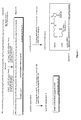
- Figure 1 Synthesis scheme SMPH activated peptide or SATA / SATP derived from the CD4 receptor, and the conjugate molecule miniCD4-GPR1.
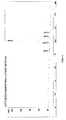
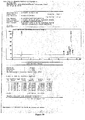
- Figure 2 Final HPLC elugram of the conjugate molecule miniCD4-GPR1.
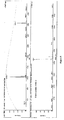
- Figure 3 Mass spectrum of the miniCD4-GPR1 conjugate molecule.
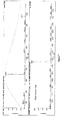
- FIG. 4 Final HPLC elugram of SATP activated miniCD4 peptide
- Figure 6 Final HPLC elugram of SMPH activated miniCD4 peptide.
- FIG. 8 Synthesis scheme of the activated maleicidal miniCD4 peptide via a PEO 2 spacer.
- Figure 9 miniCD4 and gp120 interaction
- miniCD4 synthesized for gp120 was evaluated by Biacore. The results confirm that the mini CD4 that the inventors have "designed" with a single lysine is a functional mimic of the CD4 protein.
- miniCD4 via the incorporation of the maleimide function allows the coupling of any compound comprising a free thiol function (SH) or a masked thiol function (thioacetyl for example).
- This activated miniCD4 makes it possible, among other things, to obtain miniCD4-heparin covalent conjugates, insofar as the heparin (or any other polysaccharide) has previously been derivatized by a thiol function.
- a mini-CD4 peptide was synthesized according to the Fmoc solid phase peptide synthesis methodology ( "Fmoc solid Phase peptide synthesis, a practical approach", published by WC Chan and PD White, Oxford university press, 2000 ) on an Applied Biosystems 433 peptide synthesizer.
- Fmoc solid Phase peptide synthesis a practical approach
- the stepwise elongation of the peptide chain was carried out by coupling of 10 equivalents of amino acids protected by Fmoc and activated with a HATU / DIEA mixture.
- the N-terminal thiopropionyl function was introduced by coupling of SPDP (1.6 equivalents in DMF) to the peptide-resin.
- the reaction was monitored by HPLC. After 15 min, 100% of the coupling was reached.
- After purification on a Nucleosil C18 semi-preparative column for reverse phase HPLC, 5 ⁇ m, 300 ⁇ (10 X 250 mm), using a gradient linear 25 to 45% of CH 3 CN in 0.08% aqueous TFA over a period of 20 min at a flow rate of 6 ml / min, the final purity (97.7%) of the activated mini-CD4 with SMPH was monitored by analytical RP-HPLC using a linear gradient of 25 to 45% (retention time 13.21 min).
- the SATP-activated mini-CD4 candidate was isolated on a half-preparative reverse phase HPLC Nucleosil C18 column, 5 ⁇ m, 300 ⁇ (10 X 250 mm), using a linear gradient of 20 to 40% CH 3 CN in 0.08% aqueous TFA over a period of 20 min at a flow rate of 6 ml / min.
- a GPR1 peptide (1.5 mg, 0.4 ⁇ mol) in 200 ⁇ l of phosphate buffer pH 7.4 was added to 200 ⁇ l of an aqueous solution of mini-CD4 activated with SMPH (0.95 mg; 0.3 ⁇ mol). The reaction was monitored by HPLC. After 15 min, the peak corresponding to the mini-CD4 activated with the SMPH has completely disappeared.
- the GPR1-mini-CD4 peptide candidate was isolated on a reverse phase HPLC Nucleosil C18 column, 5 ⁇ m, 300 ⁇ (10 X 250 mm) using a 35 to 55% linear gradient of CH 3 CN in 0.08% aqueous TFA over a period of 20 minutes at a flow rate of 6 ml / min.
- Example V Chemical synthesis of activated mini-CD4 maleimide via a spacer PEO 2 .
- MCD4-PEO 2 -maleymid differs from the mCD4-SMPH compound by the nature of the spacer arm (linker). Indeed, for reasons of solubility, a more hydrophilic polyethyleneoxide (PEO 2 ) linker has been introduced between the miniCD4 and the maleimide function.
- PEO 2 polyethyleneoxide
- the maleimide derivative was eluted with 50% CH3CN. After lyophilization, the compound was then purified on a semi-preparative column. Yield: 5.2 mg (48%); Final purity: 77% ES +: 3205.3938 (M monoisotopic expected: 3205.4211), QTOF micro Waters, MaxEnt1 HPLC conditions: Analytical: Nucleosil 5C18 300 ⁇ (4.6 x 15.0 mm); linear gradient 25-45% CH3CN in 0.08% aqueous TFA in 20 min at a flow rate of 1 ml / min. Detection: 230 nm.
Landscapes
- Health & Medical Sciences (AREA)
- Life Sciences & Earth Sciences (AREA)
- Chemical & Material Sciences (AREA)
- Organic Chemistry (AREA)
- Immunology (AREA)
- General Health & Medical Sciences (AREA)
- Molecular Biology (AREA)
- Medicinal Chemistry (AREA)
- Toxicology (AREA)
- Biophysics (AREA)
- Biochemistry (AREA)
- Genetics & Genomics (AREA)
- Gastroenterology & Hepatology (AREA)
- Zoology (AREA)
- Proteomics, Peptides & Aminoacids (AREA)
- Virology (AREA)
- Cell Biology (AREA)
- AIDS & HIV (AREA)
- Pharmacology & Pharmacy (AREA)
- Communicable Diseases (AREA)
- Oncology (AREA)
- Chemical Kinetics & Catalysis (AREA)
- General Chemical & Material Sciences (AREA)
- Nuclear Medicine, Radiotherapy & Molecular Imaging (AREA)
- Tropical Medicine & Parasitology (AREA)
- Animal Behavior & Ethology (AREA)
- Public Health (AREA)
- Veterinary Medicine (AREA)
- Peptides Or Proteins (AREA)
- Medicines That Contain Protein Lipid Enzymes And Other Medicines (AREA)
- Medicinal Preparation (AREA)
- Medicines Containing Material From Animals Or Micro-Organisms (AREA)
- Preparation Of Compounds By Using Micro-Organisms (AREA)
Description
- La présente invention a pour objet un peptide activé dérivé du récepteur du CD4, qui est capable de se coupler par liaison covalente à une molécule organique et permet ainsi de générer de multiples dérivés potentiellement antiviraux. Un autre objet est une molécule conjuguée comprenant le peptide dérivé du récepteur CD4 et une molécule organique, de préférence le peptide GPR1 ou un polyanion. Une telle molécule conjuguée peut notamment être utilisée dans les traitements antiviraux, notamment le traitement du sida. L'invention a encore pour objet les procédés de préparation du peptide activé dérivé du récepteur CD4 et de la molécule conjuguée.
- Les trithérapies, associant inhibiteurs nucléosidiques (INTI), non nucléosidiques (INNTI) et/ou antiprotéases (IP), permettent une réduction de la charge virale en dessous des seuils de détectabilité chez un grand nombre de patients séropositifs au VIH. Cette efficacité a permis une diminution très notable de la mortalité liée à l'infection à VIH. Malheureusement, des génotypes indiquant une résistance à un antiviral ont été trouvés chez 80 % des patients et, de manière plus inquiétante, 45,5 % des populations virales sont résistantes à une association 1NTI/IP et 26 % à une association de trois classes d'anti-VIH (Tamalet et al., AIDS. 2003 Nov 7;17(16):2383-8). Ce constat est particulièrement préoccupant lorsque l'on observe des effets secondaires liés à une prise au long terme des trithérapies (lipoatrophies, lipodystrophies, hypertriglycidémie, hypercholestérolémie, neuropathies...), observés chez 70 % des patients sous traitement, entraînant une mauvaise observance et des arrêts « sauvages » souvent à l'origine de l'apparition de résistances. La mise au point de traitements moins contraignants, entraînant moins d'effets secondaires et ne présentant pas de profil de résistances croisées reste donc une priorité, malgré le grand nombre de médicaments actuellement commercialisés. Dans ce but, il est indispensable de cibler d'autres étapes du cycle réplicatif du VIH que la rétrotranscription et la protéolyse.
- La découverte des corécepteurs CXCR4 et CCR5 (Broder CC & Collman RG, J Leukoc Biol. 1997 Jul;62(1):20-9. Review) a ouvert la voie à la compréhension des mécanismes d'infection d'une cellule hôte. La première étape implique un attachement du VIH à la surface cellulaire, grâce à une interaction entre la glycoprotéine gp120 du VIH et le récepteur CD4 de la cellule cible. Il s'en suit un changement conformationnel de la gp120 qui va exposer un épitope, dit CD4i (pour CD4 induit) auparavant masqué, qui constitue une partie du site de liaison aux corécepteurs. L'interaction gp120/corécepteur va provoquer un nouveau changement conformationnel permettant l'exposition de la gp41, ce qui initie le processus de fusion des membranes. La compréhension de ce mécanisme a permis la mise au point de nouveaux types de médicaments inhibant soit l'interaction gp120/CD4 (Bristol-Myers Squibb BMS-488043 en phase clinique IIa), soit l'interaction gp120/CCR5 (Schering-Plough SCH-D et Pfizer UK-427,657 en phase III en 2004-05, et GlaxoSmithKline GSK GW873140/AK602 en phase I), soit la phase de fusion en se liant à la gp41 (T20, Fuzéon®, Roche).
- Ces résultats extrêmement positifs attestent que les approches visant à bloquer l'une des étapes de la pénétration du VIH dans une cellule sont pertinentes. On peut cependant remarquer que parmi les inhibiteurs de l'interaction gpl20/corécepteur en développement clinique, seuls des produits inhibant l'interaction avec CCR5 sont étudiés. Les composés se liant à CXCR4 ont vu leurs développements arrêtés, comme l'AMD8664 qui provoque des effets secondaires au niveau cardiovasculaire liés à son mode d'action (Gao Z & Metz WA, 2003 Sep;103(9):3733-52). L'absence de traitement inhibant l'interaction gp120/CXCR4 pourrait conduire à terme à l'échec de ceux visant CCR5 en provoquant une évolution de la population virale vers un tropisme X4 (VIH infectant via CXCR4), souvent associée à une accélération de la déplétion en lymphocytes T CD4+. Curieusement, le site de liaison aux corécepteurs, hautement conservé chez le VIH-1, le VIH-2 et le SIV (Rizzuto CD et al, 1998 Jun 19;280(5371):1949-53 ; Kwong PD et al., Nature. 1998 Jun 18;393(6686):648-59), ne semble pas être une cible thérapeutique sur laquelle beaucoup de recherches sont menées. Le fait que ce site soit caché, tant que la gp120 n'est pas liée à CD4, rend en effet l'accès de molécules à ce site difficile. La présente invention propose de résoudre ce problème en préparant, par synthèse chimique, des composés capables de se lier au site conservé de liaison aux corécepteurs ainsi qu'à la boucle V3. De tels composés seraient a priori capables d'inhiber l'interaction gp120/CD4 et l'interaction gp120/corécepteur et ce, quelque soit le type de souche de VIH.
- Il est connu depuis de nombreuses années que certains polyanions, comme l'héparine (HP) ou le sulfate de dextran (DS), mais pas le chondroïtine sulfate (CS), sont capables d'inhiber l'infection de cellules par le VIH (Esté JA, et al., Mol Pharmacol. 1997 Jul;52(1):98-104). Ils ne sont cependant pas utilisés en clinique notamment à cause de leurs effets anticoagulants (Flexner C et al., Antimicrob Agents Chemother. 1991 Dec;35(12):2544-50). Récemment il a été montré que le mécanisme moléculaire de cette inhibition était lié à une interaction du polyanion avec la boucle V3 (Moulard M et al., J Virol. 2000 Feb;74(4):1948-60.
- D'autre part, différentes études ont exploré l'utilisation de CD4 soluble pour inhiber l'interaction du virus avec le CD4 exprimé à la surface des cellules cibles du VIH. Cette solution s'est révélée inefficace, parce qu'en se fixant aux virus, le CD4 soluble expose l'épitope CD4i, et favorise en fait l'interaction du virus au co-récepteur CCR5 ou CXCR4, ce qui dans certains cas augmente l'infection (Schenten D. et al, 1999, J Virol.73 : 5373-80).
- Il est connu de la demande de brevet internationale publiée sous le numéro
WO 03/089000 - Dans la présente invention, les inventeurs ont obtenu des peptides activés dérivés du récepteur CD4, susceptibles de lier directement et de manière covalente le polyanion ou toute autre molécule organique susceptible de jouer un rôle dans l'action anti-VIH avec le miniCD4. Cette activation requiert l'introduction préalable de résidus d'acides aminés particuliers dans le peptide natif. En particulier, les inventeurs ont découvert que la présence d'un et un seul résidu d'acide aminé lysine dans la séquence du peptide dérivé du récepteur CD4 est indispensable pour obtenir un peptide activé selon l'invention. En outre, cet unique résidu d'acide aminé lysine doit être en une position bien définie dans la séquence du peptide dérivé du récepteur CD4. La conception du peptide miniCD4 comprenant un seul résidu d'acide aminé lysine en position définie permet d'introduire sélectivement et directement n'importe quelle fonction sur le miniCD4.
- La présente invention offre ainsi des composés activés permettant de générer de multiples dérivés potentiellement antiviraux. Ces dérivés consistent en des molécules conjuguées comprenant un peptide CD4 couplé de manière spécifique à une molécule organique, telle qu'un polyanion, au moyen d'un bras espaceur.
- Cette approche est avantageuse du point de vue thérapeutique pour inhiber l'attachement du virus sur les cellules, car elle vise directement le virus et non les cellules elles mêmes. Elle est donc, au premier abord, dépourvue des effets cellulaires qui sont observés avec les médicaments se liant aux corécepteurs. D'autre part, au vu de la conservation des sites impliqués en fonction des différents tropismes viraux, les composés selon l'invention devraient interagir avec les gp120 de différents isolats viraux. De plus, même s'il est illusoire de penser que des résistances n'apparaîtront pas, ce nouveau type de composé ne devrait provoquer que difficilement leur émergence. En effet, le site CD4 de gp120 doit rester intègre pour continuer à se lier à CD4 et les résidus basiques impliqués dans la liaison au polyanion le sont aussi pour l'interaction avec les corécepteurs, et une mutation dans l'un de ces deux sites conduirait à un virus peu fonctionnel. Finalement, dans le cadre de la présente invention, une version entièrement synthétique des composés peut être développée, garantissant ainsi une préparation en quantité importante, homogène, et parfaitement définie. La méthode de couplage est simple, rapide et quantitative.
- Ainsi, selon un premier aspect, la présente invention a pour objet un procédé de préparation d'un peptide activé dérivé du récepteur CD4, ledit peptide, une fois activé, étant capable de se coupler par liaison covalente à une molécule organique, et dans lequel ledit peptide dérivé du récepteur CD4 comprend ou est constitué par la séquence générale (I) suivante :
Xaaf - P1-Lys- Cys - P2 - Cys - P3-Cys--Xaag-Xaah-Xaai-Xaaj-Cys-Xaak-Cys-Xaal-Xaam, (I)
dans laquelle : - P1 représente 3 à 6 résidus d'acides aminés,
- P2 représente 2 à 4 résidus d'acides aminés,
- P3 représente 6 à 10 résidus d'acides aminés,
- Xaaf représente la N-acétylcystéïne (Ac-Cys) ou l'acide thiopropionique (TPA),
- Xaag représente Ala ou Gln,
- Xaah représente Gly ou (D)Asp ou Ser,
- Xaai représente Ser ou His ou Asn,
- Xaaj représente la biphénylalanine (Bip), la phénylalanine ou la [bêta]-naphthylalanine,
- Xaak représente Thr ou Ala, et
- Xaal représente Gly, Val ou Leu,
- Xaam représente -NH2 ou -OH,
- De préférence P3 comporte au moins un acide aminé basique, tout préférentiellement ledit acide aminé basique est une arginine. La présence de résidus basiques dans cette portion du fragment du récepteur CD4 contribue à sa liaison avec la protéine gp120. Ainsi les inventeurs ont préféré introduire dans P3 au moins un acide aminé basique, de préférence une arginine. Celle-ci maintient ainsi une charge basique qui n'est pas réactive pour une dérivatisation à pH7-8 mais qui s'est effectivement avéré utile pour la liaison du peptide miniCD4 avec la protéine gp 120.
- Dans la présente demande, les expressions « peptide miniCD4 », « peptide CD4 » ou « miniCD4 », sont utilisées de manière indifférente pour désigner le peptide dérivé du récepteur CD4 comprenant ou étant constitué par la séquence générale (I) définie ci-dessus.
- La présente invention requiert que le peptide dérivé du récepteur CD4 comporte dans sa séquence générale (I) un et un seul résidu d'acide aminé lysine (Lys), dans la position telle que définie dans la séquence générale (I).
- Les résidus Cys dans la séquence générale (I) permet la formation de trois ponts disulfures nécessaires au repliement du miniCD4.
- L'acide thiopropionique (TPA), lorsqu'il est en position N-terminale du peptide de séquence générale (I), permet de diminuer l'encombrement en N-ter et de s'affranchir de la présence d'une fonction amine.
- Ainsi, selon un mode de réalisation préféré, Xaaf représente TPA dans la séquence générale (I).
- Dans la séquence générale (I), XaaJ représente la Bip, Phe ou la [bêta]-naphthylalanine La biphénylalanine permet d'augmenter le contact avec la glycoprotéine gp120 au niveau de la cavité dans laquelle se loge la Phe 43 du récepteur CD4. Toutefois, un peptide miniCD4 selon l'invention avec une Phe pourrait être un meilleur mime de CD4 lorsqu'on analyse la structure du complexe miniCD4/gp120 (Huang CC et al., Structure. 2005 May;13(5):755-68).
- Ainsi, selon un autre mode de réalisation préféré, XaaJ représente Phe.
- Le peptide de séquence générale (I) dérivé du récepteur CD4 présente une structure en hélice alpha suivie d'un feuillet bêta. Les acides aminés Xaag-Xaah-Xaai-Xaaj-Cys-Xaah-Cys-Xaal participent majoritairement à la liaison sur gp120. Ces peptides présentent des IC50 (affinité pour gp120) voisines de celles du sCD4 (CD4 soluble).
- Le peptide de séquence générale (I) dérivé du récepteur CD4 peut être préparé par les techniques classiques de synthèse chimique en phase solide, par exemple selon la méthodologie de synthèse peptidique en phase solide Fmoc (« Fmoc solid Phase peptide synthesis, a practical approach », publié par W.C. Chan et P.D. White, Oxford university press, 2000), et/ou par recombinaison génétique.
- De préférence, la séquence du peptide dérivé du récepteur CD4 de séquence générale (I) est choisie dans le groupe constitué par les séquences SEQ ID N°1 et SEQ ID N°2, avantageusement SEQ ID N°1.
- On entend désigner par « composé bifonctionnel » dans la présente demande tout composé portant deux groupes actifs dont l'un au moins des deux groupes est capable de former une liaison covalente avec la fonction amine libre (-NH2) du résidu d'acide aminé Lys de la séquence générale (I).
- L'homme du métier connaît bien les composés bifonctionnels qui peuvent être utilisés dans le cadre de la présente invention. Notamment, le composé bifonctionnel selon la présente invention peut être choisi dans la liste suivante, non limitative : NHS-PEOn-Maleimide où n est compris entre 2 et 24, avantageusement n=2, 4, 8 ou 12, SMPT (4-succinimidyloxycarbonyl-méthyl-α-[2-pyridyldithio]toluène), Sulfo-LC-SMPT (4-sulfosuccinimidyl-6-méthyl-α-(2-pyridyldithio)toluamido]hexanoate)), Sulfo-KMUS (N-[k-maléïmidoundécanoyloxy]sulfosuccinimide ester), LC-SMCC (succinimidyl-4-[N-maléïmidométhyl]cyclohexane-1-carboxy-[6-amidocaproate]), KMUA (acide N-k-maléïmidoundécanoïque), Sulfo-LC-SPDP (sulfosuccinimidyl 6-(3'-[2-pyridyldithio]-propionamido)hexanoate), LC-SPDP (succinimidyl 6-(3-[2-pyridyldithio]-propionamido)hexanoate), SMPB (succinimidyl 4-[p-maléïmidophényl]butyrate), Sulfo-SMPB (sulfosuccinimidyl 4-[p-maléïmidophényl]butyrate), Sulfo-SIAB (N-sulfosuccinimidyl[4-iodoacétyl]aminobenzoate), SIAB (N-succinimidyl[4-iodoacétyl]aminobenzoate), Sulfo-EMCS ([N-e-maléïmidocaproyloxy]sulfosuccinimide ester), EMCA (acide N-e-maléïmidocaproïque), EMCS ([N-e-maléïmidocaproyloxy]succinimide ester), SMCC (succinimidyl 4-[N-maléïmidométhyl]cyclohexane-1-carboxylate), Sulfo-SMCC (sulfosuccinimidyl 4-[N-maléïmidométhyl]cyclohexane-1-carboxylate), MBS (m-maléïmidobenzoyl-N-hydroxy succinimide ester), Sulfo-MBS (m-maléïmidobenzoyl-N-hydroxysulfosuccinimide ester), GMBS (N-[g-maléïmidobutyryloxy]succinimide ester), Sulfo-GMBS (N-[g-maléïmidobutyryloxy] sulfosuccinimide ester), SPDP (N-succinimidyl-3-(2-pyridyldithio)propionate), SBAP (succinimidyl 3-[bromoacétamido]propionate), BMPS (N-[[bêta]-maléïmidopropyloxy]succinimide ester), BMPA (acide N-[bêta]-maléïmidopropionique), AMAS N-(a-maléïmidoacétoxy) succinimide ester), SIA (N-succinimidyl iodoacétate), SMPH (succinimidyl-6-[bêta-maléïmidopropionamido]hexanoate), SATA (N-succinimidyl-S-acétylthioacétate), SATP (N-succinimidyl-S-acétylthiopropionate).
- Selon la présente invention, NHS-PEOn-Maleimide où n=2 est également appelé succinimidyl-[(N-maleimidopropionamido)-diethyleneglycol] ester, NHS-PEOn-Maleimide où n=4 est également appelé succinimidyl-[(N-maleimidopropionamido)-tetraethyleneglycol] ester,
NHS-PEOn-Maleimide où n=8 est également appelé succinimidyl-[(N-maleimidopropionamido)-octaethyleneglycol] ester,
NHS-PEOn-Maleimide où n=12 est également appelé succinimidyl-[(N-maleimidopropionamido)-dodecaethyleneglycol] ester. - Le groupe actif capable de former une liaison covalente avec la fonction amine libre (-NH2) du résidu d'acide aminé Lys présent dans la séquence générale (I), peut être tout groupe ester actif.
- De manière préférée, le groupe actif capable de former une liaison covalente avec la fonction amine libre (-NH2) du résidu d'acide aminé Lys présent dans la séquence générale (I), est le groupe actif N-hydroxysuccinimide ester (NHS).
- De manière encore préférée, les deux groupes actifs du composé bifonctionnel sont différents (groupe hétérobifonctionnel), et l'un des deux groupes représente le groupe actif NHS.
- Selon un mode de réalisation particulièrement préféré, le composé bifonctionnel est le succinimidyl-6-[bêta-maléïmidopropionamido]hexanoate (SMPH).
- La structure moléculaire du SMPH est la suivante :

- Selon un autre mode de réalisation particulièrement préféré, le composé bifonctionnel est choisi dans le groupe constitué par le N-succinimidyl-S-acétylthioacétate (SATA) et le N-succinimidyl-S-acétylthiopropionate (SATP).
- La structure moléculaire du SATA est la suivante :

- La structure moléculaire du SATP est la suivante :

- Selon encore un autre mode de réalisation préféré, le composé bifonctionnel est l'ester de succinimidyl-[(N-maléïmidopropionamido)-diéthylèneglycol], également appelé NHS-PEO2-maléïmide l'ester de succinimidyl-[(N-maleimidopropionamido)-tetraethyleneglycol] également appelé NHS-PEO4- maléïmide, l'ester de succinimidyl-[(N-maleimidopropionamido)-octaethyleneglycol] également appelé NHS-PEO8-maléïmide, l'ester de succinimidyl-[(N-maleimidopropionamido)-dodecaethyleneglycol] également appelé NHS-PEO12- maléïmide, de manière encore plus préférée le composé bifonctionnel est le NHS-PEO2- maléïmide.
- La structure moléculaire du NHS-PEO2-maléïmide est la suivante :

- Les composés bifonctionnels peuvent être obtenus auprès de PIERCE (Rockford, IL).
- De préférence encore, le procédé de préparation d'un peptide activé selon l'invention comprend une étape préliminaire de préparation du peptide dérivé du récepteur CD4 de séquence générale (I) dans lequel Xaaf représente TPA, dans laquelle le peptide dérivé du récepteur CD4 de séquence générale (II) suivante :
P1 - Lys - Cys - P2 - Cys - P3 - Cys - Xaag - Xaah - Xaai - Xaaj - Cys - Xaak-Cys-Xaal-Xaam, (II)
dans laquelle P1 à P3, Bip et Xaag à Xaam sont tels que définis dans la séquence générale (I) ci-dessus,
est mis en présence avec le N-succinimidyl 3-(2-pyridyldithio)propionate (SPDP) pour incorporer le TPA à l'extrémité N-terminale dudit peptide dérivé du récepteur CD4 de séquence générale (II). - La structure moléculaire du SPDP est la suivante :

- Selon un deuxième aspect, la présente invention a pour objet un peptide activé dérivé du récepteur CD4 comprenant ou étant constitué par la séquence générale (I) telle que définie ci-dessus, dans lequel le résidu d'acide aminé Lys est lié de façon covalente, avantageusement par une liaison amine, à un groupe actif capable de se coupler par liaison covalente à une molécule organique.
- Comme exemples de groupes actifs capable de se coupler par liaison covalente à la molécule organique, on peut citer le groupe maléïmide, le groupe bromoacétyle, le groupe S-S-pyridinium. Lorsque le miniCD4 est activé par une fonction thiol protégée (ex : thioacétyle), il est possible de réaliser le couplage avec une molécule organique qui portera par exemple un groupe maléïmide. Cette possibilité peut être utilisée lorsque la fonctionnalisation du polysaccharide (ou polyanion) par une fonction thiol ou thioacétyle pose des problèmes. On parle alors de « couplage inverse ».
- De préférence, le groupe actif est le groupe maléïmide.
- La structure moléculaire du peptide activé selon la présente invention, dont le groupe actif est le groupe maléïmide, est la suivante lorsque SMPH est le composé bifonctionnel utilisé:

- Dans la présente demande, l'expression « peptide miniCD4 activé SMPH » désigne un peptide activé selon l'invention, dont le résidu d'acide aminé Lys est lié de façon covalente, avantageusement par une liaison amine, au groupe actif maléïmide via un espaceur dérivé du SMPH.
- Selon un autre mode de réalisation avantageux, la structure moléculaire du peptide activé selon la présente invention, dont le groupe actif est le groupe maléïmide, est la suivante lorsque NHS-PEO2-maléïmid le composé bifonctionnel utilisé :

- Dans la présente demande, l'expression « peptide miniCD4 activé maléïmide via un espaceur PEO2 » désigne un peptide activé selon l'invention, dont le résidu d'acide aminé Lys est lié de façon covalente, avantageusement par une liaison amine, au groupe actif maléïmide via un espaceur PEO2 .
- Selon une autre préférence, le groupe actif est le groupe thioacétyle.
- Par exemple, la structure moléculaire du peptide activé selon la présente invention, dont le groupe actif est le groupe thioacétyle, est la suivante lorsque SATA est le composé bifonctionnel utilisé :

- De même, la structure moléculaire du peptide activé selon la présente invention, dont le groupe actif est le groupe thioacétyle, est la suivante lorsque SATP est le composé bifonctionnel utilisé :

- Le groupe thioacétyle est une forme protégée du groupe thiol. Pour déprotéger le groupe thiol, on utilise par exemple l'hydroxylamine. Cette étape est réalisée simultanément lors du couplage sur la fonction maléïmide portée par la molécule organique.
- Dans la présente demande, les expressions « peptide miniCD4 activé SATA » et « peptide miniCD4 activé SATP » désignent un peptide activé selon l'invention, dont le résidu d'acide aminé Lys est lié de façon covalente, avantageusement par une liaison amine, à un groupe thiol protégé ( ex : thioacétyle) via un espaceur dérivé du SATA ou SATP.
- Selon un troisième aspect, la présente invention a pour objet un procédé de préparation d'une molécule conjuguée comportant un peptide dérivé du récepteur CD4 couplé par liaison covalente à une molécule organique, ledit peptide dérivé du récepteur CD4 comprenant ou étant constitué par la séquence générale (I) telle que définie ci-dessus, caractérisé en ce que le procédé comprend la mise en présence du peptide activé selon l'invention tel que défini ci-dessus avec la molécule organique. Le peptide activé dérivé du récepteur CD4 comprend la séquence générale (I) telle que définie ci-dessus, dans lequel le résidu d'acide aminé Lys est lié de façon covalente, avantageusement par une liaison amine, à un groupe actif capable de se coupler par liaison covalente à une molécule organique.
- Selon un mode réalisation particulier, le groupe actif est le groupe maléïmide et la molécule organique porte une fonction thiol ou thioacétyle.
- De préférence, la molécule organique portant une fonction thiol est le peptide GPR1 de séquence choisie dans le groupe constitué par les séquences SEQ ID N°3 et SEQ ID N°4, avantageusement SEQ ID N°3.
- Le peptide GPR1 de séquence SEQ ID N°3 ou SEQ ID N°4 est un peptide synthétique dérivé de la région extracellulaire N-terminale du récepteur couplé à la protéine G, GPR1 (Jinno-Oue et al., J Biol Chem. 2005 Sep 2;280(35):30924-34. Epub 2005 May 26).
- Selon une autre préférence, la molécule organique portant une fonction thiol est choisie dans le groupe constitué par les peptides comportant essentiellement des résidus acides (acide aspartique, acide glutamique,...), les peptides comportant essentiellement des résidus phosphorylables (Ser, Thr, Tyr,...), et les peptides comportant essentiellement des résidus sulfatables (Ser, Thr, Tyr,...).
- Selon une autre préférence, la molécule organique portant une fonction thiol est un polyanion modifié portant la fonction thiol ou thioacétyle.
- Selon l'invention, le polyanion, ou polysaccharide, peut être choisi avantageusement dans le groupe constitué de l'héparine, de l'héparane sulfate, et d'un polyanion équivalent à l'héparine ou à l'héparane sulfate. Il s'agit par exemple du dextran sulfate (marque de commerce, UENO FINE CHEMICALS), du curdlan sulfate (marque de commerce, AJINOMOTO), du naphtalène-2 sulfonate polymère (marque de commerce, PROCEPT), du pentosan polysulfate (marque de commerce, BAKER NORTON PHARM ; HOECHST), ou du resobene (marque de commerce).
- Il est préférable que le polyanion ne soit pas trop long, car il aurait une activité anticoagulante, non souhaitée dans la présente invention, et formerait des liaisons aspécifiques avec différentes protéines, notamment la thrombine ou l'antithrombine III. Sa longueur sera de préférence similaire à une chaîne d'héparine ayant un degré de polymérisation tel que défini ci-dessous. Le polyanion présente de préférence au moins deux groupes anioniques par disaccharide.
- Selon la présente invention, lorsque le polyanion est de l'héparine ou de l'héparane sulfate, il aura de préférence un degré de polymérisation dp de 10 à 24, avantageusement de 12 à 24, de préférence de 16 à 22. Selon l'invention, l'héparine, l'héparane sulfate ou le polyanion équivalent à l'héparine ou l'héparane sulfate peut avoir un degré de polymérisation dp de 12 à 20, par exemple de 15 à 17.
- On peut citer par exemple le dodécasaccharide d'héparine (HP12).
- Selon un mode de réalisation particulier, le polyanion modifié portant la fonction thiol ou thioacétyle est choisi dans le groupe constitué par l'héparine et l'héparane sulfate et a un degré de polymérisation dp de 10 à 24.
- Selon un autre mode de réalisation particulier, le groupe actif est le groupe thioacétyle et la molécule organique porte une fonction maléïmide ou halogène.
- Selon l'invention, le polyanion peut être préparé par dépolymérisation partielle d'héparine ou d'héparane sulfate par une méthode enzymatique, par exemple au moyen d'héparinase, ou chimique, par exemple au moyen d'acide nitreux. Lorsqu'ils sont obtenus chimiquement, les héparanes peuvent être définis par la présence de glucosamine N-sulfatée ou N-acétylée, ou non substituée en position N, liée à un acide uronique (acide glucuronique ou acide iduronique) avec une proportion variable de groupe sulfate. Des mimes structuraux de ces oligosaccharides peuvent être obtenus par synthèse chimique.
- Les avantages d'une telle approche synthétique par rapport à une conjugaison de composés recombinants ou issus de sources naturelles sont multiples. Dans l'optique d'une utilisation thérapeutique, les composés de synthèse sont toujours préférés, car outre une structure parfaitement définie, on évite toute contamination par des agents pathogènes et en particulier des protéines prions dans le cas de fragments d'HP. De plus, les fragments synthétiques d'HP sont nettement plus homogènes que leurs équivalents naturels. Ainsi par exemple, l'HP12 synthétique est totalement dépourvu des groupements 3-O-sulfates qui sont à l'origine de l'activité antithrombotique de l'héparine.
- Les conditions opératoires des procédés de préparation selon l'invention du peptide activé et de la molécule conjuguée, sont bien connus de l'homme de l'art et pourront être adaptées si besoin est.
- Selon un quatrième aspect, la présente invention a pour objet une molécule conjuguée comportant un peptide dérivé du récepteur CD4 comprenant ou étant constitué par la séquence générale (I) telle que définie ci-dessus couplé à une molécule organique, dans laquelle le peptide dérivé du récepteur CD4 et la molécule organique sont couplés l'un à l'autre par un bras espaceur, et dans laquelle le résidu d'acide aminé Lys de la séquence générale (I) forme une liaison amine avec le bras espaceur.
- La présente invention a également pour objet une molécule conjuguée comportant un peptide dérivé du récepteur CD4 comprenant ou étant constitué par la séquence générale (I) telle que définie ci-dessus couplé à une molécule organique, ladite molécule conjuguée étant susceptible d'être obtenue par le procédé selon l'invention de préparation d'une molécule conjuguée.
- Dans la présente demande, on entend désigner par bras espaceur tout agent de liaison entre le peptide miniCD4 selon l'invention et la molécule organique, ledit bras espaceur variant selon le composé bifonctionnel utilisé.
- Il s'agit de préférence d'une molécule conjuguée selon l'invention, dans laquelle la séquence du peptide dérivé du récepteur CD4 comprend ou est constituée par la séquence générale (I), de préférence la séquence SEQ ID N°1, et la molécule organique portant une fonction thiol est le peptide GPR1 de séquence choisie dans le groupe constitué par les séquences SEQ ID N°3 et SEQ ID N°4, avantageusement SEQ ID N°3.
- Le couplage selon l'invention du peptide GPR1 au peptide dérivé du récepteur CD4 de séquence générale (I) est capable de se fixer sur la glycoprotéine gp120 du VIH et de bloquer de façon concomitante l'attachement du virus à CD4 et aux corécepteurs CXCR4 et CCR5.
- La structure moléculaire d'une telle molécule conjuguée, comportant un peptide dérivé du récepteur CD4 de séquence générale (I) couplé au peptide GPR1 de séquence SEQ ID N°3 ou SEQ ID N°4, est la suivante lorsque le SMPH a été utilisé pour le couplage :

- Selon une autre préférence, il s'agit d'une molécule conjuguée selon l'invention, dans laquelle la séquence du peptide dérivé du récepteur CD4 comprend ou est constituée par la séquence générale (I), de préférence la séquence SEQ ID N°1, et la molécule organique portant une fonction thiol est le polyanion modifié portant la fonction thiol ou thioacétyle.
- La structure moléculaire d'une telle molécule conjuguée, comportant un peptide dérivé du récepteur CD4 de séquence générale (I) couplé au polyanion modifié portant la fonction thiol ou thioacétyle, est la suivante lorsque le SMPH a été utilisé pour le couplage :

- Il peut également s'agir de la molécule conjuguée suivante, lorsque le NHS-PEO2-maléïmide est le composé bifonctionnel utilisé :

- De préférence, le polyanion modifié portant la fonction thiol ou thioacétyle est choisi dans le groupe constitué par l'héparine et l'héparane sulfate et a un degré de polymérisation dp de 10 à 24.
- Selon un autre mode de réalisation, la molécule conjuguée selon l'invention comprend le peptide dérivé du récepteur CD4 comprenant ou étant constitué par la séquence générale (I), de préférence la séquence SEQ ID N°1, et une molécule organique portant une fonction maléïmide ou halogène.
- Par exemple, la structure moléculaire d'une telle molécule conjuguée, comportant un peptide dérivé du récepteur CD4 de séquence générale (I) couplé à une molécule organique portant une fonction maléïmide, est la suivante lorsque le SATA a été utilisé pour le couplage :

- Il résulte de la présente invention que la molécule conjuguée telle que définie ci-dessus comporte un bras espaceur, dont la longueur varie selon le composé bifonctionnel utilisé.
- Selon encore un autre mode de réalisation, la molécule conjuguée selon l'invention comprend le peptide dérivé du récepteur CD4 comprenant ou étant constitué par la séquence générale (I), de préférence la séquence SEQ ID N°1, et la molécule organique portant une fonction thiol choisie dans le groupe constitué par les peptides comportant essentiellement des résidus acides (acide aspartique, acide glutamique,...), les peptides comportant essentiellement des résidus phosphorylables (Ser, Thr, Tyr,...), et les peptides comportant essentiellement des résidus sulfatables (Ser, Thr, Tyr,...).
- La présente invention a encore pour objet l'utilisation du peptide activé dérivé du récepteur CD4 comprenant ou étant constitué par la séquence générale (I) telle que définie ci-dessus, dans lequel le résidu d'acide aminé Lys est lié de façon covalente, avantageusement par une liaison amine, à un groupe actif maléïmide, pour le couplage par liaison covalente à une molécule organique comportant une fonction thiol ou thioacétyle.
- Un autre objet de la présente invention est l'utilisation du peptide dérivé du récepteur CD4 comprenant ou étant constitué par la séquence générale (I) telle que définie ci-dessus, dans lequel le résidu d'acide aminé Lys est lié de façon covalente, avantageusement par une liaison amine, à un groupe actif thiol protégé (ex : thioacétyle), pour le couplage par liaison covalente à une molécule organique comportant une fonction maléïmide ou halogène.
- L'invention a également pour objet l'utilisation du peptide activé dérivé du récepteur CD4 comprenant ou étant constitué par la séquence générale (I) telle que définie ci-dessus, dans lequel le résidu d'acide aminé Lys est lié de façon covalente, avantageusement par une liaison amine, à un groupe actif maléïmide permettant le couplage par liaison covalente à une molécule organique comportant une fonction thiol ou thioacétyle, pour la fabrication d'un médicament destiné à un traitement antiviral.
- L'invention a encore pour objet l'utilisation du peptide activé dérivé du récepteur CD4 comprenant ou étant constitué par la séquence générale (I) telle que définie ci-dessus, dans lequel le résidu d'acide aminé Lys est lié de façon covalente, avantageusement par une liaison amine, à un groupe actif thiol protégé (ex : -thioacétyle) permettant le couplage par liaison covalente à une molécule organique comportant une fonction maléïmide ou halogène, pour la fabrication d'un médicament destiné à un traitement antiviral.
- De préférence, l'invention a pour objet l'utilisation du peptide activé dérivé du récepteur CD4 comprenant ou étant constitué par la séquence générale (I) telle que définie ci-dessus, dans lequel le résidu d'acide aminé Lys est lié de façon covalente, avantageusement par une liaison amine, à un groupe actif maléïmide permettant le couplage par liaison covalente à une molécule organique comportant une fonction thiol ou thioacétyle, pour la fabrication d'un médicament destiné à traiter le sida.
- L'invention a encore pour objet une molécule conjuguée selon la présente invention, pour son utilisation en tant que médicament.
- Selon encore un autre aspect, l'invention a pour objet l'utilisation de la molécule conjuguée selon la présente invention pour la fabrication d'un médicament destiné au traitement du sida.
- L'invention concerne également une méthode de traitement antiviral, de préférence une méthode de traitement contre le sida, comprenant l'utilisation d'une molécule conjuguée selon la présente invention.
- De préférence, la molécule conjuguée selon la présente invention est une molécule conjuguée dans laquelle la séquence générale (I) est la séquence SEQ ID N°1, et la molécule organique portant une fonction thiol est le peptide GPR1 de séquence choisie dans le groupe constitué par les séquences SEQ ID N°3 et SEQ ID N°4, avantageusement SEQ ID N°3.
- Selon une autre préférence, la molécule conjuguée selon la présente invention est une molécule conjuguée dans laquelle la séquence générale (I) est la séquence SEQ ID N°1, et la molécule organique portant une fonction thiol choisie dans le groupe constitué par les peptides comportant essentiellement des résidus acides (acide aspartique, acide glutamique,...), les peptides comportant essentiellement des résidus phosphorylables (Ser, Thr, Tyr,...), et les peptides comportant essentiellement des résidus sulfatables (Ser, Thr, Tyr,...).
- Selon une autre préférence, la molécule conjuguée selon la présente invention est une molécule conjuguée dans laquelle la séquence générale (I) est la séquence SEQ ID N°1, et la molécule organique portant une fonction thiol est le polyanion modifié portant la fonction thiol ou thioacétyle.
- Les modes de réalisation décrits précédemment s'appliquent à ces différents aspects de l'invention.
- Les exemples et figures qui suivent permettent d'illustrer la présente invention, mais n'en limitent pas la portée.
- Epsilon ds 50µl TFA/CH3CN 35 % ; inj 10 µl ds 35-55
Nom de l'échantillon : GPR1-mCD4 -
Trié par : Signal Multiplicateur : 1.0000 Dilution : 1.0000
Signal 1 : DAD1 A, Sig=230,4 Ref=offTableau 1 Pic n° Temps de Rétention [min] Type Largeur [min] Surface [mAU*s] Hauteur [mAU] Surface % 1 10.667 BB 0.1595 14.20322 1.29982 0.9401 2 12.172 VV 0.1905 39.30429 2.93002 2.6016 3 12.596 VV 0.2345 1422.81519 89.94869 94.1780 4 13.382 VV B 0.2054 18.64892 1.12492 1.2344 5 14.117 BV 0.2103 15.80048 1.02216 1.0459 Totaux 1510.77210 96.32562 Résultats obtenus avec intégrateur amélioré - Copie 3 du calcul de l'hypermasse pour -Q1 MCA (13 balayages) : à partir de FBX15899-56/InfMS-/b/14/12/05
Critères utilisés pour le calcul de l'hypermasse
Agent : , Masse : 1.0079, Charge : 1, Agent perdu
Tolérance pour l'estimation de la charge : 0.1000
Tolérances entre les estimations de masse : 20.0000Tableau 2 Pic Intensité Charge Charge calculée Estimation de l'hypermasse 1306.33 10500.00 5 4.99783 6536.67 1633.34 215500.00 4 3.99783 6537.38 2178.24 139000.00 3 2.99935 6537.74 Masse finale estimée : 6537.26
Ecart-type : 0.54 -
25-45 en 20min Nom de l'échantillon : FBX13082-186-2 Rapport pourcentage surface : Trié par : Signal Multiplicateur : 1.0000 Dilution : 1.0000
Signal 1 : DAD1 A, Sig=230,4 Ref=offTableau 3 Pic n° Temps de Rétention [min] Type Largeur [min] Surface [mAU*s] Hauteur [mAU] Surface % 1 13.883 VV 0.1668 520.71381 46.44330 100.0000 Totaux 520.71381 46.44330 Résultats obtenus avec intégrateur amélioré - Copie du calcul de l'hypermasse pour +Q1 MCA (10 balayages): à partir de FBX13082-186-2/Infpo/c/29/07/05
Critères utilisés pour le calcul de l'hypermasse
Agent : , Masse : 1.0079, Charge : 1, Agent gagné
Tolérance pour l'estimation de la charge : 0.1000
Tolérances entre les estimations de masse : 20.0000Tableau 4 Pic Intensité Charge Charge calculée Estimation de l'hypermasse 757.72 125000.00 4 3.99687 3026.85 1010.22 45016000.00 3 2.99687 3027.64 1514.73 23987000.00 2 2.00039 3027.45 Masse finale estimée : 3027.31
Ecart-type : 0.41 - Environ 2 mg/ml
inj 5 µl ds 25-45
Nom de l'échantillon : FBX13082-190 -
Trié par : Signal Multiplicateur : 1.0000 Dilution : 1.0000
Signal 1 : DAD1 A, Sig=230,4 Ref=offTableau 5 Pic n° Temps de Rétention [min] Type Largeur [min] Surface [mAU*s] Hauteur [mAU] Surface % 1 12.674 BV F 0.0909 6.52587 1.07449 0.3925 2 12.753 VV 0.0714 6.31252 1.19955 0.3797 3 12.832 VV 0.0909 8.14971 1.23625 0.4902 4 13.027 VV F 0.0859 16.22212 2.63102 0.9758 5 13.212 VB 0.2055 1625.25330 120.40638 97.7617 Totaux 1662.46352 126.54769 Résultats obtenus avec intégrateur amélioré - Copie du calcul de l'hypermasse pour +Q1 MCA (10 balayages): à partir de FBX13082-190/InfMSpo/c/03/08/05
Critères utilisés pour le calcul de l'hypermasse
Agent : , Masse : 1.0079, Charge : 1, Agent gagné
Tolérance pour l'estimation de la charge : 0.1000
Tolérances entre les estimations de masse : 20.0000Tableau 6 Pic Intensité Charge Charge calculée Estimation de l'hypermasse 791.29 322500.00 4 4.00218 3161.12 1054.52 41316500.00 3 3.00218 3160.54 1581.43 7411500.00 2 1.99944 3160.84 Masse finale estimée : 3160.83
Ecart-type : 0.29 - L'affinité des miniCD4 synthétisés pour la gp120 a été évaluée par Biacore. Les résultats confirment que le mini CD4 que les Inventeurs ont « designé » comportant une seule lysine est un mime fonctionnel de la protéine CD4.
- Chromatographie HPLC du dérivé maleïmide, mini-CD4-PEO2 Prouvant que ce dernier est obtenu avec une pureté finale de 77%, comme indiqué dans l'exemple V de la description.
- Spectre de masse, montrant la masse de dérivé obtenu (3205,3938)
-

-

- Le mode d'activation du miniCD4 via l'incorporation de la fonction maléïmide permet le couplage de tout composé comportant une fonction thiol libre (SH) ou une fonction thiol masquée (thioacétyle par exemple). Ce miniCD4 activé permet entre autre, l'obtention de conjugués covalents miniCD4-héparine, dans la mesure où l'héparine (ou tout autre polysaccharide) aura été préalablement dérivatisé par une fonction thiol.
- Un mini-peptide CD4 a été synthétisé conformément à la méthodologie de synthèse peptidique en phase solide Fmoc (« Fmoc solid Phase peptide synthesis, a practical approach », publié par W.C. Chan et P.D. White, Oxford university press, 2000) sur un synthétiseur de peptides Applied Biosystems 433. En partant de 0,1 mmole de résine amide-Fmoc, l'élongation par étapes de la chaîne peptidique a été réalisée par couplage de 10 équivalents d'acides aminés protégés par Fmoc et activés avec un mélange HATU/DIEA. La fonction thiopropionyle N-terminale a été introduite par couplage de SPDP (1,6 équivalent dans du DMF) sur le peptide-résine.
- Après clivage par du TFA/H2O/EDT/TIS (94/2,5/2,5/1), le peptide a été récupéré par précipitation dans de l'éther diéthylique froid. Après lyophilisation, le peptide brut (156 mg) a été réduit pendant une nuit par du DTT dans une solution d'acide acétique à 20 % et purifié par MPLC en phase inverse sur une colonne Nucleoprep C1 18, 20 µm, 100 Å (26 X 313 mm) en utilisant un gradient linéaire de 30 à 90 % de B dans A, sur une période de 60 min, à un débit de 20 ml/min (B= 80 % de CH3CN/ 20 % de TFA aqueux à 0,08 %; A= 100 % de TFA aqueux à 0,08 %). Les fractions pures ont été rassemblées et lyophilisées. Le peptide a ensuite été replié par traitement au GSH/GSSG pendant une nuit. Le peptide replié a été purifié par MPLC en utilisant un gradient de 20 à 80 % sur une période de 60 min, donnant lieu à 8,7 mg de mini-CD4. La pureté (93,5 %) a été vérifiée par HPLC analytique en phase inverse sur une colonne Nucleosil C18, 5 µm, 300 Å (4,6 X 150 mm) en utilisant un gradient linéaire de 25 à 35 % de CH3CN dans du TFA aqueux à 0,08 %, sur une période de 20 min, à un débit de 1 ml/min (temps de rétention = 15,44 min).
ES+MS : 2896,32 ± 0,23; attendu : 2896,49 ; Rendement : 5,5 %. - Le groupement maléïmide a été introduit sur la chaîne latérale de Lys du mini-CD4 par réaction de 4 équivalents de SMPH dans un tampon phosphate pH = 8. La réaction a été contrôlée par HPLC. Après 15 min, on a atteint 100 % du couplage. Après purification sur une colonne Nucleosil C18 semi-préparative pour HPLC en phase inverse, 5 µm, 300 Å (10 X 250 mm), en utilisant un gradient linéaire de 25 à 45 % de CH3CN dans du TFA aqueux à 0,08 %, sur une période de 20 min, à un débit de 6 ml/min, la pureté finale (97,7 %) du mini-CD4 activé avec le SMPH a été contrôlée par RP-HPLC analytique en utilisant un gradient linéaire de 25 à 45 % (temps de rétention = 13,21 min).
ES+MS : 3160,83 ± 0,29; attendu : 3160,78. Rendement : 1,9 mg (67 %). - Le groupe thioacétyle a été introduit sur la chaîne latérale de Lys du mini-CD4 par réaction de 1 équivalent de SATP dans un tampon phosphate pH = 8. La réaction a été contrôlée par HPLC. Après 3 min, on a atteint 46% du couplage. Le candidat mini-CD4 activé avec le SATP a été isolé sur une colonne Nucleosil C18 semi-préparative pour HPLC en phase inverse, 5 µm, 300 Å (10 X 250 mm), en utilisant un gradient linéaire de 20 à 40 % de CH3CN dans du TFA aqueux à 0,08 %, sur une période de 20 min, à un débit de 6 ml/min. La pureté finale (100 %) du mini-CD4 activé avec le SATP a été contrôlée par RP-HPLC analytique en utilisant un gradient linéaire de 25 à 45 % (temps de rétention = 13,88 min).
ES+MS: 3027,31 ± 0,41; attendu : 3027,66. Cette réaction de couplage a été réalisée une fois et pourrait être optimisée en ajoutant directement 2 équivalents de SATP. - Un peptide GPR1 a été synthétisé en utilisant la synthèse peptidique en phase solide Fmoc conventionnelle, comme décrit pour le mini-CD4. Un résidu Cys a été incorporé à l'extrémité C-terminale de la séquence de GPR1, pour permettre le couplage spécifique à la fonction maléïmide du mini-CD4 activé avec le SMPH. La pureté finale (91%) du peptide GPR1 a été contrôlée par RP-HPLC analytique en utilisant un gradient linéaire de 20 à 40% (temps de rétention = 4,64 min).
ES+MS : :3376,44±0,49; attendu : 3376,58. Rendement : 12,9 mg (5,8 %). - Un peptide GPR1 (1,5 mg ; 0,4 µmole) dans 200 µl de tampon phosphate pH = 7,4 a été ajouté à 200 µl d'une solution aqueuse de mini-CD4 activé avec du SMPH (0,95 mg ; 0,3 µmole). La réaction a été contrôlée par HPLC. Après 15 min, le pic correspondant au mini-CD4 activé avec le SMPH a complètement disparu. Le candidat peptide GPR1-mini-CD4 a été isolé sur une colonne Nucleosil C18 semi-préparative pour HPLC en phase inverse, 5 µm, 300 Å (10 X 250 mm) en utilisant un gradient linéaire de 35 à 55 % de CH3CN dans du TFA aqueux à 0,08 %, sur une période de 20 min, à un débit de 6 ml/min.
- La pureté finale (94,2 %) du peptide GPR1-mini-CD4 a été contrôlée par RP-HPLC analytique en utilisant un gradient linéaire de 35 à 55 % (temps de rétention = 12,60 min).
ES+MS : 6537,26 ± 0,54; attendu : 6537,38. Rendement : 1,9 mg (96 %). - La pertinence du choix de la séquence générale (I) comportant un et un seul résidu lysine en position définie a été validée par la synthèse d'un peptide miniCD4 dérivatisé sur la Lys par un (PEO)4-Biotin à l'aide du réactif EZ-Link-NHS-(PEO)4-Biotin PIERCE (Rockford, IL). L'introduction de ce dérivé Biotin en position définie dans la séquence générale (I) ne modifie pas la fixation de la gp120 sur le miniCD4 (mesure Biacore effectuée).
- Les différentes synthèses n'ont pas été optimisées. De meilleurs rendements devraient être obtenus.
- Le mCD4- PEO2-maléïmid diffère du composé mCD4-SMPH par la nature du bras espaceur (linker). En effet pour des raisons de solubilité, un linker polyéthylèneoxyde (PEO2) plus hydrophile a été introduit entre le miniCD4 et la fonction maléïmide.
- Synthèse : Une solution de 10 mg de mCD4 (MW : 2897 ; 3,4 mmoles) dans 1 ml H2O a été diluée dans 1 ml de tampon phosphate de sodium 0,1 M pH8. A cette solution trouble ont été ajoutés 4,5 mg de NHS-PEO2-Maléïmide (MW : 325, 13,8 mmoles ; 4 équiv.) dans 20 µl de DMSO sous agitation. Après 10 min, 85 % (HPLC) du matériel de départ a été converti en dérivé maléïmide. En raison de la faible stabilité du groupe maléïmide à pH8, la réaction de couplage a été directement chargée sur une colonne C18 SepaK équilibrée avec 10 % de CH3CN dans du TFA 0,08% aqueux. Le dérivé maléïmide a été élué avec 50% de CH3CN. Après lyophilisation, le composé a été ensuite purifié sur une colonne semi-préparative. Rendement: 5,2 mg (48 %); Pureté finale: 77%
ES+ : 3205,3938 ( M monoisotopique attendue: 3205,4211), QTOF micro Waters, MaxEnt1
Conditions HPLC:
Analytique: Nucleosil 5C18 300Å (4,6 x 15.0 mm); gradient linéaire 25-45 % de CH3CN dans du TFA 0,08% aqueux en 20 min à un débit de 1 ml/min. Détection:
230 nm. mCD4 Rt= 10,7 min; mCD4-PEO2-Mal Rt=12,8 min
Semi-préprative: Nucleosil 5C18 300Å (10 x 250 mm) ); gradient linéaire 25-45 % de CH3CN dans du TFA 0,08% aqueux en 20 min à un débit, de 6 ml/min.
Détection: 230 nm. mCD4-PEO2-Mal Rt=11,4 min -
- Fmoc :
- 9-fluorénylméthyloxycarbonyle
- HATU :
- N-oxyde d'hexafluorophosphate de N[(diméthylamino)-1H-1,2,3- triazolo [4,5-b]pyridin-1-ylméthylène]-N-méthylméthanaminium
- DIEA :
- diisopropyléthylamine
- SPDP :
- N-succinimidyl-3-(2-pyridyldithio)propionate
- TFA :
- acide trifluoroacétique
- EDT :
- éthanedithiol
- TIS :
- triisopropylsilane
- DTT :
- 1,4-dithiothréitol
- MPLC:
- chromatographie liquide moyenne pression
- ES+MS :
- spectrométrie de masse électrospray, en mode positif
- GSH :
- glutathion réduit
- GSSG :
- glutathion oxydé
- HPLC :
- chromatographie liquide haute performance
- SMPH :
- succinimidyl-6-[β-maléimidopropionamido]hexanoate
- SATP :
- N-succinimidyl-S-acétylthiopropionate
- GPR1 :
- récepteur 1 couplé à une protéine G
-
- <110> INSTITUT PASTEUR
CENTRE NATIONAL DE LA RECHERCHE SCIENTIFIQUE (CNRS) BALEUX Françoise - <120> Nouveaux peptides activés, purifiés et isolés, dérivés du récepteur CD4 (mini-CD4) et leur procédé de préparation
- <130> D24490
- <150>
FR0607149
<151> 2006-08-04 - <160> 4
- <170> PatentIn version 3.3
- <210> 1
<211> 26
<212> PRT
<213> Séquence artificielle - <220>
<223> Peptide dérivé du CD4 - <220>
<221> MOD RES
<222> (1)..(1)
<223> TPA-Asn - <220>
<221> misc_feature
<222> (22)..(22)
<223> Xaa représente une Bi-phénylalanine - <220>
<221> MOD_RES
<222> (26) .. (26)
<223> Val-NH2 - <400> 1

- <210> 2
<211> 26
<212> PRT
<213> Séquence artificielle - <220>
<223> Peptide dérivé du CD4 - <220>
<221> MOD_RES
<222> (1)..(1)
<223> TPA-Asn - <220>
<221> misc_feature
<222> (22) .. (22)
<223> Xaa représente une Bi-phénylalanine - <400> 2

- <210> 3
<211> 27
<212> PRT
<213> Séquence artificielle - <220>
<223> Peptide GPR1 - <220>
<221> MOD_RES
<222> (27)..(27)
<223> Cys-NH2 - <400> 3

- <210> 4
<211> 27
<212> PRT
<213> Séquence artificielle - <220>
<223> Peptide GPR1 - <400> 4

caractérisé en ce que le procédé comprend la mise en présence du peptide de séquence générale (I) dérivé du récepteur CD4 avec un composé bifonctionnel portant deux groupes actifs, dont l'un au moins des deux groupes actifs est capable de former une liaison covalente avec la fonction amine libre (-NH2) du résidu d'acide aminé Lys présent dans la séquence générale (I).
Claims (32)
- Procédé de préparation d'un peptide activé dérivé du récepteur CD4, ledit peptide, une fois activé, étant capable de se coupler par liaison covalente à une molécule organique, et dans lequel ledit peptide dérivé du récepteur CD4 comprend la séquence générale (I) suivante :
Xaaf - P1 - Lys - Cys - P2 - Cys - P3 - Cys - Xaag - Xaah - Xaai - Xaaj - Cys - Xaak - Cys - Xaal - Xaam, (I)
dans laquelle :- P1 représente 3 à 6 résidus d'acides aminés,- P2 représente 2 à 4 résidus d'acides aminés,- P3 représente 6 à 10 résidus d'acides aminés,- Xaaf représente la N-acétylcystéïne (Ac-Cys) ou l'acide thiopropionique (TPA),- Xaag représente Ala ou Gln,- Xaah représente Gly ou (D)Asp ou Ser,- Xaai représente Ser ou His ou Asn,- Xaaj représente la biphénylalanine (Bip), la phénylalanine ou la [bêta]-naphthylalanine,- Xaak représente Thr ou Ala, et- Xaal représente Gly, Val ou Leu,- Xaam représente -NH2 ou -OH,les résidus d'acides aminés dans P1, P2 et P3 étant naturels ou non naturels, identiques ou différents, lesdits résidus de P1, P2 et P3 étant tous différents du résidu Lys, et P1, P2 et P3 ayant ou non une séquence commune,
caractérisé en ce que le procédé comprend la mise en présence du peptide de séquence générale (I) dérivé du récepteur CD4 avec un composé bifonctionnel portant deux groupes actifs, dont l'un au moins des deux groupes actifs est capable de former une liaison covalente avec la fonction amine libre (-NH2) du résidu d'acide aminé Lys présent dans la séquence générale (I). - Procédé de préparation d'un peptide activé selon la revendication 1, dans lequel la séquence du peptide dérivé du récepteur CD4 de séquence générale (I) est choisie dans le groupe constitué par les séquences SEQ ID N°1 et SEQ ID N°2.
- Procédé de préparation d'un peptide activé selon la revendication 1 ou 2, dans lequel le groupe actif capable de former une liaison covalente avec la fonction amine libre (-NH2) du résidu d'acide aminé Lys présent dans la séquence générale (I), est le groupe actif N-hydroxysuccinimide ester (NHS).
- Procédé de préparation d'un peptide activé selon la revendication 3, dans lequel les deux groupes actifs du composé bifonctionnel sont différents, et dans lequel l'un des deux groupes représente le groupe actif NHS.
- Procédé de préparation d'un peptide activé selon la revendication 4, dans lequel le composé bifonctionnel est le succinimidyl-6-[bêta-maléimidopropionamido]hexanoate (SMPH).
- Procédé de préparation d'un peptide activé selon la revendication 4, dans lequel le composé bifonctionnel est choisi dans le groupe constitué par le N-succinimidyl-S-acétylthioacétate (SATA) et le N-succinimidyl-S-acétylthiopropionate (SATP).
- Procédé de préparation d'un peptide activé selon la revendication 4, dans lequel le composé bifonctionnel est NHS-PEOn-maléïmide, n étant compris entre 2 et 24.
- Procédé de préparation d'un peptide activé selon la revendication 7 dans lequel n=2, le composé bifonctionnel étant l'ester de succinimidyl-[(N-maléïmidopropionamido)-diéthylèneglycol].
- Procédé de préparation d'un peptide activé selon l'une des revendications 1 à 8 dans lequel Xaaf représente TPA, comprenant une étape préliminaire de préparation du peptide dérivé du récepteur CD4 de séquence générale (I), dans laquelle le peptide dérivé du récepteur CD4 de séquence générale (II) suivante :
P1-Lys-Cys-P2-Cys-P3-Cys-Xaag-Xaah-Xaai - Xaaj - Cys-Xaak -Cys-Xaal-Xaam, (II)
dans laquelle P1 à P3 et Xaag à Xaam sont tels que définis dans la séquence générale (I),
est mis en présence avec le N-succinimidyl 3-(2-pyridyldithio)propionate (SPDP) pour incorporer le TPA à l'extrémité N-terminale dudit peptide dérivé du récepteur CD4 de séquence générale (II). - Peptide activé dérivé du récepteur CD4 comprenant la séquence générale (I) telle que définie dans la revendication 1, dans lequel le résidu d'acide aminé Lys est lié de façon covalente, avantageusement par une liaison amine, à un groupe actif capable de se coupler par liaison covalente à une molécule organique.
- Peptide activé selon la revendication 10, dans lequel le groupe actif est le groupe maléïmide.
- Peptide activé selon la revendication 11, de structure moléculaire suivante :

- Peptide activé selon la revendication 11, de structure moléculaire suivante:

- Peptide activé selon la revendication 10, dans lequel le groupe actif est le groupe thioacétyle.
- Peptide activé selon la revendication 14, de structure moléculaire suivante:

- Peptide activé selon la revendication 14, de structure moléculaire suivante:

- Procédé de préparation d'une molécule conjuguée comportant un peptide dérivé du récepteur CD4 couplé par liaison covalente à une molécule organique, ledit peptide dérivé du récepteur CD4 comprenant la séquence générale (I) telle que définie dans la revendication 1,
caractérisé en ce que le procédé comprend la mise en présence du peptide activé selon l'une des revendications 10 à 16 avec la molécule organique. - Procédé de préparation d'une molécule conjuguée selon la revendication 17, dans lequel le peptide activé est le peptide selon l'une des revendications 11 à 13 et la molécule organique porte une fonction thiol ou thioacétyle.
- Procédé de préparation d'une molécule conjuguée selon la revendication 18, dans lequel la molécule organique portant une fonction thiol est le peptide GPR1 de séquence choisie dans le groupe constitué par les séquences SEQ ID N°3 et SEQ ID N°4.
- Procédé de préparation d'une molécule conjuguée selon la revendication 18, dans lequel la molécule organique portant une fonction thiol est choisie dans le groupe constitué par les peptides comportant essentiellement des résidus acides, les peptides comportant essentiellement des résidus phosphorylables, et les peptides comportant essentiellement des résidus sulfatables.
- Procédé de préparation d'une molécule conjuguée selon la revendication 18, dans lequel la molécule organique portant une fonction thiol est un polyanion modifié portant la fonction thiol.
- Procédé de préparation d'une molécule conjuguée selon la revendication 21, dans lequel le polyanion modifié portant la fonction thiol est choisi dans le groupe constitué par l'héparine et l'héparane, sulfate et a un degré de polymérisation dp de 10 à 24.
- Procédé de préparation d'une molécule conjuguée selon la revendication 17, dans lequel le peptide activé est le peptide selon l'une des revendications 14 à 16 et la molécule organique porte une fonction maléïmide ou halogène.
- Molécule conjuguée comportant un peptide dérivé du récepteur CD4 comprenant la séquence générale (I) telle que définie dans la revendication 1 couplé à une molécule organique, dans laquelle le peptide dérivé du récepteur CD4 et la molécule organique sont couplés l'un à l'autre par un bras espaceur, et dans laquelle le résidu d'acide aminé Lys de la séquence générale (I) forme une liaison amine avec le bras espaceur.
- Molécule conjuguée selon la revendication 24, dans laquelle la séquence générale (I) est la séquence SEQ ID N°1, et la molécule organique portant une fonction thiol est le peptide GPR1 de séquence choisie dans le groupe constitué par les séquences SEQ ID N°3 et SEQ ID N°4.
- Molécule conjuguée selon la revendication 24, dans laquelle la séquence générale (I) est la séquence SEQ ID N°1, et la molécule organique portant une fonction thiol est le polyanion modifié portant la fonction thiol.
- Utilisation du peptide activé selon l'une des revendications 11 à 13, pour le couplage d'une molécule organique comportant une fonction thiol ou thioacétyle.
- Utilisation du peptide activé selon l'une des revendications 14 à 16, pour le couplage d'une molécule organique comportant une fonction maléïmide ou halogène.
- Utilisation du peptide activé selon l'une des revendications 10 à 16, pour la fabrication d'un médicament destiné à un traitement antiviral.
- Utilisation selon la revendication 29, dans laquelle le médicament est destiné à traiter le sida.
- Molécule conjuguée selon la revendication 25 ou 26, pour son utilisation en tant que médicament.
- Utilisation de la molécule conjuguée selon la revendication 25 ou 26 pour la fabrication d'un médicament destiné au traitement du sida.
Applications Claiming Priority (2)
| Application Number | Priority Date | Filing Date | Title |
|---|---|---|---|
| FR0607149A FR2904627B1 (fr) | 2006-08-04 | 2006-08-04 | Nouveaux peptides actives, purifies et isoles, derives du recepteur cd4 (mini-cd4) et leur procece de preparation |
| PCT/EP2007/058069 WO2008015273A1 (fr) | 2006-08-04 | 2007-08-03 | Peptides derives du recepteur cd4 et leur procede de preparation |
Publications (2)
| Publication Number | Publication Date |
|---|---|
| EP2054439A1 EP2054439A1 (fr) | 2009-05-06 |
| EP2054439B1 true EP2054439B1 (fr) | 2011-06-01 |
Family
ID=37704295
Family Applications (1)
| Application Number | Title | Priority Date | Filing Date |
|---|---|---|---|
| EP07802491A Not-in-force EP2054439B1 (fr) | 2006-08-04 | 2007-08-03 | Peptides derives du récepteur cd4 et leur procédé de préparation |
Country Status (11)
| Country | Link |
|---|---|
| US (1) | US20110015368A1 (fr) |
| EP (1) | EP2054439B1 (fr) |
| JP (1) | JP5479095B2 (fr) |
| CN (1) | CN101516909A (fr) |
| AT (1) | ATE511517T1 (fr) |
| AU (1) | AU2007280351A1 (fr) |
| CA (1) | CA2659149C (fr) |
| ES (1) | ES2367400T3 (fr) |
| FR (1) | FR2904627B1 (fr) |
| WO (1) | WO2008015273A1 (fr) |
| ZA (1) | ZA200900816B (fr) |
Families Citing this family (6)
| Publication number | Priority date | Publication date | Assignee | Title |
|---|---|---|---|---|
| EP2087911A1 (fr) * | 2008-02-06 | 2009-08-12 | Institut Pasteur | Molécules conjuguées comprenant un peptide dérivé du récepteur CD4 couplé à un polyanion pour le traitement du SIDA |
| EP2505210A1 (fr) | 2011-03-18 | 2012-10-03 | Institut Pasteur | Molécules conjuguées comprenant un peptide dérivé du récepteur CD4 couplé à un polypeptide polyanionique pour le traitement du SIDA |
| CN102321653B (zh) * | 2011-07-18 | 2013-11-20 | 清华大学 | 人鼠嵌合型cd4质粒及其多抗在抑制hiv感染中的应用 |
| WO2015042860A1 (fr) * | 2013-09-27 | 2015-04-02 | Intel Corporation | Mécanisme pour faciliter une gestion de données dynamique et proactive pour des dispositifs informatiques |
| BR112017006447A2 (pt) * | 2014-10-09 | 2017-12-12 | Msd Wellcome Trust Hilleman Laboratories Pvt Ltd | processo de conjugação e conjugados sintéticos de oligossacarídeo-proteína obtidos dos mesmos |
| US9907860B2 (en) | 2014-10-24 | 2018-03-06 | Institut Pasteur | Conjugated molecules comprising a peptide derived from the CD4 receptor coupled to an anionic polypeptide for the treatment of AIDS |
Family Cites Families (9)
| Publication number | Priority date | Publication date | Assignee | Title |
|---|---|---|---|---|
| FR2819809B1 (fr) * | 2001-01-23 | 2003-05-16 | Commissariat Energie Atomique | Peptides presentant un affinite pour la proteine virale gp120, et utilisation de ces peptides |
| FR2838649B1 (fr) * | 2002-04-19 | 2006-01-13 | Commissariat Energie Atomique | Composition anti-vih, procede de fabrication et medicament |
| FR2841250B1 (fr) * | 2002-06-19 | 2004-07-23 | Commissariat Energie Atomique | Composes se liant a l'interferon-gamma, leur procede de preparation, et medicaments les contenant |
| CA2513213C (fr) * | 2003-01-22 | 2013-07-30 | Human Genome Sciences, Inc. | Proteines hybrides d'albumine |
| JP2007537141A (ja) * | 2003-12-18 | 2007-12-20 | ノボ ノルディスク アクティーゼルスカブ | 新規なglp−1化合物 |
| US7604804B2 (en) * | 2004-02-09 | 2009-10-20 | University Of Maryland Biotechnology Institute | Enhancing anti-HIV efficiency through multivalent inhibitors targeting oligomeric gp120 |
| MXPA06011965A (es) * | 2004-04-13 | 2007-04-17 | Osi Eyetech Inc | Conjugados biologicamente activos mejorados. |
| WO2007144685A1 (fr) * | 2006-06-13 | 2007-12-21 | Commissariat A L'energie Atomique | Peptides mimétiques du cd4 et utilisations de ceux-ci |
| EP2087911A1 (fr) * | 2008-02-06 | 2009-08-12 | Institut Pasteur | Molécules conjuguées comprenant un peptide dérivé du récepteur CD4 couplé à un polyanion pour le traitement du SIDA |
-
2006
- 2006-08-04 FR FR0607149A patent/FR2904627B1/fr not_active Expired - Fee Related
-
2007
- 2007-08-03 US US12/375,545 patent/US20110015368A1/en not_active Abandoned
- 2007-08-03 ES ES07802491T patent/ES2367400T3/es active Active
- 2007-08-03 AT AT07802491T patent/ATE511517T1/de not_active IP Right Cessation
- 2007-08-03 CA CA2659149A patent/CA2659149C/fr active Active
- 2007-08-03 AU AU2007280351A patent/AU2007280351A1/en not_active Abandoned
- 2007-08-03 EP EP07802491A patent/EP2054439B1/fr not_active Not-in-force
- 2007-08-03 CN CNA2007800328118A patent/CN101516909A/zh active Pending
- 2007-08-03 WO PCT/EP2007/058069 patent/WO2008015273A1/fr not_active Ceased
- 2007-08-03 JP JP2009523259A patent/JP5479095B2/ja not_active Expired - Fee Related
-
2009
- 2009-02-03 ZA ZA200900816A patent/ZA200900816B/xx unknown
Also Published As
| Publication number | Publication date |
|---|---|
| ES2367400T3 (es) | 2011-11-03 |
| CN101516909A (zh) | 2009-08-26 |
| FR2904627B1 (fr) | 2008-11-07 |
| AU2007280351A1 (en) | 2008-02-07 |
| US20110015368A1 (en) | 2011-01-20 |
| CA2659149A1 (fr) | 2008-02-07 |
| WO2008015273A1 (fr) | 2008-02-07 |
| CA2659149C (fr) | 2015-11-24 |
| JP5479095B2 (ja) | 2014-04-23 |
| EP2054439A1 (fr) | 2009-05-06 |
| ATE511517T1 (de) | 2011-06-15 |
| FR2904627A1 (fr) | 2008-02-08 |
| ZA200900816B (en) | 2009-12-30 |
| WO2008015273A8 (fr) | 2008-03-27 |
| JP2009545626A (ja) | 2009-12-24 |
Similar Documents
| Publication | Publication Date | Title |
|---|---|---|
| JP2022130723A (ja) | グルカゴン、glp-1及びgip受容体のすべてに活性を有する三重活性体の持続型結合体 | |
| TW201427993A (zh) | 用於治療肥胖之升糖素與glp-1共促效劑 | |
| CA2659149C (fr) | Peptides derives du recepteur cd4 et leur procede de preparation | |
| US8772229B2 (en) | Methods for synthesis and uses of inhibitors of ghrelin O-acyltransferase as potential therapeutic agents for obesity and diabetes | |
| WO2011133948A2 (fr) | Polypeptides très actifs et procédés pour les préparer et les utiliser | |
| CN108697769A (zh) | 用于治疗肥胖症的胰高血糖素和glp-1共激动剂 | |
| JP2023138505A (ja) | Glp-2誘導体の持続型結合体 | |
| JP2020534855A (ja) | 持続型単鎖インスリンアナログ及びその結合体 | |
| EP2249873B1 (fr) | Molécules conjuguées comprenant un peptide dérivé du récepteur cd4 couplé à un polyanion pour le traitement du sida | |
| AU2018239037B2 (en) | Insulin analog complex with reduced affinity for insulin receptor and use thereof | |
| EP1368372B1 (fr) | Peptides presentant une affinite pour la proteine virale gp120, et utilisation de ces peptides | |
| AU2019405389B2 (en) | Pharmaceutical composition containing insulin and glucagon | |
| CA2830012A1 (fr) | Nouvelles molecules conjuguees comprenant un peptide derive du recepteur des cd4 couple a un polypeptide polyanionique pour le traitement du sida | |
| FR2838649A1 (fr) | Composition anti-vih, procede de fabrication et medicament | |
| EP1446484B1 (fr) | Sequence nucleotidique codant pour une proteine d interet modifié; vecteur d expression et procede d obtention | |
| EP4722228A1 (fr) | Nouveau composé ciblant musc et son utilisation |
Legal Events
| Date | Code | Title | Description |
|---|---|---|---|
| PUAI | Public reference made under article 153(3) epc to a published international application that has entered the european phase |
Free format text: ORIGINAL CODE: 0009012 |
|
| 17P | Request for examination filed |
Effective date: 20090302 |
|
| AK | Designated contracting states |
Kind code of ref document: A1 Designated state(s): AT BE BG CH CY CZ DE DK EE ES FI FR GB GR HU IE IS IT LI LT LU LV MC MT NL PL PT RO SE SI SK TR |
|
| AX | Request for extension of the european patent |
Extension state: AL BA HR MK RS |
|
| 17Q | First examination report despatched |
Effective date: 20090730 |
|
| REG | Reference to a national code |
Ref country code: HK Ref legal event code: DE Ref document number: 1130267 Country of ref document: HK |
|
| GRAP | Despatch of communication of intention to grant a patent |
Free format text: ORIGINAL CODE: EPIDOSNIGR1 |
|
| DAX | Request for extension of the european patent (deleted) | ||
| GRAS | Grant fee paid |
Free format text: ORIGINAL CODE: EPIDOSNIGR3 |
|
| GRAA | (expected) grant |
Free format text: ORIGINAL CODE: 0009210 |
|
| AK | Designated contracting states |
Kind code of ref document: B1 Designated state(s): AT BE BG CH CY CZ DE DK EE ES FI FR GB GR HU IE IS IT LI LT LU LV MC MT NL PL PT RO SE SI SK TR |
|
| REG | Reference to a national code |
Ref country code: GB Ref legal event code: FG4D Free format text: NOT ENGLISH |
|
| REG | Reference to a national code |
Ref country code: CH Ref legal event code: EP |
|
| REG | Reference to a national code |
Ref country code: IE Ref legal event code: FG4D Free format text: LANGUAGE OF EP DOCUMENT: FRENCH |
|
| REG | Reference to a national code |
Ref country code: DE Ref legal event code: R096 Ref document number: 602007014974 Country of ref document: DE Effective date: 20110714 |
|
| REG | Reference to a national code |
Ref country code: CH Ref legal event code: NV Representative=s name: MICHELI & CIE SA |
|
| REG | Reference to a national code |
Ref country code: NL Ref legal event code: T3 |
|
| PG25 | Lapsed in a contracting state [announced via postgrant information from national office to epo] |
Ref country code: SE Free format text: LAPSE BECAUSE OF FAILURE TO SUBMIT A TRANSLATION OF THE DESCRIPTION OR TO PAY THE FEE WITHIN THE PRESCRIBED TIME-LIMIT Effective date: 20110601 Ref country code: LT Free format text: LAPSE BECAUSE OF FAILURE TO SUBMIT A TRANSLATION OF THE DESCRIPTION OR TO PAY THE FEE WITHIN THE PRESCRIBED TIME-LIMIT Effective date: 20110601 |
|
| REG | Reference to a national code |
Ref country code: ES Ref legal event code: FG2A Ref document number: 2367400 Country of ref document: ES Kind code of ref document: T3 Effective date: 20111103 |
|
| PG25 | Lapsed in a contracting state [announced via postgrant information from national office to epo] |
Ref country code: LV Free format text: LAPSE BECAUSE OF FAILURE TO SUBMIT A TRANSLATION OF THE DESCRIPTION OR TO PAY THE FEE WITHIN THE PRESCRIBED TIME-LIMIT Effective date: 20110601 Ref country code: AT Free format text: LAPSE BECAUSE OF FAILURE TO SUBMIT A TRANSLATION OF THE DESCRIPTION OR TO PAY THE FEE WITHIN THE PRESCRIBED TIME-LIMIT Effective date: 20110601 Ref country code: SI Free format text: LAPSE BECAUSE OF FAILURE TO SUBMIT A TRANSLATION OF THE DESCRIPTION OR TO PAY THE FEE WITHIN THE PRESCRIBED TIME-LIMIT Effective date: 20110601 Ref country code: CY Free format text: LAPSE BECAUSE OF FAILURE TO SUBMIT A TRANSLATION OF THE DESCRIPTION OR TO PAY THE FEE WITHIN THE PRESCRIBED TIME-LIMIT Effective date: 20110601 Ref country code: FI Free format text: LAPSE BECAUSE OF FAILURE TO SUBMIT A TRANSLATION OF THE DESCRIPTION OR TO PAY THE FEE WITHIN THE PRESCRIBED TIME-LIMIT Effective date: 20110601 Ref country code: GR Free format text: LAPSE BECAUSE OF FAILURE TO SUBMIT A TRANSLATION OF THE DESCRIPTION OR TO PAY THE FEE WITHIN THE PRESCRIBED TIME-LIMIT Effective date: 20110902 |
|
| REG | Reference to a national code |
Ref country code: IE Ref legal event code: FD4D |
|
| PG25 | Lapsed in a contracting state [announced via postgrant information from national office to epo] |
Ref country code: MT Free format text: LAPSE BECAUSE OF FAILURE TO SUBMIT A TRANSLATION OF THE DESCRIPTION OR TO PAY THE FEE WITHIN THE PRESCRIBED TIME-LIMIT Effective date: 20110601 |
|
| PG25 | Lapsed in a contracting state [announced via postgrant information from national office to epo] |
Ref country code: IE Free format text: LAPSE BECAUSE OF FAILURE TO SUBMIT A TRANSLATION OF THE DESCRIPTION OR TO PAY THE FEE WITHIN THE PRESCRIBED TIME-LIMIT Effective date: 20110601 Ref country code: CZ Free format text: LAPSE BECAUSE OF FAILURE TO SUBMIT A TRANSLATION OF THE DESCRIPTION OR TO PAY THE FEE WITHIN THE PRESCRIBED TIME-LIMIT Effective date: 20110601 Ref country code: EE Free format text: LAPSE BECAUSE OF FAILURE TO SUBMIT A TRANSLATION OF THE DESCRIPTION OR TO PAY THE FEE WITHIN THE PRESCRIBED TIME-LIMIT Effective date: 20110601 Ref country code: PT Free format text: LAPSE BECAUSE OF FAILURE TO SUBMIT A TRANSLATION OF THE DESCRIPTION OR TO PAY THE FEE WITHIN THE PRESCRIBED TIME-LIMIT Effective date: 20111003 Ref country code: IS Free format text: LAPSE BECAUSE OF FAILURE TO SUBMIT A TRANSLATION OF THE DESCRIPTION OR TO PAY THE FEE WITHIN THE PRESCRIBED TIME-LIMIT Effective date: 20111001 |
|
| PG25 | Lapsed in a contracting state [announced via postgrant information from national office to epo] |
Ref country code: SK Free format text: LAPSE BECAUSE OF FAILURE TO SUBMIT A TRANSLATION OF THE DESCRIPTION OR TO PAY THE FEE WITHIN THE PRESCRIBED TIME-LIMIT Effective date: 20110601 Ref country code: RO Free format text: LAPSE BECAUSE OF FAILURE TO SUBMIT A TRANSLATION OF THE DESCRIPTION OR TO PAY THE FEE WITHIN THE PRESCRIBED TIME-LIMIT Effective date: 20110601 Ref country code: PL Free format text: LAPSE BECAUSE OF FAILURE TO SUBMIT A TRANSLATION OF THE DESCRIPTION OR TO PAY THE FEE WITHIN THE PRESCRIBED TIME-LIMIT Effective date: 20110601 |
|
| PG25 | Lapsed in a contracting state [announced via postgrant information from national office to epo] |
Ref country code: MC Free format text: LAPSE BECAUSE OF NON-PAYMENT OF DUE FEES Effective date: 20110831 |
|
| PLBE | No opposition filed within time limit |
Free format text: ORIGINAL CODE: 0009261 |
|
| STAA | Information on the status of an ep patent application or granted ep patent |
Free format text: STATUS: NO OPPOSITION FILED WITHIN TIME LIMIT |
|
| 26N | No opposition filed |
Effective date: 20120302 |
|
| REG | Reference to a national code |
Ref country code: DE Ref legal event code: R097 Ref document number: 602007014974 Country of ref document: DE Effective date: 20120302 |
|
| PG25 | Lapsed in a contracting state [announced via postgrant information from national office to epo] |
Ref country code: DK Free format text: LAPSE BECAUSE OF FAILURE TO SUBMIT A TRANSLATION OF THE DESCRIPTION OR TO PAY THE FEE WITHIN THE PRESCRIBED TIME-LIMIT Effective date: 20110601 |
|
| PG25 | Lapsed in a contracting state [announced via postgrant information from national office to epo] |
Ref country code: LU Free format text: LAPSE BECAUSE OF NON-PAYMENT OF DUE FEES Effective date: 20110803 |
|
| PG25 | Lapsed in a contracting state [announced via postgrant information from national office to epo] |
Ref country code: BG Free format text: LAPSE BECAUSE OF FAILURE TO SUBMIT A TRANSLATION OF THE DESCRIPTION OR TO PAY THE FEE WITHIN THE PRESCRIBED TIME-LIMIT Effective date: 20110901 |
|
| PG25 | Lapsed in a contracting state [announced via postgrant information from national office to epo] |
Ref country code: TR Free format text: LAPSE BECAUSE OF FAILURE TO SUBMIT A TRANSLATION OF THE DESCRIPTION OR TO PAY THE FEE WITHIN THE PRESCRIBED TIME-LIMIT Effective date: 20110601 |
|
| PG25 | Lapsed in a contracting state [announced via postgrant information from national office to epo] |
Ref country code: HU Free format text: LAPSE BECAUSE OF FAILURE TO SUBMIT A TRANSLATION OF THE DESCRIPTION OR TO PAY THE FEE WITHIN THE PRESCRIBED TIME-LIMIT Effective date: 20110601 |
|
| REG | Reference to a national code |
Ref country code: HK Ref legal event code: WD Ref document number: 1130267 Country of ref document: HK |
|
| REG | Reference to a national code |
Ref country code: FR Ref legal event code: PLFP Year of fee payment: 10 |
|
| PGFP | Annual fee paid to national office [announced via postgrant information from national office to epo] |
Ref country code: NL Payment date: 20160711 Year of fee payment: 10 |
|
| PGFP | Annual fee paid to national office [announced via postgrant information from national office to epo] |
Ref country code: DE Payment date: 20160817 Year of fee payment: 10 Ref country code: IT Payment date: 20160818 Year of fee payment: 10 Ref country code: CH Payment date: 20160822 Year of fee payment: 10 Ref country code: GB Payment date: 20160823 Year of fee payment: 10 |
|
| PGFP | Annual fee paid to national office [announced via postgrant information from national office to epo] |
Ref country code: FR Payment date: 20160812 Year of fee payment: 10 |
|
| PGFP | Annual fee paid to national office [announced via postgrant information from national office to epo] |
Ref country code: BE Payment date: 20160823 Year of fee payment: 10 Ref country code: ES Payment date: 20160830 Year of fee payment: 10 |
|
| REG | Reference to a national code |
Ref country code: DE Ref legal event code: R119 Ref document number: 602007014974 Country of ref document: DE |
|
| REG | Reference to a national code |
Ref country code: CH Ref legal event code: PL |
|
| REG | Reference to a national code |
Ref country code: NL Ref legal event code: MM Effective date: 20170901 |
|
| GBPC | Gb: european patent ceased through non-payment of renewal fee |
Effective date: 20170803 |
|
| PG25 | Lapsed in a contracting state [announced via postgrant information from national office to epo] |
Ref country code: LI Free format text: LAPSE BECAUSE OF NON-PAYMENT OF DUE FEES Effective date: 20170831 Ref country code: CH Free format text: LAPSE BECAUSE OF NON-PAYMENT OF DUE FEES Effective date: 20170831 |
|
| REG | Reference to a national code |
Ref country code: FR Ref legal event code: ST Effective date: 20180430 |
|
| REG | Reference to a national code |
Ref country code: BE Ref legal event code: MM Effective date: 20170831 |
|
| PG25 | Lapsed in a contracting state [announced via postgrant information from national office to epo] |
Ref country code: NL Free format text: LAPSE BECAUSE OF NON-PAYMENT OF DUE FEES Effective date: 20170901 |
|
| PG25 | Lapsed in a contracting state [announced via postgrant information from national office to epo] |
Ref country code: GB Free format text: LAPSE BECAUSE OF NON-PAYMENT OF DUE FEES Effective date: 20170803 Ref country code: DE Free format text: LAPSE BECAUSE OF NON-PAYMENT OF DUE FEES Effective date: 20180301 |
|
| PG25 | Lapsed in a contracting state [announced via postgrant information from national office to epo] |
Ref country code: IT Free format text: LAPSE BECAUSE OF NON-PAYMENT OF DUE FEES Effective date: 20170803 Ref country code: BE Free format text: LAPSE BECAUSE OF NON-PAYMENT OF DUE FEES Effective date: 20170831 Ref country code: FR Free format text: LAPSE BECAUSE OF NON-PAYMENT OF DUE FEES Effective date: 20170831 |
|
| REG | Reference to a national code |
Ref country code: ES Ref legal event code: FD2A Effective date: 20181030 |
|
| PG25 | Lapsed in a contracting state [announced via postgrant information from national office to epo] |
Ref country code: ES Free format text: LAPSE BECAUSE OF NON-PAYMENT OF DUE FEES Effective date: 20170804 |