EP2053176A1 - Bauplatte mit Abschirmwirkung - Google Patents
Bauplatte mit Abschirmwirkung Download PDFInfo
- Publication number
- EP2053176A1 EP2053176A1 EP08167359A EP08167359A EP2053176A1 EP 2053176 A1 EP2053176 A1 EP 2053176A1 EP 08167359 A EP08167359 A EP 08167359A EP 08167359 A EP08167359 A EP 08167359A EP 2053176 A1 EP2053176 A1 EP 2053176A1
- Authority
- EP
- European Patent Office
- Prior art keywords
- metal foil
- building board
- board according
- building
- perforated
- Prior art date
- Legal status (The legal status is an assumption and is not a legal conclusion. Google has not performed a legal analysis and makes no representation as to the accuracy of the status listed.)
- Granted
Links
Images






Classifications
-
- E—FIXED CONSTRUCTIONS
- E04—BUILDING
- E04C—STRUCTURAL ELEMENTS; BUILDING MATERIALS
- E04C2/00—Building elements of relatively thin form for the construction of parts of buildings, e.g. sheet materials, slabs, or panels
- E04C2/02—Building elements of relatively thin form for the construction of parts of buildings, e.g. sheet materials, slabs, or panels characterised by specified materials
- E04C2/04—Building elements of relatively thin form for the construction of parts of buildings, e.g. sheet materials, slabs, or panels characterised by specified materials of concrete or other stone-like material; of asbestos cement; of cement and other mineral fibres
- E04C2/043—Building elements of relatively thin form for the construction of parts of buildings, e.g. sheet materials, slabs, or panels characterised by specified materials of concrete or other stone-like material; of asbestos cement; of cement and other mineral fibres of plaster
Definitions
- the present invention relates to a building board based on gypsum and process for their preparation.
- plastic films as vapor barriers to distinguish between an interior space and an exterior wall.
- a wooden outer wall is first provided with an insulating material and then sealed with a plastic film - for example, based on polyethylene - as a vapor barrier.
- a plastic film - for example, based on polyethylene - as a vapor barrier.
- the roof tiles also in the attic area, it is customary to provide below the roof covering - for example, the roof tiles - an insulating material that is provided with a plastic film as a vapor barrier, before then, for example, plasterboard walls are mounted.
- Construction boards based on gypsum are widely used in the interior construction of buildings to cover walls or ceilings.
- the object of the present invention is to provide building materials with which the operation can be simplified.
- the object is achieved by a building board based on gypsum, wherein at least one of the surfaces is covered with a metal foil and the metal foil is perforated, wherein the plate preferably has an SD value of 0.3 to 5 m, preferably 0.7 to 4.5 m.
- At least one of the surfaces is covered with a metal foil.
- the building board in this area is highly vapor-barrier.
- the water vapor permeability can be adjusted so that the function of a vapor barrier can be obtained.
- “Surface” in this context means in a gypsum board one of the two major major surfaces of a building board, but not the circumferential narrow side edges.
- Construction board based on gypsum means a building board whose main component is set gypsum.
- the building board may be a gypsum board, as known to those skilled in the art.
- it may also be a plate having a gypsum core with a one- or two-sided sheathing with a nonwoven.
- Such panels usually have a higher fire resistance than plasterboard panels.
- a building board based on gypsum can also be a gypsum fiberboard, which thus has no cover by cardboard or fleece, but contains fibers, for example cellulose fibers, in the gypsum matrix.
- US 1,914,345 describes a gypsum board provided with a metal foil to improve the insulating effect and to improve the heat resistance in case of fire.
- perforations of the metal foil are provided to allow leakage of excess water during manufacture. The exact dimensioning of the water vapor permeability is not relevant for the water vapor leakage in the production.
- DE 201 02 074 U1 describes an acoustic panel in which the rear side is provided with a closed or perforated plastic or aluminum foil in order to avoid a flow of air in the region of the holes of the plasterboard and thus to reduce the settling of dirt in the hole area.
- the thickness of the metal foil can be selected by the person skilled in the art depending on the requirements of the stability, etc. Typical metal foil thicknesses are in the range of 5 to 40 ⁇ m.
- the metal foil may be provided on one or both sides with a paper, for example a kraft paper. This embodiment facilitates the attachment of the metal foil on the building board.
- the perforation is a micro-perforation, ie the openings are particularly small.
- the openings may in principle be round, oval or angular, round perforations being particularly easy to produce.
- Typical sizes for the opening are in the range of 50 to 1,400 microns in diameter, corresponding to about 1960 microns 2 to 1.54 mm 2 area.
- the permeability of a product can be measured by the SD value.
- the SD value means the water vapor diffusion-equivalent air layer thickness and is measured according to DIN 4108 or DIN EN ISO 12572. It results from the thickness and the diffusion resistance of the component. Building materials with an SD value ⁇ 0.5 m are open to diffusion.
- a typical gypsum board has an SD value of 0.1 m
- a polyethylene film with a thickness of 0.1 mm has an SD value of about 10 m.
- an SD value in the range of about 0.3 to 5 m or 0.7 to 4.5 m can be achieved by the plate according to the invention, with values in the range of 2 to 3 m being particularly preferred for use as a vapor barrier.
- the small fluctuation range of the SD values is surprising.
- the plate according to the invention is not an acoustic perforated plate.
- pre-perforated metal foil instead, with a pre-perforated metal foil basically causing problems with the adhesive, since this adhesive also acts as a barrier.
- a pre-perforated metal foil basically causing problems with the adhesive, since this adhesive also acts as a barrier.
- the plate according to the invention has another effect:
- the specimens were each left to constant mass in the conditioning climate.
- the mass constancy is considered to be reached if the weight difference between the measurements does not exceed 5% within three days.
- the first test batch was produced as Rundprüf analyses with a diffusion test area of 0.005 m 2 .
- Glass containers were used as test vessels.
- the seal was carried out in accordance with the standard by means of a mixture of low molecular weight polyisobutylene and microcrystalline wax. These included all perforated samples.
- This method is chosen to provide quick and inexpensive information for attenuating a material.
- the attenuation was about 36, 37 and 34 dB, which corresponds to an attenuation of about 99.98%; this is approximately the measurement limit of the system, i. the effective values could be a bit higher.
Landscapes
- Engineering & Computer Science (AREA)
- Architecture (AREA)
- Civil Engineering (AREA)
- Structural Engineering (AREA)
- Building Environments (AREA)
Abstract
Description
- Die vorliegende Erfindung betrifft eine Bauplatte auf Basis von Gips und Verfahren zu ihrer Herstellung.
- In vielen Baubereichen ist es üblich, zur Abgrenzung zwischen einem Innenraum und einer Außenwand Kunststofffolien als Dampfbremsen einzusetzen. Hierbei wird beispielsweise eine Holzaußenwand zunächst mit einem Dämmmaterial versehen und anschließend mit einer Kunststofffolie - beispielsweise auf Polyethylenbasis - als Dampfbremse abgedichtet. Hieran schließt sich dann der eigentliche Wandaufbau, beispielsweise mit Gipskartonplatten an.
- Auch im Dachgeschossbereich ist es üblich, unterhalb der Dachabdeckung - beispielsweise der Dachpfannen - ein Dämmmaterial vorzusehen, dass mit einer Kunststofffolie als Dampfbremse versehen wird, bevor anschließend beispielsweise Gipskartonwände montiert werden.
- Bauplatten auf Basis von Gips werden im Innenausbau von Gebäuden, zur Abdeckung von Wänden oder Decken vielfältig eingesetzt.
- Es besteht grundsätzlich immer ein Bedarf nach Baulösungen, die dauerhafter sind und manuelle Überarbeitungsschritte einsparen.
- Die vorliegende Erfindung hat sich die Aufgabe gestellt, Baumaterialien bereitzustellen, mit denen die Arbeitsweise vereinfacht werden kann.
- Überraschenderweise wird die Aufgabe gelöst durch eine Bauplatte auf Basis von Gips, wobei mindestens eine der Oberflächen mit einer Metallfolie abgedeckt ist und die Metallfolie perforiert ist, wobei die Platte bevorzugt einen SD-Wert von 0,3 bis 5 m, bevorzugt 0,7 bis 4,5 m aufweist.
- Erfindungsgemäß ist mindestens eine der Oberflächen mit einer Metallfolie abgedeckt. Dies führt dazu, dass die Bauplatte in diesem Bereich stark dampfsperrend ist. Durch Perforation der Folie kann die Wasserdampfdurchlässigkeit so eingestellt werden, dass die Funktion einer Dampfbremse erhalten werden.
- "Oberfläche" bedeutet in diesem Zusammenhang bei einer Gipsplatte eine der beiden großen Hauptflächen einer Bauplatte, nicht jedoch die umlaufenden schmalen Seitenkanten.
- "Bauplatte auf Basis von Gips" bedeutet eine Bauplatte, deren Hauptbestandteil abgebundener Gips ist.
- In einer Ausführungsform kann die Bauplatte eine Gipskartonplatte sein, wie sie dem Fachmann bekannt ist.
- In einer anderen Ausführungsform kann es sich auch um eine Platte handeln, die einen Gipskern mit einer ein- oder beidseitigen Ummantelung mit einem Vlies aufweist. Solche Platten weisen gegenüber Gipskartonplatten üblicherweise eine höhere Feuerbeständigkeit auf. Eine Bauplatte auf Basis von Gips kann auch eine Gipsfaserplatte sein, die also keine Abdeckung durch Karton oder Vlies aufweist, sondern Fasern, beispielsweise Zellulosefasern, in der Gipsmatrix enthält.
-
US 1,914,345 beschreibt eine Gipskartonplatte, die mit einer Metallfolie versehen ist, um die Isolationswirkung zu verbessern und die Hitzebeständigkeit im Falle eines Brandes zu verbessern. In einer Ausführungsform werden Perforationen der Metallfolie vorgesehen, um bei der Herstellung den Austritt des überschüssigen Wassers zu ermöglichen. Die genaue Bemessung der Wasserdampfdurchlässigkeit ist für den Wasserdampfaustritt bei der Herstellung nicht relevant. -
DE 201 02 074 U1 beschreibt eine Akustikplatte, bei der die Rückseite mit einer geschlossenen oder perforierten Kunststoff- oder Alufolie versehen ist, um einen Luftstrom im Bereich der Löcher der Gipsplatte zu vermeiden und damit das Absetzen von Schmutz im Lochbereich zu verringern. - Eine gezielte Nutzung der Wasserdampfdurchlässigkeit im eingebauten Zustand ist nicht bekannt.
- Die Dicke der Metallfolie kann der Fachmann in Abhängigkeit von den Anforderungen an die Stabilität, etc. auswählen. Typische Metallfoliendicken liegen im Bereich von 5 bis 40 µm.
- Neben einer reinen Metallfolie kann auch ein Laminat zwischen einer Metallfolie und einem Papier eingesetzt werden; dabei kann die Metallfolie ein- oder beidseitig mit einem Papier, beispielweise einem Kraftpapier versehen sein. Diese Ausführungsform erleichtert die Befestigung der Metallfolie auf der Bauplatte.
- In einer besonders bevorzugten Ausführungsform ist die Perforation eine Mikroperforation, d.h. die Öffnungen sind besonders klein. Die Öffnungen können prinzipiell rund, oval oder eckig sein, wobei runde Perforationen besonders einfach herzustellen sind. Typische Größen für die Öffnung liegen im Bereich von 50 bis 1.400 µm im Durchmesser, entsprechend etwa 1960 µm2 bis 1,54 mm2 Fläche.
- Erstaunlicherweise werden in Abhängigkeit von der Größe der Löcher nur sehr wenige Löcher benötigt, um die gewünschten Eigenschaften zu erzielen. Pro m2 Oberfläche haben sich 100 bis 10.000 Löcher als vorteilhaft erwiesen, wobei bevorzugt die Anzahl der Löcher pro m2 < 1.000 sein sollte.
- Die Durchlässigkeit eines Produktes kann anhand des SD-Wertes gemessen werden. Der SD-Wert bedeutet ist die wasserdampfdiffusionsäquivalente Luftschichtdicke und wird nach DIN 4108 bzw. DIN EN ISO 12572 gemessen. Sie ergibt sich aus der Dicke und dem Diffusionswiderstand des Bauteils. Diffusionsoffen sind Baustoffe mit einem SD-Wert < 0,5 m. Eine typische Gipskartonplatte hat einen SD-Wert von 0,1 m, eine Polyethylenfolie mit einer Dicke von 0,1 mm hat einen SD-Wert von etwa 10 m.
- Beispielsweise kann durch die erfindungsgemäße Platte ein SD-Wert im Bereich von etwa 0,3 bis 5 m oder 0,7 bis 4,5 m erreicht werden, wobei für die Anwendung als Dampfbremse Werte im Bereich von 2 bis 3 m besonders bevorzugt sind. Insbesondere überrascht die geringe Schwankungsbreite der SD-Werte.
- Bevorzugt ist die erfindungsgemäße Platte keine Akustiklochplatte.
- Die erfindungsgemäße Bauplatte kann hergestellt werden durch ein Verfahren mit folgenden Schritten:
- Bereitstellen einer Bauplatte auf Basis von Gips
- Aufbringen eines Klebstoffes auf mindestens eine Oberfläche der Bauplatte
- Aufbringen einer Metallfolie auf den Klebstoff
- Perforieren der Metallfolie.
- Es ist grundsätzlich auch möglich, stattdessen eine vorperforierte Metallfolie einzusetzen, wobei bei einer vorperforierten Metallfolie grundsätzlich Probleme mit dem Klebstoff entstehen könnten, da dieser Klebstoff ebenfalls als Sperre wirkt. Zumindest in der Ausführungsform, bei der nur eine Oberfläche abgedeckt ist, wäre es auch möglich, zunächst den Karton mit der Metallfolie zu beschichten (wobei die Metallfolie perforiert oder nicht perforiert sein könnte) und erst anschließend aus dem Karton eine Gipskartonplatte zu formen. Die eine diffusionsoffene Seite würde grundsätzlich genügen, um eine Trocknung der Platte zu ermöglichen.
- Überraschenderweise zeigt sich bei der erfindungsgemäßen Platte noch ein weiterer Effekt:
- Durch die Metallbeschichtung wird eine starke Dämpfung im Frequenzbereich von 500 bis 3.000 MHz erreicht, so dass beispielsweise Mobilfunkstrahlung aus dem Äußeren des Gebäudes ferngehalten werden kann.
- In einer besonders bevorzugten Ausführungsform lässt sich eine solche Platte auch mit elektrisch leitfähigem Karton herstellen, wie er beispielsweise in der
EP 1 118 085 B1 beschrieben ist. -
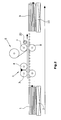
Figur 1 zeigt schematisch den Ablauf des Verfahrens, bei dem ein Plattenstapel 1 auf einen Hubtisch 2 entstapelt wird und mittels Walzen 3 und 4 ein Leimauftrag erfolgt. Von einer Metallfolienvorratsrolle 6 wird mittels der Walzen 7 und 8 die perforierte Metallfolie auflaminiert und die beschichtete Platte wird auf den Produktionsstapel 9 auf dem Hubtisch 10 abgelegt. -
Figur 2 zeigt eine alternative Ausführungsform, wobei von einem Plattenstapel 1 auf einem Hubtisch 2 eine Platte entstapelt wird und mittels der Walzen 3 und 4 ein Leimauftrag erfolgt. Von der Vorratsrolle 6 wird mit Hilfe der Walzen 7 und 8 die Metallfolie aufgebracht und anschließend mittels der Stachelwalze 20 mit Löchern versehen und auf den Produktionsstapel 9 auf dem Hubtisch 10 wieder abgelegt werden. -
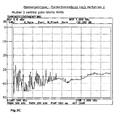
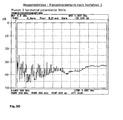
Figur 3 zeigt die Dämpfungseigenschaften der nach dem Verfahren gemäßFigur 1 bzw.Figur 2 hergestellten Platten. -
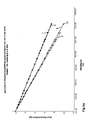
Figur 4 zeigt den Messaufbau zur Bestimmung der Dämpfungseigenschaften der Platten. Bei der Prüfung wird eine Blechtafel mit den Abmessungen 120 x 120 cm und einer mittigen Öffnung von 40 x 40 cm oder 28 x 19 cm (hoch x quer) verwendet. Vor dieser Öffnung wird das zu prüfende Muster befestigt. In einem definierten Abstand werden die Sende- und Empfangsantenne jeweils davor und dahinter aufgestellt. -
Figuren 5a bis 5f zeigen die Ergebnisse der Versuche zur Wasserdampfdurchlässigkeit gemäß den Beispielen. - Die Erfindung wird durch die folgenden Beispiele näher erläutert:
-
Konditionierungsbedingungen: 23°C/ 50% r.F. Prüfbedingungen: 23°C / 50/93% rel. Luftfeuchte (Wet-Cup) 23°C / 0/50% rel. Luftfeuchte (Dry-Cup) - Die Probekörper wurden jeweils bis zur Massenkonstanz im Konditionierungsklima belassen. Die Massenkonstanz gilt als erreicht, wenn innerhalb von drei Tagen die Gewichtsdifferenz zwischen den Messungen 5% nicht überschreitet.
- Die erste Prüfcharge wurde als Rundprüfkörper mit einer Diffusionsprüffläche von 0,005 m2 hergestellt. Als Prüfgefäße wurden Glasschalen verwendet. Die Abdichtung erfolgte normkonform mittels einer Mischung aus niedermolekularem Polyisobutylen und mikrokristallinem Wachs. Hierzu gehörten alle perforierten Proben.
- Bei der zweiten Charge wurden Prüfkörper der Muster 40/40 GK mit einer Diffusionsprüffläche von 0,02 m2 für den Wet-Cup Versuch hergestellt. Als Prüfschalen dienten Kunststoffgefäße. Da bei dieser Variante Diffusionsströme durch die Schalen selbst hätte stattfinden können, wurden diese und auch die Abdichtung hinsichtlich Leckageströme mittels einer Referenzprobe überwacht. Die hierbei aufgetretene Gewichtsveränderung wurde bei den Messungen der Prüfkörper berücksichtigt.
- Für Baustoffe und Bauteile, deren Umgebungsfeuchten meist unter 70% r.F. liegen, gelten für die Planung die Ergebnisse der Dry-Cup-Versuche. Bei beheizten Gebäuden werden somit den Bauteilen auf den raumzugewandten Seiten vor einer Dämmschicht die Werte aus dem Dry-Cup-Versuch mit dem Partialdruckgefälle 0 zu 50% r.F. zugeordnet.
-
Materialname: gelochte alukaschierte GK-Platte Kurzbezeichnung : GK8/8 Materialtyp: Gipskarton Aufbau: gelochte alukaschierte - Raster 8x8 mm Anzahl der Prüfkörper: 5 Probennummern: 6-10 Schalennummern: 21-25 Klimatisierung der Proben vor Versuch: gemäß Norm - 23°C 50% r.F. - Die Ergebnisse sind in
Figur 5a dargestellt.Durchschnittswert niedrigster Einzelwert Standardabweichung Mittlere Dicke der Probekörper (mm) 12,6 - - Wasserdampfdiffusionsstromdichte (g/m2d) 63,52 52,29 9,82 Wasserdampfdiffusionsäquivalente (m) Luftschichtdicke Sd-wert 0,31 0,26 0,05 Wasserdampfdiffusionswiderstandzahl µ-wert [-] 24,70 20,99 4,22 -
Materialname: gelochte alukaschierte GK-Platte Kurzbezeichnung : GK20/20 Materialtyp: Gipskarton Aufbau: gelochte alukaschierte - Raster 20x20 mm Anzahl der Prüfkörper: 5 Probennummern: 1-5 Schalennummern: 16-20 Klimatisierung der Proben vor Versuch: gemäß Norm - 23°C 50% r.F. - Die Ergebnisse sind in
Figur 5b dargestellt.Durchschnittswert niedrigster Einzelwert Standardabweichung Mittlere Dicke der Probekörper (mm) 0,013 - - Wasserdampfdiffusionsstromdichte g/m2d) 6,44 52,29 2,12 Wasserdampfdiffusionsäquivalente (m) Luftschichtdicke Sd-wert 2,29 1,66 0,56 Wasserdampfdiffusionswiderstandzahl µ-wert[-] 182,64 132,43 44,49 -
Materialname: gelochte alukaschierte GK-Platte Kurzbezeichnung: GK40/40 Materialtyp: Gipskarton Aufbau: gelochte alukaschierte - Raster 40x40 mm Anzahl der Prüfkörper: 5 Probennummern: 11-15 Schalennummern: 26-30 Klimatisierung der Proben vor Versuch: gemäß Norm - 23°C 50% r.F. - Die Ergebnisse sind in
Figur 5c dargestellt.Durchschnittswert niedrigster Einzelwert Standardabweichung Mittlere Dicke der Probekörper (mm) 12,6 - - Wasserdampfdiffusionsstromdichte (g/m2d) 5,20 5,14 1,48 Wasserdampfdiffusionsäquivalente (m) Luftschichtdicke Sd-wert 3,89 3,79 0,08 Wasserdampfdiffusionswiderstandzahl µ-wert [-] 308,66 301,86 6,59 -
Materialname: gelochte alukaschierte GK-Platte Kurzbezeichnung : GK8/8 Materialtyp: Gipskarton Aufbau: gelochte alukaschierte - Raster 20x20 mm Anzahl der Prüfkörper: 5 Probennummern: 26-30 Schalennummern: 41-45 Klimatisierung der Proben vor Versuch: gemäß Norm - 23°C 50% r.F. - Die Ergebnisse sind in
Figur 5d dargestellt.Durchschnittswert niedrigster Einzelwert Standardabweichung Mittlere Dicke der Probekörper (mm) 12,600 - - Wasserdampfdiffusionsstromdichte (g/m2d) 48,50 46,33 2,17 Wasserdampfdiffusionsäquivalente (m) Luftschichtdicke Sd-wert 0,48 0,44 0,02 Wasserdampfdiffusionswiderstandzahl µ-wert [-] 37,81 35,07 1,68 -
Materialname: gelochte alukaschierte GK-Platte Kurzbezeichnung : GK20/20 Materialtyp: Gipskarton Aufbau: gelochte alukaschierte - Raster 20x20 mm Anzahl der Prüfkörper: 5 Probennummern: 21-25 Schalennummern: 36-40 Klimatisierung der Proben vor Versuch: gemäß Norm - 23°C 50% r.F. - Die Ergebnisse sind in
Figur 5e dargestellt.Durchschnittswert niedrigster Einzelwert Standardabweichung Mittlere Dicke der Probekörper (mm) 12,600 - - Wasserdampfdiffusionsstromdichte (g/m2d) 14,80 13,57 0,77 Wasserdampfdiffusionsäquivalente (m) Luftschichtdicke Sd-wert 1,60 1,51 0,09 Wasserdampfdiffusionswiderstandzahl µ-wert [-] 126,76 119,69 6,93 -
Materialname: gelochte alukaschierte GK-Platte Kurzbezeichnung: GK40/40 Materialtyp: Gipskarton Aufbau: gelochte alukaschierte - Raster 40x40 mm Anzahl der Prüfkörper: 5 Probennummern: 16-20 Schalennummern: 31-35 Klimatisierung der Proben vor Versuch: gemäß Norm - 23°C 50% r.F. - Die Ergebnisse sind in
Figur 5f dargestellt.Durchschnittswert niedrigster Einzelwert Standardabweichung Mittlere Dicke der Probekörper (mm) 12,600 - - Wasserdampfdiffusionsstromdichte (g/m2d) 12,04 6,73 4,15 Wasserdampfdiffusionsäquivalente (m) Luftschichtdicke Sd-wert 2,20 1,47 0,89 Wasserdampfdiffusionswiderstandzahl µ-wert [-] 174,73 116,42 70,60 - Dieses Verfahren wird gewählt, um schnell und preiswert eine orientierende Information zur Dämpfung eines Materials zu erhalten.
- Folgende Geräte werden eingesetzt:
Messgerät Advantest R3132 mit Trackinggenerator, Gerätenummer 101003435; letzte Kalibrierung: 04.01.2005 Leistung 1mW = 0 dBm Messantennen Typ SCHWARZBECK USLP 9143 (300 MHz - 3 GHz), Seriennummer 198 und 242 Vertikal polarisierte Welle Abstand je 10 cm zwischen Antennenspitze und Prüfobjekt Antennenkabel Typ Schwarzbeck AK 9513 mit 10 m Länge. - Die Ergebnisse sind in
Figur 3 dargestellt. - Bei 900, 1900 und 3000 MHz betrug die Dämpfung etwa 36, 37 und 34 dB, was einer Dämpfung von ca. 99,98% entspricht; dies ist in etwa die Messgrenze des Systems, d.h. die effektiven Werte könnten noch etwas höher liegen.
Claims (13)
- Bauplatte auf Basis von Gips, wobei mindestens eine der Oberflächen mit einer Metallfolie abgedeckt ist und die Metallfolie perforiert ist, wobei die Bauplatte einen SD-Wert von 0,7 bis 4,5 m aufweist.
- Bauplatte nach Anspruch 1, dadurch gekennzeichnet, dass die Metallfolie aus Aluminium, Zink, Zinn und Legierungen dieser Metalle besteht.
- Bauplatte nach einem der Ansprüche 1 oder 2, dadurch gekennzeichnet, dass die Metallfolie auf beide Oberflächen aufgebracht ist.
- Bauplatte nach mindestens einem der Ansprüche 1 bis 3, dadurch gekennzeichnet, dass die Bauplatte auf Basis von Gips eine Gipskartonplatte ist.
- Bauplatte nach mindestens einem der Ansprüche 1 bis 4, dadurch gekennzeichnet, dass die Platte einen Gipskern und eine ein- oder beidseitige Ummantelung mit einem Vlies aufweist.
- Bauplatte nach mindestens einem der Ansprüche 1 bis 5, dadurch gekennzeichnet, dass die Dicke der Metallfolie im Bereich von 5 bis 40 µm liegt.
- Bauplatte nach mindestens einem der Ansprüche 1 bis 6, dadurch gekennzeichnet, dass die Metallfolie ein- oder beidseitig mit einer Papierschicht versehen ist.
- Bauplatte nach mindestens einem der Ansprüche 1 bis 7, dadurch gekennzeichnet, dass die Perforation eine Mikroperforation ist.
- Bauplatte nach mindestens einem der Ansprüche 1 bis 8, dadurch gekennzeichnet, dass die Perforation durch Löcher mit einer Größe von 50 bis 1.400 Mikrometer erfolgt.
- Bauplatte nach mindestens einem der Ansprüche 1 bis 9, dadurch gekennzeichnet, dass pro m2 Oberfläche 100 bis 10.000 Löcher vorgesehen sind.
- Verfahren zur Herstellung einer Bauplatte nach mindestens einem der Ansprüche 1 bis 10, mit folgenden Schritten:- Bereitstellen einer Bauplatte auf Basis von Gips- Aufbringen eines Klebstoffes auf mindestens einer Oberfläche der Bauplatte- Aufbringen einer Metallfolie auf den Klebstoff- Perforieren der Metallfolie.
- Verwendung einer Bauplatte nach einem der Ansprüche 1 bis 10 als Dampfsperre oder Dampfbremse.
- Verwendung einer Bauplatte nach einem der Ansprüche 1 bis 10 zur Strahlungsdämpfung im Frequenzbereich 500 bis 3.000 MHz.
Priority Applications (1)
| Application Number | Priority Date | Filing Date | Title |
|---|---|---|---|
| EP08167359.2A EP2053176B1 (de) | 2007-10-24 | 2008-10-23 | Bauplatte mit Abschirmwirkung |
Applications Claiming Priority (3)
| Application Number | Priority Date | Filing Date | Title |
|---|---|---|---|
| DE102007050780 | 2007-10-24 | ||
| EP07120428A EP2058451A1 (de) | 2007-11-12 | 2007-11-12 | Bauplatte mit Abschirmwirkung |
| EP08167359.2A EP2053176B1 (de) | 2007-10-24 | 2008-10-23 | Bauplatte mit Abschirmwirkung |
Publications (2)
| Publication Number | Publication Date |
|---|---|
| EP2053176A1 true EP2053176A1 (de) | 2009-04-29 |
| EP2053176B1 EP2053176B1 (de) | 2019-11-27 |
Family
ID=40343529
Family Applications (1)
| Application Number | Title | Priority Date | Filing Date |
|---|---|---|---|
| EP08167359.2A Active EP2053176B1 (de) | 2007-10-24 | 2008-10-23 | Bauplatte mit Abschirmwirkung |
Country Status (1)
| Country | Link |
|---|---|
| EP (1) | EP2053176B1 (de) |
Cited By (2)
| Publication number | Priority date | Publication date | Assignee | Title |
|---|---|---|---|---|
| US9251778B2 (en) | 2014-06-06 | 2016-02-02 | Industrial Technology Research Institute | Metal foil with microcracks, method of manufacturing the same, and sound-absorbing structure having the same |
| CN113602817A (zh) * | 2021-08-14 | 2021-11-05 | 王继坪 | 一种压力板的被覆层双面自动码垛组件及码垛方法 |
Citations (9)
| Publication number | Priority date | Publication date | Assignee | Title |
|---|---|---|---|---|
| US1914345A (en) | 1932-07-07 | 1933-06-13 | United States Gypsum Co | Wall construction |
| US2998337A (en) * | 1957-06-07 | 1961-08-29 | United States Gypsum Co | Reflective-fibrous type insulation |
| US3097124A (en) * | 1957-08-30 | 1963-07-09 | Denenberg Maurice | Insulating wall board and method of forming same |
| US6214454B1 (en) * | 1996-09-25 | 2001-04-10 | Nippon Paint Co., Ltd. | Electromagnetic wave absorbing material |
| DE20102074U1 (de) | 2001-02-07 | 2001-08-09 | Nohlen, Wolfgang, 58642 Iserlohn | Akustikplatte Scherff Rondo/Quadro |
| US20020164458A1 (en) * | 2001-03-02 | 2002-11-07 | Kazuhiro Suga | Electromagnetic wave-shielding construction material and method for producing the same |
| WO2004083146A2 (en) * | 2003-03-19 | 2004-09-30 | United States Gypsum Company | Acoustical panel comprising interlocking matrix of set gypsum and method for making same |
| WO2005026465A2 (de) * | 2003-09-12 | 2005-03-24 | Knauf Gips Kg | Baumaterial auf basis von gips |
| EP1118085B1 (de) | 1998-05-28 | 2006-07-05 | Knauf Gips KG | Eine elektrisch leitende schicht aus zellulose fasern und ein komposit daraus |
-
2008
- 2008-10-23 EP EP08167359.2A patent/EP2053176B1/de active Active
Patent Citations (9)
| Publication number | Priority date | Publication date | Assignee | Title |
|---|---|---|---|---|
| US1914345A (en) | 1932-07-07 | 1933-06-13 | United States Gypsum Co | Wall construction |
| US2998337A (en) * | 1957-06-07 | 1961-08-29 | United States Gypsum Co | Reflective-fibrous type insulation |
| US3097124A (en) * | 1957-08-30 | 1963-07-09 | Denenberg Maurice | Insulating wall board and method of forming same |
| US6214454B1 (en) * | 1996-09-25 | 2001-04-10 | Nippon Paint Co., Ltd. | Electromagnetic wave absorbing material |
| EP1118085B1 (de) | 1998-05-28 | 2006-07-05 | Knauf Gips KG | Eine elektrisch leitende schicht aus zellulose fasern und ein komposit daraus |
| DE20102074U1 (de) | 2001-02-07 | 2001-08-09 | Nohlen, Wolfgang, 58642 Iserlohn | Akustikplatte Scherff Rondo/Quadro |
| US20020164458A1 (en) * | 2001-03-02 | 2002-11-07 | Kazuhiro Suga | Electromagnetic wave-shielding construction material and method for producing the same |
| WO2004083146A2 (en) * | 2003-03-19 | 2004-09-30 | United States Gypsum Company | Acoustical panel comprising interlocking matrix of set gypsum and method for making same |
| WO2005026465A2 (de) * | 2003-09-12 | 2005-03-24 | Knauf Gips Kg | Baumaterial auf basis von gips |
Cited By (2)
| Publication number | Priority date | Publication date | Assignee | Title |
|---|---|---|---|---|
| US9251778B2 (en) | 2014-06-06 | 2016-02-02 | Industrial Technology Research Institute | Metal foil with microcracks, method of manufacturing the same, and sound-absorbing structure having the same |
| CN113602817A (zh) * | 2021-08-14 | 2021-11-05 | 王继坪 | 一种压力板的被覆层双面自动码垛组件及码垛方法 |
Also Published As
| Publication number | Publication date |
|---|---|
| EP2053176B1 (de) | 2019-11-27 |
Similar Documents
| Publication | Publication Date | Title |
|---|---|---|
| DE69518002T2 (de) | Isolierendes element und verfahren zur herstllung dieses elementes | |
| EP1263575B1 (de) | Mehrschichtige dämpfungsfolie sowie verfahren zu deren herstellung | |
| EP2533976B1 (de) | Gipskartonplatte und ein verfahren zur herstellung einer gipskartonplatte | |
| DE102012105628A1 (de) | Wandelement | |
| DE102016009147A1 (de) | Wand- und/oder Deckenplatte und Verfahren zu dessen Herstellung | |
| DE10300584A1 (de) | Flexible Schichtplatte mit Wabenstruktur | |
| EP2197810B1 (de) | Verfahren zur herstellung einer bauplatte auf calciumsulfat-bariumsulfat-basis | |
| EP2053176B1 (de) | Bauplatte mit Abschirmwirkung | |
| EP3045306A1 (de) | Decklage, dämmplatte und wärme-dämm-verbundsystem | |
| DE4014453C2 (de) | Elektrisch leitfähiges Flächenelement sowie Verfahren zur Herstellung desselben | |
| DE7900427U1 (de) | Waermeisolierplatte | |
| EP2058451A1 (de) | Bauplatte mit Abschirmwirkung | |
| EP2860323B1 (de) | Bauelement | |
| DE3643480C2 (de) | ||
| EP3161224B1 (de) | Trennband für den trockenbau | |
| CH709367A2 (de) | Verfahren zur Herstellung einer Verbund-Deckschicht für ein schallabsorbierendes Element und Verbund-Deckschicht. | |
| EP1582622A2 (de) | Decklagenmaterial auf Vlies- oder Gewebebasis | |
| DE19531142C2 (de) | Strukturschaumstoff-Tapete | |
| DE102017111945A1 (de) | Selbstklebendes isolierungsmaterial aus geschlossenzelligem festen schaum | |
| EP2078538A1 (de) | Feuerschutz-Abschlussplatte | |
| DE102011108184B4 (de) | Wandinnenseitenwärmedämmung mit einer luftdichten Anschlusseinrichtung und Verfahren zum Herstellen einer luftdichten Laibungswärmedämmungs-Anschlusseinrichtung | |
| EP1725716B1 (de) | Schallschutzelement aus mindestens zwei schichten, verfahren zu seiner flamm-hemmenden ausrüstung und seine verwendung | |
| EP1900511A1 (de) | Verfahren zum Herstellen einer Schicht mit einer Deckschicht und einem Träger und Schicht mit Deckschicht und Träger | |
| DE10136089A1 (de) | Verwendung von Ionomeren zur Abdichtung von Dämmstoffen | |
| DE102017111947A1 (de) | Mit muster versehenes selbstklebendes faserisoliermaterial |
Legal Events
| Date | Code | Title | Description |
|---|---|---|---|
| PUAI | Public reference made under article 153(3) epc to a published international application that has entered the european phase |
Free format text: ORIGINAL CODE: 0009012 |
|
| AK | Designated contracting states |
Kind code of ref document: A1 Designated state(s): AT BE BG CH CY CZ DE DK EE ES FI FR GB GR HR HU IE IS IT LI LT LU LV MC MT NL NO PL PT RO SE SI SK TR |
|
| AX | Request for extension of the european patent |
Extension state: AL BA MK RS |
|
| 17P | Request for examination filed |
Effective date: 20090623 |
|
| 17Q | First examination report despatched |
Effective date: 20090722 |
|
| AKX | Designation fees paid |
Designated state(s): AT BE BG CH CY CZ DE DK EE ES FI FR GB GR HR HU IE IS IT LI LT LU LV MC MT NL NO PL PT RO SE SI SK TR |
|
| STAA | Information on the status of an ep patent application or granted ep patent |
Free format text: STATUS: EXAMINATION IS IN PROGRESS |
|
| GRAP | Despatch of communication of intention to grant a patent |
Free format text: ORIGINAL CODE: EPIDOSNIGR1 |
|
| STAA | Information on the status of an ep patent application or granted ep patent |
Free format text: STATUS: GRANT OF PATENT IS INTENDED |
|
| INTG | Intention to grant announced |
Effective date: 20190510 |
|
| GRAS | Grant fee paid |
Free format text: ORIGINAL CODE: EPIDOSNIGR3 |
|
| GRAA | (expected) grant |
Free format text: ORIGINAL CODE: 0009210 |
|
| STAA | Information on the status of an ep patent application or granted ep patent |
Free format text: STATUS: THE PATENT HAS BEEN GRANTED |
|
| AK | Designated contracting states |
Kind code of ref document: B1 Designated state(s): AT BE BG CH CY CZ DE DK EE ES FI FR GB GR HR HU IE IS IT LI LT LU LV MC MT NL NO PL PT RO SE SI SK TR |
|
| REG | Reference to a national code |
Ref country code: GB Ref legal event code: FG4D Free format text: NOT ENGLISH |
|
| REG | Reference to a national code |
Ref country code: CH Ref legal event code: EP |
|
| REG | Reference to a national code |
Ref country code: AT Ref legal event code: REF Ref document number: 1206808 Country of ref document: AT Kind code of ref document: T Effective date: 20191215 |
|
| REG | Reference to a national code |
Ref country code: DE Ref legal event code: R096 Ref document number: 502008016957 Country of ref document: DE |
|
| REG | Reference to a national code |
Ref country code: IE Ref legal event code: FG4D Free format text: LANGUAGE OF EP DOCUMENT: GERMAN |
|
| REG | Reference to a national code |
Ref country code: NL Ref legal event code: MP Effective date: 20191127 |
|
| REG | Reference to a national code |
Ref country code: LT Ref legal event code: MG4D |
|
| PG25 | Lapsed in a contracting state [announced via postgrant information from national office to epo] |
Ref country code: NL Free format text: LAPSE BECAUSE OF FAILURE TO SUBMIT A TRANSLATION OF THE DESCRIPTION OR TO PAY THE FEE WITHIN THE PRESCRIBED TIME-LIMIT Effective date: 20191127 Ref country code: ES Free format text: LAPSE BECAUSE OF FAILURE TO SUBMIT A TRANSLATION OF THE DESCRIPTION OR TO PAY THE FEE WITHIN THE PRESCRIBED TIME-LIMIT Effective date: 20191127 Ref country code: GR Free format text: LAPSE BECAUSE OF FAILURE TO SUBMIT A TRANSLATION OF THE DESCRIPTION OR TO PAY THE FEE WITHIN THE PRESCRIBED TIME-LIMIT Effective date: 20200228 Ref country code: SE Free format text: LAPSE BECAUSE OF FAILURE TO SUBMIT A TRANSLATION OF THE DESCRIPTION OR TO PAY THE FEE WITHIN THE PRESCRIBED TIME-LIMIT Effective date: 20191127 Ref country code: NO Free format text: LAPSE BECAUSE OF FAILURE TO SUBMIT A TRANSLATION OF THE DESCRIPTION OR TO PAY THE FEE WITHIN THE PRESCRIBED TIME-LIMIT Effective date: 20200227 Ref country code: LV Free format text: LAPSE BECAUSE OF FAILURE TO SUBMIT A TRANSLATION OF THE DESCRIPTION OR TO PAY THE FEE WITHIN THE PRESCRIBED TIME-LIMIT Effective date: 20191127 Ref country code: FI Free format text: LAPSE BECAUSE OF FAILURE TO SUBMIT A TRANSLATION OF THE DESCRIPTION OR TO PAY THE FEE WITHIN THE PRESCRIBED TIME-LIMIT Effective date: 20191127 Ref country code: BG Free format text: LAPSE BECAUSE OF FAILURE TO SUBMIT A TRANSLATION OF THE DESCRIPTION OR TO PAY THE FEE WITHIN THE PRESCRIBED TIME-LIMIT Effective date: 20200227 Ref country code: LT Free format text: LAPSE BECAUSE OF FAILURE TO SUBMIT A TRANSLATION OF THE DESCRIPTION OR TO PAY THE FEE WITHIN THE PRESCRIBED TIME-LIMIT Effective date: 20191127 |
|
| PG25 | Lapsed in a contracting state [announced via postgrant information from national office to epo] |
Ref country code: HR Free format text: LAPSE BECAUSE OF FAILURE TO SUBMIT A TRANSLATION OF THE DESCRIPTION OR TO PAY THE FEE WITHIN THE PRESCRIBED TIME-LIMIT Effective date: 20191127 Ref country code: IS Free format text: LAPSE BECAUSE OF FAILURE TO SUBMIT A TRANSLATION OF THE DESCRIPTION OR TO PAY THE FEE WITHIN THE PRESCRIBED TIME-LIMIT Effective date: 20200327 |
|
| PG25 | Lapsed in a contracting state [announced via postgrant information from national office to epo] |
Ref country code: RO Free format text: LAPSE BECAUSE OF FAILURE TO SUBMIT A TRANSLATION OF THE DESCRIPTION OR TO PAY THE FEE WITHIN THE PRESCRIBED TIME-LIMIT Effective date: 20191127 Ref country code: CZ Free format text: LAPSE BECAUSE OF FAILURE TO SUBMIT A TRANSLATION OF THE DESCRIPTION OR TO PAY THE FEE WITHIN THE PRESCRIBED TIME-LIMIT Effective date: 20191127 Ref country code: PT Free format text: LAPSE BECAUSE OF FAILURE TO SUBMIT A TRANSLATION OF THE DESCRIPTION OR TO PAY THE FEE WITHIN THE PRESCRIBED TIME-LIMIT Effective date: 20200419 Ref country code: EE Free format text: LAPSE BECAUSE OF FAILURE TO SUBMIT A TRANSLATION OF THE DESCRIPTION OR TO PAY THE FEE WITHIN THE PRESCRIBED TIME-LIMIT Effective date: 20191127 Ref country code: DK Free format text: LAPSE BECAUSE OF FAILURE TO SUBMIT A TRANSLATION OF THE DESCRIPTION OR TO PAY THE FEE WITHIN THE PRESCRIBED TIME-LIMIT Effective date: 20191127 |
|
| REG | Reference to a national code |
Ref country code: DE Ref legal event code: R097 Ref document number: 502008016957 Country of ref document: DE |
|
| PG25 | Lapsed in a contracting state [announced via postgrant information from national office to epo] |
Ref country code: SK Free format text: LAPSE BECAUSE OF FAILURE TO SUBMIT A TRANSLATION OF THE DESCRIPTION OR TO PAY THE FEE WITHIN THE PRESCRIBED TIME-LIMIT Effective date: 20191127 |
|
| PLBE | No opposition filed within time limit |
Free format text: ORIGINAL CODE: 0009261 |
|
| STAA | Information on the status of an ep patent application or granted ep patent |
Free format text: STATUS: NO OPPOSITION FILED WITHIN TIME LIMIT |
|
| 26N | No opposition filed |
Effective date: 20200828 |
|
| PG25 | Lapsed in a contracting state [announced via postgrant information from national office to epo] |
Ref country code: PL Free format text: LAPSE BECAUSE OF FAILURE TO SUBMIT A TRANSLATION OF THE DESCRIPTION OR TO PAY THE FEE WITHIN THE PRESCRIBED TIME-LIMIT Effective date: 20191127 Ref country code: SI Free format text: LAPSE BECAUSE OF FAILURE TO SUBMIT A TRANSLATION OF THE DESCRIPTION OR TO PAY THE FEE WITHIN THE PRESCRIBED TIME-LIMIT Effective date: 20191127 |
|
| PG25 | Lapsed in a contracting state [announced via postgrant information from national office to epo] |
Ref country code: IT Free format text: LAPSE BECAUSE OF FAILURE TO SUBMIT A TRANSLATION OF THE DESCRIPTION OR TO PAY THE FEE WITHIN THE PRESCRIBED TIME-LIMIT Effective date: 20191127 |
|
| REG | Reference to a national code |
Ref country code: CH Ref legal event code: PL |
|
| PG25 | Lapsed in a contracting state [announced via postgrant information from national office to epo] |
Ref country code: MC Free format text: LAPSE BECAUSE OF FAILURE TO SUBMIT A TRANSLATION OF THE DESCRIPTION OR TO PAY THE FEE WITHIN THE PRESCRIBED TIME-LIMIT Effective date: 20191127 Ref country code: LU Free format text: LAPSE BECAUSE OF NON-PAYMENT OF DUE FEES Effective date: 20201023 |
|
| REG | Reference to a national code |
Ref country code: BE Ref legal event code: MM Effective date: 20201031 |
|
| PG25 | Lapsed in a contracting state [announced via postgrant information from national office to epo] |
Ref country code: FR Free format text: LAPSE BECAUSE OF NON-PAYMENT OF DUE FEES Effective date: 20201031 |
|
| PG25 | Lapsed in a contracting state [announced via postgrant information from national office to epo] |
Ref country code: LI Free format text: LAPSE BECAUSE OF NON-PAYMENT OF DUE FEES Effective date: 20201031 Ref country code: CH Free format text: LAPSE BECAUSE OF NON-PAYMENT OF DUE FEES Effective date: 20201031 Ref country code: BE Free format text: LAPSE BECAUSE OF NON-PAYMENT OF DUE FEES Effective date: 20201031 |
|
| PG25 | Lapsed in a contracting state [announced via postgrant information from national office to epo] |
Ref country code: TR Free format text: LAPSE BECAUSE OF FAILURE TO SUBMIT A TRANSLATION OF THE DESCRIPTION OR TO PAY THE FEE WITHIN THE PRESCRIBED TIME-LIMIT Effective date: 20191127 Ref country code: MT Free format text: LAPSE BECAUSE OF FAILURE TO SUBMIT A TRANSLATION OF THE DESCRIPTION OR TO PAY THE FEE WITHIN THE PRESCRIBED TIME-LIMIT Effective date: 20191127 Ref country code: CY Free format text: LAPSE BECAUSE OF FAILURE TO SUBMIT A TRANSLATION OF THE DESCRIPTION OR TO PAY THE FEE WITHIN THE PRESCRIBED TIME-LIMIT Effective date: 20191127 |
|
| P01 | Opt-out of the competence of the unified patent court (upc) registered |
Effective date: 20230822 |
|
| PGFP | Annual fee paid to national office [announced via postgrant information from national office to epo] |
Ref country code: DE Payment date: 20251029 Year of fee payment: 18 |
|
| PGFP | Annual fee paid to national office [announced via postgrant information from national office to epo] |
Ref country code: GB Payment date: 20251027 Year of fee payment: 18 |
|
| PGFP | Annual fee paid to national office [announced via postgrant information from national office to epo] |
Ref country code: AT Payment date: 20251029 Year of fee payment: 18 |
|
| PGFP | Annual fee paid to national office [announced via postgrant information from national office to epo] |
Ref country code: IE Payment date: 20251027 Year of fee payment: 18 |