EP2050626A1 - Vehicle collision decision apparatus - Google Patents
Vehicle collision decision apparatus Download PDFInfo
- Publication number
- EP2050626A1 EP2050626A1 EP08018073A EP08018073A EP2050626A1 EP 2050626 A1 EP2050626 A1 EP 2050626A1 EP 08018073 A EP08018073 A EP 08018073A EP 08018073 A EP08018073 A EP 08018073A EP 2050626 A1 EP2050626 A1 EP 2050626A1
- Authority
- EP
- European Patent Office
- Prior art keywords
- acceleration
- vehicle
- threshold value
- detected
- comparator
- Prior art date
- Legal status (The legal status is an assumption and is not a legal conclusion. Google has not performed a legal analysis and makes no representation as to the accuracy of the status listed.)
- Granted
Links
Images




Classifications
-
- B—PERFORMING OPERATIONS; TRANSPORTING
- B60—VEHICLES IN GENERAL
- B60R—VEHICLES, VEHICLE FITTINGS, OR VEHICLE PARTS, NOT OTHERWISE PROVIDED FOR
- B60R21/00—Arrangements or fittings on vehicles for protecting or preventing injuries to occupants or pedestrians in case of accidents or other traffic risks
- B60R21/01—Electrical circuits for triggering passive safety arrangements, e.g. airbags, safety belt tighteners, in case of vehicle accidents or impending vehicle accidents
- B60R21/013—Electrical circuits for triggering passive safety arrangements, e.g. airbags, safety belt tighteners, in case of vehicle accidents or impending vehicle accidents including means for detecting collisions, impending collisions or roll-over
- B60R21/0132—Electrical circuits for triggering passive safety arrangements, e.g. airbags, safety belt tighteners, in case of vehicle accidents or impending vehicle accidents including means for detecting collisions, impending collisions or roll-over responsive to vehicle motion parameters, e.g. to vehicle longitudinal or transversal deceleration or speed value
-
- B—PERFORMING OPERATIONS; TRANSPORTING
- B60—VEHICLES IN GENERAL
- B60R—VEHICLES, VEHICLE FITTINGS, OR VEHICLE PARTS, NOT OTHERWISE PROVIDED FOR
- B60R21/00—Arrangements or fittings on vehicles for protecting or preventing injuries to occupants or pedestrians in case of accidents or other traffic risks
- B60R21/01—Electrical circuits for triggering passive safety arrangements, e.g. airbags, safety belt tighteners, in case of vehicle accidents or impending vehicle accidents
- B60R21/013—Electrical circuits for triggering passive safety arrangements, e.g. airbags, safety belt tighteners, in case of vehicle accidents or impending vehicle accidents including means for detecting collisions, impending collisions or roll-over
- B60R21/0132—Electrical circuits for triggering passive safety arrangements, e.g. airbags, safety belt tighteners, in case of vehicle accidents or impending vehicle accidents including means for detecting collisions, impending collisions or roll-over responsive to vehicle motion parameters, e.g. to vehicle longitudinal or transversal deceleration or speed value
- B60R21/0133—Electrical circuits for triggering passive safety arrangements, e.g. airbags, safety belt tighteners, in case of vehicle accidents or impending vehicle accidents including means for detecting collisions, impending collisions or roll-over responsive to vehicle motion parameters, e.g. to vehicle longitudinal or transversal deceleration or speed value by integrating the amplitude of the input signal
-
- B—PERFORMING OPERATIONS; TRANSPORTING
- B60—VEHICLES IN GENERAL
- B60R—VEHICLES, VEHICLE FITTINGS, OR VEHICLE PARTS, NOT OTHERWISE PROVIDED FOR
- B60R21/00—Arrangements or fittings on vehicles for protecting or preventing injuries to occupants or pedestrians in case of accidents or other traffic risks
- B60R21/01—Electrical circuits for triggering passive safety arrangements, e.g. airbags, safety belt tighteners, in case of vehicle accidents or impending vehicle accidents
- B60R21/013—Electrical circuits for triggering passive safety arrangements, e.g. airbags, safety belt tighteners, in case of vehicle accidents or impending vehicle accidents including means for detecting collisions, impending collisions or roll-over
- B60R21/0136—Electrical circuits for triggering passive safety arrangements, e.g. airbags, safety belt tighteners, in case of vehicle accidents or impending vehicle accidents including means for detecting collisions, impending collisions or roll-over responsive to actual contact with an obstacle, e.g. to vehicle deformation, bumper displacement or bumper velocity relative to the vehicle
-
- B—PERFORMING OPERATIONS; TRANSPORTING
- B60—VEHICLES IN GENERAL
- B60R—VEHICLES, VEHICLE FITTINGS, OR VEHICLE PARTS, NOT OTHERWISE PROVIDED FOR
- B60R21/00—Arrangements or fittings on vehicles for protecting or preventing injuries to occupants or pedestrians in case of accidents or other traffic risks
- B60R2021/0002—Type of accident
- B60R2021/0023—Offset collision
-
- B—PERFORMING OPERATIONS; TRANSPORTING
- B60—VEHICLES IN GENERAL
- B60R—VEHICLES, VEHICLE FITTINGS, OR VEHICLE PARTS, NOT OTHERWISE PROVIDED FOR
- B60R21/00—Arrangements or fittings on vehicles for protecting or preventing injuries to occupants or pedestrians in case of accidents or other traffic risks
- B60R21/01—Electrical circuits for triggering passive safety arrangements, e.g. airbags, safety belt tighteners, in case of vehicle accidents or impending vehicle accidents
- B60R21/013—Electrical circuits for triggering passive safety arrangements, e.g. airbags, safety belt tighteners, in case of vehicle accidents or impending vehicle accidents including means for detecting collisions, impending collisions or roll-over
- B60R21/0132—Electrical circuits for triggering passive safety arrangements, e.g. airbags, safety belt tighteners, in case of vehicle accidents or impending vehicle accidents including means for detecting collisions, impending collisions or roll-over responsive to vehicle motion parameters, e.g. to vehicle longitudinal or transversal deceleration or speed value
- B60R2021/01322—Electrical circuits for triggering passive safety arrangements, e.g. airbags, safety belt tighteners, in case of vehicle accidents or impending vehicle accidents including means for detecting collisions, impending collisions or roll-over responsive to vehicle motion parameters, e.g. to vehicle longitudinal or transversal deceleration or speed value comprising variable thresholds, e.g. depending from other collision parameters
Definitions
- the present invention relates to a vehicle collision decision apparatus, and more particularly to a vehicle collision decision apparatus that activates a vehicle occupant protection device based on accelerations detected by a plurality of acceleration detectors mounted on the vehicle.
- airbags which serve as restraint devices for protecting vehicle occupants from injury in the event of a vehicle collision.
- One known vehicle collision decision apparatus for activating curtain airbags, which form a type of airbag restraint, is disclosed in Japanese Laid-Open Patent Publication No. 2001-018744 , for example.
- acceleration sensors for detecting transverse accelerations of a vehicle are mounted in side panels near the front seats of the vehicle, in side panels near the rear seats of the vehicle, and in a transversely central region of the vehicle.
- the curtain airbags are activated based on accelerations detected by the respective acceleration sensors.
- the curtain airbags possibly may not be activated, due to the relationship between the installed positions of the acceleration sensors and the direction in which the acceleration sensors have detected the accelerations.
- a vehicle collision decision apparatus comprising a vehicle occupant protection device for protecting an occupant of a vehicle, a first acceleration detector disposed in a front end of the vehicle for detecting an acceleration of the vehicle in a longitudinal direction thereof, a second acceleration detector disposed in a transversely central region of the vehicle near a front portion thereof for detecting an acceleration of the vehicle, a third acceleration detector disposed on a side of the vehicle near a seat disposed in the vehicle for detecting an acceleration of the vehicle in a transverse direction thereof, a first comparator for comparing a value based on the acceleration detected by the first acceleration detector with a first threshold value, and outputting a first comparison signal if the value based on the acceleration detected by the first acceleration detector is greater than the first threshold value, a second comparator for comparing a value based on the acceleration in the longitudinal direction of the vehicle detected by the second acceleration detector with a second threshold value, and outputting a second comparison signal if the value based on the acceleration detected by the
- a vehicle collision decision apparatus comprising a vehicle occupant protection device for protecting an occupant of a vehicle, a second acceleration detector disposed in a transversely central region of the vehicle near a front portion thereof for detecting an acceleration of the vehicle, a third acceleration detector disposed on a side of the vehicle near a seat disposed in the vehicle for detecting an acceleration of the vehicle in a transverse direction thereof, a fourth comparator for comparing a value based on the acceleration in the transverse direction of the vehicle detected by the second acceleration detector with a fourth threshold value, and outputting a fourth comparison signal if the value based on the acceleration detected by the second acceleration detector is greater than the fourth threshold value, and a fifth comparator for comparing a value based on the acceleration detected by the third acceleration detector with a fifth threshold value, and outputting a fifth comparison signal if the value based on the acceleration detected by the third acceleration detector is greater than the fifth threshold value, wherein the vehicle occupant protection device is activated when the fourth and fifth compar
- a vehicle collision decision apparatus comprising a vehicle occupant protection device for protecting an occupant of a vehicle, a first acceleration detector disposed in a front end of the vehicle for detecting an acceleration of the vehicle in a longitudinal direction thereof, a second acceleration detector disposed in a transversely central region of the vehicle near a front portion thereof for detecting an acceleration of the vehicle, a third acceleration detector disposed on a side of the vehicle near a seat disposed in the vehicle for detecting an acceleration of the vehicle in a transverse direction thereof, a first comparator for comparing a value based on the acceleration detected by the first acceleration detector with a first threshold value, and outputting a first comparison signal if the value based on the acceleration detected by the first acceleration detector is greater than the first threshold value, a second comparator for comparing a value based on the acceleration in the longitudinal direction of the vehicle detected by the second acceleration detector with a second threshold value, and outputting a second comparison signal if the value based on the acceleration detected by
- the vehicle collision decision apparatus further comprises a sixth comparator for comparing the value based on the acceleration in the longitudinal direction of the vehicle detected by the second acceleration detector with a sixth threshold value, and outputting a sixth comparison signal if the value based on the acceleration detected by the second acceleration detector is greater than the sixth threshold value, wherein the sixth threshold value is smaller than the second threshold value, and the vehicle occupant protection device is activated after a front airbag in the vehicle has been activated based on the first comparison signal and the sixth comparison signal.
- a sixth comparator for comparing the value based on the acceleration in the longitudinal direction of the vehicle detected by the second acceleration detector with a sixth threshold value, and outputting a sixth comparison signal if the value based on the acceleration detected by the second acceleration detector is greater than the sixth threshold value, wherein the sixth threshold value is smaller than the second threshold value, and the vehicle occupant protection device is activated after a front airbag in the vehicle has been activated based on the first comparison signal and the sixth comparison signal.
- the first comparator compares an interval integral of the acceleration detected by the first acceleration detector with the first threshold value, and outputs the first comparison signal if the interval integral of the acceleration detected by the first acceleration detector is greater than the first threshold value
- the second comparator compares a cumulative integral of the acceleration in the longitudinal direction of the vehicle detected by the second acceleration detector with the second threshold value, and outputs the second comparison signal if the cumulative integral of the acceleration in the longitudinal direction of the vehicle is greater than the second threshold value
- the third comparator compares a cumulative integral of the acceleration detected by the third acceleration detector with the third threshold value and outputs the third comparison signal if the cumulative integral of the acceleration detected by the third acceleration detector is greater than the third threshold value.
- the fourth comparator compares an interval integral of the acceleration in the transverse direction of the vehicle detected by the second acceleration detector with the fourth threshold value, and outputs the fourth comparison signal if the interval integral of the acceleration detected by the second acceleration detector is greater than the fourth threshold value
- the fifth comparator compares an interval integral of the acceleration detected by the third acceleration detector with the fifth threshold value, and outputs the fifth comparison signal if the interval integral of the acceleration detected by the third acceleration detector is greater than the fifth threshold value.
- the sixth comparator compares a cumulative integral of the acceleration in the longitudinal direction of the vehicle detected by the second acceleration detector with the sixth threshold value, and outputs the sixth comparison signal if the cumulative integral of the acceleration in the longitudinal direction of the vehicle is greater than the sixth threshold value.
- the first threshold value is preferably smaller than the second threshold value.
- the vehicle occupant protection device preferably comprises a curtain airbag.
- the first acceleration detector and the second acceleration detector detect the acceleration of the vehicle in the longitudinal direction thereof
- the third acceleration detector detects the acceleration of the vehicle in the transverse direction thereof.
- the front airbag is activated based on the acceleration detected by the first acceleration detector, the acceleration of the vehicle in the longitudinal direction thereof detected by the second acceleration detector, and the acceleration of the vehicle in the longitudinal direction thereof detected by the third acceleration detector. Thereafter, the vehicle occupant protection device is reliably activated.
- the interval integrals or the cumulative intervals are used selectively, depending on the accelerations detected by the acceleration detectors. Therefore, the vehicle collision decision apparatus is of a simple arrangement.
- the second acceleration detector and the third acceleration detector detect the acceleration of the vehicle in the transverse direction, and the vehicle occupant protection device is reliably activated based on the acceleration of the vehicle in the transverse direction as detected by the second acceleration detector, and the acceleration detected by the third acceleration detector.
- the vehicle occupant protection device is prevented from being activated in error when the doors of the vehicle are opened and closed. If the angle of the retracted direction to the traveled direction is smaller than a predetermined angle that occurs during an offset collision, then the vehicle occupant protection device is activated based on the acceleration detected by the first acceleration detector, the acceleration of the vehicle in the longitudinal direction as detected by the second acceleration detector, and the acceleration of the vehicle in the longitudinal direction as detected by the third acceleration detector. If the angle of the retracted direction to the traveled direction is equal to or greater than the predetermined angle that occurs during an offset collision, then the vehicle occupant protection device is activated based on the acceleration of the vehicle in the transverse direction thereof as detected by the second acceleration detector and the acceleration detected by the third acceleration detector. As a result, the vehicle occupant protection device is reliably activated, irrespective of the angle of the retracted direction to the traveled direction of the vehicle that occurs during an offset collision.
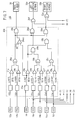
- FIG. 1 shows in block form a vehicle collision decision apparatus 10A according to a first embodiment of the present invention.
- FIG. 2 shows in schematic perspective a vehicle 40, which forms a mobile body incorporating the vehicle collision decision apparatus 10A shown in FIG. 1 .
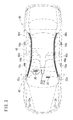
- FIG. 3 shows a schematic plan view of the vehicle 40, which incorporates the vehicle collision decision apparatus 10A.
- the vehicle collision decision apparatus 10A comprises first acceleration detectors (FCS) 12a, 12b, a second acceleration detector (SRS) 14, third acceleration detectors (SIS) 16a through 16d, a collision decision device 20A, front airbags 30, and curtain airbags (vehicle occupant protection devices) 32a, 32b.
- FCS first acceleration detectors
- SRS second acceleration detector
- SIS third acceleration detectors
- a collision decision device 20A front airbags 30, and curtain airbags (vehicle occupant protection devices) 32a, 32b.
- the first acceleration detectors 12a, 12b comprise acceleration sensors for detecting an acceleration of the vehicle 40 in a longitudinal direction thereof, and are disposed in respective transversely spaced, symmetrical positions on a front portion 42 of the vehicle 40.
- the second acceleration detector 14 comprises an acceleration sensor for detecting accelerations of the vehicle 40 in longitudinal and transverse directions of the vehicle 40.
- the second acceleration detector 14 is disposed in a transversely central region of the vehicle 40 near the front portion 42, or more specifically, at a position between a left front seat 44a and a right front seat 44b of the vehicle 40.
- the third acceleration detectors 16a through 16d comprise acceleration sensors for detecting an acceleration of the vehicle 40 in a transverse direction thereof, and are disposed in respective doors 46a through 46d of the vehicle 40.
- the third acceleration detector 16a is disposed in a left front door 46a near the left front seat 44a
- the third acceleration detector 16b is disposed in a left rear door 46b near a rear seat
- the third acceleration detector 16c is disposed in a right front door 46c near the right front seat 44b
- the third acceleration detector 16d is disposed in a right rear door 46d near the rear seat.
- the collision decision device 20A comprises interval integrators 22a, 22b, cumulative integrators 23a through 23e, comparators 24a through 24g and 24cx, OR gates 26a through 26c, and AND gates 28a through 28e.
- the interval integrators 22a, 22b perform interval integrations based on accelerations detected by the first acceleration detectors 12a, 12b, and output respective interval integrals to the comparators 24a and 24b, respectively.
- the term "interval integrals" refers to values that are calculated when the accelerations detected by the first acceleration detectors 12a, 12b are integrated within a time range that is determined based on the interval at which the accelerations are detected by the first acceleration detectors 12a, 12b. The time range is determined as a given multiple of the interval at which the accelerations are detected by the first acceleration detectors 12a, 12b.
- the interval integrator 22a outputs an interval integral ⁇ VXFL, which is calculated from the acceleration detected by the first acceleration detector 12a, to the comparator 24a.
- the interval integrator 22b outputs an interval integral ⁇ VXFR, which is calculated from the acceleration detected by the second acceleration detector 12b, to the comparator 24b.
- the cumulative integrators 23a through 23e perform cumulative integration on accelerations detected by the second acceleration detector 14 and the third acceleration detectors 16a through 16d, and output respective cumulative integrals to the comparators 24c through 24g and 24cx.
- the term "cumulative integrals" refers to values that are calculated when the accelerations detected by the second acceleration detector 14 and the third acceleration detectors 16a through 16d are integrated, during a period of time from a time when the second acceleration detector 14 and the third acceleration detectors 16a through 16d begin detecting respective accelerations, to a time when the acceleration detectors stop detecting the respective accelerations, i.e., when the detected accelerations become nil.
- the cumulative integrator 23a outputs a cumulative integral ⁇ VXE, which is calculated from the acceleration in the longitudinal direction of the vehicle 40 detected by the second acceleration detector 14, to the comparators 24c and 24cx.
- the cumulative integrator 23b outputs a cumulative integral ⁇ VYSL1, which is calculated from the acceleration detected by the third acceleration detector 16a, to the comparator 24d.
- the cumulative integrator 23c outputs a cumulative integral ⁇ VYSL2, which is calculated from the acceleration detected by the third acceleration detector 16b, to the comparator 24e.
- the cumulative integrator 23d outputs a cumulative integral ⁇ VYSR1, which is calculated from the acceleration detected by the third acceleration detector 16c, to the comparator 24f.
- the cumulative integrator 23e outputs a cumulative integral ⁇ VYSR2, which is calculated from the acceleration detected by the third acceleration detector 16d, to the comparator 24g.
- the comparators 24a through 24g and 24cx compare the interval integrals output from the interval integrators 22a, 22b and the cumulative integrals output from the cumulative integrators 23a through 23e with threshold values, which are set in the respective comparators 24a through 24g and 24cx, and output comparison signals based on the compared results to the OR gates 26a through 26c.
- the comparator (first comparator) 24a compares the interval integral ⁇ VXFL output from the interval integrator 22a with a threshold value XFTH (first threshold value), and outputs a first comparison signal to the OR gate 26a if the interval integral ⁇ VXFL is greater than the threshold value XFTH.
- the comparator (first comparator) 24b compares the interval integral ⁇ VXFR output from the interval integrator 22b with the threshold value XFTH, and outputs a first comparison signal to the OR gate 26a if the interval integral ⁇ VXFR is greater than the threshold value XFTH.
- the comparator (second comparator) 24c compares the interval integral ⁇ VXE output from the interval integrator 23a with a threshold value XETH (second threshold value), and outputs a second comparison signal to the AND gates 28a, 28b if the interval integral ⁇ VXE is greater than the threshold value XETH.
- the comparator (third comparator) 24d compares the interval integral ⁇ VYSL1 output from the interval integrator 23b with a threshold value YSTH1 (third threshold value), and outputs a third comparison signal to the OR gate 26b if the interval integral ⁇ VYSL1 is greater than the threshold value YSTH1.
- the comparator (third comparator) 24e compares the interval integral ⁇ VYSL2 output from the interval integrator 23c with the threshold value YSTH1, and outputs a third comparison signal to the OR gate 26b if the interval integral ⁇ VYSL2 is greater than the threshold value YSTH1.
- the comparator (third comparator) 24f compares the interval integral ⁇ VYSR1 output from the interval integrator 23d with the threshold value YSTH1, and outputs a third comparison signal to the OR gate 26c if the interval, integral ⁇ VYSR1 is greater than the threshold value YSTH1.
- the comparator (third comparator) 24g compares the interval integral ⁇ VYSR2 output from the interval integrator 23e with the threshold value YSTH1, and outputs a third comparison signal to the OR gate 26c if the interval integral ⁇ VYSR2 is greater than the threshold value YSTH1.
- the comparator (sixth comparator) 24cx compares the interval integral ⁇ VXE output from the interval integrator 23a with a threshold value XEFTH (sixth threshold value), and outputs a sixth comparison signal to the AND gate 28c if the interval integral ⁇ VXE is greater than the threshold value XEFTH.
- the threshold values set in the comparators 24a through 24g, 24cx may be of any values, insofar as they allow the front airbags 30 and the curtain airbags 32a, 32b to be activated appropriately.
- the threshold value XFTH set in the comparators 24a, 24b may be smaller than the threshold value XETH set in the comparator 24c.
- the threshold values XFTH, XETH, YSTH1 should be 5 km/h, 20 km/h, and 10 km/h, respectively, each of which is expressed as a speed change per unit time.
- the threshold value XFTH may be smaller than the threshold value XETH in order to quickly detect a head-on collision of the vehicle 40.
- the threshold value set in the comparator 24cx may be smaller than the threshold value set in the comparator 24c in order to activate the front airbags 30 earlier than the curtain airbags 32a, 32b, in the event that the vehicle 40 is involved in an offset collision.
- the OR gates 26a through 26c perform OR operations on the comparison signals output from the comparators 24a through 24g. Specifically, the OR gate 26a performs an OR operation on the first comparison signals output from the comparators 24a, 24b, and outputs the ORed result to the AND gate 28c.
- the OR gate 26b performs an OR operation on the third comparison signals output from the comparators 24d, 24e, and outputs the ORed result to the AND gate 28a.
- the OR gate 26c performs an OR operation on the third comparison signals output from the comparators 24f, 24g, and outputs the ORed result to the AND gate 28b.
- the AND gate 28a performs an AND operation on the second comparison signal output from the comparator 24c and the ORed result from the OR gate 26b, and outputs the ANDed result to the AND gate 28d.
- the AND gate 28b performs an AND operation on the second comparison signal output from the comparator 24c and the ORed result from the OR gate 26c, and outputs the ANDed result to the AND gate 28e.
- the AND gate 28c performs an AND operation on the ORed result from the OR gate 26a and the sixth comparison signal from the comparator 24cx, and outputs the ANDed result to the front airbags 30.
- the AND gate 28d performs an AND operation on the ORed result from the OR gate 26a and the ANDed result from the AND gate 28a, and outputs the ANDed result to the curtain airbag 32a.
- the AND gate 28e performs an AND operation on the ORed result from the OR gate 26a and the ANDed result from the AND gate 28b, and outputs the ANDed result to the curtain airbag 32b.
- the curtain airbag 32a is disposed on a roof lining 48 of the vehicle 40 near the doors 46a, 46b and extends in the longitudinal direction of the vehicle 40.
- the curtain airbag 32a is activated when the AND gate 28d outputs a true-value signal to the curtain airbag 32a.
- the curtain airbag 32b is disposed on the roof lining 48 of the vehicle 40 near the doors 46c, 46d and extends in the longitudinal direction of the vehicle 40.
- the curtain airbag 32b is activated when the AND gate 28e outputs a true-value signal to the curtain airbag 32b.
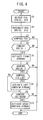
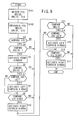
- the vehicle collision decision apparatus 10A basically is constructed as described above. Operations of the vehicle collision decision apparatus 10A will be described below with reference to the flowchart shown in FIG. 4 .
- the first acceleration detectors 12a, 12b, the second acceleration detector 14, and the third acceleration detectors 16a through 16d detect a deceleration of the vehicle 40, which is caused by the vehicle collision, as respective accelerations in step S1.
- the accelerations detected by the first acceleration detectors 12a, 12b, the second acceleration detector 14, and the third acceleration detectors 16a through 16d are output to the interval integrators 22a, 22b and the cumulative integrators 23a through 23e, and are integrated thereby in step S2.
- the acceleration detected by the first acceleration detector 12a is integrated by the interval integrator 22a, which outputs the interval integral ⁇ VXFL to the comparator 24a.
- the acceleration detected by the first acceleration detector 12b is integrated by the interval integrator 22b, which outputs the interval integral ⁇ XFR to the comparator 24b.
- the acceleration detected by the second acceleration detector 14 is integrated by the cumulative integrator 23a, which outputs the cumulative integral ⁇ VXE to the comparators 24c, 24cx.
- the acceleration detected by the third acceleration detector 16a is integrated by the cumulative integrator 23b, which outputs the cumulative integral ⁇ VYSL1 to the comparator 24d.
- the acceleration detected by the third acceleration detector 16b is integrated by the cumulative integrator 23c, which outputs the cumulative integral ⁇ VYSL2 to the comparator 24e.
- the acceleration detected by the third acceleration detector 16c is integrated by the cumulative integrator 23d, which outputs the cumulative integral ⁇ VYSR1 to the comparator 24f.
- the acceleration detected by the third acceleration detector 16d is integrated by the cumulative integrator 23e, which outputs the cumulative integral ⁇ VYSR2 to the comparator 24g.
- the comparator 24a compares the interval integral ⁇ VXFL and the threshold value XFTH with each other, whereas the comparator 24b compares the interval integral ⁇ VXFR and the threshold value XFTH with each other, in step S3. If the interval integral ⁇ VXFL is greater than the threshold value XFTH, then the comparator 24a outputs the first comparison signal to the OR gate 26a. If the interval integral ⁇ VXFR is greater than the threshold value XFTH, then the comparator 24b outputs the first comparison signal to the OR gate 26a.
- the OR gate 26a When the OR gate 26a is supplied with the first comparison signal from at least one of the comparators 24a, 24b, the OR gate 26a outputs a true-value signal to the AND gates 28c, 28d, and 28e.
- the true-value signal indicates that the first acceleration detectors 12a, 12b have recognized that a collision has occurred on the vehicle 40, which requires the front airbags 30 and the curtain airbags 32a, 32b to be activated
- the comparator 24cx compares the cumulative integral ⁇ VXE and the threshold value XEFTH with each other in step S4. If the interval integral ⁇ VXE is greater than the threshold value XEFTH, then the comparator 24cx outputs the sixth comparison signal to the AND gate 28c.
- the AND gate 28c is supplied with the true-value signal from the OR gate 26a and the sixth comparison signal from the comparator 24cx, the AND gate 28c outputs a true-value signal to the front airbags 30, which are activated in step S5.
- the comparator 24c compares the cumulative integral ⁇ VXE and the threshold value XETH with each other in step S6. If the cumulative integral ⁇ VXE is greater than the threshold value XETH, then the comparator 24c outputs the second comparison signal to the AND gates 28a, 28b.
- the comparator 24d compares the cumulative integral ⁇ VYSL1 and the threshold value YSTH1 with each other, whereas the comparator 24e compares the cumulative integral ⁇ VYSL2 and the threshold value YSTH1 with each other, in step S7. If the cumulative integral ⁇ VYSL1 is greater than the threshold value YSTH1, then the comparator 24d outputs the third comparison signal to the OR gate 26b. If the cumulative integral ⁇ VYSL2 is greater than the threshold value YSTH1, then the comparator 24e outputs the third comparison signal to the OR gate 26b.
- the OR gate 26b When the OR gate 26b is supplied with the third comparison signal, from at least one of the comparators 24d, 24e, the OR gate 26b outputs a true-value signal to the AND gate 28a.
- the true-value signal indicates that the third acceleration detectors 16a, 16b have recognized that a collision has occurred on the vehicle 40, which requires the curtain airbag 32a to be activated.
- the AND gate 28a When the AND gate 28a is supplied with the second comparison signal from the comparator 24c and the true-value signal from the OR gate 26b, the AND gate 28a outputs a true-value signal to the AND gate 28d.
- the AND gate 28d When the AND gate 28d is supplied with the true-value signal from the OR gate 26a and the true-value signal from the AND gate 28a, the AND gate 28d outputs a true-value signal to the curtain airbag 32a, which is then activated in step S8.
- the comparator 24f compares the cumulative integral ⁇ VYSR1 and the threshold value YSTH1 with each other, while the comparator 24g compares the cumulative integral ⁇ VYSR2 and the threshold value YSTH1 with each other, in step S9. If the cumulative integral ⁇ VYSR1 is greater than the threshold value YSTH1, then the comparator 24f outputs the third comparison signal to the OR gate 26c. If the cumulative integral ⁇ VYSR2 is greater than the threshold value YSTH1, then the comparator 24g outputs the third comparison signal to the OR gate 26c.
- the OR gate 26c When the OR gate 26c is supplied with the third comparison signal from at least one of the comparators 24f, 24g, the OR gate 26c outputs a true-value signal to the AND gate 28b.
- the true-value signal indicates that the third acceleration detectors 16c, 16d have recognized that the vehicle 40 has been subjected to a sudden transverse movement, which requires the curtain airbag 32b to be activated.
- the AND gate 28b When the AND gate 28b is supplied with the second comparison signal from the comparator 24c and the true-value signal from the OR gate 26c, the AND gate 28b outputs a true-value signal to the AND gate 28e.
- the AND gate 28e When the AND gate 28e is supplied with the true-value signal from the OR gate 26a and the true-value signal from the AND gate 28b, the AND gate 28e outputs a true-value signal to the curtain airbag 32b, which is then activated in step S10.
- the first acceleration detectors 12a, 12b and the second acceleration detector 14 detect an acceleration of the vehicle 40 in the longitudinal direction thereof, whereas the third acceleration detectors 16a through 16d detect an acceleration of the vehicle 40 in the transverse direction thereof.
- the front airbags 30 are activated based on detected results from the first acceleration detectors 12a, 12b and the second acceleration detector 14.
- the curtain airbags 32a, 32b are activated in order to prevent the heads of vehicle occupants, which move transversely to the vehicle 40, from impinging upon and colliding against the doors 46a through 46d.
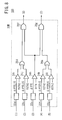
- FIG. 5 shows in block form the vehicle collision decision apparatus 10B according to the second embodiment of the present invention.
- the vehicle collision decision apparatus 10B comprises a second acceleration detector (SRS) 14, third acceleration detectors (SIS) 16a through 16d, a collision decision device 20B, front airbags 30, and curtain airbags 32a, 32b.
- SRS second acceleration detector
- SIS third acceleration detectors
- a collision decision device 20B front airbags 30, and curtain airbags 32a, 32b.
- the collision decision device 20B comprises interval integrators 22c through 22g, comparators 24h through 241, OR gates 26d, 26e, and AND gates 28f, 28g.
- the interval integrators 22c through 22g perform interval integration on the accelerations detected by the second acceleration detector 14 and the third acceleration detectors 16a through 16d, and output respective interval integrals to the comparators 24h through 241, respectively. Specifically, the interval integrator 22c outputs an interval integral ⁇ VYE calculated from an acceleration in a transverse direction of the vehicle 40, which is detected by the second acceleration detector 14, to the comparator 24h. The interval integrator 22d outputs an interval integral ⁇ VYSLLS calculated from an acceleration, which is detected by the third acceleration detector 16a, to the comparator 24i. The interval integrator 22e outputs an interval integral ⁇ VYSL2S, which is calculated from an acceleration detected by the third acceleration detector 16b, to the comparator 24j.
- the interval integrator 22f outputs an interval integral ⁇ VYSR1S, which is calculated from an acceleration detected by the third acceleration detector 16c, to the comparator 24k.
- the interval integrator 22g outputs an interval integral ⁇ VYSR2S, which is calculated from an acceleration detected by the third acceleration detector 16d, to the comparator 241.
- the comparators 24h through 241 compare the interval integrals output from the interval integrators 22c through 22g with threshold values set in the respective comparators 24h through 241, and output comparison signals based on the compared results to the OR gates 26d, 26e.
- the comparator (fourth comparator) 24h compares the interval integral ⁇ VYE output from the interval integrator 22c with a threshold value XYTH (fourth threshold value), and outputs a fourth comparison signal to the AND gates 28f, 28g if the interval integral ⁇ VYE is greater than the threshold value XYTH.
- the comparator (fifth comparator) 24i compares the interval integral ⁇ VYSL1S output from the interval integrator 22d with a threshold value YSTH2 (fifth threshold value), and outputs a fifth comparison signal to the OR gate 26d if the interval integral ⁇ VYSL1S is greater than the threshold value YSTH2.
- the comparator (fifth comparator) 24j compares the interval integral ⁇ VYSL2S output from the interval integrator 22e with the threshold value YSTH2, and outputs a fifth comparison signal to the OR gate 26d if the interval integral ⁇ VYSL2S is greater than the threshold value YSTH2.
- the comparator (fifth comparator) 24k compares the interval integral ⁇ VYSR1S output from the interval integrator 22f with the threshold value YSTH2, and outputs a fifth comparison signal to the OR gate 26e if the interval integral ⁇ VYSR1S is greater than the threshold value YSTH2.
- the comparator (fifth comparator) 241 compares the interval integral ⁇ VYSR2S output from the interval integrator 22g with the threshold value YSTH2, and outputs a fifth comparison signal to the OR gate 26e if the interval integral ⁇ VYSR2S is greater than the threshold value YSTH2.
- the second acceleration detector 14 and the third acceleration detectors 16a through 16d detect an acceleration of the vehicle 40 in the transverse direction thereof.
- the third acceleration detectors 16a through 16d are disposed respectively in the doors 46a through 46d of the vehicle 40. Therefore, the third acceleration detectors 16a through 16d detect an acceleration of the vehicle 40 in the transverse direction also when the doors 46a through 46d are opened and closed.
- the comparator 24h which compares the interval integral ⁇ VYE and the threshold value XYTH, does not output the fourth comparison signal. Accordingly, the curtain airbags 32a, 32b are prevented from being activated in error.
- the threshold values set in the comparators 24h through 241 may be of any values, insofar as such values allow the curtain airbags 32a, 32b to be activated appropriately.
- the threshold values XYTH, YSTH2 should be 1 km/h and 5 km/h, respectively, each of which is expressed as a speed change per unit time.
- the OR gates 26d, 26e perform an OR operation on the comparison signals output from the comparators 24h through 241. Specifically, the OR gate 26d performs an OR operation on the fifth comparison signals output from the comparators 24i, 24j, and outputs the ORed result to the AND gate 28f. The OR gate 26e performs an OR operation on the fifth comparison signals output from the comparators 24k, 241, and outputs the ORed result to the AND gate 28g.
- the AND gate 28f performs an AND operation on the ORed result from the OR gate 26d and the fourth comparison signal output from the comparator 24h, and outputs the ANDed result to the curtain airbag 32a.
- the AND gate 28g performs an AND operation on the ORed result from the OR gate 26e and the fourth comparison signal output from the comparator 24h, and outputs the ANDed result to the curtain airbag 32b.
- the curtain airbag 32a is activated when the AND gate 28f outputs a true-value signal to the curtain airbag 32a.
- the curtain airbag 32b is activated when the AND gate 28g outputs a true-value signal to the curtain airbag 32b.
- the vehicle collision decision apparatus 10B basically is constructed as described above. Operations of the vehicle collision decision apparatus 10B will be described below with reference to the flowchart shown in FIG. 6 .
- the second acceleration detector 14 and the third acceleration detectors 16a through 16d detect the deceleration of the vehicle 40, which is caused by the vehicle collision, as respective accelerations in step S11.
- the accelerations detected by the second acceleration detector 14 and the third acceleration detectors 16a through 16d are output to the interval integrators 22c through 22g and are integrated thereby in step S12. Specifically, the acceleration detected by the second acceleration detector 14 is integrated by the interval integrator 22c, which outputs the interval integral ⁇ VYE to the comparator 24h. The acceleration detected by the third acceleration detector 16a is integrated by the interval integrator 22d, which outputs the interval integral ⁇ VYSL1S to the comparator 24i. The acceleration detected by the third acceleration detector 16b is integrated by the interval integrator 22e, which outputs the interval integral ⁇ VYSL2S to the comparator 24j.
- the acceleration detected by the third acceleration detector 16c is integrated by the interval integrator 22f, which outputs the interval integral ⁇ VYSR1S to the comparator 24k.
- the acceleration detected by the third acceleration detector 16d is integrated by the interval integrator 22g, which outputs the interval integral ⁇ VYSR2S to the comparator 241.
- the comparator 24h compares the interval integral ⁇ VYE and the threshold value XYTH with each other in step S13. If the interval integral ⁇ VYE is greater than the threshold value XYTH, then the comparator 24h outputs the fourth comparison signal to the AND gates 28f, 28g.
- the comparator 24i compares the interval integral ⁇ VYSL1S and the threshold value XSTH2 with each other, and the comparator 24j compares the interval integral ⁇ VYSL2S and the threshold value XSTH2 with each other, in step S14. If the interval integral ⁇ VYSL1S is greater than the threshold value XSTH2, then the comparator 24i outputs the fifth comparison signal to the OR gate 26d. If the interval integral ⁇ VYSL2S is greater than the threshold value XSTH2, then the comparator 24j outputs the fifth comparison signal to the OR gate 26d.
- the OR gate 26d When the OR gate 26d is supplied with the fifth comparison signal from at least one of the comparators 24i, 24j, the OR gate 26d outputs a true-value signal to the AND gate 28f.
- the true-value signal indicates that the third acceleration detectors 16a, 16b have recognized that a collision has occurred on the vehicle 40, which requires the curtain airbag 32a to be activated.
- the AND gate 28f When the AND gate 28f is supplied with the fourth comparison signal from the comparator 24h and the true-value signal from the OR gate 26d, the AND gate 28f outputs a true-value signal to the curtain airbag 32a, which is then activated in step S15.
- the comparator 24k compares the interval integral ⁇ VYSR1S and the threshold value YSTH2 with each other, whereas the comparator 241 compares the cumulative integral ⁇ VYSR2S and the threshold value YSTH2 with each other in step S16. If the interval integral ⁇ VYSR1S is greater than the threshold value YSTH2, then the comparator 24k outputs the fifth comparison signal to the OR gate 26e. If the interval integral ⁇ VYSR2S is greater than the threshold value YSTH2, then the comparator 241 outputs the fifth comparison signal to the OR gate 26e.
- the OR gate 26e When the OR gate 26e is supplied with the fifth comparison signal from at least one of the comparators 24k and 241, the OR gate 26e outputs a true-value signal to the AND gate 28g.
- the true-value signal indicates that the third acceleration detectors 16c, 16d have recognized that the vehicle 40 has been subjected to a collision or a sudden transverse movement, which requires the curtain airbag 32b to be activated.
- the AND gate 28g When the AND gate 28g is supplied with the fourth comparison signal from the comparator 24h and the true-value signal from the OR gate 26e, the AND gate 28g outputs a true-value signal to the curtain airbag 32b, which is then activated in step S17.
- the second acceleration detector 14 and the third acceleration detectors 16a through 16d detect an acceleration of the vehicle 40 in the longitudinal direction thereof.
- the curtain airbags 32a, 32b are reliably activated assuming that the angle of the retracted direction to the traveled direction is equal to or greater than a predetermined angle.
- the curtain airbags 32a, 32b are prevented from being activated in error, when the doors 46a through 46d are opened and closed.
- FIGS. 7 and 8 show in block form the vehicle collision decision apparatus 10C according to the third embodiment of the present invention. Those parts of the vehicle collision decision apparatus 10C according to the third embodiment that are identical to those of the vehicle collision decision apparatus 10A, 10B according to the first and second embodiments are denoted by identical reference characters, and such features will not be described in detail below.
- the vehicle collision decision apparatus 10C comprises first acceleration detectors (FCS) 12a, 12b, a second acceleration detector 14, third acceleration detectors (SIS) 16a through 16d, collision decision devices 20A, 20B, OR gates 26f, 26g, front airbags 30, and curtain airbags 32a, 32b.
- FCS first acceleration detectors
- SIS third acceleration detectors
- collision decision devices 20A, 20B OR gates 26f, 26g, front airbags 30, and curtain airbags 32a, 32b.
- the vehicle collision decision apparatus 10C differs from the vehicle collision decision apparatus 10A, 10B as follows: Acceleration of the vehicle 40 in the longitudinal direction, which is detected by the second acceleration detector 14, is output to the cumulative integrator 23a, whereas acceleration of the vehicle 40 in the transverse direction, which is detected by the second acceleration detector 14, is output to the interval integrator 22c. Acceleration of the vehicle 40 in the transverse direction, which is detected by the third acceleration detector 16a, is output to the cumulative integrator 23b and to the interval integrator 22d. Acceleration detected by the third acceleration detector 16b is output to the cumulative integrator 23c and to the interval integrator 22e. Acceleration detected by the third acceleration detector 16c is output to the cumulative integrator 23d and to the interval integrator 22f. Acceleration detected by the third acceleration detector 16d is output to the cumulative integrator 23e and to the interval integrator 22g.
- the ANDed results from the AND gates 28d, 28f are output to the OR gate 26f, whereas the ANDed results from the AND gates 28e, 28g are output to the OR gate 26g.
- the OR gate 26f outputs a true-value signal as an ORed result to the curtain airbag 32a
- the curtain airbag 32a is activated.
- the OR gate 26g outputs a true-value signal as an ORed result to the curtain airbag 32b
- the curtain airbag 32b is activated.
- the vehicle collision decision apparatus 10C basically is constructed as described above. Operations of the vehicle collision decision apparatus 10C will be described below with reference to the flowchart shown in FIG. 9 .
- the flowchart shown in FIG. 9 resembles a combination of the flowcharts shown in FIGS. 4 and 6 , except that steps S1, S2 shown in FIG. 4 and steps S11, S12 shown in FIG. 6 are replaced with steps S101, S102, and step S10 shown in FIG. 4 is followed by steps S13 through S17 shown in FIG. 6 .
- the first acceleration detectors 12a, 12b, the second acceleration detector 14, and the third acceleration detectors 16a through 16d detect a deceleration of the vehicle 40, which is caused by the vehicle collision, as respective accelerations in step S101.
- the accelerations are output to the interval integrators 22a through 22g, and to the cumulative integrators 23a through 23e, which integrate the supplied accelerations in step 102.
- the acceleration detected by the first acceleration detector 12a is integrated by the interval integrator 22a, which outputs the interval integral ⁇ VXFL to the comparator 24a.
- the acceleration detected by the first acceleration detector 12b is integrated by the interval integrator 22b, which outputs the interval integral ⁇ VXFR to the comparator 24b.
- the acceleration detected by the second acceleration detector 14 is integrated by the cumulative integrator 23a, which outputs the cumulative integral ⁇ VXE to the comparators 24c, 24cx.
- the acceleration detected by the third acceleration detector 16a is integrated by the cumulative integrator 23b, which outputs the cumulative integral ⁇ VYSL1 to the comparator 24d.
- the acceleration detected by the third acceleration detector 16b is integrated by the cumulative integrator 23c, which outputs the cumulative integral ⁇ VYSL2 to the comparator 24e.
- the acceleration detected by the third acceleration detector 16c is integrated by the cumulative integrator 23d, which outputs the cumulative integral ⁇ VYSR1 to the comparator 24f.
- the acceleration detected by the third acceleration detector 16d is integrated by the cumulative integrator 23e, which outputs the cumulative integral ⁇ VYSR2 to the comparator 24g.
- the acceleration detected by the second acceleration detector 14 is integrated by the interval integrator 22c, which outputs the interval integral ⁇ VYE to the comparator 24h.
- the acceleration detected by the third acceleration detector 16a is integrated by the interval integrator 22d, which outputs the interval integral ⁇ VYSL1S to the comparator 24i.
- the acceleration detected by the third acceleration detector 16b is integrated by the interval integrator 22e, which outputs the interval integral ⁇ VYSL2S to the comparator 24j.
- the acceleration detected by the third acceleration detector 16c is integrated by the interval integrator 22f, which outputs the interval integral ⁇ VYSR1S to the comparator 24k.
- the acceleration detected by the third acceleration detector 16d is integrated by the interval integrator 22g, which outputs the interval integral ⁇ VYSR2S to the comparator 241.
- step S3 If at least one of the interval integrals ⁇ VXFL, ⁇ VXFR is greater than the threshold value XFTH in the comparators 24a, 24b, then the processing sequence from step S3 to step S10, as described above according to the first embodiment, is carried out.
- steps S8 and S15 for activating the curtain air bag 32a, if the interval integrals or the cumulative integrals of the accelerations detected by the first acceleration detectors 12a, 12b, the second acceleration detector 14, and the third acceleration detectors 16a through 16d are greater than the respective threshold values, the AND gate 28d outputs a true-value signal to the OR gate 26f. Similarly, if the interval integrals or the cumulative integrals of the accelerations detected by the second acceleration detector 14 and the third acceleration detectors 16a, 16b are greater than the respective threshold values, the AND gate 28f outputs a true-value signal to the OR gate 26f. When at least one of the true-value signals is supplied to the OR gate 26f, the OR gate 26f outputs a true-value signal to the curtain airbag 32a, which in turn is activated thereby.
- steps S10 and S17 for activating the curtain air bag 32b, if the interval integrals or the cumulative integrals of the accelerations detected by the first acceleration detectors 12a, 12b, the second acceleration detector 14, and the third acceleration detectors 16a through 16d are greater than the respective threshold values, the AND gate 28e outputs a true-value signal to the OR gate 26g. Similarly, if the interval integrals or the cumulative integrals of the accelerations detected by the second acceleration detector 14 and the third acceleration detectors 16a through 16d are greater than the respective threshold values, the AND gate 28g outputs a true-value signal to the OR gate 26g. When at least one of the true-value signals is supplied to the OR gate 26g, the OR gate 26g outputs a true-value signal to the curtain airbag 32b, which in turn is activated thereby.
- the first acceleration detectors 12a, 12b and the second acceleration detector 14 detect an acceleration of the vehicle 40 in a longitudinal direction thereof, whereas the third acceleration detectors 16a through 16d detect an acceleration of the vehicle 40 in a transverse direction thereof.
- the front airbags 30 are activated based on the detected results from the first acceleration detectors 12a, 12b and the second acceleration detector 14. Thereafter, the curtain airbags 32a, 32b are reliably activated.
- the second acceleration detector 14 and the third acceleration detectors 16a through 16d detect an acceleration of the vehicle 40 in a transverse direction thereof.
- the curtain airbags 32a, 32b are reliably activated if the angle of the retracted direction to the traveled direction is equal to or greater than a predetermined angle.
- the curtain airbags 32a, 32b are prevented from being activated in error when the doors 46a through 46d are opened and closed. If the angle of the retracted direction to the traveled direction is smaller than the predetermined angle that occurs during an offset collision, then the curtain airbags 32a, 32b are activated based on the acceleration of the vehicle 40 in the longitudinal direction thereof, which is detected by the first acceleration detectors 12a, 12b and the second acceleration detector 14. If the angle of the retracted direction to the traveled direction is equal to or greater than the predetermined angle that occurs during an offset collision, then the curtain airbags 32a, 32b are activated based on the acceleration of the vehicle 40 in the transverse direction thereof, which is detected by the second acceleration detector 14 and the third acceleration detectors 16a through 16d. As a result, the curtain airbags 32a, 32b are reliably activated, irrespective of the angle of the retracted direction to the traveled direction of the vehicle 40 that occurs during an offset collision.
- the vehicle collision decision apparatus 10A has first acceleration detectors 12a, 12b and a second acceleration detector 14 for detecting an acceleration of the vehicle 40 in a longitudinal direction, and third acceleration detectors 16a through 16d for detecting an acceleration of the vehicle 40 in a transverse direction thereof.
- first acceleration detectors 12a, 12b and a second acceleration detector 14 for detecting an acceleration of the vehicle 40 in a longitudinal direction
- third acceleration detectors 16a through 16d for detecting an acceleration of the vehicle 40 in a transverse direction thereof.
Landscapes
- Engineering & Computer Science (AREA)
- Mechanical Engineering (AREA)
- Air Bags (AREA)
Abstract
Description
- The present invention relates to a vehicle collision decision apparatus, and more particularly to a vehicle collision decision apparatus that activates a vehicle occupant protection device based on accelerations detected by a plurality of acceleration detectors mounted on the vehicle.
- Generally, vehicles are equipped with airbags, which serve as restraint devices for protecting vehicle occupants from injury in the event of a vehicle collision. One known vehicle collision decision apparatus for activating curtain airbags, which form a type of airbag restraint, is disclosed in Japanese Laid-Open Patent Publication No.
2001-018744 - According to Japanese Laid-Open Patent Publication No.
2001-018744 - If the vehicle hits an object in a one-sided head-on collision, i.e., a so-called offset collision, and the direction in which the hitting vehicle is retracted from the hit object is oblique to the direction in which the hitting vehicle has traveled prior to the collision, then the curtain airbags possibly may not be activated, due to the relationship between the installed positions of the acceleration sensors and the direction in which the acceleration sensors have detected the accelerations.
- It is an object of the present invention to provide a vehicle collision decision apparatus, which is capable of reliably activating curtain airbags through a simple processing configuration in the event of an offset collision.
- According to an aspect of the present invention, there is provided a vehicle collision decision apparatus comprising a vehicle occupant protection device for protecting an occupant of a vehicle, a first acceleration detector disposed in a front end of the vehicle for detecting an acceleration of the vehicle in a longitudinal direction thereof, a second acceleration detector disposed in a transversely central region of the vehicle near a front portion thereof for detecting an acceleration of the vehicle, a third acceleration detector disposed on a side of the vehicle near a seat disposed in the vehicle for detecting an acceleration of the vehicle in a transverse direction thereof, a first comparator for comparing a value based on the acceleration detected by the first acceleration detector with a first threshold value, and outputting a first comparison signal if the value based on the acceleration detected by the first acceleration detector is greater than the first threshold value, a second comparator for comparing a value based on the acceleration in the longitudinal direction of the vehicle detected by the second acceleration detector with a second threshold value, and outputting a second comparison signal if the value based on the acceleration detected by the second acceleration detector is greater than the second threshold value, and a third comparator for comparing a value based on the acceleration detected by the third acceleration detector with a third threshold value, and outputting a third comparison signal if the value based on the acceleration detected by the third acceleration detector is greater than the third threshold value, wherein the vehicle occupant protection device is activated when the first, second, and third comparators output the first comparison signal, the second comparison signal, and the third comparison signal.
- According to another aspect of the present invention, there is provided a vehicle collision decision apparatus comprising a vehicle occupant protection device for protecting an occupant of a vehicle, a second acceleration detector disposed in a transversely central region of the vehicle near a front portion thereof for detecting an acceleration of the vehicle, a third acceleration detector disposed on a side of the vehicle near a seat disposed in the vehicle for detecting an acceleration of the vehicle in a transverse direction thereof, a fourth comparator for comparing a value based on the acceleration in the transverse direction of the vehicle detected by the second acceleration detector with a fourth threshold value, and outputting a fourth comparison signal if the value based on the acceleration detected by the second acceleration detector is greater than the fourth threshold value, and a fifth comparator for comparing a value based on the acceleration detected by the third acceleration detector with a fifth threshold value, and outputting a fifth comparison signal if the value based on the acceleration detected by the third acceleration detector is greater than the fifth threshold value, wherein the vehicle occupant protection device is activated when the fourth and fifth comparators output the forth comparison signal and the fifth comparison signal.
- According to still another aspect of the present invention, there is provided a vehicle collision decision apparatus comprising a vehicle occupant protection device for protecting an occupant of a vehicle, a first acceleration detector disposed in a front end of the vehicle for detecting an acceleration of the vehicle in a longitudinal direction thereof, a second acceleration detector disposed in a transversely central region of the vehicle near a front portion thereof for detecting an acceleration of the vehicle, a third acceleration detector disposed on a side of the vehicle near a seat disposed in the vehicle for detecting an acceleration of the vehicle in a transverse direction thereof, a first comparator for comparing a value based on the acceleration detected by the first acceleration detector with a first threshold value, and outputting a first comparison signal if the value based on the acceleration detected by the first acceleration detector is greater than the first threshold value, a second comparator for comparing a value based on the acceleration in the longitudinal direction of the vehicle detected by the second acceleration detector with a second threshold value, and outputting a second comparison signal if the value based on the acceleration detected by the second acceleration detector is greater than the second threshold value, a third comparator for comparing a value based on the acceleration detected by the third acceleration detector with a third threshold value, and outputting a third comparison signal if the value based on the acceleration detected by the third acceleration detector is greater than the third threshold value, a fourth comparator for comparing a value based on the acceleration in the transverse direction of the vehicle detected by the second acceleration detector with a fourth threshold value, and outputting a fourth comparison signal if the value based on the acceleration detected by the second acceleration detector is greater than the fourth threshold value, and a fifth comparator for comparing a value based on the acceleration detected by the third acceleration detector with a fifth threshold value, and outputting a fifth comparison signal if the value based on the acceleration detected by the third acceleration detector is greater than the fifth threshold value, wherein the vehicle occupant protection device is activated when the first, second, and third comparators output the first comparison signal, the second comparison signal, and the third comparison signal, or when the fourth and fifth comparators output the forth comparison signal and the fifth comparison signal.
- The vehicle collision decision apparatus further comprises a sixth comparator for comparing the value based on the acceleration in the longitudinal direction of the vehicle detected by the second acceleration detector with a sixth threshold value, and outputting a sixth comparison signal if the value based on the acceleration detected by the second acceleration detector is greater than the sixth threshold value, wherein the sixth threshold value is smaller than the second threshold value, and the vehicle occupant protection device is activated after a front airbag in the vehicle has been activated based on the first comparison signal and the sixth comparison signal.
- Preferably, the first comparator compares an interval integral of the acceleration detected by the first acceleration detector with the first threshold value, and outputs the first comparison signal if the interval integral of the acceleration detected by the first acceleration detector is greater than the first threshold value, the second comparator compares a cumulative integral of the acceleration in the longitudinal direction of the vehicle detected by the second acceleration detector with the second threshold value, and outputs the second comparison signal if the cumulative integral of the acceleration in the longitudinal direction of the vehicle is greater than the second threshold value, and the third comparator compares a cumulative integral of the acceleration detected by the third acceleration detector with the third threshold value and outputs the third comparison signal if the cumulative integral of the acceleration detected by the third acceleration detector is greater than the third threshold value.
- Preferably, the fourth comparator compares an interval integral of the acceleration in the transverse direction of the vehicle detected by the second acceleration detector with the fourth threshold value, and outputs the fourth comparison signal if the interval integral of the acceleration detected by the second acceleration detector is greater than the fourth threshold value, and the fifth comparator compares an interval integral of the acceleration detected by the third acceleration detector with the fifth threshold value, and outputs the fifth comparison signal if the interval integral of the acceleration detected by the third acceleration detector is greater than the fifth threshold value.
- Preferably, the sixth comparator compares a cumulative integral of the acceleration in the longitudinal direction of the vehicle detected by the second acceleration detector with the sixth threshold value, and outputs the sixth comparison signal if the cumulative integral of the acceleration in the longitudinal direction of the vehicle is greater than the sixth threshold value. The first threshold value is preferably smaller than the second threshold value. The vehicle occupant protection device preferably comprises a curtain airbag.
- When the vehicle is involved in an offset collision, the first acceleration detector and the second acceleration detector detect the acceleration of the vehicle in the longitudinal direction thereof, whereas the third acceleration detector detects the acceleration of the vehicle in the transverse direction thereof. The front airbag is activated based on the acceleration detected by the first acceleration detector, the acceleration of the vehicle in the longitudinal direction thereof detected by the second acceleration detector, and the acceleration of the vehicle in the longitudinal direction thereof detected by the third acceleration detector. Thereafter, the vehicle occupant protection device is reliably activated. The interval integrals or the cumulative intervals are used selectively, depending on the accelerations detected by the acceleration detectors. Therefore, the vehicle collision decision apparatus is of a simple arrangement.
- When the vehicle hits an object in an offset collision, and the hitting vehicle is retracted from the object in a direction oblique to the direction in which the hitting vehicle has traveled prior to the collision, the second acceleration detector and the third acceleration detector detect the acceleration of the vehicle in the transverse direction, and the vehicle occupant protection device is reliably activated based on the acceleration of the vehicle in the transverse direction as detected by the second acceleration detector, and the acceleration detected by the third acceleration detector.
- The vehicle occupant protection device is prevented from being activated in error when the doors of the vehicle are opened and closed. If the angle of the retracted direction to the traveled direction is smaller than a predetermined angle that occurs during an offset collision, then the vehicle occupant protection device is activated based on the acceleration detected by the first acceleration detector, the acceleration of the vehicle in the longitudinal direction as detected by the second acceleration detector, and the acceleration of the vehicle in the longitudinal direction as detected by the third acceleration detector. If the angle of the retracted direction to the traveled direction is equal to or greater than the predetermined angle that occurs during an offset collision, then the vehicle occupant protection device is activated based on the acceleration of the vehicle in the transverse direction thereof as detected by the second acceleration detector and the acceleration detected by the third acceleration detector. As a result, the vehicle occupant protection device is reliably activated, irrespective of the angle of the retracted direction to the traveled direction of the vehicle that occurs during an offset collision.
- The above and other objects, features, and advantages of the present invention will become more apparent from the following description when taken in conjunction with the accompanying drawings in which preferred embodiments of the present invention are shown by way of illustrative example.
-
-
FIG. 1 is a block diagram of a vehicle collision decision apparatus according to a first embodiment of the present invention; -
FIG. 2 is a schematic perspective view of a vehicle incorporating the vehicle collision decision apparatus according to the first embodiment shown inFIG. 1 ; -
FIG. 3 is a schematic plan view of a vehicle incorporating the vehicle collision decision apparatus according to the first embodiment shown inFIG. 1 ; -
FIG. 4 is a flowchart of an operation sequence of the vehicle collision decision apparatus according to the first embodiment shown inFIG. 1 ; -
FIG. 5 is a block diagram of a vehicle collision decision apparatus according to a second embodiment of the present invention; -
FIG. 6 is a flowchart of an operation sequence of the vehicle collision decision apparatus according to the second embodiment shown inFIG. 5 ; -
FIGS. 7 and8 are block diagrams of a vehicle collision decision apparatus according to a third embodiment of the present invention; and -
FIG. 9 is a flowchart of an operation sequence of the vehicle collision decision apparatus according to the third embodiment shown inFIGS. 7 and8 . - Like or corresponding parts of the invention are denoted by like or corresponding reference characters throughout the views.
- First, a vehicle collision decision apparatus according to a first embodiment of the present invention will be described in detail below with reference to
FIGS. 1 through 4 .FIG. 1 shows in block form a vehiclecollision decision apparatus 10A according to a first embodiment of the present invention.FIG. 2 shows in schematic perspective avehicle 40, which forms a mobile body incorporating the vehiclecollision decision apparatus 10A shown inFIG. 1 .FIG. 3 shows a schematic plan view of thevehicle 40, which incorporates the vehiclecollision decision apparatus 10A. - As shown in
FIGS. 1 through 3 , the vehiclecollision decision apparatus 10A comprises first acceleration detectors (FCS) 12a, 12b, a second acceleration detector (SRS) 14, third acceleration detectors (SIS) 16a through 16d, acollision decision device 20A,front airbags 30, and curtain airbags (vehicle occupant protection devices) 32a, 32b. - The
first acceleration detectors vehicle 40 in a longitudinal direction thereof, and are disposed in respective transversely spaced, symmetrical positions on afront portion 42 of thevehicle 40. Thesecond acceleration detector 14 comprises an acceleration sensor for detecting accelerations of thevehicle 40 in longitudinal and transverse directions of thevehicle 40. Thesecond acceleration detector 14 is disposed in a transversely central region of thevehicle 40 near thefront portion 42, or more specifically, at a position between aleft front seat 44a and aright front seat 44b of thevehicle 40. Thethird acceleration detectors 16a through 16d comprise acceleration sensors for detecting an acceleration of thevehicle 40 in a transverse direction thereof, and are disposed inrespective doors 46a through 46d of thevehicle 40. Specifically, thethird acceleration detector 16a is disposed in aleft front door 46a near theleft front seat 44a, thethird acceleration detector 16b is disposed in a leftrear door 46b near a rear seat, thethird acceleration detector 16c is disposed in aright front door 46c near theright front seat 44b, and thethird acceleration detector 16d is disposed in a rightrear door 46d near the rear seat. - The
collision decision device 20A comprisesinterval integrators cumulative integrators 23a through 23e,comparators 24a through 24g and 24cx, ORgates 26a through 26c, and ANDgates 28a through 28e. - The
interval integrators first acceleration detectors comparators first acceleration detectors first acceleration detectors first acceleration detectors - The
interval integrator 22a outputs an interval integral ΔVXFL, which is calculated from the acceleration detected by thefirst acceleration detector 12a, to thecomparator 24a. Theinterval integrator 22b outputs an interval integral ΔVXFR, which is calculated from the acceleration detected by thesecond acceleration detector 12b, to thecomparator 24b. - The
cumulative integrators 23a through 23e perform cumulative integration on accelerations detected by thesecond acceleration detector 14 and thethird acceleration detectors 16a through 16d, and output respective cumulative integrals to thecomparators 24c through 24g and 24cx. The term "cumulative integrals" refers to values that are calculated when the accelerations detected by thesecond acceleration detector 14 and thethird acceleration detectors 16a through 16d are integrated, during a period of time from a time when thesecond acceleration detector 14 and thethird acceleration detectors 16a through 16d begin detecting respective accelerations, to a time when the acceleration detectors stop detecting the respective accelerations, i.e., when the detected accelerations become nil. - The
cumulative integrator 23a outputs a cumulative integral ΔVXE, which is calculated from the acceleration in the longitudinal direction of thevehicle 40 detected by thesecond acceleration detector 14, to thecomparators 24c and 24cx. Thecumulative integrator 23b outputs a cumulative integral ΔVYSL1, which is calculated from the acceleration detected by thethird acceleration detector 16a, to thecomparator 24d. Thecumulative integrator 23c outputs a cumulative integral ΔVYSL2, which is calculated from the acceleration detected by thethird acceleration detector 16b, to thecomparator 24e. Thecumulative integrator 23d outputs a cumulative integral ΔVYSR1, which is calculated from the acceleration detected by thethird acceleration detector 16c, to thecomparator 24f. Thecumulative integrator 23e outputs a cumulative integral ΔVYSR2, which is calculated from the acceleration detected by thethird acceleration detector 16d, to thecomparator 24g. - The
comparators 24a through 24g and 24cx compare the interval integrals output from theinterval integrators cumulative integrators 23a through 23e with threshold values, which are set in therespective comparators 24a through 24g and 24cx, and output comparison signals based on the compared results to theOR gates 26a through 26c. - Specifically, the comparator (first comparator) 24a compares the interval integral ΔVXFL output from the
interval integrator 22a with a threshold value XFTH (first threshold value), and outputs a first comparison signal to theOR gate 26a if the interval integral ΔVXFL is greater than the threshold value XFTH. The comparator (first comparator) 24b compares the interval integral ΔVXFR output from theinterval integrator 22b with the threshold value XFTH, and outputs a first comparison signal to theOR gate 26a if the interval integral ΔVXFR is greater than the threshold value XFTH. - The comparator (second comparator) 24c compares the interval integral ΔVXE output from the
interval integrator 23a with a threshold value XETH (second threshold value), and outputs a second comparison signal to the ANDgates - The comparator (third comparator) 24d compares the interval integral ΔVYSL1 output from the
interval integrator 23b with a threshold value YSTH1 (third threshold value), and outputs a third comparison signal to theOR gate 26b if the interval integral ΔVYSL1 is greater than the threshold value YSTH1. The comparator (third comparator) 24e compares the interval integral ΔVYSL2 output from theinterval integrator 23c with the threshold value YSTH1, and outputs a third comparison signal to theOR gate 26b if the interval integral ΔVYSL2 is greater than the threshold value YSTH1. - The comparator (third comparator) 24f compares the interval integral ΔVYSR1 output from the
interval integrator 23d with the threshold value YSTH1, and outputs a third comparison signal to theOR gate 26c if the interval, integral ΔVYSR1 is greater than the threshold value YSTH1. The comparator (third comparator) 24g compares the interval integral ΔVYSR2 output from theinterval integrator 23e with the threshold value YSTH1, and outputs a third comparison signal to theOR gate 26c if the interval integral ΔVYSR2 is greater than the threshold value YSTH1. - The comparator (sixth comparator) 24cx compares the interval integral ΔVXE output from the
interval integrator 23a with a threshold value XEFTH (sixth threshold value), and outputs a sixth comparison signal to the ANDgate 28c if the interval integral ΔVXE is greater than the threshold value XEFTH. - The threshold values set in the
comparators 24a through 24g, 24cx may be of any values, insofar as they allow thefront airbags 30 and thecurtain airbags comparators comparator 24c. Preferably, the threshold values XFTH, XETH, YSTH1 should be 5 km/h, 20 km/h, and 10 km/h, respectively, each of which is expressed as a speed change per unit time. The threshold value XFTH may be smaller than the threshold value XETH in order to quickly detect a head-on collision of thevehicle 40. The threshold value set in the comparator 24cx may be smaller than the threshold value set in thecomparator 24c in order to activate thefront airbags 30 earlier than thecurtain airbags vehicle 40 is involved in an offset collision. - The OR
gates 26a through 26c perform OR operations on the comparison signals output from thecomparators 24a through 24g. Specifically, theOR gate 26a performs an OR operation on the first comparison signals output from thecomparators gate 28c. The ORgate 26b performs an OR operation on the third comparison signals output from thecomparators gate 28a. TheOR gate 26c performs an OR operation on the third comparison signals output from thecomparators gate 28b. - The AND
gate 28a performs an AND operation on the second comparison signal output from thecomparator 24c and the ORed result from theOR gate 26b, and outputs the ANDed result to the ANDgate 28d. The ANDgate 28b performs an AND operation on the second comparison signal output from thecomparator 24c and the ORed result from theOR gate 26c, and outputs the ANDed result to the ANDgate 28e. The ANDgate 28c performs an AND operation on the ORed result from theOR gate 26a and the sixth comparison signal from the comparator 24cx, and outputs the ANDed result to thefront airbags 30. The ANDgate 28d performs an AND operation on the ORed result from theOR gate 26a and the ANDed result from the ANDgate 28a, and outputs the ANDed result to thecurtain airbag 32a. The ANDgate 28e performs an AND operation on the ORed result from theOR gate 26a and the ANDed result from the ANDgate 28b, and outputs the ANDed result to thecurtain airbag 32b. - The
front airbags 30, which are disposed respectively in front of the left and rightfront seats gate 28c outputs a true-value signal to thefront airbags 30. Thecurtain airbag 32a is disposed on a roof lining 48 of thevehicle 40 near thedoors vehicle 40. Thecurtain airbag 32a is activated when the ANDgate 28d outputs a true-value signal to thecurtain airbag 32a. Thecurtain airbag 32b is disposed on the roof lining 48 of thevehicle 40 near thedoors vehicle 40. Thecurtain airbag 32b is activated when the ANDgate 28e outputs a true-value signal to thecurtain airbag 32b. - The vehicle
collision decision apparatus 10A according to the first embodiment basically is constructed as described above. Operations of the vehiclecollision decision apparatus 10A will be described below with reference to the flowchart shown inFIG. 4 . - When the
vehicle 40 incorporating the vehiclecollision decision apparatus 10A is involved in a vehicle collision, thefirst acceleration detectors second acceleration detector 14, and thethird acceleration detectors 16a through 16d detect a deceleration of thevehicle 40, which is caused by the vehicle collision, as respective accelerations in step S1. - The accelerations detected by the
first acceleration detectors second acceleration detector 14, and thethird acceleration detectors 16a through 16d are output to theinterval integrators cumulative integrators 23a through 23e, and are integrated thereby in step S2. - Specifically, the acceleration detected by the
first acceleration detector 12a is integrated by theinterval integrator 22a, which outputs the interval integral ΔVXFL to thecomparator 24a. The acceleration detected by thefirst acceleration detector 12b is integrated by theinterval integrator 22b, which outputs the interval integral ΔXFR to thecomparator 24b. The acceleration detected by thesecond acceleration detector 14 is integrated by thecumulative integrator 23a, which outputs the cumulative integral ΔVXE to thecomparators 24c, 24cx. The acceleration detected by thethird acceleration detector 16a is integrated by thecumulative integrator 23b, which outputs the cumulative integral ΔVYSL1 to thecomparator 24d. The acceleration detected by thethird acceleration detector 16b is integrated by thecumulative integrator 23c, which outputs the cumulative integral ΔVYSL2 to thecomparator 24e. The acceleration detected by thethird acceleration detector 16c is integrated by thecumulative integrator 23d, which outputs the cumulative integral ΔVYSR1 to thecomparator 24f. The acceleration detected by thethird acceleration detector 16d is integrated by thecumulative integrator 23e, which outputs the cumulative integral ΔVYSR2 to thecomparator 24g. - The
comparator 24a compares the interval integral ΔVXFL and the threshold value XFTH with each other, whereas thecomparator 24b compares the interval integral ΔVXFR and the threshold value XFTH with each other, in step S3. If the interval integral ΔVXFL is greater than the threshold value XFTH, then thecomparator 24a outputs the first comparison signal to theOR gate 26a. If the interval integral ΔVXFR is greater than the threshold value XFTH, then thecomparator 24b outputs the first comparison signal to theOR gate 26a. When theOR gate 26a is supplied with the first comparison signal from at least one of thecomparators OR gate 26a outputs a true-value signal to the ANDgates first acceleration detectors vehicle 40, which requires thefront airbags 30 and thecurtain airbags - The comparator 24cx compares the cumulative integral ΔVXE and the threshold value XEFTH with each other in step S4. If the interval integral ΔVXE is greater than the threshold value XEFTH, then the comparator 24cx outputs the sixth comparison signal to the AND
gate 28c. When the ANDgate 28c is supplied with the true-value signal from theOR gate 26a and the sixth comparison signal from the comparator 24cx, the ANDgate 28c outputs a true-value signal to thefront airbags 30, which are activated in step S5. - The
comparator 24c compares the cumulative integral ΔVXE and the threshold value XETH with each other in step S6. If the cumulative integral ΔVXE is greater than the threshold value XETH, then thecomparator 24c outputs the second comparison signal to the ANDgates - The
comparator 24d compares the cumulative integral ΔVYSL1 and the threshold value YSTH1 with each other, whereas thecomparator 24e compares the cumulative integral ΔVYSL2 and the threshold value YSTH1 with each other, in step S7. If the cumulative integral ΔVYSL1 is greater than the threshold value YSTH1, then thecomparator 24d outputs the third comparison signal to theOR gate 26b. If the cumulative integral ΔVYSL2 is greater than the threshold value YSTH1, then thecomparator 24e outputs the third comparison signal to theOR gate 26b. When theOR gate 26b is supplied with the third comparison signal, from at least one of thecomparators OR gate 26b outputs a true-value signal to the ANDgate 28a. The true-value signal indicates that thethird acceleration detectors vehicle 40, which requires thecurtain airbag 32a to be activated. - When the AND
gate 28a is supplied with the second comparison signal from thecomparator 24c and the true-value signal from theOR gate 26b, the ANDgate 28a outputs a true-value signal to the ANDgate 28d. When the ANDgate 28d is supplied with the true-value signal from theOR gate 26a and the true-value signal from the ANDgate 28a, the ANDgate 28d outputs a true-value signal to thecurtain airbag 32a, which is then activated in step S8. - If the
OR gate 26b does not output a true-value signal to the ANDgate 28a, thecomparator 24f compares the cumulative integral ΔVYSR1 and the threshold value YSTH1 with each other, while thecomparator 24g compares the cumulative integral ΔVYSR2 and the threshold value YSTH1 with each other, in step S9. If the cumulative integral ΔVYSR1 is greater than the threshold value YSTH1, then thecomparator 24f outputs the third comparison signal to theOR gate 26c. If the cumulative integral ΔVYSR2 is greater than the threshold value YSTH1, then thecomparator 24g outputs the third comparison signal to theOR gate 26c. When theOR gate 26c is supplied with the third comparison signal from at least one of thecomparators OR gate 26c outputs a true-value signal to the ANDgate 28b. The true-value signal indicates that thethird acceleration detectors vehicle 40 has been subjected to a sudden transverse movement, which requires thecurtain airbag 32b to be activated. - When the AND
gate 28b is supplied with the second comparison signal from thecomparator 24c and the true-value signal from theOR gate 26c, the ANDgate 28b outputs a true-value signal to the ANDgate 28e. When the ANDgate 28e is supplied with the true-value signal from theOR gate 26a and the true-value signal from the ANDgate 28b, the ANDgate 28e outputs a true-value signal to thecurtain airbag 32b, which is then activated in step S10. - With the vehicle
collision decision apparatus 10A according to the first embodiment, as described above, thefirst acceleration detectors second acceleration detector 14 detect an acceleration of thevehicle 40 in the longitudinal direction thereof, whereas thethird acceleration detectors 16a through 16d detect an acceleration of thevehicle 40 in the transverse direction thereof. When thevehicle 40 hits an object in an offset collision, thefront airbags 30 are activated based on detected results from thefirst acceleration detectors second acceleration detector 14. Thereafter, when the hittingvehicle 40 is retracted from the object in a direction oblique to the direction in which the hittingvehicle 40 has traveled prior to the collision, thecurtain airbags vehicle 40, from impinging upon and colliding against thedoors 46a through 46d. - A vehicle collision decision apparatus according to a second embodiment of the present invention will be described in detail below with reference to
FIGS. 5 and6 .FIG. 5 shows in block form the vehiclecollision decision apparatus 10B according to the second embodiment of the present invention. - As shown in
FIG. 5 , the vehiclecollision decision apparatus 10B comprises a second acceleration detector (SRS) 14, third acceleration detectors (SIS) 16a through 16d, acollision decision device 20B,front airbags 30, andcurtain airbags - The
collision decision device 20B comprisesinterval integrators 22c through 22g,comparators 24h through 241, ORgates gates - The
interval integrators 22c through 22g perform interval integration on the accelerations detected by thesecond acceleration detector 14 and thethird acceleration detectors 16a through 16d, and output respective interval integrals to thecomparators 24h through 241, respectively. Specifically, theinterval integrator 22c outputs an interval integral ΔVYE calculated from an acceleration in a transverse direction of thevehicle 40, which is detected by thesecond acceleration detector 14, to thecomparator 24h. Theinterval integrator 22d outputs an interval integral ΔVYSLLS calculated from an acceleration, which is detected by thethird acceleration detector 16a, to thecomparator 24i. Theinterval integrator 22e outputs an interval integral ΔVYSL2S, which is calculated from an acceleration detected by thethird acceleration detector 16b, to thecomparator 24j. Theinterval integrator 22f outputs an interval integral ΔVYSR1S, which is calculated from an acceleration detected by thethird acceleration detector 16c, to thecomparator 24k. Theinterval integrator 22g outputs an interval integral ΔVYSR2S, which is calculated from an acceleration detected by thethird acceleration detector 16d, to thecomparator 241. - The
comparators 24h through 241 compare the interval integrals output from theinterval integrators 22c through 22g with threshold values set in therespective comparators 24h through 241, and output comparison signals based on the compared results to the ORgates interval integrator 22c with a threshold value XYTH (fourth threshold value), and outputs a fourth comparison signal to the ANDgates interval integrator 22d with a threshold value YSTH2 (fifth threshold value), and outputs a fifth comparison signal to theOR gate 26d if the interval integral ΔVYSL1S is greater than the threshold value YSTH2. The comparator (fifth comparator) 24j compares the interval integral ΔVYSL2S output from theinterval integrator 22e with the threshold value YSTH2, and outputs a fifth comparison signal to theOR gate 26d if the interval integral ΔVYSL2S is greater than the threshold value YSTH2. The comparator (fifth comparator) 24k compares the interval integral ΔVYSR1S output from theinterval integrator 22f with the threshold value YSTH2, and outputs a fifth comparison signal to theOR gate 26e if the interval integral ΔVYSR1S is greater than the threshold value YSTH2. The comparator (fifth comparator) 241 compares the interval integral ΔVYSR2S output from theinterval integrator 22g with the threshold value YSTH2, and outputs a fifth comparison signal to theOR gate 26e if the interval integral ΔVYSR2S is greater than the threshold value YSTH2. - In the second embodiment, the
second acceleration detector 14 and thethird acceleration detectors 16a through 16d detect an acceleration of thevehicle 40 in the transverse direction thereof. Thethird acceleration detectors 16a through 16d are disposed respectively in thedoors 46a through 46d of thevehicle 40. Therefore, thethird acceleration detectors 16a through 16d detect an acceleration of thevehicle 40 in the transverse direction also when thedoors 46a through 46d are opened and closed. However, even if thethird acceleration detectors 16a through 16d detect an acceleration of thevehicle 40 in the transverse direction when thedoors 46a through 46d are opened and closed, since the acceleration of thevehicle 40 in the transverse direction thereof, which is detected by thesecond acceleration detector 14, is usually small, thecomparator 24h, which compares the interval integral ΔVYE and the threshold value XYTH, does not output the fourth comparison signal. Accordingly, thecurtain airbags - The threshold values set in the
comparators 24h through 241 may be of any values, insofar as such values allow thecurtain airbags - The OR
gates comparators 24h through 241. Specifically, theOR gate 26d performs an OR operation on the fifth comparison signals output from thecomparators gate 28f. TheOR gate 26e performs an OR operation on the fifth comparison signals output from thecomparators gate 28g. - The AND
gate 28f performs an AND operation on the ORed result from theOR gate 26d and the fourth comparison signal output from thecomparator 24h, and outputs the ANDed result to thecurtain airbag 32a. The ANDgate 28g performs an AND operation on the ORed result from theOR gate 26e and the fourth comparison signal output from thecomparator 24h, and outputs the ANDed result to thecurtain airbag 32b. - The
curtain airbag 32a is activated when the ANDgate 28f outputs a true-value signal to thecurtain airbag 32a. Thecurtain airbag 32b is activated when the ANDgate 28g outputs a true-value signal to thecurtain airbag 32b. - The vehicle
collision decision apparatus 10B according to the second embodiment basically is constructed as described above. Operations of the vehiclecollision decision apparatus 10B will be described below with reference to the flowchart shown inFIG. 6 . - When the
vehicle 40, incorporating the vehiclecollision decision apparatus 10B therein, is involved in a vehicle collision, thesecond acceleration detector 14 and thethird acceleration detectors 16a through 16d detect the deceleration of thevehicle 40, which is caused by the vehicle collision, as respective accelerations in step S11. - The accelerations detected by the
second acceleration detector 14 and thethird acceleration detectors 16a through 16d are output to theinterval integrators 22c through 22g and are integrated thereby in step S12. Specifically, the acceleration detected by thesecond acceleration detector 14 is integrated by theinterval integrator 22c, which outputs the interval integral ΔVYE to thecomparator 24h. The acceleration detected by thethird acceleration detector 16a is integrated by theinterval integrator 22d, which outputs the interval integral ΔVYSL1S to thecomparator 24i. The acceleration detected by thethird acceleration detector 16b is integrated by theinterval integrator 22e, which outputs the interval integral ΔVYSL2S to thecomparator 24j. The acceleration detected by thethird acceleration detector 16c is integrated by theinterval integrator 22f, which outputs the interval integral ΔVYSR1S to thecomparator 24k. The acceleration detected by thethird acceleration detector 16d is integrated by theinterval integrator 22g, which outputs the interval integral ΔVYSR2S to thecomparator 241. - The
comparator 24h compares the interval integral ΔVYE and the threshold value XYTH with each other in step S13. If the interval integral ΔVYE is greater than the threshold value XYTH, then thecomparator 24h outputs the fourth comparison signal to the ANDgates - The
comparator 24i compares the interval integral ΔVYSL1S and the threshold value XSTH2 with each other, and thecomparator 24j compares the interval integral ΔVYSL2S and the threshold value XSTH2 with each other, in step S14. If the interval integral ΔVYSL1S is greater than the threshold value XSTH2, then thecomparator 24i outputs the fifth comparison signal to theOR gate 26d. If the interval integral ΔVYSL2S is greater than the threshold value XSTH2, then thecomparator 24j outputs the fifth comparison signal to theOR gate 26d. When theOR gate 26d is supplied with the fifth comparison signal from at least one of thecomparators OR gate 26d outputs a true-value signal to the ANDgate 28f. The true-value signal indicates that thethird acceleration detectors vehicle 40, which requires thecurtain airbag 32a to be activated. - When the AND
gate 28f is supplied with the fourth comparison signal from thecomparator 24h and the true-value signal from theOR gate 26d, the ANDgate 28f outputs a true-value signal to thecurtain airbag 32a, which is then activated in step S15. - If the
OR gate 26d does not output a true-value signal to the ANDgate 28f, thecomparator 24k compares the interval integral ΔVYSR1S and the threshold value YSTH2 with each other, whereas thecomparator 241 compares the cumulative integral ΔVYSR2S and the threshold value YSTH2 with each other in step S16. If the interval integral ΔVYSR1S is greater than the threshold value YSTH2, then thecomparator 24k outputs the fifth comparison signal to theOR gate 26e. If the interval integral ΔVYSR2S is greater than the threshold value YSTH2, then thecomparator 241 outputs the fifth comparison signal to theOR gate 26e. When theOR gate 26e is supplied with the fifth comparison signal from at least one of thecomparators OR gate 26e outputs a true-value signal to the ANDgate 28g. The true-value signal indicates that thethird acceleration detectors vehicle 40 has been subjected to a collision or a sudden transverse movement, which requires thecurtain airbag 32b to be activated. - When the AND
gate 28g is supplied with the fourth comparison signal from thecomparator 24h and the true-value signal from theOR gate 26e, the ANDgate 28g outputs a true-value signal to thecurtain airbag 32b, which is then activated in step S17. - With the vehicle
collision decision apparatus 10B according to the second embodiment, as described above, thesecond acceleration detector 14 and thethird acceleration detectors 16a through 16d detect an acceleration of thevehicle 40 in the longitudinal direction thereof. When thevehicle 40 hits an object in an offset collision, and the hittingvehicle 40 is retracted from the object in a direction oblique to the direction in which the hittingvehicle 40 has traveled prior to the collision, thecurtain airbags curtain airbags doors 46a through 46d are opened and closed. - A vehicle collision decision apparatus according to a third embodiment of the present invention will be described in detail below with reference to
FIGS. 7 through 9 .FIGS. 7 and8 show in block form the vehiclecollision decision apparatus 10C according to the third embodiment of the present invention. Those parts of the vehiclecollision decision apparatus 10C according to the third embodiment that are identical to those of the vehiclecollision decision apparatus - As shown in
FIGS. 7 and8 , the vehiclecollision decision apparatus 10C comprises first acceleration detectors (FCS) 12a, 12b, asecond acceleration detector 14, third acceleration detectors (SIS) 16a through 16d,collision decision devices gates front airbags 30, andcurtain airbags - The vehicle
collision decision apparatus 10C differs from the vehiclecollision decision apparatus vehicle 40 in the longitudinal direction, which is detected by thesecond acceleration detector 14, is output to thecumulative integrator 23a, whereas acceleration of thevehicle 40 in the transverse direction, which is detected by thesecond acceleration detector 14, is output to theinterval integrator 22c. Acceleration of thevehicle 40 in the transverse direction, which is detected by thethird acceleration detector 16a, is output to thecumulative integrator 23b and to theinterval integrator 22d. Acceleration detected by thethird acceleration detector 16b is output to thecumulative integrator 23c and to theinterval integrator 22e. Acceleration detected by thethird acceleration detector 16c is output to thecumulative integrator 23d and to theinterval integrator 22f. Acceleration detected by thethird acceleration detector 16d is output to thecumulative integrator 23e and to theinterval integrator 22g. - The ANDed results from the AND
gates OR gate 26f, whereas the ANDed results from the ANDgates OR gate 26g. When theOR gate 26f outputs a true-value signal as an ORed result to thecurtain airbag 32a, thecurtain airbag 32a is activated. When theOR gate 26g outputs a true-value signal as an ORed result to thecurtain airbag 32b, thecurtain airbag 32b is activated. - The vehicle
collision decision apparatus 10C according to the third embodiment basically is constructed as described above. Operations of the vehiclecollision decision apparatus 10C will be described below with reference to the flowchart shown inFIG. 9 . The flowchart shown inFIG. 9 resembles a combination of the flowcharts shown inFIGS. 4 and6 , except that steps S1, S2 shown inFIG. 4 and steps S11, S12 shown inFIG. 6 are replaced with steps S101, S102, and step S10 shown inFIG. 4 is followed by steps S13 through S17 shown inFIG. 6 . - When the
vehicle 40 incorporating the vehiclecollision decision apparatus 10C is involved in a vehicle collision, thefirst acceleration detectors second acceleration detector 14, and thethird acceleration detectors 16a through 16d detect a deceleration of thevehicle 40, which is caused by the vehicle collision, as respective accelerations in step S101. The accelerations are output to theinterval integrators 22a through 22g, and to thecumulative integrators 23a through 23e, which integrate the supplied accelerations instep 102. - Specifically, the acceleration detected by the
first acceleration detector 12a is integrated by theinterval integrator 22a, which outputs the interval integral ΔVXFL to thecomparator 24a. The acceleration detected by thefirst acceleration detector 12b is integrated by theinterval integrator 22b, which outputs the interval integral ΔVXFR to thecomparator 24b. The acceleration detected by thesecond acceleration detector 14 is integrated by thecumulative integrator 23a, which outputs the cumulative integral ΔVXE to thecomparators 24c, 24cx. The acceleration detected by thethird acceleration detector 16a is integrated by thecumulative integrator 23b, which outputs the cumulative integral ΔVYSL1 to thecomparator 24d. The acceleration detected by thethird acceleration detector 16b is integrated by thecumulative integrator 23c, which outputs the cumulative integral ΔVYSL2 to thecomparator 24e. The acceleration detected by thethird acceleration detector 16c is integrated by thecumulative integrator 23d, which outputs the cumulative integral ΔVYSR1 to thecomparator 24f. The acceleration detected by thethird acceleration detector 16d is integrated by thecumulative integrator 23e, which outputs the cumulative integral ΔVYSR2 to thecomparator 24g. The acceleration detected by thesecond acceleration detector 14 is integrated by theinterval integrator 22c, which outputs the interval integral ΔVYE to thecomparator 24h. The acceleration detected by thethird acceleration detector 16a is integrated by theinterval integrator 22d, which outputs the interval integral ΔVYSL1S to thecomparator 24i. The acceleration detected by thethird acceleration detector 16b is integrated by theinterval integrator 22e, which outputs the interval integral ΔVYSL2S to thecomparator 24j. The acceleration detected by thethird acceleration detector 16c is integrated by theinterval integrator 22f, which outputs the interval integral ΔVYSR1S to thecomparator 24k. The acceleration detected by thethird acceleration detector 16d is integrated by theinterval integrator 22g, which outputs the interval integral ΔVYSR2S to thecomparator 241. - If at least one of the interval integrals ΔVXFL, ΔVXFR is greater than the threshold value XFTH in the
comparators - If either one of the interval integrals ΔVXFL, ΔVXFR is smaller than the threshold value XFTH in the
comparators - In steps S8 and S15, for activating the
curtain air bag 32a, if the interval integrals or the cumulative integrals of the accelerations detected by thefirst acceleration detectors second acceleration detector 14, and thethird acceleration detectors 16a through 16d are greater than the respective threshold values, the ANDgate 28d outputs a true-value signal to theOR gate 26f. Similarly, if the interval integrals or the cumulative integrals of the accelerations detected by thesecond acceleration detector 14 and thethird acceleration detectors gate 28f outputs a true-value signal to theOR gate 26f. When at least one of the true-value signals is supplied to theOR gate 26f, theOR gate 26f outputs a true-value signal to thecurtain airbag 32a, which in turn is activated thereby. - Similarly, in steps S10 and S17, for activating the
curtain air bag 32b, if the interval integrals or the cumulative integrals of the accelerations detected by thefirst acceleration detectors second acceleration detector 14, and thethird acceleration detectors 16a through 16d are greater than the respective threshold values, the ANDgate 28e outputs a true-value signal to theOR gate 26g. Similarly, if the interval integrals or the cumulative integrals of the accelerations detected by thesecond acceleration detector 14 and thethird acceleration detectors 16a through 16d are greater than the respective threshold values, the ANDgate 28g outputs a true-value signal to theOR gate 26g. When at least one of the true-value signals is supplied to theOR gate 26g, theOR gate 26g outputs a true-value signal to thecurtain airbag 32b, which in turn is activated thereby. - With the vehicle
collision decision apparatus 10C according to the third embodiment, as described above, thefirst acceleration detectors second acceleration detector 14 detect an acceleration of thevehicle 40 in a longitudinal direction thereof, whereas thethird acceleration detectors 16a through 16d detect an acceleration of thevehicle 40 in a transverse direction thereof. When thevehicle 40 is involved in an offset collision, thefront airbags 30 are activated based on the detected results from thefirst acceleration detectors second acceleration detector 14. Thereafter, thecurtain airbags - The
second acceleration detector 14 and thethird acceleration detectors 16a through 16d detect an acceleration of thevehicle 40 in a transverse direction thereof. When thevehicle 40 hits an object in an offset collision, and the hittingvehicle 40 is retracted from the object in a direction oblique to the direction in which the hittingvehicle 40 has traveled prior to the collision, thecurtain airbags - Furthermore, the
curtain airbags doors 46a through 46d are opened and closed. If the angle of the retracted direction to the traveled direction is smaller than the predetermined angle that occurs during an offset collision, then thecurtain airbags vehicle 40 in the longitudinal direction thereof, which is detected by thefirst acceleration detectors second acceleration detector 14. If the angle of the retracted direction to the traveled direction is equal to or greater than the predetermined angle that occurs during an offset collision, then thecurtain airbags vehicle 40 in the transverse direction thereof, which is detected by thesecond acceleration detector 14 and thethird acceleration detectors 16a through 16d. As a result, thecurtain airbags vehicle 40 that occurs during an offset collision. - The vehicle
collision decision apparatus 10A hasfirst acceleration detectors second acceleration detector 14 for detecting an acceleration of thevehicle 40 in a longitudinal direction, andthird acceleration detectors 16a through 16d for detecting an acceleration of thevehicle 40 in a transverse direction thereof. When thevehicle 40 is involved in an offset collision, the front airbags of thevehicle 40 are activated based on accelerations detected by thefirst acceleration detectors second acceleration detector 14. Thereafter, the curtain airbags of thevehicle 40 are reliably activated.
Claims (17)
- A vehicle collision decision apparatus (10A) comprising:a vehicle occupant protection device (32a, 32b) for protecting an occupant of a vehicle (40);a first acceleration detector (12a, 12b) disposed in a front end of the vehicle (40) for.detecting an acceleration of the vehicle (40) in a longitudinal direction thereof;a second acceleration detector (14) disposed in a transversely central region of the vehicle (40) near a front portion thereof for detecting an acceleration of the vehicle (40);a third acceleration detector (16a through 16d) disposed on a side of a seat (44) disposed in the vehicle (40) for detecting an acceleration of the vehicle (40) in a transverse direction thereof;a first comparator (24a, 24b) for comparing a value based on the acceleration detected by the first acceleration detector (12a, 12b) with a first threshold value (XFTH), and outputting a first comparison signal if the value based on the acceleration detected by the first acceleration detector (12a, 12b) is greater than the first threshold value (XFTH);a second comparator (24c) for comparing a value based on the acceleration in the longitudinal direction of the vehicle (40) detected by the second acceleration detector (14) with a second threshold value (XETH), and outputting a second comparison signal if the value based on the acceleration detected by the second acceleration detector (14) is greater than the second threshold value (XETH); anda third comparator (24d through 24g) for comparing a value based on the acceleration detected by the third acceleration detector (16a through 16d) with a third threshold value (YSTH1), and outputting a third comparison signal if the value based on the acceleration detected by the third acceleration detector (16a through 16d) is greater than the third threshold value (YSTH1),wherein the vehicle occupant protection device (32a, 32b) is activated when the first, second, and third comparators output the first comparison signal, the second comparison signal, and the third comparison signal.
- A vehicle collision decision apparatus (10B) comprising:a vehicle occupant protection device (32a, 32b) for protecting an occupant of a vehicle (40);a second acceleration detector (14) disposed in a transversely central region of the vehicle (40) near a front portion thereof for detecting an acceleration of the vehicle (40);a third acceleration detector (16a through 16d) disposed on a side of a seat (44) disposed in the vehicle (40) for detecting an acceleration of the vehicle (40) in a transverse direction thereof;a fourth comparator (24h) for comparing a value based on the acceleration in the transverse direction of the vehicle (40) detected by the second acceleration detector (14) with a fourth threshold value (XYTH), and outputting a fourth comparison signal if the value based on the acceleration detected by the second acceleration detector (14) is greater than the fourth threshold value (XYTH); anda fifth comparator (24i through 241) for comparing a value based on the acceleration detected by the third acceleration detector (16a through 16d) with a fifth threshold value (YSTH2), and outputting a fifth comparison signal if the value based on the acceleration detected by the third acceleration detector (16a through 16d) is greater than the fifth threshold value (YSTH2),wherein the vehicle occupant protection device (32a, 32b) is activated when the fourth and fifth comparators output the forth comparison signal and the fifth comparison signal.
- A vehicle collision decision apparatus (10C) comprising:a vehicle occupant protection device (32a, 32b) for protecting an occupant of a vehicle (40);a first acceleration detector (12a, 12b) disposed in a front end of the vehicle (40) for detecting an acceleration of the vehicle (40) in a longitudinal direction thereof;a second acceleration detector (14) disposed in a transversely central region of the vehicle (40) near a front portion thereof for detecting an acceleration of the vehicle (40);a third acceleration detector (16a through 16d) disposed on a side of a seat (44) disposed in the vehicle (40) for detecting an acceleration of the vehicle (40) in a transverse direction thereof;a first comparator (24a, 24b) for comparing a value based on the acceleration detected by the first acceleration detector (12a, 12b) with a first threshold value (XFTH), and outputting a first comparison signal if the value based on the acceleration detected by the first acceleration detector (12a, 12b) is greater than the first threshold value (XFTH);a second comparator (24c) for comparing a value based on the acceleration in the longitudinal direction of the vehicle (40) detected by the second acceleration detector (14) with a second threshold value (XETH), and outputting a second comparison signal if the value based on the acceleration detected by the second acceleration detector (14) is greater than the second threshold value (XETH);a third comparator (24d through 24g) for comparing a value based on the acceleration detected by the third acceleration detector (16a through 16d) with a third threshold value (YSTH1), and outputting a third comparison signal if the value based on the acceleration detected by the third acceleration detector (16a through 16d) is greater than the third threshold value (YSTH1);a fourth comparator (24h) for comparing a value based on the acceleration in the transverse direction of the vehicle (40) detected by the second acceleration detector (14) with a fourth threshold value (XYTH), and outputting a fourth comparison signal if the value based on the acceleration detected by the second acceleration detector (14) is greater than the fourth threshold value (XYTH); anda fifth comparator (24i through 241) for comparing a value based on the acceleration detected by the third acceleration detector (16a through 16d) with a fifth threshold value (YSTH2), and outputting a fifth comparison signal if the value based on the acceleration detected by the third acceleration detector (16a through 16d) is greater than the fifth threshold value (YSTH2),wherein the vehicle occupant protection device (32a, 32b) is activated when the first, second, and third comparators output the first comparison signal, the second comparison signal, and the third comparison signal, or when the fourth and fifth comparators output the forth comparison signal and the fifth comparison signal.
- A vehicle collision decision apparatus (10A) according to claim 1, further comprising:a sixth comparator (24cx) for comparing the value based on the acceleration in the longitudinal direction of the vehicle (40) detected by the second acceleration detector (14) with a sixth threshold value (XEFTH), and outputting a sixth comparison signal if the value based on the acceleration detected by the second acceleration detector (14) is greater than the sixth threshold value (XEFTH),wherein the sixth threshold value (XEFTH) is smaller than the second threshold value (XETH), and the vehicle occupant protection device (32a, 32b) is activated after a front airbag (30) in the vehicle (40) has been activated based on the first comparison signal and the sixth comparison signal.
- A vehicle collision decision apparatus (10C) according to claim 3, further comprising:a sixth comparator (24cx) for comparing the value based on the acceleration in the longitudinal direction of the vehicle (40) detected by the second acceleration detector (14) with a sixth threshold value (XEFTH), and outputting a sixth comparison signal if the value based on the acceleration detected by the second acceleration detector (14) is greater than the sixth threshold value (XEFTH),wherein the sixth threshold value (XEFTH) is smaller than the second threshold value (XETH), and the vehicle occupant protection device (32a, 32b) is activated after a front airbag (30) in the vehicle (40) has been activated based on the first comparison signal and the sixth comparison signal.
- A vehicle collision decision apparatus (10A) according to claim 1, wherein the first comparator (24a, 24b) compares an interval integral obtained by performing an interval integration on the acceleration detected by the first acceleration detector (12a, 12b) with the first threshold value (XFTH), and outputs the first comparison signal if the interval integral obtained by performing an interval integration on the acceleration detected by the first acceleration detector (12a, 12b) is greater than the first threshold value (XFTH);
the second comparator (24c) compares a cumulative integral obtained by performing a cumulative integration on the acceleration in the longitudinal direction of the vehicle (40) detected by the second acceleration detector (14) with the second threshold value (XETH), and outputs the second comparison signal if the cumulative integral obtained by performing a cumulative integration on the acceleration in the longitudinal direction of the vehicle (40) is greater than the second threshold value (XETH); and
the third comparator (24d through 24g) compares a cumulative integral obtained by performing a cumulative integration on the acceleration detected by the third acceleration detector (16a through 16d) with the third threshold value (YSTH1), and outputs the third comparison signal if the cumulative integral obtained by performing a cumulative integration on the acceleration detected by the third acceleration detector (16a through 16d) is greater than the third threshold value (YSTH1). - A vehicle collision decision apparatus (10B) according to claim 2, wherein the fourth comparator (24h) compares an interval integral obtained by performing an interval integration on the acceleration in the transverse direction of the vehicle (40) detected by the second acceleration detector (14) with the fourth threshold value (XYTH), and outputs the fourth comparison signal if the interval integral obtained by performing an interval integration on the acceleration detected by the second acceleration detector (14) is greater than the fourth threshold value (XYTH); and
the fifth comparator (24i through 241) compares an interval integral obtained by performing an interval integration on the acceleration detected by the third acceleration detector (16a through 16d) with the fifth threshold value (YSTH2), and outputs the fifth comparison signal if the interval integral obtained by performing an interval integration on the acceleration detected by the third acceleration detector (16a through 16d) is greater than the fifth threshold value (YSTH2). - A vehicle collision decision apparatus (10C) according to claim 3, wherein the first comparator (24a, 24b) compares an interval integral obtained by performing an interval integration on the acceleration detected by the first acceleration detector (12a, 12b) with the first threshold value (XFTH), and outputs the first comparison signal if the interval integral obtained by performing an interval integration on the acceleration detected by the first acceleration detector (12a, 12b) is greater than the first threshold value (XFTH);
the second comparator (24c) compares a cumulative integral obtained by performing a cumulative integration on the acceleration in the longitudinal direction of the vehicle (40) detected by the second acceleration detector (14) with the second threshold value (XETH), and outputs the second comparison signal if the cumulative integral obtained by performing a cumulative integration on the acceleration in the longitudinal direction of the vehicle (40) is greater than the second threshold value (XETH);
the third comparator (24d through 24g) compares a cumulative integral obtained by performing a cumulative integration on the acceleration detected by the third acceleration detector (16a through 16d) with the third threshold value (YSTH1), and outputs the third comparison signal if the cumulative integral obtained by performing a cumulative integration on the acceleration detected by the third acceleration detector (16a through 16d) is greater than the third threshold value (YSTH1);
the fourth comparator (24h) compares an interval integral obtained by performing an interval integration on the acceleration in the transverse direction of the vehicle (40) detected by the second acceleration detector (14) with the fourth threshold value (XYTH), and outputs the fourth comparison signal if the interval integral obtained by performing an interval integration on the acceleration detected by the second acceleration detector (14) is greater than the fourth threshold value (XYTH); and
the fifth comparator (24i through 241) compares an interval integral obtained by performing an interval integration on the acceleration detected by the third acceleration detector (16a through 16d) with the fifth threshold value (YSTH2), and outputs the fifth comparison signal if the interval integral obtained by performing an interval integration on the acceleration detected by the third acceleration detector (16a through 16d) is greater than the fifth threshold value (YSTH2). - A vehicle collision decision apparatus (10A) according to claim 4, wherein the sixth comparator (24cx) compares a cumulative integral obtained by performing a cumulative integration on the acceleration in the longitudinal direction of the vehicle (40) detected by the second acceleration detector (14) with the sixth threshold value (XEFTH), and outputs the sixth comparison signal if the cumulative integral obtained by performing a cumulative integration on the acceleration in the longitudinal direction of the vehicle (40) is greater than the sixth threshold value (XEFTH).
- A vehicle collision decision apparatus (10C) according to claim 5, wherein the sixth comparator (24cx) compares a cumulative integral obtained by performing a cumulative integration on the acceleration in the longitudinal direction of the vehicle (40) detected by the second acceleration detector (14) with the sixth threshold value (XEFTH), and outputs the sixth comparison signal if the cumulative integral obtained by performing a cumulative integration on the acceleration in the longitudinal direction of the vehicle (40) is greater than the sixth threshold value (XEFTH).
- A vehicle collision decision apparatus (10A) according to claim 6, wherein the first threshold value (XFTH) is smaller than the second threshold value (XETH).
- A vehicle collision decision apparatus (10C) according to claim 8, wherein the first threshold value (XFTH) is smaller than the second threshold value (XETH).
- A vehicle collision decision apparatus (10A) according to claim 9, wherein the first threshold value (XFTH) is smaller than the second threshold value (XETH).
- A vehicle collision decision apparatus (10C) according to claim 10, wherein the first threshold value (XFTH) is smaller than the second threshold value (XETH).
- A vehicle collision decision apparatus (10A) according to claim 1, wherein the vehicle occupant protection device (32a, 32b) comprises a curtain airbag.
- A vehicle collision decision apparatus (10B) according to claim 2, wherein the vehicle occupant protection device (32a, 32b) comprises a curtain airbag.
- A vehicle collision decision apparatus (10C) according to claim 3, wherein the vehicle occupant protection device (32a, 32b) comprises a curtain airbag.
Applications Claiming Priority (1)
| Application Number | Priority Date | Filing Date | Title |
|---|---|---|---|
| JP2007269068A JP5026219B2 (en) | 2007-10-16 | 2007-10-16 | Vehicle collision determination device |
Publications (2)
| Publication Number | Publication Date |
|---|---|
| EP2050626A1 true EP2050626A1 (en) | 2009-04-22 |
| EP2050626B1 EP2050626B1 (en) | 2011-01-19 |
Family
ID=40377478
Family Applications (1)
| Application Number | Title | Priority Date | Filing Date |
|---|---|---|---|
| EP08018073A Not-in-force EP2050626B1 (en) | 2007-10-16 | 2008-10-15 | Vehicle collision decision apparatus |
Country Status (4)
| Country | Link |
|---|---|
| US (1) | US8200395B2 (en) |
| EP (1) | EP2050626B1 (en) |
| JP (1) | JP5026219B2 (en) |
| DE (1) | DE602008004606D1 (en) |
Families Citing this family (8)
| Publication number | Priority date | Publication date | Assignee | Title |
|---|---|---|---|---|
| DE102009054473A1 (en) * | 2009-12-10 | 2011-06-16 | Robert Bosch Gmbh | Method and control device for determining a type of collision of a vehicle |
| CN104024059B (en) * | 2011-12-29 | 2016-08-24 | 丰田自动车株式会社 | Automotive Airbag System |
| JP2013173386A (en) * | 2012-02-23 | 2013-09-05 | Keihin Corp | Vehicle collision determination device and vehicle occupant protection system |
| JP5862435B2 (en) * | 2012-04-17 | 2016-02-16 | 三菱自動車工業株式会社 | Vehicle control device |
| JP5772706B2 (en) * | 2012-04-27 | 2015-09-02 | 株式会社デンソー | Occupant protection system |
| JP6287955B2 (en) * | 2015-05-22 | 2018-03-07 | トヨタ自動車株式会社 | Vehicle occupant protection device and vehicle occupant protection method |
| JP2018065482A (en) * | 2016-10-20 | 2018-04-26 | 本田技研工業株式会社 | Crew protection device |
| JP6885324B2 (en) | 2017-12-25 | 2021-06-16 | 豊田合成株式会社 | Crew protection device |
Citations (10)
| Publication number | Priority date | Publication date | Assignee | Title |
|---|---|---|---|---|
| US5544915A (en) * | 1994-07-21 | 1996-08-13 | Temic Telefunken Microelectronic Gmbh | Process for triggering side airbags of a passive safety device for motor vehicles |
| DE19719454A1 (en) * | 1997-05-07 | 1999-01-21 | Siemens Ag | Arrangement for controlling an occupant protection means of a motor vehicle |
| US6167335A (en) * | 1997-10-23 | 2000-12-26 | Denso Corporation | Vehicular occupant protection system and crash mode determining unit thereof |
| JP2001018744A (en) | 1999-07-05 | 2001-01-23 | Toyota Motor Corp | Activation control system for side collision airbag device for vehicle |
| EP1225100A1 (en) * | 2001-01-19 | 2002-07-24 | Toyota Jidosha Kabushiki Kaisha | System and method for controlling a vehicle-occupant protecting apparatus |
| US6487482B1 (en) * | 1998-02-20 | 2002-11-26 | Robert Bosch Gmbh | Method and device for deploying a retaining system |
| US6530597B1 (en) * | 1997-09-11 | 2003-03-11 | Siemens Aktiengesellschaft | Device for protecting vehicle occupants in a motor vehicle |
| US6898498B1 (en) * | 1999-07-06 | 2005-05-24 | Delphi Technologies, Inc. | Crash classification method and apparatus using multiple point crash sensing |
| DE10361095A1 (en) * | 2003-12-22 | 2005-07-21 | Conti Temic Microelectronic Gmbh | Occupant protection system for vehicle, comprising reduced number of auxiliary sensors |
| EP1607273A1 (en) * | 2004-06-19 | 2005-12-21 | Robert Bosch Gmbh | Device and method for detection of an accident in a motor vehicle |
-
2007
- 2007-10-16 JP JP2007269068A patent/JP5026219B2/en not_active Expired - Fee Related
-
2008
- 2008-10-15 DE DE602008004606T patent/DE602008004606D1/en active Active
- 2008-10-15 EP EP08018073A patent/EP2050626B1/en not_active Not-in-force
- 2008-10-16 US US12/252,923 patent/US8200395B2/en active Active
Patent Citations (10)
| Publication number | Priority date | Publication date | Assignee | Title |
|---|---|---|---|---|
| US5544915A (en) * | 1994-07-21 | 1996-08-13 | Temic Telefunken Microelectronic Gmbh | Process for triggering side airbags of a passive safety device for motor vehicles |
| DE19719454A1 (en) * | 1997-05-07 | 1999-01-21 | Siemens Ag | Arrangement for controlling an occupant protection means of a motor vehicle |
| US6530597B1 (en) * | 1997-09-11 | 2003-03-11 | Siemens Aktiengesellschaft | Device for protecting vehicle occupants in a motor vehicle |
| US6167335A (en) * | 1997-10-23 | 2000-12-26 | Denso Corporation | Vehicular occupant protection system and crash mode determining unit thereof |
| US6487482B1 (en) * | 1998-02-20 | 2002-11-26 | Robert Bosch Gmbh | Method and device for deploying a retaining system |
| JP2001018744A (en) | 1999-07-05 | 2001-01-23 | Toyota Motor Corp | Activation control system for side collision airbag device for vehicle |
| US6898498B1 (en) * | 1999-07-06 | 2005-05-24 | Delphi Technologies, Inc. | Crash classification method and apparatus using multiple point crash sensing |
| EP1225100A1 (en) * | 2001-01-19 | 2002-07-24 | Toyota Jidosha Kabushiki Kaisha | System and method for controlling a vehicle-occupant protecting apparatus |
| DE10361095A1 (en) * | 2003-12-22 | 2005-07-21 | Conti Temic Microelectronic Gmbh | Occupant protection system for vehicle, comprising reduced number of auxiliary sensors |
| EP1607273A1 (en) * | 2004-06-19 | 2005-12-21 | Robert Bosch Gmbh | Device and method for detection of an accident in a motor vehicle |
Also Published As
| Publication number | Publication date |
|---|---|
| EP2050626B1 (en) | 2011-01-19 |
| US20090099749A1 (en) | 2009-04-16 |
| US8200395B2 (en) | 2012-06-12 |
| JP2009096297A (en) | 2009-05-07 |
| JP5026219B2 (en) | 2012-09-12 |
| DE602008004606D1 (en) | 2011-03-03 |
Similar Documents
| Publication | Publication Date | Title |
|---|---|---|
| EP2050626B1 (en) | Vehicle collision decision apparatus | |
| JP4874979B2 (en) | Automobile with protective system that works preventively | |
| US7416042B2 (en) | Method for triggering a two-stage belt tensioner | |
| US9415737B2 (en) | Vehicle occupant protection device | |
| KR101401602B1 (en) | A vehicle safety system | |
| US20040073346A1 (en) | Method for determining a decision for the triggering of restraint means in a vehicle | |
| GB2411757A (en) | Predicitive deployment of side-impact restraints | |
| JP4716145B2 (en) | Vehicle collision detection device | |
| US9393931B2 (en) | Occupant protection apparatus for vehicle | |
| KR20120117753A (en) | Method and controller for recognizing a width of an impact area of an object in the front area of a vehicle | |
| US20100179731A1 (en) | System and method for performing vehicle side impact sensing with unit area impulse technique | |
| CN103661192B (en) | There is the self-propelled vehicle of occupant protection system | |
| US7281599B2 (en) | Passenger protection system | |
| US9126552B2 (en) | Passenger protection system | |
| US20160264088A1 (en) | Method for activating at least one protective element arranged in a vehicle seat | |
| US8924089B2 (en) | Automobile and method of controlling automobile | |
| KR102928633B1 (en) | Air bag deployment apparatus and method | |
| JP5041868B2 (en) | Activation system for passenger restraint system | |
| US8108107B2 (en) | Safety system | |
| KR102074761B1 (en) | Protecting device for passengers of vehicles and control method for the same device | |
| KR20120071995A (en) | Control method for side impact passenger protecting apparatus | |
| JP7523485B2 (en) | Collision Detection Device | |
| JP3365308B2 (en) | Method and apparatus for determining side collision of vehicle | |
| CN120503732A (en) | Vehicle, control method of safety airbag and electronic equipment | |
| KR20120086058A (en) | Apparatus for controlling airbag and method for controlling airbag of the same |
Legal Events
| Date | Code | Title | Description |
|---|---|---|---|
| PUAI | Public reference made under article 153(3) epc to a published international application that has entered the european phase |
Free format text: ORIGINAL CODE: 0009012 |
|
| 17P | Request for examination filed |
Effective date: 20081015 |
|
| AK | Designated contracting states |
Kind code of ref document: A1 Designated state(s): AT BE BG CH CY CZ DE DK EE ES FI FR GB GR HR HU IE IS IT LI LT LU LV MC MT NL NO PL PT RO SE SI SK TR |
|
| AX | Request for extension of the european patent |
Extension state: AL BA MK RS |
|
| 17Q | First examination report despatched |
Effective date: 20090408 |
|
| AKX | Designation fees paid |
Designated state(s): DE FR GB |
|
| GRAP | Despatch of communication of intention to grant a patent |
Free format text: ORIGINAL CODE: EPIDOSNIGR1 |
|
| GRAS | Grant fee paid |
Free format text: ORIGINAL CODE: EPIDOSNIGR3 |
|
| GRAA | (expected) grant |
Free format text: ORIGINAL CODE: 0009210 |
|
| AK | Designated contracting states |
Kind code of ref document: B1 Designated state(s): DE FR GB |
|
| REG | Reference to a national code |
Ref country code: GB Ref legal event code: FG4D |
|
| REF | Corresponds to: |
Ref document number: 602008004606 Country of ref document: DE Date of ref document: 20110303 Kind code of ref document: P |
|
| REG | Reference to a national code |
Ref country code: DE Ref legal event code: R096 Ref document number: 602008004606 Country of ref document: DE Effective date: 20110303 |
|
| PLBE | No opposition filed within time limit |
Free format text: ORIGINAL CODE: 0009261 |
|
| STAA | Information on the status of an ep patent application or granted ep patent |
Free format text: STATUS: NO OPPOSITION FILED WITHIN TIME LIMIT |
|
| 26N | No opposition filed |
Effective date: 20111020 |
|
| REG | Reference to a national code |
Ref country code: DE Ref legal event code: R097 Ref document number: 602008004606 Country of ref document: DE Effective date: 20111020 |
|
| REG | Reference to a national code |
Ref country code: FR Ref legal event code: PLFP Year of fee payment: 8 |
|
| PGFP | Annual fee paid to national office [announced via postgrant information from national office to epo] |
Ref country code: FR Payment date: 20150908 Year of fee payment: 8 |
|
| PGFP | Annual fee paid to national office [announced via postgrant information from national office to epo] |
Ref country code: GB Payment date: 20151014 Year of fee payment: 8 |
|
| REG | Reference to a national code |
Ref country code: DE Ref legal event code: R082 Ref document number: 602008004606 Country of ref document: DE Representative=s name: WEICKMANN & WEICKMANN PATENTANWAELTE - RECHTSA, DE Ref country code: DE Ref legal event code: R081 Ref document number: 602008004606 Country of ref document: DE Owner name: HONDA MOTOR CO., LTD., JP Free format text: FORMER OWNERS: KEIHIN CORP., TOKIO/TOKYO, JP; HONDA MOTOR CO., LTD., TOKYO, JP Ref country code: DE Ref legal event code: R082 Ref document number: 602008004606 Country of ref document: DE Representative=s name: WEICKMANN & WEICKMANN PATENT- UND RECHTSANWAEL, DE |
|
| GBPC | Gb: european patent ceased through non-payment of renewal fee |
Effective date: 20161015 |
|
| REG | Reference to a national code |
Ref country code: FR Ref legal event code: ST Effective date: 20170630 |
|
| PG25 | Lapsed in a contracting state [announced via postgrant information from national office to epo] |
Ref country code: FR Free format text: LAPSE BECAUSE OF NON-PAYMENT OF DUE FEES Effective date: 20161102 Ref country code: GB Free format text: LAPSE BECAUSE OF NON-PAYMENT OF DUE FEES Effective date: 20161015 |
|
| REG | Reference to a national code |
Ref country code: DE Ref legal event code: R084 Ref document number: 602008004606 Country of ref document: DE |
|
| PGFP | Annual fee paid to national office [announced via postgrant information from national office to epo] |
Ref country code: DE Payment date: 20191001 Year of fee payment: 12 |
|
| REG | Reference to a national code |
Ref country code: DE Ref legal event code: R119 Ref document number: 602008004606 Country of ref document: DE |
|
| PG25 | Lapsed in a contracting state [announced via postgrant information from national office to epo] |
Ref country code: DE Free format text: LAPSE BECAUSE OF NON-PAYMENT OF DUE FEES Effective date: 20210501 |