EP2036828A1 - Envelope that protects privacy of primary content when inserting secondary material - Google Patents
Envelope that protects privacy of primary content when inserting secondary material Download PDFInfo
- Publication number
- EP2036828A1 EP2036828A1 EP08014689A EP08014689A EP2036828A1 EP 2036828 A1 EP2036828 A1 EP 2036828A1 EP 08014689 A EP08014689 A EP 08014689A EP 08014689 A EP08014689 A EP 08014689A EP 2036828 A1 EP2036828 A1 EP 2036828A1
- Authority
- EP
- European Patent Office
- Prior art keywords
- envelope
- pouch
- sheet
- flap
- sheet section
- Prior art date
- Legal status (The legal status is an assumption and is not a legal conclusion. Google has not performed a legal analysis and makes no representation as to the accuracy of the status listed.)
- Granted
Links
- 239000000463 material Substances 0.000 title claims abstract description 52
- 239000000853 adhesive Substances 0.000 claims description 19
- 230000001070 adhesive effect Effects 0.000 claims description 17
- 238000000034 method Methods 0.000 claims description 17
- 238000007789 sealing Methods 0.000 claims description 5
- 238000003780 insertion Methods 0.000 description 4
- 230000037431 insertion Effects 0.000 description 4
- 230000008901 benefit Effects 0.000 description 3
- 239000003292 glue Substances 0.000 description 3
- 238000012986 modification Methods 0.000 description 2
- 230000004048 modification Effects 0.000 description 2
- 230000001737 promoting effect Effects 0.000 description 2
- 229920000298 Cellophane Polymers 0.000 description 1
- 230000004075 alteration Effects 0.000 description 1
- 230000001010 compromised effect Effects 0.000 description 1
- 230000002708 enhancing effect Effects 0.000 description 1
- 229920003023 plastic Polymers 0.000 description 1
- 230000008569 process Effects 0.000 description 1
- 238000005303 weighing Methods 0.000 description 1
Images




Classifications
-
- B—PERFORMING OPERATIONS; TRANSPORTING
- B65—CONVEYING; PACKING; STORING; HANDLING THIN OR FILAMENTARY MATERIAL
- B65D—CONTAINERS FOR STORAGE OR TRANSPORT OF ARTICLES OR MATERIALS, e.g. BAGS, BARRELS, BOTTLES, BOXES, CANS, CARTONS, CRATES, DRUMS, JARS, TANKS, HOPPERS, FORWARDING CONTAINERS; ACCESSORIES, CLOSURES, OR FITTINGS THEREFOR; PACKAGING ELEMENTS; PACKAGES
- B65D27/00—Envelopes or like essentially-rectangular flexible containers for postal or other purposes having no structural provision for thickness of contents
- B65D27/08—Envelopes or like essentially-rectangular flexible containers for postal or other purposes having no structural provision for thickness of contents with two or more compartments
Definitions
- a method includes receiving a mail piece comprising a letter pouch that includes a letter addressed to a recipient.
- the mail piece also has an empty advertising material pouch with a side opening.
- the method further includes inserting advertising material into the advertising material pouch via the side opening, sealing the side opening, and mailing the mail piece to the recipient.
Landscapes
- Engineering & Computer Science (AREA)
- Mechanical Engineering (AREA)
- Credit Cards Or The Like (AREA)
Abstract
Description
- The present invention relates to a mailing envelope that allows secondary content to be inserted into the envelope without having access to primary content already inserted into the envelope.
- Reducing the costs for postage is typically a priority for companies or other entities that send large amounts of mail. One such way to reduce costs is to charge a fee in exchange for allowing third parties to insert promotional or advertising materials, referred to as secondary material, into the mail pieces. To perform this, the original mailer can provide each mail piece, already containing the primary contents, to the third party for insertion of the secondary material. This requires, however, that each envelope be unsealed when provided to the third party. This presents several concerns for the primary content of a mail piece. For example, with the envelope unsealed, the primary content could be inadvertently removed or fall out of the mail piece and be lost. If the primary content contains confidential or private information, there is no way for the original mailer to ensure that the privacy or confidentiality of the primary content is not compromised.
- The present invention provides an envelope that allows a mailer to partly seal an envelop such that the primary content is sealed within the envelope while still allowing a third party to insert secondary material into the envelope. According to an aspect of the invention, an envelope includes a first sheet and a second sheet that forms a first pouch between the second sheet and the first sheet. The first pouch has a top opening and a side opening. The envelope also includes a third sheet that forms a second pouch between the third sheet and the second sheet. The second pouch has a top opening. The envelope also has a first flap for closing both the top opening of the first pouch and the top opening of the second pouch. The envelope also includes a second flap for closing the side opening of the first pouch.
- A main or primary letter, addressed to the recipient, such as, for example, a bill or account statement, may be inserted initially into the second pouch via the second pouch's top opening. The first flap is then sealed, to close the top openings of both pouches, therefore effectively sealing the second pouch with the primary letter inside.
- The resulting mail piece may then be transferred (in bulk, with like mail pieces) to another facility. At the other facility, advertising material is inserted into the first pouch via its side opening. The side opening is then sealed with the second flap and the mail piece is mailed to the recipient.
- The recipient opens the first flap to access the primary letter, thereby also opening the first pouch and obtaining access to the advertising material.
- In this way, business correspondence and advertising material may be combined in a single mail piece, while protecting the privacy of the business correspondence from the entity that adds the advertising material to the mail piece. A combined mail piece of this type may reduce the cost of promotional mailings while also enhancing its effectiveness by increasing the likelihood that the recipient will read the advertising material.
- According to other aspects of the invention, a method is provided. The method includes receiving a mail piece comprising a letter pouch that includes a letter addressed to a recipient. The mail piece also has an empty advertising material pouch with a side opening. The method further includes inserting advertising material into the advertising material pouch via the side opening, sealing the side opening, and mailing the mail piece to the recipient.
- In this method, the advertising material may not be addressed to the recipient. The method may further include determining the weight of the mail piece prior to the inserting step, and selecting the advertising material based at least in part on the weight of the mail piece prior to the inserting step.
- According to still other aspects of the invention, a method includes providing a generally L-shaped sheet of paper. The sheet of paper includes a base sheet section, a right-hand sheet section joined to the base sheet section at a right side of the base sheet section, and a top section joined to the base sheet section at a top side of the base sheet section. The base sheet section has a left edge and a bottom edge. The right-hand sheet section has a top edge, a right edge and a bottom edge. The top sheet section has a first flap at a left side of the top sheet section, a second flap at a top side of the top sheet section, and a third flap at a right side of the top sheet section. The method further includes folding the sheet of paper at the right side of the base sheet section to bring the right edge of the right-hand sheet section into proximity with the left edge of the base sheet section. The method also includes folding the sheet at the top side of the base sheet section to bring the left edge of the base sheet section over the left side of the top sheet section. In addition, the method includes adhering the first flap to the left side of the base sheet section, such that a first pouch is formed between the right-hand sheet section and the top sheet section and a second pouch is formed between the right-hand sheet section and the base sheet section.
- Therefore, it should now be apparent that the invention substantially achieves all the above aspects and advantages. Additional aspects and advantages of the invention will be set forth in the description that follows, and in part will be obvious from the description, or may be learned by practice of the invention. Various features and embodiments are further described in the following figures, descriptions, and claims.
- The accompanying drawings illustrate presently preferred embodiments of the invention, and together with the general description given above and the detailed description given below, serve to explain the principles of the invention. As shown throughout the drawings, like reference numerals designate like or corresponding parts.
-
FIG. 1 is a flow chart that illustrates a method according to some embodiments. -
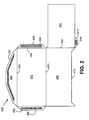
FIG. 2 illustrates an envelope blank according to some embodiments. -
FIG. 3 is a flow chart that illustrates some details of the method of FIG. -
FIG. 4 illustrates the envelope blank in a stage of an assembly of an envelope. -
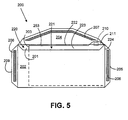
FIG. 5 illustrates an envelope blank in a later stage of the assembly of the envelope. -
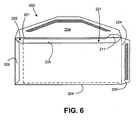
FIG. 6 illustrates the envelope in a condition in which it is ready to have material inserted therein. -
FIG. 7 illustrates a stage in the assembly of a mail piece which is based on the envelope ofFIG. 6 . -
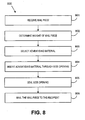
FIG. 8 is a flow chart that illustrates further details of the method ofFIG. 1 . -
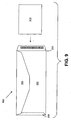
FIG. 9 illustrates a later stage in the assembly of the mail piece. -
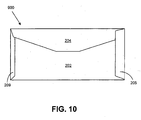
FIG. 10 illustrates the completed mail piece. - The several embodiments described herein are provided solely for the purpose of illustration. Embodiments may include any currently or hereafter-known versions of the elements described herein. Therefore, persons in the art will recognize from this description that other embodiments may be practiced with various modifications and alterations.
- Now referring to
FIG. 1 , an embodiment of amethod 100 is illustrated. At 101, an envelope blank is provided. In one embodiment, an envelope blank may comprise a disassembled envelope or an unfolded envelope such as envelope blank 200 ofFIG. 2 . The envelope blank 200 may comprise a generally L-shaped sheet of paper and may be cut from a single sheet of paper. In some embodiments, after an envelope blank 200 is cut, one or more types of adhesive may then be applied to the envelope blank 200. In some embodiments, one or more types of adhesive may be applied prior to the envelope blank 200 being cut. - The envelope blank 200 includes a
base sheet section 202, a right-hand sheet section 203 joined to thebase sheet section 202 at a right side of thebase sheet section 202, and atop sheet section 201 joined to thebase sheet section 202 at a top side of thebase sheet section 202. Thebase sheet section 202; the right-hand sheet section 203, and thetop sheet section 201 may be comprised of paper, cardboard, or any material suitable for mailing. Thebase sheet section 202 includes a left edge and a bottom edge. The right-hand sheet section 203 includes a top edge, a right edge and a bottom edge. Thetop sheet section 201 may comprise afirst flap 209 at a left side of thetop sheet section 201, asecond flap 204 at a top side of thetop sheet section 201, and athird flap 205 at a right side of thetop sheet section 201. - The
base sheet section 202 may be coupled to a bottom side of thetop sheet section 201 at afold line 251. In some embodiments, and as illustrated, thebase sheet section 202 may comprise acutout 212 to facilitate the placement of material inside a constructed envelope. However, in some embodiments, thebase sheet section 203 may not comprise thecutout 212. In some embodiments, thebase sheet section 202 may be substantially the same size as thetop sheet section 201. - The
top sheet section 201 may be formed of the same material as thebase sheet section 202. In some embodiments, thetop sheet section 201 may comprise an address window (not shown) to display a recipient's address printed on a letter or other primary material. The address window may be formed of a clear plastic, cellophane, or any other suitable material. In some embodiments, the address window may simply be an opening in thetop sheet section 201. In some embodiments, and as illustrated inFIG. 1 , thetop sheet section 201 may be generally in the shape of a rectangle. - The right-
hand sheet section 203 may be comprised of the same material as thebase sheet section 201. The right-hand sheet section 203 may be coupled to thebase sheet section 202 at afold line 252. Thebase sheet section 202 may comprise atab 211. Thetab 211 may comprise an adhesive 210. In some embodiments, the adhesive 210 may comprise, but is not limited to, a glue, where a glue may require moisture to adhere. In some embodiments, thebase sheet section 202 may be wider than the right-hand sheet section 203. - The
second flap 204 may be coupled to a second side of thetop sheet section 201 at afold line 253. Thesecond flap 204 may comprise an adhesive 207. In some embodiments, the adhesive 207 may comprise, but is not limited to, a self-adhesive that may be a type of gum that does not require moistening in order to adhere. In some embodiments, the adhesive 207 may comprise a backing paper (not shown). In some embodiments, thesecond flap 204 may be longer and wider than either thethird flap 205 or thefirst flap 209. - The
third flap 205 may be coupled to a third side of thetop sheet section 201 at afold line 254. Thethird flap 205 may comprise an adhesive 206. In some embodiments, the adhesive 206 may be, but is not limited to, a self-adhesive as described previously. The adhesive 206 may comprise a backing paper (not shown) to prevent thethird flap 205 from prematurely adhering to a surface. - The
first flap 209 may be coupled to a fourth side of thetop sheet section 201 and may comprise an adhesive 208. In some embodiments, the adhesive 208 may comprise, but is not limited to, a glue. In some embodiments, thefirst flap 209 may be the same size as thethird flap 205. - Referring again to
FIG. 1 , at 102, an envelope is formed from the envelope blank.FIG. 3 is a flow chart that illustrates detail ofstep 102.FIGS. 4 ,5 and6 show stages of assembling an envelope from theenvelope blank 200. - At 301 in
FIG. 3 , the envelope blank is made available for folding. At 302, a fold is performed at the fold line 252 (FIG. 2 ), such that the right-hand sheet section 203 is folded over thebase sheet section 202 to produce the condition shown inFIG. 4 . Next, at 303 inFIG. 3 , a fold is performed at fold line 251 (FIGS. 2 and4 ), such that the left edge of thebase sheet section 202 is brought into proximity with thefold line 255 and the right-hand sheet section 203 is positioned between thebase sheet section 202 and thetop sheet section 201. The condition shown inFIG. 5 results. Thetab 211 of the right-hand sheet section 203 may be adhered to thetop sheet section 201 using the adhesive 210 to couple thetop sheet section 201 to the right-hand sheet section 203 as shown in the illustrated embodiment. Thetab 211 may or may not extend above thefold line 253. - The right-
hand sheet section 203 may form a pouch for secondary material, hereinafter referred to asadvertising material pouch 220, between the right-hand sheet section 203 and thetop sheet section 201. Theadvertising material pouch 220 has atop opening 222 and also aside opening 224. Thebase sheet section 202 may form a pouch for the primary content, hereinafter referred to asletter pouch 221, between thebase sheet section 202 and the right-hand sheet section 203. Theletter pouch 221 has atop opening 223, but no side opening due to thefold line 252. Thetop opening 222 preferably is not as long as thetop opening 223, due to the adhesion of thetab 211 to thetop sheet section 201. - Referring once more to
FIG. 3, at 304, theflap 209 is sealed to complete the envelope 600 (FIG. 6 ) and render it ready to receive insertions. - It will be appreciated that
steps FIG. 1 (the latter step encompassing the process ofFIG. 3 ) may both be performed by an envelope manufacturer. Referring again toFIG. 1 ,step 103 followssteps envelope 600 from the manufacturer who performedsteps step 103, a letter 733 (FIG. 7 ) is inserted into theletter pouch 221 via the top opening 223 (FIG. 5 ) of theletter pouch 221. The smaller length of thetop opening 222 of theadvertising material pouch 220 as compared with thetop opening 223 of theletter pouch 221 can aid in preventing the mailer from inadvertently inserting primary content of standard size (e.g., just slightly smaller than the length of the envelope 600) into theadvertising material pouch 220, since it would not fit. Theletter 733 may be addressed specifically to its intended recipient. The flap 204 (FIG. 6 ) is open at the time theletter 733 is inserted. The mailer seals theflap 204 after inserting theletter 733. The sealing of theflap 204 closes both thetop opening 223 of theletter pouch 221 and thetop opening 222 of theadvertising material pouch 220. Theletter pouch 221 is now effectively sealed so that theletter 733 may be accessed only by opening the envelope (e.g., by tearing the flap 204). - Next, at 104 in
FIG. 1 , the envelope 600 (now a mail piece that contains the letter 733) is sent to a third party, e.g., advertising mailer, mailing house, etc., to insert any secondary materials. Along with the envelope, the primary mailer may send data indicative of the weight of the mail piece so the third party may be able to determine a quantity of advertising material to place into the envelope without exceeding a specified weight break. Theenvelope 600 may be sent to the third party in bulk with other similar mail pieces. The mail pieces may already be addressed to their intended recipients, either by having the recipients' addresses printed on the envelope, or by the recipients' addresses on the letters being exposed through a window in each of the envelopes. - At 105 in
FIG. 1 , the mail piece is processed with other mail pieces by the third party.FIG. 8 is a flow chart that illustrates details ofstep 105. At 801, the third party receives the mail piece from the primary mailer. At 802, the third party may determine the weight of the mail piece. This may be done based on data provided by the primary mailer, or by weighing the mail piece. At 803, the third party may select the secondary material to be inserted into the envelope. The secondary material may be selected, at least in part, based on the weight of the mail piece prior to having the secondary material inserted therein. - The amount of secondary material inserted may be limited by the desired total maximum weight of the mail piece. For example, if the mail piece is to carry postage for a weight of up to and including 1 ounce, the third party may insert secondary material until the weight of the mail piece equals, but does not exceed, 1 ounce. More generally, secondary material may be selected for insertion into the mail piece so as to bring the weight of the mail piece up to, but not to exceed, the next weight-based break point in the applicable postal rate schedule.
- At 804, the third party inserts the selected secondary material 913 (
FIG. 9 ) into theadvertising material pouch 220 of theenvelope 600 via theside opening 224 of theadvertising material pouch 220. Theflap 205 is open at the time, but is thereafter sealed (step 805 inFIG. 8 ) to seal theside opening 224, thereby sealing thesecondary material 913 inside theadvertising material pouch 220. (Although only one sheet of secondary material is explicitly shown inFIG. 9 , in practice more than one sheet of advertising material may be inserted, in one or more insertion steps.) The mail piece is now ready to be mailed to the recipient by the third party, as indicated at 806 inFIG. 8 . A completedmail piece 900, as mailed to and received by the recipient, is illustrated inFIG. 10 . - When the mail recipient receives the
mail piece 900 and opens the mail piece by tearing theflap 204, he/she thereby opens both of theletter pouch 221 and theadvertising material pouch 220, thereby obtaining access to both the primary content and the secondary material. The recipient has a strong incentive to open the mail piece, since the primary content may be important to the recipient. As a result, the effectiveness of the secondary material may be enhanced. Moreover, the costs of preparing the mail piece and the cost of postage therefor may be shared or allocated between the primary mailer and the third party, so as to provide economic benefits to both. - The words "comprise," "comprises," "comprising," "include," "including," and "includes" when used in this specification and in the following claims are intended to specify the presence of stated features, elements, integers, components, or steps, but they do not preclude the presence or addition of one or more other features, elements, integers, components, steps, or groups thereof.
- A number of embodiments of the present invention have been described. Nevertheless, it will be understood that various modifications may be made without departing from the spirit and scope of the invention. Other variations relating to implementation of the functions described herein can also be implemented. Accordingly, other embodiments are within the scope of the following claims.
Claims (10)
- An envelope (600) comprising:a first sheet (201);a second sheet (202) forming a first pouch (221) between the second sheet (202) and the first sheet (201), the first pouch (221) having a top opening (223) and a side opening (224);a third sheet (203) attached to the first and second sheets, the third sheet (203) forming a second pouch (220) between the third sheet (203) and the second sheet (202), the second pouch (220) having a top opening (222);a first flap (204) for closing both the top opening (223) of the first pouch (221) and the top opening (222) of the second pouch (220); anda second flap (205) for closing the side opening (224) of the first pouch (221).
- The envelope according to Claim 1, wherein the first, second and third sheets (201, 202, 203) and the first and second flaps (204, 205) are all formed from a single sheet of paper.
- The envelope of Claim 1, further comprising:a third flap (209) to couple the first sheet (201) to the third sheet (203).
- The envelope of Claim 3, wherein the first flap (204) includes a first adhesive (207), the second flap (205) includes the first adhesive (206), and the third flap (209) includes a second adhesive (208).
- The envelope of Claim 4, wherein the second sheet includes a tab and the tab includes the second adhesive.
- The envelope of any preceding claim, wherein the second flap (205) and the third flap (209) are the same size.
- The envelope of any preceding claim, wherein the first sheet (201) has a first width, the second sheet (202) has a second width and the third sheet (203) has the first width, wherein the second width is less than the first width.
- A method comprising:receiving (801) a mail piece (600) comprising a sealed letter pouch (221), the sealed letter pouch including a letter (733) addressed to a recipient, the mail piece (600) comprising an empty advertising material pouch (220) having a side opening (224);inserting (804) advertising material into the advertising material pouch (220) via the side opening (224);sealing (805) the side opening; andmailing (806) the mail piece to the recipient.
- The method of Claim 8, wherein the advertising material is not addressed to the recipient.
- The method of Claim 8 or 9, further comprising:determining (802) the weight of the mail piece (600) prior to the inserting step; andselecting (803) the advertising material based at least in part on the weight of the mail piece prior to the inserting step (804).
Applications Claiming Priority (1)
| Application Number | Priority Date | Filing Date | Title |
|---|---|---|---|
| US11/853,989 US7975903B2 (en) | 2007-09-12 | 2007-09-12 | Envelope that protects privacy of primary content when inserting secondary material |
Publications (2)
| Publication Number | Publication Date |
|---|---|
| EP2036828A1 true EP2036828A1 (en) | 2009-03-18 |
| EP2036828B1 EP2036828B1 (en) | 2010-10-06 |
Family
ID=40043026
Family Applications (1)
| Application Number | Title | Priority Date | Filing Date |
|---|---|---|---|
| EP08014689A Ceased EP2036828B1 (en) | 2007-09-12 | 2008-08-19 | Envelope that protects privacy of primary content when inserting secondary material |
Country Status (3)
| Country | Link |
|---|---|
| US (1) | US7975903B2 (en) |
| EP (1) | EP2036828B1 (en) |
| DE (1) | DE602008002874D1 (en) |
Families Citing this family (1)
| Publication number | Priority date | Publication date | Assignee | Title |
|---|---|---|---|---|
| WO2003046845A2 (en) * | 2001-11-23 | 2003-06-05 | De La Rue International Limited | Method for depositing items of value |
Citations (7)
| Publication number | Priority date | Publication date | Assignee | Title |
|---|---|---|---|---|
| US2236659A (en) * | 1937-12-02 | 1941-04-01 | Edward R White | Two compartment envelope |
| US3266712A (en) | 1964-11-17 | 1966-08-16 | Kimberly Clark Co | Duplex mailing envelope |
| US3522908A (en) * | 1968-09-10 | 1970-08-04 | Us Envelope Co | Two-compartment envelope |
| GB1337662A (en) * | 1971-08-03 | 1973-11-21 | Tompla Sa | Blank for multi-compartment envelope |
| DE4114373A1 (en) * | 1990-05-02 | 1991-11-07 | Irlacher Walther | Envelope with address compartment - has separate closable compartment for private letter |
| DE9103682U1 (en) * | 1991-03-26 | 1992-07-23 | Reinhart Schmidt Gmbh, 5600 Wuppertal | Postal envelope |
| US5806754A (en) * | 1996-05-29 | 1998-09-15 | Rock-Tenn Company | Negative and photo holder |
Family Cites Families (8)
| Publication number | Priority date | Publication date | Assignee | Title |
|---|---|---|---|---|
| US544276A (en) * | 1895-08-13 | Charles davis albert | ||
| US1334138A (en) * | 1920-03-16 | Duplex envelop | ||
| US1516925A (en) * | 1924-11-25 | Duplex envelope | ||
| US738891A (en) * | 1902-10-07 | 1903-09-15 | Edmund Eckart | Combined writing-sheet and envelop. |
| US1706300A (en) * | 1924-04-26 | 1929-03-19 | Kakaley Joseph | Letter sheet and envelope |
| US1772280A (en) * | 1928-10-06 | 1930-08-05 | George Everall Company Ltd | Combination envelope |
| US4129214A (en) * | 1978-03-01 | 1978-12-12 | Westvaco Corporation | Two compartmented envelope |
| US5713511A (en) * | 1992-05-21 | 1998-02-03 | Diamond; Elliott H. | Multi-purpose envelope |
-
2007
- 2007-09-12 US US11/853,989 patent/US7975903B2/en not_active Expired - Fee Related
-
2008
- 2008-08-19 DE DE602008002874T patent/DE602008002874D1/en active Active
- 2008-08-19 EP EP08014689A patent/EP2036828B1/en not_active Ceased
Patent Citations (7)
| Publication number | Priority date | Publication date | Assignee | Title |
|---|---|---|---|---|
| US2236659A (en) * | 1937-12-02 | 1941-04-01 | Edward R White | Two compartment envelope |
| US3266712A (en) | 1964-11-17 | 1966-08-16 | Kimberly Clark Co | Duplex mailing envelope |
| US3522908A (en) * | 1968-09-10 | 1970-08-04 | Us Envelope Co | Two-compartment envelope |
| GB1337662A (en) * | 1971-08-03 | 1973-11-21 | Tompla Sa | Blank for multi-compartment envelope |
| DE4114373A1 (en) * | 1990-05-02 | 1991-11-07 | Irlacher Walther | Envelope with address compartment - has separate closable compartment for private letter |
| DE9103682U1 (en) * | 1991-03-26 | 1992-07-23 | Reinhart Schmidt Gmbh, 5600 Wuppertal | Postal envelope |
| US5806754A (en) * | 1996-05-29 | 1998-09-15 | Rock-Tenn Company | Negative and photo holder |
Also Published As
| Publication number | Publication date |
|---|---|
| US20090065564A1 (en) | 2009-03-12 |
| US7975903B2 (en) | 2011-07-12 |
| EP2036828B1 (en) | 2010-10-06 |
| DE602008002874D1 (en) | 2010-11-18 |
Similar Documents
| Publication | Publication Date | Title |
|---|---|---|
| US3982689A (en) | Returnable mailing envelope | |
| US2759658A (en) | Envelopes | |
| US4756468A (en) | Windowed mailer with tumble-style return envelope for remittance document, having return mail-to address exposed by removal of apertured cover | |
| US5687904A (en) | Envelope and a blank for making an envelope | |
| CA2562471C (en) | Digital media mailer | |
| US2931559A (en) | Remailable billing envelopes | |
| EP0710203B1 (en) | Window-envelope | |
| US20020195484A1 (en) | Duplex envelope | |
| US8701978B2 (en) | Two way electronic media mailer | |
| US6070792A (en) | Reusable envelope | |
| US20110153527A1 (en) | Reusable envelope with a pair of adhesive strips | |
| US7975903B2 (en) | Envelope that protects privacy of primary content when inserting secondary material | |
| US2621785A (en) | Shipping package assembly | |
| AU2007240127A1 (en) | An envelope with tear panel | |
| US4762271A (en) | Compartmented and separable mailing envelope | |
| US7497367B2 (en) | Two-way window envelope | |
| US20020125305A1 (en) | Two way double-fold business form mailer and method of transmitting information from a first user to an end user | |
| US20050116015A1 (en) | Eccentric fold, pressure-seal mailer with built-in envelope | |
| US9139337B2 (en) | Round trip envelope | |
| US20050236467A1 (en) | Insert with a return mailer | |
| US20030102364A1 (en) | Two way envelope | |
| JP3088558U (en) | Envelope | |
| JPH07290866A (en) | Advertising catalog suitable for direct mail | |
| JP2003267392A (en) | Envelope and delivery method | |
| KR200157390Y1 (en) | Booklet with envelope function |
Legal Events
| Date | Code | Title | Description |
|---|---|---|---|
| PUAI | Public reference made under article 153(3) epc to a published international application that has entered the european phase |
Free format text: ORIGINAL CODE: 0009012 |
|
| AK | Designated contracting states |
Kind code of ref document: A1 Designated state(s): AT BE BG CH CY CZ DE DK EE ES FI FR GB GR HR HU IE IS IT LI LT LU LV MC MT NL NO PL PT RO SE SI SK TR |
|
| AX | Request for extension of the european patent |
Extension state: AL BA MK RS |
|
| 17P | Request for examination filed |
Effective date: 20090528 |
|
| AKX | Designation fees paid |
Designated state(s): DE FR GB |
|
| GRAP | Despatch of communication of intention to grant a patent |
Free format text: ORIGINAL CODE: EPIDOSNIGR1 |
|
| GRAS | Grant fee paid |
Free format text: ORIGINAL CODE: EPIDOSNIGR3 |
|
| GRAA | (expected) grant |
Free format text: ORIGINAL CODE: 0009210 |
|
| RIN1 | Information on inventor provided before grant (corrected) |
Inventor name: HAAS, BERTRAND |
|
| AK | Designated contracting states |
Kind code of ref document: B1 Designated state(s): DE FR GB |
|
| REG | Reference to a national code |
Ref country code: GB Ref legal event code: FG4D |
|
| REF | Corresponds to: |
Ref document number: 602008002874 Country of ref document: DE Date of ref document: 20101118 Kind code of ref document: P |
|
| PLBE | No opposition filed within time limit |
Free format text: ORIGINAL CODE: 0009261 |
|
| STAA | Information on the status of an ep patent application or granted ep patent |
Free format text: STATUS: NO OPPOSITION FILED WITHIN TIME LIMIT |
|
| 26N | No opposition filed |
Effective date: 20110707 |
|
| REG | Reference to a national code |
Ref country code: DE Ref legal event code: R097 Ref document number: 602008002874 Country of ref document: DE Effective date: 20110707 |
|
| REG | Reference to a national code |
Ref country code: FR Ref legal event code: PLFP Year of fee payment: 9 |
|
| REG | Reference to a national code |
Ref country code: FR Ref legal event code: PLFP Year of fee payment: 10 |
|
| PGFP | Annual fee paid to national office [announced via postgrant information from national office to epo] |
Ref country code: DE Payment date: 20170829 Year of fee payment: 10 Ref country code: GB Payment date: 20170829 Year of fee payment: 10 Ref country code: FR Payment date: 20170825 Year of fee payment: 10 |
|
| REG | Reference to a national code |
Ref country code: DE Ref legal event code: R119 Ref document number: 602008002874 Country of ref document: DE |
|
| GBPC | Gb: european patent ceased through non-payment of renewal fee |
Effective date: 20180819 |
|
| PG25 | Lapsed in a contracting state [announced via postgrant information from national office to epo] |
Ref country code: DE Free format text: LAPSE BECAUSE OF NON-PAYMENT OF DUE FEES Effective date: 20190301 |
|
| PG25 | Lapsed in a contracting state [announced via postgrant information from national office to epo] |
Ref country code: FR Free format text: LAPSE BECAUSE OF NON-PAYMENT OF DUE FEES Effective date: 20180831 |
|
| PG25 | Lapsed in a contracting state [announced via postgrant information from national office to epo] |
Ref country code: GB Free format text: LAPSE BECAUSE OF NON-PAYMENT OF DUE FEES Effective date: 20180819 |