EP2033398B1 - Drahtlose kommunikation mit kennwort mit hochleistungscodeverschlüsselung - Google Patents
Drahtlose kommunikation mit kennwort mit hochleistungscodeverschlüsselung Download PDFInfo
- Publication number
- EP2033398B1 EP2033398B1 EP07798151.2A EP07798151A EP2033398B1 EP 2033398 B1 EP2033398 B1 EP 2033398B1 EP 07798151 A EP07798151 A EP 07798151A EP 2033398 B1 EP2033398 B1 EP 2033398B1
- Authority
- EP
- European Patent Office
- Prior art keywords
- code
- rate
- codeword
- memory
- mother
- Prior art date
- Legal status (The legal status is an assumption and is not a legal conclusion. Google has not performed a legal analysis and makes no representation as to the accuracy of the status listed.)
- Not-in-force
Links
- 238000004891 communication Methods 0.000 title claims description 34
- 238000000034 method Methods 0.000 claims description 23
- 239000011159 matrix material Substances 0.000 claims description 5
- 238000005516 engineering process Methods 0.000 description 15
- 230000006870 function Effects 0.000 description 5
- 238000010586 diagram Methods 0.000 description 4
- 230000005540 biological transmission Effects 0.000 description 3
- 230000001413 cellular effect Effects 0.000 description 3
- 239000004065 semiconductor Substances 0.000 description 3
- 238000001228 spectrum Methods 0.000 description 3
- 230000007774 longterm Effects 0.000 description 2
- 230000002093 peripheral effect Effects 0.000 description 2
- 230000006978 adaptation Effects 0.000 description 1
- 230000036772 blood pressure Effects 0.000 description 1
- 230000008878 coupling Effects 0.000 description 1
- 238000010168 coupling process Methods 0.000 description 1
- 238000005859 coupling reaction Methods 0.000 description 1
- 230000001419 dependent effect Effects 0.000 description 1
- 239000004973 liquid crystal related substance Substances 0.000 description 1
- 238000010295 mobile communication Methods 0.000 description 1
- 230000005404 monopole Effects 0.000 description 1
- 230000001360 synchronised effect Effects 0.000 description 1
Images



Classifications
-
- H—ELECTRICITY
- H04—ELECTRIC COMMUNICATION TECHNIQUE
- H04L—TRANSMISSION OF DIGITAL INFORMATION, e.g. TELEGRAPHIC COMMUNICATION
- H04L1/00—Arrangements for detecting or preventing errors in the information received
- H04L1/12—Arrangements for detecting or preventing errors in the information received by using return channel
- H04L1/16—Arrangements for detecting or preventing errors in the information received by using return channel in which the return channel carries supervisory signals, e.g. repetition request signals
- H04L1/18—Automatic repetition systems, e.g. Van Duuren systems
- H04L1/1812—Hybrid protocols; Hybrid automatic repeat request [HARQ]
- H04L1/1819—Hybrid protocols; Hybrid automatic repeat request [HARQ] with retransmission of additional or different redundancy
-
- H—ELECTRICITY
- H04—ELECTRIC COMMUNICATION TECHNIQUE
- H04L—TRANSMISSION OF DIGITAL INFORMATION, e.g. TELEGRAPHIC COMMUNICATION
- H04L1/00—Arrangements for detecting or preventing errors in the information received
- H04L1/004—Arrangements for detecting or preventing errors in the information received by using forward error control
- H04L1/0045—Arrangements at the receiver end
- H04L1/0046—Code rate detection or code type detection
-
- H—ELECTRICITY
- H04—ELECTRIC COMMUNICATION TECHNIQUE
- H04L—TRANSMISSION OF DIGITAL INFORMATION, e.g. TELEGRAPHIC COMMUNICATION
- H04L1/00—Arrangements for detecting or preventing errors in the information received
- H04L1/004—Arrangements for detecting or preventing errors in the information received by using forward error control
- H04L1/0056—Systems characterized by the type of code used
- H04L1/0057—Block codes
Definitions
- Embodiments of the present invention relate generally to the field of wireless communications, and more particularly, to methods and apparatus for codeword size selection providing incremental redundancy capabilities with limited complexity.
- US 2004/0268205 relates to Low-Density Parity-Check Codes for multiple code rates.
- WO 2005/015748 describes a method and apparatus for varying lengths of low density parity check codewords.
- the phrase “A/B” means A or B.
- the phrase “A and/or B” means “(A), (B), or (A and B)”.
- the phrase “at least one of A, B, and C” means "(A), (B), (C), (A and B), (A and C), (B and C), or (A, B and C)”.
- the phrase “(A)B” means "(B) or (AB)" that is, A is an optional element.
- Embodiments of the present invention provide methods and apparatus for codeword size selection providing incremental redundancy capabilities with limited complexity.
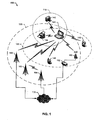
- an example wireless communication system 100 may include one or more wireless communication networks, generally shown as 110, 120, and 130.
- the wireless communication system 100 may include a wireless personal area network (WPAN) 110, a wireless local area network (WLAN) 120, and a wireless metropolitan area network (WMAN) 130.
- WPAN wireless personal area network
- WLAN wireless local area network
- WMAN wireless metropolitan area network
- FIG. 1 depicts three wireless communication networks, the wireless communication system 100 may include additional or fewer wireless communication networks.
- the wireless communication networks 100 may include additional WPANs, WLANs, and/or WMANs. The methods and apparatus described herein are not limited in this regard.
- the wireless communication system 100 may also include one or more subscriber stations, generally shown as 140, 142, 144, 146, and 148.
- the subscriber stations 140, 142, 144, 146, and 148 may include wireless electronic devices such as a desktop computer, a laptop computer, a handheld computer, a tablet computer, a cellular telephone, a pager, an audio and/or video player (e.g., an MP3 player or a DVD player), a gaming device, a video camera, a digital camera, a navigation device (e.g., a GPS device), a wireless peripheral (e.g., a printer, a scanner, a headset, a keyboard, a mouse, etc.), a medical device (e.g., a heart rate monitor, a blood pressure monitor, etc.), and/or other suitable fixed, portable, or mobile electronic devices.
- FIG. 1 depicts five subscriber stations, the wireless communication system 100 may include more or less subscriber stations.
- the subscriber stations 140, 142, 144, 146, and 148 may use a variety of modulation techniques such as spread spectrum modulation (e.g., direct sequence code division multiple access (DS-CDMA) and/or frequency hopping code division multiple access (FH-CDMA)), time-division multiplexing (TDM) modulation, frequency-division multiplexing (FDM) modulation, orthogonal frequency-division multiplexing (OFDM) modulation, multi-carrier modulation (MDM), and/or other suitable modulation techniques to communicate via wireless links.
- spread spectrum modulation e.g., direct sequence code division multiple access (DS-CDMA) and/or frequency hopping code division multiple access (FH-CDMA)
- TDM time-division multiplexing
- FDM frequency-division multiplexing
- OFDM orthogonal frequency-division multiplexing
- MDM multi-carrier modulation
- the laptop computer 140 may operate in accordance with suitable wireless communication protocols that require very low power such as Bluetooth ® , ultra-wide band (UWB), and/or radio frequency identification (RFID) to implement the WPAN 110.
- the laptop computer 140 may communicate with devices associated with the WPAN 110 such as the video camera 142 and/or the printer 144 via wireless links.
- the laptop computer 140 may use direct sequence spread spectrum (DSSS) modulation and/or frequency hopping spread spectrum (FHSS) modulation to implement the WLAN 120 (e.g., the 802.11 family of standards developed by the Institute of Electrical and Electronic Engineers (IEEE) and/or variations and evolutions of these standards).
- DSSS direct sequence spread spectrum
- FHSS frequency hopping spread spectrum
- the laptop computer 140 may communicate with devices associated with the WLAN 120 such as the printer 144, the handheld computer 146 and/or the smart phone 148 via wireless links.
- the laptop computer 140 may also communicate with an access point (AP) 150 via a wireless link.
- the AP 150 may be operatively coupled to a router 152 as described in further detail below.
- the AP 150 and the router 152 may be integrated into a single device (e.g., a wireless router).
- the laptop computer 140 may use OFDM modulation to transmit large amounts of digital data by splitting a radio frequency signal into multiple small sub-signals, which in turn, are transmitted simultaneously at different frequencies.
- the laptop computer 140 may use OFDM modulation to implement the WMAN 130.
- the laptop computer 140 may operate in accordance with the 802.16 family of standards developed by IEEE to provide for fixed, portable, and/or mobile broadband wireless access (BWA) networks (e.g., the IEEE std. 802.16-2004 (published September 18, 2004 ), the IEEE std. 802.16e (published February 28, 2006 ), the IEEE std. 802.16f (published December 1, 2005 ), etc.) to communicate with base stations, generally shown as 160, 162, and 164, via wireless link(s).
- BWA mobile broadband wireless access
- the methods and apparatus disclosed herein are readily applicable to many specifications and/or standards developed by other special interest groups and/or standard development organizations (e.g., Wireless Fidelity (Wi-Fi) Alliance, Worldwide Interoperability for Microwave Access (WiMAX) Forum, Infrared Data Association (IrDA), Third Generation Partnership Project (3GPP), etc.).
- Wi-Fi Wireless Fidelity
- WiMAX Worldwide Interoperability for Microwave Access
- IrDA Infrared Data Association
- 3GPP Third Generation Partnership Project
- the WLAN 120 and WMAN 130 may be operatively coupled to a common public or private network 170 such as the Internet, a telephone network (e.g., public switched telephone network (PSTN)), a local area network (LAN), a cable network, and/or another wireless network via connection to an Ethernet, a digital subscriber line (DSL), a telephone line, a coaxial cable, and/or any wireless connection, etc.
- a common public or private network 170 such as the Internet, a telephone network (e.g., public switched telephone network (PSTN)), a local area network (LAN), a cable network, and/or another wireless network via connection to an Ethernet, a digital subscriber line (DSL), a telephone line, a coaxial cable, and/or any wireless connection, etc.
- the WLAN 120 may be operatively coupled to the common public or private network 170 via the AP 150 and/or the router 152.
- the WMAN 130 may be operatively coupled to the common public or private network 170 via the base station(s) 160
- the wireless communication system 100 may include other suitable wireless communication networks.
- the wireless communication system 100 may include a wireless wide area network (WWAN) (not shown).
- the laptop computer 140 may operate in accordance with other wireless communication protocols to support a WWAN.
- these wireless communication protocols may be based on analog, digital, and/or dual-mode communication system technologies such as Global System for Mobile Communications (GSM) technology, Wideband Code Division Multiple Access (WCDMA) technology, General Packet Radio Services (GPRS) technology, Enhanced Data GSM Environment (EDGE) technology, Universal Mobile Telecommunications System (UMTS) technology, Third Generation Partnership Project (3GPP) technology, standards based on these technologies, variations and evolutions of these standards, and/or other suitable wireless communication standards.
- GSM Global System for Mobile Communications
- WCDMA Wideband Code Division Multiple Access
- GPRS General Packet Radio Services
- EDGE Enhanced Data GSM Environment
- UMTS Universal Mobile Telecommunications System
- 3GPP Third Generation Partnership Project
- FIG. 1 depicts a WPAN,
- the wireless communication system 100 may include other WPAN, WLAN, WMAN, and/or WWAN devices (not shown) such as network interface devices and peripherals (e.g., network interface cards (NICs)), access points (APs), redistribution points, end points, gateways, bridges, hubs, etc. to implement a cellular telephone system, a satellite system, a personal communication system (PCS), a two-way radio system, a one-way pager system, a two-way pager system, a personal computer (PC) system, a personal data assistant (PDA) system, a personal computing accessory (PCA) system, and/or any other suitable communication system.
- PCS personal communication system
- PDA personal data assistant
- PCA personal computing accessory
- a base station 200 may include a network interface device (NID) 240, a processor 250, and a memory 260.
- the NID 240, the processor 250, and the memory 260 may be operatively coupled to each other via a bus 270. While FIG. 2 depicts components of the base station 200 coupling to each other via the bus 270, these components may be operatively coupled to each other via other suitable direct or indirect connections (e.g., a point-to-point connection or a point-to-multiple point connection).
- the NID 240 may include a receiver 242, a transmitter 244, and an antenna 246.
- the base station 200 may receive and/or transmit data via the receiver 242 and the transmitter 244, respectively.
- the antenna 246 may include one or more directional or omnidirectional antennas such as dipole antennas, monopole antennas, patch antennas, loop antennas, microstrip antennas, and/or other types of antennas suitable for transmission of radio frequency (RF) signals.
- RF radio frequency
- FIG. 2 depicts a single antenna, the base station 200 may include additional antennas.
- the base station 200 may include a plurality of antennas to implement a multiple-input-multiple-output (MIMO) system.
- MIMO multiple-input-multiple-output
- the components shown in FIG. 2 are depicted as separate blocks within the base station 200, the functions performed by some of these blocks may be integrated within a single semiconductor circuit or may be implemented using two or more separate integrated circuits.
- the receiver 242 and the transmitter 244 are depicted as separate blocks within the NID 240, the receiver 242 may be integrated into the transmitter 244 (e.g., a transceiver).
- the methods and apparatus described herein are not limited in this regard.
- a Low Density Parity Check (LDPC) code with Incremental Redundancy capabilities is used for communication within a wireless network.
- Complexity of the LDPC is limited by selection of a maximum codeword size. This allows high-rate codewords to still be transmitted at their most efficient configuration, i.e., the longest codeword size with decoding computations performed only on the transmitted bits, and Incremental Redundancy to be used with shorter codewords when the need arises. This provides a desirable tradeoff between complexity, performance, and access to Incremental Redundancy that is difficult to achieve by any other means. While the present invention is described with respect to LDPC code, those skilled in the art will understand that other types of code may be used, in accordance with various embodiments of the present invention.
- the decoder must process 300Mbps of coded bits regardless of the transmitted code rate. This scheme does, however, allow Incremental Redundancy to be used relatively easily.
- the decoder may process any code rate codeword transmitted in the network. This is possible using the type of structured codes specified in Institute of Electrical and Electronics Engineers (IEEE) 802.16e (2006) and 802.11 n (working group), which also allow flexible block sizes.
- IEEE Institute of Electrical and Electronics Engineers
- FIG. 3 illustrates a basic configuration, in accordance with various embodiments, of LDPC parity check matrices for support of Incremental Redundancy or rate adjustment.
- the dual-diagonal structure in the parity check portion of the matrix allows parity-check bit computation to stop when the desired code rate is reached.
- the code rate may be subsequently lowered by continuing computation of the parity check bits.
- the decoder only the populated portion of the H-matrix needs to be computed, so the decoder only needs to compute the transmitted bits.
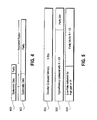
- FIG. 4 illustrates a difference in codeword bits (and associated support memory) between a system (400) using a native high-rate code (such as, for example, an LDPC) and a system (402) using a low-rate mother-code, such as, for example, a Turbo Code.
- a native high-rate code such as, for example, an LDPC
- a system (402) using a low-rate mother-code such as, for example, a Turbo Code.
- the punctured region must also be computed in the decoder, even though it contains no information.
- a fixed amount of memory (500), N bits, is allocated for codeword processing within a decoder and this bounds the complexity (and maximum coding gain) of a wireless network.
- the expansion factors for the high-rate portion of the H-matrix may be adjusted to make use of the full length of the codeword memory and maximum performance may be achieved (502).
- the initial transmitted codeword at some high initial rate may be shorter than N bits, but if IR retransmissions ultimately populated the entire N bits, the decoder will then still have the capability to decode it.
- codewords are also encoded based upon factors discussed herein. Such factors include, but are not limited to, desired Incremental Redundancy, code rate level, efficiency, etc.
- the codewords are encoded, in accordance with various embodiments, with a native high-rate code, such as, for example, LDPC code and transmitted within a wireless communication system.
- the methods and apparatus described herein may be associated with the Third Generation Partnership Project (3GPP) for the Long Term Evolution (LTE), the methods and apparatus described herein may be readily applicable with other suitable wireless technologies, protocols, and/or standards. The methods and apparatus described herein are not limited in this regard.
- 3GPP Third Generation Partnership Project
- LTE Long Term Evolution
- FIG. 6 is a block diagram of an example processor system 2000 adapted to implement methods and apparatus disclosed herein.
- the processor system 2000 may be a desktop computer, a laptop computer, a handheld computer, a tablet computer, a PDA, a server, an Internet appliance, a base station, an access point and/or any other type of computing device.
- the processor system 2000 illustrated in FIG. 6 includes a chipset 2010, which includes a memory controller 2012 and an input/output (I/O) controller 2014.
- the chipset 2010 may provide memory and I/O management functions as well as a plurality of general purpose and/or special purpose registers, timers, etc. that are accessible or used by a processor 2020.
- I/O controller 2014 of chipset 2010 may be endowed with all or portions of the teachings of the present invention described above.
- the processor 2020 may be implemented using one or more processors, WLAN components, WMAN components, WWAN components, and/or other suitable processing components.
- the processor 2020 may be implemented using one or more of the Intel ® Pentium ® technology, the Intel ® Itanium ® technology, the Intel ⁇ CentrinoTM technology, the Intel ® XeonTM technology, and/or the Intel ® XScale ® technology. In the alternative, other processing technology may be used to implement the processor 2020.
- the processor 2020 may include a cache 2022, which may be implemented using a first-level unified cache (L1), a second-level unified cache (L2), a third-level unified cache (L3), and/or any other suitable structures to store data.
- L1 first-level unified cache
- L2 second-level unified cache
- L3 third-level unified cache
- the memory controller 2012 may perform functions that enable the processor 2020 to access and communicate with a main memory 2030 including a volatile memory 2032 and a non-volatile memory 2034 via a bus 2040.
- the volatile memory 2032 may be implemented by Synchronous Dynamic Random Access Memory (SDRAM), Dynamic Random Access Memory (DRAM), RAMBUS Dynamic Random Access Memory (RDRAM), and/or any other type of random access memory device.
- the non-volatile memory 2034 may be implemented using flash memory, Read Only Memory (ROM), Electrically Erasable Programmable Read Only Memory (EEPROM), and/or any other desired type of memory device.
- the processor system 2000 may also include an interface circuit 2050 that is coupled to the bus 2040.
- the interface circuit 2050 may be implemented using any type of interface standard such as an Ethernet interface, a universal serial bus (USB), a third generation input/output interface (3GIO) interface, and/or any other suitable type of interface.
- interface circuit 2050 may be endowed with all or portions of the teachings of the present invention described above.
- One or more input devices 2060 may be connected to the interface circuit 2050.
- the input device(s) 2060 permit an individual to enter data and commands into the processor 2020.
- the input device(s) 2060 may be implemented by a keyboard, a mouse, a touch-sensitive display, a track pad, a track ball, an isopoint, and/or a voice recognition system.
- One or more output devices 2070 may also be connected to the interface circuit 2050.
- the output device(s) 2070 may be implemented by display devices (e.g., a light emitting display (LED), a liquid crystal display (LCD), a cathode ray tube (CRT) display, a printer and/or speakers).
- the interface circuit 2050 may include, among other things, a graphics driver card.
- the processor system 2000 may also include one or more mass storage devices 2080 to store software and data.
- mass storage device(s) 2080 include floppy disks and drives, hard disk drives, compact disks and drives, and digital versatile disks (DVD) and drives.
- the interface circuit 2050 may also include a communication device such as a modem or a network interface card to facilitate exchange of data with external computers via a network.
- the communication link between the processor system 2000 and the network may be any type of network connection such as an Ethernet connection, a digital subscriber line (DSL), a telephone line, a cellular telephone system, a coaxial cable, etc.
- interface circuit 2050 may be endowed with all or portions of the teachings of the present invention described above.
- Access to the input device(s) 2060, the output device(s) 2070, the mass storage device(s) 2080 and/or the network may be controlled by the I/O controller 2014.
- the I/O controller 2014 may perform functions that enable the processor 2020 to communicate with the input device(s) 2060, the output device(s) 2070, the mass storage device(s) 2080 and/or the network via the bus 2040 and the interface circuit 2050.
- FIG. 6 While the components shown in FIG. 6 are depicted as separate blocks within the processor system 2000, the functions performed by some of these blocks may be integrated within a single semiconductor circuit or may be implemented using two or more separate integrated circuits.
- the memory controller 2012 and the I/O controller 2014 are depicted as separate blocks within the chipset 2010, the memory controller 2012 and the I/O controller 2014 may be integrated within a single semiconductor circuit.
Landscapes
- Engineering & Computer Science (AREA)
- Computer Networks & Wireless Communication (AREA)
- Signal Processing (AREA)
- Mobile Radio Communication Systems (AREA)
- Detection And Prevention Of Errors In Transmission (AREA)
Claims (12)
- Verfahren, das die folgenden Schritte aufweist:Empfangen an einem Empfänger (200) innerhalb eines drahtlosen Kommunikationssystems eines Codeworts (502), das mit einem Hochleistungscode verschlüsselt ist und eine maximale Anzahl von Bits für das drahtlose Kommunikationssystem nicht überschreitet, und dadurch gekennzeichnet ist, dass:der Hochleistungscode eine Coderate von R aufweist, die größer als 1/3 eines Muttercodes ist;Zuweisen einer festen Speicherkapazität (500) zur Codewortverarbeitung;Einstellen von Erweiterungsfaktoren für einen Hochleistungsabschnitt einer H-Matrix, um die feste Speicherkapazität (500) beim Entschlüsseln des Codeworts (502) vollständig auszunutzen;Feststellen, dass eine inkrementelle Redundanz erwünscht ist; undReduzieren beruhend auf der Feststellung, dass eine inkrementelle Redundanz erwünscht ist, der Erweiterungsfaktoren, so dass eine erwünschte Muttercoderate für eine Muttercodewortlänge, die einer Größe der festen Speicherkapazität (500) entspricht, in die feste Speicherkapazität (500) passt.
- Verfahren nach Anspruch 1, wobei das Feststellen am Empfänger (200) einer Muttercoderate für das empfangene Codewort das Feststellen der Muttercoderate beruhend auf den Erweiterungsfaktoren aufweist.
- Verfahren nach Anspruch 2, wobei das Feststellen am Empfänger (200) einer Muttercoderate für das empfangene Codewort das Feststellen der Muttercoderate beruhend auf Erweiterungsfaktoren aufweist, die einen erwünschten Betrag der inkrementellen Redundanz und der Effizienz der übertragenen Informationen betreffen.
- Verfahren nach Anspruch 1, wobei das Empfangen an einem Empfänger (200) innerhalb eines drahtlosen Kommunikationssystems eines Codeworts (502), das mit einem Hochleistungscode verschlüsselt ist, das Empfangen eines Codeworts umfasst, das mit einem Low-Density-Parity-Check- (LDPC-) Code verschlüsselt ist.
- Verfahren nach Anspruch 1, das ferner das Verschlüsseln am Empfänger (200) von Codeworten mit dem Hochleistungscode und das Übertragen eines Codeworts vom Empfänger aufweist, das mit dem Hochleistungscode verschlüsselt ist und die maximale Anzahl von Bits für das drahtlose Kommunikationssystem nicht überschreitet.
- Vorrichtung (200), die Folgendes aufweist:einen Empfangsblock (242), der eingerichtet ist, Codeworte zu empfangen, die mit einem Hochleistungscode verschlüsselt sind, und die gekennzeichnet ist dadurch:dass der Hochleistungscode eine Coderate von R aufweisen soll, die größer als 1/3 eines Muttercodes ist; undeinem Entschlüsselungsblock, der konfiguriert ist:eine feste Speicherkapazität (500) zur Codewortverarbeitung zuzuweisen;Erweiterungsfaktoren für einen Hochleistungsabschnitt einer H-Matrix einzustellen, um die feste Speicherkapazität beim Entschlüsseln des Codeworts vollständig auszunutzen;festzustellen, dass eine inkrementelle Redundanz erwünscht ist; undberuhend auf der Feststellung, dass eine inkrementelle Redundanz erwünscht ist, die Erweiterungsfaktoren so zu reduzieren, dass eine erwünschte Muttercoderate für eine Muttercodewortlänge, die einer Größe der festen Speicherkapazität (500) entspricht, in die feste Speicherkapazität passt.
- Vorrichtung (200) nach Anspruch 6, wobei der Entschlüsselungsblock eingerichtet ist, die Muttercoderate beruhend auf den Erweiterungsfaktoren festzustellen.
- Vorrichtung (200) nach Anspruch 7, wobei die Erweiterungsfaktoren aus einer Gruppe stammen, die einen erwünschten Betrag der inkrementellen Redundanz und die Effizienz der übertragenen Informationen umfasst.
- Vorrichtung (200) nach Anspruch 6, wobei der Hochleistungscode ein Low-Density-Parity-Check-Code ist.
- Vorrichtung (200) nach Anspruch 6, die ferner einen Verschlüsselungsblock, der eingerichtet ist, Codeworte mit dem Hochleistungscode zu verschlüsseln, und einen Übertragungsblock (244) aufweist, der eingerichtet ist, verschlüsselte Codeworte zu übertragen, die eine maximale Anzahl von Bits für das drahtlose Netzwerk nicht überschreiten.
- Vorrichtung nach Anspruch 10, wobei der Übertragungsblock (244) und der Empfangsblock (242) Teile eines Transceivers (240) sind, der mindestens eine gemeinsame Komponente aufweist.
- System, das Folgendes aufweist:eine Rundstrahlantenne; undeine Vorrichtung nach einem der Ansprüche 6 bis 11, die kommunikationsfähig mit der Rundstrahlantenne gekoppelt ist.
Applications Claiming Priority (3)
| Application Number | Priority Date | Filing Date | Title |
|---|---|---|---|
| US81245806P | 2006-06-08 | 2006-06-08 | |
| US11/617,363 US7890833B2 (en) | 2006-06-08 | 2006-12-28 | Wireless communication using codeword encoded with high-rate code |
| PCT/US2007/070476 WO2007146692A2 (en) | 2006-06-08 | 2007-06-06 | Wireless communication using codeword encoded with high-rate code |
Publications (3)
| Publication Number | Publication Date |
|---|---|
| EP2033398A2 EP2033398A2 (de) | 2009-03-11 |
| EP2033398A4 EP2033398A4 (de) | 2013-09-04 |
| EP2033398B1 true EP2033398B1 (de) | 2014-09-24 |
Family
ID=38832663
Family Applications (1)
| Application Number | Title | Priority Date | Filing Date |
|---|---|---|---|
| EP07798151.2A Not-in-force EP2033398B1 (de) | 2006-06-08 | 2007-06-06 | Drahtlose kommunikation mit kennwort mit hochleistungscodeverschlüsselung |
Country Status (4)
| Country | Link |
|---|---|
| US (1) | US7890833B2 (de) |
| EP (1) | EP2033398B1 (de) |
| CN (1) | CN101461208B (de) |
| WO (1) | WO2007146692A2 (de) |
Families Citing this family (4)
| Publication number | Priority date | Publication date | Assignee | Title |
|---|---|---|---|---|
| US8788918B2 (en) * | 2008-03-20 | 2014-07-22 | Marvell World Trade Ltd. | Block encoding with a variable rate block code |
| US8294483B2 (en) * | 2008-05-30 | 2012-10-23 | Freescale Semiconductor, Inc. | Testing of multiple integrated circuits |
| US8032030B2 (en) * | 2008-05-30 | 2011-10-04 | Freescale Semiconductor, Inc. | Multiple core system |
| TWI581578B (zh) * | 2010-02-26 | 2017-05-01 | 新力股份有限公司 | 編碼器及提供遞增冗餘之編碼方法 |
Family Cites Families (10)
| Publication number | Priority date | Publication date | Assignee | Title |
|---|---|---|---|---|
| US7000174B2 (en) * | 1999-12-20 | 2006-02-14 | Research In Motion Limited | Hybrid automatic repeat request system and method |
| CA2405465C (en) * | 2001-02-07 | 2007-09-25 | Samsung Electronics Co., Ltd. | Apparatus and method for generating codes in a communications system |
| US7058873B2 (en) * | 2002-11-07 | 2006-06-06 | Carnegie Mellon University | Encoding method using a low density parity check code with a column weight of two |
| US7222284B2 (en) * | 2003-06-26 | 2007-05-22 | Nokia Corporation | Low-density parity-check codes for multiple code rates |
| EP1656737B1 (de) | 2003-08-08 | 2019-05-08 | Intel Corporation | Methode und vorrichtung zur änderung der länge von kennwörter mit niedriger dichte paritätskontrolle |
| WO2005096509A1 (en) * | 2004-03-31 | 2005-10-13 | Intel Corporation | Multi-threshold message passing decoding of low-density parity check codes |
| US7292198B2 (en) * | 2004-08-18 | 2007-11-06 | Ruckus Wireless, Inc. | System and method for an omnidirectional planar antenna apparatus with selectable elements |
| US7752520B2 (en) * | 2004-11-24 | 2010-07-06 | Intel Corporation | Apparatus and method capable of a unified quasi-cyclic low-density parity-check structure for variable code rates and sizes |
| US7783961B2 (en) * | 2005-07-01 | 2010-08-24 | Nec Laboratories America, Inc. | Rate-compatible low density parity check coding for hybrid ARQ |
| KR101119111B1 (ko) * | 2006-05-04 | 2012-03-16 | 엘지전자 주식회사 | Ldpc 부호를 이용한 데이터 재전송 방법 |
-
2006
- 2006-12-28 US US11/617,363 patent/US7890833B2/en not_active Expired - Fee Related
-
2007
- 2007-06-06 EP EP07798151.2A patent/EP2033398B1/de not_active Not-in-force
- 2007-06-06 CN CN2007800208008A patent/CN101461208B/zh not_active Expired - Fee Related
- 2007-06-06 WO PCT/US2007/070476 patent/WO2007146692A2/en not_active Ceased
Also Published As
| Publication number | Publication date |
|---|---|
| WO2007146692A3 (en) | 2008-02-07 |
| US20070300125A1 (en) | 2007-12-27 |
| US7890833B2 (en) | 2011-02-15 |
| EP2033398A2 (de) | 2009-03-11 |
| WO2007146692A2 (en) | 2007-12-21 |
| CN101461208B (zh) | 2013-01-09 |
| EP2033398A4 (de) | 2013-09-04 |
| CN101461208A (zh) | 2009-06-17 |
Similar Documents
| Publication | Publication Date | Title |
|---|---|---|
| CN101433001B (zh) | 聚合信道反馈方法和装置 | |
| US11184119B2 (en) | Method and device for incremental redundancy hybrid automatic repeat request (IR-HARQ) re-transmission | |
| US20240259132A1 (en) | Code block segmentation for new radio | |
| US11469779B2 (en) | Efficient polar code construction in 5G | |
| US11025275B2 (en) | LDPC code block segmentation | |
| US20180234114A1 (en) | Low density parity check (ldpc) circular buffer rate matching | |
| US11394491B2 (en) | Nested structure for polar code construction using density evolution | |
| WO2018201831A1 (zh) | 通信方法和装置 | |
| CN110651431A (zh) | 用于3gpp nr的crc码长度的自适应 | |
| EP3692637A1 (de) | Verschachtelung vor der crc-codierung einer nr-pbch-nutzlast einschliesslich bekannter bits zur erhöhung der leistung polarer codes | |
| EP2033398B1 (de) | Drahtlose kommunikation mit kennwort mit hochleistungscodeverschlüsselung | |
| WO2018152714A1 (zh) | 用于信息传输的方法和设备 | |
| CN1882188B (zh) | 一种射频收发器的基带处理模块及执行turbo解码操作的方法 | |
| CN108023669B (zh) | 传输数据的方法和装置 | |
| EP3570471B1 (de) | Datenverarbeitungsverfahren und kommunikationsvorrichtung | |
| CN107360626A (zh) | 通信方法及其网络设备、用户设备 | |
| CN108259124B (zh) | 一种数据传输的方法、网络设备和终端设备 | |
| US8306031B2 (en) | Adaptive block sequence ARQ protocol for wireless communications | |
| WO2016070323A1 (zh) | 通信方法、终端设备和基站 |
Legal Events
| Date | Code | Title | Description |
|---|---|---|---|
| PUAI | Public reference made under article 153(3) epc to a published international application that has entered the european phase |
Free format text: ORIGINAL CODE: 0009012 |
|
| 17P | Request for examination filed |
Effective date: 20090108 |
|
| AK | Designated contracting states |
Kind code of ref document: A2 Designated state(s): AT BE BG CH CY CZ DE DK EE ES FI FR GB GR HU IE IS IT LI LT LU LV MC MT NL PL PT RO SE SI SK TR |
|
| AX | Request for extension of the european patent |
Extension state: AL BA HR MK RS |
|
| DAX | Request for extension of the european patent (deleted) | ||
| A4 | Supplementary search report drawn up and despatched |
Effective date: 20130806 |
|
| RIC1 | Information provided on ipc code assigned before grant |
Ipc: H04L 1/00 20060101AFI20130731BHEP |
|
| REG | Reference to a national code |
Ref country code: DE Ref legal event code: R079 Ref document number: 602007038675 Country of ref document: DE Free format text: PREVIOUS MAIN CLASS: H04L0029020000 Ipc: H04L0001000000 |
|
| RIC1 | Information provided on ipc code assigned before grant |
Ipc: H04L 1/00 20060101AFI20140331BHEP |
|
| GRAP | Despatch of communication of intention to grant a patent |
Free format text: ORIGINAL CODE: EPIDOSNIGR1 |
|
| INTG | Intention to grant announced |
Effective date: 20140512 |
|
| GRAS | Grant fee paid |
Free format text: ORIGINAL CODE: EPIDOSNIGR3 |
|
| GRAA | (expected) grant |
Free format text: ORIGINAL CODE: 0009210 |
|
| AK | Designated contracting states |
Kind code of ref document: B1 Designated state(s): AT BE BG CH CY CZ DE DK EE ES FI FR GB GR HU IE IS IT LI LT LU LV MC MT NL PL PT RO SE SI SK TR |
|
| REG | Reference to a national code |
Ref country code: GB Ref legal event code: FG4D |
|
| REG | Reference to a national code |
Ref country code: CH Ref legal event code: EP |
|
| REG | Reference to a national code |
Ref country code: AT Ref legal event code: REF Ref document number: 688994 Country of ref document: AT Kind code of ref document: T Effective date: 20141015 |
|
| REG | Reference to a national code |
Ref country code: IE Ref legal event code: FG4D |
|
| REG | Reference to a national code |
Ref country code: DE Ref legal event code: R096 Ref document number: 602007038675 Country of ref document: DE Effective date: 20141106 |
|
| PG25 | Lapsed in a contracting state [announced via postgrant information from national office to epo] |
Ref country code: GR Free format text: LAPSE BECAUSE OF FAILURE TO SUBMIT A TRANSLATION OF THE DESCRIPTION OR TO PAY THE FEE WITHIN THE PRESCRIBED TIME-LIMIT Effective date: 20141225 Ref country code: FI Free format text: LAPSE BECAUSE OF FAILURE TO SUBMIT A TRANSLATION OF THE DESCRIPTION OR TO PAY THE FEE WITHIN THE PRESCRIBED TIME-LIMIT Effective date: 20140924 Ref country code: LT Free format text: LAPSE BECAUSE OF FAILURE TO SUBMIT A TRANSLATION OF THE DESCRIPTION OR TO PAY THE FEE WITHIN THE PRESCRIBED TIME-LIMIT Effective date: 20140924 Ref country code: SE Free format text: LAPSE BECAUSE OF FAILURE TO SUBMIT A TRANSLATION OF THE DESCRIPTION OR TO PAY THE FEE WITHIN THE PRESCRIBED TIME-LIMIT Effective date: 20140924 |
|
| REG | Reference to a national code |
Ref country code: LT Ref legal event code: MG4D Ref country code: NL Ref legal event code: VDEP Effective date: 20140924 |
|
| PG25 | Lapsed in a contracting state [announced via postgrant information from national office to epo] |
Ref country code: CY Free format text: LAPSE BECAUSE OF FAILURE TO SUBMIT A TRANSLATION OF THE DESCRIPTION OR TO PAY THE FEE WITHIN THE PRESCRIBED TIME-LIMIT Effective date: 20140924 Ref country code: LV Free format text: LAPSE BECAUSE OF FAILURE TO SUBMIT A TRANSLATION OF THE DESCRIPTION OR TO PAY THE FEE WITHIN THE PRESCRIBED TIME-LIMIT Effective date: 20140924 |
|
| REG | Reference to a national code |
Ref country code: AT Ref legal event code: MK05 Ref document number: 688994 Country of ref document: AT Kind code of ref document: T Effective date: 20140924 |
|
| PG25 | Lapsed in a contracting state [announced via postgrant information from national office to epo] |
Ref country code: NL Free format text: LAPSE BECAUSE OF FAILURE TO SUBMIT A TRANSLATION OF THE DESCRIPTION OR TO PAY THE FEE WITHIN THE PRESCRIBED TIME-LIMIT Effective date: 20140924 |
|
| PG25 | Lapsed in a contracting state [announced via postgrant information from national office to epo] |
Ref country code: RO Free format text: LAPSE BECAUSE OF FAILURE TO SUBMIT A TRANSLATION OF THE DESCRIPTION OR TO PAY THE FEE WITHIN THE PRESCRIBED TIME-LIMIT Effective date: 20140924 Ref country code: IS Free format text: LAPSE BECAUSE OF FAILURE TO SUBMIT A TRANSLATION OF THE DESCRIPTION OR TO PAY THE FEE WITHIN THE PRESCRIBED TIME-LIMIT Effective date: 20150124 Ref country code: EE Free format text: LAPSE BECAUSE OF FAILURE TO SUBMIT A TRANSLATION OF THE DESCRIPTION OR TO PAY THE FEE WITHIN THE PRESCRIBED TIME-LIMIT Effective date: 20140924 Ref country code: ES Free format text: LAPSE BECAUSE OF FAILURE TO SUBMIT A TRANSLATION OF THE DESCRIPTION OR TO PAY THE FEE WITHIN THE PRESCRIBED TIME-LIMIT Effective date: 20140924 Ref country code: PT Free format text: LAPSE BECAUSE OF FAILURE TO SUBMIT A TRANSLATION OF THE DESCRIPTION OR TO PAY THE FEE WITHIN THE PRESCRIBED TIME-LIMIT Effective date: 20150126 Ref country code: SK Free format text: LAPSE BECAUSE OF FAILURE TO SUBMIT A TRANSLATION OF THE DESCRIPTION OR TO PAY THE FEE WITHIN THE PRESCRIBED TIME-LIMIT Effective date: 20140924 Ref country code: CZ Free format text: LAPSE BECAUSE OF FAILURE TO SUBMIT A TRANSLATION OF THE DESCRIPTION OR TO PAY THE FEE WITHIN THE PRESCRIBED TIME-LIMIT Effective date: 20140924 |
|
| PG25 | Lapsed in a contracting state [announced via postgrant information from national office to epo] |
Ref country code: AT Free format text: LAPSE BECAUSE OF FAILURE TO SUBMIT A TRANSLATION OF THE DESCRIPTION OR TO PAY THE FEE WITHIN THE PRESCRIBED TIME-LIMIT Effective date: 20140924 Ref country code: PL Free format text: LAPSE BECAUSE OF FAILURE TO SUBMIT A TRANSLATION OF THE DESCRIPTION OR TO PAY THE FEE WITHIN THE PRESCRIBED TIME-LIMIT Effective date: 20140924 |
|
| REG | Reference to a national code |
Ref country code: DE Ref legal event code: R097 Ref document number: 602007038675 Country of ref document: DE |
|
| PG25 | Lapsed in a contracting state [announced via postgrant information from national office to epo] |
Ref country code: DK Free format text: LAPSE BECAUSE OF FAILURE TO SUBMIT A TRANSLATION OF THE DESCRIPTION OR TO PAY THE FEE WITHIN THE PRESCRIBED TIME-LIMIT Effective date: 20140924 |
|
| PLBE | No opposition filed within time limit |
Free format text: ORIGINAL CODE: 0009261 |
|
| STAA | Information on the status of an ep patent application or granted ep patent |
Free format text: STATUS: NO OPPOSITION FILED WITHIN TIME LIMIT |
|
| PG25 | Lapsed in a contracting state [announced via postgrant information from national office to epo] |
Ref country code: IT Free format text: LAPSE BECAUSE OF FAILURE TO SUBMIT A TRANSLATION OF THE DESCRIPTION OR TO PAY THE FEE WITHIN THE PRESCRIBED TIME-LIMIT Effective date: 20140924 |
|
| 26N | No opposition filed |
Effective date: 20150625 |
|
| PG25 | Lapsed in a contracting state [announced via postgrant information from national office to epo] |
Ref country code: MC Free format text: LAPSE BECAUSE OF FAILURE TO SUBMIT A TRANSLATION OF THE DESCRIPTION OR TO PAY THE FEE WITHIN THE PRESCRIBED TIME-LIMIT Effective date: 20140924 |
|
| REG | Reference to a national code |
Ref country code: CH Ref legal event code: PL |
|
| GBPC | Gb: european patent ceased through non-payment of renewal fee |
Effective date: 20150606 |
|
| PG25 | Lapsed in a contracting state [announced via postgrant information from national office to epo] |
Ref country code: LU Free format text: LAPSE BECAUSE OF FAILURE TO SUBMIT A TRANSLATION OF THE DESCRIPTION OR TO PAY THE FEE WITHIN THE PRESCRIBED TIME-LIMIT Effective date: 20150606 Ref country code: SI Free format text: LAPSE BECAUSE OF FAILURE TO SUBMIT A TRANSLATION OF THE DESCRIPTION OR TO PAY THE FEE WITHIN THE PRESCRIBED TIME-LIMIT Effective date: 20140924 |
|
| REG | Reference to a national code |
Ref country code: IE Ref legal event code: MM4A |
|
| REG | Reference to a national code |
Ref country code: FR Ref legal event code: ST Effective date: 20160229 |
|
| PG25 | Lapsed in a contracting state [announced via postgrant information from national office to epo] |
Ref country code: IE Free format text: LAPSE BECAUSE OF NON-PAYMENT OF DUE FEES Effective date: 20150606 Ref country code: CH Free format text: LAPSE BECAUSE OF NON-PAYMENT OF DUE FEES Effective date: 20150630 Ref country code: GB Free format text: LAPSE BECAUSE OF NON-PAYMENT OF DUE FEES Effective date: 20150606 Ref country code: LI Free format text: LAPSE BECAUSE OF NON-PAYMENT OF DUE FEES Effective date: 20150630 |
|
| PG25 | Lapsed in a contracting state [announced via postgrant information from national office to epo] |
Ref country code: FR Free format text: LAPSE BECAUSE OF NON-PAYMENT OF DUE FEES Effective date: 20150630 |
|
| PG25 | Lapsed in a contracting state [announced via postgrant information from national office to epo] |
Ref country code: MT Free format text: LAPSE BECAUSE OF FAILURE TO SUBMIT A TRANSLATION OF THE DESCRIPTION OR TO PAY THE FEE WITHIN THE PRESCRIBED TIME-LIMIT Effective date: 20140924 |
|
| PG25 | Lapsed in a contracting state [announced via postgrant information from national office to epo] |
Ref country code: BG Free format text: LAPSE BECAUSE OF FAILURE TO SUBMIT A TRANSLATION OF THE DESCRIPTION OR TO PAY THE FEE WITHIN THE PRESCRIBED TIME-LIMIT Effective date: 20140924 Ref country code: HU Free format text: LAPSE BECAUSE OF FAILURE TO SUBMIT A TRANSLATION OF THE DESCRIPTION OR TO PAY THE FEE WITHIN THE PRESCRIBED TIME-LIMIT; INVALID AB INITIO Effective date: 20070606 |
|
| PGFP | Annual fee paid to national office [announced via postgrant information from national office to epo] |
Ref country code: DE Payment date: 20170530 Year of fee payment: 11 |
|
| PG25 | Lapsed in a contracting state [announced via postgrant information from national office to epo] |
Ref country code: TR Free format text: LAPSE BECAUSE OF FAILURE TO SUBMIT A TRANSLATION OF THE DESCRIPTION OR TO PAY THE FEE WITHIN THE PRESCRIBED TIME-LIMIT Effective date: 20140924 |
|
| PG25 | Lapsed in a contracting state [announced via postgrant information from national office to epo] |
Ref country code: BE Free format text: LAPSE BECAUSE OF FAILURE TO SUBMIT A TRANSLATION OF THE DESCRIPTION OR TO PAY THE FEE WITHIN THE PRESCRIBED TIME-LIMIT Effective date: 20140924 |
|
| REG | Reference to a national code |
Ref country code: DE Ref legal event code: R119 Ref document number: 602007038675 Country of ref document: DE |
|
| PG25 | Lapsed in a contracting state [announced via postgrant information from national office to epo] |
Ref country code: DE Free format text: LAPSE BECAUSE OF NON-PAYMENT OF DUE FEES Effective date: 20190101 |