EP2018185B1 - Verwendung von agonisten vom mas g-protein gekoppelten rezeptor zur behandlung des metabolischen syndroms, dessen komponenten und komplikationen - Google Patents
Verwendung von agonisten vom mas g-protein gekoppelten rezeptor zur behandlung des metabolischen syndroms, dessen komponenten und komplikationen Download PDFInfo
- Publication number
- EP2018185B1 EP2018185B1 EP07719268.0A EP07719268A EP2018185B1 EP 2018185 B1 EP2018185 B1 EP 2018185B1 EP 07719268 A EP07719268 A EP 07719268A EP 2018185 B1 EP2018185 B1 EP 2018185B1
- Authority
- EP
- European Patent Office
- Prior art keywords
- mas
- protein
- coupled receptor
- ang
- angiotensin
- Prior art date
- Legal status (The legal status is an assumption and is not a legal conclusion. Google has not performed a legal analysis and makes no representation as to the accuracy of the status listed.)
- Active
Links
Images



Classifications
-
- A—HUMAN NECESSITIES
- A61—MEDICAL OR VETERINARY SCIENCE; HYGIENE
- A61K—PREPARATIONS FOR MEDICAL, DENTAL OR TOILETRY PURPOSES
- A61K31/00—Medicinal preparations containing organic active ingredients
- A61K31/33—Heterocyclic compounds
- A61K31/395—Heterocyclic compounds having nitrogen as a ring hetero atom, e.g. guanethidine or rifamycins
- A61K31/41—Heterocyclic compounds having nitrogen as a ring hetero atom, e.g. guanethidine or rifamycins having five-membered rings with two or more ring hetero atoms, at least one of which being nitrogen, e.g. tetrazole
- A61K31/415—1,2-Diazoles
-
- A—HUMAN NECESSITIES
- A61—MEDICAL OR VETERINARY SCIENCE; HYGIENE
- A61K—PREPARATIONS FOR MEDICAL, DENTAL OR TOILETRY PURPOSES
- A61K38/00—Medicinal preparations containing peptides
- A61K38/04—Peptides having up to 20 amino acids in a fully defined sequence; Derivatives thereof
- A61K38/08—Peptides having 5 to 11 amino acids
- A61K38/085—Angiotensins
-
- A—HUMAN NECESSITIES
- A61—MEDICAL OR VETERINARY SCIENCE; HYGIENE
- A61P—SPECIFIC THERAPEUTIC ACTIVITY OF CHEMICAL COMPOUNDS OR MEDICINAL PREPARATIONS
- A61P3/00—Drugs for disorders of the metabolism
-
- G—PHYSICS
- G01—MEASURING; TESTING
- G01N—INVESTIGATING OR ANALYSING MATERIALS BY DETERMINING THEIR CHEMICAL OR PHYSICAL PROPERTIES
- G01N33/00—Investigating or analysing materials by specific methods not covered by groups G01N1/00 - G01N31/00
- G01N33/48—Biological material, e.g. blood, urine; Haemocytometers
- G01N33/50—Chemical analysis of biological material, e.g. blood, urine; Testing involving biospecific ligand binding methods; Immunological testing
- G01N33/68—Chemical analysis of biological material, e.g. blood, urine; Testing involving biospecific ligand binding methods; Immunological testing involving proteins, peptides or amino acids
-
- G—PHYSICS
- G01—MEASURING; TESTING
- G01N—INVESTIGATING OR ANALYSING MATERIALS BY DETERMINING THEIR CHEMICAL OR PHYSICAL PROPERTIES
- G01N33/00—Investigating or analysing materials by specific methods not covered by groups G01N1/00 - G01N31/00
- G01N33/48—Biological material, e.g. blood, urine; Haemocytometers
- G01N33/50—Chemical analysis of biological material, e.g. blood, urine; Testing involving biospecific ligand binding methods; Immunological testing
- G01N33/68—Chemical analysis of biological material, e.g. blood, urine; Testing involving biospecific ligand binding methods; Immunological testing involving proteins, peptides or amino acids
- G01N33/6893—Chemical analysis of biological material, e.g. blood, urine; Testing involving biospecific ligand binding methods; Immunological testing involving proteins, peptides or amino acids related to diseases not provided for elsewhere
-
- G—PHYSICS
- G01—MEASURING; TESTING
- G01N—INVESTIGATING OR ANALYSING MATERIALS BY DETERMINING THEIR CHEMICAL OR PHYSICAL PROPERTIES
- G01N2333/00—Assays involving biological materials from specific organisms or of a specific nature
- G01N2333/435—Assays involving biological materials from specific organisms or of a specific nature from animals; from humans
- G01N2333/705—Assays involving receptors, cell surface antigens or cell surface determinants
- G01N2333/72—Assays involving receptors, cell surface antigens or cell surface determinants for hormones
- G01N2333/726—G protein coupled receptor, e.g. TSHR-thyrotropin-receptor, LH/hCG receptor, FSH
-
- G—PHYSICS
- G01—MEASURING; TESTING
- G01N—INVESTIGATING OR ANALYSING MATERIALS BY DETERMINING THEIR CHEMICAL OR PHYSICAL PROPERTIES
- G01N2500/00—Screening for compounds of potential therapeutic value
Definitions
- the present invention relates to the use of an effective amount of a Mas-G-protein-coupled receptor agonist in the production of a medicament for the prevention and/or treatment of diseases related to metabolic syndrome or its complications in a subject, wherein said diseases are selected from the group of alterations in the plasma or tissue levels of cholesterol or plasma or tissue levels of triglycerides.
- the metabolic syndrome also known as insulin-resistance syndrome, is characterized by the variable coexistence of obesity, hyperinsulinemia, dislipidemy and hypertension. Other findings include proinflammatory state, microalbuminuria and hypercoagulability.
- the set of risk factors that identify the metabolic syndrome was recognized for the first time in 1983. In 1988, Reaven introduced the term X syndrome and identified the resistance to insulin, defined as the smallest capitation of glucose by the peripheral tissues, as the ordinary physiological substrate of the syndrome.
- JAMA 2001; 285:2486-97 proposed the diagnostic criteria for the metabolic syndrome, based on five parameters: abdominal circumference, triglycerides, high-density lipoprotein (HDL-cholesterol), blood pressure and fasting glycemia [ Miname MH; Chacra APM. S ⁇ ndrome Metabólica (Metabolic syndrome). Revista Sociedade CArdiol. Est. S ⁇ o Paulo 6:482-489, 2005 ].
- Dislipidemia the main alteration encountered in the metabolic syndrome, is characterized by an increase in the circulating free fatty acids and by the rise in triglycerides (inadequate esterification). Another alteration is a failure of the adipocytes in retaining the free fatty acids inside them, increasing the flow thereof to the circulation. This mechanism is facilitated by the resistance to insulin. These alterations increase the amount of free fatty acids to the liver.
- VLDL very low density lipoproteins
- the renin-angiotensin-system constitutes a coordinated hormonal cascade that is initiated by the biosynthesis of the renin enzyme by the juxtaglomerular cells of the renal arterioles. Renin is then released by these cells through exocytosis, acting enzymatically on the angiotensinogen (AGT), cleaving it to an inactive decaptide, angiotensin I (Ang I), which in turn will be catabolized by the angiotensin converting enzyme (ACE) into an octapeptide that is biologically active, angiotensin II (Ang II).
- AGT angiotensinogen
- Ang I angiotensin I
- ACE angiotensin converting enzyme
- Renin does not have a direct biological (non-enzymatic) action, but its receptor has been recently identified, which exerts direct biological actions [ Nguyen, G. et al (1996). Specific receptor binding of renin on human mesangial cells in culture increases plasminogen activator inhibitor 1 antigen. Kidney Int. 50, 1897-1903 ; Nguyen, G. et al (2002) Pivotal role of the renin/prorenin receptor in angiotensin II production and cellular responses to renin. J. Clin Invest. 109, 1417-11427 ]. Other enzymes act on the AGT to form Ang II (catepsins and kimases), joining the renin in this catalysis.
- Ang II catepsins and kimases
- the RAS renin-angiotensin system
- the RAS has been recognized as an important regulator of the systemic blood pressure and of the renal hydroelectrolytic balance.
- a number of components of this system were identified in adrenal glands, kidneys, brain, heart and blood vessels.
- substantial data indicate the presence of components of the RAS in the adipose [ Massiera F, Seydoux J. Geloen A et al Angiotensindeficient mice exhibit impairment of diet induced weight gain with alteration in adipose tissue development and increased locomotor activity. Endocrinology 142:5220-5225,2001 ].
- the local RAS has been implied as co-adjuvant in pathologic processes through the modulation of the genetic expression, of the growth, fibrosis and possibly of the inflammatory response.
- Some components of the RAS have already been identified in the adipocytes, such as: the AGT, renin, ACE, Ang li and the angiotensinergic receptors AT 1 and AT 2 .
- AGT is higher in visceral adipocytes than in subcutaneous adipocytes in these types of rats, as well as in the human species [ Safonova I, Aubert J, Negrel R, Aihaud G. Regulation by fatty acids of angiotensinogen gene expression in preadipose cells. Biochem J 322: 235-239, 1997 ].
- Ang II exerts its most potent and known effect (vasoconstriction) and others through the AT 1 receptor, but recently its second receptor, AT 2 , has been characterized, in most cases proving to exert effects opposite the actions mediated via AT 1 receptor.
- Ang II was metabolized in fragments of biologically inactive peptides by circulation and tissular peptidases; however, studies have shown that at least three of these metabolic products exhibited a biological activity.
- Ang II can be degraded to des-aspartic 1 -ang II (Ang II), which is equipotent to Ang II in its interaction with the AT1 receptor, but has low efficacy in vivo due to its accelerated metabolism in the circulation.
- the second metabolic product of Ang II is the hexapeptide Ang IV, which has been demonstrated, in studies, to cause vasodilation and natriuresis ([ Handa R. K. et al (2001) Autoradiographic analysis and regulation of angiotensin receptor subtypes AT (4), AT (1) and AT (1-7) IN THE KIDNEY. Am. J. Physiol. 281, F936-F947 ].
- Angiotensin-(1-7) is the third and most promising metabolite of Ang II, since recent studies already indicate its possible therapeutic role ([ Santos, R.A . S. et al (2005) Angiotensin-(1-7)) and its receptor as a target for new cardiovascular drugs. Expert Opin. Investig. Drugs 14(8), 1019-1031 ], and it is formed directly from Ang II or by parallel ways, by the action of the recently identified angiotensin II converting enzyme (ACE 2) [ Donoghue, M. et al (2000) A novel angiotensin-converting enzyme related carboxypeptidase (ACE 2) converts angiotensin I to angiotensin (1-9). Circ. Res. 87, 1-9 ; Crackower, M.A. et al (2002) Angiotensin converting enzyme 2 is an essential regulator of heat function. Nature 417- 822-828 ].
- ACE 2 angiotensin II converting enzyme
- Ang (1-7) releases nitric oxide (NO) and prostaglandins (PGl 2 ) casing vasodilation, inhibiting the cellular proliferation and thrombogenesis ([ Rajedran S, Chirkov YY, Campbell DJ, Horowitz JD. Angiotensin-(1-7) enhances antiaggregatory effects of the nitric oxide donor sodium nitroprusside. J. Cardiovasc Pharmacol (46(4):459-463, 2005 ; Kucharewicz I, Pawlak R, Matys T et al. Antithrombotic effect of captopril and losartan is mediated by angiotensin-(1-7).
- Hypertension 40 (5):774-9, 2002 attenuating the vasoconstrictive effect of Ang II
- Angiotensin-(1-7) is involved in the endothelium-dependent modulation of the phenylephrine-induced contraction in the aorta of mRen-2 transgenic rats.
- Br J Pharmacol 135 (7):1743-8, 2002 Clark MA, Diz DI, Tallant EA.
- Angiotensin-(1-7) downregulates the angiotensin II type I receptor in vascular smooth cells.
- the angiotensinergic receptors AT 1 and AT 2 of Ang II were identified in adipocytes of rats and humans, although the functionality of these needs to be better determined. In vivo, the expression of the gene for AT 1 in the adipose tissue seems to be dependent on the age, since one has observed a better density of AT 1 receptors in aged and obese Sprague-Dawley rats when compared with young and thin rats. Studies using adipose cell culture show that the AGT and the Ang II participate in the regulation and differentiation of the phenotype of the adipocyte.
- Hypertriglyceridemia leads to a dislipidemic and highly atherogenic state, through the increase of the synthesis of easy-to-oxidize low density lipoproteic (LDL) particles and, at the same time, to the reduction of the high density lipoproteic (HDL) particles [ Ginsberg HN. Insulin resistance and cardiovascular resistance. J Clin Invest 106: 453-458 , 200].
- LDL low density lipoproteic
- HDL high density lipoproteic
- ROS reactive oxygen species
- O 2- superoxide ions
- the superoxide ions activate the NO to form peroxynitrite, which in turn uncouples the endothelial nitric oxide synthase by oxidation of its co-factor, tetrahydrobiopterin, which results in the production of more O 2- , instead of synthesis of NO.
- This cascade of events is called oxidative stress.
- the endothelial dysfunction seems to be a common link between the SAH, diabetes mellitus and the metabolic syndrome.
- the endothelium is a complex and dynamic organ, which presents vasoactive, vasoconstrictive substances such as Ang II and vasodilator substances such as Ang-(1-7) and NO.
- the vasoactive substances mediates the vascular tonus, structure and the function, influencing the growth of the vascular smooth muscle, apoptosis, platelet aggregation, adhesion of leucocytes and monocytes and thrombosis.
- vasoconstrictive substances the ones that generally induce the cellular growth
- vasodilator substances the ones that inhibit the cellular growth
- Ang-(1-7) exerts an important counterregulatory role, opposing to most actions of Ang II via AT1 receptor, through its Mas, G-protein-coupled receptor [ Santos RAS, Sim ⁇ es e Silva AC, Maric C et al.
- Angiotensin-(1-7) is an endogenous ligand for the protein G-coupled receptor Mas. Proc. Natl. Acd. Sci.
- Ang-(1-7) in most tissues acts directly through its Mas receptor [ Santos RAS, Ferreira AJ, Pinheiro SVB, et al. Angiotensin-(1-7) and its receptor as a potential target for new cardiovascular drugs. Expert Opin.Investig.Drugs 14(8): 1- 13,2005 ].
- the physiological actions of Ang-(1-7) seem to modulate the actions of Ang II, especially in situations where the activity of Ang II is increased, as in the SAH. Therefore, the RAS is a dual, vasoconstrictive system, represented mainly by Ang II and, on the other hand, a vasodilator one having Ang-(1-7) as the most important agent.
- Ang II is highly correlated with the endothelial dysfunction present in subjects who are hypertensive, diabetic, obese and have the metabolic syndrome. This peptide is implied in the cellular growth and in the inflammatory process evidenced in these subjects.
- the oxidative stress caused by Ang II may result in an increase in the production of endothelin (ET-1), of the adhesion molecules such as the vascular cell adhesion molecule (VCAM-1) and the intercellular-1 adhesion molecule (ICAM-1), nuclear factor-k B (NF-kB), interleukin 6 (IL-6), among other inflammatory mediators.
- EGF-1 endothelin
- VCAM-1 vascular cell adhesion molecule
- IAM-1 intercellular-1 adhesion molecule
- NF-kB nuclear factor-k B
- IL-6 interleukin 6
- the PAI-1 seems to contribute as a factor predicting the appearance of diabetes mellitus (DM) on these patients.
- the coagulation disorder in the metabolic syndrome can be evidenced by the fact that the platelets exhibit resistance to the physiological actions of insulin, which is inhibitory of the platelet aggregation via release of NO.
- Ang II via AT1 receptor, can modulate the actions of insulin.
- the RAS induces the appearance of resistance to the metabolic actions of insulin, causing hyperglycemia and rise in the cholesterol levels (VLDL) and triglycerides, and potentiates the proliferative effect of insulin.
- hyperglycemia and hyperinsulinemia activate the RAS through the increase in the expression of AGT, Ang II and AT1 receptors, which in turn can induce the appearance of arterial hypertension, cardiovascular and renal dysfunction [ Engeli S, Schiling G P, Gorzeliniak K, et al. The adipose-tissue renin-angiotensin-aldosterone system: role in the metabolic syndrome? Intern J f Biochem & Cell Biol 35: 807-25, 2003 ].
- oxidative stress caused mainly by Ang II via nicotinamide adenine dinucleotide phosphate-oxidase (NDDPH) and NAD(P)H oxidase results in advanced glycation of amino acids in protein, lipids and nucleic acids.
- the adipose tissue has other secretory products that interfere directly with the regulation of blood pressure and/or tissular damage such as: leptin, TNF-alpha, PAI-1, TGF-ß, resistin, adiponectin and others ([ Blaj S, Stanciu S, Jurcut C, Ciobica L.; Hypertension in obese patients: a dysmetabolic hypertension with a possible adipocyte dysfunction mechanism. Rom J Intern Med.; 41(2): 1301-11, 2003 ].
- Leptin influence the regulation of the blood pressure through various mechanisms such as: direct activation of the SNS and of the adrenalpituitatry axis, hydroelectrolytic balance, modulation of the endothelial function and alters the vascular remodeling.
- Adiponectin a protein expressed specifically in the adipocytes, is homologous to the type-VIII and type-X collagens and bonds to proteins of the proteic matrix, being therefore involved in injury and tissular repair processes.
- This protein just as Ang II, increases the expression of TNF-alpha, through signaling mechanisms that involve the NF-kb [ Ran J, Hirano T, Fukui T, Saito K, Kageyama H, Okada K, Adachi M; Angiotensin II infusion decreases plasma adiponectin level via its type 1 receptor in rats: an implication for hypertension-related insulin resistance. Metabolism; 55(4):478-88, 2006 ].
- the concentrations of TNF-alpha and of resistin are involved with insulin resistance, endothelial dysfunction and with high concentrations of C-reactive protein and IL-6 found in obese people, predisposing these subjects to a greater morbidity and cardiovascular mortality.
- US 6,235,766 describes 1-(p-thienylbenzyl)imidazoles as agonists of angiotensin (1-7) receptors, processes for their preparation, their use, and pharmaceutical preparations comprising them.
- the imidazoles are described as potent, nonpeptide agonists of the postulated angiotensin (1-7) receptors, which are preferably located in the vessels (including endothelium), in the kidney, in the CNS, and in the heart, and can be used for the treatment and prophylaxis of high blood pressure, cardiac hypertrophy, cardiac insufficiency, coronary heart diseases such as angina pectoris, cardiac infarct, vascular restenosis after angioplasty, cardiomyopathies, endothelial dysfunction or endothelial damage, e.g., as a result of arteriosclerotic processes or diabetes mellitus, and also of arterial and venous thromboses.
- this object is solved by the use of an effective amount of a Mas-G-protein-coupled receptor agonist in the production of a medicament for the prevention and/or treatment of diseases related to metabolic syndrome or its complications in a subject, wherein said diseases are selected from the group of alterations in the plasma or tissue levels of cholesterol or plasma or tissue levels of triglycerides.
- the present invention particularly relates to the use as defined above which is characterized in that the MAS-G-protein-coupled receptor agonist is either peptidic or non-peptidic.
- the Mas-G-protein-coupled receptor agonists selected from an angiotensin-(1-7) peptide or an analog thereof or an 1-(p-thienylbenzyl)imidazole or an analog thereof.
- Preferred componds of the latter group are selected from 4-chloro-5-formyl-2-phenyl-1-[[4-[2-(n-butyloxycarbonylsulfonamido)-5-isobutyl-3-thienyl]phenyl]methyl]imidazole, 5-formyl-4-methoxy-2-phenyl-1-[[4-[2-(n-butyloxycarbonylsulfonamido)-5-isobutyl-3-thienyl]phenyl]methyl]imidazole, 5-formyl-4-methoxy-2-phenyl-1-[[4-[2-(n-propyloxycarbonylsulfonamido)-5-iso butyl-3-thienyl]phenyl]methyl]imidazole, 5-formyl-4-methoxy-2-phenyl-1-[[4-[2-(ethoxycarbonylsulfonamido)-5-isobutyl-3-
- a further preferred aspect of the present invention relates to the use according to the present invention which is characterized in that the Mas-G-protein-coupled receptor agonist is to be administered to said subject in the form of a pharmaceutical formulation via an oral, intramuscular, intravenous, subcutaneous, topical, transdermal, anal or inhalation route.
- the forms of application described herein contain, but are not limited thereto, the use of MAS-G-protein-coupled receptor agonists and antagonists, including the angiotensin-(1-7) and its analogs, 1-(p-thienylbenzyl)imidazole and its analogs, agonists, either peptidic or non-peptidic and its formulations for use by the oral, intramuscular, endovenous, subcutaneous, topical, transdermal, anal, inhalation (pulmonary, intranasal, intrabuccal) application routes or as devices that may be implanted or injected for the prevention and treatment of diseases.
- MAS-G-protein-coupled receptor agonists and antagonists including the angiotensin-(1-7) and its analogs, 1-(p-thienylbenzyl)imidazole and its analogs, agonists, either peptidic or non-peptidic and its formulations for use by the oral, intramuscular, endovenous, subcutaneous, topical, transderma
- a further preferred aspect of the present invention relates to the use according to the present invention which is characterized in that the Mas-G-protein-coupled receptor agonist is a nucleic acid encoding angiotensin-(1-7) or its analogs or a nucleic acid encoding Mas-G-protein-coupled receptor or its analogs.
- these nucleic acids can be used for gene therapy in order to provide, in particular endothelial cells with either a genetically encoded Mas-G-protein-coupled receptor agonist and/or nucleic acids that encode for Mas-G-protein-coupled receptor in order to increase the level of Mas-G-protein-coupled receptor in said cell as transformed.
- said nucleic acid is operably linked to a genetic element that drives the expression thereof in the target cell or target tissue, where expression is desired.
- the nucleic acids can be provided using genetic vectors that are well known in the state of the art, such as, for example, adenoviral constructs, and the like. Furthermore, also the "naked" DNA can be used.
- compositions for use according to the invention which contain at least one agonist compound of the invention as the angiotensin-(1-7) peptide or 1-(p-thienylbenzyl)imidazole defined herein, and/or a physiologically tolerable salt thereof, can be administered enterally, for example orally or rectally, in the form of pills, tablets, film-coated tablets, sugar-coated tablets, granules, hard and soft gelatin capsules, solutions such as aqueous, alcoholic, or oily solutions, juices, drops, syrups, emulsions, or suspensions. Administration can also be carried out parenterally, for example subcutaneously, intramuscularly, or intravenously in the form of injection solutions or infusion solutions.
- administration forms are, for example, percutaneous or topical administration, in the form of ointments, creams, pastes, lotions, gels, sprays, powders, foams, aerosols, or solutions, or use in the form of implants. It is preferred that the pharmaceutical formulation is administered to said subject in the form of an implantable, injectable or orally administrable micro- and/or nanoparticulated device.
- Described herein is a method of isolating compounds interacting with Mas-G-protein-coupied receptor comprising the steps of: a) contacting Mas-G-protein-coupled receptor with at least one potentially interacting compound, and b) measuring binding of said compound to said Mas-G-protein-coupled receptor.
- This method is suitable for the determination of compounds that can interact with Mas-G-protein-coupled receptor and to identify, for example, activators, agonists, competitors or modulators of Mas-G-protein-coupled receptor, in particular activators, agonists, competitors or modulators of the enzymatic activity of the Mas-G-protein-coupled receptor.
- An example for such a preferred screening method is disclosed in Zhang et al.
- the potentially binding substance whose binding to Mas-G-protein-coupled receptor is to be measured, can be any chemical substance or any mixture thereof.
- it can be a substance of a peptide library, a combinatory library, a cell extract, in particular a plant cell extract, a "small molecular drug", a protein and/or a protein fragment.
- contacting means any interaction between the potentially binding substance(s) with Mas-G-protein-coupled receptor, whereby any of the two components can be independently of each other in a liquid phase, for example in solution, or in suspension or can be bound to a solid phase, for example, in the form of an essentially planar surface or in the form of particles, pearls or the like.
- a multitude of different potentially binding substances are immobilized on a solid surface like, for example, on a compound library chip and the Mas-G-protein-coupled receptor or a part thereof is subsequently contacted with such a chip.
- the Mas-G-protein-coupled receptor for use according to the present invention can be a full length protein or a fragment with N/C-terminal and/or internal deletion(s).
- the fragments are either N-terminal fragments comprising the enzymatic region of the protein or C-terminal fragments comprising the cytoplasmic region, depending on whether potentially interacting compounds are sought that specifically interact with the N- or C-terminal fragment.
- Measuring of binding of the compound to Mas-G-protein-coupled receptor can be carried out either by measuring a marker that can be attached either to the Mas-G-protein-coupled receptor or to the potentially interacting compound. Suitable markers are known to someone of skill in the art and comprise, for example, fluorescence or radioactive markers. Further methods for detecting and/or measuring the binding of the two components to each other are known in the art and can without limitation also be used to measure the binding of the potential interacting compound to the Mas-G-protein-coupled receptor or Mas-G-protein-coupled receptor fragments. The effect of the binding of the compound or the activity of the Mas-G-protein-coupled receptor can also be measured indirectly, for example, by assaying the activity of the Mas-G-protein-coupled receptor after binding.
- At least one compound can be selected, for example, on grounds of the measured binding activity or on grounds of the detected increase or decrease of Mas-G-protein-coupled receptor activity.
- the thus selected binding compound is then in a preferred embodiment modified in a further step.
- Modification can be effected by a variety of methods known in the art, which include without limitation the introduction of novel side chains or the exchange of functional groups like, for example, introduction of halogens, in particular F, Cl or Br, the introduction of lower alkyl groups, preferably having one to five carbon atoms like, for example, methyl, ethyl, n-propyl, isopropyl, n-butyl, isobutyl, tert-butyl, n-pentyl or isopentyl groups, lower alkenyl groups, preferably having two to five carbon atoms, lower alkynyl groups, preferably having two to five carbon atoms or through the introduction of, for example, a group selected from the group consisting of NH 2 , NO 2 , OH, SH, NH, CN, aryl, heteroaryl, COH or COOH group.
- modified compounds are regarded as "analogs" of the non-peptidic compounds for use according to the invention.
- the “analogs” of the peptidic compounds for use according to the invention can also be modified as described above, but are mainly differing in their amino acid composition (including modified amino acids). All analogs still exhibit some binding to the Mas-G-protein-coupled receptor protein as screened.
- the thus modified binding substances are then individually tested with the method described herein, i.e. they are contacted with the Mas-G-protein-coupled receptor and subsequently binding of the modified compounds to the Mas-G-protein-coupled receptor is measured.
- both the binding per se can be measured and/or the effect of the function of the Mas-G-protein-coupled receptor like, e.g. the enzymatic activity of the Mas-G-protein-coupled receptor can be measured.
- the steps of selecting the binding compound, modifying the binding compound, contacting the binding compound with a Mas-G-protein-coupled receptor, and measuring the binding of the modified compounds to the Mas-G-protein-coupled receptor can be repeated a third or any given number of times as required.
- the above described method is also termed “directed evolution” since it involves a multitude of steps including modification and selection, whereby binding compounds are selected in an "evolutionary” process optimizing its capabilities with respect to a particular property, e.g. its binding activity, its ability to activate, or modulate the activity of the Mas-G-protein-coupled receptor.
- the interacting compound identified as outlined above which may or may not have gone through additional rounds of modification and selection, is admixed with suitable auxiliary substances and/or additives.
- suitable auxiliary substances and/or additives comprise pharmacological acceptable substances, which increase the stability, solubility, biocompatibility, or biological half-life of the interacting compound or comprise substances or materials, which have to be included for certain routs of application like, for example, intravenous solution, sprays, Band-Aids or pills.
- the Mas-G-protein-coupled receptor agonist for use according to the present invention is to be administered in the form of an implantable, injectable or orally administrable micro- and nano-particulated device.
- the amount of the agonists in the composition to be administered should be an amount sufficient and appropriate to provide a plasma concentration of the antagonist in the range of 10 -10 to 10 -6 molar.
- Cardiovascular and renal complications are leaders in the morbidity in patients with diabetes.
- the insulin-resistance/hyperglycemia/Ang II triad is closely involved in the pathogenesis of the lesions of the target-organs [ Carey RM and Siragy HM.
- the cascade begins with the phosphorylation of IRS and/or Shc proteins, which interact with the Grb2 protein, constitutively associated to the SOS, a protein that as a result activates the Ras, a small G protein.
- the Ras triggers the sequential phosphorylation of the cascade of the MAPKs, leading to the cellular proliferation and differentiation [Marrero MB, Fulton D, Stepp D, Stern DM. Angiotensin II-induced insulin resistance and protein tyrosine phosphatases. Arterioscler Thromb Vasc Biol 24:2009-2013,2004 ].
- the responses of Ang II in the vascular cells are mediated by various and complex effector systems of the plasma membrane, such as: phospholipase (A, C and D), adenylcyclase, PKC and ionic channels that are activated in conjunction with a number of proteic microdomains formed chiefly by adaptive proteins.
- phospholipase A, C and D
- adenylcyclase adenylcyclase
- PKC ionic channels that are activated in conjunction with a number of proteic microdomains formed chiefly by adaptive proteins.
- Ang II stimulates the TGF- ⁇ , an important mediator of the formation of collagen and, therefore, of the deposition of extracellular matrix and fibrosis, the main causes of diabetic nephropathy [ Carey RM; Siragy HM, The intrarenal renin-angiotensin system and diabetic nephropathy. Trends Endocrin. Metabol. 14(6): 274-281,2003 ].
- hyperglycemia reinforces the vasoconstrictive and proliferative actions of Ang II, increasing the vascular hyperplasia and progression of nephrophathy.
- Antagonists that can influence directly or indirectly the activation of these cascades have been considered an important strategy for the treatment of the cardiovascular complications in the DM, and the antagonists of the RAS have already demonstrated that they attenuate the progression of the lesions of the target-organs [ Carey RM and Sragy HM. The intrarenal renin-angiotensin system and diabetic nephropathy. Trends Endocrin. Metabol. 14(6): 274-281,2003 ].
- One of the few data in the literature referring to the mechanisms of intracellular action of Ang-(1-7) is provided by Tallant and Clark, 2003 [ Tallant EA, Clark MA. Molecular mechanisms of inhibition of vascular growth by angiotensin-(1-7). Hypertension. Oct; 42(4):574-9, 2003 ] demonstrating exactly that the antiproliferative effects of Ang-(1-7) on the vascular smooth muscle are related with the inhibition of the activity of the ERK1/2 (p44/42 MAPK).
- Ang II stimulates the association and translocation of the cytoplasmatic subunits of the NAD(P)H oxidase (p47phox, p67phox and p40phox), resulting in activation of this enzyme, which is the greatest source of superoxide ions in the vasculature.
- the formation of reactive oxygen species seems to be one of the main mechanisms by which Ang II alters the signaling of insulin.
- the insulin resistance leads to the superexposure of the AT1 receptors, potentiating the formation of free radicals in the vessels.
- PI3-K phosphatidyl-inositol 3-kinase
- the phosphorylation of IRS-1 creates recognition sites for molecules with SH2 domains, such as PI3k.
- the PI3-K is important in the regulation of mitogenesis, in the cellular differentiation and essential to the transport of glucose stimulated by insulin.
- the phosphatidilinositol-3,4,5-triphosphate generated by the PI3K regulates PDK-1 ("phosphoinositide-dependent kinase 1 "), a serine/threonine kinase that phosphorylates and the protein kinase B (PKB)/Akt [ Sowers JR, Insulin resistance and hypertension. Am J Physiool Heart Circ Physiol. 286(5):H1597-1602,2004 ].
- nitric oxide can be modulated through direct phosphorylation of specific amino acids of the synthesis of endothelial NO.
- the phosphorylation of serine 1177 by the protein kinase B/Akt increases the enzymatic activity and the production of nitric oxide (NO) [ Fulton D, Gratton JP, McCabe TJ, Fontana J, Fujio Y, Walsh K, Franke tf, Parapetropoulos A, Sessa WC; Regulation of endothelium-derived nitric oxide, production by the protein kinase Akt . Nature, 10;399(6736):597-601, 1999 ).
- PTPases proteins tyrosine phosphathases
- the action of insulin is also attenuated by proteins tyrosine phosphathases (PTPases), which catalyzes the rapid dephosphorylation of the insulin receptor and its substrates.
- PTPases proteins tyrosine phosphathases
- the PTP1 B seems to be an important phosphathase in this desensitization, since mice with genetic deletion for PTP1 B have an increase in the phosphorylation in tyrosine of the insulin receptor and consequently exhibit higher insulin sensitivity, keeping euglycemic with half of the insulin levels with respect to the wild species.
- these animals are resistant to obesity induced by diet.
- Ang II induces the activation of PTP1B, via protein kinase A (PKA), in the vascular smooth muscle; this phosphatase is probable a key molecule in the inhibition of the insulin signaling induced by Ang II [ Marrero MB, Fulton D, Stepp D, Stern DM. Angiotensin II-induced insulin resistance and protein tyrosine phosphatases. Arterioscler Throm Vasc Biol 24:2009-2013, 2004 ].
- PKA protein kinase A
- the interference and antagonism of Ang II in the intracellular insulin signaling can explain in part the beneficial effects of the blockage of the RAS in the insulin sensitivity and vascular function in patients with MS.
- the treatment of the metabolic syndrome should extend the care to each of the modifiable risk factors that promote the syndrome, like over-weight and obesity, sedentary lifestyle and atherogenic diets.
- the behavioral modification represented by loss of weight and by physical exercises, is the first-line therapy.
- the medicament treatment for each of the components of the syndrome should be present, if one does not achieve the therapeutic targets for the reduction of cardiovascular morbid-mortality with change of habits alone.
- the ACEi increase insulin sensitivity on insulin-resistant models of both animals and humans [ Jauch KW, Hartl W, Guenther B, Wicklmayer M, Rett K, Dietze G; Captopril enhances insulin responsiveness of forearm muscle tissue in non-insulin-dependent diabetes mellitus. Eur J. Clin Invest. 17(5):448-454,1987 ], reducing the production of Ang II.
- Various mechanisms are implied in this finding, but they are not totally understood.
- bradykinin (BK) was observed by Carvalho et al [ Carvalho CR, Thirone AC, Gontijo JA, Velloso LA, Saad MJ; Effect of catopril, losartan, and bradykinin on early steps of insulin action. Diabetes; 46(12):1950-1957 ], which describe, after acute administration of captopril to rats, an increase in the insulin receptors induced by insulin and an increase in the phosphorylation of IRS-1 (insulin receptor substrate 1), in the liver and in the muscles. These procedures were accompanied by the increase in the IRS-1/pi3-kinase in both tissues.
- the PI3kinase is necessary for the translocation of GLUT1 and for the stimulation of GLUT4, in addition to the metabolism of glycogen [ Czech MP,Corvera S.; Signaling mechanisms that regulate glucose transport. J Biol Chem. 22; 274(4):1865-1868,1999 ]. It is believed that the IRS-1/pi3-kinase is linked to the muscular glucose transport, as well as to the synthesis of glycogen in the liver and muscles, and that the increase is this association, in animals treated acutely with captopril, can improve insulin sensitivity. In addition, this medicament inhibits the kinase II (an enzyme similar to the ACE, which acts degrading the BK), consequently generating an increase in its concentrations.
- kinase II an enzyme similar to the ACE, which acts degrading the BK
- Ang-(1-7) may be considered a potential candidate for therapeutic use, since this peptide is capable of inducing the production of NO and prostaglandins I2, of modulating the actions of Ang II, as well as potentiating the reduction of the blood pressure through the ACEi.
- Losartan was associated with reduction of 25% in the appearance of new cases of diabetes when compared with atenolol. The same thing occurred when comparing patients in use of candesartan with those in use of hydrochlorotiazide for the treatment of arterial hypertension, with a significant reduction in the incidence of type-2 diabetes.
- the results of the VALUE study also indicate a 23% reduction in new cases of diabetes, when compared with hypertensive patients treated with valsartan and amlodipine [ Julius S, Kjeldesen SE, Weber M, Brunner HR, Ekman S, Hansson L, Hua T, Laragh J, Mclnnes GT, Mitchell L, Plat F, Schortk A, Smith B, Zanchetti A; VALUE trial group; Outomes in hypertensive patients at high cardiovascular risk treated with regimens based on valsartan or amlodipine: the VALUE randomized trial. Lancet. 19;363(9426):2022-31, 2004 ].
- the inhibition of ACE improves the sensitivity to insulin, also permitting, in some cases, the withdrawal of the sulfonylurea and reduction in the doses of insulin [ De Mattia G, Ferri C, Laurenti O, Cassone-Faldetta M, Piccoli A, Santucci A; Circulating catecholamines and metabolic effects of captopril in NIDDM patients. Diebetes CAr; 19(3):226-30, 1996 ].
- DM or the metabolic syndrome have an increased risk of cardiovascular and renal diseases. Both the DM and the metabolic syndrome are multifactor diseases and, therefore, need an approach to various of their risk factors such as glycemic control, anti-plateletaggregating agent, lipid-profile control and pressoric-level control.
- the benefit of the pressoric-level control in patients with diabetes has been demonstrated in various clinical studies, chiefly through the use of RAS blockers.
- the therapeutic use of this class of pharmaceuticals in carriers of the metabolic syndrome has reduced the morbidity-mortality risk as one attempts to reduce the incidence of type-2 diabetes in these patients.
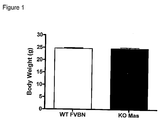
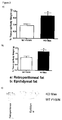
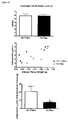
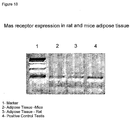
- This example describes the expression of Mas mRNA in fat tissue and the effect of Mas deficiency on the fat tissue mass (adipose tissue weight).
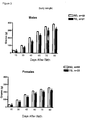
- This example describes the effect of chronic increase in plasma levels angiotensin-(1-7) on the body weight, using transgenic rats that express an angiotensin-(1-7)-producing fusion protein.
- the body weight of transgenic rats (TGR(A1-7)L3292) which present an increase in the angiotensin-(1-7) plasma levels (approximately 2.5-fold) was measured after 15, 30, 45, 60, 75 and 90 days of birth. The values were compared with those obtained in age-matched controls, Sprague Dawley rats. A significant lower body weight in TG rats was observed at all ages ( Figure 3 ). This observation, which could not be explained by changes in food intake or water balance (data not shown), suggests that chronic administration of angiotensin-(1-7) or other receptor Mas agonists may decrease body fat.
- This example describes the effect of the deletion of Mas on the levels of total blood cholesterol and HDL of Knock-out FVBN mice for Mas gene (Ko-Mas).
- a total of six WT-FVBN and the same number of Ko-Mas were put on a 12-hour fasting condition before the experiment; then they were anesthetized with Ketamin (4,5 mg/Kg) + Xylazin (0,2 mg/Kg), and an abdominal incision was made for exposure of the aorta artery.
- the collection of the arterial blood was made from a cut in the aorta artery, close to the renal branching, the blood being collected through a Pasteur pipette.
- the blood was then centrifuged, and one obtained a plasma fraction that was used for the dosage according to the specifications of the manufacturer of the Kit.
- the reading was effected on a spectrophotometer in the 492-nm wavelength for dosage of total cholesterol and HDL.
- the result was analyzed statistically by using the unpaired Student's t test, with results that exhibited P ⁇ 0.05 being considered significant.
- This example describes the effect of deletion of Mas on the blood levels of triglycerides of Mas Knock-out FVBN mice (Ko-Mas).
- a total of six WT-FVBN animals and the same number of Ko-Mas were put on a 12-hour fasting condition before the experiment; then they were anesthetized with Ketamin (4,5 mg/Kg) + Xilazin (0,2 mg/Kg), and an abdominal incision was made for exposure of the aorta artery.
- the collection of the arterial blood was made from a cut in the aorta artery, close to the renal branch, and blood was collected through a Pasteur pipette.
- the blood was then centrifuged, and one obtained a plasma fraction that was used for the dosage according to the specifications of the manufacturer of the Kit.
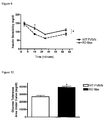
- This example describes the effect of deletion of Mas on insulin resistance in Mas Knock-out FVBN mice (Ko-Mas).
- This example describes the effect of deletion of Mas on the tolerance to glucose in Mas Knock-out FVBN mice (Ko-Mas).
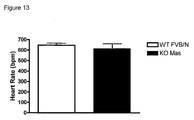
- This example describes the effect of deletion of Mas on the blood pressure and heart frequency of Mas Knock-out FVBN mice (Ko-Mas).
- a total of eight WT-FVBN animals and the same number of Ko-Mas were subjected to the measurement of blood pressure, effected by picking up pulsatile pressure signal sent to the pressure transducer connected to the cannula inserted into the abdominal aorta artery through the femoral artery, by the data acquisition system (Biopac System, model MP100, serial 96122386).
- the pressure oscillations picked up were amplified and converted through an analogical/digital conversion plate into signals that fed the data acquisition plate.
- the pulsatile blood pressure is collected continuously with a sampling frequency of 2000-4000 Hz.
- the average blood-pressure values (BPV) and heart frequency (HF) are calculated from the blood-pressure pulses and recorded by the system.
- the cannulation of the femoral artery was effected under anesthesia with Ketamine (4.5 mg/Kg) + Xilazine (0.2 mg/Kg), 24 hours before the experimental procedure.
- Ketamine 4.5 mg/Kg + Xilazine (0.2 mg/Kg)
- trichotomy of the left inguinal region of the animal was carried out.
- a small incision in the skin was made by using small scissors.
- the femoral vasculo-nervous bundle was located and the femoral artery was carefully isolated.
- the arterial cannula is delicately introduced through the femoral artery as far as the abdominal aorta artery.
- MAP mean arterial blood pressure
- WT-FVBN control animals
- HF heart rate
- This example describes the effect of Mas receptor deficiency on the expression of the glucose receptor, Glut-4, on the epididymal adipose tissue.
- mice were weighed in a semi-analytic scale. After anesthesia [ketamine (130 mg/kg) and xylazine (0,3 mg/kg)] and blood collection, they were sacrificed for removal of epididymal white adipose tissue. Thirty ⁇ g of protein extract obtained from the epididymal adipose tissue and fractionated in a polyacrylamide/SDS (PAGE) 12% gel at 100 V for 1.5 h. After the run, the proteins were transferred to a nitrocellulose membrane and incubated with an antibody anti-receptor Glut-4. The result is shown in percent of body weight and analyzed using a non-parametric test.
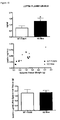
- This example describes the effect of Mas deficiency on the plasma levels of leptin and adiponectin.
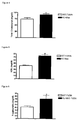
- adiponectin plasma level are not altered in Mas-KO mice ( Figure 16 ). However, the individual adipocyte production of adiponectin, estimated by normalization of the plasma levels with the fat tissue mass, is decreased in KO ( Figure 16 ).
- This example describes the effect of Mas deficiency on mRNA expression of angiotensinogen and TGF- ⁇ from adipose tissue.
- the analyzes revealed an increase in angiotensinogen ( Figure 17 ) and TGF- ⁇ ( Figure 17 ) mRNA expression in adipose tissue of Mas-KO mice.
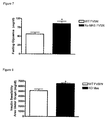
- the above examples evidence that the Mas/Ang-(1-7) axis plays an important role in the manifestation of metabolic syndrome, since this deletion, amongst others, led the animals to an, increase in the plasma levels of cholesterol and triglycerides, increase in insulin resistance and in glucose intolerance, increase in fasting glycemia and increase in blood pressure.
Landscapes
- Health & Medical Sciences (AREA)
- Life Sciences & Earth Sciences (AREA)
- Engineering & Computer Science (AREA)
- Chemical & Material Sciences (AREA)
- Immunology (AREA)
- General Health & Medical Sciences (AREA)
- Hematology (AREA)
- Medicinal Chemistry (AREA)
- Biomedical Technology (AREA)
- Molecular Biology (AREA)
- Urology & Nephrology (AREA)
- Proteomics, Peptides & Aminoacids (AREA)
- Public Health (AREA)
- Pharmacology & Pharmacy (AREA)
- Veterinary Medicine (AREA)
- Animal Behavior & Ethology (AREA)
- Epidemiology (AREA)
- Biotechnology (AREA)
- Cell Biology (AREA)
- General Physics & Mathematics (AREA)
- Pathology (AREA)
- Microbiology (AREA)
- Biochemistry (AREA)
- Analytical Chemistry (AREA)
- Food Science & Technology (AREA)
- Physics & Mathematics (AREA)
- Bioinformatics & Cheminformatics (AREA)
- Gastroenterology & Hepatology (AREA)
- Vascular Medicine (AREA)
- Diabetes (AREA)
- Obesity (AREA)
- Chemical Kinetics & Catalysis (AREA)
- General Chemical & Material Sciences (AREA)
- Nuclear Medicine, Radiotherapy & Molecular Imaging (AREA)
- Organic Chemistry (AREA)
- Medicines That Contain Protein Lipid Enzymes And Other Medicines (AREA)
- Pharmaceuticals Containing Other Organic And Inorganic Compounds (AREA)
- Peptides Or Proteins (AREA)
Claims (6)
- Die Verwendung einer effektiven Menge eines Mas-G-protein-gekoppelten Rezeptoragonisten in der Herstellung eines Medikaments zur Vorbeugung und/oder Behandlung von Erkrankungen, die ähnlich dem metabolischen Syndrom sind, oder seiner Komplikationen, in einem Subjekt, worin die genannten Erkrankungen ausgesucht werden aus der Gruppe von Änderungen in den Plasma- oder Gewebeleveln von Cholesterol, Plasma- oder Gewebeleveln von Triglyceriden.
- Die Verwendung gemäß Anspruch 1, gekennzeichnet dadurch, dass der Mas-G-protein-gekoppelte Rezeptoragonist entweder peptidisch oder nicht-peptidisch ist.
- Die Verwendung gemäß Anspruch 2, gekennzeichnet dadurch, dass, der Mas-G-protein-gekoppelte Rezeptoragonist ein Angiotensin-(1-7)-Peptid oder ein Analog davon oder ein 1-(p-thienylbenzyl) Imidazol oder ein Analog davon ist.
- Die Verwendung gemäß eines der Ansprüche 1-3, gekennzeichnet dadurch, dass der Mas-G-protein-gekoppelte Rezeptoragonist eine Nukleinsäure ist, die Angiotensin-(1-7) oder seine Analoge kodiert, oder eine Nukleinsäure ist, die den Mas-G-proteingekoppelten Rezeptor oder seine Analoge kodiert.
- Die Verwendung gemäß eines der Ansprüche 1-4, gekennzeichnet dadurch, dass der Mas-G-protein-gekoppelte Rezeptoragonist an genanntes Subjekt in Form einer pharmazeutischen Formulierung im Wege einer oralen, intramuskulären, endovenösen, subkutanen, topischen, transdermalen, analen oder Inhalationsroute verabreicht wird.
- Die Verwendung gemäß Anspruch 5, gekennzeichnet dadurch, dass die pharmazeutische Formulierung an genanntes Subjekt in Form eines implantierbaren, injezierbaren oder oral verabreichbaren mikro- und/oder nanopartikulären Geräts verabreicht wird.
Applications Claiming Priority (2)
| Application Number | Priority Date | Filing Date | Title |
|---|---|---|---|
| BRPI0602366-5A BRPI0602366B1 (pt) | 2006-04-26 | 2006-04-26 | Use of agonists of the receptor coupled to protein g, but, in the treatment of metabolic syndrome, its components and their complications |
| PCT/BR2007/000100 WO2007121546A1 (en) | 2006-04-26 | 2007-04-26 | Use of mas-g-protein-coupled receptor agonists in the treatment of the metabolic syndrome, its components and its complications |
Publications (2)
| Publication Number | Publication Date |
|---|---|
| EP2018185A1 EP2018185A1 (de) | 2009-01-28 |
| EP2018185B1 true EP2018185B1 (de) | 2016-08-31 |
Family
ID=38448080
Family Applications (1)
| Application Number | Title | Priority Date | Filing Date |
|---|---|---|---|
| EP07719268.0A Active EP2018185B1 (de) | 2006-04-26 | 2007-04-26 | Verwendung von agonisten vom mas g-protein gekoppelten rezeptor zur behandlung des metabolischen syndroms, dessen komponenten und komplikationen |
Country Status (4)
| Country | Link |
|---|---|
| US (1) | US8586054B2 (de) |
| EP (1) | EP2018185B1 (de) |
| BR (1) | BRPI0602366B1 (de) |
| WO (1) | WO2007121546A1 (de) |
Families Citing this family (7)
| Publication number | Priority date | Publication date | Assignee | Title |
|---|---|---|---|---|
| BRPI0800585B8 (pt) | 2008-02-13 | 2021-05-25 | Univ Minas Gerais | composições farmacêuticas do peptídeo des-[asp1]-[ala1]-angiotensina-(1-7) e uso do peptídeo des-[asp1]-[ala1]-angiotensina-(1-7) |
| ES2393455T3 (es) | 2008-09-12 | 2012-12-21 | Charité-Universitátsmedizin Berlin (Charité) | Uso de un agonista del receptor Ang-(1-7) en lesiones pulmonares agudas |
| US8557958B1 (en) * | 2012-06-18 | 2013-10-15 | Tarix Pharmaceuticals Ltd. | Compositions and methods for treatment of diabetes |
| US8633158B1 (en) | 2012-10-02 | 2014-01-21 | Tarix Pharmaceuticals Ltd. | Angiotensin in treating brain conditions |
| US9333233B2 (en) | 2014-02-25 | 2016-05-10 | Tarix Pharmaceuticals Ltd. | Methods and compositions for the delayed treatment of stroke |
| EP4085896A1 (de) * | 2021-05-04 | 2022-11-09 | CU-Pharmaceuticals UG | Pharmazeutische angiotensin-(1-7)-zusammensetzungen in der behandlung von erkrankungen im zusammenhang mit einer (sars)-cov- oder (sars)-cov-2-infektion |
| CN115838400B (zh) * | 2022-12-27 | 2023-07-07 | 中国农业大学 | 两种靶向预防或治疗代谢综合征的红小豆肽 |
Family Cites Families (4)
| Publication number | Priority date | Publication date | Assignee | Title |
|---|---|---|---|---|
| YU78601A (sh) * | 1999-05-05 | 2005-07-19 | Aventis Pharma Deutschland Gmbh. | 1-(p-tienilbenzil)-imidazoli kao agonisti angiotenzin-(1-7)- receptora, postupak za njihovu proizvodnju, njihova primena i farmaceutski preparati koji ih sadrže |
| WO2001049744A1 (en) * | 2000-01-04 | 2001-07-12 | Smithkline Beecham Corporation | Mouse g-protein coupled receptor mas |
| BRPI0105509B8 (pt) | 2001-11-05 | 2021-05-25 | Univ Minas Gerais | formulações do peptídeo angiotensina-(1-7) usando as ciclodextrinas, lipossomas e o polímero plga |
| BRPI0502497A (pt) | 2005-06-28 | 2007-02-06 | Univ Minas Gerais | uso de agonistas e antagonistas do receptor acoplado a proteìna g, mas, como moduladores de atividade apoptótica para o estudo, a prevenção e o tratamento de doenças |
-
2006
- 2006-04-26 BR BRPI0602366-5A patent/BRPI0602366B1/pt not_active IP Right Cessation
-
2007
- 2007-04-26 EP EP07719268.0A patent/EP2018185B1/de active Active
- 2007-04-26 WO PCT/BR2007/000100 patent/WO2007121546A1/en not_active Ceased
- 2007-04-26 US US12/298,351 patent/US8586054B2/en not_active Expired - Fee Related
Non-Patent Citations (1)
| Title |
|---|
| GOGIA ATUL ET AL: "Metabolic syndrome.", INDIAN JOURNAL OF MEDICAL SCIENCES FEB 2006, vol. 60, no. 2, February 2006 (2006-02-01), pages 72 - 81, XP009167083, ISSN: 0019-5359 * |
Also Published As
| Publication number | Publication date |
|---|---|
| US20090221498A1 (en) | 2009-09-03 |
| US8586054B2 (en) | 2013-11-19 |
| EP2018185A1 (de) | 2009-01-28 |
| WO2007121546A1 (en) | 2007-11-01 |
| WO2007121546A8 (en) | 2007-12-13 |
| BRPI0602366A (pt) | 2008-05-13 |
| BRPI0602366B1 (pt) | 2017-12-12 |
Similar Documents
| Publication | Publication Date | Title |
|---|---|---|
| Paz Ocaranza et al. | Counter-regulatory renin–angiotensin system in cardiovascular disease | |
| EP2018185B1 (de) | Verwendung von agonisten vom mas g-protein gekoppelten rezeptor zur behandlung des metabolischen syndroms, dessen komponenten und komplikationen | |
| Frenkel et al. | Glucocorticoid-induced osteoporosis | |
| Ribeiro-Oliveira Jr et al. | The renin–angiotensin system and diabetes: an update | |
| Bezerra et al. | A high fructose diet affects the early steps of insulin action in muscle and liver of rats | |
| Muscogiuri et al. | The crosstalk between insulin and renin-angiotensin-aldosterone signaling systems and its effect on glucose metabolism and diabetes prevention | |
| Velloso et al. | The multi‐faceted cross‐talk between the insulin and angiotensin II signaling systems | |
| Lucius et al. | Beyond blood pressure: new roles for angiotensin II | |
| Abou Ziki et al. | The interplay of canonical and noncanonical Wnt signaling in metabolic syndrome | |
| Iannucci et al. | Metabolic syndrome and adipose tissue: new clinical aspects and therapeutic targets | |
| Schindler | The metabolic syndrome as an endocrine disease: is there an effective pharmacotherapeutic strategy optimally targeting the pathogenesis? | |
| Pauli et al. | Acute exercise reverses aged-induced impairments in insulin signaling in rodent skeletal muscle | |
| Monteonofrio et al. | Aging-and gender-related modulation of RAAS: potential implications in COVID-19 disease | |
| Lim et al. | Prevention of Atherosclerosis in Overweight/Obese Patients–In Need of Novel Multi-Targeted Approaches– | |
| Kennedy | Role of protein tyrosine phosphatase-1B in diabetes and obesity | |
| Beg et al. | PPP2R5B, a regulatory subunit of PP2A, contributes to adipocyte insulin resistance | |
| Zhang et al. | Inhibition of skeletal muscle atrophy during torpor in ground squirrels occurs through downregulation of MyoG and inactivation of Foxo4 | |
| Tamargo et al. | The renin–angiotensin system and bone | |
| Nishida et al. | Regulation of angiotensin II receptor signaling by cysteine modification of NF-κB | |
| Franco et al. | EPLERENONE PREVENTS ADVERSE CARDIAC REMODELLING INDUCED BY PRESSURE OVERLOAD IN ATRIAL NATRIURETIC PEPTIDE‐NULL MICE | |
| Li et al. | Proteomic analysis of the supernatant from bone marrow mesenchymal stem cells under high glucose conditions | |
| Reuter et al. | The G protein Gα11 is essential for hypertrophic signalling in diabetic myocardium | |
| Groban et al. | Differential effects of late-life initiation of low-dose enalapril and losartan on diastolic function in senescent Fischer 344× Brown Norway male rats | |
| Chan et al. | Co-operative effects of angiotensin II and caerulein in NFκB activation in pancreatic acinar cells in vitro | |
| Bernard et al. | Exercise training increases components of the c-Cbl–associated protein/c-Cbl signaling cascade in muscle of obese Zucker rats |
Legal Events
| Date | Code | Title | Description |
|---|---|---|---|
| PUAI | Public reference made under article 153(3) epc to a published international application that has entered the european phase |
Free format text: ORIGINAL CODE: 0009012 |
|
| 17P | Request for examination filed |
Effective date: 20081111 |
|
| AK | Designated contracting states |
Kind code of ref document: A1 Designated state(s): AT BE BG CH CY CZ DE DK EE ES FI FR GB GR HU IE IS IT LI LT LU LV MC MT NL PL PT RO SE SI SK TR |
|
| AX | Request for extension of the european patent |
Extension state: AL BA HR MK RS |
|
| 17Q | First examination report despatched |
Effective date: 20090213 |
|
| RIN1 | Information on inventor provided before grant (corrected) |
Inventor name: SIQUEIRA HAIBARA, ANDREA Inventor name: MATOS DE MOURA, MARINA Inventor name: SINISTERRA, RUBENS DARIO Inventor name: SOUZA DOS SANTOS, ROBSON AUGUSTO Inventor name: SOUSA SANTOS, SERGIO HENRIQUE Inventor name: ALVAREZ LEITE, JAQUELINE ISAURA Inventor name: RODRIQUES FERNANDEZ, LUCIANA Inventor name: ALENINA, NATALIA Inventor name: BADER, MICHAEL |
|
| DAX | Request for extension of the european patent (deleted) | ||
| GRAP | Despatch of communication of intention to grant a patent |
Free format text: ORIGINAL CODE: EPIDOSNIGR1 |
|
| INTG | Intention to grant announced |
Effective date: 20160223 |
|
| RIN1 | Information on inventor provided before grant (corrected) |
Inventor name: MATOS DE MOURA, MARINA Inventor name: SOUZA DOS SANTOS, ROBSON AUGUSTO Inventor name: BADER, MICHAEL Inventor name: RODRIQUES FERNANDEZ, LUCIANA Inventor name: SINISTERRA, RUBENS DARIO Inventor name: SOUSA SANTOS, SERGIO HENRIQUE Inventor name: SIQUEIRA HAIBARA, ANDREA Inventor name: ALVAREZ LEITE, JAQUELINE ISAURA Inventor name: ALENINA, NATALIA |
|
| GRAS | Grant fee paid |
Free format text: ORIGINAL CODE: EPIDOSNIGR3 |
|
| GRAR | Information related to intention to grant a patent recorded |
Free format text: ORIGINAL CODE: EPIDOSNIGR71 |
|
| GRAA | (expected) grant |
Free format text: ORIGINAL CODE: 0009210 |
|
| AK | Designated contracting states |
Kind code of ref document: B1 Designated state(s): AT BE BG CH CY CZ DE DK EE ES FI FR GB GR HU IE IS IT LI LT LU LV MC MT NL PL PT RO SE SI SK TR |
|
| INTG | Intention to grant announced |
Effective date: 20160726 |
|
| REG | Reference to a national code |
Ref country code: CH Ref legal event code: EP Ref country code: GB Ref legal event code: FG4D |
|
| REG | Reference to a national code |
Ref country code: IE Ref legal event code: FG4D |
|
| REG | Reference to a national code |
Ref country code: DE Ref legal event code: R096 Ref document number: 602007047712 Country of ref document: DE |
|
| REG | Reference to a national code |
Ref country code: AT Ref legal event code: REF Ref document number: 824396 Country of ref document: AT Kind code of ref document: T Effective date: 20161015 |
|
| RAP2 | Party data changed (patent owner data changed or rights of a patent transferred) |
Owner name: MAX-DELBRUECK-CENTRUM FUER MOLEKULARE MEDIZIN IN D Owner name: UNIVERSIDADE FEDERAL DE MINAS GERAIS |
|
| REG | Reference to a national code |
Ref country code: LT Ref legal event code: MG4D |
|
| REG | Reference to a national code |
Ref country code: NL Ref legal event code: MP Effective date: 20160831 |
|
| REG | Reference to a national code |
Ref country code: CH Ref legal event code: NV Representative=s name: KATZAROV S.A., CH Ref country code: CH Ref legal event code: PFA Owner name: UNIVERSIDADE FEDERAL DE MINAS GERAIS, DE Free format text: FORMER OWNER: MAX-DELBRUECK-CENTRUM FUER MOLEKULARE MEDIZIN (MDC), BR |
|
| REG | Reference to a national code |
Ref country code: AT Ref legal event code: MK05 Ref document number: 824396 Country of ref document: AT Kind code of ref document: T Effective date: 20160831 |
|
| PG25 | Lapsed in a contracting state [announced via postgrant information from national office to epo] |
Ref country code: LT Free format text: LAPSE BECAUSE OF FAILURE TO SUBMIT A TRANSLATION OF THE DESCRIPTION OR TO PAY THE FEE WITHIN THE PRESCRIBED TIME-LIMIT Effective date: 20160831 Ref country code: FI Free format text: LAPSE BECAUSE OF FAILURE TO SUBMIT A TRANSLATION OF THE DESCRIPTION OR TO PAY THE FEE WITHIN THE PRESCRIBED TIME-LIMIT Effective date: 20160831 |
|
| PG25 | Lapsed in a contracting state [announced via postgrant information from national office to epo] |
Ref country code: NL Free format text: LAPSE BECAUSE OF FAILURE TO SUBMIT A TRANSLATION OF THE DESCRIPTION OR TO PAY THE FEE WITHIN THE PRESCRIBED TIME-LIMIT Effective date: 20160831 Ref country code: AT Free format text: LAPSE BECAUSE OF FAILURE TO SUBMIT A TRANSLATION OF THE DESCRIPTION OR TO PAY THE FEE WITHIN THE PRESCRIBED TIME-LIMIT Effective date: 20160831 Ref country code: LV Free format text: LAPSE BECAUSE OF FAILURE TO SUBMIT A TRANSLATION OF THE DESCRIPTION OR TO PAY THE FEE WITHIN THE PRESCRIBED TIME-LIMIT Effective date: 20160831 Ref country code: SE Free format text: LAPSE BECAUSE OF FAILURE TO SUBMIT A TRANSLATION OF THE DESCRIPTION OR TO PAY THE FEE WITHIN THE PRESCRIBED TIME-LIMIT Effective date: 20160831 Ref country code: ES Free format text: LAPSE BECAUSE OF FAILURE TO SUBMIT A TRANSLATION OF THE DESCRIPTION OR TO PAY THE FEE WITHIN THE PRESCRIBED TIME-LIMIT Effective date: 20160831 |
|
| REG | Reference to a national code |
Ref country code: FR Ref legal event code: PLFP Year of fee payment: 11 |
|
| PG25 | Lapsed in a contracting state [announced via postgrant information from national office to epo] |
Ref country code: EE Free format text: LAPSE BECAUSE OF FAILURE TO SUBMIT A TRANSLATION OF THE DESCRIPTION OR TO PAY THE FEE WITHIN THE PRESCRIBED TIME-LIMIT Effective date: 20160831 Ref country code: RO Free format text: LAPSE BECAUSE OF FAILURE TO SUBMIT A TRANSLATION OF THE DESCRIPTION OR TO PAY THE FEE WITHIN THE PRESCRIBED TIME-LIMIT Effective date: 20160831 |
|
| PG25 | Lapsed in a contracting state [announced via postgrant information from national office to epo] |
Ref country code: BG Free format text: LAPSE BECAUSE OF FAILURE TO SUBMIT A TRANSLATION OF THE DESCRIPTION OR TO PAY THE FEE WITHIN THE PRESCRIBED TIME-LIMIT Effective date: 20161130 Ref country code: SK Free format text: LAPSE BECAUSE OF FAILURE TO SUBMIT A TRANSLATION OF THE DESCRIPTION OR TO PAY THE FEE WITHIN THE PRESCRIBED TIME-LIMIT Effective date: 20160831 Ref country code: CZ Free format text: LAPSE BECAUSE OF FAILURE TO SUBMIT A TRANSLATION OF THE DESCRIPTION OR TO PAY THE FEE WITHIN THE PRESCRIBED TIME-LIMIT Effective date: 20160831 Ref country code: PL Free format text: LAPSE BECAUSE OF FAILURE TO SUBMIT A TRANSLATION OF THE DESCRIPTION OR TO PAY THE FEE WITHIN THE PRESCRIBED TIME-LIMIT Effective date: 20160831 Ref country code: DK Free format text: LAPSE BECAUSE OF FAILURE TO SUBMIT A TRANSLATION OF THE DESCRIPTION OR TO PAY THE FEE WITHIN THE PRESCRIBED TIME-LIMIT Effective date: 20160831 Ref country code: PT Free format text: LAPSE BECAUSE OF FAILURE TO SUBMIT A TRANSLATION OF THE DESCRIPTION OR TO PAY THE FEE WITHIN THE PRESCRIBED TIME-LIMIT Effective date: 20170102 Ref country code: BE Free format text: LAPSE BECAUSE OF FAILURE TO SUBMIT A TRANSLATION OF THE DESCRIPTION OR TO PAY THE FEE WITHIN THE PRESCRIBED TIME-LIMIT Effective date: 20160831 |
|
| REG | Reference to a national code |
Ref country code: DE Ref legal event code: R097 Ref document number: 602007047712 Country of ref document: DE |
|
| PG25 | Lapsed in a contracting state [announced via postgrant information from national office to epo] |
Ref country code: IT Free format text: LAPSE BECAUSE OF FAILURE TO SUBMIT A TRANSLATION OF THE DESCRIPTION OR TO PAY THE FEE WITHIN THE PRESCRIBED TIME-LIMIT Effective date: 20160831 |
|
| PLBE | No opposition filed within time limit |
Free format text: ORIGINAL CODE: 0009261 |
|
| STAA | Information on the status of an ep patent application or granted ep patent |
Free format text: STATUS: NO OPPOSITION FILED WITHIN TIME LIMIT |
|
| 26N | No opposition filed |
Effective date: 20170601 |
|
| PG25 | Lapsed in a contracting state [announced via postgrant information from national office to epo] |
Ref country code: SI Free format text: LAPSE BECAUSE OF FAILURE TO SUBMIT A TRANSLATION OF THE DESCRIPTION OR TO PAY THE FEE WITHIN THE PRESCRIBED TIME-LIMIT Effective date: 20160831 |
|
| REG | Reference to a national code |
Ref country code: IE Ref legal event code: MM4A |
|
| PG25 | Lapsed in a contracting state [announced via postgrant information from national office to epo] |
Ref country code: MC Free format text: LAPSE BECAUSE OF FAILURE TO SUBMIT A TRANSLATION OF THE DESCRIPTION OR TO PAY THE FEE WITHIN THE PRESCRIBED TIME-LIMIT Effective date: 20160831 |
|
| PG25 | Lapsed in a contracting state [announced via postgrant information from national office to epo] |
Ref country code: LU Free format text: LAPSE BECAUSE OF NON-PAYMENT OF DUE FEES Effective date: 20170426 |
|
| REG | Reference to a national code |
Ref country code: CH Ref legal event code: PCAR Free format text: NEW ADDRESS: AVENUE DES MORGINES 12, 1213 PETIT-LANCY (CH) |
|
| REG | Reference to a national code |
Ref country code: FR Ref legal event code: PLFP Year of fee payment: 12 |
|
| PG25 | Lapsed in a contracting state [announced via postgrant information from national office to epo] |
Ref country code: IE Free format text: LAPSE BECAUSE OF NON-PAYMENT OF DUE FEES Effective date: 20170426 |
|
| PG25 | Lapsed in a contracting state [announced via postgrant information from national office to epo] |
Ref country code: MT Free format text: LAPSE BECAUSE OF NON-PAYMENT OF DUE FEES Effective date: 20170426 |
|
| PG25 | Lapsed in a contracting state [announced via postgrant information from national office to epo] |
Ref country code: HU Free format text: LAPSE BECAUSE OF FAILURE TO SUBMIT A TRANSLATION OF THE DESCRIPTION OR TO PAY THE FEE WITHIN THE PRESCRIBED TIME-LIMIT; INVALID AB INITIO Effective date: 20070426 |
|
| PG25 | Lapsed in a contracting state [announced via postgrant information from national office to epo] |
Ref country code: CY Free format text: LAPSE BECAUSE OF NON-PAYMENT OF DUE FEES Effective date: 20160831 |
|
| PG25 | Lapsed in a contracting state [announced via postgrant information from national office to epo] |
Ref country code: TR Free format text: LAPSE BECAUSE OF FAILURE TO SUBMIT A TRANSLATION OF THE DESCRIPTION OR TO PAY THE FEE WITHIN THE PRESCRIBED TIME-LIMIT Effective date: 20160831 |
|
| PG25 | Lapsed in a contracting state [announced via postgrant information from national office to epo] |
Ref country code: GR Free format text: LAPSE BECAUSE OF FAILURE TO SUBMIT A TRANSLATION OF THE DESCRIPTION OR TO PAY THE FEE WITHIN THE PRESCRIBED TIME-LIMIT Effective date: 20160831 |
|
| PG25 | Lapsed in a contracting state [announced via postgrant information from national office to epo] |
Ref country code: IS Free format text: LAPSE BECAUSE OF FAILURE TO SUBMIT A TRANSLATION OF THE DESCRIPTION OR TO PAY THE FEE WITHIN THE PRESCRIBED TIME-LIMIT Effective date: 20161231 |
|
| REG | Reference to a national code |
Ref country code: DE Ref legal event code: R082 Ref document number: 602007047712 Country of ref document: DE Representative=s name: SKM-IP SCHMID KRAUSS KUTTENKEULER MALESCHA SCH, DE |
|
| PGFP | Annual fee paid to national office [announced via postgrant information from national office to epo] |
Ref country code: DE Payment date: 20250407 Year of fee payment: 19 |
|
| PGFP | Annual fee paid to national office [announced via postgrant information from national office to epo] |
Ref country code: GB Payment date: 20250423 Year of fee payment: 19 |
|
| PGFP | Annual fee paid to national office [announced via postgrant information from national office to epo] |
Ref country code: FR Payment date: 20250422 Year of fee payment: 19 |
|
| PGFP | Annual fee paid to national office [announced via postgrant information from national office to epo] |
Ref country code: CH Payment date: 20250501 Year of fee payment: 19 |