EP2017968B1 - Verfahren und einrichtung zur realisierung von primär-backup-schutz für eine cross-vorrichtung niedriger ordnung - Google Patents
Verfahren und einrichtung zur realisierung von primär-backup-schutz für eine cross-vorrichtung niedriger ordnung Download PDFInfo
- Publication number
- EP2017968B1 EP2017968B1 EP06817887A EP06817887A EP2017968B1 EP 2017968 B1 EP2017968 B1 EP 2017968B1 EP 06817887 A EP06817887 A EP 06817887A EP 06817887 A EP06817887 A EP 06817887A EP 2017968 B1 EP2017968 B1 EP 2017968B1
- Authority
- EP
- European Patent Office
- Prior art keywords
- low
- order
- order cross
- switching network
- virtual container
- Prior art date
- Legal status (The legal status is an assumption and is not a legal conclusion. Google has not performed a legal analysis and makes no representation as to the accuracy of the status listed.)
- Active
Links
- 238000000034 method Methods 0.000 title claims abstract description 58
- 230000001681 protective effect Effects 0.000 title abstract 2
- 230000008707 rearrangement Effects 0.000 abstract 1
- 230000032258 transport Effects 0.000 description 28
- 230000001419 dependent effect Effects 0.000 description 10
- 238000005516 engineering process Methods 0.000 description 9
- 238000010586 diagram Methods 0.000 description 7
- 238000006243 chemical reaction Methods 0.000 description 6
- 238000009432 framing Methods 0.000 description 3
- 230000008901 benefit Effects 0.000 description 2
- 230000005540 biological transmission Effects 0.000 description 2
- 238000001514 detection method Methods 0.000 description 1
- 239000004744 fabric Substances 0.000 description 1
- 238000009434 installation Methods 0.000 description 1
- 230000004048 modification Effects 0.000 description 1
- 238000012986 modification Methods 0.000 description 1
- 230000002035 prolonged effect Effects 0.000 description 1
- 230000008929 regeneration Effects 0.000 description 1
- 238000011069 regeneration method Methods 0.000 description 1
- 230000001360 synchronised effect Effects 0.000 description 1
Images

Classifications
-
- H—ELECTRICITY
- H04—ELECTRIC COMMUNICATION TECHNIQUE
- H04B—TRANSMISSION
- H04B1/00—Details of transmission systems, not covered by a single one of groups H04B3/00 - H04B13/00; Details of transmission systems not characterised by the medium used for transmission
- H04B1/74—Details of transmission systems, not covered by a single one of groups H04B3/00 - H04B13/00; Details of transmission systems not characterised by the medium used for transmission for increasing reliability, e.g. using redundant or spare channels or apparatus
-
- H—ELECTRICITY
- H04—ELECTRIC COMMUNICATION TECHNIQUE
- H04J—MULTIPLEX COMMUNICATION
- H04J3/00—Time-division multiplex systems
- H04J3/02—Details
- H04J3/14—Monitoring arrangements
-
- H—ELECTRICITY
- H04—ELECTRIC COMMUNICATION TECHNIQUE
- H04J—MULTIPLEX COMMUNICATION
- H04J2203/00—Aspects of optical multiplex systems other than those covered by H04J14/05 and H04J14/07
- H04J2203/0001—Provisions for broadband connections in integrated services digital network using frames of the Optical Transport Network [OTN] or using synchronous transfer mode [STM], e.g. SONET, SDH
- H04J2203/0057—Operations, administration and maintenance [OAM]
- H04J2203/006—Fault tolerance and recovery
-
- H—ELECTRICITY
- H04—ELECTRIC COMMUNICATION TECHNIQUE
- H04J—MULTIPLEX COMMUNICATION
- H04J3/00—Time-division multiplex systems
- H04J3/16—Time-division multiplex systems in which the time allocation to individual channels within a transmission cycle is variable, e.g. to accommodate varying complexity of signals, to vary number of channels transmitted
- H04J3/1605—Fixed allocated frame structures
- H04J3/1611—Synchronous digital hierarchy [SDH] or SONET
-
- H—ELECTRICITY
- H04—ELECTRIC COMMUNICATION TECHNIQUE
- H04Q—SELECTING
- H04Q2213/00—Indexing scheme relating to selecting arrangements in general and for multiplex systems
- H04Q2213/13166—Fault prevention
-
- H—ELECTRICITY
- H04—ELECTRIC COMMUNICATION TECHNIQUE
- H04Q—SELECTING
- H04Q2213/00—Indexing scheme relating to selecting arrangements in general and for multiplex systems
- H04Q2213/13167—Redundant apparatus
-
- H—ELECTRICITY
- H04—ELECTRIC COMMUNICATION TECHNIQUE
- H04Q—SELECTING
- H04Q2213/00—Indexing scheme relating to selecting arrangements in general and for multiplex systems
- H04Q2213/13242—Broadcast, diffusion, multicast, point-to-multipoint (1 : N)
-
- H—ELECTRICITY
- H04—ELECTRIC COMMUNICATION TECHNIQUE
- H04Q—SELECTING
- H04Q2213/00—Indexing scheme relating to selecting arrangements in general and for multiplex systems
- H04Q2213/13367—Hierarchical multiplexing, add-drop multiplexing
Definitions
- the invention relates to the field of Synchronous Digital Hierarchy (SDH) transport and in particular to a method and device for implementing primary-secondary protection of a low-order cross device.
- SDH Synchronous Digital Hierarchy
- Scheduling of an SDH virtual container refers to that a high-order or low-order virtual container via an SDH port of an SDH transport device passes as a whole through the device and then is transported from a high- or low-order virtual container via an SDH port of the device.
- the device may modify an overhead in the virtual container during this procedure.
- FIG. 1 illustrates a commonly used method for scheduling an SDH virtual container in the MSPP/MSTP, where circled reference numbers 1 to N denote SDH interfaces.
- An SDH frame processing module performs operations of framing, pointer processing, overhead processing, etc., on an SDH frame via an SDH interface, and transports the processed SDH frame to an SDH virtual container cross connection module.
- the SDH virtual container cross connection module schedules an SDH virtual container, which is to be scheduled, in the received SDH frame. This can be implemented by means well known to those skilled in the art, such as with the use of space division and time division crossing technologies. After accomplishing the virtual container scheduling, the SDH virtual container is transported to an SDH frame processing module at an exit.
- the SDH frame processing module at the exit processes the received SDH virtual container and then transports the processed virtual container via an SDH interface.
- MSPP/MSTP Although the technologies for scheduling and transporting an SDH virtual container in the MSPP/MSTP have been mature, the MSPP/MSTP architecture may be limited in terms of transporting a data service.
- GMPS General Multi-service Packet Switching
- a method for implementing GMPS at present includes using a Fabric Switch to accomplish switching of an SDH virtual container and data.
- An external interface used when GMPS is used to implement SDH virtual container scheduling is the same as a traditional SDH interface.
- Figure 2 is a schematic diagram illustrating a method for implementing SDH virtual container scheduling by the use of GMPS in the prior art, where circled reference numbers 1 to N denote SDH interfaces.
- a procedure for implementing SDH virtual container scheduling is as follows.
- An SDH frame processing module performs operations of framing, pointer processing, overhead processing, etc., on an SDH frame via an SDH interface, and transports the processed SDH frame to a subsequent slicing module.
- the slicing module slices a bit stream including the virtual container, encapsulates the sliced bit stream into the payload of a cell, fills in the cell head of the cell a switching network address corresponding to a destination assembly module as the destination address of the cell, and then transports the cell to the switching network.
- the switching network transports the cell to the destination assembly module dependent upon the destination address in the cell head upon reception of the cell.
- the destination assembly module assembles the cell into an SDH frame, and then transports the SDH frame to an SDH frame processing module at an exit.
- the SDH frame processing module at the exit processes the received SDH frame, and transport the processed SDH frame via an SDH interface, thereby implementing the SDH virtual container scheduling.
- Figure 3 is a schematic diagram illustrating an embodiment for implementing this method, where circled reference numbers 1 to N denote SDH interfaces, and circled denotations P and S denote respectively a primary low-order cross device and a secondary low-order cross device each including a low-order cross module, a high-order assembly module connected to the low-order cross module, and a high-order slicing module connected to the low-order cross module.
- the SDH frame processing module performs operations of framing, pointer processing, overhead processing, etc. on an SDH frame received via an SDH interface, the function of which can be implemented by use of a chip called Framer.
- the high-order slicing module receives the SDH frame from the SDH frame processing module, slices a bit stream including a high-order virtual container dependent upon an SDH high-order virtual container to be scheduled or a high-order virtual container in which an SDH low-order virtual container to be scheduled lies, and converts the sliced bit stream into a cell identifiable by a switching network.
- the high-order assembly module implements a reverse procedure relative to that of the high-order slicing module by assembling the cell from the switching network into an SDH frame.
- the primary low-order cross device and the secondary low-order cross device are used for performing cross connection of a low-order virtual container in a way that the former acts as a low-order cross device for currently performing cross connection of the low-order virtual container, and the latter is used for performing cross connection of the low-order virtual container when the primary low-order cross device fails.
- the low-order cross modules in the primary low-order cross device and the secondary low-order cross device are core modules for implementing cross connection of an SDH low-order virtual container, the implementing procedure of which is the same as that in Figure 1 in which the SDH virtual container cross connection module performs cross connection of a low-order virtual container.
- the high-order assembly module receives a cell from the switching network, assembles the received cells into an SDH frame, and then transports the SDH frame to the low-order cross module, where the cell is obtained through slicing a bit stream including a high-order virtual container dependent upon the high-order virtual container in which a low-order virtual container to be scheduled lies.
- the processing procedure in the low-order cross module is as follows: a frame searching module searches the received SDH frame for A1 and A2, and performs pointer processing on the received SDH frame; a low-order overhead processing module performs overhead processing on the pointer processed SDH frame; subsequently a time slot cross module performs time slot crossing on the overhead processed SDH frame; and then optionally a subsequent low-order overhead processing module performs overhead modification, and finally a frame regeneration module regenerates and supplies a complete SDH frame to the high-order slicing module.
- a cross connection of the low-order virtual container can thus be accomplished in such a procedure.
- a low-order virtual container, the exit of which is only the same destination service port, is mapped into one or more high-order virtual containers.
- the high-order slicing module slices a bit stream including the high-order virtual container, converts the sliced bit stream into a cell, and transports the cell to the switching network.
- SDH frame processing module high-order slicing module, high-order assembly module and low-order cross module can all be implemented by means well known to those skilled in the art. It can be readily appreciated that scheduling of an SDH virtual container is configured in advance and the above operations are performed according to the configuration.
- a procedure for performing SDH high-order virtual container scheduling by a method for implementing SDH virtual container scheduling on the basis of a switching network is described below with reference to Figure 3 .
- An SDH frame processing module receives an SDH frame via an SDH interface, processes the SDH frame, and transports the processed SDH frame to a subsequent slicing module.
- the slicing module slices a bit stream including the high-order virtual container, fills the sliced bit stream into the payload of a cell, fills in the cell head of the cell an address of a switching network corresponding to a destination assembly module as a destination address of the cell, and transports the cell to the switching network.
- the switching network transports the cell to the destination assembly module dependent upon the destination address in the cell head upon reception of the cell.
- the destination assembly module collects the cell, recovers the collected cells into an SDH frame, and then transports the SDH frame to an SDH frame processing module at an exit.
- the SDH frame processing module at the exit processes the received SDH frame, and transports the processed SDH frame via an SDH interface, thereby implementing the high-order virtual container scheduling.
- An SDH frame processing module receives an SDH frame via an SDH interface, processes the SDH frame, and transports the processed SDH frame to a subsequent high-order slicing module.
- the high-order slicing module slices a bit stream including the high-order virtual container, fills the sliced bit stream into the payload of a cell, fills in the cell head of the cell an address of a switching network corresponding to a primary low-order cross module (a low-order cross module in a primary low-order cross device) as a destination address of the cell, and transports the cell to the switching network.
- the switching network transports the cell to a high-order assembly module to which the primary low-order cross module is connected according to the destination address in the cell head upon reception of the cell, and the high-order assembly module collects the cell, recovers the collected cells into an SDH frame, and then transports the SDH frame to the primary low-order cross module.
- the primary low-order cross module cross-connects the low-order virtual container, maps the cross-connected low-order virtual container into an SDH frame, and supplies the SDH frame to a high-order slicing module connected to the primary low-order cross module.
- the high-order slicing module receives the SDH frame from the primary low-order cross module, and dependent upon a high-order virtual container in which the cross-connected SDH low-order virtual container lies, slices a bit stream including the high-order virtual container, converts the sliced bit stream into a cell, fills in the cell head of the cell an address of a switching network corresponding to a destination high-order assembly module as a destination address of the cell, and transports the cell to the switching network.
- the switching network transports the cell to the destination high-order assembly module dependent upon the destination address in the cell head upon reception of the cell.
- the destination high-order assembly module recovers the cell into an SDH frame, and then transports the SDH frame to an SDH frame processing module at an exit.
- the SDH frame processing module at the exit processes the received SDH frame, transports the processed SDH frame via an SDH interface, thereby implementing the low-order virtual container scheduling.
- the high-order slicing module can slice the bit stream including only the high-order virtual container in which the SDH low-order virtual container to be scheduled lies; or alternatively can slice a bit stream including the high-order virtual container in which the SDH low-order virtual container to be scheduled lies and relevant overheads, pointers, etc.
- the primary low-order cross module can encapsulate the cross-connected SDH virtual container into an SDH frame, and then supply the SDH frame to a high-order slicing module connected to the primary low-order cross module; or alternatively can supply the cross-connected SDH virtual container directly to the high-order slicing module in the structural form of a Virtual Container (VC), a Tributary Unit (TU), an Administrative Unit (AU), etc.
- VC Virtual Container
- TU Tributary Unit
- AU Administrative Unit
- the above procedure for implementing the SDH low-order virtual container scheduling is analyzed as follows.
- the high-order slicing module performs slicing dependent upon an SDH high-order virtual container, i.e. performs slicing regarding the high-order virtual container as a whole.
- a switching network may only perform scheduling on a whole of the SDH high-order virtual container, and may not perform scheduling individually on a low-order virtual container in the high-order virtual container.
- the low-order virtual container scheduling is accomplished by use of a low-order cross device. In other words, the low-order cross device schedules the SDH low-order virtual container, which is to be scheduled, onto a corresponding low-order virtual container of the corresponding SDH high-order virtual container.
- a secondary low-order cross device is used to participate in scheduling of a low-order virtual container for protection upon failure of a primary low-order cross device.
- SDH low-order virtual container scheduling if the primary low-order cross device is found failure, then primary-secondary switching is performed as follows.
- a destination address of a cell obtained from conversion of a bit stream including a high-order virtual container in which an SDH low-order virtual container to be scheduled lies is modified to be a switching network address corresponding to a secondary low-order cross module (a low-order cross module in the secondary low-order cross device).
- An object of the present invention is to provide a method and device for primary-secondary protection of a low-order cross device for implementing SDH low-order virtual container scheduling on the basis of a switching network, which can implement rapidly primary-secondary switching of the low-order cross device.
- an embodiment of the invention provides a method for primary-secondary protection of a low-order cross device for implementing SDH low-order virtual container scheduling on the basis of a switching network, where the SDH low-order virtual container scheduling is implemented through the switching network and two or more low-order cross devices connected to the switching network, one of the two or more low-order cross devices which is in a working status is a primary low-order cross device, and the others in a backup status each are a secondary low-order cross device.
- the method includes:
- a multicast ID as a destination address of a bit stream including a high-order virtual container, the high-order virtual container including the SDH low-order virtual container to be scheduled, and the multicast ID pointing respectively to ports in the switching network which are connected to the two or more low-order cross devices;
- the ports in the switching network which are connected to the primary low-order cross device and the secondary low-order cross devices are pointed by the multicast ID.
- a device for implementing primary-secondary protection of a low-order cross device comprising two or more low-order cross devices connected to a switching network
- the device further comprises a controller which controls respectively opening and closing of connecting channels between the low-order cross devices and the switching network, and the controller allocates a multicast ID as a destination address of a bit stream including a high-order virtual container, the high-order virtual container including an SDH low-order virtual container to be scheduled, the multicast ID pointing respectively to ports, which are connected to the low-order cross devices, in the switching network, when the primary low-order cross device works properly
- the controller is configured to close connecting channels between the switching network and the secondary low-order cross devices, the ports in the switching network which are connected to the primary low-order cross device and the secondary low-order cross devices are pointed by the multicast ID; and the controller is configured to open a connecting channel between the switching network and one of the secondary low-order cross devices upon failure of the primary low-order cross device, the ports in the switching network which are connected
- the present invention achieves the purpose of disabling or enabling the low-order cross device, thereby accomplishing primary-secondary switching of the low-order cross device by the use of the multicast technology for the switching network, so as to rapidly implement protection.
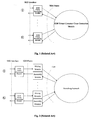
- Figure 1 is a schematic diagram illustrating a method for implementing SDH virtual container scheduling by the use of space division and time division cross technologies in the prior art
- Figure 2 is a schematic diagram illustrating a method for implementing SDH virtual container scheduling by the use of GMPS in the prior art
- Figure 3 is a schematic diagram illustrating a method for implementing SDH virtual container scheduling based upon a switching network
- Figure 4 is a schematic diagram illustrating the internal structure of a low-order cross module illustrated in Figure 3 and a high-order slicing module and a high-order assembly module connected to the low-order cross module;
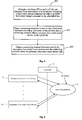
- Figure 5 is a flow chart illustrating a method for primary-secondary protection of a low-order cross device for implementing SDH low-order virtual container scheduling based upon a switching network according to an embodiment of the invention.
- Figure 6 is a structural diagram illustrating a device for primary-secondary protection of a low-order cross device for implementing SDH low-order virtual container scheduling based upon a switching network according to an embodiment of the invention.
- Embodiments of the present invention provide a method for primary-secondary protection of a low-order cross device for implementing SDH low-order virtual container scheduling on the basis of a switching network, which accomplishes switching of primary and secondary low-order cross devices by the use of multicast technology.
- the method is implemented as follows.
- the SDH low-order virtual container scheduling is implemented through a switching network and two or more low-order cross devices connected to the switching network.
- One of the two or more low-order cross devices which is in a working status is a primary low-order cross device, and the others in a backup status each is a secondary low-order cross device.
- the method includes:
- a connecting channel between the primary low-order cross device and the switching network is closed when the primary low-order cross device fails.
- a connecting channel between the primary low-order cross device and the switching network is closed, and then a connecting channel between one of the secondary low-order cross devices and the switching network is opened when the primary low-order cross device fails.
- a bit stream including a high-order virtual container in which an SDH low-order virtual container to be scheduled lies is converted, by an SDH frame processing module and a high-order slicing module, into a cell, the allocated multicast ID is filled in the cell head of the cell, and then the cell is transported to the switching network.
- the switching network transports the cell to a high-order assembly module connected to a primary low-order cross module dependent upon a destination address in the cell head, i.e. the multicast ID, upon reception of the cell.
- the high-order assembly module reassembles the received cells into an SDH frame and transports the SDH frame to a primary low-order cross module.
- the connecting channels in one or two directions between the secondary low-order cross devices and the switching network are in a closed status, and therefore the cell can not be transported to any secondary low-order cross device and/or no secondary low-order cross device can transport any processed SDH virtual container to the switching network.
- the reference can be made of the relevant descriptions above, and these processes are omitted here.
- primary-secondary switching can be performed as follows upon detection of a failure of the primary low-order cross device:
- firstly a connecting channel between the primary low-order cross device and the switching network is closed, and then a connecting channel between one of the secondary low-order cross devices and the switching network is opened upon determination of a failure of the primary low-order cross device.
- firstly a connecting channel between one of the secondary low-order cross devices and the switching network is opened, and then a connecting channel between the primary low-order cross device and the switching network is closed upon determination of a failure of the primary low-order cross device.
- the method according to the present invention can allocates a bi-cast ID to the cell for use obtained from conversion of a bit stream including a high-order virtual container in which an SDH low-order virtual container to be scheduled lies, the bi-cast ID being corresponding to two ports of the switching network.
- a bi-cast ID is a specific scenario of a multicast ID.
- the device includes two or more low-order cross devices B1-BN connected to a switching network A, and a controller C which controls respectively the opening and closing of connecting channels between the low-order cross devices B1-BN and the switching network, and which allocates a multicast ID as a destination address of a bit stream including a high-order virtual container, the multicast ID pointing respectively to ports, which are connected to the low-order cross devices B1-BN, in the switching network.
Landscapes
- Engineering & Computer Science (AREA)
- Computer Networks & Wireless Communication (AREA)
- Signal Processing (AREA)
- Data Exchanges In Wide-Area Networks (AREA)
Claims (10)
- Verfahren für einen primären/sekundären Schutz einer Cross-Vorrichtung niedriger Ordnung zum Realisieren einer Planung virtueller SDH-Container niedriger Ordnung auf der Grundlage eines Wählnetzes (A), wobei die Planung virtueller SDH-Container niedriger Ordnung durch das Wählnetz (A) und zwei oder mehrere Cross-Vorrichtungen (B1 bis BN) niedriger Ordnung, die mit dem Wählnetz (A) verbunden sind, realisiert wird, wobei eine der zwei oder mehreren Cross-Vorrichtungen niedriger Ordnung, die in einem Arbeitszustand ist, eine primäre Cross-Vorrichtung (B1) niedriger Ordnung ist und die anderen in einem Bereitschaftszustand sind, wovon jede eine sekundäre Cross-Vorrichtung (BN) niedriger Ordnung ist,
wobei das Verfahren Folgendes umfasst:Zuweisen einer Multicast-Kennung als eine Zieladresse eines Bitstroms, der einen virtuellen Container hoher Ordnung enthält, wobei der virtuelle Container hoher Ordnung einen virtuellen SDH-Container niedriger Ordnung, der geplant werden soll (S01), enthält, und die Multicast-Kennung jeweils auf Anschlüsse in dem Wählnetz zeigt, die mit den zwei oder mehreren Cross-Vorrichtungen niedriger Ordnung verbunden sind;dann, wenn die primäre Cross-Vorrichtung niedriger Ordnung korrekt arbeitet, Schließen von Verbindungskanälen zwischen dem Wählnetz und den sekundären Cross-Vorrichtungen niedriger Ordnung, wobei die Anschlüsse in dem Wählnetz, die mit der primären Cross-Vorrichtung niedriger Ordnung und den sekundären Cross-Vorrichtungen niedriger Ordnung verbunden sind, durch die Multicast-Kennung angezeigt werden (S02); undÖffnen eines Verbindungskanals zwischen dem Wählnetz und einer der sekundären Cross-Vorrichtungen niedriger Ordnung beim Ausfall der primären Cross-Vorrichtung niedriger Ordnung, wobei die Anschlüsse in dem Wählnetz, die mit der primären Cross-Vorrichtung niedriger Ordnung und den sekundären Cross-Vorrichtungen niedriger Ordnung verbunden sind, durch die Multicast-Kennung angezeigt werden (S03). - Verfahren nach Anspruch 1, wobei der Bitstrom eine Form von Zellen aufweist.
- Verfahren nach Anspruch 2, wobei der Bitstrom, indem er geteilt wird, in die Form von Zellen umgesetzt wird.
- Verfahren nach Anspruch 1, wobei der Bitstrom eine Form von Paketen aufweist.
- Verfahren nach Anspruch 1, wobei das Schließen von Verbindungskanälen zwischen dem Wählnetz und den sekundären Cross-Vorrichtungen niedriger Ordnung Folgendes umfasst:Schließen der Verbindungskanäle in einer oder mehreren Richtungen zwischen dem Wählnetz und den sekundären Cross-Vorrichtungen niedriger Ordnung.
- Verfahren nach Anspruch 1, wobei das Öffnen eines Verbindungskanals zwischen dem Wählnetz und einer der sekundären Cross-Vorrichtungen niedriger Ordnung beim Ausfall der primären Cross-Vorrichtung niedriger Ordnung ferner Folgendes umfasst:Schließen eines Verbindungskanals zwischen dem Wählnetz und der primären Cross-Vorrichtung niedriger Ordnung.
- Verfahren nach Anspruch 6, wobei dem Schließen eines Verbindungskanals zwischen dem Wählnetz und der primären Cross-Vorrichtung niedriger Ordnung ein Öffnen eines Verbindungskanals zwischen dem Wählnetz und einer der sekundären Cross-Vorrichtungen niedriger Ordnung folgt.
- Verfahren nach Anspruch 1, wobei die Planung eines virtuellen SDH-Containers niedriger Ordnung in der Weise realisiert wird, dass zwei Cross-Vorrichtungen niedriger Ordnung mit dem Wählnetz verbunden sind.
- Verfahren nach Anspruch 8, wobei die Multicast-Kennung eine Bicast-Kennung ist, wobei die Bicast-Kennung jeweils auf die Anschlüsse in dem Wählnetz zeigt, die mit den beiden Cross-Vorrichtungen niedriger Ordnung verbunden sind.
- Vorrichtung zum Implementieren eines primären/sekundären Schutzes einer Cross-Vorrichtung niedriger Ordnung zum Realisieren einer Planung virtueller SDH-Container niedriger Ordnung auf der Grundlage eines Wählnetzes (A), wobei die Vorrichtung zwei oder mehrere Cross-Vorrichtungen (B1 bis BN) niedriger Ordnung umfasst, die mit einem Wählnetz (A) verbunden sind, wobei eine der zwei oder mehreren Cross-Vorrichtungen niedriger Ordnung, die in einem Arbeitszustand ist, eine primäre Cross-Vorrichtung niedriger Ordnung ist und die anderen in einem Bereitschaftszustand sind, wovon jede eine sekundäre Cross-Vorrichtung niedriger Ordnung ist, wobei die Vorrichtung ferner eine Steuereinheit (C) umfasst, die das Öffnen bzw. Schließen von Verbindungskanälen zwischen den Cross-Vorrichtungen (B1 bis BN) niedriger Ordnung und dem Wählnetz (A) steuert, und die Steuereinheit eine Multicast-Kennung als eine Zieladresse eines Bitstroms, der einen virtuellen Container hoher Ordnung enthält, zuweist, wobei der virtuelle Container hoher Ordnung einen virtuellen SDH-Container niedriger Ordnung, der geplant werden soll, enthält, wobei die Multicast-Kennung jeweils auf Anschlüsse zeigt, die mit den Cross-Vorrichtungen (B1 bis BN) niedriger Ordnung in dem Wählnetz (A) verbunden sind, wobei dann, wenn die primäre Cross-Vorrichtung niedriger Ordnung korrekt arbeitet, die Steuereinheit eingerichtet ist, Verbindungskanäle zwischen dem Wählnetz und den sekundären Cross-Vorrichtungen niedriger Ordnung zu schließen, wobei die Anschlüsse in dem Wählnetz, die mit der primären Cross-Vorrichtung niedriger Ordnung und den sekundären Cross-Vorrichtungen niedriger Ordnung verbunden sind, durch die Multicast-Kennung angezeigt werden; und die Steuereinheit eingerichtet ist, einen Verbindungskanal zwischen dem Wählnetz und einer der sekundären Cross-Vorrichtungen niedriger Ordnung zu öffnen beim Ausfall der primären Cross-Vorrichtung niedriger Ordnung, wobei die Anschlüsse in dem Wählnetz, die mit der primären Cross-Vorrichtung niedriger Ordnung und den sekundären Cross-Vorrichtungen niedriger Ordnung verbunden sind, durch die Multicast-Kennung angezeigt werden.
Applications Claiming Priority (2)
| Application Number | Priority Date | Filing Date | Title |
|---|---|---|---|
| CN200610060645A CN100586036C (zh) | 2006-05-11 | 2006-05-11 | 实现sdh低阶虚容器调度的低阶交叉装置主备保护方法 |
| PCT/CN2006/003160 WO2007131396A1 (en) | 2006-05-11 | 2006-11-24 | A method and device for realizing primary-backup protective of low order cross apparatus |
Publications (3)
| Publication Number | Publication Date |
|---|---|
| EP2017968A1 EP2017968A1 (de) | 2009-01-21 |
| EP2017968A4 EP2017968A4 (de) | 2010-05-05 |
| EP2017968B1 true EP2017968B1 (de) | 2012-05-16 |
Family
ID=38166129
Family Applications (1)
| Application Number | Title | Priority Date | Filing Date |
|---|---|---|---|
| EP06817887A Active EP2017968B1 (de) | 2006-05-11 | 2006-11-24 | Verfahren und einrichtung zur realisierung von primär-backup-schutz für eine cross-vorrichtung niedriger ordnung |
Country Status (4)
| Country | Link |
|---|---|
| US (1) | US20080247309A1 (de) |
| EP (1) | EP2017968B1 (de) |
| CN (1) | CN100586036C (de) |
| WO (1) | WO2007131396A1 (de) |
Families Citing this family (3)
| Publication number | Priority date | Publication date | Assignee | Title |
|---|---|---|---|---|
| CN101631050B (zh) * | 2009-06-24 | 2012-05-23 | 中兴通讯股份有限公司 | 一种传输网络中故障点定位装置及方法 |
| CN106874102A (zh) * | 2015-12-18 | 2017-06-20 | 北京奇虎科技有限公司 | 基于容器工作性质的资源调度方法和装置 |
| CN116760459B (zh) * | 2023-07-12 | 2024-11-19 | 上海欣诺通信技术股份有限公司 | 基于设备的低阶保护的保护方法、装置和电子设备 |
Family Cites Families (10)
| Publication number | Priority date | Publication date | Assignee | Title |
|---|---|---|---|---|
| KR960027720A (ko) * | 1994-12-23 | 1996-07-22 | 양승택 | 동기식 디지틀 회선분배장치(sdh dxc)용 복합형 망보호/복구 장치 |
| JPH11266220A (ja) * | 1998-03-18 | 1999-09-28 | Fujitsu Ltd | Sdh方式の伝送装置 |
| US6501757B1 (en) * | 2000-02-29 | 2002-12-31 | Centre For Development Of Telematics | ATM switch |
| JP2002077238A (ja) * | 2000-08-31 | 2002-03-15 | Fujitsu Ltd | パケットスイッチ装置 |
| JP2002232167A (ja) * | 2001-01-31 | 2002-08-16 | Fujitsu Ltd | 伝送装置、サブラックおよびコネクタユニット |
| US20030002505A1 (en) * | 2001-06-30 | 2003-01-02 | Hoch Thomas A. | Apparatus and method for packet-based switching |
| US20030023892A1 (en) * | 2001-07-18 | 2003-01-30 | Chiazzese Giovanni | Peer-to-peer redundancy control scheme with override feature |
| US7307945B2 (en) * | 2002-11-27 | 2007-12-11 | Lucent Technologies Inc. | Methods for providing a reliable server architecture using a multicast topology in a communications network |
| CN100341255C (zh) * | 2002-12-26 | 2007-10-03 | 华为技术有限公司 | 一种交叉主备保护的热备份方法 |
| EP1599055B1 (de) * | 2004-05-14 | 2006-08-16 | Alcatel | Netzelement mit mehrstufiger Niedrigordnung-Schaltungsmatrix |
-
2006
- 2006-05-11 CN CN200610060645A patent/CN100586036C/zh active Active
- 2006-11-24 EP EP06817887A patent/EP2017968B1/de active Active
- 2006-11-24 WO PCT/CN2006/003160 patent/WO2007131396A1/zh not_active Ceased
-
2008
- 2008-06-17 US US12/140,546 patent/US20080247309A1/en not_active Abandoned
Also Published As
| Publication number | Publication date |
|---|---|
| US20080247309A1 (en) | 2008-10-09 |
| CN1983840A (zh) | 2007-06-20 |
| CN100586036C (zh) | 2010-01-27 |
| EP2017968A4 (de) | 2010-05-05 |
| EP2017968A1 (de) | 2009-01-21 |
| WO2007131396A1 (en) | 2007-11-22 |
Similar Documents
| Publication | Publication Date | Title |
|---|---|---|
| US11038610B2 (en) | OTN adaptation for support of subrate granularity and flexibility and for distribution across multiple modem engines | |
| US6965619B2 (en) | Flexible multiplexer/demultiplexer and method for transport of optical line data to a wide/metro area link | |
| US8054853B2 (en) | Systems and methods for combining time division multiplexed and packet connection in a meshed switching architecture | |
| USRE43420E1 (en) | Utilizing available SONET overhead bytes for additional signaling channels | |
| EP1699153B1 (de) | Integrierte cross-exchange-einheit und verfahren zur dienstabfertigung | |
| Cai et al. | The multitoken interarrival time (MTIT) access protocol for supporting variable size packets over WDM ring network | |
| CN109450544B (zh) | 光线路终端olt设备、无源光网络pon数据传送方法 | |
| EP3641237A1 (de) | Übertragungsnetzwerksystem, datenaustausch- und übertragungsverfahren, vorrichtung und gerät | |
| WO2003098879A3 (en) | Method and apparatus for bandwidth optimization in network ring topology | |
| US20030138253A1 (en) | Dynamic wavelength management method in OBS networks | |
| US20060146808A1 (en) | Reconfigurable interconnect/switch for selectably coupling network devices, media, and switch fabric | |
| EP1428355B1 (de) | Verfahren zur Verbesserung der Ausnutzung einer Zeitmultiplex-Kommunikationsstrecke eines Signalisierungstransferpunktes, und entsprechender Signalisierungstransferpunkt | |
| US20080247309A1 (en) | Method And Device For Realizing Primary-Backup Protective Of Low Order Cross Apparatus | |
| US7180900B2 (en) | Communications system embedding communications session into ATM virtual circuit at line interface card and routing the virtual circuit to a processor card via a backplane | |
| CN101621719A (zh) | 混合光交换网络核心节点配套用交换处理器 | |
| US20090319704A1 (en) | System and Method for Creating a Scalable Monolithic Packet Processing Engine | |
| CN100589363C (zh) | 一种基于gfp帧的映射交叉装置和方法 | |
| US20070110085A1 (en) | Synchronous digital hierarchy (sdh) tributary module and sdh equipment node | |
| EP2533440A1 (de) | Verfahren und vorrichtung zur sortierung der elemente mehrerer virtueller verknüpfungsgruppen | |
| US20050135405A1 (en) | Process to transfer a time division multiplexing (TDM) frame over a MPLS network | |
| US20070195708A1 (en) | Framing mobile communication signals for analysis | |
| ITMI20000930A1 (it) | Gestione della funzionalita' di cross-connessione di livelli cliente in un apparato tipo adm o xc. | |
| Adrah et al. | Achieving guaranteed performance for protection traffic in smart grid wide-area networks | |
| CN117376745A (zh) | 混合业务集成交叉方法以及集成交叉卡 | |
| CN1983893B (zh) | 实现同步数字体系虚容器调度的装置及方法 |
Legal Events
| Date | Code | Title | Description |
|---|---|---|---|
| PUAI | Public reference made under article 153(3) epc to a published international application that has entered the european phase |
Free format text: ORIGINAL CODE: 0009012 |
|
| 17P | Request for examination filed |
Effective date: 20080605 |
|
| AK | Designated contracting states |
Kind code of ref document: A1 Designated state(s): AT BE BG CH CY CZ DE DK EE ES FI FR GB GR HU IE IS IT LI LT LU LV MC NL PL PT RO SE SI SK TR |
|
| AX | Request for extension of the european patent |
Extension state: AL BA HR MK RS |
|
| A4 | Supplementary search report drawn up and despatched |
Effective date: 20100408 |
|
| RIC1 | Information provided on ipc code assigned before grant |
Ipc: H04B 1/74 20060101AFI20080212BHEP Ipc: H04J 3/16 20060101ALI20100331BHEP |
|
| GRAP | Despatch of communication of intention to grant a patent |
Free format text: ORIGINAL CODE: EPIDOSNIGR1 |
|
| RIC1 | Information provided on ipc code assigned before grant |
Ipc: H04B 1/74 20060101AFI20111215BHEP Ipc: H04J 3/16 20060101ALI20111215BHEP Ipc: H04J 3/14 20060101ALI20111215BHEP |
|
| DAX | Request for extension of the european patent (deleted) | ||
| GRAS | Grant fee paid |
Free format text: ORIGINAL CODE: EPIDOSNIGR3 |
|
| GRAA | (expected) grant |
Free format text: ORIGINAL CODE: 0009210 |
|
| AK | Designated contracting states |
Kind code of ref document: B1 Designated state(s): AT BE BG CH CY CZ DE DK EE ES FI FR GB GR HU IE IS IT LI LT LU LV MC NL PL PT RO SE SI SK TR |
|
| REG | Reference to a national code |
Ref country code: GB Ref legal event code: FG4D |
|
| REG | Reference to a national code |
Ref country code: CH Ref legal event code: EP |
|
| REG | Reference to a national code |
Ref country code: AT Ref legal event code: REF Ref document number: 558502 Country of ref document: AT Kind code of ref document: T Effective date: 20120615 |
|
| REG | Reference to a national code |
Ref country code: IE Ref legal event code: FG4D |
|
| REG | Reference to a national code |
Ref country code: DE Ref legal event code: R096 Ref document number: 602006029569 Country of ref document: DE Effective date: 20120712 |
|
| REG | Reference to a national code |
Ref country code: NL Ref legal event code: VDEP Effective date: 20120516 |
|
| REG | Reference to a national code |
Ref country code: LT Ref legal event code: MG4D Effective date: 20120516 |
|
| PG25 | Lapsed in a contracting state [announced via postgrant information from national office to epo] |
Ref country code: PL Free format text: LAPSE BECAUSE OF FAILURE TO SUBMIT A TRANSLATION OF THE DESCRIPTION OR TO PAY THE FEE WITHIN THE PRESCRIBED TIME-LIMIT Effective date: 20120516 Ref country code: FI Free format text: LAPSE BECAUSE OF FAILURE TO SUBMIT A TRANSLATION OF THE DESCRIPTION OR TO PAY THE FEE WITHIN THE PRESCRIBED TIME-LIMIT Effective date: 20120516 Ref country code: SE Free format text: LAPSE BECAUSE OF FAILURE TO SUBMIT A TRANSLATION OF THE DESCRIPTION OR TO PAY THE FEE WITHIN THE PRESCRIBED TIME-LIMIT Effective date: 20120516 Ref country code: IS Free format text: LAPSE BECAUSE OF FAILURE TO SUBMIT A TRANSLATION OF THE DESCRIPTION OR TO PAY THE FEE WITHIN THE PRESCRIBED TIME-LIMIT Effective date: 20120916 Ref country code: LT Free format text: LAPSE BECAUSE OF FAILURE TO SUBMIT A TRANSLATION OF THE DESCRIPTION OR TO PAY THE FEE WITHIN THE PRESCRIBED TIME-LIMIT Effective date: 20120516 Ref country code: CY Free format text: LAPSE BECAUSE OF FAILURE TO SUBMIT A TRANSLATION OF THE DESCRIPTION OR TO PAY THE FEE WITHIN THE PRESCRIBED TIME-LIMIT Effective date: 20120516 |
|
| REG | Reference to a national code |
Ref country code: AT Ref legal event code: MK05 Ref document number: 558502 Country of ref document: AT Kind code of ref document: T Effective date: 20120516 |
|
| PG25 | Lapsed in a contracting state [announced via postgrant information from national office to epo] |
Ref country code: SI Free format text: LAPSE BECAUSE OF FAILURE TO SUBMIT A TRANSLATION OF THE DESCRIPTION OR TO PAY THE FEE WITHIN THE PRESCRIBED TIME-LIMIT Effective date: 20120516 Ref country code: GR Free format text: LAPSE BECAUSE OF FAILURE TO SUBMIT A TRANSLATION OF THE DESCRIPTION OR TO PAY THE FEE WITHIN THE PRESCRIBED TIME-LIMIT Effective date: 20120817 Ref country code: PT Free format text: LAPSE BECAUSE OF FAILURE TO SUBMIT A TRANSLATION OF THE DESCRIPTION OR TO PAY THE FEE WITHIN THE PRESCRIBED TIME-LIMIT Effective date: 20120917 Ref country code: LV Free format text: LAPSE BECAUSE OF FAILURE TO SUBMIT A TRANSLATION OF THE DESCRIPTION OR TO PAY THE FEE WITHIN THE PRESCRIBED TIME-LIMIT Effective date: 20120516 |
|
| PG25 | Lapsed in a contracting state [announced via postgrant information from national office to epo] |
Ref country code: BE Free format text: LAPSE BECAUSE OF FAILURE TO SUBMIT A TRANSLATION OF THE DESCRIPTION OR TO PAY THE FEE WITHIN THE PRESCRIBED TIME-LIMIT Effective date: 20120516 |
|
| PG25 | Lapsed in a contracting state [announced via postgrant information from national office to epo] |
Ref country code: CZ Free format text: LAPSE BECAUSE OF FAILURE TO SUBMIT A TRANSLATION OF THE DESCRIPTION OR TO PAY THE FEE WITHIN THE PRESCRIBED TIME-LIMIT Effective date: 20120516 Ref country code: AT Free format text: LAPSE BECAUSE OF FAILURE TO SUBMIT A TRANSLATION OF THE DESCRIPTION OR TO PAY THE FEE WITHIN THE PRESCRIBED TIME-LIMIT Effective date: 20120516 Ref country code: DK Free format text: LAPSE BECAUSE OF FAILURE TO SUBMIT A TRANSLATION OF THE DESCRIPTION OR TO PAY THE FEE WITHIN THE PRESCRIBED TIME-LIMIT Effective date: 20120516 Ref country code: SK Free format text: LAPSE BECAUSE OF FAILURE TO SUBMIT A TRANSLATION OF THE DESCRIPTION OR TO PAY THE FEE WITHIN THE PRESCRIBED TIME-LIMIT Effective date: 20120516 Ref country code: RO Free format text: LAPSE BECAUSE OF FAILURE TO SUBMIT A TRANSLATION OF THE DESCRIPTION OR TO PAY THE FEE WITHIN THE PRESCRIBED TIME-LIMIT Effective date: 20120516 Ref country code: EE Free format text: LAPSE BECAUSE OF FAILURE TO SUBMIT A TRANSLATION OF THE DESCRIPTION OR TO PAY THE FEE WITHIN THE PRESCRIBED TIME-LIMIT Effective date: 20120516 Ref country code: NL Free format text: LAPSE BECAUSE OF FAILURE TO SUBMIT A TRANSLATION OF THE DESCRIPTION OR TO PAY THE FEE WITHIN THE PRESCRIBED TIME-LIMIT Effective date: 20120516 |
|
| PG25 | Lapsed in a contracting state [announced via postgrant information from national office to epo] |
Ref country code: IT Free format text: LAPSE BECAUSE OF FAILURE TO SUBMIT A TRANSLATION OF THE DESCRIPTION OR TO PAY THE FEE WITHIN THE PRESCRIBED TIME-LIMIT Effective date: 20120516 |
|
| PLBE | No opposition filed within time limit |
Free format text: ORIGINAL CODE: 0009261 |
|
| STAA | Information on the status of an ep patent application or granted ep patent |
Free format text: STATUS: NO OPPOSITION FILED WITHIN TIME LIMIT |
|
| 26N | No opposition filed |
Effective date: 20130219 |
|
| PG25 | Lapsed in a contracting state [announced via postgrant information from national office to epo] |
Ref country code: ES Free format text: LAPSE BECAUSE OF FAILURE TO SUBMIT A TRANSLATION OF THE DESCRIPTION OR TO PAY THE FEE WITHIN THE PRESCRIBED TIME-LIMIT Effective date: 20120827 |
|
| REG | Reference to a national code |
Ref country code: DE Ref legal event code: R097 Ref document number: 602006029569 Country of ref document: DE Effective date: 20130219 |
|
| REG | Reference to a national code |
Ref country code: CH Ref legal event code: PL |
|
| PG25 | Lapsed in a contracting state [announced via postgrant information from national office to epo] |
Ref country code: CH Free format text: LAPSE BECAUSE OF NON-PAYMENT OF DUE FEES Effective date: 20121130 Ref country code: BG Free format text: LAPSE BECAUSE OF FAILURE TO SUBMIT A TRANSLATION OF THE DESCRIPTION OR TO PAY THE FEE WITHIN THE PRESCRIBED TIME-LIMIT Effective date: 20120816 Ref country code: LI Free format text: LAPSE BECAUSE OF NON-PAYMENT OF DUE FEES Effective date: 20121130 |
|
| REG | Reference to a national code |
Ref country code: IE Ref legal event code: MM4A |
|
| PG25 | Lapsed in a contracting state [announced via postgrant information from national office to epo] |
Ref country code: IE Free format text: LAPSE BECAUSE OF NON-PAYMENT OF DUE FEES Effective date: 20121124 |
|
| PG25 | Lapsed in a contracting state [announced via postgrant information from national office to epo] |
Ref country code: MC Free format text: LAPSE BECAUSE OF NON-PAYMENT OF DUE FEES Effective date: 20121130 Ref country code: TR Free format text: LAPSE BECAUSE OF FAILURE TO SUBMIT A TRANSLATION OF THE DESCRIPTION OR TO PAY THE FEE WITHIN THE PRESCRIBED TIME-LIMIT Effective date: 20120516 |
|
| PG25 | Lapsed in a contracting state [announced via postgrant information from national office to epo] |
Ref country code: LU Free format text: LAPSE BECAUSE OF NON-PAYMENT OF DUE FEES Effective date: 20121124 |
|
| PG25 | Lapsed in a contracting state [announced via postgrant information from national office to epo] |
Ref country code: HU Free format text: LAPSE BECAUSE OF FAILURE TO SUBMIT A TRANSLATION OF THE DESCRIPTION OR TO PAY THE FEE WITHIN THE PRESCRIBED TIME-LIMIT Effective date: 20061124 |
|
| REG | Reference to a national code |
Ref country code: FR Ref legal event code: PLFP Year of fee payment: 10 |
|
| REG | Reference to a national code |
Ref country code: FR Ref legal event code: PLFP Year of fee payment: 11 |
|
| REG | Reference to a national code |
Ref country code: FR Ref legal event code: PLFP Year of fee payment: 12 |
|
| REG | Reference to a national code |
Ref country code: FR Ref legal event code: PLFP Year of fee payment: 13 |
|
| PGFP | Annual fee paid to national office [announced via postgrant information from national office to epo] |
Ref country code: DE Payment date: 20241001 Year of fee payment: 19 |
|
| PGFP | Annual fee paid to national office [announced via postgrant information from national office to epo] |
Ref country code: GB Payment date: 20241001 Year of fee payment: 19 |
|
| PGFP | Annual fee paid to national office [announced via postgrant information from national office to epo] |
Ref country code: FR Payment date: 20241001 Year of fee payment: 19 |