EP2014786A1 - Process for controlling fatigue debit of a coated article - Google Patents
Process for controlling fatigue debit of a coated article Download PDFInfo
- Publication number
- EP2014786A1 EP2014786A1 EP08252346A EP08252346A EP2014786A1 EP 2014786 A1 EP2014786 A1 EP 2014786A1 EP 08252346 A EP08252346 A EP 08252346A EP 08252346 A EP08252346 A EP 08252346A EP 2014786 A1 EP2014786 A1 EP 2014786A1
- Authority
- EP
- European Patent Office
- Prior art keywords
- bond coat
- oxidation resistant
- article
- aluminum
- coat layer
- Prior art date
- Legal status (The legal status is an assumption and is not a legal conclusion. Google has not performed a legal analysis and makes no representation as to the accuracy of the status listed.)
- Withdrawn
Links
- 238000000034 method Methods 0.000 title claims abstract description 34
- 230000008569 process Effects 0.000 title claims abstract description 26
- 239000000463 material Substances 0.000 claims abstract description 57
- 238000000576 coating method Methods 0.000 claims abstract description 38
- 230000003647 oxidation Effects 0.000 claims abstract description 36
- 238000007254 oxidation reaction Methods 0.000 claims abstract description 36
- 239000011248 coating agent Substances 0.000 claims abstract description 32
- 239000012190 activator Substances 0.000 claims abstract description 19
- 239000000654 additive Substances 0.000 claims abstract description 18
- 230000000996 additive effect Effects 0.000 claims abstract description 18
- 238000000151 deposition Methods 0.000 claims abstract description 14
- 239000010409 thin film Substances 0.000 claims abstract description 8
- 238000004140 cleaning Methods 0.000 claims abstract description 4
- 239000010410 layer Substances 0.000 claims description 36
- 150000004820 halides Chemical class 0.000 claims description 17
- 229910052782 aluminium Inorganic materials 0.000 claims description 12
- XAGFODPZIPBFFR-UHFFFAOYSA-N aluminium Chemical compound [Al] XAGFODPZIPBFFR-UHFFFAOYSA-N 0.000 claims description 12
- 229910000838 Al alloy Inorganic materials 0.000 claims description 11
- PXHVJJICTQNCMI-UHFFFAOYSA-N Nickel Chemical compound [Ni] PXHVJJICTQNCMI-UHFFFAOYSA-N 0.000 claims description 11
- 238000005229 chemical vapour deposition Methods 0.000 claims description 11
- XEEYBQQBJWHFJM-UHFFFAOYSA-N Iron Chemical compound [Fe] XEEYBQQBJWHFJM-UHFFFAOYSA-N 0.000 claims description 10
- BASFCYQUMIYNBI-UHFFFAOYSA-N platinum Chemical compound [Pt] BASFCYQUMIYNBI-UHFFFAOYSA-N 0.000 claims description 10
- KLZUFWVZNOTSEM-UHFFFAOYSA-K Aluminium flouride Chemical compound F[Al](F)F KLZUFWVZNOTSEM-UHFFFAOYSA-K 0.000 claims description 9
- 239000011651 chromium Substances 0.000 claims description 9
- 238000009792 diffusion process Methods 0.000 claims description 8
- 239000007921 spray Substances 0.000 claims description 8
- VYZAMTAEIAYCRO-UHFFFAOYSA-N Chromium Chemical compound [Cr] VYZAMTAEIAYCRO-UHFFFAOYSA-N 0.000 claims description 7
- 229910052804 chromium Inorganic materials 0.000 claims description 7
- 239000007789 gas Substances 0.000 claims description 7
- 229910017052 cobalt Inorganic materials 0.000 claims description 6
- 239000010941 cobalt Substances 0.000 claims description 6
- GUTLYIVDDKVIGB-UHFFFAOYSA-N cobalt atom Chemical compound [Co] GUTLYIVDDKVIGB-UHFFFAOYSA-N 0.000 claims description 6
- 239000000203 mixture Substances 0.000 claims description 6
- 229910052759 nickel Inorganic materials 0.000 claims description 6
- 229910000951 Aluminide Inorganic materials 0.000 claims description 5
- 229910052742 iron Inorganic materials 0.000 claims description 5
- 229910052697 platinum Inorganic materials 0.000 claims description 5
- 229910052727 yttrium Inorganic materials 0.000 claims description 5
- VWQVUPCCIRVNHF-UHFFFAOYSA-N yttrium atom Chemical compound [Y] VWQVUPCCIRVNHF-UHFFFAOYSA-N 0.000 claims description 5
- XKRFYHLGVUSROY-UHFFFAOYSA-N Argon Chemical compound [Ar] XKRFYHLGVUSROY-UHFFFAOYSA-N 0.000 claims description 4
- IJGRMHOSHXDMSA-UHFFFAOYSA-N Atomic nitrogen Chemical compound N#N IJGRMHOSHXDMSA-UHFFFAOYSA-N 0.000 claims description 4
- VSCWAEJMTAWNJL-UHFFFAOYSA-K aluminium trichloride Chemical compound Cl[Al](Cl)Cl VSCWAEJMTAWNJL-UHFFFAOYSA-K 0.000 claims description 4
- LDDQLRUQCUTJBB-UHFFFAOYSA-N ammonium fluoride Chemical compound [NH4+].[F-] LDDQLRUQCUTJBB-UHFFFAOYSA-N 0.000 claims description 4
- 238000005253 cladding Methods 0.000 claims description 4
- 229910052751 metal Inorganic materials 0.000 claims description 4
- 239000002184 metal Substances 0.000 claims description 4
- NLXLAEXVIDQMFP-UHFFFAOYSA-N Ammonia chloride Chemical compound [NH4+].[Cl-] NLXLAEXVIDQMFP-UHFFFAOYSA-N 0.000 claims description 3
- QRRWWGNBSQSBAM-UHFFFAOYSA-N alumane;chromium Chemical compound [AlH3].[Cr] QRRWWGNBSQSBAM-UHFFFAOYSA-N 0.000 claims description 3
- BLJNPOIVYYWHMA-UHFFFAOYSA-N alumane;cobalt Chemical compound [AlH3].[Co] BLJNPOIVYYWHMA-UHFFFAOYSA-N 0.000 claims description 3
- KCZFLPPCFOHPNI-UHFFFAOYSA-N alumane;iron Chemical compound [AlH3].[Fe] KCZFLPPCFOHPNI-UHFFFAOYSA-N 0.000 claims description 3
- 239000011247 coating layer Substances 0.000 claims description 3
- 229910021560 Chromium(III) bromide Inorganic materials 0.000 claims description 2
- 229910021556 Chromium(III) chloride Inorganic materials 0.000 claims description 2
- 229910021564 Chromium(III) fluoride Inorganic materials 0.000 claims description 2
- PQLAYKMGZDUDLQ-UHFFFAOYSA-K aluminium bromide Chemical compound Br[Al](Br)Br PQLAYKMGZDUDLQ-UHFFFAOYSA-K 0.000 claims description 2
- CECABOMBVQNBEC-UHFFFAOYSA-K aluminium iodide Chemical compound I[Al](I)I CECABOMBVQNBEC-UHFFFAOYSA-K 0.000 claims description 2
- SWLVFNYSXGMGBS-UHFFFAOYSA-N ammonium bromide Chemical compound [NH4+].[Br-] SWLVFNYSXGMGBS-UHFFFAOYSA-N 0.000 claims description 2
- UKFWSNCTAHXBQN-UHFFFAOYSA-N ammonium iodide Chemical compound [NH4+].[I-] UKFWSNCTAHXBQN-UHFFFAOYSA-N 0.000 claims description 2
- 229910052786 argon Inorganic materials 0.000 claims description 2
- QSWDMMVNRMROPK-UHFFFAOYSA-K chromium(3+) trichloride Chemical compound [Cl-].[Cl-].[Cl-].[Cr+3] QSWDMMVNRMROPK-UHFFFAOYSA-K 0.000 claims description 2
- 239000011636 chromium(III) chloride Substances 0.000 claims description 2
- UZDWIWGMKWZEPE-UHFFFAOYSA-K chromium(iii) bromide Chemical compound [Cr+3].[Br-].[Br-].[Br-] UZDWIWGMKWZEPE-UHFFFAOYSA-K 0.000 claims description 2
- 238000002485 combustion reaction Methods 0.000 claims description 2
- 238000005328 electron beam physical vapour deposition Methods 0.000 claims description 2
- 238000010894 electron beam technology Methods 0.000 claims description 2
- 239000001307 helium Substances 0.000 claims description 2
- 229910052734 helium Inorganic materials 0.000 claims description 2
- SWQJXJOGLNCZEY-UHFFFAOYSA-N helium atom Chemical compound [He] SWQJXJOGLNCZEY-UHFFFAOYSA-N 0.000 claims description 2
- 239000001257 hydrogen Substances 0.000 claims description 2
- 229910052739 hydrogen Inorganic materials 0.000 claims description 2
- 125000004435 hydrogen atom Chemical class [H]* 0.000 claims description 2
- 239000011261 inert gas Substances 0.000 claims description 2
- 229910052757 nitrogen Inorganic materials 0.000 claims description 2
- 238000004544 sputter deposition Methods 0.000 claims description 2
- FTBATIJJKIIOTP-UHFFFAOYSA-K trifluorochromium Chemical compound F[Cr](F)F FTBATIJJKIIOTP-UHFFFAOYSA-K 0.000 claims description 2
- UQZIWOQVLUASCR-UHFFFAOYSA-N alumane;titanium Chemical compound [AlH3].[Ti] UQZIWOQVLUASCR-UHFFFAOYSA-N 0.000 claims 2
- IRPGOXJVTQTAAN-UHFFFAOYSA-N 2,2,3,3,3-pentafluoropropanal Chemical group FC(F)(F)C(F)(F)C=O IRPGOXJVTQTAAN-UHFFFAOYSA-N 0.000 claims 1
- 238000001816 cooling Methods 0.000 claims 1
- 239000000758 substrate Substances 0.000 description 7
- 230000008021 deposition Effects 0.000 description 6
- 230000001939 inductive effect Effects 0.000 description 4
- 230000000694 effects Effects 0.000 description 3
- 230000001276 controlling effect Effects 0.000 description 2
- 238000005137 deposition process Methods 0.000 description 2
- -1 halide salt Chemical class 0.000 description 2
- QGZKDVFQNNGYKY-UHFFFAOYSA-O Ammonium Chemical compound [NH4+] QGZKDVFQNNGYKY-UHFFFAOYSA-O 0.000 description 1
- 229910002543 FeCrAlY Inorganic materials 0.000 description 1
- 230000001464 adherent effect Effects 0.000 description 1
- 229910045601 alloy Inorganic materials 0.000 description 1
- 239000000956 alloy Substances 0.000 description 1
- 230000004888 barrier function Effects 0.000 description 1
- 239000002131 composite material Substances 0.000 description 1
- 230000001419 dependent effect Effects 0.000 description 1
- 229910052735 hafnium Inorganic materials 0.000 description 1
- VBJZVLUMGGDVMO-UHFFFAOYSA-N hafnium atom Chemical compound [Hf] VBJZVLUMGGDVMO-UHFFFAOYSA-N 0.000 description 1
- 238000010438 heat treatment Methods 0.000 description 1
- 238000010286 high velocity air fuel Methods 0.000 description 1
- 238000007749 high velocity oxygen fuel spraying Methods 0.000 description 1
- 230000004048 modification Effects 0.000 description 1
- 238000012986 modification Methods 0.000 description 1
- 239000002245 particle Substances 0.000 description 1
- 230000001105 regulatory effect Effects 0.000 description 1
- 230000007723 transport mechanism Effects 0.000 description 1
- 238000007740 vapor deposition Methods 0.000 description 1
Images

Classifications
-
- C—CHEMISTRY; METALLURGY
- C23—COATING METALLIC MATERIAL; COATING MATERIAL WITH METALLIC MATERIAL; CHEMICAL SURFACE TREATMENT; DIFFUSION TREATMENT OF METALLIC MATERIAL; COATING BY VACUUM EVAPORATION, BY SPUTTERING, BY ION IMPLANTATION OR BY CHEMICAL VAPOUR DEPOSITION, IN GENERAL; INHIBITING CORROSION OF METALLIC MATERIAL OR INCRUSTATION IN GENERAL
- C23C—COATING METALLIC MATERIAL; COATING MATERIAL WITH METALLIC MATERIAL; SURFACE TREATMENT OF METALLIC MATERIAL BY DIFFUSION INTO THE SURFACE, BY CHEMICAL CONVERSION OR SUBSTITUTION; COATING BY VACUUM EVAPORATION, BY SPUTTERING, BY ION IMPLANTATION OR BY CHEMICAL VAPOUR DEPOSITION, IN GENERAL
- C23C4/00—Coating by spraying the coating material in the molten state, e.g. by flame, plasma or electric discharge
- C23C4/18—After-treatment
-
- C—CHEMISTRY; METALLURGY
- C23—COATING METALLIC MATERIAL; COATING MATERIAL WITH METALLIC MATERIAL; CHEMICAL SURFACE TREATMENT; DIFFUSION TREATMENT OF METALLIC MATERIAL; COATING BY VACUUM EVAPORATION, BY SPUTTERING, BY ION IMPLANTATION OR BY CHEMICAL VAPOUR DEPOSITION, IN GENERAL; INHIBITING CORROSION OF METALLIC MATERIAL OR INCRUSTATION IN GENERAL
- C23C—COATING METALLIC MATERIAL; COATING MATERIAL WITH METALLIC MATERIAL; SURFACE TREATMENT OF METALLIC MATERIAL BY DIFFUSION INTO THE SURFACE, BY CHEMICAL CONVERSION OR SUBSTITUTION; COATING BY VACUUM EVAPORATION, BY SPUTTERING, BY ION IMPLANTATION OR BY CHEMICAL VAPOUR DEPOSITION, IN GENERAL
- C23C10/00—Solid state diffusion of only metal elements or silicon into metallic material surfaces
- C23C10/60—After-treatment
-
- C—CHEMISTRY; METALLURGY
- C23—COATING METALLIC MATERIAL; COATING MATERIAL WITH METALLIC MATERIAL; CHEMICAL SURFACE TREATMENT; DIFFUSION TREATMENT OF METALLIC MATERIAL; COATING BY VACUUM EVAPORATION, BY SPUTTERING, BY ION IMPLANTATION OR BY CHEMICAL VAPOUR DEPOSITION, IN GENERAL; INHIBITING CORROSION OF METALLIC MATERIAL OR INCRUSTATION IN GENERAL
- C23C—COATING METALLIC MATERIAL; COATING MATERIAL WITH METALLIC MATERIAL; SURFACE TREATMENT OF METALLIC MATERIAL BY DIFFUSION INTO THE SURFACE, BY CHEMICAL CONVERSION OR SUBSTITUTION; COATING BY VACUUM EVAPORATION, BY SPUTTERING, BY ION IMPLANTATION OR BY CHEMICAL VAPOUR DEPOSITION, IN GENERAL
- C23C28/00—Coating for obtaining at least two superposed coatings either by methods not provided for in a single one of groups C23C2/00 - C23C26/00 or by combinations of methods provided for in subclasses C23C and C25C or C25D
- C23C28/02—Coating for obtaining at least two superposed coatings either by methods not provided for in a single one of groups C23C2/00 - C23C26/00 or by combinations of methods provided for in subclasses C23C and C25C or C25D only coatings only including layers of metallic material
- C23C28/021—Coating for obtaining at least two superposed coatings either by methods not provided for in a single one of groups C23C2/00 - C23C26/00 or by combinations of methods provided for in subclasses C23C and C25C or C25D only coatings only including layers of metallic material including at least one metal alloy layer
-
- C—CHEMISTRY; METALLURGY
- C23—COATING METALLIC MATERIAL; COATING MATERIAL WITH METALLIC MATERIAL; CHEMICAL SURFACE TREATMENT; DIFFUSION TREATMENT OF METALLIC MATERIAL; COATING BY VACUUM EVAPORATION, BY SPUTTERING, BY ION IMPLANTATION OR BY CHEMICAL VAPOUR DEPOSITION, IN GENERAL; INHIBITING CORROSION OF METALLIC MATERIAL OR INCRUSTATION IN GENERAL
- C23C—COATING METALLIC MATERIAL; COATING MATERIAL WITH METALLIC MATERIAL; SURFACE TREATMENT OF METALLIC MATERIAL BY DIFFUSION INTO THE SURFACE, BY CHEMICAL CONVERSION OR SUBSTITUTION; COATING BY VACUUM EVAPORATION, BY SPUTTERING, BY ION IMPLANTATION OR BY CHEMICAL VAPOUR DEPOSITION, IN GENERAL
- C23C28/00—Coating for obtaining at least two superposed coatings either by methods not provided for in a single one of groups C23C2/00 - C23C26/00 or by combinations of methods provided for in subclasses C23C and C25C or C25D
- C23C28/02—Coating for obtaining at least two superposed coatings either by methods not provided for in a single one of groups C23C2/00 - C23C26/00 or by combinations of methods provided for in subclasses C23C and C25C or C25D only coatings only including layers of metallic material
- C23C28/021—Coating for obtaining at least two superposed coatings either by methods not provided for in a single one of groups C23C2/00 - C23C26/00 or by combinations of methods provided for in subclasses C23C and C25C or C25D only coatings only including layers of metallic material including at least one metal alloy layer
- C23C28/022—Coating for obtaining at least two superposed coatings either by methods not provided for in a single one of groups C23C2/00 - C23C26/00 or by combinations of methods provided for in subclasses C23C and C25C or C25D only coatings only including layers of metallic material including at least one metal alloy layer with at least one MCrAlX layer
-
- Y—GENERAL TAGGING OF NEW TECHNOLOGICAL DEVELOPMENTS; GENERAL TAGGING OF CROSS-SECTIONAL TECHNOLOGIES SPANNING OVER SEVERAL SECTIONS OF THE IPC; TECHNICAL SUBJECTS COVERED BY FORMER USPC CROSS-REFERENCE ART COLLECTIONS [XRACs] AND DIGESTS
- Y10—TECHNICAL SUBJECTS COVERED BY FORMER USPC
- Y10T—TECHNICAL SUBJECTS COVERED BY FORMER US CLASSIFICATION
- Y10T428/00—Stock material or miscellaneous articles
- Y10T428/26—Web or sheet containing structurally defined element or component, the element or component having a specified physical dimension
-
- Y—GENERAL TAGGING OF NEW TECHNOLOGICAL DEVELOPMENTS; GENERAL TAGGING OF CROSS-SECTIONAL TECHNOLOGIES SPANNING OVER SEVERAL SECTIONS OF THE IPC; TECHNICAL SUBJECTS COVERED BY FORMER USPC CROSS-REFERENCE ART COLLECTIONS [XRACs] AND DIGESTS
- Y10—TECHNICAL SUBJECTS COVERED BY FORMER USPC
- Y10T—TECHNICAL SUBJECTS COVERED BY FORMER US CLASSIFICATION
- Y10T428/00—Stock material or miscellaneous articles
- Y10T428/26—Web or sheet containing structurally defined element or component, the element or component having a specified physical dimension
- Y10T428/263—Coating layer not in excess of 5 mils thick or equivalent
- Y10T428/264—Up to 3 mils
Definitions
- the invention relates to coated articles and, more particularly, relates to processes for controlling fatigue debit of a coated article, for example a turbine engine component.
- Oxidation resistant coatings are typically applied to an engine part at varying thicknesses dependent upon the desired amount of protection.
- the engine part tends to incur a fatigue debit as the oxidation resistant coating increases in thickness beyond 1 mil (0.0254 mm).
- Such fatigue debit lessens the useful service life of engine parts that require such oxidation resistant coatings.
- engine parts composed of thin walled honeycomb materials e.g., 2-5 mils (0.0508-0.127 mm) thickness, are completely consumed in a typical aluminide coating process. Essentially, the material becomes a sheet of coating rather than a sheet of material having a coating disposed thereupon.
- the vapor aluminide coating by its nature, is extremely brittle and breaks easily.
- the thickness of the coating is directly related to the diffusion rate of the oxidation resistant coating material within the CVD chamber. Certain factors influence the diffusion rate of the oxidation resistant coating material, which impact not only the resultant coating but the article's structure and integrity as well. For instance, the application time, operating temperature and halide activator activity influence the resultant coating.
- Current chemical vapor deposition (CVD) processes operate at a temperature range of 1875°F (1024°C) to 2120°F (1160°C) when applying, for example, vapor aluminide coatings.
- the application time coincides with the hold time for the substrate, or article, being coated. At the aforementioned temperatures, the application time is approximately 30 minutes to 60 minutes.
- the substrate develops both hot and cold zones rather than uniformly developing a hot zone throughout the substrate.
- a hot zone may be at the optimum CVD deposition temperature throughout a majority of the application time whereas a cold zone may only attain and maintain the optimum CVD deposition temperature for a fraction of the application time.
- the diffusion rate of the aluminum varies and subsequently deposits unevenly upon the hot zones and cold zones.
- the resultant coating exhibits overly thick areas and sparingly thin areas with respect to the desired coating thickness. This unacceptable non-uniform coating also contributes to inducing fatigue debit to the part.
- a process for controlling fatigue debit when coating an article broadly comprises cleaning at least one surface of an article including a structural material; depositing a bond coat material upon at least one cleaned surface of the article to form a bond coat layer substantially free of the structural material; depositing an oxidation resistant material in the presence of an activator upon said bond coat layer at a temperature range from about 1,775°F (968°C) to about 1,825°F (996°C) to form an additive layer substantially free of the structural material; and wherein the bond coat layer and the additive layer together form a thin film, oxidation resistant coating having a thickness of at least about 0.5 mils (0.0127 mm).
- a coated article broadly comprises a structural material; and at least one surface having disposed thereupon a thin film, oxidation resistant coating broadly comprising a bond coat layer substantially free of said structural material; and an additive layer substantially free of said structural material, wherein said bond coat layer and said additive layer have a combined thickness of at least about 0.5 mils (0.0127 mm).
- an article 20 composed of a thin-walled structure having a thickness of no more than about 0.7 mils (0.01778 mm) may be coated without consuming the structure.
- both the bond coat layer and additive layer of the thin film, oxidation resistant coating described herein are substantially free of the structural material of the article.
- the term "substantially free” means the thin film, oxidation resistant coating does not contain any structural material, or no more than an insignificant amount of structural material, which does not induce a fatigue debit to the article.
- FIG. 1 shows a representative flowchart of the exemplary process(es) described herein.
- at least one surface 22 of an article 20 being coated may be cleaned to remove any dirt or other particles from contaminating the external surface of the article 20 or the coating layers at step 10. Any one of a number of cleaning techniques known to one of ordinary skill in the art may be employed.
- the bond coat material may comprise a formula MCrAlY.
- MCrAlY refers to known metal coating systems in which M denotes nickel, cobalt, iron, platinum or mixtures thereof; Cr denotes chromium; Al denotes aluminum; and Y denotes yttrium.
- MCrAlY materials are often known as overlay coatings because they are applied in a predetermined composition and do not interact significantly with the substrate during the deposition process.
- the bond coat material may also comprise A1, PtAl, and the like.
- 4,078,922 describes a cobalt base structural alloy which derives improved oxidation resistance by virtue of the presence of a combination of hafnium and yttrium.
- a preferred MCrAlY bond coat composition is described in U.S. Pat. No. Re. 32,121 , which is assigned to the present Assignee and incorporated herein by reference, as having a weight percent compositional range of 5-40 Cr, 8-35 Al, 0.1-2.0 Y, 0.1-7 Si, 0.1-2.0 Hf, balance selected from the group consisting of Ni, Co and mixtures thereof. See also U.S. Pat. No. 4,585,481 , which is also assigned to the present Assignee and incorporated herein by reference.
- bond coat materials may be applied by any method capable of producing a dense, uniform, adherent coating of the desired composition, such as, but not limited to, an overlay bond coat, diffusion bond coat, cathodic arc bond coat, etc.
- Such techniques may include, but are not limited to, diffusion processes (e.g., inward, outward, etc.), low pressure plasma-spray, air plasma-spray, sputtering, cathodic arc, electron beam physical vapor deposition, high velocity plasma spray techniques (e.g., HVOF, HVAF), combustion processes, wire spray techniques, laser beam cladding, electron beam cladding, etc.
- a quantity of oxidation resistant material sufficient to form an oxidation resistant additive layer 26 may be applied upon the bond coat layer 24 or the cleaned external surface of the article at step 14.
- the oxidation resistant material is deposited in the presence of a halide activator.
- the additive layer 26 may be deposited using any one of a number of vapor deposition techniques, and is preferably deposited using a chemical vapor deposition technique (CVD).
- One or more articles 20 may be placed in a chamber of a CVD apparatus along with at least one target composed of the oxidation resistant material in the presence of an atmosphere of at least one transport gas and at least one halide activator.
- Suitable oxidation resistant materials may include various aluminum-containing materials such as aluminum, chromium-aluminum alloys, cobalt-aluminum alloys, iron-aluminum alloys and combinations thereof.
- the amount of aluminum present may be sufficient to saturate the transport gas atmosphere and the halide activator with aluminum, as is known to one of ordinary skill in the art.
- Suitable transport gases for use herein may include hydrogen, helium, argon, nitrogen, other inert gases, and combinations thereof.
- the operating temperature range, amount of operating time, and choice of halide activator influence the deposition of the oxidation resistant materials upon the article.
- One of ordinary skill in the art recognizes that the diffusion rate of the oxidation resistant material increases non-linearly with the operating temperature. The goal being to deposit layers of an additive and diffusion barrier materials without consuming the article's thin walled substrate and inducing fatigue debit, or a substantial amount of fatigue debit, to the article's structure.
- the external surface, or optional bond coat layer may be subjected to the vaporized halide activator via a transport gas for a period of time of about 3 hours to about 20 hours and at a temperature range from about 1,775oF (968oC) to about 1,825oF (996oC).
- Suitable halide activators may include AlF 3 , AlCl 3 , AlBr 3 , AlI 3 , NH 4 F, NH 4 Cl, NH 4 Br, NH 4 I, CrF 3 , CrCl 3 , CrBr 3 , and CrI 3 , and combinations thereof.
- the powdered halide salt vaporizes entirely during the heating up, and reacts with the substrate material.
- Suitable halide activators may include any halide salt capable of reacting with the oxidation resistant material and acting as a transport mechanism.
- representative suitable halides may include (NH 4 F)HF, NH 4 F, AlF 3 , and NH 4 Cl.
- the activity of the halide activator is controlled by the type of source material and the amount/type of halide activator. For instance, ammonium based halide activators vaporize entirely which necessitates the control of the amount of halide activator. In contrast, AlF 3 emits a controlled vapor pressure based upon the coating temperature during the process, which improves the controllability of the halide activity.
- the gas rate flow of the halide activator and transport gas(es) may be regulated so as to control the deposition of the oxidation resistant materials to slowly deposit and gradually build up the oxidation resistant coating layer to achieve the desired thickness of greater than about 1 mil (0.0254 mm).
- the resultant oxidation resistant additive layer 26 may at least comprise aluminum, and may comprise chromium and at least one metal such as nickel, cobalt, iron, platinum, and combinations thereof, provided by the bond coat material.
- the total thickness range of both the bond coat layer 24 and additive layer 26 may be at least about 0.5 mils (0.0127 mm), or about 0.5 mils (0.0127 mm) to about 1.5 mils (0.0381 mm), or about 0.5 mils (0.0127 mm) to about 2 mils (0.0508 mm).
- the bond coat layer may be 0.2 mils (0.00508 mm) thick and the additive layer may be about 0.3 mils (0.00762 mm) thick.
- the exemplary processes described herein permit the deposition of an oxidation resistant material upon a thin walled article without consuming the article's thin-walled structure and inducing fatigue debit, or a substantial amount of fatigue debit, to the article's structure.
Landscapes
- Chemical & Material Sciences (AREA)
- Engineering & Computer Science (AREA)
- Chemical Kinetics & Catalysis (AREA)
- Materials Engineering (AREA)
- Mechanical Engineering (AREA)
- Metallurgy (AREA)
- Organic Chemistry (AREA)
- Physics & Mathematics (AREA)
- Plasma & Fusion (AREA)
- Other Surface Treatments For Metallic Materials (AREA)
- Chemical Vapour Deposition (AREA)
Abstract
Description
- The invention relates to coated articles and, more particularly, relates to processes for controlling fatigue debit of a coated article, for example a turbine engine component.
- Oxidation resistant coatings are typically applied to an engine part at varying thicknesses dependent upon the desired amount of protection. The engine part tends to incur a fatigue debit as the oxidation resistant coating increases in thickness beyond 1 mil (0.0254 mm). Such fatigue debit lessens the useful service life of engine parts that require such oxidation resistant coatings. Generally, engine parts composed of thin walled honeycomb materials, e.g., 2-5 mils (0.0508-0.127 mm) thickness, are completely consumed in a typical aluminide coating process. Essentially, the material becomes a sheet of coating rather than a sheet of material having a coating disposed thereupon. The vapor aluminide coating, by its nature, is extremely brittle and breaks easily.
- The thickness of the coating is directly related to the diffusion rate of the oxidation resistant coating material within the CVD chamber. Certain factors influence the diffusion rate of the oxidation resistant coating material, which impact not only the resultant coating but the article's structure and integrity as well. For instance, the application time, operating temperature and halide activator activity influence the resultant coating. Current chemical vapor deposition (CVD) processes operate at a temperature range of 1875°F (1024°C) to 2120°F (1160°C) when applying, for example, vapor aluminide coatings. The application time coincides with the hold time for the substrate, or article, being coated. At the aforementioned temperatures, the application time is approximately 30 minutes to 60 minutes. Under this time frame, the substrate develops both hot and cold zones rather than uniformly developing a hot zone throughout the substrate. For example, a hot zone may be at the optimum CVD deposition temperature throughout a majority of the application time whereas a cold zone may only attain and maintain the optimum CVD deposition temperature for a fraction of the application time. Under these conditions, the diffusion rate of the aluminum varies and subsequently deposits unevenly upon the hot zones and cold zones. The resultant coating exhibits overly thick areas and sparingly thin areas with respect to the desired coating thickness. This unacceptable non-uniform coating also contributes to inducing fatigue debit to the part.
- Therefore, there exists a need for a process for applying oxidation resistant coatings to engine parts without inducing a fatigue debit to the part.
- In one aspect of the present disclosure, a process for controlling fatigue debit when coating an article broadly comprises cleaning at least one surface of an article including a structural material; depositing a bond coat material upon at least one cleaned surface of the article to form a bond coat layer substantially free of the structural material; depositing an oxidation resistant material in the presence of an activator upon said bond coat layer at a temperature range from about 1,775°F (968°C) to about 1,825°F (996°C) to form an additive layer substantially free of the structural material; and wherein the bond coat layer and the additive layer together form a thin film, oxidation resistant coating having a thickness of at least about 0.5 mils (0.0127 mm).
- In another aspect of the present disclosure, a coated article broadly comprises a structural material; and at least one surface having disposed thereupon a thin film, oxidation resistant coating broadly comprising a bond coat layer substantially free of said structural material; and an additive layer substantially free of said structural material, wherein said bond coat layer and said additive layer have a combined thickness of at least about 0.5 mils (0.0127 mm).
- The details of one or more embodiments of the invention are set forth in the accompanying drawings and the description below. Other features and advantages of the invention will be apparent from the description and drawings, and from the claims.
-
-
FIG. 1 is a representative flowchart of the process(es) of the present invention; and -
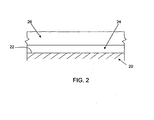
FIG. 2 is a representation of an article coated with an oxidation resistant coating applied in accordance with the exemplary process illustrated inFIG. 1 . - Like reference numbers and designations in the various drawings indicate like elements.
- Using the exemplary process described herein, an
article 20 composed of a thin-walled structure having a thickness of no more than about 0.7 mils (0.01778 mm) may be coated without consuming the structure. Generally, both the bond coat layer and additive layer of the thin film, oxidation resistant coating described herein are substantially free of the structural material of the article. As used herein, the term "substantially free" means the thin film, oxidation resistant coating does not contain any structural material, or no more than an insignificant amount of structural material, which does not induce a fatigue debit to the article. -
FIG. 1 shows a representative flowchart of the exemplary process(es) described herein. Generally, at least onesurface 22 of anarticle 20 being coated may be cleaned to remove any dirt or other particles from contaminating the external surface of thearticle 20 or the coating layers atstep 10. Any one of a number of cleaning techniques known to one of ordinary skill in the art may be employed. - Once cleaned, a quantity of bond coat material sufficient to form a
bond coat layer 24 may be applied upon the cleaned external surface of the article atstep 12.
The bond coat material may comprise a formula MCrAlY. MCrAlY refers to known metal coating systems in which M denotes nickel, cobalt, iron, platinum or mixtures thereof; Cr denotes chromium; Al denotes aluminum; and Y denotes yttrium. MCrAlY materials are often known as overlay coatings because they are applied in a predetermined composition and do not interact significantly with the substrate during the deposition process. In addition, the bond coat material may also comprise A1, PtAl, and the like. - For some non-limiting examples of MCrAlY materials see
U.S. Pat. No. 3,528,861 which describes a FeCrAlY coating as doesU.S. Pat. No. 3,542,530 . In addition,U.S. Pat. No. 3,649,225 describes a composite coating in which a layer of chromium is applied to a substrate prior to the deposition of a MCrAlY coating.U.S. Pat. No. 3,676,085 describes a CoCrAlY overlay coating whileU.S. Pat. No. 3,754,903 describes a NiCoCrAlY overlay coating having particularly high ductility.U.S. Pat. No. 4,078,922 describes a cobalt base structural alloy which derives improved oxidation resistance by virtue of the presence of a combination of hafnium and yttrium. A preferred MCrAlY bond coat composition is described inU.S. Pat. No. Re. 32,121 , which is assigned to the present Assignee and incorporated herein by reference, as having a weight percent compositional range of 5-40 Cr, 8-35 Al, 0.1-2.0 Y, 0.1-7 Si, 0.1-2.0 Hf, balance selected from the group consisting of Ni, Co and mixtures thereof. See alsoU.S. Pat. No. 4,585,481 , which is also assigned to the present Assignee and incorporated herein by reference. - These bond coat materials may be applied by any method capable of producing a dense, uniform, adherent coating of the desired composition, such as, but not limited to, an overlay bond coat, diffusion bond coat, cathodic arc bond coat, etc. Such techniques may include, but are not limited to, diffusion processes (e.g., inward, outward, etc.), low pressure plasma-spray, air plasma-spray, sputtering, cathodic arc, electron beam physical vapor deposition, high velocity plasma spray techniques (e.g., HVOF, HVAF), combustion processes, wire spray techniques, laser beam cladding, electron beam cladding, etc.
- After applying the
bond coat layer 24 atstep 12, a quantity of oxidation resistant material sufficient to form an oxidationresistant additive layer 26 may be applied upon thebond coat layer 24 or the cleaned external surface of the article atstep 14. Preferably, the oxidation resistant material is deposited in the presence of a halide activator. Theadditive layer 26 may be deposited using any one of a number of vapor deposition techniques, and is preferably deposited using a chemical vapor deposition technique (CVD). One ormore articles 20 may be placed in a chamber of a CVD apparatus along with at least one target composed of the oxidation resistant material in the presence of an atmosphere of at least one transport gas and at least one halide activator. Suitable oxidation resistant materials may include various aluminum-containing materials such as aluminum, chromium-aluminum alloys, cobalt-aluminum alloys, iron-aluminum alloys and combinations thereof. The amount of aluminum present may be sufficient to saturate the transport gas atmosphere and the halide activator with aluminum, as is known to one of ordinary skill in the art. Suitable transport gases for use herein may include hydrogen, helium, argon, nitrogen, other inert gases, and combinations thereof. - The operating temperature range, amount of operating time, and choice of halide activator influence the deposition of the oxidation resistant materials upon the article. One of ordinary skill in the art recognizes that the diffusion rate of the oxidation resistant material increases non-linearly with the operating temperature. The goal being to deposit layers of an additive and diffusion barrier materials without consuming the article's thin walled substrate and inducing fatigue debit, or a substantial amount of fatigue debit, to the article's structure.
- During the chemical vapor deposition process, the external surface, or optional bond coat layer, may be subjected to the vaporized halide activator via a transport gas for a period of time of about 3 hours to about 20 hours and at a temperature range from about 1,775ºF (968ºC) to about 1,825ºF (996ºC). Suitable halide activators may include AlF3, AlCl3, AlBr3, AlI3, NH4F, NH4Cl, NH4Br, NH4I, CrF3, CrCl3, CrBr3, and CrI3, and combinations thereof. The powdered halide salt vaporizes entirely during the heating up, and reacts with the substrate material. Suitable halide activators may include any halide salt capable of reacting with the oxidation resistant material and acting as a transport mechanism. For example, representative suitable halides may include (NH4F)HF, NH4F, AlF3, and NH4Cl. The activity of the halide activator is controlled by the type of source material and the amount/type of halide activator. For instance, ammonium based halide activators vaporize entirely which necessitates the control of the amount of halide activator. In contrast, AlF3 emits a controlled vapor pressure based upon the coating temperature during the process, which improves the controllability of the halide activity.
- Throughout the deposition process, the gas rate flow of the halide activator and transport gas(es) may be regulated so as to control the deposition of the oxidation resistant materials to slowly deposit and gradually build up the oxidation resistant coating layer to achieve the desired thickness of greater than about 1 mil (0.0254 mm). The resultant oxidation resistant
additive layer 26 may at least comprise aluminum, and may comprise chromium and at least one metal such as nickel, cobalt, iron, platinum, and combinations thereof, provided by the bond coat material. The total thickness range of both thebond coat layer 24 andadditive layer 26 may be at least about 0.5 mils (0.0127 mm), or about 0.5 mils (0.0127 mm) to about 1.5 mils (0.0381 mm), or about 0.5 mils (0.0127 mm) to about 2 mils (0.0508 mm). For example, where the total thickness is about 0.5 mils (0.0127 mm), the bond coat layer may be 0.2 mils (0.00508 mm) thick and the additive layer may be about 0.3 mils (0.00762 mm) thick. - The exemplary processes described herein permit the deposition of an oxidation resistant material upon a thin walled article without consuming the article's thin-walled structure and inducing fatigue debit, or a substantial amount of fatigue debit, to the article's structure.
- One or more embodiments of the present invention have been described. Nevertheless, it will be understood that various modifications may be made without departing from the scope of the invention. Accordingly, other embodiments are within the scope of the following claims.
Claims (15)
- A process for controlling fatigue debit when coating an article, comprising:cleaning at least one surface (22) of an article (20) including a structural material;depositing a bond coat material upon at least one cleaned surface (22) of said article (20) to form a bond coat layer (24) substantially free of said structural material;depositing an oxidation resistant material in the presence of an activator upon said bond coat layer (24) at a temperature range from about 1,775°F (968°C) to about 1,825°F (996°C) to form an additive layer (26) substantially free of said structural material; andwherein said bond coat layer (24) and said additive layer (26) together form a thin film, oxidation resistant coating having a thickness of at least about 0.5 mils (0.0127 mm).
- The process of claim 1, wherein said bond coat layer (24) comprises aluminum, chromium, yttrium, and at least one metal selected from the group consisting of nickel, cobalt, iron, platinum, and combinations thereof.
- The process of claim 1 or 2, wherein said oxidation resistant material comprises a material selected from the group consisting of aluminum, chromium-aluminum alloy, cobalt-aluminum alloy, iron-aluminum alloy, titanium-aluminum alloy, and combinations thereof.
- The process of claim 3, wherein said material is chromium aluminide.
- The process of any preceding claim, wherein said activator comprises a halide activator selected from the group consisting of AlF3, AlCl3, AlBr3, AlI3, NH4F, NH4Cl, NH4Br, NH4I, CrF3, CrCl3, CrBr3, and CrI3, and combinations thereof.
- The process of claim 5, wherein said halide activator is aluminum fluoride.
- The process of any preceding claim, wherein depositing said bond coat material comprises subjecting said at least one surface (22) to at least one of the following processes: a diffusion process, low pressure plasma-spray, air plasma-spray, sputtering, cathodic arc, electron beam physical vapor deposition, high velocity plasma spray, combustion processes, wire spray techniques, laser beam cladding, and electron beam cladding.
- The process of any preceding claim, wherein depositing said oxidation resistant material comprises subjecting said at least one surface (22) to a chemical vapor deposition process.
- The process of claim 8, wherein said chemical vapor deposition process uses a transport gas selected from the group consisting of hydrogen, helium, argon, nitrogen, other inert gases, and combinations thereof.
- The process of any preceding claim, further comprising cooling said article (20) after forming said oxidation resistant coating layer.
- A coated article, comprising:a structural material (20); andat least one surface (22) having disposed thereupon a thin film, oxidation resistant coating comprising:wherein said bond coat layer (24) and said additive layer (26) have a combined thickness of at least about 0.5 mils (0.0127 mm).a bond coat layer (24) substantially free of said structural material; andan additive layer (26) substantially free of said structural material,
- The coated article of claim 11, wherein said thin film oxidation resistant coating comprises aluminum, chromium, yttrium and at least one metal selected from the group consisting of nickel, cobalt, iron, platinum and combinations thereof.
- The coated article of claim 11 or 12, wherein said additive layer (26) comprises an oxidation resistant material selected from the group consisting of aluminum, chromium-aluminum alloy, cobalt-aluminum alloy, iron-aluminum alloy, titanium-aluminum alloy, and combinations thereof.
- The coated article of claim 13, wherein said oxidation resistant material is chromium aluminide.
- The coated article of any of claims 11 to 14, wherein said bond coat layer (24) comprises a bond coat material selected from the group consisting of nickel, cobalt, iron, platinum, aluminum, yttrium, and mixtures thereof.
Applications Claiming Priority (1)
| Application Number | Priority Date | Filing Date | Title |
|---|---|---|---|
| US11/775,940 US8808852B2 (en) | 2007-07-11 | 2007-07-11 | Process for controlling fatigue debit of a coated article |
Publications (1)
| Publication Number | Publication Date |
|---|---|
| EP2014786A1 true EP2014786A1 (en) | 2009-01-14 |
Family
ID=39768156
Family Applications (1)
| Application Number | Title | Priority Date | Filing Date |
|---|---|---|---|
| EP08252346A Withdrawn EP2014786A1 (en) | 2007-07-11 | 2008-07-09 | Process for controlling fatigue debit of a coated article |
Country Status (2)
| Country | Link |
|---|---|
| US (1) | US8808852B2 (en) |
| EP (1) | EP2014786A1 (en) |
Families Citing this family (1)
| Publication number | Priority date | Publication date | Assignee | Title |
|---|---|---|---|---|
| CN110835756A (en) * | 2019-11-18 | 2020-02-25 | 南昌大学 | A kind of preparation method of epitaxial growth of MCrAlY single crystal coating on single crystal superalloy substrate |
Citations (10)
| Publication number | Priority date | Publication date | Assignee | Title |
|---|---|---|---|---|
| US3528861A (en) | 1968-05-23 | 1970-09-15 | United Aircraft Corp | Method for coating the superalloys |
| US3542530A (en) | 1968-05-23 | 1970-11-24 | United Aircraft Corp | Nickel or cobalt base with a coating containing iron chromium and aluminum |
| US3649225A (en) | 1969-11-17 | 1972-03-14 | United Aircraft Corp | Composite coating for the superalloys |
| US3676085A (en) | 1971-02-18 | 1972-07-11 | United Aircraft Corp | Cobalt base coating for the superalloys |
| US3754903A (en) | 1970-09-15 | 1973-08-28 | United Aircraft Corp | High temperature oxidation resistant coating alloy |
| US4078922A (en) | 1975-12-08 | 1978-03-14 | United Technologies Corporation | Oxidation resistant cobalt base alloy |
| USRE32121E (en) | 1981-08-05 | 1986-04-22 | United Technologies Corporation | Overlay coatings for superalloys |
| US4585481A (en) | 1981-08-05 | 1986-04-29 | United Technologies Corporation | Overlays coating for superalloys |
| US6555179B1 (en) * | 1998-01-14 | 2003-04-29 | General Electric Company | Aluminizing process for plasma-sprayed bond coat of a thermal barrier coating system |
| US20050084706A1 (en) * | 2003-10-15 | 2005-04-21 | General Electric Company | Method of selective region vapor phase aluminizing |
Family Cites Families (18)
| Publication number | Priority date | Publication date | Assignee | Title |
|---|---|---|---|---|
| US4776765A (en) * | 1985-07-29 | 1988-10-11 | General Electric Company | Means and method for reducing solid particle erosion in turbines |
| US5354351A (en) * | 1991-06-18 | 1994-10-11 | Howmet Corporation | Cr-bearing gamma titanium aluminides and method of making same |
| DE69417515T2 (en) * | 1993-11-19 | 1999-07-15 | Walbar Inc., Peabody, Mass. | Improved process for a platinum group silicide modified aluminide coating and products |
| US6129991A (en) * | 1994-10-28 | 2000-10-10 | Howmet Research Corporation | Aluminide/MCrAlY coating system for superalloys |
| US6095755A (en) * | 1996-11-26 | 2000-08-01 | United Technologies Corporation | Gas turbine engine airfoils having increased fatigue strength |
| US6036995A (en) * | 1997-01-31 | 2000-03-14 | Sermatech International, Inc. | Method for removal of surface layers of metallic coatings |
| US6344282B1 (en) * | 1998-12-30 | 2002-02-05 | General Electric Company | Graded reactive element containing aluminide coatings for improved high temperature performance and method for producing |
| US6273678B1 (en) * | 1999-08-11 | 2001-08-14 | General Electric Company | Modified diffusion aluminide coating for internal surfaces of gas turbine components |
| US6368672B1 (en) * | 1999-09-28 | 2002-04-09 | General Electric Company | Method for forming a thermal barrier coating system of a turbine engine component |
| US6589668B1 (en) * | 2000-06-21 | 2003-07-08 | Howmet Research Corporation | Graded platinum diffusion aluminide coating |
| US7045094B2 (en) * | 2000-12-12 | 2006-05-16 | Andrei Anatolyevich Axenov | Aluminum-based material and a method for manufacturing products from aluminum-based material |
| US6630250B1 (en) * | 2001-07-27 | 2003-10-07 | General Electric Co. | Article having an iridium-aluminum protective coating, and its preparation |
| US6933062B2 (en) * | 2001-08-16 | 2005-08-23 | General Electric Company | Article having an improved platinum-aluminum-hafnium protective coating |
| US6844086B2 (en) * | 2002-02-08 | 2005-01-18 | General Electric Company | Nickel-base superalloy article substrate having aluminide coating thereon, and its fabrication |
| US7060366B2 (en) * | 2003-02-19 | 2006-06-13 | General Electric Company | Article including a substrate with a metallic coating and a chromium-aluminide protective coating thereon, and its preparation and use in component restoration |
| US6979498B2 (en) * | 2003-11-25 | 2005-12-27 | General Electric Company | Strengthened bond coats for thermal barrier coatings |
| US7282271B2 (en) * | 2004-12-01 | 2007-10-16 | Honeywell International, Inc. | Durable thermal barrier coatings |
| JP2007262447A (en) * | 2006-03-27 | 2007-10-11 | Mitsubishi Heavy Ind Ltd | Oxidation-resistant film and its deposition method, thermal barrier coating, heat-resistant member, and gas turbine |
-
2007
- 2007-07-11 US US11/775,940 patent/US8808852B2/en active Active
-
2008
- 2008-07-09 EP EP08252346A patent/EP2014786A1/en not_active Withdrawn
Patent Citations (10)
| Publication number | Priority date | Publication date | Assignee | Title |
|---|---|---|---|---|
| US3528861A (en) | 1968-05-23 | 1970-09-15 | United Aircraft Corp | Method for coating the superalloys |
| US3542530A (en) | 1968-05-23 | 1970-11-24 | United Aircraft Corp | Nickel or cobalt base with a coating containing iron chromium and aluminum |
| US3649225A (en) | 1969-11-17 | 1972-03-14 | United Aircraft Corp | Composite coating for the superalloys |
| US3754903A (en) | 1970-09-15 | 1973-08-28 | United Aircraft Corp | High temperature oxidation resistant coating alloy |
| US3676085A (en) | 1971-02-18 | 1972-07-11 | United Aircraft Corp | Cobalt base coating for the superalloys |
| US4078922A (en) | 1975-12-08 | 1978-03-14 | United Technologies Corporation | Oxidation resistant cobalt base alloy |
| USRE32121E (en) | 1981-08-05 | 1986-04-22 | United Technologies Corporation | Overlay coatings for superalloys |
| US4585481A (en) | 1981-08-05 | 1986-04-29 | United Technologies Corporation | Overlays coating for superalloys |
| US6555179B1 (en) * | 1998-01-14 | 2003-04-29 | General Electric Company | Aluminizing process for plasma-sprayed bond coat of a thermal barrier coating system |
| US20050084706A1 (en) * | 2003-10-15 | 2005-04-21 | General Electric Company | Method of selective region vapor phase aluminizing |
Also Published As
| Publication number | Publication date |
|---|---|
| US8808852B2 (en) | 2014-08-19 |
| US20100151230A1 (en) | 2010-06-17 |
Similar Documents
| Publication | Publication Date | Title |
|---|---|---|
| EP0979881B1 (en) | Thermal barrier and overlay coating systems comprising composite metal/metal oxide bond coating layers | |
| Feuerstein et al. | Technical and economical aspects of current thermal barrier coating systems for gas turbine engines by thermal spray and EBPVD: a review | |
| US6372299B1 (en) | Method for improving the oxidation-resistance of metal substrates coated with thermal barrier coatings | |
| US6168874B1 (en) | Diffusion aluminide bond coat for a thermal barrier coating system and method therefor | |
| US9382605B2 (en) | Economic oxidation and fatigue resistant metallic coating | |
| EP1111091B1 (en) | Method of forming an active-element containing aluminide as stand alone coating and as bond coat and coated article | |
| US7422769B2 (en) | Protective coating for application to a substrate and method for manufacturing a protective coating | |
| US20020132132A1 (en) | Method of forming an active-element containing aluminide as stand alone coating and as bond coat and coated article | |
| US20070207328A1 (en) | High density thermal barrier coating | |
| US20060141283A1 (en) | Low cost inovative diffused MCrAIY coatings | |
| US20100068556A1 (en) | Diffusion barrier layer and methods of forming | |
| US7229675B1 (en) | Protective coating method for pieces made of heat resistant alloys | |
| CA2292370C (en) | Improved coating and method for minimizing consumption of base material during high temperature service | |
| US20020031683A1 (en) | Vapor phase co-deposition coating for superalloy applications | |
| US20040022662A1 (en) | Method for protecting articles, and related compositions | |
| US11092019B2 (en) | Coated component and method of preparing a coated component | |
| US8808852B2 (en) | Process for controlling fatigue debit of a coated article | |
| EP3470543A1 (en) | Coated component and method of preparing a coated component | |
| EP1790825B1 (en) | Method for applying a bond coat and a thermal barrier coating over an aluminided surface | |
| EP1491659B1 (en) | A method of depositing a coating system | |
| EP1215301A1 (en) | Method for treating the bond coating of a component | |
| US20080171221A1 (en) | Thermal Barrier Coating |
Legal Events
| Date | Code | Title | Description |
|---|---|---|---|
| PUAI | Public reference made under article 153(3) epc to a published international application that has entered the european phase |
Free format text: ORIGINAL CODE: 0009012 |
|
| AK | Designated contracting states |
Kind code of ref document: A1 Designated state(s): AT BE BG CH CY CZ DE DK EE ES FI FR GB GR HR HU IE IS IT LI LT LU LV MC MT NL NO PL PT RO SE SI SK TR |
|
| AX | Request for extension of the european patent |
Extension state: AL BA MK RS |
|
| 17P | Request for examination filed |
Effective date: 20090202 |
|
| 17Q | First examination report despatched |
Effective date: 20090312 |
|
| AKX | Designation fees paid |
Designated state(s): DE GB |
|
| STAA | Information on the status of an ep patent application or granted ep patent |
Free format text: STATUS: THE APPLICATION IS DEEMED TO BE WITHDRAWN |
|
| 18D | Application deemed to be withdrawn |
Effective date: 20090923 |