EP2010671B1 - Nachweis und quantifizierung fäkaler verunreinigungen in umweltproben - Google Patents
Nachweis und quantifizierung fäkaler verunreinigungen in umweltproben Download PDFInfo
- Publication number
- EP2010671B1 EP2010671B1 EP06829636A EP06829636A EP2010671B1 EP 2010671 B1 EP2010671 B1 EP 2010671B1 EP 06829636 A EP06829636 A EP 06829636A EP 06829636 A EP06829636 A EP 06829636A EP 2010671 B1 EP2010671 B1 EP 2010671B1
- Authority
- EP
- European Patent Office
- Prior art keywords
- sample
- faecal
- nucleic acid
- marker
- human
- Prior art date
- Legal status (The legal status is an assumption and is not a legal conclusion. Google has not performed a legal analysis and makes no representation as to the accuracy of the status listed.)
- Not-in-force
Links
- 238000001514 detection method Methods 0.000 title claims abstract description 70
- 238000011002 quantification Methods 0.000 title claims abstract description 48
- 230000007613 environmental effect Effects 0.000 title claims abstract description 39
- 239000000523 sample Substances 0.000 claims abstract description 235
- 239000003550 marker Substances 0.000 claims abstract description 172
- 241000282414 Homo sapiens Species 0.000 claims abstract description 114
- 241000282849 Ruminantia Species 0.000 claims abstract description 100
- 108091034117 Oligonucleotide Proteins 0.000 claims abstract description 98
- XLYOFNOQVPJJNP-UHFFFAOYSA-N water Substances O XLYOFNOQVPJJNP-UHFFFAOYSA-N 0.000 claims abstract description 96
- 238000000034 method Methods 0.000 claims abstract description 64
- JLCPHMBAVCMARE-UHFFFAOYSA-N [3-[[3-[[3-[[3-[[3-[[3-[[3-[[3-[[3-[[3-[[3-[[5-(2-amino-6-oxo-1H-purin-9-yl)-3-[[3-[[3-[[3-[[3-[[3-[[5-(2-amino-6-oxo-1H-purin-9-yl)-3-[[5-(2-amino-6-oxo-1H-purin-9-yl)-3-hydroxyoxolan-2-yl]methoxy-hydroxyphosphoryl]oxyoxolan-2-yl]methoxy-hydroxyphosphoryl]oxy-5-(5-methyl-2,4-dioxopyrimidin-1-yl)oxolan-2-yl]methoxy-hydroxyphosphoryl]oxy-5-(6-aminopurin-9-yl)oxolan-2-yl]methoxy-hydroxyphosphoryl]oxy-5-(6-aminopurin-9-yl)oxolan-2-yl]methoxy-hydroxyphosphoryl]oxy-5-(6-aminopurin-9-yl)oxolan-2-yl]methoxy-hydroxyphosphoryl]oxy-5-(6-aminopurin-9-yl)oxolan-2-yl]methoxy-hydroxyphosphoryl]oxyoxolan-2-yl]methoxy-hydroxyphosphoryl]oxy-5-(5-methyl-2,4-dioxopyrimidin-1-yl)oxolan-2-yl]methoxy-hydroxyphosphoryl]oxy-5-(4-amino-2-oxopyrimidin-1-yl)oxolan-2-yl]methoxy-hydroxyphosphoryl]oxy-5-(5-methyl-2,4-dioxopyrimidin-1-yl)oxolan-2-yl]methoxy-hydroxyphosphoryl]oxy-5-(5-methyl-2,4-dioxopyrimidin-1-yl)oxolan-2-yl]methoxy-hydroxyphosphoryl]oxy-5-(6-aminopurin-9-yl)oxolan-2-yl]methoxy-hydroxyphosphoryl]oxy-5-(6-aminopurin-9-yl)oxolan-2-yl]methoxy-hydroxyphosphoryl]oxy-5-(4-amino-2-oxopyrimidin-1-yl)oxolan-2-yl]methoxy-hydroxyphosphoryl]oxy-5-(4-amino-2-oxopyrimidin-1-yl)oxolan-2-yl]methoxy-hydroxyphosphoryl]oxy-5-(4-amino-2-oxopyrimidin-1-yl)oxolan-2-yl]methoxy-hydroxyphosphoryl]oxy-5-(6-aminopurin-9-yl)oxolan-2-yl]methoxy-hydroxyphosphoryl]oxy-5-(4-amino-2-oxopyrimidin-1-yl)oxolan-2-yl]methyl [5-(6-aminopurin-9-yl)-2-(hydroxymethyl)oxolan-3-yl] hydrogen phosphate Polymers Cc1cn(C2CC(OP(O)(=O)OCC3OC(CC3OP(O)(=O)OCC3OC(CC3O)n3cnc4c3nc(N)[nH]c4=O)n3cnc4c3nc(N)[nH]c4=O)C(COP(O)(=O)OC3CC(OC3COP(O)(=O)OC3CC(OC3COP(O)(=O)OC3CC(OC3COP(O)(=O)OC3CC(OC3COP(O)(=O)OC3CC(OC3COP(O)(=O)OC3CC(OC3COP(O)(=O)OC3CC(OC3COP(O)(=O)OC3CC(OC3COP(O)(=O)OC3CC(OC3COP(O)(=O)OC3CC(OC3COP(O)(=O)OC3CC(OC3COP(O)(=O)OC3CC(OC3COP(O)(=O)OC3CC(OC3COP(O)(=O)OC3CC(OC3COP(O)(=O)OC3CC(OC3COP(O)(=O)OC3CC(OC3COP(O)(=O)OC3CC(OC3CO)n3cnc4c(N)ncnc34)n3ccc(N)nc3=O)n3cnc4c(N)ncnc34)n3ccc(N)nc3=O)n3ccc(N)nc3=O)n3ccc(N)nc3=O)n3cnc4c(N)ncnc34)n3cnc4c(N)ncnc34)n3cc(C)c(=O)[nH]c3=O)n3cc(C)c(=O)[nH]c3=O)n3ccc(N)nc3=O)n3cc(C)c(=O)[nH]c3=O)n3cnc4c3nc(N)[nH]c4=O)n3cnc4c(N)ncnc34)n3cnc4c(N)ncnc34)n3cnc4c(N)ncnc34)n3cnc4c(N)ncnc34)O2)c(=O)[nH]c1=O JLCPHMBAVCMARE-UHFFFAOYSA-N 0.000 claims abstract description 45
- 238000003753 real-time PCR Methods 0.000 claims abstract description 42
- 150000007523 nucleic acids Chemical group 0.000 claims description 108
- 108091028043 Nucleic acid sequence Proteins 0.000 claims description 49
- 108020004707 nucleic acids Proteins 0.000 claims description 45
- 102000039446 nucleic acids Human genes 0.000 claims description 45
- 210000003608 fece Anatomy 0.000 claims description 35
- 230000000295 complement effect Effects 0.000 claims description 30
- 108091093037 Peptide nucleic acid Proteins 0.000 claims description 25
- 238000011529 RT qPCR Methods 0.000 claims description 24
- 108090000623 proteins and genes Proteins 0.000 claims description 16
- 239000011230 binding agent Substances 0.000 claims description 14
- 239000000203 mixture Substances 0.000 claims description 12
- 108020004465 16S ribosomal RNA Proteins 0.000 claims description 10
- FWMNVWWHGCHHJJ-SKKKGAJSSA-N 4-amino-1-[(2r)-6-amino-2-[[(2r)-2-[[(2r)-2-[[(2r)-2-amino-3-phenylpropanoyl]amino]-3-phenylpropanoyl]amino]-4-methylpentanoyl]amino]hexanoyl]piperidine-4-carboxylic acid Chemical compound C([C@H](C(=O)N[C@H](CC(C)C)C(=O)N[C@H](CCCCN)C(=O)N1CCC(N)(CC1)C(O)=O)NC(=O)[C@H](N)CC=1C=CC=CC=1)C1=CC=CC=C1 FWMNVWWHGCHHJJ-SKKKGAJSSA-N 0.000 claims description 9
- 239000000463 material Substances 0.000 claims description 8
- 238000002864 sequence alignment Methods 0.000 claims description 7
- 239000002689 soil Substances 0.000 claims description 7
- 244000005700 microbiome Species 0.000 claims description 6
- 108090000790 Enzymes Proteins 0.000 claims description 5
- 102000004190 Enzymes Human genes 0.000 claims description 5
- 239000013049 sediment Substances 0.000 claims description 5
- 239000002361 compost Substances 0.000 claims description 4
- 235000013305 food Nutrition 0.000 claims description 4
- 235000013372 meat Nutrition 0.000 claims description 4
- ABZLKHKQJHEPAX-UHFFFAOYSA-N tetramethylrhodamine Chemical compound C=12C=CC(N(C)C)=CC2=[O+]C2=CC(N(C)C)=CC=C2C=1C1=CC=CC=C1C([O-])=O ABZLKHKQJHEPAX-UHFFFAOYSA-N 0.000 claims description 4
- 239000005515 coenzyme Substances 0.000 claims description 3
- 239000000758 substrate Substances 0.000 claims description 3
- UDGUGZTYGWUUSG-UHFFFAOYSA-N 4-[4-[[2,5-dimethoxy-4-[(4-nitrophenyl)diazenyl]phenyl]diazenyl]-n-methylanilino]butanoic acid Chemical compound COC=1C=C(N=NC=2C=CC(=CC=2)N(C)CCCC(O)=O)C(OC)=CC=1N=NC1=CC=C([N+]([O-])=O)C=C1 UDGUGZTYGWUUSG-UHFFFAOYSA-N 0.000 claims description 2
- 239000000427 antigen Substances 0.000 claims description 2
- 108091007433 antigens Proteins 0.000 claims description 2
- 102000036639 antigens Human genes 0.000 claims description 2
- MPLHNVLQVRSVEE-UHFFFAOYSA-N texas red Chemical compound [O-]S(=O)(=O)C1=CC(S(Cl)(=O)=O)=CC=C1C(C1=CC=2CCCN3CCCC(C=23)=C1O1)=C2C1=C(CCC1)C3=[N+]1CCCC3=C2 MPLHNVLQVRSVEE-UHFFFAOYSA-N 0.000 claims description 2
- 108010021625 Immunoglobulin Fragments Proteins 0.000 claims 1
- 102000008394 Immunoglobulin Fragments Human genes 0.000 claims 1
- 230000000813 microbial effect Effects 0.000 abstract description 8
- 238000012502 risk assessment Methods 0.000 abstract description 4
- 108020004414 DNA Proteins 0.000 description 65
- 238000003752 polymerase chain reaction Methods 0.000 description 42
- 239000002351 wastewater Substances 0.000 description 31
- 238000010790 dilution Methods 0.000 description 27
- 239000012895 dilution Substances 0.000 description 27
- 238000003556 assay Methods 0.000 description 24
- 238000006243 chemical reaction Methods 0.000 description 23
- 239000013612 plasmid Substances 0.000 description 23
- 238000001914 filtration Methods 0.000 description 21
- 241000605059 Bacteroidetes Species 0.000 description 19
- 238000002944 PCR assay Methods 0.000 description 16
- 238000005070 sampling Methods 0.000 description 16
- 241000588724 Escherichia coli Species 0.000 description 15
- 239000000284 extract Substances 0.000 description 15
- 238000012360 testing method Methods 0.000 description 15
- 241000283690 Bos taurus Species 0.000 description 14
- 125000003729 nucleotide group Chemical group 0.000 description 14
- 238000002474 experimental method Methods 0.000 description 13
- 239000002773 nucleotide Substances 0.000 description 13
- 238000013461 design Methods 0.000 description 11
- 238000007400 DNA extraction Methods 0.000 description 9
- 241000282326 Felis catus Species 0.000 description 9
- 108020005187 Oligonucleotide Probes Proteins 0.000 description 8
- 241001481789 Rupicapra Species 0.000 description 8
- 238000004458 analytical method Methods 0.000 description 8
- 238000003199 nucleic acid amplification method Methods 0.000 description 8
- 239000002751 oligonucleotide probe Substances 0.000 description 8
- 239000000047 product Substances 0.000 description 8
- 230000002441 reversible effect Effects 0.000 description 8
- 238000000605 extraction Methods 0.000 description 7
- 238000005259 measurement Methods 0.000 description 7
- 230000035945 sensitivity Effects 0.000 description 7
- 241000282994 Cervidae Species 0.000 description 6
- 230000003321 amplification Effects 0.000 description 6
- 150000001875 compounds Chemical class 0.000 description 6
- 238000011109 contamination Methods 0.000 description 6
- 238000009826 distribution Methods 0.000 description 6
- 239000003651 drinking water Substances 0.000 description 6
- 235000020188 drinking water Nutrition 0.000 description 6
- 239000000975 dye Substances 0.000 description 6
- 239000012528 membrane Substances 0.000 description 6
- 238000001556 precipitation Methods 0.000 description 6
- 239000000725 suspension Substances 0.000 description 6
- 108091093088 Amplicon Proteins 0.000 description 5
- 241001465754 Metazoa Species 0.000 description 5
- 239000000370 acceptor Substances 0.000 description 5
- 238000000137 annealing Methods 0.000 description 5
- 230000001580 bacterial effect Effects 0.000 description 5
- 210000004027 cell Anatomy 0.000 description 5
- 239000004417 polycarbonate Substances 0.000 description 5
- 229920000515 polycarbonate Polymers 0.000 description 5
- 238000011897 real-time detection Methods 0.000 description 5
- 238000004065 wastewater treatment Methods 0.000 description 5
- IJJWOSAXNHWBPR-HUBLWGQQSA-N 5-[(3as,4s,6ar)-2-oxo-1,3,3a,4,6,6a-hexahydrothieno[3,4-d]imidazol-4-yl]-n-(6-hydrazinyl-6-oxohexyl)pentanamide Chemical compound N1C(=O)N[C@@H]2[C@H](CCCCC(=O)NCCCCCC(=O)NN)SC[C@@H]21 IJJWOSAXNHWBPR-HUBLWGQQSA-N 0.000 description 4
- BZTDTCNHAFUJOG-UHFFFAOYSA-N 6-carboxyfluorescein Chemical compound C12=CC=C(O)C=C2OC2=CC(O)=CC=C2C11OC(=O)C2=CC=C(C(=O)O)C=C21 BZTDTCNHAFUJOG-UHFFFAOYSA-N 0.000 description 4
- 241000894006 Bacteria Species 0.000 description 4
- 108091003079 Bovine Serum Albumin Proteins 0.000 description 4
- KFZMGEQAYNKOFK-UHFFFAOYSA-N Isopropanol Chemical compound CC(C)O KFZMGEQAYNKOFK-UHFFFAOYSA-N 0.000 description 4
- 230000027455 binding Effects 0.000 description 4
- 229940098773 bovine serum albumin Drugs 0.000 description 4
- 239000012634 fragment Substances 0.000 description 4
- 230000005764 inhibitory process Effects 0.000 description 4
- 239000011159 matrix material Substances 0.000 description 4
- 239000010841 municipal wastewater Substances 0.000 description 4
- 230000002688 persistence Effects 0.000 description 4
- 238000000746 purification Methods 0.000 description 4
- 239000011541 reaction mixture Substances 0.000 description 4
- 241000606125 Bacteroides Species 0.000 description 3
- 108091035707 Consensus sequence Proteins 0.000 description 3
- 241000282412 Homo Species 0.000 description 3
- CGNLCCVKSWNSDG-UHFFFAOYSA-N SYBR Green I Chemical compound CN(C)CCCN(CCC)C1=CC(C=C2N(C3=CC=CC=C3S2)C)=C2C=CC=CC2=[N+]1C1=CC=CC=C1 CGNLCCVKSWNSDG-UHFFFAOYSA-N 0.000 description 3
- 238000000246 agarose gel electrophoresis Methods 0.000 description 3
- 239000012805 animal sample Substances 0.000 description 3
- 238000010009 beating Methods 0.000 description 3
- 238000010367 cloning Methods 0.000 description 3
- 230000001186 cumulative effect Effects 0.000 description 3
- 238000011161 development Methods 0.000 description 3
- 230000018109 developmental process Effects 0.000 description 3
- 239000012153 distilled water Substances 0.000 description 3
- 238000002866 fluorescence resonance energy transfer Methods 0.000 description 3
- 230000002068 genetic effect Effects 0.000 description 3
- 239000003673 groundwater Substances 0.000 description 3
- 238000009396 hybridization Methods 0.000 description 3
- 238000011835 investigation Methods 0.000 description 3
- 244000144972 livestock Species 0.000 description 3
- 239000013642 negative control Substances 0.000 description 3
- 108091033319 polynucleotide Proteins 0.000 description 3
- 102000040430 polynucleotide Human genes 0.000 description 3
- 239000002157 polynucleotide Substances 0.000 description 3
- 238000011176 pooling Methods 0.000 description 3
- 230000009467 reduction Effects 0.000 description 3
- 239000000243 solution Substances 0.000 description 3
- 239000000126 substance Substances 0.000 description 3
- NKDFYOWSKOHCCO-YPVLXUMRSA-N 20-hydroxyecdysone Chemical compound C1[C@@H](O)[C@@H](O)C[C@]2(C)[C@@H](CC[C@@]3([C@@H]([C@@](C)(O)[C@H](O)CCC(C)(O)C)CC[C@]33O)C)C3=CC(=O)[C@@H]21 NKDFYOWSKOHCCO-YPVLXUMRSA-N 0.000 description 2
- 108020000946 Bacterial DNA Proteins 0.000 description 2
- 241000282472 Canis lupus familiaris Species 0.000 description 2
- 241000283705 Capra hircus Species 0.000 description 2
- 241000283026 Cervus elaphus Species 0.000 description 2
- HEDRZPFGACZZDS-UHFFFAOYSA-N Chloroform Chemical compound ClC(Cl)Cl HEDRZPFGACZZDS-UHFFFAOYSA-N 0.000 description 2
- 108020004635 Complementary DNA Proteins 0.000 description 2
- 108010014303 DNA-directed DNA polymerase Proteins 0.000 description 2
- 102000016928 DNA-directed DNA polymerase Human genes 0.000 description 2
- 241000196324 Embryophyta Species 0.000 description 2
- 241000283073 Equus caballus Species 0.000 description 2
- 241000287828 Gallus gallus Species 0.000 description 2
- 235000019738 Limestone Nutrition 0.000 description 2
- 241000388042 Lyrurus tetrix Species 0.000 description 2
- TWRXJAOTZQYOKJ-UHFFFAOYSA-L Magnesium chloride Chemical compound [Mg+2].[Cl-].[Cl-] TWRXJAOTZQYOKJ-UHFFFAOYSA-L 0.000 description 2
- 229920002274 Nalgene Polymers 0.000 description 2
- 241001494479 Pecora Species 0.000 description 2
- 239000002202 Polyethylene glycol Substances 0.000 description 2
- DBMJMQXJHONAFJ-UHFFFAOYSA-M Sodium laurylsulphate Chemical compound [Na+].CCCCCCCCCCCCOS([O-])(=O)=O DBMJMQXJHONAFJ-UHFFFAOYSA-M 0.000 description 2
- 108010006785 Taq Polymerase Proteins 0.000 description 2
- 241000282485 Vulpes vulpes Species 0.000 description 2
- 208000035472 Zoonoses Diseases 0.000 description 2
- 238000002869 basic local alignment search tool Methods 0.000 description 2
- 230000008901 benefit Effects 0.000 description 2
- 230000015572 biosynthetic process Effects 0.000 description 2
- 238000010804 cDNA synthesis Methods 0.000 description 2
- 229910052799 carbon Inorganic materials 0.000 description 2
- 239000003054 catalyst Substances 0.000 description 2
- 230000006037 cell lysis Effects 0.000 description 2
- 238000003776 cleavage reaction Methods 0.000 description 2
- 239000002299 complementary DNA Substances 0.000 description 2
- 238000001816 cooling Methods 0.000 description 2
- 235000005911 diet Nutrition 0.000 description 2
- 230000037213 diet Effects 0.000 description 2
- 230000000694 effects Effects 0.000 description 2
- 210000003013 erythroid precursor cell Anatomy 0.000 description 2
- 239000007850 fluorescent dye Substances 0.000 description 2
- 238000000126 in silico method Methods 0.000 description 2
- 239000003112 inhibitor Substances 0.000 description 2
- 230000002401 inhibitory effect Effects 0.000 description 2
- 238000009434 installation Methods 0.000 description 2
- PHTQWCKDNZKARW-UHFFFAOYSA-N isoamylol Chemical compound CC(C)CCO PHTQWCKDNZKARW-UHFFFAOYSA-N 0.000 description 2
- 230000000155 isotopic effect Effects 0.000 description 2
- 239000006028 limestone Substances 0.000 description 2
- 238000012544 monitoring process Methods 0.000 description 2
- -1 nucleoside triphosphate Chemical class 0.000 description 2
- 238000009304 pastoral farming Methods 0.000 description 2
- 244000052769 pathogen Species 0.000 description 2
- 229920001223 polyethylene glycol Polymers 0.000 description 2
- 239000011148 porous material Substances 0.000 description 2
- 230000000171 quenching effect Effects 0.000 description 2
- 230000004044 response Effects 0.000 description 2
- 230000007017 scission Effects 0.000 description 2
- 238000012163 sequencing technique Methods 0.000 description 2
- 238000013207 serial dilution Methods 0.000 description 2
- 235000019333 sodium laurylsulphate Nutrition 0.000 description 2
- 238000011895 specific detection Methods 0.000 description 2
- 239000012086 standard solution Substances 0.000 description 2
- 239000002352 surface water Substances 0.000 description 2
- 230000009466 transformation Effects 0.000 description 2
- 238000011282 treatment Methods 0.000 description 2
- 206010048282 zoonosis Diseases 0.000 description 2
- 108091032973 (ribonucleotides)n+m Proteins 0.000 description 1
- COCMHKNAGZHBDZ-UHFFFAOYSA-N 4-carboxy-3-[3-(dimethylamino)-6-dimethylazaniumylidenexanthen-9-yl]benzoate Chemical compound C=12C=CC(=[N+](C)C)C=C2OC2=CC(N(C)C)=CC=C2C=1C1=CC(C([O-])=O)=CC=C1C(O)=O COCMHKNAGZHBDZ-UHFFFAOYSA-N 0.000 description 1
- 241000272525 Anas platyrhynchos Species 0.000 description 1
- 241001250090 Capra ibex Species 0.000 description 1
- 241000282988 Capreolus Species 0.000 description 1
- 241000282983 Capreolus capreolus Species 0.000 description 1
- OKTJSMMVPCPJKN-UHFFFAOYSA-N Carbon Chemical compound [C] OKTJSMMVPCPJKN-UHFFFAOYSA-N 0.000 description 1
- 241001481710 Cerambycidae Species 0.000 description 1
- 241000605056 Cytophaga Species 0.000 description 1
- 230000004568 DNA-binding Effects 0.000 description 1
- 108060002716 Exonuclease Proteins 0.000 description 1
- 241000709721 Hepatovirus A Species 0.000 description 1
- 241000288145 Meleagris Species 0.000 description 1
- 241000288147 Meleagris gallopavo Species 0.000 description 1
- XOJVVFBFDXDTEG-UHFFFAOYSA-N Norphytane Natural products CC(C)CCCC(C)CCCC(C)CCCC(C)C XOJVVFBFDXDTEG-UHFFFAOYSA-N 0.000 description 1
- 101710163270 Nuclease Proteins 0.000 description 1
- ISWSIDIOOBJBQZ-UHFFFAOYSA-N Phenol Chemical compound OC1=CC=CC=C1 ISWSIDIOOBJBQZ-UHFFFAOYSA-N 0.000 description 1
- 241001518128 Rhodococcus coprophilus Species 0.000 description 1
- 108091028664 Ribonucleotide Proteins 0.000 description 1
- 241001481790 Rupicapra rupicapra Species 0.000 description 1
- 241000293871 Salmonella enterica subsp. enterica serovar Typhi Species 0.000 description 1
- 241000282898 Sus scrofa Species 0.000 description 1
- 241000282894 Sus scrofa domesticus Species 0.000 description 1
- 230000006978 adaptation Effects 0.000 description 1
- 230000033228 biological regulation Effects 0.000 description 1
- 238000009395 breeding Methods 0.000 description 1
- 230000001488 breeding effect Effects 0.000 description 1
- 238000004364 calculation method Methods 0.000 description 1
- 230000015556 catabolic process Effects 0.000 description 1
- 230000003197 catalytic effect Effects 0.000 description 1
- 238000005119 centrifugation Methods 0.000 description 1
- 230000008859 change Effects 0.000 description 1
- 239000007795 chemical reaction product Substances 0.000 description 1
- 239000003795 chemical substances by application Substances 0.000 description 1
- 230000007423 decrease Effects 0.000 description 1
- 238000006731 degradation reaction Methods 0.000 description 1
- 239000005547 deoxyribonucleotide Substances 0.000 description 1
- 125000002637 deoxyribonucleotide group Chemical group 0.000 description 1
- 230000001419 dependent effect Effects 0.000 description 1
- 239000000539 dimer Substances 0.000 description 1
- 238000000295 emission spectrum Methods 0.000 description 1
- 238000005516 engineering process Methods 0.000 description 1
- 238000011156 evaluation Methods 0.000 description 1
- 102000013165 exonuclease Human genes 0.000 description 1
- 238000001917 fluorescence detection Methods 0.000 description 1
- 239000013505 freshwater Substances 0.000 description 1
- 244000038280 herbivores Species 0.000 description 1
- 230000001900 immune effect Effects 0.000 description 1
- 238000011534 incubation Methods 0.000 description 1
- 238000002372 labelling Methods 0.000 description 1
- 239000004816 latex Substances 0.000 description 1
- 229920000126 latex Polymers 0.000 description 1
- 230000000670 limiting effect Effects 0.000 description 1
- 239000002502 liposome Substances 0.000 description 1
- 229910001629 magnesium chloride Inorganic materials 0.000 description 1
- 238000004519 manufacturing process Methods 0.000 description 1
- 238000002844 melting Methods 0.000 description 1
- 230000008018 melting Effects 0.000 description 1
- 229910052751 metal Inorganic materials 0.000 description 1
- 239000002184 metal Substances 0.000 description 1
- 125000000325 methylidene group Chemical group [H]C([H])=* 0.000 description 1
- 230000000116 mitigating effect Effects 0.000 description 1
- 238000002156 mixing Methods 0.000 description 1
- 239000002777 nucleoside Substances 0.000 description 1
- 229940046166 oligodeoxynucleotide Drugs 0.000 description 1
- 229910052760 oxygen Inorganic materials 0.000 description 1
- 239000001301 oxygen Substances 0.000 description 1
- 239000002245 particle Substances 0.000 description 1
- 230000008569 process Effects 0.000 description 1
- 238000004445 quantitative analysis Methods 0.000 description 1
- 238000010791 quenching Methods 0.000 description 1
- 230000002285 radioactive effect Effects 0.000 description 1
- 230000002829 reductive effect Effects 0.000 description 1
- 230000008439 repair process Effects 0.000 description 1
- 230000010076 replication Effects 0.000 description 1
- 239000002336 ribonucleotide Substances 0.000 description 1
- 125000002652 ribonucleotide group Chemical group 0.000 description 1
- 125000000548 ribosyl group Chemical group C1([C@H](O)[C@H](O)[C@H](O1)CO)* 0.000 description 1
- 239000013535 sea water Substances 0.000 description 1
- 239000010865 sewage Substances 0.000 description 1
- 230000009870 specific binding Effects 0.000 description 1
- 238000012421 spiking Methods 0.000 description 1
- 238000003786 synthesis reaction Methods 0.000 description 1
- 230000008685 targeting Effects 0.000 description 1
- 235000011178 triphosphate Nutrition 0.000 description 1
- 239000001226 triphosphate Substances 0.000 description 1
- 230000001228 trophic effect Effects 0.000 description 1
- 238000011144 upstream manufacturing Methods 0.000 description 1
- 239000002699 waste material Substances 0.000 description 1
- 238000003911 water pollution Methods 0.000 description 1
Images


Classifications
-
- C—CHEMISTRY; METALLURGY
- C12—BIOCHEMISTRY; BEER; SPIRITS; WINE; VINEGAR; MICROBIOLOGY; ENZYMOLOGY; MUTATION OR GENETIC ENGINEERING
- C12Q—MEASURING OR TESTING PROCESSES INVOLVING ENZYMES, NUCLEIC ACIDS OR MICROORGANISMS; COMPOSITIONS OR TEST PAPERS THEREFOR; PROCESSES OF PREPARING SUCH COMPOSITIONS; CONDITION-RESPONSIVE CONTROL IN MICROBIOLOGICAL OR ENZYMOLOGICAL PROCESSES
- C12Q1/00—Measuring or testing processes involving enzymes, nucleic acids or microorganisms; Compositions therefor; Processes of preparing such compositions
- C12Q1/68—Measuring or testing processes involving enzymes, nucleic acids or microorganisms; Compositions therefor; Processes of preparing such compositions involving nucleic acids
- C12Q1/6876—Nucleic acid products used in the analysis of nucleic acids, e.g. primers or probes
- C12Q1/6888—Nucleic acid products used in the analysis of nucleic acids, e.g. primers or probes for detection or identification of organisms
- C12Q1/689—Nucleic acid products used in the analysis of nucleic acids, e.g. primers or probes for detection or identification of organisms for bacteria
Definitions
- the present invention relates to oligonucleotides, uses thereof and methods for the detection and/or quantification of faecal pollution in environmental samples, especially of human and/or ruminant faecal pollution, as well as for the discrimination between human and ruminant faecal pollution in environmental samples.
- the oligonucleotides of the present invention can be used to specifically target a human and/or a ruminant marker sequence.
- the oligonucleotides are therefore especially useful as primers and/or probes in a method comprising a real time PCR.
- the invention can be applied in the field of microbial source tracking (MST) and in quantitative microbial risk assessment (QMRA) studies as part of water safety plans.
- MST microbial source tracking
- QMRA quantitative microbial risk assessment
- alpine regions serve various purposes often leads to conflicts between stakeholders in tourism, hunting and forestry on the one side and the drinking water installations on the other side.
- the identification and apportioning of the sources of faecal contamination will make management and mitigation of this problem much easier and cost-effective (Simpson et al., 2002).
- Microbial source tracking serves this purpose and makes it possible to pinpoint pollution sources.
- Microbial Source Tracking also referred to as bacterial source tracking (BST)
- BST bacterial source tracking
- MST is a method used to determine the sources of faecal microorganisms and establish whether faecal microorganisms (such as faecal bacteria) are being introduced into water bodies through human, wildlife, agricultural, or pet wastes.
- MST is considered to be a novel technology still in developmental stages.
- biochemical phenotype
- molecular geneotype
- chemical immunological
- RTQ-PCR Quantitative real-time PCR assays have been demonstrated to be useful in the detection and quantification of microorganisms in the environment (Suzuki et al., 2000; Roe et al., 2001; Stults et al., 2001; Brinkman et al., 2003; Guy et al., 2003; Reischer et al., 2004).
- the probe-based quantitative PCR (qPCR) assays like the 5'-nuclease assays are among the most stable and reliable qPCR formats. They are preferable to assays using DNA-binding dyes like SYBR Green I because of the improved specificity introduced by the probe sequence (Bustin, 2000).
- the present invention aims to improve the prior art and it is, thus, an object of the present invention to provide tools and uses thereof as well as methods for detecting and/or quantifying faecal pollution of human or ruminant origin. It is furthermore an object to provide tools and methods for discriminating human faecal pollution from ruminant faecal pollution.
- an oligonucleotide comprising a nucleic acid sequence selected from the group consisting of TCATGATCCCATCCTG (SEQ ID NO: 1), TCATGATGCCATCTTG (SEQ ID NO: 2), or a nucleic acid sequence complementary thereto.
- An oligonucleotide of the invention can furthermore comprise a minor groove binder (MGB), a locked nucleic acid (LNA) and/or a peptide nucleic acid (PNA) as well as at least one detectable molecule (label).
- MGB minor groove binder
- LNA locked nucleic acid
- PNA peptide nucleic acid
- the object is further solved by the use of at least one oligonucleotide of the invention as a probe or a primer for the detection and/or quantification of faecal pollution in an environmental sample.
- An oligonucleotide of the invention can furthermore be used for discriminating between human and ruminant faecal pollution.
- kits for the detection and/or quantification of faecal pollution in an environmental sample by real time PCR comprising at least one, preferably two oligonucleotides according to the present invention.
- the object is further solved by a method for the detection and/or quantification of faecal pollution in an environmental sample, comprising subjecting an extracted nucleic acid from the environmental sample to real time PCR using at least two oligonucleotides according to the present invention, wherein one oligonucleotide is used as a primer and the other oligonucleotide is used as a probe.
- the method can further comprise a step of discriminating between human and ruminant faecal pollution.
- the present invention provides an oligonucleotide comprising a nucleic acid sequence selected from the group consisting of TCATGATCCCATCCTG (SEQ ID NO: 1), TCATGATGCCATCTTG (SEQ ID NO: 2).
- the oligonucleotide according to the invention can further comprise a nucleic acid sequence selected from a group further consisting of TCATGATGCCATCCTG (SEQ ID NO: 8) or a nucleic acid sequence complementary thereto.
- oligonucleotide refers to the polymeric form of deoxyribonucleotides, ribonucleotides or modified nucleotides. Oligonucleotides of the present invention are typically up to 100 nucleotides, preferably up to 50 nucleotides, more preferably up to 30 and even more preferably up to 20 nucleotides in length. Most preferred are the oligonucleotides selected from SEQ ID NOs: 1 to 2 or 8. Furthermore, an oligonucleotide of the present invention is an isolated oligonucleotide.
- the oligonucleotides of the present disclosure can comprise or consist of truncated or elongated nucleic acid sequences of SEQ ID NOs: 1 to 7 or of SEQ ID NO: 8.
- the person of skill in the art is able to select the suitable oligonucleotides dependent on the respective application and assay.
- the oligonucleotide comprises a nucleic acid sequence selected from the group consisting of TCATGATCCCATCCTG (SEQ ID NO: 1), TCATGATGCCATCTTG (SEQ ID NO: 2), or a nucleic acid sequence complementary thereto.
- nucleic acid sequences with SEQ ID NOs: 1, 2, 4 and 5 and also the nucleic acid sequence with SEQ ID NO: 8 are derived from that human marker sequence and can, thus, specifically hybridize to that sequence. Preferred uses resulting therefrom are explained in further detail below and in the Examples.
- the oligonucleotide consists of a nucleic acid sequence selected from the group of SEQ ID NOs: 1 to 2 or 8 or a nucleic acid sequence complementary thereto.
- the oligonucleotide according to the present invention further comprises a minor groove binder (MGB), a locked nucleic acid (LNA) and/or a peptide nucleic acid (PNA), preferably a MGB moiety.
- MGB minor groove binder
- LNA locked nucleic acid
- PNA peptide nucleic acid
- a “minor groove binder” (MGB) moiety binds to the minor groove of DNA with high affinity.
- this minor groove binder is conjugated to one end (the 5'-end or the 3'-end) of short oligodeoxynucleotides, the conjugates form unusually stable hybrids with complementary DNA in which the tethered MGB group resides in the minor groove.
- LNA locked nucleic acid
- Chimeric DNA-PNA (peptide nucleic acid) and pure PNA molecular beacon probes can be used to provide stronger binding of the qPCR probe.
- An unique property of the peptide nucleic acid (PNA) molecular beacon is that the stem-loop structure is not required for quenching when used in molecular beacon qPCR.
- the discriminatory advantage of PNA probes is further enhanced by their increased affinity for DNA. This allows the use of short PNA probes.
- an oligonucleotide comprising or containing nucleic acid sequences selected from SEQ ID NOs: 1 to 2 or 8 or a nucleic acid sequence complementary thereto comprises an MGB moiety, LNA or PNA, more preferably an MGB.
- the oligonucleotide according to the present invention further comprises at least one, preferably two detectable molecules.
- a “detectable molecule” or “label” is a molecule capable of detection.
- the label is conjugated to a nucleotide sequence.
- the label can be directly conjugated to a nucleic acid sequence (or to a particular nucleoside triphosphate thereof) or can become bound thereto by being bound to a specific binding agent that is attached to a probe or primer nucleotide sequence.
- any label that is detectable can be used.
- labels examples include, but are not limited to: isotopic or non-isotopic, catalysts such as an enzyme or a catalytic polynucleotide, promoter, dye, fluorescent molecule, chemiluminescent molecule, coenzyme, enzyme substrate, radioactive group, small organic molecule, amplifiable polynucleotide sequence, a particle such as latex or carbon, metal sol, crystallite, liposome, cell, etc., which may or may not be further labeled with a dye, catalyst, or other detectable group, and the like.
- catalysts such as an enzyme or a catalytic polynucleotide, promoter, dye, fluorescent molecule, chemiluminescent molecule, coenzyme, enzyme substrate, radioactive group, small organic molecule, amplifiable polynucleotide sequence, a particle such as latex or carbon, metal sol, crystallite, liposome, cell, etc., which may or may not be further labeled with a dye, catalyst
- labels include an oligonucleotide or specific polynucleotide sequence that can be added to a probe or primer to provide a template for amplification or ligation.
- a detectable label is a member of a signal-producing system which generates a detectable signal alone or together with other members of the signal-producing system.
- Preferred detectable molecules or labels according to the invention are selected from the group of chromophores, fluorophores, chemiluminescent molecules, isotopes, enzymes, coenzymes, antigens, antibodies and their fragments, substrates.
- a person of skill in the art will be capable of selecting suitable detectable molecules/labels depending on e.g. the mode of detection, the sensitivity required.
- the oligonucleotide according to the present invention comprises two detectable molecules, wherein one is a fluorescence donor or reporter and the other is a fluorescence quencher or acceptor.
- the two detectable molecules form a fluorescence resonance energy transfer (FRET) pair.
- Fluorophores or dyes that are suitable FRET pairs are known in the art, such that the person of skill in the art will be able to select the most suited for the respective application.
- the fluorescence donor or reporter is preferably selected from FAM, VIC, JOE, HEX, TET, Cy4, Texas Red, ROX and others known in the art.
- the fluorescence quencher or acceptor is preferably selected from NFQ, TAMRA, BodyPi 564/570, Cy5, Black Hole Quencher 1 (BHQ-1), BHQ-2, BHQ-3 and others known in the art.
- the oligonucleotide according to the present invention comprises FAM as fluorescence donor or reporter and NFQ as the fluorescence quencher or acceptor.
- the oligonucleotide comprises an MGB, a non-fluorescent fluorescence quencher, such as NFQ, and a fluorescence donor, such as FAM.
- a fluorescence quencher is attached to the 3' terminus of the oligonucleotide and the fluorescence donor is attached tot the 5' terminus of the oligonucleotide. More preferably, the fluorescence quencher is the linkage between the oligonucleotide and MGB.
- At least one oligonucleotide according to the present disclosure is used as a primer for the detection and/or quantification of faecal pollution in an environmental sample, preferably an oligonucleotide that comprises or contains nucleic acid sequences selected from SEQ ID NOs: 4 to 7 or a nucleic acid sequence complementary thereto.
- a “primer” as used herein is an oligonucleotide that is complementary to a given DNA sequence and that is needed to initiate replication by DNA polymerase.
- PCR primers are short fragments of single stranded nucleic acids, such as DNA (15-30 nucleotides in length) that are complementary to nucleic acid (DNA) sequences that flank the target region of interest.
- DNA nucleic acid
- the purpose of PCR primers is to provide a "free" 3'-OH group to which the DNA polymerase can add dNTPs.
- the oligonucleotides when used as primers specifically bind/anneal to the marker gene sequence, i.e. the human marker or the ruminant marker of faecal pollution, such that the marker gene sequence or parts thereof can be amplified, but only if present in the sample.
- the marker gene sequence i.e. the human marker or the ruminant marker of faecal pollution
- oligonucleotides are primers, wherein the respective SEQ ID NO of the nucleic acid sequence is shown in "[ ]”: BacH_f CTTGGCCAGCCTTCTGAAAG [SEQ ID NO: 4], ATCGTCTACCGAAAATAC [SEQ ID NO: 5], BacR_f GCGTATCCAACCTTCCCG [SEQ ID NO: 6], ATCCCCATCCGTTACCG [SEQ ID NO: 7].
- oligonucleotides are further primers: BacH_r CCCCATCGTCTACCGAAAATAC BacR_r CATCCCCATCCGTTACCG
- At least one oligonucleotide according to the present invention is preferably used as a probe for the detection and/or quantification of faecal pollution in an environmental sample, preferably an oligonucleotide that comprises or contains nucleic acid sequences selected from SEQ ID NOs: 1 to 2 or 8 or a nucleic acid sequence complementary thereto.
- a “probe” as used herein is an oligonucleotide that specifically hybridizes to a target sequence, such as a marker gene, or to a part of said target, and that is preferably labelled with detectable molecules allowing the detection of the hybridization of the probe to its target, either afterwards or at real time. Probes are used to detect the complementary base sequence by hybridization.
- the oligonucleotide when used as a probe specifically hybridizes to the marker gene sequence, i.e the human marker or the ruminant marker of faecal pollution.
- the probe is designed to hybridize to the amplified marker gene sequence, allowing the monitoring of the PCR. Due to a preferred labelling with a fluorescent donor/reporter and a fluorescent quencher/acceptor, the hybridization of the probe can be detected and/or quantified, preferably by monitoring it in real time, when the marker gene sequence or its amplified product, respectively, is present.
- oligonucleotides are disclosed, wherein the respective SEQ ID NO of the nucleic acid sequence is shown in "[ ]”: BacH_pC FAM-5' -TCATGATCCCATCCTG-3' -NFQ-MGB [SEQ ID NO: 1], BacH_pT FAM-5' -TCATGATGCCATCTTG-3' -NFQ-MGB [SEQ ID NO: 2], BacR_p FAM-5' -CTTCCGAAAGGGAGATT-3' -NFQ-MGB [SEQ ID NO: 3].
- these oligonucleotides are highly suitable as probes, wherein BacH_pC and/or BacH_pT are suitable to probe for human faceal pollution and BacR_p is suitable to probe for ruminant faceal pollution (see Examples).
- oligonucleotide is also preferred, wherein the respective SEQ ID NO of the nucleic acid sequence is shown in "[ ]”: BacH_p FAM-5' -TCATGATGCCATCCTG-3' -NFQ-MGB [SEQ ID NO: 8].
- BacH_p is suitable to probe for human faceal pollution.
- a preferred embodiment of the present invention is the use of the oligonucleotides in a real time PCR or quantitative real-time PCR (RTQ-PCR), respectively.
- a “quantitative real-time PCR” (RTQ-PCR, also referred to as qPCR) or “real time PCR” system is based on the detection and quantitation of a fluorescent reporter, either in form of fluorescent dyes that intercalate with double-strand DNA, or modified DNA oligonucleotide probes that fluoresce when hybridized with a complementary DNA.
- the signal increases or decreases in direct proportion to the amount of PCR product in a reaction.
- a "TaqMan PCR” is a 5' nuclease quantitative PCR system. It is based on the 5'-3' exonuclease activity of the Taq DNA polymerase, which results in cleavage of fluorescent dye-labelled probes during PCR; the intensity of fluorescence is then measured.
- the TaqMan probe is located between the two PCR primers and preferably has a melting temperature higher than that of the primers. Binding of the TaqMan probe prior to the primers is crucial because without it PCR products would be formed without generation of fluorescence intensity and thus without being detected.
- the TaqMan probe has two fluorescent tags attached to it.
- FAM 6-carboxyfluorescein
- TAMRA 6-carboxy-tetramethyl-rhodamine
- the oligonucleotides are especially suitable for the detection and/or quantification of faecal pollution in an environmental sample, wherein said faecal pollution is human or ruminant faecal pollution.
- oligonucleotides comprising or containing nucleic acid sequences selected from SEQ ID NOs: 1 or 2 or 8 or a nucleic acid sequence complementary thereto are suitable as probes with respect to human faecal pollution.
- the oligonucleotides, compositions, kits and methods of the present invention are especially suitable for the detection and/or quantification of faecal pollution in environmental samples.
- An environmental sample is selected from a water sample, a soil or sediment sample, a compost sample, a biofilm sample, plant material, a meat sample or a food product sample.
- the water samples are preferably taken from ground water, spring water, surface water, sea water, waste water, seepage water, drinking water, or groundwater bodies, springs, water distribution systems, rivers, lakes, marine environments, sewage and waste water treatments systems.
- an environmental sample according to the present invention is preferably a pooled and not an individual human faecal sample.
- An environmental sample according to the present invention is preferably a pooled and not an individual ruminant faecal sample.
- the oligonucleotides are used for discriminating between human and ruminant faecal pollution.
- the sample or nucleic acid extracted from it is subjected to the oligonucleotides of the present invention wherein the oligonucleotides used as probes are suitably labelled with detectable molecules which can be distinguished from each other allowing for the detection and/or quantification of human and ruminant faecal pollution (i.e. the respective marker sequences) at the same time.
- one aliquot of the sample or of the nucleic acid extracted from it is subjected to the oligonucleotides of the present invention specific for human faecal pollution and another aliquot of the sample or of the nucleic acid extracted from it is subjected to the oligonucleotides of the present invention specific for ruminant faecal pollution, each in a different reaction setup, such as a PCR or a real time PCR.
- a reaction setup such as a PCR or a real time PCR.
- a preferred embodiment of the invention is a composition comprising at least one oligonucleotide according to the present invention.
- a composition suitable for the detection and/or quantification of human faecal pollution comprises oligonucleotides comprising or containing nucleic acid sequences selected from SEQ ID NOs: 1, 2 and/or 8 or a nucleic acid sequence complementary thereto.
- a composition suitable for the detection and/or quantification of ruminant faecal pollution comprises oligonucleotides comprising or containing nucleic acid sequences selected from SEQ ID NOs: 3, 6 and/or 7 or a nucleic acid sequence complementary thereto.
- a composition can further comprise further means or agents necessary for performing a PCR, preferably a real time PCR, such as enzymes, buffer, nucleotides.
- a preferred embodiment of the invention is a kit for the detection and/or quantification of faecal pollution in an environmental sample by real time PCR comprising at least one oligonucleotide according to the present invention.
- the kit preferably further comprises primer designed by 16S rRNA gene sequence alignment, preferably the 16S rRNA of Bacteroidetes.
- Primer sequences are preferably derived from consensus sequences found in the sequence alignments.
- At least one oligonucleotide of the kit is used as a primer and at least one other oligonucleotide of the kit is used as a probe in the PCR.
- the oligonucleotide used as a probe comprises or contains nucleic acid sequences selected from SEQ ID NOs 1 to 2 or 8 or a nucleic acid sequence complementary thereto.
- oligonucleotides comprising or containing nucleic acid sequences selected from SEQ ID NOs: 1 or 2 or 8 or a nucleic acid sequence complementary thereto are suitable probes.
- an oligonucleotide comprising or containing a nucleic acid sequence with SEQ ID NO: 3 or a nucleic acid sequence complementary thereto is a suitable probe and oligonucleotides comprising or containing nucleic acid sequences selected from SEQ ID NOs: 6 or 7 or a nucleic acid sequence complementary thereto are suitable primers with respect to ruminant faecal pollution.
- the kit further comprises a quantification standard.
- the quantification standard has a defined amount of marker equivalents and is applied in a defined dilution series.
- this standard is a plasmid carrying the marker sequence or a purified solution of the specific PCR product of known concentration (see also Examples).
- the kit is preferably applicable for the detection and/or quantification of human or ruminant faecal pollution.
- the oligonucleotides of the present invention are suitable for discriminating between human and ruminant faecal pollution.
- the kit according to the present invention is suitable for said discrimination as well.
- a person of skill in the art will be able to choose the components of the kit.
- a further preferred embodiment is a method for the detection and/or quantification of faecal pollution in an environmental sample.
- Such a method comprises detecting and/or quantifying at least one marker sequence.
- the method especially comprises the following steps:
- marker sequences for faecal pollution were determined, a marker sequence for human faecal pollution ("human marker sequence” or “human faecal marker”) and a marker sequence for ruminant faecal pollution (“ruminant marker sequence” or “ruminant faecal marker”).
- human marker sequence or “human faecal marker”
- ruminant marker sequence or “ruminant faecal marker”
- the method utilizes these marker sequences. If at least one of the marker sequences is present in the sample it can be detected and/or quantified by the method.
- the sample provided is preferably concentrated. Concentrating a sample can be performed by filtration, centrifugation or osmose or other techniques known in the art. Especially for water samples, concentrating is preferred. Preferred filters for water samples are polycarbonate filters.
- the preferred method for extracting the nucleic acid from the environmental sample depends on the environmental sample, which can be a water sample as well as a soil or sediment sample. Chemical extraction is preferred. The person of skill in the art is familiar with nucleic acid extraction methods and is able to select a suitable method depending on the sample. For water samples chemical DNA extraction using phenol/chloroform/isoamylalcohol supplemented by bead-beating is a preferred extraction method.
- the at least one oligonucleotide used as a probe in step c) is an oligonucleotide comprising or containing a nucleic acid sequence selected from SEQ ID NOs: 1 to 2 or 8 or a nucleic acid sequence complementary thereto.
- the amount of marker sequence that has been amplified by the real time PCR of the method is preferably quantified.
- a quantification standard with a known/defined amount of the marker sequence (i.e. a defined amount of "marker equivalents"), which will also be amplified at the same time, the amount of the marker sequence that had been present (before amplification) can be determined.
- quantifying the marker equivalents of the sample of step d) refers to quantifying the original marker equivalents of the sample.
- the respective concentration of the "marker equivalents" in respect to the sample volume is referred to as "marker equivalent concentration”.
- the marker equivalents of the sample are preferably quantified by using regression curves obtained by using the quantification standard with a defined amount of marker equivalents.
- the method is suitable for the detection and/or quantification of faecal pollution, wherein said faecal pollution is human or ruminant faecal pollution.
- oligonucleotides comprising or containing nucleic acid sequences selected from SEQ ID NOs: 1 or 2 or 8 or a nucleic acid sequence complementary thereto are suitable probes
- the method of the present disclosure targets at least one marker sequence specific for human faecal pollution, wherein the method comprises the following steps:
- the sample is preferably concentrated by filtration.
- the method of the present disclosure targets at least one marker sequence specific for ruminant faecal pollution, wherein the method comprises the following steps:
- the sample is preferably concentrated by filtration.
- the method of the present invention is preferably applied for discriminating between human and ruminant faecal pollution in an environmental sample.
- the method of the present invention further comprises a discrimination between human and ruminant faecal pollution.
- the extracted nucleic acid is divided in at least two aliquots in step b) and in step c) a first aliquot of the extracted nucleic acid is subjected to a first quantitative real-time PCR and a second aliquot of the extracted nucleic acid is subjected to a second quantitative real-time PCR, wherein one PCR uses oligonucleotides of the present invention specific for human faecal pollution and the other PCR uses oligonucleotides of the present invention specific for ruminant faecal pollution.
- the two quantitative real-time PCR reactions are carried out in parallel.
- the method of the present invention is applied for discriminating between human and ruminant faecal pollution in an environmental sample at least one marker sequence specific for human faecal pollution and at least one marker sequence specific for ruminant faecal pollution is detected and/or quantified. Then the method preferably comprises the following steps:
- At least one oligonucleotide comprising or containing a nucleic acid sequence selected from SEQ ID NOs: 1 or 2 or 8 or a nucleic acid sequence complementary thereto is used as a probe for detecting and/or quantifying human faecal pollution.
- an oligonucleotide comprising or containing a nucleic acid sequence with SEQ ID NO: 3 or a nucleic acid sequence complementary thereto is used as a probe and oligonucleotides comprising or containing nucleic acid sequences selected from SEQ ID NOs: 6 or 7 or a nucleic acid sequence complementary thereto are used as primers for detecting and/or quantifying ruminant faecal pollution.
- the method then comprises the following steps:
- oligonucleotides of the present invention specific for human faecal pollution and oligonucleotides of the present invention specific for ruminant faecal pollution are used in one reaction.
- the oligonucleotides used as probes preferably comprise detectable molecules that can be distinguished from each other and are all detected in real time. Suitable detectable molecules are for instance fluorophores that emit fluorescence at different wavelengths or preferably suitable pairs of fluorescence donors/reporters and fluorescence quenchers/acceptors. The person of skill in the art is able to choose the most suitable detectable molecules for the respective application.
- Another preferred embodiment of the invention is a method for the identification of a microorganism as originating from human and/or ruminant faeces in a sample, comprising a real time PCR using at least two oligonucleotides according to the invention, wherein one is used as a primer and the other is used as a probe.
- a minor groove binder probe for a quantitative PCR assay, preferably in a microbial source tracking (MST) application.
- the probes are very short with a length of usually 14 to 20 nucleotides while maintaining a high annealing temperature in the range of 65 to 70°C which is necessary for efficient 5'-nuclease quantitative PCR (Afonina et al., 1997; Kutyavin et al., 2000).
- LNA locked nucleic acid
- PNA peptide nucleic acid
- a real-time PCR standard i.e. a quantification standard
- a quantification standard i.e. a quantification standard
- the use of the oligonucleotides, kit and the method according to the present invention allows for detection of marker copies in the range of the theoretical limit of detection and therefore are perfectly able to meet the set requirement for the detection of faecal contamination in ground and spring water (especially with respect to human faecal pollution) and/or karstic spring water (especially with respect to ruminant faecal pollution).
- the high sensitivity of the presented method is also demonstrated by comparing it with cultivation based faecal indicators.
- the median value for marker equivalent concentrations in faeces were 4 ⁇ 10 3 times higher than the median value for cultivable E. coli concentrations. In waste water and cesspit samples this median ratio was even higher with a value of 1 ⁇ 10 6 (see Examples).
- An additional interesting observation is the much lower variablity of the human marker equivalent concentrations (approximately one order of magnitude) as compared to the variability of the E. coli counts (up to three orders of magnitude).
- the concentration of cultivable E. coli in faeces from cattle, deer and chamois ranges from 4.0 ⁇ 10 6 to 7.7 ⁇ 10 7 CFU per g with an average of 2 ⁇ 10 7 CFU per g (Famleitner et al., 2005) as compared to the average of 4.1 ⁇ 10 9 ruminant marker equivalents per g as measured in the present invention (see Examples). This results in a 100 times higher sensitivity using the method of the present invention.
- the only quantitative method available for the detection of human specific faecal DNA markers exhibits a quantitative detection limit of 4.7 ⁇ 10 5 markers per litre of freshwater.
- the method according to the invention reaches reliable quantitative results down to 6 ⁇ 10 2 human marker copies in any filtration volume, resulting in an almost 100 times higher sensitivity.
- the previous assay uses SYBR Green I for qPCR detection. This can cause various problems due to formation of false positives by detection of primer dimers (McCartney et al., 2003) to preferential binding of SYBR Green I to specific sequences (Giglio et al., 2003).
- this method uses only one specific primer and a reverse primer not specific for the marker sequence.
- oligonucleotides, kits and the methods, respectively, according to the present invention are highly useful in source tracking studies and investigations, especially in ground and spring water sources.
- the LKAS2 spring site showed low ruminant marker levels in early summer when faecal indicators were not detectable, while the levels during a strong summer flood event were very high corresponding to high faecal indicator counts in the same sample (1.6 ⁇ 10 3 E. coli per litre, unpublished data). This demonstrates the wide range of detection possible with this assay.
- the methods according to the present invention are relatively fast and simple. They can be performed within half a day in any molecular biological lab with qPCR equipment. In contrast most established MST methods are either extremely laborious like library based typing methods (Simpson et al., 2002) or are not sensitive enough for spring water sources (Seurinck et al., 2005, Savill et al. 2001).
- the present invention enables specific allocation of faecal pollution in a water source. This allows target-oriented measures in the catchment area, e.g. the reduction of livestock numbers in sensitive locations or the installation of treatment facilities or repair of septic systems or sewers, and thus facilitates watershed management. It might help waterworks to provide save drinking water by meeting the requirement for best source water quality set down in regulations (BMGF, 2001; Kralik, 2001).
- the methods according to the present invention can also provide insights when used in quantitative microbial risk assessment (QMRA) studies as part of water safety plans recommended by the WHO (2004).
- QMRA quantitative microbial risk assessment
- they allow the affirmation or exemption of human faecal input and respectively indicate or rule out the presence of human specific pathogens and/or they allow the relative estimation of ruminant faecal input as compared to other sources and indicate the potential presence of organisms causing zoonoses in humans (Sinton et al., 1998). They also allow the coverage of the largest portion of potential faecal sources in many regions (when detecting human and ruminant faecal pollution or when discriminating between them).
- Example 1 Detection and quantification of human faecal pollution in water
- the 33 subcloned sequences belonged to two sequence types (Table 1). Approximately one third of the inserts showed type C while approximately two thirds showed type T sequence. Based on this information the TaqMan® MGB probes BacH_pC [SEQ ID NO: 1] and BacH_pT [SEQ ID NO: 2] were designed. For evaluation purposes the probes BacH_pC and BacH_pT were tested separately with their respective serial qPCR standard dilution series. The PCR efficiency was equally high for both independent assays (between 97 and 100 %). For the final assay both probes were combined in one reaction and tested by measuring both standards seperately and in mixtures. The probes showed no reduction in their capacity to quantify their the sum of the respective sequence types down to their detection limits in any mixing ratio.
- Absolute quantification of the marker equivalents of the human-specific marker in the qPCR assay was achieved by analysing a dilution series of the plasmid standard with a known amount of marker equivalents in every measurement run.
- the marker equivalents of any unknown sample could be determined from the respective standard regression curves.
- the PCR efficiencies derived from the standard regression curves were between 97% and 100% for all runs (R 2 > 0.99).
- the lower qualitative detection limit was in the range of a few copies of the marker per reaction volume demonstrated by the fact that the standard containing 7 marker copies per reaction volume was detectable in all runs.
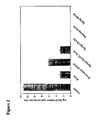
- the marker equivalent concentrations detected in human faecal samples ranged from 6.6 ⁇ 10 9 - 8.7 ⁇ 10 10 marker equivalents per g wet faeces, for waste water samples the range was 1.4 ⁇ 10 10 - 9.1 ⁇ 10 10 marker equivalents per g waste water and cesspit samples ( Figure 1 ).. These values were determined from the most diluted faecal suspensions showing positive and quantifiable qPCR results. The marker was not detected in any higher dilutions nor in the negative controls (the filtered spring water used for dilution).
- the faecal samples contained cultivable E.
- Faecal, cesspit and wastewater samples were collected in a large alpine catchment area in the Northern Calcareous Alps covering an area of approximately 100 km 3 . Additional samples including most of the human individual samples for assessment of the potential broader applicability originate from the larger area of Eastern Austria. The total number of samples was 361. For pooled faecal samples 10 individual samples were combined in a sampling tube and homogenised. Samples were taken in sterile faecal sampling tubes and stored at -20 °C. DNA was extracted from 100 mg of each faecal sample using the Ultra Clean Soil DNA kit (MoBio Laboratories, Inc.
- Primers were designed by aligning the following published 16S rRNA gene sequences using the Vector NTI software package (InforMax Inc., Frederick, USA): AF233408, AF233409, AF233410, AF233411, AF233412, AF233413 (Bernhard and Field, 2000a) Primers were designed from the derived consensus sequence with the Primer Express ® software (Applied Biosystems, Foster City, USA).
- the primers used in the assays described herein were designated BacH_f (5'- CTTGGCCAGCCTTCTGAAAG -3') [SEQ ID NO: 4] and BacH_r (5'-CCCCATCGTCTACCGAAAATAC-3') [containing SEQ ID NO: 5].
- Reaction mixtures (25 ⁇ l total volume) contained 2.5 ⁇ l of template DNA dilution, 200 nM BacH_f, 200 nM BacH_r, 10 ⁇ g bovine serum albumin (Boehringer Mannheim, Mannheim, Germany), 12.5 ⁇ l of iQ Supermix (Biorad) and PCR grade water (Roche Diagnostics, Vienna, Austria) to a final volume of 25 ⁇ l.
- the PCR program was the following: 95 °C for 3 min, 30 cycles of 95 °C for 15 s, 61 °C for 15 s and 72 °C for 45 s followed by a final extension at 72 °C for 3 min. All PCR products were analysed by agarose gel electrophoresis to check for correct amplicon size.
- a total of 14 conventional PCR assays with the newly developed primers were performed from DNA of three human single samples, one pooled sample composed of five human single samples, one pooled sample containing samples from three cesspits, three samples from individual cesspits and six samples of municipal waste water (populations of 20, 600, 1500, 7000, 23000 and 2 million, respectively).
- PCR amplicons were cloned into a pGEM-T Vector (Promega, Madison, USA).
- the sequences gained from the faecal DNA were included in the sequence alignment. It was decided to design two separate but identically labelled TaqMan® MGB probes for the detection and quantification of both dominant sequence types.
- the probes named BacH_pC (FAM-5'-TCATGATCCCATCCTG-3'-NFQ-MGB) [SEQ ID NO: 1] and BacH_pT (FAM-5'- TCATGATGCCATCTTG -3'-NFQ-MGB) [SEQ ID NO: 2] (Table 1) were designed using the Primer Express® software, with FAM being 6-carboxyfluorescein and NFQ-MGB a non-fluorescent quencher with an attached minor groove binder moiety, and synthesized at Applied Biosystems (Warrington, UK).
- the primers and probes were analysed for specificity in-silico by basic local alignment search tool analysis using the NCBI Blast feature (blastn; http://www.ncbi.nlm.nih.gov/blast) and the amplicon was analysed for intra- and intermolecular depoty structures using the mfold software (http://www.bioinfo.rpi.edu/applications/mfold/dna/form1.cgi).
- Assay optimisation included a Mg 2+ concentration gradient between 3 mM and 5 mM, an annealing temperature gradient between 55 °C and 68 °C and a primer matrix experiment with primer concentrations ranging from 100 nM to 500 nM.
- Optimised reaction mixture composition contained 2.5 ⁇ l of template DNA dilution, 200 nM BacH_f, 200 nM BacH_r, 100 nM BacH_pC, 100 nM BacH_pT, 10 ⁇ g bovine serum albumin (Boehringer Mannheim), 12.5 ⁇ l of iQ Supermix (Biorad) and PCR grade water (Roche Diagnostics) to a final volume of 25 ⁇ l.
- the PCR program was the following: 95 °C for 3 min, 50 cycles of 95 °C for 15 s, 61°C for 15 s and 72 °C for 45 s.
- Raw water from an alpine karst spring was filtered through a 0.22 ⁇ m SteritopTM membrane filter (Millipore Corp., Billerica, USA). Seven single faecal samples from humans living in different areas of Eastern Austria and five waste water samples from cesspits and sewers (number of inhabitants ranging from 10 to 100) were analysed in this experiment. One gram of wet faeces or waste water from each sample was suspended in 50 ml of filtered spring water and 100-fold dilution steps were prepared using the same water. One millilitre from each dilution step was filtered through 0.2 ⁇ m polycarbonate membrane filters (Millipore), DNA was extracted and qPCR was performed following the procedures described above.
- E. coli concentrations as CFU per gram sample were determined from suspensions of the same samples as described in (Farnleitner et al., 2005).
- Spring KPAS was sampled in November 2005 and Spring LKAS2 in winter 2004 during base flow conditions.
- Spring LKAS2 was additionally sampled in summer 2005 during a flood event after heavy rainfall in the catchment area.
- the river and the watering brook were sampled in December 2005 after the start of the game feeding season.
- the cesspit was sampled in summer 2005.
- the filtration volumes lay between 0.3 and 4.5 litres, depending on turbidity.
- the cesspit sample was diluted and filtered as described in the detection limit section.
- Example 2 Detection and quantification of ruminant faecal pollution in water
- sequences retrieved by cloning showed very high similarity even between different ruminant sources.
- the 15 sequenced clones had an average length of 82 bp and showed sequence identities above 74%.
- This sequence information from ruminant faecal samples allowed the design of the TaqMan® MGB-probe BacR_p [SEQ ID NO: 3] (see Table 3).
- Subsequent real-time PCR optimisation proved that a Mg 2+ concentration of 5 mM and a primer ratio of at least 1:5 between primers BacR_f and BacR_r was necessary for efficient amplification.
- Table 3 Primers and probe for the detection of ruminant faecal pollution according to the present invention.
- Absolute quantification of the marker equivalents of the ruminant specific marker in the PCR assay was achieved by analysing a dilution series of the plasmid standard with a known amount of marker equivalents in every measurement run.
- the marker equivalents of any unknown sample could be determined from the respective standard regression curves.
- the PCR efficiencies derived from the standard regression curves were above > 98% for all runs with respective correlation coefficients higher than 0.99.
- the lower detection limit was in the range of a few copies of the marker per reaction volume demonstrated by the fact that the standard dilution containing 5 plasmid copies per reaction volume was detectable in all runs.
- Source Scientific name Sample type a Number of samples b BacR positive BacR negative Cattle Bos taurus single 14 14 - Deer Cervus elaphus single 12 12 - Chamois Rupicapra rupicapra single 12 12 - Roe deer Capreolus capreolus single 6 6 - Sheep Ovis aries single 6 6 - Goat Capra hircus single 5 5 - Capricorn Capra ibex single 2 2 - Cesspits and Homo sapiens wastewater 15 - 15 Human Homo sapiens pooled 3 (30) - 3 Horse Equus caballus pooled 3 (30) - 3 Pig Sus scrofa domestica pooled 3 (30) - 3 Fox Vulpes vulpes single 2 - 2 Cat Felis catus single 3 - 3 Dog Canis familiaris single 3 - 3 Chicken Gallus gallus pooled 1 (10) - 1 Turkey Meleagris gallopavo pooled 1 (10) - 1 Swan Cygnus sp.
- a known amount of faecal material from 9 pooled samples from the relevant ruminant animals cattle, deer and chamois was suspended and diluted in 0,2 pre-filtered spring water. After filtration and DNA extraction the marker equivalent concentration was determined, signifying the actual equivalents of marker still detectable after the losses incurred by the preceding steps.
- Detectable concentration a (10 -9 g faeces/filter) Average Range Average Range Cattle 3 3.7 3.0 - 4,3 1.7 1.4 - 2.0 Deer 3 4.5 3.8 - 5.7 1.4 1.1 - 1.6 Chamois 3 4.2 1.6 - 6.7 2.0 0.9 - 3.9
- a Detection limits were calculated as the minimum amount of faeces detectable in a filtration volume assuming a 95% detection probability based on a Poisson distribution, i.e. 6 marker equivalents per PCR reaction volume. They are the reciprocal value of the marker equivalents per g faeces multiplied by 6 for the minimum average marker equivalent number reliably detectable.
- Faecal samples were collected in a large alpine catchment area in the Northern Calcareous Alps covering an area of approximately 100 km 3 (for description of test area see Farnleitner et al. 2005). Additional samples for assessment of the broader applicability originate from the larger area of eastern Austria. For pooled faecal samples 10 individual samples were combined in a sampling tube and mixed thoroughly. Samples were collected in sterile faecal sampling tubes and stored at -20°C. DNA was extracted from 100 mg of each faecal sample using the Ultra Clean Soil DNA kit (MoBio Laboratories, Inc.
- Primers were designed by aligning the following published 16S rRNA gene sequences using the Vector NTI software package (InforMax Inc., Frederick, MD): AF233400, AF233402, AF233403, AF233404 (Bernhard and Field, 2000a); AF294903, AF294904, AF294905, AF294906, AF294908 and AF294909 (Bernhard and Field, 2000b). Primers were designed from the derived consensus sequence with the Primer Express® software (Applied Biosystems, Foster City, CA).
- the primers used in the assays described herein were designated BacR_f (5'-GCGTATCCAACCTTCCCG-3') [SEQ ID NO: 6] and BacR_r (5'-CATCCCCATCCGTTACCG-3') [containing SEQ ID NO: 7] (see Table 3).
- the designed primers were used to amplify a 118 bp fragment from 10 -2 dilutions of DNA extracts from ruminant as well as non-ruminant faecal samples.
- PCR was performed on an iCycler iQ Real-Time Detection System (Biorad, Hercules, CA). Reaction mixtures contained 2.5 ⁇ l of template DNA dilution, 200 nM BacR_f, 200 nM BacR_r, 10 ⁇ g bovine serum albumin (Boehringer Mannheim, Germany), 12.5 ⁇ l of iQ Supermix (Biorad) and PCR grade water (Roche Diagnostics, Vienna, Austria) to a final volume of 25 ⁇ l.
- the PCR program was the following: 95°C for 3 min, 30 cycles of 95°C for 15 s, 60°C for 15 s and 72°C for 45 s followed by a final extension at 72°C for 3 min. All PCR products were analysed by agarose gel electrophoresis to check for correct size of the amplicons.
- PCR was performed from DNA of two single and one pooled faecal sample each for cattle, deer and chamois from representatively selected locations in the catchment area. PCR amplicons were then cloned into a pGEM-T Vector (Promega, Madison, WI). After transformation of Escherichia coli JM 109 with the plasmid and purification of the plasmid DNA with the Quantum Prep Plasmid Miniprep Kit (Biorad) the cloned inserts were sequenced by MWG-Biotech (Ebersberg, Germany). Sequences are available at GenBank under accession numbers DQ364808 - DQ364822.
- the sequences gained from faecal DNA were included in the sequence alignment.
- the TaqMan® MGB probe BacR_p (FAM-5'-CTTCCGAAAGGGAGATT-3'-NFQ-MGB) [SEQ ID NO: 3] was designed using the Primer Express® software, with FAM being 6-carboxyfluorescein and NFQ-MGB a non-fluorescent quencher with an attached minor groove binder moiety (Applied Biosystems, Warrington, UK).
- the primers and probe were analysed for specificity in-silico by basic local alignment search tool analysis using the NCBI Blast feature (http://www.ncbi.nlm.nih.gov/BLAST).
- One of the specific clones (GenBank accession number DQ364808) was used for the generation of a plasmid standard for real-time detection. After re-transformation of competent E. coli with the plasmid and purification of the plasmid DNA with the Plasmid Midi Kit (Qiagen, Hilden, Germany), the concentration of the plasmid standard solution was measured photometrically on a UV spectrophotometer (Hitachi Ltd, Finchamstead, UK) and the standard was diluted in 10-fold steps in a 10 ng/ ⁇ l poly d(I-C) solution as unspecific DNA background (Roche Diagnostics, Mannheim, Germany).
- PCR was monitored on an iCycler iQ Real-Time Detection System.
- PCR assay optimisation included a Mg 2+ concentration gradient between 3 mM and 5 mM, an annealing temperature gradient between 55°C and 68°C and a primer matrix experiment with primer concentrations ranging from 50nM to 500nM.
- Optimised reaction mixture composition contained 2.5 ⁇ l of template DNA dilution, 100 nM BacR_f, 500 nM BacR_r, 100 nM BacR_p, 10 ⁇ g bovine serum albumin (Boehringer Mannheim), 2 mM additional MgCl 2 (Biorad), 12.5 ⁇ l of iQ Supermix (Biorad) and PCR grade water (Roche Diagnostics) to a final volume of 25 ⁇ l.
- the PCR program was the following: 95°C for 3 min, 50 cycles of 95°C for 15 s, 60°C for 15 s and 72°C for 45 s.
- DNA extracted from faecal samples and waste water was diluted 100-fold with sterile bi-distilled water and the marker was detected with the PCR assay.
- Spring KPAS a very well protected spring site with a karstic catchment and a porous aquifer structure
- Spring LKAS2 a relatively vulnerable karstic spring site with a mean water residence time estimated between 0.8 and 1.5 years and a very quick discharge response after precipitation
- a small river in the study area influenced by several villages (River); a watering pond inside a fenced game-feeding compound (Watering pond); a brook running through a different remote game-feeding compound (Watering brook). All sites were sampled once.
- Spring KPAS was sampled in November 2005 and Spring LKAS2 in early summer 2005, during elevated flow conditions.
- Spring LKAS2 was additionally sampled in Summer 2005 during a flood event after heavy rainfall in the catchment's area.
- the river as well as both watering sites were sampled in December 2005 after the start of the game feeding season.
- Three separate filtrations and marker measurements were performed with each sample.
- the filtration volumes lay between 0.3 and 4.5 litres, depending on turbidity.
- pooled faecal samples from cattle and chamois were suspended in fresh spring water and diluted in a total volume of 25 litres to a final concentration of 1.6 ⁇ 10 -5 g per litre.
- Suspensions were kept at 4°C and 1 litre samples were taken sterilely after 4, 11, 19, 27, 33 and 67 days. These samples were filtered, DNA was extracted and marker concentration was measured as described above.
- Example 3 Discrimination between human and ruminant faecal pollution in water
- This example demonstrates the applicability of the described methods for discrimination of faecal pollution from human and ruminant sources.
- the range of detectable pollution is spanned from very low levels, where classical faecal indicator parameters are unable to detect the pollution at all to levels comparable to concentrations encountered in faecal material.
Landscapes
- Chemical & Material Sciences (AREA)
- Life Sciences & Earth Sciences (AREA)
- Analytical Chemistry (AREA)
- Proteomics, Peptides & Aminoacids (AREA)
- Organic Chemistry (AREA)
- Zoology (AREA)
- Wood Science & Technology (AREA)
- Health & Medical Sciences (AREA)
- Engineering & Computer Science (AREA)
- Microbiology (AREA)
- Immunology (AREA)
- Molecular Biology (AREA)
- Biotechnology (AREA)
- Biophysics (AREA)
- Physics & Mathematics (AREA)
- Biochemistry (AREA)
- Bioinformatics & Cheminformatics (AREA)
- General Engineering & Computer Science (AREA)
- General Health & Medical Sciences (AREA)
- Genetics & Genomics (AREA)
- Measuring Or Testing Involving Enzymes Or Micro-Organisms (AREA)
Claims (15)
- Oligonukleotid, umfassend eine Nukleinsäuresequenz, ausgewählt aus der Gruppe bestehend ausTCATGATCCCATCCTG (SEQ ID Nr. 1),TCATGATGCCATCTTG (SEQ ID Nr. 2),TCATGATGCCATCCTG (SEQ ID Nr. 8)oder den dazu komplementären Nukleinsäuresequenzen.
- Oligonukleotid nach Anspruch 1, weiter umfassend einen kleine Furche-Binder (MGB), eine "locked" Nukleinsäure (LNA) und/oder eine Peptidnukleinsäure (PNA).
und/oder
weiter umfassend mindestens eines, bevorzugt zwei, nachweisbare Moleküle,
wobei das nachweisbare Molekül bevorzugt ausgewählt ist aus einem Chromophor, einem Fluorophor, einem chemilumineszenten Molekül, einem Isotop, einem Enzym, einem Coenzym, einem Antigen, einem Antikörper oder Antikörperfragment, oder einem Substrat. - Oligonukleotid nach Anspruch 2, umfassend zwei, nachweisbare Moleküle, wobei eines ein Fluoreszenz-Donor oder -reporter ist und das andere ein Fluoreszenz-Quencher oder -Akzeptor ist,
wobei Fluoreszenz-Donor oder -reporter bevorzugt ausgewählt ist aus FAM, VIC, JOE, HEX, TET, Cy4, Texas Red, ROX, und Fluoreszenz-Quencher oder -Akzeptor ausgewählt ist aus NFQ, TAMRA, BodyPi 564/570, Cy5, Black Hole Quencher 1 (BHQ-1), BHQ-2, BHQ-3,
wobei weiter bevorzugt der Fluoreszenz-Donor oder -reporter FAM ist, und der Fluoreszenz-Quencher oder -Akzeptor NFQ ist. - Verwendung von mindestens einem Oligonukleotid nach einem der Ansprüche 1 bis 3 als eine Sonde zum Nachweis und/oder der Quantifizierung von fäkaler Verunreinigung in einer Umwelt-Probe,
bevorzugt umfassend eine quantitative real-time PCR. - Verwendung von mindestens einem Oligonukleotid nach einem der Ansprüche 1 bis 3 als ein Primer zum Nachweis und/oder der Quantifizierung von fäkaler Verunreinigung in einer Umwelt-Probe,
bevorzugt zusammen mit mindestens einem Oligonukleotid umfassend eine Nukleinsäuresequenz, ausgewählt aus SEQ ID Nrn: 3 bis 7 oder eine dazu komplementäre Nukleinsäuresequenz,
bevorzugt umfassend eine quantitative real-time PCR. - Verwendung nach Anspruch 4 oder 5, wobei die fäkale Verunreinigung eine menschliche oder fäkale Verunreinigung durch Wiederkäuer ist,
bevorzugt zur Unterscheidung zwischen menschlicher und Wiederkäuer-fäkaler Verunreinigung,
und/oder
wobei die Umwelt-Probe ausgewählt ist aus einer Wasserprobe, einer Boden- oder Sedimentprobe, einer Kompostprobe, einer Biofilmprobe, Pflanzenmaterial, einer Fleischprobe oder einer Nahrungsmittelproduktprobe. - Zusammensetzung umfassend mindestens einem Oligonukleotid nach einem der Ansprüche 1 bis 3.
- Kit zum Nachweis und/oder der Quantifizierung von fäkaler Verunreinigung in einer Umwelt-Probe durch real time PCR umfassend mindestens einem Oligonukleotid nach einem der Ansprüche 1 bis 3,
bevorzugt weiter umfassend Primer, die mittel 16S rRNA Gensequenzvergleich gestaltet werden,
wobei weiter bevorzugt mindestens ein Oligonukleotid zur Verwendung als ein Primer geeignet ist, und mindestens ein Oligonukleotid zur Verwendung als eine Sonde geeignet ist. - Kit nach Anspruch 8, wobei das zur Verwendung als eine Sonde geeignete Oligonukleotid eine Nukleinsäuresequenz ausgewählt aus SEQ ID Nm: 1, 2 oder 8 oder eine dazu komplementäre Nukleinsäuresequenz umfasst, bevorzugt weiter umfassend einen Quantifizierungsstandard.
- Kit nach Anspruch 8 oder 9, wobei die fäkale Verunreinigung eine menschliche oder fäkale Verunreinigung durch Wiederkäuer ist,
bevorzugt geeignet zur Unterscheidung zwischen menschlicher und Wiederkäuer-fäkaler Verunreinigung. - Kit nach einem der Ansprüche 8 bis 10, wobei die Umwelt-Probe ausgewählt ist aus einer Wasserprobe, einer Boden- oder Sedimentprobe, einer Kompostprobe, einer Biofilmprobe, Pflanzenmaterial, einer Fleischprobe oder einer Nahrungsmittelproduktprobe.
- Verfahren zum Nachweis und/oder der Quantifizierung von fäkaler Verunreinigung in einer Umwelt-Probe durch Nachweisen und/oder Quantifizieren von mindestens einer Markersequenz, umfassend die folgenden Schrittea) Zur Verfügung stellen einer Umwelt-Probe,b) Extrahieren von Nukleinsäure aus der Probe,c) Unterziehen der extrahierten Nukleinsäure einer real time PCR unter der Verwendung von mindestens zwei Oligonukleotiden nach den Ansprüchen 1 bis 3, wobei eines als ein Primer verwendet wird und das andere als eine Sonde verwendet wird, oder unter der Verwendung eine Zusammensetzug nach Anspruch 7, und gegebenenfalls, unter der Verwendung eines Quantifizierungsstandards mit einer definierten Menge an Markeräquivalenten, undd) gegebenenfalls, Quantifizieren der Markeräquivalente der Probe.
- Verfahren nach Anspruch 12, wobei das als eine Sonde verwendete mindestens eine Oligonukleotid eine Nukleinsäuresequenz ausgewählt aus SEQ ID Nm: 1, 2 oder 8, oder eine dazu komplementäre Nukleinsäuresequenz umfasst.
- Verfahren nach Anspruch 12 oder 13, wobei die fäkale Verunreinigung menschliche oder Wiederkäuer-fäkale Verunreinigung ist,
bevorzugt weiter umfassend eine Unterscheidung zwischen menschlicher oder Wiederkäuer-fäkaler Verunreinigung, wobei Schritt c) weiter bevorzugt eine zweite real time-PCR umfasst.
und/oder
wobei die Umwelt-Probe ausgewählt ist aus einer Wasserprobe, einer Boden- oder Sedimentprobe, einer Kompostprobe, einer Biofilmprobe, Pflanzenmaterial, einer Fleischprobe oder einer Nahrungsmittelproduktprobe. - Verfahren zur Identifizierung eines Mikroorganismus als aus menschlichem und/oder Wiederkäuer-Fäzes abstammend in einer Probe, umfassend eine real time-PCR unter der Verwendung von mindestens zwei Oligonukleotiden nach den Ansprüchen 1 bis 3, wobei eines als ein Primer verwendet wird und das andere als eine Sonde verwendet wird.
Applications Claiming Priority (3)
| Application Number | Priority Date | Filing Date | Title |
|---|---|---|---|
| AT6262006 | 2006-04-11 | ||
| AT6252006 | 2006-04-11 | ||
| PCT/EP2006/012086 WO2007115590A1 (en) | 2006-04-11 | 2006-12-14 | Detection and quantification of faecal pollution in an environmental sample |
Publications (2)
| Publication Number | Publication Date |
|---|---|
| EP2010671A1 EP2010671A1 (de) | 2009-01-07 |
| EP2010671B1 true EP2010671B1 (de) | 2012-01-18 |
Family
ID=37887357
Family Applications (1)
| Application Number | Title | Priority Date | Filing Date |
|---|---|---|---|
| EP06829636A Not-in-force EP2010671B1 (de) | 2006-04-11 | 2006-12-14 | Nachweis und quantifizierung fäkaler verunreinigungen in umweltproben |
Country Status (3)
| Country | Link |
|---|---|
| EP (1) | EP2010671B1 (de) |
| AT (1) | ATE541945T1 (de) |
| WO (1) | WO2007115590A1 (de) |
Families Citing this family (12)
| Publication number | Priority date | Publication date | Assignee | Title |
|---|---|---|---|---|
| CN101659952B (zh) * | 2009-07-14 | 2012-07-18 | 上海之江生物科技有限公司 | 锁核酸和小沟结合物共修饰核酸片段 |
| CN101705285B (zh) * | 2009-12-01 | 2014-05-07 | 北京有色金属研究总院 | 一对扩增钩端螺旋菌属16S rRNA基因的引物以及实时PCR定量检测钩端螺旋菌属的方法 |
| US20130324436A1 (en) | 2010-11-30 | 2013-12-05 | Diagon Kft | Procedure for nucleic acid-based diagnostic determination of bacterial germ counts and kit for this purpose |
| CN102507885B (zh) * | 2011-09-28 | 2014-05-07 | 首都师范大学 | 应用底泥微生物数量预报复杂水环境综合质量的方法 |
| TWI576431B (zh) * | 2015-05-11 | 2017-04-01 | 陳明 | 利用即時定量聚合酶鏈式反應(qPCR)檢測人類胚胎的非整倍體之篩檢平台及其套組 |
| EP3115464B1 (de) * | 2015-07-08 | 2017-05-31 | Institut für Grundwasserökologie IGÖ GmbH | Verfahren zur qualitätssicherung bei der trinkwasser- und/oder grundwasserversorgung |
| RU2741464C2 (ru) | 2016-08-12 | 2021-01-26 | Колопласт А/С | Приспособление для стомического использования |
| CN110241240B (zh) * | 2019-06-25 | 2020-11-06 | 广东省微生物研究所(广东省微生物分析检测中心) | 电缆细菌Candidatus Electronema的检测引物、试剂盒及定量方法 |
| CN110819699A (zh) * | 2019-11-27 | 2020-02-21 | 辽宁大学 | 一种水环境中人类粪便指示物的定量检测方法 |
| CN111118227A (zh) * | 2020-03-27 | 2020-05-08 | 生态环境部华南环境科学研究所 | 一种生物标记组合应用的评价方法 |
| CN111549105B (zh) * | 2020-04-01 | 2024-01-09 | 生态环境部华南环境科学研究所 | 一种识别特异性标记物地区适用性的评价方法 |
| CN113444818B (zh) * | 2021-06-04 | 2023-03-31 | 生态环境部华南环境科学研究所 | 一种有效排除假阳性反应的微生物污染源解析方法 |
Family Cites Families (1)
| Publication number | Priority date | Publication date | Assignee | Title |
|---|---|---|---|---|
| AU2001293164A1 (en) * | 2000-09-29 | 2002-04-08 | The State Of Oregon Acting By And Through The State Board Of Higher Education On Behalf Of Oregon State University | Detection of fecal contamination |
-
2006
- 2006-12-14 EP EP06829636A patent/EP2010671B1/de not_active Not-in-force
- 2006-12-14 AT AT06829636T patent/ATE541945T1/de active
- 2006-12-14 WO PCT/EP2006/012086 patent/WO2007115590A1/en not_active Ceased
Also Published As
| Publication number | Publication date |
|---|---|
| ATE541945T1 (de) | 2012-02-15 |
| EP2010671A1 (de) | 2009-01-07 |
| WO2007115590A1 (en) | 2007-10-18 |
Similar Documents
| Publication | Publication Date | Title |
|---|---|---|
| Reischer et al. | Quantitative PCR method for sensitive detection of ruminant fecal pollution in freshwater and evaluation of this method in alpine karstic regions | |
| Rodrigues et al. | Assessment of the microbiological quality of recreational waters: indicators and methods | |
| Brownell et al. | Confirmation of putative stormwater impact on water quality at a Florida beach by microbial source tracking methods and structure of indicator organism populations | |
| Ahmed et al. | Real-time PCR detection of pathogenic microorganisms in roof-harvested rainwater in Southeast Queensland, Australia | |
| Botes et al. | Application of quantitative PCR for the detection of microorganisms in water | |
| Roslev et al. | State of the art molecular markers for fecal pollution source tracking in water | |
| Seurinck et al. | Detection and quantification of the human‐specific HF183 Bacteroides 16S rRNA genetic marker with real‐time PCR for assessment of human faecal pollution in freshwater | |
| Baums et al. | Luminex detection of fecal indicators in river samples, marine recreational water, and beach sand | |
| Gensberger et al. | Evaluation of quantitative PCR combined with PMA treatment for molecular assessment of microbial water quality | |
| Haugland et al. | Evaluation of genetic markers from the 16S rRNA gene V2 region for use in quantitative detection of selected Bacteroidales species and human fecal waste by qPCR | |
| Pitkänen et al. | Detection of fecal bacteria and source tracking identifiers in environmental waters using rRNA-based RT-qPCR and rDNA-based qPCR assays | |
| Johnston et al. | A real‐time qPCR assay for the detection of the nifH gene of Methanobrevibacter smithii, a potential indicator of sewage pollution | |
| EP2010671B1 (de) | Nachweis und quantifizierung fäkaler verunreinigungen in umweltproben | |
| Ridley et al. | Baseline and storm event monitoring of Bacteroidales marker concentrations and enteric pathogen presence in a rural Canadian watershed | |
| KR20070105980A (ko) | 알 알엔에이를 표적으로 한 미생물의 정량적 해석방법 | |
| Painter et al. | Quantitative assessment of Naegleria fowleri and Escherichia coli concentrations within a Texas reservoir | |
| WO2020021010A1 (en) | Method for assessing fecal pollution in water | |
| Drozd et al. | Evaluating the Occurrence of Host‐Specific Bacteroidales, General Fecal Indicators, and Bacterial Pathogens in a Mixed‐Use Watershed | |
| Caldwell et al. | Mitochondrial DNA as source tracking markers of fecal contamination | |
| US20100112563A1 (en) | Multiplex analysis of nucleic acids | |
| Pickup et al. | Monitoring bacterial pathogens in the environment: advantages of a multilayered approach | |
| Ahmed et al. | Alternative indicators for detection and quantification of faecal pollution | |
| Błaszczyk et al. | Amplified ribosomal DNA restriction analysis (ARDRA) as a screening method for normal and bulking activated sludge sample differentiation | |
| Goel et al. | Molecular biological methods in environmental engineering | |
| Urakawa et al. | Quanti-Tray-Based Amplicon Sequencing (QT-AMP) Application for Fecal Indicator Bacteria Identification After Hurricane Ian |
Legal Events
| Date | Code | Title | Description |
|---|---|---|---|
| PUAI | Public reference made under article 153(3) epc to a published international application that has entered the european phase |
Free format text: ORIGINAL CODE: 0009012 |
|
| 17P | Request for examination filed |
Effective date: 20081110 |
|
| AK | Designated contracting states |
Kind code of ref document: A1 Designated state(s): AT BE BG CH CY CZ DE DK EE ES FI FR GB GR HU IE IS IT LI LT LU LV MC NL PL PT RO SE SI SK TR |
|
| AX | Request for extension of the european patent |
Extension state: AL BA HR MK RS |
|
| RIN1 | Information on inventor provided before grant (corrected) |
Inventor name: REISCHER, GEORG Inventor name: KASPER, DAVID Inventor name: MACH, ROBERT Inventor name: FARNLEITNER, ANDREAS |
|
| 17Q | First examination report despatched |
Effective date: 20090309 |
|
| GRAP | Despatch of communication of intention to grant a patent |
Free format text: ORIGINAL CODE: EPIDOSNIGR1 |
|
| DAX | Request for extension of the european patent (deleted) | ||
| GRAS | Grant fee paid |
Free format text: ORIGINAL CODE: EPIDOSNIGR3 |
|
| GRAA | (expected) grant |
Free format text: ORIGINAL CODE: 0009210 |
|
| RIN1 | Information on inventor provided before grant (corrected) |
Inventor name: MACH, ROBERT Inventor name: FARNLEITNER, ANDREAS Inventor name: REISCHER, GEORG Inventor name: KASPER, DAVID |
|
| AK | Designated contracting states |
Kind code of ref document: B1 Designated state(s): AT BE BG CH CY CZ DE DK EE ES FI FR GB GR HU IE IS IT LI LT LU LV MC NL PL PT RO SE SI SK TR |
|
| REG | Reference to a national code |
Ref country code: GB Ref legal event code: FG4D |
|
| REG | Reference to a national code |
Ref country code: CH Ref legal event code: EP |
|
| REG | Reference to a national code |
Ref country code: IE Ref legal event code: FG4D Ref country code: AT Ref legal event code: REF Ref document number: 541945 Country of ref document: AT Kind code of ref document: T Effective date: 20120215 |
|
| REG | Reference to a national code |
Ref country code: DE Ref legal event code: R096 Ref document number: 602006027227 Country of ref document: DE Effective date: 20120322 |
|
| REG | Reference to a national code |
Ref country code: CH Ref legal event code: NV Representative=s name: E. BLUM & CO. AG PATENT- UND MARKENANWAELTE VSP |
|
| REG | Reference to a national code |
Ref country code: NL Ref legal event code: VDEP Effective date: 20120118 |
|
| LTIE | Lt: invalidation of european patent or patent extension |
Effective date: 20120118 |
|
| PG25 | Lapsed in a contracting state [announced via postgrant information from national office to epo] |
Ref country code: LT Free format text: LAPSE BECAUSE OF FAILURE TO SUBMIT A TRANSLATION OF THE DESCRIPTION OR TO PAY THE FEE WITHIN THE PRESCRIBED TIME-LIMIT Effective date: 20120118 Ref country code: BG Free format text: LAPSE BECAUSE OF FAILURE TO SUBMIT A TRANSLATION OF THE DESCRIPTION OR TO PAY THE FEE WITHIN THE PRESCRIBED TIME-LIMIT Effective date: 20120418 Ref country code: NL Free format text: LAPSE BECAUSE OF FAILURE TO SUBMIT A TRANSLATION OF THE DESCRIPTION OR TO PAY THE FEE WITHIN THE PRESCRIBED TIME-LIMIT Effective date: 20120118 Ref country code: BE Free format text: LAPSE BECAUSE OF FAILURE TO SUBMIT A TRANSLATION OF THE DESCRIPTION OR TO PAY THE FEE WITHIN THE PRESCRIBED TIME-LIMIT Effective date: 20120118 Ref country code: IS Free format text: LAPSE BECAUSE OF FAILURE TO SUBMIT A TRANSLATION OF THE DESCRIPTION OR TO PAY THE FEE WITHIN THE PRESCRIBED TIME-LIMIT Effective date: 20120518 |
|
| PG25 | Lapsed in a contracting state [announced via postgrant information from national office to epo] |
Ref country code: PT Free format text: LAPSE BECAUSE OF FAILURE TO SUBMIT A TRANSLATION OF THE DESCRIPTION OR TO PAY THE FEE WITHIN THE PRESCRIBED TIME-LIMIT Effective date: 20120518 Ref country code: FI Free format text: LAPSE BECAUSE OF FAILURE TO SUBMIT A TRANSLATION OF THE DESCRIPTION OR TO PAY THE FEE WITHIN THE PRESCRIBED TIME-LIMIT Effective date: 20120118 Ref country code: PL Free format text: LAPSE BECAUSE OF FAILURE TO SUBMIT A TRANSLATION OF THE DESCRIPTION OR TO PAY THE FEE WITHIN THE PRESCRIBED TIME-LIMIT Effective date: 20120118 Ref country code: LV Free format text: LAPSE BECAUSE OF FAILURE TO SUBMIT A TRANSLATION OF THE DESCRIPTION OR TO PAY THE FEE WITHIN THE PRESCRIBED TIME-LIMIT Effective date: 20120118 Ref country code: GR Free format text: LAPSE BECAUSE OF FAILURE TO SUBMIT A TRANSLATION OF THE DESCRIPTION OR TO PAY THE FEE WITHIN THE PRESCRIBED TIME-LIMIT Effective date: 20120419 |
|
| PG25 | Lapsed in a contracting state [announced via postgrant information from national office to epo] |
Ref country code: CY Free format text: LAPSE BECAUSE OF FAILURE TO SUBMIT A TRANSLATION OF THE DESCRIPTION OR TO PAY THE FEE WITHIN THE PRESCRIBED TIME-LIMIT Effective date: 20120118 |
|
| PG25 | Lapsed in a contracting state [announced via postgrant information from national office to epo] |
Ref country code: EE Free format text: LAPSE BECAUSE OF FAILURE TO SUBMIT A TRANSLATION OF THE DESCRIPTION OR TO PAY THE FEE WITHIN THE PRESCRIBED TIME-LIMIT Effective date: 20120118 Ref country code: RO Free format text: LAPSE BECAUSE OF FAILURE TO SUBMIT A TRANSLATION OF THE DESCRIPTION OR TO PAY THE FEE WITHIN THE PRESCRIBED TIME-LIMIT Effective date: 20120118 Ref country code: DK Free format text: LAPSE BECAUSE OF FAILURE TO SUBMIT A TRANSLATION OF THE DESCRIPTION OR TO PAY THE FEE WITHIN THE PRESCRIBED TIME-LIMIT Effective date: 20120118 Ref country code: SE Free format text: LAPSE BECAUSE OF FAILURE TO SUBMIT A TRANSLATION OF THE DESCRIPTION OR TO PAY THE FEE WITHIN THE PRESCRIBED TIME-LIMIT Effective date: 20120118 Ref country code: CZ Free format text: LAPSE BECAUSE OF FAILURE TO SUBMIT A TRANSLATION OF THE DESCRIPTION OR TO PAY THE FEE WITHIN THE PRESCRIBED TIME-LIMIT Effective date: 20120118 Ref country code: SI Free format text: LAPSE BECAUSE OF FAILURE TO SUBMIT A TRANSLATION OF THE DESCRIPTION OR TO PAY THE FEE WITHIN THE PRESCRIBED TIME-LIMIT Effective date: 20120118 |
|
| PLBE | No opposition filed within time limit |
Free format text: ORIGINAL CODE: 0009261 |
|
| STAA | Information on the status of an ep patent application or granted ep patent |
Free format text: STATUS: NO OPPOSITION FILED WITHIN TIME LIMIT |
|
| PG25 | Lapsed in a contracting state [announced via postgrant information from national office to epo] |
Ref country code: IT Free format text: LAPSE BECAUSE OF FAILURE TO SUBMIT A TRANSLATION OF THE DESCRIPTION OR TO PAY THE FEE WITHIN THE PRESCRIBED TIME-LIMIT Effective date: 20120118 Ref country code: SK Free format text: LAPSE BECAUSE OF FAILURE TO SUBMIT A TRANSLATION OF THE DESCRIPTION OR TO PAY THE FEE WITHIN THE PRESCRIBED TIME-LIMIT Effective date: 20120118 |
|
| 26N | No opposition filed |
Effective date: 20121019 |
|
| REG | Reference to a national code |
Ref country code: DE Ref legal event code: R097 Ref document number: 602006027227 Country of ref document: DE Effective date: 20121019 |
|
| PG25 | Lapsed in a contracting state [announced via postgrant information from national office to epo] |
Ref country code: ES Free format text: LAPSE BECAUSE OF FAILURE TO SUBMIT A TRANSLATION OF THE DESCRIPTION OR TO PAY THE FEE WITHIN THE PRESCRIBED TIME-LIMIT Effective date: 20120429 |
|
| PG25 | Lapsed in a contracting state [announced via postgrant information from national office to epo] |
Ref country code: MC Free format text: LAPSE BECAUSE OF NON-PAYMENT OF DUE FEES Effective date: 20121231 |
|
| GBPC | Gb: european patent ceased through non-payment of renewal fee |
Effective date: 20121214 |
|
| REG | Reference to a national code |
Ref country code: IE Ref legal event code: MM4A |
|
| REG | Reference to a national code |
Ref country code: FR Ref legal event code: ST Effective date: 20130830 |
|
| PG25 | Lapsed in a contracting state [announced via postgrant information from national office to epo] |
Ref country code: IE Free format text: LAPSE BECAUSE OF NON-PAYMENT OF DUE FEES Effective date: 20121214 |
|
| PG25 | Lapsed in a contracting state [announced via postgrant information from national office to epo] |
Ref country code: GB Free format text: LAPSE BECAUSE OF NON-PAYMENT OF DUE FEES Effective date: 20121214 Ref country code: FR Free format text: LAPSE BECAUSE OF NON-PAYMENT OF DUE FEES Effective date: 20130102 |
|
| PG25 | Lapsed in a contracting state [announced via postgrant information from national office to epo] |
Ref country code: TR Free format text: LAPSE BECAUSE OF FAILURE TO SUBMIT A TRANSLATION OF THE DESCRIPTION OR TO PAY THE FEE WITHIN THE PRESCRIBED TIME-LIMIT Effective date: 20120118 |
|
| PG25 | Lapsed in a contracting state [announced via postgrant information from national office to epo] |
Ref country code: LU Free format text: LAPSE BECAUSE OF NON-PAYMENT OF DUE FEES Effective date: 20121214 |
|
| PG25 | Lapsed in a contracting state [announced via postgrant information from national office to epo] |
Ref country code: HU Free format text: LAPSE BECAUSE OF FAILURE TO SUBMIT A TRANSLATION OF THE DESCRIPTION OR TO PAY THE FEE WITHIN THE PRESCRIBED TIME-LIMIT Effective date: 20061214 |
|
| PGFP | Annual fee paid to national office [announced via postgrant information from national office to epo] |
Ref country code: DE Payment date: 20191217 Year of fee payment: 14 |
|
| PGFP | Annual fee paid to national office [announced via postgrant information from national office to epo] |
Ref country code: AT Payment date: 20191213 Year of fee payment: 14 Ref country code: CH Payment date: 20191220 Year of fee payment: 14 |
|
| REG | Reference to a national code |
Ref country code: DE Ref legal event code: R119 Ref document number: 602006027227 Country of ref document: DE |
|
| REG | Reference to a national code |
Ref country code: CH Ref legal event code: PL |
|
| REG | Reference to a national code |
Ref country code: AT Ref legal event code: MM01 Ref document number: 541945 Country of ref document: AT Kind code of ref document: T Effective date: 20201214 |
|
| PG25 | Lapsed in a contracting state [announced via postgrant information from national office to epo] |
Ref country code: AT Free format text: LAPSE BECAUSE OF NON-PAYMENT OF DUE FEES Effective date: 20201214 |
|
| PG25 | Lapsed in a contracting state [announced via postgrant information from national office to epo] |
Ref country code: LI Free format text: LAPSE BECAUSE OF NON-PAYMENT OF DUE FEES Effective date: 20201231 Ref country code: DE Free format text: LAPSE BECAUSE OF NON-PAYMENT OF DUE FEES Effective date: 20210701 Ref country code: CH Free format text: LAPSE BECAUSE OF NON-PAYMENT OF DUE FEES Effective date: 20201231 |