EP2009313A2 - Verfahren zur Adaption einer Kupplungskennlinie bei vorhandener Kupplungshysterese - Google Patents
Verfahren zur Adaption einer Kupplungskennlinie bei vorhandener Kupplungshysterese Download PDFInfo
- Publication number
- EP2009313A2 EP2009313A2 EP08010675A EP08010675A EP2009313A2 EP 2009313 A2 EP2009313 A2 EP 2009313A2 EP 08010675 A EP08010675 A EP 08010675A EP 08010675 A EP08010675 A EP 08010675A EP 2009313 A2 EP2009313 A2 EP 2009313A2
- Authority
- EP
- European Patent Office
- Prior art keywords
- clutch
- characteristic
- hysteresis
- counter
- error
- Prior art date
- Legal status (The legal status is an assumption and is not a legal conclusion. Google has not performed a legal analysis and makes no representation as to the accuracy of the status listed.)
- Granted
Links
Images
Classifications
-
- F—MECHANICAL ENGINEERING; LIGHTING; HEATING; WEAPONS; BLASTING
- F16—ENGINEERING ELEMENTS AND UNITS; GENERAL MEASURES FOR PRODUCING AND MAINTAINING EFFECTIVE FUNCTIONING OF MACHINES OR INSTALLATIONS; THERMAL INSULATION IN GENERAL
- F16D—COUPLINGS FOR TRANSMITTING ROTATION; CLUTCHES; BRAKES
- F16D48/00—External control of clutches
- F16D48/06—Control by electric or electronic means, e.g. of fluid pressure
-
- F—MECHANICAL ENGINEERING; LIGHTING; HEATING; WEAPONS; BLASTING
- F16—ENGINEERING ELEMENTS AND UNITS; GENERAL MEASURES FOR PRODUCING AND MAINTAINING EFFECTIVE FUNCTIONING OF MACHINES OR INSTALLATIONS; THERMAL INSULATION IN GENERAL
- F16D—COUPLINGS FOR TRANSMITTING ROTATION; CLUTCHES; BRAKES
- F16D2500/00—External control of clutches by electric or electronic means
- F16D2500/30—Signal inputs
- F16D2500/304—Signal inputs from the clutch
- F16D2500/3042—Signal inputs from the clutch from the output shaft
- F16D2500/30421—Torque of the output shaft
- F16D2500/30425—Estimation of the transmitted clutch torque, e.g. applying dynamic torque balance equation
-
- F—MECHANICAL ENGINEERING; LIGHTING; HEATING; WEAPONS; BLASTING
- F16—ENGINEERING ELEMENTS AND UNITS; GENERAL MEASURES FOR PRODUCING AND MAINTAINING EFFECTIVE FUNCTIONING OF MACHINES OR INSTALLATIONS; THERMAL INSULATION IN GENERAL
- F16D—COUPLINGS FOR TRANSMITTING ROTATION; CLUTCHES; BRAKES
- F16D2500/00—External control of clutches by electric or electronic means
- F16D2500/30—Signal inputs
- F16D2500/306—Signal inputs from the engine
- F16D2500/3067—Speed of the engine
-
- F—MECHANICAL ENGINEERING; LIGHTING; HEATING; WEAPONS; BLASTING
- F16—ENGINEERING ELEMENTS AND UNITS; GENERAL MEASURES FOR PRODUCING AND MAINTAINING EFFECTIVE FUNCTIONING OF MACHINES OR INSTALLATIONS; THERMAL INSULATION IN GENERAL
- F16D—COUPLINGS FOR TRANSMITTING ROTATION; CLUTCHES; BRAKES
- F16D2500/00—External control of clutches by electric or electronic means
- F16D2500/50—Problem to be solved by the control system
- F16D2500/502—Relating the clutch
- F16D2500/50236—Adaptations of the clutch characteristics, e.g. curve clutch capacity torque - clutch actuator displacement
-
- F—MECHANICAL ENGINEERING; LIGHTING; HEATING; WEAPONS; BLASTING
- F16—ENGINEERING ELEMENTS AND UNITS; GENERAL MEASURES FOR PRODUCING AND MAINTAINING EFFECTIVE FUNCTIONING OF MACHINES OR INSTALLATIONS; THERMAL INSULATION IN GENERAL
- F16D—COUPLINGS FOR TRANSMITTING ROTATION; CLUTCHES; BRAKES
- F16D2500/00—External control of clutches by electric or electronic means
- F16D2500/70—Details about the implementation of the control system
- F16D2500/706—Strategy of control
- F16D2500/70673—Statistical calculations
Definitions
- the present invention relates to a method for adapting a clutch characteristic, according to the preamble of claim 1.
- the clutch behavior is often modeled by software and adapted during driving at frequent intervals. This allows the clutch to be controlled so that the comfort requirements of an automated clutch is sufficient.
- Coupling characteristics are often used to control automated clutches.
- Such clutch characteristics are representations of the transmittable by the one or more clutches torque on the position of the actuator, which opens and / or closes the clutch. About such representations can be closed from the position of the clutch actuator to the transferable torque of the clutch or from the transmittable torque to the position of the actuator.
- the clutch models also take into account dependencies on the clutch temperature, as this can lead to clutch deformation. Also, a change in the clutch temperature can lead to a change in the coefficient of friction of the clutch lining.
- the object of the present invention is to provide a method which is suitable for adapting a clutch characteristic to the behavior of a clutch which has a hysteresis.
- the object is achieved by a method for adapting a clutch characteristic, which in particular has a hysteresis, wherein at least one characteristic to be obtained from the characteristic is compared with a corresponding measured parameter and if the comparison shows that there is a deviation between the two parameters, which is greater than a predetermined value, an adjustment of the clutch characteristic is made.
- the aim of the method is thus to generate a clutch characteristic which is adapted to the two hysteresis branches of the actual clutch behavior, preferably located between the hysteresis branches. This can be avoided when using the clutch characteristic to consider the past and so further parameters in determining the actuator position and / or the transmitted torque, such as whether the clutch is being opened or closed, to take into account.
- the deviation between the measured characteristic variable and the parameter from the present characteristic curve is greater than a specific value, it can be assumed that the present characteristic curve is not optimally adapted to the real coupling behavior and further adaptation is necessary.
- the invention is not limited to the measurement and / or calculation of a specific parameter, but it is advantageous if the aforementioned measured parameter is the torque transmittable by the coupling.
- the torque is measured, which can be transmitted in the position of the clutch maximum of the clutch. This is particularly possible when the maximum torque is transmitted, so the clutch has a slip.
- the then transmitted torque from the clutch can then be calculated from the behavior of the drive motor and the vehicle acceleration and / or - speed.
- the characteristic may be the engine speed. It is assumed that the engine speed depends on the torque transmitted by the clutch. If the clutch has a slip, the torque transmitted by the clutch is equal to the maximum torque that can be transmitted in the clutch situation. If the torque applied by the engine is known, it can be concluded from the change in speed how high the maximum transmittable torque is. The speed change of the motor is easy to detect, e.g. over a tachometer.
- a multiplicity of different comparisons between the measured and the characteristic numbers obtained from the characteristic curve are used to adapt the characteristic curve.
- a difference between the measured value and the value obtained from the characteristic curve is calculated. The difference is on the one hand linear and thus easy to obtain analytically, on the other hand it can be easily inserted into an existing adaptation program.
- the deviation can be fed back linearly or nonlinearly to the characteristic curve.
- Such feedback allows the characteristic curve to be adapted step by step to the actual clutch behavior with each measurement of the deviation.
- the step-by-step adaptation can also be used to adapt changes in clutch behavior that can occur due to wear or aging.
- the predetermined value is an amount of half the hysteresis width of the clutch characteristic. Since the clutch characteristic is preferably between the two hysteresis branches, it is particularly advantageous if only deviations from the characteristic which are greater than the hysteresis width are detected as errors and lead to an adaptation of the clutch characteristic. Deviations smaller than half the hysteresis width will not be registered.
- Half the hysteresis width can be preset as a value or obtained by the measurements.
- the comparison may be to determine an adaptation error and to determine whether the adaptation error is negative or positive and depending on the sign of the error, a counter that is different for the process "clutch close” different to the process “clutch open”, or count down.
- the dead band is reduced.
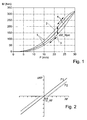
- the coupling behavior of a vehicle clutch is in Fig. 1 shown.
- the clutch characteristic 1 shows a hysteresis with the two Hysteresetracen 2 and 3.
- the one Hystereseast 2 indicates the behavior of the clutch when opening the clutch, the second Hystereseast 3 the behavior when closing the clutch.
- the clutch characteristic 4, which is placed between the two hysteresis branches 2 and 3, is to be adapted to the hysteresis branches.
- an adaptation error AF is determined.
- This adaptation error AF can be, for example, a torque error ⁇ M, ie the difference between a measured and the torque obtained from the characteristic curve, or else a speed error ⁇ n, as the difference between the measured and the estimated engine speed, due to an existing torque error.
- torque hysteresis ⁇ M_Hyst is generally not constant along the clutch characteristic curve. Their value should therefore be averaged along the clutch characteristic.
- the averaged torque hysteresis ⁇ M_Hyst is designated by ⁇ M_Hyst>.
- the adaptation errors are statistically evaluated separately for the operations "Close clutch” and "Open clutch".
- a counter N either N to the process “engage clutch” or N open for the operation “clutch open" incremented when the adaptation error is positive or decremented if the adaptation error is negative. Instead of asking whether the adaptation error is positive or negative It is also possible to determine whether an error is greater than a certain threshold or less than a certain negative threshold.
Landscapes
- Engineering & Computer Science (AREA)
- General Engineering & Computer Science (AREA)
- Physics & Mathematics (AREA)
- Fluid Mechanics (AREA)
- Mechanical Engineering (AREA)
- Hydraulic Clutches, Magnetic Clutches, Fluid Clutches, And Fluid Joints (AREA)
Abstract
Description
- Die vorliegende Erfindung befasst sich mit einem Verfahren zur Adaption einer Kupplungskennlinie, nach dem Oberbegriff des Anspruchs 1.
- Bei Fahrzeugen mit einer oder mehreren automatisierten Kupplungen wird, unabhängig davon, ob das Getriebe ebenfalls automatisiert ist, das Kupplungsverhalten oftmals durch eine Software modelliert und während des Fahrbetriebs in häufigen Abständen adaptiert. Dies erlaubt die Kupplung so anzusteuern, dass den Komfortansprüchen an eine automatisierte Kupplung genügt wird.
- Für die Steuerung der automatisierten Kupplungen werden oftmals Kupplungskennlinien verwendet. Solche Kupplungskennlinie sind Darstellungen des von der oder den Kupplungen übertragbaren Drehmoments über die Stellung des Aktors, der die Kupplung öffnet und/oder schließt. Über solche Darstellungen kann aus der Stellung des Kupplungsaktors auf das von der Kupplung übertragbare Drehmoment geschlossen werden oder von dem übertragbaren Drehmoment auf die Stellung des Aktors.
- Teilweise berücksichtigen die Kupplungsmodelle auch Abhängigkeiten von der Kupplungstemperatur, da es dadurch zur Kupplungsdeformation kommen kann. Auch kann eine Änderung der Kupplungstemperatur zu einer Änderung des Reibwerts des Kupplungsbelags führen.
- Weiter werden die Motordrehzahl des Antriebsmotors berücksichtigt, da hohe Drehzahlen zu Fliehkrafteffekten führen können und auch die Schlupfdrehzahl, deren Abhängigkeit durch das Fluid bei Nasskupplungen bedingt ist.
- Jedoch weisen Kupplungen häufig eine Hysterese auf. Die durch die Kupplung übertragbaren Momente sind also für dieselbe Aktorposition verschieden groß, je nachdem, ob die Kupplung gerade geöffnet oder geschlossen wird.
- Wird eine solche Hysterese nicht berücksichtigt, so erhöht dies die Streuung in den Adaptivparametern des Kupplungsmodells. Damit steigt der mittlere Fehler im eingestellten Kupplungsmoment, was zu einer Minderung im Fahrkomfort führen kann.
- Aufgabe der vorliegenden Erfindung ist es, ein Verfahren zu schaffen, das geeignet ist, eine Kupplungskennlinie an das Verhalten einer Kupplung anzupassen, die eine Hysterese aufweist.
- Diese Aufgabe wird gelöst durch ein Verfahren gemäß Anspruch 1. Weitere bevorzugte Ausführungsformen finden sich in den Unteransprüchen.
- Insbesondere wird die Aufgabe gelöst durch ein Verfahren zur Adaptation einer Kupplungskennlinie, die insbesondere eine Hysterese aufweist, wobei mindestens eine aus der Kennlinie zu erhaltende Kenngröße mit einer entsprechenden gemessenen Kenngröße verglichen wird und falls der Vergleich ergibt, dass zwischen den beiden Kenngrößen eine Abweichung besteht, die größer ist als ein vorbestimmter Wert, eine Angleichung der Kupplungskennlinie vorgenommen wird.
- Ziel des Verfahrens ist es also eine Kupplungskennlinie zu generieren, die an die beiden Hystereseäste des tatsächlichen Kupplungsverhaltens angepasst ist, bevorzugt zwischen den Hystereseästen liegt. Damit kann vermieden werden bei der Verwendung der Kupplungskennlinie die Vergangenheit berücksichtigen zu müssen und so weitere Parameter bei der Ermittlung der Aktorposition und/oder des übertragenen Moments, wie zum Beispiel, ob die Kupplung gerade geöffnet wird oder geschlossen wird, berücksichtigen zu müssen.
- Andererseits wird versucht eine Kupplungskennlinie zu erhalten, die eine möglichst genaue Abbildung des tatsächlichen Kupplungsverhaltens ist, denn so kann die Streuung der Adaptivparameter und damit der mittlere Fehler im eingestellten Kupplungsmoment klein gehalten werden.
- Erreicht wird dies, indem nicht alle Abweichungen der gemessenen Kenngrößen von den aus der Kennlinie erhaltenen Kenngrößen bei der Adaption der Kupplungskennlinie berücksichtigt werden. Sind die Abweichungen sehr klein, kann davon ausgegangen werden, dass die Abweichung aufgrund der Hysterese in dem Kupplungsverhalten herrührt und keine Adaption der Kupplungskennlinie notwendig ist.
- Ist jedoch die Abweichung zwischen der gemessenen Kenngröße und der aus der vorliegenden Kennlinie Kenngröße größer als ein bestimmter Wert, so kann davon ausgegangen werden, dass die vorliegende Kennlinie nicht optimal auf das reale Kupplungsverhalten adaptiert ist und eine weitere Adaption nötig ist.
- Grundsätzlich ist die Erfindung nicht auf die Messung und/oder Berechnung einer bestimmten Kenngröße beschränkt, jedoch ist es vorteilhaft wenn die vorgenannte gemessene Kenngröße das von der Kupplung übertragbare Moment ist. So wird das Drehmoment gemessen, das in der Stellung der Kupplung maximal von der Kupplung übertragen werden kann. Dies ist insbesondere möglich, wenn das maximale Drehmoment übertragen wird, die Kupplung also einen Schlupf aufweist. Das dann von der Kupplung übertragene Drehmoment kann dann aus dem Verhalten des Antriebmotors bzw. der Fahrzeugbeschleunigung und/oder - Geschwindigkeit errechnet werden.
- Auch kann die Kenngröße die Motordrehzahl sein. Dazu wird angenommen, dass die Motordrehzahl von dem durch die Kupplung übertragenen Drehmoment abhängig ist. Weist die Kupplung einen Schlupf auf, so ist das von der Kupplung übertragene Drehmoment gleich dem maximal in der Kupplungssituation übertragbare Drehmoment. Ist das vom Motor aufgebrachte Drehmoment bekannt, so kann aus der Drehzahländerung geschlossen werden, wie hoch das maximal übertragbare Moment ist. Die Drehzahländerung des Motors ist einfach zu erfassen, z.B. über einen Drehzahlmesser.
- Allgemein ist es möglich, dass eine Vielzahl von verschiedenen Vergleichen zwischen den gemessenen und den aus der Kennlinie erhaltenen Kennzahlen zur Adaption der Kennlinie herangezogen werden, in einer besonders vorteilhaften Ausgestaltung der Erfindung wird eine Differenz zwischen der gemessenen und der aus der Kennlinie erhaltenen Wert errechnet. Die Differenzbildung ist einerseits linear und so leicht analytisch zu erhalten, andererseits kann sie unkompliziert in ein bestehendes Adaptionsprogramm eingefügt werden.
- Die Abweichung kann linear oder nichtlinear auf die Kennlinie zurückgekoppelt werden. Eine solche Rückkopplung erlaubt es die Kennlinie bei jeder Messung der Abweichung schrittweise immer weiter an das tatsächliche Kupplungsverhalten anzupassen. Dabei kann durch die schrittweise Adaptation auch Veränderungen des Kupplungsverhaltens, die durch Verschleiß oder Alterung auftreten können adaptiert werden.
- Bevorzugt ist der vorbestimmte Wert als Betrag die Hälfte der Hysteresebreite der Kupplungskennlinie. Da die Kupplungskennlinie bevorzugt zwischen den beiden Hystereseästen liegt ist es besonders vorteilhaft, wenn nur Abweichungen von der Kennlinie, die größer sind als die Hysteresebreite als Fehler erfasst werden und zu einer Anpassung der Kupplungskennlinie führen. Abweichungen, die kleiner sind als die halbe Hysteresebreite werden dabei nicht weiter registriert.
- Die halbe Hysteresebreite kann dabei als Wert voreingestellt sein, oder durch die Messungen erhalten werden.
- Bevorzugt kann der Vergleich darin bestehen einen Adaptationsfehler zu bestimmen und zu ermitteln ob der Adaptionsfehler negativ oder positiv ist und abhängig vom Vorzeichen des Fehlers ein Zähler, der für den Vorgang "Kupplung schließen" unterschiedlich ist zum Vorgang "Kupplung öffnen", hoch zu zählen oder herunterzuzählen.
- Durch dieses statistische Verfahren kann auf die Ermittlung der Totzone über die halbe Hysteresebreite verzichtet werden und so über einen iterativen Prozess eine gute Adaptation erreicht werden.
- Bevorzugt wird, wenn der Zähler für das Schließen der Kupplung kleiner ist als das negative einer bestimmten Schwelle und der Zähler für das Öffnen der Kupplung größer ist als die Schwelle die Totzone vergrößert. Ist der Zähler für dass Schließen der Kupplung größer als eine bestimmte Schwelle und der Zähler für das Öffnen der Kupplung kleiner als das Negative der Schwelle, so wird die Totzone verkleinert.
- Im Weiteren wird die Erfindung durch zwei Ausführungsbeispiele anhand der Zeichnungen weiter beispielhaft erläutert.
- So zeigt:
-
Figur 1 ein Kupplungsmoment- Verstellweg Diagramm, -
Figur 2 eine Rückkopplungsfunktion für Adaptivparameter. - Das Kupplungsverhalten einer Fahrzeugkupplung ist in
Fig. 1 dargestellt. Dort ist das von der Kupplung übertragbare Moment M über der Position P der Kupplung aufgetragen. Die Kupplungskennlinie 1 zeigt dabei eine Hysterese mit den beiden Hystereseästen 2 und 3. Der eine Hystereseast 2 gibt dabei das Verhalten der Kupplung beim Öffnen der Kupplung an, der zweite Hystereseast 3 das Verhalten beim Schließen der Kupplung. Die Kupplungskennlinie 4, die zwischen den beiden Hystereseästen 2 und 3 platziert ist, soll dabei an die Hystereseäste adaptiert werden. - Zur Adaption eines Kupplungsparameters KP, wie zum Beispiel des maximal übertragbaren Moments M, wird ein Adaptionsfehler AF bestimmt. Dieser Adaptionsfehler AF kann zum Beispiel ein Momentenfehler ΔM, also die Differenz zwischen einem gemessenen und dem aus der Kennlinie erhaltenen Moment sein oder aber auch ein Drehzahlfehler Δn, als Differenz zwischen der gemessenen und der geschätzten Motordrehzahl , bedingt durch einen vorhandenen Momentenfehler. Dieser Adaptionsfehler wird linear auf den Kupplungsparameter zurückgekoppelt entsprechend der Gleichung:

- Die Änderung des Kupplungsparameters ΔKP = F1 (AF)=K1 *AF ist in
Fig. 2 dargestellt. Wird eine solche Rückkopplung gewählt, nähert sich die adaptierte Kennlinie 4 dem aktuellen Zustand immer weiter an. Dadurch wird bei einem häufigen Öffnen und Schließen der Kupplung für die adaptierte Kennlinie ein ganzes Streuband, das zwischen den Hystereseästen 2 und 3 liegt. - Wird nun eine Totzone TZ_AF in die Rückkopplungsfunktion eingeführt, die bewirkt, dass Abweichungen, in die dieser Totzone liegen nicht oder wesentlich schwächer berücksichtigt werden als Abweichungen, die außerhalb der Totzone liegen, so wird das resultierende Streuband für die adaptierte Kennlinie geringer. Verwendet man als Adaptionsfehler den Momentenfehler ΔM und wählt als Totzone TZ_ΔM entsprechend die Momentenhysterese ΔM_Hyst (
Fig.1 ) zu
- So erhält man als Folge der Adaption die oben erwähnte mittlere Kupplungskennlinie 4. Durch weitere Vergrößerung der Totzone erhält man wiederum ein Streuband, das über längere Zeit jedoch nicht vollständig abgedeckt wird. Als mittlere adaptierte Kennlinie erhält man dann nicht zwangsläufig die oben erwähnte mittlere Kupplungskennlinie.
- Dabei ist jedoch zu beachten, dass die Momentenhysterese ΔM_Hyst entlang der Kupplungskennlinie in der Regel nicht konstant ist. Ihr Wert sollte demnach entlang der Kupplungskennlinie gemittelt werden. Die gemittelte Momentenhysterese ΔM_Hyst wird mit <ΔM_Hyst> bezeichnet.
- Damit ergibt sich als ideale Totzone:

- Wird als Adaptionsfehler nicht der Momentenfehler ΔM verwendet, so kann man aus dem Adaptionsfehler einen effektiven Momentenfehler ΔMeff bestimmen:

- Unter der Verwendung der Umkehrfunktion F3-1 ergibt sich die entsprechende Totzone für den Adaptionsfehler AF:

- Weiter kann auch eine andere Methode zur Bestimmung der Totzone verwendet werden, insbesondere da die Kupplungshysterese weder über die Lebensdauer der Kupplung noch über die Serienstreuung konstant ist.
- Dabei werden die Adaptionsfehler getrennt für die Vorgänge "Kupplung schließen" und "Kupplung öffnen" statistisch ausgewertet. In einer einfachen Ausführung wird ein Zähler N (entweder Nzu für den Vorgang "Kupplung schließen" oder NOffen für den Vorgang "Kupplung öffnen") hochgezählt, wenn der Adaptionsfehler positiv ist oder heruntergezählt, wenn der Adaptionsfehler negativ ist. Statt der Abfrage, ob der Adaptionsfehler positiv oder negativ ist kann auch bestimmt werden, ob ein Fehler größer als ein bestimmter Schwellenwert ist bzw kleiner als ein bestimmter negativer Schwellenwert ist.
- Besitzen die beiden Zähler entweder Noffen und Nzu verschiedene Vorzeichen und sind die Zählerwerte statistisch signifikant, so kann die Totzone nach folgender Gleichung angepasst werden:


- Durch die Verwendung des Adaptionsalgorithmus kann auf die ansonsten eventuell notwendige Bestimmung der Abhängigkeit zwischen Adaptionsfehler und effektiven Momentenfehler ΔMeff verzichtet werden.
-
- 1
- Hysterese
- 2
- Hystereseast "Kupplung öffnen"
- 3
- Hystereseast "Kupplung schließen"
- 4
- Kennlinie
- M
- Moment
- P
- Position der Kupplung
- AF
- Adaptionsfehler
- ΔKP
- Äderung des Kupplungsparameters
- KP
- Kupplungsparameter
- TZ_AF
- Totzone
Claims (9)
- Verfahren zur Adaptation einer Kupplungskennlinie, die insbesondere eine Hysterese aufweist, dadurch gekennzeichnet, dass mindestens eine aus der Kennlinie zu erhaltende Kenngröße mit einer entsprechenden gemessenen Kenngröße verglichen wird und falls der Vergleich ergibt, dass zwischen den beiden Kenngrößen eine Abweichung besteht, die größer ist als ein vorbestimmter Wert, eine Angleichung der Kupplungskennlinie vorgenommen wird.
- Verfahren nach einem der vorhergehenden Ansprüche, dadurch gekennzeichnet, dass die Kenngröße das von der Kupplung übertragbare Drehmoment ist.
- Verfahren nach einem der vorhergehenden Ansprüche, dadurch gekennzeichnet, dass die Kenngröße die Motordrehzahl ist.
- Verfahren nach einem der vorhergehenden Ansprüche, dadurch gekennzeichnet, dass der Vergleich in einer Differenzbildung zwischen der gemessenen und der aus der Kennlinie erhaltenen Kenngröße besteht.
- Verfahren nach einem der vorhergehenden Ansprüche, dadurch gekennzeichnet, dass die Abweichung linear oder nichtlinear auf die Kennlinie zurückgekoppelt wird.
- Verfahren nach einem der vorhergehenden Ansprüche, dadurch gekennzeichnet, dass der vorbestimmte Wert als Betrag die Hälfte der Hysteresebreite der Kupplungskennlinie ist.
- Verfahren nach einem der Ansprüche 1 bis 5, dadurch gekennzeichnet, dass der vorbestimmte Wert die Hälfte der mittleren Hysteresebreite der Kupplungskennlinie ist.
- Verfahren nach einem der vorhergehenden Ansprüche, dadurch gekennzeichnet, dass der Vergleich darin besteht einen Adaptationsfehler zu bestimmen und ermittelt wird, ob der Adaptionsfehler negativ oder positiv ist und abhängig vom Vorzeichen des Fehlers ein Zähler, der für den Vorgang "Kupplung schließen" unterschiedlich ist zum Vorgang "Kupplung öffnen", hochgezählt oder heruntergezählt wird.
- Verfahren nach dem vorhergehenden Anspruch, dadurch gekennzeichnet, dass wenn der Zähler für das Schließen der Kupplung kleiner ist als das negative einer bestimmten Schwelle und der Zähler für das Öffnen der Kupplung größer ist als die Schwelle, so wird die Totzone vergrößert, ist der Zähler für dass Schließen der Kupplung größer als eine bestimmte Schwelle und der Zähler für das Öffnen der Kupplung kleiner als das Negative der Schwelle, so wird die Totzone verkleinert.
Applications Claiming Priority (1)
| Application Number | Priority Date | Filing Date | Title |
|---|---|---|---|
| DE102007029209 | 2007-06-25 |
Publications (3)
| Publication Number | Publication Date |
|---|---|
| EP2009313A2 true EP2009313A2 (de) | 2008-12-31 |
| EP2009313A3 EP2009313A3 (de) | 2011-09-28 |
| EP2009313B1 EP2009313B1 (de) | 2012-10-31 |
Family
ID=39829093
Family Applications (1)
| Application Number | Title | Priority Date | Filing Date |
|---|---|---|---|
| EP08010675A Not-in-force EP2009313B1 (de) | 2007-06-25 | 2008-06-12 | Verfahren zur Adaption einer Kupplungskennlinie bei vorhandener Kupplungshysterese |
Country Status (3)
| Country | Link |
|---|---|
| US (1) | US8718888B2 (de) |
| EP (1) | EP2009313B1 (de) |
| DE (1) | DE102008028180A1 (de) |
Cited By (5)
| Publication number | Priority date | Publication date | Assignee | Title |
|---|---|---|---|---|
| WO2011107067A3 (de) * | 2010-03-04 | 2011-11-10 | Schaeffler Technologies Gmbh & Co. Kg | Verfahren zur steuerung einer reibungskupplung und vorrichtung hierzu |
| WO2013135449A1 (de) * | 2012-03-12 | 2013-09-19 | Schaeffler Technologies AG & Co. KG | Verfahren zur inbetriebnahme einer reibungskupplung |
| FR2998346A1 (fr) * | 2012-11-20 | 2014-05-23 | Peugeot Citroen Automobiles Sa | Procede et dispositif de conversion d'une consigne de couple devant etre transmis par un embrayage en une consigne de position d'actionneur |
| WO2015158341A3 (de) * | 2014-04-16 | 2015-12-10 | Schaeffler Technologies AG & Co. KG | Verfahren zur parametrierung eines softwaretilgers zur dämpfung von rupfschwingungen |
| WO2019096522A1 (de) * | 2017-11-16 | 2019-05-23 | Zf Friedrichshafen Ag | Verfahren zum kalibrieren eines kennfelds einer arbeitsmaschine sowie arbeitsmaschine |
Families Citing this family (16)
| Publication number | Priority date | Publication date | Assignee | Title |
|---|---|---|---|---|
| KR101028014B1 (ko) * | 2008-10-31 | 2011-04-13 | 현대자동차일본기술연구소 | 하이브리드 차량의 클러치 전달토크 제어 방법 |
| DE102010024938A1 (de) | 2009-07-13 | 2011-01-20 | Luk Lamellen Und Kupplungsbau Beteiligungs Kg | Verfahren zur Regelung eines Antriebsstrangs mit automatischer Reibungskupplung und Antriebsstrang hierzu |
| CN102859224B (zh) * | 2010-04-26 | 2015-06-17 | 舍弗勒技术股份两合公司 | 用于适配汽车动力传动系中离合器的接触点的方法 |
| DE102011103474B4 (de) | 2010-06-24 | 2023-04-20 | Schaeffler Technologies AG & Co. KG | Verfahren zur Ermittlung von Kupplungsparametern, insbesondere von Kupplungshystereseparametern, bei der Erstinbetriebnahme einer Kupplung auf einem Getriebeprüfstand |
| EP2655914B1 (de) * | 2010-12-20 | 2014-09-24 | Volvo Lastvagnar AB | Verfahren und system zur kalibrierung einer geschätzten kupplungskennlinie |
| CN103620253B (zh) * | 2011-03-14 | 2016-12-28 | 舍弗勒技术股份两合公司 | 用于控制摩擦离合器的方法 |
| DE112012002937A5 (de) * | 2011-07-11 | 2014-04-24 | Schaeffler Technologies Gmbh & Co. Kg | Verfahren zur Steuerung einer Trennkupplung in einem hybridischen Antriebsstrang und Antriebsstrang |
| WO2013124121A1 (de) * | 2012-02-22 | 2013-08-29 | Schaeffler Technologies AG & Co. KG | Verfahren zur steuerung einer reibungskupplung |
| US9562576B2 (en) * | 2012-08-06 | 2017-02-07 | Schaeffler Technologies AG & Co. KG | Method for ascertaining a biting point of a friction clutch device |
| GB2531297B (en) * | 2014-10-15 | 2020-05-20 | Gm Global Tech Operations Llc | Determining a torque capacity of a clutch of a passenger car |
| DE102016015258A1 (de) | 2016-12-21 | 2018-06-21 | Daimler Ag | Verfahren zur Adaption einer Kupplungskennlinie |
| KR101832195B1 (ko) | 2017-05-11 | 2018-02-26 | 콘티넨탈 오토모티브 게엠베하 | 클러치 특성 곡선 조정 방법 |
| DE102017111966A1 (de) * | 2017-05-31 | 2018-12-06 | Schaeffler Technologies AG & Co. KG | Verfahren zur Berechnung einer Sollposition eines Kupplungsaktors bei einer Steuerung einer Kupplung |
| CN111692238B (zh) * | 2019-03-11 | 2021-09-07 | 上海汽车变速器有限公司 | 离合器扭矩传递特性自适应优化控制方法 |
| CN115451120B (zh) * | 2022-10-14 | 2024-02-13 | 上海汽车变速器有限公司 | 离合器特性曲线的修正方法、装置、设备及存储介质 |
| CN115451119B (zh) * | 2022-10-14 | 2024-02-13 | 上海汽车变速器有限公司 | 离合器特性曲线的修正方法、装置、设备及存储介质 |
Family Cites Families (4)
| Publication number | Priority date | Publication date | Assignee | Title |
|---|---|---|---|---|
| DE19630014C2 (de) * | 1996-07-25 | 1998-05-20 | Daimler Benz Ag | Automatisch gesteuerte Kupplung |
| DE10159267B4 (de) * | 2000-12-14 | 2015-01-15 | Schaeffler Technologies Gmbh & Co. Kg | Verfahren zur Lageregelung eines Kupplungsaktuators |
| WO2002059493A1 (de) * | 2001-01-24 | 2002-08-01 | Luk Lamellen Und Kupplungsbau Beteiligungs Kg | Verfahren zur anpassung der kupplungskennlinie einer automatisie rten kupplung eines fahrzeuges |
| DE10351906A1 (de) * | 2002-11-11 | 2004-05-27 | Luk Lamellen Und Kupplungsbau Beteiligungs Kg | Verfahren, Vorrichtung und deren Verwendung zum Betrieb eines Kraftfahrzeuges |
-
2008
- 2008-06-12 DE DE102008028180A patent/DE102008028180A1/de not_active Withdrawn
- 2008-06-12 EP EP08010675A patent/EP2009313B1/de not_active Not-in-force
- 2008-06-20 US US12/214,709 patent/US8718888B2/en not_active Expired - Fee Related
Cited By (7)
| Publication number | Priority date | Publication date | Assignee | Title |
|---|---|---|---|---|
| WO2011107067A3 (de) * | 2010-03-04 | 2011-11-10 | Schaeffler Technologies Gmbh & Co. Kg | Verfahren zur steuerung einer reibungskupplung und vorrichtung hierzu |
| US8480540B2 (en) | 2010-03-04 | 2013-07-09 | Schaeffler Technologies AG & Co. KG | Method for controlling a friction clutch and device therefor |
| WO2013135449A1 (de) * | 2012-03-12 | 2013-09-19 | Schaeffler Technologies AG & Co. KG | Verfahren zur inbetriebnahme einer reibungskupplung |
| FR2998346A1 (fr) * | 2012-11-20 | 2014-05-23 | Peugeot Citroen Automobiles Sa | Procede et dispositif de conversion d'une consigne de couple devant etre transmis par un embrayage en une consigne de position d'actionneur |
| WO2015158341A3 (de) * | 2014-04-16 | 2015-12-10 | Schaeffler Technologies AG & Co. KG | Verfahren zur parametrierung eines softwaretilgers zur dämpfung von rupfschwingungen |
| US10197115B2 (en) | 2014-04-16 | 2019-02-05 | Schaeffler Technologies AG & Co. KG | Method for parameterizing a software damper for damping chatter vibrations |
| WO2019096522A1 (de) * | 2017-11-16 | 2019-05-23 | Zf Friedrichshafen Ag | Verfahren zum kalibrieren eines kennfelds einer arbeitsmaschine sowie arbeitsmaschine |
Also Published As
| Publication number | Publication date |
|---|---|
| US20090000901A1 (en) | 2009-01-01 |
| EP2009313A3 (de) | 2011-09-28 |
| DE102008028180A1 (de) | 2009-01-08 |
| US8718888B2 (en) | 2014-05-06 |
| EP2009313B1 (de) | 2012-10-31 |
Similar Documents
| Publication | Publication Date | Title |
|---|---|---|
| EP2009313B1 (de) | Verfahren zur Adaption einer Kupplungskennlinie bei vorhandener Kupplungshysterese | |
| EP2542796B1 (de) | Verfahren zur steuerung einer reibungskupplung und vorrichtung hierzu | |
| DE112010001657B4 (de) | Verfahren und Vorrichtung zur Ermittlung von Kupplungsparametern | |
| DE102012021211B4 (de) | Verfahren zum Ermitteln eines Einstellparameters in einer hydraulischen Aktuatoranordnung für einen Kraftfahrzeugantriebsstrang und Verfahren zum Betätigen einer Reibkupplung eines Kraftfahrzeugantriebsstranges | |
| DE102010039172B4 (de) | Verfahren zur Ermittlung eines Anlegebetätigungsdruckwertes eines reibschlüssigen Schaltelements | |
| DE102010035913A1 (de) | Rückkopplungsalgorithmus zur Wiederherstellung des gewünschten Drehmomentwandlerkupplungsschlupfs für Fahrpedalniederdrückungsvorgänge | |
| DE102018220041B4 (de) | Verfahren zum Lernen eines Berührungspunkts einer Kupplung eines Doppelkupplungsgetriebes | |
| DE102015108640B4 (de) | Berührungspunkt-Korrekturverfahren für Doppelkupplungsgetriebe | |
| DE102019204402A1 (de) | Bestimmung eines Steuerstroms für ein Stetigventil | |
| DE102010055660B4 (de) | Verfahren zum regeln eines drehmomentwandlerschlupfs in einem antriebsstrang | |
| DE112011103807B4 (de) | Verfahren zur Ermittlung des Übersprechverhaltens eines Doppelkupplungssystems | |
| DE10053110A1 (de) | Verfahren zum Betreiben einer Kupplung und Regeleinrichtung zur Durchführung des Verfahrens | |
| EP1321338B1 (de) | Steuereinrichtung für eine Scheibenwischvorrichtung und Verfahren zum Betreiben einer solchen Steuereinrichtung | |
| DE102012209755A1 (de) | Verfahren zur Vermeidung oder Verminderung von Rupfschwingungen | |
| EP1437520A2 (de) | Verfahren zum Steuern einer automatisch betätigten Kupplung | |
| DE102016222878B4 (de) | Verfahren und Vorrichtung zum Einlernen eines Berührungspunkts einer Kupplung | |
| DE102015218691A1 (de) | Verfahren zur Bestimmung eines Reibwertes einer Kupplung eines Doppelkupplungsgetriebesystems | |
| EP1809521A1 (de) | Verfahren zur anpassung der ist-kennlinie einer hydrodynamischen komponente an eine vordefinierte soll-kennlinie bei der endabnahme der hydrodynamischen komponenten | |
| DE102015218994A1 (de) | Verfahren zur Ermittlung eines Anlegepunktes einer Trennkupplung | |
| DE102008014531A1 (de) | Adaptierung einer Kupplungs-Kennlinie | |
| DE102015218884B4 (de) | Verfahren zum Bestimmen mindestens einer Kenngröße einer Trennkupplung, Steuergerät, Computerprogrammprodukt und Datenträger | |
| DE102013202318A1 (de) | Verfahren zur Inbetriebnahme einer Reibungskupplung | |
| DE102009027564B4 (de) | Verfahren zum Betreiben eines Antriebsstrangs | |
| DE102009037400B4 (de) | Betriebs-und Diagnoseverfahren für eine elektromotorische Antriebsvorrichtung mit Rutschkupplung eines bewegbaren Fahrzeugbauteils | |
| EP1566560B1 (de) | Verfahren zum Durchführen einer Tastpunktadaption an zumindest einer Kupplung eines automatisierten Getriebes und Einrichtung, insbesondere zum Durchführen des Verfahrens |
Legal Events
| Date | Code | Title | Description |
|---|---|---|---|
| PUAI | Public reference made under article 153(3) epc to a published international application that has entered the european phase |
Free format text: ORIGINAL CODE: 0009012 |
|
| AK | Designated contracting states |
Kind code of ref document: A2 Designated state(s): AT BE BG CH CY CZ DE DK EE ES FI FR GB GR HR HU IE IS IT LI LT LU LV MC MT NL NO PL PT RO SE SI SK TR |
|
| AX | Request for extension of the european patent |
Extension state: AL BA MK RS |
|
| PUAL | Search report despatched |
Free format text: ORIGINAL CODE: 0009013 |
|
| AK | Designated contracting states |
Kind code of ref document: A3 Designated state(s): AT BE BG CH CY CZ DE DK EE ES FI FR GB GR HR HU IE IS IT LI LT LU LV MC MT NL NO PL PT RO SE SI SK TR |
|
| AX | Request for extension of the european patent |
Extension state: AL BA MK RS |
|
| RIC1 | Information provided on ipc code assigned before grant |
Ipc: F16D 48/06 20060101AFI20110825BHEP |
|
| RAP1 | Party data changed (applicant data changed or rights of an application transferred) |
Owner name: SCHAEFFLER TECHNOLOGIES AG & CO. KG |
|
| 17P | Request for examination filed |
Effective date: 20120328 |
|
| AKX | Designation fees paid |
Designated state(s): AT BE BG CH CY CZ DE DK EE ES FI FR GB GR HR HU IE IS IT LI LT LU LV MC MT NL NO PL PT RO SE SI SK TR |
|
| GRAP | Despatch of communication of intention to grant a patent |
Free format text: ORIGINAL CODE: EPIDOSNIGR1 |
|
| GRAS | Grant fee paid |
Free format text: ORIGINAL CODE: EPIDOSNIGR3 |
|
| GRAA | (expected) grant |
Free format text: ORIGINAL CODE: 0009210 |
|
| AK | Designated contracting states |
Kind code of ref document: B1 Designated state(s): AT BE BG CH CY CZ DE DK EE ES FI FR GB GR HR HU IE IS IT LI LT LU LV MC MT NL NO PL PT RO SE SI SK TR |
|
| REG | Reference to a national code |
Ref country code: GB Ref legal event code: FG4D Free format text: NOT ENGLISH Ref country code: CH Ref legal event code: EP |
|
| REG | Reference to a national code |
Ref country code: AT Ref legal event code: REF Ref document number: 582193 Country of ref document: AT Kind code of ref document: T Effective date: 20121115 |
|
| REG | Reference to a national code |
Ref country code: IE Ref legal event code: FG4D Free format text: LANGUAGE OF EP DOCUMENT: GERMAN |
|
| REG | Reference to a national code |
Ref country code: DE Ref legal event code: R096 Ref document number: 502008008537 Country of ref document: DE Effective date: 20121227 |
|
| REG | Reference to a national code |
Ref country code: LT Ref legal event code: MG4D |
|
| REG | Reference to a national code |
Ref country code: NL Ref legal event code: VDEP Effective date: 20121031 |
|
| PG25 | Lapsed in a contracting state [announced via postgrant information from national office to epo] |
Ref country code: HR Free format text: LAPSE BECAUSE OF FAILURE TO SUBMIT A TRANSLATION OF THE DESCRIPTION OR TO PAY THE FEE WITHIN THE PRESCRIBED TIME-LIMIT Effective date: 20121031 Ref country code: SE Free format text: LAPSE BECAUSE OF FAILURE TO SUBMIT A TRANSLATION OF THE DESCRIPTION OR TO PAY THE FEE WITHIN THE PRESCRIBED TIME-LIMIT Effective date: 20121031 Ref country code: FI Free format text: LAPSE BECAUSE OF FAILURE TO SUBMIT A TRANSLATION OF THE DESCRIPTION OR TO PAY THE FEE WITHIN THE PRESCRIBED TIME-LIMIT Effective date: 20121031 Ref country code: NL Free format text: LAPSE BECAUSE OF FAILURE TO SUBMIT A TRANSLATION OF THE DESCRIPTION OR TO PAY THE FEE WITHIN THE PRESCRIBED TIME-LIMIT Effective date: 20121031 Ref country code: ES Free format text: LAPSE BECAUSE OF FAILURE TO SUBMIT A TRANSLATION OF THE DESCRIPTION OR TO PAY THE FEE WITHIN THE PRESCRIBED TIME-LIMIT Effective date: 20130211 Ref country code: NO Free format text: LAPSE BECAUSE OF FAILURE TO SUBMIT A TRANSLATION OF THE DESCRIPTION OR TO PAY THE FEE WITHIN THE PRESCRIBED TIME-LIMIT Effective date: 20130131 Ref country code: LT Free format text: LAPSE BECAUSE OF FAILURE TO SUBMIT A TRANSLATION OF THE DESCRIPTION OR TO PAY THE FEE WITHIN THE PRESCRIBED TIME-LIMIT Effective date: 20121031 Ref country code: IS Free format text: LAPSE BECAUSE OF FAILURE TO SUBMIT A TRANSLATION OF THE DESCRIPTION OR TO PAY THE FEE WITHIN THE PRESCRIBED TIME-LIMIT Effective date: 20130228 |
|
| PG25 | Lapsed in a contracting state [announced via postgrant information from national office to epo] |
Ref country code: GR Free format text: LAPSE BECAUSE OF FAILURE TO SUBMIT A TRANSLATION OF THE DESCRIPTION OR TO PAY THE FEE WITHIN THE PRESCRIBED TIME-LIMIT Effective date: 20130201 Ref country code: CY Free format text: LAPSE BECAUSE OF FAILURE TO SUBMIT A TRANSLATION OF THE DESCRIPTION OR TO PAY THE FEE WITHIN THE PRESCRIBED TIME-LIMIT Effective date: 20121031 Ref country code: PL Free format text: LAPSE BECAUSE OF FAILURE TO SUBMIT A TRANSLATION OF THE DESCRIPTION OR TO PAY THE FEE WITHIN THE PRESCRIBED TIME-LIMIT Effective date: 20121031 Ref country code: PT Free format text: LAPSE BECAUSE OF FAILURE TO SUBMIT A TRANSLATION OF THE DESCRIPTION OR TO PAY THE FEE WITHIN THE PRESCRIBED TIME-LIMIT Effective date: 20130228 Ref country code: LV Free format text: LAPSE BECAUSE OF FAILURE TO SUBMIT A TRANSLATION OF THE DESCRIPTION OR TO PAY THE FEE WITHIN THE PRESCRIBED TIME-LIMIT Effective date: 20121031 Ref country code: SI Free format text: LAPSE BECAUSE OF FAILURE TO SUBMIT A TRANSLATION OF THE DESCRIPTION OR TO PAY THE FEE WITHIN THE PRESCRIBED TIME-LIMIT Effective date: 20121031 |
|
| PG25 | Lapsed in a contracting state [announced via postgrant information from national office to epo] |
Ref country code: BG Free format text: LAPSE BECAUSE OF FAILURE TO SUBMIT A TRANSLATION OF THE DESCRIPTION OR TO PAY THE FEE WITHIN THE PRESCRIBED TIME-LIMIT Effective date: 20130131 Ref country code: SK Free format text: LAPSE BECAUSE OF FAILURE TO SUBMIT A TRANSLATION OF THE DESCRIPTION OR TO PAY THE FEE WITHIN THE PRESCRIBED TIME-LIMIT Effective date: 20121031 Ref country code: DK Free format text: LAPSE BECAUSE OF FAILURE TO SUBMIT A TRANSLATION OF THE DESCRIPTION OR TO PAY THE FEE WITHIN THE PRESCRIBED TIME-LIMIT Effective date: 20121031 Ref country code: EE Free format text: LAPSE BECAUSE OF FAILURE TO SUBMIT A TRANSLATION OF THE DESCRIPTION OR TO PAY THE FEE WITHIN THE PRESCRIBED TIME-LIMIT Effective date: 20121031 Ref country code: CZ Free format text: LAPSE BECAUSE OF FAILURE TO SUBMIT A TRANSLATION OF THE DESCRIPTION OR TO PAY THE FEE WITHIN THE PRESCRIBED TIME-LIMIT Effective date: 20121031 |
|
| PG25 | Lapsed in a contracting state [announced via postgrant information from national office to epo] |
Ref country code: IT Free format text: LAPSE BECAUSE OF FAILURE TO SUBMIT A TRANSLATION OF THE DESCRIPTION OR TO PAY THE FEE WITHIN THE PRESCRIBED TIME-LIMIT Effective date: 20121031 Ref country code: RO Free format text: LAPSE BECAUSE OF FAILURE TO SUBMIT A TRANSLATION OF THE DESCRIPTION OR TO PAY THE FEE WITHIN THE PRESCRIBED TIME-LIMIT Effective date: 20121031 |
|
| PLBE | No opposition filed within time limit |
Free format text: ORIGINAL CODE: 0009261 |
|
| STAA | Information on the status of an ep patent application or granted ep patent |
Free format text: STATUS: NO OPPOSITION FILED WITHIN TIME LIMIT |
|
| 26N | No opposition filed |
Effective date: 20130801 |
|
| REG | Reference to a national code |
Ref country code: DE Ref legal event code: R097 Ref document number: 502008008537 Country of ref document: DE Effective date: 20130801 |
|
| BERE | Be: lapsed |
Owner name: SCHAEFFLER TECHNOLOGIES A.G. & CO. KG Effective date: 20130630 |
|
| PG25 | Lapsed in a contracting state [announced via postgrant information from national office to epo] |
Ref country code: MC Free format text: LAPSE BECAUSE OF FAILURE TO SUBMIT A TRANSLATION OF THE DESCRIPTION OR TO PAY THE FEE WITHIN THE PRESCRIBED TIME-LIMIT Effective date: 20121031 |
|
| REG | Reference to a national code |
Ref country code: CH Ref legal event code: PL |
|
| GBPC | Gb: european patent ceased through non-payment of renewal fee |
Effective date: 20130612 |
|
| REG | Reference to a national code |
Ref country code: IE Ref legal event code: MM4A |
|
| REG | Reference to a national code |
Ref country code: DE Ref legal event code: R081 Ref document number: 502008008537 Country of ref document: DE Owner name: SCHAEFFLER TECHNOLOGIES AG CO. KG, DE Free format text: FORMER OWNER: SCHAEFFLER TECHNOLOGIES AG CO. KG, 91074 HERZOGENAURACH, DE Effective date: 20140214 Ref country code: DE Ref legal event code: R081 Ref document number: 502008008537 Country of ref document: DE Owner name: SCHAEFFLER TECHNOLOGIES AG & CO. KG, DE Free format text: FORMER OWNER: SCHAEFFLER TECHNOLOGIES AG & CO. KG, 91074 HERZOGENAURACH, DE Effective date: 20140214 Ref country code: DE Ref legal event code: R081 Ref document number: 502008008537 Country of ref document: DE Owner name: SCHAEFFLER TECHNOLOGIES GMBH & CO. KG, DE Free format text: FORMER OWNER: SCHAEFFLER TECHNOLOGIES AG & CO. KG, 91074 HERZOGENAURACH, DE Effective date: 20140214 |
|
| PG25 | Lapsed in a contracting state [announced via postgrant information from national office to epo] |
Ref country code: BE Free format text: LAPSE BECAUSE OF NON-PAYMENT OF DUE FEES Effective date: 20130630 |
|
| PG25 | Lapsed in a contracting state [announced via postgrant information from national office to epo] |
Ref country code: CH Free format text: LAPSE BECAUSE OF NON-PAYMENT OF DUE FEES Effective date: 20130630 Ref country code: GB Free format text: LAPSE BECAUSE OF NON-PAYMENT OF DUE FEES Effective date: 20130612 Ref country code: IE Free format text: LAPSE BECAUSE OF NON-PAYMENT OF DUE FEES Effective date: 20130612 Ref country code: LI Free format text: LAPSE BECAUSE OF NON-PAYMENT OF DUE FEES Effective date: 20130630 |
|
| REG | Reference to a national code |
Ref country code: AT Ref legal event code: MM01 Ref document number: 582193 Country of ref document: AT Kind code of ref document: T Effective date: 20130612 |
|
| PG25 | Lapsed in a contracting state [announced via postgrant information from national office to epo] |
Ref country code: AT Free format text: LAPSE BECAUSE OF NON-PAYMENT OF DUE FEES Effective date: 20130612 |
|
| PG25 | Lapsed in a contracting state [announced via postgrant information from national office to epo] |
Ref country code: MT Free format text: LAPSE BECAUSE OF FAILURE TO SUBMIT A TRANSLATION OF THE DESCRIPTION OR TO PAY THE FEE WITHIN THE PRESCRIBED TIME-LIMIT Effective date: 20121031 |
|
| REG | Reference to a national code |
Ref country code: DE Ref legal event code: R081 Ref document number: 502008008537 Country of ref document: DE Owner name: SCHAEFFLER TECHNOLOGIES AG & CO. KG, DE Free format text: FORMER OWNER: SCHAEFFLER TECHNOLOGIES GMBH & CO. KG, 91074 HERZOGENAURACH, DE Effective date: 20150223 |
|
| PG25 | Lapsed in a contracting state [announced via postgrant information from national office to epo] |
Ref country code: TR Free format text: LAPSE BECAUSE OF FAILURE TO SUBMIT A TRANSLATION OF THE DESCRIPTION OR TO PAY THE FEE WITHIN THE PRESCRIBED TIME-LIMIT Effective date: 20121031 |
|
| REG | Reference to a national code |
Ref country code: FR Ref legal event code: PLFP Year of fee payment: 8 |
|
| PG25 | Lapsed in a contracting state [announced via postgrant information from national office to epo] |
Ref country code: LU Free format text: LAPSE BECAUSE OF NON-PAYMENT OF DUE FEES Effective date: 20130612 Ref country code: HU Free format text: LAPSE BECAUSE OF FAILURE TO SUBMIT A TRANSLATION OF THE DESCRIPTION OR TO PAY THE FEE WITHIN THE PRESCRIBED TIME-LIMIT; INVALID AB INITIO Effective date: 20080612 |
|
| REG | Reference to a national code |
Ref country code: FR Ref legal event code: PLFP Year of fee payment: 9 |
|
| REG | Reference to a national code |
Ref country code: FR Ref legal event code: PLFP Year of fee payment: 10 |
|
| REG | Reference to a national code |
Ref country code: FR Ref legal event code: PLFP Year of fee payment: 11 |
|
| PGFP | Annual fee paid to national office [announced via postgrant information from national office to epo] |
Ref country code: FR Payment date: 20210622 Year of fee payment: 14 |
|
| PG25 | Lapsed in a contracting state [announced via postgrant information from national office to epo] |
Ref country code: FR Free format text: LAPSE BECAUSE OF NON-PAYMENT OF DUE FEES Effective date: 20220630 |
|
| P01 | Opt-out of the competence of the unified patent court (upc) registered |
Effective date: 20230523 |
|
| PGFP | Annual fee paid to national office [announced via postgrant information from national office to epo] |
Ref country code: DE Payment date: 20230821 Year of fee payment: 16 |
|
| REG | Reference to a national code |
Ref country code: DE Ref legal event code: R119 Ref document number: 502008008537 Country of ref document: DE |
|
| PG25 | Lapsed in a contracting state [announced via postgrant information from national office to epo] |
Ref country code: DE Free format text: LAPSE BECAUSE OF NON-PAYMENT OF DUE FEES Effective date: 20250101 |