EP2009201B1 - Waschverfahren und -system - Google Patents
Waschverfahren und -system Download PDFInfo
- Publication number
- EP2009201B1 EP2009201B1 EP07111457A EP07111457A EP2009201B1 EP 2009201 B1 EP2009201 B1 EP 2009201B1 EP 07111457 A EP07111457 A EP 07111457A EP 07111457 A EP07111457 A EP 07111457A EP 2009201 B1 EP2009201 B1 EP 2009201B1
- Authority
- EP
- European Patent Office
- Prior art keywords
- water
- cleaning liquid
- liquid
- façade
- washing
- Prior art date
- Legal status (The legal status is an assumption and is not a legal conclusion. Google has not performed a legal analysis and makes no representation as to the accuracy of the status listed.)
- Not-in-force
Links
Images


Classifications
-
- E—FIXED CONSTRUCTIONS
- E04—BUILDING
- E04G—SCAFFOLDING; FORMS; SHUTTERING; BUILDING IMPLEMENTS OR AIDS, OR THEIR USE; HANDLING BUILDING MATERIALS ON THE SITE; REPAIRING, BREAKING-UP OR OTHER WORK ON EXISTING BUILDINGS
- E04G23/00—Working measures on existing buildings
- E04G23/002—Arrangements for cleaning building facades
Definitions
- the present invention relates to the field of façade wall washing, and more specifically to façade wall washing using aqueous cleaning liquids.
- façade wall washings are ⁇ ) to improve the esthetical appearance of the façade wall and/or to preserve the façade wall and/or ii) to prepare the façade wall for painting or other surface treatments in order to achieve a satisfactory and sustainable result.
- façade walls have been washed by applying water under high pressure, by application of water containing chemicals and/or by blasting techniques.
- the high-pressure washings entail a number of problems.
- the high pressure forces water deep into pores and cavities of the façade wall which results in long drying times, e.g. more than two days, modified moisture properties of the façade wall which may accelerate algae growth and accumulation of dirt, and sometimes even damaging of building materials behind the façade wall surface.
- the long drying times results in long change-over times and high costs of a façade restoration project including washing and painting.
- the force of the high-pressure water may mechanically harm the finish of the façade wall, and excess amounts of water is consumed.
- Washing with chemicals results in a waste water which is harmful to the environment. Further, the chemicals may also be harmful to the operator(s) performing the washing. Also, the chemicals may retain the applied water in the façade and thereby cause longer drying times.
- Blasting techniques also harm the finish of the façade, and the dust resulting from the blasting is a working environment problem.
- a system for washing building windows is disclosed.
- the washing technique relies on the combination of mechanical treatment with brushes and rinsing with purified water.
- the system comprises a washing unit with brushes, purifying means for delivery of purified rinsing water and cable arrangements for restraining the washing unit against the building surface. Cleaning of "other exterior surfaces" is also mentioned.
- the system is clearly adapted for window washing. Further, neither specific adaptations of the system for washing façade walls nor the maximum conductivity of the rinsing water for achieving a satisfactory washing result are discussed.
- an object of the present invention is to provide a method for effectively washing away algae, mould or claudiosporium from a façade wall.
- Another object of the present invention is to provide a façade wall washing method which cause minimal harm to the façade wall and building materials.
- Another object of the invention is to provide a façade wall washing method which allows for quick drying of the washed façade wall.
- Another object of the present invention is to provide a façade wall washing method which is environmentally friendly.
- Another object of the present invention is to provide a façade wall washing method which minimizes the exposure to harmful matter when performing the washing method.
- Another object of the present invention is to provide a façade wall washing method which achieves a good washing result using limited amounts of water.
- the method for washing away algae, mould or claudiosporium from a façade wall comprises the following steps: (a) providing a cleaning liquid, wherein said cleaning liquid consists of water having a conductivity of 0,5 ⁇ S/cm or less; (b) cleaning said façade wall, wherein said cleaning involves application of said cleaning liquid of step (a) onto said façade wall; and (c) allowing used cleaning liquid from step (b) containing dirt to leave the façade wall.
- a "façade wall” refers to the part of a façade of a building not being of glass, i.e. not being windows.
- dirt refers to materials which are unwanted on a façade wall, e.g. deposits, such as calcium sulfate, soot, dust, organic material, such as rubber particles and biological material, such as, algae and mould, comprising claudiosporium, and heavy metals.
- the inventive water destroys the cells of algae, such as green algae, by osmosis: the hypotonic purified water moves across the cell membranes into the cells to balance the difference in salt concentrations, which results in such a high internal pressure that the cells explodes.
- inventive water having a conductivity of 3 ⁇ S/cm or less possesses excellent properties for façade wall washing.
- the inventive water has very few dissolved ions and consequently, a high capacity of dissolving salts and hydrates.
- the inventive water is very reactive towards gypsum, CaSO 4 *2H 2 O, which is often formed on façade walls comprising calcium carbonate, CaCO 3 , such as façade wall comprising limestone, after exposure to acidic rain comprising sulphate.
- the cleaning liquid consists of water having a conductivity of 0.5 ⁇ S/cm or less.
- the cleaning liquid consists of water having a conductivity of 0.1 ⁇ S/cm or less, such as 0.08 ⁇ S/cm or less. It was noted by the inventors that water having such low conductivity has unexpectedly good washing properties. The washing effect increased significantly when the conductivity of the cleaning liquid was brought down to 0.1 ⁇ S/cm or less.
- the cleaning liquid can have a theoretical minimum conductivity of about 0.055 uS/cm. Consequently, in one embodiment, the cleaning liquid consists of water having a conductivity of 0.055 - 0.1 ⁇ S/cm, such as 0.055 - 0.08 ⁇ S/cm.
- the application of cleaning liquid of step (b) comprises continuous application of the cleaning liquid in the form of a mist for a period of 3 hours or less.
- a good washing result is obtained already after less than 3 hours when the cleaning liquid is applied in the form of a mist.
- the period may be as short as 10-60 minutes.
- the mist may be provided by nozzles, which are well known to the person skilled in the art. Shorter application times are beneficial because they lead to lower costs due to lower water consumption and lower labor and construction costs.
- step (b) comprises a first application of the cleaning liquid, and, after a predetermined period of time, a second application of the cleaning liquid.
- the predetermined period of time may be 1-24 hours, such as 1-12 hours.
- the water from the first application is given time to dissolve the dirt on the façade wall, and subsequently, the water from the second application washes away the dirt-containing water from the first application.
- Two separate applications are beneficial because they require less water than one, corresponding continuous application.
- a brushing of the façade wall is performed between the first and the second application of cleaning liquid.
- brushing may be performed simultaneously with the first or second application. Brushing further facilitates the removal of dirt from the façade wall.
- Appropriate brushes are well known to the skilled person.
- the cleaning liquid is applied to the façade wall with a flow of at least 20 liters/minute.
- the method for washing away algae, mould or claudiosporium from a façade wall further comprises the steps of: (d) collecting the used cleaning liquid of step (c); and (e) purifying the collected, used cleaning liquid of step (d).
- Collecting and purifying the used cleaning liquid prevents hazardous components comprised in the algae, mould or claudiosporium from the façade wall to be released to the surroundings, such as the surrounding nature or the sewage system.
- step (d) may involve collecting the used cleaning liquid in a storm drain or street inlet located in the vicinity of the façade wall and step (e) may involve purifying at the washing site.
- Collecting the used cleaning liquid in a nearby storm drain is very convenient, because the water leaving the façade wall is naturally directed to such storm drain and no extra water directing means are required.
- purifying the collected, used cleaning liquid at the washing site no transportation of used cleaning liquid is needed and the purified liquid may be discharged at the washing site, for example in the same storm drain as in which the used cleaning liquid was collected.
- step (a) involves providing the cleaning liquid at the washing site by continuous processing of inlet water.
- the inlet water is having a conductivity of more than 0,5 ⁇ S/cm.
- at the washing site is meant in the vicinity of the façade wall, such as within 100 meters of the façade wall, such as within 50 meters of the façade wall, such as within 30 meters of the façade wall.
- the cleaning liquid does not have to be transported to the washing site. Rather, for example, municipal water available at the washing site may be used as inlet water avoiding all transportations of water. Transportations are costly and inconvenient and further, transportations of the cleaning liquid may impair its quality, i.e., increase the amount of dissolved matter in the cleaning liquid and thus the conductivity.
- step (a) involves providing the cleaning liquid at the washing site by continuous processing of inlet water and, in a further step (f) recycling at least part of the purified, used cleaning liquid of step (e) such that it constitutes at least part of the inlet water of step (a).
- step (f) recycling at least part of the purified, used cleaning liquid, the water consumption of a façade wall washing is decreased.
- the dirt includes one or more of the following: algae and green algae.
- the dirt includes algae.
- the inventors have found that the washing method of the invention effectively removes algae, which are one of the most frequent types of dirt also, traditionally, being very difficult to wash away.
- the dirt includes calcium sulphate compounds, such as gypsum, CaSO 4 *2H 2 O.
- the inventors have found that the washing method effectively removes calcium sulphate compounds, which are also one of the most frequent types of dirt on façade walls.
- Calcium sulphate compounds are mainly formed on the surface of façade walls comprising calcium carbonate, such as façade walls comprising sandstone, limestone, travertine, marble, calcareous sandstone, cement, concrete, and rendering or facing plaster.
- the façade wall comprises calcium carbonate, such as at least 5 % calcium carbonate (w/w), such as at least 10 % calcium carbonate (w/w), such as at least 15 % calcium carbonate (w/w), such as at least 20 % calcium carbonate (w/w), such as at least 25 % calcium carbonate (w/w), such as at least 30 % calcium carbonate (w/w), such as at least 35 % calcium carbonate (w/w), such as at least 40 % calcium carbonate (w/w), such as at least 45 % calcium carbonate (w/w), such as at least 50 % calcium carbonate (w/w), such as at least 55 % calcium carbonate (w/w), such as at least 60 % calcium carbonate (w/w), such as at least 65 % calcium carbonate (w/w). Due to above-mentioned reasons, the method which falls beyond the scope of the present invention is particularly suitable for washing façade walls comprising calcium carbonate.
- the method which falls beyond the scope of the present invention is particularly suitable for
- the method for washing away algae, mould or claudiosporium from a façade wall further comprises the steps of: (g) determining if after-treatment is needed; and, if after-treatment is needed, (h) applying an after-treatment liquid selected from a silicate liquid, a silicone hydride liquid and a fungicide liquid to the façade wall, wherein step (h) is performed after step (c).
- a fungicide liquid may be needed if the dirt comprises algae.
- the after-treatment liquid is selected from a silicate liquid and a silicone hydride liquid.
- the silicate liquid may be a liquid comprising potassium silicate.
- the silicone hydride liquid may be a liquid comprising silane or a combination of silane and siloxane.
- Such after-treatment liquid is particularly suitable if the façade wall comprises calcium carbonate, such as at least 5 % calcium carbonate (w/w).
- a façade wall comprises pores.
- the diameter of such pores should be smaller closer to the surface of the façade wall and larger further into the façade.
- capillary forces "sucks" water from the inner parts of the surface because water is drawn from a larger cavity to a smaller.
- the material surrounding the small-diameter part of the pores close to the surface is transformed.
- façade wall material comprising calcium carbonate may be transformed to gypsum as described above. Then, when the façade wall is cleaned, the formed gypsum is washed off and the shape of the pores is altered.
- the shape of the pores may be altered because the material surrounding the small-diameter part of the pores is worn off. With the altered shape of the pores, water is no longer "sucked” out and the water properties of the façade wall is impaired.
- Applying an after-treatment liquid selected from a silicate liquid and a silicone hydride liquid reforms the original shape of the pores by building up a silicon-containing material, such as SiO 2 , in the part of the pores closest to the surface.
- a silicon-containing material such as SiO 2
- step (g) may comprise at least one measurement of the water absorption capacity of the façade wall.
- the water absorption capacity may be measured by measuring the amount of water absorbed by a limited area of the façade wall during a limited period of time. If the water absorption capacity is high, after-treatment is considered to be needed.
- a "high" water absorption capacity refers to a water absorption capacity which is higher than desired.
- Desired water absorption capacity levels may vary with weather conditions, i.e. geographical location. Further, desired water absorption capacity levels vary between different façade wall materials.
- step (g) may comprise measuring the drying time of the façade wall.
- the drying time may be measured by applying water to a limited area of the façade wall and then measuring the amount of time required for that area to reach a certain degree of dryness. If the drying time is long, after-treatment is considered to be needed.
- a "long" drying time refers to a drying time which is longer than desired. The person skilled in the art is aware of desired drying times. Further, the person skilled in the art understands how to perform such measurement.
- step (g) may comprise two water absorption capacity measurements, wherein the first measurement is performed before step (b) and the second measurement is performed after step (c).
- the difference in water absorption capacity between the second and the first measurement may then be used to determine: i) if after-treatment is needed; and/or ii) the composition of the after-treatment liquid, such as the components of the after-treatment liquid, e.g. silicate(s) and/or silicone hydride(s), and their concentration(s).
- the composition of the after-treatment liquid such as the components of the after-treatment liquid, e.g. silicate(s) and/or silicone hydride(s), and their concentration(s).
- the difference is considered to be large, an after-treatment liquid with a high concentration may be used and/or the period of application according to step (h) may be long.
- the person skilled in the art understands what, during the circumstances, is considered to be a "high concentration" or a "long period”.
- the first measurement may be performed during an initial step determining the status of the façade wall.
- status-determining may comprise visual inspection of the façade wall and analysis of the dirt on the façade wall.
- the method for washing away algae, mould or claudiosporium from a façade wall further comprises the steps of: (i) applying an after-treatment liquid selected from a silicate liquid and a silicone hydride liquid to the façade wall, wherein step (i) is performed after step (c).
- the method comprises steps (a), (b), (c) and (i), and step (i) has the same benefits as described above with regard to application of a silicate liquid or a silicone hydride liquid.
- the after-treatment liquid comprises the cleaning liquid.
- An after-treatment liquid comprising silicate(s) and/or silicone hydride(s) may, for example, preferably be prepared by mixing a silicate or silicone hydride solution with water with a low or substantially no concentration of calcium carbonate, e.g. deionized water.
- the calcium carbonate concentration of normal municipal water is, at many locations, too high. Consequently, it is beneficial to mix the silicate or silicone hydride solution with the cleaning liquid having a conductivity of 3 ⁇ S/cm or less.
- the silicate solution may have a water to potassium silicate ratio of about 30:1 (w/w), such as commercially available KEIM Fixativ.
- the water to potassium silicate ratio of the after-treatment liquid may be about from 250:1 to 45:1 (w/w), depending on the condition of the façade wall and the desired result.
- an after-treatment liquid having a high such ratio such as 180:1
- 180:1 may be applied during a first application, followed by a second application with an after-treatment liquid having a ratio of about 120:1 and a third application with an after-treatment liquid having a ration of about 60:1.
- the person skilled in the art understands how to adapt the ratio of the after-treatment liquid to the needs of a specific façade wall.
- One embodiment which falls beyond the scope of the invention relates to use of a cleaning liquid consisting of water having a conductivity of 0.5 ⁇ S/cm or less, such as 0.1 ⁇ S/cm or less, such as 0.08 ⁇ S/cm or less, for washing away dirt from a façade wall.
- a cleaning liquid consisting of water having a conductivity of 0.5 ⁇ S/cm or less, such as 0.1 ⁇ S/cm or less, such as 0.08 ⁇ S/cm or less, for washing away dirt from a façade wall.
- a cleaning liquid consisting of water having a conductivity of 0.5 ⁇ S/cm or less, such as 0.1 ⁇ S/cm or less, such as 0.08 ⁇ S/cm or less
- a façade wall washing system comprising: a cleaning liquid apparatus for providing a cleaning liquid, wherein the cleaning liquid consists of water having a conductivity of 3 ⁇ S/cm or less, such as 1 ⁇ S/cm or less, such as 0.5 ⁇ S/cm or less, such as 0.1 ⁇ S/cm or less, such as 0.08 ⁇ S/cm or less; and cleaning liquid application means.
- the cleaning liquid consists of water having a conductivity of 3 ⁇ S/cm or less, such as 1 ⁇ S/cm or less, such as 0.5 ⁇ S/cm or less, such as 0.1 ⁇ S/cm or less, such as 0.08 ⁇ S/cm or less; and cleaning liquid application means.
- cleaning liquid application means are.
- at least part of the cleaning liquid application means are of such materials that do not considerably increase the ion content of the cleaning liquid.
- At least one of the cleaning liquid apparatus and the cleaning liquid application means contains conductivity measurement means for measuring the conductivity of the cleaning liquid.
- Such conductivity measurement means may serve to assure the operator that the cleaning liquid has a sufficiently low conductivity to obtain the desired washing result.
- the system further comprises a waste water apparatus for purifying used cleaning liquid.
- a waste water apparatus for purifying used cleaning liquid.
- the waste water resulting from façade wall washings have been let out to the drainage system without purification.
- waste water commonly contains contaminants which are harmful to humans, such as the to operator(s) performing the washing, and to the environment.
- the waste water may contain heavy metals, such as heavy metals resulting from the pigments of eroding façade paint, such as linoleum based paint.
- the waste water apparatus comprises a purification device for removing particles, organic compounds and heavy metals from the used cleaning liquid.
- the purification device comprises: a prefilter for removing particulate matter; an organic compounds removing device comprising activated carbon; and and an ion exchange filter for removing heavy metals, wherein: the prefilter is arranged upstream the organic compounds removing device and the ion exchange filter; and the organic compounds removing device and the ion exchange filter may be the same or different.
- the purification device further comprises a chelating ion exchange filter for removing heavy metals arranged downstream the prefilter. The chelating ion exchange filter further reduces the amount of heavy metal to very low levels, which may be necessary to fulfill environmental policy requirements.
- the waste water apparatus and the cleaning liquid apparatus are functionally connected so that purified used cleaning liquid from the waste water apparatus can be recycled and used as input to the cleaning liquid apparatus for providing cleaning liquid.
- Such recycling reduces the water consumption of a façade washing operation.
- the waste water apparatus comprises: a collecting device for collecting used cleaning liquid, wherein the collecting device is adapted for being arranged in a storm drain; and a pump device for pumping collected, used cleaning liquid from the collecting device to the purification device.
- a collecting device for collecting used cleaning liquid, wherein the collecting device is adapted for being arranged in a storm drain; and a pump device for pumping collected, used cleaning liquid from the collecting device to the purification device.
- the collecting device comprises a trough and a flange for maintaining the trough in a storm drain.
- the system according to the invention further comprises means for routing purified, used aqueous cleaning liquid obtainable from the purification device to a storm drain, thereby by-passing the collecting device.
- a storm drain thereby by-passing the collecting device.
- the cleaning liquid apparatus for providing a cleaning liquid is comprising: a water inlet; a prefilter for removing particulate solids, the prefilter having an inlet and an outlet; means for routing water from the water inlet to the prefilter; a pump having an inlet and an outlet; means for routing water from the prefilter to the pump; a recycling water inlet arranged between the water inlet and the pump; a reverse osmosis device comprising an inlet, a drainage outlet and a deionized water outlet; means for routing water from the pump to the reverse osmosis device; an ion exchange device comprising at least one ion exchange filter, the ion exchange device having an inlet and an outlet; means for routing water from the deionized water outlet to the ion exchange device; a purified water tank comprising an inlet, a purified water outlet and a recycling water outlet, wherein the recycling water outlet is arranged at the top of the purified water tank; means for routing water
- An arrangement "at the top of the purified water tank” refers to an arrangement so as to eliminate substantially all air from the purified water tank when the flow in through the inlet of the purified water tank is bigger than the flow out of the purified water outlet of the purified water tank.
- the purified water tank is substantially air-free.
- step (a) involving providing the cleaning liquid at the washing site by continuous processing of inlet water comprises: (a1) prefiltering inlet water for removal of particulate solids; (b1) pumping water obtained from step (a1) and optionally step (f1); (c1) subjecting water obtained from step (b1) to reverse osmosis, thereby generating a drainage flow and a deionized water flow; (d1) subjecting the deionized water flow from step (c1) to ion exchange treatment; (e1) collecting water resulting from step (d1) in an air-free tank; (f1) recycling water from the tank of step (e1) by subjecting it to at least steps (b1)-(e1); and (g1) obtaining water having a conductivity of 0,5 ⁇ S/cm or less from the tank of step (e1).
- the cleaning liquid apparatus for providing a cleaning liquid entails a number of advantages.
- the apparatus requires only one pump. By starting the only pump required, which is arranged upstream the reverse osmosis device, the complete purification process is started. Consequently, only one on/off switch is required on the apparatus, which makes it easy to operate.
- the pumping action of the pump is also sufficient for maintaining an overpressure in the purified water tank (the air free tank). Consequently, water from the purified water tank can be recycled to the recycling water inlet arranged upstream the pump, without the aid of a second pump.
- recycling of water from the purified water tank to a recycling water inlet arranged downstream the pump would require a second pump which makes the apparatus more complex and expensive.
- Arranging the recycling water outlet at the top of the pressurized purified water tank results in a tank substantially free from air. Minimizing the amount of air in the purified water tank is essential for maintaining the conductivity of the water at a low level. Further, the continuous recycling of water allows for continuous removal of impurities resulting from the components of the apparatus. The man skilled in the art understands that the same benefits also concerns to the corresponding method.
- an apparatus as described below may be used.
- Municipal water may be used as inlet water.
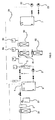
- the apparatus comprises the following components: a water inlet 1; a prefilter 2 for removing particulate solids, the prefilter 2 having an inlet and an outlet; means for routing water from the water inlet 1 to the prefilter 2; a prefiltered water tank 9, the prefiltered water tank containing a recycling water inlet 4 and further containing a prefiltered water inlet, and an outlet; means for routing water from the prefilter 2 to the prefiltered water tank 9; a pump 3 having an inlet and an outlet; means for routing water from the prefiltered water tank 9 to the pump 3; a reverse osmosis device 5 comprising an inlet, a drainage outlet and a deionized water outlet; means for routing water from the pump 3 to the reverse osmosis device 5; an ion exchange device 6 comprising a first and second ion exchange filter 61, 62 arranged parallel to each other and upstream a third ion exchange filter 63, the ion exchange device 6 having an inlet and an outlet;
- An arrangement “at the top of the purified water tank” refers to an arrangement so as to eliminate substantially all air from the purified water tank when the flow in through the inlet of the purified water tank is bigger than the flow out of the purified water outlet of the purified water tank.
- an “ion exchange filter” refers to any ion exchange means comprising ion exchange material, including ion exchange columns.
- the ion exchange filters may comprise an anionic exchanger bed, an cationic exchanger bed and/or a mixed bed.
- Conductivity measuring means 64 are arranged at two positions: i) downstream the first and second column 61, 62, but upstream the third column 63; and ii) downstream the third column 63.
- the purification grade of the prefilter 1 is 1 ⁇ m with a ⁇ -value of 80-90 %.
- the pump is made of acid-proof stainless steel.
- the inlet 1 is adapted for being connected to a fire hydrant.
- Municipal water provided by a fire hydrant in Sweden has a conductivity of about 200-300 ⁇ S/cm. After passing the reverse osmosis device 5, the conductivity of the water is about 1-5 ⁇ S/cm.
- the conductivity After the first or second ion exchange filter 61, 62, the conductivity is about 0.1 ⁇ S/cm, and after the third ion exchange filter, about 0.06 - 0.07 ⁇ S/cm.
- the final conductivity depends e.g. on the temperature of the water.
- the purified water outlet of the purified water tank 7 is connected to hose 10.
- the inside of the hose 10 is made of PVC, which is a beneficial hose material in that aspect.
- At least one pump 11 is arranged on the hose 10 to pressurize the cleaning liquid for application on a façade wall.
- additional hoses may be connected to the purified water outlet. Additional pumps may be arranged on these hoses, providing water at different pressures.
- the hose 10 is connected to application means for application of the cleaning liquid to a façade wall, such as nozzles.
- an apparatus as described below may be used.
- Municipal water may be used as inlet water.
- water is provided at the inlet (not shown) and downstream the inlet are arranged in series: an activated carbon filter 20, such as a filter from Norit; a particle filter 2, such as a 5 ⁇ m particle filter, such as a filter from Osmonics; an anti-scalant dosing device 21, such as Nalco 191; a flow regulator; and an open tank 9, such as a tank essentially made of polyethylene.
- an activated carbon filter 20 such as a filter from Norit
- a particle filter 2 such as a 5 ⁇ m particle filter, such as a filter from Osmonics
- an anti-scalant dosing device 21 such as Nalco 191
- a flow regulator such as a tank essentially made of polyethylene.
- a flow regulator Downstream an outlet of the open tank 9 are arranged in series: a flow regulator; a pump 3, such as a pump made out of stainless steel, such as SS316; a reverse osmosis device 5, such as a RO-filter unit having 99 % rejection, such as DOW BW30; two parallel ion exchange filters 61, 62, such as ion exchange filters comprising a mixed bed, such as Rohm & Haas MB20 filters, each having a flow regulator arranged at their inlet and outlet; a conductivity measuring device 64; an ion exchange filter 63, such as an ion exchange filter comprising a mixed bed, such as a Rohm & Haas MB20 filter; a conductivity measuring device 64; and a closed tank 7, such as a tank made essentially of reinforced polypropylene.
- a pump 3 such as a pump made out of stainless steel, such as SS316
- a reverse osmosis device 5 such as a RO-filter unit having 99
- a waste water outlet of the reverse osmosis device 5 Downstream a waste water outlet of the reverse osmosis device 5 is arranged a waste water return. Between two flow regulators arranged on the waste water return is a connection to a point upstream the pump 3, but downstream the flow regulator downstream the open tank 9.
- a closed tank outlet arranged at the top of the closed tank 7 is connected to a recycling water inlet 4 of the open tank 9 through a recirculation pipe 24.
- Downstream an outlet arranged at the lower part of the closed tank 7 are arranged two separate pipes, wherein one is having a flow regulator and downstream of that, a low pressure pump 22, such as a pump from Grundfos, and the other is having a flow regulator and downstream of that, a high pressure pump 23, such as a Cat pump.
- Water pipes leading clean water such as water pipes arranged downstream the reverse osmosis device, are made of polypropylene.
- Other water pipes are made of PVC.
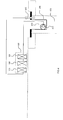
- an embodiment of a waste water apparatus for purifying used cleaning liquid comprises a collecting device 300 adapted to being arranged in a storm drain 400.
- used cleaning liquid leaving a façade wall is naturally directed the storm drain 400 and collected in the collecting device 300 being arranged therein.
- the apparatus comprises a pumping device 200 comprising a pump 201 which is arranged inside the collecting device 300.
- a regulator starting the pump 201 when at least the inlet of the pump 201 is covered with water may be arranged at the pump.
- a purification device 100 is arranged downstream the pumping device 200 such that collected, used cleaning liquid may be pumped from the collecting device 300 to the purification device 100.
- the purification device 100 comprises, arranged in series: a prefilter 101, such as a particle filter, such as a 10-500 ⁇ m particle filter, such as a 50-150 ⁇ m particle filter, preferably a 50 ⁇ m particle filter, or alternatively, a 100 ⁇ m particle filter; an organic compounds removing device, such as a device comprising activated carbon, such as a device comprising activated carbon and ion exchange material 102, such as a device comprising activated carbon and ion exchange material for removal of heavy metals; and an ion exchange filter, such as a chelating ion exchange filter 103 for removing heavy metals.
- An outlet of the purification device 100 is connected to discharge means 303 arranged on the collecting device 300.
- the discharge means 303 may route purified, used aqueous cleaning liquid from the purification device 100 through a storm drain 400 to the sewer, thereby by-passing the collecting device 300 arranged in the storm drain 400.
- Used cleaning liquid collecting device for arrangement in a storm drain
- an embodiment of the collecting device 300 comprises a trough 301 and a flange 302 for maintaining the trough 301 in a storm drain 400.
- the flange 302 rests upon the same surface (the contact surface) as a storm drain lid or grating does when covering the storm drain 400.
- the flange has a lower part 305, wherein at least part of the lower part is being in contact with the contact surface when the collecting device 300 is arranged in a storm drain 400.
- a packing such as a rubber packing, (not shown) may be provided on the lower part for preventing that water leaks into the storm drain.
- a pump (not shown) for pumping used cleaning liquid collected in the trough 301 to a purification device (not shown) may be arranged inside the trough 301.
- At least one pipe 303 is arranged at the flange 302 or trough 301 so that liquids can flow through the collecting device 300 down the storm drain 400 to the sewer.
- Each pipe 303 has a upper and lower opening, wherein the lower opening, when the collecting device 300 is arranged in a storm drain 400, is facing the inside of the storm drain 400 and the upper opening is opposite to the lower opening facing open air.
- a connecting means 304 for connecting a pipe 303 to a hose (not shown) is arranged at the upper opening of the pipe(s) 303.
- the hose(s) may, at its (their) other end, be connected to the purification device (not shown) and/or another apparatus producing discharge water.
Landscapes
- Engineering & Computer Science (AREA)
- Architecture (AREA)
- Chemical & Material Sciences (AREA)
- Chemical Kinetics & Catalysis (AREA)
- Electrochemistry (AREA)
- Mechanical Engineering (AREA)
- Civil Engineering (AREA)
- Structural Engineering (AREA)
- Cleaning By Liquid Or Steam (AREA)
- Detergent Compositions (AREA)
Claims (8)
- Verfahren zum Abwaschen von Algen, Schimmelpilz oder Claudiosporium von einer Fassadenwand, wobei das Verfahren die folgenden Schritte umfasst:(a) Bereitstellen einer Reinigungsflüssigkeit, wobei die Reinigungsflüssigkeit aus Wasser einer Leitfähigkeit von höchstens 0,5 µS/cm besteht;(b) Reinigen der Fassadenwand, wobei das Reinigen das Aufbringen der Reinigungsflüssigkeit aus Schritt (a) auf die Fassadenwand umfasst; und(c) Ermöglichen, dass verbrauchte Reinigungsflüssigkeit aus Schritt (b), welche Algen, Schimmelpilz oder Claudiosporum enthält, die Fassadenwand verlässt.
- Verfahren nach Anspruch 1, wobei die Reinigungsflüssigkeit aus Wasser einer Leitfähigkeit von höchstens 0,1 µS/cm besteht.
- Verfahren nach einem der vorhergehenden Ansprüche, welches ferner die folgenden Schritte umfasst:(d) Sammeln der verbrauchten Reinigungsflüssigkeit aus Schritt (c) und(e) Aufbereiten der gesammelten verbrauchten Reiningungsflüssigkeit aus Schritt (d).
- Verfahren nach Anspruch 3, wobei der Schritt (d) das Sammeln der verbrauchten Reiningungsflüssigkeit in einer Regenwasserleitung umfasst, die in Nachbarschaft der Fassadenwand angeordnet ist; und der Schritt (e) das Aufbereiten am Waschort umfasst.
- Verfahren nach einem der vorhergehenden Ansprüche, wobei der Schritt (a) das Bereitstellen der Reiningungsflüssigkeit am Waschort durch kontinuierliches Verarbeiten von einlaufendem Wasser umfasst.
- Verfahren nach einem der vorhergehenden Ansprüche, welches ferner die folgenden Schritte umfasst:(g) Ermitteln, ob eine Nachbehandlung erforderlich ist; und, wenn eine Nachbehandlung erforderlich ist,(h) Aufbringen einer Nachbehandlungsflüssigkeit, die aus einer Silikatflüssigkeit, einer Silikonhydridflüssigkeit und einer Fungizidflüssigkeit ausgewählt ist, auf die Fassadenwand, wobei der Schritt (h) nach dem Schritt (c) durchgeführt wird.
- Verfahren nach Anspruch 6, wobei die Nachbehandlungsflüssigkeit aus einer Silikatflüssigkeit und einer Silikonhydridflüssigkeit ausgewählt ist.
- Verfahren nach Anspruch 7, wobei die Nachbehandlungsflüssigkeit die Reinigungsflüssigkeit umfasst.
Priority Applications (5)
| Application Number | Priority Date | Filing Date | Title |
|---|---|---|---|
| PT07111457T PT2009201E (pt) | 2007-06-29 | 2007-06-29 | Método e sistema de lavagem |
| ES07111457T ES2370807T3 (es) | 2007-06-29 | 2007-06-29 | Procedimiento y sistema de lavado. |
| EP07111457A EP2009201B8 (de) | 2007-06-29 | 2007-06-29 | Waschverfahren und -system |
| DK07111457.3T DK2009201T3 (da) | 2007-06-29 | 2007-06-29 | Vaskefremgangsmåde- og system |
| AT07111457T ATE519003T1 (de) | 2007-06-29 | 2007-06-29 | Waschverfahren und -system |
Applications Claiming Priority (1)
| Application Number | Priority Date | Filing Date | Title |
|---|---|---|---|
| EP07111457A EP2009201B8 (de) | 2007-06-29 | 2007-06-29 | Waschverfahren und -system |
Publications (3)
| Publication Number | Publication Date |
|---|---|
| EP2009201A1 EP2009201A1 (de) | 2008-12-31 |
| EP2009201B1 true EP2009201B1 (de) | 2011-08-03 |
| EP2009201B8 EP2009201B8 (de) | 2012-02-29 |
Family
ID=38670658
Family Applications (1)
| Application Number | Title | Priority Date | Filing Date |
|---|---|---|---|
| EP07111457A Not-in-force EP2009201B8 (de) | 2007-06-29 | 2007-06-29 | Waschverfahren und -system |
Country Status (5)
| Country | Link |
|---|---|
| EP (1) | EP2009201B8 (de) |
| AT (1) | ATE519003T1 (de) |
| DK (1) | DK2009201T3 (de) |
| ES (1) | ES2370807T3 (de) |
| PT (1) | PT2009201E (de) |
Families Citing this family (2)
| Publication number | Priority date | Publication date | Assignee | Title |
|---|---|---|---|---|
| EP3257821B1 (de) * | 2016-06-13 | 2020-05-13 | Peter Fuchs | Mobile vorrichtung zur reinigung von abwasser aus einer fassadenreinigung |
| WO2018141375A1 (en) * | 2017-02-01 | 2018-08-09 | EICHERT, Jochen | Cleaning device for cleaning vertically oriented surfaces of large heights |
Family Cites Families (3)
| Publication number | Priority date | Publication date | Assignee | Title |
|---|---|---|---|---|
| CH546100A (fr) * | 1971-11-22 | 1974-02-28 | Michoud Roger | Procede de nettoyage de la surface d'un materiau de construction, notamment d'une facade. |
| GB9304625D0 (en) * | 1993-03-06 | 1993-04-21 | Bournemouth University Higher | Method and apparatus for treatment structures of building or civil engineering materials |
| US7665173B2 (en) * | 2004-11-05 | 2010-02-23 | Simonette Dallas W | Automated cleaning system for structures |
-
2007
- 2007-06-29 PT PT07111457T patent/PT2009201E/pt unknown
- 2007-06-29 ES ES07111457T patent/ES2370807T3/es active Active
- 2007-06-29 DK DK07111457.3T patent/DK2009201T3/da active
- 2007-06-29 EP EP07111457A patent/EP2009201B8/de not_active Not-in-force
- 2007-06-29 AT AT07111457T patent/ATE519003T1/de active
Also Published As
| Publication number | Publication date |
|---|---|
| ATE519003T1 (de) | 2011-08-15 |
| ES2370807T3 (es) | 2011-12-22 |
| PT2009201E (pt) | 2011-11-10 |
| EP2009201A1 (de) | 2008-12-31 |
| EP2009201B8 (de) | 2012-02-29 |
| DK2009201T3 (da) | 2011-11-14 |
Similar Documents
| Publication | Publication Date | Title |
|---|---|---|
| KR101363853B1 (ko) | 건축물용 우수 포집 및 재활용 시스템 | |
| CN103046632A (zh) | 一种市政雨水调蓄系统 | |
| EP2008974B1 (de) | System zum Reinigen von Reinigungswasser | |
| WO2018018656A1 (zh) | 基于膜分离技术的雨水截污装置 | |
| CN106499042A (zh) | 一种雨水收集回用处理装置 | |
| EP2009201B1 (de) | Waschverfahren und -system | |
| CN205241448U (zh) | 移动式一体化河道净化系统 | |
| WO2018018657A1 (zh) | 基于膜分离技术的雨水截污方法 | |
| KR101239498B1 (ko) | 비점오염물질 처리장치 | |
| WO2012059992A1 (ja) | 給排水施設用構造体 | |
| KR20140026931A (ko) | 빗물관리이용시스템 | |
| CN108017961A (zh) | 一种耐沾污排水盲管 | |
| KR100511208B1 (ko) | 재활용 및 홍수방지용 빗물저수조 시스템 | |
| CN107261852A (zh) | 一种铁污染微滤/超滤膜的清洗设备及清洗方法 | |
| KR200398164Y1 (ko) | 초기 빗물처리장치 | |
| CN101353217B (zh) | 一种干法赤泥堆场的回水分流利用方法及其回水分流结构 | |
| CN207237725U (zh) | 一种铁污染微滤/超滤膜的清洗设备 | |
| EP2008973A1 (de) | Reinigung des Abwassers aus der Fassadenreinigung | |
| CN200985558Y (zh) | 一种露天堆放场所的污水排放处理装置 | |
| CN204959950U (zh) | 一种雨水自动收集排空装置 | |
| CN211595298U (zh) | 一种洗漱废水处理回用冲厕的集成化设备 | |
| CN2448822Y (zh) | 复合型污水处理装置 | |
| KR102720999B1 (ko) | 고강도 콘크리트 기반 빗물 저장 및 순환 시스템 | |
| CN201071309Y (zh) | 一种干法赤泥堆场的回水分流结构 | |
| DE102007059549A1 (de) | Luft - Waschanlage (Feinstaubwaschanlage) für Feinstoffe, Feststoffe, Pollen etc. |
Legal Events
| Date | Code | Title | Description |
|---|---|---|---|
| PUAI | Public reference made under article 153(3) epc to a published international application that has entered the european phase |
Free format text: ORIGINAL CODE: 0009012 |
|
| AK | Designated contracting states |
Kind code of ref document: A1 Designated state(s): AT BE BG CH CY CZ DE DK EE ES FI FR GB GR HU IE IS IT LI LT LU LV MC MT NL PL PT RO SE SI SK TR |
|
| AX | Request for extension of the european patent |
Extension state: AL BA HR MK RS |
|
| 17P | Request for examination filed |
Effective date: 20090629 |
|
| 17Q | First examination report despatched |
Effective date: 20090803 |
|
| AKX | Designation fees paid |
Designated state(s): AT BE BG CH CY CZ DE DK EE ES FI FR GB GR HU IE IS IT LI LT LU LV MC MT NL PL PT RO SE SI SK TR |
|
| RAP1 | Party data changed (applicant data changed or rights of an application transferred) |
Owner name: EKOFASAD AB |
|
| GRAP | Despatch of communication of intention to grant a patent |
Free format text: ORIGINAL CODE: EPIDOSNIGR1 |
|
| GRAS | Grant fee paid |
Free format text: ORIGINAL CODE: EPIDOSNIGR3 |
|
| GRAA | (expected) grant |
Free format text: ORIGINAL CODE: 0009210 |
|
| AK | Designated contracting states |
Kind code of ref document: B1 Designated state(s): AT BE BG CH CY CZ DE DK EE ES FI FR GB GR HU IE IS IT LI LT LU LV MC MT NL PL PT RO SE SI SK TR |
|
| REG | Reference to a national code |
Ref country code: GB Ref legal event code: FG4D |
|
| REG | Reference to a national code |
Ref country code: CH Ref legal event code: EP |
|
| REG | Reference to a national code |
Ref country code: IE Ref legal event code: FG4D |
|
| REG | Reference to a national code |
Ref country code: DE Ref legal event code: R096 Ref document number: 602007016227 Country of ref document: DE Effective date: 20111006 |
|
| REG | Reference to a national code |
Ref country code: CH Ref legal event code: NV Representative=s name: FIAMMENGHI-FIAMMENGHI |
|
| RAP2 | Party data changed (patent owner data changed or rights of a patent transferred) |
Owner name: EKOFASAD AB |
|
| REG | Reference to a national code |
Ref country code: SE Ref legal event code: TRGR |
|
| REG | Reference to a national code |
Ref country code: PT Ref legal event code: SC4A Free format text: AVAILABILITY OF NATIONAL TRANSLATION Effective date: 20111028 |
|
| REG | Reference to a national code |
Ref country code: DK Ref legal event code: T3 |
|
| REG | Reference to a national code |
Ref country code: NL Ref legal event code: T3 |
|
| REG | Reference to a national code |
Ref country code: ES Ref legal event code: FG2A Ref document number: 2370807 Country of ref document: ES Kind code of ref document: T3 Effective date: 20111222 |
|
| LTIE | Lt: invalidation of european patent or patent extension |
Effective date: 20110803 |
|
| PG25 | Lapsed in a contracting state [announced via postgrant information from national office to epo] |
Ref country code: IS Free format text: LAPSE BECAUSE OF FAILURE TO SUBMIT A TRANSLATION OF THE DESCRIPTION OR TO PAY THE FEE WITHIN THE PRESCRIBED TIME-LIMIT Effective date: 20111203 Ref country code: LT Free format text: LAPSE BECAUSE OF FAILURE TO SUBMIT A TRANSLATION OF THE DESCRIPTION OR TO PAY THE FEE WITHIN THE PRESCRIBED TIME-LIMIT Effective date: 20110803 |
|
| PG25 | Lapsed in a contracting state [announced via postgrant information from national office to epo] |
Ref country code: LV Free format text: LAPSE BECAUSE OF FAILURE TO SUBMIT A TRANSLATION OF THE DESCRIPTION OR TO PAY THE FEE WITHIN THE PRESCRIBED TIME-LIMIT Effective date: 20110803 Ref country code: PL Free format text: LAPSE BECAUSE OF FAILURE TO SUBMIT A TRANSLATION OF THE DESCRIPTION OR TO PAY THE FEE WITHIN THE PRESCRIBED TIME-LIMIT Effective date: 20110803 Ref country code: SI Free format text: LAPSE BECAUSE OF FAILURE TO SUBMIT A TRANSLATION OF THE DESCRIPTION OR TO PAY THE FEE WITHIN THE PRESCRIBED TIME-LIMIT Effective date: 20110803 Ref country code: GR Free format text: LAPSE BECAUSE OF FAILURE TO SUBMIT A TRANSLATION OF THE DESCRIPTION OR TO PAY THE FEE WITHIN THE PRESCRIBED TIME-LIMIT Effective date: 20111104 Ref country code: CY Free format text: LAPSE BECAUSE OF FAILURE TO SUBMIT A TRANSLATION OF THE DESCRIPTION OR TO PAY THE FEE WITHIN THE PRESCRIBED TIME-LIMIT Effective date: 20110803 |
|
| PG25 | Lapsed in a contracting state [announced via postgrant information from national office to epo] |
Ref country code: SK Free format text: LAPSE BECAUSE OF FAILURE TO SUBMIT A TRANSLATION OF THE DESCRIPTION OR TO PAY THE FEE WITHIN THE PRESCRIBED TIME-LIMIT Effective date: 20110803 Ref country code: CZ Free format text: LAPSE BECAUSE OF FAILURE TO SUBMIT A TRANSLATION OF THE DESCRIPTION OR TO PAY THE FEE WITHIN THE PRESCRIBED TIME-LIMIT Effective date: 20110803 |
|
| PLBI | Opposition filed |
Free format text: ORIGINAL CODE: 0009260 |
|
| PG25 | Lapsed in a contracting state [announced via postgrant information from national office to epo] |
Ref country code: RO Free format text: LAPSE BECAUSE OF FAILURE TO SUBMIT A TRANSLATION OF THE DESCRIPTION OR TO PAY THE FEE WITHIN THE PRESCRIBED TIME-LIMIT Effective date: 20110803 Ref country code: EE Free format text: LAPSE BECAUSE OF FAILURE TO SUBMIT A TRANSLATION OF THE DESCRIPTION OR TO PAY THE FEE WITHIN THE PRESCRIBED TIME-LIMIT Effective date: 20110803 |
|
| 26 | Opposition filed |
Opponent name: QLEAN SCANDINAVIA AB Effective date: 20120430 |
|
| PLAX | Notice of opposition and request to file observation + time limit sent |
Free format text: ORIGINAL CODE: EPIDOSNOBS2 |
|
| REG | Reference to a national code |
Ref country code: DE Ref legal event code: R026 Ref document number: 602007016227 Country of ref document: DE Effective date: 20120430 |
|
| PLBB | Reply of patent proprietor to notice(s) of opposition received |
Free format text: ORIGINAL CODE: EPIDOSNOBS3 |
|
| PG25 | Lapsed in a contracting state [announced via postgrant information from national office to epo] |
Ref country code: BG Free format text: LAPSE BECAUSE OF FAILURE TO SUBMIT A TRANSLATION OF THE DESCRIPTION OR TO PAY THE FEE WITHIN THE PRESCRIBED TIME-LIMIT Effective date: 20111103 |
|
| PG25 | Lapsed in a contracting state [announced via postgrant information from national office to epo] |
Ref country code: MT Free format text: LAPSE BECAUSE OF FAILURE TO SUBMIT A TRANSLATION OF THE DESCRIPTION OR TO PAY THE FEE WITHIN THE PRESCRIBED TIME-LIMIT Effective date: 20110803 |
|
| PGFP | Annual fee paid to national office [announced via postgrant information from national office to epo] |
Ref country code: MC Payment date: 20131223 Year of fee payment: 7 Ref country code: PT Payment date: 20131217 Year of fee payment: 7 |
|
| PGFP | Annual fee paid to national office [announced via postgrant information from national office to epo] |
Ref country code: LU Payment date: 20131231 Year of fee payment: 7 Ref country code: ES Payment date: 20131218 Year of fee payment: 7 |
|
| PG25 | Lapsed in a contracting state [announced via postgrant information from national office to epo] |
Ref country code: TR Free format text: LAPSE BECAUSE OF FAILURE TO SUBMIT A TRANSLATION OF THE DESCRIPTION OR TO PAY THE FEE WITHIN THE PRESCRIBED TIME-LIMIT Effective date: 20110803 |
|
| PG25 | Lapsed in a contracting state [announced via postgrant information from national office to epo] |
Ref country code: HU Free format text: LAPSE BECAUSE OF FAILURE TO SUBMIT A TRANSLATION OF THE DESCRIPTION OR TO PAY THE FEE WITHIN THE PRESCRIBED TIME-LIMIT Effective date: 20070629 |
|
| PGFP | Annual fee paid to national office [announced via postgrant information from national office to epo] |
Ref country code: GB Payment date: 20140625 Year of fee payment: 8 Ref country code: IE Payment date: 20140624 Year of fee payment: 8 |
|
| PGFP | Annual fee paid to national office [announced via postgrant information from national office to epo] |
Ref country code: NL Payment date: 20140623 Year of fee payment: 8 Ref country code: AT Payment date: 20140624 Year of fee payment: 8 Ref country code: SE Payment date: 20140625 Year of fee payment: 8 Ref country code: FI Payment date: 20140624 Year of fee payment: 8 |
|
| PGFP | Annual fee paid to national office [announced via postgrant information from national office to epo] |
Ref country code: DK Payment date: 20140625 Year of fee payment: 8 |
|
| PGFP | Annual fee paid to national office [announced via postgrant information from national office to epo] |
Ref country code: DE Payment date: 20140702 Year of fee payment: 8 Ref country code: CH Payment date: 20140704 Year of fee payment: 8 |
|
| PGFP | Annual fee paid to national office [announced via postgrant information from national office to epo] |
Ref country code: FR Payment date: 20140626 Year of fee payment: 8 |
|
| PGFP | Annual fee paid to national office [announced via postgrant information from national office to epo] |
Ref country code: IT Payment date: 20140627 Year of fee payment: 8 |
|
| REG | Reference to a national code |
Ref country code: PT Ref legal event code: MM4A Free format text: LAPSE DUE TO NON-PAYMENT OF FEES Effective date: 20141229 |
|
| PG25 | Lapsed in a contracting state [announced via postgrant information from national office to epo] |
Ref country code: PT Free format text: LAPSE BECAUSE OF NON-PAYMENT OF DUE FEES Effective date: 20141229 Ref country code: MC Free format text: LAPSE BECAUSE OF NON-PAYMENT OF DUE FEES Effective date: 20140630 Ref country code: LU Free format text: LAPSE BECAUSE OF NON-PAYMENT OF DUE FEES Effective date: 20140629 |
|
| PGFP | Annual fee paid to national office [announced via postgrant information from national office to epo] |
Ref country code: BE Payment date: 20140702 Year of fee payment: 8 |
|
| REG | Reference to a national code |
Ref country code: DE Ref legal event code: R119 Ref document number: 602007016227 Country of ref document: DE |
|
| REG | Reference to a national code |
Ref country code: DK Ref legal event code: EBP Effective date: 20150630 |
|
| PG25 | Lapsed in a contracting state [announced via postgrant information from national office to epo] |
Ref country code: IT Free format text: LAPSE BECAUSE OF NON-PAYMENT OF DUE FEES Effective date: 20150629 Ref country code: FI Free format text: LAPSE BECAUSE OF NON-PAYMENT OF DUE FEES Effective date: 20150629 |
|
| REG | Reference to a national code |
Ref country code: CH Ref legal event code: PL |
|
| REG | Reference to a national code |
Ref country code: SE Ref legal event code: EUG |
|
| REG | Reference to a national code |
Ref country code: AT Ref legal event code: MM01 Ref document number: 519003 Country of ref document: AT Kind code of ref document: T Effective date: 20150629 |
|
| GBPC | Gb: european patent ceased through non-payment of renewal fee |
Effective date: 20150629 |
|
| PG25 | Lapsed in a contracting state [announced via postgrant information from national office to epo] |
Ref country code: SE Free format text: LAPSE BECAUSE OF NON-PAYMENT OF DUE FEES Effective date: 20150630 |
|
| REG | Reference to a national code |
Ref country code: ES Ref legal event code: FD2A Effective date: 20160229 |
|
| REG | Reference to a national code |
Ref country code: NL Ref legal event code: MM Effective date: 20150701 |
|
| 29U | Proceedings interrupted after grant according to rule 142 epc |
Effective date: 20151116 |
|
| REG | Reference to a national code |
Ref country code: IE Ref legal event code: MM4A |
|
| REG | Reference to a national code |
Ref country code: FR Ref legal event code: ST Effective date: 20160229 |
|
| RAP2 | Party data changed (patent owner data changed or rights of a patent transferred) |
Owner name: EKOFASAD AB |
|
| PG25 | Lapsed in a contracting state [announced via postgrant information from national office to epo] |
Ref country code: IE Free format text: LAPSE BECAUSE OF NON-PAYMENT OF DUE FEES Effective date: 20150629 Ref country code: GB Free format text: LAPSE BECAUSE OF NON-PAYMENT OF DUE FEES Effective date: 20150629 Ref country code: NL Free format text: LAPSE BECAUSE OF NON-PAYMENT OF DUE FEES Effective date: 20150701 Ref country code: CH Free format text: LAPSE BECAUSE OF NON-PAYMENT OF DUE FEES Effective date: 20150630 Ref country code: ES Free format text: LAPSE BECAUSE OF NON-PAYMENT OF DUE FEES Effective date: 20140630 Ref country code: LI Free format text: LAPSE BECAUSE OF NON-PAYMENT OF DUE FEES Effective date: 20150630 Ref country code: DE Free format text: LAPSE BECAUSE OF NON-PAYMENT OF DUE FEES Effective date: 20160101 |
|
| PG25 | Lapsed in a contracting state [announced via postgrant information from national office to epo] |
Ref country code: AT Free format text: LAPSE BECAUSE OF NON-PAYMENT OF DUE FEES Effective date: 20150629 Ref country code: FR Free format text: LAPSE BECAUSE OF NON-PAYMENT OF DUE FEES Effective date: 20150630 |
|
| PG25 | Lapsed in a contracting state [announced via postgrant information from national office to epo] |
Ref country code: DK Free format text: LAPSE BECAUSE OF NON-PAYMENT OF DUE FEES Effective date: 20150630 |
|
| PG25 | Lapsed in a contracting state [announced via postgrant information from national office to epo] |
Ref country code: BE Free format text: LAPSE BECAUSE OF NON-PAYMENT OF DUE FEES Effective date: 20150630 |
|
| 29W | Proceedings resumed after grant [after interruption of proceedings according to rule 142 epc] |
Effective date: 20211001 |
|
| PLAB | Opposition data, opponent's data or that of the opponent's representative modified |
Free format text: ORIGINAL CODE: 0009299OPPO |
|
| R26 | Opposition filed (corrected) |
Opponent name: QLEAN SCANDINAVIA AB Effective date: 20120430 |
|
| PUAJ | Public notification under rule 129 epc |
Free format text: ORIGINAL CODE: 0009425 |
|
| 32PN | Public notification |
Free format text: COMMUNICATION PURSUANT TO RULE 142 EPC (RESUMPTION OF PROCEEDINGS UNDER RULE 142(2) EPC DATED 20.05.2021) |
|
| PLBD | Termination of opposition procedure: decision despatched |
Free format text: ORIGINAL CODE: EPIDOSNOPC1 |
|
| PLAM | Termination of opposition procedure: information related to despatch of decision modified |
Free format text: ORIGINAL CODE: EPIDOSCOPC1 |
|
| PUAJ | Public notification under rule 129 epc |
Free format text: ORIGINAL CODE: 0009425 |
|
| 32PN | Public notification |
Free format text: DECISION TO DISCONTINUE THE OPPOSITION PROCEEDINGS (EPO FORM 2351O DATED 01/07/2022) |
|
| PUAJ | Public notification under rule 129 epc |
Free format text: ORIGINAL CODE: 0009425 |
|
| PLAU | Termination of opposition procedure: information related to despatch of decision deleted |
Free format text: ORIGINAL CODE: EPIDOSDOPC1 |
|
| PLBD | Termination of opposition procedure: decision despatched |
Free format text: ORIGINAL CODE: EPIDOSNOPC1 |
|
| PLAU | Termination of opposition procedure: information related to despatch of decision deleted |
Free format text: ORIGINAL CODE: EPIDOSDOPC1 |
|
| PLBD | Termination of opposition procedure: decision despatched |
Free format text: ORIGINAL CODE: EPIDOSNOPC1 |
|
| 32PN | Public notification |
Free format text: DECISION TO DISCONTINUE THE OPPOSITION PROCEEDINGS (EPO FORM 2351 DATED 01/07/2022) |
|
| REG | Reference to a national code |
Ref country code: DE Ref legal event code: R100 Ref document number: 602007016227 Country of ref document: DE |
|
| PLBM | Termination of opposition procedure: date of legal effect published |
Free format text: ORIGINAL CODE: 0009276 |
|
| 27C | Opposition proceedings terminated |
Effective date: 20221223 |