EP2008192B1 - System und verfahren zum dynamischen upgraden / downgraden einer konferenzsitzung - Google Patents
System und verfahren zum dynamischen upgraden / downgraden einer konferenzsitzung Download PDFInfo
- Publication number
- EP2008192B1 EP2008192B1 EP07753563.1A EP07753563A EP2008192B1 EP 2008192 B1 EP2008192 B1 EP 2008192B1 EP 07753563 A EP07753563 A EP 07753563A EP 2008192 B1 EP2008192 B1 EP 2008192B1
- Authority
- EP
- European Patent Office
- Prior art keywords
- full
- duplex communication
- communication mode
- duplex
- ptt
- Prior art date
- Legal status (The legal status is an assumption and is not a legal conclusion. Google has not performed a legal analysis and makes no representation as to the accuracy of the status listed.)
- Active
Links
Images


Classifications
-
- H—ELECTRICITY
- H04—ELECTRIC COMMUNICATION TECHNIQUE
- H04L—TRANSMISSION OF DIGITAL INFORMATION, e.g. TELEGRAPHIC COMMUNICATION
- H04L65/00—Network arrangements, protocols or services for supporting real-time applications in data packet communication
- H04L65/40—Support for services or applications
- H04L65/4061—Push-to services, e.g. push-to-talk or push-to-video
-
- H—ELECTRICITY
- H04—ELECTRIC COMMUNICATION TECHNIQUE
- H04L—TRANSMISSION OF DIGITAL INFORMATION, e.g. TELEGRAPHIC COMMUNICATION
- H04L12/00—Data switching networks
- H04L12/02—Details
- H04L12/16—Arrangements for providing special services to substations
- H04L12/18—Arrangements for providing special services to substations for broadcast or conference, e.g. multicast
- H04L12/1813—Arrangements for providing special services to substations for broadcast or conference, e.g. multicast for computer conferences, e.g. chat rooms
- H04L12/1827—Network arrangements for conference optimisation or adaptation
-
- H—ELECTRICITY
- H04—ELECTRIC COMMUNICATION TECHNIQUE
- H04L—TRANSMISSION OF DIGITAL INFORMATION, e.g. TELEGRAPHIC COMMUNICATION
- H04L67/00—Network arrangements or protocols for supporting network services or applications
- H04L67/14—Session management
-
- H—ELECTRICITY
- H04—ELECTRIC COMMUNICATION TECHNIQUE
- H04L—TRANSMISSION OF DIGITAL INFORMATION, e.g. TELEGRAPHIC COMMUNICATION
- H04L67/00—Network arrangements or protocols for supporting network services or applications
- H04L67/14—Session management
- H04L67/142—Managing session states for stateless protocols; Signalling session states; State transitions; Keeping-state mechanisms
-
- H—ELECTRICITY
- H04—ELECTRIC COMMUNICATION TECHNIQUE
- H04M—TELEPHONIC COMMUNICATION
- H04M3/00—Automatic or semi-automatic exchanges
- H04M3/22—Arrangements for supervision, monitoring or testing
- H04M3/36—Statistical metering, e.g. recording occasions when traffic exceeds capacity of trunks
-
- H—ELECTRICITY
- H04—ELECTRIC COMMUNICATION TECHNIQUE
- H04M—TELEPHONIC COMMUNICATION
- H04M3/00—Automatic or semi-automatic exchanges
- H04M3/42—Systems providing special services or facilities to subscribers
- H04M3/56—Arrangements for connecting several subscribers to a common circuit, i.e. affording conference facilities
-
- H—ELECTRICITY
- H04—ELECTRIC COMMUNICATION TECHNIQUE
- H04M—TELEPHONIC COMMUNICATION
- H04M3/00—Automatic or semi-automatic exchanges
- H04M3/42—Systems providing special services or facilities to subscribers
- H04M3/56—Arrangements for connecting several subscribers to a common circuit, i.e. affording conference facilities
- H04M3/563—User guidance or feature selection
- H04M3/564—User guidance or feature selection whereby the feature is a sub-conference
-
- H—ELECTRICITY
- H04—ELECTRIC COMMUNICATION TECHNIQUE
- H04M—TELEPHONIC COMMUNICATION
- H04M3/00—Automatic or semi-automatic exchanges
- H04M3/42—Systems providing special services or facilities to subscribers
- H04M3/56—Arrangements for connecting several subscribers to a common circuit, i.e. affording conference facilities
- H04M3/563—User guidance or feature selection
- H04M3/566—User guidance or feature selection relating to a participants right to speak
-
- H—ELECTRICITY
- H04—ELECTRIC COMMUNICATION TECHNIQUE
- H04W—WIRELESS COMMUNICATION NETWORKS
- H04W4/00—Services specially adapted for wireless communication networks; Facilities therefor
- H04W4/06—Selective distribution of broadcast services, e.g. multimedia broadcast multicast service [MBMS]; Services to user groups; One-way selective calling services
- H04W4/10—Push-to-Talk [PTT] or Push-On-Call services
-
- H—ELECTRICITY
- H04—ELECTRIC COMMUNICATION TECHNIQUE
- H04W—WIRELESS COMMUNICATION NETWORKS
- H04W76/00—Connection management
- H04W76/40—Connection management for selective distribution or broadcast
- H04W76/45—Connection management for selective distribution or broadcast for Push-to-Talk [PTT] or Push-to-Talk over cellular [PoC] services
-
- H—ELECTRICITY
- H04—ELECTRIC COMMUNICATION TECHNIQUE
- H04M—TELEPHONIC COMMUNICATION
- H04M2203/00—Aspects of automatic or semi-automatic exchanges
- H04M2203/20—Aspects of automatic or semi-automatic exchanges related to features of supplementary services
- H04M2203/2088—Call or conference reconnect, e.g. resulting from isdn terminal portability
-
- H—ELECTRICITY
- H04—ELECTRIC COMMUNICATION TECHNIQUE
- H04M—TELEPHONIC COMMUNICATION
- H04M2203/00—Aspects of automatic or semi-automatic exchanges
- H04M2203/50—Aspects of automatic or semi-automatic exchanges related to audio conference
- H04M2203/5072—Multiple active speakers
-
- H—ELECTRICITY
- H04—ELECTRIC COMMUNICATION TECHNIQUE
- H04W—WIRELESS COMMUNICATION NETWORKS
- H04W76/00—Connection management
- H04W76/20—Manipulation of established connections
Definitions
- the present invention relates generally to the fields of data networks and communication systems; more specifically, to systems and methods aimed at enabling and managing conference sessions among at least two endpoints in a communications system.
- Push-to-talk is a two-way communication service that works like a walkie-talkie.
- a normal cell phone call is full-duplex, meaning both parties can hear each other at the same time.
- PTT is half-duplex, meaning communication can only travel in one direction at any given moment.
- a token based model of operation in which a person must be first granted access to the floor by a floor control mechanism before he may speak to other session participants, typically governs most PTT sessions. For instance, a PTT-enabled handset typically requires that a. caller press and old a button while talking, and then release the button when they are done. Any listener may then press their button in a similar manner to request access to the floor in order to respond.
- WO-A-2005/009006 describes a dispatch service providing premium voice services for wireless communications systems.
- a conferencing system and method for dynamically upgrading a PTT session to a full-duplex conference, as well as downgrading a full-duplex conference to a PTT conference is described. ⁇
- specific details are set forth, such as device types, system configurations, protocols, methods, etc., in order to provide a thorough understanding of the present invention. However, persons having ordinary skill in the relevant arts will appreciate that these specific details may not be needed to practice the present invention.
- a conferencing system and method in which all or some participants of a regular conference can either be downgraded to a PTT session, or upgraded from a PTT session to a full-duplex conferencing session.
- Downgrading / upgrading between half-duplex and full-duplex conferencing may be initiated by a processor running a program on the conferencing server, the conference moderator, or by a participant to the conference.
- a user interface may be utilized to initiate a downgrade/upgrade by a moderator or conference participant.
- GUI graphical user interface
- TTI touch user interface
- VUI voice user interface
- a VUI may utilize an interactive voice response (IVR) session initiated with the conference server win in the user presses a special key code, e.g., "#5", or, for IP phones, a "upgrade / downgrade” softkey button.
- IVR interactive voice response
- the system may utilize known speech recognition and/or natural language recognition techniques to initiate the mode transition.
- System initiated downgrades may be initiated via a policy configured via a web based interface (e.g., a GUI).
- Various criteria may be applied for downgrading a user from full-duplex to PTT.
- the downgrade of a conference participant to PTT may occur automatically based on the occurrence of an event or condition affecting conferencing resources, e.g., active speaker statistics, weighted priorities assigned to participants in the conference, or another conference of a higher priority vying for conferencing resources.
- the system may attempt to reserve conferencing resources to allow new users to join the conference. As soon as the conference resources fall below a pre-configured threshold, the system moves full-duplex participants to half-duplex modality in order to free up conferencing resources.
- such automatic downgrades may be temporary, e.g., 10 minutes, or until conferencing resource availability permits the downgraded participants to be upgraded to a full-duplex conference. That is, after a predetermined time duration has elapsed, or upon release of resources (e.g., conferencing ports) the system may automatically upgrade the participant from PTT to full-duplex.
- resources e.g., conferencing ports
- a moderator can use a web-based GUI running on a PC to downgrade / upgrade a participant or conference to PTT mode.
- the GUI may list the entire set of participants in the conference along with their current communication mode (full duplex, PTT).
- PTT full duplex
- the GUI outputs a signal via an external interface of the PC to a conferencing server that causes the server to immediately change the communication channel of that participant from full-duplex to PTT.
- a moderator can upgrade a PTT user to a regular conference by selecting the full-duplex setting for that participant. Note that in this latter case, upgrading is dependent upon the conferencing system having enough resources available.
- the participant will remain in PTT mode, and a message such as, "Cannot upgrade - system has no resources" may appear on the interface.
- the system may provide the moderator with the option of "camping-on” the system to request or reserve the needed resources once they become available. Once the resources are available, the participant is automatically upgraded from PTT to full-duplex mode, with the moderator's GUI being updated accordingly.
- the system may advise the moderator that in order to facilitate the transition of the conference from half-duplex to full-duplex a certain number of participants would need to be dropped out from the conference.
- Participant initiated mode changes may be implemented in a similar manner to that of moderator-initiated upgrades / downgrades.
- a GUI may list the current modality and permit the user / participant to switch modalities, i.e., from PTT to full-duplex, or vice versa.
- the GUI may be generated by software (i.e., code) running the user's PC.
- the GUI may comprise a collaborative web-based application that is accessed by the browser software running on the user's PC.
- GUI 13 may comprise a downloaded application, or other forms of computer-executable code that may be loaded or accessed by a participant's PC.
- a participant may only be permitted to upgrade to PTT mode if there are adequate resources available. If not, the user may have the option to camp-on the system until the required resources are available for his use.
- a participant who has been downgraded / upgraded may be informed via an audio prompt or a text message sent to their endpoint device.
- the audio prompt may comprise special tone (e.g., two short "beep” tones for upgrade, one long beep for downgrade) or a pre-recorded message indicating that he has been downgraded to PTT, or upgraded to Full Duplex mode, whichever the case might be.
- the message may also include a brief reason why the person was moved to PTT (e.g., "You have been downgraded due to insufficient conferencing resources.”).
- other conference participants may also be notified of the change in status of those who have been upgraded downgraded.
- the media path for the conference participants may include audio (voice) transmissions across a variety of different networks (e.g., Internet, intranet, PSTN, etc.), protocols (e.g., IP, Asynchronous Transfer Mode (ATM), Point-to-Point Protocol (PPP)), with connections that span across multiple services, systems, and devices (e.g., private branch exchange (PBX) systems, VoIP gateways, etc.).
- PBX private branch exchange
- the present invention may be implemented by software or hardware (firmware) installed in an IP communications system that includes components such as Cisco System's IP Communicator, Call Manager, MeetingPlace, Softphone (a PC that has phone capabilities installed), and other IP phone / communication products.
- Alternative embodiments of the present invention may be implemented in PBX, telephony, telephone, and other telecommunications systems.
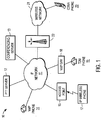
- FIG. 1 is an exemplary conferencing system 10 in accordance with one embodiment of the present invention that includes a PTT server 12 and a conferencing server 13 coupled via an IP network 11.
- IP network 11 may comprise a publicly accessible service provider network (Internet), or private network of a large enterprise.
- PTT server 12 may be provided by a service provider or be included within a large enterprise organization.
- PTT server 11 supports a group of PTT (half-duplex) communications services and handles call control signaling among the plurality of PTT endpoints. Call routing to PTT server 11 may be accomplished using ordinary network layer IP protocols, such as the InterSwitching System Interface (ISSI) protocol.
- ISSI InterSwitching System Interface
- Conferencing server 13 is responsible for providing the resources necessary to conduct the conference session.
- conferencing server 13 includes a digital signal processor (DSP) that mixes audio streams received from each of the conference participants - including the PTT speaker with the floor control token - with the mixed stream being output back to the conference participants and also the PTT users who are in listen-only mode (i.e., without the floor control token).
- Conference participants may be connected to conferencing server 13 via IP network 11 through a variety of communication devices.
- Figure 1 shows a code-division multiple access (CDMA) digital cellular telephone 20 connected to IP network 11 via a wireless network 21 and a wireless gateway 22.
- CDMA code-division multiple access
- TDM time-division multiplexing
- VoIP gateway 18 Also shown is a time-division multiplexing (TDM) phone 19 connected to IP network 11 via a VoIP gateway 18.
- a standard VoIP phone 14 is shown directly connected with IP network 11.
- IP wireless phone 17 is illustrated in Figure 1 connected with IP network 11 via a network access point 15.
- Other devices including PCs with softphone functionality, traditional analog phones, and a variety of half-duplex radio communication devices may also be used by participants to the conference session.
- PTT server 12 and conferencing server 13 shown in Figure 1 may be implemented by hardware, firmware, or software component elements that implement the various functions described herein. Furthermore, PTT server 12 and conferencing server 13 may be integrated into a single logical unit or physical box to simplify the signaling between the PTT and conferencing functions.
- FIG. 2 is a flowchart diagram that illustrates an exemplary method of operation according to one embodiment of the present invention.
- the method shown in Figure 2 involves upgrading from PTT to full-duplex a selected subset of the participants (or all of the participants) in a conference session.
- the process begins at a point where one or more participants are currently in a PTT mode (block 26), at which time the moderator invokes a user interface (e.g., GUI, TUI, or VUI) to selectively upgrade one or more participants to the conference session from PTT mode to full-duplex mode (block 27).
- a user interface e.g., GUI, TUI, or VUI
- the moderator makes his selection and then submits the list of participants to the conferencing server as part of a request to transition those participants form PTT to full-duplex mode (block 28).
- the conferencing server may run an algorithm to determine whether the session can be upgraded to full duplex mode for each of the participants selected (block 29). In the event that the there are insufficient resources available (e.g., no ports on the conferencing server or insufficient mixer resources) the conferencing server may be "camped-on" until there are sufficient ports available to convert the PTT conversations to full-duplex conference (block 30). Basically, the upgrade request stays with the conferencing server in the form of a reservation to use server resources are once they become available. Alternatively, the system may notify the moderator that a number of users should be converted to half-duplex communication mode in order to accommodate the request.
- the conferencing server may run an algorithm to determine whether the session can be upgraded to full duplex mode for each of the participants selected (block 29). In the event that the there are insufficient resources available (e.g., no ports on the conferencing server or insufficient mixer resources) the conferencing server may be "camped-on" until there are sufficient ports available to convert the PTT conversations to full-duplex conference (block 30
- a subset of the participants may hold onto the conference server ports while the rest of the conference participants are shifted to PTT mode.
- This hybrid scenario may be useful to keep key meeting participants in a full-duplex mode while temporarily downgrading the other participants are to a PTT session.
- the server may immediately respond to the request and convert the designated participants from PTT mode to full duplex (block 31).
- the other participants to the conference session may be notified of the change in modality, as discussed above (block 32).
- the moderator, participants, or system may initiate another upgrade (block 34) or downgrade (block 33), with the latter process being described in more detail below in connection with Figure 3 (block 35).
- upgrading / downgrading participants can occur anytime during the conference session by either the moderator, the system (automatically, based on policy rules), or by the conference participants themselves, depending on the particular system configuration.
- FIG. 3 is a flowchart diagram that illustrates another method of operation according to one embodiment of the present invention; specifically aimed at downgrading one or more participants from a full-duplex conference to PTT mode.
- Practitioners in the art will appreciate that downgrading may be performed either when a reservationless meeting is unable to be scheduled due to insufficient ports on the conference server, or where the moderator specifically selects individuals for downgrading.
- a moderator may regain control by temporarily downgrading particularly vociferous individuals to PTT mode.
- a choice may be presented to the moderator (e.g., via a GUI) whether to hold the ports, in order to switch back to full duplex mode in the near future, or release them entirely.
- the moderator may change the mode of communication of current participants from full-duplex to half-duplex mode to free up resources that may enable other users to join the meeting.
- a moderator may invoke a user interface for directing the conference server to downgrade a selected list of participants (or entire conference) to PTT mode (block 41).
- the participants to the conference may be notified of the change in modality (block 42) using one or more of the various mechanisms described above.
- the conference server resources allocated to those participants may be released for use elsewhere (block 43).
- the ports and other resources allocated for the downgraded participants may be reserved or held on to for predetermined time period.
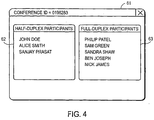
- FIG 4 is an example that illustrates a graphical user interface 61 associated with an application running on a PC of a moderator or participant in accordance with one embodiment of the present invention.
- GUI 61 includes respective display windows 62 and 63 that respectively list those participants currently in PTT (half duplex) and full-duplex conference mode.
- window 62 shows three participants (i.e., John Doe, Alice Smith and Sanjay Prasat) currently in PTT mode.
- the participants in the full-duplex conference (window 63) include five persons (i.e., Philip Patel, Sam Green, Sandra Shaw, Ben Joseph, and Nick James).
- the moderator when the moderator wants to change the communication modality of any participant he may do so by clicking (i.e., selecting) on a participant's name and dragging that person to the other window. Alternatively, the moderator may "right-click" on the person's name to select a command that "flips" or switches their modality. In this latter case, switching the modality of a selected participant results in the user interface being immediately updated, i.e., that person's name is moved from one window (62 or 63) to the other window (63 or 62, respectively).
- a subset of the participants in the full-duplex conference may enter into a breakout or sidebar session, with the conferencing server automatically switching the sidebar participants into a PTT session.
- the sidebar session is created as a PTT session between the sidebar participants only in the event that the conferencing server no longer has available ports or other necessary resources for you full-duplex sidebar session.
- the sidebar participants may be automatically returned to full-duplex mode, assuming, of course, that the necessary conferencing resources (e.g., ports) are still available.
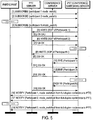
- FIG. 5 is an exemplary call flow diagram in accordance with one embodiment of the present invention.
- the diagram of Figure 5 illustrates the signaling that may occur between the PTT server and the conferencing server during an upgrade / downgrade change in modality.
- the Session Initiation Protocol (SIP) is utilized for the communications.
- SIP Session Initiation Protocol
- Practitioners in the art will appreciate that the call flow diagram shows well-known logical elements and standard SIP messages.
- the PTT server is a conventional device utilized for controlling the PTT floor
- the Conferencing Server represents a full-duplex conference system
- the PTT conference Switch Server is the logical entity that performs the mode switch function between full-duplex and half-duplex.
- Participants to be switched from full-duplex to half-duplex, and vice-versa basically subscribe to the mode switch event to the PTT conference Switch Server. Once this event is triggered, participants are moved from the Conference Server to the PTT server, or vice versa, depending upon the modality that is requested. The participants are also notified about the change in modality.
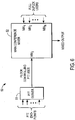
- FIG. 6 is a block diagram that illustrates PTT floor control and conference mixing in accordance with one embodiment of the present invention.
- a PTT server 51 is shown supporting a plurality of PTT endpoints and operating in accordance with an algorithm that grants the floor (i.e., the token to speak) to one PTT user at any given time. That PTT user may then speak in the main conference via a reserved slot or port (e.g., MIX 3 ) of a main conference mixer 52.
- Regular (i.e. full-duplex) users who may participate in the conference session are shown coupled with reserved slots MIX 1 , MIX 2 , MIX 4 ... MIX N .
- the audio streams received from the regular users and the floor controlling PTT user are mixed according to a mixing algorithm (e.g., mix only the three loudest speakers at any give time).
- the mixed audio stream is then output to the conference session participants (all PTT users, except the PTT user who has the floor and is speaking, and all regular users).
- token-based floor control algorithms or paradigms may be applied to the entire conference in order to improve the experience of the PTT speaker to the conference session. For example, whenever a PTT user wants to say something to all of the conference participants, he first gains access to the floor via the floor control algorithm running on the PTT server. At the point where an audio stream arrives at a slot or port of the mixer of the conferencing server, that event may trigger a transition in the conferencing server wherein a token-based scheme is imposed on the regular conference participants. In other words, only one person may be allowed to speak at a time. In this way, a PTT speaker does not miss out on any other discussions that might otherwise occur while he is speaking.
- elements of the present invention may also be provided as a computer program product which may include a machine-readable medium having stored thereon instructions which may be used to program a computer (e.g., a processor or other electronic device) to perform a sequence of operations. Alternatively, the operations may be performed by a combination of hardware and software.
- the machine-readable medium may include, but is not limited to, floppy diskettes, optical disks, CD-ROMs, and magneto-optical disks, ROMs, RAMs, EPROMs, EEPROMs, magnet or optical cards, propagation media or other type of media/machine-readable medium suitable for storing electronic instructions.
- elements of the present invention may be downloaded as a computer program product, wherein the program may be transferred from a remote computer or telephonic device to a requesting process by way of data signals embodied in a carrier wave or other propagation medium via a communication link (e.g., a modem or network connection).
- a communication link e.g., a modem or network connection
Landscapes
- Engineering & Computer Science (AREA)
- Signal Processing (AREA)
- Multimedia (AREA)
- Computer Networks & Wireless Communication (AREA)
- Computer Vision & Pattern Recognition (AREA)
- General Engineering & Computer Science (AREA)
- Telephonic Communication Services (AREA)
- Data Exchanges In Wide-Area Networks (AREA)
Claims (18)
- Verfahren für das Upgraden von einem Halbduplex-Kommunikationsmodus, wobei das Verfahren Folgendes beinhaltet:während einer Kommunikationssitzung im Halbduplex-Kommunikationsmodus (26) Empfangen einer Eingabe von einem Benutzer in der Kommunikationssitzung, die auf einen Wunsch zum Upgraden von mindestens einem Teil der Kommunikationssitzung auf Vollduplex-Kommunikationsmodus (27) hinweist; undgemäß der Eingabe, falls ausreichende Ressourcen verfügbar sind, Upgraden des mindestens einen Teils der Kommunikationssitzung auf Vollduplex-Kommunikationsmodus (31), und falls nicht ausreichende Ressourcen verfügbar sind, Bereitstellen einer Option zum Reservieren von Ressourcen, wenn diese verfügbar werden, für das Upgraden des Rests des mindestens einen Teils der Kommunikationssitzung auf Vollduplex-Kommunikationsmodus.
- Verfahren gemäß Anspruch 1, wobei der Halbduplex-Kommunikationsmodus Push-To-Talk(PTT)-Kommunikation unterstützt.
- Verfahren gemäß Anspruch 1, wobei der Vollduplex-Kommunikationsmodus eine Konferenz beinhaltet.
- Verfahren gemäß Anspruch 1, wobei das Upgraden jedem von einem oder mehreren ersten Benutzern in der Kommunikationssitzung Vollduplex-Kommunikationsfähigkeit in Bezug auf einen oder mehrere zweite Benutzer in der Kommunikationssitzung bereitstellt.
- Verfahren gemäß Anspruch 1, wobei das Upgraden auf Vollduplex-Kommunikationsmodus den Übergang von mindestens einem Teil der Kommunikationssitzung auf einen oder mehrere Ports auf einem Server (13), der Vollduplex-Kommunikation unterstützt (30), beinhaltet.
- Verfahren gemäß Anspruch 1, wobei das Upgraden auf Vollduplex-Kommunikationsmodus das Kampieren von mindestens einem Teil der Kommunikationssitzung auf einem oder mehreren Ports auf einem Server, der Vollduplex-Kommunikation unterstützt, beinhaltet.
- Verfahren gemäß Anspruch 1, wobei ein Push-To-Talk(PTT)-Schalter (12, 51) die Kommunikationssitzung im Halbduplex-Kommunikationsmodus unterstützt und ein Mischer (13, 52) den Teil der Kommunikationssitzung im Vollduplex-Kommunikationsmodus unterstützt, wobei ein einzelner Server sowohl den PTT-Schalter als auch den Mischer beinhaltet.
- Verfahren gemäß Anspruch 1, wobei ein Push-To-Talk(PTT)-Schalter (12, 51) die Kommunikationssitzung im Halbduplex-Kommunikationsmodus unterstützt und ein Mischer (13, 52) den Teil der Kommunikationssitzung im Vollduplex-Kommunikationsmodus unterstützt, wobei ein erster Server den PTT-Schalter beinhaltet und ein zweiter Server den Mischer beinhaltet.
- Verfahren gemäß Anspruch 8, wobei das Upgraden auf Vollduplex-Kommunikationsmodus das Initiieren eines Sitzungsinitiierungsprotokoll(SIP)-Rufablaufs beinhaltet.
- Verfahren für das Downgraden von einem Vollduplex-Kommunikationsmodus, wobei das Verfahren Folgendes beinhaltet:während einer Kommunikationssitzung im Vollduplex-Kommunikationsmodus (40), Empfangen von Anweisungen zum Downgraden von mindestens einem Teil der Kommunikationssitzung auf Halbduplex-Kommunikationsmodus, wobei die Anweisungen als Reaktion darauf, dass unzureichende Ressourcen verfügbar sind, automatisch generiert werden; undDowngraden des mindestens einen Teils der Kommunikationssitzung auf Halbduplex-Kommunikationsmodus (43), wobei ferner, nach Freigabe von ausreichenden Ressourcen, das Upgraden des mindestens einen Teils der Kommunikationssitzung zurück auf Vollduplex-Kommunikationsmodus bereitgestellt wird.
- Verfahren gemäß Anspruch 10, wobei die Anweisungen eine Eingabe von einem Benutzer in der Kommunikationssitzung, die auf einen Wunsch zum Downgraden von mindestens einem Teil der Kommunikationssitzung auf Halbduplex-Kommunikationsmodus hinweist, beinhalten.
- Verfahren gemäß Anspruch 10, wobei der Halbduplex-Kommunikationsmodus Push-To-Talk(PTT)-Kommunikation unterstützt.
- Verfahren gemäß Anspruch 10, wobei der Vollduplex-Kommunikationsmodus eine Konferenz beinhaltet.
- Verfahren gemäß Anspruch 10, wobei das Downgraden jeden von einem oder mehreren ersten Benutzern in der Kommunikationssitzung auf Halbduplex-Kommunikationsfähigkeit in Bezug auf einen oder mehrere zweite Benutzer in der Kommunikationssitzung zurückgestuft.
- Verfahren gemäß Anspruch 10, wobei ein Mischer (13, 52) die Kommunikationssitzung im Vollduplex-Kommunikationsmodus unterstützt und ein Push-To-Talk(PTT)-Schalter (12, 51) den Teil der Kommunikationssitzung im Halbduplex-Kommunikationsmodus unterstützt, wobei ein einzelner Server sowohl den PTT-Schalter als auch den Mischer beinhaltet.
- Verfahren gemäß Anspruch 10, wobei ein Mischer die Kommunikation Sitzung im Vollduplex-Kommunikationsmodus unterstützt und ein Push-To-Talk(PTT)-Schalter den Teil der Kommunikationssitzung im Halbduplex-Kommunikationsmodus unterstützt, wobei ein erster Server den PTT-Schalter beinhaltet und ein zweiter Server den Mischer beinhaltet.
- Verfahren gemäß Anspruch 16, das das Initiieren eines Sitzungsinitiierungsprotokoll(SIP)-Rufablaufs zum Upgraden auf Vollduplex-Kommunikationsmodus beinhaltet.
- Logik für das Upgraden vom Halbduplex-Kommunikationsmodus und/oder Downgraden vom Vollduplex-Kommunikationsmodus, wobei die Logik in einem oder mehreren Medien für die Ausführung codiert ist und, wenn sie ausgeführt wird, betriebsfähig ist, um ein Verfahren gemäß einem der Ansprüche 1 bis 9 und/oder 10 bis 17 durchzuführen.
Applications Claiming Priority (2)
| Application Number | Priority Date | Filing Date | Title |
|---|---|---|---|
| US11/399,970 US7694002B2 (en) | 2006-04-07 | 2006-04-07 | System and method for dynamically upgrading / downgrading a conference session |
| PCT/US2007/006944 WO2007126642A2 (en) | 2006-04-07 | 2007-03-20 | System and method for dynamically upgrading/downgrading a conference session |
Publications (3)
| Publication Number | Publication Date |
|---|---|
| EP2008192A2 EP2008192A2 (de) | 2008-12-31 |
| EP2008192A4 EP2008192A4 (de) | 2017-03-22 |
| EP2008192B1 true EP2008192B1 (de) | 2018-10-31 |
Family
ID=38576877
Family Applications (1)
| Application Number | Title | Priority Date | Filing Date |
|---|---|---|---|
| EP07753563.1A Active EP2008192B1 (de) | 2006-04-07 | 2007-03-20 | System und verfahren zum dynamischen upgraden / downgraden einer konferenzsitzung |
Country Status (3)
| Country | Link |
|---|---|
| US (1) | US7694002B2 (de) |
| EP (1) | EP2008192B1 (de) |
| WO (1) | WO2007126642A2 (de) |
Families Citing this family (41)
| Publication number | Priority date | Publication date | Assignee | Title |
|---|---|---|---|---|
| US10750327B2 (en) * | 2004-11-23 | 2020-08-18 | Kodiak Networks Inc | Method for multiplexing media streams to optimize network resource usage for push-to-talk-over-cellular service |
| US8917717B2 (en) * | 2007-02-13 | 2014-12-23 | Vonage Network Llc | Method and system for multi-modal communications |
| US8150450B1 (en) * | 2006-04-11 | 2012-04-03 | Alcatel Lucent | System and method for two-way radio and telephone conferencing and collaboration |
| US7912070B1 (en) | 2006-07-12 | 2011-03-22 | Nextel Communications Inc. | System and method for seamlessly switching a half-duplex session to a full-duplex session |
| US8149743B1 (en) * | 2006-07-12 | 2012-04-03 | Nextel Communications Inc. | System and method for seamlessly switching a full-duplex session to a half-duplex session |
| US20080032728A1 (en) * | 2006-08-03 | 2008-02-07 | Bina Patel | Systems, methods and devices for communicating among multiple users |
| US8526336B2 (en) * | 2006-08-09 | 2013-09-03 | Cisco Technology, Inc. | Conference resource allocation and dynamic reallocation |
| US8266535B2 (en) | 2006-09-11 | 2012-09-11 | Broadnet Teleservices, Llc | Teleforum apparatus and method |
| US20110069141A1 (en) * | 2008-04-30 | 2011-03-24 | Mitchell April S | Communication Between Scheduled And In Progress Event Attendees |
| US20110093590A1 (en) * | 2008-04-30 | 2011-04-21 | Ted Beers | Event Management System |
| US8817697B2 (en) * | 2008-06-05 | 2014-08-26 | Qualcomm Incorporated | System and method for minimizing call setup latency in a group communication among wireless communication devices |
| US8681664B2 (en) * | 2008-08-11 | 2014-03-25 | Qualcomm Incorporated | Setting up a full-duplex communication session and transitioning between half-duplex and full-duplex during a communication session within a wireless communications system |
| CN102165767A (zh) * | 2008-09-26 | 2011-08-24 | 惠普开发有限公司 | 用于创建第二事件的事件管理系统 |
| US20100091687A1 (en) * | 2008-10-15 | 2010-04-15 | Ted Beers | Status of events |
| US8325896B2 (en) * | 2008-11-20 | 2012-12-04 | Citrix Systems, Inc. | System and method for dynamic audio conference call configuration and management |
| US8150467B2 (en) | 2008-12-12 | 2012-04-03 | At&T Mobility Ii, Llc | Devices and methods for asymmetrical multicarrier transmission and reception |
| US20100179880A1 (en) * | 2009-01-09 | 2010-07-15 | Qualcomm Incorporated | System and method for purchasing goods or services using a group communication from a wireless communication device |
| JP5620134B2 (ja) * | 2009-03-30 | 2014-11-05 | アバイア インク. | グラフィカル表示を用いて通信セッションの信頼関係を管理するシステムと方法。 |
| US8649813B2 (en) * | 2009-04-13 | 2014-02-11 | Qualcomm Incorporated | Latency improvement methods in native PTT gateway for a group call with dispatch console clients |
| US9459936B2 (en) | 2009-05-01 | 2016-10-04 | Kaazing Corporation | Enterprise client-server system and methods of providing web application support through distributed emulation of websocket communications |
| US8879602B2 (en) | 2009-07-24 | 2014-11-04 | At&T Mobility Ii Llc | Asymmetrical receivers for wireless communication |
| US9083811B2 (en) * | 2012-03-05 | 2015-07-14 | Qualcomm Incorporated | Method and apparatus to dynamically enable and control communication link optimizations on a communication device |
| WO2013134305A1 (en) | 2012-03-05 | 2013-09-12 | Qualcomm Incorporated | Method and systems to dynamically enable and control communication link optimizations on a communication device |
| US9674694B2 (en) * | 2012-05-23 | 2017-06-06 | Qualcomm Incorporated | Systems and methods for group communication using a mobile device with mode transition based on motion |
| US9560099B2 (en) | 2012-05-23 | 2017-01-31 | Qualcomm Incorporated | Systems and methods for group communication using a mobile device using motion and voice activate controls |
| US9204263B2 (en) | 2012-05-23 | 2015-12-01 | Mark A. Lindner | Systems and methods for establishing a group communication based on motion of a mobile device |
| US9392421B2 (en) | 2012-05-23 | 2016-07-12 | Qualcomm Incorporated | Systems and methods for group communication using a mobile device with mode depending on user proximity or device position |
| US8831662B2 (en) * | 2012-07-24 | 2014-09-09 | Motorola Solutions, Inc. | Reserved virtual radio conference calling |
| US9118940B2 (en) * | 2012-07-30 | 2015-08-25 | Google Technology Holdings LLC | Video bandwidth allocation in a video conference |
| US10403272B1 (en) * | 2013-03-07 | 2019-09-03 | Nuance Communications, Inc. | Facilitating participation in a virtual meeting using an intelligent assistant |
| US10999334B2 (en) * | 2013-03-15 | 2021-05-04 | Comet Capital, Llc | System and method for multi-party communication of trending topics |
| US11025685B2 (en) * | 2013-03-15 | 2021-06-01 | Comet Capital, Llc | System and method for multi-party communication |
| US20140348034A1 (en) * | 2013-05-23 | 2014-11-27 | Motorola Solutions, Inc. | Systems and methods for group communication in noisy environments |
| KR102540311B1 (ko) * | 2015-12-08 | 2023-06-07 | 삼성전자주식회사 | 사용자 단말 장치 및 그 제어 방법 |
| US10440155B2 (en) * | 2016-01-11 | 2019-10-08 | Cloud9 Technologies, LLC | Private connection multi-media transition |
| US20180097858A1 (en) * | 2016-10-04 | 2018-04-05 | International Business Machines Corporation | Embedded side call sub-channel used in a telecommunication session |
| US10305943B1 (en) * | 2017-11-30 | 2019-05-28 | T-Mobile Usa, Inc. | Enhanced call downgrade reason indicator |
| US10862932B2 (en) * | 2018-03-06 | 2020-12-08 | Mutualink, Inc. | Implementing push-to-talk in a multimedia conferencing system |
| US11233834B2 (en) * | 2020-02-27 | 2022-01-25 | Avaya Management Lp | Streaming click-to-talk with video capability |
| US11184742B2 (en) * | 2020-04-20 | 2021-11-23 | Motorola Solutions, Inc. | Method and apparatus for determining an approver for requesting permission to join a dynamically-created talkgroup |
| CN117615158B (zh) * | 2024-01-24 | 2024-03-26 | 四川省天链星通科技有限公司 | 一种人影地面作业指挥与监视系统及信令交互方法 |
Family Cites Families (58)
| Publication number | Priority date | Publication date | Assignee | Title |
|---|---|---|---|---|
| US5729687A (en) * | 1993-12-20 | 1998-03-17 | Intel Corporation | System for sending differences between joining meeting information and public meeting information between participants in computer conference upon comparing annotations of joining and public meeting information |
| US5483587A (en) * | 1994-06-08 | 1996-01-09 | Linkusa Corporation | System and method for call conferencing |
| US5594732A (en) * | 1995-03-03 | 1997-01-14 | Intecom, Incorporated | Bridging and signalling subsystems and methods for private and hybrid communications systems including multimedia systems |
| US5600366A (en) * | 1995-03-22 | 1997-02-04 | Npb Partners, Ltd. | Methods and apparatus for digital advertisement insertion in video programming |
| US5673253A (en) * | 1996-02-29 | 1997-09-30 | Siemens Business Communication Systems | Dynamic allocation of telecommunications resources |
| US6137834A (en) * | 1996-05-29 | 2000-10-24 | Sarnoff Corporation | Method and apparatus for splicing compressed information streams |
| US6332153B1 (en) * | 1996-07-31 | 2001-12-18 | Vocaltec Communications Ltd. | Apparatus and method for multi-station conferencing |
| US5917830A (en) * | 1996-10-18 | 1999-06-29 | General Instrument Corporation | Splicing compressed packetized digital video streams |
| US5963217A (en) * | 1996-11-18 | 1999-10-05 | 7Thstreet.Com, Inc. | Network conference system using limited bandwidth to generate locally animated displays |
| KR100232164B1 (ko) * | 1997-02-05 | 1999-12-01 | 구자홍 | 트랜스포트 스트림의 다중.분리장치 |
| US6600733B2 (en) * | 1997-02-06 | 2003-07-29 | Verizon Laboratories Inc. | System for interconnecting packet-switched and circuit-switched voice communications |
| US6480667B1 (en) * | 1997-12-23 | 2002-11-12 | Intel Corporation | Method of time shifting to simultaneously record and play a data stream |
| US6351474B1 (en) * | 1998-01-14 | 2002-02-26 | Skystream Networks Inc. | Network distributed remultiplexer for video program bearing transport streams |
| US6608820B1 (en) * | 1998-08-17 | 2003-08-19 | Nortel Networks Ltd. | Method and apparatus for controlling a conference call |
| US6236854B1 (en) * | 1998-08-17 | 2001-05-22 | Nortel Networks Limited | Method and apparatus for controlling a conference call |
| US6141324A (en) * | 1998-09-01 | 2000-10-31 | Utah State University | System and method for low latency communication |
| US6775247B1 (en) * | 1999-03-22 | 2004-08-10 | Siemens Information And Communication Networks, Inc. | Reducing multipoint conferencing bandwidth |
| US6925068B1 (en) * | 1999-05-21 | 2005-08-02 | Wi-Lan, Inc. | Method and apparatus for allocating bandwidth in a wireless communication system |
| US6675216B1 (en) * | 1999-07-06 | 2004-01-06 | Cisco Technolgy, Inc. | Copy server for collaboration and electronic commerce |
| US6771644B1 (en) * | 1999-09-17 | 2004-08-03 | Lucent Technologies Inc. | Program insertion in real time IP multicast |
| US6771657B1 (en) * | 1999-12-09 | 2004-08-03 | General Instrument Corporation | Non real-time delivery of MPEG-2 programs via an MPEG-2 transport stream |
| US6671262B1 (en) * | 1999-12-30 | 2003-12-30 | At&T Corp. | Conference server for automatic x-way call port expansion feature |
| US6816469B1 (en) * | 1999-12-30 | 2004-11-09 | At&T Corp. | IP conference call waiting |
| US6505169B1 (en) * | 2000-01-26 | 2003-01-07 | At&T Corp. | Method for adaptive ad insertion in streaming multimedia content |
| US6876734B1 (en) * | 2000-02-29 | 2005-04-05 | Emeeting.Net, Inc. | Internet-enabled conferencing system and method accommodating PSTN and IP traffic |
| DE60141949D1 (de) * | 2000-03-03 | 2010-06-10 | Qualcomm Inc | Verfahren und einrichtung zur beteiligung an gruppunikationssystem |
| US6501739B1 (en) * | 2000-05-25 | 2002-12-31 | Remoteability, Inc. | Participant-controlled conference calling system |
| US6865540B1 (en) * | 2000-08-09 | 2005-03-08 | Ingenio, Inc. | Method and apparatus for providing group calls via the internet |
| US7007098B1 (en) * | 2000-08-17 | 2006-02-28 | Nortel Networks Limited | Methods of controlling video signals in a video conference |
| US7844489B2 (en) * | 2000-10-30 | 2010-11-30 | Buyerleverage | Buyer-driven targeting of purchasing entities |
| US20020087976A1 (en) * | 2000-12-28 | 2002-07-04 | Kaplan Marc P. | System and method for distributing video with targeted advertising using switched communication networks |
| US6956828B2 (en) * | 2000-12-29 | 2005-10-18 | Nortel Networks Limited | Apparatus and method for packet-based media communications |
| US7003086B1 (en) * | 2001-01-18 | 2006-02-21 | Cisco Technology, Inc. | Apparatus and method for allocating call resources during a conference call |
| US6976055B1 (en) * | 2001-01-18 | 2005-12-13 | Cisco Technology, Inc. | Apparatus and method for conducting a transfer of a conference call |
| US6937569B1 (en) * | 2001-05-21 | 2005-08-30 | Cisco Technology, Inc. | Method and system for determining a relative position of a device on a network |
| AU2002314941A1 (en) * | 2001-06-06 | 2002-12-16 | Complete Tv, Llc | Centralized aggregation of broadcast television programming and multi-market digital delivery thereof over interconnected terrestrial fiber optic networks |
| US6947417B2 (en) * | 2001-06-29 | 2005-09-20 | Ip Unity | Method and system for providing media services |
| US6982961B2 (en) * | 2001-07-19 | 2006-01-03 | Telefonaktiebolaget Lm Ericsson (Publ) | Push-to-talk and push-to-conference in a CDMA wireless communications system |
| US7355971B2 (en) * | 2001-10-22 | 2008-04-08 | Intel Corporation | Determining packet size in networking |
| US7292543B2 (en) * | 2002-04-17 | 2007-11-06 | Texas Instruments Incorporated | Speaker tracking on a multi-core in a packet based conferencing system |
| WO2005009006A2 (en) | 2003-05-23 | 2005-01-27 | Kodiak Networks, Inc. | Premium voice services for wireless communications systems |
| US8411594B2 (en) * | 2002-09-20 | 2013-04-02 | Qualcomm Incorporated | Communication manager for providing multimedia in a group communication network |
| CN1729660B (zh) | 2002-10-17 | 2011-06-08 | 松下电器产业株式会社 | 分组发送接收装置 |
| US6931113B2 (en) * | 2002-11-08 | 2005-08-16 | Verizon Services Corp. | Facilitation of a conference call |
| US7010108B2 (en) * | 2003-02-21 | 2006-03-07 | Magicsoft Corporation | Method for scheduling videoconferences |
| CN1531282A (zh) * | 2003-03-12 | 2004-09-22 | ���µ�����ҵ��ʽ���� | 分组中继装置 |
| US6959075B2 (en) * | 2003-03-24 | 2005-10-25 | Cisco Technology, Inc. | Replay of conference audio |
| US7283489B2 (en) * | 2003-03-31 | 2007-10-16 | Lucent Technologies Inc. | Multimedia half-duplex sessions with individual floor controls |
| US20040224678A1 (en) * | 2003-05-08 | 2004-11-11 | Starent Networks, Corp. | Reduced latency in half-duplex wireless communications |
| US7873378B2 (en) * | 2003-05-13 | 2011-01-18 | Telefonaktiebolaget Lm Ericsson (Publ) | Method of reducing delay in push-to-talk over cellular (PoC) by predicting need for connection setup |
| EP1649706A4 (de) * | 2003-07-18 | 2011-05-11 | Kodiak Networks Inc | Premium-voice-dienste für drahtlose kommunikationssysteme |
| US7460652B2 (en) * | 2003-09-26 | 2008-12-02 | At&T Intellectual Property I, L.P. | VoiceXML and rule engine based switchboard for interactive voice response (IVR) services |
| US8659636B2 (en) * | 2003-10-08 | 2014-02-25 | Cisco Technology, Inc. | System and method for performing distributed video conferencing |
| US7562375B2 (en) * | 2003-10-10 | 2009-07-14 | Microsoft Corporation | Fast channel change |
| SE0302920D0 (sv) * | 2003-11-03 | 2003-11-03 | Ericsson Telefon Ab L M | Improvements in or relating to group calls |
| US7084898B1 (en) * | 2003-11-18 | 2006-08-01 | Cisco Technology, Inc. | System and method for providing video conferencing synchronization |
| US20060020995A1 (en) * | 2004-07-20 | 2006-01-26 | Comcast Cable Communications, Llc | Fast channel change in digital media systems |
| US20070110029A1 (en) * | 2005-11-12 | 2007-05-17 | Motorola, Inc. | Method for linking communication channels of disparate access technologies in a selective call unit |
-
2006
- 2006-04-07 US US11/399,970 patent/US7694002B2/en active Active
-
2007
- 2007-03-20 WO PCT/US2007/006944 patent/WO2007126642A2/en not_active Ceased
- 2007-03-20 EP EP07753563.1A patent/EP2008192B1/de active Active
Non-Patent Citations (1)
| Title |
|---|
| None * |
Also Published As
| Publication number | Publication date |
|---|---|
| EP2008192A4 (de) | 2017-03-22 |
| WO2007126642A2 (en) | 2007-11-08 |
| US20070239885A1 (en) | 2007-10-11 |
| EP2008192A2 (de) | 2008-12-31 |
| WO2007126642A3 (en) | 2008-10-09 |
| US7694002B2 (en) | 2010-04-06 |
Similar Documents
| Publication | Publication Date | Title |
|---|---|---|
| EP2008192B1 (de) | System und verfahren zum dynamischen upgraden / downgraden einer konferenzsitzung | |
| EP2022249B1 (de) | Sprechererlaubnisvorlagen für push-to-talk-anwendungen | |
| US8036693B1 (en) | Communication systems and methods | |
| US6792092B1 (en) | Method and system for independent participant control of audio during multiparty communication sessions | |
| US20070067387A1 (en) | Conferencing system and method for temporary blocking / restoring of individual participants | |
| US7580375B1 (en) | Scalable moderated audio conferencing for multicast and unicast endpoints and gateways | |
| US20040006595A1 (en) | Extended features to conferencing system using a web-based management interface | |
| EP1744517B1 (de) | Verfahren und Vorrichtung zur Wiedergabe von Multimediendateien | |
| US20070276908A1 (en) | Method and apparatus for inviting non-rich media endpoints to join a conference sidebar session | |
| US20060026002A1 (en) | Method and system for handling audio signals of conference | |
| CN1728848A (zh) | 在支持一键通业务的组通信系统中提供语音突发权限 | |
| TW200402213A (en) | Facilitating conference calls by dynamically determining information streams to be received by a mixing unit | |
| CN1917537B (zh) | 一种实现一键通业务的方法和系统 | |
| US8311201B2 (en) | Method and system for controlling a conference | |
| CN110012366A (zh) | 一种用于公专网ip互联下的宽窄带融合通信系统及方法 | |
| US8311197B2 (en) | Method and system for allocating, revoking and transferring resources in a conference system | |
| EP2019557A1 (de) | Verfahren und vorrichtung zum implementieren von mehrteilnehmer-kommunikation | |
| US7885396B2 (en) | Multiple simultaneously active telephone calls | |
| CN111726463B (zh) | 语音通话的语音调度处理方法、装置 | |
| CN1303782C (zh) | 在控制与承载分离的网络中实现网络会议的方法 | |
| US20040117218A1 (en) | Method and device for providing conferences | |
| US20080063174A1 (en) | Camping on a conference or telephony port | |
| US20080101575A1 (en) | Participant prioritization on telephone conference calls | |
| TW201230761A (en) | Multiparty lines communication method | |
| JP2007049570A (ja) | 加入者収容装置、通信処理方法、及びプログラム |
Legal Events
| Date | Code | Title | Description |
|---|---|---|---|
| PUAI | Public reference made under article 153(3) epc to a published international application that has entered the european phase |
Free format text: ORIGINAL CODE: 0009012 |
|
| 17P | Request for examination filed |
Effective date: 20080731 |
|
| AK | Designated contracting states |
Kind code of ref document: A2 Designated state(s): AT BE BG CH CY CZ DE DK EE ES FI FR GB GR HU IE IS IT LI LT LU LV MC MT NL PL PT RO SE SI SK TR |
|
| AX | Request for extension of the european patent |
Extension state: AL BA HR MK RS |
|
| RIN1 | Information on inventor provided before grant (corrected) |
Inventor name: VADLAKONDA, SRAVAN Inventor name: ASTHANA, ASEEM Inventor name: SHAFFER, SCHMUEL Inventor name: HA, BINH, DON Inventor name: CHOTAI, ASHISH |
|
| RIN1 | Information on inventor provided before grant (corrected) |
Inventor name: SHAFFER, SHMUEL Inventor name: ASTHANA, ASEEM Inventor name: HA, BINH, DON Inventor name: CHOTAI, ASHISH Inventor name: VADLAKONDA, SRAVAN |
|
| DAX | Request for extension of the european patent (deleted) | ||
| A4 | Supplementary search report drawn up and despatched |
Effective date: 20170221 |
|
| RIC1 | Information provided on ipc code assigned before grant |
Ipc: H04M 3/36 20060101ALI20170215BHEP Ipc: H04L 29/08 20060101ALI20170215BHEP Ipc: G06F 15/16 20060101AFI20170215BHEP Ipc: H04W 76/04 20090101ALI20170215BHEP Ipc: H04M 3/56 20060101ALI20170215BHEP Ipc: H04W 76/00 20090101ALI20170215BHEP Ipc: H04L 29/06 20060101ALI20170215BHEP Ipc: H04W 4/10 20090101ALI20170215BHEP Ipc: H04L 12/18 20060101ALI20170215BHEP |
|
| STAA | Information on the status of an ep patent application or granted ep patent |
Free format text: STATUS: EXAMINATION IS IN PROGRESS |
|
| 17Q | First examination report despatched |
Effective date: 20171128 |
|
| GRAP | Despatch of communication of intention to grant a patent |
Free format text: ORIGINAL CODE: EPIDOSNIGR1 |
|
| STAA | Information on the status of an ep patent application or granted ep patent |
Free format text: STATUS: GRANT OF PATENT IS INTENDED |
|
| RIC1 | Information provided on ipc code assigned before grant |
Ipc: H04W 4/10 20090101ALI20180508BHEP Ipc: H04M 3/36 20060101ALI20180508BHEP Ipc: H04M 3/56 20060101ALI20180508BHEP Ipc: H04W 76/45 20180101ALI20180508BHEP Ipc: H04L 29/08 20060101ALI20180508BHEP Ipc: H04L 12/18 20060101ALI20180508BHEP Ipc: G06F 15/16 20060101AFI20180508BHEP Ipc: H04W 76/00 20180101ALI20180508BHEP Ipc: H04L 29/06 20060101ALI20180508BHEP |
|
| INTG | Intention to grant announced |
Effective date: 20180524 |
|
| GRAS | Grant fee paid |
Free format text: ORIGINAL CODE: EPIDOSNIGR3 |
|
| GRAA | (expected) grant |
Free format text: ORIGINAL CODE: 0009210 |
|
| STAA | Information on the status of an ep patent application or granted ep patent |
Free format text: STATUS: THE PATENT HAS BEEN GRANTED |
|
| AK | Designated contracting states |
Kind code of ref document: B1 Designated state(s): AT BE BG CH CY CZ DE DK EE ES FI FR GB GR HU IE IS IT LI LT LU LV MC MT NL PL PT RO SE SI SK TR |
|
| REG | Reference to a national code |
Ref country code: CH Ref legal event code: EP Ref country code: GB Ref legal event code: FG4D |
|
| REG | Reference to a national code |
Ref country code: AT Ref legal event code: REF Ref document number: 1060242 Country of ref document: AT Kind code of ref document: T Effective date: 20181115 |
|
| REG | Reference to a national code |
Ref country code: DE Ref legal event code: R096 Ref document number: 602007056673 Country of ref document: DE |
|
| REG | Reference to a national code |
Ref country code: IE Ref legal event code: FG4D |
|
| REG | Reference to a national code |
Ref country code: NL Ref legal event code: MP Effective date: 20181031 |
|
| REG | Reference to a national code |
Ref country code: LT Ref legal event code: MG4D |
|
| REG | Reference to a national code |
Ref country code: AT Ref legal event code: MK05 Ref document number: 1060242 Country of ref document: AT Kind code of ref document: T Effective date: 20181031 |
|
| PG25 | Lapsed in a contracting state [announced via postgrant information from national office to epo] |
Ref country code: PL Free format text: LAPSE BECAUSE OF FAILURE TO SUBMIT A TRANSLATION OF THE DESCRIPTION OR TO PAY THE FEE WITHIN THE PRESCRIBED TIME-LIMIT Effective date: 20181031 Ref country code: AT Free format text: LAPSE BECAUSE OF FAILURE TO SUBMIT A TRANSLATION OF THE DESCRIPTION OR TO PAY THE FEE WITHIN THE PRESCRIBED TIME-LIMIT Effective date: 20181031 Ref country code: LV Free format text: LAPSE BECAUSE OF FAILURE TO SUBMIT A TRANSLATION OF THE DESCRIPTION OR TO PAY THE FEE WITHIN THE PRESCRIBED TIME-LIMIT Effective date: 20181031 Ref country code: FI Free format text: LAPSE BECAUSE OF FAILURE TO SUBMIT A TRANSLATION OF THE DESCRIPTION OR TO PAY THE FEE WITHIN THE PRESCRIBED TIME-LIMIT Effective date: 20181031 Ref country code: IS Free format text: LAPSE BECAUSE OF FAILURE TO SUBMIT A TRANSLATION OF THE DESCRIPTION OR TO PAY THE FEE WITHIN THE PRESCRIBED TIME-LIMIT Effective date: 20190228 Ref country code: ES Free format text: LAPSE BECAUSE OF FAILURE TO SUBMIT A TRANSLATION OF THE DESCRIPTION OR TO PAY THE FEE WITHIN THE PRESCRIBED TIME-LIMIT Effective date: 20181031 Ref country code: BG Free format text: LAPSE BECAUSE OF FAILURE TO SUBMIT A TRANSLATION OF THE DESCRIPTION OR TO PAY THE FEE WITHIN THE PRESCRIBED TIME-LIMIT Effective date: 20190131 Ref country code: LT Free format text: LAPSE BECAUSE OF FAILURE TO SUBMIT A TRANSLATION OF THE DESCRIPTION OR TO PAY THE FEE WITHIN THE PRESCRIBED TIME-LIMIT Effective date: 20181031 |
|
| PG25 | Lapsed in a contracting state [announced via postgrant information from national office to epo] |
Ref country code: PT Free format text: LAPSE BECAUSE OF FAILURE TO SUBMIT A TRANSLATION OF THE DESCRIPTION OR TO PAY THE FEE WITHIN THE PRESCRIBED TIME-LIMIT Effective date: 20190301 Ref country code: NL Free format text: LAPSE BECAUSE OF FAILURE TO SUBMIT A TRANSLATION OF THE DESCRIPTION OR TO PAY THE FEE WITHIN THE PRESCRIBED TIME-LIMIT Effective date: 20181031 Ref country code: SE Free format text: LAPSE BECAUSE OF FAILURE TO SUBMIT A TRANSLATION OF THE DESCRIPTION OR TO PAY THE FEE WITHIN THE PRESCRIBED TIME-LIMIT Effective date: 20181031 Ref country code: GR Free format text: LAPSE BECAUSE OF FAILURE TO SUBMIT A TRANSLATION OF THE DESCRIPTION OR TO PAY THE FEE WITHIN THE PRESCRIBED TIME-LIMIT Effective date: 20190201 |
|
| PG25 | Lapsed in a contracting state [announced via postgrant information from national office to epo] |
Ref country code: CZ Free format text: LAPSE BECAUSE OF FAILURE TO SUBMIT A TRANSLATION OF THE DESCRIPTION OR TO PAY THE FEE WITHIN THE PRESCRIBED TIME-LIMIT Effective date: 20181031 Ref country code: IT Free format text: LAPSE BECAUSE OF FAILURE TO SUBMIT A TRANSLATION OF THE DESCRIPTION OR TO PAY THE FEE WITHIN THE PRESCRIBED TIME-LIMIT Effective date: 20181031 Ref country code: DK Free format text: LAPSE BECAUSE OF FAILURE TO SUBMIT A TRANSLATION OF THE DESCRIPTION OR TO PAY THE FEE WITHIN THE PRESCRIBED TIME-LIMIT Effective date: 20181031 |
|
| REG | Reference to a national code |
Ref country code: DE Ref legal event code: R097 Ref document number: 602007056673 Country of ref document: DE |
|
| PG25 | Lapsed in a contracting state [announced via postgrant information from national office to epo] |
Ref country code: RO Free format text: LAPSE BECAUSE OF FAILURE TO SUBMIT A TRANSLATION OF THE DESCRIPTION OR TO PAY THE FEE WITHIN THE PRESCRIBED TIME-LIMIT Effective date: 20181031 Ref country code: EE Free format text: LAPSE BECAUSE OF FAILURE TO SUBMIT A TRANSLATION OF THE DESCRIPTION OR TO PAY THE FEE WITHIN THE PRESCRIBED TIME-LIMIT Effective date: 20181031 Ref country code: SK Free format text: LAPSE BECAUSE OF FAILURE TO SUBMIT A TRANSLATION OF THE DESCRIPTION OR TO PAY THE FEE WITHIN THE PRESCRIBED TIME-LIMIT Effective date: 20181031 |
|
| PLBE | No opposition filed within time limit |
Free format text: ORIGINAL CODE: 0009261 |
|
| STAA | Information on the status of an ep patent application or granted ep patent |
Free format text: STATUS: NO OPPOSITION FILED WITHIN TIME LIMIT |
|
| 26N | No opposition filed |
Effective date: 20190801 |
|
| PG25 | Lapsed in a contracting state [announced via postgrant information from national office to epo] |
Ref country code: MC Free format text: LAPSE BECAUSE OF FAILURE TO SUBMIT A TRANSLATION OF THE DESCRIPTION OR TO PAY THE FEE WITHIN THE PRESCRIBED TIME-LIMIT Effective date: 20181031 Ref country code: SI Free format text: LAPSE BECAUSE OF FAILURE TO SUBMIT A TRANSLATION OF THE DESCRIPTION OR TO PAY THE FEE WITHIN THE PRESCRIBED TIME-LIMIT Effective date: 20181031 |
|
| REG | Reference to a national code |
Ref country code: CH Ref legal event code: PL |
|
| PG25 | Lapsed in a contracting state [announced via postgrant information from national office to epo] |
Ref country code: LU Free format text: LAPSE BECAUSE OF NON-PAYMENT OF DUE FEES Effective date: 20190320 |
|
| REG | Reference to a national code |
Ref country code: BE Ref legal event code: MM Effective date: 20190331 |
|
| PG25 | Lapsed in a contracting state [announced via postgrant information from national office to epo] |
Ref country code: LI Free format text: LAPSE BECAUSE OF NON-PAYMENT OF DUE FEES Effective date: 20190331 Ref country code: CH Free format text: LAPSE BECAUSE OF NON-PAYMENT OF DUE FEES Effective date: 20190331 Ref country code: IE Free format text: LAPSE BECAUSE OF NON-PAYMENT OF DUE FEES Effective date: 20190320 |
|
| PG25 | Lapsed in a contracting state [announced via postgrant information from national office to epo] |
Ref country code: BE Free format text: LAPSE BECAUSE OF NON-PAYMENT OF DUE FEES Effective date: 20190331 |
|
| PG25 | Lapsed in a contracting state [announced via postgrant information from national office to epo] |
Ref country code: TR Free format text: LAPSE BECAUSE OF FAILURE TO SUBMIT A TRANSLATION OF THE DESCRIPTION OR TO PAY THE FEE WITHIN THE PRESCRIBED TIME-LIMIT Effective date: 20181031 |
|
| PG25 | Lapsed in a contracting state [announced via postgrant information from national office to epo] |
Ref country code: MT Free format text: LAPSE BECAUSE OF NON-PAYMENT OF DUE FEES Effective date: 20190320 |
|
| REG | Reference to a national code |
Ref country code: DE Ref legal event code: R119 Ref document number: 602007056673 Country of ref document: DE |
|
| REG | Reference to a national code |
Ref country code: DE Ref legal event code: R073 Ref document number: 602007056673 Country of ref document: DE |
|
| PG25 | Lapsed in a contracting state [announced via postgrant information from national office to epo] |
Ref country code: DE Free format text: LAPSE BECAUSE OF NON-PAYMENT OF DUE FEES Effective date: 20201001 |
|
| REG | Reference to a national code |
Ref country code: DE Ref legal event code: R074 Ref document number: 602007056673 Country of ref document: DE |
|
| PG25 | Lapsed in a contracting state [announced via postgrant information from national office to epo] |
Ref country code: DE Free format text: LAPSE BECAUSE OF NON-PAYMENT OF DUE FEES Effective date: 20201001 Ref country code: CY Free format text: LAPSE BECAUSE OF FAILURE TO SUBMIT A TRANSLATION OF THE DESCRIPTION OR TO PAY THE FEE WITHIN THE PRESCRIBED TIME-LIMIT Effective date: 20181031 |
|
| PGRI | Patent reinstated in contracting state [announced from national office to epo] |
Ref country code: DE Effective date: 20210301 |
|
| PG25 | Lapsed in a contracting state [announced via postgrant information from national office to epo] |
Ref country code: HU Free format text: LAPSE BECAUSE OF FAILURE TO SUBMIT A TRANSLATION OF THE DESCRIPTION OR TO PAY THE FEE WITHIN THE PRESCRIBED TIME-LIMIT; INVALID AB INITIO Effective date: 20070320 |
|
| PGFP | Annual fee paid to national office [announced via postgrant information from national office to epo] |
Ref country code: FR Payment date: 20250328 Year of fee payment: 19 |
|
| PGFP | Annual fee paid to national office [announced via postgrant information from national office to epo] |
Ref country code: GB Payment date: 20250331 Year of fee payment: 19 |
|
| PGFP | Annual fee paid to national office [announced via postgrant information from national office to epo] |
Ref country code: DE Payment date: 20250331 Year of fee payment: 19 |