EP2008105B1 - Verfahren zur erkennung und steuerung der biofilmproduktion mukoider pseudomonas - Google Patents
Verfahren zur erkennung und steuerung der biofilmproduktion mukoider pseudomonas Download PDFInfo
- Publication number
- EP2008105B1 EP2008105B1 EP07754480A EP07754480A EP2008105B1 EP 2008105 B1 EP2008105 B1 EP 2008105B1 EP 07754480 A EP07754480 A EP 07754480A EP 07754480 A EP07754480 A EP 07754480A EP 2008105 B1 EP2008105 B1 EP 2008105B1
- Authority
- EP
- European Patent Office
- Prior art keywords
- muce
- seq
- amino acid
- acid sequence
- aeruginosa
- Prior art date
- Legal status (The legal status is an assumption and is not a legal conclusion. Google has not performed a legal analysis and makes no representation as to the accuracy of the status listed.)
- Not-in-force
Links
Images









Classifications
-
- G—PHYSICS
- G01—MEASURING; TESTING
- G01N—INVESTIGATING OR ANALYSING MATERIALS BY DETERMINING THEIR CHEMICAL OR PHYSICAL PROPERTIES
- G01N33/00—Investigating or analysing materials by specific methods not covered by groups G01N1/00 - G01N31/00
- G01N33/48—Biological material, e.g. blood, urine; Haemocytometers
- G01N33/50—Chemical analysis of biological material, e.g. blood, urine; Testing involving biospecific ligand binding methods; Immunological testing
- G01N33/53—Immunoassay; Biospecific binding assay; Materials therefor
- G01N33/569—Immunoassay; Biospecific binding assay; Materials therefor for microorganisms, e.g. protozoa, bacteria, viruses
- G01N33/56911—Bacteria
-
- A—HUMAN NECESSITIES
- A61—MEDICAL OR VETERINARY SCIENCE; HYGIENE
- A61P—SPECIFIC THERAPEUTIC ACTIVITY OF CHEMICAL COMPOUNDS OR MEDICINAL PREPARATIONS
- A61P31/00—Antiinfectives, i.e. antibiotics, antiseptics, chemotherapeutics
- A61P31/04—Antibacterial agents
-
- G—PHYSICS
- G01—MEASURING; TESTING
- G01N—INVESTIGATING OR ANALYSING MATERIALS BY DETERMINING THEIR CHEMICAL OR PHYSICAL PROPERTIES
- G01N2333/00—Assays involving biological materials from specific organisms or of a specific nature
- G01N2333/195—Assays involving biological materials from specific organisms or of a specific nature from bacteria
- G01N2333/21—Assays involving biological materials from specific organisms or of a specific nature from bacteria from Pseudomonadaceae (F)
-
- Y—GENERAL TAGGING OF NEW TECHNOLOGICAL DEVELOPMENTS; GENERAL TAGGING OF CROSS-SECTIONAL TECHNOLOGIES SPANNING OVER SEVERAL SECTIONS OF THE IPC; TECHNICAL SUBJECTS COVERED BY FORMER USPC CROSS-REFERENCE ART COLLECTIONS [XRACs] AND DIGESTS
- Y10—TECHNICAL SUBJECTS COVERED BY FORMER USPC
- Y10T—TECHNICAL SUBJECTS COVERED BY FORMER US CLASSIFICATION
- Y10T436/00—Chemistry: analytical and immunological testing
- Y10T436/14—Heterocyclic carbon compound [i.e., O, S, N, Se, Te, as only ring hetero atom]
- Y10T436/142222—Hetero-O [e.g., ascorbic acid, etc.]
- Y10T436/143333—Saccharide [e.g., DNA, etc.]
Definitions
- the present invention relates to the identification and use of positive regulators of alginate production in Pseudomonas aeruginosa.
- One aspect of the invention provides compositions and methods for the early detection and diagnosis of the conversion to mucoidy of Pseudomonas aeruginosa.
- the present invention also provides a molecular mechanism for detecting the conversion from the nonmucoid to the mucoid state, including molecular probes for the early detection of this disease state.
- Cystic Fibrosis is the most common inheritable lethal disease among Caucasians.
- the leading cause of high morbidity and mortality in CF patients are the chronic respiratory infections caused by Pseudomonas aeruginosa.
- Pseudomonas aeruginosa is an aerobic, motile, gram-negative bacterium with a simple metabolic demand that allows it to thrive in diverse environments.
- P. aeruginosa normally inhabits soil, water, and vegetation. Although it seldom causes disease in healthy people, P. aeruginosa is an opportunistic pathogen associated with fatal pneumonia in patients with CF, as well as patients with compromised immune systems and chronic infections such as non-cystic fibrosis bronchiectasis and urinary tract infections.
- aeruginosa biofilms are microcolonies embedded in a capsule composed of copious amounts of alginate, an exopolysaccharide ( Govan, J. R., and V. Deretic, Microbiol. Rev. 60:539-74 (1996 )) and are resistant to host defenses ( Ramsey, D. M., and D. J. Wozniak, Mol. Microbiol. 56:309-22 (2005 )).
- the chronic phase of infection due to P. aeruginosa is characterized by pulmonary exacerbations (fever, elevated white blood cell count, increased sputum production, and decreased pulmonary function) that require antimicrobial therapy ( Miller, M. B., and Gilligan, P. H., J. Clin. Microbiol. 41:4009-4015 (2003 )).
- CF exacerbations are typically interspersed with intervening periods of relative quiescence, with each phase lasting various lengths of time ( Miller, M. B., and Gilligan, P. H., J. Clin. Microbiol. 41:4009-4015 (2003 )).
- lung function continuously declines, the infecting strains become increasingly resistant, and inevitably, the patient succumbs to cardiopulmonary failure ( Miller, M. B., and Gilligan, P. H., J. Clin. Microbiol. 41:4009-4015 (2003 )).
- aeruginosa from the consequences of this inflammatory response as it scavenges free radicals released by activated macrophages ( Simpson, J.A., et al., Free Rad. Biol. Med. 6:347-353 (1989 )).
- the alginate mucoid coating also leads to the inability of patients to clear the infection, even under aggressive antibiotic therapies, most probably because it provides a physical and chemical barrier to the bacterium ( Govan and Deretic, Microbiol. Rev. 60:539-574 (1996 )).
- Alginate production is positively and negatively regulated in wild-type cells.
- Positive regulation centers on the activation of the alginate biosynthetic operon Govan, J. R., and V. Deretic, Microbiol. Rev. 60:539-74 (1996 )).
- Positive regulators include the alternative stress-related sigma factor AlgU ( Martin, D. W., et al., Proc. Natl. Acad. Sci. 90:8377-81 (1993 )), also called AlgT ( DeVries, C. A., and D. E. Ohman, J. Bacteriol. 176:6677-87 (1994 )), and transcriptional activators AlgR and AlgB, which belong to a bacterial two component signaling system.
- the cognate kinase of AlgB is KinB ( Ma, S., et al., J. Biol. Chem. 272:17952-60 (1997 )) while AlgZ ( Yu, H., et al., J. Bacteriol. 179:187-93 (1997 )) may be the kinase that phosphorylates AlgR.
- AlgZ Yu, H., et al., J. Bacteriol. 179:187-93 (1997 )
- alginate overproduction is independent of phosphorylation of AlgR or AlgB ( Ma, S., et al., J. Bacteriol. 180:956-68 (1998 )).
- Negative regulation of alginate has focused on the post-translational control of AlgU activity.
- the master regulator is AlgU and the signal transducer is MucA, a trans-inner membrane protein whose amino terminus interacts with AlgU to antagonize the activity of AlgU, and the carboxyl terminus with MucB, another negative regulator of alginate biosynthesis.
- the algUmucABC cluster is conserved among many Gram-negative bacteria.
- AlgU belongs to the family of extracytoplasmic function (ECF) sigma factors that regulate cellular functions in response to extreme stress stimuli. The action of ECF sigma factors is negatively controlled by MucA, MucB and MucC. This set of proteins forms a signal transduction system that senses and responds to envelope stress.
- ECF extracytoplasmic function
- MucA is the anti-sigma factor that binds AlgU and antagonizes its transcriptional activator activity ( Schurr, M. J., et al., J. Bacteriol. 178:4997-5004 (1996 )). Consequently, inactivation of mucA in P. aeruginosa strain PAO1 results in the mucoid phenotype (Alg +) ( Martin, D. W., et al., Proc. Natl. Acad. Sci. USA 90:8377-81 (1993 ); Mathee, K., et al., Microbiology 145:1349-57 (1999 )). Clinical mucoid isolates of P.
- aeruginosa carry recessive mutations in mucA ( Anthony, M., et al., J. Clin. Microbiol. 40:2772-8 (2002 ); Boucher, J. C., et al., Infect. Immun. 65:3838-46 (1997 )).
- the transition from a non-mucoid to mucoid variant occurs in concurrence with the mucA22 allele after exposure to hydrogen peroxide, an oxidant in neutrophils ( Mathee, K., et al., Microbiology 145:1349-57 (1999 )).
- MucB is located in the periplasm in association with the periplasmic portion of MucA ( Mathee, K., et al., J. Bacteriol. 179:3711-20 (1997 ); Rowen, D.W., and V. Deretic, Mol. Microbiol. 36:314-27 (2000 )).
- MucC is a mild negative regulator whose action is in synergy with MucA or MucB ( Boucher, J.C., et al., Microbiology 143:3473-80 (1997 )).
- MucD is a negative regulator whose dual functions include periplasmic serine protease and chaperone activities that are thought to help remove misfolded proteins of the cell envelope for quality control ( Boucher, J.C., et al., J. Bacteriol. 178:511-23 (1996 ); Yorgey, P., et al., Mol. Microbiol. 41:1063-76 (2001 )).
- Alginate protects the bacterium from oxidative stress by scavenging the reactive oxygen species ( Learn, D.B., et al., Infect. Immun. 55:1813-8 (1987 ); Simpson, J.A., et al., Free Radic. Biol. Med. 6:347-53 (1989 )).
- the present invention describes the identification and use of mucE, a positive regulator of alginate production in P. aeruginosa. Induction of mucE causes mucoid conversion in P. aeruginosa.
- One object of this invention is to provide compositions for the early detection and diagnosis of the conversion to mucoidy of Pseudomonas aeruginosa.
- the present invention also provides molecular probes to detect the conversion from the nonmucoid to the mucoid state, via Northern blot, RT-PCR, or real-time RT-PCR, including diagnostic kits for the early detection of this disease state.
- Another object of this invention is to provide methods for the early detection and diagnosis of the conversion to mucoidy of Pseudomonas aeruginosa.
- One method for detecting a cell converted to mucoidy involves obtaining a cell sample suspected of conversion to mucoidy, contacting messenger RNA from the cell sample with a mucE nucleic acid segment, and detecting the presence of increased hybridized complexes, wherein the presence of increased hybridized complexes is indicative of conversion to mucoidy.
- a six fold increase of mucE messenger RNA is sufficient to cause conversion to mucoidy in mucA + wild type cells.
- a further embodiment of this invention are the use of MucE antibodies and methods of using MucE antibodies for detecting the conversion to mucoidy of P . aeruginosa.
- a further embodiment of this invention is a method for preventing the conversion to mucoidy of P. aeruginosa by blocking mucE expression or MucE activity.
- Mucoid P. aeruginosa biofilms can be formed via two means: the mutations in mucA (see U.S. Patent Nos. 6,426,187 , 6,083,691 , and 5,591,838 ), and increased expression of mucE. mucE acts upstream of mucA, thus, the control of mucoidy mediated by mucE occurs before the mucA mutation. Therefore, inhibition of MucE activity provides a means to prevent conversion to mucoidy during the early stage of bacterial colonization.
- the present invention concerns a method for identifying new compounds that inhibit mucE gene expression or MucE function, which may be termed “candidate substances.”
- Such compounds may include antisense oligonucleotides or molecules that block or repress the mucE promoter, or molecules that directly bind to MucE to block the activity of MucE.
- the present invention also provides for a method for screening a candidate substance for preventing P. aeruginosa conversion to mucoidy comprising contacting E. coli bacteria with an effective amount of a candidate substance; and assaying for reporter gene activity, wherein a decrease in the expression of the reporter gene indicates inhibition of mucE promoter activity.
- Another object of the present invention is AlgW, a positive regulator for alginate production, and the use of AlgW as a potential drug target.
- Figure 1 shows the nucleotide sequence of mucE in P. aeruginosa (SEQ ID NO:1).
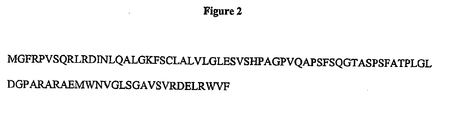
- the mucE gene is an unclassified ORF (PA4033) in the genomes of PAO1 and PA14. It encodes a small peptide of 89 amino acids with a molecular mass of 9.5 kDa.
- FIG. 2 shows the amino acid sequence of MucE in P . aeruginosa (SEQ ID NO:2).
- MucE has a predicted N-terminal leader peptide of 36 amino acids, which is likely to direct the native peptide of MucE to the inner membrane for processing and export to the periplasm or outer membrane of P. aeruginosa.
- the WVF at the C-terminus is the signal for alginate induction.
- Figure 3 shows the nucleotide sequence of the homolog of mucE in P. fluorescence Pf-5 (SEQ ID NO:3).
- Figure 4 shows the amino acid sequence of the homolog of MucE in P . fluorescence Pf-5 (SEQ ID NO:4).
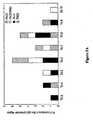
- Figure 5 shows the number of mariner transposon insertions per TA site in the algU promoter region of four strains of P. aeruginosa.
- Fig. 5A shows the frequency of the insertions in each P. aeruginosa strain.
- Fig. 5B shows the sequence of the algU promoter region containing all TA sites with an assigned number matching to Fig. 5A .
- Figure 6 shows the levels of alginate, AlgU and MucB in P. aeruginosa mucoid mutants caused by induction of algUmucABC in comparison with the wild type PAO1 (B).
- Figure 6A shows the amounts of alginate ( ⁇ g alginate/mg protein) that were measured for 4-72 h. Asterisk indicates significant differences at P ⁇ 0.05 in comparison with the same time point in PAO1.
- Figure 6B is a Western blot analysis of the total protein extracts from the same cells as above were probed by anti-AlgU ( Schurr, M. J., et al., J. Bacteriol.
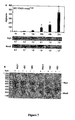
- Figure 7 shows the levels of alginate, the expression of AlgU and MucB in VE2 (PAO1 mucE +oe ) as detected by Western blots ( Fig. 7A ) and RT-PCR ( Fig. 7B ).
- Bacterial cells were grown under the same conditions as described in Methods, and were subjected to the same treatments as in Fig. 6 .
- Asterisk in alginate production indicates significant differences compared with PAO1 at the same time point as in Fig. 6 .
- the ratio of internally normalized AlgU and MucB to those of PAO1 is shown.
- - in Fig. 7B indicates the RT minus controls.
- Figure 8 shows upregulation of AlgU in VE13 (PAO1 kinB - ) ( Fig. 8A ) in association with increased alginate production.
- Fig. 8B Western blots showing the levels of AlgU and MucB in various mutants after 24h growth.
- FRD2 carries the algT18 suppressor mutant while FRD2-VE1 is like VE1 with the insertion in the algU promoter.
- VE3-NM1 to -NM4 are the spontaneous nonmucoid mutants with suppressors inactivating algU.
- VE3NM3+algU pUCP20-algU in trans.
- Figure 9 shows the regulatory cascade of alginate production in P. aeruginosa.
- AlgU is the alginate-specific sigma factor, whose activity is antagonized by anti-sigma factor, MucA.
- MucA is an inner membrane protein with its C-terminus in the periplasm, and its N-terminus interacting with AlgU in cytoplasm.
- the alginate operon consists of 12 genes encoding biosynthetic enzymes, thus collectively termed "alginate engine.”
- the enzymes AlgI, AlgJ, and AlgF are involved in O-acetylation of alginate.
- AlgK is needed for formation of the alginate polymer and AlgE for the export of alginate across the membrane.
- Figure 10 is a map of the expression vector pUCP20-Gm-mucE.
- the expression vector contains the coding region of the mucE gene driven by a promoter derived from the gentamicin (Gm) cassette of pFAC. This promoter is highly expressive in P. aeruginosa. This construct can render the nonmucoid PAO1 mucoid while the control backbone vector without mucE has no effect on the phenotype.
- Figure 11 shows an alignment of the mucE homologs identified from the completed and partially completed genomes of three species within the genus of Pseudomonas.
- the three species are PA: Pseudomonas aeruginosa; PF: Pseudomonas fluorescens; and PS: Pseudomonas syringae.
- the strains shown are: PA-PAO1, Pseudomonas aeruginosa PAO1 (causes opportunistic infections in humans); PA-PA14, Pseudomonas aeruginosa UCBPP PA14 (human clinical isolate); PA-2192, Pseudomonas aeruginosa 2192 (CF patient isolate); PA-C3719, Pseudomonas aeruginosa C3719 (unknown source but probably clinical origin); PS-PPH, Pseudomonas syringae pv.
- phaseolicola 1448A (causes halo blight on beans); PS-PTO, Pseudomonas syringae pv. tomato DC3000 (bacterial speck disease on tomato plants); PS-SB728, Pseudomonas syringae pv.
- syringae B728a brown spot disease on beans
- PF-PF5 Pseudomonas fluorescens Pf-5 (Saprophyte) (the production of a number of antibiotics as well as the production of siderophores by this strain can inhibit phytopathogen growth)
- PF-PFO1 Pseudomonas fluorescens PfO-1 (microorganism of putrefaction and well adapted to soil environments).
- Figure 12 shows an alignment of the algW homologs identified from the completed and partially completed genomes of three species within the genus of Pseudomonas.
- the three species are PA: Pseudomonas aeruginosa ; PF: Pseudomonas fluorescens; and PS: Pseudomonas syringae. All these species have the capacity to overproduce alginate.
- the strains shown are the same as for Figure 11 .
- the predicted functional domains of AlgW include an N-terminal signal peptide sequence at amino acids 1-27, a trypsin domain (peptidase activity, serine at AlgW 227 is conserved) at amino acids 114-260, and a PDZ domain at amino acids 270-380.
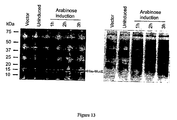
- Figure 13 shows the detection of N-terminal His-tag labeled MucE protein via Western Blot with anti-penta-his monoclonal antibody and SDS-PAGE with Coomassie blue.
- Figure 14 shows the sequence of mucE and the phenotypes of the different translational mucE-phoA fusions.
- the location of the mariner transposon bearing the aacC1 gene conferring Gm r in the chromosome of the mucoid mutants PAO1 VE2 and PA14DR4 is shown.
- Different lengths of mucE sequences were fused with phoA without the leader signal peptide sequence to demonstrate the effect of the signal sequence on translocation across the inner membrane to the periplasm. 1.
- Negative control no 5' leader peptide sequence (no sig phoA);
- Positive control the wild-type E. coli phoA leader sequence restored in the construct by directly fusing it with phoA (Ec wt-phoA); 3.
- mucE-phoA Full-length mucE-phoA; 4. mucE with the predicted N-terminal leader sequence fused with phoA; 5. partial mucE N-terminal leader sequence fused with phoA; 6. C-terminal mucE with ATG fused with phoA.
- the exact phoA fusion sites are as indicated in the mucE sequence.
- the leader sequence of mucE with max cleavage site is between pos. 36 (P) and 37 (A) (box).
- Figure 15 shows an alignment of MucP and the Escherichia coli orthologue RseP. Identical amino acids are marked by an asterisk (*).
- the two terminal protease domains are shown in light gray and the two PDZ domains are shown in medium gray.
- the overlapping region containing both a portion of the protease domain and a portion of the PDZ domain is shown in dark gray.
- Infections due to P. aeruginosa are recognized by the medical community as particularly difficult to treat.
- the emergence of a mucoid phenotype of P. aeruginosa in CF lungs is associated with further disease deterioration and poor prognosis.
- a patient's prognosis for recovery from an infection caused by mucoid P . aeruginosa is enhanced when the diagnosis is made and appropriate treatment initiated as early in the course of infection as possible before the number of bacteria in the host becomes overwhelming and much more difficult to bring under control.
- early detection of P. aeruginosa conversion to mucoidy in patients is particularly desired to allow aggressive therapy, thereby preventing further disease deterioration.
- mucE a positive regulator involved in alginate and biofilm production in P. aeruginosa
- mucE SEQ ID NOs:1-2
- PEO1 mucE GenBank accession numbers DQ352561 (PAO1 mucE ) and DQ352562 (PA 14 mucE)
- Induction of mucE causes mucoid conversion in P. aeruginosa.
- One object of this invention is to provide compositions for the early detection and diagnosis of the conversion to mucoidy of Pseudomonas aeruginosa in biological specimens.
- early detection is meant detecting P. aeruginosa conversion to mucoidy using certain assay methods, including but not limited to, methods involving the use of a nucleic acid probe or antibodies, 1 to 14 days, specifically 1 to 10 days, more specifically 1 to 7 days, and most specifically 6 days, 5 days, 4 days, 3 days, 2 days, 24 hours, 18 hours, 12 hours or 8 hours before detecting the emergence of a mucoid colony morphology on a growth plate in a laboratory.
- the present invention also provides molecular probes to detect the conversion from the nonmucoid to the mucoid state, including via Northern blot, RT-PCR, or real-time RT-PCR, including diagnostic kits for the early detection of this disease state.
- the present invention is also directed to algW and the use of AlgW as a potential drug target. Contrary to previous findings, AlgW is a positive regulator for alginate production.
- the algW gene and AlgW protein, the alg W homologs, and the uses thereof as described above for the P. aeruginosa mucE gene and MucE protein are also part of the present invention.
- mucA mucoid mutants Another object of this invention are mucA mucoid mutants and the use of these mutants to screen for suppressors and potential toxin genes.
- Mucoid mutants with mucA mutations see U.S. Patent Nos. 6,426,187 , 6,083,691 , and 5,591,838 ) have been previously detected from clinical specimens. The presence of these mutations is a poor prognosticator and represents the onset of chronic infection. Since the elevation of mucE can cause the emergence of mucoid P. aeruginosa before mucA mutations occur, the involvement of mucE in alginate induction is upstream of mucA.
- Another object of this invention is to provide methods for the early detection and diagnosis of the conversion to mucoidy of Pseudomonas aeruginosa.
- One method for detecting a cell converted to mucoidy involves obtaining a biological specimen suspected of conversion to mucoidy, contacting messenger RNA from the specimen with a mucE nucleic acid segment, and detecting the presence of increased hybridized complexes, wherein the presence of increased hybridized complexes over baseline is indicative of conversion to mucoidy.
- the biological specimen to be assayed for the presence of mucoid P. aeruginosa can be prepared in a variety of ways, depending on the source of the specimen.
- the specimen may be obtained from the following: patients with debilitated immune systems, sputum samples from patients with pneumonia, endotracheal samples from intubating patients under intensive care, samples from urinary catheters, samples from wounds, and especially from patients suffering from cystic fibrosis.
- Specimens may be a sample of human blood, sputum, wound exudate, endotracheal samples, respiratory secretions, human tissues ( e.g ., lung) or a laboratory culture thereof, and urine. Since alginate induction is synonymous with biofilm formation in vivo, the increased expression of mucE may also be used to monitor the biofilm formation in a confined environment during space travel (astronauts).
- a further embodiment of this invention is the use of MucE antibodies and methods of using MucE antibodies for detecting the conversion to mucoidy of P . aeruginosa via ELISA or other immunoassays.
- a further embodiment of this invention is a method for preventing the conversion to mucoidy of P . aeruginosa.
- the present invention concerns methods for identifying new compounds that inhibit mucE gene expression or MucE function, which may be termed “candidate substances.”
- Such compounds may include anti-sense oligonucleotides or molecules that block or repress the mucE promoter.
- WVF is an important signal for mucoid biofilm formation in P. aeruginosa.
- This WVF signal plays a role in the bacterium's ability to overproduce alginate and enter a biofilm mode of growth via regulated proteolysis as depicted in Figure 9 .
- the present invention provides for methods to employ the signal as a drug target. Diagnostic kits to screen for the presence of the signal in patients with chronic P . aeruginosa infections are contemplated. In addition, methods to screen for compounds that inhibit the function of this signal are also contemplated. Such compounds will have a specific anti-biofilm function.
- the present invention also provides for a method for screening a candidate substance for preventing P. aeruginosa conversion to mucoidy comprising contacting E. coli bacteria with an effective amount of a candidate substance; and assaying for reporter gene activity, wherein a decrease in the expression of the reporter gene indicates inhibition of mucE promoter activity.
- MucE homologs from other Pseudomonas species or strains are also contemplated ( see Figure 11 ).
- These Pseudomonas species and strains include PA-PAO1, Pseudomonas aeruginosa PAO1 (causes opportunistic infections in humans); PA-PA14, Pseudomonas aeruginosa UCBPP PA14 (human clinical isolate); PA- 2192, Pseudomonas aeruginosa 2192 (CF patient isolate); PA-C3719, Pseudomonas aeruginosa C3719 (unknown source but probably clinical origin); PS-PPH, Pseudomonas syringae pv.
- phaseolicola 1448A (causes halo blight on beans); PS-PTO, Pseudomonas syringae pv. tomato DC3000 (bacterial speck disease on tomato plants); PS-SB728, Pseudomonas syringae pv.
- syringae B728a brown spot disease on beans
- PF-PF5 Pseudomonas fluorescens Pf-5 (Saprophyte) (the production of a number of antibiotics as well as the production of siderophores by this strain can inhibit phytopathogen growth)
- PF-PFO1 Pseudomonas fluorescens PfO-1 (microorganism of putrefaction and well adapted to soil environments).
- the mucE homologs and the use thereof as described above for the P. aeruginosa mucE gene and MucE protein are also part of the present invention.
- Isolated polynucleotides comprising fragments containing one or more mucE consensus regions are also contemplated.
- the consensus regions are shown in Figure 11 .
- isolated polynucleotide is intended a nucleic acid molecule, DNA or RNA, circular or linear, which has been removed from its native environment.
- recombinant DNA molecules contained in a vector are considered isolated for the purposes of the present invention.
- Further examples of isolated DNA molecules include recombinant DNA molecules maintained in heterologous host cells or purified (partially or substantially) DNA molecules in solution.
- positive regulator means that the induction of expression and/or activity of such a gene encoding a functional protein causes alginate overproduction.
- positive regulators include algU, much, and algW.
- negative regulator means that the absence of such a gene encoding a functional protein causes alginate overproduction.
- negative regulators include kinB, mucA, mucB, and mucD.
- recombinant means that a protein is derived from recombinant (e.g. , microbial) expression systems.
- microbial refers to recombinant proteins made in bacterial or fungal. ( e.g ., yeast) expression systems.
- recombinant microbial defines a protein produced in a microbial expression system which is essentially free of native endogenous substances. Protein expressed in most bacterial cultures, e.g., E. coli, will be free of glycan.
- DNA sequence refers to a DNA polymer, in the form of a separate fragment or as a component of a larger DNA construct.
- the DNA sequences are in a quantity or concentration enabling identification, manipulation, and recovery of the sequence and its component nucleotide sequences by standard biochemical methods, for example, using a cloning vector.
- sequences are preferably provided in the form of an open reading frame uninterrupted by internal nontranslated sequences. Genomic DNA containing the relevant sequences could also be used. Sequences of non-translated DNA may be present 5' or 3' from the open reading frame, where the same do not interfere with manipulation or expression of the coding regions.
- nucleotide sequence refers to a heteropolymer of deoxyribonucleotides.
- DNA sequences encoding the proteins of this invention can be assembled from fragments and short oligonucleotide linkers, or from a series of oligonucleotides, to provide a synthetic gene which is capable of being expressed in a recombinant transcriptional unit.
- recombinant expression vector refers to a replicable DNA construct used either to amplify or to express DNA which encodes the recombinant proteins of the present invention and which includes a transcriptional unit comprising an assembly of (1) a genetic element or elements having a regulatory role in gene expression, for example, promoters or enhancers, (2) a structure or coding sequence which is transcribed into mRNA and translated into protein, and (3) appropriate transcription and translation initiation and termination sequences.
- Structural elements intended for use in yeast expression systems preferably include a leader sequence enabling extracellular secretion of translated protein by a host cell.
- recombinant protein may include an N-terminal methionine residue. This residue may optionally by subsequently cleaved from the expressed recombinant protein to provide a final product.
- expression vector refers to a construct made up of genetic material (i.e ., nucleic acids).
- a expression vector contains an origin of replication which is functional in bacterial host cells, e.g., Escherichia coli, and selectable markers for detecting bacterial host cells comprising the expression vector.
- Expression vectors of the present invention contain a promoter sequence and include genetic elements as described herein arranged such that an inserted coding sequence can be transcribed and translated in prokaryotes or eukaroytes.
- an expression vector is a closed circular DNA molecule.
- RNA product refers to the biological production of a product encoded by a coding sequence.
- a DNA sequence including the coding sequence, is transcribed to form a messenger-RNA (mRNA).
- mRNA messenger-RNA
- the messenger-RNA is then translated to form a polypeptide product which has a relevant biological activity.
- the process of expression may involve further processing steps to the RNA product of transcription, such as splicing to remove introns, and/or post-translational processing of a polypeptide product.
- recombinant microbial expression system means a substantially homogeneous monoculture of suitable host microorganisms, for example, bacteria such as E. coli or yeast such as S . cerevisiae, which have stably integrated a recombinant transcriptional unit into chromosomal DNA or carry the recombinant transcriptional unit as a component of a resident plasmid.
- suitable host microorganisms for example, bacteria such as E. coli or yeast such as S . cerevisiae, which have stably integrated a recombinant transcriptional unit into chromosomal DNA or carry the recombinant transcriptional unit as a component of a resident plasmid.
- cells constituting the system are the progeny of a single ancestral transformant.
- Recombinant expression systems as defined herein will express heterologous protein upon induction of the regulatory elements linked to the DNA sequence or synthetic gene to be expressed.
- One embodiment of the present invention is a method of detecting conversion to mucoidy in Pseudomonas aeruginosa in a biological specimen comprising detecting MucE expression.
- a preferred embodiment is a method of detecting conversion to mucoidy in Pseudomonas aeruginosa having an active mucE gene product comprising the detection of the mucE messenger RNA in a sample suspected of conversion to mucoidy.
- the sequence encodes an active gene product and the sequence is detected by hybridization with a complementary oligonucleotide, to form hybridized complexes. The presence of increased hybridized complexes is indicative of conversion to mucoidy in Pseudomonas aeruginosa.
- the complementary oligonucleotides may be 5'-TCAAAACACCCAGCGCAACTCGTCACG-3', (SEQ ID NO:5) 5'-AGTAGCGAAGGACGGGCTGGCGGT-3', (SEQ ID NO:6) or 5'-TTGGCTAACTGGCCGGAAACCCAT-3' (SEQ ID NO:7).
- a further embodiment of the present invention is the use of MucE antibodies and methods of using MucE antibodies for detecting the conversion to mucoidy of P. aeruginosa or for inhibiting MucE function.
- the present invention concerns a method for identifying new compounds that inhibit transcription from the mucE promoter, which may be termed as “candidate substances.” Such compounds may include anti-sense oligonucleotides or molecules that encourage repression of the mucE promoter.
- the present invention provides for a method for screening a candidate substance for preventing P. aeruginosa conversion to mucoidy comprising: contacting E . coli bacteria with an effective amount of a candidate substance; and assaying for reporter gene activity, wherein a decrease in the expression of the reporter gene indicates inhibition of MucE promoter activity.
- the present invention also concerns a method for detecting mucoid Pseudomonas aeruginosa bacterium in a biological sample.
- the method comprises reacting a sample suspected of containing P. aeruginosa with a detergent, EDTA, and a monoclonal antibody or fragment thereof capable of specifically binding to MucE expressed by P. aeruginosa, separating the sample from unbound monoclonal antibody; and detecting the presence or absence of immune complexes formed between the monoclonal antibody and MucE.
- nucleic acid hybridization embodiments Nucleotide sequences of between about 10 nucleotides to about 20 or to about 30 nucleotides, complementary to SEQ ID NOs:1-4, will find particular utility, with even longer sequences, e.g ., 40, 50, 100, even up to full length, being more preferred for certain embodiments.
- the ability of such nucleic acid probes to specifically hybridize to mucE -encoding sequences will enable them to be of use in a variety of embodiments.
- the probes can be used in a variety of assays for detecting the presence of complementary sequences in a given sample.
- other uses are envisioned, including the use of the sequence information for the preparation of mutant species primers, or primers for use in preparing other genetic constructions.
- Nucleic acid molecules having stretches of 10, 15, 20, 30, 50, or even of 100 nucleotides or so, complementary to SEQ ID NOs:1 and 3, will have utility as hybridization probes. These probes will be useful in a variety of hybridization embodiments, such as Southern and Northern blotting in connection with analyzing the complex interaction of structural and regulatory genes in diverse microorganisms and in clinical isolates from patients, including CF patients.
- the total size of fragment, as well as the size of the complementary stretch(es), will ultimately depend on the intended use or application of the particular nucleic acid segment. Smaller fragments will generally find use in hybridization embodiments, wherein the length of the complementary region may be varied, such as between about 10 and about 100 nucleotides, according to the complementary sequences one wishes to detect.
- hybridization probe of about 10 nucleotides in length allows the formation of a duplex molecule that is both stable and selective.
- Molecules having complementary sequences over stretches greater than 10 bases in length are generally preferred, though, in order to increase stability and selectivity of the hybrid, and thereby improve the quality and degree of specific hybrid molecules obtained.
- Such fragments may be readily prepared by, for example, directly synthesizing the fragment by chemical means, by application of nucleic acid reproduction technology, such as the Polymerase Chain Reaction (PCR) technology of U.S. Pat. No. 4,603,102 (herein incorporated by reference) or by introducing selected sequences into recombinant vectors for recombinant production.
- PCR Polymerase Chain Reaction
- nucleotide sequences of the invention may be used for their ability to selectively form duplex molecules with complementary stretches of homologous, or heterologous genes or cDNAs.
- one will desire to employ varying conditions of hybridization to achieve varying degrees of selectivity of probe towards target sequence.
- relatively stringent conditions e.g ., one will select relatively low salt and/or high temperature conditions, such as provided by 0.02 M-0.15 M NaCl at temperatures of 50° C to 70° C.
- Such selective conditions tolerate little, if any, mismatch between the probe and the template or target strand, and would be particularly suitable for isolating functionally related genes.
- nucleic acid sequences of the present invention in combination with an appropriate means, such as a label, for determining hybridization.
- appropriate indicator means include fluorescent, radioactive, enzymatic, biotinylated, and chemiluminescent labels, which are capable of giving a detectable signal. Fluorophores, luminescent compounds, radioisotopes and particles can also be employed.
- enzyme tags calorimetric indicator substrates are known which can be employed to provide a means visible to the human eye or spectrophotometrically, to identify specific hybridization with complementary nucleic acid-containing samples.
- the hybridization probes described herein will be useful both as reagents in solution hybridization as well as in embodiments employing a solid phase.
- the test DNA or RNA
- the test DNA is adsorbed or otherwise affixed to a selected matrix or surface.
- This fixed, single-stranded nucleic acid is then subjected to specific hybridization with selected probes under desired conditions.
- the selected conditions will depend on the particular circumstances based on the particular criteria required (depending, for example, on the G+C contents, type of target nucleic acid, source of nucleic acid, size of hybridization probe, etc.).
- specific hybridization is detected, or even quantified, by means of the label.
- DNA segments which encode peptide antigens will often find particular utility in the recombinant production of peptides or proteins.
- DNA segments which encode peptide antigens from about 15 to about 50 amino acids in length, or more preferably, from about 15 to about 30 amino acids in length are contemplated to be particularly useful.
- DNA segments encoding peptides will generally have a minimum coding length in the order of about 45 to about 150, or to about 90 nucleotides.
- nucleic acid segments of the present invention may be combined with other DNA sequences, such as promoters, additional restriction enzyme sites, multiple cloning sites, other coding segments, and the like, such that their overall length may vary considerably. It is contemplated that a nucleic acid fragment of almost any length may be employed, with the total length preferably being limited by the ease of preparation and use in the intended recombinant DNA protocol. For example, nucleic acid fragments may be prepared in accordance with the present invention which are up to 10,000 base pairs in length, with segments of 5,000, 3,000, 2,000 or 1,000 base pairs being preferred and segments of about 500 base pairs in length being particularly preferred.
- DNA segments prepared in accordance with the present invention may also encode biologically functional equivalent proteins or peptides which have variant amino acids sequences. Such sequences may arise as a consequence of codon redundancy and functional equivalency which are known to occur naturally within nucleic acid sequences and the proteins thus encoded.
- functionally equivalent proteins or peptides may be created via the application of recombinant DNA technology, in which changes in the protein structure may be engineered, based on considerations of the properties of the amino acids being exchanged.
- inventions include vectors comprising polynucleotides, which comprise a nucleotide sequence at least 95% identical, and more preferably at least 96%, 97%, 98% or 99% identical, to any of the nucleotide sequences of the vectors comprising polynucleotides described above.
- polynucleotides which comprise a nucleotide sequence at least 95% identical, and more preferably at least 96%, 97%, 98% or 99% identical, to any of the nucleotide sequences of the polynucleotides described above.
- any particular vector or polynucleotide is at least 95%, 96%, 97%, 98% or 99% identical to a nucleotide sequence according to the present invention, can be determined conventionally using known computer programs such as the Bestfit program (Wisconsin Sequence Analysis Package, Version 8 for Unix, Genetics Computer Group, University Research Park 575 Science Drive, Madison, Wis. 53711). Bestfit uses the local homology algorithm of Smith and Waterman, Advances in Applied Mathematics 2:482-489 (1981 ), to find the best segment of homology between two sequences.
- the parameters are set, of course, such that the percentage of identity is calculated over the full length of the reference nucleotide sequence and that gaps in homology of up to 5% of the total number of nucleotides in the reference sequence are allowed.
- the term "codon optimization” is defined as modifying a nucleic acid sequence for enhanced expression in the cells of the vertebrate of interest, e.g ., human, by replacing at least one, more than one, or a significant number, of codons of the native sequence with codons that are more frequently or most frequently used in the genes of that vertebrate.
- Various species exhibit particular bias for certain codons of a particular amino acid.
- the present invention relates to polynucleotide expression constructs or vectors, and host cells comprising nucleic acid fragments of codon-optimized coding regions which encode therapeutic polypeptides, and fragments, variants, or derivatives thereof, and various methods of using the polynucleotide expression constructs, vectors, host cells to treat or prevent disease in a vertebrate.
- codon-optimized coding region means a nucleic acid coding region that has been adapted for expression in the cells of a given vertebrate by replacing at least one, or more than one, or a significant number, of codons with one or more codons that are more frequently used in the genes of that vertebrate.
- Deviations in the nucleotide sequence that comprise the codons encoding the amino acids of any polypeptide chain allow for variations in the sequence coding for the gene. Since each codon consists of three nucleotides, and the nucleotides comprising DNA are restricted to four specific bases, there are 64 possible combinations of nucleotides, 61 of which encode amino acids (the remaining three codons encode signals ending translation). Many amino acids are designated by more than one codon. For example, the amino acids alanine and proline are coded for by four triplets, serine and arginine by six, whereas tryptophan and methionine are coded by just one triplet. This degeneracy allows for DNA base composition to vary over a wide range without altering the amino acid sequence of the proteins encoded by the DNA.
- the present invention is further directed to expression plasmids that contain chimeric genes which express therapeutic fusion proteins with specific consensus sequences, and fragments, derivatives and variants thereof.
- a "consensus sequence” is, e.g ., an idealized sequence that represents the amino acids most often present at each position of two or more sequences which have been compared to each other.
- a consensus sequence is a theoretical representative amino acid sequence in which each amino acid is the one which occurs most frequently at that site in the different sequences which occur in nature. The term also refers to an actual sequence which approximates the theoretical consensus.
- a consensus sequence can be derived from sequences which have, e.g ., shared functional or structural purposes.
- polypeptides of the invention are about 50%, 75%, 80%, 85%, 90%, 91%, 92%, 93%, 94%, 95%, 96%, 97%, 98%, 99% or 100% identical to the consensus sequence.
- a “consensus amino acid” is an amino acid chosen to occupy a given position in the consensus protein.
- a system which is organized to select consensus amino acids can be a computer program, or a combination of one or more computer programs with "by hand” analysis and calculation. When a consensus amino acid is obtained for each position of the aligned amino acid sequences, then these consensus amino acids are "lined up” to obtain the amino acid sequence of the consensus protein.
- the term "biological functional equivalent” refers to such proteins.
- certain amino acids may be substituted for other amino acids in a protein structure without appreciable loss of interactive binding capacity with structures such as, for example, antigen-binding regions of antibodies or binding sites on substrate molecules. Since it is the interactive capacity and nature of a protein that defines that protein's biological functional activity, certain amino acid sequence substitutions can be made in the DNA coding sequence and nevertheless obtain a protein with like or even counterveiling properties (e.g ., antagonistic v. agonistic). It is thus contemplated by the inventors that various changes may be made in the DNA sequence of mucE (or MucE proteins or peptides) without appreciable loss of their biological utility or activity.
- polypeptides which comprise amino acid sequences at least 95% identical, and more preferably at least 96%, 97%, 98% or 99% identical, to any of the amino acid sequences of the polypeptides described above.
- any particular polypeptide is at least 95%, 96%, 97%, 98% or 99% identical to, for instance, the amino acid sequence shown in SEQ ID NOs:2 and 4 can be determined conventionally using known computer programs such as the Bestfit program (Wisconsin Sequence Analysis Package, Version 8 for Unix, Genetics Computer Group, University Research Park 575 Science Drive, Madison, Wis. 53711). Bestfit uses the local homology algorithm of Smith and Waterman, Advances in Applied Mathematics 2:482-489 (1981 ), to find the best segment of homology between two sequences.
- the parameters are set, of course, such that the percentage of identity is calculated over the full length of the reference amino acid sequence and that gaps in homology of up to 5% of the total number of amino acids in the reference sequence are allowed.
- Novel hybrid cell lines are also provided which produce the monoclonal antibodies capable of specifically binding to the MucE or AlgW protein expressed in P. aeruginosa.
- the monoclonal antibodies are labeled and combined with a solubilizing reagent, a specific and rapid direct test for mucoid P. aeruginosa is achieved.
- the monoclonal antibodies of this invention can be prepared by immortalizing the expression of nucleic acid sequences which code for antibodies specific for MucE or AlgW of P. aeruginosa. This may be accomplished by introducing such sequences, typically cDNA encoding for the antibody, into a host capable of cultivation and culture.
- the immortalized cell line may be a mammalian cell line that has been transformed through oncogenesis, by transfection, mutation, or the like. Such cells include myeloma lines, lymphoma lines, or other cell lines capable of supporting the expression and secretion of the antibody in vitro.
- the antibody may be a naturally occurring immunoglobulin of a mammal other than human, produced by transformation of a lymphocyte, by means of a virus or by fusion of the lymphocyte with a neoplastic cell, e.g., a myeloma, to produce a hybrid cell line.
- a neoplastic cell e.g., a myeloma
- the lymphoid cell will be obtained from an animal immunized against MucE or a fragment thereof containing an epitopic site.
- Monoclonal antibody technology was pioneered by the work of Kohler and Milstein, Nature 256:495 (1975 ). Monoclonal antibodies can now be produced in virtually unlimited quantities consistently and with a high degree of purity. These qualities facilitate the reproducibility and standardization of performance of diagnostic tests which are required in hospitals and other clinical settings.
- Immunization protocols are well known and can vary considerably yet remain effective. See Golding, Monoclonal Antibodies: Principles and Practice, (1983 ) which is incorporated herein by reference.
- Immunogenic amounts of antigenic MucE preparations are injected, generally at concentrations in the range of 1 ug to 20 mg/kg of host. Administration of the antigenic preparations may be one or a plurality of times, usually at one to four week intervals. Immunized animals are monitored for production of antibody to the desired antigens, the spleens are then removed and splenic B lymphocytes isolated and transformed or fused with a myeloma cell line.
- the biological sample suspected of containing P. aeruginosa is combined with the primary antibody under conditions conducive to immune complex formation. If the test is a one-step immunofluorescence assay, the primary antibody will be labeled. Typically, the specimen is first fixed or adhered to a glass slide by heat and/or ethanol treatment, although other fixatives or adherents are known by those skilled in the art. The specimen is then contacted with the solubilizing agent for a sufficient period, usually from 1 to 30 minutes and more usually about 10 minutes, and the solubilizer is then washed from the slide. Alternatively, as described above, the solubilizing agent and the primary antibody may be combined and added as one step.
- the primary antibody should be incubated with the specimen for approximately 30 minutes at room temperature, although the conditions may be varied somewhat.
- the slide is rinsed to remove unbound antibody.
- the primary antibody has been labeled with FITC
- the quantitation of fluorescence is based on visual observation of the brightness or relative contrast of the specifically stained antigen. Appropriate positive and negative controls make interpretation more accurate.
- a counterstain, such as Evans blue, may be employed to more easily visualize the fluorescent organisms.
- the antibodies of the invention may be a chimeric antibody or fragment thereof, a humanized antibody or fragment thereof, a single chain antibody; or a Fab fragment.
- the antibodies of the present invention may be directly labeled.
- labels may be employed, such as radionuclides, fluorescence, enzymes, enzyme substrates, enzyme cofactors, enzyme inhibitors, ligands (particularly haptens), etc.
- the antibodies may find use in agglutination assays.
- unlabeled antibodies can be used in combination with other labeled antibodies (second antibodies) that are reactive with the monoclonal antibody, such as antibodies specific for the immunoglobulin. Numerous types of immunoassays are available and are well known to those skilled in the art.
- Immunofluorescence staining methods can be divided into two categories, direct and indirect.
- a fluorophore is conjugated to an antibody (the "primary antibody") which is capable of binding directly to the cellular antigen of interest.
- the primary antibody is not fluorescently labeled; rather, its binding is visualized by the binding of a fluorescently labeled second-step antibody, which second-step antibody is capable of binding to the primary antibody.
- the second-step antibody is an anti-immunoglobulin antibody.
- the second-step antibody is unlabeled and a third-step antibody which is capable of binding the second-step antibody is fluorescently labeled.
- Indirect immunofluorescence is sometimes advantageous in that it can be more sensitive than direct immunofluorescence because for each molecule of the primary antibody which is bound, several molecules of the labeled second-step antibody can bind.
- indirect immunofluorescence is more prone to nonspecific staining than direct immunofluorescence, that is, staining which is not due to the specific antigen-antibody interaction of interest ( Johnson et al., in Handbook of Experimental Immunology, D. M. Weir, ed., Blackwell Publications Oxford (1979 ); and Selected Methods in Cellular Immunology, Mishell et al., ed., W. H. Freeman, San Francisco (1980 )).
- the multiple steps involved in performing the indirect tests makes them slow, labor intensive, and more susceptible to technician error.
- immunoassays known in the art can be used to detect binding of MucE or AlgW to antibodies, including but not limited to, competitive and non-competitive assay systems using techniques such as radioimmunoassays, ELISA (enzyme linked immunosorbent assay), "sandwich” immunoassays, immunoradiometric assays, gel diffusion precipitation reactions, immunodiffusion assays, in situ immunoassays (using colloidal gold, enzyme or radioisotope labels, for example), western blots, precipitation reactions, agglutination assays (e.g ., gel agglutination assays, hemagglutination assays), complement fixation assays, immunofluorescence assays, protein A assays, and immunoelectrophoresis assays, etc.
- ELISA enzyme linked immunosorbent assay
- sandwich immunoassays immunoradiometric assays
- gel diffusion precipitation reactions e.g., gel a
- Kits can also be supplied for use with the subject antibodies in the detection of mucoid P. aeruginosa in specimens, wherein the kits comprise compartments containing a MucE and/or AlgW monoclonal antibody capable of reacting with essentially all serotypes and immunotypes of P. aeruginosa, and labels and necessary reagents for providing a detectable signal.
- the monoclonal antibody composition of the present invention may be provided, usually in a lyophilized form, either alone or in conjunction with additional antibodies specific for other antigens of P. aeruginosa.
- the antibodies which may be conjugated to a label, are included in the kits with buffers, such as Tris, phosphate, carbonate, etc., stabilizers, biocides, inert proteins, e.g., bovine serum albumin, or the like.
- buffers such as Tris, phosphate, carbonate, etc., stabilizers, biocides, inert proteins, e.g., bovine serum albumin, or the like.
- these materials will be present in less than about 5% weight based on the amount of active antibody, and usually present in a total amount of at least about 0.001% weight based on the antibody concentration.
- a second antibody capable of binding to the monoclonal antibody is employed, this will usually be present in a separate vial.
- the second antibody may be conjugated to a label and formulated in
- Further embodiments of the invention include methods for Cystic Fibrosis (CF) disease assessment in an individual which comprise detecting the presence or absence of MucE and/or AlgW in a sample from an individual. Further embodiments include methods for Cystic Fibrosis (CF) disease assessment in an individual which comprise detecting the presence or absence of MucE or AlgW antibodies in a sample from an individual.
- CF Cystic Fibrosis
- Additional embodiments include methods for treating P. aeruginosa biofilms in Cystic Fibrosis (CF) disease in an individual which comprise the steps of detecting the presence of MucE and/or AlgW in a sample from an individual; and selecting a therapy regimen for the individual based on the presence of MucE and/or AlgW.
- the P. aeruginosa biofilms in Cystic Fibrosis (CF) disease are treated by the therapy regimen.
- aeruginosa biofilms in Cystic Fibrosis (CF) disease in an individual which comprise the steps of detecting the presence of MucE and/or AlgW antibodies in a sample from an individual; and selecting a therapy regimen for the individual based on the presence of MucE and/or AlgW antibodies.
- the P. aeruginosa biofilms in Cystic Fibrosis (CF) disease are treated by the therapy regimen.
- sample includes, but are not limited to, airway surface liquid, sputa, or combinations thereof, human blood, wound exudate, respiratory secretions, human tissues ( e.g ., lung) or a laboratory culture thereof, and urine.
- samples include, but are not limited to, airway surface liquid, sputa, or combinations thereof, human blood, wound exudate, respiratory secretions, human tissues ( e.g ., lung) or a laboratory culture thereof, and urine.
- samples available for detecting the presence or absence of MucE or AlgW antibodies in an individual, any of which may be used herein.
- Samples include, but are not limited to, airway surface liquid, sputa, or combinations thereof, human blood, wound exudate, respiratory secretions, human tissues (e.g ., lung) or a laboratory culture thereof, urine, and other body fluids, or combinations thereof.
- assessment is intended to refer to the prognosis, monitoring, delaying progression, delaying early death, staging, predicting progression, predicting response to therapy regimen, tailoring response to a therapy regimen, of Cystic Fibrosis disease based upon the presence or absence of MucE, AlgW, MucE antibodies, or AlgW antibodies in a biological sample.
- the therapy regimen is intended to refer to a procedure for delaying progression, or delaying early death associated with Cystic Fibrosis disease and/or Pseudomonas aeruginosa in a Cystic Fibrosis individual.
- the therapy regimen comprises administration of agonists and/or antagonists of MucE and/or AlgW.
- the therapy regimen comprises agonists and/or antagonists of Pseudomonas aeruginosa.
- P. aeruginosa strains were grown at 37°C in Lennox broth (LB), on LB agar or Pseudomonas Isolation Agar (PIA, DIFCO) plates. When required, PIA plates were supplemented with carbenicillin, tetracycline, or gentamicin at a concentration of 300 ⁇ g/ml.
- E. coli strains were grown in LB broth, or LB agar supplemented with carbenicillin (100 ⁇ g/ml), tetracycline (15 ⁇ g/ml), gentamicin (13 ⁇ g/ml), or kanamycin (40 ⁇ g/ml), when required.
- E. coli SM10 ⁇ pir carrying pFAC and P. aeruginosa strains were grown in 2 ml LB broth overnight at 37°C and 42°C, respectively.
- the cell density of the cultures was measured by optical density at 600 nm and adjusted to a ratio of 1:1, which was equivalent to 8 x 10 8 cells for matings.
- the mixed cultures were incubated on LB plates for 6 h at 37°C.
- the cells were harvested and washed in LB broth.
- the final cell mixtures in a volume of 1 ml were spread on 8 PIA plates (50 ml each) supplemented with gentamicin.
- the conjugal pairs were incubated at 37°C for 24 h for selection and screening exconjugants with a mucoid colony morphology. Such mutants were isolated and purified a minimum of 3 times. Mutants were frozen in 10% skim milk in a -80°C freezer.
- PCR polymerase chain reaction
- PCR reactions were performed with MasterAmpTM Taq DNA Polymerase (Epicentre) in 50 ⁇ l EasyStart PCR tubes (Molecular BioProducts) as previously described ( Head, N. E., and H. Yu, Infect. Immun. 72:133-44 (2004 )).
- the mariner transposon and its junction region in pFAC were sequenced.
- the sequence of the junction region including the inverted repeats in pFAC (SEQ ID NO:8) is as follows:
- MCS multiple cloning site
- a volume of 1 ⁇ l ligated DNA was used as template for PCR using GM5OUT and GM3OUT according to the condition as follows, 94°C for 1 min, 34 cycles consisting of 94°C for 1 min, 58°C for 2 min, and 72°C for 2 min, and a final extension step consisting of 72°C for 8 min.
- the products were analyzed on a 1% agarose gel.
- the PCR products were purified using the QIAquick PCR purification kits and sequenced using GM5OUT as described above.
- the alginate assay was based on a previously published method ( Knutson, C. A., and A. Jeanes, Anal. Biochem. 24:470-481 (1968 )) with the following modifications.
- P. aeruginosa and mutants were grown on 50 ml PIA plates in triplicate for a period of 72 h. At various time points, bacterial growth was removed from plates and re-suspended in 40 ml phosphate-buffered saline (PBS; pH 7.4). The optical density at 600 nm (OD 600 ) was recorded.
- the alginate standard curve was made using D-mannuronic acid lactone (Sigma) in the range of 0-100 ⁇ g/ml.
- the cells in PBS were lysed in 1:1 ratio with 1M NaOH for 15 min.
- the protein assay was performed using the Bio-Rad D c Protein Assay kit.
- the range for protein standard (bovine serum albumin) curve was from 0.2 to 1.2 mg/ml.
- the assay was based on the method as originally described by Miller (In Experiments in Molecular Genetics, J. H. Miller, ed., Cold Spring Harbor Laboratory, Cold Spring Harbor, New York (1972), pp. 352-355 ) with the following modification.
- the cells of NH1-3 were grown on PIA plates in triplicate for 24 h at 37°C.
- the cells were harvested in PBS and cell density was measured by OD 600 . Samples were assayed after SDS/chloroform permeabilization of the cells.
- mucE-phoA fusions were cloned into pUCP20 vector for alkaline phosphatase A-fusion assay as previously described ( Lewenza, S. et al., Genome Res. 15:321-329 (2005 ); Manoil, C. et al., J. Bacterol. 172:515-518 (1990 )) and the transformants were plated on the LB plate containing 40 ⁇ g/ml BCIP.
- the construct pUCP20- phoA expressing full-length PhoA was used as a positive control and the pUCP20-phoA expressing the truncated PhoA without N-terminal signal leader sequence as a negative control.
- RNA was reverse-transcribed into cDNA at 50°C for 30 min followed by PCR amplification: 94°C for 15 min, 34 cycles consisting of 94°C for 1 min, 58°C for 2 min, and 72°C for 2 min.
- the PCR products were analyzed on 1% agarose gel, and the intensity of bands was analyzed on a Typhoon 8600 Variable Mode Imager (Molecular Dynamics) with the ImageQuant (v. 5.2) Software.
- AlgU and MucB monoclonal antibodies used in the Examples are from previously published sources ( Boucher et al., J. Bacterial. 178:511-523 (1996 ); Schurr et al., J. Bacteriol. 178:4997-5004 (1996 )) with a low level of cross-reactivity.
- the specificities of these antibodies are appropriate because the algU and mucB negative strains failed to display the respective AlgU and MucB proteins ( Fig. 8 ).
- two non-specific proteins of 50 kDa and 75 kDa from MucB and AlgU blots respectively were used as convenient internal controls to normalize the protein levels.
- a 754 bp PCR product was amplified from acc1 of pUCP30T using GM-F and GM-R primers, which was purified via gel extraction and labeled with digoxygenin as described by the manufacturer (Roche Molecular Biochemicals). Agarose gels were soaked in 0.25 N HCl for 30 min, rinsed in H 2 O, soaked in 1.5 M NaCl/0.5 M NaOH for 30 min and 1.5 M NaCl/0.5 M Tris-Cl, pH 8.0 for 30 min. A blotting apparatus (BIO-RAD Vacuum Blotter) was used with a filter paper wick, a Hybond-N+ membrane (Amersham Pharmacia Biotech), and transferred with 10X SSC transfer buffer for 2 h. After transfer, the membrane was rinsed in transfer buffer and UV cross-linked. Hybridization was done using the DIG High Prime DNA Labeling and Detection Starter Kit II (Roche Applied Science) and labeled probe described above.
- Horseradish Peroxidase-labeled secondary antibodies goat antimouse IgG (H+L) and goat anti-rabbit IgG (H+L), were obtained from Peirce Biotechnologies and Kirkegaard & Perry Laboratories, respectively. Primary antibodies were diluted 1:1000 and secondary antibodies 1:5000 in TBS/Tween before application. ECL Western Blotting Detection System (Amersham Biosciences) was used to detect the protein of interest. X-ray film was exposed, and developed on an Alphatek AX390SE developer. The protein intensity was analyzed using a ChemiDoc XRS system (Bio-Rad) and Quantity One software (Bio-Rad). These results were normalized against an internal protein within each sample. The relative expression level for each protein was then compared.
- This transposon can knockout, knockdown or induce expression of the target gene depending on the nature of its insertion.
- the mariner transposon himar1 can jump onto the TA dinucleotides in non-essential genes. These sites are abundant in the genomes of P. aeruginosa strains.
- PAO1 Stover et al., Nature 406:959-964 (2000 )
- PA14 http://pga.mgh.harvard.edu
- pFAC can cause increased or reduced expression of the target gene by inserting into the intergenic region.
- the transposon end in pFAC has no termination sequences. Therefore, three types of mutations can be caused by the transposon in this vector depending on how and where it is inserted on the genome. As shown in Table 1, when inserted in the algU, mucE or cupB5 promoter region, the transposon used its ⁇ 70 promoter (P Gm ) ( Wohlleben, W., et al., Mol Gen Genet 217:202-208 (1989 )) to direct the expression of the downstream genes.
- P Gm ⁇ 70 promoter
- the mucoid phenotype poises a great demand for energy from the cells.
- the amount of alginate in mucoid mutants was initially lower than that of the wild-type strain PAO1 ( Fig. 6A-8A ), suggesting that mucoid mutants may grow slower than the non-mucoid counterparts to compensate for the energy demand.
- VE1 produced increased amounts of alginate from 24 to 72 h in concurrence with increased levels of AlgU and MucB ( Fig. 6 ).
- AlgU and MucB reached the steady-state level at 4h and remained so for the rest of the time points.
- the algU mutants in PAO579NM, PA14 and FRD2 were mucoid and displayed the same trend as VE1 regarding alginate production and protein levels of AlgU and MucB.
- mucA, mucB and mucD Twenty eight percent of mucoid mutants had insertions in the coding regions of mucA, mucB and mucD (Table 1).
- the Alg + phenotype of the mucD - mutants (DR8, VE19, VE14 23 and VE12) was complemented to Alg - by mucD or mucBCD in trans.
- VE3 and V1 the equivalent of a triple knockout of mucA - B - C - in PAO1 and PAO579NM respectively, were complemented to Alg - by mucA, but not by mucBC or mucBCD, in trans.
- Alginate is regulated by a signal transduction pathway. While ample information is available on the interaction between the sigma factor AlgU and trans-inner membrane anti-sigma factor MucA, it is unclear what and how periplasmic signals activate the AlgU pathway leading to alginate overproduction. MucE and CupB5 identified here are two candidates for such signals. VE2 and DR4 had two identical insertions 16 bps upstream of ATG of PA4033 in PAO1 and PA14, respectively (data not shown). The transposon in both mutants was in the induction configuration (Table 1). PA4033 belongs to a class of unclassified open reading frames (ORF) in the annotated genome of PAO1, and encodes a hypothetical peptide (89 aa) with a predicted molecular mass of 9.5 kDa.
- ORF open reading frames
- the protein has a leader sequence of 36 aa with the mature MucE protein exported to periplasm.
- the ⁇ E pathway is activated via a similar signal transduction system in which an outer membrane porin, OmpC serves as an inducing signal.
- the carboxy-terminal signal of MucE (WVF) has a three consensus aa sequence as does OmpC (YQF) ( Walsh, N. P., et al., Cell 113:61-71 (2003 )) and CupB5 (NIW).
- PA4033 but not wild-type PA4033 allele caused mucoid conversion in PAO1 and PA14 in association with an elevated level of AlgU in comparison with the parent (data not shown). Because the insertional mutation was dominant over the wild-type allele, we suspected that VE2 was overproducing the mucE product. Using RT-PCR, we determined that the levels of mucE and algU mRNA were 7-fold and 1.2-fold higher in VE2 (PAO1 mucE +oe ) than in PAO1 respectively ( Fig. 7B ). Because of the positive effect on alginate regulation, PA4033 was named mucE.
- Induction of MucE initiates a regulatory cascade causing an increased level of AlgU. It appears that induction of AlgU is the major pathway that governs alginate overproduction.
- the mutants that operate via this pathway include VE1 ( algU promoter mutants), VE2 ( mucE +oe ), and VE22 ( cupB5 +oe ), and VE13 ( kinB - ).
- VE1 algU promoter mutants
- VE2 mucE +oe
- VE22 cupB5 +oe
- VE13 kinB -
- One common feature is that an elevated level of MucB did not seem to match with that of AlgU ( Figs. 6A-8A ).
- the algUmucA-D genes are an operon, this suggests that the level of MucA in these mutants may not be the same as that of AlgU.
- the excess AlgU could escape from the antagonistic interaction with MucA, thus causing mucoid
- cupB5 Another mutant, VE22, which had a dominant effect on alginate overproduction, carried an insertion at 96 bp before ATG of cupB5 (PA4082) (Table 1).
- the cupB5 gene encodes a probable adhesive protein (1,018 aa) with a predicted molecular mass of 100 kDa. This protein has a signal peptide of 53 aa, suggesting that the mature protein is bound for the extracellular milieu.
- the protein shares consensus motifs of the filamentous hemagglutinin and IgA1-specific metalloendopeptidases (GLUG) at the N- and C-terminus, respectively.
- cupB5 gene sits within a genetic cluster encoding fimbrial subunits and CupB5, which have been proposed to be the chaperone/usher pathway involved in biofilm formation ( Vallet, I., et al., Proc Natl Acad Sci U S A 98:6911-6916 (2001 )). Induction of cupB5 in VE22 caused upregulation of AlgU and MucB ( Fig. 8B ).
- KinB As a sensor-kinase, KinB is responsible for responding to some environmental signals and phosphorylating a response regulator, AlgB, via signal transduction.
- One mutant, VE13 displayed a stable mucoid phenotype (Table 1). The mutation of VE13 was mapped to 788 bps after ATG of kinB. This insertion caused a frameshift mutation with a stop codon created at 54 bps after the insertion site. To ensure that inactivation of kinB was causal for the phenotype, PAO1 kinB was cloned into pUCP20. Introduction of wild-type kinB in trans into VE13 reversed the phenotype from Alg + to Alg - .
- kinase activity inhibits overproduction of alginate, thereby formally establishing the role of KinB as a negative regulator of alginate.
- AlgB is a well-known transcriptional activator for alginate biosynthesis.
- VE13 is a kinB null mutant of PAO1, and the Alg + phenotype has been complemented to Alg - by pUCP-kinB in trans.
- Inactivation of kinB in PAO1 increased the levels of AlgU ( Fig. 8A ), suggesting that KinB may inhibit the expression of algU via an AlgB-independent fashion.
- AlgB in VE13 is probably in an unphosphorylated or under- phosphorylated state, it is possible that this form of AlgB serves as the transcriptional activator for alginate.
- VE24 had an insertion at the stop codon (TA A) of oprL (PA0973) in the knockdown configuration.
- the oprL gene encodes a homolog of the peptidoglycan associated lipoprotein precursor (168 aa) with a predicted molecular mass of 18 kDa.
- OprL has a leader sequence of 24 aa which probably directs the mature protein to the outer membrane.
- Reduced expression of oprL in VE24 caused mucoid conversion in PAO1, and was associated with a reduced level of AlgU and MucB ( Fig. 8B ).
- PAO579 is a relatively unstable mucoid mutant of PAO1 origin with an undefined muc-23 mutation.
- a spontaneous non-mucoid revertant, PAO579NM was isolated which had an unknown suppressor mutation.
- the algUmucA alleles in PAO579 and PAO579NM were sequenced but no mutations were detected.
- PAO579NM was mutagenized to screen for mucoid mutants.
- Three sites, the algU promoter, the algUmucA intergenic region and mucA, were targeted that reversed the phenotype to Alg + (Table 1).
- the highest frequency of mutations (60% within the strain) occurred in the algU promoters causing increased levels of AlgU and MucB in the same fashion as in VE1 in Fig. 5A (data not shown).
- AlgU AlgT
- the mucoid phenotype in clinical isolates of P. aeruginosa is unstable, and non-mucoid revertants arise spontaneously in the laboratory.
- Suppressor mutations in algT were the main cause of mucoid suppression in P. aeruginosa ( DeVries, C. A. & Ohman, D. E., J Bacteriol 176:6677-6687 (1994 ); Schurr, M. J., et al., J Bacteriol 176:3375-3382 (1994 )).
- FRD2 is a CF isolate which has a suppressor mutation in algT18 ( DeVries, C. A. & Ohman, D.
- the rare FRD2 mucoid mutants coupled with the upregulation of AlgU support the notion that AlgU is the only sigma factor controlling the expression of algD in P. aeruginosa ( Fig. 8 ).
- the results indicate that a suppressor nonmucoid mutant (FRD2) can revert back to a mucoid phenotype (FRD2-VE1) in P. aeruginosa. This observation may help to explain why the algU suppressors are prevalent in clinical isolates.
- AlgU is required for alginate overproduction but is not an essential protein in P. aeruginosa.
- the carboxyl-terminal signal of MucE has a similar three consensus aa sequence as OmpC (YQF) (Walsh et al., 2003). Searching for this motif in the known outer membrane protein database from PAO1 did not identify any obvious E. coli OmpC homologs, indicating that mucE encodes a protein specific for induction of alginate. Other protein signals with such a function also exist.
- the C-terminal CupB5 carries the three amino acid motif NIW. NIW and WVF are not interchangeable in MucE (unpublished observation), indicating that MucE and CupB5 work on different effector proteins in the periplasm.
- Table II shows the effect of altering the carboxyl terminus of MucE on mucoid induction in P. aeruginosa.
- Table II Alteration of C-terminal signal moiety of MucE and mucoidy induction in Pseudomonas aeruginosa PAO1.
- Carboxyl terminal sequences Mucoidy induction Outer membrane proteins with the same C-terminal peptide -WVF (Wild-type) M MucE -YVF M OprP, OprQ -LVF M MucE orthologue (P. fluorences) -WIF M MucE orthologue (P.
- the WFV signal induced mucoidy in P. fluorescens.
- the WVF and YVF carboxyl terminal sequences significantly induced mucoidy, while the YQF carboxyl terminal sequence did not (data not shown).
- the envelope signal is well conserved among Pseudomonads. Therefore, P. fluorescens is an alternative producer when alginate will be used for human consumption.
- MucE interacts with AlgW Resulting in Alginate Overproduction
- AlgW (GenBank accession number (U29172) is a periplasmic serine protease in P. aeruginosa. Inactivation of algW on the chromosome of PAO1-VE2 causes this strain to become nonmucoid ( Boucher, J.C., et al., J. Bacteriol. 178:511-523 (199b )). Revertion back to the mucoid state occurs when a functional copy of algW is brought into the cells.
- the disruption of algW in PAO1 prevents mucoid induction even when plasmid-borne mucE (pUCP20- Gm'-mucE ) was in a state of overexpression.
- MucE is found to interact with AlgW causing alginate overproduction by increasing the expression and/or activity of AlgU.
- AlgW is inactive because the functional domain (the trypsin domain) is covered with a PDZ domain of its own.
- Interaction between MucE and AlgW results in the release of the PDZ domain of AlgW.
- This interaction occurs via the carboxyl terminus of MucE, specifically the terminal amino acids WVF, resulting in the activation of AlgW.
- Activated AlgW degrades the carboxyl terminus of anti-sigma factor MucA. This action causes the release of AlgU into the cytoplasm, thereby activating alginate biosynthesis ( see Figure 9 ).
- AlgU is the sigma factor that drives alginate biosynthesis.
- MucE is an inducing signal for alginate overproduction and the periplasmic target of MucE is AlgW ( see Table III).
- Table III MucE-mediated induction of mucoidy in the mucA + wild type P. aeruginosa is via AlgW.
- Bacterial strains Genotype Phenotype PAO1 Wild type NM VE2 PAO1 over-expressing mucE M VE2 algW KO VE2 algW knockout NM VE2 algW KO + pUCP20 algW VE2 algW KO + pUCP20 algW VE2 algW KO + pUCP20 algW M
- nucleotide sequence of a lgW (SEQ ID NO:14) is as follows:
- amino acid sequence of AlgW (SEQ ID NO:15) is as follows:
- the homolog of AlgW is DegS in E. coli ( see also Figure 12 ).
- the interaction between DegS and OmpC, an outer membrane porin protein, has been shown to activate the signal transduction pathway for the activation of RpoE, the AlgU homolog in E. coli. It has been shown that interaction between OmpC and DegS in the periplasm activates the signal transduction pathway that controls the expression and/or activity of RpoE, a homolog of AlgU ( Walsh, N. P., et al., Cell 113:61-71 (2003 )).
- the MucE gene encodes a small periplasmic or outer membrane protein
- the mucE gene is predicted to encode a polypeptide of 89 amino acids with a probable transmembrane helix and a cleavable N-terminal signal sequence. ( Stover, C. K., et al., Nature 406:959-964 (2000 )). Homologues of MucE are found in other species of pseudomonads capable of producing alginate ( Fig. 11 ). We confirmed that mucE encodes a protein by detecting an approximately 10kD protein in Western blots of cell extracts of E. coli and P. aeruginosa expressing His-tagged MucE ( Fig. 13 ). PseudoCAP and Signal IP servers predicted that MucE is likely to be located in the periplasm.
- MucE is a small protein of about 9.5 kDa located in the periplasm or outer membrane, with an N-terminal signal sequence that is required for translocation across the cytoplasmic membrane.
- MucP is Essential for MucE-induced Conversion to Mucoidy
- RseP also known as YaeL
- the P. aeruginosa genome also contains a homolog of RseP (PA3649, designated as MucP) ( Fig. 15 ). The role of MucP in the degradation of MucA and activation of AlgU activity was examined.
- Prc The gene prc (PA3257) was recently identified as a regulator of alginate synthesis in P. aeruginosa and is predicted to encode a PDZ domain-containing periplasmic protease similar to a E. coli protease called Prc or Tsp ( Reiling S.A., et al., Microbiology 151:2251-2261 (2005 )). Prc appears to act to promote mucoidy in mucA mutants by degrading truncated forms of MucA found in mucoid mucA mutants ( Reiling S.A., et al., Microbiology 151:2251-2261 (2005 )).
- MucE plays a role in the activation of alginate production mediated by MucE
- MucE was overexpressed in a strain lacking Prc and examined for mucoidy.
- Cells of the prc null mutant PAO1-184 (prc::tetR) carrying either MucE overexpression plasmid pUCP20-Gmr-mucE or pUCP20-PGm-mucE were as mucoid as PAO1 cells carrying pUCP20-Gmr-mucE or pUCP20-PGm-mucE.
- MucD Eliminates Signal Proteins that Activate AlgW and other Proteases to Cleave MucA
- the mucD gene (PA0766) is a member of the algU mucABCD operon and is predicted to encode a serine protease similar to HtrA in E. coli ( Boucher, C. J., et al., J. Bacteriol. 178:511-523 (1996 )). MucD appears to be a negative regulator of mucoidy and AlgU activity ( Boucher, C. J., et al., J. Bacteriol. 178:511-523 (1996 )). The mariner transposon library screen confirmed this result because several mucoid mutants were isolated that had transposons inserted within the coding region of mucD. HtrA in E.
- MucD can aid in the elimination of mis-folded OMPs including MucE.
- disruption of mucP in the mucoid mucD mutant PAO1VE19 caused the loss of the mucoid phenotype.
- the mucoid phenotype of PAO1VE19 ⁇ mucP was restored when mucP was in trans. Loss of the mucoid phenotype from the mucD mutant PAO1VE19 after the disruption of algW was not observed.
Landscapes
- Health & Medical Sciences (AREA)
- Life Sciences & Earth Sciences (AREA)
- Engineering & Computer Science (AREA)
- Immunology (AREA)
- Chemical & Material Sciences (AREA)
- Urology & Nephrology (AREA)
- Molecular Biology (AREA)
- Hematology (AREA)
- Biomedical Technology (AREA)
- General Health & Medical Sciences (AREA)
- Medicinal Chemistry (AREA)
- Virology (AREA)
- Microbiology (AREA)
- Pathology (AREA)
- General Physics & Mathematics (AREA)
- Tropical Medicine & Parasitology (AREA)
- Biochemistry (AREA)
- Analytical Chemistry (AREA)
- Physics & Mathematics (AREA)
- Food Science & Technology (AREA)
- Biotechnology (AREA)
- Cell Biology (AREA)
- Organic Chemistry (AREA)
- Chemical Kinetics & Catalysis (AREA)
- Oncology (AREA)
- Communicable Diseases (AREA)
- General Chemical & Material Sciences (AREA)
- Nuclear Medicine, Radiotherapy & Molecular Imaging (AREA)
- Animal Behavior & Ethology (AREA)
- Pharmacology & Pharmacy (AREA)
- Veterinary Medicine (AREA)
- Public Health (AREA)
- Measuring Or Testing Involving Enzymes Or Micro-Organisms (AREA)
- Preparation Of Compounds By Using Micro-Organisms (AREA)
- Enzymes And Modification Thereof (AREA)
Claims (15)
- Verfahren zum Nachweisen des Übergangs zur mukoiden Form bei einem Pseudomonas-Bakterium, das aus einer Probe von einem Individuum erhalten wurde, umfassend das Messen der MucE-Expression, wobei ein Anstieg der MucE-Expression über die Grundlinie die mukoide Form anzeigt, und wobei das MucE von einem Pseudomonas-Bakterium stammt, und wobei MucE die Nukleotidsequenz von SEQ ID NR: 1 oder die Aminosäuresequenz von SEQ ID NR: 2 umfasst.
- Verfahren nach Anspruch 1, wobei die MucE-Expression mit einer Nukleinsäuresonde gemessen wird, oder wobei die MucE-Expression über Northern Blot, RT-PCR oder Realtime-RT-PCR gemessen wird.
- Verfahren nach Anspruch 2, wobei die Sonde mindestens 15 aufeinanderfolgende Nukleotide von SEQ ID NR: 1 oder dem Gegenstrang dazu umfasst.
- Verfahren nach Anspruch 2, wobei die Sonde mindestens 20 aufeinanderfolgende Nukleotide einer Nukleinsäuresequenz umfasst, die zu 95 % mit SEQ ID NR: 1 oder dem Gegenstrang dazu identisch ist.
- Verfahren nach Anspruch 2, wobei die Sonde eine nachweisbare Markierung umfasst.
- Verfahren nach Anspruch 5, wobei die Markierung aus der Gruppe ausgewählt ist, bestehend aus: einer radioaktiven Markierung, einer enzymatischen Markierung, einer fluoreszierenden Markierung, einer biotinylierten Markierung und einer chemolumineszierenden Markierung.
- Verfahren zum Nachweisen eines mukoiden Pseudomonas aeruginosa-Bakteriums in einer biologischen Probe, wobei das Verfahren umfasst: (a) Umsetzen einer Probe, die unter dem Verdacht steht, das Bakterium zu enthalten, mit einem monoklonalen MucE-Antikörper oder einem Fragment davon; und (b) Nachweisen der Anwesenheit oder Abwesenheit von Immunkomplexen, die zwischen dem monoklonalen Antikörper und MucE gebildet wurden, wobei ein Anstieg der MucE-Antikörper-Immunkomplexe über die Grundlinie die mukoide Form anzeigt, und wobei das MucE von einem Pseudonomas aeruginosa-Bakterium stammt, und wobei MucE die Nukleotidsequenz von SEQ ID NR: 1 oder die Aminosäuresequenz von SEQ ID NR: 2 umfasst.
- Verfahren nach Anspruch 7, wobei der Nachweis der Immunkomplexe durch eine Markierung stattfindet, und wobei gegebenenfalls die Markierung aus der Gruppe ausgewählt ist, bestehend aus Fluorophoren, Enzymen, lumineszierenden Verbindungen, Radioisotopen und Teilchen.
- Kit zur Verwendung beim Nachweisen der Anwesenheit mukoider Pseudomonas aeruginosa, das Kit umfasst Abschnitte enthaltend eine monoklonale MucE-Antikörper-Zusammensetzung und Markierungen, die ein nachweisbares Signal bereitstellen, das kovalent an den Antikörper gebunden ist oder an einen zweiten Antikörper gebunden ist oder Reagenzien, die mit dem monoklonalen Antikörper reagieren, wobei der monoklonale MucE-Antikörper MucE aus einem Pseudomonas aeruginosa-Bakterium bindet, das MucE umfassend die Nukleotidsequenz von SEQ ID NR: 1 oder die Aminosäuresequenz von SEQ ID NR: 2.
- Isolierter Antikörper oder Fragment davon, der/das spezifisch an ein Protein bindet, das ausgewählt ist aus der Gruppe, bestehend aus: (a) einem Protein, dessen Aminosäuresequenz aus den Aminosäureresten -36 bis 53 der SEQ ID NR: 2 besteht; (b) einem Protein, dessen Aminosäuresequenz aus den Aminosäureresten 1 bis 53 der SEQ ID NR: 2 besteht; (c) einem Protein, dessen Aminosäuresequenz aus einem Abschnitt der SEQ ID NR: 2 besteht, wobei der Abschnitt mindestens 30 aufeinanderfolgende Aminosäurereste lang ist, und wie MucE wirkt; (d) einem Protein, dessen Aminosäuresequenz zu 95 % mit einer Aminosäuresequenz identisch ist, die aus den Aminosäureresten -36 bis 53 der SEQ ID NR: 2 besteht; (e) einem Protein, dessen Aminosäuresequenz zu 95 % mit einer Aminosäuresequenz identisch ist, die aus den Aminosäureresten 1 bis 53 der SEQ ID NR: 2 besteht; (f) einem Protein, dessen Aminosäuresequenz zu 95 % mit einer Aminosäuresequenz identisch ist, die aus einem Abschnitt der SEQ ID NR: 2 besteht, wobei der Abschnitt mindestens 30 aufeinanderfolgende Aminosäurereste lang ist, und wie MucE wirkt; und (g) einem MucE-Protein, das aus einer Zellkultur aufgereinigt wurde, wobei das MucE-Protein von einem Polynukleotid kodiert wird, das die Aminosäuren - 36 bis 53 der SEQ ID NR: 2 kodiert.
- In vitro-Verfahren zur Krankheitsbewertung von Cystischer Fibrose (CF) in einem Individuum, umfassend das Nachweisen der Anwesenheit oder Abwesenheit von MucE oder MucE-Antikörpern in einer Probe von einem Individuum, das an CF leidet, wobei gegebenenfalls das MucE in einer Probe nachgewiesen wird, die Oberflächenflüssigkeit der Atemwege, Sputa oder Kombinationen davon umfasst, und wobei die MucE-Antikörper gegebenenfalls in einer Probe nachgewiesen werden, die ausgewählt ist aus der Gruppe, bestehend aus: Blut, Sputum, Wundsekret, Atemwegssekreten, Gewebe oder einer Laborkultur davon, und Urin, und wobei das MucE von einem Pseudomonas-Bakterium stammt, und das MucE die Nukleotidsequenz von SEQ ID NR: 1 oder die Aminosäuresequenz von SEQ ID NR: 2 umfasst.
- Verfahren zum Screenen einer Kandidatensubstanz zum Verhindern des Übergangs von P. aeruginosa zur mukoiden Form, umfassend: (a) Erhalten einer E. coli-Zelle, die ein Reportergen unter der transkriptionellen Kontrolle des MucE-Promoters exprimiert; (b) In Kontakt bringen der E. coli-Zelle mit einer Kandidatensubstanz; und (c) Überprüfen auf Reportergenaktivität, wobei eine Abnahme der Expression des Reportergens eine Inhibition der MucE-Promoter-Aktivität anzeigt, und wobei das MucE von einem Pseudomonas aeruginosa-Bakterium stammt, und wobei MucE die Nukleotidsequenz von SEQ ID NR: 1 oder die Aminosäuresequenz von SEQ ID NR: 2 umfasst.
- Isoliertes Polynukleotid, umfassend eine Nukleinsäure, ausgewählt aus der Gruppe, bestehend aus der Nukleinsäuresequenz von SEQ ID NR: 9 und einer Nukleinsäuresequenz, die zu mindestens 95 % mit der Nukleinsäuresequenz von SEQ ID NR: 9 identisch ist.
- Wirtszelle, die mit dem Polynukleotid nach Anspruch 13 transformiert wurde, wobei die Wirtszelle eine Bakterien-, Hefe- oder Pflanzenzelle ist.
- Wirtszelle, die mit dem Polynukleotid nach Anspruch 13 transformiert wurde, wobei die Wirtszelle eine tierische Zelle ist, wobei die tierische Zelle keine humane embryonale Zelle ist.
Applications Claiming Priority (2)
| Application Number | Priority Date | Filing Date | Title |
|---|---|---|---|
| US78749706P | 2006-03-31 | 2006-03-31 | |
| PCT/US2007/007964 WO2007123721A2 (en) | 2006-03-31 | 2007-03-30 | Methods of detecting and controlling mucoid pseudomonas biofilm production |
Publications (3)
| Publication Number | Publication Date |
|---|---|
| EP2008105A2 EP2008105A2 (de) | 2008-12-31 |
| EP2008105A4 EP2008105A4 (de) | 2009-12-02 |
| EP2008105B1 true EP2008105B1 (de) | 2012-08-15 |
Family
ID=38625476
Family Applications (1)
| Application Number | Title | Priority Date | Filing Date |
|---|---|---|---|
| EP07754480A Not-in-force EP2008105B1 (de) | 2006-03-31 | 2007-03-30 | Verfahren zur erkennung und steuerung der biofilmproduktion mukoider pseudomonas |
Country Status (4)
| Country | Link |
|---|---|
| US (2) | US7781166B2 (de) |
| EP (1) | EP2008105B1 (de) |
| NO (1) | NO342220B1 (de) |
| WO (1) | WO2007123721A2 (de) |
Families Citing this family (8)
| Publication number | Priority date | Publication date | Assignee | Title |
|---|---|---|---|---|
| DE112008001301T5 (de) | 2007-05-14 | 2010-04-29 | Reserach Foundation Of State University Of New York | Induktion einer physiologischen Dispersions-Antwort in Bakterien-Zellen in einem Biofilm |
| US9175322B2 (en) * | 2008-04-29 | 2015-11-03 | Marshall University Research Corporation | Stable bacterial cultures for producing alginates |
| WO2014193410A1 (en) * | 2013-05-31 | 2014-12-04 | Empire Technology Development Llc | Method and device for detecting device colonization |
| US9535043B2 (en) | 2013-05-31 | 2017-01-03 | Empire Technology Development Llc | Color change indicator of biofilm formation |
| EP3596464B1 (de) * | 2017-03-14 | 2021-08-11 | NanoTag Biotechnologies GmbH | Zieldetektion unter verwendung eines monovalenten antikörpers |
| US11541105B2 (en) | 2018-06-01 | 2023-01-03 | The Research Foundation For The State University Of New York | Compositions and methods for disrupting biofilm formation and maintenance |
| CN109355303B (zh) * | 2018-11-14 | 2022-05-06 | 天津大学 | 抑制和/或敲除基因在提高单克隆抗体的表达量中的应用 |
| CN111662950B (zh) * | 2020-06-30 | 2023-03-28 | 陕西省微生物研究所 | 重组发光铜绿假单胞菌PAO1-lux在医用材料细菌粘附性检测中的应用 |
Family Cites Families (15)
| Publication number | Priority date | Publication date | Assignee | Title |
|---|---|---|---|---|
| US5716829A (en) | 1987-01-15 | 1998-02-10 | Genetic Systems Corporation | Diagnostic test for Pseudomonas aeruginosa infections |
| US6083691A (en) | 1993-02-12 | 2000-07-04 | Board Of Regents, The University Of Texas System | Detection of conversion to mucoidy in Pseudomonas aeruginosa infecting cystic fibrosis patients |
| US5591838A (en) | 1993-02-12 | 1997-01-07 | Board Of Regents, The University Of Texas System | Detection of conversion to mucoidy in pseudomonas aeruginosa infecting cystic fibrosis patients |
| US6905670B2 (en) | 1995-03-28 | 2005-06-14 | The General Hospital Corporation | Methods of screening compounds useful for prevention of infection or pathogenicity |
| WO1998031789A1 (en) | 1997-01-16 | 1998-07-23 | Scriptgen Pharmaceuticals, Inc. | Nucleic acid encoding m. tuberculosis algu protein |
| US6153187A (en) | 1997-09-02 | 2000-11-28 | Insight Strategy & Marketing Ltd. | Use of glycosaminoglycans degrading enzymes for management of airway associated diseases |
| US6830745B1 (en) | 1997-10-16 | 2004-12-14 | Pharmacal Biotechnologies, Llc | Compositions for treating biofilm |
| US6551795B1 (en) | 1998-02-18 | 2003-04-22 | Genome Therapeutics Corporation | Nucleic acid and amino acid sequences relating to pseudomonas aeruginosa for diagnostics and therapeutics |
| US6610836B1 (en) * | 1999-01-29 | 2003-08-26 | Genome Therapeutics Corporation | Nucleic acid amino acid sequences relating to Klebsiella pneumoniae for diagnostics and therapeutics |
| US7365185B2 (en) * | 2000-07-19 | 2008-04-29 | Monsanto Technology Llc | Genomic plant sequences and uses thereof |
| US6777223B2 (en) | 2000-06-19 | 2004-08-17 | Novozymes Biotech, Inc. | Methods for eliminating the formation of biofilm |
| US7119172B2 (en) | 2001-05-21 | 2006-10-10 | The Brigham And Women's Hospital, Inc. | P. aeruginosa mucoid exopolysaccharide specific binding peptides |
| US6962813B2 (en) | 2001-05-21 | 2005-11-08 | The Brigham And Women's Hospital, Inc. | P. aeruginosa mucoid exopolysaccharide specific binding peptides |
| US7459165B2 (en) | 2001-11-13 | 2008-12-02 | Id Biomedical Corporation | Polypeptides of Pseudomonas aeruginosa |
| US20040266749A1 (en) | 2002-10-18 | 2004-12-30 | Hassett Daniel J. | Methods for cystic fibrosis disease assessment and methods for treating anaerobic P. aeruginosa biofilms in cystic fibrosis disease |
-
2007
- 2007-03-29 US US11/730,186 patent/US7781166B2/en active Active
- 2007-03-30 WO PCT/US2007/007964 patent/WO2007123721A2/en not_active Ceased
- 2007-03-30 EP EP07754480A patent/EP2008105B1/de not_active Not-in-force
-
2008
- 2008-10-29 NO NO20084591A patent/NO342220B1/no not_active IP Right Cessation
-
2010
- 2010-06-21 US US12/819,770 patent/US8399649B2/en active Active
Also Published As
| Publication number | Publication date |
|---|---|
| US20110008786A1 (en) | 2011-01-13 |
| WO2007123721A3 (en) | 2008-12-18 |
| EP2008105A4 (de) | 2009-12-02 |
| US20080085282A1 (en) | 2008-04-10 |
| NO20084591L (no) | 2008-12-29 |
| US8399649B2 (en) | 2013-03-19 |
| US7781166B2 (en) | 2010-08-24 |
| EP2008105A2 (de) | 2008-12-31 |
| NO342220B1 (no) | 2018-04-16 |
| WO2007123721A2 (en) | 2007-11-01 |
Similar Documents
| Publication | Publication Date | Title |
|---|---|---|
| US8399649B2 (en) | Methods of detecting and controlling mucoid Pseudomonas biofilm production | |
| Wolfgang et al. | The comP locus of Neisseria gonorrhoeae encodes a type IV prepilin that is dispensable for pilus biogenesis but essential for natural transformation | |
| Stobernack et al. | Extracellular proteome and citrullinome of the oral pathogen Porphyromonas gingivalis | |
| Komatsuzawa et al. | Tn 551-mediated insertional inactivation of the fmtB gene encoding a cell wall-associated protein abolishes methicillin resistance in Staphylococcus aureus | |
| Duménil et al. | The Legionella pneumophila IcmR protein exhibits chaperone activity for IcmQ by preventing its participation in high‐molecular‐weight complexes | |
| Alamuri et al. | A novel autotransporter of uropathogenic Proteus mirabilis is both a cytotoxin and an agglutinin | |
| US20110003339A1 (en) | Pathogenic Escherichia Coli Associated Protein | |
| Avilés‐Reyes et al. | Cnm is a major virulence factor of invasive S treptococcus mutans and part of a conserved three‐gene locus | |
| Matsumoto et al. | Proteomic and functional analysis of the suite of Ysp proteins exported by the Ysa type III secretion system of Yersinia enterocolitica Biovar 1B | |
| Whitehead et al. | The small FNR regulon of Neisseria gonorrhoeae: comparison with the larger Escherichia coli FNR regulon and interaction with the NarQ-NarP regulon | |
| Zhang et al. | Spatial regulation of protein A in Staphylococcus aureus | |
| Tzeng et al. | MisR/MisS two-component regulon in Neisseria meningitidis | |
| Negretti et al. | Campylobacter jejuni demonstrates conserved proteomic and transcriptomic responses when co-cultured with human INT 407 and Caco-2 epithelial cells | |
| Reyes Ruiz et al. | Regulation of bacterial surface attachment by a network of sensory transduction proteins | |
| Guyard-Nicodème et al. | Outer membrane modifications of Pseudomonas fluorescens MF37 in response to hyperosmolarity | |
| Legaree et al. | Function of penicillin-binding protein 2 in viability and morphology of Pseudomonas aeruginosa | |
| Larson et al. | Escherichia coli O127 group 4 capsule proteins assemble at the outer membrane | |
| De Young et al. | Sugar-phosphate metabolism regulates stationary-phase entry and stalk elongation in Caulobacter crescentus | |
| Popov et al. | Distinct molecular features of NleG type 3 secreted effectors allow for different roles during citrobacter rodentium infection in mice | |
| Liu et al. | The cyclic lipopeptides suppress the motility of Vibrio alginolyticus via targeting the Na+‐driven flagellar motor component MotX | |
| Kim et al. | A novel regulation of K-antigen capsule synthesis in Porphyromonas gingivalis is driven by the response regulator PG0720-directed antisense RNA | |
| Lima et al. | Streptococcus gordonii poised for glycan feeding through a muc5b-discriminating, lipoteichoic acid-mediated outside-in signaling circuit | |
| Schlüter et al. | The high biofilm-encoding Bee locus: a second pilus gene cluster in Enterococcus faecalis? | |
| CN101971031A (zh) | 用于治疗结核病的有效的新药物靶标 | |
| JP2004515251A (ja) | スタフィロコッカス・アウレウス必須遺伝子及びそのコードされるタンパク質staau_r9に関連する組成物及び方法 |
Legal Events
| Date | Code | Title | Description |
|---|---|---|---|
| PUAI | Public reference made under article 153(3) epc to a published international application that has entered the european phase |
Free format text: ORIGINAL CODE: 0009012 |
|
| AK | Designated contracting states |
Kind code of ref document: A2 Designated state(s): AT BE BG CH CY CZ DE DK EE ES FI FR GB GR HU IE IS IT LI LT LU LV MC MT NL PL PT RO SE SI SK TR |
|
| AX | Request for extension of the european patent |
Extension state: AL BA HR MK RS |
|
| 17P | Request for examination filed |
Effective date: 20081211 |
|
| R17D | Deferred search report published (corrected) |
Effective date: 20081218 |
|
| RIC1 | Information provided on ipc code assigned before grant |
Ipc: C12Q 1/02 20060101AFI20090107BHEP |
|
| A4 | Supplementary search report drawn up and despatched |
Effective date: 20091030 |
|
| 17Q | First examination report despatched |
Effective date: 20100208 |
|
| GRAP | Despatch of communication of intention to grant a patent |
Free format text: ORIGINAL CODE: EPIDOSNIGR1 |
|
| DAX | Request for extension of the european patent (deleted) | ||
| GRAS | Grant fee paid |
Free format text: ORIGINAL CODE: EPIDOSNIGR3 |
|
| GRAA | (expected) grant |
Free format text: ORIGINAL CODE: 0009210 |
|
| AK | Designated contracting states |
Kind code of ref document: B1 Designated state(s): AT BE BG CH CY CZ DE DK EE ES FI FR GB GR HU IE IS IT LI LT LU LV MC MT NL PL PT RO SE SI SK TR |
|
| REG | Reference to a national code |
Ref country code: CH Ref legal event code: EP Ref country code: GB Ref legal event code: FG4D Ref country code: AT Ref legal event code: REF Ref document number: 570881 Country of ref document: AT Kind code of ref document: T Effective date: 20120815 |
|
| REG | Reference to a national code |
Ref country code: IE Ref legal event code: FG4D |
|
| REG | Reference to a national code |
Ref country code: DE Ref legal event code: R096 Ref document number: 602007024797 Country of ref document: DE Effective date: 20121011 |
|
| REG | Reference to a national code |
Ref country code: NL Ref legal event code: VDEP Effective date: 20120815 |
|
| REG | Reference to a national code |
Ref country code: AT Ref legal event code: MK05 Ref document number: 570881 Country of ref document: AT Kind code of ref document: T Effective date: 20120815 |
|
| PG25 | Lapsed in a contracting state [announced via postgrant information from national office to epo] |
Ref country code: IS Free format text: LAPSE BECAUSE OF FAILURE TO SUBMIT A TRANSLATION OF THE DESCRIPTION OR TO PAY THE FEE WITHIN THE PRESCRIBED TIME-LIMIT Effective date: 20121215 Ref country code: FI Free format text: LAPSE BECAUSE OF FAILURE TO SUBMIT A TRANSLATION OF THE DESCRIPTION OR TO PAY THE FEE WITHIN THE PRESCRIBED TIME-LIMIT Effective date: 20120815 Ref country code: CY Free format text: LAPSE BECAUSE OF FAILURE TO SUBMIT A TRANSLATION OF THE DESCRIPTION OR TO PAY THE FEE WITHIN THE PRESCRIBED TIME-LIMIT Effective date: 20120815 Ref country code: AT Free format text: LAPSE BECAUSE OF FAILURE TO SUBMIT A TRANSLATION OF THE DESCRIPTION OR TO PAY THE FEE WITHIN THE PRESCRIBED TIME-LIMIT Effective date: 20120815 Ref country code: LT Free format text: LAPSE BECAUSE OF FAILURE TO SUBMIT A TRANSLATION OF THE DESCRIPTION OR TO PAY THE FEE WITHIN THE PRESCRIBED TIME-LIMIT Effective date: 20120815 |
|
| PG25 | Lapsed in a contracting state [announced via postgrant information from national office to epo] |
Ref country code: GR Free format text: LAPSE BECAUSE OF FAILURE TO SUBMIT A TRANSLATION OF THE DESCRIPTION OR TO PAY THE FEE WITHIN THE PRESCRIBED TIME-LIMIT Effective date: 20121116 Ref country code: BE Free format text: LAPSE BECAUSE OF FAILURE TO SUBMIT A TRANSLATION OF THE DESCRIPTION OR TO PAY THE FEE WITHIN THE PRESCRIBED TIME-LIMIT Effective date: 20120815 Ref country code: LV Free format text: LAPSE BECAUSE OF FAILURE TO SUBMIT A TRANSLATION OF THE DESCRIPTION OR TO PAY THE FEE WITHIN THE PRESCRIBED TIME-LIMIT Effective date: 20120815 Ref country code: PT Free format text: LAPSE BECAUSE OF FAILURE TO SUBMIT A TRANSLATION OF THE DESCRIPTION OR TO PAY THE FEE WITHIN THE PRESCRIBED TIME-LIMIT Effective date: 20121217 Ref country code: SI Free format text: LAPSE BECAUSE OF FAILURE TO SUBMIT A TRANSLATION OF THE DESCRIPTION OR TO PAY THE FEE WITHIN THE PRESCRIBED TIME-LIMIT Effective date: 20120815 Ref country code: SE Free format text: LAPSE BECAUSE OF FAILURE TO SUBMIT A TRANSLATION OF THE DESCRIPTION OR TO PAY THE FEE WITHIN THE PRESCRIBED TIME-LIMIT Effective date: 20120815 Ref country code: PL Free format text: LAPSE BECAUSE OF FAILURE TO SUBMIT A TRANSLATION OF THE DESCRIPTION OR TO PAY THE FEE WITHIN THE PRESCRIBED TIME-LIMIT Effective date: 20120815 |
|
| PG25 | Lapsed in a contracting state [announced via postgrant information from national office to epo] |
Ref country code: NL Free format text: LAPSE BECAUSE OF FAILURE TO SUBMIT A TRANSLATION OF THE DESCRIPTION OR TO PAY THE FEE WITHIN THE PRESCRIBED TIME-LIMIT Effective date: 20120815 |
|
| PG25 | Lapsed in a contracting state [announced via postgrant information from national office to epo] |
Ref country code: DK Free format text: LAPSE BECAUSE OF FAILURE TO SUBMIT A TRANSLATION OF THE DESCRIPTION OR TO PAY THE FEE WITHIN THE PRESCRIBED TIME-LIMIT Effective date: 20120815 Ref country code: CZ Free format text: LAPSE BECAUSE OF FAILURE TO SUBMIT A TRANSLATION OF THE DESCRIPTION OR TO PAY THE FEE WITHIN THE PRESCRIBED TIME-LIMIT Effective date: 20120815 Ref country code: EE Free format text: LAPSE BECAUSE OF FAILURE TO SUBMIT A TRANSLATION OF THE DESCRIPTION OR TO PAY THE FEE WITHIN THE PRESCRIBED TIME-LIMIT Effective date: 20120815 Ref country code: RO Free format text: LAPSE BECAUSE OF FAILURE TO SUBMIT A TRANSLATION OF THE DESCRIPTION OR TO PAY THE FEE WITHIN THE PRESCRIBED TIME-LIMIT Effective date: 20120815 Ref country code: ES Free format text: LAPSE BECAUSE OF FAILURE TO SUBMIT A TRANSLATION OF THE DESCRIPTION OR TO PAY THE FEE WITHIN THE PRESCRIBED TIME-LIMIT Effective date: 20121126 |
|
| PG25 | Lapsed in a contracting state [announced via postgrant information from national office to epo] |
Ref country code: SK Free format text: LAPSE BECAUSE OF FAILURE TO SUBMIT A TRANSLATION OF THE DESCRIPTION OR TO PAY THE FEE WITHIN THE PRESCRIBED TIME-LIMIT Effective date: 20120815 Ref country code: IT Free format text: LAPSE BECAUSE OF FAILURE TO SUBMIT A TRANSLATION OF THE DESCRIPTION OR TO PAY THE FEE WITHIN THE PRESCRIBED TIME-LIMIT Effective date: 20120815 |
|
| PLBE | No opposition filed within time limit |
Free format text: ORIGINAL CODE: 0009261 |
|
| STAA | Information on the status of an ep patent application or granted ep patent |
Free format text: STATUS: NO OPPOSITION FILED WITHIN TIME LIMIT |
|
| 26N | No opposition filed |
Effective date: 20130516 |
|
| PG25 | Lapsed in a contracting state [announced via postgrant information from national office to epo] |
Ref country code: BG Free format text: LAPSE BECAUSE OF FAILURE TO SUBMIT A TRANSLATION OF THE DESCRIPTION OR TO PAY THE FEE WITHIN THE PRESCRIBED TIME-LIMIT Effective date: 20121115 |
|
| REG | Reference to a national code |
Ref country code: DE Ref legal event code: R097 Ref document number: 602007024797 Country of ref document: DE Effective date: 20130516 |
|
| PG25 | Lapsed in a contracting state [announced via postgrant information from national office to epo] |
Ref country code: MC Free format text: LAPSE BECAUSE OF NON-PAYMENT OF DUE FEES Effective date: 20130331 |
|
| REG | Reference to a national code |
Ref country code: CH Ref legal event code: PL |
|
| REG | Reference to a national code |
Ref country code: FR Ref legal event code: ST Effective date: 20131129 |
|
| REG | Reference to a national code |
Ref country code: IE Ref legal event code: MM4A |
|
| PG25 | Lapsed in a contracting state [announced via postgrant information from national office to epo] |
Ref country code: IE Free format text: LAPSE BECAUSE OF NON-PAYMENT OF DUE FEES Effective date: 20130330 Ref country code: CH Free format text: LAPSE BECAUSE OF NON-PAYMENT OF DUE FEES Effective date: 20130331 Ref country code: LI Free format text: LAPSE BECAUSE OF NON-PAYMENT OF DUE FEES Effective date: 20130331 Ref country code: FR Free format text: LAPSE BECAUSE OF NON-PAYMENT OF DUE FEES Effective date: 20130402 |
|
| PG25 | Lapsed in a contracting state [announced via postgrant information from national office to epo] |
Ref country code: MT Free format text: LAPSE BECAUSE OF FAILURE TO SUBMIT A TRANSLATION OF THE DESCRIPTION OR TO PAY THE FEE WITHIN THE PRESCRIBED TIME-LIMIT Effective date: 20120815 |
|
| PG25 | Lapsed in a contracting state [announced via postgrant information from national office to epo] |
Ref country code: TR Free format text: LAPSE BECAUSE OF FAILURE TO SUBMIT A TRANSLATION OF THE DESCRIPTION OR TO PAY THE FEE WITHIN THE PRESCRIBED TIME-LIMIT Effective date: 20120815 |
|
| PG25 | Lapsed in a contracting state [announced via postgrant information from national office to epo] |
Ref country code: LU Free format text: LAPSE BECAUSE OF NON-PAYMENT OF DUE FEES Effective date: 20130330 Ref country code: HU Free format text: LAPSE BECAUSE OF FAILURE TO SUBMIT A TRANSLATION OF THE DESCRIPTION OR TO PAY THE FEE WITHIN THE PRESCRIBED TIME-LIMIT; INVALID AB INITIO Effective date: 20070330 |
|
| PGFP | Annual fee paid to national office [announced via postgrant information from national office to epo] |
Ref country code: GB Payment date: 20200327 Year of fee payment: 14 Ref country code: DE Payment date: 20200327 Year of fee payment: 14 |
|
| REG | Reference to a national code |
Ref country code: DE Ref legal event code: R119 Ref document number: 602007024797 Country of ref document: DE |
|
| GBPC | Gb: european patent ceased through non-payment of renewal fee |
Effective date: 20210330 |
|
| PG25 | Lapsed in a contracting state [announced via postgrant information from national office to epo] |
Ref country code: DE Free format text: LAPSE BECAUSE OF NON-PAYMENT OF DUE FEES Effective date: 20211001 Ref country code: GB Free format text: LAPSE BECAUSE OF NON-PAYMENT OF DUE FEES Effective date: 20210330 |