EP2007684B1 - Reactor and method for decalcifying water and simultaneous removal of pollutants - Google Patents
Reactor and method for decalcifying water and simultaneous removal of pollutants Download PDFInfo
- Publication number
- EP2007684B1 EP2007684B1 EP06742527A EP06742527A EP2007684B1 EP 2007684 B1 EP2007684 B1 EP 2007684B1 EP 06742527 A EP06742527 A EP 06742527A EP 06742527 A EP06742527 A EP 06742527A EP 2007684 B1 EP2007684 B1 EP 2007684B1
- Authority
- EP
- European Patent Office
- Prior art keywords
- reactor
- water
- plates
- fixed plates
- treatment
- Prior art date
- Legal status (The legal status is an assumption and is not a legal conclusion. Google has not performed a legal analysis and makes no representation as to the accuracy of the status listed.)
- Not-in-force
Links
- XLYOFNOQVPJJNP-UHFFFAOYSA-N water Substances O XLYOFNOQVPJJNP-UHFFFAOYSA-N 0.000 title claims abstract description 110
- 238000000034 method Methods 0.000 title claims abstract description 36
- 239000003344 environmental pollutant Substances 0.000 title abstract description 12
- 231100000719 pollutant Toxicity 0.000 title abstract description 12
- 238000010438 heat treatment Methods 0.000 claims abstract description 28
- 238000004659 sterilization and disinfection Methods 0.000 claims abstract description 5
- 230000002093 peripheral effect Effects 0.000 claims abstract 3
- 238000009835 boiling Methods 0.000 claims description 11
- 238000002425 crystallisation Methods 0.000 claims description 11
- 239000013078 crystal Substances 0.000 claims description 10
- 239000000126 substance Substances 0.000 claims description 9
- 238000012546 transfer Methods 0.000 claims description 5
- 235000008733 Citrus aurantifolia Nutrition 0.000 claims description 4
- 235000011941 Tilia x europaea Nutrition 0.000 claims description 4
- 230000015572 biosynthetic process Effects 0.000 claims description 4
- 238000011081 inoculation Methods 0.000 claims description 4
- 239000004571 lime Substances 0.000 claims description 4
- 238000006243 chemical reaction Methods 0.000 claims description 3
- 239000013049 sediment Substances 0.000 claims description 3
- 238000003795 desorption Methods 0.000 claims description 2
- 239000000956 alloy Substances 0.000 claims 1
- 229910045601 alloy Inorganic materials 0.000 claims 1
- 238000007599 discharging Methods 0.000 claims 1
- 239000003779 heat-resistant material Substances 0.000 claims 1
- 239000000203 mixture Substances 0.000 claims 1
- 239000010935 stainless steel Substances 0.000 claims 1
- 229910001220 stainless steel Inorganic materials 0.000 claims 1
- 238000005273 aeration Methods 0.000 abstract description 6
- 238000002156 mixing Methods 0.000 description 12
- 230000008569 process Effects 0.000 description 11
- CURLTUGMZLYLDI-UHFFFAOYSA-N Carbon dioxide Chemical compound O=C=O CURLTUGMZLYLDI-UHFFFAOYSA-N 0.000 description 10
- 230000008025 crystallization Effects 0.000 description 9
- 238000010899 nucleation Methods 0.000 description 9
- 230000006911 nucleation Effects 0.000 description 9
- OKTJSMMVPCPJKN-UHFFFAOYSA-N Carbon Chemical compound [C] OKTJSMMVPCPJKN-UHFFFAOYSA-N 0.000 description 8
- 238000009423 ventilation Methods 0.000 description 7
- 229910002092 carbon dioxide Inorganic materials 0.000 description 5
- 239000001569 carbon dioxide Substances 0.000 description 5
- 230000008030 elimination Effects 0.000 description 4
- 238000003379 elimination reaction Methods 0.000 description 4
- 238000001556 precipitation Methods 0.000 description 4
- 230000002308 calcification Effects 0.000 description 3
- 235000020188 drinking water Nutrition 0.000 description 3
- 239000003651 drinking water Substances 0.000 description 3
- 238000003958 fumigation Methods 0.000 description 3
- 239000007789 gas Substances 0.000 description 3
- 238000009434 installation Methods 0.000 description 3
- 238000004519 manufacturing process Methods 0.000 description 3
- 230000003647 oxidation Effects 0.000 description 3
- 238000007254 oxidation reaction Methods 0.000 description 3
- 230000009467 reduction Effects 0.000 description 3
- 238000005185 salting out Methods 0.000 description 3
- VTYYLEPIZMXCLO-UHFFFAOYSA-L Calcium carbonate Chemical compound [Ca+2].[O-]C([O-])=O VTYYLEPIZMXCLO-UHFFFAOYSA-L 0.000 description 2
- 150000004649 carbonic acid derivatives Chemical class 0.000 description 2
- 238000009388 chemical precipitation Methods 0.000 description 2
- 239000011810 insulating material Substances 0.000 description 2
- 150000002500 ions Chemical class 0.000 description 2
- 238000012423 maintenance Methods 0.000 description 2
- 239000000463 material Substances 0.000 description 2
- 229910052751 metal Inorganic materials 0.000 description 2
- 239000002184 metal Substances 0.000 description 2
- 238000005457 optimization Methods 0.000 description 2
- 230000008092 positive effect Effects 0.000 description 2
- 238000001223 reverse osmosis Methods 0.000 description 2
- 239000010802 sludge Substances 0.000 description 2
- 239000002352 surface water Substances 0.000 description 2
- 239000008399 tap water Substances 0.000 description 2
- 235000020679 tap water Nutrition 0.000 description 2
- 238000007669 thermal treatment Methods 0.000 description 2
- 241001136792 Alle Species 0.000 description 1
- BVKZGUZCCUSVTD-UHFFFAOYSA-L Carbonate Chemical compound [O-]C([O-])=O BVKZGUZCCUSVTD-UHFFFAOYSA-L 0.000 description 1
- MYMOFIZGZYHOMD-UHFFFAOYSA-N Dioxygen Chemical compound O=O MYMOFIZGZYHOMD-UHFFFAOYSA-N 0.000 description 1
- 241000589248 Legionella Species 0.000 description 1
- 208000007764 Legionnaires' Disease Diseases 0.000 description 1
- CBENFWSGALASAD-UHFFFAOYSA-N Ozone Chemical compound [O-][O+]=O CBENFWSGALASAD-UHFFFAOYSA-N 0.000 description 1
- 229910019142 PO4 Inorganic materials 0.000 description 1
- 244000089486 Phragmites australis subsp australis Species 0.000 description 1
- 239000000853 adhesive Substances 0.000 description 1
- 230000001070 adhesive effect Effects 0.000 description 1
- 244000052616 bacterial pathogen Species 0.000 description 1
- 230000009286 beneficial effect Effects 0.000 description 1
- 229910000019 calcium carbonate Inorganic materials 0.000 description 1
- AXCZMVOFGPJBDE-UHFFFAOYSA-L calcium dihydroxide Chemical compound [OH-].[OH-].[Ca+2] AXCZMVOFGPJBDE-UHFFFAOYSA-L 0.000 description 1
- 230000008859 change Effects 0.000 description 1
- 239000003795 chemical substances by application Substances 0.000 description 1
- 238000004581 coalescence Methods 0.000 description 1
- 150000001875 compounds Chemical class 0.000 description 1
- 239000000470 constituent Substances 0.000 description 1
- 238000001816 cooling Methods 0.000 description 1
- 230000007423 decrease Effects 0.000 description 1
- 230000003247 decreasing effect Effects 0.000 description 1
- 230000001419 dependent effect Effects 0.000 description 1
- 230000008021 deposition Effects 0.000 description 1
- 238000013461 design Methods 0.000 description 1
- 230000000694 effects Effects 0.000 description 1
- 238000005485 electric heating Methods 0.000 description 1
- 238000005516 engineering process Methods 0.000 description 1
- 239000002803 fossil fuel Substances 0.000 description 1
- 238000002309 gasification Methods 0.000 description 1
- 230000036449 good health Effects 0.000 description 1
- 239000003673 groundwater Substances 0.000 description 1
- 239000008236 heating water Substances 0.000 description 1
- 229910001385 heavy metal Inorganic materials 0.000 description 1
- 235000012171 hot beverage Nutrition 0.000 description 1
- 239000002054 inoculum Substances 0.000 description 1
- 238000005374 membrane filtration Methods 0.000 description 1
- 150000004692 metal hydroxides Chemical class 0.000 description 1
- 230000004048 modification Effects 0.000 description 1
- 238000012986 modification Methods 0.000 description 1
- 238000001728 nano-filtration Methods 0.000 description 1
- 239000002245 particle Substances 0.000 description 1
- 230000005501 phase interface Effects 0.000 description 1
- 235000021317 phosphate Nutrition 0.000 description 1
- 150000003013 phosphoric acid derivatives Chemical class 0.000 description 1
- 239000002243 precursor Substances 0.000 description 1
- 230000002265 prevention Effects 0.000 description 1
- 238000007639 printing Methods 0.000 description 1
- 239000000376 reactant Substances 0.000 description 1
- 238000003303 reheating Methods 0.000 description 1
- 230000002787 reinforcement Effects 0.000 description 1
- 150000003839 salts Chemical class 0.000 description 1
- 238000010900 secondary nucleation Methods 0.000 description 1
- 238000003756 stirring Methods 0.000 description 1
- 238000013022 venting Methods 0.000 description 1
- 238000010792 warming Methods 0.000 description 1
- 239000002351 wastewater Substances 0.000 description 1
- 238000004065 wastewater treatment Methods 0.000 description 1
Images




Classifications
-
- C—CHEMISTRY; METALLURGY
- C02—TREATMENT OF WATER, WASTE WATER, SEWAGE, OR SLUDGE
- C02F—TREATMENT OF WATER, WASTE WATER, SEWAGE, OR SLUDGE
- C02F1/00—Treatment of water, waste water, or sewage
- C02F1/02—Treatment of water, waste water, or sewage by heating
-
- C—CHEMISTRY; METALLURGY
- C02—TREATMENT OF WATER, WASTE WATER, SEWAGE, OR SLUDGE
- C02F—TREATMENT OF WATER, WASTE WATER, SEWAGE, OR SLUDGE
- C02F5/00—Softening water; Preventing scale; Adding scale preventatives or scale removers to water, e.g. adding sequestering agents
- C02F5/02—Softening water by precipitation of the hardness
- C02F5/025—Hot-water softening devices
-
- C—CHEMISTRY; METALLURGY
- C02—TREATMENT OF WATER, WASTE WATER, SEWAGE, OR SLUDGE
- C02F—TREATMENT OF WATER, WASTE WATER, SEWAGE, OR SLUDGE
- C02F1/00—Treatment of water, waste water, or sewage
- C02F1/28—Treatment of water, waste water, or sewage by sorption
- C02F1/283—Treatment of water, waste water, or sewage by sorption using coal, charred products, or inorganic mixtures containing them
-
- C—CHEMISTRY; METALLURGY
- C02—TREATMENT OF WATER, WASTE WATER, SEWAGE, OR SLUDGE
- C02F—TREATMENT OF WATER, WASTE WATER, SEWAGE, OR SLUDGE
- C02F1/00—Treatment of water, waste water, or sewage
- C02F1/72—Treatment of water, waste water, or sewage by oxidation
- C02F1/74—Treatment of water, waste water, or sewage by oxidation with air
-
- C—CHEMISTRY; METALLURGY
- C02—TREATMENT OF WATER, WASTE WATER, SEWAGE, OR SLUDGE
- C02F—TREATMENT OF WATER, WASTE WATER, SEWAGE, OR SLUDGE
- C02F2301/00—General aspects of water treatment
- C02F2301/02—Fluid flow conditions
- C02F2301/024—Turbulent
-
- C—CHEMISTRY; METALLURGY
- C02—TREATMENT OF WATER, WASTE WATER, SEWAGE, OR SLUDGE
- C02F—TREATMENT OF WATER, WASTE WATER, SEWAGE, OR SLUDGE
- C02F2303/00—Specific treatment goals
- C02F2303/04—Disinfection
-
- C—CHEMISTRY; METALLURGY
- C02—TREATMENT OF WATER, WASTE WATER, SEWAGE, OR SLUDGE
- C02F—TREATMENT OF WATER, WASTE WATER, SEWAGE, OR SLUDGE
- C02F2307/00—Location of water treatment or water treatment device
- C02F2307/04—Location of water treatment or water treatment device as part of a pitcher or jug
Definitions
- the invention relates to a reactor and method for descaling water and simultaneously removing pollutants and reducing the turbidity and disinfection in a reactor with inlet and outlet without the addition of chemicals and filters according to the preamble of claim 1.
- lime hydrate precipitation, inoculants for calcium carbonate formation and ion exchangers are widespread for the descaling of water. These procedures are chemical treatment. There are also methods that work on a physical basis. These include descaling by changing the crystal structure in the magnetic field, eg the DE 43 36 388 , Cavitation, reverse osmosis, membrane filtration. There are also thermal treatment methods, eg U.S. Patent 5,858,248 which achieves decalcification and elimination of pollutants by hydrodynamic optimization of the reactor for heating the water.
- a disadvantage of the thermal process is, for example, that the turbulence and mixing of the water to the boiling point of the water is low, therefore, with the help of this method, a simultaneous decalcification, pollutant elimination and removal of volatile pollutants can be carried out effectively only at the boiling point and long reheating at this temperature can.
- this method can be used for example for descaling the water for use in hot water installations, where the water is heated to about 70 ° C, because of high costs. It also works with the help of a filter cartridge, which must be replaced after exhaustion and externally regenerated.
- This method is also suitable only for the cases where the production of an oxygen-free water is desired. Oxygen-free water may be beneficial for production, but it is not conducive to good health. It is finally suitable because of relatively complex design of the plant for the treatment of large amounts of water in the industry but less for households and the like.
- the object of the present invention is to improve the aforementioned reactor and method such that they avoid the problems described without the use of chemicals, filters and descaling water without much equipment and maintenance, at the same time eliminate pollutants from the water, the Reduce turbidity of the water and cause the disinfection.
- Another objective is to dissolve lime deposits from the heat transfer surfaces in both continuous and dis- and semi-continuous reactor devices and not lead to permanent encrustation.
- the reactor according to the invention should be possible to produce in all sizes from 0.5 liters, and allow a variable process management.
- the object and the object are achieved in the manner according to the device by the reactor characterized in claim 1 or, in the process, by the method according to claim 6.
- the flow when heating water is more or less laminar and takes place more or less in the inner region of the water.
- the laminar flow is converted into a turbulent flow. This creates an intensive micro-mixing of the water in all areas of the reactor instead.
- this turbulence as possible in the vicinity of the phase interface (reactor wall) passed, so as to increase the mass transfer there and to accelerate the heterogeneous nucleation. Heterogeneous and secondary nucleation proceeds at lower supersaturation.
- the fixed plates and their special arrangement produce sequential areas in the reactor where the temperature of the water near the heat source increases faster than in other areas.
- the crystallization of hardness constituents in water is the precipitation crystallization.
- crystallization generally starts more rapidly by inoculation by related crystals.
- crystallization by precipitation crystallization does not take place until higher supersaturation, and the heterogeneous one plays a greater role than the homogeneous nucleation.
- nucleation and crystal growth are promoted by the appropriate high surface energy material between the reactor wall and water. It is reported that gas bubbles as foreign particles also support heterogeneous nucleation.
- a positive effect on the nucleation in precipitation crystallization is also not only the macro-, but also the micro-mixing of the reactants.
- the precipitation of carbonates in the water next to a rapid stripping of carbon dioxide from the water plays a role.
- the fumigation and production of intensive mixing zones below the plates with simultaneous desorption of the carbon dioxide cause the total crystallization begins with significantly less supersaturation than usual and far below the boiling point.
- Stripping the carbon dioxide and crystallizing at less supersaturation also means that more carbon dioxide and hence carbonates are removed from the water.
- This effect also has the consequence that the pH of the water with the aid of this method increases more than with the descaling in conventional reactors. Higher pH leads to increased carbonate precipitation and these two together ultimately lead to a better physical and chemical precipitation of turbidity, phosphates and metal and heavy metal hydroxides.
- the method is next to the treatment of tap water, but also for the treatment of surface and groundwater with a high proportion of turbidity and some wastewater.
- the water is not only heated and ventilated, but if necessary, either kept its temperature constant by lower heat than previously in this temperature range and / or the air fumigation longer.
- nucleation work is reduced on surfaces having good wettability by water and higher surface energy of the contact surface.
- a warming of the water above 70 ° C acts as a safe method to sterilize the water and kill the Legionella in the water.
- this device is a discontinuously or semicontinuously operated device or reactor, which is heated and ventilated from below with the aid of an external energy source.
- two plates are mounted at a distance from the ground for sequential heating of the water and flow control, as well as reinforcement of reactor wall turbulence and micro-mixing within the water.
- the plates are arranged horizontally.
- the bottom plate has small holes on the edge and a large hole in the middle.
- the second plate has only one big hole.
- the reactor is filled with water from above.
- a device consisting of a plate and a cylindrical or the conical metal parts, which are mounted centrally on a holder, so inserted into the holes that the lowest middle hole is completely closed and the upper hole with a distance.
- the attachment of the plates into the reactor can also take place by previously connecting them together with the aid of two or three rods and then printing them together in the reactor so that they can be withdrawn if necessary.
- the movable top plate contributes on the one hand to micro mixing of the water above the fixed plates and on the other hand to dampen the boiling process in this area.
- the residues remain on the plates and the bottom of the reactor.
- the removal of the residues happens after a repeated water treatment by tipping over the container.
- the device is taken out of the center of the reactor.
- the reactor according to the invention requires no further maintenance or the like except for the simple removal of the residues.
- the treatment room In order to reduce the volume of water remaining in the treatment room, the treatment room is somewhat narrowed down during dis- or semi-continuous operation.
- the water treated in this way can be removed from the treatment room immediately after treatment for descaling and reducing the pollutants, or removal may only be necessary after cooling down in the treatment room. since compounds often have less solubility at low temperatures.
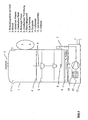
- Figure 1 represents the simplest embodiment of the reactor, which consists of the following parts: the treatment room 1, lid 2, the unattached plate 3 connected to the detachable device 4, the fixed plates 5, bars for fixing the plates 6, the check valve 7, the aeration pump 8, the activated carbon filter 9, the drain cock 10, the strainer 11, air distributor 12, by means of external energy sources 13 can be heated from below and can be touched by hand with water.
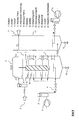
- Figure 2 shows another reactor for dis- or semi-continuous operation, which can be pressurized with water from above via a second valve, additionally heated and ventilated to each segment.
- FIG. 4 two further reactors are shown with their own electric heater and electric controller 9 and a housing as a stand that the reactor is either permanently mounted on the stand and by increasing the distance of the treatment chamber from the ground pouring of the water through the outlet is facilitated or from Stand can be removed
- the ventilation pump 10, activated carbon filter 11, heater and controller 9 are all integrated in housing 12 under the treatment room.
- the heating plate and controller 9 are integrated under the removable reactor, the venting pump 10 and activated carbon filter 11 in housing 12 under the treatment room.
- the treated water can be poured by tipping the reactor from above.
- the standards for larger reactors for dis- and semi-continuous operation can be achieved in compliance with o.a. Optimizations arbitrarily increased, in addition heated and ventilated in each stage and the number of plates can be increased. To save energy, the treatment room can continue to be provided with insulating material and thus the heat loss can be reduced.
- FIGs 5, 6 and 7 show the reactors in Figure 1, Figure 3 and Figure 4 without ventilation, which can be externally heated. These can be used where there is no electrical current to operate the air pump or undesirable. If necessary, additional heat energy can be supplied for some time to treat the water at the boiling point.
- the plant consists of a reactor and a bubble column, where the water after treatment in the first reactor is only further aerated here (Figure 8).
- the reactor is internally equipped with several plates horizontally and can be double-walled and additionally heated to each stage and ventilated. In this reactor, the water is heated to the desired temperature and simultaneously aerated. Thereafter, the water enters a bubble column, where the water is only vented. If for some reason the use of bubble column is not possible, the process can be carried out without this but with a slightly longer residence time in the first reactor.
- thermal treatment of the water to eliminate pollutants in the reactor developed according to the present invention is not sufficient alone, chemicals and gases (such as pure oxygen or ozone) may be added to the water as needed.
- the thermal reactor according to the invention is a high-performance reactor for chemical reaction, which can also be used in other areas of chemical reaction management.
- the method can be used to save chemicals as a useful precursor to micro, ultra, nanofiltration and in particular reverse osmosis.
Landscapes
- Life Sciences & Earth Sciences (AREA)
- Hydrology & Water Resources (AREA)
- Engineering & Computer Science (AREA)
- Environmental & Geological Engineering (AREA)
- Water Supply & Treatment (AREA)
- Chemical & Material Sciences (AREA)
- Organic Chemistry (AREA)
- Treatment Of Water By Oxidation Or Reduction (AREA)
Abstract
Description
Die Erfindung betrifft einen Reaktor und Verfahren zum Entkalken von Wasser und gleichzeitigem Entfernen von Schadstoffen sowie Herabsetzung der Trübung und Desinfektion in einem Reaktor mit Zu- und Auslauf ohne Zusatz von Chemikalien und Filter nach dem Oberbegriff des Anspruchs 1.The invention relates to a reactor and method for descaling water and simultaneously removing pollutants and reducing the turbidity and disinfection in a reactor with inlet and outlet without the addition of chemicals and filters according to the preamble of
Ein derartige Reaktor und Verfahren sind im Prinzip in der
Ferner sind zum Entkalken von Wasser Kalkhydratfällung, Impfgeräte zur Calciumcarbonatbildung und Ionenaustauscher verbreitet. Bei diesen Verfahren handelt es sich um chemische Aufbereitung. Es gibt auch Verfahren, die auf physikalischer Basis arbeiten. Darunter sind Entkalkung durch Veränderung der Kristallstruktur im Magnetfeld, z.B. die
Bei der aus dem
Bei dem Patent
Allen genannten Verfahren wird zumeist eine positive Beeinflussung der Kalkabscheidung oder Verhinderung der Kalkbildung in Installationen bescheinigt. Bei den thermischen Verfahren wird auch eine gleichzeitige Kalkreduktion, Herabsetzung der Trübung und Schadstoffeliminierung in Wasser ermöglicht. Nachteilig bei diesen Verfahren ist jedoch, dass entweder die angewandte Tech-nik aufwendig ist und für größere Wassermengen praktikabel und rentabel sein kann oder die Technik nicht genug praktisch und effektiv ist.All of these methods are usually certified a positive effect on lime deposition or prevention of calcification in installations. The thermal process also allows simultaneous lime reduction, reduction of turbidity and elimination of pollutants in water. A disadvantage of these methods, however, is that either the applied technology is complex and can be practical and profitable for larger volumes of water or the technique is not practical enough and effective.
Nachteilig beim thermischen Verfahren (siehe
Die Nachteile des oben genannten US-Patents ist durch das Patent
Die Techniken, die mit Hilfe von Ionenaustauschern, Aktivkohle, Filtern und dgl. arbeiten, brauchen einerseits unbedingt elektrische Energie und andererseits sind gegenüber den Trübstoffen im Wasser sehr empfindlich und verstopfen sehr schnell, so dass sie in der Regel, insbesondere für den Einsatz im Haushaltsbereich, nur zur Aufbereitung vom klaren Leitungswasser geeignet sind. Andernfalls muss das Wasser extern vorbehandelt werden.The techniques that work with the help of ion exchangers, activated carbon, filters and the like. On the one hand necessarily electrical energy and on the other hand are very sensitive to the turbidity in the water and clog very quickly, so they usually, especially for use in the home , are only suitable for the treatment of clear tap water. Otherwise, the water must be externally pretreated.
Die Aufgabe der vorliegenden Erfindung besteht nun darin, den eingangs genannten Reaktor und Verfahren derart zu verbessern, dass sie auch ohne Einsatz von Chemikalien, Filter die geschilderten Probleme vermeiden und ohne großen apparativen Aufwand und Wartung Wasser entkalken, gleichzeitig Schadstoffe aus dem Wasser eliminieren, die Trübung des Wassers herabzusetzen und die Desinfektion bewirken. Ein weiteres Ziel ist, dass Kalkablagerungen sowohl bei kontinuierlich, als auch dis- und semikontinuierlich arbeitenden Reaktorvorrichtungen von den Wärme-übertragungsflächen lösen und nicht zu einer permanenten Verkrustung führen. Der erfindungsgemäße Reaktor sollte möglichst in sämtlichen Größen ab 0,5 Liter herstellbar sein, und eine variable Verfahrensführung ermöglichen.The object of the present invention is to improve the aforementioned reactor and method such that they avoid the problems described without the use of chemicals, filters and descaling water without much equipment and maintenance, at the same time eliminate pollutants from the water, the Reduce turbidity of the water and cause the disinfection. Another objective is to dissolve lime deposits from the heat transfer surfaces in both continuous and dis- and semi-continuous reactor devices and not lead to permanent encrustation. The reactor according to the invention should be possible to produce in all sizes from 0.5 liters, and allow a variable process management.
Erfindungsgemäß werden die Aufgabe und das Ziel in vorrichtungsgemäßer Weise durch den in Anspruch 1 gekennzeichneten Reaktor bzw. in ablaufgemäßer Hinsicht durch das Verfahren gemäß Anspruch 6 gelöst.According to the invention, the object and the object are achieved in the manner according to the device by the reactor characterized in
Die Strömung bei Erwärmung von Wasser ist mehr oder weniger laminar und findet mehr oder weniger im inneren Bereich des Wassers statt. Durch die fest montierten und mit Bohrungen versehenen Platten in den Reaktor mit Luft-Begasung wird erfindungsgemäß zum einen die laminare Strömung in eine turbulente Strömung umgewandelt. Dadurch entsteht eine intensive Mikrovermischung des Wassers in allen Bereichen des Reaktors statt. Daneben wird diese Turbulenz möglichst in die Nähe der Phasengrenzfläche(Reaktorwand)geleitet, um so den Stoffaustausch dort zu vergrößern und die heterogene Kristallkeimbildung zu beschleunigen. Die heterogene und sekundäre Keimbildung laufen bei niedrigerer Übersättigung ab. Zum anderen werden durch die fest montierten Platten und ihre spezielle Anordnung sequentielle Bereiche im Reaktor hergestellt, wo die Temperatur des Wassers in der Nähe der Wärmequelle schneller ansteigt als in weiteren Bereichen. In diesem Fall betragen die Temperaturunterschiede zwischen einzelnen Bereichen um mehrere 10 °C. Folglich findet dort eine zeitlich schnellere Keimbildung und Kristallwachstum statt. Durch diese Keime und Kristalle, die später zum Teil in anderen Bereichen eindringen, geschieht eine automatische Animpfung und sekundäre Kristallisation in übrigen Bereichen, die zusammen mit heterogenen Keim- und Kristallbildung insgesamt zu einer schnelleren Prozessablauf führen.The flow when heating water is more or less laminar and takes place more or less in the inner region of the water. By firmly mounted and provided with holes plates in the reactor with air-gassing according to the invention, on the one hand, the laminar flow is converted into a turbulent flow. This creates an intensive micro-mixing of the water in all areas of the reactor instead. Next to it will be this turbulence as possible in the vicinity of the phase interface (reactor wall) passed, so as to increase the mass transfer there and to accelerate the heterogeneous nucleation. Heterogeneous and secondary nucleation proceeds at lower supersaturation. On the other hand, the fixed plates and their special arrangement produce sequential areas in the reactor where the temperature of the water near the heat source increases faster than in other areas. In this case, the temperature differences between individual areas amount to several 10 ° C. Consequently, there is a temporally faster nucleation and crystal growth. Through these germs and crystals, which later partially penetrate into other areas, there is an automatic inoculation and secondary crystallization in other areas, which together with heterogeneous nucleation and crystal formation lead to an overall faster process flow.
Bei der Kristallisation von Härtebildnern im Wasser handelt es sich um die Fällungskristallisation. Bekanntlich setzt die Kristallisation allgemein durch Animpfung durch artverwandte Kristalle schneller ein. Bei der Fällungskristallisation speziell findet die Kristallisation erst bei höherer Übersättigung ein, und dabei spielt die heterogene eine größere Rolle als die homogene Keimbildung. Die Keimbildung und das Kristallwachstum werden darüber hinaus durch das geeignete Material mit großer Oberflächenenergie zwischen der Reaktorwand und Wasser gefördert. Es wird berichtet, dass auch Gasblasen als fremde Partikel die heterogene Keimbildung unterstützen.The crystallization of hardness constituents in water is the precipitation crystallization. As is known, crystallization generally starts more rapidly by inoculation by related crystals. In crystallization by precipitation, crystallization does not take place until higher supersaturation, and the heterogeneous one plays a greater role than the homogeneous nucleation. In addition, nucleation and crystal growth are promoted by the appropriate high surface energy material between the reactor wall and water. It is reported that gas bubbles as foreign particles also support heterogeneous nucleation.
Einen positiven Effekt auf die Keimbildung bei Fällungskristallisation hat ebenfalls nicht nur die Makro-, sondern auch die Mikrovermischung der Reaktionspartner. Bei der Fällung von Carbonaten im Wasser spielt daneben eine schnelle Strippung des Kohlendioxids aus dem Wasser eine Rolle. Die Begasung und Herstellung von intensiven Vermischungszonen unterhalb der Platten mit gleichzeitiger Desorption des Kohlendioxids bewirken, dass die Kristallisation insgesamt mit erheblich geringerer Übersättigung als sonst und weit unterhalb des Siedepunktes anfängt.A positive effect on the nucleation in precipitation crystallization is also not only the macro-, but also the micro-mixing of the reactants. In the precipitation of carbonates in the water next to a rapid stripping of carbon dioxide from the water plays a role. The fumigation and production of intensive mixing zones below the plates with simultaneous desorption of the carbon dioxide cause the total crystallization begins with significantly less supersaturation than usual and far below the boiling point.
Beim Verfahren nach dem Patent
Eine Strippung des Kohlendioxids und Kristallisation bei geringerer Übersättigung bedeutet ferner, dass dadurch mehr Kohlendioxid und folglich Carbonate aus dem Wasser entfernt wird. Dieser Effekt hat ebenfalls zur Folge, dass der pH-Wert des Wassers mit Hilfe dieses Verfahrens höher ansteigt als bei der Entkalkung in herkömmlichen Reaktoren. Höherer pH-Wert führt zu einer verstärkten Carbonatfällung und diese beide führen letztlich gemeinsam zu einer besseren physikalischen und chemischen Ausfällung von Trübstoffen, Phosphaten und Metall- sowie Schwermetallhydroxiden.Stripping the carbon dioxide and crystallizing at less supersaturation also means that more carbon dioxide and hence carbonates are removed from the water. This effect also has the consequence that the pH of the water with the aid of this method increases more than with the descaling in conventional reactors. Higher pH leads to increased carbonate precipitation and these two together ultimately lead to a better physical and chemical precipitation of turbidity, phosphates and metal and heavy metal hydroxides.
Aus diesen Gründen eignet sich das Verfahren neben der Behandlung vom Leitungswasser, sondern auch zur Behandlung von Oberflächen- und Grundwasser mit hohem Anteil an Trübstoffe sowie manche Abwässer.For these reasons, the method is next to the treatment of tap water, but also for the treatment of surface and groundwater with a high proportion of turbidity and some wastewater.
Bekanntlich wird die Übersättigung von Härtebildnern an wärmeren Kontaktflächen(Heizfläche und Reaktorwand)zur Keimbildung eher erreicht als im Wasser und die Kristallisation dieser Salze findet in erster Linie auf diese Flächen. Die Umlenkung der Wasserströmung an die Nähe der Reaktorwand bewirkt zwar eine Verkleinerung der laminaren Schicht in diesem Bereich und begünstigt den Stoff- und Energieaustausch, es zeigt sich jedoch in der Praxis, dass neben einer Mikrovermischung an die Reaktorwände diese auch in weiteren Bereichen des Wassers eine bedeutende Rolle bei der Kristallisation spielt. Durch eine optimierte Anordnung der Platten und die Möglichkeit einer schnelleren sequentiellen Erwärmung sowie Animpfung von weiteren Bereichen zusammen schafft Voraussetzungen für eine bessere Nutzung des Reaktors und der zuzuführenden Energie.It is known that the supersaturation of hardness formers on warmer contact surfaces (heating surface and reactor wall) for nucleation is achieved rather than in water and the crystallization of these salts is primarily on these surfaces. Although the deflection of the water flow to the vicinity of the reactor wall causes a reduction of the laminar layer in this area and favors the mass and energy exchange, it turns out in practice that in addition to a micro-mixing of the reactor walls this also in other areas of the water plays a significant role in crystallization. An optimized arrangement of the plates and the possibility of faster sequential heating and inoculation of other areas together create conditions for a better use of the reactor and the energy to be supplied.
Bei den Rektoren mit beweglichen Platten oder Kartuschen ist es nur möglich, durch eine zusätzliche seitliche Erwärmung des Reaktors die Kristallisation in weiteren Bereichen weiter zu fördern. Dabei ist jedoch der Wärmeverlust im Vergleich zu der direkten Erwärmung im Wasser - z.B. durch elektrische Heizspirale - sehr groß. Die Möglichkeit einer direkten Erwärmung ist im Reaktor mit fest montierten Platten gegeben. Das Gleiche gilt für Zufuhr von Luft.With the Rectors with moving plates or cartridges, it is only possible to further promote the crystallization in other areas by an additional lateral heating of the reactor. However, heat loss is in comparison to direct heating in water - e.g. by electric heating coil - very large. The possibility of direct heating is given in the reactor with fixed plates. The same applies to the supply of air.
Je nach den gewünschten Zielen bei der Behandlung wird das Wasser nicht nur erhitzt und belüftet, sondern nötigenfalls entweder dessen Temperatur durch geringere Wärmezufuhr als vorher in diesem Temperaturbereich konstant gehalten und/oder die Luft-Begasung länger fortgesetzt.Depending on the desired objectives in the treatment, the water is not only heated and ventilated, but if necessary, either kept its temperature constant by lower heat than previously in this temperature range and / or the air fumigation longer.
Durch die Möglichkeit einer erfindungsgemäßen sequentiellen Erwärmung und früheres Sieden des Wassers in unmittelbarer Nähe zur Heizquelle entsteht in diesem Bereich Wasserdampf, der durch die Bohrungen am Rande der befestigten Platten in Form von kleinen Blasen aufsteigt und ebenfalls einer Mikrovermischung des Wassers in oberen Bereichen beiträgt. Mit anderen Worten, wenn aus bestimmten Gründen eine Belüftung nicht möglich oder erwünscht wäre, kann mit geringer Verzögerung trotzdem eine beachtliche Wirkung im Reaktor erzielt werden. Diese Möglichkeit ist bei den oben genannten thermischen Verfahren nicht optimal.The possibility of a sequential heating according to the invention and earlier boiling of the water in the immediate vicinity of the heating source produces water vapor in this area, which rises in the form of small bubbles through the boreholes at the edge of the fixed plates and also contributes to micromixing of the water in upper regions. In other words, if for some reason ventilation would not be possible or desirable, a considerable delay in the reactor can still be achieved with little delay. This possibility is not optimal in the above-mentioned thermal processes.
Bei den oben genannten thermischen Verfahren treten ebenfalls eine gewisse sequentielle Erwärmung und Dampfbildung in unmittelbarer Nähe der Heizquelle auf; Dampf und Luft steigen jedoch in Form von großen Blasen, die nicht wie kleine Blasen effektiv zur Durchmischung des Wassers und Stoffaustauschs führen, wenn auch beim Verfahren in dem Patent
Dieses Problem wird in dem erfindungsgemäßen Reaktor durch fest montierten Platten derart gelöst, dass die großen Blasen beim Durchgang durch die kleinen Bohrungen am Rande der Platten in kleine homogene Blasen zerkleinert werden und fein verteilt in der Nähe der Reaktorwand aufsteigen. Die darüber montierte Platte besitzt aber nur eine große Bohrung in der Mitte, am Rande jedoch keine Bohrungen. Dadurch werden die Blasen beim Aufstieg in der Mitte dieser Stufe gelenkt. Dadurch findet eine intensive Durchmischung auch in diesem Bereich statt.This problem is solved in the reactor according to the invention by fixedly mounted plates such that the large bubbles are crushed when passing through the small holes at the edge of the plates into small homogeneous bubbles and ascend finely distributed in the vicinity of the reactor wall. However, the mounted above plate has only a large hole in the middle, on the edge but no holes. As a result, the bubbles are directed at the rise in the middle of this stage. As a result, intensive mixing takes place in this area as well.
Was das Reaktormaterial bezüglich der Fällungskristallisation anbelangt, wird die Keimbildungsarbeit an Flächen mit guter Benetzbarkeit durch Wasser und höhere Oberflächenenergie der Kontaktfläche reduziert.As for the reactor material in terms of precipitation crystallization, nucleation work is reduced on surfaces having good wettability by water and higher surface energy of the contact surface.
Eine weitere Funktion der fest montierten Platten und die nicht an der Reaktorwand befestigte Platte(n) besteht darin, dass die Kalkablagerungen durch intensives Vermischen und evtl. Sieden des Wassers keine festhaftend wachsende Kristalle, sondern lose(amorphe)und Schichtkristalle bilden, die eine geringere Haftfestigkeit besitzen. Bei turbulenter Strömung treten Spannungen auf, die von Zeit zu Zeit die Kristalle ablösen und ins Wasser abgeben. Dadurch wird eine Verkalkung des Reaktors vermieden und Wärmedurchgang durch Verkalkung der Heizfläche nicht reduziert.Another function of the fixed plates and the non-fixed to the reactor wall plate (s) is that the limescale deposits by intensive mixing and possibly boiling of the water not firmly growing crystals, but loose (amorphous) and layered crystals form a smaller Have adhesive strength. In turbulent flow tensions occur, which replace the crystals from time to time and release into the water. As a result, a calcification of the reactor is avoided and heat transfer by calcification of the heating surface is not reduced.
Zuletzt wirkt eine Erwärmung des Wassers oberhalb von 70° C als eine sichere Methode zur Entkeimung des Wassers und Abtötung der Legionellen im Wasser.Finally, a warming of the water above 70 ° C acts as a safe method to sterilize the water and kill the Legionella in the water.
Bei der erfindungsgemäßen einfachsten Ausführung dieser Vorrichtung handelt es sich um eine diskontinuierlich bzw. semikontinuierlich betriebene Vorrichtung bzw. Reaktor, der mit Hilfe einer externen Energiequelle von unten erwärmt und belüftet wird. In dem Behandlungsraum dieses Reaktors sind zwei Platten mit einem Abstand vom Boden zur sequentiellen Erwärmung des Wassers und Lenkung der Strömung sowie Verstärkung von Turbulenz an Reaktorwand und Mikrovermischung innerhalb des Wassers befestigt. Die Platten sind horizontal angeordnet. Die untere Platte hat am Rande durchlaufende kleine Bohrungen und in der Mitte eine große Bohrung. Die zweite Platte hat nur eine große Bohrung. Zunächst wird der Reaktor von oben mit Wasser aufgefüllt. Danach wird eine Vorrichtung bestehend aus einer Platte und einer zylindrischen bzw. den konischen Metall-Teilen, die an einer Halterung zentrisch befestigt sind, so in die Bohrungen eingeführt, dass die unterste mittlere Bohrung ganz und die obere Bohrung mit einem Abstand geschlossen wird.In the simplest embodiment of this device according to the invention, it is a discontinuously or semicontinuously operated device or reactor, which is heated and ventilated from below with the aid of an external energy source. In the treatment room of this reactor, two plates are mounted at a distance from the ground for sequential heating of the water and flow control, as well as reinforcement of reactor wall turbulence and micro-mixing within the water. The plates are arranged horizontally. The bottom plate has small holes on the edge and a large hole in the middle. The second plate has only one big hole. First, the reactor is filled with water from above. Thereafter, a device consisting of a plate and a cylindrical or the conical metal parts, which are mounted centrally on a holder, so inserted into the holes that the lowest middle hole is completely closed and the upper hole with a distance.
Die Befestigung der Platten in den Reaktor kann auch dadurch stattfinden, dass sie vorher mit Hilfe von zwei oder drei Stangen miteinander verbunden werden und dann zusammen in den Reaktor eingedruckt werden, damit sie nötigenfalls herausgezogen werden können.The attachment of the plates into the reactor can also take place by previously connecting them together with the aid of two or three rods and then printing them together in the reactor so that they can be withdrawn if necessary.
Die bewegliche oberste Platte trägt einerseits zur Mikrovermischung des Wassers oberhalb der befestigten Platten und andererseits zur Dämpfung des Siedevorgangs in diesem Bereich. Beim Ausgießen des Wassers nach der Behandlung bleiben die Rückstände auf die Platten und den Boden des Reaktors zurück. Die Entfernung der Rückstände geschieht nach einer mehrmaligen Wasserbehandlung durch Umkippen des Behälters. Dazu wird die Vorrichtung aus der Mitte des Reaktors herausgenommen. Somit bedarf der erfindungsgemäße Reaktor bis auf einfache Entfernung der Rückstände keiner weiteren Wartung oder dgl.The movable top plate contributes on the one hand to micro mixing of the water above the fixed plates and on the other hand to dampen the boiling process in this area. When pouring the water after the treatment, the residues remain on the plates and the bottom of the reactor. The removal of the residues happens after a repeated water treatment by tipping over the container. For this purpose, the device is taken out of the center of the reactor. Thus, the reactor according to the invention requires no further maintenance or the like except for the simple removal of the residues.
Um das Volumen des restlich im Behandlungsraum befindlichen Wasser zu verringern, ist der Behandlungsraum bei dis- bzw. semikontinuierlichem Betrieb unten etwas verengt.In order to reduce the volume of water remaining in the treatment room, the treatment room is somewhat narrowed down during dis- or semi-continuous operation.
Während der Behandlung schwimmen Sedimente im Wasser. Sollte das Wasser auch während der Behandlung bzw. des Siedens aus dem Reaktor entnommen werden können, wird ein an den Auslaufhahn angeschlossenes Sieb ihren Austritt unterbinden.During treatment, sediments float in the water. If the water can also be removed from the reactor during treatment or boiling, a sieve connected to the outlet tap will prevent it from escaping.
Das so behandelte Wasser kann je nach Aufgabenstellung zur Entkalkung und Reduzierung der Schadstoffe sofort nach der Behandlung aus dem Behandlungsraum entnommen werden oder die Entnahme erst nach einer Abkühlung im Behandlungsraum erforderlich sein, da häufig Verbindungen bei kleinen Temperaturen eine geringere Löslichkeit haben. Weitere Vorteile und Merkmale gehen aus den Unteransprüchen hervor, die auch gemeinsam mit dem Hauptanspruch von erfinderischer Bedeutung sein können. Im Folgenden werden bevorzugte Ausführungsbeispiele der Erfindung zum besseren Verständnis derselben anhand der Zeichnung näher erläutert. Es dürfte einleuchten, dass die Erfindung auf die gezeigten Beispiele nicht beschränkt ist.Depending on the task, the water treated in this way can be removed from the treatment room immediately after treatment for descaling and reducing the pollutants, or removal may only be necessary after cooling down in the treatment room. since compounds often have less solubility at low temperatures. Further advantages and features will become apparent from the dependent claims, which may also be together with the main claim of inventive importance. In the following preferred embodiments of the invention for a better understanding of the same with reference to the drawing. It will be understood that the invention is not limited to the examples shown.
Es zeigt:
Bild 1- eine schematische Querschnittsansicht durch einen erfin- dungsgemäßen Reaktor in seiner einfachsten Ausführungs- form, die befestigten Platten und eine abnehmbare Vor- richtung sowie eine Begasungsvorrichtung aufweist (der
Reaktor im Bild 1 ist bevorzugt zur diskontinuierlichen Behandlung vomWasser von 2 bis etwa 50 Liter geeignet); Bild 2- eine schematische Darstellung einer noch weiteren Ausfüh- rungsform eines erfindungsgemäßen Reaktors zur dis- bzw. semi-kontinuierlicher Betriebsführung mit zusätzlicher Erwärmung und Belüftung in verschiedene Bereiche sowie ein weiterer Ablasshahn zur Entfernung von Rückständen (der
Reaktor im Bild 2 ist bevorzugt zur diskontinuierli- chen bzw. semi-kontinuierlichen Behandlungvom Wasser von 10 Liter bis mehrere Kubikmeter geeignet); Bild 3- eine schematische Darstellung einer noch weiteren Ausfüh- rungsform eines erfindungsgemäßen Reaktors zur dis- bzw. semi-kontinuierlicher Betriebsführung mit integrierter Erwärmung und Belüftung sowie ein weiterer Ablasshahn zur Entfernung von Rückständen (der
Reaktor im Bild 3 ist be- vorzugt zur diskontinuierlichen bzw. semi- kontinuierlichen Behandlungvom Wasser von 2 bis etwa 100 Liter geeignet); Bild 4- eine schematische Darstellung einer weiteren Ausfüh- rungsform des erfindungsgemäßen Reaktors ohne Ablass- hahn, mit integrierter Erwärmung, Belüftung und abnehm- barem Behälter sowie trennbarer Reaktor und Belüftungs- rohr, in dem das Wasser nach der Behandlung von oben ausgegossen wird, wozu alle platten im Ablaufbereich zu- sätzliche Bohrungen haben (der
Reaktor im Bild 4 ist be- vorzugt zur diskontinuierlichen Behandlung vomWasser von 1 bis etwa 3 Liter geeignet); Bild 5- eine weitere Ausführungsform des erfindungsgemäßen Reak- tors ohne Belüftung mit Ablasshahn (der
Reaktor im Bild 5 ist bevorzugt zur diskontinuierlichen Behandlung vom Was-ser von 2 bis etwa 20 Liter geeignet); Bild 6- eine weitere Ausführungsform des erfindungsgemäßen Reak- tors ohne Belüftung und ohne Ablasshahn (der
Reaktor im Bild 6 ist bevorzugt zur diskontinuierlichen Behandlung vomWasser von 0,5 bis etwa 3 Liter geeignet); Bild 7- eine weitere Ausführung des erfindungsgemäßen Reaktors mit einem Ablassrohr, ohne Belüftung zur Behandlung des Wassers und zum Warmhalten von heißen Getränken (der Re-
aktor im Bild 7 ist bevorzugt zur diskontinuierlichen Be- handlungvom Wasser von 1bis etwa Bild 8- eine schematische Darstellung einer noch weiteren Ausfüh- rungsform eines erfindungsgemäßen Reaktors zur kontinu- ierlicher Betriebsführung mit mehreren befestigten Plat- ten, Zusätzliche Erwärmung und Belüftung in verschiedene Segmente und einer nachgeschalteten Blasensäule (der Re-
aktor im Bild 8 ist zur kontinuierlichen Behandlung vomWasser von 10 Liter/h bis mehreren Kubikmeter/h geeig- net).
-
Image 1 - 4 shows a schematic cross-sectional view through a reactor according to the invention in its simplest embodiment, having attached plates and a detachable device and a gassing device (the reactor in FIG. 1 is preferably suitable for the discontinuous treatment of water from 2 to about 50 liters). ;
-
picture 2 - a schematic representation of yet another embodiment of a reactor according to the invention for dis- or semi-continuous operation with additional heating and ventilation in different areas and another drain cock to remove residues (the reactor in Figure 2 is preferably for discontinuous or semi-continuous treatment of water from 10 liters to several cubic meters suitable);
-
picture 3 - 1 is a schematic representation of a still further embodiment of a reactor according to the invention for dis- or semi-continuous operation with integrated heating and aeration, and another drain cock for removing residues (the reactor in FIG. 3 is preferred for discontinuous or semi-continuous operation. continuous treatment of water from 2 to about 100 liters suitable);
-
Picture 4 - 1 is a schematic representation of a further embodiment of the reactor according to the invention without drain cock, with integrated heating, ventilation and decreasing In this case, all the plates in the drainage area have additional bores (the reactor in FIG. 4 is preferred for the discontinuous treatment of the water from 1 to 10) about 3 liters suitable);
-
Picture 5 - a further embodiment of the reactor according to the invention without aeration with a drain cock (the reactor in FIG. 5 is preferably suitable for the discontinuous treatment of water from 2 to about 20 liters);
-
Picture 6 - a further embodiment of the reactor according to the invention without aeration and without drain cock (the reactor in Figure 6 is preferably suitable for the discontinuous treatment of water from 0.5 to about 3 liters);
-
Picture 7 - a further embodiment of the reactor according to the invention with a discharge pipe, without aeration for the treatment of water and for keeping warm hot drinks (the reactor in Figure 7 is preferably suitable for discontinuous treatment of water from 1 to about 2.5 liters);
-
Picture 8 - a schematic representation of yet another embodiment of a reactor according to the invention for continuous operation management with several fixed plates, additional heating and ventilation in different segments and a downstream bubble column (the reactor in Figure 8 is for continuous treatment of the water of 10 liters / h to several cubic meters / h).
Bild 1 stellt die einfachste Ausführungsform des Reaktors dar, der aus folgenden Teilen besteht: der Behandlungsraum 1, Deckel 2, die nicht befestigte Platte 3,die mit der abnehmbare Vorrichtung 4 verbunden ist, die befestigten Platten 5, Stangen zur Befestigung der Platten 6, das Rückschlagsventil 7, die Belüftungspumpe 8, der Aktivkohle-Filter 9, der Ablasshahn 10, der Sieb 11, Luftverteiler 12, der mit Hilfe von externen Energiequellen 13 von unten beheizt werden kann und per Hand mit Wasser aufgefühlt werden kann.Figure 1 represents the simplest embodiment of the reactor, which consists of the following parts: the
Im Bild 2 ist ein weiterer Reaktor zur dis- bzw. Semi- kontinuierlichen Betriebsführung dargestellt, der über ein zweites Ventil von oben mit Wasser beaufschlagt, auf jedes Segment zusätzlich erwärmt und belüftet werden kann.Figure 2 shows another reactor for dis- or semi-continuous operation, which can be pressurized with water from above via a second valve, additionally heated and ventilated to each segment.
Im Bild 3 u. 4 sind zwei weitere Reaktoren mit eigener elektrischer Heizung und elektrischer Regler 9 und einem Gehäuse als Ständer dargestellt, dass der Reaktor entweder auf dem Ständer fest montiert ist und durch Erhöhung des Abstands des Behandlungsraums vom Boden ein Ausgießen des Wassers durch den Auslauf erleichtert ist oder vom Ständer abgenommen werden kann Im Bild 3 sind die Belüftungspumpe 10, Aktivkohle-Filter 11, Heizung und Regler 9 alle in Gehäuse 12 unter dem Behandlungsraum integriert.In picture 3 u. 4, two further reactors are shown with their own electric heater and
Im Bild 4 sind die Heizplatte und Regler 9 unter dem abnehmbaren Reaktor, die Belüftungspumpe 10 und Aktivkohle-Filter 11 in Gehäuse 12 unter dem Behandlungsraum integriert. Bei diesem Reaktor kann das behandelte Wasser durch Umkippen des Reaktors von oben ausgegossen werden kann.In Figure 4, the heating plate and
Die Maßstäbe für größere Reaktoren zur dis- und semikontinuierlichen Betriebsführung können unter Einhaltung der o.a. Optimierungen beliebig vergrößert, zusätzlich auch in jede Stufe erwärmt und belüftet sowie die Zahl der Platten erhöht werden. Zur Einsparung von Energie kann weiterhin der Behandlungsraum mit Isoliermaterial versehen werden und dadurch der Wärmeverlust verringert werden.The standards for larger reactors for dis- and semi-continuous operation can be achieved in compliance with o.a. Optimizations arbitrarily increased, in addition heated and ventilated in each stage and the number of plates can be increased. To save energy, the treatment room can continue to be provided with insulating material and thus the heat loss can be reduced.
Im Bild 5,6 und 7 sind die Reaktoren in Bild 1, Bild 3 und Bild 4 ohne Belüftung dargestellt, die extern erhitzt werden können. Diese können dort eingesetzt werden, wo kein elektrischer Strom zum Betreiben der Luft-Pumpe vorhanden oder unerwünscht ist. Es kann nötigenfalls zur Behandlung des Wassers beim Siedepunkt einige Zeit zusätzliche Wärme-Energie zugeführt werden.Figures 5, 6 and 7 show the reactors in Figure 1, Figure 3 and Figure 4 without ventilation, which can be externally heated. These can be used where there is no electrical current to operate the air pump or undesirable. If necessary, additional heat energy can be supplied for some time to treat the water at the boiling point.
Für eine kontinuierliche Betriebsführung der erfindungsgemäßen Vorrichtung besteht die Anlage aus einem Reaktor und einer Blasensäule, wo das Wasser nach Behandlung im ersten Reaktor hier nur weiter belüftet wird (Bild 8). Der Reaktor ist im Inneren mit mehreren Platten horizontal ausgestattet und kann doppelwandig sein und zusätzlich auf jede Stufe beheizt und belüftet werden. In diesem Reaktor wird das Wasser bis auf gewünschte Temperatur erhitzt und gleichzeitig belüftet. Danach gelangt das Wasser in eine Blasensäule, wo das Wasser nur belüftet wird. Wenn aus irgendeinem Grund der Einsatz von Blasensäule nicht möglich ist, kann der Prozess ohne diese aber mit etwas längerer Verweilzeit im ersten Reaktor durchgeführt werden.For a continuous operation of the device according to the invention, the plant consists of a reactor and a bubble column, where the water after treatment in the first reactor is only further aerated here (Figure 8). The reactor is internally equipped with several plates horizontally and can be double-walled and additionally heated to each stage and ventilated. In this reactor, the water is heated to the desired temperature and simultaneously aerated. Thereafter, the water enters a bubble column, where the water is only vented. If for some reason the use of bubble column is not possible, the process can be carried out without this but with a slightly longer residence time in the first reactor.
Weitere Einsatzgebiete des erfindungsgemäßen Reaktors und Verfahrens ohne oder mit Einsatz von Chemikalien sind z.B. Trinkwasser-, Oberflächenwasser- und Abwasseraufbereitung sowie Schlammbehandlung im Allgemeinen.Further fields of use of the reactor according to the invention and the method without or with the use of chemicals are e.g. Drinking water, surface water and wastewater treatment as well as sludge treatment in general.
Falls also eine thermische Behandlung des Wassers zur Eliminierung von Schadstoffen im erfindungsgemäß entwickelten Reaktor nicht allein ausreicht, können je nach Bedarf dem Wasser Chemikalien und Gase (wie z.B. reiner Sauerstoff oder Ozon) zugesetzt werden.Thus, if thermal treatment of the water to eliminate pollutants in the reactor developed according to the present invention is not sufficient alone, chemicals and gases (such as pure oxygen or ozone) may be added to the water as needed.
Es ist ebenfalls möglich, auf jede Stufe des Behandlungsraums einen fest montierten UV-Strahler anzubringen, um eine Oxidation von weiteren Schadstoffen zu ermöglichen bzw. zu beschleunigen.It is also possible to mount a fixed UV emitter on each stage of the treatment room to allow or accelerate oxidation of other pollutants.
Im Grunde handelt es sich beim erfindungsgemäßen thermischen Reaktor um einen Hochleistungsreaktor für chemische Reaktionsführung, die auch in anderen Bereichen der chemischen Reaktionsführung Verwendung finden kann.Basically, the thermal reactor according to the invention is a high-performance reactor for chemical reaction, which can also be used in other areas of chemical reaction management.
Das Verfahren kann zur Einsparung von Chemikalien als eine sinnvolle Vorstufe zur Mikro-, Ultra-, Nanofiltration und insbesondere Umkehrosmose eingesetzt werden.The method can be used to save chemicals as a useful precursor to micro, ultra, nanofiltration and in particular reverse osmosis.
Die Beheizung des Behandlungsraums kann nicht nur elektrisch, sondern auch durch entsprechende Änderung mit Hilfe von fossilen- oder erneuerbaren Energiequellen bewerkstelligt werden. Insofern ist der erfindungsgemäße Reaktor zur Behandlung vom Wasser im Allgemeinen für dezentrale Trinkwasseraufbereitung beim Verbrauchern und vor allem in Regionen ohne elektrischen Energieanschluss und Katastrophengebiete einsetzbar. Des Weiteren können noch folgende Merkmale allein oder auch gemeinsam für die Erfindung bedeutsam sein:
- dass zur Erwärmung des Wassers mit integriertem Beheizungsaggregat fossile Brennstoffe und erneuerbare Energien mit entsprechender Änderung des Heizaggregats verwendet werden,
- dass zum Rühren, Begasen, Strippen und chemische Oxidation eine Gaspumpe mit regelbarer Durchflussmenge eingesetzt wird,
- dass die Begasungen und Beheizung in verschiedene Bereiche in den Reaktor stattfinden kann,
- dass in der dis-, semi- und kontinuierlich betriebenen Anlage die Platten an Reaktorwänden befestigt sind,
- dass die befestigten Platten eine große Bohrung besitzen und am Rande kleine Bohrungen haben können,
- dass eine abnehmbare Vorrichtung ohne Platte bzw. mit einer oder mehreren Platte(n) in großen Bohrungen platziert wird, um die Öffnungen zu verengen bzw. zu schließen
- dass der Reaktor und die Platten abweichende Form von rund und zylindrisch besitzen,
- dass die Platten konisch geformt sind,
- dass in dis-, semi- und kontinuierlich betriebenem Reaktor im tiefsten Punkt desselben ein zweites Ablassventil für Schlammentnahme vorgesehen ist,
- dass zur Einstellung des Kalk-Kohlensäure-Gleichgewichtes für Verwendung in Hausinstallationen ab 20 °C und der chemischen Fällung ab 30 °C gearbeitet wird,
- dass der Reaktor mit Hilfe von Isoliermaterialien Wärme isoliert ist.
- that fossil fuels and renewable energies with a corresponding change in the heating unit are used to heat the water with integrated heating unit,
- that a gas pump with adjustable flow rate is used for stirring, gasification, stripping and chemical oxidation,
- that the fumigation and heating can take place in different areas in the reactor,
- that in the dis-, semi- and continuously operated plant the plates are attached to reactor walls,
- that the fortified plates have a large bore and can have small holes at the edge,
- that a removable device without a plate or with one or more plate (s) is placed in large holes to narrow or close the openings
- that the reactor and the plates have different shape of round and cylindrical,
- that the plates are conically shaped,
- a second drain valve for sludge removal is provided in the discrete, semi-continuous and continuously operated reactor at its lowest point,
- to work to adjust the lime-carbonic acid balance for use in domestic installations above 20 ° C and chemical precipitation from 30 ° C,
- that the reactor is insulated with the help of insulating materials heat.
Claims (6)
- A reactor for water deliming and simultaneous discharge of harmful substances, reduced cloudiness and disinfection,- including a treatment room with an inlet section for the water to be treated and an outlet section for the treated water as well as an additional outlet for discharging sediments,- fitted with one or several direct and/or indirect heating devices, intended for the water to be treated,- several removable and fixed plates for diverting the water flow, arranged horizontally, at a distance from the bottom and if required from the lateral wall of the reactor, characterised in thatthe fixed plates always have a bore in their middle, through which a system for opening and closing the bores runs, with conical or cylinder-shaped closing means, wherein the upper end of the system is connected without any plates or with one or several non-fixed plates and comprises a rest, and wherein one or several of the fixed plates have peripheral openings along the contour, and wherein the direct heating devices are arranged in spaced apart sections of the reactor, and wherein the water inlet and/or outlet are provided in the upper and/or lower area of the reactor, and in that a plate is provided with only one large bore in the middle over a plate with smaller bores at the periphery.
- A reactor according to claim 1, characterised in that it is composed of stainless steel, various alloys or heat-resistant material.
- A reactor according to claim 1 and 2, characterised in that the plates are conical in shape.
- A reactor according to claim 1 to 3, characterised in that the plates are connected first of all with two or three rods and can be inserted into or removed together from the reactor.
- A reactor according to claim 1 to 4, characterised in that a sieve is provided under the outlet section of the sediments in the reactor during water treatment.
- A method for water deliming and simultaneous discharge of harmful substances and disinfection in a reactor according to claim 1 with inlet and outlet including the following steps:a) heating the water, whereby the solubility of the CO2 in water is reduced and the desorption of the CO2 is initiated, thereby causing further rise of the already increased pH (2 HCO3- -> C02 + C03 2-+ H20),b) provision and arrangement of one or several removable or fixed plates in the reaction room with intensive micro-mixture inside the water and the reactor wall as well as the diversion of the water flow at the reactor wall and other areas, as well as enhanced formation and growth of crystal seeds on the wall and whereas the heated water, if necessary, is maintained at higher temperature, and that the produced lime and the furrings settled under the plate(s) and on the heating surfaces or reactor wall are swirled up and carried by the water, characterised in that the water is heated in spaced apart sections of the reactor at time-controlled intervals and air as well as steam bubbles are disintegrated, on the one hand to enable more intensive mass transfer and on the other hand fractioned crystallisation coupled with inoculation and secondary crystallisation in less heated areas, whereas the reactor is operated in continuous, semi-continuous or discontinuous mode, and whereas the water is heated up to boiling point at normal, reduced or elevated pressure.
Applications Claiming Priority (1)
| Application Number | Priority Date | Filing Date | Title |
|---|---|---|---|
| PCT/EP2006/002773 WO2007110092A1 (en) | 2006-03-27 | 2006-03-27 | Reactor and method for decalcifying water and simultaneous removal of pollutants |
Publications (3)
| Publication Number | Publication Date |
|---|---|
| EP2007684A1 EP2007684A1 (en) | 2008-12-31 |
| EP2007684B1 true EP2007684B1 (en) | 2009-07-15 |
| EP2007684B8 EP2007684B8 (en) | 2010-02-17 |
Family
ID=37054747
Family Applications (1)
| Application Number | Title | Priority Date | Filing Date |
|---|---|---|---|
| EP06742527A Not-in-force EP2007684B8 (en) | 2006-03-27 | 2006-03-27 | Reactor and method for decalcifying water and simultaneous removal of pollutants |
Country Status (5)
| Country | Link |
|---|---|
| US (1) | US20090101556A1 (en) |
| EP (1) | EP2007684B8 (en) |
| CN (1) | CN101626981B (en) |
| DE (1) | DE502006004271D1 (en) |
| WO (1) | WO2007110092A1 (en) |
Families Citing this family (3)
| Publication number | Priority date | Publication date | Assignee | Title |
|---|---|---|---|---|
| CN103435168B (en) * | 2013-08-27 | 2016-01-06 | 新奥科技发展有限公司 | A kind of waste water calcium removal methods |
| CN104402157A (en) * | 2014-10-17 | 2015-03-11 | 苏州新协力环保科技有限公司 | Ozonization treatment method for chemical waste water |
| SE544179C2 (en) * | 2020-08-24 | 2022-02-22 | Maxgrepp Handrims Ab | Purification device for three-chamber well |
Family Cites Families (11)
| Publication number | Priority date | Publication date | Assignee | Title |
|---|---|---|---|---|
| US3617544A (en) * | 1970-05-11 | 1971-11-02 | Sybron Corp | Hot process settling tank having adjustable downcomer |
| NL8004724A (en) * | 1980-08-20 | 1982-03-16 | Bastiaan Bernard Boele Eertink | DEVICE AND METHOD FOR CLEANING WASTE WATER. |
| US4957624A (en) * | 1986-06-09 | 1990-09-18 | Purewater Sciences International, Inc. | Method of and arrangement for purifying contaminated water |
| US4948499A (en) * | 1987-07-31 | 1990-08-14 | Purewater Science International, Inc. | Simplified method and apparatus for purification |
| DE3827715A1 (en) * | 1988-08-16 | 1990-02-22 | Metz Mannheim Gmbh | DEVICE AND METHOD FOR MICROBIOLOGICAL WATER TREATMENT |
| DE9214786U1 (en) | 1992-10-30 | 1992-12-24 | Sauer, Rolf G., 7290 Freudenstadt | Device for the treatment of liquids, in particular water |
| US5858248A (en) | 1995-03-31 | 1999-01-12 | The Coca-Cola Company | On premise water treatment method for use in a post-mix beverage dispenser |
| DE19727357B4 (en) * | 1997-06-27 | 2004-08-26 | Judo Wasseraufbereitung Gmbh | Physical water treatment apparatus and method |
| DE19846583C2 (en) * | 1998-10-09 | 2002-11-07 | Brita Gmbh | Water filter device with a collecting can and with heating element |
| DE10247686B3 (en) | 2002-10-12 | 2004-04-22 | Karimnia, Massoud, Dr.Ing. | Reactor, for the treatment of water, has direct or indirect heating and a structured gas flow to decalcify the water and separate hazardous matter combined with disinfecting it |
| DE10247689A1 (en) | 2002-10-12 | 2004-04-22 | Martin Rahe | Urinary bladder implants for prolonged prevention and treatment of urinary tract infections, comprising antimicrobial active agent, preferably silver, incorporated in carrier, preferably of shape memory material |
-
2006
- 2006-03-27 EP EP06742527A patent/EP2007684B8/en not_active Not-in-force
- 2006-03-27 US US12/294,279 patent/US20090101556A1/en not_active Abandoned
- 2006-03-27 CN CN2006800536135A patent/CN101626981B/en not_active Expired - Fee Related
- 2006-03-27 WO PCT/EP2006/002773 patent/WO2007110092A1/en not_active Ceased
- 2006-03-27 DE DE502006004271T patent/DE502006004271D1/en not_active Expired - Fee Related
Also Published As
| Publication number | Publication date |
|---|---|
| CN101626981A (en) | 2010-01-13 |
| CN101626981B (en) | 2013-01-16 |
| EP2007684B8 (en) | 2010-02-17 |
| EP2007684A1 (en) | 2008-12-31 |
| US20090101556A1 (en) | 2009-04-23 |
| DE502006004271D1 (en) | 2009-08-27 |
| WO2007110092A1 (en) | 2007-10-04 |
Similar Documents
| Publication | Publication Date | Title |
|---|---|---|
| DE69421852T2 (en) | Liquid cleaning system | |
| WO1989003807A1 (en) | Prevention of the occurence or proliferation of microorganisms in water for industrial use | |
| WO1996007460A1 (en) | Process and device for desalinating sea water | |
| EP2007684B1 (en) | Reactor and method for decalcifying water and simultaneous removal of pollutants | |
| DE10247686B3 (en) | Reactor, for the treatment of water, has direct or indirect heating and a structured gas flow to decalcify the water and separate hazardous matter combined with disinfecting it | |
| EP2078174B1 (en) | Water treatment plant | |
| DE102005003064B4 (en) | Reactor and method for descaling water and simultaneously removing pollutants | |
| EP2294016B1 (en) | Method and device for water treatment | |
| DE2543418A1 (en) | METHOD FOR DISINCLUDING WATER BY IRRADIATION WITH ULTRA-VIOLET LIGHT AND DEVICE FOR CARRYING OUT THE METHOD | |
| DE102010026491B4 (en) | Device and method for treating waste water from laundry | |
| DE102007030850A1 (en) | Container sterilization with UVC radiation | |
| DE10340923B4 (en) | Calcification protection device for a water heater | |
| EP1069077A1 (en) | Device for treating water | |
| DE19742734C2 (en) | Plant for the anaerobic treatment of organically polluted wastewater | |
| EP2341032A2 (en) | Method and device for preparing water for supplying to a flow-through capacitor | |
| DE9410633U1 (en) | Device for treating domestic wastewater | |
| DE3517600A1 (en) | Process and apparatus for the aerobic purification of waste waters | |
| WO2002042220A1 (en) | Device for treating drinking water | |
| WO1988007978A1 (en) | Conditioning and hygienic treatment of sewage sludge and the like | |
| DE20121886U1 (en) | Drinking water treatment facility | |
| EP1547977A1 (en) | Process for the treatment of waste water | |
| CH696812A5 (en) | Device for sterilization and decalcification of drinking water by electrolytic treatment of cold and change-warm drinking- and industrial water, comprises multi-stage drinking water filter with filtration stage, and an electrolysis device | |
| DE102005026215A1 (en) | Method and device for withdrawing a liquid from a basin | |
| AT403474B (en) | Biological wastewater purification unit | |
| AT409487B (en) | Device for desalinating or cleaning seawater and brackish water comprises a condensation vessel arranged inside a vaporization vessel and immersed in the liquid phase during the operation |
Legal Events
| Date | Code | Title | Description |
|---|---|---|---|
| PUAI | Public reference made under article 153(3) epc to a published international application that has entered the european phase |
Free format text: ORIGINAL CODE: 0009012 |
|
| 17P | Request for examination filed |
Effective date: 20080904 |
|
| AK | Designated contracting states |
Kind code of ref document: A1 Designated state(s): AT BE BG CH CY CZ DE DK EE ES FI FR GB GR HU IE IS IT LI LT LU LV MC NL PL PT RO SE SI SK TR |
|
| AX | Request for extension of the european patent |
Extension state: AL BA HR MK YU |
|
| GRAP | Despatch of communication of intention to grant a patent |
Free format text: ORIGINAL CODE: EPIDOSNIGR1 |
|
| GRAS | Grant fee paid |
Free format text: ORIGINAL CODE: EPIDOSNIGR3 |
|
| GRAA | (expected) grant |
Free format text: ORIGINAL CODE: 0009210 |
|
| AK | Designated contracting states |
Kind code of ref document: B1 Designated state(s): AT BE BG CH CY CZ DE DK EE ES FI FR GB GR HU IE IS IT LI LT LU LV MC NL PL PT RO SE SI SK TR |
|
| REG | Reference to a national code |
Ref country code: CH Ref legal event code: EP Ref country code: GB Ref legal event code: FG4D Free format text: NOT ENGLISH |
|
| REG | Reference to a national code |
Ref country code: IE Ref legal event code: FG4D |
|
| REF | Corresponds to: |
Ref document number: 502006004271 Country of ref document: DE Date of ref document: 20090827 Kind code of ref document: P |
|
| RAP2 | Party data changed (patent owner data changed or rights of a patent transferred) |
Owner name: KARIMNIA, MASSAOUD |
|
| RIN2 | Information on inventor provided after grant (corrected) |
Inventor name: KARIMNIA, MASSAOUD |
|
| NLT2 | Nl: modifications (of names), taken from the european patent patent bulletin |
Owner name: KARIMNIA, MASSAOUD Effective date: 20091028 |
|
| NLV1 | Nl: lapsed or annulled due to failure to fulfill the requirements of art. 29p and 29m of the patents act | ||
| PG25 | Lapsed in a contracting state [announced via postgrant information from national office to epo] |
Ref country code: ES Free format text: LAPSE BECAUSE OF FAILURE TO SUBMIT A TRANSLATION OF THE DESCRIPTION OR TO PAY THE FEE WITHIN THE PRESCRIBED TIME-LIMIT Effective date: 20091026 Ref country code: IS Free format text: LAPSE BECAUSE OF FAILURE TO SUBMIT A TRANSLATION OF THE DESCRIPTION OR TO PAY THE FEE WITHIN THE PRESCRIBED TIME-LIMIT Effective date: 20091115 Ref country code: SE Free format text: LAPSE BECAUSE OF FAILURE TO SUBMIT A TRANSLATION OF THE DESCRIPTION OR TO PAY THE FEE WITHIN THE PRESCRIBED TIME-LIMIT Effective date: 20090715 Ref country code: FI Free format text: LAPSE BECAUSE OF FAILURE TO SUBMIT A TRANSLATION OF THE DESCRIPTION OR TO PAY THE FEE WITHIN THE PRESCRIBED TIME-LIMIT Effective date: 20090715 Ref country code: LT Free format text: LAPSE BECAUSE OF FAILURE TO SUBMIT A TRANSLATION OF THE DESCRIPTION OR TO PAY THE FEE WITHIN THE PRESCRIBED TIME-LIMIT Effective date: 20090715 |
|
| REG | Reference to a national code |
Ref country code: IE Ref legal event code: FD4D |
|
| PG25 | Lapsed in a contracting state [announced via postgrant information from national office to epo] |
Ref country code: LV Free format text: LAPSE BECAUSE OF FAILURE TO SUBMIT A TRANSLATION OF THE DESCRIPTION OR TO PAY THE FEE WITHIN THE PRESCRIBED TIME-LIMIT Effective date: 20090715 Ref country code: SI Free format text: LAPSE BECAUSE OF FAILURE TO SUBMIT A TRANSLATION OF THE DESCRIPTION OR TO PAY THE FEE WITHIN THE PRESCRIBED TIME-LIMIT Effective date: 20090715 Ref country code: PL Free format text: LAPSE BECAUSE OF FAILURE TO SUBMIT A TRANSLATION OF THE DESCRIPTION OR TO PAY THE FEE WITHIN THE PRESCRIBED TIME-LIMIT Effective date: 20090715 Ref country code: NL Free format text: LAPSE BECAUSE OF FAILURE TO SUBMIT A TRANSLATION OF THE DESCRIPTION OR TO PAY THE FEE WITHIN THE PRESCRIBED TIME-LIMIT Effective date: 20090715 |
|
| PG25 | Lapsed in a contracting state [announced via postgrant information from national office to epo] |
Ref country code: PT Free format text: LAPSE BECAUSE OF FAILURE TO SUBMIT A TRANSLATION OF THE DESCRIPTION OR TO PAY THE FEE WITHIN THE PRESCRIBED TIME-LIMIT Effective date: 20091115 Ref country code: BG Free format text: LAPSE BECAUSE OF FAILURE TO SUBMIT A TRANSLATION OF THE DESCRIPTION OR TO PAY THE FEE WITHIN THE PRESCRIBED TIME-LIMIT Effective date: 20091015 |
|
| PG25 | Lapsed in a contracting state [announced via postgrant information from national office to epo] |
Ref country code: EE Free format text: LAPSE BECAUSE OF FAILURE TO SUBMIT A TRANSLATION OF THE DESCRIPTION OR TO PAY THE FEE WITHIN THE PRESCRIBED TIME-LIMIT Effective date: 20090715 Ref country code: CZ Free format text: LAPSE BECAUSE OF FAILURE TO SUBMIT A TRANSLATION OF THE DESCRIPTION OR TO PAY THE FEE WITHIN THE PRESCRIBED TIME-LIMIT Effective date: 20090715 Ref country code: DK Free format text: LAPSE BECAUSE OF FAILURE TO SUBMIT A TRANSLATION OF THE DESCRIPTION OR TO PAY THE FEE WITHIN THE PRESCRIBED TIME-LIMIT Effective date: 20090715 Ref country code: IE Free format text: LAPSE BECAUSE OF FAILURE TO SUBMIT A TRANSLATION OF THE DESCRIPTION OR TO PAY THE FEE WITHIN THE PRESCRIBED TIME-LIMIT Effective date: 20090715 Ref country code: RO Free format text: LAPSE BECAUSE OF FAILURE TO SUBMIT A TRANSLATION OF THE DESCRIPTION OR TO PAY THE FEE WITHIN THE PRESCRIBED TIME-LIMIT Effective date: 20090715 |
|
| PGFP | Annual fee paid to national office [announced via postgrant information from national office to epo] |
Ref country code: CH Payment date: 20100325 Year of fee payment: 5 |
|
| PLBE | No opposition filed within time limit |
Free format text: ORIGINAL CODE: 0009261 |
|
| STAA | Information on the status of an ep patent application or granted ep patent |
Free format text: STATUS: NO OPPOSITION FILED WITHIN TIME LIMIT |
|
| PG25 | Lapsed in a contracting state [announced via postgrant information from national office to epo] |
Ref country code: SK Free format text: LAPSE BECAUSE OF FAILURE TO SUBMIT A TRANSLATION OF THE DESCRIPTION OR TO PAY THE FEE WITHIN THE PRESCRIBED TIME-LIMIT Effective date: 20090715 |
|
| PGFP | Annual fee paid to national office [announced via postgrant information from national office to epo] |
Ref country code: FR Payment date: 20100331 Year of fee payment: 5 |
|
| 26N | No opposition filed |
Effective date: 20100416 |
|
| PGFP | Annual fee paid to national office [announced via postgrant information from national office to epo] |
Ref country code: GB Payment date: 20100324 Year of fee payment: 5 Ref country code: TR Payment date: 20100324 Year of fee payment: 5 |
|
| BERE | Be: lapsed |
Owner name: KARIMNIA, MASSAOUD Effective date: 20100331 |
|
| PG25 | Lapsed in a contracting state [announced via postgrant information from national office to epo] |
Ref country code: MC Free format text: LAPSE BECAUSE OF NON-PAYMENT OF DUE FEES Effective date: 20100331 Ref country code: GR Free format text: LAPSE BECAUSE OF FAILURE TO SUBMIT A TRANSLATION OF THE DESCRIPTION OR TO PAY THE FEE WITHIN THE PRESCRIBED TIME-LIMIT Effective date: 20091016 |
|
| PG25 | Lapsed in a contracting state [announced via postgrant information from national office to epo] |
Ref country code: DE Free format text: LAPSE BECAUSE OF NON-PAYMENT OF DUE FEES Effective date: 20101001 Ref country code: BE Free format text: LAPSE BECAUSE OF NON-PAYMENT OF DUE FEES Effective date: 20100331 |
|
| PG25 | Lapsed in a contracting state [announced via postgrant information from national office to epo] |
Ref country code: IT Free format text: LAPSE BECAUSE OF FAILURE TO SUBMIT A TRANSLATION OF THE DESCRIPTION OR TO PAY THE FEE WITHIN THE PRESCRIBED TIME-LIMIT Effective date: 20090715 |
|
| REG | Reference to a national code |
Ref country code: CH Ref legal event code: PL |
|
| GBPC | Gb: european patent ceased through non-payment of renewal fee |
Effective date: 20110327 |
|
| REG | Reference to a national code |
Ref country code: FR Ref legal event code: ST Effective date: 20111130 |
|
| PG25 | Lapsed in a contracting state [announced via postgrant information from national office to epo] |
Ref country code: LI Free format text: LAPSE BECAUSE OF NON-PAYMENT OF DUE FEES Effective date: 20110331 Ref country code: FR Free format text: LAPSE BECAUSE OF NON-PAYMENT OF DUE FEES Effective date: 20110331 Ref country code: CH Free format text: LAPSE BECAUSE OF NON-PAYMENT OF DUE FEES Effective date: 20110331 |
|
| PG25 | Lapsed in a contracting state [announced via postgrant information from national office to epo] |
Ref country code: GB Free format text: LAPSE BECAUSE OF NON-PAYMENT OF DUE FEES Effective date: 20110327 |
|
| PG25 | Lapsed in a contracting state [announced via postgrant information from national office to epo] |
Ref country code: CY Free format text: LAPSE BECAUSE OF FAILURE TO SUBMIT A TRANSLATION OF THE DESCRIPTION OR TO PAY THE FEE WITHIN THE PRESCRIBED TIME-LIMIT Effective date: 20090715 |
|
| PG25 | Lapsed in a contracting state [announced via postgrant information from national office to epo] |
Ref country code: LU Free format text: LAPSE BECAUSE OF NON-PAYMENT OF DUE FEES Effective date: 20100327 Ref country code: HU Free format text: LAPSE BECAUSE OF FAILURE TO SUBMIT A TRANSLATION OF THE DESCRIPTION OR TO PAY THE FEE WITHIN THE PRESCRIBED TIME-LIMIT Effective date: 20100116 |
|
| REG | Reference to a national code |
Ref country code: AT Ref legal event code: MM01 Ref document number: 436472 Country of ref document: AT Kind code of ref document: T Effective date: 20110327 |
|
| PG25 | Lapsed in a contracting state [announced via postgrant information from national office to epo] |
Ref country code: AT Free format text: LAPSE BECAUSE OF NON-PAYMENT OF DUE FEES Effective date: 20110327 |
|
| PG25 | Lapsed in a contracting state [announced via postgrant information from national office to epo] |
Ref country code: TR Free format text: LAPSE BECAUSE OF NON-PAYMENT OF DUE FEES Effective date: 20110327 |