EP2002134B1 - Improved sleeve bearing for railway traction motor - Google Patents
Improved sleeve bearing for railway traction motor Download PDFInfo
- Publication number
- EP2002134B1 EP2002134B1 EP07841787.0A EP07841787A EP2002134B1 EP 2002134 B1 EP2002134 B1 EP 2002134B1 EP 07841787 A EP07841787 A EP 07841787A EP 2002134 B1 EP2002134 B1 EP 2002134B1
- Authority
- EP
- European Patent Office
- Prior art keywords
- wick
- supplemental
- journal
- axle
- Prior art date
- Legal status (The legal status is an assumption and is not a legal conclusion. Google has not performed a legal analysis and makes no representation as to the accuracy of the status listed.)
- Not-in-force
Links
- 230000000153 supplemental effect Effects 0.000 claims description 33
- 230000001050 lubricating effect Effects 0.000 claims description 14
- 239000012530 fluid Substances 0.000 claims description 9
- 230000006835 compression Effects 0.000 claims description 5
- 238000007906 compression Methods 0.000 claims description 5
- 230000003137 locomotive effect Effects 0.000 claims description 4
- 239000000314 lubricant Substances 0.000 claims description 3
- 238000005461 lubrication Methods 0.000 description 16
- 239000000835 fiber Substances 0.000 description 12
- 230000004048 modification Effects 0.000 description 6
- 238000012986 modification Methods 0.000 description 6
- 239000000463 material Substances 0.000 description 5
- 230000004323 axial length Effects 0.000 description 3
- 230000008014 freezing Effects 0.000 description 2
- 238000007710 freezing Methods 0.000 description 2
- 238000009825 accumulation Methods 0.000 description 1
- 230000001154 acute effect Effects 0.000 description 1
- 239000000853 adhesive Substances 0.000 description 1
- 238000004026 adhesive bonding Methods 0.000 description 1
- 230000001070 adhesive effect Effects 0.000 description 1
- 239000003795 chemical substances by application Substances 0.000 description 1
- 239000002131 composite material Substances 0.000 description 1
- 238000010276 construction Methods 0.000 description 1
- 239000006185 dispersion Substances 0.000 description 1
- 230000000694 effects Effects 0.000 description 1
- 230000005484 gravity Effects 0.000 description 1
- 230000014759 maintenance of location Effects 0.000 description 1
- 230000001105 regulatory effect Effects 0.000 description 1
- 230000000717 retained effect Effects 0.000 description 1
- XLYOFNOQVPJJNP-UHFFFAOYSA-N water Substances O XLYOFNOQVPJJNP-UHFFFAOYSA-N 0.000 description 1
- 238000009736 wetting Methods 0.000 description 1
- 210000002268 wool Anatomy 0.000 description 1
Images





Classifications
-
- F—MECHANICAL ENGINEERING; LIGHTING; HEATING; WEAPONS; BLASTING
- F16—ENGINEERING ELEMENTS AND UNITS; GENERAL MEASURES FOR PRODUCING AND MAINTAINING EFFECTIVE FUNCTIONING OF MACHINES OR INSTALLATIONS; THERMAL INSULATION IN GENERAL
- F16C—SHAFTS; FLEXIBLE SHAFTS; ELEMENTS OR CRANKSHAFT MECHANISMS; ROTARY BODIES OTHER THAN GEARING ELEMENTS; BEARINGS
- F16C33/00—Parts of bearings; Special methods for making bearings or parts thereof
- F16C33/02—Parts of sliding-contact bearings
- F16C33/04—Brasses; Bushes; Linings
- F16C33/06—Sliding surface mainly made of metal
- F16C33/10—Construction relative to lubrication
- F16C33/1025—Construction relative to lubrication with liquid, e.g. oil, as lubricant
- F16C33/103—Construction relative to lubrication with liquid, e.g. oil, as lubricant retained in or near the bearing
-
- B—PERFORMING OPERATIONS; TRANSPORTING
- B61—RAILWAYS
- B61C—LOCOMOTIVES; MOTOR RAILCARS
- B61C17/00—Arrangement or disposition of parts; Details or accessories not otherwise provided for; Use of control gear and control systems
- B61C17/08—Lubrication systems
-
- B—PERFORMING OPERATIONS; TRANSPORTING
- B61—RAILWAYS
- B61C—LOCOMOTIVES; MOTOR RAILCARS
- B61C9/00—Locomotives or motor railcars characterised by the type of transmission system used; Transmission systems specially adapted for locomotives or motor railcars
- B61C9/38—Transmission systems in or for locomotives or motor railcars with electric motor propulsion
-
- F—MECHANICAL ENGINEERING; LIGHTING; HEATING; WEAPONS; BLASTING
- F16—ENGINEERING ELEMENTS AND UNITS; GENERAL MEASURES FOR PRODUCING AND MAINTAINING EFFECTIVE FUNCTIONING OF MACHINES OR INSTALLATIONS; THERMAL INSULATION IN GENERAL
- F16C—SHAFTS; FLEXIBLE SHAFTS; ELEMENTS OR CRANKSHAFT MECHANISMS; ROTARY BODIES OTHER THAN GEARING ELEMENTS; BEARINGS
- F16C17/00—Sliding-contact bearings for exclusively rotary movement
- F16C17/02—Sliding-contact bearings for exclusively rotary movement for radial load only
-
- F—MECHANICAL ENGINEERING; LIGHTING; HEATING; WEAPONS; BLASTING
- F16—ENGINEERING ELEMENTS AND UNITS; GENERAL MEASURES FOR PRODUCING AND MAINTAINING EFFECTIVE FUNCTIONING OF MACHINES OR INSTALLATIONS; THERMAL INSULATION IN GENERAL
- F16C—SHAFTS; FLEXIBLE SHAFTS; ELEMENTS OR CRANKSHAFT MECHANISMS; ROTARY BODIES OTHER THAN GEARING ELEMENTS; BEARINGS
- F16C33/00—Parts of bearings; Special methods for making bearings or parts thereof
- F16C33/02—Parts of sliding-contact bearings
- F16C33/04—Brasses; Bushes; Linings
- F16C33/06—Sliding surface mainly made of metal
- F16C33/10—Construction relative to lubrication
- F16C33/1025—Construction relative to lubrication with liquid, e.g. oil, as lubricant
- F16C33/106—Details of distribution or circulation inside the bearings, e.g. details of the bearing surfaces to affect flow or pressure of the liquid
-
- F—MECHANICAL ENGINEERING; LIGHTING; HEATING; WEAPONS; BLASTING
- F16—ENGINEERING ELEMENTS AND UNITS; GENERAL MEASURES FOR PRODUCING AND MAINTAINING EFFECTIVE FUNCTIONING OF MACHINES OR INSTALLATIONS; THERMAL INSULATION IN GENERAL
- F16C—SHAFTS; FLEXIBLE SHAFTS; ELEMENTS OR CRANKSHAFT MECHANISMS; ROTARY BODIES OTHER THAN GEARING ELEMENTS; BEARINGS
- F16C33/00—Parts of bearings; Special methods for making bearings or parts thereof
- F16C33/02—Parts of sliding-contact bearings
- F16C33/04—Brasses; Bushes; Linings
- F16C33/06—Sliding surface mainly made of metal
- F16C33/10—Construction relative to lubrication
- F16C33/1025—Construction relative to lubrication with liquid, e.g. oil, as lubricant
- F16C33/106—Details of distribution or circulation inside the bearings, e.g. details of the bearing surfaces to affect flow or pressure of the liquid
- F16C33/1065—Grooves on a bearing surface for distributing or collecting the liquid
-
- F—MECHANICAL ENGINEERING; LIGHTING; HEATING; WEAPONS; BLASTING
- F16—ENGINEERING ELEMENTS AND UNITS; GENERAL MEASURES FOR PRODUCING AND MAINTAINING EFFECTIVE FUNCTIONING OF MACHINES OR INSTALLATIONS; THERMAL INSULATION IN GENERAL
- F16C—SHAFTS; FLEXIBLE SHAFTS; ELEMENTS OR CRANKSHAFT MECHANISMS; ROTARY BODIES OTHER THAN GEARING ELEMENTS; BEARINGS
- F16C33/00—Parts of bearings; Special methods for making bearings or parts thereof
- F16C33/02—Parts of sliding-contact bearings
- F16C33/04—Brasses; Bushes; Linings
- F16C33/18—Sliding surface consisting mainly of wood or fibrous material
-
- F—MECHANICAL ENGINEERING; LIGHTING; HEATING; WEAPONS; BLASTING
- F16—ENGINEERING ELEMENTS AND UNITS; GENERAL MEASURES FOR PRODUCING AND MAINTAINING EFFECTIVE FUNCTIONING OF MACHINES OR INSTALLATIONS; THERMAL INSULATION IN GENERAL
- F16C—SHAFTS; FLEXIBLE SHAFTS; ELEMENTS OR CRANKSHAFT MECHANISMS; ROTARY BODIES OTHER THAN GEARING ELEMENTS; BEARINGS
- F16C33/00—Parts of bearings; Special methods for making bearings or parts thereof
- F16C33/02—Parts of sliding-contact bearings
- F16C33/04—Brasses; Bushes; Linings
- F16C33/24—Brasses; Bushes; Linings with different areas of the sliding surface consisting of different materials
-
- F—MECHANICAL ENGINEERING; LIGHTING; HEATING; WEAPONS; BLASTING
- F16—ENGINEERING ELEMENTS AND UNITS; GENERAL MEASURES FOR PRODUCING AND MAINTAINING EFFECTIVE FUNCTIONING OF MACHINES OR INSTALLATIONS; THERMAL INSULATION IN GENERAL
- F16C—SHAFTS; FLEXIBLE SHAFTS; ELEMENTS OR CRANKSHAFT MECHANISMS; ROTARY BODIES OTHER THAN GEARING ELEMENTS; BEARINGS
- F16C2326/00—Articles relating to transporting
- F16C2326/10—Railway vehicles
Definitions
- the present invention relates to a friction support bearing for a railway locomotive traction motor in accordance with the pre-characterising portion of claim 1.
- a friction support bearing is known from US 2006/0013518 .
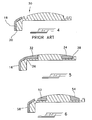
- FIG. 1 and 4 A conventional railway locomotive pinion-end (PE) traction-motor support bearing, such as that disclosed in U.S. Patent No. 5,038,631 , is shown in Figs. 1 and 4 , which Figs. 1 and 4 show the half of the support bearing 10 that contains the window 12 for passing a lubricating wick.
- the load zones for loading the truck axle-journal should be centered. This is so in order that the lubricating wick (not shown) entering the interior of the bearing via the wick window or opening 12 lubricates all contacting surface-areas, which lubricating wick contacts the axle-journal through the window.
- both load zones should be contained within the total axial dimension of the wick if possible, again in order to ensure the best possible lubrication.
- Each traction-motor sleeve bearing has two load zones, an upper one and a lower one, and these tend to be heaviest around 25° from vertical because of commonly-used 25° gear-tooth pressure angle.
- Both load-contact patterns can be seen in the window half 10 of the PE bearing with the upper load pattern above the lubricator access-window and the lower load pattern below the window.
- both upper and lower load contact-patterns should be centered at mid-length of the window, in order that the wick lubricator provides the best possible lubrication.
- both load contact-patterns should be contained within the total axial dimension or limits of the wick lubricator if possible, again to ensure the best possible lubrication.
- the lubricating wick of the conventional sleeve bearing shown in Figs. 1 and 4 enters the bearing from the lubrication sump through a cast opening in the axle cap, which is aligned with the window or opening 12 in the bearing liner.
- This opening 12 is centered axially on the journal and the wick protrudes through this opening to contact the axle-journal at a position approximately 20°- 30° below a horizontal line passing through the axle gear and pinion center lines.
- the sleeve bearing 10 also has a flange wick 16 for lubricating the flange-end 20.
- the axial length of the preferred journal-to-liner contact area is defined by the axial length of the wick.
- the bearing liners are machined in such a way as to relieve the liners so that journal contact under normal loads remains in the wick-wetted axial area 14. In many traction motor support bearings, however, the envelope available for supporting the journal is significantly longer in the axial direction than the wick and the length of wetted area.
- Pinion-end sleeve bearing load ratings are frequently limited by the axial length that can be reliably lubricated by the lubrication delivery system. If lubrication can be assured beyond the axial dispersion of conventional support bearings, that additional length may become useful for supporting the journal. By reducing the unit loading of the original journal and thereby increasing the load capacity, the criticality of other parameters affecting wear rate and reliability arc lessened.
- auxiliary wicks may, under certain circumstances adhere to the face of the axle-journal, which may cause part of the auxiliary wick pad to be torn away during the axle-rotation.
- additional lubrication provided by these auxiliary wicks may be better enhanced by more direct fluid communication with the respective flinger grooves which provides the lubricant supply wetting the pad faces of these auxiliary wicks.
- a more optimal configuration of each auxiliary wick would be helpful in increasing the wick life.
- the sleeve bearing is provided with the ability to provide additional lubrication to the lateral areas beyond the width of the main supply wick by the addition of additional wicks one on either axial side of the central wick or by incorporating passageways near the 6:00 location on either axial side capable of communicating with the oil accumulated in the oil flinger grooves and taking advantage of the oil-flinger rotating lift capability and lateral movement within the bearing lateral clearances for providing additional lubrication and for extending the envelope of the wetted area available for supporting the truck-axle-journal in the axial direction.
- each auxiliary wick is constructed of felt in which the length of the felt fibers constituting the wick pad are oriented in a direction perpendicular to the longitudinal axis of the axle-journal so that only contact of the ends of the felt-fibers are in contact with the journal-surface.
- the auxiliary wick is provided with a projecting tail-portion that projects into the narrow gap connecting the wick-receiving and mounting opening to its respective flinger groove, in order to ensure lubrication and saturation of the respective auxiliary wick from its associated flinger groove.
- the auxiliary wick is provided with a tapered cross-sectional or concave shape that allows the wick-pad to expand within its wick-receiving and mounting opening, as well as making the auxiliary wick-pad of softer felt in a durometer-hardness range less than that previously used.
- a railway-locomotive traction motor friction support or sleeve bearing indicated generally by reference numeral 30.
- the shown friction support bearing does not employ flinger grooves.
- Flinger grooves mount flinger rings which, when employed, help to redistribute the oil back to the oil reservoir and reduce oil loss, as disclosed in U.S. Patent No. 3,905,659 .
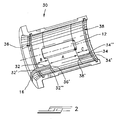
- the sleeve bearing 30 is provided with a conventional central wick window 12, as explained herein above with regard to Figs. 1 and 4 , and, in addition, at least two supplemental or auxiliary wicks, one wick 32 at the outboard end and one wick 34 at the inboard end.
- the supplemental wicks 32, 34 are oriented at 6:00 O'clock when viewing Fig. 2 .
- the outboard wick 32 is combined with the currently-used flange wick 16, also explained above with reference to the prior-art bearing of Figs. 1 and 4 .
- the wicks 32, 34 are lubricated via lateral flow oil collection grooves 36, 38, respectively, which arc used, as in the conventional manner, for collecting oil, as explained in U.S. Patent No. 4,229,056 .
- the provision of these additional wicks 32, 34 extend the effective length of the wetted area of the bearing to the areas encompassed by areas A, B and C in Fig.
- the simple reliable oil supply system 36, 38 is used. This system collects the lateral oil discharge from the loaded central region serviced by the conventional central wick and delivers the oil to those journal areas beyond the main wick wetted axial area via these additional wicks 34, 36. Thus, these oil collection grooves 36, 38 also serve the additional function of providing for this additional lubrication of the extended contact areas B and C.
- the supplemental wick 32 is narrower than the corresponding flange wick 16, although, if necessary, it may be the same or even greater in width.
- Each supplemental wick 32, 34 has a first overlapping portion 32', 34', respectively, that is received within the interior of a respective channel 36, 38, and a main longitudinal portion or section 32", 34" extending longitudinally axially in a direction toward the center of the friction bearing. With each overlapping portion 32', 34' positioned in the interior of the respective groove, each groove 36, 38 acts as a sump or reservoir for the additional wicks 32, 34.
- each wick 32, 34 is received or mounted in a recess or pocket formed in the interior shell of the friction bearing of similar shape as that of the additional wick 32, 34, in a manner similar to shown in the embodiment of Fig. 8 as described hereinbelow.
- Each pocket has a depth less than that of the thickness of the respective additional wick 32, 34, so that each wick 32, 34 projects or protrudes out from the respective pocket, and interiorly toward the axle-journal mounted in the bearing, for contact against the juxtapositioned surfaces of the journal located within the lateral extent of the above-mentioned contact areas B and C.
- FIG. 3 and 6 there is shown another known sleeve bearing more particularly a friction bearing provided with flinger grooves, but without the oil collection grooves 36, 38 of the bearing of Figs. 2 and 5 .
- the friction support bearing of this embodiment is indicated generally by reference numeral 40, and, as shown, utilizes conventional flinger grooves 42, 44.
- the flinger grooves 42, 44 in addition to serving their conventional function of mounting the flinger rings, as disclosed in U.S. Patent No. U.S. Patent No. 3,905,659 , also serve the function of the lateral-flow oil-collection grooves for the additional wicks 52, 54.
- the additional wicks 52, 54 are oriented at 6:00 O'clock when viewing Fig.
- wick 56 is conventionally mounted.
- the additional wicks 52, 54 are the same as the wicks 32, 34 of Fig. 2 , and are mounted in pockets or recesses similar to those shown in Fig. 8 discussed below.
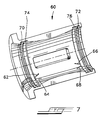
- FIG. 7 there is shown another known friction support bearing 60 in which, instead of using the additional wicks of Figs. 2 and 3 to lubricate the additional surface contact areas B and C, oil-flow passageways 62, 64 forming a V-shape are provided on the flange or outboard end, and oil-flow passageways 66, 68 forming a V-shape are provided on the inboard end. These passageways are oriented approximately at 6:00 O'clock when viewing Fig. 7 .
- the friction bearing 60 is provided with both oil-collection grooves 70, 72 and flinger grooves 74, 76, in a manner disclosed in U.S. Patent No.
- Each passageway opens into the interior of a respective flinger grooves 74, 76 for fluid communication therewith, and, thus, effectively serve as oil-flow extension grooves of the flinger grooves.
- the V-shaped passageways 62, 64, and the V-shaped passageways 66, 68 form an acute angle therebetween, as seen in Fig. 7 , and preferably is in the range of between 15 degrees to 45 degrees, although this is not meant to be limiting.
- This modification takes advantage of the proven collection and return system of the conventional inboard and outboard ends of the bearing liner by using the flinger rings to cause oil to flow into the oil recirculation grooves and hence to be delivered to the bearing lateral areas both at the inboard and outboard ends of the bearing liner beyond that wetted by the main delivery wick. While two such passageways have been shown which are V-shaped, more than two such passageways may be employed without a V-shaped configuration.
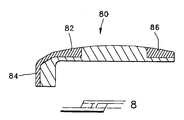
- Fig. 8 there is shown another known friction support bearing in which no flinger grooves or oil collection grooves are included in the friction bearing 80.
- the outboard supplemental wick 82 is connected to the flange wick 84 to form one continuous wick.
- the inboard supplemental wick 86 is the same as shown in Figs. 2 and 3 . Since the wicks are located at the 6:00 operating position, they would, therefore, receive their lubrication as a result of the natural gravity drainage accumulation from the journal wetted surfaces any time the axle would be at rest.
- the normal supply wick delivers a band of oil on the axle.
- the supplemental or auxiliary wicks inboard ends would overlap this wetted band and take a portion of this oil to extend the wetted band width.
- a further known friction support bearing 90 which incorporates both flinger grooves and oil-collection grooves.
- the supplemental or auxiliary wicks 92 are received in pockets or recesses 36' formed in the interior shell of the friction bearing.
- Each pocket has a depth less than that of the thickness of the respective additional wick, so that each wick projects or protrudes out from the respective pocket, and interiorly toward the axle journal mounted in the bearing, for contact against the juxtapositioned surfaces of the journal located within the lateral extent of the above-mentioned contact areas B and C.
- Each pocket 36' has an open end 96 that is in fluid communication with the interior of a respective flinger groove 98 for lubricating the respective supplemental or auxiliary wick in a manner similar to the embodiment of Fig. 3 . It is also noted that corners 36", 38" of the pockets are rounded to ensure that the wicks are maintained therein.
- supplemental or auxiliary wicks allows reduced-width flinger grooves as compared to the prior art friction support bearings, and also allows for the flingers grooves to be moved farther away from the center wick. Also, it is also possible to have a version of the invention where the flinger grooves and the outboard oil-collection groove are eliminated, which would extend the usable load-carrying width approximately one more inch.
- the width of the crowned load-bearing surface area was increased to approximately 13,16 cm (5.18 in) as compared to 9.55 cm (3.76 in) for the conventional bearing.
- each supplemental or auxiliary wick was approximately 3,18 cm (1.25 in) in length taken in the direction parallel to the annular flinger groove. and .81 in.
- auxiliary wick 100 is similar to that of the auxiliary wick 92, except that the auxiliary wick 100 is provided with a tail-section 102 which projects from the front in a direction toward the flinger groove 98.
- the tail-section 102 fits snugly, and may be adhesively secured, in the open end or entrance, 104' of the pocket 104. While the outboard auxiliary wick has been shown in Fig. 10 , the same holds for the inboard end, as described hereinabove.
- the tail-section 102 for each of the outboard and inboard auxiliary wicks, greater lubrication and saturation of the pad will ensue owing to the tail-section 102, and therefore the auxiliary wick 100 proper, being in direct fluid contact with the lubricant flowing in the flinger grooves.
- the end-walls or end-surfaces 100', 100" of the auxiliary wick 100 are more curved so that the main body proper of the wick 100 is approximately oblong or elliptical in shape. This shape helps to retain the wick 100 in its pocket 104.
- the ends 106, 108 of the pocket 104 are also appropriately shaped to match those of the wick 100, whereby the pocket 104 is generally oblong or elliptical in shape.
- the auxiliary wick 100 has an overall total length taken between 100' and 100" of approximately 3,18 cm (1.25 inches), a width (without a tail-section) of approximately 1,59 cm (5/8 inch), and a depth of approximately 0,90 cm (.354 inch), with a tail-section 102 of a length taken in the same direction as the length of the wick 100 of 1,59 cm (5/8 inch) and width of 0,32 cm (1/8 inch). It is, of course, to be understood that these dimensions may be varied in accordance with various requirements and factors, and are not meant to be limiting.
- the auxiliary wicks of Fig. 9 or Fig. 10 may be provided with upwardly-tapering ends 112, 114 in order that there arc provided ever-increasing lateral clearances between these ends 112, 114 and the corresponding end walls 106, 108 of the pocket 104 of the embodiment of Fig. 10 , or of the corresponding end walls of the pocket 36' shown in Fig. 9 .
- the provision of upwardly-tapered ends allows for the auxiliary wick to expand within its respective pocket or cavity 36' or 104 during contact of the wick-face 102" with the surface of the rotating axle-journal and also provide more constant biasing force against the surface of the axle-journal..
- the surface-to-surface contact of the wick-face of the auxiliary wick with the surface of axle-journal causes the felt pad of the auxiliary wick to compress.
- the compression of the wick pad will be accommodated by outward expansion of the auxiliary wick, thereby providing "give" upon the presence of compressions forces during operational contact with the rotating surface of the axle-journal in which the wick. Without such clearances, there is the possibility that excessive surface-to-surface contact and forces would considerably shorten the life of the wick or damage it.
- Each end 112, 114 of the auxiliary wick 110 preferably has a taper of approximately five degrees relative to an end wall 108 or 110, but it may vary from being close to zero up to ten degrees.
- the taper of course, is zero.
- five degrees is preferred, though other angles may be used.
- each auxiliary wick may be alternatively cross-sectioned such that the end walls are at least partially upwardly and inwardly extending in order to provide clearances between its ends walls and the end walls of the pocket in which it is mounted.
- a cross-section defining ends 112, 114 that are concave-shaped may also be used, which would also allow for clearances for expansion of the wick.
- Each additional wick 32, 92, and 100 is made of felt material or other comparable composite materials, in order to optimize retention and to provide enhanced capillary effect.
- the width of each additional wick 32, 92 is preferably less than the width of the flange wick, although such does not preclude the same or greater width.
- the supplemental wicks are preferably retained by adhesives, or, alternatively, by the geometry of the machined pockets or grooves which also act as reservoirs in combination with the wick geometry.
- each auxiliary wick is cut from an SAE F-10 high grade, medium low density felt of 182,9 cm (72 inches) in width having the following specifications: minimum wool content of 95%, water soluble max.
- Such felt is sold by, for example, Southeastern Felt and Supply Co. of Concord, N.C., or Aetna Felt Corp. of Allentown, PA. However, it is to be understood that felt of different grade and specification may be used if it provides the requirements that allow for the auxiliary lubrication of the surface of axle-journal as described hereinabove.
- the durometer hardness of this felt material is preferably of a specification indicating a softer material in order to reduce felt wick-face pressure against the axle-journal, to thus generate less heat through friction.
- the felt is not cut in usual manner along which, conventionally, is transverse the direction or length of the felt fibers making up the felt. Instead, the supply of felt is cut along, or parallel, to the length of the fibers constituting the supply felt, as shown in Fig. 13 .
- the auxiliary wicks or pads are cut from a supply of felt 120 in a direction such that the fibers of each pad extend in a longitudinally axial direction from the bottom surface 102' toward the upper axle-journal-engaging surface 102".
Landscapes
- Engineering & Computer Science (AREA)
- General Engineering & Computer Science (AREA)
- Mechanical Engineering (AREA)
- Chemical & Material Sciences (AREA)
- Oil, Petroleum & Natural Gas (AREA)
- Transportation (AREA)
- Automation & Control Theory (AREA)
- Combustion & Propulsion (AREA)
- Life Sciences & Earth Sciences (AREA)
- Wood Science & Technology (AREA)
- Sliding-Contact Bearings (AREA)
- Motor Or Generator Frames (AREA)
Description
- The present invention relates to a friction support bearing for a railway locomotive traction motor in accordance with the pre-characterising portion of
claim 1. Such a friction support bearing is known fromUS 2006/0013518 . - A conventional railway locomotive pinion-end (PE) traction-motor support bearing, such as that disclosed in
U.S. Patent No. 5,038,631 , is shown inFigs. 1 and4 , whichFigs. 1 and4 show the half of the support bearing 10 that contains thewindow 12 for passing a lubricating wick. For best overall performance and life of the traction-motor support bearing, the load zones for loading the truck axle-journal should be centered. This is so in order that the lubricating wick (not shown) entering the interior of the bearing via the wick window or opening 12 lubricates all contacting surface-areas, which lubricating wick contacts the axle-journal through the window. In addition, both load zones should be contained within the total axial dimension of the wick if possible, again in order to ensure the best possible lubrication. Each traction-motor sleeve bearing has two load zones, an upper one and a lower one, and these tend to be heaviest around 25° from vertical because of commonly-used 25° gear-tooth pressure angle. Both load-contact patterns can be seen in thewindow half 10 of the PE bearing with the upper load pattern above the lubricator access-window and the lower load pattern below the window. Ideally, both upper and lower load contact-patterns should be centered at mid-length of the window, in order that the wick lubricator provides the best possible lubrication. Further, both load contact-patterns should be contained within the total axial dimension or limits of the wick lubricator if possible, again to ensure the best possible lubrication. - The lubricating wick of the conventional sleeve bearing shown in
Figs. 1 and4 enters the bearing from the lubrication sump through a cast opening in the axle cap, which is aligned with the window or opening 12 in the bearing liner. Thisopening 12 is centered axially on the journal and the wick protrudes through this opening to contact the axle-journal at a position approximately 20°- 30° below a horizontal line passing through the axle gear and pinion center lines. The sleeve bearing 10 also has aflange wick 16 for lubricating the flange-end 20. - The axial length of the preferred journal-to-liner contact area is defined by the axial length of the wick. The bearing liners are machined in such a way as to relieve the liners so that journal contact under normal loads remains in the wick-wetted
axial area 14. In many traction motor support bearings, however, the envelope available for supporting the journal is significantly longer in the axial direction than the wick and the length of wetted area. - Pinion-end sleeve bearing load ratings are frequently limited by the axial length that can be reliably lubricated by the lubrication delivery system. If lubrication can be assured beyond the axial dispersion of conventional support bearings, that additional length may become useful for supporting the journal. By reducing the unit loading of the original journal and thereby increasing the load capacity, the criticality of other parameters affecting wear rate and reliability arc lessened.
- In
US 2006/0013518 , there has been disclosed the use of auxiliary wicks for increasing the wetted area in order to provide additional lubrication to the lateral areas beyond the width of the main central supply wick. These additional wicks arc located one on either axial side of the central wick near the 6:00 location and are capable of communicating with the oil accumulated in the oil flinger grooves thereat to thereby take advantage of the oil-flinger rotating lift capability and lateral movement within the bearing lateral clearances for providing additional lubrication and for extending the envelope of the wetted area available for supporting the truck-axle journal in the axial direction. However, it has been found the felt pads constituting these auxiliary wicks may, under certain circumstances adhere to the face of the axle-journal, which may cause part of the auxiliary wick pad to be torn away during the axle-rotation. Moreover, it has been found that the additional lubrication provided by these auxiliary wicks may be better enhanced by more direct fluid communication with the respective flinger grooves which provides the lubricant supply wetting the pad faces of these auxiliary wicks. In addition, it has been found that a more optimal configuration of each auxiliary wick would be helpful in increasing the wick life. - It is a primary objective of the present invention to provide an improved sleeve bearing for a locomotive traction motor that provides additional lubricated areas in the axle bore over and above that of the conventional central wick currently used. This object has been achieved by the friction support bearing as initially defined and having the features of the characterising portion of
claim 1. - The sleeve bearing is provided with the ability to provide additional lubrication to the lateral areas beyond the width of the main supply wick by the addition of additional wicks one on either axial side of the central wick or by incorporating passageways near the 6:00 location on either axial side capable of communicating with the oil accumulated in the oil flinger grooves and taking advantage of the oil-flinger rotating lift capability and lateral movement within the bearing lateral clearances for providing additional lubrication and for extending the envelope of the wetted area available for supporting the truck-axle-journal in the axial direction.
- In one modification of the auxiliary wicks, each auxiliary wick is constructed of felt in which the length of the felt fibers constituting the wick pad are oriented in a direction perpendicular to the longitudinal axis of the axle-journal so that only contact of the ends of the felt-fibers are in contact with the journal-surface. In another modification, the auxiliary wick is provided with a projecting tail-portion that projects into the narrow gap connecting the wick-receiving and mounting opening to its respective flinger groove, in order to ensure lubrication and saturation of the respective auxiliary wick from its associated flinger groove. Also, in order to accommodate any increased compression of the auxiliary wick during contact with the journal- surface, the auxiliary wick is provided with a tapered cross-sectional or concave shape that allows the wick-pad to expand within its wick-receiving and mounting opening, as well as making the auxiliary wick-pad of softer felt in a durometer-hardness range less than that previously used.
- The invention will be more readily understood with reference to the accompanying drawings, wherein:
-
Fig. 1 is an isometric view of a window-half of a prior art sleeve bearing using one central lubricating wick; -
Fig. 2 is an isometric view of a sleeve bearing employing additional lubricating wicks, one on the inboard end and one on the outboard end of the sleeve bearing; -
Fig. 3 is an isometric view of a sleeve bearing employing additional lubricating wicks, one on the inboard end and one on the outboard end of the sleeve bearing where the bearing employs flinger grooves; -
Fig. 4 is a partial longitudinal cross-section view showing a prior-art sleeve bearing having a flange wick at the flange-end, or outboard end, of the sleeve bearing; -
Fig. 5 is a partial longitudinal cross-section view similar toFig. 4 but showing the sleeve bearing without flinger grooves with the additional wicks shown inFig. 2 ; -
Fig. 6 is a partial longitudinal cross-section view similar toFig. 5 but the showing the sleeve bearing utilizing flinger grooves with the additional wicks shown inFig. 3 ; -
Fig. 7 is an isometric view similar toFig. 3 and showing a sleeve bearing, instead of having the additional wicks of the first and second embodiments, is provided with oil recirculation passageways originating near the 6:00 position, which passageways deliver oil from the flinger/collection grooves and redistribute a portion of the oil to the lateral areas of the bearing liner beyond the wick window; -
Fig. 8 is a partial longitudinal cross-section view similar toFig. 5 of a sleeve bearing without flinger rings or oil-collection grooves, with the outboard supplemental wick of the invention being connected to the flange wick; -
Fig. 9 is an isometric view showing part of a friction support bearing utilizing both oil-collections grooves and flinger grooves at the inboard and outboard ends, and shows a pocket or recess for mounting therein an supplemental or auxiliary wick; -
Figure 10 is an isometric view showing a part of a friction support bearing according to the invention, having an auxiliary wick of modified construction in which a tail-section is provided for better fluid communication with a respective flinger groove; -
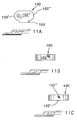
Figure 11A is a top plan view of the modified auxiliary wick with tail-section; -
Figure 11B is a front view of the modified auxiliary wick with tail-section ofFig. 11A ; -
Figure 11C is a rear view of the modified auxiliary wick with tail-section ofFig. 11A -
Figure 12 is a modification of the auxiliary wick with tail-section ofFig. 11A in which the sides thereof are tapered upwardly so as to provide clearance for the wick while mounted in its opening during compression caused by contact with an axle-journal surface; and -
Figure 13 is an isometric plan view of a supply of felt pad from which the modified auxiliary wick with tail-section ofFig. 11A are cut out so that the felt-fibers thereof are oriented in a direction such that they will lie perpendicular to the longitudinal axis of an axle-journal in which it will have contact. - Referring now to the drawings in greater detail, and to
Figs. 2 and5 for now, there is shown a railway-locomotive traction motor friction support or sleeve bearing indicated generally byreference numeral 30. The shown friction support bearing does not employ flinger grooves. Flinger grooves mount flinger rings which, when employed, help to redistribute the oil back to the oil reservoir and reduce oil loss, as disclosed inU.S. Patent No. 3,905,659 . The sleeve bearing 30 is provided with a conventionalcentral wick window 12, as explained herein above with regard toFigs. 1 and4 , and, in addition, at least two supplemental or auxiliary wicks, onewick 32 at the outboard end and onewick 34 at the inboard end. Thesupplemental wicks Fig. 2 . Theoutboard wick 32 is combined with the currently-usedflange wick 16, also explained above with reference to the prior-art bearing ofFigs. 1 and4 . Thewicks oil collection grooves U.S. Patent No. 4,229,056 . The provision of theseadditional wicks Fig. 2 , to thus extend the lubricated surface from the hitherto prior-area area A, to thus make significantly longer in the axial direction the available wetted area for contact by the truck-axle journal. To ensure of the additional envelope length available, the simple reliableoil supply system additional wicks oil collection grooves - The
supplemental wick 32 is narrower than thecorresponding flange wick 16, although, if necessary, it may be the same or even greater in width. Eachsupplemental wick respective channel section 32", 34" extending longitudinally axially in a direction toward the center of the friction bearing. With each overlapping portion 32', 34' positioned in the interior of the respective groove, eachgroove additional wicks main body portion 32", 34" of eachwick additional wick Fig. 8 as described hereinbelow. Each pocket has a depth less than that of the thickness of the respectiveadditional wick wick - Referring now
Figs. 3 and6 , there is shown another known sleeve bearing more particularly a friction bearing provided with flinger grooves, but without theoil collection grooves Figs. 2 and5 . The friction support bearing of this embodiment is indicated generally byreference numeral 40, and, as shown, utilizesconventional flinger grooves flinger grooves U.S. Patent No. U.S. Patent No. 3,905,659 , also serve the function of the lateral-flow oil-collection grooves for theadditional wicks additional wicks Fig. 3 , as inFig. 2 . Since theflinger grooves conventional flange wick 56 is conventionally mounted. In all other respects, theadditional wicks wicks Fig. 2 , and are mounted in pockets or recesses similar to those shown inFig. 8 discussed below. - Referring to
Fig. 7 , there is shown another known friction support bearing 60 in which, instead of using the additional wicks ofFigs. 2 and3 to lubricate the additional surface contact areas B and C, oil-flow passageways flow passageways Fig. 7 . Unlike what is shown inFigs. 2 and3 , the friction bearing 60 is provided with both oil-collection grooves flinger grooves 74, 76, in a manner disclosed inU.S. Patent No. 4,229,056 . Each passageway opens into the interior of arespective flinger grooves 74, 76 for fluid communication therewith, and, thus, effectively serve as oil-flow extension grooves of the flinger grooves. The V-shapedpassageways passageways Fig. 7 , and preferably is in the range of between 15 degrees to 45 degrees, although this is not meant to be limiting. This modification takes advantage of the proven collection and return system of the conventional inboard and outboard ends of the bearing liner by using the flinger rings to cause oil to flow into the oil recirculation grooves and hence to be delivered to the bearing lateral areas both at the inboard and outboard ends of the bearing liner beyond that wetted by the main delivery wick. While two such passageways have been shown which are V-shaped, more than two such passageways may be employed without a V-shaped configuration. - Referring to
Fig. 8 , there is shown another known friction support bearing in which no flinger grooves or oil collection grooves are included in the friction bearing 80. In this case, the outboardsupplemental wick 82 is connected to theflange wick 84 to form one continuous wick. The inboardsupplemental wick 86 is the same as shown inFigs. 2 and3 . Since the wicks are located at the 6:00 operating position, they would, therefore, receive their lubrication as a result of the natural gravity drainage accumulation from the journal wetted surfaces any time the axle would be at rest. During rotation, the normal supply wick delivers a band of oil on the axle. The supplemental or auxiliary wicks inboard ends would overlap this wetted band and take a portion of this oil to extend the wetted band width. - Referring to
Fig. 9 , there is shown a further known friction support bearing 90 which incorporates both flinger grooves and oil-collection grooves. The supplemental orauxiliary wicks 92 are received in pockets or recesses 36' formed in the interior shell of the friction bearing. Each pocket has a depth less than that of the thickness of the respective additional wick, so that each wick projects or protrudes out from the respective pocket, and interiorly toward the axle journal mounted in the bearing, for contact against the juxtapositioned surfaces of the journal located within the lateral extent of the above-mentioned contact areas B and C. Each pocket 36' has anopen end 96 that is in fluid communication with the interior of arespective flinger groove 98 for lubricating the respective supplemental or auxiliary wick in a manner similar to the embodiment ofFig. 3 . It is also noted thatcorners 36", 38" of the pockets are rounded to ensure that the wicks are maintained therein. - Use of the supplemental or auxiliary wicks allows reduced-width flinger grooves as compared to the prior art friction support bearings, and also allows for the flingers grooves to be moved farther away from the center wick. Also, it is also possible to have a version of the invention where the flinger grooves and the outboard oil-collection groove are eliminated, which would extend the usable load-carrying width approximately one more inch.
- In one prototype of the friction support bearing of the invention for use with a General Electric 752 AG traction motor, the width of the crowned load-bearing surface area was increased to approximately 13,16 cm (5.18 in) as compared to 9.55 cm (3.76 in) for the conventional bearing. Also, each supplemental or auxiliary wick was approximately 3,18 cm (1.25 in) in length taken in the direction parallel to the annular flinger groove. and .81 in. in width taken in the axial bearing direction, with the thickness thereof depending upon proper contact with the axle journal juxtapositioned thereat, and was received in a pocket or recess of width of 2,08 cm (81 inch) and length of 3,18 cm (1.25 inches), with the pocket having rounded corners of radius 0.79 cm (.312 in) similar to the rounded corners of the supplemental or auxiliary wick. In addition, the
open end 96 was 1.59 cm (.626 in). - Referring now to
Figs. 10-11C , and according to the invention there is shown a modification of theauxiliary wick 92 of the bearing shown inFig. 9 . The shape of theauxiliary wick 100 is similar to that of theauxiliary wick 92, except that theauxiliary wick 100 is provided with a tail-section 102 which projects from the front in a direction toward theflinger groove 98. The tail-section 102 fits snugly, and may be adhesively secured, in the open end or entrance, 104' of thepocket 104. While the outboard auxiliary wick has been shown inFig. 10 , the same holds for the inboard end, as described hereinabove. By providing the tail-section 102 for each of the outboard and inboard auxiliary wicks, greater lubrication and saturation of the pad will ensue owing to the tail-section 102, and therefore theauxiliary wick 100 proper, being in direct fluid contact with the lubricant flowing in the flinger grooves. Also, the end-walls or end-surfaces auxiliary wick 100 are more curved so that the main body proper of thewick 100 is approximately oblong or elliptical in shape. This shape helps to retain thewick 100 in itspocket 104. The ends 106, 108 of thepocket 104 are also appropriately shaped to match those of thewick 100, whereby thepocket 104 is generally oblong or elliptical in shape. - The enhanced oil saturation provided by the tail-
section 102 ensures constant and direct contact with the oil in the slinger groove. This allows oil saturation from the slinger groove to be volumetrically regulated to the felt pad, or wick. In one version, theauxiliary wick 100 has an overall total length taken between 100' and 100" of approximately 3,18 cm (1.25 inches), a width (without a tail-section) of approximately 1,59 cm (5/8 inch), and a depth of approximately 0,90 cm (.354 inch), with a tail-section 102 of a length taken in the same direction as the length of thewick 100 of 1,59 cm (5/8 inch) and width of 0,32 cm (1/8 inch). It is, of course, to be understood that these dimensions may be varied in accordance with various requirements and factors, and are not meant to be limiting. - In yet another
modification 110 of the auxiliary wick, as shown inFig. 12 , the auxiliary wicks ofFig. 9 orFig. 10 may be provided with upwardly-tapering ends 112, 114 in order that there arc provided ever-increasing lateral clearances between theseends corresponding end walls pocket 104 of the embodiment ofFig. 10 , or of the corresponding end walls of the pocket 36' shown inFig. 9 . The provision of upwardly-tapered ends allows for the auxiliary wick to expand within its respective pocket orcavity 36' or 104 during contact of the wick-face 102" with the surface of the rotating axle-journal and also provide more constant biasing force against the surface of the axle-journal.. Depending on various factors and operating conditions, the surface-to-surface contact of the wick-face of the auxiliary wick with the surface of axle-journal causes the felt pad of the auxiliary wick to compress. By providing clearances between the ends of the auxiliary wick and the end walls of the pocket or cavity in which it is mounted, the compression of the wick pad will be accommodated by outward expansion of the auxiliary wick, thereby providing "give" upon the presence of compressions forces during operational contact with the rotating surface of the axle-journal in which the wick. Without such clearances, there is the possibility that excessive surface-to-surface contact and forces would considerably shorten the life of the wick or damage it. Eachend auxiliary wick 110 preferably has a taper of approximately five degrees relative to anend wall Fig. 9 , the taper, of course, is zero. For the embodiment ofFig. 10 , five degrees is preferred, though other angles may be used. In addition, each auxiliary wick may be alternatively cross-sectioned such that the end walls are at least partially upwardly and inwardly extending in order to provide clearances between its ends walls and the end walls of the pocket in which it is mounted. For example, a cross-section defining ends 112, 114 that are concave-shaped may also be used, which would also allow for clearances for expansion of the wick. It is also possible under certain circumstances to allow the entire ends 112, 114 to expand within the mounting pocket, in which case the length of the supplemental wick will be less than that of the mounting pocket, as long as adequate adhesive bonding of the bottom surface of the supplemental wick in the mounting pocket is sufficient. - Each
additional wick additional wick - Regardless of the particular felt grade used, the felt is not cut in usual manner along which, conventionally, is transverse the direction or length of the felt fibers making up the felt. Instead, the supply of felt is cut along, or parallel, to the length of the fibers constituting the supply felt, as shown in
Fig. 13 . Referring toFig. 13 , the auxiliary wicks or pads, for example 100, are cut from a supply offelt 120 in a direction such that the fibers of each pad extend in a longitudinally axial direction from the bottom surface 102' toward the upper axle-journal-engagingsurface 102". Thus, when anauxiliary wick
Claims (3)
- A friction support bearing for a railway locomotive traction motor comprising a main bearing housing having an inboard end portion and an outboard end portion, a central wick window (12) for a central lubricating wick, an interior surface (14) at least part of which is intended for contacting an axle-journal; said outboard end of said interior surface having an oil groove (36, 42, 70), and said inboard end of said interior surface also having an oil groove (38, 44, 72), comprising:a first outboard supplemental lubricating wick (32, 52, 82) at said outboard end portion, and a second inboard supplemental wick (34, 54, 86) at said inboard end portion, for additionally lubricating the contact surface area between said interior surface and said axle-journal axially beyond the limits of said central lubricating wick;each of said first and second supplemental lubricating wicks (32, 52, 82; 34, 54, 86) being located approximately at the 6:00 position of said main bearing housing;each of said first and second supplemental wicks (32, 52, 82; 34, 54, 86) extending axially interiorly from, and in fluid communication with, a respective one of said oil grooves (36, 42, 70; 38, 44, 72);said interior surface comprising an inboard-end mounting pocket for mounting said second inboard supplemental wick (34, 54, 86), and an outboard-end mounting pocket for mounting said first outboard supplemental wick (32, 52, 82), each said pocket extending axially away from a respective said oil groove (36, 42, 70); each of said mounting pockets having a depth less than the thickness of the respective said first and second supplemental wick, so that each said first and second supplemental wick (32, 52, 82; 34, 54, 86) can contact against a juxtapositioned portion of an axle journal located thereat; each said mounting pocket further comprising an inlet opening that opens into, and is in fluid communication with, a respective said oil groove (36, 42, 70; 38, 44, 72) for allowing the respective said first and second supplemental wick to be in fluid communication with the interior of the respective said oil groove;characterised in that each said first and second supplemental wick (32, 52, 82; 34, 54, 86) comprising a main body portion having an upper wick-face surface for contacting a surface of an axle-journal, a bottom surface, and a pair of end-surfaces; at least some portions of said end-surfaces of said main body portion of each said first and second supplemental wick (32, 52, 82; 34, 54, 86) being spaced from said end-walls of a respective said mounting pocket in order to provide clearance between said end-surfaces and said end-walls of the respective said mounting pocket, whereby upon compression of a said supplemental wick during use, said supplemental wick may expand within the respective said mounting pocket.
- The friction support bearing according to claim 1, wherein said end-surfaces (112, 114) are upwardly-tapering in order to provide clearance between said end-surfaces and said end-walls (106, 108) of said mounting pocket (104).
- The friction support bearing according to claim 1, wherein said main body portion of each said first and second supplemental wick (32, 52, 82; 34, 54, 86) further comprises a forward-facing tail-section (102); each said mounting pocket having a main portion that is approximately the same shape as said supplemental wick and end-walls, and an entrance opening in fluid communication with a respective said oil groove (36, 42, 70), said tail-section being mounted in said entrance opening, whereby the supplemental wick is continuously lubricated by lubricant circulating in the respective said oil groove.
Applications Claiming Priority (2)
| Application Number | Priority Date | Filing Date | Title |
|---|---|---|---|
| US11/680,729 US7603955B2 (en) | 2005-07-11 | 2007-03-01 | Sleeve bearing for railway traction motor |
| PCT/US2007/077488 WO2008105926A1 (en) | 2007-03-01 | 2007-09-04 | Improved sleeve bearing for railway traction motor |
Publications (3)
| Publication Number | Publication Date |
|---|---|
| EP2002134A1 EP2002134A1 (en) | 2008-12-17 |
| EP2002134A4 EP2002134A4 (en) | 2012-08-08 |
| EP2002134B1 true EP2002134B1 (en) | 2013-11-06 |
Family
ID=39745163
Family Applications (1)
| Application Number | Title | Priority Date | Filing Date |
|---|---|---|---|
| EP07841787.0A Not-in-force EP2002134B1 (en) | 2007-03-01 | 2007-09-04 | Improved sleeve bearing for railway traction motor |
Country Status (10)
| Country | Link |
|---|---|
| US (2) | US7603955B2 (en) |
| EP (1) | EP2002134B1 (en) |
| CN (2) | CN101438067B (en) |
| AU (1) | AU2007347710B2 (en) |
| BR (1) | BRPI0712724B1 (en) |
| CA (1) | CA2646493C (en) |
| MX (2) | MX2008014046A (en) |
| RU (1) | RU2445520C2 (en) |
| WO (1) | WO2008105926A1 (en) |
| ZA (1) | ZA200808839B (en) |
Families Citing this family (8)
| Publication number | Priority date | Publication date | Assignee | Title |
|---|---|---|---|---|
| US7603955B2 (en) * | 2005-07-11 | 2009-10-20 | Magnus Div. of L.V. Ventures, Inc. | Sleeve bearing for railway traction motor |
| GB201002309D0 (en) * | 2010-02-11 | 2010-03-31 | Mahle Int Gmbh | Bearing |
| JP5461350B2 (en) * | 2010-09-08 | 2014-04-02 | 株式会社ショーワ | Plain bearing |
| JP5895638B2 (en) * | 2012-03-21 | 2016-03-30 | 大豊工業株式会社 | Plain bearing |
| US9334898B2 (en) * | 2012-07-16 | 2016-05-10 | Solar Turbines Incorporated | Lamination sleeve with an axial hydraulic fitting port |
| TWI509950B (en) * | 2013-10-03 | 2015-11-21 | Sunonwealth Electr Mach Ind Co | Lubricating circulating structure of motor |
| CN105626693B (en) * | 2015-05-05 | 2018-03-30 | 中信重工机械股份有限公司 | A kind of grease lubrication helicla flute bush(ing) bearing |
| CN114810829B (en) * | 2022-06-27 | 2023-04-11 | 中国机械总院集团云南分院有限公司 | Bidirectional large dynamic range hybrid bearing |
Family Cites Families (20)
| Publication number | Priority date | Publication date | Assignee | Title |
|---|---|---|---|---|
| US2980472A (en) * | 1959-04-10 | 1961-04-18 | Miller Gladys Davis | Lubricator for traction motor suspension bearings |
| USRE25330E (en) * | 1960-10-11 | 1963-02-19 | Bearings | |
| GB1136097A (en) * | 1965-11-30 | 1968-12-11 | Colin Watson | An improvement in or relating to journal bearings |
| US3827769A (en) * | 1973-03-26 | 1974-08-06 | Miller G | Traction motor suspension bearing lubricator |
| US3905659A (en) | 1973-04-16 | 1975-09-16 | Miller Gladys Davis | Lubricated bearing |
| US3940189A (en) * | 1975-03-06 | 1976-02-24 | Gladys D. Miller | Traction motor bearing lubrication assembly |
| US3941438A (en) * | 1975-05-12 | 1976-03-02 | Westinghouse Electric Corporation | Dynamoelectric machine with improved lubrication wicking system |
| US4229056A (en) * | 1977-09-02 | 1980-10-21 | Gladys D. Miller | Bearings (bearing thrust lubrication) |
| SU903608A1 (en) * | 1979-04-20 | 1982-02-07 | Краматорский Научно-Исследовательский И Проектно-Технологический Институт Машиностроения "Нииптмаш" | Sliding-contact support |
| US5038631A (en) * | 1985-11-04 | 1991-08-13 | Carol Ann Mackay | Lubricant restricting device |
| KR950008505B1 (en) * | 1985-11-04 | 1995-07-31 | 카롤 앤 맥키 | Lubricant restricting device |
| US5082089A (en) * | 1988-11-14 | 1992-01-21 | Carol Ann Mackay | Traction motor suspension bearing lubricator |
| CN2077399U (en) * | 1990-08-04 | 1991-05-22 | 济南铁路分局济南西机务段 | Dynamic oil seal for bearing of locomotive axle box |
| US5129156A (en) * | 1990-12-20 | 1992-07-14 | General Electric Company | Method for setting the axial end play of tapered roller bearings |
| GB9713045D0 (en) * | 1997-06-21 | 1997-08-27 | Perkins Ltd | A rotary shaft sealing system |
| CN1062057C (en) * | 1998-01-06 | 2001-02-14 | 阎兆平 | High-speed heavy-load new-type thrust radial rolling bearing |
| US6460656B1 (en) * | 2000-03-27 | 2002-10-08 | Flowserve Management Company | Dilating lubricant flinger |
| US7055439B2 (en) * | 2004-06-03 | 2006-06-06 | Magnus Division Of Lv Ventures, Inc. | Interior contour for bore of a friction support bearing of a railway locomotive traction motor |
| US7308856B2 (en) * | 2004-07-13 | 2007-12-18 | Magnus Div. Of Lv Ventures, Inc. | Sleeve bearing for railway traction motor |
| US7603955B2 (en) * | 2005-07-11 | 2009-10-20 | Magnus Div. of L.V. Ventures, Inc. | Sleeve bearing for railway traction motor |
-
2007
- 2007-03-01 US US11/680,729 patent/US7603955B2/en active Active
- 2007-09-04 EP EP07841787.0A patent/EP2002134B1/en not_active Not-in-force
- 2007-09-04 CN CN2007800164601A patent/CN101438067B/en not_active Expired - Fee Related
- 2007-09-04 RU RU2008142456/11A patent/RU2445520C2/en active
- 2007-09-04 CN CN201110315591.8A patent/CN102635634B/en not_active Expired - Fee Related
- 2007-09-04 BR BRPI0712724-3A patent/BRPI0712724B1/en not_active IP Right Cessation
- 2007-09-04 MX MX2008014046A patent/MX2008014046A/en active IP Right Grant
- 2007-09-04 WO PCT/US2007/077488 patent/WO2008105926A1/en not_active Ceased
- 2007-09-04 MX MX2012002984A patent/MX338790B/en unknown
- 2007-09-04 AU AU2007347710A patent/AU2007347710B2/en not_active Ceased
- 2007-09-04 CA CA2646493A patent/CA2646493C/en active Active
-
2008
- 2008-10-16 ZA ZA200808839A patent/ZA200808839B/en unknown
-
2009
- 2009-09-08 US US12/555,013 patent/US7874255B2/en not_active Expired - Lifetime
Also Published As
| Publication number | Publication date |
|---|---|
| CN101438067A (en) | 2009-05-20 |
| CN101438067B (en) | 2012-11-14 |
| CN102635634A (en) | 2012-08-15 |
| EP2002134A4 (en) | 2012-08-08 |
| CA2646493C (en) | 2010-11-02 |
| ZA200808839B (en) | 2009-11-25 |
| US20070165974A1 (en) | 2007-07-19 |
| CN102635634B (en) | 2016-01-20 |
| US20100002969A1 (en) | 2010-01-07 |
| CA2646493A1 (en) | 2008-09-04 |
| RU2445520C2 (en) | 2012-03-20 |
| MX2008014046A (en) | 2009-04-15 |
| AU2007347710B2 (en) | 2010-11-11 |
| BRPI0712724B1 (en) | 2020-10-13 |
| US7874255B2 (en) | 2011-01-25 |
| US7603955B2 (en) | 2009-10-20 |
| BRPI0712724A2 (en) | 2012-12-11 |
| EP2002134A1 (en) | 2008-12-17 |
| MX338790B (en) | 2016-05-02 |
| RU2008142456A (en) | 2010-08-20 |
| AU2007347710A1 (en) | 2008-09-04 |
| WO2008105926A1 (en) | 2008-09-04 |
Similar Documents
| Publication | Publication Date | Title |
|---|---|---|
| EP2002134B1 (en) | Improved sleeve bearing for railway traction motor | |
| CN88101625A (en) | Oil film bearings and bushings | |
| US7308856B2 (en) | Sleeve bearing for railway traction motor | |
| CA1186358A (en) | Bearing segment for a hydrodynamic radial friction bearing | |
| US20030156769A1 (en) | Fluid suspended bearing | |
| CA2597140C (en) | Improved sleeve bearing for railway traction motor | |
| CN214617550U (en) | A self-lubricating sliding bearing | |
| AU2006297092B2 (en) | Improved sleeve bearing for railway traction motor | |
| JP4089209B2 (en) | Double suction centrifugal pump | |
| JPWO2004113747A1 (en) | Sintered oil-impregnated plain bearing | |
| US6120186A (en) | Lighter bearing assembly | |
| RU2298502C1 (en) | Apparatus for applying of lubricant coating | |
| USRE25330E (en) | Bearings | |
| US2913286A (en) | End lubricating bearing | |
| CN112283331A (en) | Oil circuit seal structure and gear box | |
| US1986040A (en) | Plain bearing | |
| JPH01295021A (en) | Sliding bearing | |
| KR100261896B1 (en) | Sliding bearing impregnated with lubricating oil | |
| JPS6318832Y2 (en) | ||
| US2984526A (en) | Railroad journal bearing | |
| JPH07332364A (en) | Dynamic liquid-operated plain bearing | |
| WO2008085076A1 (en) | Lubricant coating applying device | |
| RU2364763C2 (en) | Motor-axle bearing for locomotive with lubrication system | |
| US2743969A (en) | Lubricating mechanism for railway car axle | |
| CN113153912A (en) | Precision assembled self-lubricating ball bearing |
Legal Events
| Date | Code | Title | Description |
|---|---|---|---|
| PUAI | Public reference made under article 153(3) epc to a published international application that has entered the european phase |
Free format text: ORIGINAL CODE: 0009012 |
|
| 17P | Request for examination filed |
Effective date: 20081016 |
|
| AK | Designated contracting states |
Kind code of ref document: A1 Designated state(s): AT BE BG CH CY CZ DE DK EE ES FI FR GB GR HU IE IS IT LI LT LU LV MC MT NL PL PT RO SE SI SK TR |
|
| AX | Request for extension of the european patent |
Extension state: AL BA HR MK RS |
|
| A4 | Supplementary search report drawn up and despatched |
Effective date: 20120705 |
|
| DAX | Request for extension of the european patent (deleted) | ||
| RIC1 | Information provided on ipc code assigned before grant |
Ipc: F16C 1/24 20060101AFI20120629BHEP |
|
| GRAP | Despatch of communication of intention to grant a patent |
Free format text: ORIGINAL CODE: EPIDOSNIGR1 |
|
| INTG | Intention to grant announced |
Effective date: 20130405 |
|
| GRAS | Grant fee paid |
Free format text: ORIGINAL CODE: EPIDOSNIGR3 |
|
| GRAA | (expected) grant |
Free format text: ORIGINAL CODE: 0009210 |
|
| AK | Designated contracting states |
Kind code of ref document: B1 Designated state(s): AT BE BG CH CY CZ DE DK EE ES FI FR GB GR HU IE IS IT LI LT LU LV MC MT NL PL PT RO SE SI SK TR |
|
| REG | Reference to a national code |
Ref country code: GB Ref legal event code: FG4D |
|
| REG | Reference to a national code |
Ref country code: CH Ref legal event code: EP |
|
| REG | Reference to a national code |
Ref country code: AT Ref legal event code: REF Ref document number: 639700 Country of ref document: AT Kind code of ref document: T Effective date: 20131215 |
|
| REG | Reference to a national code |
Ref country code: IE Ref legal event code: FG4D |
|
| REG | Reference to a national code |
Ref country code: DE Ref legal event code: R096 Ref document number: 602007033725 Country of ref document: DE Effective date: 20140102 |
|
| REG | Reference to a national code |
Ref country code: NL Ref legal event code: VDEP Effective date: 20131106 |
|
| REG | Reference to a national code |
Ref country code: AT Ref legal event code: MK05 Ref document number: 639700 Country of ref document: AT Kind code of ref document: T Effective date: 20131106 |
|
| REG | Reference to a national code |
Ref country code: LT Ref legal event code: MG4D |
|
| PG25 | Lapsed in a contracting state [announced via postgrant information from national office to epo] |
Ref country code: SE Free format text: LAPSE BECAUSE OF FAILURE TO SUBMIT A TRANSLATION OF THE DESCRIPTION OR TO PAY THE FEE WITHIN THE PRESCRIBED TIME-LIMIT Effective date: 20131106 Ref country code: IS Free format text: LAPSE BECAUSE OF FAILURE TO SUBMIT A TRANSLATION OF THE DESCRIPTION OR TO PAY THE FEE WITHIN THE PRESCRIBED TIME-LIMIT Effective date: 20140306 Ref country code: LT Free format text: LAPSE BECAUSE OF FAILURE TO SUBMIT A TRANSLATION OF THE DESCRIPTION OR TO PAY THE FEE WITHIN THE PRESCRIBED TIME-LIMIT Effective date: 20131106 Ref country code: FI Free format text: LAPSE BECAUSE OF FAILURE TO SUBMIT A TRANSLATION OF THE DESCRIPTION OR TO PAY THE FEE WITHIN THE PRESCRIBED TIME-LIMIT Effective date: 20131106 Ref country code: NL Free format text: LAPSE BECAUSE OF FAILURE TO SUBMIT A TRANSLATION OF THE DESCRIPTION OR TO PAY THE FEE WITHIN THE PRESCRIBED TIME-LIMIT Effective date: 20131106 |
|
| PG25 | Lapsed in a contracting state [announced via postgrant information from national office to epo] |
Ref country code: BE Free format text: LAPSE BECAUSE OF FAILURE TO SUBMIT A TRANSLATION OF THE DESCRIPTION OR TO PAY THE FEE WITHIN THE PRESCRIBED TIME-LIMIT Effective date: 20131106 Ref country code: AT Free format text: LAPSE BECAUSE OF FAILURE TO SUBMIT A TRANSLATION OF THE DESCRIPTION OR TO PAY THE FEE WITHIN THE PRESCRIBED TIME-LIMIT Effective date: 20131106 Ref country code: ES Free format text: LAPSE BECAUSE OF FAILURE TO SUBMIT A TRANSLATION OF THE DESCRIPTION OR TO PAY THE FEE WITHIN THE PRESCRIBED TIME-LIMIT Effective date: 20131106 Ref country code: LV Free format text: LAPSE BECAUSE OF FAILURE TO SUBMIT A TRANSLATION OF THE DESCRIPTION OR TO PAY THE FEE WITHIN THE PRESCRIBED TIME-LIMIT Effective date: 20131106 |
|
| PG25 | Lapsed in a contracting state [announced via postgrant information from national office to epo] |
Ref country code: PT Free format text: LAPSE BECAUSE OF FAILURE TO SUBMIT A TRANSLATION OF THE DESCRIPTION OR TO PAY THE FEE WITHIN THE PRESCRIBED TIME-LIMIT Effective date: 20140306 |
|
| PG25 | Lapsed in a contracting state [announced via postgrant information from national office to epo] |
Ref country code: EE Free format text: LAPSE BECAUSE OF FAILURE TO SUBMIT A TRANSLATION OF THE DESCRIPTION OR TO PAY THE FEE WITHIN THE PRESCRIBED TIME-LIMIT Effective date: 20131106 |
|
| REG | Reference to a national code |
Ref country code: DE Ref legal event code: R097 Ref document number: 602007033725 Country of ref document: DE |
|
| PG25 | Lapsed in a contracting state [announced via postgrant information from national office to epo] |
Ref country code: SK Free format text: LAPSE BECAUSE OF FAILURE TO SUBMIT A TRANSLATION OF THE DESCRIPTION OR TO PAY THE FEE WITHIN THE PRESCRIBED TIME-LIMIT Effective date: 20131106 Ref country code: CZ Free format text: LAPSE BECAUSE OF FAILURE TO SUBMIT A TRANSLATION OF THE DESCRIPTION OR TO PAY THE FEE WITHIN THE PRESCRIBED TIME-LIMIT Effective date: 20131106 Ref country code: PL Free format text: LAPSE BECAUSE OF FAILURE TO SUBMIT A TRANSLATION OF THE DESCRIPTION OR TO PAY THE FEE WITHIN THE PRESCRIBED TIME-LIMIT Effective date: 20131106 Ref country code: IT Free format text: LAPSE BECAUSE OF FAILURE TO SUBMIT A TRANSLATION OF THE DESCRIPTION OR TO PAY THE FEE WITHIN THE PRESCRIBED TIME-LIMIT Effective date: 20131106 Ref country code: RO Free format text: LAPSE BECAUSE OF FAILURE TO SUBMIT A TRANSLATION OF THE DESCRIPTION OR TO PAY THE FEE WITHIN THE PRESCRIBED TIME-LIMIT Effective date: 20131106 |
|
| PLBE | No opposition filed within time limit |
Free format text: ORIGINAL CODE: 0009261 |
|
| STAA | Information on the status of an ep patent application or granted ep patent |
Free format text: STATUS: NO OPPOSITION FILED WITHIN TIME LIMIT |
|
| PG25 | Lapsed in a contracting state [announced via postgrant information from national office to epo] |
Ref country code: DK Free format text: LAPSE BECAUSE OF FAILURE TO SUBMIT A TRANSLATION OF THE DESCRIPTION OR TO PAY THE FEE WITHIN THE PRESCRIBED TIME-LIMIT Effective date: 20131106 |
|
| 26N | No opposition filed |
Effective date: 20140807 |
|
| REG | Reference to a national code |
Ref country code: DE Ref legal event code: R097 Ref document number: 602007033725 Country of ref document: DE Effective date: 20140807 |
|
| PG25 | Lapsed in a contracting state [announced via postgrant information from national office to epo] |
Ref country code: SI Free format text: LAPSE BECAUSE OF FAILURE TO SUBMIT A TRANSLATION OF THE DESCRIPTION OR TO PAY THE FEE WITHIN THE PRESCRIBED TIME-LIMIT Effective date: 20131106 |
|
| PG25 | Lapsed in a contracting state [announced via postgrant information from national office to epo] |
Ref country code: LU Free format text: LAPSE BECAUSE OF FAILURE TO SUBMIT A TRANSLATION OF THE DESCRIPTION OR TO PAY THE FEE WITHIN THE PRESCRIBED TIME-LIMIT Effective date: 20140904 Ref country code: MC Free format text: LAPSE BECAUSE OF FAILURE TO SUBMIT A TRANSLATION OF THE DESCRIPTION OR TO PAY THE FEE WITHIN THE PRESCRIBED TIME-LIMIT Effective date: 20131106 |
|
| REG | Reference to a national code |
Ref country code: CH Ref legal event code: PL |
|
| REG | Reference to a national code |
Ref country code: IE Ref legal event code: MM4A |
|
| PG25 | Lapsed in a contracting state [announced via postgrant information from national office to epo] |
Ref country code: LI Free format text: LAPSE BECAUSE OF NON-PAYMENT OF DUE FEES Effective date: 20140930 Ref country code: CH Free format text: LAPSE BECAUSE OF NON-PAYMENT OF DUE FEES Effective date: 20140930 |
|
| PG25 | Lapsed in a contracting state [announced via postgrant information from national office to epo] |
Ref country code: IE Free format text: LAPSE BECAUSE OF NON-PAYMENT OF DUE FEES Effective date: 20140904 |
|
| PG25 | Lapsed in a contracting state [announced via postgrant information from national office to epo] |
Ref country code: BG Free format text: LAPSE BECAUSE OF FAILURE TO SUBMIT A TRANSLATION OF THE DESCRIPTION OR TO PAY THE FEE WITHIN THE PRESCRIBED TIME-LIMIT Effective date: 20131106 |
|
| PG25 | Lapsed in a contracting state [announced via postgrant information from national office to epo] |
Ref country code: CY Free format text: LAPSE BECAUSE OF FAILURE TO SUBMIT A TRANSLATION OF THE DESCRIPTION OR TO PAY THE FEE WITHIN THE PRESCRIBED TIME-LIMIT Effective date: 20131106 Ref country code: MT Free format text: LAPSE BECAUSE OF FAILURE TO SUBMIT A TRANSLATION OF THE DESCRIPTION OR TO PAY THE FEE WITHIN THE PRESCRIBED TIME-LIMIT Effective date: 20131106 Ref country code: GR Free format text: LAPSE BECAUSE OF FAILURE TO SUBMIT A TRANSLATION OF THE DESCRIPTION OR TO PAY THE FEE WITHIN THE PRESCRIBED TIME-LIMIT Effective date: 20140207 |
|
| PG25 | Lapsed in a contracting state [announced via postgrant information from national office to epo] |
Ref country code: TR Free format text: LAPSE BECAUSE OF FAILURE TO SUBMIT A TRANSLATION OF THE DESCRIPTION OR TO PAY THE FEE WITHIN THE PRESCRIBED TIME-LIMIT Effective date: 20131106 Ref country code: HU Free format text: LAPSE BECAUSE OF FAILURE TO SUBMIT A TRANSLATION OF THE DESCRIPTION OR TO PAY THE FEE WITHIN THE PRESCRIBED TIME-LIMIT; INVALID AB INITIO Effective date: 20070904 |
|
| REG | Reference to a national code |
Ref country code: FR Ref legal event code: PLFP Year of fee payment: 10 |
|
| REG | Reference to a national code |
Ref country code: FR Ref legal event code: PLFP Year of fee payment: 11 |
|
| REG | Reference to a national code |
Ref country code: FR Ref legal event code: PLFP Year of fee payment: 12 |
|
| PGFP | Annual fee paid to national office [announced via postgrant information from national office to epo] |
Ref country code: GB Payment date: 20220927 Year of fee payment: 16 Ref country code: DE Payment date: 20220928 Year of fee payment: 16 |
|
| PGFP | Annual fee paid to national office [announced via postgrant information from national office to epo] |
Ref country code: FR Payment date: 20220926 Year of fee payment: 16 |
|
| REG | Reference to a national code |
Ref country code: DE Ref legal event code: R082 Ref document number: 602007033725 Country of ref document: DE Representative=s name: MEISSNER BOLTE PATENTANWAELTE RECHTSANWAELTE P, DE |
|
| REG | Reference to a national code |
Ref country code: DE Ref legal event code: R119 Ref document number: 602007033725 Country of ref document: DE |
|
| GBPC | Gb: european patent ceased through non-payment of renewal fee |
Effective date: 20230904 |
|
| PG25 | Lapsed in a contracting state [announced via postgrant information from national office to epo] |
Ref country code: GB Free format text: LAPSE BECAUSE OF NON-PAYMENT OF DUE FEES Effective date: 20230904 |
|
| PG25 | Lapsed in a contracting state [announced via postgrant information from national office to epo] |
Ref country code: GB Free format text: LAPSE BECAUSE OF NON-PAYMENT OF DUE FEES Effective date: 20230904 Ref country code: FR Free format text: LAPSE BECAUSE OF NON-PAYMENT OF DUE FEES Effective date: 20230930 Ref country code: DE Free format text: LAPSE BECAUSE OF NON-PAYMENT OF DUE FEES Effective date: 20240403 |