EP1999609B1 - Angriffsresistente phishing-erkennung auf der client-seite - Google Patents
Angriffsresistente phishing-erkennung auf der client-seite Download PDFInfo
- Publication number
- EP1999609B1 EP1999609B1 EP07770592.9A EP07770592A EP1999609B1 EP 1999609 B1 EP1999609 B1 EP 1999609B1 EP 07770592 A EP07770592 A EP 07770592A EP 1999609 B1 EP1999609 B1 EP 1999609B1
- Authority
- EP
- European Patent Office
- Prior art keywords
- credential
- component
- protected
- hash
- password
- Prior art date
- Legal status (The legal status is an assumption and is not a legal conclusion. Google has not performed a legal analysis and makes no representation as to the accuracy of the status listed.)
- Not-in-force
Links
Images





Classifications
-
- H—ELECTRICITY
- H04—ELECTRIC COMMUNICATION TECHNIQUE
- H04L—TRANSMISSION OF DIGITAL INFORMATION, e.g. TELEGRAPHIC COMMUNICATION
- H04L63/00—Network architectures or network communication protocols for network security
- H04L63/14—Network architectures or network communication protocols for network security for detecting or protecting against malicious traffic
- H04L63/1441—Countermeasures against malicious traffic
-
- G—PHYSICS
- G06—COMPUTING OR CALCULATING; COUNTING
- G06F—ELECTRIC DIGITAL DATA PROCESSING
- G06F21/00—Security arrangements for protecting computers, components thereof, programs or data against unauthorised activity
-
- H—ELECTRICITY
- H04—ELECTRIC COMMUNICATION TECHNIQUE
- H04L—TRANSMISSION OF DIGITAL INFORMATION, e.g. TELEGRAPHIC COMMUNICATION
- H04L63/00—Network architectures or network communication protocols for network security
- H04L63/14—Network architectures or network communication protocols for network security for detecting or protecting against malicious traffic
- H04L63/1408—Network architectures or network communication protocols for network security for detecting or protecting against malicious traffic by monitoring network traffic
- H04L63/1416—Event detection, e.g. attack signature detection
-
- H—ELECTRICITY
- H04—ELECTRIC COMMUNICATION TECHNIQUE
- H04L—TRANSMISSION OF DIGITAL INFORMATION, e.g. TELEGRAPHIC COMMUNICATION
- H04L63/00—Network architectures or network communication protocols for network security
- H04L63/14—Network architectures or network communication protocols for network security for detecting or protecting against malicious traffic
- H04L63/1441—Countermeasures against malicious traffic
- H04L63/1483—Countermeasures against malicious traffic service impersonation, e.g. phishing, pharming or web spoofing
-
- H—ELECTRICITY
- H04—ELECTRIC COMMUNICATION TECHNIQUE
- H04L—TRANSMISSION OF DIGITAL INFORMATION, e.g. TELEGRAPHIC COMMUNICATION
- H04L9/00—Cryptographic mechanisms or cryptographic arrangements for secret or secure communications; Network security protocols
- H04L9/32—Cryptographic mechanisms or cryptographic arrangements for secret or secure communications; Network security protocols including means for verifying the identity or authority of a user of the system or for message authentication, e.g. authorization, entity authentication, data integrity or data verification, non-repudiation, key authentication or verification of credentials
Definitions
- Phishing can generally be described as an attempt by a third party to deceive a user into disclosing his username and password to that third party through the third party's impersonation of an entity that is known and trusted by the user.
- a phishing attack can be initiated by sending an electronic mail message to a user that is crafted to appear to originate from a known and trusted entity.
- Such electronic mail messages commonly inform the recipient that the entity must verify the information of the user by having the user enter his username and password. The user may enter this information at a web site that appears to belong to the known and trusted entity but is actually controlled by a third party.
- the third party can use the entered username and password at the real website of the entity that the third party is impersonating to perform transactions or even to wrest control of an account with the known and trusted party away from the user.
- EP 1 413 980 A relates to protection of a portable object against denial of service type attacks.
- a portable object comprises a memory where at least one credential is stored.
- the credential is associated with a service and used to verify that the entity requesting a service is an authorized entity for accessing the service.
- the method for protecting a portable object against denial of service type attacks comprises the steps of: verifying that the entity requesting a service is an authorized entity for accessing the service, based on an algorithm involving the credential; delivering the requested service only when the verification step succeeded; and blocking the credential associated with the service after a certain number of verification steps failed.
- WO 2005/125084 A relates to a method and a system for protecting user credentials against security attacks from third parties directed at obtaining user credentials on an unauthorized basis.
- WO 2006/014358 relates to a password-protection module, implemented on, for example, a personal computer, which detects that an application is requesting a password (or a passphrase) from a user.
- This application may be some external entity (an Internet website, for example), to which the user is communicating (via a browser, for example), or it may be a desktop application, or an application running on a device connected to the user's computer.
- the password-protection module detects the password request when the user notifies the module.
- Such notification may include a series of keystrokes entered on a keyboard or keypad, activating a button or switch, or providing a wireless signal (such as radio, sonic, ultrasonic, infrared and other wireless signals known in the art) communicated from the user to the module.
- a wireless signal such as radio, sonic, ultrasonic, infrared and other wireless signals known in the art
- Such notification may include establishing communication between a security device and the user's computer platform.
- the password-protection module combines the user's password with information identifying the application, and potentially other data, so as to produce a protected password.
- the information identifying the application may include a URL, an IP address, a name in a certificate, a public key, or combinations of these.
- the "combining" of the user's password with information identifying the application includes hashing.
- the password-protection module then uses the protected password to authenticate to the application.
- authentication may include providing the protected password to the application, or communicating with the application (in a challenge-response protocol) using a derivative of the protected password, or interacting with an authentication authority.
- the component can be employed as part of a system to detect and, optionally, prevent phishing attacks.
- the phishing detection client component can provide password reuse event report(s), for example, to a phishing detection server component.
- the client component can further include a credential component that can track use of credentials by a user and determine whether a specific security credential is being used or presented. Due to the malicious nature of phishing in general, the client component can be susceptible to attacks by phishers. For example, phishers can generate false logins in an attempt to flood the client component with information resulting in induced false positives and/or induced false negatives.
- the client component can confirm that the purported password was actually entered (e.g., typed) by the user. This can avoid an attack where a phisher attempts to include a number of spurious entries in a protected credential store in order to "flush" the actual protected content. To avoid this, before including something in the protected credential store, the credential component confirms that the password was actually typed. Knowing the length of the password, the credential component can search a buffer to make sure that password was actually typed. For example, the check can be done when a POST event occurs.
- a Bloom filter or other hashing technique can further be employed to reduce the length of the buffer.
- the Bloom filter is a probabilistic algorithm to quickly test membership in a large set using multiple hashing functions into a single array of bits.
- the Bloom filter works effectively when space is an issue and a small error is tolerated.
- a hash produced by the Bloom filter is irreversible thus mitigating security concerns.
- the protected passwords stored in the protected credential store can be hashed with a Bloom filter.
- a phisher can generate a post with a number of random user IDs (e.g., large quantity), and a single password.
- the post could be used to flush the protected credential store.
- the client component can limit the quantity of user IDs per password to in an effort to mitigate the effects of phishers attempts to flush the protected credential store.
- phishers can redirect a user to another page either before completion of the password typing, or to a new, different page for each user. Since each user would be sent to a different page (presumably unique to the user), the phishing detection server component would not ordinarily detect the phishing attempt. However, the protection component can, optionally, provide a report to the phishing detection server component for each automatic redirect in a given period of time (e.g ., N seconds). The phishing detection server component can track this behavior across a plurality of client components and determine the nature of the phishing attack. Accordingly, by reporting the automatic redirect, the potential for this attack is reduced.
- a given period of time e.g ., N seconds
- the password reuse event report sent from the client component to the phishing detection server component can include a copy of the page and/or code (e.g ., HTML) associated with the report.
- code e.g ., HTML
- the client component can send a hashed version of the page and/or the code.
- the phishing detection server component can then obtain its own version directly (e.g ., using the URL), and compares the two hashes.
- the hash can be region-based to identify region(s) of the page there were altered.
- a URL and/or domain is identified as a non-trusted site
- user(s) are not permitted to provide any protected credential at that site.
- Prohibiting entry of a protected credential e.g ., password
- the phishing detection server component instead of prohibiting the entry of all protected credential at the non-trusted site, the phishing detection server component identifies the protected credential which is the suspected target of the non-trusted site and the user is prohibited from entering only that protected credential at the non-trusted site.
- the buffer can be accessed and hashes of several possible string lengths of a password can be computed.
- the credential component can compute hashes of the potential password and/or user ID in a forward fashion which avoids the need for buffering of keystrokes.
- phishing detection can be centered upon a user ID.
- hashes of the user ID are computed and stored in the protected credential store.
- hashes of the information typed are computed and compared to entry(ies) in the protected credential store.
- the client component reports the event to the phishing detection server component (e.g ., a centralized server).
- the phishing detection server component can aggregate that information, and combines with other information available to reach a decision about the trustworthiness of the suspected site.
- User IDs can be susceptible to phishing attacks. For example, in an attempt to mask its phishing efforts, a phishing site can confuse the user and induce the user to use the backspace key and/or reenter information. At a phishing site, a user can be prompted to enter a user ID. In providing feedback to the user ( e.g ., in the entry field), the phishing site can add character(s) not entered by the user causing the user to use the backspace key. Additionally, the in providing feedback to the user, the phishing site can intentionally omit character(s) causing the user to reenter the character(s). In both scenarios, examination of the buffer does not match the actual password, and yet the phisher will receive either the password or enough information to determine it.
- the credential component can branch the hashing of the user ID (and/or password) to include possible inserted and/or deleted character(s). For example, when a backspace is pressed, an extra search branch can be created that assumes that backspace is spurious. Additionally and/or alternatively, when a repeat character is typed, the credential component can similarly create a branch.
- the credential component can employ a variant that combines (and removes) repeated character(s) both on the original password (e.g ., before inserting in the protected credential store) and in the keyboard monitoring.
- a component may be, but is not limited to being, a process running on a processor, a processor, an object, an executable, a thread of execution, a program, and/or a computer.
- an application running on a server and the server can be a component.
- One or more components may reside within a process and/or thread of execution and a component may be localized on one computer and/or distributed between two or more computers. Also, these components can execute from various computer readable media having various data structures stored thereon.
- the components may communicate via local and/or remote processes such as in accordance with a signal having one or more data packets (e.g ., data from one component interacting with another component in a local system, distributed system, and/or across a network such as the Internet with other systems via the signal).
- Computer components can be stored, for example, on computer readable media including, but not limited to, an ASIC (application specific integrated circuit), CD (compact disc), DVD (digital video disk), ROM (read only memory), floppy disk, hard disk, EEPROM (electrically erasable programmable read only memory) and memory stick in accordance with the claimed subject matter.
- a phishing detection system 100 is illustrated.
- the system 100 can be employed to detect and, optionally, prevent phishing attacks.
- the system 100 can be used to prevent unauthorized acquisition of security credentials, such as username and password combinations, by unauthorized third parties.
- the phishing prevention system 100 can be used to warn a user that he is the target of a phishing attack and reinforce good computing security practices.
- the system 100 can include a phishing detection client component 110 and a phishing detection server component 120.
- the client component 110 can be implemented as an add-on component, such as a plugin, for a web browser.
- the client component 110 can also be implemented to work with an electronic mail reader or client, especially an electronic mail reader or client that supports the use of hypertext markup language (HTML) in messages.
- HTML hypertext markup language
- the client component 110 can be of great value in determining whether a user is a target of a phishing attack.
- the client component 110 can be part of a web browser.
- the use of a web browser can facilitate a phishing attack because it provides a platform upon which an attacker can reproduce the format, layout and content, including graphical content, of a trusted website.
- other capabilities of the web browser can be used to defeat an attempted attack.
- the web browser can provide additional information about a source of the information displayed, such as a uniform resource locator (URL), an Internet protocol (IP) address, and a relatively standard format for obtaining and presenting user input. Such information can be used to verify content sources and protect personal information, specifically including security credentials.
- URL uniform resource locator
- IP Internet protocol
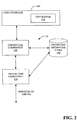
- the client component 110 includes a protection component 130, a protected credential store 140 and a credential component 150.
- the credential component 150 identifies and stores credential(s) in the protected credential store 140.
- the protected credential store 140 can be any suitable or appropriate data store, such as a text file, a database, a linked list, or a data structure.
- the protected credential store 140 is a text file that includes a pre-selected maximum number of entries, for example, two hundred fifty six (256). This pre-selected maximum value is arbitrary and is merely selected to control storage space. Another value, or no value at all, can also be chosen.
- an appropriate entry replacement algorithm can be employed.
- One such algorithm is the least recently used (LRU) algorithm. A new entry replaces an entry deem to be the one that has least recently been used.
- LRU least recently used
- the credential component 150 can further identify password reuse event(s) (PREs) in which a protected credential (e.g ., password) is attempted to be used at a different site.
- PREs password reuse event(s)
- the PRE is reported to the phishing detection server component 120 which can aggregate information from one or more client components 110 to determine whether a phishing attack is in progress. If it is determined that a phishing attack is in progress, the phishing detection server component 120 can provide information back to the client component 110, for example, warning the issue of the phishing attack and/or prevent entry of the credential by the user.
- the credential component 150 can track use of credentials by a user and determine whether a specific security credential is being used or presented to a computing system.
- a variety of methods can be used to identify and obtain security credentials. Details of such methods are largely implementation-dependent.
- HTML forms support the use of data input fields for usernames and passwords that are passed from a web browser to a web server through invocation of the HTTP POST command.
- Information placed by a user in the username and password fields of an HTML form can be captured or otherwise obtained by a component like a browser plug-in before that information is sent over a network link to a computing system.
- FIFO first-in, first-out
- the size of the FIFO buffer 160, and correspondingly the size of any security credential to be checked, can be arbitrarily limited to a certain number of characters, such as a length of the longest password that is expected to be encountered, for example, sixteen (16).
- a minimum value can also be implemented by padding too-short entries with other data.
- longer passwords can be truncated for the purposes of identification described herein.
- the credential component 150 can perform an encryption or other security-related operation, such as computing a hash function, on the data in the FIFO buffer 170.
- the credential component 150 can compare the value of the hash function to entries in a protected credential store 140 to determine whether a user has entered security credentials using the keyboard.
- the keyboard mentioned here is simply a preferred data entry tool. A person of ordinary skill in the art will realize from reading this disclosure that other data entry methods can be used.
- Entries in the protected credential data store 140 can initially be populated by a user entering known credential information for trusted sites as a batch or can be accumulated over time as a user navigates to a trusted site.
- the client component 110 can function as follows.
- a user can access a computing system through the user interface 160.
- each character is stored in the FIFO buffer 170.
- the credential component 150 accesses the string of characters stored in the FIFO buffer 170 and computes one or more hash function on that string.
- the credential component 150 accesses protected credentials stored in the protected credential store 140.
- the computed hash function values are compared to entries in the list of protected credentials.
- the client component 110 can be susceptible to attacks by phishers. For example, phishers can generate false logins in an attempt to flood the client component 110 with information resulting in induced false positives and/or induced false negatives. Several mechanism for mitigating the effects of phishers on the client component 110 are discussed below.
- the client component 110 can confirm that the purported password was actually entered (e.g ., typed) by the user. This can avoid an attack where a phisher attempts to include a number of spurious entries in the protected credential store 140 in order to "flush" the actual protected content. To avoid this, before including something in the protected credential store 140, the credential component 150 confirms that the password was actually typed.
- the credential component 150 can proceed as discussed above; however, knowing the length of the password, the credential component can search the FIFO buffer 170 to make sure that password was actually typed. For example, the check can be done when the POST event occurs.
- a Bloom filter or other hashing technique can further be employed to reduce the length of the buffer 170.
- the Bloom filter is a probabilistic algorithm to quickly test membership in a large set using multiple hashing functions into a single array of bits.
- the Bloom filter works effectively when space is an issue and a small error probability is tolerated.
- a hash produced by the Bloom filter is irreversible thus mitigating security concerns.
- the protected passwords stored in the protected credential store 140 can be hashed with a Bloom filter.
- a phisher can generate a post with a number of random user IDs (e.g ., large quantity), and a single password.
- the post could be used to flush the protected credential store 140.
- the client component 110 can limit the quantity of user IDs per password to in an effort to mitigate the effects of phishers attempts to flush the protected credential store 140.
- the number of user IDs is limited to five for each password.
- phishers can redirect a user to another page either before completion of the password typing, or to a new, different page for each user. Since each user would be sent to a different page (presumably unique to the user), the phishing detection server component 120 would not ordinarily detect the phishing attempt.
- the protection component 130 provides a report to the phishing detection server component 120 for each automatic redirect in a given period of time (e.g., N seconds).
- the phishing detection server component 120 can track this behavior across a plurality of client components 110 and determine the nature of the phishing attack. Accordingly, by reporting the automatic redirect, the potential for this attack is reduced.
- the password reuse event report sent from the client component 110 to the phishing detection server component 120 can include a copy of the page and/or code (e.g ., HTML) associated with the report.
- code e.g ., HTML
- the client component 110 can send a hashed version of the page and/or the code.
- the phishing detection server component 120 can then obtain its own version directly (e.g ., using the URL), and compares the two hashes.
- the hash can be region-based to identify region(s) of the page there were altered.
- the phishing detection server component 120 identifies the protected credential which is the suspected target of the non-trusted site and the user is prohibited from entering only that protected credential at the non-trusted site.
- the FIFO buffer 170 is accessed and hashes of several possible string lengths of a password are computed.
- the credential component 150 can compute hashes of the potential password and/or user ID in a forward fashion which avoids the need for buffering of keystrokes.
- a hash of the entry to be protected can be computed in the following way:
- the next character is added to the result and the SHA-1 is computed M/2 times. This is repeated until all N characters are incorporated. Thereafter, any entry-specific salt (if any) is added, and the SHA-1 computed one final time which is stored in the protected credential store 140.
- the credential component 150 can initialize the hash to Nmax hashes with random information and 0 to nMax-1 keystrokes.
- the credential component 150 can perform the following (e.g., at every typed keystroke):
- the credential component 150 can compare the hashes with the hashed protected credentials stored in the protected credential store 140.
- phishing detection is centered upon the user ID in order to mitigation concerns regarding storing of information regarding password(s).
- hashes of the user ID are computed and stored in the protected credential store 140.
- hashes of the information typed are computed and compared to entry(ies) in the protected credential store 140.
- the client component 110 reports the event to the phishing detection server component 120 (e.g., a centralized server).
- the phishing detection server component 120 can aggregate that information, and combines with other information available to reach a decision about the trustworthiness of the suspected site.
- User IDs can be susceptible to phishing attacks. For example, in an attempt to mask its phishing efforts, a phishing site can induce a user to use the backspace key and/or reenter information. At a phishing site, a user can be prompted to enter a user ID. In providing feedback to the user ( e.g ., in the entry field), the phishing site can add character(s) not entered by the user causing the user to use the backspace key. Additionally, in providing feedback to the user, the phishing site can intentionally omit character(s) causing the user to reenter the character(s). In both scenarios, examination of the FIFO buffer 160 does not match the information which the phishing site has actually received.
- the credential component 150 can branch the hashing of the user ID (and/or password) to include possible repeated and/or deleted character(s). For example, when a backspace is pressed, an extra search branch can be created that assumes that backspace is spurious. Additionally and/or alternatively, when a repeat character is typed, the credential component can similarly create a branch.
- the credential component 150 can employ a variant that combines (and removes) repeated character(s) both on the original password (e.g ., before inserting in the protected credential store 140) and in the keyboard monitoring.
- the credential component 150 can perform a hash of suspected user IDs which it can employ to search the protected credential store 140.
- reports of suspected user ID based phishing can be provided to the phishing detection server component 120.
- the system 300 can be employed to facilitate roaming phishing detection.
- the system 300 includes a phishing detection server component 310 that includes a protection component 320 and a protected credential store 330 that stores protected credential(s) for one or more users of the system 300.
- the protection component 320 receives information from a credential component 340 from a client component 350. Based on the information received and information stored in the protected credential store 330, the credential component 340 can determine whether a phishing attack is underway (and/or has occurred) as discussed above.
- protected credential(s) By storing the protected credential(s) at the server component 310, privacy and/or security concerns associated with local storing of protected credential(s) can be alleviated. Further, user(s) of the system 300 can "roam" to other computer(s) (e.g ., Internet cafe, friend's computer etc.) and still have the benefit of phishing detection for the user's credentials. For example, a user can login ( e.g ., securely) to the protection component 320 and then have phishing detection performed on information entered by the user.
- other computer(s) e.g ., Internet cafe, friend's computer etc.
- system 100 the client component 110, the phishing detection server component 120, the protection component 130, the protected credential store 140, the credential component 150, the FIFO buffer 170, the user interface 160, the system 300, the phishing detection server component 310, the protection component 320, the protected credential store 330, the credential component 340 and/or the client component 350 can be computer components as that term is defined herein.
- FIGs. 4-6 methodologies that may be implemented in accordance with the claimed subject matter are illustrated. While, for purposes of simplicity of explanation, the methodologies are shown and described as a series of blocks, it is to be understood and appreciated that the claimed subject matter is not limited by the order of the blocks, as some blocks may, in accordance with the claimed subject matter, occur in different orders and/or concurrently with other blocks from that shown and described herein. Moreover, not all illustrated blocks may be required to implement the methodologies.
- program modules include routines, programs, objects, data structures, etc. that perform particular tasks or implement particular abstract data types.
- functionality of the program modules may be combined or distributed as desired in various embodiments.
- a method of detecting a phishing attack 400 is illustrated.
- a potential credential is received.
- a buffer of key strokes actually entered e.g., by a user
- a determination is made at as to whether the potential credential matches the key strokes entered.
- the potential credential is not stored in the protected credential store, and, no further processing occurs. If the determination at 430 is YES, at 450, the potential credential is stored in the protected credential store, and, no further processing occurs.
- a method of detecting a phishing attack 500 is illustrated.
- a non-trusted site is identified.
- a phishing target is determined.
- entry of a protected credential associated with the target is prohibited at the non-trusted site.
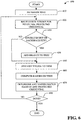
- a method of detecting a phishing attack 600 is illustrated.
- a tree is initialized.
- a key stroke for a potential protected credential is received.
- the key stroke is added to the tree, and any branches that exceed the maximum password length are eliminated from the tree.
- hashes are computed on the tree.
- a determination is made as to whether the system is done e.g ., hash of tree matches hash of a protected credential and/or last key stroke of entry reached). If the determination at 680 is NO, processing continues at 620. If the determination at 680 is YES, no further processing occurs.
- Fig. 7 and the following discussion are intended to provide a brief, general description of a suitable operating environment 710. While the claimed subject matter is described in the general context of computer-executable instructions, such as program modules, executed by one or more computers or other devices, those skilled in the art will recognize that the claimed subject matter can also be implemented in combination with other program modules and/or as a combination of hardware and software. Generally, however, program modules include routines, programs, objects, components, data structures, etc. that perform particular tasks or implement particular data types.
- the operating environment 710 is only one example of a suitable operating environment and is not intended to suggest any limitation as to the scope of use or functionality of the claimed subject matter.
- an exemplary environment 710 includes a computer 712.
- the computer 712 includes a processing unit 714, a system memory 716, and a system bus 718.
- the system bus 718 couples system components including, but not limited to, the system memory 716 to the processing unit 714.
- the processing unit 714 can be any of various available processors. Dual microprocessors and other multiprocessor architectures also can be employed as the processing unit 714.
- the system bus 718 can be any of several types of bus structure(s) including the memory bus or memory controller, a peripheral bus or external bus, and/or a local bus using any variety of available bus architectures including, but not limited to, an 8-bit bus, Industrial Standard Architecture (ISA), Micro-Channel Architecture (MSA), Extended ISA (EISA), Intelligent Drive Electronics (IDE), VESA Local Bus (VLB), Peripheral Component Interconnect (PCI), Universal Serial Bus (USB), Advanced Graphics Port (AGP), Personal Computer Memory Card International Association bus (PCMCIA), and Small Computer Systems Interface (SCSI).
- ISA Industrial Standard Architecture
- MSA Micro-Channel Architecture
- EISA Extended ISA
- IDE Intelligent Drive Electronics
- VLB VESA Local Bus
- PCI Peripheral Component Interconnect
- USB Universal Serial Bus
- AGP Advanced Graphics Port
- PCMCIA Personal Computer Memory Card International Association bus
- SCSI Small Computer Systems Interface
- the system memory 716 includes volatile memory 720 and nonvolatile memory 722.
- the basic input/output system (BIOS) containing the basic routines to transfer information between elements within the computer 712, such as during start-up, is stored in nonvolatile memory 722.
- nonvolatile memory 722 can include read only memory (ROM), programmable ROM (PROM), electrically programmable ROM (EPROM), electrically erasable ROM (EEPROM), or flash memory.
- Volatile memory 720 includes random access memory (RAM), which acts as external cache memory.
- RAM is available in many forms such as synchronous RAM (SRAM), dynamic RAM (DRAM), synchronous DRAM (SDRAM), double data rate SDRAM (DDR SDRAM), enhanced SDRAM (ESDRAM), Synchlink DRAM (SLDRAM), and direct Rambus RAM (DRRAM).
- SRAM synchronous RAM
- DRAM dynamic RAM
- SDRAM synchronous DRAM
- DDR SDRAM double data rate SDRAM
- ESDRAM enhanced SDRAM
- SLDRAM Synchlink DRAM
- DRRAM direct Rambus RAM
- Disk storage 724 includes, but is not limited to, devices like a magnetic disk drive, floppy disk drive, tape drive, Jaz drive, Zip drive, LS-100 drive, flash memory card, or memory stick.
- disk storage 724 can include storage media separately or in combination with other storage media including, but not limited to, an optical disk drive such as a compact disk ROM device (CD-ROM), CD recordable drive (CD-R Drive), CD rewritable drive (CD-RW Drive) or a digital versatile disk ROM drive (DVD-ROM).
- an optical disk drive such as a compact disk ROM device (CD-ROM), CD recordable drive (CD-R Drive), CD rewritable drive (CD-RW Drive) or a digital versatile disk ROM drive (DVD-ROM).
- a removable or non-removable interface is typically used such as interface 726.
- Fig 7 describes software that acts as an intermediary between users and the basic computer resources described in suitable operating environment 710.
- Such software includes an operating system 728.
- Operating system 728 which can be stored on disk storage 724, acts to control and allocate resources of the computer system 712.
- System applications 730 take advantage of the management of resources by operating system 728 through program modules 732 and program data 734 stored either in system memory 716 or on disk storage 724. It is to be appreciated that the claimed subject matter can be implemented with various operating systems or combinations of operating systems.
- Input devices 736 include, but are not limited to, a pointing device such as a mouse, trackball, stylus, touch pad, keyboard, microphone, joystick, game pad, satellite dish, scanner, TV tuner card, digital camera, digital video camera, web camera, and the like. These and other input devices connect to the processing unit 714 through the system bus 718 via interface port(s) 738.
- Interface port(s) 738 include, for example, a serial port, a parallel port, a game port, and a universal serial bus (USB).
- Output device(s) 740 use some of the same type of ports as input device(s) 736.
- a USB port may be used to provide input to computer 712, and to output information from computer 712 to an output device 740.
- Output adapter 742 is provided to illustrate that there are some output devices 740 like monitors, speakers, and printers among other output devices 740 that require special adapters.
- the output adapters 742 include, by way of illustration and not limitation, video and sound cards that provide a means of connection between the output device 740 and the system bus 718. It should be noted that other devices and/or systems of devices provide both input and output capabilities such as remote computer(s) 744.
- Computer 712 can operate in a networked environment using logical connections to one or more remote computers, such as remote computer(s) 744.
- the remote computer(s) 744 can be a personal computer, a server, a router, a network PC, a workstation, a microprocessor based appliance, a peer device or other common network node and the like, and typically includes many or all of the elements described relative to computer 712. For purposes of brevity, only a memory storage device 746 is illustrated with remote computer(s) 744.
- Remote computer(s) 744 is logically connected to computer 712 through a network interface 748 and then physically connected via communication connection 750.
- Network interface 748 encompasses communication networks such as local-area networks (LAN) and wide-area networks (WAN).
- LAN technologies include Fiber Distributed Data Interface (FDDI), Copper Distributed Data Interface (CDDI), Ethernet/IEEE 802.3, Token Ring/IEEE 802.5 and the like.
- WAN technologies include, but are not limited to, point-to-point links, circuit switching networks like Integrated Services Digital Networks (ISDN) and variations thereon, packet switching networks, and Digital Subscriber Lines (DSL).
- ISDN Integrated Services Digital Networks
- DSL Digital Subscriber Lines
- Communication connection(s) 750 refers to the hardware/software employed to connect the network interface 748 to the bus 718. While communication connection 750 is shown for illustrative clarity inside computer 712, it can also be external to computer 712.
- the hardware/software necessary for connection to the network interface 748 includes, for exemplary purposes only, internal and external technologies such as, modems including regular telephone grade modems, cable modems and DSL modems, ISDN adapters, and Ethernet cards.
- Fig. 8 is a schematic block diagram of a sample-computing environment 800 with which the claimed subject matter can interact.
- the system 800 includes one or more client(s) 810.
- the client(s) 810 can be hardware and/or software (e.g ., threads, processes, computing devices).
- the system 800 also includes one or more server(s) 820.
- the server(s) 820 can be hardware and/or software (e.g ., threads, processes, computing devices).
- the servers 820 can house threads to perform transformations by employing the subject innovation, for example.
- the system 800 includes a communication framework 840 that can be employed to facilitate communications between the client(s) 810 and the server(s) 820.
- the client(s) 810 are operably connected to one or more client data store(s) 850 that can be employed to store information local to the client(s) 810.
- the server(s) 820 are operably connected to one or more server data store(s) 830 that can be employed to store information local to the servers 820.
Landscapes
- Engineering & Computer Science (AREA)
- Computer Security & Cryptography (AREA)
- General Engineering & Computer Science (AREA)
- Computer Networks & Wireless Communication (AREA)
- Signal Processing (AREA)
- Computer Hardware Design (AREA)
- Computing Systems (AREA)
- Theoretical Computer Science (AREA)
- General Physics & Mathematics (AREA)
- Physics & Mathematics (AREA)
- Software Systems (AREA)
- Storage Device Security (AREA)
- Computer And Data Communications (AREA)
- Data Exchanges In Wide-Area Networks (AREA)
Claims (14)
- Phishing-Erfassungs-Client-System (110), umfassend:eine Berechtigungsnachweis-Komponente (150), die dazu eingerichtet ist, die Verwendung von Berechtigungsnachweisen durch einen Benutzer zu verfolgen und zu bestimmen, ob ein spezifischer Sicherheitsberechtigungsnachweis, der einen Benutzernamen und ein Kennwort umfasst, einem Computersystem dargestellt wird, um einen Domänennamen des Computersystems, von dem eine Anfrage nach Berechtigungsnachweisen ausging, zusammen mit einem Hash des Benutzernamens und einem Hash des Passworts in einem geschützten Berechtigungsnachweis-Speicher (140) zu speichern und Passwortwiederverwendungsereignisse zu identifizieren, bei denen versucht wird, ein in dem geschützten Berechtigungsnachweis-Speicher gespeicherten geschützten Berechtigungsnachweis, an einem Standort zu verwenden, der nicht mit dem geschützten Berechtigungsnachweis assoziiert ist; undeine Schutzkomponente (130), die dazu eingerichtet ist, die identifizierten Passwortwiederverwendungsereignisse an eine Phishing-Erkennungs-Server-Komponente (120) zu melden.
- System nach Anspruch 1, bei dem die Berechtigungsnachweis-Komponente einen berechneten Hash des Berechtigungsnachweises mit einem Hash eines geschützten Berechtigungsnachweises vergleicht, um zu bestimmen, ob der Berechtigungsnachweis ein geschützter Berechtigungsnachweis ist.
- System nach Anspruch 1, bei dem die Berechtigungsnachweis-Komponente auf einen Puffer von Tastenanschlägen zugreift, um zu bestätigen, dass der Berechtigungsnachweis eingegeben wurde, wobei die Berechtigungsnachweis-Komponente mit dem Berechtigungsnachweis assoziierte Informationen nur dann speichert, wenn die Tastenanschläge mit dem Berechtigungsnachweis übereinstimmen.
- System nach Anspruch 3, bei dem die Berechtigungsnachweis-Komponente ein Bloom-Filter verwendet um zu bestimmen, ob der Berechtigungsnachweis mit den Tastenanschlägen übereinstimmt; oder
die Berechtigungsnachweis-Komponente vor dem Speichern von Informationen in dem geschützten Berechtigungsnachweisspeicher ein Bloom-Filter verwendet. - System nach Anspruch 1, bei dem die Berechtigungsnachweis-Komponente eine maximale Schwellenmenge von Benutzer-IDs mit einem bestimmten Passwort speichert.
- System nach Anspruch 1, bei dem die Berechtigungsnachweis-Komponente einen Hash eingegebener Informationen mit dem gespeicherten Hash des Benutzernamens vergleicht, um zu bestimmen, ob ein Benutzer-ID-Wiederverwendungsereignis auftritt.
- System nach Anspruch 1, bei dem die Schutzkomponente einen Bericht für jede automatische Umleitung in einer gegebenen Zeitperiode bereitstellt; oder
die Schutzkomponente in Reaktion auf den Bericht Informationen empfängt, die mit einem nicht vertrauenswürdigen Standort und einem Ziel verknüpft sind, wobei die Schutzkomponente die Eingabe des geschützten Berechtigungsnachweises verbietet, der mit dem Ziel an dem nicht vertrauenswürdigen Standort assoziiert ist. - System nach Anspruch 1, bei dem der Bericht einen Hash von Informationen umfasst, die einer dem Bericht zugeordneten Seite zugeordnet sind; oder
der Bericht einen Hash umfasst, der wenigstens teilweise auf einer Benutzer-I D, einem Passwort, einem Domainnamen, einem Quellcode einer betrachteten Webseite, Zeitstempelinformationen von dem Sicherheits-Server und einer Zeit einer vorherigen Anmeldung an einem vertrauenswürdigen Standort basiert. - System nach Anspruch 1, bei dem die Berechtigungsnachweis-Komponente einen Vorwärts-Hash der mit dem Berechtigungsnachweis verknüpften Tastenanschläge ausführt, ohne die Tastenanschläge zu puffern; oder
die Berechtigungsnachweis-Komponente eine Verzweigung beim Hashing des Berechtigungsnachweises ausführt, um möglicherweise eingefügte und/oder gelöschte Zeichen einzuschließen. - Computerimplementiertes Verfahren zum Erfassen eines Phishing-Angriffs, umfassend:Verfolgen der Verwendung von Berechtigungsnachweisen durch einen Benutzer und Bestimmen, ob ein spezifischer Sicherheitsberechtigungsnachweis, der einen Benutzernamen und ein Kennwort umfasst, einem Computersystem dargestellt wird;Speichern eines Domänennamens des Computersystems, von dem eine Anfrage nach Berechtigungsnachweisen stammt, zusammen mit einem Hash des Benutzernamens und einem Hash des Passworts in einem geschützten Berechtigungsnachweis-Speicher (140);Identifizieren von Passwortwiederverwendungsereignissen, bei denen versucht wird, einen geschützten Berechtigungsnachweis, der in dem geschützten Berechtigungsnachweisspeicher gespeichert ist, an einem Standort zu verwenden, der nicht mit dem geschützten Berechtigungsnachweis assoziiert ist; undMelden der identifizierten Passwortwiederverwendungsereignisse an eine Phishing-Erkennungs-Server-Komponente (120).
- Verfahren nach Anspruch 10, weiterhin umfassend:Vergleichen eines Hashes des Berechtigungsnachweises mit einem Hash eines geschützten Berechtigungsnachweises um zu bestimmen, ob der Berechtigungsnachweis ein geschützter Berechtigungsnachweis ist.
- Verfahren nach Anspruch 10, weiterhin umfassend:Vergleichen von Tastenanschlägen mit dem Berechtigungsnachweis; undAusführen eines Vorwärts-Hashs von Tastenanschlägen, die mit dem Berechtigungsnachweis assoziiert sind.
- Verfahren nach Anspruch 10, bei dem der Speicherschritt Folgendes umfasst:Empfangen (410) des potenziellen Berechtigungsnachweises;Untersuchen (420) eines Puffers von eingegebenen Tastenanschlägen;Vergleichen (430) der Tastenanschläge mit einem potentiellen Berechtigungsnachweis;Speichern (450) des potenziellen Berechtigungsnachweises in einem geschützten Berechtigungsnachweisspeicher, wenn die Tastenanschläge mit dem potentiellen Berechtigungsnachweis übereinstimmen; undVerweigern des Speicherns (440) des potenziellen Berechtigungsnachweises in dem geschützten Berechtigungsnachweisspeicher, wenn die Tastenanschläge nicht mit dem potenziellen Berechtigungsnachweis übereinstimmen.
- Computerlesbares Medium, das computerausführbare Anweisungen speichert, die, wenn sie von einem Prozessor ausgeführt werden, bewirken, dass der Prozessor das Verfahren nach einem der Ansprüche 10 bis 13 ausführt.
Applications Claiming Priority (2)
| Application Number | Priority Date | Filing Date | Title |
|---|---|---|---|
| US11/360,254 US8640231B2 (en) | 2006-02-23 | 2006-02-23 | Client side attack resistant phishing detection |
| PCT/US2007/004044 WO2007120383A2 (en) | 2006-02-23 | 2007-02-13 | Client side attack resistant phishing detection |
Publications (3)
| Publication Number | Publication Date |
|---|---|
| EP1999609A2 EP1999609A2 (de) | 2008-12-10 |
| EP1999609A4 EP1999609A4 (de) | 2009-10-14 |
| EP1999609B1 true EP1999609B1 (de) | 2018-03-28 |
Family
ID=38429902
Family Applications (1)
| Application Number | Title | Priority Date | Filing Date |
|---|---|---|---|
| EP07770592.9A Not-in-force EP1999609B1 (de) | 2006-02-23 | 2007-02-13 | Angriffsresistente phishing-erkennung auf der client-seite |
Country Status (10)
| Country | Link |
|---|---|
| US (1) | US8640231B2 (de) |
| EP (1) | EP1999609B1 (de) |
| JP (1) | JP5382850B2 (de) |
| KR (1) | KR20080100204A (de) |
| CN (1) | CN101390068B (de) |
| AU (1) | AU2007239055A1 (de) |
| BR (1) | BRPI0707987A2 (de) |
| CA (1) | CA2643294C (de) |
| NO (1) | NO20083486L (de) |
| WO (1) | WO2007120383A2 (de) |
Cited By (1)
| Publication number | Priority date | Publication date | Assignee | Title |
|---|---|---|---|---|
| US12452826B2 (en) | 2022-10-05 | 2025-10-21 | Bank Of America Corporation | Systems and methods for controlling electronic communications in real time via an artificial intelligence engine based on location data and user data |
Families Citing this family (116)
| Publication number | Priority date | Publication date | Assignee | Title |
|---|---|---|---|---|
| US9412123B2 (en) | 2003-07-01 | 2016-08-09 | The 41St Parameter, Inc. | Keystroke analysis |
| US10999298B2 (en) | 2004-03-02 | 2021-05-04 | The 41St Parameter, Inc. | Method and system for identifying users and detecting fraud by use of the internet |
| US8065525B2 (en) * | 2004-09-22 | 2011-11-22 | Bekad Mgmt. Ii, Llc | Device with built-in user authentication and method for user authentication and identity theft protection |
| US20060095955A1 (en) * | 2004-11-01 | 2006-05-04 | Vong Jeffrey C V | Jurisdiction-wide anti-phishing network service |
| US7681234B2 (en) * | 2005-06-30 | 2010-03-16 | Microsoft Corporation | Preventing phishing attacks |
| US7630741B2 (en) * | 2005-07-12 | 2009-12-08 | Microsoft Corporation | Compact and durable messenger device |
| US7676242B2 (en) * | 2005-07-12 | 2010-03-09 | Microsoft Corporation | Compact and durable thin smartphone |
| US20070015553A1 (en) * | 2005-07-12 | 2007-01-18 | Microsoft Corporation | Compact and durable clamshell smartphone |
| US20070015533A1 (en) * | 2005-07-12 | 2007-01-18 | Microsoft Corporation | Mono hinge for communication device |
| US11301585B2 (en) | 2005-12-16 | 2022-04-12 | The 41St Parameter, Inc. | Methods and apparatus for securely displaying digital images |
| US8938671B2 (en) | 2005-12-16 | 2015-01-20 | The 41St Parameter, Inc. | Methods and apparatus for securely displaying digital images |
| US8640231B2 (en) | 2006-02-23 | 2014-01-28 | Microsoft Corporation | Client side attack resistant phishing detection |
| US7861229B2 (en) * | 2006-03-16 | 2010-12-28 | Microsoft Corporation | Complexity metrics for data schemas |
| US8151327B2 (en) | 2006-03-31 | 2012-04-03 | The 41St Parameter, Inc. | Systems and methods for detection of session tampering and fraud prevention |
| US20070245422A1 (en) * | 2006-04-18 | 2007-10-18 | Softrun, Inc. | Phishing-Prevention Method Through Analysis of Internet Website to be Accessed and Storage Medium Storing Computer Program Source for Executing the Same |
| US8010996B2 (en) * | 2006-07-17 | 2011-08-30 | Yahoo! Inc. | Authentication seal for online applications |
| US20080034428A1 (en) * | 2006-07-17 | 2008-02-07 | Yahoo! Inc. | Anti-phishing for client devices |
| US8220047B1 (en) * | 2006-08-09 | 2012-07-10 | Google Inc. | Anti-phishing system and method |
| US7813350B2 (en) * | 2006-10-23 | 2010-10-12 | Cisco Technology, Inc. | System and method to process data packets in a network using stateful decision trees |
| US8938773B2 (en) * | 2007-02-02 | 2015-01-20 | Websense, Inc. | System and method for adding context to prevent data leakage over a computer network |
| US8091118B2 (en) * | 2007-12-21 | 2012-01-03 | At & T Intellectual Property I, Lp | Method and system to optimize efficiency when managing lists of untrusted network sites |
| US8250080B1 (en) | 2008-01-11 | 2012-08-21 | Google Inc. | Filtering in search engines |
| US9130986B2 (en) * | 2008-03-19 | 2015-09-08 | Websense, Inc. | Method and system for protection against information stealing software |
| US8407784B2 (en) * | 2008-03-19 | 2013-03-26 | Websense, Inc. | Method and system for protection against information stealing software |
| US8370948B2 (en) * | 2008-03-19 | 2013-02-05 | Websense, Inc. | System and method for analysis of electronic information dissemination events |
| US9015842B2 (en) | 2008-03-19 | 2015-04-21 | Websense, Inc. | Method and system for protection against information stealing software |
| US9548978B2 (en) | 2009-02-03 | 2017-01-17 | Inbay Technologies Inc. | Method and system for authorizing secure electronic transactions using a security device |
| US9166975B2 (en) | 2012-02-16 | 2015-10-20 | Inbay Technologies Inc. | System and method for secure remote access to a service on a server computer |
| US9608988B2 (en) * | 2009-02-03 | 2017-03-28 | Inbay Technologies Inc. | Method and system for authorizing secure electronic transactions using a security device having a quick response code scanner |
| US8739252B2 (en) | 2009-02-03 | 2014-05-27 | Inbay Technologies Inc. | System and method for secure remote access |
| US9736149B2 (en) | 2009-02-03 | 2017-08-15 | Inbay Technologies Inc. | Method and system for establishing trusted communication using a security device |
| US8973111B2 (en) * | 2009-02-03 | 2015-03-03 | Inbay Technologies Inc. | Method and system for securing electronic transactions |
| US9485254B2 (en) | 2009-02-03 | 2016-11-01 | Inbay Technologies Inc. | Method and system for authenticating a security device |
| US9521142B2 (en) | 2009-02-03 | 2016-12-13 | Inbay Technologies Inc. | System and method for generating passwords using key inputs and contextual inputs |
| US9112850B1 (en) | 2009-03-25 | 2015-08-18 | The 41St Parameter, Inc. | Systems and methods of sharing information through a tag-based consortium |
| AU2010254269A1 (en) | 2009-05-26 | 2011-12-22 | Websense, Inc. | Systems and methods for efficient detection of fingerprinted data and information |
| US8621614B2 (en) * | 2009-05-26 | 2013-12-31 | Microsoft Corporation | Managing potentially phishing messages in a non-web mail client context |
| US20120089481A1 (en) * | 2009-11-24 | 2012-04-12 | Chain Reaction Ecommerce, Inc. | Securing sensitive information with a trusted proxy frame |
| FR2959331B1 (fr) * | 2010-04-22 | 2013-03-29 | St Microelectronics Rousset | Procede et dispositif d'authentification d'un utilisateur a l'aide de donnees biometriques. |
| US8752137B2 (en) * | 2010-05-28 | 2014-06-10 | Bladelogic, Inc. | Security context passing for stateless system management |
| WO2012054646A2 (en) | 2010-10-19 | 2012-04-26 | The 41St Parameter, Inc. | Variable risk engine |
| US8397294B2 (en) * | 2010-11-30 | 2013-03-12 | Research In Motion Limited | Apparatus, system and method for preventing data loss |
| US20120180134A1 (en) * | 2011-01-07 | 2012-07-12 | Research In Motion Limited | Personal Information Guard |
| CN102096781B (zh) * | 2011-01-18 | 2012-11-28 | 南京邮电大学 | 一种基于网页关联性的钓鱼检测方法 |
| US9065850B1 (en) | 2011-02-07 | 2015-06-23 | Zscaler, Inc. | Phishing detection systems and methods |
| US8832804B1 (en) * | 2011-08-05 | 2014-09-09 | Google Inc. | Password pre-verification in client-server applications |
| US10754913B2 (en) | 2011-11-15 | 2020-08-25 | Tapad, Inc. | System and method for analyzing user device information |
| TWI459232B (zh) * | 2011-12-02 | 2014-11-01 | Inst Information Industry | 釣魚網站處理方法、系統以及儲存其之電腦可讀取記錄媒體 |
| US9633201B1 (en) | 2012-03-01 | 2017-04-25 | The 41St Parameter, Inc. | Methods and systems for fraud containment |
| US9521551B2 (en) | 2012-03-22 | 2016-12-13 | The 41St Parameter, Inc. | Methods and systems for persistent cross-application mobile device identification |
| US9432401B2 (en) * | 2012-07-06 | 2016-08-30 | Microsoft Technology Licensing, Llc | Providing consistent security information |
| WO2014022813A1 (en) | 2012-08-02 | 2014-02-06 | The 41St Parameter, Inc. | Systems and methods for accessing records via derivative locators |
| WO2014052493A1 (en) | 2012-09-25 | 2014-04-03 | Moneydesktop, Inc. | Aggregation source routing |
| JP5727991B2 (ja) * | 2012-11-12 | 2015-06-03 | 株式会社オプティム | ユーザ端末、不正サイト情報管理サーバ、不正リクエスト遮断方法、及び不正リクエスト遮断プログラム |
| WO2014078569A1 (en) | 2012-11-14 | 2014-05-22 | The 41St Parameter, Inc. | Systems and methods of global identification |
| CN103020287B (zh) * | 2012-11-20 | 2018-08-10 | 高剑青 | 基于部分哈希值对有限项目的排除 |
| US9241259B2 (en) | 2012-11-30 | 2016-01-19 | Websense, Inc. | Method and apparatus for managing the transfer of sensitive information to mobile devices |
| CN103929407B (zh) * | 2013-01-15 | 2015-03-11 | 腾讯科技(深圳)有限公司 | 一种木马拦截方法、装置和系统 |
| US9398038B2 (en) | 2013-02-08 | 2016-07-19 | PhishMe, Inc. | Collaborative phishing attack detection |
| US9356948B2 (en) | 2013-02-08 | 2016-05-31 | PhishMe, Inc. | Collaborative phishing attack detection |
| US8966637B2 (en) | 2013-02-08 | 2015-02-24 | PhishMe, Inc. | Performance benchmarking for simulated phishing attacks |
| US9344449B2 (en) | 2013-03-11 | 2016-05-17 | Bank Of America Corporation | Risk ranking referential links in electronic messages |
| US9300629B1 (en) | 2013-05-31 | 2016-03-29 | Palo Alto Networks, Inc. | Password constraint enforcement used in external site authentication |
| US9621566B2 (en) | 2013-05-31 | 2017-04-11 | Adi Labs Incorporated | System and method for detecting phishing webpages |
| US10902327B1 (en) | 2013-08-30 | 2021-01-26 | The 41St Parameter, Inc. | System and method for device identification and uniqueness |
| JP6193802B2 (ja) * | 2014-05-14 | 2017-09-06 | 日本電信電話株式会社 | 認証システム及び認証方法 |
| CN104050257A (zh) * | 2014-06-13 | 2014-09-17 | 百度国际科技(深圳)有限公司 | 钓鱼网页的检测方法和装置 |
| US10091312B1 (en) | 2014-10-14 | 2018-10-02 | The 41St Parameter, Inc. | Data structures for intelligently resolving deterministic and probabilistic device identifiers to device profiles and/or groups |
| KR101599213B1 (ko) * | 2014-12-23 | 2016-03-04 | 주식회사 윈스 | 네트워크 보안 시스템에서 탐지규칙 제공 서비스 방법 및 시스템 |
| US9906539B2 (en) | 2015-04-10 | 2018-02-27 | PhishMe, Inc. | Suspicious message processing and incident response |
| US10110623B2 (en) | 2015-07-22 | 2018-10-23 | Bank Of America Corporation | Delaying phishing communication |
| US10110628B2 (en) | 2015-07-22 | 2018-10-23 | Bank Of America Corporation | Phishing source tool |
| US10523637B2 (en) | 2015-07-22 | 2019-12-31 | Paypal, Inc. | Anonymous account security exchange |
| US9749359B2 (en) | 2015-07-22 | 2017-08-29 | Bank Of America Corporation | Phishing campaign ranker |
| US9825974B2 (en) | 2015-07-22 | 2017-11-21 | Bank Of America Corporation | Phishing warning tool |
| US9729573B2 (en) | 2015-07-22 | 2017-08-08 | Bank Of America Corporation | Phishing campaign ranker |
| US9942249B2 (en) | 2015-07-22 | 2018-04-10 | Bank Of America Corporation | Phishing training tool |
| US10051001B1 (en) | 2015-07-31 | 2018-08-14 | Palo Alto Networks, Inc. | Efficient and secure user credential store for credentials enforcement using a firewall |
| US9967236B1 (en) | 2015-07-31 | 2018-05-08 | Palo Alto Networks, Inc. | Credentials enforcement using a firewall |
| US10200381B2 (en) * | 2015-08-05 | 2019-02-05 | Mcafee, Llc | Systems and methods for phishing and brand protection |
| US10505980B2 (en) * | 2015-09-11 | 2019-12-10 | Okta, Inc. | Secured user credential management |
| US9781132B2 (en) * | 2015-10-13 | 2017-10-03 | Yahoo Holdings, Inc. | Fraud prevention |
| US9692815B2 (en) | 2015-11-12 | 2017-06-27 | Mx Technologies, Inc. | Distributed, decentralized data aggregation |
| US10205737B2 (en) | 2016-01-11 | 2019-02-12 | International Business Machines Corporation | Addressing login platform security risks |
| US10129298B2 (en) | 2016-06-30 | 2018-11-13 | Microsoft Technology Licensing, Llc | Detecting attacks using compromised credentials via internal network monitoring |
| WO2018004600A1 (en) | 2016-06-30 | 2018-01-04 | Sophos Limited | Proactive network security using a health heartbeat |
| US10320775B2 (en) | 2016-09-09 | 2019-06-11 | Paypal, Inc. | Eliminating abuse caused by password reuse in different systems |
| US10999297B2 (en) | 2017-05-15 | 2021-05-04 | Forcepoint, LLC | Using expected behavior of an entity when prepopulating an adaptive trust profile |
| US9882918B1 (en) | 2017-05-15 | 2018-01-30 | Forcepoint, LLC | User behavior profile in a blockchain |
| US10999296B2 (en) | 2017-05-15 | 2021-05-04 | Forcepoint, LLC | Generating adaptive trust profiles using information derived from similarly situated organizations |
| US10447718B2 (en) | 2017-05-15 | 2019-10-15 | Forcepoint Llc | User profile definition and management |
| US10917423B2 (en) | 2017-05-15 | 2021-02-09 | Forcepoint, LLC | Intelligently differentiating between different types of states and attributes when using an adaptive trust profile |
| US10862927B2 (en) | 2017-05-15 | 2020-12-08 | Forcepoint, LLC | Dividing events into sessions during adaptive trust profile operations |
| US10129269B1 (en) | 2017-05-15 | 2018-11-13 | Forcepoint, LLC | Managing blockchain access to user profile information |
| US10915644B2 (en) | 2017-05-15 | 2021-02-09 | Forcepoint, LLC | Collecting data for centralized use in an adaptive trust profile event via an endpoint |
| US10318729B2 (en) | 2017-07-26 | 2019-06-11 | Forcepoint, LLC | Privacy protection during insider threat monitoring |
| US11271950B2 (en) | 2018-04-04 | 2022-03-08 | Sophos Limited | Securing endpoints in a heterogenous enterprise network |
| US10911487B2 (en) * | 2018-06-20 | 2021-02-02 | Checkpoint Mobile Security Ltd | On-device network protection |
| US11212312B2 (en) | 2018-08-09 | 2021-12-28 | Microsoft Technology Licensing, Llc | Systems and methods for polluting phishing campaign responses |
| US11159566B2 (en) | 2018-08-21 | 2021-10-26 | International Business Machines Corporation | Countering phishing attacks |
| US11297101B1 (en) * | 2018-08-22 | 2022-04-05 | NuRD LLC | Phishing website detection by checking form differences followed by false credentials submission |
| US11496510B1 (en) | 2018-08-24 | 2022-11-08 | NuRD LLC | Fully automated target identification of a phishing web site |
| US11164206B2 (en) * | 2018-11-16 | 2021-11-02 | Comenity Llc | Automatically aggregating, evaluating, and providing a contextually relevant offer |
| US10997295B2 (en) | 2019-04-26 | 2021-05-04 | Forcepoint, LLC | Adaptive trust profile reference architecture |
| WO2021056230A1 (en) | 2019-09-25 | 2021-04-01 | Citrix Systems, Inc. | Systems and methods for securing user domain credentials from phishing attacks |
| CN113139170B (zh) * | 2020-01-17 | 2024-06-25 | 华为云计算技术有限公司 | 生成鉴权凭证和鉴权的方法、装置和设备 |
| US12216791B2 (en) | 2020-02-24 | 2025-02-04 | Forcepoint Llc | Re-identifying pseudonymized or de-identified data utilizing distributed ledger technology |
| US12443703B2 (en) * | 2020-05-22 | 2025-10-14 | Vivek Chinar Nair | Secure system and method for detecting credential stuffing attacks |
| US11550949B2 (en) * | 2020-07-21 | 2023-01-10 | Constella Intelligence, Inc. | Secure exchange of password presence data |
| US11741200B2 (en) | 2020-12-29 | 2023-08-29 | Citrix Systems, Inc. | Systems and methods for protection against theft of user credentials |
| US11997135B2 (en) * | 2020-12-29 | 2024-05-28 | Citrix Systems, Inc. | Systems and methods for protection against theft of user credentials |
| US12192233B2 (en) | 2021-04-15 | 2025-01-07 | Citrix Systems, Inc. | Systems and methods for phishing attack protection based on identity provider verification |
| US12380201B2 (en) | 2021-12-06 | 2025-08-05 | Citrix Systems, Inc. | Detecting sharing of passwords |
| US12563094B2 (en) | 2022-04-27 | 2026-02-24 | Citrix Systems, Inc. | Systems and methods for preventing one-time password phishing |
| KR102521677B1 (ko) * | 2022-12-07 | 2023-04-18 | (주)라바웨이브 | 피싱 피해 모니터링 시스템 및 그 방법 |
| FR3145814B1 (fr) * | 2023-02-15 | 2025-03-07 | Deepdef | Procede de securisation d’un acces a une ressource |
Citations (4)
| Publication number | Priority date | Publication date | Assignee | Title |
|---|---|---|---|---|
| US20040158714A1 (en) * | 2003-02-10 | 2004-08-12 | International Business Machines Corporation | Method for distributing and authenticating public keys using hashed password protection |
| US20050022020A1 (en) * | 2003-07-10 | 2005-01-27 | Daniel Fremberg | Authentication protocol |
| US20050086161A1 (en) * | 2005-01-06 | 2005-04-21 | Gallant Stephen I. | Deterrence of phishing and other identity theft frauds |
| WO2006014358A1 (en) * | 2004-07-02 | 2006-02-09 | Rsa Security, Inc. | Password-protection module |
Family Cites Families (66)
| Publication number | Priority date | Publication date | Assignee | Title |
|---|---|---|---|---|
| ES2251017T3 (es) | 1996-02-26 | 2006-04-16 | Nokia Corporation | Radiotelefono. |
| US6453345B2 (en) * | 1996-11-06 | 2002-09-17 | Datadirect Networks, Inc. | Network security and surveillance system |
| US6044152A (en) | 1998-01-15 | 2000-03-28 | Ericsson Inc. | Shielded keyboard for a portable communication device |
| US6230269B1 (en) | 1998-03-04 | 2001-05-08 | Microsoft Corporation | Distributed authentication system and method |
| US6104916A (en) | 1998-06-15 | 2000-08-15 | Motorola, Inc. | Hinge pin |
| US6185689B1 (en) * | 1998-06-24 | 2001-02-06 | Richard S. Carson & Assoc., Inc. | Method for network self security assessment |
| CA2255047A1 (en) | 1998-11-30 | 2000-05-30 | Ibm Canada Limited-Ibm Canada Limitee | Comparison of hierarchical structures and merging of differences |
| GB2349960A (en) | 1999-05-08 | 2000-11-15 | Ibm | Secure password provision |
| US6826697B1 (en) * | 1999-08-30 | 2004-11-30 | Symantec Corporation | System and method for detecting buffer overflow attacks |
| JP3739641B2 (ja) | 2000-04-19 | 2006-01-25 | 富士通株式会社 | 折りたたみ型携帯機 |
| AU2001262958A1 (en) * | 2000-04-28 | 2001-11-12 | Internet Security Systems, Inc. | Method and system for managing computer security information |
| JP3908448B2 (ja) | 2000-08-17 | 2007-04-25 | 日本電気株式会社 | 移動電話装置及びその内蔵アンテナ |
| JP2002073553A (ja) | 2000-08-24 | 2002-03-12 | Shijin Kogyo Sakushinkai | 嵌入式侵入検出システム |
| EP1219401A3 (de) | 2000-12-29 | 2004-02-04 | Nokia Corporation | Spritzgiessformteil mit einem verstärkenden oder dekoratieven Kern |
| US6925313B2 (en) | 2001-02-07 | 2005-08-02 | Hyundai Curitel Inc. | Folder-type mobile communication terminal having double-sided LCD |
| US7845004B2 (en) | 2001-07-27 | 2010-11-30 | International Business Machines Corporation | Correlating network information and intrusion information to find the entry point of an attack upon a protected computer |
| CA2354443A1 (en) | 2001-07-31 | 2003-01-31 | Ibm Canada Limited-Ibm Canada Limitee | Method and system for visually constructing xml schemas using an object-oriented model |
| US6655863B2 (en) | 2001-08-03 | 2003-12-02 | L&K Precision Industrial Co., Ltd. | Pen-sized keyboard arrangement |
| US8250025B2 (en) * | 2001-11-06 | 2012-08-21 | Business Controls, Inc. | Anonymous reporting system |
| US7159120B2 (en) * | 2001-11-19 | 2007-01-02 | Good Technology, Inc. | Method and system for protecting data within portable electronic devices |
| US7228417B2 (en) | 2002-02-26 | 2007-06-05 | America Online, Inc. | Simple secure login with multiple-authentication providers |
| US6845380B2 (en) | 2002-03-04 | 2005-01-18 | Hewlett-Packard Development Company, L.P. | Method and system of valuing transformation between extensible markup language (XML) documents |
| TW592420U (en) | 2002-04-19 | 2004-06-11 | Quanta Comp Inc | Mobile phone |
| US7162485B2 (en) | 2002-06-19 | 2007-01-09 | Georg Gottlob | Efficient processing of XPath queries |
| ES2262000T3 (es) | 2002-07-15 | 2006-11-16 | Siemens Aktiengesellschaft | Procedimiento y dispositivos para codificar/decodificar documentos estructurados, en particular documentos xml. |
| EP1413980A1 (de) * | 2002-10-24 | 2004-04-28 | SCHLUMBERGER Systèmes | Schutz eines tragbaren Gegenstandes vor 'Denial-of-service' Attacken |
| US7043487B2 (en) | 2002-12-28 | 2006-05-09 | International Business Machines Corporation | Method for storing XML documents in a relational database system while exploiting XML schema |
| US7152244B2 (en) * | 2002-12-31 | 2006-12-19 | American Online, Inc. | Techniques for detecting and preventing unintentional disclosures of sensitive data |
| US20040143581A1 (en) | 2003-01-15 | 2004-07-22 | Bohannon Philip L. | Cost-based storage of extensible markup language (XML) data |
| JP2004295252A (ja) | 2003-03-25 | 2004-10-21 | Nifty Corp | 認証データ自動入力プログラム及び装置 |
| US8640234B2 (en) * | 2003-05-07 | 2014-01-28 | Trustwave Holdings, Inc. | Method and apparatus for predictive and actual intrusion detection on a network |
| CA2432658C (en) | 2003-06-17 | 2008-04-01 | Ibm Canada Limited - Ibm Canada Limitee | Simple types in xml schema complex types |
| JP2005070074A (ja) | 2003-08-21 | 2005-03-17 | Pioneer Electronic Corp | 表示装置及び該表示装置を含んでなる電子機器 |
| JP2005078316A (ja) | 2003-08-29 | 2005-03-24 | Kyocera Corp | 携帯端末装置 |
| US7523220B2 (en) | 2003-09-17 | 2009-04-21 | Microsoft Corporation | Metaspace: communication middleware for partially connected mobile ad hoc networks |
| US7685296B2 (en) | 2003-09-25 | 2010-03-23 | Microsoft Corporation | Systems and methods for client-based web crawling |
| US7314785B2 (en) | 2003-10-24 | 2008-01-01 | Semiconductor Energy Laboratory Co., Ltd. | Display device and manufacturing method thereof |
| US7526803B2 (en) | 2003-11-17 | 2009-04-28 | Alcatel Lucent | Detection of denial of service attacks against SIP (session initiation protocol) elements |
| US7487541B2 (en) * | 2003-12-10 | 2009-02-03 | Alcatel Lucent | Flow-based method for tracking back single packets |
| JP4485184B2 (ja) | 2003-12-15 | 2010-06-16 | 株式会社半導体エネルギー研究所 | 発光装置および電子機器 |
| US8191139B2 (en) * | 2003-12-18 | 2012-05-29 | Honeywell International Inc. | Intrusion detection report correlator and analyzer |
| US20060294187A1 (en) * | 2004-01-20 | 2006-12-28 | Thomas Hakel | Integrated web communications system |
| US20050177578A1 (en) | 2004-02-10 | 2005-08-11 | Chen Yao-Ching S. | Efficient type annontation of XML schema-validated XML documents without schema validation |
| TWI230827B (en) | 2004-02-12 | 2005-04-11 | Au Optronics Corp | Liquid crystal display module |
| US7603654B2 (en) | 2004-03-01 | 2009-10-13 | Microsoft Corporation | Determining XML schema type equivalence |
| US20050228999A1 (en) * | 2004-04-09 | 2005-10-13 | Arcot Systems, Inc. | Audit records for digitally signed documents |
| US20050229097A1 (en) | 2004-04-09 | 2005-10-13 | Microsoft Corporation | Systems and methods for layered XML schemas |
| US7363513B2 (en) | 2004-04-15 | 2008-04-22 | International Business Machines Corporation | Server denial of service shield |
| US20060090073A1 (en) * | 2004-04-27 | 2006-04-27 | Shira Steinberg | System and method of using human friendly representations of mathematical values and activity analysis to confirm authenticity |
| US7457823B2 (en) * | 2004-05-02 | 2008-11-25 | Markmonitor Inc. | Methods and systems for analyzing data related to possible online fraud |
| US20050273629A1 (en) * | 2004-06-04 | 2005-12-08 | Vitalsource Technologies | System, method and computer program product for providing digital rights management of protected content |
| AU2005255513A1 (en) | 2004-06-21 | 2005-12-29 | Echoworx Corporation | Method, system and computer program for protecting user credentials against security attacks |
| US7606821B2 (en) * | 2004-06-30 | 2009-10-20 | Ebay Inc. | Method and system for preventing fraudulent activities |
| JP4636456B2 (ja) | 2004-09-16 | 2011-02-23 | 富士通東芝モバイルコミュニケーションズ株式会社 | 無線装置 |
| US20060095955A1 (en) * | 2004-11-01 | 2006-05-04 | Vong Jeffrey C V | Jurisdiction-wide anti-phishing network service |
| US20060123478A1 (en) * | 2004-12-02 | 2006-06-08 | Microsoft Corporation | Phishing detection, prevention, and notification |
| US7634810B2 (en) * | 2004-12-02 | 2009-12-15 | Microsoft Corporation | Phishing detection, prevention, and notification |
| US8024488B2 (en) | 2005-03-02 | 2011-09-20 | Cisco Technology, Inc. | Methods and apparatus to validate configuration of computerized devices |
| US8601574B2 (en) * | 2005-03-29 | 2013-12-03 | At&T Intellectual Property I, L.P. | Anti-phishing methods based on an aggregate characteristic of computer system logins |
| US7475135B2 (en) * | 2005-03-31 | 2009-01-06 | International Business Machines Corporation | Systems and methods for event detection |
| US20060224677A1 (en) * | 2005-04-01 | 2006-10-05 | Baytsp | Method and apparatus for detecting email fraud |
| US20060232495A1 (en) | 2005-04-19 | 2006-10-19 | Toppoly Optoelectronics Corp. | Dual panel display |
| US7681234B2 (en) | 2005-06-30 | 2010-03-16 | Microsoft Corporation | Preventing phishing attacks |
| US20070136806A1 (en) * | 2005-12-14 | 2007-06-14 | Aladdin Knowledge Systems Ltd. | Method and system for blocking phishing scams |
| US20070162331A1 (en) * | 2006-01-10 | 2007-07-12 | Michael Sullivan | Systems and methods for providing information and conducting business using the internet |
| US8640231B2 (en) | 2006-02-23 | 2014-01-28 | Microsoft Corporation | Client side attack resistant phishing detection |
-
2006
- 2006-02-23 US US11/360,254 patent/US8640231B2/en not_active Expired - Fee Related
-
2007
- 2007-02-13 KR KR1020087020611A patent/KR20080100204A/ko not_active Abandoned
- 2007-02-13 CN CN2007800063193A patent/CN101390068B/zh not_active Expired - Fee Related
- 2007-02-13 WO PCT/US2007/004044 patent/WO2007120383A2/en not_active Ceased
- 2007-02-13 AU AU2007239055A patent/AU2007239055A1/en not_active Abandoned
- 2007-02-13 CA CA2643294A patent/CA2643294C/en not_active Expired - Fee Related
- 2007-02-13 EP EP07770592.9A patent/EP1999609B1/de not_active Not-in-force
- 2007-02-13 BR BRPI0707987-7A patent/BRPI0707987A2/pt not_active Application Discontinuation
- 2007-02-13 JP JP2008556358A patent/JP5382850B2/ja not_active Expired - Fee Related
-
2008
- 2008-08-12 NO NO20083486A patent/NO20083486L/no unknown
Patent Citations (4)
| Publication number | Priority date | Publication date | Assignee | Title |
|---|---|---|---|---|
| US20040158714A1 (en) * | 2003-02-10 | 2004-08-12 | International Business Machines Corporation | Method for distributing and authenticating public keys using hashed password protection |
| US20050022020A1 (en) * | 2003-07-10 | 2005-01-27 | Daniel Fremberg | Authentication protocol |
| WO2006014358A1 (en) * | 2004-07-02 | 2006-02-09 | Rsa Security, Inc. | Password-protection module |
| US20050086161A1 (en) * | 2005-01-06 | 2005-04-21 | Gallant Stephen I. | Deterrence of phishing and other identity theft frauds |
Cited By (1)
| Publication number | Priority date | Publication date | Assignee | Title |
|---|---|---|---|---|
| US12452826B2 (en) | 2022-10-05 | 2025-10-21 | Bank Of America Corporation | Systems and methods for controlling electronic communications in real time via an artificial intelligence engine based on location data and user data |
Also Published As
| Publication number | Publication date |
|---|---|
| KR20080100204A (ko) | 2008-11-14 |
| CA2643294A1 (en) | 2007-10-25 |
| US20070199054A1 (en) | 2007-08-23 |
| EP1999609A2 (de) | 2008-12-10 |
| NO20083486L (no) | 2008-11-24 |
| JP5382850B2 (ja) | 2014-01-08 |
| EP1999609A4 (de) | 2009-10-14 |
| CN101390068A (zh) | 2009-03-18 |
| AU2007239055A1 (en) | 2007-10-25 |
| WO2007120383A2 (en) | 2007-10-25 |
| CN101390068B (zh) | 2010-12-08 |
| BRPI0707987A2 (pt) | 2011-05-17 |
| WO2007120383A3 (en) | 2008-02-21 |
| JP2009527855A (ja) | 2009-07-30 |
| CA2643294C (en) | 2016-04-19 |
| US8640231B2 (en) | 2014-01-28 |
Similar Documents
| Publication | Publication Date | Title |
|---|---|---|
| EP1999609B1 (de) | Angriffsresistente phishing-erkennung auf der client-seite | |
| US7925883B2 (en) | Attack resistant phishing detection | |
| US8495358B2 (en) | Software based multi-channel polymorphic data obfuscation | |
| JP2009527855A5 (de) | ||
| Bojinov et al. | Kamouflage: Loss-resistant password management | |
| AU2006200688B2 (en) | Internet security | |
| US8959634B2 (en) | Method and system for protection against information stealing software | |
| US9495539B2 (en) | Method and system for protection against information stealing software | |
| CN113315637B (zh) | 安全认证方法、装置及存储介质 | |
| US20190199711A1 (en) | System and method for secure online authentication | |
| US10320848B2 (en) | Smart lockout | |
| US20080028444A1 (en) | Secure web site authentication using web site characteristics, secure user credentials and private browser | |
| US20090241173A1 (en) | Method and system for protection against information stealing software | |
| Singh et al. | Taxonomy of attacks on web based applications | |
| CN101978376A (zh) | 用于抵御信息窃取软件的方法及系统 | |
| Ellahi et al. | Analyzing 2FA phishing attacks and their prevention techniques | |
| Manjula et al. | Pre-authorization and post-authorization techniques for detecting and preventing the session hijacking | |
| Jaswal et al. | Detection and Prevention of Phishing Attacks on Banking Website | |
| Basha et al. | Machine learning for web vulnerability detection | |
| Rashmitha et al. | Identification and Management of Frauds in Edge Computing Systems | |
| WO2008127265A1 (en) | Secure web site authentication using web site characteristics, secure user credentials and private browser | |
| Hatunic-Webster | Anti-phishing models: Main challenges |
Legal Events
| Date | Code | Title | Description |
|---|---|---|---|
| PUAI | Public reference made under article 153(3) epc to a published international application that has entered the european phase |
Free format text: ORIGINAL CODE: 0009012 |
|
| 17P | Request for examination filed |
Effective date: 20080919 |
|
| AK | Designated contracting states |
Kind code of ref document: A2 Designated state(s): AT BE BG CH CY CZ DE DK EE ES FI FR GB GR HU IE IS IT LI LT LU LV MC NL PL PT RO SE SI SK TR |
|
| RIC1 | Information provided on ipc code assigned before grant |
Ipc: G06F 15/00 20060101AFI20080923BHEP Ipc: H04L 29/06 20060101ALI20090827BHEP |
|
| RA4 | Supplementary search report drawn up and despatched (corrected) |
Effective date: 20090914 |
|
| 17Q | First examination report despatched |
Effective date: 20100604 |
|
| DAX | Request for extension of the european patent (deleted) | ||
| RAP1 | Party data changed (applicant data changed or rights of an application transferred) |
Owner name: MICROSOFT TECHNOLOGY LICENSING, LLC |
|
| GRAP | Despatch of communication of intention to grant a patent |
Free format text: ORIGINAL CODE: EPIDOSNIGR1 |
|
| STAA | Information on the status of an ep patent application or granted ep patent |
Free format text: STATUS: GRANT OF PATENT IS INTENDED |
|
| INTG | Intention to grant announced |
Effective date: 20170425 |
|
| GRAJ | Information related to disapproval of communication of intention to grant by the applicant or resumption of examination proceedings by the epo deleted |
Free format text: ORIGINAL CODE: EPIDOSDIGR1 |
|
| STAA | Information on the status of an ep patent application or granted ep patent |
Free format text: STATUS: EXAMINATION IS IN PROGRESS |
|
| GRAP | Despatch of communication of intention to grant a patent |
Free format text: ORIGINAL CODE: EPIDOSNIGR1 |
|
| STAA | Information on the status of an ep patent application or granted ep patent |
Free format text: STATUS: GRANT OF PATENT IS INTENDED |
|
| INTC | Intention to grant announced (deleted) | ||
| INTG | Intention to grant announced |
Effective date: 20170920 |
|
| GRAS | Grant fee paid |
Free format text: ORIGINAL CODE: EPIDOSNIGR3 |
|
| GRAA | (expected) grant |
Free format text: ORIGINAL CODE: 0009210 |
|
| STAA | Information on the status of an ep patent application or granted ep patent |
Free format text: STATUS: THE PATENT HAS BEEN GRANTED |
|
| AK | Designated contracting states |
Kind code of ref document: B1 Designated state(s): AT BE BG CH CY CZ DE DK EE ES FI FR GB GR HU IE IS IT LI LT LU LV MC NL PL PT RO SE SI SK TR |
|
| REG | Reference to a national code |
Ref country code: GB Ref legal event code: FG4D |
|
| REG | Reference to a national code |
Ref country code: CH Ref legal event code: EP |
|
| REG | Reference to a national code |
Ref country code: AT Ref legal event code: REF Ref document number: 984016 Country of ref document: AT Kind code of ref document: T Effective date: 20180415 |
|
| REG | Reference to a national code |
Ref country code: IE Ref legal event code: FG4D |
|
| REG | Reference to a national code |
Ref country code: DE Ref legal event code: R096 Ref document number: 602007054376 Country of ref document: DE |
|
| REG | Reference to a national code |
Ref country code: NL Ref legal event code: FP |
|
| PG25 | Lapsed in a contracting state [announced via postgrant information from national office to epo] |
Ref country code: FI Free format text: LAPSE BECAUSE OF FAILURE TO SUBMIT A TRANSLATION OF THE DESCRIPTION OR TO PAY THE FEE WITHIN THE PRESCRIBED TIME-LIMIT Effective date: 20180328 Ref country code: LT Free format text: LAPSE BECAUSE OF FAILURE TO SUBMIT A TRANSLATION OF THE DESCRIPTION OR TO PAY THE FEE WITHIN THE PRESCRIBED TIME-LIMIT Effective date: 20180328 |
|
| REG | Reference to a national code |
Ref country code: LT Ref legal event code: MG4D |
|
| PG25 | Lapsed in a contracting state [announced via postgrant information from national office to epo] |
Ref country code: GR Free format text: LAPSE BECAUSE OF FAILURE TO SUBMIT A TRANSLATION OF THE DESCRIPTION OR TO PAY THE FEE WITHIN THE PRESCRIBED TIME-LIMIT Effective date: 20180629 Ref country code: BG Free format text: LAPSE BECAUSE OF FAILURE TO SUBMIT A TRANSLATION OF THE DESCRIPTION OR TO PAY THE FEE WITHIN THE PRESCRIBED TIME-LIMIT Effective date: 20180628 Ref country code: LV Free format text: LAPSE BECAUSE OF FAILURE TO SUBMIT A TRANSLATION OF THE DESCRIPTION OR TO PAY THE FEE WITHIN THE PRESCRIBED TIME-LIMIT Effective date: 20180328 Ref country code: SE Free format text: LAPSE BECAUSE OF FAILURE TO SUBMIT A TRANSLATION OF THE DESCRIPTION OR TO PAY THE FEE WITHIN THE PRESCRIBED TIME-LIMIT Effective date: 20180328 |
|
| PG25 | Lapsed in a contracting state [announced via postgrant information from national office to epo] |
Ref country code: RO Free format text: LAPSE BECAUSE OF FAILURE TO SUBMIT A TRANSLATION OF THE DESCRIPTION OR TO PAY THE FEE WITHIN THE PRESCRIBED TIME-LIMIT Effective date: 20180328 Ref country code: EE Free format text: LAPSE BECAUSE OF FAILURE TO SUBMIT A TRANSLATION OF THE DESCRIPTION OR TO PAY THE FEE WITHIN THE PRESCRIBED TIME-LIMIT Effective date: 20180328 Ref country code: ES Free format text: LAPSE BECAUSE OF FAILURE TO SUBMIT A TRANSLATION OF THE DESCRIPTION OR TO PAY THE FEE WITHIN THE PRESCRIBED TIME-LIMIT Effective date: 20180328 Ref country code: PL Free format text: LAPSE BECAUSE OF FAILURE TO SUBMIT A TRANSLATION OF THE DESCRIPTION OR TO PAY THE FEE WITHIN THE PRESCRIBED TIME-LIMIT Effective date: 20180328 |
|
| PG25 | Lapsed in a contracting state [announced via postgrant information from national office to epo] |
Ref country code: SK Free format text: LAPSE BECAUSE OF FAILURE TO SUBMIT A TRANSLATION OF THE DESCRIPTION OR TO PAY THE FEE WITHIN THE PRESCRIBED TIME-LIMIT Effective date: 20180328 Ref country code: CZ Free format text: LAPSE BECAUSE OF FAILURE TO SUBMIT A TRANSLATION OF THE DESCRIPTION OR TO PAY THE FEE WITHIN THE PRESCRIBED TIME-LIMIT Effective date: 20180328 |
|
| REG | Reference to a national code |
Ref country code: AT Ref legal event code: MK05 Ref document number: 984016 Country of ref document: AT Kind code of ref document: T Effective date: 20180328 |
|
| PG25 | Lapsed in a contracting state [announced via postgrant information from national office to epo] |
Ref country code: PT Free format text: LAPSE BECAUSE OF FAILURE TO SUBMIT A TRANSLATION OF THE DESCRIPTION OR TO PAY THE FEE WITHIN THE PRESCRIBED TIME-LIMIT Effective date: 20180730 |
|
| REG | Reference to a national code |
Ref country code: DE Ref legal event code: R097 Ref document number: 602007054376 Country of ref document: DE |
|
| PG25 | Lapsed in a contracting state [announced via postgrant information from national office to epo] |
Ref country code: AT Free format text: LAPSE BECAUSE OF FAILURE TO SUBMIT A TRANSLATION OF THE DESCRIPTION OR TO PAY THE FEE WITHIN THE PRESCRIBED TIME-LIMIT Effective date: 20180328 Ref country code: DK Free format text: LAPSE BECAUSE OF FAILURE TO SUBMIT A TRANSLATION OF THE DESCRIPTION OR TO PAY THE FEE WITHIN THE PRESCRIBED TIME-LIMIT Effective date: 20180328 |
|
| PLBE | No opposition filed within time limit |
Free format text: ORIGINAL CODE: 0009261 |
|
| STAA | Information on the status of an ep patent application or granted ep patent |
Free format text: STATUS: NO OPPOSITION FILED WITHIN TIME LIMIT |
|
| PG25 | Lapsed in a contracting state [announced via postgrant information from national office to epo] |
Ref country code: IT Free format text: LAPSE BECAUSE OF FAILURE TO SUBMIT A TRANSLATION OF THE DESCRIPTION OR TO PAY THE FEE WITHIN THE PRESCRIBED TIME-LIMIT Effective date: 20180328 |
|
| 26N | No opposition filed |
Effective date: 20190103 |
|
| PG25 | Lapsed in a contracting state [announced via postgrant information from national office to epo] |
Ref country code: SI Free format text: LAPSE BECAUSE OF FAILURE TO SUBMIT A TRANSLATION OF THE DESCRIPTION OR TO PAY THE FEE WITHIN THE PRESCRIBED TIME-LIMIT Effective date: 20180328 |
|
| REG | Reference to a national code |
Ref country code: CH Ref legal event code: PL |
|
| PG25 | Lapsed in a contracting state [announced via postgrant information from national office to epo] |
Ref country code: MC Free format text: LAPSE BECAUSE OF FAILURE TO SUBMIT A TRANSLATION OF THE DESCRIPTION OR TO PAY THE FEE WITHIN THE PRESCRIBED TIME-LIMIT Effective date: 20180328 Ref country code: LU Free format text: LAPSE BECAUSE OF NON-PAYMENT OF DUE FEES Effective date: 20190213 |
|
| REG | Reference to a national code |
Ref country code: BE Ref legal event code: MM Effective date: 20190228 |
|
| REG | Reference to a national code |
Ref country code: IE Ref legal event code: MM4A |
|
| PG25 | Lapsed in a contracting state [announced via postgrant information from national office to epo] |
Ref country code: CH Free format text: LAPSE BECAUSE OF NON-PAYMENT OF DUE FEES Effective date: 20190228 Ref country code: LI Free format text: LAPSE BECAUSE OF NON-PAYMENT OF DUE FEES Effective date: 20190228 |
|
| PG25 | Lapsed in a contracting state [announced via postgrant information from national office to epo] |
Ref country code: IE Free format text: LAPSE BECAUSE OF NON-PAYMENT OF DUE FEES Effective date: 20190213 |
|
| PG25 | Lapsed in a contracting state [announced via postgrant information from national office to epo] |
Ref country code: BE Free format text: LAPSE BECAUSE OF NON-PAYMENT OF DUE FEES Effective date: 20190228 |
|
| PG25 | Lapsed in a contracting state [announced via postgrant information from national office to epo] |
Ref country code: TR Free format text: LAPSE BECAUSE OF FAILURE TO SUBMIT A TRANSLATION OF THE DESCRIPTION OR TO PAY THE FEE WITHIN THE PRESCRIBED TIME-LIMIT Effective date: 20180328 |
|
| PGFP | Annual fee paid to national office [announced via postgrant information from national office to epo] |
Ref country code: FR Payment date: 20210112 Year of fee payment: 15 Ref country code: NL Payment date: 20210212 Year of fee payment: 15 |
|
| PG25 | Lapsed in a contracting state [announced via postgrant information from national office to epo] |
Ref country code: CY Free format text: LAPSE BECAUSE OF FAILURE TO SUBMIT A TRANSLATION OF THE DESCRIPTION OR TO PAY THE FEE WITHIN THE PRESCRIBED TIME-LIMIT Effective date: 20180328 |
|
| PGFP | Annual fee paid to national office [announced via postgrant information from national office to epo] |
Ref country code: GB Payment date: 20210203 Year of fee payment: 15 Ref country code: DE Payment date: 20210202 Year of fee payment: 15 |
|
| PG25 | Lapsed in a contracting state [announced via postgrant information from national office to epo] |
Ref country code: IS Free format text: LAPSE BECAUSE OF FAILURE TO SUBMIT A TRANSLATION OF THE DESCRIPTION OR TO PAY THE FEE WITHIN THE PRESCRIBED TIME-LIMIT Effective date: 20180728 |
|
| PG25 | Lapsed in a contracting state [announced via postgrant information from national office to epo] |
Ref country code: HU Free format text: LAPSE BECAUSE OF FAILURE TO SUBMIT A TRANSLATION OF THE DESCRIPTION OR TO PAY THE FEE WITHIN THE PRESCRIBED TIME-LIMIT; INVALID AB INITIO Effective date: 20070213 |
|
| REG | Reference to a national code |
Ref country code: DE Ref legal event code: R119 Ref document number: 602007054376 Country of ref document: DE |
|
| REG | Reference to a national code |
Ref country code: NL Ref legal event code: MM Effective date: 20220301 |
|
| GBPC | Gb: european patent ceased through non-payment of renewal fee |
Effective date: 20220213 |
|
| PG25 | Lapsed in a contracting state [announced via postgrant information from national office to epo] |
Ref country code: NL Free format text: LAPSE BECAUSE OF NON-PAYMENT OF DUE FEES Effective date: 20220301 Ref country code: FR Free format text: LAPSE BECAUSE OF NON-PAYMENT OF DUE FEES Effective date: 20220228 |
|
| PG25 | Lapsed in a contracting state [announced via postgrant information from national office to epo] |
Ref country code: GB Free format text: LAPSE BECAUSE OF NON-PAYMENT OF DUE FEES Effective date: 20220213 Ref country code: DE Free format text: LAPSE BECAUSE OF NON-PAYMENT OF DUE FEES Effective date: 20220901 |